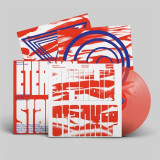
Vinyl now gone back to June. RIYL: Slowdive, DIIV, Electric Youth, The Cure, My Bloody Valentine. Solo project of Los Angeles based Matthew Doty (ex-Saxon Shore). For Matthew Doty, Deserta has always been about exploring a sonic universe that allows him to express a kaleidoscope of emotions, without having to say much at all. Through a patchwork of reverb-tinged textures – drone guitars, lingering synths and driving percussion – the Los Angeles-based singer/songwriter and multi-instrumentalist weaves together stories of care, frustration and catharsis that ultimately stretch to a gentle resolve. On new album Every Moment, Everything You Need, Doty chronicles the kind of year we all fear, full of uncertainty, tension and sustained pressure, and transforms it into a celebration of perseverance. It’s an essential reminder that we have the power to shape the stories we tell. The pandemic meant that Doty had to give up his studio and downsize a lot of his gear and instead, carve out a space in his two-bedroom apartment to craft the next chapter of Deserta. Sharing the space with his wife and son, Doty and his partner are also essential healthcare workers, which meant the couple would often have to tag-team childcare, along with 13-hour shifts in PPE and people constantly calling with questions about the ever changing guidelines and protocols. Once the blueprint for Every Moment, Everything You Need was set, Doty reached out to a number of collaborators to stitch together his vision for the sonic landscape. James McAlister (Sufjan Stevens, The National, Taylor Swift) came onboard to perform and record drums, while Caroline Lufkin (Mice Parade) wrote and performed vocals on the ethereal “Where Did You Go.” Elsewhere, the LP was mixed by Dave Fridmann (Tame Impala, Mogwai, Interpol), with Beach House and Slowdive producer Chris Coady engineering and co-producing, making this the first time Fridmann and Coady had worked together on a project. While the vocals are more prominent than Deserta’s previous albums, it’s their amalgamation with the instrumental aspects that secures Every Moment, Everything You Need as Deserta’s most confident and assured release to date. An affecting emotional candor teamed with persistent riffs and tenacious rhythms sees Doty unafraid to dive deeper; an unrestrained approach that ushers in a lustrous purging of agitation and anxiety. Showcasing those dark, exhaustive thoughts through crucial swells and looped, electronic soundscapes, it’s an LP that’s infinitely layered, with something new to discover with each and every enchanting listen.
First Word Records is extremely delighted to present 'Torn : Tonic' — the sophomore album from singer, performer, poet and producer, Allysha Joy.
Delivered unfiltered, straight from the soul, ´Torn : Tonic' pulls us into a 10 track journey that weaves through the multiplicity of letting go, standing tall, and creating space all at once. The album's expansive and vivid exploration of healing examines the power that comes with accepting the complexity of change. Allysha walks listeners through the remedy she finds in sound and emerges empowered to share this healing with others. Deeply moving and lyrically compelling, 'Torn : Tonic' hosts a stellar line-up of artists, creating a world of collective power, growth, and hope.
Allysha Joy is an integral member of the vibrant Melbourne soul & jazz scene, well known for both her solo work and as lead vocalist for 30/70. A uniquely-talented soul, her husky voice, and formidable Fender Rhodes prowess have garnered attentive audiences around the world.
Her 2018 debut album 'Acadie : Raw' was named 'Best Soul Album' at the Music Victoria Awards, featured in Bandcamp's 'Top Soul Albums' of the year and received a nomination for 'Best Jazz Album' at the Worldwide Awards. An incredibly prolific artist, Allysha has released on labels; Rhythm Section, Gondwana, Future Classic, Total Refreshment Centre and now another drop for First Word, after her acclaimed 2020 EP, 'Light It Again'.
Allysha's production on 'Torn : Tonic' effortlessly arches across a sonic palette, comprised of shuffling broken grooves and exquisite celestial melodies. There are healthy swathes of skippy neo-soul boom bap sensibilities, entwined with stark swing-laden electronic percussion, Detroit-esque sun-saturated synths, and Antipodean bruk backbeats. And whilst this project was produced entirely by Joy herself, she is far from alone, inviting in an array of female and non-binary artists to bless assorted tracks with their own unique gifts. Ego Ella May, BINA, Rara Zulu, Belle Bangard and Dancing Water all appear, expanding upon the formulaic roles of featured artists to share the creative space as equal collaborators.
'Torn : Tonic' exudes vibes, from the opening whiplash snare of 'Peace, to the rolling jazz-bruk of lead single 'Let It!', to the sweet soulful sonics of 'Still Dreaming', to the closing triumphant shout of "All Joy!!" on 'G.N.D.', this is a 40-minute opus that will definitely require repeat listening.
Allysha's poetic introspection reveals the album's intention to demand space, purpose, and pleasure. Her words are deliberate and direct to the alarm bells and messages her artistic vision carries. Fluid, cross-genre, and spirited with generational stories embodied, 'Torn : Tonic' sits at the intersection of a feminist manifesto of Joy's momentous leap as an artist, and her exploration of what it means to be human in today's capitalist-driven world.
In Allysha's words, 'Torn : Tonic' is exactly as the name describes. "It is looking directly into the shadow of pain and overcoming it with joy. No love songs! Just social, political, emotional anthems for change! It is the first record I have produced entirely on my own and it feels like that perseverance that I have consistently had to conjure up is embedded in this music, overcoming my own conditioning in a society and industry that constantly tells me I can't, so I must!"
out of Stock
Last delivered 3 years ago available to reorder, subject to availability
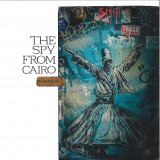
The Spy from Cairo (aka Moreno "Zeb" Visini) returns with his 5th studio album on Wonderwheel Recordings: "Animamundi" features some special collaborations from his travels & live shows from over the past few years. The album reflects the move from his home in NYC to his mother's home in a quiet village in Italy to take care of her in her older age. It's been a difficult transition with Italy's challenging experience with the pandemic, including some of the strictest measures enforced on the public. He recalls by stating "This album was conceived between 2020 and 2021 in Italy, between lockdowns, restrictions, and various pandemic mandates. Its message is of hope and positivity - a reminder that we are all spiritual beings… Free spiritual beings… and that freedom can't be broken."
"Animamundi" is a reconfirmation that The Spy from Cairo overcomes all obstacles & delivers a diverse progression of his iconic "Arabadub" sound, with the help of collaborators like Andalucian vocalist Carmen Estevez, Mexican vocalist Mambe Rodriguez on the heavy hitting "Criminal," Egyptian vocalist Adii Small on "Beautiful Baraka," and former touring band member, the multi-instrumentalist and vocalist Fatima Gozlan from Hungary. The music can vary from heavy deep electronic synths and live eastern instrumentation with Zeb playing oud, saz, chiftelli, bass, percussion, and other instruments, all along giving it his signature dub mixing style.
The songs take inspiration from a wide range of musical traditions and cultures, including Turkish (on "Cosmic Pasha," "Qanun in Dub" – using the qanun, an instrument popular across the Middle East, with a sound between the European harp and a dulcimer – and "Black Sea," which utilises a typical Dabke melody), Egyptian ("Mizmirized," sampling riffs from a mizmar), Indian ("Seeds of Culture), and Sufi ("Divination," a devotional composition), fusing these reference points with healthy doses of cumbia, funk, reggae, psychedelic, and dub. Thematically, "Animamundi" deals with some of the struggles Zeb – and all of us – have faced the last two years, through the lens of his personal experiences. Yet, the tone of the record manages to remain positive, like an uplifting dance through the world's sounds; after all, "Animamundi" means "soul of the world" in Greek. With album art by Sam Angeli and layout design by Marcial Arts, this beautiful album is a truly well-rounded worldwide collaboration.
"Animamundi" will be released digitally on March 4th, 2022, with the LP to follow shortly after.
out of Stock
Last delivered 4 years ago available to reorder, subject to availability
Who controls the mind controls the body. After three years of experimentation in isolation, Dopplereffekt have emerged with Neurotelepathy, an oracular narrative of cerebral entanglement and advancement. The sleek mathematical models of 2017’s Cellular Automata have evolved into these synaptic interpretations, transferences and modifications, rejecting binary expectations to meditate on the possibilities and pitfalls of what’s to come. With their second LP and fifth release in total on Leisure System, the duo of Rudolf Klorzeiger and To-Nhan have themselves achieved a near-telepathic capacity for collaborative thought and mechanical construction. They continue to use live appearances to present experimental trials of theoretical models, and that effort is heard in the sizzle and swing of the percussive highlights here, programmed with a serious depth and wriggle that reflect both an extension of and return to form. Considerations of the machine-human interface, neurological realities and physical probabilities dominate. But these tracks are economical and precise, glittering with emotional depth and cinematic effects. The album's core, a three-act movement of symphonic uncertainty and revelation, marks one of the pair's most evocative compositions in a career full of them. Territory is monitored, traced and scanned, resulting in unexpected modulations. Underlying systems are questioned, competing mindsets animated and mutated: brain-to-brain, brain-to-machine and beyond. Neurotelepathy processes these transformative mental, psychological and transgenerational states both traumatic and triumphant.
out of Stock
Last delivered 64 days ago available to reorder, subject to availability
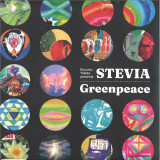
In 1997 and 1998, the late great Japanese composer, producer, and DJ Susumu Yokota released two of the most eclectic albums of his decades-long career, Fruits of The Room and Greenpeace. Recorded under his Stevia alias for Tokyo Techno pioneer DJ Miku’s Newstage Records/NS-COM, they were Yokota-san’s homage to the foundational days of club music in Japan.
This year, Glossy Mistakes are proud to present the first official vinyl editions of Fruits of The Room and Greenpeace, originally released on CD during the golden days of the format. Packaged in reimagined cover artwork created by the celebrated Japanese visual artist Masaho Anotani, these two albums perfectly capture the diversity at the heart of Yokota-san’s oeuvre. Across Greenpeace sees Yokota-san conjuring up a heady concoction of dusty loops, sampledelic breaks, kraut-rock and psychedelic downbeat. A remarkable listening experience based on the inspired era of a genius.
When Yokota-san wrote and produced the music on Fruits of The Room and Greenpeace in 1997, he was reflecting on the broader culture that surrounded dance music in Japan in the early to mid-nineties. It was an era when the psychedelic culture of late sixties America, the afterglow of UK acid house/rave, the new age movement and cyberpunk dovetailed together. Within DJ Miku and Yokota-san’s social circles, the thinking of Timothy Leary, Ram Dass, Allen Ginsberg, Jack Kerouac and William S. Burroughs electrified the air.
By 1996, the moment, brilliant and blinding as it was, was over. “We all felt that the rave scene fizzled out,” DJ Miku says. As he puts it, there was a collective feeling around him that it had all become too much. From the calm that followed, DJ Miku, Yokota-san and their open-eared peers made the decision to switch tracks and start from scratch. DJ Miku believes that with his Stevia releases, Fruits of The Room and Greenpeace, Yokota-san wanted to express the sweet and sour nature of the passing of those wild early days and his wish for true peace. “At the time, we saw eye-to-eye, with an implicit understanding of each other,” he explains. “Even now, twenty-five years later, I am confident it was like that.”
out of Stock
Last delivered 3 years ago available to reorder, subject to availability
It's the first album in many years by cantaor Tomas de Perrate, known as PERRATE, and it's titled Tres golpes
Tres golpes comes from a radical view on flamenco that is not just radical because of the extreme form of its artistic proposal, but because it is the embodiment of its own roots.
It's radical and pure. It's well defined, raw, familiar, and alongside producer Refree, Perrate manages to give another twist to the screw of modern flamenco, making it as incisive and visceral as possible.
[h] A8 . Los Fonemas (Karawane) [tonas] (Karawane)
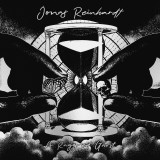
"A Ragged Ghost" is the eighth full-length album from electronic producer Jonas Reinhardt. Following albums on Kranky, Not Not Fun, Constellation Tatsu, and more, his debut release for Trouble In Mind brings together 11 new pieces that explore themes of life & death, netherworlds, and the liminal spaces in between. Taken together as a single narrative, the album offers a stirring exploration of mortality and immortality in what Reinhardt describes as 'a dance of religious syncretism, navigating spaces between the living and the dead'. "A Ragged Ghost" finds him synthesizing influences organically from familiar teutonic strains to the intense austerity of early 21st century electronic pioneers such as Biosphere and Susumu Yokota. A whisper of the Italo-disco-esque romps of Jonas' 2012's "Foam Fangs" EP & 2013's "Mask of The Maker" LP merge with his more kosmische leanings into a sinister, slightly funky, but also studious suite that at times feels like a lost sound library record from the KPM archives. Openers "Ape & The Universal Axis" and "In Lotto Commodore" decidedly sound like a selection from a lost film score while others like the bubbling "Sly Tomb" recall the works of Roedelius or Vangelis' serene soundscapes. Meanwhile, fans of the electro-ambience of Manuel Göttsching's strobe-light, proto-house (on his seminal "E2-E4") or the pulsing insistence of John Carpenter's visceral non-horror scores (i.e. "Escape From New York" or "Assault on Precinct 13") will find a lot to love about songs like "Tumb Tumb" and "Wretched Orchestra of Armistice".
"A Ragged Ghost" is the eighth full-length album from electronic producer Jonas Reinhardt. Following albums on Kranky, Not Not Fun, Constellation Tatsu, and more, his debut release for Trouble In Mind brings together 11 new pieces that explore themes of life & death, netherworlds, and the liminal spaces in between. Taken together as a single narrative, the album offers a stirring exploration of mortality and immortality in what Reinhardt describes as 'a dance of religious syncretism, navigating spaces between the living and the dead'. "A Ragged Ghost" finds him synthesizing influences organically from familiar teutonic strains to the intense austerity of early 21st century electronic pioneers such as Biosphere and Susumu Yokota. A whisper of the Italo-disco-esque romps of Jonas' 2012's "Foam Fangs" EP & 2013's "Mask of The Maker" LP merge with his more kosmische leanings into a sinister, slightly funky, but also studious suite that at times feels like a lost sound library record from the KPM archives. Openers "Ape & The Universal Axis" and "In Lotto Commodore" decidedly sound like a selection from a lost film score while others like the bubbling "Sly Tomb" recall the works of Roedelius or Vangelis' serene soundscapes. Meanwhile, fans of the electro-ambience of Manuel Göttsching's strobe-light, proto-house (on his seminal "E2-E4") or the pulsing insistence of John Carpenter's visceral non-horror scores (i.e. "Escape From New York" or "Assault on Precinct 13") will find a lot to love about songs like "Tumb Tumb" and "Wretched Orchestra of Armistice".
By now counting more than four decades of constant activity, Pierre Bastien erected such a towering and influential body of work that any blurb attempt regarding his music could easily fall into redundancy. Not that his revolving soundworld, deeply personal and unique, has ever stalled into gimmick or self mimicry, being Bastien the tireless explorer whose vision can never be complete, only continuously redefined in a process of discovery equally playful and challenging. So, completely in touch with Discrepant's ethos.
Returning to the label after 2017 The Mecanocentric Worlds of Pierre Bastien, the french musician, composer and instrument builder, brings an array of instruments from different cartographies and legacies with the appropriately titled Sonic Folkways. Resorting to different types of horns, prepared trumpet, an army of percussion, from gongs and tambourine to castanets and maracas, violin and too many others to mention here, Bastien weaves together a highly textured and hypnotic mosaic that projects an exotica beamed from scraps of the future. 'Aha!' in the same interstellar wavelength as Sun Ra's cosmic tones, 'Moor's Room’ almost orchestral tapestry of small percussion and insects or the non-western strings and tunings salvaged from ancient alien ceremonies on 'Pan's Nap'.
In an era where so much ink has been shed about world building in experimental music, Bastien can actually claim that to himself. The otherworld is right here, indeed.
Jodorowsky's Dune tells the tale of cult filmmaker Alejandro Jodorowsky's unsuccessful attempt to adapt Frank Herbert's classic sci-fi novel, Dune, to the big screen. Composer Kurt Stenzel gives life to a retro-futuristic universe as fantastic as Jodorowsky's own vision for his Dune-a film whose A-list cast would have included Salvador Dalí, Orson Welles, and Mick Jagger in starring roles and music by psychedelic prog-rockers Pink Floyd.
Building upon director Frank Pavich's idea for a score with a Tangerine Dream-type feel,' Stenzel lays out a cosmic arsenal of analog synthesizers that would make any collector green at the gills: among other gems are a rare Moog Source, CZ-101s, and a Roland Juno 6, as well as unorthodox instruments like a toy Concertmate organ and a Nintendo DS. I also played guitar and did vocals,' says Stenzel, some chanting... and some screaming, which comes naturally to me.' The score also features narration by Jodorowsky himself. As Stenzel notes, Jodo's voice is actually the soundtrack's main musical instrument-listening to him was almost like hypnosis, like going to the guru every night.'
This highly-anticipated soundtrack LP was sequenced and mixed by Stenzel with the listener in mind and flows through a four-sides' LP approach. I wanted it to play like the records I grew up with, where every side was a journey.'
Unrestrained by notions of style or genre, there is a distinct air of freedom that permeates Picture Music, the new project from André Bratten. On what is his fifth album, the electronic visionary didn't enter the studio with the notion of making a particular type of record. Conversely, it was viewed as an opportunity to simply create - to let the music take over and guide the journey. Bringing together sparse strings, meditative synths, lingering piano chords and fleeting field recordings, the result is a collection of captivating sonic vignettes - deftly assembled into something profound and endearing. Eschewing the darker, more abrasive elements of most recent LP Silvester, Picture Music features some of Bratten's most accessible and melodic music to date - a shift in outlook no doubt expedited by the isolation of multiple Covid-19 lockdowns. These minimalist compositions ruminate on how the past two years have forced people to reconsider the concept of "normal life", as well as the birth of Bratten's second child - an experience he describes as "like death in reverse". The album title is taken from a compilation on the legendary Sky Records, a label that has been an enduring source of inspiration for Bratten along with that of Klaus Schultze's Innovative Communication. But rather than mimicking the work of these electronic luminaries,Picture Music sees him forge his own path: one that uncovers beauty in the simplicities of everyday life. Norwegian electronic artist André Bratten released his debut album Be A Man You Ant on Prins Thomas' Full Pupp label in 2013. He has since released three albums on Smalltown Supersound, and more recently produced Cracks, the acclaimed project from avant-garde saxophonist Benedik Giske. On June 10th Bratten returns with fifth studio album Picture Music.
Landscape Tantrums Lost for two decades, the recent rediscovery of Landscape Tantrums the first attempt at recording the music that would become The Mars Volta’s De-Loused In The Comatorium revealed an important and hitherto missing chapter in the group’s evolution. Selfrecorded by Omar (assisted by Jon DeBaun) at Burbank’s Mad Dog Studios within a head spinning four days, Landscape Tantrums captures De-Loused in somewhat embryonic form, though much of what would make The Mars Volta’s debut album such an electrifying, sublime experience was already in place: the fearless invention, the fusion of futurist rock elements and traditions from outside of the rock orthodoxy, the sense of virtuosity working in service of emotional effect. From a distance, The Mars Volta must have seemed as if they were on a high when they walked into the studio to record what they expected to be their debut album (“I didn’t think of it as demos or a dry run,” Omar says). The group had recently played the Coachella festival to rave reviews, a vindication of the quixotic risk Omar and Cedric had taken, quitting At The Drive In to lead such an uncompromising musical proposition.
Their debut EP, Tremulant, had similarly signalled their singular vision, and been rewarded with similarly positive feedback. But the truth was that The Mars Volta entered Mad Dog in tatters, scarcely believing anything other than failure lay within their reach. They’d recently lost their bassist, Eva Gardner, and parted ways with keyboard play Ikey Owens. Tensions were brewing with drummer Jon Theodore, too himself a replacement for founding drummer Blake Fleming Omar questioning Theodore’s commitment to the group. And sound manipulator Jeremy Michael Ward’s drug problem had gotten so far out of hand that he’d been sent to rehab, and wouldn’t return until two days into the Landscape Tantrums. The pressure upon Omar was intense, and it began to manifest in the form of physical and emotional breakdowns. His art was his life, but now he began to wonder if it was actually going to kill him. Under such heavy manners, miracles occurred at Mad Dog. Surely that’s the only way to describe the music contained on Landscape Tantrums, as Omar fashioned early versions of Inertiatic ESP, Drunkship Of Lanterns and Eriatarka that rivalled the Rick Rubin produced versions that ended up on De- Loused for intensity, precision and immediacy, as Cedric delivered a powerfully intimate reading of Televators, and as a bare bones version of the group sketched out the peaks of what would become their debut masterpiece in barely half a week, on a shoestring, and believing they wouldn’t last long enough to see it hit the shelves. Listening to Landscape Tantrums now, with the benefit of hindsight and the knowledge of what these songs will become, one notices Cedric has yet to fully find the voice that will lend The Mars Volta their devastating authority, that Eriatarka will evolve even further under Rick Rubin’s watch, and that the lyrics to De-Loused’s climactic chapter, Take The Veil Cerpin Taxt, have yet to be penned. But one also notices how lithe the group sound here, how hungry, and one appreciates the raw edge that Rubin would later polish to a venomous sharpness. More than mere historical curiosity, Landscape Tantrums is an essential text for the dedicated Mars Volta aficionado, and a breathtaking album in its own right.
[a] a1. Roulette Dares (The Haunt Of) [Unfinished Original Recordings Of De-Loused In The Comatorium]
Strictly limited to 10,000 numbered copies, pressed on MoFi SuperVinyl at RTI, and mastered from the original master tapes, Mobile Fidelity's ultra-hi-fi UltraDisc One-Step 180g 45RPM 2LP collector's edition enhances the blockbuster work for today – and the ages to come. Surpassing the sonics of any prior version, it peels away any remaining limitations to provide a transparent, lively, ultra-nuanced presentation of a record that won six Grammy Awards – including prizes for Album of the Year, Best Male Rock Vocal Performance, and Best Rock Song. The expanse and depth of the soundstage, fullness of tones, natural snap and extension of the guitar strings, realistic rise and decay of individual notes, and roll of Clapton's vocals all attain demonstration-grade levels.
Housed in a deluxe box, the UD1S Unplugged pressing features special foil-stamped jackets and faithful-to-the-original graphics that illuminate the splendor of the recording and the reissue's premium quality. No expense has been spared. Aurally and visually, this UD1S reissue exists as a curatorial artifact meant to be preserved, touched, and examined. It is made for discerning listeners that prize sound quality and production, and who desire to fully immerse themselves in the art – and everything involved with the album, from the images to the finishes.
Truly, everything about Unplugged matters. Having sold more than 10 million copies in the U.S. and more than 26 million copies worldwide, the 1992 work resonates with listeners of all generations and speaks a universal language. Recorded for MTV before a very small audience on January 16, 1992, the 14-track set became the signpost for future acoustic-based endeavours that witnessed artists of all stripes re-examining their catalogues and, in many instances, as Clapton does here, placing familiar originals in fresh contexts and unveiling spirited versions of cover material. Needless to say, Clapton's session turned MTV's series into can't-miss programming for which the likes of Rod Stewart, Tony Bennett, Nirvana, Pearl Jam, and more would soon participate.
Kicking off his performance with a spirited instrumental to establish the mood, Clapton immediately wades into the style that originally caught his attention as a British teenager in the early 1960s: American blues. Backed by a superb band that includes guitarist Andy Fairweather Low, pianist Chuck Leavell, bassist Nathan East, and drummer Steve Ferrone, Slowhand delivers a rhythmic, toe-tapping rendition of Bo Diddley's "Before You Accuse Me" that announces he's come to reconnect with his muse. What follows over the course of nearly the next hour stirs the heart, shakes the soul, moves the mind, and invigorates the senses.
Of course, there's no talking about Unplugged without keying in on "Tears in Heaven," the striking ballad Clapton penned about the death of his four-year-old son. More emotional, direct, spare, and healing than the studio version released a year prior, it crackles with an intimacy, maturity, poignancy, honesty, sweetness, and integrity that inform the entire concert. Indeed, how Clapton frames other favorites here – transforming "Layla" into a relaxed, comfortable stroll and ruminating on the seasoned ripples flowing throughout "Old Love," for example – indicate both a creative rebirth and gleeful acceptance of the next phase of his career.
And that very direction (two of Clapton's next three albums would be all-blues projects) is what really makes Unplugged so indispensable. Equivalent in mastery if not in volume to the output that earned him his "God" nickname, interpretations of Jesse Fuller's "San Francisco Bay Blues" (complete with kazoo!), Big Bill Broonzy's "Hey Hey," Robert Johnson's "Walkin' Blues" and "Malted Milk," and Muddy Waters' "Rollin' & Tumblin'" showcase a learned professor in his element and all the wheels turning.
In every regard, Clapton's Unplugged session was appointment listening when it came out in August 1992. With the arrival of MoFi's UD1S pressing, that sensation is more urgent than before.
More About Mobile Fidelity UltraDisc One-Step and Why It Is Superior
Instead of utilizing the industry-standard three-step lacquer process, Mobile Fidelity Sound Lab's new UltraDisc One-Step (UD1S) uses only one step, bypassing two processes of generational loss. While three-step processing is designed for optimum yield and efficiency, UD1S is created for the ultimate in sound quality. Just as Mobile Fidelity pioneered the UHQR (Ultra High-Quality Record) with JVC in the 1980s, UD1S again represents another state-of-the-art advance in the record-manufacturing process. MFSL engineers begin with the original master tapes and meticulously cut a set of lacquers. These lacquers are used to create a very fragile, pristine UD1S stamper called a "convert." Delicate "converts" are then formed into the actual record stampers, producing a final product that literally and figuratively brings you closer to the music. By skipping the additional steps of pulling another positive and an additional negative, as done in the three-step process used in standard pressings, UD1S produces a final LP with the lowest noise floor possible today. The removal of the additional two steps of generational loss in the plating process reveals tremendous amounts of extra musical detail and dynamics, which are otherwise lost due to the standard copying process. The exclusive nature of these very limited pressings guarantees that every UD1S pressing serves as an immaculate replica of the lacquer sourced directly from the original master tape. Every conceivable aspect of vinyl production is optimized to produce the most perfect record album available today.
MoFi SuperVinyl
Developed by NEOTECH and RTI, MoFi SuperVinyl is the most exacting-to-specification vinyl compound ever devised. Analog lovers have never seen (or heard) anything like it. Extraordinarily expensive and extremely painstaking to produce, the special proprietary compound addresses two specific areas of improvement: noise floor reduction and enhanced groove definition. The vinyl composition features a new carbonless dye (hold the disc up to the light and see) and produces the world's quietest surfaces. This high-definition formula also allows for the creation of cleaner grooves that are indistinguishable from the original lacquer. MoFi SuperVinyl provides the closest approximation of what the label's engineers hear in the mastering lab.
SACD
Mastered from the original master tapes, Mobile Fidelity's numbered hybrid SACD enhances the blockbuster work for today – and the ages to come. Peeling away remaining sonic limitations to provide a transparent, lively, ultra-nuanced presentation of a record that won six Grammy Awards (including prizes for Album of the Year, Best Male Rock Vocal Performance, and Best Rock Song), it places Clapton and company in your room. The expanse and depth of the soundstage, fullness of tones, natural snap and extension of the guitar strings, realistic rise and decay of individual notes, and roll of Clapton's vocals all attain demonstration-grade levels. A perennial audiophile favourite, Unplugged now tosses its hat into the ring as a demonstration disc.
Mondo, in partnership with Back Lot Music Wright, are proud to present the premiere physical release of Steven Price's electrifying score to LAST NIGHT IN SOHO, the latest film by Edgar Wright.
Edgar Wright wanted a score to soundtrack the two eras of Last Night in Soho and tie together the stories of these two very different young women. To achieve this, Wright turned once again to his now-regular composer, Academy Award® winner Steven Price, who successfully scored both Baby Driver and The World’s End.
While Price’s influences for the score included contemporary film music by the likes of Ennio Morricone and John Barry, a “’60s session band” sound with echoing fragments of dialogue add a different and sometimes subliminally sinister edge to the score. The sounds of ‘60s Soho blend into the present-day London scenes as Eloise is sucked further into the past. “The idea is that Sandie’s voice becomes part of the film, so you hear her siren song from the ‘60s coming through, and Anya became an intrinsic part of it… I was pleased that the lead actress is also the lead singer in the film score; the whole thing knitted together.”
The album also features songs performed by Anya Taylor-Joy, including the lead single from the film "Downtown (Downtempo Version)"
New recordings by Spanish director and visual artist Carlos Casas. Sound and Radio Frequencies captured in location in Mont Aigu. Part of Fieldworks#26.
24 Songs. A new project from The Wedding Present. A new 7” single every month throughout 2022. 24 Songs sees David Gedge writing with legendary Sleeper guitarist Jon Stewart for the first time, and a more perfect union could not have been predicted. The notion of a monthly 7” single is not new to The Wedding Present, but 24 Songs shows us that even classic concepts can be reinvented. The series also continues the band’s association with photographer Jessica McMillan, who has created stunning images and films as a visual accompaniment to the recordings. Explaining 24 Songs, David Gedge said: “In 1991, The Wedding Present were rehearsing in a studio in Yorkshire when we hit upon an idea that immediately thrilled us all. Our bass player Keith Gregory had been a member of the ‘Sub Pop Singles Club’ - a service that allowed subscribers to receive 7”s released by that Seattle label on a monthly basis. Keith wondered if we, as a band, could attempt a similar thing. In that instant, The Wedding Present’s Hit Parade series was born and, during 1992, we managed to release a brand new 7” single each and every month. “The Hit Parade went on to become something of a significant milestone in the history of the band and it’s a project about which I’m often asked. As its thirtieth anniversary approached, I began to wonder if we should celebrate it in some way. A ‘Hit Parade Part 2’ didn’t feel quite right, though. Then, someone said to me: “Other bands have released music in similar ways but there has been nothing like the Hit Parade.” And they were right! A 7” single a month seems, somehow, very ‘Wedding Present’. So, inspired by that little idea from three decades ago, we’ve embarked on this new project, 24 Songs. “Even though The Wedding Present have never been known for taking the easy route, the idea of recording 24 tracks and releasing them in this way could seem daunting to any band. However, I’ve been inspired by the music that has been written since Jon and Melanie joined the group. The thought of celebrating this exciting new line-up with an exciting new series has motivated us all… and I suppose we also didn’t want any of these songs to be hidden away in the middle of an album!”
Having initially met more than a decade ago at a local community radio station, sometimes doing guest slots on each other’s live, improvised noise shows, Cormac Culkeen and Dave Grenon knew they had a mutual interest in working with sonic textures. They listened to each other’s bands for a handful of years, and in 2017, “made good on a threat” that they’d been making for quite a long time: to start a band. At Cormac’s gentle but clear urging—declaring that they’d gone ahead and booked a space in which to record a video—the two wrote their first song, “Sebaldus,” an ambitious 12-minute trip, which also serves as the fireworks finale to their self-titled debut album. With surges of pathos that smooth out into something more soothing in turn, Cormac goes: “The hunter, you’ve seen him / The archer, his arrows are strong / And hunger, you’ve known her / I know the winter is long.” The track is as much about enduring a Canadian winter as it is about the eponymous 8th century hermit, shot through with sublimated desire. As Cormac put it, Joyful Joyful’s songs are “a little bit outside of time.” But while the lyrics beg close, oblique reading unto themselves, there’s also a distinct sense that they’re only one of many more ways that the duo shapes sound. Cormac, whose voice is like a sea with irregular tides, lights up about an idea in traditional sean-nós Irish music that songs already exist and are out there; it’s up to the singer to become the conduit. This belief in music as something to be channelled, and something more than sound, resonates with the singer’s fundamentalist religious past. To paraphrase: lots of group singing, harmonies, no instrumentation, totally unmediated, no priest, congregational—not choral, not a performance, not about talent, the spirit moves through people. “Of course that informs how I think about singing,” Cormac says. So, when they were exiled from the church because of their queerness, they took the music with them, dislocating it from its dogmatic bounds but not from its transcendent potential. This record might be thought of, then, as a kind of queering of sacred, devotional traditions—or at the very least, a space where all of these things can be held at once. Perhaps perceivable by some as contradictions, these intersecting influences create the conditions for an incredibly singular sound. Dave is steady and exploratory in his handling of this multiplicity, arranging sounds as they’re revealed, corralling them, coaxing them into form. “Because Dave is there,” Cormac says, “I get to sing three times higher, and three times lower, and faster, and backwards, and all of these sounds! That are there. They’re all there.” When asked about early musical memories, Cormac recalled an immediate fascination with harmony: from demanding that the first person they ever heard singing it explain what they were doing, to always (still, to this day) singing in harmony with their twin sister around the house, to being part of a children’s choir that sang soprano in Handel’s Messiah—not realizing until they entered the room with all the other ranges that their learned melody was but one part of the whole. Just as tellingly, Dave reflects on his early attraction to “abstraction and becoming abstract,” describing childhood afternoons messing with microphone and speaker feedback loops, producing long, enduring sounds with almost undetectable variations. In a way unique to the coalescing of these two listeners, notions of harmony are central to their output. Dave samples field recordings, old keyboards and synths, and vocal drones, running the live singing through four or five parallel effects chains, sampling and treating everything again in the moment. “Another way to put it is that Cormac’s voice comes into the board and then comes back out shifted, delayed, and shattered; Cormac and I hear it, live with it, and respond,” Dave says. This work is contingent not only on a deep intuition (neither of them read sheet music) of polyphony and due proportion (something St Thomas Aquinas famously listed as an attribute of beauty) but also on their connection to each other and ability to read subtle cues. Dave says they’d hold each other’s hands while performing if it was more convenient to do so, riffing on something else Cormac mentioned about traditional Irish singing: that someone would always hold the singer’s hand, for fear that without a tether to the ground they might find themselves utterly lost, unsure how to return. Joyful Joyful doesn’t shy away from offering such experiences of departure; they’re willing to unsettle their audiences because they themselves are unsettled. Their shared penchant for spooky, heavy music, and self-described “omnivorous” listening practices equip them with an array of sonic concepts that support this effort; Diamanda Galás, The Rankin Family, Pan Sonic, Pauline Oliveros, Keith Fullerton Whitman, Yma Sumac, and Catholic hymnody were just a few that came up. Observing their audience gives them insight about the effect of each song—something they considered while arranging the album. Its arc is marked by soft, sometimes sudden oscillations between cacophony and euphony, day and night (listen for insects), and from sexual, visceral entanglements to more ephemeral, celestial ones. Front to back, it arouses expansion, unraveling. Of lightning, Vicki Kirby writes: “quite curious initiation rites precede these electrical encounters. An intriguing communication, a sort of stuttering chatter between the ground and the sky, appears to anticipate the actual stroke.” By all accounts, something similar seems to happen at Joyful Joyful shows, between those on the stage and those off it, between what’s earthly and what’s beyond. “A lightning bolt is not a straightforward resolution of the buildup of a charge difference between the earth and a cloud … there is, as it were, some kind of nonlocal communication effected between the two,” writes Karen Barad, extrapolating on Kirby’s thought. Cormac acknowledges that while they and Dave play a role in this mysterious charge that comes about, they’re not solely responsible. However ineffable it may be, it’s undoubtedly a form of communion—and a sensuously shocking one at that
"bit by bit" is the first full-length release from Toronto-based singer-songwriter Evan J Cartwright. This self produced album from the go-to drummer/collaborator (The Weather Station, U.S. Girls, Brodie West) presents a highly singular songwriting vision that combines existential lyrics with masterful musicianship. Steeped in jazz melodicism, Cartwright’s trumpet-like phrasing mixed with contemporary composition presents an eclectic art song performed by an artist that could perhaps be best described as a post-modern Chet Baker. Deep poetic observations on love and time paint an affecting picture of an artist reflecting on life’s universal truths. Visual in nature, "bit by bit" places its audience within a world of musical leitmotifs extracted from field recordings of bells and birdsong. Collected during years of touring, these sounds evoke extant spaces beyond that which the music inhabits. The use of this source material in its unaltered form evokes the feeling of a technicolour European film at one moment and then, as the extrapolated melodies are meticulously translated into electronic tone bank sequences, a modernist setting the next. One carillon melody is used as the basis for a wealth of the album’s musical material before its origin is finally revealed by the chiming of bells in the last seconds of the album. The result is a fragment of space between the constructed world of the musical compositions and the candid world of documentation, inviting the listener to ponder whether those two worlds are distinct or whether the songs and music are not simply “field recordings” themselves. Throughout "bit by bit" Cartwright drops staggering revelations hiding in plain prose that often involve the contemplation of time. In I Don’t Know he states “if I only trusted time / then I would wish it all away” and nearing the album’s end he opens impossibly blue with the phrase “the impossible truth of time”, playfully inserting a pregnant pause before the word time. A drummer’s fixation, to be certain, the album’s recurring theme of time is eclipsed only by Cartwright’s contemplation of human relationships. Here he elaborates on some of the album’s subjects: “Many of the lyrics circle, and try to give a name to the illegible space between human beings. “i DON’t know” celebrates the fact that we will never truly understand what love is. Its message is one of assurance. It says that we can never really touch love, and that is ok. “and you’ve got nobuddy” refers to life’s great tragedy: that we are unable to read each others’ experiences, and in reaction to this, we separate ourselves.” The entirety of "bit by bit" is a continuous work. There is seldom a clear demarcation of where one piece ends and another begins and when this does occur, it is done crudely, as if someone is flipping through a series of broadcasted channels. At times words are sliced right out of their lines and replaced by pure tones. This is both a comical interpretation of censorship and a reminder that there are things in life that will forever remain unseen and illegible. In fact, this statement lies at the centre of the LP and although hidden beauty does reveal itself through repeated listenings, "bit by bit’s" eccentric world remains just out of reach — an imaginary second story room viewed from a crowded city street.
Mieko Shimizu is a London based Japanese singer, songwriter, composer and producer. Mieko first erupted onto the UK electronic scene as Apache 61; her searing alter ego, fusing layers of cross-woven breaks and battling shards of sub-bass within stateless melodies drawn from the fringes of the avant-garde. Garnering plays by John Peel she quickly build herself a name across the underground scene. Originally trained in Jazz, she cites the multidisciplinary performance artist Meredith Monk and composer Terry Riley as early influences, but also draws inspiration from many genres.
Phenomena of the mind is a re-mastered EP of selected tracks from the album of the same title released in 2006, the year after the London Terror attacks. Something dispirited and unexplainable lay heavy in the air of this immense city that we lived and breathed. In the title song “ Phenomena of the mind” Mieko’s intense Japanese rap echoed the din of the chaotic streets we walk.‘Visualise’, she says, try to imagine a way to fight our way our way out of this ominous struggle.
In the track “Signal Found”, the theme continues to shattered Dance Hall beats that reverberate to the “Twisted Sound” of “Broken down” “London Town”. “Have you lost a plot? Are you ok?” she asks?
In the track ‘Black Salt” a dark melancholic theme floats over fragmented, glitchy beats compounded by the repetition of the word “black” which hammers the constant bombardment of racism prescient of the call for freedom that “Black Lives Matter.”
Wonderland Magazine has described Mieko’s music as “beautiful poetic verses and stunning musical arrangements and Mark Taylor describes Mieko in Record Collector as “An avant-garden artist pushing boundaries”
• Re-mastered EP of selected tracks from the album of the same title released in 2006
• Premiering the re-release at Twenty One in Southend on 21st April
• Mark Taylor describes Mieko in Record Collector as “An avant-garden artist pushing boundaries”
Pan Daijing's exhibition-performance Tissues premiered in the Tanks at the Tate Modern in autumn 2019. A five-act immersion in performance, sound, movement, space, and most of all emotion in its most distilled and conflicted states, Tissues engaged with the conventions of opera and tragedy to present a searing representation of the embattled human psyche in space and time. While the ambitious multi-sensory artwork made use of the range of Daijing's artistic capabilities, music, particularly the voice, was at its formal and emotional core. The vinyl and digital release of Tissues on PAN serves as a record of that work, in the form of an hour-long audio excerpt: an invaluable archival document from Daijing's expansive live practice. Tissues is both a solitary work and a formal study in relation. Composed, directed, designed, written, and performed by Daijing (alongside a cast of twelve dancers and opera singers), the work_its libretto written in a mixture of old and modern Chinese_lingers inside a single human perspective. Daijing conjures states that are by turns delicate and severe, the tension between opposing modes animating the work as it unfolds. And yet, for all its interiority, Tissues foregrounds an intimate relationship with its audience through details like its engulfing visual landscape and its rattling, confrontational narrative arcs. Daijing uses the opera form as a prism through which to question the boundaries of music itself: perhaps, she proposes, music is much more than simply what is heard. It is in the relationship between voice and electronics that this limit is most clearly breached. Across the four acts gathered in this documentation, a counter-tenor, a soprano, a mezzo-soprano, and the artist herself voice a mixture of stunning laments and cries over an instrumental landscape, built out from industrial texture. Meant to be heard in a single listen, rather than track by track, the work unfolds through tender hollows and agitated peaks. At its crescendo, the operatic vocals melt away and the synthesizers themselves seem to howl with grief. Daijing uncovers an essential, sometimes painful, music in all that surrounds us, inviting something like catharsis but also a greater understanding of the thing she and her cast conjure and draw close. A tissue, after all, is both a disposable object one uses to wipe away a tear, and the building block of our fleshy human forms. Daijing reaches and excavates the roiling core of what it is to be alive and full of feeling. Music from Tissues, an opera of five acts at Tate Modern, London on Oct 2nd, 4th and 5th, 2019 Composed, written, produced and directed by Pan Daijing. Performed by Anna Davidson, soprano ; Marie Gailey, mezzo soprano, Steve Katona, countertenor and Pan Daijing, additional vocals. The recording is mixed by James Ginzburg , Jan Urbiks and Pan Daijing, mastered by Rashad Becker. *2xLP comes in a gatefold cover, and includes an obi strip and a booklet containing images from the performance & liner notes, as well as a postcard granting access to exclusive video documentation*
out of Stock
Last delivered 2 years ago available to reorder, subject to availability
First ever reissue of one of the most sought after titles in the catalogue of Peruvian's label MAG, in high demand not only among Latin music collectors but also among those interested in the most exotic and experimental psychedelic sounds around. - It includes 'Astronautas a Mercurio', a cosmic descarga full of electronic effects, filtered voices and fierce guitars with wah wah and raw distortion, as well as guarachas, cumbias and descargas. - Details: Hugo Macedo was a member of the first sonora in Peru, directed by his brother: the Sonora de Lucho Macedo. His brothers were the singers of the band while he performed as a timbalero. After nine years he founded the Sonora Casino of Hugo Macedo in 1964, later incorporating his wife, Lucía "Pochita" Rivera as a vocalist. "Trompeteros" was released on the Peruvian record label MAG in 1972. Previously, the Sonora Casino had already recorded several albums for Philips since the mid-60s. At the time their repertoire was fed by rhythms such as cha cha cha, bolero, guaracha... Their MAG period would start in 1970 with the album "Pochita y la Sonora Casino de Hugo Macedo" in which Hugo Macedo's wife was granted with an important visual presence on the front cover, with a similar follow-up on "Trompeteros", creating some confusion since vocalist Pachito Nalmy was the actual main singer on the record. The vocalist, who hails from Callao, demonstrates here a great vocal versatility as captured on songs like 'Guajira del amor', with a heavy rhythm that will surely delight boogaloo lovers, or the bolero number 'Pasa, pasa', being both songs own compositions of the multitalented Nalmy. Guarachas, descargas and cumbias complete the offering of this fantastic album, one of the strongest tropical LPs in the MAG catalogue. But the real banger here is the almost magical 'Astronauts to Mercury', a cosmic descarga full of electronic effects, filtered voices and fierce guitars with wah wah and raw distortion, closer to the sound of any psychedelic recording than the classic tropical sound of La Sonora Casino, and right next to those elements, an impressive brass section that boosts the intensity of the song to the highest levels. It is not surprising that "Trompeteros" has become in recent years a highly sought-after album not only by Latin music collectors but also by those after the most exotic and experimental psychedelic sounds around... Pablo Iglesias aka DJ Bongohead
out of Stock
Last delivered 4 years ago available to reorder, subject to availability
During the late 2010s, music lovers around the world began obsessively listening to increasingly esoteric albums on Youtube. More often than not, they’d leave the browser on autoplay. This was how Facundo Arena, the composer and producer behind The Kyoto Connection, discovered the technonaturalistic pleasures of Kankyō Ongaku (environmental music), a distinctly Japanese interpretation of European, British and American minimalist composition and ambient music. “It was a kind of algorithmic magic,” he says.
Upload by upload, the utopian music of Hiroshi Yoshimura and his 80s Japanese contemporaries transported Facundo back to his childhood. When he was five, his father placed him in karate lessons and began watching martial arts movies with him. From those early experiences, Facundo became fascinated Japanese history, tradition, and culture, particularly that of Kyoto - the cultural capital of Japan. Kankyō Ongaku reminded him of hearing the sounds of Japanese folkloric instruments as a young boy, and suddenly, the way the influence of Japan had manifested in his music made sense. “I had the sensation that for many years, I’d been doing something similar to the style,” he explains.
Inspired, Facundo used an iPad and an old Akai cassette deck to record Postcards, his homage to Japanese minimalism and Kankyō Ongaku. By this stage, he was twelve years deep with The Kyoto Connection, the musical project he launched in 2005 in his hometown of Buenos Aires, Argentina. Over that late 2000s and 2010s, Facundo, later on joined by collaborators Rodrigo Trado (drums), Jesica Rubino (violin) and Marian Benitez (vocals, now his wife), released numerous D.I.Y albums. Project by project, they followed the threads between 80s synth-pop, ambient, new age, house, techno and acoustic composition.
Postcards introduced The Kyoto Connection to listeners around the world and brought Facundo into our orbit. During Argentina’s covid lockdown, Facundo received a set of soundscapes recorded in Kyoto by the Japanese musician and sound designer Masafumi Komatsu. Over several insular months, he decorated them with synthesisers, samples and subtle rhythms, creating The Kyoto Connection’s next album, The Flower, The Bird and the Mountain to be released via Isle Of Jura offshoot Temples Of Jura.
Ostensibly made up of twelve distinct tracks, listening to The Flower, The Bird and the Mountain feels more akin to spending calm, meditative time in twelve specific environments. Although the foundations they rest on are recordings made in geographic locations around Kyoto, Facundo has yet to visit Japan. As a result, the landscapes he paints sit somewhere between fiction and fact, richly pictorial sonic imagination juxtaposed with echoes of reality. Regardless, as his bubbling melodies and glistening synthesisers glide against Masafumi Komatsu's recordings, Facundo guides us into a blissful zone of tranquillity well worth spending time within.
out of Stock
Last delivered 5 months ago available to reorder, subject to availability
"The dazzling symphonic album he always threatened to produce" UNCUT 5/5
"A soulful symphonic masterpiece" ROLLING STONE
Originally released in Japan only on CD in 2002, Plush's Fed lives up to the cult-like adulation it has garnered ever since. A stunning symphony of Bacharach-inspired pop, Toussaint-swing andMelody Nelson-era-Gainsbourg, it's an album bound together by Liam Hayes' maverick genius, an uncompromising Brian Wilson-esque quest for sonic perfection. Positively indulgent in every way, this sumptuous record has long deserved to be treated to a deluxe vinyl edition. Lovingly overseen by Hayes and recent collaborator Pat Sansone (Wilco/The Autumn Defense), it will finally be available on the format it should've always been, this Record Store Day 2018. Remastered and presented as a double LP - cut specially at 45rpm - it comes housed in a beautiful gatefold jacket with expanded artwork throughout.
Its expansive, singular vision infamously took years to realise, involving Earth Wind & Fire's horn arranger (the legendary Tom Tom MMLXXXIV) amongst other elite personnel. Recorded with five different engineers (including Steve Albini and John McEntire), Hayes meticulously extracted every ounce of pop from each note. A long list of renowned studio ringers (including soul drummer Morris Jennings) and Chicago regulars (McEntire, Rizzo, Parker) among many others provide playing of demonstrably professional precision. As such, Hayes' complex, meandering melodies are rendered far more coherent and satisfying than they otherwise might have appeared, bringing his epic, anguished pop to a rarely seen level of perfection and depth. This unstinting dedication to the overarching vision was rewarded handsomely - artistically, at least.
However, as might have been expected, his deluxe approach resulted in a bill too steep for any American or European label to ultimately support. It has since seemed unlikely that it would see the light of day on either side of the Atlantic. Yet we were determined not to allow Hayes' lifetime achievement to go unnoticed or let music fans across the world miss out on one of the finest albums of this century.
A wide-eyed opus of stunning intensity, Fed oozes Hayes' impeccable influences without ever becoming overwhelmed by them. Incredibly, it touches upon Blaxploitation soul, Boz Scaggs-soft-rock, hints of jazz and blues, timeless baroque and skewed pop. In one long minute, the stabbing, soulful "So Blind" moves through five different melodic segments, horns shift easily from haunting backdrop to explosive forefront, smoothly giving way to strings as Hayes' voice casts its bewitching spell. The ambitious soul of "Having It All" has been described as the diffident cousin of Marvin Gaye's "Save The Children" whilst the breezy "Greyhound Bus Station" is pure 70s AM Gold, evoking the easy warmth of Jimmy Webb's beloved Land's End period. The sublime resignation of "No Education", a beautifully slow number that begins, "Never read a book in my life/ But I feel just fine" is post-rock ballad heaven. Arriving towards the end, the title track arrives as a majestic suite, moving from a horn-and-guitar-led instrumental via shifting melodies to Hayes' compelling vocal bursts.
An album of such brilliance, Fed can comfortably sit alongside such staggering statement pieces as David Bowie's Young Americans, Randy Newman's 12 Songs or Harry Nilsson's Nilsson Schmilsson. Indeed, for all the sprawling elements that went in - lengthy guitar builds, exploding horn sections, solemn strings, female backup chorus - it is a deeply personal and original record. Employing a distinct "more is more" aesthetic, he demonstrates remarkable restraint in producing an album of such intimacy. "My creation has drowned me," he memorably sings on languid opener "Whose Blues", yet he navigates the shifting styles and ideas with enviable ease.
OFFICIAL RE-ISSUE, DONE IN COOPERATION WITH THE FAMILY OF BOBBY COLE !!!
If you lived in New York during the 1950s through the 1990s and liked jazz, you knew about Bobby Cole. He played piano, sang, composed, arranged and, in 1967, released an album of original compositions titled "A Point of View" (Concentric Records). He had fans but avoided becoming mainstream. He stayed contemporary without becoming current. Jazz, folk, rock, modern dance scores…he wrote and performed them all. He smoked too much, drugged too much, drank too much. He was also cerebral, curious, a prodigious reader of poetry, philosophy, theology, and an uncommonly intelligent and literate lyricist.
On a December night in 1996, he had a heart attack while walking to work. An ambulance brought him to New York Hospital where, a few hours later, he died. Bobby Cole performed throughout Manhattan for forty years, but he spent most of the 1960s headlining at Jilly's, the midtown bistro owned by Frank Sinatra and his friend Jilly Rizzo. Sinatra called Bobby "my favorite saloon singer."
Bobby Cole caught the attention of Judy Garland, who visited Jilly's one night in 1964. She was hosting a weekly television show, and in the midst of a feud with her special materials arranger, Mel Torme. Three weeks later, Mel was out, and Bobby was in. He performed on Judy's show with his Trio. Bobby was scarcely 30 years old and it was his first time on television, but he was unruffled, sophisticated, and so damn cool. After Judy's show ended, Bobby occasionally arranged and conducted for her until she died.
Today, Jilly's is called the Russian Samovar and the piano is in the same spot. My husband and I ate there a few years ago. As we enjoyed our meal, I talked about Jilly's in the Sinatra era. Jilly had an apartment on the upper floor. I pointed up to the apartment and the balcony, where Jilly and Frank would sometimes drop water-balloons on unsuspecting pedestrians below. Another story described Jilly's as "tough, and you had to be tough to work there. Bobby Cole was tough. Frank and Jilly used to throw firecrackers at him to see if they could rattle him, but nothing rattled Bobby Cole. He ignored them and kept on playing." In the 1980s, Bobby headlined at a club called the Café Versailles. His daughter sometimes visited with her friends. She recalled that when she and her father would exit the club after work, a panhandler would be waiting for him. Bobby, who fought his own losing battle with the bottle, would slip the guy twenty dollars and wryly admonish him, "Be sure not to spend it on food." The night my husband and I visited the Russian Samovar there was a guy playing piano there, very young, and trying hard. I talked to him a little bit between his numbers about Bobby and the history of Jilly's and he was sweet, but I could tell he didn't care. I felt like one of those old people who bore young people to death with stories about things that happened before they were born – which, let's face it, is what I was. Nonetheless, when we were ready to leave, I put twenty dollars in his tip jar and said, "This is with compliments from Bobby Cole." After we left my husband said I should have added, "Be sure not to spend it on food."
On their first official collaboration, Japanese noise pioneer Masami Akita aka Merzbow and Australian sound sculptor Lawrence English present a harrowing, surrealist portrait of nocturnal industrial activity, spawned by field recordings made in a sprawling factory complex seven hours north of English's home in Brisbane. He characterizes the area as "uneasy and unsettling," awash in the sickly glow of smelters and refinement machinery, somehow not of this world - a liminal quality vividly captured in Andrei Tarkovsky's sprawling purgatorial opus, Stalker, to which the title alludes. Akita, too, described early drafts of Eternal Stalker as feeling "like the soundtrack to a dystopian science fiction opera." A mood of mechanical dread and ruined futures permeates each of the album's seven potent compositions. Opener "The Long Dream" sets the stage with steady rain on sheet metal, punctured by thunder and metallic echoes, reverberating to the rafters in a collapsing warehouse. Quickly the tempest rises. "A Gate Of Light" and "Magnetic Traps" both convulse in churning furies of electric demolition and rattling chains, roaring and relentless. "The Visit" and "Black Thicket" operate more at a distance, surveying the topography of steam, rust, and liquid metal from above, their flickers of violence swallowed by blankets of darkness. This is noise at its most elemental and unknowable: brooding, bristling, and opaque, stalking forbidden peripheries of chaos and creation. Discussing Akita's music, English refers to its "intense substrata that is purely psychedelic; it consumes and confounds." The seasick swells of friction and fracture subsume the listener, forcing an auditory surrender: "this saturation of the senses can be a euphoria." Proof comes halfway through "The Golden Sphere," when the howling mayhem subtly recedes, revealing an eerie siren drone hovering in the void, like the resonance of a dead star galaxies away. Slowly a seething, venomous wall of volume returns, shredding the signal until its frequencies fray, whipping away into the eye of the storm. The combined effect merges obliteration and liberation, rapture and ravagement; it's the sound of dissolution as resolution, uprooted and unmoored, finally freed from form.
On their first official collaboration, Japanese noise pioneer Masami Akita aka Merzbow and Australian sound sculptor Lawrence English present a harrowing, surrealist portrait of nocturnal industrial activity, spawned by field recordings made in a sprawling factory complex seven hours north of English's home in Brisbane. He characterizes the area as "uneasy and unsettling," awash in the sickly glow of smelters and refinement machinery, somehow not of this world - a liminal quality vividly captured in Andrei Tarkovsky's sprawling purgatorial opus, Stalker, to which the title alludes. Akita, too, described early drafts of Eternal Stalker as feeling "like the soundtrack to a dystopian science fiction opera." A mood of mechanical dread and ruined futures permeates each of the album's seven potent compositions. Opener "The Long Dream" sets the stage with steady rain on sheet metal, punctured by thunder and metallic echoes, reverberating to the rafters in a collapsing warehouse. Quickly the tempest rises. "A Gate Of Light" and "Magnetic Traps" both convulse in churning furies of electric demolition and rattling chains, roaring and relentless. "The Visit" and "Black Thicket" operate more at a distance, surveying the topography of steam, rust, and liquid metal from above, their flickers of violence swallowed by blankets of darkness. This is noise at its most elemental and unknowable: brooding, bristling, and opaque, stalking forbidden peripheries of chaos and creation. Discussing Akita's music, English refers to its "intense substrata that is purely psychedelic; it consumes and confounds." The seasick swells of friction and fracture subsume the listener, forcing an auditory surrender: "this saturation of the senses can be a euphoria." Proof comes halfway through "The Golden Sphere," when the howling mayhem subtly recedes, revealing an eerie siren drone hovering in the void, like the resonance of a dead star galaxies away. Slowly a seething, venomous wall of volume returns, shredding the signal until its frequencies fray, whipping away into the eye of the storm. The combined effect merges obliteration and liberation, rapture and ravagement; it's the sound of dissolution as resolution, uprooted and unmoored, finally freed from form.
''The acts Mermaid Chunky call to mind here tend to lean on a blithe naivete: Animal Collective, Peaking Lights, youthful Norfolkians Let’s Eat Grandma and fuckwitted freak-folkers Cocorosie. This isn’t a fashionable sound in 2020 – venture your own sociopolitical reasoning – and I reckon I’ve found the one record of its type I want to hear this year.''
Mermaid Chunky are an audiovisual duo made up of artists Freya Tate and Moina Moin. Bathing in milkmaid serenity and improvised chaos, the duo boast of pumping trance rhythms, sad Easter time chicks and seriously arousing sax solos. Much of their cultivation has come out of the mossy club culture of Stroud's SVA and London's Total Refreshment Centre, collaborating with the likes of Alabaster DePlume, Danalogue, Donna Thompson, Grove, Snapped Ankles (UK tour support) and Yama Warashi.
Their debut Faith and Industry album VEST (produced by Capitol K at Total Refreshment Centre), was birthed last year out of a history of improvised cheek and club dexterity forefronting their live shows and audiovisual solstice celebrations, recently captured by British Vogue's 2021 PRIDE series. Championing this action is the Mermaid Chunky Mothership, a gang of fellow artists and performers, often clad in nauseous satin frills, swamping the stage with french mime and slut drops (Roundhouse 2021, End Of the Road 2021, SVA Solstice always.) The MC gang just scoured their PRS Woman Make Music funding so who knows what they will be stirring up in the heat of summer soup 2022 (the most ducks in a year we will ever experience.) The only way for you to find out is to join the chunklett buffet and dip your wicked, webbed fingers into something mega.
Mermaid Chunky will perform Camp Bestival (Shropshire), Kite Festival (Oxford) and at Orbury Common’s PrahEP launch (a collaborative audiovisual May Day celebration) at the Brunel Goods Shed, SVA, Stroud 30th April - 1st May.
They will aslo be collaborating with Percolate Music on a series of London based audiovisual events this year focused on experimental, electronic womxn performers, visual artists and DJs. More special announcements to be revealed in the present future of your past.
On textstar+ Jan Jelinek brings together the material from the CMYK series, four EPs he released between 1999 and 2002 under the pseudonym farben (the German word for both colours and paints), on a vinyl double LP for the first time. The selection of tracks has been remastered from the original tapes, joined by two additional pieces that appeared on compilations during the same period.
A Polaroid. Still life with tangled leads and consumer electronics, late twentieth century. Black and various shades of dirty white are the dominant non-colours. The image’s spatial depth remains diffuse, the links between its elements speculative. A note stuck to the wall (a legend, perhaps, or an all-explaining blueprint in text form?) is impossible to decipher. You can’t see what connects the picture’s signs. You have to hear it.
farben says: Every sound is a text. A bearer of meaning in search of a reader. Hoping the ideas inscribed in its autonomous existence will be understood as intended. While its beauty lies precisely in misunderstanding, in reading the coded message a new way every time. A thousand colours of sound, a thousand different ways to hear, to see, to understand.
On textstar+ Jan Jelinek brings together the material from the CMYK series, four EPs he released between 1999 and 2002 under the pseudonym farben (the German word for both colours and paints), on a vinyl double LP for the first time. The selection of tracks has been remastered from the original tapes, joined by two additional pieces that appeared on compilations during the same period. Another new element is the Polaroid, showing the origins of a world: Jelinek’s home studio in Berlin at the time.
farben says: Move your body! The project has its roots in Jelinek’s love of house as a reductionist vision of soul. Of four to the floor as a proposition that can be accessed anywhere. Of electronic dance music as a realm of possibility that can be continually expanded. farben was written as contemporary house music. As a text about excitement and euphoria. The arrangements were made directly while recording to DAT, on a twelve-channel mixing desk. Several track titles suggest a link to live concerts, coupled with the context of machine music and bedroom recording. Others affirm pop music’s most extravagant stock phrases about various states of love.
Jelinek produced the tracks with the aim of making music for dancefloors. An idea that failed very productively. In the locations to which it was originally addressed, the project barely figured. But people did listen, and they listened all the more closely to this music that opened up new acoustic and associative scope for house. farben is the opposite of genre: a music spawning new terms (clicks & cuts, micro-house) that never manage to fully capture it.
farben says: Signifiers. The four CMYK EPs are designed as a network of references that cannot be missed but that can also never be precisely deciphered. The vectors of sound, word and image point to Isaac Hayes and Ornette Coleman, to Detroit and the first generation of the Red Army Faction, to Karl Marx and Friedrich Engels. So multifarious that they are distorted to the point of recognition. Overall we hear sonic docufictions whose appealing vagueness derives precisely from this oscillation between clarity and ambiguity, which is also the source of their poetry: the lyricism of the pure circulation of signs.
The artwork is based on photographs of former Red Army Faction members, broken down into the four colours of the CMYK model. The motifs dissolve into individual dots of a single colour, so close to the faces that their expressions are only hinted at. Taken together, the individual colours compose a new whole out of fragmentary material, defying definition and thus maintaining their vibrancy. The same occurs on the level of sound. The sampler Jelinek used for these tracks had to be fed with floppy disks, imposing a memory limit of 1.44 megabytes per audio quotation from soul or jazz records. As a necessary consequence of this, the individual references, like the dots of colour, are dissolved into details and abstractions. They appear as splinters that recombine in new ways to create new meanings. The joy of collapsing metaphors.
farben says: New departures. Even two decades after its original release, textstar+ does not come across as an epitaph to the modern era. Instead, it appears as a euphoric affirmation of the utopias of the twentieth century, translated into new sound texts via the aesthetic strategies of abstraction, collage, networking and speculation. 1.44 megabytes of history, one thousand signifiers, one album. From “Live ...” to “... Love”.
Arno Raffeiner, 2021
out of Stock
Last delivered 12 months ago available to reorder, subject to availability
Man muss sich nur kurz mit dem Indie-Rock-Trio unterhalten, um die innige Wärme ihrer starken Verbundenheit zu spüren, die drei jungen Musikerinnen sind beste Freunde. Diese persönliche Nähe schimmert auch auf ihrem Debütalbum "Versions of Modern Performance" durch. Penelope Lowenstein (Gitarre, Gesang), Nora Cheng (Gitarre, Gesang) und Gigi Reece (Schlagzeug) machen alles gemeinsam, vom Songwriting über den wechselnden Gesang und den Tausch von Instrumenten bis hin zum Sound- und Visual Art-Design. "Versions of Modern Performance" wurde mit John Agnello (Kurt Vile, The Breeders, Dinosaur Jr.) im Electrical Audio-Studio aufgenommen. "Es ist unser erstes Album. Wir hatten bei Agnello sofort das Gefühl, dass er wirklich respektiert, was wir zu tun versuchten", sagt die Band. Horsegirl spielen auf dem Album gekonnt mit Texturen, Formen und Schattierungen und zeigen ihre Vorliebe für Improvisationen und Experimente. Der Opener "Anti-glory" ist schillernder Post-Punk-Song. "Dirtbag Transformation (Still Dirty)" und "World of Pots and Pans" haben einen rauen Pop-Charme. "The Fall of Horsegirl" besticht wiederum durch seine scharfen Konturen und einem kantigen Sound. Man kann in ihrer Musik Elemente der Independent-Musik der 80er und 90er Jahre hören, die Sounds die Horsegirl so sehr lieben - die schraddelige Melodik dessen, was man früher "College-Rock" nannte, den kühlen und sprudelnden Space-Age-Glanz der 90er-Jahre, das laute Dröhnen von Shoegaze, die sparsamen Hooks und Rhythmen von Post-Punk. Sogar ein bisschen No-Wave ist mit dabei. Horsegirl vermischen die Einflüsse zu einem Sound einer neuen Generation, für die die 90er-Jahre Lichtjahre entfernt zurückliegen und gleichzeitig doch so nah sind.
Man muss sich nur kurz mit dem Indie-Rock-Trio unterhalten, um die innige Wärme ihrer starken Verbundenheit zu spüren, die drei jungen Musikerinnen sind beste Freunde. Diese persönliche Nähe schimmert auch auf ihrem Debütalbum "Versions of Modern Performance" durch. Penelope Lowenstein (Gitarre, Gesang), Nora Cheng (Gitarre, Gesang) und Gigi Reece (Schlagzeug) machen alles gemeinsam, vom Songwriting über den wechselnden Gesang und den Tausch von Instrumenten bis hin zum Sound- und Visual Art-Design. "Versions of Modern Performance" wurde mit John Agnello (Kurt Vile, The Breeders, Dinosaur Jr.) im Electrical Audio-Studio aufgenommen. "Es ist unser erstes Album. Wir hatten bei Agnello sofort das Gefühl, dass er wirklich respektiert, was wir zu tun versuchten", sagt die Band. Horsegirl spielen auf dem Album gekonnt mit Texturen, Formen und Schattierungen und zeigen ihre Vorliebe für Improvisationen und Experimente. Der Opener "Anti-glory" ist schillernder Post-Punk-Song. "Dirtbag Transformation (Still Dirty)" und "World of Pots and Pans" haben einen rauen Pop-Charme. "The Fall of Horsegirl" besticht wiederum durch seine scharfen Konturen und einem kantigen Sound. Man kann in ihrer Musik Elemente der Independent-Musik der 80er und 90er Jahre hören, die Sounds die Horsegirl so sehr lieben - die schraddelige Melodik dessen, was man früher "College-Rock" nannte, den kühlen und sprudelnden Space-Age-Glanz der 90er-Jahre, das laute Dröhnen von Shoegaze, die sparsamen Hooks und Rhythmen von Post-Punk. Sogar ein bisschen No-Wave ist mit dabei. Horsegirl vermischen die Einflüsse zu einem Sound einer neuen Generation, für die die 90er-Jahre Lichtjahre entfernt zurückliegen und gleichzeitig doch so nah sind.
Adrian Quesada announces the release of ‘Boleros Psicodélicos’,
a sprawling and singular tribute to the golden era of balada music.
The brand-new album from the GRAMMY-nominated guitarist,
producer and Black Pumas co-founder serves as a celebration of
the super funky, slightly delirious and deeply soulful sounds that
transcended the cultural boundaries of Latin America throughout
the late 1960s and early 1970s.
Featuring vocals from Puerto Rican icon, GRAMMY-winner and
former Calle 13 member iLe, Colombian-American visionary
Gabriel Garzón-Montano, Mexican R&B star Girl Ultra, as well as
Angelica Garcia, Gaby Moreno, contributions from living legends
such as Marc Ribot and Beastie Boys musician Money Mark, and
many more, ‘Boleros Psicodélicos’ consists primarily of original
Adrian Quesada compositions, as well as covers of La Lupe’s
‘Puedes Decir De Mí’, Jeanette’s ‘El Muchacho De Los Ojos
Tristes’ and other balada classics.
All twelve tracks were produced, engineered, mixed and largely
performed by Adrian Quesada, honouring and extending the
influence of a personal obsession that he has cultivated over the
past 20 years.
Similar to his acclaimed 2018 album ‘Look At My Soul’, which
traced the deep roots and relationship between Latin and Texas
music, Adrian Quesada sees every song on ‘Boleros Psicodelicos’
as both a history lesson and a step towards a newly imagined,
more united future: “I always wanted to pay tribute to that sound
that I was already hearing in my head without realizing that people
had already done it. Balada changed the face of Latin music
forever. If something like that happened today, it would be normal
because everyone’s connected on Instagram. Think how powerful
this sound had to be for everyone to be connected through the
songs. As someone who grew up speaking two languages and
living on both sides of the border, I love how much music can
transcend barriers and boundaries. It really is a universal
language, especially back then.”
out of Stock
Last delivered 4 years ago available to reorder, subject to availability
French vocalist, beatboxer, songwriter and producer Sly Johnson unveils 55.4, his much- anticipated fourth studio album, released on BBE Music. Hailing from Paris, Sylvère Johnson (Sly Johnson) is a major force on the French Hip-Hop, Soul and Jazz scenes, both as a solo artist and as a member of super-group SAIAN SUPA CREW for over a decade, where he was known by the moniker Sly The Mic Buddah. When the crew broke up in 2007, Johnson began to carve out an impressive career, releasing on Blue Note and Universal Jazz, as well as collaborating with Larry Gold, Roddy Rod, T3 & Elzhi from Slum Village, Georgia Ann Muldrow, Dudley Perkins, FINALE, Erik Truffaz, and legendary French rapper Oxmo Puccino among many others. Written and recorded during the first COVID lockdowns between March and May 2020, Sly Johnson’s fourth album blends Soul and Hip-Hop, twinning vocal arrangements reminiscent of Prince and D’Angelo with loose, supple, beats and jazzy chords. Most of the musical heavy lifting is done by Johnson himself, but the album features bass by Laurent Salzard, guitar by Ralph Lavital and Anthony Jambon, keys by Nicholas Vella & Laurent Coulondre and a spellbinding guest vocal by Jona Oak. Why 55.4? “It took 55 days of creation to make the songs of this 4th solo album” says Sly.
Roxy Music veröffentlichen am 13. Mai eine neue Half-Speed gemasterte Version ihres Albums „Country Life“.
Es ist das erste Album von Roxy Music das es in die US-Top-40 Charts schaffte. Damit zeigte die Band, dass sie auch mit ihrem vierten Album noch genauso kreativ, kühn und bahnbrechend war wie auf ihrem Debüt-Album. „Country Life“, das mit dem treibenden „The Thrill Of It All“ beginnt, umfasst avantgardistische Songstrukturen, berührende Balladen, englische Nostalgie, viszeralen Hardrock, europäische Einflüsse und sogar mittelalterliche christliche Referenzen.
Anlässlich des 50-jährigen Jubiläums von Roxy Music wurde ”Country Life” von Miles Showell in den Abbey Road Studios in London neu gemastert. Um die verbesserte Audioqualität widerzuspiegeln, wurde das Artwork überarbeitet und mit einer glänzenden Laminierung versehen, sodass das Album nicht nur eine
Schallplatte, sondern ein Kunstwerk ist.
out of Stock
Last delivered 4 years ago available to reorder, subject to availability
Apichatpong Weerasethakul is recognised as one of the most original voices in contemporary cinema today. His seven feature films, short films and installations have won him widespread international recognition and numerous awards, including the Cannes Palme d'Or in 2010 with Uncle Boonmee Who Can Recall His Past Lives.
This compilation album 'Metaphors' contains 14 soundworks carefully selected from his past cinema and other visual works since 2003, which includes Uncle Boonmee Who Can Recall His Past Lives, Syndromes and a Century, Fever Room and more.
Apichatpong has regularly worked with the same sound designers since 2003 and has always given importance to the personality of on-location sounds giving his films a sense of continuity. In post-production, he's fascinated by the manipulation of these 'live' sounds in order to express 'reality'. This reality doesn't necessary represent the actual sound of the places, but more a representation of the world in layered memories. Similar to the way he treats images, Apichatpong sometimes calls attention to the physicality and the fragility of the audio (and its apparatus) and to the process of audio manipulation itself. In his cinema, Apichatpong prefers natural sound sources over music. Nevertheless, he often boldly incorporates popular songs that were persistent during the shooting. He doesn't shy away from using tunes that relate to his own personal memories. In this sense, Apichatpong values the spirit of authenticity much more than rigid manipulation of audio and weaves a complex and dreamlike soundscape in his cinematic repertoire.
Born in Bangkok, Apichatpong grew up in Khon Kaen in north-eastern Thailand. He began making films and video shorts in 1994 and completed his first feature in 2000. He has also mounted exhibitions and installations in many countries since 1998 and is now recognised as a major international visual artist. His art prizes include the Sharjah Biennial Prize (2013) and the prestigious Prince Claus Award (2016), the Netherlands. Lyrical and often fascinatingly mysterious, his film works are non-linear, dealing with memory and in subtle ways invoking personal politics and social issues.
out of Stock
Last delivered 4 years ago available to reorder, subject to availability
Federico Albanese is a composer born in Milan, Italy in 1982, and currently based in Berlin. His musical versatility is a natural gift that pushes him to explore music in all its facets. Albanese's compositions are airy and cinematic, blending classical music, electronics and psychedelia. Federico started studying piano and clarinet as a child before becoming fascinated by rock music. As a teenager he studied bass and became a self-taught guitarist and soon became one of the leading figures of Milan's underground scene, performing in several bands. Influenced by black music, folk, electronic, modern and contemporary classical music his skills as a composer soon emerged, He worked for 5 years as prop man in several film sets. This experience made him understand the power of the connection between music and images and helped him to develop his personal musical path. In 2007 Albanese met singer and songwriter Jessica Einaudi and together they founded the avant-garde duo ""La Blanche Alchimie"". Composing songs with Jessica he rediscovered his love for the piano, which from that moment on, became his main instrument. Since then Federico has scored several films, short films and documentaries, including a documentary on a project commissioned by Ermenegildo Zegna in the National Museum of XXI Century Arts in Rome. In February 2014, Federico Albanese will release his debut album entitled ""The Houseboat and the Moon"". He found a place, an imaginary place, where, whenever he wanted to, he could jump on and just float away. On this moving shelter, traveling across memories and imagination, lulled by water and led by the moon, Federico wrote the 13 compositions of his debut. He recorded all of the piano parts with a 1969 German tape recorder, the Uher Royal Deluxe, which allowed him to catch all of the tiny hidden shades, the imperfections, the noises of the piano and its surrounding space. Federico melts this rarefied sound with electronics, live recordings, strings, and homemade instruments. The result is a combination of contrasts and colors with a variety of atmospheres that wonderfully represents Federico's musical universe. Vinyl: thick gatefold covers, 180g vinyl,free download.
Post-punk milestone, back in print on vinyl and CD in its original form. Many fans consider it their finest hour. Vinyl includes a digital download card and Sonic Youth poster!! Daydream Nation was Sonic Youth's sixth full-length, their first double-LP, and their last for an indie label before signing with Geffen. Widely considered to be their watershed moment, the album catapulted them into the mainstream and proved that indie bands could enjoy wide commercial success without compromising their artistic vision. More recently, Daydream Nation has been recognized as a classic of its time: Pitchfork ranked it #1 on their '100 Greatest Albums of the 1980s'; Spin listed it at #13 on their '125 Best Albums of 1985-2010'; Rolling Stone put it at #45 on their '100 Best Albums of the Eighties' list and #328 on their '500 Greatest Albums of All Time.' It was one of 50 recordings chosen by the Library of Congress to be added to the National Recording Registry in 2006. 2007 saw the release of an expanded four-disc vinyl box set, but now the album is back in its original form after years of being out of print and highly sought after. As a special 21st century bonus, the vinyl now includes a digital download card—radical adults rejoice!
out of Stock
Last delivered 3 years ago available to reorder, subject to availability
‘Director’ is the follow up to Chrome Canyon’s
2012 debut ‘Elemental Themes’.
Chrome Canyon is a composer for film and TV,
including the HBO Max / Cartoon Network series
‘Infinity Train’.
‘Director’’s lead track, ‘Broken Theme’, was used
in an iPhone 13 Pro advert.
Vintage synths were used to create ‘Director’,
including the PE-1000, which was Korg’s first
polyphonic instrument, and the Chroma Polaris,
which was the second synth made by
Fender/Rhodes.
Chrome Canyon’s music is greatly influenced by
scores that are as revered as the films they
soundtrack: ‘Tron’, ‘Blade Runner’, ‘Metropolis’,
etc. His new album, ‘Director’, arrives ten years
after his Stones Throw debut ‘Elemental Themes’,
and is his vision of a soundtrack to an unmade
film.
The ten pieces across ‘Director’ are intended spark
vivid, cinematic imagination. The album was
recorded between downtown LA and the
Californian desert and is inspired by the drama of
the natural landscape.
For fans of Ben Frost, Mica Levi, Kyle Dixon &
Michael Stein, Trent Reznor.
Radio - Radio 1, KCRW, 1Live, Byte FM.
Online - Music Radar, Music Tech, Fifteen Questions, The
Vinyl Factory.
Alien Imprints is back with their second release which includes some well-respected artists along with rising talents showcasing their skills.
False prophets - Relpek A.K.A. Kepler is a DJ/producer who hails from the North of England. His offering is a crisp electro track that generates a calculated bass, analogue stabs and phrases with sweeping synths.
Spider Ink - Ollie Drummond, a respected DJ from London gives us a proper tech house number solid 4:4 beats, crafted basslines and pad effects that follow with acid riffs.
Thibo - Bronxy and ETRE from the Ukraine collaborate on this deep house affair, with soulful grooves, smooth deep bassline and "spacey vibe" pads create a cool hypnotic flow.
out of Stock
Last delivered 2 years ago available to reorder, subject to availability
From the very beginning in 2011 the concept was simple and crystal clear.
Mad Mats & Tooli's new label Local Talk had two main focus points.
First, the actual music was to be inspired around those magical 4/4 house rhythms...and beyond.
Second, the logo! The idea was that a simple and direct visual point together with a strong dance MUSIC message would make the label stand out among other labels in their northern neck of the woods.
In Scandinavia, the main theme is electronic 4/4 rhythms (techno, tech-house etc) and with Local Talk being more inspired by black dance music this has made them the black sheep in the hometown of Stockholm.
To set the musical direction straight from the very start they released Bassfort's 'Moon Shadow' which got instant attraction from both house heads and the more open-minded clubbing community.
With its warm, melodic chords, infectious piano theme and big strings it's always been the label's fave jam from their now +150(ish) releases.
When they decided to choose a track that would define the label for their 10-year anniversary, the choice was simple.
Mats & Tooli thought long and hard about who they wanted to interpret 'Moon Shadow' and after months of discussing options they decided that the only one they could trust to give the track a quality boost was NYC legend Joe Claussell.
Back in the late 90's, Mats used to book Joe for his legendary Raw Fusion parties in Stockholm so the connection and mutual respect were already in place. The result is a +11 minute long musical house journey that builds and builds until those characteristic piano chords make an entrance and transform the dynamics into a rainbow of sounds. Epic is not a word big enough to explain this grand musical production !
But the goodness does not end there, we're only halfway in on this anniversary release. The blood brothers Javi & Luis aka Kyodai (and 2/3 of Bassfort) made their own mix on the B side track from the original release, Moonlight.
As schooled jazz musicians they diverted from the electronic soundscape and went for a live jazz-funk production.
The final product is a warm and musical version with live drums, bass, piano, strings and even vocals from the brothers themselves.
The track almost comes across as something 4 Hero would put out back in the day.
All we can say, enjoy the dance!
out of Stock
Last delivered 2 years ago available to reorder, subject to availability