2010 release from the critically acclaimed Punk trio. Last year, Screaming Females toured relentlessly in support of their critically acclaimed third album Power Move. Their hard work landed them spots opening for Dinosaur Jr., Throwing Muses, and Jay Reatard, plus dates touring with Arctic Monkeys and the Dead Weather. The year brought them to a wider mainstream consciousness, gaining attention for their Punk Rock sensibilities and their raucous live shows driven by front woman Marissa Paternoster’s famed guitar heroics. On Castle Talk, the trio proves their abilities as more than just a pint-sized guitar shredder. Castle Talk showcases their growth together as a unit, as a band, with some of their most complex and confident songwriting to date.
Поиск:da move
Все
"Nonesuch Records releases Rectangles and Circumstance, an album of ten songs co-written and performed by Caroline Shaw and Sō Percussion. The album follows their 2021 Grammy Award–winning Nonesuch debut, Narrow Sea, and their first record as a band, 2021’s Let the Soil Play Its Simple Part, with Shaw on vocals backed by Sō – Eric Cha-Beach, Josh Quillen, Adam Sliwinski, and Jason Treuting. Grammy-winning engineer Jonathan Low (The National, Taylor Swift) co-produced with them on both Let the Soil… and Rectangles and Circumstance. Sō and Shaw’s upcoming performances will be announced soon.
Sliwinski says in the new album’s liner notes, “After a few years of touring Let the Soil Play Its Simple Part together, with a pandemic in between, we came to record our second album, Rectangles and Circumstance, as a road-tested band who knew each other’s strengths, weaknesses, and tendencies intimately.” He continues, “Most of the songs started with instrumental pieces or fragments of pieces from Jason or Eric.
“As both a songwriter and a classical composer, Caroline is accustomed to writing lyrics as well as setting them. Going over texts with her is like working on music: I collect a handful of poems and send them over to her, waiting to see if anything catches her interest, then I modify my search based on her feedback,” Sliwinski says. “For this album, Caroline, Eric, and I sourced a group of nineteenth-century poems that shaped its expressive mode and ended up using verses by Christina Rosetti, Emily Brontë, Emily Dickinson, Gertrude Stein, and William Blake … The lyrics on this album by members of the band contain wordplay that explores the same profound feelings explored by Blake and Dickinson.”
Caroline Shaw is a musician who moves among roles, genres, and mediums, trying to imagine a world of sound that has never been heard before but has always existed. She is the recipient of the 2013 Pulitzer Prize in Music, several Grammy awards, an honorary doctorate from Yale, and a Thomas J. Watson Fellowship. She has worked with a range of artists including Rosalía, Renée Fleming, and Yo-Yo Ma, and she has contributed music to films and TV series including Fleishman Is in Trouble, Bombshell, Yellowjackets, Maid, Dark, and Beyoncé’s Homecoming. In addition to her albums with Sō, Nonesuch has released her two Grammy-winning albums Orange (2019) and Evergreen (2022), both of which feature Attacca Quartet. ‘Two-Step’, the first of Shaw’s songs with Ringdown, her duo with Danni Lee, to be released on Nonesuch is available now.
For twenty years and counting, Sō Percussion has redefined chamber music for the twenty-first century through an “exhilarating blend of precision and anarchy, rigor and bedlam” (New Yorker). Their commitment to the creation and amplification of new work, and their extraordinary powers of perception and communication, have made them trusted partners for composers including David Lang, Julia Wolfe, Nathalie Joachim, Bryce Dessner, Dan Trueman, Kendall K. Williams, Angélica Negrón, Shodekeh Talifero, claire rousay, Leilehua Lanzilotti, Bora Yoon, Olivier Tarpaga, and many others. Sō has recorded more than twenty-five albums, including a performance of Steve Reich’s Mallet Quartet on the Nonesuch record WTC 9/11. Its members are the Edward T. Cone performers-in-residence at Princeton University. Sō Percussion’s educational and community work includes the Sō Laboratories concert series and the Sō Percussion Summer Institute, an intensive two-week chamber music seminar for percussionists and composers.
"
- Main Title
- Damien Flashback
- Outside The Church
- Headless Statue
- Dream Sequence
- It S A Wonderfull Life
- Are You My Son?
- Death Be Not Proud
- Transition To Morgue
- Noise In Priest S Study
- Father Morning
- Kinderman And Patient X
- Rites For Exorcism
- The Big Hit On Statue
- One Who Moves
- Closet Nurse
- Kinderman Realizes
- Nurse No. 1
- Nurse No. 2
- Nurse No. 3
- Nurse No. 4
- Doorbell
- Nurse Attacks Julie
- Father Morning Enters Cell
- The Cemetery
- Morgue To Cathedral
- Whispers In Corridors
- Father Morning Cue 1
- Father Morning Cue 2
- Father Morning Cue 3
- Father Morning Cue 4
- Father Morning Alt Mix
- The Exorcism Alt Mix
- Vocals Overdub (Bonus)
- Cell Scene Material
- The Exorcism
- Church Bells Ringing
Waxwork Records is thrilled to release THE EXORCIST III Original Motion Picture Score by Barry DeVorzon. THE EXORCIST III is a 1990 American supernatural horror film written and directed by William Peter Blatty based on his 1983 novel Legion. The film is set fifteen years after the events of The Exorcist (1973) and follows a character from the original film, Lieutenant William F. Kinderman who investigates a series of demonic murders in Georgetown that have the hallmarks fo the Gemini, a deceased serial killer.
THE EXORCIST III features a dark ambient score by Barry DeVorzon (The Warriors, Night of the Creeps). It was the last film score he ever created and features synth drones, sampled chanting, synthesized voices and real voices, and experimental sound design. Of the score, DeVorzon provided exclusively to Waxwork for this album's liner notes: "I was exploring a lot of synthesized sounds and textures and trying to do something that would make the scenes more chilling. Anything that was different, eerie, and had nothing to do with an orchestra. This was new territory for me - it wasn't orchestral, it wasn't rhythm oriented. It was just a really different animal."
Waxwork Records is proud to present THE EXORCIST Original Motion Picture Score for the first time in any format. Sourced from the original masters and then mixed, mastered, and constructed into a cohesive double LP soundtrack experience. The album features 150 gram purple smoke colored vinyl, exclusive liner notes by composer Barry DeVorzon, heavyweight gatefold packaging with matte satin coating, a 12"x12" four page booklet, and new artwork by Suspiria Vilchez."
Black Vinyl[27,52 €]
"Loving You Backwards, the debut album from Blood, flourishes in the subtle, the ambiguous, the shades of gray. In winter of 2021, longtime Austin residents Blood made a fresh start, using a move into a house together in Philadelphia as a chance to reorient and spend time writing music around the clock. As they wrote, the sound of the band began to shift. Blood, in the past, made huge, angry, grandiose, operatic songs. Loving You Backwards, was not that. Instead, this debut record is quieter, less reactive, but no less powerful.
As an organism, Blood circa Loving You Backwards, was a six piece. Tim O'Brien is the lyric writer, but the song writing and arrangement is a painstakingly collaborative process in which the band aims for democracy over swiftness. The record also features the band’s first major work with the producer Daniel Enrique Howard, whom the band recorded with at his studio in Brooklyn. Howard helped guide Blood into this new sonic territory. It is not a bedroom project, but instead fully realized, somehow sounding both intimate like Liz Harris’ Grouper feels intimate and totally vast in the way that a Talk Talk record feels vast. It’s in the same universe as Ought in its earlier iterations.
The songs on Loving You Backwards exist in the realm of ballads, heart-wrenching and weird pop with a post rock sensibility. It explores, as the title implies, approaching a relationship in the reverse, dealing with your past while you try to stay in the present. Loving You Backwards is a record of ideas and big honesty, but it’s also a record of genuinely pristine pop. A definitive statement from a band that is more than on the rise as truly excellent songwriters and performers."
Floating World Pictures is a 'Loud Ambient' project led by Chestnutt, producer & member of Snapped Ankles, and graphic/sound artist & instrument builder Raimund Wong.
For this new release they have come together with producer Ocean Moon (AKA Jon Tye) to create a heady brew of deep, resonant sonic exploration, spanning two sides of a beautiful limited cassette release which will be available via Lo Recordings on 14th June 2024.
Mystical, new age, ambient soundscapes born of psychic improvisation and excursions into worlds lost in mist, intertwine seamlessly with fragments of found dialogue, melodies and environmental sounds, cassette tape loop manipulations, live dub/effects and analogue synthesis. The cassette album comprises two singular but wholly complementary sound projects:
‘Look Now For The World Is Shining Bright’ is a suite of 4 tracks, all of which contain elements of music featured on the band's debut album ‘The Twenty-three Views’ (Friendly Recordings 2022), performed by Chestnutt, Rai Wong, Alabaster Deplume, Akihide Monna, Charles Prest, Cathy Eastburn, Kamal Rasool, Danalogue and Clémentine March with additional keyboards, collage and composition by Ocean Moon.
‘Have You Met Your Maker?’ was recorded as a trio one day in August 2023, at Ocean Moon’s Cornwall studio The Centre Of Sound, Maker Heights. Amidst the wind, rain and occasional sunny outburst they create sensuous deep dives between light and shade, with soundscapes filled with tape hiss, sweeping reverberance, field recordings from around Maker and angelic mood music; delicately weaving a web of movement and brightness with sounds of eternity that dissipate all negative thought patterns.
The inspiration to record this Album came from a difficult period in Zito's life when he was dealing with the death of his late wife Laura. A outpouring of emotion expressing the vulnerability and longing associated with the love and heartbreak surrounding the passing of Mike's wife Laura. Recorded at the legendary Sunset Sound Studios in Hollywood, California, under the watchful eyes of producers Joe Bonamassa and Josh Smith, "Life Is Hard is a complete work of
art for me. I believe this is the best album I've ever made in my life. My wife Laura and I planned this idea of pouring my heart out in music after her death from cancer." - Mike Zito
Mike is a chart topping Contemporary Blues artist racking up numerous independent, international and Billboard No.1 Albums. 'Life Is Hard' was officially released 23rd of February 2024 and achieved six weeks in the top 5 on the US Billboard Blues Chart!
Alongside this Mike has consistently received accolades from the likes of the Blues Federation and The Blues Music Awards, this year Mike is nominated for "Best Blues Rock Artist" and "Best Blues Rock Album". Gulf Coast Records will be rolling out adverts in Blues Matters, Classic Rock, Living Blues and Mojo.
Worst Case Scenario started out in 1994 with Justin Trosper and Brandt Sandeno from Unwound as another of the many bands they formed together. That summer was a little slow for Unwound’s hoped-for tour schedule so they decided to start another hardcore-influenced band while working day jobs. As they began practicing in the basement of the Olympia punk house “Lucky 7”, long time friend and roommate Chris Jordan jumped in as the vocalist. Sandeno soon recruited his college friend, Scott Larsen, that had recently moved from Minneapolis. They quickly wrote about an album’s worth of songs and recorded them with Tim Green at the Red House for a “demo tape” that Tobi Vail released on her tape label, Bumpidee. 1995 saw another Tim Green recording with 7-inch records on Lookout Records and Troubleman. This LP contains all of the forementioned material. In 1996 they recorded a full length record with “Seasick” Steve Wold in Olympia for Vermiform which resulted in the self-titled vinyl LP and The Complete Works of Worst Case Scenario CD collection a year later. WCS played a few random shows, mostly in Olympia, with friends’ touring bands from 1994-96 and set up a national tour for the summer of ’97. Shortly before the tour Jordan was injured in a random accident and then Larsen broke his wrist in a work accident, rendering the band unable to embark on the tour. To cap it off, the one sheet of paper that had all the venues’ contacts for the tour was destroyed in a laundry related incident and the band was unable to properly cancel the tour. Apropos to their name. They disbanded amicably later that year with members moving away from town and taking on more demanding tour and work schedules.
As the winds of music blow, a wise heart navigates the spiral, finding wisdom in each of its twists and turns.
As the releases of DUBBLACK’s catalogue pile up, the novelty and exploration for new music keeps on thriving.
A brand-new record is approaching, as always available both on a 12” vinyl – limited to 300 copies – and in digital format, featuring the presence of two Masters from the Electronic Music scene: A2 Abd El Monim and Tocchitek.
The two-track EP baptised “Dark Side” includes the gems “Euriale” and “Steno”; two expansive compositions that, also due to their length, masterly observe the task of narrating two complementary stories, each with its distinct moments, yet marked by a strong rhythmic temper. Both tracks are planned to share similar sonic elements: a pulsating 160 bpm kick drum, ghostly pads serving as an inevitable backdrop, and indispensable rhythmic details enriching the whole structure and arrangement.
A2 Abd El Monim, born Alan Abd El Monim, is an Italian-Egyptian artist/composer. He expresses himself through the creation of music ranging from electronic to purely instrumental, and through the interaction between the arts. His poetics opens in a “dark” dimension that considers and interprets the facts through the notion of shadows and darkness but also through penombre. His “dark” vision stands as a filter through which he reads the world and its interactions, therefore using also the notion of light. His music has been performed in Festivals including Musica d’arte (Riccione – Italy), Luci d’Artista (Salerno – Italy), GAMO (Firenze – Italy), Spazio Musica (Cagliari – Italy), On Air – On site (Den Haag -Netherlands), Sound Spaces (Malmö – Sweden), etc.
He composed songs for the solo exhibition “La pelle degli oggetti” and for works Lui&Lei by the artist Giovanni Oberti. In 2020 he undertook a collaboration with the poet Milo De Angelis , putting to music the lyric “A volte , sull’orlo della notte, si rimane sospesi”. He wrote music for several theatre performances by director Emily Tartamelli and has written music for several directors films including Reto Gelshorn, Enea Francia, Paola Piscitelli and Fabio Corbellini. He collaborated with the London based fashion brand B DODI and was invited as an artist to participate in the collective exhibition “Instructions to Light-Keepers” (Milano – Italy). In March 2023, “Periodo Nero”, its interactive and generative installation music and video, was selected for the tribute to Picasso in the city of Florence, will be presented at the Certosa of Florence in September of the same year. In 2017 he won the International Competition of Composizione Silenzio Musica, in 2020 the diploma from President and Artistic Director of Winterreise International Composition Competition Moscow, in 2021 the Call For Scores banned by the Cultural Association Esecutori di Metallo su Carta. A2 Abd El Monim is signed to international label F.M.T Records and Dubblack Records, with which he regularly publishes his electronic music.
Tocchitek is an underground Tekno producer and performer born in Milan, Italy. He started playing live in 2007 as part of the “Approdo Caronte” sound system based in Milan. His first significant appearance as a live performer was at a “Mayday Parade” in 2008 in Milan. In 2009, he joined the “R909 Records” chapters crew based in Milan, bringing his live set to many local club dance floors. Meanwhile, he collaborated and played with many crews around Europe, spreading his music in the free Underground Tekno movement. In 2021, in Milan, he launched “F.M.T Records”.
Simplicity is often the hardest thing to achieve when producing this type of music, primarily designed for uncompromising dance-floors, but the duo successfully channels their message with purity and truthfulness.
The visual aspects of layout and design are once again entrusted to Vittorio Valigi, who puts a greyscale spiral at the center of the cover. A spiral within which one an eye can be glimpsed – the eye of the musical soul of DUBBLACK harmoniously fused with that of A2 Abd El Monim and Tocchitek, who become worthy ambassadors of the Dubblack’s sonic mission.
With two successful albums and a sold-out world tour under their belt, Paris-based L'Impératrice have matriculated from a good-times instrumental act created by music critic Charles de Boisseguin to a six-piece powerhouse whose sashaying mixes of funk and French Touch, disco and deep house now include the fetching vocals of singer Flore Benguigui. Their new album Pulsar, is a focused but far-reaching record, the jubilant testament of a band with plenty to say and the skills to say it themselves. Across 10 tracks, L'Impératrice move freely and authoritatively among the sounds they love, bridging hip-hop, kosmische, and modern pop with their most unabashed embraces of French Touch and international house ever. Benguigui, meanwhile, boldly sings of self-empowerment by shirking beauty standards, ageism, and drab normalcy, with a little help from an exciting set of new friends. A longtime fan who had seen the band multiple times, Maggie Rogers flew to Paris to lead the svelte and graceful "Any Way," approaching the song with an unabashed vim. They had a similar encounter with Erick the Architect, who was so enthusiastic about the sample- based and panoramic "Sweet & Sublime" that Benguigui scrapped one of her own verses to make more room for him. And Italian singer Fabiana Martone (Nu Genea) crafted the melody for "Danza Marilu" the moment she heard its disco thump. Throughout these 10 songs, L'Impératrice espouses the rare willingness to be real about life and its woes while also sounding like a perfect picture of joy. Pulsar opens like a window being slid open onto an unimagined world. During the title-track finale, where a casual confession of suffering climbs into a mighty climax rooted in redemption, the band intertwines dubstep, turntablism, and symphonic strings to offer a bracing conclusion: however we are is OK.
A brand new label coming in hot, from Montreal to the world.
Run by E. Chamandy (part of the Fella's Q-Tips crew) our
label focuses on giving the spotlight to the seers around us
who's craft deserves to shine outside of their hard drive. Here
at Seer Records, we value quality over quantity, delivering
nothing but smooth trax exclusively for the underground.
SEER-001 packs a punch, with the A-side delivering
dance§oor movers of the highest proportions; battle-tested
and approved ! A1 includes a remix by Tony Lionni
(Madhouse Records), while A2 is a tribute track dedicated to
the rare 90s NY house track by Barkim & Langel. On the §ip
side, discover local house-heads 'Maximum Enemi' with their
debut releases on the B-side, mixing it up with deep & dreamy
§avours. Starting it off with a live jam on B1, expect lushychords, chunky basslines and a touch of acid on B2.
Finishing it off in style, label head has provided us with a
downtempo, electro-funk jam that carries an analog feel,
making any body move like it's an 80s groove. Tip!
My Back Was A Bridge For You To Cross, ANOHNI"s sixth studio album, expresses a world view by shape-shifting through a broad range of subject matter. Through a personal lens, ANOHNI addresses loss of loved ones, inequality, alienation, acceptance, cruelty, ecocide, devastation wrought by Abrahamic theologies, Future Feminism, and the possibility that we might yet transform our ways of thinking, our spiritual ideas, our societal structures, and our relationships with the rest of nature. On her first full album since 2016"s HOPELESSNESS, she explains the creative process was painstaking, yet also inspired, joyful, and intimate, a renewal and a renaming of her response to the world as she sees it. "Some of these songs respond to global and environmental concerns first voiced in popular music over 50 years ago." ANOHNI"s approach since her last record has shifted from someone tasked with challenging global denial, to an artist seeking to support others on the front lines. "I learned with HOPELESSNESS that I can provide a soundtrack that might fortify people in their work, in their activism, in their dreaming and decision-making. I can sing of an awareness that makes others feel less alone, people for whom the frank articulation of these frightening times is not a source of discomfort but a cause for identification and relief. On "It Must Change," ANOHNI soulfully describes systems in collapse with a note of compassion for humanity: "The truth is I always thought you were beautiful in your own way // That"s why this is so sad." ANOHNI"s voice is sensual and smoothed, selectively reaching to the edges of what it can contain. "We"re not getting out of here // No one"s getting out of here // This is our world," she murmurs. A portrait of legendary human rights activist Marsha P. Johnson taken by Alvin Baltrop features on the cover, reflecting a 25-year relationship with the memory of Johnson that ANOHNI has held space for in the presentation of her own work. Elsewhere, the album artwork states "IT"S TIME TO FEEL WHAT"S REALLY HAPPENING". In some ways it feels as if she is reaching across her life"s expression, and has found a moment of unique composure, wearing her long exploration of disarming intensity, with the maturity of a painter carefully choosing her colors. "I want the work to be useful, to help others move through these conversations we are now facing, to move with dignity and resilience through this bitter dawning."
Irish producer Balmr lands on Selections after nice outings on the likes of Sofa Movement Records, Kolour Detroit and Expanded Records which have all established him as a fresh deep house artist. His love for the Motor City shines through again here with the warm, dubby drums and swirling pads of 'In Search Of' bring to mind the Midwest's best. Jon Dixon remixes with a little extra bite in the percussion and 'Forager' then layers up more dusty drums and wooden hits with diffuse synth curlicues. It's a sound that works on both head and heel and lastly, Glenn Davis remixes with a touch of jazzy cosmic class to his synth work.
Color Vinyl Repress
The world moves faster than ever these days, and even in the digital age, things can always be counted on to go in cycles. Despite all of the advances in computer recording technology, home studios, and electronic instruments, there is a flourishing interest in analog recording techniques and in recreating the mood and sound of vintage soul records. With one foot in the past but their eyes firmly set on the future, El Michels Affair are among the leaders of a resurgent funk & soul movement from New York City that’s sweeping both the music community and the charts.
Led by saxophonist/organist Leon Michels and producer/engineer Jeff Silverman, El Michels Affair began as a loose collaboration of session musicians (including members of top-selling acts Sharon Jones & the Dap Kings, the Budos Band, and Antibalas) that looked to blend some of the vibrant quality of soundtrack records with the recording aesthetic of early reggae, and the rawness of 60's rock--they called it 'Cinematic Soul.' This delicate balance was evident on their 2005 debut album Sounding Out the City, which earned critical acclaim and acted as the inaugural full-length release for Michels and Silverman’s burgeoning label Truth & Soul (also the moniker for the duo as a production team).
The buzz generated from the album and a series of moderately successful 7” vinyl singles from Truth & Soul led to an invitation by Toyota’s Scion division for El Michels Affair to accompany the rapper Raekwon of Wu-Tang Clan for a promotional concert. As avid Wu-Tang fans, not only were the band leaders thrilled with the opportunity, but Michels found that the ‘Cinematic Soul’ sound was consistent with the moods of RZA’s gritty soundscapes on the classic Wu-Tang releases. The concert was such as success, El Michels Affair went oan to play several more concerts nationwide backing Raekwon and other members of the Clan, and the shows led to the recording of two smash 7” singles featuring instrumental reinterpretations of the Wu-Tang classiac songs “C.R.E.A.M.” and “Bring Da Ruckus.” The singles combined to sell an extraordinary amount of over 7,000 units worldwide, and their success led to a contract in 2007 with indie hip hop powerhouse Fat Beats Records to record an entire album of Wu-Tang Clan interpolations entitled Enter the 37th Chamber.
Since the contract was inked, a worldwide explosion of retro soul led by Amy Winehouse, Mark Ronson, and Sharon Jones and the Dap-Kings has transformed the pop music landscape, and the Truth & Soul production duo have been in strong demand, recording with everyone from breakthrough Grammy-nominated artist Adele to punk rock innovator Iggy Pop. They’ve been commissioned for official remixes of Amy Winehouse and Dinah Washington (for the popular Verve Remixed series), and produced for Australian multi-platinum acts Jet and Gabriella Cilmi.
Despite the eclectic group of clients for the Truth & Soul production company, El Michels Affair continued to build an audience within the hip hop community. A track from Sounding out the City was sampled for Ghostface Killah’s 2007 track “Shakey Dog Lolita,” and a horn part written and performed by Michels (for Menahan Street Band) was famously lifted for Jay-Z’s smash single “Roc Boys.” Truth & Soul also worked in the studio on original productions with multi-platinum producer Just Blaze (T.I.’s “Live Your Life,” Jay-Z, Usher).
With their increasing presence behind the scenes in the industry, El Michels Affair looks to have their status as recording artists rise significantly in 2009. With the release of their finally-completed album Enter the 37th Chamber, they can finally step out of the shadows of the retro-soul trend and establish their status as one of the most exciting and versatile bands in modern recorded music.
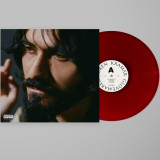
The 9th studio album of the band tumido features trumpet player Alex Kranabetter (Soap and Skin, Vodoo Jürgens). For more than 20 years Tumido has been on the lookout for something new, always on the move, focused on energy in any form, driving rhythms, powerful bass, spacey drones. Trumpet has always been a big part of their sound universe, so it felt very natural to collaborate with a master of trumpet sounds, Alex Kranabetter and record an album together.
Lithox - a maelstrom you can't escape, sucked in by a hypnotic bass & driving rhythms into a trance world you don't want to leave Dwa - a summer hit out of Hades on the slide to hell.
180° - a volcanic eruption on a lonely island - pure energy; Dirt Rodeo - the branches of the fire tree dance with laughter, clouds of smoke cloud the senses and the landing is a success.
'Quintela', the debut album by Carme López, a performer, teacher and researcher of traditional oral music from Galicia, is a new experimental work for Galician bagpipe. Influenced by the approach of composers like Éliane Radigue or Pauline Oliveros, the Spanish composer creates slowly modulating sound environments, and stretches the sonic the possibilities of the bagpipe to its absolute limit. 'Quintela' is structured in four movements, plus a prologue and an epilogue, which serve as a link to the contemporary language of the instrument.
The bagpipe is strongly tied to traditional musics; its use in different genres and musical contexts is extremely limited and unimaginative. 'Quintela' brings it to a wholly unknown field, decontextualising the bagpipe in order to elevate a personal approach, and leaving behind its male-dominated past (in which it relates to ideas of prestige, dominance or carries even sexual connotations). López expertly demonstrates its grandeur and breadth; the music on 'Quintela' ranges from barely audible sounds of air passing through the hide bag through rhythmical use of its reeds to all-encompassing drones with complex harmonic structures and vibrant overtones.
The narrative arc focuses on the composer's past, its people and places, and could be conceived as a journey in and of itself. A homage to those in our memories, but also a step into the unknown, 'Quintela' is an ambitious, graceful and captivating debut.
- Keep Me On Your Mind
- Lover Take It Easy
- I Know You Know
- Grinch / Funeral
- Old Dutch
- When I Was Younger
- Waiting And Waiting
- Hare And Hound
- Rock The Cradle
- Singing To The Mandolin
- The Clover
- Into The O
- Don't Know Why You Move Me
- Speak To Me Muse
- Think Of The Royalties, Lads
- Tumblin Down
- I Wanna Be Where You Are
- Over The Pass
- Your Arms (All The Time)
- See You Free
Pink&Blue[30,04 €]
Bonny Light Horseman - das gefeierte Trio aus Anaïs Mitchell, Eric D. Johnson und Josh Kaufman - hat heute angekündigt, dass ihr drittes Album und Jagjaguwar-Debüt, das Doppelalbum Keep Me on Your Mind/See You Free, am 07. Juni 2024 erscheinen wird. Außerdem haben sie die Leadsingle "I Know You Know" zusammen mit ihrem allerersten Musikvideo veröffentlicht. Der Song, der von Mitchells und Johnsons stets eindringlichen Harmonien getragen wird, zeigt die Fähigkeit der Band, emotionale Erschütterung mit einer Pop-Sensibilität zu verbinden, wie das Wohlfühl-Arrangement und der hymnische Refrain.
- Keep Me On Your Mind
- Lover Take It Easy
- I Know You Know
- Grinch / Funeral
- Old Dutch
- When I Was Younger
- Waiting And Waiting
- Hare And Hound
- Rock The Cradle
- Singing To The Mandolin
- The Clover
- Into The O
- Don't Know Why You Move Me
- Speak To Me Muse
- Think Of The Royalties, Lads
- Tumblin Down
- I Wanna Be Where You Are
- Over The Pass
- Your Arms (All The Time)
- See You Free
Black Vinyl[29,62 €]
Bonny Light Horseman - das gefeierte Trio aus Anaïs Mitchell, Eric D. Johnson und Josh Kaufman - hat heute angekündigt, dass ihr drittes Album und Jagjaguwar-Debüt, das Doppelalbum Keep Me on Your Mind/See You Free, am 07. Juni 2024 erscheinen wird. Außerdem haben sie die Leadsingle "I Know You Know" zusammen mit ihrem allerersten Musikvideo veröffentlicht. Der Song, der von Mitchells und Johnsons stets eindringlichen Harmonien getragen wird, zeigt die Fähigkeit der Band, emotionale Erschütterung mit einer Pop-Sensibilität zu verbinden, wie das Wohlfühl-Arrangement und der hymnische Refrain.
- A1: Move To The Country
- A2: Internet Cowboys
- A3: San Francisco Sound '67
- A4: A Trip And A Stumble (For Leya)
- A5: This Way
- B1: Backbone Slip
- B2: Let The Music Talk
- B3: Funky Music
- B4: Cryin' Out Loud
- B5: Elisabeth
Fast 20 Jahre ist es her, dass Seasick Steves gefeierter Auftritt in Jools Hollands Hootenanny den unbekannten amerikanischen Singer-Songwriter zu weltweitem Ruhm verhalf, und seine verbeulte dreisaitige japanische Gitarre und die alte hölzerne Stompbox Musikgeschichte schrieben. Die überwältigende Resonanz überraschte niemanden mehr als Steve selbst und traf ihn wie ein Blitzschlag, dessen Auswirkungen auch fast zwei Jahrzehnte später noch zu spüren sind – inzwischen ist er auf fast allen großen Festivals der Welt aufgetreten und hat über zwei Millionen Alben verkauft. Sein neues Album "A Trip A Stumble A Fall Down On Your Knees" erscheint über So Recordings. Es ist ein Album, von dem er stolz sagt, dass es sein bisheriges Lieblingsalbum ist: "This album was made by mistake, as the title suggests we just tripped and stumbled into it, and it became my favourite album ever and the piece of work I’m most proud of to date. There’s not a week goes by that I don’t thank my lucky stars for that night on the Hootenanny which has brought us here to this record."
A home, a house, has countless frequencies. Each room, each corner feels different. Swings differently. And as you grow older, you realize which corner is yours. But yeah, it takes time…
It certainly marks the end of an era when the house one called home as a kid no longer exists. This home, it was the starting point of so many journeys. Of one big, ongoing journey. And so it feels good, soothing, reassuring to at least return to a spot nearby – to that (proverbial) hill from where you can see it. Feel the vibe that made you.
Andi Haberl’s debut solo album as Sun is sort of dedicated to that house. It’s a journey leading to that hill overlooking everything that made him. It’s not about nostalgia, not about actually returning to a specific place. Instead, it’s about finding a personal frequency, an overlapping of sounds and samples, an open space that mirrors and extends whatever frequencies felt right at different points in time.
“To me, the results feel like Gold Panda/Four Tet meets Steve Reich meets Krautrock meets film scores. I just really wanted to create moods that touch me – and ideally others, too.”
Talking about his first solo album, Haberl recalls many stages: early compositions that ended up on Alien Ensemble’s albums, early DIY/home studio/multi-instrumentalist inspirations (Le Millipede), new technologies that came and went, even a set of wildly convincing arrangements (done with Cico Beck’s crucial input) that ultimately became stepping stones for yet another round of DIY takes. “It was a long, recurring process, and the songs went through so many different versions,” he says, talking about phases of growth (“I added more and more equipment over time”) and pruning, “cleaning up my music a bit.” Tending towards instruments that open up space, and slowly falling in love with sampling, he certainly didn’t rush things once it was time for interior design decisions ;)
“During this whole process I got to learn so much about my own taste, how I prefer to listen to the pieces, which musical elements really matter to me… and what my own voice is. For example, that acoustic elements are most important to me: the banjo, piano, drums, my voice, glockenspiel, trumpet, melodica. Anything that opens up some space.”
Every journey begins with a search: “Missing” with its plucked chords opens like a sunrise over pastoral plains, gently leading the way towards the intricate, playful explosion that occurs once a certain amount of energy (“Sun”) hits dirt and other surfaces: things grow, clot and curdle into new shapes, like new buds; layers of sound move forward, drenched in Spring’s new light. Relying on samples to ask for precipitation (“Rain On Me”), robotic “Low” goes from barren to bass-heavy after its midway shift in pace, full of loops plucked from the shade.
Towards the album’s midpoint, things are suddenly reversed: “Cluster” has that backwards pull, you can’t tell what’s what, yet everything is perfectly locked in, as the pace increases once again. And before the title song shimmers with densified cheering (to eventually stand tall like early Lymbyc Systym), “Beside Me” swipes you off your feet with its booming bass drum. The beat returns once again (“Daydream”), full of searching voices underneath, and at “Dawnday,” we can finally catch a melancholy view of the house. Voices hum. It’s the score moment of the album. Everything makes sense now. A happy end of sorts?
“I want to take people on a journey. A personal journey, too, because when my parents split up and sold the house I grew up in, I felt a bit like the ground had fallen out from under my feet. But I have dedicated the album title and the accompanying piece to this house… so I can keep it in good memory.”
“I Can See Our House From Here” has been a long time coming. It’s been a long journey. Homeward-bound. Leading to a place that’s really Haberl’s – his sound. His frequencies.
Known as a long-time member of The Notwist and various other bands/projects (Alien Ensemble, AMEO, jersey, Ditty etc.), Berlin-based drummer/composer Andi Haberl has also worked with My Brightest Diamond, Till Brönner, Owen Pallet, and Kurt Rosenwinkel, to name a few. “I Can See Our House From Here” is his first solo offering.
Red Vinyl - In the Pines seemed, at the time, an eccentric career move. The Triffids were widely believed, by their modest but fervent fanbase and a legion of crusading critics, to be but one determined, faithful leap from ascent to the stratospheres. wandering off into the outback, much like one of the deranged characters that had inhabited Born Sandy Devotional, did not seem calculated to redeem the tantalising promise of that astounding album. The Triffids knew what they were doing, though: In the Pines is a thing of modest majesty, at once haunted by the desolation of its circumstances (the gothic folk waltz of the title track, the knelling, intense Kathy Knows) and suffused with the infectious camaraderie of people making music for the joy of it (a rowdy singalong of Bill Anderson's country standard Once a Day, led by Graham Lee, at what one can only suspect was the end of a very, very long day). In the Pines has often been likened, in terms of both songwriting quality and spirit, to Bob Dylan and the Band's The Basement Tapes, and it is not unduly flattered by the comparison.
- A1: Thanku (Feat. Dave Chappelle)
- A2: 86Sentra
- A3: Moveon
- A4: Keepher (Feat. Thundercat)
- A5: Distractions
- A6: Lookin’
- A7: Whereigo (Feat H.e.r.)
- A8: Daydreaming
- A9: Fromhere (Feat. Snoop Dogg / October London)
- B1: Fallthru
- B2: Battlefield
- B3: Hereiam
- B4: Outtheway (Feat. Rae Khalil)
- B5: Sheused
- B6: Moreofit
- B7: Nvr.rmx (Feat. Charlie Wilson)
- B8: Distantspace
- B9: Walkonby (Feat. Earl Sweatshirt / Rae Khalil)
- B10: Evnmore
Gold Smoke With Blue Splatter Vinyl[26,01 €]
Das lang erwartete zweite Album von NxWorries - dem Kult-Duo aus Superstar-Sänger Anderson Paak und dem GRAMMY-prämierten Beatmaker und Produzenten Knxwledge.
8 Jahre nach ihrem bahnbrechenden Debütalbum 'Yes Lawd!' sind NxWorries zurück. Mit 'Why Lawd?' - einer gelungenen Kombination aus Knx's unverwechselbaren Beats und .Paak's unverkennbaren Vocals. Mit von der Partie sind dieses Mal auch Special Guests wie H.E.R., Snoop Dogg, Thundercat, Earl Sweatshirt, Rae Khalil und viele mehr. Knxwledge ist ein GRAMMY-prämierter Künstler und Produzent. Neben erfolgreichen Soloalben hat er unter anderem mit Kendrick Lamar, SiR und Khruangbin zusammengearbeitet. Anderson Paak ist ein mehrfach GRAMMY-prämierter Sänger und Rapper.
- A1: Thanku (Feat. Dave Chappelle)
- A2: 86Sentra
- A3: Moveon
- A4: Keepher (Feat. Thundercat)
- A5: Distractions
- A6: Lookin’
- A7: Whereigo (Feat H.e.r.)
- A8: Daydreaming
- A9: Fromhere (Feat. Snoop Dogg / October London)
- B1: Fallthru
- B2: Battlefield
- B3: Hereiam
- B4: Outtheway (Feat. Rae Khalil)
- B5: Sheused
- B6: Moreofit
- B7: Nvr.rmx (Feat. Charlie Wilson)
- B8: Distantspace
- B9: Walkonby (Feat. Earl Sweatshirt / Rae Khalil)
- B10: Evnmore
Black Vinyl[25,17 €]
Das lang erwartete zweite Album von NxWorries - dem Kult-Duo aus Superstar-Sänger Anderson Paak und dem GRAMMY-prämierten Beatmaker und Produzenten Knxwledge.
8 Jahre nach ihrem bahnbrechenden Debütalbum 'Yes Lawd!' sind NxWorries zurück. Mit 'Why Lawd?' - einer gelungenen Kombination aus Knx's unverwechselbaren Beats und .Paak's unverkennbaren Vocals. Mit von der Partie sind dieses Mal auch Special Guests wie H.E.R., Snoop Dogg, Thundercat, Earl Sweatshirt, Rae Khalil und viele mehr. Knxwledge ist ein GRAMMY-prämierter Künstler und Produzent. Neben erfolgreichen Soloalben hat er unter anderem mit Kendrick Lamar, SiR und Khruangbin zusammengearbeitet. Anderson Paak ist ein mehrfach GRAMMY-prämierter Sänger und Rapper.
- A1: Playing It Cool 00 01:59
- A2: Playing It Right Dub 00 01:53
- A3: Trust & Believe 00 03:37
- A4: In I Dub 00 02:53
- A5: California 00 02:59
- A6: By Night Dub 00 02:53
- B1: Not Good For Us 00 02:52
- B2: Formula Dub 00 02:56
- B3: Be What You Want To Be 00 02:39
- B4: Be Good Dub 00 02:25
- B5: I Can't Do Without You 00 01:59
- B6: Still Need You Dub 00 02:01
Keith Hudson was a one-of-a-kind musical innovator with an impeccable track record from the start: his first studio recording involved former Skatalites, and his earliest releases provided solid-gold hits for Ken Boothe (“Old Fashioned Way”, 1967), John Holt, Delroy Wilson, U-Roy and the others.
With Pick A Dub Hudson produced one of the best dub albums ever, and with The Black Breast Has Produced Her Best, Flesh Of My Skin, Blood Of My Blood he released the first concept album in reggae history, bringing his all-around talents to full fruition as early as 1974. Thematically dedicated entirely to Black history, the latter of these two albums is a masterpiece that captivates with an atmosphere that is as dark as it is deeply spiritual, charged by Hudson's eccentric vocals. Like Lloyd Bullwackie Barnes, his splitting from tradition was dynamic and all his own.
As his career moved on, Hudson found himself working outside of Jamaica, more frequently in London and New York studios and for transatlantic audiences, his dark experimentalism becoming increasingly better suited to the LP than the cardinal 7” reggae format.
Playing It Cool & Playing It Right was released in 1981 on the Joint International label, in NYC, with Lloyd Bullwackie Barnes as the executive producer. The Love Joys and Wayne Jarrett, stalwarts of Barnes' record label, Wackies, would also inimitably feature Hudson at the microphone. Like Bullwackie, Hudson was a devotee of Coxsone Dodd’s Studio One and Playing It Cool & Playing It Right follows Dodd’s then strategy of overdubbing his signature rhythms. The Studio One sides were aimed at the dancefloor and Hudson’s reworkings of tracks like “Melody Maker” are more psychological. Here, deep Barrett Brothers rhythms are made deeper with reverb, filters and distortion; everything pitched down and overlaid with new recordings of guitar, percussion, keyboard, and voice, often heavily treated.
Playing It Cool & Playing It Right continues Hudson’s psycho-acoustic journey into the abysses of existence, and overwhelms with the beauty of artistic self-empowerment. "Too much formula," sings Hudson, whose voice is occasionally reminiscent of Sly Stone or even Tom Waits. "Darkest night," answers an echoing background choir elsewhere. Even more fascinating is Hudson's production, which reflects Black history in even the smallest sound detail, the flashing whip of the slave driver still echoes in the sound of the snare drum. Rarely has a roots sound been made so electrifying, so expansive in all directions, so crystal clear, so bass-warm and echophonic as on these 30 minutes of music.
Playing It Cool & Playing It Right is legendary, strange, utterly compelling music that has possibly never been more topical than it is today.
“A Pawn Surrender is an album about relationships: with myself, with friends, with lovers, and with the world around me. It’s about learning how to play the game, what moves to make, figuring out who I’m up against (most often my toughest opponent is my own internal chaos), choosing when to fight for what you want, or when it’s time to surrender. I’m at the cusp of my thirties and very interested in understanding how to best utilize varying traits within myself to move through life with some sense of strategy and intention; to slow down, celebrate my strengths and ponder my weaknesses. I love the chess motif running throughout the album because chess is a game that requires patience, understanding, and acceptance — three virtues that I struggle to maintain but will always seek to embody.”
“Home” is not always a literal place. Sometimes, “home” represents inner peace and simply learning to hold space for yourself. This is where Vacations lead singer and guitarist Campbell Burns has arrived as he and bandmates Jake Johnson, Nate Delizzotti, and Joseph Van Lier release their third LP, No Place Like Home. “I had this loose concept of No Place Like Home being an Americana-influenced album,” Campbell says of the album’s sonic inspirations. “I wanted to incorporate more pianos, acoustic guitars, Nashville tuning, and country-inspired lap steel, but then also bringing in drum machines and synths and finding a mix between the two.” Produced by Campbell and John Velasquez (Zella Day, Broods), No Place Like Home comprises 10 shimmering tracks brimming with indie-pop hooks and just a touch of bittersweet sensitivity. The new project follows an intense period of transformation for Campbell, who was forced to cancel all touring commitments due to COVID restrictions and subsequently came down with a severe bout of writer’s block. After seeking therapy, he was eventually diagnosed with Pure OCD, a subtype of Obsessive Compulsive Disorder. “Pure OCD is more mental compulsions rather than physical compulsions,” Campbell explains. “If I have an intrusive thought, I'm giving that thought belief and power over myself.” As the world began to open up, so did Campbell’s vibrant creative spirit. Vacations hit the road for the first time in two years, selling out The Fonda in LA and playing Austin City Limits Festival in Austin, experiences that partially inform No Place Like Home. First single and album opener “Next Exit” sparkles with danceable synth riffs and Campbell’s aching falsetto, all while setting the overall tone for what’s to come. “‘Next Exit’ is about living in this monotonous cycle,” Campbell reveals. “You realize that you need an out. You need to — metaphorically and literally — take the next exit out in order to break out of that cycle.” The singer mines his Pure OCD diagnosis on the pondering “Over You,” which thematically picks up where “Next Exit” drops off. Campbell remarks on how “it almost has this ownership over my thoughts and actions to the point where I'm stuck in these loops and rituals that are a direct result of having OCD.” On the Americana-inspired “Midwest,” which seamlessly blends pop electronics, drum machine, and ‘80s synth with poignant lap steel tones, the song remarks on the comedic nature of repeatedly entering into romantic relationships prior to going on tour — only to have them fizzle out upon returning. As the band releases No Place Like Home, Campbell is ironically just fine with not putting down physical roots just yet having recently made the move to LA for exploration, expanding “I needed to get overseas if I wanted to keep progressing — from a career standpoint, but also on a personal level.” The greater priority lies within building that sense of comfort within himself. In the meantime, millions of fans around the world are making a permanent home with Vacations.
A product of the not-so-underground, genre-bending melting pot that is Naarm (Melbourne, Australia). producer, composer and multi-instrumentalist Don Glori (AKA Gordon Li) prepares to unleash his forthcoming album ‘Don’t Forget To Have Fun’ via DeepMatter Records.
Following the release of his much-heralded 2022 LP ‘Welcome’, and a relocation to London, Don managed to tap into a potent creative current, by taking himself to a place of discomfort, and taking his creative back to basics for ‘Don’t Forget To Have Fun’. This invigorating approach helped distill the initial album sketches into a compelling and intoxicating listening experience across the record, creating a true work of art, traversing jazz, funk, soul, RnB, samba and beyond. Whilst the record itself is hard to describe, but even harder to forget.
Album opener ‘Pause’ pairs psychedelic influences with a cyclic loping groove and focuses on recognising a safe space that can act as a refuge. Taking inspiration from Steely Dan, Brian Bennett & Azymuth, ‘Emerald’ channels Jazz rock, 70's LA studio energy, with the faster funk sections featuring an unruly amount of mouth percussion, synth lead lines, and vocal melodies that weave in and around the tight horn arrangements. ‘All Seeds’ is a heady blend of samba and Brazilian street soul, with field recordings of Don’s old house in Melbourne providing additional seasoning. ‘First Touch’ is a downtempo 80’s boogie-infused gem, keeping proceedings nice and sleazy. The final three movements move through one fluid composition, charting the disorientating course of a fever dream, through beguiling astral travels, unexplainable occurrences, and transcendent moments.
A product of the not-so-underground, genre-bending melting pot that is Naarm (Melbourne, Australia). producer, composer and multi-instrumentalist Don Glori (AKA Gordon Li) prepares to unleash his forthcoming album ‘Don’t Forget To Have Fun’ via DeepMatter Records.
Following the release of his much-heralded 2022 LP ‘Welcome’, and a relocation to London, Don managed to tap into a potent creative current, by taking himself to a place of discomfort, and taking his creative back to basics for ‘Don’t Forget To Have Fun’. This invigorating approach helped distill the initial album sketches into a compelling and intoxicating listening experience across the record, creating a true work of art, traversing jazz, funk, soul, RnB, samba and beyond. Whilst the record itself is hard to describe, but even harder to forget.
Album opener ‘Pause’ pairs psychedelic influences with a cyclic loping groove and focuses on recognising a safe space that can act as a refuge. Taking inspiration from Steely Dan, Brian Bennett & Azymuth, ‘Emerald’ channels Jazz rock, 70's LA studio energy, with the faster funk sections featuring an unruly amount of mouth percussion, synth lead lines, and vocal melodies that weave in and around the tight horn arrangements. ‘All Seeds’ is a heady blend of samba and Brazilian street soul, with field recordings of Don’s old house in Melbourne providing additional seasoning. ‘First Touch’ is a downtempo 80’s boogie-infused gem, keeping proceedings nice and sleazy. The final three movements move through one fluid composition, charting the disorientating course of a fever dream, through beguiling astral travels, unexplainable occurrences, and transcendent moments.
One of the best reggae albums of the ‘80s and one of the real highlights in the Real Authentic Sound label catalog finally gets an LP reissue! Lascelle “Wiss” Bulgin, Albert “Apple Gabriel” Craig, and Cecil “Skelly” Spence all contracted childhood polio, and met at a Jamaican rehab center; in the ‘70s, they formed Israel Vibration and their first record, The Same Song, released in 1978 on the Top Ranking label, was an international smash. But by the time they released Strength of My Life in 1988, it had been seven years since they had made a record, having fled Jamaica in the intervening years to seek better health care and to escape the dancehall scene. Against all odds, Strength of My Life turned out to be a triumph, the beginning of the group’s partnership with the Roots Radics and a reaffirmation of the love the group’s members had for each other and a celebration, as the title goes, of the strength of their lives (we defy you not to be moved by the title track). That’s Augustus Pablo on melodica on “Greedy Dog” and Dwight Pinkney on guitar on “Jah Love Me,” by the way. Roots reggae royalty!
A deep, zouk/electronic dancehall crossover track from Cameroonian artist Maréchal Papillon, including a brand new dub version from Canadian producer Poirier Ferdinand ‘Maréchal’ Papillon was part of the makossa wave that moved from Cameroon to France and across the African diaspora in the 80s and 90s, bringing the sounds of rhythms of Douala and Yaoundé to the clubs and dancefloors of Paris. Although best known for his Sakissa style - his own uptempo take on the makossa of Cameroon - Papillon also regularly featured zouk and reggae influenced tracks on his albums, combining Caribbean and African influences into a unique sound that has stood the test of time. ‘Moulongo’ originally appeared on Papillon’s highly sought after 1995 album “Homme fort….je suis sérieux” and was recorded at Studio de la Madeleine in Paris. The Moulongo session features a who’s who of the Paris scene of the time - Aladji Touré and Toto Guillaume from Cameroon as well as Congolese guitar greats Ngoma Lokito and Nene Tchacou - and combines dancehall, zouk and makossa elements for a pan-African dancefloor sureshot.
What Mom Jeans have proved themselves capable of in the past 2 years is nothing short of fantastic. Growing from ordinary college students to national touring artists in a matter of months, the indie rock quartet has been on a trajectory most bands could only dream of. The DIY touring route quickly had to fall by the wayside, as 200, sometimes 300, kids were showing up to house shows in basements across the country. Often, the band wouldn’t make it through more than a few songs before police had to come shut it down. Now, you can find them in venues of increasing size around the states, as one of the most sought after acts in their genre. On a constant stream of buzz, pressing after pressing of their debut hit “Best Buds” (2016) has sold out and the fans cannot get enough of the music they have been putting out. Music that takes influence from predecessors such as Modern Baseball and The Front Bottoms, but adds that new flavor that sets them into a league of their own, The Mom Jeans craze is just beginning.
"Det Foranderlige Instrument" music for 24 Yamaha DX-7 synthesizers by Danish composer, musician and teacher Anders P Jensen. Departing from its iconic 80s pop sound, Anders P Jensen breathes new life into the DX-7, leveraging complex instrument preparations inspired by musical luminaries like Harry Partch and Björk, resulting in mesmerizing electronic symphony across 12 movements, where the instrument evolves autonomously, challenging conventional notions of composition. Besides Anders P Jensen on synthesizers, the album also features Zhang Yu on guzheng. "Study No. 11" is composed by Conlon Nancarrow, here arranged for the DX-7s. "Det Foranderlige Instrument" which translates as "The Ever Changing Instrument" is Anders P Jensen second release on Escho.
Fifth solo album from saxophonist Julius Gabriel. Born out of new sounds and rhythms that the musician discovered during the pandemic, “Tales From The Subterranean” embodies a blend of primal energy and inventive exploration across twelve tracks. The opener “Time Riding” sets the mood, a tearing rhythm that sounds like a frenetic tap dance. It invites you to move and when you get to “Footworks” you are all set up, merging saxophone finger percussion with a continuous siren whisper emanating from the instrument, provoking euphoria, fear and satisfaction all at once. Moving on, you start to understand the sense of discovery behind the record and the needs Julius had, like to construct a saxophone with drone capabilities and closer to an idea of natural sound. “Hailing From The Mountains” has a meditative tone; “Westward At Sundown” feels like a ballad. Born from darkness yet radiating with newfound light, “Tales from the Subterranean“ stands as a testament to the resilience of artistic expression. It is primal music.
All music composed and performed by Julius Gabriel on electroacoustic tenor saxophone and twin soprano saxophone.
The bleak and foreboding landscape surrounding Keeley's North Yorkshire home seems to inhabit her third LP, 'The Hollow'. The moors, visible from her studio window, impact upon a music that feels made of these places: windswept, rain-soaked and blinking through the low-lit landscape. The album's title derives from discovering a long-abandoned mining shaft whilst out walking - the past lurking within and haunting the present we now occupy. A connection to time that places us within it, facing what is gone and what may come. But also, perhaps that time has no concern as to whether we're here or not.
Keeley's unique elemental voice again sits centrally within this world-building. Her cathartic reflections are exorcisms in song. We hear an artist making sense of her life, willing to expose vulnerability without ever appearing weak. Working again with producer Ross Downes, the LP features Matthew Bourne and Colin Stetson, Forsyth sought to expand both her voice and music. Taking aspects of sacred music, minimalist post-classical, dark ambient, film and theatre soundtracks, she layers her vocals into chamber choirs, applies pitch shifts and other digital processing, moves from clear articulate intention to mumbled numb utterances.
Composer Mihály Vig's score to Bela Tarr’s film 'The Turin Horse' is reimagined as a pressurised outpouring, recasting the everyday within a mythical light of survival and hope. On ‘A Shift’, Mal Finch's protest song ‘We Are Women, We Are Strong ‘, originally sung by wives and daughters in support of the '80s miner’s strikes, is recontextualised in solidarity for an experience of creative labour.
Makin' Moves! Here we present the hot new limited Edition Vinyl EP.
Side A brings you a tantalising remix from Chicago's finest, Mr Glenn Underground! "Let It Go" originally produced by MAQman and Joseph Junior on MM, gets the special treatment where GU gives us his signature CVO mix which is sure to grab the attention of DJ's, dancers and music lovers worldwide!!!
Side B On the flip we present a man of very few words, however expresses an executes the deep soulful sound eloquently. Trinidadian Deep gets busy with championing his signature roots stylee, curated especially for the dance floor sprinkled with a little baby powder!
DJ Support: Danny Howard, Annie Mac, Mistajam, Pete Tong, Charlie Hedges, Kraak & Smaak, Maxinne, Todd Terry, Alex Preston, Full Intention, GW Harrison, DJ Rae, Rudimental, Alaia & Gallo, Illyus & Barrientos, Johan S, David Penn, Sam Divine, Riva Starr, Claptone, Nice7, Dario D’Attis, Mousse T, S-Man, Huxley, KC Lights, Friend Within, Dombresky, Gorgon City, Chris Lake, Format:B, Pirupa, TCTS, Alan Fitzpatrick, Low Steppa, Mat.Joe, Raumakustik, Eskuche
Kicking things off on our next 4-track vinyl sampler series is Toolroom's very own Martin Ikin who returns to the label with ‘Make U Sweat’! He was the Best-selling Tech House artist on Beatport in 2020 and 2021 and has over 1m monthly listeners across streaming platforms. Recent studio collabs have included Noizu and Joshwa and tours have seen him travel far and wide to the US, Brazil, Bali, Ibiza, Italy, Croatia and of course, his hometown of London. This new record is the follow up to 'Oscill8' that dropped in March 2023 and sits in a similar lane, in that it's pure, unadulterated club weaponry! Next up is Italian house legend Flashmob with the frenetic, high-energy club vibe of new cut ‘My Body’. Flashmob's sound, production and go-for-broke DJ sets have changed with the game, embracing the vitality of new house music rather than hankering after sentimental sunsets. His ethic and aesthetic move relentlessly forward, using the old and new to craft unique sonic alchemy from big festivals like Tomorrowland to the intimacy of small clubs on the international circuit. ‘My Body’ is typical of Flashmob's current sound, combining solid drums and some insane synths and fx, alongside an earworm vocal sample that results in yet another memorable club cut from an established master. Canadian Tech House maestro Nathan Barato debuts on Toolroom kicking off the B-side to the vinyl alongside studio partner, Matheo Velez with 'Weapon'. A record that has already caught the attention of the underground elite with Michael Bibi premiering the track at his first appearance back at DC-10 in Ibiza last Summer. Both artists are enjoying great success across key labels such as Viva, Circus, Snatch and RAWthentic. This is an addictive, bumpy club track
that packs a huge punch on the dance floor and actually features Nathan's very own 'Move me… Rock me' vocals! Rounding things off is UK DJ/producer duo, Jenn Getz & Alfie who are residents at Dubai's #1 nightlife destination, Soho Garden, where they warm up for legends such as Sonny Fodera, MK, Claptone, Solardo & Fisher on a weekly basis. In their relatively short 3 year career they have already released on Solotoko, Abode and Toolroom Trax and now debut on Toolroom with 'Vibration'. Both girls are incredibly passionate about house music and are also big advocates for a life centered around well-being and meditation, and the idea of this record was to combine their 2 passions in life, so they proceeded to co-write these original lyrics to accompany the track, which in itself is very inspiring! This is a super cool club record that will excite fans and DJ's alike, welcome to the Toolroom Family, Jenn Getz & Alfie!
Countless radio plays on Radio 1 from Danny Howard, Sarah Storie, Pete Tong Other notable radio plays – Kiss FM, Toolroom Radio, Sirius XM, Data Transmission Radio, Radio 1 Dance Anthems, Radio 1 Party Anthems, Rinse FM, Select Radio, Tomorrowland Radio
Santiago Salazar, aka S², presents four funky, soulful electro-techno tracks for Limited Network’s – ninth release. Dynamic Allocation starts the EP off with captivating string and bassline arrangements, harkening back to the spirit of UR. Cache Memory follows up with dark pads and a UR-sounding deep and detuned grungy bassline supported by an electro drum workout. Accumulator is when Miami Bass meets Detroit techno seasoned with Santiago’s signature sound design. Data Hierarchy closes the EP with a spiritual universal electro jam arranged to move your mind and body.
While she was still a member of Nasmak, one of the leading bands of the Dutch ultra-movement, Truus de Groot started Plus Instruments in 1978 with herself as the sole member. When the project evolved, she found a wide range of rotating collaborators like Michel Waisvisz, Lee Ranaldo and James Sclavunos. Plus Instruments was about freedom and the live performances were largely improvised. The sound minimal but captivating. The music always came from within, but De Groot was also triggered by bands like Red Crayola, Suicide, DAF, Wire, Per Ubu, Devo and the No Wave scene in NY. She was always experimenting with primitive multi-track recording and whatever crappy gadgets she could find. Always looking for a gritty, dirty sound and bizarre overtones.
At a young age she travelled to New York and began to immerse herself in the nightlife of the city that never sleeps. Here she found true creativity, passion and expression. The club scene was alive but highly competitive, so this fearless Dutch girl would just knock on promoter’s doors to get gigs booked at places like CBGB’s, Peppermint Lounge, Underground and the Pyramid. De Groot eventually settled in the United States and never stopped experimenting with sound. In recent years she reinvented Plus Instruments and led the group into new territory.
The recordings for this LP were made by De Groot at home and the music is experimental, minimal, industrial but also playful, sounding nothing like most of the later material. 14 tracks in total of which 7 are taken from the elusive and impossible to find self-released debut cassette as ‘Truss Plus Instruments’ which was sparingly distributed by Nigel Jacklin and his legendary Alien Brains fanzine in 1980. The remaining 7 tracks are from the same period (1979-1980) and were carefully selected from the vast archive of De Groot. We are glad to present this anthology that serves as a long overdue testimony to the formative phase of a unique female pioneer of electronic music.
"Espontaneamente se Tenta: Aventuras Sonoras de Djalma Corrêa is an album of deeply exploratory pieces by legendary percussionist and composer Djalma Corrêa. This double-LP set features previously unreleased recordings that cover a wide range of sonic experiments, revealing an unknown side of the prolific and groundbreaking Brazilian artist. Most of the tracks on this album were digitized for the first time – directly from the original tapes – and were compiled in collaboration with Corrêa just before he passed.
The result is a wild and unsettling collage that shows us just how original and intense Corrêa could be: from the unorthodox electroacoustic piece Evolução (Para Fita e Filme), which channels ancestral African inspirations to create a sonic cosmogonical narrative, to the proto-mixtape Exemplo de Sintetizadores, in which he transitions from transcendental drones to astral cha-cha-chas.
While the compilation might seem disjointed at first listen, it is in fact the most accurate translation or representation of his central concept: spontaneous music. Djalma's relationship with sound was always guided by his fearless approach to listening, and by his audacious and dynamic interaction with both musicians and equipment, which enabled him to work across a wide array of genres: from jazz to completely abstract music, always through a personal DIY ethic.
Corrêa developed a strong bond with experimentalist and inventor Walter Smetak, with whom he shared a studio during his formative years at Universidade Federal da Bahia. Suite Contagotas, featured in this collection, is no less than a sonic materialization of that bond: an experiment revolving around dripping water and its randomness – a tentative exploration of the ideas and possibilities envisioned by Smetak for his audacious, albeit unrealized, Estúdio OVO.
Djalma, however, is best known for his studio work in historical albums, including many by Caetano Veloso, Gilberto Gil and Jorge Ben, and for his own polyrhythmic opus Baiafro. The last track is an early recording called Bossa 2000 dC, first performed by Djalma at the 1964 Nós, Por Exemplo concert, an event which is often cited as marking the beginning of the Tropicalia movement. At the time, he was the only artist in the lineup using electronic devices to create sounds, e.g. medical oscillators and contact mics to augment his percussive palette.
The artwork is an amalgamation of material found in the Djalma Corrêa Archive (currently managed by his son Caetano Corrêa) and other material created during the period in which the record was being put together. The intention is to guide the listeners through this possibly tempestuous soundscape, giving them additional resources so that they may draw their own meanings and make their own sense of this extremely immersive and original experience – which is like nothing we've ever heard before."
very dope.
With this EP an attempt is made at documenting the vibrant action happening during the late 1970s and early 1980s in the Pioneer Valley area of Western Massachusetts, US. The story is richer than the snapshot we present here, and a more detailed account is to be found in the accompanying book that can be purchased separately.
The Five Colleges in Hampshire County congregated a vast student population that inevitably interacted with the towns in the area. Bars, music and record stores, live music and a lot of experimentation and free thinking. Hampshire College, especially, promoted new approaches to teaching, subjects that might be considered radical by some even today, although a more favourable context would now surely exist for openly debating such topics as American Indians, Kayak Design, Black Oral Tradition, Food Management, etc. And the music? The immediate "punk effect" motivated the creation of numerous bands, many short lived, others evolving into New Wave / Power Pop territory, eventually crossing into Post-Punk experimentation. What is captured in "Noho EP" is a more electronic disposition, favoured by the existence of EMS gear and other equipment at Hampshire College and University of Massachusetts. We chose to focus on a group of musicians who, for a time, played together in different combinations under the loose umbrella of the Tekno Tunes label and the structure around it.
These musicians come from very different backgrounds and the nucleus portrayed here consisted of Christopher Vine, Elliott Sharp, James Whittemore and Nicholas Brown.
Of the several line-up changes The Scientific Americans went through, it was actually only the duo of Chris Vine and Jim Whittemore who recorded "Among Bodge Watt". Never before released, it is a companion piece to their track "El Salvador" available on the 1981 ROIR tape-album "Load & Go!". The Sci Ams were founders of the Tekno Tunes label and also created the Tekno Tours "concert promotion agency", under which name they exposed local audiences to bands such as The Stranglers, The Slits, Pylon, Pere Ubu, The Psychedelic Furs, The Bush Tetras, Steel Pulse, etc. Their own sound kept progressing but at its best there's a solid dub undercurrent, pretty obvious in "Among Bodge Watt".
Human Error was born out of a collective jam by Chris Vine, Elliott Sharp, Jim Whittemore and Nick Brown. Elliott Sharp had moved to Northampton in August of 1978 and naturally became involved in the local music scene, hooking up first with Whittemore at a hi-fi audio store where he worked at the time. Basement jams followed stimulating conversations, and other musicians joined the sessions. "Clandestinator" sounds gorgeously loose, an effortless groove coming from a quasi-dub set-up. Nothing here seems calculated, the music just flows, contagious and irregular as the handclaps in the mix.
The Higher Primates later evolved into a "proper" band but started as Nick Brown's solo project. The Primates only ever released a (now sought-after) 7" single in 1980 (on the Tekno Tunes label, precisely). Both tracks on "Noho EP" were recorded the following year and never released until now. "Auto Music in the Disco Dub Style" is self-explanatory, with a steady, mid-tempo TR808 beat running through, supporting synth squelches, echoes and reverbs, a fat bassline, dissonant melodic lines and odd vocal snippets. Kind of a DJ tool when the concept was barely in place. The more uptempo "Teresa Variations" adds a Fender Jazz bass and Selmer sax to the electronics. It actually sounds more "Disco", even with the robotic, unintelligible vocals. On top of this, the vibe is sealed by the overall Radiophonic Workshop analogue strangeness applied to a dance beat.
Duke Ellington teams up here with bassist Ray Brown in a set reminiscent of Duke's work with Jimmy Blanton three decades before. In addition to the four-part "Fragmented Suite for Piano and Bass," the duo plays five standards (including "Pitter Panther Patter" from the Blanton days and three other Ellington-associated tunes).
Eastside Edits strikes again with two DJ friendly versions of 1976 chart toppers! Their 7th release features
two tracks from the talented Greek DJ/Producer/Remixer, DJ S! DJ S returns to the classics with two
70’s dancefloor weapons guaranteed to get the party started!
SIDE A) “Moves At Midnight” takes an all-time Disco favorite and updates it for 2024 with chunkier
drums and a steady, mixable groove. All the feel of the 70’s original without the clumsiness of mixing a
70’s 45. Disco perfection from DJ S!
SIDE B) “Lay Down That Boogie” breathes new life into a 70’s Funk/Rock staple. This funky edit adds a
DJ friendly intro, subtle arrangement changes, and chunkier drums, all without losing that original 70’s
feel. Another very tasteful edit from DJ S!
Eszaid imagines the sonic paranoia of discovery with Brumes, a 9 part movement for FELT that coalesces industrialised murmurs from the currents of cavernous creep.
An electronic complexion shaded dusk haunts Eszaid’s output. Previous releases on L.I.E.S., Worship and his own Collapsing Market label exemplified a shutters-closed style of rhythmic and melodic variance that teetered on techno-related realities with the lights kept firmly off. The Avignon-based artist lands at Fergus Jones's FELT stable to further the imprint’s unpredictability, coaxing some of his most perturbed oddities yet with Brumes.
The mythologized voyage of Pytheas to the island of Thule provides the abstracted blueprint for Brumes’ 9 parts. Each movement is born of soundscapes inspired by envisaged scenes of his trip to the North, an aural construction of interpretation. Eszaid unwinds tense metronomic rhythms within sparse sound environments, sprung with globular textures of motorik warbles and darkside atmospherics. Its minimalist beat complexions are buoyant by an abstracted fear of the unknown, tracks defined by bobbling industriale, Gregorian dub and atonal menace. It’s an alternative experience to the often faux-jubilance of expeditious revelation, and something that will resonate long after Nord’s beatless modulation fade out.
A landmark recording and masterful symphony of performance, composition, and execution, Miles Davis' E.S.P. established the template jazz would follow for the following decade. The 1965 record splits the gap between accessible hard-bop and the cutting-edge approach Davis increasingly pursued into the 1970s. Adventurous, sophisticated, and yet altogether cohesive, E.S.P. stands out not only due to its elastic compositions but via its chemistry, interplay, and feeling attained by the instrumentalists. The first album Davis' classic second quintet made together, it's also very arguably the group's best. Never before has the effort been experienced in such transformational sound.
Pressed at RTI, this 180g 45RPM 2LP set of E.S.P. renders the music's dynamics, pitch, colors, and textures with lifelike realism and proper scale. Reference-caliber separation, wall-to-wall soundstages, and distinct images magnify the intensity and beauty of Davis and Co.'s creations. Whether it's the distinctive snap of Tony Williams' drum sticks against the snare head, air moving through Davis' trumpet, acoustic thrum of Ron Carter's bass, or upper register of Herbie Hancock's piano, the sound is better than you'd even hear in the most intimate jazz clubs. Prepare to be swayed on every level.
For many, E.S.P. looms among the decade's best albums if only because of the significance of Davis' line-up. While Hancock, Williams, and Carter are holdovers that began playing with one another on 1963's Seven Steps to Heaven, Wayne Shorter functions as the secret weapon and key addition responsible for this ensemble hitting a new peak. Indeed, the saxophonist helped pen two of the seven compositions here – notably, E.S.P. is entirely comprised originals and clocked in as one of the longest-running jazz LPs issued at the time – and, more importantly, grants Davis the confidence and leeway necessary for the eruption of enigma, steadiness, and tension.
As he did with John Coltrane year earlier, Davis hangs back and picks his moments to solo, with Shorter stepping up to supply the churn. Their bandmates respond in kind, itching to take off into new stratospheres all the while keeping their improvisations grounded and connected to the piece at hand. Guided by Davis' visions and inspired by current boundary-pushing works by the likes of Ornette Coleman, Cecil Taylor, and Coltrane, the magnificent results spark with variation, harmony, emotion, energy, and brilliant movement.
Interlocking lines drive "Little One," alternating rhythms pulse through the funky "Eighty-One," melodies soar on the balladic "Iris," the aptly titled "Mood" broods over minor-key structures, and "Agitation" – goosed by a two-minute percussive introduction by Williams – delivers on its promise. No record – and no group of musicians – have ever balanced coherent themes and exploratory playing in better fashion than Davis' quintet on E.S.P. It's the avant-garde record even jazz traditionalists love, and essential on every level.
Having been based in Sussex, Philip moved to an old mill in France and never stopped writing. In 2014 he released his organic and honest solo debut album "I'm Not The Man I Used To Be". This was followed up by the critically acclaimed Mental Home Recordings is upon us. And now Philip Parfitt is set to release Dark light via Chicago/London/Paris based label Tip Top Recordings.
A significant milestone in his long accomplished career, Dark Light features 10 beautifully crafted pieces, including deep cuts 'I know I shouldn't but voices' and 'Dark light' the title track, give ample evidence of Philip's prowess as a wordsmith and musician, but also arranger and producer. Think Nick Drake and Captain Beefheart accidentally bumping into each other at a private viewing of Bright Sta
in Heaven, you won't be too far out of the crease. Philip is accompanied by a merry band of friends and luminaries including Alex Creepy Mojo, Amelie Fish, Lucie Robet (who also wrote title track Dark Light with Philip), Gilda Scouarnec, Rog Mogale (who also mastered the album), and Mark Refoy.
Dark Light is released on digital, CD, limited edition vinyl LP with 200 copies in black and 200 copies in dark purple to match the darkly beautiful artwork by Fernando Ruibal. Sleeve notes come from Matthew Spector within the included booklet with art from Joane Charlotte Senechal, photography by Sarah Baba, and design by Anna Mort.
- A1: I'm Your Hoochie Coochie Man
- A2: Baby Please Don't Go
- A3: Rollin' And Rumblin' (Part 1)
- A4: Rollin' And Rumblin' (Part 2)
- A5: Gypsy Woman
- A6: I Just Want To Make Love To You
- A7: You're Gonna Miss Me (When I'm Dead And Gone)
- B1: Mannish Boy
- B2: Smokestack Lightnin
- B3: Standin' Here Tremblin
- B4: Just A Dream (On My Mind)
- B5: She's All Right
- B6: I Want To Be Loved
- B7: The Call Me Muddy Waters
- C1: Got My Mojo Working
- C2: Rock Me
- C3: I'm Ready
- C4: Diamonds At Your Feet
- C5: Mopper's Blues
- C6: Loving Man
- C7: Evil
- D1: Forty Days And Forty Nights
- D2: She Moves Me
- D3: Trouble No More
- D4: Hard Day Blues
- D5: Rollin' Stone
- D6: I Can't Be Satisfied
- D7: Train Fare Home Blues
Repress!
StarWax magazine celebrates its fifteenth year, it is in the extension of the anniversary event that the vinyl Wild Star Wax 15 Years Edition in Partnership with Overdrive is born!
Curated and Seòected by Dj Coshmar for the most famous STARWAX magazine a powerful dancefloor combo for djs, diggers and clubbing addicted.
Available in stores from September 2022, the tracklist contains six tracks of cumbia, disco, creole funk, bass music and hip-hop that are available exclusively in this vinyl format, at exception of "An Tèt Aw" the last title of side A already available on the Lp of DjeuhDjoah &
Lieutenant
SIMON AND GARFUNKEL’S SWAN SONG: BRIDGE OVER TROUBLED WATER FEATURES METICULOUS PRODUCTION, GORGEOUS SONGWRITING, AND HEALING SPIRIT
Sourced from the Original Master Tapes and Limited to 4,000 Numbered Copies: Mobile Fidelity’s 180s SuperVinyl 33RPM LP Plays with Staggering Detail, Clarity, and Definition
1/4" / 15 IPS analogue master to DSD 256 to analogue console to lathe
Unifying, soothing, comforting: Simon and Garfunkel's Bridge over Troubled Water quickly became the album of an era upon release in 1970, the benchmark set serving as a beacon of hope and hymn of reassurance during a time marked by polarizing changes, social unrest, uncertain politics, and the dawn of a new era. These uplifting reasons — to say nothing about the gorgeous songwriting, meticulous production, and watershed performances — attest to why it is more relevant than ever in our current climate. Music, Bridge over Troubled Water simultaneously suggests and proves, heals all wounds and lifts all boats.
The seminal effort Rolling Stone named the 51st Greatest Album of All Time reaches illustrious sonic and emotional heights on Mobile Fidelity’s 180g SuperVinyl 33RPM LP. Pressed on MoFi SuperVinyl and strictly limited to 4,000 numbered copies, this ultra-hi-fi collector's edition brings you closer to music that picks up where the duo's Bookends leaves off. You'll enjoy deep-black backgrounds and pointillist details. Seemingly every note, breath, and movement is reproduced with exquisite accuracy, clarity, and balance. Each rotation benefits from SuperVinyl’s ultra-low noise floor and superb groove definition.
The best-selling record in the U.S. for several years running and winner of six Grammy Awards — including nods for Record of the Year, Album of the Year, Song of the Year, and Best Engineered Recording — Bridge over Troubled Water endures as a staple of accessible sophistication, angelic elegance, effortless singing, unhinged ambition, and therapeutic spirit. While it would turn out to be the final studio set for a duo surrounded by creative and personal disagreement, Simon and Garfunkel's collaborative ethos and soaring harmonies — combined with reflective narratives centred on the American experience, friendship, romance, and farewells — combine to turn the 11-track work into a paean to resolution, reconciliation, calm, and balance.
Home to the legendary title track graced by Garfunkel's pacifying solo lead vocals as well as the equally famous folk ballad "The Boxer," Peruvian-based "El Condor Pasa," upbeat "Cecilia," and rock ’n’ rolling "Baby Driver,” Bridge over Troubled Water remains as renowned for its musical diversity as its lyrical poignancy. Moving beyond the templates they'd perfected on four prior albums, Simon and Garfunkel embrace a then-unimaginable swath of styles. Rock, pop, gospel, country, R&B, South American, and jazz strains course throughout the songs, each sparked with bold experiments yet grounded in a well-orchestrated melange of melody, rhythm, and classicism that makes everything personal, familiar, and warm.
Not for nothing is Bridge over Troubled Water one of the finest-sounding albums ever made. Featuring instrumentation helmed by members of Los Angeles' fabled Wrecking Crew as well as multiple choral and string sections, songs took hundreds of hours to complete and involved pioneering recording techniques. Evoking both Phil Spector's live"Wall of Sound" approach as well as inventive effects, Bridge over Troubled Water is a triumph of texture, atmosphere, and architecture. Our audiophile edition brings the record's unique traits to the fore.
Whether the reverberation generated by Garfunkel's cassette recorder on "Cecilia," echoing drums captured in a corridor heard throughout "The Boxer," automobile noises peppering "Baby Driver," layer upon layer of voices dotting "The Only Boy Living in New York," or echo-chamber percussion on the title track, details comes through with stunning accuracy, clarity, and dimensionality. In every regard, Bridge over Troubled Water exudes genius.
Released only eight months after his exhilarating debut, Bruce Springsteen's The Wild, the Innocent & the E Street Shuffle contains rousing dispatches from the boardwalk, the street, the beach, and the bedroom. It explodes with energy, dares to dream, teases with humour, crackles with tragedy, clings to hope, and overflows with discovery, youthfulness, and personality. It features an unforgettable cast of characters — corner boys, teenage hustlers, doomed lovers, jazz men, junk men, factory girls, fortune tellers, alley cats, pimps, escorts, and more — illuminated by vivid colour, breathtaking detail, and poetic action.
Musically, the heartfelt 1973 record is inhabited by sympathetic vignettes and cinematic arrangements steeped in rock 'n' roll, soul, jazz, and R&B. It finds the New Jersey native looking beyond the parameters of his preceding record and seeking to move on from environments he knows well (and chronicles here) by rushing headlong toward unknown territories, adventures, and people. Underpinned by the singer-guitarist's ambitious poetic enterprise and will to succeed, The Wild, the Innocent & the E Street Shuffle is the album on which Springsteen becomes the Boss.
Mastered on Mobile Fidelity's renowned mastering system, pressed at RTI on MoFi SuperVinyl, and strictly limited to 7,500 numbered copies, Mobile Fidelity's UltraDisc One-Step 180g 33RPM LP set is the definitive-sounding version of Springsteen's sophomore record. Benefitting from SuperVinyl’s nearly non-existent noise floor, superb groove definition, and dead-quiet surfaces, The Wild, the Innocent & the E Street Shuffle plays with a clarity, energy, presence, and openness that complement the expressiveness, dynamics, and scope of the seven restless songs that comprise a work Rolling Stone ranked the 345th Greatest Album of All Time.
Beyond the audiophile sonics that practically place you behind the console at 914 Sound Studios — listen to the separation between the instruments, natural decay of the notes, interplay within the widescreen soundstaging, and nothing-to-lose youthfulness of Springsteen’s voice — this reissue takes seriously this record’s influential merit by presenting it in packaging that underlines its status. Tucked in a beautiful slipcase, the LP is housed in a special foil-stamped jacket with faithful-to-the-original graphics. This reissue is made for listeners who prize sound quality and who want to engage themselves in everything involved with the invigorating set that busted Springsteen loose from the club circuit and landed him on the radio
Determined to liberate anyone within earshot and unafraid to come on strong, The Wild, the Innocent & the E Street Shuffle serves as the debut of the E Street Band — not only heard but seen for the first time by most of the public courtesy of the back-cover photograph. This is where saxophonist Clarence Clemons, organist-accordionist Danny Federici, and pianist David Sancious step out of the shadows — and drummer Vini Lopez and bassist Garry Tallent again stoke a fiery rhythmic engine that helps drive the untamed, reimagined big-band swing of “Kitty’s Back,” breathless R&B thrust of “Rosalita (Come Out Tonight),” and carefree dance steps of the funky “The E Street Shuffle.”
Of course, the main attraction remains a then-24-year-old visionary on the precipice of becoming a sensation and turning a then-bloated rock scene on its head. Recorded over three months while Springsteen and company were busy touring his debut LP, The Wild, the Innocent & the E Street Shuffle reflects the high-octane approach the vocalist embraced onstage and drifts away from the label-dictated acoustic-based frameworks of his debut. The set also witnesses Springsteen deepening his observational skills, with narratives such as the romantically tinged “4th of July, Asbury Park (Sandy)” and redemptive epic “Incident on 57th Street” mirroring changes taking place in the singer’s own life, small towns, and America at large.
A thrilling collision of memories, reflections, and composites — Sandy, Rosalita, and the latter’s parents are all based on actual people Springsteen knew, as is the community depicted in the opening track — the aptly titled The Wild, the Innocent & the E Street Shuffle resonates decades on due to its truths, authenticity, and spirit. Those characteristics — as well as the fact that many of its lengthy songs come on as the equivalent of sweaty, feverish soul revue that won’t stop until you’ve been exhausted — also explain how this now-iconic album triumphed over the reservations of industry “experts” that both demanded Springsteen re-record it and instructed deejays not to play it.
Yet there’d be no stopping a record that saw the past, present, and future, a band whose will would not be denied, and a phenomenon who was born to run. A never-ending invitation to act real cool and stay up all night, The Wild, the Innocent & the E Street Shuffle always feels alright.
"Listen to This." As the original working title for Bitches Brew, the instruction and invitation resonates to this day as the best way to approach a record that shattered conventions, altered music history, and, more than five decades after its original release, still sounds far ahead of its time. The aural Mount Rushmore of jazz fusion, Bitches Brew is rightly ranked by virtually every significant outlet among the 100 greatest albums ever made in any genre. Sewn together with vibrant colours, voodoo textures, and ethereal moods, the 1970 landmark emerges with supreme detail on Mobile Fidelity's definitive 180g 33RPM 2LP set.
Sourced from the original master tapes and pressed on 180g vinyl at RTI, this numbered-edition version of Bitches Brew joins the audiophile ranks of other essential Miles Davis sets reissued by Mobile Fidelity. Having established new possibilities for studio-recording techniques, the record can now be experienced to maximum degree by way of a pressing that widens and deepens the soundstage, opens up separation between instruments, and broadens the dynamic range. If ever a jazz album can be said to have gone to outer space and back, this is it.
Davis conceived Bitches Brew by having the musicians stand in a semi-circle, where he pointed at them with vague directions for tempo, solos, and cues. The collective improvisation and interplay spawned a galaxy of melodies and grooves later spliced together by producer Ted Macero. On this reissue, these creations take shape with utmost realism. Compositions stretch across black backgrounds and paint abstract canvasses on par with those of Axis: Bold As Love and Abraxas. Juxtaposed percussion, loose jams, and melodic segues explode with impressionistic verve.
And "verve" defines Bitches Brew. Gathering a Hall of Fame-worthy lineup of musicians and tweaking it according to his desires, Davis follows through on his idea to "put together the greatest rock and roll band you ever heard." Central to his proposition is the presence of two (and sometimes three) drummers and two bassists, a tactical move that thrusts rhythms into central focus. Akin to the futuristic album cover art, the drum-driven suites head toward distant universes and uncharted territories. At once hypnotizing and grooving, they chart maverick adventures with quixotic rock, funk, and R&B elements.
Conceptually, Davis described Bitches Brew as "a novel without words" and "an incredible journey of pain, joy, sorrow, hate, passion, and love." The vast psychedelic expanses of warped echoes, liquid reverb, and tape loops confirm such ambitious contrasts of light and dark, fear and hope. Yet the most absolute characteristic of this watershed effort lies in how it resists definitive interpretation and encourages free thought — the very principles with which Davis conceived the everlasting beauty and fascination that remain Bitches Brew.
rush2theUnknown is a project born in pandemic-era provincial New Zealand, developed in the hills of Izu Peninsula, Japan, but forged in the fire of potent teenage memories — the flames of the future sounds of jungle and drum 'n' bass that exploded onto dance floors across the urban centres of New Zealand in the mid 90's. Two old friends, both who played pivotal roles in the development of New Zealand's own jungle and drum 'n' bass scenes in the 1990s, estranged for decades, reunited amidst the isolation and chaos of covid. They began an experiment, attempting to recapture the feeling of having their heads overwhelmed by sounds they couldn't quite comprehend as adolescents — in particular, channeling the energy, spirit, and vibe of 1995 to 1997, where the ever-mutating evolution of jungle intersected with the dawning of drum 'n' bass to create a utopian future vision, before the latter genre changed course and moved increasingly darker.
By weaving in the influences that these two long-lost friends had accumulated over the decades, most notably from ambient, kankyõ ongaku, new age, minimalism, and some of the deepest research into the history of Japanese video game music ever conducted, the pair attempt to discover new terrain from an specific era of dance music that was never fully explored.
Continuing Mr Bongo’s series exploring the wealth of material released through the record labels of Sonny Lester, 1977’s Funk Reaction finds Hammond B3 organ virtuoso Lonnie Smith at his most dancefloor-friendly. Dripping with groove and swagger, this album skates between jazz-funk, cosmic disco radiance, beat-laden slow-jams and conscious psychedelic soul.
Having played with the likes of George Benson and Lou Donaldson in the ‘60s, alongside releasing a string of albums on Columbia and Blue Note, Funk Reaction sees Smith move into late ‘70s disco-funk-tinged territory.
Originally released on Sonny Lester's Groove Merchant Records successor, Lester Radio Corporation, the album feels more like a collaborative band-orientated project as opposed to a solo artist outing. Featuring some elite session players of the time, including Steve Gadd on drums, guitarist Lance Quinn and bassist Bob Babbitt, the album is tied together expertly by songwriter, arranger and conductor Brad Baker.
It’s worth the price tag alone for the superb disco-funk nugget 'Funk Reaction’. Other highlights include the only Lonnie Smith penned track on the album 'All In My Mind', that shines with a beautiful Stevie Wonder-esque quality and the slick guitar-led floater 'When The Night Is Right’, written by and featuring guitarist Richie Hohenburger. Elsewhere, ‘For The Love Of It’ and the Brad Babbitt written ‘Babbitt's Other Song’ serve up classic jazz funk flavours, both featuring stellar tenor saxophone from Eddie Daniels.
As a whole, the album is a superb example of Lonnie Smith’s ability to merge jazz with elements of funk, soul, disco and beyond, experimenting with ideas whilst broadening the scope of both his audience and appeal. Fans of The Blackbyrds, the CTI / Kudu stable and ‘70s George Benson will dig this!
- A1: Barry Woolnough - Great Father Spirit In The Sky
- A2: David Holmes & Steve Jones - The Reiki Healer From County Down
- A3: The Children Of Sunshine - It's A Long Way To Heaven
- A4: Spark Sparkle - Slythtovery
- A5: Alain Maclean - Talking Judgement Day Blues
- A6: David Crosby - Orleans
- A7: Buddy Holly - Love Is Strange
- B1: After Dinner - Paradise Of Replica
- B2: Lullaby Movement - Ru-Ru (Sleep Little Baby)
- B3: Jeff Bridges & Keefus Ciancia - It's In Every One Of Us
- B4: Song Sung - I'm Not In Love
- C1: Neo Maya - I Wont Hurt You
- C2: Bp Fallon & David Holmes - Henry Mccullough
- C3: Documenta - Love As A Ghost (Produced By David Holmes)
- C4: Keith Fullerton Whitman - Stereo Music For Acoustic Guitar, Buchla Music Box 100 Hewlett Packard Model 236 Oscillator, Electric Guitar And Computer Part I
- D1: Eat Lights Become Lights - Into Forever
- D2: Geese - Andrew Parsnip
- D3: Die Hexen - Gloomy Sunday
- D4: Jon Hopkins & David Holmes Feat Stephen Rea - Elsewhere Anchises
DJ and producer David Holmes is welcomed to the Late Night Tales fraternity with an evocative collection of personal songs and music, peppered with exclusive new material and rare gems. By now, I think we all know David Holmes, right There's acid house Holmes, with bone-rattling Chicago jams and Detroit destroyers, break-digger Holmes responsible for the grittily shaking 'Let's Get Killed' and seminal Essential Mix compilation (which brought Sixto Rodriguez to people's attention, and then there's soundtrack Holmes. His most enduring and vital source of musical inspiration - cinema - plugged into David's rst solo record 'This Film's Crap, Let's Slash the Seats' and inspired 2000's 'Bow Down to the Exit Sign', created as the soundtrack to a not-yet-made movie. Ofcial soundtracks have been bountiful, including scores for Soderbergh's Out Of Sight and Ocean's trilogy, '71, Hunger and Good Vibrations. In a series of personal songs sung by himself, David's last solo album 'The Holy Pictures' explored inuences of La Düsseldorf, The Jesus and Mary Chain and early Brian Eno. His Unloved collaboration with Keefus Ciancia and Jade Vincent then took us on a musical journey full of raw 60s pop-noir, psychedelia and French Ye Ye with a contemporary twist. Somehow he's also found time to produce records by Primal Scream and Jon Spencer Blues Explosion. Unsurprisingly, for someone au fait with matters cinematic, this Late Night Tales conjures up its own mindmovies. It's not only packed with the judiciously selected nuggets for which his mixes are noted but also stuffed with original material, including collaborations with BP Fallon and Jon Hopkins and an amazing new reading of 10cc's 'I'm Not In Love' by Holmes-produced Song Sung. In fact, there's a Celtic thread running through the whole journey with Stephen Rea's reading of an extract from Seamus Heaney's AENEID BOOK VI - Elsewhere Anchises. Among the other gems included here are David Crosby's lush 'Orleans', Buddy Holly's celestial 'Love Is Strange' and the Children Of Sunshine's 'It's A Long Way To Heaven'. David Holmes loves music. It's a way of expressing the sometimes inexpressible or the inconsolable, a questing desire to nd out just what is over the next hill. It's no surprise to learn he's a keen walker. Always on the move, headphones on, lost in some reverie or piece of music, the soundtrack to his life, the stuff that feeds his imagination. I walk a lot. It's amazing for listening to music: your phone or your emails aren't going and you're just in the forest listening to music. It's so intimate. Anyway, I was listening to the KLF's Chill Out album, which still sounds amazing, but it triggered an idea with concrete sounds through travelling and movement. And one of the things I was trying to do was to use this idea not just break up the moods but also as a metaphor for moving through life and arriving in different destinations or arriving at different stages in different parts of your life. Memory, Love, Living, Family, Friendship, Healing, Death and The Afterworld are some of the themes I wanted to explore within this record. Although these strong themes and tracks are personal to me, I also wanted it to be a great listen that was unpredictable yet had a seamless ow - a journey that was personal to me yet to the listener a great compilation of music that they may or may not have heard before. I hope I've succeeded in the later.' David Holmes 2016
- A1: Chosen Few – Dancin’ All Over The World
- A2: The Freex Machine – Freexfunkatized
- A3: Nzimande All Stars – Sporo Disco (Woody Bianchi Edit)
- A4: The Firebolts – Firebolt Hustle
- B1: Aggression - Tag (Woody Bianchi Edit)
- B2: The Movers – Onthekele Beer (Jwala)
- B3: World - You Got The Power
- B4: Joe & Lee – Black Gold Disco Moving Machine
- C1: Joe Pugliese - Plie And Isolation
- C2: The Family Tree - As
- C3: Pressure Point - Straight To The Point
- C4: John Blair - Momma Said Shut Up
- D1: The Headquarters - Sweetie
- D2: Wylie - Fan-Tasy (Woody Bianchi Edit)
- D3: Cania - Visions
- D4: Montreal - Night People
Repress!
We"re back with another instalment of badass Funk from the Disco era with Supafunkanova Volume 3 which has been selected by prolific DJ, producer, remixer and record collector Woody Bianchi. Woody digs deep into his collection, compiling a high-quality album filled with lesser-known disco, funk and boogie. As the title suggests, Supafunkanova focuses on the funkier end of the 70"s & 80"s, showcasing some of the bumpier grooves recorded in the disco era when even James Brown had to take notice of the Saturday Night Fever inspired disco explosion. It will come as no surprise to hear some particularly hard to find gems have been unearthed here, and ones that aren"t just rare and expensive (if you can even find a copy!) but genuinely merit being re-issued. With expansive sleeve notes by Woody himself to give you an in depth insight to the music, artists and personal discovery of each record.
Source 02 is the second release from the Uruguayan label New Source. We are pleased to have the debut of Lorenzo Batlle, Uruguayan producer and DJ.
Track A1 - IDRIS:
Opening the EP, IDRIS invites you to a disorderly dance through time, weaving dub influences, atmospheric acid lines, and fragmented vocals creating an eclectic sonic landscape.
Track A2 - MEDEA:
MEDEA emerges with a soft and hypnotic embrace, drenched in hypnotic bells and delayed acid lines.
Track B1 - SIRIUS:
Inspired by Cyrus, woods, and '80s shades, SIRIUS is a blended journey guided by a pulsating baseline—an invitation to move forward on the dancefloor.
Track B2 - God works in mysterious ways:
Closing the EP, God works in mysterious ways leaves a moody imprint, resonating with house vibes and playful synths bringing joy to the dancefloor.
The current lineup of New Haven's long running Mountain Movers (guitarist/vocalist Dan Greene, bassist Rick Omonte, guitarist Kr yssi Battalene, & drummer Ross Menze) have been playing together for over a decade now, making their recorded debut on a slew of singles released from 2011-2013, but it wasn't until 2015's "Death Magic" (released on New Haven label Safety Meeting) that the potential of that iteration of the group became clear; Mountain Movers are a force of nature. The camaraderie & sensitivity to each others playing has only grown over time, cr ystallizing on the group's trio of albums for Trouble In Mind; 2017's eponymous "Mountain Movers" served as a reintroduction of the group to a larger audience, while 2018's "Pink Skies" raged like a group confident in its strengths, and 2020's prescient "World What World" - written & recorded before the world shut down - slightly shifted focus away from the jams & back toward the weight of guitarist/songwriter Dan Greene's poetic tales of magical realism. The band's ninth album "Walking After Dark" finds a happy medium between both aspects of the band's strengths; Greene's lyrical compositions and the group's long-form improvised jams. To those that are tuned in, that feeling of communion is evident in the Movers' playing. The members swap & cycle effortlessly through instruments without missing a beat, utilizing the downtime of lockdown to write & record every jam in their practice space. Those piles of tapes would eventually get edited & sequenced into "Walking After Dark", a tour-de-force double-album that balances fried, stony brilliance with outré excursions of experimental serenity. Consider the opening track "Bodega On My Mind" that ambles in like a road-worn traveller, its lysergic folk strums peppered with acidic lead lines from Battalene's Telecaster, eventually giving way to "The Sun Shines On The Moon, where the group's sizzling guitars are buoyed by Omonte's pillowy bass & Menze's percussion. From there on out, tracks like "Factory Dream" give the listener a taste of The Movers' modus operandi here; a mixture of (more) traditional song craft interspersed between long-form, improvised pieces of modern psychedelia. The group shuffles through instruments; synths, drum machines, auto-harp, various forms of percussion (and whatever else was laying around) as well as the trad guitar/bass/drums configuration to craft a suite of songs that - while not necessarily similar in composition - feel unified in their overall sonic scope. Tracks like the 14-minute "Reclamation Yard", whose deep-space electronic pulse is juxtaposed against side C opener "See The City "s persistent acoustic strum that showcase similar ideas of the `spirituality ' of losing ones self in repetition, but executed differently. In many ways "Walking After Dark"s duality feels like a merger of "On The Beach"-era Neil Young & the collective freak-outs of Amon Düül, taking inspiration in the `incorporeality ' of free music and lacing it with Greene's hazy, haunting lyricism and is an exciting step forward for a band that's already a few steps ahead. "Walking After Dark" is released on black double-vinyl in a full color gatefold jacket & includes an insert with artwork & lyrics by member Dan Greene.
This One Is For The Party is the final studio album by The Trammps, originally released in 1984. The Trammps, hailing from Philadelphia, were a prominent fixture in the disco scene of the 1970s. Consisting of Earl Young, Harold Wade, Jimmy Ellis, Robert Upchurch, and Stanley Wade, they were known for their infectious grooves and energetic live performances.
The Trammps earned their place in music history with hits like “Disco Inferno” and “Hold Back the Night”, but also “Shout” and “Move” became disco classics. 40 years after its original release, the tracks of This One Is For The Party continue to fill dance floors at parties and their influence can be heard in modern dance and pop music. The album also features a guest performance by the Dutch female group Mai Tai on “I Don’t Know (One For The Party)”.
Rob Zombie and Waxwork Records have partnered to release an exclusive, curated line of classic Horror movie soundtracks. “Rob Zombie Presents” features several never-before-released film soundtracks that were personally selected by the singer, songwriter, and filmmaker. “I have always been a huge fan of movie soundtracks. So I jumped at the opportunity to work with Waxwork on this project.” Says Zombie, “I can’t wait to release these albums. So many of these films are greatly under appreciated and, they all contain such great music. So, to be able to release these deluxe packages is a dream come true.“ - Rob Zombie In collaboration with Rob Zombie, Waxwork Records is thrilled to release Rob Zombie Presents HOUSE ON HAUNTED HILL Original Motion Picture Soundtrack by Von Dexter. Starring Vincent Price, HOUSE ON HAUNTED HILL is a 1959 American Horror film produced and directed by William Castle. Vincent Price plays an eccentric millionaire, Frederick Loren, who, along with his wife Annabelle, has invited five people to a house for a ""haunted house"" party. Whoever stays in the house for one night will earn $10,000. As the night progresses, the guests are trapped within the house with an assortment of terrors. The film uses many props used in carnival haunted houses to generate fear and terror. The film is also known for its promotional gimmick, Emergo, which included a ""flying skeleton"" that would appear over the audience as they enjoyed the film in a movie theater. Waxwork worked with the rights holders of the original film elements which have been restored, allowing for the best source material of this never-before-released soundtrack album. In addition to the original music by composer Von Dexter, this release features segments of the film's dialogue and sound effects appealingly included and sourced from the restored original soundtrack. Included in this very special release is the first part of an exclusive two-part interview conducted by Rob Zombie with Vincent Price's daughter, Victoria Price. Part two will be included with Waxwork's upcoming release of Rob Zombie Presents The Last Man On Earth! Von Dexter (1912-1996) was an American composer born in Aurora, Illinois. He later moved to Chicago where his professional music career began playing in bars and nightclubs. After gaining a music degree at USC, he moved to California where he became the West Coast MD for NBC. In addition to House On Haunted Hill, Dexter composed the scores for other William Castle films including 13 Ghosts and The Tingler."
GER Als Night Beats erschafft der in Texas geborene und in LA lebende Künstler Danny Lee Blackwell Musik, wie man ein Puzzle zusammensetzen könnte. Der psychedelische Autorenfilmer aus dem Westen baut sein Werk aus einem Moment, einer Initialzündung, auf, die bestimmte Kriterien erfüllen muss: Sie muss ihm Gänsehaut bereiten. Wenn dieses Gefühl eintritt, verfolgt Blackwell die Idee unermüdlich, bis er einen neuen Song hat; wenn nicht, geht er zum nächsten Moment über, immer auf der Suche nach dem perfekten Molekül eines Songs. Auf seinem sechsten Night Beats-Album "Rajan" zeigt sich der Songwriter von seiner besten Seite und erschafft Werke, die mit fesselnden Melodien und hypnotischen Rhythmen glänzen, aber auch durch subtile handwerkliche Entscheidungen unterstrichen werden, die nur nach unzähligen Stunden im Studio erreicht werden können. Blackwell erschafft ein Werk, das irgendwo zwischen Spaghetti-Western-Filmmusik und Psych-Pop-Opus angesiedelt ist, ein karrierebestimmendes Album, das viel über Danny Lee Blackwells künstlerische Philosophie verrät und gleichzeitig den so wichtigen Hauch des Geheimnisvollen bewahrt. Exklusiv für den Indie-Handel, todesrote LP, handnummeriert mit Poster und DLC.
ENG As Night Beats, Texas-born, LA-based artist Danny Lee Blackwell creates music like one might assemble a puzzle. The Western psychedelic auteur builds his work from one moment, an initial spark, that must fit a certain criteria: it must give him goosebumps. If that sensation arrives, Blackwell will pursue the idea relentlessly until he has a new song; if not, he moves onto the next moment, constantly looking for the perfect molecule of a song. On his sixth Night Beats album, 'Rajan', the songwriter is at his strongest, creating works that shine with captivating melodies and hypnotic rhythms, but are underscored by subtle choices of craftsmanship that can only be achieved after countless hours in the studio. Blackwell creates a work that lands somewhere between Spaghetti Western film score and psych-pop opus, a career-defining album that reveals much about Danny Lee Blackwell's artistic philosophy while keeping that ever crucial air of mystery intact. Indies only LP on 180g 'Dying Red Giant' coloured vinyl, limited to 350 hand-numbered copies, fold-out art poster, download card included.
In 2009, American metalcore band Atreyu released their fifth studio album Congregation of the Damned. For this album, the band returned to their "heavy hardcore" roots, following 2007's Lead Sails Paper Anchor, while also wanting to "move forward", which resulted in a more melodic approach. It was produced by Bob Marlette (Ozzy Osbourne, Airbourne) and mixed by Rich Costey (The Mars Volta, System of a Down).
Three tracks were released as singles: “Storm To Pass”, “Lonely”, and “Gallows”. The album debuted at #18 on the Billboard 200, selling 26.000 copies in its first week of release.
Congregation of the Damned is available as a limited edition of 1500 individually numbered copies on gold coloured vinyl, housed in a gatefold sleeve and includes an insert. This vinyl edition features the original artwork for the first time.
2024 reissue of Thomas Bückers debut album as Bersarin Quartett, originally released in 2008 on Lidar.
With some albums, you realize within a few seconds that here you have come across something really special. It is music that touches you straight away. Music that is important, that has a story to tell – and that manages to do so without even a single line of lyrics.
Wonderful orchestral pieces full of longing and melancholy. It is that certain kind of melancholy that seizes you when you are moved while following the final credits of an emotionally touching movie, remembering special moments that have faded in the course of many years and linger hazily in your memory, when you are somewhat wistfully contemplating old, worn photographs from days passed by … not a feeling of failure or hopelessness, but a bittersweet reflection.
Orchestral cinemascope sounds provide the emotionally moving fundament, wrap the tracks up in a warm coating. Graceful strings pile up, creating big moments and repeatedly ending inmelodies that are simply heart-rending, cinematic and tragic. But the Bersarin Quartett does not merely rely on these ingredients. The songs are also repeatedly interspersed with suspenseful and surprising elements, be it frail electronica, hypnotic soundscapes, drums or reverbed guitars. Rarely has amelange sounded as convincing and natural as this, and rarely has it sounded so well produced.
Thomas himself calls his music “imaginary fictional filmscores“. And it is hardly possible to come up with a more apt term. 10 tracks for 10 movies that have yet to be shot. Music that radiates such an enormous and authentic passion in every single minute, that one can’t help but completely abandon oneself to it. And honestly: Can there be anything more wonderful that can be achieved through music?
Born in Beirut, Lebanon, Rami Gabriel has been a motive force in rock n' roll, jazz, Arabic, and experimental music communities across North America for over twenty years. In that time, he has released numerous projects across genres and under many names. On his debut LP for Sooper Records, Rami trips all the breakers. In his own name and voice for the first time, That's what I been sayin' is not so much a debut as a conflagration in Rami Gabriel's worldly underground. Drawing on Punk, Krautrock, Dub, No Wave, and lo- fi, the territory occupied by That's what I been sayin' is astringent, minimal, and buzzing with the sound of machines dancing in the wind. "I'm used to putting out records based on genre," says Rami of his multiple endeavors. "I was listening to one of the `70s Brian Eno records where he took his experimental work and his songs and put it all together, and I was thinking, `Why don't I try to put all the different ways I've been working for the last couple years onto one record?'" That's what I been sayin' ignites this vision with an album that ranges from the motorik-driven krautrock of "Like a monk" to the unexpected trance-like pairing of "Buzuq synth." That's what I been sayin' is a furnace of Rami's insuppressible impulses, where he undertakes to ask and answer: what is left of punk but making do with what is at hand? At times direct and scorching, at others meditative and wandering, That's what I been sayin' compresses Rami's understanding as a composer, musician, and singer into a restless, 11-track love letter to the underground. For Fans of The Fall, Haruomi Hosono, Brian Eno, and Scientist.
Suffering can be a borderline experience, opening doors to the divine. Canadian black-metal-outfit GIVRE has dedicated its fourth album to this concept, well known throughout Christian history: On "Le Cloitre" (engl. "The Cloister") the band continues its exploration of the atoning side of pain and the austere aspects of faith through music that goes all the way from elegiac elegance to disturbing outbursts. Even the band deals with Christianity, through a historic lense, they should not be understood as religious band in any way!
The group was founded back in 2010 in Rouyn-Noranda by David Caron-Proulx (Composition, guitars, keys), Jean-Lou David (research, vocals), and Mathieu Garon (bass) when they were just 16 years old. They self-produced a demo album, then moved away from their hometowns. David is now a composer for film and mixed media and Jean-Lou is a writer and historian. In October 2020, ten years after their first collaborative endeavors, they reunited and recorded two more albums: "Le Pressoir mystique" and "Destin Messianique".
The creation of "Le Cloitre" was a lengthy process. While most recordings were made right after "Destin Messianique" in 2021, extensive work was done over an extended period of time to add layers and perfect the album's concept. Each of the six songs corresponds to a holy woman from Christian history. The lyrics are taken directly from their writings or hagiography (an idealized biography), delving into their connection to the divine through suffering. The words are sometimes rearranged, but they are all direct citations without anything new added to them, from the symbolic poetry of Hildegard Von Bingen (1098-1179) to the disturbing and factual depictions of Marthe Robin (1902-1981).
The compositions vary to reflect these different perspectives: sometimes dark and eerie, other times blissful or sorrowful. Therefore, a crucial addition to the album's atmosphere was the inclusion of female vocal performances. Additionally, samples from the French film "Le dialogue des Carmelites" from 1959 are incorporated. Excerpts of a piece by Hildegard von Bingen are used in the song dedicated to her. The album was recorded in the band members'home studios. Mixing and mastering were done by long-time-collaborator Gael Poisson-Lemay (Gris, Sombre Forets, Miserere Luminis), who also contributed guitars to the song about Marthe Robin. Vinyl mastering was done by Greg Chandler (Esoteric) at Priory Recording Studios.
Field Records takes a look into the vast catalogue of Celer, the prolific ambient project from Tokyo-based artist Will Long. Perfectly Beneath Us was originally released in 2012 as a CD-R on Still*Sleep, and now it’s being presented as a vinyl release remastered by Stephan Mathieu.
Celer began in California as a collaborative project in 2005 between Long and Danielle Baquet, resulting in reams of self-released work up until Baquet passed away in 2009. Long opted to keep their project going, and Celer has continued to grow as an expansive exploration of purest ambient. Meanwhile Long’s solo work under his own name has been equally accomplished, with scores of releases on DJ Sprinkles’ Comatonse Recordings and respected Norwegian leftfield label Smalltown Supersound.
With such a sizable library of sounds to explore, the reissue of Perfectly Beneath Us serves as an ideal entry point into the Celer catalogue, presenting four pieces of sustained, glacial movement wreaking profound emotional impact from the subtlest methods. Long exercises the utmost patience from the shorter ‘Distressing Sensations’ and ‘Ultra-terrestrial Yearning’ through to the 10-minutes-plus stretches of ‘Slightly Apart, Almost Touching’ and ‘Absolute Receptivity Of All The Senses’.
It’s truly immersive, captivating drone music that rewards the attentive listener as much as it soothes the casual drifter. Originally limited to just 100 copies in 2012, it’s now beautifully framed on a carefully considered reissue which adds to Field’s own repertoire of evocative, subliminal electronics.
About Field Records
Field Records has been publishing versatile electronic music from a string of high-principled artists since 2008. Firmly rooted in minimalism and modesty, the label gained a reputation for its versatile and atmospheric output - which includes works from the likes of Artefakt, ENA, Imaginary Softwoods, Monolake and SUGAI KEN.
It’s burning, everything is catching fire, and Aquaserge are singing and dancing on the embers of a world contemplated in a rear-view mirror. A world which is hyper-connected, yet forgets its primary emotions.
This seventh album by the band is an ecological poem, where present and past collide. A resolutely rock-sounding album, laced with electronics, experimental pop songs and audio archives. Along the way, the listeners will encounter traces of Oulipo (the famous experimental French literary movement founded in the ’60st), Dada and free jazz. They will cross paths with the ghosts of Ennio Morricone, Walter Benjamin and Marguerite Duras, with the shadows of Kim Gordon and Brigitte Fontaine. And other audacious and exciting melanges, in the pure tradition of Aquaserge.
The album was arranged and produced by Benjamin Glibert, the band’s guitarist and main composer.
The recording took place in a house located in the french countryside (where Aquaserge’s mobile studio was installed). The mix was done at Studio St Guidon in Brussels, the album was mastered by the legendary Dominique Blanc-Francard at the Labomatic studio in Paris.
The members of the band’s current line-up all took part in the recording: Audrey Ginestet (vocals, bass, guitar, etc.), Benjamin Glibert (vocals, guitar, keyboards, etc.), Olivier Kelchtermans (saxophones, keyboards, vocals, etc.), Manon Glibert (clarinets, vocals, etc.) and Julien Chamla (drums, vocals, etc.).
Pål Waaktaar-Savoy has explained that much of the atmosphere and the lyrical themes of Savoy’s seventh album “Under” are drawn from his move with his fellow songwriter and wife Lauren Savoy to Los Angeles, where they found themselves surrounded by loneliness.
Waaktaar-Savoy is one of the most prolific and impressive songwriters of the twentieth century and beyond, and having been working at the very top of the music industry for as long as he has, it is no surprise that the record is well-crafted. The production is good, with careful arrangements and instrumentation. Every instrument’s voice is given room and there is space in the mix. Only occasionally does this slip over into over-production, as with the treated strings on the opening track “Lonely Surfer” or the treatment of Lauren’s vocals, which sound overly processed.
It is also true that the record exhibits a fair measure of melancholy. The chords and melody lines are dark in places, and there is a hint of sadness in the lyrics, many of which have a retrospective quality, describing moments in the past. However, beyond this, the understated feel of the record is just that – understated. Many of songs feel a few RPM too slow and the delivery of the vocal lines too underplayed to give them any emotional authority. At times, it also seems like the arrangement has to step in to bolster the songwriting or lyrics, by filling space with strings or brass, or the counterpoint of the instrumentation on “Camden Palace Chronicles” which distracts from some fairly mediocre words. It is important to emphasise that this is a joint songwriting exercise for Pål and Lauren, so we should not compare the output to the work of a-ha, but still, the themes lean in the direction of suburban banality, far from Pål’s more oblique or allegorical writing.
There are other moments of real quality beyond the production and arrangement. The title track has an excellent Bowie-esque chorus (and there are echoes of his work and sound throughout, along with Beatles and Beck), “The Life and Times of a Wannabe” has some first-rate guitar work on it, edgy riffs and some good textures. Likewise, “Coming Down”, which also exemplifies Frode Unneland’s drumming on the record, which is generally prominent in the mix, and with good reason, as it carries the record along well.
Pål Waaktaar-Savoy has explained that much of the atmosphere and the lyrical themes of Savoy’s seventh album “Under” are drawn from his move with his fellow songwriter and wife Lauren Savoy to Los Angeles, where they found themselves surrounded by loneliness.
Waaktaar-Savoy is one of the most prolific and impressive songwriters of the twentieth century and beyond, and having been working at the very top of the music industry for as long as he has, it is no surprise that the record is well-crafted. The production is good, with careful arrangements and instrumentation. Every instrument’s voice is given room and there is space in the mix. Only occasionally does this slip over into over-production, as with the treated strings on the opening track “Lonely Surfer” or the treatment of Lauren’s vocals, which sound overly processed.
It is also true that the record exhibits a fair measure of melancholy. The chords and melody lines are dark in places, and there is a hint of sadness in the lyrics, many of which have a retrospective quality, describing moments in the past. However, beyond this, the understated feel of the record is just that – understated. Many of songs feel a few RPM too slow and the delivery of the vocal lines too underplayed to give them any emotional authority. At times, it also seems like the arrangement has to step in to bolster the songwriting or lyrics, by filling space with strings or brass, or the counterpoint of the instrumentation on “Camden Palace Chronicles” which distracts from some fairly mediocre words. It is important to emphasise that this is a joint songwriting exercise for Pål and Lauren, so we should not compare the output to the work of a-ha, but still, the themes lean in the direction of suburban banality, far from Pål’s more oblique or allegorical writing.
There are other moments of real quality beyond the production and arrangement. The title track has an excellent Bowie-esque chorus (and there are echoes of his work and sound throughout, along with Beatles and Beck), “The Life and Times of a Wannabe” has some first-rate guitar work on it, edgy riffs and some good textures. Likewise, “Coming Down”, which also exemplifies Frode Unneland’s drumming on the record, which is generally prominent in the mix, and with good reason, as it carries the record along well.
Limited to 500 LPs and 500 CDs. New album from the most danceable post-punk pop band in the UK. It's like something has exploded! CRUMBS have been incubating this, their second album, for a few years now. Who knows how they kept all the energy in check. It must have been like sitting on a volcano. The songs burst out with pure pop fire, sending splinters of guitar, sharp lyrics and snatches of the catchiest backing vocals. The rhythm section (Jamie and Gem): it's like Delta 5 meeting Le Tigre in a dark alley in Leeds, fusing blindly and completely, and then forcing its way into the back entrance of a venue, sending volts through the limbs of the unwitting punters, forcing them to dance. This is TIGHT. And as the lights come on and the indie kids throw themselves around, Ruth's vocals sweetly assault their ears with anger, joy, political intelligence - and all around, Stuart's guitar, sometimes twangly-melodic like the B52s, sometimes sweet and ringing like a memory of Scars, sometimes furious and feeding back, keeps you alert and thirsty for more. These songs do NOT outstay their welcome. Starts and ends are cut hard: no pre-echo, no wistful, drawn-out regretful fade-outs. CRUMBS have imbibed the key lessons taught by The Gang Of Four and The Au Pairs: never let the energy dissipate. But there is more than anger here. The band have smuggled a pop sweetness into the disciplined shapes of their angular songs. You're Just Jealous has sharp edges, but it's generous too. The album will be available as a vinyl LP, CD, download and on streaming services. CRUMBS - a brief history. They are based in Leeds, where they are active movers in the DIY scene that currently thrives in the North of England. They recorded a Marc Riley session in 2016, released their first album (on Everything Sucks) in 2017, toured extensively in 2018 and 2019, playing at the Brudenell Social Club with Swearin' and Jeffrey Lewis, and at plenty of fests such as LaDIYfest and Specialist Subject's birthday all dayer in Bristol, A Real Cool Fest in Bradford, Mousetival in Stockton and the Cambridge Indie pop Alldayer. They spent the pandemic creating these new, tightly-wound, irresistible pop songs. These are the people in CRUMBS and these are their influences: Stuart (GUITAR) - Bauhaus, Gang of Four, Shop Assistants // Gem (DRUMS) - Beat Happening, The Raincoats, Antelope // Jamie (BASS, BACKING VOCALS) - Delta 5, ESG, Chic // Ruth (VOCALS) - The Go-Go's, Mika Miko, Paint It Black Collectively - 80s pop music
Certainly one of the most obscure and perhaps one of the most fascinating work of the English jazz revolution. Master of ceremonies is cellist Paul Buckmaster, known for his work with the Third Ear Band and for his (later) collaborations with Miles Davis, David Bowie and Elton John. Chitinous is his the only album as leader and it was recorded between 31 March and 13 April 1970, by an orchestra of no less than 51 players, with violins, violas and cellos. In this enormous line-up we find the cream of English musicians involved, starting with trumpeter Ian Carr and ending with drummer John Marshall. The leader is on cello, his main instrument, but also on keyboards, which he shares with the excellent Pete Robinson. The music is organized in suites, with very broad suggestions that draw from classical and contemporary music and then move back into jazz territory.
SIHR: sonic manifesto by a post-anything quartet feat. multi-instrumentalists from the Mediterranean inland Sea. New folklore for a devastated planet, including Frédéric D. Oberland (Oiseaux-Tempête), Grégory Dargent (H), Tony Elieh (Karkhana) & Wassim Halal (Polyphème).
After a few concerts/screenings improvised as a duo in Cairo and Beirut, as well as for the Rencontres d’Arles, the Lille photography center and the Belgian magazine Halogénure, Dargent and Oberland have teamed up with mavericks Elieh and Halal for a puzzling cross-border manifesto. The first sonic moves of this eclectic quartet, made in a bunker studio somewhere between Paris and Berlin, urgently took the form of a quest, that of a neo-folklore for troubled times, a music seeping with many kinds of atavism and experimenting in all directions. A fertile no-man’s-land where trance and contem- plation, jazz and electronica, acoustics and electricity would merge in a stimulating mystical magma.
From the possible emergence of a Babelian language to the shared desire to rediscover music as a ceremonial act, this encounter took place over three days of improvised sound bacchanalia, the phases of which were all recorded by Benoit Bel (Zombie Zombie, Thurston Moore Group, Oi- seaux-Tempête). A hallucinated and generous testimony, SIHR is a synergy of many different worlds and many different possibilities, the sonic vision of a present conjugated in a hybrid tense and exalted by too many tangos danced on the glowing ashes of our days.
Multi-instrumentalist & photographer, Frédéric D. Oberland has been leading the Oiseaux-Tempête collective for over ten years, lying somewhere between avant-rock and free jazz, repetitive music and electronics. Founding member of the bands FOUDRE! and Le Réveil des Tropiques, he’s also perfor- ming solo and composing soundtracks for cinema and installation art. Since 2018, Oberland co-cu- rates the NAHAL Recordings imprint alongside producer Mondkopf.
Electric guitarist, oud player, composer and photographer, Grégory Dargent cultivates his musical schizophrenia and identity through improvised music, trance music, jazz, hijacked maqam, repeti- tive music, pop, electro-acoustic installations and French chanson. From L’Hijâz’Car to Babx, from Berber singer Houria Aïchi to Rachid Taha, from Trio H to Sirventés enragés, from music for images to contemporary choreography, from the most acoustic of ouds to the most nuclear of guitars, he conducts, accompanies, composes, deciphers, questions, delves, makes mistakes, bounces back, ar- ranges, orchestrates and tirelessly shares his creative passions.
Tony Elieh is one of the pioneers of experimental music in Lebanon. A founding member of the first post-rock group of post-war Lebanon, The Scrambled Eggs, he has since developed his unique elec- tric bass skills in various groups and styles of music including collaborating with in groups such as Karkhana, Calamita and Wormholes Electric. Relocated in Berlin in recent years, he has performed a solo set of heavily processed bass generated sounds.
Is Wassim Halal only a darbuka player? Maybe !? But what about his music, compositions, ideas. You can find him with Polyphème playing and co-composing popular-contemporary music with Gamelan Puspawarna, or next to the french bagpiper Erwan Keravec, with the Bey.Ler.Bey trio (w/ Laurent Clouet & Florian Demonsant) working on an improvised-balkan-already-improvised-music, with per- formers and drawers Benjamin Efrati and Diego Verastegui, with Gregory Dargent and Anil Eraslan in H, creating a new pedal generating »Random taksim«, composing his own »Poème Symphonique pour 100 youyou« or composing pieces for ensembles.
The latest release on Jai Alai follows the format of forgotten vinyl tracks never before released on 7” format, or previously CD only album tracks, and will raise some eyebrows in artist selection and pairing.
Donaldson Toussaint L’Ouverture Byrd II was one of the most significant jazz artists of all time having joined Art Blakey’s Jazz Messengers in the mid-50s and establishing himself as one of the best hard bop trumpeter/flugelhorn players. His progression was continuous through the 50s/60s working with John Coltrane, Gigi Gryce, Pepper Adams, Thelonius Monk, Sonny Rollins as sideman, and became one of Blue Note Records leading artists.
By the end of the 60s Byrd decided to move away from that idiom, experimenting with jazz fusion, African music and Rhythm & Blues. He worked hard to make jazz and its history part of the curriculum in US music colleges and he taught at many including Rutgers, Hampton, Howard, and Columbia, the latter from who he received his PhD in music.
Byrd took a great interest in how Miles Davis’ experimentation was resonating with a younger audience, and despite being castigated by his musical peers, his development of jazz fusion changed the jazz scene forever. His work with the Blackbyrds was a cornerstone for the progression of jazz funk in the UK.
The effect of his hook-up with brothers Larry & Fonce Mizell was immediate and his Blue Notes albums “Black Byrd” (1973), “Street Lady”, “Stepping Into Tomorrow” (1974), “Places & Spaces” (1975) and “Caricatures” (1976) became legendary on the newly evolving jazz funk scene with certain tracks such as “Change (Makes You Wanna Hustle)” normalising dance jazz on the disco floors, not to mention being a rich source for many hip-hop samples.
A slightly leaner period followed when he moved to Elektra Records and of the three albums with his new incarnation 125th Street NYC, a group of musicians he taught at North Carolina Central University, two were produced by Isaac Hayes including “Words”, “Sounds, Colors & Shapes” (1982) from which “Everyday”, a fabulous forgotten piece of mellow jazz funk derives.
By the end of the 80s he had returned to his harder straight-ahead jazz roots, but his place in history and the evolving of jazz as a dance culture in our clubs should never be forgotten.
- A1: Why Oh Why Dub
- A2: Dub Larking
- A3: Zion Dub
- A4: Dub Money
- A5: A True Dub
- A6: Dub Guidance
- B1: Dub Say Who
- B2: Dub On My Mind
- B3: Love Of A Dub Band
- B4: Use This Dub
- B5: Dub Letter
- B6: Dub Angel
Horace Andy a.k.a.Sleepy must process one of the sweetest and most distinctive voices in reggae music. 1951 in Kingston Jamaica. He cut his first track in 1966 for producer George ‘Phil’ Pratt, a tune called ‘Black Man’s Country’. But it was four years later his star really began to shine when he joined the stable of Clement ‘Coxsone’ Dodd’s Studio One. It was Coxsone Dodd who renamed him Andy after another of his leading artists Bob Andy, such was his belief in Horace’s writing talent and singing abilities. Still only twenty years of age Horace used his falsetto talent to the fore and cut some impressive tracks at 13 Brentford Road, Studio One’s headquarters. Such reggae standards as ’Skylarking’, ‘Just Say Who’, ‘Love of a Women’ and ‘Something on my Mind’ to name but a few. The early 1970’s saw Horace due to political reasons move on to work with producer Bunny Lee, a move that suited his talents and beliefs, Horace being an early advocate to the Rastafarian faith.The tracks which he cut with Bunny, which we concentrate on here gave his songs a rootsy feel. The rhythms often cut at Channel ONE and Randy’s Studio17 and finalised at King Tubby’s, provided a fine backbone for Horace to recut some of his earlier classics, along side his newer songs also to become reggae standards. Like ‘Money Money’, ‘Zion Gate’ the great ‘You are my Angel’ and a version of The Heptones ‘My Guiding Star’. The power of these recordings were such that the earlier tracks like ‘Skylarking’ became hits a second time around.Proving that the ‘you can’t keep a good tune down’ mantra was alive and kicking… …A golden time for Horace and Reggae music in general… Horace would go on to work with other producers like Everton Da Silva in 1977 creating the ‘In the Light’ album and the New York based Lloyd ‘Wackies’ Barnes in the 1980’s for his ‘Dancehall Style’ recordings. Most recently his work with Massive Attack has brought his majestic voice full circle and back into the arena once more. Those ‘Massive’ recordings and this dub collection here seem to fit side by side. Horace’s distinctive vocal riding over the rhythms adding a magic as only he can .....
RESPECT JAH FLOYD.
Electronic Works for Choreography, Soundtrack, and Art Installation 1976-1996
Marden Pond’s “Evaporations” (1976-96) is an archival project showcasing the composers experimental music approaches that utilize synthesizers, electronics, and computer. These rare or unreleased tracks and demos were initially purposed for art installation, dance and theater , music exploration, and ambient listening experiences. Marden was artistically right beside his contemporaries of the Land Artist Movement of the Southwest during the 70’s, as he created soundscapes inspired by the vast and bizarre features of Utah. Some of the other work presented on this record was to inspire physical movement by use of unorthodox arrangements and percussive rhythms, juxtaposed with fleeting synth phrases and environmental textures.
Besides the two tracks included from Marden’s hyper rare 1980 private press LP “Castle Valley Impressions”, this collection of music is being presented on vinyl for the first time.
DJ Polo returns to Livity Sound with an EP that moves beyond the UK funky styles he established alongside Tribal Brothers on The Link Up EP in 2021. Through his productions and steady online radio presence, the Bristol-based producer has been flying the flag for lean, punchy rhythms with a low-end focus, but on If The Glove Fits Polo has branched out to explore different tempos and sounds taking influence from gqom, techno and Afrobeats.
Much like his approach to funky, this isn’t a set of genre exercises but more a celebration of the shared qualities which bind together dance music from different parts of the world. The result is four sharply-defined club workouts unique to DJ Polo that balance tension and release, flair and subtlety and a consistent physical weight true to Livity’s emphasis on soundsystem suitability.
Livity Sound is a label set up by Peverelist in 2011 as a vehicle for a raw and exploratory strain of UK techno, rooted in the heritage of UK dance music and sound system culture. It has since become one of the UK's foremost protagonists for cutting edge underground electronic music.
Soul Clap’s House of EFUNK label record label celebrates the 10th anniversary of their party of the same name that’s been ongoing each year at Movement Festival since 2014. The EFUNK party is commemorated with a 4-track house compilation that showcases some of the city’s finest talent. DJ Minx’s late night soulful house affair 'Sweet' bubbles with her seductive vocals set against percolating rhythms, romantic chords, and funky trumpets. Marcellus Pittman’s '888 In The Groove' is a chugging instrumental house jam that is surrounded in swirling synth arpeggios and cosmic pads centered by a hefty kick and meaty bass line. Mike (Agent X) Clark’s 'Where You Get That Funk From' pays reimagines the bright funk of Parliament-Funkadelic inside of a brooding and dank deep house beat with a loping bass line. On sillygirlcarmen’s 'Good Times' she delivers an angelic vocal performance with an uplifting message on her minimal but classic Detroit house sounding track.
This record invites you on an extraordinary journey, in the form of a spatio-temporal and transgenerational sound collage, into the parallel and singular universe of one of the major counter-culture movements of the 1960s fantastic realism. A cross between thematic compilation and sound creation, it offers a selection of rarities and nuggets with psychedelic and esoteric tonesby groups from the late 60's - early 70's French psychedelic scene, such as Haira, Guy Skornnik and Martin Circus, as well as previously unreleased tracks by major current and emerging bands such as The Limiñanas, Zombie Zombie featuring Pacôme Thiellement, The Penelopes or Terrains vagues, Rubin et le paradoxe featuring Brigitte Fontaine, Tuxedomoon or Exotourisme (Perez and Dominique Gonzalez Foerster). These tracks were created especially for the occasion. All mixed and interspersed with audio archives by Jacques Bergier, Louis Pauwels or Eugène Canseliet and sounds from installations designed by visual artists (Veronique Belland, Alexis Chapelain). At once cutting-edge and accessible to the uninitiated, between fantasy and science fiction, esotericism and occultism, popular culture and contemporary art, avant-garde and pop music, this disc offers a poetic ode to the Strange, to curiosity, to the capacity for wonder and the desire for knowledge, with a view to re-enchanting reality. Conceived by Jean-François Sanz (author, director and curator) and Hermione Volt (visual artist), in collaboration with Laurent Paulré (founder of the Contours label and producer at Radio France), and with the complicity of Céline Du Chéné (author and journalist), this album, an atypical sound object, is the musical extension of the eponymous group exhibition UN AUTRE MONDE ///DANS NOTRE MONDE, which opened at Galerie du Jour in Paris.
With his new instrumental album Ventas Rumba, the French composer (and singer) returns to his signature instrument, the piano, blending it with warm synth tones. This album represents a "return to his roots ", allowing Ezéchiel Pailhès to reinvent himself in a seamless way while still exploring ballads and ritornellos, halfway between light-heartedness and melancholy. Ezéchiel Pailhès has been meaning to write a solo piano album for as long as he can remember. Hardly surprising, of course, for this academically-trained pianist, brought up on classical music and then studied jazz. Yet, since his 2001 debut with the electro-pop duo Nôze, and his subsequent four albums, the artist had constantly postponed this project that was so close to his heart. Then in 2022, just as he was getting ready to start producing an album of new songs, this long-standing aim finally materialized.
The melodies he wrote seemed to stand on their own naturally, spurring him on to compose this series of fourteen tracks, recorded in sessions split between France and Latvia.
A new piano: the Una Corda
Ezéchiel wanted this project dedicated to the piano to begin a new narrative, to explore new instrumental terrain and new tones, something far removed from the familiar piano he has been playing all his life. He opted for the Una Corda piano, designed by David Klavins, a groundbreaking instrument builder renowned for his distinctive pianos with vertical shapes and frames.
The Una Corda, created in 2014, is an upright piano with a single string per note (unlike three strings on traditional pianos). Enticed by the "crystalline and unique" tones of this instrument, which is hard to find in France, Ezéchiel travelled to Kuldiga, Latvia (where David Klavins set up his workshops and studios), to record the first part of the album. Although the title of the album may initially conjure up images of a distant, sensual dance, the reality is quite different. Ventas Rumba indeed refers to the waterfall and rapids (in Latvian: rumba) of the river Ventas, which runs near this small village in the western part of the country. Ezéchiel chose to blur the lines, as the sound and musicality of the title likely evoke both his short stay in the Baltic country, and also a form of distant exotic imagery perfectly in tune with his own mischievous wit. Tracks as short stories
Back in France, Ezéchiel enhanced the first tracks recorded in Kuldiga with subtle synth tone layers, and added other tracks composed and recorded at his Montreuil studio. The album reflects a deliberate and sensitive orchestration of piano, synth keyboards and digital effects, as he puts it: "playing to erase the differences between the tones of the various instruments", as if each instrument's texture echoed the others. According to Ezéchiel, you can listen to Ventas Rumba as you would leaf through "a collection of short stories", through compositions that rarely exceed three minutes and evoke figures of movement, lightness, curves or modulation, such as "La ligne", "La valse des singes" or "Fly Finger". Others more seriously relate to a kind of spirituality, which quietly infuses such different tracks as "Ferveur", "Éclair" and "Louanges". Ezéchiel adds: “I’m by no means religious, but I like what God has managed to get musicians to achieve (laughs)". "Louanges", for instance, despite its electronic edge, "refers to Olivier Messiaen, a very devout composer who I greatly admire". Other tracks are directly inspired by the classical music he listens to on a daily basis. For example, Chopin's “8th Nocturne” formed the backdrop of “Pianovado”. Likewise, the harmonic structure of Beethoven's “Waldstein Sonata No. 21” inspired “Opus 53”. Aside from these multiple references and inspirations, which quickly recede behind a style that is uniquely his, Ezéchiel Pailhès keeps exploring ideas already found on his first solo albums, this time in an instrumental format, undoubtedly purer, fostering an imaginary world that evokes the shapes and themes of ballads, ritornellos, light-heartedness, passing time, reverie or a universal subdued melancholy.
Contemporary classical composer Sophia Jani and violinist Teresa Allgaier announce their new collaborative work Six Pieces for Solo Violin on Squama Recordings. Characterized by its calmness and poise, each movement focuses on a particular technical aspect, bending the boundaries of the instrument while maintaining the illusion of simplicity.
Sometimes the most complicated thing anyone can do is to try to create something that feels uncomplicated. Arvo Pärt, ballet, a delicious meal we didn’t cook ourselves, Ella Fitzgerald, a safe place to lay our heads at night, a quiet pine forest – … In all these things, it takes a lot of effort to make us feel as if something is effortless.
– David Lang (from the liner notes)
One Step Closer signal a sea change with Songs for the Willow. With last year's This Place You Know, the band had already mastered a unique stripe of mournful melodic hardcore informed by eclectic emo influences. But on Songs for the Willow, they've tapped into a dynamic, emotionally powerful, and sonically intricate post-hardcore space inhabited by the charged aura and artistic nuance of landmark early 2010s records like Title Fight's Floral Green and Touché Amoré's Is Survived By. But ultimately, Songs for the Willow moves this sound forward into new territory.
Archival reissue of the Afro-prog-psych Zamrock masterpiece Presented For The First Time Ever In A Yellow Vinyl Pressing
"Electrified by a diet of James Brown, the Stones and Deep Purple, WITCH were the stadium-filling kings of 70s Zamrock. - ****" - MOJO
WITCH’s musical arc is contained to a five year span and, in retrospect, is a logical one. The band’s fifth and final rock album - released before the band splintered and an offshoot band traveled to Zimbabwe to record and release disco albums - makes use of traditional Zambian rhythms and folk melodies alongside progressive rock movements. Like Lukombo Vibes before it, it is in the Osibas “afro-rock” style.
In "A Dysfunctional Success" Eric Goulden writes with an acute eye for detail about growing up in the 60s and 70s in suburban South East England, discovering music and girls; life as an art student in the frozen north eastern town of Hull; the formation and dissolution of bands with desperate equipment, a homemade ethos and not much idea; his move to London in 1976 and subsequent recording debut on the newly formed Stiff Record label. This is an honest coming of age story from both sides of instant pop success: bands, squalid flats, menial jobs, making records, the rise to the point of fame and falling off into poverty and alcoholism in Thatcher"s Britain, where Goulden ultimately survived the 1980"s to achieve his own kind of success. Twenty-one years after its original publication, in a time when pop stars telling their own hard stories was a comparative rarity, A Dysfunctional Success rings truer than ever, reminding readers how we all come from somewhere, pay a high price for our dreams, and enjoy modest glories in return for staying the course. "I think I was hoping for insight into the early Stiff Records days, which I didn"t get. What I got was much better, and a great deal more interesting: a shambling, acutely observed, very funny-sad-true-sharp autobiography ..." Neil Gaiman Broschur Ca. 240 Seiten engl. Language
Barcelona's Move On Up Collective launches its own label, Move On Up Records.
In this debut release, you'll find a revamped 2024 version of "Oh Crazy Baby," a late 90s House style track guaranteed to ignite the dancefloor. The package also includes a remix by LTJ Xperience, a legendary DJ from the Italian club scene.
Adding to the lineup is "Music Love Dance," featuring vocals by Okuali, delivering a House track infused with vibrant Boogie Disco and funk elements.
Allchival present their second look at the music of Roger Doyle and Operating Theatre (a little known proto synth-pop act and experimental theatre group that he led.)
In reverse chronological order the second disc contains music from the United Dairies release of 1979 – ‘Rapid Eye Movements’. Experimental tape work heavily influenced by the French school of music concretists and recorded at various points during the 70s in Finland, Holland and Ireland, although it is most certainly a Roger Doyle solo record the label ran by Nurses With Wounds John Fothergill decided to release it under the group name for reasons now lost to the fog of time.
After this a volte-face towards a more accessible sound, coming via his friendship with future Hollywood actress Olwen Fouéré and her connection to the theatre. It also featured the vocals of a young Spanish immigrant Elena López- bucking the 80’s trend by moving to rather than from Dublin. With Fouéré adding the theatrical element to the group (an almost essential part of any early 80s synth act) alongside pulsing synths, brass, a vocoder and the electro acoustic production talents of Doyle himself, it was the first time a Fairlight sampler was used in an Irish studio setting and gives a prescient but alternative take on the new wave sound that came to dominate the charts soon after.
Doyle’s work on the newly released Fairlight sampler had brought him to the attention of U2’s Bono who had seen a feature about his sampling experimentations and reached out to him for piano lessons. This led to a deal on the bands embryonic Mother records for what Doyle calls his first “popular song” - Queen of No Heart - which alongside “Spring is Coming” made up the backbone of the EP which was released some years later (1986) on the Mother Records label. Established by U2 in 1984 and initially intended to launch Irish bands, many of the acts – including this one – were subsequently unhappy about the label’s haphazard approach to releases and lack of promotion. The record was released as a die cut 7 inch with the two main tracks and a 12 inch EP with additional tracks – ‘Part of My Make-Up’ / ‘Atlantean’ / ‘Satanasa’. The Mother experience was for Doyle and the rest of the group a frustrating one with no promotional plan and no tour. After that Operating Theatre as a quasi pop project ‘just kind of fizzled out’ says Doyle.
Doyle, the musical maverick at the heart of the act, continues to produce to this day and has released 30 albums. A frequent collaborator we round out the record with a remix from another Irish outsider - Morgan Buckley of the Wah Wah Wino fame.
Bruno Berle, the young songwriter and poet originally hailing from Maceió, the capital of Brazil’s Alagoas state, crafts songs that are simple, direct, and full of tender nuance. With his first album No Reino Dos Afetos (which translates to "In the Realm of Affections” and was released in 2022), Berle firmly established himself as a unique and important voice in the burgeoning scene of new Brazilian artists making a global impact, including peers like Ana Frango Elétrico, Tim Bernardes, Bala Desejo, Sessa and more. Now back with his second album, No Reino Dos Afetos 2, he stretches that further.
Bruno Berle’s music lives between two worlds – a traditional Brazilian folk talent steeped in history, and a contemporary, dreamy electronic pop; the result is songwriting that’s genre-bending, intentional, iconoclastic and consuming, spacious and sinewy and singular, a striking reflection of its composer while leaving space for the listener to settle in. The album follows Bruno’s relocation to São Paulo, and the songs are a reflection of his past and present. A rebuke of former categorizations of his work in Brazilian music scenes, and an idea of where his music can move, unfettered.
Berle’s music is purposeful in being a true portrait of himself, and a reflection of the music, art, and fashion scenes he personally moves through. Berle aims to provide an entrypoint for Black queer joy in his music, in his storytelling, in his presence and vision as a creative. For him, it feels subversive to be playing MPB laced with dubstep and lo-fi, a sort of intentional sacrilege, capturing a dialogue of modernity in traditional music.
Berle wrote most of the arrangements and co-produced his new album, Reino Dos Afetos 2 with longtime friend and musical partner Batata Boy, who is also from Maceió; the album was recorded in Rio de Janeiro, Maceió, and São Paulo, his new home, and picks up the conversation begun in 2022 on Berle’s debut album No Reino dos Afetos. Both records are the result of a nonlinear but coherent seven-year music creation process culminating in these albums, holding hands across space and time.
“Tirolirole,” the first single from the record, was released at the end of 2023; sun-soaked rhythms and soft voice coat the song, the lilting refrain of “Tirolirole” throughout – hushed, gentle, but somehow almost tactile, a golden-hour moment unlocked in the mind. “Tirolirole” is a triumphant future classic about the temporality of a blossoming love, with Bruno’s stunning vocal soaring over melodies which ebb and flow like the waters on the Atlantic shore. Of the track, Berle explains: “Despite ‘Tirolirole’ being an expression that evokes my childhood, just like the light words about nature, the harmony, and the poetry are epic, carrying a great hope for love.”
In fact, the guiding theme of No Reino dos Afetos 2 is a relationship, unfolding in the arc of a weekend. It traverses the innocence of an early young love, how that can be formative, can stretch on to take new shapes, or shape you. The album happens at the genesis of meeting someone and falling for them, before the relationship is thrown into overdrive – set in a big city, against a backdrop of major life changes, rising energy, the sound of São Paulo.
Something transcendental emerges in “Dizer Adeus,” with an arrangement that echoes a gospel atmosphere (evangelical and Catholic environments were pivotal to Berle’s upbringing). On “É Só Você Chegar,” piano and flute gracefully intertwine, a dance, while “Quando Penso” skews sparser, the voice-and-guitar minimalism somehow cultivating an entirely different shape – somehow both cozy and melancholy, with the background sound of a rainy day. Coupled with the lo-fi aspects that shape much of the album’s personality in the vocals and the production, No Reino Dos Afetos 2 is meticulously elaborated by Berle’s sonic alchemy, like on the mid-album instrumental “Sonho,” which feels like floating. “It’s the apex. It’s when lovers are sleeping together,” Berle explains of the feeling he wanted to encapsulate in the song.
On “Love Comes Back” Berle interprets Arthur Russell, the late Iowa musician who only reached greater visibility after he died in 1992. “His way of making music is similar to mine,” Berle explains. “He sings in a more fragile way, has more of an experimental way of recording, letting ‘chance’ appear in the final work.”
Even so, Berle doesn’t want his music to be buried in sentimentality – and the purposefulness of his craft serves as a sort of north star. The production, the arrangements, his restraint and intentionality in crafting his songs feel just as vital as their emotional cores. His songwriting is amorphous, fluid, an encompassing genre-bending movement in-and-of-itself, quietly daring. The songs are often in conversation with other works – drinking in fountains as diverse as the filmmaking of Ingmar Bergman, the poetry of Walt Whitman, the rhythm of Djavan, and the painting of Maxwell Alexandre. Musically he weaves together a rich tapestry of Brazilian folk, UK 2-step garage/dub, trip hop and sun soaked west coast songwriters; something akin to the worlds of Milton Nascimento, Arthur Russell, James Blake, Feist, and Sade colliding into one. But even then No Reino Dos Afetos 2 floats separately, a romanticism driven by a simplicity and intimacy, an open-ended possibility, Berle’s singularity as an artist at the helm of the ship.
- 1: Sorry
- 2: Miss You
- 3: Won't Be There
- 4: Good Enough
- 5: Never
- 6: Change
- 7: A Place In Your Heart
- 8: Rainbow
- 9: Taken Over
- 10: Lifeline
- 11: Feel
- 12: Conqu
From the early ‘90s to the turn of the millennium, Gabrielle was one of the UK’s most successful and beloved artists. With two unforgettable #1 smashes (‘Dreams’ and ‘Rise’), a back catalogue full of Top 10 hits, two albums which reached 4 x Platinum status, two BRIT Awards, two MOBOs and an Ivor Novello, everything she touched seemed to turn to gold. In recent times, Gabrielle has enjoyed a remarkable resurgence, one that proves that timeless, empowering songwriting and a distinctive voice that is the very definition of soul will never go out of fashion.
The first single from the album, "A Place in Your Heart" will be released on the 18th January (9:30am timed release), and will be premiered on BBC Radio 2 - Zoe Ball that morning. The new single retains Gabrielle's signature sound, opening with her instantly recognisable vocal and provides an anthemic hook fans will no doubt sing along to.
A big part of that resurgence comes from the love shown to her by the current wave of iconic artists. Adele recalls being inspired by the lyric “Dreams can come true” as a child and has been a life-long fan of Gabrielle since, saying, “I remember being mesmerised by her, so pure and so delicate and gentle with her voice and in the way she moved.” And when Adele’s own dreams came true, she returned to her first inspiration and invited Gabrielle to join the bill for her two rapidly sold-out Hyde Park shows in the summer of 2022. The result was a sea of faces - some older fans, but many more who would’ve been too young to remember her the first time around - singing Gabrielle’s songs back to her.
Another high-profile supporter emerged that same year. Stormzy invited Gabrielle to cameo in his ambitious video for ‘Mel Made Me Do It’, where she joined a host of artists including Dave, Little Simz, Headie One and Jazzie B. She was also referenced in its midpoint monologue, when ‘Black Panther: Wakanda Forever’ star Michaela Coel narrated Wretch 32’s words: “Gabrielle once told us dreams can come true, and that sentence emancipated the minds of our pioneers.”
2018’s ‘Under My Skin’ in 2018 was heralded as “a heartfelt comeback” by The Guardian on its way to the Top
10. It wasn’t long before she was discovered by a brand new audience too, winning fans with a memorable stint as Harlequin in ‘The Masked Singer’ in 2021.and followed by ‘Do It Again’, an album of which mixed original songs, new takes on all-time classics, and her interpretations of more modern pop favourites from the likes of Billie Eilish, Harry Styles and Rihanna. It shot to #4 on the Official Album Chart - Gabrielle’s highest chart position in twenty years.
With Gabrielle’s star again in ascendance and her high profile live presence, 2024 seems the perfect time to release a new album. She’s consolidated her original audience and found a whole new one.
Autumn / Winter 2023 saw Gabrielle embark upon the ‘30 Years of Dreaming’ headline tour which was extended to a phenomenal 33 dates following overwhelming public demand. Many shows sold-out more than six months in advance, including London’s prestigious Royal Albert Hall.
"ECHOES PART 1 and 2 scheduled for release on 17th of May is the first of three singles set to introduce the next album project of Ulrich Troyer - TRANSIT TRIBE - to be released later this year.
Featuring the jazz vibes of Flip Philipp of the Vienna Symphony Orchestra, "ECHOES" has all the resonance of pure gamelan in dub, stately, processional and instrumentally rhythmic with its sparser second part isolating contrasting pulses as the complexity unfolds and dazzles.
Twenty years in the making, now the fully developed vision of multi-instrumentalist Vienna-based Ulrich Troyer can be heard coming to its final fruition. The interface of electronics and the unique warmth of human interplay is apparent on this track as well as all the other sounds to be heard on the album where a remarkable array of new and old friends contribute to the proceedings. Thematically the album, as may be gathered from its title, is a clear appeal for humanity to be shown as the people of the world struggle to cope with increasing problems, whether caused by movement or lack of movement."
Steve Barker (DJ, Radio Presenter - On the Wire, BBC 1984 – 2023,
now Slack City Radio & reggae/dub columnist and contributor to The Wire)
Credits:
Flip Philipp: vibraphone, c-marimba
Ulrich Troyer: analog synthesizers, drum-machine, sampler, field recordings, dub effects
Written & arranged by Ulrich Troyer
Recorded by Ulrich Troyer at 4Bit Studio & 4Bit Bungalow except Vibraphone, C-Marimba recorded by Ulrich Troyer at Konzerthaus, Vienna
Mixed by Ulrich Troyer at 4Bit Bungalow, Vienna
Produced by Osman Murat Ertel & Ulrich Troyer
Mastering & Lacquer Cut by Kassian Troyer at Dubplates & Mastering, Berlin
Cover Drawing by Ulrich Troyer
Kindly supported by the City of Vienna (MA7 - Kultur), Federal Ministry Republic of Austria (Arts, Culture, Civil Service & Sport), SKE-FONDS (AT) & Amt für Kultur, Bozen (IT)
Special Thanks: Steve Barker, Osman Murat Ertel, Eva Kelety & Flip Philipp
- A1: Fink - Covering Your Tracks
- A2: Alfa Mist - Mulago
- A3: Charlotte Day Wilson - Mountains
- A4: Moreton - Count A Heart (Feat Jordan Rakei)
- B1: Puma Blue - Untitled 2
- B2: Connan Mockasin - Momo's
- B3: C Duncan - He Came From The Sun
- B4: Oso Leone - Virtual U
- B5: Joe Armon-Jones - Idiom (Feat Oscar Jerome)
- C1: Snowpoet - Eviternity
- C2: Maro - Forever & Always
- C3: Homay Schmitz - Speak Up
- C4: Bill Laurance - Singularity
- D1: Jordan Rakei - Lover, You Should've Come Over (Exclusive Jeff Buckley Cover Version)
- D2: Cubicolor - Counterpart
- D3: Jordan Rakei - Imagination (Exclusive Original Piece)
- D4: Alejandro Gonzalez Inarritu - Imagination (Exclusive Spoken Word Piece)
Original[27,69 €]
“I wanted to try and showcase as many people as I knew on this mix. My idea of Late Night Tales was to distil a series of relaxing moments; the whole conceptual sonic of relax- ation. So, I was trying to think of all the collaborators and friends that I knew, who’d recorded stuff with this horizontal vibe. Plus, I was also trying to help my friends' stuff get into the world. I know the story of Khruangbin blowing up after appearing on the series (in fact, I think that's how I discovered them). So, the main idea was to create a certain atmosphere, but also to help some of my favourite collaborators and bud- dies to give their songs a little push out into the world. Hope you like it” Jordan Rakei
Due for release on 9th April, Late Night Tales celebrate their 20th anniversary with the release of multi-instru- mentalist, vocalist and producer Jordan Rakei’s majestic compilation. The 28-year-old modern soul icon effortlessly stamps his own jazz and hip-hop driven sound all over this gorgeous array of handpicked tracks. A beautifully layered blend that is mirrored in the music he’s made, itcomes as no surprise that such a supremely gifted songwriter should deliver a mix that is all about the song.
Rakei, born in New Zealand, but raised in Australia, moved to the UK in 2015; he released his debut album, Cloak, with Oz label Soul Has No Tempo, but his two subsequentLPs, Wallflower and Origin, came out on Ninja Tune, the former#2 in Album Of The Year for Gilles Peterson’s Worldwide poll, while Origin was nominated for Best Album at the AIM Awards. Jordan had this to say on his upcoming mix:
As Jordan says,there’s so much more to the song selection on Late Night Tales’latest outing than a random collection of artists. Many have some sort of personal connection, so just as Bonobo provided a platform for the breakout of Khruangbin on a previous LNT, this may have the same ef- fect for Rakei’s friends. After a soothing opener from Fink, good friend and big influence Alfa Mist (part of the Are We Live collective) delivers ‘Mulago.’ “I want to champion their sound and show the world how good he is, and I thought it’d be fitting to start the mix with family,” says Jordan.
Next up is Charlotte Day Wilson with ‘Mountains,’ followed by ‘Count A Heart’ from Moreton, an exclusive collab- oration with Jordan, who grew up on the same street in Brisbane, Australia. “She was the first artist I ever collabo- rated with, and one of the first artists to be involved in mycareer,” he explains. Elsewhere we hear Scottish producer and multi-instrumentalist C Duncan’s haunting ‘He Came from the Sun,’ Barcelona collective Oso Leone deliver a dreamy ‘Virtual U’ and Bill Lauren’s ‘Singularity,’ which evokes a striking sense of time and place.
Snowpoet’s ethereal ‘Evitenity’ is a “long mediative nar- rative over a beautiful soundscape,” which at times seems chaotic, nicely juxtaposed with undeniable beauty, and Maro’s kooky songwriting shines on ‘Always And Forever.’ Long-time buddy Armon-Jones contributes ‘Idiom,’ and Jordan’s exclusive cover version is a two-for-one, Radio- head’s ‘Codex’ merging with ‘Lover, You Should’ve Come Home’ by Jeff Buckley and another exclusive,original com- position by Jordan, ‘Imagination.’ The latter works as a piece with the spoken (Spanish) word voiced by movie director Alejandro González Iñárritu (Babel, Birdman, and The Reve- nant,) who is a big fan of Jordan’s. “He messaged me when I went to L.A and asked to come to my show. I was in such shock and we hung out after. I thought it would be nice to get him to do this in his native tongue, because I don’t think that’s been done yet on the series.” It certainly is a familyaffair. Not theblood is thicker than water kind, but certainly musical kindred spirits.
Aural Imbalance has enjoyed a colourful and celebrated journey through music over the years, taking in ambient soundscapes, deep house and of course, a pioneering role in atmospheric drum & bass. With Spatial, he has unearthed a pure, varied musical prowess seldom seen, with the ability to control both the lighter aspects of the mix as well as expert breakbeat craft. Infinity Spectrum showcases the breadth of talent Aural Imbalance possesses in one incredible package, not to be missed.
A1 - Aurealis
Opening the album with a wonderfully serene track, Aural Imbalance delicately rolls out his trademark smooth ambience with building cymbals and an energetic break merging perfectly in the mix - along with a great, pounding undertone of bass. Riddled with old-school sensibilities, Aurealis layers the building blocks until the track opens up further through a superbly lush breakdown, blooming like a flower in the summer sun before the breaks return.
A2 - Glistening Stars
Washing strings and the chitter-chatter of playful effects introduce Glistening Stars, before familiar, crisp old school breaks steal the limelight. A happy earworm melody soon reveals itself, and the breaks are gradually filtered back in following an other amazing breakdown before the melody takes on new life. Packed with detail and soul, this track will repeat on you long after you've moved on.
B1 - Alpha
Curious, apprehensive tones punctuate a fascinating intro, with a deep old school bassline creeping out first to greet us, before the hi-hat laden break loses its inhibitions and roams free.
Crafting a deliciously textured atmosphere, Aural Imbalance continues to showcase the breadth of his production techniques in his Spatial form, flecking the track with sumptuous melodies to create yet another gem.
B2 - Stargazers
This piece opens with a special blend of quiet, epic serenity, evoking hope and wonder as amen cymbal work and a stabbing snare-heavy break pattern rise and fall in the surrounding symphony. The quietly musical bassline plays a key role in the aural world-building here, complementing the breaks it harmonises with superbly. Aural Imbalance allows the composition to breathe and flourish for a superbly executed final act. Delightful.
C1 - Slow Motion
Introduced with quietly filtered breaks, Slow Motion dials back the pace with a break pattern which relaxes the snare while still maintaining a playful energy as the kicks and bass bumble along below. A uniquely atmospheric yet eccentric melody takes shape with dreamy pads filling the backdrop, and calming scatterings of echoing effects colliding and combining to generate a blissful collage of sound.
C2 - Apparition
Switching up the vibe we have Apparition, which boldly utilises long, tranquil yet purposeful pad work before an immense break pattern riddled with stark snares and a jumpy bassline which rides the smothered kickdrums so well, they appear to be fused as one. The breaks on this are truly special and will move the discerning dancefloor for sure, Aural Imbalance continuing to reveal a never-ending depth to his sound.
D1 - Artificial Satellite
Introduced with smooth synths and DJ-friendly hi hats, Artificial Satellite sees Aural Imbalance laying down a fresh showcase of old-school breakbeats, laced with that inimitable Spatial flavour. A swirling low-key sci-fi vibe punctuates the breakdown before the beats re-emerge. A deep, brooding bassline pulses beneath throughout, while the perfectly executed breaks enjoy their final flourish.
D2 - Unknown Forces
Finally, up steps Unknown Forces for a blistering finale to the LP. Aural Imbalance is at his amen-editing best here with a truly superb showcase of analogue break patterns to nourish the ears and set pulses racing on the dancefloor. Deep bass elevates the gentle intro before thumping kicks begin an epic workout, chopped to perfection with synths and strings flying gracefully above. We couldn't have a Spatial LP without an amen banger could we? What a way to end
Words by Chris Hayes (Spatial/Red Mist)
- Psalm 138:7
- It's Okay To Let Me Go
- Pick And Choose
- Members Don't Get Weary
- Day By Day
- Angels
- I Will Always Miss You
- Revelations 7:16-17
AMEN is the 3rd release by bassoonist / composer / producer Joy Guidry. Representing a major ste up in her ability to fully realize and embody a sound and concept, AMEN moves from rousing, rafter-splitting spiritual jazz and gospel compositions to ambient compositions that create a powerfu statement of communal healing and peace. The album features contributions by Niecy Blues, Kalia Vandever, Tyrone Allen and Jessie Cox.
- 01: Soulstance - Lead The Way
- 02: Jukka Eskola - 1974
- 03: Luis Ferri - My Love Samba
- 04: Dalindèo - Solifer-Lento
- 05: S-Tone Inc. - Some Kind Of Blues (Jazz Mood Instrumental)
- 06: The Invisible Session - Heroes Of The Conquest
- 07: Paolo Fedreghini And Marco Bianchi - Stars
- 08: Quartetto Moderno - Mr. Bond
- 09: Quintetto Lo Greco - Yes And No
Repress!
Extending the heritage left from the first chapter of the homonymous collection, Schema Records presents "Freedom Jazz Dance Book II". The concept comes from an idea of Luciano Cantone aiming at offering "New Standards" that can be understood and responsively absorbed by young generations. The title deriving from a composition from Eddie Harris describes precisely the project's essence: the intuition of something overcoming hurdles laid by rigid market rules. From this, the artistic meaning of "Freedom", solid funded in "Jazz", from which spawns subsequently the natural impulse to movement, manifesting in "Dance" in fact. With "swing" setting the right pathway without hesitations, the objective of the project remains capturing younger people inside the magic of Jazz. The only possible way it's organic: by leaving the music to free up the spirit within themselves.
- A1: Glasshouse (Feat. Julia Church)
- A2: Staring Down Sunset (Feat. Nathan Nicholson)
- A3: Nothing To Lose (Feat. Circa Waves)
- B1: Blowfish
- B2: This Life (Feat. Tom Smith)
- B3: Slipstream (Feat. Julia Church)
- C1: Who I’m Not (Feat. Cloves)
- C2: Revolution
- C3: Crossroads (Feat. Nathan Nicholson)
- C4: In Your Eyes
- D1: Nowhere To Go (Feat. Brian Molko)
- D2: Strawberry (Feat. Nathan Nicholson & Metropole Orkest)
- D3: Pretender
Das mehrfach mit Platin und Gold ausgezeichnete niederländische Duo Tinlicker veröffentlicht ihr drittes Studioalbum 'Cold Enough For Snow'. Spätestens seit ihrem Hit 'Because You Move Me' gehören Tinlicker zu den wichtigsten Elektronischen Acts aus Europa. Auf dem Album zu hören sind u.a. die Stimmen von Brian Molko (Placebo), Tom Smith (Editors), Singer/Songwriter Nathan Nicholson von Boxer Rebellion (bekannt durch seine Arbeit mit Joris Voorn, Claptone, Duke Dumont), der britischen Indie-Rock-Band Circa Waves sowie Julia Church.
Nick Llobet (they/them) was ready to throw in the towel. Llobet, who grew up in South Florida, learned to play guitar at a very young age, dabbling in everything from classical, blues, classic rock, and flamenco. They'd spent much of their early 20s searching for their voice as an artist and as an individual, as well as for a musical community Llobet would eventually move to Brooklyn, but after three years of looking for a hopeful artistic breakthrough, they spent much of their time in seclusion, consumed by social anxiety and imposter syndrome-and they were considering abandoning songwriting completely. One day, while commuting through Penn Station en route to their partner's family home in Virginia (that would also lead to the crucial purchase of a secondhand Tascam cassette recorder), they noticed Patti Smith sitting alone, waiting for a train. The typically shy Llobet decided to approach the icon, who was, in turn, delighted to see that Llobet was carrying a guitar. At the end of their interaction, Smith offered some parting wisdom: "She wished me luck and said, 'Practice hard, Nick.'" Llobet took her advice to heart, and this chance encounter kicked off a personal and artistic rebirth. They started performing as youbet, a play on their last name, and began "changing their vision for what a song could be." youbet's debut, Compare & Despair, a delightful gem of a record that showcases Llobet's propensity for freewheeling whimsy and emotional intensity. In May 2019, inspired by a song-a-week writing group that produced Compare & Despair, Llobet started a second club in which contributors would upload that week's song to a private Bandcamp. Invigorated by this small musical collaboration, the feedback, and the accountability, Llobet wrote 18 songs throughout the duration of the club, twelve of which became Way To Be. After this songwriting marathon, Llobet spent 2020 focusing on instrumental guitar work and political engagement. By the summer of 2021, they were ready to revisit the Way To Be tracks. Over the next year-and-a-half, Llobet worked on the record relentlessly, refining the lyrics, recording, and arrangements from their apartment. Llobet self-produced Way To Be and describes the process as an enormous, labor-intensive undertaking that felt akin to "making a whole film." Along the way, Llobet was joined by collaborators, including Julian Fader (Ava Luna), Adam Brisbin (Buck Meek), and Daniel Siles. Across Way To Be's 12 delightfully off-kilter tunes, Llobet uses wordplay and tongue-in-cheek humor to obliquely explore dysfunctional relationships, regret, self-confidence or the lack thereof, queerness, and self-discovery. Fuzzy at the edges and filled with playful, kinetic arrangements, Way To Be is a bridge into the entrancing world of youbet. You won't want to leave.
1981, the leaden years are over, the socialist left is in power in France and the first wave of punk seems a long way off. However, the youth of the day had not said its last word, and bands were springing up all over the place, free radio stations were opening up, fanzines were being published, concerts were being staged on the fly and little by little a scene was forming, a motley crew of kids in revolt, radical activists and just plain old folk passing through.
After having cut their teeth in a variety of more or less confidential bands, in which you'd come across a good number of players from this up-and-coming alternative scene, the members of Guernica moved up a gear, determined to blow on the still-glowing embers of rebel rock. With the shortage of venues the rule at the time, they began by scouring the suburban MJCs, putting on wild concerts and eventually meeting up with the squatters of the Couronnes commune and the members of V.I.S.A., with whom they played an active part in organising concerts in squatted buildings in these relegated areas of the capital.
In February 1983, the V.I.S.A. association and the Abattoir art collective (which included some members of Guernica) organised a concert at the Usine Pali-Kao. That evening, two groups took to the stage in succession: Guernica and a fledgling duo, Bérurier Noir. The evening will go down in the history of alternative rock as one of the key turning points of the period. After the departure of Loran, who played guitar with both bands, Fabrice Benoît joined Guernica on guitar, and the gang continued for a few more months, ending on a high note with a chaotic concert at the Eldorado in Paris.
Until now, it's been impossible to get your hands on any of the band's recordings unless you're lucky enough to own the Paris Mix compilation, the Guernica/Bérurier Noir split or the V.I.S.A. Usine Cascades 1982 cassette. This vinyl, a perfect record of the era, brings together the six tracks recorded by the band at the time.
Nick Llobet (they/them) was ready to throw in the towel. Llobet, who grew up in South Florida, learned to play guitar at a very young age, dabbling in everything from classical, blues, classic rock, and flamenco. They’d spent much of their early 20s searching for their voice as an artist and as an individual, as well as for a musical community. Llobet would eventually move to Brooklyn, but after three years of looking for a hopeful artistic breakthrough, they spent much of their time in seclusion, consumed by social anxiety and imposter syndrome—and they were considering abandoning songwriting completely. One day, while commuting through Penn Station en route to their partner’s family home in Virginia (that would also lead to the crucial purchase of a secondhand Tascam cassette recorder), they noticed Patti Smith sitting alone, waiting for a train. The typically shy Llobet decided to approach the icon, who was, in turn, delighted to see that Llobet was carrying a guitar. At the end of their interaction, Smith offered some parting wisdom: “She wished me luck and said, ‘Practice hard, Nick.’” Llobet took her advice to heart, and this chance encounter kicked off a personal and artistic rebirth. They started performing as youbet, a play on their last name, and began “changing their vision for what a song could be.” youbet’s debut, Compare & Despair, a delightful gem of a record that showcases Llobet’s propensity for freewheeling whimsy and emotional intensity. In May 2019, inspired by a song-a-week writing group that produced Compare & Despair, Llobet started a second club in which contributors would upload that week’s song to a private Bandcamp. Invigorated by this small musical collaboration, the feedback, and the accountability, Llobet wrote 18 songs throughout the duration of the club, twelve of which became Way To Be. After this songwriting marathon, Llobet spent 2020 focusing on instrumental guitar work and political engagement. By the summer of 2021, they were ready to revisit the Way To Be tracks. Over the next year-and-a-half, Llobet worked on the record relentlessly, refining the lyrics, recording, and arrangements from their apartment. Llobet self-produced Way To Be and describes the process as an enormous, labor-intensive undertaking that felt akin to “making a whole film.” Along the way, Llobet was joined by collaborators, including Julian Fader (Ava Luna), Adam Brisbin (Buck Meek), and Daniel Siles. Across Way To Be’s 12 delightfully off-kilter tunes, Llobet uses wordplay and tongue-in-cheek humor to obliquely explore dysfunctional relationships, regret, self-confidence or the lack thereof, queerness, and self-discovery. Fuzzy at the edges and filled with playful, kinetic arrangements, Way To Be is a bridge into the entrancing world of youbet. You won’t want to leave.
Runar Magnusson is an Icelandic/Danish sound artist and musician, currently based in Austria. With a masters degree in Electronic Music Composition from The Royal Academy of Music, Aarhus, Denmark, he is inspired by the sounds of nature, noise, and meditation. Magnusson specialises in atmospheric disturbances through minimalist compositions. A sly humour cuts through the dark hues of his works.
Magnusson writes: "The two works which make up "Inside Out of Chaos" are somewhat related. They were made at the same time and share the same source materials somewhat – a pool of sounds I had been experimenting with for a couple of years. Two separate projects created the opportunities for me to realise them in these finished forms.
At the beginning of 2020 I was invited to participate in an acousmatic concert series at the Traktorfabrikken in Vienna. Curated by Austrian composer Christian Tschinkel and performed on his Akusmonautikum sound system this particular event, titled Kill & Kaoss, was the last in the series. I named my piece after the event and dedicated it to Tschinkel´s Akusmonautikum system. Without my knowing, I had witnessed this system in action half a year earlier at a concert at the Hermann Nitsch Museum in Mistelbach, with Hermann Nitch playing the organ and Tschinkel operating the sound system – a profoundly enjoyable performance. I was very happy when I connected the dots soon after the invitation to participate. I intended my work for Kill & Kaoss to be a way to greet the new lunar year of the rat – a year which held many surprises… The event took place on 22nd of February 2020 at Traktorfabrikken, Vienna.
"Inside Out (for Trattner)" was composed for Austrian artist Josef Trattner. It was the soundtrack for a film that was a part of his exhibition "Inside Out" at the Kiesler Foundation in Vienna, 2020. I assisted with the installation of the exhibition, itself a filmed action that evolved into the movie of which this is the score. The installation was a very hard physical process that left me bloody and blistered. It was also a fascinating, trance-inducing experience. Mining with ones bare hands, digging out this huge structure and creating a womblike cave, a tunnel system, a playground, a hideaway while experiencing ever-increasing pain in the fingers and hands. The exhibition ran from 27 February 2020 until 23 December 2020.
I consider this release as the final part of a trilogy I refer to as "the three sisters of sorrow". These three releases are an insight into my state of mind at the time – a mental collapse, somewhat triggered by a move to a new country, the death of my friend Jóhann Jóhannsson and the loss of my father a year later. Between 2018 and 2021 I had the trilogy almost ready but had not been able to finish them. I sought professional help to lift me up from the deep and was diagnosed with ADHD, which explained many things in my life. Only after the darkness had lifted could I see that these three releases were connected. They depicted both the mental state I had been in – an incapacitating downward spiral, a crushing chaos – and also my search for the light, a way out of the maze and my path up to the surface."
Runar Magnusson, Vienna, 13 November 2023
MISSILES fire off their debut album "Weaponize Tomorrow" on Svart Records Malmö’s MISSILES are set to release their inaugural album, "Weaponize Tomorrow", on May 10, 2024, under the banner of Svart Records. The members of MISSILES are no new kids on the block. Coming from punk, rock, and metal, as well as surf and rather diverse backgrounds, they all answered to the call of their good friend Gabriel Forslund - sincerely interested in doing something new and exciting together. The band's trajectory began with a 7" single released by the Swedish label Fetish in 2016. Initially viewed as a project, MISSILES have organically evolved into a fully dedicated band with a laser-guided focus, causing shock waves in the underground with their jet-fuel genre-clash. Combining abandoned sounds with new inventions on “Weaponize Tomorrow”, MISSILES promises to both pat you on the head and stab you in the back, delivering a unique blend of post-punk with a touch of goth rock. The band’s lineup consists of: Gabriel Forslund (vocals and guitar) Jens Rasmussen (drums) Tobias Augustsson (synthesizers) Sebastian Gadd (guitar) Linus Larsson (bass) MISSILES claim their debut is a one-of-a-kind album, truly a loved bastard. ”Weaponize Tomorrow” will appeal to those who enjoyed the certain “je ne sais quoi” found in the New Wave movement, a line of thought that is liberating to hear today when artists go to the bank with a genre description. MISSILES couldn’t be bothered; it’s rock, it’s pop, its punk, it’s je ne sais quoi. Hard to pin down, but undeniable to freak out to, "Weaponize Tomorrow" is a high yield blast wave that will leave MISSILES hot on the tongues of those looking for a sudden and dramatic, incendiary kick. A gut smashing future shock that will resonate across diverse musical landscapes, “Weaponize Tomorrow” will be the perfect atomic cocktail for fans of Wipers, Dead Moon, The Birthday Party, The Gun Club and even modern iconoclasts Molchat Doma and Beastmilk. Keep your finger on the button for MISSILES‘ explosive debut out on May 10, 2024.
Introducing the next release in Names You Can Trust's long-running collaboration with the prolific and symbiotic musical universe of Bogotá, Colombia. Mau Gatiyo y Los Años Maravillosos formed in 2021, arising from the very same fertile ground of the Teusaquillo neighborhood that has spawned many records and musical mischievousness. At the heart of this experimental movement is what can only be described asTropicanibalismo, where a deep hunger for the roots of Colombian tropical music are only satiated by dissecting it, consuming it and ultimately creating something new again as some kind of untraditional, unholy, and yet referential form of musical sustenance.
Within this concept, there's a clear lineage of inspired and visionary artists that have been featured throughout NYCT's record catalog for the last 15 years that includes luminaries Frente Cumbiero, Meridian Brothers, and Romperayo. Each of these artists' tentacles have touched several parallel projects from their talented neighbors and friends, and whether through production, playing, engineering, or mixing, these collaborations have heavily contributed to a very fruitful and colorful scene that could only exist within Colombia's capital, while also gaining notoriety in the nooks and crannies of northern latitudes like New York, Chicago, and Los Angeles.
Mau Gatiyo, a talented accordian player and vocalist, together with his group (translated as The Wonder Years), is precisely one of these projects, a collective that has found their calling in the echoes of thevallenatosandcumbiasthat once populated the nation's airwaves throughout the 20th century. It's a traditional format that has always lent itself to storytelling, whether it be anecdotes about daily life, or using one's voice to raise uncomfortable questions in protest against the system. This is where Mau Gatiyo's poetic, almostnew wavetimbre finds a lane of its own, straddling a 2020s societal landscape under the guise of ostensibly old-time accordion music.
The debut 7-inch from the group, an excerpt from their recently released album Baño Unisex, was recorded at Mambo Negro studios by Ivan Medellin (La Sonora Mazurén) and mixed by Eblis Alvarez of Meridian Brothers, both familiar names and contributors to the NYCT catalog. Alvarez himself, who has emerged in recent years as an international beacon of this new tropical avant-garde, is no stranger to flipping traditional styles on their head, or at least respectfully off-kilter. Mau Gatiyo y sus Años Maravillosos proves to be another great vessel for this veryBogotano expression, draping the classical playing of its group members in a modern day cosmopolitan expression of righteousness, both outwardly in their dashing, performative fashion sense, and lyrically with their cheeky "420, Reloj"ganja-tune promotion – or even their outward dissenter objections to paramilitary and firearm power in "Poder Militar."
Ultimately, these songs lie at the crossroads where two cultural eras connect and become something unique, a protestation one with performance, dance, and artistic expression. This cathartic ritual of protest has a storied history in music, and these two new entries into the NYCT catalog will hopefully find their place amongst a modern day canon, or at the very least, have your feet moving and your head nodding in just approval.
2024 Repress!
Imagine for a moment that Arthur Russel had learned to speak Brazilian and then moved to Italy to produce an Italo-Disco single back in 1984. There's a good chance it would sound like the Dub version of the B side on this record (Remixed by Bob One). A percussive foundation channeling Latin Freestyle beats sets the groundwork for the chill sunset vibed melody to pleasantly unfold intertwined with the alluring Brazilian lyrics. The recording engineering on this production is clearly at a higher standard (than the usual neighborhood italo disco studio from back in the day) with some of the techniques at play giving it a very balanced and sophisticated sound for its time. The meticulous remastering this re-issue underwent allow for a generous low end with crystal clear mid range – game changing on any well calibrated dance floor sound system.
- A1: Goldne Abendsonne, Wie Bist Du So Schön
- A2: Aprilnacht
- A3: Urin Deiner Blüten 1
- A4: Mutter Maria Zwischen Den Himmeln
- A5: Requiem Für Eine Ringelnatter
- A6: Urin Deiner Blüten 2
- B1: Apfelbaum, Kuh Und Backofen
- B2: Nie Kann Ohne Wonne, Deinen Glanz Ich Sehn
- B3: Requiem Für Ein Schwalbennest
- B4: Morgensonne
- B5: Afra Altar Maidbronx
Originally released on tape by SicSic in 2014, Aprilnacht commemorates a decade of music from Brannten Schnüre and marked the spring in a tetralogy of albums about the four seasons when it came out. Back then the Würzburg-based project consisted solely of Christian Schoppik, who later welcomed Katie Rich to take over the vocals. He used to perform as Agnes Beil, but dropped the name when, while making this album realized his music was becoming "much gentler and more fragile". Aprilnacht already captured the particular musical ideas that Schoppik would thoroughly keep exploring, delving deeper and deeper into the use and manipulation of samplers from sources so diverging as to wander between the five continents to post-war German family television and cult cinema. Heir of the ritualistic intensity of Coil, of the intricate sampler assemblies of Ghédalia Tazartès', and of the dusty, dismal old ballads from around the world, Brannten Schnüre manages to make these paths cross in a territory that is as inherent as it is uncanny; sieged by the past and intimate as a hearth. An organic approach to folk, ambient, and sound collage, where ethereal yet thoroughly textured pieces coalesce in enthralling, delicate, and innermost musical rituals.
The album cover paintings reveal the temper: dreary old towns where shadows come to dim the slow passage of crepuscular colors, a soft area of reanimation where wind and light come close and foresee the night of spring. Aprilnacht was inspired by the stories of German philosopher and writer Friedrich Alfred Schmid Noerr, whose work exhaustively examines the conflict between paganism and Christianity, safeguarding myth in a way that Schoppik describes as boldly modern, humorous and unpredictable in its variations of the Germanic folklore motifs. "I wanted to do the same with the music," he states, and the music here could as well be suitable for a night when household deities welcome wandering will-o'-the-wisps, water nymphs, and gyrovagues to discuss Perchta's leadership of The Wild Hunt, but this album is not a folk tale, it's not an elegy to worlds already gone, hidden in years; it's an intersection of routes that open mysteriously before our ears like a congregation of vapors. Aprilnacht is a gathering of voices; "There are too many children, and none of them keeps quiet," reads the last verse of «Requiem für eine Ringelnatter.»
Sensuality drips over the music to celebrate both the voluptuousness and tragic quality of nature; "It's raining on me, urine from your flowers," Schoppik sings in «Urin deiner Blüten» and later on, faced with a snake's erotic features, as if he wanted to be embraced by it: "Your quick, sharp tongue and your warm venom; that's what the pond is missing." Orality is where this profusion of contents thrives. When the voices get closer and condense, the words reveal the saliva employed to pronounce them; we feel the mouth and the tongue, but when breath envelops them in sorrow and softens their edges, they sound distant, diffused in the atmosphere, letting go of the body that held them. These two vocal facets oscillate permanently and interact naturally with the fertile assembly of samplers and instruments that develop throughout the album, which condense and disperse impersonating each other, interweaving to search for a specific syntax. Tangled whisperings of enigmatic phrases, timid voices that stick out to check the scene but hide away quickly, shivering trance chants and monastic ambiances, distant screams and clamors in between chaos and warfare swirl until bursting into subtle songs where even Mother Mary comes forth softly. Soothed by foggy atmospheres and crackling punctuations, these voices shape a vulnerable crowd, an occasion of fragility. Along this swarm of songs thrown into thin air, accordions sound like heavy-breathing lungs; clarinets sigh like curtains shaking; violin solos wander around like bees; Gjallarhorns cries distend like fleeing cattle; glockenspiels evoke remote music boxes and inherited toys; backward emanations emerge like slender waves retreating. On the banks of stretching loops and ember textures is where the songs slowly nest, collecting the words to find their tone.
A poem by Jorge Teillier says, "To talk with the dead you have to choose words that they recognize as easily as their hands recognized the fur of their dogs in the dark. To talk with the dead you have to know how to wait: they are fearful like the first steps of a child. But if we are patient one day they will answer us with a flame that suddenly revives in the fireplace." This may be Brannten Schnüre's main purpose: To find the voice to speak to those of whom we were a vision. Not in mourning, but acknowledging the obscure and volatile nature of spring's regenerative force, searching for the treasure of balance, as evidenced in the lyrics of «Requiem für ein Schwalbennest,» "Its nest was destroyed so many times before it was finished, and despite that, the shallow builds as if it is infatuated." The same idea is here in the words of Schmid Noerr, who made poetry an act of resistance to the horror of Nazism; "Since having seen the ability of a brilliant spirit to die, with a calm mouth that everyone saw, health is true again and we affirm it, even if rivers of blood flow." And as we call for the dusk's kindness, waiting to return home and eat with our kin by the stove, our ears become used to the games of the night. We feel like we're rowing on wetlands, while the "moon musick" keeps us vigilant against the slightest movement of water or sweet moan because eeriness here is imperative for survival. Do not succumb to the insipid howl of death, for nothing may last but mutability. You see, the rock has moved a little during the night; the rest is just wind fleeing from the void.
- A1: Pikiran Dan Kepentingan (Thoughts And Concerns)
- A2: Fenomena Demi Fenomena (From Phenomena To Phe-Nomena)
- A3: Lubuk Yang Terdalam (The Depths Of The Depths)
- A4: Manusia Oh Manusia (Human, Oh Human)
- B1: Selalu Ada Jalan Keluar (There Is Always A Way Out)
- B2: Meyakini Sebuah Jawaban (Believe In An Answer)
- B3: Kepada Cahaya Yang Menerangi Jiwa (To The Light Which Illuminates The Soul)
Born in 1977, in Malang, East Java, Wukir Suryadi began playing music for theatre at the age of 12 with the Idiot The-ater Studio, and later with the Rendra Theater Workshop. In his solo work, and as a member of Senyawa, Error Scream, Bendera Hitam Setengah, Potro Joyo and other groups, Wukir breaks the boundaries of traditional music, death metal and avant-garde performance. On this new release, “Cycle and Prayer,” recorded in 2023, he expands the edges of his unique artistic world further, by digging in to meditative improvisation, art, and community building in his home workshop in the mountains of central Java. These recordings vibrate inwards, toward the microcosmic ecologies of forests and rivers; they distort outwards, resonating with global waves of apocalyptic change that are forcing all living beings to the edges of existence on earth. The result is a meditative poem that moves, as its titles an-nounce, from phenomena to phenomena, praying that humans find a way out from the depths of the depths to the light that illuminates the soul.
An essential mode of creative work for Wukir is the creation of unique instruments, using these sound sources as “bullets of expression.” In addition to the spear-like tube zither Bambu Wukir, he has created the Solet, Enthong, Garu, Luku, Arrows, and Industrial Mutant instruments, which in addition to being used in live performance, have been exhibited in the Instrument Builders Project and the 2017 Jakarta Biennale. In the past few years, Wukir has begun to collaborate with local guitar makers, carpenters, and suppliers of native endemic wood in the mountain region of Salatiga. Using earthen bricks along with local woods (suren, coconut, mindi, and waru lengis) as building materials, he constructed a new studio and workshop space in Tingkir, where this album was made. The trees, water and air of the local environment have exerted a powerful influence in Wukir’s documentations of instrumental sound. On this recording, he uses the simple Cetta guitar, an instrument designed in Bali and made for Indonesian children and local communities of folk and popular musicians, in order to explore the different sonic characteristics of a more “normal” instrument built from local wood.
The themes of the album -- cycle and prayer -- arise from a foreboding series of meta-events that shook Indonesia and the world over the past years, following one after the other: the COVID-19 pandemic, the Ukrainian-Russian war, the Kanjuruhan Stadium tragedy in which football supporters were gassed and killed by police, revelations of govern-ment failures and corruption, the rise of personal vehicles, the increasing disturbance of natural patterns of the rainy season and other ecological cycles. “In these waves of technology and narratives of truth made for certain interests, playing a sound at a certain frequency and repeating can try to bring images and feelings to a certain point of con-sciousness,” Wukir told me. “Sound is a prayer that creates a change, whether gradual or rapid, in the behaviour of living things, to face the demands of the time, as humans struggle to live according to what they believe.” The draw-ings and sketches used for the cover spontaneously emerged alongside the recordings, as an instinctive depiction of “time and sound, nature that is outside of oneself, and nature that is within.”
Following the singles "Zanzare" and "Barocco", Chiaré is the self-titled debut album from songwriter and multi-instrumentalist Chiaré, aka Chiara Ianniciello, the latest recipient of the Bianca D'Aponte Award for emerging Italian singer-songwriters.
The album, which will be out on April 19th, contains eight atmospheric and intimate tracks where Chiara's warm and gentle voice weaves snapshots from her feelings and her personal story over retro-flavoured, jazz-infused arrangements that are reminiscent of some of Italy's finest singer-songwriters (Lucio Battisti and Pino Daniele in particular).
"It all started about three years ago," says Chiara. "Ernesto Massimino Voza and I started from a sound that somehow wasn't really me, and after a long process of trial and error, we finally found what seemed to be right for me. Peppe Maiellano, who arranged all the music, brought it full circle. The album has a common thread: love. Almost all of the songs are about strategic love, the fear of freely loving someone and the frustration at not being able to get out of an on-and-off relationship that made me suffer, but that I've tried to narrate with some irony. If my writing were an artistic movement, it would be naturalism. I drew a lot of inspiration from Pino Daniele, Eduardo De Crescenzo, and Lucio Battisti, while trying to develop my own personal, authentic style."
Chiara holds a diploma in jazz singing and is now completing her studies in classical double bass. In her debut album she uses both standard Italian and the Neapolitan dialect, mixing jazz, soul and R'n'B. Modernity and tradition come together, creating a delicate yet irresistible sound.
Kerri Chandler, Dennis Quin and Troy Denari join forces to deliver ‘You Are In My System', a modern take on the iconic 1998 ‘You’re In My System’.
The original mix of ‘You’re In My System’ has been a staple for many in House music DJ sets for the past twenty-five years, a record that perfectly encapsulates the soul of House and Kerri’s distinctive sound. Here we see Kerri Chandler put a contemporary twist on this celebrated cut from his back catalogue, this time collaborating again with vocalist Troy Denari and Dutch artist Dennis Quin, who’s delivered numerous hits on Kerri’s Madhouse imprint such as ‘Move Out Of My Way’ and the last collaboration between the three, ‘Be Strong’.
Here the three artists collaborated to rework and replay the entire composition and create this new 2023 version, Kerri and Dennis using the same hardware used in the original composition and singer/songwriter Troy Denari, lends his vocals to this new version of the track, reimagining the vocals of Mic Murphy to capture the essence and spirit of the 1980's hit by American Synthpop band The System.
Throughout 'You Are In My System' Kerri Chandler’s signature soulful keys, bouncy bass line and dynamic synth work ebbs and flows amongst Dennis Quin's sturdy, swinging and crisp drum style while Troy Denari's refreshed vocals then bring a modern soul and warmth to things, resulting in the dynamic future classic presented here, destined to work its way onto many late summer dancefloors and beyond. Dennis Quin also offers up his 'DQ Dub' for a more raw groove focused fix.
Antal plays the Extended Club Mix at Dekmantel Selectors
Early DJ Support:
Antal - even more effective for nowadays attention span!
Hector Romero - Very nice job on this one. On it.
Domenic Cappello - Still a great tune and love these versions
Sasha - very cool
Massimiliano Pagliara - All time favourite!
Repress!
The publication of "Jet Sounds" in October 2000 and its subsequent release on the international market represented the turning point from the initial productions carried forward by Schema and the new course taken by the label reaching sales of 40,000 copies and still counting. It's the year 2000 and the avant-garde of the new jazz pop Italian scene is called "Jet Sounds". The debut album by Nicola Conte features nearly 20 musicians and moreover the visionary, sophisticated appeal of Nicola with a sound that has already become T . He tells a cinematic story as the images become a soundtrack for the music: Scene 1: A young woman is walking on the sea shore. She's alone, only white sand and crystal blue water by her side. It's late in the afternoon and the sun is glancing over her shoulders while a soft bossa nova fills the air. Scene 2: He's drivin' fast, there's little time left and a man to chase. Like busy spiders working a web, the beat of the big band pulses a 5/4 jazz theme. Scene 3: It's night; the park; shadows following, shadows hiding mystery? Undefined eastern/oriental sounds adrift on a pulsing psychedelic beat. What's the next move...?
Step into a time machine and groove back to the electrifying era of the mid-80s, where undiscovered US tracks found their sonic sanctuary on Morgan Kahn’s groundbreaking Street Wave record label. The reverberations of this musical revolution rippled from the gritty streets of NYC, transcending borders to captivate the entire globe. Picture it: 808s pulsating, synthesisers painting the airwaves with vibrant hues of rhythm and nostalgia. In the heyday of the eighties, rap wasn’t just a genre – it was a movement, a cultural force with a message that resonated through the beats and break moves. The lyrical poets of the time wove tales of real-life struggles and triumphs, creating a tapestry of sound that still echoes with relevance today.
Fast forward to the present, and the spirit of the 80s lives on in a classic track that encapsulates the magic of that unforgettable era. The torchbearers of timeless tunes, High Fashion Music, recognised the gem that was waiting to be polished. Enter Ben Liebrand, a musical maestro tasked with breathing new life into this iconic piece. Liebrand, has conjured three versions of this classic anthem. First up, the Nu-Disco funk-boogie rub, a groove so infectious it’ll have you hitting the dance floor in a heartbeat. Then, there’s the percussive-led Funk Mix – a rhythm-driven journey that takes the original to new heights. And for the pièce de résistance, the outrageously good nu vintage Electro Mix, a sonic masterpiece that bridges the gap between the past and the present with unmatched finesse.
Join us on this sonic voyage, fast forward into the future, as we celebrate the resurgence of an 80s cult classic, transformed by the wizardry of Ben Liebrand.
blue LP[24,33 €]
red LP[27,31 €]
Crystal Clear[22,27 €]
Deluxe Split Vinyl[34,66 €]
Inspired by Dua’s own self-discovery, Radical Optimism is an album that taps into the pure joy and happiness of having clarity in situations that once seemed impossible to face. The hard goodbyes and vulnerable beginnings that previously threatened to crush your soul, become milestones as you choose optimism and start to move with grace through the chaos.
Infused with the energy of Dua’s hometown, London, the attitude of the album embodies the rawness, honesty, confidence and freedom of ‘90s Britpop. Radical Optimism transports its listener to a dreamy pop world rich in musicality, lyrically unapologetic and sonically liberating.
The 3x GRAMMY and 7x Brit Award-winning global pop powerhouse worked with a team of core collaborators throughout the project including Caroline Ailin, Danny L. Harle, Tobias Jesso Jr. and Kevin Parker.
Repress of the 2020 album on aqua blue vinyl. The power of a Winter song is hard to describe, like how the delicate world building of a good book can be more compelling than real life. There's a make-believe, fairy tale surrealism that sets Winter's blend of shoegaze and psychedelia apart while existing in the same universe as the ethereal dream pop of Cocteau Twins and Melody's Echo Chamber. Samira Winter grew up in Curitiba, Brazil, where her Brazilian mother filled their home with the gentle melodies of MPB (música popular brasileira), and her father introduced her to the distorted sounds of American punk. At 18, she moved to Boston where she first released music as Winter, eventually moving to LA's Echo Park. Winter has built a cult following with a stream of bilingual releases and national tours supporting Boogarins, Broncho and Cherry Glazerr, not to mention dates in Mexico, South America and Europe. Three videos to promote album. First digital single premiering on Fader 4/17. Features guest vocalist Dinho Almeida from South American psych legends Boogarins. “Winter’s breathy voice is pretty magical.” Brooklyn Vegan // “Winter makes cosmic dream-pop fit for stargazing. The languid motion of their soaring tunes are filtered through fuzzy sounds of slowly writhing guitar work
Repress of the 2017 album on green & cloudy clear vinyl. Within the songs of Laetitia Tamko there are infinite worlds: emotional spaces that grow wider with time, songs within songs that reveal themselves on each listen. Tamko is a multi-instrumentalist and a producer, recording since 2014 as Vagabon. Her forthcoming debut, Infinite Worlds, builds upon Tamko’s stripped-down demos that have been circulating online and throughout the independent music community for the past two years. Tamko’s songs are embedded with her own story and personal history: growing up in Cameroon, her family’s move to New York and adjusting to culture shock. She grew up around music and loved it, but finishing engineering school was a priority before music could start to feel like a real possibility. To date, Tamko mostly listens to East and West African music nostalgic of her childhood, styles of music that influence her own in subtle ways.
A punk classic, gloriously anthemic power pop from the cult UK outfit. On 17 March 1978, a mere six months after the release of their self-titled debut, The Boys second album “Alternative Chartbusters” was released (once again, produced by Dangerfield & Steel). As AllMusic recognises, “Alternative Chartbusters” was way ahead of its time, a buried treasure that only got dusted off much later: “Condemned at the time for offering up little more than a straight carbon copy of its predecessor, the second Boys’ album has since ascended to the pantheon of power pop greats, a combination of the band's own inestimable position at the forefront of what, by early 1978, was already a burgeoning movement, and their seemingly effortless grasp of the rudiments of, indeed, a great pop song.” Along with the Sex Pistols, Clash and the Damned, The Boys were part of the first wave of the mid-1970’s UK punk explosion. Armed with an arsenal of killer Steel/Dangerfield songs The Boys became the first UK punk band to sign an album deal in January 1977 and subsequently released two albums, their self-titled debut and the follow-up “Alternative Chartbusters” in quick succession. Highly regarded by the music press and their contemporaries, yet somehow criminally ignored by a wider punk audience, unable to grasp their heritage of vintage rock ‘n’ roll that went back to Chuck Berry courtesy of The Beatles. Their well-crafted songs, together with Steel and Dangerfield’s layered harmonies, even led to them being described as ‘The Beatles of Punk’
- 1: Lesanu
- 2: Asha The First Feat. Thundercat, Taj Austin & Ras Austin
- 3: Computer Love Feat. Patrice Quinn, Dj Battlecat & Brandon Colema
- 4: The Visionary With Terrace Martin
- 5: Get Lit With George Clinton & D Smoke
- 6: Dream State With Andre 3000
- 7: Together With Bj The Chicago Ki
- 8: The Garden Path
- 9: Road To Self (Ko)
- 10: Interstellar Peace (The Last Stance)
- 11: Lines In The Sand
- 12: Prologue
Turning his attention to dance for his latest album, Fearless Movement out this May on Young, Kamasi Washington resumes his ongoing study of music as a means of connection. His 2015 album The Epic, as well as 2018’s Heaven and Earth were received by critics and audiences as a reimagination of modern jazz showcasing Washington’s larger-than-lift compositions full of celestial grandeur and his distinct blend of jazz, Latin, funk, classical, hip-hop and soul. Fearless Movement, however, offers something different: terrestrial rhythms and collaborations from rappers, musical icons and even Washington’s own daughter. Features include: Thundercat, Taj Austin, Ras Austin, Patrice Quinn, DJ Battlecat, Brandon Coleman, D-Smoke, George Clinton, Bj the Chicago Kid, and Andre 3000.
20TH ANNIVERSARY DELUXE EDITION
“One Day,” the critically acclaimed Bambu Station album now celebrating its 20th Anniversary with this Deluxe Edition Double Vinyl and digital release. Bambu Station believes “Vibes is everything” and their impact on fans and their community activism have been just that. Founded in 1997 by lead singer, songwriter, producer Jalani Horton, of St. Thomas, Virgin Islands, Bambu Station is the culmination of a lifetime of love for music and the quest for sharing and uplifting through sound, poetry, words, and action, which has since grown to a musical force supported by roots fans around the world. The sound of Bambu Station is best described as heavy, natural and
relentlessly captivating. From its conscious roots music to its powerful, insightful and timeless lyrics, Bambu Station's sound is very percussive, profound and inviting.
As the explosion of roots reggae music from Jamaica in the sixties and seventies turned to dancehall, unexpectedly there came a resurgence of roots reggae from the Virgin Islands. Bambu Station was a main progenitor of that resurgence. It would be a band that would create music and write songs that reach into the difficult spaces in the lives of people. It would be a band that would have a positive impact on the lives of people. It would strive to keep a mighty torch lit -- lit by ancestors and musician-prophets alike. On the first release of their breathtaking third album “One Day”, many songs quickly became instant favorites. Fans, writers and industry experts all continue to praise the album as “classic”, “very powerful”, and “one for the ages”. From The Beat Magazine, Reggae Reviews, Urban Ambience Journal and countless others, critics dubbed Bambu Station’s “One Day” as one of the most significant albums of the modern reggae scene. Creation Steppin’ Radio selected “One Day” as its “Album of the Year” for 2003. The D.C. Annual Reggae Awards selected “One Day” as “Album of the Year 2003,” the song “One Day” as “Song of the Year 2003” and Bambu Station as “Producer of the Year 2003.” Terry Wilson ‘Midnight Ravers’ on WBAI FM, NY says, "Bambu Station is the best and most important band in Reggae music." “This is a fabulous album that demands a place of pride in every cultural fan's collection.”
Many of the instant favorites on “One Day” include the provocative opener “Humanity Bawlin’,” “Gunsmoke”, the first single from “One Day”, a very deep, roving and powerful reflection of the rampant gun violence that hit the Virgin Islands hard and haunts us in America and around the world today. "The anthemic “Fya!”, and the mesmerizing “Move On”. "Pass It" captures the passion and spirit of the roots rockers era, while the haunting title track "One Day" is reminiscent of The Specials at their best. The heart wrenching tribute to “Amadou Diallo” is in memory of the brutally slain innocent West African immigrant in New York. “Eyes of Men” is a call for female dignity and homage to Betty Shabazz, Malcolm X’s widow.
The opening line of Emily Dickinson’s short poem ‘‘Hope’ is the thing with feathers’ inspired the central image of Emily Barker’s new single ‘Feathered Thing’, written while she navigated cumulative grief.
When Barker was first introduced to producer Luke Potashnick (Gabrielle Aplin, Jack Savoretti, Katie Melua) in May 2022, she brought with her a full album’s worth of songs. But after visiting Potashnick’s storied studio, The Wool Hall and hearing his ambitious production ideas, she was inspired to write one more song.
“I also needed to process some heavy news” she comments. Barker and her husband Lukas Drinkwater had been trying to start a family. Following a couple of failed IVF cycles (and other “starts that we’d lost”), they investigated adoption and had decided to relocate to Australia to be closer to Barker’s family.
“It felt like we couldn’t work out what we wanted, but we finally reached a point where we both felt at peace with not having kids,” Barker recalls. “It had been an incredibly intense time, coinciding with a house move and the pandemic.”
And then Barker found she was pregnant. “We’d done all these things to try to make it happen, and then it happened naturally (and against all biological odds). Having previously navigated losses throughout our pregnancy journey, we now had to get our heads around what having this new person in our lives might look like - emotionally and practically.”
Soon after work began on the album, Barker had a miscarriage.
“Songwriting has always been a way of processing throughout my life.” Barker reveals how the new song came quickly as she sat at her piano at home. She shared an early version with Potashnick and remembers him politely asking, “Do you mind telling me what this is about?”
“I think I’d left it too abstract, initially,” she reflects. “It was difficult to open up about the miscarriage, but Luke was very supportive and encouraged me to dig a little deeper without necessarily being specific. I revisited the lyrics, and the result is much stronger.”
“I went to the burnt-out woods/ A tourist with some damaged goods/ Remembered how the trees withstood fires before…”
“The opening line is a metaphor for knowing that I’ll get through this,” Barker clarifies. “It’s about recovery and hope, allowing yourself both the space to grieve and permission to move on”. But Barker’s optimism is never misplaced – she knows the imprint of imagined futures and lost children are carried in hearts and minds forever:
“It’s so hard to let go, wanted to know wanted to know you …”
“I think that it's important to share and normalise these stories, which are all too common, yet not openly spoken about. People hide their pain and don’t want to burden friends and family. I think behind all this anguish, there’s a deep, often untold story.”
Now that Barker is settled back in Western Australia, she’s embracing being an auntie. “I’ve got three younger siblings over here who I’m close to, and they all have kids,” she enthuses. “I look after my brother's kids, aged two and five, one morning a week.”
Recorded - along with the entirety of the new album - at The Wool Hall, ‘Feathered Thing’ begins gently, with oscillating piano and distant drums, until the arrangement gradually transforms into an instrumental dervish of vibrant strings, bass drones and cymbal crashes. Throughout, Barker’s vocals float tantalisingly like a slipstreaming feather.
Watch the video, filmed at The Wool Hall here. The Wool Hall is a studio in Beckington, Somerset, set up by Tears for Fears in the 1980s and used by artists including The Smiths, Pretenders, Joni Mitchell and many more.
Emily Barker is an award-winning singer-songwriter, best known as the writer and performer of the theme to the hugely successful BBC crime drama ‘Wallander’ starring Kenneth Branagh.
Her last album, 2020's ‘A Dark Murmuration of Words’, was produced by Greg Freeman and recorded at StudiOwz, a converted chapel in the Welsh countryside. Lyrically probing, by turns both dark and optimistic, Barker searches for meaning through the deafening clamour of fake news and algorithmically filtered conversation, delivering a timely exploration of the grand themes of our age. It garnered widespread acclaim, with Uncut calling it “…a kind of Australian equivalent of PJ Harvey’s Let England Shake”.
Barker has released music and toured as a solo artist as well as with various bands and collaborations, most notably her long association with Frank Turner, and has written for TV and film, including composing the soundtrack for Jake Gavin’s lauded debut feature ‘Hector’ starring Peter Mullan and Keith Allen.
‘Fragile as Humans’ is scheduled for release on May 3rd 2024 through Everyone Sang/Kartel Music Group. The album will also feature earlier singles: the vast, cinematic ‘Wild to be Sharing This Moment’ and the meditative, crestfallen ‘Loneliness’.
We are proud to present two unreleased sides from the late Queen of modern soul, and her Dap-Kings. Recorded during the sessions for Soul of a Woman and penned by sax stalwart and Daptone co-founder Neal Sugarman, "Don't Wanna Lose You" is a heavy slice of soul sophistication teeming with groove and vibe. "Don't Give a Friend a Number" is a haunting, R&B tinged mover whose eerie background vocals provide the perfect backdrop for Sharon to take an unqualified lover to task.
Rico Puestel always has a surprise in store: #technohasleftthebuilding ain't finished yet! We've come a long way baby... The original recording sessions has been more extensive than previously known of, based on the incentive question: If Techno has left the building, what is actually left of it?
In the aftermath of it all, Rico Puestel bounces back to the true-bred heart of Techno and its traits that really made him fall in love with it in the first place. He initially kept these additional and special tracks to himself throughout the first album part, but the time has come to deliver them subsequently now.
Literally point by point, Rico Puestel designes a mesmerizing trip into the greater depths of early club nights, thinking of a world without any trials and tribulations of smartphones or the internet - just dancing and loosing oneself in the magic of the the 4/4-impulse and a tapestry of sound woven around our being.
In times, when people felt as a unit-of-one movement on the dancefloor, with Techno being its undeniable soundtrack and moment of truth, diversity was no issue, so #technohasleftthebuilding's aftermath also dives into the realms of Trance and beyond, because way back: Techno was just Techno and it's all about the music in the end.
Starting with a warning from a dystopian point in time, this further album part is an admonition and a refined view back from outside the building...
- 1: Freda Payne - Band Of Gold (Single Mix)
- 2: Chairmen Of The Board - Give Me Just A Little More Time
- 3: Flaming Ember - Westbound #9
- 4: Silent Majority - Frightened Girl
- 5: Chairmen Of The Board - You've Got Me Dangling On A String
- 6: Honey Cone - Girls It Ain't Easy
- 7: Chairmen Of The Board - Pay To The Piper
- 1: Chairmen Of The Board - Everything's Tuesday
- 2: Freda Payne - Unhooked Generation
- 3: Glass House - Crumbs Off The Table
- 4: Chairmen Of The Board - All We Need Is Understanding
- 5: Freda Payne - Deeper And Deeper
- 6: 100 Proof Aged In Soul - Somebody's Been Sleeping
- 7: Honey Cone - Want Ads
- 1: Freda Payne - Bring The Boys Home
- 2: Barrino Brothers - I Shall Not Be Moved
- 3: 8Th Day - You've Got To Crawl (Before You Walk)
- 4: Lucifer - Don't You (Think The Times A-Comin')
- 5: Honey Cone - Sunday Morning People
- 6: Glass House – I Surrendered
- 1: Freda Payne - You Brought The Joy
- 2: General Johnson - I'm In Love Darling
- 3: Chairmen Of The Board - Working On A Building Of Love
- 4: Honey Cone - Stick Up
- 7: 8Th Day – Eeny-Meeny-Miny Mo
- 1: Holland-Dozier Featuring Lamont Dozier - Why Can't We Be Lovers
- 2: Chairmen Of The Board - Elmo James
- 3: Silent Majority - Something New About You
- 4: Barrino Brothers - Try It, You'll Like It
- 5: Danny Woods - Let Me Ride
- 6: Glass House - Thanks I Needed That
- 7: Laura Lee - Crumbs Off The Table
- 1: Warlock - You've Been My Rock
- 2: Laura Lee - Woman's Love Rights
- 3: Holland-Dozier Ft Brain Holland - Don't Leave Me Starvin’ For Your Love
- 4: The Politicians - Free Your Mind
- 5: Harrison Kennedy - Sunday Morning People
- 6: Satisfaction Unlimited - Let's Change The Subject
- 7: 100 Proof Aged In Soul - Nothing Sweeter Than Love
- 1: Eloise Laws - Love Factory
- 2: Freda Payne - We've Got To Find A Way Back To Love
- 3: Brian Holland - I'm So Glad Pt.1
- 4: Honey Cone - If I Can’t Fly
- 5: Tyrone Edwards - Can't Get Enough Of You
- 6: Chairmen Of The Board - Skin I'm In
- 7: New York Port Authority - I Got It Pt. 1
- 1: Chairmen Of The Board - Finders Keepers
- 2: Hi-Lites - That’s Love
- 3: Freda Payne - Two Wrongs Don't Make A Right
- 4: Holland-Dozier Featuring Lamont Dozier - New Breed Kinda Woman
- 5: 8Th Day - She's Not Just Another Woman (Single Mix)
- 5: Eloise Laws - Put A Little Love Into It (When You Do It)
- 6: Melvin Davis - You Made Me Over
- 7: Honey Cone Featuring Sharon Cash – Somebody Is Always Messing Up A Good Thing
- 6: Flaming Ember - Gotta Get Away
Holland, Dozier and Holland are arguably the greatest songwriters ever. More prolific than Lennon and McCartney, they shaped “the Sound of Young America” and propelled the Motown sound in the mid-1960s into a creative stratosphere unmatched by any other independent music label. Their trademark catchy teenage love songs were delivered energetically by previously unknown Detroit groups like The Supremes, the Four Tops, Martha & the Vandellas & Marvin Gaye. Although synonymous with Berry Gordy’s Motown, it was their departure from Motown after a stand-off strike in 1967 and a brutal legal battle that led them to run their own group of labels, Invictus, Hot Wax and Music Merchant. This compilation is a definitive look at this period in history, exploring how H-D-H, under a new guise ‘The Creative Corporation’, drove the next generation of soul music in a myriad of different ways, towards funk, underground disco and jazz. Featuring 55 tracks, this collection documents HDH’s creativity and growth over this seminal 8 year period. During this time the trio developed new artists to rival Motown’s success such as Chairman Of The Board, Freda Payne, Honey Cone, Glass House, Flaming Ember, 8th Day, Laura Lee & Eloise Laws. The collection is complete with a detailed depiction of this period in history by award winning author Stuart Cosgrove who wrote the Soul Trilogy, a series of books on soul music and social change - Detroit 67: the Year That Changed Soul, Memphis 68: The Tragedy of Southern Soul which won the Penderyn Prize, as Music Book of the Year in 2018, and Harlem 69: the Future of Soul. Stuart’s notes detail the relationship with Motown in the final days, the immediate fall out after the trio left Motown and the creation of the new labels Hot Wax, Invictus & Music Merchant
It's hard to believe it's been four years since the debut release of The Goalie's Anxiety at the Penalty's kick excellent debut "Ways of Hearing." But growth takes time and rather than rush a follow-up album to market to capitalize on their newfound success, the group opted to take their time and focus their efforts at their own pace. It paid off.On their much anticipated sophomore album, ambition is key. The name of the album itself "The Iliad and the Odyssey and the Goalie's Anxiety at the Penalty Kick" spans a glorious 71 characters and is bound to swallow the screen of whatever device that attempts to display the text. The essence of the album is built upon delicate, pleading vocals that sit atop stirring dynamic movements that seem to move between small and vulnerable to full-on symphonies that are bursting with emotion. "The Iliad and the Odyssey and the Goalie's Anxiety at the Penalty Kick" will be released by veteran indie label Count Your Lucky Stars on April 25th, 2024 (an homage to their first released single of the album) during the dead time when the cold end of winter is transitioning to a hopeful and promising spring- an apt metaphor that seems to encompass the heart of the album.
Karate Boogaloo aus Melbourne, Australien präsentieren mit Stolz "Hold Your Horses", ihre fesselnde neue Langspielplatte mit originalen Instrumentalstücken. Henry Jenkins, Hudson Whitlock, Callum Riley und Darvid Thor sind das Herzstück von Melbournes aufkeimender Instrumental-Soul-Bewegung und machen seit ihrer Schulzeit gemeinsam Musik. Die vier Freunde lernten sich in der Highschool kennen und haben die großen Instrumental-Bands wie Booker T & The MG's und The Meters genau studiert. "Hold Your Horses" ist Karate Boogaloos eigene Interpretation von instrumentalem Funk. Eine echte Reise vom Anfang bis zum Ende, bei der jedes Stück nahtlos in das nächste übergeht und eine Welt mit kinematischen Momenten, skurrilen Melodien und unheimlichen Dissonanzen erschafft, und von unbestreitbarem Super Heavyfunk untermauert wird. Alle Songs für "Hold Your Horses" wurden gemeinsam im Studio geschrieben, ohne dass eines der Mitglieder vorgefertigtes Material einbrachte. Es ist ein Prozess, der speziell darauf ausgelegt ist, die Stärken der Band und ihre Beziehung zueinander zu maximieren. Um das Erlebnis noch zu verstärken, erzeugt das LP-Cover (entworfen von dem in Melbourne lebenden visuellen Künstler Drez) ein interaktives optisches Kunsterlebnis, wenn die Innenhülle aus dem Umschlag entfernt wird. Karate Boogaloo ist ein Quartett, das mehr ist als die Summe seiner Teile; und die Teile allein sind sehr, sehr gut.
- A1: Oriana Ikomo - Never Forget
- A2: Moodprint - Eartha
- A3: Kin Gajo - Exit, Gajo!
- A4: Adja - Told You So
- A5: Bodies - Brioche
- B1: Orson Claeys - Conversations
- B2: Bodem - Kleine Mars
- B3: Honey - Bossa Dolce
- C1: Azmari - Sheep Party
- C2: Le Ministère - De L'amour
- C3: Ciao Kennedy - Parcifal Pt. I
- D1: Echofarmer - Beginning Would Have Been Outside
- D2: Kassius - Escapism
- D3: Bruno X Soet X Moene - Ott
Vol. 1[22,27 €]
Vol.2 Black Vinyl[24,79 €]
Vol.2 Limted Red Vinyl[26,01 €]
Vol. 3 Black Vinyl[24,16 €]
Limted version on 2LP transparent violet vinyl in gatefold sleeve, 300 copies! ‘Lefto presents Jazz Cats' is back with volume 3 and still doing what it does best: putting you in the front row of what the thriving Belgian jazz scene currently has to offer and revealing a melting pot of the musical talent.
'Lefto presents Jazz Cats' is back with volume 3 and still doing what it does best: putting you in the front row of what the thriving Belgian jazz scene currently has to offer and revealing a melting pot of the musical talent coming out one of the smallest countries in Europe. Never change a winning team they say, so we're happy to have Belgian DJ and eclectic connoisseur Lefto on board again.
Although you expect thecompilation to be talking jazz, volume 3 explores a broader array of styles, genres, and sounds than ever before, arriving at a point where the 'young cats' of today don't bother no more. It may focus on the Belgian scene, but let's face it, seeing the influences, this one could be compiled from all over the world. From the empowering and bittersweet voices of Oriana Ikomo and Adja, over the more acoustic-electronic productions of Moodprint, Ciao Kennedy, Kassius and echofarmer. It's even expanding the Jazz Cats universe to dub and bass-heavy tracks with Kin Gajo and Le Ministère, Ethio-jazz from Azmari, while sending you back to earth with bodies' swirling sax and drums. That saxophone still rings in your ears when you end up in the orbit of the march-like drums of Bodem, Orson Claeys' piano testing your ability to follow him, slamming the breaks to go smooth cruisin' with HONEY (Morricone meets Khruangbin, anyone?), to crashing in a raging tempo on that last track of Bruno x Soet x Moene. And there you are, back with us.
2018's 'Lefto presents Jazz Cats' included tracks from some of Belgium's biggest hitters, including Black Flower, STUFF. De Beren Gieren and Glass Museum who have all gone on to receive global acclaim. The album was given the accolade of 'Album of the Week' on Worldwide FM and also received further radio support from Jazz FM in addition to numerous glowing reviews. The 2022 follow-up 'Jazz Cats volume 2' paved the way for a new generation inspired by its peers, entering another era of very talented individuals and collectives. Maybe even more so than 4 years before. It uncovered a beautiful balance of more established but also obscure musicians and artists. Opening up to electronics and dance, enter bands like ECHT!, Stellar Legions and TUKAN. Thrilling innovative soundscape grooves and jazz fusion with Bandler Ching and L?p?GangGang, not to forget about the weaving musical odyssey that is M.CHUZI. In addition, there's the balanced unease of One Frame Movement, the laidback 'acoustic electronica' of Boombox Experiments, the classic funky jazz stylings of Cargo Mas and cinematic The Brums, all of these have set volume 2 on the map as an essential release for any jazzhead with a passion for new sounds.
Tastemaker, selector, curator, DJ and producer, these words often get mentioned when Lefto's name pops up in discussions. And rightly so. If you've ever had the pleasure to listen to one of his incredible Boiler Room sets or one of his many radio shows, you'll know why. Famed for his gloriously eclectic taste on the decks, he switches effortlessly between hip hop, funk, breaks, neck-snapping beats, future bass, South-American influences, bruk riddims, some wild African rhythms and of course, jazz.
Growing up as a child, his father would have the sounds of jazz flowing through the speakers. Which led him to bars around town to hear the latest jazz ensembles. Falling in love with the genre, he would later refine his knack for record digging and fine ear for music working at Belgium's legendary Music Mania record store in his hometown Brussels. Which makes that Lefto is consistently a couple steps ahead. He doesn't wait for the next thing to land in his lap, but actively seeking it out.
Lefto on Jazz Cats volume 3:
"Another release in less than two years! I am very impressed by the amount of creative "jazz" talent we've managed to compile over the last couple of years. Thanks to the internet, young musicians find inspiration from around the globe and incorporate diverse influences into their work. Given the history and heritage of jazz in this country, it has managed to create a healthy jazz scene supported by festivals, venues, press, and labels. Therefore, I am very proud to present to you the thirdinstallment of Jazz Cats. This compilation is dedicated to the young and hardworking musicians who are the present and the future of Belgium's jazz scene."
Chris Whitley was an artist with his feet planted in two very different worlds. On one side was a guitarist/ songwriter who grew up with the Delta and Chicago blues of Robert Johnson, Muddy Waters and Howlin’ Wolf, with some Bob Dylan thrown in. But at the same time, he was hanging out with NYC Lower East Side avant-gardeists like Arto Lindsey and Michael Beinhorn during his early ‘80s formative years. And it is precisely that tension between tradition and experimentation that makes his music so interesting and unique among “roots rock” artists. That tension is palpable on 1995’s Din of Ecstasy, his second record; Whitley abandons the acoustic blues-rock of his Living with the Law debut in favor of an album, that at first listen, owes a lot to the early-‘90s grunge movement. But Din of Ecstasy is hardly a johnny-come-lately to that sound; those are some truly weird tunings and chords being played by Whitley. It’s almost like he’s reinventing grunge in his own fashion, soaking it in blues and seasoning it with dissonance and feedback. Add some dark, druggy lyrics to the mix and Din of Ecstasy takes its place as one of the decade’s most adventurous albums, a cult classic way overdue for a vinyl release. Limited edition “clear smoke” vinyl, nestled inside a printed inner sleeve. Don’t sleep on this one
- 01: Make A Wish
- 02: Hollow Inside (Original Cassette Version)
- 03: Faded (Original Cassette Version)
- 04: Not Like I Was Doing Anything (Original Cassette Version)
- 05: Disappointed
- 06: I Wanted None Of This
- 07: Fire Damage
- 08: Halo
- 09: Aurora
- 10: It Might Never Happen
- 11: Nothing's Ever Quite That Simple
- 12: Brighter Star
- 13: The Phoebe I Know (Original Cassette Version)
- 14: Little And Small
- 15: Sleepyhead
- 16: Dust From A Memory
- 17: A 50S Ballad
- 18:
- 19: A Few Words
- 20:
- 21: From My Window
- 01: Third Floor Fire Escape View (Original Cassette Version)
- 02: You Left A Note On The Table (Original Cassette Version)
- 03: Short Sighted (Original Cassette Version)
- 06: Icecream
- 07: Saviours For The Hurrying Man
- 08: Ferry No. 6
- 09: Nothing New (Original Cassette Version)
- 10: Climb My Stairs (Original Cassette Version)
- 11: Autumn (Original Cassette Version)
- 12: I Really Don't Know (Original Cassette Version)
- 13: Sunday 14. Memphis 54
- 15: Walk On By
- 16: Georgie
- 04: I Hate Myself More Than You Do
- 05: Talking To Trees
The Cat's Miaow return to World Of Echo with Skipping Stones: The Cassette Years '92-'93, their second compilation for the imprint, and the fourth in a loosely defined series of reissues associated with the group (also including The Shapiros' Gone By Fall: The Collected Works of The Shapiros and Hydroplane's Selected Songs 1997-2003). It's a smart selection of songs by one of Australia's finest independent pop music groups, whose initial run, across the nineties, was as mysterious as it was bewitching. A generous double album featuring thirty-five songs drawn from The Cat's Miaow's history, Skipping Stones lets listeners in on a bunch more secrets. The four cassettes that Skipping Stones draws from - Little Baby Sour Puss, Pet Sounds (both 1992), From My Window, and How Did Everything Get So Fucked Up (both 1993) - were released or assisted by Toytown, a Melbourne cassette label of rare taste, savvy and intelligence. Diving into that two-year period, Skipping Stones is full of surprises, rich with unexpected and inspired detours, while reminding everyone just how clear and distinct The Cat's Miaow's music was from the very start. Looking in from the outside, they always felt like a group that knew just what they were doing, but intuitive as they are, they weren't forcing anything: these songs always sound exactly what they need to be, rough edges, playful moments and all. The Cat's Miaow may have been bedroom dreamers, but their songs were richly informed, with the sweetest of girl-pop moves sashaying into walls of tremolo-d and distorted guitar, jangling six strings tangling with melodic bass that's pure Peter Hook/Naomi Yang, while the gentle trickle of a drum machine or the earthy twitch of brushes on drum skins provided the spine for Kerrie's and Bart's lovely, unforced singing. This double LP on World Of Echo feels like the very core of the thing - some of the most heartbreakingly beautiful, effortlessly lush and deeply moving pop music you're likely to hear. RIYL: Hydroplane, The Cannanes, Magnetic Fields, Belle and Sebastian, Jesus and Mary Chain
"In a small room, tilt’s sound rings out like one big voice. Composed of vocalist Isabel Crespo Pardo, vocalist/bassist Carmen Quill, and trombonist/vocalist Kalia Vandever, the Brooklyn-based group writes intricate, viscerally affecting art-pop compositions that blend carefully interwoven motifs with improvisation. Their melodies are chiseled at extremes, vacillating between the angular and the achingly lyrical. All three members are accomplished artists and composers in their own right, coming from strong backgrounds in the jazz world, and featured alongside artists such as Harry Styles, Mary Halvorson, Dave Douglas, Matthew Barney and more. Their stunning debut LP "Something We Once Knew" is in its own class—a record that teaches us how to listen to it as it progresses. Recorded live in the studio without overdubs, its songs chart troubled and surreal journeys toward understanding or acceptance, passing through mystical corners of its members’ singular musical vocabularies. In these pieces, Quill and Vandever move fluidly between handling melodies with their voices and their instruments, harmonizing closely with Pardo’s melismatic lines. Though the band often works in carefully coordinated group gestures, some of the sharpest moments of catharsis on the record come during virtuosic passages highlighting individual members. Often, Crespo steps into the foreground of pieces, their unfettered vocal phrasing and unorthodox technical approaches investing the lyrics with additional layers of meaning. The music on "Something We Once Knew" might be most readily categorized as jazz, but it is hard to focus on anything but its sui generis aspects and its emotional charge."
Great vocals from Capleton and Jr Cat on driving UK steppers riddims. Leeds' finest reggae rhythm constructors are back with an industrial strength combination enlisting two of Jamaica's top lyricists. Following the success of their last 12 inch release, Up Deh with Mark Iration, the duo have laid down two heavy duty slabs of pure sound system mayhem. Mercy features the unmistakable voice and flammable lyrics of ferocious rockstone deejay Capleton. Thunderclap gives a similarly hard stepping backdrop to the younger brother of Supercat, Junior Cat, who carries the hypnotic family style. The Capleton vocal comes with a pair of spiky, heavily filtered dubs, making mass movement a must. This release was originally due to come out in 2020, but got locked down in the lockdown and is now back due to popular demand.
- A1: Lesanu
- A2: Asha The First Featuring Thundercat, Taj Austin, Ras Austin
- A3: Computer Love Featuring Patrice Quinn, Dj Battlecat, Brandon Coleman
- A4: The Visionary Featuring Terrace Martin
- B1: Get Lit Featuring George Clinton
- B2: Dream State Featuring André 3000
- B3: Together Featuring Bj The Chicago Kid
- C1: The Garden Path
- C2: Interstellar Peace (The Last Stance)
- D1: Road To Self (Ko)
- D2: Lines In The Sand
- D3: Prologue
Ltd. Red & Blue Coloured Vinyl[29,37 €]
Tanz ist das zentrale Thema des fünften Studioalbums "Fearless Movement" von Kamasi Washington. Dass er sich dem Tanz zuwendet und das Publikum mitnimmt, ist eine natürliche Weiterentwicklung von Washingtons fortwährender Beschäftigung mit Musik als Mittel der zwischenmenschlichen Verbindung. "The Epic" von 2015 und "Heaven and Earth" von 2018 waren Alben, die Genregrenzen überwunden haben und eine neue Generation in die Jazz Musik einführte. Beide Platten waren musikalischen Epen mit viel Chor und Streichern, "Fearless Movement" hingegen bietet etwas anderes. Es klingt immer noch gewaltig, aber rhythmischer - denn dieses Mal hat er den Rap in seinen musikalischen Kosmos geholt. "Die Welt ist stehen geblieben, aber ich habe definitiv nicht aufgehört", sagt Washington. "Fearless Movement" begann in den Tagen der globalen Pandemie. "Meine Tochter wurde genau in der Mitte davon geboren. Das sind zwei ziemlich große und monumentale Dinge, die gleichzeitig passieren". Das Elternsein hat Washington ein neues Gefühl der Dankbarkeit gegeben. Während die Tourneen pausierten, verbrachten sie die ersten Jahre damit, gemeinsam Washingtons Lieblingsplatten von John Coltrane, Ornette Coleman und Eric Dolphy zu hören. "Ich wollte ihr all die beste Musik zeigen", sagt er. Und eines Tages, als sie knapp zwei Jahre alt war, fiel ihr eine Melodie ein. "Wir spielten auf dem Klavier, und sie spielte sie einfach immer wieder", sagt er. Aus dieser Melodie wurde der Song "Asha The First". Washington und seine langjährigen Bandmitglieder nahmen die Melodie auf und ließen einige Lücken offen, die ein potenzieller Gast füllen sollte. " In Leimert Park, wo ich aufgewachsen bin, ist die Schnittmenge zwischen Jazz und Hip-Hop sehr groß". Also zog er Taj und Ras Austin hinzu, das Rap-Duo Coast Contra und Söhne des L.A.-Rappers Ras Kass, die er beim Herumstöbern auf YouTube entdeckt hatte. Washingtons langjähriger Freund und Kollaborateur Thundercat ist ebenfalls auf "Asha The First" zu hören. Washington ist nicht der Einzige, der auf "Fearless Movement" mit den Konventionen bricht. Andre 3000, der vielleicht beste Stilist des Rap, spielt sein allererstes Flötenfeature auf "Dream State". "Fearless Movement" vermittelt ein Gefühl der Verbundenheit, das Washingtons Arbeit über die Zeit hinweg mit der Black Music in L.A. verbindet - von der Vergangenheit über die Gegenwart bis zur Zukunft. Auf dem entspannten und funkigen "Get Lit", bei dem es darum geht, das Licht in jedem von uns zu nutzen, um unsere Gemeinschaften aufzubauen, bringt Washington den legendären Bandleader George Clinton und den Rapper D Smoke für einen der coolsten Tracks des Albums zusammen. Dieses Ethos der Elastizität und der Möglichkeiten erstreckt sich auch auf die Mitglieder von Washingtons Band, von denen einige auf dem Album zu hören sind. Unter ihnen auch Sängerin Patrice Quinn, Saxophonist Terrace Martin, Bassist Thundercat und Schlagzeuger Ronald Bruner Jr., DJ Battlecat und BJ The Chicago Kid. Die stetige Bewegung und Flexibiltät verleiht den neuen Songs eine gewisse Geschmeidigkeit, sowohl thematisch als auch musikalisch.
- A1: Lesanu
- A2: Asha The First Featuring Thundercat, Taj Austin, Ras Austin
- A3: Computer Love Featuring Patrice Quinn, Dj Battlecat, Brandon Coleman
- A4: The Visionary Featuring Terrace Martin
- B1: Get Lit Featuring George Clinton
- B2: Dream State Featuring André 3000
- B3: Together Featuring Bj The Chicago Kid
- C1: The Garden Path
- C2: Interstellar Peace (The Last Stance)
- D1: Road To Self (Ko)
- D2: Lines In The Sand
- D3: Prologue
Black Vinyl[29,37 €]
Tanz ist das zentrale Thema des fünften Studioalbums "Fearless Movement" von Kamasi Washington. Dass er sich dem Tanz zuwendet und das Publikum mitnimmt, ist eine natürliche Weiterentwicklung von Washingtons fortwährender Beschäftigung mit Musik als Mittel der zwischenmenschlichen Verbindung. "The Epic" von 2015 und "Heaven and Earth" von 2018 waren Alben, die Genregrenzen überwunden haben und eine neue Generation in die Jazz Musik einführte. Beide Platten waren musikalischen Epen mit viel Chor und Streichern, "Fearless Movement" hingegen bietet etwas anderes. Es klingt immer noch gewaltig, aber rhythmischer - denn dieses Mal hat er den Rap in seinen musikalischen Kosmos geholt. "Die Welt ist stehen geblieben, aber ich habe definitiv nicht aufgehört", sagt Washington. "Fearless Movement" begann in den Tagen der globalen Pandemie. "Meine Tochter wurde genau in der Mitte davon geboren. Das sind zwei ziemlich große und monumentale Dinge, die gleichzeitig passieren". Das Elternsein hat Washington ein neues Gefühl der Dankbarkeit gegeben. Während die Tourneen pausierten, verbrachten sie die ersten Jahre damit, gemeinsam Washingtons Lieblingsplatten von John Coltrane, Ornette Coleman und Eric Dolphy zu hören. "Ich wollte ihr all die beste Musik zeigen", sagt er. Und eines Tages, als sie knapp zwei Jahre alt war, fiel ihr eine Melodie ein. "Wir spielten auf dem Klavier, und sie spielte sie einfach immer wieder", sagt er. Aus dieser Melodie wurde der Song "Asha The First". Washington und seine langjährigen Bandmitglieder nahmen die Melodie auf und ließen einige Lücken offen, die ein potenzieller Gast füllen sollte. " In Leimert Park, wo ich aufgewachsen bin, ist die Schnittmenge zwischen Jazz und Hip-Hop sehr groß". Also zog er Taj und Ras Austin hinzu, das Rap-Duo Coast Contra und Söhne des L.A.-Rappers Ras Kass, die er beim Herumstöbern auf YouTube entdeckt hatte. Washingtons langjähriger Freund und Kollaborateur Thundercat ist ebenfalls auf "Asha The First" zu hören. Washington ist nicht der Einzige, der auf "Fearless Movement" mit den Konventionen bricht. Andre 3000, der vielleicht beste Stilist des Rap, spielt sein allererstes Flötenfeature auf "Dream State". "Fearless Movement" vermittelt ein Gefühl der Verbundenheit, das Washingtons Arbeit über die Zeit hinweg mit der Black Music in L.A. verbindet - von der Vergangenheit über die Gegenwart bis zur Zukunft. Auf dem entspannten und funkigen "Get Lit", bei dem es darum geht, das Licht in jedem von uns zu nutzen, um unsere Gemeinschaften aufzubauen, bringt Washington den legendären Bandleader George Clinton und den Rapper D Smoke für einen der coolsten Tracks des Albums zusammen. Dieses Ethos der Elastizität und der Möglichkeiten erstreckt sich auch auf die Mitglieder von Washingtons Band, von denen einige auf dem Album zu hören sind. Unter ihnen auch Sängerin Patrice Quinn, Saxophonist Terrace Martin, Bassist Thundercat und Schlagzeuger Ronald Bruner Jr., DJ Battlecat und BJ The Chicago Kid. Die stetige Bewegung und Flexibiltät verleiht den neuen Songs eine gewisse Geschmeidigkeit, sowohl thematisch als auch musikalisch.
Cate Brooks is back with her seventh release for Clay Pipe Music. Never one to stand still, ‘Easel Studies’ finds her pushing the boundaries of sound synthesis and experimentation on the Buchla Music Easel while still sounding beautifully beguiling and hypnotically melodic.
"On this day in 2015, at exactly Midday, I took delivery of a wildly exotic musical instrument. To call it a synthesizer would be a misrepresentation; it’s really more of a tactile, living, breathing entity than anything else. It had originally supposed to have been delivered on the day before, but had somehow been mislaid in the labyrinths of the Royal Mail sorting office at Elephant and Castle.
I sat patiently and quietly all morning, waiting for its imminent arrival. I had already read through the ‘manual’, which is more of a concept / design for living, written by synthesis legend Allen Strange.
With Noon approaching, I became a little anxious- my local postie, Barrie, was usually here by about 10:30am and there was no sign of him.
At 11:58, Barrie walked past, completely ignoring my house. Obviously concerned, I stood at the door and waited for him to walk back toward his van. As he came back, he smiled and I called out, quizzically “Barrie?”. His reply was “Yes I have!” and walked back to his van, collecting a large box and bringing it to my door. I remember the weather was muggy and my neighbour was attending to her rose bushes, as the cheery and helpful postie deftly navigated around her busy secateurs.
I took the box inside, opened the top and just looked at the inner box for a while. I took a photo of it, which I still have. It felt like quite a momentous occasion, because I felt that this instrument would take me to different sonic spaces than I was used to. It wasn’t my first experience with Don Buchla’s instruments by any means, as I’d learned to use his 200e system. But this was quite a different beast.
My cat Brillo came to inspect the box and I set the Music Easel up on the floor and plugged it in. The result of that very first experiment became “Pendula”.
In the following days and weeks of that summer, I created many more experiments on the Easel, quite often with Brillo either sat on me as I played, or trying to climb up on the instrument itself, attempting to move the faders and switches himself.
By the end of August, I had amassed some thirty-something pieces, which I put aside for future reference. I had learned a lot about this instrument, its idiosyncrasies, subtleties and ways of working.
Sadly, Brillo died in September of 2015. I like to think that his last summer with me was a comforting experience, curling up and listening to the sonic experiments taking place, as he regularly did for the sixteen years he was with me. The first track on the album, “Con Brillo” is my little tribute to him.
Fast forward to 2021 and I rediscovered all of these experiments. Some were almost unlistenable, but some had a beguiling charm about them- perhaps the sound of someone not really knowing what they’re getting into. They needed mixing and balancing, so I set to work. I also wrote a new piece, with exactly the same recording chain, in the same way, in the same room. This became the suitably titled final track “Hindsight”.
The Music Easel has remained a constant source of sonic worlds for me to explore. It because the main instrument on the album Agri Montana, for example and has cropped up on many other records I’ve made since.
I would especially like to thank David at Postmodular for selling the Music Easel to me, after phoning him and disturbing his Sunday afternoon outing to Hyde Park (sorry about that David). I always promised I would send him a copy of something I had produced on it, so hopefully he will enjoy Easel Studies."
As I finish writing this, I notice that it is, once more, exactly Midday.
I hope you enjoy Easel Studies too.
Cate Brooks (21st of May, 2023).
In the dimly lit corners of a nondescript basement party, amidst the cacophony of laughter and clinking glasses, a pulsating beat cuts through the haze of alcohol-induced euphoria. It's a track that none have heard before, yet it feels instantly familiar, echoing the electrifying energy of Underworld's iconic 'Born Slippy'. The song, discovered by accident during a drunken deep-dive into the depths of an online music platform, becomes the unexpected anthem of the night. Titled "Macht over het Stuur", this track is an odyssey of sound, blending relentless techno rhythms with haunting, ethereal vocals that seem to drift in from another world. The opening notes are a siren call, drawing listeners into a whirlpool of synths and beats that mimic the heartbeat of the city at night. It's music that doesn't just want to be heard; it demands to be felt, pulsating through the veins and igniting a fire in the soul. As "Macht over het Stuur" unfolds, it weaves a narrative without words, telling tales of fleeting connections, electric glances, and the raw, unfiltered essence of human emotion. It captures the spirit of those who chase the dawn, those who find beauty in the blur of lights as they speed past on their way to nowhere. The track is a paradox, both a celebration of the present moment and a longing for something just out of reach, a sound that encapsulates the feeling of being utterly lost yet exactly where you're supposed to be. The discovery of "Macht over het Stuur" on that drunken night feels like unearthing a treasure, a secret shared among friends that would soon ripple out to captivate a wider audience. As word of the track spreads, it becomes more than just a song; it's a movement, a collective memory etched into the minds of those who experienced it firsthand. It stands as a testament to the power of music to unite, to transform an ordinary night into something magical, a reminder that sometimes, the most unforgettable moments are those we never see coming.
Before Circus Lupus landed on DC’s venerable Dischord Records, the group’s original Midwest lineup recorded a full album’s worth of songs less than a year after forming. With the demise of DC’s Ignition in the late ’80s, bass player Chris Thomson headed to Madison, WI for college. Before leaving DC, he dove headfirst into being a vocalist fronting the short-lived throwback punk / hardcore project Fury. Thomson served up pointed and profound Tony Cadena-inspired screeds about betrayal, disappointment and poseurs all set to a soundtrack of furiously primitive and chaotic music supplied by members of the DC punk band Swiz. Brief yet influential, this band marked Thomson’s switch to vocals, putting him on course to front Circus Lupus and claim a notable spot in the DC punk timeline of the late 20th century. Soon after arriving in Madison, Thomson was invited to join a new project started by friends Chris Hamley, Arika Casebolt, and Reg Shrader. Circus Lupus marked a change in direction from the familiar sounds of DC punk that Thomson had been associated with for years. The newly formed group looked to noisier Touch & Go and Homestead bands for inspiration, aligning themselves with bands from Chicago, Louisville and Milwaukee. One early supporter of the band described the new group as “profoundly familiar yet uncategorizable. Like if the Germs had gone to college and never got pulled into hard drugs and suicidal behaviors.” The original Circus Lupus lineup played a dozen shows and recorded these songs with Eli Janney at Inner Ear studios in August of 1990 while on a brief tour. Within a year, the band would decide to permanently relocate to Washington DC, where they felt they had more opportunities. Shrader opted to move to Chicago and would ultimately join the Touch and Go band Seam. Old friend Seth Lorinczi (Vile Cherubs) would become their new bass player, forming the version of the band that most listeners are familiar with. While a few of these ended up on their first single, the rest were shelved, some later to be rerecorded with Lorinczi and released on Dischord. L.G. Records is proud to have helped this notable recording see the light of day. The original tapes were recovered by Ian MacKaye and transferred by Darren Edwards. Tim Green remixed and remastered the original recordings at Louder Studios in California.
If the Chateau Marmont could sing. This would be it. Loren Kramar's voice vibrates with the shameless hum of a room after a celebrity exits Ecstatic aspiration. Doubt. Proximity. Desire. The album "Glovemaker" is about the skins we craft to be seen by the world, and Loren reminds us that we are all in drag. All exposed. No matter what gloves we slip on. "I'm a slut for all my dreams", Loren Kramar sings with Patti Smith brashness, "I'm a whore for them, I've got more of them". Loren's lyrics move like tinsel, shimmering bravely, then just as quickly, curling, fragile under the spotlight. Loren has always been obsessed with fame. Not with famous people, but with the electricity that perverts attention - the crushing desire to be truly seen. And all of Loren, and this obsession, is in this album. He grew up in the Valley, forced to hide his Barbies from his father, so the closet was a gorgeous Spanish ranch house on a gilded cul-de-sac crawling with celebrities. Naturally this gay boy wanted to be a child star so his mother secretly shuttled him to tap and jazz and figure skating lessons. "I've got hands and feet to put in the concrete", Loren croons, in "Hollywood Blvd", a song which clangs with brawny bravado. But "Gay Angels" reminds us that Loren's infatuation with stardom is inextricably linked with his queerness and his own desire to live outside of fear. To be famous is to be out. To be known. To be himself. "Glovemaker has become a kind of code for art making itself. A glove as a covering or mask that follows the contours of the life beneath it. As a song and a symbol, this is an album about studying and tracing a life - and then sharing what's there," Loren says. And his desire to share truth feels urgent. To listen to Loren is to understand there is no choice; the songs must tear through the air right now. This very second. "I see myself tearing and splitting and becoming a trampoline", he belts in "No Man," breaking our hearts right alongside his. Part poet, part theatrical diva, Loren loops together the tragedy of breathing on this planet, because like Eartha Kitt or Cat Stevens, Loren is at his core - an incredible story teller. This whole album is a shrine, a mantle atop a blazing fire of life, spread with the memorabilia of Loren; all of the pain and lust dazzling on unabashed view. This is a songwriter's album. Loren's lyrics are all his, and you feel it with every bright, Maraschino-cherry-like word that falls from his lips. "Like a lover, You scream and I shatter, I hit like a hammer" Loren sings. And we get to feel what Loren feels We live in his brain, riding his genre bending emotions, on a wave of modern pop. And the songs lift, they are anthems of belief, "Hollywood Blvd", "I'm a Slut", "Euphemism", "Gay Angels", are all odes to triumphing over the corroding powers of fear and doubt. And on this ride, Loren's voice is the guard rail, ever eager to stretch and transform, belting, talk-singing, multiplying, keeping us safe. "Glovemaker" slaps and soars. The album is an ecstatic overture to love and loneliness, to dreams and promises, to everything Los Angeles dangles. Buckle up. Loren knows how to craft space, how to move us through darkened bars, strobing arenas, beige carpeted bungalows and yellow lit highways. "How do you like LA?" Loren asks. I hope you love it.
Red Vinyl
If the Chateau Marmont could sing. This would be it. Loren Kramar's voice vibrates with the shameless hum of a room after a celebrity exits Ecstatic aspiration. Doubt. Proximity. Desire. The album "Glovemaker" is about the skins we craft to be seen by the world, and Loren reminds us that we are all in drag. All exposed. No matter what gloves we slip on. "I'm a slut for all my dreams", Loren Kramar sings with Patti Smith brashness, "I'm a whore for them, I've got more of them". Loren's lyrics move like tinsel, shimmering bravely, then just as quickly, curling, fragile under the spotlight. Loren has always been obsessed with fame. Not with famous people, but with the electricity that perverts attention - the crushing desire to be truly seen. And all of Loren, and this obsession, is in this album. He grew up in the Valley, forced to hide his Barbies from his father, so the closet was a gorgeous Spanish ranch house on a gilded cul-de-sac crawling with celebrities. Naturally this gay boy wanted to be a child star so his mother secretly shuttled him to tap and jazz and figure skating lessons. "I've got hands and feet to put in the concrete", Loren croons, in "Hollywood Blvd", a song which clangs with brawny bravado. But "Gay Angels" reminds us that Loren's infatuation with stardom is inextricably linked with his queerness and his own desire to live outside of fear. To be famous is to be out. To be known. To be himself. "Glovemaker has become a kind of code for art making itself. A glove as a covering or mask that follows the contours of the life beneath it. As a song and a symbol, this is an album about studying and tracing a life - and then sharing what's there," Loren says. And his desire to share truth feels urgent. To listen to Loren is to understand there is no choice; the songs must tear through the air right now. This very second. "I see myself tearing and splitting and becoming a trampoline", he belts in "No Man," breaking our hearts right alongside his. Part poet, part theatrical diva, Loren loops together the tragedy of breathing on this planet, because like Eartha Kitt or Cat Stevens, Loren is at his core - an incredible story teller. This whole album is a shrine, a mantle atop a blazing fire of life, spread with the memorabilia of Loren; all of the pain and lust dazzling on unabashed view. This is a songwriter's album. Loren's lyrics are all his, and you feel it with every bright, Maraschino-cherry-like word that falls from his lips. "Like a lover, You scream and I shatter, I hit like a hammer" Loren sings. And we get to feel what Loren feels We live in his brain, riding his genre bending emotions, on a wave of modern pop. And the songs lift, they are anthems of belief, "Hollywood Blvd", "I'm a Slut", "Euphemism", "Gay Angels", are all odes to triumphing over the corroding powers of fear and doubt. And on this ride, Loren's voice is the guard rail, ever eager to stretch and transform, belting, talk-singing, multiplying, keeping us safe. "Glovemaker" slaps and soars. The album is an ecstatic overture to love and loneliness, to dreams and promises, to everything Los Angeles dangles. Buckle up. Loren knows how to craft space, how to move us through darkened bars, strobing arenas, beige carpeted bungalows and yellow lit highways. "How do you like LA?" Loren asks. I hope you love it.
Pigeons Playing Ping Pong, a veritable tour de force known for turning heads coast-to-coast with their high-octane live concerts, not only grabs life by the horns, but they harness its energy within their hypnotic hybrid of funk, rock and psychedelic groove.With a devout fanbase and trail of sold-out tours behind them, the Maryland quartet takes a major step forward on their seventh full-length offering, Day In Time.Guitarist Jeremy Schon says, "This album is the most cohesive group of songs we've ever had in the studio"."This record is a snapshot of our band as a group and as individuals at this exact moment." says Greg Ormont (vocals, guitar). "The title serves as a reminder that life moves fast, so we better make the most of each day, make each second count."
After 20 years of living on the road in different places, Six Organs of Admittance had returned home to Humboldt County - a far country, to some, but still part of the world through which creatures of all kinds are moving through and contributing to. And some of them are human. Alone together - forming connection and exchange out of thought and expression - no different from the people on the other side of the Redwood Curtain. It was there, where Six Organs had long ago emerged, in the name of everything cycling, of circles that spiral concentrically and remain unbroken, the new music was conceived. In moments, it was as if the future had somehow wrapped around 360 degrees; elsewhere, the systems and patterns inside the writing and recording only became evident later - like a recognition that cumulus and nimbus clouds which passed through the sky the day before contained familiar shapes. Informing the songs accordingly as he went, Ben picked up on modes both musical and lyrical, threading backward through the time of Six Organs of Admittance. Almost marinating in it as a way of life. Working on the music and the vocals, then spending some time with them while stepping away from them. Walking the dog and coming back to them Time is Glass is made of that kind of time. Alone time. Recorded in the visceral environs of home, Time is Glass is sharply focused, even as misty impressionist mountains float through the background. Sweet and spiny, "The Mission" sings its purpose, before turning abruptly to the orchestral rumble of "Hephaestus": rural industrial psychedelia, ecosystem goth, synths arcing to lift a helplessly earthbound community into the firmament above. Winding almost imperceptibly back into song with "Slip Away", the time of the record becomes clear, moves fluidly, relaxed but aware, from event to event. People and things coming around again. The intuit, passing through wormholes and time, sounding deep then dissolving into the universal. The acoustic sounds ringing, layered suddenly, then clear again. Explosions of a new kind of distortion. Ecstatic melodies. Communing. The space of a day. The space of a season. Time is Glass, and Six Organs of Admittance is here and will be here, again.
‘Landmass’ Turtle’s first artist album since 2017’s ‘Human’. To be released on 24 March 2023, it is his third official album having also released the acclaimed ‘Who Knows’ EP in 2013.
‘Landmass’ is a beautiful body of work that flows naturally as one piece of music and is inspired by the sparse surroundings of Jon’s studio in Argyll, Scotland, an area he moved to to try and escape the noise of the city and a move that has directly impacted on his creative process.
Jon Cooper… “Since I started producing music I have never gone into a track with any preconceived ideas, I let the music develop in its own way so my direct surroundings have always played a huge part in how it sounds and the hustle of the city was something I felt I needed to get away from. This was a cathartic experience in making it - it's a real outpouring of love for the Scottish countryside and the beauty I’m lucky enough to live in and see every day!”
Jon’s musical journey is one of experimentation and passion. A regular of the electronic scene in Glasgow in the late 90's/early 2000’s, he started to experiment with DJing and music production more for his mates entertainment than with any aspiration of a career as one of the most understated electronic artists Scotland has produced.
CLEARxCUT is out there to spread the message of total liberation. (Former) Members of HEAVEN SHALL BURN, IMPLORE, and KING APATHY/THRÄNENKIND started this collective, because they are dedicated to the vegan straight edge (XVX) and want to confront listeners with inconvenient thruths and todays harsh reality. The German band addresses their songs and convictions to all people who are prepared to stand up for a better, fairer future - but especially to all anarchists, anti-fascists, feminists, primitivists and indigenous peoples of the world. Or to put it brief: to all defenders of our earth. The stylistic choice of means falls on metallic hardcore, which is rooted in a strong DIY ethic. Having released their first two albums "For The Wild At Heart Kept In Cages" (2019) and "Songs of Desire Armed" (2022) for Catalyst X Records (Gather, Nueva Ethica, Abnegation, Birthright, Maroon, Point Of No Return, Forward To Eden), "Age Of Grief" now marks CLEARxCUTs debut for LIFEFORCE RECORDS. Started in the mid-1990ies as label with mainly vegan and straight edge bands, the German Label has an impressive history with XVX bands such as ARKANGEL, DAY OF SUFFERING, RANCOR, UNCONQUERED, UNBORN, FAULT, or DEADLOCK. Being a collective that is outspoken in its message and keeps the vegan straight edge banner high, CLEARxCUT continue this tradition. Also besides having switched their label, "Age Of Grief" marks a fresh start for CLEARxCUT. After a big shift in their ranks, before the global pandemic hit, the band moved from two (female) vocalists to one (male) frontman. This is accompanyed by a change of sound. On their third full lenght album, the German band is diving into the realms of metallic hardcore, leaving behind their early hardcore punk influences. Noone should be surprised by this move, as CLEARxCUT was conceived as a collective where members, names, or styles wouldn’t matter, but one and only the final goal of spreading a positive message in defense of animal rights and sober living. "Age Of Grief", in this respect, is extremely consistent.
- A1: Magic Momentum
- A2: Rockets To Mars
- A3: The News These Days
- A4: Life (Skit)
- A5: Love Vibration
- B1: Original Flow
- B2: Hold On
- B3: Surviver (Skit)
- B4: Tatamaka Pt.1
- B5: Tatamaka Pt.2
- C1: Time (Skit)
- C2: Time
- C3: Jinja (Skit)
- C4: Kochirakoso
- C5: Our Tactus
- C6: Nah Personal
- D1: No Chains
- D2: Push Comes To Shove
- D3: We No Let Y'all In
- D4: Mexico (Skit)
- D5: Future For Our Children
We Release JAZZ is very happy to announce an exciting new body of work by Joseph Deenmamode aka Mo Kolours. The singular musical spirit’s new 21-track album Original Flow is available as a double LP housed in a heavy 350gsm sleeve with original artwork by Mo Kolours himself and the classic WRJ obi strip, as well as in digipack CD and digital formats.
A catalog of critically acclaimed records, including his self-titled debut (2014), ‘Texture Like Like Sun’ (2015), 2018 album ‘Inner Symbols’ and three companion EPs, established Deenmamode as a prodigious musician and vocalist. Pitchfork extolled his “hypnotic, tribal-infused dance grooves”, DJ Mag appreciated the “colourful celebration of soundsystem culture”, and Resident Advisor advocated that “no one sounds quite like Mo Kolours”. Musical analogies were drawn by The Guardian as “The best album Curtis Mayfield never made with A Tribe Called Quest and Lee Perry” and Mojo as “like Marvin Gaye produced by J Dilla”.
Five years ago, Deenmamode moved to the Japanese countryside. Far away from familiarity, he contemplated his place and further questioned his identity. “I had none of my ‘own’ people around. I had time to really find what makes me tick musically. Japan has helped me go back to those subconscious leanings, really go deep, and reflect the aspects that make up my story”.
The tracks on ‘Original Flow’ have been constructed from sessions, improvisations and soundbites captured around the world during this time; collecting contributions from musicians including Deenamode’s brothers Reginald Omas Mamode and Jeen Bassa plus Andrew Ashong, Charles Bullen, Dwaye Kilvington, Eddie Hick, Stefan Asanovic, Myele Manzanza, Ross Hughes, and Tom Dreissler. Deenamode says “I’m proud of this album’s creative process. Coming from a tradition of scouring through hours of records, I wanted to create my own samples, to find that perfect loop that no other producer could put their hands on. I decided to invite a group of friends and acquaintances, who also happen to be incredible musicians, to a studio in Crystal Palace to improvise based on some loose ideas I had. We spent all day, and recorded everything”.
‘Original Flow’ is an album of UK street-soul nouveau, future indigenous jazz fusion, Rasta Segga, Nyahbinghi jazz, Malagasy Hebrew hip hop. While retaining a spirit of exploration and improvisation, it sees Deenmamode grow and flex beyond beat tape brevity, expanding composition and stretching his musical muscle to play live with other musicians. Themes of empowerment, overcoming adversity, and mental liberation coexist with notes from ancient history, futurism, and science, as well as musings on family and togetherness.
‘Magik Momentum’ springs from a discussion that features at the start of the song, an inspiring mentor answering a question from Deenmamode about improvisation and what role it plays in life when planning and manifesting the future. ‘Rockets to Mars’ questions the lack of care for the billions of people with nothing, while governments plan to explore space. “This sparked a comparison in my mind to a Sonny Okuson song that I would reference when performing. Okuson’s song talked of the lack of resources in many communities in the world, while governments go to the moon”.
He says the music behind ‘The News These Days’ is “possibly my favourite on the album”. Looped like he would a late sixty jazz-fusion sample, there was nothing added and the track was complete within a matter of minutes. “It was the first and best moment from the entire Crystal Palace session”, he adds. The album’s contrasting title track with minimal instrumentation played solo by Deenamode. While frustratingly searching for gems in past recordings, he thought in a burst of ego, “I don’t need no-one else to make a dope beat!” picked up his ravanne, (the traditional frame drum of his fathers home-land of Mauritius), pressed record, and started to play. He says, “In my thoughts were the rhythms of the Nubians in Upper-Egypt and Sudan, the swing of the huge drums played by Mauritanian women, of-course the Sega beat of Mauritius, and the ever inspiring beat of James Yancey”.
Driven by UK broken beat, Cuban congas, Nigerian and Mauritian inflections, ‘Love Vibration’ follows the concept that all emotions carry a vibratory frequency and pays homage to the frequency of creation and the power of love. The two part ‘Tatamaka’ tells of the history of Deenmamode’s ancestors, the maroons of Mauritius. “We are people who managed to run from our oppressors and find refuge in a corner of the island called ‘Le Morne’ where they could not reach us. One bloody day they came in numbers to re-capture, to revenge. Many of us chose to jump to our deaths, rather than be taken back into subjugation. The poem by Creole Richard Sedley Assonne says; “there were hundreds of them, but my people, the maroons chose the kiss of death over the chains of slavery”. Tatamaka was the name of a famed maroon leader who was murdered for claiming his, and our people’s freedom. The song is the imagined journey of escape and freedom by an ancestor of the maroons of Le Morne”.
Born in the west midlands and raised on the traditional sega music of his father’s Indian Ocean homeland of Mauritius alongside records by the likes of Jimi Hendrix, Santana and Michael Jackson; his influences expanded with late 90s jungle and drum and bass nights in Bristol, experiments at art college in Camberwell, and the rich culture of Peckham, “at the time we called it the Afro Quarters of London” says Deenmamode, adding hip hop, dub, soul and soundsystem styles to his individual sound.
He explains, “I love drum music, from hand-drums to 808s. I love music from the ancient past, heritage music, indigenous music, traditional music passed down from the beginning of time. Music from the body, hand claps, grunts and foot stomps. Music with audible depth, busy, bustling, highly charged. Music from the soul, the music from beyond. I love music from the islands and the mountains. The music of the streets, hustle music, alleyway beats. Club music”.
He describes the creative process as thinking in images. “The visual world and the world of sound seem to intermingle in my thought process. When I play the drum with my eyes closed, a world of imagery dances and moves with beat. Improvised drumming feels like I am listening to what I want to hear, rather than trying to play what I want to hear. Following the rhythm and finding new pathways to walk within the patterns is what I experience. In this way I often feel I am just a listener, instead of the player”.
Original Flow is pressed on biovinyl, a sustainable alternative to traditional vinyl. Biovinyl replaces petroleum in S-PVC by recycling used cooking oil or industrial waste gases, resulting in 100% CO2 savings in bio-based S-PVC production. Furthermore, it is 100% recyclable and reusable, embracing the circular economy ideology.
A new Toy Tonics EP. It’s the second by Venezuelan house DJ and producer Gee Lane. Including amazing remixes by NYC mainstay musclecars!
Gee Lane’s debut EP Metamorphosis (with remixes by Demi Riquísimo and Divorce From New York Remix & PIEK ) came out last October.
But as Virginie (her real name) is a steady name of tue Toy Tonics crew now and plays almost every weekend at one of the worldwide Toy Tonics Jams it makes sense to put out a follow up fast.
Gee Lane originally from Caracas now in Barcelona is a passionate DJ and vinyl digger with an extraordinary positive energy and attitude. A DJ diva in a positive way. A unique personality with a very strong style (in music but also as a person) and very elaborated ability to read and play with the dancers. Like the first EP also this one was recorded in Barcelona and Berlin with a little help by Robin Braum from Athlete Whippet. The music reflects well her roots and passion for everything what came out from New York’s dance culture. You can hear influences from the 80‘ promo disco scenes as well as the 1990 Body & Soul/ Francois Kervorkian / Joe Claussell universe. In fact Gee Lane after being raised in Caracas and musically educated by her father from a very early age, (a composer and musician) she moved to New York at a very young age in the late 90's where she fell in love with the HOUSE scene. And especially everything that happened at the famous and influential ’Body & Soul’ club.
This culture increased her curiosity to become a DJ (and vinyl digger herself) who is not just interested in house music but wants to explore other genres such as funk, Hip-Hop, jazz and Latin sounds and include these vibes into her DJ sets. A vinyl collector (and long time record shop employee) since then, she is known for her musical eclecticism that leads her to mix everything what she wants ...
Gee Lane now is a steady member of the Toy Tonics Krew and is already playing the Toy Tonics Jams all around Europe.
Black Truffle is pleased to announce The Mountains Pass, a major new work from Olivia Block. A key player in Chicago’s vibrant experimental music scene since the late 1990s, Block has developed an extensive body of work grounded in a personalised, at times emotive approach to the studio-based practices of the musique concrète tradition, while also encompassing improvisation, orchestral pieces, sound installations, and a sustained engagement with the piano. On The Mountains Pass, recorded by Greg Norman at Steve Albini’s Electrical Audio and meticulously edited and constructed over the course of three years, Block pushes into new terrain, introducing her singing voice and drums played by Jon Mueller into flowing assemblages that move seamlessly from ruminative organ tones and fragmented piano airs to explosions of sizzling synths and thundering percussion. Like many of Block’s past works, which include, for example, a sculptural installation using the sound of oyster beds, The Mountains Pass draws inspiration from nature and the animal world. Time spent in a particular mountain range in Northern New Mexico informs this suite of pieces, whose lyrics and titles refer particularly to animal life in the area. Beginning with bursts of white noise and delicate synthetic pops and squeaks, opener ‘Northward’ very soon reveals the special direction the album will take, as lyrical piano lines are joined by Block’s fragile voice, singing words written from the perspective of f2754, an endangered Mexican gray wolf who wandered more than five hundred miles from Arizona to New Mexico in 2022. The fragment of song quickly breaks off, leaving us with a ghostly electronic hum. ‘The Hermit’s Peak’ follows, one of two epic pieces at the album’s core. Beginning with chiming, almost harpsichord-like tones, it moves through episodes of spacious, ruminative piano, Jon Mueller’s sparkling cymbals, stuttering cut-up piano sounds, and a climax of keening organ and trumpet tones (performed by Thomas Madeja). Continuing the exploration of vintage keyboard and synth tones heard on Block’s Innocent Passage in the Territorial Sea (Room 40, 2021), the music sometimes suggests the great outer-limits works of 70s Italian prog figures like Franco Battiato or Arturo Stalteri in the languorous drift of synthesizer, organ, and piano tones and the meticulous yet organic flow of its construction. ‘Violet-Green’ opens the second side with another epic journey, its lyrical content concerning ‘a mysterious bird die-off and a forest fire’. Block’s crystalline voice and rich piano chords at times call up the restrained chamber songs of Janet Sherbourne, but fragmented and threaded through passages of woozy pitch-bent keyboards, hypnotic distant thuds, tinkling bells, and searing distorted synth tones. On ‘f2754’, the freedom of the roaming wolf surges through dense layers of rapid keyboard attacks and long organ tones over a propulsive drum performance straight out of Animal Magnetism-era Arnold Dreyblatt. This distinctive sound world is then reencountered in a darkened mirror image in the uneasy, metallic shimmer of the closing ‘Ungulates’, named in reference to a heard of elk roaming through the mountains. Like Battiato’s Clic or Gastr del Sol’s Upgrade & Afterlife, The Mountains Pass inhabits the underexplored terrain where the beauty of song coexists with a radical formal openness, illuminating the deep musicality and warmth that have been present in Block’s work all along.
About 20 years ago, Carlos Giffoni quickly made a name for himself both as a noise guitarist and a laptop noisician upon arriving in New York (via Florida and Venezuela). His expertly curated annual No Fun Festival, as well as his No Fun label, further solidified him as a key figure in the international noise scene. The festival's success proved the formula for experimental and improvised music fests could work with the noise underground as well, but it also capitalized on the faster rate of connections being made between geographically disparate artists as a result of the (still relatively nascent) internet. Back then Carlos would play his laptop like a pinball machine, in contrast to the static stage presence of most laptop performers, and his solo music, like many others' at that time, expressed a less dark and dour vision of the implications of harsh noise. By the close of the 2000s, he had stopped doing the festival, switched gears musically to playing the lighter No Fun Acid sets, and moved to LA. Now he has re-emerged in a big way with Dream Walker, his first full-length since 2018's Vain (and only his second since 2010). Inspired by the masterful performances and diffusions he heard at the February 2023 GRM electronic music festival in Paris, particularly sets by old friends Lasse Marhaug, Jim O'Rourke, and Eiko Ishibashi, he began conceptualizing new music of his own in response, turning to synthesizers and other hardware to produce a work more firmly in the tradition of European electronic music than anything else he's done. Intended as a late night listen that evokes the edge of consciousness, with Carlos getting as close as possible to a trance state during the actual recording and mixing, each of the eleven tracks transition into one another rather than being standalone discrete pieces, forming two side-long suites that proceed like stages of a dream. Unabashedly tonal and repetitive, the glistening opener "Now Dream," the droning "Sleep Walker," and the closing triptych of "Lost in Descanso," "Sunrise," and "The Hidden Path" occupy a power electronics-ambient nexus that feels spiritually close to the Mego label. Elsewhere, "Ticking Clock" is reminiscent of Stereolab's non-easy listening vintage electronic side, while the two-part arpeggiated "Euphoria" recalls early Oneohtrix Point Never (which Carlos released on No Fun). The contrast between "One Breath"'s crackling opening and its remarkably fluid and soaring sustained synthesized chords is a distillation of the album's lingering tension between electronics' ability to project mechanical rupture as well as the organic and the infinite _or "walking between dreams," as Carlos himself puts it. Produced by Lasse Marhaug (who also mastered Carlos' first solo album, Welcome Home, back in 2005), released by Stephen O'Malley (who I remember DJing at the No Fun fest), with cover art and photos by personal friends, Carlos considers the album a family affair. But Dream Walker most of all heralds a maturation of the artist, and stands as a record that exists out of pure desire, rather than obligation or force of habit; a statement of reconnecting with music not by merely revisiting it, but by building on what's come before, both in his own work and in the music he loves. -Alan Licht, New York, December 2023
Happy 20th birthday to Family Album, the third recording of Faun Fables and the first one released on Drag City. These songs belong to sons and daughters, entwined and orphaned, domesticated and feral; to all the family vines unraveling from a ball of yarn. In this family album, runaways graze the wild together, a mother finds her courage playing the piano, dogs become thieves and wolves, and a son is taken too soon. Fourteen-year-old nymphs sit dangerously at the crossroads, a younger brother tries to find his place, packs of girls defeat fear with a march, and the nightly adventures of the household mouse are spied upon. Dawn McCarthy"s creative background was forged in oral tradition amidst a large musical family in Spokane, Washington; studying piano, music theater, rock bands, guitar, folklore and ethnomusicology. Dawn cut her teeth as a singer and performer with various bands and cabarets in Madison, Wisconsin and New York City, most notably as yodeler with the Bindlestiff Family Cirkus, whom inspired her to want a gypsy life with a kindred spirit someday. Her focus took a pivotal turn in that direction in 1997 with a solo quest through the UK and Ireland and their bardic traditions; singing songs in clubs and homes, all the while undergoing a pastoral, psychological experience with the land. Upon her return to the States, a fateful meeting with Oakland, CA born-and-raised Nils Frykdahl (Sleepytime Gorilla Museum) moved McCarthy back to the West to begin a new creative collaboration in the thriving hills and art community of the San Francisco Bay Area. Since 1999, Faun Fables have released six albums and performed their animist, otherworldly folk music across North America and Europe, with shows in Australia, New Zealand and Israel, as well. Dawn"s writing and voice (described by The New Yorker as "one of the more compelling instruments in contemporary music") opens hearts and minds with a whisper to a rallying battle cry, further animated by Frykdahl"s adventurous musicality and vocals. Dawn has written musical theater performed by the Idyllwild Arts Academy, among others, and has lent her vocals to Bonnie "Prince" Billy on The Letting Go and What the Brothers Sang. In 2022, Faun Fables debuted their family band, joined onstage by their daughters with vocals, percussion, keyboard and dance.
Mother Twilight is the second Faun Fables album. It has since been noted by Scottish author R.J. Stewart as a work containing true artifacts of the oral underworld tradition. Dawn and Nils made a hand-assembled first pressing and peddled it to nearly every bar and rural hall across North America from 2001-2003. Drag City reissued the CD in 2004. Things are glowing outside, enough to bring any sun worshiper in for the night. But you must remain outside and begin walking. It"ll prepare you for the night, which otherwise comes as a chilling surprise. If you pay attention this time, maybe you"ll understand why you"re becoming invisible. When your memory began, it wasn"t startling, wasn"t a mistake. It came out of an old, dark and familiar thing, like a storyteller, like Twilight... so save us from fear, mother, and tell your story. Dawn McCarthy"s creative background was forged in oral tradition amidst a large musical family in Spokane, Washington; studying piano, music theater, rock bands, guitar, folklore and ethnomusicology. Dawn cut her teeth as a singer and performer with various bands and cabarets in Madison, Wisconsin and New York City, most notably as yodeler with the Bindlestiff Family Cirkus, who inspired her to want a gypsy life with a kindred spirit someday. Her focus took a pivotal turn in that direction in 1997 with a solo quest through the UK and Ireland and their bardic traditions; singing songs in clubs and homes, all the while undergoing a pastoral, psychological experience with the land. Upon her return to the States, a fateful meeting with Oakland, CA born-and-raised Nils Frykdahl (Sleepytime Gorilla Museum) moved McCarthy back to the West to begin a new creative collaboration in the thriving hills and art community of the San Francisco Bay Area. Since 1999, Faun Fables have released six albums and performed their animist, otherworldly folk music across North America and Europe, with shows in Australia, New Zealand and Israel, as well. Dawn"s writing and voice (described by The New Yorker as "one of the more compelling instruments in contemporary music") opens hearts and minds with a whisper to a rallying battle cry, further animated by Frykdahl"s adventurous musicality and vocals. Dawn has written musical theater performed by the Idyllwild Arts Academy, among others, and has lent her vocals to Bonnie "Prince" Billy on The Letting Go and What the Brothers Sang. In 2022, Faun Fables debuted their family band, joined onstage by their daughters with vocals, percussion, keyboard and dance.
Full of Hell Coagulated Bliss bio Full of Hell burst forth with incredible force from the small, dagger-shaped city of Ocean City, Maryland, 15 years ago. Over five full-lengths, five collaborative full-lengths, and countless splits, EPs, singles, and noise compilations, they’ve evolved at extraordinary speed, their music becoming more complicated and technical without ever slowing down or losing its soul. Everything on a Full of Hell album feels like a blur: smears of guitar, harsh noise shaken like gravel in a bag, singer Dylan Walker’s snarl and bite carrying him into outer space or into the core of the earth. They’re coiled, interlocking, impossible to penetrate, and they move with alarming speed. They have now reached terminal velocity. Having created their own context, they’re now able to walk around within it, to survey its terrain, to visit far corners and see who’s nearby. Coagulated Bliss sounds like Full of Hell, but it’s nothing like any Full of Hell record that’s come before it. These songs are trimmer, less freighted with anxiety, more interested in opening up than speeding away. Its bile is sometimes funneled into traditional song structures. It never shies away from the extreme harsh noise, unrelenting spirit, and pitch-black sadness of previous Full of Hell records; if anything, the leanness of these songs makes them feel even heavier. Nevertheless, there are tracks here you might find yourself whistling hours after listening. It’s an extraordinary and unexpected evolution in sound for a band who made their name on rapid metamorphosis, and it’s the logical endpoint of everything Full of Hell has covered so far..
London-based rock duo, Yur Mum, is set to release their highly anticipated album, "Duality," on April 30, 2024. "Duality" serves as the sequel to their 2021 LP, "Tropical Fuzz," and encapsulates the band's essence as a fusion of contrasts – Female meets male, Europe meets South America, and rock meets Brazilian music. Anelise, the bassist and vocalist, expresses, "It's a total yin and yang. We're embracing our differences and blending them together to create something unique." The album features recent singles 'Say Say' and 'New Beginnings,' which gained recognition on BBC's 6 Music and Radio 1, along with Spotify editorial playlists. The duo's Brazilian roots are exposed in tracks like 'Hands To The Sky', 'Anhangá', ‘Café’, and ‘Snakes Don’t Fly’, featuring Myura Amara from PollyPikPocketz. In a bold move, Yur Mum has opted for an independent release, expressing pride in creating the album they envisioned. Collaborating with producer Alex Gordon, known for his work with bands like Tigercub and CLT DRP. "Duality" promises a wild mix of beats and melodies, rocking out with fuzzed-up riffs. Yur Mum's iconic bass and drums have levelled up, bringing an even bigger sound. Beyond the high-energy tunes, the band explores themes like faith, guilt, existentialism, mental health, toxic people, classism, and immigrant catharsis. The album cover, designed by Fabio Couto, portrays a fusion of the duo in an androgynous and striking composition. Fabio says it was captured “DIY style” with an old smartphone camera. Yur Mum, consisting of Anelise Kunz and Fabio Couto, stands out in the two-piece band scene with their distinctive Fuzz Punk Rock sound and South American influences. Live music enthusiasts can catch Yur Mum at various UK and European dates, including Rebellion, HRH Punk 4, IceBreaker, Raw Power Fest, Punktoberfest, Rock’n’Trolls, and Marchin Music Fest
- A1: It Must Be Love (Souls Groove Mix) (4 10)
- A2: Scratchy (Souls Groove Mix) (5 46)
- A3: I'll Be Waiting For You (Souls Groove Mix) (3 52)
- B1: Cry For Me (Souls Groove Mix) (5 08)
- B2: Sad Lady (Souls Groove Mix) (3 59)
- B3: Run! (Souls Groove Orchestra Mix) (4 18)
- B4: Old Time Love (Souls Groove Mix) (3 38)
Nadyne Rush is a Italian-Haitian singer who begin her artistic career
very earlier in jazz musical range, it boasts multiple experiences
abroad and Italy and collaborations with the most important Italian
musicians.
She was the backing vocals of the Italian Funky Group Dirotta on Cuba and the Italian trapper Ghali and collaborate with many artist as Mario Biondi, Gegè Telesforo, Neri Per Caso, Bengi and Fabrizio Bosso.
Now on FullTime Production her new album 'RUN!' with seven tracks, this album was conceived following the great love for the '70-'80 music sounds, for played live music, for horns sections, for disco music, for funky and house, expertly mixed by the producer Alex Barattini.
An album full of strong emotions, passion, motivation, unconditional
love, is a collection designed to dance but to dream, to redeem and
reflect also, in a world that moves quickly and detaches itself more and more from the ability to perceive values as essentials for our
existence.
Book[57,94 €]
Here In, Absence" ("Here, In Absence" for the book) is the result of the dialogue between the Finnish photographer Mikael Siirilä and the music artists The Humble Bee & Offthesky initiated by IIKKI, between March 2023 and January 2024.
After a first release in 2019 on IIKKI ("All Other Voices Gone, Only Yours Remains"), a second one in 2020 on LAAPS ("We Were The Hum Of Dreams"), Craig Tattersall (The Humble Bee) and Jason Corder (Offthesky) come back with a third stunning out-of-time beauty, paired with the Mikael Siirilä photography works.
Craig Tattersall is a former member of The Remote Viewer and Famous Boyfriend bandmate Andrew Johnson. Tattersall's music can be found these days more often under his alias The Humble Bee; as a founder member of The Boats; and in his collaborative works with the likes of Bill Seaman in The Seaman And The Tattered Sail. He has run the wonderful label Cotton Goods from 2008 to 2015 and since 2009 he has recorded 16 solo albums on his moniker The Humble Bee and almost the same under his name on some collaborations.
Jason Corder is experimental-ambient multimedia artist based in Denver, CO. He has been producing music, video art, audio software, and the occasional interactive sound sculpture, for over 20 years. He teaches private courses on generative music and occasionally lectures on various sound design topics at Denver University. He currently is the Audio Director at the Denver based videogame studio Dire Wolf. Over the years, he has worked with labels such as Home Normal, 12k's term, Facture, LAAPS and more. Over the years he has performed at Mutek, Decibel, Communikey and other festivals, sharing the bill with likeminded artists Pole, Matmos, William Basinski, and more.
Mikael Siirilä: "I am a darkroom artist (b. 1978) based in Helsinki, Finland. My small individual photographs examine the themes of absence, presence and outsiderhood. My characters appear immersed in their inner worlds and moments of being: simultaneously absent and intensely present. The pictures also reveal the outsider’s gaze, lost in observation and reflection. My pictures are true observations captured with minimal interaction with the subjects. Their origin is in the act of looking, and they feel causally connected to the world. The craft of printmaking is inseparable from my artistic expression. I work solely with black & white film and the darkroom. The slow, contemplative process lends the pictures a calmness. I make physical pictures I want to stare at, feel and become lost in. Again and again."
Fine Art Book, Ltd. to 500 copies:
Hardcover book printed on Munken Lynx 150g/m2 // 80 pages, 18cm x 24cm, 51 photos // Logo and slot embossed // Selective UV varnish // Visible seam and cutting cover pages // Hand-numbered, hand-stamped.
Where does pop start and experimental music end? Instead of drawing lines, Red On keeps on exploring the spaces in between these supposed poles with his latest album Phantom Easy, a record that offers moments of pure beauty as well as unpredictable, uncontrollable wilderness.
The spaces Red On moves in aren’t per se terra incognita, but have been explored in recent years by like-minded musicians such as How To Dress Well, Fever Ray, or Dawuna, as well as artists that are affiliated with Präsenes Editionen, where Red On’s album is published, such as Martina Lussi, Belia Winnewisser, or Magda Drozd. Yet, Phantom Easy is an exploration of its own: The melancholic album, which is informed by pop, electroacoustic music, rhythm-focused jazz, and krautrock, is carried by Red On's voice, which appears in ever-changing stages of alienation. The wistful tone of the twelve tracks is reinforced by single phrases sung by Red On that, through their repetition, develop an urgency that can hardly be escaped. The result is pop music that is brave enough to embrace the adventure; or experimental music that doesn’t shy away from offering catchy hooks and grand melodies.
We are delighted to bring you the first in the Ivan The Tolerable Archive Reissue Series, Autodidact!
Originally released on a 10” lathe cut by Ack Ack Ack Records in February 2018, this has now been remastered and repackaged, and will now be available on ltd edition khaki vinyl, with only 250 copies pressed. Here’s a bit about the record in Oli Heffernan’s aka Ivan The Tolerable own words-
“I recorded the bulk of this record over a weekend in January 2018, in the midst of a very minor breakdown that was to last for pretty much the entire year. I was living in a big house all on my own, smoking too much and not really seeing any people. Happy days indeed.
It was tracked in the back room of 97 Hambledon Road, Middlesbrough using two questionable microphones, a broken HH 100 amp, my friends drums and a Tascam DP08 (that wasn’t to see the year out, RIP 2009-2018) When I was done, Robbie came round and recorded a ton of violin drones through my amp and i remember feeling like I’d gone into a trance a few times, then Ben recorded his parts at home and sent them over. Mixed and mastered the same night - I released it myself a month later as a lathe cut 10”and then promptly moved on. I listened to the album for the first time in years to write this sleeve note and I think it is possibly the closest I’ve ever got to capturing the sound I hear in my head - I love how grubby and cavernous it sounds, claustrophobic and swirling - the track Autodidact I have recorded 4 more times since this version and I’ve never got that sound back. I’II keep trying.’’
“Oli Heffernan, June 2023’’
The latest suite by composer (and Stars Of The Lid co-founder) Adam Wiltzie took shape following a move north from Brussels into the Flemish countryside, although it was initially inspired by a recurring dream wherein “if someone listened to the music I created, then they would die.”
The album uniquely evokes and evades the allure of oblivion, keening between beauty and ruin, forever unresolved. Wiltzie cites the barbiturate of the title as both muse and sacred escape: “When you are sitting face forward on the daily emotional meat grinder of life, I always wished I could have some, so I could just fall asleep automatically and the feeling would not be there anymore.”
Recorded at Wilzie’s home studio, with strings added in Budapest at the old Hungarian National radio facility (Magyar Radio), the tracks feel simultaneously intimate and infinite, unfolding vistas glimpsed in an inner space.
Robert Hampson of English drone rock icons Loop mixed the album, further lending the music a sense of cinematic expanse and oblique hypnosis.
These are fugue states as much as fugues in a literal classical music sense—smeared epiphanies of uncertain memory and spatial dislocation, coaxed from the unconscious and set aloft.
2024 RSD Release
Montreal's finest, Dave Allison, returns with a 2xLP packed with disco-funk party flips, deep atmospheric soundscapes, lounging pool vibes, and captivating deep house journeys for the club. His tracks and EPs have consistently dominated the hype charts, earning acclaim from luminaries and trendsetters worldwide, including Dimitri From Paris, Greg Wilson, Jimpster, Soul Clap, Tensnake, Lovebirds, The Revenge & more. Limited edition 2 x LP Purple Vinyl pressing with exclusive vinyl-only tracks.
At once a hazy relic and a digital snapshot of the human experience, Your Day Will Come is the debut album from Chanel Beads, arriving April 19 via Jagjaguwar. The remarkable project announces the arrival of New York-based musician Shane Lavers as a new force in experimental music, capturing the many contradictions of modern existence and the strange infiniteness of the digital world. The songs feel like a memory in which you can't distinguish between what actually happened or what was a false reproduction in your mind - although the burning emotion remains intact. Lavers pushed himself to strip his own sense of ego from “Your Day Will Come”. Throughout, Lavers weaves in contributions from his live bandmates, singer-songwriter Maya McGrory (Colle) and experimental instrumentalist Zachary Paul, who offer their own layers of feeling. As McGrory offers a more full-bodied tone and Lavers often sings with his higher-pitched head voice, the two collaborators meet in the middle; it's an intermingling of identities or a subconscious pining for androgyny. In this slippery space, different perspectives merge together, and there's a sense of empathy and humility that arises from the blending of these voices. These days, Chanel Beads live shows see all three performers weaving together in absolute catharsis. This catharsis is pushed to its peak on "Idea June," which sees McGrory taking over lead vocals to project Lavers' lyrics. As McGrory sings, "The waves wash onto my shore," in a voice that's both earnest and digitally processed, it's as though she's speaking as a separate embodiment of Lavers. In under two minutes, the track of clunky acoustic guitar and gutting strings lands somewhere between detachment and kinship. Similar to the off-kilter structure of "Police Scanner," these songs are strangely affecting in their unfinished and liminal forms. Lavers, who is drawn to poor MP3 rips and transitional moments in DJ mixes, knows that these inexact musical artifacts evoke human imperfection. The title of Your Day Will Come could be read as a promise of the arrival of good karma, or it could be a reminder of one's mortality, said out of spite. Yet as Lavers unpacks the haunting feelings of the past that he must release in order to move into his future, he reminds us that grief and hope might be closer than they seem to the naked eye.
Next on deck, straight from Producer Dan Ubick’s Lions Den Studio, comes two more re-imagined soul classics from Los Angeles’ own Night Owls. First up, we have soul phenom Eli “Paperboy” Reed taking on Ray Charles’ classic “You Don’t Know Me” and Rocksteady champions Jr. Thomas & The Volcanos, laying their beautiful soul harmonies to Eddie Kendricks’ timeless “If You Let Me.”
For Side A’s “You Don’t Know Me,” Ubick had a tough assignment - find someone who could bring his own innate soulfulness to a song sung by “The Genius” in his prime. The answer came from Massachusetts-bred Eli “Paperboy” Reed, who moved to Clarksdale, Mississippi at 18 to cut his teeth singing in juke joints all over the Delta. Then, moving on to spend a year as minister of music at Chicago’s Southside church of Soul legend Mitty Collier (Chess Records) and relocating back to the East Coast to record for Capitol Records, Warner Brothers, Colemine Records, and now Yep Roc, Dan had found his man. On “You Don’t Know Me,” Reed’s voice ranges from belted lows to soulful highs that perfectly sets the stage for this more upbeat and Roots Reggae-infused rendition. With a tip of the hat to Jamaican legend and producer Bunny “Striker” Lee, Night Owls take Charles’ classic soul and R&B standard to new territory. But that’s not all; Ubick also brought in Staten Island’s crown jewel, Eamon Doyle, who meticulously laid in all the vocal harmonies, faithful to Ray’s original. On Side B is Eddie Kendricks’ “If You Let Me” feat. Jr Thomas & The Volcanos (Colemine Records), re-done here with a nod to another legendary Jamaican singer, songwriter, and music producer, The Techniques’ own Winston Riley (Johnny Osbourne, Dave & Ansel Collins, Hortense Ellis, etc.). Originally debuted on Eddie Kendricks’ post-Temptations 1972 masterpiece People…Hold On (Tamla/Motown), Night Owls create a decidedly more moody and dubbed-out tone here, laying into a bass-heavy one-drop feel that perfectly sets the stage for Jr Thomas’ soulful lead and Volcanos members Alex Desért (Hepcat, The Lions) & John Butcher’s (The Expanders) spot on backing harmonies. While keeping much of the original harmonic language, Night Owls bring this much-loved classic to new heights, primed for the dance floor. It’s hard not to sway your hip and groove to this one!
- Saylo
- Can't Take The Hood To Heaven
- Attack Of The Dreadlocks (Feat. Rae Khalil)
- Lynn's Lullaby (Interlude)
- Brownskin Cinnamon
- Grey Seas (Feat. Reaper Mook)
- Cowboy Leather (Feat.pink Siifu)
- Overseas Sam
- Bullets From A Butterfly
- Pearly Gates Playlist
- Things Grandma Told Me
- Bygones
- Lagonda (Feat. Goya Gumbani)
- The Card Players (Feat. Jayellz)
- When I Met Rose
Forest Green Vinyl[27,31 €]
Seafood Sam is a futuristic artifact. If that description might sound confusing at first, it matches the eclectic dualities found in true originals. With his effortless cool and timeless style, the North Long Beach native defies convention and exact comparison. He's a virtuosic rapper, a stop-you-in-your tracks singer, and a symphonic producer. Welcome to the lavish life of a laid-back transcontinental man of mystery, rolling in old school Cadillacs, eating caviar with a blade in his pocket, and making plays in vintage Pelle Pelle gear. A blaxploitation icon for the Instagram age, blessed with the bars of a `90s legend and 23rd century swagger. Seafood Sam is a true hero of modernity. On his full-length album debut for up-and-coming label drink sum wtr (Kari Faux, Deem Spencer, Aja Monet) debut, Standing on Giant Shoulders, Sam splits the difference between Snoop Dogg and D' Angelo, Curren$y and David Ruffin. The songs reveal a forward-thinking sensibility rooted in ancestral soul. He creates spiritual hymns for the streets that tap into universal ideals and irrepressible groove. In an era plagued by short-term thinking, his ambitions reveal a crate-digging depth of music history and a meticulous ear for detail. The giant shoulders in the album's title refer to James Brown, Bobby Brown, and Miles Davis - the holy trinity who inspired Sam's process. From the Godfather of Soul, Sam took a perfectionist's rigor and focus. The example of Bobby Brown lent an unshakeable confidence and self-belief. While the constant artistic left turns of the trumpeter that birthed Ccool offered an aspirational archetype. The story starts in the glory days of Long Beach hip-hop. As a young child, the G-Funk era soundtracked rides in Sam's father's car. Some of his earliest memories are trying to memorize Snoop's verse on "Nuthin' But a "G" Thang." Beyond gangsta rap, the LBC has historically doubled as a capital of lowrider soul and carwash oldies. At any intersection, you could hear Dogg Food or Brenton Wood, Warren G or Barbara Lynn. This too was absorbed via osmosis. It also just so happened that the art of performance was always in Sam's blood. So at family functions, he and his sister supplied entertainment by singing karaoke renditions of The Isley Brothers. While his Harlem Shake remains a thing of local lore. Long Beach is a culturally diverse mecca of skate parks and gang life, street fashion and tricky dance moves. This is the place that raised Sam on a diet of Wu-Tang and Nelly Furtado, Lil Bow Wow and Allen Iverson. He was the middle ground between his two older brothers: one who gangbanged, the other who graduated with a master's degree from UC-Santa Barbara. But it wasn't until the end of high school that Sam started to take rap seriously. Alongside long-time collaborators like Huey Briss and Reaper Mook, Sam's name began to make waves on the northside of the city, but he was partially distracted by a modeling career that paid the bills and took him all to way to walk in Paris' fashion week. The first turning point arrived with 2018's "Ramsey," a self-produced, slick-talk anthem with over 10,000,000 streams across all platforms. With each subsequent release, Sam showcased his peerless consistency, building buzz both online and in the city streets. Spin hailed his "smooth and unhurried cadences and understated lyricism_ that sounds like nothing else in Long Beach." Clash raved about Sam's "evolution as an artist, cruising through nostalgic production with slick, witty rhymes." The culmination arrives with Standing on Giant Shoulders. It's the evidence of a master, a young sensei in the model of Quincy Jones. All rhymes, singing, production, and arrangements were handled by Sam - with an assist from his close Long Beach kinsman Tom Kendall from the group Soular System. It's hard-edged and lyrical enough for disciples of Larry June and Roc Marciano, but orchestral and melodic enough for fans of Anderson .Paak and H.E.R.
Bruno Berle, the young songwriter and poet originally hailing from Maceió, the capital of Brazil’s Alagoas state, crafts songs that are simple, direct, and full of tender nuance. With his first album No Reino Dos Afetos (which translates to "In the Realm of Affections” and was released in 2022), Berle firmly established himself as a unique and important voice in the burgeoning scene of new Brazilian artists making a global impact, including peers like Ana Frango Elétrico, Tim Bernardes, Bala Desejo, Sessa and more. Now back with his second album, No Reino Dos Afetos 2, he stretches that further.
Bruno Berle’s music lives between two worlds – a traditional Brazilian folk talent steeped in history, and a contemporary, dreamy electronic pop; the result is songwriting that’s genre-bending, intentional, iconoclastic and consuming, spacious and sinewy and singular, a striking reflection of its composer while leaving space for the listener to settle in. The album follows Bruno’s relocation to São Paulo, and the songs are a reflection of his past and present. A rebuke of former categorizations of his work in Brazilian music scenes, and an idea of where his music can move, unfettered.
Berle’s music is purposeful in being a true portrait of himself, and a reflection of the music, art, and fashion scenes he personally moves through. Berle aims to provide an entrypoint for Black queer joy in his music, in his storytelling, in his presence and vision as a creative. For him, it feels subversive to be playing MPB laced with dubstep and lo-fi, a sort of intentional sacrilege, capturing a dialogue of modernity in traditional music.
Berle wrote most of the arrangements and co-produced his new album, Reino Dos Afetos 2 with longtime friend and musical partner Batata Boy, who is also from Maceió; the album was recorded in Rio de Janeiro, Maceió, and São Paulo, his new home, and picks up the conversation begun in 2022 on Berle’s debut album No Reino dos Afetos. Both records are the result of a nonlinear but coherent seven-year music creation process culminating in these albums, holding hands across space and time.
“Tirolirole,” the first single from the record, was released at the end of 2023; sun-soaked rhythms and soft voice coat the song, the lilting refrain of “Tirolirole” throughout – hushed, gentle, but somehow almost tactile, a golden-hour moment unlocked in the mind. “Tirolirole” is a triumphant future classic about the temporality of a blossoming love, with Bruno’s stunning vocal soaring over melodies which ebb and flow like the waters on the Atlantic shore. Of the track, Berle explains: “Despite ‘Tirolirole’ being an expression that evokes my childhood, just like the light words about nature, the harmony, and the poetry are epic, carrying a great hope for love.”
In fact, the guiding theme of No Reino dos Afetos 2 is a relationship, unfolding in the arc of a weekend. It traverses the innocence of an early young love, how that can be formative, can stretch on to take new shapes, or shape you. The album happens at the genesis of meeting someone and falling for them, before the relationship is thrown into overdrive – set in a big city, against a backdrop of major life changes, rising energy, the sound of São Paulo.
Something transcendental emerges in “Dizer Adeus,” with an arrangement that echoes a gospel atmosphere (evangelical and Catholic environments were pivotal to Berle’s upbringing). On “É Só Você Chegar,” piano and flute gracefully intertwine, a dance, while “Quando Penso” skews sparser, the voice-and-guitar minimalism somehow cultivating an entirely different shape – somehow both cozy and melancholy, with the background sound of a rainy day. Coupled with the lo-fi aspects that shape much of the album’s personality in the vocals and the production, No Reino Dos Afetos 2 is meticulously elaborated by Berle’s sonic alchemy, like on the mid-album instrumental “Sonho,” which feels like floating. “It’s the apex. It’s when lovers are sleeping together,” Berle explains of the feeling he wanted to encapsulate in the song.
On “Love Comes Back” Berle interprets Arthur Russell, the late Iowa musician who only reached greater visibility after he died in 1992. “His way of making music is similar to mine,” Berle explains. “He sings in a more fragile way, has more of an experimental way of recording, letting ‘chance’ appear in the final work.”
Even so, Berle doesn’t want his music to be buried in sentimentality – and the purposefulness of his craft serves as a sort of north star. The production, the arrangements, his restraint and intentionality in crafting his songs feel just as vital as their emotional cores. His songwriting is amorphous, fluid, an encompassing genre-bending movement in-and-of-itself, quietly daring. The songs are often in conversation with other works – drinking in fountains as diverse as the filmmaking of Ingmar Bergman, the poetry of Walt Whitman, the rhythm of Djavan, and the painting of Maxwell Alexandre. Musically he weaves together a rich tapestry of Brazilian folk, UK 2-step garage/dub, trip hop and sun soaked west coast songwriters; something akin to the worlds of Milton Nascimento, Arthur Russell, James Blake, Feist, and Sade colliding into one. But even then No Reino Dos Afetos 2 floats separately, a romanticism driven by a simplicity and intimacy, an open-ended possibility, Berle’s singularity as an artist at the helm of the ship.
The incendiary proto hard rock and ambitious epic journeys this album delivers are all the more uncanny and devastating when you realize Gary Del Vecchio was a mere 16 years old when the title track Buzzin was unleashed! Even more astonishing is how far he travelled over the next five years, documented in this brilliant selection of nine tracks from the classic daze of early 1970s underground rock. Ohio was a hotbed for hard rock at the time with bands like the James Gang, Glass Harp, Poobah, Left End, Damnation Of Adam Blessing… what you get here matches the style any of those bands laid down. Gary's music grabs you immediately and grows over time. Grabber and Grower… best of both worlds style! It makes sense that Gary later owned a recording studio, right out of the gate he was laser focussed on all the aspects involved in making music that stands the test of time. The guitar action is incredible, shards of sound flying free yet hitting the bullseye continuously, vocals confident with none of the macho posturing that ages poorly in much early hard rock. These tracks are all vividly recorded and meticulously mixed in a way that balances fiery performance and intelligent structure to maximum effect. The bass and drumming here are phenomenally inventive and propulsive, the several players involved across the album nail it in their support of Gary's vision. This is rock music born in the 'anything is possible' life affirming energy of the late '60s right on time with where the most enduring artists of the early '70s took it. Had he scored the major label deal he pursued with labels like Mercury or London at the time I am confident we'd be hearing his music on classic rock radio today! The music on this album is both uncompromising and accessible. In particular, the two long tracks Wasted King and Starman have all the moves needed to grab fans of Pink Floyd, Led Zeppelin and the likes by the throat and brain in the extended progressive epic department! RidingEasy Records sets a high bar when it comes to unleashing the best vintage hard rock you never heard… take my tip people, the ride this one takes you on is definitely an 11 on a scale of 1 to 10… Gary Del Vecchio really knows how to do it!
REISSUE OF THEE HEADCOATS' FINAL ALBUM IN THEIR ORIGINAL INCARNATION! Originally released by Friends Of The Buff Medway Fanciers Association Records in 2000! The final studio release by Thee Headcoats (until last year's Irregularis: The Great Hiatus) gets a long-awaited vinyl reissue! Includes eleven Billy Childish originals plus a cover of Bo Diddley's 'Great Grandfather'! Recorded at May Road & Red Studios. Engineered by Graham Semark. "Thee Headcoats, who put out their first album in 1989, have recorded raw, primordial romps that seem inspired by American Delta blues musicians like Sonny Boy Williamson or the Southern swamp rock of Hasil Adkins, while maintaining a decidedly English sound. They've recorded under a slew of monikers, and issued an amazing discography of full-lengths, EPs, 7"s, and what-have-you for virtually every cool indie label since they formed (including US-based labels like Sub Pop, Get Hip, Sympathy for the Record Industry, and K, among others). Whether he's covering songs with a Bo Diddley beat, garage rock chug, or playing one of his angry young man/dysfunctional family rantings ('The Day I Beat My Father Up', for example), Billy Childish has built up a solid and somewhat rabid fanbase by releasing songs that you wouldn't normally think would attract a huge audience to begin with. However, I Am the Object of Your Desire has the distinction of being the last album by this band, as their prolific leader Billy Childish moved on to a new band; they're called the Buff Medways, which is apparently an ancient and now extinct breed of chicken which had feathered legs. It's also the name of the UK imprint this record was released on. This collection kicks right off with the album-titled track reveling in pure Headcoats fashion: that warm, fuzzy vibrato guitar with Childish's fuzzy, electronically distorted voice (an effect repeated throughout the album); Johnny Johnson's soft, flowing bassline; and Bruce Brand's primeval drums. The group keeps this sort of mid-tempo riffage going for the next couple of tracks. Johnson plays a mean harp on 'Hurt Me (Slight Return)', but things don't really take off until 'In a Dead Man's Suit' and the swaggering, Texas blues 'Chatham Town Welcomes Desperate Men'. The band's punk roots show up in songs like 'An Image of You' and 'Your Crying Means Nothing to Me' while 'Come into My Mind' has a definite Kinks influence. All in all, an excellent album from this soon to be sadly missed band." - Review from 2000 by Bryan Thomas (All Music Guide)
Coloured[29,83 €]
EIGHTEEN AND I LIKE IT… (MISC. COLOURED VINYL))if you survived trips 1-17 with one tiny speck of psychedelic sunshine intact, Brown Acid The 18th Trip will be your coming of age nightmare. Vintage underground '70s hard rock, coming at you from bizarre angles, local scene wasteland America when everybody was out for themselves and the drugs went bleak. The guitars kill, the attitude is twisted, even the sex is headed down the wrong road. Real people, no compromise, pure and potent. Get stoked, take the 18th Trip and know that the artists will get paid for pulverizing your soul! "People… are you ready?, 'cause the music now is getting so heavy"… Back Jack out of St. Louis, Missouri in 1974 launch our trip with "Bridge Waters Dynamite". It's an invocation to rock flashing on Mark Farner whooping up a Grand Funk crowd, then getting to the point quickly with berserk guitar assaults. Heavy riff with power chord stalks beneath as you take their advice… get loose and blow up the past. Smokin' Buku Band dropped my jaw with the audacious track "Hot Love" coming on like some fractured fever dream burlesque of Led Zep moves out of Hollywood in 1980. Swooping elongated vocals above, a total Zep chord move at the end of each verse. Writer/producer Steve Shauger aka Shag Stevens gets a brilliantly messed up sound quality here, the ideal polar opposite of slick. The extended guitar break is an epitome of serendipitously crude virtuosity, simply outrageous! Coming at you from way outta left field is "Moby Shark" by Atlantis, a hilarious and strange Baltimore pre-punk vibed dose of D.I.Y. meets hard rock. Lon Talbot is the mastermind, the flip side of this impossibly rare Mekon Records label single was featured in an obscure 1978 B-movie titled "The Alien Factor". Follow the lyrics closely, when the ominous jaws jaws jaws start coming after you you you… the song's big hook is so preposterously catchy the shark attack feels like good news. Inquiring minds should know that the band formerly known as Atlantis can now be found by searching for the Lon Talbot Group! Tommy Stuart and the Rubberband's "Peeking Through Your Window" from 1970 opens with a spooky organ riff, slips into a gushy fuzz/organ groove akin to "Mustache In Your Face” by Pretty. The singer creates downright creepy vibes, a stalker peeking through the girl's mind like a peeping Tom at the window up to no good. The lyrics evoke a disturbing scenario. Tommy Stuart also made a strange LP titled Hound Dog Man in 1977 and some terrific rare garage singles under the names Magnificent Seven and The Omen & Their Love in the mid '60s. Nothing better than an angry two chord guitar attack with cowbell to set the stage for this rant about getting "Ripped Off" by love. Taken from their rare 1977 LP on Dynamite Records, Chicago Triangle was Marvey Esparza, Dave Guereca, Jose 'Tarr' Perez and Robert Aguilera. They unleash such strong brain-scrubbing wah wah frenzy in the guitar break here that it seems to perversely mock it's own intensity! Like I said, Brown Acid the 18th Trip comes at you from all kinds of uncanny angles. Damnation of Adam Blessing out of Cleveland, Ohio unleashed a stone killer psychedelic hard rock classic "Cookbook" in the late '60s, this track "Nightmare" from 1973 has them cooking again at full power. A different singer, name change to Damnation and then Glory, unleashing a deadly dose of dark progressive heavy rock drama peaking when spooky 'oooo-wa-oooo' background vocals emerge during a bizarre spoken bit. It unfolds like a mini-epic and includes some remarkably brutal guitar and turbulent organ, too. "Swing your sword, all aboard… bid farewell to the dreamer" Dalquist exclaims. Cynical view of human nature, idealism is over, war is coming, it always does. Opens with a cold menacing riff and atmosphere reminiscent of "Synthezoid Heartbreak" by Maya. Mournful despondent vocals ride an insistent churning groove, gnarly guitar break moves into free noise territory. This rare track is from a local various artists benefit album titled Kangaroo Jam issued for the Waco Family Abuse Center in Texas circa 1980. The Pawnbrokers "Realize" is prime proto heavy rock emerging out of psychedelic garage roots in 1968 Fargo, North Dakota. Unusual arrangement, terrific sustain guitar tones like on the first Blue Cheer LP, even a rip on Hendrix "Manic Depression" with unison voice and guitar ascent near the end. They made three 45s and were active from '65 to '69. Hats off to Blake English, Kent Richey, Paul Rogne and Steve Harrison, you nailed it in just a hair over two minutes! As pure and creative as the original psychedelic garage hard rock gets. Parchment Farm from Union, Missouri gigged with the likes of ZZ Top and Foghat back in the day and unleashed the amazing "Songs Of The Dead" in 1971. Primitive riff/chord pattern dosed with some funky prog moves, sky turning black, 'is this heaven or hell' type disoriented confusion… may as well grab your guitar and sing songs to the dead. Robert 'Ace' Williams on bass, Paul Cockrum on guitar, Gary Reed on keys and Micky Waterman on drums, replacing Mike Dulany (R.I.P.) Cool that they use the Blue Cheer misspelling from Vincebus Eruptum for the band name! Ominous organ, thick minimalist fuzz riff, funky psychedelic wah wah flashes and freaky sex combine in one twisted dance titled "Rockin' Chair" by Brothers Of The Ghetto. Out of Chicago in 1975 with some Santana atmospherics and a delicious fuzz wah screamin' guitar break, the groove is highlighted by an off the wall vocal which sounds eerily detached in a subtly sleazy way. Rene Maxwell is the writer of this hard-rock boogie-down hybrid straight out of the twilight zone. It was issued on Ghetto, a subsidiary of the peculiar Kiderian label that released the Creme Soda LP. Now that your head is totally skewered, go Back Jack and play side one again! (Words by Paul Major)
Black[28,15 €]
EIGHTEEN AND I LIKE IT… (MISC. COLOURED VINYL))if you survived trips 1-17 with one tiny speck of psychedelic sunshine intact, Brown Acid The 18th Trip will be your coming of age nightmare. Vintage underground '70s hard rock, coming at you from bizarre angles, local scene wasteland America when everybody was out for themselves and the drugs went bleak. The guitars kill, the attitude is twisted, even the sex is headed down the wrong road. Real people, no compromise, pure and potent. Get stoked, take the 18th Trip and know that the artists will get paid for pulverizing your soul! "People… are you ready?, 'cause the music now is getting so heavy"… Back Jack out of St. Louis, Missouri in 1974 launch our trip with "Bridge Waters Dynamite". It's an invocation to rock flashing on Mark Farner whooping up a Grand Funk crowd, then getting to the point quickly with berserk guitar assaults. Heavy riff with power chord stalks beneath as you take their advice… get loose and blow up the past. Smokin' Buku Band dropped my jaw with the audacious track "Hot Love" coming on like some fractured fever dream burlesque of Led Zep moves out of Hollywood in 1980. Swooping elongated vocals above, a total Zep chord move at the end of each verse. Writer/producer Steve Shauger aka Shag Stevens gets a brilliantly messed up sound quality here, the ideal polar opposite of slick. The extended guitar break is an epitome of serendipitously crude virtuosity, simply outrageous! Coming at you from way outta left field is "Moby Shark" by Atlantis, a hilarious and strange Baltimore pre-punk vibed dose of D.I.Y. meets hard rock. Lon Talbot is the mastermind, the flip side of this impossibly rare Mekon Records label single was featured in an obscure 1978 B-movie titled "The Alien Factor". Follow the lyrics closely, when the ominous jaws jaws jaws start coming after you you you… the song's big hook is so preposterously catchy the shark attack feels like good news. Inquiring minds should know that the band formerly known as Atlantis can now be found by searching for the Lon Talbot Group! Tommy Stuart and the Rubberband's "Peeking Through Your Window" from 1970 opens with a spooky organ riff, slips into a gushy fuzz/organ groove akin to "Mustache In Your Face” by Pretty. The singer creates downright creepy vibes, a stalker peeking through the girl's mind like a peeping Tom at the window up to no good. The lyrics evoke a disturbing scenario. Tommy Stuart also made a strange LP titled Hound Dog Man in 1977 and some terrific rare garage singles under the names Magnificent Seven and The Omen & Their Love in the mid '60s. Nothing better than an angry two chord guitar attack with cowbell to set the stage for this rant about getting "Ripped Off" by love. Taken from their rare 1977 LP on Dynamite Records, Chicago Triangle was Marvey Esparza, Dave Guereca, Jose 'Tarr' Perez and Robert Aguilera. They unleash such strong brain-scrubbing wah wah frenzy in the guitar break here that it seems to perversely mock it's own intensity! Like I said, Brown Acid the 18th Trip comes at you from all kinds of uncanny angles. Damnation of Adam Blessing out of Cleveland, Ohio unleashed a stone killer psychedelic hard rock classic "Cookbook" in the late '60s, this track "Nightmare" from 1973 has them cooking again at full power. A different singer, name change to Damnation and then Glory, unleashing a deadly dose of dark progressive heavy rock drama peaking when spooky 'oooo-wa-oooo' background vocals emerge during a bizarre spoken bit. It unfolds like a mini-epic and includes some remarkably brutal guitar and turbulent organ, too. "Swing your sword, all aboard… bid farewell to the dreamer" Dalquist exclaims. Cynical view of human nature, idealism is over, war is coming, it always does. Opens with a cold menacing riff and atmosphere reminiscent of "Synthezoid Heartbreak" by Maya. Mournful despondent vocals ride an insistent churning groove, gnarly guitar break moves into free noise territory. This rare track is from a local various artists benefit album titled Kangaroo Jam issued for the Waco Family Abuse Center in Texas circa 1980. The Pawnbrokers "Realize" is prime proto heavy rock emerging out of psychedelic garage roots in 1968 Fargo, North Dakota. Unusual arrangement, terrific sustain guitar tones like on the first Blue Cheer LP, even a rip on Hendrix "Manic Depression" with unison voice and guitar ascent near the end. They made three 45s and were active from '65 to '69. Hats off to Blake English, Kent Richey, Paul Rogne and Steve Harrison, you nailed it in just a hair over two minutes! As pure and creative as the original psychedelic garage hard rock gets. Parchment Farm from Union, Missouri gigged with the likes of ZZ Top and Foghat back in the day and unleashed the amazing "Songs Of The Dead" in 1971. Primitive riff/chord pattern dosed with some funky prog moves, sky turning black, 'is this heaven or hell' type disoriented confusion… may as well grab your guitar and sing songs to the dead. Robert 'Ace' Williams on bass, Paul Cockrum on guitar, Gary Reed on keys and Micky Waterman on drums, replacing Mike Dulany (R.I.P.) Cool that they use the Blue Cheer misspelling from Vincebus Eruptum for the band name! Ominous organ, thick minimalist fuzz riff, funky psychedelic wah wah flashes and freaky sex combine in one twisted dance titled "Rockin' Chair" by Brothers Of The Ghetto. Out of Chicago in 1975 with some Santana atmospherics and a delicious fuzz wah screamin' guitar break, the groove is highlighted by an off the wall vocal which sounds eerily detached in a subtly sleazy way. Rene Maxwell is the writer of this hard-rock boogie-down hybrid straight out of the twilight zone. It was issued on Ghetto, a subsidiary of the peculiar Kiderian label that released the Creme Soda LP. Now that your head is totally skewered, go Back Jack and play side one again! (Words by Paul Major)
MIHN records proudly presents the new EP ‘Apollo’ by the duo from Washington DC, Rush Plus. The title track offers up heady, cerebral, celestial techno. Ready to kick up dust and initialise the dance floor. French producer Amor Satyr provides a rambunctious, bass heavy twist to ‘Apollo’. Flip it around and turn it you get ‘Flexibility’, a track that at first builds a minimal thread of tension between rhythm and sound that widens and relaxes to open up a projection of night skies eager to part so daylight can break. ‘Orange Turbo (feat. Bordon)’ injects charged, syncopated static into bodies to accentuate an angular degree of posture to move the collective’s sensations toward a euphoric climax. The tracks all combined exerts focus and mindfulness for the dancefloor. Apollo is a summoning of forces ready to conjure an electrifying, ecstatic experience. For devotees at the altar of atmospheric techno, inquire within. Style: Techno + Electro
In Season 5, the long-awaited fifth full-length by beach-pop project The Tyde, frontman Darren Rademaker unveils his vision of an ’80s-inspired Suave Nouveau, with a clutch of sweet, melancholic love songs evoking lush mustaches, mellow macho, the ghost of Jimmy Buffett, white sand beaches, flamingos swooping across a cerulean sky, speedboats cutting through the bay and pastel linen suits billowing in the breeze as the sun dips beneath the horizon. “Spanish conquistador Juan Ponce de León ‘discovered’ Florida in 1513, naming the peninsula La Florida, the flowering land. In Season 5, Rademaker reflects on his own return to the flowering land, and the artistic diaspora that caused him to quit California in 2020 in search of a New World of his own. ‘I lived in Florida from the ages of ten to twenty-five, but never really got to explore it,’ he says. ‘When I came back, I decided to really embrace the whole Florida aesthetic. I moved into an art deco home in Sarasota with pink seashell lamps. I visited Key West, like seven times. I also quit smoking weed and cigarettes, and stopped saying shit like LOL and amazeballs. It felt different. It felt good.’ “The record features the talents of many good friends, including Dan Horne, Colby Buddelmeyer, Matt Correia (Allah-Las), Clay Finch (Mapache), Albert Hickman, Derek James (The Entrance Band), Alex Knost (Tomorrow’s Tulips) and Adam MacDougall (Circles Around The Sun / Black Crowes), with artist / musician Matt Fishbeck (Holy Shit) designing the deco-inspired album artwork. “And as much as they are inspired by the past, these songs are keenly aware of an uncertain future—because there is no such thing as a time machine, and there is no going back. Ultimately, Season 5 asks the question—where do we go after the sun sets on our dreams? Where the fuck is the New New World? In Rademaker’s eyes, it no longer exists in any specific American geography—rather, all hope remains in the timeless, unending power of music, and its power to take us to the places we wish we could be. Even if they don’t exist anymore.” — Caroline Ryder