Tape
The trio Susana Santos Silva / Torbjörn Zetterberg / Hampus Lindwall emerged in 2015 with their first album, which was received with critical acclaim. The unique conceptual approach to composition & improvisation rooted in both free jazz and contemporary classical music was described as “guaranteed a unique listening experience” (JazzIn), “It is art!” (Gapplegate Music Review) and “unique sound and style” (New York City Jazz Record). On their new album »Hi, who are you?«, they have taken the musical creation a step further by adding live electronics for real time sound treatment. Different techniques from experimental electronic music is juxtaposed with simple use of electric guitar effects to obtain tight and highly emotional sound.
Susana Santos Silva - trumpet Torbjörn Zetterberg - double bass, and electric noise on track 5 and 10 Hampus Lindwall - pipe organ and live electronics
quête:de effect
Now available at a much cheaper price. SOS JFK, the one and only album from folk two-piece The Children’s Hour, which featured Josephine Foster and Andy Bar. Initially released in 2003, the album introduced audiences to Foster’s enchanting vocals and poetic folk, which would be developed to staggering effect in her later solo recordings, such as the recently released critically acclaimed album Blood Rushing (Fire Records). The Children’s Hour were an acoustic duo comprised of members Andy Bar and Josephine Foster. The two friends first connected in 2000 in a short-lived rock trio called Golden Egg, and then on a lark formed the pop song-writing duo oriented toward more naïve themes. Foster was a recent opera school dropout and the band became a vehicle for her to explore singing in a non-operatic manner into a microphone and learn to play the guitar. Bar was finishing studies at the Art Institute of Chicago and was honing a personal and highly melodic fingerpicking style inspired by bossa nova in particular. They were heard performing in a Chicago dive bar and given a surprise invitation to make a studio recording (SOS JFK), which both found to be an extremely nerve-wrecking learning experience. Meanwhile fans of their music rose up from unexpected corners, even invited by the band Zwan to open all the shows of both bands´ maiden tour. Initially conceived of as a modest front porch collaboration and side project, the band did not withstand all the attention long. Bar and Foster took meandering paths in diverse directions, although the two remain stalwart pals and both continue to dedicate themselves to the muses.
Having initially met more than a decade ago at a local community radio station, sometimes doing guest slots on each other’s live, improvised noise shows, Cormac Culkeen and Dave Grenon knew they had a mutual interest in working with sonic textures. They listened to each other’s bands for a handful of years, and in 2017, “made good on a threat” that they’d been making for quite a long time: to start a band. At Cormac’s gentle but clear urging—declaring that they’d gone ahead and booked a space in which to record a video—the two wrote their first song, “Sebaldus,” an ambitious 12-minute trip, which also serves as the fireworks finale to their self-titled debut album. With surges of pathos that smooth out into something more soothing in turn, Cormac goes: “The hunter, you’ve seen him / The archer, his arrows are strong / And hunger, you’ve known her / I know the winter is long.” The track is as much about enduring a Canadian winter as it is about the eponymous 8th century hermit, shot through with sublimated desire. As Cormac put it, Joyful Joyful’s songs are “a little bit outside of time.” But while the lyrics beg close, oblique reading unto themselves, there’s also a distinct sense that they’re only one of many more ways that the duo shapes sound. Cormac, whose voice is like a sea with irregular tides, lights up about an idea in traditional sean-nós Irish music that songs already exist and are out there; it’s up to the singer to become the conduit. This belief in music as something to be channelled, and something more than sound, resonates with the singer’s fundamentalist religious past. To paraphrase: lots of group singing, harmonies, no instrumentation, totally unmediated, no priest, congregational—not choral, not a performance, not about talent, the spirit moves through people. “Of course that informs how I think about singing,” Cormac says. So, when they were exiled from the church because of their queerness, they took the music with them, dislocating it from its dogmatic bounds but not from its transcendent potential. This record might be thought of, then, as a kind of queering of sacred, devotional traditions—or at the very least, a space where all of these things can be held at once. Perhaps perceivable by some as contradictions, these intersecting influences create the conditions for an incredibly singular sound. Dave is steady and exploratory in his handling of this multiplicity, arranging sounds as they’re revealed, corralling them, coaxing them into form. “Because Dave is there,” Cormac says, “I get to sing three times higher, and three times lower, and faster, and backwards, and all of these sounds! That are there. They’re all there.” When asked about early musical memories, Cormac recalled an immediate fascination with harmony: from demanding that the first person they ever heard singing it explain what they were doing, to always (still, to this day) singing in harmony with their twin sister around the house, to being part of a children’s choir that sang soprano in Handel’s Messiah—not realizing until they entered the room with all the other ranges that their learned melody was but one part of the whole. Just as tellingly, Dave reflects on his early attraction to “abstraction and becoming abstract,” describing childhood afternoons messing with microphone and speaker feedback loops, producing long, enduring sounds with almost undetectable variations. In a way unique to the coalescing of these two listeners, notions of harmony are central to their output. Dave samples field recordings, old keyboards and synths, and vocal drones, running the live singing through four or five parallel effects chains, sampling and treating everything again in the moment. “Another way to put it is that Cormac’s voice comes into the board and then comes back out shifted, delayed, and shattered; Cormac and I hear it, live with it, and respond,” Dave says. This work is contingent not only on a deep intuition (neither of them read sheet music) of polyphony and due proportion (something St Thomas Aquinas famously listed as an attribute of beauty) but also on their connection to each other and ability to read subtle cues. Dave says they’d hold each other’s hands while performing if it was more convenient to do so, riffing on something else Cormac mentioned about traditional Irish singing: that someone would always hold the singer’s hand, for fear that without a tether to the ground they might find themselves utterly lost, unsure how to return. Joyful Joyful doesn’t shy away from offering such experiences of departure; they’re willing to unsettle their audiences because they themselves are unsettled. Their shared penchant for spooky, heavy music, and self-described “omnivorous” listening practices equip them with an array of sonic concepts that support this effort; Diamanda Galás, The Rankin Family, Pan Sonic, Pauline Oliveros, Keith Fullerton Whitman, Yma Sumac, and Catholic hymnody were just a few that came up. Observing their audience gives them insight about the effect of each song—something they considered while arranging the album. Its arc is marked by soft, sometimes sudden oscillations between cacophony and euphony, day and night (listen for insects), and from sexual, visceral entanglements to more ephemeral, celestial ones. Front to back, it arouses expansion, unraveling. Of lightning, Vicki Kirby writes: “quite curious initiation rites precede these electrical encounters. An intriguing communication, a sort of stuttering chatter between the ground and the sky, appears to anticipate the actual stroke.” By all accounts, something similar seems to happen at Joyful Joyful shows, between those on the stage and those off it, between what’s earthly and what’s beyond. “A lightning bolt is not a straightforward resolution of the buildup of a charge difference between the earth and a cloud … there is, as it were, some kind of nonlocal communication effected between the two,” writes Karen Barad, extrapolating on Kirby’s thought. Cormac acknowledges that while they and Dave play a role in this mysterious charge that comes about, they’re not solely responsible. However ineffable it may be, it’s undoubtedly a form of communion—and a sensuously shocking one at that

First ever reissue of one of the most sought after titles in the catalogue of Peruvian's label MAG, in high demand not only among Latin music collectors but also among those interested in the most exotic and experimental psychedelic sounds around. - It includes 'Astronautas a Mercurio', a cosmic descarga full of electronic effects, filtered voices and fierce guitars with wah wah and raw distortion, as well as guarachas, cumbias and descargas. - Details: Hugo Macedo was a member of the first sonora in Peru, directed by his brother: the Sonora de Lucho Macedo. His brothers were the singers of the band while he performed as a timbalero. After nine years he founded the Sonora Casino of Hugo Macedo in 1964, later incorporating his wife, Lucía "Pochita" Rivera as a vocalist. "Trompeteros" was released on the Peruvian record label MAG in 1972. Previously, the Sonora Casino had already recorded several albums for Philips since the mid-60s. At the time their repertoire was fed by rhythms such as cha cha cha, bolero, guaracha... Their MAG period would start in 1970 with the album "Pochita y la Sonora Casino de Hugo Macedo" in which Hugo Macedo's wife was granted with an important visual presence on the front cover, with a similar follow-up on "Trompeteros", creating some confusion since vocalist Pachito Nalmy was the actual main singer on the record. The vocalist, who hails from Callao, demonstrates here a great vocal versatility as captured on songs like 'Guajira del amor', with a heavy rhythm that will surely delight boogaloo lovers, or the bolero number 'Pasa, pasa', being both songs own compositions of the multitalented Nalmy. Guarachas, descargas and cumbias complete the offering of this fantastic album, one of the strongest tropical LPs in the MAG catalogue. But the real banger here is the almost magical 'Astronauts to Mercury', a cosmic descarga full of electronic effects, filtered voices and fierce guitars with wah wah and raw distortion, closer to the sound of any psychedelic recording than the classic tropical sound of La Sonora Casino, and right next to those elements, an impressive brass section that boosts the intensity of the song to the highest levels. It is not surprising that "Trompeteros" has become in recent years a highly sought-after album not only by Latin music collectors but also by those after the most exotic and experimental psychedelic sounds around... Pablo Iglesias aka DJ Bongohead
The Howling is a collaborative project started by writer Ken Hollings and sound artist Howlround devoted exclusively to their shared love of text, audiotape and trash aesthetics. An intense collision of spoken word and analogue tape effects, the Howling's first performance took place at the Iklectik in September 2019 as part of a special programme to celebrate The Tapeworm's 10th anniversary.
Despite the pandemic, they have managed to continue working and conferring together since then, sharing sound files, texts and mixes online, which has resulted in All Hail Mega Force, their first full-length release for The Tapeworm. The two extended tracks contained on this audiocassette reflect their shared interest in Fluxus and how informal rules and permutations can be set up to work themselves out through loops and repetitions. A straight line connects Terry Riley's tape experiments in Paris from the early 60s with their experimental recordings in the Wimpy Bar on Streatham High Road, one of their favourite meeting places. 'The idea of instant, disposable one-off creations appealed to us a lot at the time,' The Howling explain, 'particularly as both pieces were conceived and developed during different phases of Covid lockdown in the UK.'
The title and source material are derived from the kid's adventure movie MegaForce, starring Barry Bostwik and Michael Beck. Designed to sell a range of Mattel hi-tech action toys, MegaForce tanked at the box office but lives on in the collective consciousness of those who share with The Howling a special love for Trash and Trash Aesthetics.
The two tracks also share similarities in approach and realization.
'All Hail Mega Force' was created by reading combinations of the words 'All Hail Mega Force' into a voice memo recorder, transferring it to tape, cutting the whole thing as a single long loop and then stretching it across three reel-to-reel machines simultaneously, using two pencils and a pint glass full of loose change to try and maintain sufficient playback tension. Over time the loop started to degrade, which accounts for the increasingly slurry and unpredictable playback, plus frequent ruptures caused by the tape becoming jammed and having to be tugged through the machine workings by hand. Twenty-four minutes later and the result was a completed new work and a slight backache.
The text for 'Are You Man Enough For Mega Force?' was recorded live in the Wimpy Bar on Streatham High Road, 28 November 2021. It was cut to tape and looped on 3 December 2021 at Warrior Studios, Loughborough Junction. Dragged by motor and then by hand across two tape machines with copious amounts of closed input feedback provided by a third rushing in to fill the gaps. One take with no effects or overdubs, but one tiny edit in the middle when something fell over.
Patrice returns to home base with a fresh trio of sonic delicacies for the Sistrum faithful. Bringing his signature depth of soundyet infusing a sense of funk, Patrice lays it out proper, as always. A1 Soulfood Crisp breaks meet a solid 4/4, moving quickly into top-shelf broken/nu-jazz vibrations. A deep, punchy bassline follows warm key stabs as metallic percussion shuffles amongst the tones. Think of modern, late night machine funk and you're on the right track with this savory slice of goodness. Soulfood for discerning ears, indeed. B1 Feels So Good A 4/4 rides over a looped break, warm chords float in and the groove is locked in. Sweet, jazzy stabs ensue before Patrice brings in that bassline... Punchy in all the right places. The title really says it all - this tune just feels good and could roll on forever, without a care in the world. B2 InstantGratification Patrice brings it back to traditional vibes with this deep, stripped down groove. As the kick marches on and looped hand percussion begins to hypnotize, a rotund square wave bassline bumps through the mix to excellent effect. Signature, deep Detroit keys creep in and are soon accompanied by delicately processed synth textures - like transmissions intercepted from deep space. Gratification comes to those who open their ears and hear between the sounds.
"When Aniruddha Das (DSPSSSSD) and Gary ""Roy"" Stewart (Dubmorphology) met at Nottingham Trent Polytechnic in the mid-80s, they started on a life-long friendship and musical collaborative partnership that continues today.
While Das went on to acclaim as part of Asian Dub Foundation, Stewart is an artist and experimental sonic musician, producing projects featuring sound design and immersive works, for the likes of Tate Museum.
Together they perform as Dubnoiz Coalition, exploring the outer limits of improvised bass, noise and distortion, which has seen them perform across the globe.
In 1990 they took their first steps in a recording studio, mixing the early influences of Acid House with their interest in drone and sound effects, to create two pieces, Tilt and Fari 116.
Recorded as improvisational jams and dubbed live to the mixing desk, they were pressed as very limited white labels. Here Tilt is all bubbling acid and taut percussion, recorded to a 2” 16 track. Using samplers, drum machines, Roland TB303 and sync box, Ani arranged the drum and bass lines, as well as programming the 'counter melodies' with the TB303, with acid modulations and sometimes in odd time signatures, while Roy looked after the samples and drones.
Archival testaments but set apart from the burgeoning acid house scene and simply great music, here remastered and reissued some 30 years later by Platform 23.
"
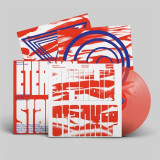
On their first official collaboration, Japanese noise pioneer Masami Akita aka Merzbow and Australian sound sculptor Lawrence English present a harrowing, surrealist portrait of nocturnal industrial activity, spawned by field recordings made in a sprawling factory complex seven hours north of English's home in Brisbane. He characterizes the area as "uneasy and unsettling," awash in the sickly glow of smelters and refinement machinery, somehow not of this world - a liminal quality vividly captured in Andrei Tarkovsky's sprawling purgatorial opus, Stalker, to which the title alludes. Akita, too, described early drafts of Eternal Stalker as feeling "like the soundtrack to a dystopian science fiction opera." A mood of mechanical dread and ruined futures permeates each of the album's seven potent compositions. Opener "The Long Dream" sets the stage with steady rain on sheet metal, punctured by thunder and metallic echoes, reverberating to the rafters in a collapsing warehouse. Quickly the tempest rises. "A Gate Of Light" and "Magnetic Traps" both convulse in churning furies of electric demolition and rattling chains, roaring and relentless. "The Visit" and "Black Thicket" operate more at a distance, surveying the topography of steam, rust, and liquid metal from above, their flickers of violence swallowed by blankets of darkness. This is noise at its most elemental and unknowable: brooding, bristling, and opaque, stalking forbidden peripheries of chaos and creation. Discussing Akita's music, English refers to its "intense substrata that is purely psychedelic; it consumes and confounds." The seasick swells of friction and fracture subsume the listener, forcing an auditory surrender: "this saturation of the senses can be a euphoria." Proof comes halfway through "The Golden Sphere," when the howling mayhem subtly recedes, revealing an eerie siren drone hovering in the void, like the resonance of a dead star galaxies away. Slowly a seething, venomous wall of volume returns, shredding the signal until its frequencies fray, whipping away into the eye of the storm. The combined effect merges obliteration and liberation, rapture and ravagement; it's the sound of dissolution as resolution, uprooted and unmoored, finally freed from form.
Benefits are an issues-based music collective from Teesside in the
North East of England. They write songs about the urgencies that
concern them, and they play them loud.
Forming in 2019 and consisting of Kingsley Hall on vocals, Robbie
Major and Hugh Major on synths and noise, and Jonny Snowball
on drums, they quickly evolved from a standard shouty punk rock
outfit into a minimalist, overtly political band that merges noise,
hip-hop and industrial rock, creating an effect that feels urgent,
darkly hilarious and unsettling all at once.
Thus far, Benefits have been completely DIY yet, via a succession
of digital singles and accompanying videos through 2021, they
built a following that enabled them to complete a sold-out headline
UK tour in March 2022. They also gained fans in high places,
including Sleaford Mods, Black Francis, Garbage and Elijah Wood
and Steve Albini.
James and Ryan of Yard Act were also instant admirers and that’s
where their label Zen F.C. comes in. Using their ill-gotten major
label gains Zen F.C. are pressing Benefit’s single ‘Flag’ (backed
with ‘Empire’) on vinyl.
On working with Yard Act, Kingsley comments: “I think Benefits
come at some of the same subject matter that they talk about but
from a slightly different angle (and by ‘slightly different’ I really
mean ‘more frequent swearing’, though we've never said the C
word in a song unlike...ahem). We appreciate every bit of help
we’ve had off them, we just wish we could somehow repay that
kindness (not monetarily mind, we're totally skint).”
Yard Act’s James Smith says of the release: “Lots of bands are
saying all this stuff so what makes Benefits so special? Why do I
need to be told what I already know over and over again by a
shouty man from Teesside? Well, because no one else is saying it
with such physicality they sound like their voice box is about to
leap from their throat and eat your eyeballs. With that little bit of
influence we’ve garnered and the small fortune of money we now
have kicking about, I’m so glad we can play a part in spreading the
word on Benefits, because I think they’re well on their way to a
classic debut album, and I’m going to fucking love being able to
brag about how important I was in making it all happen.”
A question popular among followers of Thrash Metal is undeniably this, “Which is considered the fastest Thrash Metal album of all time?”. There would be a high percentage of answers supporting “Reign In Blood”, Darkness Descends” or “Pleasure To Kill”. Now here’s a startling reality. Wehrmacht’s debut album makes those albums sound as if they were meant to be listed under progressive Metal. The sheer ferocity of these guys is enough to convince you why they were considered the fastest Heavy Metal band in the underground. So what is it that makes this record worthy of being called an underground classic? Right from production to musicianship, the concoction of several different ideas results into one colossal and inevitably unique style of their own. Many of you would probably wonder that there might just be a natural leaning towards sloppy playing especially considering my description of their astoundingly fast nature earlier. But the major surprise here is that all the musicians are extremely tight and precise with no single riff, solo or beat falling out of place. Tito Matos is one of the most versatile Thrash singers one has ever heard till date. His clarity of words and ability to keep up with the rest of the band with his lightning fast singing is simply commendable. The songs in here are all ridiculously speedy pieces of Thrash Metal with practically little or no remorse for the listener. The title track with that brilliant rendition of the famously eerie “Jaws” theme kicks off the onslaught with a tearing main riff that shreds away with speed and precision. Teutonic, Bay Area and a few east coast Thrash Metal bands have been instrumental in forging the whole genre altogether but taking the intensity a couple of notches higher was undoubtedly achieved by bands like Cryptic Slaughter, Soothsayer and finally Wehrmacht. For a year that was 1987, “Shark Attack” was way ahead of its time and has been highly regarded as the release that influenced many a band in the Grindcore and Black Metal genres. To testify this statement of mine, U.K Grindcore pioneers Napalm Death have covered Wehrmacht on one of their studio compilations, thus proving the exemplary effect this band had in the years to come. Yet the irony still stands out as to why only the most devoted of Thrash Metal/Crossover freaks know about this band. As for some of you guys, quit wasting your time listening to the senseless offshoots of Grindcore and shitty Black Metal and get a hold of this classic instead.
Alien Imprints is back with their second release which includes some well-respected artists along with rising talents showcasing their skills.
False prophets - Relpek A.K.A. Kepler is a DJ/producer who hails from the North of England. His offering is a crisp electro track that generates a calculated bass, analogue stabs and phrases with sweeping synths.
Spider Ink - Ollie Drummond, a respected DJ from London gives us a proper tech house number solid 4:4 beats, crafted basslines and pad effects that follow with acid riffs.
Thibo - Bronxy and ETRE from the Ukraine collaborate on this deep house affair, with soulful grooves, smooth deep bassline and "spacey vibe" pads create a cool hypnotic flow.
Rubicon marks the first physical edition of Galcher Lustwerk's driving-themed alias, Road Hog. Collecting tracks from seven releases spanning from 2014 to 2021, Rubicon serves as the project's Greatest Hits (for now). Including tracks from the Cleveland-dedicated album 'Tour De Hog' as well as the sharp toothed 'Spares' and 'More Spares' the pithy 'Haul Ass' plus some cinematic favorites from 'DWB' and 'On The Lam'. Originally meant to be digital only and listened to while driving, demand for certain tunes to be pressed to vinyl has risen with each release. From the Road to the Club, Lustwerk's got you covered.
Following a 15-year hiatus from publishing, Neapolitan techno's founding imprint - Conform Records - made an emphatic resurgence in 2020 to resume its intrinsic role in the progression of electronic music, ensuring that the genres' virtuous roots and formative values remained instilled within its future. Having re-released its entire back-catalogue in digital format from its original DAT distribution in the 90s, label head Gaetano Parisio now shifts his focus to the modern audience, with contemporary records that serve to marry these two golden eras of dance music.
Showcasing his immense theoretical knowledge and authenticity, earned through decades of experience in the industry, Parisio's latest project - his 6 part "Fragments 2930" EP - honours the meditative euphoria of Conform's early releases. Militant and driving in their effect, each cut presents its own melodious theme; running parallel to the strong percussive undercurrent of high impact techno that can be heard across the extended player. "Fragments 2930" was initially conceived as a single sound block and later fragmented into these 6 single units. As represented in its title, "Fragments 2930" also includes the catalogue numbers 29 and 30, with the double vinyl characteristic of a 2-release miniseries.
Available to purchase on vinyl from May 27th and across digital platforms on June 10th, Gaetano's latest release is further proof that the label's discography now only grows to hold more future classics.
Black Truffle is pleased to announce World in World, the latest solo offering from prolific Berlin-based guitarist-composer Julia Reidy. Where the recent trilogy of LP releases – brace, brace (Slip, 2019), In Real Life (Black Truffle, 2019), and Vanish (Editions Mego, 2020) – focussed on increasingly lush electronic settings for Reidy’s propulsive fingerpicking and auto-tuned vocals, arranged into wide-ranging side-long epics, World in World finds Reidy refocusing on the core elements of their approach while simultaneously pushing into challenging new areas. Comprising nine pieces ranging between two and seven minutes in length, the album’s opening title track promptly introduces the distinctive palette of just-intoned electric guitars, subtle electronic processing, and voice that is rigorously explored throughout. Where much of Reidy’s guitar work on previous recordings explored rapidly pulsed cycling figures, here notes often hang in the air in a more spacious, lyrical fashion. The elasticity of rhythm and non-linear repetition of pitches initially suggests improvisation until the listener becomes aware of the precise arrangements of spatialised lines. At times, World in World suggests classic bedroom electric guitar works of the 1990s such as Loren Connors’ Airs or Roy Montgomery’s Scenes from the South Island; like those works, Reidy’s possesses a wonderfully live ambience, with frequent pedal clicks adding to the music’s powerful sense of intimacy. In Reidy’s case, however, the yearning, melancholic mood of Connors or Montgomery is tempered by the unorthodox guitar tuning, which at points produces a unique and uncomfortable effect somewhere between the hyper-precision of Harry Partch or Lou Harrison and Jandek’s slack-stringed descent into the void. While World in World plots out its terrain with a bold single-mindedness that allows some pieces to appear almost as variations on a common theme, subtle changes in emphasis distinguish each track. Tactile percussive interjections skitter across the tremolo tones of ‘Paradise in Unrecognisable Colours’, while ‘Ajar’ ramps up the role played by the electronics, with glitching pitch-shifted and back-masked textures threaded through the guitars and thickly harmonised vocal layers. Ranging from autotuned melodic lines to buried murmurs, Reidy’s voice is a frequent presence throughout these nine pieces, at times creating the impression that a more conventional series of songs lurks underneath the chiming microtonal guitars. On the stunning ‘Poised’, whispers and distant, ghostly wails surround the layers of guitars, at times suggesting the foggiest outer reaches of Liz Harris’ Grouper. Both rigorously experimental and emotive, World in World is undoubtedly Julia Reidy’s finest work yet.
- A1: Sudden Reverb - Sound Tlakotli (Deadbeat Remix)
- A2: Pitch Black - Transient Transmission (Adrian Sherwood's Delta B(0)=B Remix)
- A3: The Orb - Say Cheese (Gaudi's Dubble Mozzarella Mix)
- A4: David Harrow - In My Head (Inside My Head Mix)
- B1: Subset - The Astrogator (Sub Signals Mix)
- B2: 3Head - Afnaz (Dennis Bovell Dub Mix)
- B3: Groove Armada - Oh Tweak To Me (Gaudi Remix)
- B4: Shpongle - How The Jellyfish Jumped Up The Mountain (Cosmic Trigger Remix)
- C1: Aux25 - Passing Through
- C2: Simm Feat Phelimuncasi - Cracks
- C3: Alpha Steppa - Colour
- C4: Radikal Guru - Badman Skank
- C5: Paolo Baldini Dubfiles - Ethiolò Dub
- D1: African Head Charge - Disciplined And Dignified
- D2: Gaudi Feat Steel Pulse - Cry Dubber
- D3: 100Th Monkey - Fly Higher Dub
- D4: Dub Fx - Dub Everyday (Gaudi's Sub Signals Remix)
- D5: Phonolab Feat Bill Laswell - Where Do Comets Come From
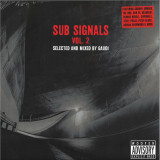
Sub Signals Vol.2 is a deep dive into underground bass, guided by artist and producer Gaudi. Featuring predominantly unreleased originals and versions by some of the biggest names in the worldwide dub collective, it intricately combines analogue elements with digital grooves to stunning effect.
Much more than just a compilation, the Sub Signals series is a celebration of the evolution of the sound of dub, from its original roots in reggae to its fusion with a much wider spectrum of sounds and influences. Gaudi curated the first volume back in 2006 for the cult Canadian label Interchill, sourcing tracks and dubs from High Tone, Zion Train, Manasseh, Almamegretta, Noiseshaper, Creation Rebel, Greg Hunter, Dubadelic and more.
15 years on, Gaudi has created the second volume, blending contributions by established reggae names Steel Pulse, Dennis Bovell and African Head Charge with next generation dub producers Alpha Steppa, Radikal Guru and Paolo Baldini Dubfiles, headline acts Groove Armada, Dub FX and The Orb with underground artists Deadbeat, Pitch Black and SUBSET, to create a seamless 75 minute mix.
“With Volume 2, I wanted to create a deep vibrational experience by shaping an aural trajectory that encompassed the many aspects of dub and its related sub-frequencies. To achieve my goal, I reached out to the artists I regularly work with to ask for contributions, in some cases digging in their archives to find what I was looking for.”
As a solo artist, Gaudi has recorded over 20 albums, while as a producer he has hundreds of productions under his belt. He has worked with legends of the reggae and electronic music worlds including Lee "Scratch" Perry, Horace Andy, Dub Pistols, Hollie Cook, Youth, Mad Professor, Prince Fatty, Lamb, Trentemøller and Nusrat Fateh Ali Khan.
Dedicated to the sound of dub in its many forms, Gaudi’s latest excursion of his Sub Signals series is pure bass therapy, designed to excite your eardrums and worry your woofers.
It started, as it so often does, with two old friends hanging out.
John Shima and C P Smith were joking around one evening in their home city of Sheffield. At some point, Smith challenged Shima that, if the latter could produce a record using nothing more than a small modular synth setup, then Smith would release it on his Central Processing Unit label. As heads will know, while Shima has drops on imprints like FireScope and Subwax Excursions to his name, he had never previously released anything via CPU. Shima accepted, and thus we now have his CPU debut, the four-track EP CPU Modular 1.
The specific setup that Shima worked with for these tracks was Smith's Doepfer A-100P6 Suitcase, a small but mighty combination of modules and programmers. It's no surprise that Shima was able to familiarise himself with the equipment in double-quick time - after all, Shima was an early adopter of the Eurorack modular format back in the day. What emerged from the CPU Modular 1 sessions was a quartet of devastatingly effective DJ tools, mid-set rollers which will get the dance moving something crazy.
Opener '003' kicks the EP off as it means to go on. There's something at once stiff-necked and buoyant about the rhythms here, all thwacking Roland tones and snares which crack like someone whipping a length of sheet metal. While the beat barrels unyieldingly onwards, the programming in the tuned modulars is more exploratory and even trippy, full of delay-laced bleeps and flighty rhythmic motifs. It comes together for a cracking mix in the vein of artists like Jerome Hill and London Modular Alliance. Second A-side cut '010' is no different, the street-beat groove and grumbling low-ends underpinning all manner of modular wizardry.
CPU Modular 1 is really timeless stuff, a set of percussion-heavy, future-focussed beats which recalls Smith's own CPU drop 'DJ Tools Vol.1 - 808 Tracks'. '011' kicks of CPU Modular 1's second-half with a dose of Drexciyan dystopia, playing an atonal loop off of an insistent bass wiggle and neurotic hi-hats. Even when Shima tightens or slackens the modulars here, '011' remains unyielding, a dose of pure 'Wip3out' energy that you could happily groove to all day long. The EP closes out with '005', a gnarled, gurgling production which still retains the dancefloor punch of the rest of the record.
For his Central Processing Unit debut, John Shima was tasked to produce four tracks using a single small modular setup. Unsurprisingly given the pedigree of this seasoned machine-funk pro, Shima aced the assignment.
David Gedge says: “During the summer of 2006 we were invited to record a session for 'One Music With Huw Stephens' - a show on BBC Radio 1. However, this was the year after the 'return' of The Wedding Present and we'd basically been pretty much continually on tour ever since the release of the 'Take Fountain' album the previous year. Accordingly, we didn't really have any new songs of our own and so I decided that we could pursue that other favourite pastime of The Wedding Present... the recording of cover versions! Arranging covers is fascinating, actually, because you get to explore how other people write songs and I think that can often feed back into your own writing. I thought it would be interesting to pick a song from each of four different decades... the 1960s, 70s, 80s and 90s. No particular reason... if we'd've been asked to record five tracks I would have thrown in the 50s, too. So I chose four classic pop songs for us to look at. They weren't particularly 'favourites' - although I have always loved 'Step Inside Love' and 'Lovin’ You' - they were just songs that I thought the band could successfully 're-imagine'. I have never seen the point of recording faithful copies; I have always felt that any Wedding Present version has to bear the stamp of The Wedding Present. And I think we accomplished that particularly well on this session. I'm pretty proud of this E.P., in fact. I remember Graeme Ramsay, our drummer at the time, initially hating the idea of us doing a 'Take That' song but I think he eventually came round to it, especially after The Guardian said it was an interesting 'post-rock' take on the original, or words to that effect..." Track-listing - Step Inside Love/Lovin’ You/Our Lips Are Sealed/Back For Good/
AOW is a new collaborative project from Dan Ghenacia and Tolga Fidan emerging from a new period of creativity and inspiration for the Lisbon-based artists.
Long time friends and fellow lynchpins of the European house and techno scene, Ghenacia and Fidan started working closely together through 2020 and 2021 while sharing studio space at Boa Lab. They found themselves at the heart of an artistic community of musicians, designers and engineers, which took shape around Ghenacia’s experiments with alpha wave generation, inspired by Bryon Gysin’s Dream Machine.
Ghenacia and engineer Anine Kirsten developed a modern update on Gysin’s 1950s design, which has been installed at exhibitions in London, Lisbon and Paris. At its heart, the project explores the natural hallucinatory effects of alpha wave projections on the eyelids, and the therapeutic benefits of the experience. Out of this spirit of psychedelically-charged experimentation, Ghenacia and Fidan have been working beyond the confines of their typical club-oriented material, creating ambient soundtracks to artist exhibitions in Boa and auditory backdrops to Alpha Wave Experience installations.
AOW bridges the gap between this new period of creativity and Ghenacia and Fidan’s life-long passion for electronic dance music. Compared to the strictures of house and techno they’re best known for, the three tracks on Hear the Light explore a more open, inquisitive sound with roots in UK electronica and West Coast psychedelic breaks (a seminal scene when Ghenacia was in the Bay Area in the 90s). Crucially though, it’s not a pointedly retro sound, but rather a result of rich streams of inspiration meeting and passing through crisp, modernist production techniques to offer something
genuinely fresh on the ears.
Working outside of their comfort zones and guided by creative philosophies springing from research, shared experience and community, Hear the Light marks a new step forward for Ghenacia and Fidan, with many more developments promised for the future.
If you’re looking for a raw, sugary blast of distorted pop, look no further than
‘Weird Nightmare’. The debut album from METZ guitarist and vocalist Alex
Edkins contains all of his main band’s bite with an unexpected, yet totally
satisfying, sweetness. Imagine The Amps covering Big Star, or the gloriously
hissy miniature epics of classic-era Guided by Voices combined with the
bombast of ‘Copper Blue’- era Sugar - just tons of red-line distortion cut with the
type of tunecraft that thrills the moment it hits your ears.
These ten songs showcase a new side of Edkins’ already-established
songwriting, but even though the bulk of ‘Weird Nightmare’ was recorded during
the COVID-19 pandemic, some of its tunes date back to 2013 in demo form.
“Hooks and melody have always been a big part of my writing, but they really
became the main focus this time” he explains. “It was about doing what felt
natural.”
To be clear: Weird Nightmare is not a ‘pandemic album’, but an album - some of
which had been gestating for quite a while - that just so happened to be recorded
during the pandemic. “I had always planned on finishing these songs, but being
unable to tour with METZ, and forced to lock down, really gave me a push.” After
days spent homeschooling his son, Edkins would drive to the METZ rehearsal
room and tinker deep into the night on these songs’ deceptively simple structures
and rich, static-laden textures. “It was a godsend for me,” he states about the
creative process. “The hours would disappear and I would get lost in the music
and record. It was a beautiful escape.”
‘Weird Nightmare’ is, in its own way, a study in extremes: Edkins’ melodic
instincts and penchant for dissonance are both turned up to the max throughout,
the latter reflecting not only the barn-burning tendencies of METZ, but Alex’s own
sonic predilections. “It doesn’t sound right to my ears until it’s pushed over the
edge.” He also cites other artists who are masterful at mixing the sublime and the
punishing - Kim Deal and Scout Niblett among them - as influences on his own
songwriting. “My favorite songs are the simple ones,” he explains. “I’ve never
been attracted to virtuosity or technicality. Certain songs have the power to lift
your spirits like nothing else can. I wanted to create that type of song.”
A few guests pitch in on Weird Nightmare: Canadian alt-pop genius Chad
VanGaalen adds his unmistakable touch to the ever-escalating ‘Oh No’, while
Alicia Bognanno of Bully lends her distinctive pipes to the thrashing ‘Wrecked’, a
collaboration that effectively saved the song. “I almost didn’t put it on the album
because I thought it was missing something,” Edkins explains. “I sent it to Alicia
and she lifted it way up.”
And taking risks and reaching out of Edkins’ comfort zone was the name of the
game when it came to making ‘Weird Nightmare’. “I found myself doing new
things I didn’t have the guts to do before, recording everything by myself and
trusting all of my musical instincts,” he states. “I think when music manifests
quickly, a certain amount of honesty automatically comes along with it. When it is
a purely instinctual creation, there is no opportunity to obscure the truth.”
Loser Edition LP pressed on Coke Bottle Green transparent vinyl.
If you’re looking for a raw, sugary blast of distorted pop, look no further than
‘Weird Nightmare’. The debut album from METZ guitarist and vocalist Alex
Edkins contains all of his main band’s bite with an unexpected, yet totally
satisfying, sweetness. Imagine The Amps covering Big Star, or the gloriously
hissy miniature epics of classic-era Guided by Voices combined with the
bombast of ‘Copper Blue’- era Sugar - just tons of red-line distortion cut with the
type of tunecraft that thrills the moment it hits your ears.
These ten songs showcase a new side of Edkins’ already-established
songwriting, but even though the bulk of ‘Weird Nightmare’ was recorded during
the COVID-19 pandemic, some of its tunes date back to 2013 in demo form.
“Hooks and melody have always been a big part of my writing, but they really
became the main focus this time” he explains. “It was about doing what felt
natural.”
To be clear: Weird Nightmare is not a ‘pandemic album’, but an album - some of
which had been gestating for quite a while - that just so happened to be recorded
during the pandemic. “I had always planned on finishing these songs, but being
unable to tour with METZ, and forced to lock down, really gave me a push.” After
days spent homeschooling his son, Edkins would drive to the METZ rehearsal
room and tinker deep into the night on these songs’ deceptively simple structures
and rich, static-laden textures. “It was a godsend for me,” he states about the
creative process. “The hours would disappear and I would get lost in the music
and record. It was a beautiful escape.”
‘Weird Nightmare’ is, in its own way, a study in extremes: Edkins’ melodic
instincts and penchant for dissonance are both turned up to the max throughout,
the latter reflecting not only the barn-burning tendencies of METZ, but Alex’s own
sonic predilections. “It doesn’t sound right to my ears until it’s pushed over the
edge.” He also cites other artists who are masterful at mixing the sublime and the
punishing - Kim Deal and Scout Niblett among them - as influences on his own
songwriting. “My favorite songs are the simple ones,” he explains. “I’ve never
been attracted to virtuosity or technicality. Certain songs have the power to lift
your spirits like nothing else can. I wanted to create that type of song.”
A few guests pitch in on Weird Nightmare: Canadian alt-pop genius Chad
VanGaalen adds his unmistakable touch to the ever-escalating ‘Oh No’, while
Alicia Bognanno of Bully lends her distinctive pipes to the thrashing ‘Wrecked’, a
collaboration that effectively saved the song. “I almost didn’t put it on the album
because I thought it was missing something,” Edkins explains. “I sent it to Alicia
and she lifted it way up.”
And taking risks and reaching out of Edkins’ comfort zone was the name of the
game when it came to making ‘Weird Nightmare’. “I found myself doing new
things I didn’t have the guts to do before, recording everything by myself and
trusting all of my musical instincts,” he states. “I think when music manifests
quickly, a certain amount of honesty automatically comes along with it. When it is
a purely instinctual creation, there is no opportunity to obscure the truth.”
Loser Edition LP pressed on Coke Bottle Green transparent vinyl.
Released in 1961, My Favorite Things made John Coltrane a star with box-office pulling power previously preserved for the likes of Dave Brubeck, Stan Getz, the MJQ, and Miles Davis. The dazzling quartet treatment of the Richard Rodgers hit song, features Coltrane on soprano saxophone for the first time on record, exercised a hypnotic effect on all sorts of music lovers and trend-spotters. The title track was a hit single, and the album became a major commercial success. In 1998, the album received the Grammy Hall of Fame award. It attained gold record status in 2018, having sold 500,000 copies. The mono version of this album, believed lost, was recently found, and is included in this deluxe package, as well as the stereo version, both mastered from the original tapes.
The packaging includes liner notes by award-winning writer Ben Ratliff, as well as photos and Atlantic Records ephemera.
- 01-01: Hail (Ede _ Vietnam)
- 01-02: Celebrating The Festival (Cham Hroi _ Vietnam)
- 01-03: Funeral Music (Krung _ Punong _ Cambodia)
- 01-04: Buffalo Sacrifice (Jarai _ Cambodia)
- 01-05: Kids Routine After School (Krung _ Cambodia)
- 01-06: Duet Gongs (Coho _ Vietnam)
- 01-07: Funeral Music (Churu _ Cambodia)
- 01-08: Ghet Khil (Ede _ Vietnam)
- 01-09: Offering To The Spirits (Punong _ Cambodia)
- 01-10: Sre Don (Ma _ Vietnam)
- 01-11: Preparation For The Buffalo Sacrifice (Vietnam)
- 01-12: Chasing Birds To Protect The Rice Fields (Bahnar _ Vietnam)
- 01-13: Cutting The Bamboo (Mnong Prang _ Vietnam)
- 01-14: Song For A Dead Man (Ede-Bih _ Vietnam)
- 01-15: Harvesting (Mnong _ Vietnam)
- 01-16: Funeral Music (Se Dang _ Vietnam)
- 01-17: Harvesting (Tampuan _ Cambodia)
- 01-18: Buffalo Sacrifice (Jarai _ Vietnam) 01-19. Melody For Funeral Music By Mouth (Tampuan _ Cambodia)
- 01-19: Melody For Funeral Music By Mouth (Tampuan _ Cambodia)
- 01-20: Threshing (Ede-Bih _ Vietnam)
- 01-21: Hail (Ede _ Vietnam)
- 02-01: Rooster Dance (Isneg Grop _ Luzon Philippines)
- 02-02: Music For Funeral Ceremony (Sumba _ Sumba Island Indonesia)
- 02-03: Hedung Dance (Lamaholot _ Solor Island Indonesia)
- 02-04: Gong Music Ensemble (Kenyah _ Borneo Indonesia)
- 02-05: Manang Sirang Ritual (Iban _ Borneo Indonesia)
- 02-06: Tau Todu (Sumba _ Sumba Island Indonesia)
- 02-07: Soka Dance (Lamaholot _ Solor Island Indonesia)
- 02-08: Harvesting (Pagaddot) (Ifugao _ Luzon Philippines)
- 02-09: Tadok (Kalinga _ Luzon Philippines)
- 02-10: Harvesting (Kandingngang) (Sumba _ Sumba Island Indonesia)
- 02-11: Eagle Dance (Turayan) (Kankanaey _ Luzon Philippines)
- 02-12: Cole Oha Ritual (Lamaholot _ Adonara Island Indonesia)
- 02-13: Ritual For Calling Back Spirits (Bissu _ Saluwesi Indonesia)
- 02-14: Ambience_ Rambu Solo (Toraja _ Saluwesi Indonesia)
Gongs have played an integral role in the mythogeography of Asia. This is not music that aligns with national borders or ideas of homogenous populations, let alone racial stereotypes and exotic clichés. What connects all of these tracks is a simultaneous feeling of entrancement and social cohesion. Communal and collaborative, its form is hypnotically repetitious, melodies and rhythms spread out among the players using the technique of hocketing in which a flowing line is distributed among all the musicians. The effect is mesmerising, immediately intoxicating to anybody who loves Chicago footwork, free improvisation, Sun Ra or young hip hop producer Jetsonmade. The music is simple yet mysterious and enveloping, a sound world in which to disappear. A theory exists but this is not explained. - David Toop (extracts from the liner notes)
This project, Massif and Archipelago, is a field recording project initiated by Japanese sound artist Yasuhiro Morinaga, documenting traditional gong music by different Southeast Asian ethnic groups. The project aimed to examine the impact of the natural and social environment on the gong music culture of Southeast Asia. During the project, he visited over 50 different ethnic groups and made hundreds of recordings. This album presents a selection of the unique gong music from different ethnic minorities. The selected music has been divided into two broad sections: one focussing on the music from the Massif, i.e. mainland Southeast Asia (Central Highland of Vietnam and Northeast Cambodia), the other on music from the Archipelago, maritime Southeast Asia (the Luzon Islands of the Philippines, Borneo, Sulawesi, and the Flores Islands of Indonesia).
hree years after the release of their self-titled debut LP, Shark Toys follow it up with ten more bursts of weirdo punk. Nine originals and cover of the Mekons classic, “Where Were You.” Ever since forming in 2008, the band has developed a reputation for sharp and choppy live sets, developing a loyal following around their home town of Los Angeles and around the US, from playing shows with bands like Ty Segall, Protomartyr, Parquet Courts, Terry Malts, the Urinals and many others. This batch of tunes were taken from the same session as the recent 7” single, a split with Florida’s UV-TV, on Emotional Response, earlier this year, recorded by Dave Fox of the Traditional Fools (who also recorded Fuzz, Scraper, Vial, and Wand). "A treble fueled look at Los Angeles that certain fans of Tyvek will consume lovingly. Usually the word shambolic would be thrown in for effect when describing bands attempting to transmit a Homosexuals/Tronics/Desperate Bicycles air, but this band does not have a shambling manner to these ears. They seem very propulsive and on target, with shards of errant guitar whipped into shape by the savagery of the rhythm. … They have a driving down highways at night nihilism that is hard to conjure … with ear slicing guitar “solos” somewhere between sneaker squeak and door creak. … Super catchy bedroom punk for people that clutch the Astral Glamour box set to their hearts and know all the words to Swell Maps B-sides …"— Maximum Rock N' Roll // “Much love for this synth-punk masterpiece, highly recommended by Strangeworld for members of Ausmuteants fan club.” - Strangeworld Records, Australia
A new 6-track mini album from a musician with a long list of credits including South African trumpet legend Hugh Masekela, afrobeat co-creator Tony Allen and Ethiopian jazz originator Mulatu Astatke as well as many Brit-jazz and international roots artists. "It's Time" blends spiritual Afro-jazz groove with free improv, spoken poetry and other-worldly atmosphere, with lyrics and titles hinting at unorthodox takes on reality and the times we live in.
Phil Dawson is a top London guitarist who has worked and schooled himself extensively in many different African, Latin and Brazilian music traditions together with styles that more typically cross the radar of someone with a similar British background: roots reggae, punk rock, blues, soul, R'n'B, jazz and funk. As a sideman, he's played with a host of living legends of Afro-fusion music including South African jazz trumpet giant Hugh Masekela, Nigerian afrobeat co-creator Tony Allen, Ethiojazz pioneer Mulatu Astatke, the Algerian "king of rai" Khaled, and London based Ghanaian afro-rock dons Osibisa. Heavy company for sure.
Now he's releasing a new mini 6 track album of original compositions under his own name and band - Phil Dawson ٤-tet - and he's joined by a stellar cast of London's finest players who include Rowland Sutherland (flutes - Airto Moreira, David Murray, Carla Bley), Khadijatou Doyneh (spoken word - The Heliocentrics, Danny Keane), Gaspar Sena (drums - Alfa Mist, Maria Chiara Argiro), Marius Rodrigues (drums - Oriole, Hermeto Hermeto Hermeto), Lekan Babalola (percussion - Cassandra Wilson, Ali Farka Toure) and Matheus Nova (bass - Antonio Forcione, Ed Motta, Jazzinho). Phil himself features on guitars, Fender Rhodes and piano.
'This is great' - Gilles Peterson, BBC Radio 6 (on 'It's Time)
'Beautiful' - Kassin (producer Caetano Veloso, Sonzeira etc) (on 'It's
Time')
'Rapid-fire guitar work with variety and energy' – The Guardian, UK
'A great guitarist' – Tony Allen
'An absolute killer - irresistible' - Snowboy (on 'Gnostic Hilife')
'Phil Dawson and his (quintet) are really smoking at the mo. No wonder the London jazz young guns are ripping it up with bands
like this leading the way. Miss them at your peril' – Russ Jones (Future World Funk)
Jazzwise Review
The British guitarist Phil Dawson is a fixture of a plethora of Brit-jazz bands and international roots outfits; his nuanced stylings have graced the work of A-listers from Ethio-jazz guru Mulatu Astatke to such late African greats as Tony Allen and Hugh Masekela. Like any an in-demand session player worth his chops Dawson also fronts his own trio/quartet/quintet, all of which allow him to stretch out and do his own thing, which – with his quintet - he does to pleasing effect here.
Buoyed by flute, bass and percussion, It's Time is a six-track brew combining free improv and spoken word with Afro-spiritual groove and a far-out esotericism befitting these strangest of times. Opener 'It's Time (Radio Edit)' is a psychedelic romp through a beneficent cosmos where ringing chords and woodwind trills underpin Khaditjatou Doyneh's pathos-laden musings on love and the universe and one of three variations on a theme. Over three minutes longer at 9:34, 'It's Time (aka Ougama)' is a freewheeling instrumental made dazzling by Dawson's silver-fingered guitar work; Doyneh resumes her pronouncing on the more dissonant but equally mind expanding 'It's Time (Fully Spoken)'. Then there's 'Gnostic Hilife', whose three interpretations each juxtapose the structures of this West African lingua franca in ways tight, spacious and inventive
Fractal head rearrangement from Keith Fullerton Whitman on his first vinyl release in what feels like years, here blessing Japan’s NAKID label with a new instalment in his forever-evolving Generators project, arcing from bleeping post-Kosmische sounds into completely unexpected drum mutations in footwork and grime modes. It’s properly head melting gear that links the algorithmic mind-fukkery of Laurie Spiegel with the floor-bending rhythmic experimentation of Mark Fell, Rian Treanor or Jana Rush, and the first in a three part series that offers some of the strongest gear we’ve heard from one of the very best in the game.
Modular synth scientist, critic and historian Keith Fullerton Whitman first debuted his »Generators« set in 2009, using a modular setup to create non-repeating melodic patterns that basically came close to generating themselves. Over the course of hundreds of live shows (and a handful of releases on Root Strata, Editions Mego and other labels), Whitman glacially honed his process and allowed the concept to slither down different avenues, mutating as it picked energy from the various venues it was situated in. His rigorous method meant ‘Generators’ was never played out the same way twice, veering from psychedelic Kosmische experimentation to obliterated, off-grid Techno.
In 2019, on the tenth anniversary of the project, Whitman was invited by the GRM in Paris to set up in Studio C, where he avoided the arsenal of pristine, museum-worthy modular synthesizers and instead reprogrammed his classic ‘Generators’ patch. Recorded in a single take using luxe analog- to-digital convertors, the result is a 45-minute durational piece, split into two distinct sides for this release.“Very little manual interaction happened,” Whitman explains. The music is, as its title suggests, generative, and at this point basically sounds as if it reached its most advanced, final form. The first few minutes of the opening side mine the original theme, with clocked LFO shapes triggering oscillator blips in mind-expanding non-looping patterns. Soon, percussion enters the matrix, at first wrong-footing us with a 4/4 fake-out - possibly nodding to the piece’s 2010 Root Strata iteration - before splitting into staccato polyrhythmic abstractions of the most loose- limbed and deadly variety.
General MIDI drums can sound almost hilariously boxed-in, but handled by Whitman they show off a plastic cultural sheen to piercing effect, deployed in a way that re-draws the rhythmic bass music of someone like Jlin while nodding to Mark Fell and Rian Treanor’s quasi-generative dance explorations. These comparisons take on even more weight on the second side, where Whitman opens up his filters to allow the synth bleeps to sing even more loudly, introducing that all- important clap/hat interplay that dialogues with Atlanta and Chicago simultaneously.
Following releases with YAM, Tiff’s Joints, Dr Banana and Touching Bass, artist Romaal Kultan (Ollie Malin) now inaugurates his own record label, Personal Discs.
No Time Like The Future showcases Romaal Kultan’s finest productions, charting a distinct personal trajectory between hiphop, house and broken beat. Opener One Moment Please is a sassy boom bap affair, with an unexpected nod towards jungle. Music Room, made in collaboration with producer Cypriano, is a patient, moody chugger — a tapestry of piano, organic percussion and crackly vinyl samples laced with acid.
On the B-side, Personal Effects delivers a unique, hypnotic broken beat groove, where swelling synths and a twinkling Rhodes meditate together in careful arrangement. Finally, the intimate title track No Time Like the Future stomps off into the sunrise, carried along by a rolling, yearning dreaminess.
Each one of these tracks represents a special, all-too-rare moment of ecstasy in the studio. I hope that this feeling lives on in the music.
So far the record has received support from Alexander Nut, Mr Scruff, Lefto, Kai Alcé, Bradley Zero, Mary Anne Hobbes, K15, Dr Banana, Alex Attias, EVM128, Zakia, Shy One, Tereza, Alia, Earl Jeffers, Footshooter, K-Lone, Poison Zcora, Dean Chew, Marcia Carr, Leanne Wright, Dead Man’s Chest and more.
Emotional Rescue looks back again with a 2022 repress, digging deep in to the early 80s Bristol post punk scene of Pig Pag, the Wild Bunch and the Dug Out club. A short lived project of just 3 releases, Mouth trail-blazed leftfield percussive jams in the rich vain of Liquid Liquid and ESG but in their own jazz-infused way.
Centered round the cultural melting post of the St Paul's district, it's pubs, clubs and blues parties threw together young and old to the sounds of dub, funk, jazz and soul and took the spark lit by punk rock and new wave and spawned music that still resonates today.
Consisting of a floating line up based around main members Andy Guy and Rob Merrill, alumina included a young Nellie Hooper before he would go on to be a founding member of the Wild Bunch and on to produce the likes of Bjork, U2 and Madonna.
Based around a hard tribal drumming, mixing guitar, trumpet, shouted vocals and effects, the thrown in the mix nature was inspired as much by avant-jazz than punk's do it yourself attitude.
Here then, on one EP are their complete recordings, including as the title cut, their best and deepest, Voyage To The Bottom Of The Sea. Featured on a compilation LP from the legendary Y Records, its bottom heavy dub sound is augmented by female and toasted vocals riding a top a heavy stepper style riddim.
This is followed by an increasingly dizzy array of percussion jams. Acab (Part 2) is all skips and trumpets, while the versions of Take Your Coat Off perfect skat vocal / tom interplay, before the finale busts out the rockabilly influences in full effect with jagged guitar, skipping hats meets double bass punk style.
The British composer, musician and audio engineer Daphne Oram was a pioneering figure in the use of electronic music. Coming to prominence through her work with the BBC Radiophonic Workshop, which she co-founded, Oram was one of the first British composers to feature electronic instruments in her work and has been rightly hailed as helping musique concrete to become accepted in Britain. Born in 1925 and raised in rural Wiltshire, close to Stonehenge and the ancient stone circle at Avebury, Oram eschewed a place at the prestigious Royal College of Music to take a junior engineering role at the BBC in 1942, she was often tasked with creating sound effects, leading to cut-up experiments with tape recorders and the development of synthetic sound; her composition Still Point, involving two orchestras, two turntables and five microphones, was deemed too radical by the BBC, though she was promoted to studio manager in 1950, leading to the gradual introduction of electronic music and musique concrete techniques on BBC soundtracks. In 1957, she composed the music for the play Amphitryon 38, using a sine wave oscillator and homemade filters, and this and other subsequent works led to the establishment of the BBC Radiophonic Workshop the following year, but Oram soon tired of the conservative constraints of the BBC, leading to her resignation in 1959 to pursue her own vision at the Oramics Studios for Electronic Composition, located in Tower Folly, a former hop kiln located at Fairseat, near the village of Wrotham in rural Kent. Oramics was a radical sound composition technique that sought to transform images to music, enacted by drawing onto 35mm film, which would then be read by photo-electric cells; in addition to its use in Radiophonic Workshop material, Oramics was also employed for sound installations, theatre productions and feature films, such as The Innocents, though financial pressures forced Oram to seek a range of commercial engagements in addition to creating her own artistic works. The Listen Move And Dance series of BBC programmes were devised as a radical new technique to help British schoolchildren learn how to dance; on the LP releases, Vera Gray arranged short adaptations of classical pieces by Bartok, Stravinsky, Shostakovich and others, designed for “stamping, punching, kicking and jumping” movements, as well as “running lightly, dancing on toes” and “shaking all about,” which contrasted sharply with Oram’s electronic abstractions, which seemed to have been beamed in from outer space.
Red Vinyl
Time has come for Futurepast to release a long format album: Alarm Phase Red - catalogue number FPLP01 - will be the first full-length work from Futurepast founder Davy Vandegaer, appearing here under a new name: Brainwashed Today.
Rooted in a conceptual approach of electronic music, this double LP ranges from industrial ambient to experimental techno. Like an antidote to a twisted reality of controlled screens and mental isolation, Alarm Phase Red uses the raw language of electricity
to reach the core of the machine and sabotage it, reverse its effects by mirroring them. Fighting fire with fire, deflecting the pressure and strain of a world driven by fear and anger, the music of Brainwashed Today acts like a cathartic escape from technological enslavement.
With the purchase of the vinyl comes a batch of three digital bonus tracks pursuing further the sound research of the album.
Mt Joy's climb into the musical stratosphere owes a great deal to their
highly energetic and passionate live performances
They've sold out room after room across the country, have toured with arena acts
like The Lumineers, among many others, and fans the world over flock to their
shows. So when the coronavirus pandemic sidelined the touring industry, Mt. Joy
felt the effects in a significant way. Fast forward to May 22, 2021: artists and fans
alike are finally emerging, and Mt. Joy steps on the stage at Red Rocks
Amphitheatre, playing the biggest show on record since live music began to open
back up. Live At Red Rocks showcases the band's spirited performance in front of
the sold- out Colorado crowd, and the energy felt from the audience's thrill of
experiencing live music again is unmistakable, even through the air waves
- A1: The Perfect Crime
- A2: Smilers Strange Politely
- A3: Material Condition
- A4: Butchering The Punchline
- A5: Up To My Elbows
- B1: I'm In The Water
- B2: Tricks On Everything
- B3: Caveats
- B4: Figure Eights
- B5: The Bell
LTD Clear Vinyl[24,79 €]
RIYL: Guided by Voices, Pavement, The Clean, XTC, Flying Nun. The title of The Stroppies' newest LP, Levity, serves as a creative statement of intent and an acknowledgment of the dichotomy between the music they have made and the conditions in which they were produced. For a group that started over an initial idea to "create open ended music, quickly and haphazardly”, the logistical challenges of creating their second album in the midst of a pandemic, in a city that endured the longest lockdown in the world, created a need to redefine process. Levity, The Stroppies strongest creative statement to date, is the result of this new approach to creative process. Playful yet focused, but broader in scope and experimentation than previous efforts, the ten songs that comprise Levity continue the band's exploration of the pop song as both foil for experimentation and conduit for personal reflection. Whereas the group's debut LP Whoosh! demonstrated their ability to craft clean, concise jangle pop, Levity takes a different route by utilizing a darker pallet of sounds to create its impressionistic whole. Fuzz and distortion are employed to add weight to songs built on tape loops and Motorik drum patterns. Warbling synthesisers and modulated keys add new moods and dimensions to The Stroppies unique brand of pop classicism. Thematically, the band continues their exploration of the personal refracted through the lens of the absurd, though this time around the music feels a few shades darker, a somewhat inevitable consequence of the collective trauma of the past 24 months. While the narrative around the 'lockdown record' is increasingly commonplace, there are unavoidable realities involved in making creative decisions under such circumstances that can't be overlooked, especially for a band that thrives on collaboration. "The restrictions around COVID really informed the way we made the record', says Angus Lord, the band's co-founder and guitarist. "It meant that there was a lot less opportunity to meet and build ideas collaboratively, which is how we’ve worked in the past. Instead, ideas were developed in isolation, then shared digitally, developing slowly over correspondence and only bearing fruit when we were able to be in a room together. I think this had a big effect on the songwriting and execution.” This process even extended to the studio, where The Stroppies found a kindred spirit in John Lee of Phaedra Studios, who mixed the record in isolation, somehow managing to synthesise the band's pop sensibilities with their penchant for studio experimentation. Furthermore, the addition of new member Zoe Monk, known for playing in a diverse array of Melbourne acts (Eggy, Thibault, The Opals) contributed both synthesiser experimentation and rock solid rhythm guitar, a huge addition to the band's developing sound, an infectious combination of the off-kilter 90s US underground, British artpunk ala Wire and a more than generous love of classic Pop songwriting. The Stroppies have managed to craft a record of weight and substance. Through Levity the Stroppies have, at least temporarily, found their feet amongst the chaos
This first-ever vinyl reissue, remastered from the original analog tapes, includes a gatefold jacket and inner sleeve with restored, new, and alternate art and photos by Terry and Jo Harvey Allen; an insert with lyrics, original notes, and Terry’s letter to H.C. Westermann about the songs; and a high-res download code. Deluxe CD edition features a trifold jacket and inner sleeve. Recorded exactly two years after acclaimed visual artist and songwriter Terry Allen’s masterpiece Lubbock (on everything), the feral follow-up Smokin the Dummy is less conceptually focused but more sonically and stylistically unified than its predecessor it’s also rougher and rowdier, wilder and more wired, and altogether more menacingly rock and roll. Following the 1973 Whitney Biennial, in which songwriter and visual artist Terry Allen and fellow iconic artist Horace Clifford “Cliff” Westermann both exhibited, Allen maintained a lively long-distance correspondence and exchange of artworks and music with Westermann, whose singular and highly influential art he admired enormously. In a February 1981 letter to his friend and mentor, written shortly after the late 1980 release of his third album Smokin the Dummy, while he and his family were living in Fresno, California, Terry explains the genesis of the album title: Westermann died shortly after receiving this letter, enclosed with a Smokin the Dummy LP, the minimalist black jacket of which Allen suggested that Cliff fold into a jaunty cardboard hat if he didn’t like the music. That response was unlikely, since Westermann loved Terry’s music, calling his debut record Juarez (1975) “the finest, most honest and heartfelt piece of music I ever heard.” The Panhandle Mystery Band had only recently coalesced during those 1978 Lubbock sessions, Lloyd Maines’s first foray into production. Through 1979, they honed their sound and tightened their arrangements with a series of periodic performances beyond Allen’s regular art-world circuit, including memorable record release concerts in Lubbock, Chicago, L.A., and Kansas City. Terry sought to harness the high-octane power of this now well-oiled collective engine to overdrive his songs into rawer and rockier off-road territory. His first album to share top billing with the Panhandle Mystery Band, Dummy documents a ferocious new band in fully telepathic, tornado-fueled flight, refining its caliber, increasing its range, and never looking down. Alongside the stalwart Maines brothers co-producer, guitarist, and all-rounder Lloyd, bassist Kenny, and drummer Donnie and mainstay Richard Bowden (who here contributes not only fiddle but also mandolin, cello, and “truck noise theory,” the big-rig doppler effect of Lloyd’s steel on “Roll Truck Roll”), new addition Jesse Taylor supplies blistering lead guitar, on loan from Joe Ely (who plays harmonica here). Jesse’s kinetic blues lines and penchant for extreme volume were instrumental in pushing these recordings into brisker tempos and tougher attitudes. Terry was feverish for several studio days, suffering from a bad flu and sweating through his clothes, which partially explains the literally febrile edge to his performances, rendered largely in a perma-growl. (By this point, he was regularly breaking piano pedals with his heavy-booted stomp.) Like the album title itself, the songs on Smokin the Dummy ring various demented bells. The tracks rifle through Terry’s assorted Obsessions especially the potential energy and escape of the open road, elevated here to an ecstatic, prayerful pitch and are populated by a cast of crooked characters: truckers, truck-stop waitresses, convicts, cokeheads, speed freaks, greasers, holy rollers, rodeo riders, dancehall cheaters, and sacrificial prairie dogs, sinners seeking some small reprieve, any fugitive moment of grace. A reigning deity of a certain kind of country music since the mid-70s. – The New York Times // The kind of singular American artist who expresses the fundamental weirdness of his country. – The Wire
Towards The SeaVery Limited new pressing on Orange/White Galaxy vinyl. This is for Indies only. Chelsea Wolfe's sound is best described with broad strokes: elemental, intense, radiant, ancient yet modern, intimate yet expansive, dark and sparkling. Hues of black metal and deep blues inform her ever-evolving electric folk—a warm force that wraps itself around the listener, encouraging uplift, seeking triumph. Her voice similarly haunts and soothes, with words that illuminate life's darker corners in order to reveal the unlikely truth and beauty hidden within. Originally hailing from Northern California, Wolfe's formative years were spent tinkering in her country musician father's home studio, however, she long lacked the confidence to share her work. Then, in 2009, an overseas excursion as part of a nomadic performance troupe ignited her passion for performing and initiated a renewed interest in writing and recording. After performing in cathedrals, basements and old nuclear plants to whoever would listen, she returned home with a new drive. She began toting around an 8-track and recording as the mood hit, eventually editing her findings into a breathtaking debut album, 2010's The Grime & the Glow. Marrying the gentle intimacy of folk, the atmospheric voodoo of death rock, and the bleak, sullen nihilism of black metal, Wolfe's sound effectively cast a genre all her own: a cavernous rumble, marked by stuttering drums, ethereal synths, and a wash of guitar, all very much in the service of one of the most hypnotic, celestial voices in modern music. Described as both healing and harrowing, enchanting and narcotic, the album established Wolfe as a force on the rise. Inspired, Wolfe then relocated to Los Angeles and recorded her second album, 2011's Apokalypsis, which found her in an actual studio with her live band. The songs captured therein maintained the strikingly visceral elements of her debut, further showcase Wolfe’s unique songwriting ability, while adding a serious heaviness of sound that balanced eloquently with her transcendent voice. Its release was subsequently met with critical adoration, and rightly landed on numerous best of 2011 lists.
Tinnitus Tonight is the latest & sneakiest full-measure serving from LARS FINBERG, world-class bon vivant and prolific Panic Rock artiste. Why so sneaky? Here’s the dirt: Finberg developed a nerve rash leading up his 2017 tootle, the TY SEGALL-assisted Moonlight Over Bakersfield. Rather than blindly leap from the comfy zone, he tip-toed in secret to a friendly but far-flung (cough*Sacramento*cough) studio to capture a reserve of slanted tunes with a proven-effective team of buds. Those comrades – the glorious LAUREN MARIE MIKUS on keys, frequent collaborator & forever-gent KAANAN TUPPER on drums and, at the controls and elsewhere, the indestructible CHRIS WOODHOUSE – all fostered a supportive framework that first allowed Finberg to “think” beyond THE INTELLIGENCE, gearing him up for a life in the spotlight (or moonlight, as it were). So yes indeed: what appears to be an adventurous follow-up also doubles as a prequel. Keep accurate score or you’re dusted. The core of Tinnitus Tonight centers on an assemblage of Finberg’s most golden riffs – trash-coustic but driftwood-smooth, naughty and infinite, all of ‘em bangers and/or buggers. Tunes sprout and move matador-like until an inevitable goring. The past-it grunt that kicks off “Burger Queen” prompts a mimed chef’s kiss. “My Prison” and “The Doors” are quintessential, truly distilled Finberg moments, compounding his trademark acerbic, out-for-blood wit with these absurdly cool, whip-crack guitars. The massively impressive “Public Admirer” is unequivocally the loudest, most damaged blurt from this doggie in at least a decade. In total, Tinnitus Tonight is a wonderful and welcome reminder that our guy is a very real rouser and a vital, unique purveyor of artful aggression, playful and powerful. Finberg beams really fuckin’ brightly under his own name, perhaps more so than with any group orchestration he happens to be braising with. Do these higher personal stakes call for a dastardlier delivery? Maybe this permeating 2020 End Times feeling prohibits the normal corralling of the subconscious mind? Whatever the answers are, you will find them here.
"The gift Lars Finberg has to disfigure rock riffs into minor chord marvels should serve as a glowing example for those who feel the need to pick up a guitar and make some noise to share with the world. Using the conventional tools of rock and roll flavored with a mix of garage punk, post punk, synth punk and mutant surf, Mr. Finberg, with seemingly effortless cool, has crafted or contributed to countless albums with bands like The Intelligence, Puberty, Rubber Blanket, A Frames and more, all with a magnetic pull and genius lyrics that stand out from the indie rock heap and reveal an exceptionally creative mind that’s actually done its homework." - Noise For Zeros
RIYL: Guided by Voices, Pavement, The Clean, XTC, Flying Nun. The title of The Stroppies' newest LP, Levity, serves as a creative statement of intent and an acknowledgment of the dichotomy between the music they have made and the conditions in which they were produced. Levity, The Stroppies strongest creative statement to date, is the result of this new approach to creative process. Playful yet focused, but broader in scope and experimentation than previous efforts, the ten songs that comprise Levity continue the band's exploration of the pop song as both foil for experimentation and conduit for personal reflection. Whereas the group's debut LP Whoosh! demonstrated their ability to craft clean, concise jangle pop, Levity takes a different route by utilizing a darker pallet of sounds to create its impressionistic whole. Fuzz and distortion are employed to add weight to songs built on tape loops and Motorik drum patterns. Warbling synthesisers and modulated keys add new moods and dimensions to The Stroppies unique brand of pop classicism. Thematically, the band continues their exploration of the personal refracted through the lens of the absurd, though this time around the music feels a few shades darker, a somewhat inevitable consequence of the collective trauma of the past 24 months. While the narrative around the 'lockdown record' is increasingly commonplace, there are unavoidable realities involved in making creative decisions under such circumstances that can't be overlooked, especially for a band that thrives on collaboration. "The restrictions around COVID really informed the way we made the record', says Angus Lord, the band's co-founder and guitarist. "It meant that there was a lot less opportunity to meet and build ideas collaboratively, which is how we've worked in the past. Instead, ideas were developed in isolation, then shared digitally, developing slowly over correspondence and only bearing fruit when we were able to be in a room together. I think this had a big effect on the songwriting and execution." This process even extended to the studio, where The Stroppies found a kindred spirit in John Lee of Phaedra Studios, who mixed the record in isolation, somehow managing to synthesise the band's pop sensibilities with their penchant for studio experimentation. Furthermore, the addition of new member Zoe Monk, known for playing in a diverse array of Melbourne acts (Eggy, Thibault, The Opals) contributed both synthesiser experimentation and rock solid rhythm guitar, a huge addition to the band's developing sound, an infectious combination of the off-kilter 90s US underground, British artpunk ala Wire and a more than generous love of classic Pop songwriting. The Stroppies have managed to craft a record of weight and substance. Through Levity the Stroppies have, at least temporarily, found their feet amongst the chaos.
Very limited vinyl pressing, 500 copies in a gatefold sleeve, a printed inner housing white and marbling effect vinyl with full download included. CD in a 4 panel digipack with a 4 page booklet. New Heavy Sounds is very proud to bring you Moongazer, the 2nd album by the 4 piece stoner rock powerhouse from Italy, TENEBRA. The band had already made waves on the scene with their debut album ‘Gen Nero’ before delivering ‘What We Do is Sacred’ their debut EP for New Heavy Sounds last year, 3 killer tracks that were but a taster of things to come. Moongazer takes the story a stage further with 9 slabs of crushing fuzzed up grooves, fuelled by 70’s proto metal, hard rock, punk, psych-blues and noise, loaded with great riffs and melody and topped off by gutsy soulful vocals. Musically, you could say that TENEBRA occupy similar musical terrain to bands such as Graveyard, Witchcraft, Kadaver and other bands of that ilk, but TENEBRA are very much their own beast. They have all the chops of course, but are musically less slavish, often adding a twist that keeps the songs fresh and now. There’s also very little reliance on Sabbath-isms (apart from one cheeky nod) and though occult rock is also part of the vibe, the music steers well clear of the cliches. In fact the band bring a clutch of left field influences into their melting pot as well, from June of 44 and Love Battery to the Misfits and the psych grunge of Screaming Trees. Of the 4 members, Claudio (bass), Emilio (guitar) and Mesca (drums) came from the hardcore and post-hardcore squat scene that gathered around Bologna, whereas their formidable vocalist Silvia (the youngest of the crew) is immersed in the underground rock of the '60s and' 70s. When you hear her sing you’ll know where she’s coming from as she has one helluva rock voice, laced with whiskey, smoke, grit, late nights and a whole lotta soul. Think Maggie Bell meets Betty Davis with a smattering of Gillan, and you'll be in the right ballpark. So what you get with ‘Moongazer’ is a band revelling in the spirit of 70’s rock rather than recreating it. ‘Heavy Crusher’ lulls you with its dreamy intro, but it’s not long before the riffs hit with Silvia in full effect. This pretty much sets the tone for the record, coiling proto metal riffs, executed with gusto and joie de vivre. And as with every track on this album, Silvia belts it out like she absolutely means it man. ‘Cracked Path’ continues the journey and ups the heavy fuzz a notch or 2. First heard on ‘What We Do Is Sacred’ (full length album version). ‘Black Lace’ is a brooding beast, epic and melodic, almost a ballad, with a heap of soul lurking within, courtesy of Silvia’s mighty voice. ‘Carry My Load’ keeps the brooding vibe going till the loping off kilter killer riffs kick in. This is definitely Silvia at her most Gillan-esque. ‘Winds Of Change’ does just that, dial things down to bluesy, almost psych feel, with dreamy solos and a hooky guitar break. ‘Stranded’ is a full on stoner rocker as is ‘Space Child’ with its short homage to the dark lords, there’s even a a sax solo. Never one’s to just play it straight these guys. ‘Dark And Distant Sky’ is pure proto metal, a la Bloodrock or Grand Funk, it truly rips, and once again, it’s construction veers it away from anything approaching what you’d expect. ‘Moon Maiden’ is the album’s closer, featuring Gary Lee Conner (no less) of the aforementioned grunge legends Screaming Trees, guesting on guitar. It’s a fitting and epic closer, by turns hard ‘n’ heavy, psychedelic and chock full of great ideas. MOONGAZER is without doubt an accomplished sophomore release that deserves to be heard and appreciated, purely because, though it may appear to reside in the world of stoner, it is so much more.
Veerus has been one of Drumcode’s most consistently outstanding contributors since his debut in 2019 with the ‘Hypnosis’ EP. The Italian makes dramatic techno with a strong narrative arc and his tracks have been favourites of Adam Beyer’s used with thrilling effect from Awakenings to Cercle.
‘Yard’ marks his fourth DC EP and continues his graft in the studio, refining his sound and technical approach to share his most heartfelt work to date. The title track was a stirring weapon when played by Beyer at the Printworks show in October and centres around an enveloping bassline, powerful chords and atmosphere-building pads. ‘Bypass’ is a laser-kissed gem that had fists going skywards during Beyer’s Awakening set at ADE week. ‘Nobody’ is Veerus at his most creative and playful; this is just as much a grandiose composition as an effective dance track and inspired a collective roar of approval when played at Creamfields set this summer.
Famed free jazz concert registration of an early New Direction for the Art performance. Recorded in 1971. Old-style Gatefold LP, with rare photographs & extensive liner notes by Alan Cummings.
The performance by Takayanagi Masayuki New Direction for the Art at the Gen’yasai festival on August 14, 1971 was an intense, bruising collision between the radical, anti-establishment politics of the period in Japan and the febrile avant-garde music that had begun to emerge a few years before. The ferocious performance that you can hear here was received with outright hostility by the audience, who responded first with catcalls and later with showers of debris that were hurled at the performers. Takayanagi though described the group’s performance to jazz magazine Swing Journal as a success, “an authentic and realistic depiction of the situation”.
In 1962, Takayanagi, bassist Kanai Hideto and painter Kageyama Isamu went on to form an AACM-style musicians’ collective called the New Century Music Research Institute. Every Friday, members gathered at Gin-Paris, a chanson bar in the fashionable Ginza district of Tokyo, to push the outer limits of jazz creativity.
But the pivotal moment for his music was the creation a new trio version of his New Directions group in August 1969, with the free bassist Yoshizawa Motoharu and a young drummer Toyozumi (Sabu) Yoshisaburō. Experiments eventually led to the creation of two basic frameworks for improvisation that Takayagi referred to as Mass Projection and Gradually Projection.
“La Grima” (tears), the piece that was played at the Gen’yasai festival, is a mass projection and listening to it, you can get a clear sense of what Takayanagi was aiming at. Mass projection involves a dense, speedy and chaotic colouring in of space that destroys the listener’s perception of time, and thus of musical development.
The ferocity of the performance of “La Grima” at the Gen’yasai Festival in Sanrizuka on August 14, 1971 was consciously grounded by Takayanagi in a particular historical moment, ripe with conflict and violence. A month after the festival, on September 16, three policemen would die during struggles at the site. This was the context that the three-day Gen’yasai Festival existed within. The line-up reflected the radical politics of the movement, with leading free jazz musicians like Takayanagi, Abe Kaoru, and Takagi Mototeru appearing alongside radical ur-punkers Zuno Keisatsu, heavy electric blues bands like Blues Creation, and Haino Keiji’s scream-jazz unit Lost Aaraaff.
New Direction for the Arts trio topped the bill on the opening day, playing an aggressive, uncompromising “mass projection” set of polyphonic improvisation. Alongside drummer Hiroshi Yamazaki and saxophonist Kenji Mori, Takayanagi soloed hard and continuously for forty minutes. This was performance as precisely calibrated metaphor: three musicians responding to the demands of the moment with instinctive force and fury, untethered by rules, leaderless yet not rudderless (the direction part of the group’s name was no accident). The piece was entitled La Grima – tears - and the fusion between the palpable anger of the performance and hopeless sadness of its title were also perfectly apt for the situation. This was a fight that the state was always going to win. Yet, by all accounts, the band’s set went down like a fart at a funeral. The band were showered with catcalls and debris throughout, and by chants of “go home” when the music finally came to an end.
However, looking back at the event in the year-end issue of Japan’s leading jazz magazine, Swing Journal, Takayanagi was surprisingly upbeat: New Directions brought a solid political consciousness to our performance and succeeded in an authentic and realistic depiction of the situation. But journalism revealed its superficiality in its inability to penetrate the core of the music. I don’t know much about anyone else, but we at least left behind a competent record.
It’s a fascinating statement in many ways. Perhaps on one-hand it can be read as stubborn, solipsistic and self-justifying, yet in conjunction with his statement in 1971 there are points that guide us towards an understanding of just what Takayanagi intended with his performance at the festival. As Kitazato Yoshiyuki has argued, it becomes an almost religious act, directed at the earth deities of the land. A union of anger, sorrow and malevolence that can be placed nowhere effective, all it can do is find expression and channeling. The forcible land seizures at Narita, the eviction of farmers from land that had been in families for generations, the destruction of communities: none of this can be prevented, not least by an artistic action. All that can be done is an attempt to mark the land itself, to soak it with the combined force of emotions and the volume of the performances, to bury something there that cannot be drowned out, even by the coming roar of jet engines.
Charlotte de Witte takes charge of her KNTXT label's 15th release with the new Universal Consciousness EP. It comes after Amazingblaze - Venture EP and features four more powerful and psychedelic techno cuts.
Charlotte is soon to be playing her biggest ever KNTXT party in mid April. It shall take place in her hometown of Ghent and see her play a historic 10 hour set to a vast crowd of people who shall go on an all night long journey. Also in April, Charlotte returns to London’s iconic Printworks for the first time in five years, this time with her KNTXT concept and once again is set to raise the roof. While staying busy on the road, she continues to curate the Apple Music x KNTXT page while cooking up ever fresh sounds in the studio. This latest EP is another subtle evolution in her signature style.
Says Charlotte of the EP, "following up on my latest Asura EP in September, I decided to delve a bit deeper in the world of psychedelia. All the tracks of the EP are psy inspired, some more than others. I’ve been playing these tracks for a while now in the clubs. It’s been a real pleasure to see the crowd’s reaction and see the amount of track ID requests online. This one is from me to you, I hope you enjoy my Universal Consciousness EP!"
Opener 'Satori' is dark and heavy. The chunky, raw drums hit hard and flat as the squelchy acid synths pan about the mix. An enchanting middle eastern vocal wail brings an extra trance-inducing element that is sure to lock in the hearts and minds of the crowd. The super 'Kali' is a slick and high speed piece that shows the love relation between psy trance and techno. The video game style synths peel off the groove next to alien sound effects, and the subtly evolving acid line burrows deep into your brain.
Then comes the dynamic, bouncy and acid laced-title cut ‘Universal Consciousness’. It's a fulsome tune with rubbery kicks and visceral 303 loops that will melt the mind as dancers fall into its hypnotic and tripped out spell. Last of all is 'Ahimsa' with its bright, lashing acid synths and hammering kick drums. It's the perfect mix of physical groove and psyched-out synth work, and is perfect for both sweaty basements and vast main rooms alike. When the mystical flutes come in, it takes things to another level entirely.
This is another all consuming EP of innovative techno from Charlotte de Witte.
New York-based duo Bottler, Pat Butler and Phil Shore, are the vanguard of their own distinctly eclectic sound. Raw, emotive, bold and highly creative, the duo has successfully carved out their own path with a series of EPs that represent the broad scope of their production prowess. Over the last five years Bottler have been working on their debut album, ‘Journey Work’, a milestone achievement that marks a pivotal moment in their music career. The LP is a distillation of the duo’s multifaceted upbringing, blending a variety of styles together bound together by an overarching attitude and approach that embraces creative freedom and self-acceptance.
Pat and Phil are childhood friends whose bond is akin to that of blood relatives. Their parents are best friends and they grew up side by side, developing their deep love for music together; sharing discoveries and inspirations, learning to play and perform, and nurturing their creativity together. Now formally ordained as Bottler, they channel their eclectic tastes into a sound that encapsulates the love and trust that forms the foundation of the friendship. The duo blends a myriad of styles to create songs that emanate warmth, joy, sorrow, pain and the full spectrum of human emotion.
The album title, like their music, is open to interpretation. The duo reveals themes related to chronicling life’s many ups and downs, the deep preparation that must be taken ahead of a spiritual ceremony or psychedelic experience, and, simply, the journey taken during the conception and creation of an album. A quote from Walt Whitman also partly inspired the title; “every leaf of grass is no less than the journey work of the stars”. However, the intention behind the title is to allow for ambiguity, giving the listener an opportunity to write their own narrative.
Across 11 cuts Bottler illustrate their distinct take on electronic music, weaving in elements of indie, pop, rock, house and techno with confidence and panache. ‘Journey Work’ starts at ‘Home’, a song that is fizzing with positive energy, Pat’s vocals welcoming the listener to the start of this meandering audio adventure.
‘Chrysalis’ opens with delicate piano keys that guide us into a bombastic bassline and energising drum beats. As it progresses, scintillating layers of synth and strings are added, creating a highly affecting, uplifting atmosphere.
‘Melatonin’ follows up next, merging heartfelt vocal delivery with a sombre instrumental, and a stirring guitar riff. A glorious demonstration of Bottler’s songwriting capabilities, which are also evident on ‘Vinyl’, an uptempo dance number with an unbelievably catchy chorus. Here we see the duo channel their experience of playing in multi-member bands, as the breaks and arrangement feel perfectly suited to a festival-sized crowd.
On ‘Tacoma’, Pat and Phil channel their appreciation of house and techno into a haunting cut that utilises reverse strings and extended vocal refrains to chilling effect. A heady club track for the twilight hours. ‘Meds’ incorporates muted singing, mystical pad work and a mesmerising riff to produce a captivating slice of uncomplicated dance music.
This is followed by ‘Hot Water’, which feels like a trip to a Californian beach, circa 1965. The vocals drift over a bouncing bassline with a complementary guitar riff. ‘Mako’ features Samurai Velvet singing about fireflies and afterlife in a wonderfully heartrending manner, Bottler’s instrumental keeping things simple, yet highly effective.
We head back underground with ‘Weed’, a dense, gloomy cut with inspired use of chopped up vocal clips, stuttered throughout, alongside a mean bassline. ‘You’re Old’ is the soundtrack to an explosion of festival euphoria, dancing shoulder to shoulder with your best friends, forgetting all your troubles and living in the moment. An anthemic song that transposes Bottler’s idiosyncratic style onto the pop blueprint. Finally, ‘Cicada Rhythm’ closes the LP with a pensive, yet joyful feeling. A chunky bassline is juxtaposed with Pat’s angelic vocals cascading over the top. A hint of tribalism comes through, as we approach the end of the Journey Work…
Five years in the making, fuelled by the desire to express their deep love for music of all varieties, Journey Work is symbolic of the long road it takes to accept oneself and be comfortable expressing one’s truth. Diverse, dynamic and daring with a rawness and honesty that is rare to find, the album marks a triumphant debut for Bottler and one that crystalises their unique identity.
Milanese producer Nelson of the East sets out on a deeper exploration of percussive house/techno on Sub Erotic, the first release on Tartelet Record’s new dance floor-focused sub-label DANCEMPORIUM – out May 6th.
Following his 2021 album release of Kybele, Nelson of the East (Nicolas Meyer) is embarking on a new area of sonic exploration rooted in club music motifs. His forthcoming EP, Sub Erotic, builds on his accomplished artistic imprint, balancing the urgent pulse of dance music with the rhythmic sensibilities of non-Western cultures. “After the release of Kybele, it took me a while to figure out what would be a good sequel, and I found myself deconstructing tracks from the album,” says Nelson. “I came to the conclusion that the most important thing on the new EP would be the relationship between the different elements, while trying to use fewer layers.” While the lilt and sway of organic musicality remains at the heart of his sound, the Berlin-based producer applies these qualities in a variety of ways. On “Ellipsis”, for example, live percussive patterns were recorded and recreated using synthesis, which Nelson found to be more effective than the acoustic originals. The result is three tracks that pivot around danceable structures while moving well outside the established norms of house and techno. From the pinging textures and staggered beat impulses of “Ellipsis” to the Go Go-flavored funk of “Sub Erotic” and the trance-inducing acid incantation of “Memoria”; Nelson’s distinctive inspirations spill out of his music in intriguing formations.
Danish mainstay Kasper Marott rounds out the EP, applying a seductive pulse to push “Ellipsis” towards a psychoactive peak. The perfect brooding partner to the original, while reinforcing Nelson’s vision of an electronically minded album. Sub Erotic marks the first release on DANCEMPORIUM, Tartelet Records’ new home for dance floor-oriented music. Having grown to become a broad church of musical modes and expressions, the label is now breaking out into more focused sonic spheres. With his use of rich timbres and adventurous spirit, Nelson of the East is the perfect inaugural candidate.
“Slave Driver” pushes the boundaries of Thrash Metal once again, intense and aggressive in its purest form available! Dead Head have been around since the late 80`s which was a golden and extremely fertile period for Thrash Metal, and it shows. Their style is just about as aggressive as Thrash can logically get before having to refer to them as death metal whilst thankfully managing to retaining a slight 80`s vibe. Everything about “Slave Driver” just ooozes unadulterated seething hatred, and aural violence. The raging, savage, heavy yet scything hyperfast guitar riffs are so crammed with maliciousness that you instantly realise that Slayer have in all reality been effectively dead for years. The vocals which easily rival any Thrash band in history for delivering snarling savage hatred, should show Kreator what they have been incapable of producing since Pleasure to Kill. The fast cannon like drumming is unrepentant, and forms a perfect malevolent percussive backing for this brutal aural bashing. The mix is just as professional as you could want from a Thrash album, the guitar tone is crunchy and vocals are just right: spitting hatred and virtue in the same breath. If the band’s previous albums haven’t cemented them into the annals of Thrashistory just yet, “Slave Driver” will seal the deal. It’s an impressive statement from an overlooked band. Dead Head have remained very consistant with their releasing of very high quality Thrash/Death music for over thirty years. Hail the best Thrash band around today, they have been criminally overlooked for far too long.
On their third album »Constant Connection«, West Australian-based Erasers create hypnotic compositions of synth, guitar and voice, evoking the vast expanse of their native landscape and the shrouded emotions behind the senses. Comprising of vocalist, synth player Rebecca Orchard and Rupert Thomas on guitar and synths, Erasers have developed their earthly kosmische music into an open language based on drone, variation in repetition and minimal song structures. Based in Perth, regarded one of the most isolated cities in the world, Orchard and Thomas’s music has brewed in the city’s vibrant DIY/Outsider community and evolved into a meditation on landscape, power, the shadow-world of human emotions and stream of consciousness. »Constant Connection«, with its waves of sound and chant-like vocals evokes a trance that suggests an infinity just beyond the senses.
At the heart of each Erasers composition is the interplay between the instrumentation, played with stoic restraint and recorded directly with minimal effects and the transcendental states induced in the listener. It’s a magic that is performed in plain sight and all the more powerful for it. The recognisable vibrato of Fender Rhodes keyboards and simple drum machine loops, the subtle strands of analog synth melodies that snake in and out of the ear, above all the towering encantations of Rebecca Orchard’s undeniably Australian-accented hymns; all of this is presented with minimal ostentation and yet it instantly engenders a dream state, hints at an infinity beyond the material.
Shades of John Cale’s 70s work with Nico, early 70s German synthesists Kluster and even fellow Australians Fabulous Diamonds can be seen as stylistic touchstones for Constant Connection. Where Nico hinted at the macabre and gothic, Rebecca Orchard’s similarly gliding vocal is more zoned in to a kind of oceanic openness, with words becoming chants and spells that suggested themselves to the singer during recording sessions. It’s this hidden hand of improvisatory, automatic writing that lends a sense of expanse to the music. On opener I Understand, while the lyrics might hint at discontent the emotional spectrum it opens up is far more rich and complex, as layered as the waves of droning chords that are the bedrock of each Erasers track. The title track talks of flow, continuum and balance, the protagonist in the song seemingly weightless, gently pulled through a walking reality that borders on dream. In Erasers’ world, it seems, the borders between reality and dream, consciousness and sub-consciousness are blurred and eroded.
On Constant Connection, Erasers’ music might be deeply evocative of landscape but it’s never clear which one. The vast, open terrain that surrounds Perth is dusty, burned by the sun into desert and Constant Connection feels like the product of the heat and relative isolation, the altered states these elements can create. But it’s these altered states of mind that appear to be the real landscape described by Erasers. It’s a landscape that’s hazy, in-and-out of focus, with emotional undertows pushing and pulling you into a weightlessness. On album closer Easy To See the band dispense with percussion all together, field recordings of the water at the edge of their native city ushering in two duetting synths. Orchard’s vocal undulates with the flow, viewing both the geographical and psychological landscape from the perspective of a consciousness not bound by bodies and from a timescale measured in millennia. The album ends as it begins, with field recordings of the real world that the music seeps out from, temporarily, before regressing back into the other realm it feels like it belongs to.
Between these two recorded hints of reality, Erasers manifest a deeply sensual dreamscape that constantly feels like it’s dissolving at its seams. A desert psychedelia emanating from a real world that might not be that real in the first place.
‘Emotional Eternal’, out on Domino, is a glorious consolidation
of the lessons learned along the way, seen through the eyes of
someone who has taken a step back, and who can see clearly
as a result.
As with her previous acclaimed 2018 album ‘Bon Voyage’, this
album was initially recorded in the outskirts of Stockholm, with
Reine Fiske, the multi-instrumentalist member of Swedish rockband Dungen, who has worked with the likes of Travis Scott and
Anna Järvinen, and Fredrik Swahn, the musician, producer and
engineer best known for his work with Swedish indie-rock band
The Amazing.
A deeply human collection of songs full of prolonged moments
of sonic transcendency, ‘Emotional Eternal’ is a record rooted in
adulthood, but one that still regards the world with a childlike
wonder. It includes ‘Alma_The Voyage’, a beautiful paean to
motherhood concluding with resounding violins and EBow;
‘Personal Message’ featuring a giddily assured vocal
performance from Melody, vertiginous and breathy and the
ornate and catchy, ‘Where The Water Clears the Illusion’.
Listening to the album feels like coming across an abundant
treasure chest; strap in and get ready to be transported to
another heavenly, mediative and groove-filled world.
CD in printed inner wallet with 18-page poster booklet.
LP with 2-page insert plus 12” circular ‘optical effect’ card platter
disc with digital download code.
Press - Reviews in Uncut, MOJO, Loud and Quiet, Record Collector,
Reader’s Digest, Shindig, Electronic Sound, The Skinny, NARC,
Aesthetica, Spin, All Music. Features in Clash, Shindig Magazine,
Pitchfork, The Eagle, The Line of Best Fit, Far Out Magazine.
Radio - 6 Music Lauren Laverne, Craig Charles, Amy Lame, Radcliffe
& Maconie, BBC Radio 1 Jack Saunders, Radio X John Kennedy.
Elders is the debut release from Ensemble Nist-Nah, a nine-piece percussion group led by Nantes-based Australian drummer and percussionist Will Guthrie. The diverse group of French musicians that make up Ensemble Nist-Nah – whose collective experience encompasses traditional Gamelan performance, contemporary composition, noise, jazz, and everything in between – perform on drum kits, traditional and junk percussion, and a complete set of Javanese Gamelan instruments. Though building on the foundations of Guthrie’s solo work with Gamelan instruments (Nist-Nah, BT057) and primarily performing his compositions, Ensemble Nist-Nah is a collective endeavour, propelled by a breathtaking enthusiasm that has seen the ensemble manage to rehearse, perform, and even tour Europe during the Covid-19 pandemic.
From the first seconds of opening track ‘Geni / Tirta’, it becomes immediately obvious that this is no dry academic exercise or exotic indulgence. Rapid arpeggiated figures are propelled by manically busy kit drumming while slow-motion melodic lines float above. After a series of abrupt tempo changes and fragmented unison passages that crossbreed the rhythmic intensity of the Balinese Kecak with the joyride of an Ornette Coleman head, the music slows to a monumental groove, equal parts Javanese court music and Dark Magus. Another sequence of thrilling divagations leads us to the unexpected guest appearance of acclaimed vocalist Jessica Kenney, who elaborates a haunting Javanese Bedhaya across a spacious backdrop of massive gong hits, shimmering cymbals, rustling bells, and gritty textures.
The remaining pieces that make up Elders explore a dizzying variety of approaches, from the shifting rapid-fire muted textures of ‘Overtime’ to the ghostly bowed tones and ominous swells of the title piece (developed from a track on Guthrie’s solo Nist-Nah release), which gradually builds into waves of shuddering low resonance and asynchronous percussive clicks like a haunted clock mechanism. On the aptly titled ‘Rollin’, virtuosic twin drum kits criss-cross errant metallophone patterns in propulsive polyrhythms, while ‘Planeker’ manages to achieve a bizarrely effective fusion of Harry Partch and Autechre. Arriving bedecked in beautiful monochrome images of gongs drawn by ensemble member Charles Dubois, Elders is a feast for the ears: music that burrows deep into timbral and rhythmic possibility while possessing an intoxicating physicality and revelling in the joy of collective performance.
Drawing on a diverse range of influences, Quimbie’s debut album ‘Sunday Fiction’ is a sophisticated journey through myriad grooves. From dancefloor to home listening vibes, it’s a riot of warm chords, dusty samples, booming bass and infectious rhythms. The mysterious producer has managed that difficult feat of crafting a ‘dance’ record that works outside of a club context, imbuing his tracks with a charisma and vibrancy that appeals to the mind as much as the body.
A perfect complement of analog synths and drum machines make the perfect bed for Quimbie’s magpie-like sample selection, and the overall effect is a wistful, engrossing record that you’ll want to come back to again and again.
Honeyglaze are the South London-based, Haiku-loving trio comprised of vocalist and guitarist Anouska Sokolow, bassist Tim Curtis and Yuri Shibuichi on drums.
Born out of lead songwriter Sokolow’s un-desire to be a solo act, the group met officially at their first ever rehearsal - just three days ahead of what was to become a near-residency, at their favoured Windmill in Brixton. Forming a mere eighteen-months ahead of a subsequent eighteen-months of mandatory solitude, a parallel that’s both aligned and universally un-timely, Honeyglaze, at first appearance, are a group who play with chance, time, and synergetic fate, in mannerisms few others are able to do.
Pricking the ears of seminal producer Dan Carey and his team of merry tastemakers, the Speedy Wunderground / Honeyglaze partnership would manifest into a dynamic that, despite not having met prior, quite simply just worked.
Much like the eponymously debuted statements of contemporary folk-singer Bedouine’s ‘Bedouine’, ‘Crosby, Stills and Nash’, or, dare we suggest Madonna’s ‘Madonna’, ‘Honeyglaze’ the album presents to the world an audibly picturesque documentation of soul-searching, in all its figment’s of reality; a proclamation of cultivated intent which in turn creates a subliminal safe-space between relatability and self-projection, and creative-comradery paired with introspective artistry.
A self-described “opposite to a concept album” that sonically encapsulates the who, what, where and how of their individual circumstances coming together as one, Honeyglaze is a meticulously transformative feat of which, in their own eyes, is a “quite accurate” sonic encapsulation of who the trio believe to be.
This is storytelling at its most soulful, and ‘Honeyglaze’ presents human instinct in a manner that accepts all of the insecurities that come from their present adolescence, whilst acknowledging the formative maturity that’s earned when we allow ourselves to embrace the unknown, of our futures ahead.
“If someone is going to find you special - then you want to show what’s most special about yourself,” notes Curtis. “Then you can do what you want from there.”
Mixing the personal with romanticised ideals in ways that are simultaneously heart-wrenching, and humorous to a dead pan effect, there is no one trajectory for Honeyglaze, whose greatest ability is finding ways to present what’s written in-between the lines, in moments of beautifully well-versed clarity.
In their own words: “Hi we are Honeyglaze, and there’s no time to explain.”
Bristol techno, noise and hardcore supremos SCALPING are
releasing their highly anticipated debut album ‘Void’.
‘Void’ comes on the heels of an extremely exciting 2021 for the
band, which saw them play to sold-out crowds at the Roundhouse
twice in two weeks - both on tour with Squarepusher and at
Pitchfork Festival London - as well as releasing two widely
acclaimed EPs titled ‘FLOOD’ and ‘FLOOD Remixed’, the latter of
which featured treatments from producers Hodge, Azu Tiwaline,
object blue, AQXDM and Laurel Halo and Scottish instrumental
rock legends Mogwai.
SCALPING are heavy metal in 4D; the sound is moody, distorted
and rhythmic, but the use of electronic techniques gives the finer
details room to breathe, making more space for experimentation.
Tracks such as ‘Tether’, featuring Oakland rapper DÆMON, puts
a modern, metal twist on Bristolian trip-hop, whereas album closer
‘Remain in Statis’ features fast-rising artist Grove, a Bristol-based
rapper and self-professed metalhead whose commanding
presence sets the track alight.
In the heat and darkness, it’s a swarm of low-end frequencies and
ripping guitars, somewhere between Black Sabbath-esque
psychedelica and The Bug’s sub-bass headfuckery. Live, the
effect is immense. SCALPING play continuously for the duration of
their sets, generating a storm of metal-and-techno through a rising
beats-per-minute count.
‘Void’ will be put to the test, as the band kicks off an eight-date UK
headline tour, culminating in a live performance at fabric on May
5th. As live shows return in 2022, SCALPING will continue to
prove themselves as one of the UK’s most impressive, ambitious,
and original new live bands.
Toro y Moi’s seventh studio album, ‘MAHAL’, is the boldest and most fascinating journey yet
from musical mastermind Chaz Bear. The record spans genre and sound - encompassing the
shaggy psychedelic rock of the 1960s and ‘70s, and the airy sounds of 1990s mod-post-rock -
taking listeners on an auditory expedition, as if they’re riding in the back of Bear’s Filipino
jeepney that adorns the album’s cover. But ‘MAHAL’ is also an unmistakably Toro y Moi
experience, calling back to previous works while charting a new path forward in a way that only
Bear can do.
‘MAHAL’ is the latest in an accomplished career for Bear, who’s undoubtedly one of the
decade’s most influential musicians. Since the release of the electronic pop landmark ‘Causers
of This’ in 2009, subsequent records as Toro y Moi have repeatedly shifted the idea of what his
sound can be. But there’s little in Bear’s catalogue that will prepare you for the deep-groove
excursions on ‘MAHAL’, his most eclectic record to date.
The second the album begins we’re immediately transported into the passenger seat, jeep
sounds and all, ready for the ride Chaz and company have concocted for us. Seeds of some of
‘MAHAL’s 13 songs date back to the more explicitly rock-oriented ‘What For?’ from 2015.
‘MAHAL’ was mostly completed last year in Bear’s Oakland studio with the involvement of a
host of collaborators, Sofie Royer and Unknown Mortal Orchestra’s Ruban Neilson to Neon
Indian’s Alan Palomo and the Mattson 2.
“I wanted to make a record that featured more musicians on it than any other record of mine,”
he explains. “To have them live on that record feels grounded, bringing a communal
perspective to the table.” As a result, ‘MAHAL’ is lush and surprising at every turn, from the
cool-handed ‘The Loop’, which recalls Sly and the Family Stone, to the elastic psych rock of
‘Foreplay’ and the dizzying Mulatu Astatke-recalling of ‘Last Year’.
Lyrically, the album zooms in on generational concerns, picking up where the ‘Outer Peace’
standout ‘Freelance’ effectively left off. Bear seems to be surveying the ways in which we
connect with technology, media, each other, and what disappears as a result. Cuts like the
squishy ‘Postman’ and ‘Magazine’ take a deep dive into our relationship with media in a
changing digital world. “It’s interesting to see how we adapt to this new age. We’re so
connected, but we’re still missing out on things,” Bear ruminates while discussing the album’s
themes.
It’s not all introspection. Bear cools things down near the album’s end with the Mattson 2-
featuring ‘Millennium’, a laid-back jam with tricky guitar licks about ringing in new times even
when everything else seems upside down. “It’s about enjoying the new year, even when it’s
been shitty,” Bear explains. “There’s nothing else to do.”
Finding a sense of joy in the face of adversity is embedded in ‘MAHAL’s DNA, right down to the
jeepney that literally and figuratively brings the music out into the community. “We know that
touring is messed up for now, and large gatherings are a fluke,” he explains. “It’s about the
notion of us going out to the people and bringing the record to them.” And with the wide-open
atmosphere of ‘MAHAL’, Toro y Moi stands to connect with more listeners than ever before.
- 1: Blue Prelude
- 2: Children Go Where I Send You
- 3: Tomorrow (We Will Meet Once More)
- 4: Stompin’ At The Savoy
- 5: It Might As Well Be Spring
- 6: You’ve Been Gone Too Long
- 7: I Loves You Porgy
- 8: Falling In Love Again (I Can’t Help It)
- 9: That’s Him Over There
- 10: Chilly Winds Don’t Blow
- 11: Theme From "The Middle Of The Night
- 12: Can’t Get Out Of This Mood
- 13: Solitaire / Willow Weep For Me
- 14: That’s All
- 15: The Man With A Horn
- 16: My Baby Just Cares For Me
Released in 1959, The Amazing Nina Simone was Nina Simone's first album for Colpix Records. In contrast to her debut album 'Little Girl Blue' (Bethlehem Records), which highlighted her piano playing as well as her singing, this production downplayed the piano in favour of string arrangements. The production also featured a variety of material, including jazz, gospel, and folk
songs.
"There is a remarkable amount of variety on this disc, Nina Simone's second recording. She does not play much piano (just cameos on two songs) and is backed by a subtle orchestra arranged by Bob Mersey that is effective accompanying her vocals. This session finds Nina Simone's voice in top form and with a few exceptions is generally jazz-oriented." - Scott Yanow, AllMusic
Often when music is constructed with synths and other electronically generated sound makers, their level of exactitude and control is such that the vocalist will either wittingly or otherwise seek to emulate the relative artifice of the soundscape. This is often done to great effect, think Kraftwerk. But what if there was a unit whose music was synth-generated but the vocals were coming from a hot-blooded, singing-for-the-cheap-seats approach? If done well, it’s a case of two great tastes that taste great together, which brings me to System Exclusive.
Their multi genre / time period collision is like a car accident where all parties walk away not only unscathed but sure they had a great time, like two different recording sessions sharing the same space and making it work. Vocalist Ari Blaisdell (previously of Lower Self, The Beat Offs) co-exists excellently amidst the driving beats and synth waves and her guitar further helps to jailbreak the tunes from the often sterile entrapments that synths provide. Matt Jones (previously of Male Gaze, Blasted Canyons, and continuing Castle Face behind-the-scenesman)’s smart use of live drums bring great juxtaposition against the machines. Ari’s irony-free sincere delivery is the perfect closer on this very cool record, recorded ably by Enrique Tena Padilla (Osees, Wand, Beach House) in their backyard studio mid-pandemic and adorned with original artwork by Miles Wintner (L.A. Takedown, Mr. Elevator, Devon Williams). If you don’t get this slab of goodness, well, that act of non-compliance will confirm you as the pain-in-the-ass that many have described you to be in great detail during Zoom chats. How dare they! Prove them wrong! Reduce their snark to mere pseudo-intellectual piffle! Your lifeline arrives in March. Grab it. — Henry Rollins
Prolific and singular Japanese producer Hoshina Anniversary presents Hyakunin Isshu, a two tracker of extended jaunts deeper into the mystery than he’s yet dared to venture. With a growing reputation for sizzling productions combining propulsive house rhythms with gyrating arpeggios and textured sound design punctured by jazz-inflected keys, Hyakunin Isshu further expands the limits.
On Hyakunin Isshu, Hoshina Anniversary paces it out over the course of two complimentary side-long runs. The A side Karakurenaini rides on a steady 4/4 as cycling percussion loops, squelchy acid basslines and angular piano chords float in and out of the mix. Deployed and rinsed to peak effect, it's relentless repetition evolves just enough to get completely lost in.
On side B Kirigirisu slows the pace down to a crawl, a lurching rhythm and haunting riff ascending almost to the point of vertigo toppling and giving way to a sci-fi drum break, a stirring prolonged break and triumphant culmination, it’s slow-mo future strut equally indebted to melodies of the past.
Hyakunin Isshu is named for Ogura Hyakunin Isshu, an anthology of delicate, reflective Japanese poetry comprised of works from the 12th and 13th centuries. Both tracks share their titles with different entries in the series.
Hoshina Anniversary is the alias of Yoshinobu Hoshina, a reverent reinterpreter of jazz, dance music and traditional Japanese instrumentation. The last couple of years have seen the producer from the Tokyo suburbs release a torrent of inimitable missives on esteemed maisons disques like ESP Institute, Osare Editions, Alien Jams and Youth. Also forthcoming in the summer of 2022 is an LP on Impatience.
After the impact of Exist in Ramallah festival back in 2019, and how relationships between the artists got established and the attendees contribution that helped to shape the identity and the vision of the project itself. Exist decided to take the next step and expand the project with a label that is runned between Amman based and festival founder Odai Masri and Amsterdam based and label co-founder Chafik Chennouf with the same ethics that the festival is standing for. Some of the main principles Exist upholds include resistance to homophobia, and the ongoing colonization of various parts of the world by state actors or multi-national oligarchs. In turn, we think that this colonization leaves no one free, and that it especially targets communities (human and non-human) that are most marginalized by capital and historical racial and ethnic structures. The first release 'Marks of Existence' is a collection of mind-melds with some of the scene's most continuously exciting and refreshing artists: Drew McDowall, Muqata'a, CASKO, Adel Poursamadi & Tegh. The Scottish, NYC-based experimental musician, Drew McDowall, has been subverting the formula for many years now, having clocked up storied work with Coil and Psychic TV back in the day. His track 'Conceal the Wound' is a stunning, exquisitely chiselled piece of synth music. It's like waking from a dream, only to return to its febrile clutches. Ramallah's Muqata'a came through flawless with his cut 'Administrative Detention', a blast of chaotic chopped breaks and lurching neo-beat tape MPC programming. The breakcore influence in combination with referencing crimes against humanity makes the tune an intense headmelter. The ideal soundtrack for unorganized resistance from a firsthand perspective. ‘The Price You Pay To Be Unattached Flesh’ sees CASKO push the hi-tech dirt of his Opal Tapes, Leyla Records and Voidance releases down darker ginnels to claustrophobic, anxiety-raising effect in a collection of brilliantly neon explosions of colour and exuberance floating on a sleazy and slow beat with bags of North-African swagger. Experimental electronic musicians from Iran have marked their prints on the face of the universal experimental music scene for some time now, though the manner in which their status went from "non-existent" to "present" and from "silent" to "noisy" might somehow seem "unpredictable" to the naked eye. Tegh, known for his work on Opal Tapes joined forces with Adel Poursamadi to come up with a beautifully bittersweet synthetic orchestration in a staggering fashion to close this EP with.
- A1: O Ronco Da Cuíca
- B1: Incompatibilidade De Gênios
Originally written by João Bosco and Aldir Blanc and released on Bosco's 1976 album Galos De Briga, "O Ronco da Cuica" is a samba/MPB masterpiece. In the song, the cuíca roars: roars in anger, roars from hunger and is told to stop, but it cannot - "it's a man thing" explains Bosco in the lyrics. Personifying the instrument in this way, "O Ronco da Cuica" points to something quite profound about the nature of human suffering and our primitive need for expression. On this brilliant reimagining, renowned bassist Dudu Lima teamed up with Joao Bosco himself, as well as Azymuth drummer Ivan 'Mamão' Conti, pianist Dudu Viana and percussionist Marcos Suzano. Ironically, this version contains no cuíca, instead it takes a more stripped back instrumentation, exploring the deep jazz potential of this roaring samba classic, to stunning effect. On the B-side is a beautiful duet between Dudu Lima and João Bosco: acoustic guitar and vocals, and fretless bass - together they take on "Imcompatibilidade De Gênios", also from Bosco's 1976 Galos De Briga album.
- A1: Avant Garde - Pesadillas
- A2: Vandana - Cambios En El Tiempo
- A3: Syntoma - No Me Puedo Controlar
- A4: Artefacto - Mundo Sin Viento
- A5: Cou Cou Bazar - Cou Cou Bazar
- B1: Volti - Corazon
- B2: Nahtabisk - La Dama De Probeta
- B3: Escuadron Del Ritmo - Las Cucarachas
- B4: Decada 2 - Alfabeto (Cold Version)
- B5: Silueta Palida - El Paso Del Tiempo (Version Remezclada)
A fresh re-press of an Italo Disco club classic: My Mine - Hypnotic Tango. My Mine were the trio of Stefano Micheli (vocals, keyboards), Carlo Malatesta (vocals, keyboards), and Danilo Rosati (drums, keyboards) formed in 1982. Utilizing new electronic instruments like the now legendary Roland TB-303, Danilo improvised a simple but effective synthesizer bass line and passed it through the Roland Echo until something magical came out.
“Hypnotic Tango” was released on Progress Record in 1983 and became an international hit across Europe and US dance clubs in New York, Detroit and Chicago, capturing the imagination of House and Techno producers. In 1987 legendary DJ Frankie Knuckles remixed “Hypnotic Tango” at Seagrape Studios in Chicago, with assistance from studio engineers Tommy White and Brett Wilcotts. Originally released on Danica Records as the “Powerhouse Mix” named after Knuckles' club the Power House, the mix has added vocals by Frankie.
This reissue also includes the “Hypnotic Mix” released in 1990 on Rams Horn Records. All songs are remastered for vinyl by George Horn at Fantasy Studios in Berkeley. The vinyl comes housed in a jacket with original artwork and includes an insert with photos and liner notes by Stefano Micheli.
Repress
Mancunian genre-bender Interplanetary Criminal comes back for more on Shall Not Fade sublabel Time Is Now; In My Arms EP makes his third full release on the imprint. This time round, he shares four carefree rave-influenced garage pieces topped off with a rolling drum and bass remix from breakbeat master Coco Bryce.
Much like his previous releases - spanning Time Is Now, Sneaker Social Club, Banoffee Pies and more - these tracks feel mildly tongue-in-cheek. The upbeat title track is skippy, summery garage that adds a twist of organ to add some playful flavour. "Momofuku" utilises cartoon-villain vocal samples for a similar effect, multilayered and crackling with ear candy but with a deep bass that builds through the rest of the record.
Into the B-side, "Opulence" focuses on this darker edge, echoing and growling with a sub bass that begs to be blasted through a towering sound system. "Let Loose" caps off the record in style, a rattling snare giving way to large house stabs that glimmer over swells of bass - a hands-in-the-air rave track.
Coco Bryce's reimagining of the title track sees it transformed into a deep and gritty drum and bass roller with a drop as powerful as a gunshot.
Debut full length album on the Valley of Search label by Mexican born, New York-based vibraphonist, marimbist, improviser and composer Patricia Brennan. The twelve original instrumentals that make up the album were composed and performed solo by Brennan on vibraphone and marimba. Employing unusual performance techniques and occasional electronics, many of the compositions were borne from improvisations created live in the studio at the time of recording. At times exploring silence and space, stillness and patience the album investigates new sonic territories with an endless sense of curiosity. "This album is a personal statement not only as a vibraphonist but also as an improviser and composer," says Brennan. "From bowing and bending pitch, to the use of extended effects via guitar pedals, this album reflects my vision for the vibraphone and the potential of all the possible ways it can be played. I wanted to not only incorporate all those techniques in the compositions but also wanted them to become part of my general improvisatory language." Patricia has performed with many renown musicians including singer and composer Meredith Monk and Theo Bleckmann, saxophonists Jon Irabagon and Scott Robinson, trumpeter Ambrose Akinmusire, drummer Marcus Gilmore, guitarist Mary Halvorson and many others. She has performed in venues such as Newport Jazz Festival, SF JAZZ, and Carnegie Hall, as well as international venues such as Wiener Konzerthaus in Vienna, Austria, Alte Oper in Frankfurt, Germany, Palacio de Bellas Artes in Mexico City and Teatro Colón in Buenos Aires, Argentina.
- A1: Careful What You Wish For
- A2: Ayor
- A3: Nature Is A Language
- B1: Fire Of The Green Dragon
- B2: Algerian Basses
- B3: Copacaballa
- C1: Paint Me As A Dead Soul
- C2: Backwards
- C3: Princess Margaret's Man In The D'jamalfna
- D1: Ayor (Live Pornmod)
- D2: Ambient Basses (Hijack Mix 1)
- D3: Wur Click Wur Ruff 1994
- E1: Backwards Dist Vox
- E2: Drone Geff Master
- E3: Carny Master
- F1: Drone Skellies
- F2: Choir Droney Skellies
- F3: Backwards (Live Wip)
"“The New Backwards” was conceived by Peter “Sleazy” Christopherson in 2007, revisiting stray tracks which hadn’t seemed to gel with the material he had chosen for the more somber “Ape of Naples” from 2005, COIL’s initial posthumous release, a sort of requiem and a kiss-goodbye to his then recently deceased partner John Balance.
Significantly different to its sister release, this album collects the brilliantly chaotic and outrageously rhythmic material from the original sessions for the album that was begun as early as 1993 and had originally been conceptualised as the follow-up to “Love’s Secret Domain”. These songs are as diverse and wild as the places they originated from, partly infamously spawned in Sharon Tate’s former home in the Hollywood Hills, the Nine Inch Nails home base in New Orleans and London’s Swanyard, remixed and restructured with the help of long-term friend Danny Hyde in Thailand, this collection has its own unique flow and an atmosphere not found on any other COIL release.
Both “AYOR” and “Backwards” had by the time the album was first released already become favourites in COIL’s manic live performances. Some of the other tracks had only leaked in demo versions and are here presented updated and polished as Christopherson and Hyde intended them to be heard. It is interesting to consider Balance’s vocal contributions, too. Whilst on the albums COIL did release at the time this material was first put aside (“Black Light District” and “ElpH”) his voice is all but absent, his vocal performances and his lyric writing here are arguably more closely indebted to the previous “Love’s Secret Domain” era, especially the epic “Copacaballa” is noteworthy in that respect.
The New Backwards” effectively became the final official COIL studio release of all new material whilst Peter was still alive and is here presented for the first time fully supervised by Danny Hyde, its co-creator.
The stunning cover uses a detail from artist Ian Johnstone’s “Cubic Raven” painting, licensed from the estate of IJ..
It is high time to rediscover this timeless album with the Infinite Fog release boasting eight further tracks of previously unheard material from the same sessions, rough working stages and surprising remixes which will surely delight the dedicated COIL archaeologists, as they shine yet another light on the creative process and on what could have been.
Recorded at Swanyard, London and at Nothing Studios, New Orleans, 1996.
Thanks to everyone there, especially Trent Reznor who made it all possible.
Written & Produced by Coil & Danny Hyde.
Remixed by Peter Christopherson & Danny Hyde, Bangkok 2007.
For that session Coil were: Peter Christopherson, Jhonn Balance & Drew McDowall.
Mastered by Jessica Thompson.
Front artwork by Ian Johnstone.
Artwork licensed from The Estate of Ian Johnstone.
Layout Cold Graves and Oleg Galay."
- A1: Sampuesana - Los Dinners
- A2: La Borrachita - Junior Y Su Equipo
- A3: Paga La Cuenta Sinverguenza - Manzanita
- A4: Infinito - Hugo Blanco Y Su Arpa Viajera
- B1: El Jardinero - Manzanita Y Su Conjunto
- B2: Feito Parrandero - Los Feos
- B3: Bien Bailadido - Junior Y Su Equipo
- B4: Saturno 2000 - Los Santos
- C1: La Danza Del Mono - Lucho Gavilanes
- C2: Capricho Egipcio - Conjunto Tiupico Contreras
- C3: El Chacarero - Los Gatos Blancos
- C4: Pa Oriente Me Voy - Los Atomos De Paramonga
- D1: Alegrate - Junior Y Su Equipo
- D2: Todo Lo Tengo De Ti Menos Tu Amor - Grupo Celeste
- D3: La Fuga Del Bandido - Los Ecos
Analog Africa delves deep into the scene of the Mexican's sonideros (sound-system operators) to present the "Rebajada" movement they've created using locally made pitch controls, speakers and sound effects.
"In 2010, I had asked Eamon Ore-Giron - aka DJ Lengua - if he would be interested in compiling a Latin project for Analog Africa, and if so, if he had a theme in mind. He replied, “Have you ever heard of rebajada?“ The question mark above my head, together with the wall of China, must have been the only other object visible from out of space because Eamon, probably noticing I got paralysed, continued, “Rebajada in Spanish means “to reduce, to lower”. It’s basically Mexican sonideros (soundsystem operators) slowing down the beat of a Cumbia to create a much more tangible music to dance to. I’ll send you a mix I made last year and let me know what you think.“ And so he did.
That mix was called Rebajada Mota Mix and I began listening to it on a loop. Although I was not immediately hooked it was intriguing from the get-go, and so I kept listening until magic began unfolding. Slowed down music allows you enough time to hear right through it, revealing itself in ways I had rarely experienced before. Everything became more transparent and I was noticing sounds normally only perceptible by bats. A near psychedelic experience. That mysterious mix included a few Ecuadorian songs by Junior y su Equipo - aka Polibio Mayorga (a cult figure in the sonidero scene), a couple of Mexican tunes, one Colombian, and various Peruvian songs, undoubtedly the driving force behind this project.
The sonidero who brought Peruvian and Ecuadorian music to Mexico was the legendary Pablo Perea from Sonido Arco-Iris, and although his fingerprints are all over the compilation Saturno 2000, this selection of songs in rebajada is exclusive to DJ Lengua. With the exception of a few classics from Polibio Mayorga and La Sampuesana – the queen of all rebajadas – most of these songs were probably never performed as such before, let alone released.
So how did rebajada come to be? In a nutshell; Rebajada started with two families of brothers – the Pereas and the Ortegas – who travelled all over Latin America and returned to Mexico with heavy loads of records which they would sell to the various sonideros always on the lookout for new tunes. Colombian beats especially seemed to fit almost perfectly with the Mexican dance steps – but they were just a bit too fast. As a result some sonideros began experimenting with equipment, and Marco Antonio Cedillo of Sonido Imperial created a revolutionary pitching system that could slow records down to an extent other players could only dream about. And so rebajada was born . . . or so we thought.
At the same time in north of the country, in Monterrey, sonidero Gabriel Dueñez almost got electrocuted by a short circuit that nearly set his record player on fire. As a result the platter started spinning in slow motion for the rest of the party, turning Cumbia into a different affair altogether. The youngsters went crazy for it and started harassing the sonidero with requests to record cassettes for them. Reluctant at first, Dueñez finally began recording a series of pirated cassettes called “Rebajada” which included mainly Colombian cumbia and porro in slow-mo exclusively. Those tapes took the city by storm and turned rebajada into a celebrated and defiant movement of the youth.
Of course it would not be a Mexican urban legend if it didn’t include dramaturgical elements, and so for nearly 30 years, until this day and probably for ever, both cities have been arguing and claiming ownership the creation of rebajada for themselves. But sonidera Joyce Musicolor, who never has time for such trivial arguments, got straight to the point: “Rebajada, and the equipment to perform it, is from here Mexico City but it was Monterrey that popularised it.“
The Roaring Twenties is hopeful time for peace, a burgeoning economy, with progressive rights for all. A humble group of artists continues to create, share and evolve.
Roaring Twenties offers three mesmerizing rolling bass groove tracks by Deepak Sharma centered around being powerful and effective late-night weapons. Included is a potent, raw remix from Inigo Kennedy.
Side A begins with Roaring Twenties, its looping and hypnotic design will catch dancers immediately as they feel it through unyielding, timely percussive changes. Techno dignitary Inigo Kennedy offers an organic, stripped down and forceful remix that will push dancers through the night.
Side B begins with Lost Generation, its capacious feeling of clutching groove, polyrhythms and texture will instantly grip dancers. 19th Amendment is a juggernaut of strength and power. It's groove intensifies as sinister percussion flows.
OFFICIAL SOUNDTRACK FOR PERSONAL EFFECTS, THE FILM. SYNOPSYS:
Walter is a rising star in the NCAA wrestling world until his life is ripped apart by the brutal murder of his sister. Returning home to console his mother Gloria he seeks vengeance on the man who is accused of the crime. A chance meeting with a beautiful mature woman gives him solace to the situation. Will this unlikely pairing bloom into a romance and heal a wound the world cannot see or will the loss of his sister push him over the edge?
FLAPAAaaam!!! the first snare roll leaves no doubt: this is a dub album, reminiscing the pioneers of the genre like King Tubby, Lee "Scratch" Perry and Scientist and of course, it's a tribute to the revolutionary music of Bob Marley and the Wailers. The original record from which these dubs derive - "Bob" by Kapelle So&So feat. Cpt. Yossarian - was recorded in 2020, the year of Bob Marley's 75th birthday. Due to the strict lockdown all the tracks were recorded separately - which perfectly qualifies them for a dub rework. The musicians involved took great care to dig deeply into the original music, absorbing every note of the Wailers' recordings and translating it to their own instrument. But at this point we leave common paths, because what would be Aston Barrett's electric bass turns out to be a tuba and his brother Carly's distinguished bassdrum sound resurges on an old leather suitcase. We are talking of a traditional bavarian folk band (trumpet, cornet, tuba, accordion, guitar, drums) playing Bob Marley's sacred music. Simultaneously seriously sticking to the original score and adding color to the music by the masterful use of their rather uncommon instruments. What sounds like an impossible -almost blasphemous- endeavour actually sounds pretty neat and leads to the next big venture: A dub album paying tribute to the music of Bob Marley and the Wailers. The dub versions naturally lead on the abstract that was introduced by the uncommon orchestration by muting or emphasizing single instruments and sending them into the sonic orbit. The melody itself is almost completely left out. Nevertheless one never loses one's orientation since the defining elements of the songs alternate skillfully, vanishing in clouds of reverb, losing themselves in echo feedbacks and then popping up again, guiding us through the song. Despite being focused mainly on bass and drums you will catch yourself singing along Marley's part more than once thereby proving the profound impact of this divine music on our souls and our common musical knowledge. Bob Marley in Dub is the abstract of an abstract and still manages to transport the heart and soul inherent of the music. With all due respect to the original, Cpt. Yossarian manages to illuminate nuances of the material yet unheard and takes us on a trip through his conception of this otherwise well known material. Following the tradition of the before mentioned mentors of dub music he uses his mixing desk, a couple of studio effects and whatever odd sounding kids toys to present us with his approach to a musical genre that defined so many styles of music that followed.
- A1: Please The Nation
- A2: Angel Face
- A3: I Am Selfish
- A4: Eniweth
- A5: No More Crying
- A6: Making Life Out Of Music
- B1: Walking Down The Street
- B2: Rock & Roll Soul
- B3: Lovely Lady
- B4: Widow
- B5: Worthless Woman
- B6: Looking For The Day
- C1: Lonely
- C2: No More Crying
- C3: Beginning
- C4: Good Turning Bad
- D1: I Am Selfish
- D2: Dancing
- D3: Are You Satisfied
- D4: Worthless Woman
- D5: Rock & Roll Soul
- D6: Waiting For The Chance
The Effect Of Heavy Music: Rock Music And Revolution In 70s Zimbabwe. Eye Q’s music has never been collated and issued outside of its country of origin. Now, as part of the Now-Again Reserve series, their rare singles and even rarer album are presented in full. Just as the hippie era came to an end in America, a second 60s was beginning: in what is now Zimbabwe, young people created a rock and roll counterculture that drew inspiration from hippie ideals and the sounds of Hendrix and Deep Purple. The kids in the scene called their music “heavy,” because they could feel its impact, and it resonated from Zambia to Nigeria. At its peak in the mid-70s, the heavy rock scene united tens of thousands of young progressives of all racial and social backgrounds. The country was called Rhodesia then, one of the last bastions of White rule in Africa, and heavy rockers defied segregation laws and secret police to make a stand for democratic change. Eye Q is one of the greatest bands of the scene: their rock stands on par with the early Zamrock of WITCH and Ngozi Family. Please The Nation encapsulated Eye Q’s desire to forge forth, in a new, free country, and this set collates their 7” singles, ultra-rare album and songs from master tape and presents their music for the first time outside of Zimbabwe. In the accompanying oversized booklet, a trio of authors collaborate to tell the Eye Q story, and to investigate the genesis of the heavy rock scene under Ian Smith’s racist, oppressive government, and its dissipation after Zimbabwe’s liberation. The set also includes a download card for WAV files for all vinyl tracks, as well as bonus tracks.
7 years after debut album “Universes” on Ninja Tune, Seven Davis Jr. returns with the official follow up titled “I See The Future” on his own Secret Angels imprint.
The 11 song adventure provides a fun concentrated blend of deep house, soul, disco, funk, electronica and underground textures. The album brings together Sev’s different flavors into a finely aged familiar yet new atmosphere.
First two tracks “Records” featuring L3ni (member of Natasha Diggs Soul In The Horn collective in New York) and “U Already Know” featuring bassist Neil White (half of Canadian Rock duo The Carps), were originally produced in London early 2016 at a studio provided to Jr. by Domino Publishing located in the basement of a run down home rumored to formerly belong to The Rolling Stones.
Title track “I See The Future” was produced in Houston Texas early 2017 and features fellow Texan Oye Manny (Sure Shot, Secret Angels), who co-produced the track. “Figure It Out” featuring LA soulful house DJ Juliet Mendoza (Dusk Recordings), was recorded early 2021 post-lockdown. While “Escape The Matrix” was a demo produced around 2013 then reworked in 2020.
“Share Your Toys” featuring Toribio (front man of NYC live band Conclave), “Boys & Girls” and “N’Joy” were all produced in Los Angeles late 2019 pre-covid. “Mission Completed” was produced during 2020 in Seattle Washington, where Sev spent lockdown. “Let’s Travel...” the most recent of the recordings, was produced in Houston Texas over the summer of 2021 in a hotel room during a road trip.
Closing track “New Life, Who Dis” was produced in early 2019 and has a different origin. The moody instrumental was first made for a celebrity that Sev had been invited to ghost produce for. We cannot mention said celeb (because, NDA). After many sessions it became clear the celeb only wanted criminally watered down and copy cat ideas. So Sev respectfully declined the invitation and decided to save this track for something special.
All vocals were recorded between 2020 and 2021 after Sev recovered from Covid, gratefully with no long term damage. A situation that caused him to retrain his vocals and breathing skills. An experience that he considers to have had a rejuvenating effect on his life.
Cover art by Carlos Parra (a.k.a Kako, Sure Shot, Secret Angels)
“The album’s called *I See The Future* because it’s mostly a collection of songs I’d been keeping in my vault for whatever reason. Instrumentals I’d been really sitting on, letting cook longer than usual. Songs that needed more time, in this case years, to form. Usually it hasn’t taken too long to get ideas out but for this project I wanted different results. Plus so much happened in the world it’s made me become a different person/artist. So my process is different. All in all it’s fun uplifting vibes about enjoying life and moving on to better, hope people pick up on that. ” - Sev
As we emerge into the Now with a fresh perspective and renewed vigour, Red Laser Records usher in a novel epoch of Manctalo movements for our post-COVID enjoyment.
Entrusting piloting duties to four well decorated RL commandos, the EP serves to remind us all that despite everything that's happened, we can still find solace in red lasers, smoke machines and high-powered strobe lights.
Splitting open the collective dancefloor inertia is Kid Machine's 'Only Machines Allowed'.
A cybernetic b-boy jam straight outta the planet MEGOH circa 4044. Guided by electrified vocoder lines and a plutonium-grade, armoured groove this impenetrable battle rocket should issue the much needed power boost to get your body kinetics firing again when they release the e-barriers to hedonism.
Returning star fleet lieutenant Count Van Delicious has been collecting entities from the outer galaxies since his appearance on RL EP 9 ('Dark Fruit' w/ Senor Chugger).
Here he announces his return with an end-credits epic, an #inabiteveryoneelse theme from this young vet on a pants-off permo-buzz, up-scrolling through technicolored c64 visuals and deploying his now trademark zoopa-arps, euphoric synth stabs and thunderous low end shudder to deadly effect.
Meanwhile, Ste Spandex continues his cybernetic realignment surgery, dissecting a well circulated disco meme and adding voluptuous gender-neutral enhancements that'll be getting the next generation of androids frisky, despite their lack of reproductive organs. Fizzling synths, spherical repetition and a multi-dimensional mix of high voltage rhythms leaving that vocal line permanently downloaded in your memory cloud. No sharing necessary.
Scottish deep space observer Ernesto Harmon provides some cosmic ruggedness to close off our mission. Reinforced & galvanised low-end rhymix coalescing with humanoid synth expression and an infinite, carbon-free energy source keeping momentum plateaued through the morning after the night before. There's no off switch baby!
For astral travellers seeking solace in the new Now, EP12 kindly acts as an upgrade to your possibly dormant dancing system as you stumble out into the new nocturnal environment. Hopefully reminding us that the simple act of moving alongside one another in a pitch black, laser-guided club space hasn't changed that much...
Limited press, with artwork which could be the next top selling NFT, we urge our RL family to bag this collectable chronicle from the Red Laser Corp.
Historically informed violin player, prize-winning street musician, new age experimentalist, chamber ensemble performer and conservatoire deviant. The career of Valentina Goncharova (b. Kyiv 1953) shares parallels with those associated with the broader new music movement of the 20th century and the dissemination of home recording technologies.
Valentina’s was a youth spent immersed in the world of classical music study under soviet rule, first in Kyiv- later in Leningrad & now St. Petersburg, from the age of 16. With the supervision of professors M. Vayman and B. Gutnikov she learned concert violin and developed alternate playing styles alongside skilled pianists. A student of the Leningrad conservatoire during the years 1969 - 1983, her repertoire included music for violin and later expanded to contemporary music composition.
The improvisatory nature of free jazz and then-budding experimental rock circles also intrigued Valentina during this period in Leningrad. Departing from the rules of the conservatoire, she briefly performed in underground rock clubs alongside future members of the industrial group Pop- Mechanika (Popular Mechanics). This perpetual state of flux is central to the variety found within ‘Recordings Vol. 1’, though as opposed to any degree of uncertainty Valentina’s practice is one
in flux by way of earnest curiosity.
Pushing further into an exploration of solo electro-acoustic sounds, she took to home taping on a modified Olimp reel to reel recorder. Intrigued by the manipulability of dubbing and the fresh sounds of DIY effects chains, Goncharova developed pickups alongside her husband Igor Zubkov. Her infatuation with the music of Stockhausen, Xenakis, Ganelin Trio and Pierre Boulez channels through considerations of space and erratic sound design, the 3 movements of ‘Metamorphoses’ embodying this textural approach to musique concrete.
The compositional skills developed in Leningrad unfold in the romantic gestures of ‘Higher Frequencies’, whilst manipulated cello combines with synthesise keys across ‘Passageway To Eternity’.
The slow, pulsating drone soundscapes recall the likes of Robert Rutman’s US Steel Cello Ensemble or even deep listening pioneer Pauline Oliveros.
The juxtaposition of written notation and improvisatory flare is central to Goncharova’s sound world. This period of home recording documents a confluence of minimalism, free form and flirtations
with new age tropes (inc. bell chimes and cavernous vocal mantras).
Experimenting with unusual performance techniques, such as shouting into amplified cello strings, Valentina’s home studio functioned as a place to foster full artistic and creative freedom
away from any academic strictures.
Relocating to Estonia in 1984, and in parallel to the deeply personal music of ‘Recordings Vol. 1’, Valentina performed at jazz festivals and gave classical concerts across Eastern Europe. In a sense, the recordings on these discs offer only a glimpse into her lifelong body of work. Over the past few decades she has taught at Tallinn Music College, expanded and updated post- Soviet popular music repertoire, collaborated with the Russian Philharmonic Society of Estonia and given concerts and charity events alongside the Catholic Church.
Hers is a life dedicated to the exploration of sound, a career forged through careful study and ceaseless intrigue. In a time where technological interconnectedness has allowed for music of the pas
to be continually mined and evaluated through new lenses, Shukai present an artist whose tendency for private home-taping had allowed recordings to go unheard for thirty years.
2023 Repress
"banging piece of sound art" - The Observer
"...a fascinating piece of Brutalist techno that pivots between crisp machine-like minimalism and granulated noise." - Clash
"A piece of immediately engaging techno it reveals more of itself with each listen." - CMU Daily
Nik Colk Void is well established with her work as one half of Factory Floor, one third of Carter Tutti Void (alongside Chris Carter and Cosey Fanni Tutti) and with the late Peter Rehberg as NPVR, but perhaps surprisingly, "Bucked up Space" is her first solo album release.
Void explains, "When Peter Rehberg initially asked me to produce a record for Editions Mego, I didn't feel quite ready and asked if we could make a record together instead. Collaboration is so ingrained into what I do, I only felt ready to make this album after working through ideas live, using the audience in place of the collaborator."
Bucked Up Space combines Void's love of improvisation with the driving force of beat-driven music absorbed from performing in galleries, residencies and clubs across the UK and Europe. She goes on to say, "You find out more about yourself when you explain your ideas to others, and that's how I felt the live performance worked for me."
The process steadily teased out a language and Void employed a variety of tactics in the recording process including a methodical approach of collecting data at her home studio in a manner not dissimilar to keeping a diary. Her microscopic focus on raw instrumental noise, layered and reformulated, resulted in a sound catalogue that Void divided into groups for their tone, density and texture.
These initial pieces were taken to a studio in Margate to put them into a more cohesive compositional context. Something that pragmatically started as cold and detached was given warmth, unity and emotion in the studio. Via improvised repetition co-existing alongside organised production, Void conjures new sonic muscle with tracks such as 'Interruption Is Good' and 'FlatTime'. Initial recordings are rendered into sequences initiating the organic rhythms, triggering awkward jerks of high hats and percussion, or used to activate the margins of post effects detectable in the tracks like 'Demna', 'Big Breather' and 'Oversized'.
Void explains: "It was important to me that the simplicity in the work disguised a lot of complexity, I want this work to be absorbed instinctively."
The sleeve image, a still from We Are City by Brazilian artist Maria de Lima, was chosen to illustrate Bucked Up Space, which Void describes as "a distorted reality, the space that lives at start of an idea, then floats in public view, before returning to inform my understanding of the idea. Once the idea is out in the world, it moves and morphs into something else entirely."
Written, performed and produced by Nik Colk Void, the album was engineered by James Greenwood, mastered by Rashad Becker and tracks 1, 4, 5, 7 and 9 were mixed by Marta Salogni.
Bucked up Space is the result of the ideas and resulting sounds of free exploration morphing into a personal structured album that fearlessly moulds patience, listening and restraint. It's a sharp focussed work embracing collective action through the lens of the self. All this, and also one of the best abstract dance records you will hear in some time!
Loraine James' new ambient-minded alias, Whatever The Weather, follows her 2021 solo LP Reflection (Hyperdub). In contrast to her club music sensibilities, this mode embraces keyboard improvisations and vocal experimentation, foregoing percussive structure in favor of shaping atmosphere and tone. From this divergent headspace emerged new coordinates and climates, a new outlet: Whatever The Weather. A longtime fan of ambient-adjacent Ghostly International artists such as Telefon Tel Aviv (who she'd ask to master the album), HTRK (whose singer Jonnine Standish features on Nothing), and Lusine (whom she remixed at the start of 2021), James saw the label as the ideal home for this eponymous album of airy, transportive tracks as they began to formulate. The titling on Whatever The Weather works in degrees; simple parameters allowing James to focus on the nuances as a mood-builder. Her suspended universe fluctuates; freezing, thawing, swaying and blooming from track to track. James describes her jam-based approach for the sessions as "free-flowing, stopping when I felt like I was done," allowing her subconscious to lead. The improvisations have an intrinsic fluidity to them, akin to sudden weather events passing over a single environment - the location feels fixed while the conditions vary. The album opens at "25°C," a sunshower of soft hums and keys. As the longest piece, it serves to establish stability, the inflection point where any move above or below this temperate breeze breaks the bliss. Given James' proclivity for organized chaos in her production, this scene is fleeting, naturally. From that utopia, we plummet to the most melancholic read on the meter, "0°C," its isolated synth line traversing a hailstorm of steely beats and static. Next, the dial jumps for the propulsive standout "17°C." Like a timelapse of springtime in the city, the single accelerates across a frenzy of frames; car horns, screeching brakes, and crosswalk chatter fill the pauses between rapid jolts of multi-shaped percussion. For portions of the work, James leans neo-classical, rendering pensive vignettes of cascading piano keys and warm delay. "2°C (Intermittent Rain)" ends the A-Side on a short and stormy loop; a resulting sense of reset permeates the B-Side's opener, "10°C." The producer mingles intuitively on echoed organ, locking into and abandoning atypical rhythms that suggest her jazz-oriented interests. "4°C" and "30°C" display the range of James' vocal experiments. The former chops and pitches her voice to a rhythmic, otherworldly effect, the latter reveals James at her most straightforward (she cites Deftones' Chino Moreno and American Football's Mike Kinsella as inspirations), singing tenderly and unobstructed for nearly the duration before beats collide in the climax. Whatever The Weather closes at "36°C," while a sweltering heat by any standards the track eases along comfortably on a chorus of synth waves, acting as an apt bookend for this evocative, sky-tracing collection that started in a similar state. Cyclical, seasonal, and unpredictable, true to its namesake.
The Carpi-Chicago connection is back to work. Sometimes it just takes a simple riff of a funk guitar to wreak havoc in Soul People minds and that's exactly what happened here. A riff you hear your mate playing one night while having the very last drink and the next day a project is born. Deep vocals, strings stabs, subtle motherf... Fender Rhodes and driving basslines. A Philly inspired dancer you'll can't wait to throw on your decks.
As many of you will probably know, on the flip side of our releases we are use to place the plain instrumental version of the main side. This time it's different. We have worked on "Open Up" with a different approach. Synths, special effects, a pinch of electro claps all marching on a groovy breakbeat inspired by the great James Gadson and backed by an 808 kick. Listen from the Youtube link below and judge by yourself.
The idiosyncratic musical style and production practices by Sheldon, Sidney Thompson (aka Sid Le Rock) are shaped by the DIY electronic-music movement that has encouraged his creativity to develop and thrive since the late ’90s. This is a contributing factor to his impressive discography that currently stands at twelve albums under his various aliases, including Sid’s collaborations with artists from various fields and musical genres such as Depeche Mode, DJ Koze, Placebo, and persistent impressions of the journeys he has made throughout the world as a result of his live music performances.
These invaluable experiences are the supplements for his next important leap forward as follows: As a tribal member of the Algonquin First Nations, Sid seeks to explore his ancestral heritage to uncover the traditional, ceremonial soundscapes of the Native American indigenous peoples as an integral component for his new solo album project – Invisible Nation. It is his respectful endeavour to bind this seamlessly together through his knowledge of music theory and his own distinctive production sound. Sid Le Rock’s current album concept is a fusion of traditional music and organic elements utilised by the Aboriginal peoples of Canada, combined with the modernisation of electronic-based music. Mixing of both sound styles achieve balance with a shared importance to rhythm as a source of impulse and functionality. It is his equitable attempt to produce and deliver a complementary synthesis of sonic peculiarities, modern electronic methods and the repurposed use of ceremonial music, to showcase a profound pride and pay homage to his forebears.
The Algonquin First Nations otherwise referred to as Anishinaabe, are a group of indigenous peoples present in the Great Lakes region of Canada. They consider music and dance to be sacred and an integral part of their lives. It is a culture in which it heavily relies on rich oral traditions to pass on its stories, teachings, history, and cultivates their verbal language. Membranophone, idiophone, aerophone, and chanting are traditionally essential components to our sacred sound, "Drumming is the heartbeat of Mother Earth, chanting is the heart”. This musical connection produces a narrative depth that can transport an effective atmosphere to dance-floors, bridged by the unconventional virtues, to which electronic music permits limitless possibilities. Sid Le Rock’s latest release, marks his eighth studio album – Invisible Nation, is an exploration into his cultural roots, combining myth and musical expression to bring forth a prideful nation.
Loraine James' new ambient-minded alias, Whatever The Weather, follows her 2021 solo LP Reflection (Hyperdub). In contrast to her club music sensibilities, this mode embraces keyboard improvisations and vocal experimentation, foregoing percussive structure in favor of shaping atmosphere and tone. From this divergent headspace emerged new coordinates and climates, a new outlet: Whatever The Weather. A longtime fan of ambient-adjacent Ghostly International artists such as Telefon Tel Aviv (who she'd ask to master the album), HTRK (whose singer Jonnine Standish features on Nothing), and Lusine (whom she remixed at the start of 2021), James saw the label as the ideal home for this eponymous album of airy, transportive tracks as they began to formulate. The titling on Whatever The Weather works in degrees; simple parameters allowing James to focus on the nuances as a mood-builder. Her suspended universe fluctuates; freezing, thawing, swaying and blooming from track to track. James describes her jam-based approach for the sessions as "free-flowing, stopping when I felt like I was done," allowing her subconscious to lead. The improvisations have an intrinsic fluidity to them, akin to sudden weather events passing over a single environment - the location feels fixed while the conditions vary. The album opens at "25°C," a sunshower of soft hums and keys. As the longest piece, it serves to establish stability, the inflection point where any move above or below this temperate breeze breaks the bliss. Given James' proclivity for organized chaos in her production, this scene is fleeting, naturally. From that utopia, we plummet to the most melancholic read on the meter, "0°C," its isolated synth line traversing a hailstorm of steely beats and static. Next, the dial jumps for the propulsive standout "17°C." Like a timelapse of springtime in the city, the single accelerates across a frenzy of frames; car horns, screeching brakes, and crosswalk chatter fill the pauses between rapid jolts of multi-shaped percussion. For portions of the work, James leans neo-classical, rendering pensive vignettes of cascading piano keys and warm delay. "2°C (Intermittent Rain)" ends the A-Side on a short and stormy loop; a resulting sense of reset permeates the B-Side's opener, "10°C." The producer mingles intuitively on echoed organ, locking into and abandoning atypical rhythms that suggest her jazz-oriented interests. "4°C" and "30°C" display the range of James' vocal experiments. The former chops and pitches her voice to a rhythmic, otherworldly effect, the latter reveals James at her most straightforward (she cites Deftones' Chino Moreno and American Football's Mike Kinsella as inspirations), singing tenderly and unobstructed for nearly the duration before beats collide in the climax. Whatever The Weather closes at "36°C," while a sweltering heat by any standards the track eases along comfortably on a chorus of synth waves, acting as an apt bookend for this evocative, sky-tracing collection that started in a similar state. Cyclical, seasonal, and unpredictable, true to its namesake.
Pareidolia Recordings is glad to present for her seventh chapter the first 2xLP "Electro Became Electro", a labyrinth where the deepest nuances of the electro blend togheter.
Seven artists, seven different ways of feels, interpreting and conceiving this genre, seven innovative minds.
The electro music without spaces and borders.
To a degree, all musicians are a product of their environment, the places they record and the venues they play. For proof, check out the alumni of the n-wave era CBGBs venue in New York, Cabaret Voltaire’s Western Works studio in Sheffield or more recently London’s Total Refreshment Centre.
We can now add to that list the Constellations Workshop in Colwick, Nottingham, a project that provides employment through making studio furniture, for out-of-work musicians. It was here, after-hours, that the music on Brown Fang’s impressive and ear-catching debut album took shape.
Both members of Brown Fang, bassist John Thompson and guitarist Henry Scott AKA Henry Claude, have a long association with the Constellations Workshop. Though their musical projects are manifold – Thompson having toured with the likes of The Nectarine No9 and The Selecter, with Scott being both a mainstay of Nottingham jazz circuit and recording ambient music as Fang Jr – the work provided by the community-minded project has kept their heads above water and allowed them a space to record in when the shutters go down and the bandsaws get switched off.
Yet the music showcased on Sherwood Pines is more morning-fresh and sun-kissed than industrial and sawdust-sprinkled. Combining the pair’s brilliant musicianship – think languid bass guitars and Pat Martino-esque jazz guitar licks – with saucer-eyed electronics, occasional downtempo drum machine rhythms and plenty of glistening special effects, the set’s eight tracks are as blissful and becalmed as an early morning saunter through Sherwood Forest on a misty autumn morning.
For proof, check epic opener ‘Tracing Paper’, a slow-build ambient soundscape in which bubbly electronic lead lines and colourful chords sashay around Scott’s sparkling, laidback guitars, and the beguiling ‘That’s All You Can Think’, a subtle tribute to Steve Reich masterpiece ‘Electric Counterpoint’ in which slow-burn, stretched out synthesizer sounds wave in and out of a gradually evolving cycle of delay-laden electric guitar motifs.
The band’s love of classic American minimalism – as well as a shared love of the Duratti Column and Robert Fripp – comes to the fore on ‘HDMI I Love You’, which boasts a deliciously dubby bassline, Tangerine Dream style synths and the deepest of ambient chords, while ‘I Nearly Married a Human’ and ‘Fridgewords’ balance bespoke electronics – languid, dewy eyed and comforting – with Scott’s gorgeously laidback, slow-release guitars.
Every great album needs a triumphant conclusion, and Sherwood Pines is no different. You can hear everything that makes Brown Fang great on ‘Goodbye Donkey Jacket’, from the pin sharp, effects laden jazziness of Scott’s guitars and the fluid dexterity of Thompson’s bass, to the pleasingly spacey pulse of the synths and the gentle rhythms of the soft-focus machine drums. It’s a confident, ear-catching conclusion to a debut album that’s been years in the making.
002[11,72 €]
Swarm Intelligence continues to push techno into unchartered territories with a bold new self-titled EP and label. The debut EP explores emergent technology and dystopian themes. Autonomous weaponry is hinted at in the title of the first two tracks before the resultant human resilience of ‘The Glory Is You,’ and finally AI’s awakening and gaining of sentience on ‘Edge of Chaos’. Opener ‘Lethality’ is an intense and arresting weapon. Slamming kicks and frosty synths create a wall of impenetrable techno sound that will strike fear into any dance floor. ‘Slaughterbot’ is just as punishing and dark. Mangled vocals are locked in a prison of caustic synths and tortured drums as a post-apocalyptic meltdown plays out all around. There is subtle drum funk to ‘The Glory Is You’ that lifts you above the drama. Lithe kicks bring a sense of energy as haunting sequences, bright stabs and fizzing synths weave their way in and out of the mix. The brain-frying ‘Edge of Chaos’ closes down with monstrous effects, laser-like synths firing across the track and seriously weighty and distorted drums powering things along. Swarm Intelligence is the sound of an unknown techno future made brilliantly real.
Vol. 1[26,68 €]
Meaning all things magic and supernatural, the root of the word occult is that which is hidden, concealed, beyond the limits of our minds. If this is occult, then the Occult Architecture of Moon Duo’s fourth album - a psychedelic opus in two separate volumes released in 2017 is an intricately woven hymn to the invisible structures found in the cycle of seasons and the journey of day into night, dark into light.
Offering a cosmic glimpse into the hidden patterning embedded in everything, Occult Architecture reflects the harmonious duality of these light and dark energies through the Chinese theory of Yin and Yang.
Following the Yin (feminine, darkness, night, earth) represented on Occult Architecture Vol. 1, Vol. 2 presents the Yang. Yang means “the bright side of the hill” and is associated with the male, sun, light and the spirit of heaven, and as such Vol. 2 explores the light and airy elements of Moon Duo’s complex psyche.
“In production we referred to Vol. 1 as the fuzz dungeon, and Vol. 2 as the crystal palace,” guitarist Ripley Johnson explains. “The darkness of Vol. 1 gave birth to the light of Vol. 2. We had to have both elements in order to complete the cycle. We’re releasing them separately to allow them their own space, and to ensure clarity of vision. To that end we also mixed Vol. 2 separately, in the height of Portland summer, focusing on its sonic qualities of lightness, air, and sun. Listeners can ultimately use the two volumes individually or together, depending on circumstance or the desired effect.”
No-one never quite knows which side of the deep / minimal house divide the latest on Constant Black is going to fall. The one thing you can be sure of, however, is that both sets of fans will find plenty to love in this sweaty, trippy, stealthy cauldron of house beats. We're offered four slices of the Sota sound, and they're quite the quality set, the wonderful 'Lafayette' bringing the jacking glory days of Ferox to mind, while 'At Least 10 Words' has a tactile feel to it that puts it up there with the raw tech of Transmat or other early Detroit. Simply reeks of quality.
- A1: Soul Bossa Nova
- A2: Boogie Bossa Nova (Aka Boogie Stop Shuffle) (Aka Boogie Stop Shuffle)
- A3: Desafinado
- A4: Manha De Carnaval (Morning Of The Carnival) (Morning Of The Carnival)
- A5: Se E Tarde, Me Perdoa (Forgive Me If I'm Late) (Forgive Me If I'm Late)
- A6: A Taste Of Honey
- B1: On The Street Where You Live
- B2: Samba De Uma Nota So (One Note Samba) (One Note Samba)
- B3: Lalo Bossa Nova
- B4: Serenata
- B5: Chega De Saudade (No More Blues) (No More Blues)
- B6: Shag Nasty
180g Coloured Vinyl Series Contains New Specially Prepared Liner Notes By Penguin Guide To Jazz Writer Brian Morton And By Paris’
Prestigious Jazz Magazine. Quincy Jones Big Band Bossa Nova + 2 Bonus Tracks (Yellow Vinyl) “Almost every track here is a small classic that you’re bound to have heard somewhere, without realising what it was. “Manha de Carnaval”, Luiz Bonf‘s peerless melody, is another that surfaces constantly in movies and behind commercials. Likewise, Jobim’s “One Note Samba”, which varies the metre and changes the pace most effectively. Jones recognised that he had something that could change the metre and flavour of almost any piece. “On the Street Where You Live” loses its slightly plonking sentimentality and turns into a celebration of community. “A Taste of Honey” acquires a new and exotic quality.” Penguin Guide to Jazz “There are few albums more enchanting than this one, which finds the perfect balance, among other things, to make everything swing, and to make us dance better. And you’ll be amazed to hear the voices of Roland Kirk, Paul Gonsalves, Jim Hall and Clark Terry. Yes, all of them are here.” Jazz Magazine Personnel: featuring Clark Terry (trumpet) Phil Woods (alto sax), Paul Gonsalves (tenor sax), Rahsaan Roland Kirk (Stritch, alto sax), Lalo Schifrin (piano), Jim Hall (guitar), Chris White (bass), Rudy Collins (drums), Jos Paula, Carlos “Bala” G
mez, Jack Del R o (percussion), Quincy Jones (conductor). Recorded in New York, August 13 & September 4-12, 1962. *BONUS TRACKS: Quincy Jones and His Orchestra. Similar personnel as Big Band Bossa Nova, also including Rahsaan Roland Kirk (flute, tenor sax, Stritch). New York, June 15, 1962. Original session produced by Quincy Jones. Originally issued in 1962 on the Mercury single 72012
b a2 | Boogie Bossa Nova Aka Boogie Stop Shuffle
Platform 23 presents Ani-Roy, a project from friends Aniruddha Das and Gary "Roy" Stewart, who recorded two 12's of improvisational acid-house meets drone and samples in 1990.
They met over a love of principally reggae and post punk at Trent Polytechnic, Nottingham in 1982, and started combining equipment, to make tape loops and delays for exploring the basics of dub, all the while building their own Sound System.
This learning and experimenting converged their interests in early possibilities afforded for programming sounds and effects. They moved to London / Birmingham respectively and continued their collaboration until all things aligned in 1990. Coming together with Andrew Campbell, a community / social entrepreneur based in Nottingham - and with access to the Marcus Garvey Centre studios - they recorded two improvisational jams to 2 16 track; Ani arranging drum and bass lines, programming 'counter melodies' with a TB-303, and Roy looking after the ominous ambient loops, melodies, riot and Prince Far I samples.
The fact there were so many "versions" compelled Andrew to put the results out on two 12's instead of one. Fari 116 and Tilt were self-released on hand-stamped white labels.
Archival testaments, but set apart from the burgeoning acid house scene - here they are re-mastered and reissued some 30 years later by Platform 23.
7" Black Vinyl limited to 1000 copies.
Teenagehood, brotherhood and a genuine love for alternative music has united THE GOA EXPRESS from the off. Hailing from the industrial town of Burnley and adopted by the Manchester culture carriers, their teenage years can be viewed as something of a hedonistic pilgrimage into the underbelly of suburban rock and roll- their first gig having been 3 songs blasted out their mates garage, the next on top of a local vintage shop where the floor nearly caved in: “when there’s fuck all, you make do with what you got”. The intensity of this friendship has resulted in the occasional bust up along the way, yet it only adds to the burning chemistry that the band offer on record and on stage. Together, brothers James Douglas Clarke (Guitar + Vocals) and Joe Clarke (Keys), along with Joey Stein (Lead Guitar), Naham Muzaffar (Bass) and Sam Launder (Drums) all contribute to a fuzzy wall of diverse sound, becoming harder to pin down with their constantly evolving, psych-umbrella’d, rock and roll. What sets THE GOA EXPRESS apart from other musicians who sit comfortably within scenes is that their identity as a band has been growing organically long before the 5 of them decided to pick up instruments and teach themselves art of killing time. Their genuine joy in the everyday; their attitude and antics seem to hark back to the glory days of the NME- if they talk about a night out, you want to be there because these lads ooze charm and wreak havoc. This purist, old school approach to creating music through unified experiences and stimulated good times is married with the plain fact that they are very much young people of this generation, and while they see its flaws its hyperreality, its sheep-like tendencies, they still understand the importance in the immediacy of pop music: of a banging riff, or a glorious chorus and how effective this can truly be, and they want everyone along for the ride. With influences ranging from Spacemen 3 and The Brian Jonestown Massacre to French existentialism, from Beat Literature to long hours working at the Bookies to the journey into the sunrise on the night bus home, it is their ability to be all these things at once which makes THE GOA EXPRESS a guitar band for the 21st Century. Nothing is ever a compromise because they are so unapologetically themselves in everything they do- proud Northerners with a DIY foundation that aren’t afraid to look into the often dim future and see themselves shining brightly in it, unforgiving and unpretentious. So far, the band have released 3 singles with great success. The first: ‘Be My Friend’, produced by Ross Orton right next Sheffield’s famous ‘City Sauna’ brothel, presents itself to us as a cheeky, snarling pop song, holding undertones of raw cynicism laden with psychedelic sunshine. Ross Orton’s studio was also right next door to where the band recorded their last single ‘The Day’ with Nathan Saoudi of Fat White Family at ‘Champ Zone.’ Both these producers have been able to give these instant pop classics a grittier feel, capturing the essence of the unfettered lifestyle the band were living at the time that they were able to capture themselves in the music video for ‘Be My Friend’. After signing with Ra-Ra Rok, (WU-LU/Bingo Fury) the band released anthemic summer hit ‘Second Time’, that went straight to the 6 music B-List before quickly heading up to the A-List 2 for 2 weeks. This was followed by the release of its B-Side ‘Overpass’ that almost immediately caught the eyes and ears of BBC Radio 1’s Jack Saunders, who had the band on his ‘Next Wave’ Segment. Closing the year that saw them play to 1000 strong crowds at festivals like Latitude & End of the Road, the band headlined their biggest headline show to date at Manchester’s Gorilla. Its fair to say that this really is only the beginning.
Over And Out label head and all-round speed garage bubbler Xander joins the Breaks ‘N’ Pieces family with his sights firmly set on deep and dark 2-step grooves following a string of killer Bandcamp releases through his own DIGI series.
Those with a keen ear for the emerging producers sound will have heard lead track ‘Restless’ across the BBC Radio 1 airwaves as part of Jaguar’s show; Looney Tune inspired sound effects give a whacky feel to the growling bassline and crisp percussion, before Break-a-Dawn provides a glimpses into a previously unexplored side of the Xander sound - dreamy atmospherics mould with playful vocal samples and rolling breakbeats in a killer blend of warm-up and UK energy.
‘Untitled (Afterhours Mix)’ is designed specifically for the club; large wubs and stipped-back production make for a minimal wobbler designed to set dancefloors alight, while ‘Don’t Stop, Won’t Stop’ maintains the darkness with flashes of screw-face brilliance.
Finally, Main Phase comes through with a massive speed garage remix of ‘Don’t Stop, Won’t Stop’ crafting for sweaty hugs and beautiful moments on the dancefloor
Parallel Traces of the Jewel Voice by dj sniff is a project that takes inspiration from historical narratives and personal memories constructed around The Jewel Voice Broadcast (Gyokuon Hoso) that took place on 15th August 1945. Contrary to common belief, Emperor Hirohito did not speak live on air to announce the surrender of Japan on this day. Instead, two lathe-cut discs with his recorded voice were skilfully mixed and played by NHK engineer Shizuto Haruna. Haruna’s proto-DJ/turntablist performance was heard not only in Japan but also throughout the colonized territories in Asia, marking the end of World War II and Japanese rule.
Interested in these aspects which often have been overlooked within the Japanese narratives of this historical event, dj sniff conducted research in both Taiwan and Japan. Over the course of 3 years he collected various materials that include; interviews and field recordings, audio samples extracted from phonograph discs and recordings sessions with improvising musicians, and a re-reading of the Imperial Rescript on Surrender in Chinese. These were used to compose two compositions that are paired differently depending on their distribution format.
The vinyl release is a multi-sided disc with two parallel grooves cut on one side, which in effect plays a different composition depending on where the stylus is cued. The other side has no audio but features two silkscreened lines that refer to how Haruna played the original lathe-cut discs. For the digital release, each composition is independently assigned to the left and right channel and is heard simultaneously.
Additionally, an extensive text written by dj sniff accompanies this release. Sniff uncovers technical details of the recording and broadcasting of the emperor’s voice that took place over 75 years ago. He also reflects on his encounters with the elderly community in Taiwan who spoke fluent Japanese and shared their personal stories after listening together to records from their childhood.
DJ Sniff – Biography
dj sniff (Takuro Mizuta Lippit) is a musician, curator, and educator. His work builds upon a distinct practice that combines DJing, instrument design, and free improvisation. His collaborations include Evan Parker, Otomo Yoshihide, Paul Hubweber, Tarek Atoui, Senyawa, and Ken Ueno.
He was the Artistic Director of STEIM in Amsterdam between 2007 to 2012 and a Visiting Assistant Professor at the School of Creative Media, City University Hong Kong between 2012 to 2017. He is now based in Tokyo where he is the Co-Director of AMF (Asian Meeting Festival) and teaches at Kyoto Seika University.
Taken from "Echoes Of Africa" the most requested track from the album, "People All Around The World, Can Make It" is dealt with themes of climate change with their strong afrobeat/funk personality, are intoxicants, choral aphorisms, reminiscent of American funk bands of the '70s. It doesn't take much to change direction, to erase the negative effects caused by the recent years' globalisation …We can Make it!
Tape
Lucia H. Chung is a Taiwanese experimental artist based in London. She performs and releases music under the alias 'en creux'.
Under this alias, Lucia is interested in the underlying structures of what we call noise and is examining the effects of human interventions into its complex web of tones. Repetition and chance operations are fundamental to Lucia‘s music. It is not built on the dionysian maximalism and symbolic harshness of lots of noise artists; catharsis is not reached via an explosion of sound, but via concentration on sound phenomena and small changes, which, not unlike some minimal disco night your usual mind-altering drone ritual, sucks you in more with every tiny alteration. This music is as intense as it is sensitive.
„The Liberated Mind“, in Lucia‘s own words, „is a sort of split release between two no-input configurations“. For „Wyldside“, she tuned two different feedback mixers with identical routings as close possible, as much as tuning is possible at all on these highly volatile instruments. „The two channels naturally phased in and out from each other. I guess the process was actually akin to Steve Reich's tape techniques on Come Out and It's Gonna Rain. The whole release extrapolated from that point onwards...“ Finding and replicating similar routings/settings on no input mixing desks is the nightmare of every control freak and a task doomed to failure, but in letting go and embracing these failures, patterns emerge. And thanks to Lucia‘s careful work, these patterns become hypnotic as she carves out the essence of each feedback loop, or, as she puts it: „Actually, I did remember the setting for the final track „Earthrise“, but for whatever reasons, I just cannot reproduce the sounds and it's forever lost (at least for this point in time, maybe when the conditions are primed again for the machine, the same sounds will emerge again...). I guess that's really the essences of improvised NIMB setup. Every single sound was the effect of the previous iteration and the cause of the next iteration... (Wait... isn't it just like a Blockchain? Ha!)“
A collection of no-input studio sessions improvised with Mackie 1202-VLZ Pro, TAPCO MIX260FX, MXR Phase 90 and Electro-Harmonix Bad Stone Phase Shifter. All tracks recorded live, no overdubs. Recorded in London in February 2020. Mastered by causeandcondition
Lucia also works as independent curator, producer and broadcaster at Happened. Check out Lucia‘s other albums on Hard Return, Falt and SM-LL.
Another new colour pressing we have 200 only white vinyl coming in Mrch. Single LPs w/ printed inner sleeve + lyric insert and Download card. The Armed return with their first new album in over three years and Sargent House debut, ULTRAPOP. The album reaches the same extremities of sonic expression as the furthest depths of metal, noise, and otherwise "heavy" counterculture music subgenres but finds its foundation firmly in pop music and pop culture. As is always The Armed's mission, it seeks only to create the most intense experience possible, a magnification of all culture, beauty, and things. The band goes on to explain, "crafting vital art means presenting the audience with new and intriguing tensions sonically, visually, conceptually. Over time and through use, those tensions become less novel and effective and they become expectations. The concept of "subgenre" becomes almost the antithesis of vitality in art itself a fetishization of expectation. ULTRAPOP seeks, in earnest, to create a truly new listener experience. It is an open rebellion against the culture of expectation in "heavy" music. It is a joyous, genderless, post-nihilist, anti-punk, razor-focused take on creating the most intense listener experience possible. It's the harshest, most beautiful, most hideous thing we could make." ULTRAPOP follows their recent contribution to the Cyberpunk 2077 soundtrack “Night City Aliens” and 2018’s critically acclaimed album Only Love, which landed on ‘Album of the Year’ lists from The Atlantic, Pitchfork, Rolling Stone, Vice, Stereogum, and many more. The album was co-produced by the band's own Dan Greene in collaboration with Ben Chisholm (Chelsea Wolfe) and features contributions from Mark Lanegan, Troy Van Leeuwen (Queens of the Stone Age, A Perfect Circle), Ben Koller (Converge, Killer Be Killed, Mutoid Man) and many more. Kurt Ballou (Converge, High on Fire, Russian Circles) remains at the helm as executive producer. An interactive ARG campaign with numerous stages of engagement is underway and will continue through release. A website, media mailings and various social media interactions are leading fans to find easter eggs including songs, album info, videos and much more. A livestream performance confirmed for same day. Videos for all three focus tracks (“All Futures”, “Average Death” + “An Iteration” are completed and will be released along with each song.
- A1: Don't Take Me Home Until I'm Drunk
- A2: Everyone Thinks He Looks Daft
- A3: Something & Nothing
- A4: Palisades
- A5: The Thing I Like Best About Him Is His Girlfriend
- A6: Gone
- B1: You Jane
- B2: Mystery Date
- B3: Brassneck
- B4: The Theme From Cheers
- B5: Heather
- C1: Don't Take Me Home Until I'm Drunk
- C10: The Theme From Cheers
- C11: Heather
- C2: Everyone Thinks He Looks Daft
- C3: Something & Nothing
- C4: Palisades
- C5: The Thing I Like Best About Him Is His Girlfriend
- C6: Gone
- C7: You Jane
- C8: Mystery Date
- C9: Brassneck
It hasn't been long since The Wedding Present released their latest LP Going, Going... but there's already another LP in the pipeline, albeit a collection of old sessions. The Marc Riley Sessions Volume 1 collection comes out on 2nd December via Hatch Records and contains tracks from three memorable studio sessions with DJ Marc Riley from 2007, 2008 and 2010. The sessions feature songs that span the entirety of the cult indie band's career and the consistency of David Gedge's songwriting.
Marc Riley himself commented on the release of the new album: The release of The Wedding Present sessions done for our 6
Music programme over the years is something of an honour. In the great tradition of the Peel/Selwood releases on the Strange Fruit label this record proves that even without John the BBC can still be a place where great bands can continue to grow and be creative... amongst friends.' Riley also commented on John Peel's love of the cult band: There were many other bands who benefitted from the 'Peel Effect'. T oo numerous to mention. But one of those was — as if you can't see this coming — The Wedding Present. The constant support. Plays. Sessions. Encouragement. Friendship. John's love of the George Best LP (which was a heroic support considering John's affiliation to Liverpool — Manchester United's most hated rival) was well known... and until John passed away he remained a firm fan of all things 'Gedge'.'
Loss and hope, isolation and communion, the cessation and renewal of purpose. Timeless and
salient, these themes echo throughout the fifth album from Midlake, their first since ‘Antiphon’
in 2013.
From the cover to the title and beyond, a longing to reconnect with that which seems lost and
seek purpose in its passing sits at the record’s core. The cover star is keyboardist/flautist Jesse
Chandler’s father, who, tragically, passed away in 2018. As singer Eric Pulido explains, “He
was a lovely human, and it was really heavy and sad, and he came to Jesse in a dream. I
reference it in a song. He said, ‘Hey, Jesse, you need to get the band back together.’ I didn’t
take that lightly.”
A desire to commune with the past and connect with present, lived experience asserts itself
from the opening of the album. ‘Bethel Woods’ sustains and develops that reconnection,
evoking the steadfast and contemplative urgency of ‘The Trials of Van Occupanther’ to back a
lyric steeped in yearning for a paradisal time and place of hope and optimism. Soaring guitars
and atmospheric noise effects extend a sonic scope further developed by ‘Glistening,’ where
arpeggios dance like light glancing off a lake. In just three songs, Midlake reintroduce
themselves and reach out into fresh territory with a richly intuitive dynamism, honouring their
past as a seedbed of possibility.
Elsewhere, the prog-enhanced funk-rock of ‘Gone’ seeks to find hope in relationships that
seem fragile. The ELO-esque ‘Meanwhile…’ draws inspiration from what happened when
Midlake paused after ‘Antiphon’, developing universal resonance as a song about the beautiful
growths that can emerge from the cracks and gaps between things. ‘Dawning’ draws on 1970s
soft-rock stylings for another song searching for hope, its keyboard line reaching out towards
an uncertain future while everything seems to collapse around it; ‘The End’ reflects on the
difficulties of partings.
On-hand was new collaborator John Congleton, who produced, engineered and mixed the
album, marking Midlake’s first record with an outside producer. “I can’t say enough just how
much his influence brought our music to another sonic place than we would have,” says Pulido.
“I don’t want to record without a producer again. Part of that is the health of the band, because
as you get older you get more opinionated and you kind of need that person who says, ‘No, it’s
going to be this way!’ It’s hard to do that with your friends.”
The result is a powerful, warming expression of resolve and renewal for Midlake, opening up
new futures for the band and honouring their storied history. Formed in the small town of
Denton, with roots in the University of North Texas College of Music, Midlake delivered an
auspicious debut with 2004’s ‘Bamnan and Slivercork’. For the follow-up, they looked further
afield and deeper within to deliver 2006’s wondrous ‘The Trials of Van Occupanther’, a modern
classic pitched between 1871, 1971 and somewhere out of time: between Henry David
Thoreau and Neil Young’s ‘After the Gold Rush’, between 1970s Laurel Canyon thinking and a
longing for something more mysterious.
Confidence bolstered by a growing fanbase and a developed sense of their own far-reaching
abilities, Midlake - a band acutely attuned to seasonal shifts - then embraced change. In 2010,
they visited darker psych-folk thickets for ‘The Courage of Others’ and backed John Grant on
his lustrously spiky breakthrough album, ‘Queen of Denmark’. When singer Tim Smith departed
Midlake in 2012, Pulido stepped up to the lead vocal role for 2013’s freshly exploratory
‘Antiphon’, teasing out singular routes through vintage electric-folk pastures.
In reuniting, the bandmates were adamant that Midlake needed their absolute focus. The result
is an album of tremendously engaged thematic and sonic reach with a warm, wise sense of
intimacy at its heart: an album to break bread and commune with, honour the past and travel
onwards with. In ‘Bethel Woods’, Pulido sings of gathering seeds. On ‘For the Sake of Bethel
Woods’, those seeds are lovingly nurtured, taking rich and spectacular bloom.
LP pressed on 180g vinyl in a gatefold sleeve printed on matt card and printed inner sleeve
with lyrics and digital download card.
In an era where technology is increasingly shaping music, 'The Garden Of Eve explores the opposite: it's an organic album, made by real musicians recording simultaneously, giving it a live mood while at the same time having wonderfully brilliant sound. It has been a long time since a contemporary artist has made such a beautiful homage to the blues.
"Blues has always been dear to my heart: it's a cathartic experience, precious and profound, whether it's playing it or listen to it on the radio. When I first heard Billie Holiday sing 'Blue Moon', I could feel it with every cell of my body. She had such a powerful effect on me. Sentimental blues, originating from tragic situations, sometimes even reflecting my own experiences... No matter how bad family, friends, politics, lovers, governments or society might be, they can never destroy the forces for good in this world. And as time passes by, I more and more find the truth that is rooted in my soul. And I finally feel mature enough to understand this wonderful musical tradition - because blues means life."
And if blues means life, Malia is the energy that allows the blues to have a soul, a voice. Characterised by her unique timbre - that doesn't need any further explaining - Malia gives us a thrill throughout the 12 tracks of this album, that has everything to become a classic.
Pedals is the second studio album from post-hardcore band Rival Schools, released 10 years after their debut record United by Fate was first released. Pedals was recorded by the entire original cast, whom were seen as a tremendous influence within the post-hardcore movement.
Where United by Fate was an album often ready to burst at the seams with energy, Pedals shows a more matured and controlled feel, even somewhat experimental at moments with bass tones and frequent use of acoustic guitars and distortion effects.
Pedals is available on black vinyl and includes an insert.
Loss and hope, isolation and communion, the cessation and renewal of purpose. Timeless and
salient, these themes echo throughout the fifth album from Midlake, their first since ‘Antiphon’
in 2013.
From the cover to the title and beyond, a longing to reconnect with that which seems lost and
seek purpose in its passing sits at the record’s core. The cover star is keyboardist/flautist Jesse
Chandler’s father, who, tragically, passed away in 2018. As singer Eric Pulido explains, “He
was a lovely human, and it was really heavy and sad, and he came to Jesse in a dream. I
reference it in a song. He said, ‘Hey, Jesse, you need to get the band back together.’ I didn’t
take that lightly.”
A desire to commune with the past and connect with present, lived experience asserts itself
from the opening of the album. ‘Bethel Woods’ sustains and develops that reconnection,
evoking the steadfast and contemplative urgency of ‘The Trials of Van Occupanther’ to back a
lyric steeped in yearning for a paradisal time and place of hope and optimism. Soaring guitars
and atmospheric noise effects extend a sonic scope further developed by ‘Glistening,’ where
arpeggios dance like light glancing off a lake. In just three songs, Midlake reintroduce
themselves and reach out into fresh territory with a richly intuitive dynamism, honouring their
past as a seedbed of possibility.
Elsewhere, the prog-enhanced funk-rock of ‘Gone’ seeks to find hope in relationships that
seem fragile. The ELO-esque ‘Meanwhile…’ draws inspiration from what happened when
Midlake paused after ‘Antiphon’, developing universal resonance as a song about the beautiful
growths that can emerge from the cracks and gaps between things. ‘Dawning’ draws on 1970s
soft-rock stylings for another song searching for hope, its keyboard line reaching out towards
an uncertain future while everything seems to collapse around it; ‘The End’ reflects on the
difficulties of partings.
On-hand was new collaborator John Congleton, who produced, engineered and mixed the
album, marking Midlake’s first record with an outside producer. “I can’t say enough just how
much his influence brought our music to another sonic place than we would have,” says Pulido.
“I don’t want to record without a producer again. Part of that is the health of the band, because
as you get older you get more opinionated and you kind of need that person who says, ‘No, it’s
going to be this way!’ It’s hard to do that with your friends.”
The result is a powerful, warming expression of resolve and renewal for Midlake, opening up
new futures for the band and honouring their storied history. Formed in the small town of
Denton, with roots in the University of North Texas College of Music, Midlake delivered an
auspicious debut with 2004’s ‘Bamnan and Slivercork’. For the follow-up, they looked further
afield and deeper within to deliver 2006’s wondrous ‘The Trials of Van Occupanther’, a modern
classic pitched between 1871, 1971 and somewhere out of time: between Henry David
Thoreau and Neil Young’s ‘After the Gold Rush’, between 1970s Laurel Canyon thinking and a
longing for something more mysterious.
Confidence bolstered by a growing fanbase and a developed sense of their own far-reaching
abilities, Midlake - a band acutely attuned to seasonal shifts - then embraced change. In 2010,
they visited darker psych-folk thickets for ‘The Courage of Others’ and backed John Grant on
his lustrously spiky breakthrough album, ‘Queen of Denmark’. When singer Tim Smith departed
Midlake in 2012, Pulido stepped up to the lead vocal role for 2013’s freshly exploratory
‘Antiphon’, teasing out singular routes through vintage electric-folk pastures.
In reuniting, the bandmates were adamant that Midlake needed their absolute focus. The result
is an album of tremendously engaged thematic and sonic reach with a warm, wise sense of
intimacy at its heart: an album to break bread and commune with, honour the past and travel
onwards with. In ‘Bethel Woods’, Pulido sings of gathering seeds. On ‘For the Sake of Bethel
Woods’, those seeds are lovingly nurtured, taking rich and spectacular bloom.
LP pressed on 180g vinyl in a gatefold sleeve printed on matt card and printed inner sleeve
with lyrics and digital download card.
- A1: Sampler Side A
- B1: Sampler Side B
- C1: Blue Malediction - By Deena Abdelwahed And Mazen Kerbaj
- C2: Norm Hollows Function - By Dieb 13 And Mazen Kerbaj
- C3: Pendulum - By Rrose And Mazen Kerbaj
- C4: Untitled - By Marina Rosenfeld And Mazen Kerbaj
- C5: Chainsaw - By Rabih Beaini And Mazen Kerbaj
- C6: Time Traveler - By Donzilla Lion Nyege Nyege And Mazen Kerbaj
- D1: Trumpet Zoo - By Dj Sniff And Mazen Kerbaj
- D2: Mazens Trumpet - By Electric Indigo And Mazen Kerbaj
- D3: Untitled - By Muqataa And Mazen Kerbaj
- D4: Dreams Of Dust - By Microhm And Mazen Kerbaj
- D5: The Sign To Return Is In The Earths Spin - By Fari Bradley And Mazen Kerbaj
- D6: Now Serving 8190 - By Gavsborg Equiknoxx And Mazen Kerba
- D7: Untitled - By Bob Ostertag And Mazen Kerbaj
Featuring: Deena Abdelwahed, Rabih Beaini, Fari Bradley, Dieb 13, DJ Sniff, Gavsborg (Equiknoxx), Electric Indigo, Donzilla Lion (Nyege Nyege), Marina Rosenfeld, Microhm, Muqata’a, Bob Ostertag, Rrose
Project presentation:
Sampler / Sampled is an album made of two interdependent parts rather than a double-album.
The first part of the project, Sampler, is a trumpet solo album that catalogues the unique sounds and extended techniques that Mazen Kerbaj developed for the instrument in the past 25 years; it consists of 318 pieces ranging from less than a second to forty seconds each, and presenting different sonic materials. This catalogue of sounds works on various levels: first and foremost, it is a trumpet solo that could be played in its original order, or in random mode to create different pieces of music. But it is also a collection of samples that could be used for various applications (ringtones, phone sound effects, cinema…) and, of course, to create new pieces of music based on sampling.
The second part of the project is the composition Sampled for a musician working with loops and/or samples. The composition has one instruction: create a piece of music using solely tracks from Sampler as your sound source (with the possibility to use all kind of effects or treatment). Each interpreter/musician becomes thus a co-composer who appropriates the piece and makes it their own. In this regard, the musicians that were commissioned to play Sampled were chosen from different geographical origins and musical genres to create highly different and personal pieces of music.
One important output of this project is putting in practice the overused idea of music as a universal language. This idea is very present in “free improvised music” where musicians from different origins can meet for the first time and make music together without the need to adapt to different musical traditions. But here, the collective part of creating music in real time is not involved. It is rather the contrary: it starts with one middle-eastern musician creating a new language/vocabulary for his western instrument, to be later used by other musicians from around the globe who will appropriate this vocabulary and use it with their own language/grammar.
The final output of this double faceted album that was recorded during the Covid lockdown proved to be a very efficient new way to collaborate from a distance in times of world isolation, and ultimately put in practice the universality of music by breaking the boundaries of genres that are the most difficult to break.
>>>>Cryovac Recordings is allowed to exist by artists and craftsmen that take up the cause and come together to share their skillset. A Cryovac artist is a master of their own style. They are heros that represent the best of Detroit’s spirit. From Dietrich to Desmond to the house of Archer, Cryovac is a product that is crafted at each step by years of know-how. The Cryovac machine continues its course through an ever changing technosphere.
>>>>James “jit” Pennington a.k.a. The Suburban Knight has the honor of techno nobility; with a warrior ethos he loyally defends Detroit around the world. The Knights tracks are legendary and his service to the underground code compels him to come to the aid of Cryovac. ”Lectrasonic” activates a hypersensitive conga rattling the night air and through swelling synth predatory melody becomes prey to a breaking kick.
>>>>Mike Petrack is a cool customer with an easy style and his tracks are the same. Petrack’s Info Lines record label is the latest concoction from this ever innovating techno collaborator. “Holy Redeemer '' rises with an infectious melody through bossa nova rhythm to a point of spiritual awareness inside a natural funk.
>>>>a.garcia & M. kretsch are a team that have learned to work in unison to develop all parts of a space with sound. Their construction and deconstruction of the techno sound is a reflection of a spartan Detroit ethos. “invasion” is a 4/4 minimal rocker that rings to life with an eerie synth attacking with waves of effect bringing a tone of other worldly dread.
>>>>Mollison folson a.k.a. Body Mechanic brings his gregarious personality to all genres he delves into. He is a musician of instrument and computer with a focus on freeky love music. “Everything” is a smooth and jazzy minimal mover that harmonizes synth over a funky bass line.
Tristan Disco was an ephemeral Japanese project led by Takayuki Shiraishi (BGM, MLD) focused on making dubbish Post-Punk.
In 1982 they elaborate a no-wave full of unrehearsed breaks and cavernous vocals. Boundless dark jamming sessions through shades, effects and reverbs always submerged by a tense nervous bassline.
On the B side Krikor delivers a hard-hitting Industrial reconstruction of "Social Dance" perfect to shatter your brain.
Retakes from the mysterious ambient artist Civilistjävel! are more brooding.
Introspection and faded horizons are the main purposes here but a glimpse of hope still glow.
Alex Lentini & STOMP BOXX return to Drumcode following January’s outstanding contribution ‘Natural Desire’.
The release marked the first in 2021 for the label and perhaps, fortuitously, their follow up ‘Split the Noise’ marks the final on Adam Beyer’s imprint for the year, reinforcing the respect the DC boss has for the Italian pair and their developing studio talents.
‘Split the Noise’ EP continues their creative, multi-faceted production approach. ‘Solstice’ is a distorted concoction of bass and techno, abrasive and beautifully eerie.
One for the winter warehouse season ahead. ‘Azimuth’ is an intergalactic trip to the moon and explores the more experimental side of techno, while having enough streamlined drive to move the dancefloor forward. ‘Equimulate’ works through a range of perky moods before a rasping bottom appears and propels the track into brain spangling territory.
The title track is an immersive weapon that sucks you in via knife-sharp percussion, spit-fire effects and a ripping Reese-inspired bassline. A full assault of noise and delicious bass that takes no prisoners.
Vordergrundmusik's head honcho re:deep kicks off the Vertigo remix series with his interpretation of Aural Drift. He gives the track a whole new vibe by adding a lively beat and garnishing it with restrained sounds and beautiful harmonies. An oh so cozy affair!
The second installation is of no other than one of Shitkatapult's labelfounders, T.Raumschmiere.
Keeping the vibe of the original whilst spicing it up with effectful and driving elements. An energetic 135 bpm madness to go wild to!
In between the striking synth jabs and arcane vocals of Back to Life, Rittik Wystup spins a net of sharp, crackly drums and fondle, almost trickling piano tones. His elation to combining electronic and acoustic spaces is mirrored throughout the rework, echoing his own unique sound note by note.
Last but not least, we are very delighted to have the german powerduo Extrawelt on the remix duties. The Cluster Buster version takes the original on a dark and imposing journey of huge 808s, raw synths and celestial widescreen pads. Turning it into a sturdy yet cinematic beast of an electro tune. While the Laser Blazer Remix takes things to a whole new level. Ever since Extrawelt started playing this version in their live sets, people have been going absolutely nuts! As the title already suggests, an absolute highlight and surely one for the books!
Heiko Voss has earned near mythical status as a torchbearer for the emotional, deeply felt and quietly radical style of electronic music. The blissed-out radiance of his Kompakt Pop single, “I Think About You” remains one of the label catalog highlights and a stellar run of collaborative singles as Schaeben & Voss; others might know him for his stewardship of the excellent, much-underrated Firm imprint. But with his new album, 3:30 Minutes To Live, released by Michael Mayer’s label Imara, Voss returns after a long silence with a beautiful collection of songs that hymn heartbreak with a lusciously melodic touch.
There is something definitive and newly confident in 3:30 Minutes To Live that has it feeling like a real statement of intent if compared to his earlier releases. “Although it’s not, 3:30 Minutes To Live feels like my debut album,” Voss reflects. “All releases before were more song sketches or electronic dance tracks.” Bunkering down in Teary Eyes Studio, Voss worked up somewhere between thirty and forty sketches of songs, which he whittled down to the twelve collected here, all of them situated in a unique space, but very much in accord with Voss’s defining aesthetic, which he describes as “indie pop music with a lot of guitar, electronic elements and a great love for melancholic ‘80s synth-lines.”
Voss is sensitive to both variety and consistency – 3:30 Minutes To Live sits together as an assured, vibrant collection of pop songs, but it’s marked by all kinds of surprising incident, like the guitar solo that erupts out of “This Is My Life”, or the acoustic guitar-led melancholy of the closing “This Summer”. It’s all borne of the alchemy of the studio process and the intimate romance of music-making. “If you constantly feel a little bit like you’re in love while writing and producing your music – simply because of the sound of the synth flowing warmly and gently through the room, or because the sequence of notes awakens something in you, or even a randomly arising groove in the loop of a guitar lick makes you shout, ‘Ha!!’ – then it usually becomes a beautiful song,” Voss nods. “Those moments make me happy.”
There’s also a delicious tension between the push of the music, its melodic lushness and gliding, ballerina-like movement, and the darker currents that pull through Voss’s lyrics, inspired by a “short, dramatic and toxic love affair.” This may read like familiar terrain for a pop album, but the way Voss weaves language through both the extra-linguistic joys of music and the inarticulate speech of the heart somehow allows for direct communication that is simultaneously plain-spoken and deeply profound. “Say It” is a simple, devastatingly effective plaint of alienation; “She Wasn’t Lonely” a simple portrait of everyday living set to chiming, clacking guitars, the music in the bridge taking astral flight as the titular character ‘lets herself go.’
A smart and sharp collection of songs that captures you with its gorgeous melodicism just as it blindsides you with its aching heart, 3:30 Minutes To Live is Heiko Voss at his most assured and open-hearted best.
Heiko Voss hat sich als Fackelträger einer emotionalen, von ganzem Herzen kommenden und nicht auf den ersten Blick radikalen Spielart von elektronischer Musik einen nahezu mythischen Status erarbeitet. Das schiere Glück, welches seine Kompakt Pop-Single "I Think About You" aus dem Jahr 2003 immer noch ausstrahlt, macht sie nach wie vor zu einem der Highlights des Label-Katalogs, wo sie neben einer ganzen Reihe hervorragender Singles als Schaeben & Voss steht; andere kennen Heiko vielleicht durch das tolle und vielfach unterschätzte Label Firm, für das er zusammen mit Thomas Schaeben verantwortlich war. Mit seinem neuen Album “3:30 Minutes To Live”, das am 4. März 2022 auf Michael Mayers Label Imara erscheint, kehrt Voss nun nach einer langen Pause mit einer wunderschönen Sammlung von Songs zurück, die den Herzschmerz – getragen auf den Schwingen unwiderstehlicher Melodien – ausgiebig besingen.
“3:30 Minutes To Live” kommt mit einer gehörigen Portion Überzeugung und Selbstbewusstsein daher, was im Vergleich zu seinen früheren Veröffentlichungen wie ein bewusstes Statement wirkt. "Obwohl es das nicht ist, fühlt sich ‘3:30 Minutes To Live’ wie mein Debütalbum an", meint Voss. "Alle meine vorherigen Veröffentlichungen waren eher Song-Skizzen oder elektronische Dance-Tracks."
Im Teary Eyes Studio arbeitete Voss zwischen dreißig und vierzig Songskizzen aus, die er auf die zwölf hier versammelten Songs reduzierte, die alle ihren eigenen Raum einnehmen, dabei aber sehr gut mit Voss' übergeordneter Ästhetik harmonieren, die er als "Indie-Pop-Musik mit viel Gitarre, elektronischen Elementen und einer großen Liebe für melancholische 80er-Jahre-Synthies" beschreibt.
Voss ist sowohl für Abwechslung als auch für Konsistenz empfänglich - “3:30 Minutes To Live“ ist eine selbstsichere, lebendige Sammlung von Popsongs, die aber auch von allerlei Überraschungen geprägt ist, wie dem Gitarrensolo, das aus “This Is My Life” herausbricht, oder die von einer Akustikgitarre getragene Melancholie des abschließenden “This Summer”.
Das alles ist entstanden aus der besonderen Alchemie des Studioprozesses und der intimen Romantik des Musikmachens. "Wenn du beim Schreiben und Produzieren deiner Musik ständig das Gefühl hast, ein bisschen verliebt zu sein – einfach weil der Klang des Synthesizers warm und sanft durch den Raum fließt, oder weil die Notenfolge etwas in dir weckt, oder sogar ein zufällig auftauchender Groove im Loop eines Gitarren-Licks dich ein 'Ha!' ausrufen lässt – dann wird daraus meist ein schöner Song", nickt Voss. "Diese Momente machen mich glücklich."
Es entsteht eine besondere Spannung zwischen dem positiven Elan der Musik, ihrer melodischen Verschwendungssucht, den gleitenden, Ballerina-artigen Bewegungen und den dunkleren Strömungen, die durch Voss' Texte ziehen, die von einer "kurzen, dramatischen und giftigen Liebesaffäre" inspiriert sind. Das mag sich wie ein vertrautes Terrain für ein Pop-Album anhören, aber die Art und Weise, wie Voss die Sprache sowohl durch die nonverbalen Elemente der Musik als auch durch den nicht artikulierten Ausdruck des Herzens verwebt, ermöglicht eine Art direkte Kommunikation, die gleichzeitig ausgesprochen klar und trotzdem tiefgründig ist. “Say It" ist eine erschütternd einprägsame Anklage von Entfremdung; "She Wasn't Lonely" ist ein einfaches Porträt des alltäglichen Lebens, untermalt von klappernden Gitarren, in dem die Musik einen astralen Flug unternimmt, während die Titelfigur sich "gehen lässt".
“3:30 Minutes To Live“ ist eine kluge und scharfsinnige Sammlung von Songs, die den Zuhörenden mit ihren wunderschönen Melodien fesseln, aber auch mit einer Menge schmerzenden Gefühlen konfrontiert. Ein Album, auf dem Heiko Voss ganz bei sich ist und Euch dabei mehr als nur sein Herz öffnet.
Amsterdam based DJ and producer Perdu aka Alain van der Born returns to Live At Robert Johnson for his second release: On his Illusion Of Choice EP, Perdu drives his sound one notch harder, yet retains his trademark 1980s tinged vibe. Perdu has already secured releases on DGTL Records, Heist and Let’s Play House amongst others, and surely is a keen producer to keep your eyes and ears on.
A1 Archi gets into gear with a straight and focused beat arrangement. It’s a trippy uptempo vibe, intertwined by a slightly modulated Arpeggio-Bassline and its transposed twin figure.
A2 Grey Rush features a filtered broken beat, quickly rushing inbetween sprinkled effects and noises, off into a resonating Bass figure and outstanding melodic arrangement, both which dominate the better part of this energetic track.
B1 Sitrao doesn’t hesitate long in letting a pounding Kick Drum escort you right into an uptempo Cosmic vibe. It’s that arpeggiated Bass, catchy melody and silky pads, which might just get those hands in the air again.
B2 Blue Rush is a subtle variation of Grey Rush, omitting the resonating Bass figure. Yet it doesn’t compromise its level of energy, as this keeps the beat stand out contoured, compared to its twin track Grey Rush. credits
- A1: Music For The Head
- A2: Jupiter Island
- A3: Third Eye Surfer
- A4: On The Sunday Of Life
- A5: The Nostalgia Factory
- B1: Space Transmission
- B2: Message From A Self Destructing Turnip
- B3: Radioactive Toy
- B4: Nine Cats
- C1: Hymn
- C2: Footprints
- C3: Linton Samuel Dawson
- C4: And The Swallows Dance Above The Sun
- C5: Queen Quotes Crowley
- D1: No Luck With Rabbits
- D2: Begonia Seduction Scene
- D3: This Long Silence
- D4: It Will Rain For A Million Years
TRANSMISSION 2LP EDITION OF PORCUPINE TREE'S 1991 DEBUT
ALBUM
Having recently announced that Snapper Music will be representing
Porcupine Tree's Transmission label worldwide, new CD & LP reissues of
the band's extensive catalogue continue to roll out throughout 2021
Porcupine Tree's 1991 debut album 'On The Sunday Of Life' is an album that
stands up as a modern-day pop-psych classic.
With acid warped lyrics courtesy of Alan Duffy (the brains behind the late
lamented Imaginary Records label) the album is a surreal delight containing gems
such as "Jupiter Island" & "Linton Samuel Dawson" filled with quirky melodies,
effected vocals & trippy backwards guitar work. "Nine Cats", the undoubted
masterpiece of the album, is pure Edward Lear styled psychedelia.
'On The Sunday Of Life' also hints at the direction the band would later take with
more progressive influenced material such as the epic "Radioactive Toy".
Porcupine Tree released their last album, 'The Incident', in 2009, marking another
step forward in the incredible journey of the band that began as a solo studio
project created by Steven Wilson in the late eighties to a multi grammy nominated
act & one of the world's most revered live bands, selling out arenas across the
globe & wowing fans with their incredible performances.
"Refreshingly original – a wonderful musical adventure" Record Collector "A debut
disc of unearthly delights… deadly seducing stuff" NME 2LP 140g Gatefold
Edition
In 2006, Jimmy Hunt (then a proverbial punk-troubadour usually found in bars) and Ysael Pepin (bassist for Demon's Claws) started to jam here and there in one of the rooms of an apartment located above the late Zoobizarre in Montreal. Brian, Martin, and Dale eventually joined and the quintet recorded their first garage EP in two winter afternoons. Going against the ebb and flow of indie-pop, receiving praise in both languages all over Canada (La Presse, Exclaim!, Voir), Chocolat participated in the Francofolies de Montréal in 2007 and, in 2008, they were one of the first bands signed on a new label named Grosse Boîte, the French section of Dare To Care Records. They went on to release their first album, Piano élégant, which was met with great acclaim. It featured Beatle- esque melodies, a clearer sound and an addictive chanson side. During the two years that followed, between disheveled yet jolly efficient performances, Chocolat strung together shows and insolence, and even performed at the Vancouver Winter Olympic Games. Then, wanting to try something new, the band decided to take a break in the middle of 2010 and Jimmy Hunt eventually released his first solo album. Jimmy and Ysael kept contact and kept playing together, laying the foundations of an abstract project named Fantôme. Then, at the end of 2013, during the Holidays, while on a break from the tour promoting his second solo album, Maladie d'amour, Jimmy Hunt pitched some ideas on his tablet. The few demos he recorded consisted of linear sequences with drawling riffs interspersed with rhythmic breaks and rudimentary electronic effects. Realizing that Chocolat represented the ideal band to play these, Jimmy got the members together and invited his close friend Emmanuel Ethier (Jimmy Hunt, Cour de pirate) to replace Dale who had left for Europe. After only 3 practices, Jimmy booked the Victor studio in January 2014. For a few days, the guys recorded live and full band. In general, they stuck to the second or third take for each of the tracks. This allowed them to take advantage of the spontaneity of Ysael and Brian's garage games played on the mechanical tracks composed by Jimmy. As spring blossomed and schedules filled up, the guys managed to remotely mix what would become Tss tss, an album recorded between friends, a pop dump of white heat, a discharge of hypnotic rock, and, still under the Grosse Boîte label, an essential tool to hit the roads and travel across Quebec again.
Sam KDC presents the first Auxiliary 12" EP of 2022, entitled Shedding Skin, a varied four-track odyssey that goes far and beyond the conventions of techno and 170 bass music. The EP opens up with the ominous underworld tones of Silver Serpent. Menacing snarls of metallic synthesis set against the backdrop of frenetic hi-hats and slow pulsing heavyweight bass make this a surefire way to inject something unique into any DJ set.
False Idols then takes things a step further with its relentless percussive torrent, set against a sea of uneasy undertones that wash in and out of proceedings. Prophecy Unfurling introduces breakbeats to devastating effect, as the journey continues underground. Dystopian pulses of synths interacting with the breaks play off each other in a distinct fashion that has become a trademark of Sam's after 2019's Omen Rising LP on Horo.
Finally, Sam brings it all to a head with the uptempo frenzy of Bloodstone. It's been a while since Sam has toyed with this tempo, but Bloodstone shows just why he's revered as one of the true innovators of 170. An almost playful bouncing ring-modulated bass tone sets the scene for Sam's now trademark ominous dark palette to paint a truly captivating picture for the listener. Shedding Skin shows an artist at the top of his craft truly doing his own thing.
Curtis Godino’s first album producing for The Midnight Wishers. Mastered by Shimmy-Dic’s Kramer. “Golden Wish” Yellow Vinyl LP ltd edition of 500. RIYL: the Shangri-Las, the Chiffons, the Crystals, the GTOS, Ween. What if a cute girl group scored a hit song about a car crash, then actually died in a car crash, but decades later, David Lynch conjured their spirits for a beach-themed Halloween special? That’s a feeble attempt to describe the fun, spooky universe evoked by musician, songwriter and producer Curtis Godino with his latest project, Curtis Godino Presents the Midnight Wishers. “I’ve always been a fan of girl groups and old generic love songs,” says the Brooklyn-based artist, previously known around town for his psychedelic band Worthless and his ’60s-style light projection shows. “No matter how cheesy, they always get stuck in my head, so I decided I would try to make some of my own, with the help of my friends.” Chief among those friends are the Midnight Wishers: lead vocalist Jin Lee and backing singers Rachel Herman and Jessica McFarland, all of whom Godino recruited for the project. Lee also contributed lyrics, which she tends to recite as often as she sings in a dreamy, earnest voice. The trio are the perfect messengers for Godino’s tunes, visually as well as sonically. In photos, they pose before bubble-gummy backgrounds, playing with a ouija board by candlelight, elemental like a cartoon crime-fighting team with their respective black, red and blonde hair. But make no mistake: This project belongs to Godino, a musical ringmaster in the tradition of Phil Spector or more aptly Shadow Morton, whose noir sensibilities spawned such uncanny pop marvels as the Shangri-Las’ “Leader of the Pack” and “Remember (Walking in the Sand).” In this case, Godino built the wall of sound almost entirely by himself, recording on his eight-track tape machine during the pandemic shutdown. Starting with drum tracks from Andrew Max and Adam Amram, he would add picked bass guitar in the style of L.A. studio legend Carol Kaye, then go bonkers with fuzzy guitars, Farfisa organ, mellotron, analog synthe- sizers, glockenspiel, an arsenal of other percussion instruments and an array of mysterious electronic effects. To fully realize the vision, however, Godino knew he needed more firepower. The Wishers’ multilayered harmonies and other vocal tracks were recorded and engineered by his roommate, Paul Millar, at Millar’s Bug Sound East studio. “I'm sure all those incredible old records were recorded on a four-track or whatever, but I don’t have the same discipline,” says Godino, whose stated goal was to create “songs so sweet they’ll give you a cavity
Regal drops the first remix package from his debut album featuring Slam, PTU and Boston 168.
Involve Records boss Regal presents "RWYS Remixes Pt.01" - the first installment of three immense remix packages from the Spanish techno giant's debut album, "Remember Why You Started". Recruiting international powerhouse duo's Slam, PTU & Boston 168 to rework the earth-shattering originals.
Scotland's luminary duo Slam kicks off with their edit of "She Dances Alone". The pair's distinctive tweak is the alchemization of the kick drum, pivoting into a thunderous force. The kick is paired with claps that ricochet above a determined synth line, while the low-slung baseline mists under twinkling keys and sprinklings of hoover noise, giving the rework an old school feel. Uplifting major notes inject brightness & contrast to the track, with the cunning acid line lingering 'til close.
Next, enigmatic Russian twosome PTU transform "Dealing With My Pain", a once low tempo mid-point track, into a primary dancefloor weapon. This heavily industrialised rendition utilises an incessantly deep bass drum while maintaining the commanding male vocal sample. Blistering hi-hats, and a wildly distorted synth breakdown build a brash and dubious mood. The thumping kick drum drives the track forward, looping electrical elements that ring out from ear to ear, surrounding you with wild noise and energy.
Italy's acid techno aficionado's Boston 168 step up to close with their interpretation of "Fearful Nights". In true style, the duo mould the very start of the track to blend with their signature sound. A bumping kick drum and quintessential 303 manipulate the melody, resulting in a far more venomous composition than the original. Sinister synth stabs slice through the chaos with a hi-hat and snare drum combination for extra effect.
Ichiko Aoba’s albums have only been available as expensive Japanese imports, until now. In November, Ba Da Bing will release Windswept Adan on 2xLP in North America, Europe and the United Kingdom, with deluxe packaging.
After creating her label, hermine, last year to celebrate her tenth
anniversary in music, Aoba released the most complex and rewarding
work of her career, 2020’s Windswept Adan. While audiences in
the west are only just learning she exists, her accomplishments are
unquestionable; she contributed to the soundtrack for The Legend of
Zelda: Link’s Awakening, was cited by Owen Pallett as an inspiration
(“I’ve never been so blindsided by a musician as I was by Ichiko
Aoba”), and has collaborated with the likes of Haruomi Hosono,
Cornelius (who met her only two years after she first picked up a
guitar and was blown away), Ryuichi Sakamoto, and recently Mac
DeMarco.
Ichiko Aoba’s iconic voice and classical guitar playing are
immediately recognizable, timeless sounds. Windswept Adan,
envisioned as a soundtrack for a fictional film, builds its own world with
sweeping co-production and arrangements from Taro Umebayashi,
which “recall the Wes Anderson scores of Mark Mothersbaugh or
the cinematographic swells of American composer Jherek Bischoff”
(Bandcamp). It’s the story of a young girl sent to the island of Adan, a
place where there are no words.
While international listeners of Aoba may not understand the words
she sings, and despite the central importance of lyrics in her writing,
it’s a testament to the power Aoba wields that one can resonate so
deeply with her work. No matter the breadth of her sonic palette, and
on Adan her scope is as wide and encompassing as Joanna Newsom’s
on Have One On Me, Aoba manifests an intimacy that makes one feel
in the room with her.
Ichiko Aoba’s work gained greater exposure in the past year as the
need for comfort grew while the world sequestered in solitude. She
has a rare musical gift that is matched only by her ability to hone it
into meticulous craft. Her music embraces and elevates alone time to a
generous and tranquil place. In it, listeners are invited to feel a sense of
consolation and possibility. The magic she imparts yields articles like
“Ichiko Aoba and the emotion of space during the pandemic;” in other
words, her effect is singular.
Varaz (Steven Taelman, BE) returns to Moodfamily for a second time. His nifty synth work is this time accompanied by remixes of none other than Lawrence (Giegling), Dewalta & Moodfamily's very own AMyn.
Lovers of Berlin's nightly hours will certainly feel Baba Yaga's purpose. It's exactly how the boogeyman is supposed to come across: slightly haunting, in dark rooms, surrounded by smoke and people dancing as if they are summoning the demon of the early hours.
Terribly awesome, horrifically effective yet it feels like divine intervention. Hauntingly beautiful.
Modern Woman have announced details of their track ‘Juniper’ along with details of their debut EP ‘Dogs Fighting In My Dream’
out September 17th (digital, physical out Feb 25th) via End of the Road Records, the recently launched label arm of the British festival. The EP wasrecorded and mixed by Shuta Shinoda (Anna Meredith, Jehnny Beth, Hot Chip) and mastered by Jason Mitchell (PJ Harvey,Aldous Harding, Dry Cleaning).
London based Modern Woman began life as the songwriting project of Sophie Harris, a literature graduate who started playing
the songs solo at spoken word nights she ran. “I had a firm idea of the direction I wanted the project to go in, and I knew that
couldn’t be achieved without a full band.” Harris says speaking ofthe band’s beginnings. “It was important to me to keep the
tenderness and lyricism of folk music but blend this with heavier and weirder experimental elements.”
An introduction through a mutual friend led her to meeting David Denyer, an Anglo-German-Armenian composer by trade
whose interests include Merzbow records and building his own instruments and pedals. The two started playing together with
Denyer playing an array of homemade violins, synths, effects and percussion - including a battered wooden table with a metal
colander nailed into it and jagged remnants of cymbals that take a pummeling throughout the band’s live show. Explaining the
set up Denyer says; “We always talked about being influenced a lot by Tom Waits and there are lots of stories of him smashing
up doors and using it as percussion so we gave it a shot. Thecolander was Sophie’s idea. I love pasta though so it sits really
well with me.”
Brand new album by the legendary Swamp Dogg.In 1954, 12 year old
Jerry Williams, then performing under the name Little Jerry Williams,
made his first recording for Mechanic Records, a blues stomp with a
shockingly mature vocal performance - Through the 60"s Williams' career
developed with a number of successful singles, including 'I'm the Lover
Man' and 'Baby You're My Everything', as well as writing and producing
hits for Dee Dee Warwick, Doris Duke, and Patti LaBelle and the Blue
Belles. It was in 1970, however, that the full extent of Williams' eccentric
creative genius was unleashed on the world for the first time, with the
birth of his musical alter-ego, Swamp Dogg
Created to 'occupy the body while the search party was out looking for Jerry
Williams, who was mentally missing in action due to certain pressures, maltreatments and failure to get paid royalties on over fifty single records,' the
Swamp Dogg alias, still in use today, allowed Williams to create music that was
bolder, raunchier, and more honest to his creative instincts. The Dogg's cult
classic debut 'Total Destruction to Your Mind' struck a powerful blend of Williams
classic soulful sensibilities and the blooming psychedelia of the time. Infused in
the swirling brew is Swamp's blink- and- you'll- miss- it humor, a number of acid
odes, and a heavy dose of sharp political insight. Though the psychedelic
strangeness alienated R&B fans of the time, and the authentic R&B infrastructure
prevented it from clicking with hippie audiences, it has retroactively received
legendary status in cult music circles.Now, 50 years after Total Destruction
introduced Swamp Dogg to an unprepared world, and nearly 70 since Little Jerry
Williams went into the studio for Mechanic, Williams brings us I Need A Job' So I
Can Buy More Autotune. A spiritual successor to 2018"s hit Love, Loss and
Autotune, this album continues to push Swamp's sonic exploration of the effect
as one of his many creative weapons. In the extended tradition of Total
Destruction, Swamp Dogg's 2021 LP neatly balances sleek modern production
techniques with that classic Dogg sound that has anchored William's music since
the 70s. Subtle yet soulful drumming, skin- tight horn grooves and meandering
funk guitar leads create a sonic landscape fitting Swamp Dogg's iconic croon,
occasionally drenched in the titular autotune. At 78, Swamp Dogg is as sharp of a
singer and songwriter as ever. His raunchy yet charismatic sense of humor takes
a more forward role on I Need a Job' So I Can Buy More Autotune, with earnestly
delivered lyrics about all day sex and an entire song dedicated to the perils of
'Cheating in the Daylight.' Many of the record's most charming moments emerge
from the juxtaposition of Swamp's left field humor with genuine messages of
love, such as 'She Got That Fire', which weaves descriptions of imagined sex acts,
including but not limited to an encounter involving edible underwear, in between
relatively wholesome proclamations like 'she must be an angel on earth,' and
'when she looks at you, it's like sunshine from her eyes'. I Need a Job does more
than prove that Swamp's still got it, it proves he's still getting better.
Pure Space Records welcomes a newly emerging Naarm (Melbourne) producer, Dividens with his EP ‘Blueprints’. Across four tracks Dividens masterfully guides us through the fringes of modern drum n bass, eerie Dub and restrained Jungle styles.
Starting strong, ‘Audio Blueprint’ provides a fast and erratic baseline cushioned only by a deep, squelching synth. It’s a textural and delicately refined track, with each sound finding its perfect place with twisted effect.
Completing the A-side, in confidence, is ‘Rollin Smoke’. An acid tinged take on electro, composed with trancey pads and tight percussion.
Flipping over we find ‘Bionic’, luscious pads swirl amongst a deep sub bass rhythm before free-falling into stints of breakbeat. The ominous tone of the track is coloured by the disorienting vocals; lean in and let the bass hold your feet firmly on the ground.
Finally, ‘Tell Dem’ rounds out the release with a tasteful amount of dub. Here a mass of swamp-like synths envelop you completely, while the tight break patterns elevate the energy through to the final moments of the release.
~
Tracks written, produced and mixed by Dividens on Wurundjeri Land. Pure Space and Dividens both acknowledge the traditional custodians of this land and pay our respects to their elders past, present and emerging. Sovereignty was never ceded.
~
Pure Space Recordings is the label venture from the beloved radio show hosted by Andy Garvey, and produced by Mija Healey which has broadcast weekly on Eora Nation (Sydney) radio station FBi Radio for over four years. The label focuses on Australian music both for home listening and that made for the club.
- A1: The Moonlight Duel
- A2: Determination: Father's Message
- A3: The Dragon Ninja
- A4: Mysterious Woman
- A5: Bravery: On The Clutches
- A6: Reminiscence
- A7: A Sudden Development
- A8: Like A Howling Gale
- A9: In Hiding: Pursuing The Nightmare
- A10: Eyecatch
- A11: The Cia
- A12: The Sanctuary Of Shadows
- A13: The Amazing Ryu
- A14: Crisis
- A15: Surprise Attack: The Wicked God's Secret Maneuvers
- B1: Malth The Crimson Terror
- B2: The Truth Concealed
- B3: Melancholy Destiny
- B4: Requiem
- B5: The Truth Concealed (Reprise)
- B6: The Menace Of Jaquio
- B7: Showdown: At The Portal Of Death (Battlefield) (Battlefield)
- B8: The Demon's Incantation
- B9: In A Pinch: The Ordeal Of Battle
- B10: At The End Of The Battle
- B11: Irene: Overture Of Dawn (Prelude)
- B12: Credits
- B13: Game Over
- B14: Cinema Display Sound Attack 1
- B15: Cinema Display Sound Attack 2
- B16: Sound Effects
- C1: Insert Coin
- C10: Las Vegas Stage Boss
- C11: Round Clear 3
- C2: Game Start
- C3: La Stage
- C4: La Stage/Grand Canyon Stage Boss
- C5: Round Clear 1
- C6: Ny Stage
- C7: Ny Stage/Transcontinental Railroad Stage Boss
- C8: Round Clear 2
- C9: Las Vegas Stage
- D1: Grand Canyon Stage (Japan) (Japan)
- D2: Grand Canyon Stage (Usa) (Usa)
- D3: Round Clear 4
- D4: Transcontinental Railroad Stage
- D5: Round Clear 5
- D6: Final Stage
- D7: Final Stage Boss
- D8: Time's Up
- D9: Game Over
- D10: Credits
- D11: High Score Screen
- D12: Round Clear 1 (Usa) (Usa)
- D13: Round Clear 2 (Usa) (Usa)
- D14: Round Clear 3 (Usa) (Usa)
- D15: Round Clear 4 (Usa) (Usa)
- D16: Round Clear 5 (Usa) (Usa)
- D17: Game Over (Usa) (Usa)
Ninja Gaiden, of the most iconic and beloved 2D action game series ever created, was first released in the arcades in 1988, while making its console debut on the Nintendo Entertainment System (NES) later in the same year. At the time of the console release, Ninja Gaiden was renowned not only for its deep storytelling beautifully visualized by TECMO’s unique “cinema scenes,” but also through its legendary chiptune soundtrack, whose unique rock-’n’-roll sound and drum beat instantly became a formative musical experience for players who were only just getting into video games.
Ninja Gaiden: The Definitive Soundtrack is divided into volumes. The first, Ninja Gaiden Vol. 1, features the music of both the NES title and the Arcade game, both titled Ninja Gaiden. These legendary soundtracks have been digitally restored under the supervision of Keiji Yamagishi, one of the original series composers. The booklet includes a comprehensive roundtable discussion among several members of the original development team, including the director, producers, artist and composers; an essay by game historian Ray Barnholt; and original archival artworks.
The recordings of Grant Green are sought after and this
album is no exception. Presenting six quite varied tracks
where the moods and playing styles shift effectively,
supported by Ben Dixon on Drums and Organist Baby
Face Willette it crosses genres from Jazz and Blues to
R'n'B. The critic Dave Hunter retrospectively described
Green's playing as 'lithe and lose', and by 1962 he was
presented with the 'Best New Star' award by the famed
Downbeat Magazine.
"Même Soleil" is the result of a dialog between the French photographer Gaël Bonnefon and the French musician Frédéric D. Oberland initiated by IIKKI, between December 2019 and June 2021.
Self-taught multi-instrumentalist & photographer, Frédéric D. Oberland finds himself at the crossroads of image and sound, favoring a synesthetic approach. He articulates different modes of narration, combining the raw character of the documentary form with the transfigured reality of myth and poetry, allowing him to question notions such as the sacred, the monstrous, the fraternity, while at the same time returning to the political news of the present. Attentive to the pulse of the body, his work is willingly itinerant, modulating between the ripples of dreams, watching the points of incandescence and the bursts of electricity that act as revelations of our presence in the world, here and now. He’s the co-founder of leading bands such as Oiseaux-Tempête, FOUDRE!, Le Réveil des Tropiques, FareWell Poetry and is co-curating the label NAHAL Recordings.
"Fueled by travels and their emanations, Frédéric D. Oberland’s music had to build new horizons this year, outlined by the curves of semi-modular synthesizers, the avalanches of effect pedals and the zigzagging paths of electric circuits. Même Soleil, his third solo album, manages to merge mystical visions of the unconscious and the absurdity of an apocalyptic present in a sensory whirlwind, operating an astonishing mutation with tones still unexplored in his previous releases. A visual as well as a musical journey that takes shape in a book and a record of the same title, Même Soleil is the result of a collaboration with the photographer Gaël Bonnefon. Seeking the tension between the blinding light of day and the glittering visions of saturated night skies, the two pieces in dialogue transcend reality to deliver their own truth, as bright as the first light of the sought-after morning." (Alice Butterlin)
Gaël Bonnefon graduated with highest honours from the Fine Arts School of Toulouse (Isdat) in 2008. He has exhibited at Villa Pérochon, at the Eté photographique in Lectoure, at the 104 in Paris during Jeune Création 2012, at Rencontres Internationales de la Photographie d’Arles and at PhotoEspaña, at the Abattoirs Museum in Toulouse in 2014, at the Château d’Eau Gallery in 2012 and 2019 and in the Vitrine of Frac Île-de-France in 2020. His work is part of the collections of Frac Midi-Pyrénées, Château d'Eau gallery, Kulturamt in Dusseldorf and Kiyosato Museum in Japan ; he participated in Temps Zero projects Berlin, Braga, Rome, Bucarest, Groningen and Thessaloniki. He has also been granted artist’s residencies in Germany, France and Israel. His first book Elegy for the Mundane was published by La Main Donne in 2019. He continues his intimate and dense journey and presents his second publishing, Même Soleil with photographic works from 2009 to 2021.
"At first brutal and declining, the substance of Gaël Bonnefon's photography is just like a gaze that fears being one day extinguished and that is always looking to be born again. In photography as in love, recoil and desire, tension and easement, repetition, wandering and rest, flight and pursuit. Here photography allows itself to be traversed by flashes of life, renewed forces, echoes of far-off kindnesses and lost joys. It sings silently, lover of a thousand faces from which the thread of a single and same image is born, followed without relent, from the snowy peaks of childhood to the lost worlds of the present." (Michaël Soyez)
They are here, all over: sudden, random molecular movements. Invisible and yet extremely effective. Perceptible only to those who turn on things from a peculiar outlook. Now Rio unfolds the second edition of “Risks Issues Opportunities”, bringing interstellar musical developments full of little, yet profound molecule advances. Eight mystical fate spinners, with the muscle to shed some light on unanswered questions, that will stay unanswered after all. Monolithic, yet deeply fragile compositions, made by terrestrials like Leipzig based producer Syncboy, Pannotia from Sydney, Italy based dusty drum machines lovers Twoonky, Charlotte Simon, known as one half of the art duo Le Trucs from Frankfurt, Berlin mystic’s like Airaboi or Nadia D'Alò of the duo INIT, Brooklyn based “The Thing” housekeeper Willie Burns and Vienna’s symbolist sound poet Bocksrucker. They all created electric signs for the above. Murky analogue prophesiers without prophecy, bringing headway music against the greedy frontier spirit. Hypnotic tones out of a hazy musical outer space. Like a dream that forgot to dream, they wave around with veiled frequencies full of ray, processed through analogue machine power. Music, that is able to in sight humans to an Atget photography. Able to transmit flashes to the firmament, to stars that wander darkling in eternal space. And yes: to some who listen a sudden physical movement might transpire, despite the fact that all was made without a particular practical value. Art for art's sake. In favor of an alternative to reality. Compellingly haunted by itself. Like stone, that awaits a random molecular movement.
The PINA Crew return !
An the A side we have a deftly extended Disco-Rock workout that crescendo's perfectly for maximum floor-frenzy.
Over on the B, we're treated to a wonderfully sleazy, vocoder punctuated cosmic throb... Simple, effective jams on limited edition 7"
Floor food for all moods...
TIME magazine counts Gifted Gab amongst the top female rappers in America. "Cause & Effect" is her vinyl debut, showing off Gab’s singular style, mixing complexity with wit, confidence with seduction, bars-upon bars of rapping with R&B melodies. Half of the album is hard-hitting gangsta murder music, while the flip side is effortlessly smooth. "It's for the after-party, the kickback. When you finally got the one you’ve been vibing with all night up close and personal,” as DJ Mike Ramos describes in the liner notes. Seattle underground hip-hop label Crane City Music is proud to release a special, limited-edition vinyl version of “Cause & Effect” on transparent red wax. The record is the color of blood and love, both appropriate analogies for its twin sides. It has been specially mastered by Adam Straney, has liner notes from DJ Mike Ramos, and is limited to 1,000 numbered copies.
- A1: Prelude To The Haze Of Sleeplessness
- A2: Orange Drops
- A3: Reality Box
- A4: Stranded At Red Ice Desert. Remember You Loved Ones (In Memory Of My Dear Mother)
- A5: Turbulence
- B1: Skyrocket Hotel
- B2: Nitro Valley
- C1: Prelude To The Haze Of Sleeplessness
- C2: Orange Drops
- C3: Reality Box
- C4: Stranded At Red Ice Desert. Remember You Loved Ones (In Memory Of My Dear Mother) (In Memory Of My Dear Mother)
- C5: Turbulence
- C6: Skyrocket Hotel
- C7: Nitro Valley
Retro-futurist cinematic synth-fest from Supersilent keyboardist and composer. Just as radio drama is said to provide the best pictures, so some music can make for a perfect film soundtrack without the need for a film to exist at all. ’The Haze of Sleeplessness’ is a case in point: as the album starts to play, the listener’s imagination kicks in and does the rest, supplying the necessary plot, character and setting until a full-scale narrative unspools behind one’s eyes. A suite of seven movements whose common musical material is continuously recycled into new shapes and sounds, while recurring leitmotifs create a connecting thread of continuity, ’The Haze of Sleeplessness’ operates on several levels simultaneously. Most obviously, perhaps, it’s an unapologetic synth-fest; a love poem to old-school electronica and analogue sound whose squelches, bleeps and blurts can’t help but recall the heroic era of Wendy Carlos, Vangelis and Tangerine Dream. It’s also a remarkably original and successful attempt at using by now antique instruments to form a true orchestral palette, building a symphony of sound through combining monophonic sources and their new digital variants into a densely populated audio landscape that is captured with astonishing sonic fidelity. The super-saturated surface of the music fairly crackles with raw electricity, as if the over-amped distortion was about to short-circuit itself, with a wobbly jack plug connection flickering dangerously before finally cutting out. That many of these sounds and their treatment can’t help but suggest the retro-futurist setting of a dystopian sci-fi thriller might make the cinematic analogy inevitable, but it doesn’t lessen the music’s power or cheapen its effect.
• Two-time Grammy Award winner and Songwriters Hall of Fame honoree Jason Mraz today announced Lalalalovesongs, a collection of Mraz's iconic love songs, including RIAA Diamond certified "Im Yours," 6x RIAA Platinum "I Won't Give Up," RIAA Platinum "Have It All," and Grammy-winning duet, "Lucky" in addition to several more hits and an as-yet-unannounced, never-before-released fan favorite as a digital bonus track. Lalalalovesongs will be available on CD, vinyl, and digitally on February 11
• "I feel so LaLaLaLucky to share these songs again on this new album,” said Mraz in a press statement. "Love has been an almost constant theme in my writing, and this record really shines on that, further amplifying the message. Big love to my listeners, and to Atlantic and Rhino for the lovely release!"
• Lalalalovesongs kicks off with Mraz’s worldwide smash "I'm Yours," which ranks as the most-streamed track of the 2000s decade (2000-2009) by a solo artist on Spotify, with nearly 1.3 billion streams, and the second most-streamed track of the decade by any artist on Spotify. Additionally, the song recently surpassed 2.5 billion global streams across all audio and video platforms. "I'm Yours" was also the first song ever to top the Triple-A, Adult Top 40, Mainstream Top 40, and Adult Contemporary Charts, charting for 76 weeks and setting a record at the time for the longest chart run in Billboard history. To celebrate these milestones, the original video of the track has been upgraded to 4K along with the debut of a new video remembrance from Mraz where he discusses the story of the song, from its inception to its gradual development from fan-favorite into a Billboard Top 10 single, and its effects on his musical career.
Three locations. Three pianos. Three hours on each. I was told where and when the piano would be ready. I would go, play, and leave. Very little was said. All pieces were improvised. There were no demos, run throughs, re-dos, or edits. At times I was responding to the natural reverb of the spaces, as well as the effects and sound treatments that Mark was adding in tandem with the performances.
What you hear is what happened there and then, at the end of the challenging year that was 2020. Kevin Hearn is best known as a multi-instrumentalist from Barenaked Ladies, the multi-platinum selling band he's played with for almost two decades. One of the most respected Toronto musicians of the past 25 years, Hearn's solo albums take the listener on a journey of boundless creativity often
driven by adventure and experimentation. 'There and Then' is played at 45RPM, and is intended to be enjoyed on the warmth of vinyl, but will also be released digitally.
"It's fun for me to make music that doesn't have to fit a certain criteria, whether it be regarding the style or sound, or who is playing it. When I make my own records, I can follow my heart and curiosity." - Kevin Hearn
The followup to 2019's 'Calm and Cents', which was Juno-nominated for Best instrumental Album of the Year.
Prong’s distinctive industrial Metal sound influenced subsequent bands such as Korn and Nine Inch Nails.
Former New York club CBGB’s soundman Tommy Victor founded Prong in 1987 as his outlet for sonic fury. Having their roots in the Thrash Metal and Hardcore scenes, Prong carved a niche for themselves - groovy, angry, massive; just perfect mosh music.
The trio wrecked stages and impressed audiences all over the world. They built on their signature sound with their 4th full length album Cleansing. Aptly titled, the album indeed cleansed their sound, resulting in 12 stripped down, highly effective musical precision bombs. The single “Snap Your Fingers, Snap Your Neck” became one of their significant highlights.
Cleansing is produced by Terry Date and feat. ex-Killing Joke members Paul Raven and John Bechdel. Prong will be performing the album live around the globe in 2019.
This is a limited 25th anniversary edition of 666 individually numbered copies on silver & black marbled vinyl.
21 Bridges ensures the classic Beastie Boys demo collection gets a proper reissue, following its former relegation to only CD and bootleg vinyl formats. 'The Def Jam Master Demos' hears our favourite rabble-rousers at their rawest, with every track from their landmark project 'Licensed To Ill' getting an exclusive, less polished look-in. Fight for your right to definitively own every Beastie Boys rarity, and grab this one while you can.
Influential house and techno titan wAFF is branching out with his own new label, Nature. As well as donating a portion of profits to animal charities, the label will become a platform for music that in some ways heals us, just like nature itself. The innovative DJ and producer kicks it off with his own new three tracker, Colours.
You name it, wAFF has done it. The UK artist has headlined every major club and festival in the world, has released for labels like Cocoon, Hot Creations, Desolat and Moon Harbour Recordings and always brings his own flavours every time he steps out. It is now almost a decade since he broke through, so is the perfect time to start his own imprint.
Says wAFF, "There’s so much that’s happened over the past two years that I really wanted to create a platform of expression and creativity that would be meaningful not just for me but for everyone. I hope the label will be something that brings us back down to earth, to ground us. Nature is so important to me so I wanted something that felt like an extension of myself and what I care about so much. Nature, provides all life with what we need, nature heals us and that’s something I like to think of with this label. By providing the best quality of music for everyone, it can help with healing."
The stylish Colours is a taught, driving house track with slinky hi hats and rubbery drums. The monstrous bassline bobbles away down low and is sure to lock in any crowd. Django is another inventive groove, with lush claps and a knotted bassline that drives the track along beneath infectious percussion and silky smooth synths. Switchin is the most raw of the lot with its busy leads, razor sharp tech house drums and glitchy effects. Add in some turbocharged chords and you have a sleazy and standout banger.
These are three vital tunes that start off this label in fantastic fashion.
Australian techno pioneer Biz is back with another ep of serious grooves. He creates a vibe that seduces the soul yet also has the tough elements that work so effectively on the dancefloor. This is the fourteenth release on Biz’s own label cliq which was founded in 2002 and is a reminder that Australian techno is unstoppable…serious vibes all round!!
Support by Laurent Garnier, DJRush, Ben Sims, Extrawelt, Deetron, Dave Clarke, Stephan Brown
Following hot on the heels of lead single and recent mind-body tantalizer “I Feel Stronger Now,” we are now truly proud to present you with Portable’s latest full-length My Sentient Shadow. Filled to the brim with all of the inventiveness the sonic auteur has commanded we expect from his sizable and consistent body of work on worldrenown labels such as Perlon, ~scape, !K7, and his own Süd Electronic and Khoikhoi imprints, and dare we say offering us perhaps the most cohesive, emotive, and balanced of his highly-admirable catalog here to date. By using the analogy of a shadow that possesses its own consciousness, the theme of light and its distortion vs balance with the inherent and necessary darkness that surrounds it is in clear vision.
Immediately from the warmly bizarre vibes of opening cut “The Simulacrum”, it’s clear Portable is requesting clearance to other worlds of funk and ingenuity. The delightfully trippy, smoky, back-room of the Tattooine Cantina feel sets the stage just right to curb expectations and let the carefully constructed noise movements wash over us.
Elsewhere amongst the generous set we find tracks like “Cages” and “Ripple Effect” continue in the direction of horizontally-maximized aural tapestries oozing with texture, while at the other end of the energy spectrum pieces such as “The Self-Assembling” and “We Exist..” roll and bounce with all the sci-fi gyrations and slick synth layers hinting at a hypnotic halfway rendezvous point to his Bodycode moniker. And of course, no proper Portable outing would be complete without his own robust tenor vocal tone, which feels right at home front-and-center on the space travel anthem “The Spacetime Curvature” and used in more calculated micro-doses on “Analogue World”, as well as the gorgeous “Foreign to You” whose meta-title features a rare guest starring vocalist NiQ.E, and brings to hearts some of Herbert’s finer moments with dear friend Dani Siciliano, albeit done-up entirely in some distant yet alluring parallel dimension. The LP journey finishes with the frenetically-charged closer “Fractal Distortion” which will no doubt please many-a cosmic techno purist while making percussion masters from the afterlife such as Jaki Liebezeit and Tony Allen proud, and is quite possibly the closest thing to a danceable musical take on the current state of cognitive dissonance in the world that surrounds us, offering us a one-way
ticket out from the not-too-distant future. Please join us in welcoming and celebrating this wonderful album from Portable on Circus Company.
CLASSIC BLACK LP[23,82 €]
Anteloper is the electric brain child of jaimie branch (fly or die, high life) and Jason Nazary (little women, helado negro, bear in heaven). Branch and Nazary have been playing together as trumpeter and drummer for years, since meeting at the New England Conservatory of Music in 2002, but in this duo both musicians include synthesizers to push further into the spectral space ship ether. With deep rhythmic passages, telepathic improvisations and effortless melodic negotiations, Anteloper pushes forward, swinging its horns all the while. Originally released on cassette only, Anteloper's debut album Kudu was named one of the 'Best Albums of 2018' by Rolling Stone, Pop Matters, Nextbop, and Bandcamp. In his piece for Rolling Stone, Hank Shteamer said: "The album's collision of fractured beats and pealing, effects-heavy brass suggests a punk-minded update of Miles Davis' most thrillingly weird Seventies explorations, heard on albums like Get Up With It. This is music for serious immersion."
Acclaimed UK electronic musician Kevin Richard Martin (The Bug, King Midas Sound) releases a stunningly powerful rescore of Andrei Tarkovsky’s seminal 1972 movie Solaris on Phantom Limb.
In May 2020, British musician Kevin Martin was invited by the Vooruit arts centre in Gent, Belgium to compose a new score for a film of his choice. Having been long inspired by pioneering Soviet filmmaker Andrei Tarkovsky, Martin tells us that his 1972 masterpiece Solaris was the “natural choice”. The film is an unattested giant, not only of science fiction and Soviet film, but also in the annals cinematic history. And its original score, composed by regular Tarkovsky collaborator and early Soviet electronic musician Eduard Artemyev, is a magnificent work of haunting majesty, a key element to the film’s brilliance. Martin’s challenge was great: “it was with a certain amount of trepidation I stepped into such large footprints,” he writes.
The results - an all new score entitled Return to Solaris - are breathtaking. The film is intense, psychologically devastating and bleakly compelling. Interweaving themes of love, horror, sorrow, nostalgia, memory and dystopia, Martin’s score expertly mirrors this expansive breadth of psychic weight, from existential dread to heartbreaking poignancy, with immense emotional gravity. Drawn to its “narrative struggle between organic, pastoral memories of a lost past, and the harsh, dystopian realities of a futuristic hell,” Martin employs atonal noise, simmering waves of distorted synthesis, undulating drones and otherworldly, astronomic sound-design to crushing effect. Subtly submerged recurring motifs - reflections of individual characters - rise and fall amidst the fog, occasionally illuminating the doom like motes of starlight, before settling back into the density of space.
Rave for Interest? X-Vandals! The fourth release of Frankfurt- and Berlin-based label Klinika will be out on the eleventh of December. X-Vandals is uniting two of Brazil's most recognized names in electronic music in this upcoming project. The duo consists of Davis, as a central figure of São Paulo's new school electronic music scene, and founding member of the ODD warehouse-party series, and his counterpart Martinelli, as one of ODD's very own resident DJs. As X-Vandals they deliver untrained, raw, and direct sounds filled with restless and stirring energy. Prepare yourselves for "Rave for Interest". Three highly effective tracks: Arena, Ravin for interest & Premier Minister de la Mort providing you Detroit schooled, super fast & non-compromising techno. Enjoy!
- 1: Death And Insanity
- 2: Goblet Of Gore
- 3: Lethal Tendencies
- 4: Obituary
- 5: Plea Of The Aged
- 6: Suicide
- 7: D.i.e. (Death In Effect)
- 8: Attack Of The Iguana
- 9: Nefarious
- 10: Nobody Lives Forever
- 11: Death And Insanity (Reprise)
- 12: Nefarious (Live November 1985)
- 13: Valley Of The Dolls / Suicide (Live November 1985)
- 14: Death And Insanity (Live November 1985)
- 15: Lethal Tendencies (Live November 1985)
Formed in 1983, Hallows Eve was a thrash metal band hailing from Atlanta, GA, whose first brush with notoriety came via the inclusion of their song Metal Merchants" in the Metal Massacre, Vol. 6 compilation two years later. Duly signed by the collection's parent label, Metal Blade, the group, comprised of vocalist Stacy Anderson, guitarists David Stuart and Steve "Skullator" Shoemaker, bassist Tommy Stewart, and drummer Ronny Appoldt, released their debut album, Tales of Terror, later the same year and then followed it with two more discs (1986's Death & Insanity and 1988's Monument). By 1989, the band had folded but eventually re-formed in 2004 with plans to record a new, as yet unreleased, effort. - Eduardo Rivadavia (All Music Guide)
- A1: Lamparilla
- A2: Suplica
- A3: Tormentos
- A4: Lindos Ojos
- A5: Quimera
- A6: Corazon Que No Olvida
- B1: Las Tres Marias
- B2: Dicha
- B3: Mi Panecillo Querido
- B4: Sombras
- B5: Amor De Mi Linda Guambra
- C1: Vestida De Azul
- C2: Amor En Tus Ojos
- C3: Arbol Frondoso
- C4: Carnaval De Guaranda
- C5: Plegaria
- D1: Tus Ojeras
- D2: Limosna
- D3: Invocacion Sentimental
- D4: Nocturno
- D5: Desesperacion
- D6: Imploracion Indigena
Gonzalo Benitez and Luis Alberto Valencia were kingpins of the musica nacional movement in Ecuador. Check them out on the cover, on a rooftop in Quito’s Old Town, surveying their dominion. In 1970, when Valencia collapsed onstage during a performance of the yaravi Desesperacion — ‘My heart is already in ashes’ — and died four days later, aged 52, his coffin was carried through those city streets on the shoulders of his fans.
They began singing as a duo in their mid-teens. During twenty-eight years together they recorded more than six hundred songs, for Discos Ecuador, Nacional, Granja, Ortiz, Rondador, Onix, Fuente, Real, Tropical, Fadisa, RCA Victor — and of course CAIFE.
Their exquisitely romantic harmonising is a sublime blend of collected forbearance and abject self-annihilation, underpinned and elaborated by the heart-piercing, improvisatory guitar-playing of Bolivar Ortiz. Effectively the third member of the group. ‘El Pollo’ sets the tone and intensity for everything that follows: listen to his soloing at the start of our opener, Lamparilla.
Musically a pasillo — a cross between a Viennese waltz and the indigenous yaravi rhythm — Lamparilla draws its verses from a poem by Luz Martinez from Riobamba, written in 1918 when she was 15, under the influence of Baudelaire and Mallarme. Another pasillo here, Sombras is one of the best-loved songs in the musica nacional canon, setting lines about undercover sex and loss by the Mexican poet Maria Pren, which were considered pornographic on publication in 1911.
And Benitez & Valencia looked back still further, to the indigenous roots of Ecuadorian music, as the key to its future. Carnaval de Guaranda is their take on a song dating back to the era of the Mitimaes, a broad group of Bolivian tribes conquered by the Incas and displaced to Ecuador. ‘Impossible love of mine / I love you for being impossible / Who loves what is impossible / Is the truest lover.’
Lovingly presented in a gatefold sleeve with spot-gloss, and printed inners, with stunning photos and expert notes. Excellent sound, drawn from original tapes, by way of Abbey Road, D&M and Pallas.
DEEP BLÜ KUDU COLOR VINYL[25,84 €]
Anteloper is the electric brain child of jaimie branch (fly or die, high life) and Jason Nazary (little women, helado negro, bear in heaven). Branch and Nazary have been playing together as trumpeter and drummer for years, since meeting at the New England Conservatory of Music in 2002, but in this duo both musicians include synthesizers to push further into the spectral space ship ether. With deep rhythmic passages, telepathic improvisations and effortless melodic negotiations, Anteloper pushes forward, swinging its horns all the while. Originally released on cassette only, Anteloper's debut album Kudu was named one of the 'Best Albums of 2018' by Rolling Stone, Pop Matters, Nextbop, and Bandcamp. In his piece for Rolling Stone, Hank Shteamer said: "The album's collision of fractured beats and pealing, effects-heavy brass suggests a punk-minded update of Miles Davis' most thrillingly weird Seventies explorations, heard on albums like Get Up With It. This is music for serious immersion."
Highly innovative outsider folk-horror score by John Mehrmann receives lush vinyl and CD treatment from Svart Records. Honeydew is a rural cinematic scare written and directed by Devereux Milburn and stars Sawyer Spielberg, Malin Barr and Barbara Kingsley. Described by writer/director Milburn as a “modern-day Hansel and Gretel narrative,” Honeydew follows Rylie (Malin Barr) and Sam (Sawyer Spielberg) on a camping-trip-gone-wrong. Mehrmann’s soundtrack to this underground horror feast is an eerie organic assembly of human and animal groans, mumbles, vocals, meat and metal percussion. Mehrmann’s (Maine, USA) online biography lists him as a composer for choirs, movies, orchestras, soloists, kids’ shows, commercials, and churches; a pianist, singer, conductor, percussionist, and accordionist; the music director at Immaculate Heart of Mary Parish in Auburn, Maine; a member of the Bangor Symphony percussion section; and a teacher, at Bay Chamber Music School in Rockport, Maine, and at the University of Maine at Augusta. In the score’s accompanying notes Mehrmann explains: “When I started to write the soundtrack for Honeydew, my first few tracks were for fairly traditional instruments, but the director made it clear that he didn’t want that, and he encouraged me to get weirder and weirder. I recorded the entire album with a single mic in my living room, using whatever sounds were at hand namely, my voice, my body, long kitchen knives, glasses filled with water, little percussion instruments and sound effects.
Emerging like and ornate relic, Austin-based power trio Grivo combine
slow, methodical hooks and warm tube amplifers to artfully re-establish
the line between heavy guitars and downtempo pop
Grivo's tones and effects are utilised as active compositional elements, crafting
and pacing their infectious riffs to allow the saturated guitars and bruising lowend to fully bloom. Within the tidal sound waves and bleak timbre, Grivo forges a
distinctive personal connection that challenges the modern defnitions of doom
metal and shoegaze.Shipping on or around 28th January 2022.
One concerned with illness (no, not that one) and recovery. Inside to outside. Darkness into light. A way through the woods. The Doozer aka Simon Loynes is now seven LPs into a subterranean solo voyage begun in 2007, and to those of us who have followed it, the songs that make up Convalescence could be seen to embody a kind of late style - ultra-lucid, pared-down, precise; seemingly simple in form, richly complex in effect. Where The Doozer’s last outing, 2018’s Figurines (FTR360), showcased his songs at their most propulsive and and electrified, Convalescence is a more hushed, hermitic, even claustrophobic affair - dispensing with percussion almost entirely, the focus is tight on Loynes’ voice and plangent acoustic guitar, with occasional daubings and interludes of wheezing keyboard, all recorded to Tascam 246 4-track cassette in Edinburgh, Summer 2019. For a considerable chunk of time, health issues had left Loynes unable to sing. On this record you can hear him rediscovering his voice: its unique grain, its responsiveness, its capacity for creating and sustaining emotional ambiguity, for oscillating elegantly between whimsy and woundedness. As with previous Doozer albums, there’s an arcadian impulse at the heart of Convalescence: a sense of exile, or withdrawal, from ‘The Garden’ - and the need to return. The idea that, in your lowest ebb, you might recover your sense of self somewhere in the pastoral landscape of your memories. We're told the shadow of Malcolm Lowry looms large over the record – Lowry the void-chaser, the great misadventurer. Does Convalescence report from the abyss? If so then it's with a coolness and control, a lightness of touch, that conceals as much as it reveals. But beyond the neurosis, the ironic deflections, the flashes of matter-of-fact bleakness (“there isn’t time / there isn’t love”), there lies a deep, Lowry-ish romanticism, and a rejection of pessimism: even at its lowest ebb, Convalescence gestures towards an immense and loving truth – and knows that the possibility of that truth is far more interesting than the numerous ways in which it might be denied. A co-release with Feeding Tube Records USA.
"Emotional Rescue presents the first ever reissue of Sugar Minott’s rare 12” of I Remember Mama. Recorded in Soho in mid-80s London, the Boogie meets Reggae song comes in vocal and instrumental mixes, as well as a wonderfully teasing long Discomix by NAD aka Dan Tyler (Idjut Boys).
Having grown up and become a star out of Kingston, JA, with over 50 albums and hundreds of singles for the likes of Studio One and Black Roots labels, the legendary vocalist was a pioneer of the Dancehall and then later Lovers Rock sounds.
Based in London for much of the 1980s, a chance meeting in the Wackies offices he met producer Steve Parr, who had recently opened the Sound Design Studio next door.
Hatching the idea to create a label to showcase their capabilities, Parr played all the instruments except the distinctive sax by friend Andy MacDonald, while Minott’s delivery is at his prime, storytelling in the Jamaica tradition of hardship and praise.
Released on 7” and 12”, they have striking differences. The “Sound Design” instrumental / version sees the studio team craft a disco meets reggae in a cod-style to wonderful, almost Balearic effect.
The collaboration with Dan Tyler continues, as he again works his desk dubbing magic. Extending and editing between the two mixes, teasing the instrumental before finally bringing the sax and vocals together for a ‘discodub’ finale. "
Clear Vinyl Repress
After the unbridled success of her eponymous debut album, and the subsequent relentless touring schedule that took her to all corners of the earth, Nina Kraviz has finally found the time to get back in the studio and has bestowed another gift of musical material to the Rekids catalogue. 'Mr Jones' is a neat, 6-track package featuring Nina's first original output since her 2012 LP, which has since been pulled apart, re-imagined and remixed by the likes of Steve Rachmad, KiNK, Marcellus Pittman, Fred P, DVS1, DJ Qu and Radio Slave to name but a few. Now it's Nina's turn to get back behind the mixing desk, and fans of her slightly lesser-known B-side 'Tanya' will be pleased to hear the release kick off with 'Desire' - as Nina's seductive voice surges in and out over a hypnotically dissonant groove with slightly menacing undertones, much like her aforementioned track. On title track 'Mr Jones' Nina's voice is very much the star of the show - musing on the mysterious man himself, while a constant 'oom-pah' backbeat props up ticks and whirling textures generated by Nina's own vocal chords. Detroit's Luke Hess joins the fold on 'Remember', and certainly brings the flavour of his hometown, as the track builds in intensity with battering ram percussion and siren-like bleeps that are sure to land this one straight in Jeff Mills' record bag. Next up, it's back to House on the spicy 'Black White', where enchanted melodic cross-rhythms filter in and out through an Afro-Caribbean bounce, while Nina chants and calls over the top. 'So Wrong' is a more solemn affair, reminiscent of the more melancholic yet danceable tracks from her much lauded album, and 'Sheer' ends the release much like it starts, unnerving whistles and warbling textures combine to disorienting effect over a steady kick drum pulse.
Described by his peers as a keystone in ambient-electro, Datassette is a bastion of the underground and one of alternative electronic music’s most exceptional and enigmatic talents.
His extensive and diverse discography spans two decades and includes a plethora of albums, EPs and remixes for independent record labels, including: Ai Records, Apollo/ R&S, Wall Of Sound, CPU and Shipwrec. His work and creative output also extends to the design of music libraries for TV and radio; producing sound effects for 8-bit video games; working as a graphic designer and co-running the Misc label.
Datassette has never been shy of creating complex, addictive and emotive music and this magical music formula is replicated on Sentinel, his new EP for Lapsus Records.
As is emblematic in his long-standing career, Datassette demonstrates a healthy non- conformist approach to conventional labels and pigeonholing. By using a combination of powerful vintage hardware and latest generation digital techniques, the British producer continually manages to redefine his sound. This new four track EP sees him fuse dub, electro, braindance, ambient, experimental electronica and even abstract hip hop.
Greek electronic composer Vangelis created his piece Albedo 0.39 while influenced by blues and jazz music. The concept album is themed around space physics. The title is based on a planet’s albedo; the proportion of the light it receives that is reflected back into space.
Albedo 0.39 features tracks “Pulstar” and “Alpha” and became his first album that reached #18 of the UK Album Charts. Vangelis played every instrument on the record, which resulted in effective and versatile synthesizer passages. Critics describe the tracks as mesmerizing trips of assorted rhythms that include elements of jazz and mild rock.
The multiple-award winning composer of electronic, progressive, orchestral and jazz music Vangelis started his career working on numerous successful projects, such as Aphrodite’s Child, a collaboration with Yes lead singer Jon Anderson and award winning soundtracks for Missing (1982), Chariots of Fire (1981), Blade Runner (1982) and 1492: Conquest of Paradise (1992). He composed over 50 albums and is still creative in developing new concepts.
Dimi Angelis' 10th release on his ANGLS label is an exercise in weaponised minimalism
- four highly machined tools, rich with subliminal and subversive frequencies.
"The Web of Fear" opens with assertive and persistent percussion complemented by an enveloping low-end that slowly builds tension across the track's length. "Burlesque" follows with a militant, broken rhythm pattern that is progressively interrupted by dissonant and metallic stabs. Both tracks are free of frills - the few elements at play here are used to their full effect to create standout tools, perfect for layering.
"Imaginary Voyage" veers into minimalist sci-fi territory, perhaps the most introspective track on the EP. It presents a sparse groove decorated by FM tones that come and go like passing comets. "Polemics" closes the story with aggressive character - machine-driven, bitcrushed loops driven to the point o destruction, against the ebb and flow of a continuously modulated low-end. All bite, no bark.
First ever box set from one of the most thrilling bands of the Twentieth
Century.
Deluxe 7” singles box set featuring the phenomenal original run of singles
with two bonus singles exclusive to this set. Seven 7” singles housed inside
a lift-off lid box with a booklet featuring an essay by Clinton Heylin,
reminisces from Thurston Moore, Henry Rollins, Mark Lanegan X and Dan
Stuart, rare photographs and flyers, new exclusive issue of the ‘Fire of Love’
fanzine, Ruby Records postcard and a ‘Gun’ button badge.
If ever there was a band seemingly determined to come from nowhere and
go straight back there, it was The Gun Club. Jeffrey Lee Pierce’s search and
destroy combo was spawned by the LA punk scene in 1979. Two years later
their first LP, the incendiary ‘Fire Of Love’, was spewed out by Slash
Records, a matter of months after the punk zine Pierce wrote for, and the
label named itself after, breathed its last. ‘Fire Of Love’ was one of the 80’s
genuinely shape-shifting US debuts, igniting post-punk depth and minting
genres including blues, psychobilly and Americana.
Jeffrey Lee Pierce was an extraordinary character. Learning to play guitar at
the age of 10, he quickly immersed himself firstly in reggae and later the
Delta Blues, particularly works by Tommy Johnson and Robert Johnson. By
1976, he had become obsessed with Blondie, going on to become President
of the West Coast Blondie Fan Club. It was Jeffrey Lee Pierce who
suggested to the band they cover ‘Hanging On The Telephone’. The Blondie
connection would later resurface in 1982 when Chris Stein signed and
produced The Gun Club for his Animal Records label. In 1996 after releasing
seven studio albums, 37-year-old Jeffrey Lee Pierce sadly passed away
following a stroke. What he left behind is a legacy of work that has had a
prolific effect on some of the most distinguished rock acts of the past 20+
years, these include Nick Cave & The Bad Seeds, Sonic Youth, The White
Stripes, Mark Lanegan, Primal Scream and The Black Keys.
“Jeffrey was a human tornado. Yet during the most turbulent points in his life,
he was able to tap what seemed to be a limitless supply of astonishingly
beautiful music. Even now, songs like ‘Flowing’ and ‘Desire’ catch me up.
The immense power that passed through Jeffrey, like an electrical current,
informed his amazing body of work. That level of unrelenting heat and
incandescence is simply not survivable. I wouldn’t wish it on anyone.” -
Henry Rollins (April 2021)
Six 7” singles reprinted with original artwork. Additional ‘Miami Demos’ 7”
exclusive to this box set. All singles remastered especially for these vinyl
editions.
Grey Vinyl
Polymorphism Records continue their intercultural and cross-genre work with their third release E Source. Female vocals return to the label with four original tracks by Russian artist Sestrica, who brings in her characteristic emotional narrative. A remix by Konx Om Pax and
a rework by Antwood make up the crew boarding on a galactic grey/silver vinyl.
PM003 takes off with electro-to-techno beats fuelled by a mild, wrapping acid melody in Today We Meet, where the uplifting countdown to launch can be felt. Sentimental Value gets
us deeper into the spatial trip. Darker samples and a heavier bassline give extra gravity to the anthem of the journey across sonic galaxies. Floating to slow, surrounding sounds and loops we land on a calmer planet called Intention. Its tidal sensation is created by an
orchestral combination of meditative vocals and other layers of composition. New Era enters an orbit of elegant syncopation within a rotating reverb stardust. Ancestral beeps subtly acknowledge legacy to be taken forward to the next odyssey.
Musician and graphical artist Konx Om Pax from Glasgow beautifully introduces nostalgia to New Era with playful breaks and scratches, getting us back to our roots in this excursion visiting alien territoires. Sestrica’s vocals from her original track are drawn into the remix as
echoing words rendering a mysterious aura, travelling through a deep trance of diverse yet harmonic rhythms and effects. A journey within a journey.
Canadian producer Antwood’s rework of side A jumps into an epic vortex of more experimental, unexpected sounds. The album-closer builds up towards absolute chaos, to then create a vacuum to emptiness. A supermassive (tribute to black holes intended) drop
leads to the last minutes of the EP: up tempo cyber-influenced sounds that bring us to a bright futuristic landscape ironically far from a dystopian prophecy.
Purely coincidental fact: the last track of PM002’s originals being Crisis Apparition and its homologue in PM003 New Era, hope seems to be peeking through current times to send an accidental message with this first series of the label.
Mind the overuse of Space metaphors; in this year 2021 where humans are going farther and further in exploring new places out there, it is a tribute and celebration to discover new musical journeys like this out here, on Earth.
Environmental sustainability and social justice are core values of Polymorphism Records. Following their strong interest in contributing to a good cause, shown from the early days, all Bandcamp digital sales are donated to projects such as Team Trees or The Ocean Cleanup.meet f B3 E Source side A (Antwood rework)
Hypernatural, comprises of Dan Whitford, better known as one of the pillars of Melbourne heavyweights Cut Copy, Mirko Vogel, the engineer extraordinaire who has recorded for Modular and Room40, and Mike Gamwell, also known as Knightlife, who’s racked up several releases on Cut Copy’s own Cutters Records. You could say their roots are in Melbourne, Australia, but it seems unfair to pinpoint the trio to any specific location.
That’s because their sound lies somewhere deep in misty forests, or half-remembered dreams and subconscious wells of ancestral emotion. The transformative power of these 7 tracks was no accident however. The music was pieced together during two trips - one to the remote Swedish coast and another to the Scottish highlands. The three producers used a set of guidelines that allowed each of them to compose and arrange tracks separately yet collectively, like a connected Oblique Strategy. They took inspiration from the stark beauty of their natural surroundings, which had a huge effect on the music they were making.
The resulting tracks inhabit a world of their own, full of shimmering arpeggios and drifting pads, taut drums and sound effects. The opening track Longboat cruises into view with white noise washes and galley master rhythms, conjuring Old Norse battleships and a sense of sailing the open sea, destination unknown. The single Stormfront is a depth-charged deep house burner, bristling with atmospheric energy and rolling like thunder. With its cascading synth arpeggios and weighty drops, it swells like moody clouds on the horizon and releases tension like the first rain of a summer storm.
Hypernatural particularly succeeds in its world-building, and there’s a cohesion to the tracks despite their many differences in tempo and style. Spirit Walk joins marimbas with modular pulses, as well as slide guitar and snappy shakers, to bring out some Ry Cooder swagger. Unknown Caller taps into the phone line at the speed of 5G, sending breakbeats down the wire on a cold calling mission to recruit ravers for the next after hours. But there are also tracks nodding to blissed-out comedowns and daydreams. Both Changing Tides and New Dawn slow down time to an introspective moment, a catch of the breath, the witness to a beautiful moment. Album closer Valley harks back to classic rave-era ambient, an avalanche of optimism down a majestic mountainside.
Hypernatural evokes panoramic vistas and serene countryside, and you could certainly imagine it soundtracking a hike along coastal hills, or a field at a festival. But it also resides beyond the pastoral, finding a home in airport departure lounges and autobahn service stations, until it eventually settles down inside us - even without the headphones on.
Stormfront
Hypernatural’s single Stormfront is a depth-charged house-tempo burner, bristling with atmospheric energy and rolling like thunder. With its cascading synth arpeggios, raindance incantation and weighty drops, it swells like moody clouds on the horizon, and releases tension like the first rain of a summer storm.
Apparel Tronic is proud to present you the new album by Artizhan called Breaks From The V.
The DJ and producer from Naples, who’s been a pivotal figure of the Italian Electronic music scene since a very young age, is not new to the Tronic catalogues with his newest moniker but this one is surely his most complete, heartfelt and anticipated work to date. Having been in the scene for more than 25 years allowed Franky B to experiment, improving his creative techniques with ninja-like dedication and always testing himself along the rapids of music production, DJing and scratching. Now he’s ready to emerge once again from the shadows with his new LP: a groundbreaking, powerful, cutting-edge work we’re all extremely proud to finally release and, most importantly, his most profound sonic confession so far. With ‘Breaks From The V’ (the title of which is a tribute to his homeland, where ‘V’ stands for Vesuvius), Artizhan narrates his life through his music and embodies the best version of himself displaying, through ten stunning tracks, great versatility as a producer, ranging from D&B and Jungle to abrasive beats and some masterly composed and very personal paraphrase of IDM. The LP is a massive showdown by the artist himself and his label, both united towards a single objective: telling Artizhan’s incredible story as effectively and efficiently as possible.
What is techno if not a powerful conduit for energy? The movement of a sequence, the surge of an effects rush, the respondent reaction in every individual dancer and the moving mass of the crowd as a whole. Whether the frequencies transmit directly into the brain through the intimacy of a headphone reverie, reverberate through the architecture of a space or fill the formless void of the open air, techno’s potency to initiate and stimulate energetic events is profound. This is something Pfirter understands intimately, having spent more than 15 years exploring ways of manipulating the energy on a dancefloor.
Of course, energy is not just about volume and aggression. Tonality, spatial processing and composition can have just as profound an effect as the thump of the kick drum. On his new album Altered States, Pfirter proves that point by zeroing in on the cerebral, psychedelic elements of his craft across 10 incisive tracks. The Argentine producer consciously approached his second album (following 2019’s The Empty Space) with a minimal mindset, using a very focused set of drum machines and synths to achieve a consistency across the record. Captured over a short burst of creativity, it’s the sound of an artist pushing a limited array of tools as far as possible. Despite this concise palette, it’s not an album that repeats itself, but rather an extended trip that flows from one detailed, textured immersion to the next.
The dense, febrile waves of hard-oscillating ripples in ‘A Future In Chaos’ and the sparkling, off-key chimes adorning ‘Yearn’ all speak to Pfirter’s gift for extravagant, surrealist expression within his tracks. ‘Altered States’, by way of contrast, succeeds in its absolute immediacy – a piledriving statement of bleep-driven intent. ‘Boiler’ and ‘Convergence’ land somewhere in between, coiling around kinked rhythmic incantations which still push forwards with precision while offering a different angle from which to approach the dancefloor. Cementing the idea of the whole album as a listening experience, Altered States is bookended by ‘Venus’ and ‘Dissolution’, two minimal exercises in drone-oriented mood setting.
Pfirter understands the role of his music, and his own instincts as a performing artist. It’s crafted to be captivating for DJs as much as the attentive listener. Spanning linear rhythms and broken beats, moments of calm and writhing intensity, Altered States offers a multitude of energetic possibilities in the mix or as a standalone piece of music. Ultimately, it’s a masterful return from a leading light of the contemporary techno scene.
This is MindTrip!
- 01: An Easy Slide On
- 02: Weird Little Gopher
- 03: Pulses Of Wind, Real Or Imagined (Feat. David Leon)
- 04: Slow Bell Jawn B (Feat. Ramon Landolt)
- 05: Telefunk
- 06: Dust Moths (Feat. Jaimie Branch &Amp; Matt Mitchell)
- 07: Rain On Cape (Feat. Michael Coleman)
- 08: Days &Amp; Nights, For Em (Feat. Grey Mcmurray)
- 09: Goodnight Moss
Brooklyn based drummer/producer Jason Nazary (of Anteloper) makes his We Jazz Records debut with "Spring Collection", released on 25 June. The album sees Nazary crafting some deliciously sparkly solo cuts plus working long disctance with choice collaborators Jaimie Branch, David Leon, Ramon Landolt, Matt Mitchell, Grey McMurray and Michael Coleman. This is essentially a collection of home recordings and the whole operation has an infectious feeling of immediacy to it. The result is improv adjacent electronic music, with modern production aesthetics transposed over spontaneous compositions.
Jason writes:
"With Spring Collection, my aim was to capture the spirit of spontaneity & collaboration lost in the absence of live music. Like most everyone else last spring, I suddenly had a lot of time on my hands and with all my work cancelled, and with an indefinite lockdown in effect, it became immediately apparent that most of my time – save a walk or two a day around the neighborhood – would be spent in the tiny one bedroom apartment I share with my wife and two cats.
What kind of music does one make during lockdown? I would begin my days with a cup of coffee and all the cables of my modest little modular set up in my lap, slowly discovering new sound worlds as I connected one cable after another – these became the beginnings for the pieces in Spring Collection. With these unformed sketches, I would record an improvisation, an exploration of sonics: a small kit of bells, shakers, pans, pots; their resonance captured in fine detail with ultra sensitive microphones. These became, in effect, a conversation first with myself, but later one I knew I had to open up, make social. In the desire not to diminish my collaborative impulses, I felt compelled to involve some of my favorite musicians in the process alongside me."
"Spring Collection" is released by We Jazz Records on 25 June on vinyl (neon orange & black vinyl editions), tape and digital formats. The vinyl edition comes with a booklet including original artwork and poetry by Todd Colby.
Having already proven that he is capable of maintaining sonic quality and distinction over the course of a full original program, Chevel (a.k.a. Dario Tronchin) now makes his LP debut for Stroboscopic Artefacts. His other S.A. contributions (including the inaugural entry in the label's singular Monad series, the "One Month Off" EP, his participation to the label's five-year retrospective series) have already hinted that a more complete exposition of his unique inner world would surface, and here it is at last.
Over the course of his young career, Chevel has gained a mastery over several compositional elements: Polaroid-like slow melodic fades, sharp ricocheting beats, and simply making one's headphones feel like a viable means of physical transportation. All of these elements come into play shortly after the needle hits the grooves of (Track A1), a euphoric introductory track marked by a spectral panning sequence and by beats chopped with a culinary expert's sense of elegance. The drum kit sounds that feature throughout are used sparely but - either because of this or in spite of this - provide maximum impact upon the listener's nervous system. The almost 'far Eastern' use of 'block' percussion on (Tracks A2 and B1) perfectly complements the synthetic sheen produced by fuzz distortion, radio static and bandpass-filtered sound bites, taking us to a terrain where a palette of decay effects provides just as much aesthetic inspiration as the presence of technological advancement.
There is more than enough humor and playfulness at work here, too, helping to once again banish the persistent stereotype of the modern techno producer as a sterile technician: the queasy melody line, sliced-and-diced whistling and gelatinous bounce of (Track D2) evoke a child's wonderment at playtime more than they do the rarefied rigour of the laboratory. The less pulsating numbers like (Track C3) and the closing (Track D3) will engage the listener as well, being like short audio films of abiogenesis (i.e. spontaneous generation of life from 'non-living' material) taking place. These tracks are not so much 'interludes' or contemplative retreats from the action as they are enhancers of it, utilizing fluttering cycles of melody to engage in a kind of conversation with the more driving tracks. As to the 'driving' tracks themselves: the places that they drive the listener to are satisfyingly beyond customary experience.
In other words, despite Chevel's keeping the sonic toolkit and overall atmosphere consistent from track to track, there is a rich variety in the emotional affectivity on display here. The net effect is like a dream state that leaves strong impressions even though one can't pinpoint exactly why they are doing so (and which leaves one wanting to dive back into the dream pool and experience something similar again.) This is a talent that unifies the diverse constellation of Stroboscopic Artefacts producers, and one that makes Chevel in particular one to continue watching, listening to, and experiencing.
Wire (USA/Germany/UK) - ''Very intriguing, can/'t wait to dive in.''
Pitchfork (USA) - "Nice use of space, though do find the atmosphere a little one-note. Percussion really pops."
RBMA - "Thanks for reaching out. Having a listen now and the album sounds really good. Happy to give it a shout on RBMA Twitter whenever is best for you."
Paramount Artists (UK) - "20/10 top effort!"
NTS Radio (UK) - ''Nice IDM music with fine textures and bass frequencies..''
Groove (Germany) - ''Very interesting delicate structures. Suggested for review in Groove.''
Exclaim! (Canada) - "I like this. I'll float it to my team and I'll let you know if anyone's interested in covering it."
Big Up Magazine (USA) - "Absolutely epic album."
Vicious Magazine (Spain) - "Great sounds, for our september issue, thx a lot!"
Little White Earbuds (USA) - ''Fantastic album from Chevel. I have unfortunately been at work today without my usual headphones but even listening on very poor quality ones, the rich sonic mastery comes through. Can't wait to get home and listen to this properly.''
Cone Magazine (UK) - "Thanks for sending this through. Looks great, and always interested about a new Stroboscopic release. I'll let you know when something goes up."
Whereas many electronic producers aim at being the most prolific in their genre, or the most extreme, Lucy and Rrose have wisely chosen to be the most consistently curiosity-provoking representatives of their craft.
Whereas many electronic producers aim at being the most prolific in their genre, or the most extreme, Lucy and Rrose have wisely chosen to be the most consistently curiosity-provoking representatives of their craft. Their decision to team up as a production duo for the newest Stroboscopic Artefacts EP may have seemed inevitable, given their shared responsibility for shifting techno's focus towards the facilitation of profound psycho-acoustic effects. And yet, even those who saw this coming will still be in for a wild ride.
Lucy's skill as a studio technician - displayed capably over his trilogy of full-length albums - has always been enhanced by his skill as a storyteller and as an artist with reverence towards myths and the pull of the unknown. This sonic personality is a perfect complement to the scientific severity of Rrose, for whom the electronic pulse beat and subsonic massage permit entry to a febrile psychic landscape whose contents are never entirely what the individual listener might expect or be prepared for.
As with both of the artists' solo offerings, these recordings feel as much like the branching off point for new creative acts rather than as objects to be passively enjoyed. As such, the opening "Chloroform" is a somewhat ironic title for a piece that is anything but anesthetic: at high volumes, its monstrous low-end surge and prickly, scintillating sonic ephemera are very likely to bring attention to otherwise imperceptible phenomena. "Peeling" continues in this style with a more urgent tempo, developing its own cascade of sensory impressions from seemingly unstable deep-bass loops, injections of intentional surface noise, and pitch-shifted / harmonizer-effected phantom phrases.
"Stained Glass," maybe the most straight-ahead piece on the record, is still a potent distortion of the mundane primed with shivering bell tones, tamed feedback and hints of speaker cones fraying. The climactic "Foil Gardens" is an elegant study in harmonics whose time-dissolving ability nods to the works of composers like Charlemagne Palestine or Eliane Radigue, without being a pure homage to either. The undertow of distortion beneath the glistening tone waves, in particular, provides a distinct update to the legacy of so-called
tonal 'minimalism'.
The end result here is a record that feels uncannily lifelike: an organism that always seems on the verge of a heuristic breakthrough, and whose full potential may not even be known by its creators.
Words by Thomas Bey William Bailey
This the debut is being repressed for the first time in a few years. Red Fang is the formation of long time friends and collaborators Bryan Giles (Last of the Juanitas, Party Time), Aaron Beam (Dark Forces, Lachrymator), David Sullivan (Party Time, facedowninshit, Shiny Beast) and John Sherman (Party Time, Bad Wizard, Trumans Water, All Night). Unleashed on New Year's Eve of 2006 in Portland, Oregon, Red Fang stormed out of the gates, introducing a sweaty, seething basement to a new kind of unforgettable fist-pumping, beer-chugging rock music. Since that night, the band has continued with the same intensity, energy, and intimacy to quickly become a touring juggernaut, playing shows all over the US with bands like The Melvins, Big Business, and The Sword, to name just a few. Residing somewhere between Black Flag and Black Sabbath, Red Fang recall a time when rock was more urgent and horrifying. Synthesizing a variety of heavy music influences into their own distinct musical identity, the band easily shifts from barn-burning punk to mid-tempo, hyper-distorted bass destruction all while maintaining a cohesive sound. Red Fang create gigantic rock songs that are easy to listen to (not easy listening, mind you) and qualify the simultaneous usage of both the thinking and the banging head, which are usually mutually exclusive. Their instrumentation is fluid and effortless, and the vocals are delivered melodically and forcefully, with enough rasp and effect saturation to fit nicely within the music. Paired with elemental imagery, the lyrics are immense and satisfying without any pretense.
The Artists Formerly Known As The Connection Machine (Utrecht, Netherlands) go raw and mean on this one! If the underground The Hague-style from the 90s is your thing, this 12" is your cup of tea. 4 hectic 808/303 trax, all mixed in a dirty way, with loadsa fx on the 303.
The Connection Machine/Cray Emoticon is the multi-talented duo of Natasja Hagemeier and Jeroen Brandjes, who debuted on U-TRAX in 1993 with their instant classic and much sought after 'The Dreamtec Album' (catalogue no: 3 UTR UMM 1). They went on to create another epic release called 'The Black Hole EP' on U-TRAX (catalogue no: 5 UTR UMM 2), but not after they presented 'Bitflower', a true work of art on Planet E from Detroit. Later they released the CD album 'Painless' on Down Low Music and in more recent years two 12"s (shared with The Lost Trax) and an album on Tabernacle Records from the UK.
The title track is originally meant as a replacement for the original game music of level 9 of the 2nd episode (E2L9) of the computer game Doom. The artists thought the original score wasn't doing right to the intensity of the game and made their own apocalyptic soundtrack. 'Gnawing The Heart' already proved its usefulness on many a dancefloor, whilst 'Choice Chip' will satisfy the ultimate speed freaks amongst you. If you're not into drugs or mushrooms, 'I Wish My Zapper Was A Gun' can deliver you the same effects: it's a psychedelic space-acid trip, built around a sample of the sitcom 'Neighbours'.
You can't get wrong with this vintage and merciless dance floor material from the mid-nineties.
Original release date: October 1995.
- A1: Saint Etienne - Cool Kids Of Death (Underworld Mix)
- A2: Unloved - Why Not (Gwenno Remix)
- A3: Nots - Reactor (Mikey Young Remix)
- B1: Mildlife - Automatic (Jono Ma Ascend Mix)
- B2: Espiritu - Los Americanos (Mother Mix)
- B3: Confidence Man - Out The Window (Greg & Che Wilson Remix)
- C1: Mattiel - Guns Of Brixton (Rub-A-Dub Style Part 2)
- C2: Baxter Dury - Miami (Parrot & Cocker Too Remix)
- C3: Jimi Goodwin - Terracotta Warrior (Andy Votel Spazio 1975 De-Mix)
- D1: Working Mens Club - X (Minsky Rock Remix)
- D2: Moonflowers - Get Higher (Get Dubber Mix)
- D3: Raf Rundell - Monsterpiece (Harvey Sutherland Remix)
- D4: Cherry Ghost - Finally (Time & Space Machine Edit)
Marshall McLuhan’s famous edict ‘the medium is the message’ has never been more apt than with regard to modern remix culture. Although the idea of the remix goes way back to the Jamaican dub pioneers and New York disco remixers of the 1970s, the form didn’t truly come into its own until the acid house explosion of the 1980s, when remixers’ credentials often subsumed — and sometimes surpassed — the original source material. Some, among them our lost friend Andrew Weatherall, used remixing as a springboard into multiple other directions, and became auteurs in their own right.
Forged in the white-hot heat of post-acid house Britain, these Heavenly remixes are perfectly weighted with respect and irreverence, the remixer in each case carefully chosen to add heft to the song (as on Al Breadwinner’s dubwise reworking of Mattiel’s ’Guns of Brixton’— the pairing more a game of chess than a best-of-three arm wrestle).
Although Heavenly was founded in the wake of huge upheavals in electronic music, it was still imbued with its own curious parallel life. I’ve always thought of Heavenly as one of the UK’s alt-pop labels; a place where brilliant pop bands live and record, if the general public would only realise. Some of them have ended up in the real, actual charts (Saint Etienne, Doves), but that’s missing the point about Heavenly, who are, like Factory and Fast Product before them, pop music’s conscience.
There is no sense of order to this compilation and we make no apologies. It’s the Heavenly way. Think of it as a present from Loki, the Norse god of mischief. You’ll find a smattering of older tracks: album openers Saint Etienne are taken on a Poseidon Adventure with Underworld, who inject ‘Cool Kids of Death’ with typically manic energy. Elsewhere, ’90s Brum duo Mother add dancefloor pzazz to Espiritu’s innate glamour on an all-funked-up reworking of ‘Los Americanos’, and Mark Lusardi’s remix of Moonflowers’ ‘Get Higher’ is an early Heavenly classic.
On ‘Terracotta Warrior’, a perfect, psyched-out, Mancunian union is created betwixt Jimi Goodwin and Andy Votel, whilst Goodwin cohort Simon Aldred, in his Cherry Ghost guise, receives a proper Tamla-Motowning from Richard Norris (aka Time & Space Machine) on an inspired cover of Cece Peniston’s glam-house hit, ‘Finally’.
There are several of Heavenly’s current darlings here too. One of the most exciting young British prospects, Yorkshire’s Working Men’s Club, effectively remix themselves, as Minsky Rock — WMC’s Syd Minsky-Sargeant and producer Ross Orton — cleave ‘X’ into a riotous industrial racket. Jagwar Ma’s Jono Ma takes the Kraftwerkian leitmotif on ‘Automatic’ and drives the Australian jazz-funkers Mildlife down an electro-convulsive psychedelic tunnel (thankfully no-one was harmed during the making of this remix); Sheffield’s DJ Parrot and Jarvis Cocker deliver one of the outstanding remixes of 2018, turning Baxter Dury’s ‘Miami’ into a lovelorn minor opera; and, making its first appearance on vinyl, David Holmes’ Unloved project is taken on a panoramic Welsh waltz thanks to Gwenno.
There may well be no rhyme, nor reason, to how these compilations have been put together, beyond the fact that they are assembled with love, an innate understanding of the power of great pop music, and a skilled marriage of song and remixer — but does one really need anything more than that for an album to make sense? I’d suggest not.
Morrice is no less than a pioneer of Portuguese techno, churning out high-octane bangers and rave-tinged rollers alike from his hometown of Porto since the mid 90s. Lucky for us he didn't slow down, and his fresh offerings are as enticing as ever - we got our hands on some of the finest crop of Morrice's characteristically deranged, sonic techno and 'Back on Tracks' was born. One can hear the realness of a legend-worthy path in dance music in every tough beat and in every bass line twist and turn: the opener 'Dirty Smack' is a raw, no-frills mutant banger that will throw even the most bashful raver into a frenzy, reminding us all why we miss dancing together so much. 'Stress Will Kill You' is a tense, paranoid techno roller featuring a super effective lead over an economic but super banging technoid beat&bass. 'Synth Lies' is another trip recalling Midwest movements and exuberant composers like Poindexter. On the flip, you'll find the soulful depths of a warm 'Doctor' as well as the wonderfully Detroitian-via-Douro dream of 'Acorda', all silky pads and stabs. The record closes with a 'Dirty Smack' remix by Paraíso regular Violet who infuses the original with broken rhythms and percussive highlights.
Rare and highly sought after in its original format, Os Brazoes self-titled album was originally released on RGE Discos in 1969. It is a psychedelic masterpiece that fuses samba, r'n'b and rock 'n' roll influences using fuzz guitars, synths, percussion, lush vocals and effects.
Os Brazoes formed in Rio de Janeiro in the late 1960's. They backed Gal Costa during her Tropicalia period, yet apparently never recorded in the studio with her. Miguel de Deus, the bands front man, recorded the highly sought after 'Black Soul Brothers' LP in 1977, which became an important record in the 'Black Rio' movement. Mr Bongo released the title track from that LP, on the 'Brazilian Beats: Brooklyn' compilation in 2006 and recently as part of their Brazil 45's re-issue series.
'Os Brazoes' features covers of Gilberto Gil's 'Pega a Voga, Cabeludo' and Jorge Ben and Toquinho's 'Carolina, Carol Bela'
The Mr Bongo LP reissue is manufactured in Japan, presented in a super high quality card sleeve with replica original artwork. The CD is presented in a 4-page digi-pack.
Triumph breeds confidence, and with confidence comes an expansion of ambition, a focus of ability, an emboldening of audacity. De-Loused In The Comatorium had risked everything Omar and Cedric possessed on the wildest of gambits, the most impossible of dreams: making sense of the riot of influences ricocheting about Omar’s head, and memorialising their departed friend Julio Venegas through Cedric’s magical realist roman-a-clef. It Clouds Hill shouldn’t have worked. But it did, and with that fiendish tightrope act successfully accomplished, the duo stretched the wire even further and higher, over a figurative fiery pit peopled with lions, crocodiles, piranha and other sharp-toothed beasts not yet known to man. Because how do you make great art without taking great risks? Frances The Mute was no De-Loused Part Two. For one thing, the band’s configuration had changed, in the most painful way. Shortly before the release of De- Loused, sound manipulator and founder member Jeremy Michael Ward passed away, a wound Omar says the group never recovered from. But even though his inspired fucking- with-the-sonic-parameters is absent from Frances The Mute, his spirit and influence can still be determined, the album’s concept derived from a diary Ward had encountered in his day-job in repossession. “Jeremy picked up lots of interesting stuff when he was a repo man,” remembers Cedric. “Weird things, including this diary, He let us read it a bunch of times. It was by a guy who’d been adopted and was searching to find his real parents. It was very surreal, it didn’t make much sense – the guy might’ve been schizophrenic – but it was very inspiring. It felt like how certain music helps you escape your boring every-day life. The names and scenes in the diary directly inspired these songs.” Some of the tracks pre-dated De-Loused, having their origins in early demos Omar recorded at the duo’s Long Beach home Anikulapo, songs such as The Widow and Miranda The Ghost Just Isn’t Holy Anymore. Cedric had heard these jams in their embryonic state and began working in his mind on what he could bring to them. “I was attracted to The Widow like you would be to a lover, right?” Cedric remembers. “I sang over it with Omar while we were touring De-Loused in Australia on the Big Day Out, like, ‘Okay, I’ve got something for this.’” A potent ballad, laden with emotional crescendos and evoking the epic drama of Ennio Morricone – an effect aided by an elegiac trumpet part performed by Flea – The Widow would become The Mars Volta’s first song to chart on the Billboard Top 100, capturing the album’s potent sorrow and widescreen sprawl in miniature. Indeed, the lush sound of the album, the depth of detail and breadth of instrumentation, belies its grungy roots. Having tasted the luxury of Rick Rubin’s mansion, Omar veered in the opposite direction when recording Frances, cutting the album in what he describes as “a shithole... Basically a warehouse with one little air conditioner on its last legs, awful wiring and a console you couldn’t rely on. We were there night and day – I would literally lock engineer Jon DeBaun in there. He slept on a mattress in the vocal booth.” A considerably more complex and ambitious album than its predecessor – four of its five tracks lasted over ten minutes in length, with its closing epic Cassandra Gemini spanning over half an hour – Frances The Mute wasn’t recorded “live” by an ensemble, but with the individual musicians coming into the “shithole” and recording the parts Omar had scripted for them separately. “They had to have absolute trust in me,” Omar remembers, “Like actors trust their director.” In addition to the core band – now fleshed out with incoming bassist Juan Alderete, and Omar’s brother Marcel on keyboards and percussion – the album featured guitar solos from John Frusciante, saxophone and flute by future member Adrian Terrazas-Gonzales, a full string section, and piano played by Omar’s hero, salsa legend Larry Harlow. “It was a childhood dream come true,” Omar says. “We recorded with him in my hometown in Puerto Rico, and my father flew in to watch the session. Larry was a perfect gentleman, and a very lively spirit.” The album’s fevered intensity infected even the staid string section, Cedric remembers. “When they performed the part on Cassandra Gemini, ’25 wives in the lake tonight’, one of the guys in the orchestra played so hard he broke his bow, this real old, antique bow. And you could see his ‘classical’ side come out – like, ‘I broke this playing a fuckin’ rock song??’ He was pissed off. But I was like, ‘Fuck yeah, man, that’s on the record! You’ve got to realise things like that are cool.’” The album also features field recordings of “the coqui of Puerto Rico” during the opening minutes of Miranda That Ghost Just Isn’t Holy Anymore. “We took a page out of the Grateful Dead’s book there,” laughs Cedric. “They recorded air. We recorded fuckin’ frogs in Puerto Rico.”
- A1: This Is Not Supposed To Be Positive (Intro)
- A2: Solidified
- A3: Survival Of The Fittest 2003
- A4: Paid In Full
- B1: Double Shots (Feat Noyd)
- B2: What Can I Do?
- B3: Favourite Rapper
- C1: Let's Pop (Feat Dof From Acd)
- C2: It's Over
- C3: The Illest
- C4: Just Got Out The Box (Skit)
- D1: Narcotic
- D2: Clap First
- D3: Watch That N****
- D4: Came Up
- D5: Don't Call Tasha
Out Of Print On Vinyl For A Decade And A Half Mobb Deep’s “Free Agents” Hits For RSD Black Friday In A Never Seen, Never To Be Repeated Colored Vinyl Pressing. 5000 pressed worldwide. First released in 2003 on CD and LP. Out of print on vinyl since the mid-2000s. Mobb Deep redefined East Coast hip hop in the early 90s with their release “Juvenile Hell” and the break-out follow up “The Infamous.” As the group moved into the 2000s and parted ways with their long-time label, Loud, they released “Free Agents” as a celebration of their moving on to … well, free agent status. With Havoc handling production on all but 3 cuts and only two guest appearances (one being from long-time Queensbridge associate Big Noyd) “Free Agents” is uncut, undiluted Mobb Deep all the way through. The reaction from fans was solid catapulting the record to peak at number 21 on the Top 200 with a top 5 position on the R&B/Hip Hop charts. Out of print for well over a decade, this chapter in Mobb Deep’s legacy is back in effect for RSD Black Friday
"(…) Pak Yan Lau, one of the most original pianists of the new European creative scene, has the ability to build complex formal architectures starting from minimal materials – insistent rhythms, barely hinted melodies, electronic effects as evocative as they are mysterious. Darin Gray uses his long experience as the backbone of many improvisational groups with a painstaking work on timbre and a deep and multiform sound, providing a solid support to extemporary creations that have the solidity of pondered compositions. The music of the duo develops on wide structural strings, elegantly combining the continuous surprise of free improvisation with the material suggestions of electroacoustic experimentation, in a game of references and narrative developments almost cinematic, which tell a fascinating sound world, strangely familiar yet constantly new and surprising."
(Nicola Negri, Centro d’Arte Padova, Italy)
Polish beats-wizard Emapea returns to Cold Busted for a quick double-shot of crucial dub and phat riddims. Released on 7-inch vinyl, Emapea’s new single celebrates the return of the good life with choice sounds for ‘zoning out’ in the global dancehall. “Same Old Same Old” occupies the A-side with a potent downtempo skank and an infectious sing-song vocal. The vibe is introspective and heady, as echoed percussion swirls through the soundsystem speakers. Flip the wax for “Drop the Bass,” a deeper dancefloor cut with a prominent boom-bap beat and bouncy bass line. Maximum dub pressure is exerted, with splashes of delay effects and rhythmic flourishes as an emcee gives “direction to the entire planet.” In the hands of a top selector, Emapea’s new tracks are ready to move the soul.
Brooklyn based drummer/producer Jason Nazary (of Anteloper) makes his We Jazz Records debut with "Spring Collection", released on 25 June. The album sees Nazary crafting some deliciously sparkly solo cuts plus working long disctance with choice collaborators Jaimie Branch, David Leon, Ramon Landolt, Matt Mitchell, Grey McMurray and Michael Coleman. This is essentially a collection of home recordings and the whole operation has an infectious feeling of immediacy to it. The result is improv adjacent electronic music, with modern production aesthetics transposed over spontaneous compositions.
Jason writes:
"With Spring Collection, my aim was to capture the spirit of spontaneity & collaboration lost in the absence of live music. Like most everyone else last spring, I suddenly had a lot of time on my hands and with all my work cancelled, and with an indefinite lockdown in effect, it became immediately apparent that most of my time – save a walk or two a day around the neighborhood – would be spent in the tiny one bedroom apartment I share with my wife and two cats.
What kind of music does one make during lockdown? I would begin my days with a cup of coffee and all the cables of my modest little modular set up in my lap, slowly discovering new sound worlds as I connected one cable after another – these became the beginnings for the pieces in Spring Collection. With these unformed sketches, I would record an improvisation, an exploration of sonics: a small kit of bells, shakers, pans, pots; their resonance captured in fine detail with ultra sensitive microphones. These became, in effect, a conversation first with myself, but later one I knew I had to open up, make social. In the desire not to diminish my collaborative impulses, I felt compelled to involve some of my favorite musicians in the process alongside me."
"Spring Collection" is released by We Jazz Records on 25 June on vinyl (neon orange & black vinyl editions), tape and digital formats. The vinyl edition comes with a booklet including original artwork and poetry by Todd Colby.
Butterbandz returns with another absolute BANGER of an EP ‘King Heroin’. This is his second EP on the 7 Days Entertainment imprint and he is serving up some DOPE tracks. From start to finish you’ll be sure to find a groove you’ll enjoy. ‘Prometheus’ starts off the EP with an energetic techno track. It’s got a punchy synth over a sub bass with dreamy synth chords and some rockin’ drum programming. The second track ‘Get Down’ is simple yet effective. It’s got that Detroit feel that we all love and enjoy. Not really structured, kind of just flowing. The drums are knocking and the hi- hats are keeping up that energy. It’s a got a rough rugged bass paired with a synth that carries feelings of deep rage and clarity. Tying it all together is the vocal sample. For the title track ‘King Heroin’ Butterbandz teams with his older brother Generation Next to create this gem. It’s got some deep emotion but it will make you move nonetheless. Excellent high energy drum programming, distance reverbed synth pad, catchy piano pattern, in your face lead synth, and a off putting sub bass. These two artists make a dynamic duo. Lastly is ‘OD Soundtrack’ tying together a hard hitting EP with a little laid back tune to take you to a higher more peaceful place. The synth pad carries that smooth calm sound and then the kick is in your face out the gate. It’s got some airy flutes and grooving lead synth. This EP is going to be a staple in the growing legend of Butterbandz.
Acclaimed US DJ and producer Maceo Plex has announced the release of his long awaited studio album ‘Solar’. The climax to a lead up that included last year’s 7-track ‘Journey to Solar’, and 2015’s 2 track ‘Solar Sampler’, ‘Solar’ is due for release on his brand new label Lone Romantic on the 16th June.
Lone Romantic is a new electronica based label; it will focus on albums and will also open its doors to releasing more avant guard and leftfield singles.
Meanwhile, the ‘Solar’ album allows Maceo to utilise the long format to explore and expose his less explicitly club leaning and more reflective side, taking the listener on a journey through shades of electronica, techno, breakbeats, dub and more. Named after his son Solar, the album also chronicles his new found fatherhood; “the ups and downs in the first few years and its effects on life, marriage and more”.
There’s still dancefloor suitable music within the album; opener ‘Sparks of Light’’s propulsive drums make for an attention grabbing first track, just as the driving 4/4 bassline of closing track ‘The Tesseract’ is a memorable climax. ’Polygon Pulse’ also features the hefty low end that Maceo has become known for, yet underneath breakbeat style drums and sighing vocal snippets.
Vocals are a prominent defining feature of ‘Solar’ that mark it out as a departure towards more of a home listening, experimental album. ‘Indigo’ marries Maceo’s characteristic signature sounds with a slower tempo and gritty male vocals for a stirring, downbeat piece of indie electronica, whilst following track ‘Separation’s breathy vocals and subtle DnB cymbals feel more relaxed.
‘Kepler’s Journey’ marks a stylistic break midway through the album, before the vocoded vocals of ‘Solar Wind’ and ‘Wash Away My Tears’ (the 12” mix of which was included in the Solar Sampler) bring to mind a forward thinking, indie take on French touch. Elsewhere, the lilting, dub techno influenced ‘Swan Dive’ sees this effect take on a more eery, thoughtful tone.
The release of ‘Solar’ sees Maceo Plex enter a new, more developed chapter of his long career - taking the sounds that have made him so popular and building upon them to push himself forward artistically, the album is a very personal use of the long format and an education in the producer’s musical influences.