FAR aka Simon and Robin Lee's Faze Action Records serve up a special 7" featuring Faze Action's 'Fantasy' which sounds very much like a tune you might unearth in some dusty old crate that hasn't been heard since the 70s and 80s. It has lush synths reaching up to the stars and gentle disco beats that sweep you off your feet. The bustling arrangement bubbles with subtle energy and gorgeous vocals are layered in for extra escapist magic. On the flip is an instrumental that is pared back and more direct, but both tunes really do take you into a fantasy world.
Suche:direct beat
Borrowed Tongue is the debut solo album by Korean singer-songwriter Minhwi Lee. It’s a mysterious, strangely compelling thing, an album of rare poetry, and remarkably self-assured. Originally released in November 2016, the album made waves, winning best folk album of 2016 at the 14th Korean Music Awards. Its eight songs, written and predominantly arranged by Lee, don’t reveal their secrets easily, or at first blush; rather, they take their time slowly to unfurl in her listeners’ worlds. There are hints of other music here, from time to time: the intimacy of Stina Nordenstam, perhaps; the gauzy haze of Hope Sandoval, on the blissed-out pop of “Broken Mirror”; there are touches of acid-folk, and ECM jazz, and a slyly filmic approach to songwriting and arrangement that makes every song fit perfectly into the album’s arc.
Lee arrived at her solo music through a complex, circuitous route. After studying musicology in Seoul, she learned her trade, film scoring, in New York and Paris. She also studied classical music, blowing off steam in a wild punk duo, Mukimukimanmansu, who released one album, 2012, on Korean indie label Beatball. Subsequently, Lee has been refining her music, focusing both on her solo songs, and on writing for television series and films; she’s written scores for films by such directors as Sangmoon Lee, Jeongwon Kam, and Wanmin Lee. She also plays in the jazz outfit Cubed, and recently joined doom metal group Gawthrop on bass.
Since its release in 2016, Borrowed Tongue has slowly bewitched listeners with its idiosyncratic arrangements and evocative songwriting. It’s an album that hints at plenty, but refuses to make grand statements, something Lee seems intent to pursue: in correspondence, she’s very clear that she wants these songs to enact a kind of transmutation, to be adopted into the listeners’ lives and exist within their own imaginings. She does, however, offer a few hints to what propels these mercurial songs, explaining, “this album is about a person who again opens their mouth, which was once shut. The album deals with what it means to speak: things that are known but not said, things that should be said but are not, things that cannot be said but nonetheless are.”
This may well explain the curious mood of Borrowed Tongue, the multiple ‘voices’ that inhabit the album; Lee’s singing voice is pliable and mutable, approaching each song as its own diorama and ensuring the song is sung with just the right tone. The arrangements Lee conjures for her songs are all in service to narrative and melody; they appear to her alongside the composition, which is surely why everything here fits together so beautifully. From there, Lee approaches her songs carefully, in deference to their ‘need to be sung’ a certain way. There isn’t a moment wasted: everything on Borrowed Tongue is as it needs to be, whether a melancholy folk song taking to the air, or a psychedelic reverie dreamed into being. It’s a beautiful, poised and confident debut.
Repress!
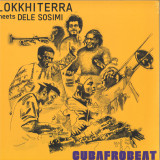
Funkiwala Records presents the third in the series of "Lokkhi Terra meets"albums, with the London fusionistas creating another unique sound-clash, this time with ex-Fela Kuti keyboardist and legendary UK Afro-beat ambassador Dele Sosimi, and members of his critically acclaimed Afro-beat Orchestra.
This particular collaboration has been bubbling away for a few years now, teasing audience expectations with a handful of sold out shows each year in between both bands busy schedules.
Featuring the two pianos of Kishon Khan and Dele Sosimi – Cuban percussionists/vocalists Geraldo De Armas (Yoruba Andabo), Oreste Noda (Ariwo), Javier Camilo (Ibrahim Ferrer) - a horn section led by Justin Thurgur (Bellowhead) featuring Yelfris Valdes (Sierra Maestra) and Graeme Flowers (Kyle Eastwood) to name a few – this is an All-star cast.
Kishon Khan's Lokkhi Terra have over a number of years now been quietly establishing themselves as one of London's more unusual heavyweight outfits, described as "Stunning Headliners… A majestic multi-cultural blend of sounds… effortlessly builds bridges between rolling Indian raga rhythms, Afro-Cuban grooves, Acid Jazz/funk and free flowing improvisation" (Timeout London). Included amongst the band members are London's top Cuban musicians, adding their infectious rich musical history to the city's melting pot.
When the band wanted to explore Cuban links with another of their favourite traditions, Afrobeat, who better to bring in then one of the Afrobeat originators – maestro Dele Sosimi – "Sosimi creates some of the most bewitching grooves in modern African music" E Jazz News.
Bringing together two Yoruba speaking musics - with different accents, from different sides of the Atlantic - Havana meets Lagos in London – A Cuban-Afrobeat-Experience. CUBAFROBEAT.
All About Jazz 4star review
A younger version of London's Grand Union Orchestra, founded by world-jazz pioneer Tony Haynes in 1982, Lokkhi Terra was put together by keyboard player Kishon Khan in 2005. Both ensembles have made a specialism of jazz / South Asian fusion, with Lokkhi Terra also giving as much attention to music from Cuba, where Bangladeshi-born, London-based Khan lived for a while in the early 2000s.
Cubafrobeat, as the title foretells, is a blend of Cuban dance music and Nigerian / Yoruban Afrobeat—a fusion rendered seamless by the synergies existing between Afro-Cuban and Yoruban music, language and mythology. The album is Lokkhi Terra's third and partners the band with the keyboard player and vocalist Dele Sosimi .
A young-going-on-child-prodigy member of Fela Kuti's Egypt 80, Sosimi went on to become musical director of Femi Kuti's Positive Force, before relocating to London and setting up Dele Sosimi's Afrobeat Orchestra, the finest Afrobeat band outside Nigeria, bar none, now with a string of consistently engaging albums under its belt. Cubafrobeat features Sosimi as lead vocalist on all four tracks, and on Fender Rhodes on two of them. His singing plays a prominent role in the Afrobeat Orchestra, but, such is the whirlwind impact of the band in full instrumental flight, that Sosimi is often thought of first and foremost for his keyboard and arranging talents. That may change by the time 2018 is over. Cubafrobeat is the third album in as many months to feature Sosimi as guest vocalist, spotlighting the gravitas, air of mystery, intimacy and ferocity his voice can bring to an occasion.
The first of these albums was the genre-bending spiritual-jazz band Emanative's Earth (Jazzman). One of the stand-out tracks, "Ìyáàmi," features Sosimi making obeisance to the titular Mother Goddesses of the Yoruba spirit worlds. His raw and intense invocations carry the track for nine mesmerising minutes. Otherwordly is not the half of it. Next up was dub / reggae / jazz band Soothsayers' Tradition (Wah Wah 45s), which featured Sosimi as lead vocalist on the compelling "Sleepwalking (Black Man's Cry)." Earth and Tradition are both outstanding albums and have previously been reviewed here.
Cubafrobeat is a total stonking blinder, too. It is an effectively nuanced affair, opening with the fiery "Afro Sambroso" and closing with the relatively reflective "Rumbafro." Sosimi's vocals light up the music, as do the several solos from trumpeters Graeme Flowers and Yelfris Valdes Espinosa and trombonist Justin Thurgur (a member of both Lokkhi Terra and the Afrobeat Orchestra). Sosimi and Kishon Khan's intertwining Fender Rhodes solos on "Cubafro" are also a delight, as is the drum and percussion section throughout.
The sound of summer, for sure, Cubafrobeat has enough depth and variety to make it something for all seasons.
Songlines 4star review
Lokkhi Terra are one of London's most authentic groups. They are a Latin-flavoured collective whose keyboard player and bandleader Kishon Khan segues from percussive montunos to complex Bengali rhythms and back, with jazz chops sparking funky and outward-looking fusions. Their collaboration with Dele Sosimi, Britain's foremost Afrobeat ambassador, has been bubbling for a while; here four tracks at ten minutes see musical conversations that never lose their sense of flow. An extensive line-up of stellar players, including trumpeter Yelfris Valdés, conguero Oreste Noda and trombonist Justin Thurgur, highlights the genre-crossing potential of world traditions. Opener 'Afro Sambroso' showcases batá drums from Gerardo de Armas Sarria before the track links Cuban grooves with Afrobeat. 'Timbafro' crackles and sways via Khan's organ, Sosimi's vocals and Oscar Martinez's timbales. 'Cubafro' features dazzling interplay between Khan, Sosimi and Javier Camillo's Spanish-language vocals. 'Rumbafro' is all rumba choruses, Yoruba vocals and Afrobeat horns. Rooted in their sources, but with musical threads intertwining, separating and reconfiguring – with grooves at a premium – this is a fusion lover's dream
Portland, OR-based multimedia artist William Selman returns to Mysteries of the Deep with his third album for the label. Drawing on influences such as David Toop, Beatriz Ferreyra, Elizabeth Waldo, and David Behrman, “The Weather Indoors” melds live and synthesized instrumentation, field recordings, and digital processing techniques in a new, more melodic and approachable direction.
Immersive site recordings open into melodic woodwinds, orchestral instrumentation, bass guitar, gongs, and vibraphone. Borrowing from the anthropologist Tim Ingold’s concept of “inversion,” this widescreen staging cuts immediately to the core of the project: the way human beings use the faculty of imagination to aestheticize their built surroundings with architecture, images of distant locales, and domesticated flora and fauna to contain the anxiety for the natural world that surrounds human life.
A clear peak in Selman's extensive catalog, “The Weather Indoors” captures his work at a moment expanding his musical and aesthetic project: Neither genre ambient nor musique concrète, but a unique sound world dense with conceptual play and moments of more traditional harmonic beauty.
“We are contaminated by our encounters: they change who we are as we make way for others. As contamination changes world-making projects, mutual worlds—and new directions—may emerge. Everyone carries a history of contamination; purity is not an option.” —Anne Lowenhaupt-Tsing, The Mushroom at the End of the World
----
'A Soft Degeneration' was featured in a mix from Mysteries label boss, Grant Aaron, entitled 'Sundays are for' – hosted by Delayed.
William Selman has releases on Mysteries of the Deep, Critique of Everyday Life, Going In, Hausu Mountain.
In 1983 there came a sound from the depths of the Brazilian rainforest that was primal, ground-breaking, and completely ahead of its time. The roaring of amplifiers and the beating of drums was the sound of Max and Iggor Cavalera creating their debut cult-classics 'MORBID VISIONS' and 'BESTIAL DEVASTATION', and now it seems that after many years, the Cavalera brothers will be returning to their raw upstarts with a full re-recording of these beloved yet obscure albums.
When 'MORBID VISIONS' and 'BESTIAL DEVASTATION" were first spawned it was done in ramshackle conditions in Belo Horizonte, where the duo grew up. Max and Iggor were 14 and 13 years old during the original recording, and they had all the tenacity and energy of a pack of wild dogs. Only, their sound was not quite refined at that time, their adolescence bled through on those early records. It is well known that Max's guitars were completely out of tune on those sessions, and Iggor's drums often swung around tempos crazily. There's an air of youth and passion that could only be achieved by two teenagers that wanted to shock the world. Four decades later and it is plain to see that they certainly did gather the world's attention.
Despite the production being rough around the edges and the band still carving out their direction, there was a noticeable level of craftsmanship to the song structures and a clear indication that given their desire to thrash like maniacs, these kids from Brazil were going to tear the place up night after night. These albums still hold a dark, mystic and at times eerie quality to them that many have come to love over the years. For some, the music does not have to be delivered with perfect technical precision, the spastic live delivery is something to be cherished, and even with their guitars out of tune, they played like the gates of hell were opening. The crossroads of a shamanistic spiritual summoning at a back-alley metal show in downtown Belo Horizonte.
It is a task of heavy magnitude to try and cross the gap between the accomplished artists that they are today to the scrappy boys that they were when they first wrote these songs, but the duo have executed the performances flawlessly. The perfect bridge between the unbridled energy of the original sessions and the high-quality sound of a 21st century production. It is truly astounding to hear Max once again growl like a monster during "Troops Of Doom" and riff at insane speeds through "War" and "Crucifixion". Iggor's barbaric drumming on "Anti-Christ" is like the galloping hooves of a death-rider. Accompanied by bassist Igor Amadeus Cavalera (HEALING MAGIC, GO AHEAD AND DIE) and lead guitarist Daniel Gonzales (POSSESSED, GRUESOME) the quartet is a force to be reckoned with.
How this re-recording attained such a familiar tenacity is almost a mystery, like some spell that brought these albums back from the grave. Within the first few beats you can hear that the Cavalera’s have lost no momentum, attacking the songs at maximum speed and ferocity. In fact, it seems that the brothers have only empowered their connection through music over the decades. You can feel the spark that those two create, a dynamic sound rich with subtleties and ear-grabbing hooks. As Iggor counts in each song with his drumsticks, and Max's guitar feedbacks loudly as he approaches the microphone, there is palpable apprehension. It is apparent that when these two icons get together to play, they are going to electrify the room with their presence.
Few have had the incredible careers that Max and Iggor have achieved through their music. Even fewer had faith in the young boys that wrote 'MORBID VISIONS' and "BESTIAL DEVASTATION' all those years ago. Yet here they still stand ripping through their earliest works with decades of experience under their belts. For them, it is a breath of fresh air to finally give these songs the desired production that they deserve. They both feel that the fans also deserve a fresh look at these albums, a chance to appreciate them in a completely new light.
From start to finish 'MORBID VISIONS" and "BESTIAL DEVASTATION" are a torrential whirlwind of riffs, beats, and screams. A blast from the past that is sure to take every last listener back to the raucous live shows of the eighties.
Mysterious clouds form above an old cathedral, the summoning of dark magic is upon us, and the troops of doom march forth to announce the arrival of 'CAVALERA'!
Crackazat & Heist present: “Senses”. A stunning mini album that sees the artist deliver a heartwarming perspective on contemporary electronic music
On “Senses”, we see the pure talent of Crackazat come to life like never before. We’ve all danced to “Alfa” or his most recent hit on Heist “Demucha” and have heard his venture into the more poppy side of things with his 2022 album ‘Evergreen’ on Freerange. “Senses” however, is on another level. Crackazat takes you on a sonic journey exploring his musical personality with live keys, vocals, bass and production all coming from his studio in Uppsala, Sweden. The
jazzy horns that are featured throughout are recorded by Adeev and Ezra Potash, better known as the Potash twins. The duo took a sidestep from their recordings with John Legend, Robert Glasper and even Diplo to dive into this project with Crackazat and help him deliver arguably his best work to date.
The 6-track album starts off with the low-slung groove of ‘I need to know’. The whole atmosphere is warm, dreamy and seems to be written to lift your spirits, no matter where you are in life. Plucked strings, arpeggios and long horn notes give this song its energy, which is subtly supported by lo-fi drums and sparse bass licks.
“Do you think about me”, keeps the energy tight with a lovely drum groove and a sparse bass section. From the first note of the track, you get the feeling like the energy could change any moment. Halfway through this is exactly what happens, when uplifting keys and a buzzing lead take control of the track. The string arrangement is subtle enough to never overshadow the other instrumentation, but simply adds a beautiful layer to a track that’s already filled with
emotion. It’s all smiles when the energy of this track is set loose!
If “Do you think about me” is Crackazat in pop mode, “Freddie’s Groove” is Crackazat in full-on jazz mode. The nod to Freddie Hubbard is clear, and Crackazat cleverly takes ideas from both the jazz legend and his legendary French sampler, Pepe Bradock for this track. The horns are deep and moody, the groove is jazz-house at its best and Crackazat’s soft vocals have the perfect amount of fragility to fit the groove. The changeover into a stabby synth section
halfway through the track is a subtle reminder from the skilled producer that – even with all these musical elements – he can direct you to the front of the dancefloor with the twist of a note.
“Phantom” sees Crackazat move into a shuffling Latin-dance vibe. Here, the song reaches its full potential through the horn section, so it’s only fitting that this is the feature track for the Potash Twins. The Latin rhythms are lush, the key progression is on point and the energy on this track just keeps on going with layers and layers of horns, powerful vocal chops, and subtle but effective percussion changeovers.
“Endless life” is a track that feels like it’s building up momentum with every repetition. Whether it’s the broken beat groove, the offbeat keys or the sparse horn hits, chord hits or leads, there’s a certain energy in this track that takes a hold of you and simply doesn’t let go.
The outro “When we last met” is built around vibey drunk keys and a downtempo hip-hop groove. There’s a hint of old school D’angelo in this track and you can clearly hear the artist feels at ease with the path he’s taking the listener on. It’s a perfect ending to a record that showcases the beautiful world that Crackazat has crafted through his compositions and one thing is for sure: This is an album we will all keep coming back to for a long time to come.
Yours Sincerely,
Maarten & Lars
“Session Victim debut on Rhythm Section Intl with an EP of understated but highly effective jazzy house rollers“
Having cemented themselves as firm favourites on the Rhythm Section dance-floor over the years, the German duo step forward to present their debut EP on the South London label: “ Basic Instinct”.
Known for their unparalleled energy when performing live or DJing, Hauke and Matthias fly the flag for sample based, soulful house music and a commitment to the art of vinyl DJing. With the never- ending search for the perfect beat at the core of what they do, it was no surprise they found a deep affinity with Rhythm Section INTL over years of playing for each other, jamming in the studio and crossing paths at festivals and airports around the world. In short, this record was an inevitable culmination of two passionate, like minded groups, a match made in Heaven and a long time coming!
Despite hailing from the techno meccas of Berlin and Hamburg, Session Victim are direct descendants of the German Jazzy House masters, tracing inspiration from the likes of Jazzanova, Soulphiction & Compost Records - the likes of which have gone on to inspire a renaissance of this more soulful sound in German clubs, spearheaded by labels like Tartelet and Toy Tonics - the latter of which the duo recently released an EP with.
This latest effort on Rhythm Section INTL is a masterclass in restraint, demonstrating a deep understanding of dancefloor dynamics, putting the maxim ‘less is more’ to great effect. The
opening track, ‘Trying To Make it Home’ is the most immediately engaging cut: a double bass riff drives along a Kerri Chandler-esque filtered piano pattern which gives way to a soaring Gospel
Vocal , allowing the groove to take control as flutes, strings and occasional guitar licks meander in and out of the mix to create a real ‘heads down, arms up’ moment for the dancefloor.
- A1: Lost (1 32)
- A2: Listen Here (4 18)
- A3: Hide Your Heart Away (4 52)
- B1: Send Me An Angel (4 48)
- B2: Leader Of The Band (4 29)
- B3: Yeah (4 46)
- C1: Please Help Me If You Can (4 20)
- C2: Let’s Hope Nobody Finds Us (4 42)
- C3: New Morning (5 45)
- D1: Say I Love You (4 43)
- D2: See My Way (4 01)
- D3: One More Mystery (4 49)
Lewis Taylor's legendary magnum opus: The Lost Album. "Now you're talking. That's my favourite LT album. Unlike all of the others, there isn't anything about it that embarrasses me." Straight from the genius's mouth. What can we say about this? Well, it's the most requested record ever at Be With Towers. The Lost Album was the intended follow-up to his first album but Island rejected it for fear of "confusing" the marketplace and its conception of Lewis as a soul artist. Their loss. It's a breezy sunset masterpiece.
The genesis of this incredible record needs unpicking a bit. Lewis stopped promoting the first album after a year and went home to record a completely different record that was the most un-R&B album you could probably ever hear: "I pushed in such an extreme direction the other way with what eventually became The Lost Album. It was a knee-jerk reaction to a perceived ‘trapped in R&B’ feeling I was going through at the time. Some people around me were in favour of it and others weren’t. In the end I think I lost confidence in it and did Lewis II instead." We did at least get Lewis II, which is a remarkable album, and he kept Island happy...for a bit. Not long after, Lewis was dropped. And what was to become The Lost Album could've been...er...lost. Forever.
Thankfully, however, Lewis and longtime partner Sabina Smyth revisited those scrapped demo tracks in 2003. They decided to re-arrange, re-record and then self-release them. So it was that the brand new version of The Lost Album finally dropped in late 2004. It's sheer perfection, and we don't say that lightly. The Lost Album was a fully 50/50 collaboration between Lewis and Smyth. As well as production, Sabina did a lot more writing on it, from the melody to "Listen Here" to the chord sequence for "Let's Hope Nobody Finds Us." Thankfully, Sabina is credited this time around.
No, it's not straight up "soul music" in the vein of his previous work. Yet, in its perfectly formed suite of one dozen songs, The Lost Album is dripping in soul. It's so warm, so effervescent and so alive with possibilities. It features deep, fresh imprints on well-loved, accessible sounds. It's a proper 70s style double album. Just one listen and the musical influences on The Lost Album are fairly self-explanatory, as Lewis recently told us, but it's always nice to hear that, in case we were in any doubt, he was definitely channeling Love, Yes, Brian Wilson, CSN, Laura Nyro and, of course, Todd Rundgren. The influences don't end there: "I’m particularly fond of my bass playing on that album, there’s a lot of Chris Squire going on which is cool."
Deep orchestral opener "Lost" is a sublime, harp-laced, string drenched gem, a cinematic, melancholic Axelrod-esque mini-epic that simply beguiles. Written by Smyth, it evokes Donny Hathaway's celestial "I Love The Lord, He Heard My Cry" from Extensions Of A Man. The only problem is the brief 90 seconds running time. It segues into the classic Brian Wilson-meets-power-pop-rock splendour of "Listen Here" which, with its outstanding extended harp-licked beatless intro, sounds like the younger cousin to Boston's "More Than A Feeling". We then drift into the ringing guitars of classic 70s rock anthem "Hide Your Heart Away". It's Lewis's personal favourite, "especially the multi-tracked guitar solo – I was listening to Boston at the time, which was fun." A-ha!
A new version of the heart-stopping, shoulda-been-a-massive-pop-hit "Send Me An Angel" opens Side B before the arrival of, in Lewis's completely correct words, "the clear standout, "Leader of the Band"; the perfect distillation of everything that album was trying to achieve." Soaring, piano-led Rundgren-esque power pop that makes the hairs on the back of your next stand on end. Truly, otherworldly. This is pure pop for now (and then) people. The simple jangly brilliance meets experimental prog-rock of "Yeah" sounds like simultaneously like prime CSNY and late 90s Radiohead (if they'd had a slightly more accessible bent and could write better tunes).
Oh, you wish The Beach Boys had continued writing amazing songs beyond Holland? Well, allow us to point you in the direction of the downlifting stunner "Please Help Me If You Can" and the warm textures and brilliant atmospherics of goosebump-inducer "Let’s Hope Nobody Finds Us". Words can't really describe the sheer beauty of these songs. So we'll stop trying. Just listen. Listen, listen, listen. Closing out this remarkable side of music, the accidentally Balearic "New Morning" should be blasting out at every sunrise set in Ibiza, this summer and forevermore.
The final side opens with the vaguely Beatlesey "Say I Love You". It's just classic, soaring pop-rock songwriting and should strictly be canonical. It's that good. The sassy, Stonesy swagger of "See My Way" injects enough rock'n'roll attitude to compensate for the rest of record's peace-loving, AOR sun-dappled vibe whilst album closer, "One More Mystery", emerging out of the rubble of the previous track, comes on initially like a Baroque-Pop George Harrison before piling crunching drums and screeching guitar solos atop the dreamy harmonies til close.
When asked what it means to have these records available on vinyl for the first time, Lewis is in no doubt: "It’s great and it’s really nice to be able to offer fans a different listening experience. There’s a whole other dimension with vinyl that taps into that whole nostalgia thing, well for me anyway. Something about the physical aspect of pulling it out of the sleeve and putting it on, it does tend to make you feel like you’re more engaged."
Lewis was adamant that he wanted all new artwork for The Lost Album vinyl sleeve and his brief was just the sort of classic tropical-beach-at-sunset you’d want to see on the front of a record that sounds like this. On the finished sleeve, the beach at sunset is just where we start out, before heading up through the painterly clouds and heading out into the stars. And yes, the lettering is a definite subtle nod to all those in-between-period Beach Boys bootlegs we all love. Simon Francis's sensitive mastering combines with Cicely Balston's precise cut for Alchemy at AIR Studios so the album sounds appropriately outstanding. The immaculate Record Industry double LP pressing will ensure this previously lost masterpiece stays forever found.
Brian Jonestown Massacre, Velvet Underground, TOY. “Upon the highways of Freedom, where Evil is like a Ferrari… “ Unbeknownst to its members, Index For Working Musik was born on an evening in late 2019 amidst the discovery of a collection of faded b&w photocopies that had been marinating on the floor of a urine-alley in the Gothic Quarter of Barcelona. An assortment of sacred and profane imagery were crumpled amongst an essay on early Christian hermits, entitled Men Possessed by God, the meaning of which was enticingly vague. Received together, they planted the seeds for a new endeavour. Though Max Oscarnold and Nathalia Bruno were already engaged in a creative ping-pong of sorts, the results to this point had only totaled a 30 min long ½ inch tape containing one track and four interludes. They needed a page and they needed ink, and they needed a place and it needed energy. Suddenly by chance or divine intervention, their experimental venture had been given form and direction. Back home in London’s cursed smog, they moved themselves and their 8-track studio into a basement in E8, where the project’s gravitational pull gained strength, quickly developing into an unexpected collective with the incorporation of drummer Bobby Voltaire, double bass player E. Smith and guitarist J. Loftus. As the world shifted around them and the Plague Years followed, it became increasingly clear that they were not going to leave that small basement room. The scarcity of light or outer world presence was less a limitation, instead the main tool at hand, allowing the recording to stretch for boundaryless days in architectural isolation, and forcing them to make straight forward free guitar music, adopting a ‘first thought, best thought’ approach. 35 minutes of repeat phrased guitars, slow-clipped drums and dulcet vocals where the recurring landscape is the desert. Reel-to reel-loops of Afghan music compete with the found sound overlays of voices recorded at the queue of the pharmacy and drum machines borrowed from Spanish heroes, channelling both far-off climes and snippets from a closer reality. It’s a strange psychic brew, built of imagined mysticism and domestic realities, of fever dreams and days that stretched into weeks of months. What was sparked by that discovery in the Gothic Quarter was actually a realisation that what they were looking for was with them all the while, buried as it was in piles of voice memos and recorded guitar feedback. Men Possessed By God they may be not: it was self-possession that was to guide their way in the end. “Life, despite all its destructive changes, remains indestructibly powerful and joyful
- A1: Daytime Tv (Rainy Miller Remix)
- A2: It’s Hard To Get To Know You (Space Afrika Ambiv)
- B1: Pigeon Flesh (Mobbs' Butcher Mix)
- B2: Love Like An Abscess (Aho Ssan Remix)
- C1: Nervous Energy (Teresa Winter Remix)
- C2: I Was Born By The Sea (Morgane Polanski Remix)
- D1: I Was Born By The Sea (Fila Brazillia Remix)
- D2: Dream About Yourself (Bonus)
Richie Culver had been waiting his whole life to record I was born by the sea. His debut album immediately and messily inscribed the artist into the canon of outsider music and experimental electronics, serving both as an arresting statement of intent and a painful reckoning with the difficult path that lead up to it, stealing one last glance back at a place he always knew he had to escape. Between grim lamentations, faded memories and anxiety attacks, all told with searing honesty and disarming openness, I was born by the sea excavates a space for hope, finding Culver digging through Humberside silt to find a world weary optimism, the raw material from which his visual and sound art is shaped. For this collection of expansions and inversions, Culver invites a collection of kindred spirits, contemporary inspirations and old heroes to wade into the salt water of his formative years spent living for impromptu raves and afterparties, connecting vivid memories of his birth place of Withernsea to artists hailing from as nearby as Preston and Bridlington, further afield, from Manchester and London, Berlin and Paris, before returning back to Hull, to where it all began.
For some, responding to I was born by the sea means diving even deeper into the record’s furthest reaches. Space Afrika clear away the pummelling loops of noise from ‘It’s hard to get to know you,’ revealing a cool and cavernous expanse in its wake. Distant chatter, previously heard as though through thin, plasterboard walls, now echoes from outside the maddening claustrophobia of the original’s Sisyphean sonics, illuminated as a dense storm cloud suspended amidst a more open scene, washed clean by a lighter rain, allowing the tender heart of the track to beat clear. London producer MOBBS stretches out ‘Pigeon Flesh’ into an epic, 10-minute, cold-sweat spiral, strung-out tension wrung from disconnected phone tones twisted in unexpected directions, snatches of Culver’s voice turned inside-out and deep fried bass threatening to tip the track over into oblivion, the build-and-release of a nervous breakdown experienced in real time. In an act of subversive self-reflection, Morgane Polanski switches one kind of ennui for another in her adaption of ‘I was born by the sea,’ swapping the sea for the city, English seaside towns in January for summer evenings in Paris and flashing lighthouses and sparkling oil rigs for the Eiffel Tower and the traffic around L’Arc de Triomphe. Even Culver finds time to revisit ‘Dream About Yourself,’ a track taken from his EP Post Traumatic Fantasy, breathing new words into its glacial drift, the half-remembered testimony of a shut-in: Woke up in the evening / Pray for me / Don’t trust anyone / Pray for algorithm. Reframed in a more melancholy light, the track’s reverberant keys even more clearly evoke a mournful nostalgia, fresh pain felt in old wounds.
Others find a parallel universe in Culver’s visceral world building. Rainy Miller flips the script with a scorched, avant-drill rework of ‘Daytime TV’, threading puncturing hi-hats and queasy low-end surge through the track’s steady ambient cascade, invoking the irresistible Preston beat magic of Miller’s own essential debut album, Desquamation. Aho Ssan melts away the crystalline textures of ‘Love Like an Abscess’ with the ominous crackle of a nascent fire, building through swathes of organic Max/MSP squelch and brittle, nails-down-chalkboard scrape, swelling and metastasising the original to spill over Culver’s desperate hymn to corporeal desire, at once flesh and not. Teresa Winter transports us an hour up the coast from Withernsea to her native Bridlington, replacing the sea wall of synthesis on ‘Nervous Energy’ with muffled ASMR murk and fever dream whispers, transforming Culver’s unflinching observations into a haunting call-and-response, filling in the blanks with her own eerie utterances, a fleeting conversation with a ghost. In a touching victory lap, Fila Brazillia, eccentric stalwarts of beloved ‘90s trip hop imprint Pork Recordings, whose performances at Hull institution The Lamp convinced a young Culver of the necessity to make his mark on club culture, resurface for their first remix in 20 years. Steve Cobby and David McSherry lead a low-slung, heartfelt stroll back through a suite of tracks from I was born by the sea, tracing a full circle saunter from Culver’s origins to his current musical practice, the sounds of his present repurposed by the sound of his youth. In a gesture that reflects the emotional complexity of the project, Fila Brazillia find joy at the end of Culver’s troubled reflection, picking out an undeniable groove in the stasis of feeling trapped in your hometown. Underlining Hull’s vital musical legacy, from Baby Mammoth to Throbbing Gristle, Cobby and McSherry demonstrate that, though there are certainly storms, by the sea there is also sun and through the fog, if you listen, you can hear a singular sound, a sound now carried by Richie Culver.
Participant is a record label and creative studio run by William Markarian-Martin and Richie Culver
Next up is an overdue reunion with a familiar face. After his outstanding contribution to Cocoon Compilation S and his first solo EP on Cocoon Recordings, Raxon is back with a more than equally fascinating sound. The Egyptian-born and now Barcelona-based artist is back on it again, delivering two tracks that will take you on a journey through the depths of robotic soundscapes.
Intricate beats, hypnotic synthesizer melodies, deep bassline grooves, and distinctive EFX sounds create Raxon’s very special signature sound.
Straight drum programming paired with chirping percussions takes us away to embark on a travel through space and time while distinctive claps poke through a futuristic nebula of floating and shifting sequences. The twisted melody of “Robotalia” carries us to a parallel dimension of machine sound and if you listen closely, you can hear the robots’ screwing and sawing. Warping bleeps and mechanical effects complete the robotic feeling. Raxon’s understanding of structures and architectural abilities are reflected through the arrangement, slowly increasing to ecstasy.
“Kryptonite” scores with alien soundscapes. Stuttering vocals are the questions, while futuristic and dramatic chord stabs are the direct answer. A straight, radiant sound appears as an electronic trombone from outer space, offensively supporting the driving bassline. The symbiotic interplay between the euphoric synthesizer hook line and the relentless beat with pushing sharp hi-hats visualize powerful images in one's mind's eye. Suddenly the beat stagnates and results in a morphing break going head over heels developing a start-stop pitch effect that not only builds up tremendous tension but also bears an increased risk of melting your brain. We just love tape delay!
Acid Steve's Avinit Records returns with 4 warehouse thumpers direct from the squat party underbelly of London's Acid Techno scene. Acid Vigilantes ramp up the 303's and add some neat vocals, whilst Techsia slams it out nu-style with hard kicks and plenty of venom. On the flip side Acid Steve and Sam DFL go gnarly with some proper Acid Techno, whilst Bubbless and Nesbit go old-school with firing 909 and 303 analogue mayhem.
- A1: The Language Of Love Ft Adam Evald, Антоха Мс
- A2: Strong Accent Ft Curly Castro, Sindysman, Lovvlovver
- A3: Forget, Forgive Ft Mishinuki
- A4: Ingen Förstår Ft Adam Evald, Ni!
- A5: The Closing Shift At The Jazz Cafe Ft Jimi Tenor, Starving Yet Full, Ÿorik, Mak Glonti
- A6: Breed Ft Ÿorik
- A7: Praise This Ft Sindysman
- B1: In The Mood For Dub (Memories Of Love) Ft Mishinuki
- B2: Light Ft Fotiniya
- B3: Obey (Reprise) Ft Mishinuki
- B4: Kabwato Ft Budūchi, Ni!, Lipelis
- B5: Magic Mystery Tour Ft Adam Evald
- B6: Track 04 (りんロゴ) Ft Jimi Tenor, Fotiniya, Rich Thair
- B7: The Sun Is Still Up Ft Noteless, Adam Evald, Saya Siiang, Alina Royz, Katya Panterrra
Green Monster, the 4th Kito Jempere studio album is a journey through love, interconnectedness and creative freedom, bound together by musical friendship that breaks through walls, borders, languages and shapes; accumulated over a celebrated twenty year career and ten years of Kito Jempere.
Over fourteen tracks Kito teams up with over 26 artists from all over the world: a range of talented artists including Warp records artist Jimi Tenor, Red Snapper drummer Rich Thair, Azari & III ex-vocalist Starving Yet Full, L.I.E.S. records Lipelis (on bass), Curly Castro and SINDYSMAN. The album blends hip-hop, free-flowing jazz and world-building soundscapes into a piece dedicated to Kito’s musical roots; marrying multiple artforms, cultural influences and international artists into a body of work that feels deeply personal, healing and detailed. The accompanying artwork is a world created by Kito made using Midjourney prompt, connecting the albums audio world with visible objects — both vinyl and CD will contain booklets with lyrics and the visual world of Green Monster.
Kito describes the album ‘like getting Ennio Morricone, Weezer, The Beatles, Oneothrix Point Never, Eduard Artemiev, Jaga Jazzist, Massive Attack, Fugazi, Jimi Tenor, Hans Zimmer, Radiohead, John Cage and Aphex Twin all together, then collaborating with movie-directors Wes Anderson, David Lynch, Dziga Vertov and Andrei Tarkovskiy.’ Used as a metaphor to help create his album.
Repress
The Acid Series Celebrates Over 10 Years Of No Way Back, With Music That Directly References That Experience. This Is The Fourth Volume In The Series, To Be Paired Withvol 3 By Jordan Zawideh. There Will Be Four More After This Pair, With Records By Tin Man & Ectomorph, Dona, Romans, And Pervocet (patrick Russell & Jasen Loveland) Yet To Come. They All Arrive In A Unique Sleeve Especially Created For This Series, Inspired By The Decorations Of Nwb. This Is The 3rd Collaboration Between Bmg & Derek Plaslaiko, Each Collaboration Has Been Inspired By No Way Back. For This One, Bmg Was Working On A Modular Based Acid Live Show For The No Way Back 10th Anniversary, And From That Vibe We Created These Songs. The A Side References Sonic's Rendezvous Band's Best Lost Single, They Were A Legendary Detroit Rock Band From The Mid 70s Featuring Founding Members Of The Mc5 And The Stooges. The B Side Was The Opening Salvo Of This 3rd Collaboration, A Day After A Detroit Party We Had Played Together. We Had Just Received The Terrible News About So Many Of Our Friends In Oakland, We Could Think Of Nothing Else. This Is Our Sonic Reaction. The B Side Concludes With An Open Jam Presented As A Bonus Beat, The Perfect Conclusion To These Feelings.
How about you forget for a moment all the things you thought you knew about Saroos, okay? First of all, let’s forget about all the other projects these guys are part of. Why? Because thinking of The Notwist, Driftmachine, Lali Puna, Tvii Son, to name “only” half a dozen things, might be misleading in this case. What’s more, please make sure to forget the fact that they’re mostly filed under “instrumental,” “post-rock dub,” or “kraut-flavored indie-tronica,” you know, all that. And most importantly, let’s forget that they’re a closed, three-minded system: a fixed and fully committed entity of three. No more!
Known to reinvent themselves in less drastic ways, Christoph Brandner, Max Punktezahl and Florian Zimmer, have opened the floodgates to COLLABORATION – making things open, porous, different, new, in many ways, on their quietly explosive latest album “Turtle Roll”.
Announced by 2021 singles “Tin & Glass” feat. Ronald Lippok and aptly titled “Frequency Change” feat. Leila Gharib aka Sequoyah Tiger, the sixth full-length sees the Berlin threesome add another handful of vocal guests along the way – thus turning into shape-shifting full bands and/or temp quartets, perfectly at home in about as many genres as there are tracks on the LP.
Kicked off by the motoric B-funk (Berlin represent) of the Lippok-assisted “Tin & Glass,” complete with retro-futuristic effects, spoken declarations, and non-terrestrial vibes, it might not be Daft Punk playing at their house, but a byobv (vibe) house party of musical minds isn’t too far off, actually! Once again as much a mixtape as an album, the mood, vibe, and color changes with every new collaborative tune: From ethereally soothing and dreamy (“The Mind Knows” feat. Solent from Canada) to clap-driven and wildly hypnotic (that pounding “Mutazione,” featuring vocals and rhymes courtesy of Eva Geist from Italy) and almost radio-ready (“current, bass-heavy alternative indie hits only!”), when that stadium-sized oomph of “Frequency Change” feat. Sequoyah Tiger arrives around halfway in.
Elsewhere, Japanese guest Kiki Hitomi (WaqWaq Kingdom) adds exotic ecstasy to the hypothermic beatscapes of “The Sign,” while Ukrainian vocalist Lucy Zoria pushes poetic layers over “Southern Blue”’s wonky foundation that hardens and finds more direction with each round the beat clock takes – until it’s impossible to escape that undertow. “My baby makes it better,” sings Caleb Dailey on the faithful and still-loving “Being with You,” a sepia, softly churning look back by the US songsmith, a sweetly shimmering ode to a relationship.
Speaking of foursomes, there’s four instrumental tracks scattered throughout the new LP – ranging from a painting in crystal clear colors of night (“Organ of Recall”) to the highly dramatic sonic tapestry of “Thicket” (actually feat. vocals as well). Before the perfect goodbye of slow-moving album closer “Here Before,” “Passed Out” sounds like Odd Nosdam finding his feet after blacking out on a German carnival.
Titled after a surf maneuver that allows you to break through the crests on the way out, Saroos have skipped the obvious waves with “Turtle Roll” – creating their own kind of sonic “Hang Ten” by adding 7 new voices to the mix.
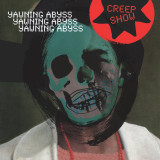
In the five years since Creep Show’s acclaimed Mr Dynamite album was released it’s fair to say that we’ve all been through a fair bit. Sitting here, in 2023, things don’t seem to be getting any better. There’s the cost of living crisis and political meltdowns; we're in deep water with global warming and to top it all there’s a war on our doorstep.
Back in 2018 everything seemed less complicated. Sure, there was stuff to get riled about, but we knew nothing about what was to come. Mr Dynamite was a fairground ride into the dark corners of a world that was on the brink of being blitzed in a blender. It was a record teetering on the edge. Five years down the line you’d expect the follow-up, Yawning Abyss, would double-down and bring the white-knuckled, teeth-gritted fury of the last five years to the boil. And yet….
A quick recap? No problem. Wrangler + John Grant = Creep Show. And Creep Show? “A band of musical misfits who have found a voice or two”, says Wrangler’s Ben “Benge” Edwards, whose Bond villain studio on the edge of a moorland is Creep Show Grand Central as well as home to an analogue synth arsenal that could sink ships.
Wrangler have known each other for a while. Tunng’s electronics wizard Phil Winter and Cabaret Voltaire’s trailblazing, pioneering frontman Stephen Mallinder go way back, while Phil and Benge crossed paths in the 21st century when they seemed to be increasingly in the same venues at the same times. Meanwhile, Mal had been living in Australia since the mid-90s and when, in 2007, he returned to the UK his old pal Phil suggested he meet Benge and the three of them immediately began working together.
Wrangler collectively bumped into Grant at their soundcheck for Sheffield’s Sensoria Festival in 2014 where they were playing with Carter Tutti. A friendship blossomed and when they were invited to perform together for Rough Trade’s 40th anniversary show at London’s Barbican in 2016, well, they jumped at the chance... and Creep Show was born.
Let’s talk about the new album... What is the ‘Yawning Abyss’? You might well ask. According to Mal, it’s “a cosmic event horizon that I can see from my attic window when stand on a chair”. Yeah. Thanks.
“On this album”, offers Benge, feet firmly on the floor, “Wrangler wrangled some vintage synths, mostly Roland, Moog, and the ‘Crystal Machine’ - then John Grant joined in the fun at Memetune Studios where lots of musical experiments were carried out. Then Mal and John ran off to Iceland with the master tapes and recorded a load of madcap vocals. Back at Memetune, me and Phil were left to try and make sense of it all. Which wasn’t hard because what they did in Iceland was totally magnificent.”
Which kind of brings us back to where we began. You’d imagine ‘Yawning Abyss’ would be blowing steam out of its furious ears. Mr Dynamite but kicking a wasps nest. Repeatedly. And yet…
Opener ‘The Bellows’ comes on like a modular ‘Radio Ga Ga’, the singalong ‘Moneyback’ (“You want your money back? / I didn’t think so”) sounds like Godley & Creme’s ‘Snack Attack’ meets Prince Charles And The City Beat Band (“Pennies, pounds, dollar bills, signed agreements, death wills”). ‘Yahtzee!’ is an unhinged electro breakdance party in four minutes and nine seconds.
Where Mr Dynamite was menace, a mélange of mangled voices, with Grant and Mallinder being heavily treated, pitched up or down, rendering their contributions largely indistinguishable, Yawning Abyss takes a more direct approach. You hesitate to say feelgood, but there’s a skip in the step here for sure.
The title track plays John Grant’s vocal straight. Completely. It’s good, so very good. Like ‘Axel F’ covered by Vangelis. The delicious shimmering synths of ‘Bungalow’ also plays those Grant pipes with a straight bat. ‘Matinee’ delves into darker, very funky territory. With Mal upfront it comes on like ‘The Crackdown’. Choice lyric: “You are starting to breakdown / And it’s so fun for me to see / You should have thought of that / You should have come prepared / You can see what’s happening and you look a little scared”.
So, you know, not all feelgood. But it does feel good. It’s probably best to draw your own conclusions... This is Creep Show after all.
The next chapter of the Natural Information Society is here. Since Time Is Gravity, credited to Natural Information Society Community Ensemble with Ari Brown, presents a newly expanded manifestation of acclaimed composer & multi-instrumentalist Joshua Abrams nearly 15 year, 7 albums &-counting flagship ensemble. Joining the core NIS of Abrams (guimbri & bass), Lisa Alvarado (harmonium) Mikel Patrick Avery (drums) & Jason Stein (bass clarinet) are Hamid Drake (percussion), Josh Berman & Ben Lamar Gay (cornets), Nick Mazzarella & Mai Sugimoto (alto saxophones & flute), Kara Bershad (harp) & Chicago living legend of the tenor saxophone Ari Brown. Recorded live to tape at Electrical Audio & The Graham Foundation, cover painting Vibratory Cartography: Nepantla, by Lisa Alvarado. 2xLP on Eremite USA, 2xLP & CD on Aguirre/Eremite Europe. Out 14-04.
Since first developing Natural Information Society in 2010, Joshua Abrams has been gradually expanding the group’s conceptual underpinnings, its musical references & the sheer number of the group’s members. Its music is, in a sense, an expansive form of minimalism, based in repeated & overlaid rhythmic patterns, ostinatos & modality. Its roots, its scale & its meaning become clearer in time. If time is gravity, it also allows us to carry more. Having begun as fundamentally a rhythm section with Abrams’ guimbri at its core, the version here can stretch to a tentet, including six horns.
Abrams has been expanding his minimalism gradually, but he has long understood a key to minimalism’s potential: the breadth of its roots in the late 1950s & early 1960s, ranging from the dissatisfaction of young European-stream composers with the limitations of serialism to the simultaneous dissatisfaction of jazz musicians with the dense harmonic vocabulary of bop & hard bop. The former began exploring rhythmic complexity & narrow tonal palates in place of harmonic abstraction (Steve Reich’s Drumming, Philip Glass’ Music with Changing Parts; perhaps above all Terry Riley’s In C & his late ‘60s all-night organ & loop concerts); the later reduced dense chord changes to scales (signally with Miles Davis' Kind of Blue, but rapidly expanding with John Coltrane’s vast project). In the 1950s the LP record opened the world with documentation of Asian & African musics, key influences on both minimalists & jazz musicians. If John Coltrane’s soprano saxophone suggested the keening shehnai of Bismillah Khan, the instrument was rapidly taken up by two key minimalists, LaMonte Young & Riley, similarly appreciative of its flexible intonation, the same thing that kept it out of big bands.
If the guimbri, the North African hide-covered lute that Abrams plays with NIS, involves a rich tradition of hypnotic healing music associated with the Gnawa people, Abrams’ music also touches on other musics as well — other depths, memories & healings, different drones, rhythms & modes. As the group expands on Since Time Is Gravity, he has made certain jazz traditions in the same stream more explicit as well. If there is a mystical & elastic quality involved in the experience of time, both in direction & duration, you will catch it here. The parts for the choir of winds expand on the roles of Abrams’ guimbri, Mikel Patrick Avery & Hamid Drake’s percussion & Lisa Alvarado’s harmonium: at times, the winds are almost looping in the tentet version, each hitting a repeating note in turn, at once drone & distinct inflection on temporal sequence. The brilliance of the work resides in Abrams’ compositions, the NIS’ intuitive execution & in Ari Brown’s singular embodiment of the great tenor saxophone tradition, including the oracular genius of Eddie “Lockjaw” Davis, & Yusef Lateef. The three pieces by the expanded NIS featuring Brown —the opening “Moontide Chorus” & “Is” & the ultimate “Gravity”— have an immediate impact, & togther might be considered a kind of concerto for tenor saxophone. Here Brown presses almost indistinguishably from composed melody to improvised speech, getting so close to language that he might have a text. Everything here is a sign. Note the tap of the Rhythm Ace that links “Moontide Chorus” to “Is”, the attentive heart always present, even when signed by a machine. There’s a link here to the methodologies & meanings of dub music & the linear & vertical collage of beats, textures & tongues: treated with reverence, a sample of a beat-box can be as soulful, as hypnotic, as a mbira or a tamboura. If those pieces with Brown are heard as a suspended concerto, the three embrace & enfold the other works, like the sepals of a flower. That placement will also touch on the mysteries of our perception of time.
Particularly in “Is”, but elsewhere as well, a phenomenon of transcendence arises in which time appears to be tripartite, at once moving backwards & forwards & standing still. This is an act of technical brilliance certainly, but also an illumination of music’s ability to represent temporal consciousness through polymetrics. This particular listener has only heard it before in a few places, including the horn shouts & bowed basses of Coltrane’s Africa, in moments of Charles Mingus’ The Black Saint & the Sinner Lady, in certain pieces where tapes were literally running backwards, & earlier still in Dizzy Gillespie’s Cubana Be, Cubana Bop, in which the composer George Russell & conguero Chano Pozo found a music that spoke at once in the voices of Stravinsky’s Rite of Spring & the vestigial rites, rhythms & songs of the Yoruba language & Santeria religion of inland Cuba.
In Joshua Abrams’ compositions & the realization of them by the NIS, in the time of one’s close listening & memory thereof, distinctions between the “natural” & the “social”, the “quotidian” & the “transcendent” are erased, suspended or perhaps irrelevant. Consider two of the ensemble pieces, one named for nature, the other social science. In “Murmuration” the repeated wind figures of flute & alto saxophone combine with the interlocking patterns of harp, guimbri & frame drum (tar) to create a perfect moving stillness, not an imitation but a witness to the miracle of the starlings’ astonishing collective art, a surfeit of beauty that might be the ultimate defense tactic.
“Stigmergy” takes its name & concept from the Occupy movement’s Heather Marsh, who proposes a social system based on a cooperative rather than competitive models, one in which ideas are freely contributed & developed as ideas rather than an individual’s property. In its form, Abrams’ “Stigmergy” is the closes thing to traditional jazz, a series of accompanied solos by each of the wind players. However, the composed accompaniment is a radically collectivist notion: a repeated rhythmic figure, call it ostinato or riff, in which the different winds each play only a note or two of the figure, a concept both more collectivist & individualistic in its conception than any typical unison figure. It suggests another of the underlying recognitions that propel the Natural Information Society, the group as social organism, the teleology of hypnotic anarchy, all parts in place, functioning systematically, evolving & expressing itself, its nature & society, as a transformative organism.
George Lewis has described music as “a space for reflection on the human condition”. This suggests that, rather than a “distraction”, at least some music might serve as a distraction from distraction. It’s a focus, a clarity, a awareness, an external invitation to interiority, as if music itself is a model for form & contemplation, an organism contemplating for us or as us. If that is a possibility, & I am sure I have heard such musics, than this music is among them. How many of our rhythms, melodies & harmonies (cultural, historical, biological, psychic) might such music carry, translate & transform in the particulate ecstasy of our own murmuration? (Stuart Broomer, April 2022)
More than four years after his previous EP and after having released some remixes and collaborations with Agar Agar, Black Devil Disco Club or the Italian design studio Burro Studio, LeonxLeon comes back with a new EP, passing to the electronic shaker the styles of music listened since the last release.
4 tracks all as different as each other with first Itanewa, where the Parisian producer tries for the first time to give voice, without vocoder, well aware that on a track inspired by South African productions of the 80s, an instrumental version only would not be enough to do justice. It is thus in a kind of invented Esperanto that the lyrics, a call to lightness and simplicity according to the artist, are distilled between synthetic bass, keyboards and other percussions.
On Piano Mondo, we leave rather in the direction of South America with pianos of Bossa inspiration on a bass italo-disco, rises and descents as if we were in Val d'Isere and breaks just long enough to catch its breath.
The idea of Solid Dose is completely different since it was a question of taking the post new-beat dance sound of the beginning of the 90s, with a big blow, hence the title, of the synthetic bass sound "Solid Bass" which will be used in a lot of ways at this period and which is coming back in force nowadays, and to mix it with the Nordic touch of dance music for a soaring, evolving track, with arpegios which cross each other and an acid line which finally makes its appearance here.
The last track is a wink to the well-known movie that gave its name to the whole project: it is indeed Luc Besson's Léon that we are talking about, re-cut on the dialogues of Nathalie Portman and Jean Reno, supported by a simple rhythmic, analogical bass and electronic kick at the service of a dark atmosphere, closing the record at the antipodes of the first track, without ever having left the universe of melodies and percussions that already characterized the previous releases of LeonxLeon.
- A1: Carlos Picklin - La Charanga Del Espacio
- A2: Tito Chicoma - Cumbia A Go Go
- A3: Choche Merida - El Rock De Los Chinos
- A4: Benny Del Solar, Melochita, Ita Branda - Rumba Espanola
- A5: Lucho Macedo - Rock & Roll Mambo
- A6: Nallye Fernandez - Batijugando
- A7: Nelson Ferreyra - Twist En Guaracha
- B1: Los Kintos - Kintos Boogaloo
- B2: Patty Pastel - Computador Electronico
- B3: Luciano Luciani - A Bailar Bump
- B4: Willy Marambio - Trompeta A Go Go
- B5: Los Vikingos - Go Go En Patines
- B6: Edgar Zamudio - Dia De Pago
- B7: Lucha Macedo - El Maestro Del Rock & Roll
Exotica, ye-yé cumbia, guaracha infused twist, rock’n roll mambo, Spanish rumba, boogaloo beat, tropical garage and other unexpected bastard genres are featured in this festive compilation of bizarre hits taken from the glorious catalog of records released during the 60s and 70s on the Peruvian label Discos MAG. Some clearly unite genres, others are projects with creative names, but all are bold musical initiatives that got and will always get people onto the dance floor. “Sabroso Go Go” brings together fourteen musical mixes created in the recording studios of Manuel Antonio Guerrero (MAG), in which music directors combine rhythm with alchemy in a quest to find the philosopher's stone of the dance. Exotica, ye-yé cumbia, guaracha infused twist, rock’n roll mambo, Spanish rumba, boogaloo beat, tropical garage and other unexpected bastard genres are featured in this festive compilation. Although this compilation begins in 1957, experiments like this (some more memorable than others) were not new in Peru. The songs on this album were however much more successful hybrids. Some clearly unite genres, others are projects with creative names, but all are bold musical initiatives that got and will always get people onto the dance floor. At the end of the fifties, rock music shook the foundations of Peru, and orchestras rushed to cover hit songs and explore the possibilities of mixing them with tropical music. Lucho Macedo's orchestra took up the mantle and reinterpreted a well-known guaracha by Celia Cruz ('Rock and Roll') in mambo style, renaming it 'Rock and roll Mambo'. 'Maestro de Rock and Roll', a hit by the Cuban Conjunto Casino, received similar treatment. Another mix in this vein is the rock tune 'El Rock de los Chinos' by the Mexican Manolo Muñoz (author of 'Speedy González') recorded by the Chilean Choche Mérida for MAG in 1961. The following year, Chubby Checker’s 'The Twist' hit the scene and was immediately fused with guaracha by maestro Nelson Ferreyra. A legendary MAG musician, Carlos Pickling, composed 'La Charanga del Espacio' in 1963. The space sounds are produced by Pickling and his inseparable Hammond. He himself is the one who leads the orchestra that accompanies Benny Del Solar, Lita Branda and Pablo "Melcochita" Villanueva in the tropicalized version of Spanish Rumba, when the beats of the Iberian rumba were still exotic in South America. Around that time, the Chilean Willy Marambio was already living in Lima. In the track included on this album, the go-go style showcases his virtuosity on the trumpet. Another outstanding trumpet player, Roberto "Tito" Chicoma from Chiclayo, played as a session musician with MAG from 1959. A few years later, he became one of the most popular Colombian cumbia players, a talent he demonstrates in the song on this compilation, which blends the fun of go-go with yé-yé beats. 'Batijugando' was a hit from Mexico and was played in all the rhythms played across the Hispanic world since 1967. Inspired by the "Batman" series, it was performed at MAG by the Betico Salas orchestra, with vocals by the Panamanian lady crooner Nallye Fernández. 'Computador Electrónico' is another surprise on this album, performed by Panamanian vocalist Patty Pastel, it is the only known version in Spanish of 'Der Computer Nr. 3', originally sung in German by France Gall. Two other songs feature Edgar Zamudio. The versatility of Zamudio y Los Vikingos (originally a Chilean group) is demonstrated in the guitar-heavy song composed specifically for the late sixties skate fashion ('Go Go en Patines') and in his idiosyncratic protest song ('Día de Pago') performed in beat style. In the mid-seventies, Los Kintos, led by guitarist Francisco Acosta, developed different harmonic ideas in an instrumental track that veers from boogaloo to salsa, the fashionable rhythm of the day. Finally, in 1976, when the bumping hips dance craze swept the continent, Manuel Guerrero was quick to jump onto the bandwagon, composing a Bump song, together with his son Carlos. The Italian musician based in Lima, Luciano Luciani performed the song 'A Bailar Bump' backed by his band of local musicians Los Mulatos.
A kaleidoscope of harmony vocals - as Crosby, Stills and Nash might have sounded with a funky back beat. Delicate acoustic fingerpicking, warmed by a swell of brass before a drama of electric unfolds. Guitar band music, delivered with the sensibilities of someone who knows how to make you dance. Sun-kissed blue-eyed soul, reminiscent of Ned Doheny, but emanating from a beach far from California.
These are the sounds of Jim, as heard on debut album 'Love Makes Magic'.
Debuting in 2021 on the folk-informed 'Falling That You Know' EP, Jim is the latest alias of songwriter, multi-instrumentalist and renowned DJ Jim Baron. Famed as co-founder and musical director of festival-stunning favourites Crazy P, his latest Jim project is a musical journey unlike anything he has done before.
In the KID BE KID superhero universe, the fact that she is not only a singer but also a virtuoso pianist goes without saying. So much talent in one person would hardly be bearable if KID BE KID wasn't, above all, such a lovable funky freak!
"Naked Times! No More Lies! Here I am strippin' straight in front of your eyes," she chants in a futuristic dress with a gigantic shoulder width, and in the video clip she skillfully oscillates between the authenticity of her live performance and the complete unreality of the production.
Musically, it sounds like a finely curated neo-soul record collection pushed through a 2030s cyber-sound AI. Except that with KID BE KID, the beats don't come from the hard drive, but from her body: Human Beat Boxing. So hip-hop community members are welcome to nod their heads here.
In the 10 songs contained on "Truly A Live Goal But No Ice Cream" KID BE KID reflects on our existence between Internet publicity and Home Sweet Home, in which the mere start of the day can become a regular challenge! KID BE KID arms herself against the personified time and gives it an ultimatum: "Don't you dare not be better than last year!". As a result, everything in her life as well as musically finally takes a turn for the better...
KID BE KID has been touring Europe almost non-stop since last summer, has been recording vocals for Netflix ("Rumsspringa") and, in her remaining free time, has been hanging out in the young Berlin jazz and abstract beats scene.
All these influences can now be heard on her fantastic new album, where KID BE KID seems extremely determined to make the world a little bit better with her art:
"We are here for a reason, Move! Be the better Move!", she challenges herself and us in her song "Move" and of course: KID BE KID is a movement we are only too happy to join in 2023.
She has been a celebrated sensation for years for her live performances anyway, so it's no wonder that she is only too happy to make fun of all the boring online productions, including bloated self-marketing in her lyrics: "You'll have to post 5 times a week, at least 5 videos and one pic, if not your audience won't grow".
But since we have all become little self-marketing monsters with the desire for constant virtual pats on the back, KID BE KID directs this criticism primarily at herself: "Of course: For love everybody seeks, But it makes me sick, to do so, too" it also says in the song ("News Feed").
Well, when this album comes out in June, the ice cream parlors should finally be open again in real life. Walking there, with KID BE KID on the AirPods, we make a few jumps of joy! Because, honestly? This is really so incredibly good.
- A1: Nocow Feat Fama87 - Memory
- A2: Nocow - Ko Mne
- A3: Nocow - Soon
- A4: Nocow Feat Shutta - Taina
- B1: Nocow Feat Fama87 - Ogni
- B2: Nocow - Blizhe
- B3: Nocow - Ne Dognat
- B4: Nocow Feat Kedr Livanskiy - Dengi Ne Sgorayut
- C1: Nocow - Circle
- C2: Nocow - Need U
- C3: Nocow Feat Fama87 - Temno
- C4: Nocow Feat Flaty - Naiti
- D1: Nocow Feat Shutta - Anymore
- D2: Nocow Feat Flaty - Pozovi
- D3: Nocow - Diver
- D4: Nocow - Flow
- D5: Nocow Feat Flaty - Breath
First rising to global acclaim in the latter half of the dubstep era with 'Ruins Tape', veteran St. Petersburg producer Nocow has fluidly moved across styles in the years since. Moving in a new direction from 2017s 'Ledyanoy Album', which saw the producer channel 90s ambient techno/IDM for GOST ZVUK, these 17 new tracks, and collaborations for the label instead hone in on a vocal-heavy type of ghostly R&B. As an album, Odinocow carries hints of trance, house and polished electronica ('Blizhe') as well as raw broken beat hybrids ('Dengi Ne Sgorayut'), though the primary unifying factor is the voice.
The heavy use of autotune, downtempo arrangements and wistful, machine-distorted human emotion are referenced in the album's title, which translates roughly to lonely Nocow. Whilst past albums have oscillated between steady dance structures and more wildly experimental arrangements, there is a recurring theme of simplicity at play here. Nocow aims to craft memorable songs by harmonising over contrasting ambient soundscapes, from glacial to warm, through to trap/rnb and 4x4 dance-pop.
With such an emphasis on exploring his voice and his songwriting craft, Nocow injects a new level of soul and integrity to his already well-established productions. Odinocow is a departure from his past work in some ways, though is also an example of a musician striving to reflect their truest vision of the self. "By finding yourself, you become able to love yourself, and, as a result, the world. So the album is really about love."
- A1: Permeate
- A2: Unity Gain
- A3: Eyes Shut Feat Faye Houston
- A4: What Is The State Of Our State (Part 1) Feat Repeat Beat Poet
- A5: Your Invasion Is A Lie Feat Idris Rahman
- B1: Unforgotten, Unforgiven
- B2: What Is The State Of Our State (Part 2) Feat Repeat Beat Poet
- B3: Flames Feat Faye Houston & Tamar Osborn
- B4: Refuge (Interlude)
- B5: Refuge
Albert’s Favourites label founder Scrimshire is set to release bold new album 'Paroxysm'. In the last few weeks of October 2022, Scrimshire wrote a new collection of songs with the descriptive working title "Scream". A direct response to the absurdity of the breakdown in the UK government, the horror of the treatment of refugees arriving on our shores and the callous disregard for the trauma being caused to low-income people or anyone considered "other". While self-preserving Conservative MPs fought for their jobs, record profits were announced by energy companies as they were gouging crippling amounts of money from people's pockets. The anger, sadness, mourning, and frustration he felt was poured into these recordings.
Originally named “Scream 8”, ‘Unity Gain’ was one of the early outpourings from those sessions. Piano and drums bubble up until it fully boils over with huge stabbing synthesiser and string sounds in an outburst of frenetic energy. "Division seems to characterise our daily experience”, says Scrimshire. “How does a society stop the callousness and corruption from seeping into its bones?".
Singer Faye Houston features on both ‘Eyes Shut’ as well as, alongside saxophonist, composer, and multi-wind instrumentalist Tamar Osborn, on ‘Flames’. About the latter Scrimshire explains, “One person can breathe fire into your life and the world, leaving an indelible mark. The album was influenced hugely by a friend we sadly have lost. I think of it like the heat you still feel after a fire has gone out”.
London-based poet and emcee The Repeat Beat Poet captures moments of time, thought, and feeling on ‘What Is The State Of Our State’, a furious yet succinct stream-of-consciousness diatribe in two parts. From afrobeat and reggae-influenced London band Soothsayers, clarinetist and saxophonist Idris Rahman features on ‘Your Invasion Is A Lie’, an ever-progressing, cosmic-jazz track.
The elegiac ‘Unforgotten, Unforgiven’ features saxophonist Nat Birchall, on which Scrimshire says "This is dedicated to the politicians who have forced refugees into life-threatening decisions. Pushing people into the hands of traffickers, into small boats and too many beneath the waves of our seas. Who force the lives of men, women, and children into more danger, in the hope of escaping war, poverty and persecution only to meet more cruelty and persecution. It won't be forgotten, and it won't be forgiven".
Scrimshire’s last album, 2021’s 'Nothing Feels Like Everything', received an Album of the Year nomination at the Gilles Peterson Worldwide Awards and last March he was named by the Guardian as one of three producers behind the new wave of UK soul, alongside Inflo (Michael Kiwanuka, Sault, Lil Simz) and Swindle (Joel Culpepper, Greentea Peng, Kojey Radical). Albert’s Favourites was formed by Adam, Dave Koor, and Jonny Drop, who designed the logo and artwork, and has released records by The Expansions, Hector Plimmer, Huw Marc Bennett, Pie Eye Collective, Qwalia, Ronin Arkestra.
Early support from Huey Morgan, Amazing Radio specialist playlist, Gideon Coe. Previous support from Gilles Peterson, Mary Anne Hobbs, Jamz Supernova
- A1: Cattaneo - Il Raggio (Feat Hamid Shahsavan)
- A2: Giovanni Battagliola – Askja
- A3: Alessandro ‘Petrol’ Pedretti – Paline
- A4: Kick - New Try
- A5: Luca Formentini – Fili
- B1: Eke - Draft Junk (Live Cut)
- B2: Maniscalco - Canicola
- B3: Materie – Landscapes
- B4: Chris Benoit – Brokenspiel
- B5: Corrado Saija & Giorgio Presti - Hypster Calling
A sonic love letter to Italy’s 2023 Capital of Culture, Brescia-Bergamo. Harnessing a creativity and energy without genre, boundaries or filters, Rebirth blends together independent musical paths, which were valid but otherwise fragmented, into a collective and identity project called 'Brixia Sonora' - a tribute to the Brescian music scene in its many facets and declinations.
An image of a city and its atmosphere. A photograph that may be imperfect, potentially blurry, yet alive and authentic. Pulsating. Incorporating multiple inspirations and influences: noise, minimalism, breaking the mold; weaves and beats, polyrhythm and polymetry, glitch music and organic music; and yet electronic fractals, jazz effusions, house beats, Balearic sunsets, post-metropolitan downtempo, other forms of rock. A cocktail of hybridizations that, under the direction of Rebirth, finds a balance on the edge of the unexpected, despite its diversity, infinite facets, and multiple identities.
Exploring the musical landscapes of the protagonists: Giovanni Battagliola, Paolo Cattaneo, Chris Benoit, Eke, Luca Formentini, Kick, Alessandro Pedretti, Corrado Saija e Giorgio Presti, Maniscalco, Materie, Matteo Gamba, Mattia Fontana. Solo projects, bands, collectives, DJs, and producers - a crossroads of generations and multitudes within which everyone has carved out their own space. 'Brixia Sonora' symbolizes a period of dialogue and exchange - from exchanging ideas to sharing passions, syncopated beats and new impulses, leading to the evolution of what is yet to come.
As the siren’s song echoes out of systems worldwide, perhaps we are (re)turning to the liquid age of dance; with natural ephemera such as moss, sentiments for ecology such as swamps, and mercurial aspects of water all absorbing the aesthetic forefront. A return to nature, a deep dive under the lily pads. Here Marijn with her debut EP guides our plunge, a trip previously taken via her podcasts on Kulture Lab, where you can also find her previously released music.
Whispers from the ethereal plane drift around the headspace, a rumble in the distance of sound traversing the water, voices to guide and to keep you from floating too far from the line. Audio hallucinations are aplenty when submerged, a serenity of space, yet distant growls assure that peace is not always 2 be found. The melancholia within the daydream, the pang of loss caught in reflections, internal and from the water, with the lily pads floating above as a guiding entity, an anchor, something to hold. Under the lily pads we rumble.
On the flip everyone’s fav casual breaks n rave hooligan Luca Lozano asks the recurring thought within dance music, a question we quest, yet rarely want the answer. Abstraction via squeaks and tweaks, you better bop your bleepin’ head to this 1.
‘Leave A Message’ leaves the tranquil waters disturbed and rippling to the outer edges, providing jumps for the lily pads to ride on the incoming tide, with the ebb and flow making way for a storm surge. Aka big beats are the best, a notion the directly honest final track ‘Made (Drums)’ follows, bringing a twisted jack attack logic to a deranged assembly of samples, a manic orchestra of tumbling drums who have conspired to freak out, albeit with cute bubbles underneath to revel in the allure of sonic mania.
Black Light Smoke is the electronic music moniker of Jordan Lieb - producer, songwriter, and award winning film and TV composer. A Chicago native, Jordan transplanted to New York City in 2001, where his career as a multi-disciplined musician has taken flight in many forms.
Currently residing in upstate New York, Black Light Smoke returns to Scissor and Thread for his first full length debut-album: Ghosts.
The 12 tracks (plus three digital bonus tracks) span everything from 90s house, smooth and deep soulful beats, dusty grooves and thoughtful treaties on the state of creativity, capitalism and identity.
It’s a collection that sits together as a listening experience perfectly, building peaks and sliding into serene troughs, all with a strong sense of radical thought and creative experimentation. Tracks bend and warp in unexpected directions, while gritty, distortion and overdrive counterpoint classic rave stabs and vocal samples. Taken as a whole, the album could be the soundtrack to a night drive through the city, as much as certain tracks will no doubt find themselves woven into the sets of the more leftfield and genre pushing DJs. Either way, it’s an essential release from one of the most exciting and vital producers out there and the first artist signed to Scissor and Thread back in 2011.
The album title, Ghosts, tells two stories. One is personal - an artist embracing the shadows of his past in order to move forward and complete a body of work. The second story is a search for the original meaning of house music - not just the usual sample, appropriation or casual nod to the originators of house - but a meditation on the living story of Black America in which house music is an inseparable chapter. Both stories are a reflection on grief and the transformation of trauma into celebration.
100% of Jordan Lieb’s personal proceeds from this record will go to Little Bit Foundation, empowering students living in poverty to achieve their academic goals.
Limited Edition 500 LPs for RSD2023 – 250 ‘Sugar Mountain’ Gold LPs! / 250 ‘Restless Rollin’ Black LPs! (randomly inserted) . From the makers of 'Hillbillies In Hell'...
Full Throated, Big Chested Country, Hollyweird Pop and Velveteen Popcorn for the working stiffs.
Deluxe Gatefold LP with exclusive scholarly liner notes by Alvin Lucia! Non-Returnable.
Full dynamic range 2023 remasters direct from the first generation analogue master tapes!
Best known as one of the original Godfathers of '50s Rockabilly, Dorsey Burnette had a fascinating 1960s solo pivot to epic, widescreen vistas of Existential Incarcerations, Serpentine Temptations, Cold War Escapees, Luciferian Combats, Eco-Armageddons and Creationist Heavens.
Blessed with a bold set of tonsils and a song-writing genius, Burnette is largely forgotten today but his hits (and misses) offer a brash landscape of Spiritual-Crooner Belters and Hillbilly Backwoods Swelters.
Lusty, loud and proud, this set examines unheard and underrated sides cut for various mid-'60s labels as Burnette sought a home for his unique Hillbilly Popcorn Pop.
Antediluvian Survivalism and Biblical Environmentalism, Ancient Traditionalism and Passionate Hedonism.
The best of Dorsey Burnette's 1960s sides stand alone as Wry Depression-Era Fables, Swinging Tower of Babel Ballads, Devilish Tribulations and Forceful Masculine Declarations.
Eons in the making – ‘Hard Working Man' captures and chronicles the stellar output of a prodigious wordsmith and eccentric, arcane thinker. Fundamental Questions and Timeless Revelations, Dorsey
Burnette channelled Eternal Wisdom through Blood, Sweat and Big Beat Ballads.
Many of these sides are impossibly rare and are reissued here for the very first time. All for your primal listening pleasure
The 1st album released in August 2021 attracted attention in the overseas scene, and labels from various countries such as Italy, Argentina, US and Poland. More release realized. Only half a year after that, they completed the remarkable 2nd album. Based on the royal road doom sound and the music with the blues feeling derived from 70's, the band ensemble with more euphoric feeling gets a lot of attention. A full lineup of songs such as "Devastator", which freely grooves from a side-beating beat to double bass, and "Agua De Vida", which enhances smoke and trip feeling under the direction of Mr. Okazaki. In the mellow "Underneath the Sky" and "Running In my Vein", the taste that has withered moderately is impressive. With the help of an effectively crafted album composition, it can be argued that they have reached the next level in this work. Don't miss the further leap of "Tokyo samurai doom" !!
Dire Straits' arresting self-titled debut arrived in the midst of punk's reign but couldn't have been further removed from the era's slash-and-burn style. Recorded in West London in February 1978, the band's tasteful, jazz-inflected set embraces folk, blues, and pub rock while also tracing a direct line back to the beat-oriented sound of early rock n' roll. Country and roots accents further distinguish the British quartet's stripped-down music from any 1970s peers, as does the transparent production, which has remained revered among audiophiles the world over – and which has never been better than on this meticulous pressing.
Mastered from the original master tapes and pressed at RTI, Mobile Fidelity's 180g 45RPM 2LP version of Dire Straits features natural tonalities, superb balances, you-are-there imaging, deep-black backgrounds, and pristine clarity. Even if you've heard this album hundreds of times before, you've never experienced it with such lifelike sonics and premium richness. This numbered-edition collector's set immerses you within the smoky, laidback atmospherics of every song. This is how all vinyl should sound.
Crucial to every arrangement, Mark Knopfler's winding guitar lines emerge with supreme transparency and multi-hued textural detail. His intricate playing comes across as if it's being transmitted via his 60s-era Fender Vibrolux amplifier placed right before you. The cleanliness, dimensions, and live feel are that good. His bandmates, too, benefit from the extra groove space afforded by this 45RPM edition. Rhythms skate and swirl; percussive effects resonate with crispness and attack; the leading edges of notes naturally decay.
Dire Straits' strong, well-edited batch of original material further enhances the overall enjoyment and makes the record one whose pleasures go far beyond the organic sonics. Just as Knopfler's narratives pour forth with poetic and surrealist texts, the musical settings – an intoxicating combination of easygoing shuffles, back-hall boogies, and pop-honed ballads – mirror the old-fashioned soulfulness inherent in the classic recordings of the late 50s and early 60s. The lyrics are equally captivating.
Drawing from his time as a youth in Newcastle, Leeds, and London, Knopfler invests tunes with an autobiographical slant and emotional connectivity that become obvious the moment he opens his mouth to sing. "Down to the Waterline," "Wild West End," and "Lions" all feature colloquial touches that add to their reach. By extension, "In the Gallery" functions as a tribute to Leeds sculptor Harry Phillips (father of future Knoplfer collaborator, Steve Phillips) while the record's breakout smash, "Sultans of Swing," pays homage to struggling bar bands.
Through it all, Dire Straits performs with a subtle cool and clever poise that no band ever matched. Just how good is the chemistry? Bob Dylan heard the quartet and invited Knopfler and drummer Pick Withers to play on Slow Train Coming. But even Dylan himself didn't hear Dire Straits sound this magnetic back in its original heyday. Now, everyone can.
What a record! The outstanding Solar Plexus, the much-loved third album from Ian Carr and Nucleus, was first released on Vertigo in 1971. Inevitably, original copies are now very tricky to score and, like all the Nucleus records, it’s aged ridiculously well. This Be With re-issue, re-mastered from the original analogue tapes, shows off just why this deserves to be back in press.
Genius trumpeter and visionary composer Ian Carr was one of the most respected British musicians of his era. He was a true pioneer and saw the potential in fusing the worlds of jazz with rock, just as Miles Davis and The Tony Williams Lifetime did in the US. In late 1969, following the demise of the Rendell-Carr quintet, and tiring of British jazz, Carr assembled the legendary Nucleus. Regarding music as a continuous process, Nucleus refused to “recognise rigid boundaries” and worked on delivering what they saw as a “total musical experience”. We can get behind that.
Under bandleader Carr, Nucleus existed as a fluid line-up of inventive, skilled musicians. This constant evolution and revolution was all part of the continuous musical exploration and discovery that took jazz to new levels. And the music has kept relevant. To steal a line from a review of our re-issue of Roots, when it comes to anything Nucleus “it’s basically already hip-hop”.
We'll let Ian describe this one: "I wrote Solar Plexus' last year with the help of an Arts Council grant. It is based on two short themes which are stated at the beginning (Elements I & I1). The first theme is angular and has a slow, crab-like movement: the second theme is direct, simple and diatonic. CHANGING TIME and SPIRIT LEVEL explore the first theme and BEDROCK DEADLOCK and TORSO explore the second one. SNAKEHIPS DREAM tries to fuse both themes. (The title is a reference to the famous dancer 'Snakehips' Johnson)."
Solar Plexus features the same lineup as Elastic Rock and We'll Talk About It Later, but they're augmented by six guests, three of which play brass. Carr himself had almost full control of the writing and it does feel very different to the previous albums. It's more of a jazz record loosely based on a rock foundation rather than jazz fusion jamming.
The haunting synth-and-bass soundscape "Elements I and II" opens the album in dramatic, experimental fashion. It gives way to the bright, funky feel-good jazz of "Changing Times". An elegant onslaught of horns, courtesy of guests Kenny Wheeler and Harry Beckett, ride a solid groove for the duration. How the brass refrains have eluded samplers is beyond us. The melancholic "Bedrock Deadlock" features the brooding majesty of Jenkins' oboe and Clyne's mournful, skittering double bass. Wah wah guitar, drums and funky percussion then take over before the horns ride us out over frenetic beats. The dark, angular "Spirit Level" is a real highlight, by turns harmonic and beautiful then dissonant and wayward. Wonky jazz with no apparent structure or melodic bones. Regardless, it represents a great showcase for each virtuoso performer.
The breezy soul of "Torso" feels like a breath of fresh air, skipping along in the uptempo style with guitar, horns, drums and bass. A track which truly sounds scintillating, featuring sax solos, fantastic propulsive interplay from all the group around the halfway stage before Marshall gets his chance to really shine in closing out with a polyrhythmic drum solo. Final track "Snakehips' Dream" stretches cooly out over 15 minutes to round out a spellbinding album. An epic, suave groove, it's a relaxing piece with warm electric keys, laconic guitar and languorous horns. Truly sophisticated soulful jazz. An absolute masterclass. We could easily listen to this all day long.
This Be With edition of Solar Plexus has been re-mastered from the original Vertigo master tapes, Simon Francis’ mastering working together with Cicely Balston's cut at AIR Studios to weave their usual magic with these wonderful recordings. The stunning gatefold sleeve has been restored to complete this sensational package.
‘Before the Odysee, there was the Iliad; a tale of the golden age of heroes and warriors.'
The idea behind the new Iliads series is to return to the sound of the golden age of Jungle/Drum & Bass, and more specifically the original ‘heroes’ of the Odysee label.
This first in the series pays homage to the style of music heard in the Oblivion releases that Source Direct delivered through Bassment Phil’s Street Beats imprint between 1995 & 1996.
Forbidden Affections is a classic Deep Amen track, made with tracks like Sands Of Time and Secret Liaison very much in mind. Right from the onset where the pads are given plenty of time and space to draw you in, it is completely faithful to that mid-90’s SD style. All the trademark break switches and deep 909 sub lines are present, and the palette of sounds are all drawn from those same sources that first inspired the SD sound (as such it is Atmospheric Jungle with a strong Techno persuasion). The finishing touches come from the achingly gorgeous female vocal ad-libs that were also such a trademark of the early, more atmospheric SD tracks.
Hidden Rooms is perhaps even more authentically SD, especially with its focus on arrangement, and the way it uses the selection of samples that are once more drawn from those same Deep Techno sources. The interaction between the rolling curls and cuts of the Apache at the start, and the crisp injection of the Think breaks at the drop comes straight out of the early SD portfolio. The bass drops down super deep underneath the drum work, punctuated by exposed electro hits and well-chosen samples. It is the haunting keys nearly 4 minutes in however that give this track the authentic SD twist more than anything, calling tracks like Fabric Of Space and Made Up Sound very much to mind.
Drifting Through is the final track of the E.P. with its beautifully sharp rolling Hotpants/Worm combination. This track leaves plenty of space; dubbed out to just breaks and bass for much of the duration, with the occasional injection of an obscure electronic sample, or the sweet vocal ad- libs to hold the tune together. Further down the track there is a touch of the Jazz influence as the Rhodes chords add an extra level of harmonic warmth.
Look out for Volume II where we will be returning to the distinctive flavours of the original Mirage releases on Odysee!
A cult icon on the international film scene, Japanese actress Meiko Kaji, born in Tokyo, has been put into the spotlight internationally by Quentin Tarantino when he heavily based his Kill Bill film on the 1973 revenge genre film 'Lady Snowblood,' one of Kaji's most famous films. By the time she appeared in it, she had already made almost fifty feature films (she began her career in 1965) among which the cult 'Stray Cat Rock' and 'Female Prisoner Scorpion' film series and she was one of the most famous exploitation actresses in Japan doubling as a sex symbol. This gave the studios the idea of getting her to start a singing career and release music closely associated with the films she starred in often singing the theme songs. Thus she began releasing records at the dawn of the 70s, recording several 7" singles and five albums for Teichiku which have become sought-after and almost as cult as her films.
Drawing on her film roles, the music on these albums were an uber-cool mix of kayokyoku (Japanese Pop), traditional Enka Music, Acid Folk and Funky beats arranged by the best producers of the time in a cinematic way that could sound like Ennio Morricone or Jean-Claude Vannier. that explosive cocktail is featured in full blow on the first album from the Meiko Kaji reissue program, 'Hajiki Uta' released by Teichiku in 1973.
The album featured two film songs, namely 'Urami Bushi' used for the film series "Female Prisoner Scorpion" and 'Onna No Jumon' featured in the film 'Female Prisoner Scorpion - Jailhouse 41,' which have been composed by Shunsuke Kikuchi who also composed the score for these films. At first Kaji was unsure of her singing talents as told to Hashim Bharoocha in an interview but she quickly rose to the challenge: "I told Shunsuke Kikuchi that I couldn’t imagine myself singing the songs. He said I could ignore the melody that he wrote, and just sing it the way I wanted to. That really lifted the pressure off my shoulders, and I decided to sing the song as the character in the film. The director was also happy with that idea.”
The rest of the album follows the same pattern with atmospheric songs such as "Onna Hagure Uta" or "Onna Somuki Uta" displaying Meiko's sombre singing over a superb slow-burning groove, which precedes the funkier "Hitori Kaze" featuring a wah wah guitar, a breakbeat-like rhythm section and slick string arrangement, shaping the unique Meiko Kaji signature sound.
Wewantsounds is delighted to reissue "Hajiki Uta" and the rest of Meiko Kaji superb early 70s albums for the first time in fifty years in their glorious original Japanese artwork, with remastered audio, cementing further the actress' reputation as a true international pop culture icon.
Manchester's Avant-Jazzy-Funk outfit Swamp Children were enviably eclectic and Taste What's Rhythm is their mini masterpiece. Flitting gracefully through a feast of genres with consummate ease, the band were almost indefinable and, accordingly, nigh-on impossible to market. So whilst this cult EP, originally out in 1982 on Factory Benelux, remains in demand for those in the know, it has also glided under the radar of many otherwise clued-up heads for over 40 years. If you don't know, get to know...
The Taste Whats Rhythm EP was originally released in 1982 on Factory Benelux (an informal partnership between the legendary Manchester-based Factory Records and Belgium-based Les Disques du Crépuscule). With it's kaleidoscopic brightness, silky panache and superb execution, it remains one of the most startling documents of a remarkable time and place.
The EP opens with the oh-so-Balearic title track. "Taste Whats Rhythm" gently unfolds with a Spanish guitar, hazy, drifting vocals and sun-bleached Latin percussion. After this most sumptuous of intros, the tempo is raised, the rhythms grow in complexity as horns jostle amidst the restrained chaos quite wonderfully. And then it winds down again. Proper fluctuating rhythms and tempos throughout. I guess that was the point - taste the variety!
“You’ve Got Me Beat” is a *perfect* piece of post-punk pop-jazz. A mysterious, after dark jazz-dancer, the aching vocals serve as a touching, tender resignation to love. A guitar hook which seems to elegantly reference The Blackbyrds' "Rock Creek Park" and a flowing pulse from New York's No Wave scene. It still sounds so fresh all the years later.
Closing out this most perfect of EPs, the twisted synths and nimble rhythms of bass-heavy roller "Softly Saying Goodbye" combine to create a super-slinky gem; Brit-Funk of the highest order.
Swamp Children formed in Manchester in 1980, around core members Ann Quigley (vocals), Tony Quigley (bass, metalaphone, percussion), John Kirkham (electric & acoustic guitars, metalaphone, percussion), Ceri Evans (keyboards, bass, percussion, background vocals), Cliff Saffer (saxaphone, clarine) and Martin Moscrop (drums, percussion, trumpet). They initially practised at a rehearsal space shared with fellow post-punk funkers A Certain Ratio and Joy Division/New Order. Young and relatively inexperienced upon getting together, the ages of Swamp Children's members ranged from just 16 to 19. Talk about the brilliance of youth.
From the outset, Swamp Children shared DNA with A Certain Ratio. Martin Moscrop was a founder member of Ratio, while Ann provided artwork for them. Although the close association with ACR led some to assume that Swamp Children were simply a splinter group, the new band pursued a more overt latin and jazz tinged direction, at the same time adopting a post-punk attitude towards making music, influenced by the records they were listening to at the time: Miles Davis, Brazilian jazz fusion and heavy funk dancefloor sides.
The band made their live debut at Manchester's infamous Beach Club in May 1980. Thanks to a double-booking blunder another support band turned up and were turned away, having travelled all the way from Dublin for a string of British dates. The name of the unlucky band was U2...
With arrangements that emphasised Tony Quigley’s darkly-coloured basslines (and Ann Quigley’s impressionistic vocals as another instrument in the mix) Swamp Children possessed an easygoing grace and a bubbling energy which indicated that the band's true strength was as an ensemble. The band’s musical sophistication (a fusion of funk, jazz, and bossa nova) would prove to be a strong influence on later UK acts like Sade. Indeed, Swamp Children themselves later mutated into the more known and acclaimed latin jazz outfit Kalima.
Working directly with James Nice, custodian of Factory Benelux, means that the audio for this re-issue of the classic EP comes from the original tapes. Cut at 45 RPM and released in the house Be With disco sleeve, we’ve made sure this record is well up to the job of having a permanent place in every DJ’s bag. As far as we’re concerned, this is essential stuff.
- A1: Vromm - Red Tuna
- A2: Hyphen - Winter Sky
- B1: Saytek - Iyndub01 (Live)
- B2: Pascal Nuzzo – Hold On
- B3: Nphonix & Matrika - Rumble Around
- C1: Acidulant - Make Love To A Machine
- C2: Insider - Something Flash
- D1: Dharma - Structured Chaos
- D2: Som.1 – Ultimatum
- E1: Dino Lenny – Did This
- E2: Adam Antine - Sortavala
- E3: Paul Roux – Bapteme
- F1: Underworld – Appleshine (Film Edit)
- F2: Subject 13, Conscious Route – Dripping Sauce
First released back in the fall of 1989, the In Order To Dance album was a compilation LP that pulled together tracks from a
select band of electronic producers, pushing the boundaries of the house and electronic music that was in its infancy stage.
Released on the R&S Records label, the IOTD series would become pivotal in the development of the electronic music scene
at large.
The world of music is a constant shape shifting, trend moving behemoth. Style may come and go (and come back around
again), stars are made, stars can fall. But the ethos behind In Order To Dance remains the same as it ever has, with a fierce
independent spirit, and a pledge to bring forward the next generation of young artists and their music. And so, here we arrive
at a new collection, fresh for 2023, and just in time for the labels 40th anniversary year, and with the ardent A&R’ing of label
founder Renaat Vandepapeliere, a selection of new tunes is assembled to reinforce the strength and power to be found within
music.
Across thirteen tracks, a squad of refreshingly contemporary producers from around the globe are brought together under the
In Order To Dance banner. Ushering the series into a new era, new variations on the electronic genre and fresh ideas are
fused into a delightfully engaging collection of tracks. There’s deep breakbeats courtesy of UK producer Dharma, smooth and
dubby live action from Saytek and complex bass heavy rhythms from Vromm. There’s esoteric electronics from Hyphen, epic
piano driven deep house from Dino Lenny and swinging jazzy breaks from Nphonix & Matrika. Paul Roux’s melancholic
‘Bapteme’ unfurls waves of deft pianos and guitar swirls over taunt beats, and a driving electro tone is set on Acidulant’s
contribution. Intoxicating rave tropes and hefty breaks come courtesy of Pascal Nuzzo and Adam Antine delivers a wall of
sound anchored by shuffling, funky beats on ‘Sortavala’.
And to accompany the new wave of In Order To Dance, a series of music videos have been produced. Acclaimed artists and
video directors, including Alessandro Amaducci, Ben Marlowe and Gala Mirissa, have all stamped their digital artistic
visions onto these stunning compositions, synching audio and visual for a multi-sensory experience!
‘In Order To Dance 4.0’ by Various Artists is available on R&S Records from 14th April 2023 on 3LP vinyl, download &
streaming services.
Vinyl release compiling both Nukuluk EPs on one LP. Curating their own unique sound and captivating crowds with their refreshing approach to hip-hop, electronica and indie, Nukuluk return with their new EP ‘SUPERGLUE’ on 21 April. The writing and recording process has never been executed in a conventional style for the group, a series of laptops and bedrooms manifesting the groups’ studio, aspiring to a fundamentally collaborative process as they piece their separate parts together in ever surprising ways. Respective members lead through a variety of formats, bringing a demo, a motif or concept in what can be a deeply stimulating process, ensuring the sound is ever-evolving. The EP acted as an educational vehicle that held the group together as they learned how to overcome certain challenges, and hold it together as one, hence the title SUPERGLUE. It presents a fractured journey and chaotic growth of five individuals trying to create the new together; honest vulnerable expression married with complex soundscapes, pulling from whatever genre feels natural and trying new combinations of internal collaborations in the group. The release spans genres from hip-hop to alternative rock, ambient to metal, dance music to r’n’b in what the band note as: “a kaleidoscope of sonics, songs, beats, noises and stories lurching between vulnerability and bravado, as a body of work growing in all directions at the same time.” Their latest single ‘I Just Wanna Luv U’, the follow up to the high octane ‘Covered In Gold’, marks a charged change of pace; an introspective, meditative trip-hop piece, with creeping synths, electronic drums and gruff vocals transitioning into acoustic guitars, live drums and rap verses. It tells the story of wrestling with childhood trauma, isolation and self-acceptance. Vocalist/producer Syd Nuku explores an eerie modern condition before conversing with an inner child’s trauma and memory - “be slow kid, go and take a place below the ceiling where it won’t fall”. The accompanying video was co-directed by Luke Kulukundis (Syd Nuku) and Iso Attrill, and takes reference from the likes of Michel Gondry, Charlie Kaufman and David Lynch. Nukuluk are Monika, Syd, Mateo, Louis and olivia. Entirely self made the collective successfully blend genres and styles to reach new spaces through a broad range of influences (including JPEGMAFIA, Jockstrap, SOPHIE, Wu-Lu and Yves Tumor as well as esteemed groups like Massive Attack, Portishead and Gorillaz). Formed in the midst of lockdown, the collective played their first show in July 2021 before releasing their debut EP DISASTER POP to critical acclaim in November, which subsequently led to multiple festival appearances and a 3-night sold out residency at Bermondsey Social Club in 2022. Their release campaign was littered with videos and creative visuals that were constructed by the collective and its extended family of artists - this multifaceted creative output of the group making them a unique prospect; directing and producing their own videos, exploring many avenues of creation and trying to exist in a unique contemporary DIY space. With nods across the spectrum of the music media – including The Quietus, CLASH, NME, Ransom Note, DIY, DORK, So Young and many more – Nukuluk are steadily carving out their own space in the British leftfield.
- A1: Cannibal Holocaust (Main Theme) 2:56
- A2: Adulteress' Punishment 3:21
- A3: Cameramen's Recreation 3:15
- A4: Massacre Of The Troupe 3:53
- 5: Love With Fun 2:4
- B1: Crucified Woman 2:19
- B2: Relaxing In The Savana 3:06
- B3: Savage Rite 3:41
- B4: Drinking Coco 3:23
- B5: Cannibal Holocaust (End Titles) 3:52
- C1: Savage Rite (# 2) 1:50
- C2: Crucified Woman (Short Version) 1:26
- C3: Savage Rite (# 3) 2:31
- C4: Cannibal Holocaust (Terror) 2:16
- C5: Savage Rite (# 4) 3:53
- D1: Adulteress’ Punishment (Long Version) 4:01
- D2: Savage Rite (# 5) 2:04
- D3: Cannibal Holocaust (Main Theme)
THE SOUNDTRACK OF THE MOST CONTROVERSIAL FILM EVER.
FOR THE FIRST TIME IN FULL IN A SPECIAL DOUBLE VINYL EDITION!!! (NON-RETURNABLE)
This Legacy Edition of “Cannibal Holocaust” includes the film score remastered and released in its entirety for the first time ever on double LP; graphically speaking, it includes a gatefold cover with glossy title letters printed on a special soft touch paper, OBI and an 8-page booklet complete with reproductions of posters, lobby cards and photographs from the set, plus presentation essays written by Fabio Capuzzo (one of today’s best soundtrack experts), Stefan Dimle (Landberk, Anekdoten, Paatos, Morte Macabre) and Mikael Åkerfeldt.
AMS Records is proud to present a special edition of the “Cannibal Holocaust” soundtrack, exclusively released on the occasion of Record Store Day 2023. It is, of course, one of the many 'cannibalistic' movies, but perhaps it’s also the only one of its a genre that even today generates mixed feelings and strong controversy.
The excellent soundtrack, composed by Riz Ortolani, makes extensive use of string instruments, masterfully arranged and directed to match the strong contrast between the more relaxed scenes - the incipit of the film is memorable, with the main theme accompanying the spectator in a flight over the Amazon forest - and those full of rhythm and tension; in the first case, the strings go along with guitar arpeggios, while in the second they vibrate alone or together with glacial electronic beats. There are also funk-rock episodes such as in “Cameramen’s Recreation”, “Relaxing In The Savana” and “Drinking Coco”, while “Cannibal Holocaust (Terror)” is pure noise mixed with haunting percussion.
Having emerged as a luminary of the Los Angeles Beat Scene, MatthewDavid immersed himself for several years in the rich, neglected, and all-too-often-derided archive of New Age sound/culture, stewarding a kind of New New Age sensibility into being. Mycelium Music constitutes a synthesis of these aesthetics, an alchemical marriage of sorts, in which the digital and the organic, the earthen and the aethereal, the bloom and the rot all collide and coexist. How might the Mycelium sing? Where other sound artists might be tempted to capture the phenomena, reaching for a field recorder, MatthewDavid responds with a succinct, impressionistic, and diaristic suite of “songs” (although, as with the mycelium itself, one cannot easily distinguish where one song/organism ends and another begins). Leaving Records founder Matthewdavid announces his new album Mycelium Music, his first proper full-length since 2018. The first single to be taken from the album 'Liquidity', was created as a direct response to ambient pioneer Laraaji encouraging Matthewdavid to innovate zither music. Beautifully textural, Mycelium Music constitutes an alchemical marriage in which the digital and the organic, the earthen and the aethereal, the bloom and the rot all collide and coexist. The record is a product of serious contemplation on the meaning, the problems, and the promises of interdependence.
Tom Trago returns to Rush Hour after 10 years with a wonderfully accomplished mini-album, tip!
During the years he spent living in Amsterdam, when his DJ career seemed to become an unstoppable juggernaut, Tom Trago was a regular visitor to Deco Sauna, a local institution that helped him “decompress” and de-toxify his body. Eventually, a more extended period of “decompression” was needed, with Trago moving to the coast to reassess his priorities and spend more time with his young family.
‘Deco’, his sixth album and first for Rush Hour in a decade, was recorded following an extended absence from club dancefloors, as Trago cut back on DJ commitments to prioritise family life. When he returned to the studio, often with his daughter by his side, Trago initially struggled to get back into the groove. The desire to make dancefloor-focused music had – temporarily, at least – deserted him; instead, he found himself drawn towards a desire to create “electronic lullabies” and music that reflected his more pastoral environment (his home backs on to a patch of woodland in which he would walk every day).
Returning to his most familiar synthesisers – and specifically the first synthesiser he bought, on credit, as a young DJ and wannabe producer – Trago set about navigating different musical routes without the straight-jacket of club-focused dancefloors. Occasionally, old friends from Amsterdam would join him in the studio – Tracey and Maxi Mill, both of whom are part of his Voyage Direct label roster, contributed to tracks on the album – but for the most part the production process was a solo endeavour: musical therapy for an artist determined to do things differently after years spent making club hits and sweat-soaked peak-time workouts.
The results are rarely less than spellbinding. Trago sets his stall out with opener ‘Dark Oak’, a gorgeous, colourful, sun-bright scene-setter co-produced by Tracey that layers tumbling lead lines, chiming melodic motifs and kaleidoscopic chords atop the gentlest of bubbly beat patterns. Maxi Mill lends a hand on ‘Central Park’, a deep and hypnotic excursion marked out by rhythmic bleeps, minimalistic beats and layered melodies, and the summer sun-down rush of ‘Never Peace a Puzzle’, where kaleidoscopic synth sounds, meandering solos and looped electronic stabs rush towards a dancefloor of the mind.
Trago’s desire to create “electronic lullabies” for his young daughter comes to the fore on ‘To Be Left Unlocked’, a hypnotising fusion of spacey electronic motifs, Steve Reich style (synth) marimba melodies and slowly building musical intensity, while the echoing Fender Rhodes riffs, squelchy synth-bass, glistening guitar notes and sparse, snappy post hip-hop beats of ‘When The Sky Is Watching Us’ doff a cap to the producer’s roots as a bedroom beat-maker.
Given the project’s genesis, it’s perhaps fitting that Trago chose to conclude proceedings with ‘It Might Be Forever’ and the digital only ‘Blue Dope’, the album’s most rejuvenating, immersive, and vibrant moments. Both feature sustained chords painted with vivid aural brush strokes and come blessed with the merest hint of a rhythmic pulse – a thread that subtly runs throughout Trago’s most mature and musically rich album to date.
Matt Anniss
Mark Hawkins readies ‘Venn Diagram’ album for Aus Music this May.
Mark Hawkins’ early releases on labels such as Djax Up Beats and Ugly Funk lit flares in the world of
underground techno, with a sense of humour and tougher-than-thou sonic palette enforced via his jacking live
sets. Across the following decades, Mark has delivered razor sharp cuts that encompass pretty much
anything that has an electronic heart - leaving his own unique trail for others to follow via his work for labels
as diverse as Dixon Avenue Basement Jams, Sonic Mind, Mistress Recordings, Houndstooth and Aus.
With his latest album, it feels like Mark has pushed ahead with a change of direction he started with 2021’s
‘The New Normal’. ‘Venn Diagram’ carries on this journey into uncharted lands; molten, distorted drum
assaults weave around glistening melodies, kitchen sink soul glides below fractured sound pools. Opener
‘Verblex Oscillos’ immediately demands your attention grabbing, with a so-happy-it’s-sad melody spiralling
around a cascade of tough-as-fuck dance floor destroying beats, along with ‘Isolated’s urgent combination of
strings, acid and chicago-tough electro beats.
Other cuts on the album share a similar approach, ‘Maladayfun Friction’s restless energy derives from a fusion
of skittering drums and deranged synths and ‘Still Have Time’s dreamy super saw pads and plaintive vocal
espouse a kind of wasted elegance, roaming the city nightlife in a Gucci dress and Doc Martin boots.
‘Nlasckhdsjk’ and ‘Frederikalstublieft’ propel forward with such a sleek and effervescent aesthetic, recalling
fast drives along picturesque European highways or heady take-offs to unknown urban territories. The
aesthetic becomes more elegant on the album’s centrepoint tracks ‘Rebula Conundrum’ and ‘Nlasckhdsjk’,
where optimistic bleeps, bass and 707 drums underpin jazzy chords and soaring leads.
Other tracks show the arc of Mark’s direction of travel, with soulful vocals that share a well of deep-rooted
optimism that was so evident on his breakthrough 2016 Social Housing album. ‘L.O.V.E.’ breaks into
post-Sophie territory with a catchy modulated vocal joyfully two-stepping across to the nightclub bar and
‘How Do I Know’ providing a heart rending torch song for 6am kicking-out-time refugees to help them find
their way back home.
- A1: S O.n.s - & Go Dam - Force Of Will
- A2: Volodymyr Gnatenko - Subra
- B1: Rds - & Eversines - Plooooooink
- B2: Ray Castoldi - 1991
- B3: Maara - & Priori - C'mon
- C1: Big Zen - Really Bad Habit
- C2: Furious Frank - Red Herring
- D1: Sansibar - Between Two Circles
- D2: Roza Terenzi - Beat Pig
- E1: Adam Pits - Spreadable
- E2: Sound Mercenary - Float Downstream
- F1: Syzygy - Can I Dream?
- F2: Sohrab - Silk Road
- G1: D Tiffany - Ghost Filter
- G2: Maara - Floating In The Swamp
- H1: Oma Totem - Sardana Sardana
- H2: Sw - Bixsixstreetlicks
- H3: Eversines - Onigi (Ambient Version)
Six years, more than fifty releases, countless artists and multiple subsidiaries; the Oyster Cult’s reach extends far beyond what sceptics once thought possible. It’s only fitting, then, that we gather some of our finest under the Kalahari banner in celebration.
The anniversary release is upon us. Six whole years since Jacy helped inaugurate the label with a spin on Midwestern house, OYSTER40 signals a landmark occasion. 18 tracks, quadruple vinyl boxset action, and in true Oyster Cult tradition, it comes bearing pearls.
Dancefloor squarely in focus, the Cult assembles on a compilation spanning alumni and new inductees alike. It’s an assemblage of the fractal, explorative and ritual-ready; at once a focused distillation of the Kalahari sound and celebration of its many acolytes. Big on atmosphere, heavy on groove, we delve deeply into the musical DNA shared by all who grace the label.
Tough, direct cuts (Sansibar, Roza Terenzi, Big Zen, Maara & Priori) to the pristine and widescreen (S.O.N.S., Volodymyr Gnatenko, Adam Pits), this is all quintessentially Kalahari. Elsewhere though, the likes of D. Tiffany and SW. journey further into realms of abstraction: the former opting for hi-tech, dreamstate IDM, while the SUED co-founder dissolves a house template into dubby introspection.
Calling upon contemporary talents for the most part, there are also exceptions. Raymond Castoldi - the one-time house producer best known as Madison Square Garden’s music director - returns with an unreleased nugget from ’91, while an ‘Aliens’-sampling track from Detroit-indebted techno outfit Syzygy gets the reissue treatment.
DEAD SEA APES are back with a passion to deliver their most essential and cohesive album to date. Formed in 2009, DEAD SEA APES have become a fixture of the psych scene, sharing stages with the likes of Part Chimp, The Heads, Acid Mother Temple and Mugstar while producing a distinctive body of work, ranging from psychedelic punk to experimental dub, from freeform jams to constructions of loops and drones. Following a slew of collaborations and split releases, REWILDING sees them return to a power trio of Brett Savage (guitar), Jack Toker (bass) and Chris Hardman (drums). From the chaotic blast of opener ‘Denialist’, beaming out like a maniacal emergency broadcast, through to the monolithic pounding of the title track, REWILDING is unrelenting, taking in blown-out guitar wails and jet black psych noise while the irrepressible rhythm section moves from claustrophobic motorik beats to a thunderous rolling juggernaut. These blackened pearls have been recast and refined over the course of the past three years, strung out deeper than the night and now embodying our present uncanny, disorienting times, as we emerge into an altered world to find Mother Nature reasserting herself while the human madness intensifies, locally and globally. Savage and uncompromising, this is DEAD SEA APES at their most direct and visceral. REWILDING is released by Cardinal Fuzz (UK/Europe) and Feeding Tube Records (USA) as an edition of 750 on black vinyl.
Tom Zé and Faust collide in Domenico Lancellotti's "machine samba"
Domenico Lancellotti's SRAMBA reaches back to the roots of samba whilst completely revamping its blueprint, indoctrinating guitar and percussion-led rhythms with analogue synthesisers, courtesy of album producer Ricardo Dias Gomes.
The majority of SRAMBA was recorded over two months in The Cave - Domenico's home studio in Lisbon, the city both Brazilian ex-pats reside in, where the arrival of a couple of Russian-designed synths purchased by Ricardo influenced the direction of their initial experimentation: "Ricardo had these instruments, modular machines" remembers Domenico, "and I had my guitar, some percussion instruments. On the first day we started making sounds and recording them, and songs started to appear, sambas started to appear."
The son of a renowned samba songwriter, at home Domenico would watch his father play and compose. At parties, the adults would hand his father a tamborim (a small tambourine) and ask him to play along. "I grew up inside samba, it's my roots", he says. "For me, everything is samba, I bring it into whatever style of music I am making".
Domenico and Ricardo instantly saw how the synthesisers were not at odds with the sambas they were playing, instead they had a similar sound to its typical percussion instruments (ganza, repinique, surdo, tarol). What's more, they saw a connection with roots samba, the samba that existed before bossa nova and samba jazz came along. This was rhythmic samba, with grooves that could go on ad infinitum. "It's samba de clave, geometrically structured" says Domenico. "It's ostinato samba", adds Ricardo.
"Diga" is a great example of what their proposal is capable of, as what begins as a glitchy machine whirring into action soon turns into a glorious samba in which the gurgles and scratchy beats coming from the analogue equipment only add to the arrangement. Likewise, on "Tá Brabo" it's an aching melody from one of the synths that gives the guitar rhythm its needed counterpoint, and shows how the duo's greatest accomplishment is not in invention alone, but in creating a great samba album. It's an album that can go from the opening track "Ere" with its reverberant bass thud, mantra-like vocals and staccato rhythms to the string-accompanied "Nada Sera de Outra Maneira", a swooning samba that pays tribute to the Brazilian ensemble Tamba Trio, who along with Tom Zé's Estudando O Samba, Domenico names as the biggest influence on their treatment of samba.
Other important reference points are made clear on "Um Abraço No Faust". One of three instrumentals on the album its title riffs off a JoãoGilberto song, "Um Abraço no Bonfá", but whereas JoãoGilberto was giving a hug (um abraço) to bossa nova guitarist Luiz Bonfá, Domenico and Ricardo are giving theirs to the German avant-gardists Faust. "Quem Samba", with its horn section and dramatic melody give a whiff of Domenico's Italian ancestry, while "Descomunal" is devoid of rhythm whatsoever, guest vocalist Tori singing over a bed of electronic drums, cello and swirling synths, that highlights the duo's unwillingness to stick to a particular formula.
Both Domenico Lancellotti and Ricardo Dias Gomes are revered names within Brazilian music over the past 20 years. As a member of the +2's, with Moreno Veloso and Kassin, Domenico released a trio of albums on Luaka Bop in the early 00s that pioneered a new Rio samba sound with elements of funk and psychedelia. With Veloso and Kassin he would later form Orquestra Imperial, a big band intent on reviving ballroom (gafieira) samba, and that has worked with guest vocalists such as Seu Jorge, Elza Soares and Ed Motta. SRAMBA is his fourth solo album. Multi-instrumentalist Ricardo Dias Gomes first came to notice as a member of Caetano Veloso's band Cê which helped reinvigorate Caetano's career with a sound influenced by British new wave. As well as collaborations with Lucas Santtana, Negro Leo and Thiago Nassif, and work with his own group Do Amor, he has released a series of acclaimed solo albums that reveal a restless music-maker.
SRAMBA is a glorious showcase of the duo's style, uniting Domenico's playful lyrics and rhythmic, samba-rooted songs with with Ricardo's assured accompaniment of unorthodox textures and instrumentations. It may be a new language for samba, machine samba (samba de máquina), but as Domenico says, "samba da máquina is samba".
Summer Forever And Ever succeeds Blue Gene Stew, 2019’s debut by the Wolfmanhattan Project, a collective unit co-starring three musicians familiar to In The Red listeners: singer-guitarist Mick Collins, front man of the seminal Detroit-bred garage units the Dirtbombs and the Gories, singer-guitarist Kid Congo Powers who played in such legendary bands as the Gun Club, the Cramps, and Nick Cave and the Bad Seeds, and drummer-vocalist Bob Bert, whose skin work has distinguished albums by Sonic Youth, Pussy Galore, Lydia Lunch’s Retrovirus, and Jon Spencer and the HITmakers. The group was founded as a studio project by three musicians who are kept busy by their primary bands. Blue Gene Stew was written and recorded quickly. Powers says, “I think that the new record was much more a group effort. I think there’s more of a group kind of sound, as eclectic as it is. I feel like we all played together, as opposed to playing on each other’s songs.” Bert notes that the band’s music is grounded in spontaneity: “Me and Mick went in and had a couple of rehearsals, and I would come up with a beat, he would come up with a riff. I still have a cassette Walkman, believe it or not, and we’d put it down on that. It wasn’t even a full song. We’d just put down a bunch of ideas. When it came to recording we’d lay down the basic tracks and work out different things, and a lot of it was made up on the spot. It really is a great collaboration.” Recorded and engineered by Mark C. of Live Skull at his studio, Summer Forever And Ever finds Powers playing piano and the Kaoss touch-pad effects unit and Collins playing synthesizer, in addition to their usual instruments. The album reflects the same eclectic mix of musical styles heard on the debut. References and sometimes even direct quotes from sources as diverse as the Andrea True Connection, Captain Beefheart, the Count Five, and Eurythmics leap out of the speakers.
First ever repress since 2017!
The second release from MIC comes from Ladies As Pimps - LAPS for short - an anarchic Glasgow duo formed by Lady Two Collars of Golden Teacher and Sue Zuki from Organs Of Love.
Their duets take centre stage on Who Me: the vocal performances range from the stretched, soulful projections of Ode To Daughter to the lawless, clipped, sweet & sour, spat-not-spoken word of Edges.
Spirited percussion scatters in all directions and bass is smothered in tape delay, as the duo beat their way through dub, r'n'b, house, and way beyond, circling around acts like Madam X, The Bug, Stuart Argabright and Francois K, mashing absurdity with dread.
Recorded at Green Door studios in Glasgow (where the two met) and layered with the analogue production techniques learned on the first youth unemployment programme there, the energy and charisma of these recordings promise a pretty unique live show when they support Princess Nokia later this year.
Supported by Ben UFO, DJ Moxie, Pitchfork.
• 180 GRAM AUDIOPHILE VINYL
• SECOND ALBUM FROM BROTHERS MICHAEL, JACKIE, TITO, MARLON AND JERMAINE
• INCLUDES THE BILLBOARD HOT 100 #1 SINGLES “ABC”, “ONE MORE CHANCE”, “THE LOVE YOU HAVE” A.O.
The brothers Joe, Jackie, Tito, Jermaine, Marlon and Michael Jackson formed the pop band the Jackson 5 in 1964. In 1968 they signed with Motown Records and became the first group to debut with four consecutive number one hits on the Billboard Hot 100, including “ABC”. This single is featured on the same-titled album which was released in 1970. Other hit single “The Love You Save” is also included on the album. Both singles went directly to the number one position across the board, even knocking The Beatles off their number one spot. ABC peaked at #4 on the Billboard Pop Albums Chart and at #1 on the Billboard Black Albums Chart in the U.S. It remains one of the most popular efforts by the Jackson 5, selling over 5.7 million copies worldwide.
Ritual Cloak take a more introspective and meditative direction with new EP, Vanished in Transition, venturing into new musical territories that draw influence from ambient, jazz, doom metal and George Harrison’s indian explorations. Leaning into down-tempo rhythms, drums have been exchanged for heart-beats, as if this EP is the duo breathing deep in readiness to face the next chapter.
Featuring Rob Smith of Wonderbrass and Wylderness bandmate, Harri Rees (Vanished in Transition) and Karl Griffiths of Morning Arcade (Half of My Life), Vanished in Transition showcases Ritual Cloak’s continued love of collaboration.
Recorded at home and their own studio in Cardiff, Vanished in Transition’s theme plays with the fascination of disappearing, although the duo have no such plans of vanishing any time soon.
LNS and DJ Sotofett return to Tresor Records with The Reformer EP. This new record moves forward with a crystal clear, direct and controlled output, leaving their debut album "Sputters" as an end-mark of a sonic era. Here they evolve into a topography full of contrasts, where harsh digital artefacts, scanner sounds, and vocoder voices cast melodic colors across cold landscapes of club-ready electro.
"Reform" plunges deep into an electro sound splintered by binary bits and submerged pads that beckon a serene melody, which echoes and loops to entangle with mutant voices, noises and buzzes. "Plexistorm" leads with synthesized strings and arpeggiated acidic bleeps until a thick bass emerges, sounding almost like a long-lost Analord record. Heavily shapeshifting with eects processing, it proves primitive movements in dubbing are the perfect counterpart to this precise electro sound.
With "Electric Terraforming", the duo uncover charged energy sources required for life on another planet, as broad synth pads
and memorable vocoder harmonies draw this earworm to a close. Mighty washes of dub rule on "909 The Controller" as a skipping beat invites a slow, rippling melody and percolating reverberated synths.
The vinyl record has significantly dierent sonics to the digital release, and, exclusively, each side ends in a locked groove produced by DJ Sotofett.
Civilistjävel! returns to Copenhagen label FELT with a four track EP following on from 2022's Järnnätter album.
Equally well placed next to the Biosphere / early Fax +49-69/450464 camp as well as various decades of electro-acoustic drone practitioners, Fyra platser (Four Places) also includes a trip-hop leaning collaboration with Cucina Povera. Whilst Järnnätter drew influence from the cyclical, chasmic nature of dub techno, Fyra platser hones further in on the ‘between’ areas in a minimal, reductivist fashion. The rhythms are there to follow but are primarily beatless and more expansive, though skewing perceptions of time in the same trademark manner.
Three locations in the Nordingrå area of the Swedish high coast are exorcised and channelled through sound. ‘Kolugn’ is a deliberately grainy, sepia-tinged continuation of the likes of Robert Rutman’s work across the 70s American avant-garde. It sits in contrast to the more obviously synthesis-led direction of fellow longform piece ‘Valmsta’. The location slowly changes to Finland via Athens, scenes of cafe conversations and hazy polaroids informing the lyrics of ‘Louhivesi’. The result sounds like a 90s illbient record dropped around 30 bpm and the stylus has caught on a perennial 8-bar loop. The balance of Cucina Povera’s cold, reverb-heavy vocal inflections drive the track into another dimension. If Moral were the Scandi Joy Division, this pairing must be the Scandi Massive Attack.
- A1: Holy Spirit (Prod. By Streetrunner & Tarik Azzouz)
- A2: BeneT (Prod. By Jimmy Dukes)
- A3: Eye On Money (Prod. By The Heatmakerz)
- A4: Find It Out (Prod. By Lt Beats)
- B1: Can’t Show Love Pt. 2 (Prod. By Lt Beats)
- B2: Flour City 3 (Feat. Eto) (Prod. By Thanos Beats)
- B3: Painful (Feat. Che Noir & Freeway) (Prod. By Maki)
- B4: Last Gasp (Feat. Ransom & Tearz)
38 Spesh has quietly become tastemakers’ top pick for “next to blow.” Just ask LeBron James, Kevin Durrant, DJ Premier, Sway, Method Man, or Lloyd Banks, all of which have co-signed this Upstate New York emcee. His 7 Shots EP, the third and final instalment in his fan-favorite “Shots Series,” marked the moment that many caught on to the TRUST movement. The 8 track offering gives underground Hip-Hop fans exactly what they want, hard bars over soulful beats. The project features guest verses from Freeway, Ransom, Eto, and Che Noir, as well as production from Streetrunner, The Heatmakerz, LT Beats, Thanos Beats, and more. Mixed and mastered by Chris Pinset Cover by Laz Art Direction by Jordan Commandeur A&R by Ransom
[h] B4. Last Gasp (feat. Ransom & Tearz) [7 Shots Version] (prod. by Mayor, Ty Jamz & Bernard B. Westwood)
Platform 23 again explores to the dense voids, this time with a touch of the funk, with a reissue of Dutch experimentalists De Fabriek and two tracks from their "Music For" cassette series, this time calling all Hippies.
Featuring both original and reinterpretations from modern-day heads, Dunkeltier and Khidja, this double-pack is something of an oddity, showcasing the bands' expansive range, moving away from the noise, drone and industrial soundscape releases they had become known for and crafting here, free flowing, groovy longform jams.
Active since the late 70s to today, De Fabriek (The Factory) have never considered themselves a real band - being also a label too - with an evolving and irregular line up centred around Richard van Dellen, they present their music and output as a kind of work-union.
With literally four decades and dozens of releases across all formats, 1988's cassette release, 'Music For Hippies', has become something of a cult curio, with the long improvisational tracks, Lullabye and Coming Down eschewing the rougher, industrial experience for something completely different.
In opener Lullabye, we go full leftfield P-Funk meets Motorik undertones. An incessant beat is laid from the start and doesn't cease for over 10 minutes, while spoken vocals call closer to the Krautrock realms of Can and hark to Liebezeit's stylised grooving best.
Analog, echo washed, with touches of glam and wrapped in simple effects pedal work, the secrets are passed to Dresden / Berlin inhabitant Dunkeltier aka Sneaker DJ aka Thomas Smorek. His darker moniker, appearing on obscure edits for Macadam Mambo and the much-missed Bahnsteig 23, his 'Hey Robot' mix adds bass, percussion, strings and synth to remold Lullabye into a late night, red light, basement denzien. This is followed by an additional, bonus reimagining, creating an all-new time piece, an ear worm of the best kind with Tik Tok Goes The Clock.
The second slab presents in Come Down, a more resembling De Fabriek werk. Edited to fit, the darkness is entered as snapshot vocal quips, oscillations and synthesised mutations are laid over a lazy, relentless ostinato rhythm where cymbals crash on the bar. Inviting, calling, De Fabriek's aptly titled downer is in fact, a joyous journey.
To complete, label affiliates, Khidja take a break from finalising their debut album to unfold their 'Psychebabble Mix', a dozen plus minutes of warped, twisted, cassette machinations that suck the listener further along the trip. Added bass propels their edit suddenly to a new direction, a hook for mind and for the open willed, the body. De Fabriek's "coming down lullabye" arriving on vinyl for the first time, with a twist and shake, calling deeper to acceptance.
Amniote editions readies the DCX capsule with two beat oriented releases focused on tripped out atmospheric sounds.
Moloch Horridus debuts with four beautiful cuts of electro belters spanning from straight-in-your-face-no-bullshit stompers to more meditative moods.
DCX-4: Moloch Horridus - Self Guard EP
12” & digital
All tracks written & produced by Tred
Parietal Eye returns in collaboration with Cantil for two versions of Final Destination - explorations of sizzling hi-tek sci-fi soundscapes and turbo-driven drum programming.
DCX-6: Parietal Eye & Cantil - Final Destination
Mesh print & digital
All tracks written & produced by Yuri & Internazionale
The artwork is designed and imagined by Amniote household art director and co-founder Rose Marie Johansen.
On the heels of his already critically acclaimed (yes, already!) retrospective, World Spirituality Classics 3: The Muslim Highlife of Alhaji Waziri Oshomah, Alhaji Waziri Oshomah — the Oyoyo King, the Godfather of Afemai Music, the Etsako Super Star, Mr. Please Please Please, Mr. Dynamite — returns with Vol. 2.
Along with the other four volumes of the series, Vol. 2 is now available—for the very first time!—as part of a complete set (in a box): Vol 1 - 5 (1978 - 1985) (November 4, 2022).
Waziri hails from a small part of Edo State in southern Nigeria called Afemailand, known for being a harmonious region where Muslims and Christians live—and dance—together. And there, as a devout Muslim and an exemplar of religious piety in his community, Waziri’s music fuses Etsako/Afemai folk styles with pan-Nigerian highlife and pop to create a sublime vehicle for his Islamic philosophy that gets everyone—Muslims, Christians, whoever—on the dancefloor.
Vol. 2 focuses on Waziri’s illustrious mid-career output—the music he created during the years leading up to and after he performed his first hajj. Every song here (one of which you might recognize from The Muslim Highlife) strikes his signature balance of traditional music, highlife, and funk, as he entreats you to stay on the straight and narrow, though there’s nothing straight about his beat.
On and off the record…
This is the second of the five-part Volume Series, which was recently compiled for the first time in the limited-edition box set, Vol. 1 - 5 (1978 - 1984) (November 4, 2022).
This release follows World Spirituality Classics 3: The Muslim Highlife of Alhaji Waziri Oshomah (September 23, 2022).
The Muslim Highlife of Alhaji Waziri Oshomah, received an 8/10 from Uncut, ★★★★ from MOJO, and has been called “therapy, worship, ecstasy” by Pitchfork (7.2).
Release supported by archival and new video content.
Alhaji Waziri Oshomah will play select shows—along with his wife and musical collaborator Madam Hassanah Waziri—in the U.S. and Europe throughout 2023. l He can perform sets as long as 3-4 hours! (Depending on the financial strength of the village).
Sings in English and local languages and is regarded as #1 Singer in all of Edo State.
Sintering or frittage is the process of compacting and forming a solid mass of material by heat or pressure without melting it to the point of liquefaction. The material produced by sintering is called sinter. The word sinter comes from the Middle High German sinter, a cognate of English cinder.
Born in the mid-60s, German musician and sound designer Uwe Zahn came on the scene of electronic music with his debut full-length album for DIN, titled “Atol Scrap.” In the very same year of 2000, the influential City Centre Offices label has signed Arovane for his majestic “Tides,” which has withstood the test of time for over two decades now. Back then, electronic music was split between the dance floors and the bedroom listening, with the latter carrying the now-famous acronym for Intelligent Dance Music. And Zahn’s compositions were indeed just that – more than a gimmicky, knob-twisting, stuttering randomization of experimental rhythms and tone, Arovane’s music evoked real emotion which has assembled his followers from around the globe. But his arrival on the scene was more than a predictable trajectory. Zahn’s sound began to take shape in the late 80s when the cut-up hip-hop beats were layered with synthesizer pads and looped samples. This experimentation progressed into what the 90s coined as breakbeat and glitch.
As the 2000s rolled over, and the monumental imprints, such as Skam and Warp, honed their staple repertoire defining the future of electronic music, City Centre Offices had a staple of their own. Often referenced alongside Boards of Canada and Autechre, Arovane’s sound quickly gained a discerning audience, tuning into his melancholic melodies, advanced textures, and complex polyrhythms. The pinnacle of his production was released in 2004, when suddenly, on “Lilies,” Zahn signed off with the final track, which he has titled “Good Bye Forever.” And then there was silence. For nearly nine years, the scene and yours truly mourned the loss of Arovane, assuming that he’s given up. That is until, in 2013, Zahn came out with a brand new album, “Ve Palor,” on the surviving post-IDM imprint, n5MD.
While on hiatus, Uwe spent his time researching, reconnecting, and reflecting on all he’s built. The sound experiments went on, and so did the music scene, morphing, dissolving, re-shaping itself into a new form for new followers. During that time, Zahn spent some time with sound design, creating patches for Access Virus TI, as well as sample packs for various sound developers. After “Ve Palor,” Zahn began collaborating with various musicians from around the world, exploring, directing, and fusing their distinguished sound with his own. On his subsequent releases, he shared credits with ambient artists Porya Hatami, Hior Chronik, Darren McClure, and even yours truly. During our collaboration, Zahn often described the process of building a new vocabulary for our very own defined language, with which my piano spoke through sound.
With nearly two dozen studio releases under his belt, numerous EPs and singles, and just as many appearances on various compilations, Zahn continues to split his time between his fascination with sound design, sonic programming, and musical composition, which sees the light via his ongoing projects, releases, and contributions towards audio plug-ins, software synths, and sound sets for advanced hardware. It’s effortless to slot Zahn’s sound between the genres, scenes, and names, but very difficult to peel apart, define, and then express the essence using words. However, what is simple and essential for the ones who understand, is recognizing, admiring, and subsequently falling in love with all that is encompassing of Arovane. (by Mike Lazarev)
Felte Records presents `Glimpse Of Heaven' - a stunning new album by the Hawaii-born, LA-based musician, singer, producer and professional mastering engineer Jess Labrador, AKA Chasms. Labrador's deeply personal work as Chasms has always felt like an unveiling. Following 2019's `The Mirage,' which was a dark, dubby meditation on grief and loss, this new album is both familiar and different. The third full-length under the Chasms name, `Glimpse of Heaven' trades in washes of reverb for starker moments of closeness and intimacy. An exploration of the personal inventory and reckoning necessary to move forward in life, the LP considers not only how we relate to the world, but more importantly how we relate to ourselves. While always distinct, you could previously detect post-punk, shoegaze, and dub sensibilities in the music. Dreamy drift tethered by skittered beats, airy vocals, and melancholic melodies are here like previous efforts too. However, at the same time, Labrador steps into new territory with an expanse of vaporous synths and samples, adding to the project's ethereal electronic pop and dubwise pulse. Lush guitars glisten throughout the album, but this time only in sparse, disciplined embellishments. `Glimpse of Heaven' is a fully realised version of Chasms beyond its influences; to say that this is a seamless evocation of such disparate sounds as Massive Attack, Basic Chanel, Sade, Seefeel and Dif Juz is to say it is wholly unique. While she continues to unfurl her thoughts, there is a shift from opening up to the listener toward allowing the listener to witness her opening to herself. Where the last Chasms record was about various kinds of collapse, `Glimpse of Heaven' is about trying to develop as a whole person. It seems to ultimately be asking whether what we want and what we need align in ways that will get us where we want to be. Can we let go of the comfort of bad habits and steer ourselves toward a less easily obtained but maybe more enduring happiness? `Glimpse of Heaven' is a Chasms record, but really it's a Jess Labrador record. This is the first release operating on her own, and it feels like that's the only way this could have been made. It finds itself in the rare company of those few records that exist within themselves; it's a complete environment. You don't need to know anything to tune in and enjoy the world that she's created. It's a record that feels indebted to itself. It offers premonitions but not directions. It gives us honesty, but doesn't claim to know exactly where that will lead.
The electronic music producer and DJ whose catalogue of collaborations namechecks acts as diverse as Agoria, Green Velvet, Roman Flugel to Nitzer Ebb, Depeche Mode and David Holmes is set to release his 6th studio album The Strand Cinema on the 24th March on his own label PKR.
The last five years have seen an evolutionary shift for the electronic musician, undertaking more soundtrack work, including for film (Nightride on Netflix, Rough), radio (The Northern Bank Job BBC R4) and theatre (East Belfast Boy).
The Strand Cinema album is a tribute to the art deco cinema building , The Strand, where Phil’s recording studio is. A stirring and beautiful record, it seamlessly traverses the worlds of contemporary classical to beautifully elevated dance music with a recognisably cinematic influence. Managing to sound both grand and expansive, as well as minimal and introspective – it’s a record that explores the macro and the micro.
The opening track “Strand Cinema”, begins with a steady, gentle, looping pulse, almost recalling the kosmische ripples of Cluster, before sweeping and enveloping strings enter, resulting in a track that manages to sound both grandiose and tender in one fell swoop.
Lead single “Atlantic” perhaps most perfectly encapsulates the various sonic worlds that Kieran is operating in, merging a bordering on euphoric dance beat layered with infectious melodies, while remaining anchored to organic sounds, as strings and percussion collide with the driving and hypnotic groove of the track.
“Strike the Match” showcases Kieran’s talents for detail, in a track that feels almost palpably textural and rich in complexity but without feeling overly busy or superfluous; while “Elephant in Castle” utilises intense, almost gargling electronics, that drone with a foreboding and ominous tone, but also produces fractured moments of light, beauty and poignancy.
Created during Covid Kieran’s method was “To literally be like a tuning fork and ask: What's in my chest? If I were to describe what's inside me, and what's going on in the outside world, If I had to score that in a film, what would it sound like right now? I guess I sort of soundtracked my own life”
“One positive side of lockdowns was that we spent more time in natural surroundings where I’d make field recordings. I’d also record acoustic sounds: cello, violin, percussion, guitar etc and then create my own sample bank from all these single one-note sounds. So, creating your own loops and drones. The album was created from organic sounds manipulated by machines; melted, mangled and hacked with computers but machines only sound as good as the human spirit put into them.
The idea of nature and humans versus technology is the concept behind the album’s A/V show which debuts in Belfast in March before touring. Featuring works by 11 artists from across the worlds of film, animation, advertising, architecture, computer science and dance such as Scottish BAFTA nominated Simone Smith, LA based director Frederico Marzio Vitetta who is famous for skateboarding films like ‘Wet Dream’ with Spike Jonze, to futuristic CGI from BAFTA nominated Kris Kelly and a video from contemporary dancer Oona Doherty. onscreen visualisations that explores The visuals explore nature and technology along a timeline from past, present to future with cinema as a loose reference point with varying degrees of utopian versus dystopian moods.
Ground Groove, the third full-length release from the LA-based, Iranian-American producer and DJ, Maral, begins with an invocation: the sprawling, achingly heavy Feedback Jam opens the floodgates of history. Conventional (linear) spacetime collapses, crushed beneath the track’s lumbering 4/4 heartbeat and successive waves of distortion. As each wave recedes, samples trickle forward in the mix — seeking, perhaps, to fill the void. Voices and instruments rise and fall in uncanny reverse. Overlapping, implied melodies flicker into focus, then flit away. Feedback Jam is at once an initiation ritual, and a thesis statement for the record that follows.
Drawing upon a vast personal archive of Iranian folk, classical, and pop recordings (some sourced from mixtapes made by her parents in the eighties/nineties), Maral presents, on Ground Groove, a further refinement of the signature “folk club” sound she developed as a live DJ— a sound she would later codify on Mahur Club (2019) and Push (2020). By collecting, dissecting, and re/presenting sonic fragments from Iran, Maral practices a kind of dance-floor ethnomusicology. The subject of her inquiry: Iranian
culture and contexts, throughout history and in the present. But, crucially, this inquiry is instantiated within and throughout the body of the listener, whether this listener is dancing in the club, or riding the train, nodding along with headphones on.
Maral speaks of being in collaboration with her samples, treating each as a distinct bandmate, often consulting with an artist’s catalog (or even a single recording) as one would a trusted creative partner. In so-doing, Maral claims to seek to transcend the self. In this regard, her output neatly triangulates contemporary dance and heavy music with much of the traditional religious music that she samples. Broadly speaking, each of these idioms addresses a desire —shared by audience and performer alike—to transcend the self through volume, repetition, and movement.
Having, in her youth, studied the Setar under Nader Majd (the founder of Virginia’s Center for Persian Classical Music), Maral cycled through various genres (ex: punk, emo, dub) in her adolescence and early twenties, all the while expanding her knowledge of, and appreciation for, Iran’s diverse musical traditions during regular summer trips to Tehran. In college, Maral taught herself to make beats with a ripped copy of Ableton (which remains her DAW of choice), eventually transitioning to playing and hosting various club nights. Forever abiding by an autodidactic, DIY impulse to create art and foster community, Maral relocated to Los Angeles in 2013, where she quickly immersed herself in the city’s numerous overlapping music scenes.
Collaboration (beyond sampling) has proven an important component of her process, with notable spoken word contributions from the likes of Lee Scratch Perry and Penny Rimbaud, as well as a 2021 Panda Bear collab track (On Your Way), which the Animal Collective founder co-produced. Maral is equally attentive to the visual components of her records (album art, music videos, etc.), drawing upon the work of peers and friends for inspiration.
Indeed, the genesis of Ground Groove can be traced back to an audio-visual collaboration between Maral and the artist Brenna Murphy, originally commissioned for the 2021 Rewire Festival — a project that would eventually serve as the album’s foundation. Tracks eight through eleven on Ground Groove comprise Maral’s half of this installation, with tracks one through seven composed afterwards, inspired by the fruits of Maral and Murphy’s collaboration. Murphy’s visuals will be released alongside Ground Groove as a visual accompaniment. Additionally, Murphy designed the album’s art, directed the video for the lead single (the aforementioned Feedback Jam), and is featured on track six, Shy Night.
Composed largely on Ableton, Ground Groove features more frequent and more prominent live recordings from Maral (guitar, bass, and vocals) than either Push or Mahar Club. The cult favorite Roland MC-909 groovebox rears its head on Mari’s Groove. Mixed by Trayer Tryon (Hundred Waters) and mastered by Daddy Kev, the attention to sonic quality on Ground Groove constitutes another significant step in Maral’s development as a studio artist.
Ground Groove’s eleven tracks are “grooves” in the obvious sense, in that they are each driven by a persistent, propulsive rhythm, but the album’s title may just as well suggest the glacial passage of time—the scope of human history, in which individual voices, like streams, carve paths (impossibly) through earth and stone, winding their way to the vast sea of the present.
Jeugdbrand is the voice (Dennis Tyfus) and the beat (Jeroen Stevens) of Antwerp. They perform a sparkling drama, a theatrical tragedy, marinated in our classic Antwerp anarchic sense of humor. Recorded at Joris Caluwaerts’ Finster Studios - a landmark in Belgian music.
Inside the multiverse that is Dennis Tyfus’ oeuvre there exists this body of detailed pencil drawings of various sizes. In these drawings the artist puts himself in many tragic situations. Like vomiting on his way home after a long night at the bar. Boiling right wing idiots. Telling sweet little lies on your Tinder profile. Or, you know, taking out the garbage on a Sunday evening. The horror. These seemingly hermetic pencil drawings show a deceivingly simple world. But you’re often stuck with a bitter aftertaste when you understand a bit more what is actually happening behind the colorful masque.
When it comes to his music - and in contrast to aforementioned drawings - Dennis pencils a more piecemeal picture. His recordings and performances often feel like spliced excerpts. Strange sentences and funny remarks waiver by and interconnect. Musical symbols are casually thrown on the table. Instead of a clear picture, we now have the feeling of looking at a bunch of different doodles. Like… sometimes I have the feeling compared to how focussed Dennis works on his drawings, how unfocussed and sketchy he treats his music. We are simply thrown from emotion to emotion. From laughter to tears. It’s a bumpy ride.
I’d like to imagine that Dennis constantly notates all the shards of conversation he picks up during his regular walks in the centre of Antwerp - a wormhole congested with characters, the one more tragic than the other. In a kind of R. Murray Schafer way, Dennis takes in every sentence very un-arbitrary… and that’s the soundscape. Dramatic, normal, boasted, silly, urgent…
Enter Jeroen Stevens. Antwerp’s number one percussionist. If I would have to list all the bands he performs in this text, well, we would be truly wasting data and printers. Jeroen is the grand gift of the wellschooled session musician. But thank the heavens of white improv, he is also sweet and creative. Jeugdbrand is his second entry in the Edições CN catalogue, after taking care of some of the percussive fragments on the “KAGIROI" LP with Sugai Ken (2021). Recently Jeroen has been performing very lengthy - thus correct - performances of Satie’s Vexations for midi instrumentation; Christmas music; and his famed De Stoeltjes project, where he covers Stooges songs on a camping chair. Apparently much to the confusion of Iggy himself. This might all feel like a big joke to you, but when you dare to listen, you will have to admit that Steven’s adventurous music is very rewarding. Special stuff.
The music of Jeugdbrand reminds me a bit of the music of the late Ghédalia Tazartès - especially when it comes to reinterpreting and combining musical idioms - but trying to put a direct reference on this album does it a bit short. Most important, this is music how it could be: incomprehensible, hilarious, serious, ludicrous, well crafted, sloppy, non-genre. With a strong sense of personality. You know, a fragmented beam for your own overstimulated temple. To shake things up a little … “They told us, they told her. I told everybody.”The albums comes with a drawing by German artist Albert Oehlen and with a text by Angela Sawyer of Weirdo Records, Boston.
In the late 1980s, the renowned American jazz pianist, composer, and arranger John Hicks formed one of the most influential ensembles consisting of musicians that had played music at the highest level all their lives and gained their status as both stand-alone artists and important sidemen. Each of them had participated in many of jazz’s great moments and all shared the ability, documented on many albums, to inspire their fellow musicians to even greater heights. The ‘John Hicks Trio’ had several line-up changes over the years that included greats such as Clifford Barbaro (Strata East, Blue Note, Sun Ra Arkestra, Charles Tolliver), Clint Houston (Prestige, Nina Simone, Roy Ayers, Azar Lawrence), Ray Drummond (Freddie Hubbard, Art Blakey, Lalo Schifrin), Marcus McLaurine (Muse, Verve, Weldon Irvine, Kool & The Gang) and Victor Lewis (Steve Grossman, Stan Getz, Charles Mingus, Cedar Walton, Chet Baker).
On the album we are presenting you today (I’ll Give You Something To Remember Me By from 1988) the trio consists out of some of the biggest and best players in the jazz, funk and soul scenes:
On piano we have the Atlanta based trio’s bandleader JOHN HICKS (1941-2006). He served as a leader on more than 30 albums and played as a sideman on more than 300 other recordings. After being taught piano by his mother, Hicks went on to study at Lincoln University of Missouri, Berklee College of Music, and the Juilliard School. After playing with a number of different artists during the early ’60s (including Oliver Nelson and being part of Pharoah Sanders’s first band) he joined Art Blakey & The Jazz Messengers in 1964. In the early ’70s he taught jazz history and improvisation at Southern Illinois University before resuming his career as a recording artist. Next to his many solo recordings for labels such as Strata East and Concord, Hicks would collaborate with all the big names in the scene, including Archie Shepp, Mingus and Alvin Queen. In 2014 & 2015, J Dilla paid homage to John Hicks by sampling two of his songs.
On drums we have the legendary IDRIS MUHAMMAD (1939-2014) who to this day is still considered as one of the most influential drummers covering a multitude of genre-transcending styles. Born in New Orleans, he showed early talent as a percussionist and began his professional career while still a teenager, playing on Fats Domino’s ‘Blueberry Hill’. He then toured with Sam Cooke and would later go on to work with Curtis Mayfield. Next to his landmark solo recordings for Prestige Records, Idris would collaborate with iconic musicians and acts from the likes of Manu Dibango, Ahmad Jamal, Melvin Sparks, Charles Earland, Walter Bishop, Ceasar Frazier, Roberta Flack, Gato Barbieri, Nathan Davis, Sonny Rollins, Lou Donaldson, Galt MacDermot, Lonnie Smith…and countless others. Idris Muhammad’s work was sampled by renowned performers such as Drake, Beastie Boys and Fatboy Slim.
On bass we have CURTIS LUNDY (born 1955) who originates from Florida. Lundy is a well-respected bass player (and a master of his instrument), choir director, arranger, composer and producer who was part of performances and recordings of renowned acts and artists such as Pharoah Sanders, Frank Morgan, Cole Porter, Chico Freeman, Khan Jamal… and many others!
On I’ll Give You Something To Remember Me By (recorded at the legendary Dutch Studio 44 in March 1987 and released on Limetree Records in 1988) the listener is treated to eight majestic tracks of the highest caliber (including an excellent Thelonious Monk cover-tune) and features a remarkable outing of advanced musicianship by three jazz-giants in their prime, delivering an inspirational gem of an album.
These recordings sound as successful, young and vibrant as ever! Expect supercharged ragtime Post Bop with striking notes, no-holds-barred musicianship, high swinging solos, screaming choruses and plenty of solid virtuosity to spare. The up tempo none stop Latin beat is complimented by the terrific drum solos of Idris Muhammad and the rhythmic bass strokes of Curtis Lundy. This electrifying set of tracks makes this release a bonafide hit and a must have for any self-respecting jazz fan or collector.
- A1: Model | Minority (Live From Unlimited Nation Summer 2020)
- A2: Wake Up Thoughts
- B1: Lust In The Times Of Love
- C1: The Cliff Of Cancun (Live From Unlimited Nation Summer 2020)
- C2: Lando’s Revenge (Try Me)
- D1: End Of Times
- D2: Tandem Beat 2
- E1: Black Poetry
- E2: Sweet Children (Live From Unlimited Nation Summer 2020)
- E3: Southside Sue
- F1: Shake Ya Body *Cover*
- F2: The Savage Lurks
- G1: Lend Me An Ear
- G2: 1000 Truths
- H1: Little Kenny Broooke
- H2: The Things We Do For Affection
4x LP and Zine (ft. photos, historical text and track narrations by the artist) set. Nation bring it.
An essential delve in to the retrospective works of SSPS. Limited edition. No repress. HUGE TIP ON THIS!
" You can't fake the funk, as they say and SSPS is pure funk embodied in all he does, the man oozes the funk 24-7!
One of my earliest encounters with SSPS was at one of the infamous Rubulad parties out in Brooklyn....
the man was decked out extravagantly...a cross between Blowfly and some futuristic being zapped
down to earth directly from the P-Funk mothership. Who was this masked man?
The disco vampire, was beating fast disco tracks relentlessly while slamming in his 707 over the records in real time...
not an easy feat, the beauty of the imperfections making it that much more exciting hearing the gallop and wild energy
he was bringing to the crowd, we were eating it up. This is SSPS, fearless in his approach and execution,
a modernist looking to the future but rooted in the past, an artist committed to his art...
all presented with unhinged emotion. It's all or nothing...everything on the table....do or die...the true epitome of style!!!!
Declaring someone a "cult figure" or a "legend" is a huge weight to carry and is often a term that is carelessly thrown around,
but those of us who have dwelled in this "underground" over the last 30 years can say with confidence that SSPS is just that
to many of us, no questions asked, it's not up for debate.
Now, many years later we see the culmination of his electronic works from 2002-2021 committed to record in this 4xlp,
16 track boxed set (plus 45 page booklet) titled SSPS, "The Life and Times of GiGi Black" thus solidifying
Mr. Nicholson's place in the secret world of dance not dance music.
The only way to describe this offering is "full spectrum electronic musical madness" not to be categorized,
never to be pigeonholed, full of surprises and straight from the gut with a direct hit to the heart.
We could go on about the production processes, about his Furr City studio space or his cross country excursions
for work with a truck packed with paintings (but also his music equipment) plugging in and recording during his
pit stops in Motel 6's across the US. But again it doesn't do justice to simply have a small peek inside the man's mind...
the music is beyond the mind. The process is the process and nothing has or can stand in the way of what the SSPS
has done in his long musical life. Punk Rock, Hardcore, House, No-Wave, Industrial, Jakbeat/Slow-Beat and Noise.
it's all there for the taking, it's all intertwined. If you want it, you will find it within SSPS's works.
Nicholson's path is the embodiment of true culture within "dance music" cultivated from years of learning, experimenting,
and pushing the limits with total commitment and immersion. "The Life and Times of GiGi Black" is true life experience,
it is a reflection of someone delving deep into his craft and presenting it with care in opposition to the fast, disposable,
self gratifying click bait culture we see dominating the pages today. The proof is here, drop the needle, enter the world of SSPS.
n G2 1000 Truths Balearic Inaugural Mix
We love nothing more than house music direct from the Windy City and that's what Vick Lavender's Sophisticado Recordings has got for us here. Angel-A is actually a native of Detroit currently living in Chicago and influenced by everything from jazz to gospel. She brings that to the fore here on the 'Master Fusion' single which is as soulful, lush and heartwarming as house can be. Her voice takes on many different forms from wordless coos to expressive declarations of love via diva wails. Lavender himself serves up a mix, while Albert Menendez offers both a piano-laced vocal mix and a broken beat, jazz-licked and synth-heavy instrumental which does still have the standout original vocal.
Full Dose kick your door in with this prime selection of cuts from a new name on the label: Tuck Chains. Who is Tuck Chains? Who knows! But with a crew known for their futuristic and dub-inflected sound, "Tapes" manages to take the label to new heights.
Serving as a masterclass in the sacred art of sample chopping, Tuck Chains offers up a platter of instrumentals that wouldn't sound out-of-place coming from LA in the late 2000s. True to its name, FD013 feels like a mixtape in its delivery, but has a depth and refinement that's difficult to find. Instrumental hip hop of this quality may well have disappeared from the underground but Tuck Chains has successfully iterated on a style guaranteed to bring blunted energy.
"Lock Down", the opening track, quickly sets the scene with metallic and saturated drums. Interspersed with surgical sample chops, the track oscillates between lively and chill after an almost musique concrète sounding intro. This contrast between straight and faded becomes a theme of the album, with moments of intensification punctuating the mellow.
Tracks like "Chrome and Glass" balance fizzy snares, rumbling low end and stabby piano hits to take you on a slow motion coastal journey, while "Ewan Hughes-Army" has an erratic and head-nodding feel that demands your attention. Warbly, downtempo tape vibes feature throughout the release, a combination ripe for repeated, couch-bound listens. With this in mind, "Spanish" feels like the perfect closer - the type of track that oozes sun and THC. Let this be the soundtrack to your hazy holiday.
Arriving directly from the plant and mastered by the label's own Lvcchesi, this could well be the beat tape you knew you were missing! "
Dial 303! The new and hopefully also durable sampler series on Running Back is here.
Dedicated to the twang of Roland’s silver baseline box with a varied string of artists: DVS1, Marko East & Jordi Chu (whose collaboration sparked the idea of a whole series), Like A Tim via Prins Thomas, Katerina and I:Cube.
The Parisian put it in a nutshell, too: „Although rinsed to death to the point of becoming a parody of itself, acid will last forever.“ Therefore, his Folie Noire is combining the original recipes with hypnotic European influences, while Marko and Jordi present a rough and direct 303-909 live jam, Prins Thomas puts his wickedest smile on Like A Tim’s Wonderline from 2005 and Katerina sets a lucid dream to sanguine music.
Finally, there is a rare and much desired musical outing by the unique DVS1. A direct ode to Chicago’s acid and beatdown styles and its Midwest companions, it is a heads-down-lights-down late night track made for driving up and down Lower Wacker Drive. Trippy trip artwork by the inimitable Gasius.
Trivia: If the piano is the bread of house music, the acid line is its butter!
Lawrence Hayward knew that he wanted to be a pop star as a teen, and he devised a plan to release ten albums and ten singles over ten years to make that dream come true. A particular and determined individual, he would only be known as Lawrence from that day forward. His hopes for stardom would be pinned on his newly formed band, the succinctly named Felt. Soon signed to Cherry Red Records, Lawrence’s achingly cool vocals and the group’s way with walking melodies were evident on their debut for the label, “Something Sends Me To Sleep.” This compilation collects material from Felt’s Cherry Red period of 1981 to 1985, kicking off with that confident start, assembling numerous high points, and closing with their biggest hit, “Primitive Painters.”
This phase of the band is defined by the songwriting partnership and unique interplay of Lawrence and guitarist Maurice Deebank, with Deebank’s stylish and confident playing the envy of many of their counterparts. He delivers a constant string of shimmering hooks that wrap themselves around and over top of Lawrence’s more traditional beat combo song structures, as if trying to fit four songs worth of ideas into a pre-set radio friendly cutoff time. It works wonderfully as Lawrence always counters with a solid bedrock.
In one of many brushes with the brass ring, in 1984 Felt recorded versions of “Dismantled King Is Off The Throne” and “Sunlight Bathed The Golden Glow,” for the newly formed and Warners-backed label Blanco y Negro, in hopes that the band would follow their A+R man Mike Alway to the executive suite. Despite putting forward two of their finest songs, it was not to be. While major label dreams had to remain on the shelf, fans were delighted to be able to hear these beautifully stripped down and more direct versions when this compilation was released a few years later.
By 1985 the Felt roller coaster was something Maurice Deebank was constantly getting on and off of. As Gary Ainge always kept the beat, and Lawrence never lost focus, they were joined by local teen prodigy Martin Duffy on keyboards, filling out the arrangements, and following Deebank’s racing six-string cascades in “The Day The Rain Came Down” you can even hear a tiny hint of the next phase of the band in Duffy’s organ before Maurice swoops to the finish. The newly expanded Felt would then put everything they had into making one of the defining releases of the 80s: “Primitive Painters.”
Lawrence Hayward knew that he wanted to be a pop star as a teen, and he devised a plan to release ten albums and ten singles over ten years to make that dream come true. A particular and determined individual, he would only be known as Lawrence from that day forward. His hopes for stardom would be pinned on his newly formed band, the succinctly named Felt. Soon signed to Cherry Red Records, Lawrence’s achingly cool vocals and the group’s way with walking melodies were evident on their debut for the label, “Something Sends Me To Sleep.” This compilation collects material from Felt’s Cherry Red period of 1981 to 1985, kicking off with that confident start, assembling numerous high points, and closing with their biggest hit, “Primitive Painters.”
This phase of the band is defined by the songwriting partnership and unique interplay of Lawrence and guitarist Maurice Deebank, with Deebank’s stylish and confident playing the envy of many of their counterparts. He delivers a constant string of shimmering hooks that wrap themselves around and over top of Lawrence’s more traditional beat combo song structures, as if trying to fit four songs worth of ideas into a pre-set radio friendly cutoff time. It works wonderfully as Lawrence always counters with a solid bedrock.
In one of many brushes with the brass ring, in 1984 Felt recorded versions of “Dismantled King Is Off The Throne” and “Sunlight Bathed The Golden Glow,” for the newly formed and Warners-backed label Blanco y Negro, in hopes that the band would follow their A+R man Mike Alway to the executive suite. Despite putting forward two of their finest songs, it was not to be. While major label dreams had to remain on the shelf, fans were delighted to be able to hear these beautifully stripped down and more direct versions when this compilation was released a few years later.
By 1985 the Felt roller coaster was something Maurice Deebank was constantly getting on and off of. As Gary Ainge always kept the beat, and Lawrence never lost focus, they were joined by local teen prodigy Martin Duffy on keyboards, filling out the arrangements, and following Deebank’s racing six-string cascades in “The Day The Rain Came Down” you can even hear a tiny hint of the next phase of the band in Duffy’s organ before Maurice swoops to the finish. The newly expanded Felt would then put everything they had into making one of the defining releases of the 80s: “Primitive Painters.”
Record Kicks presents "Yours Truly", the new album by Bordeaux's "Soulboy", Mr. Alexis Evans.
Like fine Red Wine, "Soulboy" Alexis Evans gets better with Age. The best evidence of this is his brand new album "Yours Truly", set for release on February 3rd, 2023 on LP, CD and digital via Milan-based label Record Kicks. Produced and mixed by Louis-Marin Renaud (Lou Doillon, Theo Lawrence, Desmond Myers), "Yours Truly" is the third studio album by Bordeaux-based singer-songwriter Alexis Evans and sees the light 4 years after his previous LP "I've Come A Long Way", defined "Soul album of The Year" by Rolling Stone France. "Yours Truly" consists of 12 brilliantly soulful cuts that take direct inspiration from 60's & 70's classic soul music adding a sound that is firmly rooted in the new millennium.
Anticipated by the first single "Mr Right On Time", the album was recorded between Bordeaux and Nantes during 2021 and beginning of 2022. The idea behind the new album was to find a unique sound, mixing classic 60's & 70's soul music with more contemporary influences such as hip hop beats, jazz, reggae, and Caribbean sounds. To do that, Alexis paired up with producer Louis-Marin Renaud, known for his work with French-English singer, actress and model Lou Doillon and country-soul rising star Theo Lawrence, who took part in the arrangements and mixed the album.
"All instruments were recorded live, some titles were completely live and others got modified, cut, sampled, depending on the tunes in a kind of beatmaking way. It was a very fun and fulfilling project that will sound awesome on stage for sure," explains Alexis.
Lyrically, the album could be described as soulful everyday rhymes. "Love may be the number one subject in soul music and clearly has its place of honor in a few songs ("Close to me", "What is this feeling"), while other songs tend to deal with it in a more cynical but poetic way, for instance on "Mister right on time", in which beauty remains in simplicity," states Mr. Evans. He continues: "Another topic of the album is abandonment ("It matters to me", "The only apple", "Close to the water"). Whether it is the fear of being left behind or the sadness after a loss, this album still bears some traces of lockdown and I was aiming at giving another perspective on different matters, looking at them in a dreamlike way." The themes of the album are reflected in the cover artwork, made by Adrià F Marquès.
Alexis Evans, songwriter with a timeless style based in Bordeaux, France, found the love of music and learnt to play guitar thanks to his father, an English musician. His inspirations range from Marvin Gaye and Sam Cooke to David Bowie. At the age of 17 he debuted with his first project "Jumping to the Westside", with which he was awarded the "Cognac Blues Passion" prize and flew to the "International Blues Challenge" in Memphis, Tennessee, where he impressed the American audience even though he was still a teenager. Mr. Evanshas built a household name in the scene as the "enfant prodige of soul" starting with his first album, released in 2015, and consolidated his reputation with his second long play "I've Come a Long Way", released in 2019 on Record Kicks. Rolling Stone France described it as "The Soul album of the year", while Blues & Soul Magazine and BBC 6 defined him as "One of the most exciting additions to the international Soul Scene". Following the release of the album, Alexis toured in France and Europe extensively, stopped only in 2020 by the Pandemic. Thanks to the forced break, Alexis started to lay down the new album, and he's now ready to present the fruit of his hard work: "Yours Truly".
Electric Light Orchestra leader Jeff Lynne did more than figuratively reach for the sky on Eldorado. Daring to be bold, and creating imaginative worlds that invite the listener to escape the mundane, the visionary composer-musician achieved a multidisciplinary fantasia and, in the process, a prog-rock landmark. Nearly 50 years later, the concept album's brilliance can be experienced like never before in cinematic, IMAX-worthy fashion.
Sourced from the original analogue master tapes, pressed on MoFi SuperVinyl vinyl at RTI, housed in a keepsake box, and limited to 10,000 numbered copies, Mobile Fidelity's UltraDisc One-Step 180g 45RPM 2LP set of Eldorado allows the long-time audiophile staple to resonate with reference-setting dynamics, tones, and colours. Conjuring the feeling of journeying to different horizons, the record's songs teem with layer upon layer of details, which can now be heard as the producers intended. This very special release both pays tribute to the record's merit and enhances the spectacular program for generations to come.
Presenting the album with breathtaking clarity yet retaining the warmth, texture, and emotion that differentiate live music from reproduced sounds, the collectible reissue features beguiling levels of in-the-moment presence, grand-scale sound-staging, and instrumental balance. Bursting with a veritable cornucopia of stimuli, MoFi's Eldorado package also benefits from superb separation and immersive atmospherics that stem from the meticulous remastering process – as well as an ultra-low noise floor, industry-leading groove definition, and dead-quiet surfaces courtesy of the MoFi SuperVinyl properties.
The premium packaging and gorgeous presentation of the UD1S Eldorado pressing befit its extremely select status. Housed in a deluxe box, it features special foil-stamped jackets and faithful-to-the-original graphics that illuminate the splendour of the recording. No expense has been spared. Aurally and visually, the reissue exists as a curatorial artefact meant to be preserved, touched, and examined. It is made for discerning listeners that prize sound quality and production, and who desire to fully immerse themselves in everything involved with the album.
An artistic breakthrough that established Electric Light Orchestra as a pioneering band (and confirmed Lynne as the leading practising Beatles disciple), the 1974 effort remains notable for its involvement of a full orchestra and choral section, the range of which are captured with exquisite results on this LP. Eldorado distinguished itself from the band's first two works not only via Lynne's sharpened songwriting but due to the hiring of an orchestra that augmented the group's three string players. Co-arranged by Lynne and conductor Louis Clark, the symphonic movements bolster the contagious fare without ever drowning it. The accents also act as transports into the varied narrative universes.
Finished as a story before Lynne put notes down on paper, Eldorado ironically owes its inspiration to Lynne's father. In response to his dad's criticisms about the band, Lynne conceived a melodic tour de force that, like The Wizard of Oz, which informs the cover art, emphasizes the power of everyday dreams and everyman heroism. It's no coincidence that the sonic journey begins with an overture punctuated by the words of a cynic who condemns "the dreamer, the un-woken fool."
Beautiful yet fun, ambitious yet consistent, Eldorado proceeds to celebrate such romantics and escapists. A Technicolour escapade marked by lush melodies, fluid crescendos, and an intoxicating blend of energetic rock and sweeping orchestral elements, the album weds rich imagery and sweeping sounds in manners that make the two inseparable. In Lynne and company's hands, reality and fantasy collide, and dissolve any dividing lines. The proof is not just in the epic production, but in the timeless (and catchy) nature of songs such as the balladic "Boy Blue," power-pop packed "Illusions in G Major," and, of course, the aptly titled hit, "Can't Get It Out of My Head."
Decades later, Eldorado doubles as an invitation to break away from monotony whether you're listening to your Mobile Fidelity reissue on a large system or an excellent pair of headphones.
MoFi SuperVinyl
Developed by NEOTECH and RTI, MoFi SuperVinyl is the most exacting-to-specification vinyl compound ever devised. Analogue lovers have never seen (or heard) anything like it. Extraordinarily expensive and extremely painstaking to produce, the special proprietary compound addresses two specific areas of improvement: noise floor reduction and enhanced groove definition. The vinyl composition features a new carbonless dye (hold the disc up to the light and see) and produces the world's quietest surfaces. This high-definition formula also allows for the creation of cleaner grooves that are indistinguishable from the original lacquer. MoFi SuperVinyl provides the closest approximation of what the label's engineers hear in the mastering lab.
More About Mobile Fidelity UltraDisc One-Step and Why It Is Superior
Mobile Fidelity Sound Lab's UltraDisc One-Step (UD1S) technique bypasses generational losses inherent to the traditional three-step plating process by removing two steps: the production of father and mother plates, which are created to yield numerous stampers from each lacquer that is cut. For UD1S plating, stampers (also called "converts") are made directly from the lacquers. Since each lacquer yields only one stamper, multiple lacquers need to be cut. Mobile Fidelity's UD1S process produces a final LP with the lowest-possible noise floor. The removal of two steps of the plating process also reveals musical details and dynamics that would otherwise be lost due to the standard multi-step process. With UD1S, every aspect of vinyl production is optimized to produce the best-sounding vinyl album available today.
- A1: 19 Naughty Iii
- A2: Hip Hop Hooray
- A3: Ready For Dem
- A4: Take It To Ya Face
- A5: Daddy Was A Street Corner
- B1: The Hood Comes First
- B2: The Only Ones
- B3: It's On
- B4: Cruddy Clique
- B5: Knock Em Out Da Box
- B6: Hot Potato
- C1: Sleepin' On Jersey
- C2: Written On Ya Kitten
- C3: Sleepwalkin' Ii/Shoutouts
- C4: Hip Hop Hooray (Pete Rock Remix)
- D1: Hip Hop Hooray (Extended Mix)
- D2: Written On Ya Kitten (Q-Funk Mix)
- D3: Written On Ya Kitten (Shandi Smooth Mix)
- D4: It's On (Beatnuts Remix)
- D5: It's On (Sunship Edit)
But when 19 Naughty III was released on February 23, 1993 with the lead single Hip Hop Hooray the group proved that they could recreate that magic. Celebrating its 30th Anniversary this year, the album has been certified platinum and "Hip Hop Hooray" has become a hip hop anthem. The single was #1 on the charts, earning the band their second Top 10 hit, with the video directed by Spike Lee, featuring
appearances from Tupac Shakur, Run-DMC and more. The album also contains the hits "Written on Ya Kitten" and "It's On" and has guest appearances from Heavy D and Queen Latifah. Production was handled entirely by group member KayGee, who has one foot in the clubs and the other one on the street corner, and that's true of the group as a whole.
ART MAKE LOVE sees the return of 30/70, the mothership of the internationally acclaimed collective. Their sound expanding far beyond its previous markers of Nu-Soul and Jazz, it is inspired heavily by Broken Beat complexity and their unique coming together of truly collaborative and eccentric songwriting. Real sense of light and dark in this — exploring the very edges of emotion and life, truth and fear, the depth of spirit and emotion.
ART MAKE LOVE is breaking down the walls between the music and the listener, it is bringing art back to the centre and inviting you in. It is looking directly into the darkness while celebrating life, expressing joy at the edges of all experience.
- A1: Alan Fitzpatrick & Reset Robot - Alpha
- A2: Red Axes - First Look
- A3: Ak Sports - Accept That All Things End And Your Life Will Improve In These Five Ways
- B1: Lis Sarroca - Oasis Floor
- B2: Laurence Guy & Miller Blue - My Heart Still Leans On You
- B3: Marc Brauner & Tender Games - Iss
- C1: Main Phase - All The Girls
- C2: Soul Mass Transit System - Take Me To Xtc
- C3: Borai - Seafoam Green
- D1: Coldpast & Tuff Trax - Wilder
- D2: Killjoy & Kwam - Active
- D3: Peaky Beats - Cats From The Back
- E1: Testpress - On My Own
- E2: Ams - Rue Du Transvaal
- E3: Kassian - Burst Mode
- F1: Module One & Soela - If I Only Knew
- F2: Kaysoul - Woodward Avenue
- F3: Alex Virgo & Benjamin Groove - Relie
blue + red + pink vinyl
It's a huge link-up. We proudly present our fifth compilation, celebrating seven years of service. Over the course of the 18 tracks, divided across 3 discs, a whopping 25 individual artists show us what they can do, repping the distinct sound they bring to the label.
On the first disc, techno giant Alan Fitzpatrick teams up with Drumcode affiliate Reset Robot on a big-room techno slammer before Israeli duo Red Axes take us into the big room of our mind with a transcendental techno cut. Laurence Guy guides us in a different direction completely, joining Lis Sarroca, Marc Brauner and Tender Games in creating a groove that you can sit back into, losing yourself amongst Lis' syrup-smooth house, Miller Blue's soul-stroking vocals and MB & TG's piano tickles.
Before you get too comfortable, the Time Is Now lot come through with a suitable dose of ruffage, from Main Phase and Soul Mass Transit System's giddy UKG and speed garage, to the '90s-inspired atmospheric garage house of Borai and Coldpast & Tufftrax.
Closing proceedings are SNF's melody specialists. Ams, Kassian and Kaysoul each offer their take on blissed-out deep house whilst Module One & Soela and Alex Virgo & Benjamin Groove infuse stripped-back garage and breaks instrumentals with contemplative atmosphere.
Order SNFLP013 now
effgee releases the third EP on his imprint fellice – Deep House meets Jazz with a warm, analogue touch. The three tracks featured include various production approaches: “New Disco Groove” evolved over time from a more Disco sounding track into a groovy and dreamy Deep House trip, whereas “Pain & Wine” and “Lying to yourself” take things in a slightly more Jazzy direction. “Lying to yourself” also contains recordings from effgee’s live drumming, with an emotive, Jazz influenced break beat groove.
- A1: Al Norte 01 00
- A2: Into Love / Stars 05 44
- A3: Exit Strategy To Myself 03 08
- A4: Where You Find Me 02 31
- A5: Ship 04 04
- B1: Loose Ends 05 31
- B2: Into The Ice Age 06 21
- B3: Oh Sweet Fire 03 50
- B4: Ghost 01 23
- B5: Sans Soleil 03 16
- C1: Night‘s Too Dark 02 55
- C2: *Stars* 01 10
- C3: Al Sur 03 18
- C4: Into Love Again 05 08
Yellow Vinyl[37,52 €]
2023 Repress On Vertigo Days, the first album in seven years for The Notwist, one of Germany’s most iconic independent groups are alive to the possibilities of the moment. Their music has long been open-minded and exploratory, but from its engrossing structure, through its combination of melancholy pop, clangorous electronics, hypnotic Krautrock and driftwork ballads, to its international musical guests, Vertigo Days is both a new step for The Notwist, and a reminder of just how singular they’ve always been. Most importantly, the core trio of Markus and Micha Acher and Cico Beck are reaching out: as Markus reflects, “we wanted to question the concept of a band by adding other voices and ideas, other languages, and also question or blur the idea of national identity.”
It’s been seven years since The Notwist’s last album, Close To The Glass, and in that time the various members of the group have been busy with side projects (Spirit Fest, Hochzeitskapelle, Alien Ensemble, Joasihno), guest appearances, a record label (Alien Transistor), movie scoring, helping organise the Minna Miteru compilation of Japanese indie pop & running a festival (Alien Disko). Those divergent paths feed back into Vertigo Days in surprising ways, from its structure, built from group improvisations, with songs flowing and melting into one another in a collective haze, to its spirit, which feels refreshed and alive. There’s something cinematic about Vertigo Days too, reflective of the group’s time working on soundtracks, and reflected in the rich, moody photographic artwork by Lieko Shiga that adorns the cover.
The first sign of this newfound openness was the album’s lead single, “Ship”, where the group were joined by Saya of Japanese pop duo Tenniscoats, her disarmingly hymnal voice sighing over a propulsive, Krautrocking beat. Elsewhere, American multi-instrumentalist Ben LaMar Gay sings on “Oh Sweet Fire”, also contributing “a love lyric for these times, imagining two lovers in an uprising hand in hand.” American jazz clarinettist and composer Angel Bat Dawid adds clarinet to the spaced-out dream-pop of “Into The Ice Age”, while Argentinian electronica songwriter Juana Molina gifts some gorgeous singing and electronics to “Al Sur”. Saya also reappears as a member of Japanese brass band Zayaendo, who guest on the album. Throughout, The Notwist also capture the openness of their live performances, too, where they mix and link their songs in unexpected ways.
Indeed, what’s most impressive about Vertigo Days is the way it sits together as one long, flowing suite, the album conceptualised as a whole entity – it’s perfect for the long-distance, dedicated listening experience. This is also captured by the album’s lyrics, which Markus states, “feel more like one long poem.” The dimensions of that poem are multi-faceted, something intensified by the geopolitical weirdness of its times: “As the situation changed so dramatically, while we were working on the record, the theme of ‘the impossible can happen anytime,’ more about personal relationships in the beginning, became a global and political story.” But it also works at a level of poetic abstraction, such that each song gestures in multiple directions – the deeply private pans out to the global. The one certainty is that there is no certainty. “It’s maybe mostly about learning and how you never arrive anywhere,” Markus concurs. To sit within uncertainty is brave, but it’s also where we feel most alive, and Vertigo Days is an album that is brimming with life, with enthusiasm and love for music and for community, all wide-eyed and dreaming.
- A1: Al Norte 01 00
- A2: Into Love / Stars 05 44
- A3: Exit Strategy To Myself 03 08
- A4: Where You Find Me 02 31
- A5: Ship 04 04
- B1: Loose Ends 05 31
- B2: Into The Ice Age 06 21
- B3: Oh Sweet Fire 03 50
- B4: Ghost 01 23
- B5: Sans Soleil 03 16
- C1: Night‘s Too Dark 02 55
- C2: *Stars* 01 10
- C3: Al Sur 03 18
- C4: Into Love Again 05 08
Black Vinyl[26,85 €]
2023 Repress on Yellow Vinyl
On Vertigo Days, the first album in seven years for The Notwist, one of Germany’s most iconic independent groups are alive to the possibilities of the moment. Their music has long been open-minded and exploratory, but from its engrossing structure, through its combination of melancholy pop, clangorous electronics, hypnotic Krautrock and driftwork ballads, to its international musical guests, Vertigo Days is both a new step for The Notwist, and a reminder of just how singular they’ve always been. Most importantly, the core trio of Markus and Micha Acher and Cico Beck are reaching out: as Markus reflects, “we wanted to question the concept of a band by adding other voices and ideas, other languages, and also question or blur the idea of national identity.”
It’s been seven years since The Notwist’s last album, Close To The Glass, and in that time the various members of the group have been busy with side projects (Spirit Fest, Hochzeitskapelle, Alien Ensemble, Joasihno), guest appearances, a record label (Alien Transistor), movie scoring, helping organise the Minna Miteru compilation of Japanese indie pop & running a festival (Alien Disko). Those divergent paths feed back into Vertigo Days in surprising ways, from its structure, built from group improvisations, with songs flowing and melting into one another in a collective haze, to its spirit, which feels refreshed and alive. There’s something cinematic about Vertigo Days too, reflective of the group’s time working on soundtracks, and reflected in the rich, moody photographic artwork by Lieko Shiga that adorns the cover.
The first sign of this newfound openness was the album’s lead single, “Ship”, where the group were joined by Saya of Japanese pop duo Tenniscoats, her disarmingly hymnal voice sighing over a propulsive, Krautrocking beat. Elsewhere, American multi-instrumentalist Ben LaMar Gay sings on “Oh Sweet Fire”, also contributing “a love lyric for these times, imagining two lovers in an uprising hand in hand.” American jazz clarinettist and composer Angel Bat Dawid adds clarinet to the spaced-out dream-pop of “Into The Ice Age”, while Argentinian electronica songwriter Juana Molina gifts some gorgeous singing and electronics to “Al Sur”. Saya also reappears as a member of Japanese brass band Zayaendo, who guest on the album. Throughout, The Notwist also capture the openness of their live performances, too, where they mix and link their songs in unexpected ways.
Indeed, what’s most impressive about Vertigo Days is the way it sits together as one long, flowing suite, the album conceptualised as a whole entity – it’s perfect for the long-distance, dedicated listening experience. This is also captured by the album’s lyrics, which Markus states, “feel more like one long poem.” The dimensions of that poem are multi-faceted, something intensified by the geopolitical weirdness of its times: “As the situation changed so dramatically, while we were working on the record, the theme of ‘the impossible can happen anytime,’ more about personal relationships in the beginning, became a global and political story.” But it also works at a level of poetic abstraction, such that each song gestures in multiple directions – the deeply private pans out to the global. The one certainty is that there is no certainty. “It’s maybe mostly about learning and how you never arrive anywhere,” Markus concurs. To sit within uncertainty is brave, but it’s also where we feel most alive, and Vertigo Days is an album that is brimming with life, with enthusiasm and love for music and for community, all wide-eyed and dreaming.
“Baile en el Infierno” & “Villa Incepciòn” are the new singles from Bogota-based cumbia band Conjunto Media Luna. Directed by accordionist and producer Ivan Medellin, Conjunto Media Luna makes a sound shift towards fresher and more street sounds influenced by the Sonideros from Monterrey, and the Chicano movement of the Low Rider Kumbias from California. However, Conjunto Media Luna still sticks to their roots by homaging the original format of the traditional Cumbia Sabanera from the Montes de Maria region of Colombia and including accordion licks that remind of Andres Landero’s style.
Edition of 500 copies, coming in a plastic sleeve including artwork printed cardboard.
Pressed on high quality Black vinyl wax (40 gr.).
Magenta Vinyl
“Baile en el Infierno” & “Villa Incepciòn” are the new singles from Bogota-based cumbia band Conjunto Media Luna. Directed by accordionist and producer Ivan Medellin, Conjunto Media Luna makes a sound shift towards fresher and more street sounds influenced by the Sonideros from Monterrey, and the Chicano movement of the Low Rider Kumbias from California. However, Conjunto Media Luna still sticks to their roots by homaging the original format of the traditional Cumbia Sabanera from the Montes de Maria region of Colombia and including accordion licks that remind of Andres Landero’s style.
Edition of 500 copies, coming in a plastic sleeve including artwork printed cardboard.
Pressed on high quality Black vinyl wax (40 gr.).
Scene Unseen return with their second release, following the debut release from Jinjé and this time we see a release from a pioneer in the Chilean electronic music and Hip-Hop scenes, DJ Raff.
Having released more recently on the label Big in Japan (the previous label from the Scene Unseen camp), with his beautiful Resistancia EP, the label were keen to welcome him back onboard for the new project.
Raff’s routes were originally in the Hip-Hop scene back in his native, Chile. His influence of this scene cannot be understated, as his name appeared in the credits of over 50 Hip-Hop releases coming out of the country. Most notably with Anna Tijoux and Makiza, as well as seeing his own track ‘Latino & Proud’ used in the EA Sports game, FIFA 2012 and then later as the theme music for the Comedy Central show, Broad City.
As time moved on, so did Raff’s sound and he started to move into more of an instrumental focus, moving away from any vocals and the Hip-Hop rhythms. Since then he has released on Mutante Discos, Nacional Records, Wonderwheel Recordings and his own Pirotecnia label, among others. As well as remixing for the mighty Dengue Dengue Dengue, Landikhan and more.
DJ Raff has played events like Sonar Barcelona, Mutek.ES, Lollapalooza (US, Argentina, Chile), RBMA Mexico and Red Bull also invited him to mentor at the 2015 RBMA Bass Camp academy in Chile. His last album 'Movimiento' was released in 2017 on Nacional records and earnt him a nomination for best electronic music artist at the Pulsar awards in Chile.
Raff’s new EP for Scene Unseen, Estado Líquido, is an EP of true beauty once again, showcasing four tracks that combine his signature Latin American vibes with his hip-hop influences.
The title track opens the EP with the calm samples and inspiration from the sound of the ocean, an emotive nod to the people attempting to travel from Africa to Europe over the years and the struggles they have faced.
“Basta” translates to “Enough” in Spanish, this track is inspired by the large-scale protests in Chile back in 2019 and lasting until March 2020. An electronic hip-hop beat alongside a constant synth arpeggio that was something more common to his early productions. Casualidad is a reference to a more personal stage of Raff’s life, with soft, bright, and uplifting melodies flowing between more fine percussive works.
Final track, Ceremonia, combines percussive African rhythms with melancholic Synth leads and pads, alongside a deep solid bass line and repetitive chants. The repetitive chants and percussions hold together the opposite worlds of happy festive rhythms and nostalgic melodies, taking the song to a place where both feelings combine in harmony.
Artwork is made by DMNC (Francisco Meneses) a designer, art director and VJ from Santiago de Chile. Previous work is linked to 3D animation and he actively collaborates with various electronic music projects across Latin America.
EMA’s Woozy label returns with Sha Ru’s Match My Sway EP; a powerful club record that sits proudly in the canon of modern protest music. Dubstep-influenced electronics meet spoken word on the continued struggle of oppressed nations’ fight for liberation. Comes with a slamming Walton remix, with all artist profits going towards the Kyiv Angels and Repair Together charities in Ukraine.
Sha Ru are a New York-via-Berlin based duo renowned for their deft mix of spoken word and club electronics, gaining notoriety thanks to their exhilarating productions and renowned live, hybrid and DJ sets. Having spent most of their time based between two different countries, the covid pandemic unexpectedly united the band in Belarus and subsequently Ukraine for an extended period of time. They quickly found themselves immersed in each country’s respective electronic music scene, building strong relationships within each community. It quickly became apparent that both countries were actively fighting for their future freedom, and the duo felt compelled by the unity they experienced in this to respond with music. This resulted in Match My Sway, a record chronicling resistance both lyrically and sonically that found a suitable home on EMA’s impressively futurist-leaning Woozy imprint.
The EP opens with Temporary Iteration, a fierce steppers track with plummeting subs that chronicles a moment of transition into clarity by focusing on the ‘now’; staying true to your belief by moving directly towards your goal together. Not Fluctuating ups the sonic ante with hefty kicks, drill snares and potent throbbing bass, while the vocals describe the feeling of ultimate resistance in the name of seeking the truth.
Side B enters with Synced Energies, acting as the EP’s thrilling climax. Percolating synths pogo around a 2-step beat providing chest-gripping catharsis. Lyrics repeat a mantra of unity, refuting divisions. Tectonic and Ilian Tape affiliate Walton sees us out with the intense stuttering rave mechanics of his Not Fluctuating remix, a modern techno monster that deserves to be enjoyed on a 10ft tall rig; a complimentary take on a powerful original.
4 big ol’ chunks of heavy house music are the order of the day from New York producer Ralph Session’s how new EP for Black Jukebox. Combining his skills as a musician and seasoned DJ along with the technical know-how from his work as an audio engineer, the result is a collection of beautifully crafted, hard-hitting house cutz.
‘That Raw’ features a breathy spoken-word vocal from DJ Amir—one half of the legendary duo Kon & Amir—that laces the soulful, deep production with a hypnotic atmosphere. Thick bass bubbles beneath soaring strings and meandering synth arpeggios to give the track a set-building, big-room feel. ‘Do It’ rocks jaunty snatches of piano and sax over its peppy, skippy beat, with a little New Jersey feel in its incessant, phat-bottomed grove. ‘If You Want’ takes us into a deeper direction with its hazy pad work and dubby touches, with a slinky, rubbery bass groove that throbs hard beneath it all. Turn it up loud and feel it envelop you with its wide-open atmospherics. ‘Raw Sax’ rounds off with a dusty, skipping drum track shuffling around dreamy filtering synths, dubbed-out stab patterns and of course a sultry sax line.
Once upon a time Mr. Cauliflower made his way to Amsterdam and met his friend Jo Bissa (one half of the electronic duo Umoja).
Mr. Cauliflower dropped an Lp on the turntable and played "Casa da Arvore" from Nomade Orquestra. The sound was deep and went direct to Jo's heart.
It sounded like gipsy music, but had a funky feeling; it had some reggae elements, but with a latin heart. That's the mixture of styles that better represent the Nomade Orquestra's signature sound.
A quartet that has since swollen into a decet from their beginnings in 2012, Brazilian band Nomade Orquestra musicians pride themselves on stretching far and beyond their jazz roots to create a sound that's hard to pinpoint, but inclusive of various cultures across the world.
While listening to the song Jo Bissa knew immediately how to twist it with a remix, and created an electro cumbia dancefloor killer!
The result is a tasty 7" inches called "Veggie Tales Vol. 5"!!
We hope you'll enjoy as much as we did.
Buon appetito!
White Vinyl Only
Once upon a time Mr. Cauliflower made his way to Amsterdam and met his friend Jo Bissa (one half of the electronic duo Umoja).
Mr. Cauliflower dropped an Lp on the turntable and played "Casa da Arvore" from Nomade Orquestra. The sound was deep and went direct to Jo's heart.
It sounded like gipsy music, but had a funky feeling; it had some reggae elements, but with a latin heart. That's the mixture of styles that better represent the Nomade Orquestra's signature sound.
A quartet that has since swollen into a decet from their beginnings in 2012, Brazilian band Nomade Orquestra musicians pride themselves on stretching far and beyond their jazz roots to create a sound that's hard to pinpoint, but inclusive of various cultures across the world.
While listening to the song Jo Bissa knew immediately how to twist it with a remix, and created an electro cumbia dancefloor killer!
The result is a tasty 7" inches called "Veggie Tales Vol. 5"!!
We hope you'll enjoy as much as we did.
Buon appetito!
Remixes by Moodymann, Potatohead People, Moodorama.
Kenny Dixon Jr. acuminates it deep and groovy, well, it’s his holy trademark sound. Potatohead People from Vancouver have been championed by Soulection, Nightmares on Wax, Questlove, Big Boi a.o. and have releases on Jellyfish Recordings, or NY label Bastard Jazz. The duo has worked with artists such as Moka Only, Kaytranada, Pomo, Phife Dawg a.o.
On top Moodorama’s remixes are trippy dubby jams. Moodorama have a long recording history, starting in the 90s on Stereo Deluxe, but even before that Martin Sennebogen was the DJ and co-producer of Knowtoryus, the legendary first hip hop outfit on Compost.
Inkswel & Colonel Red started out writing together more than decade ago & over the time have developed quite a unique sound when recording together,..a chemistry that blends music melody & lyric into every verse chorus & hook. So when Inkswel approached Colonel Red to create the 'Holders of the Sun' album, Redz response was to move his hectic schedule around & start immediately. Inkswel dropped the beats Colonel Red dropped the vocals & some fine musical tuning & 'Holders Of The Sun' Vol1 was born….while they promise a Vol. 2.
The fantastic artwork comes from Our Machine, Netherlands, who designed a lot of sleeves for Kindred Spirit, Tom Trago, Versatile, Build An Arc and m.o.
Colonel Red is a groundbreaking soul singer, musician, producer and performer, often referred to as one of the most powerful voices in the UK soul music community, a champion in equal parts of the original Broken Beat scene, as well as the UK soul scene. Working with and writing for the likes of Teddy Pendergrass, Amp Fiddler, Maurice White, Bugz In The Attic, Tony Allen and countless others. His track 'Belive In Me' was awarded the WORLDWIDE award from Gilles Peterson in 2014.
Colonel Red’s foray into the music industry began when Epic Record company giant Sylvia Rhone signed the then lead singer, Nikki Romillie, of Pride n’ Politix, to Atlantic Records. An accompanying publishing deal with Warner Bros. established the artiste, now known as Colonel Red, as one of the UK’s top cutting edge singer/songwriters.
Inkswel has been heralded as one of the busiest and most prolific beat based producers from Australia, a true master of his craft he has worked with the likes of Talib Kweli, Lee Scratch Perry, Andrew Ashong, Dwight Trible, Amp Fiddler and countless others as well as putting out timeless musical projects on labels such as BBE, Sonar Kollekiv, Rush Hour, Warner Music, Boogie Angst and others. He hovers evenly between Hip Hop and Club sensibilities, blending new age approaches with nostalgic leans. 'Holders of The Sun' is the audio melting pot of two musical aliens, future directive soul music drenched in the nostalgia of what once was.
- A1: Hadone - What I Was Running From
- A2: Hadone & Askkin - Sonar
- B1: Hadone - Nobodies Oscillation
- B2: Hadone - Katy In Your Eyes
- C1: Hadone Feat Fragrance - Things We Never Did
- C2: Hadone - A Key To The Shadow
- D1: Hadone - Step Away From June
- D2: Hadone - Slow Burn Confessions
- D3: Hadone - Was Max A Charcter From Jojo
green vinyl / printed sleeve / 180 grams
Hadone's nine-track LP shares a first glimpse of his immersive 'Things We Never Did' concept.
November 2022 sees the inception of not only Hadone's first ever feature LP but also his artistically driven and expansive label project 'Things We Never Did'. Marking the first release on the imprint, 'What I Was Running From' spans nine individually unique records, including a special collaboration with friend and fellow French producer Askkin. One of the standout breaks tracks on the LP, it was the first track they made together.
A culmination of all things influential in modern underground techno, blending 4x4 raw techno tracks with more spirited melodic pieces, Hadone's debut LP is a telling celebration of several immersive sub-genres combined with his renowned sonic despondency. The result: a careful balance of richly electronic emotional cuts and racy industrialised techno with a gritty minimalist feel. "Not only the music is destined to evolve, but the whole environment that goes with it will be rethought on a recurring basis" adds Jeremy.
Title track 'What I Was Running From' was made after he finally found inspiration after the pandemic and was written in an hour. "I think my best tracks are made fast, as they don't reply in any intention but feelings only, therefore they are natural and reflect my true style" adds Jeremy.
Its fast paced bassline and jittery stabs, give the track a choppy break beat influenced vibe opening the album with true intent. 'What I Was Running from' offers a transcendental eye through the looking glass at a project that incorporates music, a digital interactive universe, a fashion collaboration with precocious
Parisian footwear brand Phileo. A creative collaboration which has resulted in a limited collection of 2 styles, available on both TWND's digital universe and Phileo direct.
For the 1st year designs, graphism by Raphael Clerget "leverages the power of art to underline the importance of saving our relation to time and improve focus." Raphael brings his vision of complexity and darkness through refined aesthetics carried out for the digital universe, label and merchandise.
- A1: Gloria: In Excelsis Deo / Gloria (Version) - Patti Smith
- A2: Survive - The Bags
- A3: Iama Poseur - X-Ray Spex
- A4: I Gave My Punk Jacket To Rickie - Mary Monday & The Bitches
- A5: I Didn’t Have The Nerve To Say No - Blondie
- A6: You’re A Million - The Raincoats
- B1: Popcorn Boy (Waddle Ya Do?) - Essential Logic
- B2: Expert - Pragvec
- B3: My Cherry Is In Sherry - Ludus
- B4: Kray Twins - Mo-Dettes
- B5: Earthbeat - The Slits
- B6: Das Ah Riot - Bush Tetras
- C1: Bitchen Summer (Speedway) - Bangles
- C2: Shakedown - Au Pairs
- C3: It’s About Time - The Pandoras
- C4: Come On Now - The Pussywillows
- C5: Rules And Regulations - We’ve Got A Fuzzbox And We’re Gonna Use It!!
- C6: Her Jazz - Huggy Bear
- C7: Bruise Violet - Babes In Toyland
- D1: Rebel Girl - Bikini Kill
- D2: Pretend We’re Dead - L7
- D3: What’s Wrong With You - Bratmobile
- D4: Let Go Of The Past - The Tuts
- D5: Hot - The Regrettes
- D6: Silver Spoons – Skinny Girl Diet
• “Guerrilla Girls!”, Ace Records’ much-anticipated first release of 2023, takes us on a thrilling ride from punk’s mid-70s origins, via the left-field post-punk groups, jangly female combos, grunge bands and vigilante Riot Grrrls of the 80s and 90s, to the she-punk bands of recent years – a five-decade alternative to the macho hegemony of rock.
• The collection highlights songs that emerged out of a dynamic underculture of female creative expression. What unites the featured artists is a healthy disregard for the way the music industry ties up its female performers into pretty, neo-liberal packages. From Patti Smith, universal mother of the punk movement, to the Bags, Bikini Kill and Skinny Girl Diet, this music is anti-A&R. Including lesser-known names such as San Francisco street punk Mary Monday and London-based experimentalists pragVec, it shows that, rather than being a few novelty bands existing on the margins, these performers represent a stronger, more three-dimensional version of the female experience.
• Glorious resistance was on display in the first wave of UK female-fronted punk bands. Poly Styrene’s charged vocals on X-Ray Spex’s ‘Iama Poseur’, for instance, were a deliberate refusal to be a pretty punkette. With 15 year-old Lora Logic on saxophone, X-Ray Spex epitomised a fearless, self-defined agency that was at odds with the pastel shades and flowery, submissive Laura Ashley version of 1970s girlhood. By the early 80s, there was a hugely vibrant scene propelled by the diverse rhythms and voices of post-punk feminism. Lora Logic had left X-Ray Spex to form the interweaving textures of Essential Logic, the Mo-dettes mangled ska and off-kilter pop, and Birmingham band Au Pairs sliced political rigour into their lyrics and funky guitar work.
• Some female artists took that elemental energy into pop, creating pop-punk with a twist. We’ve Got A Fuzzbox And We’re Gonna Use It!! made a statement on music technology and female power with a cheeky play on words. Their song ‘Rules And Regulations’ shows that what Guerrilla Girls do well is debunking – taking genres of popular song and turning them inside out – like the way the Pandoras and the Pussywillows would amp up the driving beat and high vocals of the 60s girl group style, and subvert it with a DIY garage element.
• In its fanzine culture, use of montage and DIY music, 90s Riot Grrrl bands such as Bikini Kill and Bratmobile drew direct inspiration from 70s punk, articulated through the prism of Third Wave feminism. Too often, Riot Grrrl gigs were invaded by men intent on heckling “the enemy”. Liz Naylor, manager of British Riot Grrrl band Huggy Bear, says that their concerts became war zones. From the US grunge and Riot Grrrl scenes emerged more female instrumentalists, with bands such as L7 and Babes In Toyland proving that it was possible to recruit cutting-edge drummers, bass players and guitarists. Lori Barbero, whose relentless power drumming is a major element of Babes In Toyland, took the one instrument that has been a staple of male rock’n’roll and made it her muse.
• In the 2000s a new generation of girl-punk bands drew on the Riot Grrrl underculture to form their own sound. London trio the Tuts refashioned C86, Riot Grrrl and lush dream pop on songs like the ironically titled ‘Let Go Of The Past’, while the Regrettes injected shots of ska and doo wop into their explosive West Coast pop-punk. What began with Patti Smith and 70s punk has grown into a vast, spikey infrastructure of girl music. Many take inspiration from their foremothers, like Skinny Girl Diet whose vigilante feminism and punk distortion has been championed in return by Viv Albertine of the Slits. As long as these female artists stay aware of their musical vision and what they are trying to express – in a sense, A&R themselves – the underculture will continue to grow and flower. And this “Guerrilla Girls!” compilation is a celebration of that power.
• The back sleeve of the release features a scene-setting introductory essay by Lucy O’Brien (author of She Bop: The Definitive History Of Women In Popular Music). Each of the two discs come in a swanky inner bag containing a track commentary by compiler Mick Patrick (Ace Records’ long-serving champion of female artists of all persuasions) and exclusive interviews with many of the featured artists by Vim Renault and Lene Cortina (founders of the Punk Girl Diaries webzine).
On Seeds, Georgia Muldrow takes a step back and leaves the beatmaking to Otis Jackson Jr., aka Madlib. As producers, Muldrow and Jackson are not worlds apart, so the switch requires no adjustment on the part of the listener. That said, this is one dense and tight set, barely over half-an-hour in length, and it's definitely in contention for Muldrow's most focused, funkiest, and (somewhat ironically) personal release to date. Throughout the record, the emphasis remains heavily fixated on her family as a unit of salvation and purpose. The most direct track of the lot is "Husfriend," where she honors her relationship with Dudley Perkins (a/k/a Declaime, who appears on “The Few”). Muldrow can't quite divorce the planetary and personal issues, heard vividly on "Best Love," which sounds just like a simple, sweet, straight-ahead love song until she starts asking her other half for money to build water wells on three continents ("We can make a difference if we try now"). Overall, Seeds is another left-field deviation in Muldrow's career: it's one of her most captivating and immediate front-to-back statements of purpose as a singer, but it's also the first album where she's handed over all the production duties to somebody else. In celebration of this album’s decenary run, Someothaship Connect is pleased to reintroduce an anniversary edition repress of this captivating release in partnership with Fat Beats. "Seeds strikes the perfect balance, as Madlib's thickly layered funk and soul samples and cabinet rocking beats pair with Muldrow's gloriously off-kilter vocals and free-form song structures to make this her most satisfying release to date." – Exclaim!
- A1: Mercy (Feat Laurel Halo)
- A2: Marilyn Monroe's Leg (Beauty Elsewhere) (Beauty Elsewhere)
- A3: Noise Of You
- B1: Story Of Blood (Feat Weyes Blood)
- B2: Time Stands Still (Feat Sylvan Esso)
- B3: Moonstruck (Nico's Song)
- C1: Everlasting Days (Feat Animal Collective)
- C2: Night Crawling
- C3: Not The End Of The World
- D1: I Know You're Happy (Feat Tei Shi)
- D2: The Legal Status Of Ice (Feat Fat White Family)
- D3: Out Your Window
Violet Vinyl[25,84 €]
For nearly 60 years, John Cale has been reimagining how his music is made, sounds, and even works. MERCY, Cale’s first full album in a decade, moves through true dark-night-of-the-soul electronic torment toward vulnerable love songs and hopeful considerations for the future with the help of some of music’s most curious young minds. Cale has always searched for new ways to explore old ideas of alienation, hurt, and joy; MERCY is the latest transfixing find of this unsatisfied mind.
John Cale announces MERCY, his first new album of original songs in a decade, out January 20th via Double Six / Domino. For nearly 60 years, or at least since he was a young Welshman who moved to New York and formed The Velvet Underground, Cale has been reinventing his music with dazzling and inspiring regularity. There was the bewitching chamber folk of Paris 1919 followed instantly by the gnarled rock of Fear, the provocative and spare song cycle Music for a New Society followed more than 30 years later by mighty and unabashed electronic updates. Once again, here is Cale, reimagining how his music is made, sounds, and even works. His engrossing 12-track MERCY moves through true dark-night-of-the-soul electronics toward vulnerable love songs and hopeful considerations for the future.
On MERCY, Cale enlists some of music’s most curious young minds: Animal Collective, Sylvan Esso, Laurel Halo, Tei Shi, Actress. They’re only some of the astounding cast here, brilliant musicians who climb inside Cale’s consummate vision of the world and help him redecorate there. Cale turned 80 in March, and he’s watched as many peers have passed away, particularly during the last decade. MERCY is the continuation of a long career’s work with wonder. Cale has always searched for new ways to explore old ideas of alienation, hurt, and joy; MERCY is the latest transfixing find of this unsatisfied mind.
The writings and recordings that shaped MERCY piled up for years, as Cale watched society totter at the brink of dystopia. Trump and Brexit, Covid and climate change, civil rights and right-wing extremism—Cale let the bad news of the day filter into his lines, whether that meant contemplating the sovereignty and legal status of sea ice melting near the poles or the unhinged arming of Americans. Lessons from a life (still being) richly lived floated to the fore, too, nodded to on the previously released “NIGHT CRAWLING.” If we’re always regretting our past, aren’t we conscripting ourselves to permanent disappointment?
During “STORY OF BLOOD,” after the piano prelude gives way to a frame-rattling beat and synthesizers that feel like sunshine splashed across a snowfield, the voices of Cale and Weyes Blood’s Natalie Mering slide past one another, two phantoms trying to find a partner amid the modern din. “Swing your soul,” they both sing in aspiration. In the final verse, Cale remembers this existence is not just about himself. “I’m going back to get them, my friends in the morning. Bring them with me into the light.” The accompanying video by Emmy-winning director Jethro Waters is a mix of disturbing and serene featuring both Cale and Weyes Blood. Its deep tones and religious images emphasize the track’s dark, spiritual mood.
Cale elaborates: “I’d been listening to Weyes Blood’s latest record and remembered Natalie’s puritanical vocals. I thought if I could get her to come and sing with me on the ‘Swing your soul’ section, and a few other harmonies, it would be beautiful. What I got from her was something else! Once I understood the versatility in her voice, it was as if I’d written the song with her in mind all along. Her range and fearless approach to tonality was an unexpected surprise. There’s even a little passage in there where she’s a dead-ringer for Nico.”
- A1: X-Pert Profat
- A2: Break For Ma
- A3: Drums
- A4: Ducklings
- A5: #Ew_Horseplay
- A6: Jo Barker
- A7: Ar Day
- B1: New Family
- B2: Repepepater (Feat Joli B)
- B3: Clean Father
- B4: Ambient Jams 3
- C1: July 11 Creepy (Feat Ted Pilsner)
- C2: Brain Bed
- C3: Roxy Dancer
- C4: Summer Storm
- C5: They Work For Mr O
- C6: Tricky Dees Dumm Dumm
- C7: Ufos Over Egypt (Feat Cristobal)
- D1: Weak Stranger
- D2: Xmods In The Living Room
- D3: Being A Total Warm Up
One of our all-time favourite artists and extended Circus Company member The Mole returns to the label for a proper presentation of his album The River Widens. Originally a limited, cassette-only release via fellow Canadian Eddie C’s Red Motorbike, we are proud to offer this album in its full glory for the first time on all formats.
Never one to shy away from synth deep dives, or raw sample flip collaging, this collection of 21 works checks all the boxes. Ambient trippers to straight up neck-snapping instrumental beats. Not forgetting tastes of the more uptempo, highly-assured and hypnotic dance floor feels the world has come to love The Mole for. Moments of casual chillin are interspersed with effortless, emotive angles, some evoking the charm of his Little Sunshine release for us in 2017.
X-pert Profat opens the set with sly statements that give way to relaxed and subtle keys over gentle, midtempo rhythms. Things switch up nicely into easy, Northwest Coast boogie-meets-beatdown feels inBreak For Ma, followed by a solid array of almost Jaylib-schooled boom bap twists, like the aptly-titled Drums 2002 and Jo Barker. Ambient cuts like AR Dayand New Family offer a refreshing tap of the brakes, setting the scene for the gorgeous, Jarre-esque Weak Stranger. We also get treated to Repepepater’s nod to Detroit house, urban-mode Balearic feels on They Work For Mr. O, and sneak
attack lo-fi future funk in the form of UFOs Over Egypt, with Montreal co-pilot Cristobal on a wild shisha-lit vox narrative, earlier versions of which have blessed many of our label comrades’ DJ sets, from Dave Aju to Vincent Lemieux.
The River Widens expands beautifully on the breadth of unique musical directions The Mole is capable of taking us in, now spread across fresh 2x12” vinyl and available digitally for the first time, along with another limited edition cassette run - we hope you enjoy the ride as much as we do!
SUPER Limited private press release !!
80's infused synth soul, song based project by artist, BYAMM: The Anthropomorphic Fantasy EP
The project includes some really fresh creative UK soul talent inc singers Ade Omotayo (Gorrilaz / Amy Winehouse), Kevin Mark Trail (The Streets / Mike Skinner), Derek Green (Robbie Williams), Sharlene Hector (Basement Jaxx), Emily Holligan (Michael Kiwanuka), bass player Dale Davis (Amy Winehouse's Music Director), guitarist Tony Reme (Incognito/OMAR), guitarist Rob Harris (Jamiroquai) & Barima Yaw Asante (songwriter / keys / producer ) & Matt Myatt (beats / co-production)...aka the initials BYAMM...we hope you dig it!
- A1: Julian Muller - Got'got
- A2: L.f.t. - Hypothetical Revenge
- A3: Dj Mell G - Juicy Beat
- B1: Brutalismus 3000 - Nightclubbing (Brutalismus 3000)
- B2: Phase Fatale - Surgical Manipulator
- B3: Ur Trax - Br0Ken
- C1: Ufo95 - Pünk
- C2: Gotshell - Decisiones
- C3: False Witness – Nadeshiko
- D1: Callum Magnum - Pressure
- D2: Einsiedler - In A Special Kind Of Space
- D3: Stephanie Sykes - Neo Romance
Ellen Allien and the We Are Not Alone collective are back with a second edition of the We Are Not Alone series. A 36-track compilation split into 3 parts, each consisting of 12 cuts, dedicated to the infamous We Are Not Alone event series and the best of Berlin’s underground techno talent.
Ellen Allien's innovative party series We Are Not Alone was launched in 2016 and remains committed to inviting an exciting crew of artists to perform at the 36 hour events, now in a new home at RSO.BERLIN, where they returned with bang over 36 hours and 3 floors in May.
The We Are Not Alone compilation features artists that have played at the parties, as well as those who will join the line-up for future events. The 4th, 5th and 6th parts include music by Ellen and established names names such as Thomas P. Heckmann, Dollkraut & DJ Europarking, Francois X, Phase Fatale and Etapp Kyle. Rising stars Nene H, Nur Jaber, Stephanie Sykes, Wallis and Métaraph. BPitch signings including Rosa Anschütz, Shaleen, Matasism and Uncrat.
For this installment of the series, Ellen Allien collaborates with esteemed director and photographer Stini Roehrs for the multidisciplinary project ‘’AFTER DARK – Emotional States of Techno’’, consisting of a virtual rave film, book and exhibition produced by AKKURAT Studios, and the We Are Not Alone VA, which is to be released physically and digitally via BPitch.
The next We Are Not Alone parties take place at RSO, Berlin in July, August and October of this year. 22nd July, CSD weekend, is set to be a single night event on two floors. 20th August a We Are Not Alone floor during the RSO Club Festival and then we’ll be back for over 30 hours on 15th & 16th October. Watch this space.
Everest Magma’s career over the past 10 years has been slowly building one of the most ecstatic and singular paths of the Italian underground scene. His dense and beautiful three albums were not afraid to cross boundaries with a mix of hypnotic tape beats, digital wonk, psych folk tropicalia and kinetic dub. This new offering ‘Alto//Piano‘ once again sees him in uncharted territories, where nature is sublimated into a personal alien vision mixing acid-folk fingerpicking, tonal ambience, psychedelic eccentricity and Italian 70s minimalism.
Everest Magma rediscovers the folk roots of his dreamy alter ego Woodcutter. Once again he appears as a minstrel crossing moonstruck woods inhabited by gnomes, butterflies and crawling creatures. Nature is sublimated into a personal alien vision in which a lysergic approach triumphs in the arrangement of sound material and immersive musique concrète. Pure acid-folk fingerpicking communicates directly with the forest’s humus, steeped in wild and ethereal moods. Between schizoid or more lyrical moments, a persistent taste for subtle subterranean noises, electric flashes, radio and ufological interferences, deviant scents.
"Onyeabor 80" draws equal influence from War, William Onyeabor, and Isaac Hayes. This steady groover is sure to keep the dance-floor moving! On the flip side we have "Bongo Grove", an Incredible Bongo Band influenced, upbeat horn-driven anthem. This one features Mitchum Yacoub on Bongos. Members of The Sure Fire Soul Ensemble, Mestizo Beat, and Mitchum Yacoub exploring new tones and directions!
If, among the Afro-Peruvian music groups that have emerged in recent years, there is one that has dared to take the sound to new dimensions, it is Perkutao. Heirs to the best Afro-Peruvian tradition, they have been able to integrate Afro-Cuban elements and various contemporary popular styles, which they play with amazing with speed and precision. "Mis ancestros", is their debut album for Buh Records. Perkutao is an Afro-Peruvian percussion ensemble founded in 2005, directed by Percy Chinchilla, musician, percussionist, zapateador and teacher of young generations of percussionists. "Mis Ancestros" (My ancestors) is their first record under the production of Manongo Mujica and is the fourth title of the collection "Perspectivas de la Música Afroperuana" (Perspectives on Afro-Peruvian Music). Chinchilla shares the artistic direction of Perkutao with William Nicasio 'Makarito', another outstanding percussionist. Both grew up in the famous Callejón del Buque, in the district of La Victoria, a spot preferred by bohemians and known by local music partying -jaranas criollas. Both were also formed in Perú Negro, an emblematic Afro-Peruvian ensemble, and both carry in their blood the cult of percussion and Afro tradition. Chinchilla comes from a family of Afro-Peruvian musicians including Caitro Soto and Ronaldo Campos. And Makarito is the son of Macario Nicasio and grandson of El Niño, legendary Cuban percussionist in charge of introducing congas and bongo to Afro-Peruvian rhythms. Perkutao arose precisely from the merging of these traditions, Afro-Peruvian, Afro-Cuban and Caribbean music, and have become one of the most sought-after percussion ensembles due to the intensity of their sound and their powerful performances that include stage movements and surprising acrobatic skills. In addition to Chinchilla and Makarito, the ensemble is completed by Edu Campos, Andree Liendo and Víctor Sánchez Pitín. "I follow in the footsteps of my ancestors, to the beat of the cajita, the quijada and the cajón, to the rhythm of a zamacueca, a festejo and a good landó". This is an excerpt of the lyrics of "Poema", the opening track of the album, the rhythmic base accompanies Chinchilla's voice and then increases in a crescendo that announces the paths to be explored by Perkutao. "Azañero Colorao", "Trucutum Kiti Pa" and "Cancha con Sabor", composed based on minor percussion (cajita, quijada), zapateo and cajón, respectively, are compositions that serve as an introduction, a tribute to the essential instruments of the Afro-Peruvian tradition. The last one in particular already defines Perkutao's style: a trepidant and orgiastic rhythm, hypnotic and hard hitting, Dionysian and cathartic. With "Madre Africa" and "Al Tayta Bukense", for djembes and congas, respectively, we find Perkutao retaking the Afro-Cuban heritage embedded to the Afro-Peruvian sounds, abakuá and festejo. "Lloraré", a version of a famous Cuban song, mirror the ensemble's fascination with Caribbean music (salsa is another genre cultivated by its members). "Mis ancestros" is an album about a tradition, but it is also a renewal. Perkutao opens a new direction for Afro-Peruvian music, its sound is an evocation and the here and now, it is deep-rooted but freely flowing percussion. Perkutao are Percy Chinchilla, William Nicasio "Makarito", Edu Campos, Andree Liendo y Víctor Sánchez Pitín. Produced by Manongo Mujica y Daniel Mujica. Recorded and mixed by Juan José Salazar at La Encía del Leopardo Estudio, Chorrillos, Lima, Perú. Mastered by Mario Breuer en Sensei Mastering, Córdoba, Argentina. Cover and Design by Yerko Zlatar.
Rounding off the year on Redstone Press, Debba comes correct with a varied 4 tracker laden with hefty subs and lock tight percussion.
The A-side starts out with fast-paced staccato kicks and the oscillating, warped bassline of ‘Called Up’. These elements soon develop into a twisted, energetic romp, showing Debba’s innate knack for upfront, low-end percussive work. Continuing with this theme ‘Direction’ adds reverb drenched vocals to the mix and ups the bass weight, with gritty, looping subs throughout. These two will put that soundsystem you’re dreaming of playing on to the test!
The B-side is more restrained and meditative but retains the heavy subs, opening with the downtempo and introspective chords of ‘I Said’. The drop in pace gives Debba’s signature beatwork and melodic flourishes space to breathe with the dreamy synths of ‘Subtle’ building up, then breaking down into a low-slung UK Techno roller.
Limited to 100 copies. DON’T SLEEP!
NOT EXPORTABLE TO France, Italy, Spain, Benelux, Greece, Balkans. "Center. The name may define the furtive action of search engines, but it says plenty about the music made by this trio, whose members reside in New Haven, Connecticut. Stefan Christensen, Ian McColm, and Dave Shapiro make music so weighty that it generates its own gravity, and yet transparent enough to see straight through to its center. They have arrived at a sound located within a matrix of possibilities suggested by their many shared and separate ventures. It is the sonic orb around which Christensen's post-Xpressway analog alchemy; Shapiro's expositions of acoustic guitar expressivity under the name Alexander and as an accompanist for Kath Bloom, McColm's generation of pulsing freedom as the drummer for Heart of the Ghost and diverse improvisational ensembles, Shapiro and Christensen's unification of historically sound psychedelic practices from either side of the Pacific Ocean as part of Headroom, and McColm and Shapiro's explorations of electric guitar turbulence in Nagual all turn. If you were to search for Center's generative root, you'd find it in Nagual. Christensen first joined the duo in 2016, first as a deputy, and ultimately a full member. Their improvisations acquired a quieter, more spacious character. This transformation necessitated a new name, and they have been working towards completing this LP ever since. While all of the music on Over The Stations originated spontaneously, it has been subjected to centrifugal forces of evaluation and collective debate in order to distill the trio's essence. Modulated chimes, squeezebox respirations, strategic drum beats, humid reeds, and pond-dwelling synth voices augment what is essentially a stringed instrument trio. Listen in, and listen deep. - Bill Meyer" TRACKLIST: "A1 Over The Stations A2 The Empty Gesture A3 10 / 10 Sky A4 White Pine Oval A5 Modern Heights A6 Birds Fall From The Dam B1 Door 5-4 B2 Pysyvä"
For whatever reason, the new Detroit label Choose Better Friends is dropping three brand-new and red-hot EPs all at the same time. We're fine with that because this trio of 12"s is quality US house direct from the source. Gino is behind this one and serves up four tunes for heady dance floors. There is a sense of intrigue to the scurrying toms and muted chords of 'Rawhide'. They unfurl over pinging kicks and clouds of sub-bass to great effect. 'Gitteshouse' is more romantic, with jazzy motifs drifting up top over a slick deep house beat that pings back and forth, and 'Truffaut' then picks up the pace for an edgy mix of unique synth sounds and chunky drum funk. 'Frontandback' gets raw and to close down with rock-solid kicks set to rattle walls.
IDLES return with their new album, ‘CRAWLER’, an album of reflection and healing
amid a worldwide pandemic that stretched the planet’s collective mental and physical
health to the breaking point.
Frontman Joe Talbot says: “We want people who’ve gone through trauma,
heartbreak, and loss to feel like they’re not alone, and also how it is possible to
reclaim joy from those experiences.” IDLES albums have always been anchored by
these overarching themes, but the ability of the band to juxtapose beauty and rage
with humour and drama has never felt more satisfying than on ‘CRAWLER’.
These stories are vividly brought to life through IDLES’ most soul-stirring music to
date, recorded with co-producers Kenny Beats (Vince Staples, Freddie Gibbs) and
IDLES guitarist Mark Bowen.
Previous album ‘Ultra Mono’ was Number 1 album in the UK, with over 35k sales
week one.
Huge 2022 January UK tour including five Brixton Academy dates, three at Glasgow
Barrowlands, two at Manchester Warehouse and more. Over 20k UK tickets sold in
the first hour of release.
Three high budget music videos, written and directed by LOOSE (Lucy Hickling,
Stink Films).
CD in digipak packaging.
Deluxe LP mastered at half-speed (45rpm), pressed on deluxe heavyweight 180g
black double vinyl and housed in a gatefold jacket with printed inner sleeves.
Eco-Mix coloured vinyl LP housed in a single-sleeve jacket and printed inner sleeve.
Eco-Mix vinyl production uses leftover wax that’s already in the factory, meaning
each record is different and the colour is completely random and unique.
Standard black vinyl LP housed in a single-sleeve jacket and printed inner sleeve.
“A rather gorgeous and engrossing collection, that borrows stealthily from a rich history of sound effect and soundtrack to build a tender poem to the night time.” - CLASH
“The plan was to make twenty 90-second tracks designed as TV themes,” says Arab Strap’s Aidan Moffat, of the initial thought behind his new instrumental album as Nyx Nótt “But it wasn't a satisfying listen, it was too gimmicky and silly.”
So instead, Moffat decided to stretch the idea out, plunge deeper, and expand the music into full tracks, “making some of them quite long and dramatic, with the odd swift turn here and there.” In fleshing these tracks out into more fully realised songs he began sourcing samples from professional TV and film music libraries. “The focus then turned to making a proper album out of these modern library sounds,” he says. “I decided to stick with the Themes From title and named the tracks after the sorts of shows they made me think of when I listened back.”
The result is a record that explores genre themes such as: ‘Thriller, ‘Porno’, ‘Caper’ and Swashbuckler’, and acts as an audio equivalent of channel hopping through a unique TV station programmed by Moffat. “I still wasn't sure about all this until I did the album cover, which brought it all together,” he says, of the artwork that places an old smashed TV unit front and centre with a woman perched on top. “It has echoes of old TV compilations but is pretty cheeky and slightly sexy in that old 70s compilation style. I wanted this one to look a bit more fun than the last one, as well as hopefully sound a bit more fun too.”
Aside from being a fun experience, it is also a stirring and immersive listen, one that allows the listener to imagine their own accompanying visual scenarios to each musical theme. The opening ‘Docudrama’ marries a gently creeping beat with strings that glide from tense to sweeping, while ‘Porno’ is all seedy smoky jazz that feels plucked right out of Travis Bickle’s late night trips to porn cinemas in Taxi Driver.
Touches of jazz pop up in other places too, on ‘Hardboiled’ this merges with subtle pulses and gargles of electronics that build to a rousing crescendo of horns and bleeps, and on ‘Caper’ there’s a vivacious full jazz band skip to the lively swinging rhythms. “There's a few more jazzy elements here,” Moffat says. “Although I'm not quite sure where that came from. Although, like everyone else, I've had plenty of time to be introspective recently, so I decided the next Nyx Nótt album should be more upbeat and encourage some occasional foot-tapping.”
However, what becomes apparent, the longer you spend in the world of Themes From, is how singular and unique the tone of each composition is. “Each track has its own individual feel,” says Moffat. “The idea was to sound like a different composer and band throughout.” It’s a stylistic leap that continues Nyx Nótt’s trajectory as one that shares no direct link to Moffat’s other projects. “I approach them in completely different ways and with a different purpose in mind,” says Moffat. “I don't think Nyx has ever heard of Arab Strap, and certainly doesn't own any of their albums.” It’s also a notable shift from the debut album under this moniker, and suitably given the theme, Moffat has created a visual comparison between these two sonic worlds. “If the first Nyx Nótt album was like looking out on dark prairies before dawn, this is more like a walk through a neon Soho after a few cocktails.”
As a kid, feels like a million years ago, we would watch Saturday morning cartoons. After the cartoons went off you’d catch wrestling, WWF or Soul Train. After that TV block though, if you were lucky, you’d see Kung Fu Theater. Classic martial arts movies that ruled the early afternoons those decades ago. Just seeing those for an hour and You’d be charged up to go outside and try to test your skills on the other kids around you. In rare cases you may get blessed with a two piece double feature back to back. Lord Beatjitzu brings back Bruce Li for a fresh adventure and drops him in Japan the land of the samurai. You’ll recognize the hard hitting knock instantly. Lord Beatjitzu digs in and presents a full length classic that follows directly in the footsteps of his premier LP, Beat Kune Do. Expect neck snapping drums and the usual obscure loops he's known to dig up as we delve on another adventure. This is his fifth project on Grilchy Party imprint and he shows no signs of slowing down. Be safe out there and be sure to protect your necks, your chests and your heads!
Cosmoba is a brand new Manchester based imprint from Kalcagni. Fresh from releasing his ‘Manners’ EP on Distrito 91, Kalcagni dishes up 4 slices of funk fuelled electro for this label debut.
Lead track ‘Lost In The System’ features retro stylings and gritty electro bass hooks. This is swiftly followed up by ‘Multislacking’, the result of a weekend spent twisting up a modular rig, with wonky bass squelches and 80s pads underpinned by slamming beats.On the flip side, ‘Culture Vulture’ introduces some heavy 303 workouts, before 'After The Fact’ rounds off the EP nicely, taking the acid vibe in a slightly darker direction with wonky reese synth fills and jacked up breaks.
Exclusive to INDIE STORES: Hiss and Shake Records to release ‘Logically Yours’ – a limited edition, 5 x LP boxset of 50 essential recordings from seminal post-punk icon Lora Logic including 2 classic Essential Logic albums, early single releases, EPs, B-sides, rarities, vinyl exclusives + first new Essential Logic studio album in 43 years! Includes the classic Rough Trade Records releases ‘Beat Rhythm News (Waddle Ya Play?) + ‘Pedigree Charm’ + 2 retrospective compilations of early single releases, EPs, B-sides, rarities + vinyl exclusives ‘Aerosol Burns & Other Misdemeanours’ + ‘No More Fiction’ + new studio album ‘Land of Kali’ (first in 43 years) + 20 page booklet with introduction from Celeste Bell + Lora Logic Q+A. Susan Whitby, aka Lora Logic was one of the most distinctive talents from the post-punk era known for her intoxicating, rough-around-the-edges, yet exhilarating sax playing and haywire vocal style. Her offbeat, occasionally arresting lyrics tackled alienation, sexism, poverty and urban isolation, and with a complete disregard for convention, she carved her own path not only in her short-lived music career but also personal life. She was still in her teens when she answered an ad in Melody Maker “Looking for young punks,” and in 1976, with her friend Marion Elliot (aka Poly Styrene), she formed the punk band X-Ray Spex and acquired the pseudonym, Lora Logic. The duo soon achieved notoriety with the irresistible feminist protest single, ‘Oh Bondage Up Yours’ (1977) – Logic arguably stealing the show with her thrilling punk sax. “X-Ray Spex was my first band, I happened to be accepted, It happened to work, I happened to get famous overnight. I’d been playing sax in a cupboard in my room; I thought I better do something.” However, just prior to recording 'Germ Free Adolescents' (1978), X-Ray Spex's debut album, she found herself unexpectedly ousted from the band. With abundant enthusiasm and encouragement from Geoff Travis, founding director of Rough Trade Records, she went on to form Essential Logic, creating some of the most liberating and exciting music of the early post-punk era, not only as Essential Logic, but also as a solo artist. Hiss and Shake Records are pleased to present a limited edition boxset of 50 essential recordings from the irresistibly engaging Lora Logic archive, allowing for a new generation to become aware of her incredible creative output. Across 5 LPs, ‘Logically Yours’ includes in their entirety, the classic Rough Trade Records releases ‘Beat Rhythm News (Waddle Ya Play?) (1979) – Essential Logic’s sole studio album, and Lora’s solo album, ‘Pedigree Charm’ (1982) – her last studio album before turning her back on the music business, sad and disillusioned and fighting drug addiction, which saw her turn to a Hare Krishna lifestyle, alongside Poly Styrene, embracing a fresh new chapter. This totally absorbing and definitive collection also includes two retrospective compilations; ‘Essential Logic – ‘Aerosol Burns & Other Misdemeanours’, which comprises early single releases, B-sides and oddities including the gloriously chaotic ‘Aerosol Burns’, the essential punk/disco ‘Music Is A Better Noise’, and ‘Fanfare In the Garden’, showcasing Lora at her most pop. In addition, ‘Essential Logic – ‘No More Fiction’; contains 10 vinyl exclusives, including ‘Do You Believe in Christmas?’, recorded with the Krishna Kids Choir in 1985, alongside tracks recorded circa 1997, with Martin Muscatt, Dave Farren (Bad Manners) and Gary Valentine (Blondie), forming the basis of what would have been Essential Logic’s third studio album, ‘No More Fiction’. Having recently returned to the studio refreshed and rejuvenated, ‘Logically Yours’ also includes ‘The Land of Kali’ (co-produced by Youth), the first new Essential Logic studio album in 43 years, and features the forthcoming new single ‘Prayer for Peace’, a re-imagining of the X-Ray Spex track from the tragically overlooked album, ‘Conscious Consumer’ (1995) on which Lora also played sax. “Poly Styrene and I were living in a Krishna community in Worcestershire in the early 80s. We came together for the first time musically after X-Ray Spex to record the original version of this song. In 2019, I decided to record my own take as a tribute to the special times we shared. I hope Poly likes this new version too.” Further tracks penned for release from the album include the dystopian, lockdown-inspired ‘Alien Boys’ and ‘Sky Rocket’, written with daughter Malini, about the fairground of life. Despite her short-lived career in the music business, Lora still managed to perform and appear on releases with many artists including US experimental rock band Red Crayola between 1978 and 1981, and also appeared on recordings by The Stranglers, The Raincoats, Kollaa Kestää, Dennis Bovell, Swell Maps and later, Boy George. Undoubtedly an iconic figure of the UK post-punk scene, Lora Logic’s boldness, adventurousness and sense of fun can be seen as an influence on numerous female artists today including Karen O from Yeah Yeah Yeahs, Peaches and St. Vincent among others. Tracklisting: Essential Logic ‘Beat Rhythm News (Waddle Ya Play?)’ (1979). A1 ‘Quality Crayon Wax OK’ A2 ‘The Order Form’ A3 ‘Shabby Abbott’ A4 ‘World Friction’ B1 ‘Wake Up’ B2 ‘Albert’ B3 ‘Alkaline Loaf in the Area’ B4 ‘Collecting Dust’ B5 ‘Pop Corn Boy (Waddle Ya Do?)’…… Lora Logic – ‘Pedigree Charm’ (1982). A1 ‘Brute Fury’ A2 ‘Horrible Party’ A3 ‘Stop Halt’ A4 ‘Wonderful Offer’ A5 ‘Martian Man’ B1 ‘Hiss and Shake’ B2 ‘Pedigree Charm’B3 ‘Rat Allé’ B4 ‘Crystal Gazing’…..Essential Logic – ‘Aerosol Burns & Other Misdemeanours’. A1 ‘Aerosol Burns’ (1978) – Debut single A2 ‘World Friction’ (1978) – ‘Aerosol Burns’ B-side A3 ‘Eugene’ (1981) – Single A4 ‘Tame the Neighbours’ (1981) – ‘Eugene’ B-side A5 ‘Music Is A Better Noise’ (1981) – Single A6 ‘Moontown’ (1981) – ‘Music Is A Better Noise’ B-side B1 ‘Fanfare In the Garden’ (1981) – Single B2 ‘Stereo’ (1982) – ‘Wonderful Offer’ single B-side B3 ‘Rather Than Repeat’ (1981) – ‘Wonderful Offer’ single B-side B4 ‘The Captain’ (1979) – ‘Fanfare In The Garden’ B-side B5 ‘Soul’ (1983) – Previously unreleased on vinyl B6 ‘Stay High’ – Previously unreleased on vinyl….. Essential Logic – ‘No More Fiction’. A1 ‘Essential Logic’ (1991) – Vinyl exclusive A2 ‘On The Internet’ (1998) – Vinyl exclusive A3 ‘Under The Great City’ (1997) – Vinyl exclusive A4 ‘No More Fiction’ (1998) – Vinyl exclusive A5 ‘Love Eternal’ (1997) – Vinyl exclusive B1 ‘Barbie Be Happy’ (1998) – Vinyl exclusive B2 ‘Not Me’ (1998) – Vinyl exclusive B3 ‘The Beautiful and the Damned’ (1997) – Vinyl exclusive B4 ‘Marika’ (1997) – Vinyl exclusive B5 ‘Do You Believe in Christmas?’ (1985) with the Krishna Kids Choir – Vinyl exclusive……Essential Logic – ‘Land of Kali’ (2022). A1 ‘Prayer For Peace’ A2 ‘Alien Boys’ A3 ‘Mother Earth’ A4 ‘Never Know’ A5 ‘Charming Every Cupid’ B1 ‘Sky Rocket’ B2 ‘Serious’ B3 ‘Fallible Soldiers’ B4 ‘Land of Kali’ B5 ‘Beyond’
Limited Edition Double LP Box Set with 108 page Hardcover Libretto Book and CD (500 copies).
Alphabet of Wrongdoing was set in motion a few years ago when Daniela was invited by Toronto songwriter Jennifer Castle to sing “‘a couple of acapella prayers to clear the space” ahead of her LA show. It was the first time Daniela had sung Jewish ceremonial prayers outside of a ritual context. Audience members were enthralled and stayed for hours after the show to ask questions about what they had heard and experienced. The title of the project comes from the prayer Ashamnu, or Alphabet of Wrongdoing. In a ritual context, a congregation would stand and recite, in alphabetical order, beating their chests with each admittance, all of the ways they may have missed the mark in the past year. This communal act of forgiveness is a form of spiritual accounting. “This music is for challenging junctures,” says Daniela, “when we have more questions than answers. I consult tradition when I am at such an impasse; It provides an antidote to the constant content update or disappointment of the news cycle. To make an album of reimagined Jewish liturgy is my way of saying we can re-work, but we cannot obliterate; matter just does not behave that way. We know what we have destroyed, but we don’t yet know what we will create. This is me hitting pause before we re-build -- consulting tradition, listening to my tradition, in case it carries any hints.” The accompanying video was directed and filmed by Johnny Spence and features dancers Erin Poole and Devon Snell. The video depicts two figures dressed in warm pinks and reds traverse a stark, barren snowscape. They are followed and encircled by iridescent color trails that appear at times to be celebratory shadows, at times prayer shawls, at times pestering consciences. A dual Canadian-American citizen, Daniela Gesundheit is a vocalist, composer, and cantor. As a member of Snowblink, Daniela writes non-denominational devotional pop music. She is also a member of the band Hydra, a collaboration between Feist and LaForce. She was a featured vocalist alongside Brian Eno on Owen Pallet’s In Conflict and on astronaut Chris Hadfield’s Songs From a Tin Can- the first record ever to be recorded in space. She sings traditional Jewish liturgy for Shir Libeynu, the first queer-inclusive synagogue in Toronto and officiates lifecycle rituals throughout the US and Canada.
Track list: 1. Thirteen Qualities - Adonai Adonai 2. Our Father Our King - Avinu Malkeinu 3. In the New Year - B'Rosh Hashanah 4. My Cup Overflows - Cosi Revaya 5. All Our Vows - Kol Nidre 6. Alphabet of Wrongdoing – Ashamnu 7. Self-Seclusion – Hitbodedut 8. The Great Confession - Al Cheyt 9. All Our Departed - El Malei Rachamim 10. Psalm of David - Mizmor L'David 11. She is a Tree of Life - Etz Hayim Hi 12. Who is Like You - Mi Chamocha 13. Opposite the Seraphim 14. Priestly Blessing II - Birkat Kohanim 15. Blessing for New Experiences – Shehechiyanu 16. Filled With Motherlove the Thousands Within – Shema 17. Priestly Blessing - Birkat Kohanot 18. The Just Will Blossom Like the Date Palm - Psalm 92 - Tzadik Ka'Tamar
- A1: Watch Your Tone
- A2: Ready (Feat Nov)
- A3: You Don't Know (Feat Kas, Jarv Dee & Jvde)
- A4: Maybe I Should Move To La
- A5: Heartache + U
- A6: Why Can't We Go Back
- B1: Come Closer (Feat Marcus Harmon)
- B2: Flirtation Avenue (Feat Foreign Tapes & Jvde)
- B3: Easy Come, Easy Go (Feat Jvde)
- B4: Flow (Feat Dave Giles Ii & Cor.ece)
- B5: Do Better (Feat Toribio)
- B6: Always With U
Bad Colours is back with his sophomore album, "Always With U," out on Bastard Jazz Recordings in November, 2022. The London-born, Maryland-raised, Brooklyn-based DJ, songwriter, producer, and multi-instrumentalist - aka Ibe Soliman - continues to build on the well-deserved acclaim from his 2021 debut LP, "PINK," as well as a slew of standalone singles and collaborations with the likes of Shabazz Palaces, Jarv Dee, and Stas THEE Boss.
"Always With U" sees Ibe further develop his talents as a songwriter and producer, while maintaining the signature balance of banging dance music and dense bars that he's quickly becoming known for. The album expands Ibe's role to a collaborator, band leader, and all-around star-of-the-show; it's certainly still a dance record, but there's also so much more. Live instrumentation accompanies every track, with the notable contributions of Nigerian bassist Akin-Alade Ogo heard across the album, as well as the NY-based saxophonist Carras Paton on the jazzy, upbeat house number, "Heartache + U."
The lead single, "Maybe I Should Move to LA," sees the proudly Brooklyn-based Bad Colours contemplate a move out West – an idea that came about following a trip to LA for the 20 Years of Bastard Jazz anniversary party (which he DJed) in November last year. Bright pads, a thumping four-on-the-floor beat, and a catchy vocal line make it the perfect accompaniment to a top-down joy-ride up PCH. The album's second single, "You Don't Know," features frequent collaborator and PNW darling Jarv Dee, as well as KAS and JVDE who have both been making waves in the Brooklyn scene (KAS for his work with Grammy- nominated producer Harmony Samuels featured on BET, and JVDE as the lead-singer of alternative band Blind Benny). "You Don't Know" turns up the heat with Jarv and KAS trading dense, rapid-fire verses over a high-tempo beat and detuned vocal; the kick cuts out for the bridge, replaced by syncopated keyboard stabs and JVDE's stacked vocals. "You Don't Know" is high-energy hip house at its finest: Super catchy and irresistibly dancey.
The two singles are emblematic of the rest of the album, which largely alternates between vocal and hip house, sometimes jazzy, other times touching on R&B or dancefloor influenced pop. Dave Giles II and Cor.Ece (who recently both contributed to Beyoncé's chart-topping "Renaissance" LP and Honey Dijon's "Work" single) feature on "Flow," while Toribio (of the acclaimed Brooklyn band Conclaves) provides vocals for "Do Better;" both tracks are on the mellower side, reminiscent of late-90s New York mid-tempo garage. Rising artist N.O.V. features on the second track, "Ready," rapping over a bass-heavy beat; MarcusHarmon makes a return after appearing on "PINK," with smooth vocals on the romantic "Come Closer." Aforementioned JVDE can be heard throughout the album, contributing to "You Don't Know," "Flirtation Avenue," and "Easy Come, Easy Go."
While Ibe's career has spanned nearly two decades - as both a DJ (alongside the likes of James Murphy, Mark Ronson, and Q-Tip) and producer (for Kendrick Lamar, Faith Evans, Keyshia Cole, and Rick Ross, among others) - the Bad Colours name only came into being in early 2020, with the debut LP, "PINK," being released in February, 2021 on the Brooklyn tastemaker label Bastard Jazz. By tapping into his deep network of artist friends, Ibe compiled a treasure-trove of vocal samples, snippets, sketches, and fresh instrumental loops into a beautiful debut record that touches on hip-hop, house, and left-field electronic, while remaining danceable.
A slew of singles throughout 2020 and 2021 included "Feelin' Like," featuring the Seattle rapper Jarv Dee, has become an underground hit, popping up everywhere from Best Buy ads, Hulu's "Woke," celebrity Peloton instructor Emma Lovewell's playlist, and even as a soundtrack to the Mayor of Madrid's TikTok video. Most recently, "Feelin' Like" had a prominent placement in the #1 Netflix film "Spiderhead," directed by Joseph Kosinski ("Tron: Legacy;" "Top Gun: Maverick") and starring Chris Hemsworth, Miles Teller, and Jurnee Smollett. The breakout success of "Feelin' Like" further led to a collaborative EP with Jarv Dee, titled "BLAKHOUSE," which saw additional features from fellow PNW natives Shabazz Palaces ("Clouds," featured in Hulu's "Shoresy") and Stas THEE Boss ("Black Skin"). This year, Bad Colours dropped the early Summer banger "Hit The Breaks," and served as the musical director for the influential MADE New York festival, a two-day fashion, music, and arts event presented by Public School NYC and Paypal, that saw performances by Nas, Heron Preston, and Bearcat among others.
"Always With U" is a testament to Bad Colours' versatility as a producer and artist, which has allowed him to bring together such a diverse group of friends and collaborators. Yes, the house and hip-hop roots remain, but "Always With U" shows an evolution of the Bad Colours sound into masterfully crafted dancefloor sounds. It's a truly stunning follow-up from an artist undoubtedly on the rise. The album is out on all platforms, via Bastard Jazz Recordings, November 11th, 2022.
Wah Wah 45s are proud to present a new set of remixes, as well as originals released on vinyl for the very first time, from Afrobeat supergroupEparapo. Having come togetherduring the unprecedented events of the pandemic and the Black Lives Matter movement, and despite being a project born from the privations of lockdown, their music is ultimately an expression of hope, resilience & resurgence.
The word "eparapo" means "join forces" in Yoruba, the language of Afrobeat. It's also the title of a track by the late, greatTony Allen- drummer for Afrobeat legendFela Kutiand lifelong friend and mentor of our very own "Afrobeat Ambassador",Dele Sosimi. Not only did Tony help to invent Afrobeat, he always looked for ways to push the boundaries, never content with recreating what had gone before but constantly expanding and developing the genre. This project hopes to pay homage to his legacy, and that of Fela Kuti himself. Its aim is to innovate, fuse and diversify while still retaining the essence of the music.
The force behind Eparapo is bassist, composer & producerSuman Joshi.He has been a member of Dele Sosimi's Afrobeat Orchestra for nearly a decade and has performed on stage with the likes of Tony Allen, Seun Kuti, Ginger Baker & Laura Mvula. He is also bassist with UK jazz ensemble Collocutor and fusion project Cubafrobeat.
Featured vocalist on both original tracks, and remixes, is the aforementioned Dele Sosimi - keyboard player and musical director for Fela's Egypt 80 as well as Wah Wah 45s recording artist on both his solo material and the recent collaboration with house music producer, Medlar.
The rest of the group comprises of bandleader ofAfrik Bawantuand percussionist for Ibibio Sound Machine and Keleketla,Afla Sackey; highly rated UK jazz vocalistSahra Gure; saxophonist, composer, producer and bandleader of the renowned forward thinking jazz outfit Collocutor,Tamar Obsorn; keyboard player, producer and front man for Lokkhi Terra and Cubafrobeat,Kishon Khan; one of the UK's finest and most in demand trumpeters,Graeme Flowers, who has played with Quincy Jones, Gregory Porter and many more; trombonist for Bellowhead and mainstay of Dele's Afrobeat Orchestra,Justin Thurgur; and finally drummer for Steamdown and Sons of Kemet, as well as the man behind the Nache project,Eddie Wakili Hick.
From London To Lagoswas inspired by a talk given by writerRoberto Savianoat the Hay Book Festival in 2016, just before the Brexit referendum. In it he described the UK as the "most corrupt country in the world". This was a reminder of how the leaders of so-called developed countries, conveniently suffering from colonial amnesia, still point disparagingly at the rest of the world and talk of "endemic corruption" and "Banana Republics". All the while the ill-gotten gains of organised crime syndicates, corrupt multinationals and military juntas across the globe are funnelled through financial centres such as London. Same trouble, different methods, greater scale. Of course the best way to divert the population from all this is to find distractions such as populist leaders who declare their countries "world beating" and scapegoats such as refugees, immigrants and other members of the underclasses. It has always been thus but it doesn't always have to be so.
This track was once more recorded remotely during lockdown and features an all star lineup of world class musicians from the UK Afrobeat and jazz scenes. Members of the Dele Sosimi Afrobeat Orchestra, Keleketla, Sons of Kemet and beyond have come together to create this powerhouse of a band. They encapsulate the meaning of "eparapo" and "join forces'' to fight a common enemy in the shape of corrupt and divisive ideologies.
Its remix comes fromWheelUP- the moniker of West London broken beat revivalist Danny Wheeler, who here delivers something of a smoother straight up Afro flavoured house workout that's sure to be heard across dance floors and festivals this summer. The Tru Thoughts signed artist adds gliding synths and tight drums that ride the original's hypnotic melody perfectly and make for a future club classic.
Black Lives Matterwas obviously inspired by the movement of the same name and was the first track to be released by Eparapo in late 2020. Dele's voice tell the story slave ships leaving West Africa in the fifteenth century, the brutal conditions that were experienced on board, and the continued suffering of the African diaspora today. As always, half of the artist's income for this song will be donated to the NAACP - a civil rights organisation in the United States, created for the advancement of black people by means of following judicial policies.
The remix here comes from Birmingham based producer signed to Jalapeno Records,Sam Redmore. Sam's love for breaks and beats comes into play well here, subtly chopping up the original to create a bass worrying version that still sends that very important message of justice and equality - Black Lives Matter!
a 01: From London to Lagos (WheelUP Remix) feat. Dele Sosimi
[c] 03: Black Lives Matter (Sam Redmore Remix) [feat. Dele Sosimi]
Emanating from a ‘prehistoric’ existence near the end of the last millennium, Andy Votel and his slightly older college mates were once best recognised in Mancunian clubs and bars as teenage vinyl nerds and bum-fluffed battle rappers under the collective name Violators Of The English Language (which in acronymic form explains Andy’s own exotic pen-name).
As steadfast supporters of the 1980s / 90s Brit-core rap scene coming out of London, the multicultural Violators’ Mancunian accents were perhaps a bridge-too-far to secure dream job contracts for humble labels like Kold Sweat and Music Of Life. An unlikely constructive meeting with Gang Starr’s DJ Premier (while Andy helped out at a radio station), plus playing warm up DJ sets for countless US rap heroes might have temporarily added inspirational fuel to the fire, but after an active period combining graffiti, rapping, scratching, obsessive record digging and beat making into their daily operations, adulthood eventually began to rear its unwelcome head.
A decade later, Andy Votel and his digging skills would begin to provide direct sample material for the likes of Madlib, Mos Def, Jay Z, Nas, Dr Dre, Ghostface Killa and Action Bronson, amongst others, and the Violators’ black book of breakbeats and catalogue numbers soon began to feed a same-butdifferent rap beast.
For a project that has taken thirty years, it would be totally inadequate to call the formation of Hypocritical Beatdown Records a lockdown-project. There’s a deep history and psychology in these records by Violators Of The English Language and their spin-off groups Magnets (Rap Group) and ProVerbs, that combines stage-fright, loss, pride, creative-schizophrenia, racial inequality, surrealism, personal politics, brotherhood, artistic-constipation, better judgment, love, anti-love, soul searching and much more.
As well as Andy Votel taking care of both production and part of the microphone duties, some might recognise fellow MC and solo recording artist Figure Of Speech as a prominent voice here. The trio of Magnets (Rap Group) sees Andy also joined by local B-Girl legend Jeni Chan aka Penny Chew, and rapper and DJ Benjamin Hatton who has previously recorded with Kid Acne, The Mongrels and Sheffield’s Invisible Spies’ long-running squadron. Widely respected visual artist Rick Myers (now living in Massachusetts) also contributed scratches for many of these recordings via file sharing and custom dub-plates to keep the Violators’ authentic line-up intact, as well as galvanising the crew’s semi-reluctant art-school roots.
Extra production credits for the label also go to Sean Canty from Demdike Stare, and the late great Dan Dwayre aka Black Lodge (Mo Wax) who sadly passed away during the completion of these recordings. The members of Violators Of The English Language who you’ve not yet heard of will quickly make themselves known as the needle drops on this long-mooted debut vinyl release.
dreamcastmoe is the recording project of singer, songwriter, producer, and DJ Davon Bryant, a lifelong resident of Washington, DC. His music moves freely between moods and modes, hypnotic, romantic, traversing electronic, R&B, funk, soul, and hip-hop... Resident Advisor dubs it "soulful, cross-genre dance music." This ability to adapt and finesse, to twist in different directions while staying true and coherent in vision, can be traced to his home city and its complex cultural history. "Most Black kids in DC don't ever get to this point," he says. "This is what I am making this music for, in the DC tradition of soul and empathy and love that is rooted in this city. My music is for real people dealing with shit every day." A versatile, modern artist and collaborator, dreamcastmoe has thrived in the underground since his first uploads to Soundcloud and Bandcamp in 2017 and subsequent releases with labels like People's Potential Unlimited, Trading Places, and In Real Life Music. Bryant's laid-back personality, emotional honesty, and infectious energy shine through his work and how he talks about it, as Crack Magazine notes in their 2021 Rising feature: "a steady combination of confidence, creativity, and calmness." He grew up playing drums in church; he's worked dead-end jobs, had ups and downs, even sold off all his gear one time, but never stopped reinvesting in himself. He is quick to praise his co-producers, rattle off influences _ the visual feel of NBA 2K, the comedic timing of Bernie Mac, the savvy legacy of Duke Ellington, for starters _ and credit resourceful DC breakouts like Ankhlejohn that showed him the roadmap. His voice, a steady instrument, seemingly connects it all, capable of slow falsetto flow, swaggering talk-rap, and outright croon. His storytelling style is choppy yet fluid, like a mixtape, which is how Bryant sees Sound Is Like Water, his debut on Ghostly's International's freeform label, Spectral Sound. The two-part project culminates as a full-length LP release in November 2022. The first side, released as Part I, opens on the blurred beats of "El Dorado," which dreamcastmoe dedicates to his journey. It's a head-nodder, an off-kilter earworm co-produced by Max D (Future Times, RVNG Intl, etc.), with Bryant harmonizing hooks with synth jabs and a pitched-down presence. "Complicated" is the slow jam, delivered smoothly from a Saturday night crossroads. dreamcastmoe is contemplative and committed... gliding and locking ad-libs into skittering rhythms courtesy of co-producer Zackary Dawson _ but also willing to let something go, "acknowledging that everything in life IS NOT easy." "RU Ready" takes off from the jump as a tribute, challenge, and promise to his partner and his city ("The times you sat with me when I needed you the most / Told me the things that I needed to see / Young black man, really trying to be what I can be / And I'm really from DC). In its potent two-plus minutes, the sonics (co-produced by ZDBT) press the message, all cymbal crashes, breakbeats, and serrated synth lines. "Cloudy Weather, Wear Boots" is a blitzing dance-punk track made in collaboration with Jordan GCZ on Bryant's first trip to Amsterdam. The album's flipside opens on "Much More," the first of two synth-and-beat ballads co-produced by ZDBT. Later on "Long Songz," he claims, "I'm not writing love songs no more," prioritizing the vibe with "all my day ones." He calls it "a cry for more normal moments. Everything doesn't have to be a fantasy love story, more time spent getting to the money, growing, and making a way." He saves two of his most propulsive cuts for the finale, co-produced by Sami, co-founder of DC dance label 1432 R. As their titles suggest, "Take A Moment" and "Make Ya Mind" operate as anthems for movement, with Bryant free-flowing commands above wildly-styled percussion. Per Bryant, the latter is both "wake & bake jam" and a "dance floor bomb." His parting line: "Action / You got to show me action / Reaction." The world of dreamcastmoe straddles virtual reality and the realness of DC, images both imagined and lived-in. Bryant has a knack for unexpected melodies but what makes his music so exciting is his capacity to defy the expectations of genre and image. A fluid ingenuity and vulnerability bottled by Sound Is Like Water, and this is just the beginning.
After his latest ‘Youth EP’ that experimented with spacious vocal chops and whimsical soundscapes, Nocow returns with a relentless flurry of blows on the heavily computerized ‘Magnit EP’ released on npm. Featuring gloriously broken melodies and hard-hitting rhythm, Nocow explores the darker, more formulaic side to his sound. Brooding acid-infused synths shimmer across the four tracks, morphing between moods as the EP progresses. ‘Magnit S’ kicks off the EP with scattered bass hits, driving dark techno arpeggios, and a hint of footwork-esque percussion. The intense atmosphere is a relatively new direction for Nocow, straying from his more meticulous, introverted beats prior. ‘Kali’ incorporates warbled synth with a more subdued rhythm, playing with a modular sound and distant echoes of robotic vocals. This fragmented track is more akin to his 2018 sound of the Voda/Vozduh/Zemlya trilogy as the kinetics of sound play a strongly defined role in the overall sonics. ‘Sputnik’ commences with a blistering arpeggio of bit-crushed synth and chimes. The rocket-propelled pacing creates a frantic, yet ultimately controlled piece, worthy of a place in a club 300 years from now. Yet, after the frenzy comes the calm. The closing track ‘Extasy’ grinds the EP to a kaleidoscopic halt. Vocoder passages drift across the dense soundscape as Nocow transports you to an other-world, filled with spacey percussion. This closer is a well-deserved return to solid ground, following the perpetual trio of dark, yet utterly compelling techno pieces. Once again, Nocow exhibits his multi-faceted approach to electronic music that truly sets him apart.
Robert Groslot's Concerto for Bass Guitar and Orchestra represents the
next step in the evolution of the bass guitar
Groslot's composition pushes the instrument to its technical limits, while creating
a unique symbiosis between the soloist and the orchestra. Although he may not
be the first composer to write for the bass guitar in a symphonic setting, Groslot
brings a level of artistry and sophistication to the composition that will continue
and accelerate the legitimation of the bass guitar within contemporary classical
music. "The idea of a concerto for bass guitar is something that I have been
dreaming of for decades. Since its invention, the bass guitar has firmly
established itself as an essential and integral part of practically every genre of
music. The bass guitar, as we now know it, was invented and produced by Leo
Fender starting in 1951. The more portable bass guitar, in comparison to the large
and unwieldy double bass, was capable of playing at higher volumes via
amplification and satisfied the new sonic demands created by the widespread
use of electrification in popular music. By increasing the overall scale of the
electric guitar and only using the lowest four strings (E, A, D, G), Fender gave birth
to a new instrument. Traditional double bassists could quickly adapt, with the
added benefit of more accurate intonation due to the frets. Hence the original
name: The Precision Bass. At the same time, guitarists could also become bass
players when called upon. As a result, many of the early bass guitarists began
their musical life as guitar players, with the most well-known example being Paul
McCartney of The Beatles.
The fact that the bass guitar had no direct lineage like the evolution of the piano
or violin over time, led to a variety of disparate playing styles without any
fundamental methodology. Unlike the more traditional instruments, the bass
guitar does not sit upon a foundation of centuries of proven methods and
established schools of playing. The evolution of the bass guitar has been a
patchwork of trial and error by active musicians. This has led to a plethora of
personal approaches and hybrid-styles, effectively leading to the rapid evolution
of bass guitar technique. Given its relatively young history, it is remarkable how
the bass guitar has grown from being an instrument taken up out of necessity, or
as an afterthought, to being as respected and vital to modern music as any of the
older, more established instruments." - Thomas Fiorini
Laila Sakini's new album 'Paloma' arrives via Modern Love and is her most striking and ambiguous to date - a pointed and timely meditation on hope and hierarchies that riffs on Zbigniew Preisner's magical "The Double Life of Veronique" score and enduring outsider music tome "The Langley Schools Music Project". Subtly transcendent, fathoms-deep music.
When Laila Sakini's debut album ‘Vivienne’ arrived in 2020, it felt like the record we were waiting for to map out our tangled reactions to an uninvited reality. Never self-consciously strange, it revealed itself slowly and cautiously, like a shadow in the corner of the eye, or an alchemical symbol in a bowl of alphabet spaghetti. This time around Sakini has worked her unique world-building to an even finer point, forming six tracks around a theme that's so close to our heart it's almost beating in time. Initially inspired by Krzysztof Kieślowski's 1991 arthouse classic "The Double Life of Veronique", the cult Polish director's enduring modern fairytale that serves as a cosmic rumination on identity and choice. Detailing two identical women - both singers, both in love - the film lets one live as the other dies, forcing us to consider the implications of art and endurance in the face of life's myriad challenges.
Sakini takes Polish composer Zbigniew Preisner's influential score for the film and uses it as a jumping-off point for ‘Paloma’, bending the more grandiose moments into baroque awkwardness on opening track 'Fluer D'Oranger' and evoking the mood of scene-setting cues 'Weronika' and 'Véronique' on the recorder-led 'The Light That Flickers In The Mirror'. And while Preisner's score zeroed in on the musical virtuosity of the film's lead characters, Sakini reinterprets that as a metaphor for self-discovery. Playing piano, violin, glockenspiel, timbale, recorder, and occasionally singing, Sakini captures a mood of innocence that immediately transports the listener back to simpler times. Her music isn't self-consciously simplistic, but forcing herself to interface with instruments impulsively rather than studiously, her sounds are all heart, no filigree.
In spirit, it reminds us of cult Canadian album "The Langley Schools Music Project", a collection of 1970s recordings of school kids singing rudimentary renditions of pop songs in a school gymnasium. That album's genius was in the bottling of hope and innocence: the feeling of joy from hearing and wholesomely interacting with music that's known and loved without a sense of hierarchy or desire for cultural clout. Sakini subtly subverts this by evoking the amateur spirit in the most bewitching way; instead of sourcing her ideas from Bowie, Fleetwood Mac and the Beach Boys, her stock is the established art canon, and by reforming those sounds she makes an insightful comment on intellectualism and access. European classical music is all too often trapped behind the frosted glass of respectability and assumed skill - craft replaces spirit, and technique replaces soul. By approaching these gestures from a different angle, Sakini softens the edges sonically and intellectually, finding music that bubbles with emotion, and most strikingly - hope.
Her choice of instruments and the way she interacts with them allows us to feel as if we're not only listening but contributing. It's a bottom-up way of absorbing art that's traditionally been top-down, and a reminder that we're all part of the experience, whether we're humming along to the remnants of a theme as it dribbles out of an ear in the shower, or dreaming of spotlights in a parallel life that may or may not be real. Sakini's music is nostalgic in a sense, but nowhere near the buttered popcorn and high-fructose candy migraine of the Netflix/Spotify algorithm generation of regurgitated churn. She makes sounds that remind us of what time and experience may have stolen from us, and how we might recover it.
This is a real treat for fans of original minimal house sounds: a remastered and recut repress of the still hugely in demand first EP from Aspect Music. Opening up are the one and only Soul Capsule with 'Forever Love', a restlessly, tightly looped track that has pent up energy that really gets under your bones. The F Macmillan mix is more cut up still, with puddles of melody, late night freakiness and dry beats all taking you for a trip. Dark Boys then get more direct with the pinging kicks of 'Pluto Rising' and Softcore closes out with a classically colourful melodic house workout.
A+ record ... My first reaction was "since when is Tamil making dance music, what can't he bloody do", I'm so here for it. ‘Robert Street’ and ‘Burning So Hot’ are simply future classics IMO.’ - CC:DISCO!
Born in the heartland of Melbourne suburb Fitzroy, Steady Weather (comprised of scene stalwarts Ben Grayson and Tamil Rogeon) bring to light organic dance music from Melbourne’s rich neo-soul and jazz community. With a lineage that leads directly to the founding of groups like Australian funk royalty The Bamboos and orchestral beat music pioneers The Raah Project, Rogeon and Grayson not only bring that heritage to their music, they bring a philosophy of raw emotion and soulfulness to their productions. Tamil also plays strings for Harvey Sutherland’s Bermuda, with the group’s musical DNA echoing in Steady Weather’s productions.
After a year of releases exploring recent musics from the USA, Europe and the southern hemisphere the Horn of Plenty presents a survey of archival private, demo, and live tapes from local avant-anarcho-punks The Apostles. The tapes were (poorly) recorded in Islington & Hackney squats between 1981-1983 and they capture the fledgling band exploring various line-up’s, styles & techniques with limited means and ability. In 1983 The Apostles released their first vinyl EP and switched mainly to a more straight-ahead anarcho-punk style. They gained a strong following then called it a day in 1989. Their vinyl output is still regarded highly by fans and collectors and their ‘official’ demo tapes have become highly sought-after, particularly since being namechecked by Ty Segall in a 2014 interview. In a 2009 article charting the band’s history (frontman) Andy Martin gives these early tapes a mere footnote and states that, in his opinion, they are ‘Best Forgotten’. With respect Andy, I beg to differ. Best Forgotten shows the band grappling with the political, racial and cultural tensions of the time whilst exploring radical politics and issues around homosexuality and mental health. Their sympathies with The Angry Brigade’s ‘direct action’ ethos extended to their involvement with the squatted Centro Iberico and The Wapping Autonomy Centre where they worked closely with Crass, Poison Girls, Flux of Pink Indians and The Mob among others. Viewed retrospectively, it’s easy to draw comparisons with early Fall records, The Door and The Window etc… but also at their melodic best they echo 60’s beat groups and even 70’s blues-rock. A keen interest in tape collage (supplied here by Ian Rawes who later became established with his London Sound Survey project) and the avant garde also inform the mix. Highlights include a bleak reworking of Lemon Kittens’ Chalet D’Amour and a live version of Simon & Garfunkel's I Am A Rock segueing into their take on Alternative TV’s Splitting In Two recorded at The Recession Club in Ponsford Street, Hackney. The short-lived Recession Club, which The Apostles co-ran and where Andy Martin worked the door, also hosted the first ever Coil concert. On that night he refused entry to Death In June on account of their ‘inappropriate attire’. Best Forgotten comes in a hand stamped, stickered and assembled edition of 500 copies and includes an A3 poster and 32 page A4 zine collecting archival photos and images from The Apostles tapes & zines along with liner notes and reflections on the tracks written by Steve Underwood (Harbinger Sound), Chris Low (former Apostles drummer) and The Apostles frontman Andy Martin, who thought this whole thing was daft.
After Quiet Places (2020) Andreas Vollenweider has grouped his music
on his new album according to atmosphere and character: Slow Flow is a collection of pieces with a relaxed, flowing feel, while "Dancer" is full of movement and rhythm All 11 songs on "Slow Flow" and "Dancer" were created between 2010 and 2021 in collaboration with British producer Andy Wright (Eurythmics, Simply Red, Jeff Beck, Simple Minds, among many others). The two were supported in their
creative process by Vollenweider's talented circle of friends, who laid the foundation for the songs: Walter Keiser (drums), Andi Pupato (percussion), Daniel Kueffer (bass clarinet), Oliver Keller (guitars) and the young Swiss rapper and beat boxer Steff La Cheffe, a.k.a. Stefanie Peter. The music of "Dancer" also reflects Vollenweider's connection with Africa. The South African vocal harmony band Africapella and singer Ayanda Nhlangothi embody this connection. The London Session Orchestra, consisting of musicians from the Royal Symphonic
Orchestra under the direction of James McWilliam, filled out the sound.
Renowned British producer and arranger Peter Vettese is responsible for most of the orchestration. The recordings took place at Andreas' Lakeside Studios in Switzerland, as well as at SABC Studios in Johannesburg, South Africa, and finally at the legendary Abbey Road Studios in London. Andy Wright's long-time sound engineer Gavin Goldberg has set new sonic standards for Vollenweider's music
with his work, and is able to delight even the most discerning audiophiles with a punchy yet transparent, dynamic soundscape.
Well known as the Deep’a half of Deep’a & Biri, and a huge influential source of energy and innovation in Tel Aviv’s house and techno community, Yaron Amor goes solo for the very first time with an incredibly personal project. Introducing Zeena…
“The decision about the solo project was made during a visit to Morocco, in the main city square of Marrakesh I came across an improvised jam of 20 drummers from all over the country, the crazy rhythms they played together spontaneously amazed me and made me realize that the perfect beat I've been looking for, for so many years, was under my nose. In Arabic and Moroccan music that was constantly played in the house where I grew up…”
Home is where the soul is… Zeena translates to beauty in Moroccan and this label exists wholly to celebrate and push cutting edge Arab electronic music. It starts here with Yaron’s first solo EP. The result of an inspired creative series of recordings with drummers and musicians from Israel, Algiers, Morocco, and Berlin, across three tracks we’re taken on a beautiful excursion of emotions, tension and introspective places.
“I tried to merge together influences from the world of techno which I have been active in for almost 20 years along with the rhythms of Arabic music while paying respect to each of the genres.”
From the tension and powerful emotion of ‘The Pain Body’ (a mesmerising kick-less tableaux that would work perfectly for an intro or mid-set game-changer) to the powerful synth-laced Detroitian drive and thump of title track ‘Zeena’ via the wild rolling toms of ‘Omipresence’, this is Yaron Amor as we’ve never heard him before… Raw, honest, direct and totally at home. The middle east has played a huge role in so many inspirations, influences and sample sources since the very start of electronic music. Now its time to bring that to the fore and celebrate it on a whole new level. Zeena is that level. Stay tuned…
Das israelische Duo Lola Marsh releast mit „Shot Shot Cherry“ am 28.10.22 ihr drittes Studioalbum.
Lola Marsh besteht aus der Sängerin Yael Shoshana Cohen und Multi-Instrumentalist Gil Landau. Sie
komponieren Musik, die clevere Texte mit tiefgründigen Harmonien verbindet. 2016 veröffentlicht die IndiePop-Band ihre Debüt-EP „You’re Mine“, wodurch sie in kürzester Zeit international große Bekanntheit
erlangten. Im Sommer 2017 erschien ihr Debütalbum „Remember Roses“, dessen Singles „Sirens“ und
„You’re Mine“ es an die Spitze der Spotify Charts schaffen.
Auch in Hollywood ist das Duo gefragt. Ihre Songs wurden schon in zahlreichen Filmen und Serien benutzt,
darunter Kevin Costners Film „Criminal“, die Serien „Better Call Saul“ und „Station 19“, sowie den Netflix
Produktionen „Purple Hearts“ und „Atypical“.
Über das neue Album sagt Sängerin Yael Shoshanna Cohen: „We don’t have just one direction of emotion.
There will be sad songs, there will be up-tempo song, there will be the cinematic ones.”
Neben den emotionalen und melancholischen Indie – Songs finden auch feine Dance-Floor Vibes mit starkem
Beat und Synthesizer ihren Platz. Das Duo schafft eine gute Balance auf „Shot Shot Cherry“. Der Mix
an Songs reflektiert eine ganz besondere Mischung an Gefühlen und Emotionen der Musiker. Geschrieben
im Lockdown, hatte das Duo mit Ängsten und Sorgen zu kämpfen und gleichzeitig den Wunsch, endlich
wieder tanzen gehen zu können. Das Album wird als CD und Vinyl erhältlich sein.
Moiré's rain-streaked and masterful Circuits album dropped this past September. RA's Andrew Ryce stated the eight-track album cast the shadowy producer into "a rarefied air occupied by the only the finest and most influential of ambient techno artists."
Now, in short order, the label returns with a remix EP charting out multiple hubs of oblique dance floor innovation. If there's a sonic motif on the A-side, it's vastly reactive interpretations of the "factory floor" element that inspired techno's pioneers. Matthew Herbert, a pioneering force in his own right, mixes steam engine percussion with the dreamy atmospherics of "Circuit 15" and comes up with eight minutes of cerebral machine funk. Tolouse Low Trax, meanwhile, continues his masterclass in modern motorik on his remix of "Circuit 7," integrating a chiming piano into a fascinating, perfectly-timed 110 BPM rhythm.
The B-side, meanwhile, doubles down on the oneiric nature of the original material. Workshop head and Avenue 66 alumnus Lowtec builds allows "Circuit 04"'s synths to billow into Gas-like immersive layering, sheets of melody are anchored by a restrained beat for an ambient techno track that doesn't tip the scales too far in one direction or the other. Rather, it achieves a perfect balance. Hamburg/Dial mainstay Lawrence closes things out with his version of "Circuit 18," which also concludes the original album. While the original has a wistful, Deckard's dream quality, Lawrence's version is deeply-rooted in the late-night German style; a low-slung bassline will keep dancers deeply rooted while those wistful chords sweep in like the violet before dawn.
Yellow Vinyl
"Onyeabor 80" draws equal influence from War, William Onyeabor, and Isaac Hayes. This steady groover is sure to keep the dance-floor moving! On the flip side we have "Bongo Grove", an Incredible Bongo Band influenced, upbeat horn-driven anthem. This one features Mitchum Yacoub on Bongos. Members of The Sure Fire Soul Ensemble, Mestizo Beat, and Mitchum Yacoub exploring new tones and directions!
- A1: Plays Albert Ayler 1 10 01
- A2: Plays Albert Ayler 2 09 45
- B1: Plays John Cassavetes 1 09 58
- B2: Plays John Cassavetes 2 09 57
- C1: Plays Hubert Fichte 1 10 01
- C2: Plays Hubert Fichte 2 09 59
- C3: Plays Cornelius Cardew 1 04 01
- D1: Plays Cornelius Cardew 2 04 03
- D2: Plays Robert Johnson 1 04 04
- D3: Plays Robert Johnson 2 04 00
Ekkehard Ehlers' seminal plays series was originally released on three 12inches (Staubgold) and two 7inches (Bottrop-Boy) in very limited runs. The entire series was previously only available as a CD compilation or digitally. Keplar finally presents it on double vinyl for the first time, featuring a new cover artwork.
Domestic ethnology: Ekkehard Ehlers plays.
‘Play’ is a word in English with many meanings attached. Each one sends you down a different cognitive pathway. When I think of ‘playing’, in the sense of a game, I think of an activity involving more than one person. When Ekkehard Ehlers plays, he is very much on his own. Or, at least, alone but at the same time keeping intimate company with the artistic innovators named in his titles. Robert Johnson. John Cassavetes. Albert Ayler. Cornelius Cardew. Hubert Fichte. Is he playing with them, against them, about them, for them, to them? This can never be known.
It is certainly a mistake to try to hear the ‘work’ of these originals in the sounds played by Ekkehard. They’re not cover versions. They’re hardly tributes in the conventional sense. Cassavetes and Fichte are not even musicians, although music played an important part in both their careers. Sure, there are little nods and flashes of recognition – tiny guitar licks among the minimal beats of ‘Robert Johnson 2’; rich bowed instruments in ‘Albert Ayler’, recalling the violin, cello and double bass arrangements on Ayler’s 1967 Live in Greenwich Village LP; the elongated organ lines of ‘Cornelius Cardew 1’ gesturing towards passages in Paragraph 1 of the British composer’s 1971 Marxist monolith, The Great Learning. Ekkehard is not so much playing these figures as allowing himself to be played by them.
Playing as an activity also suggests freedom. Maybe the only thing all five named persons have in common is that they were all quiet radicals. In music, literature and cinema, they all stepped, without self-promotion or fanfare, into unmapped territories. Once there they found it necessary to invent new languages in order to survive. Necessity was the mother of their inventiveness. They were also uncomfortable avant gardists. Lonely types, fighting their corners out on the margins, with little reward, often misunderstood, ridiculed or ignored.
All died unfairly young. Fichte a victim of HIV/AIDS, Cassavetes of cirrhosis of the liver. (‘Cassavetes 2’ sounds like a tender farewell played across the 59 year old alcoholic director’s death bed.) The deaths of Johnson, Ayler and Cardew have never been satisfactorily explained, and remain shrouded in myths and conspiracy theories. The pioneering expeditions of all five began in that spirit of playful freedom, but inexorably drew them towards the heart of darkness.
So these ‘plays’ are micro-dramas, sonic soliloquies, monolog-ins to the private accounts of various geniuses in Ekkehard’s ‘follow’ list. Hacked sensibilities. Artistic manifestos boiled down and distilled, skinned and dried in the digital smokehouse. (Ekkehard Ehlers Flays.) Each of these plays was originally floated out into the world alone on its own disc. The collected works play well as a team – a tranquil, introspective experience where each artist has his own identifiably unique sound character. As an album, Plays is a ‘Plattenragout’ – a ‘record stew’ – which was the title of Hubert Fichte’s LP review column in the leftist culture magazine konkret in the 1960s. The novelist’s work investigating the cultures of South America and the Caribbean islands has been called ‘domestic ethnology’. The writer himself referred to his ‘ethnopoesie’. Ekkehard Ehlers’s intuitive electronic portraits are a form of domestic ethnology in themselves. Invoking another of Ekkehard’s musical aliases, they are portraits of cultural ‘autopoiesies’ – creators whose works were strong enough to have their own self-regenerating life force. (by Rob Young)
All tracks written and produced by Ekkehard Ehlers.
Featuring Stephan Mathieu, Joseph Suchy, Anka Hirsch.
Tracks A1 to C2 originally released on three 12inches via Staubgold.
Tracks D1 to D4 originally released on two 7inches via Bottrop-Boy.
Plays originally released as CD compilation in 2002 by Staubgold.
Mastered by Rashad Becker.
Cut to vinyl by Lupo, Berlin, 2022.
Redesigned by Sandra Kastl, 2022.
Photos by Ludger Blanke
Initially released in 2017 as a free direct download, followed by an extremely limited vinyl pressing sold exclusively on tour, Aesop Rock and Homeboy Sandman's Triple Fat Lice is finally available to fans everywhere. The third in a series of EP releases, Triple Fat Lice featured production from Cohen Beats, Oh No, Ben Boogz (of 2 Hungry Brothers), Quelle Chris and M Slago. The original cover art was designed by renowned illustrator Jeremy Fish. Both Aesop Rock and Homeboy Sandman are regarded as top tier lyricists known for pushing the envelope of creativity in their writing, while covering a wide range of topics and moods. However, sometimes things are inherently simple. Take for example, the origin of their collaboration, born from a mutual appreciation for each other as artists Which became fully realized when Aesop Rock invited Homeboy Sandman to join him on tour in 2015. Traveling the country together, they built a connection beyond the music, resulting in a friendship that led to recording a few songs together, and before they knew it, there was an infestation...Lice.
Both Aesop Rock and Homeboy Sandman are regarded as top tier lyricists known for pushing the envelope of creativity in their writing, while covering a wide range of topics and moods. However, sometimes things are inherently simple. Take for example, the origin of their collaboration, born from a mutual appreciation for each other as artists which became fully realized when Aesop Rock invited Homeboy Sandman to join him on tour in 2015. Traveling the country together, they built a connection beyond the music, resulting in a friendship that led to recording a few songs together, and before they knew it, there was an infestation...Lice.
Initially released in 2017 as a free direct download, followed by an extremely limited vinyl pressing sold exclusively on tour, Aesop Rock and Homeboy Sandman's Triple Fat Lice is finally available to fans everywhere. The third in a series of EP releases, Triple Fat Lice features production from Cohen Beats, Oh No, Ben Boogz (of 2 Hungry Brothers), Quelle Chris and M Slago. The original cover art was designed by renowned illustrator Jeremy Fish.
By the late 1980's Ton Lebbink was a well respected figure in Amsterdam's alternative scene: he was the drummer for the Amsterdam post punk group Mecano, a true punk poet and worked as a bouncer at Amsterdam's main music venue Paradiso. He released two solo albums, both in his unique narcotic style: laying absurd Dutch wordplay over stripped down frigid instrumentals. As the decade came to an end, Ton - already well in his forties - moved away from the often destructive and dangerous nightlife. After a series of odd jobs Ton started as a fitness instructor at an Amsterdam gym called Splash. Meanwhile, the 90's brought the latest musical craze to Amsterdam: House music began to flourish through clubs like RoXy, iT and Mazzo. With House being the ideal score for his fitness classes, the once well known cult figure faded into anonymity at a 120 beats per minute. His musical endeavours were focusing more on finding the right beats for aerobics exercises with self-devised exercise - eventually leading Ton to bootleg some of them on cassette tapes himself. In parallel to this radical shift, Ton did not stop making music. On the contrary, piles of demos showed high activity but in a direction no one was looking. Inspired by music to move to, Ton recorded hours of music that activated the body while staying true to his playful mindset. Discarding his voice as an instrument, the Roland W-30 sampler became his tool to communicate. Gathering vocal snippets from close friends, barflies and pets, a repertoire developed where witty repetitiveness could exist. Going through a vast collection of demos, pictures and many anecdotes, Rubber has been able to create an EP that gives insight into Ton's overlooked 90's era. Three playful dance tracks by Ton Lebbink taking his complete own take on the Amsterdam House revolution of the 90's. Full of inventiveness: hip-shaking grooves, hypnotic beats and rousing vocals. Tracks to move to and tracks to groove to. Essential dancefloor workout tunes for you and me. Ah yeah!
Wonky noir specialist, Kercha, is back with five spun-out cuts, merging dubstep, jazz, garage, techno and a whole lot of weird.
‘Disarray’ is as discombobulating as its title suggests, a slinky beat hidden among umpteen odds and ends from Kercha’s cabinet of curiosities. A subby wiggle here, a far-off siren there, the warm tinkling of a Fender Rhodes, and was that someone falling down the stairs? Our only constant allies are a vaguely disturbing vocal and a bass clarinet that’s definitely up to no good.
‘Witness’ employs a similar palette but switches tactics, stripping back to the basics as faint whispers and the ever-growing presence of a whirring alarm suggest something dangerous might be lurking around the corner.
‘Conjugate’ is more direct, the percussion elevated from its usual backseat as thudding kicks and taught snares make their presence felt among the digi-dub wobbles — a theme repeated on digital bonus track ‘New World’, though there, jagged mid-bass lines provide an extra dollop of screwface-inciting muck.
And bringing this leg of DNO’s journey to a close is ‘Long Way’, which rumbles along like a lonely night train, its chugging bassline matched with eerie engine whistles, the rhythmic clink of a cowbell and, somewhere deep in the mix, the familiar clickety-clack of tracks.
Weaving together disparate worlds like some interdimensional architect, Kercha simultaneously places us among the inebriated haze and freewheeling expression of a basement jazz club, and the 10-tonne rhythms that have fuelled DNO’s parent party The Mine for the past decade, and will continue to do so into the future.
Rhythms of postmodern realism at the very bottom of the DNO.
Fabrice Lig has melody running through his veins. On his quest to explore his deep love for the bitter-sweet yearning of Motor City techno, his tracks transcend trends. Over his three-decade spanning career he has refined his blend of soul-infused dance music to striking effect. His gift for a catchy hook is unmatched. His new studio album "The Mental Bandwidth" shows his musical range as a producer once again. On the album's twelve tracks, he effortlessly traverses, cosmic house, funkified techno and electronica, combining his trademark quirky melodies with playful songwriting and dance floor focused beats. The album format is giving Lig enough space to explore his musical ideas from different directions while staying true to the overall atmosphere. "The idea for the album was to go back to the fundamentals of the original Detroit sound and to find new ways of expressing that soul in my music - as I've been doing for years", explains Lig. With Ann Saunderson and the former Kraftwerk-member Wolfgang Flur, the album features two heavy-weight collaborations that connect the "The Mental Bandwidth" to Detroit's musical legacy, too. Slikk Tim aka Garry Grittness also has a cameo in the form of a funky bassline on "Healing", the pop-infused Ann Saunderson collaboration. The title of the album is inspired by Lig's lecture of Sendhil Mullainathan and Eldar Shafir book "Scarcity: Why Having So Little Means So Much" which explores new approaches to reduce poverty. "The authors discovered that the mental bandwidth of poor people is sometimes really low because of short term issues they are facing and are forced to solve", explains Lig. Those issues are reducing the mental bandwidth for long term thinking capacities, which in turn has consequences for the decision making process. An example: before the quality of education of poor kids is increased, the quality of life they have must be increased. This increases the capacities of the kids to learn more than solely better educational programs.
- A1: Wide Open Space Motion (2:19)
- A2: Incessant Efforts (2:28)
- A3: Pink Sails (2:09)
- A4: Relaxed Mood (4:18)
- A5: Transiency (1:14)
- A6: Driving Sequences (3:26)
- A7: Action And Suspense (2:06)
- B1: Southern Mentality (2:43)
- B2: Hovering (2:13)
- B3: Bows (4:30)
- B4: Outset (1:39)
- B5: Constellation (1:38)
- B6: Changing Directions (2:39)
- B7: Neutral Position (1:49)
- B8: Departure For Universe (2:10)Or Universe (2:10)
They say: "Contemporary synthesizer sounds illustrating wide open space activities, environment and research."
We say: Panoramic proto-techno underwater-electro library dynamite.
One of the hardest pulls on the seminal Coloursound, Open Space Motion (Underscores) isn't just regarded as one of the best releases from library-funk overlord Klaus Weiss. It's one of the very best library records ever.
As cult as it gets when it comes to library music, the Klaus Weiss sound was built on top of sometimes funky, sometimes frenetic, but always hard-hitting drums. AND YET! Open Space Motion departs from his drum-heavy approach by being completely...BEATLESS! That's right, the virtuoso beat smith, Mr "drumcrazy of Deutschland", a man known for snapping necks at will, crafted one of the most horizontally sumptuous, elegantly sweeping electronic masterpieces, sans-drums, a good decade before chill-out rooms became a thing. It features organic instruments married to pulsing synth bass atop brilliantly subdued yet irresistibly funky percussion. Possessing a very special vibe, that's at once futuristic yet cinematic, it overflows with atmosphere.
The highlights - unsurprisingly - are many. The very first track - the unstoppable "Wide Open Space Motion" - is a sinister, string-fried electro bomb that rides an unrelenting bass loop. "Incessant Efforts" is more reflective, with pastoral yet probing flutes atop strutting synth chords and head-nod percussion that really swings. The heavenly, uber-kosmiche "Pink Sails" hovers over swirling neon-synthy-strings and yet more unobtrusive percussion. The beautiful "Transiency" is a dramatic piano-led underscore, its creeping unease created by patient strings, unhurried percussion and some wonderfully strident keys. "Driving Sequences" is perhaps the key tune here, and if the Detroit crew weren't listening to this staggering piece then, well, imagine if they *were*.
The bubbling rhythms of "Southern Mentality", at first ominous, give way to a more optimistic vibe as the movement progresses. The lush, gorgeous "Bows" is deep-sea slow-motion magic whilst the bright-eyed "Outset" feels as fresh as the dawn, and no less beautiful. How these tracks haven't been gobbled up by sample-driven producers is beyond us. Equally calming is the sweeping majesty of "Constellation", again conjuring images of being at one with and fully beguiled by the wonders of nature, of space, of underwater worlds. "Changing Directions" is another fidgety, propulsive non-Detroit beatless bomb.
As with all our library music re-issues, the audio for Open Space Motion comes from the original analogue tapes and has been remastered for vinyl by Be With regular Simon Francis. Richard Robinson has brought the original Coloursound sleeve back to life in all its metallic silver glory.
- A1: Another Sketch
- A2: Be Cool (Feat Little Dragon)
- A3: Vera (Judah Speaks) (Judah Speaks)
- A4: Leave It (Feat Charlotte Day Wilson)
- A5: September
- A6: To The Floor (Feat Badbadnotgood)
- B1: Backwards (Feat Sampha)
- B2: What If? (Feat Skiifall)
- B3: Colours
- B4: About Us (Feat Elmiene)
- B5: Still (Feat Sampha & Ghetts)
- B6: Ends Now (Feat Serpentwithfeet)
One of the UK’s most consistently inventive production minds of recent times, Lil Silva has perhaps one of the most varied resumes in the world. Causing a seismic effect on the world of club music with smashes such as ‘Seasons’ and releases with the likes of Night Slugs, production credits for a diverse range of artists such as Adele, BANKS, Mark Ronson and serpentwithfeet, and a collaborative project with George FitzGerald as OTHERLiiNE even before factoring stellar solo releases under the Lil Silva moniker using his own vocal, he has continuously combined a broad range of influences to create a transformative, varied discography. After the release of ‘Backwards’ last month alongside Sampha, today Lil Silva announces his long awaited debut album, Yesterday Is Heavy.
Over 10 years in the making, ‘Yesterday Is Heavy’ is a cumulative product of an already remarkable career filled with highlights. An album about stepping out: outside of a comfort zone, and, for Lil Silva, outside of himself. It’s a debut album of heft and heart, but most of all hope – and trusting the process. Buoyed on by the encouragement of long-time collaborators like Jamie Woon and Sampha early in his career (they both implored him to commit his own voice to record), and bolstered by incomparable session experience working with Mark Ronson, Adele and more, the Lil Silva story that started aged 10 in Bedford is beginning full circle. Created primarily in the town he grew up in (and continues to live now), the pervading solace of home courses through the project, while providing the thrilling moments of sleight of hand that Silva has always been capable of.
As he so often does, Lil Silva shares the spotlight with an astonishing international cast of guests. He fuses well-versed modern legends in the shape of Sampha, Ghetts, and Little Dragon with rising stars serpentwithfeet, Charlotte Day Wilson and Skiifall to thrilling effect, the whole time never allowing his deftly dynamic yet considered touch to be outshone throughout. The album has also been created with musical direction from Louis Vuitton musical director and BBC Radio 1 tastemaker Benji B, as well as creative direction from award winning visual artist BAFIC. It’s with the opening track ‘Another Sketch’ however, where his singular talent introduces itself.
With a visual directed by UKMVA Award winner Fenn O’Meally, ‘Another Sketch’ is a prime example of the vast array of talents that Lil Silva possesses. A video that transcends generations of Black Britons (featuring Lil Silva’s own family as well as Sampha), ‘Another Sketch’ focuses on the subject of time. Looking at generations of black britons as monuments, the visual centres on the idea that despite time being able to wear down your appearance, what’s inside of you can never depreciate. The main centrepiece of this is heritage, with archive and newly recorded footage showing Silva’s family and friends enjoying the same activities they did generations ago, spliced with footage and voice notes from one of the lands of his dual heritage, Jamaica. The track itself focuses on a central theme of actions, their consequences and changing our inevitable future, with Lil Silva’s stunning falsetto shining alongside background vocals from serpentwithfeet and an instrumental that initially opens minimalistically before gradually unfurling to unveil elements of his electronic beginnings; a thumping hip hop infused beat and swelling melodic embellishments.
With ‘Yesterday Is Heavy’, Lil Silva reaps the rewards of over a decade of influence to create the debut album he’s always imagined. Simultaneously riding the line between pertinent storytelling and virtuosic production, ‘Yesterday Is Heavy’ charts the story of one of UK music’s unsung heroes taking his time to build something that is truly timeless. Yesterday Is Heavy, but tomorrow is forever.
Brooklyn band Office Culture is made up of four longtime collaborators
(and all solo artists in their own right) lead singer and songwriter Winston
Cook-Wilson (vocals/keyboards), Ian Wayne (guitar), Charlie Kaplan
(bass), and Pat Kelly (drums)
Following the electronic avant-pop experimentation of their debut album I Did the
Best I Could, the band's critically acclaimed sophomore LP "2019's A Life of
Crime "unveiled a lush, jazz- inflected sound that Pitchfork described as "sleek
music for a cursed place, opulent like a ritzy hotel lounge." Cook-Wilson's wry and
contemplative songs reflect the bandmates' shared points of musical reference,
including Nite- Flights- era Scott Walker, mid- 70s Joni Mitchell, Curtis Mayfield,
and ECM-label jazz. The FADER wrote: "Office Culture spends the best moments
on A Life Of Crime sounding like the most vital lounge-pop act of all time. Big
Time Things "the band's third album and Northern Spy debut "is a more
maximalist affair. Written and recorded across the course of three years, it's a
meticulously orchestrated and groove- forward record featuring nine of CookWilson's most ambitious compositions to date. Tracks like singles Elegance, Big
Time Things, and Little Reminders draw together a disparate collection of
influences, integrating soulful vocal harmonies, horns straight out of 70s spiritual
jazz, string arrangements informed by modernist classical music, and beats that
reflect the band's enduring love of neo-soul and hip-hop.
The playful experimentation of the arrangements elevates the melodrama and
humor of Cook-Wilson's songs "his most emotionally direct to date "which trace
the complexities of our efforts to better ourselves by learning from our worst and
least rational behavior, and how we attempt to apply that knowledge to nurturing
close personal relationships. The record features a dense cast of supporting
players, including Carmen Q. Rothwell, Caitlin Pasko, Alena Spanger (Tiny
Hazard), and members of Cuddle Magic / Mmeadows. The album releases via
Northern Spy.
A heady and adventurous experience with ever-shifting elements of jazz,
fuzz guitar, blues rock and psychedelia! Graffiti's origins can be traced
back to 1967 and the dissolution of The Hangmen, a popular Washington
DC area garage rock act well noted for the proto-punk stylings of their
singles € What A Girl Can't Do € and € Faces
€ Singer Tony Taylor, a late addition to the band's lineup, recruited guitarist
George Strunz to the group and soon announced the band would pursue a more
psychedelic direction. It didn't take long for Graffiti to attract label attention, and
by August of 1968 the band signed to ABC Records and released their debut
single, € He's Got The Knack. € In November of 1968 they released their one and
only album.
The juxtaposition between Graffiti's smooth vocal harmonies and their intricate
songwriting is stark. One moment the group is immersed in all of the feel-good
pop songwriting tropes of the era, oftentimes quite reminiscent of acts like The
Association and The Mamas & The Papas. Meanwhile, the next moment sees the
band vamping into extended passages, odd chord sequencing, and off beat time
signatures, highlighted by Strunz's frequent fuzz laced soloing and the energetic
drumming of Richie Blakin. The legacy of Graffiti's self-titled debut was seemingly
hampered by the fact that that it is often lumped in with the plethora of other oneand- done psych releases of the time, an era in which major labels were falling
over one another in an attempt to capitalize on the psychedelic sounds
popularized by the Summer of Love. This is unfortunate because Graffiti's
approach to songwriting and blending together of jazz, classical, and rock
elements are rather groundbreaking, precursors to the arrival of progressive rock -
proto-prog pioneers, if you will.
New one by Montreal singer-songwriter Deb Edison, working once again as The Submissives and willfully unchanged from 2016's Do You Really Love Me? cassette (Fixture). Six years into the most tumultuous period in global history since WWII – a pandemic, right-wing infiltration, attempts at government overthrow, climate catastrophe looming, a near-complete loss of the moral compass, conspiracies lording over facts natural resources running out – and Deb's still here, staring a hole through the floor/your head. "No one ever changes," she coos on "In a Pinch," and these songs are a textbook example of that sentiment, and her artistic embodiment of psychosexual desire, ready to shatter some lives and walk away looking for the next one. "I'm waiting for your signal/I'm several years older," she drones on "Sick Kinda Love," further reinforcing a long-held stance that the obsession, internalization of feelings, and the human power dynamic of The Submissives are on the menu once again. You'll find whatever it is you want to find in here, just dig in. Deb might even be talking about you, though there's a good chance she's not, and if you don't have the goods you can be sure she's gonna be doing all she can to passively drive you away. "Chirp Like a Bird" reads as Deb's bottom-looking-up retort to Whitehouse's "Wriggle Like a Fucking Eel," and might even be more severe, because she doesn't need microphonic feedback and screaming to intimidate. If you're in for surface thrills, scrape up the Shaggs-esque rock stumble, swooping viola, and behind-the-beat bash tapping out each of these eleven tracks. This is how it is; you get what you get, and you might be upset, but that's all on you. You'll never get to the bottom of this sketch. TRACKLIST: A1 Wanna be your thing A2 When it was all new A3 In a pinch A4 Sick kinda love A5 Chirp like a bird A6 I'm a mirror B1 Goodbye Betty B2 Four five B3 Isn't you B4 Think of me B5 Sweetly
Subb-an returns to 20/20 Vision with 'State Of Flow' featuring vocals from Oli Gosh (Crosstown Rebels). Ash Subhan has been an integral part of the deep house and techno scenes over the last decade and more with releases for One Records, Spectral and Culprit.
'State Of Flow' is a beautiful slice of deep techno that incapsulates atmospheric layers of melodies and vocals with powerful bottom heavy bass and percussive floor control. SOF is the first collaboration between Subb-an and singer songwriter Oli Gosh and has resulted in new directions and musical landscapes.ASOF comes complete with remixes from Adam Pits and Armec.
Adam Pits delivers a devious little gem aimed at dance-floor destruction that winds it's way between a heavy garage bassline and 90's four to floor house rhythms, fragmenting the vocal around an increasingly unhinged and infectious groove. It's fusion served at it's finest and a super fresh sound perfectly placed for the current club scene.
Armec accentuates and expands the immense power hidden in 'State Of Flow' by breakin' the beats up and adding heavily swung filtered loops snaking around a massive bass. The Armec remix comes complete with a twist to its tale with the additional of a magnificently wobbly arpeggiated synth twisting our melons into a right old state.
LIMITED 180GM BLACK VINYL INCLUDES DOWNLOAD CARD WITH 8 BONUS TRACKS. GATEFOLD + BOOKLET INCLUDED.
During this feverish time, founding member Guy Smith was motivated to make music that reveled in always trying out different things. Normil Hawaiians was a very fluid ensemble at this point, Guy often accompanied by Kev Armstrong and Jim Lusted encouraged saxophones, violins, synths, pianos and a select pack of female backing singers to take their post-punk sound into wilder directions. One of the earliest line-ups of Normil Hawaiians featured a 15-year old Janet Armstrong on vocals alongside Guy, ‘Ventilation’ best showcases her deadpan digressions. Janet went on to sing alongside David Bowie a few years later on his breathtaking mid-80’s gem ‘Absolute Beginners’. By this point Kev Armstrong was also guesting for Bowie on guitar duties too.
Another guest to join the ranks of Normil Hawaiians during this fertile time of cross-pollination was Bertie Marshall (aka Berlin of the proto-punk Bromley Contingent). ‘Sang Sang’ is a good example of how he was inspired to deliver his poetic treatises over the band’s atmospheric, floating improvisations. Bertie’s impressionistic influence helped the group uncouple further from rock tropes, as they became restless and more rhythmically-focused. ‘Still Obedient’ fidgets, soars and careens across the dancefloor, “if you’re ahead close your eyes, you won’t notice the subtitles” chants Guy.
By the end of this transformative two years Normil Hawaiians had spun an exceptional chrysalis around themselves. The dark world surrounding wouldn’t win out, they’d eaten-up the music and grown continuously, wrote and recorded rapidly, covered Zappa & even David Lynch and could feel the light beginning to shine through. ‘Dark World’ is a snapshot of a band in flux, finding their feet, stretching their limbs. Normil Hawaiians cover an awful amount of ground in such a short time-frame on this record and these tracks document all the glittering debris from their magpie’s nest. Emergent, hopeful and resistant in sound and ethic.
‘Amorpha’, a side-long shower of synthetic bells and bass, as
patterns interlock and repeat and the beat within the bar lines
shifts constantly, forms a new, latest miniature of infinity. You flip
it, and ‘Geomancy’ resets you, starting anew, with heavy drift and
drone leading into a space of shorter broken lines and Middle
Eastern tonalities, that roll back into ether again - new spaces, but
mysteriously consonant with the vibe.
‘Bajascillators’ arrives almost five years since their last official fulllength, 2017’s ‘Bajas Fresh’. In the eight years prior to ‘Bajas
Fresh’, Bitchin Bajas issued seven albums, plus cassettes, EPs,
singles… wave after wave of analogue synth tones and zones
extending into a stratospheric arc. Each release its own
headspace, shape and timbre, each one sliding naturally into their
implacable, eternal gene pool.
Following the flow, always, the Bajas went ever-deeper-and-higher
on these records, whether making soundtracks or collaborating
with Bonnie ‘Prince’ Billy, using only fortune cookie fortunes as a
libretto. Plus engagement, with a steady stream of shows and
tours around the world; live re-airings and expansions of the space
captured in their records as they continued to grow and flow - all
the way through, really, to the present moment.
Plus, there have been releases since 2017 - a split 12”, a 7”
single, digital track release and two ‘Cuts’ cassettes, plus the allcovers cassette release ‘Switched On Ra’. But the overall number
of releases, plus the five years between long players, implies a
potential distance between phases, a new line in the sand. The
sound of Bajascillators bear this out. How couldn’t it? Compared to
2017, this is a different world.
Mastered directly from half-inch analogue tape, ‘Bajascillators’
floats transparently from the speakers, its expansive grooves
gathering resonance and building momentum over the four sides,
from genesis to re-conclusion, cascading ecstatically. The elastic
magic of time at its brightest. As the world keeps turning, so too do
Bitchin Bajas, in the same unknowable way. You can’t explain it -
just keep turning.
Marisa Anderson is one of the most eminent guitarists working today. Her lucid, eloquent approach to guitar music and composition has established her as an unparalleled artist and an insightful, coveted collaborator. Anderson"s work draws on a mosaic of folk musics and lives in conversation with myriad musical traditions. Her music is inviting and candid, beckoning the listener into sprawling ecosystems and intimate corners alike, from barren landscapes to verdant thickets, impassioned communal experiences to pensive reclusions. As a master of her instrument, Anderson translates abstractions into undeniably moving music, tracing through traditional folk tunes, imagined Sci-Fi films, and foggy sanctuaries of sound. Still, Here is Anderson at her most direct, laying bare her practice of processing and understanding the world through music and distilling that practice into pieces as expressive as they are transfixing. The pieces of Still, Here center around Anderson"s present. The album is a compendium of living moments captured by her preternatural ability to mold human realities into enduring, lyrical compositions. Away from the road for the longest stretch of her career, the making of Still, Here affirmed for Anderson the role of the guitar as an essential tool in processing external and internal realities. "I don"t get ideas and then turn to the guitar, rather I turn to the guitar to find out what my ideas are. I turn towards it for meaning." The discordance of protest and upheaval emanates from a propulsive acoustic ostinato and mournful dueling pedal steel guitars on "The Fire This Time," pausing only to allow space for the blare of sirens on the Portland street near Anderson"s studio. "The Crack Where the Light Gets In" rapturously revels in the glimmers of hope that peek through a pall of darkness. Across Still, Here, Anderson"s playing transmutes the tributaries of fluctuating emotions into a unified flow, stirring and sublime.
Released in 1989, La Mosca was the last album of the mythical Eduardo Mateo (1940-1990), one of the most influential artists in Uruguayan music. Produced for the multi-instrumentalist and sound engineer Hugo Jasa. Reissued for the first time with Obi and liner notes of specialist Guilherme de Alencar Pinto. Released towards the end of 1989, La Mosca was the last job by the mythical Eduardo Mateo (1940-1990), one of the most influential artists in Uruguayan music. Although Mateo was a remarkable percussionist and was very well known for his short songs, with simple lyrics, where Uruguayan roots are mixed with Brazilian, African, Indian and Arabic influences, on his last album, his work took a turn on a brand-new direction. Alongside the multi-instrumentalist and sound engineer Hugo Jasa, weaved together a futuristic sound, based on drum machine beats, keyboards, electronically processed both guitars and vocals to create an atmosphere through sturdy texts with references to machines, to the future, to time and the cosmos. At first received with confusion, today La Mosca continues to cause a mysterious fascination that persists and deepens through the passing of time.
Anyone that cut their metal teeth with The Big Four, and then dug a little deeper into the indie scene, should receive a major endorphin rush when they discover that speed and thrash masters RAZOR are about to release their first studio offering in 25 years. The album, Cycle of Contempt, is a direct, cutthroat record that pulls no punches and takes no prisoners. From the catchy, concise riffs and insistent beats of album opener “Flames of Hatred” to the double-barreled assault, muted power chord chugging and combative gang vocal of album closer “King Shit,” Cycle of Contempt is a trenchant reminder of a time when clubs around the world were packed with long-haired bands that played as fast as they could and mosh pits that spun and tumbled like clothes in a short-circuiting dryer. As energetic and exciting as Evil Invaders and as urgent and powerful as RAZOR’s 1989 speed-fest Violent Restitution, Cycle of Contempt showcases a band that never stopped spewing venom. “I tried to write songs that everybody could listen to and say, “Yeah, I know a guy who's done that to me or done this, or I know that situation. I can relate to that,” band founder Dave Carlo says. “And I didn’t want to make everything specifically about me because when you do that, you exclude people. I wanted to include everyone that’s ever felt pissed off about anything.” An unrelenting slab of old-school thrash that showcases RAZOR's encyclopedic knowledge of the past along with Carlo’s growth as a songwriter, player, and lyricist, Cycle of Contempt is here to show that RAZOR are as dominating as ever.
Toronto-based musician and producer David Psutka aka ACT! (fka Egyptrixx / Anamai / Ceramic TL) will release his latest project ‘Strange Bounty / About Life’ for his own Halocline Trance imprint.
‘Strange Bounty / About Life’ is Psutka’s debut album proper as ACT! following the release of the “sonic mixtape” ‘Universalist’ in 2018 and the augmented reality soundtrack ‘Grey Matter AR’ in 2021; a series of Snapchat filters created by artist Karen Vanderborght and soundtracked by ACT! which explored the poetic and existential potential of AR and social media.
The new album represents a refinement of aesthetic and compositional ideas that exist across Psutka’s various projects and collaborations. It is a bold blend of new psychedelia braided with ecstatic groove. It’s a collage of physical sound, composition and freeform electronics that is simultaneously original, bold, and balmy whilst retaining a certain timeless familiarity and the obvious, indelible hallmarks of Psutka’s creative vision.
“‘Strange Bounty / About Life’ is in some ways my most refined record. The previous period of solo material was quite experimental and spontaneous, whereas this was written slowly and with more intentionality, and as a result, feels very clarified. Robin Dann of Bernice, and Alanna Stuart of Bonjay both contributed lovely vocal work to the record and it was written and performed primarily on guitar. I think it is fair to call this an 'experimental guitar record'.” David Psutka (ACT!)
On opener ‘Oblivion Shuffle’ synths trickle and squelch beneath vintage arcade bleeps, an off-kilter rhythm and mournful vocals. The palette of faintly dystopian electronics, unnerving ambience and scorched, wonky rhythmic pulses reoccur across the album on tracks like ‘Separation Code Is Togetherness Meta’, ’50 Million Motives For Making’, ‘Peace Javelin Heaven Bound’ and ‘Street Racer’.
Elsewhere on the record the guitar is more obviously prominent, and its presence allows the thematic subtleties of ACT’s music to flourish. It becomes clear after numerous listens that there is a push and pull at play across the whole project; one of optimism vs existentialism, of anxiety vs hope - a consistent theme of Psutka’s back catalogue. The track titles themselves even begin to reveal juxtaposition contained within and a deeper inspection of the lyrics reveals more.
‘Lotto’ and ‘Rebuild Your Body’ and title track, ‘Strange Bounty / About Life’ all feature slick classic soul hooks, silky vocals and smooth Balearic guitar licks over the idiosyncratic beats and distinctive electronic instrumentation. A perfect melding of the two seemingly disparate stylistic directions on the album. A real testament to the refinement promised by Psutka on this project.
In addition to ACT!, Psutka has released music with numerous projects including Anamai, Egyptrixx and Ceramic TL, he has collaborated widely with artists such as Junior Boys, Ipek Gorgun, and Kuedo as well as Jessy Lanza (2016) and an official remix for Massive Attack’s ‘Hymn of the Big Wheel (2012). The contributions on this album, from Robin Dann and Alanna Stuart, reflect the deeply collaborative nature of the Halocline Trance label and the Toronto creative scene more broadly.
Many of Psutka’s releases have received critical acclaim from media outlets such as Pitchfork, Exclaim, The Quietus and Resident Advisor. As a live performer, he has toured extensively including performing at Sonar Festival, Roskilde, Mutek, MOMA PS1 Warm-UP and CTM Festival. He’s also presented sound installations at various institutions such as Galeria Civica Commune di Modena, and Art Gallery of Ontario (AGO).
In 2015, Psutka launched Halocline Trance as a home for his various sound projects, events and collaborations. Now a creative collective and label, it has grown to include a diverse array of artists including Casey MQ, Xuan Ye, Myst Milano, Colin Fisher and others. The label is described as “genre-agnostic” and conceptually open, supporting work across a wide spectrum of creative fields including soundtrack recording, AR design and traditional artist albums. Their impeccable roster also includes, theorist/improviser Eldritch Priest, and AR/VR artist Karen Vanderborght. In recent years, Halocline Trance has established itself as a platform that facilitates many of Canada’s most exciting creative music projects. Many of the releases have received critical acclaim from outlets including Pitchfork, Exclaim, Bandcamp and Resident Advisor.
- A1: Mallo Cup
- A2: Glad I Don't Know
- A3: 7 Powers
- A4: A Circle Of One
- A5: Cazzo Di Ferro
- B1: Anyway
- B2: Luka
- B3: Come Back Da
- B4: I Am A Rabbit
- B5: Sad Girl
- B6: Ever
- C1: Strange (Mp3)
- C2: Mad
- C3: Sad Girl
- C4: Nothing True/Glad I Don't Know
- C5: Luka (Live On Vpro 1989)
- C6: Interview With Lemonheads (Holland 1989)
- C7: Mallo Cup (Live On Vpro 1989)
- C8: Glad I Don't Know (Original Ep Version)
- C9: I Like To (Original Ep Version)
- C10: I Am A Rabbit (Original Ep Version)
- C11: So I Fucked Up (Original Ep Version)
Repress!
Note - Sleeve says contains a bonus CD, these represses do not have a bonus CD, they have a download card.
Fire Records will be reissuing the first 3 albums by the Lemonheads, Hate Your Friends (1987), Creator (1988) and Lick (1989), featuring copious bonus tracks and many never-before released rarities and live recordings on the download card. Together, these seminal albums showcase the band's early punk rock roots and trace the Lemonheads’ transformation towards becoming one of the most successful and influential bands in indie rock. Before the 90s. Before the internet. Before Nevermind. Back when something called “independent music” first began reaching a wider audience, through college radio, word-of-mouth, and that small “underground” record store you seem to find in every town…there was a band from Boston called Lemonheads. High school friends Ben Deily and Evan Dando, Lemonheads’ primary songwriters, co-guitarists and co-vocalists, first recorded together on 4-track cassette in the spring of 1985; by the end of the decade they—together with bass player Jesse Peretz, sometimes-guitarist Corey Brennan, and successive drummers Doug Trachten and John P. Strohm—had created a body of recordings which would see them on MTV’s fledgling “120 Minutes,” beating out the Grateful Dead on college radio charts, and entering the consciousness of a generation of music fans. Cited as influences by artists as varied as Billie Joe Armstrong and Ryan Adams, these fledgling Lemonheads recordings—part rock, part pop, part unique hybrid of the 80s punk styles beloved by the band members—mark the start of the trajectory that would eventually lead to “mainstream” success and stardom for a later version of the band. But they also represent a distinct, never-repeated phase of the band’s history: one that is finally receiving the attention it deserves. Lick is the third full-length album by the Lemonheads, and the last to feature founding member Ben Deily. It was the group's last independent label-released album before signing to major label Atlantic. An odd mixture of brand-new, and considerably older, sounds, 1989’s Lick brings together the output of several distinct recording sources: six brand new songs recorded with Minneapolis-based band friend and producer Terry Katzman, and a collection of older, B-side and never-released material originally overseen by producer and engineer Tom Hamilton. The difficulties of writing and creating a new full-length album every year (Hate Your Friends and Creator were released in 1987 and 1988, respectively) are clearly in evidence on Lick. While the newest material (“Mallo Cup,” “A Circle of One,” “7 Powers,” “Anyway”) hints at promising new song writing directions for both Deily and Dando, there’s an almost valedictory sense of the past in the inclusion of versions of “Glad I Don’t Know” and “I Am a Rabbit” (from the band’s first-ever, self-released EP), and the now-classic track “Ever,” a previously-unreleased tune from the original 1986 Hate Your Friends sessions. At moments, Lick almost sounds like an elegy for itself—or an elegy for a band that has reached the end of the beginning. Also audible in the heterogeneous songs are the tensions of line-up changes—and inchoate, growing frustrations. After various band break-ups or threatened break ups (such as Dando’s brief departure to play bass for Boston band the Blake Babies), the Lemonheads convened to record new material for Lick now featured Dando on drums, Peretz on bass, Deily on guitar (and “piano,” according to the album credits) along with the addition of long-time band friend—and former member of TAANG! labelmates Bullet LaVolta—Corey Loog Brennan on lead guitar. And yet the frenzied, quasi-ironic hammer-ons of Corey’s axe provide some of Lick’s most entertaining moments—like the unaccountably-translated-into-Italian paen to 70s detective Ironside, “Cazzo Di Ferro.” (The song’s music was originally composed by Brennan for his Italian punk band, Superfetazione.) After the album’s completion, Deily opted out of the subsequent European tour, before leaving the band permanently. Jesse Peretz stayed on to record their Atlantic records debut Lovey, but left after the supporting tour in '91. Since then, Dando has been the Lemonheads' sole permanent member. BONUS TRACKS: Features bonus tracks including several never-before-released live tracks from a 1987 radio session, live tracks and an interview from the 1989 European tour, and the 4 tracks of the Lemonheads self-released debut EP, Laughing all the way to the cleaners.
Old-School-Hip-Hop how it has to be! Creamy soul samples and sing-along choruses. With this release we celebrate 2 things: our (Lonestar’s) 20th anniversary (yes, we’re old!) and the 10th anniversary of this excellent album. It was originally released only in a small edition on vinyl done by the band. Now it gets a proper re-release with an exclusive-coloured version. But it’s limited to only 300 copies. So be fast or regret it later! "Party people hold onto your hats!" Ugly Duckling presents their fifth full-length album Moving at Breakneck Speed. After more than a decade in the music business, Young Einstein, Andy Cooper and Dizzy Dustin are well accustomed to the recording process. For their latest LP, the boys dug deep into their bag of tricks to create what they feel is their most dynamic and complete release to date. Moving at Breakneck Speed is an exciting and musically exotic adventure story that has our desperate heroes circling the globe to outrun an evil gang of super-criminals determined to put an end to UD once and for all. The record is made up of 14 power packed tracks that showcase Ugly Duckling’s classic production sound as well as the flavourful and humorously soulful vocal styles of Dizzy and Andy. “By the time you work on your fifth record, you ought to know how to do it, right?” asks Andy, “I think we put all of the pieces together to make a really, really good album”. We've made a habit of finding talented artists to create our artwork and this album is certainly no exception. This time around we enlisted the help of Justin Ridge. A native of smoggy Southern California, Justin has enjoyed making silly drawings and directing on animated shows like Avatar: The Last Airbender, Star Wars: Clone Wars, The Cleveland Show, and most recently Black Dynamite: The Animated Series. You can see more of his stuff on his website at justinridgeart. It has been a pleasure working with Justin on this venture and look forward to seeing what the future has in store for this very gifted animator. Also contributing his talents to this album is photographer Noel J. Hadley. We have Noel to thank for the awesome photos that you see displayed throughout the site. Noel's specialty is actually wedding photos, but he was kind enough to join us on a fun-filled afternoon in Los Angeles to capture the theme images for the new album. He was also along for the ride during the filming of the Elevation video, set to be released later this year. You can check out photos from the video shoot on Noel's blog. In addition, there are a number of people who donated their time and effort to help bring this album to life. Comedian TJ Miller can be seen in the Elevation video, a combination live-action/cartoon which will be animated by Justin Ridge. We would also like to thank Andy Carpenter, Jon St. James, Josh Barlow, Josh Fischel, Victor, Dago, Tamika, Tiko, Hiroko, Missy, Brian, Ashley-Dominique, Clout, and the entire Tru Beatz Crew for their contributions. You are all valued members of the UD family. Track listing: Keep Movin’; Momentum; $100 Weekend; Elevation; I Wonder Where She Is Now; One Horse Town; Anything Can Happen (In The Big City); How It Used To Be; Einstein Got A Monkey; Run For The Light; Sprint!; The Homecoming; The Breakneck Theme; Endless Summer
"Kontakt Audio and Infinite Fog Productions proudly present the 25-th anniversary reissue of the one of most unique albums on avantgarde/neoclassic music – Ihor Tsymbrovsky – Come, Angel.
Recorded in 1995 in Ukraine and released in 1996 just as a small run on cassette on Polish label Koka Records, the album without any promotion little by little became legendary and madly wanted by many fans all around the world. And from the first seconds, you can hear why it is so. Pretty hard to explain what songs play Ihor, moreover that would be senseless. “Come, Angel” is one of those albums which are so unique that takes you in a vacuum of verbal forms in an attempt to describe the record. In a few words, this is definitely very intimate and deeply emotional music with an absolutely incredible voice. The first associations could forward you to Antony Hegarty from Antony And The Johnsons, Marc Almond, Arthur Russell, Baby Dee, Bjork. Experienced listener familiar with these great artist knows that all of them are inimitable and Ihor Tsymbrovsky is totally inimitable as well.
In 2016 well-known German label Offen Music published 3 tracks from the album “Come, Angel” which brought a lot of attention to Ihor’s music. This time we’re excited to announce the first full album reissue on CD, Double vinyl, and tapes. Beside the full version of the album, you’ll find an exclusive bonus song from the cult compilation “Music The World Does Not See” – Nefryt Records 2000.
~
“For me, music is a certain way of cultural survival. Here I do not set myself theoretical problems or experiments.
The connotations of life are important: rhythms, melodies, their connection with language, poetry, real life, virtual or imaginary space. It is very important to me how the recitation of work sounds, how consonant and vowel sounds dissolve in singing, how they combine musically. I understand sound space as a field of my interpretations, preferences, priorities, and I do not use direct imitation. If I hear a melody or a musical phrase, and it is fixed in my memory, later I extract it in my own interpretation, as already formed by this field. In art, the goal is in the work itself, not outside it. For me, the expression “To be is to create a new reality” is another winged reality.” – Ihor Tsymbrovsky
~~
“Tsymbrovsky – an architect, musician, a poet, an artist; one of the most underestimated musicians in Ukraine’s artistic world. Many critics pulled their hair out trying to get to the bottom of Tsymbrovsky’s music. It has been inspired by jazz, minimal, modern, ethnic, and meditation music. Tsymbrovsky is not a virtuoso, however, he creates whole worlds with his astonishing falsetto. Although Cymbrovsky’s music is simple it is made of many elements. Filled with magic and unusual sensitivity and warmth it can be therapeutic for the listener. This is that kind of music, which can be listened to many times – in a different way each time.” – Koka Records.
~~~
“Igor Tsymbrovsky’s only album “Come Angel” (1995) still remains perhaps the most bizarre phenomenon in Ukrainian music since independence. The story of its author is a vivid example of cultural amnesia. In the pre-Internet era, Tsymbrovsky was a prominent figure in the Ukrainian underground, performed on the “Red Route”, went on tour in Germany. However, he left a minimum of evidence of his activity and became a silent legend for a few. We talked to Igor to find out where he came from and where he was going.
The album “Come Angel” is eight compositions performed with a falsetto to the accompaniment of a piano. (Tsymbrovsky’s falsetto is a legacy of the Lviv Dudaryk choir, where he sang as a child.) It would seem that it could be easier. But, despite such ascetic tools, Tsymbrovsky managed to create a phenomenon unique to Ukrainian culture. Some people compare him to Benjamin Clementine and Anthony Hegarty, but no comparison will be exhaustive. The lyrics of the songs attract special attention: two of them were written by Tsymbrovsky himself, the others demonstrate his remarkable literary knowledge. Here and Guillaume Apollinaire, and Mikhaijl Semenko, and even less obvious poets, such as Mykola Vorobyov or Jozsef Attila.
The young performer’s first performance took place in 1987 in the club of the Forestry Institute. It is quite symbolic that this room used to be a Jesuit church because such a chamber environment suits his songs about angels much better than the noise of big festivals. However, there were also many festivals in Tsymbrovsky’s career: in 1989, Chorna Rada and Chervona Ruta, in 1991, Kharkiv’s Nova Scena and Ukrainian Nights in Gdansk, Alternativa in Lviv. Ihor calls his first performances musical performances and notes that they sounded completely different. Unfortunately, we will never know exactly how.” – Amnesia
~~~~
“The magicians at Dusseldorf’s Offen Music pluck a madly beguiling pearl of late-night songcraft by Ukraine’s Ihor Tsymbrovsky to follow their vital releases by Toresch and Rex Ilusivii. Come Angel was first recorded in Lviv, Ukraine, in 1995, and issued on cassette by Poland’s Koka Records in 1996. There appears to be no prior mention of the release or artist on the internet and quite how it came into of Offen Music possession is not disclosed, and that only ratchets the record’s enigma to astonishing degrees once you’ve heard the music. In a quivering, high register, androgynous trill, Ihor Tsymbrovsky beckons heavenly beings in the remarkable A-side Come, Angel against a swirling backdrop of phasing, subtly delayed organ. It was recorded in one take (this is the 2nd version), and, if we’re not mistaken, you can hear the keys being pressed rhythmically in the background, which seems to be the song’s only tangible connection to this mortal world as Ihor vaults octaves high and close-in-the-mix with the sort of alien, dreamlike vocal that requires pinching oneself to make sure you’re awake. Spellbinding is definitely the word. On the other side he (we’re assured it is a ‘he’ in the promo text) sets two poems by Mykola Vorobyov and Mykhal Semenko, respectively, to emphatic piano keys, this time more shy of FX save for some delay, placing that willowing, avian vocal at a dreamy arms reach in Roses for the Poet, and with a sort of liturgical dark jazz feel, sorta like Lewis repenting his sins as a castrato monk, in the spare atmosphere in By the Sea. This is gold-seal business, we tell ya. Clock the clips and clear some swooning room.” – Boomkat
credits:
Music By – Ihor Tsymbrovsky
Lyrics By: Ihor Tsymbrovsky (tracks: C2, D1)
Atilla Joszef (tracks: B1)
Mychajl Semenko (tracks: B2, C1,C3, D2)
Mykoła Worobjow (tracks: A1,A2)
Engineer – Edward Hryhorjew
Remastering – Ihor Tsymbrovsky"
"What took you so long?" might be a valid question concerning the ten year gap between Zanshin's new album "In Any Case By Any Chance" and his first album "Rain Are In Clouds".
Of course it is a question that the Viennese musician has asked himself quite startled in his usual self-critical manner, just to realize at a closer look that it has not been a lack of creativity or laziness at least. He used the Zanshin moniker on four EP releases and several remixes, plus a game soundtrack. Not to forget all his output as one half of producer duo Ogris Debris (the album "Constant Spring" from 2016 and roughly two dozen singles and remixes) and the many, partly award-winning audiovisual installations and performances with Leonhard Lass as DEPART (depart.at). Furthermore he has also built two sound installations in 2021, "I Gong" at Elevate Festival and "Cymatic Sands" at Ars Electronica. In addition, Zanshin performs with the Max-Brand-Synthesizer from time to time as part of the compositions by Elisabeth Schimana, and together with label mate Dorian Concept he has also composed and performed the piece "Half Chance/Music for Moogtonium" for this unique instrument, built by Bob Moog himself.
Not spared by certain global developments of recent years, but rather invigorated by exploring his own resilience, Zanshin had a talk with Affine Records Operator Jamal in the beginning of 2021, speaking of future ideas and releases. And what was initially a single release spawned into a whole album in seemingly no time. An old skit ("Polar Polychrome") on the Roland MC-505 groove-box that had never really been forgotten, but was rather waiting patiently somewhere in the back of his mind, suddenly proved to be the initial spark for the album.
The term "Zanshin", roughly translated as un-focussed attention, is in fact more than just a pseudonym but rather a directive in the artists life. Zanshin really likes to go in several directions at once, kind of according to Wittgenstein's claim that "The world is everything that is the case.", to find out where his love for music might lead him this time. He also somehow went back to his roots with this album. Not necessarily in the sense of certain musical influences or genres, because then the album would be even more eclectic than it already is. More like a focus on the core values in the fabrication process of the music itself, the freedom to rather follow the structures and sounds than to shape them in a completely predetermined way. Somebody once called it, "to weave what the music demands."
In this regard, Zanshin often feels more like a sculptor and tries not toadhereto strongly to the rules of specific sub-genres of electronic music. Searching for sounds and designing them is one of the energies that fuels his interest the most, thus at the beginning of a lot of tracks there are small skits and ideas that have the freedom to grow in whatever direction.
Hence this album has no elaborate story to tell, there is no extensive "narrative" or big time "storytelling" at work. "In Any Case By Any Chance" is not a novel but rather a collection of short stories (which are certainly dense and have complex plots nonetheless). The result is a long-player where playful electronica, skillful songwriting, extrovert dance music and symphonic film music enter into a symbiotic relationship. Returning to another Wittgenstein quote, "Whereof one cannot speak, thereof one must be silent", the emotional impact of music is the main focus and the results can be quite solemn at times, but around the corner always lurks the next bone-breaking rhythm pattern and gnarly sound design.
The infamous saying, "writing about music is like dancing about architecture", is another brick in the wall of sound in Zanshin's approach to music. He rarely roots himself in traditions or uses them too overtly, he really likes to agglomerate sounds, to challenge the listeners. It seems like he tries to avoid classification on purpose, because he knows that everyone has their own perception anyway. The only thing that this music demands implicitly is a willingness to listen attentively.
Very dense, at times really heavy and massive, then again airy and playful. "Music for clubs that don't exist.", might be another fitting caption to describe this album, which lasts for a little more than an hour.
The opener "Heatseeker" rushes to a sudden head start with its steel pan extravaganza, tropical vibes meet a bass line drenched in electro funk, and electrified synth stabs support the declaration of love in the lyrics. Kind of Jamie XX meets Electro meets Diva House. The monster that is "Bronteroc Brawl" is up next, a serious test for the speakers and a wild ride with metallic, growling sounds. The aggressive sound design reminds of suspense ridden shark chases, vicious dogs and cunning dinosaurs, in any case a track for people who love a proper bass stomper.
A new approach for the "indie discotheque" brings the emotional roller-coaster "In Gloom" with snappy drums and hypnotic synth motives á la Alessandro Cortini, creating an epic atmosphere together with the multi-layered vocals. A psycho-acoustic treat is position 4, the crisp instrumental "Polar Polychrome", you could even go as far as calling this a Zanshin signature track. Like mentioned before, the roots of this track go back to 2002 and you can hear the unmistakable influence of beat wizards like Photek, a piercing bass line is supported by poly-rhythmic drums, while dense pads try to escape the claustrophobic lockdown mood of winter 2020/21.
Another round of intense pathos waits for the listeners in the ensuing track "In Search Of". Moderat say "Hello", a melancholy piano melody is rushed to a climax by a wild bass arpeggio and forceful drums, the desire for a perfect sunrise at the next after-hour to the max. Initially just an appendix to the preceding track, "Time After Thought" swiftly developed from a mere improvisation to an ambient epic with a croaking alien piano, as if Keith Jarrett were on his way to Alpha Centauri.
Up next is the first single "Because Why", a breakbeat driven, synth-heavy track with winged vocals and a popular film quote. The title refers to the movie "Alphaville" by Jean-Luc Godard, a dystopian science fiction film noir, in which an omniscient computer system named Alpha 60 is ruling society and humans can only say "because" but never "why". As if the gears of a galactic mechanism were spinning into motion sounds "Identity Slices". A raspy chord structure finds its counterbalance in a kind of stumbling, wonky beat, and Zanshin would never deny the huge influence that Autechre's sounds and structures always have had on his music. Micro- and macrocosm meet on the same level and this friction is also a metaphor for questions of identity and self-awareness, without using voices or lyrics.
Off we go into the IDM bubble bath of "Enzyme Enigma", the bass drum is stomping and a fizzy acid-line is twisting in all directions behind rolling dub-techno chords. "Corrosion Creak" is a kind of acoustic degradation process, the rave dogs are finally let loose and everything happens at once, funky synths shred, string sounds wail and then there is this bass that sounds like smashing a rusty metal plate in the junk yard with a vengeance.
Towards the end everything slows down a bit, the beat in "Whatever Words" is Warp school cerebral hop at its best and therefore loads of glittery, creaky sounds swarm out until the synapses are overloaded, cumulating in a mighty bass ending. Last but never least, "Rebus Redux" guides us into the limitless night sky, with long indulgent pads dotted by an aimlessly wandering piano, while a compact net of tamed resonances and meandering sub frequencies unfolds in the background, enticing navel-gazing imagination.
Peggy Gou’s Gudu Records steps into 2022 with Brain De Palma’s second EP for the label, Purple Brain.
Although this is only his second release under the Brain De Palma name, Alexei Versino has been honing his sound for the best part of a decade, both solo (as Panama Keys) and as one half of the duo Stump Valley, previously releasing on labels like Dekmantel, Soul Clap and Off Minor. Born in Ukraine but settling as a child in Turin, he’s currently based in Berlin and makes up a key part of the Gudu stable.
Coming straight out the gate with an instantly impactful bassline, opening track ‘IQarus’ sets the tone for the rest of Purple Brain: bold melodies and basslines shot in high-definition, full of detail and idiosyncrasies. As with his last EP for Gudu, cinema is a key reference for Brain de Palma: ‘IQarus’ is a reference to his directorial namesake’s first film, while later in the EP, ‘(O.W.D.) Once Were Dancers’ nods to the 1994 drama Once Were Warriors, “dedicated to all the ravers, DJs, aficionados who had to go through the lockdowns … a shout out to people who keep on fighting for the underground culture!”
Elsewhere on the EP, ‘Purple Brain’ pairs an unforgettable arpeggio with stargazing stabs and a marching cowbell beat, while the Netherlands’ Deniro takes ‘IQarus’ into the depths of the night with a cosmic remix that grabs hold of a groove and refuses to let go.
Slyder Smith first swaggered onto the stage as lead guitarist with glam-tinged power popsters, Last Great Dreamers. After releasing four studio albums and one live album on Ray Records & having toured extensively throughout the UK & Europe with LGD, Slyder now takes centre stage leading Slyder Smith & The Oblivion Kids (Tim Emery, Bass and Rik Pratt, Drums) in an honest outpouring of grit, glamour and emotion. Stepping out of the shadows and into the spotlight, the self-confessed ‘frustrated lead singer’ has been forced to delve deep into his own psyche, to carefully craft lyrics and melodies that speak from the heart. Slyder’s emotive vocals are powerful, yet melancholic, the perfect balance of light and shade sitting effortlessly within the sonic landscape of his varied rhythm guitar sounds and highly melodic & anthemic lead lines. “This album has been a real labour of love for me, I’ve really put my heart & soul into it. Over the last year or so I’ve been working very hard developing my guitar playing, music & lyric writing pulling myself in all sorts of directions, really stretching myself. I feel I have accomplished what I set out to do, create songs from the heart in no specific genre & perform them to the best of my ability on the record. I guess for years I have been a frustrated lead singer so I have relished the opportunity to showcase what I can do vocally too.” – Slyder Smith - Stage left, Slyder is joined by Tim Emery, a towering enigma, whose stylish bass lines are the only thing to outshine his impeccable apparel and at the back sits the Oblivion Kids’ powerhouse and beat master, Welshman, Rik Pratt. A man of few words but whose presence is palpable in this rock steady rhythm section. But this is no ordinary guitar-based rock album; together with producer Pete Brown (George Harrison, Siouxsie & the Banshees, Marc Almond, The Smiths and Sam Brown), Slyder has allowed the songs to dictate the direction they have gone in; discovering melodies and hook lines along the way. Making use of Hammond organ and piano with the help of Neil Scully (Richard Davies & the Dissidents), a 1950s Phillicord organ, lap steel guitar & even a bit of banjo. A chocolate box of sonic sensations offering up a little something for everyone - from heavy riffage with walloping drums akin to the brothers Young to the anticipated sleaze rock shades of Hanoi Rocks. However, this band is not afraid to step away from their rock roots, instead, with nods to the likes of The Doors, Velvet Underground, The Stranglers and The Kinks from the past and the alternative rock sound of Manic Street Preachers, The Oblivion Kids have reimagined an 80s synth pop classic and mastered singalong pop, gothic, dark Americana, and dare I say it, funk rock?! There are a few firsts for Slyder on here too in the form of an instrumental track with a western feel and to a duet featuring the ethereal vocals of Nina Courson (Healthy Junkies). The result is an idiosyncratic 14 track album of outstanding versatility. A Charming debut, I’m sure you’ll agree.
A complete album masterpiece in every sense of the word, considered by many people to be one of the greatest ever made, regardless of genre.
Recorded at Studio Somil, Rio De Janeiro in 1972, the album was produced, arranged, directed by the self-taught, Arthur Verocai.
Previously he had worked on many records in various capacities, with artists including Jorge Ben, Ivan Lins and Celia, but this album gave him the chance to do his thing in it’s most pure form.
The 29 minute masterpiece, perfect in it’s arrangement and fusion of sonics, epitomises the sound of Brazil at the time; strings, guitars, pianos, break beats, bass lines, synthesizers, vocals from the wonderful Célia, Carlos Dafe and Oberdan (Banda Black Rio), plus percussion from Pedro Santos and Paulo Moura on sax. Bossa nova, samba, jazz, MPB, psychedelics and funk sit side by side effortlessly.
The album transcends the genre of Brazilian music, and infact all genres. Highlighted in part by the number of artists that have sampled from it; MF Doom, Ludacris & Common, Little Brother, Jneiro Jarel aka Dr Who Dat?, Dibiase and Action Bronson amongst others.
The original Continental version of the album now fetch around $2000. Our definitive re-issue is an exact replica of the gatefold original LP and the source master is taken from the Continental tapes, re-mastered in 2012 under Arthur’s supervision.
Noah grew up in Hokkaido. Japan's northernmost island, it's an idyllic, snowy place—and a wild, harsh one, too. But it wouldn't be long until, after a stint of living in Aichi Prefecture, found herself living in the tangle of urban centres that is Tokyo. Her production has always been experimental, everchanging, drawing influences from a wide range of styles resulting in a sound that is uniquely her own. Whether it's an R&B feel or the lo-fi magic of vaporwave, her tracks resound with energy and beauty. And, always, her voice weaves like a phantom, emotive, through these exciting soundscapes. Noire is Noah's latest full-length release since 2019's Thirty. Since her debut on FLAU, she has garnered praise from dozens of blogs and media outlets including Dazed & Confused, The Guardian and NYLON, to name just a few, and has worked with producers such as SELA. and kidkanevil.
Directly helping Noah to hone the sound which eventually became 2019's Étoile, her most recent album Noire is a collection of past tracks created between 2015-2020. Through jazz-inflected piano loops and a lo-fi vaporwave sound, alongside carefully considered beats, Noah's latest album showcases the joy of finding freedom in staying up late into the night, and the introspection that comes with it.
This never-before-heard work from Noah is the sound of an artist finding themselves, a maturation. The minimalist tracks—a cocktail of late-night jazz meets Portishead—feature gorgeous space for Noah's crooning vocals to breathe among sprinklings of sampled piano, flute and saxophone. From the emotive line, "The things I've left behind…" on 'Shadow', to the sleepy, far-off sounds of opener 'Twirling', the album showcases a lightness and a sensitivity to self: the joy of night twinned with the inevitable introspection that comes with staying up while the world sleeps.
Four pieces based on drum/cymbal + synthesizer recordings from Copenhagen-based musician Mads Emil Nielsen. Recorded in Berlin & Copenhagen, 2012 / 2015.
A2 Untitled was originally featured in Secret Thirteen Mix 056 "Percussion Bitter Sweet" - mix compiled + synth played by Andrew Pekler.
"A nice set of unruly tracks that originate with percussion loops (from samples of recordings of solo percussion and also orchestral works), but achieve a strangeness and beauty all their own when manhandled by this Copenhagen based musician. If they're technically composed of beats, they are not built on a foundation of beat-as-beat so much as rest on beat-as-sound. Wrenched in a variety of unexpected directions, the percussion is about as dancy as a random shard from Han Bennink or Chris Corsano. Which suits me fine. Hard to not think these snippets wouldn't be great to use for soundtracks to antic animated films." - The Wire Magazine
Sometimes a band grows so exponentially from one record to the next, it’s almost jarring. Hell Fire has already established themselves as the preeminent masters of a new hybrid breed of Bay Area thrash and NWOBHM in just a few short years, but their fourth album Reckoning is the type of ascendance that truly sets a band apart.
Reckoning is their Master of Puppets, their Number of The Beast, their Defenders Of The Faith. From the very first notes of the album opening title track, you can feel a vital new energy and inspiration to their music. To say Hell Fire used the recent global downtime to dig within and fully refine their sound would be an understatement. It truly is a reckoning.
“This album is every aspect of our band amplified to its maximum potential,” says singer/guitarist Jake Nunn. “This is the record we've always wanted to make, and it feels like we're just getting started,” guitarist Tony Campos adds. “We wanted to push ourselves musically and capture some of our frustrations, anger, loneliness, and rage over being locked inside and dealing with life during a global pandemic in the days when no one really knew how to navigate,” says drummer Mike Smith.
With no touring on the horizon in 2020, the band hunkered down and recorded nearly a full album in preproduction home demos. “I set up a little studio in my garage to record guitar, bass, and vocal tracks,” Campos says. “While Mike bought an electronic drum set and we demoed every song so we were more prepared going into the studio.” Each of them found themselves practicing more on their own and ironing out every last detail and nuance before finally being able to once again play in a room together.
The band’s heightened professionalism also brings in guest bassist Matt Freeman (of Rancid and Operation Ivy fame) on the album after original bassist Herman Bandala departed the band amicably during the initial writing process. New bassist Kai Sun joined Hell Fire in Fall 2021. Reckoning was recorded and mixed at Atomic Studios in Oakland, CA with Chris Dugan.
The title track kicks things off with a slight nod to the layered melodies of acoustic and harmonized guitars of Metallica’s “Battery” before the band rips into its signature galloping guitar picks, soaring harmonies and blistering rhythms. It’s an anthem and a gauntlet thrown down with Nunn’s shimmering screams and guttural howls while dueling guitar solos and Smith’s relentless double bass drum shuffle bring home the point that Hell Fire is born anew. “Medieval Cowboys” hearkens to the epic attack of Iron Maiden’s Powerslave with glistening melodies and complexly interwoven musical shifts that showcase exactly how tight and precise the band has become. “Addicted To Violence” is blistering thrash and “Thrill Of The Chase” soars with rich harmonies while both songs lyrically reflect hard truths the band faced in isolation. The lush acoustic based ballad “A Dying Moon” shows the band effortlessly stretching out in new directions. “It Ends Tonight” is an epic anthem served as a mission statement to the band’s return wherein arpeggiated riffs, squealing pinch harmonics, group chant vocals and Smith’s octopus-armed beats will have legions raising their fists in the air in salute.
“It’s somehow the heaviest and most melodic work we’ve done, and I’m proud of the discipline it took,” Nunn says. “It’s a wild thing.”
The third release from Night Dreamer’s essential “Direct-to-Disc” sessions sees an incredible meeting between legendary US saxophonist Gary Bartz and leading UK spiritual jazz ensemble, Maisha, featuring two Bartz classics and three brand new joint songs written by both Bartz & Maisha in close collaboration.
Having cut his teeth playing with the likes of Charles Mingus, Max Roach, Art Blakey and finally in 1970, Miles Davis at the peak of his electric period, Gary Bartz became a leading figure of the early-to-mid 70s spiritual jazz movement, releasing a string of ground-breaking albums on legendary NYC jazz label Prestige Records with his NTU Troop, featuring classics such as “Celestial Blues”, “Uhuru Dance” and “I’ve Known Rivers”, before collaborating on Blue Note Records with the Mizell Brothers on the anthemic jazz funk of “Music Is My Sanctuary”. An oeuvre much loved by soul jazzers and hip hop fans alike.
Led by drummer Jake Long, Maisha have been central to the UK’s jazz explosion, and have fast become the UK’s most exciting and in-demand young spiritual jazz ensemble, from steller shows at Jazz re:freshed, Total Refreshment Centre & Church of Sound and supporting the Sun Ra Arkestra, to releasing their critically acclaimed debut LP, “There Is A Place” on Gilles Peterson’s Brownswood Recordings in 2018. Theirs is an organic & explosive sound that blends influences from afrobeat and broken beat to Persian music, with a deep love and understanding of jazz, particularly the heritage of spiritual jazz led by titans such as Pharoah Sanders, Alice Coltrane and of course, Gary Bartz.
Which makes this collaboration even more special. Bartz was first invited to share a stage with Maisha by Gilles Peterson to headline the inaugural We Out Here festival. Their chemistry was rich and instantaneous, certainly a two-way street, with the young musicians reinvigorating the legend’s performance and wowing the intergenerational festival audience. A European tour followed, including a London Jazz Festival highlight at the Royal Festival Hall, celebrating the 50th anniversary of his album “Another Earth”, originally featuring fellow legends, Pharoah Sanders, Charles Tolliver, Stanley Cowell, and John Coltrane’s own bassist, Reggie Workman.
Now the relationship has evolved into a special straight-to-disc recording for Night Dreamer Records, that captures the vitality of their collaboration. Whilst Bartz and Maisha reinvent classic Bartz compositions “Uhuru Sasa” and “Dr Follows Dance”, extending the pieces into long piece improvised grooves, their recording session gave birth to three brand new joint compositions, written the very same day. These include the propulsive “Leta’s Dance” that magically combines the Bartz’ soulful musical lyricism with Maisha’s African-jazz influences, and the organic jazz
funk of “Harlem to Haarlem”, featuring a hot solo from guest trumpeter Axel Kaner-Lidstrom of Cykada & Levitation Orchestra fame.
Like previous Night Dreamer efforts from afrobeat star Seun Kuti & Egypt 80, and the beautiful collaboration between Brazilian stars Seu Jorge & Rogê, the album was recorded in Haarlem’s Artone Studio, a stones throw from Amsterdam, in just one-take, straight-to-disc, avoiding post-production embellishments and retaining the purity of the performance lost in modern recording techniques.
This record really is an event, in and of itself, a meeting of talents, minds, generations and zeitgeist moments, captured in a unique and pure manner. The music does not disappoint, as Maisha have been inspired to reach new heights whilst we find Bartz truly reinvigorated, and both artists in tune to the spirit of the other.
Recorded direct-to-disc @ Artone Studio, Haarlem, The Netherlands on Tuesday 29th Wednesday 30th October 2019
The first AE Productions release of 2022 comes in the form of a 7” by J & Mo – otherwise known as J Man (of Cut Beetlez) and DJ Mo Money. Finnish DJ/producer duo who are in the midst of creating an album. To pre-empt the album release this lead off 7” serves as a taster of what is to come - a mix of well-crafted vocal and instrumental Hip Hop tracks with some great guest MC’s.
The main cut here ‘Rhymes Be Bomb’ features Emcee G Roc Gayle (of The Vibe Drops/Piece Of Mind), and is a perfect example of a track that works on 45 for DJ’s with a nice bouncing groove, excellent turntable work and good vocals that are clean so great for radio play.
The flipside ‘Pelottaa’ (Finnish for frightened) is exclusive to this 7” but is an indication of the flavour of the instrumental tracks that appear on the album and features J Man’s fellow Cut Beetle HP Lovescratch on the vanishingly rare vinyl appearance of human beatbox.
Sleeve design and direction by Mr Krum references a vintage board game with superb results by replacing the bombs with microphones which takes the theme of musical bombs and applies the same metaphor to the artwork.
- A1: Hugo, Dao ‘Pueblo’
- A2: Nokiaa, Deauxnuts ’Still Got It’
- A3: E-Conomoy ‘Jones Joint’
- A4: Ian Ewing ‘Baguette’
- A5: Burrito Eats ‘Private Papaya’
- A6: Flofilz, Psalm Trees ‘Culture’
- A7: Decap, Kiefer, Kyla Moscovich ‘Family’
- A8: Desh X Nocatchphraze X Søren Søstrom - Soul Days
- B1: Dhanya X K Le Maestro X Dao - Gold
- B2: L.dre - Vibrations
- B3: Tom Doolie - Check
- B2: Glimlip X Misha X Cocabona - Boardwalk
- B3: Søren Søstrom X Ezzy - Barnwohl’s Voyage
- B4: Kaspa Hauser - Blurred Tales
- B5: Shuko - Terrace
- B6: Saltyyyy V - Meet Me Tonight
- B7: The Kii, Lazlow, Agajon - Global
Organic sounds, eclectic compositions and infinite grooves – we’re proud to present our very first label compilation BEATS LIKE SUMMER, Vol. 1. Composed of 17 instrumental tracks that circle HipHop, Jazz, RnB and Soul, this project is a journey through different soundscapes. It unites some of the finest beat makers and instrumentalists from around the world, including Kiefer, K, Le Maestro, DAO, Saltyyyy V, Shuko, agajon and many more. Artwork by GABE and Alex Plesovskich. Creative Direction by Robert Winter.
Limited edition LP release with inside out sleeve, main artwork embossed, sticker on the back!
'The Best Of The MPS Years' presents you all the classics and highlights
of Oscar Peterson's time at the Black Forest label on one album
It was 1961 when Oscar Peterson came to Villingen, Germany the first time.
Hans-Georg Brunner-Schwer, former owner of the hifi dynasty SABA, had just set
up the first version of his studio, equipped with the most advanced recording
technology of the time. This was the bait used by the piano enthusiast to attract
the famous pianist to the Black Forest. After a performance in Zurich, Peterson
climbed into a limousine and embarked on a journey across the mountains. As
soon as he arrived, along with bassist Ray Brown and drummer Ed Thigpen, the
international star was led to the Steinway grand in the living- room where a
number of excited guests were eagerly waiting. "I listened to him play 'til four
o'clock in the morning and lost the desire to ever hear the Beatles again!", says
Matthias Brunner- Schwer, HGBS' son, still starry- eyed half a century later. The
legendary pianist himself was equally delighted when he listened to the recording
of the nocturnal living-room performance, never before having heard such a direct
and pristine piano sound on tape. Peterson's enthusiastic response marked the
beginning of a long-term friendship and spiritual kinship with Brunner-Schwer.
In the following years, the Canadian pianist returned again and again with various
line-ups to capture his musical vision on tape. The legendary "Exclusively For My
Friends" live series was the very first release for Brunner- Schwer's newlyestablished MPS label with many studio albums to follow.
Limited promo stock !
Technology is fine, but music production is a human thing. A social thing. Blurring those lines, 'Billingsella Corrugata' is an intensely catching, beatsmart roller coaster of nimble basslines and 4/4 muscle power.
This music is no flash in the pan - a much polished, low end, acid influenced track that does nothing and everything; emotionally invigorating. Warped out of your mind on high grade pharmaceuticals or not, 'Billingsella' is a hugely likeable track, way ahead of this years acid techno revival. A killer groove that could loop round and around all day and never get dull, Fossil Archive is already proving they have more hook than a fisherman's box; the new bastions of techno.
Like Colin Mcrae on crystal meth, and hardly qualifying as easy listening, 'Corrugata' has plenty of grab, nurturing a deep, melody-fractured trip through machine-made music. With a pure dancefloor energy paired with a piercing hook, this latest collection of acid-plod techno production best sums up the label's direction - you can't fault it. Enriching its trademark, 'Corrugata' lords it up with anti-pop music plushness, preparing you for joyous leap, bound and bounce across the dancefloor as its bippy bop feel takes you over.
- 1: Connais Tu L'animal Qui Inventa Le Calcul Integral?
- 2: Evariste Aux Fans
- 3: Les Pommes De Lune
- 4: La Chasse Au Boson Intermédiaire
- 5: Dans La Lune
- 6: La Faute À Nanterre
- 7: Ma Mie
- 8: Wo I Nee
- 9: Si J'ai Les Cheveux Longs C'est Pour Pas M'enrhumer, Atchoum!
- 10: La Révolution
- 11: Je Ne Pense Qu'a Ça
- 12: Je Chante Pour Vous Faire Marcher
- 13: Je Ne Suis Pas Simple
- 14: Si Les Étoiles Pouvaient Parler
Évariste is one of the rare specimens of artist-cum-scientists. Among his kind stand others like Pierre Schaeffer, a Polytechnique graduate (an engineer but also the father of musique concrète) and the eccentric Boby Lapointe (graduate of the École centrale and inventor of the Bibi-binaire system, patented in 1968). Évariste's songwriting, joyful and full of energy (albeit extremely critical), shrouds an original tragedy: born in 1943 among résistants, Joël Sternheimer (aka Évariste) grew up without a father, lost to Auschwitz. Although he makes little reference to Jewish culture in his music, his origins leave their mark: in 1974, he sings a Hebrew song on television. In 1966, the young Joël sports Princeton's colourful paraphernalia - that's because he's freshly returning from the US, where he was sent to pursue his research on "particle mass and the interpretation of observed regularities, such as the effects of a wave" (will understand who may). When he gets there the country's in the midst of the Vietnam War. With McNamara keen to find an alternative to the nuclear weapon and calling upon the country's biggest brains to undertake the task, there's a "fund shift" within the university - a diplomatic way to give notice to whoever may not be disposed to follow the government's scheme. Joël, who's under the supervision of a rebellious physician, is dismissed. He regardless keeps following the prestigious seminaries of the Institute for Advanced Study, chaired by Oppenheimer, inventor of the atomic bomb. Likely inspired by the hippie movement and music, Joël buys a guitar and starts playing in Washington Square - after all, Bob Dylan himself started there. He blithely skips Oppenheimer and receives a warm (though surprised) welcome from a crowd thoroughly unfamiliar with French. When the ageing physicist questions him about his decreasing attendance, Joël explains how drawn he is to music, and how he thinks it could help him in self-financing his research. Évariste recalls seeing the sickened man, his face torn by remorse, lighten up to his words and say: "What's keeping you - go for it! If I was still young that's exactly what I'd do." The student takes these words as a testimony from his professor - and it's enough to convince him . And so he takes the leap during the Christmas vacations he spends in Paris. A journalist friend he often sees around the Sorbonne introduces him to the artistic director of Disques AZ. The latter passes the tapes on to the label's boss, Lucien Morisse, also program manager on Europe N°1. Morisse is blown away - and signs him onto the label right away. Michel Colombier, arranger for Serge Gainsbourg and co-author of "Psyché Rock", with Pierre Henry, contributes some of his original ideas to the 7 inch "E=mc2": Évariste's preoccupation with the percussion sound on the track "Le calcul intégral" is that it goes "poom poom" and not "tock tock" - Colombier is aware of the issue and records Évariste's guitar like a percussion in an isolated booth. The organist Eddy Louis, who is to participate, in 1969, to the success of Claude Nougaro's "Paris mai", also appears on the record. It's 1966 and the Antoine phenomenon (signed on Vogue) storms through France. The two singers share similarities: Antoine is an engineer of the École centrale, gifted with a great originality in his song-writing. A godsend for the two labels who turn this resemblance into a commercial strategy, setting them out as rivals. To this day though, Évariste still denies what was little more than slushy tabloïd gossip. Success comes around swiftly and in 1967 Évariste launches into a second 7 inch, "Wo I nee", again arranged by Michel Colombier. Quantum mechanics fans finally get their anthem with "La Chasse Au Boson Intermédiaire" (or the "Intermediary Boson Pursuit"). To sum up what's a boson, say he's a close pal of the meson, photon and other gluons. A few months later, it's May 68 and everything's turned upside down. Évariste writes a series of songs inspired by the events, which he immediately submits to Lucien Morisse. When the man behind "Salut les copains", once married to Dalida, hears the song "La révolution" - a father and son dialogue - he can't take any more: AZ simply cannot release this. But there and then Lucien Morisse makes a gesture which will remain engraved in French music's history: sorry to be unable to officially stand by the singer, he encourages him to self-produce the record, but with his tacit support. He calls the pressing factory and asks they apply the same rate for Évariste as they would for AZ. The singer and his musicians use the same studio as for the previous record, all of them playing for free awaiting a return on investment. Évariste keeps singing at the Sorbonne with "Jussieu's gang" and "the young Renaud" he nicknames "le p'tit gavroche" (or "street urchin"). Renaud volunteers to type the lyrics of the song "La révolution" so that the chorus can be sung and recorded. A boy in the group is related to Wolinski and introduces them. The two get along so well that Wolinski ends up drawing the cover for the record "La révolution", for free. The self-released 7 inch "La révolution / La faute à Nanterre" is sold under the table and door-to-door for half the price of a standard record, on and around the boulevard Saint-Michel; and it runs out fast. In the end, there will be 6 releases of the record, and 25000 copies sold. When the theatre director Claude Confortès decides to adapt Wolinski's drawing series titled "Je ne veux pas mourir idiot" ("I don't want to die a fool"), he asks Évariste to write the original soundtrack. His friend, now cartoonist for Hara-Kiri Hebdo, often promotes him in accordance with a principle dear to him by virtue of which he gives a special place to his friends. Dominique Grange (writer of the song "Nous sommes les nouveaux partisans") soon joins the team. After 150 performances, Évariste leaves his place to Dominique Maurin (brother of Patrick Dewaere). Évariste composes the songs for Claude Confortès' next play, "Je ne pense qu'à ça" ("That's all I think about"), co-wrote with Wolinski in 1969. The comedians of the play record the songs on a 7 inch, with a cover signed, again, by Wolinski. In 1971, French television produces the documentary "Évariste et les 7 dimensions", but doesn't air it. Indeed, the scientific sub-comity of the programming comity (sic) censors the show. The given justification is that "Évariste dangerously mixed science with science-fiction, numerology and other non-scientific disciplines". The underlying motive might have been a will to censor the singer-mathematician's political discourse. In the documentary and among other things, Évariste discusses hierarchy, alienation and revolution. Half a century later the documentary remains invisible, though some excerpts resurfaced in 1992 in the cult show "L'oeil du cyclone", on Canal +. Though flourishing, Évariste's career is nearing its end. 1970 is the beginning of a decade in the course of which he is to make a decisive discovery in the musical and scientific domains. Following this breakthrough, he moves away from self-produced music and gaucho magazines to focus on science. He keeps Oppenheimer's encouraging words in mind, now freely pursuing his research thanks to the sales of his records. Joël realises that when decoding protein sequences, one finds musical sequences recognisable to humans. He names them "proteodies". If, when listening to a proteody, one responds by being so sensitive as to finding it beautiful, then it reveals a deficiency of the related protein - and this peculiar music may be the cure. We could trace back the music history in light of proteins lacking in a given artist, or within a public's majority. You always thought these hysterical groupies who'd throw their underwear with passion and faint in the pit had miraculously appeared because they had never heard anything as wonderful as the Beatles? Make no mistake! For Évariste, it all boils down to an intro's protein content. Indeed, the beginning of their first hit "Love Me Do" corresponds to dopamine, the neurotransmitter linked to compulsive buying. An intro like this could only unleash the fervour of groupies, victims of fashion and biology. Évariste's success is such that the income from his sales gives him the autonomy to which he had aspired when confiding to Oppenheimer. It made it possible for him to pursue his research without any institutional constraints. He now devotes himself to his proteodies, sat in the offices of the European University for Research, just around the corner from the Sorbonne he knew so well. Évariste is no more. Joël regained control of this strange and comical beast.
Will Sessions steps into the next phase of their sonic vision and invites you into their Electromagnetic Reality. The new 11-track LP of original compositions explores a new direction that pulls influences from an array of styles, highlighted throughout the 15 year discography from the Detroit-based ensemble.
Jazz, hip-hop, and soul swirl through the lens of producer and co-founder Sam Beaubien, capturing the spirit of live performance while utilizing the unique subtleties and styles of beat making. Other founding members Bryan Arnold (drums), Ryan Gimpert (guitar), and Tim Shellabarger (bass) welcome special guest musicians Ian Finkelstein (keys), Marcus Elliot (Saxophone), and Quentin Joseph (drums) to create a sound-scape that pushes and blurs the boundaries and musical concepts that Will Sessions has become known for.
Will Sessions has put together this fabric of sounds using threads and influences from all over the musical spectrum, setting their creative compass to their new Electromagnetic Reality.
The Exit Planet Earth series continues with the first ever collaboration between two undisputed electro-funk heavyweights Egyptian Lover & Soul Clap. Egypt knows how to rock the TR 808 like no other and has been a true player on the LA electro scene since 1984. While Soul Clap have forged their unique E-Funk sound coming out of New York City as part of the Crew Love collective. The resulting track 'Hai Karate' is a slice of superbly produced classic electro designed to rattle bass bins from Miami to Mars.
Following form in classic electro directions, Futurenauts present their debut track 'We are the Futurenauts' that brings a slower based groove reminiscent of 'A Love from Outer Space' into the cosmos and delivers a powerful message to humanity. The flip sees a welcome return to 20/20 Vision from the Maltese magician Sound Synthesis who continues the vocoded vocals but adds a state-of-the-art assault on the senses with a slamming track aimed firmly at the discerning dancefloor. EPE 08 is finished off in fine style by Mick Wilson & August Artier with 'Akira's Cry', which fuses a deep house bassline and chords with tight break beat programming and powerful lead strings.
Rudolf Abramov is taking a step in a different direction from his last release on Höga Nord Rekords. This 7” contains the works of deep mining in an old hard drive during the introversion of the pandemic quarantine. These two gems have been going under a bit of tasteful polishing before reaching the point of release and the result is a punk meets Stoner rock experience propelled by hard sequencers and drum machines.
This record is as English/Irish as you find em: straight forward instrumentation and lyrical performance presented with a dirty and rough production. The beats are stripped with an edgy punch and the synthesisers are overdriven, giving them guitar like qualities.
The Paracetamol/Clonex 7” is a release of covid demons, and the sound of spitting out the bitter taste of isolation, or to use his own words: “On this 7" you will find absurd and desperate lyrics accompanied by heavy English and Irish accents, driven robotic drum machines, dirty synths, crunching bass, and as unpolished as your dad's old Angle grinder. All that served alongside your favourite cheese and onion crisps”
‘Raiz’, the first release on the OITO//OITO Discos label, draws the musical focus towards the sound archives of Michel Giacometti, a French ethnomusicologist who dedicated his life to studying the oral traditions of Portugal which had become either lost or forgotten, with his collections still exhibited today in the Museum of Portuguese Music in Estoril. As with their previous releases, the duo carefully manage the source material and interweave it with their Acid House undertones, with both the original cuts ‘Ceifeiras’ and ‘A Poda’ doing a beautiful job at merging the powerful vocals with driving bass lines and rhythms. The opener in particular has a deep mysticism to it, the vocals leading the line as razor sharp pads craft a pulse alongside a steady but powerful drum structure. ‘A Poda’ takes things in a trippy-er direction, with the vocals stretched out in that prog house style that keeps the mind ticking over and the body left to its own devices. The breakdowns in this track are very effective, and really portray the soul of the original vocal performance and allow for the listener to connect with the wider feeling being conveyed. On the flip, the duo asked producers Switchdance and Terra Chã to put their spin on ‘Ceifeiras’, and the results only add to the atmosphere. Switchdance takes things down into murky depths, with a low slung beat expertly interspersed with driving bass notes, as sweeping chordal lines meander up above, giving a whole new angle to the original and winning over our hearts. Terra Chã’s version injects some swing into proceedings, with looping chordal stabs pulsating through the middle along with some beautiful melodic additions that exalt and inspire in equal measure.
Balanced, referential, blissful, dynamic. All this, and more, feature heavily on the first edition of OITO//OITO Discos, so why not come along and meander through time and space – it’s worth the trip…
After two UK #1 albums, 2 million album sales and an array of international acclaim, you might’ve thought you knew what to expect from Royal Blood. Those preconceptions were shattered when they released ‘Trouble’s Coming’ last summer. Hitting a melting pot of fiery rock riffs and danceable beats, they delivered something fresh, unexpected and yet entirely in tune with what they’d forged their reputation with.
The reaction was phenomenal, with highlights including 20 million streams, a premiere as Annie Mac’s Hottest Record and a run on Radio 1’s A-list and earned alternative radio support and media attention across the globe. In short, Royal Blood are primed to be bigger than ever before. That feat is set to be realised when they release their eagerly anticipated third album ‘Typhoons’ on April 30th via Warner Records.
When Mike Kerr and Ben Thatcher sat down to talk about making a new album, they knew what they wanted to achieve. It involved a conscious return to their roots, back when they had made music that was influenced by Daft Punk, Justice, and Philippe Zdar of Cassius. It also called for a similar back-to-basics approach to what had made their self-titled debut album so thrilling, visceral and original.
“We sort of stumbled on this sound, and it was immediately fun to play,” recalls Kerr. “That’s what sparked the creativity on the new album, the chasing of that feeling. It’s weird, though - if you think back to ‘Figure it Out’, it kind of contains the embryo of this album. We realised that we didn’t have to completely destroy what we’d created so far; we just had to shift it, change it. On paper, it’s a small reinvention. But when you hear it, it sounds so fresh.”
Those traits pulsate throughout the new single and title track. Kerr’s spiralling bass riff casts an hypnotic allure as it grows in intensity, while his vocals switch at will between a raw rock roar and a soulful falsetto. It’s underpinned by Thatcher’s thundering beats, his taut rhythms infused with groove-laden hi-hats.
After setting the tone with ‘Trouble’s Coming’, the album opens in breathless, take-no-prisoners style with the fierce metallic grooves of ‘Who Needs Friends’ hitting an early visceral peak. Royal Blood further reference their fresh array of influences by deploying vocodered vocals on ‘Million & One’ before dynamically switching between the biggest contrasts of their sound with ‘Limbo’. Already a fan favourite having been a regular during the duo’s 2019 shows, ‘Boilermaker’ lives up to its reputation and is more than matched by ‘Mad Visions’, which evokes a hyper-aggressive Prince. It ends with a final surprise in the shape of the stark piano ballad ‘All We Have Is Now’, a vulnerable and revealing reminder to live in the moment.
That song’s unguarded sentiments gives the album a redemptive finale. Whether directly or allusively, the album focuses on exploring the flipside of success that they’ve experienced. It comes from the realisation that success is much more complicated than it seems and that having the time to regain perspective is a precious commodity which becomes ever more elusive. The situation called for reflection and change, which Kerr addressed in Las Vegas. He downed an espresso martini and declared it to be his last drink, and soon discovered that his new-found sobriety would have a positive impact upon his creativity and life as a whole.
That new approach manifested itself in the duo’s decision to produce the majority of ‘Typhoons’ themselves. ‘Boilermaker’ was produced by Queens of the Stone Age frontman Josh Homme, the two bands having first connected when Royal Blood supported them on a huge North American tour. Meanwhile, the multiple Grammy Award winner Paul Epworth produced ‘Who Needs Friends’ and contributed additional production to ‘Trouble’s Coming’.
- A1: Maria Maria
- A2: Cozinha
- A3: Pilar (Do Pila) (Do Pila)
- A4: Trabalhos (Essa Voz) (Essa Voz)
- B1: Lilia
- B2: A Chamada
- B3: Era Rei E Sou Escravo
- B4: Os Escravos De Jo
- B5: Tema Dos Deuses
- C1: Santos Catholicos X Candomble
- C2: Pai Grande
- C3: Seducao
- D1: Francisco
- D2: Maria Solidaria
- D3: De Repente Maria Sumiu
- D4: Eu Sou Uma Preta Velha Aqui Sentada No Sol
- D5: Boca A Boca
- D6: Maria Maria
Repress incoming...
Far Out Recordings proudly presents Milton Nascimento's Maria Maria. Recorded in 1974 and unreleased until almost thirty years later, the album was written as the soundtrack to a ballet which dealt with the legacy of slavery in Brazil. Raw, atmospheric and emotionally charged, Maria Maria reveals one of Brazil's greatest ever songwriters at his creative peak. Featuring an all-star cast of fellow Brazilian legends including Nana Vasconcelos, Joao Donato, Paulinho Jobim, and members of Som Imaginario, Maria Maria holds what Milton considers to be the definitive versions of some of his classic songs, including 'Os Escravos De Jó' and 'Maria Maria'.
Originally released in 2003 as a double CD package, with Milton Nascimento's 1984 follow up ballet soundtrack Ultimo Trem, Maria Maria will be available on vinyl for the very first time from December 2019, with Ultimo Trem set for vinyl release early 2020.
Milton Nascimento possesses one of the most immediately recognizable voices in Brazilian music: high and sweet and as breathtakingly sublime as that of any soul singer. It was this voice that the legendary Brazilian singer Elis Regina fell in love with back in 1964, having heard Milton perform his song 'Canção do Sal (Sultry Song)' at a private party in Sao Paulo. Ellis went on to record the song in 1967 -giving Milton his first hit in Brazil and beginning a career that has spanned over 50 years.
Born in Rio on the 26th October 1942, Milton moved with his adoptive parents at the age of 18 months to Tres Pontas, a rural town in the state of Minas Gerais, 500 miles north of Rio. He began his musical career as a young teenager, singing in a crooner style he learnt from listening to Brazilian singers and US groups such as The Platters on the radio. Hungry for more opportunities to perform, Milton moved to Belo Horizonte, the capital of Minas Gerais, at the age of twenty. By the beginning of the 60s Milton had made a name for himself both as an accomplished singer and guitarist.
Milton became part of a local network of musicians, film makers, dancers, theatre directors and writers that included the journalist and song writer Fernando Brant as well as lyricist Marcio Borges and his younger brother Lo Borges. Together these four wrote and produced what would become Milton's milestone album, 'Clube da Esquina (Club on the Corner)'. The originality of 'Club da Esquina' shaped the local scene, and it reflects the essence of 'the Nascimento Sound'. Milton's religious upbringing as an Afro-Brazilian Catholic saw him exposed to church choral music from an early age. His love of this genre of music is apparent in both his celestial falsetto and vocal choral arrangements. This collection also displays his early fascination with evocative, non-verbal, scat-style singing, spare, harmonic guitar work and local folk music, jazz and rock.
In 1976, Milton and Fernando Brant teamed up with a new contemporary dance company called Grupo Corpo, whose Argentinian choreographer Oscar Araiz, would become a collaborator with the two musicians. Together, they conceived a show based on the composite life story of the daughter of a black slave called Maria. Nascimento wrote music to Brant's lyrics and "Maria Maria" was premiered in the main theatre of the Belo Horizonte Palacio das Artes that year. "Fernando wrote the lyrics for the ballet, but there were originally no lyrics for the theme song, "Maria Maria'". Milton and Fernando worked on the lyrics together, basing them on folk stories about black women of the countryside. Adds Milton "These memories are mostly things that we witnessed – Fernando and I – rather than what we experienced ourselves.
Milton's music is impressionistic, emotional and romantic. Relying on songs without lyrics as well as evocative vocalizing and choruses, Milton experimented heavily with Afro-Brazilian percussion and taped jungle sounds. His composing method for these recordings was highly unconventional: "I wrote the music for 'Maria Maria' in a tiny Rio apartment with friends and their kids running around and having fun! I love to be in noisy places, surrounded by people", he says.
The music on 'Maria Maria' was performed by an impressive group of young musicians who are today household names in Brazilian music, including Naná Vasconcelos (percussion and effects), Toninho Horta (guitars) and Paulo Moura (sax). Several vocalist including Naná Caymmi, Fafá de Belém, Beto Guedes, and Milton himself, had hits in years to come with reworkings of these songs.
Milton says his compositions follow his visions "like a movie", and he believes that reflects his long love affair with cinema. "I only began composing because of enjoying the movies so much," he says. "I wrote my first song "Peace for the Coming Love" after seeing 'Jules et Jim' (the cult 60s French film directed by François Truffaut), with my friend Marcio Borges. We went early in the morning and watched it four or five times in a row, then went to Márcio's home and wrote the song."
The songs also include solo spoken passages set to music, clearly influenced by this style of French art cinema. On the title track, Maria's story is narrated and translated to music through the use of African Percussion, drums and metal signifying the field slave tools of the day. 'Trabalhos (Works)' runs to work rhythms and whipcracks: no words, just pain. 'Lília' documents the beating of the slave woman. After 'A Chamada (The call)' and the triumphant 'Era Rei e Sou Escravo (I was a king now I am a slave' things begin to turn and Milton employs tropical jungle cries to symbolize freedom. 'Santos Catholicos x Candomble (Catholic Saints vs Candomble)' represents the battle between African and European religions through the music of both sides. Milton's heavenly falsetto pours into 'Francisco' and 'Pai Grande (Great Father)' and the outstanding 'Eu Sou Uma Preta Velha Aqui Sentada no Sol (I'm an old black lady, sitting under the sun)' conjures images of an old woman sitting deep in the forest, her memories painted in drums, piano and voices.
"The letter X marks the spot, crosses over, literally with a cross. It’s the former, the ex-. The ex-lover known simply as “an ex”. Ex- is the latin prefix meaning “out”. Exterior, an exit. Extraordinary. Excellent. It’s exciting. Generation X. X-files. X is the unknown. X is Extreme“
Extreme is Molly Nilsson’s tenth studio album. Recorded in 2019 and throughout the 2020 global pandemic at home in Berlin, Extreme is a departure for Nilsson, an explosion of angry love. It’s an album of anthems for the jilted generation, soaked with joy and offering solace, bristling with distorted, Metal guitars and planet-sized choruses that bring light to the dark centre of the galaxy. It’s an album of the times, by the times and for the people. It’s a record about power. About how to fight it, how to take it and how to share it.
Absolute Power explodes with massive guitars, double kick beats and the instantly iconic line “It’s me versus the black hole at the centre of the galaxy.” Nilsson’s performance itself portrays absolute power in its confidence but the song is a call-to-arms, an entreaty to grasp the here and now, to take the power back. It’s Nilsson pacing the ring and we’re instantly in her corner. Earth Girls takes familiar Molly Nilsson themes - female empowerment and subverting the patriarchy - but casually throws in one of the choruses of her career. “Women have no place in this world” she sings, but it’s the world that isn’t good enough. Stadium-sized but still warmly hazy, Earth Girls has its fists in the air, glorifying in harmony, almost ecstatic in its feeling good. Nilsson’s Springsteen-level conviction and righteousness bleeds through the speaker cones, the cognitive dissonance between the song’s cadences and angry lyrics redolent of Bruce in his prime. Female empowerment isn’t always an angry energy on Extreme, however. On Fearless Like A Child, Nilsson’s anthem to the female body and women’s sovereignty of it, she croons over a mid-80s blue-eyed Soul groove. It sets a nocturnal scene as the narrator surveys her past and her surroundings. Before we’re fully submerged in a dreamlike, Steve McQueen-era Prefab Sprout poem to learning from your mistakes the song erupts into one of those lines only Molly Nilsson can get away with: “I love my womb, come inside I feel so alive” she fervently sings. Against the backdrop of ever-encroaching, conservative rulings on women’s reproductive rights in places like Texas, it’s simultaneously angry and full of love.
Every song on Extreme is a gleaming gem in a pouch of jewels. On Kids Today, Nilsson is the voice of wisdom, archly commenting on the eternal struggle between youth and authority. Wisdom infuses Sweet Smell Of Success with a transcendent love that forgives the narrator’s shortcomings and celebrates the moment, it’s a letter to the author from the author that asks “what is success” and concludes that this is it, this song, this moment. It’s a rare moment of simple reflection that is generous in its insight to Nilsson’s inner life. “Success” is a tool of power and we don’t need it… We need power tools and there are moments on Extreme where it feels like Nilsson is showing us how to find them. It's an open conversation through out Extreme. She’s a warm, comforting presence through out the album and specially on these songs of encouragement, songs perhaps sang to a younger Molly Nilsson or, really, to whomever needs to hear them. “They’ll praise your efforts, they’ll call you slurs a rebel, a master, an amateur / Merely with your own existence, you already offer your resistance.” On Avoid Heaven she’s even more direct, pleading with us to avoid concepts of purity and to embrace the glorious, ebullient, emotional mess we’re often in as a method of upending the power structures who need things to be perfect.
They Will Pay brings back the big, distorted power chords in the form of a agit-punk, pop slammer. Of course, when Molly Nilsson does punk pop we get the catchiest chorus this side of The Bangles or The Nerves. It’s rendered in an off the cuff, throwaway manner that is just perfect in its roughness. However, it’s on Pompeii that Nilsson delivers the album’s epic, emotional heartbreaker. Like 1995 on Nilsson’s album Zenith, or Days Of Dust on Twenty Twenty, the lyrics of Pompeii are heavy with a transcendent sadness, an aching poetry that cuts to the truth of the heart like the best Leonard Cohen lines, though here delivered with an uplifting, life-affirming love. It contains the most personal moments of Extreme, a song lit by the dying embers of romance. Yet it’s here where the alchemy at the base of all Nilsson’s best work is found. Turning small nuggets of personal truth into big, generous universal moments that invite everyone to cry, to love and to fight the power. In an album of jewels, it might be the shining star.
Molly Nilsson’s biggest, boldest and most vital album to date, Extreme is about power. Against the love of power and for the power of love.
White & Black Splatter Vinyl[40,04 €]
James 'Perturbator' Kent and Cult of Luna are the masters of their respective worlds. Over the last decade, the French maestro has become the most expectation-breaking name in synthwave, transcending its '80s video game aesthetic with metal and post-punk.
Meanwhile, the Swedish sextet have affirmed themselves as post-metal's biggest stars. Seismic riffs, earth-quaking growls and brave collaborations with everyone from Julie Christmas to Colin Stetson have ensured they're as blistering as they are forward-thinking.
Eclecticism and violence are married in Final Light: Perturbator's team-up with Cult of Luna singer/guitarist Johannes Persson. The pair's self-titled debut album is the perfect conglomerate between seemingly incompatible sounds.
On its opening track, the insidious "Nothing Will Bear Your Name", synths bubble to construct an arresting opening half. Then, release. Johannes' roar strikes and guitar chords boom as computerised beats anchor the chaos.
"It Came with the Water" echoes Cult of Luna's 2013 titan Vertikal, invoking images of an urban dystopia as its deep guitar melody grinds beneath sci-fi electronica. The title track's distorted EDM beats, on the other hand, are all James 'Perturbator' Kent, capable of invigorating the seediest of underground nightclubs. Both parties are clearly playing to their strengths - but for them to do so in such perfect harmony is, in itself, a genre-demolishing feat.
Lyrically, Final Light seethes with anger. "There was so much that I was so fucking pissed about," Johannes explains. "Some of my friends were dealing with a poisonous person: a narcissistic, crazy person. I was walking around full of anger and hate, so I think that came out in those lyrics."
The tandem's story began in 2019. Walter Hoeijmakers, the artistic director of the Netherlands' lauded Roadburn festival, approached James 'Perturbator' Kent with the opportunity of doing a commissioned piece with any musician of his choosing. As soon as the pair began work on their boundary-decimating songs, they knew that they had to be immortalised as an album.
"It was immediate," states Perturbator. "It's a project that I really want to share; it's not only the fruit of a collaboration between me and one of my favourite musicians, but also very unique and once-in-a-lifetime."
They wrote and recorded together in Paris before the start of the pandemic. Covid, which postponed the Roadburn festival at which the band would have debuted, gave them time to perfect what they'd crafted.
Johannes recorded additional vocals at Cult of Luna's resident studio in Umeå, Sweden, fully capturing the rage of his apocalyptically harsh voice.
Borders were built to be shattered. This is the sound of their destruction. Single-handedly, Final Light have birthed a new, bleak breed of experimental metal.
Black Vinyl[34,03 €]
James 'Perturbator' Kent and Cult of Luna are the masters of their respective worlds. Over the last decade, the French maestro has become the most expectation-breaking name in synthwave, transcending its '80s video game aesthetic with metal and post-punk.
Meanwhile, the Swedish sextet have affirmed themselves as post-metal's biggest stars. Seismic riffs, earth-quaking growls and brave collaborations with everyone from Julie Christmas to Colin Stetson have ensured they're as blistering as they are forward-thinking.
Eclecticism and violence are married in Final Light: Perturbator's team-up with Cult of Luna singer/guitarist Johannes Persson. The pair's self-titled debut album is the perfect conglomerate between seemingly incompatible sounds.
On its opening track, the insidious "Nothing Will Bear Your Name", synths bubble to construct an arresting opening half. Then, release. Johannes' roar strikes and guitar chords boom as computerised beats anchor the chaos.
"It Came with the Water" echoes Cult of Luna's 2013 titan Vertikal, invoking images of an urban dystopia as its deep guitar melody grinds beneath sci-fi electronica. The title track's distorted EDM beats, on the other hand, are all James 'Perturbator' Kent, capable of invigorating the seediest of underground nightclubs. Both parties are clearly playing to their strengths - but for them to do so in such perfect harmony is, in itself, a genre-demolishing feat.
Lyrically, Final Light seethes with anger. "There was so much that I was so fucking pissed about," Johannes explains. "Some of my friends were dealing with a poisonous person: a narcissistic, crazy person. I was walking around full of anger and hate, so I think that came out in those lyrics."
The tandem's story began in 2019. Walter Hoeijmakers, the artistic director of the Netherlands' lauded Roadburn festival, approached James 'Perturbator' Kent with the opportunity of doing a commissioned piece with any musician of his choosing. As soon as the pair began work on their boundary-decimating songs, they knew that they had to be immortalised as an album.
"It was immediate," states Perturbator. "It's a project that I really want to share; it's not only the fruit of a collaboration between me and one of my favourite musicians, but also very unique and once-in-a-lifetime."
They wrote and recorded together in Paris before the start of the pandemic. Covid, which postponed the Roadburn festival at which the band would have debuted, gave them time to perfect what they'd crafted.
Johannes recorded additional vocals at Cult of Luna's resident studio in Umeå, Sweden, fully capturing the rage of his apocalyptically harsh voice.
Borders were built to be shattered. This is the sound of their destruction. Single-handedly, Final Light have birthed a new, bleak breed of experimental metal.
Clear Vinyl
I met Thomas Roussel in 2017 at a Pigalle fashion show in Paris. As always with Stéphane Ashpool, the designer of Pigalle, casting is perfect and the clothes are modern and groundbreaking. But my eyes and ears were intrigued by this retro-futuristic instrument next to me, the Cristal Baschet. French composer and conductor Thomas Roussel wrote the soundtrack of the show.
He add this magnificent instrument in his "not very classical" orchestra, this is what I immediately loved with him!
He invited us into his world of classical music with a fresh twist, simplicity and audacity.
At the same time I was scratching my head to find something different to celebrate the 15th anniversary of Ed Banger records.
For a long time I had this idea of mixing both electronic and classical music together. Exactly like my heroes Metallica did in 1999 with the Symphonic orchestra of San Francisco! Thomas Roussel seems the perfect man for this crazy idea. We did Ed Banger 15 together and we became friends.
Thomas Roussel grew up in Dijon, spent his days at the conservatory and his nights at L’An-Fer, one of the most respected Techno club in France. Probably the reason why he ended up working with Jeff Mills, on two projects mixing Jeff’s 909 and a classical orchestra.
By experimenting new ways of using an orchestra, by creating state-of-the-art scenography and producing more ambitious music he quickly became the man in charge of everything "classica". The list of his collaborations is too long and will ruin this little introduction.
It could sounds like this : Chanel, Apple, Cartier, Kenzo, Nike, Dior…
Performing from Paris to Macau, from Monte Carlo to Dubai and from New York to Beijing!
In 2017 Thomas Roussel released his first album as Prequell with Universal Music.
A successful collaboration that really allows Thomas Roussel to become an artist.
In 2022 Ed Banger records is proud to release Thomas Roussel "LATE METAL" a 3 tracks EP.
Where uplifting orchestration and electronic music composing collide. The perfect soundtrack of a block buster movie mixing George Lucas & Christopher Nolan generations. It’s also a marker of our time, music boundaries are explosing. It’s time to hear the London Symphony Orchestra’s strings battling with a Drum’n’Bass beat, a way to DEIFIED classical music.
It’s also a record for your eyes. Art director Andy Picci created an algorthym and gave life to a mercury abstract form. This collaboration
marks the need for Thomas Roussel to always push the boundaries and take his project to another LEVEL.
Choki Biki Records is proud to present: Coakley Collabs Vol.1! A new collaboration EP curated by DJ and Producer Josh Coakley; a Dublin based DJ & Producer. Coakley Collabs Vol.1 consists of six Techno orientated collaborations between Josh Coakley and other Irish talent including; blk., Sharpson, jxck, KIRK, Karl Seery and Black Traffic. Each track varies between a blend of Acid, Electro, Trance and Breakbeat, under the umbrella of Coakley’s signature Techno sound. Josh Coakley & Karl Seery – W.O.T.U You might be familiar with the introductory track: W.O.T.U by Coakley and Dublin producer Karl Seery, as it has already received serious airtime on BBC Introducing thanks to Jaguar. This techno banger features an array of rave stabs and classic hardcore breaks, which perfectly represents the collaboration between Coakley’s signature techno sound, and Choki Biki’s Nu-Rave aesthetic. Josh Coakley & blk. – Detroit Next up is Detroit featuring prolific techno producer blk..This dubby – techno track features the iconic acapella of Fedde Le Grande’s iconic ‘Put Your Hands Up For Detroit’. Its use of 808 programming gives an authentic replication of the early Detroit techno productions. Its contemporary hard-hitting nature is influenced by the likes of FJAAK, which blends nicely with its clear influence from Jeff Mills. Josh Coakley & Black Traffic – Fade To Grey Fade To Grey comes from Josh Coakley’s Collaboration with Scott Prendergast AKA Black Traffic. The pair have composed a track that tows the lines between Trance and Melodic Techno. Black Traffic’s signature use of rich textures and melodies contrast with Coakley’s ‘in your face’ techno drum programming. Fade To Grey is already making the rounds in Irish clubs as it was featured in Four Four Magazine as track of the week. Josh Coakley & KIRK – Illusionist Illusionist is an Acid Techno track from Coakley and Carlow based producer KIRK. Illusionist steers away from the direction of the ‘retro’ Detroit sounding Techno and moves towards the more atmospheric sounds of European Acid Techno producers such as A.S.Y.S. & T78. Its arpeggiated 303 programming and use of psychedelic vocal samples creates an atmosphere that would be right pounding throughout a club in Amsterdam. Josh Coakley & Jxck – MYB Next up is MYB, an Electro-Breaks collaboration between Coakley and Jxck. This syncopated belter is sure to make you do exactly what it says on the tin; Move Your Body! Featured by the one and only HOUZ, this Break track has already seen serious support from Techno and Electro DJs alike. With a return to a ‘4 to the Floor’ beat halfway through, this heavy hitter is sure to keep an audience on their toes. Josh Coakley & Sharpson – Who’s In The Garden (feat. Wax White) The Final Track of Coakley Collabs Vol.1 takes a total turn with Who’s In The Garden?. This track is a double collaboration between Coakley, Choki Biki label boss Sharpson, and Irish Hip-Hop group Wax White. This high tempo breakbeat track has a cheeky, lighthearted nature to it thanks to the use of happy hardcore sounding synths and Wax White’s hilarious Dublin Mannerisms thrownout throughout the track. The track comes to a screeching halt with an Electro Breaks breakdown supplied by Sharpson. Coakley’s intricate arrangement and production skills really shine through in this final track, as its numerous ideas fit tightly knit together.


![Eparapo - From London To Lagos (Remixes) [feat. Dele Sosimi]](https://www.deejay.de/images/l/1/5/1008215.jpg)