Man muss sich nur kurz mit dem Indie-Rock-Trio unterhalten, um die innige Wärme ihrer starken Verbundenheit zu spüren, die drei jungen Musikerinnen sind beste Freunde. Diese persönliche Nähe schimmert auch auf ihrem Debütalbum "Versions of Modern Performance" durch. Penelope Lowenstein (Gitarre, Gesang), Nora Cheng (Gitarre, Gesang) und Gigi Reece (Schlagzeug) machen alles gemeinsam, vom Songwriting über den wechselnden Gesang und den Tausch von Instrumenten bis hin zum Sound- und Visual Art-Design. "Versions of Modern Performance" wurde mit John Agnello (Kurt Vile, The Breeders, Dinosaur Jr.) im Electrical Audio-Studio aufgenommen. "Es ist unser erstes Album. Wir hatten bei Agnello sofort das Gefühl, dass er wirklich respektiert, was wir zu tun versuchten", sagt die Band. Horsegirl spielen auf dem Album gekonnt mit Texturen, Formen und Schattierungen und zeigen ihre Vorliebe für Improvisationen und Experimente. Der Opener "Anti-glory" ist schillernder Post-Punk-Song. "Dirtbag Transformation (Still Dirty)" und "World of Pots and Pans" haben einen rauen Pop-Charme. "The Fall of Horsegirl" besticht wiederum durch seine scharfen Konturen und einem kantigen Sound. Man kann in ihrer Musik Elemente der Independent-Musik der 80er und 90er Jahre hören, die Sounds die Horsegirl so sehr lieben - die schraddelige Melodik dessen, was man früher "College-Rock" nannte, den kühlen und sprudelnden Space-Age-Glanz der 90er-Jahre, das laute Dröhnen von Shoegaze, die sparsamen Hooks und Rhythmen von Post-Punk. Sogar ein bisschen No-Wave ist mit dabei. Horsegirl vermischen die Einflüsse zu einem Sound einer neuen Generation, für die die 90er-Jahre Lichtjahre entfernt zurückliegen und gleichzeitig doch so nah sind.
Man muss sich nur kurz mit dem Indie-Rock-Trio unterhalten, um die innige Wärme ihrer starken Verbundenheit zu spüren, die drei jungen Musikerinnen sind beste Freunde. Diese persönliche Nähe schimmert auch auf ihrem Debütalbum "Versions of Modern Performance" durch. Penelope Lowenstein (Gitarre, Gesang), Nora Cheng (Gitarre, Gesang) und Gigi Reece (Schlagzeug) machen alles gemeinsam, vom Songwriting über den wechselnden Gesang und den Tausch von Instrumenten bis hin zum Sound- und Visual Art-Design. "Versions of Modern Performance" wurde mit John Agnello (Kurt Vile, The Breeders, Dinosaur Jr.) im Electrical Audio-Studio aufgenommen. "Es ist unser erstes Album. Wir hatten bei Agnello sofort das Gefühl, dass er wirklich respektiert, was wir zu tun versuchten", sagt die Band. Horsegirl spielen auf dem Album gekonnt mit Texturen, Formen und Schattierungen und zeigen ihre Vorliebe für Improvisationen und Experimente. Der Opener "Anti-glory" ist schillernder Post-Punk-Song. "Dirtbag Transformation (Still Dirty)" und "World of Pots and Pans" haben einen rauen Pop-Charme. "The Fall of Horsegirl" besticht wiederum durch seine scharfen Konturen und einem kantigen Sound. Man kann in ihrer Musik Elemente der Independent-Musik der 80er und 90er Jahre hören, die Sounds die Horsegirl so sehr lieben - die schraddelige Melodik dessen, was man früher "College-Rock" nannte, den kühlen und sprudelnden Space-Age-Glanz der 90er-Jahre, das laute Dröhnen von Shoegaze, die sparsamen Hooks und Rhythmen von Post-Punk. Sogar ein bisschen No-Wave ist mit dabei. Horsegirl vermischen die Einflüsse zu einem Sound einer neuen Generation, für die die 90er-Jahre Lichtjahre entfernt zurückliegen und gleichzeitig doch so nah sind.
Propelled by his 1956 Lee Hazlewood-produced hit "The Fool," Sanford Clark was already a rockabilly legend in his own right by the time he swapped his hair gel and switchblade for a pair of cowboy boots on They Call Me Country. Recorded between 1965-67 and originally released as a series of singles for Phoenix's Ramco label, the 12 tracks on this LP borrow Bakersfield's outlaw sound and ignore Nashville's countrypolitan flair, standing as a true lost masterpiece of country music's third generation. Clark's booming baritone tells tales of bar fights, heartaches, and drinking til you can't stand, while Waylon Jennings provides a backdrop of fuzzed out guitar twang. Mastered from the original session tapes and back on vinyl for the first time since the Nixon administration.
out of Stock
Last delivered 4 years ago available to reorder, subject to availability
In 1987 Jennifer Warnes and Roscoe Beck created an enduring interpretation of some of Leonard Cohen’s finest mid-period songs. The
resulting album Famous Blue Raincoat has remained a touchstone of American pop. It’s a recording as beautiful as the songs incisive,
painstakingly created by some of the finest musicians and engineers ever assembled. It has rightfully remained immensely popular for
afficianados of sound and song-craft. Impex Records has enjoyed a long and rich collaboration with Jennifer Warnes. Back in print, an exclusive 33-rpm all-analogue vinyl LP of her ground-breaking classic.
Newly remastered by Bernie Grundman on his all-tube cutting system and personally supervised by Ms. Warnes,
Famous Blue Raincoat is ready to be discovered by a new generation of vinyl enthusiasts seeking the purest musical alchemy,
and vocal interpretation. Come see how far we’ll go for beauty.
LP has a Deluxe Foil Jacket. Features Bonus Side of Rare Mixes, Outtakes, and more from the 1982 sessions. Includes unseen photos plus Wipers Etching on Vinyl. Cut by Kevin Gray. Limited to 3000 copies worldwide.
The original Not About To Die was an illegal bootleg, released at some point in the early 80s, by the dubiously named Amnesia Records. The album was made up of selections from demos recorded by the group for their second and third albums: Chairs Missing and 154. These demos had been recorded for EMI, with cassette copies circulated amongst record company employees. However, they were never intended for release. A typically shoddy cash-in, the songs on Not About To Die were taken from a second or possibly third generation cassette, with the album housed in a grainy green and red photo-copied sleeve. Compared with the high standards of production and design Wire have always been known for, it was something of an insult to band and fans alike. Now, in a classic act of Wire perversity, the group have decided to redress the balance and reclaim one of the shadier moments of its history, by giving Not About To Die its first official release on the bands own pinkflag imprint.. All the tracks have been properly remastered, with the relevant recording details in place. As for the sleeve artwork, whilst it strongly references the original, it is decidedly more artful in its execution. Not About To Die emerges as a fascinating snapshot of Wire in transition with embryonic versions of classic songs such as ‘French Film (Blurred)’, ‘Used To’ and ‘Being Sucked In Again’, that the group would develop considerably for their epochal 1978 album Chairs Missing. Later demos such as ‘Once Is Enough’, ‘On Returning’ and ‘Two People In A Room’ would surface in radically altered form on 1979’s 154. Some songs, such as ‘The Other Window’, are virtually unrecognisable from their later iterations but the biggest prizes here may well be the tracks that were omitted from Wire's later studio albums... Highlights include ‘Motive’, which has an undeniable power. Robert Grey’s drumming is crisp and minimal, and Graham Lewis’s bass runs are particularly ear-catching. Despite its distinctly un-Wire title, ‘Love Ain't Polite’ is also something of a gem. Meanwhile, the track which gives the album its title Not About To Die (officially known as ‘Stepping Off Too Quick’) possesses what Colin Newman half jokingly calls “The best intro to any song ever”. The intro is so good in fact, that it takes up a third of the song’s entire time frame. These properly mastered tracks have never been available on vinyl before, and they provide an opportunity to hear Wire at a point in their development when they were bursting with fresh ideas and a will to communicate them. This is post-punk at its very finest.
a A1 Oh No Not So [save The Bullet]
[e] A5 French Film [blurred]
[j] A10 Chairs Missing [used To]
[l] B2 Ignorance No Plea [i Should Have Known Better]
We’ve come to expect big things from Liam Gallagher, but today he reveals plans for 2022 that are biblical even by his colossal standards. He is set to release his new album ‘C’MON YOU KNOW’ on May 27th as he looks to score a fourth consecutive #1 UK record. He also celebrates the 25th anniversary of Oasis’ era-defining gigs at Knebworth Park with the news that he’ll return there to play the biggest show of his solo career to date on June 4th.
‘C’MON YOU KNOW’ follows the huge success of Liam’s previous studio albums ‘As You Were’ (2017) and ‘Why Me? Why Not.’ (2019), which established his iconic status for a whole new generation. His ‘MTV Unplugged’ also went straight to #1 on the Official Album Chart. Between his triumphs as a solo artist and his phenomenal success with Oasis, Liam has spent a combined total of almost six months at #1 across eleven chart-topping albums. More details regarding ‘C’MON YOU KNOW’ will follow.
The Knebworth Park show will see Liam return to the site where Oasis famously played two unforgettable nights there in 1996. The 25th anniversary of the shows was marked with the release of the feature-length documentary ‘Oasis Knebworth 1996’, which NME described as “an era-defining gig that will live forever.” The Knebworth Park gig will be the biggest show of Liam’s solo career to date. It follows his triumphant return to touring this summer with headline sets at Reading, Leeds and TRNSMT alongside a free gig for NHS staff at The O2.
Liam says, "I'm absolutely buzzing to announce that on 4th June 2022 I'll be playing Knebworth Park. It's gonna be biblical. C'mon You Know. LG x"
out of Stock
Last delivered 4 years ago available to reorder, subject to availability
Neues Album des Liverpooler Singer-Songwriters Michael Heads (The Pale Fountains, Shack), vom NME als 'einer der begabtesten britischen Songschreiber seiner Generation' bezeichnet und von zahlreichen Songwriter-Kollegen verehrt. 'Dear Scott' wurde von den besten Musikern aus Merseyside, darunter dem Produzenten Bill Ryder-Jones (The Coral), geformt und ist dem Romanautor F. Scott Fitzgerald gewidmet. Die 12 Songs vereinen Ryder-Jones' Kunstfertigkeit mit der ausserordentlichen Musikalität der Red Elastic Band zu einem schimmernden Juwel.
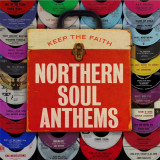
Demon Music is proud to bring together a selection of popular and exciting classic Northern Soul Anthems on a new 2LP thirty-three track collection. These are the original recordings by some familiar names and one or two that may have passed you by.
As the Sixties came to a close and the initial success of labels like Atlantic and Motown began to wane, there remained a dedicated fanbase of Soul devotees who would rather be out on the floor than wearing flowers in their hair. They continued to seek out new and previously overlooked releases, many on small labels that had never enjoyed chart success, making surprise hits of a few in the process.
Northern Soul could easily have passed into music history as a fad, something on the fringes of mainstream popular music; instead its popularity has remained and even grown. It is no longer the preserve of venues in the north of England (who had always attracted coachloads of devotees from across the nation), with Soul clubs opening in Europe, Asia, Australia and even - in perhaps the ultimate example of "coals to Newcastle" – America
Every few years Northern Soul enjoys a resurgence in popularity and welcomes a new generation of younger fans, keepers of the faith. This collection is for those with a passing interest and fans both old and
new - music fashions may change but the quality, the infectious excitement and the urge to get up and dance has endured in these fantastic records.
In the years since their formation, WhoMadeWho have established themselves as one of the most important underground bands of their generation. The Danish group, consisting of Tomas Høffding, Tomas Barfod and Jeppe Kjellberg, has an exceptional sense of emotional depth, heartbreaking melodies and brilliant songwriting, boasting an expansive discography currently spanning a total of six albums and a plethora of EPs, singles and remixes released on labels such as Kompakt, Innervisions and Life & Death. On the road, they are internationally renowned for their professionalism and outstanding live performances and have become regular fixtures at some of the world’s most notable musical festivals, including Roskilde, Sonar, Melt! and Burning Man to name just a few.
The in-demand Scandinavian outfit now confirm details of their upcoming long player, UUUU. Set for worldwide release on Friday, May 27, via long standing German record label Embassy One, UUUU is the seventh full-length studio album from WhoMadeWho. A beautifully crafted record featuring thirteen original productions.
out of Stock
Last delivered 18 months ago available to reorder, subject to availability
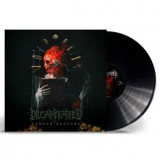
Across eight studio albums, DECAPITATED grew from the adolescent dream of teenagers from a small Central European town to one of the leaders of the metal genre. Each successive album further expands the band’s sound with genre-bending authenticity and integrity. As Metal Injection rightfully observed, “any self-respecting death metalhead knows the name well.”
DECAPITATED’s music is a weapon forged by four young men from a historic medieval-fortified town in Poland, which catapulted them to the top of a worldwide subculture. Like a rose in the devil’s garden, the DECAPITATED story builds triumph from tragedy. The gleeful grotesquery of extreme metal imagery and rifftastic bludgeoning beckons listeners to uncover broader truths.Upon the release of 2017’s Anticult, Metal Hammer declared DECAPITATED “a serious successor to the likes of Pantera and Lamb Of God – a band who can draw new legions into the metal world as its new champions.” Their diverse follow-up, 2022’s Cancer Culture, delivers on that promise.
Instantly recognizable devastation and deceptively sinister hooks abound. Freshly minted DECAPITATED anthems like “Last Supper,” “Hello Death,” “Just Cigarette,” “No Cure,” “Iconoclast,” and “Cancer Culture” shimmer with sonically sharp production and unrelenting bombast. There’s also a newly increased emphasis on melody, even venturing into darkly romantic territory. Wacław "Vogg" Kiełtyka (guitar), Rafał "Rasta" Piotrowski (vocals), Paweł Pasek (bass), and James Stewart (drums) are at the top of their game, delivering the goods at peak performance. Jinjer vocalist Tatiana Shmayluk and Machine Head frontman Robb Flynn make guest appearances.
Set on the descending plains of a mountain range amid a dense forest, Krosno boasts a 14th-century Gothic church, a Subcarpathian museum, and stunning artisan glassware. In this Polish town, teenage music student Wacław "Vogg" Kiełtyka discovered records from bands like Morbid Angel, Cannibal Corpse, Metallica, and Machine Head. The guitarist and his younger brother, drummer Witold “Vitek” Kiełtyka, cofounded DECAPITATED in 1996, inspired by a wide range of technical death, blackened thrash, and local heroes, like KAT and the world-renowned Vader. Death and black metal reigned supreme in the Polish scene of the 1990s, where Behemoth originated as well. In fact, a Vader song called “Decapitated Saints” inspired the band’s moniker.
The organic musical chemistry between the Kiełtykas was akin to the brotherly connectivity and vibe driving Pantera, Gojira, and the classic era of Sepultura. In 2006, Kerrang! praised the first three DECAPITATED albums - Winds of Creation (2000), Nihility (2002), and The Negation (2004) – as “superbly conceived and executed eruptions of technical brilliance and razor-sharp songwriting that turned these youthful Poles into one of the genre’s most widely respected bands.” That year’s Organic Hallucinosis further perfected Vogg’s penchant for blending extremity with catchy hooks.
The rule-breaking ferocity and invention of the first four albums reinvigorated death metal, as DECAPITATED inspired a new generation of bands who followed suit. Sadly, this era came to a shocking end in late 2007. While touring Russia, the band’s bus collided with a large truck near the border with Belarus. Both Vitak and then-singer Adrian “Covan” Kowanek sustained severe head injuries. Tragically, Vitak passed away in a Russian hospital a few days later. He was just 23.Vogg summoned the courage to continue, in honor of his brother and what they created, and returned with a new incarnation of DECAPITATED and the fiercely adventurous comeback album, Carnival is Forever (2011) featuring new vocalist Rafał "Rasta" Piotrowski. Blood Mantra (2014) introduced bassist, Paweł Pasek. Blabbermouth declared it “perhaps the most poised and gutsy” DECAPITATED album, adding “its courageous bends make it a turbulent but pleasurable ride.”
Cancer Culture sounds brilliant, modern, and tasty. “There is no place for any fake, plastic, bullshit drum machine or anything like that,” Vogg insists. “It’s all organic, pure, and clear, showing the true face of the band. Vogg and company entrusted the Cancer Culture mix to David Castillo at Sweden’s Fascination Street Studios / Studio Gröndahl (Sepultura, Carcass, Opeth, Katatonia), and legendary American producer Ted Jensen (Metallica, Slipknot, Pantera, Machine Head, Korn).
The devoted supporters who traveled to see DECAPITATED on international tours with the likes of Lamb Of God, Meshuggah, Soulfly, Fear Factory, and Suffocation over the years will recognize the ever-present pummeling backbone. Longtime fans and newcomers alike will connect to the variety of atmospheric depth throughout Cancer Culture’s ten boundlessly energetic and creative tracks.
“If you told me 25 years ago, in my neighborhood in the South of Poland, that I would be in Machine Head, sharing riffs with Robb Flynn,” Vogg marvels. “It’s simply incredible. It means that everything is possible in your life. That gives me the faith to believe that I can achieve even more in my career. The dreams we have when we are kids, things we can barely imagine, can happen.” Flynn contributes a hauntingly beautiful vocal to the Cancer Culture track “Iconoclast.” “Clean vocal singing is a really new thing in DECAPITATED,” Vogg notes. “It’s really unique and amazing.”
Driven by Vogg’s passion and integrity, the dual emphasis on creative invention and technical prowess maintains DECAPITATED’s stature as genre-leaders in 2022 and beyond. The band’s supporters continually demonstrate confidence and absolute certainty DECAPITATED will deliver.
Across eight studio albums, DECAPITATED grew from the adolescent dream of teenagers from a small Central European town to one of the leaders of the metal genre. Each successive album further expands the band’s sound with genre-bending authenticity and integrity. As Metal Injection rightfully observed, “any self-respecting death metalhead knows the name well.”
DECAPITATED’s music is a weapon forged by four young men from a historic medieval-fortified town in Poland, which catapulted them to the top of a worldwide subculture. Like a rose in the devil’s garden, the DECAPITATED story builds triumph from tragedy. The gleeful grotesquery of extreme metal imagery and rifftastic bludgeoning beckons listeners to uncover broader truths.Upon the release of 2017’s Anticult, Metal Hammer declared DECAPITATED “a serious successor to the likes of Pantera and Lamb Of God – a band who can draw new legions into the metal world as its new champions.” Their diverse follow-up, 2022’s Cancer Culture, delivers on that promise.
Instantly recognizable devastation and deceptively sinister hooks abound. Freshly minted DECAPITATED anthems like “Last Supper,” “Hello Death,” “Just Cigarette,” “No Cure,” “Iconoclast,” and “Cancer Culture” shimmer with sonically sharp production and unrelenting bombast. There’s also a newly increased emphasis on melody, even venturing into darkly romantic territory. Wacław "Vogg" Kiełtyka (guitar), Rafał "Rasta" Piotrowski (vocals), Paweł Pasek (bass), and James Stewart (drums) are at the top of their game, delivering the goods at peak performance. Jinjer vocalist Tatiana Shmayluk and Machine Head frontman Robb Flynn make guest appearances.
Set on the descending plains of a mountain range amid a dense forest, Krosno boasts a 14th-century Gothic church, a Subcarpathian museum, and stunning artisan glassware. In this Polish town, teenage music student Wacław "Vogg" Kiełtyka discovered records from bands like Morbid Angel, Cannibal Corpse, Metallica, and Machine Head. The guitarist and his younger brother, drummer Witold “Vitek” Kiełtyka, cofounded DECAPITATED in 1996, inspired by a wide range of technical death, blackened thrash, and local heroes, like KAT and the world-renowned Vader. Death and black metal reigned supreme in the Polish scene of the 1990s, where Behemoth originated as well. In fact, a Vader song called “Decapitated Saints” inspired the band’s moniker.
The organic musical chemistry between the Kiełtykas was akin to the brotherly connectivity and vibe driving Pantera, Gojira, and the classic era of Sepultura. In 2006, Kerrang! praised the first three DECAPITATED albums - Winds of Creation (2000), Nihility (2002), and The Negation (2004) – as “superbly conceived and executed eruptions of technical brilliance and razor-sharp songwriting that turned these youthful Poles into one of the genre’s most widely respected bands.” That year’s Organic Hallucinosis further perfected Vogg’s penchant for blending extremity with catchy hooks.
The rule-breaking ferocity and invention of the first four albums reinvigorated death metal, as DECAPITATED inspired a new generation of bands who followed suit. Sadly, this era came to a shocking end in late 2007. While touring Russia, the band’s bus collided with a large truck near the border with Belarus. Both Vitak and then-singer Adrian “Covan” Kowanek sustained severe head injuries. Tragically, Vitak passed away in a Russian hospital a few days later. He was just 23.Vogg summoned the courage to continue, in honor of his brother and what they created, and returned with a new incarnation of DECAPITATED and the fiercely adventurous comeback album, Carnival is Forever (2011) featuring new vocalist Rafał "Rasta" Piotrowski. Blood Mantra (2014) introduced bassist, Paweł Pasek. Blabbermouth declared it “perhaps the most poised and gutsy” DECAPITATED album, adding “its courageous bends make it a turbulent but pleasurable ride.”
Cancer Culture sounds brilliant, modern, and tasty. “There is no place for any fake, plastic, bullshit drum machine or anything like that,” Vogg insists. “It’s all organic, pure, and clear, showing the true face of the band. Vogg and company entrusted the Cancer Culture mix to David Castillo at Sweden’s Fascination Street Studios / Studio Gröndahl (Sepultura, Carcass, Opeth, Katatonia), and legendary American producer Ted Jensen (Metallica, Slipknot, Pantera, Machine Head, Korn).
The devoted supporters who traveled to see DECAPITATED on international tours with the likes of Lamb Of God, Meshuggah, Soulfly, Fear Factory, and Suffocation over the years will recognize the ever-present pummeling backbone. Longtime fans and newcomers alike will connect to the variety of atmospheric depth throughout Cancer Culture’s ten boundlessly energetic and creative tracks.
“If you told me 25 years ago, in my neighborhood in the South of Poland, that I would be in Machine Head, sharing riffs with Robb Flynn,” Vogg marvels. “It’s simply incredible. It means that everything is possible in your life. That gives me the faith to believe that I can achieve even more in my career. The dreams we have when we are kids, things we can barely imagine, can happen.” Flynn contributes a hauntingly beautiful vocal to the Cancer Culture track “Iconoclast.” “Clean vocal singing is a really new thing in DECAPITATED,” Vogg notes. “It’s really unique and amazing.”
Driven by Vogg’s passion and integrity, the dual emphasis on creative invention and technical prowess maintains DECAPITATED’s stature as genre-leaders in 2022 and beyond. The band’s supporters continually demonstrate confidence and absolute certainty DECAPITATED will deliver.
Wenn andere Jubiläen begehen, dann schwelgen sie in Erinnerungen. Le Pop ist anders:
Unsere Nummer 10 schaut nach vorn. Sie ist jünger, femininer und souliger als ihre
Vorgänger. Und stellt 16 neue Namen vor, die zuvor auf keiner anderen Ausgabe zu finden
waren. Die neuen Stars heißen Emma Peters, Iliona, UssaR, P.R2B, Ariane Roy und
Clou. Viele dieser Namen stehen am Anfang ihrer Karriere, haben bisher erst eine EP, ein
Album oder ein paar Singles draußen und doch ist spürbar, dass diese neue Generation das
Nouvelle Chanson prägen wird. Nicht alle sind Newcomer, aber Künstlerinnen und Künstler
wie KCIDY, Voyou, Malik Djoudi und Laura Cahen haben in den letzten 4 Jahren (so lange
ist Le Pop 9 schon draußen) eine so fulminante Entwicklung gemacht, dass wir sie diesmal
unbedingt vorstellen wollten. Dazu gesellen sich Schauspielerinnen wie Edwige, Elisa Erka
und Suzanne Lindon, die sich zum ersten Mal als Sängerinnen präsentieren. Ganz
besonders erwähnenswert: Camélia Jordana – einerseits als Musikerin in der Charts-Welt
etabliert, anderseits César-prämierte Schauspielerin, trägt sie in dieser illustren Runde sicher
den glamourösesten Namen.
Doch was macht sie aus, diese neue Generation? Zuerst einmal das Offensichtlichste: Nur
vier der hier vorgestellten Stimmen sind männlich. Das Chanson wird weiblicher und
orientiert sich damit an den Erfahrungen der letzten 20 Jahre. Denn meistens waren es die
Frauen der aktuellen Szene, die sich in der Breite auch im Ausland durchgesetzt haben (man
denke nur an Zaz, Coeur de pirate und Angèle). Le Pop 10 ist nicht nur femininer, die neue
Generation ist auch viel stärker durch die Präsenz von HipHop und R'n'B geprägt. Ein
richtiges Crossover findet zwar nicht statt, dafür merkt man, dass das heutige Chanson
grooviger geworden ist, soul-lastiger auch und punktuell tatsächlich Rap-Anklänge mitliefert.
Besonders deutlich wird das bei P.R2B, die gelegentlich in den Sprechgesang wechselt, bei
Emma Peters, die sogar ein ganzes Album mit Coverversionen von französischen Rap- und
R'n'B-Hits veröffentlichte, bevor sie eigene Songs aufnahm und bei UssaR, der als
Bühnenmusiker auch Rapper wie Kery James und Youssoupha begleitet. Vielleicht nicht
ganz so deutlich, aber wunderschön und subtil binden Iliona aus Belgien (was für eine
Entdeckung!) und Ariane Roy aus Kanada Soul-Elemente in ihre Musik mit ein. Selbst bei
Uptempo-Nummern wie "Le confort" von Voyou ist ein Hauch Motown zu spüren.
Selbstverständlich fehlt auch diesmal nicht der Einfluss von britischem Pop und Americana.
Die Band Palatine etwa ist gitarrenlastig, bringt Folk-Elemente mit und verbindet dies sehr
elegant mit Chanson-Tradition. Bei Laura Cahan finden wir Einflüsse der Cocteau Twins,
Kate Bush aber auch Anklänge an Camille oder Keren Ann. Eine erstaunliche Entwicklung
legte KCIDY hin, die nach einer längeren Phase des Experimentierens mit Elektro und Wave
auf einmal einen mit Vocal-Harmonien, Kraut- und 70ies-Elementen veredelten Gitarrenpop
aus dem Hut zaubert, der nur theoretisch aus der Zeit zu fallen scheint und sich doch ganz
harmonisch in den Gesamtklang der Compilation einfügt.
Und dann ist da auch noch Edwige, eine belgische Schauspielerin, der es nicht mehr
genügte gelegentlich auf Theaterbühnen zu singen. Sie hat ein traumhaftes, in dezenten
Gitarrenarrangements ausgekleidetes Debüt-Album aufgenommen, das im Herbst 2022
erscheinen soll. Ihren Song "Corps & Ame" hat sie uns vorab exklusiv für diese Compilation
überlassen. Den Tipp, uns mit Edwige zu beschäftigen, bekamen wir übrigens von Albin de
la Simone (seit Le Pop 2 immer wieder vorgestellt), der auch schon ein Duett mit ihr
aufgenommen hat.
Mit De La Simone, seit seiner Arbeit für Carla Bruni und das Durchbruch-Album von Pomme
(Le Pop 9) einer der meist gebuchten Produzenten der Szene, sprachen wir anlässlich
seines Konzerts bei der Kölner Reihe "Le Pop La Série" über junge Künstlerinnen wie Iliona,
Clou, Emma Peters und über deren Karrierewege. Dabei machte er uns auch auf Ariane
Roy aufmerksam. Wie sie sind viele der hier vorgestellten Namen Labelmates oder Protegés
etablierter Künstler.
Das sind nicht immer zufällige Beziehungen. In Frankreich erntet das neue Chanson zudem
immer mehr die Früchte des Casting-Show-Booms der letzten 15 Jahre. Hier bekommen
viele Teilnehmer irgendwann die Chance mit renommierten Musikern zusammenzuarbeiten.
Carla de Coignac zum Beispiel flog zwar noch vor dem Finale bei "Nouvelle Star" (2017)
aus dem Wettbewerb, trotzdem nahm Louane (die bei der Konkurrenz-Sendung "L'école des
stars" entdeckt wurde) fünf Songs in ihr Repertoire auf, die die Aussortierte für sie
geschrieben hatte. Teilnehmerin der gleichen Show war auch Camélia Jordana, allerdings
schon 2009. Jordana scheiterte damals im Halbfinale, bekam aber beim Major Sony einen
Vertrag. An ihrem Debüt-Album arbeitete sie mit Jean Felzine (Mustang, auf Le Pop 8
vorgestellt), BabX (Le Pop 8), "L" (Le Pop 7) und Mathieu Boogaerts (seit Le Pop 1 dabei)
zusammen. Inzwischen ist Jordana in der Musik- und Filmwelt etablierter Star und Celebrity.
Wir lernten sie abseits glamouröser Welten bei einer "sièste acoustique" kennen, einem
speziellen Konzertformat in Paris, bei dem das Publikum tatsächlich Siesta hält. Dort trat sie
mit Le Pop-Künstlern wie Armelle Pioline (Holden), BabX und Siesta-Gastgeber Bastien
Lallemant auf. An diesem Beispiel sieht man einmal mehr, wie durchlässig die französische
Szene geworden ist. Jordana ist heute ihre eigene Songwriterin – bei dem hier vorgestellten
Song, dem wunderbar groovenden "Jusqu'au bout des cils" stammen Musik und Text aus
ihrer Feder.
Der Mainstream zeigt sich immer wieder offen für Impulse von Indie-Acts, Kooperationen
zwischen diesen scheinbar gegensätzlichen Szenen sind inzwischen nahezu
selbstverständlich und verschaffen dem Underground zusätzliche Unabhängigkeit.
Le Pop 10 zeigt die Vielfalt dieser Welt auf authentische Weise und formt daraus eine
kohärente Einheit. Wie immer hat auch diese neue Ausgabe keinen Anspruch auf
Vollständigkeit. Wir lassen bewusst Künstler außen vor, die manche Fachleute hier erwarten
würden, die aber nicht "unsere Tasse Tee" sind. Im Vergleich zu ihren Anfängen ist die
Szene heute dynamischer und diverser. In den 50er und 60er Jahren haben Jazz und Brazil
ihre Einflüsse im Chanson der Gegenwart hinterlassen. Zu Beginn der Le-Pop-Reihe waren
es Indie, Electro und Reggae. Heute sind darüber hinaus die Einflüsse von HipHop und R'n'B
zu spüren. Das neue Chanson ist in Bewegung und wird es sicher auch in Zukunft bleiben
RATA NEGRA from Madrid deliver twelve songs of dark, crude and moody punk on their debut LP. Formed of members from JUANITA Y LOS FEOS and LA URSS this power trio have distilled the negativity and uncertainly of the young Spanish generation and transformed it into perfectly crafted punk songs. Sharply turning snaps of daily life into melodic anthems for a doomed generation, musically RATA NEGRA fence between dark melodic OC punk a la RIKK AGNEW solo debut album and Spanish Punk ’83 via KGB/ VULPESS. Imagine the non keyboard tracks of Yugoslavian KAOS mixed with LA’S X melody, add to it a layer of distortion and a dose of vital desperation and you get close to RATA NEGRA’s sound. Oído Absoluto comes housed in a reverse board sleeve with printed inner. Both designed by guitarist Fa of Croke Studio and it is released as a collaboration between Beat Generation in Madrid and La Vida Es Un Mus Discos in Hackney.
AOW is a new collaborative project from Dan Ghenacia and Tolga Fidan emerging from a new period of creativity and inspiration for the Lisbon-based artists.
Long time friends and fellow lynchpins of the European house and techno scene, Ghenacia and Fidan started working closely together through 2020 and 2021 while sharing studio space at Boa Lab. They found themselves at the heart of an artistic community of musicians, designers and engineers, which took shape around Ghenacia’s experiments with alpha wave generation, inspired by Bryon Gysin’s Dream Machine.
Ghenacia and engineer Anine Kirsten developed a modern update on Gysin’s 1950s design, which has been installed at exhibitions in London, Lisbon and Paris. At its heart, the project explores the natural hallucinatory effects of alpha wave projections on the eyelids, and the therapeutic benefits of the experience. Out of this spirit of psychedelically-charged experimentation, Ghenacia and Fidan have been working beyond the confines of their typical club-oriented material, creating ambient soundtracks to artist exhibitions in Boa and auditory backdrops to Alpha Wave Experience installations.
AOW bridges the gap between this new period of creativity and Ghenacia and Fidan’s life-long passion for electronic dance music. Compared to the strictures of house and techno they’re best known for, the three tracks on Hear the Light explore a more open, inquisitive sound with roots in UK electronica and West Coast psychedelic breaks (a seminal scene when Ghenacia was in the Bay Area in the 90s). Crucially though, it’s not a pointedly retro sound, but rather a result of rich streams of inspiration meeting and passing through crisp, modernist production techniques to offer something
genuinely fresh on the ears.
Working outside of their comfort zones and guided by creative philosophies springing from research, shared experience and community, Hear the Light marks a new step forward for Ghenacia and Fidan, with many more developments promised for the future.
out of Stock
Last delivered 3 years ago available to reorder, subject to availability
In November 2014 The Jesus and Mary Chain celebrated three decades of their incendiary cult-classic debut album, 'Psychocandy', with a run of tour dates in which the infamous Scottish group played the album in full for the very first time in the band's history. As part of the 'Psychocandy' tour, the Mary Chain descended on Glasgow's Barrowland Ballroom - a legendary venue down the road from where the Reid brothers grew up in neighbouring East Kilbride - and tore through the songs that would propel them to worldwide acclaim upon 'Psychocandy's release in 1985. The Barrowland performance - an equal-parts deafening and blinding assault on the senses - was cut to vinyl by engineer Noel Summerville and originally released in 2015. Fast forward to 2022 and the 'Live at Barrowland' album is now being reissued by Fuzz Club Records. Due for release April 22nd, the 2022 reissue comes with new artwork and on 180g vinyl in a gatefold jacket with a booklet glued inside that features pages of photos from the tour as well as an interview with the Reid brothers and Alan McGee. The influence that 'Psychocandy' and its pioneering sonic belligerence had on popular music cannot be overstated. Taking bittersweet pop melodies and tearing them up apart through the medium of buzzsaw guitars, ear-piercing feedback and an unapologetic hostility towards their listeners, the band's breakthrough album experimented with noise in a way that had never been done before and would inspire for generations to come. The 'Live At Barrowland' LP captures 'Psychocandy's complete 14 tracks in a live setting and in all their boundary-pushing and feedback-ridden glory. The CD and digital versions of the reissue - including the download card that comes with the vinyl - also feature seven bonus tracks taken from the prelude set on the night, including such fan-favourites as 'April Skies', 'Head On' and 'Reverence'.
Jon Porras draws a staggering array of atmospheres out of even the simplest instrumentation. Across his work as one-half of psych-drone duo Barn Owl and his solo releases, Porras welds monoliths and ether into propulsive music that is deeply felt. Arroyo, named for the Spanish word for "stream" in a nod to Porras' heritage as a first generation ColombianJapanese American, drifts gently from one tributary to the next in unhurried contemplation and euphoria. The portentous weight and abrasive textures of Porras' previous work give way to the trickle of richly detailed acoustic instruments slipping in and out of the fold. On Arroyo, Jon Porras evokes a distinct sense of resplendent anticipation and calm with a fathomless flow and softly gorgeous colors. For Porras, Arroyo became a rumination on simplicity and simple truths, a work of complete immersion and continuous motion where separate elements coalesce into an ever-changing whole. Porras spent the year leading up to 2020 living nomadically across Europe where he was able to soak in a deep appreciation for the effortless beauty of overgrown gardens, the basic principles of classical architecture and a more transient sensibility. The album was written and recorded in a time of even more change for Porras: after the birth of his daughter. Like a stream's steady glide across bedrock that waxes and wanes with each gradual turn, the music of Arroyo exhibits a transportive stillness. The compositions take on a light, gaseous buoyancy as discreet drones swell with measured fluctuations and ripples of piano rest atop the surface.
With their new album, If I Never Know You Like This Again, SOAK has
finally shaken the hangover of their starry debut ‘Before We Forgot How
To Dream’, and the pressures that came with it, hiding in the wings of
their ambitious follow up album, ‘Grim Town’.
Having come up through BBC Introducing at the tender age of 15, before
signing to Rough Trade Records, as well as winning the RTE Choice
Music Prize and The Northern Irish Music Prize, in addition to being the
youngest ever Mercury Prize nominee, SOAK has again and again been
described as “the voice of a generation.”
Showing, from a young age, an intensely artistic awareness of the poetry
of memory, Bridie Monds-Watson, aka SOAK, would incessantly
photograph and video everything, documenting and organising the
material so it was always there for them to revisit. “I always want to
remember exactly how I felt at a certain moment.” Now, at 25, SOAK’s
third album, ‘If I Never Know You Like This Again', is naturally made up
of what Bridie intimately calls ‘song-memories’.
Working closely with Tommy McLaughlin (Villagers), with whom Bridie
has been collaborating with since the age of 15, and armed with
influences from Pavement to Radiohead to Broken Social Scene, they
wrote most of the album together before recording it with the rest of the
band in Attica Studios, Donegal.
Throughout the album SOAK pushes and pulls at melodies, but never
milks their brilliance. Bridie masterfully glides their vocal melody slightly
off-kilter above excitable compressed high hats and flourishing guitar
lines. With the new direction of a grungier, more lo-fi production, the
swooning guitars are given a contemporary pop edge, reflected in the
rich and robust musicality of songs like ‘Bleach’, ‘Last July’ and ‘Pretzel’.
There’s a constant pulsating beat at the album’s centre, propelling it
towards a kind of dewy happiness, like the end credits of a 90s comingof-age film. Bridie’s lyrics move through the songs almost as effortlessly
and they sing them, and the songs when read, read like poetry.
With this album Bridie is, as the title suggests, freezing time in the
pursuit of truth: capturing their life into existence. In the world of ‘If I
Never Know You Like This Again’, a life is lived only because it's
remembered.
Jon Porras draws a staggering array of atmospheres out of even the simplest instrumentation. Across his work as one-half of psych-drone duo Barn Owl and his solo releases, Porras welds monoliths and ether into propulsive music that is deeply felt. Arroyo, named for the Spanish word for "stream" in a nod to Porras' heritage as a first generation Colombian?Japanese American, drifts gently from one tributary to the next in unhurried contemplation and euphoria. The portentous weight and abrasive textures of Porras' previous work give way to the trickle of richly detailed acoustic instruments slipping in and out of the fold. On Arroyo, Jon Porras evokes a distinct sense of resplendent anticipation and calm with a fathomless flow and softly gorgeous colors. For Porras, Arroyo became a rumination on simplicity and simple truths, a work of complete immersion and continuous motion where separate elements coalesce into an ever-changing whole. Porras spent the year leading up to 2020 living nomadically across Europe where he was able to soak in a deep appreciation for the effortless beauty of overgrown gardens, the basic principles of classical architecture and a more transient sensibility. The album was written and recorded in a time of even more change for Porras: after the birth of his daughter. Like a stream's steady glide across bedrock that waxes and wanes with each gradual turn, the music of Arroyo exhibits a transportive stillness. The compositions take on a light, gaseous buoyancy as discreet drones swell with measured fluctuations and ripples of piano rest atop the surface. Arroyo borrows harmonic concepts from modal jazz to create a unique sense of ease and endlessness. Each of the four pieces on the album centers around a single suspended chord, a chord most commonly associated with devotional music which embodies a space between harmonic tension and resolution. Porras embellishes that liminality with arrangements that feel less like distinguishable layers of instruments and more like one undulating nebula of sound. In the past decade of Porras' solo work, his music has grown increasingly engaged with elaborate synth textures and detailed processing. With Arroyo, Porras consciously takes a step back from those more intricate compositions and focuses on more organic, unadorned textures and places each sound with the same precision. Stark piano and guitar patiently hover over modest currents of Hammond organ and Yamaha DX7 with the sustain of each chord and phrase acting as a natural guide to the album's subtle rhythm. The four pieces that comprise Arroyo each encompass their own idyllic channel, slowly weaving their way in and out of the album's elegant stir. Porras' reflections on simplified elements take shape in gorgeous arrangements that impart clarity amidst a tranquil mist. Arroyo is an album that unearths splendor in a unified feeling of space, serenity in perpetual renewal
In the post-pandemic era that we now live in, some artists have used its abnormal reality as an abstract muse or a reason to expand their repertoire into unseen territory or styles. Fortunately, the Charlotte, NC native with the gritty, gospel-flecked croon does neither. Instead, Hamilton returns with familiar collaborators (9th Wonder, Jermaine Dupri, James Poyser) and his signature Southern grit and lyrics, planting those winning elements, ten toes down, into contemporarily-rendered, yet unabashedly-influenced,1970s-era soul. Sometimes those aspects are shimmering and glossy, such as the awe-struck, surrendering ode, "White Hennessy," the buoyant Curtis Mayfield-channeling title track and "Real Love," a boom-bap-heavy groove with a mellow, half-spoken and half-sung tribute to the emotion (with FL's Rick Ross anchoring the bridge). His Generation X roots are also in display on the bass-dropping and ice-flossing "I'm Ready," with ATL's own Lil Jon.
"Back in the black." "Black Power!" "Give me five on the black-hand side." "Always bet on Black." In a literal sense, the color black is created by the complete absence of light or the total absorption of all shades. It represents solemnity, sophistication or literal all-encompassing darkness. But for the people residing within its varying hues, blackness signifies all that is meaningful, fly and pertinent to their culture and way of life. The rich contrasts of black life, and the layers of emotion in-between, are what Anthony Hamilton is exploring throughout his seventh studio album, Love Is the New Black
Verve und seine Schwesterlabels Impulse, Mercury und Emarcy bieten Vinylfans mit der ACOUSTIC SOUNDS-Serie eine audiophile LP-Serie für gehobene Ansprüche. Hierfür arbeitet Verve mit dem bekannten amerikanischen Vinyl-Label Acoustic Sounds zusammen:
- Fertigung mit 100% ANALOGEN PRODUKTIONSSCHRITTEN
- Mastering vom ERSTE-GENERATION-MASTERBAND
- 180G-PRESSUNG bei Quality Record Pressings
- laminierte TIP-ON-GATEFOLD-SLEEVES & WATTIERTE INNENHÜLLEN
out of Stock
Last delivered 4 years ago available to reorder, subject to availability
2020 erschien mit "KiCk i" der Grammy nominierte Auftakt zur Serie; auch nominiert bei den Latin Grammy Awards als "Best Alternative Music Album". 2021 setzt Arca mit "KICK ii" bis "IIIII" nun die "KiCk"-Serie auf XL Recordings fort. Jetzt erscheinen diese auch physisch auf CD und Vinyl! Als Künstlerin war Arca schon immer eine Gestaltenwandlerin - äußerlich wie musikalisch. Sie produzierte Musik für Lady Gaga, Frank Ocean, Björk, Kanye West und FKA twigs, komponierte Musik für das MoMA, trat 2020 mit den Labèque Schwestern, zwei fantastischen Pianistinnen, bei der Burberry Fashion-Show auf, schrieb einen Soundtrack-Beitrag für die HBO-Serie "Euphoria", erschuf gewaltige Noise-Skulpturen oder gab sich auf Partys als exaltierte Diva. Arca wurde für einen GLAAD Media Award nominiert und ist die erste nicht-binäre Künstlerin, die schließlich für einen GRAMMY nominiert wurde. Sie hat ihr eigenes Album-Artwork entworfen und gemalt, für Bottega Venetta, Calvin Klein und Loewe gemodelt, Musikinstrumente der nächsten Generation mitentwickelt und auch mit KI experimentiert. Alejandra Ghersi Rodriguez, wie Arca eigentlich heißt, wurde erst vor kurzem von Publikationen wie dem Time Magazine, Guardian, DAZED, Billboard, Pitchfork, Stereogum und der Los Angeles Times zur einer der innovativsten Künstlerinnen des 21. Jahrhundert ernannt. Als nonbinäre Latinx-Transfrau will Doña Arca die Rolle des Popstars für kommende Generation neu definieren - mit "KICK ii bis IIIII" entführt sie uns in diese Zukunft und öffnet die Tür in eine neue und nonbinäre Soundwelt.
out of Stock
Last delivered 3 years ago available to reorder, subject to availability
2020 erschien mit "KiCk i" der Grammy nominierte Auftakt zur Serie; auch nominiert bei den Latin Grammy Awards als "Best Alternative Music Album". 2021 setzt Arca mit "KICK ii" bis "IIIII" nun die "KiCk"-Serie auf XL Recordings fort. Jetzt erscheinen diese auch physisch auf CD und Vinyl! Als Künstlerin war Arca schon immer eine Gestaltenwandlerin - äußerlich wie musikalisch. Sie produzierte Musik für Lady Gaga, Frank Ocean, Björk, Kanye West und FKA twigs, komponierte Musik für das MoMA, trat 2020 mit den Labèque Schwestern, zwei fantastischen Pianistinnen, bei der Burberry Fashion-Show auf, schrieb einen Soundtrack-Beitrag für die HBO-Serie "Euphoria", erschuf gewaltige Noise-Skulpturen oder gab sich auf Partys als exaltierte Diva. Arca wurde für einen GLAAD Media Award nominiert und ist die erste nicht-binäre Künstlerin, die schließlich für einen GRAMMY nominiert wurde. Sie hat ihr eigenes Album-Artwork entworfen und gemalt, für Bottega Venetta, Calvin Klein und Loewe gemodelt, Musikinstrumente der nächsten Generation mitentwickelt und auch mit KI experimentiert. Alejandra Ghersi Rodriguez, wie Arca eigentlich heißt, wurde erst vor kurzem von Publikationen wie dem Time Magazine, Guardian, DAZED, Billboard, Pitchfork, Stereogum und der Los Angeles Times zur einer der innovativsten Künstlerinnen des 21. Jahrhundert ernannt. Als nonbinäre Latinx-Transfrau will Doña Arca die Rolle des Popstars für kommende Generation neu definieren - mit "KICK ii bis IIIII" entführt sie uns in diese Zukunft und öffnet die Tür in eine neue und nonbinäre Soundwelt.
out of Stock
Last delivered 3 years ago available to reorder, subject to availability
2020 erschien mit "KiCk i" der Grammy nominierte Auftakt zur Serie; auch nominiert bei den Latin Grammy Awards als "Best Alternative Music Album". 2021 setzt Arca mit "KICK ii" bis "IIIII" nun die "KiCk"-Serie auf XL Recordings fort. Jetzt erscheinen diese auch physisch auf CD und Vinyl! Als Künstlerin war Arca schon immer eine Gestaltenwandlerin - äußerlich wie musikalisch. Sie produzierte Musik für Lady Gaga, Frank Ocean, Björk, Kanye West und FKA twigs, komponierte Musik für das MoMA, trat 2020 mit den Labèque Schwestern, zwei fantastischen Pianistinnen, bei der Burberry Fashion-Show auf, schrieb einen Soundtrack-Beitrag für die HBO-Serie "Euphoria", erschuf gewaltige Noise-Skulpturen oder gab sich auf Partys als exaltierte Diva. Arca wurde für einen GLAAD Media Award nominiert und ist die erste nicht-binäre Künstlerin, die schließlich für einen GRAMMY nominiert wurde. Sie hat ihr eigenes Album-Artwork entworfen und gemalt, für Bottega Venetta, Calvin Klein und Loewe gemodelt, Musikinstrumente der nächsten Generation mitentwickelt und auch mit KI experimentiert. Alejandra Ghersi Rodriguez, wie Arca eigentlich heißt, wurde erst vor kurzem von Publikationen wie dem Time Magazine, Guardian, DAZED, Billboard, Pitchfork, Stereogum und der Los Angeles Times zur einer der innovativsten Künstlerinnen des 21. Jahrhundert ernannt. Als nonbinäre Latinx-Transfrau will Doña Arca die Rolle des Popstars für kommende Generation neu definieren - mit "KICK ii bis IIIII" entführt sie uns in diese Zukunft und öffnet die Tür in eine neue und nonbinäre Soundwelt.
out of Stock
Last delivered 4 years ago available to reorder, subject to availability
Nat ‘King’ Cole was born in Alabama in 1917. He began his musical
career in the 1940s with his own Jazz trio, but his skills as an innovative Jazz Pianist soon became overshadowed by his skills as a ballad singer. Cole’s phrasing, his uncanny ability at interpreting a song and his sheer style made the whole business seem natural and effortless. Smoother than Sinatra, cooler than Crosby, when it came to crooners, Nat Cole truly was the King. His mellow approach influenced not only other ballad singers, but a whole generation of 1960s soul singers. This 16-track ‘greatest hits’ collection is a superb selection.
Bazan got his start playing to the Christian rock scene, but the narrative
arc of his albums has traced his crisis of faith and his questioning of the
Evangelical Christian world in which he was raised
Yet, this record is not a final statement, not a "breakup letter to G_d." It's the
deepest and most explicit exploration of his struggles to date, and a meditation
on all things passed between the generations, and for the first time in a while,
Bazan seems actually interested in re- engaging in conversations with the
Evangelical community about his doubts (for example, for the first time in years,
he'll be playing huge Christian music festival Cornerstone this summer). Curse
Your Branches is a masterwork by a modern American poet (Paste called him one
of the "100 best American songwriters" in a piece that followed the release of his
solo EP Fewer Moving Parts) at the height of his powers.
The debut album of Zasky & Smith, producers of New Blade Runners Of Dub. Built on the legacy of Zasky' s internationally known Dub Reggae Band Dubblestandart, New Blade Runners Of Dub blend Jed Smith's, LA native, composer/producer's new school visions of sound & Zasky's European shaped Dub Reggae background in a unique way. Call it Europe & America in a unity reconfiguring rhythm driven music for new generations: The Los Angeles based music group, combining cutting edge rhythm productions and up 2 the time sonic visions. It is a collaboration of international known musicians from the US, Europe, England & Jamaica. Altered concepts for new generations who identify through a new understanding of art, communication and therefor ultimately for the politics, that will shape their world. This is music for the 21st century. Decoding what lays ahead.
In a generation of musicians that came of age in postwar Japan, Kazuki Tomokawa stands as a pioneer of radical individualism, with a sound marked by shocking intimacy and blistering honesty. In his third album, A String of Paper Cranes Clenched between My Teeth, released by Harvest Records in 1977, Tomokawa creeps "ever more inward," as Kiichi Takahara writes in the record's original introductory text-embracing an attitude pervasive amongst musicians of the time who interrogated the prosaic and the profound alike, eschewing politics and society in favor of an "attitude of total self-containment." Tomokawa recorded the album over the course of a month-from August 24 to September 25, 1977-at Tokyo's famed Onkio Haus studio in the bustling Ginza district. The arrangements, accordingly, are amped up: paired with the Black Panther Orchestra, Tomokawa's "screaming philosopher" vocals find their match with the orchestra's electric guitar, bass, piano, tuba, and ground-thumping drums played by the Brain Police's Toshi Ishizuka-who appears on Tomokawa's first three records and remains his collaborator to this day. "This is Kazuki Tomokawa in the flesh," concludes Takahara. A String of Paper Cranes Clenched between My Teeth is, in Tomokawa's uncanny way, able to cut through facade and artifice in pursuit of truth. "You call that life?" he heckles, exhausted by the melodrama and nihilism of youth counterculture, "try saying you're alive!"
If you are looking for nostalgia and rocksteady at its finest, all in one package, then this vinyl by Keith & Tex offers a good blend of both.
Born in the rocksteady era, Keith & Tex made their mark with a slew of hits and classics that have lasted over 50 years. From their haunting rendition of "Hypnotic Eyes" to the iconic guitar intro and solo of Lynn Taitt on "Stop That Train", you are treated to a unique style that still lives on after five decades. Since 1967 many of their songs have enjoyed great success and continue to be played and sung by a new generation of rocksteady lovers. This duo has a style that still seems surprisingly engaging and refreshingly innocent.
So lean back, turn up the stereo or plug in the earphones, and enjoy!
Fragments repräsentiert eine Einladung an elektronische Künstler, traditionelle und moderne Musik zu kombinieren. Regelmäßig wird Fragments von einem neuen Komponisten inspiriert werden. Hieraus entsteht eine Serie von Alben, welche eine Bandbreite elektronischer Künstler dazu einlädt, einen ganz neuen Blickwinkel auf die Werke eines renommierten Komponisten zu werfen.
Fragments ist ein Projekt, das zwischen Welten schwingt. Zwischen klassischer und elektronischer Musik - zwischen alt und neu.
Beginnen wird die Serie mit Erik Satie: dem französischen Pionier der ‚Minimal Music‘, ein spitzfindiger Künstler, beliebt im Pariser Nachtleben seiner Zeit, ein Ambient Komponist avant la lettre, wiederentdeckt von einer Generation 100 Jahre nach seiner Lebzeit.
Beim Suchen und Finden der kollaborierenden Künstler, wurde das Projekt Fragments mit einstimmigem
Enthusiasmus empfangen. Das Resultat ist eine Kollektion großartiger Remixe & Reworks, welche monatlich zwischen August 2021 und Mai 2022 erscheinen.
out of Stock
Last delivered 16 months ago available to reorder, subject to availability
Es gibt musikalische Projekte, da muss man die Headline zwei Mal lesen, um die tatsächliche Bedeutung zuverstehen. Zum ersten Mal in der mittlerweile fünf Dekaden umfassenden Erfolgsgeschichte der Rocklegendeaus dem südwestfälischen Hagen, erscheint ein rein akustisches Studioalbum mit Songklassikern der Band.
Das einfach nur „GROBSCHNITT ACOUSTIC ALBUM“ betitelte Werk enthält 13 Stücke und ist ab dem 13. Mai erhältlich. Das Album ist auch eine Reminiszenz an das 50jährige Bandjubiläum, das im
Herbst 2021 im Rahmen einer imposanten Grobschnitt-Ausstellung im renommierten Osthaus Museum ihrer Heimatstadt Hagen gefeiert wurde. Es ist aber auch eine Hommage an die die treue Fangemeinde, die mittlerweile drei Generation umfasst und deren Motto „Kein Tag ohne Grobschnitt“ immer schon Kult war und ist. Das ”Grobschnitt Acoustic Album” erscheint pünktlich zum Tourstart der Band am Freitag, den 13.
Mai 2022 auf Doppel-Vinyl, als CD sowie auch in digitaler Form und ist bereits jetzt schon vorbestellbar. Für die Grobschnitt-Enthusiasten und alle Progressive Rock-Neugierigen heißt es wieder einmal: HEUT´
IST EIN SCHÖNER TAG‘.
It finally took five years and two lineup changes for Handful of Snowdrops to release their debut album, the iconic Land of the Damned. While too many of the songs written during that period never made it to tape, some fortunately did.
This is what we believed is first home recording from the second generation of the band with Jean-Pierre as the lead singer. All tracks were recorded in a single day in a dark and humid basement using a beaten-up TEAC 4-track tape cassette recorder borrowed from a friend. Since the original mix downs are long gone, we had to salvage the music from two old worn out cassette copies.
It would be fair to say that the recordings are very representative of the overwhelming naivety of the early compositions. It’s a unique chance to have another look inside an old photo album you thought you had lost forever.
RIYL: Velvet Underground, Lou Reed, Nick Cave, Patti Smith, Leonard Cohen, Iggy Pop, Radiohead & Tom Waits. "If you have never heard the Doctors of Madness, you should. Musically they are the Velvet Underground, New York Dolls with shades of glam, hippie, prog and punk all rolled into one, yet are still totally original. Vastly underrated, they should have been huge. Pure genius" Vic Reeves…. The DOM are “the missing link between David Bowie & The Sex Pistols” (The Guardian May 2017). Exploding onto the music scene in 1975 with their theatrical, William Burroughs-inspired Sci-fi nightmare, they were misunderstood by many, but those who knew understood the importance of the band’s dangerous, uncompromising approach to lyrics, to music and to performance. Among the many fans of the band were acts as diverse as The Damned, Vic Reeves, Joe Elliott of Def Leppard, Spiritualized, Julian Cope, The Adverts, The Skids and Simple Minds. The Sex Pistols supported them, so did The Jam & Joy Division. They were the first to combine the avant-garde approach of The Velvet Underground with a distinctly European aesthetic. The blue hair, exotic stage-names, the lyrical themes of urban decay, political propaganda, mind control and madness were all taken up by the punk bands who followed in their wake. The DOM were trailblazers, pioneers, adventurers…pushing the boundaries of rock music and theatre to see how far it would go before it bust. What happened after them was due, in no small part, to what they achieved in 3 short years. They may not have been Jesus Christ, but they were, arguably, John the Baptist!!! Now, 40 years after they imploded, they are back…with an album seething with lyrical anger and passion. It is the most potent and incisive musical dissection of modern life and contemporary politics released the decade. With tracks titles like “So Many ways To Hurt You”, “Sour Hour”, “Make It Stop!” and the ground-breaking sonic assault of the title track “Dark Times”, Richard “Kid” Strange proves once again that he has his finger firmly on the pulse of our times, just as he had when he founded the band in 1974. Produced by John Leckie (Radiohead, Stone Roses, Pink Floyd), the new album, Dark Times, features contributions from Joe Elliott (Def Leppard), Sarah Jane Morris (Communards), Terry Edwards (PJ Harvey, Nick Cave etc), Steve ‘Boltz’ Bolton (The Who, Scott Walker) and the young protest singer Lily Bud, alongside the current thrilling and thunderous DOM rhythm section of Susumu Ukei (bass guitar) & Mackii Ukei (drums) of the Japanese extreme glam-metal band Sister Paul, and Dylan O Bates (violin and keyboards). Julian Cope, another rock star who, like Strange, found the confines of music too tight for his ambition, his energy and his imagination, was blown away when he first heard the songs, declaring, “These Dark Times are enormously informing: the RULES OF THE FUTURE are indeed being forged right now”. Top producer Martyn Ware (Human League/Heaven 17) said the album “…reminds me of Iggy Pop’s Kill City album – love it.” and Biba Kopf (The Wire) declared, “Still listening to new DOM album with immense interest and pleasure”. The first single, Make It Stop!, is an impassioned howl against the global drift to right wing extremism and persecution of minorities, and is already a live showstopper for the band. It features the thrilling cross-generational combination of Def Leppard’s Joe Elliott and Lily Bud on backing vocals. In the period since the last DOM gig in 1978, Richard has written a memoir, collaborated on a cantata with internationally celebrated composer Gavin Bryars, worked as an actor on films with Tim Burton, Martin Scorsese, Harmony Korine & Jack Nicholson, toured the world in a Russian version of Hamlet with James Nesbitt as his grave-digging co-star, played Glastonbury, sung baritone in the British premiere of Frank Zappa’s200 Motels at the Royal Festival Hall, directed a multi-media evening celebrating the life and work of William Burroughs, won Best Art Film Prize at the Portobello Film Festival last year, had his own live talk show, worked with Tom Waits and Marianne Faithfull on the William Burroughs/Robert Wilson stage play The Black Rider, curated events for the Tate Gallery, and sung Walt Disney songs with Jarvis Cocker.
Since its original release in 1984, Piledriver's bolt-from-the-blue debut
'Metal Inquisition' has found a legion of fans worldwide, over successive generations and spanning all stripes of metal
The album was the work of one metal maniac named Gord Kirchin, who became the selfsame "Pile Driver" so eloquently depicted on the album's cover art, and a certain "Bud Slaker" - AKA Leslie Howe, whose resume did not include any heavy metal before nor after. Nevertheless, together the duo recorded a crude 'n' rude document of blitzkrieg Metal spirit, spit forth across songs that encompassed scuzzy speed metal and pounding traditional metal. The fact that the band was Canadian figured into this style of sound, as one could detect the likes of Anvil AND Exciter here.
Taut and tight, the 37 minutes of 'Metal Inquisition' ,demanded repeat plays…and now it will demand those repeat plays as Shadow Kingdom officially releases the album for the first time in over 20 years! The CD version will contain the full master of the album, including a "Crazy On You"- style intro to "Pile Driver" as it was originally intended, while the vinyl version will stay how they were in the '80s.
REPRESS! “All Of Them Naturals” is a fully realized, inclusive world of faux-corporation sponsored surrealist new wave punk music rife with satire and discordance. Robotically tight. Delightfully warped. Ideas as vast as Nebraska’s GMO cornfields and as lethal as the pesticides they spray on them. Did the Sunbelt Chemicals Corporation invent DDT? Maybe. Did they invent man? They think so. Did they invent the wheel? No, that was URANIUM CLUB. Truly, our generation’s DEVO. An important group." - Jensen Ward
The Diva Faïrouz.
Her real name Nouhad Haddad, she was born in the Zokak el Blat district of Beirut. The eldest of a modest Maronite family, she developed a passion for singing very early on. Her parents are too poor to afford the luxury of a radio, so she spends most of her time listening, her ear glued to the wall, to the neighbors. Nouhad quickly memorizes the songs she hears and gives a few samples at parties organized by her school. It was there that she seduced her comrades with her vocal abilities and that she was noticed in 1947 by the composer Mohammed Fleyfel.
The echo of his velvety voice reaches Halim el Roumi, talent scout, renowned singer-songwriter and director of Lebanese Radio, who asks to audition him immediately. Literally fascinated, el Roumi introduced him to the choir of Radio Beirut, baptized it with the name of Faïrouz and became its appointed composer. Then, he introduces her to Assi el Rahbani, a young avant-garde composer who, in the company of his brother Mansour, wishes to renew a Lebanese song under profound Egyptian influence.
The teenager Faïrouz succumbed to the personal charm of Assi, whom she married in 1954, and to that of his compositions (the model couple of Arab song would be separated by the death of their husband in 1986). The heavenly trio causes, from the publication of its first titles, a real musical revolution. Traditionalists howl at sacrilege and distortion while sympathizers of the rejuvenation and modernization of Lebanese folklore, weary of insipid refrains and pale copies, show their enthusiasm.
In 1957, Faïrouz opened the International Festival of Baalbek (a locality mentioned in one of his flagship titles) and sang in the middle of the six columns of the Roman temple. This initial encounter with his audience, who warmly welcomed him, earned him the nickname "seventh column". Faced with this fabulous galloping success, the Rahbanis are stepping up their offensive and courageously playing the card of constant innovation. They wrote for Faïrouz musical sketches, operettas and, from 1962 to 1976, about fifteen sung plays in which she plays the role of a woman in love with Love, the true, the pure, the innocent. , and that of hope. She also appears in a few films but she quickly interrupts her cinematic odyssey.
It is still and always one of the major references of Arabic song and many of its titles, such as "Bint el Chalabia", are hummed as much by the new generation as by the old.
out of Stock
Last delivered 3 years ago available to reorder, subject to availability
The follow up to My Generation, A Quick One was released in 1966, it contains the experimental music Suite (a nod to Rock Operas that were to follow) A Quick One While He’s Away, famous for being performed at the Rolling Stones Rock N Roll Circus. The album contains songs such as Boris the Spider, are Don’t Look Away and has been mastered by long time Who engineer Jon Astley from the original tapes and is packaged in original sleeve with obi and certificate of authenticity. This black vinyl version is engineered by Miles Showell at Abbey Road Studios using a half-speed mastering technique which produces a superior vinyl cut.
Praised for his genuine originality, the American-Canadian Rufus Wainwright has established himself as one of the great male vocalists and songwriters of his generation. In 2004 he released Want Two, his fourth studio album. According to Wainwright himself, it is the darker sibling of 2003’s Want One - its subject matter concerned with “the world we live in” after Want One focus on the intensely personal. Wainwright produced the album in collaboration with Grammy Award winning British producer Marius de Vries, who is best known for work with U2, Madonna and Björk.
His mother Kate McGarrigle and aunt Anna McGarrigle both sing on the track “Hometown Waltz”. The album also features Wainwright’s popular tracks “The One You Love”, “Agnes Dei” and “Old Whore’s Diet”. The latter features Anohni from Antony and the Johnsons.
Famed free jazz concert registration of an early New Direction for the Art performance. Recorded in 1971. Old-style Gatefold LP, with rare photographs & extensive liner notes by Alan Cummings.
The performance by Takayanagi Masayuki New Direction for the Art at the Gen’yasai festival on August 14, 1971 was an intense, bruising collision between the radical, anti-establishment politics of the period in Japan and the febrile avant-garde music that had begun to emerge a few years before. The ferocious performance that you can hear here was received with outright hostility by the audience, who responded first with catcalls and later with showers of debris that were hurled at the performers. Takayanagi though described the group’s performance to jazz magazine Swing Journal as a success, “an authentic and realistic depiction of the situation”.
In 1962, Takayanagi, bassist Kanai Hideto and painter Kageyama Isamu went on to form an AACM-style musicians’ collective called the New Century Music Research Institute. Every Friday, members gathered at Gin-Paris, a chanson bar in the fashionable Ginza district of Tokyo, to push the outer limits of jazz creativity.
But the pivotal moment for his music was the creation a new trio version of his New Directions group in August 1969, with the free bassist Yoshizawa Motoharu and a young drummer Toyozumi (Sabu) Yoshisaburō. Experiments eventually led to the creation of two basic frameworks for improvisation that Takayagi referred to as Mass Projection and Gradually Projection.
“La Grima” (tears), the piece that was played at the Gen’yasai festival, is a mass projection and listening to it, you can get a clear sense of what Takayanagi was aiming at. Mass projection involves a dense, speedy and chaotic colouring in of space that destroys the listener’s perception of time, and thus of musical development.
The ferocity of the performance of “La Grima” at the Gen’yasai Festival in Sanrizuka on August 14, 1971 was consciously grounded by Takayanagi in a particular historical moment, ripe with conflict and violence. A month after the festival, on September 16, three policemen would die during struggles at the site. This was the context that the three-day Gen’yasai Festival existed within. The line-up reflected the radical politics of the movement, with leading free jazz musicians like Takayanagi, Abe Kaoru, and Takagi Mototeru appearing alongside radical ur-punkers Zuno Keisatsu, heavy electric blues bands like Blues Creation, and Haino Keiji’s scream-jazz unit Lost Aaraaff.
New Direction for the Arts trio topped the bill on the opening day, playing an aggressive, uncompromising “mass projection” set of polyphonic improvisation. Alongside drummer Hiroshi Yamazaki and saxophonist Kenji Mori, Takayanagi soloed hard and continuously for forty minutes. This was performance as precisely calibrated metaphor: three musicians responding to the demands of the moment with instinctive force and fury, untethered by rules, leaderless yet not rudderless (the direction part of the group’s name was no accident). The piece was entitled La Grima – tears - and the fusion between the palpable anger of the performance and hopeless sadness of its title were also perfectly apt for the situation. This was a fight that the state was always going to win. Yet, by all accounts, the band’s set went down like a fart at a funeral. The band were showered with catcalls and debris throughout, and by chants of “go home” when the music finally came to an end.
However, looking back at the event in the year-end issue of Japan’s leading jazz magazine, Swing Journal, Takayanagi was surprisingly upbeat: New Directions brought a solid political consciousness to our performance and succeeded in an authentic and realistic depiction of the situation. But journalism revealed its superficiality in its inability to penetrate the core of the music. I don’t know much about anyone else, but we at least left behind a competent record.
It’s a fascinating statement in many ways. Perhaps on one-hand it can be read as stubborn, solipsistic and self-justifying, yet in conjunction with his statement in 1971 there are points that guide us towards an understanding of just what Takayanagi intended with his performance at the festival. As Kitazato Yoshiyuki has argued, it becomes an almost religious act, directed at the earth deities of the land. A union of anger, sorrow and malevolence that can be placed nowhere effective, all it can do is find expression and channeling. The forcible land seizures at Narita, the eviction of farmers from land that had been in families for generations, the destruction of communities: none of this can be prevented, not least by an artistic action. All that can be done is an attempt to mark the land itself, to soak it with the combined force of emotions and the volume of the performances, to bury something there that cannot be drowned out, even by the coming roar of jet engines.
Ferocious JP / US free jazz bomb. A rare meeting between the NYC free jazz scene and the Japanese free music scene. Old-style Gatefold LP, with rare photographs & liner notes by Alan Cummings.
Following hot on the heels of the first, mid-sixties generation of Japanese free jazz players like Kaoru Abe, Masayuki Takayanagi, Yōsuke Yamashita, Motoharu Yoshizawa, etc., an exciting second wave of younger players began to emerge in the seventies. Two of its leading members were the saxophonist Kazutoki Umezu and multi-instrumentalist Yoriyuki Harada. Both were post-war babies and immigrants to the city, Umezu from Sendai in the north and Harada from Shimane in the west. They first met as students in the clarinet department at the Kunitachi College of Music, a well-known conservatory in western Tokyo. Harada was already securing sideman gigs on bass with professional jazz groups and was active in student politics, making good use of his connections to set up jazz concerts on campus. It was around this time that the two began to play together in an improvised duo, with Umezu on clarinet and bass clarinet and Harada on piano. They also experimented with graphic scores and prepared piano.
These experiments eventually led to the creation of a trio, with a high-school student called Tetsuya Morimura on drums, that they decided to name Seikatsu Kōjyō Iinkai (Lifestyle Improvement Committee) in joking reference to the Marxist discourse of the student radicals of the time. Around 1973, Umezu and Harada decided to call it a day and go their separate ways. Umezu began playing with the Toshinori Kondo Unit and Harada with the Tadashi Yoshida Quintet. In 1974 Harada formed his own trio and began to play at jazz coffeehouses across Japan.
Then, in September 1974 Umezu travelled alone to New York, where he set about building connections with the loft jazz scene in the city. It was a fortuitous moment to arrive in New York. Rents were cheap in the Lower East Side, possibilities for squatting existed, so many musicians and artists had moved to the area. Umezu soon became known on the scene as Kappo and he started to make connections with some of the young musicians like David Murray, Arthur Blythe, and Oliver Lake. He recalls making the rounds of the lofts every evening, checking out the performances, and getting the chance to sit in with many groups including Juma Sultan’s Aboriginal Music Society and trumpeter Ted Daniel’s orchestra.
Things were going so well that Umezu wrote to Harada and invited him to come to New York. He accepted and arrived in the city in July 1975. Harada and Umezu took the opportunity to resume their artistic collaboration. Their first concert together in over two years took place on July 20th at another loft, Sunrise Studios at 122 2nd Avenue. Umezu remembers Sunrise as an unusually sunny loft with the rarest of things, a grand piano. He invited along Ahmed Abdullah, a trumpeter he had got to know while playing with Ted Daniel. Abdullah led his own group and was a long-term Sun Ra sideman. William Parker, one of the key figures in the loft jazz scene of the period, was on bass. Abdullah also brought along Rashid Sinan on drums. Sinan drummed in Abdullah’s units throughout the seventies, but he had also played on Frank Lowe’s immortal Black Beings album and collaborated with Arthur Doyle, playing on Doyle’s Alabama Feeling album. By all accounts the evening was a huge success, with speed and dynamism of Harada’s piano playing gaining him lots of support.
Since they had managed to save some money from their day jobs, Umezu and Harada decided to set up a recording session with the same line-up on August 11 at Studio We, where there was a well-equipped studio on the third floor. Umezu recalls the session as follows, Of course, we recorded our performances in one take, with zero retakes as far as I remember. On all the tracks we recorded, we moved as one unit, sharp and fast. That was the nature of Lifestyle Improvement Committee, New York Branch.
Umezu and Harada would later become known for the elements of parody and entertainment that they brought to their music, a freewheeling blend of pastiche, humour and on-stage performativity that paralleled the approaches of the Art Ensemble, Sun Ra, and Holland’s ICP. But here, on their first recordings, the humour element is not yet present. Instead, there is a febrile sense of joy in creation and connection. On the Umezu-penned “Kim”, for example, Harada opens the piece with a speedy exploration of the full-range of the keyboard, hitting hard on the bass keys to create a rhythmic bed out of which patterns begin to emerge. Umezu enters at a much slower pace, longer held notes that at first float weightlessly over the urgency of the piano before they begin in splinter and accelerate. When Parker and Sinan kick in, it’s a rollicking tempo with Parker plucking deep and hard and the left-handed Sinan skittering hard across the topside of his kit. Abdullah kicks in a glorious solo twelve minutes in, bright and breathy at once. The piece slows and grows more spacious towards the end, giving Parker a chance to showcase some arco work that shades beautifully into the air against Abdullah’s trumpet.