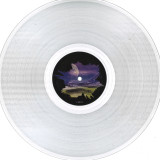
George Davis drops part 2 of his ‘Ona’ EP: heavenly house featuring a remix by the legendary Roy Davis Jr.
kickin’ up dust drops part 2 of the ‘Ona’ EP by George Davis. A jazzy bassline, snazzy piano keys and a rhythmical vocal send hips swinging and shoulders shaking in ‘Gomera’, a track which Chicagoan legend Roy Davis Jr. then remixes with a ‘Chitown Vibe’. Squelchy synths and organic percussion enter his version with a stylish swagger, maintaining the keys while moving the vocals to the back of the mix. Next up, ‘Bumpa’ is built for the dancefloor, an infectious groove forming the base for whimsical flute-like melodies, before ‘Soul Journey’ closes out the record with a gorgeous slow-burning vision of sunset shores and distant views.
Following on from his first ‘Ona’ EP which dropped on kickin’ up dust in March, and which won the support of artists like Honey Dijon, Nightmares On Wax, DJ Sneak and many more, George Davis now drops part two in the series. The german label, which initially started in 2021 as a party in the techno capital of Berlin, first turned heads hosting artists with a funkier edge to them such as Maurice Fulton, DJ Deep, and Louie Vega.
Suche:german bass
DJ Crisps is starting to make some handy garage moves after a couple of various artists' appearances and a fine EP on Time Is Now Germany in July. Now they link up with Oldboy who appeared on Burnski's other label Vivid back in 2022.
As you should expect these are four hardcore and rudely garage cuts with plenty of swagger, naughty samples and bass-face potential. 'On My Way' is the standout with its shuffling one-two drum punch, distant police sirens and warped basslines underneath a timeless and irresistible female vocal full of soul. A summer scorcher for sure alongside three more very useful weapons.
Black Vinyl[34,41 €]
After almost 25 years a new studio album of the German prog rock legend in original lineup! Agitation Free was one of the leading representatives of German experimental rock
music in the early 1970s. The Berlin band developed long, for that time unusual, free
instrumental improvisations from the end of 1967. They achieved cult status as early as
1972 with an independent mixture of improvised rock paired with electro, ethno, jazz and
trance elements.
Extensive live activities gave the band a steadily increasing level of recognition throughout
Europe. For example, the group performed in the cultural program of the Olympic Games
in Munich in the summer of 1972, toured France for two months in early 1973, performed
at the "German Rock Super Concert" in Frankfurt in May, produced the second album "2nd"
and then went on tour through France and major German cities. In 1974, the band began
to show signs of fatigue, which led to their temporary breakup at the end of the year after
a farewell concert.
Although a number of albums (with recordings from 1972 to 1974) were released after the
group's breakup and the studio album "River of Return" was released in 1999, it took
almost 35 years for the original band to reunite for concerts. In February 2007, Agitation
Free, with the original lineup from 1974, gave a series of concerts at Tokyo's "Shibuya
O'West."
In retrospect, it became clear that the experimental circle Agitation Free was one of the
important bands of the "Berlin School" and furthermore a career springboard for several
German musicians. Christopher Franke, for example, helped the band Tangerine Dream
achieve worldwide recognition. Michael Hoenig worked with Klaus Schulze and Tangerine
Dream before he became known as a film composer in Hollywood after a solo album
(among other things, the film music for the blockbuster "9 1/2 Weeks" with Kim Basinger
and Mickey Rourke). Axel Genrich moved to Guru Guru, Burghard Rausch became a
founding member of Bel Ami. Gustl Lütjens, toured with Shirley Bassey and Nena and later
found a large audience with his new age band Living Mirrors, especially in the USA. Lutz
"Lüül" Ulbrich joined Ashra, worked with ex-Velvet Underground singer Nico, produced
solo records in addition to theater music, and has enjoyed success with the 17 Hippies since
the late 1990s.
In the line-up Michael Hoenig (keyb, syn, el. perc), Burghard Rausch (dr, el. per), Lutz GrafUlbrich ((git, acc. git, bj), Gustl Lütjens (git acc. git, vocals) and Daniel Cordes (b, syn) the
new studio album "Momentum" was recorded.
Color Vinyl[36,93 €]
After almost 25 years a new studio album of the German prog rock legend in original lineup! Agitation Free was one of the leading representatives of German experimental rock
music in the early 1970s. The Berlin band developed long, for that time unusual, free
instrumental improvisations from the end of 1967. They achieved cult status as early as
1972 with an independent mixture of improvised rock paired with electro, ethno, jazz and
trance elements.
Extensive live activities gave the band a steadily increasing level of recognition throughout
Europe. For example, the group performed in the cultural program of the Olympic Games
in Munich in the summer of 1972, toured France for two months in early 1973, performed
at the "German Rock Super Concert" in Frankfurt in May, produced the second album "2nd"
and then went on tour through France and major German cities. In 1974, the band began
to show signs of fatigue, which led to their temporary breakup at the end of the year after
a farewell concert.
Although a number of albums (with recordings from 1972 to 1974) were released after the
group's breakup and the studio album "River of Return" was released in 1999, it took
almost 35 years for the original band to reunite for concerts. In February 2007, Agitation
Free, with the original lineup from 1974, gave a series of concerts at Tokyo's "Shibuya
O'West."
In retrospect, it became clear that the experimental circle Agitation Free was one of the
important bands of the "Berlin School" and furthermore a career springboard for several
German musicians. Christopher Franke, for example, helped the band Tangerine Dream
achieve worldwide recognition. Michael Hoenig worked with Klaus Schulze and Tangerine
Dream before he became known as a film composer in Hollywood after a solo album
(among other things, the film music for the blockbuster "9 1/2 Weeks" with Kim Basinger
and Mickey Rourke). Axel Genrich moved to Guru Guru, Burghard Rausch became a
founding member of Bel Ami. Gustl Lütjens, toured with Shirley Bassey and Nena and later
found a large audience with his new age band Living Mirrors, especially in the USA. Lutz
"Lüül" Ulbrich joined Ashra, worked with ex-Velvet Underground singer Nico, produced
solo records in addition to theater music, and has enjoyed success with the 17 Hippies since
the late 1990s.
In the line-up Michael Hoenig (keyb, syn, el. perc), Burghard Rausch (dr, el. per), Lutz GrafUlbrich ((git, acc. git, bj), Gustl Lütjens (git acc. git, vocals) and Daniel Cordes (b, syn) the
new studio album "Momentum" was recorded.
Agitation Free zählte in den frühen 70er Jahren zu den führenden Vertretern der deutschen experimentellen Rockmusik. Die Berliner Band entwickelte ab Ende 1967 lange, für diese Zeit ungewöhnlich freie instrumentale Improvisationen. Kult-Status erlangte sie bereits 1972 mit einer eigenständigen Mischung aus improvisiertem Rock gepaart mit Elektro-, Ethno-, Jazz- und Trance-Elementen. Umfangreiche Live-Aktivitäten verschafften der Band in ganz Europa einen stetig ansteigenden Bekanntheitsgrad. So trat die Gruppe im Sommer 1972 im kulturellen Programm der Olympischen Spiele in München auf, tourte Anfang 1973 zwei Monate durch Frankreich, trat im Mai beim "German Rock Super Concert" in Frankfurt auf, produzierte das zweite Album "2nd" und ging anschließend auf Tournee durch Frankreich und deutsche Großstädte. 1974 machten sich bei der Band Ermüdungserscheinungen breit, die Ende des Jahres nach einem Abschiedskonzert zur vorläufigen Auflösung führten. Obwohl eine Reihe von Alben (mit Aufnahmen von 1972 bis 1974) nach der Auflösung der Gruppe erschienen und das Studio-Album "River of Return" 1999 herauskam, dauerte es fast 35 Jahre, bis sich die ursprüngliche Band wieder für Konzerte zusammenfand. Im Februar 2007 gab Agitation Free in der Originalbesetzung von 1974 eine Serie von Konzerten in Tokio"s "Shibuya O"West". Im Rückblick zeigte sich, dass der Experimentier-Zirkel Agitation Free eine der wichtigen Bands der "Berliner Schule" und darüber hinaus Karriere-Sprungbrett für einige Deutsche Musiker war. So verhalf Christopher Franke der Band Tangerine Dream zu weltweiter Anerkennung. Michael Hoenig arbeitete mit Klaus Schulze und Tangerine Dream, ehe er nach einem Soloalbum in Hollywood als Filmkomponist bekannt wurde (unter anderem die Filmmusik für den Blockbuster "9 1/2 Wochen" mit Kim Basinger und Mickey Rourke). Axel Genrich wechselte zu Guru Guru, Burghard Rausch wurde Gründungs-Mitglied bei Bel Ami. Gustl Lütjens, tourte mit Shirley Bassey und Nena und fand später mit seiner New-Age-Band Living Mirrors vor allem in den USA ein großes Publikum. Lutz "Lüül" Ulbrich schloss sich Ashra an, arbeitete mit Ex-Velvet Underground-Sängerin Nico, produzierte neben Theatermusik Soloplatten und feiert seit Ende der 90er Jahre mit den 17 Hippies Erfolge. In der Besetzung Michael Hoenig (keyb, syn, el. perc), Burghard Rausch (dr, el. per), Lutz Graf-Ulbrich ((git, acc. git, bj), Gustl Lütjens (git acc. git, vocals) und Daniel Cordes (b, syn) wurde das vorliegende Studioalbum "Momentum" eingespielt.
Parallel zur Singleveröffentlichung hat die Band aus Los Angeles auch erste Details über GODMODE bekanntgegeben. Das achte Studioalbum von In This Moment, das in den Hideout Recording Studio in Las Vegas aufgenommen wurde, vereint insgesamt 10 Tracks. Produziert wurde es von Kane Churko (Ozzy Osbourne, Papa Roach, Five Finger Death Punch) und Tyler Bates (John Wick, Jerry Cantrell, Bush). „Wir können es echt kaum noch abwarten, bis alle hören, was wir dieses Mal aufgenommen haben“, so Howorth.
In This Moment sind Maria Brink (Leadgesang), Chris Howorth (Gitarre), Travis Johnson (Bass), Randy Weitzel (Rhythmusgitarre) und Kent Diimmel (Schlagzeug)
Über In This Moment:
Seit der Gründung im Jahr 2005 haben sich In This Moment aus Los Angeles eine riesige internationale Fanbase erspielt. Unterstützung bekommen die „Mother“-Figur und Sängerin Maria Brink und der Leadgitarrist Chris Howorth (ebenfalls ein Gründungsmitglied) aktuell vom Bassisten Travis Johnson, dem Gitarristen Randy Weitzel und dem Schlagzeuger Kent Diimmel. Besonders ihre gefeierten Live-Shows bescherten den Kaliforniern eine gewaltige Fanbase, weshalb sie ganz beiläufig zu einer der einfluss- und erfolgreichsten Bands des 21. Jahrhunderts avancieren konnten: Inzwischen gehen mehr als 1,3 Milliarden kombinierte Streams aufs Konto der US-Metalcore-Institution.
Nachdem ihnen schon das 2012 veröffentlichte Album Blood US-Gold beschert hatte, konnten zwischenzeitlich neben einem halben Dutzend Gold- und Platinsingles gleich drei Alben in Folge die Top-25 der US-Albumcharts aufmischen: Nach Blood und Black Widow (2014) stieg auch Ritual (2017) direkt auf Platz 23 in die Billboard-200 ein. Auch künstlerisch auf einem ganz neuen Level angekommen, sollten allein die Songs von Ritual seither mehr als eine Viertelmilliarde Streams generieren.
Neben ausverkauften Headliner-Tourneen rund um den Globus füllten sie die größten Stadien auch schon zusammen mit Disturbed und traten dazu bei den größten Festivals auf (u.a. Rockville, Sonic Temple).
Unterwegs zwischen den größten Bühnen war zuletzt das siebte Studioalbum Mother (Roadrunner Records) entstanden, das die US-Band mit dem angestammten Studiopartner Kevin Churko (Ozzy Osbourne, Five Finger Death Punch) aufgenommen hatte. Waren bei Ritual auch Blues-Elemente in ihrem knallharten Sound aufgetaucht, zog einen Mother schon mit der ersten Single unweigerlich in seinen Bann: Die Auskopplung „The In-Between“ wurde hinterher auch für einen GRAMMY Award nominiert. Im Jahr 2022 veröffentlichten In The Moment die EP Blood 1983 (BMG), ein musikalisches Update zum 10. Jubiläum des Blood-Albums. Außerdem war der Exklusivtitel „I Would Die For You“ auf dem Soundtrack zum Kinofilm John Wick: Chapter 4 zu hören.
GER "Wir suchen nach Glitzer, nach dem hellsten Geröll und Blitzen. Wer sich heute Nacht verliert, wird sich nicht finden. Ihr sucht in uns die Perfektion der Generation Maximum.." An was noch glauben. Mit ihrem dritten Album Generation Maximum nehmen CULK den Druck von einer Generation, die den Horror der Gegenwart wie durch Magie doch noch zu etwas Positivem wandeln - und richten ihn bewusst auf diejenigen, die ihre Zukunft zerstört haben. "... Ihr sucht in uns die Revolution, bürgt uns auf, was ihr nicht leisten wollt. Wer sich heute nicht mehr wehrt, wird übrigbleiben." Generation Maximum ist sicherlich kein Album, bei dem im SUV laut mitgegrölt wird, weil der Refrain so schön in die Sonnenuntergangsstimmung passt. Niemand klatscht vor Freude über den nächsten Waldbrand die Hände zusammen. Stattdessen beobachtet Sängerin Sophie Löw ihre Umwelt durch ein Brennglas und nimmt die Zuhörer:innen mit auf eine lyrische Rückblende der letzten zwanzig Jahre, in denen sie selbst vom Kind zur Zeugin wurde. Das selbstbetitelte CULK Debut (2019) erschien beim Wiener Label Siluh Records, einer der verlässlichsten Quellen für spannende Indie-Musik in all seinen Facetten. Vom Spiegel-Magazin gab es dazu das Attribut "Suchtsound". Mit ihrem zweiten Album "Zerstreuen über Euch" (2020) schuf die Gruppe ein famoses Konzept-Album. Es wurde von vielen Seiten als eine Kampfansage an tiefverwurzelte patriarchale Strukturen gedeutet und schaffte es u.a. in die TOP 5 der Jahresbestenliste des Spiegel-Magazins. Mit "Generation Maximum" übernimmt Jakob Herber die Rolle des Bassisten von Gründungsmitglied Benjamin Steiger. Herber ist von Anfang an ein wichtiger Wegbegleiter im engen Zirkelder Band, Sängerin/Gitarristin Sophie Löw hat im August 2022 als SOPHIA BLENDA ihr Solo-Debüt-Album "Die neue Heiterkeit" veröffentlicht. "Die neue Heiterkeit" ist eines der stärksten deutschsprachigen Pop-Statements der jüngeren Zeit" - Spiegel. Für ihr neues und nun drittes Album "Generation Maximum" hat sich die Band mit dem Produzenten Wolfgang Lehmann, vormals Wolfgang Möstl, zusammengetan, der unter anderem für seine Arbeit mit Voodoo Jürgens, Clara Luzia, Jungstötter, Dives uvm. bekannt ist. Und bringen es musikalisch nach draußen zu den Menschen, die vor lauter Existenzkämpfen fast vergessen hätten, die Revolution zu starten ("Generation Maximum"). Kein Ausbaden. Generation Maximum ist ein progressiv lauter werdendes "Nein" zur auferlegten Bürde, ein Appell an mehr Verletzlichkeit ("Eisenkleid") "Jede Rüstung erzählt von Verletzlichkeit. Stärke zeigt, wer Narben teilt." und weniger Elend im Privaten wie im Öffentlichen. Letztlich aber auch eine Suche nach einer neuen "Ode an die Freude" und Mut um uns. "Wir erheben Stimmen, auf dass sie für immer klingen. Wo sollen wir heute Zukunft finden?" Wer genau hinhört, findet sie: Lieder über unausgesprochene Träume, die durch epische Gitarrenklänge und Löws entrückten Gesang näher wirken, als sie eigentlich sind. LP klassisch schwarzes Vinyl.
With their third album Generation Maximum, CULK take the pressure off a generation that magically transforms the horror of the present into something positive after all - and deliberately direct it at those who have destroyed their future."... Ihr sucht in uns die Revolution, bürgt uns auf, was ihr nicht leisten wollt. Wer sich heute nicht mehr wehrt, wird übrig bleiben." Generation Maximum is certainly not an album to be bawled along to loudly in the SUV because the chorus fits so nicely into the sunset mood. No one claps their hands together in joy over the next forest fire. Instead, singer Sophie Löw observes her environment through a burning glass and takes the listeners on a lyrical flashback of the last twenty years, during which she herself went from child to witness. The self-titled CULK debut album (2019) was released on the Viennese label Siluh Records, one of the most reliable sources for exciting indie music in all its facets. Spiegel magazine gave it the attribute "addictive sound". With their second album "Zerstreuen über Euch" (2020), the group created a fabulous concept album. It was often viewed as a declaration of war against deeply rooted patriarchal structures and made it to the TOP 5 of the Spiegel magazine's best of the year list and gained the band a following in various scenes and audiences. With "Generation Maximum", Jakob Herber takes over the role of bass player from founding member Benjamin Steiger. Herber has been an important companion from the beginning. Singer/guitarist Sophie Löw released her solo debut album "Die neue Heiterkeit" as SOPHIA BLENDA in August 2022. "Die neue Heiterkeit" is one of the strongest German-language pop statements of recent times" - Spiegel. For their new and now third album "Generation Maximum", the band teamed up with producer Wolfgang Lehmann, formerly Wolfgang Möstl, who is known for his work with Voodoo Jürgens, Clara Luzia, Jungstötter, Dives and many more. And they take it musically outside to the people who almost forgot to start the revolution because of all the struggles for existence ("Generation Maximum"). No payback Generation Maximum is a progressively louder "no" to the burden imposed, an appeal for more vulnerability ("Eisenkleid") "Every armour tells of vulnerability. Strength shows who shares scars" and less misery in private as well as in public. But ultimately also a search for a new "Ode an die Freude" and courage around us. "Wir erheben Stimmen, auf dass sie für immer klingen. Wo sollen wir heute Zukunft finden?" Wer genau hinhört, findet sie: Lieder über unausgesprochene Träume, die durch epische Gitarrenklänge und Löws entrückten Gesang näher wirken, als sie eigentlich sind. RIYL Nu Wave, Independent, Shoegaze
GER "Wir suchen nach Glitzer, nach dem hellsten Geröll und Blitzen. Wer sich heute Nacht verliert, wird sich nicht finden. Ihr sucht in uns die Perfektion der Generation Maximum.." An was noch glauben. Mit ihrem dritten Album Generation Maximum nehmen CULK den Druck von einer Generation, die den Horror der Gegenwart wie durch Magie doch noch zu etwas Positivem wandeln - und richten ihn bewusst auf diejenigen, die ihre Zukunft zerstört haben. "... Ihr sucht in uns die Revolution, bürgt uns auf, was ihr nicht leisten wollt. Wer sich heute nicht mehr wehrt, wird übrigbleiben." Generation Maximum ist sicherlich kein Album, bei dem im SUV laut mitgegrölt wird, weil der Refrain so schön in die Sonnenuntergangsstimmung passt. Niemand klatscht vor Freude über den nächsten Waldbrand die Hände zusammen. Stattdessen beobachtet Sängerin Sophie Löw ihre Umwelt durch ein Brennglas und nimmt die Zuhörer:innen mit auf eine lyrische Rückblende der letzten zwanzig Jahre, in denen sie selbst vom Kind zur Zeugin wurde. Das selbstbetitelte CULK Debut (2019) erschien beim Wiener Label Siluh Records, einer der verlässlichsten Quellen für spannende Indie-Musik in all seinen Facetten. Vom Spiegel-Magazin gab es dazu das Attribut "Suchtsound". Mit ihrem zweiten Album "Zerstreuen über Euch" (2020) schuf die Gruppe ein famoses Konzept-Album. Es wurde von vielen Seiten als eine Kampfansage an tiefverwurzelte patriarchale Strukturen gedeutet und schaffte es u.a. in die TOP 5 der Jahresbestenliste des Spiegel-Magazins. Mit "Generation Maximum" übernimmt Jakob Herber die Rolle des Bassisten von Gründungsmitglied Benjamin Steiger. Herber ist von Anfang an ein wichtiger Wegbegleiter im engen Zirkelder Band, Sängerin/Gitarristin Sophie Löw hat im August 2022 als SOPHIA BLENDA ihr Solo-Debüt-Album "Die neue Heiterkeit" veröffentlicht. "Die neue Heiterkeit" ist eines der stärksten deutschsprachigen Pop-Statements der jüngeren Zeit" - Spiegel. Für ihr neues und nun drittes Album "Generation Maximum" hat sich die Band mit dem Produzenten Wolfgang Lehmann, vormals Wolfgang Möstl, zusammengetan, der unter anderem für seine Arbeit mit Voodoo Jürgens, Clara Luzia, Jungstötter, Dives uvm. bekannt ist. Und bringen es musikalisch nach draußen zu den Menschen, die vor lauter Existenzkämpfen fast vergessen hätten, die Revolution zu starten ("Generation Maximum"). Kein Ausbaden. Generation Maximum ist ein progressiv lauter werdendes "Nein" zur auferlegten Bürde, ein Appell an mehr Verletzlichkeit ("Eisenkleid") "Jede Rüstung erzählt von Verletzlichkeit. Stärke zeigt, wer Narben teilt." und weniger Elend im Privaten wie im Öffentlichen. Letztlich aber auch eine Suche nach einer neuen "Ode an die Freude" und Mut um uns. "Wir erheben Stimmen, auf dass sie für immer klingen. Wo sollen wir heute Zukunft finden?" Wer genau hinhört, findet sie: Lieder über unausgesprochene Träume, die durch epische Gitarrenklänge und Löws entrückten Gesang näher wirken, als sie eigentlich sind. LP klassisch schwarzes Vinyl.
With their third album Generation Maximum, CULK take the pressure off a generation that magically transforms the horror of the present into something positive after all - and deliberately direct it at those who have destroyed their future."... Ihr sucht in uns die Revolution, bürgt uns auf, was ihr nicht leisten wollt. Wer sich heute nicht mehr wehrt, wird übrig bleiben." Generation Maximum is certainly not an album to be bawled along to loudly in the SUV because the chorus fits so nicely into the sunset mood. No one claps their hands together in joy over the next forest fire. Instead, singer Sophie Löw observes her environment through a burning glass and takes the listeners on a lyrical flashback of the last twenty years, during which she herself went from child to witness. The self-titled CULK debut album (2019) was released on the Viennese label Siluh Records, one of the most reliable sources for exciting indie music in all its facets. Spiegel magazine gave it the attribute "addictive sound". With their second album "Zerstreuen über Euch" (2020), the group created a fabulous concept album. It was often viewed as a declaration of war against deeply rooted patriarchal structures and made it to the TOP 5 of the Spiegel magazine's best of the year list and gained the band a following in various scenes and audiences. With "Generation Maximum", Jakob Herber takes over the role of bass player from founding member Benjamin Steiger. Herber has been an important companion from the beginning. Singer/guitarist Sophie Löw released her solo debut album "Die neue Heiterkeit" as SOPHIA BLENDA in August 2022. "Die neue Heiterkeit" is one of the strongest German-language pop statements of recent times" - Spiegel. For their new and now third album "Generation Maximum", the band teamed up with producer Wolfgang Lehmann, formerly Wolfgang Möstl, who is known for his work with Voodoo Jürgens, Clara Luzia, Jungstötter, Dives and many more. And they take it musically outside to the people who almost forgot to start the revolution because of all the struggles for existence ("Generation Maximum"). No payback Generation Maximum is a progressively louder "no" to the burden imposed, an appeal for more vulnerability ("Eisenkleid") "Every armour tells of vulnerability. Strength shows who shares scars" and less misery in private as well as in public. But ultimately also a search for a new "Ode an die Freude" and courage around us. "Wir erheben Stimmen, auf dass sie für immer klingen. Wo sollen wir heute Zukunft finden?" Wer genau hinhört, findet sie: Lieder über unausgesprochene Träume, die durch epische Gitarrenklänge und Löws entrückten Gesang näher wirken, als sie eigentlich sind. RIYL Nu Wave, Independent, Shoegaze
- A1: Star (Ricardo Villalobos Master)
- A2: Custard Last Stand / Amo1 Ambient Version (Ricardo Villalobos Master)
- B1: Make My Love Grow (Ricardo Villalobos Mix Down)
- B2: Black Apple Pink Apple (Ricardo Villalobos Remix)
- C1: Make My Love Grow (Ricardo Villalobos Make My Love Groove Remix)
- C2: Softlanding (Ricardo Villalobos Remix)
- D1: Dealer (Ricardo Villalobos Remix)
tom Ravenscroft at 6music amongst others. And now, in true AMO1 creative fashion they are presenting an off-shoot release of that album, one completely reimagined by the man, the myth: Ricardo Villalobos.
Much has been written and talked about when it comes to producer/DJ Ricardo Villalobos over the years.
The mercurial Chilean-German artist has consistently redefined the boundaries of techno and electronica over the past 30-years as a producer, whilst also traversing the world and expanding minds as a DJ who can equally delight as he does challenge.Like a great jazz drummer (he was a percussionist before discovering mixing records), Villalobos has not so much as broken “the rules” of structure as just created his own unique approach. One that is often surprising, ever open-minded, and clearly lead by whatever happens to be inspiring him at any given moment. Watching him work or hearing him play music always feels live and free. He’s an artist. And that is exactly how this (perhaps unlikely) collaborative album has come to light – but then this is Ricardo, so maybe we should all know by now that anything is possible.
Villalobos explains, “In my scientific search for some electroacoustic musical landscapes, the offer of remixing ‘Black Apple Pink Apple’ was just perfect for me… In general, the song writing is so very good and particular, with all the instruments played into a sequencer, so it was very inspiring to strip down these pop songs into my dubby extensions, taking only the drums, bass, and vocals of the song.” Expanding further, “After delivering the first remix, Mo and myself came up with the idea of reimagining the whole album in a new way, mixed simple with other ears and my inspirations, with a new and different point of view of what instruments are important to hold the song to bare itself.”
It says a lot, and somehow captures the essence of Ricardo’s approach to music (and life), that one remix soon evolved into a whole plethora of reimagined works, driven by a creative slipstream and a clear connection to the songs created by A Mountain of One.
Mo Morris provides more insight into his own connection with Villalobos, “I lived in Berlin back in 2002-04 and used to religiously go to dance to Rici at the after (after) hours parties: little, tiny events. And he just used to blow my mind, I hadn’t heard anything like it before (or since). Ultra-modern and forward thinking.”
Mo continues, “A good friend connected to Ibiza happenings introduced me to Ricardo as it transpired that he was a fan of our early material, so I sent him some demo’s when we were in the studio creating ‘Stars Planets Dust Me’ and he loved ‘Black Apple Pink Apple’. The relationship and collaboration grew from there really, and I hope that this release is still at the start of what we can all create together.”
Focussing in on the album at hand – ‘Ricardo Villalobos reimagines: Stars Planets Dust Me’ – we are treated to a concept listen that guides us from dreamy daytime Balearic pop – staying very true to the original songs – all the way through to completely original deep dubby techno excursions. And to Villalobos fans, it will perhaps surprise (and hopefully delight) how light a touch he has provided to the opening tracks, focussing more on enhancing the sonics, and allowing the originals to shine brighter through remastering and mixing down. It’s in these moments that we see Ricardo as a pure music fan, needing not overly change or alter what’s already been created, but simply doing what he can to maximise what’s already there.
What will certainly delight Ricardo fans are the four full ‘klub’ remixes provided of ‘Black Apple Pink Apple’, ‘Make My Love Grow’, ‘Softlanding’ and ‘Dealer’ that each boldly explore the outer regions of the dancefloor in a way that only Villalobos can.
Mo rounds off, “From an electronic and sonics standpoint he’s kind of out there on his own. It’s such a unique sound. Weatherall also had this, and Harvey has that unique flavour, and also people like Nils Frahm and Max Richter have this gift. It’s not an easy thing to produce. Ricardo has his own personal cosmic trademark.”
Indeed he does. Take a trip with him around the stars and planets and see for yourself.
- Derived From The Trout Mask In A Tentative Manner 04:55
- The Dissolution Of Time 08:57
- Abdication 05:02
- The Alphabet Of Steps 06:23
- Les Cycles Extatiques 06:52
- The Geometry Of Rhythmics 05:26
- At The Margin Of Moments 06:37
- Through The Deserts Of Postmodernity 09:36
- Stereometry Of Moving Bodies 06:27
- Suspecting Metaphysical Symbols 07:28
After two years, Carl and Andreas present their second album, and once again, it opens up a wide associative space for us. What strikes us initially is the uncommon instrumentation: a church organ, harpsichord, glass tubes, and more. Like their first album (The Aporias of Futurism), it is mysterious and dark. But it also carries a strong touch of rebellion and adrenaline, sometimes quite pointedly. The pieces are now shorter and feature intricate yet irresistible rhythms. The impact is immediate, yet it maintains a sense of solemnity and ceremony. The Apollonian complexity of the rhythms and subtle melodic interweavings is transformed into a Dionysian, ecstatic, hypnotic, and at times tribal context. "Music for Unknown Rituals" oscillates between primitive instincts and avant-garde intrigues.
The process began in Döblitz, a small village on the Saale river in Germany, inside an old church that houses an organ built in 1886 by Johann Adolph Ibach. Carl and Andreas gained access and secluded themselves there for a few days, accompanied by the organ, an instrument made of glass tubes, and a set of modular synthesizers. After recording the basic tracks in Döblitz, the work continued in Munich and Berlin. Carl played electric guitars, harpsichord, bass, metallophone, xylophone, Indian harmonium, and various percussive instruments. Andreas added layers of electronic sounds, noises, and atmospheric drones. He also created percussive structures extracted and derived from recorded material of technical and industrial noises, which contrasted with the acoustic drums played by Carl. The antithetical approach continues with the dichotomous arrangement of the instruments, often panned hard left and right in the stereo field, creating an antiphonic communication. Some parts, especially the use of the electric guitar, evoke memories of the psychedelic sixties. However, this is anything but a nostalgic album—these musical references are merely remnants, set pieces, and fragments used from a contemporary, post-modern, post-youth-cultural, and post-romantic perspective.
Although Andreas and Carl continue on their chosen path of composing music with an almost literary narrative structure, this album is conceptually and formally completely different from their first effort. If “The Aporias of Futurism” was a revolutionary manifesto (in a pataphysical sense), "Music for Unknown Rituals" is more like the implementation in action; it is the practical application of the previous statement. To put it another way, if "The Aporias of Futurism” was the conceptual manifesto of a dark utopia of modernity, "Music for Unknown Rituals" is the staging of free will surrendering to the myths and catharsis of a Greek tragedy. And in response to this, the artwork features a leitmotif of histrionics with hands, the hands being the first and intuitive part of the body to express something: a ritual, a prayer, a defeat...
— Andreas Gerth is one half of Driftmachine, and Carl Osterhelt is part of F.S.K and collaborates with Hans-Joachim Irmler of Faust. Both became connected through their participation in the Tied & Tickled Trio.
Balmat co-founders Philip Sherburne and Albert Salinas have been fans of Shy Layers’ lilting, Balearic pop for years, so when Shy Layers’ JD Walsh asked us to listen to a set of demos he was working up with fellow Atlanta multi-instrumentalist Jeff Crompton, we jumped at the chance. And once we heard their work in progress, the decision was almost immediate: We have to release this.
Together, Walsh and Crompton are Anagrams, and their debut album together, Blue Voices, might initially seem like a departure from Balmat’s habitually electronic terrain. It’s not ambient music, but it’s also not not ambient music, at least to listeners in the right frame of mind. The two musicians, who met when Walsh moved from Brooklyn to Atlanta in 2016 and began collaborating a few years later, see the music in similarly ambiguous terms. “I like it because it’s not jazz,” jokes Crompton, a veteran and credentialed jazz player. “And JD likes it because it’s jazz.”
Crompton is a musician (and former high-school band teacher) with deep roots in Georgia’s improvised and experimental music scenes; his credits include shows with Eugene Chadbourne, a guest appearance with Godspeed You! Black Emperor, and a collaboration with Duet for Theremin and Lap Steel’s 12-hour drone performance at Knoxville’s Big Ears. On Blue Voices he plays alto and tenor saxophone, clarinet, electric piano, and organ. Walsh has been releasing music as Shy Layers since 2015, when he started self-releasing on Bandcamp; the following year, Germany’s Growing Bin packaged his first two EPs as a self-titled album, and in 2018, Tim Sweeney’s Beats in Space label put out Shy Layers’ sophomore album, Midnight Marker. Where those records channeled Walsh’s playful harmonic instincts into wistful songwriting with tropical overtones, on Blue Voices he lets his experimental tendencies take the lead. Playing acoustic and electric guitars, electric lap steel, bass, Moog Matriarch, modular synth, and programmed drums, he concentrates his energies on richly textural layers and abstract assemblages of tone color.
Across the album’s 11 tracks, there are faint echoes of familiar touchstones: the atmospheric twang of Daniel Lanois’ pedal steel on Apollo: Atmospheres and Soundtracks; the mercurial modal runs of Ethio- jazz; the late-summer calm of Fuubutsushi; the versatility of players and composers like Patrick Shiroishi and Sam Gendel, who are asking similar questions about where jazz ends and some other, nameless territory begins. Mostly, though, what Blue Voices captures is the quixotic sound of two restless musical imaginations making it up as they go along, two voices discovering a shared language in a hitherto unexplored shade of blue.
- A1: Euphoria 1 49
- A2: Soft Hallucinations 2 00
- A3: Sky Move 2 40
- A4: Destroyed Dreams 2 06
- A5: Horror Trip 1 39
- A6: Floating Illusions 2 23
- A7: Lost Chance 1 46
- A8: The Morning After 3 15
- A9: Random Thoughts 1 12
- B1: Heroin 2 44
- B2: Night Trip 2 54
- B3: Day Trip 1 21
- B4: Dealer's Corner 3 23
- B5: Sad And Hopeless 1 53
- B6: Riding Pegasus 3 32
- B7: Hopeless Chaos 2 15
- B8: Goin' Mad 2 06
Sven Torstenson's notorious Drugs is a loopdigga's fever dream, bursting with breaks for days and featuring possibly the most iconic cover of all library music's cult classics. First released in 1980, it's now a hyper-rare and seriously sought-after electronic album full of experimental soundscapes and samples just waiting to be flipped. It's both terrifying and terrifyingly good. So much so, it's been brilliantly sampled by Kendrick Lamar and Chance The Rapper.
The sleeve describes Drugs as containing "the newest dimensions of electronic sounds. Dramatic underscores for all problems of today's life and society, at the border between reality and delusion." That's pretty spot-on. The fast moving "Euphoria" is an incredible, unignorable opener. It's loaded with disorientating effects and really needs to be heard to be believed. It's followed by the gorgeous "Soft Hallucinations", containing quiet, meditative and beautiful sounds - as the title suggests. One listen and you'll want to live in the warm embrace of this beatless, harmonic gem. Sinister squelchy synth stabs don't distract from the sheer beauty of the track's main (gentle) thrust. They only serve to elevate its trippy magic.
Next up, "Sky Move"'s agitated and repetitive rhythm makes it an intense listen but with a broad melody that will appeal to many. "Destroyed Dreams" utilises a muffled church organ and it sounds heavenly to begin with but it gradually invites increasingly distorted elements. Yes, you've had trips like this, we're pretty certain. Mental! Talking of bad trips, never have they sounded so good as "Horror Trip"; this fractured drama-synth just needs some some dusty beats to hold it up - get involved.
"Floating Illusions" almost sounds like a beatless Spiritualized bomb from the early-mid 90s; melodic, synthy, church organ-drenched. The mournful, dramatic "Lost Chance" pulses along on a bed of acidy synths whilst "The Morning After" is the sonic equivalent of the extreme fear and doom experienced in the aftermath of the previous night's carnage. Whilst somewhat uncomfortable listening, again, it's pretty compelling thanks to the myriad effects being expertly utilised. Fascinating. The sprawling, fragmented "Random Thoughts" is described as containing "confused melody phrases" - yeah, pretty much sums this one up.
The B-Side is ushered in by "Heroin" and it's as sketchy as you might think, all mysterious minor chords with a dominating - but not overbearing - bass refrain. Next up, the dream-like synthy fanfare of "Night Trip" climaxes after a few minutes of dramatic, ecclesiastical sounds whilst "Day Trip" layers its melody over a repetitive rhythmic base.
Next up, one of the *REAL* highlights makes itself known. Absolutely not to be missed, "Dealer's Corner" is all shifting tenors from quiet to hectic and back around again. The hectic parts are like a totally synthed-out-the-eyeballs jazz-funk collective wigging out with the latest electronic toys from 1980. This one totally SMOKES.
The dramatic "Sad And Hopeless" is appositely replete with dissonant, minor church-organ chords whilst "Riding Pegasus" uses a creepy ostinato bass melody to create irrational bleepy menace that's ripe for sampling. The penultimate track, "Hopeless Chaos" is another disorientating trip, a bleepy confection of sounds and phrases whilst closer "Goin' Mad" is all electronic percussion with an unpleasant rhthymic feel and irritating melody. Music to annoy your partner with!
Established in Munich in 1965 by Gerard and Rotheide Narholz, Sonoton introduced library music to Germany. Initially intended to cater to the country's new TV market, the library also provided an avenue for Gerhard Narholz's astonishing musical prolificacy, and soon became a haven for a wide range of European composers and musicians. In 1969, Sonoton struck a deal with the British label Berry Music for international publishing rights, exposing its catalog to a worldwide audience; when Berry was bought out by EMI in 1973, Sonoton transitioned into a full-fledged international label, with successes in the library and commercial fields and many innovations to its credit. Now a worldwide operation with hundreds of producers and composers under its employ, Sonoton nonetheless remains an independently run business still helmed by its founders - a remarkable achievement in an era when nearly every other major library has been absorbed by a multinational conglomerate.
The audio for Drugs has been remastered by Be With regular Simon Francis, ensuring this release sounds better than ever. Cicely Balston's expert skills have made sure nothing is lost in the cut whilst the original, iconic sleeve has been restored here at Be With HQ as the finishing touch to this long overdue re-issue.
First released over 30 years ago, this release was further instrumental in establishing a new genre of electronica within dance music. Mental Cube was the creation of Brian Dougans and Gary Cobain, “So This Is Love” the follow up to their 1990 debut “Chile Of The Bass Generation”. This is before their creation of The Future Sound Of London. They were ahead of their time and extremely progressive, and here three decades later they are making an impression. “So This Is Love” has been described as unique with ‘the most seductive 30 seconds of any house track ever. Timeless, emotional, sexy and deep. A masterclass in UK house, one of the best electronic tracks ever made’. “Q” has been described as sounding inspired by the 90s techno sound out of Germany and Belgium, a French issue of it on 12” selling in the current market for between £200 and £350.
- A1: Turn Ix 03:47
- A2: Super Freeloader 03:41
- A3: Turn X 07:57
- A4: Turn Xi 03:10 Site
- B1: Turn Xii 03:25
- B2: Zeit Ohne Harmonie Iii 05:45
- B3: Turn Xiii 01:57
- B4: Turn Xiv 02:12
- B5: Festival Mood Iii 00:56
- C1: Turn Xv 02:14
- C2: Turn Xvi 06:00
- C3: Turn Xvii 02:34
- C4: Turn Xviii 04:32
- D1: Turn Xix 04:41
- D2: Turn Xx 06:08
- D3: Turn Xxi 01:38
- D4: Festival Mood Iv 01:47
With the label MPS, post-war musical history was written in Germany: noble music productions with many international greats come from the Black Forest and are timelessly legendary. In this tradition, HGBSBlue releases selected projects on high-quality vinyl.
The DLW trio has been working together for twelve years now and is now setting the tone in the modern European music scene, as the trio has long since left the boundaries of jazz behind. DLW, that is the sound-painting vibraphonist Christopher Dell, the virtuoso Danish bassist Jonas Westergaard and the German star drummer Christian Lillinger.
Time and again, the three jazz musicians from Berlin play together with artists from classical or avant-garde music. "Supermodern"
is the project that brings the three DLW musicians together with US pianist Bob Degen. This music is also unikal. It is a reverence
to the legendary Modern Jazz Quartet (MJQ), which in the 1950s was the link between chamber jazz and European classical music.
With "Supermodern," this reference to the MJQ is illuminated from the perspective of European avant-garde music, rather than
its African-American roots, which nevertheless resonate respectfully throughout.
DLW has "developed a concept based on repetition and difference. The starting point for a piece is always a single bar, which is
rhythmically interlaced and repeated trance-like until the smallest irregularities occur, which are written down and creatively
processed further. From this "superimposed combinatorics" (Christopher Dell) a perpetuum-mobile-like sound movement
develops, which is further radicalized on record by sound alienations and cut-up techniques." Thus respectfully wrote the Neue
Züricher Zeitung in August 2023.
Word has long since spread outside the German jazz scene that the DLW projects are always musically new. This is also the case
with the double LP "Supermodern 2", with recordings made in 2021 in analog at the MPS studio in the Black Forest. Together
with US pianist Bob Degen, who has been one of the creative voices of the German jazz scene for about 50 years, they play highenergy music, with sparkling virtuosity and close communication. A musical treat, further enriched by the immensely present
analog sound of this recording.
- A1: Q - From Within (Body Mix)
- A2: Integrity Ii - Living In A Fantasy
- A3: Strange Ways - Strange Ways
- B1: Thee J Johanz - Stompin N Rising
- B2: Exposure - Love Quest
- B3: Tons Of Tones - Oh Ah Oh Ah Oh
- C1: Interface - Temazepam
- C2: It’s Thinking - Hyperion
- C3: Eric Nouhan - Technobility
- D1: Secret Cinema - Sundance
- D2: Hole In One - Spiritual Ideas For Virtual Reality
Vol.3[25,17 €]
Through 35 hedonistic highlights stretched across three volumes, Music For The Radical Xenomaniac delivers the first ever deep dive into The Netherlands’ colourful house sound of the 90s and the under-celebrated producers and record labels whose music soundtracked a countrywide cultural movement.
Plenty of books and documentaries have celebrated the riotous raves, legendary clubs, high profile DJs and promoters who shaped The Netherlands’ hedonistic house scene throughout the 90s. Music For The Radical Xenomaniac dares to challenge these narratives by shining a light, for the first time, on those who created the scene’s kaleidoscopic, game-changing and globally influential soundtrack.
Leading the charge were a disparate group of key creators who not only forged links with their counterparts in Detroit, Chicago, New York, Belgium, Germany and the United Kingdom, but also became celebrated figures on the worldwide electronic underground (Eric Nouhan, Aad De Mooy, Orlando Voorn, Stefan Robbers and Steve Rachmad). Alongside key underground imprints (Stealth Records, Basic Energy, ESP, Prime and Outland Records included) and lesser-known producers, these pioneers gave flavour to a radical musical movement via open-mindedness, unheard-of creativity and a genuinely futuristic ethos. All of these artists and labels are represented throughout the series.
So, what defined this hedonistic house sound from The Netherlands? Stylistically, it was varied – as the series so emphatically proves – but was defined by a set of distinctive sonic characteristics: emotive musical motifs, high-frequency synth sounds, mellow basslines, pulsating rhythms and more than a touch of hallucinatory intent.
Volume 2 contains a wealth of notable tracks and slept-on gems. These include Q’s ‘From Within (Body Mix)’, a lesser-known cut from the trio better-known as Quazar (Gert van Veen, R.o.X.Y co-founder Eddy De Clercq and Eric Cycle), Eric Nouhan’s melodic masterpiece ‘Technobility’, which is appearing on vinyl for the first time since 1994, and a rare collaboration between regular production partners Maarten van der Vleuten and Mike Kivits (better known as Aardvarck), which was initially released on a special R&S Records’ offshoot set up by the label’s co-founder, Renaat Renaat Vandepapeliere (Integrity II’s ‘Living In Fantasy’).
Other highlights include Exposure’s ‘Love Quest’, a highly sought-after 1991 track by The Hague-based DJ/producer Maurits Paardekooper, and an ambient-infused Andrew Weatherall favourite originally released by Stealth Records in 1993, Hole In One’s ‘Spiritual Ideas For Virtual Reality’.
Packed full of forward-thinking 90s gems remastered for today’s dance floors by Alden Tyrell, Music For The Radical Xenomaniac Volume 1 is a life-affirming celebration of a distinctly Dutch musical movement, whose rich textures and melodies are still inspiring new generations of DJs and dancers today.
- A1: The Connection Machine - Echoes From Tau Ceti
- A2: Direct Movement - Natural Chemistry
- A3: Paradise 3001 - Surfin The Cuban Waves
- B1: Exquisite Corpse - Strange Attractor
- B2: Orlando Voorn - Still
- B3: Nyx - Delphi (Rewaxed)
- C1: Stefan Robbers - Afridisiac (Jumpy Mix)
- C2: Fluxland - Fluxland
- C3: This Side Up - Glider
- D1: Georgio Schultz - Trance
- D2: Quazar - Cycle Drops
- D3: 2000 And One - Crystal
Vol.2[25,17 €]
Through 35 hedonistic highlights stretched across three volumes, Music For The Radical Xenomaniac delivers the first ever deep dive into The Netherlands’ colourful house sound of the 90s and the under-celebrated producers and record labels whose music soundtracked a countrywide cultural movement.
Plenty of books and documentaries have celebrated the riotous raves, legendary clubs, high profile DJs and promoters who shaped The Netherlands’ hedonistic house scene throughout the 90s. Music For The Radical Xenomaniac dares to challenge these narratives by shining a light, for the first time, on those who created the scene’s kaleidoscopic, game-changing and globally influential soundtrack.
Leading the charge were a disparate group of key creators who not only forged links with their counterparts in Detroit, Chicago, New York, Belgium, Germany and the United Kingdom, but also became celebrated figures on the worldwide electronic underground (Eric Nouhan, Aad De Mooy, Orlando Voorn, Stefan Robbers and Steve Rachmad). Alongside key underground imprints (Stealth Records, Basic Energy, ESP, Prime and Outland Records included) and lesser-known producers, these pioneers gave flavour to a radical musical movement via open-mindedness, unheard-of creativity and a genuinely futuristic ethos. All of these artists and labels are represented throughout the series.
So, what defined this hedonistic house sound from The Netherlands? Stylistically, it was varied – as the series so emphatically proves – but was defined by a set of distinctive sonic characteristics: emotive musical motifs, high-frequency synth sounds, mellow basslines, pulsating rhythms and more than a touch of hallucinatory intent.
Volume 3 is packed with in-demand tracks and hard-to-find gems, including a previously CD-only cut from Dutch techno originator Orlando Voorn (1999’s ‘Still’), a genuine rave classic from The Hague by hardcore DJ Charly Lownoise as Fluxland, and a killer cut from prolific producer – and genuinely influential pioneer – Aad De Mooy AKA D-Shake. He’s represented on this volume by Paradise 3001 cut ‘Surfin The Cuban Waves’, which first appeared on ESP Records in 1993.
Other highlights include Direct Movement’s ‘Natural Chemistry’, a sought-after slow house cut produced by Dennis Buné, who had an enormous impact on the Dutch house scene as Jaimy, and ‘Delphi (Rewaxed)’ by NYX, a highly regarded and hard to find single from former new wave and synth-pop producer Bart Barten, and occasional studio partner Hanz Meyer.
Packed full of forward-thinking 90s gems remastered for today’s dance floors by Alden Tyrell, Music For The Radical Xenomaniac Volume 3 is a life-affirming celebration of a distinctly Dutch musical movement, whose rich textures and melodies are still inspiring new generations of DJs and dancers today.
Sea Blue in Coke Bottle Clear Vinyl LP + artist signed art print. Only 200 available.
Because Hold, Jack Tatum's fifth album under the moniker Wild Nothing, was written in the aftermath of new parenthood during the pandemic, it was probably inevitable that it would be searching and existential music. But during the recording process, the artist known for synth-pop tastefulness used it as an opportunity to reach for a new sonic maximalism and wider set of influences. With contributions from longtime collaborator Jorge Elbrecht, Tommy Davidson of Beach Fossils and Hatchie's Harriette Pilbeam, first single "Headlights On" features an acid house-worthy bass groove and breakbeat that prove Tatum is playing for the rafters. Tatum produced the rest of the record on his own, partially out of necessity, due to the challenges of the pandemic. The songs were eventually brought to Adrian Olsen at Montrose Recording in Richmond to begin recording drums and filling in the gaps. While largely a product of isolation, Hold also reflects the things Tatum has learned from collaborators, both on previous records and during his acclaimed work with Japanese Breakfast and Molly Burch. The rest of the record was mixed by Geoff Swan, who listeners might know for his work with Caroline Polachek and Charli XCX. Swan put Tatum's vocals high in the mix, and throughout the album, he embraces playful vocal processing like never before. Tatum moved from Los Angeles back to his home state of Virginia about five years ago in search of a scaled-back lifestyle. The relatively suburban environment - and the occasional regret it inspired - proved to be great artistic fodder. It's the paradox of modern America - the suburbs are supposed to be stultifying to art, but they are so full of human desperation perfect for dramatizing. On "Suburban Solutions", he presents an anti-jingle with an acidly bright synthesizer melody, imploring you to sign on the dotted line, put your feet up, and embrace sweet oblivion. Adding to the song's menacing cheeriness is a chorus-sung bridge, made with assistance from Molly Burch and Tatum's wife, Dana, It was loosely inspired by the classic Martika song "Toy Soldiers" and the long-ago pop craze for children's choirs, and he embraces the trend's less-than-stellar reputation. By design, Hold dwells in uncertainty and fear, but in a package that encourages meditation and a bit of fun. "In the face of the pandemic, I think being a parent really forced my hand," Tatum said. "I felt that I had no other choice but to have a positive outlook on the world. Because if I were to give in at any moment and say, "Oh, everything is horrible," then I'll feel as if I've lost and I've given up on my son being able to thrive in this world."
Mit einer neuen, klaren Vision, die sich während der 2-jährigen, durch die Pandemie erzwungenen Pause herausgebildet hat, stellt das Album ”A Living Commodity” einen dynamischen künstlerischen Wandel von Egyptian Blue dar und zeigt die ganze Bandbreite und Ambition ihres Songwritings.
Der erste Vorgeschmack auf die neue Musik kam in Form von ”Geisha”; eine von Psychedelik geprägte Punk-Offensive, angetrieben von Luke Phelps treibendem Bass in Kombination mit Isaac Ide’s kraftvollem Schlagzeug, untermauert von den beiden Frontmännern Andy Buss & Leith Ambrose, die mit ihrem zackigen Gitarrenspiel den beklemmenden und düsteren Text mit Buss’ Bekenntnis ”I live for only you” zu einer anziehenden Klangcollage ergänzen.
Die jüngste Veröffentlichung ”Matador” und die aktuelle Single ”Skin” zeigen die von EB gewohnte hochintensive Gitarrenband-Dynamik, aber mit einer neuen Klangdimension, die an Kid A-era Radiohead, die Anfänge von Interpol und Gang Of Four erinnert.
Jetzt, nachdem sie ihre gesamte kreative Energie in die Erschaffung ihres Debütalbums ”A Living Commodity” gesteckt haben, das einen unbestreitbaren neuen Ehrgeiz und Hunger zeigt, sind Egyptian Blue bereit, ihren Status als eine der besten neuen Gitarrenbands aus Großbritannien zu behaupten.
Purple[41,98 €]
Kira Linn - baritone saxophone
Nino Wenger - alto saxophone, flute, alto flute
Christopher Kunz - tenor saxophone, soprano saxophone
Lukas Keller - electric bass
Johannes Koch - drums
Lukas Großmann - synthesizer, piano, Rhodes
ALBUM CREDITS
Fattoria Musica, Osnabrück, Germany (November 10th, 11th 2021)
Mixed by Patrik Zosso
Mastered by Patrik Zosso
Produced by Francesca Gaza
Executive Producer - Michael Janisch
Photography - Karl F. Degenhardt (Band Photo), Marina Rosa Weigl (Kira Linn)
Graphic Design by Maria Jarzyna
Black[33,19 €]
Kira Linn - baritone saxophone
Nino Wenger - alto saxophone, flute, alto flute
Christopher Kunz - tenor saxophone, soprano saxophone
Lukas Keller - electric bass
Johannes Koch - drums
Lukas Großmann - synthesizer, piano, Rhodes
ALBUM CREDITS
Fattoria Musica, Osnabrück, Germany (November 10th, 11th 2021)
Mixed by Patrik Zosso
Mastered by Patrik Zosso
Produced by Francesca Gaza
Executive Producer - Michael Janisch
Photography - Karl F. Degenhardt (Band Photo), Marina Rosa Weigl (Kira Linn)
Graphic Design by Maria Jarzyna
Mo" Horizons enter their seventh album chapter andremarkably, celebrate 25 years of their exultant andglobally enriched, forward-thinking, electronic sound. Featuring a cast of guest singers, including Ghanaianlegend Gyedu-Blay Ambolley, Mango, is a fiery andsample-heavy blend of future-funk, balearic, highlife,Brazilian drum "n bass and lo-fi hip hop, set to bereleased on their long-standing label Agogo Records.
Spanning over three decades, German DJ andproduction duo Mo" Horizons, led by Ralf Droesemeyer,& Mark Wetzler have been a relentless force on theglobal groove scene. For 25 years, the pair havecontinued to grow their international audiences,testament to remaining on-point, ignoring the fashionand tribalism of scenes like big beat and broken beat,that thrived but then morphed and went off radar.
German post-punk band Onyon scrambled our brains when we heard them for the first time last year, so much so that we signed them & reissued their eponymous debut cassette EP (originally co-released in limited quantities by the Flennen/U-Bac labels) in June of '22. "Last Days On Earth" is the band's latest & first proper full-length for Trouble In Mind. The oddball, synth-soaked world of Onyon is disorienting at first - the band's herky-jerky rhythms may operate in a familiar fashion to bands like Devo, Kleenex/Liliput or label-mates LITHICS, but Maria Untheim's woozy synth squiggles that populate & punctuate the band's songs keeps everything at arms-length. Flirting with the primitive cool of 80's minimal-synth and the wire-haired cretinism of 60s garage, especially on tunes like the manic `Dogman' or first single `Alien, Alien'. Guitarist Ilka Kellner's six-string salvos rage unpretentiously with edges torn & frayed, rarely (if ever) soloing, but never afraid to unleash a spindly lead-line over Florian Schmidt's rubbery bass lines & Mario Pongratz's stuttering drum patterns that phase in & out of time imperceptibly like drunks doing their best to seem sober. Kellner & Untheim share vocal duties (in both English & German - sometimes in the same song), but the real magic comes when the two sing together, voices merging in loosely harmonic gang vocals; one deadpan, the other slightly unhinged. The group's beguiling lyrics add to the mystique - inscrutable neu-world fables about egg machines, ghosts, worms that talk, and urges to consume newspaper that ooze a rural, old-world understanding of life & the imperceptible spaces in between reality & fiction, transmuted thru a modernist sci-fi lensflare. Recorded, mixed & mastered in late 2022 by Martin Müller, "Last Days On Earth" is released on CD, black vinyl & limited purple vinyl (while supplies last) as well as streaming via most digital platforms.
Green Vinyl[16,39 €]
We are thrilled to kick off our label endeavors with one of the rarest and simultaneously best-recorded independently released German new wave singles in history: "Jede Nacht derselbe Traum" ("The Same Dream Every Night") by Total.
Back in late 1983, Total found themselves in a pivotal rendezvous with CBS Records in a Frankfurt hotel lobby. The entire band was present, along with the esteemed NDW manager Jim Rakete, who had played a role in launching Nena to national and international stardom. Also in attendance were the A&R representatives from CBS. It was on this day that Total was presented with the opportunity to ink an album deal with CBS. However, since they had only recorded the titular song thus far, negotiations hit a snag. CBS insisted on a full album rather than a standalone single.
Ultimately, the band decided to independently issue a limited 7" run of "Jede Nacht derselbe Traum" under Günther Mannschreck's Schreckschuss label in January 1984. These vinyl copies became the band's currency for pursuing record deals and promotional prospects. However, despite the potential to achieve commercial success and garner radio airplay, the song and the "Total" project gradually waned from the music landscape. Regrettably, only a few vinyl copies have managed to endure over time. This NDW "holy grail" may have prompted a fair share of dreams for serious vinyl collectors, as to this day, not a single physical copy has been put up for sale on platforms like eBay or Discogs. Interestingly, Maisenbacher has even fielded an offer of over 400 Euros for an original copy, although he regretfully couldn't fulfill the request due to possessing just a single copy himself.
The song itself is a fusion of diverse musical styles. Crafted using the Oberheim OB8 system, complete with the DMX drum machine and a bassline woven from a Jupiter 8 keyboard, it carried a groove reminiscent of New York's electro hip-hop sound in "The Message," setting it apart from typical German new wave productions. Additionally, a Korg Polysix was integrated, and guitar effects were layered to finalize the infectious synth-pop instrumental. Newcomer to the band, Andrea Ströbel, laid down a flawless vocal layer that steered the song towards a straightforward NDW direction, giving it a resonance that surely resonated with mainstream and radio audiences. To complete a B-side for the original vinyl single, the legendary state-of-the-art L480 Lexicon reverb was used. In the more experimental "Maxi Mix," now known as the "Dub Mix," Mannschreck expertly manipulated the machine. The outcome stands as a historical example of incredible studio craftsmanship and the cutting-edge techniques of the 80s.
For the new 12" release, Mannschreck unearthed an alternative mix of the song on the original tapes, featuring a distinct introduction, break, and exciting edits. In addition, DJ Friction, who contributed to the transfer and mastering for the release, treated us to a superb edit that cleverly melds all versions of the song while incorporating a few extra bassline groove elements.
The captivating reissue cover spotlights vocalist Andrea Ströbel, who gazes with determination. A hand reaches out to grab her shirt, attempting to pull her down. Symbolizing the song's theme, it embodies the unsettling dream conveyed by the lyrics-yet she steadfastly resists.
In summary, we are elated to present a significant gem for vinyl enthusiasts: a splendid mid-tempo tune that dances on the boundary of synth-pop, new wave and electro. The new 12" single underwent meticulous mastering, and the outcome is nothing short of astounding, surpassing the sonic quality of the original pressing.
Black Vinyl[14,24 €]
We are thrilled to kick off our label endeavors with one of the rarest and simultaneously best-recorded independently released German new wave singles in history: "Jede Nacht derselbe Traum" ("The Same Dream Every Night") by Total.
Back in late 1983, Total found themselves in a pivotal rendezvous with CBS Records in a Frankfurt hotel lobby. The entire band was present, along with the esteemed NDW manager Jim Rakete, who had played a role in launching Nena to national and international stardom. Also in attendance were the A&R representatives from CBS. It was on this day that Total was presented with the opportunity to ink an album deal with CBS. However, since they had only recorded the titular song thus far, negotiations hit a snag. CBS insisted on a full album rather than a standalone single.
Ultimately, the band decided to independently issue a limited 7" run of "Jede Nacht derselbe Traum" under Günther Mannschreck's Schreckschuss label in January 1984. These vinyl copies became the band's currency for pursuing record deals and promotional prospects. However, despite the potential to achieve commercial success and garner radio airplay, the song and the "Total" project gradually waned from the music landscape. Regrettably, only a few vinyl copies have managed to endure over time. This NDW "holy grail" may have prompted a fair share of dreams for serious vinyl collectors, as to this day, not a single physical copy has been put up for sale on platforms like eBay or Discogs. Interestingly, Maisenbacher has even fielded an offer of over 400 Euros for an original copy, although he regretfully couldn't fulfill the request due to possessing just a single copy himself.
The song itself is a fusion of diverse musical styles. Crafted using the Oberheim OB8 system, complete with the DMX drum machine and a bassline woven from a Jupiter 8 keyboard, it carried a groove reminiscent of New York's electro hip-hop sound in "The Message," setting it apart from typical German new wave productions. Additionally, a Korg Polysix was integrated, and guitar effects were layered to finalize the infectious synth-pop instrumental. Newcomer to the band, Andrea Ströbel, laid down a flawless vocal layer that steered the song towards a straightforward NDW direction, giving it a resonance that surely resonated with mainstream and radio audiences. To complete a B-side for the original vinyl single, the legendary state-of-the-art L480 Lexicon reverb was used. In the more experimental "Maxi Mix," now known as the "Dub Mix," Mannschreck expertly manipulated the machine. The outcome stands as a historical example of incredible studio craftsmanship and the cutting-edge techniques of the 80s.
For the new 12" release, Mannschreck unearthed an alternative mix of the song on the original tapes, featuring a distinct introduction, break, and exciting edits. In addition, DJ Friction, who contributed to the transfer and mastering for the release, treated us to a superb edit that cleverly melds all versions of the song while incorporating a few extra bassline groove elements.
The captivating reissue cover spotlights vocalist Andrea Ströbel, who gazes with determination. A hand reaches out to grab her shirt, attempting to pull her down. Symbolizing the song's theme, it embodies the unsettling dream conveyed by the lyrics-yet she steadfastly resists.
In summary, we are elated to present a significant gem for vinyl enthusiasts: a splendid mid-tempo tune that dances on the boundary of synth-pop, new wave and electro. The new 12" single underwent meticulous mastering, and the outcome is nothing short of astounding, surpassing the sonic quality of the original pressing.
If you were to ask for a defining Habibi Funk track, there are a few that come to mind: from Fadoul’s “Sid Redad,” Dalton’s “Soul Brother” to Ahmed Malek’s “Omar Gatlato.” However, none are as widely connected with us at this point as Hamid Al Shaeri’s “Ayonha.” We heard the track for the first time when we were working on selecting tracks for your first compilation and we instantly loved it. We obviously had heard of Hamid El Shaeri’s music before, but only material from his Al Jeel phase when he was already the full-blown
superstar he is now.
Listening to his releases from the early 1980’s opened a whole new door for us. At the time, Hamid had just left Libya to pursue his career in Egypt via a detour in London, where he recorded his first album. Hamid’s distinct sound of the sound is quintessentially reliant on heavy synths and so it was particularly important to purchase these synths in a timely manner. “Whenever a new one synthesizer would come out, we would have to buy it immediately, otherwise someone else would get their hands on that sound.” London also played an important role for Hamid as a musical epicenter.
He fondly reminisces about the many live shows he attended there, including some of the biggest international musicians like Freddie Mercury and Michael Jackson. After returning to Cairo where he also recorded his following albums, he connected with SLAM! for the
release of his debut, laying the foundation of a collaboration that lasted for 5 albums. Luckily, we were able to connect with Hamid through our friend Youssra El Hawary, whose extensive network has opened many doors for us within the Egyptian music scene. We met Hamid for the first time probably in 2016 at his office / rehearsal studio in the outskirts Cairo. We were expecting a larger-than-life
character in-line with his status as a certified superstar, yet the actual person turned out to be very approachable and super easy to connect with. He liked the idea of an effort to amplify his early works again,
which, when originally released, were far from an economic success.
While he was down to assist with an interview and his blessing for the project he also told us that for any license we needed to speak with the original label SLAM! who released these songs, still held the rights and also remained in business over the decades though they didn’t actively release any new music. Hany Sabet had started SLAM! records in the early 1980s and focused on cassette tape releases, the
format that expedited the success of a new generation of record labels in Egypt. By the mid 1980’s, SLAM! had become one of the most successful and economically dominant record labels in Egypt, with Hamid El Shaeri being just one of their key artists, alongside Mohamed Mounir, Hanan, Hakim, Mustafa Amar and many more. Luckily, Hany Sabet turned out to be a friend of our colleague Malak Makar’s father, which probably helped to warm him to the idea of licen- sing “Ayonha” to this - in the scale of his world - tiny label
from Germany. Eventually “Ayonha” ended up becoming a widely successful release and either Hany or we brought up the idea of a full album dedicated to Hamid El Shaeri’s work on SLAM!.
"Maktoub Aleina” is the first single and will be released January 14th. Following the massive success of "Ayonha,” “Maktoub Aleina” is another mid-tempo groover with a beautiful, synth-forward melody, that brings together a lovely combination of soul, disco and Arabic pop music of the highest order, giving a taste of full album. The second single, “Yekfini Nesma Sotak” will be released January 28th and combines Hamid’s unique formula of soul and pop, held together by a catchy synth melody. “Yekfini Nesma Sotak” picks up the
pace a bit, making the uplifting mood of the track even more powerful. Third single, arriving February 11th, is “Dari Demou’ek,” one of the stand out tracks of Hamid’s early recordings done for SLAM! in the early 1980s. Dominated by a disco infused bassline, the track offers a lot of space of the funky production to shine while Hamid inserts his vocals at all the right moments. A masterpiece of disco touched by Arabic pop music.
Full album arrives February 25th. This release is dedicated to Hany Sabet, the founder of SLAM! and his wife Rosemary Jane Sabet (who
took the photos we used for the cover and the booklet), who sadly passed away during the time it took us to prepare the release.
Vinyl comes with an extensive booklet with an interview with Hamid as well as unseen photos
Ático Corp. presents his third EP on his own label UFC, co-owned with also producer R.I.P Bestia. Simulación Ep is the name where you will find four cuts with breaks, electro and trance grooves in an always cyberdelic way. On the A side you have two versions of the same track, AT68. First original version with electro style and big bass leading the track and a second version remixed by german duo Not Even Noticed with a trance vibe oriented remix.
On the flip side, AT70 explores a more upfront breakbeat groove, with big drums, big pads and dreamy melodies. To close the Ep we have AT69, which provides a more trance-breakbeat track
Having been deck slaying as near their London headquarters as Germany and as far as Canada, goth techno prodigy Lesser Of is steadily approaching double digit release count. With an established residence at queer x trans focused, revolutionary event series Subverted, their efforts have been welcomed to a formidable list of industrial electronic labels and remixed by a tidy sum of high profile scene icons.
Here at Depth.Request our sonars are attuned to emanant potential, and so we conscript Lesser Of to hammer out our fourth acetate offering to date. To this, harsh noise and drone music inspirations are declared, alongside an artistic secret of the trade: lights-off sessions in live room of a recording studio vibrating with the pulse of a bass guitar ran through a freeze pedal were what begot the tracks, and they are well intent on assaulting your headphones with noise. Reeko on the remix - yes, this record fucks.
Prolonged, ominous intro? Nah. Have a face full of Crude Manifestation Of Power instead, as an insatiable, 10-minute long opener braces your ears for a week of ringing with a sonic equivalent of metallic thrashing one could expect from being a sinful, rave-lusting scoundrel. On title-diverting continuation Within My Fragility the words "strength in fragility" are truly alliterated as the pace, abrasiveness and intensity of pummelling are all ramped up fiercely, with linear open hats thrown against them from time to time for good measure. Having reached 140 BPM and concrete mean, Masked proceeds in a well anticipated ra(n)ge: infernal atmosphere, sandy hats and layered tectonic tremors achieved with increasingly undefined low end consisting of a rumble line and rolling kick morphing into abrasive haze. Winding the tempo back a notch, a halftimearranged contemplation Our Descent grows in direct, hyperborean vector: glassy drones and sharp syncopulsation first - atonal reverberations, distorted arpeggios and punchy stabs endwise. Reeko's analog reinvention of Masked convolves the drum structure by borrowing from breakbeat narratives and authorizes the dystopian ambiance to rise and fall on more gradual, panning, confined terms; adding, however, more disorder to the mix with spectrum slicing, high-range chaos.
As you would have learned to expect from Depth.Request, Within My Fragility EP is not an easy listening five-tracker. If by the end of it you find yourself feeling as if you just stepped out of a pounding warehouse at 3AM and you don't know what day it is, you wouldn't have been experiencing this mindspace alone.
The eponymous debut disc from German-Swedish supergroup 4
Wheel Drive went straight to the top spot as Best-Selling Jazz Album
In Germany For 2019. And the media didn’t hold back with their
praise either: “Four first-league jazz musicians with pure joy of playing
and a love of good pop music,” said ZDF’s ‘heute-journal’ about this
spirited and enjoyable group that combines trombonist / singer Nils
Landgren, pianist Michael Wollny, bassist / cellist Lars Danielsson
and drummer Wolfgang Haffner.
For ‘4 Wheel Drive II’, it is evident that things have shifted up a gear
right from the start, with the rocky, pulsating opening track, ‘Chapter
II’, straight from Wollny’s compositional workbench. Landgren likes to
let his trombone roar like a sports car engine. In similarly dynamic
vein are pieces like Danielsson’s final track of the album, ‘The
Wheelers’, which, thanks to Haffner’s nimble brushwork, makes you
think you’re on a high speed train.
Compared to the first album, there has been another change, an
increase in the proportion of original compositions written by all of the
participants, as Lars Danielsson, who has contributed a sensitive,
poppy ballad to the new album, ‘Just Another Hour’, remarks.
“Interpretations of worldwide hit songs were a factor behind the huge
success of the debut album, but the ratio to original compositions
here is getting closer to 50:50. That said, the fuel powering 4 Wheel
Drive has remained the same: this band is all about creating music
from deep within, and with like-minded people whom you can
absolutely and implicitly trust to be in the driving seat.”
“It just flows,” enthuses drummer Haffner, “we’re a group of close
friends with nothing we need to prove, we can just go for it. I've had
so many magic moments with this band, it really is incredible!”
On the new album, listeners are treated to several new moments of
pure magic, continuing 4 Wheel drive’s illustrious story. For example,
their new instrumental version of the Simon & Garfunkel classic,
‘Sound of Silence’, has something mysteriously Nordic about it. Or
their newly-cast version of the surprisingly infrequently covered
Genesis ballad, ‘Hold On My Heart’, putting it into a jazz context. The
courage to approach pop tunes that have become so ingrained in
many people’s minds from a completely different perspective pays off
in full. Within 4 Wheel Drive are four originals at work, each of whom
can be recognised from the very first note they play or sing.
Some info on the background for the upcoming album, "Police Deranged For Orchestra"."Copeland explains that the “derangement” of The Police’s music “began as the score for a movie I made out of Super8 footage of the band that I had shot during our rise to glory. Film puts capricious demands on music, so I had to carve up the songs to serve the scenes in the movie, and once the scalpel was out, a whole new frenzy of inspiration from Police music began.” He shares that “delving into the multi-tracks of our original recordings and live performances revealed lost guitar solos, bass lines, and vocal improvisations that were just too cool to leave in obscurity... this discovery is what brings us to this performance: Sting’s songs, Andy’s inventions, and my impunity; all on the page for a wild ride with orchestra and unique musicians from around the world to adapt some of the most loved The Police hits for old and new audiences alike.
Catatonic Suns is Patrick Shields (guitar, vocals) , Jakob Christman (bass) and Caleb Strobl (drums) Catatonic Suns new album sees them blend the underground psychedelia of the late 80s / early 90s Pacific Northwest with the shimmering shoegazery of Britain from the same time. Heavy and soft guitars, songs that soar, these new recordings verge on the epic. For fans of The Verve (early), Screaming Trees, Truly, Ride, Slowdive, Alice In Chains. Pennsylvanian threepiece Catatonic Suns release their brand new album via Agitated records this autumn (Fall if you reside in the US), Patrick and Jake have known each other since birth, obsessing on punk rock, but the band actually formed in 2019. Vocalist / guitarist Patrick and fellow guitarist Llambro Llaguri began creating homemade psychedelic psychedelic 4 track cassette demos during the Winter of 2015, taking heavy inspiration from an eclectic mix of acts ranging from Ween to R.E.M. As these early songs were created, the duo sought other like minded individuals in their hometown of Allentown, PA to take these primitive demos to the next level. It was then that Patrick recruited another childhood friend, Jakob Christman, to fill the role of bass along with another mutual friend Caleb Strobl completing the rhythm section of Catatonic Suns. In 2019, the group put out their first release, the Catatonic Suns demo, a collection of lo-fi recordings made by Patrick over the years. During this period, the band began to make a name for itself by playing shows across eastern Pennsylvania including the Lehigh Valley where local garage rock heroes Original Sins hailed from. During the months of August and September of the same year, Catatonic Sun's reputation for wall of sound psych-grunge was really brought to life when the group teamed up with local record producer guru Matt Molchany of Shards Recording Studio to track their debut studio venture “Aphelion” (more an extended EP). Self -Released in the December, the album found an audience beyond the local music circuit of Pennsylvania, even reaching countries such as the U.K.,Germany and Japan. The band continued to play shows growing their fanbase and honing their skills as a cohesive unit resulting in radio airplay across the country and a feature on the compilation “Pedal Worship” by Bummer Recordings. During this same period, Matt Molchany once again helped the band carve their next album (a full length) “Saudade” along with mastering engineer Matt Poirier (War On Drugs), which was also self released, in February 2022. They played plenty more gigs, and ventured to the west coast for some shows in LA with local friends Laurel Canyon, one especially wild night was with both bands supporting Strawberry Alarm Clock at the Whiskey A Go Go. Now a three piece and into 2023 the band record the 7 original songs and one Original Sins cover for this new release.. Recorded early 2023 at Shards Recording Studio, Bethelem, PA with tracking and mixing once again by Matt Molchany. Mastered by Mikey Young. Agitated/ Catatonic Suns intend to remaster/ reissue Saudade on LP / CD formats in 2024, to coincide with debut UK shows.
If you were to ask for a defining Habibi Funk track, there are a few that come to mind: from Fadoul’s “Sid Redad,” Dalton’s “Soul Brother” to Ahmed Malek’s “Omar Gatlato.” However, none are as widely connected with us at this point as Hamid Al Shaeri’s “Ayonha.” We heard the track for the first time when we were working on selecting tracks for your first compilation and we instantly loved it. We obviously had heard of Hamid El Shaeri’s music before, but only material from his Al Jeel phase when he was already the full-blown
superstar he is now.
Listening to his releases from the early 1980’s opened a whole new door for us. At the time, Hamid had just left Libya to pursue his career in Egypt via a detour in London, where he recorded his
first album. Hamid’s distinct sound of the sound is quintessentially reliant on heavy synths and so it was particularly important to purchase these synths in a timely manner. “Whenever a new one synthesizer would come out, we would have to buy it immediately, otherwise someone else would get their hands on that sound.” London also played an important role for Hamid as a musical epicenter.
He fondly reminisces about the many live shows he attended there, including some of the biggest international musicians like Freddie Mercury and Michael Jackson. After returning to Cairo where he also recorded his following albums, he connected with SLAM! for the
release of his debut, laying the foundation of a collaboration that lasted for 5 albums. Luckily, we were able to connect with Hamid through our friend Youssra El Hawary, whose extensive network has opened many doors for us within the Egyptian music scene. We met Hamid for the first time probably in 2016 at his office / rehearsal studio in the outskirts Cairo. We were expecting a larger-than-life
character in-line with his status as a certified superstar, yet the actual person turned out to be very approachable and super easy to connect with. He liked the idea of an effort to amplify his early works again,
which, when originally released, were far from an economic success.
While he was down to assist with an interview and his blessing for the project he also told us that for any license we needed to speak with the original label SLAM! who released these songs, still held the rights and also remained in business over the decades though they didn’t actively release any new music. Hany Sabet had started SLAM! records in the early 1980s and focused on cassette tape releases, the
format that expedited the success of a new generation of record labels in Egypt. By the mid 1980’s, SLAM! had become one of the most successful and economically dominant record labels in Egypt, with Hamid El Shaeri being just one of their key artists, alongside Mohamed Mounir, Hanan, Hakim, Mustafa Amar and many more. Luckily, Hany Sabet turned out to be a friend of our colleague Malak Makar’s father, which probably helped to warm him to the idea of licen- sing “Ayonha” to this - in the scale of his world - tiny label
from Germany. Eventually “Ayonha” ended up becoming a widely successful release and either Hany or we brought up the idea of a full album dedicated to Hamid El Shaeri’s work on SLAM!.
"Maktoub Aleina” is the first single and will be released January 14th. Following the massive success of "Ayonha,” “Maktoub Aleina” is another mid-tempo groover with a beautiful, synth-forward melody, that brings together a lovely combination of soul, disco and Arabic pop music of the highest order, giving a taste of full album. The second single, “Yekfini Nesma Sotak” will be released January 28th and combines Hamid’s unique formula of soul and pop, held together by a catchy synth melody. “Yekfini Nesma Sotak” picks up the
pace a bit, making the uplifting mood of the track even more powerful. Third single, arriving February 11th, is “Dari Demou’ek,” one of the stand out tracks of Hamid’s early recordings done for SLAM! in the early 1980s. Dominated by a disco infused bassline, the track offers a lot of space of the funky production to shine while Hamid inserts his vocals at all the right moments. A masterpiece of disco touched by Arabic pop music.
Full album arrives February 25th. This release is dedicated to Hany Sabet, the founder of SLAM! and his wife Rosemary Jane Sabet (who
took the photos we used for the cover and the booklet), who sadly passed away during the time it took us to prepare the release.
Vinyl comes with an extensive booklet with an interview with Hamid as well as unseen photos
Dogstar – guitarist/vocalist Bret Domrose, drummer Robert Mailhouse and bassist Keanu Reeves – epitomize the quintessential Southern California storytelling rock band they’ve always been in their hearts, making deeply resonant music that literally comes from Somewhere Between the Power Lines and Palm Trees. Nearly a quarter century after what seemed to be their final album, Happy Ending (released in 2000), Dogstar has reformed and taken a great creative leap forward, establishing an entirely new path. “Our earlier records were almost in the wrong decade,” says Robert Mailhouse. “Looking back, it’s almost like we started a Seventies band that somehow got lost in the Nineties. When everybody else was shouting, we were trying to tell stories because in Bret, we’ve always had a singer-songwriter in the Jackson Browne tradition. But people kept saying `grunge’ because of the times we were in – or maybe because of the clothes we were wearing.” “This music just sounds like us,” says Bret Domrose with a smile. “One of the things I love about this album is the variety of feel,” says Keanu Reeves. “Every song is not the same – you can hear our diverse influences and a lot of different tones here. And I feel like finally on this album, we’ve managed to take all those influences and our passion for playing together and once and for all turned it all
into Dogstar.”
Dogstar – guitarist/vocalist Bret Domrose, drummer Robert Mailhouse and bassist Keanu Reeves – epitomize the quintessential Southern California storytelling rock band they’ve always been in their hearts, making deeply resonant music that literally comes from Somewhere Between the Power Lines and Palm Trees. Nearly a quarter century after what seemed to be their final album, Happy Ending (released in 2000), Dogstar has reformed and taken a great creative leap forward, establishing an entirely new path. “Our earlier records were almost in the wrong decade,” says Robert Mailhouse. “Looking back, it’s almost like we started a Seventies band that somehow got lost in the Nineties. When everybody else was shouting, we were trying to tell stories because in Bret, we’ve always had a singer-songwriter in the Jackson Browne tradition. But people kept saying `grunge’ because of the times we were in – or maybe because of the clothes we were wearing.” “This music just sounds like us,” says Bret Domrose with a smile. “One of the things I love about this album is the variety of feel,” says Keanu Reeves. “Every song is not the same – you can hear our diverse influences and a lot of different tones here. And I feel like finally on this album, we’ve managed to take all those influences and our passion for playing together and once and for all turned it all
into Dogstar.”
The Mapendo album of the Mighty Cavaliers, up to today, has been shrouded in mystery. If you look at the original cover of this very rare Kenyan funk-infused album all you will find are the names of the engineer and the producer, as EMI Kenya omitted the names of the musicians and the songwriters. Digging deeper a rather sinister story of deceit develops whereby Mapendo becomes symbolic for all what was wrong about the Kenyan record industry in the 1970s, and the music industry in Africa as a whole. As this maltreatment of artists proved endemic throughout the continent, although little talked about.
One of the three surviving members of the Mighty Cavaliers, bass player Bonnie Wanda - who started his career in 1971 with Gloria Africana - vividly remembers participating in the recording of the two albums the band made in 1976 and 1977 - Fisherman and Mapendo - and how they, especially on the last album, got short-changed by shrewd record label executives. In the 1960s it was mostly Indian and European record bosses that called the shots and usually gave musicians the chance of a one-off payment for their session time and recorded songs or wait for - hopefully - a generous royalty check. In most cases records didn't sell more than a thousand copies with an occasional hit selling in the tens of thousands, so musicians were reluctant to register themselves with the Music Copyright Society of Kenya. Although without doing so one couldn't receive royalties.
'For two years the Mighty Cavaliers performed five nights a week at the Starlight Club for five hour sets.
The re-release of Mapendo, the first of the German Want Some Records label, is another exciting puzzle piece in the tapestry of groovy Kenyan music. It proves that there are still great gems out there to be re-discovered for audiences worldwide.
Text written by Michiel van Oosterhout
This Album is dedicated to the musicians
Bonnie Wanda, Rashid Salim, Vuli Yeni, Juma Waweru Njuguna and Athmani 'guitar boy'."
After releasing her acclaimed debut album "EROSÃO" (Fun in the church 2021), Mariá Portugal launches the original soundtrack she composed for the chilean movie "1976". Directed by Manuela Martelli, the movie premiered at the Quinzaine des Réalisateurs in Cannes in 2022 and has been collecting awards, among them Tokyo, BFI London, Athens and Jerusalem International Film Festival.
Portugal combines analog synthesizers (especially ARP - 2600 and Moogs) with brass and wind instruments to create a pungent score which evolves together with the character in the movie, in a process of continuous humanization in which artificial becomes human.
The score have the participation of the Rotterdam - based french hornist Romain Bly (Bonsai Panda), the Brazilians Maria Beraldo and Joana Queiroz (Quartabê) on clarinets and bass clarinets, and the german tubist Carl Ludwig Hübsch. The improvisations by both Beraldo on clarinets and Hübsch on Tuba have a very special importance within the written score.
Horros, the third album by Finnish sonic voyagers Virta, is issued in September 2023. With Horros, Virta build on and take into new terrain the questing, jazz-tinged electroacoustic adventures of their last album, December 2016’s Hurmos, and its predecessor, their November 2012 debut Tales From Deep Waters. Still recognisable as who they were, the Virta of 2023 now delves further than ever before into their inner world to craft their most affecting, most atmospheric and most cinematic music to date. Even so, Horros does not need to be accompanied by images – it envelops so much that signposts are unnecessary. The music itself is the guide through this sound world. The creators of this environment are Antti Hevosmaa (electronics, flugelhorn, trumpet, vocals), Erik Fräki (electronics, drums, percussion, vocals) and Heikki Selamo (bass, electronics, guitar, lap steel, vocals). Together as Virta – which translates from Finnish as electricity, energy or stream – the trio were acclaimed as a “cornerstone of Finnish experimental music” by Finnish daily by newspaper Savon Sanomat in 2016. Horros will ensure this status becomes the case internationally. Beyond Finland, Virta already have dedicated listeners in Canada, France, Germany, Poland, the United States and the UK. Reflecting on Horros, Antti says “We’ve always made music we want to listen to ourselves. We’ve asked what is the sound we want to listen to? We are digging deeper now, with new elements – more vocals. Lyrics too, which we haven’t done before.” Without sacrificing who they are, Virta now have a wider scope than ever. “A key idea with Virta is to make the music you hear in your head and share it with people,” adds Heikki. “Yes, to share what is in our heads,” agrees Erik. “But also, it becomes live music, that’s the point
Lower-case and higher-vibes, loket is the saxophonic alias of Tahl Klainman, a versatile presence in Berlin’s alternative and underground scene, whose diverse productions have traversed ambient, trance, techno and jazz on labels such as Mama Told Ya, Hot Concept and Tax Free Records. More recently loket also guested on Massimiliano Pagliara’s LP ‘See You In Paradise’, which received the 2023 German Record Critics’ Award, as well as establishing Klainman as one of the few saxophonists to have jammed live to a peak-time Panorama Bar dancefloor.
Reigniting the languid futurism of trip-hop and downtempo, ‘All Ages’ ably delivers the most inclusive distillation of loket’s sound thus far, paying respect to the influences such as William Orbit and Moby, as well as fourth-world innovator Jon Hassell’s philosophy of blending traditional instrumentation with contemporary electronic experimentalism. Mixed in collaboration with Angus Finlayson, aka Minor Science, each of ‘All Ages’ four pieces transmit the wonder and free-spirited optimism reflected on photographer Jordan Kirk’s wide-eyed cover art.
Title track ‘All Ages’ prizes open a saxophonic wormhole to beckon an infectiously baggy groove, unexpectedly referencing the optimistic rhythm of acid-house inflected Madchester, only with gnarlier guitars to contrast a seriously insistent bassline. ‘Afternoon at Bärenquell’ boldly teases out sonic pleasure from even more idiosyncratic means, melding baroque strings and twinkling new-age melodies to loket’s emotive brass, culminating in a neo-classical finale that seems to suspend itself mid-air.
‘Sanders Groove’ sees loket’s sax step back on a bed of soft, jazz-inflected percussion and unpredictable electronics, melting as one into a slow-motion riff that’s equal parts indie jam and musique concrete. Finally, ‘Soft as Moonlight’ makes good on its romantic namesake with a swelling arrangement that free floats into deft percussion, dreaming and teeming with positive energy.
Aurora Records proudly presents Temporal Gardening, featuring
composer and performer Stephan Meidell and the baroque ensemble
Bergen Barokk
The new album will be available on vinyl and digital platforms on15th of
September 2023.
Temporal Gardening was originally a commission written in 2020 for Bergen
Barokk. The idea was to explore using early music instrumentation in dialogue
with new electro-acoustic technology. The unique and remarkable ecology grew
from pseudo- baroque music playfully reimagined, reinterpreted, disassembled,
remixed, and resampled.
The trio has been expanded with drums, functioning as speakers for the
electronic manipulations of the ensemble. A double-bass recorder vibrates a subwoofer speaker mounted inside a bass drum, and a live sampled harpsichord
sounds through cymbals, gongs, and a snare drum. Meidell himself part takes as
a musician in the performance, doing live sampling and electronic contributions.
Musician-composer Stephan Meidell is a musical adventurer who, in a nomadic
fashion, improvises his way through a plentitude of styles. Meidell's music exists
where genres dissolve into fragments that canbe picked apartand combined in
new ways. He frequently combines sounds from electronic, acoustic, and
electromechanical instruments and machines and then recontextualises them
with his finely tuned intuition and sense of detail. Meidell has a plentitude of
releases and commissions, including with Erlend Apneseth Trio, Strings &
Timpani, Cakewalk, and TRIGGER on labels such as Hubro, Clean Feed, Playdate,
and Ideophone.
Bergen Barokk was established in 1994 and is today one of Norway's leading
early- music ensembles. The group has concertized and appeared in radio
broadcasts in Europe, Russia and USA. Their recordings on Simax Classics, BIS,
Bergen Digital Studio and Toccata Classics include German, English, Italian and
French repertoire. Bergen Barokk has collaborated with several ensembles
through the recent years, some of them are Pratum Integrum (Moscow),
Norwegian Soloists' Choir and Barokksolistene (Norway). Bergen Barokk has
performed in festivals like Festspillene i Bergen, Bach Festival of Philadelphia,
Moscow Early Music Festival and Janacek International Music Festival (Czech
Republic).
In 1995 the self-titled full-length debut of Die Anarchistische Abendunterhaltung (DAAU) was released. The band consisted of four young, 'classically derailed' musicians who played their own compositions with acoustic instruments such as violin, cello, clarinet and accordion. Their work contained influences from Roma music, Eastern European folk, klezmer and jazz, but was performed with the energy, rebellious spirit and Sturm und Drang of a bona fide punk band. DAAU was part of the fertile Antwerp scene, which also produced dEUS, Zita Swoon and Kiss My Jazz, and soon signed an international record deal with Sony Classical.
The group's influential first record, which has been out of print for a while, is now finally being released again and is available on vinyl for the very first time.
In those early days, DAAU consisted of four young, classically trained musicians who tackled their instrumental compositions with a true punk spirit. 'If we'd had guitars, bass or drums at that time, we would probably have been just another rock band', says accordionist Roel Van Camp, who, together with his schoolmates Buni Lenski on violin, the latter's brother Simon on cello and Han Stubbe on clarinet made up the Antwerp quartet. 'With our acoustic instruments we tried to create our own version of the music we loved listening to, from sixties rock and prog to new wave.'
The quartet, which initially played in streets and cafes, appealed to a diverse audience and sometimes joked that they were a classically trained unit that had 'gone off the rails'. 'As befits teenagers, we wanted to shake things up', Stubbe remembers, 'even though we always kept cherishing our classical backgrounds.' Van Camp: 'Our education was never supposed to feel like a straitjacket. We were free-spirited enough to ignore the laws and regulations of the music academy and to create our own sound. Our compositions were open to influences from Roma music, Eastern European folk, klezmer and jazz'. 'That eclecticism was a direct result of the zeitgeist', Han Stubbe adds. 'We loved different styles and happily mixed them together'.
The monniker Die Anarchistische Abendunterhaltung was derived from Steppenwolf, a novel by German writer Hermann Hesse about a character who was outside society. 'In the book, the narrator talks of a theatre', Van Camp explains. 'And at the entrance there is a warning sign sign that says: if you go in here, you are guaranteed to lose your mind. That was an apt description of the way our music worked'.
Almost all tracks on DAAU's first album were 'Drieslagstelsels' (or 'three-course rotations'). The term referred to an agricultural method of the early Middle Ages, but also to the fact that each song of the group consisted of three major movements. Van Camp: 'The titles of those pieces referred to our method of writing. We piled up a huge bunch of ideas, because we wanted to tell more than just one story. With each composition, we took the listener for a ride'.
In 1995 the self-titled full-length debut of Die Anarchistische Abendunterhaltung (DAAU) was released. The band consisted of four young, 'classically derailed' musicians who played their own compositions with acoustic instruments such as violin, cello, clarinet and accordion. Their work contained influences from Roma music, Eastern European folk, klezmer and jazz, but was performed with the energy, rebellious spirit and Sturm und Drang of a bona fide punk band. DAAU was part of the fertile Antwerp scene, which also produced dEUS, Zita Swoon and Kiss My Jazz, and soon signed an international record deal with Sony Classical.
The group's influential first record, which has been out of print for a while, is now finally being released again and is available on vinyl for the very first time.
In those early days, DAAU consisted of four young, classically trained musicians who tackled their instrumental compositions with a true punk spirit. 'If we'd had guitars, bass or drums at that time, we would probably have been just another rock band', says accordionist Roel Van Camp, who, together with his schoolmates Buni Lenski on violin, the latter's brother Simon on cello and Han Stubbe on clarinet made up the Antwerp quartet. 'With our acoustic instruments we tried to create our own version of the music we loved listening to, from sixties rock and prog to new wave.'
The quartet, which initially played in streets and cafes, appealed to a diverse audience and sometimes joked that they were a classically trained unit that had 'gone off the rails'. 'As befits teenagers, we wanted to shake things up', Stubbe remembers, 'even though we always kept cherishing our classical backgrounds.' Van Camp: 'Our education was never supposed to feel like a straitjacket. We were free-spirited enough to ignore the laws and regulations of the music academy and to create our own sound. Our compositions were open to influences from Roma music, Eastern European folk, klezmer and jazz'. 'That eclecticism was a direct result of the zeitgeist', Han Stubbe adds. 'We loved different styles and happily mixed them together'.
The monniker Die Anarchistische Abendunterhaltung was derived from Steppenwolf, a novel by German writer Hermann Hesse about a character who was outside society. 'In the book, the narrator talks of a theatre', Van Camp explains. 'And at the entrance there is a warning sign sign that says: if you go in here, you are guaranteed to lose your mind. That was an apt description of the way our music worked'.
Almost all tracks on DAAU's first album were 'Drieslagstelsels' (or 'three-course rotations'). The term referred to an agricultural method of the early Middle Ages, but also to the fact that each song of the group consisted of three major movements. Van Camp: 'The titles of those pieces referred to our method of writing. We piled up a huge bunch of ideas, because we wanted to tell more than just one story. With each composition, we took the listener for a ride'.
SPLIT's debut vinyl EP is a tour de force of German Dubstep, featuring masterfully crafted original tracks and expertly executed remixes from Jafu, Zecher, and Schulzone.
From the opening track, the listener is taken on a journey through a soundscape of deep, driving basslines and mesmerizing melodies that are sure to leave a lasting impression. SPLIT's unique style is evident throughout the EP, blending elements of traditional Dubstep with a fresh,
contemporary twist. The remixes from Jafu, Zecher, and Schulzone add an exciting new dimension to the EP, showcasing their own unique perspectives on SPLIT's original tracks.
Overall, this is a must-have release for any Dubstep fan and a strong indication of the bright future ahead for SPLIT.
Highly recommended.
- A1: Can I Talk My Shit?
- A2: Carpenter
- A3: You Know How
- A4: Lexicon
- A5: Passing Me By
- A6: Autobahn
- B1: Nothing To Lose
- B2: It’s A Crisis
- B3: Do Your Worst
- B4: Interlude
- B5: Made Out With Your Best Friend
- B6: Anti-Fuck
Nonesuch releases Sorry I Haven’t Called, the new album by Vagabon, the moniker of Lætitia Tamko. Co-produced by Tamko and Rostam (Vampire Weekend, Haim, Clairo), it finds Tamko reinventing herself once again and features the most playful and adventurous music of her career, as evidenced by its lead track and opening song ‘Can I Talk My Shit?’. Vagabon has also announced an autumn tour that includes a headline run in the US, as well as European dates with Weyes Blood.
“I didn’t feel like being introspective,” says Tamko of her new album. “I just wanted to have fun.” Following her intimate 2017 debut Infinite Worlds, the New York artist favoured expansive and evocative electronic textures in her breakthrough 2019 self-titled follow-up. But her latest album feels like a wholly new era for Tamko, one that’s transformational and uncompromising. Across 12 vibrant tracks she wrote and produced primarily in Germany, she channels dance music and effervescent pop through her own confident sensibilities. These conversational songs are alive and unselfconscious, a document of an artist fully embracing her vision and reclaiming her joy.
The first words she sings on the album are, “Can I talk my shit? / I got way too high for this.” It’s a statement of purpose for the rest of the album that this is an unapologetic artist. “This whole record is how I talk to my friends and how to talk to my lovers,” says Tamko. “I think honesty and conversational songwriting can become poetry. There’s beauty in plainly speaking without metaphors and without flowery imagery.”
The story of Sorry I Haven’t Called started in grief after Tamko’s best friend died in 2021. This devastating and unexpected loss unmoored Tamko but also gave her a newfound clarity. “The things that I thought I cared about, I no longer cared about,” she says. “I had a realization that I need to make sure to feel everything that comes my way.” She decided to sell her things and move to a small lakeside village a few hours north of Hamburg in northern Germany to process everything. “There's no linear path to grief, and everyone handles it differently, but uprooting my life just felt like exactly what I had to do,” says Tamko. “I needed a place to think and go through my discomfort privately but to also explore the newness and urgency I was feeling in my life.” In the village, her phone didn’t work and there were no close grocery stores or restaurants, so she spent her time alone working on music.
Despite the palpable absence in her life, her new songs were her most disarming and ebullient yet. The first one she wrote was ‘Carpenter’, a mesmerizing track anchored by a tangible bass groove, where she sings, “I wasn’t ready to move on out / but I'm more ready now.” It’s a fully-realised track and feels like the culmination of her catalogue so far. “A lot of the music that I was making there had nothing to do with my grief at all,” says Tamko. “Once I gave myself permission to make a record that's full of life and energy, I realized that’s the point of this album. In the midst of going through all of these tough things, it became a record because of the vitality that these songs had.” For Tamko, there’s power in pursuing happiness.
While writing in Germany, Tamko nurtured her love for dance music and let it seep into her new songs. “The only things that were giving me access to a feeling were dance music and going to a rave in an extremely dark club where if I wanted to cry, I could do it and be around other people,” she says.
After a few months in Germany that included marathon writing sessions and a whirlwind romance, Tamko decided to stay with friends in Los Angeles and finish her record. She enlisted co-producer Rostam to help her unify her vision.
Sorry I Haven’t Called is a warm and resilient album about embracing the ecstatic moments wherever you can by knowing how you love and how you mourn. It’s an album born of both communal dancefloor revelations and the clarifying peace from solitude, an emotional rebirth as well as an artistic one. “This record feels like what I've been working towards,” says Tamko. “When I think of this album, I think of playfulness. It's completely euphoric. It's because things were dark that this record is so full of life and energy. It’s a reaction to what I was experiencing at the time, not a document of it.”
The latest project by "El Gusano", a moniker of the elusive Pablo Arrangoiz, aka Dj Fitness, Bauzer Vep, Señor Faxwater, Glue Boy, Goiz and too many more to list (seriously, check out his Bandcamp/discogs). Arrangoiz is a Mexican native based in Miami, known as much for his ever varying aliases as he is for his scrupulous production and sui generis live and DJ sets. Focused on incorporating Latin ritmos with contemporary elements of his other influences such as house, techno, free jazz, German new wave, electro, Miami bass, noise, and more, Arrangoiz’s production, much like the artist himself, is one of a kind.
Saka La Bolsita", the inaugural release on Impacto, the new label and love child of Miami powerhouse producers Nick León and Jonny From Space, is a sonic conglomeration of acid cumbia with slivering jazz chords, microtonal reggaetón constructed with a tuning system made by finding the overtones of air conditioners, demonic dembow with a dash of house, Autotune Festival sex music, and all out pure ratchet core with an El Chavó sample. Including collaborations with lifetime friend Matt Angel AKA "El Descarao".
Rare Montreux festival sessions from 1982.
Live Album by Detroit/Tribe Jazz Icon Reggie Fields.
Featuring an All-Star Line-up.
First ever vinyl reissue.
180g BLACK vinyl limited to 500 copies (w/obi strip) . Non-Returnable.
The Real ShooBeeDoo (AKA Reggie Fields) has always been a consistent name on the Detroit jazz scene … Fields who played with Pharoah Sanders while he was living in Motor City, worked with Sun Ra in the late 1970s and early 80s and who was also a close associate of the Afro-centric TRIBE label and artist collective, leaving his marks on a few essential TRIBE sessions such as Phil Ranelin’s “The Time Is Now!” as well as Ranelin & Wendell Harrison’s masterpiece “A Message From The Tribe”. It was Wendell Harrison who gave Fields the chance to record his landmark solo album (Reminiscing from 1981) to be released on his Wenha imprint. Reggie chose to record under his moniker “The Real ShooBeeDoo” because he built a rock-solid reputation as an internationally acclaimed performer under that name.
In 1982 he embarked on a European tour and performed at various clubs in countries such as Germany, Holland, Belgium, Italy, Switzerland, Luxemburg, France and Norway. This ecstatic touring vibe can later be heard on his fantastic ‘‘Live at Montreux Jazz Festival, 1982” album (simply called ‘Good To Go’).
“Good To Go” which we are proudly presenting you today features 10 tracks consisting of smooth Jazz-rumbas, French avant-garde jazz vocalizations, bass lines that can blow through walls as if they were made from paper, foot stomping rhythmic beats, lyrics that are pure poetry and ecstatic beats that took the crowd on a musical trip that ended in them raving for more. Playing before a large and enthusiastic crowd, Reggie’s spiritual cosmic free-flowing rhythms took the audience by storm…and the stakes were high because the bill was pretty impressive, he shared the stage with some of the biggest names in the genre (the festival bill also included Miles Davis, Dizzy Gillespie and Sonny Rollins).
Also…a quick closer look at the cast of all-star players featured on the album is most likely to be enough to get an impression that this is a very special record. Detroit preferred pianist Earl Van Riper brings his rich musical experience to the table that he perfected during his collaborations with Marcus Belgrave, Eddy ‘Cleanhead’ Vinson, Dinah Washington, Wes Montgomery and countless others. On the tenor saxophone we have Robert Barnes known for his work with Donald Bird…and last but not least we have Tani Tabbal on drums who is famous for his performances and recordings with Roscoe Mitchell and Sun Ra!
All of the above makes this rare album a total must-have that just begs for a prominent place in your record collection.
Tracklist:
Jumping With The Bellboy , Dark Eyes , Qu'est Ceque C’est , Do You Call that Friendship , Oo Shoobee Doo , Crazy She Calls Me , Have You Met Miss Jones , Ye Brac Hareesee , Hit That Jive Jack , Too Late Now
Germany's DJ bwin returns to First Second Label with a sub heavy offering of experimentational dubstep, bass, techno and trap for the dark smoke filled room in your brain. Moritz Paul aka Leibniz and Alex Hoppe aka CIO known for their label Hundert (alongside Felix Paul) has seen them pushing the boundaries of these sounds and Cell Phone pushes their sound even further with 3 tracks that would give any system a heavy workout.
Accompanied by a blissed out vibration filled remix from Berlin residing Cork born power house ELLLL this puts the icing on the cake for this already wobble heavy 12". The artwork, a combination of photography, paint and textiles is an extract from a cloth print by Irish artist and designer Shauna McGowan.
ÁTTA ist das erste neue Studioalbum von Sigur Rós seit zehn Jahren, ihre bisher intimste und emotional direkteste Platte.
Nur wenige Bands durchdringen den Lärm und die Ablenkungen der Welt, um eine reine, elementare Wahrheit oder ein Gefühl zu vermitteln wie Sigur Rós. Wie man auf ÁTTA hören kann, hat die Band durch die neue Besetzung eine neue Kraft und einen neuen Antrieb bekommen. Der Multi-Instrumentalist Kjartan Sveinsson ist zurück in der Band - nachdem er sie 2012 verlassen hatte - und schließt sich Frontmann Jónsi und Bassist Georg Holm an.
Aufgenommen auf mehreren Kontinenten - im Sundlaugin-Studio der Band in Island, in der legendären Abbey Road in Großbritannien und in mehreren Studios in den USA - tendiert ÁTTA stark zum Orchestralen und berührt alles, was Sigur Rós zu einer der ehrgeizigsten und am meisten gefeierten Bands der letzten Zeit gemacht hat, mit fast zehn Millionen verkauften Alben, während es gleichzeitig eine aufregende und expansive Möglichkeit für ihre Zukunft signalisiert. Auf ÁTTA spielt das London Contemporary Orchestra unter der Leitung von Robert Ames neben den Bläsern, die von den langjährigen isländischen Kollegen Brassgat í bala gespielt werden, eine herausragende Rolle. Das Album wurde von Paul Corley, einem weiteren häufigen Mitarbeiter der Band, gemischt und mitproduziert.
While stationed in Germany in the RAF during the late 1950s and early 1960s, York-born alto and soprano saxophonist Trevor Watts met the drummer John Stevens, with whom he would form the Spontaneous Music Ensemble upon returning to the UK in 1965, which became an important vehicle for British free improvisation. Watts’ spin-off project Amalgam came two years later with Stevens and bassist Jeff Clyne, previously in the Jazz Couriers with Ronnie Scott; their debut LP Prayer For Peace is jazz improv at its most melodic, an unpredictable album of varying shades, with three unique takes of the song ‘Judy’s Smile.’
When picturing the German techno scene, one likely imagines the concrete monoliths of its capital city Berlin rather than the vineyards and valleys of the enchanting city of Stuttgart in the southwest. But small cities lack the oversaturation and noise of the metropolis, allowing them to develop their own inspired and distinctive subcultural visions. Stuttgart’s David Löhlein exemplifies this potential, manifesting a singular style of sight and sound through his Vision Ektase project and residency at Lehmann Club. Now, Löhlein’s warm-blooded techno is slinking, slithering and seducing its way through BNR, with the upcoming Hotel Pool EP release.
There’s no hesitation before plunging into the EP’s titular track, with its rushing fingered basslines and rolling polyrhythms. Löhlein cites solo travels in Columbia as the source of his Latin influences, and one hears them throughout “Hotel Pool” in vocal and percussive samples. Elements more commonly found in Latin and tribal house feel uncommonly fresh once Löhlein recontextualizes them within a 144 bpm techno foundation. The words “groovy” and “sexy” are usually reserved for the stuff of Buddha Bar compilations, but “Hotel Pool” is exhilarating because it serves both of the former and none of the latter.
A stream of hedonism flows beneath all of the four-tracker, but if the opener is erotic, A2 “La Piscina” is psychedelic. The bass flutters like a mescaline come-up, as infinite loops of chattering voices and deep bamboo pipe notes mesmerize. Again, Löhlein takes certain genre tropes - in this case from psytrance - and transposes them through his own stylistic signature with thrilling results. Ask Löhlein if he likes psytrance and the answer might be “Yes, when it’s techno.”
Leading the flip, “Cuando Vengas” heats up around a dark and sticky loop of ambiguous, organic origin. Here Löhlein’s masterful sample and drum programming is clearly on display, with vocal chops and subtle rhythmic variations leading the dancefloor to shivering bliss. The EP closes with “I Just Want,” a sparse, cold, and bitcrushed stalker of a track that seems to answer Baudrillard’s famed question “What are you doing after the orgy?” That the Hotel Pool EP’s wild romp ends in the Berlin oeuvre perhaps proves the city’s primacy in the German techno scene, but after a few listens one begins to wonder what rare pleasures they’ve been missing in David Löhlein’s Stuttgart.
On its’ release in November 2022, Daniel Stenger’s debut mini-album as Flashbaxx, Take Care My Friend, won plenty of plaudits for its’ enticing blend of jazz-funk instrumentation, audible warmth, effortless musicality, and memorable, sun-soaked songs. Now the set returns in remixed and reworked form, with a sextet of artists taking it in turns to put a new spin on the German producer’s carefully crafted and immaculately executed tracks.
The six-cut vinyl version boasts two revisions that have already made waves on digital download: a genuinely life-affirming hip-hop-soul take on ‘Strangers’ courtesy of East Midlands’ maestro Atjazz, where Katherine Kempf’s smouldering lead vocals rise above head-nodding beats, woozy electric piano chords, yearning horn arrangements and smooth bass guitar, and a sublime Moods mix of ‘Love Boat’ that re-frames the track as a languid, groove-fired shuffle through Balearic jazz-funk territory.
The other four reworks, which are exclusive to this EP, are similarly inspired. Chris Pookah collaboration ‘City Lights’ is given the remix treatment not once, but twice. First NuNorthern Soul regulars Mike Salta and Mortale re-imagine the track as a gently breezy, dusk-ready blend of bouncy, samba-influenced grooves and colourful Balearic nu-disco, before BJ Smith – the first artist to release music on Phil Cooper’s imprint way back in 2012 – takes the track into semi-acoustic, blue-eyed-soul-meets-Balearic jazz-funk territory. Gentle, tactile, and vibrant, it’s a stunning, soul-stirring revision.
To round off the EP, two producers renowned for creating atmospheric, sunrise-ready soundscapes deliver their versions of Stenger’s kaleidoscopic, musically rich aural visions. Marshall Watson handles ‘Alright’, smothering a languid, slow-motion drum machine beat in jazzy double bass, delay-laden electric piano motifs, lazy jazz guitars, rising synth strings and the dreamiest of pads.
Then, to round things off in considerable style, Tambores En Benirras reworks title track ‘Take Care My Friend’, teasing out the track’s inherent musical colour and warmth whilst adding his own distinctive spin. Pleasingly hard to pigeonhole, his remix makes extensive use of deep, dubby bass, Latin-style percussion, leisurely beats, blossoming synth sounds and all manner of effects-laden instrumental flourishes – including guitar solos that recall some of Dave Gilmour’s most laidback, eyes-closed moments. It provides a genuinely brilliant conclusion to an effortlessly impressive set of remixes.
Akumandra’s newest release, DIGITAL WATER by German producer, Coss, offers a neat, rhythmically fluid sound that, like water, is both dreamy and soothing as well as energetic. In the first of the EP’s four tracks, ENTRY POINT OBSCURING, a syncopated beat exudes rhythmic energy as watersounding synths plunge us into the track’s intricacies, opening the possibility for rapturous introspection.
Track number 2, ESCAPE FROM PELOG SELISIR, contrasts a deep bass with modulated synth-progressions, to deliver a sound that calls for motion as well as reflection. LOVE LETTER FOR YOU emphasizes bright, upbeat progressions to maximize the ecstatic energy built up
throughout the track.
The currents of emotions stirred by the EP culminate with TWOWORLDS, the smoothest track in the EP. A hi hat groove sustains the rhythm as a bassy synth gives amplitude to the track, creating a subaquatic feeling of depth and wonder.
. It started in a cafe in Chico, California, with a flier, covered in glitter, wires, feathers, and assorted melted items, with a three-word advertisement: “Noise person wanted.” It wasn’t a sign. It was a sample. A tiny piece lifted from the visionary environment that the band XDS would continue building over the next couple of decades, hoarding an eclectic stockpile of collage materials/influences/approaches for assembling psychedelic dance-punk jams played with homemade instruments, blown-out samples, off-kilter drumming and dub baselines. Shoko Horikawa had come from Japan to (the small, music-crazy college town) Chico for school, and responded to Jesse Hall’s mysterious flier and a pitch to collaborate on making interesting sounds. The partnership would end up featuring her syncopated polyrhythmic drums alongside his vocals (through a duct tape-and-PVC-pipe mic) and custom-built Guitar-o-bass, plus synths/samplers and various noise-making devices. The two-piece Experimental Dental School eventually morphed into XDS as the duo moved the operation from Chico to Oakland to Portland and back to Chico, touring the world (playing alongside the likes of Deerhoof and other innovators) and releasing 11 recordings (on Cochon Records, German label TCWGA, etc.) as they went. On the new XDS album, Bicycle Ripper, the band’s genre-bending roots are as deep as ever, but the goal now is to be less “noise” people and more “fun” people. The songs are weird yet cohesive, with jittery grooves and inventive hooks. Throw a dart at the album and hit “Hot Panther, Cold Moon” for one random sample: an unrelenting fuzzed-out bass dances with a insistent drums; a sharp turn into sparse tin-can-guitar break; then a return to the dance floor with a bonus overdriven bass riff and full-throttle drums. The Panther stays hot whether she’s under the “hot hot sun” or the “cold cold moon.” It’s all very irresistible and, yes, really really fun
Ivory colored vinyl, limited to 150 copies. "When did time start flying by so fast? It's getting harder to recall the past." The opening lines of As Friends Rust's upcoming album Any Joy are a fitting start for a band that has existed in one form or another for over 25 years (minus a hiatus from 2002-2008). Originally formed in the late `90s, As Friends Rust has been through a few iterations, but it is the core line-up of vocalist Damien Moyal, guitarist Joseph Simmons, guitarist James Glayat, and drummer Timothy Kirkpatrick that are creating thought-provoking melodic punk music for the modern age. With three EPs, two 7 inches, and a full-length in their history, As Friends Rust already have a lifetime of work in their pocket, but the seven songs on Any Joy might just be their most striking yet. Originating in Gainesville, Florida and now spread across the country, As Friends Rust wrote, recorded, and produced Any Joy mostly from the comfort of their own homes. Vocals in Ann Arbor, MI, guitars in Gainesville, FL and Brooklyn, NY, with the exception of the drums, which were recorded in a studio by John Howard in Gainesville. Not currently having a permanent bassist, the band called upon friend Andrew Seward (of Against Me!) to play bass on most of the record, with additional contributions from Simmons. Mixed by James Paul Wisner in Orlando, FL and mastered by Matthias Lohmöller in Germany, the creation of the album was truly a collaborative and international effort. Working in separate spaces allowed the band to experiment more as the songs came together, resulting in a familiar but fresh sound that has more bite than past releases. It's more focused, more direct, more confrontational, more catchy, while still staying true to the band's melodic punk and hardcore roots. Lyrics tackle everything from the emptiness of emoticons as a form of communication on "Positive Mental Platitude" to the need for political and social activism versus the occurrences of daily life on "??No Gods, Some Masters."
- A1: Don't Stop
- A2: Message From The Other Side
- A3: 3 A.m. At Moëf Gaga
- A4: When The Rain Is Falling ('85 Interlude)
- A5: Talk Too Much (Instrumental)
- B1: Jump In The Water (24-Track Mix)
- B2: Armer Teufel Am Morgen Nach Dem Maskenball
- B3: Close To You ('86 Interlude)
- B4: September Garden (Instrumental)
- B5: Message From The Other Side (Alternative Instrumental Mix)
"Don't Stop" is the third album retrospectively released by Ghia. As the subtitle "Early Works & Artefacts 1984-1987" implies, it features some of their earliest compositions as well as tracks that were recorded during the same period as their "Curaçao Blue" LP.
The album is a fusion of diverse music styles. Listeners will delight in a range of genres, including electro, funk, soul, jazz-funk, synth pop, and even rap/hip-hop, all woven together as a cohesive work that remains mostly instrumental. As a whole, "Don't Stop" represents Ghia's funkiest and most experimental release to date. Notably, the LP features a rap version of Hermann Hesse's controversial German poem "Armer Teufel am Morgen nach dem Maskenball" ("Poor Devil the Morning After the Costume Ball") from 1926, accompanied by a drum machine rhythm and funky guitar. This poem depicts a person who drank too much the night before, telling the story and describing his hangover. The title track "Don't Stop" and the thrilling minimal electro-funk tune "3 A.M. at Moëf Gaga" both evoke old-school electro influences. The latter references the Spanish discotheque Moëf Gaga, located on the Balearic coast, which the dynamic duo of Lutz Boberg and Frank Simon frequented during their 1980s holidays. While the exact music played at 3 A.M. is unknown, listening to Ghia's track will undoubtedly capture the mood of the place.
One of the key tracks of the album is "Message From The Other Side", which could easily be noted as one of the nicest European synth-funk instrumental pieces ever. The track is based on a sick synth bass line, sparkled with DX7 chord hits, funky guitar, and a delightful "marimba" solo in the last third. The solo was actually played on Boberg's keyboard, using a special sound cartridge. This particular track had to be edited and technically revised by Marian Tone and DJ Scientist as the existing demo version of the song could not be used as is. With its stunning groove, this track will surely be a DJ's favorite.
Listening to the complete album, there is more of Boberg's keyboard wizardry: could you believe that the trumpet solo on "Jump In The Water" as well as the short but stunning slap bass solo on "Talk Too Much" were both played by on the DX7? However, this new release, unlike the jazzy "Curaçao Blue", is not about solos or virtuous playing - it clearly shows the duo's direction towards more electronic composition and clear song structures. The versions of "September Garden", "When The Rain is Falling" as well as "Talk Too Much" are actually instrumental mixdowns of vocal songs. And again, we get a blissful take of "Close To You", here a version from 1986. This soulful jazz-funk ballad could already be heard on "Curaçao Blue" while the final vocal version with singer Lisa Ohm can be found on the recently released "This Is" LP. This shows that the Ghia composers, Boberg and Simon, were perfectionists - tracks were reworked again and again, making them better and better.
The album was mastered and restored with great care, and we are pleased to provide you with a perfect example of mid 1980s home-recording pleasures, tinged with a youthful spirit and providing a sound that cannot be recaptured anymore nowadays. Alongside "This Is" and "Curacao Blue" it should be another perfect addition to any 80s groove collection as well as a great pick for DJs that love and play disco, leftfield electro and funk. The LP is limited to 500 copies.
A fascinating blend of jazz and contemporary classical influences, How Time Passes is the debut album from the envelope pushing trumpeter and composer Don Ellis Known for his extensive musical experimentation, particularly in the area of time
signatures, Ellis began his long career in the New York City's post bop and avantgarde jazz scenes of late 1950s. Most notably he appeared on Charles Mingus'
Mingus Dynasty, and albums by George Russell and Maynard Feguson. But he
also worked with, among others, the Glenn Miller Orchestra, Lionel Hampton, and
Woody Herman. On subsequent albums, Ellis would take an even wilder direction.
Here, on his first recoding date as a band leader, the experimentation begins. Ellis
stretches the boundaries of bop-based jazz playing with time, tempo and meter. It
is the start of his exploration of Third Stream - a fusion of jazz and contemporary
classical music. The album title itself - How Time Passes - was taken from an
article written by the controversial German composer Karlheinz Stockhausen on
the "function of time." The exceptional section features Ron Carter on bass, the
underrated Jaki Byard on piano and saxophone, and Charlie Persip on drums. The
LP includes extraordinary liner notes by Candid A&R man and producer Nat
Hentoff, and noted musician, historian and writer Gunther Schuller - the originator
of the term "Third Stream" - giving a context and insight that adds to the
experience of hearing these extraordinary performances.
Heels & Souls Recordings step back to 1988 for their sixth reissue, relicensing and remastering Flair's anthemic soul number 'Chasin' The Rain.' For the uninitiated, strap yourself in for six blissful minutes of heavy bass licks, soaring vocals, and infectious synth lines.
Consisting of Janet Rose (aka UK Soul queen JB Rose), Joe Matz, Peter Bielig, and Peter Shindler, Flair was a predominantly German affair, with Rose being the only UK band member and Bieling living in London during the late '80s. This is a curious detail considering 'Chasin' The Rain' is often lauded today as a UK Soul classic - partially due to its release on the prolific UK label Champion. However, it's squeaky-clean production values, and the fact it was mixed and mastered at the famous Jankowski studio in Stuttgart by three Germans, reveals a somewhat different story.
The track has that UK street soul heavy low-end, but with a synth-pop flavour sprinkled in the mix - swinging synth lines and gated snares aplenty. Yet from chatting to Peter Bielig, who's been instrumental in getting this record reissued, the sounds sweeping across the Atlantic from the likes of Jam and Lewis, who blended R&B, funk, soul and pop, were clearly a big influence too.
Those were heady days for four young twenty-something musicians, with Peter recalling cherished memories these tracks bring back, telling of his and JB's PA sessions at London's Gulliver's nightclub. However, while 'Chasin' The Rain' had all the hallmarks of a chart-breaking hit, Champion prioritised other projects and the record never broke. Sadly the group disbanded after only two releases, and this musical gem was consigned to the crates of those in the know. Soon after, Peter Bielig went to Jamaica to work at Tough Gong Studios, working on albums for Rita Marley Music. He now lives in Brazil, producing local artists in his studio in Salvador.
Unfortunately, the master tapes were nowhere to be found, so we had the maestro, Sean P, rip and restore a mint copy of the record, with award-winning mastering engineer Cicely Balston working her studio magic for that added punch.
- A1: German Trained Unit 1
- A2: Neoliberal Madness Offering I
- A3: Riyl Roma
- A4: Neoliberal Madness Offering Ii
- B1: German Trained Unit 2
- B2: New Bulgaria
- B3: German Trained Unit 3
- C1: Armchair Evader
- C2: Neoliberal Madness Offering Iii
- C3: German Trained Unit 4
- D1: Double Arm
- D2: Neoliberal Madness Offering Iv
- D3: Abhaengen
Repress!
Exceptional debut album of Military Space Music and / or Fluxus Techno rave drills from the inimitable, acronymic duo for Diagonal. RIYL Belgian Techno, SuperCollider, Powell, Lorenzo Senni,
the bleep test At long last N.M.O. execute their crazed debut album for Diagonal, distilling the playful calisthenics of their laptop and drum kit live show in a totally unique manner that somehow deconstructs and alliterates tracky acid techno with avant no-wave rock, computer music and the kind of snare-
driven tattoos coming out of Portugal's Príncipe label. Best just call it Military Space Music - Cleft as two corresponding but individual sides entitled Nordic Mediterranean Organisation
& Numerous Miscommunications Occur, it finds the Romantic Viking duo ratcheting the psychotomimetic intensity of their previous tape and trio of 12"s for Anòmia, The Death of Rave
and Where To Now according to their central mantra of As Strict As Possible, resulting in 5 alarming, powerful dancefloor raids intersected by infuriating locked grooves, or Neoliberal
Madness Offering #1-4, plus a series of barking trained Unit drills.
The razor sharp and raucous results don't sit comfortably in any pre-ordained category, preferring to scythe their own route thru the time-flattened field of contemporary music by employing
the fundamentals of physical pressure and precise psychoacoustic frequencies in a disciplined pursuit of new, syncretic sensations that toy with rave convention and serve to demystify notions of aerobic mysticism.
Nose to tail, they spell out their ideas with playfully pedantic attention to detail, whether physically making you get up to nudge the needle from its pervasive locked groove, putting you thru your
paces in their German Trained Unit challenges, or simply driving you to delirium in the album's full blown dance tracks.
Cut almost a side-a-piece for optimal intensity, those five dance cuts veer from the clashing sharp and wet, tight-but-distended dichotomies of RIYL Roma to the ploughing pneu-beta bass drum
and giddy top end tickle of New Bulgaria on the Nordic Mediterranean Organisation plate, to take
in the scuffling, compartmented swerve and teeth-chattering acid of Armchair Evader and what
Salute to the Sun: Live at Halleì St Peter's documents a very special concert recorded at the iconic Manchester venue during lockdown.
Released in November 2020, Matthew's Halsall's Salute to the Sun was the trumpeter's first album since 2015's Into Forever, and marked the debut of his new band. A hand-picked ensemble featuring some of Manchester's finest young musicians. The album drew it's energy from the band's weekly sessions and was inspired by Halsall's love of nature. Lush and spiritual it received universal praise, but Halsall and his band were frustrated that they were unable to share their beautiful new sound live with an audience.
On November 25th 2020, Halsall took his band into the iconic Manchester venue, Hallé St Peter's, for a concert recording in aid of the charity Mind, that was streamed on January 21st 2021 to a global audience in the thousands. The concert was also recorded for posterity.
"When we recorded Salute to the Sun, I wanted to create something playful but also quite earthy and organic that connected to the sounds in nature. It seemed to strike a chord with people and I was blown away by the response to the album. Our concert film, recorded at the height of last winter's lockdown was a special moment for us all and I feel that the concert recording captured something beautiful that we wanted to share".
Salute to the Sun: Live at Halleì St Peter's features Matthew Halsall– trumpet, Matt Cliffe- flute & saxophone, Maddie Herbert– harp, Gavin Barras– bass, Liviu Gheorghe– piano, Alan Taylor– drums and Jack McCarthy- percussion
The recording has been mixed by Matthew Halsall and George Atkins at 80 Hertz and is mastered by Peter Beckmann at Technology Works. The vinyl was cut at Calyx in Berlin and the album is pressed at Optimal in Germany. It is presented in the form of a limited edition 2LP set with artwork by legendary designer Ian Anderson of The Designers Republic.
Spread over three sides of the vinyl LP for maximum fidelity the fourth side of the LP (side D) features an etching of Daniel Halsall's now iconic artwork for the album Salute to the Sun and copies are strictly limited with just 3000 available in total. The album will also be available for download and on streaming platforms.
Catz ‘n Dogz make a standout debut on Crosstown Rebels with two compelling new house tracks on ‘Can’t Stand’, complete with a remix from leftfield innovator Robag Wruhme.
A pairing whose renowned reputation has been built and shaped across an illustrious career, Polish duo Grzegorz Demiañczuk and Wojciech Tarañczuk, aka Catz’ n Dogz, have been serving up their own diverse and varied take on house for more than fifteen years. Founders of their own Pets Recordings imprint, in that time they have released on esteemed labels, from Diynamic to Defected, Glitterbox to Watergate and more, while playing at almost every major club and festival across the globe. Their fresh in-between sounds and knack for cooking up curious and impactful sounds have made them mainstays of the scene, and that run of stellar releases continues here with a debut appearance on Crosstown Rebels as they link with ZenSoFly for ‘Can’t Stand’ - with longstanding German favourite Robag Wruhme on remix duties.
Opener ‘Can’t Stand’ sees the pair reunite with vocalist ZenSoFly, a talent they’ve worked with on notable hits like ‘Wave.’ Her vocals bring soul and attitude over a tight, rubbery and sleazy house beat, underpinned with a heavy bassline - providing the sort of chunky cut to lock in a dancefloor and make it march in unison. Robag Wruhme has been a Pampa label mainstay and famously curveball producer for many years with his scintillating blend of minimalism, melody and unusual sound sources. That is the case again with this remix, a dark workout that hurries along on snappy drums, detuned vocals and scuzzed up, droning synths to ensure maximum impact.
The EP is closed out with ‘Wake Up’, a widescreen and atmospheric cut packed with detail. The bassline is taught, freaky vocals echo within the mix, and synths spray about to dramatic effect, delivering another full flavour house cut with a dark soul and futuristic designs.
- Super Freaky Girl
- Roman's Revenge
- Did It On'em
- Beez In The Trap
- Chun-Li
- Do We Have A Problem?
- We Go Up
- High School
- Moment 4 Life
- Truffle Butter
- Itty Bitty Piggy
- Barbie Dreams
- Anaconda
- Super Bass
- Starships
- Pound The Alarm
- Your Love
- Right Thru Me
- Bed
- Favorite
- Save Me
- Fly
- Seeing Green
- Hard White
- Catch Me
- Girls Fall Like Dominoes
- Bussin
- Lookin Ass
Das Album „Queen Radio: Volume 1” der amerikanischen Rapperin und Sängerin Nicki Minaj ist ab dem 07.07. als 3LP erhältlich!
„Queen Radio: Volume 1“ ist das erste Greatest-Hits-Album der amerikanischen Rapperin und Sängerin Nicki Minaj.
Es wurde am 26. August 2022 über Young Money Entertainment und Republic Records veröffentlicht.
Das Album wurde zwei Tage später erneut veröffentlicht, um einen Remix von Skengs 2022er Single ”Likkle Miss” hinzuzufügen.
Das Album enthält Songs aus all ihren Studioalben—”Pink Friday“ (2010), „Pink Friday: Roman Reloaded“ und seine Neuauflage „The Re-Up“ (beide erschienen 2012), „The Pinkprint“ (2014) und „Queen“ (2018).
Songs aus dem Mixtape „Beam Me Up Scotty“ (Originalversion von 2009 und Neuauflage von 2021), der Young Money Entertainment-Compilation „Rise of an Empire“ (2014) und einigen Nicht-Album-Singles, die sie 2022 veröffentlicht hatte. Es wurde überraschend ohne vorherige Ankündigung veröffentlicht. Eine der Singles von 2022 und der Eröffnungstrack des Albums, ”Super Freaky Girl”, debütierte und erreichte den Höhepunkt der Billboard Hot 100.
“Session Victim debut on Rhythm Section Intl with an EP of understated but highly effective jazzy house rollers“
Having cemented themselves as firm favourites on the Rhythm Section dance-floor over the years, the German duo step forward to present their debut EP on the South London label: “ Basic Instinct”.
Known for their unparalleled energy when performing live or DJing, Hauke and Matthias fly the flag for sample based, soulful house music and a commitment to the art of vinyl DJing. With the never- ending search for the perfect beat at the core of what they do, it was no surprise they found a deep affinity with Rhythm Section INTL over years of playing for each other, jamming in the studio and crossing paths at festivals and airports around the world. In short, this record was an inevitable culmination of two passionate, like minded groups, a match made in Heaven and a long time coming!
Despite hailing from the techno meccas of Berlin and Hamburg, Session Victim are direct descendants of the German Jazzy House masters, tracing inspiration from the likes of Jazzanova, Soulphiction & Compost Records - the likes of which have gone on to inspire a renaissance of this more soulful sound in German clubs, spearheaded by labels like Tartelet and Toy Tonics - the latter of which the duo recently released an EP with.
This latest effort on Rhythm Section INTL is a masterclass in restraint, demonstrating a deep understanding of dancefloor dynamics, putting the maxim ‘less is more’ to great effect. The
opening track, ‘Trying To Make it Home’ is the most immediately engaging cut: a double bass riff drives along a Kerri Chandler-esque filtered piano pattern which gives way to a soaring Gospel
Vocal , allowing the groove to take control as flutes, strings and occasional guitar licks meander in and out of the mix to create a real ‘heads down, arms up’ moment for the dancefloor.
'BATSUMI’s 1974 classic. Repressed at Pallas in Germany on 180g black vinyl. Cover printed on reverse board and includes printed inner sleeve with liner notes from Francis Gooding. Initial copies shipped with exclusive 30cm x 30cm print of Batsumi performing in 1974.
Batsumi is a masterpiece of spiritualised afro-jazz, and a prodigious singularity in the South African jazz canon. There is nothing else on record from the period that has the deep, resonant urgency of the Batsumi sound, a reverb-drenched, formidably focused pulse, underpinned by the tight-locked interplay of traditional and trap drums, and pushed on by the throb of Zulu Bidi’s mesmeric bass figures. The warm notes of Johnny Mothopeng’s guitar complete a soundscape that is at once closely packed with sonic texture and simultaneously vibrating with open space, and in whose shimmer and haze Themba Koyana and Tom Masemola soar. A sonorous echo emanating from an ancient well, reverberant with jazz ghosts and warmed by the heat of soul and pop, Batsumi is nothing short of revelatory.
Many groups from this period did not issue recordings at all, and Batsumi are unusual in even having left an official recorded legacy. Out of print since the 1970s, and never issued outside of South African in its entirety, Batsumi is a landmark South African jazz recording, and a key musical document of its time.'
Some info on the background for the upcoming album, "Police Deranged For Orchestra"."Copeland explains that the “derangement” of The Police’s music “began as the score for a movie I made out of Super8 footage of the band that I had shot during our rise to glory. Film puts capricious demands on music, so I had to carve up the songs to serve the scenes in the movie, and once the scalpel was out, a whole new frenzy of inspiration from Police music began.” He shares that “delving into the multi-tracks of our original recordings and live performances revealed lost guitar solos, bass lines, and vocal improvisations that were just too cool to leave in obscurity... this discovery is what brings us to this performance: Sting’s songs, Andy’s inventions, and my impunity; all on the page for a wild ride with orchestra and unique musicians from around the world to adapt some of the most loved The Police hits for old and new audiences alike.
The continuing growth of Maik Krahl as a melodic improviser, bandleader, and composer is distinctly evident in this new release. In-Between Flow, Krahl’s third outing as leader, is a portrait of a young artist who has gone through many years of dedicated hard work, study, experimentation, and refinement in order to achieve this level of instrumental and artistic progress. Krahl belongs to a new generation of improvisers who have acquired a breadth of technical and theoretical facility, while not losing the spontaneity and rawness of this music we call jazz. As a bandleader, he chooses his colleagues wisely and for this date is joined on a few tracks by the visionary guitarist Kurt Rosenwinkel, whose brilliant playing adds a cherry on top of this already delicious line up.
The title In-Between Flow refers to ever evolving progression of our human condition. As in nature, the human spirit can expand and unfold, maturing to a new state where it may settle for a while until some new impulses inspires another transition. These transitions, sometimes subtle, sometimes abrupt; as well as the times of contentedness and serenity are the inspirations for this music.
The record opens up with an ode to the town Krahl calls home. Cologne 4 AM, begins with a haunting melody by Krahl’s soft yet powerful horn before settling into a perfect vehicle to display his command of melodic and motivic story telling. There is something about the time of 4 AM that seems to permeate literature and music, and this track will add to the canon of artistic references to this magical time where the night meets the morning.
Mr. Rosenwinkel joins the band for Slosetta, which is a great example of Krahl’s ability to craft a tune. As is to be expected, Rosenwinkel weaves through the changes with grace and mastery, obviously enjoying the communication with the rhythm section, who are undeniably inspired by his harmonic, rhythmic and melodic ingenuity.
Jakob Kühnemann, a Bandleader and composer is his own right, has been an in demand bassist on the German and European scene for several years, and his contribution to this record is proof of why that is. Although Krahl takes the lead on Drizzle Counter, in a great display of technical virtuosity, it is Kühneman who stands out on this track. It is not only in his improvisation, but more so in his poly rhythmic pulses dancing up from the deep and the harmonic insinuations in his accompaniment of Krahl’s solo that demonstrate his musical mastery.
Rosenwinkel joins again for No Claim Claim, a composition so balanced that I would not be surprised to hear other artists recording or performing it in the future. After Krahl’s melodically inventive statement, Rosenwinkel shifts the band to the next gear building the intensity towards the out head.
Constantin Krahmer has been Krahl´s piano player since his debut record, Decidophobia. His patience, ingenuity, and big ears make him a perfect accomplice to Krahl, and his sensitive yet powerful approach and accompaniment on Reconstruction of a Dream as well as his harmonic and melodic inventiveness on Vinaceous Clouds (where he plays Fender Rhodes) make it clear why he is an integral part of this unit.
Ms Ludgate is a funky composition with angular melody that is another feather in the cap of the band leader. Kurt Rosenwinkel is back, and seems more than willing to engage in some rhythmic dialogue with the spectacular young drummer on the date, Fabian Rösch. Throughout this entire record Rösch is subtly but strongly guiding the band, playing his role as a supportive and interactive proponent to the music. We will surely be hearing much more from this young man with such a refined sound and clear rhythmic conception.
Flawless Sunday, a perfect closing statement for this record. The melody is another great example of Krahl’s growth as a composer. The whole rhythm section really shines on Krahmer’s choruses, where the three colleagues push and dare each other rhythmically as well as harmonically before Krahl enters and brings the record to a close with his beautiful rich tone and melodic playing.
It is a great pleasure to hear the growth of a young artist with such dedication and vision. Hearing how Krahl and his band mates navigate through the vicissitudes of this music is an inspiration that can be mirrored in everyday life. A lesson in accepting the ever changing flow from one state to another. Growing, learning, and evolving into a new state, until the process begins anew. In-Between Flow.
Label boss Carlo rallies the troops again. This time for his own new collaborative EP, ‘VERSUS’.
Aterral regular, firm family favourite and one of the labels founding artists, Black Loops, steps up on the gorgeously groovy ‘Hungover’. No cloudy heads or slow steps on this collab. Woozy keys yes, but these are kept true by the spritely xylophone melody and warm rolling bass. A perfect opener from this pairing.
Following his popular DOS despatch, ‘Be Pe Em’, much was expected of Emanuele Barilli’s new adventure alongside Carlo. ‘Lelazo’ doesn’t disappoint. Sharp shuffle, filtered keys and popping bassline, all make for a perfect beach-bound soundtrack. Close your eyes, feel the sun on your skin.
From Hungover to another victim of the session, as Carlo teams up with German producer Hauke Freer on ‘Maison.’ Deep, low slung vibes on this ode to the sound we all love. Beautifully constructed, from its patient creamy bassline to its bright rimshots and tender vocal. This is our house. Our home. Come on in.
The most personal of Carlo’s new tracks brings things to a close as he teams up with his young son on ‘Einhorn Poops’. The sun’s warmth is felt again on this beautifully crafted slice of balearic house that matches O's vocals to the equally innocent chimes and bird song to create a fitting and sublime finale.
How about you forget for a moment all the things you thought you knew about Saroos, okay? First of all, let’s forget about all the other projects these guys are part of. Why? Because thinking of The Notwist, Driftmachine, Lali Puna, Tvii Son, to name “only” half a dozen things, might be misleading in this case. What’s more, please make sure to forget the fact that they’re mostly filed under “instrumental,” “post-rock dub,” or “kraut-flavored indie-tronica,” you know, all that. And most importantly, let’s forget that they’re a closed, three-minded system: a fixed and fully committed entity of three. No more!
Known to reinvent themselves in less drastic ways, Christoph Brandner, Max Punktezahl and Florian Zimmer, have opened the floodgates to COLLABORATION – making things open, porous, different, new, in many ways, on their quietly explosive latest album “Turtle Roll”.
Announced by 2021 singles “Tin & Glass” feat. Ronald Lippok and aptly titled “Frequency Change” feat. Leila Gharib aka Sequoyah Tiger, the sixth full-length sees the Berlin threesome add another handful of vocal guests along the way – thus turning into shape-shifting full bands and/or temp quartets, perfectly at home in about as many genres as there are tracks on the LP.
Kicked off by the motoric B-funk (Berlin represent) of the Lippok-assisted “Tin & Glass,” complete with retro-futuristic effects, spoken declarations, and non-terrestrial vibes, it might not be Daft Punk playing at their house, but a byobv (vibe) house party of musical minds isn’t too far off, actually! Once again as much a mixtape as an album, the mood, vibe, and color changes with every new collaborative tune: From ethereally soothing and dreamy (“The Mind Knows” feat. Solent from Canada) to clap-driven and wildly hypnotic (that pounding “Mutazione,” featuring vocals and rhymes courtesy of Eva Geist from Italy) and almost radio-ready (“current, bass-heavy alternative indie hits only!”), when that stadium-sized oomph of “Frequency Change” feat. Sequoyah Tiger arrives around halfway in.
Elsewhere, Japanese guest Kiki Hitomi (WaqWaq Kingdom) adds exotic ecstasy to the hypothermic beatscapes of “The Sign,” while Ukrainian vocalist Lucy Zoria pushes poetic layers over “Southern Blue”’s wonky foundation that hardens and finds more direction with each round the beat clock takes – until it’s impossible to escape that undertow. “My baby makes it better,” sings Caleb Dailey on the faithful and still-loving “Being with You,” a sepia, softly churning look back by the US songsmith, a sweetly shimmering ode to a relationship.
Speaking of foursomes, there’s four instrumental tracks scattered throughout the new LP – ranging from a painting in crystal clear colors of night (“Organ of Recall”) to the highly dramatic sonic tapestry of “Thicket” (actually feat. vocals as well). Before the perfect goodbye of slow-moving album closer “Here Before,” “Passed Out” sounds like Odd Nosdam finding his feet after blacking out on a German carnival.
Titled after a surf maneuver that allows you to break through the crests on the way out, Saroos have skipped the obvious waves with “Turtle Roll” – creating their own kind of sonic “Hang Ten” by adding 7 new voices to the mix.
A tale of two Indians recorded in Cologne, Stockholm & Berlin.
Anurag Choudhary & Pawas Gupta are Non Solo.
Friends from more than two decades, these gentlemen decided to bring together their knowledge of music at Anurag's apartment in Stockholm back in 2008. Anurag’s life journey took him to Stockholm,
Sweden and Pawas’ culminated in Berlin, Germany; both cities a cultural and a musical powerhouse in their own right. Anurag, a professionally trained Flautist (bamboo Flute or “Bansuri”) in the traditional Hindustani Classical Music and Pawas, someone who has been exploring the realms of electronic music since 1997 as a DJ and releasing records under different monikers since 2007 decided to bring in their forces on a gloomy Stockholm afternoon.
You may ask, why Non Solo? Well, for obvious reasons!
In traditional Indian classical music you are trained as a soloist, mastering a single instrument and each instrumentalist has a deep understanding of the common syntax and rules of engagement that produce some brilliant duets. Both Anurag and Pawas have been pursuing their solo music careers and mastering their craft. However, ‘Non solo’ brought these two (soloists) together to collaborate on something that has not been done before in this way so two soloists coming together and forming NON SOLO.
It all started over a “Fika” which translates to “ a concept, a state of mind, an attitude and an important part of Swedish culture. Many Swedes consider that it is almost essential to make time for fika every day.
It means making time for friends and colleagues to share a cup of coffee (or tea) and a little something to eat” in Anurag’s favourite Cafe, not to forget his exquisite palette for Coffee. After a short brainstorming on how to create something new and fresh without it being too cliched and with the help of impeccably roasted coffee beans that were freshly brewed, the men decided to jam it out to see where this goes.
The first attempt resulted in the second track on the record “Svar” which means “note or tone” which was a one take track. Motivated and excited, they both decided to continue working on this project.
A few months later Anurag visited Pawas' previous Studio in Cologne to record, where Sarang, Tandav and Bhoop were born. Even though the creation had happened, they felt it wasn't the right time to put
it out there just yet. However, time flew by and after almost 14 years of waiting, the men came back to what they had created and decided it was now the time to release it.
The title track “Sarang” is inspired by raga Brindavani Sarang, where Anurag infuses the romantic and mystical flavour of this raga with his flute and Pawas brings his deep repertoire of electronic grooves and
atmospheric sounds to create an intelligent track that touches the listeners.
Svara is inspired by raga Hansadhwani (translated ‘svan song’ or ‘sound of swan’) is an endearing melange of Indian classical and house music.
Tandav is a high energy track based on a variation of Sarang raga. With Pawas’ in-depth knowledge of both Indian classical percussion and electronic music….. This track combines multiple rhythmic layers
manifesting in one exhilarating track that is filled with polyrhythmic cadence and interludes.
Bhoop is melancholy and nostalgia infused into one melodious offering inspired by raga Boopali laid over a bed of organic drums and bass.
The Feel:
Svara is falling in love, the feeling you get when you are walking after that first wonderful date, smile on your face and so much anticipation and joy in the heart for all that excitement that is about to come.
Sarang is being in love, when you start to experience all those emotions you didn’t know even existed inside your heart. It is a complete journey.
Bhoop has a tinge of melancholy, longing and missing each other , while Taandav is coming back together after a long time away from each other. Re-discovering each other and re-experiencing all those
emotions at an even deeper level and celebrating the togetherness, be it in friendship or relationship.
Non solo is first in its kind to bring the melodious/musical depth inspired by the raga traditions to the exhilarating rhythmic world of deep house and electronica.
Available now in your favourite digital store and on limited edition Vinyl with an exquisite typographic artwork by Shantanu Suman in collaboration with Masala Movement's Manoj Kurian!
Ruhig verlief die Karriere von Sieges Even nicht. Nach den ersten beiden Alben verzeichneten sie den ersten Besetzungswechsel auf der Sängerposition, auf den Album „Sophisticated“ (1995) und „Uneven“ (1997) betrieben die Holzwarth Brüder (Bass und Drums) die Band weiter.
Doch man fand sich wieder mit Gitarrist Markus Steffen zusammen
und rekrutierte den Ausnahmesänger Arno Menses, der zuvor als Schlagzeuger aktiv war. Mit diesem Line Up eroberte man die Herzen der Progfans, aber auch die von anspruchsvollen Metalheads. Erneut waren Sieges Even zum richtigen Zeitpunkt am richtigen Ort.
„The Art Of Navigating By The Stars“ wurde in dem Black Solaris Studio von Uwe Lulis (heute auch bekannt als Gitarrist von Accept) aufgenommen und erschien bei InsideOut Music, damals im SPV Vertrieb. Es folgten traumhafte Kritiken, auch für die im Anschluss stattfindende Tournee.
Natürlich war 2005 nicht an Vinyl zu denken, so dass diese Wiederveröffentlichung bereits von vielen Fans erwartet wird.
Aber auch die CD ist seit einigen Jahren „out of print“, so dass auch hier Handlungsbedarf bestand. Die Grafiken der Doppel-LP im Gatefold wurde vom Originalkünstler Thomas Ewerhard erstellt und das Audiomaterial getrennt für Vinyl und CD remastert.
Das Konzept rund um „The Art Of Navigating By The Stars“ begeistert heute noch ebenso wie die sowohl vertrackte und harte, aber eben auch gefühlvolle Musik. Hier waren Sieges Even einfach die deutschen Großmeister.
Sieges Even‘s career has not been quiet. After the first two albums, the band had its first change of singer. On the albums „Sophisticated“ (1995) and „Uneven“ (1997), the Holzwarth brothers (bass and drums) kept the band going. But they ended up with the guitarist Markus Steffen and recruited the outstanding singer Arno Menses, who was previously active as a drummer. With this line up, the band has won the hearts of prog fans, but also of demanding metalheads. Once again, Sieges Even was in the right place at the right time.
„The Art Of Navigating By The Stars“ was recorded in the Black Solaris studio by Uwe Lulis (also known today as Accept‘s guitarist) and released by InsideOut Music, then distributed by SPV. This was followed by dream reviews, also for the tour that followed.
Of course, there was no question of releasing a vinyl in 2005, so this reissue is already expected by many fans. But the CD has also been „out of print“ for a few years, so it was also necessary to act in this context. The graphics of the double LP in gatefold were made by the original artist Thomas Ewerhard and the audio material was remastered separately for the vinyl and the CD.
The concept of „The Art Of Navigating By The Stars“ is still exciting today, as is the music, which is both complicated and hard, but also full of emotion. In this sense, Sieges Even were simply the great German masters.
- 1: Saints In Torment
- 2: Contamination
- 3: Progressive Destructor
- 4: Skulls Adorn The Traitor’s Gate
- 5: Behold The Beyond
- 6: Retaliation
- 7: Savage Intent
- 8: Chimes Of Flagellation
- 9: Beheading Of The Godhead
- 10: The Poison Chalice
- 1: Werewolf Corpse
- 2: Pray And Suffer
- 3: Diabolist
- 4: Bleed For Me
- 5: Legion Of The Damned
- 6: Intro/Slaughtering The Pigs
- 7: Doom Priest
- 8: Place Of Sin
- 9: Undead Stillborn
- 10: Intermezzo
- 11: Taste Of The Whip
- 12: Slaves Of The Southern Cross
- 13: The Window's Breed
- 14: Legion Of The Damned
- 15: Dark Coronation/Outro
Blackened thrash veterans LEGION OF THE DAMNED slay on new studio album The Poison Chalice The LEGION slays again! Dutch thrash veterans LEGION OF THE DAMNED have once again entered into an alliance with the devouring depths of black and death metal and unleash another angry beast, The Poison Chalice, on May 26, 2023 via Napalm Records. The shredding monster delivers the most delicious pitch-black brew and tortures dark souls into demonic underworlds. Founded in 1990 as Occult, the thrash machine around founding members Maurice Swinkels and Erik Fleuren was reborn as LEGION OF THE DAMNED in 2005. On The Poison Chalice, the band unites with Fabian Verweij as second guitarist besides Twan van Geel and hails together with bassist Harold Gielen performing as a five piece for the first time ever on a studio album. Conquering the European charts for decades, the LEGION crowned itself at #17 in the Official German Album Charts with predecessor Slaves Of The Shadow Realms (2019). For almost 35 years, they have formed their aggressive signature sound from the most horrific ingredients of thrash and death metal, combined with brutal blackened influences, resulting in one of the most defined and unique sounds in the scene. The Poison Chalice comes to life by spreading its eerily beautiful wings within the first few seconds, then dives headfirst into a hellishly furious storm before the second song ""Contamination"" absolutely kills. In classic LEGION OF THE DAMNED manner, there is no escape as the track relentlessly drives into the abyss. The album spreads brutal and ice cold thrash soundscapes through relentless attacking drums and incredible guitar harmonies from both lead guitarists, underlined by angry bass lines. Infectious thrash treasures such as “Progressive Destructor”, and the almost seven-minute berserk “Behold The Beyond” break necks with hammering guitar riffs and bloody double bass infernos. “Beheading of The Godhead” delivers what the song title promises, before the past 48 minutes of hate closes with a final deep gulp from “The Poison Chalice” - leaving no one behind. Together with producer Erwin Hermsen, the band has closed the gates of the underworld in Toneshed Studio and demonstrates that they remain the unchallenged masters of brute and unrelenting death-thrash metal in 2023
Teesy (Künstlername für Toni Mudrack) musste sich immer öfter Zweifeln stellen, hat die Freude am Musikmachen verloren - Doch irgendwann platzt der Knoten und er nimmt die Studioarbeit wieder auf. »Das war ein Gefühl wie früher. Eine Leichtigkeit, die ich sehr lange nicht mehr gespürt habe.« Die neue Motivation zeigt sich nicht nur im Texten, sondern auch in der Musik selbst. Er spielt Drums, Klavier, Gitarren und Bässe selbst ein. Keine Libraries, Loops. Kein Copy'n'Paste. Stattdessen handgemacht von vorne bis hinten, wie aus einem Guss. Eben richtige Songs. Mit Dynamik und Struktur. Keine Zweifel, keine Ängste. Wenig Kopf, stattdessen viel Bauch und noch mehr Herz. Teesy ist eben doch Kein Künstler.
German neo-classical techno trio Brandt Brauer Frick is back with “Multi Faith Prayer Room” their fifth album and probably their mots ambitious to date . Recorded over the past two years, it includes collaborations with Mykki Blanco, Azekel, Marina Herlop, Kom_I, Sophie Hunger and Duane Harden. Their new album is a great example of their modern and hybrid approach to electronic music. The band still combines acoustic drumming and drums machines, syncopated layered bass and hectic Steve Reich-inspired piano to create simultaneously analogic and synthetic techno tracks.
The album comes hand-in-hand with an audio visual art installation by the same name which will be debuted at Art Basel Miami on December 1st . The band will be presenting the album live starting February 2023 with an extensive European tour, and more dates to follow.
The HAVEN white label series is back after a year's break with the fifth instalment of the infamous Sardonic Tonality compilation series - this time with three newcomers to the imprint and one existing label artist visiting the series for the first time.
The A1 kicks off the record with Otautahi (Christchurch) local techno legend Keanu Raves - a regular DJ at HAVEN events in their hometown. Booming kicks, rolling percussion, and emotive synth work come together in this perfect dance-floor killer that's already been making the rounds at Aotearoa warehouse raves and outdoor parties. Following up is Valerie Ace on the A2 with a tripped-out slab of techno weight. Eerie synth textures, creeping vocal whispers and pounding drum rhythms combine in another delight for all club creatures from the promising German producer.
On the flip French production demon Draugr revisits the label again following on from his Nine Nights EP at the end of 2021. Menacing melodies, charging drum work and ominous atmospheres pour out of yet another industrial-tinged mammoth from the Parisian nightmare weaver. Ending the record is the label debut of Berlin-based Puerto Rican heavyweight Xiorro. Off-beat bass, hypnotic percussions, and grungy synth blasts close out the compilation with another certified club weapon.
Degrees of Freedom is a Canadian musical group founded in 1984 in Montreal by Janet Cadman (vocals and percussion), Martin Chartrand (bass, guitar, rhythm programming and vocals) and David Curtis (keyboards, vocals, and percussion). Established as a 5-piece New Wave cover band, Degrees of Freedom evolved into its classic quartet configuration following the departure of the original guitarist and drummer, and the subsequent enlistment of Santino Mastrocola on drums. With this lineup change came a new musical mission: the writing, recording and live presentation of original material only. Since Santino's withdrawal from the band in 1988, Degrees of Freedom has carried on as a trio in the studio while augmenting concert performances with additional musicians. In February 1985, Degrees of Freedom performed at the newly formed S.O.S. (Save Our Songwriters) Club in Montreal. Like other participants in the S.O.S. project, Degrees of Freedom was rewarded with studio time to record some of its own songs. One of these, "August is an Angel" was selected to close out the locally produced 1985 band anthology album "Listen - A Faze Compilation of Montreal Music." The next year, a new track "In This Room," was included in the follow-up release "Listen 2." Both songs, with four newly recorded works, were issued in 1988 as Degrees of Freedom's eponymous sole vinyl release, informally known as the “China” album. In 2015, the music of Degrees of Freedom experienced a renaissance thanks to a new generation of club DJs, traditional and internet-based radio hosts, vinyl disc collectors, and other aficionados of synth-based music. Local and international recognition has come in the form of record sales to fans in Canada as well as in the USA, Germany, Scotland, England, Ireland, Belgium, The Netherlands, France, Spain, Lithuania, Sweden, Bulgaria, Australia, Vietnam, and Japan. Responding to the resurgence of interest, Degrees of Freedom has twice re-issued the disc (2017 and 2019). Today, with eyes on the future and the past, Janet, Martin and David continue to collaborate on new material including the songs, "Metal Flesh" and "Be This Way" both accessible on the band's YouTube channel.
180 Gram Vinyl Following the success of the 2021 reissue of Ambient Warrior’s cult classic Dub Journey's (1995), Isle of Jura is pleased to present their unreleased second album, II. Born from the same oceanside fusion of instrumental dub, reggae, bossa nova and tango music that made Dub Journey's so distinctive and memorable, II is an equally sublime collection of eleven unheard tracks from the brilliant minds of Ronnie Lion and Andrea Terrano.
Evoking the delights of white sands, palm trees and sunsets, all set against clear waters and endless blue skies, Dub Journey’s and II document the golden moment when Ambient Warrior came together during the mid-90s to create some of the most Balearic Dub ever made. “Music is the greatest traveler, isn’t it?” says Ronnie. “It gets to places the actual artists can’t even get to really.”
The son of an orphaned Jamaican jazz trumpet player and professional boxer who enlisted in the military after stowing away on a boat to London, Ronnie grew up between Germany, Singapore and the UK before becoming a working musician in his mid-teens. A bass player by trade, he honed his skills playing in a series of soul, jazz-funk, blues, rock and reggae bands that performed throughout the UK.
By the time Ambient Warrior released Dub Journey’s, Ronnie and his business partner Ras Joseph were running the Lion Inc. recording studio and record label in Brixton, London. Having set up distribution arrangements with Roots Records (UK) and Semaphore (DEU/NL), they recorded and released a series of singles, compilations and solo albums from a who’s who of roots reggae artists, including Twinkle Brothers, Delroy Washington, Michael Prophet, Alton Ellis, Little Roy, and Ronnie’s own band The Amharic. “Lion was a regular port of call for visiting Jamaican artists,” reflects Ronnie. “When you were in London, it was on the route.”
An accomplished guitarist, producer and recording engineer from Trieste, Italy, Andrea grew up listening to Russian folk, Klezmer and the Italian harmony tradition in a Sicilian-Ukrainian family. After completing compulsory Italian military service, he moved to London to continue studying music. One night, he turned up at Lion Inc. and approached them about running audio engineering classes from the studio.
In Andrea, Ronnie found a collaborator who shared his desire to create borderless music that reflected the diversity of their backgrounds. “I wanted to do something that had no boundaries,” Ronnie explains. “If you’re working on a roots album, it has to sound a certain way, but with Ambient, especially in the nineties, it was just a license to let off. You could do whatever you wanted to do.” “It was a melting pot of influences like London itself,” adds Andrea.
Although they wrote most of II at the same time as they were recording Dub Journey’s, it took them several years to finish off the album. “Things never got done quickly,” Ronnie remembers. By the time it was complete, Roots Records had gone out of business, leaving Lion Inc. without UK distribution. Not long after, their Brixton studio flooded, bringing the label to a close.
These days, Andrea continues to work as a session guitarist, recording engineer and producer in London. Over the last two decades, he has collaborated regularly with Basement Jaxx and released several solo albums. Ronnie, on the other hand, lives on a boat equipped with an onboard studio, where he has recorded a series of oceanic dub albums off the British coast. Twenty-eight years after the release of Dub Journey’s, he recently started working on demos for a third Ambient Warrior album he hopes to record with Andrea in the not-so-distant future.
Artwork By Bradley Pinkerton.
MD Pallavi & Andi Otto first crossed paths on a theatre stage in India ten years ago. They started collaborating instantly and in 2016 MD Pallavi's mesmerizing vocals for the downtempo raga Bangalore Whispers warmed hearts and ears. Their musical relationship flourished with artistic residencies in Bangalore and Hamburg, their respective hometowns, and a concert tour in Japan. The collaborative track Six made ears turn again on Andi’s album Bow Wave (Multi Culti 2019). And now, years later, the fruits of this artistic endeavour are fully formed here on Songs for Broken Ships - the debut album of the duo.
The album presents an interwoven pop-aesthetic vision of the two artists with their contrasting musical backgrounds. It ranges from organically woven folktronica to cut-up disco tracks and acoustic ballads. Reminiscent of, but not akin to Nicola Cruz, Beach House or Four Tet’s early productions the music is experimental but focused on the listener and their experience.
MD Pallavi is a singer, actress, filmmaker and performer from Bangalore, South-India, where she trained in Hindustani music and poetry since childhood. On Songs for Broken Ships, poems in her native tongue Kannada*, one of India's many languages, are performed over Andi’s alluring production, translating the stories into musical narratives. The poems address topics that are as timeless as the music itself. Social equality is touched upon in Bayalu (written by Bontadevi in the 12th century). Artistic struggles - communicated on An Unwritten Word (Gangadhar Chittala, 1865) - are almost prophetic and the surreal, dreamlike scenario of Clockshop (KS Narasimhaswamy,1958) brings you further inside the sonic journey.
Andi Otto is a composer, cellist and DJ based in Hamburg, Germany, He is known for his idiosyncratic and unconventional dance music productions on labels such as Multi Culti, Shika Shika and Pingipung (which he co-runs and curates). For this collaborative experience his dubbed out basslines gently interlock with the 7/4 and 5/4 beats to create a backbone for the instrumentation and expressive vocal timbres of MD Pallavi. His sound design combines graceful acoustic recordings, juxtaposed against modern drum machines, computer generated noise and vintage synthesizers.
*The LP comes with a text sheet containing all Kannada lyrics - which have their own vocabulary and script - together with the phonetic transcription and English translation.
Konformer are a band from Nuremberg in Germany.
Their members are;
Andreas Berg (Drums)
Kristian Krauß (Synthesizer)
Rainer Ruder (Bass)
Initially Konformer was not a project for the public, far away from expectations their sound was developed, with focus on only the essential, but that takes time.
The creation of their minimalist, rhythmic and repetitive groove patterns commence with bass loops and develop into modified strophic form.
Comparison with the likes of Early Kraftwerk and the output of cult German labels such as Brain and Sky are inevitable but Konformer sound a little bit like none of the above.
The record was produced and mastered by the 'Franconian Conny Plank' Frank Mollena at his Lonestar Studios in Nuremberg, Bavaria.
The »Icol Diston« compilation, released in 2002 on DIN, comprised the three first EPs released by Uwe Zahn under his Arovane moniker. Following up on vinyl reissues of his path-breaking debut album »Atol Scrap« as well as 2000’s »Tides,« the German Keplar label finally makes »Icol Diston« available in its entirety on vinyl for the first time in a remastered version with new artwork. This expansive reissue sheds a new light on Zahn’s first two outings as a producer on the »I.O.« and »Icol Diston« EPs on Torsten ›T++‹ Pröfrock’s legendary label as well as highlighting his radical inventiveness as a remixer with the two renditions of Pröfrock-produced material offered on »AMX.« Taken together, these musically complex and emotionally rich electronic compositions form the prologue to an artistic story like none other while also documenting a very specific era in cultural history.
The energy running through Berlin and its boundaryless electronic music scene at the end of the 1990s is reflected by and refined through these eleven tracks. »There was an overwhelming dynamic of liberation reverberating through the city—through the clubs, the arts, the people,« says Zahn today. At this early stage in his career, he had a head full of ideas and slowly started filling up his studio with samplers, synthesizers, and sequencers to put them into practice. »I would compose percussive structures in my mind during long metro rides and record them once I was back at the studio as well as composing melodies spontaneously on my sequencer.« The Yamaha QY700 would become his sketchbook that allowed him to experiment with different patterns, creating polymetric figures out of discrete musical elements.
Zahn’s sessions, recorded live in stereo and straight to DAT, resulted in two very different EPs of original material. His debut »I.O.« showcases a playful and gentle, albeit dubby and at times moody aesthetic. The four tracks are exercises in sonic worldbuilding, creating vast spaces and filling them with a plethora of intertwining melodies and rhythms. Its successor »Icol Diston« drew on similar parameters, but painted a very different picture in terms of atmosphere and mood. »Berlin’s history felt still so tangible and yet somewhat ghostly during the 1990s, and it is a reflection of all that,« explains Zahn. »The weight of its past, starting with World War II up to the end of the GDR, clashed with an atmosphere of departure, a new zest for life among the people in the city.« It is perhaps no surprise then that the five tracks put a firmer focus on beats, at times even approximating techno or electro grooves despite never eschewing the complexity that is so central to Zahn’s work.
The »AMX« EP features two remixes of tracks originally produced by Pröfrock under two different guises. »Außen vor« had been released under his Dynamo moniker and was reworked by Zahn after having been introduced to his label owner’s Studio 440 sampler, sequencer and drum machine. By leaving the groove at the core of the original track mostly intact but infusing it with more dub as well as anthemic synth drones, Zahn gave it more depth both sonically and emotionally. With his remix of »No. 8,« released under Pröfrock’s tongue-in-cheek pseudonym Various Artists, Zahn followed a more radical approach which led him even deeper into dub territory. »I used a relatively short sample as the tonal foundation and then added an incredibly deep bass and percussive elements,« he explains. Widely different from the original version, it perfectly translated the spirit of this singular masterpiece into another stylistic idiom.
The »Icol Diston« compilation is imbued with a forward-thinking spirit that remains exhilarating until today. It captures the sound of one unique artist, but also electronic music during that time more broadly. This is the sound of opening a new chapter, the willingness to venture into the unknown.
All tracks composed and recorded by Uwe Zahn in 1998/99.
D1 is a remix based on the track by Dynamo. D2 is a remix based on the track by Various Artists.
Originally released on three 12inches by DIN in 1998/99 and on CD in 2002.
Remaster and cut by Kassian Troyer @ D&M.
Cover art by Jim Kühnel based on a photograph by Uwe Zahn.
Text by Kristoffer Cornils.
Tom Zé and Faust collide in Domenico Lancellotti's "machine samba"
Domenico Lancellotti's SRAMBA reaches back to the roots of samba whilst completely revamping its blueprint, indoctrinating guitar and percussion-led rhythms with analogue synthesisers, courtesy of album producer Ricardo Dias Gomes.
The majority of SRAMBA was recorded over two months in The Cave - Domenico's home studio in Lisbon, the city both Brazilian ex-pats reside in, where the arrival of a couple of Russian-designed synths purchased by Ricardo influenced the direction of their initial experimentation: "Ricardo had these instruments, modular machines" remembers Domenico, "and I had my guitar, some percussion instruments. On the first day we started making sounds and recording them, and songs started to appear, sambas started to appear."
The son of a renowned samba songwriter, at home Domenico would watch his father play and compose. At parties, the adults would hand his father a tamborim (a small tambourine) and ask him to play along. "I grew up inside samba, it's my roots", he says. "For me, everything is samba, I bring it into whatever style of music I am making".
Domenico and Ricardo instantly saw how the synthesisers were not at odds with the sambas they were playing, instead they had a similar sound to its typical percussion instruments (ganza, repinique, surdo, tarol). What's more, they saw a connection with roots samba, the samba that existed before bossa nova and samba jazz came along. This was rhythmic samba, with grooves that could go on ad infinitum. "It's samba de clave, geometrically structured" says Domenico. "It's ostinato samba", adds Ricardo.
"Diga" is a great example of what their proposal is capable of, as what begins as a glitchy machine whirring into action soon turns into a glorious samba in which the gurgles and scratchy beats coming from the analogue equipment only add to the arrangement. Likewise, on "Tá Brabo" it's an aching melody from one of the synths that gives the guitar rhythm its needed counterpoint, and shows how the duo's greatest accomplishment is not in invention alone, but in creating a great samba album. It's an album that can go from the opening track "Ere" with its reverberant bass thud, mantra-like vocals and staccato rhythms to the string-accompanied "Nada Sera de Outra Maneira", a swooning samba that pays tribute to the Brazilian ensemble Tamba Trio, who along with Tom Zé's Estudando O Samba, Domenico names as the biggest influence on their treatment of samba.
Other important reference points are made clear on "Um Abraço No Faust". One of three instrumentals on the album its title riffs off a JoãoGilberto song, "Um Abraço no Bonfá", but whereas JoãoGilberto was giving a hug (um abraço) to bossa nova guitarist Luiz Bonfá, Domenico and Ricardo are giving theirs to the German avant-gardists Faust. "Quem Samba", with its horn section and dramatic melody give a whiff of Domenico's Italian ancestry, while "Descomunal" is devoid of rhythm whatsoever, guest vocalist Tori singing over a bed of electronic drums, cello and swirling synths, that highlights the duo's unwillingness to stick to a particular formula.
Both Domenico Lancellotti and Ricardo Dias Gomes are revered names within Brazilian music over the past 20 years. As a member of the +2's, with Moreno Veloso and Kassin, Domenico released a trio of albums on Luaka Bop in the early 00s that pioneered a new Rio samba sound with elements of funk and psychedelia. With Veloso and Kassin he would later form Orquestra Imperial, a big band intent on reviving ballroom (gafieira) samba, and that has worked with guest vocalists such as Seu Jorge, Elza Soares and Ed Motta. SRAMBA is his fourth solo album. Multi-instrumentalist Ricardo Dias Gomes first came to notice as a member of Caetano Veloso's band Cê which helped reinvigorate Caetano's career with a sound influenced by British new wave. As well as collaborations with Lucas Santtana, Negro Leo and Thiago Nassif, and work with his own group Do Amor, he has released a series of acclaimed solo albums that reveal a restless music-maker.
SRAMBA is a glorious showcase of the duo's style, uniting Domenico's playful lyrics and rhythmic, samba-rooted songs with with Ricardo's assured accompaniment of unorthodox textures and instrumentations. It may be a new language for samba, machine samba (samba de máquina), but as Domenico says, "samba da máquina is samba".
Tidal Waves Music proudly presents the re-issue for Nina Simone's 'A Very Rare Evening'. Originally released on PM records in 1979, featuring Weldon Irvine on organ, Don Allias on drums and Jazz legend Gene Perla on bass. Included on these European sessions from 1969 you'll find Nina classics & rare versions of recordings written by Aretha Franklin, Barry Gibb, Randy Newman & Pete Seeger.
One of the most sought after Nina Simone albums is now back available as a deluxe limited vinyl edition for the first time since 1979. Produced by Gene Perla, officially licensed from PM Records & featuring the original artwork created by A.M. Schnider.
"It's her first LP in years, but was taped back in 1969 in Europe with a confident, impressive organ and rhythm section backup band. Simone is an acquired taste. But, for those who appreciate her singing, these eight tracks will prove welcome." - BILLBOARD
Anything by this lady of song is welcome, especially when she's in front of an adoring audience, as she is in these decade-old, never-released sides. Simone covers all bases from Barry Gibb's "In The Morning," to Pete Seeger's adaptation from the Book of Ecclesiastes, "Turn! Turn! Turn!" She gives special meaning to such tunes as the poignant "The Other Woman," the gospel inflected "Save Me," and "I Think It's Going To Rain Today." But the highlight is her own tune, composed with keyboardist Weldon Irvine, Revolution."- CASH BOX MAGAZINE
Though the Simone catalog overflows with live recordings, this 1969 German concert outranks all others. Focusing almost exclusively on then-contemporary material--the Gibb brothers' "In the Morning" and "To Love Somebody," Randy Newman's "I Think It's Going to Rain Today," Aretha Franklin's "Save Me," the Byrds' "Turn! Turn! Turn!"--Simone is at her most assuredly earthy and intrepidly regal.' - THE JAZZ TIMES
- A1: Erstes Kapitel (Verschliffen)
- A2: Zweites Kapitel (Ruckartig)
- A3: Drittes Kapitel (Ungesagt, Dann Vergessen)
- A4: Viertes Kapitel (Bewusstseinsfrei)
- B1: Fünftes Kapitel (Kreuzweis)
- B2: Sechstes Kapitel (Herausgewunden)
- B3: Siebentes Kapitel (Verflochten)
- B4: Letztes Kapitel (Halb Vermutet, Halb Gesehen)
11th album by the one-of-a-kind collective: psychedelia and free form jazz (not jazz) trigger a sophisticated excursion into weird textures with drastic turns. Dislocated dense music full of secret connections!
Kammerflimmer Kollektief – "Schemen"
Before reason prevails, invoked by those who want everything to remain as it is, Kammerflimmer Kollektief disrupts the established supply chains of sound. It seeks more interesting ways to assemble them. Trusting in this, because of the fact that every sound that still comes out of a guitar, a bass, a harmonium, drums and electronic devices has already been taken into the common mangle of meaning anyway. Enough of all that. Here, nothing is explained. Here we speak in schemes. Polished and jerky.
The images that Kammerflimmer Kollektief conjures up therefore happen not in the focus of consciousness, but rather in its outer realms. In those to which one does not give one's full attention at the moment, but which are nevertheless perceived. For example, when a leaf falls from the ground back up to the tree in the corner of your eye, and for an instant you think this is possible, before you realize it was a small bird flying into the tree; it is in just such irritating moments between perception and realization that the art of the Kollektief also unfolds. On "Schemen", familiar fragments float gently around their core – a Fender Rhodes tone, a bass figure, a guitar motif, a masterful drum shuffle, a moment of icy stasis borrowed from the harmonium playing of Christa 'Nico' Päffgen. Triggering brief associations, they slowly rush off in other directions through free jazz-informed editing work, whereupon such zones can also arise in which perception has a few tricks ready and earlier experience suddenly breaks into the now in a completely different way. Half suspected, half seen.
Half-music like Can from Cologne – also masters of improvised editing – sometimes produced a few decades ago in their in-between moments. The first minutes of "Future Days" for example, which fade in gently, sketch a barely graspable figure emerging from all directions of the room. Kammerflimmer Kollektief also engages in similarly open moments of development. Loosely, it eludes the first formative impressions, keeping itself ready for moments that do not follow any logic of appointment. This looseness in handling makes Kammerflimmer Kollektief so fluidly audible, even when dissonant peaks and free playing arise. What Karlheinz Stockhausen is to Can's understanding of composition, the recordings of The Cocoon are to Kammerflimmer Kollektief. The Cocoon, a meeting of garage psychedelics from the Hannover area with free jazzers from the Galaxie Dream Band, whose album "While The Recording Engineer Sleeps", recorded in 1985 in unguarded moments, operates in a very similar way with decentralized perceptual ambivalences and only appeared more or less secretly four years later on Wilhelm Reich Schallspeicher. Other traces of "Schemen" lead to the debut album of Quicksilver Messenger Service. The guitars of Gary Duncan and John Cipollina, which refer to themselves in an unforced manner, are instructions to let go. They don't want to be traced in every note as a solo, but they give their music a sense that the essential takes place off center, in the mutual and intuitive gift of loving attentions. Consciousness-free.
Loving turns like the little guitar phrase that, like a kind of leitmotif, is repeatedly ghosting more or less unchanged through all of the Kammerflimmer Kollektief albums. A Coricidin induced, very catchy slide idea filtered out of ancient Æther, which – who knows – maybe even centuries ago found its way from somewhere to America – the old, the eerie – and from there wafted on through the ages to southern Germany, to a smoky studio in the Upper Rhine lowlands. A memory of which even the memory no longer knows what it once reminded. Unsaid, then forgotten.
In Kammerflimmer Kollektief you will also find a friend of slowly building, unhurried music, which probably would have been appreciated by the old Franz Mesmer, who 200 years ago, after tranquilizing treatments, sometimes used to play for his patients ambient melodies on the enormous glass harmonica. However, in order not to surrender completely to the flow of one's own life energy, as Mesmer had in mind with his therapies, Kammerflimmer Kollektief occasionally adds hectic tensions, gently embraced by the droning of a sine wave generator, as if a trance could briefly refesh. This old analog sine wave generator is new in the Kammerflimmer assortment of sounds. So, the art of the Kollektief likes to dock occasionally in modern times, yet with the past in mind. Mental states begin to flicker between imagination and certainty, between culture-bound art expression and coincidences: A cawing and scraping can always just be a cawing and scraping with Kammerflimmer Kollektief, the way Andy Warhol's mushroom eater just eats a mushroom.
Heike Aumüller's cover works, which illustrate all the Kammerflimmer Kollektief albums, additionally act as amplifiers of unexplained refractions. Her style consists of eye-corner art that remains so, even when looked at directly. Her shots remain disquieting because they do not jolt themselves into a reassuring order, even in retrospect. Rather than evading the fear that arises when looking at them by trying to impose some irrational rhyme or reason, that fear must simply be endured. This strategy of endurance is equally applicable to the music. The trick is to let parts be parts without compulsively seeking delusional patterns that lull us into a false sense of security and in doing so, possibly delude ourselves. In this context, freedom means not having to anxiously attach a fantasized superior meaning to everything. "Schemen" has an conspiracy disintegrating effect.
b A2 Zweites Kapitel (ruckartig) [feat. Heike Aumüller]
I was dancing when I was out, I was dancing when I was in. Is it strange to dance so late? Is it strange to dance so soon? Cosmic dancers always ball. Dancing with themselves, dancing space away. Right into the smallest hole a human brain can create: the inner cosmos, a psychedelic region, where time gets space and space turns to haze.
Berlin based producer TM Solver is such a kind of cosmic dancer. He has danced late. And so soon. Since 2008 he released yearly one, sometimes two albums via the German Berlin School dedicated label Syngate and its experimental subdivision Luna. Intensely meandering synthesizer journey music, that is pirouetting on inner universes, genuinely crafted in the tradition of Berlin School and Krautrock. You can catch the unearthly nuances of Can and the spaciously swinging psychedelic corners of Amon Dül, Embryo, Tangerine Dream, or Klaus Schulze. As TM Solver has been a lover of analog synthesizers for almost 30 years, all pulsates on analogue sound orbs under the zigzagging guidance of machines like Moog Prodegy, Korg MS20 and GRP A4, as well as state-of-the-art systems as ASM Hydrasynth and Korg Wavestate. When he got in touch with the Berlin club scene and all its propelling grooves in 2006, a new rhythmic universe joined his vast musical space of sound latitudes. “Tinkering around with sound structures is my thing. Leading the listener into a combination of music and sound spaces.“ he reveals on his emotive musical art. How affecting it works, is now displayed with four epic compositions for R.i.O., Berlin Wedding’s label of novel ways for caved rhythmic patterns. Grooving between 90 to 240 BPM, they offer a vast variety of emotional landscapes, slowing down, rolling up, drifting into genuinely layered tonality magic. Headspace music for vigilant wanderers. Utterly psychedelic and yet so clear. His R.i.O. debut “Subtraktiv Additiv“ comes with five additional remixes, fashioned by R.i.O. conspirator Benedikt Frey, Amsterdam based DJ and producer Mayo, “Die Orakel” magician O-Wells from Frankfurt, Siamese Twin Records co-runner Sunju Hargun, and the versatile club and beyond production duo Red Axes. They all respect TM Solver’s analogue zones and pitch them into the 115 to 130 BPM districts, while transcending his absorbing synth compositions into the world of nervous acid-laden ambient, slow-mo techno, industrial bass, post-trance, and all that hallucinogenic echo house. Nine subtle energy vibrations, epic and full of countless facets, shaped to turn on, tune in, and drop out.
Tongue-in-cheek as usual, belleter Niklas Wandt melts up pianos, acid lines and bass heavy breaks as raw material for Die Glocke (The Bell). When the hunchback pours the lead of three decades of rave culture onto your lost souls, it’s too late for shelter.
Fantastic Twins evaporates not just the bell but the whole bell tower into particles of peak time madness for the mental cases.
On the flip Bodyzeit heats up on an even more old schoolish tip with breaks that definitely win the bumper car dancefloor. Very sorry for the spilt drinks, thrown fags, popped pills, ripped shirts and funny faces trying to sing along these german vocoder phrases. Borusiade doing some serious bodywork, shifting gears down in her lowrider manner, modding this burner into a dreamish but deep wee-hour masterride.
In its main mix, Surprise is a classic early nineties house track that heavily nods towards the Big Apple, house music’s disco roots and the power of swinging drum programming, albeit with meticulous production work and engineering. In short, it sounded and sounds as un-German as Germans can. The Holy Bassline Mix on the other hand is already in the shape of things to come. Carried by a Roland TB-303, sprinkled with trance bits and elegiac pads, its in perfect balance.
Others thought so as well. Heavily supported by David Holmes and Andrew Weatherall, it was the manager of the latter who licensed it to Eye-Q Records UK with the addition of the Fake Jazz Mix and ordered remixes by freshmen Isoleé and Losoul who became pillars of Playhouse. The first known for his idiosyncratic and sculptural ways of creating dance music meets the irresistible funk of his peer and both add spice to the already great menu. Here you have the chance to listen and digest Surprise in all its glory and entirety for the first time. Carefully remastered and processed by Lopazz and packaged by Running Back. Remember the good times and get some more.
The duo WILDES from the south of Germany, consisting of Jana Pantha and Jenny Tulipa, presents a musical mix of electro-synth-pop, post-punk and dark disco influences. After the release of their first EP “RAWWR” in 2021, their debut album entitled “KLISCHEE” will be released on 3 February 2023. Released via the Kommando 84 label, the album features 11 songs and a musical re-interpretation of German-language Neue Deutsche Welle sounds. The songs combine spoken word passages in which the singers combine a certain irony with word-playful rhymes. In addition to world-political, social issues, the songs revolve around the complexity of the new romance in love - between cosmos and stereo. The strong and experimentally avant-garde lyrics accompany the danceable pulse of the drum computer, melodic synth waves and the shimmering solos of the lead guitar.
The album “Klischee” begins with an electro-pop track that combines consistent grooves with atmo- spheric sound arrangements and a lead guitar that accompanies our journey to the moon. With the chorus’ high-pitched words, „Konsum - leg mich auf den Moon“ (“Consumption - put me on the Moon”), WILDES dryly yet humorously allude to a society that couldn’t fly “higher”.
The following cheeky song Leger in Schwarz combines impeccable post punk with influences from the NNDW scene. A short love story led by the electronic beat of the synthesizer makes the hearts of the night beat faster. With casual reduction, a guitar riff leads through the song. The guitar solo finally rounds off the plea about the longing for a good flirt.
Italo disco shimmers and pulsates on the driving song Capri. With lyrics like “Pack the boats - Vai a bordo”, Capri is a homage to the tried and tested Italo feeling with a cappucino on the terrazza, or indeed on the yacht with a view of the rocky walls of the island. An electric charge of sequencers and synth tracks acts here as a lightness of being in contrast to the porosity of the rock.
An electrifying electric guitar solo kicks off the fourth track with a mysterious invitation to Steig ein translated, get in. Hypnotised by the lights of the road, dazzled in the side mirror, a clearly repeating rhythm leads into the chorus and through the coming verses. English spoken-word lyrics add to the stoicism of the German language. The song’s great power ends with the line Lost in the dark, holding open the finale of the “Night Drive” encounter.
Digital and stereo on all channels, the distinctly tight and robust rhythm sounds in the song Apparat. A clear and simple synth melody is heard as a contrast and the electric bass gives the balance of the machine at points. Hiddenly, WILDES points here to the superior power that can control human action beyond all limits. A piece as a laudation to all the science fiction novels that play with the switching of the individual parts.
Side One of the vinyl is finalised by a song called La Grande Bellezza that motivates to dance and sing along. The punky pop craft lives through the recurring beat of the rhythm guitar. Here the focus is on the woman in all her facets. The great beauty, una donna, who can do everything as well as wanting everything and nothing...a strong woman who, however, also staggers and wants to jump off the cliff. Clearly and distinctly, the musical accompaniment of the drum machine and the accompanying synth melody reflect hidden parallel worlds and the ambiguity of character - of life? We get a desire for more and turn the round record.
The B side starts with a powerful guitar riff, complemented by a catchy and strong bassline that runs through the song. In this work, WILDES provocatively describes the West’s lust for the much-cov- eted Schwarzes Gold black gold. The song is reminiscent of the works of the band D.A.F. and thus ties in with the electronic punk sound spate.
The driving guitar riff joins in with the reduced synth bass sequence - the electro-pop song with the title Hitze (Heat) came onto the digital music market as the first single from the LP in the summer of 2022. Pulsatingly, the drum computer lets the beats vibrate to the rhythm of heated air. The duo po- etically describes heat with supercooled voices, a clarity in the sky that makes everything flow, that makes the breath dry. The work ends with a melodic synth solo.
Ich lad dich ein, I invite you - we have all said or heard this sentence before. A chance meeting of two people later leads to the altar in love. A far-reaching question that more or less arises in many love relationships at some point “Do you dare?” positions itself in lyrical contrast to the simple ques- tion in the refrain “Do you need sugar?”. WILDES plays with laconic poetry and, full of irony, makes the listeners think about living together. Krautrock contours are skilfully used in this piece. Reduced to the essentials, the chorus immediately sticks in the ear. A cheerful mix of steel drums and infec- tious solo.
Toccami - touch me! We sit on padded leather chairs - “you’re a rocket! Peng Puff Peng” - this song by the band WILDES joins experimental art-punk-pop, electronically with flowing synth waves we take off immediately. Melodically sung, lyrical layers of lyrics dance loosely light and gracefully in the ears of the viewer. The rhythmic beat visualises the feeling of floating in a spaceship. It’s love in the universe - “I love you, my darling” sounds tipsy in the beat-heavy disco refrain.
Hypnotically, WILDES launches into the final song of the entire LP. The title Zone takes us on a journey through time. Inspired by the film Stalker, we find ourselves in a science fiction setting that couldn’t be more present in today’s European events. The musicality of the electric guitar riffs ac- companied by simple new wave drums drives the listener into unknown realms.
Repetition and electronic synth sounds play a compositional role alongside rocking guitar riffs like their forerunners in the NDW scene. Lyrically, each song varies between pop-romantic and politically critical passages. Listeners start pondering about hedonistic life and its consequences. Sometimes it feels like listening to a Tarantino soundtrack in German, other times it feels like listening to an 80s track by a James Bond. Science fiction fantasies and reality add up in dadaistic theatricality to spir- ited synthpunk of the New German Wave from the South. Discoid beats and driving drums in digital are included.
- A1: Radikal Guru Feat Vale - Riddim One
- A2: Radikal Guru Feat Tenor Youthman - Radical
- B1: Radikal Guru Feat Marina P - Do The Right Thing
- B2: Radikal Guru Feat Troy Berkley - Higher Frequency
- B3: Radikal Guru - Melody Dub
- C1: Radikal Guru Feat Junior Dread - Together We Shall Overcome
- C2: Radikal Guru Feat Baptiste - Beyond The Borders
- D1: Radikal Guru - Ready Fi War
- D2: Radikal Guru Feat Lady Skavia - Lost And Found
- D3: Radikal Guru - The Dreamer
Repress
One of Moonshine Recordings' flagship artists, Radikal Guru is going from strength to strength for more than a decade and 2020 is a further proof of it. With the fourth full-length LP release on the horizon, the outstanding
Polish talent ascertains his status as one of he most relevant figures in the international Dub and Dubstep scene once more.
The new project including vocal talents like Junior Dread, Marina P, Troy Berkley or India's up and coming vocalist Lady Skavya encapsulate the musical versatility and collaborative spirit of the sound system veteran alongside spirited instrumentals in various levels of intensity - ranging from meditative bass lines to apocalyptic turbosteppers.
Radikal Guru's digital dub sound signature presents itself in a variety of musical forms in his latest project 'Beyond The Borders' - a testament to his years of experience in lighting up dancefloors around the world. Music with a message nested on monumental heavyweight foundations, his fourth LP deals uplifting and conscious anthems to a set of speakers near you with a high-grade set of vibrations.
Ten meticulous productions designed to make you move as well as to reflect, a journey for body, mind and soul - features a multinational list of guest artists from India, Germany, Italy, Russia, Brazil and France.
Electronic sounds come to life, infused with gratuitous amounts of soul warmed by live instruments and murderous arrays of echo chambers and 808's. Perfectly placed drum fills and vocal fragments to top it all off in style, a masterclass in modern dub production seeking its equal. Bridging both physical and mental borders, Radikal Guru's latest LP release is sure to be heard, felt and enjoyed for time to come
Junior Jack’s timeless 2004 disco/house fusion ‘Stupidisco’ receives a spread of dynamic remixes from some of the most talented remixers around.
Kicking things off is Spanish DJ and producer David Penn, who takes the stems and gives them an immaculate polish! Taking JJ’s Pointer Sisters sampling goodness and working into a re-sliced, disco-house filter journey with punchy kicks, tremulating basslines and an anthemic piano that is guaranteed to bring the sun out from the clouds.
Next up is Germany's Deeperlove with the toughest mix in the package with it's tech house inspired drums and bassline.
On the flip side, Aussie based Kiwi Jolyon Petch jumps in, delivering 2 killer remixes with his Italo inspired Jolyon Petch Remix and a nu-disco treat under his Elektrik Disko alias.
Red Vinyl
Infonabeat Records (Mexico) is proud release ISSR A002
A Compilations of tracks from VA producers around the world
that projects a contemporary vision of Techno that emphasizes on industrial and obscure sonic scenarios.
with tracks By:
Olēka:The new alter ego of the already well-known Bosnia & Hercegovina-based DJ/Producer Forest People, He has affirmed himself as a new powerhouse in today's techno scene,
This moniker emphasizes the more industrial, and distorted side of techno.
Dahraxt: DJ producer and label owner based in Berlin Germany has a proposal with heavy basses and delicate rhythmic transitions.
Voca Negra : This project is the collaboration of Label Owners Ricardo Carmona (Ixbalanke) Based out of Tijuana Mx. and Miguel Angel Vazquez (Netika)Based out of San Diego Ca/ Tijuana Mx
This project portraits a contemporary and fresh approach to techno representing the region, displaying it with complex rhythmic patterns,
hard and robust bases with non conventional lead designs and vision.
Ixbalanke: Ricardo Carmona DJ/Producer and Label Owner Portrays a Obscure and abstract landscapes ,penetrating and vibrant sequences with unique Leads
Ellie Goulding überrascht uns mit ihrem fünften Studioalbum „Higher Than Heaven“. Die Albumankündigung folgt auf Ellies aktuelle chartstürmer Single ”Easy Lover”, welche die Fans in gespannter Erwartung auf diese neue Ära von Ellies Musik zurückgelassen hat.
Mit Greg Kurstin (Sia, Maggie Rogers, Elton John), Jessie Shatkin (Charli XCX, Years & Years), Koz (Sam Ryder, Madonna, Dua Lipa) und Andrew Wells (Halsey, Yungblud) hat Ellie einige der besten Popmusiker für die Produktion des Albums gewonnen und verleiht der modernen Popmusik ihre eigene Note. ”Higher Than Heaven” ist vollgepackt mit ansteckenden Hits, bei denen Ellies unverkennbarer Gesang im Mittelpunkt steht, während die Produktion Popmusik vom Feinsten ist, mit kräftigen Basslines, schwebenden Synthies und euphorischen Melodien.
Das Album ist als Mintpack CD, Digipack CD und Standard Vinyl erhältlich.
Following in the footsteps of "Mind Palace" and "Lost Spirits", respectively issued in 2018 and 2021, Hidden Empire return to Stil vor Talent with their eagerly anticipated third studio full-length, "Momentum". Going the same route that came to define their sound throughout the years, Branko Novakovic and Niklas Schäfers cook a savvy mix of deep electroid flavours and prog techno magnitude which flourishes in the long-playing format. Orbiting the frontier between proper no-nonsense, floor-focussed effectiveness and a trademark exploratory take on electronics, Hidden Empire here delivers one of their most accomplished slices to date, which not only spans the largest span of their many-faceted influences, from tribal anchorage to hypermodern escapology, but breathes a truly epic wind into it.
Draped in luscious, silken envelopes and easternmost ambiences, "Dawn" gets the ball rolling on a mystique-imbued note, halfway meditation-friendly material and square-shouldered club busting wares. Moving into Afro-infused house grounds, "Modesty" finds Branko and Niklas heading for the deeper end of the spectrum, as they pull out a clinically precise blender of rattling percussions, opaque incantations, lush synth swashes and verbed-out machine talk, tailored for nightly boogie rituals in the forest. "Avalanche" opts for a more brooding, deadlier approach. Cutting its path away from prying eyes, this one finds Hidden Empire pulling the stealth weaponry to absolute hypnotic effect - perfect for serious in-between peak time business with its thick, thriller-like tension, mist-shrouded atmosphere and surgical focus. Featuring Felix Raphael on vocals, "Who We Are", is a pop-influenced chugger that perhaps best defines Hidden Empire's ambivalent style, both hi-NRG and innervated with a melancholy that infuses down to the bass and most functional elements. Geared up for big-room traction with its seesawing synths and clinical drumwork, Raphael's moving timbre does more than offer a sensible counterpoint to the track's overall sturdy backbone, it takes it to a whole other dimension completely.
"Repeat The Good" ft. Wolfson balances out a fast-ticking groove with those subtle melodic lines Hidden Empire champion to astounding vibrancy, offering a particularly satisfying glimpse into their vortical imaginarium, whereas "Last Call" has us journeying to straight out Moroder-esque territories, flush with the aptly configured palette of fuzzy space disco bass, fast-paced Italo churn and vocodized talk for good measure. All in breaks and chopped-up euphoria, "Vivid" runs the hoodoo down in muscular fashion and with impressive levels of energy throughout, all set at cranking up the heat one notch further, while "Rebel" provides us with the kind of rough-around-the-edges EBM horsepower and neon-clad synth engineering that'll get the basement in a state of alert. Encompassing all of the pair's idiosyncratic merger of styles - from pop-laced Italo to spaced-out techno wares, through jagged motorik and heavily mecched-out jacking house, "Alright" shows off Hidden Empire's wide arsenal of pyrotechnics under the most compelling of lights. A more openly jagged and quirky weapon that hatches into a full-fledged solar number around the half, "Momentum" roars up the club's highway at full throttle, proving a formidable asset when it comes to plunging dancers into a state of weird, left-of-centre euphoria.
A stroboscopic eclipse is predicted as "Dark Sun" enters the room, deploying its obscure wingspan over the ravers, not quite a bad omen as it lets more light in with every bar, its brittle piano lines and heart-wrenching vocals cutting a path into the crowd's pulsating hearts. Graceful as Hidden Empire's music can be, a moment of utter exhilarating beauty. "Savasana" wraps up the voyage with a pure slab of cyphered 4x4 seduction, as an ASMR-like voice guides us across the soul-questioning haze that blankets our pathway onto a luminous finale. A piece of elusive nature, clearly designed for the club and yet telling a tale of off-piste initiation through twelve fascinating movements, "Momentum" will undoubtedly etch on the listeners' mind as one of the German pair's most strikingly powerful emanations.
Download:
1. Hidden Empire - Dawn Interlude
2. Hidden Empire - Modesty
3. Hidden Empire - Avalanche
4. Hidden Empire & Felix Raphael - Who We Are
5. Hidden Empire & Wolfson - Repeat the Good
6. Hidden Empire - Last Call
7. Hidden Empire - Vivid
8. Hidden Empire - Rebel
9. Hidden Empire - Alright
10. Hidden Empire - Momentum
11. Hidden Empire - Dark Sun
12. Hidden Empire - Savasana
13. Hidden Empire & Felix Raphael - Who We Are (Instrumental)
A1 - French artist aka Dylan Dylan hits first on the record with energetic groove, breaks and deep synths - that's how we do it!
A2 - HATT.D is a Belgian music maker. A truly moving track with a soothing bass and both broken and straight rhythms. The tune may conjure up images of tropical flora and fauna.
A3 - Dawn Again, a faraway Australian artist, hits with the charming track “I’m Like a Bird" - a minimalistic style house tune with catchy rhythms.
B1 - Manhood is a collaboration of two Russian artists, Denis Kazakov and Lachetto.
The boys wrap us in delicate breaks with cosmic sounds, as if to remind us that we are not alone in this universe.
B2 - German musician Palmate continues the vibe with his dreamy and slightly lo-fi deep house "departure," which sounds like you're going home with happy recollections after a fantastic time with old friends.
B3 - The conclusion of this story will be presented to us by Dj Bigspin, a musician originally from France who now lives in Copenhagen.
He reminds us with his melancholic deep acid hous
Dear Friends, it's 2023 and the future of Leftfield Bass, Trap, and Hybrid Grime is here... RATIONAL SOUL's debut EP, "SELF TITLED", is going to define a new era on the dance floor, reimagining 140 beats that typically are stereotyped into narrow catagories. "SELF TITLED" will become the worldwide definition of a style never heard before, sought after and inevitably copycatted by those inspired.
With no surprise, 2023 is set off to a paramount start for the German SATURATE! label, with an EP that “is the future of Leftfield Bass, Trap, and Hybrid Grime” and “it’s going to define a new era on the dance floor, reimagining 140 beats that typically are stereotyped into narrow categories.” The mastermind behind such a project, called SELF TITLED, is RATIONAL SOUL a Virginia-based, veteran electronic music producer. The EP is coming out in full on January 13, digitally and on vinyl, and it features six originals and four remixes. What sounds like a disorienting emptiness at the beginning, makes perfect sense when read as part of the overall narrative of the composition. “One moment you’re living happy-go-lucky, almost like it’s the script of a Disney movie, the next moment you’re questioning why you exist- how is it you’ve become a slave to the 9 to 5? Phone by your side as digital anti-anxiety medication, entertaining yourself with something nostalgic to remind yourself of better times…war against yourself, to reset your identity.” The fight against this subconscious condition was RATIONAL SOUL’s starting point while writing SELF TITLED. The artist’s attempt to light a lighter to ignite a spark in our consciousness and thus reveal the void in which we are immersed. “Wake up” he seems to want to tell us. Don’t be a pawn, be a player of your life. Let’s riot against this status quo and, quoting RATIONAL SOUL himself, “Let’s be gangsta and fuck shit up because we are mad at why our world is falling apart: twerk on a cop car with a fine cigar in your mouth type beat.” He then concludes by spilling one, big truth, “what better genre of music could describe these feelings than bass music?” How could we not agree?
C75 Cassette Tape
‘Speaking Things’, the new album from Isabassi, is a collection of highly detailed industrial music examining her singular perspective on rhythm and texture. Through brittle percussion, supernatural atmospheres and astonishing bass power, the Brazilian composer and artist explores a conversational narrative on the first full length Super Hexagon release.
About Isabassi:
Isabassi is a Brazilian electronic music composer and DJ based in Berlin. Highly influenced by industrial and rough sounds from the surroundings of Sao Paulo and the German capital, her musicality translates this aggressive environment through harsh and erratic drummings and dark textures. Aiming a sort of ritualistic experience, she explores different rhythms patterns to move body and soul, letting visceral impulses come to the surface.
The MYTHOS rocks! Neptune Kings are presenting a magnificent follow-up to their 2019 debut album "TRITON" in long-play format on vinyl.
"The Neptune Kings play intelligent fusion, which clearly has its roots in 70's music, as performed by bands and musicians such as Return To Forever, Spyro Gyra, The Crusaders, Lee Ritenour and celebrated by many others.", jazzandrock March 26th, 2019)
After their debut, which was equally celebrated by electrified fans and the euphoric press, the four guys from Germany are even upping the ante with their second album. Its title "MYTHOS" can be taken literally. Sophisticated compositions, spherical sounds and energetic songwriting take the listener into a fabulous world of sound, in which the imagination is tickled for 37 minutes and everyone can experience their very own MYTHOS!
Catchy melodies, which come alternately from Nicolas Kozuschek's keys, Daniel Hinte's guitar or Calvin Lennig's bass, run as a central theme through the 7 tracks. Collaborating their dynamic arrangements, in which Dennis Schendzielorz creates a great arc of suspense encompassing his usual energetic drumming, it never gets boring.
As a bonus, every vinyl comes with the CD of the album free of charge.
Creating an introverted version of restrained electronic music Berlin-based artist Constantijn Lange releases his second album 'Liquide' on Heimlich Musik. The album is based on sketches created in isolation during the second pandemic year. The compositions are characterized by self-reflection and an attempt to translate the abstract experience of listening to oneself into a concrete form. The sound of personal isolation, the necessary withdrawal from the world and the restriction of all social contacts is, therefore, less club oriented and focused on functionality than an expressive concept of ideas, rather oriented on Trip Hop, Breakbeat, Ambient and Jazz. The collective rediscovery of shared experience results in arrangements of melancholic but optimistic melodies recorded with vintage synthesizers, supported by complex drum patterns and diverse percussions that create a signature sound as a new liquid amalgam.
Constantijn Lange is an electronic music composer originally from Ostfriesland now based in Berlin. Besides several releases on Laut & Luise since the early days, his productions appear on labels like Get Physical, Traum Schallplatten, Sinnbus, Platon Records, Egoplanet
and many more.
His passion for thick layered synth melodies, jazzy and kraut – like vibes, atmosphere recordings, deep basslines and selfmade percussion designs give his music a recognizable vibe which can be heard on nearly every production he was involved in so far. He spends a lot of time in his studio in Berlin, working on new music, remixing other artists and also engineering for other sound projects in the art scene. On top of that, he performs as a liveact in clubs and on festivals all over the planet where his music can be described as very emotional and personal. Repeatedly this amazed people in countries like Germany, Russia, Poland, Switzerland, South Africa, Austria, Belgium, Mexico and
many more.
Constantijn’s ambition as an artist is to constantly evolve his productions and create music
which carries emotions and energies into the clubs, to festivals and living rooms alike.
It is with a singular pleasure that we welcome Marc Romboy to the ever growing stable of live artists at ASW!
Marc Romboy is an artist renowned within the electronic scene for his eclectic, boundary-pushing approach and decades worth of experience working both behind the scenes and behind the decks.
In recent years he has embraced performing live as another creative outlet and, indeed, creative challenge. As an artist and performer, Marc has always pushed the boundaries of his creativity and this, Marc’s first studio album in 6 years is a true masterwork of techno from one of the masters of the genre.
Growing up in the West of Germany close to the borders of both The Netherlands and Belgium, Marc was always instinctively drawn to music. He would attend the acid house parties prevalent in the area, with an epiphany of sorts on the dancefloor of Front club in Hamburg in 1987. An avid record collector, he would listen to Krautrock, breaks, Italo disco, Chicago house and more, and experienced some of the first all house and techno clubs in Europe; the legendary Roxy club in Amsterdam and Dorian Grey in Frankfurt. Learning to DJ, and later on produce, was a natural step.
He founded the ’Le Petit Prince’ imprint in 1993 as a platform for the music of friends he was playing out, which went on to be named Label Of The Year by various German electronic music publications the following year. Its reputation led Marc into collaborating with other DJs to manage their labels too.
Meanwhile, Marc went on to notch up an impressive discography of EPs, tracks and collaborations, carving his own sound; emotive, versatile, and featuring distinctive basslines.
2004 was a landmark year for the artist, with the beginning of his own, completely self-run label Systematic. Since It's birth, the label has provided a home for productions from the likes of Robert Hood, Kenny Larkin, Omar-S, Terrence Parker, Timo Maas, kINK and many more. It also provided the platform for Marc’s first album, ‘Gemini’ in 2005, followed by four further LPs; 2008’s ‘Contrast’, 2009’s ‘6 Monde’ with Stephan Bodzin (which birthed the pair’s now-legendary track ‘Atlas’), 2013’s ‘Taiyo’ with Ken Ishii, and 2014’s three-disc retrospective compilation ‘Shades’. And his collaborative orchestral LP ‘Voyage de la Planète’, Marc’s forward-thinking last album. Pushing the boundaries between classical and electronic music, it makes for a moving , atmospheric outing for the producer - “I feel like there are still a couple of beautiful sounds to create”.
Marc’s output has been exemplary and with his inspiration rising for performing live he now brings us the wonderful “Music Made for Aliens”. A work of true electronic inspiration. Marc will be performing live at ASW events coming up soon.
German masked pianist, composer and producer of modern classical and electronic music Lambert ventures into contemporary jazz with an electrifying and diverse jazz-electronic album. All This Time ranges from mesmerising classic jazz vibes to high-energy, beat-driven alternative jazz fusing electronics, drums, double bass & piano, referencing the sound worlds of Portico Quartet and GoGo Penguin. Released jointly on Verve Records and MercuryKX.
Gated kick off 2023 with a corker of a remix package, featuring an epic electro workout from Radioactive Man and lo-fi deep house from Max Wheeler of Anushka fame.
Marcela Dias Sindaco’s breathy Portuguese vocals always lent themselves to remixes and these five cuts use them to great effect.
Keith Tenniswood’s storming version of Missao Controle kicks off the EP, with a near-8-minute bass-heavy acid monster that retains the original’s funky elements but pushes them way into the future.
German upstarts not even noticed take Extincao nice and deep for those loved-up dancefloor moments, again bringing in melodic elements from the original, but twisting them just enough to flow into a dreamy acidic breakdown.
Flip to the B and Anushka’s Max Wheeler goes it alone, with a deep and crackly analogue house version of Dois Lados. Injected with just a smidgeon of jazz, this is definitely one for the heads.
Next up, longtime Gated collaborator Dip Shim, whose debut album only just dropped, brings a straight-up electro jam version of Pro Meu Bem, with haunting pads and insistent arpeggios.
Rounding off the EP is Perseus Traxx’s deeper than deep take on Missao Controle, a tripped out reverby journey laden with his signature hardware sound.
Cluster was the pioneering German duo of Hans-Joachim Roedelius and Dieter Moebius. Formed on the cusp of the 1970s, they were a part of West Germany's nascent Kosmische Musik scene. The group would use restrained improvisational techniques similar to Gruppo Nuova Consonanza, working with both electric and acoustic instruments (organ, guitar, tone generators, cello, etc.) to create a singular sound that Julian Cope called "a huge beating heart, planet-sized and awesome."
Originally released in 1972 on Brain, Cluster II features six pieces of atmospheric, proto-ambient drones – a step forward from Cluster's 1971 self-titled debut, which had all untitled songs. On "Im Suden," hypnotic bass pulsations and repetitive guitar patterns flow serenely, while side two opener "Live In Der Fabrik" dives deep into Roedelius and Moebius' foreboding industrial soundscapes and synergistic textural interplay.
As Roedelius told Uncut magazine in 2022, "This feels like a breakthrough? Well, we were just getting more into it, and getting more experienced at being able to elaborate it. Conny (Plank) was working with us again – as well as being a multi-talented artist, he was a very experienced sound master and great human being. He contributed as a fellow musician, adding sounds with his mixing table such as reverb, delay and other effects enriching the whole pieces so that they finally became somehow unique."
It's no surprise that when Neu! guitarist Michael Rother first heard Cluster II, he suggested a collaboration with the band – resulting in the supergroup Harmonia who would make their first album together the following year.
"Life & Fire" ist ein Jubiläumsalbum des iraelischen
Jazzpianisten Omer Klein, denn mit seinen
Trio-Kompagnons, Bassist Haggai Cohen-Milo und
Drummer Amir Bresler, spielt der Pianist bereits seit zehn
Jahren fest zusammen. In dieser Zeit sind vier Alben
entstanden, und die gemeinsame musikalische Erfahrung
wurde auf zahlreichen Konzerten auf der ganzen Welt mit
dem Publikum geteilt. Um sich für die Feier zu diesem
Anlass nicht auf ausgetretenen Wegen zu verlieren, hat
Klein der Produktion des neuen Albums klare Grundsätze
vorangestellt. Die erste Maxime bestand darin, dass es
Spaß machen soll. Grundsatz zwei war, dass Freunde
involviert sein sollten, denn es ist ja eine Jubiläumsparty.
Drittens gehört es zu einem Jubiläum dazu, dass man die
Vergangenheit auf neue Weise würdigt und in die Zukunft
trägt.
"Life & Fire" ist ein Fenster in die Gegenwart für die
Ewigkeit. Dieses Feuerwerk des Lebens transportiert alle
Ereignisse, Erfahrungen und Ideen der letzten zwei Jahre,
ohne nach Erklärungen zu verlangen noch den Hörer
belehren zu wollen. Der Titel spricht für sich - eine
vehemente Feier des Lebens in all seinen Aspekten
The mighty International Chrome returns in 2023 with a stacked 12" that sets a blueprint for what to expect from the label over the coming months as it continues to discover the possibilities of where Electro and other club styles can go.
German producer/rapper/DJ, Sombi, steps up with her first vinyl release backed with remixes by legendary producers from three generations of club music: Yazzus, Jensen Interceptor, and dBridge, all of which view the original through different lenses.
In a rap with lyrics in her native tongue, the original mix sees Sombi extolling the virtues of discovering and accepting yourself, and the inner peace that comes from it.
The first remix comes from International Chrome's own Jensen Interceptor who hits us with an aquatic electro funk rewind echoing the Detroit bass pioneers whilst still sounding from a future oasis
UK legend, dBridge, follows this up with his "Surging Mix", discovering the hidden link between Drum & Bass and Detroit Electro and showing that even after 30 years he is still determined to take music to uncharted territory, never resting on his laurels.
Closing off the EP, the hottest young producer in dance music, Yazzus, ramps up the energy across the course of five minutes that return techno to its roots in afrofuturism.
Finnish bassist Antti Lötjönen returns in February 2023 with his second Quintet East album on We Jazz Records. With Verneri Pohjola on trumpet, Mikko Innanen and Jussi Kannaste on saxes, and Joonas Riippa on drums, Quintet East is a hard-hitting ensemble of Helsinki scene A-listers. The new release sees the quintet work with Lötjönen's inspired new music with remarkable spirit, spreading out on a quest for new sounds and ideas, and returning to base with a fresh batch of acoustic creative music, wild to the bone even when sounding completely in control.
Circus/Citadel is essentially a coherent album, rather than a series of loosely connected compositions. There's plenty of diversity within Lötjönen's compositions and the band's dynamics, yet it all flows into one effortlessly, creating a suite of sorts, even outside of the title composition which consists of three parts. During the course of the album, the quintet often gets together in smaller formations: in trios and duos of different combinations of the players. The music breathes and maintains its energy at all times, leaving plenty of headroom for the all-out quintet "attacks" when needed. It all comes together in a shape that feels unified and cyclical, leaving the listener hungry for repeated listens in order to get deeper into the many layers found within.
Antti Lötjönen says:
"These compositions vary in terms of form and density, with each player having enough room to re-invent and expand on the music within the pieces. I wrote this music over a relatively brief time span. This, I think, is something you can also hear on the album, as the temporal closeness of the ideas brings with it a certain kind of unity. The world we live in sometimes feels like and absurd circus, from which you need to get away from to get new ideas and energy. Everyone needs their citadel, whatever it may be. This pairing of the two words Circus/Citadel is inspired by a poem by the Romanian-born German-language poet Paul Celan (1920–1970)."
Circus/Citadel is released by We Jazz Records on 24 February, 2023, as white and black vinyl editions, on CD and digitally. The artwork displays a freeform graphic score of the music by We Jazz artistic director and designer Matti Nives. The vinyl versions are housed in heavy duty tip-on sleeve with silver-embossed lettering, and the CD comes in a matte digisleeve with silver-embossed lettering. Antti Lötjönen Quintet East performs live in Finland in January and February.
Finnish bassist Antti Lötjönen returns in February 2023 with his second Quintet East album on We Jazz Records. With Verneri Pohjola on trumpet, Mikko Innanen and Jussi Kannaste on saxes, and Joonas Riippa on drums, Quintet East is a hard-hitting ensemble of Helsinki scene A-listers. The new release sees the quintet work with Lötjönen's inspired new music with remarkable spirit, spreading out on a quest for new sounds and ideas, and returning to base with a fresh batch of acoustic creative music, wild to the bone even when sounding completely in control.
Circus/Citadel is essentially a coherent album, rather than a series of loosely connected compositions. There's plenty of diversity within Lötjönen's compositions and the band's dynamics, yet it all flows into one effortlessly, creating a suite of sorts, even outside of the title composition which consists of three parts. During the course of the album, the quintet often gets together in smaller formations: in trios and duos of different combinations of the players. The music breathes and maintains its energy at all times, leaving plenty of headroom for the all-out quintet "attacks" when needed. It all comes together in a shape that feels unified and cyclical, leaving the listener hungry for repeated listens in order to get deeper into the many layers found within.
Antti Lötjönen says:
"These compositions vary in terms of form and density, with each player having enough room to re-invent and expand on the music within the pieces. I wrote this music over a relatively brief time span. This, I think, is something you can also hear on the album, as the temporal closeness of the ideas brings with it a certain kind of unity. The world we live in sometimes feels like and absurd circus, from which you need to get away from to get new ideas and energy. Everyone needs their citadel, whatever it may be. This pairing of the two words Circus/Citadel is inspired by a poem by the Romanian-born German-language poet Paul Celan (1920–1970)."
Circus/Citadel is released by We Jazz Records on 24 February, 2023, as white and black vinyl editions, on CD and digitally. The artwork displays a freeform graphic score of the music by We Jazz artistic director and designer Matti Nives. The vinyl versions are housed in heavy duty tip-on sleeve with silver-embossed lettering, and the CD comes in a matte digisleeve with silver-embossed lettering. Antti Lötjönen Quintet East performs live in Finland in January and February.
2022 jährt sich die Veröffentlichung der ersten Single
und des ersten Albums der internationalen Supergruppe
des Soul/Funks, die mit ihrem Memphis-Sound die
Soul-Landschaft neu erfunden hat.
"Green Onions", einer der populärsten Instrumentalsongs
aller Zeiten, begann als Band-Jam bei einer
Demo-Aufnahme für den Rock'n'Roll-Sänger Billy Lee
Riley mit der berühmten Stax Records Houseband.
Stax-Labelchef Jim Stewart gefiel, was er hörte, und er
nahm auf, was die Grundlage für das Debütalbum der
Band werden sollte.
Unter dem Namen Booker T. & The M.G.s
veröffentlichten sie "Green Onions" mit den
Originalmitgliedern Booker T. Jones (Orgel, Klavier), Steve
Cropper (Gitarre), Lewie Steinberg (Bass) und Al Jackson
Jr. (Schlagzeug) im Oktober 1962. Der Titelsong wurde
ein weltweiter Hit, der von Dutzenden von Künstlern wie
den Blues Brothers, den Ventures, den Shadows, Deep
Purple, Mongo Santamaria und Count Basie gecovert
wurde.
Limited edition colored pressing is for Indies Only. Vinyl housed in a tip-on jacket. For Fans Of... John Carol Kirby, Pharoah Sanders, Bill Evans, Durand Jones & The Indications, Misha Panfilov. Debut LP from Okonski. Features current and former members of Durand Jones & the Indications (Steve Okonski, Aaron Frazer, and Michael Montgomery). Follows the debut single 'By The Lake', a collaboration with Germanbased artist and new Karma Chief signee Pale Jay (500k Monthly listeners). The studio at 122 West Loveland Avenue was not an unfamiliar space for Steve Okonski, the leader of his eponymous trio Okonski. Ever since the Colemine label set up shop in Loveland, Ohio it has been a host to a number of groups passing through town, including Durand Jones and the Indications who all of this trio’s members have connections to. After setting aside some time in winter of 2020, Okonski, trained initially as a classical pianist, invited Michael Isvara “Ish” Montgomery and Aaron Frazer to work on an album that was initially planned to be beat driven and fully composed trio instrumentals. After finishing this first session with some improvisations, a second week was booked in the summer of 2021 to try and capture some more of that spontaneous energy. During this session, the tracks were all improvised and recorded live to a Tascam 388 during several late nights at the Colemine HQ. They were structured to allow the group’s collective intuition to fully shape the melodies and arcs of the music. The album opens with Runner Up, where a triumphant yet melancholic melody in the piano leads to a more reserved B-section driven by the drums and bass of Frazer and Montgomery. As you journey through the remainder of the album you are met with a plethora of evoked and explored emotions. The calmness one has walking down a moonlit street after midnight, the connection one has for a person who comes into their world for just a moment or a lifetime, and the nerves and catharsis one feels when starting upon a new, unknown journey. Magnolia closes with Sunday, a track that was recorded late into the night at the close of their first recording session. Without the spontaneity of Sunday, the remainder of Magnolia would likely have never come to fruition. Magnolia was composed from the heart and from the spirit of those in the studio those late nights in Loveland. It is the culmination of an emotional and artistic release that was not afforded or recognized before the band sat at their instruments, and because of that it is introspective, meditative, spiritual, and new.
- A1: Raymond Guiot - District Machine
- A2: Gabriel Yared - Vocal In Love
- A3: Slim Pezin - Mam's Song
- A4: Pierre-Alain Dahan - Rythmique N°3
- A5: Georges Chatelain - Piège Nocturne
- A6: Bernard Lubat - Rocket 2
- A7: Janko Nilovic - Pop Percussions
- B1: Raymond Guiot - Bass Duettino
- B2: Guy Pedersen - Les Copains De La Basse
- B3: Marc Chantereau & Pierre-Alain Dahan - Synthétiseur & Company
- B4: Bernard Estardy - Phasing Round
- B5: Pierre-Alain Dahan & Mat Camison - Mister Mistery
- B6: Raymond Guiot - Oriental Vibrato
- C1: Pierre-Alain Dahan & Mat Camison - West Coast Drive
- C2: Jean-Jacques Debout - Mitsuko
- C3: Hervé Roy - Percussionissimo
- C4: Luis Conti & François Langel - Midnight Rendez-Vous
- C5: Pierre-Alain Dahan & Mat Camison - Rythmique N°8
- C6: Michel Gonet - Suspense Time
- C7: Sauveur Mallia - Meteor One
- D1: Bernard Estardy - Gang Train
- D2: Pierre-Alain Dahan - Rythmiques N°2
- D3: Bernard Estardy - Vertigo Leitmotiv
- D4: Georges Chatelain & Hervé Roy - Voix D'eau
- D5: Luis Conti & François Langel - Sierra Sunrise
- D6: Jean-Jacques Debout - Bossa A Gogo
Welcome to the third part of the TELE MUSIC saga, the label founded by Roger Tokarz. He deeply marked the era with his audacity and his vision of music on film. This irresistible new selection tells the story from 1968 to 1985 of a prolific label that sometimes produced ten albums a year, and which delighted many French and foreign film directors who, to 'flavour' their films, drew on this sumptuous catalogue.
In this volume 3 TELE MUSIC, we have highlighted legendary artists who have left an indelible mark on the history of the music bookshop and on the history of music in general:
• Janko Nilovic (also known as Yanko Nilovic, Anady Loore, E. Orti or Alan Blackwell),
• Jean-Jacques Debout with his irresistible “Mitsuko” released in 1967 and re-released in 1969 on “Music Bazaar”, • Bernard Lubat, the impressive percussionist, vibraphonist, multi-instrumentalist and very good “scator” (Bernard played in the Doubles Six with Quincy Jones and Eddy Louiss),
• Gabriel Yared, the man with a hundred film scores. Arranger and composer for Johnny Hallyday and Charles Aznavour, among others!
• Hervé Roy conductor and writer for Nancy Holloway,
• George Chatelain, pianist, guitarist, clarinettist, founder of the famous studio “CBE” created in 1966 with his sister Janine Bisson and his high school friend Bernard Estardy.
All these composers were renowned for their acute sense of composition, arrangement, conducting and inter- pretation, and in their own way left their mark on many sound recordings of musical illustration "made in France!
CBE, the Chatelain, Bisson and Estardy studio is located in the 18th arrondissement of Paris. Still in operation and run by Julie Estardy, it has been receiving major artists for over half a century. It is a place of reference. At the time: Johnny Hallyday, Claude François, Sheila, Carlos, Françoise Hardy, Nino Ferrer recorded their hits there.
Now it's the turn of Sebastien Tellier, Bertrand Burgalat, Keziah Jones, Tony Allen, Jeff Miles to name but a few. CBE and its giant Bernard Estardy put TELE MUSIC in the best conditions to produce an atypical and powerful sound.
Bernard Estardy had a custom- built mixing console built by his German friend Gunther Loof, offering the perfect tool for recording 4 and then 32-track Arp 2000, Moog, Korg, Prophet synthesizers and all acoustic instruments. The field of experi- mentation was limitless.
Until now, the titles of this collection were only available in vinyl format, via rare and expensive prints that collectors sell for a high price on dedicated websites. This volume 3 gives you access to the "crème de la crème" of the legendary repertoire made in France!
- A1: Andrzej Marko - Dhamma (3:33)
- A2: Andre Mikola - Circulation (3:30)
- A3: Andrzej Marko - Magic Scenery (5:12)
- A4: Andre Mikola - Longing For Tomorrow (3:35)
- A5: Andre Mikola - Nocturnal Flowers (3:39)
- B1: Andre Mikola - Fly Me To The Sun (3:46)
- B2: Andre Mikola - Birth Of A Butterfly (3:44)
- B3: Andre Mikola - Riding On A Sunbeam (3:52)
- B4: Andre Mikola - Osmosis (4:33)
- B5: Andre Mikola - Solar Heating (3:36)
Fly Me To The Sun is a breathtaking German library gem from the hallowed Coloursound label. Originally out in 1983 it features two Polish composers, Andrzej Marko and André Mikola. If outré synth-funk is your thing, you need this record.
Almost blindingly luminous with positive vibes and radiant optimism, Fly Me to the Sun is a collection of funky, sun-dappled compositions for synthesizer and live instruments like drums, bass and guitar. A dope blend of beatbox driven future jazz and electro pop.
The wonderfully sleaze-adjacent opener "Dhamma" includes some grandiose piano chords amid floating ambient sounds a la Steve Hillage with slick drums entering the fray at a languid pace. "Circulation" sounds like Bowie ran into Chaz Jankel during an extended stay in Los Angeles, the Thin White Duke emerging out of a studio at 6am, bleary-eyed and clutching this filthy, bleepy instrumental of sonic smut. "Magic Scenery" is as delicate and astounding as the title suggests, a deep ambient movement conjuring halcyon images of rolling fields with abundant fauna and flora; acid-tinged visions of intense colour and natural beauty. Cool, slo-mo breaks adorn the strutting melancholy of “Longing for Tomorrow” and “Nocturnal Flowers” to close out Side A.
Skip the title track, which opens up Side B, and head straight to “Birth of a Butterfly” for a slice of creeping digi-dub-soul niceness. This should've been front and centre of that Personal Space compilation a decade ago. Raising both the tempo and the temperature, “Riding on a Sunbeam” continues in the mesmerising cosmic funk style before "Osmosis", one of the clear stand-outs, presents a fine vintage synth solo over a mellow funky rubberband beat. The closing track, "Solar Heating", warms things up with slapped bass and bold drum machine beats and the synth lends Sci-Fi vibes to the dark dub-funk-reggae rhythm.
As David Hollander, in Unusual Sounds: The Hidden History of Library Music, states, Coloursound was "founded in 1979 by composer, music lawyer, and vibraphonist Gunter Greffenius. A Munich-based library with a reputation for releasing innovative and ambitious music, it catered largely to the market for experimental sounds, its first release was 1980’s Biomechanoid, an abstract synthesizer excursion by Joel Vandroogenbroeck, of the pioneering kosmische band Brainticket. The record — complete with imposing, anonymous title and unearthly H.R. Giger cover art — set the tone for the label’s progressive leanings. The label’s catalogue stands as a tribute to the unfettered creative license that libraries were able to provide to forward-thinking musicians who, frustrated by the whims and constraints of the commercial scene, found complete freedom in the world of production music."
As with all our library music re-issues, the audio for Fly Me To The Sun comes from the original analogue tapes and has been remastered for vinyl by Be With regular Simon Francis. Richard Robinson has brought the original Coloursound sleeve back to life in all its metallic silver glory.
- A1: Ringa Ringa (The Old Pandemic Folk Song) (Feat. The Mediaeval Baebes)
- A2: Day One (Feat. Dina Ipavic)
- A3: Are You Alive? (Feat. Penelope Isles)
- B1: You Are The Frequency (Feat. The Little Pest)
- B2: The New Abnormal
- C1: Home (Feat. Anna B Savage)
- C2: Dirty Rat
- C3: Requiem For The Pre-Apocalypse
- D1: What A Surprise (Feat. The Little Pest)
- D2: Moon Princess (Feat. Coppe)
White Vinyl[33,24 €]
DOUBLE BLACK LP : 2 x 140 G Black Vinyl , Sleeve & 2 x Heavy Weight Printed Inner with UV Gloss Finish
Legendary electronic music duo Orbital return Early 2023 with new album “Optical Delusion”, the Hartnoll brothers first studio album since 2018’s Monster’s Exist. Recorded in Orbital’s Brighton studio, “Optical Delusion” includes contributions from Sleaford Mods, Penelope Isles, Anna B Savage, The Little Pest, Dina Ipavic, Coppe, and perhaps most surprisingly, The Medieval Baebes.
Earlier this year, Orbital celebrated their storied history with “30 Something” which, unlike other Best Of’s, contains reworks, remakes, remixes and re-imaginings of landmark Orbital tracks including “Chime”, “Belfast”, “Halcyon”, “Satan”, and “The Box”
SHORT BIOG:
“A human being experiences himself, his thoughts and feelings as something separate from the rest of humanity – a kind of optical delusion of his consciousness. This delusion is a kind of prison for us, restricting us to our personal desires and to affection for a few persons nearest to us. Our task must be to free ourselves from this prison…”
You many have seen this quote attributed to Albert Einstein on social media, the archetypal Smartest Guy Ever apparently having an out-of-character religious epiphany. It certainly leapt out at Paul Hartnoll of Orbital who spotted it in Michael Pollan’s 2018 book How to Change Your Mind: What the New Science of Psychedelics Teaches Us About Consciousness, Dying, Addiction, Depression and Transcendence.
“As soon as I saw ‘optical delusion’ I thought Oh hey, that’s the album title,” says Paul. “It just seemed to say so much about how people construct their own realities, how we see patterns that aren’t there, how we see what we want to see.
“But it’s actually a misquote. He never quite said that. In the German original what he’s really saying is that human experience is as relative as physics. Wouldn’t it be good if we could accept that, and find a kind of universal theory of everything for the human race? Then you look at everything from history to art to your Twitter feed and you think yeah, that’s what we’re all trying to do all of the time…”
Hence ‘Optical Delusion’, the tenth original Orbital album and the latest in a burst of renewed post-pandemic creativity for two brothers who’ve stayed at the top of their game longer than anyone from the post-1988 Class of Acid House.
Now with ‘Optical Delusion’ the Hartnolls dig deeper into the unquiet psyche of our increasingly surreal and disordered world. Sketched out partly during lockdown but fully recorded in the uncertain After Times, the album summons up conflicting emotions and sometimes beguiling images from years when the science fiction doomsdays that the Hartnolls watched on TV as kids finally came true. There are mesmeric tracks with names like ‘The New Abnormal’ and ‘Requiem For The Pre-Apocalypse’ and ‘Day One’. But there are also straight-up bangers and ethereal cosmic dreams, abstract sound wars and deeply human songs of separation and loss.
And it all starts with a bang. Lead single ‘Dirty Rat’, an outright Fall-meets-Front-242 class rant with vocals by Sleaford Mods mob orator Jason Williamson, harks right back to the Hartnolls’ days of politicised anarcho-squatpunk. It began as a remix swap (Orbital did the Sleafords’ ‘I Don’t Rate You’) and morphed into a comic, brutal, bass-driven harangue not so much against our rulers but at the petty, mean-spirited, frightened, Mail-reading voters who put them there: the people who are “blaming everyone in hospital/blaming everyone at the bottom of the English Channel/blaming everyone who doesn’t look like a fried animal.”
Also key to the album is opening track ‘Ringa Ringa (The Old Pandemic Folk Song)’ which returns to an Orbital truism, that time always becomes a loop. This chugging, cyclical Orbital groove gives way to an unnerving past-meets-present timeslip fit for ‘Sapphire And Steel’ as goth maenads The Mediaeval Baebes materialise to sing ‘Ring O’Roses’ – the innocent nursery rhyme whose roots are in the Black Death.
“I’ve always liked folk music and mediaeval sounds,” says Paul, himself an occasional Morris dancer. “I had the basis of that track and I wanted to spin it off somehow.” Trawling his archives he stumbled on The Mediaeval Baebes’ version of ‘Ring O’Roses’ “and my hackles just went up. I was like, my God, this is the original pandemic folk song.”
?his being Orbital, there are collaborations galore on the album, the roles once played by Alison Goldfrapp, Lady Leshurr or David Gray now filled by new talents. London singer-songwriter Anna B Savage contributes a compellingly fragile, Anohni-like vocal to ‘Home’, in which nature reclaims the scorched and vacant mega-cities. ‘Day One’ is a pulsing techno track featuring the singer Dina Ipavic. Paul got in touch with her after working on a score for a sculpture show of giant robotic installations by his friend Giles Walker during the pandemic. First Paul cut up his own score and Ipavic’s vocals on the track The Crane, which appears on the deluxe version of the album. Then he thought, Why not work with her for real? The result is school of ‘Belfast’, a bassy dreamscape with vocalised clouds billowing above.
The pensive ‘Are You ?live?’ adds to the Orbital product range of existential questions (‘Are We Here?’, ‘Where Is It Going?’) in collaboration Bella Union signings Penelope Isles, AKA brother and sister act Lily and Jack Wolter. “They’re our studio mates, they work upstairs!” says Paul happily. “And they’ve both got amazing voices.”
But Orbital are Orbital and never far from the dancefloor. “Eventually the more abrasive bits came back into the fold…” ‘You Are The Frequency’, first of two tracks to feature mysterious vocalist The Little Pest, surrounds the listener with warped voices ordering you to the dancefloor (Phil: “we wanted the idea that the music is kind of absorbing you”). And the second, the sinister ‘What A Surprise’, traps you in a paranoid electronic hall of mirrors.
In another nod to Orbital’s resurgent past the cover artwork once again comes from fine art painter John Greenwood, creator of fantastical grotesques for the covers of ‘Snivilisation’, ‘In Sides’ and Orbital’s most recent album, 2018’s ‘Monsters Exist’. Orbital had just had a slick Mark Farrow cover for ‘30 Something’ – this is a return to the overripe and bulbous techno-organic constructions that somehow express Orbital’s own uncontrollably fertile sound.
There are gaps in the future that Orbital are desperate to fill too; there will be tours and festivals and rooms and fields full of people. Those long paralysed months when we had little to look forward to but a Zoom DJ set made Paul and Phil appreciate the things that make life worth living.
- A1: Ringa Ringa (The Old Pandemic Folk Song) (Feat. The Mediaeval Baebes)
- A2: Day One (Feat. Dina Ipavic)
- A3: Are You Alive? (Feat. Penelope Isles)
- B1: You Are The Frequency (Feat. The Little Pest)
- B2: The New Abnormal
- C1: Home (Feat. Anna B Savage)
- C2: Dirty Rat
- C3: Requiem For The Pre-Apocalypse
- D1: What A Surprise (Feat. The Little Pest)
- D2: Moon Princess (Feat. Coppe)
Black Vinyl[31,05 €]
2 x Solid White LP, 5mm spine Sleeve UV Gloss Finish, 2x Heavy Weight Printed Inner Sleeve UV Gloss finish, marketing sticker.
Legendary electronic music duo Orbital return Early 2023 with new album “Optical Delusion”, the Hartnoll brothers first studio album since 2018’s Monster’s Exist. Recorded in Orbital’s Brighton studio, “Optical Delusion” includes contributions from Sleaford Mods, Penelope Isles, Anna B Savage, The Little Pest, Dina Ipavic, Coppe, and perhaps most surprisingly, The Medieval Baebes.
Earlier this year, Orbital celebrated their storied history with “30 Something” which, unlike other Best Of’s, contains reworks, remakes, remixes and re-imaginings of landmark Orbital tracks including “Chime”, “Belfast”, “Halcyon”, “Satan”, and “The Box”
SHORT BIOG:
“A human being experiences himself, his thoughts and feelings as something separate from the rest of humanity – a kind of optical delusion of his consciousness. This delusion is a kind of prison for us, restricting us to our personal desires and to affection for a few persons nearest to us. Our task must be to free ourselves from this prison…”
You many have seen this quote attributed to Albert Einstein on social media, the archetypal Smartest Guy Ever apparently having an out-of-character religious epiphany. It certainly leapt out at Paul Hartnoll of Orbital who spotted it in Michael Pollan’s 2018 book How to Change Your Mind: What the New Science of Psychedelics Teaches Us About Consciousness, Dying, Addiction, Depression and Transcendence.
“As soon as I saw ‘optical delusion’ I thought Oh hey, that’s the album title,” says Paul. “It just seemed to say so much about how people construct their own realities, how we see patterns that aren’t there, how we see what we want to see.
“But it’s actually a misquote. He never quite said that. In the German original what he’s really saying is that human experience is as relative as physics. Wouldn’t it be good if we could accept that, and find a kind of universal theory of everything for the human race? Then you look at everything from history to art to your Twitter feed and you think yeah, that’s what we’re all trying to do all of the time…”
Hence ‘Optical Delusion’, the tenth original Orbital album and the latest in a burst of renewed post-pandemic creativity for two brothers who’ve stayed at the top of their game longer than anyone from the post-1988 Class of Acid House.
Now with ‘Optical Delusion’ the Hartnolls dig deeper into the unquiet psyche of our increasingly surreal and disordered world. Sketched out partly during lockdown but fully recorded in the uncertain After Times, the album summons up conflicting emotions and sometimes beguiling images from years when the science fiction doomsdays that the Hartnolls watched on TV as kids finally came true. There are mesmeric tracks with names like ‘The New Abnormal’ and ‘Requiem For The Pre-Apocalypse’ and ‘Day One’. But there are also straight-up bangers and ethereal cosmic dreams, abstract sound wars and deeply human songs of separation and loss.
And it all starts with a bang. Lead single ‘Dirty Rat’, an outright Fall-meets-Front-242 class rant with vocals by Sleaford Mods mob orator Jason Williamson, harks right back to the Hartnolls’ days of politicised anarcho-squatpunk. It began as a remix swap (Orbital did the Sleafords’ ‘I Don’t Rate You’) and morphed into a comic, brutal, bass-driven harangue not so much against our rulers but at the petty, mean-spirited, frightened, Mail-reading voters who put them there: the people who are “blaming everyone in hospital/blaming everyone at the bottom of the English Channel/blaming everyone who doesn’t look like a fried animal.”
Also key to the album is opening track ‘Ringa Ringa (The Old Pandemic Folk Song)’ which returns to an Orbital truism, that time always becomes a loop. This chugging, cyclical Orbital groove gives way to an unnerving past-meets-present timeslip fit for ‘Sapphire And Steel’ as goth maenads The Mediaeval Baebes materialise to sing ‘Ring O’Roses’ – the innocent nursery rhyme whose roots are in the Black Death.
“I’ve always liked folk music and mediaeval sounds,” says Paul, himself an occasional Morris dancer. “I had the basis of that track and I wanted to spin it off somehow.” Trawling his archives he stumbled on The Mediaeval Baebes’ version of ‘Ring O’Roses’ “and my hackles just went up. I was like, my God, this is the original pandemic folk song.”
?his being Orbital, there are collaborations galore on the album, the roles once played by Alison Goldfrapp, Lady Leshurr or David Gray now filled by new talents. London singer-songwriter Anna B Savage contributes a compellingly fragile, Anohni-like vocal to ‘Home’, in which nature reclaims the scorched and vacant mega-cities. ‘Day One’ is a pulsing techno track featuring the singer Dina Ipavic. Paul got in touch with her after working on a score for a sculpture show of giant robotic installations by his friend Giles Walker during the pandemic. First Paul cut up his own score and Ipavic’s vocals on the track The Crane, which appears on the deluxe version of the album. Then he thought, Why not work with her for real? The result is school of ‘Belfast’, a bassy dreamscape with vocalised clouds billowing above.
The pensive ‘Are You ?live?’ adds to the Orbital product range of existential questions (‘Are We Here?’, ‘Where Is It Going?’) in collaboration Bella Union signings Penelope Isles, AKA brother and sister act Lily and Jack Wolter. “They’re our studio mates, they work upstairs!” says Paul happily. “And they’ve both got amazing voices.”
But Orbital are Orbital and never far from the dancefloor. “Eventually the more abrasive bits came back into the fold…” ‘You Are The Frequency’, first of two tracks to feature mysterious vocalist The Little Pest, surrounds the listener with warped voices ordering you to the dancefloor (Phil: “we wanted the idea that the music is kind of absorbing you”). And the second, the sinister ‘What A Surprise’, traps you in a paranoid electronic hall of mirrors.
In another nod to Orbital’s resurgent past the cover artwork once again comes from fine art painter John Greenwood, creator of fantastical grotesques for the covers of ‘Snivilisation’, ‘In Sides’ and Orbital’s most recent album, 2018’s ‘Monsters Exist’. Orbital had just had a slick Mark Farrow cover for ‘30 Something’ – this is a return to the overripe and bulbous techno-organic constructions that somehow express Orbital’s own uncontrollably fertile sound.
There are gaps in the future that Orbital are desperate to fill too; there will be tours and festivals and rooms and fields full of people. Those long paralysed months when we had little to look forward to but a Zoom DJ set made Paul and Phil appreciate the things that make life worth living.
OME from Berlin, Germany is one of the latest signings to Wheel & Deal with an awesome catalogue of music, rich in vibe, sound design, groove and weight. OME’s vibe has all the essence of the original Dubstep sound but with a fresh take and swagger. This EP is full of Bass & Space with a underbelly of Dread.
NADA EP has had continued support from N-TYPE, YOUNGSTA, MALA, CHEFAL, D FUSE, ROKLEM & SEBALO, TERNION SOUND + more.
The lead track ‘NADA’ is a tripped out, psychedelic stepper, full of creativity and sound design. The ‘clock ticking’ effect in the groove and the scattering percussion is infectious, making this stand out as something different in the Dubstep world. OME shows off his attention to detail and confidence in taking you on a journey from the into to the outro with an almost organic master piece.
‘NADA (PHOTOM REMIX)’ - If you thought OME’S masterpiece was creative then this pushes the boundaries of his sound even further. The PHOTOM remix is built for the dance floor with thick pulsating bassline and Dubbed beats and Dub Echoes. The percussion effects get even more crazy throughout the track and really pick up the pace in places. This is the perfect combo of Sound system and Sound design that keeps you listening to the end. As the Vocal samples says this is fire!
‘IN MY STYLE’ is a more minimal, dubbed out stepper with an ominous ‘dread’ vibe. The bassline is dark and gritty, built to rock a Dance floor or radio show. Once again OME shows off his attention to detail with a track rich in atmosphere, textures and edits. This is a staple in N-TYPE sets and recently featured on his DEEP, DARK & DANGEROUS guest mix.
‘TRIGGERED’ is a dance floor smasher! The juddering bassline and shuffling beats give this an infectious groove. Dark atmospheres and vocal stabs lace the track taking you deeper. This is another OME track that featured on N-TYPE’S DEEP DARK AND DANGEROUS mix.
‘BETWEEN THE LINES’ is a DIGITAL ONLY track finishing off the EP in fine style with swinging percussion groove and subbed out bass. This is reminiscent of a COKI style wobbler with a fresh approach and Dubbed out vibe. Watch out for more OME releases this year, he is on fire!
- A1: Hardy's Jet Band – Sorry, Doc! (3 12)
- A2: Hardy's Jet Band – Wind It Up (2 52)
- A3: Hardy's Jet Band – Safari Track (2 58)
- A4: Hardy's Jet Band – Look At Me (2 27)
- A5: Hardy's Jet Band – Blue Butterfly (2 44)
- A6: Hardy's Jet Band – What You Call To Be Free (3 03)
- B1: Orchestra Klaus Wuesthoff – Lady In Space (2 26)
- B2: Orchestra Klaus Wuesthoff – Big Beat (2 45)
- B3: Jan Troysen Band – A Blue Message (3 31)
- B4: Jan Troysen Band – Pop Happening (2 29)
- B5: Orchestra Gary Pacific – Ghetto Gap (2 43)
- B6: Orchestra Gary Pacific – Soft Wind (2 07)
- B7: Orchestra Gary Pacific – So Far (1 38)
Behold! Yes, Blue Butterfly, one of the absolute stunners on the revered Selected Sound, is finally available for all the beat-heads. Heavyweight library funk with a psychedelic touch, the super in-demand Blue Butterfly from *deep breath* Hardy's Jet Band, Orchestra Klaus Wuesthoff, Jan Troysen Band and Orchestra Gary Pacific - was originally released in 1971. Incredibly ahead of its time, it's been rare and sought-after for decades.
For many aficionados, this is the best Selected Sound release. Loaded with fuzzy wah-wah guitar, deep flute-lines atop soulful psych-rock breakbeats and huge organ action, its uncompromising funk will blow you away. Sampled for many hip hop beats and dropped by well known rare groove DJs around the world, one jewel in particular from this glorious German vault needs little introduction. The intro to Orchestra Gary Pacific's mesmeric "Soft Wind" rides the illest, crispest drum break you've perhaps never heard - like, the drum break to end them all - alongside a smooth, deep bass line from the heavens. It featured notoriously on the beloved Dusty Fingers comps of the 90s and was brilliantly sampled by Pacewon for his eternal "Sunroof Top". Just listen and be dazzled.
Beyond this mini-masterpiece, the other killer tracks offer brilliance in abundance. Hardy's Jet Band take control of the full A side, and it's full of dynamic psych-funk bombs. Hard, "big city" industrial groovers. In particular, the initial one-two of "Sorry, Doc!" and "Wind It Up" provide thrilling funky-blues rock instrumentals showcasing relentless guitars, flutes, sax and organ, the latter containing gorgeous, hypnotic breakdowns; these tracks just slay. The title track, "Blue Butterfly" is a real deep strut of a track with fantastic soloing from guitar and flute over crisp drums whilst the highway banger "What You Call To Be Free" certainly sounds a lot like unbridled, rhythmical liberty.
On the flip, the ghost-riding "Lady In Space" is a string-drenched acid-western foxtrot. Yep. “Pop Happening” by Jan Troysen Band is a heavy, druggy psych-fuzz organ groover whilst their slow beat-organ-flute gem "A Blue Message" is a gorgeous psych floater conjuring deeply strange frontier lands. Preceding their monster "Soft Wind", the soulful, uptempo groover “Ghetto Gap” by Orchestra Gary Pacific contains solo piano and flute whilst closing out the set is the free-and-easy samba beat of "So Far".
Founded in the late 60s by German composer and musician Klaus Netzle (who recorded under the alias Claude Larson for Sonoton) Selected Sound began as a production music company specialising in jazz, orchestral and electronic recordings. You can’t miss those early LPs in their iconic glossy metallic copper sleeves with minimal German typography. Serious, classy stuff.
The audio for Blue Butterfly has been remastered for vinyl by Be With regular Simon Francis whilst Richard Robinson has handled reproducing the glossy metallic (iconic) original Selected Sound sleeve. Essential.
Die Pioniere der elektronischen Popmusik sind zurück und feiern mit ihrem 14. Studioalbum “Point” ihr 40-jähriges Bestehen.
Mit der Debut-Single „Bostich“ eroberten Yello die afro- merikanischen Dance-Klubs von New York . Danach ging ihr Sound – eine Collage von Musik aus aller Welt – um die Welt. Alben wie „You Gotta Say Yes To Another Excess“ (1983), „Stella“ (1985), „Pocket Universe” (1997) und „Toy” (2016) waren Bestseller. Die Evergreens „The Race“, „Oh Yeah“ und „I Love You“ tauchen noch heute ständig im Kino auf. Laute und stille Stimmen wie Shirley Bassey, Billy Mackenzie, Stina Nordenstam und Fifi Rong haben im Yello-Studio gesungen.
Das am 28.08. erscheinende, von Boris Blank und Dieter Meier höchst persönlich produzierte Studioalbum “Point” besteht aus 12 Titeln, deren typische Yello-Klangbilder einen jeden Fan und Kenner sofort
aufhorchen lassen. Die Singles “Waba Duba”, “Out Of Sight” und “Spinning My Mind” sind darauf ebenfalls zu hören.
The recordings on this album constitute the material from a June 20th, 1968 studio session recorded by Hans Georg Brunner-Schwer (HGBS) and Joachim-Ernst Brendt in Germany's Black Forest. This is no ordinary recording. This enthralling Bill Evans session was recorded five days after a famous performance at the 1968 Montreux jazz festival by Evans, bassist Eddie Gomez and drummer Jack DeJohnette. Verve's Montreux live recording won a Grammy, but this studio session has been in the vaults ever since.
For the first time this album was mastered in all analogue (AAA), from the original analog master. Mastered by René Laflamme at 2xHD Mastering lab and cut at Bernie Grundman at 45 RPM.
The 2xHD Fusion Mastering System is an innovation in audio restoration for a virtual audio reality. In the constant evolution of its proprietary mastering process, 2xHD has progressed to a new phase called 2xHD Fusion, integrating the finest state-of-the-art analog Nagra-T tape recorder modified with high-end tube playback technology, wired with OCC silver cable for better transparency and 3D imaging. 2xHD Vinyl are sourced from first generation analog recordings without any digital corruption. The cutting is done at Bernie Grundman Mastering Lab on tube cutting equipment.
"Island Time" is the latest album from Joel Sarakula and his first since relocating to The Canary Islands at the height of the pandemic. From his home in the UK he accepted an invitation to perform a special concert Alfredo Kraus Auditorium in Las Palmas, Gran Canaria in November 2020 not realising it would change his life.
"Island Time" is a collection of songs covering themes such as island life, city life, loneliness and romantic love and our relationship with nature.
Stylistically covering soft-rock, soul, disco and reggae, "Island Time" and its first single "Tragic" is broad in scope but ultimately a cohesive record, with the production focusing on a small group of musicians featuring Phil Martin (Dawn Patrol, Martin & Garp) on drums and Xav Clarke on guitar and bass. Building on his previous records "Love Club" and "Companionship", Sarakula expands his palette with a broader use of synthesizers and drum machines and makes stylistically adventurous choices such as the AOR samba of "Dinosaur" and the 70s-cod reggae inspired title track "Island Time", a tribute to escape and re-invention. Sarakula sings "Don't bother me I'm on island time, don't bother my mind once again." For any overworked and over-connected city-dweller, this plea for isolation in a tropical island is a beautiful fantasy.
"Island Time" will be released on Jan 20th, 2023 with Sarakula bringing some tropical sunshine to the freezing European winter in January and February with performances already confirmed in The Netherlands and Germany.
The increasingly vital Jorkes makes a big step up to the acclaimed Live at Robert Johnson label with her standout Sweet Dreams EP. As with all Jorkes EPs, the artwork features photography shot by Daniel Rajcsanyi.
Jorkes has been making big and bold moves recently. She is the co-founder of the unique Freeride Millenium label which is a hotbed for queer dance music. German-born but Austria based, she has an influential residency at Radio 80000 alongside ParisBöhm and is a resident at Stuttgart's Romantica where she plays a thrilling mix of disco, house, techno and everything in between. She is someone who always serves to highlight the importance of the dance floor as a place of sexual and cultural liberation and this new EP is another innovative statement that comes as she rides a wave of high profile radio, DJ and media support for recent outings on her own label.
Opener 'You Will be Mine' is a song about obsessing after an unattainable stranger on the dance floor who disappears into the night. It's a silky disco house sound with chords that sing and a floating bassline that lifts you off your feet. The melodic motifs bring charm and cosmic energy and the whole track has a lush, musical feel. The equally excellent 'Robot Lover' muses on human detachment in this technological era of internet porn, dating apps and screen obsessions and how a robotic lover might be a better fit than a real life partner. It is another elastic and disco-tinged rhythm, with elegant chords and dancing keys over a suspensory bassline. Intimate vocal whispers bring tenderness to this timeless track.
On the flip side, 'Sweet Dreams' layers up infectious claps and tinny percussion over an irresistible deep house groove. It's a widescreen, symphonic sound that brings very real but subtle joy and closer 'CDEvaLo' is the name of a crossdressing male-to-female and sex-worker friend of Jorkes. She sings the introduction lyrics in Greek and they translate as "It was a very beautiful day, while we were sitting at the park we thought of going out for a coffee and realized we have no money and are absolutely broke. So we discussed about who is gonna put the wig on to "go and make a visit“ Greek slang for sex work so we'll have money again." It is a comment on the number of young people who arrived in Athens over the years to do cross-dressing sex work after being kicked out by their Orthodox Christian homes. The track flips the script with a more playful disco sound, characterful vocoder vocals and glossy synths over a jacked house beat.
This is an expansive EP that shows off the different sides to Jorkes's unique sound.
Red Vinyl
Adrian Borland and Graham Bailey might be better known as members of legendary post-punk group The Sound, but the two were childhood friends and had been playing together even earlier in The Outsiders, and continued their deep musical rapport as a duo, creating these intense and engaging songs as Second Layer at the same time as their higher profile band output.
Combining their early recordings, including the 1979 Flesh As Property EP and 1980 State Of Emergency EP, Courts Or Wars takes its title from the first song that served as the pair’s introduction to listeners. Right from the beginning you are enveloped in what The Quietus described as, “a monochrome worldview morbidly obsessed with the dehumanizing effect of war, nuclear weapon annihilation, and the fracturing and negation of the self within an increasingly distorted and technologically mediated society.” Where The Sound fit snugly next to Echo And The Bunnymen, Second Layer had far more in common with the pulsing menace of Suicide.
Borland’s familiar vocals and sense of melody hold a connection to his other songwriting, but within these songs he takes far more risks in his guitar work to suit the subject matter. What really drives everything is Bailey’s propulsive bedrock, formed by his homemade pre-drum machine rhythm generators, creating an innovative mechanical approach that somehow inserts a jittery neurotic touch that merges perfectly with his electronic layers driven by the wasp synth, various unique effects boxes or tape loops. Adding in Bailey’s own distinctive bass playing, the results feel personal and experimental, pointed and harsh, while also bracingly accessible and covered in dark manic energy.
Over forty years later, these recordings feel shockingly appropriate. In painting a bleak reality and frightening future, there is real desperate beauty here.
Since 2013 Jail Job Eve has become an indispensable part of the German
rockstages - Whether festival stage, live club or rustic rockmusic venue -
for more than eight years now the five musicians from Osnabrueck,
Germany, have been playing their way across the country
After their first release "Bird of Passage" in 2015, the band signed a contract with
MiG - music in 2018, the label that, among other things, distributes the legendary
"Rockpalast" recordings of the German TV- and radio-station WDR and with bands
such as Siena Root, Br selmaschine and Wucan, the label has signed in the field
of retro rock under contract.Jail Job Eve's album "The Misson" received
recommended reviews in the music press throughout Europe, and the band thus
earned the reputation: "the hope of the national blues rock scene" (eclipsed
Magazine, Germany).With their upcoming release "Wildfire", Jail Job Eve is once
again setting new standards. The album, recorded entirely live, confirms the band
as a finely balanced rock machinery. The music is much harder, more
experimental and coarser, while the lyrics deal offensively and aggressively with
the most important ideological issues of our time, such as climate change,
sexism, LGBTQ + rights or the responsibility of art and culture as a mirror of
society and an instrument of peaceful protest. For example, the first single "Lost"
is a song about female empowerment and therefore an energetic, feminist
statement to sing along to.The band's audible role models include Rival Sons,
Blues Pills, Greta Van Fleet, but also the classic rockers of Deep Purple or the
omnipresent ubiquitous instance Led Zeppelin. The clearest fist in the face of the
listeners still is Victoria Semel, who virtuously puts her heart and soul into her
singing. Benedikt Schlereth, who plays his way through the album with his
distinctive guitar sound coined by the grand repertoire of rock history, Jens
Niemann, who lets his Hammond wobble sonorously and suffer shriekingly, as
well as Tim Beckers on bass and Josef R hner on drums, who create fulminant,
cast-iron floors under their bandmates
A shaven-headed chanteuse hiding the voice of a soul legend beneath her fluffy bear hood, Sharon Kovacs is an enigmatic phenomenon. Emerging from the music college and improvised open mic nights in Eindhoven in the Netherlands, she has forged her own unique path through life’s devious twists and tangles, and entranced the globe with her wicked allure. The Bond-like tango noir of her
2013 EP My Love, partly recorded in Cuba, was an instant European hit, even
reaching #1 in Greece. In 2015 her debut album Shades Of Black charted in
36 countries, making the top 10 in Germany and hitting #1 in her homeland. 60 million YouTube views, a modelling contract with Viva Paris, a clutch of awards and high-profile sets at major festivals and a Robbie Williams support slot later, Kovacs’ dark, raw, bare-hearted soul with distinct touches of the greats (Holliday, Simone, Bassey, Winehouse, Portishead’s Beth Gibbons) is on the verge of making her a sultry superstar.
Child Of Sin is the brand new 2023 album. Its title track and also first single features German singer and megastar Till Lindeman. The album features the additional singles “Not Scared Of Giants”, “Fragile”, “Bang Bang” and “Goldmine”. This 10-track set is available as a limited edition, pressed on voodoo coloured vinyl and includes an insert.
Hamburg’s Polycarp Records delivers the ‘Never Ever’ EP by Bonn this January, backed with remixes from Johannes Albert and The Cruiser.
The Polycarp Records imprint was launched in 2016 by Simon Ferdinand and across its past ten releases has unveiled an array of material from the likes of Pleasant Systems boss Tilman, Frank Music founder Johannes Albert and Simon Ferdinand and Basch both under their own artist names and of course their collaborative project, Bonn. In 2019 Ferdinand and Basch inaugurated their Bonn guise with a debut album entitled ‘Forget Forgot Forgotten’, 2021 saw the release of a follow up EP entitled ‘Ravenous’ and here the story continues with the pair’s latest collaborative works.
The original mix of title-track ‘Never Ever’ opens the EP and lays down
crunchy, off-kilter drums alongside mystical atmospherics, an unfurling acid bass lead and loopy, fluttering stab sequences. Johannes Albert’s twist on ‘Never Ever’ follows next, the fellow German producer takes things down his signature cosmic, nu- disco path via bubbling arpeggio lines and 80’s tinged resonant leads melded together with fragments from the original composition.
‘Phero’ then opens the flip side and sees Bonn deliver a twitchy house
workout fuelled by fidgety synth bleeps, dubbed out chords and bumpy,
saturated drums. Last up to round things out, The Cruiser turns in a
high- octane interpretation of ‘Phero’, upping the tempo and reshaping the original’s raw elements into a murky, dynamically unfolding thumper.
Portland's premiere purveyors of kraut-inflected party rock return with an
album's worth of tunes crammed into an extended playing set
The eponymous lead track bursts out of the gate with ebullience. Lee Ritter's
rhythms and Cord Amato's riffs fit comfortably in the space where Kraftwerk left
off and DEVO began. "Artificial Head" may be about a Fleshlight, or it could be a
paperback sci-fi-derived weed fantasy. You could listen to Møtrik while sober, but
why would you do that? Next up is the measured and groovy "Castle Electric"
which features a dialog between bassist/vocalist Erik Golts and a sexy computer.
His German is easily as good as her English and one wonders how the night
ended after she switched the lights "auf." Side one completes with "Unifox" built
up from a Dave Fulton synth composition into a full- fledged Møtrik track, this
being the first time the band has bucked its contrarian vision of a band that jams
in its own professional recording studio yet refuses to produce itself. "Outer
Reaches" is the patiently awaited sidelong epic. The contemplative and
exploratory scene begins with chirrups from an analog swamp, then slowly rises
through the hazy pastel atmosphere on a crystalline bubble before blasting off
into full- fledged Floydian outer space psych. As always, Møtrik colors between
the lines, applying its overall aesthetic to rock music, which is to say it's the
FORTRAN approach to basement partying. Artificial Head is just what your body
needs to feel complete. Pressed on Light Green Color vinyl.
- A1: Break The Line
- A2: Open Your Eyes
- A3: Big In Japan
- A4: Rain
- A5: No Speech
- B1: Innocent Greed
- B2: Living In A Lie
- B3: Dodel Up
- B4: Lords Of The Boards
- C1: Pretty In Scarlet
- C2: Mine All Mine
- C3: Quietly
- C4: You Can't Stop Me
- D1: Wash It Down
- D2: Scratch The Pitch
- D3: Don't You Turn Your Back On Me
- D4: Gogan
- D5: Kumba Yo!
German alt-rock band Guano Apes was founded in 1994 and features vocalist Sandra Nasic, guitarist Henning Rümenapp, bassist Stefan Ude, and drummer Dennis Poschwatta. Guano Apes' sound is a fusion of metal, pop and rap. They entered the charts throughout the middle and late Nineties with singles “Lord of the Boards” and “Open Your Eyes”.
Planet Of The Apes is a compilation of the very best of Guano Apes. The record features all of their singles, their favorite songs and one song that is exclusively on this record - “Break The Line”. The 2LP is available on black vinyl and is housed in a gatefold sleeve.
The debut of Hamburg trio Cloud Management stages the meeting of three proven exceptional figures: Thomas Korf and Sebastian Kokus have been responsible for some stunning leftfield neo-kraut releases with their band Love-Songs in recent years; Ulf Schütte has been one of the most productive, and innovative protagonists of experimental electronic music in Germany for many years (see Datashock, Phantom Horse, or his most recent collaboration with G. Steenkiste/Hellvete on Umor Rex, for example). Following Love-Songs' highly acclaimed collaboration with Schütte, »Spannende Musik«, released in 2021, the formation of Cloud Management as a group in its own right marks a new beginning, which is celebrated with the long player on Altin Village & Mine.
The album is characterized by a dense texture of repetitions in which (modular) synthesizers and bass go head-to-head. It is on this foundation that the formal grammar of the album develops over its nearly 45-minute running time, organized along precise interventions into the hypnotic pulse: What is recognizable as echoes of 1960s/70s minimalism or Cluster functions on »Cloud Management« not in the sense that the sequences or the sequencers are left to themselves, but as highly concentrated, microscopic work on repetition. This virtuosically arranged, groove-based and even danceable density of the seven pieces never sounds strained or as an end in itself, but floating, cloud-like. The polyrhythmic workouts are at all times in the service of a refreshing expanse that opens up from the sonic saturation and is far removed from the formulaic box-checking often associated with the attribute ›kosmisch‹. »Cloud Management«, thus, marks not an exercise in the traditions of a musical past, but a distinctive position within contemporary electronic music.
All songs are written, recorded and produced by Ulf Schütte, Thomas Korf and Sebastian Kokus.
Afro-Finnish band Maajo return with their third album, "Water of Life," a fluid celebration of various influences. Supported by two preceding singles, "Better Days" and "Unelmissani," the album is the group's first release with the Brooklyn, NY-based tastemaker label Wonderwheel Recordings. Maajo's signature Afro-Balearic sound meets late eighties new age and fusion, with touches of modern soul. The addition of two band members, Waina and Gilbert K, as well as featuring artists Issiaka Dembele and Ismaila Sané, has rooted the album's stories in a diverse range of backgrounds, featuring vocals in no less than six different languages.
Gilbert K's drum grooves pay tribute to the late Tony Allen's legendary heritage and the percussion experiments on a more melodic and atmospheric tip. Cold synth pads and 303 squeaks blend with warm guitars, fretless bass, and Issiaka Dembele's sublime kora harps and balafon mallets. "Water of Life" shows a band at its maturation point, reaching the cross-cultural coalescence of Finnish-African sound that's ready for the dancefloor or home-listening.
The three vocalists take centre-stage on the album: Waina hails from Zambia and sings in Nyanja, English and Finnish; a renowned musician in Zambia for over two decades who now calls Finland home, Waina wrote a song that reached the finals of the 2020 Afrimusic contest. Gilbert K primarily sings in his native Mauritian Creole while comprising part of the percussion line. He made his way to Finland by way of South Africa and China, eventually winning the Voice of Finland show. Gilbert K has played with such legends as Tony Allen, Andy Summers, Diana King, and Suzanne Vega. Ismaila Sané is from the Casamance region of Southern Senegal and sings in Wolof (a widely-spoken language in West Africa) on "Ndekete," and in Jola (a smaller language in Casamance) on "Èwàn".
Maajo is a sonic, linguistic, and cultural melting pot that has come together in Tampere, Finland, like a tropical breeze from the cold north. Their musical explorations lead from equatorial soundscapes to the woods and moods of their native Scandinavia. African influences, electronic beats and organic rhythms, ethereality and the sounds of nature all make up the patchwork sound of Maajo.
Not only is Maajo's music a way of travelling to faraway places, the songs themselves have travelled all over the globe. Maajo has evolved from a sample-based electronic music project to a full-sized band, including African vocalists and musicians. The group has put out two full-length albums and three EP's on Queen Nanny records, in addition to a release on German label Permanent Vacation. Maajo has received the remix treatment from artists such as Luke Vibert and Call Super, and has toured festivals and clubs internationally. The band has built a dedicated international following having been championed by the likes of Gilles Peterson (Worldwide FM), Tom Ravenscroft (BBC Radio 6), and Tim Sweeney (Beats In Space), while they've been featured by KEXP (Song of the Day), Resident Advisor, Ransom Note, and Pan-African Music.
"Water of Life" is out on Wonderwheel Recordings October 14th, 2022, both digitally and as an exclusive, limited-run 2xLP.
d 04: Better Days (Kumba) feat. Waina & Gilbert K
Joan Reggae Drummer, based in the region of Catalonia in Spain, is a great lover of Jamaican music, at a very young age he began to be so passionate about drums that he created his first musical projects, among them, the band that was a turning point was The Pepper Pots. With 6 albums already released and several tours in Europe, UK, Japan, USA & Czech Republic , Joan has opened for internationally artists such as Jimmy Cliff, Kymani Marley, Laurel Aitken, Derrick Morgan, Ticken Jahfakoli or The Pioneers among others. He performed at major festivals such as Summerjam Reggae Festival (Germany), Rototom Sunsplash (Italy), Primavera Sound (BCN), Rock For People (Czech Republic) or SXSW (Austin, USA).
Joan as a drummer has also worked with a lot of top international soul artists such as Curtis Mayfield's legendary band The Impressions, Eli "Paperboy" Reed, Maxine Brown, Binky Griptite from Daptone Records that has been in bands such as Antibalas, Sharon Jones & The Dap-Kings, The Dap-Kings or The Mellomatics.
In 2020, after a time of musical hiatus due to the Covid, he began his more personal adventure, creating his own channel dedicated solely and exclusively to the world of drums in Reggae and Dub. Currently his Instagram channel has more than 34.000 followers and the content published has so much repercussion.
First this major collaboration last year with Aston Barrett Jr for a special tribute to his uncle , Carlton Barrett (Bob Marley), one of Joan's favorite drummer. And at last all this work led him to record his first debut EP "DUB Explosion" on the label Two Flames Records, a real explosion of DUB, where the common thread of the songs are drums.
JRD "DUB Explosion" is a performance in the form of an EP, consisting of 4 instrumental Dub tracks with a totally different concept than what we are used to, since the songs were created from the drum beats.
Great musicians from different countries have participated in this EP: Guitar - Arturo Landaeta (Venezuela), Bass - Elie El Ossais (Australia), Keyboards - Ireneu Grosset (Spain), Nyahbinghi Drums - Maurici Bongo (Brazil), Trombone and Trumpet - Pablo Martín (Catalonia), Tenor sax - Tomy Muñoz (Catalonia), Bass - Miliu Llorach (Catalonia), Flute - Lluís Doménech (England), Bass - Joshua Jones (Jamaica), Keteh & Triangle - Aurel Cade (France), Trumpet - Glenn Holdaway (United States).
Finally, the production, mixing and dub was done by the musician and producer Ireneu Grosset, in the analogue studio of Dr. Dubwiser. It was quite an experience as the studio has a team very similar to what Jamaican producers had in the golden age of Reggae in the 70's.
clear green vinyl
Germany based MC Fava releases his first solo EP on Beatalistics, the imprint he co-runs with Freiburgs soulful tag team partner Enea. This has been a long time coming and it couldn't be more emotional. The 5 track strong "Destiny EP" reveals more of the hopeless romantic songwriter's soul and once again showcases his immense versatility. Finish Drum 'n Bass legend Muffler adds his inimitable minimal melodic touches to the title track and underlines Fava's personal lyrics with his trancy trademark signature. Shooting Star Mountain from Japan shows his unique talent and musical approach on the 80s Synth-Pop influenced "Midnight", a rock-bass driven song characterized by its harmonised vocals arrangement. Teaming up with British vocalist Becca Jane Grey and Slovakian Smote, "Sarah" is a soul touching piano based liquid roller with a long acoustic drum intro which perfectly leads into the highest emotions. Enea himself takes you into deeper shades of colour with the moody "Green Velvet". Hypnotizing pads complete the warm bassline pattern which wraps the simple but distinctive drums perfectly around Fava's mesmerizing vocals. The Green Man from Cologne, Germany concludes the emotional rollercoaster ride with the Downtempo Chill-Hop "Alone in the Dark". Smooth horns and breathy pads create the perfect atmosphere for the German vocalist who playfully mixes melodic singing hooks with calm spoken words and repetitive chants. Outstanding on all levels!
Violet Vinyl
The debut of Hamburg trio Cloud Management stages the meeting of three proven exceptional figures: Thomas Korf and Sebastian Kokus have been responsible for some stunning leftfield neo-kraut releases with their band Love-Songs in recent years; Ulf Schütte has been one of the most productive, and innovative protagonists of experimental electronic music in Germany for many years (see Datashock, Phantom Horse, or his most recent collaboration with G. Steenkiste/Hellvete on Umor Rex, for example). Following Love-Songs' highly acclaimed collaboration with Schütte, »Spannende Musik«, released in 2021, the formation of Cloud Management as a group in its own right marks a new beginning, which is celebrated with the long player on Altin Village & Mine.
The album is characterized by a dense texture of repetitions in which (modular) synthesizers and bass go head-to-head. It is on this foundation that the formal grammar of the album develops over its nearly 45-minute running time, organized along precise interventions into the hypnotic pulse: What is recognizable as echoes of 1960s/70s minimalism or Cluster functions on »Cloud Management« not in the sense that the sequences or the sequencers are left to themselves, but as highly concentrated, microscopic work on repetition. This virtuosically arranged, groove-based and even danceable density of the seven pieces never sounds strained or as an end in itself, but floating, cloud-like. The polyrhythmic workouts are at all times in the service of a refreshing expanse that opens up from the sonic saturation and is far removed from the formulaic box-checking often associated with the attribute ›kosmisch‹. »Cloud Management«, thus, marks not an exercise in the traditions of a musical past, but a distinctive position within contemporary electronic music.
All songs are written, recorded and produced by Ulf Schütte, Thomas Korf and Sebastian Kokus.
Tony Williams gehört sicherlich zu den auch heute noch einzigartigen Schlagzeugern im Jazz, deren Wirken sogar Stilrichtungen nachhaltig beeinflusst haben und immer noch prägen. Im Alter von 16 holte ihn bereits der Saxophonisten Jackie McLean in seine Band nach New York. Mit McLean spielte er auch seine erste Plattenaufnahme ein. Bald darauf sorgte Williams im Alter von 17 Jahren bereits im zweiten Miles Davis Quintet für Furore. Knapp 20 Jahre später, am 30. und 31. Mai 1980, ging Tony Williams mit Tom Grant (Keyboards, Synthesizer, er kam auf Empfehlung von Jeff Lorber in diese Band) und Patrick O'Hearn (Bass, Synthesizer) in das Tonstudio Zuckerfabrik in Stuttgart/Germany. Dieses Studio war in den 70er und in den frühen Achtzigern in der ersten Ausprägung eine legendäre Adresse für Audio-Produktionen aller Art. Larry Coryell, Wolfgang Dauner, Stephane Grappeli, Elvin Jones, Martin Kolbe + Ralf Illenberger, Volker Kriegel, Alphonse Mouzon, John Scofield und das United Jazz+Rock Ensemble nahmen dort auf. Diese beispielhaft für noch sehr viele andere. Produziert hatten Tony Williams und Peter Schnyder im Tandem. Komponist aller Titel war Williams. Das Album wurde in nur zwei Tagen eingespielt und direkt dort im Studio gemixt. Dieses zeitlose Album kam damals in einer Auflage von 500 Stück, wurde seinerzeit kaum promotet und mag dem/der einen oder anderen daher verborgen geblieben sein. Umso schöner, dass es jetzt wieder lieferbar ist.
The story about the lost recordings of Ghia continues: Following the recently released "At The Hilton" single, our label is extremely proud to present "Curaçao Blue", the band's first full-length album. And it is simply mind-blowing, to say the least! The LP features 10 unreleased tracks in a similar Balearic vein as featured on the single.
Incredibly, it was only just a few months ago that these tracks were rediscovered on some old tapes by band members Lutz Boberg and Frank Simon. Could anyone imagine that two physics students from a small German town could create such beautiful, thrilling music in their home studio? Although the technical aspects in the creation of the band's earliest tracks may have been straightforward, the outcome is high-quality, creative, modern jazz-funk, with one step in the electro-funk genre due to the use of a drum machine and synthesizer basslines. The album features mostly 4-track recordings, based mainly on the musicians' weapons of choice: a DX21 keyboard (later updated to the legendary DX7) and a guitar. Many things had to be done live in just one take, though the artists were unafraid of using overdubbing techniques to weave their instrumental journeys. The DIY aesthetics just add more beauty and uniqueness to the songs and compositions, and the result is an extremely harmonic work of undeniable musicality. Ghia delivers Balearic jazz-funk at its finest.
Though the music was recorded in Germany, Ghia had a true relationship with the Balearic region and effortlessly applied the vibes to their compositions. As a side note, one track on their earliest demo tapes was called "3 AM at Moëf Gaga" and we did not know what it meant. The band explained that Moëf Gaga is a nightclub on the Spanish coast that is actually still active today. Boberg and Simon, the two original band members of Ghia, visited the club in the early 80s and spent their holiday close to the sea. With their music, they intended to create a summery vibe, capturing a relaxed and soulful view of the seashore, likely with a drink in hand... Perhaps a Blue Curaçao?
The album starts with a revised version of the title track. The drums in this take are much punchier, and we thought that it would fit just perfectly as an introduction. We continue with the already classic "Down At The Hilton" that was featured on the single, but like us, we are sure you could happily listen to this track on repeat. Next up, "Jump In The Water" opens with a catchy delayed melody, which develops into another perfect jazz-funk piece with an extended guitar solo. Another remarkable song might be "In The Fast Lane". As the name suggests, an uptempo number, now with an electro-funk beat combined with speedy keyboard solos that almost sounds like a marimba. On side B, the album keeps the relaxed seaside vibes flowing. To round out the album, we are treated to two pieces that originated after the return home, with memories of the Spanish coast fading but still lingering, likely recorded between 1986 and 1988. Both are instrumental versions of songs to be used later for studio sessions with their new band member, singer Lisa Ohm (who you will hear on Ghia's next album!). On "Crystal Silence In Dub" we get a perfect downtempo groove, positively reminding us of the sound of the 1980s UK funk scene. The album ends with "Keep Your House In Disorder", here as an earlier, rougher, and funkier take than on the final vocal version, which could be found on the B-side of the "What's Your Voodoo" single.
We hope you love this album as much as we do! Nothing like this has yet been released out of Germany. We hardly can recall any privately produced, home recorded jazz-funk/fusion from the 1980s as free, creative, and uninhibited as Ghia's Curaçao Blue. The playful and creative approach, coupled with those nostalgic tones should make this LP an essential pick for any record collection, whether you are a DJ, a home listener, a music lover, or a modern jazz-funk/synth-funk aficionado.
The album is out now on The Outer Edge, the new label by record collector DJ Scientist, aka John Raincoatman. We also want to thank Frederic Stader for his awesome work mastering and sound restoration of the material on this LP.
Leipzig-based musician, engineer, and producer Friedrich Brückner has, despite his youthfulness, been a decisive figure in the Leipzig music scene for literal decades, being involved, in one way or another, in many, if not most notable releases coming out of the city. Having received a classical musical education, Brückner most recently figured as part of the German-American band White Wine, playing the bassoon and bass, but has also, as either musician, producer or sound designer, toured internationally with the likes of Yoko Ono, Get Well Soon, Modeselektor, or Dear Reader.
For a few years now, Brückner has been working on his solo debut, which now comes in the form of his remarkable »Polyism«, out on Altin Village & Mine. On it, Brückner puts his considerable musical chops to use, in the service of a rollercoaster of an album that truly eschews categorization, being, as its title suggests, a work of being multiform. While the sound takes wide ranging cues from jazz, new age, dub, electronics to post punk, Brückner’s compositions never feel accidental in the slightest. Instead they share a distinctive sense of dramaturgy, a pronounced attention to sonic texture, and a sense of purpose both within the individual pieces as well as in the context of the album as a whole. The result is an LP that is astonishingly coherent, considering the multitude of means it employs.
On »Polyism«, Brückner also enlists a veritable all-star cast of guest performances, ranging from his parents Isabell and Bernd Brückner, both professional musicians, on saxophone, clarinet, and flute, Martin Wenk (Calexico) on trumpet, to Hendrik Otremba (Messer) and Brückner’s four-year-old daughter Rosa both on vocals, to name but a few. Each lend their own notes to »Polyism«, a work of what it means to live, that is, to be many. Truly exceptional stuff!
Blue Vinyl
Leipzig-based musician, engineer, and producer Friedrich Brückner has, despite his youthfulness, been a decisive figure in the Leipzig music scene for literal decades, being involved, in one way or another, in many, if not most notable releases coming out of the city. Having received a classical musical education, Brückner most recently figured as part of the German-American band White Wine, playing the bassoon and bass, but has also, as either musician, producer or sound designer, toured internationally with the likes of Yoko Ono, Get Well Soon, Modeselektor, or Dear Reader.
For a few years now, Brückner has been working on his solo debut, which now comes in the form of his remarkable »Polyism«, out on Altin Village & Mine. On it, Brückner puts his considerable musical chops to use, in the service of a rollercoaster of an album that truly eschews categorization, being, as its title suggests, a work of being multiform. While the sound takes wide ranging cues from jazz, new age, dub, electronics to post punk, Brückner’s compositions never feel accidental in the slightest. Instead they share a distinctive sense of dramaturgy, a pronounced attention to sonic texture, and a sense of purpose both within the individual pieces as well as in the context of the album as a whole. The result is an LP that is astonishingly coherent, considering the multitude of means it employs.
On »Polyism«, Brückner also enlists a veritable all-star cast of guest performances, ranging from his parents Isabell and Bernd Brückner, both professional musicians, on saxophone, clarinet, and flute, Martin Wenk (Calexico) on trumpet, to Hendrik Otremba (Messer) and Brückner’s four-year-old daughter Rosa both on vocals, to name but a few. Each lend their own notes to »Polyism«, a work of what it means to live, that is, to be many. Truly exceptional stuff!
For Dizzy everything starts and ends with laughter. In the meantime, all paths are possible. That of melancholy, of dance or of political commitment... Dizzy is everywhere at once, always elusive, he is this explorer who, after having been one of the founders of Bebop in the 40's, will never stop experimenting, surprising and pushing back the borders. Proud of his Afro-American heritage, he knew like no other how to confront it with other cultural horizons such as Latin America or Cuba. On 25 August 1973 Dizzy Gillespie came to the Dutch public in Laren. True to form, he introduced his musicians in a mischievous and generous mood and then launched thunderously into a Caribbean tempo that lasted 19 minutes! Then, in a deep voice, Dizzy evokes his friend Martin Luther King. He dedicates "Brother K" to him, a tender ballad punctuated by flashes of storm and anger. As a conclusion Dizzy invokes his roots: "The Blues", where he abandons his trumpet to unleash the full force and warmth of his voice. The musicians withdraw to a surprisingly light theme. We leave as we arrive, on tiptoe. However, we leave with a certainty: "Yes Dizzy, you made it".
Dizzie Gillespie, Trumpet and Vocals
Mike Longo, Piano
Alexander Gafa, Guitar
Earl May, Bass
Mickey Roker, Drums
Guest Artist : Jon Faddis, Trumpet on tracks 9 and 10
Recorded at the Singer Concert Hall
Laren Jazz Festival, 25.VIII.1973
STEREO ℗ 1973 VARA
Remastered by ℗ & © 2017 FONDAMENTA
Made and printed in Germany
70 or so minutes of boogie funk from Germany, recorded live at the band's peak in their hometown Saarbrücken in 1987. Never heard before songs, now remastered. Limited to 100 copies.
During their short but intensive almost four years of existence Citro played about 50 shows and composed 32 songs that got performed live. This cassette holds 14 songs that draw a broader picture and captures their energetic and playful performance on stage. A band in great harmony that had developed its own sound.
This time capsule is the perfect addition to Citro's extended Smile EP reissue on funkscapes a few months ago. Encore!
Originally recorded to cassette at Jugendzentrum Saarbrücken, 30 April 1987.
Bettina Kümmel - lead & backing vocals, keyboard
Volker Schmidt-Hildebrandt - lead & backing vocals, guitar
Willy Walinsky - keyboard, backing vocals
Andy “Lemon“ Meyer (1963-2004) - bass
Kurt Landry - drums
Ralf Schmidt - live engineering
When British Airways got privatized and listed on the London Stock Exchange, somewhere in Canada the first Starbucks outside of the US opened, and the Walt Disney Company signed an agreement with the French Prime Minister to construct Disneyland Paris. In the sky above southern Argentina, Equatorial Guinea, Cameroon, Sudan, Ethiopia, Djibouti, northern Somalia, and the Atlantic Ocean a hybrid solar eclipse materialized for 7.57 seconds, whilst Margaret Thatcher performed for 45-minutes on Soviet television. Some days later, The Simpsons cartoon first appears as a series of shorts on The Tracey Ullman Show, Diego Maradona wins his first Italian soccer championship with Napoli, and Eighteen-year-old West German pilot Mathias Rust lands a private plane on Red Square in Moscow. In the mists of the world's first conference on artificial life at the Los Alamos National Laboratory, the first Kentucky Fried Chicken restaurant in Mainland China opens in Beijing, and Prozac gets approved for use as an antidepressant in the United States. Much give way for the future, down there in 1987, the year that marks the title of Benedikt Frey’s freshest mini album, out into the world on R.i.O., the label he runs with some pals in the North of Berlin. It’s a dubby melancholic conqueror, wistfully, repetitive, drilling, absorbing, spooking. It makes you dream. Not particular of the year 1987. But it’s all there: The Red Square, the untouched land of the Val d'Europe, Diego on fuego. Six dark-ish tracks in trance, melancholic dub, downbeat heaven, journey music depths, all full of light and yet so dark. Futuristic dramas linked to a speculative past. In our dreams all might look different. The eclipse may last 27- minutes. You meet Neuromancer cyberpunks and blade running Ghost dogs, all taught to hack by Phrack. Cristal clear melodies, sampled voices, and veiled basslines, analogue scopes, and digital ropes, longing for a past that storm into the future. A time where deep listening widens the acoustics into infinity, while neon glows charm the light smog. Benedikt Frey been down there. Or maybe not. His latest music tells stories from the bygone, vested with the forthcoming. Come in and look out. There is nothing to see, yet so much to hear.
Dickie Landry & Lawrence Weiner's Having Been Built on Sand was conceived as a vinyl edition and released by the Rüdiger Schöttle gallery in Munich with sleeve design by Weiner. The piece consists of eight untitled tracks. Lawrence Weiner, Tina Girouard, and Britta Le Va recite text with Dickie Landry’s woodwinds, all recorded in the natural reverb of Robert Rauschenberg’s studio, a former mission and chapel in Lower Manhattan. Layering Girouard in English, Le Va in German, and Weiner in English and German blocks of related or physically proximal texts repeat, invert, and intersect with Landry’s music as a constant. The layers of text and sound have meanings that fluctuate in complexity and scope, and like much of Weiner’s work, beyond mere facts.
The first piece is a trio for Landry’s keening tenor, repeating winnowed but breathy lines that contrast with and buoy Le Va’s clear, husky phrases, building in intensity as Weiner, in English, offers statements that are caught just off mic. The third cut adds Girouard, and one can hear woven parallels in the two women’s voices, cadences, and pitches, with Weiner’s cutting inflection dancing amid them. Landry’s bass clarinet is rich in its warble, full and gentle with woody footfalls that demarcate shapes through the chorus. Vocal rhythmic cycles, wordless in nature, are the energy that courses through the fourth song, urgent and sweaty as Weiner recites statements of political position in the Middle Ages, Le Va declaiming alongside in German. On soprano saxophone for the fifth tune, Landry pierces and darts in a bright manner in a private dialogue with himself, echoing Steve Lacy as female voices nearly bury one
Green Vinyl
Föllakzoid are nearly unparalleled in the hypnotic lysergic drenched neo-psychedelic experience. On their debut it is mostly a rather bulky one, determined by the downright dirty, distorted electric guitar, which is also usually accompanied by a spacey, howling and herbaceous howling one. In addition, there is fat bass and powerful drums. During the prolific post-napster musical era dominated by myspace, the Chilean musical field opened up so that many bands could broaden their creative spectrum by taking global and timeless references as an aesthetic holy grail. This experimentation had the internet and specialized forums as a search engine, which not only provided the world parameters in trends, but also allowed to find true hidden gems, bands that were adored by a few connoisseurs of the real quality left behind by the record labels. In this context, a group of university students who have known each other from school began to rehearse in the Caracol Vip underground (Santiago, Chile), in a room owned by a local heavy-metal legend, Juanzer. Equipped with tube amplifiers, Marshall and other custom made, the members of that time: Gonzalo Laguna on vocals, Juan Pablo Rodriguez on bass, Domingo García-Huidobro on guitar, Diego Lorca on drums and Francisco Zenteno on second guitar, they began to play endless jams without a strict sense of songs or directed compositional notion. The rule was to follow the noise in a journey through valleys and peaks that allowed the spontaneous appearance of textures, lyrics, phrases and some invented chords that did not resemble anything that had been heard at that time. The rehearsals were transformed into true live performances without an audience, which were only seen by a few curious, among alcohol, smoke and deafening noise, which could only end when the owner of the room (Juanzer) entered to turn off the equipment. Over time he himself stayed as an auditor, witnessing how the musicians stripped themselves in their rehearsals. Considered at that time as play or fun, the idea of forming a band with a name came with the real live performances to which they were invited, without yet having songs made, at the end of 2006. The myth of their first live performance alludes to a numerical superstition, on July 7, 2007, in a small bar in Providencia (Santiago), which also provided the band with an upward recognition for the psychedelic-punk music they were doing, with a voracious vocalist who destroyed everything on stage and a band that stood firm on the endless songs they built. The name that was invented for that occasion was the result of a nonsense about the German word feuerzeug brought to the group by their close friend Alfredo Thiermann (who would later make the cover of the first album and become keyboardist), which the members of that time took and Spanishized at will. This neologism represents the second founding myth of the band since the interest in bands like Can, Neu! and AMON DUUL II and the characteristic motorik rhythm would soon arrive, in the form of kosmische musik. By 2008 the band had already added several live performances and some songs appeared, among which were Directo al Sol and Loop (nod to the English band), which allowed a greater deployment of ambient-noise resources, almost close to the 'concrete' music. The deconstructed rock of Spacemen 3 was also present in the form of repeated sequences on the bass and drums, as the layers of shrill guitars formed the foam of the tide bursting in the darkness of space. With the ideas and general feeling of the sound that they already had, the band made the decision to record their first album with the sound engineer and Juan Pablo's brother, Ignacio 'Nes' Rodríguez, who later together with JP would form the BYM label to make the first CDs of the forthcoming debut of Föllakzoid and other bands that Nes was recording. Sheltered that winter in the studio that Nes had built in an old house in Recoleta, the band recorded the bulk of the songs on the album with a new jam that emerged in that room composed of 1 note and moments of rising intensity: Sky Input I and II appeared to complete a set of songs that came from rock but were slowly passing to a level of trance and cacophony typical of orchestrated and atonal music. With three takes per song but only one take of the jam, the album was finished with a few extra takes and overdubs, some made in the house of Nes himself, who contributed a guitar to Loop, although it does not appear in the credits, and additional takes of "Pelao" Zenteno with delay and reverse for almost all songs. The names of the songs came from the lyrics that Laguna had worked from the live versions to the studio finals, except for Loop, Sky Input and El Humo. The cover of the album, which as mentioned was made by Thiermann, represents well the spirit of those days, when creative magma looked for an outlet through the instruments without any restriction or explicit direction from any of the members of the group. The image of the tree towards the sky speaks of the roots that rise towards the immensity, the nature projected towards the stratosphere. Ideas that the neo-psychedelia of those years seemed to capture well, echoing in the Chilean bands that at that time were gathering around the BYM label. Both the creative fluency and the lack of a musical director ensured that Föllakzoid was an original band that did not impose themselves a way of doing things or sounding, collective music took shape in the most wonderful way, without characters, without a record name, without faces. Just an instant in space. 2022 GALAXY GREEN coloured vinyl
Miet, the solo project of musician Suzy LeVoid, was born out of a form of absolute urgency, to make music at all costs Self- taught, when she started playing bass in 2013, the desire to compose and perform on stage quickly led her to create this one-woman band, where the bass
and the voice are the foundations of a raw, sincere, skin-deep music.Only backed
by a looper, she writes and performs alone, and quickly made her way onto the
French stages, appearing alongside Jeanne Added or Shannon Wright.
Although she's always alone on stage or in the studio, Miet expresses how much
the discovery of otherness nourishes her creation, to the point of having chosen
for this second album, still in English, a title in German 'Auslander'. For the
Nantes-based singer, this term means the magic of an unexplained but familiar
word. This "foreigner", or more exactly this "other", seems to take on the
appearance of a character that we learn to discover throughout the ten tracks of
the album.
Suzy LeVoid's newest offering is full of her unique signature sound : abrasive
rock, a deeply personal blend of sound loops, hypnotic rhythms and powerful
distorted bass lines. Strongly inspired by the work of Walt Whitman, Miet, like the
American poet, subtly uses repetition to give a hypnotic character to her lyrics.
This feeling of hypnosis is largely accentuated by the sequence of sound loops,
creating a perception of an infinite cycle and thus giving birth to an almost
mystical atmosphere.
Re-mastered from the original master tapes.
180 gr vinyl pressed by Optimal in Germany using the Metal Mothers from Pallas.
Facsimile reissue using the original photo by Jean-Pierre Leloir.
Double insert using an original color photo by JP Leloir.
Each record has been visually checked to prevent defects.
In its October ‘58 issue, the title carried by Jazz Hot magazine was: »Revelation at the Chat Qui Pêche. The spirit of jazz (which some thought was dying) is sparkling with life in the Donald Byrd Quintet.« And indeed, on its first appearance at the Cannes Festival in July (the Jazz Festival, not the other one), the Donald Byrd Quintet brought the house down. Its members were hardly the Who’s Who of jazz, however. People vaguely knew that the leader had replaced Kenny Dorham in the Jazz Messengers, that Doug Watkins had played bass with them, and that pianist Walter Davis Jr. had been with Charlie Parker before he was 19. As for Art Taylor, if he’d already enjoyed a career longer than that of his colleagues, it hadn’t yet brought him recognition beyond a small circle of cognoscenti. Only Bobby Jaspar – who’d shone at the Club St. Germain – was famous with the Parisian audience. At the beginning of 1956, he’d decided to try his luck in the United States; J.J. Johnson had hired him, and then Miles Davis (for a brief spell) before Donald Byrd brought him into his own group. After appearing in Cannes (in the sun) and Knokke-le-Zoute (a much smaller audience) for almost three months, the Donald Byrd Quintet settled down for the autumn in one of the capital’s top jazz spots, the Chat Qui Pêche on the Rue de la Huchette. »In that tiny room,« wrote Frank Ténot, »where the owner used to bump into the soloists by accident when she was serving her customers, the music they played was hot, and always surprising.« To crown a tour that had been extremely satisfying for everyone, a concert at the Olympia theatre was organised (there were gigs there called “Jazz Wednesdays”). Byrd and Co. took things very seriously, even though they preserved the relaxed approach that their (relatively) long association now permitted: "La Marseillaise", and "And The Angels Sing" are both present in the introduction to Parisian Thoroughfare played by the two horns. The latter then went on to imitate other horns, those of the cars on 52nd Street ... However, when it came to "Stardust", it was with all the seriousness in the world, almost in meditation in fact, that Donald Byrd improvised over the backing provided by just Walter Davis Jr. and Doug Watkins. Bobby Jaspar, of course, was marvellous. If he showed a marked obedience to Sonny Rollins, he still preserved, intact, the virtues of sobriety that prevented him falling into the trap of serving up torrents of notes in pieces taken at a rapid tempo ("At This Time", for example). During the exchanges on "Formidable", you’d be forgiven for saying that he gets the better of Donald Byrd. As for the complicity that reigned between the members of the rhythm section, it gave the formation a homogenous character that was very rare in a quintet. One can’t thank François Postif enough for taking the risk to release this concert at the time. Now, almost half a century later, one
German-American pianist Benjamin Lackner makes his ECM debut with a
star-studded quartet of Manu Katché on drums, trumpeter Mathias Eick
and Jérôme Regard on bass
Mathias and Manu share a longstanding association with the label and their
respectively unique instrumental signatures can be traced across this set of
exclusively original material - eight pieces by Benjamin, one by Jérôme. The
bassist and the leader's partnership goes all the way back to 2006, when, Jérôme
joined Lackner's trio, which remains active until today. Two decades of close
collaboration have moulded them into intimate colleagues, who complement
each other's lines intuitively. Mathias Eick and Manu Katché's effortless
musicianship enhances the quartet's fluid interplay.
Last Decade was recorded in Studios La Buissonne, Pernes- Les- Fontaines and
produced by Manfred Eicher.
Benjamin Lackner: piano
Mathias Eick: trumpet, voice
Jérôme Regard: double bass
Manu Katché: drums
Re-mastered from the original master tapes.
180 gr vinyl pressed by Optimal in Germany using the Metal Mothers from Pallas.
Facsimile reissue using the original photo by Jean-Pierre Leloir.
Double insert using an original color photo by JP Leloir.
Each record has been visually checked to prevent defects.
Recorded October 22, 1958, Olympia hall, Paris.
Original LP issue: Brunswick 87 903.
“They’d been living in Europe for months. They’d appeared in Cannes and at Knokke (…) yet the only thing missing was the consecration that a great concert in Paris would bring. They won that last battle with astounding brio, in front of an audience of connoisseurs. There were many there who thought modern jazz had never been so well- served in Paris.” (Jazz Magazine). Hard bop had arrived! Hallelujah! On its first French appearance, in July ‘58 at the Cannes Festival – the first and only Cannes jazz festival – the Donald Byrd Quintet had brought the house down. Yet four of its five members were relatively unknown in France… The French knew that the leader had replaced Kenny Dorham in the Jazz Messengers, that Doug Watkins was the Messengers’ bassist, and that pianist Walter Davis Jr. was still only 18 when he’d played with Charlie Parker. As for Art Taylor, even if his name meant something to fans, it was still difficult for people to have a more precise idea of his musical qualities. Only Bobby Jaspar was well-known to Paris audiences, and the tour marked the return of the prodigal son, the musician who’d decided, after setting the Club St. Germain on fire, to try his luck in the States early in 1956 – J.J. Johnson had hired him, and then Miles Davis (for a short spell) before Donald Byrd brought him into the group he was taking to Europe. This new tour would climax at the Olympia theatre during one of the “Jazz Wednesdays” that were organised there, ever since the Jazz At Carnegie Hall” tour – Zoot Sims, JJ. Johnson, Lee Konitz, Phineas Newborn – had inaugurated the series a little earlier. Byrd and his band took pains not to disappoint a Paris audience they knew to be particularly fickle, and they astutely varied the public’s pleasures throughout the evening. The complicity that united the rhythm section – Walter Davis Jr., Doug Watkins and Art Taylor – was much in evidence on Ray’s Idea; mistrusting the traps of the spectacular at all costs, Donald Byrd, producing brilliant inventions on the trumpet, took the lion’s share of the honours on a theme that was then much in fashion, Dear Old Stockholm, adapted from a Swedish traditional song; on Flute Blues, Bobby Jaspar proved he was still a specialist on that instrument, and Paul’s Pal showed that, on tenor, the playing of Sonny Rollins hadn’t gone unnoticed. It must be said that it didn’t have much effect on the discreet lyricism underlying the choruses he played during his “St. Germain” period. The Olympia spectators weren’t sparing in their applause for the five musicians. How else could they have reacted, faced with the fire the band showed during a tune like The Blues Walk? It wouldn’t take much for us to applaud, too, even if it is fifty-five years later…
Text – Alain Tercinet
Ever since he remixed Abimaro & The Free’s ‘Mark’ back in 2014, NuNorthern Soul boss Phil Cooper has kept in touch with Daniel Stenger, the producer and self-taught multi-instrumentalist behind the Flashbaxx project. Cooper was always convinced that Sanger would be capable of crafting a very special release for the label but was willing to give him time to come up with something special.
With Take Care My Friend, a mini-album inspired by the German producer’s deeply rooted love of jazz-funk, Stenger has repaid the faith shown in him. He’s deliv-ered a collection of quality cuts marked out by audible warmth, effortless musicality and memorable, sun-soaked songs.
As he makes clear in the liner notes included with the vinyl version of the mini album, the project began with the recording of luscious, Rhodes-laden opener ‘Al-right’. After staying up all night recording the track, Stenger not only decided to continue recording with the same relatively limited set of instruments (think bass and electric guitars, drums, piano, electric piano, organ, hand percussion and a handful of synthesizers), but also stick to a hybrid sound that added a subtle Lat-in shuffle to his Balearic-minded take on jazz, funk and soul fusion.
We’re biased of course, but there’s no denying that Stenger’s creative choices have resulted in a superb set of tracks. While the restricted kit list provided focus during the music-making process, there’s still plenty of musical variety across the six tracks that make up the set.
For proof, compare and contrast the jazzy, loose-limbed headiness of ‘It Just Happens’, where simmer-ing synth-strings, twinkling melodic motifs and glis-tening guitar licks rise above smooth jazz-funk bass and a gentle broken beat rhythm, and the slow-motion soul brilliance of ‘Strangers’, where Kathryn Kempf’s evocative and poignant lead vocals rise above a sump-tuous downtempo groove and heart-aching piano lines.
This subtly varied but musically coherent vibe contin-ues across the mini album. Stenger indulges in a bit of New York daydreaming on ‘Brooklyn Love Boat’, a wonderfully musically detailed chunk of 1970s style jazz-funk heat that offers knowing nods to Roy Ayers, Herbie Hancock and the jazz-fusion stylings of Azymuth, before opting for a deeper, slower and even more seductive sound on the Hammond-sporting bliss of ‘Take Care My Friend’.
Closing cut ‘City Lights’, a gorgeous, soft-focus affair smothered in echoing Rhodes riffs and immersive chords, has the feel of an underground classic in wait-ing: a stirring, string-drenched future sing-along whose emotion-packed lyrics are delivered brilliantly by Glasgow-born singer/songwriter Chris Pookah.
Despite the song’s subject matter – the painful final breakdown of a relationship – there’s something strangely uplifting about the combination of Pookah’s pitch-perfect vocal delivery and the absorbing warmth of Stenger’s comforting and sonically detailed music. It provides a fittingly impressive finish to a mightily immersive mini album.
Horse Lords return with Comradely Objects, an alloy of erudite influences and approaches given frenetic gravity in pursuit of a united musical and political vision. The band's fifth album doesn't document a new utopia, so much as limn a thrilling portrait of revolution underway. Comradely Objects adheres to the essential instrumental sound documented on the previous four albums and four mixtapes by the quartet of Andrew Bernstein (saxophone, percussion, electronics), Max Eilbacher (bass, electronics), Owen Gardner (guitar, electronics), and Sam Haberman (drums). But the album refocuses that sound, pulling the disparate strands of the band's restless musical purview tightly around propulsive, rhythmic grids. Comradely Objects ripples, drones, chugs, and soars with a new abandon and steely control. This transformation came, in part, due to circumstance. Sidelined from touring their early 2020 album The Common Task in a world turned upside down, Horse Lords promptly returned to their Baltimore practice space and began piecing together the music that became Comradely Objects (Bernstein, Eilbacher, and Gardner have since relocated to Germany). Removed from their tried and true method of refining new music on the road, the quartet invested less energy ensuring live playability and more rehearsing and recording. The deliberate writing and tracking process, a rarity since the band's earliest days, led to a collection of pieces that signal a new peak of creativity and musical heft without devolving into studio sprawl or frippery. Comradely Objects reflects familiar elements of Horse Lords' established palette_the mantra-like repetition of minimalism and global traditional musics, complex counterpoint, the subtleties of microtonality, a breadth of timbres and textures drawn from all across the avant-garde_with some standout stylistic innovations. At different moments, the album veers closer to free jazz than anything else in the band's catalog, channels spectral electroacoustic tones, and throbs with unexpected yet felicitous synth. While these new elements are evidence of additional studio time and care, Comradely Objects retains the dizzying obsessive rhythmic energy that galvanizes the best moments of the band. Music for people who like Mdou Moctar, This Heat!, Battles, Ndagga Rhythm Force, Can, Captain Beefheart, Art Ensemble of Chicago, LaMonte Young.
Lucrecia Dalt is a Colombian recording artist, songwriter, and producer currently based in Berlin, Germany. Dalt channels sensory echoes of growing up in Colombia on her eighth studio album ¡Ay!, where the sound and syncopation of Tropical Music encounter adventurous impulse, lush instrumentation, and metaphysical sci-fi meditations in an exclamation of liminal delight. Dalt's introspective approach to composition, last surfaced on her entrancing 2020 album No era sólida, refracts across ¡Ay! in a subconscious spectrum of the music genres she absorbed as a child. Treasured sounds and syncopations of bolero, mambo, salsa, and merengue rooted in Dalt's early surroundings awaken on ¡Ay! and give glow to the album's contours. The intuitive melodic structures of this music, processed by memory and modular synths, led Dalt to a mirage of her creative origins and the album she has always wanted to make. ¡Ay! is a tincture of rich acoustic textures filtered through the warmth of Dalt's signature machinic distortion, diffused of easily-defined edges as previously explored on No era sólida and her 2018 album Anticlines. Here, vivid incantations of upright bass, wind ensembles and brass form shimmers of harmonic motif, distilled across radiant rhythms. Dalt worked closely with friend and collaborator Alex Lázaro to cultivate new shapes and colors for slowed down tumbaos and bolero percussion patterns. Together they deconstructed the traditional drum kit into serpentine expansions of congas, bongos, temple blocks and timbales, all of which they tuned to dance among Lucrecia's lucid vocal processions. For Fans of David Sylvian, Rosalía, Robert Wyatt, Rita Indiana, Matías Aguayo, Tom Waits, Meridian Brothers.
'Mysticisms' prides itself on finding the groove, but with a nod (and wink) to discerning ears. However, sometimes it's right to just let it all out and go route one. Berlin based producer Daniel Scholz aka (DJ) Leinad was all about the dancefloor, releasing a series of simple but highly effective EPs of cut up, looped house music that summed up that late 90s Chicago-NYC-London-Paris influenced bombs.
The jack that house built the "heroes" with the "touch" Souvenirs embodies Leinad's sound. Moving from high-school DJ, to computer programmer to professional producer, DJ and soundtrack artist, remixing for the likes of Yellow and Peter Gabriel's Real World, moving from early classic mid-90s German techno and trance releases on to his 'Leinad' moniker (Daniel spelt backwards), the series of releases on JXP can now go for dizzing sums. In Souvenirs, taken from the Disco Part's III EP, Mysticisms found the source - elastic bass, filtered loops, watertight kick and twisted disco'n' strings, all cut back and forth 'for the party' to abandon.
Present day remixes come from Lewie Day's 'Deep Dean' project, offering a wonderful example of an artist at work, a laid back groove, pushing all the right dancefloor buttons, all presented with respect to the past, but with acres of modern day swing; Mysticisms' own cohort Piers Harrison, side stepping his edit school as one of Soft Rocks, to produce a literal peak time acid banger; and to close the 'DJ' returns, Leinad offers a bumping 2022 remake to show he's still a teacher.
Guru The Mystery.
Following the reissue of the self-titled debut by Tülay German & François Rabbath in 2021, we're presenting the 2nd and final part of our Tülay German reissues: "Homage to Nazım Hikmet" (1982). Once again in a duo setting with François Rabbath, Tülay German pays tribute to one of Turkey's greatest poets of the 20th century: Nazım
Hikmet (1902-1963).
Recorded in the early 80s this two-album workcycle refers heavily on turkish poets and the tradition of aşıks (singer-poets and wandering bards) and consists of unique and modern interpretations of turkish folk songs unmatched to this day.
Back in the 60s Tülay German (*1935 in Istanbul, Turkey) shook the turkish music landscape with several 7" records. Most notably her first 7" record Burçak Tarlası (1964) is now considered
the cornerstone of what was to become the Anadolu Rock/ Pop movement and underlines her rebellious nature and sense of justice. But due to increasing repression Tülay German and her
lifelong partner and intellectual impetus Erdem Buri decided to leave Turkey a few years later.
In France Tülay German signs a major contract with Philips resulting in many 7" releases sung in french under her french moniker Toulaϊ. In the long run Tülay German doesn't feel quite comfortable with this major deal. And thus, despite the success and recognition she had gained, she decides to quit the contract with Philips!
Later on she signs to independent world-music label Arion to pursue her actual artistic goals more in line with her origin and temperament. Back to her mother tongue, Tülay German records above mentioned albums for Arion under full artistic freedom, the only full-lenghths in
her 20+ years career. Alongside with double-bass virtuoso and turkophil François Rabbath (*1931 in Aleppo, Syria) the albums consist of aşık traditionals and intonated poems mainly by
Nazım Hikmet. Her passionate voice and the restrained arrangements of François Rabbath turn these centuries old melodies and poems into glowing manifestos for love and justice. The fruitful collaboration of these artists-in-exile adds significantly to the rich heritage of turkish folk music.
Nazım Hikmet (1902-1963) is considered as one of Turkey's greatest poets of the 20th century, though during his lifetime his works were banned in Turkey for decades and he spent most of his life in prison or in exile. He is up to this day a huge reference for turkish writers,
musicians and intellectuals.
Tülay German ended her musical career in 1987. In 2021 Tülay German was awarded with the Lifetime Achievement Award by the Istanbul Foundation for Culture and Arts, Turkey.
WUCAN are a young heavy retro rock band from Dresden, Germany with
deep roots in the late 60s and early seventies with a dash of blues, folk,
progressive and Kraut rock
This sort of time- warp music is covering the gamut from the Woodstock
generation to the modern rock sound, starting with acoustic guitar, traverse flute
and Hammond organ and ending at the modern rock sound of the heavy kind.
WUCAN made the right choice of partners with producer and owner of the Big
Snuff Studios in Berlin Richard Behrens and with Andreas € Lupo € Lubich of
Calyx Mastering for a successful debut in the retro rock scene. Richard Behrens,
who is bassist of the 70s band HEAT and live toning of the genre heroes
KADAVAR additionally to his producing duties, created an authentic 70s sound by
using analogue machinery. Combined with the modern heavy surround of the
band unfolds a fresh mix of yesterday and today, which bursts with lust for music.
Moiré's rain-streaked and masterful Circuits album dropped this past September. RA's Andrew Ryce stated the eight-track album cast the shadowy producer into "a rarefied air occupied by the only the finest and most influential of ambient techno artists."
Now, in short order, the label returns with a remix EP charting out multiple hubs of oblique dance floor innovation. If there's a sonic motif on the A-side, it's vastly reactive interpretations of the "factory floor" element that inspired techno's pioneers. Matthew Herbert, a pioneering force in his own right, mixes steam engine percussion with the dreamy atmospherics of "Circuit 15" and comes up with eight minutes of cerebral machine funk. Tolouse Low Trax, meanwhile, continues his masterclass in modern motorik on his remix of "Circuit 7," integrating a chiming piano into a fascinating, perfectly-timed 110 BPM rhythm.
The B-side, meanwhile, doubles down on the oneiric nature of the original material. Workshop head and Avenue 66 alumnus Lowtec builds allows "Circuit 04"'s synths to billow into Gas-like immersive layering, sheets of melody are anchored by a restrained beat for an ambient techno track that doesn't tip the scales too far in one direction or the other. Rather, it achieves a perfect balance. Hamburg/Dial mainstay Lawrence closes things out with his version of "Circuit 18," which also concludes the original album. While the original has a wistful, Deckard's dream quality, Lawrence's version is deeply-rooted in the late-night German style; a low-slung bassline will keep dancers deeply rooted while those wistful chords sweep in like the violet before dawn.
The fourth installment of MdCL’s Midnight Snacks series features remixes of snacks from vol 1 & 2, reimagined by Foursixone (Germany), Sound of Fractures (UK), Laroye (France) and Coflo (USA) – instrumental dancefloor pressure for the broken beat and soulful house heads. Curated by the Mashibeats community – community-sourced remixes and community-A&R’d – the EP kicks off with Foursixone’s broken beat reimagining of ‘Crush Velvet’: file alongside BITA and 2000Black. Sound of Fractures blends jungle bass-line pressure with a 2-step bounce on ‘Blue Hour’. On the flipside we dive into house with Laroye’s alternate mix of ‘Crush Velvet’ – a future nu-jazz house classic, and wrap up with the gospel organs and deep 4/4 grooves courtesy frequent Osunlade collaborator, Coflo.
Upstairs, a band from Frankfurt, Germany was active from 1977 to 1983. Though considering themselves mainly a rock group, the band incorporated elements of funk, jazz rock and disco into their music. On their rare and privately released debut album "It's Hard To Get In The Showbiz" from 1980 they created something that could be called Germany's definite answer to AOR, yet still with an edgy and unique krautrock flavor.
The album starts with "Wontcha Try," a track where core songwriter, guitarist and lead singer Helmer Sauer is telling the story about being dismissed from his job: "They tried to tell me in a fucking gentle way, that the time had come to kick me…". Sauer serves more personal, hard-edged lyrics on the album as well. On "Happy Hooker," for example, he tells the story of a working girl in the red light milieu: "The job is as hard that you really can never imagine, she serves for the money, degradin' herself in a way - if you'd know how she's feelin' you wouldn't laugh at all". An empathetic view on the subject of prostitution rarely heard at that time.
But aside from the profound lyrics and songwriting, the album has a lot to offer on the groovy side of things. With catchy bass lines, rhythm guitar, Fender Rhodes, Moog synthesizer, Clavinet and swift crisp drumming "It's Hard To Get In The Showbiz" is one of the best examples of late 70s flavored funky rock from Germany. Additional to the aforementioned "Wontcha Try" another DJ delight should be "Make Your Steps On Better Lines" which showcases a superb synth line and disco funk flavors. We also get the slick mellow latinesque AOR grooves of "Get On A Plane" as well as the now-classic "You're Just Yourself", which marks the most soulful track of the LP. As followers of our label are already well aware, "You're Just Yourself" was featured on the compilation, "Boogie On The Mainline - A Collection Of Rare Disco, Funk And Boogie From Germany 1980-1987" from 2018.
The band mainly performed locally and never really had ambitions to release their music on a bigger label. Too bad that Upstairs only released this one album. Of course, the highly sought-after original pressing is almost impossible to find nowadays. Therefore, we are proud to finally make this record available again after 40 years for a reasonable, regular LP price. Only 300 copies of the carefully re-mastered repress have been produced, and included is a printed lyrics insert identical to the original.
We are proud to present "I'm Always Right" by Imagination, an unreleased jazz rock LP from 1977. Comprised of five tracks with a playtime of roughly 30 minutes, you will hear one of the finest German late-70s rock-tinged electric jazz albums of the era. The recording is a delightful stand-out with unique compositions, aspiring solo work, and a soulful spirit throughout. Additionally, the album veritably glows with exceptional sound quality, as it has been remastered from original tapes that were cut more than four decades ago at the WDR Funkhaus, Cologne.
Here is the story of how label founder John Raincoatman became aware of these lost tapes:
"I first got in touch with members of Imagination from Düsseldorf (not to be confused with the UK disco band under the same name) in 2017 for licensing the track "Strawberry Wine" from their collectible "Shake It" album from 1980. A couple of months later, when I was speaking with Willi Hövelmann, the guitarist for Imagination, he told me about some recordings the band had made a couple of years before, when they had been invited to to the studio of the WDR, a major German broadcaster. A couple of weeks later, when Hövelmann finally sent me the files that he had requested from the WDR, I could not believe what I heard - not only that the songs were totally different from what I expected, but that they were also very very good! The music wasn't comparable to any other kind of fusion release that I knew of. These five songs were straight forward, tight and soulful electric jazz rock, a combination rarely heard from Germany from that time period."
How come Imagination - at that time a young newcomer band consisting of musicians between 19 and 22 years of age - was able to record at the well-equipped Funkhaus studio of German radio and television? Hövelmann explains: "The WDR got to know us from a newcomer band competition called "Pop am Rhein" (Pop at the Rhine) which was set up to support local bands and was promoted by several bigger newspapers. Imagination was one of the 5 contestants which were picked from 59 bands by a jury of music journalists and our band was invited to play a concert at the Philipshalle in front of about 3500 guests. Although a band called "Accept" won the contest (yes, the heavy metal band that gained international success in the following years!) and Imagination only made 3rd place, we were invited by music host and journalist Wolfgang Neumann to record in a professional studio."
Neumann's broadcasting show at the WDR was called "Rock Studio", and one of his special goals was to help push newcomer bands by giving them airplay. As a side note, Neumann actually compiled a series of three LPs on the Harvest label from 1979-1982, each of them featuring four bands. However, the earlier recordings of Imagination had only been used for broadcasting reasons, they were aired a couple of times but never made it to a vinyl or CD release.
So, on October 10th, 1977, it was time for the band to show up and prove themselves in the studio. The tracks were all recorded in one afternoon, mainly as one takes. In some cases flute, saxophone were overdubbed, as well as the vocals on "Love is Genesis", as Hövelmann remembers.
The first song, "Jazzgang" can probably be seen as Imagination's most characteristic composition out of their early period: heavy bass, saxophone leads and speedy solos by the band members. A genuine, rough, yet funky uptempo jazz rock tune. But it's "I'm Always Right", the second track on the album, that raises the bar as the key track of the release with its 10-minute length. The song starts with a great piano solo by Mario F. Demonte. In fact, "Demonte" was a pseudonym of Ratko Delorko, a classically trained piano virtuoso who is still active today as conductor, composer and performer. At that time, it was simply impossible for him to officially be part in a band like Imagination and hence the alias was invented. Anyway, the speedy intro leads to a very soulful mid-tempo jazz funk groove that offers space and time for the band members to perform a solo. First off is Uwe Ziss with sax and flute combined. The second solo belongs to Willi "Sultan" Hövelmann on electric guitar. For the furious ending the pace is set back to high speed. Delorko serves us with one of the most brilliant uptempo piano solos you may have heard in a while on a jazz record.
The next song stylistically stands out from the rest. "Biting My Time" incorporates a rhythm and blues feel with a 60s soul jazz attitude. The track was composed by Uwe Ziss who leads through the track with aspiring flute solos which feel like an easy summer breeze after the first two rock tinged tunes.
"Himalaya" sees Imagination move away from jazz quite a bit, rather approaching the psychedelic rock genre with a vibe reminiscent of the sound of the early 70s. Again starting with a piano solo by Ratko Delorko the pace is quickly at 150 bpm with the full band laying down an energetic jazz rock sound. Just after a little over one-and-a-half minutes there is a breakdown to a slower tempo with overdubbed mysterious vocals and psyche-y screams which may remind more of the legendary krautrock band Can than what is typically known as "jazz". The mood continues with tense saxophone and guitar solos, just to speed up again towards the end with furious drumming by Andreas Oelschläger.
"Love Is Genesis" concludes the release. It was composed and sung by former bassist Robert Schlickmann. Though most of the band members didn't really like the song at that time it still is a one-of-a-kind soft rock pop ballad which partly reminds of some of the vocal song tracks later to be found on the "Shake It" LP from 1980. The track manifested that Imagination were never really supposed to be solely an instrumental band.
We are now happy to have cleared the exclusive rights for this recording from the WDR and are proud to re-present this amazing collection of songs. It should appeal to fusion, jazz rock and jazz funk aficionados but also to late krautrock collectors. We are also certain that it will also please fans of the "Shake It" album, simply in terms of being such a bright and soulful debut with great music overall.
Mozarts besondere Zuneigung zur Klarinette fand in einem seiner letzten Werke, dem Konzert in A-Dur, einen besonderen Ausdruck. Sabine Meyer spielt es, wie vom Komponisten vorgesehen, auf der tiefer gestimmten Bassettklarinette. "Die Musik ist so einfach, so leicht und lässt emotional so tief blicken - wie eine Religion", hat sie
gesagt. Wie das Quintett KV 581 wurde auch das Klarinettenkonzert ursprünglich für Bassettklarinette geschrieben, ein inzwischen veraltetes Instrument, das Stadler speziell mit einem erweiterten unteren Register entworfen hatte. Obwohl die autographe Partitur verloren ist (die früheste erhaltene Ausgabe ist eine Bearbeitung
für Standardklarinette aus dem 19. Jahrhundert), haben viele moderne Klarinettisten anhand der erhaltenen Skizzen des Komponisten Vermutungen darüber angestellt, wie Mozart den Klarinettenpart ursprünglich geschrieben hat. Eine der ersten, die das Konzert auf
einer modernen Rekonstruktion einer Bassettklarinette erforschte, war Sabine Meyer. Die erfolgreiche Karriere der in Deutschland geborenen Meyer als Solistin und Kammermusikerin stand immer im Zeichen von Mozart. Nun erscheint ihre Aufnahme des Mozart-Klarinettenkonzerts mit der Staatskapelle Dresden unter Hans Vonk auf LP.
"Since 2004, ALTER BRIDGE has been one of the most consistent bands to successfully represent the rock and metal communities with their driving melodies, blazing guitar riffs and topical lyrics that resonate with fans around the globe. Their seventh album, Pawns & Kings, continues that trend with 10 unforgettable new additions to their catalog. Coming off the launch of what was shaping up to be one of the band’s pinnacle moments with Walk The Sky (#1 US Billboard Top Albums, #1 US Current Rock and Hard Music, #4 UK Official Charts, #1 UK Independent and Rock/Metal, #5 Official German Album Charts), everything came to a halt as the world would forever be changed due to the events of a global pandemic. The time the members of ALTER BRIDGE spent apart sparked a new fire and heaviness when the quartet comprised of Myles Kennedy on vocals/guitars, Mark Tremonti on guitars/vocals, Brian Marshall on bass and Scott Phillips on drums would reconvene for what would eventually become Pawns & Kings. Teaming with longtime producer and collaborator Michael “Elvis” Baskette, the album shines with massive, menacing arena-ready production while emerging as another sonic testament to the seasoned Kennedy/Tremonti songwriting dream-team. The band deliver three epic anthems, including two that clock in at over six minutes – the reflective and absolutely epic title track “Pawns & Kings”, grim-riffed, progressive influenced “Sin After Sin”, and the emotive eight-and-a-half minute journey “Fable Of The Silent Son.” “Silver Tongue” is backed by a punishing intro riff that gives way to one of the band’s most infectious choruses as Myles Kennedy sings, “Truth of a crime. You can’t outrun. Under the spell of my silver tongue,” while tracks like “Holiday” and “Season Of Promise” ebb and flow within the trademark multi-faceted metallic rock attack that has enchanted ALTER BRIDGE fans for a generation. Songs like “This Is War,” “Dead Among The Living” and “Last Man Standing” showcase the heavier side of a band firing on all cylinders, with soaring leads, hair-raising vocals and introspective lyricism abound. Mark Tremonti helms lead vocal duties on the uplifting track “Stay” – an interchanging of skills that first debuted on the band’s fourth album, Fortress, and continues to this day. Nearly 20 years into their celebrated career, one thing is for sure – Pawns & Kings offers a musical snapshot of a band that shows no signs of slowing down and continues to push itself creatively for the whole world to see. before peaking with a frenetic, metallic bridge-breakdown and piercing solo worthy of rock legend.
THE NEW STUDIO ALBUM FROM THE JAPANESE LEGENDS - AN OPUS
OF DARK & ECLECTIC BLACKENED HEAVY METAL, SHROUDED IN
TRADITIONAL EASTERN INFLUENCES..
Cult Japanese black metal legends Sigh formed in 1989/90, featuring
mainman Mirai Kawashima, Satoshi Fujinami & Kazuki Ozeki
Following initial demos, Shinichi Ishikawa was brought in & Sigh set about
recording the masterpiece debut 'Scorn Defeat' for Euronymous' Deathlike Silence
Productions, going on to become one of the country's greatest & most revered
metal exports. With a journey through the strange & the psychedelic,
incorporating a whole eclectic mix of genre styles & experimentation throughout
their career, Sigh has remained a vital creative force in the avantgarde field whilst
maintaining their old school roots.
'Shiki' marks the latest chapter in the Sigh legacy & includes some of the band's
heaviest & darkest material for some years; a fine hybrid of at times primitive
black metal akin to early influences such as Celtic Frost amid more epic melodic
heavy metal riffing & solos. The album also utilises a whole host of instruments
to give further texture & dynamics to the compositions & eerie atmosphere,
incorporating traditional oriental instruments such as the Shakuhachi & Sinobue
flutes.
The word "Shiki" itself has various meanings in Japanese such as four seasons,
time to die, conducting an orchestra, ceremony, motivation, colour. The two
primary themes for the album are "four seasons" & "time to die".
The concept & artwork is based around a traditional Japanese poem & on 'Shiki'
Mirai explores how at this stage of life he himself is going through Autumn, with
Winter coming soon & so empathises with the contrasting sentimental feelings
from watching cherry blossoms (a symbol of spring) in full bloom.
Joining Mirai & Dr Mikannibal for this release are Frédéric Leclercq of Kreator,
plus US drummer extraordinaire, Mike Heller of Fear Factory, along with an
appearance by long-time member Satoshi Fujinami on bass. 'Shiki' was recorded
across multiple studios & mixed & mastered by Lasse Lammert at LSD studios in
Germany.
The first album of Web Web is very uncut, raw, live and direct. Oracle is the first output of a German Supergroup. Check the musician credits below and you'll get the score. The initial idea was to record a spiritual-jazz type of album, with all its imperfection as far as intonation, sound, influences of tunes... just like from their big jazz-heroes in the 70ies (e.g. Strata East, Black Jazz).
Web Web's idea was to record a jazz jam session while to found and proclaim being a fictive band, a formation, which did not exist, while telling people, it would be a secret jam session recording of the Seventies. The prompt problem they were facing: Oh, we never would be able to play concerts, doing interviews, or placing photos on sleeves or post likeness images online. So they decided to reveal their real identities:
Web Web are: Roberto Di Gioia (Piano, Synth, Percussion), Tony Lakatos (Tenor- and Sopranosaxophone), Christian von Kaphengst (Upright Bass) and Peter Gall (Drums).
Roberto Di Gioia (Mastermind of Web Web): - The four of us set up very close in a big room, so we could hear and feel each other the best way. The music became more intensive, improvisations became more dynamic and it was impulsive .
The album Oracle' was recorded on one day, only first takes were used!
We want to keep the burning spirit and the loose vibe we had during the recording session. And we play concerts the wild and free way we recorded this album. Web Web will be on tour 2018, but playing a few concerts in 2017.
Furthermore, one main decision to blab their real identities was: The second Web Web album is recorded in June (with guests like the famous and unique Gembri-player and multiinstrumentalist and singer Majid Bekkas from Morocco).
Both albums were engineered, recorded and mixed by Jan Krause (Beanfield, Poets Of Rhythm).
Roberto Di Gioia: - Tony was tuning his Soprano too high, and his (overdubbed) tenor way too flat!
My synthesizers were somewhere in between...HA! We exactly had the sound we had in our minds, we had it exactly there were we wanted it: a bit of Sun Ra here, a bit of Horace Tapscott there. On some tunes Tony's soprano just sounds like a trumpet, since due to his weird tuning the soprano develops different frequencies in relation to other instruments.
Oracle' is the first live jazz release on Compost. Produced by Roberto Di Gioia and Michael Reinboth.
Roberto Di Gioia has been working with numerous jazz-legends, such as Woody Shaw, Art Farmer, James Moody, Johnny Griffin, Charlie Rouse, Clifford Jordan, Clark Terry, Roy Ayers, Gregory Porter and many more.
From 1990 to 2008: member Klaus Doldingers Passport. As a pianist he made recordings with Udo Lindenberg (MTV-Unplugged, 2011), Charlie Watts ( Music Of The Rolling Stones , 2005), Console ( Reset The Preset , 2003), The Notwist ( Shrink 1998, Neon Golden , 2002). Since 2007 he is working together with Samon Kawamura and Max Herre as KAHEDI: Max Herre ( Hallo Welt , 2012), Joy Denalane ( Gleisdreieck , 2017), u.v.m...His own group MARSMOBIL (produced by Peter Kruder) will release his fourth studioalbum in winter 2017.
Tony Lakatos originates from the world famous Lakatos-familiy from Budapest, Hungary. His father was a famous violinist, as well as his younger brother Roby. He started playing saxophone when he was 15 years old. Tony studied at the Bela-Bartok-Conservatory in Budapest, and made his degree in 1979. Since then he played on over 350 jazz albums (!!), to name a few: Al Foster, Kirk Lightsey, Randy Brecker, George Mraz, David Witham, Terri Lyne Carrington, Anthony Jackson. Tony was a member of Jasper Van´t Hofs PILI PILI. Since 1993 he is working with the HR Radio-Bigband as a soloist.
Christian von Kaphengst learned the piano at the Peter-Cornelius-Conservatory in Mainz when he was 6 years old. From 1988 to 1995 he studied upright-bass at the - Musikhochschule in Cologne. He was touring with his own Jazzquartett - Cafe du Sport to Pakistan, India, Turkey and West-Africa. Since 1999 he regularly plays with Patti Austin and The New York Voices in Europe. Von Kaphengst played with the greatest musicians, such as Randy Brecker, Nat Adderley, Roy Hargrove, Joe Sample, Charlie Mariano, Katja Ebstein, Xavier Naidoo, Roachford, Yvonne Catterfeld.
Peter Gall won some important German awards already when he was a youngster, like - Jugend Jazzt . He was touring with the famous - Bundesjazzorchester conducted by German jazz legend Peter Herbholzheimer. He studied at the Berlin University Of Fine Arts and at the Jazz Institute Berlin with John Hollenbeck. Gall made a masterclass at the Manhattan School Of Music with John Riley. He has been working with Seamus Blake, Ben Street, Gabriel Rios, Jasmin Tabatabai, Thomas Quasthoff, Peter Fessler.
Welcome to the FLIP SERIES. It's a new series where a group or an artists are sharing an album together.
Japanese Jazz trio Nautilus are starting with the A-Side. Label head Oonops is working with them since 2017 and this is their eighth common project. He selected two of his favourite tunes from Nautilus back archive which are called "In The Rain" - a cover version of an old soul classic by The Dramatics from 1971 as well as "Kudu" by Eddie Henderson from 1976 (both previously only available on the Japanese market). Additionally there are three new cover versions which Oonops desired to get arranged: "Manhã" by Azymuth, "The Bottle" by Gil Scott-Heron and "Be Thankful For What You Got" by William DeVaughn! All classics and new reinterpreted in the typical Nautilus way.
For the flip side Oonops selected his favourite tunes by traditional Japanese singer Anna Sato & Nautilus drummer Toshiyuki Sasaki. They released two common digital albums named "Message & Message 2 - Reincarnation" and now found on this mini sampler on 12"-vinyl for the first time.
"Manhã" played by Gilles Peterson (BBC Radio 6 Music)
For all fans of this band: stay excited because a debut live tour for Germany in May 2022 is planned! credits released September 2, 2022
Arranged by: Toshiyuki Sasaki
Drums: Toshiyuki Sasaki
Keys: Mariko Nakabayashi
Bass: Shigeki Umezawa
A1 written by: The Dramatics
A2 written by: Azymuth
A3 written by: Gil-Scott Heron
A4 written by: Patrice Rushen
A5 written by: William DeVaughn
Flipside:
Drums arranged by: Toshiyuki Sasaki
Vocals arranged by: Anna Sato
Artwork and layout: Glueset
Photography Nautilus: Orie Ichihashi
Photography Anna Sato & Toshiyuki Sasaki: Rino Kojima
Conceptual project idea: Oonops
Double LP documenting a realtime collaboration between Terrence Dixon (Metroplex/Tresor/Rush Hour) and Jordan GCZ (Off Minor/Minimal Detroit/Rush Hour). Finally the full results of these special sessions see the light of day (a ltd edition 12" of exclusive tracks owas released in 2020).
BIG TIP!
"In September 2019, Motor City techno legend Terrence Dixon made a rare trip to Europe. He was introduced to Jordan Czamanski AKA Jordan GCZ, a serial collaborator and electronic music improviser best known for his work as part of Juju & Jordash and, alongside David Moufang and Gal “Juju” Aner, as Magic Mountain High.
The pair hit it off immediately, so Czamanski powered up his studio and the pair began to jam. Over the following five days, the pair improvised extensively, stopping only periodically to drink coffee and discuss music, life and much more besides. While in the studio, they barely uttered a word to each other, instead responding almost psychically to the rhythms, grooves, riffs and musical motifs the other was spinning into the mix.
The results of these surprisingly magical 2019 studio sessions are showcased on Keep In Mind, I’m Out of My Mind, the pair’s first joint album and Dixon’s most significant musical collaboration since the Detroiter’s 2018 hook-up with German techno and ambient veteran Thomas Fehlmann.
In keeping with the project’s improvised roots, the six-track set is notable for its immediacy, pleasing looseness – it was mostly created using outboard equipment including synthesizers, drum machines and effects units – and sonic fluidity. It offers a neat, symmetrical blend of the two producers’ trademark styles, with Czamanski’s attractive chords, melodies and jazz-flecked motifs rising above hypnotic, cymbal-heavy rhythms that have long been the hallmark of Detroit’s sci-fi-fuelled techno sound.
This unique and appealing, dancefloor-focused sound ripples through album opener ‘Fretless’, an ultra-deep chunk of heady liquid techno, and the breathless bustle of ‘Operation Delete’, where bubbly synthesizer motifs, cascading ambient electronics and urgent bass cluster around a killer broken techno groove.
It’s there, too, throughout the surging, deliciously percussive ‘Space Chime’, an alien-sounding concoction that sounds like it was beamed down from some distant galaxy, the warming-but-intoxicating minor key swirl of ‘Axis Mundi’ – a two-part slab of techno psychedelia full of trippy electronics, dystopian jazz riffs and intergalactic intent – and the pitched-down, mind-altering oddness of closing cut ‘Above Ground’, when the pair goes all-out in pursuit of leftfield techno perfection.
Created from scratch in a few days by two of electronic music’s most accomplished improvisers, Keep In Mind, I’m Out of My Mind is an exemplary meeting of musical minds and sonic sensibilities."
Matt Annis
Comes with insert with photographs by Atelier Fantasma (Jop Verberne).
To coincide with the Brian Jonestown Massacre’s start of their 2022 European tour is the release of two new tracks by the band. Recorded in Berlin & remotely between 2020 & 2021, the opening track “Fudge” is from the forthcoming album “The Future is Your Past” the second track “The Future is Your Past” is exclusive to this release (Yes I know it’s not a typo the B side is the name of the forthcoming album but the track is not on the album). With Anton Newcombe (Vocals/ Guitars) Hakon Adalsteinsson (guitar), Hallberg Daði Hallbergsson (bass), & Uri Rennert (drums) playing on this offering . The release comes in a heavy weight PVC bag with the artwork being a J card so you can see the vinyl 10” - Tracklisting SIDE A – Fudge SIDE B – The Future is Your Past European Dates – 2022 - 25/09 FRANCE Nancy – L’Autre Canal , 26/09 FRANCE Grenoble – La Belle Electrique , 27/09 FRANCE Toulouse – Le Bikini , 28/09 SPAIN Barcelona – Apolo , 29/09 SPAIN Madrid – La Paqui , 30/09 SPAIN Bilbao – Kafe Antzokia , 01/10 FRANCE Bordeaux – Le Vigean , 02/10 FRANCE La Rochelle – La Sirene , 04/10 FRANCE Paris – La Trianon , 06/10 THE NETHERLANDS Nijmegen – Doornroosje , 07/10 GERMANY Cologne – Luxor , 08/10 SWITZERLAND Zurich – Mascotte , 09/10 GERMANY Munich – Strom , 10/10 CZECH REPUBLIC Prague – Lucerna Music Bar ,11/10 GERMANY Dresden – Beatpol , 12/10 THE NETHERLANDS Amsterdam – Paradiso , 14/10 BELGIUM Antwerp-Desertfest 2023- 28/01 U.K Falmouth – Princess Pavilions , 29/01 U.K Bristol – SWX ,31/01 U.K Brighton – Concorde 2 , 01/02 U.K Brighton – Concorde 2 , 03/02 U.K Birmingham – Academy 2 , 04/02 U.K Manchester – Ritz 05/02 U.K Glasgow – Barrowlands, 06/02 U.K Edinburgh – La Belle Angele , 07/02 U.K Newcastle – Riverside , 09/02 IRELAND Dublin – Academy , 10/02 U.K Belfast – Limelight 2 , 11/02 U.K Liverpool – Camp & Furnace , 12/02 U.K Nottingham – Rescue Rooms ,14/02 U.K Leeds – Stylus , 15/02 U.K London – Forum , 18/02 GERMANY Hamburg – Knust , 19/02 DENMARK Copenhagen – Amager Bio , 20/02 SWEDEN Gothenburg – Pustervik , 21/02/23 SWEDEN Stockholm -Slaktkyrkan , 22/02 NORWAY Oslo – Rockefeller , 23/02 SWEDEN Malmo – Moriska Paviljonen , 25/02 GERMANY Berlin – Festsaal Kreuzberg
May one say that nobody has composed for jazz like Rebecca
Trescher?" (Frankfurter Allgemeine Zeitung) The composer, clarinettist
and bandleader Rebecca Trescher has been leading her own large
ensemble for almost 10 years and has made an excellent name for
herself in the German jazz scene
She has also received numerous prizes and grants (e.g. Wolfram-von-Eschenbach
Prize 2021, Artist in Residence at the Cité Internationales des Arts de Paris 2019,
Bavarian Art Promotion Prize 2017, scholarship holder of the Baden-Württemberg
Art Foundation 2014). Now she is presenting the new album Paris Cycle - The
Spirit of the Streets with her tentett. The four- part work cycle was inspired by
Trescher's six-month Composer in Residence at the renowned Cité Internationale
des Arts in Paris. The composer walked the streets of Paris a lot and was
nspired by the spirit of the city. Become part of a musical journey through Paris.
The composer is looking forward to a live concert with a real audience! With the
unique and multifaceted line- up of her ten- piece Large Ensemble of trumpet,
saxophone, clarinet, cello, concert harp, piano, vibraphone, bass and drums,
Rebecca Trescher creates a refreshing, modern sound that moves experimentally
between jazz and classical music. Under her leadership, the ensemble weaves a
fascinating musical network that is based on Trescher's contemporary
compositional style, but also on the musicians' shared experience, precise
coordination and mutual trust.
Deluxe audiophile 2LP pressing of 'Bucharest 1994', the first joint
performance of Romanian-German jazz pianist Eugen Cicero and
Romanian bassist Decebal Badila, a congenial duo that worked together
successfully until Cicero's early death in 1997
Eugen Cicero - critics reverently called him the man with the "golden hands". For
over 30 years, his name stood for pianistic virtuosity, phenomenal sense of
rhythm and imaginative ingenuity. He masterfully connected works from the
Baroque, Classical and Romantic periods with sophisticated harmonic sequences
from jazz and an infectious rhythm - no one who had attempted such symbioses
before him achieved a similarly inspired and technically accomplished result.
With 'Bucharest 1994', In+Out Records now presents a very special live event by
this man who has created something unique in his mediation between classical
music and jazz standards. This is the first concert with exceptional bassist
Decebal Badila, which laid under lock and key for 28 years. Already at a young
age, Badila adored the music of his older compatriot and was already very
familiar with Cicero's repertoire before their first meeting, which can impressively
be heard on the recordings.
'Bucharest 1994' contains both entertaining, technically demanding and
documentarily indispensable material from the early work of a rising virtuoso
musician and the late work of an exceptional artist whom the jazz world lost far
too early.