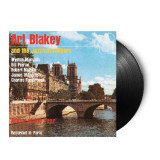
Tommy McCook was not only a founding member of the legendary Jamaican Ska group The Skatalites, but also a brilliant musical arranger. His informed understanding of Jazz, R&B and in fact most music styles would always add another layer to any song put his way. This made him the go to guy for most of the Jamaican producers, who would use his arrangement skills to pepper up their latest tunes.
Tommy McCook, (b1927, Havana, Cuba) came to Jamaica with his mother from Cuba aged 11 and entered renowned Alpha Boys School for underprivileged children, a school that placed great emphasis on musical tuition. At the tender of 14, such was his talent he has left to join Eric Deans Orchestra and took on stints with other bands led by Don Hinchman and Roy Coburn. All the bands played in the Swing and Jazz style of the times. He relocated to the Bahamas in 1954 where he further developed his Jazz technique and upon his return to Jamaica in 1962 began working Coxsone Dodd’s Studio One and became involved in the development of Ska. His knowledge of Jazz, R& B and Jamaican musical forms helped set the tone for the group of musicians he was working with and would name the Skatalites. The group, consisting of Don Drummond (Trombone), Roland Alphonso (Tenor Saxophone), Jackie Mitoo (Piano), Lloyd Brevett (Bass), Lloyd Knibbs (Drums), alongside Tommy himself on Tenor Saxophone. The group would back all the major Ska vocalists pf the day and would also go on to cut a catalogue of instrumental music. The Skatalites split up in 1965 and Tommy McCook moved over to work with Duke Reid’s Treasure Isle Studios where he formed The Supersonics. A set of musicians under his guidance that consisted of Lynn Tait and Ernest Ranglin (Guitar), Neville Hinds and Winston Wright (Organ), Gladstone “Gladdy” Anderson (Piano), Hugh Malcolm and Arkland “Drumbago” Parks (Drums), Clifton “Jackie” Jackson (Bass), and Tommy and Hernon Marquis (Saxophone). The more laid back sounds from 1966-1968 would be given the name Rocksteady of which again McCook was at the forefront. The top producers like Bunny Lee would use the musicianship of Tommy McCook and his arrangement skills to enhance this new sound.
We have compiled a great selection of rhythms that featured McCook blowing over tracks stripped of their vocals and replaced with some fantastic lead lines played by Tommy and some of his fellow horns men.
We hope you agree like we do that they do this in fine style.
It feels like a lifetime ago that the first Rat Cage demo tape was spat into the Hardcore Punk underground. Maybe that’s because for the past 10 years Bry Suddaby has been relentlessly chucking out a slew of pummelling records, arming many Punks worldwide with a soundtrack to survival in the modern age of death and destruction.
Fourteen bloody releases later, the third RAT CAGE LP comes crashing in as the state of global horror reaches a grave pinnacle. In true RAT CAGE fashion, the drums relentlessly hammer away under rollercoaster riffs, while Bry’s viciously cynical bark spills the trials and tribulations of trying to get by in 2026.
For the uninitiated, RAT CAGE pulls influence from 80’s Northern European Punk like MISSBRUKARNA or APPENDIX, contemporary Swedish sweet spot Hardcore like HERÄTYS or FYFAN, ripping USHC ala POISON IDEA or OUT COLD, while naturally adding a classic British injection of GBH or THE VARUKERS.
As always, there’s the constant apprehension that you never quite know what’s around the next bend, and with ‘Not Asking for Much’ Bry has cast the net even further. There’s moments that get as heavy as BASTARD, as melodic as the UK SUBS, and even a title track that gets as rocking as the PINK FAIRIES. All amounting to a distinctive and characterful sound that’s unmistakably RAT CAGE.
With little to be hopeful about as we all suffocate within the authoritarian nightmare, this LP could once again be your beacon of fire. So, light the match and burn alone at maximum volume.
Recorded in Los Angeles over the course of a single day at a studio in the Eagle Rock neighborhood, Dois Desertos was produced by Mario Caldato Jr. and emerged without a predetermined plan or schedule. The project took shape during Portuguese musician João Pimenta Gomes' stay in Los Angeles with his family. During that time, through Rodrigo Amarante, João met Mario and Samantha Caldato, as well as musicians Abe Rounds (drums and percussion) and Gabe Noel (bass and cello). From those encounters, the album began to unfold organically.
Working from simple scores—some containing little more than chord progressions—the sessions left plenty of room for improvisation. Every performance was captured live, in a single take, with no overdubs. The mixing process, also carried out live by Mario Caldato Jr., followed the same philosophy: effects and level adjustments were performed in real time and printed directly to the final two-track master.
At the heart of the album's sound is the Cristal Baschet, a rare instrument played by rubbing glass rods with the hands, causing metal resonators to vibrate and produce an ethereal, resonant tone. João describes its sound as "a trace, almost like a shadow." Rather than taking the lead, the instrument serves as a textural foundation, while the bass and cello carry the melodic lines. Some of these melodies are original compositions, while others draw from traditional Portuguese fado, reimagined through an open and exploratory approach.
The album has a dreamlike atmosphere, reflecting the perspective of someone experiencing Los Angeles from the outside—not in a rush to belong, but fully receptive to the city's unique energy. Two films helped shape this imaginary landscape: Model Shop (Jacques Demy, 1969), in which the French filmmaker uses Los Angeles as a pretext to simply observe and inhabit the city, and Thom Andersen's Los Angeles Plays Itself. The result is Dois Desertos, an album that, in João's own words, "could never have been made anywhere else."
With Dois Desertos, João Pimenta Gomes invites listeners into a deeply immersive experience, revealing a more exploratory side of his artistic practice while reinforcing Amor in Sound's commitment to releasing original works that engage with the many languages of contemporary music.
Geoff Farina’s Southern Records tenure was not just about Karate. His late-90s guitar-and-vocal solo output included
the bedroom-recorded Usonian Dream Sequence that echoed The Secret Stars’ intimate lo-fi sentiments, Reverse Eclipse that rode the more delicate fringes of Unsolved-era Karate, and the single Steely Dan, a paean to a contemporaneous guilty pleasure. FFF collects all three long-out- of-print releases here on vinyl for the first time, fastidiously packaged and punctu- ated with Farina’s written reflections on their making.
Geoff Farina’s Southern Records tenure was not just about Karate. His late-90s guitar-and-vocal solo output included
the bedroom-recorded Usonian Dream Sequence that echoed The Secret Stars’ intimate lo-fi sentiments, Reverse Eclipse that rode the more delicate fringes of Unsolved-era Karate, and the single Steely Dan, a paean to a contemporaneous guilty pleasure. FFF collects all three long-out- of-print releases here on vinyl for the first time, fastidiously packaged and punctu- ated with Farina’s written reflections on their making.
Wewantsounds is delighted to announce the first-ever international release of the legendary collaboration between Abdullah Ibrahim (Dollar Brand) and Don Cherry, featuring Carlos Ward. Recorded live in 1972 at Jazzhus Montmartre in Copenhagen, this highly sought-after album was originally released exclusively in Japan in 1974 on the cult jazz label Trio Records via its revered Nadja imprint. An essential chapter in the musicians" discographies, the performance masterfully blends jazz with rich South African rhythms and global influences. This long-awaited edition features fully remastered audio, the original Japanese artwork, and a 4-page booklet with new bilingual liner notes (English/French) by Jacques Denis.
British composer Simon Goff interprets space, both within ourselves and the objects that surround us with Interior Realms - vol.1; a wondrous, contemplative work of electronic chamber music.
The idea first came from the philosophical idea underpinning the book Interior Realms, published by Theatrum Mundi in 2021. In it, a collection of essays reflects upon architecture’s influence on the human spirit. It challenges us to think not only about music as space, but also about how architecture can shape our ideas of composition. It also asks us to think about how space can make us experience music internally differently.
Interior Realms, the album, inhabits this idea and creates a dreamlike, atmospheric arch between its outer and inner parts. Joyous, immense and light-filled compositions sits side by side with the almost pure silence and introspect of its inner core. Goff wanted to create parallel compositional voices, performing them in various locations, each offering its own sonic character, unique spatial sounds, and reverb. Together with his long-time collaborator, Lynn Wright, the album was recorded in the Großer Wasserspeicher, Berlin's oldest water tower, and at the Grunewaldkirche, a location known amongst others from being the birthplace of many great works by artists such as Nils Frahm, Dustin O´Halloran and more. Cellist Anne Müller appears alongside Goff’s violin and viola on several pieces as they improvised and interacted with each other in the resonance of the space.
In addition to his own endeavors, Simon composes primarily for film and has collaborated with Hildur Guðnadóttir, Jóhann Jóhannsson and Peter Broderick among others. His collaborators has left an inspiring mark on him, all while standing firmly on his own feet with grand intention and results as heard on this absolutely brilliant atmospheric work.
If you’re as obsessed with unfairly unheralded bands as we are, bringing out a proper, well-deserved official re-release to change that course is always an honor. Case in point, Jackpot Records proudly announce GANDALF’s 1969 self-titled release as one of our proudest moments. Working alongside band member Peter Sando from the original master tapes, it is time for the rest of the uninitiated to catch up with this beautifully crafted haunting psych-pop record (fans of THE LEFT BANKE, KALEIDOSCOPE, THE MILLENNIUM, and THE ZOMBIES, take note!). Recorded at Century Sound in Manhattan with Grammy-winning producer Brooks Arthur (who engineered Neil Diamond’s “Sweet Caroline” and Van Morrison’s “Brown Eyed Girl”), the production of the album was created on the spot in the studio with arrangements being thrown about and the incredibly haunted vocals being recorded directly from the band’s PA using a Binson Echorec to make this innovative sound (Pink Floyd later used the same echo unit to great effect). Add to that sitars, vibes, B3 organs, harpsichord, minor tragic guitar chords, and bass drones aplenty, and you’ve got the recipe for an album that bears listening to with eyes closed, music cranked, mind open. So get in on the beauty of this record, and as Sando says on the liner notes: “Put the needle in the groove, sit back, and take the trip with GANDALF.” Enough said.
Inspiration Information Is Presented In An Opaque Metalic Silver Pressing. Well before Shuggie Otis cut his debut album, musicianship and performance had long been a part of his life. The son of rhythm and blues legend Johnny Otis, Shuggie learned to play guitar as early as the age of two, and performed professionally with his father's band at eleven. Throughout his long and illustrious career he performed on records for the likes of Frank Zappa, Al Kooper, Etta James, and George Duke, to name a few. Despite only moderate success upon its initial release, Shuggie Otis' third album Inspiration Information turned into underground smash decades later and has since maintained a level of cult status normally reserved for mysterious, unearthed legends like Sixto Rodriguez or Lee Fields. Inspiration Information is also noteworthy among Shuggie's other releases, as it was entirely self-produced, as opposed to being overseen by his father Johnny Otis. Shuggie's signature blend of baroque funk is on full display, but with a heavy dosage of psychedelic soul blended in, resulting in an album that's equally swarthy, lush, funky, and emotional; gathering all the best bits of Marvin Gaye, Love, Miles Davis, and even Os Mutantes. Inspiration Information is more than worthy of all acclaim awarded to it, despite the delayed reverence. Track Listing: A1. Inspiration / Information A2. Island Letter A3. Sparkle City A4. Aht Uh Mi Hed B1. Happy House B2. Rainy Day B3. XL-30 B4. Pling! B5. Not Available
out of Stock
Last delivered 33 days ago available to reorder, subject to availability
Of course everyone knows Kurt Hauenstein aka Supermax. He was one of the few Austrians to shape the sound of late 1970s disco, performing and selling records around the world. Not many know his daughters Judy and Nicola, however, and the fact that they in 1987 wrote a song that they recorded together with their father. Well, here it is: Cracy Coconuts, “Rubberdub Dance” a true Hauenstein family affair. We are proud to re release this super rare 7” that proves, once and for all, that Austrians can excel at digi dub. Timelessly tropical and beautifully bouncy, its vibe is quite different from the iconic Supermax productions. Here, Judy and Nicola’s sweet yet confident vocals replace the moustache driven sotto voce singing that we love Supermax for. The result is oh so catchy and bound to be a hit.
Norwegian rock powerhouse Slomosa will release a special live album, Live in Bergen, capturing the band's sold-out hometown show in December 2024 at Verftet. Pressed as a limited-edition double LP in a gatefold sleeve, Live in Bergen showcases Slomosa at full force in front of a hometown crowd - raw, loud, and uncompromising. The album was mixed and mastered by Eirik Marinius Sandvik, preserving the intensity and atmosphere of the band's legendary live performances.
out of Stock
Last delivered 34 days ago available to reorder, subject to availability
Dj Ultramars hasn't released many tracks altogether, and since 2024 he is again too busy to release everybody else's music on his label to find the time to compose more music, but many of his previous tracks are still relevant today, still pleasing party audiences in as much as when first released, and it's been too many years that those tunes have been proposed new on vinyl, so time for a recut & repress.
Here we have:
A1: Cab Carlco, the biggest hit of Dj Utramars, originally released on Mars Picture 1 (1999) as well as Toolbox Killerz 25 (2015), so 11 years since its last (limited) release !
Very uplifiting / very "in your face" kind of track, always & eversince so efficient on the dancefloor.
A2: Ennui (voicemix), originally released on Mars Picture 2 (2003), 23 years ago! (what a round number...). A track that will hypnotize you with its female vocals playing with the echo, yet runnin steady on a heavy deep bass & enough arrangements to not get bored of it: every Mars Assault is designed as a record to DJ as much as a record to listen to.
This track is cut in 45rpm to keep optimal quality until the end of the side.
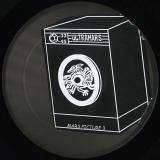
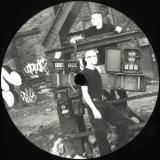
We had to put some of the best two tracks of Dj Ultramars on the music side since the flip side is a laser etched side ! After we had released the two first picture discs, our current pressing partner was giving the possibility for a laser etched record, so here is the Mars Picture 3 ! See the picture of B-side above.
200 copies limited in this laser etched pressing.
Cut with Hervé @ dK mastering
out of Stock
Last delivered 36 days ago available to reorder, subject to availability
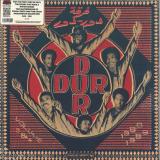
Analog Africa follows up its Dur-Dur Band Volume 1 & 2 reissue with the next two volumes and they again capture the Mogadishu group at their creative peak. Formed by drummer Adan Handal and Isse Dahir Qassim after their military band days, Dur-Dur became a house band at the legendary Jubba Hotel where they fused Somali melodies with funk, disco, reggae and soul into colourful new fusions. This music was recorded amid personal tragedy, including Qassim's death and key members' departures, and pushed further into electronic percussion. It's a unique window into Mogadishu's golden era, presented as ever in excellent style with photos and liner notes.
out of Stock
Last delivered 36 days ago available to reorder, subject to availability
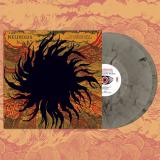
The second volume of this (already) cult series of British proto-metal compilation albums. Every artist on here was a regional band in their local underground scene of the late 1960s/early 1970s. The main thing that differentiates this series to any other, is the fact that none of the artists included had any kind of commercial release during their existence (apart from Fusion Farm, who self-released an extremely rare private press LP titled 'Rush Job' in 1971). All the artists were discovered after extremely lengthy searches of old music magazines, local newspapers, concert posters, government agencies.... By any means possible! It was a lot of work, but the results speak for themselves. The one thing that joins all these bands together (apart from being exclusively British), was their desire to play as loud and heavy as possible. This was a magical era in rock music, where Black Sabbath were the undisputed kings, but the industry simply didn't want to recognise the countless other band that existed in their gloomy wake. All of the recordings on Yeah Man, It's Bloody Heavy! are taken from demos, whether originating from crusty old 1/4 inch tapes, dusty acetate discs or third generation cassette tapes. Basically, whatever format was available. As a result, sound quality varies, though we did our utmost to get these precious artefacts sounding as killer as possible. For instance, Bonehead were close friends of Led Zeppelin. Their guitarist/vocalist Paul Lockey had previously played with Robert Plant and John Bonham in the Band Of Joy. Their track, 'Free To Escape', was actually an audition tape for Atlantic Records, which had been instigated by Robert himself. Unfortunately, the band broke up not long after the recording. So, their recording is top notch, whereas others were taken from rehearsal tapes (such as Fusion Farms' - Keys To Hell). But the main thing is, there's a spirit that unites them all. Sit back, roll up a fat one and let your mind be blown by the obnoxious sounds and sheer weight of vintage gravity that is: 'Yeah Man, It's Bloody Heavy! Vol 2'.
The Go’s Free Electricity, the group’s storied, long-lost album, finally gets a proper release! The Go appeared in Detroit in 1996, led by Bobby Harlow and featuring Dave Buick on bass and Jack White on guitar. Following the release of their 1999 debut, Whatcha Doin’, and a few lineup changes, the band hit the studio with Dion Fischer on lead guitar, John Olson (of Wolf Eyes) on saxophone, and Cary Loren (of Destroy All Monsters) to record their sophomore effort. The session found the band and their producer, Matthew Smith (Outrageous Cherry), exploring the outer edges of rock and roll, with blaring lead guitars, copious amounts of reverb, and a heavy jazz influence thanks to a heavy diet of ‘60s free jazz. The results erupt from the speakers with a cavernous sound, like some haunted frequency beamed across the time barrier from the Grande Ballroom circa 1968, often sounding more like records by Pharoah Sanders and Sun Ra than the records being made by The Go’s peers in the ‘00s rock and roll scene.
Free Electricity was written, composed, and arranged by Bobby Harlow (except track one, which was written by Harlow and Dion Fischer; and track five, written by Harlow and Cary Loren). Free Electricity was mixed and produced by Matthew Smith, engineered by Jim Diamond at Ghetto Recorders, and mastered by Jim Kissling at Jim Kissling Mastering in Detroit, Michigan. Guest appearances by folks from Destroy All Monsters and Wolf Eyes only reinforced the album's musical direction. Weird or not, this was an inspired recording made by an inspired group of musicians. There was a feeling of excitement and adventure happening at these sessions, it shines through mightily on this album.
"There are two versions of this album," says Hollow Hand's Max Kinghorn-Mills. "But there's only one that exists." Kinghorn-Mills is reflecting on a period when he was at something of a crossroads. He had written songs for his forthcoming fourth album but, after coming back off tour, something needed to change. “When I listened back to where I’d left the album, it wasn't exciting enough for me,” he says. “I was like: that's not really what I want to do anymore.” Since releasing 2023’s Your Own Adventure – which drew acclaim from the likes of Mojo, Uncut, and Shindig! – he found himself touring and collaborating with a variety of other artists. Hollow Hand became the house band for Caitlin Rose on tour, while Kinghorn-Mills was also collaborating with Aoife Nessa Frances and playing in her touring band. There was countless exposure to incredible Irish bands along the way, and then came a sold-out European tour with Hollow Hand supporting MJ Lenderman.
“The first three are innocent in a way, because we didn’t have an audience when we were making them,” Oberst says. “But from Lifted on, I was definitely aware of an audience. Lifted was well-received right away, and then everything happened with Wide Awake and Digital Ash.” Those two albums came out simultaneously. And their lead singles – “Take It Easy (Love Nothing),” from the austere, remote Digital Ash, and “Lua,” from the warm, folky Wide Awake – debuted in the top two slots on the Billboard Hot 100. “First Day of My Life,” also from Wide Awake, would later be voted the Number One love song of all time by NPR Music’s reader’s poll. Bright Eyes had officially broken through. It was a heady, exciting time, but also fraught and tense, both because of the band’s careening new fame, and because of the state of the world. When Bright Eyes made their Tonight Show debut in 2006, they chose to perform none of their shiny new hits, instead delivering a searing, harrowing rendition of their caustic anti-Bush anthem, “When The President Talks To God.” These days, Oberst is still amusing himself by messing with the extremes Bright Eyes baked into this era’s releases, extremes that reflected the polar, with-us-or-against-us, fractious feel of the times. The reworked Digital Ash tracks, originally so clean and elegant, are, on the companion EP, full of “harmonica and mandolins – folky vibes,” Oberst says. While the analogue sweetness of the Wide Awake songs have been put through a detached nihilism filter.
This is a concept record that reflects on events that have had a calculable effect on a generation:
‘’By 83 and 84, it felt that nuclear war was going to happen. Not could happen but was going to.’’
Stephen Brotherstone
"What would you do in the event of a Nuclear war?"
I remember having discussions about what we would do when we heard the four minute warning siren. We would raid the sweet shop. I was 8 or 9 years old. The absurdity of this vivid memory encapsulates the concept of the record. It would take at least four minutes to get to the shop!
The record starts with an early memory of circling a church on a Raleigh Budgie (the smaller lesser known iconic Chopper bicycle) in 1981 and ends with staring up at a clear sky on Oldham Lows in 1990.
The record identifies and plays with the effects of an underlying fear of oblivion on a generation of children, but also society as a whole: The pieces take in media and government propaganda. Machinery (nuclear submarines) and buildings (nuclear bunkers) but also everyday activities of the civilian population, activities such as shopping, clubbing and staring at the sky. Thematically, the record is made up of personal memories mixed with historical events.
Instruments are mainly from 1980s. DX7 and 808 feature predominantly. The pieces feature numerous melodic motifs that develop and intertwine underlying ideas of espionage and layers of secret messaging. It also mirrors the ways in which governments and civilians interact. Decisions being made in the name of defence whilst people go about their daily lives. I am exploring the everyday experiences of the masses whilst major political decisions are taking place. For example, shopping on a Saturday afternoon versus heated Cold War tensions in 1983.
Although taking place conceptually in the years 1979-1991, this record mirrors current events. History repeating. It also mirrors the helplessness or maybe some oblivious everyday normality state that we adopt as a community whilst major political decisions are being made.
The idea that life goes on oblivious to larger scale politics, or on the other hand, the idea that we are all very aware but in a state of unreal normality. Adam Curtis goes into great detail about such things in his film 'Hyper Normalisation'.
Kitsune No Yomeiri, which translates to the fox’s wedding, is an endearing expression used to describe sunshowers. Dawson returned home from a recent tour of Japan with a collection of field recordings documenting the spring rain he encountered throughout his travels. These curious sounds, stretching from peaceful shrines to clattering city streets, underpin the material.
Dawson also credits the wonderful folks he met on that tour with profoundly shaping the direction of the album. After each show he found himself immersed in inspiring conversations about the guitar. Through navigating the language barrier, he discovered he was communicating with an immense sincerity that he would ordinarily avoid at all costs. “I’ve always just made records at home in a vortex, but this time it felt like those conversations were there with me in the studio.”
Musically the album has a slight western slant. It’s not country, but it does see Dawson lean softly into his prairie past. Constellations of stray notes and rusted tones form nostalgic melodies, like chance encounters between old friends. Dawson allows phrases and gestures to repeat across the record, resulting in a collection that’s more akin to turning the pages of a novel than a series of vignettes vying for attention.
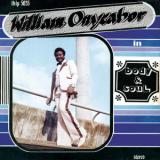
William Onyeabor was born outside Enugu, a small, rural town in Eastern Nigeria, he created his own genre of African electronic funk in the late 70s and early 80s, making music completely unique for his time. Today, he is reaching cult status among a growing list of admirers, including everyone from Damon Albarn and Hot Chip to Carl Craig and Madlib, with some likening him to the Kraftwerk of West Africa, or a precursor to LCD Soundsystem.
Among the crate-digging few that knew of him, he is considered a complete myth. While he has never performed live and almost never given interviews, his fantastical biography is scattered and has to this day not been verified. And he refused to speak about anything regarding the past.
According to various rumors, he left home following the Biafran War and went to study cinematography in the Soviet Union, returning in the mid-70s to start his own film company and record label, Wilfilms. He then self-released eight remarkable records from 1978-1985. He wrote and produced everything on his own, and possibly played every instrument himself. Then, at some point of his life, he became born again and denounced his earlier music, deciding it is something he would never speak about.
Doomcrusher fuse stomping industrial riffs, uncompromising gutturals and uplifting hooks - modern core with electronic depth and metal roots.
In the crucible of the apocalypticatmosphere that envelops our world, Doomerusher was forged. Born out of the deepest desire to be the harbinger of change, the band emerged with a resolute mission: to defy the impending doom that looms on the horizon. Founded by Andy Posdziech (Any Given Day), Jean Bormann (Rage), Marv Kinkel & Rob Lee, Doomcrusher's sound is a powerful fusion of stomping and heavy mid-tempo industrial riffs, seamlessly intertwined with uncompromising gutturals that resolve into unfolding and uplifting hooks. The band's sound is further enriched by sophisticated electronic elements, adding depth and complexity to their musical tapestry. The ambition is clear - to redefine modern core music while staying true to the roots of the metal genre. Their music is not merely an auditory experience; it's a journey through the realms of sound, a deliberate exploration of the boundaries of heavy music. Doomcrusher stands as a defiant force against the inevitable, a rebellion that crushes the darkness of doom with an unwavering belief in the transformative power of music. DOOMCRUSHER BIO SHORT: Forged in the apocalyptic atmosphere, Doomcrusher blends stomping industrial riffs with guttural vocals and uplifting hooks. Their music, a deliberate exploration of heavy soundscapes enriched by electronic elements, redefines modern core while honoring metal roots- a defiant force against impending doom
While the sterile “professionalism” of some heavy bands can be like a clinical drone strike, Texas-based Judiciary feels personal. Like close combat with a knife. And it’s all in their chemistry. Judiciary is an amalgamation of four guys raised in the intersection of metal and hardcore—all devoted to pushing their craft further. Across two esteemed LPs, the band has proven their worth as a crucial entity in the crowded heavy music scene by evolving their sound further and further with each release. And now with the band’s latest Stalagmite Angels, due on September 4th via the venerable Closed Casket Activities, Judiciary can further showcase their status as a crucial, one-of-a-kind part of the evolution of hardcore in 2026. Life changes can bring about chaos and seismic shifts, but if Stalagmite Angels is any indication, then it’s all for the better. In the wake of the release of Judiciary’s second LP Flesh + Blood, the band called upon Juan Vazquez to pick up guitar duties, thereby changing the internal framework of the band for good, and unknowingly for the better. It’s this pivot in personnel that resulted in the band’s latest EP. “The goal with this EP was a hard reset, but we also wanted to chill the f— out a bit, have fun, and do something that felt true to the four of us,” recalls drummer Austin Looney. “We wanted time to reconfigure things and let the music come naturally–temper this new mindset that we've adopted post-Flesh + Blood.” Judiciary’s greatest strength lies in their musical singularity. Though Stalagmite Angels represents the collision of influences from across well-worn territories like metallic hardcore, death metal, black metal, d-beat and more, it’s the Lubbock-born band’s approach that makes it distinctly their own. Stalagmite Angels is a wholly new document that resembles a horde of bands ranging from Hatebreed to Carcass to Slayer to Iron Age, yet never aping any single band nor even revealing any single influence. It’s all familiar but none of it is specific. “90s hardcore and hardcore in general is always gonna be our natural inclination, but it manifests with different elements not only from song to song but within each song,” says vocalist Jake Collinson emphatically, who learned guitar specifically to help with writing new material. “Whether that’s Dying Breed or Cannibal Corpse or Crowbar or Machine Head or any number of other influences that any one of us may have, it all manifests in our work, and through our individual and collective lenses. With this EP, we transformed those ideas into the Judiciary approach.” Stalagmite Angels is an EP about anger at the world, belief in yourself, and how harnessing both in the pursuit of growth is necessary to achieve. But furthermore, it’s a concept record that envisions a subterranean world in both a literal and metaphorical sense—where hidden beauty lurks in the shadows (and in the eye of the beholder) and where triumph manifests in the ability to rise from the depths and into the world above.
"The electroclash genre sure has been having a bit of a renaissance moment. During its first coming an odd 25 years ago the French act Sweetlight was a favorite over here. Originally active between 2002 and 2010, they quickly positioned themselves within a refined strand of the global underground scene: inspired by 90s acid house club culture, they rose to prominence by releasing a sparse selection of original tracks and a multitude of remixes that were both dancefloor-effective and immediately recognizable. After the EPs stopped coming, the project seemed to have faded. But their tracks never left our bag: they combined minimalism with ambiguous elegance and retained a distinct, timeless quality, easily transcending the turn-of-the-century style they were most closely associated with. We are delighted, in what we consider nothing less than a full-circle moment, to release "Selected Recordings: 2004 - 2006" and shed light on an underrated yet, in our eyes, absolutely essential project. ALT022 is an anthology release featuring four extensive, remastered cuts. Abusator, arguably the act's hallmark track and a crossover hit, kicks off the EP. It is joined by Mecaniques Remontees, which opened the milestone Suck My Deck mix by Ivan Smagghe, and Too Shy, both initially part of the same EP back in 2004. Noir Comme Le Beat, an unreleased curiosity from the same era, closes the record. You will find dark, endless, ever-modulating arpeggiator basses, Detroit-via-Paris chord progressions, and spartan drums. The work is, in the artists' own words, low-profile, detail-oriented, and built for late hours. It's an ideal compilation or - depending on the case - introduction, especially now that new work is rumored to be finally on its way."
out of Stock
Last delivered 39 days ago available to reorder, subject to availability
When Leon Michels and El Michels Affair released their rst record, Sounding Out The City, in 2005, it was hard to guess what was next for Michels and his then-introduced, now-patented "cinematic soul" sound. Now, four EMA studio albums and scores of tribute and remix projects later - all while producing for some of the biggest names in the industry - Michels has trademarked his sound, with each project taking audiences somewhere new and pushing the boundaries of what he is known for. The man is a river, not a lake and this time he takes his golden touch into the realm of hip-hop laying down a musical bed for one of the greatest to ever rhyme into a microphone: Black Thought of The Roots crew. Releasing on Big Crown Records, the LP is called Glorious Game and it is a remarkable debut partnership in more ways than one. Michels provides his bottom-heavy, soul-tinged production for Black Thought who gives us some of the more personal and transparent verses we've ever heard from him. Michels and Black Thought have been in each other's orbit for a while now. The two first met in the 2000s when Thought was first getting familiar with the contemporary soul scene. "Out of that whole world, Menahan Street Band was probably my favorite," recalling the funk and soul group Michels was a founding member of back in 2007. Fast forward a few years and musicians from that collective - Dave Guy on trumpet and Ian Hendrickson-Smith on sax - are now full time players with The Roots. This connection eventually led Leon and Thought to doing a few fundraising events around NYC and Philly together. "Before long, Black Thought was coming around the studio and would jam with us from time to time," Michels explains. "Then, fast forward to 2020 and COVID lockdowns, he just hit me up out of the blue, wanting me to send him stuff to write to. We both were looking to stay busy" Being that Black Thought is the co-founder and emcee for, hands down, the best live-band group in hip-hop. Michels took a decidedly different approach to this project and instead of sending recorded tracks of live compositions, he pulled out the sampler and sampled himself and some records from his collection. "I'm a big fan of soul music," as if Michels has to remind us. "And part of hip-hop's appeal to me has always been the sample-based production" For Glorious Game, Michels would make wholly composed and recorded soul songs in his studio, sample himself, then chop and/or loop up his sounds and create instrumentals for Black Thought. On some tracks he took a more traditional hip-hop approach, starting from samples of other people's music but then adding live instrumentation on top. But for the most part, it's him reinterpreting his own compositions into something new. The result is an organic feel of loop-based tracks that breathe and uctuate enough for Black Thought to ex on. "What I write about is determined by the equation of the producer's energy and my energy," Black Thought says. "It's about where we meet." So armed with Michels sampled and re-sampled soul cinematics, Black Thought rhymes through personal memories.
out of Stock
Last delivered 41 days ago available to reorder, subject to availability
“Ruins are the style of our future cities, future cities are themselves ruins.” - Izosaki Arata
A note from Lawrence English: Nostalgia is not an ideology, though in this moment, we could be mistaken for thinking it might be just that. Over the past years, the idea of nostalgia has been filtered through various political and technological lenses and has become a tool used for forgetting, rather than remembering. Instead of embracing histories’ complexities and inconsistencies, this version of nostalgia seeks only singular recollection. This contemporary phenomenon of nostalgia has become a methodology at best, and a weapon at worst, used to erode the past and project forward a collapsed and unimaginably sanitised version of things, places, and ways of being from former times. It’s this projection that sees it playing a mounting role in a social pathology associated with reducing the imagined possibilities of future.
The Rest Is My Ghost is a record that interrogates the manifestations of this reductive futuring and celebrates those that have tried (and failed), and those who continue to push back against decayed and revisionist positions. It’s a record that considers the weaponisation of nostalgia for the purposes of cloaking possible futures.
In recent times, I’ve proposed a term for this weaponised use of nostalgia, something I have called Acid Nostalgia. I offer it as a shorthand to describe the de-contouring of the future through a corrosive fixation on a flatten rendering of the preceding times. It is, in part, a certain type of lazy cultural scripting where tropes of the past are presented in the absolute, as empty pictorials; photocopies without any original from which to draw actual meaning, or useful detail.
Acid Nostalgia describes an increasingly common political projection of nostalgia that exists without any subjective connection to the memory surrounding and contained within it. Like acid poured onto a surface, this use of nostalgia seeks to erodes and smooth out the complexity and texture of lived connection and longing, which has until recently guided contemplations of nostalgia. Acid Nostalgia instead erases the texture of histories and de-contours the past, and in doing so dematerialises the horizon of possibility, which by its very nature marks the beginning point for any (and all) imaginable futures. Acid Nostalgia is a dreamless screen, where uncertainty, restlessness and aspiration are subjected to corrosion, breaking down and neutralising the wellspring of futures which are birthed from within the ambiguously charged, complex and at times chaotic atmospheres of the present.
The Rest Is My Ghost is not however some universal reading of these things and happenings. Rather it draws its breath from a very personal pathway carved through my own fraught experiences of nostalgia and framed through a disparate collage of chance encounters, situations, places and provocations. It takes oblique notes from civic and architectural references such as Japan’s Metabolist movement, Hong Kong’s ‘one line sky’ and Los Angeles’s vanished Sodium Vapour lights. It interpolates texts – factual and fictional – by authors such as Franco Berardi, Kate Crawford, JG Ballard, Katsuhiro Otomo, Mark Fisher and Alexei Yurchak who have each so wonderfully sought to rupture the familiarity of now, and push us towards other ways of imaging ourselves, our surroundings and our very ways of being in this world.
I also owe a debt of thanks to Adam Curtis in helping launch what has become this edition. It was his provocation, in a conversation we shared about an overwhelming and profound sense of uncertainty around being able to predict the immediate future and how to respond to that, which sparked the earliest inklings of this edition.
The Rest Is My Ghost is ultimately a record about the promise of constructions and connections to come, material, social and political. It's a record that accepts the fragility of failure as a source of ultimate potential, and a position from which the deepest freedom of imagination might be sought and summoned forth to conjure even the most unimaginable, (but) possible futures.
out of Stock
Last delivered 41 days ago available to reorder, subject to availability
Others take years to reveal why they belong together.
PLNK008 is the first solo release by Natural Goofy on Planka Records. Following a series of appearances across various labels and collaborations, this record offers a deeper look into the sound he has been quietly shaping over the years.
A collection of recordings gathered over time, connected less by genre than by a shared sense of mood and movement.
Rather than chasing functionality, the record follows instinct. Loops are allowed to breathe. Details appear slowly. Tension builds almost unnoticed. Elements drift in and out of focus. The intention was never to arrive somewhere quickly, but to stay inside a feeling for as long as it remains interesting.
The release also includes a special reinterpretation of one of the EP's tracks by dear friend and talented Italian producer Shkedul.
The original version of the track will be available exclusively as a digital bonus on Planka's Bandcamp.
These tracks were not designed to demand attention. They reward it.
Manonmars’ 3rd album sees him at his most amorphous and psychedelic, at points sharper and laser focused, and at others more blurred and impressionistic than his previous records. Many of the core players remain the same, all of the production is once again handled by O$VMV$M (the duo of Neek and Amos Childs of Jabu) while Paulina Korobkiewicz (also of Young Echo) makes a return handling both the album’s cover artwork and contributing a series of diaristic field recordings and voice notes.
‘The project references movies, cartoons, fictional characters and video games, among other things. The album title is open to interpretation but all of these elements are forms of visual entertainment which have their own unique ability to transcend things like language barriers and cultural divides. The visual element is key because those details bridge the gap on a communicative level.’ - Manonmars
The album blends abstract, blurred braggadocio with more immediate personal details such as on ‘Volcanic Shield’ a posse cut of sorts featuring Bristol improv luminary Dali de Saint Paul and Franco Franco (½ of cyborg rap duo Kinlaw & Franco Franco) - where Mars recalls;
‘Memories of brighter days, happy meal hit the spot
Mum was spinning vinyl playing Super Ape or Pressure Drop
I would spend the weekend with the Turkish mandem on the block
single parent household, mum was studying or on the job
money came and went always was an on and off
made it back from school time to see what’s on the box’
The beat fades away to leave one of Korobkiewicz’s recordings of Mars’ mum talking about her life in London in the 80s, spending her money on reggae records as an ambient chord fades in like an echo of a jungle intro – stretching out as a link between generations of UK music.
The production by and large is brighter and more kinetic than earlier Manonmars records – with O$VMV$M drawing on everything from modern underground rap and drill through to jazz and acid ambient passages.
London is also a central character here, bustling and constantly shifting, either when bleeding in through field recordings, or as an ever-present backdrop in the lyrics;
‘I’m a fusion of Tippa Irie and Topper Harley
Hit the target like the black Atari
I dropped a tab now shit’s A Scanner Darkly
Got the munchies, Imma yam a sarnie
Pour the Wray and Ting like man at Carni
Exit Peckham Rye and turn left, walk past Hannah Barry
Get your (w)raps up like its January’
‘I've always considered London my home, despite spending some time in the South West of England too. My mum had been living in London for 25 years (...) That was a pretty big deal in some ways because it removed us from multicultural society during the period which overlapped with my teenage years. (...) I never got used to how quiet it was in the countryside (...) Bristol was the closest city to where we lived and it was through travelling there and making connections that I became involved in making music and playing gigs.’ - Manonmars
Mars’ practice as a painter (under his given name Jack Martyn Richardson) and photographer also loom heavy over the album, he cites Paul Verhoeven, Abdul Mati Klariwein and H.R Giger as influences – as well as Miles Davis, Drakeo the Ruler and DJ Rashad.
As with much of Richardson’s work the raps at times feel blurred to a point of almost inscrutability, creating a distance between the audience and himself. A process that ties into his visual work and the way he experiences the world as mainly abstract colour without his glasses. He explores this further in an ongoing visual collaboration with Korobkiewicz, ‘Fun and Games’ which serves as a visual archive of one of London's largest and oldest travelling fairgrounds.
‘I was diagnosed with very severe short-sightedness at the age of seven. I remember my early formative years as visually blurred. Some of my photography reflects this experience of partial vision and uncertainty, referencing memory and perception rather than fixed representation.’
Manonmars’ first public outing as a rapper was at a Young Echo radio event, broadcast shambolically from a practice room just off Jamaica street, Bristol in 2011, as much as things have moved on both stylistically and in terms of focus - strong links back to the city remain a key foundation throughout the collaborations and guest appearances.
‘I have no problem with being an outsider looking in. One of the things I enjoy about London is the anonymity (...) it's easy to be a stranger here when so much is happening. I feel like thats more valuable than people may realise.’
Dark Entries helps Suzanne Ciani come out of the closet as Steve! Legendary composer, sound designer, and Buchla maestra Suzanne Ciani has a staggering list of accolades and accomplishments, from scoring Hollywood films to releasing influential new age records to literally designing the Coca-Cola bottle-opening sound. In the late 70s/early 80s, Ciani, while living in New York, acquired an Eventide H 949 harmonizer, which offered high fidelity pitch-shifting. In her words, “When I adjusted the pitch of my voice to 0.80, my natural voice became re-invented as what was clearly a gay man, who I called Steve. I became Steve; and Steve expressed himself as only he could.” Ciani adopted the male persona and collaborated with Peter Baumann of Tangerine Dream on “Steve Goes to a Party.” The track features Ciani-as-Steve adlibbing in decadent and delirious fashion alongside Baumann’s robotically funky beats. Steve would emerge again a few years later at George Louvis’s Stardust Studios in New Jersey, to create “Steve Saves the World,” an absurdist and ecstatic proto-house groover complete with a gospel-esque chorus from the Stardust All-Stars. This EP is rounded out by a birthday wish to Ciani’s then-boyfriend Alfred on “Steve Happy Birthday Wishes” featuring Suzanne. Steve’s Out of the Closet perfectly captures the delirious techno-poptimism of the 1980s downtown avant-garde, with parallels in Robert Ashley’s Perfect Lives or Lynn Goldsmith’s project Will Powers, responsible for the track “Adventures in Success.” The Steve sleeve was designed by Eloise Shir-Juen Leigh, and the record also includes a birthday card with liner notes from Ciani.
BUCHLA MEETS ORCHESTRA IN QUADRAPHONIC SPACE ON CIANI/ORKEST
Suzanne Ciani, Metropole Orkest and Simon Dobson release historic immersive performance in multiple immersive formats including quad vinyl.
Silverlake, CA \\ June 4, 2026 – Electronic music pioneer and five-time Grammy nominee Suzanne Ciani joins the internationally acclaimed Metropole Orkest, conducted by Simon Dobson, for the release of CIANI/ORKEST, a landmark live album composed entirely of new work, created specifically for this unprecedented collaboration.
Recorded at Amsterdam Dance Event (ADE) before a rapt audience, CIANI/ORKEST is not a retrospective. It is a bold, immersive meeting of the Buchla electronic instrument and 50-piece orchestral sound. The result is a sweeping sonic landscape, at once intimate and monumental.
Under the direction of the Metropole Orkest, renowned for its genre-defying collaborations with artists from jazz to contemporary classical - strings shimmer, brass swells and woodwinds echo the organic, fluid qualities that have always defined Ciani’s sound. “This project feels like a homecoming,” says Ciani. “The Buchla was always orchestral to me, an instrument capable of infinite color. Hearing those colors unfold through the Metropole Orkest has been profoundly moving.”
At the heart of CIANI/ORKEST lies Ciani’s lifelong commitment to quadraphonic sound. From her early Buchla performances in the late 1960s to her 2018 release LIVE Quadraphonic, Ciani has treated space as a primary compositional parameter. Working alongside immersive producer KamranV, Ciani continues to explore immersive sound as both artistic and human gesture. Kamran’s decades of work in spatial formats, converge here in service of a singular goal: to let sound behave as it does in the physical world. “For both of us, quad is musical,” Kamran notes. “The way Suzanne works, quadraphonic is nested in — not the technology per se — but the intent you bring to the work.”
The recording stands as a meditation on legacy, evolution, and the enduring dialogue between technology and human expression. The live album captures the electricity of performance, the immediacy of touch plates under Ciani’s hands, the collective of musicians responding in real time, and the audience’s shared immersion in quadraphonic-inspired space.
CIANI/ORKEST is released by Atmospheric/AKP Recordings/CyKiK in multiple double-disc quadraphonic 12” Record packages designed by grammy-nominated designer Rebeka Arce. Each pressing is made regionally to minimize carbon emissions and also contributes to nature via Brian Eno's EarthPercent, the music industry's climate and nature foundation.
The release is encoded using the dublab Quadraphonic Universally Accessible Resource Kit (QUARK). QUARK enables binaural listening via standard 2-channel playback or 4-speaker playback via Involve Audio hardware decoders, vintage Regular Matrix quadraphonic receivers, Dolby Pro-Logic II/Dolby Surround Upmixer (DSU) receivers, or any multi-channel audio interface equipped computer. This album is immersive via all formats: digital download, streaming (Qobuz, Spotify, SoundCloud, Bandcamp), radio broadcast, vinyl and high-resolution Dolby Atmos (Apple Music, Tidal, Amazon HD, IIA), Sony 360RA (Nugs, Amazon HD) and Eclipsa Audio (YouTube).
About Suzanne Ciani
Suzanne Ciani is a composer, pianist, sound designer, and electronic music pioneer whose work spans experimental, new age, classical, and cinematic sound. A five-time Grammy nominee and recipient of the Moog Innovation Award, she continues to perform internationally, captivating audiences with immersive modular synthesis performances.
About Metropole Orkest
Based in the Netherlands, the Metropole Orkest is one of the world’s leading genre-crossing orchestras, known for collaborations with artists including Brian Eno, Herbie Hancock, Snarky Puppy, Jacob Collier, and within contemporary classical and electronic spheres.
Joaquin ‘Joe’ Claussell returns to the Spring Revisited project, and he delivers another jazz-infused house mix of a classic funk track by the iconic Fatback Band. Spring Revisited is collaborative project between Ace Records and Acid Jazz, inviting influential house music producers to reinterpret classic tracks from seminal New York label Spring Records, a pioneer in funk, soul and disco. After a series of sell-out and chart-topping 12” and 7” releases, as well as a 2LP compilation, the project continues with these two new mixes of the Fatback Band’s ‘(Do The) Spanish Hustle)’. Claussell combines the original classic funk elements with Latino percussion and samba-styled trumpets.
First up is his 'Sacred Rhythm Version’, which lifts the tempo and loops a section of the original's percussion. Keeping the trumpets, and soulful vocal phrases, he adds a DJ-friendly kick drum and shows off his improvisation skills with a vibrant synth line. On the flip, he strips back some of the drums and horns and focuses on the bassline with the 'Spanish Harlem Dub,' which is a moody rework utilising some funk-infused organ chords. On the original track Joe says: "I can vividly recall the very first time I heard Spanish Hustle blasting through my brother Jackie’s stereo system. Not long afterward, I experienced its energy again on the dance floor at a discotheque known as The Inferno, where it was masterfully delivered by the legendary René Hewitt. The record left an imprint on my spirit that never faded.’ A spectacular continuation of the series, presented in the nowsignature Spring Revisited housebag, resembling an original worn-in promotional 12”, pressed in a strictly limited run!
out of Stock
Last delivered 15 days ago available to reorder, subject to availability
Comes with liner notes and interview on the back of the sleeve.
Dennis & Christy Soares are a husband-and-wife duo whose prolific output - over 100 albums and nearly 2,000 songs recorded across CD, cassette, vinyl, and streaming - stands as one of the most quietly remarkable self-made catalogs in contemporary music. Based for two decades on the Big Island of Hawai'i before recently relocating to Centralia, Washington, the pair have been making music together since meeting at San Joaquin Delta College in 1986, channeling a DIY spirit rooted in sincerity, spirituality, and an unshakeable belief in the power of a song. Their work spans platforms most listeners have never heard of, distributed through sheer determination and an infectious enthusiasm for reaching new ears.
Free At Last is an 11-track anthology compiled by AGS founder Roger Bong, representing less than 1% of Dennis & Christy's total recorded output. Drawing from more than 600 songs considered over the course of 12 years, the collection makes no claim to being definitive - instead, it offers what Bong calls "simply an invitation": a way in for new listeners, and a distillation of the warmth and pure intention that runs through everything this duo creates. From their earliest recordings to the present day, Dennis & Christy have never stopped making music on their own terms. Free At Last is an introduction long in the making, and very much overdue.
The compositions recorded here are a product of work with computers in synthetic speech, song and vocal sounds and were created between 1972 and 1975. The music was realized on two different computer music systems and takes advantage of, and attempts to extend and explore their features. The system employed to realize speech songs was created at the Bell Telephone Laboratories for research in synthetic speech and speech communication. Since the system was not designed for musical purposes, its limitations were severe and its musical use a great (and often rewarding) challenge. The system used for In Celebration and The Story of Our Lives was designed with the expressed purpose of creating synthetic musical voices, and was therefore much better suited to the task at hand. As with any high technology project, there was extensive collaboration in the production of the works.
The works on this disk are called computer music because the sounds were created numerically in a computer before reaching magnetic tape and loudspeakers. The computer did not compose the music. However, it was only used as a sound synthesis and analysis medium. In order to hear the sounds which are represented in the computer as successions of numbers it was necessary to attach a digital-to-analogue converter to the computer. The converter transformed the succession of numbers into a fluctuating voltage which was recorded directly on to audio tape.
The technique used to create the synthetic voices is called speech synthesis-by-analysis. For this method of speech synthesis, only those words, phrases and sentences which have been spoken into the computer previously (via an analogue-to-digital converter) may be synthesized. First the digitally-recorded speech is analyzed by programs which extract the attributes (parameters) of the speech for short time segments (.01 sec.). From these parameters the speech may be recreated in a form which resembles the original recording very closely. But for musical purposes the parameters are most often altered before synthesis. It is possible, for example, to change the natural pitch contour of the speech into a melodic line or to change the speech speed without altering the natural pitch level.
The variety of musical patterns which may be created from the analytic parameters is limited only by the composer's imagination. Most of the speech sounds on the recording were created by changing the pitch and duration attributes of the original on resynthesis, but for a few, the resonances (the formants) of the speech were altered as well. The voice of the book in The Story of Our Lives was created by replacing the program which simulates the sound of the human vocal cords with one consisting of 64 sine tones glissandoing at different rates. All the textures in which more than one voice is heard were obtained by mixing the synthetic voices together digitally.
John Tchicai (1936 – 2012) was one of the most important free improvising saxophonists of the 20th Century: an artist of rare vision and aptitude whose lines soared and stood out even in the most hallowed company, and whose body of work as a leader / composer is among the most singular and distinct within the entire canon of that music. But Tchicai’s importance doesn’t end there. Born in Copenhagen, Denmark, to a Danish mother and a Congolese father, his life and career represent a crucial bridge between the European and American traditions of free jazz. Initially trained on violin as a child, Tchicai shifted his focus to the clarinet and alto saxophone during his mid-teens, and began touring Europe as a professional musician by his early 20s, which landed him at a socialist youth festival in Helsinki, Finland, where he met the trumpeter Bill Dixon and saxophonist Archie Shepp. Impressed by what they heard, Dixon and Shepp encouraged the young saxophonist to move to New York, and in so doing changed the history of jazz forever.
Tchicai’s arrival in New York marks the rare occurrence of a European player joining the intimate circle that was first wave of American free jazz. Following his landing in the city in November of 1962, in addition to regularly sitting in with Don Cherry’s group, Tchicai began playing with Bill Dixon's band alongside Archie Shepp and Roswell Rudd, forming the nucleus of the foundation of the New York Contemporary Five - one of the most important groups of the era - which counted Tchicai, Shepp, Cherry, Don Moore, and J. C. Moses as its members. From the ashes of this group, Tchicai would go on to found the legendary ensemble, New York Art Quartet, with Roswell Rudd, Milford Graves, and Lewis Worrell, as well as working within Albert Ayler's band, recording “New York Eye and Ear Control”, Shepp’s band, recording “Four for Trane”, the ensemble that recorded John Coltrane's “Ascension”, and the Jazz Composer's “Orchestra”.
By the time he decided to return to Denmark in 1966, had Tchicai chosen to record little else, his legacy within the history of music would have been ensured. Incredibly ambitious, his arrival home marked the beginning of an incredible period of activity which saw him radically expanding his creative explorations, which by the end of the decade would include becoming a founding member of Amsterdam's Instant Composers Pool and helping to record John Lennon and Yoko Ono's “Unfinished Music No.2: Life with the Lions”. This, however, was proceeded the formation of a new orchestra, Cadentia Nova Danica, led by Tchicai, dedicated to radical cross-disciplinary exploration. Remaining together between 1966 and 1971, the group and its shifting membership regularly fell into collaboration with artists and composers, notably Musica Elettronica Viva, who existed beyond the realms of jazz, as well as participating within multi-media events that incorporated the visual realms.
Cadentia Nova Danica’s only two LPs - “Cadentia Nova Danica” (Polydor, 1968), and “Afrodisiaca” (MPS, 1969) - are effectively Tchicai recorded efforts as a leader, and are legendary. There’s little mystery, once heard, why the later landed on Thurston Moore’s iconic “Top Ten from the Free Jazz Underground”, published by Grand Royal in 1996. Sadly, despite playing extensively during their five year run, with exception of a CD documenting a performance at Jazzhus Montmartre, in 1966, until now there has been no other publicly available recordings that allow us to capture a glimpse of this astounding band at work. Alga Marghen / Formalibera’s vinyl pressing of a never before released body of recordings, made in Copenhagen between 1969 and 1970, changes that in the most exciting of ways.
Comprising three pieces - “Mc Gub Gub, (I–VIII)”; “Ode to Skt. John”; and “Pladepip” - the material on this stunning LP comes from two specific events. The first, which encompasses the first side, “Mc Gub Gub, (I–VIII)” was recorded by Cadentia Nova Danica - in this instance, Tchicai, Sune Weimar, Theo Rahbek, Christian Kyhl, Niels Holt, Jørgen Thorup, Michael Schou, Morgens Bollerup, Allan Gregersen, Ole Matthiessen, Pierre Dørge, Willy Jaegert, Anthony Barnett, and Jon Finsen - on May 29th, 1969, at the ABC-Theatre in Copenhagen. Penned by Tchicai, the piece is a sprawling, evolutionary composition at the outer reaches of free jazz, rooted in large blocks of colliding tonality and rhythm - a sound only accessible to larger ensembles - that push territories explored by Charles Mingus to previously unimagined heights, threaded by moments of hard blown fire. Writhing like a stormy sea - skronking and devilish - “Mc Gub Gub, (I–VIII)” is a work of profound complexity that singlehandedly illuminates not only Tchicai’s singular vision as a composer, but also the power and uniqueness of Cadentia Nova Danica during the band’s most vital period.
The two pieces - “Ode to Skt. John” and “Pladepip” - taking up the flip side, were recorded on February 21st, 1970, at the Danish Broadcasting Corporation’s Radio House, and are the outcome of Cadentia Nova Danica’s extended residency there between 1969 and 1970. In many ways, these two recordings offer some of the best insights into the broad collaborative approaches that defined the band, in this case encountering them working with Danish experimental composer, Svend Erik Werner, who was among the earliest in his country to embrace stylistic pluralism and the use historical forms within a modern context. “Ode to Skt. John” - based on aspects of Gregorian music - was penned by Werner, incorporating heady improvisation by the members of Cadentia Nova Danica, this time made up by Tchicai, Sune Weimar, Hugh Steinmetz, Theo Rahbek, Christian Kyhl, Michael Schou, Morgens Bollerup, Ole Kühl, Torben Enghoff, Mauritz Tchikai, Kjeld Ipsen, Willy Jaegert, Ole Matthiessen, Ole Thilo, Pierre Dørge, Steffen Andersen, Jon Finse, and Clause Bøje. The piece is a fascinating binary of the composed and improvised, utilising the band’s large scale to introduce a remarkable sound within its slow progressions and furious, driving free moments, in this incredible meeting of worlds.
The album’s final piece, “Pladepip”, is arguably its most historically significant: an entirely singular piece, unlike anything in Tchicai’s recorded canon as his foray into musique concréte. Drawing upon two recordings of full-band improvisations by Cadentia Nova Danica, for its creation Tchicai also gouged the surfaces of 78rpm records in his collection to skip and create repeated phrases and patterns, creating a stunning sound collage of hard angles and abrupt phrase, that creates a striking counterpoint to the band’s flowing improvisations that bookend those passages. The result is an engrossing listen and easily one of the most unique and culturally important gestures in the entire history of musique concréte.
Truly incredible, Alga Marghen / Formalibera’s vinyl pressing of this never before released body of recordings, made by John Tchicai’s Cadentia Nova Danica, in Copenhagen between 1969 and 1970, offers an unprecedented window into one of the most important groups working in Europe during that period, significantly expanding their rare and slim discography to date. Accompanied by extensive exploratory liner notes by veteran jazz writer, Ed Hazell, this is easily one of the most historically important archival releases of the year and is impossible to recommend enough. Absolutely essential on every count.
Big Crown Records ist stolz darauf, "Perak", das Debütalbum von Thee Marloes, zu präsentieren. Wenn man Thee Marloes zum ersten Mal hört, mag einem ihr spezieller Soul-Sound vertraut vorkommen. Da sind die wuchtigen Trommeln, eine sanfte Gitarre und eine schöne Stimme, die über unerwiderte Liebe und die Komplikationen in Herzensangelegenheiten singt. Aber dann ist da etwas unbestreitbar anderes an Thee Marloes und ihrer Musik, etwas Neues und Unverwechselbares. Die meisten, die mit Soulmusik vertraut sind, haben wahrscheinlich noch nie etwas aus Surabaya, Indonesien, gehört - dem Ort, den Thee Marloes ihre Heimat nennen. Thee Marloes, das sind Natassya Sianturi (Gesang und Keyboard), Tommy Satwick (Schlagzeug) und Sinatrya ("Raka") Dharaka (Gitarre und Produktion). Ihr Sound hat die universelle Anziehungskraft von Soul, Jazz und Pop, aber mit einem ganz eigenen Ansatz, der auf ihre lokale Kultur und ihren globalen Einfluss zurückzuführen ist. Die erste Auskopplung von "Perak" ist "Midnight Hotline", die heiße A-Seite ihrer Debüt-7" auf Big Crown. Eine druckvolle Dancefloor-Nummer mit einem ansteckenden Refrain, vibrierendem Piano und jazzigen Gitarrenlicks. Die B-Seite "Beri Cinta Waktu" ist auch auf dem Album und hat alles, was eine beliebte Soul-Ballade ausmacht, aber der Text ist auf Indonesisch. Unabhängig von der Sprachbarriere ist das Gefühl in ihrer Musik spürbar, was dazu beiträgt, dass ihre Songs nachvollziehbar sind und ans Herz gehen. "I Know" ist ein Mid-Tempo-Song, der davon handelt, wie man den Schleier der Lügen von einer Liebesaffäre, die auf Falschheit beruht, wegzieht. "Not Today" gehört zu den groovigsten Wohlfühlsongs, die man an einem Sonntagmorgen spielen kann. Natassya erinnert uns daran, uns selbst Raum zu geben, ganz gleich, was das Leben uns vor die Füße wirft. "Mungkin Saja" zieht das Tempo mit einem weiteren Dancefloor-Smoker wieder an, während Thee Marloes mit "True Love" in die gefühlvolle Seite des Jazz eintauchen, mit einer Beat-Ballade, die eine Tarantino-Tanzszene untermalen könnte. "Over" beginnt mit einem schweren Drum-Break und entwickelt sich zu einem epischen Arrangement, das in Schichten wunderschöner Melodien getränkt ist und das Chaos einer Liebesaffäre, die abrupt endet, perfekt einfängt. "Perak" ist eine Reise aus dem Herzen Surabayas in den Geist des Soul-Sounds. Es geht darum, einen Raum zu schaffen, wo keiner war, und es zu tun, weil man es liebt. Man spürt den Spaß, den Thee Marloes haben, ihre Musik zu machen, vom Songwriting und Aufnehmen bis hin zu den Auftritten vor Publikum. "Wir wollen das, was wir leben, mit anderen teilen", sagt Natassya. Egal, welche Sprache man spricht oder aus welcher Kultur man kommt, die Musik und die Energie von Thee Marloes sind so charmant, dass wir sie alle noch jahrelang in der Nähe des Plattenspielers haben werden.
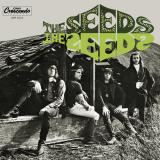
The Seeds stand tall amongst the handful of mid-60s American garage bands whose influence is palpable in rock to this day. Led by charismatic frontman Sky Saxon, the original Hollywood-based quartet’s unique and exciting brand of minimalist rock’n’roll still sounds contemporary and is perfectly encapsulated on this first album. If second album “A Web Of Sound” was pop-art flash, and 1967’s “Future” a florid take on psychedelia, then the July 1966 debut remains The Seeds’ grand statement; an all-original programme of rock and R&B-inflected garage punk that buzzed with a peculiar-yet-riveting energy that was the ensemble’s very own.
Whilst ”The Seeds” contains a pair of familiar classics in ‘Can’t Seem To Make You Mine’ and ‘Pushin’ Too Hard’,’ it is instructive to remember that it was recorded and released some time before either tune became a hit. Unlike so many albums of that era, the Seeds’ debut was not a quickie thrown to together to take advantage of singles chart success. Instead, the record constitutes a sharp definition of their unique and aberrant style, featuring several key items within their canon, be they the rough-hewn rockers ‘Girl I Want You’ and ‘No Escape’, the pot-boiling blues ‘Nobody Spoil My Fun’,’ or the lengthy and downright sinister ‘Evil Hoodoo’.’
Big Crown Records is proud to present the debut full length offering from Les Imprimés, Rêverie. The stirring and ethereal sounds of Les Imprimés have been making fans of anyone who hears them since their first 7" single hit the speakers. Morten Martens is the man behind the band. Born, raised, and working in Kristiansand, Norway, he keeps a low prole while making his heart felt, highly infectious, and unique music. This album is a long time coming for Martens and it is sure to make him a name to be reckoned with. The first thing you notice listening to Les Imprimés is the high level of musician-ship. Martens plays nearly every instrument on the recordings and handles the production and arranging. He has been making records for decades, winning a Spellemann Award (aka, the Norwegian Grammy) in 2006 for producing a HipHop album as well as getting nominations across three other genres. While awards and accolades speak to the level of his talent, this new album really shows who he is an artist on his own terms. Moving away from being a hired gun on the touring scene naturally led him to start doing more studio work. Slowly collecting gear and getting more experi-ence behind the boards he built his own studio on the island of Odderoya and was making a living playing with and recording other people's music. As the story goes, after those sessions would end he would work on his own project into the wee hours of the night. From these late night sessions, Les Imprimés was born and Rêverie began to take shape. However, "it wasn't until COVID, when things locked down, that I was really able to nd the time to focus on Les Imprimés" Morten says about creating and leading his own solo project. "It was a scary time. But I knew I had to do something with it." He took the sum of his inuences, combined them with his own vibe and got busy writing the music, playing the instruments, and singing the songs. "It's soul music, but I don't exactly have the soul voice," Morten explains humbly. "But I do it my own way, in a way that's mine. "It is his sound, his fingerprint, his sensibility, that makes his music hard to put in a box. The album showcases both Martens' range and his ability to make a cohesive album. The lead single "Falling Away" starts with a raw drum break and turns into a lushly arranged tune that paints the picture of love when it slips away. On "Still Here" he professes his resilience through life's twists and turns over a thundering track that puts a new spin on the B side ballad genre. Songs like "You" and "Our Love" mix tones from 60s and 70s Soul with arrangement nods to Doo Wop records while Martens' lyrics and delivery leave you singing the melodies long after they finish. "Love & Flowers" finds Martens in a moment of clarity with a song that ts the niche sub genre of happy break up tunes, the four on the floor track will move the dancefloor or while the message will resonate with anyone who put too much effort into the wrong situation in their lives. However, it is songs like "Muse" and "Chess" that really encapsulate the uniqueness of Les Imprimés as they push the boundaries of genre, one a profession of love for music and the other a cover of an electronic record respectively. Martens' lyrics, emotion, and delivery truly make the whole thing come together and stand out from any of his peers. There's an infectiousness and a pop sensibility in the writing that is done with the utmost class and taste giving Les Imprimés the rare quality of immediate attraction that only deepens the more you listen.
Euronymous’ Deathlike Silence Productions in 1993, & with each subsequent release, Sigh grew to become one of the country’s greatest & most revered metal exports. With a journey through the strange & the psychedelic, incorporating a whole eclectic mix of genre styles & experimentation throughout their career, Sigh has remained a vital creative force in the avantgarde field whilst maintaining their old school roots, as witnessed with the stellar 2022 album, ‘Shiki’. 2025 also saw Sigh remaking their ‘Hangman’s Hymn’ album for a release on Peaceville as part of the band’s 35th anniversary celebrations, in the shape of ‘I Saw The World’s End: Hangman’s Hymn MMXXV’.
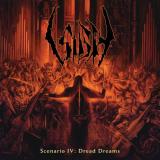
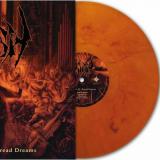
With the ongoing early line-up of Mirai Kawashima, Shinichi Ishikawa, & Satoshi Fujinami, ‘Scenario IV: Dread Dreams’ was the band’s fourth studio album, originally surfacing in 1999. This was also notably the final title in partnership with Sigh’s then-label, Cacophonous Records. Delving evermore into the experimental side of music to conjure an interlinked gallery of twisted soundscapes; ‘Dread Dreams’ became more of a journey into the realm of psychedelia & rock over black metal, with this Zappa-inspired odyssey acting as somewhat of a direct pre-cursor to what was to follow with the celebrated ‘Imaginary Sonicscape’ opus.
‘Dread Dreams’ was once more recorded at Shinjuku On Air Studio with J. Yamada, with a selection of guests including Damian Montgomery of Ritual Carnage lending lyrics plus guest vocals, along with King Fowley (Deceased), & Killjoy (Necrophagia) supplying additional song lyrics. Cover art came courtesy of renowned artist Joe Petagno (Motörhead, Autopsy).
Continuing with Peaceville’s re-issues of Sigh’s classic works, this edition of ‘Dread Dreams’ contains a new master created by Patrick Engel at Temple of Disharmony.
The release also includes a new interview with main-man Mirai Kawashima conducted by Dayal Patterson of Cult Never Dies, with his thoughts, influences & reflections on the album & its challenges.
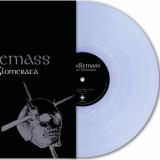
1998’s OPUS OF STELLAR DOOM ROCK FROM THE SWEDISH LEGENDS,
INCLUDING MICHAEL AMOTT OF ARCH ENEMY ON GUITARS.
FEATURES NEWLY REMASTERED AUDIO & PRESENTED ON LIMITED PEARL ARCTIC VINYL.
Candlemass was formed by bassist & songwriter Leif Edling in Stockholm, Sweden in 1984. Well known for their epic doom metal & continuing their legacy as genre leaders to this day, Candlemass has influenced a generation of the genre’s subsequent greats from My Dying Bride to Paradise Lost - Candlemass themselves taking a large influence from Black Sabbath.
‘Dactylis Glomerata’ was a come-back album of sorts, originally released in 1998, after the band had temporarily been laid to rest after the ‘Chapter VI’ album.
‘Dactylis…’ was an album of more stripped down dirty doom rock, with solid songwriting on display, evoking what some described as a strong stoner vibe, along with some hard rock elements. This was in contrast to the more epic heavy metal inspired compositions from previous albums, which the band were more known for. Having stood the test of time incredibly well, ’Dactylis Glomerata’ is a gem in the band’s rich history spanning four decades.
The album notably also features guitars by Michael Amott of Arch Enemy (ex-Carcass), & also a guest appearance by Ian Haugland from Europe.
This edition of ’Dactylis Glomerata’ is presented on limited pearl arctic vinyl, with newly band-approved remastered audio courtesy of Patrick Engel at Temple of Disharmony.
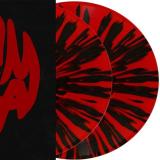
LIMITED THIRD PRESS. 300 ONLY CLEAR VINYL WITH RED BLOOD SPLATTER, HOUSED IN A RED AND METALLIC SILVER SLEEVE.
The Swedish underground legends return with a brand new album. Let this reddit user take over …
“Listening to Brainbombs has been one of my weirdest experiences with music. Brainbombs are most definitely a band. I guess at the core they’re a hardcore punk/noise rock hybrid I guess? But… It's so unlike anything I’ve ever heard and I still don’t know if it's good or bad. I saw the edgelord Ed Gein album cover, and it intrigued me, so I listened to their biggest song and it was easily THE WORST thing I had EVER FUCKING HEARD. I shut it off as soon as it got to the vocals. I was shocked by the fact that it had almost a half million streams. But, a few hours later, I clicked on it again and didn’t know why.
Over the past few days, I’ve listened to all of their discography and looped a lot of it. And I don’t even think I like them. The music is abysmal, it's the same single riff and verse repeating for 5 minutes. To make it worse, the vocals are just a guy with a swedish accent awkwardly talking about murder and rape. That sounds awful right? It is awful. But at the same time I want to keep listening? It’s so childishly edgy and obnoxiously repetitive but so.. intriguing? Catchy? I’m not even sure. It's one of if not the weirdest experience I’ve ever had with music and I don’t know how to feel about it.”
In Walter Benjamin’s seminal essay “Art in the Age of Mechanical Reproduction”, he posits that the aura of art objects is destroyed by the ability to photographically reproduce them. When you had to make a pilgrimage to a work it remained elusive, charged, ever distant; but when you can easily see a reproduction, such aura dissipates. What Benjamin did not anticipate is that in the age of AI and the frictionless fount of digital content, we have imbued mechanical and analog means of media production with aura. Film cameras from the last 100 years are in high demand (the point and shoot Olympus Mju I featured in Wim Wenders film Perfect Days still sells for $200), vinyl sales continue to grow year by year, 35mm and 70mm film screenings have become aura-drenched events people travel across country for, and as to the world of vintage and analog synthesizers, when a friend asked for the price on the Yamaha CS-80 synth used on Toto’s “Africa”, the answer was a cool $60,000.
Despite the ability to simulate almost any synthesizer on a computer, the original physical units retain their mystique. Perhaps this lies in the physical process, many of these synths are temperamental and difficult to fully utilize, and the effort and ingenuity can be felt in ways that will always be absent from easy digital simulacra. Perhaps there is an aura in their imperfection, as Brian Eno wrote: “Whatever you now find weird, ugly, uncomfortable and nasty about a new medium will surely become its signature. CD distortion, the jitteriness of digital video, the crap sound of 8-bit - all of these will be cherished and emulated as soon as they can be avoided.” Some may call this nostalgia, but such sonic imperfections are the sounds of humans interacting with the physical world, and it is understandable to feel a pang of emotion and attachment in a time of exponential alienation.
Marche 22 was recorded over a week at the Museo Del Synth Marchigiano in Macerata, Italy. The museum is filled with rare and obscure synths (especially CRB, GEM & Elka) as well as salvaged materials from a nearby shuttered Farfisa organ factory, including MARS, an unfinished realtime audio processing application developed by IRIS - similar to the now well known MAX/MSP. Kyle Dixon and Michael Stein play a suite of pieces that encompasses the last sixty years of synthesizer music—there are nods to Cluster, Tangerine Dream, Jean Michel Jarre, and Morton Subotnick. Dixon and Stein are like jazz masters playing the American songbook with their own riffs and quotations. What shines through in these varied works that are sometimes rhythmic, sometimes melancholic, and sometimes both, is a soul, a spirit, an emotion vibrating through the tones like the charge of coming rain or the thrum of a distant train on the tracks. - Neil Fauerso
Emerging in the early 2020’s - Static Abyss is a monstrous hybrid of twisted, doom-laden brutal death, comprising of longstanding members of the US metal scene. The band consists primarily of the duo of Deathgrave’s Greg Wilkinson (Guitars/bass) & Chris Reifert (vocals), both also members of legendary American masters of sickness, Autopsy, with Chris also notably starting his career with genre pioneers, Death. The band’s debut, ‘Labyrinth Of Veins’ was released in 2022, & their second album ‘Aborted From Reality’ followed in quick succession, surfacing in 2023.
Returning now for Static Abyss’ third studio album, & with the addition of Chad Gailey of fellow death merchants Necrot behind the drumkit for this release, ‘The Dying Hunt’ plummets the listener again into the festering, psychedelic swamps of lunacy, with the spiralling melodies texturing the relentless savage riffs for an effective nightmare inducing trip through the sonic abyss. Continuously & relentlessly flitting between brutal passages & hypnotic otherworldly craziness, ‘The Dying Hunt’ reflects the ailing world & the unravelling of the psyche of its inhabitants in this darkly dystopian landscape, for a masterful descent into sick Death Metal combined with Crust & Doom elements.
‘The Dying Hunt’ was recorded at Earhammer Studios in Oakland, CA, with engineering, mixing & mastering overseen by Greg Wilkinson himself. Cover art comes courtesy of Jon Santos.
This edition of ‘The Dying Hunt’ is presented on limited yellow marble vinyl, including printed inner sleeve with lyrics.
What is Buck? Buck is a state of mind, a way of life, a demeanor that gets you through the good times and the bad. If you ask Brainstory, It is also the energy that permeates their debut album. Kevin, Tony, and Eric are a trio of brothers bounded by blood, fate, and a small town with nothing to do. Their story begins in the long lost lands of the San Bernardino Valley, in the twilight zone known as Rialto, California: An arid wasteland of boredom and empty lots. Through punk rock and skateboarding they found temporary liberation from the local monotony. However, it wouldn't be long before a hunger for more led them to explore musical realms beyond that of the hardcore punk they admired. After stints at music school and steady disappointment trying to navigate their local jazz scene they moved to Los Angeles and Brainstory was born. Through a introduction from Chicano Batman's bassist, Brainstory caught the ears of Big Crown head honchos Danny Akalepse and Leon Michels. Shortly thereafter they were on their way to Queens, to record at The Legendary Diamond Mine with Michels at the helm. An instant chemistry yielded 10 songs in 10 days and now Brainstory has gifted the world with one hell of an introduction to all things Buck. Highlights include the sublime slow burner, "Dead End" which was the A-side to their first 45 on Big Crown that sold out in a matter of days. With Kevin's sublime falsetto floating atop Tony and Eric's unflappable and unmistakable backbeat, this tune has become a favorite with the ballad heads, the low-riders, and the slowie collectors. "Breathe" showcases another side of their sound taking a page out of the Shuggie Otis playbook and flipping the script with some stoned out west coast swag. Kev and Tony's father, Big Tone, an accomplished performer himself, steps in on "Peter Pan" to sing lead vocals over a chorus of friends and family. Bassist extraordinaire, Tony, takes over lead vocal duties on "Sorry", a smoked out, G Funk groove that is just waiting to be sampled. These guys have come a long way from their self released EPs and opening tours with Chicano Batman. Their musical growth is undeniable, and taking their California sunshine vibes and mixing them with Michels' NYC aesthetic has proven to be an amazing combination. It's a debut record that pulls influences from so many genres seamlessly it's hard to nail down. Call it Funk, call it Rock, call it Soul, but over here at Big Crown HQ, we've decided to call it BUCK.
Emerging in the early 2020’s - Static Abyss is a monstrous hybrid of twisted, doom-laden brutal death, comprising of longstanding members of the US metal scene. The band consists primarily of the duo of Deathgrave’s Greg Wilkinson (Guitars/bass) & Chris Reifert (vocals), both also members of legendary American masters of sickness, Autopsy, with Chris also notably starting his career with genre pioneers, Death. The band’s debut, ‘Labyrinth Of Veins’ was released in 2022, & their second album ‘Aborted From Reality’ followed in quick succession, surfacing in 2023.
Returning now for Static Abyss’ third studio album, & with the addition of Chad Gailey of fellow death merchants Necrot behind the drumkit for this release, ‘The Dying Hunt’ plummets the listener again into the festering, psychedelic swamps of lunacy, with the spiralling melodies texturing the relentless savage riffs for an effective nightmare inducing trip through the sonic abyss. Continuously & relentlessly flitting between brutal passages & hypnotic otherworldly craziness, ‘The Dying Hunt’ reflects the ailing world & the unravelling of the psyche of its inhabitants in this darkly dystopian landscape, for a masterful descent into sick Death Metal combined with Crust & Doom elements.
‘The Dying Hunt’ was recorded at Earhammer Studios in Oakland, CA, with engineering, mixing & mastering overseen by Greg Wilkinson himself. Cover art comes courtesy of Jon Santos.
This edition of ‘The Dying Hunt’ is presented on limited yellow marble vinyl, including printed inner sleeve with lyrics.
As guitarist, songwriter, producer and engineer - not just for the iconic Stax record label but on a forest of sessions and solo releases - the Tennessee soul man was the DNA that coursed through the post- war era. Little did we know this towering figure had one last ace to play in his lifetime, with Watching The Tide gathering A-list names including Eric Clapton, Brian May, Ronnie Wood and Billy Gibbons for 12 brand- new songs that Cropper ranked amongst the best of his career. "I know this record provided great joy to Steve in the last year of his life," says project leader Jon Tiven. "And I'm so glad he was able to have one last great creative burst...
Leap Life is Saul Williams’ first solo album in over 10 years and marks a major return for one of the most influential voices in spoken word and experimental music. Named after Saul’s leap year birthday, the project has been carefully sequenced by composer and producer Carlos Niño as a fully immersive, front-to-back listening experience.
The album expands Saul’s sound into electronic and ambient territories while remaining rooted in spoken word, with rich sound design built from nature recordings, environmental textures, and expansive instrumentation. It also sees Saul step further into the role of producer, drawing influence from Fela Kuti, Black church traditions, and South African electronic music. The record features a standout cast of collaborators including Kamasi Washington, Georgia Anne Muldrow, Moor Mother, Gonjasufi, and Surya Botofasina, alongside material developed with Robert Del Naja (Massive Attack). Released via Big Dada, the album marks a full-circle moment with the label where Saul originally launched his solo career.
For any other artist, an album like Asher White’s Love Aggregates might come out of a conscious push to treat no idea as off-limits, to make something bold and new. Jubilant art-funk about cocaine addiction—absolutely. Swooning orchestral pop about Jerry Garcia—why not? Rippling electronic noise, jazzy brushed drums, an elderly motorcyclist with dementia, a profoundly emotional bass solo—put them all in one song. There are threadbare folk tunes, glammed-up power-pop bangers, “Sir Duke” horn charts, Morton Feldman string arrangements, layers of guitar feedback like violins made of liquid chrome. Yes, for another artist, Love Aggregates might be the most adventurous album in their catalog. For Asher White, it’s what passes for settling down.
White is 25 years old and has been making records—writing, recording, producing, and playing almost everything herself—for over a decade. She’d released two dozen of them on Bandcamp before catching the indie-rock industry’s attention with 2024’s Home Constellation Study and last year’s 8 Tips for Full Catastrophe Living. The latter album’s dizzy eclecticism and formidable craft landed her on Rolling Stone’s Future 25 list with the likes of xaviersobased and Oklou, along with a slew of other accolades. That came as something of a surprise to White, who didn’t craft the chaotic 8 Tips with a breakthrough in mind. Love Aggregates feels like a chance, for one of the most thrilling musical talents of her generation, at a more deliberate introduction.
She wrote and recorded her new album while her previous one was gathering
momentum, tinkering in the DIY recording studio where she always works, acutely conscious now that people would be listening to whatever she came up with. At around the same time, her years-long romantic relationship ended in a flurry of betrayal and addiction, her first experience of devastating heartbreak. Even so, Love Aggregates is not a bitter album about wallowing or seething, but instead making use of those impulses as raw materials in work that transcends the specificity of its origins, fashioning them into something surprising and new.
Die acht Jahre, die I've Missed You All These Years geprägt haben, waren von tiefgreifenden Veränderungen geprägt: Sera Cahoone verlor innerhalb kurzer Zeit ihre beste Freundin, ihren Vater und ihren Hund. Aber bei diesem Album geht es ganz und gar nicht um die Dunkelheit; es geht darum, was passiert, wenn der Sturm vorbei ist, um den Moment, in dem du nach einem dunklen Winter wieder in deinen Körper zurückfindest. Dieses Gefühl der Leichtigkeit kommt deutlich zum Ausdruck in dem Klavier und der E-Gitarre, die in ,Say Something" zum Leben erwachen, sowie in dem komplexen Porträt von ,Hits Right". I've Missed You All These Years fängt den Klang einer ekstatischen Zusammenarbeit zwischen außergewöhnlich talentierten Freunden ein. Man hört es im Barroom-Swing von ,Pulling Up Roots", im Seufzer einer Pedal Steel in ,Not How I Had Hoped", im luftigen Falsett von ,Say Something". Es ist ein Album darüber, Trost in der Gemeinschaft zu finden; darüber, sich selbst wiederzuentdecken, indem man sich mit den Menschen verbindet, die man liebt. Auf ihrem sechsten Album hat Cahoone ihre Kräfte voll im Griff. In seiner Fähigkeit, Verlust und Verbundenheit in einer Hand zu halten, ist I've Missed You All These Years triumphierend, eine Feier des Lebens, die in dem Wissen um dessen Vergänglichkeit verwurzelt ist. Als Ergebnis eines Lebens, das sie mit dem Aufführen und Produzieren von Musik verbracht hat, durchquert das Album Blues, Folk, Pop und Country und erinnert in einem Song an Loretta Lynn und im nächsten an Lucinda Williams. Es ist ein Zeugnis der Kraft, die Kreativität und Gemeinschaft mit sich bringen, ein Porträt einer Künstlerin, die sich selbst vollkommen kennt.
When everything around is racing blindly toward ruin, change direction and spin as fast as you can until you defy gravity and rise above the ground into blissful madness. "K-drone", the debut album by three renegades—Jakub Šimanský, Michal Vaľko, and Ján Podracký—is like a hallucinatory Calvary with five stations. Each station is a time-loop capsule, a tiny utopia sneering at the phantom progress of the world outside.
The opening track, "Speedrone", is pure vertigo; for seven long minutes, there's nothing to hold onto. Šimanský’s banjo cuts through the air, Vaľko’s hurdy-gurdy sounds like someone scraping a rusted sheet of metal with a handful of nails, and Podracký’s bass recorder hums like a slowly intensifying migraine. "Sine" is like a train journey through a barren wasteland, where the images outside the window constantly repeat like a bad trip. "Pro DJ" starts like a gig in a bar at the end of the line—a gig that never actually goes anywhere. It’s as if all three are locked in a spasm, their repeated motifs turning into haunting earworms. "Alien Radigue" shifts into a strange idyll in a clearing in the middle of the forest, where an unknown bird species trills in the background. The end and definitive dissolution come in "Slush", where everything suddenly slows down. Šimanský plucks a simple guitar melody, Podracký’s harmonica drifts from side to side like a boat gently rocking by the shore, and Vaľko’s hurdy-gurdy drones like a drunken mosquito buzzing around.
"K-drone" sounds like an acid anti-western movie recorded in a tucked-away burrow, like smoke-soaked folk and experimental campfire songs echoing through a deep forest. It evokes Third Ear Band's "Alchemy", it screeches and repeats like some of Henry Flynt's experiments, and you could easily imagine hearing it drifting from one of the windows on the cover of Hala Strana's eponymous album.
Jakub Šimanský is the bard of Czechoslovak guitar primitivism, an earthy folk sommelier whose fingerpicking you may also know from the duo Šimanský Niesner. Michal Vaľko, aka Line Gate, needs no introduction to fans. He has released three albums on mappa, and his hurdy-gurdy meditations hold an important place in the drone and minimalist music scene. "Den", "Apex", and "Trap" have become essential listening. Ján Podracký is a self-taught composer and musician whom you might know from various participatory music projects, such as an orchestra where all the players play diatonic harmonicas. Besides harmonicas, he has long explored a wide range of flutes. In short, a pied piper who will guide you through other worlds.
Andy Bell, Erasure-Frontmann und Electro-Pop-Legende, veröffentlicht mit "Extended Blue" sein Solo-Debütalbum "Electric Blue" (2005) als limitierte Deluxe-Edition auf dreifarbig-blauem Vinyl neu. "Electric Blue" - samt den Duetten mit Claudia Brücken (xPropaganda) und Jake Shears (Scissor Sisters) - wurde gemeinsam mit Manhattan Clique geschrieben und produziert, einem Duo, das zwei Jahrzehnte lang die Welt der Pop-Dance-Club-Remixe dominierte und mit Weltstars (Katy Perry, Britney Spears, Lady Gaga, OneRepublic, Moby) und wegweisenden Electronic-Acts (The Human League, Soft Cell, OMD, The B-52s und natürlich Erasure) zusammenarbeitete.
Die Deluxe-3LP enthält zudem sämtliche Bonustracks & B-Seiten der "Electric Blue"-Sessions erstmals auf Vinyl. Das Deluxe-Booklet kommt mit ausführlichen Liner Notes des Classic Pop-Autors John Earls samt Interviews mit Andy Bell und den Manhatten Clique-Produzenten Philip Larsen & Chris Smith, sowie unveröffentlichten Fotos aus der 2005er Session mit dem renommierten britischen Fotografen Tim Flach. Bei Erasure- und Electro-Pop-Fans zählt "Electric Blue" weithin als 'verlorenes Juwel', da kurz nach Veröffentlichung das damalige Label Sanctuary Records zusammenbrach und dieses herausragende Album sein Potential nicht vollständig ausschöpfen konnte.
Eine streng limitierte Erstauflage der 3LP enthält zusätzlich die CD "Extended Blue" mit dem identischen Tracklisting des Vinylformats.beitete.
Few bands have defined the sound of American melodic rock quite like Night Ranger. From the thunderous riffs of “Don’t Tell Me You Love Me” to the soaring anthem of “Sister Christian,” this new Best Of collection captures the very essence of their decades-long career — now reimagined for 2026. Featuring the classic hits alongside fan favorites and standout tracks from their most recent albums, this compilation spans the full spectrum of Night Ranger’s signature sound: anthemic choruses, blazing guitar solos, and unforgettable melodies. Highlights include the power-pop perfection of “(You Can Still) Rock in America,” the heartfelt balladry of “When You Close Your Eyes,” and the cinematic sweep of “Four in the Morning.” But “Best of the last 20 years… and Some Hits” is not just a look back. It also celebrates the band’s creative output over the last 20 years, spotlighting tracks like “Time of Our Lives,” “High Road,” “No Time to Lose,” “Somehow Someway,” and “Truth,” proving that Night Ranger’s energy, songwriting, and musicianship have only grown stronger with time. These songs show that the band continues to innovate while staying true to the melodic rock roots that made them legendary.
The current lineup — Jack Blades (bass and vocals), Kelly Keagy (drums and vocals), Brad Gillis (guitars), Eric Levy (keyboards), and Keri Kelli (guitars) — delivers every track with the energy and precision that have kept Night Ranger at the forefront of rock for more than four decades. This edition also features two bonus tracks that make this compilation truly special: a fresh studio take on “Wasted Time” recorded at Sweetwater Studios, accompanied by an exclusive music video, and a festive live performance of “Feliz Navidad” that showcases the band’s playful side. Perfectly timed ahead of their summer 2026 tour, this Best Of serves as both a definitive introduction for new fans and a must-have collection for longtime followers. Whether revisiting the classics or discovering the new 2026 renditions and recent masterpieces, Night Ranger – Best of the last 20 years… and Some Hits is a celebration of enduring melodies, electrifying performances, and the unforgettable spirit of one of rock’s most iconic bands.
Nachdem Beartooth mehr als ein Jahrzehnt lang rohe, ungefilterte Emotionen in Musik kanalisiert haben,
die sie zu einer der wegweisenden Acts des modernen Metalcore macht, läutet „Pure Ecstasy“ als ihr
erstes Album unter Fearless Records ein neues Kapitel für die Band ein. In dem Opener und Titelsong
legt Frontmann Caleb Shomo von der ersten Note an alles offen. Es ist ein roher, bewusst desorientierter
Einstieg – bei dem emotionale Extreme miteinander verschmelzen – und der den Ton für ein Album angibt,
das darauf aufgebaut ist, jedem Hoch und Tief ohne zu zögern zu begegnen. Nach dem Erfolg von „The
Surface“ (2023) folgt mit „Pure Ecstasy“ ein Album, das sich offener, ungefilterter und größer zeigt als
alles, was die Band bisher gemacht hat.
Das Album erscheint als CD und auf Vinyl.
Die späten 1990er Jahre waren eine fruchtbare Zeit in der amerikanischen Elektronik- Underground-Szene. Eine wachsende Zahl von Künstlern, verteilt über das ganze Land, beteiligte sich an der jüngsten Runde eines jahrzehntelangen transatlantischen musikalischen Dialogs. An der Schnittstelle von Hip-Hop, Elektronik und Soul versuchten diese Künstler, ihren eigenen Weg zu gehen. Im September 2001 schlossen sich Telefon Tel Aviv aus New Orleans, die Highschool-Freunde Joshua Eustis und der verstorbene Charles Cooper, schlossen sich diesem Dialog mit ihrem Debütalbum ,Fahrenheit Fair Enough" an, das bei Hefty Records erschien. Als Herzensprojekt war ,Fahrenheit" ein Versuch des Duos, ,etwas Sinnvolles beizutragen ", sagt Eustis heute, ,etwas eindeutig Amerikanisches und irgendwie auch Südstaatliches." Zum fünfzehnten Jahrestag der Veröffentlichung bringt Ghostly International ,Fahrenheit Fair Enough mit einer Vinyl-Ausgabe und zusätzlichem digitalem Bonusmaterial neu auf. Als sie Ende der 1990er Jahre in New Orleans lebten, standen Eustis und Cooper im Bann zweier musikalischer Strömungen: amerikanischer Klassiker - New Orleans' Bounce, Detroits Techno, Chicagos House - und britischer Electronica - Autechre, Aphex Twin, Jega. Aufgenommen im Laufe eines Jahres in Eustis' Kindheitszimmer im Stadtteil Riverbend in New Orleans, lotete ,Fahrenheit" das Potenzial amerikanischer elektronischer Musik in einer Zeit der Hoffnung aus. Die Tracks sollten ,sich ständig weiterentwickelnde Skulpturen" sein. Fasziniert von IDM, wollten die beiden ,etwas Schwung hineinbringen , es ein wenig lockerer gestalten, es aber auch hyperromantisch klingen lassen." Eustis und Cooper hatten sich ursprünglich eine ,harte Club-Platte" vorgestellt, doch stattdessen wurde ,Fahrenheit" von Fans und Kritikern, die seine stilistischen Wurzeln falsch interpretierten, als zartes Stück Electronica wahrgenommen. Die Musik klingt im Jahr 2016 umso relevanter, da der Weg, den Eustis und Cooper damals anstrebten, heute Realität ist. Und weil heute jeder darauf hört, was der Süden zu sagen hat." ,Wir wollten einfach nur sehen, ob wir es hinbekommen", erinnert sich Eustis. ,Wir wussten es nicht. Unser Ziel war es, etwas zu schaffen, auf das wir stolz sein konnten." Zum 25-jährigen Jubiläum dieser bahnbrechenden Elektronik-LP, einem Meilenstein der amerikanischen Elektronikmusik, erscheint eine Deluxe-Obi- Edition als Doppel-Vinyl in einer neuen Watercolor- Variante. Joshua Eustis und der verstorbene Charlie Cooper schufen einen Klassiker, der an der Schnittstelle von IDM, Experimental- und Bass-Musik ansiedelt und eine neue Generation von Künstlern (Loraine James, Kelly Moran u. a.) beeinflusste. Das Album kehrt nun endlich für eine neue Generation zurück.
out of Stock
Last delivered 49 days ago available to reorder, subject to availability
Matrix Music Arhiv (MMA) are proud to announce a re-issue of the highly sought-after album 'Resistance' by the seminal Yugoslavian electronic rock band Borghesia, originally released in 1989 on Play It Again Sam/PIAS (Europe), Wax Trax (USA) and Jugoton (former Yugoslavia). Available on 2Lp, 2CD & 1MC (MC original album only). The re-issue features a carefully remastered edition along with the exclusive bonus live album "Dal Vivo A El Paso", recorded in December 1988 during their performance in Torino, Italy, on one of their European tours. This recording features very different, raw and at times 'dubbed up' versions of their early tracks such as 'Naked, Uniformed, Dead', Am I? and Him (On). The historical perfectly captures the atmosphere and energy of their live appearances at the time. Borghesia (Italian for 'bourgeoisie'), who were formed in Ljubljana (Slovenia) in 1982, had always considered its art to be far broader than just sonic. Borghesia's transgressive, transdisciplinary alloy of film expression, distinctively physical performative practices, usage of new technology and conveniently abrasive EBM (electronic body music) musical production hasn't only been ground-breaking in terms of the holistic, visual/sonic presence of an art collective, but had a rather decisive influence on the general aesthetics of the immensely important Yugoslav subcultural landscape of the 1980s. Borghesia was one of the first bands from the East of the Iron Curtain who used the VHS video medium to distribute their art and was also one of few projects from socialist Yugoslavia to successfully penetrate the curtain itself, reaching international audiences. A series of their releases in the fruitful period between the years 1987 and 1991, including the Resistance album itself, was released by the legendary Belgian label Play It Again Sam (PIAS). The band dissolved in the mid-1990s and then continued their work in 2014. In line with Borghesia's unique social engagement, progressiveness and political criticism, Resistance is one of their most powerful statements. It's the ultimate fight the power manifesto, which makes punk and hip-hop albums of the time sound like children's songs. This is not music for nodding your head to; it's tactical broadcast for the nocturnal resistance to this very day. Borghesia didn't address control only - they sampled the political top, the secret police and explicitly connected authority with dominance. The production of the album isn't clean or polished. On the contrary - Resistance sounds like it was created in a bunker, using stolen military equipment and synthesisers. Borghesia's genius lies in their understanding that the relentless, mechanical EBM beat was the sound of the State - and by hijacking it, turning the system's own rhythm against itself they created the most powerful form of sonic insurgency. And since history repeats itself while the little man learns slowly, the re-release of 'Resistance' comes at the right time. The dark clouds of violence are already looming over Europe, they've never really left the Middle East, and the levers of power and capital ever so louder, not even covertly at all incite: war, war, war! In these times the only appropriate answer is: revolt, rebel, Resistance!
Matrix Music Arhiv (MMA) are proud to announce a re-issue of the highly sought-after album 'Resistance' by the seminal Yugoslavian electronic rock band Borghesia, originally released in 1989 on Play It Again Sam/PIAS (Europe), Wax Trax (USA) and Jugoton (former Yugoslavia). Available on 2Lp, 2CD & 1MC (MC original album only). The re-issue features a carefully remastered edition along with the exclusive bonus live album "Dal Vivo A El Paso", recorded in December 1988 during their performance in Torino, Italy, on one of their European tours. This recording features very different, raw and at times 'dubbed up' versions of their early tracks such as 'Naked, Uniformed, Dead', Am I? and Him (On). The historical perfectly captures the atmosphere and energy of their live appearances at the time. Borghesia (Italian for 'bourgeoisie'), who were formed in Ljubljana (Slovenia) in 1982, had always considered its art to be far broader than just sonic. Borghesia's transgressive, transdisciplinary alloy of film expression, distinctively physical performative practices, usage of new technology and conveniently abrasive EBM (electronic body music) musical production hasn't only been ground-breaking in terms of the holistic, visual/sonic presence of an art collective, but had a rather decisive influence on the general aesthetics of the immensely important Yugoslav subcultural landscape of the 1980s. Borghesia was one of the first bands from the East of the Iron Curtain who used the VHS video medium to distribute their art and was also one of few projects from socialist Yugoslavia to successfully penetrate the curtain itself, reaching international audiences. A series of their releases in the fruitful period between the years 1987 and 1991, including the Resistance album itself, was released by the legendary Belgian label Play It Again Sam (PIAS). The band dissolved in the mid-1990s and then continued their work in 2014. In line with Borghesia's unique social engagement, progressiveness and political criticism, Resistance is one of their most powerful statements. It's the ultimate fight the power manifesto, which makes punk and hip-hop albums of the time sound like children's songs. This is not music for nodding your head to; it's tactical broadcast for the nocturnal resistance to this very day. Borghesia didn't address control only - they sampled the political top, the secret police and explicitly connected authority with dominance. The production of the album isn't clean or polished. On the contrary - Resistance sounds like it was created in a bunker, using stolen military equipment and synthesisers. Borghesia's genius lies in their understanding that the relentless, mechanical EBM beat was the sound of the State - and by hijacking it, turning the system's own rhythm against itself they created the most powerful form of sonic insurgency. And since history repeats itself while the little man learns slowly, the re-release of 'Resistance' comes at the right time. The dark clouds of violence are already looming over Europe, they've never really left the Middle East, and the levers of power and capital ever so louder, not even covertly at all incite: war, war, war! In these times the only appropriate answer is: revolt, rebel, Resistance!
Matrix Music Arhiv (MMA) are proud to announce a re-issue of the highly sought-after album 'Resistance' by the seminal Yugoslavian electronic rock band Borghesia, originally released in 1989 on Play It Again Sam/PIAS (Europe), Wax Trax (USA) and Jugoton (former Yugoslavia). Available on 2Lp, 2CD & 1MC (MC original album only). The re-issue features a carefully remastered edition along with the exclusive bonus live album "Dal Vivo A El Paso", recorded in December 1988 during their performance in Torino, Italy, on one of their European tours. This recording features very different, raw and at times 'dubbed up' versions of their early tracks such as 'Naked, Uniformed, Dead', Am I? and Him (On). The historical perfectly captures the atmosphere and energy of their live appearances at the time. Borghesia (Italian for 'bourgeoisie'), who were formed in Ljubljana (Slovenia) in 1982, had always considered its art to be far broader than just sonic. Borghesia's transgressive, transdisciplinary alloy of film expression, distinctively physical performative practices, usage of new technology and conveniently abrasive EBM (electronic body music) musical production hasn't only been ground-breaking in terms of the holistic, visual/sonic presence of an art collective, but had a rather decisive influence on the general aesthetics of the immensely important Yugoslav subcultural landscape of the 1980s. Borghesia was one of the first bands from the East of the Iron Curtain who used the VHS video medium to distribute their art and was also one of few projects from socialist Yugoslavia to successfully penetrate the curtain itself, reaching international audiences. A series of their releases in the fruitful period between the years 1987 and 1991, including the Resistance album itself, was released by the legendary Belgian label Play It Again Sam (PIAS). The band dissolved in the mid-1990s and then continued their work in 2014. In line with Borghesia's unique social engagement, progressiveness and political criticism, Resistance is one of their most powerful statements. It's the ultimate fight the power manifesto, which makes punk and hip-hop albums of the time sound like children's songs. This is not music for nodding your head to; it's tactical broadcast for the nocturnal resistance to this very day. Borghesia didn't address control only - they sampled the political top, the secret police and explicitly connected authority with dominance. The production of the album isn't clean or polished. On the contrary - Resistance sounds like it was created in a bunker, using stolen military equipment and synthesisers. Borghesia's genius lies in their understanding that the relentless, mechanical EBM beat was the sound of the State - and by hijacking it, turning the system's own rhythm against itself they created the most powerful form of sonic insurgency. And since history repeats itself while the little man learns slowly, the re-release of 'Resistance' comes at the right time. The dark clouds of violence are already looming over Europe, they've never really left the Middle East, and the levers of power and capital ever so louder, not even covertly at all incite: war, war, war! In these times the only appropriate answer is: revolt, rebel, Resistance!
"Nido de Espinas" is the fourteenth studio album by Buitres. Uruguayan Punk Rock band formed in 1989, heirs to the legacy of the iconic Post Punk band "Los Estómagos" It began to be composed in 2022 and was recorded in early 2024. The texts are inspired by the Diary of a Desperate Heart, an arbitrary overflow of feelings written disorderedly with an improvised rein, which demanded exhaustive work from the band to reach maximum expression in each track. Artistic production was handled by Ale Vázquez (Spinetta, Intoxicados and more) and Sebastián Teysera (La Vela Puerca), who landed the runaway chariot set on fire. buitres formed in late 1989, following the dissolution of the group Los Estómagos, a band that sparked a new era of Uruguayan rock in 1983. José "Pepe" Rambao, a close friend since childhood, joined the Parodi-Peluffo duo. Buitres has toured extensively throughout the entire Uruguayan territory and has participated in massive international shows both in Uruguay and abroad. Additionally, they have completed six tours across Spain, where the album En la Vuelta (CD and DVD) was released. Their discography features 14 studio albums. They have released three live albums, two documentary DVDs, and three live DVDs. Three books have been published about the band. The band has received numerous acolytes and awards, but most importantly, after more than thirty years, they continue to maintain a close and emotional relationship with their audience - one that has endured throughout their history and grows over time. For this reason, the band dedicates their absolute best effort to every new work and every performance. "Nido de Espinas" is their new Studio album. These are wild and excessive times. Perhaps this statement applies to our life history just as it did to ordinary people in bygone eras. However, we assimilate the changes, adapt, and move forward. Nothing new under the sun. We grew up assuming static realities without trying to understand that they were newborn and would not last forever. The "forever" was declining into premature obsolescence. Every accessory is fleeting in the dizzying change of language.
Japanese black metal legends Sigh formed in 1989/1990. The genre-classic debut ‘Scorn Defeat’ followed on Euronymous’ Deathlike Silence Productions in 1993, & with each subsequent release, Sigh grew to become one of the country’s greatest & most revered metal exports. With a journey through the strange & the psychedelic, incorporating a whole eclectic mix of genre styles & experimentation throughout their career, Sigh has remained a vital creative force in the avantgarde field whilst maintaining their old school roots, as witnessed with the stellar 2022 album, ‘Shiki’. 2025 also saw Sigh remaking their ‘Hangman’s Hymn’ album for a release on Peaceville as part of the band’s 35th anniversary celebrations, in the shape of ‘I Saw The World’s End: Hangman’s Hymn MMXXV’.
With the ongoing early line-up of Mirai Kawashima, Shinichi Ishikawa, & Satoshi Fujinami, ‘Scenario IV: Dread Dreams’ was the band’s fourth studio album, originally surfacing in 1999. This was also notably the final title in partnership with Sigh’s then-label, Cacophonous Records. Delving evermore into the experimental side of music to conjure an interlinked gallery of twisted soundscapes; ‘Dread Dreams’ became more of a journey into the realm of psychedelia & rock over black metal, with this Zappa-inspired odyssey acting as somewhat of a direct pre-cursor to what was to follow with the celebrated ‘Imaginary Sonicscape’ opus.
‘Dread Dreams’ was once more recorded at Shinjuku On Air Studio with J. Yamada, with a selection of guests including Damian Montgomery of Ritual Carnage lending lyrics plus guest vocals, along with King Fowley (Deceased), & Killjoy (Necrophagia) supplying additional song lyrics. Cover art came courtesy of renowned artist Joe Petagno (Motörhead, Autopsy).
Continuing with Peaceville’s re-issues of Sigh’s classic works, this edition of ‘Dread Dreams’ contains a new master created by Patrick Engel at Temple of Disharmony.
The release also includes a new interview with main-man Mirai Kawashima conducted by Dayal Patterson of Cult Never Dies, with his thoughts, influences & reflections on the album & its challenges.
Underground Hip Hop vets, Dillon & Paten Locke aroused appetites with their 2016 standout release, 'Food Chain', the follow-up to 2009's cult classic, 'Studies in Hunger' and prequel to 2025's 'Rations'. The flagship release of their fledgling label, FULL PLATE, 'Food Chain' opened many doors (and ears) for the Atlanta, GA /Jacksonville, FL based crew, setting the table for their sprawling catalog today.
Produced entirely by Paten Locke (the Boston-bred triple threat who cut his teeth with Mr. Lif, Akrobatik, Edan and his groups: Asamov + The Smile Rays), Food Chain's recipe starts with rugged chops of impossibly rare samples from Paten's world-renowned vinyl collection. Once that's simmering, just add Dillon's razor sharp rhymes; ranging from aggressively self-sure to deeply self-reflective, then finish with their signature seasoning - comedic relief! Food Chain also boasts an impressive list of guest features including Count Bass D, Homeboy Sandman, Supa Dave West, J-Live, Von Pea of Tanya Morgan, Phill Most Chill, Boog Brown, Malkovich, Tone Tank and their FULL PLATE FAM, Willie Evans Jr. Too many chefs? We say, 'Let 'em cook!!'
Now 10 years later this critically acclaimed album receives the treatment it deserves: a proper double LP pressing of the album in its entirety - including a lost bonus intro + bespoke poster insert. 2016's pressing was an abridged single LP that was missing songs, interludes & skits in order to fit the time limits of the format. With the 2xLP, you finally get to enjoy the full album, they way it was meant to be heard. What makes this 10th Anniversary reissue even heavier is that Paten Locke passed in 2019 and never got to see the full impact of his work, so this release doubles as a delicious celebration of Paten's lifelong creative pursuits & accomplishments.
From São Paulo, Brazil comes CSS, the first South American band Sub Pop has foisted upon the global marketplace. Cansei de Ser Sexy, Portuguese for “Tired of Being Sexy,” is improbably, unbelievably and nearly eponymously their debut. It is a thick, pulsating thing full of haphazard synths (“Alala”) and a come-on of call and response that tears down any attempt at posturing (“Art Bitch,” “Patins”). It is equal parts rock mantra and throwback into something new, transcending boundaries of genre and geography.
It careers full speed into dance territory, into the unknown and untouched, to emerge all hot and bothered with wild electro-rock. Pretension? Absent. Friction? Probable. They are the un-pretension: unfinished, exposed, and throwing all they have right at you. It is quick, tightly-wound, unfastened and supreme. Not a sneer but a giggle. To paraphrase from the Portuguese: “Not only music, but a new way to live with it. An unfinished group that, unlike preserving itself until getting ‘to the point,’ was bravely showing off, turning everything into style.” Fashion. Art. Design. Cinema. Panties thrown and received. Micro shorts and dirty legs. How does it happen? It happens like this…
With her new album Trespasser, Grace Potter introduces a beautifully unruly cast of characters who step into forbidden spaces with absolute abandon. As the spiritual sequel to 2023’s Mother Road, the four-time Grammy nominee’s seventh studio LP continues the kaleidoscopic storyline shaped by her many road trips from her Topanga Canyon home to her part-time residence in her native Vermont (a journey she’s made eight times in the last five years, usually on her own). But while Mother Road was born from a desperate need for solace in the midst of emotional freefall, Trespasser reveals an artist firmly anchored in her singular vision.
The latest chapter in a career marked by endless transformation and elite recognition—including sharing stages with rock & roll icons like the Rolling Stones & Robert Plant and earning praise from legends like Bob Dylan and Bonnie Raitt—Trespasser ultimately lights the way toward a more unbound and expansive means of moving through the world. Produced by her husband and frequent collaborator Eric Valentine (Queens of the Stone Age, Weezer, Slash) and recorded in a cross-country journey beginning at her home in Topanga with Benmont Tench, continuing in Nashville with Mother Road session players (members of Cage the Elephant, Kings of Leon, and Train), and completed in Vermont with members of her longtime live band, the album echoes its origins with a wayward sound that spans from stripped-bare soul to cosmic country to hellraising rock & roll—all while orbiting Potter’s force- of-nature voice and lavishly imagined storytelling. “We’ve always been taught that the trespassers are the bad guys, but to me it’s not about reckless rebellion,” says Potter. “It’s about exploring, physically and mentally and emotionally, and being willing to step outside the narratives we’ve accepted. Because in my experience, the places we’re told not to go are exactly the ones that show us who we really are.”
With her new album Trespasser, Grace Potter introduces a beautifully unruly cast of characters who step into forbidden spaces with absolute abandon. As the spiritual sequel to 2023’s Mother Road, the four-time Grammy nominee’s seventh studio LP continues the kaleidoscopic storyline shaped by her many road trips from her Topanga Canyon home to her part-time residence in her native Vermont (a journey she’s made eight times in the last five years, usually on her own).
But while Mother Road was born from a desperate need for solace in the midst of emotional freefall, Trespasser reveals an artist firmly anchored in her singular vision. The latest chapter in a career marked by endless transformation and elite recognition—including sharing stages with rock & roll icons like the Rolling Stones & Robert Plant and earning praise from legends like Bob Dylan and Bonnie Raitt—Trespasser ultimately lights the way toward a more unbound and expansive means of moving through the world. Produced by her husband and frequent collaborator Eric Valentine (Queens of the Stone Age, Weezer, Slash) and recorded in a cross-country journey beginning at her home in Topanga with Benmont Tench, continuing in Nashville with Mother Road session players (members of Cage the Elephant, Kings of Leon, and Train), and completed in Vermont with members of her longtime live band, the album echoes its origins with a wayward sound that spans from stripped-bare soul to cosmic country to hellraising rock & roll—all while orbiting Potter’s force- of-nature voice and lavishly imagined storytelling. “We’ve always been taught that the trespassers are the bad guys, but to me it’s not about reckless rebellion,” says Potter. “It’s about exploring, physically and mentally and emotionally, and being willing to step outside the narratives we’ve accepted. Because in my experience, the places we’re told not to go are exactly the ones that show us who we really are.”
Atlantic was the brainchild of guitarist and songwriter Simon Harrison. Following a successful ghost-writing career and his bands Stranger, Simon wanted to make an album in his favoured AOR/Melodic Rock genre. Heavily influenced by bands like Whitesnake, Journey, Bad English, FM, Heartland and Dare he set about writing the songs that became the first album entitled ‘Power’.
"Power" was first released as a CD back in 1994 on the Music For Nations label and subsequently re-released in 2008 on Escape Music (ESM176). Atlantic raised many eyebrows with this release which can be ranked alongside bands such as “Heartland” "Dare" and "Shy" (Tony Mills also guests on the album!).
Band members include Simon Harrison on guitar and keyboards and the great Phil Bates (Trickster/Quill) on lead vocals, guitars and keyboards. The album had so much potential at the time it is a shame that it did not receive the recognition it richly deserved. The band came back with a killer brand new album in 2024 title “Another World” also on Escape Music ESM388
A true British Classic!
It’s no disrespect to the man to not believe, in part or in whole, every word that Ray Wylie Hubbard writes, sings, or speaks — and frankly, he’d probably respect you a little less if you did. As celebrated songwriters of the outlaw poet/down-home-country-blues persuasion go, Hubbard’s credibility is unimpeachable. And to be fair, even as a somewhat notorious raconteur, his overall truthiness is a lot more bankable than your average politician or fundamentalist grifter.
But fold your cards every time he goes all in across a table from you, or swallow as fact every nugget of wisdom he sharpens into verse or stretches into a yarn without catching the gleam in his eye or wry tell between the lines, and odds are you’ve been played. But honestly, that’s all just part of what makes Hubbard so damn fun. “You know, a lot of artists when they put out a record, they go, ‘This is the best record I’ve done up to this point,’” the Americana legend considers sagely after a pause when asked how to best sum up Reel 2 Reel 4 Real, his 20th album in a recording career stretching back to the mid-70s. “But I’m not going to say this is the best record I’ve done. I’ll say it’s the best record I’ve ever heard.” No matter how many awards and Hall of Fame inductions others might honor him with (he’s a member of both the Austin Music HOF and the Texas Heritage Songwriters HOF), Hubbard never swaggers or sings his own praises without keeping his tongue planted firmly in cheek.
But after brushing aside his bluff with a chuckle, Hubbard gets real. “I am very proud of it,” he answers sincerely. “Everybody that played on it put a lot of work into it, and it just felt right doing it. I’m very grateful.” Set for release August 21, 2026 (with the first taste, “Cassette Mix Tape,” dropping May 29, followed later this summer by a second single, “Dog or Wolf”), Reel 2 Reel 4 Real marks Hubbard’s return after a two-album major-label joyride on Nashville’s Big Machine Records. “They treated me great, and did everything they could,” he says, “but it was kind of limited because I’m an old guy. I’m no longer a country hunk, you know?”
Produced by Marc Mac Marking the 10th anniversary of this series of 'mixtape style', revolutionary and thought provoking albums, Omniverse Records have pressed a short run of never before on Vinyl releases. The complete set of records "It's Right To Be Civil", "Extend The Knowledge", "Message From Soulville" and the new "Generation - X" albums will be available each on single record continuous play vinyl. The albums are a must for the fans of Marc Mac's side projects, each album has a story to tell and the collection makes great listening both musically and subtly informative. This is without doubt for the collectors. Not to be slept on.
London's Spearmint follow-up their acclaimed 2023 record `This Candle Is For You' with the ambitious new concept album `Chase Me' New single "1986" evokes a time when the world wasn't connected by technology, but there was still a strong connection across the globe: music. Specifically in the song, it's folk in Newcastle and Madrid who are dancing to the same music. The vinyl version also features an exclusive track "Is It Just Nostalgia?" which sees the band time-travelling past `The Tube' and `Soul Train` to Friday nights of the past. Standby for the follow-up single in July_ Spearmint have been making great records since debut `A Week Away' in 1999 (`Sweeping The Nation', `A Trip Into Space', `We're Going Out'). Still the same line-up: Shirley Lee (singing, guitar), Simon Calnan (singing, keyboards), James Parsons (guitar) and Ronan Larvor (drums). This will be their eleventh album proper and the 65th release on their own hitBACK label. Re-united with producer Rhodri Marsden (Scritti Politti, Cardiacs), the `Chase Me' album tells a story of success, disillusionment, disconnection, peril, and resurrection. Anchored by three chases across a city at night, book-ended by two out-of-body experiences, and working towards a suite of uplifting love songs, it's a thriller, it's a horror, it's an allegory. Song-writer Shirley explains "The story would make a good movie I think_ but we don't know how to do that, so we did this." `Chase Me' will be available digitally, and on limited edition CD and vinyl. The vinyl version will be released on WIAIWYA records, and will include an exclusive 24 page full-colour lyric book, including photos and illustrations. Spearmint will premiere songs from the album alongside tracks from their catalogue that haven't been played for years, or ever in one instance, live at Colours in Hoxton, London, on Tuesday 29th September 2026.
“Windborne” originally released in 2018 was the debut album from young Norwegian power-trio Kanaan. With components
from jazz, fusion and post-rock they have created six extended pieces of blazing freeform psychedelia. While the band is rooted in the same spirit that gave birth to Mahavishnu Orchestra and The Eleventh House in the 1970s, there's a distinctive modern flavour to Kanaan's sonic endeavors. Their Scandinavian genealogy is apparent as well - their intricate song structures seems to be branching off the same stem as Motorpsycho, Papir and Jaga Jazzist. And no doubt the young band has the chops to carry on the pedigree! Opening track ”A. Hausenbecken” feels like a sudden blast of refreshing nordic air, with it's rolling guitar leads and growling Fender Rhodes. But Kanaan aren't afraid to get deep and heavy – the B-side dives into straight-up Sabbath territory, with ”Act Upon The Mundane World” and ”The Groke”, before ending the album with the abstract, free-flowing title track ”Windborne”. From the first note to the last the band keeps high levels of energy and creativity, and although freeform, they never sacrifice focus or direction. Ask Vatn Strøm - guitars
Ingvald André Vassbø – drums Eskild Myrvoll – bass Rhodes on "A. Hausenbecken" by Vegard Lien Bjerkan.
Archaic Vaults is proud to present »Ley Lines«, the debut album by St Circul.
Concise collection of folkloric grime instrumentals to rise from a new moniker taken on by the elusive First Circle. A breadcrumb trail of effortlessly crafted early 2000s-era grime, trap and drill instrumentals can be found on a fairly sparse Soundcloud account and numerous NTS shows spanning the last ten years, on which he is known to play almost entirely his own material. Now a different energy takes hold on »Ley Lines«: ten tracks by the enigmatic producer to be released both on a label and in physical format for the first time.
»Ley Lines« was born from a meandering quest through South London’s more leafy dwellings. These cherished regions became a place of refuge in which to ruminate on the hopes that love and community can outlast the dwindling state of Britain’s social and political climate. Photo documentation was made which would later form the genesis for each track, and a return to the studio resulted in something which could not be fitted into the existing First Circle discography.
Harpsichord and brass samples (»A Plan Is Formed«, »Hilly Fields«) are underpinned by murky bass loops and tight militaristic percussion – motifs recognisable amongst white label grime’s most influential producers (Wiley, Skepta, Lewi White etc.) that push the formula into far more rapturous territories than any of FC’s previous productions. The more introspective moments of the album (»Wares at the Ivy House«, »Blythe Vision«) put local field recordings and devotional reverberant ambience to the forefront, alluding to St Circul’s proto-dungeon synth influences and giving the whole album a unique world all its own.
Archaic Vaults is proud to host an album which shares intrinsic roots with the label’s own South London birthplace. »Ley Lines«’ ten tracks of psychogeographic drifting are available in digital and limited cassette format via Archaic Vaults.
Mastered by Owen Pratt Design by Severin Black Artwork image by St Circul
Armada Music and PDD are proud to welcome a new series to their ever growing roster of releases with “A State Of Trance Volume 1”. Kicking things off is the legendary Armin van Buuren with one of his classics “Communication” originally released in 1999 on Cyber Records this trance anthem was an instant hit, known for its driving bassline and signature piano melody it served as his breakthrough hit and the lead single from his debut studio album 76. It reached number 18 on the UK Singles Chart and number 2 on the UK Dance Singles Chart.
On the flip are The Thrillseekers (Steven Helstrip) with “Synaesthesia (En-Motion Extended Remix)”. The Thrillseekers have been at the forefront of the global trance scene for 20 years from releasing his first ever single “Synaesthesia” which is now being brought back to life on fresh vinyl for the first time in over 20 years.
Last but not least is “Lange feat. Skye - Drifting Away (Extended Mix)” originally released in 2002 on VC Recordings. Stuart Langelaan, renowned as Lange, has many achievements under his belt such as 20 UK top 40’s and mixing the return of the legendary Trance Nation series for Ministry of Sound.
This release is for any fans of trance new and old, make sure to give trance a chance.
Freeway was a California outfit that first formed in 1979 and set about fusing jazz, soul and outreach-driven purpose into a sound that sat outside the norms of the contemporary Christian scene at the time. Their sole album, this self-title gem, was cut in 1981 for New Born Records has since become an underground rarity, often changing hands for upwards of £400. Now, 45 years on, Vinyl Kitchen brings Freeway back to vinyl for the first time ever, complete with new liner notes and rare photos. It's a glorious, life-affirming work of bright jazz sounds, celebratory energy, boogie grooves, funky horns and prog licks. Perfect for listening and dancing alike.
Keyboardist/composer Doug Carn was the
biggest star on the legendary Black Jazz Records
label, with four releases to his credit (all reissued
by us at Real Gone Music), and remains a
touchstone for spiritual jazz fans and musicians
alike. But very, very few folks have heard his
debut record, cut for the venerable Savoy label
back in 1969. In fact, it’s so rare that we couldn’t
even find a copy to use for artwork, so, with
Doug’s help, we enlisted his daughter Eroniffa
Ibrahim to create illustrations for our reissue
based on the original cover photos. But you know
what we did find? That’s right…the original master
tapes! So, not only is this the first LP reissue for
The Doug Carn Trio, but it’s an all-analog edition to
boot, pressed at Gotta Groove Records with their
proprietary GrooveCoated stampers to minimize
high-frequency loss with each successive pressing.
And, we’ve added an insert with liner notes by Aaron
Cohen based on an exclusive interview with the man
himself. As for the music, it’s a tight organ trio set
that starts cooking right from the get-go with a groovin’ cover of Gus Cannon’s “Walk
Right In,” which became a folk hit for The Rooftop Singers. Carn’s fluid, forward-thinking
playing anticipates Larry Young’s future keyboard forays, and originals like “Butter from
the Duck” and “Yna Yna’s Delight” presage the compositional prowess he flashed on the
Black Jazz releases (note: that’s Don Hales on guitar, not Gary Starling as credited on the
original record). The opening salvo from a scintillating career, finally available again!
out of Stock
Last delivered 57 days ago available to reorder, subject to availability
Severed Heads reattach themselves to Dark Entries for an expanded reissue of their 1991 opus Cuisine (With Piscatorial). As originary Aussie industrial legends – although founder Tom Ellard would balk at being branded as such – Severed Heads shaped the continental subcultural sound with their kitchen electronics, chaotic tape loops, and infectious nursery-rhyme-esque melodies. Cuisine (With Piscatorial) was the long-running project’s ninth album, and is a commentary on the state of music. Ellard explains: “The whole food joke is really about what music's about and how disposable it is; people have records like they have cups of coffee.” The album also presents a turn away from the dancefloor formalism of the era, which Ellard dismissed as already sufficiently explored. Cuisine brings us punchy pop kernels of the prime Heads variety, all clocking in around three minutes. Cuts like “Pilot in Hell” and “Ugly Twenties” rank among the band’s best through their deadly skewering of synth pop tropes. But the album also offers us a Piscatorial section, where Ellard felt free to “go fishing for ideas.” Here we get a taste of the project’s demented cut-up sensibilities, like on the “Quest for Oom Pa Pa” suite, where vintage jazz records are collaged into an angular nightmare. This double-LP reissue is the first time that Cuisine (With Piscatorial) will appear on vinyl, with a previously unreleased early version of “Seven of Oceans.” Also included is a 6-page booklet with liner notes, lyrics, and press clippings.
Special gatefold LP + 12-page booklet attached to the sleeve with extensive liner notes and previously unpublished archival photographs documenting Salleh’s career. Fully licensed from the Johari Salleh.
Habibi Funk’s new sister label Audible Beauty Records second release: A landmark collection retelling the untold story of Malaysian jazz featuring 9 songs from the legendary composer, arranger and trumpet player Johari Salleh. Salleh played a crucial role in shaping the sound of modern Malaysian music across radio, television, film and live performance and has composed dozens of popular songs in his decades long career. His personal musical passion always was jazz, reflected in this deep selection of jazz works that were previously unavailable unless you had one of the few dozen copies pressed locally in the 1970s. The album doesn’t only highlight his musical statue as a composer but also as a outstanding trumpet soloists bringing together jazz, spiritual undertones and Malaysian folkloric themes balancing slower pacing deep, modal grooves with more upbeat jazz funk leanings. For fans of Salah Ragab, Ahmed Malek, Mulatu Astatke, Dollar Brand and co.
out of Stock
Last delivered 49 days ago available to reorder, subject to availability
After Diogo’s hit record, we are following it up with another set of swinging dance floor detonators! Arriving directly from Brasil, Sérgio presents itself as another moniker from one of the greatest creative minds in all South America, Gabriel Guerra. With dozens of releases scattered over Future Times, Superconscious Records, LAMA, Got Tun, Balaclava Records, or his own 40% Foda/Maneiríssimo, he lands on our lap with a couple of highly effective, UK infused, and slightly nostalgic dance tracks. We’ve allways neutered a profound sense admiration for everything that Guerrinha was releasing under his 40% Foda/Maneiríssimo label, and had the feeling that his vibe was definitely one that we could relate to. Happy, a little wacky, and truly unpretentious dance floor madness! From acknowledging that, to reaching out was just a step. He was super available to work with us, and after the first talks he promptly provided us with a google drive folder with more of 100 unreleased tracks… Yes! You heard it! More than 100 gems of pure creativity ranging from all kinds of genres and across a fucking multiverse of alias and alter egos! So yes, that’s the kind of creative genius we are talking about… Moving from this “garagy” universe, Guerrinha presents us with a set of super fun tracks, which both leans over this infamous side of dance music, as well as it keeps an eye open for the most blatant forms of pop culture. Pure and simple dance floor tracks, to be enjoyed with a smile on your face.
"Is this the sound Sérgio?" or "Is this Sergio's sound?". The question of the questions seems silly, but it was postulated in 2019 to answer Guerrinha a new sound idea: A super appealing garage sound, so that any kind of doubt about the fact that Guerrinha's sets being fun, and that he himself would be able to mix swinging rhythms, would be eliminated. Sérgio is Guerrinha’s pseudonym for this, and since its first release in 2019 with the album “Utensílios” it has strangely become his most played alias, with a few small hits in the small Brazilian scene. After the pandemic drama, he returned in 2022 with the album "Mais Utensílios" and the single "Fantabobi / Riquititas", two releases that again grew the good problem of other djs constantly asking Guerrinha for these tracks. Now he releases the 12'' "Pelo da Churreia" via Discos Extendes, made in 2020 and containing small garage hits from that time. All this information raises the initial questions, since Sérgio is not just a pseudonym, but the curse that grew inside Guerrinha himself, sometimes it's in the appeal that “the bug catches on”.
out of Stock
Last delivered 3 years ago available to reorder, subject to availability
Auf der sechsten LP von Radiator Hospital, ,Distorting Time", spielt Sam Cook-Parrott nicht mit Nostalgie - er geht ihr aktiv aus dem Weg. Im Laufe von fünfzehn Jahren hat er RH von einem Solo-Projekt, das er in seinem Schlafzimmer aufnahm, zu einem vollwertigen Rock-'n'-Roll-Quartett ausgebaut, wobei er am Rande des Mainstream-Erfolgs blieb und sich gleichzeitig einen Ruf als echter Außenseiter der DIY-Szene erarbeitete. Die Veröffentlichung von ,Can't Make Any Promises" im Jahr 2023 brachte Sam an eine Art Scheideweg - doch er war entschlossen, keine Zeit mit Rückblicken zu verschwenden, sondern stattdessen nur auf das zu blicken, was vor ihm lag. Aus heiterem Himmel wurde Radiator Hospital Ende 2025 eine Tour angeboten, was Sam dazu veranlasste, seinen Ansatz zu überdenken und das Gewebe seiner bisherigen Arbeit in eine völlig neue Form zu verwandeln. ,Ich beschloss, etwas Neues live zu probieren, was ich noch nie zuvor gemacht hatte: Ich nahm meine Begleitmusik auf einem 4-Spur-Kassettenrekorder auf und sang dann einfach dazu", erklärt Cook-Parrott. ,Distorting Time" - seine erste Veröffentlichung bei Lame-O Records - besteht aus 13 Songs, die bei Sam zu Hause auf einem 4-Spur-Kassettenrekorder aufgenommen wurden, mit zusätzlichen Elementen, die im Uniform Recording Studio von Jeff Zeigler in Philadelphia eingefangen wurden. Die Songs wirken gleichzeitig sanft vertraut und doch auffallend eigenständig; sie nutzen die Grenzen des 4-Spur-Setups aus und lassen sich gleichzeitig von Bands wie Young Marble Giants und Tall Dwarfs inspirieren. Thematisch beschäftigen sich die Songs mit dem seltsamen Gefühl des Vergehens der Zeit, insbesondere aus der Perspektive eines Künstlers und seines Schaffens.
Gary Sullivan's Bodega Pop project returns to DINTE with a cassette-only collection of traditional sounds plucked from CDRs found in the night-markets of Savannakhet, Vientiane, and Luang Prabang.
"In Lao PDR, music was seemingly everywhere. Walking through an open field outside Savannakhet to the sound of someone playing a khaen on a distant porch, the bracing rush of electronic molam from of one of Vientiane’s many aging malls, the awkward blending of the blind so u player’s voice with the bustling sounds of Luang Prabang’s night market.
It was in that UNESCO World Heritage Site that I found most of the CDs and CD-Rs from which I’ve ripped the tracks for this compilation. I’m almost certain I picked up a thumb drive at the night market that held many hours of additional music that could have been included, but if so, I’ve misplaced it, lost it for good, or simply misremember purchasing it in the first place. What I do remember is that these discs were literally the last copies in the cafe, museum, bookstore, and night market where I bought them, and not all of them played all the way through without sonic deterioration.
The sounds compiled here play in stark contrast to the more contemporary recordings I found in Laos, most of which featured some form of upbeat digital workstation molam or children’s songs. In addition to the ever-present khaen, this collection includes recordings of the sanai, a single-reed instrument fashioned from a water buffalo horn, the ceremonial khong nyai gong, the pi and similar free-reeds, and at least a dozen more traditional instruments played by Lao and ethnic minority artists. While some of these tracks were laid down in Vientiane or Luang Prabang, most were recorded near where the artists lived, from the legendary Vat Phou in the far south to the former Pathet Lao capital Xam Neua in the northeast.
Unlike Laurent Jeanneau’s more focused Lao collections for Akuphone and Sublime Frequencies, which remain among my favorite albums of all time, the present cassette-only selection is literally all over the PDR map. The sequencing is entirely in response to rhythm and texture and includes recordings from the 1970s, 80s, 90s, and early aughts. This may frustrate those with more of an ethnomusicology bent, but my hope is that the listener experiences something akin to wandering for the first time through this majestic country, encountering the last copies of forgotten recordings one after another, and hearing in these remains fragments of the past and a living musical landscape."
Purple Vinyl, limited to 200 copies. A Life Less Plagued, originally released in 2001, is a seminal release in modern hardcore by the California straight-edge band Carry On. Recorded at Godcity Studios by Converge's Kurt Ballou and clocking in at just under 20 minutes across 12 tracks, the album delivers unrelenting intensity, frantic tempos, and cathartic vocals. The album not only became a blueprint for the 2000s "West Coast Hardcore" movement, but was also the first proper full-length album put out by Bridge Nine Records. Carry On didn't live on much longer after their full-length album debut, but it became a definitive release for the label (and California hardcore) as each member went on to form the next wave of West Coast hardcore bands (such as Terror, Piece By Piece, Betrayed, Internal Affairs, and many more). Long out of print by the album's 10th anniversary, its legacy was further set in stone with a 2011 re-issue. Now Carry On is back playing a handful of shows over the 2026 summer and we've got another re-issue on deck. This is a record frequently cited by hardcore veterans and modern musicians as the absolute mold for 2000s American hardcore, so be sure to grab it if you don't have one in your collection yet.
There are two version of the LP - limited to 100 numbered copies with transparent wax and classic black wax edition. Both 180g with special OBI strip.
Maciej Envee Goliński is an artist who probably needs no introduction. He has been working with U Know Me practically since the label's inception. His last album ("Time & Light") made a huge impact worldwide, but we had to wait eight years for the next vinyl release. In the meantime, Maciej has certainly been busy – he has released numerous club singles under several aliases, and has helped record and mix numerous albums from the world of jazz, soul, and electronica. "Wyszymory" is a carefully crafted concept album, inspired by our roots. "Wyszymory" is an album on which every open-minded listener will find something that has been playing in their soul for a long time...
"Of all things visible and invisible, my life is most filled with music and a fascination with sound. It matters not whether they are natural or artificial, isolated or resonating through space. Sounds that evoke
memories, as well as those entirely new. Some of them have resonated unchanged for thousands of years. Certain resonances and rhythms have remained unaltered for generations so distant that they have left no other trace in human civilization.
This bond with our ancestors truly fascinates me. Ever since I realized it, I have become more attuned to inspiration. Listening to traditional and classical music, I kept finding new anchor points. I was constantly surprised by new invitations to ponder what connects – or divides – the pulse of our region’s traditional music with the rhythms of Africa, the tribes of the vast East, or the frozen North. My great authority, Tomasz Stańko, in interviews conducted by Tomek Michałowski, used beautiful parables of love and creativity to bring me closer to the Cro-Magnon cave artists. The Icelandic literary magician Andri Snær Magnason, in his book On Time and Water, captivated me with the fascinating observation that through emotional contact, words, ideas, or memory, we reach back and forward two or even three generations – spanning a period of about 270 years. Then there is Sam Kowalski, who with his wonderful obereks played on the gitalele, took me on a hypnotic journey, from which one returns with a deep admiration for the art of musical storytelling, passed down from generation to generation. Finally, my own children surprise me with talents, behaviors, and increasingly distinct features of those generations that now dwell only in my hazy memory and on old photographs.
I wanted the protagonists of this album to be the very phenomena that modern humans share with their ancestors, regardless of the level of civilization. Most vital among them is the relationship between humans, nature, and their own emotions. Wyszymory has nothing to do with an academic study, though I did delve into Slavic mythology, archaeology, and history in search of inspiration. Nor is it an album of traditional music, even if such music is present thanks to wonderful instrumentalists. I managed to invite artists who cross boundaries daily, working not only with Polish music but also with Hindu and African traditions, and even jazz, with its long history of blending influences. Naturally, the album became a kind of sonic comic book, where individual scenes and stories – the sounds, pulsations, and ideas on how to use them – came to me over time, often under unique circumstances and in inspiring contexts."
Envee
Crossing borders between traditions, sonic territories, and instruments, musicians Tomáš Niesner and Aldana Duoraan created their first collaborative album Plot. The sound of khomus meets guitar melodies simplified into pentatonic scales, intertwining in a dialogue that remains playful while moving between meditative passages and bewitching, hypnotic moments. Solid yet ever-changing, these melodies explore a delicate relationship between the present interactions, their past, and possible futures. “I feel that the essence of our collaboration is not to close the songs off, but to leave them open so that they can develop and be interpreted a little differently each time, depending on the circumstances,” Niesner explains when describing the duo’s artistic approach. The recording therefore captures only the most essential moments and ideas, which continue to unfold in new directions during live performances.
Each segment of Plot, word meaning “fence” in Czech, while also referring in English to a narrative structure or hidden plan, represents a different constellation shaped by the pairing of specific khomuses and guitar tuning. The track titles, such as The Key of Radiance or The Key of Humbling, are inspired by the ancient Chinese text I Ching (usually translated as Book of Changes). Like the classical cosmological text itself, the compositions meditate on similar fundamental principles. The ideas explored in the chapters of the I Ching are thus loosely translated into musical language. Themes of Radiance, Attending, or Nearing thus loom over the reflective realm of Aldana and Tomáš.
The two musicians first met in 2021 through a collaboration organized by Konektiv, an event series that aims to create new connections between genres and musicians with diverse backgrounds. Aldana Duoraan is a Prague-based artist born in the Sakha Republic, whose experiments with the khomus (also known as the jaw harp) draw on the traditional music of her homeland. Tomáš Niesner, a sound artist and guitarist based in Brno, navigates the realms of American primitive guitar while incorporating influences ranging from folk to drone. Because the duo rarely finds themselves in the same city, an important moment in the development of Plot was a showcase at Cafe OTO, organized by mappa. The album, capturing the fleeting energy of this encounter and several others, has now been released on the Slovak experimental label, which helped bring the collaboration to life.
I Bet on Sky is the third Dinosaur Jr. album since the original trio – J Mascis, Lou Barlow and Murph – reformed in 2005. And, crazily, it marks the band’s 10th studio album since their debut on Homestead Records in 1985. Back in the ‘80s, if anyone has suggested that these guys would be performing and recording at such a high level 27 years later, they would have been laughed out of the tree fort.
The trio has taken everything they’ve learned from the various projects they tackled over the years, and poured it directly into their current mix. J’s guitar approaches some of its most unhinged playing here, but there’s a sense of instrumental control that matches the sweet murk of his vocals (not that he always remembers to exercise control on stage, but that’s another milieu). This is head-bobbing riff-romance at the apex. Lou’s basswork shows a lot more melodicism now as well, although his two songs on I Bet on Sky retain the jagged rhythmic edge that has so often marked his work. And Murph…well, he still pounds the drums as hard and as strong as a pro wrestler, with deceptively simple structures that manage to interweave themselves perfectly with his bandmates’ melodic explosions.
After submerging myself in I Bet on Sky, it’s clear that the album is a true and worthy addition to the Dinosaur Jr. discography. It hews close enough to rock formalism to please the squares. Yet it is brilliantly imprinted with the trio’s magical equation, which is a gift to the rest of us. For a combo that began as anomalous fusion of hardcore punk and pop influences, Dinosaur Jr. have proven themselves to be unlikely masters of the long game.
2026 Sakura Pink coloured vinyl, 2022 Abbey Road remaster, cut-out artwork! When the mysterious masked collective calling themselves Goat first emerged in 2012, armed with an incendiary debut album 'World Music' - there was, and there still isn't, anyone else on earth quite like them. With their enticing mythology, music full of sinuous grooves and manic explosions of fuzz, Goat were outliers from the very beginning. 'World Music', received an avalanche of acclaim with critics, psych heads, outernational crate diggers etc, all left enraptured by its thunderous intensity, conjured from a singular mix of sounds from across the globe. 'World Music' is brimming with tracks now seen as 'classic' Goat live favourites. Tracks that have been wowing audiences all over the world; the afrobeat stomp of 'Disco Fever', the fuzz abuse of 'Goathead', the post-punk groove of 'Let it Bleed', the sing-along repetitive pop of 'Run to your Mama'... From the first note to the last, 'World Music' oozes with a sonic confidence rarely seen on a debut album. What Goat have is unique - they've managed to create a sound unrestrained by genre or any other boundaries. So if you haven't done so already, then it is now time you joined the Goat commune. 300 ww copies only!
Art Blakey, whose career spanned nearly 50 years of Black music history, exemplifies the timeless role of the drums in jazz. This Album of the Year LP, originally released in 1981, features the Jazz Messengers: trumpeter Wynton Marsalis, saxophonists Robert Watson and Bill Pierce, pianist James Williams, and bassist Charles Fambrough, alongside drummer and bandleader Art Blakey.
The album was recorded in Paris, and tracks include “Cheryl” (written by Charlie Parker), “Soulful Mister Timmons,” and “Little Man,” among others. The accompanying liner notes were written by Ted Panken.
In the years after independence, Tunisia made an unlikely bet: tourism. Beach resorts rose along the coast, each one trying to outshine the next, and each one needing a band to entertain their guests. A whole generation of musicians grew up on those hotel stages - sharing bills with James Brown, Claude François and the Mingus Dynasty - and what came out of it was a small revolution. Funk played on Tunisian instruments. Disco with an oud in it. Reggae carried back from the island of Kerkennah. A "Third Language" the press didn't quite know what to do with.
Tunis Hotel Stereo gathers nine of those records. Most of them were pressed in tiny quantities, sold to tourists as souvenirs, censored before reaching the radio, or quietly slipped onto a 45 between two hotel sets. Some of these artists filled the Carthage amphitheatre. Some topped the Maghreb hit-parades. Most have been waiting, for forty years, for someone to play their music again.
This compilation is the result of years of work - collating memories, hunting down records, sitting with the artists who made them, and with the people who once danced to them. It is the third release on Shakshouka Records, and the first compilation of Tunisian music ever curated by Tunisians, in Tunisia.
SIDE A
The mysterious Les 4 Dés, who turned the national anthem into psychedelic pop on Ya Tounes - and then nearly vanished. Peace Band, hard rockers turned hotel professionals, recording as Omnya at Hammamet's legendary Topkapi club. Ridha Zalila, the eternal shape-shifter, in a rare instrumental of Tiou Tiou Tiou. And Sadok Gharbi's Noujoum - pulled from his sabotaged, near-lost masterpiece Souar.
SIDE B
Carthago, the impossible big band that married the elite of Tunisian jazz-rock with the stars of tourist entertainment, with the original Dhikrayet. Khaled Mellef, one of the great UFOs of his generation, with Wait Till the Morning Dew, recorded in the Netherlands. Marhaba Band's Baba Bahri, originally pressed only for hotel guests and now a cult artefact. Corniche Band's Dance, cut in Milan during a technical stop on a cruise ship. And Jomaa Bouzrara, the "Bob Marley of the Maghreb," with Now That, drawn from his landmark 1983 debut Sunset.
These weren't rebels without a cause. They were musicians who understood that modernity and heritage are not opposites - that a Tunisian could play funk and still be deeply, irreducibly Tunisian. They drew from every direction at once, and built something that belonged to none of those worlds entirely, and to all of them at the same time.
This compilation is one small act of remembering. The music does the rest.
'Devotional music and its devotees all do a bit of "buying in"; that while one's on the ground reality may appear anything but celestial, through this music, one can reach ecstatic space, ecstatic peace. However, devotional music is not solely concerned with a skyward glance - what does it look like to raise up the rust, look upon fractured branches, gaze at the density of a low fog across a field? Instead of us looking up at the land, what if the land was looking back at us? Old Saw brings together a brigade of New England silt sifters to raise up the land not as excavators, but as preparators. Tending and caring for the simple mess that our world discards. Throughout Country Tropics four pieces, the crew stretches and bends chords to their resting place before setting forth towards a new one. Fiddle drone, wistful tape loops of pedal steel, pipe organ hums, and clattering bells call us to scenes of observation, a water tower, a mechanical bull rental agency, a back porch, a taxidermy shop, a local church choir, a garden with singing vines, voltage hum of the electric fence on Pulp mill bridge road.
'The funny thing about devotion is the absence of sight, of source. We place trust in the guide or guides to bring us to a place of seeing, feeling, and hearing. The music on Country Tropics calls out to those in search of such places, but also doesn't demand we conjure some fantastical, celestial vision of understanding. Rather, Old Saw points our gaze downward towards the terrafirma unconsidered, and guides our hands into the dirt.'
out of Stock
Last delivered 61 days ago available to reorder, subject to availability
Born at the turning point between apartheid and democratic South Africa, the Xitsonga bubblegum-disco duo Chibuku embodies the energy of a time of change,as Nelson Mandela was released from prison and kwaito began to emerge. Althoughthey did not achieve the fame of figures such as Paul Ndlovu or Penny Penny, their only album Maxambe (1992) is now considered a precious time capsule, a raw disco treasure rediscovered by lovers of forgotten music. Behind the project is Dr Joe Shirimani, a guitarist, singer, composer and producer of genius from Tzaneen and Soshanguve, recognised as one of the major architects of South African disco and bubblegum. Long overlooked, Maxambe nevertheless bears witnessto an era and a social perspective: migration ("Lekomfere"), debt and economics ("Xikweleti"), and family relationships ("Mhamazala"). The music is festive in appearance, but deeply rooted in the reality of its time. Released on Tusk/Diamond Music, an iconic label of the 1980s and 1990s bought out by Gallo Record Company, Chibuku is now emerging as a diamond rediscovered from the archives of South African disco. Its name, borrowed from a millet beer popular in several southern African countries, sums up the spirit of the group: popular, sincere and deeply rooted in local culture.
out of Stock
Last delivered 61 days ago available to reorder, subject to availability
This is terrific.
Brimming with saudade, an atmospheric, engrossing, organic blend of the gorgeous folk music of northern Ecuador’s indigenous communities, and tentative, crafted, soulful electronica.
‘Mala Fama is a Kichwa sound-artist from Ibarra, Ecuador, inhabiting — and creating — multiple worlds at once, while being rooted in Indigenous pride and power. Jichushka is a Kichwa word meaning lonely, or abandoned. Here, grief is re-cast as a pathway to liberation.
‘The album was recorded between 2016-2022. Home studio sessions facilitated close collaboration with a network of artists drawn from Andean musical lineages such as marimba, vallenato, and cumbia — including Afro-Ecuadorian group Duo Anjoa, vocalist Catalina Ortiz from coastal Esmeraldas, Ibarra-based multi-instrumentalist Luis Lema, and Quixosis. The album builds on peaceful ambient compositions as much as heavy sequencing, inviting melancholic remembrances of times and spaces that no longer exist.’
Warmly recommended. Like nothing else. Check it out!
out of Stock
Last delivered 61 days ago available to reorder, subject to availability
Bad Brains is the self-titled debut studio album recorded by American hardcore punk/reggae band Bad Brains. Recorded in 1981 and released on (then) cassette-only label ROIR on February 5, 1982, many fans refer to it as "The Yellow Tape" because of it's yellow packaging. Though Bad Brains had recorded the 16 song Black Dots album in 1979 and the 5-song Omega Sessions EP in 1980, the ROIR cassette was the band's first release of anything longer than a single. The release includes the original liner notes by Ira Kaplan of Yo La Tengo. This reissue marks the second release in the remaster campaign on the band's own Bad Brains Records imprint with Org Music. In coordination with the band, Org Music has overseen the restoration and remastering of the iconic Bad Brains' recordings. The audio was mastered by Dave Gardner at Infrasonic Mastering.
out of Stock
Last delivered 62 days ago available to reorder, subject to availability
Klaus Kotai, a Viennese who had made Berlin his home, found a receptive audience in Cologne as early as the mid-90s with his records on Elektro Music Department. This club and label conglomerate, run with co-producer and DJ Mo Loschelder and the artist Daniel Pflumm, was working towards a radical streamlining of techno. A certain kinship with the pre-Kompakt sound of Cologne could not be denied. They exchanged greetings from afar.
Then came the 2000s, an exciting era for club music, rich in innovation and characterised above all by the burgeoning genres of minimal and electro clash. In 2002, Kotai’s ‘Sucker DJ’ was released, featuring the brilliant remix by Marcin “Highfish” Kozlowski, on WMF Records – the label belonging to the eponymous cult Berlin club. A true hit that struck a perfect balance between both worlds and was played across genres by virtually every DJ.
Exactly 20 years after the last re-release on Elektro Music Department (also distributed by Kompakt at the time), it’s now time for ‘Sucker DJ’ to make a comeback. Judging by Marco Cariolaa’s ‘Cringe Vibes’, it’s needed more urgently than ever.
Remastered, with new artwork by Daniel Pflumm, and still “fucking up your place”.
Der Wiener Wahlberliner Klaus Kotai stiess in Köln schon Mitte der 90er Jahre mit seinen Platten auf Elektro Music Department auf offene Ohren. Dieses mit Co-Produzentin & DJ Mo Loschelder sowie dem Künstler Daniel Pflumm betriebene Club-/Label-Konglomerat arbeitete sich an einer radikalen Entschlackung des Techno ab. Eine gewisse Seelenverwandtschaft zum Kölner Prä-Kompakt-Sound war nicht von der Hand zu weisen. Man grüßte sich aus der Ferne.
Dann kamen die 2000er, eine aufregende, an Innovationen nicht arme Ära für Clubmusik, die vor allem von den aufblühenden Genres Minimal und Electro Clash geprägt war. Im Jahr 20 02 kam dann Kotais ‘Sucker DJ’ mit dem kongenialen Marcin “Highfish” Kozlowski Remix auf dem zum gleichnamigen Berliner Kult-Club gehörenden Label WMF Rec ords heraus. Ein echter Konsenshit, der äußerst komfortabel zwischen beiden Welten saß und genreübergreifend von nahezu allen DJs gespielt wurde.
Genau 20 Jahre nach der letzten Wiederveröffentlichung auf Elektro Music Department (damals ebenfalls im Kompakt Vertrieb) ist es nun an der Zeit, dass der ‘Sucker DJ’ zurückkommt. Wenn man sich Marco Cariolaa’s Cringe Vibes so anschaut, wird er dringender gebraucht denn je.
Neu gemastert, mit neuem Artwork von Daniel Pflumm und immer noch “fucking up your place”.
Fresh from the critically embraced full-length LP/CD, Downward Staircase now arrives in a special remix release - answering the persistent calls from supporters of Joaquin "Joe" Claussell who have been demanding a 12" single. The wait is over.
Downward Staircase is an Afro-Jazz House composition crafted in a way only Joaquin himself can manifest. Layered with masterful percussion from a host of renowned players, the groove is both infectious and deeply rooted. The rhythm section drives with purpose, creating the perfect foundation for the stunning piano work of Joaquin's longtime production partner and favored pianist. The result is a powerful Afro-dance journey - spiritual, percussive, and built to ignite dance floors wherever it's played.
But that's not all.
Also featured on this EP is another Joaquin Joe Claussell remix titled Kwelo, featuring Afro-dance originator Mr. Jephte Guillaume. A collaboration rich in heritage and forward motion, it further expands the sonic landscape of this release.
This project has been over a year in the making - a true labor of dedication and persistence. We're incredibly excited for its release, and we know our loyal following shares that excitement. In many ways, it was your continued support that helped bring this record into existence.
Don't sleep.
.
Enjoy the Journey
out of Stock
Last delivered 64 days ago available to reorder, subject to availability
Collaborations have always been an aspect of music I enjoy a lot, it can bring out the best in both artists when done well. It's a privilege to return the favour for one of the most exciting producers around in my opinion and to put out some of our music on my label after I released 'Reflections' on his excellent Temple of Sound back in 2019.
Tom and I came up through similar circles of music, inevitably connecting. We started to chat online and send ideas back and forth, immediately finding a shared enthusiasm for production and music in general. With a similar ethos of DIY and letting the music speak for itself, this EP was formed from the track 20-25 aptly named due to the stems being bounced back in 2020 but it eventually came together in 2025. We exchanged a few ideas and quickly realized we had a pretty strong EP in the works combining the best of both our sounds.
The EP consists of 4 hypnotic & rolling bass music tracks around 130 BPM merging influences from broken & deep Techno styles, Breakbeat & House. Perfect for deep listening or wiggling air in the club.
20-25 is a crunchy broken beat roller with lush pad work, stabs and slinky grooves before dubbed out bongos crank the energy up a notch and solidify the groove. 5 years in the making, but definitely worth the wait!
Strings on the A2 leans heavier into repetition and hypnotic grooves with slinky synthetic percussion and cavernous atmospherics. The track gradually evolves with elements filtering in and out whilst the groove anchors the track before the breakbeat science and pitchy bass comes into play. It's low and slow, building the tension before weaving in the full power of the track with haunting dissonance and dark melodics.
The title track takes the EP in another direction with it's delicate melodies and vocal, ushering in thunderous kicks. Around 2 mins in, the full weight of the track is noticeable with the low sub bass and modulating percussion. The track slowly morphs into an insatiable groove with peaks and troughs before a full send on the 2nd drop with additional percussion, intensifying the energy and taking the track into more dancefloor territory.
Finally we have Depth Charge on the B2, eyes down, dubby with a wonkified groove. This one is a slow burner, coming in at over 8 mins long. The rhythmic prowess is on full display with counter balanced rhythms, an interesting bassline and dubby pads and stabs. The track has a noticeable energy shift around 3.30 with a key change, and the slow meshing of subtle elements culminate in an easeless hypnotism where 8 mins feels like a lot less, a perfect closer.
We hope you enjoy, keep it deep!
out of Stock
Last delivered 47 days ago available to reorder, subject to availability
Original Gravity Records returns with a fresh take on one of the most enduring songs in Jamaican music as Donnoya Drake breathes new life into "You Don't Love Me (No No No)."
The song's remarkable journey begins with Bo Diddley's 1955 recording "She's Fine, She's Mine," before evolving into Willie Cobbs' blues classic "You Don't Love Me." It was then embraced in Jamaica, where it became a foundation stone of the island's musical heritage through Dawn Penn's original Studio One recording.
Rather than recreating any single version, Donnoya Drake's recording draws together the defining moments in the song's evolution. The unmistakable Bo Diddley-inspired riff, popularised by Willie Cobbs, is reimagined by the horn section, while the middle eight pays tribute to Dawn Penn's original Jamaican arrangement. The result is an infectious ska recording that honours every chapter of the song's evolution while bringing a fresh energy of its own.
On the flip, Prince Alphonso & The Fever present "You Don't Love Me Pt.2", an instrumental version that proved far too good to keep in the vault. Stripping away the vocals allows the arrangement to shine in its own right, creating the kind of infectious ska instrumental that selectors and DJs are always searching for.
Produced by Original Gravity Records founder Neil Anderson, the single continues the label's tradition of creating new recordings inspired by the golden era of Jamaican music—not as museum pieces, but as vibrant records made for today's dancefloors. Respectful of the past while unmistakably original, this is another release that bridges the gap between vintage authenticity and fresh interpretation.
In December 2025, I performed alongside Asmus Tietchens and Jetzmann at the final Hörbar Ausklang Festival. This cassette was produced for that occasion. It contains preliminary studies for my live modular synthesiser performance.
The tape wasn't sold on the night, and its release ended up being postponed until now. At one point I had almost forgotten that I had even produced it. Now it's finally here—but what does that change?
Side A features a 24-minute piece titled Aber Was Ändert Das? (What Does That Change?)
Aber Was ändert Das? – Two oscillators coupled via a comparator and routed through a filter bank form the foundation of this piece. Eight filters within the bank are modulated by a synchronised octal triangle wave. Over time, the modulation gradually unfolds like an abanico (fan), shifting into different patterns. The impulses slowly dissolve into noise. A looping voice tape is added to the texture, and the piece concludes with a melody of comb-filtered sine tones.
Side B presents several variations and adjustments of a self-generative patch.
Quantitative Unbestimmbarkeit I-V (Quantitative Indeterminacy I–IV) – At the core of these pieces is a source of uncertainty and three function generators programmed in mutual feedback. The tonal material is derived from a wave-folded sine wave, a noise source, and a pinged state-variable filter. This type of self-generative patch is commonly known as a Krell patch.
The edition is limited to 50 copies. Release day will be the August 7th, 2026.
The title Miszellen Band is derived from the term Miszelle (plural: Miszellen), which refers to a short informative text or brief scholarly essay, often published in academic journals or collected volumes under a "Miscellanea" section. The word originates from the Latin miscella, meaning "mixed things". Such texts typically explore highly specific subjects without the scope or depth of a full-length study. They often consist of etymological notes, addenda to previously published work, concise discussions, or small discoveries from archives.
La Isla Borrego gathers fragments and echoes from the last few years. Based on an invented dream, this is not a composition, but a sediment; not a field recording, but an archive of mistreated memories.
There is no map for La Isla Borrego. Instead, there is the architecture of an invented dream: an accumulation of acoustic residue shipwrecked on the conscious island of the last six years. Sounds are not emitted, but reflected and bounced.
A catalogue of biographical errors; a series of echoes salvaged from a dissolving timeline. Assembled between the 2020 static air of Lisbon and the 2026 volcanic humidity of Tenerife, the album operates under the "bamboo sun": a light that does not illuminate, but instead casts shadows over what was once real.
Within the broad church of metal and its many offshoots – rock, doom, stoner and all the rest – it remains a minor thrill to stumble across a group who seem to exist at a slight tangent to everything else. Crumbling Ghost is one such anomaly. Crumbling Ghost are not newcomers. They've been operating for some time, releasing records sporadically, Four' is in fact their fourth release. Along the way they've accumulated a fervent coterie of followers, not to mention the occasional nod of approval from tastemakers such as Stuart Maconie, Stewart Lee and Tom Ravenscroft. And though they've appeared at Roadburn, shared stages with Hawkwind and even Damo Suzuki, they remain (possibly by design) curiously under the radar.
The group's core idea is deceptively simple: traditional folk material refracted through the haze and heft of heavy, fuzzy stoner rock with a chunk of psyche and a smattering of doom. But crucially, this is done without the costumery and theatrical tics that often accompany such collisions. No mock pagan pageantry, no graveyard cosplay, no cartoon Satanism.
What Crumbling Ghost latch onto is not folk as a museum piece, but as a lived experience, the dramas rooted in the culture, stories, and daily lives of ordinary people, the folklore, the tales of love and death, murder and adultery, freedom and oppression. Singer Katie Harnett says. "Doting mothers, possessive, violent partners, vulnerable women, seasonal workers and Royal scandals this album is our representation of the trials and tribulations of human existence and universal experiences that still feel relevant today.
Guitarist John adds. "Themes of murder, betrayal, loss, jealousy, and love are found across the record. In particular, the songs of Martin Carthy have been a particular source of inspiration".
The result is a set of murder ballads, supernatural reckonings and cautionary tales, all wrapped in slabs of heavy, thumping fuzz and atmospheric sonics. Harnett's voice sits at the centre: unmistakably folk rooted, but shorn of prettification, melodic yet capable of real bite.
The album opener 'Bows Of London' is a murder ballad of sisterly hatred and grim sibling rivalry, centred on a haunted fiddle fashioned from a dead sister's bones. The loping relentless, hypnotic backing chillingly and perfectly accompanies the narrative. Of course, the story doesn't end well. 'Bill Norrie' follows, a hooky melody propelled by an insistent bassline and a haunting psych tinged haze punctured with sheets of noise.. The story of young Bill Norrie who sends a token to a married woman, whose jealous husband beheads him, without knowing he was his wife's son from an earlier affair. An instrumental palate cleanser arrives in the shape of 'Valtz Efter Tor Lohne' a Norwegian traditional the band jokingly describe as a "banger".
Then we have 'Lovely Joan' which offers a rare note of sly triumph: a quick witted woman outmanoeuvres a predatory nobleman, escaping with his ring and his horse. Muscular riffs give this tale of empowerment a welcome sense of teeth. 'Gower Wassail' is a traditional Welsh folk tune that captures the raucous spirit of communal ritual, noise making and drink fuelled hope for a good harvest. Captured perfectly here by CG complete with wah wah guitar and a drunken groove catching the song's celebratory chaos. Then we have a little gem in 'Last Of All Sleep' , an original band composition and a genuine highlight: a heavy lidded, shoegaze tinged folk reverie, equal parts distortion and delicacy. It's a drop-dead gorgeous shoegaze-tastic psychedelic grunge mini epic. The album closer 'The Unquiet Grave' is a very apt place to finish. It's about a young man whose constant grief at the death of his true love disturbs her eternal sleep so she cannot rest. Even though the playout on this track, complete with a demonic repeated riff and feedback feels suitably bleak, even this song allows a glimmer of release ... we think.
And there we have it, 7 songs, 7 worlds, all honed to perfection by producer Wayne Adams (Green Lung/Big Lad) that will reward every repeated listen.
Folk and metal/heavy rock do have a connection of course, just look at Green Lung and their 'folk horror' infused musical universe, but Crumbling Ghost are a very different beast.
'Four' amply and beautifully demonstrates that when it comes to 'folk horror' there's nothing quite as horrible as folk ... Here, the horror such as it is, and it must be said, the moments of light, comes not from theatrics, but from the songs themselves – which, after all, is where it's always lived.
Crumbling Ghost are John Mosley – Guitar / Donny Hopkins – Guitar / Ruth O’Loughlin – Bass / Katie Harnett – Vocals / Matthew Atkins- Drums.
Power Electronics, for the most part, stays within its lanes of transgressive misanthropy, with a blackened explosiveness of tortured psyches and nightmarish reflections for the darkest facets of the human condition. Since Whitehouse introduced the phrase, concept, and framework to Power Electronics, its authorship has been primarily male. But within the past decade or so, a diverse web of voices - female, feminist, non-binary, queer - has thrust the PE aesthetic beyond that of the tortured male artist. As such, the notion that Power Electronics is synonymous with true crime worship, political ugliness, degraded sexual fantasies, and misogynistic perspectives has been somewhat dispelled (though many still pursue such ignoble agendas).
Enter Ester Kärkkäinen. For close to a decade now, she has developed her own voice, tread her own path, and exorcised her own demons in her unique take on Power Electronics, recording as Himukalt. A Power Electronics album based on the collapse of a relationship is probably not as uncommon as one might think. The sexual violence portrayed through Power Electronics may very well have had its origins in the heartbroken, scorned, or otherwise romantically mistreated. Kärkkäinen gives us two very different perspectives on these themes through two rather different sounding records. There is Last Wish from the plague year of 2020, and there is Torn Asunder: The Half Girl, recorded in 2019. Where the 2020 record is a long-form fever dream of the erotic gone horribly wrong and turned morally questionable, Torn Asunder is the more fractured, yet more concise extrapolation of Kärkkäinen's anger, horror, confusion, and depression from the end of a sexless relationship. She nakedly reveals a psyche that has been shattered, scarred, and broken as she alternates between deadpanned proclamations and barked sermons amidst the harrowing articulation of heavy industrial electronics, laced with shrill feedback tones, disjointed rhythms, and harsh noise outbursts. Torn Asunder stands as a significant milestone in Himukalt's catalogue, but remains one her most rarely heard documents given it was originally published as part of Helen Scarsdale's instantly out of print, 10 cassette On Corrosion boxset. With this vinyl reissue, Torn Asunder can get a proper re-evaluation as one of her strongest works.
Hailing from Las Vegas, Himukalt began in 2016 as a vehicle for Kärkkäinen's noise constructs and crude programming that found references to Puce Mary, Anenzephalia, and Atrax Morgue’s Mörder Machine. Since then, she has maintained a manic schedule with releases for Tesco Organisation, Cloister Recordings, Old Europa Cafe and her own EK Verlag. With the release of Torn Asunder, Helen Scarsdale terminates the mission for the On Corrosion reissue campaign.
In the early 1960s, beat groups from the Dutch Randstad dominated the national charts. Yet far from the big cities, in the clubs of Drenthe, one band was already being billed as “Beatgroup Number One”: Cuby + Blizzards. But frontman Harry Muskee never embraced that label. Raised on broadcasts from The Voice of America, he possessed a deeper understanding of the blues than most of his contemporaries. Muskee didn’t want to sing ‘songs,’ as he called them, he wanted to sing the blues, raw and unfiltered, in the tradition of Howlin’ Wolf, John Lee Hooker and Muddy Waters.
Their debut single “Stumble & Fall” was recorded in the Bavohuis, a simple gym hall in Amsterdam, with Addy Kleingeld as producer. But the debut album Desolation marked a turning point, recorded at the Phonogram Studios in Hilversum with renowned blues producer Tony Vos, it captured the band exactly as Muskee intended.
The resulting album became a jewel of Dutch music history. Never before had the Netherlands heard a blues singer who poured his emotions into a recording with such conviction and authenticity. Muskee even outshone his British peers. Eric Burdon (The Animals), Paul Jones (Manfred Mann), Mick Jagger (The Rolling Stones) and Van Morrison (Them).
At the 1968 Grand Gala du Disque (the Dutch equivalent of the Grammys), Muskee received an Edison Award for Desolation, handed to him by cabaret artist Wim Sonneveld, whose lukewarm speech couldn’t diminish the significance of the moment.
Sixty years later, the legacy of this groundbreaking album still resonates, an essential document of European blues and a defining moment in the story of Cuby + Blizzards.
This 60th anniversary edition of Desolation is now available as an expanded 2LP-set including the original 1966 album plus fifteen bonus tracks. The gatefold version features songs “Things I Remember”, “Stumble & Fall”, “L.S.D. (Got A Million Dollars)”, is a limited edition on blue vinyl and includes new liner notes by Dutch Blues authority Johan Derksen.
Writing and recording the majority of Nocturnes at their home studio in Los Angeles, Leisha and Camila drew inspiration from '70s vinyl — and each other’s company. After finishing the demos, their friend Wendy Melvoin (of Prince and the Revolution) invited Uh Huh Her to continue the production at her treehouse studio in Henson Recording Studios (now Chaplin Studios). "We would just drink wine and record for hours and hours," Camila says of this time. "It was amazing. It was total freedom."
When it came time to mix Nocturnes, Melvoin suggested her friend and super producer Tchad Blake (The Bangles, Arctic Monkeys, Sheryl Crow, Cibo Matto), who put the finishing touches on the record from his studio in the English countryside. “It meant the world that our fans directly supported the mixing of the album through online eBay auctions of memorabilia, vinyl, art, and even a couple private dinners, because that enabled us to enlist the powers of the incredible Tchad Blake,” Cam says. The entirety of those original mixes have never seen the light of day until now, on this 2026.
As they contemplated rereleasing Nocturnes with Kill Rock Stars, Cam started digging around to find the album’s original mixes. “I chose Tchad’s first and second mix attempts because I wanted to preserve his first instincts before we gave him a million notes,” she says. This is truly how he heard it on one or two tries. The songs are longer, they're more rocked out, they're a little more raucous.”
Cam also surfaced a hypnotic song she’d written in 2020 called “Shook” to include on the rerelease, and they also put their own, electrified spin on Sonic Youth’s timeless and gritty “Kool Thing.”
Future Sounds Of Jazz Vol. 14 - Compiled By Permanent Vacation Benjamin Fröhlich & Tom Bioly!
28 Tracks By Move D, Roman Flügel, Slowdive, Isolée, Cobblestone Jazz, Luke Abbott, Remixes By Avalon Emerson, Russ Gabriel, Kassem Mosse, I:cube A.m.o. Including 3 Exclusive And Previously Unreleased
Wow, A New Chapter Of This Legendary Series. This And The Very First Time It's Not Compiled By Michael Reinboth, Rather By Benjamin Fröhlich And Tom Bioly, The Founders And Masterminds Behind Permanent Vacation.
Why Simply Because They Both Are Very Close Friends Of The Compost Famlee, With An Amazing Musical And Dj-like Tastefulness, With The Knowledge-based Trust Of Music In The Vein Of Vibrant, Jazzy Electronica Hybrids. And They Are From Compost Records' Hometown Munich, Too.
Maybe Volume 14 Differs Slightly To What The Previous 13 Brought Up Music-wise, But That's The Score, Idea And Open Mindedness Of This Series, As It Was By The Compilers, And Last But Not Least A Great Time For A Change, Too. So We Welcome This, We Very Much Appreciate And Like Their Selection. We Are Sure, This Will Convince You.
28 Tracks, 3 Exclusive Tracks. Enjoy!
The Exciting Package Comes As 2-cd / 4-lp Vinyl
Cd 1 Is Bit More Clubby, Cd 2 Is Bit More Sublime Downbeat/electronica Or Relaxed Feel, Well Both Are True Listening Pleasure Anyway.
Several Magazines Voted Fsoj As One Of The Best Compilation Series Of All Time. With This Series, Starting In 1995, The Term Future Jazz Became A Genre Landmark.
The sleepy calm of Klondyke, Louisiana, is shattered when an unknown man ruthlessly shoots his way out of a courtroom, abducting a girl hostage at gun-point and tearing out of town in a stolen car. Who is he? What is his concern with the girl, with a multi-millionaire’s secluded house, and with a great oil rig out in the Gulf of Mexico?
Fear Is The Key is a 1972 British action flick directed by Michael Tucher starring Barry Newman (Vanishing Point) and Suzy Kendall, based on Alistair MacLean's 1961 eponymous novel. The film is probably best remembered for its spectacular and lengthy car chase sequence, which necessitated a ten-minute plus action cue that demanded split-second timing so that each bar would blend perfectly with the chase sound effects. Realizing composer Roy Budd was just 25 years old when he recorded this score, makes it all the more impressive. Fun fact: this is the feature film debut of Sir Ben Kingsley so make sure to give it a whirl, especially if you're into hard-driving British jazz. In any case, this soundtrack too will surely satisfy fans of the jazz-funk and library music found on labels such as KPM and Music De Wolfe.
The soundtrack of Fear Is The Key is available as a limited edition of 500 individually numbered copies on pink marble vinyl and includes an insert with liner notes.
Universal Language is the second release on Magic Hollow and an exploration of the voice before song and before speech. Written and recorded during pregnancy and early motherhood, Rose Keeler-Schaffeler's album draws inspiration from the earliest forms of human communication: coos, cries, sighs and instinctive vocalisations that precede language yet already contain the seeds of music.
Best known as Keel Her, the cult DIY songwriter, producer and NTS Radio DJ whose fiercely independent body of work helped define a generation of bedroom pop, Rose reveals a strikingly different side of her musical practice here. Produced by Daniel O'Sullivan, Universal Language places the human voice at its centre, treating it not as a vehicle for lyrics but as the raw material from which music, language and relationships emerge.
With the exception of a handful of bass vocal parts performed by O'Sullivan, every voice heard on the album is Rose's own.
Across twelve meticulously composed pieces, layered vocal arrangements intertwine with subtle electronics, tape manipulation, synthesizers and understated drum machines. At times the music evokes the luminous purity of medieval sacred music; elsewhere voices dissolve into hazy ambient textures or unfold through hypnotic loops that blur the distinction between singer, choir and atmosphere.
The album was recorded during the first year of her son’s life. Many of its melodic contours and vocal gestures were inspired directly by his earliest sounds. His pre-linguistic attempts at communication became compositional material, guiding Rose towards a deeper exploration of the voice at its point of origin.
Deeply personal yet reaching towards something universal, Universal Language is a meditation on the human voice: our first instrument, our first language and our first experience of belonging.
* Following on from the hugely popular ‘Klavirni’ (Emika’s first solo piano album in 2015) her second installment of piano solos are a magical cluster of melodies, dreamy effects, obscure production mistakes with tape echo’s and other old analog gear.
* The pieces were recorded during the time she was pregnant with her first child Silvy, to whom she has dedicated this record ‘To Silvy who heard it first from the inside’.
* The collection of ‘Dilo’s’ which means moment in Czech, were recorded ‘in a state of ultra hyped up creativity combined with a massive fear about losing my identity or creativity as an artist once I would become a mother’ - says Emika about the album process.
* A truly personal affair and in keeping with the original style of the first Klavirni, all the Dilo’s were recorded improvisations by the composer on her home piano, this time in Berlin.
* Dilo 7 from the first album has been streamed more than 15 million times on Spotify and there will also be a ‘Red Edition’ repress of the album on vinyl.
* This release marks the 5 year anniversary of Emika Records, celebrating 5 years of independence since her days with Ninja Tune.
* Dilo Variations EP (not released previously before on vinyl) will come with the anniversary releases on a cute little 10’’ with updated artwork.
* This is also the final release in her Emika Records catalog before starting a new venture in 2020 with more details to follow later in the year.
* ‘Klavirni Temna’ which means dark piano in Czech, explores the relationship between dark and light, good and evil, death and rebirth.
* ‘Music is a powerful and sometimes unexplainable force.’ - Emika
out of Stock
Last delivered 68 days ago available to reorder, subject to availability
Leo Mas is a true icon, who was there at the start of the Ibiza revolution in the 80s, he is the protagonist and witness of the birth of Ibiza as the World Capital of Clubbing alongside Dj Alfredo Fiorito at Amnesia (Ibiza) during the years of 1985, 1986, 1987, 1988 and 1990, thanks to his unique sound and innovative set he is as one of the Pioneers of House and Techno music and one of the Balearic Beat Originators.
Leo Mas - The Dark Side (Irreverent Mix)
Amnesia was the club that changed the European and later the global club scene in 1987, thanks in part to the support of London DJs Paul Oakenfold, Danny Rampling, Nicky Holloway, Johnny Walker, and Nancy Noise, who came to Amnesia for the first time that year. At the time, Amnesia was still an open-air club, and the group was amazed by the unique, eclectic, and irreverent style of Alfredo and Leo, who played the new House Music imported from the United States along with a genre-blending sound that would later become known as Balearic Beat. When he returned to London, Paul Oakenfold bought all the records that were being played at Amnesia, with the help of Nancy Noise, and together with his friend Ian St. Paul opened the one-night event Future, “The Original and Only Balearic Club.” This later became Spectrum on Mondays, and eventually evolved into Land of Oz, where in the VIP chillout room, the White Room, the DJ was Alex Paterson, later known as The Orb. Danny Rampling and his wife Jenny wanted to recreate their Ibiza experience by opening Shoom, while Nicky Holloway would go on to open The Trip. All of these clubs transformed the London club scene and, in turn, had a worldwide influence. During the second half of the 1980s, Amnesia was also the favorite club of Sven Väth, who was a regular customer there.
This one-hour long recording is an essential snapshot of a pivotal point in dance music history. The records’ selection was, deliberately a mix of Indie Rock, Gothic Synth-Pop, Subversive Electro, Industrial, Belgium New Beat, Techno with Poetry, EBM. A magical moment in time that could never truly be repeated, yet lives on through this tape, now finally available to music lovers everywhere, including those who only ever dreamed of experiencing it firsthand.
The release comes with liner notes by Robert Harris (Dr. Rob), DJ, music writer and author of the well-known book, IBIZA DJ 1976 - 1988, released in 2019, during his collaboration with Paul Byrne (Test Pressing)
Ri-tape & ELSI Berlin produced a very limited run of 50 tapes, be quick!
out of Stock
Last delivered 69 days ago available to reorder, subject to availability
Children, the one and only instrumental song that breaks all the rules, created by Robert Miles. The netherlands producers Tinlicker signed the new remix of Children.
Bio:
Tinlicker are Utrecht based duo Micha Heyboer and Jordi van Achthoven who have been crafting their computerized soul together since 2013. Before joining forces, they individually honed their skills as part of world renowned drum 'n bass act Black Sun Empire (Heyboer) and as producer, songwriter and music editor for many artists (Van Achthoven). Their previous experience was apparent from day one of their collaborative project, resulting in an impressive
string of highly mature and deeply emotive tracks. Since starting working together they’ve quickly become a household name in the world of electronic dance music previously releasing on Armada,
mau5trap, Anjunafamily and Astralwerks. They have released their first full length album 'This Is Not Our Universe' last fall and released their remix album this past spring from the likes of Dosem, Joris Delacroix and Grum.
out of Stock
Last delivered 26 days ago available to reorder, subject to availability
In a world currently defined by unrest, uncertainty, and cultural fracture, acclaimed saxophonist, composer, and bandleader Isaiah Collier returns with Joy, a 5-track EP that reframes one of humanity’s most nuanced emotions both as a devotional grounding and political act.
Collier’s deeply personal compositions present joy as an act that isn’t rooted in escapism or abstraction, but rather, as something hard-won rooted in lived experience, shaped by transformation, and sustained through connection. Throughout the album’s five compositions, Collier positions joy as a guiding light during challenging times, an expression of challenging yourself to utilize your gifts, an affirmation of love and discovery, and as an affirmative source of reassurance.
“We are in a paradoxical time, where so much is being revealed to us,” Collier shares. “Everything feels political from every scope… our collective hearts feel the heaviness in the air. Yet I say to you all—don’t despair. For right now, the most political thing we can do is share joy.”
That ethos is made clear in the opening title track and lead single “Joy.” A pulsing rhythmic motif anchors the melody with a sense of both searching and certainty. Collier conceived the piece around 3 years ago reflecting on a time where many people in his life were experiencing loss of family and friends and experiencing profound life transitions. “Everything just felt like it was falling apart with no aim in sight,” he reflects. “Yet, there is a light at the end of it all.”
As he played the chords with a sense of urgency, he could feel the vibration of yellow in the piece. That initial triplet motif serves as the guiding light on the piano and the only word Collier could hear was Joy. In addition to Collier at the helm singing and playing piano and tenor sax on the track, it features an expansive 11-piece ensemble with a full horn and string section allowing Collier’s propensity for composition and arrangement to shine with an eclectic sonic palette.
“Landscape of Dreams” finds Collier serendipitously leaning into utilizing his gifts as a multi-instrumentalist. While he had a sketch of the piece going into the studio, a traffic delay caused musicians to be late arriving at the studio. Never one to waste time in the studio environment, Collier stepped into new creative territory and took up the challenge of executing playing all instruments himself as an act of trust and experimentation. “I’ve never done this before, and so it was a leap of faith for me,” he asserts. “I always dream of doing stuff like this, and being part of the small percentage of people who can do it like Prince, Steve Lacy, Frank Zappa, and Stevie Wonder. The end result finds Collier immersed in a hypnotic soundscape playing layered flutes, drums, Metatron, Wurlitzer, and auxiliary percussion.
Another layer of joy is revealed in “Where I’m Loved” that serves as a love letter and leaning into the process of stepping into the willingness to explore life and love with a partner. On the intimate meditation of vulnerability and connection, Collier's vocal prowess is on full display, exerting effortless falsetto reminiscent of D’Angelo over soulful Wurlitzer and guitar as he crosses over into more R&B-inspired realms. “I believe everyone deserves this feeling or to honor the memories of it. Furthermore, I believe you should also go where you’re celebrated and not tolerated.”
“When the Dust Settles” captures the electricity of live collaboration and Collier further steps out of being confined to any specific genre. He had just gotten a microKORG keyboard from co-producer Sonny Daze and was exploring the vast array of sounds on the instrument. Collier plays synth bass on the microKORG joined by the electrifying improvisation of Cole Runge on guitar and the combustible rhythm of his brother Jeremiah Collier on drums with additional post-production work from Sonny Daze.
The album’s final track “God’s By Your Side” reflects on perseverance and artistic legacy, directly inspired from the passing of D’Angelo, whose life’s work was a huge part of Collier’s childhood growing up in the late 90s and early 00s. With gospel flavor and direct influence both from D’Angelo’s vocal and instrumental arrangements, the track speaks to resilience and persistence in the face of obstacles—an affirmation of source and reassurance. “And what’s better than having God by your side, right?” asserts Collier.
Joy is a through-and-through expression of the arc of joy in its truest form. Joy transcends fleeting happiness and is conscious gratitude shaped by taking chances, leaning into your gifts, fostering community, and lived experiences.
“Joy is partially happiness,” Collier explains. “But to me it means happily being grateful for family, friends, lovers, teachers, and good times. These are the things that anchor us.”
The release of Joy comes off the heels of significant momentum for Collier, whose work continues to garner accolades and resonate across cultural spheres. He was featured on the cover of DownBeat’s April 2025 issue, where he was named “The Next Sax Giant,” and profiled on NPR’s Jazz Night in America for his ambitious 13-movement interdisciplinary suite The Story of 400 Years, that traces 400 years of Black American History. He released two full-length albums in 2024 with The World Is on Fire highlighted in The New York Times’ Fall Arts Preview and The Almighty named among the publication’s Best Jazz Albums of the year.
Beyond performance and recoding, Collier’s influence is recognized in broader cultural and intellectual spaces as he was the recipient of the Jazz Journalists Association’s 2025 Up and Coming Artist of the Year Award, the 2024 Chicagoan of the Year in Jazz, and was named a Steve Jobs Archive Fellow joining an elite cohort of the next generation of artistic visionaries through a yearlong program.
In addition to the release of Joy, Collier is touring his “Collier Plays Coltrane” program throughout 2026 in honor of John Coltrane’s centennial. Rather than presenting Coltrane’s expansive catalog as repertory, Collier approaches this music as something living, reshaping it in real-time with a sense of space and improvisational dialog reflecting both reverence to the past and present times.
out of Stock
Last delivered 64 days ago available to reorder, subject to availability
The second album from Chicago based Brigette Calls Me Baby firmly establishes them as a band to watch. It's fair to say that they are a band that takes a lot of influence from 1980s UK indie in general and The Smiths in particular. Opening track 'There's Always' finds vocalist Wes Leavins channelling Morrissey's finer moments; and in particular those moments when Morrissey was in thrall to the crooners of the 1950s. This is particularly poignant in relation to the themes that run through the album, most notably the idea that certain moments in your history shape your very being for the rest of your life. Clearly hearing certain records has shaped Brigette Calls Me Baby as much as those all important life-change moments. That's not to say this a band that isn't ploughing its own furrow, songs like "Slumber Party" with its relentless bassline and dance influenced drums show a band that can mix its influences are create something unique. "I Can Take The Sun Out Of The Sky' might have those darkened crooning tones from Leavins, but they can't keep a lid on the sheer positivity that his band is generating, it has the feel of a real summer anthem.
out of Stock
Last delivered 71 days ago available to reorder, subject to availability
Terence Fixmer Reimagines Chris Liebing & Luke Slater's 'Double Split' for CLR. Fixmer's remixes of Liebing/Slater's collaboration from the former's 'Evolver' LP release on 31st July.
Terence Fixmer has delivered two remixes of Chris Liebing and Luke Slater's 'Double Split' track, one of a handful of collaborations on Liebing's first-ever solo LP, 'Evolver', which was released in March this year. Having contributed to the LP as a member of The Alte Stuben Modular Ensemble, a super-group featuring Liebing, Daniel Miller, and Pascal Gabriel, Fixmer is a fitting choice to remix 'Double Split'.
Fixmer has been evolving his sound for more than 25 years. From deep and mind-bending to experimental and soulful, he is a visionary who has been hugely prolific, with many standout LPs and EPs on labels such as Mute Records, Novamute, Ostgut Ton, and Planete Rouge Records.
Fixmer's first 'Double Split' remix is inspired by the energy of the original, but focused on dubbier, hypnotic vibes. Strident drums and clattering percussion are stark by design, but smoky vocals and eerie synths hang in the air, bringing a bleak human futurism over all-consuming bass. Then comes the Melting Mind rework, which is boiled down to a handful of key elements, not least the original's penetrating acid line. It's an immersive, late-night dive that locks you in a state of constant motion and unrelenting pressure. The original from Chris Liebing and Luke Slater, a dark and futuristic roller with automated drums and layers of rusty synths encircled by acidic gurgles, completes the package.
out of Stock
Last delivered 63 days ago available to reorder, subject to availability
Magyar Posse’s third album Random Avenger out on vinyl for the first time ever in July via Svart Records Looking back, it was the golden age of Magyar Posse. The album Kings of Time had received a tremendous response from both critics and music lovers. The band was touring intensely in Finland and abroad. By now, the band was a well-oiled machine, ready to capture the successor to their celebrated second album. The band decided to follow a different path compared to the creation of Kings of Time: they would record their third album alongside the well-known, slightly eccentric engineer and producer Jani Viitanen. The recognizable Magyar Posse style was present in the pieces of Random Avenger, but something was slightly different. The new music was more rhythm-based, more riff-based and in places more joyous than the dynamic minor key avalanche of Kings of Time. Consciously or unconsciously, the band members saw that they had travelled the Slavic melancholy road as far as possible with the previous album. The success of Kings of Time felt like a positive push, not an extra pressure on their shoulders. It was only natural to strike again while the iron was hot. Many of the pieces had been already developed by the time Kings of Time was released, which eased the production of Random Avenger. After the meticulous but relatively swift mixing and mastering process, the band members were satisfied with the result. The only component that made some of them blush was the cover art – graphic designer Tom Backström had glaringly used photos of empty stages in forgotten community centres and the like. The beauty or the ugliness is once again in the eye of the beholder. Right after its release, Random Avenger got a very positive response, but not as overwhelming as Kings of Time – which was to be expected, as the previous Magyar Posse album had probably been the most universally praised Finnish album of the whole decade. Mikko Elo, musician / journalist, Pori, Finland, March 1st 2026
Magyar Posse’s third album Random Avenger out on vinyl for the first time ever in July via Svart Records Looking back, it was the golden age of Magyar Posse. The album Kings of Time had received a tremendous response from both critics and music lovers. The band was touring intensely in Finland and abroad. By now, the band was a well-oiled machine, ready to capture the successor to their celebrated second album. The band decided to follow a different path compared to the creation of Kings of Time: they would record their third album alongside the well-known, slightly eccentric engineer and producer Jani Viitanen. The recognizable Magyar Posse style was present in the pieces of Random Avenger, but something was slightly different. The new music was more rhythm-based, more riff-based and in places more joyous than the dynamic minor key avalanche of Kings of Time. Consciously or unconsciously, the band members saw that they had travelled the Slavic melancholy road as far as possible with the previous album. The success of Kings of Time felt like a positive push, not an extra pressure on their shoulders. It was only natural to strike again while the iron was hot. Many of the pieces had been already developed by the time Kings of Time was released, which eased the production of Random Avenger. After the meticulous but relatively swift mixing and mastering process, the band members were satisfied with the result. The only component that made some of them blush was the cover art – graphic designer Tom Backström had glaringly used photos of empty stages in forgotten community centres and the like. The beauty or the ugliness is once again in the eye of the beholder. Right after its release, Random Avenger got a very positive response, but not as overwhelming as Kings of Time – which was to be expected, as the previous Magyar Posse album had probably been the most universally praised Finnish album of the whole decade. Mikko Elo, musician / journalist, Pori, Finland, March 1st 2026
Als Blackwater Holylight vor drei Jahren ihre Heimatstadt Portland, Oregon, verließen, war es ihr Ziel, der Tristesse des pazifischen Nordwestens und dem beruhigenden Komfort des Vertrauten zu entfliehen. Mit dem Ziel, das sonnigere Klima von Los Angeles zu genießen, fand sich die Band nicht nur in einer wärmeren Umgebung wieder, sondern auch in einer völlig neuen Landschaft - einer ohne Arbeitsplätze, langjährige Freundeskreise und die bequeme Zuflucht alter Gewohnheiten. Und genau hier, unbelastet von der Zufriedenheit der Sicherheit, begann Blackwater Holylight fleißig an ihrem vierten Album ,Not Here Not Gone" zu arbeiten. Wie schon ihre früheren Werke beschäftigt sich ,Not Here Not Gone" mit der Dualität von Licht und Dunkelheit - bedrohliche Riffs bilden das Fundament für betörende Melodien, dichte Wände aus Shoegaze-Gitarren paaren sich mit luftig-leichten Synthesizern, und schwere Themen werden durch sirenenhafte Gesänge vermittelt. Im Laufe des Albums verspürt der Zuhörer mal ein Gefühl der Stärke, mal ein Gefühl der Verletzlichkeit. Wie Schlagzeugerin Eliese Dorsay es beschreibt: ,In einigen Songs sind wir die Raubtiere, in anderen die Beute." Die Gegenüberstellung von Selbstvertrauen und Unsicherheit ist nirgendwo so deutlich zu spüren wie bei einer lebensverändernden Entscheidung, was vielleicht erklärt, warum der Umzug der Band ihr Studium der Kontraste auf ,Not Here Not Gone" zu neuen Höhenflügen intensiviert hat. ,Not Here Not Gone" wurde im Sonic Ranch außerhalb von El Paso, Texas, von Sonny Diperri (Narrow Head, DIIV, Emma Ruth Rundle) aufgenommen, wodurch die Band erneut ihre Komfortzone verlassen und sich an einem Ort isolieren konnte, an dem sie sich ausschließlich auf ihre Kunst konzentrieren konnte. Das Ergebnis ist das Kronjuwel von Blackwater Holylights Diskografie - eine reichhaltige und eindringliche Studie in tonalen Hell-Dunkel-Kontrasten, in der das Licht seinen Weg aus den Schatten findet.
“Released on Joe Boyd’s Hannibal label here was a band rooted in Thompson/Swarbrick Fairport but also a snatch of the Velvet Underground and a sprig of The Byrds. The Eighteenth Day Of May evoked a legendary era, and now they are a justifiably legendary band too.” – KLOF Mag
Beginning life as a trio in London, 2003, the original line-up consisted of Allison Brice (vocals, flute), Richard Olson (acoustic guitar) and Ben Phillipson (guitar, mandolin) before expanding the following year to include the rhythm section of Mark Nicholas (bass) and Karl Sabino (drums, autoharp) and finally Alison Cotton (viola).
This being the mid zeros, the independent music scene in the UK was reluctant to embrace a sun-dazed folk band but this, their sole album, has gradually feathered a bed of affection amongst international folk fans. Twenty years on, the album is now rightfully seen as a trailblazer for the myriad alternative/psych folk bands that emerged in its wake.
Andy Childs who signed the band originally takes up the story. “I first heard their music on a cover mounted CD with the much missed Comes With A Smile magazine and as far as I could tell no-one was making music like this anymore, certainly not with such panache and confidence. To my jaded ears it all sounded so uninhibited - old weird folk songs, Americana, original psych-folk, minimalist drones. Great melodies and all six of them could sing! A joyous, unfettered sound that could in one moment conjure up flashes of The Byrds and then effortlessly the spirit of Velvet Underground would drift through. They even covered a Spacemen 3 song. I loved the fact that they had the aplomb to tackle traditional folk songs like Lady Margaret and Flowers In The Forest and not be afraid to stamp their own identity on them.
Signing them to the Hannibal label was straightforward. If anything the album somehow sounds fresh and undated, even better than it did in the day when perhaps eclecticism was out of synch with the times; its subtleties have become more apparent.”
“Their rendition of Lady Margaret builds to a headswirling crescendo that challenges anyone who claims Shirley Collins, Buffy Sainte-Marie or Trees have recorded the definitive version and the hallucinatory The Waterman’s Song To His Daughter raises an already brilliant album to an unholy level” - IT’S PSYCHEDELIC, BABY Magazine
Mr Bongo presents a reissue of the 1619 Bad Ass Band’s self-titled album, originally released in 1976 on the ultra-rare tax-scam imprint TSG Records. Formed by Khalid Abdul Shalid, the record was the only album released by the group, and has since become a mythical, highly sought-after prize for collectors and DJs, ranking among the most coveted albums on the 1970s rare soul scene.
This New Jersey soul-funk gem captures the raw energy of mid-‘70s underground funk and soul. Its journey began in relative obscurity having been released on TSG, one of several US “tax-scam” labels operating at the time. These labels exploited loopholes in the tax system by inflating production costs to create write-offs against their tax bills, meaning commercial success was never the objective. Records were often pressed in extremely limited quantities, with little to no promotion or distribution and in many cases, artists were unaware their music had even been released. While this led to the 1619 Bad Ass Band’s album slipping into obscurity upon release, it later cemented its status as a holy grail for diggers and DJs. Unfortunately, like many releases of its kind, it also meant the band never received the recognition they deserved at the time.
Musically, the album is a unique listen with a varied palette that will appeal to fans of a broad range of tastes. From the luscious, dreamy ballad ‘Rain’, which will melt even the stoniest of hearts, to the raw, drum-heavy funk of ‘Love To Love’, it showcases the group’s depth and versatility. Highlights include the string-laden, floaty stepper ‘Just From You’, and ‘Nothing Can Stop My Loving You’, with its spacey synth lines, which will be a joy for modern soul fans. Elsewhere, ‘Step Out’ opens with a heavy drum break (later sampled on Latyrx’s ‘Interlude’ from their 1997 debut) before unfolding into a brilliant male-female vocal exchange.
Every track on here is a winner and it’s criminal that the band never received the publicity or credit they deserved when it was first released. Alongside the TSG Records release in 1976, the album was later released again in 1978 with alternate cover art on another tax-scam label, Graham International. Both versions have since become highly collectable and over time, the album has steadily gained the recognition it always deserved. This reissue by Mr Bongo offers a wider audience the chance to experience a truly special record, one that stands as a testament to the overlooked brilliance of the era’s underground soul and funk scene.
Somewhere in the Wind is the third record that Loren Connors and I have made together. Of the three, it’s the first that consists exclusively of electric guitar duos and it’s the first that was recorded live. To me it feels very much like a live record; this music happened in crowded rooms in Brooklyn on two dates in 2025 and there’s an urgency to connect with others and a pleasure in doing so that can be heard on both of these tracks. On the first of our duo records (Arborvitae, 2003) I primarily play piano, and on the second (Evening Air, 2024) we switch off on piano and guitar. Both of those albums bespeak the privacy of the recording studio, where time is suspended and one can explore the quietest of sounds. By contrast, Somewhere in the Wind is the noisiest, most raucous and most free of our duo records. It’s the sound of us taking it to the stage.
I became a fan of Loren’s playing from the moment that I first heard it, after happening upon a beat-up copy of In Pittsburgh circa 1992 in a used bin in the Dr. Wax record store in Chicago where my then-bandmate Bundy K. Brown worked. Everyone has taken a chance on a record because it looked interesting and wouldn’t set you back too much. In that regard In Pittsburgh was the find of a lifetime. I had just switched from playing in a postpunk power trio (Bastro) to making mostly drummerless respect-your-neighbors music (Gastr del Sol), and Loren’s pacing and touch and his lovely, unaffected compositions had me from the first listen. Not long after that, Jim O’Rourke and I reissued In Pittsburgh on our Dexter’s Cigar label, and I fondly remember first meeting Loren in New York’s Grand Central Station—so glamorous for this country mouse—and taking the train upstate with him where he shared a bill with Gastr del Sol. During soundcheck, Jim, Loren, and I played together for a bit and Loren’s approach to the instrument was something that one could instantly sink into, the kind of situation where there are no mistakes. I still feel that when we play together.
When ELEH's debut "Floating Frequencies/Intuitive Synthesis I" was originally released it was praised as a powerful piece of new electronic minimalism. Twenty years later the artist's legacy has grown while ELEH continues to hypnotize new listeners with time stopping music. Critics, fans and neurologists have praised the music of ELEH as aiding attention and focus while seeming to slow time. Eleh's slow change drones are a state of flow hypnotizing listeners into meditative focus.
From the original packaging, "Pure Sound. Pure Volume. Pure Analog. Dedicated To La Monte Young"
ELEH began in 1999 as an exploration of analog synthesis, emphasizing low frequency difference tones and other resonant acoustic phenomena. ELEH highlights the physical presence of sound as it has been inspired by the physical world. There is also something ‘cathedral-like’ and cosmos-inducing in the sound constructed by ELEH.
This audiophile quality presentation of ELEH's debut album was mastered by Tom Eaton at Sounds And Substance and manufactured at Optimal in Germany for the lowest possible noise floor and the highest analog resolution. Packaged using a 5th color metallic shimmer ink on solid black board stock.
"Nuances of sound turn symphonic." New York Times
“ELEH’s sounds move by stealth and are sculpted from the world rather than from ego. Eleh is not a personality; Eleh is an idea about sound. ELEH forces you to contemplate the cosmos and your place in it. “ Gramophone
"ELEH demonstrates how a single amplified gesture delivered just so can reveal the inner workings of an entire cosmos." Tony Herrington/Wire
“Floating Frequencies/Intuitive Synthesis more than lives up to the mythic status that ELEH has ascended to. “ Brainwashed
"ELEH's music electrifies whatever space it engages. With the flip of a switch, it exposes the ways in which all space is, potentially, electric." ~ Frieze
To mark its 10th Anniversary,
discover Awa Ly's Album "Five And A Feather" (Including one previously unreleased track) On Vinyl For The First Time !
One night, Awa had a dream.
The atmosphere was enchanted, almost mystical, enveloped in a setting that summoned the moon, the Earth, and the elements. An ancestral blend of Native American and African cultures, a shamanic being was there, speaking in an unknown language, narrating stories both real and imagined. She received these tales from others, made them her own, absorbed them, shared their joy, and soothed their harbored pain or sadness.
Upon waking, the shamanic narrator had vanished, but her presence was still palpable; Awa made her the storyteller of this new album: Five and a Feather.
Five, like all things counted by fives: the senses, the oceans, the lines of a musical staff, the fingers on a hand. And feather, the magical element that connects them-the very one Awa used to write and compose the ten tracks of this new album where, under the brush of SainaSix, she becomes the first Black woman immortalized in Mucha's Art Nouveau aesthetic.
Ballaké Sissoko's kora, Paco Sery's senza, Greg Cohen's double bass, Faada Freddy's vocals, the steel guitar, or the erhu (Chinese violin) are all elements that illuminate the shamanic storyteller's tales.
Produced alongside the duo Jean Lamoot and Pascal Danae (winners of the 2015 Victoires de la Musique in the World Music category with their band Rivière Noire), Five and a Feather faithfully captures the warm atmosphere of live-recorded sessions where instruments answer and interlock with one another, creating the perfect showcase for the album's principal instrument: Awa's voice.
Words that she delicately places or lets fall onto the notes like tears of joy or sadness, flowing from that source called love.
An album written, composed, and recorded like fine lace, starry with details that only reveal themselves to those who know how to seek them out.
Futurismo are proud to present the iconic 1982 debut album, Only Theatre of Pain, by gothic legends CHRISTIAN DEATH. Available on deluxe 2xLP, CD digipak.
Hailed as a masterpiece of it’s genre, and considered by many as ground zero for Deathrock, Only Theatre of Pain is a seminal work of unholy power and pitch black emotion. Whilst this record may have it’s roots in punk - the origins of this true original version of Christian Death took place in Southern California during the early 80’s hardcore explosion - it cannot be overstated how important this record was in shaping the subsequent landscape. Emerging like an adrenaline shot into the heart of darkness, this unrestrained and mysterious recording still remains unclassifiable.
Featuring the late visionary Rozz Williams (then only in his teens) alongside punk luminary Rikk Agnew (guiding light in the Adolescents), James McGearty and George Belanger, Only Theatre of Pain’s musical exploration is adorned with psychosexual lyricism and an innate struggle with faith. Rozz’s vocals creep and possess, demonic and haunting, against the captivating, unmistakable guitar work of trailblazer Agnew. It’s a performance, but also a truth, perhaps Only Theatre of Pain is an art show, as much as it is an era defining record.
Aside from their spellbinding sound, it may have also been the lore of Christian Death that set them apart from other LA goth bands of the time. A near-nude Rozz Williams nailed to a cross at the Whiskey a Go Go may have played a part, but what it is apparent when you listen to the unhallowed musical stages on Only Theatre Of Pain is a depth of vision and orchestration that goes beyond the simple stance of brooding many of their contemporaries emulated, delving into the realms of pure unadulterated catharsis. The result is an eradefining statement that remains as unsettling, innovative, and resonant today as it was over four decades ago.
Only Theatre Of Pain is presented here in a new remastered deluxe pressing with a second disk containing early demo’s and rare material, further demonstrating why Christian Death stood alone in their sound and approach. This journey of religious depravity, recorded by the legendary producer Thom Wilson in a matter of days, harnesses the huge concepts of band projecting older than their years. Ahead of the curve in sonic artistry and visual aesthetics, this slab of sacrilegious American punk is nothing short of essential listening for the gothic inclined. A must for fans of The Misfits, Bauhaus and The Cramps.
This classic LP comes in deluxe super limited edition ‘California Hell’ coloured vinyl and contains a second disk of bonus material. It is packaged in a gloss laminated sleeve with metallic ink, containing printed inner sleeves, a large fold out poster, redux artwork featuring the photography of Edward Colver, and liner notes by Lisa Fancher of Frontier. Also available as CD digipak
The recordings on Volume II were captured in Copenhagen, Denmark on January 18, 2020. Guided as much by human instinct as by musical intention, the ensemble moved through the evening with a shared sensitivity…listening, responding, and trusting the moment as it unfolded. Though Morten McCoy admits to having felt quite ill that evening, nothing in the music suggests restraint. Instead, what remains is a vivid, playful exchange, where McCoy and Johannes Wamberg carry both Part I and Part II as a flowing conversation, speaking through sound rather than words.
Part I begins abruptly, almost throwing the listener back in time to the exact moment the improvisation was born. Jonathan Bremer steps to the forefront, providing a solid, melodic bassline as Kristoffer and Eliel, perfectly in sync, lay down a steady foundation for whichever voice chooses to rise above the rhythm.
This is also one of the few I Am An Instrument recordings to feature two guitarists. Johannes Wamberg leads the way, shaping the harmonic direction, while Steven Jess Borth II adds subtle rhythmic textures through muted palm work, deepening the groove without ever stepping into the foreground.
Part II unfolds with Morten McCoy on his Moog One, delivering a beautiful, expansive solo. Using a carefully chosen patch, the sound pulses through the rhythm, moving with the groove rather than above it, riding the beat like a wave through the ocean.
Shaped by trust, presence, and collective improvisation, Volume II captures a group deeply attuned to one another, allowing intuition and momentum to guide the unfolding form.
——
Volume III was recorded in Copenhagen on March 5, 2020. Little did anyone know that only days later, the world would be placed on pause for years. Captured just before that moment of global stillness, this session carries a heightened sense of presence, a final gathering before silence reshaped everything. Recorded in a space more commonly associated with a club atmosphere, the music draws on a different kind of energy and immediacy. With Eliel Lazo unable to attend, the group invited Victor Dybbroe of Girls In Airports to join on percussion, subtly reshaping the ensemble while preserving its core spirit. Part I opens with Steven Jess Borth II calling out on tenor saxophone, answered by Morten McCoy on Wurlitzer electric piano. The piece gradually unfolds into a meditative groove, patient and expansive, carrying the listener through an eight-minute journey of layered rhythm and restraint.
Part II begins with Jonathan Bremer on stand up bass, slowly joined by the rest of the ensemble as each voice enters with intention. Midway through, an unexpected vocal melody from Borth emerges, drenched in reverb and delay, later reappearing as a melodic line on the tenor saxophone.
Part III is led by Morten McCoy on Wurlitzer electric piano. His signature melodic language sets the direction, guiding the ensemble while leaving ample space for the music to breathe and evolve through collective improvisation. Reprise returns to the closing moments of Part II, its title reflecting its origin. The familiar groove reappears, transformed into a distinctly Jamaican-influenced rhythm, over which Borth delivers a final tenor saxophone solo, bringing the conversation to rest.
Any questions about any of these products feel free to get in touch and we'll help you out!
a a1. Part I [Vol.2]
[b] a2. Part II [Vol.2]
[c] a3. Part I [Vol.3]
[d] b1. Part II [Vol.3]
[e] b2. Part III [Vol.3]
[f] b3. Reprise [Vol.3]
out of Stock
Last delivered 74 days ago available to reorder, subject to availability
Red Dwarf Star emerges as a striking new chapter for Coley Taylor of famous US/CH based MASERATI, a new project that captures a deeply personal arc that spans continents, relationships, and creative reinvention. Working largely alone, Taylor embraced a deliberately stripped-down approach, navigating unfamiliar technology with joyously unpolished determination. Much of the material was recorded in a modest, direct manner that prioritizes feeling over finesse. This DIY ethos is balanced by key collaborations that elevate the record's sonic depth. Drums were recorded in Los Angeles by Kellii Scott, whose distinctive style adds weight and clarity, while contributions from Allen Epley and Jenna Fournier introduce subtle vocal textures that expand the emotional range of the songs. Despite its introspective origins, Red Dwarf Star is not intended to remain a solitary endeavor. What began as a personal outlet is evolving into a fully realised band, with a lineup assembled to bring these songs into a more expansive, dynamic setting. This shift signals not only a new phase for the project, but also a broader artistic trajectory. Taylor is known best for his work with Maserati, a legendary outfit that leans into collaborative, rhythm-driven expanses rooted in krautrock and electronic psych. Through Red Dwarf Star Taylor's lineage of influence is felt, echoing the raw emotional immediacy of `90s alternative, post-hardcore, and the textured atmospheres of jagged dream-pop that bleeds. These are sounds that have lingered in Taylor's creative subconscious for decades, now resurfacing with renewed urgency. For fans of MASERATI, FAILURE, SLOWDIVE, QUICKSAND, SHINER, HUM Black or coloured vinyl LP or CD available
Death Is Not The End issue 15 heartbreaking archival fado recordings from Ercilia Costa - made in Madrid in 1930, accompanied by seminal guitarist Armandinho. One of the early stars of fado, Ercilia Costa was the first to take the music overseas to emigrant Portgugese communities.
The Body"s landmark record Master, We Perish, originally released in 2013, found the acclaimed duo at a crossroads in their career. Recorded just before the duo of drummer Lee Buford and guitarist/vocalist Chip King were leaving their longtime home of Providence for Portland and released in between their breakthrough albums All the Waters of the Earth Turn to Blood and Christs, Redeemers, Master expanded on the duo"s love of layered worldbuilding with more precision and a stronger emphasis on percussive samples than ever before. The seeds of the duo"s celebrated collaborative inclination are evident as the album features Assembly of Light Choir leader Chrissy Wolpert, choir member Reba Mitchell, Otesanek vocalist Leslie Weitz, and guitarist David Lifrieri. With the expanded edition, the album"s striking cover painting by Providence mainstay Manifester aka Matt Brinkman (Mindflayer, Forcefield) is finally rendered in its original form. Master, We Perish is expanded with rare bonus tracks from The Body"s early days, taken from a pair of rare 7" singles Cop Killer/Dead Cops as well as a split with Get Killed. These storied singles mark the first time the band truly pushed the boundaries of sound in the studio and on record. It also marks the beginning of The Body"s practice of wielding the studio as a veritable weapon to translate their gargantuan sound with deeper impact on LP. The results are not only pushing the capacity of the album format but are sonically riveting. The bonus material was recorded at Machines with Magnets. The band described them economically: "NASTY."
The Body"s landmark record Master, We Perish, originally released in 2013, found the acclaimed duo at a crossroads in their career. Recorded just before the duo of drummer Lee Buford and guitarist/vocalist Chip King were leaving their longtime home of Providence for Portland and released in between their breakthrough albums All the Waters of the Earth Turn to Blood and Christs, Redeemers, Master expanded on the duo"s love of layered worldbuilding with more precision and a stronger emphasis on percussive samples than ever before. The seeds of the duo"s celebrated collaborative inclination are evident as the album features Assembly of Light Choir leader Chrissy Wolpert, choir member Reba Mitchell, Otesanek vocalist Leslie Weitz, and guitarist David Lifrieri. With the expanded edition, the album"s striking cover painting by Providence mainstay Manifester aka Matt Brinkman (Mindflayer, Forcefield) is finally rendered in its original form. Master, We Perish is expanded with rare bonus tracks from The Body"s early days, taken from a pair of rare 7" singles Cop Killer/Dead Cops as well as a split with Get Killed. These storied singles mark the first time the band truly pushed the boundaries of sound in the studio and on record. It also marks the beginning of The Body"s practice of wielding the studio as a veritable weapon to translate their gargantuan sound with deeper impact on LP. The results are not only pushing the capacity of the album format but are sonically riveting. The bonus material was recorded at Machines with Magnets. The band described them economically: "NASTY."
Classic early ’80s dancehall from one of the genre’s most distinctive voices. Reggae Feelings captures Anthony Johnson at his peak, backed by the legendary Roots Radics Band and produced by Jah Thomas at Channel One and mixed at King Tubby’s.
Originally released in the early 1980s, this album stands at the crossroads of roots reggae and emerging dancehall, pairing heavyweight rhythms with Johnson’s melodic, street wise vocal style. The Roots Radics’ stripped down, driving grooves — overseen by rhythm architects Errol “Flabba” Holt and Lincoln “Style” Scott — provide the perfect foundation for timeless cuts such as “Fussing & Fighting,” “Reggae Feelings,” and “Dread Locks.”
A key sound system album that helped define the mid period dancehall sound, Reggae Feelings remains as powerful today as it was on release — rough, raw and deeply authentic Jamaican music.This edition is pressed on 180 gram heavyweight vinyl and features extensive sleeve notes, making it essential for reggae collectors, sound system devotees and fans of classic Channel One productions.
Essential listening for fans of:
• Roots Radics Band
• Jah Thomas productions
• Early dancehall & Channel One sound
• Classic Burning Sounds releases
Four years near the beginning of the last decade, William Cashion and Bruce Willen created quietly radiant instrumental music from two tessellated guitars, a few modest synths, and a slew of percussive and noisy toys, like walkie-talkies or the things that gave the pair their handle, bells. This 2016 live recording is taken from the band"s next-to-last show, cut in an artist-run space called The Compound in their hometown of Baltimore. Peals is the project of two bassists known best for their other livewire and loud Baltimore bands: Future Islands for Cashion, Double Dagger for Willen. This recording does not feel at all out-of-time, like some overlooked gem that was simply swallowed by its moment. It sounds relevant, welcoming, welcome. These 38 seamless minutes have clear predecessors: Manuel Göttsching"s E2-E4, Cluster and Eno"s Cologne dalliances, the way Midwest Emo could sound smarter than its lyrics read.
'Where the Smoke Goes captures the conscious and unconscious of Johnny Coley in duet between 2020-2024 AD. Alabama-born, Marseille-based artist Turner Williams Jr. wraps a selection of his dear friend Johnny’s penultimate compositions in arresting tone poems.
'The music buzzes and hums with distant trains, trembling strings, and lapping water, haloing our protagonist in a humid glow as he considers whether horses can live to 70 years old, cigarettes potent enough to knock you on your ass, and orchids facing the wrath of winter storms.
'This work began in the first Covid spring, as Johnny's advancing multiple sclerosis gave way to a permanent domestic confinement and a final period of prolific creativity. Johnny braved the toxic gales of social media to share his thriving poetry and visual art practice and to keep in touch with friends like Turner, who had recently moved abroad. For the first time, Johnny recorded himself, sending Turner fresh poems, day and night.
'Taking cues from late era Coil and the operas of Robert Ashley, Turner approached these recordings both as language and pure sound, arranging accompanying mosaics that emerge as much from Johnny’s unseen text as his mercurial drawl. Tracks draw from Turner’s solo practice as well as sessions including Henry Birdsey of Old Saw, members of the French underground (Manoir Molle, Loto Retina, Mona Assayag) and close Birmingham collaborators (Jasper Lee, Jimmy Griffin, Ladonna Smith). The voice is parsed and played as an instrument and each poem becomes a score.
'There is Johnny’s poetry and Johnny’s voice. These are two independent yet interwoven instruments. For Turner, Johnny's vocabulary, cadence, and timbre carry all of the contradictions that he writes about. His work is a dialogue of rich contradictions. "He plays with Southern American vernacular speech in his poetry while embodying it with his speech, creating a zone of emotional frisson. He loved combining opposites. Rough yet soft was one of his favourite descriptors", Turner recalls, "That was Johnny. ” Upon hearing the completed record, Johnny likened it to "a beautiful wood box, that when you open it there are fabrics shot through with silk threads and sharp fall woods smells - supporting and decorating the poems that fall out of them. ”
'This record captures something unconscious, atmospheric, and gives it unexpected materiality. Smoke that you can feel like grass under your feet. Stars that you can touch like a lover. Meeting for the final time in the summer or 2025, the time for words had passed so they just held hands and listened to the album opener Stargazer in silence as Johnny drifted off to sleep.'
Originally released on Art Yard in 2017 finally back in print!
Solo album displaying a collection of foggy electronic dub meditations recorded between 2000 and 2005 by Berliner Ring member Alexander Christou under his Al Chem guise.
In 2009, the label Art Yard sent a probe into the outer regions of contemporary electronic music, releasing Berliner Ring's "Orbital" album, a dub techno hymnal for Berlin’s orbital ring road. Drawing together the disparate elements of invented instruments, modified keyboards, customized rhythm and string machines, it was built around moods and themes drawn from the Berlin landscape.
One member of the Ring, Alexander Christou, also a part of the Berlin electro rock group Elecdrones, recording for Katzensonne. The band were “not interested in the crafting of chunks of music ready to be consumed”. Christou has since been recording under the moniker Al Chem, crossing analogue and digital realms, synthesizing a kind of philosopher’s stone. As Al Chem, he released on Tummy Touch Records, and now follows with a collection of foggy electronic dub meditations recorded between 2000 and 2005 in a full album.
In the battle to harness the elements, ancient mists permeated Chem’s music. A murky, mercurial humidity saturates the project. A distinctly north European descendant of dub, a kind of Seventh Seal that Bergman could have made, if provided enough hydroponic infusions.
No Hopper is a rework of the Ras Michael song No Hoppers, from his legendary album, Rastafari Dub, Chem's version shuffles the pack of electronic percussion with organic, Moondog-like rhythms and hazy atmospheric chords; The Prophet pinpoints Chem's GPS firmly in Berlin, just as The Red Tower blurs that kick-drum parallel between reggae and house music; Baudelaire sputters digital delay, piling on the pressure, a clatter of surgical implements performing an operation out of Dead Ringers, the patient storming out of the theatre with loosely fitted mechanical body parts; the instrumental No Hopper only serves to highlight the distant gathering storm. Ladder of Perfection rounds off the set with a drone, creaking with bubbling digital mud pools
Carve is the second full-length by Bay Area artist Kathryn Mohr. Written over the course of five years and recorded over several weeks in a rural singlewide in the Mojave Desert, the album centers on love experienced as a form of grief, not as an aftermath of loss, but as a condition of intimacy itself.
Mohr describes Carve as an album about how memory exists outside the body, embedded in places and landscapes. It is shaped by her first return to the American Southwest since a childhood road trip at age five, and by the experience of moving through terrain that holds emotional weight long after its origins fade. The record considers how intimacy feels after years of isolation, and what it takes to carve out a life that allows for trust, presence, and feeling rather than mere survival. The project took form after a difficult tour that ended in Joshua Tree. Mohr pointed her car into the desert and drove alone, crisscrossing the Mojave on dirt roads. Months later, she returned to record the album, working alone with an acoustic guitar, a field recorder, and limited supplies. Following that period, Mohr began to allow for intimacy and connection. The time she spent recording Carve in the desert did not create isolation so much as mirror it. Working alone out of an old, western-themed jail Airbnb, the physical enclosure reflected the emotional conditions under which much of the record had been written: distance, restraint, and long stretches of stillness. In that context, love was not experienced as escape, but as something inseparable from impermanence and the awareness of loss.
This tension between connection and inevitability sits at the center of Carve. Some of the album’s songs were written earlier, during a prolonged period marked by emotional distance and apathy. Over those four years, Mohr was working through unprocessed childhood memories and their long-term effects on her ability to connect with others. The work was slow and difficult, involving a fundamental reshaping of how she related to herself and to the world. Carve was mixed by Richard Chowenhill of Flenser labelmates Agriculture. Rather than offering resolution, the album documents the act of remaining present within tension. Carve is not about escaping grief, but about accepting it as inseparable from love itself. Kathryn Mohr’s previous effort “Waiting Room” received the coveted ‘Best New Music' designation and a score of 8.4 from Pitchfork.
out of Stock
Last delivered 77 days ago available to reorder, subject to availability
This special collector's edition is available in a strictly limited run of only 250 copies. The vinyl version is pressed on transparent vinyl and features metallic paper packaging along with a printed inner sleeve made from dyed paper stock. The entire release was designed by the exceptionally creative graphic designer Weronika Lipniewska, resulting in an edition that is as captivating visually as it is musically.
EY AY (Deluxe Slay Jazz) is the second album by Piotr Checki - an artist who, following the intimate, home-recorded debut PE, returns with something radically different: a living, spontaneous work captured in real time. If PE was a personal document of moments enclosed within a controlled studio environment, EY AY is its opposite - a sonic organism that breathes, pulses, and unfolds in the here and now.
The album was created in just two weeks during a period of intense inspiration. Ch?cki developed a series of compositional sketches which were then expanded together with drummer Tymek Papior and pianist Marcel Balinski during a single six-hour recording session. Crucially, the entire album was recorded as one-take performances. No overdubs, no edits, no second attempts. It is a document of pure presence - a moment that can never be repeated.
The subtitle Deluxe Slay Jazz carries an additional personal layer of meaning. It serves as a subtle yet significant nod to one of Checki's greatest passions: ski jumping. The initials "DSJ" may also evoke the cult classic ski-jumping computer game released in 1999, beloved by an entire generation of players.
With EY AY, Checki redefines his approach to music-making. Instead of constructing rigid structures, he places trust in the process. Instead of production, interaction. Instead of perfection, authenticity. This is music that does not strive to be finished - it simply exists.
out of Stock
Last delivered 74 days ago available to reorder, subject to availability
Second Skin is Nene H's declaration of liberated identity. Across nine tracks, Nene traces the metamorphosis from conformity to authenticity that unfolds after a breakup. They trace a step-by-step transformation: the shedding of imposed narratives and the layering of a new, liberated self. The result is a sonic diary of emancipation, where musical ideas move through noise, South West Asian modalities, trap, future bass, house, trance, minimal and deconstructed club music fusing and mutating freely. With their second album, Second Skin, Berlin-based artist Nene H deepens their commitment to radical honesty through sound. Where their debut was a tribute to their late father and a processing of personal grief, the second album turns inward toward identity, the fracturing and reassembling of the self that follows the dissolution of a long-term relationship. They carefully infuse shattered Southwest Asian motifs with their vocals. Vocals appear and disappear like traces of memory. The opening track, Where Was I, continues the story of their previous album Ali. From there, the question "where was I?" transforms into an existential inquiry. The starting point of both their personal journey and the journey of this album. After stepping through that door, the album unfolds into a deliberate balance: four deconstructed pieces and four more straightforward 4/4-driven tracks. The sibling tracks on A2-A3 and B3-B4 share the same DNA, though their destinies are not the same. Every element is placed with intention; every sound carries its own narrative thread. Each track gestures toward a different genre, a different world, yet together they form a coherent, flowing story. It's the story of closure and liberation.
The music of La lucha es un poema colectivo was conceived and composed during a long artistic residency at IRCAM in Paris in November 2023 and will be released by Superpang. ‘In November 2023, we were in residence in Paris when we found ourselves in the midst of protests and strikes by workers at the Centre Georges Pompidou. They were demanding the respect of their rights. Entering that place as outsiders, making art while hundreds of people outside risked losing their jobs, was disorienting.
This is the starting point for the title of this album, evocative yet at the same time tangible. A phrase, as often happens, borrowed from those who had, in turn, borrowed it before us, words that are not and
cannot be only ours. Words too heavy to be slaves to context or syntax, yet words that resonate within us, move us, and open rifts in our history as a group. A strange plunge, strange despite the fact that the premises were clear from the start, with well-defined lines of a unified design. And if we ask ourselves, looking around, not so much what but rather with whom we would like to share it, we imagine the music of this album within that groove, in that intangible bond that unites a collective of people who, upon reading this sentence written on a wall, in a street, pause for a moment, slow down, rest their gaze, and know they are still alive.”
Not only were Derek Cannon and Hardy Thrower a music /songwriting duo from San Diego in California, they were also cousins. Its not often our paths come across such a duo that didnt sing on their own compositions.
Derek Cannon a prolific Trumpet player and Hardy a lyricist put these tracks together circa 1981 with a view to getting them a record deal. They paid for the sessions themselves and went into Golden track studio's located in Santee East San Deigo with a host of singers and musicians.
What came out was just two stunning mid temp hanuting ballad songs with exquisite playing and vocals. From the opening west coast waves crashing on the into of "Think It Over" you are already closing your eye's and painting a picture of the unfolding love story. James Higgins was hired for the vocals on this track and delivers such subtle tone's that are complimited by keyboards by Bill Santos.
Then wait until the flute solo by Ken Abady. Boy i fucking love this song. Its what soul music should be about. Love it stuff like this got recorded in 1982 when their heads could have easily been turned by what was happening in the music world.
"Im In Love With You" is slightly more uptmepo but not by a whole heal. Cannon And Thrower were far too soulful to just throw a 4/4 drum beat on the hope of a top ten winner. They cut way more deeper and soulful than that. Roosevelt Carter was hired for this vocal performance and not letting the duo down performs a beautiful take of the duo's love song. I think special shout out must go the female backing singers of Julie Reyes, Cynthia Hammond and Jamice Garcia.
The two songs were sent to none other than Lou Rawls in hope he may sign them to his record company. This never happened and the tape was later sold on an estate sale of Lou's. The buyer was Christian Peintner who was so kind to lend us the tapes and make this 45 happen. So thanks to him for allowing us to preserve the Cannon And Thrower legacy.
One of the biggest “re-discoveries” of obscure eighties US Metal/Hard Rock are Ashbury from Tuscon in Arizona. The band, led by brothers Randy and Rob Davis, did originally record two very hard to find albums: »Endless Skies« in 1983 and the (belated) follow-up »Something Funny Going On« (issued in 2010). However, the roots of the band go way back to the late 1970s, when multi-instrumentalist Randy Davis formed his very first band (called Ashbury South) in Southern Oklahoma in late 1977. The original vinyl edition of »Endless Skies« came out in 1983 (with a circulation of 1,000 copies). ”It was a complete indie project all the way,” states Rob Davis. “We worked mostly on a budget of $ 5,000 for the entire project. Our distribution was through Tower Records in the western United States.” Ashbury's sound has sometimes been compared to Jethro Tull and the Davis brothers are indeed not too unhappy about this comparison: ”We both have a big smile on our face with that question,” they explain. “Yes, we are proud to be compared with Jethro Tull.” Ashbury's first album does feature an iconic artwork. Who was responsible for it and what does the cover signify? ”The cover signifies Creation, and the choices we all make,” elaborate Rob and Randy. “The cover obviously coincides with the opening song 'The Warning', about the Prophet who warns against bad choices, evil and greed. The final touch was a 'fantasy' setting, a look just off from any real world appearance.” Randy and Rob Davis are playing as brothers in Ashbury, they have always been the core of the band: ”We would not continue performing as Ashbury without both being involved. We write independently, and also together, therefore the very creation of the music would be different if one of us left the band. We also both sing lead vocals, so the sound of the band would be altered. I might refer to a recent tour concerning Styx - touring without Dennis DeYoung - therefore it's NOT Styx.”
High Roller Records, reissue 2022, black vinyl, ltd 250, lyric sheet, poster, mastered for vinyl by Patrick W. Engel/ Temple of Disharmony
“Urm the Mad” was Protector’s sophomore album, recorded in the summer of 1989 at the Phönix Studio in Bochum, where the four-piece from Wolfsburg had already recorded their killer full-length debut “Golem”. Urm the Mad” was to become the last album before the split in 2003 that features Martin Missy; he should be replaced by Olly Wiebel in December 1989. Protector did not change too much about their style – genre-defining early thrash/death – but one of the most notable things about “Urm the Mad” was the sound: The album is famous for its heavy, noisy, dirty sound, for its raw production that makes the music all the more evil and menacing, with guitars in the front and Martin’s unmistakeable vocals lying on the riffs like poisonous mould. “Urm the Mad” is thrash metal walking the path of death. Protector’s special blend of thrash and death metal has always set them apart from their compatriots and even inspired German metal tabloid Rock Hard to declare Protector to be “Germany’s hardest band” – and this in 1989, the year both Kreator’s “Extreme Aggression” and Sodom’s “Agent Orange” were released! Protector, too, play fast and energetic thrash, but the overall feel of the album is that of creeping, lurking evil – crawling along on frequently slowed down, heavy riffs and Martin Missy’s sick death-like growls which seem to come straight from the charnel house. “Urm the Mad” does not sport that “positive” aggression usually found in 80’s thrash; on the contrary, the album is grim, dark and desperate, but nonetheless brutal and extreme. Back in the days, Protector’s contribution to the then-proliferating Teutonic thrash was mainly recognized within the underground scene, and the metal press played its own part in keeping Protector a bit below the radar: “We got pretty much the same response as we got for ‘Golem’: Good, positive feedback from our fans and ‘ok’-reviews from the bigger metal magazines.” Time to make up for that.
FLO are leading the modern revival of the British girl group — and doing so at a scale not seen in over two decades. With over half a billion global streams, the trio have delivered the highest-selling tour by a British girl group in more than 20 years, becoming the first since the Spice Girls to reach that milestone. They are also the first British girl group to receive a Grammy nomination in two decades, alongside three MOBO nominations in 2026, cementing their status as both a commercial and cultural force. Rather than simply revisiting the past, FLO are reshaping the possibilities for what a contemporary girl group can be.
Comprised of Renée Downer, Stella Quaresma and Jorja Douglas, FLO’s story is one of intention, craft and deep-rooted connection. The trio had long been aware of one another through theatre school circles, social media and shared creative worlds before coming together as a group in 2019. That early familiarity quickly grew into a sisterhood, shaped behind the scenes through years of studio work, vocal development and trust. Raised by strong single mothers and immersed in performance from a young age, each member brings resilience, emotional intelligence and discipline into the group — qualities that underpin both their sound and their dynamic.
Individually, FLO’s balance comes from contrast. Renée is the group’s compass: composed, business-minded and creatively precise, grounding the trio with clarity and vision. Stella is the spark and the glue — sociable, emotionally intuitive and collaborative — shaped by a childhood between England and Mozambique where music was communal, expressive and felt. Jorja is the fire: outspoken, instinctive and vocally commanding, with a natural ear for harmony and arrangement. Their roles shift and evolve, but together they form a unit built on mutual respect, honesty and shared authorship.
That chemistry is central to FLO’s music. Drawing from classic R&B and soul while pushing it forward through modern production, their sound centres vocal harmony, emotional nuance and storytelling that reflects the realities of young womanhood. FLO reject the idea that strength requires emotional distance; instead, they explore power through vulnerability, confidence and control. From independence and self-worth to intimacy and desire, their writing is direct and unapologetically theirs. As Jorja puts it, FLO are “the brains, the heart and the soul” behind everything they do.
The success of their debut album marked a defining moment — not only for FLO, but for British pop more broadly. It confirmed the appetite for harmony-led, female-fronted groups operating with creative agency, and propelled FLO onto global stages, from sold-out headline tours to major festivals and international television. Along the way they have earned respect from R&B legends and peers alike, performing during Grammy Week for icons including Mariah Carey, Brandy and Chaka Khan, and showcasing their vocal chemistry on NPR’s Tiny Desk — a moment that further underlined the trio’s technical precision and emotional depth.
With their next chapter, Therapy At The Club, FLO expand this emotional honesty into a fully realised creative universe. The concept reimagines the club not just as a place of nightlife, but as a site of release, confession and self-possession — encompassing the moments before, during and after the night out. From mirror affirmations and pre-game chaos, to late-night Uber conversations, dance-floor catharsis and the clarity of the morning after, Therapy At The Club captures how women process desire, heartbreak, confidence and healing in real time, together. It is both fantasy and reality: cinematic, fashion-led and emotionally raw, grounded in sisterhood as a form of survival.
Sonically, the new music leans into dark, euphoric R&B and pop with sharper edges, built on vocal mastery and diaristic storytelling. Lead single “Leak It” sets the tone for the era — playful, charged and unapologetically self-aware — exploring what happens when desire spills over, secrets surface and control is reclaimed. Across the new songs, FLO move fluidly between intimacy and euphoria, turning the club into a space where vulnerability is power and feeling everything is the point.
As a trio built on discipline, joy and deep creative trust, FLO represent a new model for the British girl group: one rooted in authorship, harmony and cultural impact. Balancing softness with strength and ambition with authenticity, they are shaping the future of R&B and pop on their own terms. FLO are not looking backwards — they are setting the standard for what comes next.
“WAR.POEM” was recorded at THE ROCK NOIR studio in 2025/2026 as a reaction to a piece I read on the Israeli military use of FLECHETTE SHELLS in Gaza, this led to a much deeper study of the 20th/21st century history of war. The album was composed entirely using a TAPE O MATIC 710 reel to reel from 1958, a 1960’s mayfaair JVC reel to reel, aa 1965 G.E. solid state portable reel to reel from 1965, a portable 1970’s Panasonic cassette player, a ring modulator as well as various other effects and synths.
The loop that is the basis for WAR POEM ZERO which takes up the whole of side one, happened by accident when I put a reel on the wrong way up, it produced aa sound of such great melancholy and beauty, I just let it play…
This album owes a debt to “SWANSONG” by NURSE WITH WOUND from the album “A MISSING SENSE” where experimental sound is used as an anti war protest.
Chris Connelly 2026
You are unlikely to hear a record of such brutal intensity, or indeed authenticity as this. To call it “old school industrial” would be to do it a disservice, but also not THAT wide of the mark. It is packaged sympathetically to Chris’ previous release for the label, the long sold out LP “White Phosphorous”.
It is limited to 300 copies pressed in military grey vinyl.
“Leviathan’s Desire” was Protector’s first release with Olly Wiebel as the new man on the microphone, and he brought in a new and different style, one no less gruff and aggressive than that of his predecessor. With the “Leviathan’s Desire” EP, Protector left the musically mid-paced path they had followed on “Urm the Mad”, turning back to their key skills and delivering a short but sweet-and-extreme thrash metal attack. The EP contains a revised and extended version of “Kain and Abel” that fits in perfectly with the new tracks, which are full to the brim with raging riffs and violent hooks, relentlessly delivered by a band that’s fully aware of its great skills and abilities both with regard to song-writing and performance – rhythm changes, breaks and bridges are all thoroughly worked out and excellently delivered. But do not fear! There are no signs of giving in to any ideas of embracing the “progressive” side of Protector. This is still pure Teutonic Thrash to the bone. “Leviathan’s Desire” was recorded in the Phoenix Studio Bochum in 1990 and originally released by German label Atom H (based in Witten, North Rhine-Westphalia) in the same year. Ralph Hubert of Mekong Delta fame took over production duties of the record. Olly is very glad to see the vinyl re-release of “Leviathan’s Desire”, which has been mastered for vinyl by old comrade Patrick W. Engel at Temple of Disharmony. Protector also opened up their dusty cabinets to present us with a selection of previously unreleased pictures from those still good old days, which will be gracing the High Roller edition of “Leviathan’s Desire”.
Gold & Black Yolk Vinyl. 11 bit studios and Black Screen Records are teaming up for the soundtrack release of the iconic game success Frostpunk 2 on vinyl. For the first time the award-winning score by Piotr Musial can be enjoyed in its entirety on LP and for the occasion a luxurious set was created with the music on gold and black "yolk" vinyl, packed in a gold embossed gatefold sleeve. Develop, expand, and advance your city in a society survival game set 30 years after an apocalyptic blizzard ravaged Earth. In Frostpunk 2, you face not only the perils of never-ending winter, but also the powerful factions that watch your every step inside the Council Hall. "Frostpunk 2 isn't all about the change. It's about respecting the legacy so you may expect the return of your favourite motifs." - Piotr Musia? The atmosphere of the Frostpunk series (11 million players worldwide) would not be the same without the epic music by Piotr Musia? in which desperation mixes with poignant melancholy. Without question the same composer had to return to create the OST for the sequel. The music of Frostpunk 2 still evokes the same feelings of hopelessness and despair, yet has much more space to it. As the city in the frozen wastes grows so does the music that surrounds it matures in an exceptional way. Dive once more into the post-apocalypse with this orchestral masterpiece and_keep warm.
Among the projects that helped redefine European electro and EBM at the turn of the millennium, Electronic Corporation and heimelektronik remain essential references. Blending machine-driven rhythms, melancholic synth work and an instinctive understanding of the dancefloor, their productions captured a unique moment where classic body music was reimagined for a new era.
The A-side features "Illuminate" and "We Got Velocity", originally released under the Electronic Corporation moniker, while the B-side collects "My Darkest Sounds" and "Nothing But My Beat" from heimelektronik's sought-after Electronic Lifeforms EP.
Collecting four timeless recordings that move effortlessly between electro and EBM, this 12" is driven by sharp sequencing, uncompromising drum programming and a singular vision of electronic music. TIP!!!
out of Stock
Last delivered 81 days ago available to reorder, subject to availability
Tiki Nation finds Truckstop Tomahawk charting new territory at the outer edges of modern exotica. Created by Robert Kress—one half of Kava Kon—the album treats tiki not as nostalgia, but as a living, evolving sound world. These tracks roam freely through imagined geographies: remote islands, half-remembered myths, roadside rituals, and sun-bleached dream states where vintage exotica collides with forward-leaning composition.
Rather than simply revisiting mid-century tropes, Tiki Nation recontextualizes them—layering cinematic arrangements, unexpected textures, and playful titles that hint at folklore, travel, and quiet surrealism. The result is music that feels exploratory and unbound, equally suited for deep listening, late-night reverie, or drifting into unfamiliar landscapes with a drink in hand.
The album’s visual centerpiece deepens this atmosphere. The cover art, Pele’s Release, was painted by Catherine Robbins, a self-taught artist and longtime Hawaiʻi Island resident who created the oil painting in her rainforest studio just miles below Kīlauea’s erupting summit. That proximity to raw, elemental power mirrors the album itself—beautiful, mysterious, and quietly volatile.
Tiki Nation stands as a bold statement of intent: exotica untethered from the past, alive in the present, and pointed firmly toward uncharted horizons.
MAR 004 continues the evolving catalogue of Moozikeh Analog Room, a label imprint emerging from the broader Analog Room ecosystem. Over time, Analog Room has developed into distributed creative structure spanning, bridging club culture, archival releases, and experimental instrument design. MAR 004 extends this trajectory, reinforcing the label’s position as a long-form documentation platform for contemporary electronic music practices rooted in both regional and international dialogue.
From The Label:
"The relationship with Roman Flugel started with us listening to his music and be fascinated by the simplicity but bold sound. The sound design and the story telling was inline with how we enjoyed music. After inviting Roman for a few times to perform at Analog Room, the relationship led to the point that when it was time for us to think of the MAR releases, we could not miss on asking Roman to join the label and the rest is what you are going to experience with this thick, deep and rhythmic EP that represents what the world need at the moment, some SOLUTIONS. Analog Room has always tried to bypass the issues in the South West Asia region through music and art and show how we are all the same and connected."
From Roman:
"My record for Analog Room is essentially a long-term project that was sparked by multiple invitations to the Analog Room club in Dubai over the course of several years. The club held a special place for me—a sanctuary for the underground music scene in a city otherwise defined by a very different ethos. I am delighted to now be part of the Analog Room label family. The record blends various moods and directions within my personal musical landscape, and "Solutions," in particular, has created euphoric moments during my DJ sets over the past few months."
out of Stock
Last delivered 27 days ago available to reorder, subject to availability
Downtown Boys have pushed relentlessly forward as an artistic and political project since their founding. Singer Victoria Marie and guitarist/singer Joey La Neve DeFrancesco first met at union meetings while working together at a hotel in Providence, RI, writing many of the band's early songs about labor organizing and exploitative workplaces. The quintet is completed by Joe DeGeorge (sax/synth), Mary Jane Regalado (bass), and Joey Doubek (drums). Over years of touring, and three acclaimed albums, Downtown Boys have continued to grow as artists, musicians, and organizers. Now, the band has arrived with Public Luxury, an enthralling album that keeps politics front and center while summoning the band's most urgent and powerful sound to date. The definition of Public Luxury falls very much in line with that of the title of the second Downtown Boys LP, Full Communism. Straight up, Public Luxury means, "everything for everyone." It's the stubborn insistence that a better world is possible, while fully recognizing the horrors we witness daily, and the individual and collective responsibility to resist the nihilism and hopelessness we all feel. Sentiments like "everything for everyone," and "we will have it all" perfectly represent the cathartic, communal live experience this cadre of multi-instrumentalists create. These sentiments also encapsulate the inclusive, joyful sonic fusion that defines the album: anthemic punk and indie rock mix with Latin traditions, drum machines blend with acoustic drums, saxophones punctuate riffs, and layers of synths add flourishes from new-wave to industrial. The amount of ground covered on Public Luxury can't be overstated, and yet the album feels totally vital and cohesive. Public Luxury is a revisitation of the band's past for the sake of their future. It was co-produced by DeFrancesco with recording engineer and longtime Downtown Boys supporter Seth Manchester (Lambrini Girls, Lightning Bolt, Model/Actriz) at the Pawtucket, RI studio and arts space Machines With Magnets, not far from the band's first home of Providence, RI. Victoria Marie's grandmother-a monumental figure for the band throughout their existence-passed away in May of 2025, and her influence looms large over the album; the songs "No Me Jodas" and "Sirena" are crystallized representations of the love between a woman and her ancestor. Beyond the loss, rage and frustration of the present, Public Luxury points boldly towards a vibrant, open-hearted vision of both music and the world: "Our music is simply for anyone and everyone who believes in the new future we can make together," Victoria Marie declares. "A world that will be awkward, inconsistent, yet truly free when it comes to all that matters."
out of Stock
Last delivered 82 days ago available to reorder, subject to availability
Evolution can be ugly and beautiful, painful and euphoric. An Undying Love For A Burning World is the first new release from Neurosis in a decade, and a potent statement of intent and rebirth - one that marks the first new steps of resolve and resilience.
An Undying Love For A Burning World is an epic album of colossal hypnotism - beautiful, fearsome and utterly compelling in a way that only Neurosis can be. Aaron Turner (Sumac, Isis) joins the band on vocals and guitar, a name whose legacy is intertwined with the band’s own and a true kindred spirit.
“From the moment I first heard Neurosis over 30 years ago, I felt this was the music my heart and mind had been seeking but not yet heard. Now after many years travelling along various musical paths of my own, the singular sound and spirit embodied by Neurosis continues to speak to the depths of my being. It is an honor and a true pleasure to have been welcomed so warmly into a band that not only shaped my perspective on the limitless possibilities of music - but has lived and exemplified the necessity of upholding creative integrity and camaraderie above all else.” - AARON TURNER
Neurosis have never been afraid of change, and here they embrace endless regeneration, surrendering to the emotional exorcism through heaviness and distortion that their music incites. Just as the universe tends towards balance, Neurosis’cacophony of noise, rhythm and dissonance always resolves towards moments of beauty. The addition of Turner's powerful vocals and wildly creative and unhinged approach to guitar proves to be a vital force as Neurosis find themselves again at the mercy of evolution and expression.
On every song in the band’s history, Neurosis shifts restlessly between tension and relief, invoking a feeling both feral and transcendent in listeners. The band describe their songwriting process as an inescapable impulse to create with each other - a need rather than a choice. Indeed, the band insist that their return is “not a reunion - we never broke up.”
The album was recorded by Scott Evans (Kowloon Walled City, Sumac, and Great Falls) at Studio Litho in Seattle during three weekends this winter, and mixed in three days just six weeks before release at Evan's Antisleep Audio in Oakland.
Neurosis will play their first show in seven years on the traditional lands of the Blackfeet Nation in Montana as part of Fire in the Mountains festival by special invitation of Firekeeper Alliance, a non-profit dedicated to reducing youth suicide in Indian Country.
FITM, is a unique festival known for bringing epic music to epic landscapes with the intent of reconnecting and immersing oneself with the natural world, and strengthening our ancestral roots as human beings - an aim which aligns directly with Neurosis’ deep-rooted power.
out of Stock
Last delivered 83 days ago available to reorder, subject to availability
DJ NOTOYA, whose mix "Tokyo 1980s" has garnered attention from listeners around the world. His previous release, “Tokyo 1980s Victor Edition”—a compilation
of selected tracks from the Victor archives—was a massive hit on streaming platforms and in vinyl format! Now, the long-awaited vinyl release of the second
installment has been confirmed.
As the subtitle suggests, this release features a diverse lineup showcasing DJ NOTOYA’s signature taste, ranging from Japanese boogie to AOR and slow,
mellow tracks. The album features eight tracks, including the popular “I'M IN LOVE” by Aru Takamura—a Japanese track with an unusually thick bassline and
a swaying beat—as well as “YOU'RE THE ONLY ONE” by ONE LINE BAND (the predecessor to SHOGUN, led by Fujimaru Yoshino), and the refreshingly mellow
dance track “ADIOS” by Sadistics, which included YMO’s Yukihiro Takahashi and Masayoshi Takanaka, who is currently making a big splash overseas.
The cover artwork is by Hiroshi Nagai.
DJ NOTOYA, who was among the first in Japan to spotlight Japanese music and gained international attention with his mix CD “Tokyo 1980s”—which became an
instant classic upon release. Now, his compilation “Tokyo 1980s Victor Edition,” which focuses on Victor Records’catalog and showcases his deep understanding of
the essence of 1980s Japanese music—blending elements of disco, boogie, and modern soul—is finally being reissued as a long-awaited color vinyl edition!
This release features a carefully curated selection of gems—tracks that received high praise internationally in previous digital releases—specially compiled for vinyl.
Notably, Reiko Takahashi’s “Sunset Road” is included on vinyl for the first time, a long-awaited treat for fans as the original 7-inch is now extremely hard to find.
This must-have collection for fans of Japanese music and city pop is now complete, featuring cover artwork by Hiroshi Nagai. It’s the definitive album, perfect for
everything from club nights to casual listening!
Sleater-Kinney feiern das 30-jährige Jubiläum ihres zweiten Albums ,Call the Doctor" mit einer neuen Vinyl-Ausgabe auf "Northern Light"-farbenem Vinyl. Sleater-Kinney ist eine gefeierte amerikanische Rockband, die 1994 in Olympia, Washington, gegründet wurde. Die Kernbesetzung der Band besteht aus Corin Tucker (Gesang und Gitarre), Carrie Brownstein (Gitarre und Gesang) und Janet Weiss (Schlagzeug). Sleater-Kinney waren bekannt für ihre feministische, linksgerichtete Politik und waren ein fester Bestandteil der Riot-Grrrl- und Indie-Rock-Szene im pazifischen Nordwesten. Call the Doctor ist Sleater-Kinneys zweites Studioalbum. Es wurde von John Goodmanson produziert und ursprünglich am 25. März 1996 bei Chainsaw Records veröffentlicht. Das Album wird oft als Sleater-Kinneys erstes richtiges Album angesehen, da Tucker und die Co-Sängerin und Gitarristin Carrie Brownstein zum Zeitpunkt der Aufnahmen ihre früheren Bands, Heavens to Betsy und Excuse 17, verlassen hatten. Die Besetzung bestand aus Corin Tucker (Gesang, Gitarre), Carrie Brownstein (Gitarre, Gesang) und Lora Macfarlane (Schlagzeug, Gesang). Call the Doctor landete 1996 auf Platz drei der ,Pazz & Jop"-Kritikerumfrage von The Village Voice. 2010 wurde das Album von der Redaktion des Rolling Stone auf Platz 49 der Liste der 100 besten Alben der Neunziger gewählt. ,Sleater-Kinney ist Amerikas beste Rockband" - Greil Marcus, Time (2001). ,Tauscht Sexarbeiterinnen-Rollenspiele, Puppenteile, Gender-Bending und andere gängige Female-Rock-Klischees gegen Geschichten vom alltäglichen Kampf ... Sleater-Kinney beweist, dass Punk immer noch neue Wege bietet, Nein zu sagen" - Johnny Ray Huston, SPIN
out of Stock
Last delivered 84 days ago available to reorder, subject to availability
A new solo album from Seu Jorge reveals his 'other side' on this new solo album featuring Beck and Maria Rita. Produced by Mario Caldato Jr. (Beastie Boys), the album moves between jazz and bossa nova and is the result of a 16-year musical journey.
Seu Jorge is ready to present to the world the most ambitious project of his international career. After 16 years in the making, “The Other Side” finally arrives on streaming platforms in May. A departure from the soul and samba that defined his solo career, the new album is a sophisticated orchestral celebration of Brazilian music, moving between jazz and bossa nova.
The seed for this meeting between the Brazilian soul and orchestral sophistication was planted by a longtime friend and admirer: the legendary producer Mario Caldato Jr., known for his work with the Beastie Boys and Jack Johnson. The partnership, however, goes back further. “It’s not often that you find a voice and talent as vibrant and powerful as Seu Jorge’s. That’s what I felt in 1999, when I met him in Los Angeles,” recalls Caldato. “Since then, our friendship and admiration have only grown, allowing us to create music together with total freedom.”
The spark for “The Other Side” came from a moment of pure sensitivity. “This album was born when I recorded Jorge playing a simple version of ‘Girl You Move Me,’ by the band Cane and Able, on a nylon-string guitar. The performance was very sensitive and dynamic, which moved me deeply,” says the producer.
It was then that Caldato had the idea to invite multi-instrumentalist and arranger Miguel Atwood-Ferguson to orchestrate that demo. The partnership, which began in 2009, blossomed organically. “I shared some ideas with Miguel, and he understood perfectly, creating a beautiful arrangement that elevated the song to a much more luxurious and sophisticated dimension. That experience planted the seed for this orchestral adventure. "
With his characteristically deep, velvety voice, Seu Jorge guides the listener through a repertoire that revives gems of MPB. The artist cites as references the catalog of the German label ECM Records and the arrangements of Claus Ogerman, a conductor who worked with Tom Jobim and João Gilberto.
Recorded in stages between 2009 and 2018, the album is a true work of musical
craftsmanship, created with calm and friendship. The live rhythmic foundations were
provided by Seu Jorge’s band. “Jorge has a lot of confidence in and pride for his musicians, allowing them to express themselves freely. Each one brings a special flavor to every song; this was their album too, ” notes Caldato Jr.
“It was a week of pure joy for me and for all of us, recording and capturing that magical spirit and vibe,” adds the producer, who saw the work come together with arrangements by Miguel Atwood-Ferguson. “When it came time for mixing, everything felt very natural. The album revealed itself and came together magnificently. For me, it’s a timeless album.”
The album features covers of songs such as “Crença” by Milton Nascimento (from his 1969 debut album); “Caboclo” by Arthur Verocai, in a version with psychedelic guitars; and, of course, “Girl You Move Me” by the Canadian band Cane & Able, which inspired the project. Among the tracks featuring guest artists, “Vento de Maio” by Márcio Borges (a hit with Lô Borges and Elis Regina) features an intense duet with Maria Rita. Another major collaboration is with American singer Beck, a self-proclaimed fan of Brazilian music and Grammy winner. Together, they perform “River Man” by the revered British singer Nick Drake.
out of Stock
Last delivered 85 days ago available to reorder, subject to availability
Early Days (2016-2019) is a new collection of previously unreleased songs from Mauri Tapia a.k.a Los Retros. From a young age, Tapia has been a prolific songwriter, spending his teenage years writing and recording song after song. Influenced by soft rock and left-field South American pop, Early Days (2016-2019) captures the sound of this formative era Streaming everywhere today, Early Days consisting of 15 tracks, recorded from Mauri's parents' living room using nothing more than an old four-track recorder, that only existed in low quality online, now mastered, sequenced, and physically released for the first time. It was during these sessions that Los Retros created the song "Someone to Spend Time With", now certified Gold. Early Days comes with a companion visual for "Without You", edited by close friend and collaborator Ross Harris from found footage of early Los Retros tour stops. Check out Los Retros proper debut "Odisea" released simultaneously too. FFO soul, bedroom pop, indie, modern jazz, downtempo, soft rock, Mac DeMarco, Thee Sacred Souls, Skinshape, Men I Trust, Too Slow To Disco
out of Stock
Last delivered 85 days ago available to reorder, subject to availability
I Owe You (Nothing) was written October and November 2016. Before, during and after election time in the US. Tension, fear, anger, dread and any other negative adjective you choose to use were in full swing and it felt almost impossible for this not to infiltrate into my music or even write about anything else. Henry Rollins: "I don't think there's a single track that Mr. Lunadon has done that is not worth checking outand live? Forget it! So cool."Rare Gems Volume One is comprised of 10 sick as fuck rare and unreleased studio tracks recorded between 2016 and 2026. Rare Gems Volume One is an essential Dion Lunadon release and also features fan favorites, 1976 and When Will I Hold You Again. Do not be fooled!! This is NOT just a bunch of b-sides or 2nd rate throw aways!! Dion has written and recorded 100's of songs during this period and for one reason or another these gems did not make it onto official albums. But gems they are! This is why we give you Rare Gems Volume One.
Following the first two singles by Freiwillige Selbstkontrolle (later F.S.K) from 1980 and 1981, as well as their debut LP “Stürmer” and the 1982 EP “Magic Moments”, A-Musik is now releasing “Ça c’est le Blues,” another of their early works, all of which were released on Alfred Hilsberg’s legendary ZickZack label and have long since become rarities. “Ça c’est le Blues” was originally released in 1984 and marks nothing less than a milestone in F.S.K.’s already impressive discography. While numerous bands from the West German underground of the early 1980s, following the “Summer of Pop” of 1982 and the associated breakthrough of the “Neue Deutsche Welle,” either moved toward the mainstream or began singing in English, Justin Hoffmann, Thomas Meinecke, Michaela Melián, and Wilfried Petzi took a different path.
The songs became more elaborate, the production – influenced by bands like Gang of Four and Dexys Midnight Runners – more opulent, and the instrumentation now included wind instruments for the first time, which have since become an integral part of F.S.K.’s sound. At the same time, the Munich-based band’s music-historically motivated focus was directed more toward the US than was typical of the bands in the West German scene of that era. To their signature blend of post-punk and experimental music, as already evident on “Stürmer,” they now incorporated funk (on the opener “Faire Le Chicken”) and jazz (on the heartbreaking cover version of “My Funny Valentine”). From then on, this “transatlantic feedback” was an essential component of F.S.K.’s musical practice. The discursive twists and turns, the incorporation of references, and the insistence on German lyrics would influence bands in the coming decades, not just those of the “Hamburg School.” At the same time, the album features legendary hits by Freiwillige Selbstkontrolle – such as “Move Ahead” and “Fragen der Philosophie (Völkerball)”– which are still played at every concert to this day.
With the reissue of “Ça c’est le Blues,” one of the most impressive releases in 20th-century German avant-pop history is finally available again. The reissue includes a comprehensive booklet featuring an in-depth interview about the album with all band members, as well as numerous previously unpublished photos.
Legendary hard-bop pianist and composer Horace Silver (1928 - 2014) was influenced by a wide range of musical styles, notably gospel, African, Latin, and Soul Jazz. He recorded primarily for Blue Note between 1952 and 1980, resulting in 25+ album releases. Presented here is Horace Silver's fourth LP Silver's Blue taped for the Epic label during two sessions in 1956, which followed three earlier sessions he had already recorded for Blue Note. The Epic session was to be the last LP he cut for the label, following which he returned to Blue Note where he remained until 1980 with the album 'Silver'n Strings Play the Music of Spheres'. The longevity of Silver's tenure with Blue Note was down to a deep friendship with the label's boss Alfred Lion, who allowed him greater input on aspects of album production than was usual at the time. Silver's Blue includes Blue Note stable mates Donald Byrd and Hank Mobley.
Everything I Ever Saw finds THE MENZINGERS entering a new era in what"s already been a storied career. The Philadelphia punk legends" eighth album chronicles moments of significant change-the personal, the political, and the universal-while returning to the core creative principles that first put them on the map with listeners the world over. Twenty years in, the Menzingers have discovered that the wisdom gained with time"s passing is even stronger than the emotional armor they once wore in their youth, and Everything I Ever Saw captures the quartet embracing the here and now while strengthening the bonds that have held them together. THE MENZINGERS have always created as a four-headed unit, with all members (vocalist/ guitarist Greg Barnett, vocalist/guitarist Tom May, bassist Eric Keen, drummer Joe Godino) throwing in their respective talents as part of the craft-but for Everything I Ever Saw, the group worked in creative symbiosis more than ever before. "The way we made this record feels the most like how the band was in the very beginning: Me and Tom coming to the band with the most basic element of a song, and the four of us shaping that," Barnett says. Instrumental in building that excitement was locally centered and nationally renowned production legend Will Yip, who threw in with the Menzingers on 2017"s After the Party and their sonically expansive 2019 record Hello Exile. This time around, Yip once again became an unofficial Menzinger while the band crafted these 11 songs in their South Philly space. "Working with Will was like a homecoming," May beams while talking about Yip"s contributions. "We"ve grown up together over these years, and we"re still incredibly close friends. He"s the best at gassing you up and making sure everybody"s on the right page, but he"s also so good at pointing out stuff that might not fit the vision without being a fucking prick. He"s the hardest working person that we"ve come across in the music industry, and he"s incredibly inspiring."
Everything I Ever Saw finds THE MENZINGERS entering a new era in what"s already been a storied career. The Philadelphia punk legends" eighth album chronicles moments of significant change-the personal, the political, and the universal-while returning to the core creative principles that first put them on the map with listeners the world over. Twenty years in, the Menzingers have discovered that the wisdom gained with time"s passing is even stronger than the emotional armor they once wore in their youth, and Everything I Ever Saw captures the quartet embracing the here and now while strengthening the bonds that have held them together. THE MENZINGERS have always created as a four-headed unit, with all members (vocalist/ guitarist Greg Barnett, vocalist/guitarist Tom May, bassist Eric Keen, drummer Joe Godino) throwing in their respective talents as part of the craft-but for Everything I Ever Saw, the group worked in creative symbiosis more than ever before. "The way we made this record feels the most like how the band was in the very beginning: Me and Tom coming to the band with the most basic element of a song, and the four of us shaping that," Barnett says. Instrumental in building that excitement was locally centered and nationally renowned production legend Will Yip, who threw in with the Menzingers on 2017"s After the Party and their sonically expansive 2019 record Hello Exile. This time around, Yip once again became an unofficial Menzinger while the band crafted these 11 songs in their South Philly space. "Working with Will was like a homecoming," May beams while talking about Yip"s contributions. "We"ve grown up together over these years, and we"re still incredibly close friends. He"s the best at gassing you up and making sure everybody"s on the right page, but he"s also so good at pointing out stuff that might not fit the vision without being a fucking prick. He"s the hardest working person that we"ve come across in the music industry, and he"s incredibly inspiring."
The second Jai Alai album takes its name from a track on Winners (1979) by New York band Kleeer, who evolved from Pipeline via The Universal Robot Band before becoming a major force on the soul and boogie scene; their full-length “Open Your Mind” is simply sublime.
Two originally unreleased tracks will delight completists of Aretha Franklin and Dionne Warwick. Aretha co-produced “The Boy From Bombay” with Quincy Jones — perhaps a little too quirky at the time — while Warwick’s Ashford & Simpson-produced “Someone Else Gets The Price” has all the hallmarks of a missed hit.
Philadelphia’s Pieces Of A Dream, discovered by Grover Washington Jr., were fêted across Europe throughout the 80s. Their Elektra album Imagine This (1983) yielded the wonderfully moody “It’s Time For Love”. Further mining of the Elektra vaults yields a highly collectable Phat Phili Mix of Teddy’s “Believe In Love”, alongside a jewel from Leon Ware’s Rockin’ You Eternally (1981). I was lucky to know this genius, still underappreciated as a master of sensuous soul; “Got To Be Loved” ranks among his finest.
There’s not enough space here to fully cover Gerald Levert’s “What About Me”, but my liner notes to the Jai Alai release JAR14 “Top Of My Head” detail just how talented he was — and this is further proof.
The two least-known artists make a strong impression. Andy Bey’s “I Know This Love Can’t Be Wrong” recalls Jon Lucien at his best, while Phajja — a promising Warner Bros. signing in 1997 — disappeared after just two albums; their Cutfather & Joe production here is as polished as The Emotions.
By the time Etta James recorded “Evening Of Love”, she was four decades into her career, delivering this beautiful ballad with total assurance. Truly epic Southern soul.
Erweiterte Vinyl-Edition mit Gatefold-Hülle und 20-seitigem Booklet mit seltenen Fotos, Songtexten und neuen Liner Notes von Danielle Maggio, die Betty interviewt hat. LP gepresst auf Pearl Flip / Horizon Color Vinyl. Das 1974 erschienene zweite Album ,They Say I'm Different" der Punk-Funk-Provokateurin Betty Davis besticht durch ein futuristisches Cover, das es wert ist, eingerahmt zu werden, und das David Bowies Science-Fiction-Funk mit echtem rockigem Soul-Feuer herausfordert. Den Auftakt bilden die wild-sexuellen ,Shoo-B-Doop" und ,Cop Him" (später von Ice Cube gesampelt), dazu gesellen sich Klassiker wie ,Don't Call Her No Tramp" und der urkomische, harte, tiefe Funk von ,He Was A Big Freak".
Byard Lancaster released no less than 4 albums on the Palm Records, label in the 1970s: Us, Mother Africa, Exactement and Funny Funky Rib Crib. On Exactement, Lancaster performs alone for the most part– swapping instruments and occasionally joined by percussionist Keno Speller.
At the beginning of the 1960s, at the Berklee College of Music, Byard Lancaster met some feisty friends: Sonny Sharrock, Dave Burrell and Ted Daniel. It is easy to see why he rapidly became involved in free jazz. Once he was settled in New York, he appeared on Sunny Murray Quintet, recorded under the leadership of the drum crazy colleague of Albert Ayler.
In 1968, the saxophonist and flutist recorded his first album under his own name: It’s Not Up To Us. The following year he came to Paris in the wake of… Sunny Murray. He would come back to France in 1971 (again with Murray) and in 1973 (without Murray for a change). This is when he met Jef Gilson, the pianist and producer who encouraged him to record under his own name again.
On Palm Records (Gilson’s label), he would release no less than four albums: Us, Mother Africa, Exactement and Funny Funky Rib Crib. The recording of Exactement required two sessions in the studio: on the 1st February and the 18th May 1974 – in between the two dates, Lancaster recorded, alongside Clint Jackson, the excellent Mother Africa.
On the cover of Exactement, there are two names: Lancaster (Byard) and Speller (Keno). OK. But for what reason ‘Exactement’? Perhaps because Byard Lancaster wanted to be precise, moving regularly from one instrument to another: piano, to begin, which was the first instrument he learned. Sur "“Sweet Evil Miss Kisianga”", his inspiration is first and foremost Coltrane (even if leaning more towards Alice than John) but this announces the storm to follow.
It is Lancaster’s horn-playing which really stands out: on alto (the sound of which is transformed by an octavoice on one track, "Dr. Oliver W. Lancaster") or soprano saxophones, as well as on flute or bass clarinet, the musician walks a tightrope making the most of all the risks he takes. Using the full register of his instruments, he has fun with the possibilities.
Then, Lancaster invokes or evokes Ornette Coleman, Eric Dolphy and even Prokofiev, before even going into a danse alongside Keno Speller on percussion. But above all he makes us aware of a unique sound. We can go on to say that on "Exactement", that perhaps Byard Lancaster, on whatever instrument and by continually seeking, ends up always hitting the right note… ends up by playing exactement the note he had to play.
If you have kept a keen eye on what is going on in German thrash these days, you cannot have missed the comeback of Protector, legendary thrash/death outfit from Wolfsburg, Lower Saxony. Formed in 1986, Protector first called it a day in 2003, only to return in 2011 and releasing their “Reanimated Homunculus” on High Roller Records in 2013. Protector are widely regarded as one of the most underrated outfits from the prolific German thrash/death scene of the Eighties. Their debut-EP “Misanthropy” from 1987 is a thorny gem of uncompromising thrash metal, raw and fast, and with a strong feel of evil blackness. This first official release laid the base for Protector's reputation as “Germany’s most brutal band”, as some people called them. Protector? Really? Some band from some far out place in Lower Saxony? It’s true, Protector never rose to the same heights of fame as Kreator, Sodom and the likes, but back in the days, they made a name for themselves by playing not only fierce and sharp thrash metal, but always being extremely harsh, brutal and very very evil. “Misanthropy” is a perfect testimony for this: In its six-tracks-brevity, Protector’s debut-EP is a violent attack on the listener, giving you six razor sharp cuts and leaving you behind, crushed and bleeding. “Misanthropy” was recorded in the summer of 1987 at the White Lines Studio in Braunschweig. While the band's main influences at that time were Slayer’s “Reign in Blood”, Possessed’s “Seven Churches” and Exodus' “Bonded by Blood”, “Misanthropy” actually sounds like none of these albums – but very unique; In part this is due to Martin Missy's extraordinary extreme vocal performance, which always bordered on the verge of death metal growls and thus added a lot to Protector’s very own way of evil. The reactions to “Misanthropy” were mixed: Fans and the underground media celebrated the release, while the bigger magazines were sceptical about Protector's brutal and aggressive style and sound. Anyway: “Misanthropy” made people aware of this four-piece who lived in the shadow of the then still intact German Wall, far away from the Ruhr-Area, the heart of Teutonic thrash. For the High Roller re-release, nothing will be changed about the sound, which makes total sense, given that “Misanthropy” is great just as it is. Instead, “Misanthropy” comes with a very special feature: To make the release as complete as possible, High Roller includes the two songs from the demo from 1986, “Protector of Death” and “Apocalyptic Revolution”, something Martin Missy totally appreciates: “I think this is a great thing to do. That way the fans get an idea about what Protector sounded like before the EP was recorded.” One thing is already clear: Protector never got any more aggressive, sharp and shattering than on „Misanthropy”.
Joseph Tholl is widely known as a Swedish multi-instrumentalist, singer and songwriter. He gained international recognition as a founding member and guitarist for the speed metal band Enforcer (officially leaving in 2019). Following his time with Enforcer, he formed Black Trip (later Vojd) and is currently playing guitar for Tribulation. Following 2019’s »Devil’s Drum«, »It Might Be Art« is his second solo album (and the second for High Roller Records). It was recorded and mixed at Humbucker Studio, which he co-owns with Robert Pehrsson (who’s also on High Roller Records). On »It Might Be Art« Joseph Tholl is singing, playing guitar and most of the bass, he also handles piano and synthesizer parts. Robert Eriksson (The Hellacopters) and Jakob Ljungberg (Second Sun) share drum duties on this album. Besides that, there’s a few guest appearances by musicians such as Johannes Andersson (Tribulation), Tobias Lindkvist (Tyrann), Pia Stjärnvind (Serpent Omega), Adam Zaars (Tribulation) and Robert Pehrsson (Dundertåget, Robert Pehrsson’s Humbucker). Joseph Tholl thinks that despite its broad variety »It Might Be Art« is still suitable for heavy metal fans: “I couldn’t see why not. I mean it’s not heavy metal. But I hope people will like it for what it is, a very honest and well-crafted melodic rock album.” “»It Might Be Art« is both darker and brighter than »Devil’s Drum«,” compares the Swede both his solo albums. “Musically it probably sounds a little brighter and poppy overall. But then there’s songs like ”I’m In A Darkness” or ‘The Burial’, which are very dark.” At times, influences of Sisters Of Mercy, The Cure, New Model Army and Midnight Oil can be detected on »It Might Be Art«, leading Joseph Tholl to ponder: “It’s incredibly hard to name a few bands as influences, there’s just too many. Besides those bands you mentioned, there’s a mix of grunge, heavy metal, Swedish pop/rock, AOR etc., that I mold into my own kind of rock n roll.”
If we're talking about great and underrated pop-rock albums from the 1980s, Different Light by The Bangles is an essential mention!
The all-female power pop group had already attracted quite a lot of attention with their very catchy debut album "All Over the Place". None other than Prince took notice and decided to give them his newly written song "Manic Monday". It became the groups first worldwide hit. Fortunately, the whole album was filled with potential hits, resulting in a multi-platinum status in the US, UK, Canada, Australia and New Zealand.
The 12-track set Different Light spawned five charting singles, including the aforementioned “Manic Monday” and “If She Knew What She Wants”, “Walking Down Your Street”, “Following” and their monster hit “Walk Like An Egyptian”.
Different Light is available on black vinyl and includes an insert.
Lockhart is a new melodic rock/AOR band from Canada, fusing synthesizer-fueled eighties arena rock with classic hard rock. The trio consists of Devon Kerr (vocals, guitars, keyboards), Jason Junop (bass) and Fabio Alessandrini (drums). Jason is best known for his work in Cauldron and Goat Horn. Devon’s main band is Axxion, and Fabio plays or has played in Bonfire, Enforcer, Annihilator, Hardline and many others. Lockhart issued their debut EP »No Chance« in 2022, followed by the single “City Pulse” in 2025. The band has signed with High Roller Records, and their first full-length album »City Pulse« is now ready to be unleashed to the public. It's hard to describe the specific sound of Lockhart in all its details but on »City Pulse« you will certainly hear a lot of Journey, Boston, Toto, Foreigner, REO Speedwagon, and maybe even some Starcastle. “The influences are endless,” comments the vocalist, guitarist and keyboard player Devon Kerr, “and they go deep. I appreciate the comparisons. These bands are monumental. Lockhart has a sound of its own though. Bands that existed during the times you mentioned definitely provide influence! However, if you look past the surface (overdriven guitars and old synthesizers), you’ll hear influences from 50s doo wop, legends like Brian Wilson, and straight up choral music, too.” Compositions such as “The Dose That Made You Poison”, “Under Fire”, “Before The Fall’” or “Together As One” are very well constructed and flawlessly performed. “For me, songwriting is a deliberate process,” explains Kerr. “I set out a time and carve out the songs. Lyrics are written last. Once the song is ready, it undergoes hours of polishing to mold the perfect choir parts, guitar leads, and so on. Everything is very deliberate and carefully selected. Nothing was written by accident.” You can clearly hear that on »City Pulse«. With their melodic, at times even poppy approach Lockhart may stand out a bit on High Roller Records. Devon Kerr: “Our music has so many elements that traditional metal fans value, but with something very different, too. Something that might be new for some of the High Roller Records fanbase. I mean for those unsure, we’ve got Nick from Municipal Waste shredding guitar leads on ‘You Wouldn’t Know Love’, and Ian from Cauldron on ‘Can’t Shake It’ …”
American hard rock band Alcatrazz once featured legendary musicians like singer Graham Bonnet as well as guitarists Yngwie Malmsteen and Steve Vai. With their current line-up of guitarist Joe Stump, keyboard player Jimmy Waldo, bassist Gary Shea, drummer Mark Benquechea and new singer Giles Lavery, Alcatrazz re-recorded nine songs of their back catalogue. In addition to well-known numbers like “Hiroshima Mon Amour”, “Island In The Sun” and their biggest hit “God Blessed Video”, »Prior Convictions« also features two brand-new numbers, “Transylvanian Requiem” and “Stand And Wait Your Turn”. The release embodies how Alcatrazz sound today. Guitarist extraordinaire Joe Stump can barely hide his excitement: “Something old is something new and these new versions of some of the old Alcatrazz classics are killer and 100% metal.” “The new line-up is firing on all cylinders,” enthuses keyboardist Jimmy Waldo, while his colleague on bass, Gary Shea”, adds: “My prior convictions have always remained true, step up and rock hard. »Prior Convictions« continues the Alcatrazz saga with a 21st century twist of classic songs and new music.“ Although »Prior Convictions« is not a new studio album, it’s a clear sign that Alcatrazz are continuing the legacy, giving new fans the chance to get familiar with a whole bunch of bona fide hard rock classics from the eighties. Old fans, on the other hand, will quickly learn that the new line-up is every bit as potent as past incarnations of the band. »Prior Convictions« was originally issued exclusively on CD in 2025 via Brave Words Records. Thanks to High Roller Records, it’s now also out on high-quality vinyl.
DJ Support – Luke Una, Justin Stauss, Heidi Lawden, Jon Dasilva, Horse Meat Disco, Fingerman, Colleen Murphy, Dicky Trisco, Greg Wilson, Ian Ossia
One of Talking Heads best-loved tracks, but not a club play until now. Brilliantly reimagined for the dancefloor by Loveface, and right on topic given its original title, ‘Life During Wartime’. This is a surefire proven party favourite following pre-release plays, coupled with ‘Tarot’, an early-‘80s Italo gem, which was brought back into circulation 22 years on, via an Idjut Boys re-edit, and now, another 22 years down the line, Misui’s wonderfully fluid take on this mesmeric track brings it back into focus.
out of Stock
Last delivered 47 days ago available to reorder, subject to availability
Huge classic techno history! Echoes originally appeared in 2001 on Kanzleramt, and from the moment it landed, it was clear this was something different. Eleven techno-dub-house tracks, rich in texture and depth, that mapped out a singular vision of Berlin's dancefloor aesthetic at the turn of the millennium. Not a collection of club tools, but a fully realised album statement, one that understood the dancefloor and the living room in equal measure.
Twenty-five years on, Alexander Kowalski reissues Echoes on his own label Cycles Music - remastered, on double vinyl, and presented as it always deserved to be heard. The ten tracks across four sides move through deep, rolling grooves, melodic undertow and the kind of emotional precision that made Kowalski's name in the first place. Echoes are fragments from the past which follow us into the future, the album's original motto reads like it was written for this moment.
out of Stock
Last delivered 12 days ago available to reorder, subject to availability
Due to demand, ‘Completely Deep Patterns’, the 2025 debut album of the Deep Patterns project of Bristol producer Ben Dubuisson, is to be reissued as a full vinyl release on 14th July. Originally released on very limited edition lathe-cut vinyl, tracks from Deep Patterns have been supported on BBC 6 Music, FIP, Jazz FM, KEXP, NTS, Rinse FM, and SWU; with Electronic Sound magazine describing it as “An immersive 1970s soul bath scented by lo-fi hip hop and dub” and Twisted Soul calling it “Nothing short of a triumph…indicative of its architect’s boundless talents and fascinating vision”.
Lush, late-night tracks rooted in hip-hop foundations, live instrumentation, rare samples, and recurring motifs; the album was crafted in collaboration with a revolving cast of musicians Dubuisson has built deep connections with over the years, including BEAK> bassist Billy Fuller, Dan Harris on piano, Jamichael on flute, and vocals from The Epoch House Choir. Sliding between soul, jazz, library, and cinematic soundtracks, the album is filtered through a gritty, modern Bristol lens. At its heart, it’s a meditation on loss, longing, and the strange beauty of the world we’ve made for ourselves. From running cult Bristol record shop Purple Penguin and co-founding the city’s influential club Native, to his releases as Hundred Strong, Dubuisson has long championed soulful, forward-thinking music. Having collaborated with everyone from Taskforce and A-Trak to Joseph Malik, Alison Crockett, Amp Fiddler and Boca 45; ‘Completely Deep Patterns’sees him push deeper still, weaving a sonic world that feels both timeless and freshly alive.