Explore the Duster universe on the far superior 45RPM format. This deluxe triple 7" box contains Duster's first single_1997's Transmission Flux (including "Stars Will Fall" & "Orbitron"), 1998's Apex, Trance- Like (featuring "Four Hours"), plus Stratosphere's painfully absent "Echo, Bravo" and the lost 2002 outtake "What You're Doing To Me." Housed in replica sleeves and placed in a sturdy two-piece box, Moods, Mode s also contains a Duster-branded hanky for those who like to accessorize .
Gone: The Promises Of Yesterday is by no means a sequel to Ghetto: Misfortune's Wealth - missing are the poignant and bleak sermons on the pain of inner-city existence, replaced by dusky, sensuous re-workings of tainted love songs Warren had written as far back as 1965, during his time as a songwriter at Shrine and Motown. Still, his unfinished self-reinvention, even heard through the prism of these skeletal remnants, delivers on a remarkable purity of vision: one man's corner of black culture, 24 carats pure and mishandled perhaps until now, finally a bit less misunderstood.
The definitive collection of Laraaji's earliest works, Segue To Infinity compiles his 1978 debut Celestial Vibration and six additional side-long studio sessions from previously unknown acetates from the same period. A lengthy essay by Living Colour's Vernon Reid chronicles the origins of Edward "Flash" Gordon, illustrated with dozens of previously unpublished photographs that capture this beautiful and elusive young artist. Full of discovery and wonderment, Segue To Infinity is a miraculous chronicle of new age's most fabled artist.
The definitive collection of Laraaji's earliest works, Segue To Infinity compiles his 1978 debut Celestial Vibration and six additional side-long studio sessions from previously unknown acetates from the same period. A lengthy essay by Living Colour's Vernon Reid chronicles the origins of Edward "Flash" Gordon, illustrated with dozens of previously unpublished photographs that capture this beautiful and elusive young artist. Full of discovery and wonderment, Segue To Infinity is a miraculous chronicle of new age's most fabled artist.
Released in the summer of 1969, Syl Johnson's first full length outing compiles the fruits of his late '60s Twinight sides. Included are the seminal, and often sampled, hits "Come On Sock It To Me" and "Different Strokes." Issued on 150-gram vinyl and housed in a tip-on jacket, Dresses Too Short is the perfect entry point for any exploration of this soul titan's most fruitful years.
Als die Hippie-Bewegung auf ihr Ende zusteuerte, wurde die Rockwelt von schlechten Schwingungen heimgesucht. Verdorbenes LSD, laute Motorräder und eine Reihe brutaler Todesfälle inspirierten gitarrenschwingende Teenager auf der ganzen Welt. Mit ohrenbetäubendem Fuzz und satanischem Geschrei schufen sie ihre proto-metallischen Monstrositäten, und kurzlebige Stoner-Bands pressten ihre lysergischen Experimente in mikroskopisch kleinen Vinyl-Mengen aus, bevor sie völlig in Ohnmacht fielen. Aus der Asche des Acid-Rock-Höllenfeuers erheben sich 18 verzerrte Geschichten von Drogensüchtigen, Pillenschluckern und den schlimmsten Trips.
Als die Hippie-Bewegung auf ihr Ende zusteuerte, wurde die Rockwelt von schlechten Schwingungen heimgesucht. Verdorbenes LSD, laute Motorräder und eine Reihe brutaler Todesfälle inspirierten gitarrenschwingende Teenager auf der ganzen Welt. Mit ohrenbetäubendem Fuzz und satanischem Geschrei schufen sie ihre proto-metallischen Monstrositäten, und kurzlebige Stoner-Bands pressten ihre lysergischen Experimente in mikroskopisch kleinen Vinyl-Mengen aus, bevor sie völlig in Ohnmacht fielen. Aus der Asche des Acid-Rock-Höllenfeuers erheben sich 18 verzerrte Geschichten von Drogensüchtigen, Pillenschluckern und den schlimmsten Trips.
Rex’s seminal 1996 sophomore album, ‘C’, now on
deluxe double vinyl for the first time.
Every one of ‘C’’s 66 minutes is a delightful
exploration at the intersection of slowcore and alt
country, weaving heartfelt Americana, stately
strings, progged-out rhythms and crashingly heavy
climaxes into captivating epics.
Remastered from the original analogue tapes, ‘C’
has been given a second life beyond the CD era,
and comes housed in a tip-on jacket with restored
artwork from guitarist Curtis Harvey.
Available on Rose coloured vinyl.
Rex’s seminal 1996 sophomore album, ‘C’, now on
deluxe double vinyl for the first time.
Every one of ‘C’’s 66 minutes is a delightful
exploration at the intersection of slowcore and alt
country, weaving heartfelt Americana, stately
strings, progged-out rhythms and crashingly heavy
climaxes into captivating epics.
Remastered from the original analogue tapes, ‘C’
has been given a second life beyond the CD era,
and comes housed in a tip-on jacket with restored
artwork from guitarist Curtis Harvey.
Available on Rose coloured vinyl.
1982, Brussels: The former au pair for Rick Wakeman of Yes and two of her teenage friends are at the doorstep of Les Disques Du Crepuscule, ready to cut an album with Gilles Martin. Living on busking wages and next door to Tuxedomoon, their work results in a contemporary bossanova record that would provide a missing link between Antonio Carlos Jobim and Kraftwerk. Camino Del Sol was issued and promptly forgotten, with Isabelle Antena moving toward jazz in Asia and the others returning to France. Twenty years later, it was findable only as a VG+ LP with a sticker price of $4.99. Intrigued by the striking cover's sunlit patio furniture emptiness basking in the south of France, we scooped up Camino Del Sol and grouped the extant Antena recordings from that exceptional period by session. 2LP reissue of the original five-song mini-LP adds the group's first 12" (a cover of Jobim's "Girl From Ipanema," naturally), the Seaside Weekend 12", compilation tracks, and two previously unissued cuts, recasting this short-lived combo's forward-thinking milemarker as a modern-day masterstroke.
out of Stock
Last delivered 3 years ago available to reorder, subject to availability
The third installment of Numero's ode to lowrider souldies, Rust Side Story compiles highly sought after sweet soul singles from the Buck Eye State. Prepare for a low and slow ride from Youngstown to Dayton, Cleveland to Columbus, Toledo to Cincinnati, all soundtracked with silky falsettos and dreamy harmonies.
In 2006, Israeli garage-nik Charlie Megira took a sonic turn while partnered with Israeli multi- instrumentalist Michal Kahan. The duo wasted no time forging a new path, swapping Megira's trademark reverb for echo, and guitar-noir for new wave. Charlie Megira Und the Hefker Girl is an unabashed continuation of gothy '80s archetypes employed by Joy Division, JAMC, and The Cure. Originally self-released on CD-R, we've remastered the 12-track disc for maximum Crosley crush.
In 2006, Israeli garage-nik Charlie Megira took a sonic turn while partnered with Israeli multi- instrumentalist Michal Kahan. The duo wasted no time forging a new path, swapping Megira's trademark reverb for echo, and guitar-noir for new wave. Charlie Megira Und the Hefker Girl is an unabashed continuation of gothy '80s archetypes employed by Joy Division, JAMC, and The Cure. Originally self-released on CD-R, we've remastered the 12-track disc for maximum Crosley crush.
Just as Duster's landmark debut album Stratosphere was making its first orbit, Clay Parton, Dove Amber, and Jason Albertini tracked a largely improvised companion capsule under their Valium Aggelein alter ego. An ode to '70s Kosmische, Hier Kommt Der Schwartze Mond is a skeletal space nap for the prozac generation. Remixed and remastered from the original 16 track analog tapes, the 1998 album has been adjoined by 15 period-appropriate bonus tracks. A fuzzy masterpiece, hidden in plain sight, by the most important slowcore band of all time.
Cosmic American Music from the far flung reaches of rural Oregon. Issued in 1979 on Allan Wachs' own True Vine imprint, Mountain Roads and City Streets gathers a decade of songs written while hitchhiking up and down the west coast. Screeching pedal steel, lilting flute, and tingly dulcimer are peppered throughout Wachs' tales of brief affairs, invisible dogs, and getting lost in a changing America.
In 2006, Israeli garage-nik Charlie Megira took a
sonic turn while partnered with Israeli multiinstrumentalist Michal Kahan.
The duo wasted no time forging a new path,
swapping Megira’s trademark reverb for echo, and
guitar-noir for new wave.
‘Charlie Megira Und The Hefker Girl’ is an
unabashed continuation of gothy 80s archetypes
employed by Joy Division, JAMC and The Cure.
Originally self-released on CD-R, Numero Group
have remastered the 12-track disc for maximum
Crosley crush.
Available on Opaque Ennui coloured vinyl.
In 2006, Israeli garage-nik Charlie Megira took a
sonic turn while partnered with Israeli multiinstrumentalist Michal Kahan.
The duo wasted no time forging a new path,
swapping Megira’s trademark reverb for echo, and
guitar-noir for new wave.
‘Charlie Megira Und The Hefker Girl’ is an
unabashed continuation of gothy 80s archetypes
employed by Joy Division, JAMC and The Cure.
Originally self-released on CD-R, Numero Group
have remastered the 12-track disc for maximum
Crosley crush.
Available on Opaque Ennui coloured vinyl.
Red Vinyl
On his 2000 debut, Da Abtomatic Meisterzinger Mambo Chic , Megira channels the optimism of post-war America, narcoleptic surf, and the Twin Peaks soundtrack into a lo- fi lo-rider masterpiece all his own. Sung in both Hebrew and English, Mambo Chic moves at a deliberate pace, unconcerned by the traffic of the modern world and wrapped in a blanket of Tascam 4-track hiss. On "Tomorrow's Gone" Megira achieves the feat of being so far back in time that he's somehow living in the future and waiting for the rest of us to arrive. Hear our 2 favorite cuts in back- saving, crate-flavoring 7" format ripe and ready the dive bar soundsystem hosting your favorite BYOV night.
"You and Me" by Penny & the Quarters simply refused to stay lost. For 40 years, the song sat silent in a box of reels before heartthrob Ryan Gosling selected it to star in 2010's indie weeper Blue Valentine. The power of the track set off an international treasure hunt in pursuit of the mysterious artists behind it. Since then, "You and Me" has soundtracked thousands of weddings, spawned hundreds of YouTube covers, and tugged heartstrings for scores of advertisements and films. Fifteen years after "Eccentric Soul: The Prix Label" became Numero's worst selling compilation, we've reanalyzed the tapes and selected 11 equally-as-fascinating rehearsals caught by engineer Clem Price in Columbus, Ohio, in 1970.
Draped in a flag of patriotic shame, the Hated stormed onto the scene just as D.C.’s Revolution Summer was swerving out of control. Channeling Bad Brains’ Black thrash and Hüsker Dü’s zen approach to hardcore, Dan Littleton, Erik Fisher, Colin Meeder, and Mike Bonner synthesized their own version of what became emo in 1985. Remastered from the original analog tapes, Best Piece Of Shit Vol. 4 compiles their D.I.Y. debut cassette, the No More We Cry EP, and 14 period bonus tracks from the Hated vault, spread across two LPs and annotated by fellow Annapolis hooligan Andrew Gebhardt. Decorated with extensive photo documentation and cut’n’paste ephemera, this Hated-approved set captures a band, a scene, and a country on the verge of either exploding or imploding. Never said it’d be like this, right?
Draped in a flag of patriotic shame, the Hated stormed onto the scene just as D.C.’s Revolution Summer was swerving out of control. Channeling Bad Brains’ Black thrash and Hüsker Dü’s zen approach to hardcore, Dan Littleton, Erik Fisher, Colin Meeder, and Mike Bonner synthesized their own version of what became emo in 1985. Remastered from the original analog tapes, Best Piece Of Shit Vol. 4 compiles their D.I.Y. debut cassette, the No More We Cry EP, and 14 period bonus tracks from the Hated vault, spread across two LPs and annotated by fellow Annapolis hooligan Andrew Gebhardt. Decorated with extensive photo documentation and cut’n’paste ephemera, this Hated-approved set captures a band, a scene, and a country on the verge of either exploding or imploding. Never said it’d be like this, right?
At the turn of the century and after three albums, Karate’s tenure within the insular east coast indie rock scene had expired, but the band was just getting started. Collected here is the band’s spacious, adventurous, and sometimes difficult second half presented in fastidious detail. This five LP box includes the trio’s Unsolved, Some Boots, and Pockets albums, a first time vinyl pressing of their Cancel/Sing EP, and recently unearthed rehearsal recordings of two unreleased tracks, all annotated by Geoff Farina’s account of Karate’s adulthood and Andy Hong’s insights into the trio’s recording process.
At the turn of the century and after three albums, Karate’s tenure within the insular east coast indie rock scene had expired, but the band was just getting started. Collected here is the band’s spacious, adventurous, and sometimes difficult second half presented in fastidious detail. This five LP box includes the trio’s Unsolved, Some Boots, and Pockets albums, a first time vinyl pressing of their Cancel/Sing EP, and recently unearthed rehearsal recordings of two unreleased tracks, all annotated by Geoff Farina’s account of Karate’s adulthood and Andy Hong’s insights into the trio’s recording process.
After a 19-year hiatus, Duster came back with their S/T chef-d'oeuvre in 2019. Recorded in band member Clay Parton's garage (aka Low Earth Orbit), the record bears all the hallmarks of the band's early work: gaunt basslines, spindly guitars, and melancholy lyrics that lurk in the background.
After a 19-year hiatus, Duster came back with their S/T chef-d'oeuvre in 2019. Recorded in band member Clay Parton's garage (aka Low Earth Orbit), the record bears all the hallmarks of the band's early work: gaunt basslines, spindly guitars, and melancholy lyrics that lurk in the background.
After a 19-year hiatus, Duster came back with their S/T chef-d'oeuvre in 2019. Recorded in band member Clay Parton's garage (aka Low Earth Orbit), the record bears all the hallmarks of the band's early work: gaunt basslines, spindly guitars, and melancholy lyrics that lurk in the background.
After a 19-year hiatus, Duster came back with their S/T chef-d’oeuvre in 2019. Recorded in band member Clay Parton’s garage (aka Low Earth Orbit), the record bears all the hallmarks of the band’s early work: gaunt basslines, spindly guitars, and melancholy lyrics that lurk in the background.
After a 19-year hiatus, Duster came back with their S/T chef-d’oeuvre in 2019. Recorded in band member Clay Parton’s garage (aka Low Earth Orbit), the record bears all the hallmarks of the band’s early work: gaunt basslines, spindly guitars, and melancholy lyrics that lurk in the background.
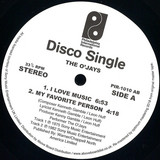
Barely disco and hardly jazz, Rupa Biswas' music the halfway point between Bollywood and Balearic. Tracked in 1982 at Calgary's Living Room Studios with a crack team of Indian and Canadian studio rats alike, both "Moja Bhari Moja" and "East West Shuffle" are the perfect fusion sarod and synthesizer. Remastered from original analogue source material and with permission and blessing of the producers and performers.
out of Stock
Last delivered 3 years ago available to reorder, subject to availability
"You and Me" by Penny & the Quarters simply refused to stay lost. For 40 years, the song sat silent in a box of reels before heartthrob Ryan Gosling selected it to star in 2010's indie weeper Blue Valentine. The power of the track set off an international treasure hunt in pursuit of the mysterious artists behind it. Since then, "You and Me" has soundtracked thousands of weddings, spawned hundreds of YouTube covers, and tugged heartstrings for scores of advertisements and films. Fifteen years after "Eccentric Soul: The Prix Label" became Numero's worst selling compilation, we've reanalyzed the tapes and selected 11 equally-as-fascinating rehearsals caught by engineer Clem Price in Columbus, Ohio, in 1970.
"You and Me" by Penny & the Quarters simply refused to stay lost. For 40 years, the song sat silent in a box of reels before heartthrob Ryan Gosling selected it to star in 2010's indie weeper Blue Valentine. The power of the track set off an international treasure hunt in pursuit of the mysterious artists behind it. Since then, "You and Me" has soundtracked thousands of weddings, spawned hundreds of YouTube covers, and tugged heartstrings for scores of advertisements and films. Fifteen years after "Eccentric Soul: The Prix Label" became Numero's worst selling compilation, we've reanalyzed the tapes and selected 11 equally-as-fascinating rehearsals caught by engineer Clem Price in Columbus, Ohio, in 1970.
2xLP + Book (Black) Heavy metal? Glam? Hard rock? Make your own fuckin' call, you poser. We're not gonna do it for you. Bound for Hell is early `80s L.A. rock as it actually was: a California cataclysm of drunk and horny headbangers, dressed in sharp, shiny, leather androgyny and fire, kicking crowds in the teeth to clear the way to that one big shot. This 2LP set delivers 21 tracks by 21 artists in an ephemera-stuffed gatefold, plus 144-page hardbound book detailing the Sunset Strip's most razor-sharp heathens. Drumsticks burned. Hands were severed. Faces bled. Heavy was HELL for a half decade and it was a long, long way down.
2xLP + Book (Black) Heavy metal? Glam? Hard rock? Make your own fuckin' call, you poser. We're not gonna do it for you. Bound for Hell is early `80s L.A. rock as it actually was: a California cataclysm of drunk and horny headbangers, dressed in sharp, shiny, leather androgyny and fire, kicking crowds in the teeth to clear the way to that one big shot. This 2LP set delivers 21 tracks by 21 artists in an ephemera-stuffed gatefold, plus 144-page hardbound book detailing the Sunset Strip's most razor-sharp heathens. Drumsticks burned. Hands were severed. Faces bled. Heavy was HELL for a half decade and it was a long, long way down.
Gather your loved ones, Together is here. Duster's fourth album is a 13-song exploration of comfortable, interplanetary goth. A sonic vaseline of submerged guitars, solder-burned synths, and over-driven rhythm tracks. "I know people say, `Oh Duster music so sad, we've even said it ourselves before," Clay Parton said. "But it's a lot more like absurdism than nihilism."
Among the rarest albums from Jim Kirchstein's Wisconsin-based Cuca label, 1964's Birdlegs & Pauline runs a playful gamut of girl group soul, sultry R&B, bluesy torch songs, and junk shop doo-wop. The Rockford, Illinois-based husband and wife duo struck gold with their Top 20 R&B hit "Spring" the year prior and frequently returned to Sauk City to see if there was any additional magic up Cuca's sleeve. Gathered here are the best of Birdlegs & Pauline's family album of songs, featuring several previously unissued songs found deep in the Cuca vault.
Among the rarest albums from Jim Kirchstein's Wisconsin-based Cuca label, 1964's Birdlegs & Pauline runs a playful gamut of girl group soul, sultry R&B, bluesy torch songs, and junk shop doo-wop. The Rockford, Illinois-based husband and wife duo struck gold with their Top 20 R&B hit "Spring" the year prior and frequently returned to Sauk City to see if there was any additional magic up Cuca's sleeve. Gathered here are the best of Birdlegs & Pauline's family album of songs, featuring several previously unissued songs found deep in the Cuca vault.
From the dawn of doo-wop to the death of disco, the Notations saw_and sang_it all. Persisting through changing trends and technologies, on major labels and minor ones, produced by both Syl Johnson and Curtis Mayfield, nothing could stop the Notations from representing Chicago's Southside for decades. The first overview of their indie label golden age, Still Here 1967-1973 finds the Notations at a musical crossroads, turning from simmering R&B ballads to socially-conscious soul. Offering up a platter of golden-dipped harmonies, inventive arrangements, and super-powered soul, the Notations survived as unheralded legends in their own time.
Gather your loved ones, Together is here. Duster's fourth album is a 13-song exploration of comfortable, interplanetary goth. A sonic vaseline of submerged guitars, solder-burned synths, and over-driven rhythm tracks. "I know people say, `Oh Duster music so sad, we've even said it ourselves before," Clay Parton said. "But it's a lot more like absurdism than nihilism."
Gather your loved ones, Together is here. Duster's fourth album is a 13-song exploration of comfortable, interplanetary goth. A sonic vaseline of submerged guitars, solder-burned synths, and over-driven rhythm tracks. "I know people say, `Oh Duster music so sad, we've even said it ourselves before," Clay Parton said. "But it's a lot more like absurdism than nihilism."
Gather your loved ones, Together is here. Duster's fourth album is a 13-song exploration of comfortable, interplanetary goth. A sonic vaseline of submerged guitars, solder-burned synths, and over-driven rhythm tracks. "I know people say, `Oh Duster music so sad, we've even said it ourselves before," Clay Parton said. "But it's a lot more like absurdism than nihilism."
Screaming suburban blues straight from the pages of HeartattaCk magazine, Current exploded out of the early-’90s Midwestern emo scene in a fit of D.C. hardcore-inspired rage. Spread across three LPs, Yesterday’s Tomorrow Is Not Today compiles the quartet’s lone album, two EPs, split 7”s with Indian Summer and Chino Horde, miscellaneous compilation debris, and nine previously unissued alternates, including the infamous KLXU radio show. Remixed and mastered from the original tapes, Current’s complete discography is annotated in Leor Galil’s exhaustive survey, illustrated with period photos, flyers, and cut-n-paste sleeve art across 24 pages.
After the Pacific Northwest grunge raids of the early '90s that saw Nirvana, Mudhoney, and even the Melvins hoisted up the major label flagpole, Unwound's 1993 debut came as a welcomed reprieve for underground noise-niks everywhere. A pulsing cluster of wiry feedback, lurching bass, and single stroke rolls, Fake Train entangles the energies of frustrated backpack emo, faded Riot Grrrl back issues, and their own dash of teen spirit and unleashes it all in an earsplitting 10-song assault.
Comes on like an homage to Wire's 1 2 X U' as filtered through Minor Threat and a broken bottle of Robitussin.' —Pitchfork
It's no contest: Unwound is the best band of the '90s.' — A.V. Club
Recorded in 1971 by a 27-year-old pastor and an after school program choir, Like A Ship is a stirring and powerful meditation on the wayward aftermath of the Civil Rights Movement. Tracked with the help of Chess/Cadet maestros Gene Barge, Phil Upchurch, and Richard Evans, the album is a mix of euphoric gospel and Mayfield-esque political soul, with sleigh bells, hand claps, and jazzy piano stabs. Sampled by T.I., Kanye, and Khaled, Barrett created a rapturous, crossover gospel classic that's still wildly relevant.
From a humble storefront studio located in a shoeshine parlor on Norfolk, Virginia's Church Street, Noah Biggs built a world. Hustler by day, gambler by night, the always-in-a-suit Biggs took a gaggle of off-brand singers and combined his connections and charisma to forge timeless soul music during a period of deep upheaval. Compiled here are 25 of Shiptown's most compelling sides recorded between 1965-1977, from the likes of Ida Sands, The Soul Duo, The Anglos, Dream Team, The Grooms, Positive Sounds, Barbara Stant, Wilson Williams, Art Ensley, and yes, Flip Flop Stevens.
From a humble storefront studio located in a shoeshine parlor on Norfolk, Virginia's Church Street, Noah Biggs built a world. Hustler by day, gambler by night, the always-in-a-suit Biggs took a gaggle of off-brand singers and combined his connections and charisma to forge timeless soul music during a period of deep upheaval. Compiled here are 25 of Shiptown's most compelling sides recorded between 1965-1977, from the likes of Ida Sands, The Soul Duo, The Anglos, Dream Team, The Grooms, Positive Sounds, Barbara Stant, Wilson Williams, Art Ensley, and yes, Flip Flop Stevens.
Not to be confused with English commercial funk outfit, Lou Ragland's Hot Chocolate trio steamed out of the Cleveland scene in the early '70s powered by their own recipe of groove-forward R&B. Housed in a replica jacket showcasing Dick Dugan's ubiquitous cartooning, Numero is proud to present the first American repressing of this Forest City touchstone since its original release; a steaming mugful of funkier-than-thou tunes from the incomparable Ragland songbook. Hot is, after all, funk's ideal serving temperature.
out of Stock
Last delivered 4 years ago available to reorder, subject to availability
Not to be confused with English commercial funk outfit, Lou Ragland's Hot Chocolate trio steamed out of the Cleveland scene in the early '70s powered by their own recipe of groove-forward R&B. Housed in a replica jacket showcasing Dick Dugan's ubiquitous cartooning, Numero is proud to present the first American repressing of this Forest City touchstone since its original release; a steaming mugful of funkier-than-thou tunes from the incomparable Ragland songbook. Hot is, after all, funk's ideal serving temperature.
out of Stock
Last delivered 4 years ago available to reorder, subject to availability
The last and most monumental chapter of Lou Ragland's Cleveland career. Understand Each Other serves as a spiritual magnum opus of generations of soul luminaries from the Forest City. The album opens with the socially conscious title track backed by the full force of the Cleveland Orchestra, gutting out a second place finish to Marvin Gaye's What's Going On in both its mission and its mix. This 45th anniversary pressing houses fresh remasters from the original reels in a replica jacket, while Remus Peterson's handsketched depiction of Lou Ragland as peacemaker implores a sabre-toothed tiger and a dove to "Understand Each Other."
out of Stock
Last delivered 4 years ago available to reorder, subject to availability
The last and most monumental chapter of Lou Ragland's Cleveland career. Understand Each Other serves as a spiritual magnum opus of generations of soul luminaries from the Forest City. The album opens with the socially conscious title track backed by the full force of the Cleveland Orchestra, gutting out a second place finish to Marvin Gaye's What's Going On in both its mission and its mix. This 45th anniversary pressing houses fresh remasters from the original reels in a replica jacket, while Remus Peterson's handsketched depiction of Lou Ragland as peacemaker implores a sabre-toothed tiger and a dove to "Understand Each Other."
out of Stock
Last delivered 4 years ago available to reorder, subject to availability
A masterpiece of the schooner rock variety, Black and White Raven is an album that emerged from Archie James Cavanaugh’s youthful dream of recording his own music while stuck in the Alaskan wilderness. With a freewheeling cast culled from Archie’s travels around the Pacific Northwest, including Redbone's Tony Bellamy and Pete DePoe, Black and White Raven was set down as the ’70s crested. Traces of disco, AM gold, gospel, and yacht mixed freely with his Tlingit heritage, creating a breezy and optimistic portrait of life in the 49th state.
A masterpiece of the schooner rock variety, Black and White Raven is an album that emerged from Archie James Cavanaugh’s youthful dream of recording his own music while stuck in the Alaskan wilderness. With a freewheeling cast culled from Archie’s travels around the Pacific Northwest, including Redbone's Tony Bellamy and Pete DePoe, Black and White Raven was set down as the ’70s crested. Traces of disco, AM gold, gospel, and yacht mixed freely with his Tlingit heritage, creating a breezy and optimistic portrait of life in the 49th state.
The ninth installment in Numero's Cabinet of Curiosities is 100% chart smashes. Culled from the depths of the private press, Super Hits gathers 12 magical adaptations from the Me Decade's introspective songbook. Pop this oversized 8-Track into your Fleetwood Weltron and enjoy a motley crew of lounge singers, wedding bands, synth enthusiasts, trailer park dreamers, accountants, gym teachers, and more as they bring their own unique energy to classics by Steely Dan, War, Boz Scaggs, Neil Diamond, John Denver, Smokey Robinson, The Carpenters, Redbone, The Box Tops, Fleetwood Mac, and more. Tape warble not included.
From the landlocked tropical savanna of Upper Volta, an ever-evolving cast of musicians brought the world's rhythms to the streets of their native Bobo-Dioulasso. Combining Congolese rhumba, American R&B, French yé-yé, Cuban son, and regional Senufo and Mandingo traditions, Orchestre Volta Jazz was at the epicenter of the West African musical explosion of the '60s and '70s. Air Volta compiles nine original songs originally issued on the Disques France-Afrique and Sonafric labels, a peerless primer of a group that turned the brutality of colonialism into something beautiful and enduring.
Connecting Wasulu hunter music, griot praises, pastoral Senufo dances, Fula and Mandingo repertoire with western psychedelia, blues, and Nigerian afro-beat, Zani Diabaté's Super Djata Band was among Mali's top orchestras. Tracked live inside Radio Mali's cozy environs in January 1982, En Super Forme was briefly available via Côte d'Ivoire's Musique Mondiale imprint. The album centers around Diabaté and his electric guitar's pyrotechnics, a relentless shredder that stands shoulder to shoulder with Mali's fingerstyle gods Ali Farka Touré and Djelimady Tounkara.
Connecting Wasulu hunter music, griot praises, pastoral Senufo dances, Fula and Mandingo repertoire with western psychedelia, blues, and Nigerian afro-beat, Zani Diabaté's Super Djata Band was among Mali's top orchestras. Tracked live inside Radio Mali's cozy environs in January 1982, En Super Forme was briefly available via Côte d'Ivoire's Musique Mondiale imprint. The album centers around Diabaté and his electric guitar's pyrotechnics, a relentless shredder that stands shoulder to shoulder with Mali's fingerstyle gods Ali Farka Touré and Djelimady Tounkara.
Propelled by his 1956 Lee Hazlewood-produced hit "The Fool," Sanford Clark was already a rockabilly legend in his own right by the time he swapped his hair gel and switchblade for a pair of cowboy boots on They Call Me Country. Recorded between 1965-67 and originally released as a series of singles for Phoenix's Ramco label, the 12 tracks on this LP borrow Bakersfield's outlaw sound and ignore Nashville's countrypolitan flair, standing as a true lost masterpiece of country music's third generation. Clark's booming baritone tells tales of bar fights, heartaches, and drinking til you can't stand, while Waylon Jennings provides a backdrop of fuzzed out guitar twang. Mastered from the original session tapes and back on vinyl for the first time since the Nixon administration.
out of Stock
Last delivered 4 years ago available to reorder, subject to availability
Far from the twin epicenters of New York and Miami, Carlos Ruiz and his Ebirac label were both feeling and generating the aftershocks of the mid-'70s salsa boom. Holed up in their own bustling Puerto Rican community center on Chicago's west side, these third coast salseros plied their trade outside the hot lights, cutting their teeth in city parks, VFW halls, and Holiday Inn rec rooms. Nearly 50 records survive in the wake of orquestas La Justicia, La Solucion, and Tipica Leal '79, the most impassioned, singular moments of which are compiled here.
out of Stock
Last delivered 4 years ago available to reorder, subject to availability
An American soul vocal group that would go on to shape the sound of pop music much farther beyond their imaginations, The Ponderosa Twins Plus One featured two sets of identical teenage twins, Alfred and Alvin Pelham, and Keith and Kirk Gardner, along with Ricky Spicer. The group released a couple of singles and a lone album for Cleveland's Saru label in 1971, breaking up and disbanding as adolescence waned. A recent sample darling of both Kanye West and Tyler The Creator, "Bound" has revealed the Ponderosa Twins Plus One as the real Midwest kid soul deal. Numero is proud to present the first official American repressing of the original 1971 release, with fresh remasters from the original analog tapes, two previously unissued bonus tracks, and a replica tip on sleeve, making this an album you're bound to fall in love with.
Don't let the postcard-generic cover art fool you, Summer Brings The Sunshine stands head and shoulders above nearly any major label country rock album crowding mid-'70s record bins. Next to the hundreds or even thousands of slick productions flowing out of Nashville and Los Angeles, Jimmy Carter scoured his rural Missouri surroundings for farmhands and semi-pros alike to lay down eight farm-isolated originals in 1977. Tasty female backing vocals, languid pedal steel, and feisty guitar licks abound on this exalted and near-peerless slice of Cosmic American Music.
Ten years into his role as poster boy for pop soul and peak-hour R&B, Syl Johnson did an unlikely about-face and cut the most inspiring and powerful song he'd ever touch. Issued on 45 in September of 1969, "Is It Because I'm Black" struck an immediate chord within the black community, forcing the song up the charts by sheer volume of call-in requests. It would be Syl's biggest hit for Twinight, climbing as high as #11 on the Billboard R&B chart during its 14-week stay, marking the defining moment of what had become more than just an occupation. Syl had his hands on a career and worked tirelessly rehearsing his next opus, an album of songs reflective of the changing times. With "Is It Because I'm Black" still bolding the pages of Billboard, the coming LP's title appeared to Syl plain as day _ or, in this case, black as night. Issued in April 1970 _ a full 13 months before Marvin Gaye's What's Going On _ Is It Because I'm Black can rightly be called the first black concept album, a distinction few give it credit for. But that factoid, whatever its meaning then or now, failed to inspire music buyers: Johnson's record never got a whiff of the two million copies Gaye's did in its first year of availability. Syl lays the blame squarely on the record's lack of marketability to a white audience. The album's cover didn't exactly move units either. Photographer Jerry Griffith dragged Syl to a burned-out building on 43rd Street to shoot the back cover image, and he finger-painted the iconic title over a stock photo of an eroding brick wall. The title track, coupled with the politically charged "I'm Talking About Freedom" and ghetto conscious "Concrete Reservation" sealed the album's cool reception as the work of an "angry black man." Which is unfortunate, as "Together Forever," "Come Together," and "Black Balloons" are positively uplifting, forming their own pot of gold at the end of a grayscale rainbow. The album's closer burns the brightest. "Right On" devolves into a full-on party track, ending with Syl riffing on the line "I'm gonna keep on doing my thing," as if to answer his critics before their needles reached the run-out groove.
out of Stock
Last delivered 4 years ago available to reorder, subject to availability
A beautifully haunting and plaintive collection of songs, the album stands as a refracted echo of an imagined life as it may have been in an old country of long ago. With songs reaching out through time and space, it captures a fascinating musical and personal journey of a man displaced from his native Dalmatia (now Croatia) during WWII who eventually ended up in Los Angeles in the mid 60s via time in a German labour camp, West Yorkshire and Canada.
Born in 1923 in the coastal town of Bekar, Branko and his family arrived on North Hollywood in 1964. Abandoning his previous profession as a barber, he began to focus on guitar repair and taught himself to fix various related instruments and studio gear.
A beautifully haunting and plaintive collection of songs, the album stands as a refracted echo of an imagined life as it may have been in an old country of long ago. With songs reaching out through time and space, it captures a fascinating musical and personal journey of a man displaced from his native Dalmatia (now Croatia) during WWII who eventually ended up in Los Angeles in the mid 60s via time in a German labour camp, West Yorkshire and Canada.
Born in 1923 in the coastal town of Bekar, Branko and his family arrived on North Hollywood in 1964. Abandoning his previous profession as a barber, he began to focus on guitar repair and taught himself to fix various related instruments and studio gear.
In the midst of the UK house rave-olution of the early-’90s, London’s V4 Visions imprint documented the confluence of street soul, deep house, swingbeat, and jungle sounds emanating from the clubs and pirate radio signals. Over the course of half a decade, V4’s unparalleled 12” output referenced every significant Black British music scene; from lovers rock to jazz-funk, sound system reggae to hip hop, new jack swing to garage, from artists Ashaye, Julie Stapleton, Maureen Mason, Rohan Delano, The Wades, and Endangered Species. This 18-track double LP is the first critical overview of the label, with extensive notes by Simon Reynolds, era-defining photographs, and fresh remasters, all housed in a glorious foil-stamped gatefold tip-on sleeve. Is this a dream?
out of Stock
Last delivered 4 years ago available to reorder, subject to availability
Previously issued on three rare cassette-only editions, Joanna Brouk's 1980 sophomore album The Space Between has finally been given spacious LP quarters. The side-long title track, performed by Brouk's Mills College instructor and sometime-lover Bill Maraldo is among the deepest and most distinctive pieces in the new age canon, while side B's three cuts expand the theme in hypnotic new directions.
In the late '70s, three do-right women from Cleveland forged a brief partnership with Ohio's everything man, Lou Ragland. Unlike the prefabricated singing combos of the day, Lily Pearson, Annette Warren, and Avetta Henry swapped lead duties as situation demanded. When a Ragland-centric publicity stunt preempted a concert appearance, Love Apple disintegrated, abandoning this rehearsal tape within the lo-fi confines of Thomas Boddie's cherished Eastside studio. Devoid of bass, the sparse instrumentation (only Lou on guitar and piano and Hot Chocolate's Tony Roberson on drums) accentuates each vocalist's aptitude, showcasing some of Ragland's finest songwriting in the process. During any given take, Ragland can be heard calling audibles, directing his singers to repeat a passage, or lending his own sweet tenor to the vocal mix. Never intended for release, Love Apple's six-song sketch is the perfect companion to I Travel Alone, bringing Ragland's unique musical vision into sharper focus.
out of Stock
Last delivered 3 years ago available to reorder, subject to availability
Much is made of Detroit techno progenitors proximity to the auto plants. Similarly, overlooked electronic pioneer Jeff Phelps was raised just blocks from a Western Pennsylvania steel mill_close enough to smell the sulphur and hear the roaring blast furnace. When Tascam released their ground breaking Portastudio in 1984_allowing multi tracking on the far more financially inclusive cassette tape_Phelps purchased one immediately, and quickly added a Roland SH-101 monophonic synthesizer, Fender Rhodes suitcase piano, Roland drum machine, and a basic Radio Shack stereo mic. Those basic tools were employed on his first commercial productions for his own Engineered For Sound label: 1985's "Magnetic Eyes" LP and Antoinette's "Now You're Gone" 45. These DIY sketches generated few profits, and Phelps kept his day job in the energy business. Jeff Phelps eventually found his way back into performance and recording, starting with The Next Level Band near the end of the decade. Houston gourmands might have caught them at the opening of Texas's first Cheesecake Factory. "Magnetic Eyes" has already had a few lives, between TomLab's 2010 replica pressing and inclusion on Dante Carfagna's genre-defying Personal Space compilation. This 2021 edition features the heretofore un-re-released second mix, completed after discovering flaws in the initial 1985 pressing. Enjoy this technically perfect, artist-approved version of a visionary techno-adjacent masterwork.
On his 2000 debut, Da Abtomatic Meisterzinger Mambo Chic, Megira channels the optimism of post-war America, narcoleptic surf, and the Twin Peaks soundtrack into a lo-fi masterpiece all his own. Sung in both Hebrew and English, Mambo Chic moves at a deliberate pace, unconcerned by the traffic of the modern world and wrapped in a blanket of Tascam 4-track hiss. On “Tomorrow’s Gone” Megira
achieves the feat of being so far back in time that he’s somehow living in the future and waiting for the rest of us to arrive.
On his 2000 debut, Da Abtomatic Meisterzinger Mambo Chic, Megira channels the optimism of post-war America, narcoleptic surf, and the Twin Peaks soundtrack into a lo-fi masterpiece all his own. Sung in both Hebrew and English, Mambo Chic moves at a deliberate pace, unconcerned by the traffic of the modern world and wrapped in a blanket of Tascam 4-track hiss. On “Tomorrow’s Gone” Megira
achieves the feat of being so far back in time that he’s somehow living in the future and waiting for the rest of us to arrive.
Home to Cuca Records and hundreds of Nashville-fantasizing pluckers and singers, Wisconsin’s Driftless region was a hotbed of country music in the 1960s. Influenced by old-timey ethnic songs, Bakersfield outlaws, countrypolitan rainbows, and the lonesome twang of every rural route roadhouse, these 17 Driftless Dreamers washed up at Jim Kirchstein’s Sauk City record plant with little more than $100 and a longing. Collected here are the fruits of Cuca’s documentary approach to record making, capturing the voices and stories of a culture and glacier in abatement.
2021 Repress features 140g Gold Vinyl and a Velour Sleeve. LP in tip-on jacket with purple velvet and gold foil stamping. In 1975, Brooklyn transplant Pepe Willie booked time at Cookhouse Recording Studios in Minneapolis, Minnesota, to demo five original compositions. Without roots in the Twin Cities' insular scene, Willie had no fixed backing group to help realize the arrangements he and vocalists Marcy Ingvoldstad and Kristie Lazenberry had been rehearsing. Willie organized a young cast of backing musicians for the session, among them his wife's cousin: a 16-year-old guitar prodigy named Prince Rogers Nelson. Known colloquially as "The Cookhouse 5" these recordings showcase Prince's instantly recognizable guitar playing, seasoning to perfection 94 East's short-but-sweet songbook. A crucial document concerning the origins of the Minneapolis Sound, the B-side boasts instrumental versions of each infectious tune, providing an even greater vantage point from which to admire the Purple One's expressive playing style, already evident in his teenage years.
out of Stock
Last delivered 4 years ago available to reorder, subject to availability
Home to Cuca Records and hundreds of Nashville-fantasizing pluckers and singers, Wisconsin’s Driftless region was a hotbed of country music in the 1960s. Influenced by old-timey ethnic songs, Bakersfield outlaws, countrypolitan rainbows, and the lonesome twang of every rural route roadhouse, these 17 Driftless Dreamers washed up at Jim Kirchstein’s Sauk City record plant with little more than $100 and a longing. Collected here are the fruits of Cuca’s documentary approach to record making, capturing the voices and stories of a culture and glacier in abatement.
In 1971, Bulbous Creation poured what little personal surplus they had into a full day of recording at Cavern Studios, tracking enough material for a full length album. The band wouldn’t stay together long enough to save up for a custom pressing on Rock. Singer/guitarist Paul Parkinson was deeply individualistic, and left to perform his songs as he thought they should be, as a solo act. He preferred coffee shops to concert halls, and would stick to his craft another 20 years before hanging it up. Drummer Horstmann followed suit. Jim “Bugs” Wine and guitarist Alan Lewis soldiered on, shortening their name to the more sensible Creation and adding vocalist Wayne Austin, dynamic drummer Tommy Ward, and guitarist Roger Sewell. The Bulbous Creation LP was nearly doomed to oblivion, but for the efforts of Rich Haupt, who issued an unauthorized eight song LP in 1995 on his Rockadelic imprint. Lewis died in 1998 of esophageal cancer. When Paul Parkinson died of leukemia in 2001, a lone copy turned up amongst his possessions, with piece of mind that someone, somewhere, was listening.”
As escapism from corporate banality turned the corner in the `90s, a new generation of vibrant, software generated soundscapes emerged. Communal access to the internet propagated the new hive mind of ideas online, giving way to smoother, stress-free textures. The PC revolution opened the gateway to ray-traced playgrounds of color and light, allowing for visions of utopic proportions to manifest themselves on screensavers far and wide. Boot up your machine, load the software on this floppy diskette, and drop out of a reality bounded by the physical laws of the universe. Numero 95 is the soundtrack to the screen saver fever dream we're all trying to climb back into. Eight droplets of proto-vaporwave, synthesized in vinyl (or digital) form, fresh from Numero's archive of forgotten sounds. Are you looking for that half way point between smooth jazz and new age? Mac and PC? Quantum Leap and the X-Files? This software is for you. Housed in a replica floppy diskette, Numero 95 explores an early computer music unbound by scene or region. Eight solo pioneers vibing out at home in their headphones, traveling as far as the sound card would allow. This is music that barely escaped the hard drive and yet percolates at the edges of the algorithm 30 years later. Welcome to Numero 95.
out of Stock
Last delivered 4 years ago available to reorder, subject to availability
Der Klassiker des einstigen Pfarrers und Kreuzzügler des Allgemeinwohls PASTOR T. L. BARRETT & THE YOUTH OF CHRIST CHOIR von 1971 gilt bis heute als der heilige Gral des Gospel-Soul. Mit dem seinerzeit selbst veröffentlichten Werk des JESSE JACKSON JR.-Mitstreiters demonstrierte BARRETT seine Leidenschaft für die Musik, seine wilde Entschlossenheit, Kinder vor der Straße zu bewahren und sein Talent für mitreißende Predigten (die nebenbei Künstler wie EARTH, WIND & FIRE und DONNY HATHAWAY dazu brachten, seine Kirche zu besuchen) mit einem Album, das vom Chess Records Saxophon Helden Gene Barge und einer Reihe von Musikern wie Richard Evans, Phil Upchurch und dem stürmischen Gesang des YOUTH FOR CHRIST CHOIRs profitiert. Heilige Grooves, Breaks, Beats und Lobpreisungen mit eingängigen Refrains. Chicago pastor and activist T.L. Barrett's rare gospel soul classic Like A Ship. (Without A Sail) is one of the holy grails of gospel soul. Self-released in 1971, Like A Ship was the result of Barrett channeling his passion for music, a determination to keep children off the streets, and his charismatic preaching (which attracted the likes of Earth, Wind & Fire and Donny Hathaway to his sermons at Mount Zion Baptist Church) into the production of the album, a project bolstered by the saxophonist and arranger Gene Barge of the famed Chess Records, and backed by a cast of players that included Richard Evans, Phil Upchurch and the rapturous vocals of the Youth For Christ Choir. Like A Ship... is filled with sanctified grooves and spiritual praise delivered with a righteous, infectious chorus.
out of Stock
Last delivered 5 years ago available to reorder, subject to availability
Art-house kosmische from the battered basements of pre-9/11 New York. Polyrhythmic screamo for underemployed Gen-Xers and trust fund weed dealers alike. La Mia Vita Violenta, Blonde Redhead’s 1995 sophomore effort, in print as a definitive single LP for the first time since… ever.
“These songs combine a raw need, a ready access to neediness, with seemingly incongruous cinematic changes reminiscent of ‘60s Italian pop music and movie scores. They switch between emotional grandeur and eye scratching immediacy.” —Arto Lindsay
out of Stock
Last delivered 5 years ago available to reorder, subject to availability
A Civil Rights activist who marched alongside Jesse Jackson, preacher for Earth Wind & Fire, Stax recording artist, “Family Feud” contestant, Stephen Curry soundtracker, high school drop out, and Kanye samplee, Pastor T. L. Barrett stuffed a dozen lives into one. His signature 1971 spiritual soul jam “Like A Ship” has transcended its humble South Side Chicago beginnings, rediscovered by Leon Bridges and Beck and described by Radioheadʼs Colin Greenwood as “The most euphoric celebratory music that makes you want to jump around the house and explode with joy.” This box is the definitive statement on Barrettʼs two decades of recordings, 49 tracks spread across five LPs, including Like A Ship, Do Not Pass Me By Volume 1 & 2, I Found The Answer, plus a bonus album of singles and sermons, a 10,000 word blow-by-blow, and illustrated discography.
The Great Alternative Boom of the early ’90s had begun to wither on corporate FM barely halfway through the decade, but the ever-changing underground had almost entirely regenerated after two major-label thrifting trips. In the ever-in-flux city of Boston, Karate positioned themselves as a crucial tendril in a sprawling nationwide community. They did so largely by refusing to stick to any single formula from the myriad of styles at their root—slowcore, post-hardcore, and jazz. As if to make a point, Karate’s lineup went through its own shift too. In the lead up to 1997’s In Place of Real Insight, Eamonn Vitt took up the guitar, and Karate compatriot Jeff Goddard entered the fold to become the band’s bassist. Armed with two guitarists, the band got significantly louder, and they smeared punk fury all over their second LP.
The Great Alternative Boom of the early ’90s had begun to wither on corporate FM barely halfway through the decade, but the ever-changing underground had almost entirely regenerated after two major-label thrifting trips. In the ever-in-flux city of Boston, Karate positioned themselves as a crucial tendril in a sprawling nationwide community. They did so largely by refusing to stick to any single formula from the myriad of styles at their root—slowcore, post-hardcore, and jazz. As if to make a point, Karate’s lineup went through its own shift too. In the lead up to 1997’s In Place of Real Insight, Eamonn Vitt took up the guitar, and Karate compatriot Jeff Goddard entered the fold to become the band’s bassist. Armed with two guitarists, the band got significantly louder, and they smeared punk fury all over their second LP.
In the wake of Bitch Magnet and current of Superchunk, Sooyoung Park and Mac McCaughan formed a raw version of Seam in the summer of ’91. With bassist Lexi Mitchell, the trio banged out an album and two singles worth of shambolic dream pop in the sweltering Chapel Hill heat. Ten songs of talk-whispered vocals, sloshing guitar solos, scattered snare rolls, Velocity Girl’s Sarah Shannon, and the original version of Codeine’s slowcore classic “New Year’s,” on LP for the first time in 30 years.
Underground rock festered and splintered as it spread through the U.S. in the mid-’90s, the alternative boom giving rise to microcosmic regional scenes singularly focused on feral powerviolence or screamo songs about breakfast. Boston’s Karate emerged as a force that could grip a national youth movement whose disparate tastes still commingled in the inky pages of fanzines overflowing with florid prose and on concert calendars for volunteer-run DIY spaces, community centers, and bowling alleys. In this world, Karate’s music was an enigma, one equally inviting to sneering punks and highfalutin indie-rock aficionados.Their 1996 self-titled debut, issued on Southern Records, set the standard.
Lasooing together white-knuckle posthardcore tension, sharply focused slowcore serenity, and resplendent jazz complexity, Karate eschewed settling in any one definiable style. But they certainly used the language of punk to get their point across; occasionally, guitarist Geoff Farina abandons his warm, hushed cadences for a hoarse shout that made him sound ragged, intensifying an aggression that burst out with every snaggletoothed guitar riff or drum snap that went off like canonfire.
Few followed their path—but who could keep up? Karate could make pensive moods blossom into feverish rollicking (“What Is Sleep?”), gracefully tip-toe around aggressive punk explosions without getting bent out of shape (“Bodies”), and stretch out
slowcore’s quietest reveries till their reflective notes sound ripped from an improvisational jazz session (“Caffeine or Me?”). Karate formally introduced the trio as a vital part of an independent U.S. punk scene stubbornly flowering in the face of the major labels’ ’90s harvest.
A seamless mix of the organic and inorganic, the recent past and distant future, and the possible and impossible, Japanese multi-media artist Masumi Hara's sophomore album arrived like a fish on the moon in 1984. An album filled with contradiction and purpose, 4 X A Dream is both balearic acid folk and damaged steel drum dub, hi-tech new wave balladry and ambient synth pop. Classical and neoimpressionist vibes haunt and entrance. Quite possibly the most unique LP you'll ever add to your collection.
A seamless mix of the organic and inorganic, the recent past and distant future, and the possible and impossible, Japanese multi-media artist Masumi Hara's sophomore album arrived like a fish on the moon in 1984. An album filled with contradiction and purpose, 4 X A Dream is both balearic acid folk and damaged steel drum dub, hi-tech new wave balladry and ambient synth pop. Classical and neoimpressionist vibes haunt and entrance. Quite possibly the most unique LP you'll ever add to your collection.
The final album in Pastor T.L. Barrett’s 1970s four-part suite of gospel funk LPs, Do Not Pass Me By finds the fiery preacher getting spaced out on God’s love. Accompanied by his Youth For Christ Choir, the eight-song record is buoyed by the seven- minute opus “Father Stretch My Hands,” later sampled by Kanye West on 2016’s The Life of Pablo.
As escapism from corporate banality turned the corner in the ’90s, a new generation of vibrant, software generated soundscapes emerged. Communal access to the internet propagated the new hive mind of ideas online, giving way to smoother, stress-free textures. The PC revolution opened the gateway to ray-traced playgrounds of color and light, allowing for visions of utopic proportions to manifest themselves on screensavers far and wide. Boot up your machine, load the software on this floppy diskette, and drop out of a reality bounded by the physical laws of the universe.
The eighth entry in Numero’s Cabinet of Curiosities series.
out of Stock
Last delivered 5 years ago available to reorder, subject to availability
From Shrine to Stax, Isaac Hayes to Gloria Ann Taylor, The Mad Lads to The Staples Singers, Detroit to Atlanta, Kendrick to Pusha-T, Dale Warren’s singular voice is the lone constant. Beneath the ethereal beauty of his productions was a genius crippled by his unbridled id. His everevolving 24-Carat Black project spanned the ’70s, producing a masterpiece and an unfinished follow up. Discovered in a storage space were Warren’s 1980s demos cut with grown n’ sexy divas Princess Hearn, Vicki Gray, and LaRhonda LeGette right before his untimely death at the age of 50. III is an unfinished symphony that peels away the final layer of Dale Warren’s mysterious oeuvre.
out of Stock
Last delivered 5 years ago available to reorder, subject to availability
Ten incredible albums culled from the deepest, weirdest coop of record enthusiasts ever gathered under one banner. We’ve spared no expense packaging these, pairing the idea of the Art of Compilation with living and breathing art, creating little fortune cookies baked in a factory of forgotten dreams. Video games, pyramids, trading cards, matchbooks, mazes, lottery tickets, film canisters, yearbooks, and various other exercises in design absurdity.
The lost yearbook from Louis Wayne Moody High’s graduating class of 1967, chronicling the peaks and valleys of teenage angst, lost loves, and life after summer vacation. Fourteen moody melodies of surf kings, guitar Bettys, talent show psychers, and pre-S.D.S. soft- poppers. Walls of jangly guitars, maudlin organs, and melancholy harmonies deliver the bummer to ring in the summer.
out of Stock
Last delivered 6 years ago available to reorder, subject to availability
Just as Al Green’s “Back Up Train” was pulling out of Grand Rapids, Michigan, for a whistle stop tour to the top of the charts, producer Palmer James began eyeing another Furniture City branch line: Tommy McGee. The result was 1976’s Positive-Negative , the creative apex in a career littered with endless bottoms. Gathered for the first time are McGee’s timeless album, singles for Golden Voice, Mercury, TMG, and Tosted, as well as the complete output of his nascent mid-’60s funk combo the T.M.G.’s
out of Stock
Last delivered 6 years ago available to reorder, subject to availability
In 1975, Pepe Willie booked time at Cookhouse Recording Studios in Minneapolis to demo five original compositions. Known colloquially as “The Cookhouse 5” these recordings showcase a 16-year-old guitar prodigy named Prince Rogers Nelson. A crucial document concerning the origins of the Minneapolis Sound, the B-side boasts instrumental versions of each infectious tune, providing an even greater vantage point from which to admire the Purple One’s expressive playing style, already evident in his teenaged years.
Now available to international accounts for the first time, now with a direct to board jacket with gold foil stamping. Limited to 300 copies.
out of Stock
Last delivered 7 years ago available to reorder, subject to availability
Numero's "Planisphere", für diejenigen innerhalb der 30-40 Grad Zone, wird Ihnen ein ziemlich erkennbares Diagramm liefern, um sowohl Deep-Sky-Objekte als auch tellurische emotionale Impulse zu entdecken. Statisch gefüllte Signale, die tief aus dem Inneren der Wände des Laurel Canyon kommen und von Clustern der beginnenden Technologie des späten Jahrhunderts abprallen, werden durch die verdrehten Kaninchenohren eines Chevy Astro Van gezogen. Der zweideutige Klang von Hippies frisch aus dem Hinterland schaukelt Trommelmaschinen durch herzzerreißende Aspirationen, als ob die Musikabteilung des Whole Earth Catalog zum Leben erwachte. Diese 9 Nomaden, die aus dem Astronomieunterricht mit einem Arm voller Brain and Sky Label-Releases hervorgehen, kritzeln Plein Air Narrationen über eine Landschaft, die der Sonne den Rücken kehrt. Genießen Sie den Nachhall unseres himmlischen Heims.
> Individuelle gestanzte 2-farbiges Cover im Spanplatten Look
> Klar bedruckte Hülle mit radialem Kalenderzifferblatt
> Picture Disc LP mit Sternenkarte der Sterne, die am Nachthimmel in der 30¢ª-40¢ª Zone sichtbar sind
out of Stock
Last delivered 7 years ago available to reorder, subject to availability
Switched-on Eugene Documents The Eugene Electronic Music Collective And Some Of The Many Synthed-out Figures In And Around Oregon's Iconic Hippie Stronghold During The 1980s. Whether Connected By Membership, Geography, Or The Tape Trading Scene, The Artists In And Around The Eemc Shared Compelling Visions Of The Future We Now Inhabit, Vividly Captured On Home-recorded Tapes And Distributed Via Zines, Classifieds, And Local Radio. Switched-on Eugene Is A Deep Dive Into A Heretofore Forgotten Sonic Microcosm Unlike Any Other.
Lion—and the mean ecstasy of You've Got A Woman,' the B-side to their sole release—comprise a rare burst of psychedelic-Western soul from two names best known for Dutch progressive rock and new wave. Drummer Peter de Leeuwe, departing from the symphonic leanings of Dutch prog-fixtures Ekseption, penned it in 1975, layering syncopated explosions of hand-claps, vibraslap and slick drumwork with neutron-star density, with super-producer Hans van Hemert nearly bursting Glenn Robles' vocals through the fore. The Shoes Subtle Edit' provides exactly that, gently teasing the organ- and requintohinted contours of the track to better suit the treasure within. Chicago-based septet Whitney have brought some attention to You've Got A Woman' with a recent cover, and the faith with which they recreate much of the original instrumentation proves the extent of Lion's accomplishment.
Recorded in 1971 by a 27-year-old pastor and an after school program choir,
Like A Ship is a stirring and powerful meditation on the wayward aftermath of the Civil Rights Movement. Tracked with the help of Chess/Cadet maestros Gene Barge, Phil Upchurch, and Richard Evans, the album is a mix of euphoric gospel and Mayfield esque political soul, with sleigh bells, hand claps, and jazzy piano stabs. Sampled by T.I., Kanye, and Khaled, Barrett created a rapturous, crossover gospel classic that's still wildly relevant.
The Numero Group's dive into the deep end of America's private press continues. Having battled the witches and wizards of Darkscorch, the outlaws of Cosmic Americana, and traveled alongside Ladies From the Canyon and their Lonesome Heroes, it's time to take it easy.With pop music's volume knob adjusted for deflation in the early '70s, softness begat smoothness. Crewmen arrived from the worlds of jazz, folk, rock, and soul, all peddling a product that was sincere, leisurely, and lofty. A sound that was buoyant, crisp, defined. Sometimes classified as West Coast—and, later, Yacht Rock—the compass points of our Private Yacht expedition are the blue-eyed harmonies of Hall and Oates, the cocaine-dusted Fender Rhodes of Michael McDonald, and the combover strums of James Taylor. Here, at the glassy apex of rock's softer side, 20 strong swimmers are gathered together. An album for both relaxation and reflection, where listeners can enjoy the present, a cool breeze, and a taste of the good life.
Who do we become when we live our dreams It's all here—the high hairdos, the dreams and schemes, the tender camp, the wedding bell fantasias and chaste tragedies. Sister acts, studio receptionists, classmates, angelic voices of the 1960s; some legendary, many hidden in the basement of expired rainbows. Gathered on this deluxe double LP (or CD) are 28 (56 on the compact disc!) foiled escape attempts, now free to soar in girl group heaven.
SECOND REISSUE ON THIS HEAT’s OWN NEW IMPRINT FOLLOWING ‘THIS HEAT’ (TH01LP) WHICH WAS UNCUT ‘REISSUE OF THE MONTH’ RECENTLY WITH 9/10 REVIEW + 4-PAGE FEATURE WITH Q+A.
*24 bit/96 kHz re-master from original analog tapes.
*Heavyweight 180gm vinyl and heavyweight sleeve with pantone printing to match original 1979 release.
Simon Reynolds on Health and Efficiency:
“For some fans, Health and Efficiency is This Heat’s peak achievement – their most concentrated blast of visceral intensity and wayward experimentalism….Lead track “Health & Efficiency” combines fierce angular rock that fully lives up to Cunningham’s belief that This Heat could become a postpunk King Crimson, with a multi-part babble of vocals, clattering percussive timbres, and found sounds.’’
Flipside “Graphic/Varispeed” is more subdued and hypnotic: a wavering tonescape whose duration depends on whether you play it at 45 rpm or 33 rpm. This reissue reproduces the original release’s striking cover image of a human figure painted in blue by Pete Cobb, along with the cryptic flipside of text in many different languages.
Although widely considered to be Post-Punk’s finest, This Heat actually began performing and recording their music in 1976, the early days of London’s punk era. Within their two albums and an EP they perfected a strange and volatile new strain of avant-garde rock that time has proved to be massively influential, a blueprint for much that would follow: post-rock, math rock, homemade musique concrète, experimental electronica. Numerous critics have recognised the band's influence on the music of Sonic Youth, Glenn Branca, Steven Wilson, Public Image Ltd., Radiohead, Swans, Shellac, Young Knives, Black Dice, Lightning Bolt and numerous other experimental and post-rock bands.
Disbanding in 1982 they have left an undeniable legacy that has only continued to grow in stature and relevance.Having recently passed the 50 year anniversary of their first gig, and the recording of material that appears on their debut album, the group’s surviving members Charles Bullen and Charles Hayward, true to their DIY roots, have set up an imprint to release their recordings for their growing fan base that is increasingly recognising their influential place in music history.
‘They went beyond punk before punk had properly started…the entire album is a controlled explosion of ideas. Nearly fifty years on, This Heat’s debut is something the world has still not completely caught up with.’ - Simon Reynolds
‘Over the years, there have been bands to play as aggressively, or even as strangely, but very few have been able to rise from their collective influences and histories to create music so singularly distinctive and inspiring.’ – Pitchfork 9/10
‘This Heat sounded like the future then ... and still do now.’ - Dan Snaith (Caribou)
‘This Heat had a certain kind of force the post-punk bands were unable to adequately control without falling foul of rawk excess, and which the punk bands—albeit blitzing and rowdy—were too basic in form to build.’ – John Calvert , The Quietus
On Dummy’s new album, do you love the color of the sky?, the Los Angeles-based 5-piece deliver a breathtaking piece of work that introduces new textures and rhythms to their already varied and refined catalog. For the band’s third album, and first for new label home Polyvinyl, the group split time between self-recording at their home studio as well as Studio 22, linking up with frequent collaborator and engineer Joo-Joo Ashworth (Corridor, Automatic, Spiral XP). The band focused on intentionality and experimentation, exploring downtempo dance beats and electronic music while pushing the guitar as far as they could, using new self-sampling and processing techniques. Percussionist Alex Ewell’s overall sound design and production skills can be heard across the album, with layered drum sounds and rhythmic tremolo techniques shining throughout. Tracks like “Full Spectrum Dominance” and “Alluvial Fan” showcase the band’s tasteful pop sensibilities, while closing track “Heaven’s What You Make Of
It” features perhaps the strongest vocal delivery yet from vocalist/keyboardist
Emma Maatman. Additionally, the dynamic exchange between guitarists Joe Trainor and Nathan O’Dell is absolutely gorgeous, adding a new layer of immersion and directness that is unlike anything the band has done before. The result is Dummy’s most ethereal and sincere record to date, with more feminine and delicate undertones that sit beautifully alongside the gritty and noisy textures the band has become known for. Dummy has been praised in numerous outlets such as Paste, Stereogum, Aquarium Drunkard and Pitchfork, who described their second album, Free Energy, as “the
sound of a band turning all its potential energy into music that’s dazzlingly kinetic and powerful." The band has toured the US, UK, and EU extensively, with festival appearances at Austin Psych Fest, Treefort Music Festival, and others. In addition to larger outlets and festivals, the band’s strong ties to community and DIY ethos are ever-present, oftentimes preferring to play and connect with different local artists on tour, uplifting those around them while shining a light on the history of independent music.
On Dummy’s new album, do you love the color of the sky?, the Los Angeles-based 5-piece deliver a breathtaking piece of work that introduces new textures and rhythms to their already varied and refined catalog. For the band’s third album, and first for new label home Polyvinyl, the group split time between self-recording at their home studio as well as Studio 22, linking up with frequent collaborator and engineer Joo-Joo Ashworth (Corridor, Automatic, Spiral XP). The band focused on intentionality and experimentation, exploring downtempo dance beats and electronic music while pushing the guitar as far as they could, using new self-sampling and processing techniques. Percussionist Alex Ewell’s overall sound design and production skills can be heard across the album, with layered drum sounds and rhythmic tremolo techniques shining throughout. Tracks like “Full Spectrum Dominance” and “Alluvial Fan” showcase the band’s tasteful pop sensibilities, while closing track “Heaven’s What You Make Of
It” features perhaps the strongest vocal delivery yet from vocalist/keyboardist
Emma Maatman. Additionally, the dynamic exchange between guitarists Joe Trainor and Nathan O’Dell is absolutely gorgeous, adding a new layer of immersion and directness that is unlike anything the band has done before. The result is Dummy’s most ethereal and sincere record to date, with more feminine and delicate undertones that sit beautifully alongside the gritty and noisy textures the band has become known for. Dummy has been praised in numerous outlets such as Paste, Stereogum, Aquarium Drunkard and Pitchfork, who described their second album, Free Energy, as “the
sound of a band turning all its potential energy into music that’s dazzlingly kinetic and powerful." The band has toured the US, UK, and EU extensively, with festival appearances at Austin Psych Fest, Treefort Music Festival, and others. In addition to larger outlets and festivals, the band’s strong ties to community and DIY ethos are ever-present, oftentimes preferring to play and connect with different local artists on tour, uplifting those around them while shining a light on the history of independent music.
,Lick the Spoon, Let it Soften" ist das zweite Album von Lamplight, dem Projekt des in Virginia ansässigen Songwriters Ian Hatcher-Williams und seiner Band aus bewährten Mitstreitern, darunter Mitglieder von Lightning Bug und hemlock. Das selbstbetitelte Debütalbum aus dem Jahr 2024 wurde von KEXP, Stereogum, WBUR, Brooklyn Vegan und The FADER gelobt, landete auf Playlists von Apple Music, KEXP und der Numero Group und führte zu gemeinsamen Auftritten mit Jake Xerxes Fussell, Advance Base, John Andrews und Mutual Benefit. Während das Debüt über mehrere Jahre hinweg Gestalt annahm, entstand dieses Album recht schnell. Die meisten Songs entstanden im August im Rahmen einer ,Ein-Song-pro-Tag"-Schreibübung, teilweise inspiriert von Kahlil Gibrans ,Der Prophet". Das Album wurde dann komplett in Eigenregie in einer Hütte am See in Vermont produziert und aufgenommen, mit einer weiteren Session in der Stadt im selben Winter. Das Ergebnis ist zugleich gemeinschaftlich und privat: ein Album über Trauer und ein verändertes Verständnis von Liebe in all ihren Formen, das sich durch straffere Arrangements und prägnanteres Songwriting auszeichnet als sein Vorgänger. Es ist außerdem unverhohlen appalachisch geprägt. Das ist kein Alt-Country, aber selbst seine vielschichtigsten Momente tragen einen natürlichen Twang in sich.
For over 25 years, David Madson (aka Odd Nosdam) has been stationed away from the light of the mainstream, diligently working the nightshift. Every so often, we awake to find another of his bleary and beautiful missives slung into the waking world – albums whose assemblages of sampled grooves, atmospheres and voices are unified by a hallucinatory sense of melody, like disparate visions strung together through ribbons of sleep-talk. From his earliest days as a member of the seminal group cLOUDDEAD, through his remixes for artists such as Boards of Canada and Black Moth Super Rainbow, Nosdam has been reporting back from his rounds upon the perimeters of culture and consciousness, forging a musical language all of his own.
On Patrol is the second Odd Nosdam LP to be released on The Notwist’s imprint Alien Transistor – following on from the 2019 album Mirrors – and continues a collaborative history that begun with a 2008 remix of The Notwist song, “Sleep”. It’s a love letter to the vinyl format, produced with the aim of optimizing for a single LP. This objective permeated every aspect of the album’s production, from the duration of each side through to the vinyl mastering (Jessica Thompson) and lacquer-cutting (Dubplates & Mastering, Berlin). As we've come to expect, the album is built almost entirely from found sounds, many of which were taken from obscure and second-hand vinyl gathered during Nosdam’s ceaseless crate-digging escapades. Other sources include field recordings made in 2022 at the Catalonia summer home of artist Salvador Dalí, which are baked into the swirling sci-fi glide of “Here to Know (Adéu Mix)”, and a sumptuous clunking bass line courtesy of Organi’s Mike Walti, which runs like an infinite highway through the fuzzy, sunbaked sprawl of “Deepsimple”.
Odd Nosdam’s work has always swept the entire atmospheric spectrum, from rhythmic vigour to levitational beauty. On Patrol is perhaps his finest assimilation of these extremes. “Sgt. Pepsi” is the perfect case in point: a formidable slow groove capsizes into vinyl crackle after a mere minute, before the song resurrects itself through sweeping strings and vocal harmonies, sliding against each other like the overlain romantic denouements to a dozen Hollywood films from the 1940s. Elsewhere, “Get You In (Belong Mix)” drapes shoegaze guitar over a trundling funk backbeat, straddling the physical world and the outer realms, while hushed voices point toward the song's implied themes of cultural cliques, critical consensus and the plight of the eternal outsider: “Sure, I can get you in... these people are my friends, I’m one of them - I belong.”
This is music that both endures and disappears. Odd Nosdam has always wielded a strange relationship with time, scrambling association with any specific era, weaving together numerous tempos simultaneously. There is no master clock. Each track could happily hold up as an infinite loop, yet Nosdam clearly favours the potency of the gone-too-soon, applying the fadeout just as hypnosis starts to crest. Indeed, the songs are both the product of meticulous long-term construction and spontaneity. While the foundations of On Patrol have come together over several years, the recording process involved channeling vibes through a vintage Roland Space Echo and bouncing song fragments back and forth from hard disk to cassette 8-track, gifting a phased permanence to creative decisions made on the fly – a hat-tip to the production processes of Nosdam's longtime hero, Lee ‘Scratch’ Perry. Like a recurring dream, On Patrol appeals to both the plains of momentary ephemera and the long-established backchannels of the unconscious, equal parts revelation and deja vu.
Some recordings herald the future in ways that are impossible to see in real time. Teodros Makonnen With His Organ (ቴዎድሮስ መኮንን ከኦርጋኑ ጋር), by the artist Teodros Makonnen, also known as Teddy Mak, is one of those. Today, electronic sounds, synthesizers, and digital production are taken for granted in Ethiopian music, but in the early 1980s, they were novelties that polarized opinion. Even to this day, the story of Teodros Makonnen’s legacy has never been properly told. He played a decisive role in defining the sound of the digital era of Ethiopian music that emerged in the 1980s and beyond, both as a keyboard player and as a producer, songwriter, performer, and sound designer.
Ethiopian music was at a crossroads in the early 1980s. Much like music in the rest of the world, technology and automation heralded either a quantum leap in musical development or the annihilation of musicianship, depending on who you’d ask. The changes were incremental nonetheless, but with the benefit of hindsight one can clearly see that the changes meant different things in different contexts. Drum machines and electric organs came to replace many hotel bands because, all of a sudden, one musician could control drums, melody, and accompaniment. Teodros was one of the first musicians in Ethiopia to explore the possibilities this opened up.
Teodros’ father, Captain Makonnen Beri, was a chief pilot at Ethiopian Airlines and a music enthusiast at that. This would prove important to his development, as Makonnen brought back a piano from Germany, which would lead to the first steps in Teodros’ long musical career. Captain Makonnen’s work as Head of Flight Operations and as a pilot exposed him to the wider world that was far from commonplace for most Ethiopians. In a house where music captivated the whole family, the piano gave Teodros’ talent an outlet. Not only was a piano at home rare in Ethiopian households, his father also brought an Indian teacher to their home to teach Teodros and his brother, Captain Samuel Makonnen, music theory (solfeggio or ear training) and piano. Teodros and his youngest brother, the late great Dereje, a member of both the legendary Ibex Band and the Ethiopian reggae group Dallol, took up music from that point onward, with Teodros beginning to develop his proficiency at the age of eight. His father encouraged him to practice tirelessly at home, and Teodros later received musical schooling at the German School in Addis Ababa. His obvious talent led to studies and formal education at the Yared School of Music, followed by continued studies in American jazz at Northern Virginia Community College in Virginia. Teodros cut his teeth professionally in his mid-teens, not only as a keyboardist, but also as an arranger for the Wabi Shebelle and Dahlak bands in the 1970s. He mastered electronic sequencing early, rising to prominence through the midnight recording sessions held during the military curfew. The pressures imposed by the curfew required precise and disciplined recordings, and Teodros delivered just that. This, in turn, led to collaborations with iconic artists such as Mulatu Astatke, Aster Aweke, Menelik Wossenachew, Tilahun Gessesse, Mahmoud Ahmed, and Alemayehu Eshete. In those days, he sat in as a keyboardist with the Dahlak Band when Dawit Yifru took a hiatus to study in Russia, and also with the Ethiostar Band. He secured a residency at the Wabi Shebelle Hotel with the Shebele Band, together with Zelalem Tadese (drums), later succeeded by Elias Bekele, Mulugeta Hailu (bass), Teferi ‘Bibisha’ Mengesha (guitar), Kumelachew G/Selassie (trumpet), and Teshome Deneke (saxophone). A friendly competition developed between the bands associated with the Ras Hotel (the Ibex Band), Ghion Hotel (the Dahlak Band), and Wabi Shebelle Hotel (the Shebele Band). The music scene at Wabi Shebelle saw teenagers commanding the spotlight in an industry otherwise dominated by musicians of an older generation. At the Wabi Shebelle Hotel, Teodros met a diplomat from Saudi Arabia and later visited him at his home in Addis Ababa, a meeting that had unexpected musical consequences. The man owned a Yamaha double-deck keyboard. That evening, they recorded Teodros Makonnen With His Organ (ቴዎድሮስ መኮንን ከኦርጋኑ ጋር) in one take. This recording, a cornerstone in the early digital sound of Ethiopian music, came about almost by chance, simply because Teodros got the opportunity. Traditional Ethiopian songs were cast in a wholly electronic style. Once freed from backing duties, Teodros’ keyboards could explore dreamlike soundscapes that took Ethiopian music in new directions. Even though the cassette contained well-known Ethiopian songs, they were given highly original arrangements, performed on an electric organ with drum machine backing and rhythm patterns that left the listener with suggestive, lingering sounds. “Libesh Kabashen” (also known as “Anchi Bale Game”) and “Odu Gol Golesa” wrap you in the very stuff that dreams are made of. Originally released on cassette only, this recording exudes a mystique that surpasses even some of the most obscure Ethiopian recordings of the day. It remained more or less unknown outside of Ethiopia until now. Some of the tracks, like “Addis Fikir,” are permeated with an almost naive buoyancy, free-floating sounds that lost contact with the ground the moment they were conceived. Others, like “Meche New Hageren Yemayew” and “Lelitu Alnega Alegn,” carry a moodier, quirkier timbre, with pulsating rhythms in the background. Yet even the darker pieces contain an unmistakable wave, something essentially Ethiopian. If most recordings of Teodros’s contemporaries at the time were teeming with atmosphere, his songs seem instead at home in the stratosphere, almost ethereal. Some of the music here could be filed under “lullabies,” were it not for the recurring, almost brooding feeling that engulfs the listener on the aforementioned tracks. You could easily be forgiven for drifting into a blissful haze as the music washes over you.
Up to the advent of electronic music production, Ethiopia was totally dominated by big bands on the one hand, and small groups on the other. The former were tied to large institutions such as the military, the latter emerged from the entertainment industry, in hotel bars and nightclubs. These groups were commercially driven, and bands ultimately had to foster a mercenary approach to employment, albeit not to the passion for music. In the light of this, Teodros’ musical legacy can be seen in two ways. On the one hand, he is a key player in Ethiopian music from the 1970s onwards, leaving an indelible mark through hundreds of compositions and arrangements, including soundtracks for numerous documentary films and advertisements for different companies. On the other hand, the way he and others employed electronics brought Ethiopian music onto a fork in the road.
The replacement of traditional instruments with electronic equipment was seen as impending doom by some. Others, like Teodros, saw new avenues for performance, production, and creativity. Just as later producers like Abegasu Shiota of Admas, Teodros was a trailblazer who opened paths that it took Ethiopian music as a whole more than a decade to rush into. The hotel scene had already been pushed toward electronic music by financial necessity and cost-cutting. Today’s revived global interest in Ethiopian music from the seventies and eighties, alongside a broader resurgence, has changed the reasons for using digital means of music production. They have become tools for musical dreaming. This is where the dreaming began.
Limen brings together two artists whose musical paths converge around a shared sensitivity to listening, resonance, and the evocative power of sound.
Recorded at Ritmo e Blu Studio during a five-day residency between spring and summer 2025, the album emerged from a series of spontaneous encounters free from predetermined structures. The pieces preserve their original form, retaining the immediacy and temporal flow of the dialogues as they first unfolded.
Subsequent interventions were conceived not as revisions, but as an exploration of the open spaces already present within the recordings—deepening what remained unspoken and extending resonances without altering the music's natural evolution.
The title, derived from the Latin word for “threshold,” reflects the nature of the project itself: a place of passage between improvisation and composition, silence and vibration, memory and imagination. Limen inhabits a suspended territory where listening becomes an experience of openness, presence, and transformation.
---
Lino Capra Vaccina
Lino Capra Vaccina is one of the most distinctive voices in Italian experimental music. A percussionist, composer, and pioneer of minimalist and meditative sound practices, he first emerged in the early 1970s as a founding member of the influential group Aktuala, whose visionary fusion of ancient traditions, improvisation, and contemporary research anticipated what would later become known as world music.
Over a career spanning more than five decades, Vaccina has cultivated a unique artistic language centred on vibration, resonance, and the transformative power of sound. His landmark 1978 album Antico Adagio remains a touchstone of European minimalism, while his collaborations have included figures such as Franco Battiato, Juri Camisasca, Markus Stockhausen, Keith Tippett, Paolo Tofani, and many others.
Whether working with percussion, piano, electronics, or voice, Vaccina's music seeks a state of suspension and contemplation. His compositions unfold as immersive sonic environments whereancient echoes and contemporary sensibilities meet, inviting listeners into an experience that is at once intimate, spiritual, and timeless.
---
Luca Formentini
Luca Formentini is an Italian composer, sound artist, and improviser whose work unfolds at the intersection of experimentation, atmosphere, and deep listening. Active since the late 1990s, he has developed a highly personal language in which guitar, voice, field recordings, and electroacoustic processes become tools for exploring memory, perception, and the expressive potential of sound itself.
His music resists easy categorization, moving freely between ambient, contemporary composition, improvisation, and sound art. Throughout his career he has released numerous solo works and collaborated with a wide range of internationally acclaimed musicians, including Holger Czukay, Robert Rich, Markus Stockhausen, Steve Jansen, Theo Travis and Steve Lawson.His recordings have appeared on labels across Europe, Asia, Australia, and the United States.
Rooted in a practice of attentive listening and sonic exploration, Formentini creates evocative musical landscapes that invite reflection rather than certainty, opening spaces where silence, texture, and resonance become as meaningful as melody itself.
Katsunori Ishida’s vision of true crossover music reaches its peak. Powerful grooves and striking sound define the resurrection of Zerosen’s legendary first album.
Zerosen was a group led during the 1970s by Katsunori Ishida, who would later gain recognition as a producer, composer, and arranger of numerous television and film soundtracks. With a fluid lineup and only a brief period of activity, the group disappeared almost as quickly as it emerged. The only recordings left behind were two albums originally produced as audio component test records. Yet these recordings would later gain worldwide attention as landmark examples of Japanese rare groove.
Remarkably, this debut album already presents a fully realized concept and sound. Highlights include the rolling groove and vibrant keyboard work of “Scramble”, the hard-driving beat of “Circuit”, and the mellow Caribbean-infused groove of “Majo no Sasayaki”. There is not a weak moment to be found.
Outstanding arrangements and performances generate a groove of exceptional power, while the album’s origins as an audio component test record contribute to its vivid and dynamic sonic character. Here lies crossover music in its truest sense—a timeless fusion of musicianship, groove, and sound quality.
From the first beat drop, "Paint The Picture" feels like a lost sweet soul tune you might find on an East Side Stories compilation. Frazer's trademark falsetto, catchy songwriting, and effortless soul is on full display here. You'll be humming this tune after half a listen. On the B side, "Back Into The World," Mr. Frazer demonstrates that he's more than just a one-trick lowrider pony. Planting his foot firmly into the modern soul sound here, sounding like something Numero Group would have unearthed years back, "Back Into The World" belongs in your next DJ set when you need something slightly uptempo to get folks on the floor.
This 2 x 12-inch vinyl release is a reissue of the original soundtrack to the animated feature Ambient Trip Commander. With a running time of 70 minutes, the soundtrack was first performed as a live synthesizer improvisation by Danny Wolfers (Legowelt) at the film's premiere on May 28, 2022, at EYE Filmmuseum. Wolfers continued to perform the soundtrack live at numerous subsequent screenings before releasing it on cassette on August 4, 2023. The 2026 vinyl reissue presents the compositions in four parts, aiming to put weight on the listening experience as a cohesive album.
Ambient Trip Commander is a hand-drawn and painted feature-length animated film by Danny Wolfers (Legowelt), marking his first feature in the medium. The animation brings Wolfers' paintings to life through frame-by-frame watercolor techniques. The production process spanned eighteen months.
The film follows Samantha Tapferstern, a geeky young woman who works a mundane job at a synthesizer store in a medium-sized European city. She spends her nights playing RPGs and browsing dating apps. One day, she receives a train ticket and a cryptic message from a hacker group inviting her to Lonetal, a secluded village deep in the European Alps. As she boards the night train, a sinister adventure begins to unfold.
After two co-headlining tours over the past decade, (the) Melvins are continuing their long tradition with us of teaming up with another band on an album. Next up – Napalm Death! This isn’t just some split release with the bands each getting a side. Savage Imperial Death March is a full collaboration with both Melvins & Napalm Death playing together on all the tracks.
This release originally came out on super-limited CD and vinyl via AmRep in 2025 (tour and AmRep store only). This will be an extended version with 2 extra songs, brand new artwork from Mackie Osborne, new vinyl variants, and will be the official release for the first time at record stores, DSPs and more.
Napalm Death are credited as pioneers of the grindcore genre by incorporating elements of crust punk and death metal. Even after exerting an indelible influence on the entire world of heavy music for nearly 40 years, there is still no band on Earth that sounds like Napalm Death. Not just pioneers, but an enduring benchmark for invention and fearlessness in heavy and experimental music of all kinds, the Birmingham legends are still hurtling forward at full pelt.
The Melvins are one of modern music’s most influential bands. Having formed in 1983, the group — founded by vocalist/guitarist Buzz Osborne, with drummer Dale Crover joining a year later — has been credited with merging the worlds of punk rock and heavy music, forming a new subgenre all their own. Over their 40-plus-year career, they’ve released more than 30 original albums, numerous live records, and far too many to count singles and rarities.
Wah Wah 45s present a limited edition vinyl special from Afro-dub masters, Soothsayers. With a history that goes back three decades, having released two classic LPs (Tradition and We Are Many) and numerous EPs and remixes on the imprint, the band deliver two brand new and exclusive versions of one of the highlights of their new LP, entitled Fly Higher.
Love Will Find a Way features vocalists Maia Avery and Akin Soul, both former members of Youthsayers - a South London based music performance and education group, taught by Soothsayers band members. With new mixes by acclaimed Sao Paulo based producer Victor Rice, it's a stepping reggae vocal duo piece with a strong, universal message asserting that despite the current divisive political rhetoric and the championing of greed over human empathy by those in power, love will always be a more powerful force than hatred and division. Maia and Akin Soul's distinctive voices blend and weave beautifully over a hypnotic groove with a fresh and poignant emotional energy contributing to what should be a future steppers classic. These previously unreleased mixes are available in both vocal and dub versions on hand-stamped 7-inch vinyl and Bandcamp only. "We are so proud and happy to be able to feature Maia and Akin on this beautiful song. Both are former members of Youthsayers, the youth music education organisation set up by Soothsayers in 2016. Maia (from recent Wah Wah 45s signings Kotoa) and Akin are now great artists in their own right and it feels very satisfying to feature them on this new Soothsayers release." Robin Hopcraft (Soothsayers)
a A1: Love Will Find A Way (Light Still Shines Version) [feat. Maia Avery & Akin Soul]
[b] B1: Love Will Find A Way (Victor Rice Dub) [feat. Maia Avery & Akin Soul]
[a] A1 | Love Will Find A Way (Light Still Shines Version) [feat Maia Avery & Akin Soul]
[b] B1 | Love Will Find A Way (Victor Rice Dub) [feat Maia Avery & Akin Soul]
Ohio's O'Jays were a hugely popular part of Philadelphia's PIR stable throughout the 1970's and 80's.
They cut numerous sides for the label aided by the incredible production and arrangements of the infamous Gamble and Huff hit machine.
This special 4 track EP includes some of the absolute evergreen, stellar and downright soulful tracks they are most known for. It's all here. Influential, uplifting, inspiring and soulful music that will touch everyone. From the string laden and lush extended proto Disco joy of 1975's 'I Love Music', to the deep and soulful Philly stylings of 'Back Stabbers', 'Message In Our Music' & 'My Favourite Person', all of the music contained within this amazing collection is utterly essential if you dig Soul, Funk, Disco, Gospel and even House music. This is it. The real deal. These are some of the roots of contemporary dance music, the building blocks. On top of that, it's simply great music, a solid and essential addition to any record collection from one of the greatest vocal groups of the era, not to mention the world calls production, arrangement & execution from the legendary Gamble & Huff. A real no brainer this one.....
This is a fully legit reissue, made in conjunction with Above Board distribution and Sony music, sourced from their vaults using original source material and remastered and repressed to the highest standard for 2018 and featuring all original PIR label artwork.
Here's your chance to own yet another essential stone cold classic from the archives!
RedNilo is an Italian-Moroccan duo composed of Reda Zine and Danilo Mineo, two musicians based in Bologna linked by a deep passion
for world music, particularly African music. Their ongoing and tireless musical exploration has led them to collaborate for over a decade
on numerous artistic and recording projects. Their new album, eponymously titled RedNilo, features six tracks characterized by a sound
reminiscent of Gnawa, Hassani, Tuareg, and experimental rock. The psychedelic, raspy riffs of the electric guitar, the repetitive rhythms
of the percussion, and the rhythmic-melodic lines of the guembri represent and evoke their journey. The resulting sound material is the
culmination of their journey and their encounters with masters, artists, griots, artisans, and instrument makers in the Draa Valley in
southeastern Morocco, bringing together the two musicians' urban and experimental backgrounds and souls. The album's artwork was
designed by Moroccan artist Aali Wica, initiator and mentor of their spiritual and artistic journey to the southern African continent,
across the long black snake.
Réda Zine, a musician and documentary filmmaker born in 1977 in Casablanca, launched his musical career in the 1990s, contributing
to L'Boulevard, Africa's largest independent festival. Raised in the Casablanca medina, he was introduced to Gnawa music by various
Maallems. After studying at the Paris 3 Sorbonne University, he founded Café Mira, a project that has performed at several international
events.
From 2011 to 2014, Zine was artistic director for Creative Commons (Middle East and North Africa), where he won the #CC10 Korea
award in 2012 with the project "It will be Wonderful," which brought together musicians from over 12 countries. He has also been
involved in exhibitions on music and censorship, participating in events in major cities such as Paris, Buenos Aires, and Seoul. In Italy,
he continued his musical research with the Hardonik project and was part of the Afrobeat group Voodoo Sound Club, recording the
album Mamy Wata. Zine collaborates with artists such as Seun Kuti and has initiated educational activities related to Gnawa music,
contributing to initiatives such as the African Symphony Laboratory for improvisers. He is the co-founder of Fawda, a Gnawa-based
project, and is part of the Gnawa Rumi collective, which explores the music of the Moroccan diaspora in Italy. He directed the documentary "The Long Road to the Hall of Fame" about Public Enemy, which won an award at the Pan African Film Festival in 2015.
Danilo Mineo graduated as a national educator from the AMMnationalscholl music academy in Milan, with a thesis entitled "Afro-Cuban
Music and the Rhythm Section." Over the years, he has attended workshops and masterclasses with international artists and masters
of percussion and drums, including Horacio El Negro Hernandez, Airto Moreira, Trilok Gurtu, Luis Agudo, Arto Tuncboyaciyan, Dudu
Tucci, Dom Famularo, Karl Potter, Rodney Barreto, and Eno Zangoun, exploring the rhythmic language of various musical genres and
styles.
In addition to publishing several educational manuals for percussionists, music critics consider him a versatile percussionist, active in
various musical productions and recordings: Mop Mop, Fawda, Guglielmo Pagnozzi "Voodoo Sound Club," Fabrizio Puglisi "Guantanamo," Panaemiliana, The Mixtapers, and many others, with whom he has performed at numerous national and international music festivals (in Europe and Africa). As a percussionist and side man he has recorded numerous albums and collaborated with Italian and
international artists including: Giancarlo Schiaffini, Gianluca Petrella, Roy Paci, Roberto Freak Antoni, Famoudou Konate, Melaku Belay, Baba Sissoko, Kalifa Kone, Jamal Ouassini, Deda, Dj Lugi, Bioshi.
Berlin-based musician and media artist Michael Vorfeld celebrates the 20th anniversary of his unique sonic explorations with a new volume of his Glühlampenmusic (Light Bulb Music). Mastered by Rashad Becker.
Michael Vorfeld is a musician and media artist, plays percussion and self-designed string instruments, and realizes electroacoustic sound pieces. He works in the field of experimental, improvised music and sound art, realizing installations and performances with light and sound, and working with photography and film. In addition to his solo activities, he is a member of various ensembles and collaborates with artists who work in many different art forms, e.g. Burkhard Beins, Mazen Kerbaj, Ute Wassermann, Reinhold Friedl, to name a few. Based in Berlin, his list of activities includes numerous concerts, performances and exhibitions in Europe, America, Asia and Australia. Michael Vorfeld participated in the documenta 8, Kassel with the sound performance group "Heinrich Mucken".
Since the mid-1980s, Vorfeld has been realizing a multiplicity of partly site-specific light works (most of which also included sound) and where the incandescent lamp played an essential role. He conducted many tests to research the interplay of light and sound, experimented with all kinds of incandescent lamps in relation to various light-controlling devices and used many different types of microphones and pickups to "eavesdrop" into the acoustic potential of the various light events. The result of this research is Glühlampenmusik (Light Bulb Music), an electro-acoustic and audio-visual performance where sounds are generated through the use of different light bulbs and actuating electric devices. The incorporation of different analog light controllers such as switches, dimmers, relays, flashers and various others leads to diverse variations within the light event, made audible with the help of various microphones and pickups. The changes in the light intensity, the incandescence of the filaments and the rhythmic variety of the flickering and pulsing lights is directly transformed into a comprehensive and microcosmic electro-acoustic world of sound. First performed publicly under the titleGlühlampenmusikin the Labor Sonor series at Kule, Berlin in January 2005, and released in 2010, this new volume of Glühlampenmusik celebrates its 20th of these sonic adventures that can range from sparse abstractionism to almost "clubby" pulsations.
It was 1993 when Insight last released on the iconic Strictly Rhythm imprint. Terrestrial Funk brings you their first fresh output in three decades. Perfect house productions hot on the heels of their highly acclaimed V4 Visions comp on Numero Group. The four track EP gives you three unique house cuts with Ashaye’s ethereal vocals and an unreleased dubbed out downtempo version of their beloved anthem, ‘What Is This World Coming To?’.
A collection of ten hypnotic guitar renditions that dive deeply into the traditional compositional musicality that underpins Harakami’s hallucinatory beatscapes before reconsidering them under a fresh, innovative and engaging new light. River: The Timbre of Guitar #2 Rei Harakami signals a new level of awareness and understanding of both Rei Harakami’s significance and Ayane Shino’s undeniable talent.
VITAL SALES POINTS:
In 1996 Tokyo-based label Sublime Records received a cassette demo from Rei Harakami, a 26-year-old Japanese experimental filmmaker, and musician. Within one year Harakami’s debut LP ‘Unrest’ was released. As the 21st century dawned, Harakami was becoming a critically acclaimed figure, and there was a feeling in Japan that Harakami would be an inevitable successor to such luminaries as Haruomi Hosono and Ryuichi Sakamoto. Sadly Harakami passed away at age 40 in 2011, leaving behind a musical legacy that seemed to deserve more recognition. A fitting tribute now comes from the incredibly gifted classical guitarist Ayane Shino. Continuing her album series ‘The Timbre of Guitar’ (the inaugural release of which was ‘Sakura’ - a cover album of Susumu Yokota's seminal album, released through the Swiss label, Mental Groove Records in 2021), she now presents ‘River ???? : The Timbre of Guitar #2 Rei Harakami’. Ayane has reworked some of Harakami’s standout tracks into an album of tranquil yet complex compositions helping to build a new level of awareness and understanding of Rei Harakami’s significance. A collection of ten hypnotic guitar renditions that dive deeply into the traditional compositional musicality that underpins Harakami’s hallucinatory beatscapes before reconsidering them under a fresh, innovative and engaging new light.
In the years that followed Harakami’s untimely passing, Sublime Records continued to sign and support new artists emerging from Japan’s rich and fertile electronic music scene. This eventually led to a meeting with gifted classical guitarist Ayane Shino in 2020. Although a new name within electronica, Shino’s classical resume is impeccable. She has performed with a range of prestigious orchestras in concert halls and at music festivals across Japan, Europe, and South America while playing classical guitar for numerous animations, movies and television commercials and holding various educational roles. These days, she also hosts the Tokyo Harmonics radio show, which is syndicated through Hyogo prefecture’s Ashiya Radio and TJS Radio in Los Angeles.
During her time completing a masters at Tokyo’s University of the Arts, Shino became fascinated by Brian Eno, Aphex Twin, Oneohtrix Point Never, Steve Reich, and, closer to home, Harakami and Susumu Yokota. ”I found myself in an environment where I was surrounded by fellow students who produced computer music, live electronics, and installations,” she explains. Following her meeting with Sublime, Hideoki Amano, the producer and owner of Musicmine, the parent company of the label, asked Shino if she would be open to transcribing and recording an album of covers of the late, great composer, producer and DJ Susumu Yokota’s music in incorporate into then-upcoming events commemorating the 5th anniversary of his death and reissues of his past works. “Yokota made music with the Roland TB-303 bass synthesizer and samplers, not in a way like a conventional instrumentalist, so I was aware it might be more of a challenge for her,” Amano explains. Fittingly, Shino was up for his suggestion, leading to ‘Sakura: The Timbre Of Guitars #1 Susumu Yokota’. Song by song, Sakura highlighted Shino’s free-flowing playing and prowess at translating electronic music into classical guitar shapes.
After considering Harakami’s background as an instrumentalist, Amano felt revisiting his catalogue should be the next step for Shino. Well-versed in how often classical versions of electronic music tend to fall flat, he asked her to examine Harakami’s songs closely, select the musical phrases suitable for guitar and create arrangements that would sound interesting to music listeners with a deep engagement with ambient, techno and electronica. In Harakami’s discography, Shino discovered “a sense of simplicity, warmth, moisture and a floating sensation.” “I was gripped by his songs, which had an array of sounds that gave me a sense of mystery but also coexisted with a sense of familiarity,” she explained. Moving beyond his official releases, Shino began digging through YouTube to find live recordings, radio appearances and obscure outtakes. Within her mind’s eye, imagining playing his songs on guitar was effortless. On her approach to the album, Ayane explains: “For this album, I succeeded in spinning some exquisite, silk thread like delicate tones, interwoven with human warmth, gentleness and simplicity. And I was also able to rework Rei Harakami's distinctive sound with a floating feel to it and transform it into a very classical guitar sound. I hope many people will be able to receive this group of sounds that I created in this album that I played with all my heart.” A record of limitless innate beauty, ‘River ???? : The Timbre of Guitar #2 Rei Harakami’ is a delicate and thoughtful body of work. A true masterclass in deconstruction and subsequent rebuilding, and an eternal lesson in how the art that we leave behind can outlive us all.
Stunning, ethereal deep gospel soul out of New York City - initially played and championed for years by ‘Gospel Guru’ Greg Belson on his Divine Chord Gospel Show.
Virtually invisible on OG, with only a handful of known copies.
Our license agreement with The Numero Group is for a limited edition of 300 copies.
“I've collaborated with Polychrome for quite some time. I performed at their one-year anniversary at Sexyland and, along with Eversines, played at their ADE 2022 party. Additionally, I contributed to their recent "Reflection EP." Throughout this collaboration, we became friends. Hervé, one of the core members of the group, asked me numerous times to create an EP together. It wasn't until his wedding that I finally said yes (how fitting!).
The first track of the EP is "Laak," a tune I created the day after playing at the club in Den Haag. I thoroughly enjoyed DJing at this venue with its impressive sound system. It inspired me to work on the low reese-bass that forms the core foundation of the track. Hervé and I decided to dedicate the entire A-side to this tune, as we had discussed how nice it would be to have a 45-side on this EP.
The second side focuses more on the emotional aspects we appreciate. "Underwater (Dream Mix)" opens this side with an uptempo techno-ish foundation and trancy melodies, fitting the label's aesthetic perfectly. The track's name stems from my unintentional creation of very "underwater" sounding pads during the recording session (note to self: next time double-check if the mix is alright). The EP concludes with "Reassociate," a tune heavily inspired by the early 2000s IDM gems we adore.”
Parsley Sounds was the glorious debut album for Mo Wax by Parsley Sound. The album was one of the iconic label’s final releases before it closed in 2003 and locating a clean copy has been extremely tricky of late, unless you're flush enough to drop 150 notes on it. Mercifully, the Be With reissue, put together with invaluable assistance from the group, should remedy this situation. It's a lo-fi, bass-heavy, blunted beat treat, warped with heat haze and dreamy soft-psych and has been criminally under-heard for far too long.
As with most cult-like records, Parsley Sounds has many influential fans, far and wide. From Four Tet and Caribou to NTS's modern day breakfast hero Flo Dill, its reputation has only grown in stature. At the time, the notoriously hard-to-please Pitchfork garlanded it with a scarcely achievable 8.8 whilst, just recently, the Numero Group's Rob Sevier described it as a "visionary bit of proto-Salvia Palth (or Steve Lacy)" via a Ghostly International missive.
Parsley Sound comprised super-talented duo Preston Mead and Dan Sargassa. They released an early single (the perfect "Twilight Mushrooms", featured here) on Warp Records as Slum, before signing to Mo Wax. Hidden behind a wall of sound - fuzzy layers of beats, bleeps and symphonic synths - they were convinced they made mainstream pop music. And, in many respects, Parsley Sounds really is a beautiful pop album. It overflows with memorable, gorgeous melodies and inspired songcraft. As the contemporaneous Pitchfork review correctly had it: "Parsley Sounds is one of those rare records that manage to sound modest while frequently pushing the sonic envelope."
Killer opener "Ease Yourself And Glide" is a thing of aching, soft-psych, wonky beat-beauty. A melodic masterpiece, part Crosby, Stills & Nash, part proto-Koushik, it presents a melancholy falsetto, surging bass and blunted lead guitar. As it climaxes, gorgeous strings are ushered in to see us out. Sublime. "Twilight Mushrooms" is up next and it's an acid-drenched, strung-out acoustic-led campfire wonder. Amid layers of tape-hiss and beautiful, sun-dappled strings, its understated vocal track provides a haze of wistful innocence.
The breezy "Spring's Near" is a krautrock-inspired chiming instrumental of heavenly excellence, its warm, skipping, motorik groove and dreamy synths completely infectious. Another total highlight, the technicolour "Yo Yo" initially presents itself as a more abstract, bleepy offering but as it organically swells into ever more beautiful places, with the addition of a choppy insistent drum loop, flute bursts, horns and sweeping strings, it puts one in mind of early Manitoba and Four Tet releases. Shimmering, blissed-out greatness.
The celestial harmonies and glistening harps of the wonderfully beatless, serenely sullen "Ocean House" are very much in conversation with late-60s meditative psych whilst, closing out Side A, the jaw-dropping, lushly experimental effort "Find The Heat" comes on like Arthur Russell meets Brian Wilson. Yep, *that* good.
Side B opens with the warped, bleepy "Stevie", a brief but beautifully wonky, soulful and intricate instrumental. The more upfront vocals that propel the fuzzy "Platonic Rate" have a refreshing swagger to them, the heavy bass and neck-snapping in-the-red beats too much for any system to deal with whilst the guitars and strings have a sweeping, cinematic feel which just beguiles. The slow, urbane soul of "Candlemice" will stop you in your tracks, no matter what you're doing. It carries a delicate sadness, as does much of the album in that classic "down lifting" style we so love here at Be With.
The fuzzing, buzzing "Templechurchmansions" is a searing, soulful dubwise detonation. Heavily stoned with slow-burning jazzy snatches and a tense, moody atmosphere, it's a Tricky-adjacent gem. The album rounds out brilliantly with the ominous instrumental "Neon Breeze" before giving way to the propulsive, almost incongruous punk-funk / disco-dub of secret "untitled" track "Caution", a scratchy, smacked-out groove-fuelled workout with a female vocal dripping with 'tude. Just sensational.
Under the watchful eye - and attentive ears! - of Parsley Sound themselves, the audio for Parsley Sounds has been carefully mastered by Be With regular Simon Francis, with a few much needed tweaks here and there, according to the artist's wishes. Cicely Balston's expert skills have made sure nothing is lost in the cut whilst the records have been pressed to the highest possible standard at the always stellar Record Industry in Holland.
Preston and Dan always thought the colours on the first vinyl pressing looked a bit "washed out" vis-a-vis the original artwork which was way more vibrant. We feel we've got it popping back to the original intention with the restoration work here at Be With HQ. So with the audio and artwork now approaching completeness after 20 years, this long overdue re-issue could be considered its definitive vinyl release.
This is Mulatu Astatke’s protege and Ethiopian saxophonist and composer Jorga Mesfin’s debut album. It’s a long foray into Ethio-jazz that takes this courageous syncretism further by fusing spiritual experimentation with bits from all kinds of situations in Ethiopian music, jazz music, and specifically Ethiopian jazz music that precedes it.
Jorga Mesfin is widely regarded as one of the most talented contemporary musicians and composers in Ethiopia. He started his professional career at the young age of 17 and has since collaborated with numerous renowned artists, including Tsegaye Gebremedhin, Carolyn Beard Withlow, The Last Poets, Vijay Iyer, Wayna Wondossen, Kirk Whalum, Takana Miyamoto, Gizze Reggae band, Dionne Farris, Aster Aweke, Mahmoud Ahmed, and Mulatu Astatke. Additionally, Mesfin was a resident at Astatke's legendary African Jazz Village in Addis Ababa every Thursday.
Jorga Mesfin is the founder of the Ethio-jazz group called Wudasse. He composed the music for the epic Ethiopian film "Teza" directed by Haile Gerima. His work on the film earned him the Best Music Award at the 22nd Carthage Film Festival and Best Composition at the 5th Dubai International Film Festival.
Muzikawi is a record label, music publisher, studio, artist management, and event organizer based in Addis Ababa and Stockholm. With extensive experience in curating and representing artists from all regions, Muzikawi has a deep understanding and appreciation of Ethiopia's culture.
The fifth Planet Tapes projects us into a completely efficient mechanism that propagates rapidly and causes spectacular consequences.
A1 written by Graham Sims and Simon Button better known as Connective Zone. After releasing music in the 90s and early 2000s, one of their old works is about to see the light of day, almost 20 years after their last appearance on vinyl.
A2 created by R.E.S.S, a South American boy part of the "Orbe" collective and passionate about parties with small groups of people. Official debut on vinyl but his first solo EP won't be long in coming.
B1 composed by the bond of two childhood friends (Existencia Pasajera & Dismal) who followed separate musical paths and reunited years later in the Valdivia electronic music scene.
B2 belongs to Yu, an emerging Italian artist who already boasts numerous releases, all starting in 2023. His sudden rise is in the eyes but above all, in the ears of everyone.
Record Kicks presents "Brothers & Sisters / This is You" a limited edition 45 from Gospel-soul sensational Michelle David & The True-Tones forthcoming album. The 45 is limited to 500 copies on clear transparent vinyl.
This "double-sider" 45 features on the A side "Brothers And Sisters", the first single and title track of the upcoming album, a Marvin Gayesque uptight 70 soul stormer able to set every dancefloor on fire. The B-side is no exception with the blue-eyed soul stomper "This Is You".
The awaited album follows their 2022 full length "Truth & Soul", which was named one of the Albums of the Year at BBC Radio 6. Raised in New York in a church, Michelle David started singing at the age of four and joined her first group, The Mission of Love, when she was five. During her career, she toured the world with Broadway musical "Mama", contributed to successful theatre shows such as "The Sound of Motown", "Glory of Gospel" and "Mahalia" and recorded for artists such as Diana Ross and Michael Bolton. This all happened before releasingsix critically acclaimed gospel-infused albums with the True-Tones.
Michelle David & The True-Tones know how to put on a glowing evening of classic soul. With their upbeat grooves, powerful vocals, and strong melodies, they have already conquered many festivals and numerous clubs. Having played renowned Dutch festivals such as Pinkpop and North Sea Jazz, the band toured from Spain to Scandinavia, leaving memorable impressions wherever they play; delivering an unforgettable live experience. In addition, the band's discography has also been praised; receiving an Edison nomination (the Dutch Grammy), while their previous record "Truth & Soul" was named Album of the Month on FIP radio in France and Album of the Year at Craig Charles' BBC Radio 6 Music show. The group did numerous radio and TV performances and were even invited to play their music on the biggest National TV show during the Winter Olympics 2022.
A collection of music for the various films and theatre plays by Mirko Krsticevic, Croatian and Yugoslavian composer and musician active since 1970s. All and Nothing at All (Film and Theatre Music 1978 - 1988) focuses on his work for the underground and avantgarde cinema from the era: directors Ivan Martinac, Svemir Pavic, Lordan Zafranovic, Aleksandar F. Stasenko and Vanca Kljakovic are all part of the Split Cinema Club association; their work explores art, death, sexuality and eroticism. Pavic's portrait of surrealist painter Ljuba Popovic, made in the same year as its counterpart by Walerian Borowczyk, features scenes form Beaubourg Gallery in Paris and Udo Kier as a guest. Side B of the record is all about theatre: plays by Sam Shepard, Rainer Werner Fassbinder and Jean Giraudoux were all produced in Sarajevo and Split in the 1980s, with the rare electronic takes by Mirko Krsticevic and his subtle minimalist soundings of the themes from the Cold War era. This unique and diverse compositions by founder of the rock band Metak and sound studio Tetrapak from Split, are document of the time that is, especially in the closing Chernobyl theme, relevant again. Composer, musician and musical arranger Mirko Krsticevic was born in 1948 in Sibenik. He graduated in music theory at the Pedagogical Academy in Split and then at the Music Academy in Sarajevo. He studied composition with Josip Magdic, Mladen Pozajic and Miroslav Spiler. He is the co-founder of the Tetrapak music studio in Split, where numerous performers and musicians have recorded (Animatori, D'Boys, Haustor, Oliver Mandic, Gibonni, Srdjan Marjanovic, Stil, Trotakt Projekt and others). The first group he founded was the rock group Che, which performed his own songs, in which he played bass guitar. It was founded in the summer of 1969. Together with Ranko Boban and Momcilo Popadic, he founded the Metak group in the spring of 1978 in Prigradica on Korcula. In the group, he is the author of songs and lyrics, and he also plays the bass guitar. "Da mi je biti morski pas" is the group's most successful single, which in 1980 became one of the most played songs on radio and television. Metak performed in Belgrade in front of 70,000 people, and the media declared them the best group along with Macedonian Leb i sol. In compositional work and arrangements for other pop and rock artists, Krsticevic had high commercial success with Tutti Frutti Balkan Band, Biljana Petrovic, Seid Memic Vajta, Pepel in kri, Osmi putnik, Oliver Dragojevic , Djordji Peruzovic, Henda and others. Parallel to his pop and rock career, Krsticevic composed stage and film music for 45 films, mostly collaborating with the circle of experimental and amateur directors of the Split Cinema Club (Kino klub Split) as well as the rest of the local underground scene. He is the author of stage music for 130 theatre plays, and also records his own compositions in the field of contemporary music. He wrote over 30 works for solo instruments, chamber and symphonic music. At the end of 2007, he founded the Split society for contemporary music and the contemporary music ensemble Splithesis. In 2015, he founded his own orchestra The Highway to Well Family, composed of fourteen musicians and three singers. In 2021, he founded Arthesis, an artistic organization for contemporary music and visual arts. He is the author of four operas: "Krvava svadba" (1997), "Halugica" (1999), "Atlantida - Legenda o Dan'zoru" (2018) i "Atlantida II - Lu'blis Kaoamos" (2020). He is the winner of numerous awards, lives and works in Split. Gatefold LP with extensive liner notes, Direct Metal Mastering (DMM) from original tapes, pressed at Record Industry. File under: Soundtrack, Stage, Electronica
Korean artist and musician Jin Won Lee (이진원), otherwise known as Gazaebal, began his career in New York. Working as a sound engineer, alongside such illustrious artists as the Wu-Tang Clan and Janet Jackson, led him to develop a keen ear for dexterous audio design, melodic flair and catchy rhythm. But his true interest lay in uncovering the unique textures and synthetic qualities of electronic music. From the late 1990s to the early 2000s, Gazaebal focused on developing himself as a producer, synergising a uniquely potent take on club music, releasing three albums and appearing on numerous collaborations.
An established figure in the realm of contemporary art, Jin Won Lee is well-known for his hybrid, highly technological practice. In 2008, together with Jang Jaeho, he formed The Tacit Group, a collective for computer-coded art. Presenting works that manipulate audio and visuals in real-time through programming, the group has performed at the FAMS Choice selection, Lincoln Center in New York, at the Seoul branch of the Museum of Contemporary Art and the Sejong Center for the Performing Arts, among many others. As a solo practitioner, he initiated in 2023, a project that examines sound as abstracted vibration. brings together Jin Won Lee’s decades long investigations into sonic experimentation and the physicality of noise.
Outside the avant-garde, Gazaebal has enjoyed mainstream success, collaborating with Big Hit Productions founder and BTS songwriter Mr. "Hitman" Bang on remixes and arrangements for K-POP albums. They also formed the two-man group Banana Girl, with Gazaebal focusing on composition while Bang handled vocals, achieving a big hit with their 2000s track ‘Butt.’
Another crucial figure in Gazaebal’s life is his wife Nine who operates as his agent and business partner. Initially released in 1999 on Nine’s independent imprint dmstrax, the titular track ‘Talk’ first appeared on techno@kr, a compilation CD of Korean electronica. Together, they co-founded G Records, which was partly absorbed into Bighit Entertainment in 2005. Appearing as the inaugural record on Bighit, the original version of 'And So On' – featuring Bang’s vocal production – was not available for re-release due to licensing difficulties. But thankfully the multitrack was well preserved. Utilising these components, Nawon Ha (AKA Korean-but-Amsterdam-based artist Naone) re-imagines the song for Betonska Records.
A combination of un- and self-released material, Talk is an album that firmly belongs to the millennium while sounding utterly outside of space and time. A cosmic trance trip that draws on rock’s steely drive, wiggy acid basslines and warbling dub, the record is presented as a mix-friendly mini-album, with the 6 tracks ideally tailored to DJ-level quality and loudness. As much suited to the psychedelic rave scene of yesteryear as they are to present-day dancefloors, Gazaebal’s productions are defined by his idiosyncrasies. Melding the sheen of tight production and pop sensibilities with a flagrant DIY spirit, his music assuages the high-commercialism of the 2000s, resulting in a style that’s as definitely punchy as it is precise
John Ghost (Ghent, Belgium) is the sextet led by guitarist/composer Jo De Geest. As a group, they draw influences from jazz, rock, and contemporary classical music. Minimalism, electronics, and an overall cinematic quality characterize their instrumental sound. The ensemble's sound can be described as a symbiosis of Hidden Orchestra, Portico Quartet, and James Holden.
After the critically acclaimed “Airships Are Organisms” (4-star reviews in The Guardian and Financial Times, as well as airplay on BBC 6 and Worldwide FM) John Ghost is back with “Thin Air . Mirror Land”, to be released on October 6 via Sdban Ultra, the label of ECHT!, Black Flower, Glass Museum, STUFF. and more.
For this album, they continued their fruitful collaboration with legendary producer Jørgen Træen, known for his work with Jaga Jazzist, Electric Eye, Kaizers Orchestra, and numerous projects on the Hubro Record Label. The result is an album with a slightly more somber tone, focussing on a broader range of instruments and an emphasis on percussive elements."Thin Air . Mirror Land" unfolds as an aesthetic refuge in stormy times. It is a musical urge for introspection in a chaotic reality, and a longing to reconnect with a natural environment.
During the creative process, Jo drew inspiration from the music of artists such as Hans Zimmer, György Ligeti, Magma, The Residents, Disasterpeace, James Holden & The Animal Spirits, Do Make Say Think, William Basinski, and Jóhann Jóhannsson. The album title "Thin Air . Mirror Land" and the song titles are driven by a fascination with the artwork of Edvard Munch. Jo found inspiration in Munch's painting "The Storm" (1893) as a catalyst for the writing process, exploring a dystopian backdrop and the intriguing interplay between comfort and unrest. Heavily inspired by the music, Jaak De Digitale created the gloomy artwork for the album.
Members of the band are Jo De Geest (Endlingr), Rob Banken (Rapidman, HAST), Wim Segers (Compro Oro, PAARD.), Karel Ceulenaere (Black Flower), Lieven Van Pée (Echoes of Zoo, De Beren Gieren) and Elias Devoldere (Nordmann, Elias) who went through a thoughtful studio process, with the result being a conceptual and slightly dystopian atmosphere.
Following on from the recent Elegiac release - a meeting of two mavericks Blurt's Ted Milton and Wire's Graham Lewis we have teamed up with Blurt for a double sided 45 featuring two new tracks "Cry" & "I'll Be There Now".
Milton is a poet, with several volumes under his belt, as well as an avant-garde puppeteer. Yet he's probably best known as vocalist/saxophonist with psycho-funk afro punk fake no-wave pogo jazz trio Blurt. Milton's group has produced an impressive string of albums, not to mention his numerous solo recordings. Brimming with the pogo punk energy the band are known for, the lead side "Cry" is a mesh of raw drums and piercing sax slowing down on the flip side to a head nodding pace with Milton's echoing refrains backed by the raw bounce of the band.
Oliver Rosemann is a DJ and producer from Leipzig, who has been active since the 90’s. During this time, he has made his experience with timeless techno exactly in the time of its creation, which can be seen later in his productions and DJ Sets.
In the Leipzig scene he played numerous live sets in the early 2000s, including at the 1040, one of the legendary clubs of the time. Increasingly, he began to show himself in public not only as a pure live act but also as a track producer. With the collaboration with MasCon called "dualit" he had first big releases on labels like Earwiggle, CLR or Fith Wall Records and also international gigs e.g. in Antwerp.
To date, there are close to 180 tracks and remixes, including 3 LPs, released on labels such as MindTrip, MORD Records, Warm Up Recordings, Pole Group, Stockholm LTD and many more. Pfirter and Oliver started producing together in 2019 and presented their first joint 4 tracker “Alpha EP” in 2020 on MindTrip Music.
Whether as a live act or as a DJ, he knows how to create a dark, driving, ecstatic atmosphere on dance floors. He has already proven this in clubs like Tresor Berlin, Distillery, Institut für Zukunft, About Blanc and also in other countries in Europe. Numerous podcasts recorded by him or live cuts from parties, which were released over the years by renowned crews such as "Reclaim Your City" or "Staub", show this.
And now follows Oliver’s next release on NEXT DOOR with the ND006. The a side is Olivers side with A1-Surface- a track with deep impact and to dance. A2-your highscore- is Olivers remix, grandiosely interpreted to immerse yourself in the universe of patterns. The B side belongs to TC/CM or written out- the computer controlled minds. B1-your highscore- comes in the original danceable and playful at the same time from the turntable. B2-Surface- remix by TC/CM hammers through the PA straight onto the floor.
Mysteries Of The World is the stunning final studio album from legendary Philly supergroup MFSB. Expertly co-written and produced with the mighty Dexter Wansel, it features the untouchable, sparkling masterpiece "Mysteries Of The World". The whole album is truly exquisite; a stylish, classy collection of pure Philly soul and orchestral jazz-funk.
MFSB, an acronym for Mother, Father, Sister, Brother, was formed by producers Gamble & Huff of Philadelphia International Records. The band's roots can be traced back to the house band at the legendary Sigma Sound Studios, where they played on numerous hit records by artists like The O'Jays, Harold Melvin & The Blue Notes and The Stylistics. Mysteries Of The World comprises slick jazz-funk grooves, mostly penned by Wansel, who produced a fair chunk of the album in a similar style to his space-funk records. MFSB's smooth sound is retained but it receives a fresh, elegant and jazzy upgrade. While this album is as mellow as the rest of the latter-period MFSB recordings, it never forgets the group's soul music underpinnings.
Swaggering, well-timed horn blasts, sweeping strings and a percolating, hard thumping slap-bassline combine to devastating effect on amazing opener "Manhattan Skyline". It's a sexy mid-tempo instrumental which sets us up nicely for what follows. Essays could be written analysing the perfection of title track. Arguably the finest jazz-funk instrumental ever made, it's absolutely magnificent. Featuring musicianship of the highest calibre, the band play with their trademark tight discipline, cooking up a syncopating rhythm with an array of exploratory keyboard riffs wrapped around a punchy bassline sent from heaven. It sounds like house music, it's that ahead of its time. The string intro is sumptuous, hypnotic and divine and that's all before the beat hits. The track fuses classical, jazz and funk into a musical journey that you never want to end. Absolutely flawless, it's a dramatic disco dancefloor killer.
Says Dexter Wansel himself: "You know, of all the songs I wrote/produced/arranged for MFSB, this is for me the most different. I think it's an experiment in rhythmic, soft sonic synth and live string and harp combinations. I composed it in an effort to blend a funky groove, along with synthesis, and orchestral sounds. There are 3 synthesizers: Oberheim 4 voice, Polymoog, and of course Arp 2600v. And, as I remember, I recorded the track with the rhythm section, string, harp and flute players first. Then I added synthesis."
The profound elegance remains in abundance on the slinky, harp-laced "Tell Me Why"; Carla Benson's beautiful voice truly shines on this sophisticated cut. The side closes out in dramatic style with the string-drenched "Metamorphosis". It's a staccato, Blaxploitation groove workout featuring wah-wah guitar, creeping basslines, rich horn solos and soulful vocals drifting in and out of the mix. The bouncy, irrepressible "Fortune Teller" opens the B side in the bass-heavy orchestral funk style before the beautiful "Old San Juan" glides in, a Balearic-adjacent track with intricate arrangements, building its mellow soul groove around an atypical flamenco guitar hook. Melancholy, guitar-led instrumental "Thank You Miss Scott" is a real highlight, with gorgeous flute, string and percussive elements whilst closer "In the Shadow" works an otherworldly synth line into its bossa nova groove.
An essential record for fans of Philly soul and groovy jazz-funk, Mysteries Of The World was mastered for vinyl by Simon Francis and cut by Cicely Ralston for Alchemy at AIR Studios. The stunning artwork, the work of renowned illustrator Robert Giusti, was restored at Be With HQ to round out this beautiful reissue.
Legendary Memphis soul brothers William, Bertram and Randy Brown released an album under the group name TEN-63 entitled FACING THE MUSIC, it was published in 2009, but recorded sometime earlier. YOU AND ME was played out and initially covered up by Mike Ward circa 1989/90 receiving cult status.
YOU AND ME and our pick for the flip SAY WE’LL STAY are beautifully constructed songs with each of the Brown brothers serving up a solo part, it cannot be denied their contrasting vocal styles and harmonies are supreme in the extreme!
The Browns’ contribution to the Memphis music scene is etched in history. William, who sadly passed away in 2015 was a member of The Mad Lads. Randy and Bertram were members of The Newcomers, Bertram went on to be a part of soul funk group Kwick and of course Randy had a glittering solo career with LPs on Parachute, Chocolate City and Stax as well as numerous singles; he is regarded by many as being one of the finest vocalists of his genre.
Awesome Latin jazz-funk self-titled LP from Venezuelan band La Retreta Mayor —founded and led by guitarist Alex Rodríguez— originally released in 1976 on Discomoda. The short-lived 10-piece band and numerous guest musicians created a jazz-funk & fusion gem considered a reference in Venezuelan music history. The group unfortunately disbanded right after the recording and did not play live or record any more music together. The album contains quite a few heaters for the dance floor like ‘Zambo’ and ‘Líquido Elemento’, blazing with the rich brass section and percussion. First time reissue. 180g vinyl.
Two tracks from Numero’s Eccentric Soul compilation which documented Bob Abrahamian’s passion and devotion to celebrating unknown Chicagoland group harmony music. His untimely passing in 2014 left a huge hole for many music devotees. SO, I CAN MAKE THIS CHANGE was THE KRASH BAND’s only record, it came out in 1976 and is a revered 45 amongst serious collectors. With it’s crisp bass, phased harmonies and the crowning accomplishment, the seraphic falsetto by Evelyn Holder!ONENESS previously known as The Audition’s recorded HARD TO KNOW in 1977 for Cincinnati’s AMG label, alas this sweet harmony jewel never got released and was only heard by those who tuned into Bob’s Sitting in the Park radio shows until the compilation put that to rights.
Please note this song was rescued / restored and there is tape damage in parts.
Brought together by Antoine Rajon through their shared love of modal and free jazz, the four musicians of KOMA embraced the high-wire act of a ""Jazz on the Moment,"" a hallmark of the KOMOS label's Analog Home Session series. These friends, both on and off stage, already play together in other groups, such as AMG for Keïta Janota and Anthony Jouravsky, and OLA TUNJI for Ornella Noulet and Anthony.
For this recording, the new group set up in the living room of a Burgundy home, equipped for the occasion with the finest vintage analog equipment by Christian Hierro, engineer at the ""Back To Mono"" studio in the Drôme region.
With no preparation other than the few hours before starting the tape recorder, KOMA recorded the tracks in the order they appear on the album. Two pure improvisations sit alongside a composition (in two versions) by Keïta Janota, and a composition by vibraphonist Martin Blouet, who was experiencing his first professional recording.
The iconic piece ‘John Coltrane’, composed by bassist Bill Lee, father of Spike Lee, is the only cover on the album. The quartet offers a surprising, almost ambient version, without the rhythm section and epic solos of other recordings. The musicians' love for the music of the ‘supreme saxophonist’ is nonetheless intense.
As a birth certificate on the very day of the group's formation, this ‘no-nonsense’ album allowed this unusual lineup (two saxophonists, a vibraphonist, and a bassist) to present its lyrical and meditative music on numerous stages.
With the release of "Wildnis" in autumn 2026, Klangwart celebrate 30 years of the group"s existence. During numerous sessions in their own Inkiek studio in Unna/Germany and a residency in Montoriol/France in 2025, Klangwart have created their new work "Wildnis" ("wilderness"), inviting Sébastien Del Grande to add tenor and alto saxophone, drums, marimba and other various percussion instruments to their electronic textures. Catalan composer and performer Ivan Chin aka Ivan Telefunken also participated in the recording sessions by contributing to a Catalan version of Swiss group Grauzone"s famous new wave hit "Eisbär" under the title "Os Polar". Timo Reuber"s arrangements, production and mastering gave the album its final touch. Klangwart started their musical expedition into for them unknown territories already in 2014 when they went to Bogotá/Colombia in order to record with protagonists of the local music scene: Damián Ponce (drums), César Quevedo (bass) and Eblis Alvarez (violoncello), members of The Meridian Brothers, and singers Juanita and Valentina Añez Rothmann a.k.a. Las Añez. The result, released on Markus Detmer"s Staubgold label in 2019, was Klangwart"s trademark sound permeated by a Latin American pulse and pitch. With "Wildnis" the story continues: field recordings from Latin America are interwoven with delicate electronic structures, Del Grande"s iconoclastic approach to the saxophone meets Klangwart"s familiar organ drones, Catalan folk meets German Krautrock.
“A lush, heatwave-friendly piece of dancefloor innovation…” Clash Magazine
First Word Records is delighted to bring you the debut EP from Ships of the Pharaohs.
Ships of the Pharaohs are a London-based collective led by producer Last Nubian, who’s had releases in his own right on labels like CoOp Presents, Eglo Records & Touching Bass. Blending jazz, soul, bossa nova, d&b and house-influenced grooves, the band also consists of vocalist Achanté, keys player Goldbar & bassist, Dougan.
The 7-track EP kicks off with the high-energy, vitamin D-saturated lead single ‘Sun is Rising’, featuring the guest vocals of brilliant Berlin-based singer Red Bird, who appears on three tracks on this project (‘For You’ and ‘Seasons’). ‘Can’t Quit’ follows on a smooth soulful house/bruk tempo, and invites in the thought-provoking spoken word prose of AKEEM. ‘Seasons’, ‘For You’ and recent single ‘Joys’ add another element to the band’s eclectic take on fusion, leaning heavily into the bossa side of the quartet’s influences. The latter track sees Achanté’s soulful harmonies gracefully float across a warm bed of keys, percussion, guitar picks & synth strings. We take a short jazzy breather on the ‘Interlude’ cut, featuring the resplendent sax of multi-talented Norwegian artist, Bror Havnes, who also features on the outro cut ‘One’ - this one seeing the crew ride out with a sonic salute to jungle/d&b, closing this first opus from the group with the energy levels remaining high.
Tre Wright (aka Last Nubian) explains “Our debut EP is a reflection of who we are, both individually and as a collective. Drawing inspiration from jazz, jungle, bossa nova, house, r&b and the music that's shaped us, we've explored our own interpretation of these sounds and how they come together in a way that feels true to us. It gave us the space to experiment without boundaries, trust our instincts, and create something that genuinely reflects where we are creatively right now.”
Originally conceived to perform Last Nubian material live for a Touching Bass showcase at We Out Here festival in 2023, the project soon took on a life of its own, as the group effort unleashed a unique chemistry & sound of its own merit. Thereafter followed numerous sessions in a studio-converted bedroom of a Brixton flat, developing this new sound. The finishing touches were taken care of at the infamous Total Refreshment Centre in North London, resulting in the formation of captivating new original material, which appears across this first extended release.
Ships of the Pharaohs have additionally performed live across London at Brick Lane Jazz Festival, House of KOKO, Jazz on Wick Festival, Peckham Levels, 91 Living Room & GROW in Hackney. Developing their powerful stage presence has gone hand in hand with the creation of their own material.
The initial singles from this project received praise & support from a variety of DJs, press outlets & tastemakers from the worlds of jazz, soul and clubland, including Shy One (NTS), Tony Minvielle (Jazz FM), Rohan Rakhit (Worldwide FM), Somewhere Soul & Clash Magazine to name a few.
With sonics somewhat reminiscent of Acid Jazz legends Incognito, merged with the class of Nuyorican Soul, and the dynamic fluidity of 4Hero, the 4-piece have cooked up a set of style & flavours uniquely their own, fresh for modern dances, incorporating organic improvisation with more contemporary club sounds.
The Ships of the Pharaohs are about to set sail for what is sure to be an exciting journey ahead.
‘Part 1’ will be released on 12” vinyl & all digital platforms on September 18th 2026.
Get On Your Knees' (1968) was the global hit recorded by the Spanish band Canarios, a true anthem that took the British soul scene by storm and still today gets regular plays at '60s clubs. 'To Be A Man,' on the b-side, is a rare gem by Camilo Sesto, packed with fuzz bass guitar and sophisticated arrangements, making it perfect for the dance floor. Canarios, the band led by Teddy Bautista, was one of the first Spanish groups to incorporate the sounds of emerging musical trends-primarily from the English-speaking world-into its repertoire. It was also one of the first Spanish bands to tour the States (they even recorded an album there under the name The Canaries). In 1968, 'Get On Your Knees' was released, a stunning soul track recorded by Swiss producer Alain Milhaud that quickly climbed the charts in numerous countries. Its appeal remains undiminished, and it still gets regular spins in the 60s scene today. 'To Be A Man' is something of a rarity in the discography of Spanish singer Camilo Sesto, whose songs typically lean toward straightforward melodic pop and ballads. Surrounded by an international team of collaborators under the direction of former Brincos member Juan Pardo as producer, he recorded this psychedelic-tinged pop song. Its sophisticated arrangements and sinuous fuzz-laden bass line create an effective and irresistible dancefloor-filler that was released as a 7" single in several countries but, curiously, not in Spain. First-ever single reissue of both songs.
out of Stock
Last delivered 25 days ago available to reorder, subject to availability
When Drop Nineteens disbanded in the mid-'90s, singer Greg Ackell decided he would never make music again. He wouldn't noodle around on a guitar in his basement. He wouldn't get a group of friends together just to jam. He was done with music entirely. Following the release of the shoegaze masterpiece Delaware in 1992, and the intricate experimentations on National Coma in 1993, the group disbanded. They shared stages with Radiohead, Hole, Blur, PJ Harvey and Smashing Pumpkins. They went from being teenagers in Boston to mid-twenty-somethings with a few MTV videos, a couple BBC sessions and numerous festival appearances under their belt. So when Drop Nineteens ceased to be, Ackell felt content. He had the rest of his life in front of him to figure out what he wanted to do. Music was a closed chapter.That was until 2021, when a friend from the band's early days got Greg on the phone to suggest making some music together, just to see how it felt. Instead of shutting it down like he had been doing over the years, he decided to entertain the prospect. For the first time in nearly 30 years, he picked up a guitar with intent. He immediately called up Steve Zimmerman, the band's bassist and fellow guitarist, and the two got writing. It felt effortless for Ackell, like he never stopped writing music. "We were off to the races," he says, "But also the question came up: what does a Drop Nineteens song sound like today?" Enter Hard Light, the band's stunning third record. It's the band's proverbial follow up to Delaware, a modern Drop Nineteens record that is completely singular in its sound and vision. The first task making Hard Light was, of course, getting the rest of the band back together. Drop Nineteens is an inherently collaborative project. Ackell writes the lyrics, and he works with band members Steve Zimmerman, Paula Kelley, Motohiro Yasue, and Peter Koeplin to create the sonic world. The record came together over the course of a year, recording at a patchwork of studios all around the country: Boston, Brooklyn, San Francisco, Los Angeles. When Kelley and Ackell first heard their vocals recorded together on the opus album closer "T", the chemistry was undeniable. Making music together felt natural, fluid, exciting.Hard Light is a romantic record in the literary sense. Beauty from longing; longing from beauty. You put the album on and want to be clad in a velvet dress sprawled across a fainting couch. You want to be holding someone's hand while you sit back in the tall grass. The guitars are expansive and expressive as ever. Ackell and Kelley's vocals are cool, crystalline, and luminous. "Gal" comes on like a dream. The vocals pour in when you least expect them, once in the middle, where Ackell delivers one of the strangest (and best) lyrics on the record, "And there were snakes/with cats at the wheel." Hard Light's first single, "Scapa Flow" is triumphant and an excellent example of what a modern day Drop Nineteens song sounds like. The guitars glide cloud-like, floor toms shuffle and rumble in the background, searching. Ackell and Kelley's vocals are as toned as they are bound. Hard Light is every bit the ride that Delaware was, diverse in its sounds, with surprises at every turn. Drop Nineteens have brought clarity and cool in 2023 to the genre they helped create. A portrait of a band 30 years later, as talented and dedicated to their craft as ever. To put it more bluntly, they're at the top of their game.
"Nido de Espinas" is the fourteenth studio album by Buitres. Uruguayan Punk Rock band formed in 1989, heirs to the legacy of the iconic Post Punk band "Los Estómagos" It began to be composed in 2022 and was recorded in early 2024. The texts are inspired by the Diary of a Desperate Heart, an arbitrary overflow of feelings written disorderedly with an improvised rein, which demanded exhaustive work from the band to reach maximum expression in each track. Artistic production was handled by Ale Vázquez (Spinetta, Intoxicados and more) and Sebastián Teysera (La Vela Puerca), who landed the runaway chariot set on fire. buitres formed in late 1989, following the dissolution of the group Los Estómagos, a band that sparked a new era of Uruguayan rock in 1983. José "Pepe" Rambao, a close friend since childhood, joined the Parodi-Peluffo duo. Buitres has toured extensively throughout the entire Uruguayan territory and has participated in massive international shows both in Uruguay and abroad. Additionally, they have completed six tours across Spain, where the album En la Vuelta (CD and DVD) was released. Their discography features 14 studio albums. They have released three live albums, two documentary DVDs, and three live DVDs. Three books have been published about the band. The band has received numerous acolytes and awards, but most importantly, after more than thirty years, they continue to maintain a close and emotional relationship with their audience - one that has endured throughout their history and grows over time. For this reason, the band dedicates their absolute best effort to every new work and every performance. "Nido de Espinas" is their new Studio album. These are wild and excessive times. Perhaps this statement applies to our life history just as it did to ordinary people in bygone eras. However, we assimilate the changes, adapt, and move forward. Nothing new under the sun. We grew up assuming static realities without trying to understand that they were newborn and would not last forever. The "forever" was declining into premature obsolescence. Every accessory is fleeting in the dizzying change of language.
Aus dem Keller eines mittlerweile stillgelegten Verstecks einer Motorradgang in Dayton, Ohio, kommt STONE COAL WHITE! Ultra-primitiver und ultra-roher Funk mit klassischen Ohio-Funky-Soul-Elementen. Die A-Seite - ,Hell Below", ein Cover des Curtis-Mayfield-Klassikers - ähnelt eher der ,East Of Underground"-Version, mit einem rasanten Tempo und treibender Wah-Gitarre. Einordnung: Unhinged Funk. Die B-Seite, ,Free", die zuvor 1971 als 45er auf dem Privatlabel Ewing erhältlich war, ist buchstäblich unvorstellbar selten. Dank unserer Freunde bei der Numero Group ist dieser zweiseitige Knaller nun zu einem günstigen Preis erhältlich _ solange der Vorrat reicht.
Aus dem Keller eines mittlerweile stillgelegten Verstecks einer Motorradgang in Dayton, Ohio, kommt STONE COAL WHITE! Ultra-primitiver und ultra-roher Funk mit klassischen Ohio-Funky-Soul-Elementen. Die A-Seite - ,Hell Below", ein Cover des Curtis-Mayfield-Klassikers - ähnelt eher der ,East Of Underground"-Version, mit einem rasanten Tempo und treibender Wah-Gitarre. Einordnung: Unhinged Funk. Die B-Seite, ,Free", die zuvor 1971 als 45er auf dem Privatlabel Ewing erhältlich war, ist buchstäblich unvorstellbar selten. Dank unserer Freunde bei der Numero Group ist dieser zweiseitige Knaller nun zu einem günstigen Preis erhältlich _ solange der Vorrat reicht.
For nearly four decades, since its founding during the mid 1980s, the Belgian imprint, Sub Rosa, has continuously plumbed the depths of numerous, radical creative histories, assembling a catalog of releases that has almost no equivalent, while remaining nearly impossible to nail down. That said, for most of its run, Sub Rosa has been primarily recognized for its rigorous explorations of the lesser explored shadows of experimental sound practice (sound-art, sound-poetry, early electronic and electroacoustic music, free-improvisation, etc.), delivering a remarkable body of artifacts that have collectively helped to rewrite history in their wake. While it's always been impossible to anticipate where the label might take us next, threading their catalog are plenty of releases that throw further wrenches in the cogs, expanding our understanding of what they pursue, as in the case of a handful of titles, appearing as early as the 1980s, dedicated to ethnographic field-recordings from various parts of the world. Among the most striking and celebrated of these was 2017's Ethiopian Urban And Tribal Music: Mindanoo Mistiru / Gold From Wax, comprising an astounding body of recordings made by Ragnar Johnson and Ralph Harrisson in Ethiopia during 1971, reissuing material originally released by Lyrichord the following year. Now, Sub Rosa returns to the incredible work embarked upon by the pair and captured on that same trip with Ethiopian Musics 1971, comprising the recordings originally released by Ocora shortly after their completion, expanded in this edition to include an entire disc of never before released music. Widely regarded as some of the most important field-recordings ever made of indigenous Ethiopian folk music (as captivating and intoxicating as they are revelatory: providing insights into the roots of the country's singular traditions of popular music and jazz that have come to be celebrated the world over), this incredible collection is issued by Sub Rosa in a beautifully produced 2LP edition, complemented by a four page insert providing detailed descriptions of each song, as well as notes by the ethnomusicologists and recordists, as well as a 2CD edition, with a twelve page booklet. Insanely good and absolutely essential for any fan of field-recording, ethnomusicology, the music of Ethiopia, or the label's mission at large. Once again, Sub Rosa has defied our expectations and delivered a remarkably important intervention in the history of recorded sound.
Located in the Horn of Africa region of East Africa, few cultures are distinctly singular, while being so diverse (containing 80 distinct ethnic groups who speak 70 languages and 200 dialects) as that of Ethiopia. The home to some of the oldest surviving sects of Judaism, Christianity, and Islam (each contributing important aspects of its collective cultural body), particularly the country's culinary and musical traditions have become celebrated the world over, and (generally speaking) feel entirely independent of those of its neighbors. Given this, it's unsurprising that, during the summer of 1971, the young ethnographer, Ragnar Johnson, accompanied by Ralph Harrisson, traveled to Ethiopia to begin his brief career as a field recording ethnomusicologist, capturing material on reels of magnetic tape that would be subsequently released across three LPs for Lyrichord and Ocora, respectively, coming to form a cornerstone of documentation and study of the country's many indigenous musical traditions, as well as providing wide, global access to them for the first time. While Johnson's recording career was relatively brief, ending toward the end of the decade when he began to focus more on teaching in UK universities, with a focus on the anthropology of art and social anthropology, his impact on the field was lasting. Between 1971 and 1979, in addition to those he made in Ethiopia, he made hugely significant recordings in Yemen (also issued by Lyrichord before being reissued by Sub Rosa) and Papua New Guinea, which were originally released by David Toop's Quartz Publications to wide celebration, before being revisited by Ideologic Organ in 2023.
While it's worth noting that commercial releases of ethnomusicological recordings by labels like Folkways, Lyrichord, and Ocora were still in their relatively early days when he entered the field, Johnson's recordings quickly stood apart for their vivid qualities and clarity of space, allowing them to stand the test of time. As he later stated: "I used a Uher Report L stereo tape recorder, BASF quarter inch tapes at a recording speed of seven and a half inches per second with two directional microphones mounted to record an isosceles triangle of stereo sound," he reveals. "The location of the microphones and musicians was critical. The musicians were fully informed of all aspects of the recording process."
Johnson's recordings are extremely vivid, there is a clear sense of space and the cries of the flutes exist across the entire stereo field. It's a reflection of Johnson's skill as a field recordist that his recordings continue to be reissued over forty years later. "I used a Uher Report L stereo tape recorder, BASF quarter inch tapes at a recording speed of seven and a half inches per second with two directional microphones mounted to record an isosceles triangle of stereo sound," he reveals. "The location of the microphones and musicians was critical. The musicians were fully informed of all aspects of the recording process… I used to enjoy being in the moment and hearing something wonderful despite the stress of the vigilance required to ensure that the recordings were accomplished according to plan. The responsibility is to record and document the music as effectively as possible so that it has been preserved for posterity. It is better to actually record music than to sit in a seminar room debating the ethics of recording music." It is this very ethos and sense of clarity that can be encountered across the length of Ethiopian Musics 1971.
For the sake of clarity, the two LPs of material that comprise Ethiopian Musics 1971 should be regarded as a single body of recordings alongside those made in Ethiopia by Ragnar Johnson and Ralph Harrisson during the summer of 1971 (previously issued by Lyrichord and reissued by Sub Rosa), and as two that have, until now, remained historically distinct. The first LP gathers that material released by Ocora during the early 1970s on Musiques Ethiopiennes, while the second comprises (as far as we can tell) twelve never before issued recordings, expanding the journey and making this the definitive edition of the release with its incredible total of 23 recordings of songs, allowing it ever greater scope to achieve the recordists' modus operandi of capturing the broadest and most diverse cross section of Ethiopia's many musical cultures, ranging from different forms of urban music captured in Addis Ababa, documenting largely orally transmitted idioms within which lyrical content is given greater emphasis than the instrumental components (played on masenko fiddles, craar and bagana lyres, washint flutes and kabaro drums), to folk idioms hailing from the Danakil desert and the border regions with Sudan and Kenya. There are songs sung and played in bars, divination chants, laments, dances, Christian songs, and Amharic sung poetry, to only begin to scratch the surface.
Ethiopian Musics 1971 is one of those rare albums where each musical moment is pure, intoxicating gold, while also being greater through the sum of its parts. There are the many songs, forming a rich tapestry of remarkable range across the respective two LPs/CDs (moments that wondrously flirt with sonic abstraction; hypnotic rhythms; pulsing chant; melodies that, in structural arrangement and tonal combination, help us reframe how such a thing might be understood, and a great deal more), each imbued with a remarkable directness and emotive sensibility, and there is the stunning quality of these recordings themselves, transporting each sound to our ears as though we intimately share its creator's space, while being imbued with the pure heart and remarkable spirit with which they were made. As we said before, it's little wonder, once heard, why these recordings and this music feels as fresh and relevant (enduring more than 50 years) today as when they were made. Once again, Sub Rosa has raised the bar with this essential addition to the incredible work that Ragnar Johnson and Ralph Harrisson did back in Ethiopia during 1971, radically expanding our access to the sounds that they captured with these stunning, beautifully produced 2LP and 2CD editions. Absolutely engrossing from the first sounding to the last, this one can't be missed.
‘They went beyond punk before punk had properly started…the entire album is a controlled explosion of ideas. Nearly fifty years on, This Heat’s debut is something the world has still not completely caught up with.’ - Simon Reynolds
‘Over the years, there have been bands to play as aggressively, or even as strangely, but very few have been able to rise from their collective influences and histories to create music so singularly distinctive and inspiring.’ – Pitchfork 9/10
‘This Heat sounded like the future then ... and still do now.’ - Dan Snaith (Caribou)
Although widely considered to be Post-Punk’s finest, This Heat actually began performing and recording their music in 1976, the early days of London’s punk era. Within their two albums and an EP they perfected a strange and volatile new strain of avant-garde rock that time has proved to be massively influential, a blueprint for much that would follow: post-rock, math rock, homemade musique concrète, experimental electronica.
Numerous critics have recognised the band's influence on the music of Sonic Youth, Glenn Branca, Steven Wilson, Public Image Ltd., Radiohead, Swans, Shellac, Young Knives, Black Dice, Lightning Bolt and numerous other experimental and post-rock bands. Disbanding in 1982 they have left an undeniable legacy that has only continued to grow in stature and relevance.
The album This Heat, also known to fans and critics as the ‘Blue and Yellow’, was their eponymous debut release, recorded in sessions between February 1976 and September 1978 in a variety of studios including their own Cold Storage, a converted cold storage room in the Acme Studios complex. Innovating throughout, they combined loops and tape manipulation (producing for example the proto-drum and bass ‘24 Track Loop’) with live performance and haunting vocals to a complex, dissonant whole. The band recorded everything they ever did – including gigs – and tracks such as “Water” were entirely improvised in the studio.
Having recently passed the 50 year anniversary of their first gig, and the recording of material that appears on their debut album, the group’s surviving members Charles Bullen and Charles Hayward, true to their DIY roots, have set up an imprint to release their recordings for their growing fan base that is increasingly recognising their influential place in music history.
out of Stock
Last delivered 18 days ago available to reorder, subject to availability
New album of one of the biggest Reggae/Dub french soundsystem starring MacGyver, Rooty Step & Pupajim (who worked with Alpha Steppa, Biga Ranx, High Tone, Mungo's Hi-Fi ...).
Since their inception at start of the 2000s, Stand High Patrol have rocked sound systems to their own riddim, assimilating and re-purposing the codes of the genre in their own unique style. From tiny bars in Brittany to huge festival stages, on independent radio or across national airwaves, the crew have quietly trod their own path, never compromising their core value of independence. Connoisseurs have long recognised Stand High’s credentials both as a dub group and a leading sound system, but they stand out from the crowd because of their ability to deliver the unexpected, whether live or on record. Their ability to draw such a diverse audience is testament to this atypical approach to making music.
In 2020, almost 20 years since their humble beginnings, the collective presents their fifth album, “Our Own Way”. As with their first two albums “Midnight Walkers” and “Matter Of Scale”, now considered as classics in their genre, this new opus asserts itself as the latest representation of the crew’s versatile approach to crafting sound. Their music, a blend of its own known as “Dubadub”, has always borrowed influences from multiple sources, and over the course of their career their roots in dub and reggae have intertwined with hip-hop, jazz, new wave, trip-hop and numerous other genres. The ‘Dubadub Musketeers’ have never ceased experimenting, forever seeking to increase the sonic territory they cover, day after day. Both live and recorded, they’ve made it a point of honour to never offer up the same thing twice. Any resemblance that “Our Own Way” might bear to those first two albums is a consequence of this obvious creative continuity, rather than of going “back to basics”.
In contrast to the last two Stand High Patrol records, the hip-hop inspired “The Shift”, or the Bristol indebted “Summer On Mars”, “Our Own Way” doesn’t have a unifying concept or theme. Rather than being limited to a single aesthetic, the LP pays respect to the entire canon of Jamaican music, all unified under Stand High’s inimitable production values. With the wealth of experience gained during the recording of their last two records, the collective decided to aim for a freer project, letting themselves be guided by their own music and their own instincts. The end result is a musical portrait of what Stand High Patrol is in the present moment.
The tracks that make up the new LP burst out of the studio, each born out of unbridled, impulsive creativity. Previously unheard compositions and specially re-tooled dub plates have been assembled into a tracklist that shifts and moves like a classic Dubadub Musketeer live set. Each step of the process has been refined by years of practice : composition, effects, and the final mix. Throughout “On Our Way”, the brutal dub stepper, though still a favourite for sound system sessions, is noticeable by its absence. Instead, it’s the full weight of the crew’s reggae heritage that’s expressed in the mix. It's not just the depth and weight of each tune that strikes the listener, but also the spaces heard between the notes that grab and hold their attention.. The sense of a trip, whether musical, internal or geographic, is omnipresent throughout the LP, linking each track to those before and after. “Our Own Way” finds Stand High Patrol exploring as usual, yet also narrating their journey as they’ve rarely done before.
out of Stock
Last delivered 4 years ago available to reorder, subject to availability
Mystic Force was a progressive power metal band from Baltimore, Maryland. After releasing several demo tapes, they signed a contract with the German label Rising Sun Productions. This resulted in two albums, “The Eternal Quest” (1993) and “A Step Beyond” (1995). Their third album, “Man Vs. Machine,” followed in 2001 on Siegen Records. After Mystic Force broke up, drummer Chris Lembach and guitarist Rich Davis formed the group Shift and recorded two albums with them. Rich then started his own solo project (for which he played all the instruments and sang), before looking for suitable fellow musicians again and releasing the CD “Inside The Upside Down” in 2024. Mystic Force was originally formed in 1984 by guitarists Rich Davis and Marc Rouchard together with bassist Keith Menser. After numerous line-up changes in the early days, they finally found suitable bandmates in Chris Lembach (drums) and Bobby Hicks (vocals). In 1987, Mystic Force released their first 4-song demo, followed by “Blind Vision” a year later. After selling large quantities of self-produced cassettes (the first 4-track demo is said to have sold over 5,000 copies), it was time for their first vinyl release. In 1990, the album “Take Command” was released on the English label C.M.F.T. Records, which included the first demo and four brand new tracks: “Take Command,” “Awakened By The Dawn,” “Immortal Souls,” and “Silent But Deadly.” Later that year, the 12“ single ”Shipwrecked With The Wicked“/”Eternal Quest" was released in a limited and numbered edition by the band's own company, Pro-duction. The widespread distribution of Mystic Force's material (also via underground distributors such as Oliver Jung's “Demolition”) led to an increasing number of labels taking an interest in the band. Ultimately, the choice fell on Rising Sun Productions, who released the debut album “The Eternal Quest” in 1993, featuring tracks such as “Shipwrecked With The Wicked,” “Another World,” and “Answers Of The Mystery”—a forgotten gem of progressive power metal somewhere between Fates Warning and Hades.
A GOOD FUN record, the new album from Lipphead – aka the collaborative NYC duo consisting of the producer Tony Simon (Blockhead) and Eliot Lipp – will be the group’s 3rd official full- length, having released the first two records via Detroit’s Young Heavy Soul label.
Lipphead’s music occupies the sweet spot between Blockhead’s groovy, sample-based hip- hop and Eliot Lipp’s upbeat electronic funk. The duo have performed live at select festivals throughout North America and are booked to tour this album, 17 dates in the US starting right after release, April 3rd. European/UK festivals are confirmed in the summer and are waiting to be announced.
The internationally renowned NYC producer Tony Simon—aka Blockhead—has released 15 albums over the past 15 years, including four acclaimed records for Ninja Tune and numerous production jobs including notable works with Aesop Rock. He is regarded as one of the modern masters of instrumental hip-hop and has more recently been releasing music on other platforms like Future Archive Recordings and Backwoodz Studios.
Eliot Lipp is an electronic musician based in Brooklyn, New York. His work was picked up by Scott Herren of Prefuse 73 (Warp Records) after Herren heard him working the club circuit. In 2004, Lipp released his first studio album, S/T, with Eastern Developments Music, a label owned by Warp Records. Lipp has also released music with Pretty Lights Music and his own label Old Tacoma Records.
“Our process for this album was very much "Take this, and add to it" . We both made beats and sent them to the other to add things to. Eliot would generally start the arrangement process and then I'd come in and give my two cents. Gotta say, these Lipphead albums generally come together seamlessly . We definitely have a simple flow and method as to how we create things together, even though the "together" part comes at the end.” - Blockhead
“This is definitely the goofiest record so far. I imagine Lipphead did a little too much doomscrolling between ‘From The Back’ and this one, based on all the meme samples sprinkled throughout.
One difference this time around was that we made way more music than what ended up coming out. It was tough to figure out how to fit it all on one LP, we’ll definitely have some leftovers to drop later on.” - Eliot Lipp
A GOOD FUN record, the new album from Lipphead – aka the collaborative NYC duo consisting of the producer Tony Simon (Blockhead) and Eliot Lipp – will be the group’s 3rd official full- length, having released the first two records via Detroit’s Young Heavy Soul label.
Lipphead’s music occupies the sweet spot between Blockhead’s groovy, sample-based hip- hop and Eliot Lipp’s upbeat electronic funk. The duo have performed live at select festivals throughout North America and are booked to tour this album, 17 dates in the US starting right after release, April 3rd. European/UK festivals are confirmed in the summer and are waiting to be announced.
The internationally renowned NYC producer Tony Simon—aka Blockhead—has released 15 albums over the past 15 years, including four acclaimed records for Ninja Tune and numerous production jobs including notable works with Aesop Rock. He is regarded as one of the modern masters of instrumental hip-hop and has more recently been releasing music on other platforms like Future Archive Recordings and Backwoodz Studios.
Eliot Lipp is an electronic musician based in Brooklyn, New York. His work was picked up by Scott Herren of Prefuse 73 (Warp Records) after Herren heard him working the club circuit. In 2004, Lipp released his first studio album, S/T, with Eastern Developments Music, a label owned by Warp Records. Lipp has also released music with Pretty Lights Music and his own label Old Tacoma Records.
“Our process for this album was very much "Take this, and add to it" . We both made beats and sent them to the other to add things to. Eliot would generally start the arrangement process and then I'd come in and give my two cents. Gotta say, these Lipphead albums generally come together seamlessly . We definitely have a simple flow and method as to how we create things together, even though the "together" part comes at the end.” - Blockhead
“This is definitely the goofiest record so far. I imagine Lipphead did a little too much doomscrolling between ‘From The Back’ and this one, based on all the meme samples sprinkled throughout.
One difference this time around was that we made way more music than what ended up coming out. It was tough to figure out how to fit it all on one LP, we’ll definitely have some leftovers to drop later on.” - Eliot Lipp
After traveling through Mexico, Miami, the Bahamas, and New Orleans, Nishioka recorded his fourth album South American Journey in Los Angeles,
released in 1979. From this album, two of his most celebrated tracks—“GYPSY SONG”, a fan favorite with numerous cover versions, and “NEVER LAND”,
featuring the distinctive sound of steel pans and a Japanese reggae vibe are now being pressed on 7-inch vinyl for the first time in a limited edition!
The recording features members of the So What Review band, including Junshi Yamagishi (guitar) and Osamu Ishida (guitar), along with renowned steel pan
player Robert Greenidge, known for collaborations with Van Dyke Parks and Taj Mahal.
(FLATT THE LAIDBACK)
Kyozo Nishioka Profile
(Born May 7, 1948 – Died April 3, 1999)
Singer songwriter from the Shima Peninsula in Mie Prefecture, affectionately nicknamed “Zo-san”.
After enrolling at Kinki University and moving to Osaka, Nishioka became a regular at the folk cafe Dylan in Namba, opened in August 1969 by Masaji Otsuka
and Yoko Ishimura. Dylan was a gathering spot for folk music enthusiasts from all over Japan.
Nishioka formed the folk group The Dylan with Masaji Otsuka and You Nagai, performing at folk camps and the Nakatsugawa Folk Jamboree. In 1971, Nishioka
left the group, and Otsuka and Nagai continued as The Dylan II. Nishioka wrote and composed the song “Puka Puka” under the pen name Zokyozo, which became
one of his signature works. The song was first released in July 1971 as the B-side of The Dylan II’s single “Otoko rashii tte Wakarukai” on URC Records.
Nishioka began his solo career, releasing his debut album “Dylan nite” in July 1972, produced by Kinji Yoshino on Bellwood Records, which included his own
version of “Puka Puka”. In September 1973, he appeared at the farewell concert of Happy End titled CITY – LAST TIME AROUND at Bunkyo Public Hall in Tokyo.
His 1974 album “Machiyuki Murayuki” was produced by Haruomi Hosono, and his 1975 album “Rokka My Baby” featured support from Shigeru Suzuki’s band
HUCKLE BACK. Nishioka recorded three albums under Hosono’s production, deepening their friendship.
Together with his wife and lyricist KURO, Nishioka wrote songs for artists such as Eikichi Yazawa. The couple traveled the world, recording overseas albums such
as “Nanbei Ryoko” (1977), “Yoh-Sollo” (1979), and “New York to Jamaica” (1981), incorporating reggae, calypso, and other global sounds. In the 1980s, he released
works under the duo name KYOZO & BUN with Yoshifumi Okajima, and in the 1990s returned to solo projects with albums like “START” (1993) and “Farewell
Song” (1997).
After KURO’s passing in 1997, Nishioka continued his musical activities until his own death in 1999 at the age of 50. His music transcended the boundaries of folk,
blending jazz and tropical elements to create a unique world view, leaving an indelible mark on Japanese music history.
Cheeba’s Funky Rock Ensemble are back with two sides of funky rock breaks for hairy b-boys !
After the great feedback of their debut release 18 months ago, they went back into the studio soon afterwards to record some more slices of hip-hop orientated funky-psyche beats aimed at the dancefloor. Since then, both new tracks have been on a one-off dubplate and getting aired all over the country to an enthusiastic reception - so it’s about time we got them out there for everyone else to, like , just dig, maaaaan !
DRUG-CRAZED LONDON HIPPIES takes you down to the seedy back street clubs of late 60s swinging Soho - to the early discotheque scene and the psychedelic experience of numerous young rock groups and their fans. With heavy fuzz, funky beats and dirty flute loops this takes you straight to those hedonistic dancefloors in the early hours.
YOU WANNA RIDE ? Stays in the same era and same counter-culture, but on the other side of the Atlantic with the free festival vibe of alternative lifestyles in California. More fuzz-rock sounds, blended with heavy beats , screaming hammond and wordless female vocals to take you on a deep trip - to lose yourself in a field as the sun rises.
out of Stock
Last delivered 7 months ago available to reorder, subject to availability
Sonor Music Editions proudly presents an absolute Italian mood music grail and one of the best Library Music recordings ever - A.ALESSANDRONI's RITMO DELL'INDUSTRIA n.2, a true legend in the field. This is the maestro most prized and sought-after album, produced in 1969 on the small Grand Prix label, part of the Leonardi publishing group. A mindmelting record featuring some of the most killer driven beats ever! - dark vibes and haunting atmospheres with constant and moody Industrial rhythms, filled with tons of drum breaks, trippy Scat vocals and eastern inspired obsessive grooves. Music has been remastered from the original stereo master tape and the back sleeve will feature deluxe liner notes written by Mr. Jonny Trunk. HOLY GRAIL ALERT!
Jackie Mittoo, organ and piano maestro, was also one of the founding members of Jamaica's top session band The Skatalites. Musical arranger for Studio One he provided the backbone to so many of Jamaica's finest tunes. The invention of Ska music and the sounds that rode through the Rocksteady and Reggae period all carry his stamp. Whether it be in his various incarnations, the aforementioned Skatalites, The Soul Brothers, Soul Vendors and the Sound Dimension or under his own name, his distinctive organ and piano sound and musical arrangements have all played a major part in Jamaica's musical history.
Jackie Mittoo (born 1948, Kingston, Jamaica) began playing musical instruments at a very early age. Taught piano by his grandmother he was performing live by the age of 10 and recording by the age of 15. Two Kingston bands that he played with the Rivals and the Sheiks brought him to the attention of Studio One's founder Coxsone Dodd. Who at the time was putting a group of musicians together to be his studio band. Impressed by his skills on both the organ and the piano, Jackie was asked to join in what would become Jamaica's foremost band The Skatalites. The fellow band members were Lloyd Brevett (bass), Lloyd Knibbs (drums), Don Drummond (trombone), Tommy McCook, Roland Alphonso and Lester Sterling (Sax), Johnny Moore (trumpet), Jah Jerry (guitar) and Mr Mittoo (piano). This line up ruled the Jamaican scene between 1964 - 1965 as well as inventing the Ska sound, they also performed the backing duties for the other top labels of the time including Duke Reid's Treasure Isle and Justin Yap's Top Deck label.
1965 saw The Skatalites disband and Jackie Mittoo move on to his next musical project The Soul Brothers. Formed with fellow Skatalite Roland Alphonso, this band would back all the hits coming out of Studio One for the next three years with Jackie Mittoo working as band leader and musical arranger. Around this time Jackie also had his own single released, a Ska underground classic called 'Got My Bugaloo'. Rare, as it also features Jackie in the unusual role for him, as lead singer!!!!.
1966 saw the Ska sound evolve into Rocksteady, again with Jackie's band at the helm, and his first hit single the Rocksteady cut 'Ram Jam'. The success of which would lead to a solo career and album releases under his own name such as 'Now', 'Macka Fat', 'Evening Time', 'In London' and 'Keep on Dancing', to name but a few. In1967 the hits at Studio One were still flowing when The Soul Brothers morphed into The Soul Venders and began backing such luminaries as Ken Boothe, Alton Ellis, Delroy Wilson, The Heptones, The Cables, The Wailers and many other of the labels solo artists.
By 1968 Jamaican music was ready for another change and Rocksteady rolled into a slower groove soon to be called Reggae. Jackie Mittoo would be at the forefront with his latest band The Sound Dimension. A line up that included Leroy Sibbles (bass), Roland Alphonso and Cedric Brooks (saxophone), Eric Frater and Ernest Ranglin (guitar) and Bunny Williams (drums). Being the house band at Studio One they backed all the leading names of the time, John Holt, Horace Andy and Alton Ellis, all of Studio One's output carried his sound.
Jackie Mittoo emigrated in the late 60's to Canada, but travelled to Jamaica and London to record with many of the big new names, who were trying to redress Studio One's supremacy and needed his magic touch. Such Producers as Bunny Lee used Jackie Mittoo on many of his sessions, Sugar Minott among others were always glad of his services.
We have captured some fine 1970's cuts that feature Jackies numerous talents, showing his ability to embellish tracks with a feel that few could better, Musical arranger, band leader all round studio ace. We hope you enjoy the set and I'm sure you'll agree with us Jackie Mittoo does indeed Ride On.........
Die Musik von Vulture Feather scheint extra dafür gemacht zu sein, die heimtückische Angst zu durchbrechen, die unsere Wahrnehmung in der heutigen Zeit beeinflusst. Es ist Musik voller Dringlichkeit, aber auch voller tiefem Mitgefühl. Vulture Feather ist zweifellos eine Punkband, aber es ist auch klar, dass sie spirituelle Praktiker der Musik sind. Wenn man Vulture Feather spielen sieht oder hört, hat man das überwältigende Gefühl, dass sie diese Musik nicht nur machen, weil sie es wollen, sondern weil sie es müssen. ,Craving and Aversion", vier Songs, die im Anschluss an ihr gefeiertes zweites Album ,It Will Be Like Now" aufgenommen wurden, zeigen die Band, wie sie sich noch intensiver mit ihrer einzigartigen Praxis des emotional kraftvollen, vom Post-Hardcore beeinflussten Art-Rock beschäftigt. Während frühere Werke hier zwar nicht zum Thema gehören, kennen Fans McCann und Gossman aus ihrer Zeit bei den prähistorischen Don Martin Three (deren Katalog kürzlich von Numero Group neu aufgelegt wurde) und später bei Wilderness (Jagjaguwar). Zweifellos ist das der Sound von Leuten, die seit über 25 Jahren zusammen Musik machen. Die Gitarre und der Gesang glänzen ebenso wie sie heulen und funktionieren als Duett, das ,The Only Story Ever Told" über einer prägnanten und donnernden Rhythmusgruppe präsentiert. Es ist der Sound, der überall und jederzeit zu hören ist, durch dichte Wolkendecken, von Canyonwänden widerhallend, durch unruhige Gewässer und schließlich zu deinen Geräten, deinen Ohren, deinem Herzen, wenn du dich entscheidest, ihn zu hören.
'In collaboration with the children of Nico Kasanda, better known as Docteur Nico, Planet Ilunga proudly presents an anthology dedicated to African Fiesta Sukisa, available as a 3LP set and a digital release with bonus songs. This release is the result of many years of preparations and was realized in close partnership with Liliane Kasanda, Nico’s eldest daughter. Marking forty years since his passing, we felt that the year 2025 was the right time to honor Docteur Nico’s legacy with this original collection.
'Almost all of the African Fiesta Sukisa songs were released on Nico’s Sukisa label which translates in Lingala for “the final accomplishment”. The music on Sukisa, crafted by Nico and legendary vocalists such as Chantal, Sangana, Apôtre, Mizele, Lessa Lassan and Josky, embodies the essence of that powerful phrase with genius, class and depth. The label ran between 1966 and 1975 and released approximately 280 songs. Ngoma also issued the group between 1967 and 1971 and, in addition, reissued material from the Sukisa label. Many of these songs have become part of the collective memory of Congolese society and are still heard, discussed, and analyzed daily across digital platforms worldwide, as well as on numerous Congolese radio and TV stations.
'The album we put together features some of Nico’s signature songs alongside never before reissued tracks from the Sukisa catalog. It furthermore contains a large booklet with song commentary, testimonial interviews from well-known musicians, journalists, fans and Nico’s entourage, besides never before published photography about his personal and musical life.
'Alastair Johnston, author of the book ‘A Discography of Docteur Nico’ and longstanding Planet Ilunga collaborator, designed a stylish booklet and cover using all our collected material. Audifax Bemba, longtime admirer, compiler and connoisseur of Nico’s music, and the author of most of the song commentary in our accompanying booklet, offers his portrait of Docteur Nico:
“After displaying technical virtuosity with African Jazz, expert and accomplished guitar with African Fiesta, which musicologist Sylvain Bemba described as a dream guitar, Nico Kasanda was consecrated ‘dieu de la guitare’ by the public in the late sixties. With his band African Fiesta Sukisa, Docteur Nico displays his wide palette of unusual sounds. While exploring the Hawaiian guitar with its clear, airy, plangent, psychedelic effluvia, he continues to replicate the piano comping technique, and adds two missing strings to his bow: a simulation of the sanza (likembé or thumb piano), whose sounds he reproduces right down to the noisemakers of the tiny tin rings, on the one hand, and the sounds of the Luba balafon on the other. The right note, in the right place, at the right time, is the triptych on which Nico Kasanda’s playing is based, a note dressed in the perfect sound. A guitar of pure emotion. With African Fiesta Sukisa, his playing takes a ‘Chopin-esque’ turn, sending out more notes in a sublime adagio. The true artist is the one who simplifies everything. Docteur Nico is a genius of our time, whose style makes him the supreme exponent of the most important guitar school in Congolese music. He is recognized by his peers as the greatest African solo guitarist of all time. Sculpting sound in a tireless quest for beauty, Nico Kasanda has sublimated the guitar throughout his career.”
Soft Rock to Riches announces our first original songwriting winner: Jonathan Kirby from Winston-Salem, North Carolina! “This Is Your Song” is an evocative beat ballad dedicated to seemingly endless Southern summers, late night drives, and romantic realism. In the early morning hours of August 9th, 2018, Kirby layered the drum patterns, chords, and hushed harmonies through a Tascam four track while his dad slept in the next room. Written and recorded in just three hours, “This Is Your Song” fits comfortably alongside privately pressed electronic soul ballads from home recording’s heyday.
The Devin Dare Dusk Mix introduces Vivienne on Side B, adding a graceful harmony that champions Kirby’s pining refrain. The Dusk Mix flips Kirby’s ballad over a head nodding breakbeat with a hypnotic synthesizer line and light, airy brushes of strings and delay.
Jonathan Kirby is a musician and archivist known for his ambient jazz LPs Safe to Disconnect and Safe To Disconnect II, his writings for Wax Poetics, compilations for the Numero Group and his exhaustive archival research on the music of his native North Carolina.
The Modern Soul Septet (later Modern Soul Band) was one of the hottest and most popular dance music groups in East Germany from the late 1960s to the mid-1980s.
In its early years, this band played a very unusual, raw, authentic, and freaky brand of funky Soul-Beat and Jazz-Rock for East Germany, which thrilled many music lovers and dance enthusiasts. The Modern Septett became one of the most booked dance bands in the country and recorded numerous outstanding tracks for the radio. Ahead of their time and too raw and hard for the state label, only two tracks were published in this first creative period. By the mid-70s, the Modern Soul Band had arrived in the midst of Fusion-Jazz and, thanks to their steadily growing popularity, finally received their first LP production in 1976. This album "Soul Komplex" fills a long-overdue gap in the band's discography and is an absolute must for any collector of East German Soul and Jazz.
Previously unreleased East German high class late 1960s and early 1970s funky Soul-Beat and raw Jazz-Rock titels.
Die erste Single von einem der vielversprechendsten neuen Stars der aktuellen Soul-Szene. Tauche ein in die Welt von Taylor Williams, einem talentierten jungen Soulsänger aus Greensboro, North Carolina. Er wurde der Colemine-Familie durch Blake Rhein, dem Gitarristen der Indications, vorgestellt und fand sofort eine kreative Verbindung zu Label-Besitzer Terry Cole. Seine erste Single für Colemine wurde in der Portage Lounge in Loveland, Ohio, mit Charles Alley am Schlagzeug aufgenommen. Taylor strahlt einfach Talent, Charisma und Freundlichkeit aus. Kurz nachdem die Rhythmus-Tracks für ,Dreaming" aufgenommen waren, schrieb er schnell den Refrain und die Strophen und nahm seinen Gesang im ersten Anlauf auf. Auf der B-Seite dieser 45er-Single ist Taylor Williams mit seiner Interpretation eines Juwels der Numero Group von The Exceptional Three zu hören. Produziert von Leroi Conroy in roher und minimalistischer Weise, bringt Taylor diesen staubigen Song ins Jahr 2025, ohne dabei die eindringliche Authentizität des Originals zu verlieren. Mr. Williams verleiht dem Track nicht nur seine hochfliegende und gefühlvolle Stimme, sondern spielt auch Gitarre, Orgel und Vibraphon. Ein wahrer Renaissance-Soul-Mann!
Die erste Single von einem der vielversprechendsten neuen Stars der aktuellen Soul-Szene. Tauche ein in die Welt von Taylor Williams, einem talentierten jungen Soulsänger aus Greensboro, North Carolina. Er wurde der Colemine-Familie durch Blake Rhein, dem Gitarristen der Indications, vorgestellt und fand sofort eine kreative Verbindung zu Label-Besitzer Terry Cole. Seine erste Single für Colemine wurde in der Portage Lounge in Loveland, Ohio, mit Charles Alley am Schlagzeug aufgenommen. Taylor strahlt einfach Talent, Charisma und Freundlichkeit aus. Kurz nachdem die Rhythmus-Tracks für ,Dreaming" aufgenommen waren, schrieb er schnell den Refrain und die Strophen und nahm seinen Gesang im ersten Anlauf auf. Auf der B-Seite dieser 45er-Single ist Taylor Williams mit seiner Interpretation eines Juwels der Numero Group von The Exceptional Three zu hören. Produziert von Leroi Conroy in roher und minimalistischer Weise, bringt Taylor diesen staubigen Song ins Jahr 2025, ohne dabei die eindringliche Authentizität des Originals zu verlieren. Mr. Williams verleiht dem Track nicht nur seine hochfliegende und gefühlvolle Stimme, sondern spielt auch Gitarre, Orgel und Vibraphon. Ein wahrer Renaissance-Soul-Mann!
out of Stock
Last delivered 11 months ago available to reorder, subject to availability
Chicago's premier boogie purveyors STAR CREATURE dig deep with 4 extremely rare cuts, 3 of them being white whale level impossible to find & the 4th commanding big bucks online! Includes songs by TIGER JACK, SOUL INVADERS, MOTHERFOX, and PYRAMID PLUS. Heavyweight vinyl and heavyweight reverse board jacket. Due out Nov. 10.
“Let’s Bounce” was originally issued on Ajana as one of their only 2 releases, the first being earlier from Central Power System on Numero Group’s The Chicago Party compilation. Tiger Jack remained elusive, both Jack and a copy of his record until we stumbled upon a contact and were able to get in touch and stitch together the fully extended mix of this Punk Funk Boogie Bopper. Speaking of Numero Group, The 2nd track of Side 1 comes from an assist from the reissue Gods themselves as they blessed us with this never-sold-on-discogs soulful side of Boogie Slap issued on one-and-done label Magikal. When asked about the track, songwriter CA Williams said they recorded it for a restaurant jingle. Probably the best one we’ve ever heard.
Side 2 starts off with an absolute Modern Soul Monster with Motherfox’s Hot Shot. John Harris came by Star Creature’s South Side of Chicago HQ to chop it up and share some stories on Motherfox and his other passion project most deep funkers would known as Carver High. This record has reached insane demand the past few years as it’s a certified floor filler for all scenes - peak big budget sound packed into a small DIY package, total package. Track 2 delivers the full version of the ever mysterious Pyramid Plus providing the Titular Tune “Comin’ At Ya’” as vocoded talkboxed low slung, spaced out Boogie Banger.
out of Stock
Last delivered 3 months ago available to reorder, subject to availability
The long-awaited analog release of “ODDTAXI” by Skirt and PUNPEE, the opening theme of the TV anime "ODDTAXI" is finally here!
■Skirt
Skirt is a self-described “unhealthy pop” band known for its refreshingly light yet slightly shadowed songwriting and band ensemble, earning widespread
acclaim across professions, genders, and age groups.
The project began in 2006 as the solo multi-track recording endeavor of Wataru Sawabe. In 2010, he launched his own label, Kaczka Sound, and released
his first album ""S-O-S,"" marking the true beginning of Skirt’s full-fledged musical journey.
In April 2021, Skirt collaborated with PUNPEE on the opening theme "ODDTAXI" for the anime "ODDTAXI". Drawing from his extensive knowledge of
comedy, Sawabe served as a judge for the finals of the UNDER 25 OWARAI CHAMPIONSHIP—a comedy competition for performers under 25—in
September 2023, and also wrote the event’s official theme song, "Kitai to Yokan"
In addition, he has contributed music to numerous animated works, films, and TV dramas. His exceptional songwriting skills have led him to write songs
for a range of artists including Takashi Fujii, Kaede (Negicco), Toko Miura, and adieu (Moka Kamishiraishi).
As a versatile multi-instrumentalist, Sawabe has also participated in live performances and recordings with artists he deeply admires, such as Spitz,
Makoto Kawamoto, and Moonriders. Skirt continues to attract attention as both a band and the project of a wonderfully talented, genre-defying
singer-songwriter.
■PUNPEE
Active as both a rapper and producer, PUNPEE has released acclaimed albums such as "MODERN TIMES" and "The Sofakingdom"" His diverse body
of work includes contributions to a Red Bull TV commercial, the opening theme for the TBS show "Wednesday's Downtown" a remix of Hikaru Utada’s
"Hikari -Ray of Hope MIX-" and the track "Time Machine ni Notte / Kazoku no Fukei" for the Sotetsu–Tokyu through line commemorative short film.
But of course, what truly matters—is what comes next. P












![Soothsayers - Love Will Find A Way (Victor Rice Mixes) [feat. Maia Avery & Akin Soul] (7")](https://www.deejay.de/images/l/3/6/1203436.jpg)