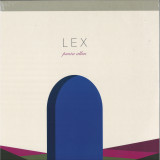
Black Truffle is pleased to announce Parampara Festival 13.3.1992, a stunning performance by Amelia Cuni captured live in Berlin almost thirty years ago. Milanese by birth and resident in Berlin for many years, Cuni lived in India for over a decade, studying the classical vocal style of dhrupad under masters of the form. Though perhaps known to many listeners primarily through her performances of the vocal music of John Cage and collaborations with Werner Durand and Terry Riley, she is recognised internationally as one of the great contemporary proponents of traditional dhrupad singing. These recordings document her performance at the 1992 Parampara Festival at the Haus der Kulturen der Welt, a landmark event celebrating the global spread of Indian classical music, bringing together Indian teachers with their international students.
Accompanied by Gianni Ricchizzi on vichitra vina (a plucked zither played with a glass ball slide) and her own tanpura, Cuni stretches out for a languorous side-long performance of the late night Raag Bageshri, the limpid tones of her vocal improvisations illuminating the droning strings like flashes of the moon revealed by rushing clouds. Initially working patiently through a series of subtle dialogues between Cuni’s melodic extemporisations and phrases in response from Richizzi’s vichitra vina, the performance builds to a series of strikingly beautiful, virtuosic held notes from Cuni at the beginning of its second half, before picking up some brisker rhythmic articulation on the way to its conclusion.
On Devino Amor, Cuni presents her own composition, a setting of mystical texts by the 13th century Franciscan friar Jacopone da Todi, elaborated through various traditional raags. Like the words used for most dhrupad compositions, the text Cuni has selected from da Todi praises divine love, thus linking her otherwise unorthodox use of Italian text to the dhrupad tradition. The result is a performance of a yearning intensity that communicates across any language barrier. On the final performance, Cuni and Ricchizzi are joined by Helmut Waibl on the two-headed pakhawaj drum for a piece using a 14 beat rhythmic pattern that sets in motion a cycle of tension and release, metrical dissolution and resolution, possessing a subtle grandeur.
Illustrated with archival images of the performance and accompanied by new liner notes from Peter Pannke and Lars-Christian Koch, Parampara Festival 13.3.1992 invites listeners to lose themselves in Amelia Cuni’s unique approach to ancient tradition.
Cerca:rhythm o
repress
Mono Junk's cult label DUM Records is back with a new five track Various Artists EP that again packs a vital punch. He appears himself along with some fellow legends of the scene.
First up, Morpholgy is a consistent performer who has continued to serve up quality electro since 2009 and here serves up a hot new piece. 'Vector Plant' is busy and industrial, slick and metallic as it unfolds and burrows deep into your veins. Then comes the A2, Irwin Berg featuring Freestyle Man (aka Finnish Moodmusic boss Sasse aka Klas Lindblad) with a track made in 1995 and never released before. This pair worked together and made a cult electro record for Sähkö Recordigs in 1998 and this one is just as impactful. It is frosty and frazzled, slow motion but high impact and full of distorted lines and heavy drums.
Next is Mr Velcro Fastener who were the first kings of electro to come out of Finland and between 1999 and 2006 were famous all over the world. Their brand new cut 'Almost There' is a deep one that is riddled with bleeping melodies and has smeared chords bringing a sci-fi feel. Then it is Mono Junk's turn to dive into the vaults with an unreleased track from 2005. 'Feeling or Destroy' is a physical number with crashing hits and snaking, gurgling bass that is dark and dystopian. Last of all comes Irwin Berg with Mono Junk as New York City Survivors. Says the DUM boss, Our unreleased track here was made after the New York City Survivors - Static Light CD 2002' and it is a turbo charged track with screwed up grinding bass, icy hi hat rhythms and menace in its grooves.
Audiophile 180glp pressing includes eight 12"x12" art print reproductions of analog film stills by renowned experimental filmmaker Daïchi Saïto. The first purely solo record by Jason Sharp - where every sound is created by his saxophone, breath, heartbeat & modular synthesis rig. Sharp's customized electroacoustic biofeedback system utilizes a heart monitor to turn his pulse into signal & tempo responsively synthesized in real time during peformance & recording. Produced by Radwan Ghazi Moumneh (MATANA ROBERTS, SUUNS, BIG | BRAVE, ERIC CHENAUX, JERUSALEM IN MY HEART). For Fans of Fennesz, Christina Vantzou, Tim Hecker, Klaus Schulze, Ben Frost, Gas, Windy & Carl, Colin Stetson. Montréal saxophonist and electroacoustic composer Jason Sharp presents his third album on Constellation. The Turning Centre Of A Still World is Sharp's first purely solo record and his most lucid, poignant, integral work to date. Following two acclaimed albums composed around particular collaborators and guest players, Sharp conceived his third as an interplay strictly bounded by his own body, his acoustic instrument, and his evolving bespoke electronic system. The Turning Centre... is a singular sonic exploration of human machine calibration, interaction, expression and biofeedback. Using saxophones, foot-controlled bass pedals, and his own pulse - patched through a heart monitor routed to variegated signal paths that trigger modular synthesizers and samplers - Sharp paints with organic waves of glistening synthesis, pink noise and digitalia. Melodic strokes and harmonic shapes ripple and crest across ever-shifting seas, through an inclement cycle from dawn to dusk. The album's six main movements navigate a world where placid surfaces are always roiled and disquieted by a deeper inexorable gyre: the gravitational pull and tidal perpetuity of our bodies made of water, buffeted by terrestrial atmospheric pressures, wrung out by emotions, coursing with blood, sustained by breath, inescapably yearning for and returning to ground again and again. Sharp's heartbeat literally courses through these compositions - while only occasionally surfacing as a clearly audible pulse or rhythm, it physically feeds into a spectrum of generative synthetic processes that help constitute and conduct the music.
Freiburg based Italian stallion Enea releases his 2nd longplayer "Overview" on his own, soulful South-German imprint, Beatalistics Records.
The 10 track album once again showcases the versatile background of the former Bass-Player, who grew up on the picturesque Lake Constance. Having been a familiar name in the international Drum'n Bass scene for more than a decade, Enea now also takes us beyond the classic 170+ bpm rhythm structures to give us a proper "Overview" of his musical philosophy.
Comprising his typical softer rolling, Liquid based tunes like "Wonders" featuring label partner MC Fava, "Earthrise" with "Freebird" or "Moon" alongside the vocal talent Vavunettha, he additionally presents various influential styles throughout the album. "Interstellar Dub" and the dub remix of "Nuh Smile" featuring Kyrad from Switzerland lead us off the beat on dubby paths, whereas the title track "Overview", "Clouds" or the remix of "Fly High" with Meks Sample & El Tronic show his affinity for smoother Trip-HipHop grooves. By the way, you might recognize an organic and pulsating bass here and there, of course played by the maestro himself! This is warm and beautiful music for sophisticated and open minded souls. Enea!
We have the honour to welcome the German based Johannes Volk. Johannes debuts on Eternal Friction Records with a 4 track EP called "Mutable Motor Units". The result is a powerful EP, that clearly demonstrates Johannes Volk unique and personal approach to techno.
"Mutable Motor Units" is filled with powerful grooves, smooth leads and uplifting rhythms. We're very happy to welcome Johannes Volk to Eternal Friction Records. Who knows what the future will bring us. Hopefully these banging tunes can destroy some dancefloors.
- A1: Levitate
- A2: Zoom Zoom
- A3: The Bride Will Return
- A4: Space Dance
- A5: Barefoot On Mars
- B1: Rhythm In The House
- B2: Summer Of Love
- B3: Monkeys
- B4: Kill The Rage
- B5: Take Me Home
For over a year one of the most watched ‘YouTubers’ and internet sensations has been Toyah Willcox. Toyah’s ‘Sunday Lunch’ performances with Robert Fripp and weekend broadcasts have been seen by 38 million. Simultaneous to creating consistently unique online videos, Toyah made the album Posh Pop with her long-term songwriting partner Simon Darlow. Posh Pop is a strong collection of infectious and affirmative pop songs that are as joyous as they are
reflective, from the cosmic groove of “Space Dance”, to the sun kissed anthem of unity “Summer Of Love”. The album is crafted with evocative storytelling and musicianship from Toyah, Simon Darlow
(guitars, keyboards, cello), Bobby Willcox (guitar) and Jeremy Stacey (drums). Posh Pop opens with the energy-burst of “Levitate” and leads the listener on a journey that climaxes in the soaring, intergalactic-tinged “Take Me Home”. The album was inspired by the world we find ourselves in today and touches on the ever-present desire to be ‘famous for fifteen minutes’ a la Andy Warhol, escaping the everyday, but above all staying connected to humankind beyond computer screens and geography. Produced by Simon Darlow, Posh Pop is Toyah’s first brand new studio solo album since 2008 and twenty-fifth album since 1979.
‘Headsoup’ is a new compilation that deepens the legend of mysterious Swedish psych collective Goat even further. Collecting rarities from across band’s celebrated career, including standalone singles, B-sides, digital edits and two enormous brand new tracks, it’s a globetrotting acid trip of a record that’s even bigger in its scope than their acclaimed studio LPs.From the incendiary heavy psych of their earliest work, like debut B-side ‘The Sun And Moon’, to the serene ‘Requiem’-era alternate take ‘Union Of Mind And Soul’, to the simmering menace of their latest material, it’s a record as multifaceted as Goat themselves, packed with detours in every conceivable direction.Taking in jazz-flute solos, pounding Afrobeat rhythms, ferocious desert blues, drifting Ethio-jazz, this is, as the name of Goat’s first album made clear, ‘World Music’ in its most complete form, a sound unrestrained by genre boundaries. Yet the band are anything but lazy appropriators. They approach their forebears with upmost reverence, articulating a celebratory cultural cross-pollination.And what about these two new tracks? ‘Fill My Mouth’ is a scuzzy psychedelic funk knockout, the sleaziest thing the band have ever recorded. ‘Queen Of The Underground’, meanwhile, is truly herculean, a swaggering psychedelic powerhouse of the very highest order.Sometimes dark and heavy, at others joyous and beautiful, like Goat themselves ‘Headsoup’ is mysterious, and constantly shapeshifting, difficult to properly pin down but constantly enthralling. Almost a decade since they first emerged from the depths of Scandinavia, there is still no other band on earth that sounds quite like them.
Things become intangible. On his 3d album "Take Care Of Me", Murena Murena does an about-turn: his new songs are silhouette vehicles in the reverse of all traffic formulas that strive for speed and progress. You can also do it with your back on the floor, you can also go backwards! In Murena Murena's Augmented Reality Roll, language, rhythm and harmony always turn and expand in the opposite direction. The direction we / they came from. If the idea of a monoposto was to replace the front passenger with a rear-view mirror, and from then on to let the driver run the distance forwards and backwards in the driver's eye, then you can also carry out a U-turn while sitting on a chair with eyes painted on the lids. A mandrill will quickly become the Sphinx. And a hawk moth sees just as much as a fire bug. Dry sump lubrication in the box: camshafts driven by a spur gear cascade ensure additional turbulence of the helium mist in the crankcase through their rotary motion. Of course, that's hard to believe. Gone, the wet sump lubrication of ,Shame Over,! You, listener, now have to grab the ropes yourself and perform wave-like movements, pull the ropes and let them pop. If your eyes go black, you have both hands free again.
German DJ and producer Marc Brauner returns to the Killer Cuts series which he kicked off for Shall Not Fade back in February, sharing five tracks of hard pumping house to lose yourself in.
Patience EP starts as it means to go on with "Your Heart"; a hot cut of anthemic earworm organ house that doesn't hold back on the summertime rave nostalgia. Brauner explores 2-step on searing A2 "Optimist" which is riddled with deep house energy and a syncopated bassline that'll put a swing in your step.
"Be Patient" channels how we have all been feeling this past year waiting for the return of the dance; it carries Strictly Rhythm influence and a prescient vocal motif. The record closes but doesn't fade away, ending with "Faster", where momentous uplifting synth stable tumble forwards to great effect. The digital bonus track is "In Love", another playful, hypnotic bassline complimenting the consistent feel good vibes.
As GospelbeacH continues to work on the follow-up to their third and most successful studio album LET IT BURN (2019) they are back to raise the vibrations and celebrate the good times with a little
detour through the past.
With the founding of CURATION RECORDS Chief Curator and GospelbeacH leader Brent Rademaker found himself surrounded by a room of over 1,200 60s/70s Glam Rock/Bubble Gum/Sunshine and Power Pop 45s owned by his record label partners.
Back in Mono Deluxe studios with his GospelbeacH brother Jonny Niemann
at the production controls they enlisted the well-seasoned and in-demand
rhythm section of Bob Glaub and Don Heffington that had worked with their
dear departed guitarist Neal Casal on his solo albums as well as Los Angeles
heroes Warren Zevon, Jackson Browne, Don Henley, Lone Justice and even
Sprinsgteen and Dylan.
Adding the Sunshine harmonies once again Nelson Bragg from the Brian Wilson/BeacH Boys Band.
A modern and powerful interpretation of traditional Italian Pizzica.
The Pugliese group Canzoniere Grecanico Salentino is known for its powerful
rhythms, vocal harmonies and constant groove. Canzoniere has a knack for
bringing together all their references, ancient and contemporary, into a coherent narrative, both hybrid and fluid.
Their new album Meridiana (Italian for “sundial”) contains twelve tracks like
the twelve hours of the sundial and tells the story of each of the seven band
members’ relationship with time. It is co-produced by guitarist Justin Adams,
long-time collaborator of Robert Plant, and producer of some of Tinariwen and
Rachid Taha’s cult albums.
The production and instrumentation, combining synth, electric bass and loops
with traditional folk instruments, give a modern and powerful reading to this
age-old music.
- A1: Smith & Mighty Feat Jackie Jackson “Walk On ..”
- A2: Boca 45 “Wild Style Skit”
- A3: Massive Attack Feat Daddy Gee & Carlton “Any Love”
- A4: 3Pm “Better Late Than Never”
- B1: Rpm “2000”
- B2: One Cut “Horn Tune”
- B3: Boca 45 “Walls On Fire Skit”
- B4: Sir Beanz Obe Feat Fog Scratch Leg Aka Junior Disprol “Mars Attacks”
- C1: Purple Penguin “Memphis”
- C2: Numskullz “I’m Alive”
- C3: One Cut “Zombie Bomb Fire”
- C4: Aspects “Chinese Burns”
- D1: Atari Safari “Play This One For Them”
- D2: Hundred Strong “Sword Lies Broken” Feat Taskforce
- D3: Boca 45 Feat Stephanie Mckay “Parking Space”
Vanguard captures the iconic Bristol Sound.
The early days of the iconic Bristol Sound are captured in a new album including an exclusive re-release of the very first track from Massive Attack and tracks from Smith & Mighty, Purple Penguin and more.
The curated tracks are also linked in that all were originally released with bespoke original covers from legendary Bristol street artists, including Banksy and Will Barras, tying its release toVanguard’s current exhibition Bristol Street Art: The Evolution of a Global Movement at M Shed, Bristol, running until October.
Compiled by DJ Boca 45 (Scott Hendy), Vanguard brings together the seminal tracks that defined the rebellious era which saw the birth of the Bristol Sound for the first time. Featured tracks include an exclusive re-release of Any Love - the first ever track by Massive Attack released on Massive Attack Records in 1988, Smith & Mighty’s breakout hit Walk On, Purple Penguin’s downtempo classic Memphis and other trip hop classics.
The LP celebrates the globally recognised Bristol Sound whose experimental breakbeat rhythms and influence still dominate the scene today. Along with classic tracks from the ‘90’s into the ‘00’s and beyond, the album uncovers lesser known cuts by some of Bristol’s pioneering musicians such as One Cut and West Country hip hop’s finest Aspects.
The explosion of the Bristol Sound coincided with the boom in UK street art which led to fruitful collaborations between artists and musicians. Finding inspiration in each other’s work, street artists frequently designed rave posters, logos and cover art while DJs provided the beats to accompany street artists’ clandestine painting.
Vanguard The Album pays homage to these relationships with a beautifully put together gatefold LP featuring iconic cover art designed by some of the biggest names in street art such as Inkie, Dicy, Will Barras and Nick Walker. These early works capture the boisterous energy of the era and confirm Bristol’s status as an extraordinary cultural melting pot.
The double vinyl record also features extensive sleeve notes written by Bristolian writer and curator Jamie Hombre as he reflects on these ground breaking cover art collaborations.
Guitarists Marisa Anderson and William Tyler distil deeply
rooted and varied traditions into distinctive voices all their own.
Anderson and Tyler are each unyielding in their desire to extend
through those traditions and the confines of ‘guitar music’ to
craft music at once intimate and expansive, conversational and
transcendent.
The duo’s debut collaborative album tethers together their
singular voices into unified narratives that glisten, drive and
sway. On ‘Lost Futures’, Anderson and Tyler’s guitars dance
through lush arrangements and pastoral duets serpentine and
reverent.
‘Lost Futures’ takes its name from writer Mark Fisher’s cultural
theory of the loss of potential futures, the hopes and ideals
which once felt inevitable but have since been interrupted.
Anderson and Tyler’s use of textural drones, rhythmic repetition
and harmonic shifts embody the building tensions of uncertainty
created by profound loss: loss of life, experience,
companionship, compassion. Across ‘Lost Futures’, Anderson
and Tyler mold their instruments into breathtaking panoramas of
blight and bliss. Each movement contains a dense biome of
transportive sound.
The duo’s music together reckons with mounting pressures as
well as the joy of newfound friendship and gratitude for being
able to play together. In tandem, Marisa Anderson and William
Tyler have composed a work of remarkable breadth, brimming
with resplendent odes of solace.
Marisa Anderson and William Tyler are both prolific solo artists.
Tyler has also toured with groups including Lambchop and
Silver Jews and Marisa has contributed to recordings by Beth
Ditto, Sharon Van Etten and Circuit Des Yeux among others.
‘Lost Futures’ features guests Gisela Rodriguez Fernandez on
violin and Patricia Vázquez Gómez playing quijada.
Package features artwork by Sam Smith. LPs include artworked
inner-sleeve featuring photography by Marisa Anderson.
For their second release of 2021 Haven are proud to welcome four brand new talents to the label for the fourth edition of their "Sardonic Tonality" VA compilation series.
French production powerhouse and central Wrongnotes member Makornik launches the record at full-steam-ahead with his heavy roller "Funky Transfusion" on the A1. Perfectly tuned drum rhythms, tense risers and an addictive vocal loop propel this opener forward with precise production techniques guaranteed to give dancers itchy feet. This is followed by a quirky stomper from NYC-based party starter Buzzi, a founding member of Brooklyn's seminal Black Hole event series, with "Blablazo" on the A2. Driving Schranz kicks, an uplifting synth melody and squelchy alien percussion elements combine in another dance-floor number ripe for the return of nightlife over the coming year.
London-based Greek rising talent and Repitch signee MarcelDune picks up the tempo on the B1 with rave destruction in "Distorted Perception". Rolling basslines, relentless drum patterns, wailing synth design and crunchy vocals fuse together in another colourful smasher that demands moving feet. Finally upcoming Irish artist Ceili closes the record with his distinctive broken-beat bruiser "Intinn Do Cheann" following from his outing on Lobster Theremin last year. Peculiar, droning atmospheres, speedy drum programming, and a cheeky synth melody interplay to closer out another VA ready to light up international dance-floors.
For his first release with Artificial Dance, Black Merlin aka George Thompson takes a departure from the hard-wearing techno and intricate field recording work that he has come to be known for. Scape One is a fifteen-minute psychedelic diversion recorded in one continuous live session. While the track’s sonic characteristics may echo dance music from the turn of the millennium, its pulsating rhythm is more suggestive of the slowly evolving landscapes seen outside of a train window as opposed to raves from the late ‘90s.
Appearing on the B-side is Gordon Pohl’s remix of Scape One. Like its source material, this track is long and subtle in the way it develops over time, but Pohl dissects the most salient elements of the original to construct a new rhythmic urgency. The high frequency accent that guides the remix does so at a speed that recalls the rotations of Brion Gysin’s stroboscopic Dream Machine, which taps into your brain’s alpha waves, aiding drug-free hallucinations.
Pohl and Thompson are frequent collaborators and release music together as Karamika. While Scape One is not a collaboration in the strict sense, there is plenty of crossover in the working methodology of the two musicians, especially when it comes to constructing uncomplicated arrangements.
The repetitive nature of their respective tracks locks the listener into a contradictory sensation of travelling whilst staying seemingly motionless. This sensation is not altogether uncommon, but in this instance it’s not quotidian either. The result is a record that unravels slowly, leaving space for the listener to home in on all the available information and, in the process, discover elements that can be just as unnerving as they are satisfying.
Over the last 3 years, original 90’s D&B imprint Odysee has been steadily building its profile, both through its ‘Remix/Remaster’ series as well as a growing number of new releases. Label Partner Andy Odysee continues to develop his own unique sound with this third solo E.P. All three tracks work together as a triptych, whilst simultaneously maintaining their own unique identity.
Ruthless (In Purpose): Insidious (In Design) immediately establishes an ominous mood of brooding menace with its creeping bass stabs. As the drums enter, the track builds towards a drop of deep subs and driving breakbeat fury, punctuated by the ripped synth basses and curling drum edits that are fast becoming characteristic of Andy’s productions. There are subtle nods to the later Hokusai releases such as Sculptures Hide and even Black Domina; with eerie chiff-flute phrases, and those signature Mirage-style film-noire and dark avant-garde Jazz sounds nestling amongst the tapestry of beats and basslines.
As a contrast, Provocateur has a sweeter, almost sexier feel. A dreamy oscillating pad soon gives way to razor-sharp curling Jazz breaks and deep subs. The vocals border on the ‘saucy’ with their tantalising suggestions of ‘who thinks the technique is to make love to me’ and ‘the sexiest thing about me is my a**!’ There is a subtle darkness nonetheless to this track, with its plethora of dark film-noire samples. Although the framework of breaks & bass is strident enough for the dance floor, it is also the kind of track that is loaded with all those little production details that will reveal something fresh with each hearing.
The third track Status Anxiety is a frenetic, tense piece of music. Underpinned by a relentless bass synth stab that slips and slides throughout the track, the drum patterns are more elaborate, cutting between several different breaks, with abrupt stops to expose dark string sweeps, hammered Rhodes strikes and shimmering china cymbals. Again there is a subtle reference to the Hokusai releases, but with a fresh twist on that darker Jazz-infused style of Breakbeat D&B.
DJ Support
Source Direct, Law & Ben Repertoire, Mister Shifter, Basic Rhythm, Voodoo & Sensenet
- A1: Yyyyyy2222
- A2: Indigo Grit (Feat Guest)
- A3: Lose You Beau
- A4: Solemn
- A5: Lv
- A6: Preparing The Perfect Response
- A7: Ny (Interlude)
- A8: Rings (Feat Guest)
- A9: Noise Sweet
- B1: Like Orchids
- B2: Meet Me At Sachas
- B3: U (Feat Kinseylloyd)
- B4: Track 14
- B5: Girl Scout Cookies (Feat Bianca Scout)
- B6: Ladybird Drone
- B7: With Your Touch
- B8: Strength (Feat La Timpa)
- B9: Honest Labour (Feat Hforspirit)
- A10: B£E (Feat Blackhaine)
Manchester UK's Space Afrika make music of what they term "overlapping moments" - oblique mosaics of dialogue, rhythm, texture, and shadow, half-heard through a bus window on a rainy night. Honest Labour, the group's first full-length since 2020's landmark hybtwibt? (have you been through what i've been through?) mixtape, expands the project's palette with classical strings, shimmering guitar, and visionary vocal cameos, leaning further into their enigmatic fusion of ambient unrest and cosmic downtempo. It's a sound both fogged and fragmented, at the axis of song craft and sound design, born from and for the yearning solitudes of life under lockdown. The album title is tiered, alluding to a legendary patriarch from co-founder Joshua Inyang's Nigerian family tree (who was lovingly called "Honest Labour" for his loyalty and resilience) as well as the nature of self-designated work, such as Space Afrika's music - a "labor of love" in its truest sense. With fellow co-founder Joshua Reid recently relocated to Berlin, the pair began sharing files last fall, piecing together poetic vignettes of looping haze and found sound, inspired by the notion of "records that leave an impression, and help the listener deal with their life." As the isolation of Covid compounded with the worsening winter, the songs skewed increasingly introspective and emotive, reflecting a mood of dissipating futures and the infinite nocturnal unknown. The artists cite two core motivations for Honest Labour: to transcend the sum of their influences, and "to show what we're capable of." Both ambitions are entirely realized. The collection's 19 tracks flow with a synergy and sophistication as rare as they are radical, untethered to the dusty dub-techno templates of Space Afrika's early years. These are interstitial anthems, expressionistic and open-ended, delirious but deliberate, attuned to the drift and dreamstate of the present moment: "Ultimately this is an homage to U.K. energy, and an album about love and loss."
- A1: Yyyyyy2222
- A2: Indigo Grit (Ft Guest)
- A3: Lose You Beu
- A4: Solemn
- A5: Lv
- A6: Prepring The Perfect Response ~
- A7: Ny Interlude
- A8: Rings (Ft Guest)
- A9: Noise Sweet
- A10: B£E (Ft Blckhine)
- A11: Like Orchids
- A12: Meet Me T Schs
- A13: U (Ft Kinseylloyd)
- A14: <>
- A15: Girl Scout Cookies Ft Binc Scout
- A16: Ldybird Drone
- A17: With Your Touch
- A18: Strength (Ft L Timp)
- A19: Honest Lbour (Ft Hforspirit)
Manchester UK's Space Afrika make music of what they term "overlapping moments" - oblique mosaics of dialogue, rhythm, texture, and shadow, half-heard through a bus window on a rainy night. Honest Labour, the group's first full-length since 2020's landmark hybtwibt? (have you been through what i've been through?) mixtape, expands the project's palette with classical strings, shimmering guitar, and visionary vocal cameos, leaning further into their enigmatic fusion of ambient unrest and cosmic downtempo. It's a sound both fogged and fragmented, at the axis of song craft and sound design, born from and for the yearning solitudes of life under lockdown. The album title is tiered, alluding to a legendary patriarch from co-founder Joshua Inyang's Nigerian family tree (who was lovingly called "Honest Labour" for his loyalty and resilience) as well as the nature of self-designated work, such as Space Afrika's music - a "labor of love" in its truest sense. With fellow co-founder Joshua Reid recently relocated to Berlin, the pair began sharing files last fall, piecing together poetic vignettes of looping haze and found sound, inspired by the notion of "records that leave an impression, and help the listener deal with their life." As the isolation of Covid compounded with the worsening winter, the songs skewed increasingly introspective and emotive, reflecting a mood of dissipating futures and the infinite nocturnal unknown. The artists cite two core motivations for Honest Labour: to transcend the sum of their influences, and "to show what we're capable of." Both ambitions are entirely realized. The collection's 19 tracks flow with a synergy and sophistication as rare as they are radical, untethered to the dusty dub-techno templates of Space Afrika's early years. These are interstitial anthems, expressionistic and open-ended, delirious but deliberate, attuned to the drift and dreamstate of the present moment: "Ultimately this is an homage to U.K. energy, and an album about love and loss."
- A1: Miguel A Ruiz - Transparent
- A2: Camino Al Desvan - La Contorsion De Pollo
- A3: Mecanica Popular - Impresionistas 2
- A4: Finis Africae - Hybla
- A5: Orfeon Gagarin - Ultima Instancia
- B1: Victor Nubla - 2000 Lenguas
- B2: Javier Segura - Malaguenas 2
- B3: Jabir - Vuelo Por Las Alturas De Xauen
- B4: Miguel A Ruiz - Trivandrum
- B5: Mecanica Popular - Impresionistas 1
- C1: Finis Africae - Hombres Lluvia
- C2: Esplendor Geometrico - Sheikh
- C3: Victor Nubla - Chandernagor
- C4: Luis Delgado - El Llanto De Nouronihar
- C5: Camino Al Desvan - Adjudicado A La Danza
- D1: Mataparda - Me Llena La Cachimba
- D2: Suso Saiz - Horizonte Paseo
- D3: Camino Al Desvan - Fock Intimida A Gordi
- D4: Mataparda - La Papa Suave
- D5: Eli Gras - Flu
Following “La Contra Ola” (BJR015), Bongo Joe presents 'La Ola Interior', a compilation exploring the ambient side of the Spanish electronic music produced in the 80’s, bringing together 19 little-known and innovative pieces from the golden age of Spanish electronic music !
It gathers musicians from various horizons and of many generations, who shared the desire to create an immersive soundscape and to combine electronic music with non-Western musical traditions. As a general rule, the Anglo-Saxon tropism did relate the spanish peninsula’s ambient music to the Balearic Sound, that is to say to the relaxing music played in Ibiza’s nightclubs. But this music takes place in the productive territory of experimental musics, and particularly in its two main breeding grounds: the tape recording underground and the independent musicians-producers scene.
Inseparable from the processes of self-publishing, distribution and exchange of music that were then taking place in Spain in an artisanal way, the vast underground movement of cassettes was divided between an "ethno-trance" combining industrial beats and oriental sounds on the one hand (Esplendor Geométrico, Miguel A. Ruiz / Orfeón Gagarin) and unclassifiable low-fi tinkerers on the other hand (Camino al desván, Eli Gras, Mataparda, Victor Nubla). Hyperactive, this scene is radical and strongly dominated by the hardest musical styles, but the ambient, influenced by the German Kosmische Musik and "krautrock", also develops here.
The second vein of Spanish ambient comes from some of the independent labels of the peninsula (DRO, GASA, El Cometa de Madrid, EGK) whose activity will mark the return of some of the most adventurous musicians-producers of the 70s. Some were influenced by American minimalism (Luis Delgado / Mecánica Popular, Suso Saiz, Javier Segura), others by Fourth-World Music conceived by Jon Hassell and Brian Eno (Finis Africae, Jabir). Having passed through folk, ancient, traditional or contemporary music, and being familiar with improvisation and studio techniques, these artists come from a mutant hippie culture, capable of phagocyting many musical styles from electronic ambient to ethnic improvisation and modal jazz.
These two scenes and generations that make up LA OLA INTERIOR intersect around a common interest in non-Western musical traditions. Their exploration may be that of the tribal origins of electronic rhythms or the Arab heritage of Spain. Above all, it is a dreamy exoticism, an immobile journey as the sounds, rhythms or instruments of these traditions are scrutinized by Western practices (avant-garde music, electronic technology). The result is a hybrid music, filtered and reinvented, neither Western nor extra-Western, with a pronounced taste for the fusion of opposites, which we have called "Acid Exoticism" because of its permanent search for trance or contemplation. Atmospheric, contemplative and serial, these musics still plunge us today into a sensorial journey, at the same time interior and distant, organic and technological, between exotic reminiscences and interior visions.
This is the first official re-release on vinyl under licensed courtesy of BMG Rights Management,UK, remastered from an original master copy out of the vaults of BMG, originally released in 1972 on Bronze Records.
Co-founder of Colosseum in 1968 with Jon Hiseman, he knew from his Jazz Club years as drummer for Georgie Fame, Dick ran through this group's hectic recording and touring schedule for over 3 years until November 1971, when it disbanded.
In his late 30s at that time, on top of his musical shape, he moved on to start recording on his first solo project, with material left over from Colosseum days (written by D. H.-S., Clem Clempson and Jon Hisemann) and new material jointly composed with well-known lyricist Pete Brown. He recruited the help of Colosseum mates, Hiseman, keyboardist Dave Greenslade and vocalist/bass player Mark Clarke, plus the brilliant ex-Elton John group Caleb Quaye (Hookfoot) on guitars and Rob Tait (ARC, Battered Ornaments) on drums; old pal G. Bond is featured providing remarkable moog work on 'Pirate's Dream', funky organ on 'Moses In The Bullrushourses' and sharing piano duties with Gordon Beck (G.B. Trio, Nucleus) on 'What The Morning Was After'; Paul Williams (Juicy Lucy) gets the lion share of vocal duties, and Chris Farlowe and Chris Spedding (Nucleus, Battered Ornaments) have respectively a sole vocal and a guitar spot on 'Pirate's Dream'.
The album track by track:
Side one starts with 'Future Song', the track that really rises above the other tracks here. The guitar, vocals (by Mark Carke) and sax are great on this one. Killer sax 2 minutes during an excellent instrumental interlude. H.-S. sounds slightly eastern-influenced on his outstanding sax lines. Such an uplifting track with it's repetitive riff and hard, driving sound! Next is 'Crabs', starting off in a mellow way with Greenslade's piano and reserved vocals as the sax joins in followed by guitar and drums as it builds. Irresistable! Great vocals by Paul Williams. One could easily imagine both tracks on a Colosseum album. 'Moses In The Bullrushourses' is uptempo, owing just as much to jazz, blues and hard rock. Great groove! Lots of organ here to send shivers down your spine and perfect guitar playing. 'What The Morning Was After' opens with some sax excursions as the drums help out. Acoustic guitar by Quaye and powerful vocals by Paul Williams take over as the piano joins in. Our second favourite tune on here after the opener. A folky song really until it picks up half-way through.
Side 2 opens with the 11 minutes 'Pirate's Dream', with Farlowe on vocals and Spedding's initial rock blues riff, but soon evolving to a complex multi parted composition in the best spirit of Valentyne Suite, driven by Hiseman multi faceted drumming. D. H.-S. twin saxes soar on a calmer mid section with Spedding doubling the licks and the bass grumbling relentlessly behind; it slowly gains speed with moog, sax and vocalizations duelling and answering each others with dazzling, demanding and inspired phrasings on top a thundering rhythm section; after the lyrics resume it evolves into a majestic, grandiose finale. A bluesy clean guitar lick opens 'Same Old Thing', a swinging, calm heavily modulated twisted blues, with a punchy rhythm section, a soulful Williams on vocal, Quaye delivering an inspired sparkling solo and D. H.-S.'s sensitive fat sax enhanced with some double tracking on the solo part. A great ending to a great album.
Album comes with the reproduction of original gatefold cover sleeve, additional cover-sized insert with band story, lyrics and photos. A highlight! Highly recommended!
Airplay from Mary Ann Hobbs, Liz Alker and Tom Ravenscroft and beyond
Reviews in Mojo, The Wire, Quietus, Uncut and more
On October 9ththe multi-instrumentalist Jack Wyllie (Portico Quartet/Szun Waves) presents his new project Paradise Cinema. It was recorded in Dakar, Senegal in collaboration with mbalax percussionists Khadim Mbaye (saba drums) and Tons Sambe (tama drums).
The impressionistic and dream-like quality of 'Paradise Cinema' is a stunningly effective realisation of Wyllie's experience, in ahypnagogic state of aural consciousness:
"I had a lot of nights in Dakar, when the music around the city would go on until 6am. I could hear this from my bed at night and it all blended together, in what felt like an early version of the record."
Atmospherically 'Paradise Cinema' is vaporous and enigmatic, but also percussive; existing in a paradoxical sound-space that's amorphous,yet still purposeful, serene, but propulsive and aesthetically sharp.
Khadim Mbaye and Tons Sambe, provide the rhythmic backbone of the record. There are traditional elements of mbalax rhythm, but it is often deconstructed or played at tempos outside of the tradition, so while it hints at a location it occupies a space outside of any specific region.
'Paradise Cinema' is also informed by notions of hauntology – a philosophical concept originating in the work of French philosopher Jacques Derrida– on possible futures that were never realised andhow directions taken in the past can haunt the present.
On the album's title Wyllie comments, "there are a handful of old cinemas in Dakar – these big modernist buildings dotted around the city built around independence. They're old and derelict now, but feel to me like monuments to that period, when the city was flooded with utopian ideas about its potential futures."
As such it sits closely to 4thworld music – situated in an imagined culture and time that never came to pass. And while it contains rhythmic references to Senegal it combines these elements with ambient and minimalist music to produce a sound that sits outside of any tradition.
Setting the tone for the long-player's themes is the optimism-driven, balmy beauty of 'Possible Futures', where rich-toned drums throb and levitate in a stratospheric ether.
Like a time-lapse video of plants in bloom, 'It Will Be Summer Soon' is the sound of anticipation and growth. Rhythmically it flickers and flutters, evoking rainfall, or the blurred wings of a bird in in flight.
Casamance moves through field recordings drifting in and out of focus, beats pitched-down low and unfurling saxophone, whilst the ambient 'Utopia' was made mainly with processed saxophone and suggests a longing for a perfect world.
Galloping percussion juxtaposes with a wistful mood on 'Liberté' – a title that referencesa derelict modernist cinema in Dakar of the same name– a hauntological landmark, made more poignant by the its name being part of the French national motto.
Tying into the cover artwork, Jack explains, "the 'Digital Palm is a telecommunications mast disguised as a palm tree in central Dakar. As a modern piece of technology that on first glance looks natural, it mirrors the combination of modern and acoustic elements."
Perhaps eliciting a time that never came, or maybe still in hope of it yet to come, 'Eternal Spring' concludes the LP's otherworldly beauty with hypnotic drums powering a subtly-building, sparkling and powerful crescendo.
Jack Wyllie is a musician, composer, electronic producer who draws on influences of jazz, ambient, and the trance-inducing repetition of minimalism.
Wyllie performs and records in Portico Quartet, Szun Waves (withLuke Abbott and Laurence Pike)and Xoros. He has also collaborated with Charles Hayward, Adrian Corker and Chris Sharkey and released on Ninja Tune, Babel, Leaf, Real World and Gondwana.
Khadim Mbaye and Toms Sambe play in various mbalax groups in Dakar. Khadim has also toured internationally with Cheikh Lo.
Bonander is the shorthand for Ellinor Sterner Bonander. Sporting the role
of musician, arranger and producer, the native Swede is a woman
unchained, injecting darkness into the vein of candied pop with her tropes
of existentialism and feminist revolt.
Following the arc of ‘Backseat’ and ‘Martha’, Bonander’s latest single, ‘Gone
In The Wind’ leads the way for the album with its emotional outpour of lost
sisterhood. Tribal thrashes of drums, pipe organ and soaring vocals combine to
manifest the pain and frustration at the heart of the song.
She says, “The song is about abandonment of a person who’s been like a sister
to you, someone you admire and cherish... The pipe organ and strings are the
most emotional instrumentation I can think of. They represent that suppressed
feeling of anger and frustration, that later in the song is set free.”
The album tells the stories of women both from history and her personal life
whose contributions have previously been overlooked.
“The idea for the album is to create a musical, cinematic and dramatic journey
full of contrast between intimate string sections and huge synth landscapes,
between mechanical rhythms and flowing tempos.
The lyrics will together speak of the identities and emotional life of different
women, both through private and historical perspectives. All of the songs discuss subjects concerning women that ought to be talked about more, but sadly
are not...” // Bonander
DIE NEUE ZEIT
Old time? New time!
And of course an exciting time - and thus time for DIE NEUE ZEIT and their eponymous high-speed statement "WIR SIND DIE NEUE ZEIT"!
But who is behind DIE NEUE ZEIT? We simply don't know! And we don't want to know. What we know is that these two daredevils race through their theme tune with sheer intensity - there simply is no stopping them - and you better don't - because when that cow bell gets loose … heaven forbid!
For extra extensive play of "WIR SIND DIE NEUE ZEIT" we strongly advise to make good use of the vocal AND the instrumental version playing both back and forth until all dancers surrender to the rhythms of DIE NEUE ZEIT.
Now tanz' die neue Zeit und geh' in die Knie und klatsch in die Hände, beweg' Deine Hüfte! The new time has come!
Repress
Tiga's drops BUGATTI. Another irresistible one-liner on the dance-floor that can't be missed or forgotten.
So much sex and attitude, so few elements. A staccato kick-snare rhythm, a robo-funk synth line, a futuristic pad, a detuned ride, a cheeky vocal hook and a one-note acid line that brings it all together. That's it. All you need if you know what you're doing and have an experienced pair of Canadian Electro-godfather balls intact. Tiga has made a career out of being catchy: from Sunglasses to Mind Dimension, from Plush to Pleasure From the Bass, from You Gonna Want Me to Let's Go Dancing. How does he do it
It's his ability to drop a clever turn of phrase that separates him from the pack, but the strength and character of his production choices keep things clear of kitsch and make him a perennially hot-tipped cool-commodity everywhere from the great American EDM stage to the hallowed-haus of Panorama's deep underground credibility. His career is like a Veyron - stable AND insane.
So listen to it, get it stuck in your head. This track is crazy dope, it doesn't sound like anyone else, and it's the most hip-hop thing all you house DJs are likely to fit into your sets this weekend so go on, get loose and take it for a ride.
This is what Tiga had to say about the Vinyl-Only remixes 12" :
For this, my most personal record, i hand selected remixers of the highest order. Cliff Lothar, absolute legend, and current king of the enigma groove, delivers an absolute masterpiece. It's seriously a 10 on 10, and I never say that. Vinyl only bitches. Perth Drug Legend, somebody else who I kinda know and yet totally don't know (or I guess I just thought I knew) slams the 'gatti with raw tribal funk: again suitable for a warehouse or a particularly forward-thinking car dealership. Rebolledo, one of the few men i actually trust, comes in with a slightly electrofied extended party mix. God I'm happy. Full disclosure: there were a few people who did remixes that were rejected. I will reveal their names publicly in good time. Good day. T.
Schneider TM is the multidimensional music project of Dirk Dresselhaus which has been operating since the mid 90's. His latest opus is also his first for release for Editions Mego.
With an extensive catalogue under his belt, one may wonder where this one takes us? The 8 of Space orbits the realm of "pop" more overtly than the project has done for 14 years, residing in the line of works that temporarily ended with "Skoda Mluvit" from 2006. In the age of scattered streaming listening habits The 8 Of Space champions the classic album format with connected tracks that act like chapters adding up to what could be framed as an 'audio-movie'. The 'plot' revolves around a post-dystopian landscape which posits the make up of reality in the future.
The vessel is electronic pop music but one which takes inspiration from the spirit of a multitude of musical forms absorbed into a trans human sound world where biological & technological elements complement each other (We are NOT The Robots!). The music unifies the analog world of acoustic and electric instruments with electronic & digital possibilities that range from heavily processed acoustic & electric guitars and bass, tube organ, analog modular synth units, acoustic drums and percussion, analog & digital drum machines & effect units, hardware and software processing. Experimental & extended musical techniques build a world of musical elements that is sometimes upside down and mirrored. Electric guitar becomes rhythm machine & modular system, voice becomes sound object & synthesizer, effects are used as instruments, acoustic guitars are being modulated by voices etc. Reality and illusion are getting mixed up. One can hear short moments of longer recordings in the tracks which are snapshots of bigger musical pictures that lurk behind what's actually audible. Generative music, audio spirals like clockworks create ever changing musical combinations; thrown-in sounds, polyrhythms & cascades based on the concept of chance attributed to the service of the SONG.
The lyrics are a key component. Holistic, associative poetry acts as interactive trigger points for the mechanisms of existence in times of a paradigm shift that are open to the listeners discretion. Autobiographical elements combine with science fiction and dreams, protagonists shift where the 'I' or 'me' is not necessarily the voice of the artist, nor even the same person. Alongside a more naturalised voice another protagonist appears represented by a processed voice. This character, named iBot, evolved around the start of the millennium and has appeared on some previous Schneider TM recordings. It can be seen as a post-human, or even a trans-human character, a combination of human & technology, uncertain of the future, which lends iBot it's melancholic tone.
In the opening song "Light & Grace" iBot appears in an advanced form of AI, which managed to hack & hijack a commercial space travel program (eg, Virgin Galactic) to invite those rich, who profited most from the destruction of planet earth, for a holiday trip into space to unknowingly fly them directly into the middle of the sun. In this episode it seems to have developed higher ethics than humanity itself with ambition to save the planet with as much of its cooperative life as possible."Light & Grace" serves as an intro / opener for this album to be followed by 7 other tracks featuring different windows of consciousness represented by diverse characters & protagonists.
All the elements on The 8 of Space, the music, sounds, vocals and artwork fit together as a whole, creating a dazzling electro pop future questioning it's own certainty. This is experimental electroacoustic pop music featuring glorious melodies dancing along human/machine voices, each track is a small universe that triggers the physical mind and tickles the subconsciousness.
- A1: Marv Johnson - Come To Me
- A2: Barrett Strong - Money (That’s What I Want)
- A3: Jimmy Ruffin - Don’t Feel Sorry For Me
- A4: The Marvelettes - Please Mr. Postman
- A5: The Contours - Do You Love Me
- A6: Kim Weston - Helpless
- A7: Marvin Gaye - How Sweet It Is (To Be Loved By You)
- A8: Mary Wells - My Guy
- A9: The Temptations - The Way You Do The Things You Do
- A10: Martha Reeves & The Vandellas - (Love Is Like A) Heat Wave
- B1: The Isley Brothers - This Old Heart Of Mine (Is Weak For You)
- B2: The Supremes - Where Did Our Love Go
- B3: Four Tops - It’s The Same Old Song
- B4: Stevie Wonder - Uptight (Everything’s Alright)
- B5: Marvin Gaye & Tammi Terrell - Ain’t No Mountain High Enough
- B6: Jr. Walker & The All Stars - Shotgun
- B7: The Jackson 5 - I Want You Back
- B8: Gladys Knight & The Pips - You Need Love Like I Do (Don’t You?)
- B9: Edwin Starr - War
- C1: Rare Earth - Get Ready
- C2: The Spinners - It’s A Shame
- C3: Smokey Robinson & The Miracles - The Tears Of A Clown
- C4: Michael Jackson - Rockin’ Robin
- C5: The Commodores - Easy
- D3: Jermaine Jackson - Let’s Get Serious
- D4: Diana Ross - Theme From Mahogany (Do You Know Where You’re Going To)
- D5: Lionel Richie - Penny Lover
- D6: Dennis Edwards Ft. Siedah Garrett - Don’t Look Any Further
- D7: Debarge - Rhythm Of The Night
- C6: Thelma Houston - Don’t Leave Me This Way
- C7: Tom Clay - What The World Needs Now Is Love/Abraham, Martin And John
- D1: Rick James - Super Freak
- D2: Billy Preston & Syreeta - It Will Come In Time
Motown Collected brings together the biggest names in the rich history of this legendary label. From very early singles to the artists that made Motown a household name for decades to come and the cross-over pop success of the late 70’s and 80’s. Featuring legendary artists like Marvin Gaye, Stevie Wonder, The Supremes, Jackson Five, Smokey Robinson and The Commodores, as well as gems from the likes of Marv Johnson, Barrett Strong, The Marvelettes and Tom Clay and pop superstars Rick James, Michael Jackson, Diana Ross, Lionel Richie and Debarge: just a selection of the 33 incredible tracks featured on Motown Collected.
The documentary Hitsville: The Making Of Motown’, featuring Motown founder Berry Gordy and many of this artists, will premiere in cinemas across Europe this summer as well.
RELEASE: 23-7-2021
MOV proudly presents new Collected compilation albums in collaboration with Universal Music. Motown Collected is the first one, available as a limited edition of 3000 numbered copies on white vinyl. It includes an insert with photos and credits.
Swift newcomer Tommier Joyson makes his debut on Hot Creations this July with his first single, Clap Your Hands. On the B side, Eastenderz boss East End Dubs makes a long-awaited return to the label as remixer.
The title track leads the charge. Manifesting as a fast-paced, techy-leaning number, reverberating vocals reside atop driving kick-hat combos whilst whispering hats create a signature four-four rhythm. East End Dubs’ remix completes proceedings, showcasing the UK-minimal sound with which he’s become best known. Stripped-back, looping and built for the late-night hours, it’s a seven-minute cut that you can’t help but groove to.
Tommier Joyson may be new to the global electronic music circuit but the quality of his sound speaks for itself. The rising talent has landed his first-ever release on Jamie Jones’ Hot Creations, a remarkable feat that sets the tone for a standout 2021. Eastenderz label head East End Dubs has become one of the most in-demand artists in recent years. A prolific producer, his work has found a welcome home on Fuse, Hot Creations and many more besides, whilst regular performances across Ibiza and beyond have cemented his reputation as an international talent.
»DNA« is Rosaceae’s second album for Pudel Produkte after last year’s acclaimed »Efia« for the Hamburg label. The eight tracks further explore the artist’s interest in the interplay of sound and language while also adding skittering rhythms and thumping kickdrums to the mix. »DNA« is a complex but enriching album that as a whole not only reflects ideas of resistance, solidarity and internationalism, but also how they are mediated and their meanings are shaped by different types of mediation. Whether Rosaceae seems to mimic the sound of rapid machine gun fire, indulges in gabber-informed beats or soothing, tinkling ambient sounds: by the end of the album the sonic experience could as much provide solace as it may be understood as an elegy, it has become abundantly clear that even the most straightforward usages of certain musical elements or statements on this album are more complex than they may seem at first. Much like »Efia,« »DNA« poses uneasy questi-ons but provides no easy answers—neither in sound nor in language.
Louie Vega and Dave Lee remix Anané’s single ‘Tell Me That I’m Dreaming’ on Nervous Records this summer.
The powerful yet intimate voice of Anané Vega, owner of Nulu Music, radiates rhythm, soul and style. Billboard Magazine described Anané as “combining earthiness with glamour and roots-deep house music knowledge with pop wise diversity” - a quote that her music and fashion adhere to effortlessly.
‘Tell Me That I’m Dreaming’ sees Anané join the legendary NYC label's roster as she combines funky electronic, funk-infused grooves and a compelling voice that gracefully floats over Louie Vega’s sensual production. A leader in global dance music and Grammy Award Winner, Louie Vega has painted an award-winning career from a palette mixed with everything from house, salsa and afro-beat, to jazz, hip hop, gospel and soul. Vega continues to lay down genuinely timeless music, rightfully earning him the title as one of The Kings of House Music.
Renowned UK artist Dave Lee blends low-slung disco rhythms, irresistible slap bass and acid zaps in his remix that sits wonderfully above Anané’s vocals that inspire strength and pure love.
MEDWAY GARAGE UPSTARTS! 2nd LP! The Shadracks are a three-piece rock n’ roll group hailing from Medway, Kent. With timeless and expert precision the Shadracks play from 37.3 years in the past 33.7 years into the future. The actual origins of the group date back even further with their cultural appropriation of Babylonian 'Rhythm and Punk. A mere 3 years ago Huddie Shadrack and Elisa Abednego had a brief encounter in deserted parkland. Discovering sheared an interest in vacant park benches, herbaceous borders and beat music it became paramount that they form a group - and quickly. After the release of there self titled debut LP, a subsequent live BBC 6Music session for Marc Riley and a fast selling EP, Elle Meshack retired from The Shadracks to peruse a career as a Poly Styrene impersonator aboard a Tahitian cruise liner: SS Honolulu Baby. Fortunately for the bass bereft Shadracks an advert placed in the window of a local stationers was answered by a certain Rhys ‘King Nebuchadnezzar’ Webb. A meeting issued and after proclaiming "Oh merciful Marduck, may the house that I have built endure forever” Their followed a two-hour induction ceremony (in which to learn all the new tracks for their forthcoming long player From Human Like Forms and Webb, for it was he, was sworn into The Shadracks fraternity. From Human Like Forms sees The Shadracks achieving giddy new heights in their song writing and performing abilities - pushing their ancient sound 3.7 years ahead of the current lunar time module. Councillor Duxbury. 2021
The Sublime Sculpture of Being Alive,’ the new album from
Los Angeles-based Media Jeweler, is a three-dimensional reckoning with
the contradictions of life in all its manic altitudes and claustrophobia.
Recorded over three chaotic weeks in Omaha, the band’s elaborate sonic infrastructures carry the same sense of studied experimentation as Palm, Guerrilla
Toss or Deerhoof, rollicking across an energetic spectrum that parlay the band’s
post-punk roots, jazz rhythms and art punk choruses into something greater
than the sum of its parts.
The most fully-fleshed release yet, a myriad of musical collaborators were enlisted uniting a finely-tuned sense of adventurousness that roves between the
personal and political to frame an acute portrait of modern day societal revelation.
‘The Sublime Sculpture of Being Alive’ is out on Fire Talk (Dehd, Deeper, Mama
Limited edition 180g audiophile pressing of this recording by Lester Young
Quartet featuring legendary pianists John Lewis and Hank Jones.
Dating from 1949-51, the sessions included on this LP were taped in a quartet
format showcasing the leader with a piano-bass-drums rhythm section. The
dates featured the outstanding pianists Hank Jones and John Lewis, as well as
Lester’s friend from the early Basie years, drummer Jo Jones.
By the time these sessions were recorded, Prez (Lester Young) was working
at Birdland with this exact group (Lewis on piano, Gene Ramey on bass, and
Jones on drums), as attested by several surviving broadcasts.
The second compilation EP to commemorate the 20th anniversary of the establishment of Sound Of Speed!
A-1, by UK Kieron Ifill K15 (WILD OATS, EGLO, APRON) with an impressive sophisticated electric jazzy track that symbolizes the label.
The debut work "Wait" from DISTANT HAWAII is a cult hit, and also from RHYTHM SECTION INTERNATIONAL and MOODS & GROOVES.
A-2 by HIDDEN SPHERES from Manchester, who has release experience and has an impressive unique rhythm composition and airy synth usage.
The Japanese twin duo SATOSHI & MAKOTO, whose two albums released from YOUNG MARCO's label attracted a lot of attention.
Sapporo's KUNIYUKI participated in the music of his brother SATOSHI as percussion, a 90's synth riff reminiscent of the dawn of Detroit techno.
KUNIYUKI from Sapporo, who has live experience on the world stage, participated in the percussion with an ambient feeling that delicate keyboard
work is folded in multiple layers.B-1, which weaves a groove in a quiet humor, a masterpiece electric jazz world that draws you in from the beginning
of the song and gets caught up in the world view in a blink of an eye
Includes 4 songs including KUNIYUKI TAKAHASHI's new song B-2, which has been developed and acclaimed by DJ Sprinkles. KUNIYUKI is in charge of mastering.
There has always been a Reggae inuence in the music of El Michels Affair. From their cover of "Hung Up On My Baby" done in a Reggae style, to the general sound and approach that permeates Leon's production style. While recording Bailey's 2020 Ekundayo album, they did some straight forward reggae tunes inspired by different eras alongside some modern R&B tracks that would t more comfortably next to Frank Ocean than Jacob Miller. It is this same notion that old and new can live so comfortably together that birthed the idea of Ekundayo Inversions. Traditional dub came out of reggae in the late 60s and early 70s when pioneers like King Tubby and Lee Perry started taking the multi track recordings of songs and running them back through the board adding effects and additional instrumentation. These recordings are called "dubs" or "versions" and are typically instrumentals with ourishes of vocals from the original tracks. El Michels decided to use the blueprints left behind and make something using the inuences of today. He wound up straying so far from the traditional format that it didn't seem right to use the word `Dub', hence Ekundayo Inversions. All the songs are tied together by WhatsApp messages between Leon and Liam that perfectly narrate the story of this record and their working relationship. One of the highlights on Ekundayo Inversions is a guest appearance from the legendary Lee "Scratch" Perry on the "Ugly Truth" version. L$P switches between singing and talking, proclaiming his powers one minute and playing with the track's title the next. On "Awkward take. 2" Leon takes one of the most experimental songs from Ekundayo and actually straightens it out. A track that once seemed to be oating in space has now been anchored by the addition of drums and bass. "Faded", a version of "Paper Tiger", is given the full EMA treatment with the addition of emotive horns over an uncomfortably sparse rhythm track peppered with Liam's voice drenched in delay and echo. "Champions" features a verse from Black Thought of The Roots and halfway through, El Michels sends the rhythm section 50 years back. At the end of the day, Ekundayo Inversions is a testament to how strong the original songs are. Whether they're in a R&B style, reggae style, stripped down to their bare bones, or loaded with production, the songs will move you.
Super Rhythm Trax's sister label Bleeper welcomes Snuff Crew for 3 tough cuts of jacking Techno fit for dark warehouses with smoke and strobes. Off kilter gurn-drones and the wonderfully suggestive 'Where's the Bad' sample take over the A side while the ear-worm strings and bounce of 'Naughty' meet the pacey yet tongue in cheek 'Warehouse Boy' on the flip.
Glenn Astro returns to Tartelet Records with Purple, a four-tracker of minimal slow burners and futuristic dance music, marking the label’s 50th 12-inch release.
Since releasing his second album Homespun in late 2020, Glenn Astro has been quietly channeling his funky instincts towards new production approaches. Purple, a four-piece compilation of mutant future-boogie daubed in Rogers-Nelson hues, comes through with emotional heft. It also marks the 50th 12" release for Tartelet Records.
“Following up on Homespun, I wanted to try out some more dancefloor- oriented tracks again,” says Glenn Astro. “Keeping it simple and practical, while not being too predictable. I incorporated a lot of modular synth bits and experiments, with ‘Flux’ being an almost exclusively modular-based jam.”
Incorporating tricky sound design and fluid structures, Astro’s new lines of enquiry never come at the expense of the groove. From the opening thump of ‘Penduloop’ onwards it’s apparent that his rugged rhythmic kinks are present and correct to hook in the dancers, while the melodic drops later in the track edge in a little melancholic flavour to take the mind somewhere else entirely. On this opening track, the artist explores new territory with his version of early naughties minimal house – a welcome
slow burner.
The EP title track ‘Purple’ slaps with purpose, not least in the Linn-esque drums and melodic bassline, but it’s a positively dreamy piece which skips on crooked beat formations and floats upwards via a multi-timbral tapestry of yearning synth shapes and robotic vocals. On ‘Out Of Office’ Glenn Astro provides a generous dose of electro nostalgia when he amps up the heavy-hearted feeling with aching string pads and electro-informed machine logic. The track becomes alive with its deep un-synced rhythms and dark bass notes, pushing further into the abyss. ‘Flux’, with its tooly
feel, takes the electronic mantra further and sheds light on the source of much of Astro’s new sound palette.
Crucially, even in its techiest moments, an irrepressible humanity shines through across Purple. Glenn Astro’s soul is the binding agent which links his early, sample-heavy house to his more explorative new angles, and it comes through in abundance on this fully-formed release.
- A1: Woman Is The Root Of All Evil
- A2: Shoo Ra
- A3: Tipitina
- A4: One Night Tale
- A5: A Little Closer To My Home (Bonus Track)
- A6: Go Ahead On (Bonus Track)
- A7: Make Your Own (Bonus Track)
- A8: Mama Roux (Bonus Track)
- B1: She's Just A Square
- B2: Bald Headed
- B3: In The Night
- B4: Helping Hand
- B5: Mean Cheatin' Woman
- B6: The Ear Is On Strike (Bonus Track)
- B7: I Pulled The Cover Off You Two Lovers (Bonus Track)
- B8: Did She Mention My Name (Bonus Track)
Cutting his teeth on New Orleans session work while still a teen in the 1950s, pianist and singer Dr. John (born Mac Rebennack) emerged in the late 1960s with GRIS-GRIS, a blend of snaky rhythms, Crescent City funk, and swampland voodoo flair. Since then, he has remained one of New Orleans’s prime musical ambassadors, an artist with his own trademark sound and style. These sessions actually have a feeling not unlike his early-'70s work. Most of the titles are self-penned, and there are also a few Professor Longhair covers. If you like vintage Dr. John, this is almost mandatory.
Sundial[10,71 €]
Para One, whose real name is Jean-Baptiste de Laubier, releases " Shin Sekai ", the new extract from the upcoming SPECTRE: Machines of Loving Grace. The " Shin Sekai " video is directed by William Laboury, who created a visual tryptic around Para One's SPECTRE: Machines of Loving Grace.
Resonating percussions by Wadaiko Hama and Le Mystère des Voix Bulgares ethereal voices frame Para One's ever evolving electronic music, drawing a new frontier in the artist's musical landscape, bringing together his experience as a film composer and his career as a dj and performer.
The original track comes with 3 remixes: British producer Actress (Ninja Tune) uses Arthur Simonini's strings as the backbone to his emotional climb, German musician Alva Noto (Noton) gives a minimalist stripped down version of the score, while speakwave, the new moniker of French artist dynaRec, proposes a total remake of the melody, the harmonies, and the rhythmic structure of Shin Sekai.
- A1: Branko Over There (Feat. Miles From Kinshasa)
- A2: Branko - Movimento
- A3: Branko - Stand By (Feat. Umi Copper)
- A4: Branko & Sango - Hear From You (Feat. Cosima)
- A5: Branko & Pedro - Mpts (Chords Version)
- B1: Branko - Sempre (Feat. Mallu Magalhães)
- B2: Branko - Amours D'été (Feat. Pierre Kwenders)
- B3: Branko - Tudo Certo (Feat. Dino D'santiago)
- B4: Branko - Bleza
- B5: Branko - Agua Con Sal (Feat. Catalina García)
- B6: Branko & Dengue Dengue Dengue - Lucuma
The first thing that strikes you when hearing 'Nosso' is its feeling of intimacy and warmth. The title, which means 'Ours' in Portuguese, is apt since he sees the record as the result of letting a wild variety of people into his world. João notes that 'I didn't know most of the collaborators before meeting up with them in a studio somewhere in the world, so most of these songs are coming from a very immediate and honest sense of collaboration where you spend an afternoon with someone learning about each other at the same time as you're making music. It's a shared experience, a moment where two or more people came up with ideas together, that they probably wouldn't have had if they were in their comfort zone.' These meetings were turned into songs at home in Lisbon once the main ideas were created collaboratively elsewhere. 'On this album, like in everything else I did so far, the focus on the instrumental side of things was experimenting with rhythmic patterns and genres from the Portuguese-speaking universe while applying them to songs created with other artists from completely different backgrounds and places.' There's something in this process that has left the album sounding super fresh as this is a sound without borders that pulls you in. It's music everyone can be a part of, where even the most rugged up-tempo cut sounds welcoming. It's an overwhelmingly positive and joyous experience to immerse yourself in 'Nosso.' It's no wonder that the central motif of the album artwork shows a less common view of Lisbon, one where instead of looking at the historic city centre we face the suburbs, where these musical and cultural experiments have been and still are occurring, undeniably shaping the musical and cultural landscape of Lisbon in the process. As much a soul record as it is a record infused with the beats of the Portuguese-speaking world, 'Nosso' is a reflection of Branko's ongoing musical explorations and his vision of Lisbon as a privileged cultural hub for the Portuguese-speaking world and beyond. Branko fuses local rhythms from kizomba to baile funk and afrohouse through European electronic genres with a clear accessible pop sensibility and the aim of creating a unified sound that puts all these individual musical expressions in perspective as part of a greater whole. For João, this is the logical next step in his musical evolution.
- A1: Rita « Erotica »
- A2: Francoise «Hum ! Hum ! Love Is Strange»
- A3: Armando Travaioli « Sesso Matto »
- A4: Monsieur Goraguer « Sexy Dracula »
- A5: Jacques Frençay & Sonia Reff « Top Secret »
- A6: Geraldine « Les Chattes»
- A7: Jean Yanne « Coït »
- B1: Prince Buster « Big Five »
- B2: Bourvil Et Jacqueline Maillan « Ça (Je T’aime Moi Non Plus »
- B3: Philippe Nicaud « C’ex »
- B4: Noelia Noel « Encuentro »
- B5: Jean-Benard De Libreville « Sex-Phone »
- B6: Mchele Mercier « Six-Huit»
- B7: The Afro-Rhythm Group « African Love »
What a relief to escape the humdrum, to conquer one’s ennui, to spice up the too-long evenings stuck at home... Here’s a proposition: SEX-O-RAMA!!! Oh la la, such an aptly named compilation! Rascally El Vidocq this time dares to sway outside his comfort zone. Here humanity’s oldest obsession is tackled tastefully, with class. The selection is amusing, but ever well-meaning, for these songs are as stimulating to listen to as they are to dance to! Naturally, our intrepid collector had to roam beyond his habitual ‘50s and ‘60s, for the real sexual revolution did occur a tad later... A few seductive caresses of varying insistence (Michele Mercier, Geraldine), a few advances “in due and proper form” (naughty Prince Buster!), an eloquent series of moans and groans (Rita, Armando Travaioli, Noelia Noel), chance encounters (intransigent Jean Yanne)... not to mention a few exquisite parodies (Jacqueline Mayand and Bourvil, as drole as they are tender)... So hesitate no longer! Stop biting your lip! The sap is rising, as they say, so time for a change of ambiance... Time to slip on some SEX-O-RAMA!
In 2012, ten years after its inception, Stand High Patrol released their first album: Midnight Walkers, which featured a multifaceted take on contemporary dub – a versatile sound with heavy bass, named dubadub. Following the success of their first LP, plus several EPs and singles released on Stand High Records, Pupajim, Rootystep and Mac Gyver now return with their second self-produced album, with sleeve art by Kazy.
Recorded in a home studio between June 2013 and July 2014, A matter of scale has brought the emergence of new influences. The three dubadub musketeerz intensify the genre crossovers and strengthen the foundations of their creative process. Theirs is an open approach, free from conventions.
Supported by the rich range of Pupajim’s vocals, the sounds travel incessantly between eras. The dubadub experience takes on new dimensions; jazzy rhythms and melodies stand alongside digital reggae, hip-hop beats, bass music and progressive dubs.
A matter of scale shows how Stand High Patrol design and compose their own music. The album reflects the undeniable penchant of the crew for experimentation and their obvious desire to break down barriers.
Multi-platinum rock band STAIND are back with their first album in nine years, Live: It’s Been Awhile, May 7 via Yap’em / Alchemy Recordings. The band is comprised of lead vocalist and rhythm guitarist Aaron Lewis, lead guitarist Mike Mushok, bassist and backing vocalist Johnny April, and drummer Sal Giancarelli. Over the course of their career, the band has released seven studio albums and eight Top 10 singles, selling over 15 million albums worldwide. Break The Cycle, released in 2001 and RIAA certified 5x platinum, featured the smash single, “It’s Been Awhile,” one of the most played songs in modern rock radio history, spending 20 weeks at Number 1. In 2019 after a five-year hiatus, STAIND reunited for some unforgettable festival performances, and a hometown reunion show at Foxwoods Casino in Mashantucket, CT where their upcoming album, Live: It’s Been Awhile was recorded.
160 gram black vinyl LP, with glossy color jacket, and 8 page full sized color booklet with lyrics, rare photos, and notes by Hamisi Delgado, Werner Graebner, and Salim Zahoro.
Formed in the mid-1950s, Kiko Kids Jazz created a stunningly unique sound amidst an explosion of Tanzanian guitar bands in the years leading up to the country’s independence. Defined by Salim Zahoro’s warm voice and the heavy tremolo of his electric mandolin, Kiko Kids Jazz incorporated their love of early acoustic Cuban Son, rhythms from their home town of Tabora, the exciting and competitive scene of acoustic/electric dance bands in Dar Es Salaam and Nairobi, the poetic strains of Taarab and Arabic music, and the tranquility of coastal Tanzania.
The results are both comforting and intriguing: expressive, strung out melodies on Salim’s mandolin and subtly com-plex percussion lock into deep grooves of thumping acoustic bass, jerky rhythm guitars, and Cuban-style trumpet breaks. The kind of sounds that can be approached from several rhythmic angles, until it all gels in the mind and soul.
Despite being one of the most beloved and innovative bands of their time, this is the first Kiko Kids Jazz LP ever re-leased, consisting of our favorite songs from 1962 and 1965, all beautifully remastered from original tapes and press-ings. We were fortunate to work with bandleader Salim Zahoro before his passing at age 85, shortly before the completion of this record.
Recommended for fans of Cuban Marimba Band, the Zanzibara and Ethiopiques series, Lipa Kodi Ya City Council, Original Music, etc.
Produced in collaboration with Salim Zahoro (1936-2021), Werner Graebner (Jahazi Media) and Hamisi Delgado. Licensed from Mzuri Records.
Kolektif Istanbul verbindet traditionelle anatolische und thrakische Melodien mit Funk, World und Jazz zu einem treibenden Sound, der ebenso Schmelztiegel ist wie ihre Heimat Istanbul. Türkische Rhythmen und westliche Einflüsse verschmelzen zu einer immer tanzbaren Melange, die man mit einem Augenzwinkern als progressive Hochzeitsmusik bezeichnen könnte und für ausgelassene Stimmung unter den Zuschauern sorgt. Das dabei entstehende kreative Chaos lässt einen dabei zu keinem Zeitpunkt vergessen, dass die einzelnen Bandmitglieder ausgezeichnete Instrumentalisten sind, die eine enorme Bandbreite an musikalischen Genres zu bieten haben - vom Jazz über Balkanmusik bis zu türkischen Standards. Gayda (Dudelsack), Klarinette, Tarogato, Saxofon, Akkordeon, Sousafon (ähnlich der Bass-Tuba), Zurna (eine Art türkischer Oboe), Perkussion und Schlagzeug dominieren die Klangästhetik, die durch Asli Dogans klare Stimme eine ganz besondere Ausdruckskraft erhält und die Sensibilität der Songs perfekt einfängt.
“Distinct arrangements of silky, swaying pedal steel chords echo through smoke-filled rooms as booming bass guitar drones and cacophonous percussion occasionally shifts into fleeting moments of steadily swinging rhythms - grasping onto form amidst abstraction.”
Originally self-released in 2020 by New Orleans based Kelby Clark, ‘Casino’ is a self-reflective, acoustic journey, exhibiting the tender charisma of a bygone age filled with optimism and high stakes, while subsequently revealing a modern sense of sullen tension and ambiguity.
We believe this vital piece of southern storytelling should be available to the wider public, and thus we are elated to present the expanded re-issue of ‘Casino’, containing 2 additional pieces completed around the same time of the original work, as well as featuring new accompanying artwork.
After the exploration of snowy mountains of Alpestres, released on Hands in the Dark in 2018, French composer Matthias Puech ventures into new territories, sketching a cartography of the invisible where the journey, in chiaroscuro, is announced as a rite of passage. A Geography of Absence, as introspective as unpredictable, immerses the listener into a unique sensory whirlwind where organic matter becomes almost palpable. A researcher in theoretical computer science and an engineer at GRM, Matthias Puech constructs a dialog between synthetic music and field recording, capturing sounds that surround him and creating his own sonic language with the help of synthesizers he designs and develops; notably the Oscillator Ensemble and the Tapographic Delay, made by the American company 4ms.
Composed during a moment marked by ordeal and mourning, A Geography of Absence retraces an inner journey where the physicality of sound leads the listener into an initiatory tunnel filled with apparitions, ghosts, visions. With sound oscillations as a navigational map, we progress, step by step, through the meanders of an unknown world, dazzled by the prospect of a new synthetic horizon, an electronic biotope teeming with life and incarnations. Playing with time, space and matter in an approach similar to that of musique concrète, Matthias Puech combines ambient and noise, floating sounds and electroacoustic experimentations, thus shaking up our listening perspective, which finds itself walking through a parallel universe, strata after strata, sequence after sequence.
The trip begins with “Hollow”, as if on board a night train travelling at full speed through ghost towns. Or is it a spaceship? Removed from their original habitat, sounds – picked up during walks or moduled by synths – are free to be interpreted differently by everyone, according to the memories that shape us. Granular and metallic, this first piece takes us to an elsewhere in orbit. "Work Song" is built around the pulsation of the void, of space, where strange creatures and liquid emanations abound. We become fetus, cocoon coiled in the placenta, heart beating to the rhythm of the gooey choreography of the human body. "Chrysalis" awakens the racket that lies dormant in us, when the skin changes, when the transition takes place. One seems to recognize certain sounds stemming from nature but they could also be mirages, imitating reality to render the barely perceptible engulfing. “Tunnel Vision” brings out a herd of haunted bells, slowly swelling in a pastoral maelstrom, ending in a deafening buzz. Further on, the chirping of an animatronic bird mixes with the hooting of an owl: "A Faint Beacon" invokes a nocturnal vigil that mixes the crackling of a fire and icy gusts of wind blowing everything away. Like an epic, sucking the listener into the breach of a black hole in the center of the Milky Way, it's up to "Homeostasis" to conclude in the high spheres and contemplative vapors, where the balance of dawn announces a rebirth.
A Geography of Absence is a meticulous and sensitive piece that constructs a delicate symphony of extremes, between introspection and desire for the unknown. Accompanied by the ink work of the artist Léa Neuville, whose folds of prints sketch this imaginary atlas, Matthias Puech becomes a narrator of mental adventures. And succeeds once again in transcending reality to dig a path to the unspeakable.
"Transitional Being reveals another side of XVARR’s production palette — characteristically tranceinducing, this release highlights the transformational potential of dance music.
Spanning the last ten years, these six tracks handpicked by Aural Medium align with a particular relationship to technology that has formed the central pillar to the XVARR studio set up. Often starting with a drum pattern and sequenced bass-line, the physical rhythm is stripped out and surrounding elements are drawn out and manipulated to convey the ‘hidden’ intention behind the track. With the tracks compiled here, he lets the rhythms ride. The influence of more ‘club-orientated’ music has remained firmly embedded in XVARR’s psyche, although typically the trip has been more introverted. The approach here may differ from other XVARR outputs, but the mood most definitely remains the same, with an overarching desire to channel emotion and passion from the other side of nowhere.
XVARR recognizes the parallels between the ritualistic dance of the Witches’ Sabbath and a dark room filled with sweat, smoke, and sound. It is in this parallel void of transcendent possibilities that tracks such as “Running out of Time”, “The Crooked Path” (a nod to Andrew Chumbley) and “Universal” reside. There’s also a subtle presence of influences from Industrial music, with groups such as SPK, Conrad Schnitzler, Chris Carter and Cabaret Voltaire paving the way for XVARR’s early experiments with electronic music. The alchemical results on this EP float in a universe populated by such luminaries as AFX, Drexciya, and the constellation created by Chain Reaction, within a cosmos governed by the gravitational pull of Baldelli and Weatherall."
Zu Gast bei Fred und Luna
Fred und Luna, die beiden Mannequins aus Karlsruhe, erwarten hohen Besuch, zum großen Remix-
Stelldichein:
Peter Kruder bringt eine vorzügliche Wiener Downtempo-Bearbeitung des Fred-und-Luna-Hits „People
Mambo“ mit.
Mathew Jonson eine wunderbar groovy und jazzy Variante von „Nichtmusikalische Stadt Unter
Schritten/Das Ist Halt So“.
In Flagranti eine treibende, tanzbodenbetonte Version von „Nichtmusikalische Stadt Unter Schritten“.
Und Dodi Palese hat einen nicht weniger rhythmusbetonten Edit von „Polytonikum“ im Gepäck.
Alle vier Mitbringsel gibt es digital und als limitierte Vinyl-EP ab Ende Juli 2021.
Als digitalen Bonus steuern Mennert und StriCt eine superverträumte Version von „Dolcefarniente“ bei.
Compost Records, Fred und Luna und die fünf Gäste wünschen viel Pläsier.
London based band Son Yambu are back with their second album full of original son Cubano, continuing the Buena Vista legacy that put Cuban music back on the world map in 1997. Featuring a new line up of the very best of Cuba's musical diaspora, 'Tremendo Ambiente'reflectsthe evolving nature of the music whilst at the same time paying homage to its roots. Recorded in London, 'Tremendo Ambiente' features Son Yambu's traditional 'sonora' sound of two trumpets.Made up entirely of original songs, the album features a varied collection of Cuban and Caribbean rhythms.
Unveiled Nuance is the newly founded imprint by Manchester’s Means&3rd, a platform solely for his own productions. The Eastern Bloc Records staff member inaugurates his debut vinyl release with 3
tracks covering a balance between hypnotic and driving techno, in keeping with his adopted style of recent years.
‘Thought contortion’ opens the EP with a thunderous low end, propulsive rhythms and immersive sweeps of sound design, teamed with modulated synth patterns that assist the unfolding of its persistent structure. ‘Fragility of perception’ follows with its elastic 3 step synth groove and reverb rich textures which provide the bed while the percussion provides an airy dynamic. ‘Aural Dissociative’ closes the EP with an all together headier affair, a dynamic drone providing the backdrop while flickers of rhythm supplement its evolution and heavily modulated lead lines take the focus.
Pressed on 140g Black Vinyl, reverse board full colour print sleeve with poly-lined inner sleeve
- A1: Dick Dale And His Del Tones - Miserlou
- A2: The Chantays - Pipeline
- A3: Duane Eddy - Peter Gunn
- A4: The Mar-Kets - Surfin
- A5: The Scarlets - Stampede
- A6: Don And The Galaxies - Avalanche
- A7: The Frantics - The Whip
- A8: The Frogmen - Underwater
- A9: The Packabeats - Gypsy Beat
- B1: The Tornadoes - Bustin' Surfboards
- B2: The Sentinals - Latin'la
- B3: The Bel-Airs - Volcanic Action
- B4: Johnny & The Hurricanes - Sandstorm
- B5: The Gamblers - Moon Dawg!
- B6: The Fabulous Playboys - Cheater Stomp
- B7: The Rhythm Rockers - Get It On
- B8: Kenny & The Ho-Daddies - Surf Dance
- B9: The Hunters - Teen Scene
THE BEST OF SURF MUSIC IN AN EXCLUSIVE 3 VINYL COLLECTION ! BETWEEN CLASSICS AND RARITIES, BE CARRIED AWAY BY THE WAVE OF SURF ROCK !
Die Grammy-nominierte Band Hiatus Kaiyote veröffentlichen ihr neues Album auf Brainfeeder! Knapp 6 Jahre nach "Choose Your Weapon" (2015) erscheint endlich das brandneue Studioalbum!
Die zweifach Grammy-nominierte Band besteht aus Naomi „Nai Palm“ Saalfield (Gitarre, Gesang), Paul Bender (Bass), Simon Mavin (Keyboards) und Perrin Moss (Schlagzeug). Das neue Album ist der Nachfolger ihres 2015er Albums, „Choose Your Weapon“, das der Rolling Stone als „atemberaubenden Schritt nach oben“ beschrieb und sie von Glastonbury bis zum Fuji Rock führte, vom Roots Picnic bis zur ausverkauften Sydney Opera. Das neue Projekt konnte endlich entstehen, nachdem die Band auf Songs von The Carters (Beyoncé & Jay-Z), Kendrick Lamar, Anderson .Paak, Chance The Rapper oder Drake gesampelt wurde - mit dem Nai Palm aber auch auf seinem Album, „Scorpion“, zusammenarbeitete. Das Ergebnis ist ein Album, das sich, untermalt von Verocais Streichern, in einem Groove entspannt: sonnenbeschienen, erhaben, meisterhaft. Hinter allem steckt Hiatus' gewohnter Sinn für musikalische Abenteuer, ihre Gabe, das Komplexe einfach klingen zu lassen, oder, in ihren eigenen Worten: „Wondercore“. Simons Experiment mit einem ungeraden Rhythmus, der in 5er-Gruppen gepackt ist, wird zu einem kaskadenartigen Jam namens „Rose Water“. Benders und Simons Austausch einzelner Noten, hin und her, um eine Melodie zu bilden, wird zu „All The Words We Don't Say“. Nais frecher Kommentar auf sexbesessene, dreiminütige Pop-Hits wird zu „Chivalry Is Not Dead“, einem Song über die bizarren Paarungsrituale von Leopardenschnecken (sie leuchten fluoreszierend) und Seepferdchen (sie verschränken ihre Schwänze und tanzen). Das Album endet mit dem zarten „Blood And Marrow“, einer Bender-Bassline, zu der Nai und Perrin improvisierten, und die Simon als seinen Lieblingssong anpreist: „Es ist ein klassischer Hiatus-Studio-Song, der eine schöne Erkundung ist und ein Geheimnis bereithält.“
In a release inspired by the smooth rhythms of the region's past, Atlanta-based Dog Bite offers more music medicine in the form of Tranquilizers. The sophomore release transcends the reverie state of Velvet Changes in pursuit of a darker, more full-bodied experience. Tranquilizers migrates into a dreamy sonic realm enveloped in its own soulful influence. Frontman Phil Jones found his extensive listening to iconic R&B musicians such as Otis Redding and Isaac Hayes to be the original muse for the album. In its formation it began as a soul record; however, at its core the release remains grounded in Dog Bite's beloved shoegaze landscapes. With the support of Woody Shortridge on bass and Tak Takemura on drums, Dog Bite purposefully evades sedation through its blend of smoky textures across divergent genres. Being an album submerged between the differences of classic funk and rock music, it is Jones' customary croon that weaves a common mesh in the record's diverse artistry. First making music at the end of his high school days, 23-year-old Phil Jones began Dog Bite after dropping out of the Savannah College of Art and Design. Influenced by the work of J Dilla, Portishead, Caribou, Panda Bear and The Roots, Jones began self-releasing tracks, followed-by a 7-inch and CD on Young Turks. While later touring as the keyboardist to Washed Out he picked up an acoustic guitar and composed his debut-full length, Velvet Changes, released on Carpark in early 2013. In support of Velvet Changes, Dog Bite embarked on an extensive North American winter tour with labelmate Toro Y Moi. The two marked the occasion with a split 7. Jones returns with his newest release on Carpark, the LA EP. In addition to his time with Washed Out, Jones has appeared on a matthewdavid release and produced for Mood Rings and Bosco. As one half of Acid Flashback, he's crafted tunes for the voice of Karen Jacobs (of Toronto's Free Kisses). Dog Bite performs live as a four-piece, featuring Jones' friend Woody Shortridge formerly of defunct Atlanta band Balkans.
Last autumn Leng Records welcomed a new name to the roster, Greek DJ/producer Lex, via some warming and colourful tracks on the label’s 10th Anniversary LP and sampler EP. Now the Athenian has returned with his first full release for Paul Murphy and Simon Purnell’s popular imprint.
Real name Alex Andrikopoulos, Lex first rose to prominence in his home city of Athens when he ran the Radical Soundz record shop during the first decade of the millennium. More recently his reputation has spread worldwide thanks to his association with Leng, a recent 12” on B2 Recordings and DJ sets that frequently join the dots between disco, house and techno.
His first full EP for Leng is arguably his most musically expansive collection of tracks to date, with a swathe of guest players – keyboardist Artis Boriss and drummer/percussionist Harold Perez most prominently – swinging by to help bring Lex’s vivid musical visions to life.
For proof, check out lead cut ‘Punta Allen’, an eight-minute chunk of organic dancefloor goodness in which Lex and his musical associates layer steel pan style melodies, spacey synthesizer flourishes, eyes-closed electric piano solos, warming chords and jangling guitars atop a heady bass guitar line, unfussy drums and sweaty pots-and-pans percussion. The track’s effortless evolution, which slowly unfurls before rising towards a gorgeous and joyous conclusion, is testament to the Greek producer’s dancefloor instincts.
You’ll find more low-slung, dub disco-influenced bass on the exotic ‘The Jamail Pass’, where mazy and feverish organ solos and rolling hand percussion provide a platform for Paqua member Alex Searle’s Nile Rodgers style guitar sounds. The track’s inherent funk – emphasized by occasional bass guitar solos and fills, as well as some tumbling synth sounds – is apparent throughout the track, something that only adds to its smile-inducing allure.
Closing out a very impressive first EP on Leng is ‘Angels of Rhythm’, a hazier, faster and more intergalactic excursion that cannily combines the low-slung bass of dub disco with the intoxicating vibes and warming dreaminess of deep house. The track’s intoxicating late-night feel is partly due to an undecidedly cosmic spoken word vocal from sassy singer Harrier Summer, though Artis Boriss’ pitch-bend-sporting synth solos and fizzing electronic noises certainly help. Driving but also deep and groovy, ‘Angels of Rhythm’ offers a memorable conclusion to a very impressive EP.
Delicate Wash returns to tease and please once again with a bright cocktail of mind-melding melodies accompanied by stiff drum machine rhythms.
Four piquant party starters pulled from the shores of a vintage future-scape where the horizon glows from a perpetual sunset, and there's just enough gravity to keep your feet bouncing on the sand.
Versatile, balanced and blendable, Delicate Wash #5 contains all the ingredients for you to build your own seductive sonic universe!
The Forbidden Dance label is marking their first year of existence and with already top-notch names (Vick Lavender, Alton Miller, The Mechanical Man) with the first three releases, they are celebrating the one year mark with another global gem, disco and house finest - Ilija Rudman!
Where Wild Horses Go is conveying an unquestionable sense of 80's electro and synth boogie filled with smooth and heavily reverberated rhythmics drenched in strong snares. Aligned with catchy and spaced-out disco pads, the album is riddled with ever strong analogue elements processed in a light, quirky and summerish way but with enough groove in some tracks easily applicable on the dancefloors in the late hours.
Dead Horse Gang is a brainchild music band/brand by Ilija Rudman dedicated to cinematic dance concept laying on the Los Angeles funk attitude, Art Of Noise perception of sound and raw 12-bit grooves making a statement of mid 80's culture with surf vibe of California summer.
"Dead Horse Gang Music is more than music, it's a way of life, a way of thinking, a path to a maximum freedom of the one, who can accept it."
-Ilija Rudman
Adam Beyer invites the legendary DJ Rush to make his Drumcode debut, as the pair link for a stirring maiden collaboration, ‘Restore My Soul’.
The DC boss holds a deep respect for the iconic Chicago artist, the relationship stretching back 25+ years to their time touring the German techno circuit in the 90s.
The title track builds dramatic tension via elastic synths that oscillate alongside Rush’s vocal, taking things to heady levels. ‘Control’ is a thick wedge of industrial-edged rhythms, with Rush’s famous vocal providing a commanding presence throughout.
On the B side, ‘Take Me There’ is stirring in composition, transitioning from crushing percussive loops to deep techno funk, before working towards a teased out crescendo as Rush’s hypnotic refrain echoes in the air. A deliciously pumping DJ Rush remix of ‘Restore My Soul’ rounds out the package.
Repress !
Where We're Calling From
The Liminal Zone: Reflections on Duval Timothy’s Sen Am
Lamin Fofana
Sen Am is an enduring and tender album, rich and beguiling and generous in a quiet way. Over the last few years, I find myself returning to it, listening and absorbing, reflecting on the voices and working through the multiple layers of feelings and themes it announces with confidence and equanimity. Notions of care and contradiction, expressions of joy and desire and the underlying feeling of unease and turmoil; there is an urgent appeal to the listener for generosity, to strengthen our capacity to hear multiple voices simultaneously, to exist in multiple places at once.
Duval Timothy’s music was dropped into our world from another realm sometime in the spring of 2017. We received the call and we answered it. The rhythm and spirit was transmitted via London’s NTS Radio on the Do!! You!!! Breakfast Show with Charlie Bones and a short while later we were listening to the first vinyl edition of Sen Am in our living room in Berlin. The record got a lot of plays (at home and at some shows, before and after performances). It was like sunlight filtering through a cracked window and remaining there for a moment, dancing. Blue music emanating from a liminal zone, an in-between space, somewhere on the outskirts of Freetown, or rural Sierra Leone, or the outer edges of South London, or Bath, UK, or some undisclosed orbit, unfixed location. The music is soaked in diasporic experiences. It refuses to settle but still invites us to enter and stay awhile in that zone, where multiple forms exist (all) together with jazz, hip-hop, various strands of expressive electronics and experimental music all breathing together and moving around. It is a portal to a place of possibilities, a space for building and repairing possible and lost connections. But life in that liminal zone is precarious; it is life under duress; under pressure – not merely the pressure to produce a presentable, categorizable, and salable body of work, but the pressure that compels us to experiment and create new concepts and things that will help us imagine a different existence, a way out of the turbulence.
Freetown is a marvellous and sometimes sad place. It is one of those unmistakable locations inscribed diasporic memory; a place that touches you, a place that holds you and demands you bear witness: witness to pain, poverty, joy and desire. You remember the voices and the eyes of people even in momentary encounters. In Sen Am, you hear not only Duval’s recollections and sounds of Freetown, you hear family and friendship, people coming together and forming bonds, creating surrogate families. Forging community wherever you go is a practice, and community is at the core of this music. It’s in all the voices, from Emmerson and 6pac to Aminata and Aruna. It opens up a space for Black voices, for Sierra Leonean voices, and those voices extend through the succeeding projects, the 2 Sim EP and the album Help, and all that radiates from Duval’s Carrying Colour imprint.
Thank you for the invitation to write about the album Sen Am, on the occasion of its re-release which also coincides with the release of the exquisite double 7” Smɔl Smɔl with cktrl — a wonderful piece which calls on the listener to play both records at the same time to hear the music or play them separately and hear different versions. Duval is strengthening us, encouraging us to feel comfortable with discomfort, with incompleteness, with the hard-to-understand. This is a beautiful thing.
- Ride Your Horse (P.e. Remix)
- Inner Reaches Iii (Zaliva-D Remix)
- Notes Underground (Mong Tong Remix)
- Moonshadows (Simon Frank Remix)
- The Last Note (Angel Wei Remix)
- Sound Of Love (Knopha Remix)
- Gong Gong Gong Blues (Howie Lee Remix)
- Some Kind Of Demon (Yu Su Remix)
- Hotpot (Chongqing)
- (Scattered Purgatory Remix)
- Wei Wei Wei (Wu Zhuoling Remix)
On ‘Phantom Rhythm’, Gong Gong Gong’s raucous debut, the
minimalist Beijing duo created a drummer-less sound that was
more than the sum of its parts, inspired by back-porch blues,
Sahelian guitar music, New York no-wave, Cantonese lion
dance percussion and, seemingly most incongruously, techno.
With ‘Phantom Rhythm Remixed’, Gong Gong Gong bring to life
a concept they’ve planned since the release of their acclaimed
first album, curating their favourite China-connected electronic
music producers to remix ‘Phantom Rhythm’ in its entirety.
The globe-spanning collaboration features Yu Su (Vancouver /
Kaifeng), Zaliva-D, Simon Frank, Howie Lee (Beijing), Mong
Tong, Scattered Purgatory (Taipei), Knopha (Xiamen), Wu
Zhuoling (Chengdu), Angel Wei (Copenhagen) and P.E.
(Brooklyn).
The album traces a common thread, organically expanding the
palette of Gong Gong Gong into ambient club tracks, thumping
dance music, cinematic soundscapes and doomy, bit-crushed
psych.
Gong Gong Gong are the duo of Tom Ng and Joshua Frank.
Formed in 2015 in Beijing, China, they make music from the
sparest of means: one guitar and one bass, interweaving riffs to
create forward-charging, drumerless grooves. Their inspirations
extend from Bo Diddley to African and Southeast Asian folk
music, psychedelic drone and the structures of electronic music.
“A couple of misfits and a brash bouquet of sound” - Pitchfork
“Spare and savage” - The New Yorker
“String-focused, hypnotic, spitfire tracks” - Stereogum
“A rare kind of intimacy you don’t often find with driving,
ramshackle funk” - Loud And Quiet
“Depending on your ear, the Beijing-based guitar-and-bass duo
could sound like The Feelies’ stuttering post-punk, Bo Diddley’s
rock and roll boogie or Tinariwen’s droning desert blues” - NPR
- 1: ) Songs To Die For
- 2: ) Things That Make Me Happy
- 3: ) Revolt Against An Age Of Plenty
- 4: ) Losing Faith In The Wall
- 5: ) Giving Back Is Good For You
- 6: ) Debra 2021
- 7: ) Words On Fire
- 8: ) Can You Kanreki?
- 9: ) A Life More Ordinary
- 10: ) It’s A Wonderful Life
- 11: ) My World Is Not My Own Anymore
- 12: ) When Our Kingdom Comes
- 13: ) Songs To Die To Reprise
Double vinyl on blue and orange transparent vinyl in gatefold sleeve with download code.
Former bIG*fLAME singer and bassist Alan Brown returns with his long term solo project The Great Leap Forward, releasing a powerful and trademark new album ‘Revolt Against An Age Of Plenty’.
Vigorous, scintillating and life-affirming, this 13-song album sees Brown reach a milestone birthday, as explored in 'Can You Kanreki?’ - the Japanese concept of second childhood and re-birth. Then there are the trademark political and social vignettes, such as the title song of the album 'Revolt Against An Age Of Plenty' – railing against mass consumerism and media control; the wistful 'dEBRA 2021' (a re-working of the bIG*fLAME classic 'Debra'); and the ascerbic 'It's A Wonderful Lie' – a scathing attack on the lack of openness, honesty and humility of our political leaders.
Brown featured on the legendary and influential C86 NME cassette as singer and bassist with Manchester agit-post-punk trio bIG*fLAME, and recorded nine John Peel sessions for BBC Radio One in the 1980’s with bIG*fLAME (4), The Great Leap Forward (2), A Witness (2) and Inca Babies (1).
Formed by Brown following the disbandment of bIG*fLAME in 1986, The Great Leap Forward is essentially a solo project in which Brown writes all songs and lyrics, and plays / programs all instruments on recordings.
The style and sound is more melodic and accessible than bIG*fLAME, but still with overtly political lyrics and a socialist / humanist ethos: incisive political and social commentary layered over sharp yet melodic guitar pop – and with a touch of electro and humour thrown in for good measure…
Stuart Maconie, writing for NME, summed up the band's sound: "First there's the jagged guitar melodics, sweet but never tacky. Then there's the ferocious rhythmic drive. But best of all there's the stylish and witty use of found voices...snatches and snippets of speech and propaganda that are integral to the songs."
Little wonder that as with McCarthy, The Great Leap Forward were loved by a young James Dean Bradfield.
Brown writes- “This album is the culmination of four year's writing, and it has a much more varied approach than previous releases. Whereas previously I've concentrated on a political approach, this album takes a wider view of the world. Of course I still provide the trademark political and social vignettes - how could I not - such as the title song of the album 'Revolt Against An Age Of Plenty' – named after a collection of works by the English writer Jack Common in which I rail against mass consumerism and media control; the wistful 'dEBRA 2021' (a re-working of the bIG*fLAME classic 'Debra'); and the ascerbic 'It's A Wonderful Lie' – with what I think is a scathing attack on the lack of openness, honesty and humility of our political leaders.
Lunar Tredd – Fimber Bravo’s first album on Moshi Moshi since the much acclaimed Con-Fusion – tells the tale. The highlife fusion of You Can’t Control Me resonates in the wake of the global Black Lives Matters protests. There is fire in these impactful clarion calls to resist oppression, recognise strength in resilience and fight against the corruption of power.
Bravo’s been a constant collaborative force - as his time as leader of 20th Century Steel Band, as musical director of Steel ‘n’ Skin, and appearances with everyone from Sun Ra Arkestra to Hot Chip, shows. Lunar Tredd reflects the influence of the music handed down to him by “ancestors” . Helped by an enviable cast of friends and collaborators, Fimber has shifted those touchstones to create something that sounds resolutely like the here and now.
Those friends that appear on Lunar Tredd, include Alexis Taylor of Hot Chip and The Horrors’ Tom Furse; The Invisible drummer Leo Taylor and Senegalese percussionist, Mamadou Sarr dropping in on rhythm duties, while there are also appearances from Susumu Mukai aka Zongamin, the brilliant Kora player Kadialy Kouyate, vocalist Cottie Williams, Vanishing Twin’s Catherine Lucas, and production from Lapo Frost and Ghostpoet producer Shuta Shinoda. Some, like Zongamin and Williams go way back with Fimber, other connections are newer, but all have quickly become part of the London-based musician’s musical family.
Indeed, Fimber never loses sight of where he’s come from on LUNAR TREDD - even as he looks to where he might go next. As a musician, he’s still finding new creative peaks nearly 50 years after he began.
- A1: A Los Soneros
- A2: Brisa Mananera (Mambo Man Film Version)
- A3: Cada Vez Que Te Veo
- A4: Carretero
- A5: Como Las
- B1: De Cauto Cristo A Rio Cauto
- B2: De Cuba Vengo Y Cubano Soy
- B3: Descarga Cubana
- B4: Finca Santaelena
- B5: La
- C1: Maidel Mambo
- C2: Mambo Man (Also Known As Ella Es Asi) (Also Known As Ella Es Asi)
- C3: Nada De Ti
- C4: No Critiques Al Nene
- C5: Pa Apartar Lo Malo
- C6: Quiero Cantar Son Del Llano
- D1: Romance
- D2: Son Para Envidiosos
- D3: There Is Still Hope
- D4: Yo Quiero Gozar
Re-mastering by: Ray Staff at Air Mastering, Lyndhurst Hall, London
With the Buena Vista Stars, including Candido Fabre. Based on a true story and filmed in the exotic countryside outside Havana, this remarkable and engaging film will move both your spirit and your feet with its unforgettable passion and intoxicating music. The soundtrack and live performances in the film include some of the legendary Cuban artists who appeared in the box office smash, Buena Vista Social Club.
MAMBO MAN is packed with musical contributions from Cuban legends including; Candido Fabre, Maria Ochoa, Alma Latina, David Alvarez, Arturo Jorge, Omara Portuondo, Eliades Ochoa, Juan De Marcos Gonzalez and the Afro-Cuban All Stars.
REVIEWS Rome Prisma Independent Film Awards
“There is rather the mature and conscious gaze of two authors who want to represent Cuba, and the story of the protagonist, with truth and love. With this awareness, each shot conveys a charm superior to that of a good staging. This film, made with passion, penetrates the audience to the rhythm of music and tells us about a whole, small, precious universe, absorbing its beauty and misery. “Mambo Man” is a bit like Cuba: beautiful, kind and melancholic.”
J.B. Spins, Joe Bendel
“It’s a dynamic, colourful film, with bustling markets, lively clubs, friendly outdoor cafes, and—best of all—a remarkable soundtrack of classic Cuban music, which is a focal point of the film.”
»Dog Mountain« is the second release by the Zurich-based producer and composer Laurin Huber on Hallow Ground. After last year’s »Juncture« saw the Edipo Re co-founder work mostly with synthesizers and programmed rhythms, the four tracks are much more restrained, drawing on tape loops and feedback, recordings of acoustic guitar and synthesizers such as the Korg MS-10 as well as field recordings that relate to the overarching topic that informed the making of the record. While »Juncture« had previously aimed at deconstructing the binaries and dualities that shape our lives and thinking, »Dog Mountain« is dedicated to geographical divisions that result from political processes and social constructions. »›Here‹ means one nation, ›there‹ another,« writes Huber in a literary piece that accompanies the record. »Being in sound, such a separation seems odd.«
While treating the metaphor of the border as a »membrane, registering and translating the vibrations of its surroundings« and thus as something that is constantly (re-)defined, maintained and defended however, the artist also takes into consideration that »one cannot escape one’s standpoint,« as he puts it. The music on »Dog Mountain« may transcend and overcome certain borders, but it does not deny the realities that they impose on each and every one of us – whether in our political lives or in the realm of sound. This is mirrored in Huber’s engaging in the structural and sonic interplay of repetition and difference. Working with slowly evolving and modulating elements that are exposed to slight shifts, »Dog Mountain« puts a focus on the interaction between small elements that together form a bigger whole which is marked by constant evolution and change.
Opener »Raja« (»border« in Northern Sami and Finnish) starts off with a two-note melody played on an out-of-tune guitar. Different field recordings and synthesizer sounds drop in and out of the mix until the dynamic shifts and Huber starts playing more notes on his instrument, thus increasing the tension. It’s a meditation on minimalism, but also a piece that mediates between notions of what constitutes the difference between noise and music or referentiality and abstraction in sound. After »Nickel« (named after a Russian monotown near the border to Norway) dedicates itself to explore the friction between hissing white noise and melancholic tape loops, »A Town Is Not a Town« (a phrase taken from the documentary »Kiruna – Rymdvägen«) structurally mirrors the experiment of »Raja« with very different sonic means.
Closing the record, »Storskog-Borisoglebsk« (the title refers to the northernmost land border between Schengen-Europe and Russia) is the longest and most challenging piece, working with both long-form drones and musique concrète elements. It proposes a synthesis of the opposites that are explored patiently and with much attention to detail throughout this record.
- North American version on CLEAR vinyl (2XLP) - Limited DOUBLE 180g Vinyl Edition (500 copies) with obi strip - Rare Dutch studio recordings, one of Art's last sessions before he passed away - Comes with insert/liner notes // Art Blakey (1919-1990) actually needs little introduction, the American Jazz drummer and bandleader made a name for himself in the 1940s & 1950s playing with contemporaries such as Miles Davis, Dizzy Gillespie and Charlie Parker. He is often considered to have been Thelonious Monk's most empathetic drummer (he played on both Monk's first recording session in 1947 and his final one in 1971). In the decades that followed Blakey recorded for all THE labels that mattered in the field of jazz (Columbia, Blue Note, Atlantic, RCA, Impulse!, Riverside, Prestige, Verve, etc.). His collaborations were numerous and include working with equally legendary artists such as Sonny Rollins, Max Roach, Chet Baker, John Coltrane_.and countless others.Art Blakey was a major figure and a pioneer for modern jazz, he assumed an aggressive swing drumming style early on in his career and is known as one of the inventors of the modern bebop style of drumming. His signature polyrhythmic style was amazing, exuding power and originality, creating a dark cymbal sound punctuated by frequent loud snare and bass drum accents in triplets or cross-rhythms. A loud and domineering drummer_but Blakey also listened and responded to the others in the band. He was an original, an important drummer you'd hear_and would recognize immediately.Art Blakey was inducted into the Downbeat Jazz Hall of Fame (1981), the Modern Drummer Hall of Fame (1991), the Grammy Hall of Fame (1998 and 2001) and was awarded the Grammy Lifetime Achievement Award posthumously in 2005. He was sampled and remixed by renowned acts such as Raekwon, Black Eyed Peas, A Tribe Called Quest, Digable Planets, Buscemi, KRS-One and Madlib.In the mid-1950s he and Horace Silver formed `The Jazz Messengers': a group that Blakey would perform and record with for the next 35 years. Originally formed as a collective of contemporaries_but over the years the band became known as an incubator for young talent that included artists such as Freddie Hubbard, Wayne Shorter, Cedar Walton, Chuck Mangione, John Hicks_and MANY others. Art Blakey went on to record dozens of albums with a constantly changing group of Jazz Messengers. Blakey's final performances were in July 1990. He died on October 16 of lung cancer. The legacy of Art Blakey and his band is not only the music they produced, but also the opportunities they provided for several generations of jazz musicians.Released on the legendary Dutch jazz label Timeless Records and one of his final recordings_on the album we are presenting you today (Chippin' In) you'll find ten sublime tracks recorded at Rudy van Gelder's Recording Studio in February 1990. Art Blakey passed away just 8 months after these tracks were cut and you can't hear any signs of him slowing down at all. For these specific recordings, The Jazz Messengers were expanded from its usual quintet or sextet into a septet and they showcase their energetic signature sound with remarkable style, musical knowledge, a dash of good humor and camaraderie you'd expect from a world class band who have entertained, thrilled and amazed for almost five decades. The line-up on these fantastic sessions includes non-other than Essiet Okon, Geoff Keezer, Dale Barlow, Javon Jackson, Frank Lacy, Steve Davis and Brian Lynch_impressive to say the least!Chippin' In sounds as successful, young and vibrant as ever! Expect supercharged hard bop with striking notes, no-holds-barred musicianship, high swinging solos, screaming choruses and plenty of solid virtuosity to spare. This electrifying set of tracks contains both originals and several eclectic versions of standards_making this release a bonafide hit and a must have for any self-respecting jazz fan or collector.
For the third release of Poly Dance Theatre Androo comes back with a heavier sound. Get ready to dance, cause we have two slow mid tempo killers!
Uno.nostalgia (dub) is drawing inspiration from new wave and dub music and brings a rawer edge to the release. Meanwhile RCA rhythm (modern mix3) is clearly influenced by weighty dancehall riddims. On a brighter note sans-titre (pop exp) brings some pop melodies to ease your heart from the stomping dance session.
We are happy to have Mathieu Rossignelly with his trio joining the Poly Dance Theatre team company.
Nothing to say, Coltrane flavour, McCoy Tyner style.
On the flip side we can hear Androo’s Gene-va rhythm (7" disco), a romantic dancehall riddim, an ode to dub versions and discrete B sides.
La cadence magique (Live)
Gene-va rhythm (7" disco version)
Bambe, the new label run by Parisian artist Bambounou, presents its second instalment ‘Final Conference’ featuring 3 collaborations between the label head and Bristol producer Bruce, known for his deconstructed club cuts on Hessle Audio, Timedance and Hemlock Records. This is Bruce and Bambounou’s first time working together, expect detailed hypnotic rhythms with a postmodern edge.
Bambe is a passion project of Bambounou and follows the release of the well received ‘Cascade’ EP. The imprint is a space created for talent from diverse backgrounds coming together to use art and technology to create expansive musical experiences.
- A1: Brass Construction - Movin
- A2: Brass Construction - Boogie Magic
- A3: Nytro - Nytro Express
- B1: Wild Cherry - Play That Funky Music
- B2: The Rhythm Makers - Zone
- B3: Richard T Bear - Sunshine Hotel (Just Walk On In) (Just Walk On In)
- B4: Dogs Of War - Future Jungle
- C1: Average White Band - Pick Up The Pieces
- C2: Stargard - What You Waitin' For
- C3: Martin Circus - Disco Circus
- D1: The Headhunters - God Made Me Funky
- D2: Bohannon - Happiness
- D3: Bumblebee Unlimited - Space Shuttle Ride
- D4: War - Flying Machine (The Chase) (The Chase)
A beautiful, deep and personal techno document by Mr. G who is talking the international language of musical expression (spoken and understood by everyone). Expressing his feelings and emotions via his sonic frequency philosophy on probably his most versatile release to date, a 12 track album on Childhood records This is the first time we hear Mr. G diving deep into the soundscapes and deeper dancefloor cuts on this album recorded during the global pandemic.
It's marking a change in his musical vocabulary without losing his rough and raw energetic expressions. It's telling a story of forgotten places and dreams of the future. Dreams that pay tribute to the past, critical of the present, and still give hope for what's to come. Always rough and raw, the outstanding sonic frequency design on THE FORCED FORCE IS NOT THE TRUE FORCE will let you dive deeply into a more articulate and sophisticated musical language of Mr. G, while the man still keeps what we all love him for: his genuine distinct rhythms and seductive grooves that he has been sharing with the world for so many years!. --- The album is pressed DJ friendly on 3 x 180g 12'' vinyl and includes a download code. ---
8 years after DJ Sotofett’s last visit to our label(FPST1) we received some tracks perfectly timed AND perfectly primed for that elusive number 75 release. This time teaming up with Rex Ronny, we’re stoked to have him back and even more stoked about the music engraved in these grooves. DJ Sotofett and Rex Ronny embodies a solid 7 track EP for Full Pupp with a strong Sci-Fi pallet of Cosmic-Italo racers. “Epidermis” is not another conjectural Nu-Disco record but a strong Disco-Dub infused travel in rhythm and melody. The entirety of the EP is bound together by four Galactic synth tracks and three driving Disco cuts, all with an individual approach. It’s a solid nod to the excellence producers of Italian Disco and UK left-of-center dance music has taught us since the late 70’s. Rex Ronny (aka Ronny Nyheim from PsyPal fame) was challenged by DJ Sotofett to play all synth parts live in the studio, for Sotofett to mix the material in his new studio set up for ultimate Cosmic, Dance & Dub sonics. To perfect the rhythm suction, congas by Stiletti-Ana (from Jesse) was added in the mix, and LNS contributed with a harmony-bridge for maximum pathos. Full Pupp HQ May 2021
Available on CD and 180gram heavyweight gatefold LP.
Noura Mint Seymali hails from a Moorish musical dynasty in Mauritania, born into a prominent family of griot and choosing from an early age to embrace the artform that is its lifeblood. Yet traditional pedigree has proven but a stepping-stone for the work Noura and her band have embarked upon in recent years, simultaneously popularizing and reimagining Moorish music on the global stage, taking her family's legacy to new heights as arguably Mauritania's most widely exported musical act of all time.
Arbina is Noura Mint Seymali's second international release. Delving deeper into the wellspring of Moorish roots, as is after all the tried and true way of the griot, the album strengthens her core sound, applying a cohesive aesthetic approach to the reinterpretation of Moorish tradition in contemporary context. The band is heard here in full relief, soaring vocals and guitar at the forefront, the mesmerizing sparkle of the ardine, elemental bass lines and propulsive rhythms swirling together to conjure a 360 degree vibe. Arbina refines a sound that the band has gradually intensified over years of touring, aiming to posit a new genre from Mauritania, distinct unto itself, music of the "Azawan."
Supported by guitarist, husband and fellow griot, Jeiche Ould Chighaly, Seymali's tempestuous voice is answered with electrified counterpoint, his quarter-tone rich guitar phraseology flashing out lightning bolt ideas. Heir to the same music culture as Noura, Jeiche intimates the tidinit's (Moorish lute) leading role under the wedding khaima with the gusto of a rock guitar hero. Bassist Ousmane Touré, who has innovated a singular style of Moorish low-end groove over the course of many years, can be heard on this album with greater force and vigor than ever before. Drummer/producer Matthew Tinari drives the ensemble forward with the agility and precision need to make the beats cut.
Many of the songs on Arbina call out to the divine, asking for grace and protection. "Arbina" is a name for God. The album carries a message about reaching beyond oneself to an infinite spiritual source, while learning to take the finite human actions to necessary to affect reality on earth. The concept of sëbeu, or that which a human can do to take positive action on their destiny, is animated throughout.
Lyrically, the Moorish griot tradition is complex and associative. Poetry is held in a continuum between author and audience in which a singer may draw on disparate sources, selecting individual lines here or there for musicality to form a lyrical patchwork expressing larger ideas via association. A griot may relate her own thoughts and poetry, sing poetry written for and about her by a third party, and transmit lines from one party addressing another in the course of a single song. With this ever-fluid narrative voice, stories are told.
If Shelter swam through the serene side of the Library experience on GBR016, CV Vision blasts off in the opposite direction, riding an explosion of funk breaks and frazzled synths into the event horizon on his retro-futurist opus ‘Insolita’.
As contemporary life accelerates way past peak-weird, CV Vision leans into uncertainty and leaves Earth in the rear-view. Strung out on Simulacron-3, World On A Wire and Omaggio Ad Einstein, the Berlin-based musician imagines his own Brave New World, an alternate eXistenZ in a secret simulation.
Using the space age obsession of the Italian libraries as a launch pad, Dennis Schulze slathers a sonic storyboard with ferocious percussion, psychedelic fuzz and the pastoral electronics of Germany’s Kosmische movement. But this is less Can, more uncanny - and Schulze perfectly renders the cognitive estrangement of a simulated reality through his adventurous production. The monolithic live drums, recorded in a Neukölln garage on a battered Soviet kit are smeared with tape hiss, compressed to death and fired through LFOs, re-materialising on record in impossible scale. Time slips out of joint under the wow and flutter of the reel to reel, drum computers add digital interference to organic rhythms and the unfaltering slew of the 303 lends the hallucinatory thrill of the club sound system to an already psychedelic affair.
As Schulze’s imagination runs free, we’re taken through epic space battles and narrow escapes, moments of reflection and affection and a final resolution, all expressed through a dexterous control of movement and mood. For every explosion of break-fuelled adrenaline, there’s a cruise into cryo-chamber music and holodeck exotica. For each neck-snapping blast of acid funk, there’s a zero gravity lullaby waiting just around the corner.
So put isolation on ice and surrender to the strange, this is a trip you don’t want to end.
Laidback summer vibes over a brazilian rhythm and a little brokenbeat anyone?
The London based artist Toma got you covered with his debut NothingCanEverBe.
RawMTs Interpretation of it is a 10 minute subaquatic trip taking you deeper and deeper for ultimate relaxation.
Now for the dancers: JKs Oldschool Remix is a LoFi workout with an irresistible groove in classic LOVEiT House tradition whereas Jo Pariotas Remix preserves the brazilian vibes and the vocals from the original but spices everything up with a phat housey beat, warm chords and some funky piano sprinkles on top. - morri313
The fourth full length album of Orchestra of Constants Distress Concerns marks the end of a quadruple suite of intense, dissonant, reluctant improvisation.
Looking back on five years of musical summits, which also has resulted in a couple of cassette releases and a live LP from Roadburn festival, one might wonder if these musicians have come to some form of insight.
Riffs seems to have deepened into complete compulsiveness as the rhythm from drummer Anders Bryngelsson (Brainbombs, No Balls) deliver both frustration and caution at the same time. Between the dissonant sounds of Henrik Rylander (Union Carbide Productions, Skull Defekts) and the choleric play style by guitarist Joachim Nordwall (Idealist, Skull Defekts) a way of emotional vacuity is spreading. With the phlegmatic and elemental bass of Henrik Andersson (visual artist) the music of OOCD is a montage of sound-scapes rather than the uniform of compositions.
Rather than seeking a musical presence through improvisation they seem to perform absence and void.
ORCHESTRA OF CONSTANT DISTRESS Are
Joachim Nordwall (The Skull Defekts, iDEAL Recordings) Anders Bryngelsson (Brainbombs, No Balls)
Henrik Rylander (The Skull Defekts, Union Carbide Productions) Henrik Andersson
New wave dancefloor instrumentalists Snazzback release stunning secondalbum on new label from Bristol's cultural instigators, Worm Disco Club. Bristolseven-piece Snazzback bring the sound of reopened dancefloors, of communalrelease, and of the joyful sound of dancing outside in the sunshine to live music.Their second album 'In The Place' overflows with deep grooves and loose,lolloping rhythms that tease and play, sometimes languid and carefree, othertimes energy spiralling upwards - and taking the listener with them, each andevery time. Their music is soaked in great black american dancefloor music,whether that's the sound we call 'jazz' or hip hop. They also bring other flavours- interlocking Afro-Latin rhythms, electronica and hypnotic rock, all marinated inBristol's long musical histories.
Acid Jazz Records continue their exclusive
licensing agreement with Albarika Store, the
legendary record label that defined the sound of
Benin and influenced the entire region of West
Africa and beyond.
Recorded and issued in 1974, ‘Le Sato’ is one of
the earliest releases on the Albarika label and it is
also one of the deepest.
Sato is the term for the traditional rhythms that
soundtrack Vodun (Voodoo) rituals and
ceremonies in Benin. Performance of Sato is
reserved for these sacred rites, which evoke the
spirits of the dead and can last for several days
and attract hundreds of people. Sato rhythms
cannot be played outside of Vodun.
A large ceremonial Sato drum is used, which
measured over 1.5m in height. This drum is played
using wooden stick beaters, the drummer dancing
while playing. The Sato drummers are supported
by percussionists and other drummers playing
smaller drums. Together, they create unique,
layered, trance-inducing polyrhythms.
BEATCONDUCTOR offers up a cool laid back 7” inch dub mix of “GOOD VIBES"—different version that the 12”. Dreamy reverb drenched vocals accompany soulful rocksteady vibrations with uplifting rhythms. Get it today!
Clear Vinyl
Hitting us with a double LP of sublime dance music lingering on the border of ambience, Interstate is the alter ego of DJ Swagger. Earlier this year, he graced Shall Not Fade's Time Is Now sub label in collaboration with DJ Aedidias for four feelgood UKG cuts - now returning for the second album in the Seasons Series, expect something a little different. Dominion Swing is his first LP under the Interstate moniker.
The four sides of vinyl hold their fair share of punchy kick drums and funky melodies, though across them is a blissed out ambient softness that comes to the forefront by the end. "Doublet Doureet" is a low end groover driven by skippy percs, the speedy bass melody chilled out with some lingering natural chords. "Second Mass" is futuristic and clean cut, tickling the ear with panning synth stabs and a powerful electro bassline that cuts through the track sharply, giving memories of the dancefloor while perfectly leading into "Habitat" - the sustained ambient shimmer that closes the A side.
Onto the reverse side, "This Rather Than That" and "Misty" are glitchy, playful evening music, "Misty" leaning into a fun organ ditty. The almost imperceptible bassline of "Two To Get Ready" hangs in the air giving it a dub atmosphere.
More genre exploration is to be found on the C side, from the pulsing but delicate house of "Appliance" to the tranquil guitar-lead journey of "Condone The Drama", ending with a return to blissful, oceanic ambience in "Bubblebath".
The closing side of Dominion Swing stays in this vein - blissed out haze is soaked into summer sundowner "Ascension" and its romantic melodies. "Stigma" is built on misty ambient pads but carries a persistent heartbeat rhythm, fading slowly into album closer "Yosemites" tropical field recordings and scattered drum hits.
Marta Gabriel is known as the front woman of heavy metal power force CRYSTAL VIPER, who recently released a brand new studio album, „The Cult”. Except that she’s a seasoned session musician, and either was a a guest on albums, or appeared on stage with acts as VADER, MANILLA ROAD, JACK STARR’S BURNING STARR, MAJESTY and WITCH CROSS. Technically, ”Metal Queens” is her first solo album, although it’s a very unusual release. „Metal Queens” is a celebration and tribute to female singers and female fronted heavy metal acts of the ‘80s. The original Metal Queens !. LINE UP: Marta Gabriel - lead and backing vocals, bass guitar Eric Juris - lead, rhythm and acoustic guitars, choirs Cederick Forsberg – drums and percussion, choirs SPECIAL GUESTS: John Gallagher (RAVEN) – bass guitar on ”My Angel” Harry Conklin (JAG PANZER) – vocals ”on «Light In The Dark” Todd Michael Hall (RIOT V) – vocals on ”Call Of The Wild”
WOLF JAW were born in the depths of the Black Country, UK. Home to greats such as Black Sabbath, Judas Priest and half of Led Zeppelin to name a few. These bands are heavy influences that have sparked The raging fuzz fueled, groove fired, Riff machine WOLF JAW Having toured with bands such as Crobot, Scorpion child, Jared James Nichols, Tyler Bryant and the Shakedown, Stone Broken among others, as well as festivals such as Download, Amplified, Steelhouse and Stone Free under their belt its given Wolf Jaw time to truly master their own unique twist on the power trio formula. 2019 brought a new album entitled 'The Heart won't listen' that is full of muscular riffs mixed with soulful vocals and pounding rhythm. Initially released in 2018, WOLF JAW are re-issuing their debut album ’Starting Gun’ with bonus tracks : "We're super excited to be re-releasing our debut album, 'Starting Gun' via Listenable records. This album was an amazing starting point for us and we still love playing these songs live. In fact we've added 2 live tracks to this version of the album, both were recorded at a live streamed show we did in the first UK lockdown of 2020. We have also recorded a cover of Judas Priests 'You've Got Another Thing Coming' which will be on the CD and available digitally. We're glad this record has got a new home and can't wait to get out there and play these songs live again! » Coming from the same area that gave birth to Black Sabbath, Judas Priest, Led Zeppelin, WOLF JAW display the similar class of a future great in English Metal/ heavy rock !. WOLF JAW were born in the depths of the Black Country, UK. Home to greats such as Black Sabbath, Judas Priest and half of Led Zeppelin to name a few. These bands are heavy influences that have sparked The raging fuzz fueled, groove fired, Riff machine WOLF JAW Having toured with bands such as Crobot, Scorpion child, Jared James Nichols, Tyler Bryant and the Shakedown, Stone Broken among others, as well as festivals such as Download, Amplified, Steelhouse and Stone Free under their belt its given Wolf Jaw time to truly master their own unique twist on the power trio formula. Kerrang! Magazine stated Wolf Jaw housed “riffs dirtier than a bucket of double-fried chicken !! ” .
- 1: Low On Love
- 2: I Will Avenge You (Feat. Ryan Scott)
- 3: You Didn't Know
- 4: I Wish (Feat. Cory Wong, Justin Stanton & Michael League)
- 5: True Minds
- 6: Between Me & You
- 7: Good Stuff
- 8: Feels Like This
- 9: Slow Burn (Feat. Jacob Collier)
- 10: Charlemagne (Feat. Alan Hampton)
- 1: Never Mine
- 2: Response To Criticism (Feat. Roosevelt Collier)
- 3: Halfway (Feat. Laura Perrudin)
- 4: Heather's Letters To Her Mother (Feat. David Crosby, Michelle Willis, & Mike "Maz" Maher)
Since making her debut with the 2011 album Weightless, singer/songwriter/multi-instrumentalist Becca Stevens has tested the limits of musical identity, mining everything from jazz to Irish folk to indie-rock in her striving for complete and authentic expression. In her latest musical endeavor—the five-track EP WONDERBLOOM and a soon-to-follow full-length of the same name—the North Carolina-bred, Brooklyn-based artist again defies all expectation, this time dreaming up a groove-heavy, dance-ready sound infused with elements of pop and funk and R&B. But despite its brighter textures and uptempo rhythms, WONDERBLOOM finds Stevens achieving a profound complexity in her lyrics, ultimately redefining what’s possible in creating music that elevates and edifies. Centered on the captivating vocal presence she’s showcased as a member of David Crosby’s Lighthouse Band, WONDERBLOOM telegraphs an unabashed joy that Stevens partly attributes to the project’s production. In a bold new turn for her musical career, Stevens co-produced and co-engineered WONDERBLOOM alongside Nic Hard (Snarky Puppy, Ghost-Note, The Church), overseeing every aspect of the recording and claiming a sense of agency that had long eluded her in the studio. “Nic and I were truly working as equals and trusting each other to get the job done, and it was an incredibly empowering experience for me,” she says. In another major departure, Stevens purposely brought a communal sensibility to the making of WONDERBLOOM —an undertaking that resulted in more than 40 musicians contributing to the album, including Vulfpeck guitarist Cory Wong, Jacob Collier, and all of her Lighthouse bandmates (i.e., keyboardist Michelle Willis, Snarky Puppy bandleader Michael League, and David Crosby himself).
Multi-instrumentalist/vocalist Dan Friel is unrivaled in his capacity to inject blistering noise and energy into ferocious pop songs. A champion and mainstay of the NYC underground, Friel the has played alongside the likes of Lightning Bolt and Black Dice as well collaborated with acclaimed string quartet ETHEL. Upper Wilds channels Friel's unbreakably ebullient spirit into mountainous rock music dripping with molten fuzz. The trio's exploration of the interstellar expands in parallel to their increasing levels of bombast and precision. Venus synthesizes the experimentation of debut Guitar Module 2017 and the thunder of 2018's Mars into ten lean chunks of cosmic rock laden with scorching hooks. On Venus, Upper Wilds rocket lovestruck anthems centered around the planet named for the Roman goddess of love at full tilt from the moment "Love Song #1" makes liftoff. The album's incendiary opening trilogy crashes with a relentless vigor and addictive melodies. The rhythm section of bassist Jason Binnick (who also mixed the album) and drummer Jeff Ottenbacher tear through off-kilter riffs that pound with meteoric impact. Friel's guitar sputters and froths beneath his voice before soaring into frenetic leads that pack every moment with powerful melody. Alien croons and glitching spasms spill out of Friel's wild, filtered humming, amplified into oblivion. Venus' few moments of respite lay bare the raw efficiency and beauty of Friel's songwriting, like transmissions home to loved ones thousands of miles away slipping through the crackle and chaos of space. Venus traverses the havoc, mystery, and joy of humanity's countless follies in both space and love. Both cosmic and human, Venus is a deeply affecting celebration of the wonders of what is beyond comprehension internally and externally. Upper Wilds' Venus is an exhilarating odyssey of tremendous exuberance and a testament to human resilience in the face of the unknown.
Emerging from an era of intense personal and collective change, Capstan
perfect their patented one-two punch of elite musicianship, battering ram
rhythms, off-kilter fret fireworks, and high-octane chantable choruses.
After amassing over 20 million-plus streams, the Florida five-piece Anthony DeMario vocals, Joe Mabry guitar, Harrison Bormann [guitar], Andrew “Bozz”
Bozymowski [bass, vocals], and Scott Fisher [drums] unleash a focused and furious firestorm of bop-level anthems on their second full-length offering, SEPARATE
This group represents the germ of Art Blakey’s Jazz Messengers and marked the path
for the future. Brown, pianist Horace Silver, and alto saxophonist Lou Donaldson were
somewhat established, but skyrocketed to stardom after this band switched personnel.
This was perhaps Blakey’s most acclaimed combo, along with the latter-period bands
featuring Lee Morgan and Wayne Shorter. Three of Silver’s greatest compositions can be
heard here: “Split Kick”, “Quicksilver”, and “Mayreh” (a reharmonization of the standard
“All God’s Children Got Rhythm”).
Clifford’s wonderful ballad playing is showcased on “Once in a While”. This music was
first released in 1954 on three 10” LPs, and then remarketed in 1956 on two 12” LPs,
whose configuration is followed here.
“This recording launches an initial breakthrough for Blakey and modern jazz in general
and defines the way jazz music could be heard for decades thereafter. Everybody must
own copies of all volumes of A Night at Birdland.”
180g vinyl 2LP set in deluxe gatefold sleeve with iconic pictures by jazz
photographer Francis Wolff. Originally released as The Jazz Messengers at
the Caf Bohemia Vol.1 (Blue Note BLP 1507 and BLP 1508.
One of the definitive bands of the hard bop genre, The Jazz Messengers’ soulful and hard driving sound set the benchmark of excellence in jazz. The present
set, recorded live at the celebrated Caf Bohemia in New York, was one of the
best from their early years.
This music originally appeared divided into two 12” volumes, whose contents
are included in their entireties on this 2-LP set.
“There’s excellent, cohesive trumpet by Kenny Dorham and piano by Horace
Silver that leaps into the emotions. Doug Watkins is equal to the never-coasting
rhythmic demands of Silver and the omni-cooking Art Blakey.”
Composer, multi-instrumentalist, poet, griot, improviser and community
leader William Parker presents a pair of brand new trio albums which further expound on his limitless vision.
One of the iconic and enduring music leaders to emerge in the world over the
last half century, William Parker continues to raise the bar higher.
‘Mayan Space Station’ is his first electric guitar trio album, and features Parker
on bass, alongside Ava Mendoza (electric guitar), and Gerald Cleaver (drums).
Cosmic multi-hued blues, perfect for space and time travel. The unparalleled
rhythmic firmament created by Parker & Cleaver is matched by Mendoza in full
flight. All of the promise imagined by a trio recording of these musicians with
compositions by Parker is delivered to the fullest.
Mendoza’s prodigious talents have illuminated many projects and recordings
as both leader and collaborator over the past decade. As is certainly clear here,
she is committed to bringing expressivity, energy and a wide sonic range to the
music. Gerald Cleaver is an exceptionally gifted poet of drum sound who can
play in the deepest of pockets and manifest all manner of sound to perfectly fit
contours within the most open of forms.
Cleaver & Parker have worked closely on numerous projects, notably within the
nonpareil full-improvising trio, Farmers By Nature, together with Craig Taborn.
William Parker is in vibrant grandmaster blossom here on double bass - in both
pizzicato & bow-as-prism modes.
William Parker: bass, compositions,
Ava Mendoza: electric guitar,
Gerald Cleaver: drums
Having impressed with his 2019 debut album on Negentropy, the breaks/tech-house/minimal techno fusion of Rhythm Tension, Zweizig has been given a chance to showcase his wares on Constant Sound's popular Constant Black offshoot. The headline attraction is undoubtedly opener 'Manipulate Our Reflections', a spaced-out chunk of hypnotic late-night science that wraps wonky, Villalobos style electronic noises and pulsing pads around a locked in (but also surprisingly swinging) tech-house groove. Relic provides a chunkier and groovier remix that boasts darker noises and a more beefed-up sound, while bonus cut 'Vvoid' is a twisted, undulating acid-jacker.
Emotional Rescue and HMV Record Shop (Japan) end their DISCO REGGAE LOVERS 7" series with reggae legend Sugar Minott and this utterly unique UK soul-boogie rarity, I Remember Mama.
Reggae star, vocalist, producer and sound system operator, Kingston JA born Minott released over 50 albums and hundreds of singles for the likes of Studio One, Wackies, Suffering Heights and his own Black Roots label.
His distinctive soulful voice pioneered the Dancehall style and following his UK hit "Hard Time Pressure" he moved to London in 1980, adopting the rising Lovers Rock sound. On a visit to Wackies' offices in Soho he met Steve Parr, who had recently opened a studio next door.
Keyboard player for the likes of Desmond Dekker and Geno Washington, Parr moved into composition, mixing, sound engineering and production, before setting up the Sound Design Studio in Dean Street.
Principally a studio, the meeting with Minott hatched the idea to create a label to showcase their capabilities. Produced by Parr, he played all the instruments except the distinctive sax by friend Andy MacDonald.
With Minott's heartfelt lyrics, this marriage created a one-off, a ground-breaking synthesised 4/4 rhythm track with funk groove and soulful vocals. Released on 7" and 12", the versions noticeably differ and is the perfect closing to the DISCO REGGAE LOVERS series.
Whie Vinyl
TIP!!!
Berlin’s Pure Hate drops its first release for 2021 from Toronto’s MDD. The Consume + Impose EP consists of 3 original tracks with remixes from Swarm Intelligence & Mickey Nox.
MDD is a live performance and studio project created by Measure Divide and Dolgener.
Having released on HANDS, South London Analogue Material, Inner Surface Music and Drøne, MDD’s tough industrial infused rhythms oscillate frequencies ranging from the realm of techno to punk. On the performance front, each set is an improvisation of heavy drum grooves, edgy basslines and distorted elements.
No Pure Hate release would be complete without remixes and this time they welcome Swarm Intelligence & Mickey Nox to the label. A regular artist on 47, Swarm intelligence takes on lead track Apex Switch with his distorted broken beat style while S.L.A.M. & Perc Trax artist Mickey Nox hammers Hate Pusher squarely to the floor.
Lloyd Altamont Thomas Robinson recorded many songs as a singer first for Studio One in 1963 and later for many labels and Jamaican producers including Duke Reid,
Lloyd Daley, Sir JJ and more. Robinson was part of the duo Lloyd and Devon, whom had quite a few good songs under their belt including a hit for Derrick Morgan's Hop label,
"Red Bum Ball.". With Glen Brown, under the name Lloyd & Glen, he wrote and recorded many outstanding Rocksteady & early Reggae tracks, some quite heavily influenced by
Black Soul including the two sublime tracks featured here. He went on to record the big dancehall hit “Cuss Cuss” in 1984 on the Harry J. label.
Glenmore Lloyd Brown, began his career as a vocalist in Sonny Bradshaw’s jazz group before recording duets with Hopeton Lewis, Dave Barker, and Lloyd Robinson.
Later, Brown became the founder and owner of the Reggae/Dub labels Pantomine and South East Music. A sought after producer he worked with many with many
Reggae greats including U Roy, Gregory Isaacs, Big Youth, I-Roy, Prince Jazzbo, Johnny Clarke, Lloyd Parks, and Little Roy.
The heavy rhythms of his Dub productions resulted in his being known as "The rhythm master".
As “Lloyd & Glen”, they composed, sang and recorded together about 15 tracks, ranging from Ska to Rocksteady to Soul on a variety of labels between 1966 and 1968.
Most of these songs are outstanding, many are just sublime with a strong American Soul influence.
After a very short break Daje Funk are back with a super fresh redesign. The label is also fully embracing the move from their previous 10” format to 12” with the obvious bonus that they are now able to cram just that little bit of extra music onto their releases.
Their latest release, the Slam Dunk EP, is their 9th since the label arrived and it’s been a memorable journey so far. Keeping things decidedly funk with a modern dancefloor twist for their latest instalment they have assembled and all-star cast of producers with Dutch edits wizard, Ronny Hammond, England’s Shit Hot Soundsystem and Uptown Funk and Italian producer Coldbeard all taking turns to vie for dancefloor gold.
Together they have turned in one mighty slab of black wax.
The EP opens with Ronny Hammond’s ‘Keep On Groovin’ and it’s a very serious club track. For those of you with long memories and deep collections the original used here was sampled for Screen II’s Hey Mr DJ, a 90’s house classic on Cleveland City and it feels just as essential right now in 2021 as it did in both the 70’s when the original arrived and in the 90’s. Keep On Groovin’ is a proper funk bomb and Ronny has taken it to town with the addition of a powerhouse bassline, ass shakin’ drums and cheeky ear worm vocal samples. Indeed there is no chance that you will be able to sit still when this one drops. Expect it to cause serious dancefloor mischief over the coming summer months.
Shit Hot Soundsystem is up next with ‘Woah’ with label co-boss De Gama adding some extra scalpel action. Another track with classic subject matter, this often sampled track has rarely sounded as good as on this monstrous funky outing. It still sounds as fresh and exciting as the first time you heard those vibrant and vital synths and beautifully layered vocals. ‘Woah’ is both immediate and essential and will be soundtracking parties for years to come.
Over on the flip Uptown Funk’s ‘South Side Boogie’ also has De Gama on edit duty and here things head off downtown 70’s funk style. Brass stabs, wah guitar, and spicy synth licks all combine for a track which has plenty of joyous zest as it combines disco edges with a funk packed groove combing to deliver serious club heat.
Seeing the EP out is Coldbeard and he takes up deeper still with a bubbling groove which captivates from the first notes of the dynamo synth bass before adding in electric guitar licks and a rhythm line to die for. A Funky Situation is a perfect example of how to build a track piece by piece until it becomes utterly essential. Once you have heard that Rhodes and the vocal stabs working together you just know that this one will need to be played religiously.
Four utterly essential tracks which perfectly bridge the gap from the 70’s to 2021. Nine releases deep Daje Funk delivers yet again on its mission to make funk as utterly essential in clubs again nearly 4 decades after it’s glorious genres beginnings.
Makèz have come a long way since they first sneaked into Amsterdam’s studio 80 at the age of 17 to hand over their demos to Dam Swindle. Those demos led to their debut EP ‘Different planets’ on Heist in 2019 which gained major support from artists like Seth Troxler and Chez Damier. Quickly after, they signed two records on New York based label Let’s Play House. Fast forward two years, and here we are: the release of their debut album “City of all”.
"City of all” shows an admirable level of sophistication and matureness and effortlessly bridges genres across its 13 tracks. You can feel the amount of thought that has been put into this record, with songs happily blending into each other as Makèz submerge themselves in their concept of accidental encounters, inclusiveness and what it means to live in a city like Amsterdam.
On “City of all”, Makèz bring together all the musical influences they’ve picked up in their life as music fans, clubbers and art students. The jazz-funk of opening track “The entrance” feels breezy, casual almost, like the freeform rhythms that are played in a jazz club during soundcheck. That energy also oozes from “Not so different”, which features the smooth vocals of LYMA. There’s a hint of the house-meets-R’n B vibe that made Anderson .Paak the star that he is now. The song is brilliantly funky and shows the songwriting and arrangement talent of Makèz, who cleverly use pop & soul cues to create one of the album’s highlights.
What follows is 4 cuts ranging from the syncopated Balearic funk of “Orbit”, the strings of album title track “City of all”, the organ-led jam “Gonna getya" and the downbeat “Sonder”. Allysha Joy -best known for performing in Melbourne Hip Hop collective 30/70 - is featured on the deep and jazzy cut “Looking up”. If Makèz and Allysha are all looking up, it’s clear they’re seeing the same thing. These kindred spirits perfectly complement each other on this track, where the deep bass, warm harmonies and jazzy percussion prove to be a perfect foundation for Allysha’s rhymes.
Is it an album all about jazz and soulful tracks to listen to at home? Far from that. There’s a nice bit of dance floor-oriented tracks, where the distorted filter funk of “Roselane” featuring Fouk proves to be a highlight along with what is arguably the heaviest cut of the album: “Bent with funk”.
In an EP context, these house tracks would surely do their work, but they really come to life in this album format. No compromise has been made to storytelling and the house tracks all play their part while still standing their ground as powerful club tracks. It’s the expert production and smart arrangement that gives this album its casually funky feel. On “City of all”, Makèz showcase their remarkable talent for writing an album that goes to so many different places, but most of all, just really feels like home.
Enjoy the music,
Maarten & Lars
Finnish producer Sasu Ripatti has been torching the fringes of electronic music since the mid 1990s, a process that's found him melting a wide spectrum of musical innovation into his cult brand of experimental minimalism. From the skeletal jazz deconstructions of his 1997 Vladislav Delay debut "The Kind of Blue EP" to the blurred dub techno variations of 2000's "Multila" and 2012's "Kuopio", Ripatti has betrayed a restless, voracious passion for sound. "Fun is Not A Straight Line" builds on this impressive legacy, retaining his sonic signature and adding a playfulness that harks back to his beloved deep house smash, Luomo's "Vocalcity". After becoming frustrated by the inflexibility of the 4/4 house idiom, Ripatti found solace in rap and bass music's rhythmic complexity and anarchic structures. "I bought Nas's 'Illmatic' when it came out in '94 and have more or less been listening to rap since," he explains. "I'm not really sure why now, but that rap influence wanted to come through." Chopped rap vocals, booming subs and gritty, neck-snapping beats are the primary colors of "Fun is Not A Straight Line", painted into the foreground and blended into an immediately recognizable rhythmic palette. The tracks cross into the same continuum as Chicago footwork, with stuttering samples that build thick walls of bass and flurries of wordless rhymes amid a narcotic haze of beats. On 'monolith', Ripatti's love of New York rap is in full focus as he obscures chipmunked vocals with tight, crackling percussion that disintegrates into rolling kicks; 'speedmemories' is even more upfront, channeling the raw sunshine energy of So So Def electro into rhythms that are powerfully skeletal. Elsewhere, syrupy Southern-fried TR-808 bass womps are tangled with molasses-slow vocals on 'videophonekitty', fuzzed into textured, dissociated ambience. Since the beginning, Ripatti has tried to find a balance between his experimental urges and drive to create more universal music. As his more recent albums have traveled into darker, more extreme realms, he has craved something different for balance. By drawing a crooked line between DJ Premier, DJ Screw and DJ Rashad, Sasu Ripatti has emerged with the most accessible and unashamedly enjoyable album he's produced in years.
‘Code of Conduct EP’ the second instalment from Obia Records takes the labels sound through a darker path. Sinful acid spirits are summoned to drive out the past period of solitary confinement in which we all linger. ‘Discharge’ the records main cut is built by a solid acid line and crispy clear drums that highlight the slow tempo. ‘Code of Conduct’ continues on a similar pattern but with adverse drum programming that shapes the feeling of inner conflict. ‘Ethic of Reciprocity’ completes the cycle of healing with a more rhythmic and uplifting vibe and warm pad. All tracks were made with an original Roland TB-303.
Schmer brought these two together to battle it out for Schmer019: Snazelle vs Loveland : Get this special 6 track maxi EP of pure techno and YOU will be the winner.
Brooklyn based techno producer and Snazzy Fx boss. Much of the hardware Dan uses in his productions and live sets was designed and built by him. His focus as an artist is on electronic music as a vehicle for achieving transcendent states. This comes out in his sets as a respect for both the funky and hypnotic aspects of dance music. As a DJ and live act, Dan has performed throughout Europe and is a regular fixture in NYC.
2018 saw Dan release the "Exposure to a Steady Stream Ep" on Jacktone records. Fact Magazine included the track " Broken Saucers" in their best of September round-up.
In early 2019 Nina Kraviz and Dan released their collaboration "u ludei est pravo"on the trip compilation "Happy New Year! We Wish You Happiness".
In August, Schmer released his newest EP, "Swarm Draze".
Jasen Loveland is a mercurial force about whom little is known with any certainty. Much of Loveland’s life and exploits are shrouded in an opaque and often contradictory mythology that includes many other characters who may or may not be Loveland himself. Born sometime around 1950, Loveland seems to have been operational within the dance music community for decades, allegedly interning for Giorgio Moroder in Munich after finishing a medical degree in the 1970s. It is rumored he was the individual who did the actual synth programming on “I Feel Love”, however this was never confirmed. Documentation of Loveland’s past was further obscured by a “studio fire” while operating out of Chicago in the mid-1990s that destroyed all of Loveland’s memorabilia from the past, except for a handful of lo-resolution, poorly-scanned photographs Loveland (an early user of Hyperreal.org and the #mw.raves listserv) had emailed to a friend. Fortunately, Loveland was able to save his two favorite synthesizers, a battered Roland TB-303 and it’s demented sibbling, the MC-202, but the rest of Loveland’s equipment, and the documentation of his past, was lost in the blaze, leaving Loveland homeless for several months. Regardless of the veracity of his tales, Loveland’s music speaks for itself; the intense, maniacial vibes that pervade the ouvre are undeniably suited for the most far-out, dancefloor head trips, thus making it only a matter of time before he joined the Interdimensional Transmissions family.
Most recently, Loveland has been presenting DJ-style musical performances under the name “Loveland & Friends”, which has become an umbrella term for all projects related to his work, including JL-303, DJ Curtis Chipp, Chip Curtis, MIDI Master, Remote Perception, The Limit, Acid Musik Department, The Gaze, Ace of Fades, East German Chemistry, The Universal Vision, Clonus, Gamma Polaris, R.O.M. and DJ Kline, and Da House Band. Many of these, such as the DJ Kline project (with Prof. Dr. Alice B. Kline, a self-described “unremarkable scientist” and researcher at CERN), seem to be collaborations or ghost productions, although even this is not clear. In fact, the only confirmed Loveland collaborations are LW Productions (with Clay Wilson) and Pervocet (with Patrick Russell), the latter presented as a 12” by Interdimensional Transmissions, Detroit.
A deep dive into the one of most collectable jazz catalogues in the world, a selection of some of the rarest and most sought-after recordings from the 60s and 70s, a time when British jazz began to find its own identity. Drawn from the iconic labels of Decca, Deram, Argo, EMI Columbia/Lansdowne Series, Fontana, Mercury, & Philips. A figure in British modern jazz for over half a century, Don Rendell was both active protagonist and key witness to the main developments in the music from its rise out of tiny clubs and back rooms on up to the most prestigious national stages. From his earliest performances in London’s West End and his work of the 50s and 60s — most not ably with the Don Rendell-Ian Carr Quintet — to the lower profile work of the 70s and 80s, his quite assurance and consistent performance marked him out as a highly respected figure among his peers. He is one of a handful of British artists to feature on Blue Note Records and appeared on some of the most distinctive and characterful British jazz albums by the likes of Michael Garrick, Stan Tracey, Amancio D’Silva, and Neil Ardley. Even though Rendell eschewed much of the free and electric fusion styles that came to the fore in the late 60s, in the main sticking to an acoustic sound with melody and rhythm at its heart, he similarly bridled at any notion that he was merely a ‘bopper’, a description he positively hated. In many ways, Space Walk was as much a valedictory as transitionary album for Rendell. It was his last for Denis Preston, the fabled producer behind Lansdowne Studios, described by Neil Ardley as a ‘rare Diaghilev like figure’ who steered many of the key figures of the British jazz scene into the studio when nobody else would record them. It was also Rendell’s final project for EMI Columbia and his last as a leader for a major record label. After Space Walk, Rendell would record for smaller, independent labels like Spotlite. But as much as the album is a farewell to one chapter, it also marked the way forward to the next..
Tonnon produced the album with longtime collaborator, and The Beths’ guitarist and producer, Jonathan Pearce. Tonnon wrote the bulk of the songs during an extensive period of touring after the release of Successor - a period where Tonnon performed with Nadia Reid in Europe, The Veils in the USA, and The Chills, The Phoenix Foundation and Don McGlashan in New Zealand. The pair workshopped songs between tours, often recording new parts as the live versions developed.
Tonnon and Pearce recorded between 2017 and 2020, and in that time, Tonnon’s practise evolved heavily. He incorporated new technology into his set, including the Wellington-designed Synthstrom Deluge, which allowed him to adapt his set for new performance environments;Art Galleries, Museums, even New Zealand Fashion Week. He took that technology further when he collaborated with the Otago Museum on the immersive show for Planetariums, A Synthesized Universe, which travelled to Arts Festivals around New Zealand in 2019.
Creating a music video for ‘Old Images,’ which explored a lost passenger train network, Tonnon came to the idea for a new experience-based show called Rail Land. It took audiences on railways to reach distant community halls around Aotearoa. The show saw Tonnon combine historical research and spoken word narrative, with the immersive lighting and musical technology he developed for A Synthesized Universe. In March, Rail Land finished a three-night run at Auckland Arts Festival, cementing Tonnon’s move to the concept show.
Over time, Tonnon and Pearce’s production moved further from the traditional rhythm sections that powered songs like Successor’s ‘Water Underground.’ In their place came off kilter electronic rhythms, like the beat in ‘Two Free Hands,’ and textures that blur lines between organic and synthesized sound. Guitars are set against synthesizers, and drums against drum machines in ‘Entertainment’ and ‘Peacetime Orders,’ which Tonnon also used in his soundtrack for RNZ’s 80s spy-themed podcast The Service. In ‘Leave Love Out Of This,’ a ballad starts with a piano and a string quartet, but ends in a wall of electronic sound.
The constant has been Tonnon’s lyrics. Whether singing about evolution and the future of work in ‘Two Free Hands,’ the television industry in ‘Entertainment,’ or environmental disaster and regulatory failure in ‘Mataura Paper Mill,’ Tonnon has followed a distinct approach to subject matter, description and phrasing that have seen him longlisted for the APRA Silver Scroll three times.
Tonnon’s explorations of local government and civic infrastructure in his work - an unusual preoccupation for a songwriter, have taken new meaning in his adopted home of Whanganui, where last year, he was elected by councillors as Whanganui District Council’s representative for public transport.
After Tonnon moved to Whanganui, and Pearce toured almost constantly after the success of The Beths’ first album, the pair conducted their collaboration over distance, but with key sessions at Pearce’s Karangahape Road studio, including drums and bass with long time band members Stuart Harwood and David Flyger, a string quartet led by Charmian Keay and arranged by Matthew Bodman, and additional drums with The Beths’ Tristan Deck.
As Leave Love Out Of This is released, Tonnon and Pearce find themselves in very different places to where they started, working on Auckland’s Karangahape Road, close to the venues like Wine Cellar and Whammy Bar where they regularly performed. Back in New Zealand since Covid, Pearce has had to adjust to being in one of Aotearoa’s best-known bands, while Tonnon, when not working on conceptual shows, wrestles with how to restore civic infrastructure to a post industrial city in the regions.
Created over a life-altering period of, Leave Love Out Of This is the culmination of years of experimentation and development - with new technology, new sounds, and new ways of creating, and performing music.
COS might not be the first genre defying progressive music group you’ve heard who share both wordless onomatopoeic vocals and a snappy three letter title (complete with philosophical leanings and alchemic penchants) but on listening to this first ever custom Cos compendium you might have just discovered a new favourite!
Perhaps it’s no coincidence that COS share close spiritual, stylistic or social connections to the aforementioned bands, as one of the few long-withstanding single-syllable ensembles to remain utterly idiosyncratic and incomparable within their hyper-focussed and impenetrable creative bubble. But as a 1970s group that effortlessly MIX head-nod prog, synth-driven jazz, cinematic sound-designs, dislocated disco, arkestral operatics and high-brow conceptual anti-pop grooves, it’s easier to remember the name COS than thumb the vast amount of genre-dividers in your local record shop which COS COULD occupy. With the crème de la crème of Belgian jazz/prog/psych/funk within their ranks, their combined idea-to-ability ratio litters the Cos-ography with concepts that aficionados, future fans, collaborators and critics still haven’t began to unravel.
With their earliest roots in the compact jazz group Brussels Art Quintet the group spent their sapling years creating art-school prog under the name Classroom, this flourishing collective, cultivated by multi-instrumentalist mainstay Daniel Schell, would soon shed its leaves, dropping band-members and typographics reducing its moniker to simply COS (a multi-purpose, globally recognised word, with links to Alchemy and philosophy, with a hard phonetic delivery to suit the groups heavier rhythmic approach). In it’s new skin COS also shed all forms of orthodox language to find its true exclusive voice. Fronted, in the conventional sense, by the daughter of author and part-time jazz player Jean De Trazegnies, the bands wordless singer changed her name to Pascale SON, to accentuate the French word for “sound”. Drawing comparisons with sound poets like Polish jazz legend Urszula Dudziak or Hungarian Katalin Ladik, but retaining the crystalline femininity (and funk) of Flora Purim, while effectively sharing an imaginary lyric book of non-words with Damo Suzuki, Magma or a future Liz Fraser... To use the word “unique” would, by COS academic standards, be lazy journalism.
- 1: Trenchtown Rock – Feat Ziggy Marley
- 2: Man Next Door – Feat Santigold
- 3: Rule The Nation – Feat Shaggy
- 4: Tom Drunk – Feat Tarrus Riley
- 5: Wake The Town
- 6: Stop That Train – Feat Rygin King
- 7: Soul Rebel – Feat David Hinds
- 8: Queen Majesty /Chalice In The Palace
- Feat Robbie Shakespeare
- 9: Small Axe – Feat Jesse Royal
- 10: Wear You To The Ball – Feat Richie Spice
- 11: Every Knee Shall Bow – Feat Big Youth & Mick Jones
- 12: Every Knee Shall Bow (Scientist Dub)
TROJAN JAMAICA / BMG is proud to announce the release of U-ROY’s final full-length, SOLID GOLD U-ROY. The album was originally set to come out in 2020 with plans for a worldwide tour in support, but unfortunately, the pandemic delayed the release. Now, with the heartbreaking loss of U-ROY on February 17, the album has become a celebration of one of the most profoundly influential reggae stars of his generation. An originator of the chatty rhythmic vocal style known as toasting — a key foundational element in the development of rap in its nascent stages in the 1970s — U-ROY left behind an unmatched legacy which is clearly on display on SOLID GOLD U-ROY, with its guest appearances including ZIGGY MARLEY, SHAGGY, MICK JONES of THE CLASH, SANTIGOLD, SLY & ROBBIE, DAVID HINDS of STEEL PULSE, and more. The album arrives on
July 16, 2021.
SOLID GOLD U-ROY is being heralded today by the release of “MAN NEXT DOOR” (Feat. SANTIGOLD). One of the great reggae songs of all time, the track features an indelible guest appearance by the incomparable Santigold. “Man Next Door” is a beloved reggae standard written by John Holt and released in 1968 by his group The Paragons. U-ROY sampled the song in 1982 for “Peace and Love in the Ghetto” on his Original DJ album. Pre-orders of SOLID GOLD U-ROY will come with an instant grat download of “MAN NEXT DOOR”
Cryovac Recordings recognizes and recruits artists with individualism and creativity to add to its list of collaborators. Cryovac has evolved into a project that is brought to life by craftsmen, musicians and visual artists that give their time and effort for a common cause. Cryovac aims to weave a thread between the varying sonic approaches that describe a direction techno must go. A. García tends the cryovac from conception to press; combining with Mike Kretsch to create a unique minimal sound. Mr. Joshooa has the tools and know how to describe his personality as his work. He swims the Detroit techno-sphere wearing many hats, and is always pushing techno forward by any means necessary. Cryovac is a vehicle for the rebel spirit; we hope you listen to it.
The Cat Lover E.P. starts with Mr. Joshooa taking his time weaving a slow funky grind. “Horse Hockey’ is the name of this 4/4 two step that gallops and bangs its way through cinematic synth rises, heroic harmony, and crunchy to smooth samples. Mr. Joshooa's mischievousness is on full display with his second jam “fuck around”. Tumbling samples form a bop that is maneuvered playfully through a hectic arrangement. Side 2 is a. garcia and Mike Kretsch’s domain. Their first effort minimally clicks and rings into a soulful melody; popping rhythm holds your body to terra firma so your mind can “spacetravel”. B2 ,”meerkat”, opens with a raw kick on top of marmic synth evolving into a dramatic techno drive turning and shaking along a desolate road
Synth legend Suzanne Ciani, Demdike Stare’s Sean Canty & Finders Keepers’ Andy Votel come together on this killer hour-long 2014 synapse popper of a collaboration pooling the occasional group’s esoteric collage-based approach into a remarkably foreboding session pregnant with a dread that’s never quite resolved. Think Vladimir Ussachevsky, Todd Dockstader, Spectre and Company Flow melted thru the Deutsch-Italo industrial DIY tape era and funneled thru an almost impenetrable fog of Ann Arbor basement noizze.
Hustling some of Neotantrik’s most amorphous gestures, ’241014’ is a four-segment movement of reduced Buchla treatments, destroyed vinyl loops and scraping foley suspense; like a cosmic dream diary layered into a collage of drones and clatters. Little in Ciani’s extensive catalogue has hinted at what’s on display here; the joyful lullaby-pop of “Seven Waves” or metallic alien soundscraping of “Flowers of Evil” are only hinted at. She instead paints new sonic vistas, allowing space for her collaborators to make themselves known; Votel’s chiming toy autoharp and Bubul Tarang (a Punjab string instrument) add a distinctive flavor, while Canty’s grimy drones and noise-soaked textures drizzle pitch-black molasses into the cracks and crevices. Together, the effect is a bit like hearing Philip Jeck improvising over Popol Vuh’s peerless Moog-led debut “Affenstunde” or Demdike Stare knocking out impromptu reworks of Tangerine Dream’s abstrakt early run.
Perhaps unusually, the trio have still never set foot in a studio together, exclusively maintaining their practice in-the-moment and on stage when schedules intersect. So it’s all the more remarkable that their improvisations naturally find a democracy of role and such a heightened level of intuition, beautifully converging their thoughts to mutual, open-ended conclusions that leaves billowing room for interpretation. In a most classic sense, it’s like the sensation of sleep paralysis or dream/nightmare ambiguity, with a level of suggestiveness that’s disorienting from end to end.
For the first time the recordings are now available in high fidelity (there was a tape version a couple of years back) - now remastered by Rashad Becker to better represent the otherworldly scope of their actions on stage, from the NWW-like queues and drone of ‘Scanned Accents’ and keening silhouette of ‘Second Action,’ to new sections of subaquatic Porter Ricks-like murk in ‘Anti-Contraction’ and the levitating webs of synth and tactile, sampled textures in ‘Last Canción.’ Tape music and synth music have long shared a passionate embrace, and here turntablism coolly slides in on the action. Canty and Votel’s background in beat tape assembly and crate digging pays off: they’re keenly experimental creators but bring an unfussy sense of rhythm and performance that’s miles beyond any facile repetition of a nostalgia for vintage glory. Combined with Ciani’s delicate Buchla work - it’s a unique proposition.
For more than five decades, John McLaughlin has deployed his peerless guitar technique, compositional gifts, and imagination in service of a deeply personal higher calling, forging a vast legacy unmatched in improvised music. Now as the world reels from the toll of the ongoing viral-induced global lockdown, McLaughlin reflects on both the perils and potential of this challenging moment with ‘Liberation Time’. Characterised by both joy and reflection, ‘Liberation Time’ finds McLaughlin harnessing his frustrations and redirecting that energy. “The result,” he explains in a candid liner note, “was an explosion of music in my mind.”. Unusual for McLaughlin’s recent projects, ‘Liberation Time’ is not the work of one fixed ensemble. With physical proximity no longer a prerequisite, McLaughlin drew upon decades of experience as a bandleader to select musicians best suited to each composition. “That is a choice that can only be made correctly if you know how the musicians play,” he explains. “Not just how well they play technically, but how they play intuitively. Only then can you make the right decisions.” “As the Spirit Sings” introduces the album by contrasting churning rhythmic tension (stoked by drummer Vinnie Colaiuta and bassist Sam Burgess) with McLaughlin’s soaring guitar figure - all underpinned by Gary Husband’s subtle,expansive piano. Knotty post-bop figures form the basis of “Right Here, Right Now, Right On,” one of the most jazz-inflected performances McLaughlin has laid down in some time, featuring Nicolas Viccaro (drums), Jerome Regard (bass), Julian Siegel (tenor saxophone), and Oz Ezzeldin (piano). It is impossible to ignore the profound brotherhood that exists between the members of 4th Dimension - McLaughlin’s current ensemble, which includes Husband along with Etienne Mbappe (bass) and Ranjit Barot (drums). They are featured on the soulful “Lockdown Blues,” a playful refraction examination of blues tropes first released last summer to benefit the Jazz Foundation of America.
Limited Edition Classic LPs - 180g Virgin Vinyl -Audiophile Pressing Gerry Mulligan, Baritone Sax; Thelonious Monk, Piano; Wilbur Ware, Bass; Shadow Wilson, drums. New York, August 1957. Produced by Orrin Keepnews. Thelonious Monk was a creator in the true sense of the word. The current LP includes one of his rare albums that could fit within the standard formula of “jazz star 1 meets jazz star 2”. The pianist seldom shared the bill with other stars or accepted playing second fiddle to anyone. Two rare exceptions include his two 1950 sides backing singer Frankie Passions (“Especially to You” and “Nobody Knows”), and his 1950 studio session backing Charlie Parker and Dizzy Gillespie. But Monk is the leader on most of his recordings, and in a way, he was also the leading voice on this meeting with Gerry Mulligan. Most of the tunes played here are compositions by Monk, with the exception of the standard “Sweet and Lovely” - a favourite of Monk’s, who recorded it dozens of times - and Charlie Shavers’ “Undecided”, which could well have been Gerry’s only call for the evening. Although it remains clearly recognizable, the latter tune was slightly modified here, retitled “Decidedly” and attributed to Mulligan himself. No other recording of “Undecided” by Monk is known to exist. “’Round Midnight” was a Mulligan request for the session, as he wanted to record the song with its composer. It is clearly one of the best tracks of the whole album. However, the fact that no new compositions by Monk were recorded on this date seems to indicate that Monk always preferred to make his own albums and didn’t dedicate too much time to such experiments as Mulligan Meets Monk, which he may have regarded as a “commercial” venture. 4.5 Stars - Down Beat “The minutes of this meeting are very interesting indeed. They begin with a lyrical “’Round Midnight” and continue through Monk’s brittle “I Mean You”. In between, there are stretches of good to excellent Mulligan, brilliant Ware, and good to excellent Monk.” (Dom Cerulli)
g b4 | Straight, No Chaser [Alternate Version]
Born in Naples, educated in New York and now residing in Paris, drummer Francesco Ciniglio combines spotless drumming facility with substantial compositional flair, and has the capacity to move, reflect and express through his music. An in-demand sideman, Ciniglio has collaborated with Wynton Marsalis, Shai Maestro, Aaron Parks, Dayna Stephens, Seamus Blake and Tony Tixier. Following his debut solo release (‘Wood’, with Parks and Joe Sanders), Ciniglio returns as leader for his Whirlwind debut, ‘The Locomotive Suite’, a set of compositions for sextet that combine a personal metaphor of resilience with snapshots of his formative familial influences. Barcelona-based Raynald Colom (trumpet), fellow Paris emigr e Matt Chalk (alto) and Matteo Pastorino (bass clarinet) take the frontline duties, with Frenchman Alexis Valet on vibraphone and rising star Felix Moseholm on double bass. The suite is a collection of substantial, knotty harmonies, rhythmic shifts and spacious textures. But it also experiments internally, with chordal horn textures giving bass and vibraphone more melodic freedom. The unusual scoring is inspired by the soundworlds of Pat Metheny and Ben van Gelder, bridging the gap between music for large ensemble and harmonically focused trio music. Or, as Ciniglio puts it, it’s all about “finding an ensemble that’s not too big or small.” “This album is all about movement - getting a train here, marching there,” summarises Ciniglio. But it also reflects on people and places, and on the personal growth that helps make ‘The Locomotive’ Suite a significant compositional statement.
- 1: Anything To Say You’re Mine
- 2: My Dearest Darling
- 3: Trust In Me
- 4: A Sunday Kind Of Love
- 5: Tough Mary
- 6: If I Can’t Have You *
- 7: My Heart Cries *
- 8: Next Door To The Blues *
- 9: I Just Want To Make Love To You
- 10: At Last
- 11: All I Could Do Was Cry
- 12: Stormy Weather
- 13: Girl Of My Dreams 2:23
- 14: Spoonful *
- 15: It’s A Crying Shame *
- 16: Something’s Got A Hold On Me *
Contains new specially prepared liner notes by Penguin Guide To Jazz’s writer Brian Morton and by Paris’ prestigious Jazz Magazine.
6 bonus tracks (Green Vinyl) “The question of whether Etta James became a pop singer, a jazz singer, or a blues singer needn’t detain you long. She was all of those, as At Last bears out, and more besides. James touched on gospel, doo-wop and rhythm’n’blues
with equal facility. “Dance With Me, Henry” was a hit, but renamed “The Wallflower” and covered by Georgia Gibbs. Because James had a composition credit, it made her some money, but she didn’t like to be bested. She made sure that the next time it would be her name on the label.“ Penguin Guide to Jazz “At Last!, her debut LP, made for the celebrated Chicago label Chess, certainly is one of her most memorable. It’s impossible to not be moved by the power of her voice, beginning with the opening notes of “Anything to Say You’re Mine”.
Every phrase, every word is attacked with an energy that commands respect. But beware, this young woman (she was only 22 at the time) could also take on the sweetest forms of a melancholy ballad, such as “Stormy Weather”, and manage to achieve tenderness. At Last! is one of the key soul music albums of the early 1960’s.” Jazz Magazine ETTA JAMES, lead vocals; The Riley Hampton Orchestra. Arranged and conducted by Riley Hampton. Recorded in Chicago, Illinois, 1960 and 1961. Original sessions produced by Phil and Leonard Chess.
Sam Prekop's eponymously titled LP is a study in pop nuances. Simultaneously transporting the listener from mild climes and swinging palms to darkened skies and wind blown steppes, the record will be easily recognized by fans of The Sea and Cake. Known to many as the singer and main songwriter for said group, Mr. Prekop is assisted on this release by Chad Taylor (Chicago Underground Duo), Josh Abrams (ex-Roots, Town and Country), Jim O'Rourke (Gastr del Sol) and Archer Prewitt (The Sea and Cake). Those expecting to find more of the computer beats and trickery found on The Fawn and Two Gentlemen are in for a surprise. Whilst prevalent on "Faces and People" - (a lucious groove overlayed by cornet and guitar), the computer takes a back seat to real strings, drums, piano, electric piano and organ as well as electric and acoustic bass. The subtle grooves, a trademark of The Sea and Cake records, are still present here as Sam and his band blend West African rhythms with a bit of soul, jazz and pop. The resulting record is something wholly original, elegant and earthy. A cauldren, if you will, of sweet smelling and enlightening stew. So line up, grab a spoon, and dig in. All the ingredients and intoxicating aromas necessary for an auditory feast are contained within.
His sixth EP on the Figure label catalogue, Brain Mechanix, finds the Stockholm producer UBX127 once again in top form.
Enhancing the proven formula, UBX127 combines outer-space atmospherics with heavy slabs of techno that will shake up any soundsystem. Revolving around a dusky vocal, opener Freek sets a hazy mood with chugging rhythms and some massive bass. Bastun then builds its eerie character on steady drums and squelching tones, before a hypnotic synth finally takes over.
A perfect example of finely trimmed minimalism, soothing B1 Likstroem carries itself by the presence of its rising and falling dub chords alone. Marking the culmination of the vinyl release, Teleport Into Space combines all of UBX127’ core qualities into a lengthy, albeit deeply rewarding ride throughout the stratosphere.
As one half of Red Axes, Dori Sadovnik could perhaps already stake a claim as one of the most prolific men in electronic music. A natural artist, Sadovnik is the sort of musician who never stops recording, a creator ahead of a consumer, well-adapted to a frenetic lifestyle.
This particular impulse has been funneled into a project known as Kapitan, an already expansive collection of tracks clocking in anywhere between 130 and 150 beats-per-minute.
As for a home, it just so happened that DJ Tennis, friend, collaborator and founder of Life and Death, was processing similar instincts, borne out of his love and association with the nineties heyday of IDM, pioneered by labels such as Warp and Rephlex.
“I don't really know what led me there but I had a feeling that I needed to be in the mountains”, explains Sadnovik. “I'm not a nature guy, nor do I feel particularly spiritual, but I was always struck by the harmony of it all. Everything is in the mix.”
This all-encompassing, blissful philosophy is deeply felt throughout this journey, a fluid blend of analogue and digital sounds rendered as organic as the landscape that inspires the album. Interlocking rhythms evolve into unexpected chamber pieces and bubbling acid lines blossom into rave psychedelia on opening tracks such as ‘Weird Day’ and ‘Flowers’, progressing to the sound of ‘Takak’, which inspires meditations on enormous bass weight, as mantras creep in from the surrounding forest of sound.
In the album’s second-half, this sincere sense of awe expands further still. Centrepiece tracks ‘In The Valley’ inspires a true sense of wonder and transcendence, complex rhythms blending with wide-eyed reverence. ‘Smile’ is trippy and innocent while ‘Elleven’ crackles with whispering energy over whiplash breakbeats. Concluding with ‘Heart’, Sadnovik reduces the pace to a stepping, heavy rhythm, commanding a deep sense of respect for the untamed wilderness that has served as such a unique muse.
Released in 2020, Rheinzand’s self-titled debut LP heralded an authentic vibe of retro-futuristic disco-pop, distinguishing themselves in the current climate of dance music. The album was met with acclaim, picked by Piccadilly Records as their nr. 1 album of the year.
Since, the material on that album have proven fertile ground for practitioners in the art of the remix. On this EP, we release a selection of those efforts.
On the first slot, we have Running Back label owner and longstanding DJ heavyweight Gerd Janson polishing off his house music fluency with a gleaming take on ‘Blind’. The swerving vocals of Charlotte Caluwaerts’ reverberate through space ray arpeggiators and burnished drum gates. Belgian compatriot Blitzzega, the neon-drenched moniker of composer Bjorn Eriksson, features with a dizzyingly switched-on version of ‘Mi Mundo’, sporting gnawing synths and hijacked funk licks.
Next, dub-pop wizards Peaking Lights serve up a heady brew of plugged-up melodies braided around Reinhard and Charlotte’s shuffling vocals. This remix blends the magenta glow of synthwave with the deep grooves of maybe late Theo Parrish.
We round off the EP with a treat form Dennis ‘Citizen’ Kane, the iconic dance music figure who emerged in mid-90s NYC downtown scene. A veteran DJ and disco-head, Kane applies a luminous hand to Rheinzand’s ’14 Again’, deepening the vibe of kittenish mystery through carefully layered work of phasing drones, wandering synths, and mushrooming rhythm section (think T-Connection).
The Italian producer Daniele Serraino aka D/n, label boss of Spazio Magnetico, publishes his EP entitled Phase Transitions, a title connected to the concept of the album which is magnetism, paying homage to the label's name.
There are three tracks produced by D/n, "Anomaly" and "Dipolar" characterized by hypnotic sequencers, tunnels, with dance flore rhythms. With "Polarity" D/n explores abstract, floating settings with broken rhythms.
Thanks to the dotdat remix of track Anomaly, powerful dance floor track.
At the time of its release, in early 1978 Chinese Restaurant' showed a certain impact. It was recorded between London and Milano, during the second half of 1977. The results were not really punk rock, but post punk' or even some sort of proto post punk' would be adequate. It is something more in the direction of bands such as Ultravox!, Stranglers and Suicide rather than Sex Pistols and Ramones, due to the use of electronic keyboards, obsessive rhythms, tense harmonies, and scratching vocals emerging from generally dark sound textures. Chinese Restaurant' was definitely ahead of its time, especially in terms of Italian rock. Chrisma had their own authentic glory and the minimum we can do is to celebrate it with a beautiful sacred vinyl' reissue.
“May Kun Bass” is a play on the Arabic expression ما يكون باس which, affectionately, means “may you come to no harm.”
Newcomer OACEM bends homemade sounds into jagged industrial rhythms that pop, lock, jiggle and stomp. Nodding to dub, electro, minimal, glitch and techno palettes, forged into saturated, twisted chunks of super-heated noise, May Kun Bass exudes a special energy that rewards the active listener. On remix duty: Technique Nado with a downtempo modular dub interpretation (also her first work on wax) and Vertigo Inc on the B3.
limited to 100 copies, 12 inch vinyl in matte white jackets with unique hand-stamped artwork.
“Montreal’s genre-defying post-rock combo BIG|BRAVE could very well be the most noteworthy recent heavy curiosity to come out of the city in recent years.” - NOISEY
“…combines elements of Björk, Neurosis and Sunn O))) into a cohesive whole; but this whole is an ever evolving and challenging sonic mass.
- THE QUIETUS
Minimalism and instinct, structure/freedom and meticulous timing form the cornerstones of their precise, rhythmical sound.
Lyrically, the album explores the weight of race and gender, endurance and navigating other people’s behaviours, observation and protest. The band further comment “this album involves what it means navigating the outside world in a racialized body and what it does to the psyche as a whole while finding individual worth within this reality.”
This time featuring the core trio Robin Wattie, Mathieu Ball and Tasy Hudson, for their most collaborative record they’ve made so far. The band elaborate “having cut our teeth in very different musical backgrounds respectively, our intuitions vary, which has an interesting effect on our individual approaches and ears.”
For this record, BIG | BRAVE once again made the trek down to Rhode Island to record with Seth Manchester at Machines with Magnets. They remark “we fully trust his instinct as an engineer and his creative output, getting to experiment with textures, concepts, layers, and with pretty much every single recorded sound, the process of making records with Seth is an absolute journey and pleasure.”
With the initial seeds planted in 2012, with no other goal than simply experimenting with the instruments in their possession, Robin Wattie and Mathieu Ball started writing subtle ambient/minimalistic folk songs together. When long time friend Louis Alexandre Beauregard joined on drums, the goal still remained to play as tranquil as possible. After an incident where Wattie’s acoustic guitar broke, and having borrowed a friend’s electric as a replacement, larger amps that Ball had in storage from previous bands started to get incorporated to the outfit. Now with amplitude as a compositional tool, BB never lost interest in the power of minimalism and fragility. It became clear that loud volume would become just as effective as the lowest possible ones and the juxtaposition of both would become something BB still uses as their main MO to this day.
After self-releasing Feral Verdure in 2014, the band had the opportunity to open for Thee Silver Mt Zion in Montreal QC. After which, Efrim Manuel Menuck found something meaningful in the members and the band and invited them to open on future shows with Mt Zion and with Godspeed! You Black Emperor.
In 2015, the band entered the studio with Menuck and recorded “Au De La”. With no home for the record, they decided to take a chance in writing to Southern Lord. As luck would have it, Greg Anderson happened upon their email among hundreds and responded. Since then, the band has had a home with Southern Lord Records. (Along with Au De La, Southern Lord has released Ardor in 2017, A Gaze Among Them in 2019 and VITAL in 2021).
After Beauregard’s departure in 2018, the band traveled down to Rhode Island with Loel Campbell on drums to make a first record with Seth Manchester at Machines with Magnets. After the album’s release, with Campbell unable to tour, Tasy Hudson joined the ranks and the band spent most of the year touring their 2019 album “A Gaze Among Them”.
In 2020, the core trio of Ball, Wattie and Hudson once again made the trek down to Machines with Magnets to record their 5th LP “VITAL”.
Since their inception, the band has had many honours and privileges of touring a number of times in North America and Europe with bands such as Sunn O))), MY DISCO, The Body, Thou, Primitive Man and Thee Silver Mt Zion.
Traditional village music transformed into fiery and frenetic underground Hip Hop. Emerging from the digital cultural renaissance of the early 2000s, where DIY studios sprung up throughout West Africa, "Patriote" is a shining example of localized global music. Hypnotic and driving rhythms built from sampled percussion and chopped-up instruments combine with syncopated staccato "ragga" inspired flow into infectious hammering tracks that sound like nothing before. Mamaki Boys was formed in 2002 by Aziz Tony, Bachou Issouf, and Salif André, when a local Hip Hop movement was exploding in the capital of Niger. "Patriote" was recorded to address a trend in the scene they perceived as too derivative. Produced at Studio BAT, one of the first studios in Niamey, Mamaki Boys sought to merge modern Hip Hop with traditional music. They invited elder musicians into the studio to play Nigerien instruments like duma and kalango, which were sampled and looped over their compositions. "We wanted to put tradition in the rap, ancestral dances, the things that our grandparents did in the village," Aziz explains. "Our mission was to re-value the culture, put it into Hip Hop, and to show all the colors of our country." Self-describing their music as "tradi-moderne", a Nigerien movement of folk revitalization, their cultural manifesto presents through every aspect of their work. Each track relies heavily on traditional instruments, and each rhythm is based on a dance from Niger. Their mission extends to the urgency of their lyrics: Takai challenges the population to preserve their culture, Kagani Kagani is a demand to take back mineral, oil, and uranium rights from their colonizers, while Komando uses war cries to inspire artists to keep speaking out. A strong entry in 21st-century global music, Mamaki Boys "Patriote" takes back the tools of globalization, repurposing them in the fight for cultural identity. Originally self-released in 2009 on limited edition CDR in Niger.
Following on from the success of 2020's 'Inside' EP on Livity Sound and previous releases on UK labels Cong Burn and Blank Mind, Manchester's Lack returns to Livity Sound with a brand new EP of hybridised and dubbed techno cuts.
“I wanted to try and create a sense of space or calm within the tracks, even if only subtle. I suppose it was a reflection on the crazy state of the world and needing to find space within myself to stay grounded and get through it”
From the deep bass and irresistible skank of Grapefruit to the rapid yet ice cool propulsion of Microshift and the spacious yet energised rhythms of Make It Circular and Constant, this new record further explores Lack's fractured techno aesthetic, skilfully joining the dots between broken dub techno and vintage dubstep.
Livity Sound is a label set up by Peverelist in 2011 as a vehicle for a raw and exploratory strain of UK techno, rooted in the heritage of UK dance music and sound system culture. It has since become one of the UK's foremost protagonists for cutting edge underground electronic music.
"Bones of a Dying World” is an hour long journey full of melody, melancholy, and cinematic post-metal. Hailing from Akron, Ohio, If These Trees Could Talk takes advantage of deep, layered sound full of reverberation and crisp guitar passages weaving in and out of the intense rhythm underneath. Overall, the album has a steady moderate pace with the majority of the songs maintaining catchy, melodic, clean guitar passages. The album also introduces a welcomed amount of distorted and heavy riffs built on top of the clean compositions, something only attainable with their trio of guitars. The group seems to stick to utilizing delay effects with long feedback trails; however, the band delivers a higher understanding of complexity by letting the effects organically enhance the amazing compositions." - The Sludge Lord
- 01: Legs
- 02: Aging With Dignity
- 03: Subway Heart
- 04: Killing Time
- 05: Corridor , Lost Causes , Not The Person We Knew
- 06: Bones
- 07: Tourism
- 08: Surfing
- 09: As Is
- 10: After
- 11: Gate
- 12: You Said
- 13: Know
- 14: Conversations With White Arc
- 15: Carrying
- 16: Bait
- 17: Third Street
- 18: 3Oclock, June 21St, Get Down There And Do It
- 19: F.b.i
Back in print ! Spittle Records present an expanded reissue of Massacre's Killing Time, originally released in 1981. Following the breakup of Cambridge's avant-rock legends, Henry Cow, guitarist Fred Frith moved to NYC in 1979, and soon found himself deep in the heart of the city's robust post-punk and free-jazz scenes. He performed with Bill Laswell and Fred Maher, from the group Material, as a power trio of sorts under the moniker of Massacre. The group quickly garnered a reputation around town, and around the world for that matter, as a heavy and heady band that experimented greatly with rhythm, time signatures, and tone. As Frith himself put it, "the group was a direct response to New York. It was a very aggressive group, kind of my reaction to the whole New York rock club scene." Massacre released one album, Killing Time, before disbanding for nearly 20 years. Their first wave as a group crashed fast and furiously and this one album, recorded in part live in Paris, and in part at Brooklyn's OAO Studio, is a perfect encapsulation of early '80s NYC. In addition to the original album, first released on Celluloid in 1981, this deluxe three-sided double LP includes eight bonus tracks recorded live between '80 and '81 at The Stone in San Francisco, and Inroads and CBGB in NYC. Avant-jazz-post-punk-noise of the highest order from several legends and one of the most important projects Frith and Laswell were ever involved in.
Binding a deep social and political conscious with rigorous musical experimentation, the Brussels based, Italian pianist, performer, composer, Giovanni Di Domenico, delivers Downtown Ethnic Music, the 4th instalment of Die Schachtel’s Decay Music series, focused on inspired contemporary experimental efforts in the ambient, ethereal, and emotively abstract music.
Over the last decade or so, Giovanni Di Domenico has carved a deep path through a diverse number of discrete fields within experimental music, working in various ensembles - Abschattungen, AufHeben, Bonjintan, Cement Shoes, Delivery Health, Going, etc. - as well as producing a discography of critically heralded solo efforts, and intimate collaborations with Jim O'Rourke, Tatsuhisa Yamamoto, Akira Sakata, Arve Henriksen, Tatsuhisa Yamamoto, Alexandra Grimal, Nate Wooley, Chris Corsano, and others.
Downtown Ethnic Music encounters Di Domenico reimagining the future of urban music, pluming the mysterious and emotive depths of self, to arrive at vision of sonorous utopia, radically divergent from those of the past. Hybridizing numerous forms of musical practice, while making a conceptual nod to Jon Hassell’s notion of the "fourth world”, as well as the cross-temporal transnationalism of Roberto Musci, Aktuala, Futuro Antico, and the Third Ear Band, Di Domenico’s vision of democracy - rendered through the creative metaphors of sound - is a true to life, bristling conflict, as open-ended as it is ordered, and as dramatic and tense as it is beautiful, playful, and refined.
A colorful tapestry of ideas, experiences, histories, and reference points, woven from a pallet of electronics, synthesis, and various acoustic sources - the intervening rhythms of drummer João Lobo, vocals by Pak Yan Lau and Patshiva CIE women choir, the horns of Ananta Roosens and Jordi Grognard etc. - across the length of Downtown Ethnic Music, the boundaries between idiom, expressive concept, collective, and individual blur, giving way to a visionary, forward-thinking rendering of electroacoustic music, that subtly reminds us of the social and political potential of art.
Seamlessly incorporating bubbling electronic abstraction, sprawling ambience and long tones, throbbing kosmische, acoustic free improvisation, and the human voice, Giovanni Di Domenico’s Downtown Ethnic Music represents a high-water mark in an already astounding career. Issued by Die Schachtel in a one-time edition of 250 copies, pressed to 180g marble vinyl and housed in a pro-printed inner sleeve and jacket, contained in a silk-screen PVC sleeve.
The album features a notable line-up of musician such as: Sami Yaffa (New York Dolls/Joan Jett), Dave Richmond (Serge Gainsbourg/Elton John), Christophe Deschamps (Jean-Michel Jarre), Kath Guifford (Stereolab), Will Crewdson (Adam & The Ants/The Selecters), Danny Ray (Bo Diddley/Brian Setzer)...Mastered at the legendary Abbey Road Studios and cut to vinyl across a 180g LP in a gatefold sleeve with booklet. L'homme de l'ombre immerses you from start to finish in a sonic and lyrical journey that rewards your mind and emotions. Here you will find the glamorous rock attitude of Marc O's musicianship colliding brilliantly with the wise and witty writing of french philosopher Bruno Pons Levy. The result is not so much a double identity, but an intangible and powerful third element, much like the mathematical equation described in the song The triangle squared (Le triangle au carré). This song is emblematic of Marc O's persona: a musician of style and vision, crossing cultures and decades to collaborate with a remarkable team and create this, his most personal album. Press quotes: Ten well realised, vintage aesthetic fantasies ****" MOJO "Singular debut set that lurches from glam-punk to Air-meets-Gainsbourg purr, infectiously Pulp-ish electro-rock and gauche, Bowie-esque panther strut. Formidable! 8/10" UNCUT "Never less than fascinating, this is an important and hugely enjoyable work ****" RECORD COLLECTOR "Propelled by his core rhythm section and lyricist collaborator, they address some weighty subjects with passion ****" SHINDIG! "Blends aggressive and powerful textures and melancholic soundscapes to break down language barriers and deliver a powerful, evocative and stunning album" LOUDER THAN WAR "The music is as strong as Pons Levy's lyrics, mingling melodic rock with chanson in the grand tradition ****" RNR
Following up on their debut release of Herron’s ‘Lowflow’ EP, New York’s Club Night Club are back. For their second release as a label they have teamed up with mysterious Parisian producer Design Default to present a formidable club-centric four tracker. The ‘P.H.A.N.E.S’ EP represents the producer’s first official foray into club productions and does not disappoint. Consisting of three jagged peak time club joints plus a remix on the flip, the record is characterized by its playful balance of synthetic, futurist sound design alongside fierce percussive rhythms. The fusion results in a frenetic and at times punishing batch of club steamers. Across the three original tracks, the listener is delicately maneuvered through segments of pure textural chaos, masterfully teased out by the music’s creator. To round things off label co-founder Significant Other pulls out a sleazy remix for the B2. An 8pm, breakbeat riddled chugger which closes out the record in true CNC style
HET returns with a Various Artists EP.
Featuring tracks from talented Berlin-based artists, this release offers a wide range of sounds, that fit different dancefloor situations perfectly.
With ‘’Sleeping Paralysis’’ Tigerhead is delivering a driving and dynamic sound. Her uncompromising track reaches the future post-pandemic floor at peak time.
Justine Perry’s ‘’All of a Sudden’’ is her very first solo track release.Through a deep bassline and intense rhythmicexplores a more hypnotic side of the Techno genre.
Jay Quentin returns after his highly anticipated track ‘’Information Superhighway’’ for the :// about blank004 EP. Here, his track ‘’Fatal Accident in Suicide Forest’’ takes ravers and listeners on a deep musical journey.
- A1: Fantas Variation For Voices (Feat Evelyn Saylor, Lyra Pramuk, Annie Garlid &Amp; Stine Janvin)
- A2: Fantas For Saxophone And Voice (Feat Bendik Giske)
- A3: Fantas For Two Organs (Feat Kali Malone)
- A4: Fantas For Electric Guitar (Feat Walter Zanetti)
- B1: Singeli Fantas (Feat Jay Mitta)
- B2: Fantas Hardcore (Feat Baseck)
- B3: Fantas Resynthesized For 808 And 202 (Feat Carlo Maria)
- B4: Fantas Morbida (Feat Kara-Lis Lis Coverdale)
Fantas is the epic opening track on Caterina Barbieri’s acclaimed 2019 release Ecstatic Computation. The original Fantas laid out a magical path of patterns leading the listener on a journey into the sound itself. Fantas Variations maps out eight new potentials sprung from this initial path as constructed by a diverse mix of artists lending to a wide spectrum of new works extrapolated from the original work. For this project Barbieri invited friends and long time collaborators from a variety of musical backgrounds to create a more sustainable and inclusive landscape in terms of stylistic, geographical, gender and generational balance. The results are a diverse array of approaches and instrumentation which blur the boundaries between the acoustic and electronic.
Fantas Variations embraces a platform for mutual exchange and support between like-minded artists, where active and collective re-imagination is prioritised over the traditional model of remixes, which is often strategic, functional and more passive.
Longtime friend and collaborator Kali Malone rearranged Fantas to a slowed-down, austere and eerie version for two Organs. Evelyn Saylor created a piece for a vocal ensemble consisting of her, Lyra Pramuk, Stine Janvin and Annie Garlid, joining forces to express the choral, psychedelic and vitalistic nature of the piece. Barbieri’s former guitar professor at the Conservatory in Bologna, Walter Zanetti, composes Fantas for electric guitar, by translating every single gesture of the original electronic piece into a personal, nuanced and detailed interpretation. Bendik Giske’s reinterpretation for Saxophone and Voice captures the atmospheric essence of Fantas and its psychic meteorology. Longtime collaborator and along with Barbieri the other half of the outfit Punctum, Carlo Maria, resynthesizes Fantas for TR808 and MC202, bringing a more club-oriented dimension of the piece to life whilst unveiling the sonic continuum between rhythm and pitch through a sensitive timbral approach. Jay Mitta’s Singeli reinterpretation of Fantas transpires with pitched-up percussion and turbo-fast polyrhythmic patterns unleashing the frenetic, shifting, transformative matter within the piece to a higher plain of euphoric dance. Baseck’s variation is a rave fantasia, where the prismatic trance of the original is channeled into fierce, uncompromising hardcore, whilst Kara-Lis Coverdale’s take is a phantasmagoria for piano that gently, yet inexorably, captures the relentlessness chimerical qualities of the original, unveiling its spectral backbone.
Evelyn Saylor (feat. Lyra Pramuk, Annie Garlid & Stine Janvin) - Fantas Variation for Voices (7’38’’)
Composed by Evelyn Saylor. Performed by Evelyn Saylor, Lyra Pramuk, Stine Janvin and Annie Garlid. Recording, mix and additional production by Bridget Ferrill at Real Surreal Studio, Berlin 2021.
Bendik Giske - Fantas for Saxophone and Voice (7'31'')
Adapted and performed by Bendik Giske. Recorded, mixed, and produced by Bendik Giske in Funkhaus, Berlin 2020.
Kali Malone - Fantas for two Organs (10'21'')
Arranged for The Utopa Baroque Organ, The Sauer Organ and tuned sine waves. Recorded by Benny Nilsen at Orgelpark, Amsterdam 2020.
Walter Zanetti - Fantas for Electric Guitar (7'27'')
Recorded by Walter Zanetti, Bologna 2020.
Jay Mitta - Singeli Fantas (12'03'')
Recorded by Jay Mitta in Sisso Studios, Dar Es Salaam 2020.
Baseck - Fantas Hardcore (4'44'')
Mixed by Anthony Baldino, Los Angeles 2020.
Carlo Maria - Fantas resynthesized for 808 and 202 (4'29'')
Recorded by Carlo Maria, Milano 2020.
Kara-Lis Coverdale - Fantas Morbida (3'04'')
Performed, recorded and mixed at The Shop in Valens, Ontario by Kara-Lis Coverdale, January 2021. Engineering assistance from Robert Coverdale and Adam Feingold.
Eamon Harkin, 1/2 of Mister Saturday Night Records and Nowadays in NYC, brings us a balmy 4 track EP, simultaneously full of longing, bliss, and hope. Adeptly oscillating between techno and house, these ear-worm, tastefully catchy tracks will find themselves perfectly at home both on reopened, outdoor summer dance floors as well as on bedroom stereo systems. If you do find yourself on a reopened dance floor, you may end up shedding a joyful tear to one of these.
Limited edition of 300 copies on black vinyl. Mastered by Dietrich Schoenemann. Design by Nick Owen. Photography by Frank Harkin.
- A1: Africa Is My Root - Osayomore Joseph And The Creative Seven
- A2: Ta Gha Hunsimwen - Akaba Man The Nigie Rokets
- A3: Popular Side - Akaba Man And The African Pride
- B1: Iranm Iran - Victor Uwaifo And His Titibitis
- B2: Sakpaide No 2 - Victor Uwaifo And His Titibitis
- B3: Ta Ghi Rare - Akaba Man The Nigie Rokets
- C1: My Name Is Money - Osayomore Joseph
- C2: Ogbov Omwan - Akaba Man The Nigie Rokets
- C3: Aibalegbe - Victor Uwaifo And His Titibitis
- D1: Who Know Man - Osayomore Joseph And The Ulele Power Sound
- D2: Obviemama - Victor Uwaifo And His Titibitis
- D3: Ororo No De Fade - Osayomore Joseph And The Ulele Power Sound
Analog Africa Presents Edo Funk Explosion Vol. 1, available on
2xLP/Gatefold LP with 20-page booklet / CD with 36-page booklet. It was
in Benin City, in the heart of Nigeria, that a new hybrid of intoxicating
highlife music known as Edo Funk was born.
It first emerged in the late 1970s when a group of musicians began to experiment with different ways of integrating elements from their native Edo culture
and fusing them with new sound effects coming from West Africa s night-clubs.
Unlike the rather polished 1980 s Nigerian disco productions coming out of the
international metropolis of Lagos Edo Funk was raw and reduced to its bare
minimum.
Someone was needed to channel this energy into a distinctive sound and Sir
Victor Uwaifo appeared like a mad professor with his Joromi studio. Uwaifo
took the skeletal structure of Edo music and relentless began fusing them with
synthesizers, electric guitars and 80 s effect racks which resulted in some of the
most outstanding Edo recordings ever made. An explosive spiced up brew with
an odd psychedelic note known as Edo Funk.
That’s the sound you’ll be discovering in the first volume of the Edo Funk Explosion series which focusses on the genre’s greatest originators; Osayomore
Joseph, Akaba Man, and Sir Victor Uwaifo: Osayomore Joseph was one of the
first musicians to bring the sound of the flute into the horn-dominated world
of highlife, and his skills as a performer made him a fixture on the Lagos scene.
When he returned to settle in Benin City in the mid 1970s - at the invitation of
the royal family - he devoted himself to the modernisation and electrification
of Edo music, using funk and Afro-beat as the building blocks for songs that
weren’t afraid to call out government corruption or confront the dark legacy of
Nigeria’s colonial past.
Akaba Man was the philosopher king of Edo funk. Less overtly political than Osayomore Joseph and less psychedelic than Victor Uwaifo, he found the perfect
medium for his message in the trance-like grooves of Edo funk. With pulsating
rhythms awash in cosmic synth-fields and lyrics that express a deep personal
vision, he found great success at the dawn of the 1980s as one of Benin City’s
most persuasive ambassadors of funky highlife.
Victor Uwaifo was already a star in Nigeria when he built the legendary Joromi
studios in his hometown of Benin City in 1978. Using his unique guitar style as
the mediating force between West-African highlife and the traditional rhythms
and melodies of Edo music, he had scored several hits in the early seventies,
but once he had his own sixteen-track facility he was able to pursue his obsession with the synesthetic possibilities of pure sound, adding squelchy synths,
swirling organs and studio effects to hypnotic basslines and raw grooves. Between his own records and his production for other musicians, he quickly established himself as the godfather of Edo funk.
What unites these diverse musicians is their ability to strip funk down to its
primal essence and use it as the foundation for their own excursions inward to
the heart of Edo culture and outward to the furthest limits of sonic alchemy.
The twelve tracks on Edo Funk Explosion Volume 1 pulse with raw inspiration,
mixing highlife horns, driving rhythms, day-glo keyboards and tripped-out guitars into a funk experience unlike any other.
DJ Sotofett and LNS have teamed up with Tresor Records for Sputters. The double-vinyl album with 15 cuts spans a hybrid of warped electro and psychedelic hypnosis, all the while remaining fixed in an unmistakable dance release. Recorded between 2017 – 2020, and bookmarked throughout by intros and interludes dug out from archival material, it's a deconstructed yet classic compound of techno-sonics.
LNS from Calgary, Canada, is rooted in braindance, electro and acid. Releasing 12inches on both her self-titled imprint LNS and Sotofett’s Wania - LNS, whilst in the studio, has often pointed out “the lacking blend of dub and electro in dance music”.
DJ Sotofett, hailing from Moss, Norway, is among a myriad of things commonly known for the extended work of his Sex Tags Mania and Wania labels, without forgetting his afro, dub and jazz releases on Honest Jon's London.
Together both artists give space to a guest appearance by E-GZR, a fellow Wania artist, to open the Sputters journey. The sinus bending drum stutter of K.O. by E-GZR collisions flanging basses and chronic-inducing synth pads to blueprint the technoid atmosphere to come. LNS & DJ Sotofett take control with El Dubbing, evoking an effect-heavy demeanour, typical of the Sex Tags Mania soundworld that DJ Sotofett is responsible for, this time rubbing up against solid electrified rhythms. The hypnotic moods carry over to Dúnn Dubbing's deep delays, freely running over a surprisingly minimal skeleton retaining a solid direction. Crafting a warmly emotive end of Side-A with sparse rhythms to perfection.
A meaner turn introduces Side-B. Hints of electro are scattered everywhere, fat basslines, ricocheting drums and synths that mourn and drift in and out of harmony. Vitri-Oil exposes a tumbling sound design, fog-lit chords of material fragility and nosedives - with an alive mix that wallows and grows in equal measures. The side closes with Shim, a classic drift between house and techno releasing sensual euphoria with the albums first big surprise – grand strings.
“LNS wanted to sell her TR-606, while my reply was for us to make a track with the 606 sounding so fresh that she'd never even think about selling it again” Sotofett states. Side-C proves the artists to be some of the most singular producers around with album centrepiece The 606. Clocking in over 10 minutes, it kicks off as a driving techno banger, chugging bass and big chords. Midway through everything falls away, and out of the void enter scattered drums and improv piano lines emerge, while twisted dubs lead us back in an enduringly warm groove.
Side-D sets the clock back to the original electroid foundation of the album, casting fires with alien vibrations. Synchronic Bass Blort is a hard-hitting electro track, steaming sonics and thrills, its melodic hook diving in subterranean motions. On Sputtering the duo raspily beams into outer space, with fizzy motives that disfigure and dazzle while the harmonies of the closing track is for yourself to experience.
DJ Sotofett and LNS deliver an album inhabiting a world full of sci-fi sonics and fierce groove. Their sound is free and live, simultaneously wondrous and sharp.
Following the 70s Peruvian cumbia compilation by Ranil last year, Analog Africa returns to Latin America to highlight the work of one of Perú’s undisputed masters of the electric guitar: Manzanita. This 13th release in the Limited Dance Edition Series includes 14 mostly instrumental compositions of electrifying Peruvian cumbia and guaracha. Manzanita's unique guitar lines rest on confident foundations that shifts gears effortlessly. Limited Edition LP in Gatefold Cover pressed on 180g high quality virgin vinyl
"I was in Lima, hanging out with collector-extraordinaire Victor Zela, who had spent the previous few years pouring his passion for Peruvian Cumbia into the blog „la cumbia de mis viejos“, a trove of incredible music. But after the birth of his first child, his priorities shifted and he decided to part with some of his rarest LPs. I was one of the lucky few given an early chance to examine his treasures, and when I picked up the album Manzaneando com Manzanita, Victor said: “Take it! its one of the best LPs ever recorded in Perú … easily in the top five”. That was all the encouragement I needed … two years later many of the songs from that masterpiece have made it onto Manzanita y su Conjunto, a compilation of electrifying Cumbia sides from Manzanita’s golden era.
Berardo Hernández – better known as Manzanita – first surfaced during the psychedelic Cumbia craze. At the head of the scene were the magnificent Los Destellos, whose leader, Enrique Delgado, was such a six-string wizard that other guitarists found it impossible to escape his shadow. But when Manzanita arrived, his electric criollo style sent shockwaves through Lima’s music scene and posed a serious threat to Delgado’s dominance as king of the Peruvian guitar.
Manzanita had come to Lima from the coastal city of Trujillo, five hundred miles up the coast – a place where Spanish, African and indigenous populations had been living and making music together for centuries – and came of age at a time when the first wave of psychedelic rock from the US and UK was starting to sweep the airwaves. But the sounds of Cream and Hendrix disappeared from the radio just as quickly in 1968 when Juan Velasco seized control of the country in a military coup. The new regime, which favoured local traditions over cultural ‘imports’ from the north, was a blessing in disguise for the Peruvian music scene.
Record labels flourished as new bands, raised on a hybrid diet of electric guitars and Cuban rhythms, rushed in to fill the vacuum created by the lack of imported rock. A new genre, known as Peruvian cumbia, was born and Manzanita quickly became one of its most original voices.
Starting in 1969, Manzanita y su Conjunto released a steady stream of singles that used Cuban guaracha rhythms as the foundation for dazzling electric guitar lines. After countless 45s and several years on the touring circuit, the band signed to Virrey, an important Peruvian label, and recorded two LPs acknowledged as masterpieces among aficionados of tropical music. Most of the songs on Analog Africa’s new compilation Manzanita y su Conjunto are drawn from those legendary sessions of 1973 and 74.
Although he scored a few more hits in the later 70s, his dissatisfaction with the music industry caused him to withdraw from the scene for several years; and when he finally retired for good, the golden age of Peruvian cumbia was a distant memory. But when Manzanita was at the top of his game he had few equals. Victor Zela was right: this is some of the best music ever recorded in Perú."
Snapped Ankles return to the forest, but it's not as they left it. Trees planted in neat rows. A well-ordered monoculture with access roads and heavy machinery. The smell of greenwashed money in the air. There's no sign of the ancient woodland they emerged from on debut album, Come Play The Trees. And it's far cry from the gentrified East London they found themselves hawking on Stunning Luxury. All is not well in the face of progress. Welcome to the Forest Of Your Problems. Even among the famously close-knit woodwose community there are factions forming. Meet The Business Imp, The Cornucopian, The Nemophile and The Protester. Each with their own motivations and belief systems. Their own sense of injustice: contradictions, anxieties and guilt. There are woodwose who have risen to the top in the boom and bust world of real estate and hedge funds. Grab what you can before the next crash. Others find euphoria in the absolute conviction that wealth and technology will see us through this. There are those with their recycling in order, who are well-versed in the prospect of imminent ecological and economic collapse, burying themselves in vegan cookery and extensive international holiday itineraries. And there's an increasing number angry at the state of the world, ready to take to the streets and the trees in an attempt to force real change. Forest Of Your Problems runs the gamut of modern woodwose emotions. In this neat human approximation of the forest, it's an increasingly knotted affair. Despite all of this, Snapped Ankles haven't lost their innate ability to make you want to move your feet - their Teutonic forest rhythms are still shot through with post-punk lightning. Whether they're exploring those opportunities which might arise when a Nigerian prince emails out of the blue on 'The Evidence', or referencing the crooked woodwose attempting to go straight on 'Rhythm Is Our Business', this is music to lose your inhibitions to. The moments of pure elation on 'Shifting Basslines Of The Cornucopians' are worth the admission price alone - "It's a great time to be alive!" ...apparently. Snapped Ankles outsider status has always allowed them to hold a mirror up to society. Now the boundaries are not so clear. In the four years since Come Play The Trees was released, their cult has flourished. Previous album Stunning Luxury saw the band invited to play the BBC 6 Music Festival and a KEXP session on the back of a sold-out UK tour which culminated with two nights at Village Underground in London. As those who have witnessed the shamanic ritual of their live shows will attest, they are a truly unique, communal experience. Forest Of Your Problems will see the woodwose bring their ancient forest rhythms and high-wire, multi-media live act to ever bigger stages - including Camden's iconic Roundhouse in October.
Clear Vinyl
DDS catch enduringly absorbing sonic alchemist Jim O’Rourke at his knottiest and most ingenious in a wormholing suite of amorphous rhythm and psychedelic electronics - a massive RIYL Autechre, Roland Kayn, Bernard Parmegiani, NYZ, Keith Fullerton Whitman.
Playing up to and into DDS’ freeform aesthetics, O’Rourke renders 40 minutes shearing hyaline synth tones and ruptured rhythm generated at his Steamroom facilities in Tokyo, a modular outzone trawling that harks back to his iconic Mego releases and some of the more recent Steamroom experiments. It’s an ideal addition to the ever expanding DDS cosmos, following Demdike’s recent ‘Drum Machine’ expo with a slice of purist and screwed modular magick that transcends early
electronics and modern styles in pursuit of musical sensations that defy stylistic brackets.
‘Too Compliment’ was assembled using a bespoke Hordijk modular system, a rare West Coast-style setup hand made by Dutch engineer Rob Hordijk. O’Rourke focuses on the frequency shifter here, using it to coax out fluxing tone thickets, haphazard frequencies and elongated drone corridors.
It’s transportive stuff, harking back to the early days of private press academic synth music but also sitting on edge alongside Autechre’s recent long-form work, as well as O’Rourke’s classic “I’m Happy, And I’m Singing, And A 1, 2, 3, 4” In O’Rourke’s hands, the mass of electronics takes on throbbing, organic dimensions, congealing
grey matter and purplish veins of fluid in viscous transitions that glisten and spark with invention as they form new tissue. What comes out is as unearthly as the earliest electronic music, but also
blessed with a psychedelc spirit in a way that’s long kept O’Rourke right out on his own, teetering between paradigms yet never settling into any single style. If you’ve always been keen on finding a way into that sprawling soundworld, ‘Too Compliment’ is a perfect entry point into a highly rewarding creative macrocosm.
- A1: Conjunto Típico Corazón De La Selva - Alegría En La Selva (02:47)
- A2: Los Pihuichos De La Selva - La Carachama Coqueta (02:46)
- A3: Los Pihuichos De La Selva - Chupizinatay Yacui (02:37)
- A4: Los Pihuichos De La Selva - Shamuy Pacarina (02:32)
- A5: Los Pihuichos De La Selva - El Montañés (02:41)
- A6: Los Pihuichos De La Selva - El Huancahui (02:38)
- A7: Los Pihuichos De La Selva - Flautero De La Montaña (02:31)
- A8: Los Pihuichos De La Selva - El Jornalero (02:30)
- B1: Los Pihuichos De La Selva - La Danza Del Trapichero (02:32)
- B2: Conjunto Típico Corazón De La Selva - Picaflor Loretano (02:31)
- B3: Conjunto Típico Corazón De La Selva - Ushpagallo (02:56)
- B4: Conjunto Típico Corazón De La Selva - Punchacacho Tutacacho (02:50)
- B5: Los Pihuichos De La Selva - De Dónde Vienes Loretano (02:31)
- B6: Conjunto Típico Corazón De La Selva - Bailando En La Selva (02:52)
- B7: Los Pihuichos De La Selva - La Huayranguita (02:34)
Andrés Vargas Pinedo is a prominent composer of Amazonian popular music from Peru. He is blind and has excelled as a player of the quena and the violin. He was born in the city of Yurimaguas but he developed as an artist in Lima, for thirty years he has worked as a traveling musician on a street in the San Isidro district of Lima. Throughout his career, he has formed and joined various popular music groups. This compilation presents fifteen songs of his authorship, belonging to his first two groups: Conjunto típico Corazón de la Selva and Los Pihuichos de la selva, active between 1965 and 1974, and which helped define the sound of Amazonian popular music.
These years saw the emergence of an Amazonian popular music movement led by Vargas Pinedo as well as groups such as Los Solteritos, Flor del Oriente or Selva Alegre. These artists based their music on the rhythms of the Amazonian folklore (pandilla, sitaracuy, movido, cajada, chimayche) and were nourished by influences from the coast and the highlands of Peru, as well as by the tropical rhythms of Brazil, Colombia and Ecuador, achieving a musical synthesis that is an invitation to collective celebration and endless dance. A sound that is defined by a constant and hypnotic rhythmic base of kick and snare drums, upon which the quena and violin develop imaginative melodic lines. Sometimes there is a singing voice, sometimes the voices playfully appear as sounds that identify Amazonian popular speech or that emulate jungle animals.
The fifteen tracks gathered in 'El fabuloso sonido de Andrés Vargas Pinedo: Una colección de música popular amazónica' (1966-1974) / 'The fabulous sound of Andrés Vargas Pinedo: A collection of Amazonian popular music' (1966-1974) are a good introduction to the work of an essential creator of Peruvian music, whose sound expresses the spirit of the Amazonian people and summarizes the transition from tradition to the popular in the context of the emergence of a record industry of Amazonian music. Andrés Vargas constitutes a fundamental basis for the music of the Amazon, as his work synthesizes diverse influences, having that original root as its main motive.
This compilation is presented in vinyl format and includes a brochure with extensive information and photos. The audio has been remastered directly from the original tapes. Edition of 300 copies. Art by Jordy García (Blumoo Posters).
crystal blue vinyl
South London based producer Lxury is a subtle experimentalist, pairing house rhythms with eclectic genre blending and risk-taking. Returning to Shall Not Fade's Lost Palms series for a second record, Smart Digital Life EP shows the maturity and complexity of his production while keeping the energy light and summery.
"1722" opens things up with dreamlike pitched vocals that provide a vaporwave feel, hypnotizing over stuttering synths and a wonky beat. "Spin" has an experimental sound palette, a euphoric pulse and a sweet melody, dance music doused in honey.
This sweetness spills over onto the B side; "Pad Ma" sounds like a pumping club track meets a trip to the fairground - unstoppably buoyant and headsy. The vocals in "When I Wake Up" spin around your head before a muscular beat kicks in, the most stripped back and raw sounding of the record. This one is certain to get heads down and feet moving. "Up High" is an expansive closing track, built around fuzzy drums as the clever use of vocal samples creates a melody with a loved-up feeling; it's a tour-de-force of Lxury's delicate production skills.
Blue Vinyl
Lynch protégé and Twin Peaks sound designer Dean Hurley coaxes an incredible puzzlebox of atmospheres and mood pieces on this killer contribution to our Documenting Sound series, now remastered and pressed on vinyl for what is, perhaps unsurprisingly, the most cinematic and neon-lit instalment in the series. Like a
smudged and overdubbed copy of the BoC Maxima tape, with added iridescence.
Across almost 40 minutes we transition from aerosolised synths to romantic chromatics, thru to Nurse WIth Wound-style severed rhythms and fading glimmers of hope, ‘Concrete Feather’ epitomises Dean Hurley’s prized knack for nuanced instrumental story-telling in the finest and most engrossing style we could imagine. Against the backdrop of the Hollywood film industry that has primed us for as long as we can all remember, the music spans a panorama of lush, mirage-like choral pads and starry flickers thru to gloaming
nightmare sequences and screwed drums, while touching on some of the dankest synth tones this side of his ‘Anthology Resource’ volumes or indeed his soundtrack work for Twin Peaks: The Return. It’s full of dread and a slowly unfolding sense of tragedy.
“Having a regular practice of recording is probably the single most important element to my craft. It’s a way of dropping indiscriminate mile markers while constantly moving forward in time without ability to pause.
Over the years, working for David Lynch taught me a great deal about this and the concept and importance of experimentation. I’ve found myself clinging to those lessons during this time and using them as tools for both productivity and balance. His notion of experimentation is a simple one, yet incredibly profound. It was one of the very first words I heard him say during our initial meeting, and I never stopped hearing the term daily over the subsequent 13 years working together. An ‘experiment’ can provide a legitimate mental back-entrance into the act of creation. It can position an approach toward discovery as opposed to effort, and eliminate the thought that one needs to ‘will’ something into existence. It also aids in calming the judgmental
side of a brain from stepping on/interfering with expression…after all, experiments are not about success or failure, they’re simply about learning. In the Lynch school of thought, multiple experiments then become firewood…and with firewood, one can not only build but actually sustain a fire…even turn it into a multipleacre blaze or more.
Dean Hurley
- A1: Funkadelic - Can You Get To That
- A2: Ohio Players - Funky Worm
- A3: Lafayette Afro Rock Band - Darkest Light
- A4: Lonnie Liston Smith & The Cosmic Echoes - A Chance For
- A5: All The People Feat Robert Moore - Cramp Your Style
- A6: Taana Gardner - Work That Body
- A7: Bobby Byrd - Back From The Dead
- A8: Betty Wright - Clean Up Woman
- A9: Little Beaver - Funkadelic Sound
- A10: Timmy Thomas - Are You Crazy???
- A11: Black Ivory - I Keep Asking You Questions
- B1: T-Connection - Do What You Wanna Do
- B2: Ike Turner & The Kings Of Rhythm - Funky Mule
- B3: The Fatback Band - Yum, Yum (Gimme Some)
- B4: The Blowflys - Funky In The Hole
- B5: Uncle Louie Feat Walter Murphy - I Like Funky Music
- B6: Blowfly - Nobody's Butt But Yours, Babe
- B7: Margie Lomax - God's Greatest Gift To Man Is A Woman
- B8: Queen Yahna - Ain't It Time
- B9: Marva Whitney With Osaka Monaurail - I Am What I Am (Pa
- B10: Joy Fleming - Fieber (Fever)
Following the release of Limewax's Untitled and Speed Dealer Moms' SDM-LA8-441-114-211, Trickfinger and Aura T-09's Evar Records imprint is keeping its foot on the gas, officially introducing the arrival of its sub-label, RAVE4EVAR. Embracing more of an outlaw mindset, RAVE4EVAR was created as a place for rebellion to collide with rave, offering refuge for off-the-cuff releases, special projects and occasional one-off collaborations.
Ushering in the sub-label's inaugural release, RAVE4EVAR is proud to present Chicago-based DJ, producer and new media artist S4M23's debut EP, Angelface. The five-track project, set to arrive on July 2nd via a limited edition cassette and digital download, combines haunting vocals with pounding kicks and rave synths to create a moving take on hardcore. Written and recorded during a weeklong session in April 2020, the creation of Angelface took place during a period of processing grave personal loss juxtaposed with the collective state of chaos, grief and fear brought on by the covid-19 pandemic.
Within that specific period of time, S4M23 channeled intense emotion to reflect how cathartic it can be to honor the connections we build with one another despite how frenetic and heart-wrenching the circumstances of a particular moment or experience can be. Pouring an immense spectrum of emotions into Angelface, these productions eschew simple repetition to create unexpectedly complex rhythms and textures that evoke the sounds of British club music and '90s rave, while simultaneously creating something entirely new.
Classic Alligator title on vinyl for the first time in over 25 years!
“Extra wicked...hellfire slide guitar...will have you barking for joy.”
- ROLLING STONE
“When I die, they’ll say ‘He couldn’t play shit, but he sure made it sound good.”
- HOUND DOG TAYLOR
Vinyl reissue pressing of the second album by Hound Dog Taylor and his ragged
but right HouseRockers.
Features all-time fan favorites like Sadie, Take Five, Roll Your Moneymaker and
See Me In The Evening. All tracks remastered for this reissue. Download card
included.
Ad in Blues & Rhythm
Before their debut album "Stürmer", originally out in 1982 and reissued by a-Musik, there were two 7" by Freiwillige Selbstkontrolle. Both the eponymous 4-track EP (1980) by Justin Hoffmann, Thomas Meinecke, Michaela Melián and Thomas Meinecke and the 7-track EP "Teilnehmende Beobachtung" from 1981 were released on Alfred Hilsberg's legendary Zickzack Platten.
With "Moderne Welt" and the literally endless "Deutschland, Deutschland", the rare "Freiwillige Selbstkontrolle" single contains two of the most brilliant tracks ever recorded in the Federal Republic of Germany. "Teilnehmende Beobachtung" was produced by Wirtschaftswunder's Tom Dokoupil and established F.S.K.'s status as one of the most singular (and back in those days controversial) phenomena in the history of (west-)german postpunk/pop/underground history.
The LP reissue of these two 7"s comes with printed innversleeve and a 8 pp. booklet with extensive linernotes (in german) by Tim Klütz.
'The inventive record producer and vocalist Lee 'Scratch' Perry was involved in every musical shift of note in his native Jamaica, from the rhythm and blues that pre-dated the arrival of ska in the early 1960s through the slower and more spacious rocksteady style that appeared middecade and, of course, the frenetic sound of reggae, which he helped to birth as an independent producer during the late 1960s. Operating as 'The Upsetter' from his base in a downtown Kingston record shop, Perry found his greatest success with instrumental music during this phase, the organ and saxophone re-castings of standard vocal issues proving exceptionally popular overseas.
'Scratch The Upsetter Again surfaced early in 1970 as a largely instrumental set, but with dreamy reverb a hefty feature and keyboards veering away from standard organ motifs. Dave Barker, who was soon to hit the pop charts as part of Dave & Ansel Collins, tackles The Shirelles' 'Will You Still Love Me' in soul reggae mode, only for Perry to shift things towards the emerging dub spectrum with 'Take One.'
'As Perry inched ever closer to the dub experimentation he would turn into an art form at his own Black Ark studio later in the decade, Scratch The Upsetter Again shows him moving away from the standard approaches of his competitors in his quest to test the very limits of recorded sound. And reggae was all the richer for it.'
—David Katz (excerpt from the liner notes)
Re-mastering by: Ray Staff at Air Mastering, Lyndhurst Hall, London
Morgan was one of the most active artists in the Los Angeles underground jazz scene, and a member of the late great Horace Tapscott‘s artist collective Union of God’s Musicians and Artists Ascension (UGMAA). He performed alongside Tapscott, and other Nimbus recording artists like Jesse Sharps, who he introduced to Tapscott. He also performed with Arthur Blythe, Gary Bartz, Azar Lawrence, as well as soul icons Willie Hutch (notably on the Foxy Brown soundtrack) and Rufus & Chaka Khan. Most recently he contributed to Carlos Niño’s 2016 album Flutes, Echoes, It’s All Happening!, and was a part of Niño and vocalist Dwight Trible’s soul-jazz group Build An Ark (which also featured Tribe’s Phil Ranelin).
Journey Into Nigritia was Morgan’s debut as a leader, and the first of three recordings he released for Nimbus West. The album has a strong post-Coltrane spiritual feel, with some modal-based melodies, and some fiery solos from saxophonist Dadisi Komolafe. The record also features a solid rhythm section featuring bassist Jeff Littleton and drummer Fritz Wise.
Review by T J Gorton
At the dawn of the Reagan years, LA jazz pianist Nate Morgan recorded his first album for Nimbus West. Journey Into Nigritia portrays an artist marked by the icons of his day, and striving for reinvention. Although he came from a solid jazz background, coming up through the Pan Afrikan People's Arkestra, Morgan found more exciting work with pop bands in the seventies, including glory years with Rufus w/Chaka Khan. On Journey into Nigritia, Morgan re-embraces jazz. Included in the band are Jeff Littleton on bass, Fritz Wise on drums, and Dadisi Komolafe on alto sax.
The collection opens with the Trane-ish Mrafu. Komolafe blasts off in short order, and while the modal chording recalls Tyner, Morgan shows flashes of the nimble loquacious gift that define him. While Alice Coltrane incense perfumes "Morning Prayer, Morgan's devotional sincerity and personnel expression triumph.
Suitably complex with yearning minors, Mother features the trio performing a memorable composition. Littleton's deep-note sustain contrasts Wise's shimmering cymbals, while Morgan tells heart-wrenching truth. With a somewhat solemn theme, He Left Us a Song regularly bursts through into straight-ahead fast break sprints up and down the court. The unexpected "Study in C.T. offers an homage to Cecil Taylor and Morgan's musical roots with free improvisations on a dense and spiky theme. The exhilarating result has Morgan exploring his own way, with a winking slinging of jagged bass chords halfway through.
While a quarter century's experience has nurtured Morgan's prodigious gifts beyond this ambitious debut, Journey Into Nigritia offers enjoyable insights into his artistic evolution, while adding another precious title to the discography of one of the most woefully under-recorded greats of our time.
Re-mastering by: Cicely Baston at Alchemy/Air Mastering, London
Electric blues guitarist Melvin Taylor had been sporadically recording solo albums for 20 years when Dirty Pool arrived — and was somehow just beginning to find fame. Already a hit in Europe, it had taken a steady run of performing in Chicago’s famed blues clubs to slowly earn Taylor a well-deserved reputation as an equal talent among the giants before him, such as Otis Rush, Albert King and Stevie Ray Vaughan.
While early records like Melvin Taylor Plays the Blues For You show off an equally amazing jazz side, Taylor traded away his Wes Montgomery-inspired runs for more Luther Allison/Jimi Hendrix attacks with the formation of the trio Melvin Taylor and the Slack Band in the mid ’90’s.
The title song of the second album by that outfit, “Dirty Pool,” is actually more the balls-to-the-wall, no-compromise, hard-rockin’ electric Texas blues of Vaughan and Johnny Winter than the sweet Chicago soul of Buddy Guy.
Indeed, three tracks on this 1997 release, including “Dirty Pool,” were SRV tunes. Other standards, like “Kansas City” and “Floodin’ in California” also have more of a Lone Star State approach to them. But the Jackson, Miss.-born Taylor’s guitar is cleaner than his forebears and technically, he even surpasses them, yet the anger and sorrow of the blues is readily evident in his playing.
This rare combination of qualities really comes out in a slow blues tune like his solo in “Dirty Pool,” which after repeated listens, still makes me head shake in disbelief when I hear it.
“Too Sorry” is a good example of how well Taylor fares when he treads in Jimi Hendrix territory, whereas his rhythm work is the best I’ve heard from a lead guitarist since Vaughan; listen to “I Ain’t Superstitious,” “Born Under A Bad Sign” and the funky “Telephone Song” for your proof.
It also helps that Taylor’s drummer James Knowles is well in synch with him, while Ethan Farmer completely owns the low end of the sound. Farmer’s peppering bass lines in and “Floodin’ in California” is the textbook way electric blues bass should be. Overall, a tight little band.
Taylor’s vocals certainly won’t draw any comparisons to the Wide-Brimmed–Hatted One but he holds his own just fine until it’s cuttin’ time. This is right at the top of my list of best blues guitar playing on record over the last couple of decades. If you decide to give this one a listen, prepare to be blown away.
Re-mastering by: Ray Staff at Air Mastering, Lyndhurst Hall, London
Owning both this disc and Live at Slugs', Volume 1 is essential for hardcore Jazz fans. Part two of the Slugs' date is just as impressive and again feature three originals all penned by the group. Here we get a better example of Tolliver's compositional work with the touching Coltrane tribute Our Second Father. Again Tolliver's trumpet is simply stunning. The rhythm section of Cecil McBee and Jimmy Hopps also deserve mention as these two really drive the quartet along in a similar fashion to Garrison and Jones did with Coltrane. The McBee original Wilpan's also highlights the strength of McBee's writing and is probably the pick of the tunes here.
- A1: Megalobox
- A2: Megalobox (Sorrow)
- A3: Megalobox (Acoustic)
- A4: Megalobox (Emotional)
- A5: Beginning Of The Fight
- A6: Battlefield
- A7: The Theme Of Gansaku Nanbu
- A8: The Theme Of Gansaku Nanbu (Sorrow)
- A9: The Theme Of Gansaku Nanbu (Slow)
- A10: The Theme Of Gansaku Nanbu (Playful)
- B1: A Day In The Life
- B2: The Theme Of Sachio
- B3: The Theme Of Sachio (Sorrow)
- B4: The Slum City (Feat Coma-Chi)
- B5: The Slum
- B6: The Slum (Night)
- B7: The Theme Of Bangaichi
- B8: The Theme Of Bangaichi (Celebration)
- B9: Get Up
- C1: The Theme Of Yukiko Shirato
- C2: The Theme Of Yukiko Shirato (Slow)
- C3: The Theme Of Yukiko Shirato (Fanfare)
- C4: The Theme Of Fujimaki
- C5: The Theme Of Aragaki
- C8: The Theme Of Mikio Shirato
- C9: The Theme Of Mikio Shirato (Slow)
- C10: Lost In Grief (Deep)
- D1: The Theme Of Yuri
- D2: Resolution
- D3: Gearless Joe (Feat Coma-Chi)
- D4: Megalonia News Network
- D5: Enter The Arena
- D6: The Theme Of Glen Burroughs
- D7: The Theme Of Pepe Iglesias
- D8: We Are Bangaichi (Feat Sachio)
- D9: The Beast (Feat Coma-Chi)
- D10: Celebration
- D11: The Ending
- C6: The Theme Of Aragaki (Piano Version)
- C7: Heartwarming
This is the very first original soundtrack of our new Japanese Anime Collection!
MEGALOBOX is the tribute animation to the legendary Ashita no Joe, produced by TMS Entertainment and broadcasted worldwide since 2018 with a dazzling success.
MEGALOBOX Original Soundtrack is produced by mabanua (Manabu Yamaguchi) and features several renowned artists such as DJ TAKU, KOMA-CHI or Michael Kaneko. It was acclaimed by the critics for its unforgettable rhythm and melodies, inspired by a broad variety of genres such as hip hop, black music and rap.
This soundtrack is now entirely remastered for the sumptuous vinyl format!
The Megalobox Vinyl Edition features:
- The illustrated gatefold with Joe and Yuri
- 2xLP black color, housed in two illustrated sleeves
- A 12-page booklet with comments from the composer and the team (Yo Moriyama, Keiichirô Miyoshi) and the English translated lyrics from the songs
Repress! This is the first full length release from The Sure Fire Soul Ensemble. The Sure Fire Soul Ensemble - If you are a fan of the organ, gritty Funk, and beautiful original soundtracks, these guys are for you. The SFSE is a heavy, original, instrumental soul band based out of San Diego, CA that released their debut self titled album on Colemine Records in June of 2015, and the band will be releasing their sophomore album in the fall of 2016 on the same label. The Sure Fire Soul Ensemble has recently shared the stage with Lee Fields and the Expressions, Big Sam's Funky Nation, Kung Fu, Polyrhythmics, New Mastersounds, Monophonics, Kamasi Washington, and many others. They draw influence from the masters of the style from the past and modern day, including: The Meters, Isaac Hayes, El Michels Affair, Mulatu Astatke, Budos Band, The Nite Liters, Menahan Street Band, Fela Kuti, and The Poets of Rhythm.
Nervous Horizon is happy to present 'Sogno EP', the new project by label co-owner Guglielmo Barzacchini, aka TSVI. Embarking on a journey inside the mind's most deep and intricate illusions and hallucinations, 'Sogno EP' is an exploration into various different types of dream states and altered states of consciousness. Characterised by intricate rhythms, slower beats inspired by techno, dancehall and little to no melodies, the record features Italian ASMR and spoken word to enhance the hazy and hypnotic mood permeating throughout. Taking a close look at his own states of unconsciousness and channelling them into his musical creation, TSVI dives into the abstract and eerie worlds of the subconscious with a project inspired by surreal dreamscapes, trance states and the concept of shadow work, in which each track explores a different aspect of the depth of the human psyche.
- A1: Beat For Ikutaro (Tape 52) (Tape 52)
- A2: Vega Drive (Tape 13) (Tape 13)
- A3: Heizungskeller (Tape 66) (Tape 66)
- A4: Ear Piercer (Tape 48) (Tape 48)
- A5: Murky Water (Tape 02) (Tape 02)
- A6: Floating Bottles (Tape 04) (Tape 04)
- A7: Spoken Letter (Tape 75) (Tape 75)
- A8: Wavy Rx (Tape 57) (Tape 57)
- B1: Nachtspaziergang (Tape 40) (Tape 40)
- B2: Grandma's Kitchen (Tape 29) (Tape 29)
- B3: Steam Engine (Tape 40) (Tape 40)
- B4: Bike Spokes (Tape 02) (Tape 02)
- B5: Fernsprecher (Tape 75) (Tape 75)
- B6: Submarines In Space (Tape 07) (Tape 07)
- B7: Film Drei (Tape 09) (Tape 09)
Die meisten der für dieses Album ausgewählten Tracks sind Aufnahmen, die mit einem einfachen Stereo- (2-Track) Kassettenrecorder aufgenommen wurden. Die Situation im Studio sah dann ungefähr so aus: Drumcomputer (ohne Midi) und Sequenzer waren miteinander verbunden, liefen somit rhythmisch synchron. Die darin eingestellten Tonfolgen und Rhythmen wurden dann meist manuell mit Hilfe der Tastaturen auf die jeweilige gewünschte Tonhöhe transponiert. Oft wurden während dieses Ablaufs noch weitere Instrumente dazu live gespielt. Dabei wurden mit Hilfe eines Mischpults die Summe aller Tonquellen für die Aufnahme in einer Art "Live Recording" zusammengemischt. Da man bei einem Fehler immer wieder von vorne anfangen musste, und viele der Klänge nach dem Verstellen der Regler nur mit viel Akribie wieder hergestellt werden konnten, kamen mit der Zeit viele Kassetten zusammen, oft mit endlos langen und verschiedenen Versionen des gleichen Titels. Demo Tapes 1984-86 umfasst eine Auswahl aus den Anfängen der elektronischen Musik und merkwürdigen Klangwelten von Heiko Maile
678 records are proud to present an historical concert recording of the legendary ethnic kraut-jazz formation Pork Pie. It is difficult to define the music of Pork Pie. It ranges from rhythmic Jazz-rock and meditative Indian sounds to Brazilian songs, and from acoustic improvisations to electric “space” sounds. Paris, December 1973: Pork Pie was founded by piano player Jasper van 't Hof (then 27 years old) and guitarist Philip Catherine (then 31 years old). They had met up with Charlie Mariano, who was 51 years old then, and whom they knew from his playing with Charles Mingus in the fifties and sixties. He had left America, lived in India for some years and founded his new home in Europe. Jasper and Philip were nervous to ask him if he would like to start a band with them but he immediately accepted the invitation. After some concerts in Holland, Germany and France the group recorded their debut album Transitory in May 1974 in the studio of the legendary engineer Conny Plank for MPS-BASF. It became an immediate success and Pork Pie were subsequently booked for many European jazz festivals. Their legendary concert on the first of November 1974 in the Berliner Philharmonie during the Berliner Jazztage was a milestone in the bands existence. The concert hall was packed to the rafters with 2500 over enthusiastic people who were totally overwhelmed by the amazing live sound of Pork Pie in which each of the five individual musicians took his own part, but never once lost the unique togetherness.
In the past 44 years Jasper van 't Hof always retained fond memories about this special concert. Fortunately, in his personal archive (which was for a while stored under a tarpaulin in his garden!) a master tape was discovered & had survived intact. P-Dog & Zembie (a.k.a. Sander Huibers & Frank Jochemsen) dug it up, played it on a tape machine, were totally blown away by the music and initiated this limited vinyl only release. It comes in a hand silkscreened cover designed by Piet Schreuders.
line up
Tony Scott (born Anthony Joseph Sciacca June 17, 1921 – March 28, 2007) was an American jazz clarinetist and arranger with an interest in folk music around the world. For most of his career he was held in high esteem in new-age music circles because of his involvement in music linked to Asian cultures and to meditation. Tony performed with many star as Billie Holiday, Sarah Vaughan and Harry Belafonte and before moving to Italy in the early ‘70’s he just cut two sought after masterpiece moving forward from his early idea of bop and cool jazz. In particular ‘Djanger Bali’ (1967 Saba) - recorded with The Indonesian All Stars - and the self titled Tony Scott (1968 Verve) - featuring Richard Davis on bass, John Berberian on oud and Attila Zoller on guitar – set the pace for a revolution in terms. This set recorded in Africa around the mid 90’s is a pure rhythm festival pushing the boundaries of his afro fusion agenda
A modal masterpiece from 1959, Kind of Blue is a true classic that never gets old, no matter how many times you listen to it. Bill Evans’ understated piano is the perfect foil for Miles’ melodies, contrasted by the soaring alto sax of Cannonball Adderley; Jimmy Cobb and Paul Chambers keep the rhythm section steady but unobtrusive, allowing Miles and Cannonball to shine. ‘So What’ and ‘Freddie Freeloader’ are seductive, deceptive gems, imparting all the frustration, begrudging and joy as only a great jazz record can; ‘Blue In Green’ and ‘All Blue’ have melancholy hues and ‘Flamenco Sketches’ a precursor to Sketches Of Spain. Every household should have at least one copy of Kind Of Blue, one of the greatest records ever made.
Shifted offers the latest distillation of his trademark sound.
Following on from the recent release of “The Dirt On Our Hands” – Guy Brewer’s fourth studio album and the first to arrive on his own Avian imprint, “Constant Blue Light” – another full length, explores new avenues in caustic minimalism.
Eschewing the booming effervescence of his own more plosive dance floor material – Shifted takes a no less nuanced, but decidedly more introspective angle on this new LP. At the centre of Brewer’s practice as an artist, there has always been a sense of dedication to the refinement of a singular idea. In some ways “Constant Blue Light” represents a move closer to the apex of this approach.
Opener “Slowly Counting Backwards” creates the framework for the record – reduced and meditative, owing somewhat to previous work, but still crisper and more precise. “Natural Elevation” riffs on airy patches that hiss and bend while “The Weight of It” transmits an unsettling hysteria with flanging leads and untethered rhythmic components. On the B side, the ominous dirge of “Soft Palate” brings a kind of uncanny energy to proceedings before “Into Your Ocean” utilises exquisite FM tones to create a captivating sonic montage. “Several Instances” hinges on dense low end and scattering white noise, before giving way to the machinations of “Clotting Time”. Closing piece “This I Know” offers a stunning, crystalline finish to the LP – upping the ante in its final minutes before giving way to a hiss of delay trails.
A continued exploration from a focused and diligent artist that provides yet another fully formed and beautifully articulated component to his own discography and that of the Avian label.
Apparel Wax is back with the 9th gem of its catalogue, a stunning six track EP out worldwide on the 7th of June 2021. The vinyl faced hero always wants to grow, therefore is on a constant quest for the evolution of its music and this record proves it once again being it a superb array of assorted sounds. A1 kicks it off in style with its Chicagoan touch taking over after a smooth intro: the mellow pad chords laying down the foundation of the arrangement, the soft strings and the melodious piano notes make it a perfect start. A2 opens with a steady kick and a silky bassline murmuring throughout the whole track while some more keys create a Deep dynamic beat. To end side A here's A3 with its far-out, spacey atmosphere and its Deep chords backed by an energetic rhythm section. Side B of our vinyl is about class: B1 is a nothing short of chic with its sampled vocals and its elegant pads. B2 is more Deep with its evolving piano melody, its balanced and groovy drums and some masterly crafted tiny vocal samples. B3 wraps up the record with a Jungle beat sprinkled with Jazz, R&B and Soul. APLWAX009 is a tenacious and cohesive work, yet disseminated by inspirational and diverse sounds which will be Wax's touch forevermore. A perfect EP to start the warmest season with the hope of being able to enjoy the outdoors without restrictions.
Kryptox records was born to show what's happening in the new scene in germany. And David Nesselhauf is the next upcoming artist. Kryptox will release his 6 track EP.?Nesselhauf is a multi-talented artists: bass player, composer, bandleader and man of very original ideas. He was already featured on the Kryptox' Kraut Jazz Futurism compilation vol 1 (2019) and now delivers his first solo EP for the label.
This EP is a follow up in a longer musical evolution that the Hamburg born talent has been making over the past years. A journey that's basically a style he is building that he calls afro-kraut. Before joining Kryptox he already released 2 albums under the Afrokraut title on his own (Bandcamp) before meeting Mathias Modica (head of Kryptox) and they decided to work together.
So on the "Rituals EP“ Nesselhauf salutes his personal pantheon of musical gods once again, leading the listener through his musical Jungle encompassing Krautrock, Downbeat, Drone, Electronica, Afrobeat, Lo-Fi, Shoegaze, Funk and Ambient textures in the blink of an eye.?The 6 new tracks share a common feel, but are colorful individuals at the same time. Some more organic, others with electronic elements.
About Nesselhaufs workflow: Four of these composition are based on quick, playful, raw jams recorded live within hours by a group of Nesselhauf's inner circle musicians. Great grooves played by a heavy rhythm section that he uses also for his live gigs. Just on a few songs Nesselhauf exchanged the human musicians with a legendary Vermona Drum Synthesizer as the main rhythm ingredient.
Guests: One more track was recorded with Julian Gutjahr, Drummer for The Drawbars. Some tracks feature guest appearances by Dennis Rux (he also mixed the EP) and Graeme Currie on guitar. Soulamadou made his way to one of the tracks just by incidentally leaving a very groovy voice message on David ´s phone ("Zeit").
The material was later bewitched into deep, organic swirls: Trippy, psychedelic somnambulistical. The rather mystical, nocturnal reworking process of the recording added even more dimension and depth, leaving the 6 Tracks ready for home listen, but also for an open minded dancefloor and an otherworldly listening experience at the same time.
The next generations of jazz are just waking up. And Davd Nesselhauf and his bunch are one of these new interesting phenomena. Working in the underground since few years, now hopefully there will be more spotlight on these great new innovators.
Breakthrough release for young South African artist Mbulelo. The EP contains 4 fresh cuts merging techno with African coded rhythms. The title track Robotic People is a banger.
- A1: Never (A Perpetual Transhumanist Curse)
- A2: Demons (Conditioned Noosphere)
- A3: Necropolitics (Loose Remembrance)
- A4: Alucard And Alive Again (Melancholic Rage)
- B1: Sacrificing Your Heart (It Could Be Bloody Marvellous)
- B2: Crossed Realities (Drained Vectoralisation)
- B3: Demons Ii (Wardrums And Noises Of An Attention Crisis)
- B4: Silent Together (Somewhere Alone)
- B5: Necrorose For The Illdisciplined Void (Dark Euphoria)
- C1: Nicola Kazimir - 9 Eternities In Doom Ep (7Inch) - Midnight Fury (9 Eternities In Doom)
- D1: Nicola Kazimir - 9 Eternities In Doom Ep (7Inch) - Maniac (Resentment Of The Alienated)
In Post-Heretic Dracula X Chronicles II the Dracula figure functions as a part fictive and part autobiographical metaphor. Dracula mirrors certain systematic (therefore also internal) conditionings and attributes in its whole ambivalent fluctuations. This character represents the complex relationships of a loving/living person in a neo-liberal capitalist system while oscillating between melancholia & rage, facing the preservation or loss of his love and standing in an alienated position towards the ruling order. The eleven featured compositions and their respective song names (both of them are riddled with references) playfully touch on conflicts between love, life and system-critique, without being too upfront about the subject-matter.
Nicola Kazimir (*28.05.1990 in Zürich, Schweiz)
A DJ, producer, musician, artist, space-owner, record label owner and party organizer, Nicola Kazimir works freely across platforms and communities. For Kazimir, these numerous positions are not static, and they can actfluidly and reciprocally as a whole, or as separate entities. His artistic and acoustic productions are mostly based on topics that include the institutionalization of techno, copyright, dividualism and the human perception of repetitive rhythm patterns mixed with aesthetic codes of b-movie horror movies or occultism. He is one of the founders and still part of the labels Les Points/ Gentrified Underground / Infoline and the offspace Mikro Zürich. Other projects include a supporting role in the organization of Zentralwäscherei Zürich and being part of the Clubbüro-team at Rote Fabrik.
- A1: Good Times
- A2: Fabulous Ping Pong
- A3: Jean Sefunk
- A4: Nvr
- A5: My Left Foot
- A6: The Bump
- A7: Jam On It
- A8: Lookout Rhythm
- A9: Play That Sing
- A10: Torrid Drums
- A11: Got That Boing
- B1: The New Beat
- B2: The People Groove
- B3: Say You
- B4: Lost It
- B5: Bread & Jam
- B6: Larry Lenore
- B7: Party Party
- B8: High
- B9: Wellness & Bad
- B10: You Can't Hide Your Love
- B11: Plays Higher
- B12: We Are The Freaks
For his third full-length album, Jacques Renault explores his craft through the format of the classic late-night radio megamix. It's a tour de force that finds him blending his quick-cutting DJ sensibilities with his crate-digging, drum-chopping disco-chemist bonafides into one wham-bam party of pastiche. This is Renault as we know him—but at hyperspeed, tearing through twenty- three tracks in under half an hour. And while it's a head rush of his trademark funky drums, sassy horns, playful synths, it's arranged as an album, with songwriting and structure at the fore. Imagine it as a flip on the script for Renault's most loved club 12-inches of the past, which luxuriate in long-form, stretched-out grooves that burn for hours, fills that ride for days. Instead of on pulling a thread for six, seven minutes, he romps around in a bouncy ball pit, plucking out whatever captures his imagination for a moment, then diving back in to discover another buried
nugget. It's Jacques Renault as we've always known him, but this time through a suite of bite-size vignettes instead of slow-burn grooves.
The 3rd volume of Eiger Drums Propaganda’s magnificent epic journey, a musical saga that continues to keep us travelling in the early ages of Neo-Trance, Tribal-Kraut, dream frequencies and modern Dance music. For The Orb, Magma/Gong ‘s aficionados. Double album for double pleasure.
Something wicked this way comes. Following singles 'Know The Future' b/w 'Digital Warfare' in 2019 and 'Hypersocial' b/w 'Safety Test' in 2020, ESP’s own Patrick Conway has now teamed up with the illustrious Appleblim (of Skull Disco and Apple Pips fame) for a meaty self-titled debut 2xLP under the new collaborative moniker, Trinity Carbon. There is something to be said for art created in the face of global unraveling, while mass transgression and the friction of culture shifting produce poignant commentary, but more often than not, it’s the personal coping mechanisms within our work that have the power to speak directly to the receiver. After a number of sessions resulting in wild imaginative beginnings, it was the untimely passing of Andrew Weatherall and a coming to terms with that loss that moved the two Brits-via-Berlin to herd their roaming sketches into a more narrative statement. In the uphill struggle to retain some sense of individualism, it’s always outsiders like Weatherall whose risks illuminate the roads of creativity less traveled, and when those beacons go dark there is a disorientation felt far and wide. Conway and Blim concede to the internal inquiry, “What would Weatherall do?” bringing to mind the man’s pervading morale, always soldiering onward through mediocrity, as it was undoubtedly an impetus for the duo growing steadfast and chiseling 'Trinity Carbon' into completion. While employing trusted machines in the bass department, they established a warm euphonic home base from which they could stray in a variety of tonal and rhythmic directions without straining a tether to the album’s core. However, as soon as any hint of familiarity may arise, or listeners begin to mentally assign stylistic epithets, the duo boldly change course to remind us that while the banal stay safely defined, it’s the iconoclasts, the outsiders who make us feel.
Parisian label Chuwanaga proudly presents Latitude, Saint-James label co-founder new studio project. Keeping it close to the deep jazz-funk ethos of the label, Latitude brings to the light two luminous songs of joy and hope for a better day, highly danceable yet rich and complex grooves with a human feel to feed your soul and make you move. Their new EP Leo / Attitude presents these first effort with a Dub Remix by Mato: plenty of diverse tastes for every music enthusiasts. Available as Vinyl 12" and Digital.
Latitude is french. Not a random collection of chansons sung in french. Latitude is so french in its sheer elegance, in its simple yet so sophisticated seemingly effortless attempt to groove in a pop context, trying to create moments of grace in the process. Latitude is here with the right vibe as the chorus of "Attitude" says it in french: "It’s the bad attitude, always the good latitude". Latitude is sprung out of the wicked musicianship of Parisian jazz-funk and fusion mavericks and Saint-James tight and adventurous compositions and production. All that jazz combined with David Cukier (Greita) retro-futurist engineering skills in these intense sessions captured in his cutting edge vintage Delta studio.
On A Side, "Leo (Extended Mix)" is an uptempo disco track for the dancers but also a beautiful song for the summer. A seductive number with a pregnant classic French jazz-funk feeling with the help of Parisian singer Club Celest’s energy and beautiful voice. It comes on digital as a short edit for radio but as a serious extended 12inch mix on the vinyl with 8 minutes and 10 seconds of pure pleasure, ending in a real climax after an irresistible percussion break.
On B1, "Attitude" enchanting quality shines with a banging rhythm section and goes for the win as an anthem chorus while sweeping synths keep on growing till the very last drop. On B2, Reggae/Dub don Mato (Stix Records) delivers a sweet dub wise riddim for the Lovers Rock massive.
- A1: The Benefits Of The Fake Commute
- A2: Parasitic Future
- A3: Work Permits And The Isolation Of Equipment
- A4: A Case For Co-Operation Between Humans And Machines
- B1: Maintenance Tips For Heavy Equipment
- B2: Work After Machinery
- B3: Avoiding Cross-Contamination In Your Food Business
- B4: Does The Next Industrial Revolution Spell The End Of Manufacturing Jobs?
Alleged Witches debut album breaks down centuries of human labour into an eight-part instruction manual for company best practice, stock control and tips for the optimum commute. The final break from nature, it's Pagan funeral marches, insect rhythms and doomed ambience for one last trip up the river. Artwork from Bill Connors.