Legendary Italian label Palmares Records is back with two previously unreleased works from Stefano di Carlo directly from his archive of 90's productions plus two new remixes, one from label boss Alex Neri and the other from Andy Perfetti.....the perfect comeback for Palmares Records.
The label's seventh release is a five-track vinyl VA, a real coup de theatre. They've called upon a strong selection of artists behind the EP's artistic direction, including Alessio Collina , V.I.C.A.R.I. , Nicola Brusegan & Carlo Di Roma, Shacklo and the label's founder, Vito Fattore.
Black Box Records has proven once again that they are a company that produces classy, mature and dancefloor-ready house tracks, with many more to come this year.
For the third edition of Oblivium vinyl we present this exclusive project : Carlo di Roma "Subway ep" is an ambition project together two amazing remix from Franco Cinelli and Chktle
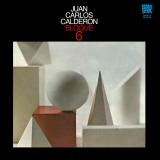
“Bloque 6” (1968), by Juan Carlos Calderón, is a landmark in the history of modern Spanish jazz, quite different from the later phase of his career, when he incorporated elements of fusion under the influence of funk, disco, and even flamenco. For the recording of this album, he was joined by prominent Spanish jazz musicians such as Pedro Iturralde, Vlady Bas, and Pepe Nieto.
In the United States, it was awarded Best International Jazz Album in 1969 and reissued on CD by Blue Note many years later.
Selva Discos is proud to present its latest release: the EP by the band Discoteca Tropicana. This record features 4 original tracks that celebrate the rhythms that have influenced Brazilian disco music, showcasing the best of this fusion: the swing and tropical flavour that bring sunshine to any dance floor.
The project is the result of a collaboration between Kiko Costato, the enfant terrible of the Brazilian music scene, and Zé Nigro, a producer and multi-instrumentalist who has won two Grammy Awards and has worked with major names in Brazilian and international music such as João Donato, Antonio Carlos & Jocafi and Natasha Diggs.
This EP is based on 4 different themes. For each one, Kiko and Zé Nigro recruited some of Brazil’s finest studio musicians – people who work with Seu Jorge, Céu, Criolo, Metá Metá, Cidadão Instigado and Tulipa Ruiz – as well as pioneering artists from the Brazilian Black music scene, such as the backing vocalists who work with the legendary Gilberto Gil.
“Corpos Celestes” is a more classic “disco diva” track, featuring string arrangements and a grand piano, as if it were the start of the evening, a magical moment straight from the heyday of disco in the United States; “Corpo Treme” is the sweat, the vuco-vuco, a song for that moment when you’ve already let yourself go, a sprint to the frenetic rhythm of the carimbó; “Tobina” is the meeting of Brazil and Africa, from which Brazilian swing is born, an original chant straight from the Congo, with a characteristic African guitar, adapted to Brazilian rhythms, just like the afoxé. Finally, the dancefloor hit “Não Pode Acabar”, a more urban disco track, which works just as well for kicking off a party with the right vibe as for closing a set with the highest energy.
Fontaines D.C. announce their fifth studio album, Dopamine Chamber, released on 16th October via XL Recordings. Produced by James Ford, it is the follow-up to 2024’s UK platinum-certified Romance – and the sound of a band moving decisively away from the guitar language of their early records into something colder, stranger and more synthetic. It arrives today alongside lead single “Marianne” and its accompanying video, directed by Dave Meyers.
Dopamine Chamber arrives like a constellation behind undulating sighs of smog: potent balladry, anthemic melodies glinting through the murk. In a world tipping towards collapse, it asks how pleasure mutates amid peril—and what our pursuit of it reveals about us. Across the album, Fontaines D.C. – Grian Chatten, Carlos O’Connell, Conor Curley, Conor Deegan and Tom Coll – move between gratification and dread until the two meld together, reflecting the overwhelm of artificial intelligence, environmental collapse and political violence all riding the same algorithms as memes, jokes and celebrity culture. “The album itself is a dopamine chamber,” says Chatten. “You step inside and we test these different mind- or mood-altering pieces of music on you.”
Where Romance held its tension in balance, this record tips it. “I think Romance was maybe 60 per cent human and 40 per cent corrupted by automation, and a loss of feeling,” says Chatten, who spent time among the faded grandeur of Venice, Vienna and Sicily in search of lyrical inspiration. “This one feels more like 60 per cent corrupted — the mask is wearing the face a little more.” He resisted any pull towards easy optimism: “I felt it would be more powerful to leave the hope out and reflect the ugliness honestly. This one needed to feel more like a catastrophic warning.”
“Our albums have always questioned a sense of place,” says bassist Conor Deegan. “First Dublin, then being away from Dublin, and then trying to find the romance elsewhere. On this record, the question became: where do you escape to?” Into the self, perhaps – or hedonism, fantasy, cosmetic perfection, eternal youth or the endless refresh of a screen.
Fontaines D.C. have spent five albums refusing to repeat themselves – from Dogrel (2019) through A Hero’s Death (2020), the No. 1 Skinty Fia (2022) and the anarchic, kaleidoscopic Romance (2024). Dopamine Chamber is their most radical turn yet: cold synthesiser tones, marching drums, samples and triggers, several songs with no guitars at all, and the swooning strings of 1960s Italian pop pulled into something synthetic. For guitarist Conor Curley, the aim was to break from the band’s own reference points: “I was trying to find stuff that pointed into the future.” It was made with James Ford between London, the English countryside and Palermo, where Chatten recorded vocals in a makeshift booth built from mattresses and cushions.
“There’s a poignant sense of us being on the brink of some other kind of form of humanity, or non-humanity,” says Chatten. For their fifth album, Fontaines D.C. have built the chamber. What happens to the listener inside it will be the experiment.
Fontaines D.C. announce their fifth studio album, Dopamine Chamber, released on 16th October via XL Recordings. Produced by James Ford, it is the follow-up to 2024’s UK platinum-certified Romance – and the sound of a band moving decisively away from the guitar language of their early records into something colder, stranger and more synthetic. It arrives today alongside lead single “Marianne” and its accompanying video, directed by Dave Meyers.
Dopamine Chamber arrives like a constellation behind undulating sighs of smog: potent balladry, anthemic melodies glinting through the murk. In a world tipping towards collapse, it asks how pleasure mutates amid peril—and what our pursuit of it reveals about us. Across the album, Fontaines D.C. – Grian Chatten, Carlos O’Connell, Conor Curley, Conor Deegan and Tom Coll – move between gratification and dread until the two meld together, reflecting the overwhelm of artificial intelligence, environmental collapse and political violence all riding the same algorithms as memes, jokes and celebrity culture. “The album itself is a dopamine chamber,” says Chatten. “You step inside and we test these different mind- or mood-altering pieces of music on you.”
Where Romance held its tension in balance, this record tips it. “I think Romance was maybe 60 per cent human and 40 per cent corrupted by automation, and a loss of feeling,” says Chatten, who spent time among the faded grandeur of Venice, Vienna and Sicily in search of lyrical inspiration. “This one feels more like 60 per cent corrupted — the mask is wearing the face a little more.” He resisted any pull towards easy optimism: “I felt it would be more powerful to leave the hope out and reflect the ugliness honestly. This one needed to feel more like a catastrophic warning.”
“Our albums have always questioned a sense of place,” says bassist Conor Deegan. “First Dublin, then being away from Dublin, and then trying to find the romance elsewhere. On this record, the question became: where do you escape to?” Into the self, perhaps – or hedonism, fantasy, cosmetic perfection, eternal youth or the endless refresh of a screen.
Fontaines D.C. have spent five albums refusing to repeat themselves – from Dogrel (2019) through A Hero’s Death (2020), the No. 1 Skinty Fia (2022) and the anarchic, kaleidoscopic Romance (2024). Dopamine Chamber is their most radical turn yet: cold synthesiser tones, marching drums, samples and triggers, several songs with no guitars at all, and the swooning strings of 1960s Italian pop pulled into something synthetic. For guitarist Conor Curley, the aim was to break from the band’s own reference points: “I was trying to find stuff that pointed into the future.” It was made with James Ford between London, the English countryside and Palermo, where Chatten recorded vocals in a makeshift booth built from mattresses and cushions.
“There’s a poignant sense of us being on the brink of some other kind of form of humanity, or non-humanity,” says Chatten. For their fifth album, Fontaines D.C. have built the chamber. What happens to the listener inside it will be the experiment.
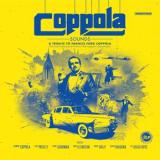
Mit Music From The Films Of Francis Ford Coppola erscheint eine sorgfaltig kuratierte Doppel-LP, die die unverwechselbare Klangwelt eines der einflussreichsten Regisseure des modernen Kinos wurdigt. Von Der Pate uber Apocalypse Now bis hin zu The Conversation und The Outsiders vereint diese Sammlung Musik aus Filmen, die das amerikanische Kino seit den 1970er Jahren nachhaltig gepragt haben. Die Zusammenstellung zeigt eindrucksvoll, wie entscheidend Musik fur die emotionale Wirkung von Coppolas Filmen war. Neben den Kompositionen von Carmine Coppola finden sich Aufnahmen von Kunstlern wie Buddy Holly, The Beach Boys, Elvis Presley oder Richard Wagner. Die Doppel-LP beleuchtet das Zusammenspiel von Bild und Ton und richtet sich gleichermaßen an Filmfans, Soundtrack-Sammler und Liebhaber klassischer Filmmusik.
Plush shag carpeting, jazz flutes, analogue synths, funk grooves, exotica, and sultry, Italian-style vocalising: Erotica 70 is the new album from Larry Manteca, known for their inventive, tongue-in-cheek reimaginings of classic Italian soundtrack aesthetics.
This time around, the Milanese collective sets its sights on the distinct sonic landscape of 1970s commedia sexy—a film genre that, for better or worse, defined an era and fed richly into the cinematic education of Larry Manteca’s members.
Through this lens, Erotica 70 also becomes a way of celebrating Piero Umiliani in his centenary year—a composer whose name is closely linked to the erotic comedies of the time.
The nod to Umiliani is baked right into the details, starting with the choice of vintage gear like the Eminent synth and the Wurlitzer electric piano. These instruments deliver that particular blend of jazz, groove, electronics, and sensual charm that made the golden age of Italian film music so unique.
Standout track “Lando” is a joyful, playful homage to actor Lando Buzzanca, who starred in numerous films scored by Umiliani, including the iconic 1973 comedy La schiava io ce l’ho e tu no (My Darling Slave).
Larry Manteca is spearheaded by multi-instrumentalists Alessandro Paiola and Riccardo Danieli, flanked by the cinematic flute of Carlo Pelsa, the swinging drums of Andrea Quattrini, and the magnetic vocals of Valentina Castelli and Alessandra Maria Manzoni.
Recorded across various studios in Northern Italy, Erotica 70 is the imaginary soundtrack to an Italy that no longer exists, recreating its atmosphere while rendering it in full, vivid colour. It’s a record whose music seems to come straight out of a provincial cinema, a smoky late-night club, or a long-lost 70s film. But while it looks back to a bygone era, it does so only to bring it straight into the present, making the past sound surprisingly fresh and contemporary.
"Fragments of Light" documents seven years of creative dialogue between Purl (Ludvig Cimbrelius) and Ecovillage (Emil Holmström & Peter Wikström). Their journey began with a spontaneous meeting in Los Angeles during October 2019, evolving into a transcontinental process where Ludvig refined ideas during Sri Lankan train journeys while Emil and Peter furthered their ambient dreaming in northern Sweden. Sonically, the album inhabits a space between pop ambient and new age—combining atmospheric textural depth with accessible melodies, while also carrying forward the contemplative nature central to the artists' work and personal lives. Ecovillage, who has collaborated with many revered artists (such as Laraaji, Carlos Niño, and Fennesz), here pour their own deep sensibilities into the ever widening river of Purl—this initial, ambient-rooted alias of Ludvig Cimbrelius. Featuring original, hand-painted artwork by Steven Jackson and delicate mastering work by Ludvig for a special limited physical edition released via his own LILA लीला imprint, “Fragments of Light” carries the hallmarks of an ambient classic-to-be. The album fits naturally alongside works by artists like Brian Eno, Harold Budd, and Hiroshi Yoshimura, as well as contemporary artists who bridge the ethereal with melodic sensibility.
180g Heavy double vinyl LP with liner notes by Tyran Grillo. Limited Japanese Obi for the first pressing. Original artwork by Russell Mills and photography by Jean-Baptiste Mondino.
The third Time Capsule is a body of dub reinterpretations by celebrated producer Bill Laswell of Ethiopian singer Gigi. Curated by Tokyo record collector, music researcher and seasoned reissue supervisor Ken Hidaka, it is the first time Illuminated Audio is pressed to vinyl after its CD release in 2003.
Ejigayehu Shibabaw was born in 1974 in Chagni, northwestern Ethiopia and by pursuing a career as a singer, went against her father’s strict, traditional gender roles. As Gigi, she embraced the same musical freedom she had strived for in her personal life, incorporating the Ethiopian church, funk, hip-hop, West and South African music into her work. She first settled in Nairobi, then Addis Ababa, where she quickly established herself as one of the city’s leading singers. A move to San Francisco in 1998 led to a long and fruitful creative partnership with bassist and producer Bill Laswell.
Around the same time, Chris Blackwell had stepped away from Island Records to start the art house film company and label Palm Pictures. He took an interest in Gigi and together with Laswell, pulled together an all-star cast of musicians for her self-titled US debut album, including Herbie Hancock, Pharoah Sanders and Wayne Shorter. It won international critical acclaim, not just for its musicianship but for making Gigi a “defining voice for the Ethiopian expatriate community”, as journalist Tyran Grillo praises in his Time Capsule liner notes. From the nation-defining 1896 victory over Italian invaders to the quiet revolutionaries who wear simple shemma garments, Grillo believes the themes in Gigi make it “a shower of sunlight on her homeland for those ignorant of its struggles.”
After its success, Blackwell encouraged them to go back into the studio to rethink the album and Illuminated Audio was born. “Anyone can make a voice sound worldly”, Grillo remarks, “but rare are those who can make one sound inner-worldly.” Gigi was clear with Laswell to give her vocals a minor role “because it’s already been done.” Instead her Amharic verse is fleeting, exhaling through the textures like ghostly fragments; soaring yet muted. Yet the album is still titled under her name, an assertion by Laswell of her central role in the album’s creation. Not only was it a fully endorsed project by Gigi, but she would be present throughout its development, giving feedback on half-finished ideas as Laswell played them back in the studio. “It works perfectly”, she reflected after the album’s release. “We wanted to capture the whole spirit of each track, and Bill’s remixes create a different music language that really puts you in a pleasant place”.
This new vocabulary takes its lead from a technical approach that Laswell had been perfecting during a furtive creative period at the turn of the millennium. Much like his ambient interpretations of Miles Davis (Panthalassa, 1998), Bob Marley (Dreams of Freedom, 1997), and Carlos Santana (Divine Light, 2001), Laswell approached Illuminated Audio by returning to the original multitrack masters. Gigi wasn’t just reworked, but recomposed into an expansive lattice of instruments, submerged in a watery ambience of dub and trance undercurrents.
Sonically, this new language that Gigi refers to, is manifested by the original album’s more understated parts being pushed to the fore. Explaining his contrasting methods, Laswell saw Gigi as being “put together in a way that fits”. Contrastingly, in Illuminated Audio, “a lot of things that I featured in the remix weren’t as audible in the original.” Instrumentation laying near-dormant, deep in the mix, are brought to the fore: the acid rock guitar and Wayne Shorter’s saxophone on ‘Tew Ante Sew’, Graham Haynes’ flugelhorn on ‘Nafekeñ’, Laswell’s bass on ‘Kahn’, the melodica in Mengedegna or the floating synths and talking drums in ‘Gud Fella’.
Brought to his attention by mentor DJ Nori, Hidaka describes Illuminated Audio as a “masterful sonic exploration into ethereal ambience and dub” and made sure this reissue also contained a full remaster to give its “deep musicality” much better dynamics and density in the overall sound. Hidaka admits that Laswell's music “is sometimes so out-there, it is often misunderstood” and, indeed, to dub album non-believers this might seem like a prolific producer imposing himself on another artist’s work; eternally developing rearrangements that never quite get to its destination. But that’s missing its true power and triumph. This is more than the reissue of a remix, but “a wholly unique musical entity”, as Hidaka describes. Illuminated Audio refers to the illuminated manuscripts that comprise the major part of Ethiopian art and its new compositions stand in proud solitude as a rare body of reworks that both informs and enhances their originals.
LUCIANO LAMANNA — A CARLO Blackwater Label — 2026 Distributed by Triple Vision More than ten years in the making, A CARLO is a single-sided EP by Luciano Lamanna for Blackwater Label, dedicated to Carlo Giuliani and to the memory of the events that unfolded during the G8 protests in Genoa in 2001. This record is the result of a long process, one that began more than a decade ago and has remained unfinished until now. Two tracks, both carrying the name and memory of Carlo, finally complete a circle that has been open for years. The first track, “Il Giorno del Sole”, was previously released on physical CD through Blackwater Label. The second, “Amore Infinito”, arrives more than ten years later, completing the dialogue between the two pieces and giving the project its long-awaited counterpart. Together, the tracks form a deeply emotional and personal statement: melancholic, haunting and at the same time driving and hopeful. Lamanna moves through the industrial language that has always characterised his work, while “Amore Infinito” explores a darker, more intimate territory, evoking the emotional intensity of Coil. A CARLO is not intended as a historical reconstruction or a conventional political statement. It is an act of memory.
Erasmo Carlos’ Carlos, Erasmo is a landmark of early-’70s Brazilian rock, where Tropicalia, fuzzed-out psych, soul, funk and Brazilian pop meet in brilliantly adventurous form. Produced by Manoel Barenbein with arrangements by Rogério Duprat, it also features Os Mutantes players Sérgio Dias, Dinho Leme and Liminha, plus guitarist Lanny Gordin.
Opening with De Noite na Cama, written for Erasmo by Caetano Veloso, the album moves with real freedom between sensual pop, hard-edged psych and off-kilter grooves. Erasmo’s partnership with Roberto Carlos sits alongside songs by Jorge Ben and Marcos Valle, making this a genuine meeting point for some of Brazil’s most inventive voices.
Tracks like Maria Joana, Agora Ninguém Chora Mais, 26 Anos de Vida Normal, Ciça Cecília, Mundo Deserto, Sodoma e Gomorra and Masculino Feminino show just how wide Erasmo’s vision was: raw, playful, soulful and beautifully unruly.
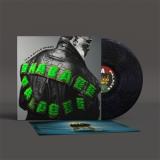
Mit Selbstbewusstsein und Präzision kehrt der sich ständig weiterentwickelnde Musiker, Produzent und Rapper Ishmael Butler als Shabazz Palaces mit It's a Style Sport zurück. It's a Style Sport bleibt dem Stil von Shabazz Palaces treu - mit seiner gewagten Mischung aus experimentellem Hip-Hop und freier Poesie - und offenbart gleichzeitig eine nachdenklichere und direktere Seite des Musikers aus Seattle. ,It's a Style Sport" zeigt, wie Butler das, was er in seiner legendären Karriere gelernt hat, zu einem verspielten, schillernden Portal zusammenfügt und sich damit erneut als Künstler mit chamäleonartigem Ehrgeiz beweist, angetrieben von Neugier, Mut und grenzenloser Fantasie. Das Album ist das Ergebnis einer gemeinschaftlichen Zusammenarbeit mit vielen Mitgliedern von Butlers Tourband: Evan Flory-Barnes am Kontrabass und E-Bass; Thaddeus Turner an Gitarre, Keyboards und Gesang; Kassa Overall am Schlagzeug; Gerald Turner am Bass und Gesang; Marquetta Miller am Gesang; und Carlos Overall am Saxophon. Butlers langjähriger Freund und Mitstreiter Erik Blood übernahm Instrumentierung, Produktion und Abmischung. Auf It's a Style Sport wird ein Bild von Butlers früheren Leben als Rapper und Performer seiner heutigen Persönlichkeit gegenübergestellt - provokativ und aufschlussreich zugleich. Im Kern ist It's a Style Sport eine Ode an die Rap-Szene vergangener Jahre, als der spielerisch-wettbewerbsorientierte Ehrgeiz das Genre dazu trieb, seine Kollegen stets zu übertrumpfen, zu überholen und an Raffinesse zu übertreffen.
Released by Polydor Records on April 1, 1972, Mandrill Is is the second album by Mandrill, the Brooklyn seven-piece led by brothers Carlos, Lou, and Ric Wilson.
Recorded at Electric Lady Studios during the winter of 1971?72, it finds the band refining the adventurous blend of funk, soul, jazz, rock, and Latin rhythms established on their acclaimed debut. With its powerful horn section, deep grooves, percussion-rich arrangements, and flashes of psychedelia and jazz-rock, Mandrill Is sounds both tighter and more ambitious than its predecessor. "Ape Is High" and the horn-driven "Git It All" deliver the album's most immediate funk, while "Cohelo" and "Kofijahm" explore Latin and Afro-diasporic rhythmic traditions. "Children of the Sun" and "Lord of the Golden Baboon" stretch further into expansive, progressive territory, revealing a band as interested in atmosphere, arrangement, and instrumental interplay as in the groove itself. The album's strength lies precisely in that refusal to settle into one category. Mandrill use funk as a foundation for moving freely between soul, jazz, rock, Latin music, and psychedelic textures, creating a sound that is unmistakably their own.
Mandrill Is captures the group at an important early peak: more focused and confident than their debut, yet still willing to follow the music wherever it leads. Pressed on 180g vinyl.
Last year, Downside Up chief Brandon De Carlo aka BDC decided to bring the label to vinyl following a decade of digital-only releases. Release number one, which is finally available worldwide, naturally comes from the man himself. It's the first EP in his ongoing A Thousand Cuts series, which to date includes a quartet of digital missives. It offers a neat summary of his trademark sound, a blend of heady deepness, sonic grit, focused rhythms and an overall sense of tension-and-release. On side A, the muscular, raw and hypnotic 'Funny How Things' is backed by the deeper and wonkier 'Peer Pressure', while the flipside sports warped techno jacker 'Shell Of My' and weirdo ambient soundscape 'Uncommon Courtesy'.
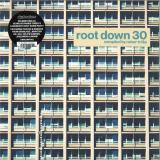
DAYBREAKERS Records proudly presents ROOT DOWN 30, a celebration of one of Europe's most influential club institutions. Curated by legendary DJ, producer and tastemaker Rainer Trüby, the compilation marks three decades of Root Down, the Freiburg party that has quietly shaped dancefloors, record collections and musical conversations since 1996.
Long before genre boundaries dissolved into today's eclectic club culture, Root Down championed a unique musical vision. Jazz, Brazilian grooves, soulful house, broken beat, Afro-Latin rhythms and future-facing electronic sounds were brought together under one roof, creating a community that became a vital meeting point for adventurous dancers and deep music lovers alike.
Across thirty years, Root Down has hosted an extraordinary roll call of artists and DJs including Jazzanova, Gilles Peterson, Theo Parrish, Kyoto Jazz Massive, Jimpster, Laurent Garnier, Dixon, Peter Kruder, Richard Dorfmeister and countless others, helping establish Freiburg as an unlikely but essential stop on the global underground music map.
ROOT DOWN 30 captures that spirit perfectly. Handpicked by Trüby, the collection brings together a selection of artists whose music embodies the warmth, sophistication and dancefloor energy that have defined the party since day one. Featuring music and remixes from Jimpster, Osunlade, Da Lata, Jazzanova, Crackazat and more, the compilation moves effortlessly between soulful house, jazz-inflected club music, Brazilian influences, broken beat rhythms and deep electronic grooves.
ROOT DOWN 30 is a snapshot of an enduring musical philosophy. Thirty years after the first Root Down dancefloor came to life in Freiburg, the spirit remains unchanged: open-minded, soulful and rooted in discovery.
ROOT DOWN 30 stands as both a celebration of that remarkable journey.
Los Angeles-based producer, composer and multi-instrumentalist Dexter Story returns with his sixth album, T'som (pronounced sawm), a deeply personal work inspired by the spiritual practice of fasting. Meaning "fasting" in the Afro-Semitic languages Tigrinya and Amharic, as well as in Arabic, Tsom represents a time of prayer, reflection and discipline across northeast Africa. Guided by this tradition, Story draws on the musical heritage of the Horn of Africa and musical traditions of the Middle East to create a spiritual jazz album that reflects on devotion, transformation and the power of letting go. Working with frequent collaborators Carlos Nino, Sudan Archives, Kamasi Washington, Jimetta Rose and Kibrom Birhane, the album touches on themes of reflection, inner poise and a quest for deeper connections, bound by explorations of traditional rhythms from the Horn of Africa. Named after jazz saxophone legend Dexter Gordon, Los Angeles-based multi-instrumentalist, composer, arranger, music director and producer Dexter Story is one of the key figures in the city's vibrant creative music scene. Renowned for his genre-defying approach, he has collaborated with an extraordinary range of artists, including Carlos Nino, Madlib, Kamasi Washington, Build An Ark and Gaslamp Killer. His acclaimed solo albums Wondem and Bahir, released by Soundway, established him as a distinctive voice at the intersection of jazz, African music and contemporary production. Most recently, Story produced Mulatu Astatke's acclaimed studio album Mulatu Plays Mulatu, further cementing his reputation as one of today's most sought-after creative producers and musical collaborators.
Los Angeles-based producer, composer and multi-instrumentalist Dexter Story returns with his sixth album, T'som (pronounced sawm), a deeply personal work inspired by the spiritual practice of fasting. Meaning "fasting" in the Afro-Semitic languages Tigrinya and Amharic, as well as in Arabic, Tsom represents a time of prayer, reflection and discipline across northeast Africa. Guided by this tradition, Story draws on the musical heritage of the Horn of Africa and musical traditions of the Middle East to create a spiritual jazz album that reflects on devotion, transformation and the power of letting go.
Working with frequent collaborators Carlos Niño, Sudan Archives, Kamasi Washington, Jimetta Rose and Kibrom Birhane, the album touches on themes of reflection, inner poise and a quest for deeper connections, bound by explorations of traditional rhythms from the Horn of Africa.
Named after jazz saxophone legend Dexter Gordon, Los Angeles-based multi-instrumentalist, composer, arranger, music director and producer Dexter Story is one of the key figures in the city's vibrant creative music scene. Renowned for his genre-defying approach, he has collaborated with an extraordinary range of artists, including Carlos Niño, Madlib, Kamasi Washington, Build An Ark and Gaslamp Killer. His acclaimed solo albums Wondem and Bahir, released by Soundway, established him as a distinctive voice at the intersection of jazz, African music and contemporary production. Most recently, Story produced Mulatu Astatke's acclaimed studio album Mulatu Plays Mulatu, further cementing his reputation as one of today's most sought-after creative producers and musical collaborators
Carlos Benedetti, a Colombian house producer and live performer from Cali, has steadily become one of the standout names in today’s underground dance scene. Following multiple vinyl releases on the acclaimed German label Disco Disco, Benedetti’s productions have earned widespread praise and support from respected figures including deep house icon Cinthie.
Specialists, selectors and collectors alike have described his records with comments such as:
“fabulous 12-inch”
“This is the most wild dance record to come out this year so far”
“Cannot formulate the words to capture how this one sounds and makes me feel”
“Listen close and behold.”
With this latest EP for SUPREME STRIKER, Benedetti once again delivers a collection that feels destined to become a future underground classic.
The record opens with Nostalgia Blues, a soulful and deeply textured piece channeling the spirit of Larry Levan’s legendary dancefloor energy, somewhere between disco’s emotional golden age and modern club functionality.
On Bellavista, Benedetti dives deeper into high-energy territory, layering powerful black grooves, hypnotic rhythmic tension and rich percussive movement into something both vibrant and timeless.
Pyramid follows with soaring arpeggios and delicate melodic flourishes, recalling the euphoric sophistication of Todd Terje at his most inspired, while maintaining Benedetti’s raw dancefloor sensibility.
Closing track How High The Moon nods toward Patrick Cowley’s pioneering synth work, injecting the EP with cosmic disco pressure, futuristic funk textures and a strange late-night sensuality.
More than a simple collection of tracks, the EP unfolds as a fully coherent journey through house, disco, Italo and high-energy mutations, balancing emotional depth, machine-driven grooves and timeless dancefloor instinct with remarkable naturality.
Eine Hommage an innovative mexikanische Musiker, die elektronische und indigene Instrumente mit Minimalismus, Ambient, Jazz und New-Age-Ästhetik verschmolzen haben Mit 12 visionären Künstlern, darunter Luis Pérez, Arturo Meza, Jorge Reyes, Aristeo und Tribu, um nur einige zu nennen Zusammengestellt und produziert vom mexikanischen Journalisten, Musiker und DJ Carlos ,Tropicaza" Icaza sowie dem Gründer von dublab radio und Creative Producer des LA Phil, Mark ,Frosty" McNeill Cover-Artwork vom legendären Künstler Eduardo Terrazas sowie Design und Layout von D.Norsen Design Doppel-LP, gepresst bei Optimal, inklusive Booklet mit Liner Notes Audio remastered vom GRAMMYr-nominierten Toningenieur John Baldwin Limitierte Farbvinyl-Edition, gepresst auf violettem und rosa Vinyl //// ,A LA ALTURA" - oder ,To The Height" - würdigt mexikanische Musiker, die sich in den letzten Jahrzehnten des 20. Jahrhunderts mit elektronischen und indigenen Instrumenten auf experimentelles Terrain wagten und dabei im Dialog mit Minimalismus, Ambient, Jazz und New-Age-Ästhetik standen. Über ein Jahrzehnt in Arbeit und liebevoll kuratiert vom mexikanischen Journalisten, Musiker und DJ Carlos ,Tropicaza" Icaza sowie dem Gründer von dublab radio und Creative Producer des LA Phil, Mark ,Frosty" McNeill, basiert A LA ALTURA auf Originalbändern und Masteraufnahmen mit unveröffentlichten, längst vergriffenen und privat gepressten Aufnahmen. Die Bände 1 & 2 präsentieren 25 visionäre Künstler, die sich aktiv für eine Art Bewusstseinserweiterung einsetzten - sei es durch die Suche nach den Sternen mittels ihrer Musik oder durch die Weiterentwicklung der Kunstform selbst. Ebenso kühn setzen diese beiden Bände ein Zeichen dafür, dass mexikanische Künstler und Komponisten wie Luis Pérez, Arturo Meza, Jorge Reyes, Ana Ruiz und Antonio Zepeda in einem Atemzug mit Michael Rother, Terry Riley, Hiroshi Yoshimura und den vielen anderen Künstlern genannt werden sollten, die zu Recht für ihren Experimentiergeist gefeiert wurden.
Eine Hommage an innovative mexikanische Musiker, die elektronische und indigene Instrumente mit Minimalismus, Ambient, Jazz und New-Age-Ästhetik verschmolzen haben Mit 12 visionären Künstlern, darunter Luis Pérez, Arturo Meza, Jorge Reyes, Aristeo und Tribu, um nur einige zu nennen Zusammengestellt und produziert vom mexikanischen Journalisten, Musiker und DJ Carlos ,Tropicaza" Icaza sowie dem Gründer von dublab radio und Creative Producer des LA Phil, Mark ,Frosty" McNeill Cover-Artwork vom legendären Künstler Eduardo Terrazas sowie Design und Layout von D.Norsen Design Doppel-LP, gepresst bei Optimal, inklusive Booklet mit Liner Notes Audio remastered vom GRAMMYr-nominierten Toningenieur John Baldwin Limitierte Farbvinyl-Edition, gepresst auf violettem und rosa Vinyl //// ,A LA ALTURA" - oder ,To The Height" - würdigt mexikanische Musiker, die sich in den letzten Jahrzehnten des 20. Jahrhunderts mit elektronischen und indigenen Instrumenten auf experimentelles Terrain wagten und dabei im Dialog mit Minimalismus, Ambient, Jazz und New-Age-Ästhetik standen. Über ein Jahrzehnt in Arbeit und liebevoll kuratiert vom mexikanischen Journalisten, Musiker und DJ Carlos ,Tropicaza" Icaza sowie dem Gründer von dublab radio und Creative Producer des LA Phil, Mark ,Frosty" McNeill, basiert A LA ALTURA auf Originalbändern und Masteraufnahmen mit unveröffentlichten, längst vergriffenen und privat gepressten Aufnahmen. Die Bände 1 & 2 präsentieren 25 visionäre Künstler, die sich aktiv für eine Art Bewusstseinserweiterung einsetzten - sei es durch die Suche nach den Sternen mittels ihrer Musik oder durch die Weiterentwicklung der Kunstform selbst. Ebenso kühn setzen diese beiden Bände ein Zeichen dafür, dass mexikanische Künstler und Komponisten wie Luis Pérez, Arturo Meza, Jorge Reyes, Ana Ruiz und Antonio Zepeda in einem Atemzug mit Michael Rother, Terry Riley, Hiroshi Yoshimura und den vielen anderen Künstlern genannt werden sollten, die zu Recht für ihren Experimentiergeist gefeiert wurden.
Eine Hommage an innovative mexikanische Musiker, die elektronische und indigene Instrumente mit Minimalismus, Ambient, Jazz und New-Age-Ästhetik verschmolzen haben Mit 12 visionären Künstlern, darunter Luis Pérez, Arturo Meza, Jorge Reyes, Aristeo und Tribu, um nur einige zu nennen Zusammengestellt und produziert vom mexikanischen Journalisten, Musiker und DJ Carlos ,Tropicaza" Icaza sowie dem Gründer von dublab radio und Creative Producer des LA Phil, Mark ,Frosty" McNeill Cover-Artwork vom legendären Künstler Eduardo Terrazas sowie Design und Layout von D.Norsen Design Doppel-LP, gepresst bei Optimal, inklusive Booklet mit Liner Notes Audio remastered vom GRAMMYr-nominierten Toningenieur John Baldwin Limitierte Farbvinyl-Edition, gepresst auf violettem und rosa Vinyl //// ,A LA ALTURA" - oder ,To The Height" - würdigt mexikanische Musiker, die sich in den letzten Jahrzehnten des 20. Jahrhunderts mit elektronischen und indigenen Instrumenten auf experimentelles Terrain wagten und dabei im Dialog mit Minimalismus, Ambient, Jazz und New-Age-Ästhetik standen. Über ein Jahrzehnt in Arbeit und liebevoll kuratiert vom mexikanischen Journalisten, Musiker und DJ Carlos ,Tropicaza" Icaza sowie dem Gründer von dublab radio und Creative Producer des LA Phil, Mark ,Frosty" McNeill, basiert A LA ALTURA auf Originalbändern und Masteraufnahmen mit unveröffentlichten, längst vergriffenen und privat gepressten Aufnahmen. Die Bände 1 & 2 präsentieren 25 visionäre Künstler, die sich aktiv für eine Art Bewusstseinserweiterung einsetzten - sei es durch die Suche nach den Sternen mittels ihrer Musik oder durch die Weiterentwicklung der Kunstform selbst. Ebenso kühn setzen diese beiden Bände ein Zeichen dafür, dass mexikanische Künstler und Komponisten wie Luis Pérez, Arturo Meza, Jorge Reyes, Ana Ruiz und Antonio Zepeda in einem Atemzug mit Michael Rother, Terry Riley, Hiroshi Yoshimura und den vielen anderen Künstlern genannt werden sollten, die zu Recht für ihren Experimentiergeist gefeiert wurden.
Eine Hommage an innovative mexikanische Musiker, die elektronische und indigene Instrumente mit Minimalismus, Ambient, Jazz und New-Age-Ästhetik verschmelzen Mit 13 visionären Künstlern, darunter Ana Ruiz, Oxomaxoma, Gerardo Bátiz, Antonio Zepeda und Airwaves, um nur einige zu nennen Enthält 4 bisher unveröffentlichte Titel Zusammengestellt und produziert vom mexikanischen Journalisten, Musiker und DJ Carlos ,Tropicaza" Icaza sowie dem Gründer von dublab radio und dem Creative Producer des LA Phil, Mark ,Frosty" McNeill Covergestaltung vom legendären Künstler Eduardo Terrazas, Design und Layout von D.Norsen Design Doppel-LP, gepresst bei Optimal, inklusive Booklet mit Liner Notes Audio remastert vom GRAMMYr-nominierten Toningenieur John Baldwin Limitierte Farbvinyl-Auflage auf gelbem und blauem Vinyl ///// ,A LA ALTURA" (zu Deutsch: ,Zu den Höhen") würdigt mexikanische Musiker, die sich in den letzten Jahrzehnten des 20. Jahrhunderts mit elektronischen und indigenen Instrumenten auf experimentelles Terrain wagten - im Dialog mit Minimalismus, Ambient, Jazz und New-Age-Ästhetik. Über ein Jahrzehnt in der Entstehung und liebevoll zusammengestellt vom mexikanischen Journalisten, Musiker und DJ Carlos ,Tropicaza" Icaza sowie dem Gründer von dublab radio und Creative Producer des LA Phil, Mark ,Frosty" McNeill, basiert A LA ALTURA auf Originalbändern und Masteraufnahmen mit unveröffentlichten, längst vergriffenen und privat gepressten Aufnahmen. Die Bände 1 und 2 präsentieren 25 visionäre Künstler, die sich aktiv für eine Form der Bewusstseinserweiterung einsetzten - sei es durch das Streben nach den Sternen mittels ihrer Musik oder durch die Weiterentwicklung der Kunstform selbst. Ebenso kühn setzen diese beiden Bände ein Zeichen dafür, dass mexikanische Künstler und Komponisten wie Luis Pérez, Arturo Meza, Jorge Reyes, Ana Ruiz und Antonio Zepeda in einem Atemzug mit Michael Rother, Terry Riley, Hiroshi Yoshimura und den vielen anderen Künstlern genannt werden sollten, die zu Recht für ihren Experimentiergeist gefeiert wurden.
Craig Alexander drops back with the Soul Revival repress — a raw, deep house cut built for heads who know. Originally released on Transparent Records, now back on wax through Phonogramme.
Limited-run energy, timeless groove, straight-up dancefloor business.
Feedbacks:
Dave Huismans (ex_libris, In Transit) : Nice to get Soul Revival digitally, thanks!
Ben UFO (Hessle Audio / Rinse FM) : absolute classic
Laurent Garnier : SOUL REVIVAL is super cool track Will play
Mike Shannon (Cynosure) : Nice to have this one back! thx
Prosumer : this a journey into sound
Red Eye (Crash Planet Rec, R.E.A.D., Red/Shift, Lavish Habits, Multipass) : ahh i have this original vinyl. Glad to have a digi!!!
Dorian Paic (Raum Musik) : good re release too. Soul Revival is the one for me, in the past and now as well. ;) Thx for the promo !!
Hunee (Rush Hour) : lovely reissue
DJ Bone (FURTHER) : Lovin Feelin works for me, thanks
Chloe Caillet (Smile Records) : love these!
Franck Roger (Real Tone Records) : soul revivais is dope as always !!!
Terence :Terry: (La Vie En Ros / Freak N Chic) : what a good remember we use to played it a lot " Soul Revival" super track to surprise everyone Terence :Terry:
Tripmastaz (Plant 74) : tight cutz
Jorkes (Freeride Millenium) : soul revival is cute
Girls Of The Internet (Classic) : Classic!
Geir Aspenes (G-Ha (Sunkissed)) : Thanks
Terry Francis (Fabric) : nice
Sven Weisemann (Mojuba Records) : absolute classic!!!
Pacific Coliseum (Dublab, Teen Daze, Noire & Blanche) : DEEP!!! These are gorgeous, thank you so much for sending!
Pat Hyland (Northside Loft Society) : A welcome release from Craig. Three pure dancefloor heaters with Soul Revival topping!
Fred P : Dope...
Doc Martin (Sublevel) : Good Grooves!!!!
Mark Farina : good stuff. thanks!
Samuel Deep (SlapFunk Records) : yes
DJ Steaw (Rutilance / Steaward) : Nice ep thanks :-)
Lea Lisa (Phonica Records / Folklor Club) : Soul revival for me !
Brothers' Vibe (Luv4Wax) : Bangers!
Anthony Collins (Frank & Tony / Scissor & Thread) : great record
Carlos Valdes (Is Burning) : Loved it since the first time I've heard it! Happy to have the digital file!
More than five decades into one of Brazilian music's most remarkable careers, Joyce Moreno returns with a new collection of songs that reflect the warmth, lyrical sophistication and innovation that have made her one of Brazil's most defining musical voices.
Produced by Joyce Moreno alongside her husband and longtime collaborator Tutty Moreno, the album finds the Rio-born singer, guitarist and composer at her most reflective. Across nine beautifully crafted songs, Joyce pairs intricate guitar work, lyrical intimacy and effortless swing with the musical curiosity that has defined her work for more than half a century.
Invited into the studio by Roberto Menescal at just sixteen years old, Joyce emerged during a transformative period for Brazilian music, releasing her self-titled debut in 1968. She soon established herself as one of Brazil's pioneering female songwriters, writing unapologetically from a woman's perspective at a time when few women were afforded that voice. Her song “Me Disseram” sparked national debate, while later works including “Feminina” cemented her reputation as an artist unafraid to challenge convention.
While some of her politically charged songs were censored during Brazil's military dictatorship, Joyce continued to write with honesty and independence. After studying journalism in the late 1960s, her gift for observation and storytelling became an even more defining feature of her songwriting. Over the following decades she released a succession of acclaimed albums, including the now-classic Feminina and Água e Luz, earning widespread recognition both in Brazil and internationally. Antônio Carlos Jobim would later describe her as "one of the greatest singers", while generations of musicians have drawn inspiration from her fearless artistry and enduring originality.
That same artistic fearlessness remains at the heart of her latest work. The album brings together an exceptional ensemble of Brazilian musicians. Tutty Moreno's expressive drumming underpins Joyce's vocals and guitar throughout, while Jorge Helder's bass, Lula Galvão's guitar and Marcos Nimrichter's warm Fender Rhodes create a sound that is both intimate and expansive. Contributions also come from the legendary Toninho Horta, alongside José Arimatéa, Teco Cardoso, Nailor Proveta, Josué dos Santos and Raphael Sampaio, whose additions add colour and texture without overshadowing Joyce's understated brilliance.
Throughout the album, Joyce balances quiet reflection with effortless rhythmic vitality. “Chovendo na Horta” serves as both a heartfelt dedication and a celebration of Joyce's enduring musical connections, featuring the unmistakable guitar of Toninho Horta. Elsewhere, “Aldeia de Ogum” receives a fresh new arrangement by Nailor Proveta, revisiting one of Joyce's most beloved compositions. Originally released in 1980, the track has enjoyed a remarkable resurgence in recent years, embraced by a new generation of listeners and became an underground favourite among DJs including Floating Points, Four Tet and Danilo Plessow. Now a staple of Joyce's live performances, this reimagined version brings renewed energy to a song that continues to transcend generations.
At seventy-eight, Joyce Moreno continues to write with the same curiosity, generosity and quiet innovation that have defined her career from the very beginning. "For me, it's never too soon to try something new, either in music or in life," she reflects - a philosophy that gives both the album and its title their enduring sense of optimism. This latest album is neither a retrospective nor a reinvention, but the work of an artist who continues to refine her voice with remarkable grace, proving that her most compelling music remains firmly rooted in the present.
Following the album's release, Joyce Moreno will embark on a European tour this November, bringing her celebrated live show to audiences across the UK and Europe. A rare opportunity to experience one of Brazil's most influential and enduring artists in concert, the tour showcases a songwriter whose voice, virtuosity and musical vision remain as compelling today as ever.
Following a decade spent releasing music digitally, Brandon De Carlo's Downside Up label made its vinyl debut late last year - though initially only in the US. Thanks to a new global distribution deal, we can now savour the label's second wax outing - a mini-album of club cuts and loop-powered DJ tools from British techno veteran Jamie Bissmire (an artist whose first EP dropped way back in 1997). There's naturally plenty of floor-focused heat throughout, from the 'Livity Sound-in-space' polyrhythmic techno of 'Primal Pathways (Roll Right Mix)' and the minor key madness of 'Smoke & Oakum', to the ambient style soundscapes of 'Parallel Stream' and 'Tangible Roots', and the slamming creepiness of the deliciously relentless 'Blackwood Tread'.
33rpm Lacquer-cuts: Kevin Gray
200g Double Ultimate Record®
Limited Edition: 4000 copies
Box and Tip-on Gatefold printed in Italy
Pressed by Simon Garcia, Marciac, France
When the concert started that 4 November 1966 at the famous Berliner Jazztage, four musicians took the stage. Close-knit to the point of telepathy, they were about to give one of their last concerts. The mythical partnership of Stan Getz on saxophone and Gary Burton on the vibraphone was coming to an end, but were they even aware that this was one of their last acts? Accompanying them was an exceptional rhythm section with Chuck Israels on bass and the great Roy Haynes on drums.
With the first notes of “On Green Dolphin Street” the audience was won over by the rapport of empathy within the quartet. The programme was beautifully compiled to alternate flamboyant standards conducive to the most exuberant solos (“The Blues Walk”), heady ballads where Getz demonstrated his splendid sound and lyrical singing (“The Shadow of Your Smile” and “Once Upon a Summertime”), and compositions by Gary Burton where the vibraphonist displayed his subtle harmonic universe (“The Singing Song” and “Edelweiss”).
Suddenly, a high-spirited version of “O Grande Amor”, the standard by Antônio Carlos Jobim and Vinícius de Moraes, sounded out to prefigure the distinctly bossa nova vibe of the second part of the concert: Astrud Gilberto was to take the stage. With the opening bars of “Samba de Uma Nota Só” the flavours of Brazil were palpable. Gilberto’s voice, fragile yet mischievous against the background of the iridescent vibraphone and wrapped within the airy countermelody of the saxophone, recreated all the freshness and innocence of the legendary recording of 1964. As if they were performing together for the first time, Gilberto and Getz played a subtle game of seduction to create music that was sensual, light and melancholic.
The colourful sequence of bossa nova standards – “Você e Eu” by Gilberto Gil, “Corcovado” and “The Girl from Ipanema” by Jobim – intermingled with numbers that were jazzier in both form and spirit – “Jive Hoot” by Bob Brookmeyer, “The Shadow of Your Smile” and “It Might as Well Be Spring” – was simply irresistible.
With the final notes of “Jive Hoot”, Stan Getz smiled and bid farewell to the audience with a simple “Auf Wiedersehen”. The recording of this dream-like performance lay untouched for nearly sixty years, until we unearthed the original tapes in the archives of Berlin Radio. This album is the very first edition of a memorable live concert, entirely restored using Phoenix Mastering®.
Around seven years ago I became a father and that changed my life. E Dee has always been about my son Carlo’s world seen through my eyes, and this third and final chapter closes the series as he is now seven years old and about to start his second year of primary school.
As with the previous volumes, all the titles come from our family’s own little dictionary. “Cazia” is the name used to call his mother, while “Wager” and “Illu” are two nicknames invented by his sister Camilla for Carlo.
Words that once belonged to a child’s private language have stayed with us over the years. E Dee Vol. 3 is the last chapter of that small family archive.
Portugal-based percussionist Gabriel Ferrandini spent years honing his skills in various free jazz ensembles, where he demonstrated his absorption of the styles of pioneering rhythm liberators like Sunny Murray and Milford Graves while forging his own energetic and agile sound. During this time, Ferrandini performed with everyone from Evan Parker and Alexander von Schlippenbach to Thurston Moore and Dirty Beaches' Alex Zhang Hungtai. At some point, the percussionist grew restless and began taking a more compositional approach, using his drums as primary sources from which to produce spectral tones and timbres via electronic manipulation.
In Ferrandini's hands, cymbals become generative instruments with endless reverb tails and choir samples are distilled into vapor. With its subtle evocations of light and color and meticulous editing, Romance suggests an almost cinematic scale. The strings and grainy synthesizer of "Crying Game" lend an air of giallo dread to the deep sub-bass rumbles; "Afters Lisboa" processes cymbal crashes through a Leslie speaker to create a siren-like Doppler effect; "Fallen Angels," one of the few tracks to feature Ferrandini's mostly untreated percussion work, stacks layers of reverb effects of varying lengths (an old Autechre trick) to add friction and give the spatialized sounds a dissociative quality. Album highlight "Cova da Vaporwave" utilizes creative sidechaining, warbly VHS-like tones and drums amplified through a Fender Twin to gather apocalyptic momentum.
Romance is a formidable artistic statement, establishing Ferrandini as one of the most vital composers on the contemporary avant-garde music scene. He is influenced by Renaissance composer Carlo Gesualdo, whose passionate yet dissonant chromatic approach can be detected throughout the album's seven uncanny tracks.
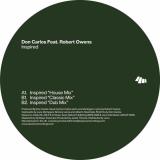
Two seriously high-grade legends come together to mark the 30th anniversary of the cultured Seasons Limited imprint here: Don Carlos is behind one of Balearic house music's most enduring anthems in 'Alone' and Robert Owens has been voicing the genre since the 80s with his signature smoky tones. Here they cook up 'Inspired' in three different forms - there's a deep and soulful House Mix with an electric delivery from Owens, then a chord-laced and warm Classic Mix with a throwback Chicago bassline and finally a Dub Mix that strips everything back to a more breezy late-night sound that sinks you into the groove perfectly.
DJ Support: Louie Vega, Joe Claussell, Danny Krivit, DJ Spen, Ron Trent, Don Carlos, Sandy Rivera, Emmaculate, Souldynamic and more…
Paolo Fedreghini is a key figure in the Italian nu-jazz and jazz-funk scene, also known, lately, for his FAM Disco project.
Paolo's latest offering, Jazz House Rituals, is more than just an EP; it’s a masterclass in organic production. A 4-track project that bridges the gap between sophisticated jazz arrangements and the infectious energy of the dancefloor. Recorded with a rich palette of live instrumentation—including saxophones, flutes, trumpets and organic drums—the project is a testament to Fedreghini’s ability to blend analog warmth with contemporary club rhythms. From the latin sun-drenched "Happy Feeling" to the nocturnal Deep vibes of "Smoking Area," this EP is an essential choice for lovers of Jazzy-house music.
Soma's 35th anniversary remix series continues with SOMA35.4, turning its focus to one of the label's more recent defining tracks - Slam's 'Activate'.
Originally released as part of Slam's catalogue over the last decade, 'Activate' quickly established itself as one of the duo's most recognised and widely played tracks of the period. For SOMA35.4, the track is handed over to four artists who each bring a distinct perspective to its driving, functional foundations.
Luke Slater takes 'Activate' and applies his trademark precision and raw club-focused approach. Oscar Mulero delivers a tougher, more industrial interpretation, pushing the track deeper into his characteristic high-pressure sound. Phil Berg brings a hypnotic, groove-led edge to his version, while Nastia Reigel offers a more contemporary, atmospheric take that reshapes the track through a different sonic lens.
SOMA35.4 continues the ethos behind the 35-year project: bringing together established figures from Soma's history and artists operating within its wider sonic sphere.
Tracks 1, 3 & 4 Mastered By Conor Dalton @ Glowcast Mastering
Track 2 mastered by Carlos Koschitzky
On a class debut for Biscuit’s choice Good Morning Tapes label, Kyoto’s dub specialist G Version III runs signature fusions of digidub steppers, drill, and holographic, minor-key FM synths.
One up on her 12” for Riddim Chango last year (plus the »Scenery From Double Glazing« tape for Digital Sting in ’24), G Version III’s »Chapter II« most finely chisels her lucidly rugged definition of the late ’80s / early ’90s mystic steppers sound. The OG Caribbean spirit is heard filtered through UK dances and shored up in Japan, where G tessellates its salient points with a palette of glassy Japanese synth tones and chamber music to exquisite effect. If Wendy Carlos was a soundgyal?
Across six cuts she builds the dance around digidub x drill waltz »Livin 4« and a haunted dancehall special in the harpsichord/horn riff of »An Idyll«, impressing her prowess in the fusion of subcontinental scales with a drill-tipped skip in »Queen G Theme Chapter II«, and tucking right into an aerodynamic, flying steppers mode, shades away from Element, in »Motherearth Guidance«. At a slower, wider stride her »Higher Grade« goes eyes-down on massive subs, and »Voice of Mystique Warriyah« adapts the classic-schooled sound like TNT Roots in Tokyo.
"It's not the conclusion he hoped to reach but it's too loud to find an alternative so he'll just stay here for hours on end, yearning and meandering in place" 4 slabs of rather evocative techno music from a producer who doesn't live in Berlin at all, having decided to take some distance, generally speaking.
Damage Code is the result of the convergence of two long-standing figures from the underground industrial and EBM scene: Carlos Grabstein (89s✝) and Ben Bunzen (Hammershøi). Released in partnership with Miseria records, their first collaboration unfolds through proto-industrial sequences, oppressive atmospheres, repetitive structures, and distorted transmissions, all wrapped in body-driven percussion that pulls the listener into a controlled state of sensory overload. Harsh yet precise, ritualistic yet futuristic, the record advances with relentless intensity while maintaining a raw, physical energy throughout. Somewhere between the diseased electronics of Front Line Assembly and the primitive industrial tension of Esplendor Geométrico, Digital Slave channels a sound that is both confrontational and hypnotic. With “Digital Slave”, Damage Code opens a new portal into industrial body music: dense, punishing, and engineered to trap the mind inside its circuitry. Presented in ONE-OFF truly limited edition of 300 copies lacquered pressed on 180 gr. high quality solid BLACK vinyl. All tracks have been specially remastered and mastered for vinyl by Daniel Hallhuber at Young and Cold Studios (Germany).
The free folk/jazz sound of modern Los Angeles. Featuring a heavy bunch of musicians and vocalists including Moor Mother.
"Fearlessly Accessing the Divine Spirit From Here on Out" is the vinyl debut from pianist, composer, and producer Diego Gaeta. He has previously released projects as Club Diego and with the trio Human Error Club (whose members Mekala Session and Jesse Justice helped produce this record). He has quickly become a fixture in a number of Los Angeles musical environments, working with Lionmilk, The Pan Afrikan Peoples Arkestra, Carlos Niño, Black Nile among others. This album is a synthesis of these many LA environments, and carries chamber, jazz, ambient, and folk influences, ultimately giving it an uncategorizable feel similar to works by Arthur Verocai or David Axelrod.
Gaeta recorded the initial ideas for the album by himself after experiencing a burst of creativity during the lockdown of 2020, in the aftermath of a season of protests in Los Angeles, on a piano at his home in El Sereno. "I was constantly not in tune with myself, always awaiting outrage and tragedy in a very unstable world. However, hitting the streets in support of various ongoing pandemic community actions felt necessary and it marked a point in time that ushered in large societal changes. The weight of that era made me feel allergic to making art at the time. All of these ideas came after that period, expressing my reflections subconsciously. I remember that the ideas came in a short amount of time, and then they developed."
Once he had created the tracks as Ableton sessions, he realized the gravity and context of how he was processing his ideas so he, as he puts it, "felt like taking them outside the hands of midi and into the hands of friends." Gaeta was able to assemble his dream band, which ended up being a 9-piece ensemble, or a nonet. "I felt that at some point I was channeling the geometrical balance of that nonet...it's almost as if I had a sextet and then the three of the sextet that's not the rhythm section were doubled. It's a really dense sextet, that's how I see it."
The recording process began the following summer in June 2021 as the musicians were all adjusting to the newfound dynamic of getting tested for COVID, waiting a few days, and then meeting up to record. "We were eating Indian food, some of us were smoking, it was a nice memory, but I felt a little stressed, because I was the bandleader, and I felt the emotional weight of my music."
The title track and single, featuring vocals by Jimetta Rose, begins with a speech by Gaeta delivered when playing with Black Nile in 2019 at the Levitt Amphitheatre in MacArthur park. Gaeta provides the following account: "Even though it was in 2019, socio-political tensions and issues were at the forefront for me at that time. I wrote a speech that was intended to be critical of the US but it ended up becoming a collage inspired by different women that had messages of freedom that spoke to me the most. I quoted Nina Simone and Georgia Anne Muldrow, it wasn't something that I read but something that she said "kicking it with consciousness and style" that phrase stuck with me, so I used it in that speech. Although critical, the speech had a positive feeling to it, and it was hopeful. I gave that speech while fireworks were going off."
Moor Mother & Zeroh are found on their respective tracks, Memory Screen & Eccolo - both delivering a distinct, commanding vocal performance. Low Leaf colors the track Soft Spot with harp, a beautiful ballad nestled in the center of the album. Other players include Gregory Uhlmann on guitar, Jon Kaye on violin, Devin Daniels on alto saxophone, Caleb Buchanan on bass, Dante Luna on vibraphone, Patrick Behnke on viola, Bryan Baker on tenor saxophone/flute, and Mekala Session on drums.
"I’d like for us tonight to embody a freedom oriented life. Freedom isn’t just a dream, it’s a place we must all arrive at together, as one by one the people of the Earth help each other to be Free of power, hate, and insecurities. Let’s kick it with consciousness and style. Can y’all dig that? YEAH. I can too. So now we’d like to present to you a spiritual transmission I like to call: 'Fearlessly Accessing the Divine Spirit of Freedom From Here On Out.' YEAH" - Diego Gaeta
Turn On The Sunlight is the long-running project of Texas-born, Maui-based musician and producer Jesse Peterson.
Originally formed in New York in the late 2000s, Turn On The Sunlight has evolved into a fluid, location-spanning practice rooted in collaboration, intuition and process. Now based on Maui, Peterson’s work draws together a wide network of musicians and environments, with recordings taking shape across Los Angeles, Tokyo, London, San Miguel de Allende and Haʻikū.
Loosely situated within a framework of organic, ambient-leaning jazz, 'Iseo' unfolds as a series of open, exploratory pieces, with electronics sitting subtly beneath acoustic and environmental elements. Built from layered instrumentation including synthesizers, guitar, zither, flutes, voice and field recordings, Peterson moves between grounded, tactile detail and more expansive, immersive states. A sense of warmth and permeability runs throughout: organic percussion, environmental textures and drifting rhythmic elements lend the record a gently saturated humidity, reflecting Peterson’s base in Hawaii, where the presence of nature is felt as much as it is heard.
Underlying the project is a way of working rooted in gathering, listening and tending. Instruments, ensemble sessions, field recordings and everyday environments are approached with attentiveness, shaped through collecting, refining and allowing things to settle. Relationships, landscape and lived experience shape the sound, giving 'Iseo' a tactile, almost hand-made quality.
Rather than fixed arrangements, the album feels as if it has been organically and lovingly assembled through a process of listening and response, each element finding its place within a wider, evolving whole. This approach reaches a natural centre point in the 15-minute piece 'Medianoche En La Calle Aurora', which unfolds patiently, bending through shifting environments as motifs and textures emerge and dissolve with quiet continuity.
Peterson’s role as both instigator and facilitator is central to the project. Bringing together a diverse group of collaborators including Carlos Niño, Mia Doi Todd, Laraaji, Ko Ishikawa, Luis Pérez Ixoneztli and Miles Spilsbury, he creates space for individual voices to emerge within a shared language. The result is a music defined by openness and generosity.
'Iseo' takes its title from Peterson’s son’s middle name, a word that can be understood to mean ‘one-world life’. The piece itself takes the form of a gentle lullaby, its melody loosely shaped around the syllables of his name and sung to Peterson’s son by Luis Pérez Ixoneztli, a close collaborator whose presence across the record reflects a long-standing relationship that extends beyond the music itself.
Sleeve art and design by Michael Willis.
In the beginning of the 1970’s, Guinea-Bissau was a country broken up into many ethnic groups and at the heart of a war for independence. By reviving traditional musical genres as Gumbé and singing in guinean Kriol, José Carlos Schwarz & Cobiana Djazz established an immediate affective bond with their audiences. Through its music and politically engaged spirit of the lyrics, the band played a significant role in shaping the social and political consciousness of the masses. As well as influencing local bands like Super Mama Djombo and giving back a deep sense of cultural identity to bissau-guineans.
The explosive birth of Cobiana Djazz brought about other kinds of detonation. Schwarz became involved in urban guerilla activities which resulted in several bombings in the centre of Bissau, leading to his imprisonment and torture. He remained in lockup for a total period of about 2 years, between 1972 and 1974.
The process of decolonisation, in the wake of the Portuguese revolution of 25 April 1974, led to the recognition, during the same year, of the sovereign nation of Guinea-Bissau.
Schwarz, a key figure in the fight for independence, played an important part in the transition to the democratic regime, profiting from his popularity as an artist. Soon, his criticism (underscoring opportunism and irresponsibility in high places) became a thorn in the side of the political elite. Uneasy with the disquieting effects of his work, government officials effectively separated the author from the masses by assigning him to the embassy in Havana.
José Carlos Schwarz met a tragic and untimely death at the age of 27, when his plane crashed on arrival at Cuba's José Martí International Airport, on May 271th 1977.
Hailed by african giants like Orchestra Baobab, Letta Mbulu or Miriam Makeba (with whom he recorded his first and only solo album), “Zé Carlos” and his poetry won a lasting position in the annals of Guinea-Bissau. However, this collection of songs remains relatively unknown outside the country and its diasporas.
We are proud to offer, in close collaboration with the Schwarz family, this first official reissue on vinyl. Remastered and pressed on heavyweight vinyl.
In the creative Bologna of the 1980s and 1990s, Kinki was the first gay (LGBTQ+) Club in Italy: a visionary space where House music exploded
and the night became a symbol of freedom, identity, and cultural revolution. Through the DJs and charismatic figures who shaped it’s future,
the documentary tells how this small club beneath the Two Towers forever changed the way music and clubbing were experienced.
The documentary, produced by RCO Europe and directed by Lorenzo Miglioli, is available on Amazon Prime and Google Play platforms throughout Europe, the UK, the US, Australia, and South Africa.
The soundtrack, curated by Luca Trevisi (LTJ Xperience), features a selection of 1990s and more recent tracks, ranging from Italo House to
Nu Disco. Most of the tracks are re-edited by LTJ himself.
A double vinyl album packaged in a gatefold sleeve, also containing a 16-page color booklet featuring images of the Kinki crowd.
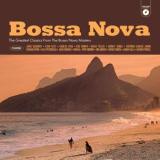
Mit der neuen Ausgabe der Vintage Sounds Vinyl Collection kehrt ein echter musikalischer Schatz zurück - diesmal ganz im Zeichen der Bossa Nova. Diese liebevoll kuratierte Zusammenstellung präsentiert 16 zeitlose Klassiker, die den unverwechselbaren Klang Brasiliens geprägt haben und bis heute weltweit für entspannten Groove und federleichte Eleganz stehen. Auf dem Album versammeln sich die wichtigsten Künstler einer Ära, die Musikgeschichte geschrieben hat: Joao Gilberto, Baden Powell, Silvia Telles, Quincy Jones und natürlich Antônio Carlos Jobim, dessen Kompositionen bis heute als Herzstück des Genres gelten. Freuen Sie sich auf unvergängliche Perlen wie "Chega De Saudade", "Garota De Ipanema", "Desafinado", "Corcovado", "A Felicidade", "Soul Bossa Nova", "O Barquinho" oder "Meditaçao" - alle sorgfältig ausgewählt und auf hochwertigem Vinyl neu erlebbar gemacht.
"Cuba Greatest Hits" bringt die Hitze Havannas direkt ins Wohnzimmer und vereint die wichtigsten Klassiker der kubanischen Musik auf einem exklusiven Doppel-Vinyl. Von Son und Mambo bis Bolero und Latin Jazz bietet diese Compilation ein authentisches musikalisches Panorama mit Legenden wie Compay Segundo, Celia Cruz und Beny Moré. Ein atmosphärischer Katalogtitel voller Rhythmus, Lebensfreude und karibischem Flair - ideal für alle, die kubanische Musik lieben.
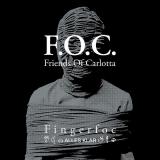
In the early 1990s, as techno began to emerge from the shadows of New Beat and EBM, a number of tracks crossed over into wider club circulation, helping define the sound of a new era. Among them was “Fingerfoc” by Friends Of Carlotta, the project of German producer Volker Then.
Originally released in 1990 on ZYX Records, “Fingerfoc / Alles Klar” quickly achieved cult status. Both tracks are driven by punchy drum machine patterns, sharp synth stabs and looping vocal fragments, combining the rhythmic directness of New Beat with the emerging minimalism of techno. “Fingerfoc” stands out for its hypnotic repetition and stripped-down structure, while “Alles Klar” takes a slightly more playful, rhythmic approach. Together, they capture the raw, functional club aesthetic of the early 1990s.
Limited to 300 copies on black vinyl and 200 copies on crystal silver vinyl, this new edition of “Fingerfoc / Alles Klar” pairs the original mixes with two previously unreleased remixes and two previously unheard recordings, offering a broader glimpse into the project's output during this formative period.
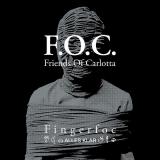
In the early 1990s, as techno began to emerge from the shadows of New Beat and EBM, a number of tracks crossed over into wider club circulation, helping define the sound of a new era. Among them was “Fingerfoc” by Friends Of Carlotta, the project of German producer Volker Then.
Originally released in 1990 on ZYX Records, “Fingerfoc / Alles Klar” quickly achieved cult status. Both tracks are driven by punchy drum machine patterns, sharp synth stabs and looping vocal fragments, combining the rhythmic directness of New Beat with the emerging minimalism of techno. “Fingerfoc” stands out for its hypnotic repetition and stripped-down structure, while “Alles Klar” takes a slightly more playful, rhythmic approach. Together, they capture the raw, functional club aesthetic of the early 1990s.
Limited to 300 copies on black vinyl and 200 copies on crystal silver vinyl, this new edition of “Fingerfoc / Alles Klar” pairs the original mixes with two previously unreleased remixes and two previously unheard recordings, offering a broader glimpse into the project's output during this formative period.
Antônio Carlos & Jocafi, das legendäre Duo aus Bahia, dessen Musik seit über fünf Jahrzehnten den Soul Brasiliens verkörpert, kehrt mit einer kühnen neuen Zusammenarbeit zurück: Jazz Is Dead 026. Beto Barreto von Baiana System stellte Adrian Younge und Ali Shaheed Muhammad vor, und die Begegnung war sofort von Magie geprägt. ,Als wir uns zum ersten Mal trafen, war es wie bei einer Familie", erinnern sie sich. Diese Verbundenheit veranlasste Younge und Muhammad, das Duo nach Los Angeles einzuladen, wo sie eine Handvoll Ideen mitbrachten und vor Ort neue Songs schufen - ein intuitiver, improvisatorischer Prozess, der die Philosophie von Jazz Is Dead ausmacht. Mit dieser Veröffentlichung bekräftigen Antônio Carlos & Jocafi ihre kreative Vitalität und bringen gleichzeitig einer neuen Generation ihren zeitlosen bahianischen Geist näher. ,Adrians Liebe zu Brasilien ist größer als die vieler Brasilianer", sagen sie und betonen, wie aufmerksam er zuhört, studiert und die Rhythmen, Geschichten und Gefühle ihrer Kultur vermittelt. Das Ergebnis ist ein Album, das eine Brücke zwischen dem Mercado Modelo in Salvador und der globalen Bühne schlägt und die folkloristischen Traditionen Bahias mit der analogen Seele von Jazz Is Dead verwebt.
"I think I have never met anybody, with the exception of Brazilian guitarists Baden Powell and Toquinho, as connected to his instrument as Agustín Pereyra Lucena" – Vinicius de Moraes
Far Out continues its exploration into the singular catalogue of Argentine guitarist and songwriter Agustin Pereyra Lucena with a special Record Store Day edition of his most celebrated album Ese Dia Va A Llegar.
Agustín Pereyra Lucena was one of South America’s outstanding guitarists. Hailing from Buenos Aires but obsessed with the music of neighbouring Brazil, Agustin abandoned his architecture studies to pursue music full-time, earning friendship and collaborations with Brazilian music's greatest figures including Vinicius de Moraes, Baden Powell, Toquinho, Dorival Caymmi, Maria Bethania and Chico Buarque.
Originally released in 1975, the album has been better known in some parts of the world as Brasiliana – a title repurposed by Agustín's European record label in the 70s to exoticize the sounds of South America for the continental market. It finds Agustin and band—which includes key collaborators Guillermo Reuter on contrabass, and Carlos Carli on drums and percussion— at their most blissfully laid back. The album features idiosyncratic renditions of classics by Antonio Carlos Jobim, Vinicius de Moraes, João Donato and Agustin’s personal hero and friend Baden Powell, alongside Agustín's own works which ooze with captivating mystical wonder.
The analog warmth of the recording is such that it feels like you’re there in mid-seventies Buenos Aires, on a balmy late night session at Estudios Audión, with a group of phenomenally impressive musicians. The heat generated is offset only by the cool temperament of everyone involved. On the handful of vocal tracks on the album, Agustin’s gentle voice is responded to by the liquid smooth vocals of Laura Hatton, Luis Maria Cosenza and Patricia Scheuer.
Agustin’s unique position in the annals of his continent’s musical history has been lovingly maintained by Agustin’s nephew Jose Luis Pereyra Lucena, who has entrusted Far Out Recordings to preserve and re-release Agustin’s works. The music has been professionally remastered at London’s Metropolis Studios, using multiple copies of well kept original vinyl.
Reissued worldwide for the first time under its original title and cover as Agustin originally intended, Ese Dia Va A Llegar will be presented in a limited edition obi-stripped gatefold replica sleeve.
Foundations Records brings you their hotly anticipated third release from Sonar's Ghost on Rinse Out EP - a bold four-tracker of breakbeat jungle, atmospheric jungle and jungle-tekno.
Sonar's Ghost
Starting out DJing in the peak hardcore era of 1992, Dominic Stanton rose as a post-hip-hop and ragga kid, cutting his teeth at free parties across the Shires. Drawn into the new directions of hardcore and jungle, he earned early gigs at the legendary Sanctuary, Milton Keynes, performing as Dom-unique.
Learning the art of beat-chopping on the Amiga 500, Dom landed his first release on Reinforced Records in 1995 and continued releasing into the 2000s as Static Imprints and Sonar Circle. Inspired by Dego and the evolving trajectory of 4hero, Dom began moving into more unexplored territory, producing eclectic, soulful beats under the name Domu.
After a brief hiatus, Sonar's Ghost was born - an outlet to explore the years Sonar Circle missed, from 1991 to 1995. Creating alternate journeys through that era, Sonar's Ghost reimagines the original sound palette using original sources, new blends of beats, and a lifetime of musical influence. For Dom, Sonar's Ghost is his happy place.
The Foundations release blends the eras and directions Dom loves most - from '93 bouncy darkside through to '03 drum funk - with authentic drums and samples integral to the vibe.
Here's the support on radio:
- Makossa (Radio FM4 Vienna)
- Distant Planet (Infrared FM)
- Sun People (Sub FM)
- Alex Ruder (KEXP Seattle)
- Haus of Beats (Txapa Irratia)
- Haus of Beats (Txapa Irratia)
- Tom Ravenscroft (Rinse FM)
- Jon1st (Subtle Radio)
- Martha (NTS / BBC R1)
- Harper (Czworka Polskie Radio)
- Gremlinz (89.5FM Toronto)
- N-Type (Rinse FM)
- Michelle (NTS)
- Mathieu Schreyer (KCRW, LA)
- Darkerthanwax (The Lot Radio)
- Bevin Campbell (PBSFM Aus)
- Errol Anderson (NTS)
- Ian (94.9 CHRW)
- OPR8 (Sub FM)
- Tramma (Noods)
- Carlos Contreras (Tilos Radio Budapest)
- Jay Scarlett (BR Puls Munich)
- DJ Tuco (91.90FM Prague)
- Ed2000 (Cashmere / The Face)
- Vinyl Junkie (Eruption Radio)
- Klaus Fiehe (1WDR)
- Benji B (BBC 1Xtra)
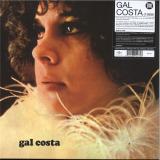
Essential 1969 album from Gal Costa, one of the defining voices of the Tropicalia movement. It showcases a bold fusion of psychedelia, Brazilian pop, rock, and samba, featuring standout tracks like Caetano Veloso's 'Baby' and Caetano and Gilberto Gil's 'Divino Maravilhoso,' as well as songs written by other iconic artists such as Jorge Ben and Erasmo Carlos.
A timeless classic that still sounds fresh and relevant. 180g vinyl reissue.
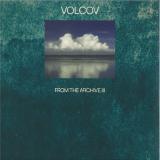
Volcov, the Veronese founder of the Neroli record label, returns to the BBE fold with the third compilation in his majestic series 'From the Archives' and once again this new installment is another collection of overlooked gems and unreleased beauties that are set to entice the discerning listener. As with volumes 1 and 2, 'From the Archives volume 3' features cherry picked songs that focus on melodies and weave a thread between eras and genres. From the Archives volume 3 is a genre free journey into authentic grooves which features music from the enchanted tones of Carlo Nino & Friends, an exclusive from Collettivo Immaginario, uptempo moments from remix kings Kaidi Tatham and DJ Spinna as well as two unreleased songs from Fred P and J2 Fusion feat. Javonttee and DJ Genius. From The Archive 3 represents another accomplished work of love from Volcov aka Enrico Crivellaro, who has a long list of albums and compilations under his belt as well as being involved in productions, edits, releases and projects with artists such as Dego, Theo Parrish, Phil Asher, Gerald Mitchell, Domu, Kaidi Tatham, Kirk Degiorgio, Patrick Gibin, Lars Bartkuhn, Ian O’Brien and many more. From the Archive volume 3 is released as a vinyl double LP and a digital download and is a compilation in which the music lover will be guided hand in hand through a collection of unreleased and hard to find songs that shift effortlessly between jazz and house, broken beat, ambient and soul.
"Carlos Santana’s nineteenth studio album Shaman was released in 2002 and debuted at #1 on the Billboard 200. Just like its predecessor Supernatural, Santana invited contemporary artists to collaborate with him across genres including neo-soul, pop, rock, metal, and opera. Artists such as Seal, P.O.D., Chad Kroeger, Dido, Michelle Branch, Macy Gray, Music, Citizen Cope, Alejandro Lerner, Plácido Domingos, and Ozomatli can be heard on the album. Four tracks were released as singles: “The Game Of Love”, “Nothing At All”, “Why Don’t You & I”, and “Feels Like Fire”. Shaman is being reissued for the first time since its original release. A limited edition is available of 2000 individually numbered copies on translucent purple coloured vinyl and includes an insert."
Shaman by Santana, released 3 May 2024, includes the following tracks: "The Game Of Love (ft. Michelle Branch)", "Amoré (Sexo) (ft. Macy Gray)", "Victory Is Won" and more.
This version of Shaman comes as a 2xLP. This release comes with (a) Insert(s).
The vinyl is pressed as a translucent, purple disc. Another vinyl is pressed as a translucent, purple disc.
Limited edition of 2000 indivudally numbered copies on crystal clear vinyl
In 1988, Soda Stereo released their fourth studio album, Doble Vida. This time, they got the help of none
other than Carlos Alomar for the production. The renowned Puerto Rican guitarist has a history of collaborations
with David Bowie, Iggy Pop, and Paul McCartney.
This collaboration introduced a variety of new genres and influences, including funk, soul, and R&B. After fully recording the album in New York City, the band entered a
new stage in their career, allowing them to break into the US market. The tour to promote the album spanned the entire American continent and the album sold a million copies worldwide.
Firing remix package of cuts from two legendary album's from Brazil's Orquestra Afro-Brasileira. Feat
Two albums - Obaluayê (1957) and Orquestra Afro-Brasileira (1968) - were enough for Orquestra Afro-Brasileira to mark its history in music forever. Born in 1942 in Rio de Janeiro by its founder Abigail Moura, it remained active until 1970 and, in 2021, was revived by the only living member of the original line-up at the time, Carlos Negreiros, when the third and final album in the orchestra's career, entitled 80 years, was released by Amor in Sound/Night Dreamer. Today (31) the album gets its remix version with tracks signed by names of the caliber of Marcelo D2, Criolo, Pupillo, Emicida, Rael, Cut Chemist, Mexican Institute of Sound, among others.
Aiming to keep the legacy of the Orquestra Afro-Brasileira alive, the album 80 Anos (Remixes) reaffirms the group's relevance as a creative source for different generations of musicians and listeners, based on new interpretations produced by artists who are also fans of the orchestra. According to Mario Caldato Jr., the album's musical director, "it was a great joy when I got to know the work of the Afro-Brazilian Orchestra and, soon after, had the honor of meeting and working with Carlos Negreiros. Producing 80 Anos alongside him was a gift and being able to look back on it, having the remix album to celebrate this legacy, is really wonderful."
For Amor in Sound - Mario and Samantha Caldato's record label - this release faithfully represents their values: Respect for memory, diversity, friendship and the possibility of creating new worlds. Made in a totally collaborative way, the album is born as a historical record, interpreted by great names in current music and, above all, great friends. “Being able to do this is indescribable, the value of relationships makes up and continues the legacy of the Orquestra Afro Brasileira,” says Samantha.
The project brings together Brazilians Criolo, Emicida, Rael, Marcelo D2, Lucio Maia, Pupillo, Rogê, Tropkillaz, Kassin, Pedro Dom, Zilladxg, Nuts, Daniel Ganjaman, Imperatore and Nave, as well as international DJs and producers such as Mix Master Mike, Cut Chemist, Gaslamp Killer, J Rocc, TASO, Mexican Institute of Sound and Mophono.
Released in 1979, "Tutti Fluti" is undoubtedly one of Teddy Lasry’s most unique and poetic albums.
Entirely centered on flutes, of which he is an undisputed master, this record offers a dreamlike dive into
ethereal jazz, naturalistic ambient, and subtle electronic experimentation.
Teddy Lasry, an original member of Magma, is known for his distinctive approach to wind instruments
and synthesizers. As a composer, performer, and texture inventor, he builds here a delicate,
contemplative, and timeless sound world.
On Tutti Fluti, flutes become voices, breath, wind, and a call to the imagination. Accompanied by
luminous keyboards and subtle rhythms, they shape an organic, soft, and introspective music—perfect
for active meditation or immersive listening.
A rare and atypical album, Tutti Fluti now finds its place among the great classics of auteur library
music, between spiritual jazz and the imagined soundtrack of a film never made.
Limited edition – A precious reissue for collectors, dreamer flutists, and sonic explorers.
With two critically acclaimed compilations already under his belt, DJ / collector miche returns to Mr Bongo with the third instalment of his With Love series. Testament to his ever-expanding taste, Volume 3 isn’t just a subs bench call-up from the past compilations, it’s an evolution and progression casting the net deeper and wider than before.
Keeping true to the series, but with some fresh surprises along the way, this carefully curated compilation is a celebration of soulful, independently released music from across the globe, and the amazing (often unsung) musicians and vocalists that made these sublime records.
Across the third volume, miche explores a jazzier side of his tastes. “The deeper I went, the more I found myself gravitating towards jazzier music - not leaving soul behind, but following that same feeling into new territory”, he explains. Tracks like the gliding jazz funk found on Late Nite Music Band’s ‘Sundance’, or the glorious jazz-soul number ‘In Flight’ by Spectrym are shining examples of this.
That defining soulful thread of previous volumes is still in full effect throughout this latest edition. “There’s a healthy dose of impossible-to-find soul gems that have that unmistakable, heartwarming feel. Tracks like John Simmons' 'Ain't Nothing Like The Love', which I've adored ever since Zaf Love Vinyl played it, sit perfectly alongside records like Le Cop and New Way”, states miche.
The addition of some top-tier Turkish music showcases another side to his ever-broadening taste. Nükhet Ruacan's 'Gölge' is something unique, a floaty Brazilian-inspired gem recorded in Turkey and not what you’d typically expect from Turkish records of this era.
It also wouldn’t feel right to leave out a stop in Brazil, with miche looking to the work of Carlos Bivar whose track 'Amargo Amar' carries that undeniable groove of samba-funk from Rio.
Spreading the With Love message far and wide the series has led to miche DJing across the globe, “from batucada sessions in Timisoara, to all-night sets in a club in Beijing, and even an eight-hour Root Down With Love stage takeover at We Out Here festival, joined by Danilo Plessow, Jeremy Underground, and of course, my mentor and buddy Rainer Trüby.”
Volume 3 then, carries that message even further. It’s an eclectic but intentional collection, built for the music lover who wants to discover something new. Working just as well as a soundtrack to cook dinner to, as it does keeping a packed dancefloor moving into the small hours.
To mark a decade as one of Ibiza's most iconic musical sanctuaries, Hostal La Torre announces 'La Torre Ibiza Volumen Cinco', a new compilation curated by long-standing residents Pete Gooding and Mark Barrott. Released June 27 on CD and double vinyl, the 15-track collection captures the spirit of the venue that has come to define the golden-hour soundtrack ofthe island's west coast.
Since opening in 2015, La Torre has established itself as a bastion of Balearic culture-set high on the cliffs overlooking the sea, where music flows with the sun rather than the clock. The fifth volume in the celebrated La Torre series is a journey through Brazilian soul, ambient electronica, classic deep house, orchestral minimalism, and dusk-lit Detroit techno-an emotional arc designed to mirror the progression of an evening at the venue.
From timeless icons like Nina Simone, Mazzy Star, Talk Talk (with their Spirit of Eden closer "Wealth"), and Boards of Canada, to boundary-pushers like Auntie Flo, Eden Burns, and µ-Ziq (aka Mike Paradinas), Volumen Cinco weaves together deep-rooted classics and leftfield discoveries. Mark Barrott contributes a brand-new exclusive, 'When Devils Become Gods', while the compilation closes on a rare gem from Yellow Magic Orchestra's Yukihiro Takahashi. Also includedis Software's 'Present Voice', a quietly powerful tribute to the late José Padilla, the spiritual architect of Ibiza's sunset sound.
Volumen Cinco is more than just a listening experience-it's a tribute to La Torre's ethos: open-hearted, genre-fluid, rooted in place and time. Each track is carefully sequenced to evoke a feeling, a shift in light, or a shared memory beneath the fading sun.
Over the years, La Torre has welcomed some of the most influential names in Balearic and electronic music, from José Padilla, Alfredo, and Jon Sa Trinxa to DJ Harvey, David Holmes, Lovefingers, Heidi Lawden, Wolf Müller, Don Carlos, and Phil Mison. With each summer season and each release, the venue continues to build a musical legacy that has earned critical acclaim from Resident Advisor, Phonica Records, Juno, and Piccadilly Records, regularly featuring in their year-end lists.
As Test Pressing once wrote, "La Torre is not a party, it's a place of pilgrimage. It feels almost sacred." That spirit resonates deeply in this anniversary compilation-a celebration of music, community, and connection that spans a decade.
La Torre Ibiza Volumen Cinco is dedicated to the artists, friends, collaborators, and guests who've shaped its story so far-and to everyone who continues to gather, listen, and lose track of time as the sun slips beneath the horizon.
BUDDHA-BAR SUMMER SESSIONS - MONTE-CARLO BY RAVIN A MUSICAL ODYSSEY TO CELEBRATE SUMMER & THE 15TH ANNIVERSARY OF BUDDHA-BAR MONTE-CARLO Under the starry sky of the Riviera, lulled by the warm breeze, an invitation to travel rises. A beat, a melody... and the mind drifts away. Buddha-Bar, the temple of world music and sonic elegance, celebrates 15 years of magic in Monte-Carlo with an exceptional compilation: Buddha-Bar Summer Sessions Monte-Carlo by Ravin. Conceived as a musical odyssey, this double compilation weaves captivating atmospheres, blending ethereal lounge, organic electro, and world sounds, in an intimate dialogue between East and West, tradition and modernity. Each track (including more than a dozen unreleased tracks) has been carefully selected by Ravin, who creates a captivating and chic experience, a true invitation to dance and escape.
DIAS DE CAMPO RECORDS 2025 4X LP — VARIOUS ARTISTS — DDC008 - AMIGOS 002 SPECIAL EDITION is finally here.
Four records, Seventeen tracks, 108 minutes. This is the finest curation we've shaped so far.
Carlo, Vsan, Melos, Pau Perez, Criminal Issues, Silverlining, Calabasa, Juaan, Mateo Dufour,
The Cap Boy, Alvaro Medina, Jnjs, Ageless, Apua, Stipo, Sisto, DJ Gamba, Lourene, Natebytheway, HearThuG, Pan-J and Look Perry.
Play it loud - or let it find you. AMIGOS - COMUNIDAD - FAMILIA.
Sincerly theBasement team.
Azzurro 80's new album—his first ever on LP—is a beautifully faded Polaroid that, like a true flashback, plunges listeners into the heart of the 1980s. It's a sonic journey that captures the essence of a decade, distant yet vividly etched in our collective memory.
The Roman producer unleashes his sonic vision with even greater intensity than before, weaving through dreamy italo-disco, electric atmospheres, soundtrack-worthy synth-pop, and boogie-funk grooves.
Each track opens a window onto an era the artist experienced only fleetingly as a child, yet he evokes it with a powerful and refreshingly original touch. Much like a classic library music record, these tracks conjure a wealth of images, scenes, and visual sequences—perfect soundtracks for imagined films or evocative advertising campaigns: as seductive as a perfume ad, as desirable as a car commercial, and brimming with the bright future the 80s promised.
It's no surprise that cinematic references spring to mind even before musical ones. The album echoes the dreamy atmospheres of early 80s Italian cinema, particularly films like Carlo Verdone's "Acqua e Sapone" (1983) and Carlo Vanzina's "Amarsi Un Po'" (1984). Meanwhile, flashes of New Romantic aesthetics and hints of electro-funk transport you to a neon-lit dance floor where a DJ is spinning the vinyl copy of Flashback.
Azzurro 80's new album is a vibrant, energetic work, balancing groove and emotion in equal measure and infused with a sense of nostalgia that feels remarkably contemporary.
Available May 9th on LP and Digital from Four Flies Records!
Red Pig Flower brings you her sensational debut album Practice Love, available on Sound Of Vast from 10th April. Her unique sound sits upon the apex of a three-sided pyramid. With Berlin, Tokyo and Seoul as the base, Red is a third culture kid, greater than the sum of her parts. The centre is filled with her incredible appreciation and knowledge of house and electronic music from every pin drop through history.
So taken with Red Pig Flower’s sound, Honey Dijon invited Red to her Southbank Centre show to play alongside her. Moxie loves her that much, that she invited Red to record a mix and to guest on her NTS show. Alan Fitzpatrick, and Just Her are amongst Red’s growing posse of followers.
Practice Love is a culmination of all of Red Pig Flower’s life experiences, brimming with her positive energy and an outlook on life of pure love. Red has collaborated with like-minded artists at every level: the music, the cover art and video all produced with talented friends, who get Red as the wonderful person she is and understand her vision. Her label partner and good friend, Knock in particular helped make Practice Love the incredible album it is. So intuitive is their musical symbiosis, they made 20 tracks and carefully curated and ordered nine of these, making an album of tracks that stand out on their own, yet flow perfectly as an album. Practice Love will make you feel joyous when you play it. By the end, you will feel like you know Red like a friend.
Practice Love kicks off with I don’t care, it makes you feel good: a dreamy, tribal mantra of a track that does exactly what it says on the tin. Next up is I Love To Dance. Red’s beautiful soft vocal is sweet yet poignant, leaving you in no doubt of her sincerity. Thirdly comes Feel Good Music. Are you getting a feel from the track names yet that this is an album of warmth and positivity? You can imagine this one at a Café Del Mar sunset, where those who get the spirituality of Ibiza come together, in the moment to appreciate the beauty of a sunset and understand that no matter how many you see, each is magical and unique.
The three tracks so far have taken you to twilight. The titular Practice Love takes you by the hand onto the dancefloor. There is a double meaning to ‘Practice Love’- The first is to make love your practice. The second is that you need to practice love to be able to become a practitioner of love. The video, shot by her friend Jelly, features Red Pig Flower in Brick Lane, London, wearing a little piggy mask and offering free hugs. The first passersby ignore her sign, but Red isn’t disheartened, spreading the right message, dancing with joy. Her optimism is rewarded, making peoples day better on a cold English afternoon.
Fifth track Sax and Drugs takes things a little sleazier, the beat is filthy and the synths are sexy. Your body starts to move to this one before your brain even realises. The incredible Declan McDermott joins on saxophone, the funkiest synths and Red’s sultry vocal washing your soul with Laurent Garnier inspired sunlight. On Thisiz House Music, again featuring Declan, Red takes you even further back. About Frankie Knuckles O’Clock, with a portal straight to 2025.
By now, you will agree with me that Practice Love flows so, so well. I Wanna Meet Somebody follows incredibly, continuing the feeling that if you close your eyes, you’re dancing with David Mancuso at the Loft. No Money completes this EP-within-an-album. Perfect vocal samples, valve synth riff and 808 drum patterns showing that producers as good as Red Pig Flower make it sound effortless. The best albums finish memorably and No Genre is one of those perfect finishers. Think Andrew Wetherall’s production on Screamadelica. The lights are up in the club, nobody wants to go home, arms in the air wanting more.
Red Pig Flower explains: Practice Love resonates deeply with me because house music has always been a sanctuary—a place for unity, joy, and self-expression. As a nomad and outsider, club culture and house music became my shelter. The cities I’ve lived in—Seoul, Tokyo, Berlin, and London and more—nurtured me and shaped who I am today. That’s why the cover, by the incredible Carlos Sulpizio features their skylines, and the album is multilingual, representing the diverse influences in my life.
Practice Love is like a meal that has been prepared lovingly. They always taste better. And there’s plenty more to come from Red Pig Flower. How was your appetizer?
50th ANNIVERSARY EDITION
Heavyweight Vinyl 45 RPM Cut / Original glued prints on Thick Cardboard 700 gram / 2 Separated parts hand-glued / Glossy lamination / PVC outer / 30x30 cm insert with interview to Steve Kuhn by Tony Higgins printed on 250 gram Favini Lanilla Yellow / 20 Pages 21 x 30 cm "Real Book" with transcripts of the songs in the "Real Book" style, handwritten by The Maestro Carlo Spanò with main theme, chords and lyrics printed on 120 gram Shiro Eco paper, 100 gram Favini Crush Alghe. Carlo also edited an introduction with technical analysis of the session, which solves some of the little mysteries around this music gem.
Personnel:
Steve Kuhn - Vocals, Piano
Airto Moreira - Percussions
Billy Cobham - Drums
Ron Carter - Bass
Gary McFarland - Arranged by
Notes:
The album features the group playing Gary McFarland arrangements of Kuhn's compositions, accompanied by a string section on several tracks, with Kuhn delivering stream of consciousness lyrics in an unplanned and largely improvised fashion in the studio. However, that wasn't the only surprising aspect to the session. Airto Moreira's appearance was more by chance than design, he having just popped by the studio, again, unplanned. The 'Steve Kuhn' album is all the stronger for these extemporaneous and serendipitous elements and showcases a band at the top of their game; tight and funky yet relaxed and flowing like molten gold, with stabs and washes of keyboard from Kuhn. Splashes of free playing enter the session, but the band never stray too far from a melodic and harmonious centre of gravity. Kuhn's deft keyboard skills provide melodic embroidery to the impressive rhythmic textures and tonal colours of Carter, Cobham and Moreira. As if the music wasn't enough, the album is given extra significance by the fact that, within a few months of the recording, McFarland would die after being mysteriously poisoned by methadone in a New York bar. In a sense, it is a valedictory album from McFarland, channeled by Kuhn and the band.
It's among the hardest of Kuhn's albums to find so this reissue is most welcome. Luxuriate in the glow of Kuhn's Fender Rhodes and the pliant funky bass of Ron Carter; immerse yourself in the percussive interplay of Moreira and Cobham, a pairing that has rarely sounded so good. This is such an exquisite album; you will lose yourself in its delicate power and find yourself coming back to it again and again.
Here comes a true South American LATIN JAZZFUNK treasure from Argentina!!!
Sound Essence is more than proud to present these lost recordings from 1974 to music lovers again in all their glory.
CARLOS FRANZETTI, who has once again been in the spotlight in recent years thanks to the re-release of his strong late 70s JazzFusion record "Graffiti", was also in charge of this record called DEDOS. The story behind:
In 1974, after CARLOS FRANZETTI was living in Mexico and worked as the musical director of FERMATA International, he returned to Argentina. In Buenos Aires his friend MOCHIN MARAFIOTTI was recently appointed A&R at the local recording label MUSIC HALL . Marafiotti asked Carlos if he wanted to record some of his music and he answered that he had in mind a group playing LATIN JAZZ . After a couple of meetings they came out with the idea of covering the RUBEN RADA tune DEDOS recently recorded in the US by AIRTO MOREIRA along with the OPA TRIO. Carlos contributed his own composition "Doce y Diez" . He selected the group consisting of his friend and member of the uruguayan Band TOTEM, Ruben Rada on percussion, Ricardo Lew on guitar , Emilio Valle on bass and Osvaldo Lopez on drums covering keyboards and vocals himself . This formation recorded tracks and vocals in a three hour session and the next day the track was mixed. Music Hall released "Dedos" and "Doce y Diez" on a single record and after months of discrete airplay and not so good sales the project for an album was draped.
"It is a rewarding experience to see a re-release of this two songs a half century after the original release.
It was hot and it looks and sounds even hotter now. I love it!" (Carlos Franzetti, New Jersey, December 2024).
“Raggamuffin Soldier” was recorded at Channel One Recording Studio in 1983 with Soldgie as engineer and a rhythm track played by Jolly Stewart and Daniel “Axeman” Thompson. Growing up in the Waterhouse neighborhood of Kingston, Jolly Stewart obviously developed this singing style and gave us a killer early digital dancehall missile with pure conscious lyrics “Raggamuffin soldier, big ina your area...me no deal with badness, me nah deal inna war, me is a raggamuffin soldier...mi raggamuffin ina foreign, raggamuffin sit down pon di riddim...how you know the raggamuffin? Me no wear no gold chain, me no wear no gold ring...”. “Raggamuffin Soldier” was produced by Fitzroy Peterkin who also produced the digital lover tune "Angie".
The Waterhouse style is a particular style of singing that emerged in the late seventies and early eighties within the Jamaican reggae scene. The Waterhouse style is commonly described as a plaintive, groaning and fluctuating vocal style, often nasal and strident, characteristics that will give it a sound that is distinct from the rest of the reggae singers. The commonly recognized founders of the Waterhouse style are the singers Michael "Mykal" Rose, Junior Reid and Don Carlos. The name derives from the famous neighborhood of the same name in Kingston, the capital of Jamaica, the place where the three pioneers were born and emerged. The Waterhouse style influenced many dancehall reggae artists of the eightiesvsuch as Tenor Saw, Half Pint, Nitty Gritty, Anthony Red Rose, King Kong, Yami Bolo, Andrew Bees...
Vincent Stewart aka “Jolly Man” is a reggae singer from Kingston 11, born december 16 1960 at Hunts Bay Lane, 4 Miles, Jamaica. Jolly started singing at age 13, he was placed in an approve School for 3 years and at the age of 16 he was released.
He started his musical career in the late 70's with Ossie Thomas, Phllip Morgan and Tristan Palmer from Black Solidarity label. Jolly Stewart recorded his first song entitled "Money Pyaka" on the classic "Pretty Looks" riddim which was recorded for Oswald Thomas on Ganja Farm label and released in 1979. Tristan Palmer who has another tune "Disappointed Lover" on the same riddim backed by The Soul Syndicate made the link with Jolly Stewart because he liked his style of song writting.
Jolly Stewart wrote three songs for Black Solidarity label: "Collie Man", "Bad Minded" and "Symbol Of Justice". All three tracks were covered by Triston Palmer. As a song writter, Jolly Stewart is behind Yami Bolo's hit on Stalag riddim “When A Man Is In Love” released on Winston Riley's label Techniques.
Jolly Stewart then decided to move on with his singjay career. He ventured to Tuff Gong studio where he met two producers. One was Prince Jazzbo from Ujama label, and the other was John John who owned the Bun Fi Bun label. He recorded "Praise jah" for Ujama and "Poverty Rush" for Bun Fi Bun. Still not satisfied with how his career was heading, he moved on to Lannaman's Preparatory School. There he learned to play guitar from a man named Fred McMurray aka Faf and Donald Jackson. Later he learned to play the keyboards by watching other musicians.
In the late 80's and early 90's, Jolly Stewart recorded many songs for various labels such as “Do Me Like So” for Bunny Gemini's label “Bun Gem Records” in 1987, “Late Last Night” and “War” for producer Zelma Rust and his label Myotta Ruff.
He also recorded for Augustus Pablo on his label Rockers International just before he died in the late 90's but we never heard about this release so probably Addis Pablo have it on old master tapes in the Rockers International archives....only Jah knows!
Colombian-born artist Juan Carlos Torres Alonso, aka OKRAA, presents his third sonic exploration on A Strangely Isolated Place titled, La Gran Corriente. This album marks a profound shift in Juan's creative journey, where themes of portals, the illusion of time, and the paradoxes of self-discovery converge into a powerful auditory experience.
Following a transformative visit to Bogotá in May 2023, Juan underwent an introspective journey that inspired a new direction in his music. This experience, which he describes as an encounter with "an infinite current behind or inside of everything," led to a complete reimagining of his work. Abandoning previous demos, Juan embraced a liberated creative process that was both challenging and exhilarating.
La Gran Corriente is characterized by its innovative production techniques, eschewing fixed grids and BPMs in favor of fluid, organic structures and combining influences from Juan’s other production alias, ‘Laudrup’. This approach not only opened up new creative possibilities but also led to numerous "happy accidents," resulting in a body of work that is as unpredictable as it is cohesive.
At the heart of the album lies a poem written by Juan during production, a text that echoes the themes woven throughout the music. Translated loosely to English, the poem reflects on the nature of reality and time, with lines like "the land of oblivion is not real" and "the great current reminisces; time is an illusion." These words serve as both a guide and a reflection of the album’s deeper meaning.
La Gran Corriente is a record that invites the listener to unlearn and to immerse themselves in a sonic current that is both infinite and transformative. It’s a testament to the power of creative reinvention and the relentless pursuit of deeper truths through music.
Featuring artwork by Peter Skwiot Smith, La Gran Corriente is available on gatefold colored vinyl 2LP, mastered by Taylor Deupree / 12k Mastering.
The strange thing about the music of Anima is that it’s often considered as strange, while it’s actually very natural. It has a free spirit, analog to nature. For this release the natural spirit is strengthened by the participation of indigenous American flute player and composer R. Carlos Nakai who did a series of concerts in the US and Europe with Paul and Limpe Fuchs in the 1980’s. As with almost all Anima work, the natural feel manifests itself not only by the musical approach and sounds generated by metal, wood, stone and air, but also by the absence of electronic devices.
This LP is a reissue of a rare privately released cassette from 1988 and was recorded by the Bayerischer Rundfunk. May this slice of timeless free spirit be a trigger to more awareness concerning our decaying freedom.
There is the new release by acid jazz superstar rad. available, for which I’m happy to provide, attached the tools. The recordings feature no less than Tower Of Power Horns, David Garibaldi, Roger Troutman, Ray Obiedo, Bobby Vega and Michael Spiro…
vIt was the San Francisco Bay Area where Herbie Hancock founded his Headhunters. It was the San Francisco Bay Area where Prince recruited Sheila E., Rosie Gaines and Larry Graham.
Bands and artists such as Tower Of Power, Sly & The Family Stone, Meshell Ndegeocello and Santana came from the San Francisco Bay Area, and Rose Ann Dimalanta, or rad.for short,
also originated from the San Francisco Bay Area. A Heavy Dose Of Oakland Funk – rad. did what she promised. Her 2nd album “gotta be" (1994) had all the ingredients that made the funk heartbeat
faster and the legs fidget: razor-sharp breaks, excellent hooklines, staccato clavinet and organ licks, driving bass lines, forward oriented drum grooves and a voice tofall in love with.
For these remastered two songs, she back then recruited her colleagues from the Syncopated Funk Champions League. Guitarist Ray Obiedo played in Herbie Hancock's band and
with George Duke during the "Thrust" era. The percussionistMichael Spiro worked for Ella Fitzgerald, Bobby McFerrin and Carlos Santana, Bobby Vega played the base for BoDiddley, Booker T,
Santana, Tower of Power, Etta James, Sly Stone and Jefferson Starship to name a few. Beside thefuzz guitar solo of mega funk star Roger Troutman on Come My Way, it is David Garibaldi and the
Tower of Power Horns who add the undeniable quality of this two funk classics now pressed on 7“ vinyl for the first time ever…
Following on from his previous debut album Tape 1/Tape 2 on Soundway, Felbm delivers Tape 3/Tape 4 : an intimate, emotional, lilting and melodic solo project. These 14 lo-fi, instrumental, jazz-infused sketches were written on guitar, with cascading keyboards, vibraphone and drum machine. Possessing a restorative and soothing quality, it goes some way to balancing out a chaotic year for the world
at large.
With echoes of the dreamier end of 1980s English indie-pop, minimal ambient music and Brazilian bossa-nova, Topper’s musical storybook includes touches of The Durutti Column, hints of Antônio Carlos Jobim and Baden Powell, whilst all set firmly in the summer fields of Germany and the Netherlands. The recording method used for the creation and recording of Tape 3 and Tape 4 follows the same as his previous release: all sketches were initially recorded onto cassette on a 4-track tape machine. Most notably a vibraphone finds its way onto
almost every track fitting Topper’s sound-palette perfectly: warm yet distinctive, a percussive as well as sustaining sound that evokes some melancholy and a certain timeless nostalgia. Features that most certainly also apply to the other ‘new’ instrument on the tapes: mellotron flutes.
Tape 3/Tape 4 navigates the space between quiet, open, meditative tunes and more solid instrumental works, reflecting his constant search for an optimal balance between stillness and movement.
In Mr Bongo’s opinion, 'Imprevisto' is one of the most unmistakable Brazilian jazz records ever made. Dramatic intro and hypnotic piano line, decorated with panned percussion before the hats come in. Then the upright bass. A true classic.
Bossa Três formed in 1961 in Rio. They spent most of their early years touring jazz clubs in the USA, before the original line up and their pianist (and perhaps most well-known band member) Luis Carlos Vinhas, returned to Brazil. This is the final track on their Em Forma! LP from 1965, released on Forma. The original pressing of this Brazil 45 was the first time ‘Imprevisto’ had been released on a 7”.
We know very little about Ana Rosely. She released four 7” 2-track records between 1975 and 1984, the latter featuring the brilliant ‘Skim Dum Dum Dum’. The original version was released by RGE Discos in 1984, which came as a surprise to us given the sound. It is very difficult to find an original copy in good condition and they are, as ever, increasing in price.
DJ Support: Dam Swindle, Jimpster, Fouk,Franck Roger, Miguel Migs, Fred Everything, Tedd Patterson, Saison, Brian Tappert, Don Carlos, Sebb Junior, Ralph Session, Marcel Vogel, Marc Cotterell
Embark on a journey through the pulsating heart of Berlin's house music scene with Luca Olivotto. Italian-born and Berlin-based, Olivotto's beats resonate with the energy of the city's underground, blending seamlessly with his Mediterranean roots. As a DJ, Olivotto commands dance floors with finesse, effortlessly blending deep and house music. As a producer, he crafts sonic landscapes that evoke emotion and ignite the imagination. This album encapsulates the essence of Olivotto's musical universe: a fusion of cultures, a celebration of diversity, and a testament to the universal language of music. Experience the rhythm of Luca Olivotto, bridging continents with his electrifying sound.
DJ Support: Danny Howard, Pete Tong, Sarah Story, Triple J, Groove Armada, Jamie Jones, Marco Carola,Nic Fanciulli, Sam Divine, Carlo Lio, Mat.Joe, Todd Terry, Jansons, Eskuche, Moon Boots, Format:B, Low Steppa, Robosonic, Dantiez Saunderson, Charlotte Van De Peer, Dario D’Attis, Shiba San, Dennis Cruz, Pirupa, DJ Rae, Danny Tenaglia, Rene Amesz, Juliet Fox, Ashibah, Boris, Carly Wilford, Booker T, Dateless, Melvin & Klein, Paco Osuna, DJ Lora
Nothing Else Matters is proud to bring an exciting new vinyl from HoneyLuv who makes her debut on Danny Howard’s imprint, teaming up with New York DJ, producer, singer-songwriter and vocalist Roland Clark for their brand-new single, ‘This Is My Life’. Crowned Radio 1’s Future Star of 2023, HoneyLuv has taken the Dance scene by storm in recent years with support from Seth Troxler, The Martinez Brothers, Nicole Moudaber, Kevin Saunderson, Maya Jane Coles, Loco Dice, Idris Elba and more, with releases signed to Black Book, Insomniac, Tuskegee, Three Six Zero and more. On the other hand, Roland has worked and co-produced music with many of the greats, including Fatboy Slim, Mark Knight, Todd Terry and Bob Sinclair, with his vocals considered the “voice of House” and one of the rare few that can bring you an electrifying DJ set while getting on the mic and giving you a performance unlike no other. Making for the perfect pairing, ‘This Is My Life’ is set to propel both artists to even greater heights and will surely be a firm favourite at clubs and festivals worldwide this year. Kicking off the B-side is a killer rework from the legendary Carl Cox who brings his A-game with this one infusing his signature grooving basslines and high-energy, hypnotic percussive grooves. Rounding off the package, Bontan’s rework delivers organic drums and captivating Afro-House rhythms catapulting the track to new audiences and new heights.
DJ Support: Kerri Chandler, Jimpster, Dave Lee, Kevin Yost, Brian Tappert, Don Carlos, Seamus Haji, Marcel Vogel, David Harness, Marc Cotterell, Dirtytwo, Demarkus Lewis
Get yourself geared up for summer season with some fierce dancefloor prime time certified with the Groove Culture Deep Stamp. DEEP INTO HOUSE vol.2 includes some fresh House/Deephouse actions from Milton Jackson, Sebb Junior, Luca Olivotto and Folkness. Energy, Groove, moods and vibes. An essential package for diggers.
Imagine for a moment that Arthur Russel had learned to speak Brazilian and then moved to Italy to produce an Italo-Disco single back in 1984. There's a good chance it would sound like the Dub version of the B side on this record (Remixed by Bob One). A percussive foundation channeling Latin Freestyle beats sets the groundwork for the chill sunset vibed melody to pleasantly unfold intertwined with the alluring Brazilian lyrics. The recording engineering on this production is clearly at a higher standard (than the usual neighborhood italo disco studio from back in the day) with some of the techniques at play giving it a very balanced and sophisticated sound for its time. The meticulous remastering this re-issue underwent allow for a generous low end with crystal clear mid range – game changing on any well calibrated dance floor sound system.
The Black 80s make a long overdue return to Freerange following their 2014 release Move On (from which the Kollektiv Turmstrasse remix become something of an underground anthem). The duo hailing from Montreal and consisting of Hollis P Monroe and Overnite have been responsible for some seriously influential tracks over the years, not least Hollis' bonafide classic from 1997 - I'm Lonely. For The Rest is a slice of sultry, stripped back house heaven which drips with soul and will melt the hearts of all who hear it. The key to the tracks beauty is in the minimalism of the production keeping everything paired back to the bare bones and placing all the focus on Overnite's vocal which twists and mutates thanks to some clever use of FX. Who better to work their magic on the remix than German producer Show-B
who comes fresh off his incredible Jaap Ligthart Remix and Washint EP on his own Lossless label . Here he pushes the original through his sonic mangle, injecting steely atmospherics and layers of synths to forge a driving, muscular version which will sit perfectly amongst the sounds of Dixon, Mano et al and has already been getting early spins from Ame´. A second remix from Carlos Sanchez completes the package (on the digital
version) staying truer to the original vibe but adding delicate pads and whispering strings for some late night bliss.
To describe an album as "electronic music" has long been an understatement. "Romanticismo siempre" is a good example. Recorded mainly using synthesizers, the album travels a territory that borders on the experimental and the dancefloor, entering at times in both fields.
Andrés Téllez, Delone, states in its title a clear commitment: "an ode to life, to never lose that passion that is the engine that pushes everything, no matter how many obstacles there are along the way, such as love, madness or death". The need to express this is at the origin of the record.
His musical language is rich and varied. Among synthesizers, analog experimentation, drones and psychedelia, many of the subcultures that have shaped what was once called "electronic music" appear. Flashes of trip hop, new age and proto-electronics are amalgamated throughout the album, together with hints of mutant house, breakbeats, IDM and trance. Other genres peripheral to club sounds, such as post-rock or kraut, also appear.
The idea of creating something that could almost be considered a soundtrack is present, but Delone's singularity has taken the album down a different path, using his own musical vocabulary to articulate a narrative that leads him towards his desired destination, keeping experimentation and dance culture, constants in his career, very much in mind.
In 2014 and together with his partner and friend Carlos Trujillo, Andrés created Riverette, a record label that became a record store in the center of Madrid, with his studio in the basement. From there he unleashed his productions as Dos Attack and his first works as Delone. Riverette quickly became a key creative pole in the Spanish electronic underground, and the label has released records by Legowelt, Kornel Kovacs or HAAi.
Throughout the eleven tracks of "Romanticismo siempre", a story materializes in which the protagonism falls on the adrenaline of passion. Through a very personal sound, with a certain introspective vocation, Andrés tells us a wonderful tale with the help of exquisite arrangements and a rich expressiveness.
"Romanticismo siempre" is a polyhedral album that can change with every listen, with every track, and reinterpret itself almost with every playback. It is a complex record, delicate and full of nuances, at the same time charged with a powerful and primitive energy.
Reunion's major musical genre, Maloya, becomes "gazé" (crazy) through the sounds composed by Grèn Sémé for this new EP.
A gassed maloya that combines direct inspiration from the purest line of this traditional réunionese music with the highly contemporary evolution that is the Grèn Sémé group's signature.
Composed during the studio sessions for their latest album, "Zamroza", the first three tracks on this new EP reveal the sunny side of the Creole band.
You can taste their love of lyrics and their thirst for discovery. And the right mix of compositions. Inspired by the tradition of the greatest song/percussion pieces in the island's history, Grèn Sémé offers three anthems that lend themselves perfectly to the remix exercise.
Deluxe bonus: the 3 Remixes of Voilaaa + La Dame + Guiss Guiss Bou bess
Voilaaa and the fabulous Bruno Patchworks take on "Siko" to create a Cape Verdean ballroom hit.
funana with its heady melodies, it's ultra danceable!
La Dame, producer and DJ from Belgium, remixes the eponymous track into an effective batida for the dancefloor, DJs and dancers alike.
Guiss Guiss Bou Bess take remixing a step further, adding Senegalese sabars and the vocals of group leader Mara Seck to Carlo de Sacco's Alkol.
Mit "New Blue Sun" veröffentlicht André 3000 ein unerwartetes, rein instrumentales Album, auf dem Andre Flöte spielt und von anderen talentierten Musikern begleitet wird. Auf dem von Andre 3000 und dem Multiinstrumentalisten Carlos Niño koproduzierten Album "New Blue Sun" spielen Nate Mercereau, Surya Botofasina, Deantoni Parks, Diego Gaeta, Matthewdavid, V.C.R., Diego Gaeta, Jesse Peterson und Mia Doi Todd.
Diese limitierte 3-LP-Vinylauflage ist auf 180 g schweres schwarzes Vinyl gepresst und verfügt über ein ausklappbares Poster, bedruckte Innenhüllen und eine Notiz des Künstlers.
Here comes the fourth release by Almería-based electronica artist Mynationshit titled ‘The Tycoon’. This is another addition to the independent label ‘Waste Editions’, run by Mynationshit’s frontman Carlos Martín along with his brother Ale. This record highlights Martin’s latest musical touches. Its melancholic undertones juxtaposed with humble romanticism will inspire you. Indubitably, this Spanish artist’s distinguishable nature mixes elements of Electro, Dark Wave, Synth-Pop and Post-Punk. Picture Johnny Cash and Peter Murphy singing catchy tunes to each other while on a cosmic journey to an unknown planet where synths and prose accompany their melodies.
“Sainen Hildo” is an album based on Miguel’s original compositions, recomposed and rearranged for accordion and voice by the two composers. Using the natural resonance and harmonics of these two instruments to influence their introspective interactions, resulting in evolving drones and tones and puzzling percussive outbursts. Unusual and at times unsettling, they manage to create a calibrated, deep and complex exploratory universe of ambience and drone where listening becomes a ritual. Highest recommendation for fans of Pauline Oliveros, Eliane Radigue or Phill Niblock.
Garazi Navas (accordion + voice). Original compositions by Miguel A. García. Recomposed and rearranged by Garazi Navas & Miguel A. García. Recorded by Ibon Rg at Azkuna Zentroa (Contemporary Art Centre in Bilbao) in June 2022, as part of the associated artists program. Mixing and mastering by Juan Carlos Blancas. Compiled by Mikel Acosta.
Acrylic painting on heavyweight paper by Maite Mugerza Ronse. Limited edition of 300 black vinyl LP’s housed in a coloured matt laminated cover. Released by Hegoa Diskak.
Dopelganger is the project in collaboration between classically trained accordion player and singer Garazi Navas (Usansolo, Bizkaia-Biscay, 1995) and Miguel A. Garcia (Vitoria-Gasteiz), an artist living in Bilbao with an extensive career in the fields of experimental music and sound art.
Garazi Navas / Classically trained at Musikene School of Music in San Sebastian with a masters in traditional music, Garazi, is a restless accordionist who, despite her young age, has taken part in a multitude of projects in theater, poetry, ballet, art installations and even playing with the Bilbao Symphony Orchestra. Her works are a personal interpretation of the close relationship which she feels exists between cutting-edge and traditional music.
Miguel A. García / Has performed extensively in Europe, America and Asia, both as a solo artist, improvising and in multiple ensembles. He has collaborated with dozens of artists (Al Karpenter, Jean Luc Guionnet, Sébastien Branche...) in studio and live, and appeared in more than a hundred albums. At the same time, he is organizer and curator of events, being founder of Club Le Larraskito, director of Zarata Fest, and part of the coordination of the cycle Hotsetan at Azkuna Zentroa itself
Debut album from UK jazz saxophonist and composer Miles Spilsbury, featuring Carlos Niño. Produced by Slugabed.
Light Manoeuvres is about warmth, generosity and openness. The music which would become Light Manoeuvres was sketched in fragments, but began to take shape in earnest during a period of living under the Marseille haze in the South of France.
The specific character and opacity of the light in Marseille inspired the album title which imagines the movement of light passing over different subjects and spaces in intricate motion. Sand blows over from the Sahara on the Sirocco wind and is whipped up by the Mistral, the Marseille sky becomes golden and vapoured, then intermittently pastel blue. That image stuck while shaping this body of work, and became integral to the function of the compositions - which act as jumping off points for the players and myself, vehicles for improvisation and gateways to something else entirely.
Miles Spilsbury is a saxophonist, composer and multi-instrumentalist. Light Manoeuvres may be Spilsbury’s first full-length as bandleader, but the Brighton-based artist brings more than a decade of experience to bear on this record. In addition to a list of collaborators which includes Carlos Niño, Iglooghost, Nate Mercereau, Surya Botofasina and Yasei Collective, Spilsbury has been a permanent member of celebrated avant-rock experimentalists The Physics House Band since 2018. He has performed at prestigious UK venues such as the Southbank Centre and the London Jazz Festival, and has toured extensively throughout North America, Europe and Japan.
In time between other musical projects, Spilsbury spent several years sketching fragments of solo material. The music which would become Light Manoeuvres began to take shape in earnest during a period of living in Marseille. The specific character and opacity of the light there inspired the album title, which imagines the movement of light passing over different subjects and spaces in intricate motion.
Der multidisziplinäre Künstler Jasper Marsalis, bekannt unter seinem Künstlernamen Slauson Malone 1, kündigt sein neues Album EXCELSIOR als Debüt für das Kultlabel Warp Records an. Unter den Juwelen dieses Albums befinden sich die Singles NEW JOY, eine faszinierende Erkundung des Vergnügens, das aus der Unterwerfung entsteht, und VOYAGER, die von der Zeit der Liebe und Freude nach Veröffentlichung seines von der Kritik gefeierten 2019er Albums 'A Quiet Farwell, 2016-2018 (Crater Speak)' erzählt, bevor er nach LA zog.
Das Wort EXCELSIOR verkörpert den ewigen Aufstieg. Slauson Malone 1 stellt es sich als metaphorisches Schwert vor, das im Besitz von jemandem unaufhörlich wächst, bis es in einem großen Finale die Erde spaltet. Diese Metapher wird zu seinem Objektiv, um alle Facetten der Männlichkeit mit einer neuen Klarheit zu erforschen, während er seine eigenen gelebten Erfahrungen anhand von Songs und Bewegungen auf dem gesamten Album hinterfragt, die von allem inspiriert sind, von der Grammy-preisgekrönten Komponistin Wendy Carlos bis hin zu den Ähnlichkeiten zwischen dem Ende der Liebe und der nuklearen Halbwertszeit. EXCELSIOR hat die Form einer Sammlung persönlicher Essays mit Vignetten, die ineinandergreifen und eigenständig sind, aber letztendlich dem Zweck dienen, Slauson Malone 1s bislang persönlichstes und fesselndstes Musikwerk zu bilden.
Der multidisziplinäre Künstler Jasper Marsalis, bekannt unter seinem Künstlernamen Slauson Malone 1, kündigt sein neues Album EXCELSIOR als Debüt für das Kultlabel Warp Records an. Unter den Juwelen dieses Albums befinden sich die Singles NEW JOY, eine faszinierende Erkundung des Vergnügens, das aus der Unterwerfung entsteht, und VOYAGER, die von der Zeit der Liebe und Freude nach Veröffentlichung seines von der Kritik gefeierten 2019er Albums 'A Quiet Farwell, 2016-2018 (Crater Speak)' erzählt, bevor er nach LA zog.
Das Wort EXCELSIOR verkörpert den ewigen Aufstieg. Slauson Malone 1 stellt es sich als metaphorisches Schwert vor, das im Besitz von jemandem unaufhörlich wächst, bis es in einem großen Finale die Erde spaltet. Diese Metapher wird zu seinem Objektiv, um alle Facetten der Männlichkeit mit einer neuen Klarheit zu erforschen, während er seine eigenen gelebten Erfahrungen anhand von Songs und Bewegungen auf dem gesamten Album hinterfragt, die von allem inspiriert sind, von der Grammy-preisgekrönten Komponistin Wendy Carlos bis hin zu den Ähnlichkeiten zwischen dem Ende der Liebe und der nuklearen Halbwertszeit. EXCELSIOR hat die Form einer Sammlung persönlicher Essays mit Vignetten, die ineinandergreifen und eigenständig sind, aber letztendlich dem Zweck dienen, Slauson Malone 1s bislang persönlichstes und fesselndstes Musikwerk zu bilden.
We are back with our series CVRD003, this time we uncover two artists for our next split EP from South America.
We are happy to introduce you first: FURZ
He embraces eclecticism and constantly pushes creative boundaries.
Inspired by the club sound of the 90s, he explores a diverse sonic palette, creating music that appeals to both nostalgia and contemporary sensibilities.
As a second not unknown artist: PRODOT
DJ/Producer from Villa Carlos Paz, Córdoba
Enamored with the roots of House music and the intricate nature of Minimal, his style emerges from the fusion and interplay of these elements, along with influences that are part of his regular listening, such as Jazz, Ambient, Trip/Hip Hop, Funk, and Rock among others.
"Speaker-bangin' before all else" (XLR8R) with "some of the smartest ears in the game" (Chicago Reader), "few can make a room explode like Maga Bo" (Flavorpill). A purveyor of "international sonic weaponry and rhythm knowledge" (Rough Trade), the Rio de Janeiro-based DJ/producer is a veteran pioneer of global bass music, with 20+ years of dedicated experience searching out unheralded music bumping from speaker-boxes in the world's grittiest corners, from Addis Ababa to Zanzibar.
Simultaneously, Amor (É Revolução), the new album from Maga Bo, is statement of hope through change, a call to arms, a lament, a proclamation of resistance, a shout of resilience, an exuberant yell and a deep therapeutic groove all at once. The result of a multi-decade search for rhythmic common denominators with an Afro-Brazilian-centric focus. It joins raw, natural, acoustic timbres and textures with the grit, weight and power of modern electronic production. It is where heavy dub bass pulsations sync with rhythms coaxed from drums heated over an open flame and ancestral voices rise and fall in call and response.
Recorded in Rio de Janeiro, Salvador, Recife, Arcoverde and Porto Alegre, the album counts amongst many illustrious talents from the Brazlian music scene, long time collaborators, Russo Passapusso and Roberto Barreto of Baianasystem, the legendary singer, BNegão and São Paulo based, Rosângela Macedo. Grupo Bongar and Samba de Coco Raízes de Arcoverde provide backing percussion and vocals. It also brings newer collaborators, from Recife, the amazing voice of Isaar, the fabulous guitarist, Felipe Cordeiro, as well as long-time friends, ex-Digitaldubs, Jeru Banto and Jota 3, the Mestre of Tambors de Olokun, Alexandre Garnizé, on percussion, fellow nomadic electronic roots explorer, Teleseen and the rock solid percussionist from Salvador, Icaro Sá.
It was in the year 1981 when Belgian electronic musician Michel Huygen and his Spanish colleague Carlos Guirao, both better known as Neuronium, met with Evngelos Odyss as Papathanassou, better known as Vangelis, to record a joint session in London.
Michel Huygen remembers: "The music we played together starting from my score, was flowing, flowing so fast and smoothly between the 3 of us, that I can now, many years after, say: We recorded all the music's parts in one single "shot", since the result was absolutely what we all wanted and Vangelis told us: "Don't touch what we have recorded, it is lovely " and so we did."Now, after some rather unofficial releases, the opus "In London" is finally released for the first time in its entire length, titled "In London - The Platinum Edition", fondly reworked, remastered and sonic refined to perfection exactly 45 years after Neuronium released their first album on the famous Harvest label.
Michel Huygen had intended to celebrate this anniversary with Vangelis in Paris. But fate had other intentions, on May 17, 2022, Vangelis died as a result of a Covid-19 disease.
Huygen: "I feel honored to have been able to meet him, to play music with him and to have him as a funny friend too. And mainly to have been able to meet a huge musician, a classical composer for the forthcoming generations, without doubt. R.I.P, dear Vangelis."
11 track album by Patrick Cowley. Perhaps one of the most revolutionary and influential people in the cannon of disco music, Cowley created his own brand of Hi-NRG dance music coined 'The San Francisco Sound.' By the mid-70ies, Patrick's synthesizer skills landed him a job composing and producing songs for disco superstar Sylvester such as 'You Make Me Feel (Mighty Real)', 'Dance Disco Heat' and 'Stars.' This helped Patrick obtain more work as a remixer and producer. Of particular note was his 18-minute long remix of Donna Summer's 'I Feel Love'. By 1981 Patrick released a string of dance 12inch singles, like 'Menergy' and 'Megatron Man', creating the soundtrack for a generation. Prior to his passing on November 12, 1982, he recorded two more Hi-NRG hits, 'Do You Wanna Funk' for Sylvester and 'Right On Target' for Paul Parker. In 1981 Patrick was contacted by John Coletti, owner of famed gay porn company Fox Studio in Los Angeles. John had heard about Patrick's music from the legendary Sylvester and proposed he write music for his films. Patrick jumped on this offer and sent reels of his college compositions from the 70s to John in LA. Coletti then used a variable speed oscillator to adjust the pitch and speed of Patrick's songs in-sync with the film scene. 'School Daze' is a collection of Cowley's instrumental songs recorded between 1973 and 1981 found in the Fox Studio vaults. Influenced by Tomita, Wendy Carlos and Giorgio Moroder, Patrick forged an electronic sound from his collection of synthesizers, modified guitars and self-constructed equipment. The listener enters a world of dark forbidden vices, introspective and reflective of Patrick's time spent in the bathhouses of San Francisco. The songs on 'School Daze' range from sparse prototechno to high octane funk to somber post-punk to musique concrete, revealing the depth of Cowley's unique talent.
(Produced, Arranged and Conducted by Claus Ogerman)
Not long after the dawn of her career, as a teenager in Rio de Janeiro, Joyce was declared “one of the greatest singers” by Antonio Carlos Jobim. Yet despite reputable accolades and the fact that she has since recorded over thirty acclaimed albums, Joyce never quite achieved the international recognition of the likes of Jobim, João Gilberto and Sergio Mendes, all of whom became global stars after releasing with major labels in the US.
There was a moment when it seemed she might be on the cusp of an international breakthrough. While living in New York, Joyce was approached by the great German producer Claus Ogerman. Ogerman had already played a pivotal role in the development and popularisation of Brazilian music in the 1960s, recording with some of the all-time greats like Jobim and João Gilberto, as well as North American idols like Frank Sinatra, Billie Holiday and Bill Evans.
"I met him in New York City, in 1977”, recalls Joyce. “I was living and playing there, and João Palma, Brazilian drummer who used to play with Jobim, introduced me to Claus. We had an audition, he liked what we were doing and decided to produce an album with us.”
Featuring fellow Brazilian musicians Mauricio Maestro (who wrote/co-wrote four of the songs), Nana Vasconcelos and Tutty Moreno, and some of the most in-demand stateside players including Michael Brecker, Joe Farrell and Buster Williams, the recordings for Natureza took place at Columbia Studios and Ogerman produced the album, provided the arrangements and conducted the orchestra.
But mysteriously, Natureza was never released, and what should have been Joyce’s big moment never happened. As Joyce remembers, “I returned home, but Claus and I remained in contact, by letters and phone calls. He was very enthusiastic about the album and tried to hook me up with Michael Franks. He wanted me to go back to NYC in order to re-record the vocals in English with new lyrics, which I actually wasn’t too happy about. But then I got pregnant with my third child and could not leave Brazil. And little by little our contact became rare, until I lost track of him completely. And that was it. I never heard from him again."
While Claus was known to be something of an elusive character, the album’s disappearance might also have been a result of timing. The Brazilian craze was coming to an end, making way for disco and new wave at the end of the seventies, and Ogerman struggled to find a major label interested in a new Brazilian sensation. Additionally, as Joyce mentions, it wasn’t quite finished. Ogerman wanted to add finishing touches to the mix and to record alternative English lyrics for the US and international markets - a critical artistic difference between Joyce and Ogerman.
As the military dictatorship’s grip on Brazil began to subside in the 1980s, Joyce had a handful of hits in her home county, including a tribute to her daughters ‘Clareana’, and the iconic ‘Feminina’ - an intergenerational conversation between mother and daughter about what it means to be a woman. But already a feminist pioneer, these successes were hard fought. Joyce had caused controversy as a nineteen-year-old when she became the first in Brazil to sing from the first-person feminine perspective, and the institutional sexism she faced was worsened by the dictatorship who would often censor her music. Even once the Junta was out of the way, Joyce found herself up against the male-dominated major record companies in Brazil, who sought to dictate her career and sexualise her image, before dropping her for refusing to play along.
A few years after the success of her albums Feminina and Agua E Luz in Brazil, Joyce’s music began to find its way to the UK, Europe and Japan, and “Feminina” and “Aldeia de Ogum” became classics on the underground jazz-dance scenes of the mid to late-eighties and early-nineties.
The full-length version of “Feminina” from the Natureza sessions was first heard on a Brazilian Jazz compilation in 1999 and “Descompassadamente” was licensed for a CD compiling the work of Claus Ogerman in 2002. Following these, word began to get out about an unreleased Joyce album with Claus Ogerman and the legend of Natureza grew.
Forty-five years since it was recorded, Natureza finally sees the light of day, as Joyce intended: with her own Portuguese lyrics and vocals. Featuring the fabled 11-minute version of ‘Feminina’, as well as the never before heard ‘Coração Sonhador’ composed and performed by Mauricio Maestro, Natureza’s release is a landmark in Brazilian music history and represents a triumphant, if overdue victory for Joyce as an outspoken female artist who has consistently refused to bow to patriarchal pressure.
***Disclaimer! While “Feminina” and “Descompassadamente'' were mixed by legendary engineer Al Schmitt and mastered from the original master tapes, the remaining five tracks are unmixed. Due to significant deterioration of the master-tapes, the best audio source for these tracks was an unmixed tape copy Joyce had kept of the recordings. The best care has been taken in the restoration and mastering of this release, but the sound quality may differ from other releases on Far Out Recordings. We advise listening to sound clips before buying where possible.
The album began to take shape duringJanuary 2019.
It has been recorded live by Matt Bordin ad Inside Outside
Studio, in Veneto, Italy. The choice of this method is due to the
desire to avoid the use of any post-production tool, to
maintain a natural sound and a hard impact on the listener.
"Robox" is made of nine instrumental songs characterized with
A furious post-punk full of violent and high impact riffs.
The artwork has been realized by Lacy Faery: nine monstrous
creatures, everyone of which portrays a song.
The cover art is the final portrait: the representation of
Dante's infernal journey, here embodied by the Robox, who
goes through the nine circles of Hell and faces the ancestral
traumas that affect the human psyche during its
trasformative path.
On Oct. 14th "Hard Pop" - first official single, published along
with a video - has been released.
The video has been realized by Mauro Romanzi in the ''lounge''
room of the Astro Club in Fontanafredda.
In few days the video reached more than 10k views on Youtube.
A red suite, a robot mask, violent riffs and
furious post-punk: this is Robox.
Francesco “Cesco” Cescato – Bass
Carlo Veneziano (One Dimensional Man, Orfaust, Julinko) – Guitar
Franz Valente (Il Teatro Degli Orrori, Buñuel, Snare Drum Exorcism) – Drums The Robox project was born out of the idea of making music that points towards future and innovation. This music wants to escape
from the monotony and from general music trends of the music industry.
The band uses the sound as a carrier for the lightning of the senses, to give a strong emotional shake to whoever listens to it.
After a long period made of musical experiences and geographical
distance, the Robox project starts to take shape in 2016.
During this period the songs start to sound defined, also because of
the practice coming from the first live shows.
Cesco, struck by a vision, since the first gigs starts to go on stage with a specific outfit: a bright red suite and a golden mask, evoking the image of a robotic man, the Robox: a superhero that fights the eternal struggle between instinct and reason.
The absolute Don of Italo piano house, Don Carlos brings his legendary sound to RNT with an EP of classic floor fillers. Don (Carlo Troya) and S-Tone (Stefano Tirone) released two records on Bologna label Calypso in the early 90s under the artist name Montego Bay.
Incredibly, the four tracks on this EP were also produced 30 years ago, then shelved and forgotten about until recently when a connection with RNT inspired to Don dig up their rare vintage! From pumping melodic house jams like Music All Night and Waited So Long, to sampled disco house cuts Keep Dancing the Boogie and Gotta Keep Dancing, this EP is a veritable time capsule, dripping with the swag and sonics of the golden era of 90s club music.
Razor-N-Tape Reserve presents a very special new package of remixes of the band BaianaSystem, bringing together one of Brazil’s most exciting contemporary sounds with modern dancefloor-minded production.
The standout track of their 2018 LP 'O Futura Não Demora', Água is a lyrical poem to the people of their native Bahia, featuring the legendary Antonio Carlos & Jocafi, with orchestral melodies, an incendiary vocal chant, and traditional organic Brazilian rhythmic approach.
On the A side, Freerange boss Jimpster delivers two exceptional takes on the song, augmenting percussion and adding synth layers to create deep and hypnotic tribal house textures within a sublime sonic soundscape.
On the flip side Brazilian producer Diogo Strausz joins forces with RNT boss JKriv to highlight the symphonic and melodic elements with their vocal mix, and then go into dark and driving percussive electronic territory on their fiery dub. With stunning visual art realized by Costa Rican designer The Myno, this package is as essential and smooth as water!
The Austrian electronic music label fortunea starts off the new decade
with a bang! This time they come up with a new EP by label fellow
Peletronic.
It’s called ‚Secret Escape‘ and begins with the raw and energetic title
track, that is driven by MPC-style melody chops and a grooving bassline. Definitely a lot of peak time potential here. The original track is accompanied by a remix of charismatic Australian dj- and producer Jad & The, who transforms it into an euphoric deep house weapon with funky breaks and analogue infused acid sequences.
The first track of the B-side is setting up a darker mood. It’s called „My
House Is Your House“ and comes up with spaced out elements that
complement each other into a late night/early morning club atmosphere.
Voice- and effect artefacts sprinkle through the listeners head, while kick and bassline are holding everything together. Jon Gravy makes the remix dutys on B2 and delivers a stomping alternative to the original. A funky reverberant guitar, a staccato male vocal and high pitched piano stabs gives you back these feellings of mid 1990s chicago house memories.
All in all a must have house record for this upcoming festival season.
Don’t miss out!
Support by Rainer Trüby, Mr. Ties, Ame, Tensnake, Robert Owens, Fred P, Kassian, Horse Meat Disco, Loz Goddard, Jeremy Glenn, Intr0beatz, Franck Roger, Carlo, Replika, Just Her, Sune, Orlando B, Reece Johnson
Intriguing times out there! Much confusion, much uncertainty
and a little bit too much of everything. Even music. And
recording mediums. Greta probably wouldn't approve of
cramming your little apartment with thousands of vinyl discs
that will go to waste at some point. And honestly, does the
world even need another record label? The answer is no.
Except this brand new imprint right here is aiming to put things
a bit into perspective. Bisiesto, meaning leapyear in Spanish
will only issue its releases on every 29th of February. You
know what that means - one release every four years. Less
pollution, less redundancy, essential material that had its time
to ripe, plus it's a fun idea, too. Bisiesto is run and curated by
Carlo and will emphasize on the physical release on vinyl in
limited editions of 366 pieces, hand numbered by the man
himself. Bisiesto #1 is due with four jams by the label honcho
that showcase his variety in an unprecedented manner. The
laid back electro- and e-funk-induced groove of "Momo" opens
that spectrum, maintaining Carlo's unmistakable feeling for
soothing harmonies. "Casiopeia" brings in a bit more of his
signature sound, building up a straightforward feelgood
housetune on thick kickdrums, slapping hihats and energizing
vocal cutouts. You can sum this bad boy up under: Carlo on
top of his game. The following "Tengo" has been released
previously, but appears here in a completely new mix, letting
this bouncy, yet deephouse-tinged piece shine in a slightly
different colour. Closing off is "Domingo" a rather percussive
affair, bringing in some tribal grains, a funked up bassline and
an irresistible breezy disco feel.
Dark Entries is honored to release a 4-track EP by Swiss musician Carlos Perón, founding member of Yello. Carlos was born in 1952 in Zurich and began collecting music at a young age. Inspired after attending a concert of Karlheinz Stockhausen in the 1960s, he began to compose Musique Concrete pieces using a 4-track reel to reel and found sounds. In 1979 Perón founded the trio Yello with musician Boris Blank and vocalist Dieter Meier. Yello released their first album in 1980 and the following year Carlos released his first solo album 'Impersonator'. In 1983 Carlos left Yello in order to pursue a solo career and released the soundtrack to Die Schwarze Spinne" and 1984 his second solo album Nothing Is True, Everything Is Permitted'. In 1988, Belgian label LD Records released a 4-song EP of instrumental tracks from 1984 that predated, influenced and became staples in the New Beat scene.
Dirty Songs' is a collection of songs from Carlos Perón recorded between 1980 and 1986. The recordings were made with the core set up of an ARP 2600, Roland's Drumatix, TB-303 and TR-808. Nothing Is True, Everything Is Permitted (Instrumental)' recorded in 1984 is a slow burner with dark, gloomy atmospherics, presented here in an extended version with a bonus intro. The song was inspired by William S. Borroughs' Naked Lunch' and paints a bleak futuristic landscape. Breaking In (Instrumental)', from 1984, is a crossover of electronic body music and pitched down Chicago acid house featuring overplayed snares by hand though an Ovomaltine Box. Originally featured on the soundtrack for Die Schwarze Spinne', the song is about breaking into a large pharmaceutical company to steal drugs. On the B-side is A Dirty Song (Instrumental)', originally recorded in 1986 and released by Play It Again Sam in 1988. The song uses one of the earliest Roland SH synthesizers, the SH-1 A, as a solo instrument and is strikingly aggressive with percussive rhythms. Et' was recorded in 1980 on a 4-track and later and remixed to 8-tracks in 1984 for the Frigorex' EP, which is where this extended version comes from. Featuring eerie, cut up vocals and Dadaist lyrics by Isa Nogara atop a proto-Techno beat.
All songs have been remastered for vinyl by George Horn at Fantasy Studios in Berkeley. The jacket features a never before seen black and white photo of Carlos taken in 1988. Each album includes an double-sided postcard featuring the cover art from the Frigorex' EP. Prepare to make your own movie to the Swiss John Carpenter soundtrack vibes of Carlos Perón.
Rating 4/5 "Independent UK"
This solo debut by Air’s Nicolas Godin explores various elements of Bach, but without slavishly transposing his music to modern instruments in the manner of Wendy Carlos.
Instead, Godin uses themes and fragments from Bach as the jumping-off point for diverse musical explorations. In “Club Nine”, he borrows the “Take Five” rhythm, brushed out behind a cyclical piano figure, stained with resonant Bach chords on vibes and keyboard; and for “Clara”, the husky Latin croon of Brazilian singer Marcelo Camelo swoons over a stately dub arrangement of strings and woodwind.
The seven-minute “Bach Off” is the most dramatic piece, a suite shifting between interlocking Latin percussion, African highlife sax, stalking piano and harpsichord/woodwind interplay; while the blend of music-box, cellos, French horn, pizzicato and vocal pad makes “Elfe Man” sound like an outtake from Pet Sounds. A rich, rewarding indulgence.
Every record includes a downloadcode to get the whole digital release for free via Facebook !!
Moenstrous teamplay EP on Moensterbox. The family in form of Moenster and Rene Onze gets joined
by newcomer Tasaka and Dan Caster & Toby Montana (Stil Vor Talent, Shaker Plates).
Played & supported by Monika Kruse, Hanne & Lore, Patrick Kunkel, Gunjah, Arts & Leni, Paco Osuna, Carlos Sanchez and many more.
Mit "Buddha-Bar 30 Years" feiert eine der weltweit bekanntesten Marken für Lounge-, Downtempo- und anspruchsvolle elektronische Musik ihr 30-jähriges Bestehen. Die hochwertige Jubiläumsedition vereint drei sorgfältig kuratierte Mixe von DJ Ravin, Kenneth Bager und Carlos Campos, die gemeinsam die stilistische Vielfalt und klangliche Identität von Buddha-Bar widerspiegeln. Zwischen Lounge, Balearic Sounds, Organic Grooves, Ethno-House und modernen elektronischen Klangwelten entsteht eine facettenreiche musikalische Reise, die den internationalen Erfolg der Marke eindrucksvoll dokumentiert. Ergänzt wird die Edition durch ein exklusives Artwork des zeitgenössischen Künstlers Yoons, das den Sammlercharakter der Veröffentlichung zusätzlich unterstreicht. Als musikalische Retrospektive und hochwertiges Lifestyle-Objekt richtet sich Buddha-Bar 30 Years gleichermaßen an langjährige Anhänger der Reihe, Sammler und ein internationales Publikum mit Interesse an stilvoll kuratierten Compilations.
"unter meiner Haut Pt. 1 & Pt. 2" bündelt frytz' beide EPs zu einem gemeinsamen Werk - und erzählt dabei die Geschichte eines Künstlers, der sich aus dem Hintergrund ins Rampenlicht gewagt hat. Ursprünglich bekannt als Produzent für Carlo5, Tigermilch und 2lade, begann Jonas Hipper alias frytz mit "es ist spät" seine eigene musikalische Reise. Das Herzstück des Albums ist "Augen schwer" feat. Carlo5 - bereits über 15,4 Mio. Streams und der Breakthrough-Song, der frytz in den Playlists und Herzen der Hörer verankert hat. Daneben stehen Songs wie "Regen und Meer" (5,1 Mio.), "Interesse" (3,1 Mio.) und "immer wenn du sagst" (2,6 Mio.) als Beweis dafür, dass das Album weit mehr als ein Sammelprojekt ist. Musikalisch verbindet frytz Lo-Fi-Ästhetik mit Pop-Elementen und Hip-Hop-Einflüssen zu einem unverwechselbaren Sound. Playlist-Cover und Platzierungen auf allen großen DSPs - darunter Wilde Herzen, Fresh Finds GSA und Popland - sowie Radioplays bei Radio Fritz, SWR DasDing und weiteren unterstreichen die Reichweite des Projekts.
The album was produced by J.C. Botezelli (Pelão), with arrangements by Horondino José da Silva (Dino), who also plays the seven-string guitar. The album features 12 tracks, all written by Cartola, some in collaboration with partners such as Carlos Cachaça, Dalmo Castelli, Elton Medeiros, and Nuno Veloso. Among them are “Acontece,” “Alvorada,” “Tive Sim,” and “O Sol Nascerá.”
Previously unreleased jazz funk from Suriname, recorded in 1981 by keyboardist Sonny Khoeblal and his band Thalamus.
The music of Thalamus is a time capsule and the best kept secret of post-independent Suriname. During this turbulent time, the band used the language of jazz to express their desire for unity and freedom.
The generation of Thalamus envisioned a future beyond the ethnic divide their parents knew as social barriers. After independence, young people met at work or in universities and shared principles of unity and international solidarity. Jazz played an important role in translating tensions and experimenting with a sound of the future.
The band members of Thalamus shared interests in jazz-fusion from Weather Report, Chick Corea, Bob James and Carlos Santana. Compared to contemporaries with more pop appeal, their sound remained obscure in Suriname. Still, people listened to them bending conventional rules of jazz, pop, latin, rock and funk. This fusion reflected the band, its diverse members and their country: Suriname is a multi-ethnic country by colonial force. If diamonds are formed under pressure, love and solidarity emerge under oppression.
Thalamus is a unique recording of this revolutionary period, with new people finding each other based on a universal language: jazz-fusion. It culminated in six songs, two of which are 'Summer of Love and Music' and 'Lady Amazone'. This 7" vinyl brings you their story, their experimentation with jazz-fusion and tells the parallel history of Suriname.
Liam Hayes is an acclaimed American musical artist known for his songwriting and uncompromising approach to making records. He started cassette multitracking while a preteen and made his first real studio recording at twenty one. This started an obsession that ultimately led to his releasing a 7” single (Found A Little Baby/Three Quarters Blind Eyes) on a small US indie label. Those tracks garnered the attention of the UK music press, and on the strength of those songs a career was launched. The follow up was highly anticipated by critics and listeners alike, but rather than playing to expectations he delivered a highly personal album of solo piano/vocal songs (More You Becomes You). Not one to repeat himself, Hayes started off the millennium by serving up the extravagant pop/soul opus (Fed). Both records are now considered to be masterpieces.
Hayes’ songs are recognised for their exquisite melodies, poetic lyrics and distinctive vocals. He’s released seven albums, two singles and a soundtrack, and applies his craftsmanship to a variety of genres from orchestrated pop to stripped down rock. Comparisons to Brian Wilson, Laura Nyro, Carole King, Harry Nilsson, Badfinger (and even Prince) are numerous. His music takes the best of radio and stellar classic pop records of the 60’s and 70’s and brings it into the present.
Along with making records Hayes has appeared on screen performing his music in High Fidelity (directed by Stephen Frears) and A Glimpse Inside the Mind of Charles Swan III(directed by Roman Coppola) which he also wrote the soundtrack for.
In this, their first production for Hayes, are (executive producer) Terrence Washington and (multi-instrumentalist/producer/arranger) Vincent Carlo with additional contributions from Terrence’s father, legendary arranger TOM TOM 2084 (Chi-Lites, Phil Collins, Plush).
His latest album, Dancing Backwards, sees Liam stepping through the shadows in his life and into a new musical day.
Antorcha are one of the best-kept secrets of the Mexican underground rock scene. Their influences came from Iron Butterfly, Black Sabbath, Blue Cheer, Vanilla Fudge, and others. At times they also sounded like MC5, with whom they shared an anarchist and anti-establishment spirit. After a brief period during which they recorded only a couple of 7-inch singles for the Orfeón label that had a very limited distribution, Mexican rockers Antorcha fully embraced a DIY approach to managing their own career. They had evolved into a heavy psychedelic rock group, with no metaphors and no compromises. Anarchists in a country that could barely utter the word without trembling. It was the final years of the 1960s. They recorded five self-produced EPs, sold exclusively at their live performances, passed from hand to hand as if each record were a clandestine act. While MC5 stirred the streets of Detroit alongside the White Panthers, Antorcha was doing much the same in a Mexico that preferred to look the other way. The band operated as a cooperative: agreements were reached collectively, and income was shared equally. Antorcha became a forgotten band in their own country, overlooked even by Mexican rock experts. Yet their legacy proved influential on an organizational level for later groups in the independent scene, which followed Antorcha's model of self-releasing and self-managing their work. This compilation brings together the best of their discography, collecting self-released 7-inch records originally issued between 1971 and 1976, along with material that never appeared on their EPs. Includes an insert featuring liner notes by Carlos Icaza "Tropicaza" and photographs of the band.
Orchestra Mambo International ist ein britisches Orchester für Mambo, Salsa und Afro-Cuban Jazz, 2022 von DJ Lubi und Jonny Enright (Grupo X) gegründet. Inspiriert von Größen wie Tito Puente, Eddie Palmieri und den Fania All-Stars, verbindet es klassische Traditionen aus New York und Kuba mit frischer Energie aus dem UK. Die generationsübergreifende, internationale Besetzung vereint Musiker aus Venezuela, Kolumbien, Kuba, Brasilien, Spanien und Großbritannien sowie Altersgruppen von Zwanzigern bis Siebzigern. Das Debütalbum "¡Apúntalo!" enthält Kompositionen von Jonny Enright sowie Beiträge von Carlos 'Pachanga' Peña und Timbales-Spieler Jimmy Le Messurier. Ein besonderes Highlight ist der Gastauftritt des renommierten Musikers Chip Wickham (Gondwana Records). Musikalisch bewegt sich "¡Apúntalo!" zwischen Mambo, Salsa Dura, Pachanga, kubanischem Son Montuno, puerto-ricanischer Bomba und Latin Jazz und verbindet den klassischen afro-karibischen Dancefloor-Spirit mit originellem Songwriting, facettenreichen Arrangements und der Energie einer Big Band.
Wewantsounds is delighted to announce the first-ever international release of the legendary collaboration between Abdullah Ibrahim (Dollar Brand) and Don Cherry, featuring Carlos Ward. Recorded live in 1972 at Jazzhus Montmartre in Copenhagen, this highly sought-after album was originally released exclusively in Japan in 1974 on the cult jazz label Trio Records via its revered Nadja imprint. An essential chapter in the musicians" discographies, the performance masterfully blends jazz with rich South African rhythms and global influences. This long-awaited edition features fully remastered audio, the original Japanese artwork, and a 4-page booklet with new bilingual liner notes (English/French) by Jacques Denis.
Der Progressive-Rock- und Jazz-Fusion-Künstler Nate Mercereau präsentiert gemeinsam mit Künstlern wie Carlos Niño, Aaron Shaw und Deantoni Parks sein neuestes Album „Fantastic Thoughts“. Sein maximalistisches, aufrichtiges und nicht selten verletzliches Album fordert den Hörer heraus: „Was wäre, wenn du es tun würdest?“
Dj Ultramars hasn't released many tracks altogether, and since 2024 he is again too busy to release everybody else's music on his label to find the time to compose more music, but many of his previous tracks are still relevant today, still pleasing party audiences in as much as when first released, and it's been too many years that those tunes have been proposed new on vinyl, so time for a recut & repress.
Here we have:
A1: Cab Carlco, the biggest hit of Dj Utramars, originally released on Mars Picture 1 (1999) as well as Toolbox Killerz 25 (2015), so 11 years since its last (limited) release !
Very uplifiting / very "in your face" kind of track, always & eversince so efficient on the dancefloor.
A2: Ennui (voicemix), originally released on Mars Picture 2 (2003), 23 years ago! (what a round number...). A track that will hypnotize you with its female vocals playing with the echo, yet runnin steady on a heavy deep bass & enough arrangements to not get bored of it: every Mars Assault is designed as a record to DJ as much as a record to listen to.
This track is cut in 45rpm to keep optimal quality until the end of the side.
We had to put some of the best two tracks of Dj Ultramars on the music side since the flip side is a laser etched side ! After we had released the two first picture discs, our current pressing partner was giving the possibility for a laser etched record, so here is the Mars Picture 3 ! See the picture of B-side above.
200 copies limited in this laser etched pressing.
Cut with Hervé @ dK mastering
out of Stock
Last delivered 38 days ago available to reorder, subject to availability
“La Conga Vieja” channels the spirit of the Nickodemus, Quantic and Tempo’s evergreen hit “Mi Swing Es Tropical” - a driving 4/4 groove built on Afro-Latin percussion, salsa piano, and punchy horn lines. What started as an improvised moment at a Puerto Rico show playing a borrowed, decades-old conga became the foundation for this uptempo dancefloor cut. Featuring vocals from Puerto Rican poet Flaco Navaja and trumpet from Carlos Sarduy, the track blends classic Latin rhythms with modern club sensibility. Perfect for DJs moving between tropical, house, and global sets. Includes a bonus beat, radio edit, and instrumental.
This release pairs 'In the Heights' standout Flaco Navaja with Grammy Award–winning trumpeter Carlos Sarduy (Chucho Valdés), delivering a globally rooted, crossover-ready sound. The track comes from internationally respected producer/DJ Nickodemus, whose catalog spans five albums and 11 Turntables on the Hudson compilations, backed by strong digital metrics (52k+ followers, 704k+ monthly listeners, 300M+ streams), including “Mi Swing Es Tropical” (63M+) and multiple other high-performing tracks. The release also features Italian percussionist Gabriele Poso, whose catalog has surpassed 10M+ streams. Nickodemus tours globally to consistent demand, with strong listenership across the USA, France, Spain, Germany, UK, Netherlands, Mexico, Italy, Canada, and Australia. Supported by press in Billboard, Rolling Stone, Complex, The FADER, and Paste, plus global radio (BBC 6, FIP, RFI, KCRW, KEXP).
c 03: La Conga Vieja (Radio Edit) feat. Flaco Navaja & Carlos Sarduy
[d] 04: La Conga Vieja (Rado Edit Instrumental) [feat. Flaco Navaja & Carlos Sarduy]
[c] 03: La Conga Vieja (Radio Edit) [feat. Flaco Navaja & Carlos Sarduy]
[d] 04: La Conga Vieja (Rado Edit Instrumental) [feat. Flaco Navaja & Carlos Sarduy]
out of Stock
Last delivered 45 days ago available to reorder, subject to availability
Defined by complex rhythms, low-tuned guitars, and an intense live energy, the band pushes the boundaries of contemporary heavy music. The band features Emilia Moncayo (vocals, synths), Amadeus Galiano (guitar, bass), and Carlos Sanchez (drums), each bringing a distinct musical background that merges extreme metal with progressive and electronic influences. Their combined technical precision and creative approach shape MINIPONY's intricate compositions and evolving sonic identity. MINIPONY has performed across Latin America and Europe, sharing the stage with iconic acts such as Meshuggah and touring alongside Fear Factory. They have also appeared at major international festivals including 70,000 Tons of Metal and Hell and Heaven Fest, Summer Breeze building a strong reputation for their powerful and immersive live performances.
Defined by complex rhythms, low-tuned guitars, and an intense live energy, the band pushes the boundaries of contemporary heavy music. The band features Emilia Moncayo (vocals, synths), Amadeus Galiano (guitar, bass), and Carlos Sanchez (drums), each bringing a distinct musical background that merges extreme metal with progressive and electronic influences. Their combined technical precision and creative approach shape MINIPONY's intricate compositions and evolving sonic identity. MINIPONY has performed across Latin America and Europe, sharing the stage with iconic acts such as Meshuggah and touring alongside Fear Factory. They have also appeared at major international festivals including 70,000 Tons of Metal and Hell and Heaven Fest, Summer Breeze building a strong reputation for their powerful and immersive live performances.
The legends of the golden era of Italian soundtracks and library music go by many names, but the backbone of that era’s definitive sonic identity is most often identified as I Marc 4 (also known as Marc 4 or I Marc Quattro). While the moniker might be less familiar to the uninitiated, it is a simple acronym derived from its founding members: Maurizio Majorana (bass), Antonello Vannucchi (organ), Roberto Podio (drums and percussion), and Carlo Pes (guitar). The number "4" serves to highlight the core synergy of these four master musicians. Their journey began in Rome’s vibrant jazz scene of the 1950s and early 1960s, where they honed their craft as members of the RAI national orchestra and collaborated with the most prominent jazz and pop icons of the day. However, it was their pivotal role in defining the Italian cinematic sound of the 1960s and 1970s that secured their legacy. Their unmistakable style was an eclectic fusion of beat, jazz, classical, and Latin influences—textured with early synthesizers, experimental sound effects, and a blend of electronic and baroque instrumentation. Consequently, their initials are etched into the credits of countless landmark recordings by legendary composers such as Nino Rota, Armando Trovajoli, Gianni Ferrio, Alessandro Alessandroni, Piero Umiliani, and Ennio Morricone.
Beyond their work as session luminaries, they produced a vast body of library music under their own name at the legendary Telecinesound Studios in Rome. These recordings were released through prestigious library labels like Sermi, Ricordi, and Fonit Cetra, as well as through their own imprints: Nelson Records, Silver Men, and Silver Music, spanning a definitive series of sixteen albums. Ten of these volumes were issued on Nelson Records during the 1970s, featuring the now-iconic military stencil design. Each release was color-coded: red (G.L.P. 1001), dark blue (G.L.P. 1002), gold (G.L.P. 1003), light green (G.L.P. 1004), brown (G.L.P. 1005), black (G.L.P.1006), light blue (G.L.P. 1007), yellow (G.L.P. 1008), orange (G.L.P.1009), and cool green (G.L.P. 1010). The series was completed by two elusive companion releases: S.M. 2001 on Silver Music and S.M. 2002 on Silver Men, both presented in the same distinctive brown sleeve. Rediscovered in the 1990s and 2000s, these Nelson releases have since achieved cult status among collectors, producers, and DJs worldwide. The final two installments, S.M. 2001 and S.M. 2002, remain the rarest and most enigmatic of the set.
Often overlooked, they contain some of the most profound "hidden gems" in the group’s catalog. The tracklist traverses a wide stylistic spectrum: from the rare groove and proto-hip hop energy of "Trama Nella Metropoli", "Beat Morbido", and "Candy", to the lush cinematic atmospheres featuring the ethereal vocals of Edda Dell'Orso on "Summer In Love", "On The Rain", and "Arcobaleno". The collection is rounded out by sophisticated jazz pieces like "Flauti Ensemble", "Passeggiata", and "Atmosfere Dolci”. Sonor Music Editions has meticulously curated the finest moments from these two rare albums for this first-ever dedicated reissue. Bringing together the best of Silver Music (S.M. 2001) and Silver Men (S.M. 2002), this release retains the iconic stencil artwork but introduces a striking silver finish. This design choice honors the original ten-album sequence while shedding new light on these outstanding recordings—works that remain, in every sense, golden.
out of Stock
Last delivered 70 days ago available to reorder, subject to availability
Das 1962 erschienene ”Big Band Bossa Nova” ist Teil einer ganzen Reihe brasilianisch geprägter Alben
von Stan Getz (1962 ”Jazz Samba”, 1963 ”Jazz Samba Encore!”, 1964 ”Getz/Gilberto”), wobei er auf
dem von Creed Taylor produzierten und von Gary McFarland arrangierten und dirigierte Album mit der
Einbettung seines Tenorsaxofons in Big-Band-Arrangements überraschte. Für die Session verbanden Stan
Getz und Gitarrist Jim Hall, Trompeter Doc Severinsen, Bassist Tommy Williams und Schlagzeuger Johnny
Rae die Rhythmen von Samba und Bossa Nova mit packenden, kraftvollen orchestralen Arrangements.
Das Repertoire greift auf brasilianische Kompositionen zurück, wie Luiz Bonfás ”Manhã de Carnaval” oder
Antônio Carlos Jobim und Vinícius de Moraes’ ”Chega de Saudade”, sowie auf Material von McFarland
(”Balanço no Samba” oder ”Street Dance”) und mehr
Ever since the late 1950s bossa-nova revolution, Brazil’s influence on French music has been undeniable. Pierre Barouh, Georges Moustaki and a vast array of lesser known artists, all made the Musica Popular Brasileira (MPB) an axis of promotion at the service of a cool and metaphysical, modern and mixed Brazilian lifestyle. Some were seduced by the poetic languors of the bossa, some were looking for fun, and others just loved the American hybridization of jazz-bossa, jazz-samba.
What is bossa nova? One of its creators, Joao Gilberto said: "Its style, cadence, everything is samba. At the very start, we didn't call it bossa nova, we sang a little samba made up of a single note - Samba de uma nota so .... The discussion around the origins of bossa nova is therefore useless”. It is nevertheless useful to remember that these magnificent Brazilian songs, which the guitarist describes as samba, were shifted and balanced around improbable chords. "I like things that lean, the in-betweens that limp with grace," said Pierre Barrouh, quoting Jean Cocteau.
With emotion, arrangements for violin and supple guitar licks, bossa nova rapidly changed. A transformation that can be heard in the Tchic, tchic, French Bossa Nova 1963-1974 compilation, the result of a cultural reappropriation, which traveled through the United States and supplemented itself in France.
A musical revolution that has remained significant, bossa nova was born in Rio. From 1956 to 1961, Brazil lived through its golden years. In five years, the country had invented its modernist style. Elected president in 1956, Juscelino Kubitschek de Oliveira, an elegant man with a broad forehead, brandished a promising slogan: "Fifty years of progress in five years". He quickly got to work. Not worried about increasing debt, he launched the project for a new federal capital, Brasilia, designed by the communist architect Oscar Niemeyer. Volkswagen opened state-of-the-art factories and created the “fusquinha”, the Beetle. In Rio, the Vespa made its first appearance. The Arpoador Surf Club crew run into the “girl” from Ipanema, Helô Pinheiro - the tanned garota ("chick"), between a flower and mermaid, who at 17 walked by the Veloso bar, where the fiery author and composer, Tom Jobim and Vinicius de Moraes, were getting drunk on whiskey. From then on, bossa symbolized cool.
In 1958, Joao Gilberto recorded Chega de Saudade, which the directors of Philips denied, calling it "music for fagots". The marketing director, who believed in it, secretly pressed 3000 78-inch vinyls and distributed them at schools around Rio, creating a tidal wave.
American jazzmen then took over. In particular, trumpeter Dizzy Gillespie and guitarist Charlie Byrd. In November 1962, the Brazilian Ministry of Foreign Affairs funded a "Bossa-Nova" concert at Carnegie Hall in New York, inviting the genre’s pioneers. Unprepared, the show soon turned to disaster. But the troupe was invited to the White House by Jackie Kennedy. The first lady loved "the new beat" and in particular Maria Ninguem, a song by Carlos Lyra, later covered by Brigitte Bardot.
In Brazil, the 1964 military coup quickly ended this euphoria. The destructive atmosphere that ensued pushed many Brazilian musicians to leave, if not to exile. Thus, Tom Jobim, Sergio Mendes and Joao Gilberto arrived to the United States. In New York, Joao Gilberto met saxophonist Stan Getz. At the time, he was married to the Bahianese Astrud Weinert Gilberto, who had a German father. She had never sung before, but she knew how to speak English. Getz therefore asked her to replace her husband on The Girl From Ipanema. The Getz/Gilberto record with Tom Jobim on piano, was released in March 1964. Phil Ramone, the "pope of pop" was in charge of sound.
Bossa nova arrived in Paris through the classic “guitar-voice” channel (Pierre Barouh, Baden Powell, Moustaki…) But France loved jazz and Paris had already welcomed its American contributors. All these good people were to pass through Saint-Germain-des-Prés. The cabaret l'Escale became the Mecca of Latin American sound where one could find Pierre Barrouh and his friends, such as the Camara Trio, samba-jazz aces, whose only record was published by the Saravah label. With a band strangely called Les Masques (a band that included Nicole Croisille and Pierre Vassiliu, among others), the Camara Trio recorded an interesting Brazilian Sound, including the track Il faut tenir which is present on this tasty compilation of rarities.
Other enlightened musicians can also be found on the compilation, such as Jean-Pierre Sabar (songwriter for Hardy, Auffray, Leforestier ...) and the French pop rock organist Balthazar. In 1975, Sabar recorded Aurinkoinen Musiikkimatka on a Finnish label, which featured the crazy Vai, Vai, included on this record. We are now following the footsteps of Brazilian electronic musicians such as Sergio Mendes, Eumir Deodato or Marcos Valle who created funk and disco sounds on their keyboards and synthesizers. A style that influenced Véronique Sanson when she wrote Jusqu’à la Tombée de la nuit in 1969 for Isabelle de Funès, the niece of Louis and a great friend of Michel Berger - Sanson did end up singing this track on her 1992 Sans Regret record.
The pinnacle of exoticism and travel, Sylvia Fels’ Corto Maltese includes bongos, sea mist and ocean sounds. The title was taken from Jacky Chalard’s concept album written in 1974, Je suis vivant, mais j’ai peur (I am alive, but I am scared), based on Gilbert Deflez’s science fiction novel.
However, bossa nova extended the scope of popularity. "In the 1970s, I was a fan of Sergio Mendes, Getz / Gilberto. I fell in love with this music that I knew because I had been an orchestral singer, " explained Isabelle Aubret, who in 1971 delivered a composite record of covers by the very funky Jorge Ben, Orfeu Negro, Tom Jobim, Vinicius de Morais and Jean Ferrat. "I recorded this album for Meys Records in Paris, far from Brazil, with wonderful musicians, François Raubert, Roland Vincent, Alain Goraguer...". The latter wrote the arrangements for Casa Forte, a very percussive title borrowed from Edu Lobo, one of the initiators of the bossa who spent time in California. "Jazz and bossa came together and produced very rhythmic music. I love singing, it allows me to dream, to have fun, to feel a high on stage, and these songs brought me joy, made me swing, my singing felt like a dance.”
The world tours of French singers and their desire for the tropics, often brought them to Rio with its hills, forests, caipirinhas and tanned bodies. There are surprises though, like this Iemenja (Iemenja is the goddess of the sea in the Afro-Brazilian candomblé religion). Not unlike the composer and musician Jean-Pierre Lang, based in Sao Paulo, Claire Chevalier taught Brazil to Brazil. In 1970, the singer and painter published a 45-inch vinyl, Mon mari et mes amants (My husband and my lovers), under the improbable pseudonym of Clarinha (little Claire). She was then living in Rio, with her husband, Joël Leibovitz, who founded a band called Azimuth, and who owned a record label specialized in "sambas enredos" songs for samba school parades.
For its B side, she asked Pierre Perret to come up with lyrics for a song composed by Carlos Imperial: "Oh goddess of the sea, o goddess Iemenja, I bring a white rose to adorn your long hair ..." . "Perret came to see us, and we had fun, remembers Joël Leibovitz. We wrote Lemenja for fun, we recorded it at the Havaí studio, behind the Central do Brasil the central station. Erlon Chaves, the arranger who worked with Elis Regina, joined us" adding his share of Afro-Brazilian percussions and funky brass to the mix.
There is a common misunderstanding in Franco-Brazilian history: that bossa, admittedly hedonistic, is perceived as funny, even though the poets who wrote the texts are often philosophizing on the human condition. Its French interpreters pull it towards a carnival inspired universe, far removed from its fundamental essence. Thus, Jean Constantin covered the famous Samba da minha terra, an ode to the art of samba written by the classic Bahian composer Dorival Caymmi, renaming it with the enticing title of Pas tant de tchi tchi pompon: "On your pier there is no tchi tchi / when you arch your back, you know everything is alright ”(lyrics by Gérard Calvi). This expedited bossa aims for the absurd, but retains a certain elegance.
Indeed, Jean Constantin was not an idiot, the rather large man had a huge mustache and liked fantasy, (Les pantoufles à papa, Le pacha, inspired by cha-cha-cha-cha, salsa and jazz) but he was also the lyricist of Mon manège à moi interpreted by Edith Piaf, the composer of Mon Truc en plume by Zizi Jeanmaire and the soundtrack of François Truffaut’s 400 Blows. Le Poulpe, published in 1970, from which this bossa is extract, was arranged by Jean-Claude Vannier, an accomplice of Serge Gainsbourg’s Melody Nelson. In short: "There is enough of samba / By looking at the parasol / Because my poor cabeza / Is going to die in the sun".
Even the American actress Marpessa Down, who was at the heart of the bossa nova revolution with her role as Euridyce in Marcel Camus’ film Orfeu Negro, winner of the 1959 Cannes Palme d'or, fed the clichée with Je voudrais parler au petit cuica - "Tell me how you manage to always make people want to dance / It's true, I must admit that I cannot resist your magic" - in consequence, once can hear the cuica, a little drum inherited from the Bantu.
But bossa nova had many angles. Societal, of course, pushing actresses who were symbols of women's liberation like Brigitte Bardot, Jeanne Moreau, or Sophia Loren to engage in the exercise of accelerated bossa. In February of 1963, Sophia Loren made a record in French in Rome, Je ne t'aime plus, featuring the song De jour en jour, a bossa written by two Italians, Armando Trovajoli and Tino Fornai, which was released a little later by Barclay. Bossa accompanied the 1960s, a decade of moral liberation. Ann Sorel, who interpreted La Poupée des favellas, caused a sensation with L’amour à plusieurs, a provocative song written by Frédéric Bottom and Jean-Claude Vannier. As for the actress Andrea Parisy, she displayed her bourgeois cheekiness in Marcel Carné's Les Tricheurs before interpreting Les mains qui font du bien. And Magalie Noël, the friend of Boris Vian, who sung Johnny fais-moi mal, was hired to sing Une énorme Samba, composed by Alain Goraguer (arranger to Gainsbourg, Bobby Lapointe and Jean Ferrat) with lyrics by Frédéric Botton.
But in the end, of what wood is bossa nova made of? The answer is given by Christianne Legrand, daughter of Raymond the conductor, and sister to Michel the composer: "With me, with jà" - jà means "immediately" in Portuguese. In 1972, the singer, an expert in vocal jazz and a member of the Double Six, published Le Brésil de Christianne Legrand. Two songs included on the Tchic Tchic compilation that demonstrate how bossa, jazz, funk, rock, etc. work like a swiss army knife: the music is used to denounce broken systems, or miracles, HLM et ciné roman, Cent mille poissons dans ton filet, two songs from the O Cafona soundtrack, a successful telenovela broadcast, at the time in black and white, on TV Globo. The first was adapted in French by the fighter and friend of the Legrand tribe, Agnès Varda. The second is content with a play on words, jostling them into a summer fun.
Véronique Mortaigne
out of Stock
Last delivered 3 months ago available to reorder, subject to availability
A superb Jazz Flavoured Latin Funk Soul album recorded in 1977 by Grammy Award Winning Carlos Franzetti when he was a struggling musician trying to get his first breaks in a tough New York Jazz scene. With a Top Notch grouping including Percussionist Ray Mantilla, Victor Venegas on Bass and Dick Meza from the Tito Puente Orchestra Carlos played all the Keyboards, wrote the numbers and was also responsible for all the arrangements.
Released by Guiness Records (No relation to the Drink) and swiftly forgotten Stateside it was picked up by the DJ's in London's early Jazz Dance scene where "Cocoa Funk" became a must have cut, eventually appearing on Soul Jazz Records seminal re-issue series "London Jazz Classics". It also became a hit in Germany after being re-issued on a double vinyl by leading label Sonorama Records.
Now available again in its original single album format and sounding as fresh as if recorded yesterday from the opening bars of the jazz inflected cut "Beatriz" via the Worldwide sounds of "Sweet And Low" to the Funky Latin Jazz of the title track "Graffiti".
Still changing hands for eye watering sums on collectors sites and now available again for a reasonable sum courtesy of Jazz Room Records.
out of Stock
Last delivered 3 years ago available to reorder, subject to availability
Carlos Alberto Garcia Moreno, better known by his stage name Charly Garcia, is an Argentine singer-songwriter, multi-instrumentalist, composer and record producer, considered one of the most important rock musicians in Argentine and Latin American music Named "the father of rock nacional", he is known for the complexity of his compositions covering genres like folk rock, progressive rock, symphonic rock, jazz, new wave and many others. His lyrics are known for being defiant and critical towards modern Argentine society, especially during the era of the military dictatorship and for his rebellious and extravagant personality.
out of Stock
Last delivered 3 months ago available to reorder, subject to availability
Gadea’s original soundtrack to In the Beginning, the new animated short film by director Ala Nunu, unfolds across three surreal, yet surprisingly real, stories about people and the world around them: a lunar probe’s tardigrade cargo, 16th-century myths surrounding birds of paradise, and Hong Kong’s pandemic-driven hamster cull. The film is a tonally absurd documentary-fiction essay on anthropocentrism and the human need to control narratives.
This is Gadea’s first musical accompaniment for animation. Collaborating with Marina Herlop on vocals, Gadea’s sonic palette sits somewhere between field-recording minimalism, chamber electro-acoustics, and the more fragile end of speculative composition.
Soul Jazz Records’ ‘Calypso – Musical Poetry in the Caribbean’ was first issued in 2014 and has been out of print for nearly 10 years. On its release ‘Calypso’ was voted one of the year’s best 50 reissues in Rolling Stone magazine and received glowing reviews in Pitchfork, The Guardian, Songlines and many more. This new edition has been fully remastered and comes as a one-off limited-edition double vinyl pressing on translucent green vinyl, complete with bespoke inners featuring extensive sleevenotes, notes on all the artists and songs featured, and original artwork and photography. The album is also available in a new card-edition CD package, also with complete notes and text.
Featuring Lord Kitchener, The Mighty Viper, Count Zebra, Lord Flea, Lord Hummingbird, King Fighter, Lord Growler, Lord Byron, Lord Ivanhoe and other members of Calypso’s aristocracy and aristocrats, the album features the music of Calypso in its many styles. Calypso is one of the most exciting and enduring forms of musical expression that first emerged at the beginning of the 20th century – swinging, persuasive rhythms, brilliantly expressive melodies, and lyrics of great humour, wisdom and wit. Here you will find music from Trinidad, birthplace of Calypso, other Caribbean islands including Jamaica and the Bahamas, as well as sounds from the style’s subsequent onwards journey including Britain, Panama and the United States. Calypsonian songs play out a role in society similar to the storytelling Griots of West Africa (and the corresponding music of Kaiso); with their own tales about popular and incredible news items, modern life, local politics all mixed up with sexual innuendo, one-upmanship, comedy and more. At its source, Calypso is intricately and inextricably bound to the social history of Trinidad and its myriad of traditions, beliefs, folklore and fables. As the music spread around the world, both from the diaspora of many of its performers as well as its commercial success, the subjects of songs similarly took on local topics.The most notable singer of Calypso in England was the Trinidadian Lord Kitchener, who came to Britain in 1948 on HMS Empire Windrush, along with fellow Calypsonians Lord Beginner and Lord Woodbine.
In the nocturnal silence of the rooms that surround it, in 2021 Andrea Marazzi (Pietra Tonale, Umut Adan, Golpe), Carlo Barbagallo (Suzanne' Silver, Albanopower), Frank Alloa (Roncea) and Riccardo Salvini (Indianizer, Foxhound) came together to write the epic tale of Sexy Droga: a concept album about addiction, heartbreak, retromania, death, life and the future. Bass, guitar, drums, electric piano, three voices: when they play together, they call themselves NOCRAC. NOCRAC is the epitome of Turin's musical scene. It is a self-produced, self-funded and self-sustaining musical project that has benefited from the collaboration and commitment of another independent label: Overdub Recordings. NOCRAC has no specific musical target audience and no particular objective, other than to exist.
Zum zehnjährigen Jubiläum ihres Debüts L"isola dei dannati verwandeln MONDO SANGUE ihr eigenes Schaffen mit REMAKE in ein stilvolles Meta-Sequel: Statt klassischem Best-of entsteht ein cineastischer Director"s Cut, der die bisherige Diskografie neu interpretiert und in ein internationales Klanguniversum überführt. Künstler:innen aus Deutschland, Frankreich, Italien, Spanien und den USA gestalten ausgewählte Tracks neu - zwischen Disco, Italofunk und Pop, stets durchzogen vom unverwechselbaren Geist des italienischen Genrefilms. Mit Gästen wie Andreas Dorau, Mille Petrozza, DJ Friction und einem besonderen Intro von Fabio Frizzi verbindet REMAKE Retrospektive und Neuerfindung. Limitiert auf 333 handnummerierte Exemplare auf ochsenblutrotem 180g-Vinyl, präsentiert sich das Album als hochwertige Collector"s Edition.