"2022 marks a year of celebration for Roxy Music. Throughout the year, each of their eight studio albums, all heralded as modern classics, will be reissued as special anniversary editions with a new half-speed cut, revised artwork and a deluxe gloss laminated finish. In addition, Roxy Music will tour for the first time in more than a decade to mark the 50th year since their groundbreaking debut album.
In May 1980 Flesh and Blood gave Roxy Music their second No’1 UK Album and peaked at No’35 in the US Billboard chart. The album was preceded by the single “Over You”, a No. 5 UK hit that also provided the band with a rare US chart entry at No’ 80. Two more hit singles followed: “Oh Yeah” (UK No’5) and “Same Old Scene” (UK No’12). Flesh and Blood also included two cover versions: The Byrds’ “Eight Miles High” and Wilson Pickett’s “In the Midnight Hour”. The albums artwork was envisaged and designed by iconic British artist Peter Saville. Each Roxy Music album has been Re-Issued with a fresh Half-Speed cut by Miles Showell at Abbey Road Studios. London. To reflect the audio, all eight of the Roxy Music studio albums have had their artwork revised and with a gloss laminated finish so that each album is not just a record it’s a piece of art."
Cerca:sam q
Soul icon Otis Redding made immeasurable contributions to the form. As a singer-
songwriter, producer, arranger and talent scout, Redding was responsible for some of the
music’s biggest and most lasting hits during the 1960s, though his death in an airplane crash
in 1967 brought his life and career to a tragically premature end. He was born Otis Redding
Junior in 1941 in the small town of Dawson, Georgia, the son of a sharecropper and preacher,
and moved to the city of Macon at the age of two, where he learned to sing at the Vineville
Baptist Church. After singing in the high school band, he performed weekly gospel songs on
radio station WIBB, winning local talent contests after being inspired by Little Richard and
Sam Cooke. Since his father became ill with tuberculosis, Redding began supporting the
family at the age of 15, working as a gas station attendant, a digger of water wells, and
occasionally by playing piano with pianist Gladys Williams at the Hillview Springs Social
Club. Then, in 1958, Redding had a repeat prize run at a talent contest held by broadcaster
Hamp Swain, bringing him first into a group called Pat T Cake and the Mighty Panthers, and
later into Little Richard’s band (during a time when Richard switched rock and roll for
gospel). Moving to Los Angeles in late 1960, debut single “She’s All Right” was issued on
the Trans World label (a subsidiary of Al Kavelin’s Lute Records), credited to The Shooters
featuring Otis; following the birth of their first child and his subsequent marriage to Zelma
Atwood, Redding recorded the popular “Shout Bamalam” for Macon’s Confederate Records
(who swiftly reissued it on the Orbit label since some radio stations objected to the original
label’s confederate flag logo, during a time of terrible racial segregation in the South).
Redding cut the movingly emotive “These Arms Of Mine” at Stax studios in Memphis in
1962, backed by Booker T and the MGs, which surfaced on the subsidiary Volt label in
October, reaching the charts some six months later (and eventually selling a reported 800,000
copies). Subsequent singles “What My Heart Needs” and “Pain In My Heart”/“Something Is
Worrying Me,” recorded in September 1963, formed the bulk of debut album, Pain In My
Heart, which was padded out by standard cover tunes of songs such as “I Need Your Lovin’,”
Ben E King’s “Stand By Me” and Little Richard’s “Lucille.” The album, which surfaced at
the start of 1964, reached the top 20 of the US R&B chart and also hit the Billboard Hot 100;
this edition has an alternate track listing that includes the Trans World debut single tracks
“She’s All Right” and “Getting’ Hip,” as well as “Mary Had A Little Lamb,” the B-side to
“That’s What My Heart Needs.” Carefully remastered, spinning at 45 rpm for enhanced qudio quality.
Dallas-born Roger Kynard Erickson, better known as Roky Erickson, is a legend of psychedelic music and culture. Playing piano at five years old and guitar at ten, he dropped out of high school in Austin shortly before graduating, since the school dress code demanded short hair. In 1965, his group, The Spades, made an impact with “We Sell Soul” and the following year, The 13 th Floor Elevators burst onto the scene with debut album The Psychedelic Sounds of the 13 th Floor Elevators, but the band’s non-conformist attitude and open endorsement of drugs such as marijuana and LSD put them in repeated conflict with the authorities. Then, in 1968, during a performance at the San Antonio edition of the World’s Fair, known as HemisFare, Erickson began speaking incomprehensible nonsense on stage, leading to a diagnosis of paranoid schizophrenia and confinement in a Houston psychiatric hospital, where he was forcibly given electroshock therapy. The following year, after being busted with a single joint, Erickson pleaded not guilty by means of insanity, leading to a 3-year stay in Rusk State Hospital, with further electroshock and Thorazine treatments. Following his release Erickson formed a group initially called Bleib Alien, which evidenced a more hard-rock orientation, later renamed The Aliens, though Erickson was also working with Austin’s The Explosives in the same era. Aliens material produced by Stu Cook of Creedence Clearwater Rival was issued by CBS and an independent, 415 Records. Then, in the early 1980s, Erickson became fixated with junk mail and unsolicited letters, writing to lawyers and celebrity figures on a regular basis; in 1985, solo mini-LP Clear Night For Love was produced at Music Tracks in Austin by bassist/guitarist Speedy Sparks, with former Joe “King” Carrasco and Delbert McClinton drummer, Ernie Durawa, plus Supernatural Family Band alumnus John Reed on guitar. Released by France’s New Rose label in small numbers, the release found Erickson back in semi-psychedelic/country rock mode on opening track “You Don’t Love Me Yet,” the plaintive “Starry Eyes” and the anthem-like title track, while “The Haunt” is more in swamp/horror rock vein and “Don’t Slander Me” has heavy blues leanings.
Tibor Kocsis doesn't take a minute to introduce himself on his first EP for 030303 records; he presents himself with a slap in your face from the very first second. Title track Delta Ophiuchi is heavy duty dancefloor material... reminiscing of the very best of K Alexi Shelby's early works, just a little more focused and to the point maybe - an instant rush and an instant classic! Second track Nekorb is a little sweeter and more for the after hours. The remaining 3 tracks keep that same flow; a wonderful blend of Chicago, psychedelic British acid house and electronic minimal wave.
亂 (luan) is the latest release from LA based producer/DJ Mix Match Emperor who weaves powerful soundscapes with an amalgamation of field recordings, obscure samples and original music compositions that combine to form a cohesive work of sound art that stays true to its name, translated to “Chaos”.
The combination of jazz samples and lo-fi mixing techniques create a cocktail that in parts resembles vaporwave whilst regularly pulling away from any genre formulation with sharp cuts into noise and then back through electronic rhythms reminiscent of Autechre.
Although listeners can often be tempted to pick out their favourite tracks, this record is definitely designed to be listened to in its entirety, as it takes you on a journey through varying phases that nod to both Steve Reich & the late Sam Mehran simultaneously.
The album is the leadoff release under the Strictly Frisky label with a limited cassette run available here for the first time.
Vinyl Only
Making their return with further innovative output this Spring is Bucharest based outfit, VARME, a label curated and cared for by, Paul Popa. Crafting the seventh release on the label is the incredibly talented beat maker, Maximo. The Uruguayan’s “XKP” EP meanders through low end leaning electro, and intelligently arranged spaced out techno, rough and ready for the club.
Title track “XKP” moves in mechanical motions, chugging by as trippy beeps and bleeps make themselves known. Futuristic elements breathing life into the chunky drums. The A2 “Trip To the Moon” teeters on the fine line of techno, and trance, sitting comfortably between the two, blasting you with dusty nostalgia from records of the past but maintaining the modern twist Maximo consistently captures.
On the flipside delving deeper into the mind of Maximo is “1945” is a sleek and crisp trip, a punchy kick and ice cold hi-hats drive the groove. The vocal sample used fits perfectly, transcending the listener as it continues to flash in and out. Closing 007 is “Sinrazón” a curious journey through shimmering pads and synths, teasing you down a path of mystery with the dark bassline that simmers throughout.
Solid impressions from a label that continue to propel their distinguished energy, showing no signs of slowing down, continuing to become somewhat of a diggers paradise with their catalogue. VARME are not afraid to push music they believe in, never taking the restraints of genre on their shoulders. Whilst not making music Maximo is helping steer the ship at Deeper, a collective who share their musical vision in their native country of Uruguay.
- A1: In The Wee Small Hours Of The Morning
- A2: Mood Indigo
- A3: Glad To Be Unhappy
- A4: I Get Along Without You Very Well
- A5: Deep In A Dream
- A6: I See Your Face Before Me
- A7: Can't We Be Friends
- A8: When Your Lover Has Gone
- B1: What Is This Thing Called Love
- B2: Last Night When We Were Young
- B3: I'll Be Around
- B4: Ill Wind
- B5: It Never Entered My Mind
- B6: Dancing On The Ceiling
- B7: I'll Never Be The Same
- B8: This Love Of Mine
The dawn of Symphonic Therion glooming at the horizon, yet still drenched in Dark Metal execution! Though it was their fourth full-length, and we had been given a sampling of their symphonic/gothic direction with “Symphony Masses: Ho Drakon Ho Megas”, “Lepaca Kliffoth” might remain the most memorable masterpiece of the band’s career along the follow-up “Theli”. A transitional phase between the band’s Death Metal roots and the hybrid of symphonic, gothic metal which they would carry forward for the rest of their career. This is an extremely dark album. The band retains their fascination with obscure occult magick and prophecies within the lyrics, and the music revolves around killer mid-paced Metal riffs drenched in the vocal libations of Christofer Johnsson. The album starts off strongly with “The Wings of the Hydra”, and from there on the serpent has snaked about your spine. An addictive piece with an obvious Celtic Frost influence, chanting vocals, simple synth tones and arabesque guitar melodies which evoke the mythical age of the song’s namesake. The album’s ‘hit single’, “The Beauty in Black” is glorious and gothic, it uses a pair of operatic vocalists (male and female), a sort of predecessor to the revolving door of guest musicians the band would use on their later albums. Other excellent tracks include the charging “Riders of Theli”, the crushing doom of “Black” which would have fit almost perfectly on “Into the Pandemonium”. The rest of the album is equally dark and enchanting, with other standouts being the title track and “Evocation of Vovin”. Synthesizers, flutes multiple vocalists, and the core of the band are all clear and precise throughout, yet it still carries a very raw and dark, ominous tone to it which trumps the later studio efforts. This may not be quite as symphonic as many Therion fans demand of their material in recent years, but it clearly marks the point where this band transformed from a innovative Death Metal band into the Gods of Gothic Metal. There are very few parallels to something like this, and it belongs in the collection of any fan of quality Occult Metal.
Combining power pop and street rock with a sour but raw power, Kiss Disease sign with Svart Records! Kiss Disease’s praised self-titled EP from 2020, together with their fierce performances, sparked a wide interest in the underground circles. Encouraged by the fantastic feedback, the band took a conscious risk and began recording their debut album with no record deal in sight. Soon after hearing about this, Svart Records struck a deal with the band, whose brave blend of power pop, street rock and catchy choruses is only becoming more multifaceted and personal. Kiss Disease’s debut album, titled You Met Me at a Strange Time, is based on the raw and sour force displayed on the garage punk EP from last year. On the other hand, the band wanted to expand their sound to a grander and more versatile direction. The guidelines were sought from the worlds of power pop and protopunk. “The core of our album is formed by a strong group effort. The songs were written both together and by everyone on their own, with the whole band having a say on their final form. This time we took influences from a wider spectrum, and it’s precisely this lack of a clear guideline that made us pursue a more emancipated and personal version of our sound”, says the band’s lead guitarist Alex Stöd. The band’s sound has evolved greatly in the last year. You Met Me at a Strange Time is diverse, fierce, sensitive, and surprising, all at the same time. According to singer/guitarist Ella Laine, an existential transformation of some sort took place amid album’s creation: “For me personally, this album embodies some sort of turning point between adulthood and the craziness of adolescence, a place where you sit up and take notice of first yourself and then the people around you. Difficult and untold situations are squeezed from between the lines in the lyrics, revealing both everything and absolutely nothing.” The first single Season Creep took a while for the song to be born since the band’s style was expanding from straightforward punk songs towards a more melodic expression.
Swedish heavy metal band 220 Volt formed in 1979 by guitarists Thomas Dreven and Mats Karlsson. 5 years later, they released their second studio album Power Games on the CBS label. During that same year, 220 Volt performed with Nazareth for
12 concerts, which enlarged their fanbase immensely. Upon the release of Power Games, 220 Volt received critical acclaim for their songwriting skills and high production values.
Power Games is available as a limited edition of 1000 individually numbered copies on crystal clear & white marbled vinyl and includes an insert.
- 1: Invaders
- 2: Children Of The Damned
- 3: The Prisoner
- 4: 22, Acacia Avenue
- 5: The Number Of The Beast
- 6: Run To The Hills
- 7: Gangland
- 8: Hallowed Be Thy Name
Ursprünglich 2005 auf Dream Theaters YtseJam Records veröffentlicht, zollen Dream Theater mit dieser einzigartigen Performance erneut einigen ihrer historischen Musik-Ikonen Tribut. 'The Number of the Beast' ist Dream Theaters Interpretation des klassischen Albums der legendären britischen Heavy-Metaller Iron Maiden. Dieser einzigartige Auftritt aus dem Jahr 2002 vor einem französischen Publikum im La Mutualite in Paris ist die einzige verfügbare Aufnahme dieses einmaligen historischen Ereignisses, das für immer in der YtseJam-Sammlung bewahrt wurde und nun zum ersten Mal überhaupt auf Vinyl und Streaming-Diensten erhältlich ist. 'The Number of the Beast', ein viel beachteter Auftritt aus dem Katalog von Dream Theater, ist eine unverzichtbare Live-Veröffentlichung in der wachsenden Lost Not Forgotten Archives-Reihe, die in ihrer Gesamtheit aufgeführt wird.
- A1: Only Love Can Break A Heart
- A2: (The Man Who Shot) Liberty Valance (The Man Who Shot)
- A3: Every Breath I Take
- A4: Hello Mary Lou
- A5: Today's Teardrops
- A6: Mr Moon, Mr Cupid & I
- A7: If I Didn't Have A Dime
- A8: Half Heaven-Half Heartache
- B1: Town Without Pity
- B2: My Heart, Your Heart
- B3: Louisiana Mama
- B4: (I Wanna) Love My Life Away (I Wanna)
- B5: Dream For Sale
- B6: Take It Like A Man
- B7: A Greater Love
- B8: Donna Means Heartbreak
Gene Pitney was a musician’s musician. Having begun his career as a songwriter, he was not content merely being the faceless pen behind his peers’ success, becoming a singing star in his own right. He did this during a time when America’s shores were being invaded by a wave of British talent led by The Rolling Stones and The Beatles. Pitney turned the tables by finding success in the UK and went on to enjoy a 45- year career. 1962 was Pitney’s breakout year in the US. He shot to Number 4 in April with the Burt Bacharach and Hal Davidpenned hit (The Man Who Shot) Liberty Valance, intended as the theme for the John Wayne
flick of the same name. He followed that up with his highest-charting US single, Only Love Can
Break A Heart. It would go on to be covered by numerous artists, Dionne Warwick attempting
her own version in the late Seventies. He left behind a four-decade career that saw him notch
up 16 US Top 40 singles and 22 in the UK. His legacy is also evident in the hits of others, like
Orbison, Bobby Vee and Ricky Nelson. This collection showcases the best of Pitney’s early
work, and gives an insight into one of America’s most gifted musicians, a man who found his
own voice.
A multicultural explosion of West African, French and Brighton sounds
Stranded Horse is a touring machine centered around composer, songwriter and
instrument maker Yann Tambour.Whilst he had developed his own kora playing
and teamed up with local player Boubacar Cissokho (cousin and protege of
erstwhile Tambour collaborator Ballake Sissoko) In terms of repertoire, there is
nothing to stop him from covering Joy Division, the Smiths or even Jackson C.
Frank and the moving "My Name is Carnival".Behind Yann Tambour and his band
Stranded Horse lies a faith in chance encounters, a belief that renewal is born out
of chaos. They strive to skirt conventions and labels and wed together
unexpected genres, rules and habits in an album of erratic wanderings, dance and
trance, at a time when more and more get walled off by reluctance and suspicion.
But a strange spell, it seems, was cast on our stranded horse since he chose to
hit the dancefloor for the first time the very year nobody could. Yann Tambour
was first known as Encre at the turn of the millennium. He was then whispering
and stacking orchestral samples into a kind of spoken word electronica with an
acoustic tinge. But in 2005, he decided to return to his early love for arpeggios
and dusted off his classical guitar, all the while growing a fascination for the kora,
an instrument symbolic of West-Africa.
But Stranded Horse doesn't forget to draw on the indie heritage that is still very
much present, as evidenced by "In A Sharper Fairway", which may remind the
most passionate folk fans of the folk- mindedness of Jackson C Franck. As for
the choice of English or French, it is a natural one, whether it is a question of
immersing oneself into the contemplative and poignant "Sparks Turn To Stone" or
entering the frenzied dance of the irresistible "Rumba du trépas", the richness of
the lyrics is reinforced by a voice stripped of all artifice, making each composition
sincere and authentic. The same is true when, with Youssou N'Dour's permission,
Stranded Horse adapts Star Band de Dakar's heady and vast "Thiely" from Wolof
to French.
A multicultural explosion of West African, French and Brighton sounds
Stranded Horse is a touring machine centered around composer, songwriter and
instrument maker Yann Tambour.Whilst he had developed his own kora playing
and teamed up with local player Boubacar Cissokho (cousin and protege of
erstwhile Tambour collaborator Ballake Sissoko) In terms of repertoire, there is
nothing to stop him from covering Joy Division, the Smiths or even Jackson C.
Frank and the moving "My Name is Carnival".Behind Yann Tambour and his band
Stranded Horse lies a faith in chance encounters, a belief that renewal is born out
of chaos. They strive to skirt conventions and labels and wed together
unexpected genres, rules and habits in an album of erratic wanderings, dance and
trance, at a time when more and more get walled off by reluctance and suspicion.
But a strange spell, it seems, was cast on our stranded horse since he chose to
hit the dancefloor for the first time the very year nobody could. Yann Tambour
was first known as Encre at the turn of the millennium. He was then whispering
and stacking orchestral samples into a kind of spoken word electronica with an
acoustic tinge. But in 2005, he decided to return to his early love for arpeggios
and dusted off his classical guitar, all the while growing a fascination for the kora,
an instrument symbolic of West-Africa.
But Stranded Horse doesn't forget to draw on the indie heritage that is still very
much present, as evidenced by "In A Sharper Fairway", which may remind the
most passionate folk fans of the folk- mindedness of Jackson C Franck. As for
the choice of English or French, it is a natural one, whether it is a question of
immersing oneself into the contemplative and poignant "Sparks Turn To Stone" or
entering the frenzied dance of the irresistible "Rumba du trépas", the richness of
the lyrics is reinforced by a voice stripped of all artifice, making each composition
sincere and authentic. The same is true when, with Youssou N'Dour's permission,
Stranded Horse adapts Star Band de Dakar's heady and vast "Thiely" from Wolof
to French.
- A1: Birgers Blues
- A2: Nordafjells
- A3: Svartufsen
- A4: Lament
- A5: Nordfjordingen
- B1: Impro 1
- B2: Hillcountry
- B3: Ligangaren
- B4: What I Say
- B5: Nordmannklubben
- B6: Impro 2
- C1: Birgers Blues
- C10: Nordmannklubben
- C11: Impro 2
- C2: Nordafjells
- C3: Svartufsen
- C4: Lament
- C5: Nordfjordingen
- C6: Impro 1
- C7: Hillcountry
- C8: Ligangaren
- C9: What I Say
This is his second solo album, and has the same sole ingredient of just
bass guitar as his first release
The album is named after Eivind Grovens tune from 1924, and consists of
traditional tunes from Telemark/Setesdal, original compositions by Kleppen, and
a Miles Davies cover. The music is groovy, melodic, melancholic and suggestive.
Recorded live in the studio with no overdubs and produced by Olav Torget.
Kleppens first album was given fantastic reviews and won the prestigious
Folkelarm Prize in 2018.
What is possible in the field of electronic music? What can you get out of
a cutting-edge ecello, that he helped to develop, from the instrument
itself? What possibilities do loop machines, samplers and many other
technical innovations offer? The classically trained cellist, who embraces
experiment, moves without gravity into the pulsating core of a musical
universe, that has expanded exponentially in recent years, on his solo (in
the true sense of the word) album
With golden voice and silver-dipped pen Grant-Lee Phillips presents
another milestone in a career brimming with the like - Little Moon is track
after track of well-anchored classic American music - rock and folk swirl
under clouds of cinematic strings for a primer on the art of the timeless
tune
His legendary well of melody is in full display on Little Moon, with even the most
lilting piano ballad standing comfortably on a thick, powerful trunk ('Older Now').
Long one of Los Angeles' most sought after songwriters, Grant-Lee meets Little
Moon with positive inspirations including the birth of his daughter Violet ('Violet')
and a creative calm that saw the songs well up organically from earlier live
collaborations with drummer Jay Bellerose, producer bassist Paul Bryan and
keyboardist Jamie Edwards. Captured live in the studio with limited overdubs, the
album keenly chronicles the sunny day feel of the songs and that ever-elusive in
the moment groove of a finely- tuned band working out equally finely- crafted.
Upon Little Moon's 2009 release, American Songwriter named it "His strongest
album ever." This limited edition pressing is on burgundy colour vinyl and limited
to 1,000 copies worldwide.
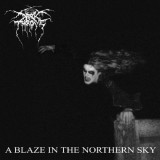
30th ANNIVERSARY VINYL EDITION OF THE ICONIC 1992 BLACK METAL
CLASSIC FROM DARKTHRONE - PRESENTED ON LIMITED WHITE VINYL
WITH SLEEVE DESIGN REPLICATING THE ORIGINAL PRESSING
'A Blaze In The Northern Sky', Darkthrone's official second album, was originally
released in 1992 & was without question the blueprint for the Black Metal scene,
spearheading the evolution of the early second wave movement in Norway &
beyond. It was hailed on release as an album of true scene- shifting greatness,
following their more death metal focussed debut, 'Soulside Journey'. The rawness
apparent on the album (recorded at Creative Studios, the same location as
Mayhem's legendary Deathcrush was put to tape), was unusual for the time & an
antithesis to the usual metal production values & standards during the period.
With this, Darkthrone's statement of attitude & intent was clear & their status as
masters of Norwegian black metal was set.
This edition of 'A Blaze in the Northern Sky' coincides with the 30th anniversary of
the seminal album's release & is presented on limited white vinyl, with the sleeve
design replicating the original pressing, plus a refresh of the original 1992 audio
master.
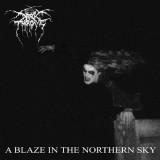
30th ANNIVERSARY VINYL EDITION OF THE ICONIC 1992 BLACK METAL
CLASSIC FROM DARKTHRONE - PRESENTED ON LIMITED WHITE VINYL
WITH SLEEVE DESIGN REPLICATING THE ORIGINAL PRESSING
'A Blaze In The Northern Sky', Darkthrone's official second album, was originally
released in 1992 & was without question the blueprint for the Black Metal scene,
spearheading the evolution of the early second wave movement in Norway &
beyond. It was hailed on release as an album of true scene- shifting greatness,
following their more death metal focussed debut, 'Soulside Journey'. The rawness
apparent on the album (recorded at Creative Studios, the same location as
Mayhem's legendary Deathcrush was put to tape), was unusual for the time & an
antithesis to the usual metal production values & standards during the period.
With this, Darkthrone's statement of attitude & intent was clear & their status as
masters of Norwegian black metal was set.
This edition of 'A Blaze in the Northern Sky' coincides with the 30th anniversary of
the seminal album's release & is presented on limited white vinyl, with the sleeve
design replicating the original pressing, plus a refresh of the original 1992 audio
master.
Paperback: 272 pages
• 70 hilarious, bizarre and harrowing stories from pro DJs across the globe.
• An anonymous cast featuring mystery superstars, underground legends and breakthrough talents from the superclubs of Ibiza to the London gay scene to the basement clubs of Berlin.
• An access all areas pass to what life’s really like behind the decks that you’ll not find on social media or in magazines: what goes on tour, goes in this book!
The Secret DJ’s first two books lifted the lid on what really happens behind the decks in the sometimes hilarious, sometimes harrowing world of the superstar DJ. Now they’ve reached out to dozens of DJs from around the world - and from every scene and genre - for their own true stories of the DJ life
Tales From the Booth raises the BPM, rounding up an all-star cast of Secret DJs to tell their anonymous stories of what it’s really like to rock dancefloors for a living. From strange encounters on tour, to side-splitting debauchery and afterparty excess, to the seamy and even dangerous side of the industry, this is your access-all-areas backstage pass. You’ll never look at a DJ quite the same again.
"I never read books about electronic music, why would I? But I guess The Secret DJ is more an anarchist handbook for shattered dreamers than a manual on how to make it big on the scene. Can’t wait for his new adventures."
Ivan Smagghe
"We all have war stories, us jobbing night-lifers. From having sets ended by soldiers with automatic weapons in Juarez to coming-round in Glasgow city centre suddenly best pals with a gangster who’s most affectionate nickname was ‘Wolf’. I’ve bagged a couple over the years. And yours are undoubtedly more vivid, funnier or more ludicrous than mine. The Secret DJ’s are better still."
Ewan Pearson
"Séparée" ist Umses erstes Projekt, bei dem er sich neben den lyrics auch für alle Beats verantwortlich zeichnet.
Wie bei seinen Vorgänger-releases handelt es sich hier um klassischen, zeitlosen Boom Bap und True School Rap. Hier treffen penibel ausgesuchte Samples sowie satte Drums und Bässe auf Umses gewohnten laid-back Flow und seine selbstreflektierenden, strukturierten lyrics.
Nach dem Kollabo-Album mit Beatmaker-Legende Nottz und den zuvor erschienenen Alben mit Tag-Team Partner Deckah, kommt hier also ein Projekt um die Ecke, das Umses Schaffen von einer weiteren Seite präsentiert und seine Leidenschaft und seinen Geschmack in voller Gänze abbildet.
Umse konnte sich hier außerdem einen weiteren Traum erfüllen: Mit US-Rapper Masta Ace ist eines seiner Vorbilder und eine seiner größten Inspirationen auf der Platte vertreten.
Cabaret Voltaire’s ‘The Covenant, The Sword and The Arm of The Lord’, as originally remastered in 2013, now reissued on White vinyl. Known for being the harder, more experimental album of their “Pop” period, ‘The Covenant, The Sword and The Arm of The Lord’ was originally released in 1985 and includes the classic ‘I Want You’. The album embodys Cabaret Voltaire’s industrial electro-funk sound and their punk ethos.
Cabaret Voltaire were very much ahead of their time, harmonising dance music, techno, dub, house and experimental electronics, making them, without a doubt, one of the most influential acts in electronic music.
“...The Covenant, the Sword and the Arm of the Lord is an exercise in paranoia with anxiety coded into the jittery sample-heavy structures of the music itself.” - Spectrum Culture
In a genre belonging to crooners like Marvin Gaye, Sam Cooke, James Brown and Otis Redding, authenticity is a requirement.
Enter Anduze, a unique vocalis whose riffs evoke the retro sounds of the aforementioned artists, but reverently done his way
– a fresh brand, re-imagines and crefted into a modern depiction of the era.
Anduze was raised on his father’s native land of St. Croix in the US Virgin Islands. His distinctive upbringing still lines the
threading of his creative fabric, which continues to expand into all corners of taday’s musical landscape.
It’s been over a decade since Anduze last released a full album. A lot has changed and progressed since then. He left behind the LA/Hollywood nights in exchange for a better quality of life in Athens, Greece. Also, during this span, he’s been a multi-featured artist on collaborations with producers such as Satin Jackets, Art of Tones, LTJ Xperience, Gramatik, and more…
However, his most noteworthy ascent is as lead singer (and songwriter) of Austrian act, Parov Stelar, with whom he tours
worldwide. Still, with all his accomplishments within the electronic world, it was time for Anduze to get back to his own sound – SOUL.
Using the pandemic as an opportunity, instead of a crutch, Anduze recorded “Aura,” a nine-song album that blurs the lines of
soul, funk, pop, folk, and R&B, with 20 contributing musicians.
If you like Prince, Michael Jackson, Marvin Gaye, Lenny Kravitz, Terence Trent D’arby etc…this album takes influences from
all their best moments and combines them into one mighty explosion that is simply, ANDUZE.
These days he is also living the new life of his song in collaboration with LTJ Xperience entitled Bad Side which has been
included in the new game update for Play Station GTA 'Los Santos' starring the DJ producer Moodyman and in the soundtrack of the new series And Just Like That, a popular follow-up to Sex And The City, which aired worldwide.
The sound aesthetics of ‘Playground’ wants to restore Rookley’s dimension, made of dark, isolated environments, which echo his inner world. Where introspection is combined with the anger and anxiety of those who do not feel at ease in the here and now. Victim and executioner of an imprint made of dissatisfaction and the constant search for a peace that does not come. In the darkness and the discomfort, there is tension and, at the same time, warm abandonment, reassurance. The care for sounds and evoked emotions is the result of research aimed at achieving the exact representation of visceral, intimate, and extremely sincere sensations. There are no filters, everything is authentic, exposed living flesh, made up of significant experiences, alienation, nostalgia for an unwritten future. The language is personal and hermetic, but never encrypted.
Freestyle continues with their drive to unearth rare and classic UK funk, soul & boogie records with a reissue of a formerly white label-only, rare-as-hens-teeth debut 12" by UK soul icon Rick Clarke from way back in 1981.
Sharing the same line-up of performers as the eponymous group Potion (Rick Clarke, Carlton White on bass & Everton McCalla, formerly of Light of the World and later Freeez, on drums) though credited on the OG press as Rick Clarke alone, this 12" came out originally in the same year as the also sought after Potion 12" "Catch The Feelin' (Showstopper)" - a year before we would see Rick & Everton release the classic british electro funk of "Magic" as Side On (with Peter Mass) on Beggars Banquet.
This is a classic slice of British disco funk, showcasing an early vocal talent that would go on to become a key feature of the late 80s UK soul scene, alongside a tight-as rhythm section. The subtly dubbed-out instrumental mix is a real treat too, bringing those synth flourishes and soaring horns to the fore and letting us hear Carlton's bass work wonders unencumbered.
After an extended interval between releases, Data Arts Group owner/operator Document Swell (real name Simon Cotter), presents his first full length LP "Hybrid Emotion". Document Swell's first musical contribution to Data Arts Group is also the first vinyl release for the label and brings DAG into the new world of 2022 and beyond. Song-writing, and sound sketches for "Hybrid Emotion" took place over a time span of approximately 5 years in various bedroom studios and life-phases throughout northern Melbourne/Naarm, as well as small setups in the Berlin localities of Templehof and Schöneberg. Arranging and mixing was completed in Northcote, throughout that period of ample time in Melbourne's Covid-19 lockdowns. The album spans a rich tapestry of ideas and moods which can be perceived as something between Document Swell's classic playful dance floor style to a more reflective and brooding tone.
The opening track "River Heart", is built of rudimentary pitched percussion, warm Juno pads and randomised Blofeld synthesis to construct an electronic impression and nostalgic sense of life by the river. The title track "Hybrid Emotion" brings the album closer to the realm of the club with relaxed house grooves and moody but spirited melodies, along with hybridised vocal samples."Why Then Here" pushes the album's character towards something less human, with a more synthetic affection portrayed by repetitive vocal samples and individualistic synth tangents. "Now and Then" realigns the trajectory to a warmer and more predictable landscape with chugging Balearic rhythms, glassy synths and jottings of lush electric guitar. On the flip side, "Day of Thunder" drops things down into an animated variety of industrial darkness, with heavy weight kick drums, metallic percussion and bleak vocal messaging. "Little G", an ode to a well loved cat, lightens things up instantly with playful synth noodlings, disco beats and clatter from pots and pans. "Vergangenheit" exhibits Simon's explorations into the acid world, with 303 squawks, cassette crunched drums and shadowy synth pads. The closing track "Epic Sands" ends the album, not with an end note, but a sense of ongoing possibilities.
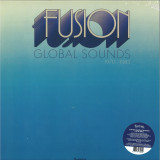
As a fine collector of Jazz-Funk and Fusion for many years, Charles Maurice selected some of his favorite forgotten productions, as he previously did for the AOR Global Sounds, French and Brazilian Disco Boogie Sounds compilations series.
This time, recordings come from Sweden, Switzerland, South Africa, New Zealand, Uruguay, Spain and France, from artists and bands mostly known in their local scenes. You'll hear here the best elements of the Fusion and Jazz-Funk genre: breezy vocal arrangements reminding Flora Purim in Return To Forever or George Duke's albums, sweet and virtuosic Fender Rhodes (kind of common thread of the comp), melodic spiral-shaped fuzzy synthesizers leads, or irresistible basslines, altogether bringing a unique groove to life.
On May 20th On Rotation returns for their first VA release - Genetic Memories Vol. 1.
Anderson opens the release with the mystical ‘Polymorphic Magic’ - a low-slung builder combining deep synths with sampled instrumentation.
“I’m a huge fan of self resonating / overtone instruments so using the Fujara was a no brainer. A naturally psychedelic sounding instrument, I wanted to accompany the flutey pipe with a deeper and low-mid tempo chug.” - Anderson
Next up is Musty Head Records main man Jamie Leather - combining the tight drums and skilful melodic work of his previous releases with all the influences we love, ‘Discovery’ is sure to get any party going.
Leading the B-Side of the record is Ed Hodge's ‘Atreides’ - a tough yet playful banger drawing influences from across the spectrum of UK music. Gun fingers guaranteed!
“It’s probably the fastest, rowdiest track I’ve made under the Ed Hodge moniker and pulls influences from house, trance and speed garage.” - Ed
Closing the release, we speed things up and travel deep into the past with Phazma's ‘Arrakeen’. Featuring ethereal synths, driving rhythms and beefy low end, this floaty number works just as well at home as in the club - a perfect way to round off the EP!
“After some help from my musical peers and some heavy inspiration from the release of the new Dune movie, I managed to come up with something that I’m pretty stoked with!.” - Phazma
LGR015 sees Locked Groove teaming up with Gacha Bakradze for “3 Variations Sur Un Thème”.
After linking up online in 2020, Gacha and Tim decided to join forces and make something they believe is truly special.
Gacha Bakradze hails from Georgia’s capital, Tbilisi. He has deservedly earned plaudits after releases on Apollo, Cin Cin, Die Orakel, Fever AM and Lapsus. Gacha regularly redefines his musical ideology; always bestowing it with mood based authenticity and excitement through rhythms and harmonies.
Just like Locked Groove, his musical output is diverse and always evolving, which makes them great collaborators.
Like the EP title suggests, the 3 tracks are loosely based on the same theme but explore different sonic landscapes.
Variation 1 opens the EP with skittish percussion and melodies weaving in and out. Variation 2 pushes the tempo to 150+ BPM with synth sounds reminiscing of rave years gone by. Variation 3 dials things back and provides a more subdued yet euphoric addition to the EP.
For the remix they’ve enlisted Deniro. The Dutch producer, known for his precise use of melody and rhythm delivers a soulful and timeless rendition of Variation 1.
The EP is due 10 June on all digital platforms and will also be available on vinyl from 20th May.
Artwork by Ollie George with photos by Locked Groove.
- A1: Stevie Qngo - Trois Hommes Dans Un Wagon
- A2: Bandler Ching - Pousmousse
- A3: One Frame Movement - Stokstaart
- A4: Stellar Legions - Wessel
- B1: L?P?Ganggang - Kienda
- B2: M.chuzi - Tzatzìki
- B3: Boombox Experiments - Miscellaneous
- C1: Echt! - Parakeet
- C2: Cargo Mas Feat. Mike 'Maz' Mahez - Samsara
- C3: Kau Trio. - Nightgrazer
- C4: Schroothoop - Obsolescence Programmée
- D1: Dishwasher¦ - Home Cinema
- D2: The Brums - Barbara
- D3: Tukan - Boréal
- D4: Shungu & Mejiwahn – Mejigu
Vol. 1[22,27 €]
Vol.2 Limted Red Vinyl[26,01 €]
Vol. 3 Black Vinyl[24,16 €]
Vol. 3 Transparent Violet Vinyl[27,52 €]
The groove-obsessed Sdban Ultra label are pleased to present an outstanding new collection of musical gems from Belgium's thriving jazz scene, compiled by Belgian DJ and eclectic connoisseur, Lefto.
'Lefto presents Jazz Cats volume 2', released 24th June, features a balance of known and obscure artists. From the thrilling frenetic grooves and innovative soundscapes of Bandler Ching and the electronic influenced Stellar Legions (Andrew Claes from (STUFF.), to the jazz fusion collective L?p?GangGang and weaving musical odyssey that is M.CHUZI, 'Lefto presents Jazz Cats volume 2' is a melting pot of the best musical talent coming out one of the smallest countries in Europe. In addition, there's the beautiful unease of One Frame Movement, the laidback 'acoustic electronica' of Boombox Experiments, the classic funky jazz stylings of Cargo Mas and the cinematic The Brums, making 'Lefto presents Jazz Cats volume 2' an essential release for any jazzhead with a passion for new sounds.
"By collecting all the music for 'Jazz Cats volume 2', I come to the conclusion that we are living in an era of very talented individuals and collectives. Even more so than 4 years ago. I have the impression that the Belgian jazz sound is more diverse, with more influences and more creativity. There was a time that jazz would be the starting sample to create a beat for rappers, today it is electronica, rap or afrobeat that influences our youth to create a sound or style that suits their vision of what jazz sounds like in 2022. So, once again it is with extreme pleasure that I present to you some of the best present and next generation of jazz cats this little country has to offer."
2018's 'Lefto presents Jazz Cats' included tracks from some of Belgium's biggest hitters including Black Flower, STUFF., and Glass Museum who have all gone on to receive global acclaim. The album was given the accolade of 'Album of the Week' on Worldwide FM and also received further radio support from Jazz FM in addition to numerous glowing reviews.
Tastemaker, selector, curator, DJ and producer, Lefto is one of the most important and respected tastemakers around the world with a record collection of over 15,000 records. Cutting his teeth on jazz and new beat, a genre that moulded the shape of electronic music in 80s Belgium, Lefto formed his early tastemaker know-how via his dad's record collection.
Creating his fine ear for music and the cutting edge at Belgium's legendary Music Mania record store in his hometown Brussels, he has been a resident on Belgium's leading radio station Studio Brussel and currently hosts a show on Kiosk Radio (BE) and The Lot Radio (US). He also curates his own stage at the Dour Festival and hosts his own nights in Gent. World renowned, he regularly blesses sound systems from Tokyo to Seoul, Singapore to Manila, Kazakhstan to Germany, San Francisco and Los Angeles, with residencies in Amsterdam and New York.
- A1: Stevie Qngo - Trois Hommes Dans Un Wagon
- A2: Bandler Ching - Pousmousse
- A3: One Frame Movement - Stokstaart
- A4: Stellar Legions - Wessel
- B1: L?P?Ganggang - Kienda
- B2: M.chuzi - Tzatzìki
- B3: Boombox Experiments - Miscellaneous
- C1: Echt! - Parakeet
- C2: Cargo Mas Feat. Mike 'Maz' Mahez - Samsara
- C3: Kau Trio. - Nightgrazer
- C4: Schroothoop - Obsolescence Programmée
- D1: Dishwasher¦ - Home Cinema
- D2: The Brums - Barbara
- D3: Tukan - Boréal
- D4: Shungu & Mejiwahn – Mejigu
Vol. 1[22,27 €]
Vol.2 Black Vinyl[24,79 €]
Vol. 3 Black Vinyl[24,16 €]
Vol. 3 Transparent Violet Vinyl[27,52 €]
Limited version 2LP on red vinyl in gatefold sleeve. An outstanding new collection of musical gems from Belgium's thriving jazz scene, compiled by Belgian DJ and eclectic connoisseur, Lefto.
The groove-obsessed Sdban Ultra label are pleased to present an outstanding new collection of musical gems from Belgium's thriving jazz scene, compiled by Belgian DJ and eclectic connoisseur, Lefto.
'Lefto presents Jazz Cats volume 2', released 24th June, features a balance of known and obscure artists. From the thrilling frenetic grooves and innovative soundscapes of Bandler Ching and the electronic influenced Stellar Legions (Andrew Claes from (STUFF.), to the jazz fusion collective L?p?GangGang and weaving musical odyssey that is M.CHUZI, 'Lefto presents Jazz Cats volume 2' is a melting pot of the best musical talent coming out one of the smallest countries in Europe. In addition, there's the beautiful unease of One Frame Movement, the laidback 'acoustic electronica' of Boombox Experiments, the classic funky jazz stylings of Cargo Mas and the cinematic The Brums, making 'Lefto presents Jazz Cats volume 2' an essential release for any jazzhead with a passion for new sounds.
"By collecting all the music for 'Jazz Cats volume 2', I come to the conclusion that we are living in an era of very talented individuals and collectives. Even more so than 4 years ago. I have the impression that the Belgian jazz sound is more diverse, with more influences and more creativity. There was a time that jazz would be the starting sample to create a beat for rappers, today it is electronica, rap or afrobeat that influences our youth to create a sound or style that suits their vision of what jazz sounds like in 2022. So, once again it is with extreme pleasure that I present to you some of the best present and next generation of jazz cats this little country has to offer."
2018's 'Lefto presents Jazz Cats' included tracks from some of Belgium's biggest hitters including Black Flower, STUFF., and Glass Museum who have all gone on to receive global acclaim. The album was given the accolade of 'Album of the Week' on Worldwide FM and also received further radio support from Jazz FM in addition to numerous glowing reviews.
Tastemaker, selector, curator, DJ and producer, Lefto is one of the most important and respected tastemakers around the world with a record collection of over 15,000 records. Cutting his teeth on jazz and new beat, a genre that moulded the shape of electronic music in 80s Belgium, Lefto formed his early tastemaker know-how via his dad's record collection.
Creating his fine ear for music and the cutting edge at Belgium's legendary Music Mania record store in his hometown Brussels, he has been a resident on Belgium's leading radio station Studio Brussel and currently hosts a show on Kiosk Radio (BE) and The Lot Radio (US). He also curates his own stage at the Dour Festival and hosts his own nights in Gent. World renowned, he regularly blesses sound systems from Tokyo to Seoul, Singapore to Manila, Kazakhstan to Germany, San Francisco and Los Angeles, with residencies in Amsterdam and New York.
“I’m closing a chapter in my life,” Barbie Bertisch says to me from a park bench in Greenpoint, “I spent the last four years working towards gaining confidence around my ideas and my creative perspective. This feels like a culmination of that process” The “this,” in question is Bertisch’s debut record Prelude, a collection of eleven songs that chronicle 5 years of Bertisch’s life. The legendary musician Anna Domino describes the record best: “Prelude is a record of layers and depths. The melting phases and soaring distances.”
Raised in Buenos Aires and Miami, Bertisch has called New York home for most of her adult life. When she started piecing together Prelude, she was in her Brooklyn kitchen. It was early quarantine. Stuck at home instead of DJing at clubs, she found the space to parse through the archives. What she previously considered unworthy of attention in the era of distractions, finally made sense as a whole once all the noise was turned down. Compiling a list of songs in various states of completion, Bertisch dreamed up an album, a chronicle in growth and healing frustrations of the past, an honest account of someone trying to find her own voice. That in and of itself was a journey. It took years for Bertisch to accept that she was an artist. “I felt like I was surrounded by men who ruled every space. I constantly felt like I had to ask permission to enter, always around bands but never the girl in the band” she says.
Prelude is an introspective record. It explores all of the valences of being and feeling. Some songs are chaotic and choppy. Others are soft and searching. There is rage and innocence, and moments of forced stillness, like capturing the aftermath of panic attacks, as in “After The Storm”. Bertisch also focuses on rhythm, bass guitar being her main instrument, and no stranger to the power of the beat. The record also draws on influences as varied as Kaitlyn Aurelia Smith, Cocteau Twins, Berlin School, and pioneering producer François Kevorkian. Both sonically and conceptually, Prelude is a portrait of who Bertisch is as a person.“Is This What You Wanted?” is fiery, a pointed provocation to domineering figures from her past. It’s full of strobing, strident synths, and heady lines of bass. It gives off the same vibe as a fire alarm, as a big room dance track that subverts your expectations of what it means to dance in a sea of bodies. “28,” the record’s opening track is more peaceful. It’s all languid keyboard arpeggios with the occasional flourish of a cascading synth effect.
Since most of the songs already existed in some form or another, Bertisch’s job on Prelude was to refine and reimagine music that had previously been private. She spent time rearranging, rewriting, adding elements newly available to her, such as the saxophone, and pushing the limits of the rough mixes to mold the universe she envisioned. Along the way, Bertisch grew more excited about her abilities as a musician. The resulting record is one that is inherently confident.
Prelude is also a homespun release. It’s coming out on Bertisch’s own label, Love Injection Records, which she runs with her partner Paul Raffaele. The two also DJ and make zines under the name, which started in 2015. Love Injection is a love letter to New York. Prelude is a word of encouragement to those struggling with self-actualization. The record was mixed by Justin Van Der Volgen and mastered by Walter Coelho. Love Injection Records holds the remix tradition in high regard, and they’ve enlisted reworks by some of Barbie’s favorite producers. It’s all a labor of love for Bertisch. Prelude is her: Barbie the musician.
©℗ Love Injection Records 2022
"A collection of pieces about the discovery of sounds and sonic universes hidden in objects, places and within yourself." - Feldermelder & Julian Sartorius
Commissioned by the legendary concert venue Bad Bonn in Düdingen, Switzerland, and the KRAN project, 'Bonn Route' is a collaborative album by electronic musician Feldermelder and percussionist Julian Sartorius. A location- based sound walk that can be experienced both on-site in the village of Düdingen, and as a full-length album. The eleven tracks are a sonic homage to, and an artistic interpretation of, a small village in Switzerland's heartland.
Building on his practice of site-specific performances and percussive sound walks, Julian Sartorius captured sounds and patterns at eleven locations: the train station and cemetery, on the banks of a stream, on a bicycle path, and in an intimate cavern above the village's lake, amongst other locales. Sartorius documented the soundscape of the village in field recordings, recorded samples of objects and captured percussive patterns by playing on the architecture and vegetation found on-site.
Feldermelder then processed these recordings into eleven compositions, preserving the locations' acoustic identities, but expanding on Sartorius' material. Besides the bassline on 'Veloweg', Feldermelder used only sound reactive synthesis and resonators to create additional sounds, layers and tracks, thus multiplying the spectrum and rhythms of the original material. 'Bonn Route' is a musical journey rooted in the emittance of sound, and our resonation with the world around us.
Feldermelder is a Swiss musician, sound designer, producer and installation artist. He is co-founder of -OUS and part of the audiovisual collective Encor.studio. He has previously released several releases on -OUS, both solo and in collaboration with Sara Oswald.
Drummer, artist and percussionist Julian Sartorius' precise and multi-layered rhythmical patterns are keen excursions into the hidden tones of found objects and prepared instruments, bridging the gap between organic timbres and the vocabulary of (experimental) electronic music. He has previously released his album "Locked Grooves" on -OUS.
- A1: Claudja Barry– Love For The Sake Of Love
- A2: Tony Silvester & The New Ingredient– Cosmic Lady
- A3: Sam Jam*– Dance And Chant
- B1: Sticky Jones Gang– Tunisian Ride
- B2: Eli's Second Coming– Love Chant
- B3: Dunn Pearson Jr – Groove On Down
- B4: Biddu Orchestra– Rain Forest
- C1: Eddie Drennon & The B B.s. Unlimited– Let's Do The Latin Hustle
- C2: Jakki– You Are The Star
- C3: The Writers (2)– Star Black
- D1: Roger Gravel Avec Flashback (12)– Un Habit En La Bémol
- D2: Supercharge (2)– I Think I'm Gonna Fall (In Love)
- D3: Bus Connection– Dreamin' Of You
"The album features the two sides of Mingus' compositional genius: the beautiful balladry that I always feel has a bit of a film-noir feel to it, alongside those joyous upbeat numbers that are filled with an organized chaos that categorizes much of the bassist's best work. ... Throw in the fact that it also features Jaki Byard (who is just phenomenal on this recording and remains criminally underrated), Booker Ervin, Dannie Richmond and Eric Dolphy and you have some of Mingus' finest sidemen driving his compositions to the fantastical places they seemed preordained to go. ... Mingus, Mingus, Mingus, Mingus, Mingus is a record that has more than stood the test of time and is an everlasting testament to the talents of Mingus and the players who had the ability to follow his musical vision." — The Jazz Record
Mingus, Mingus, Mingus, Mingus, Mingus was Charles Mingus' last major studio recording of the 1960s (the solo Mingus Plays Piano would also be released the same year in 1964) and it's a real treasure in the great jazz bassist's discography
Two of the tracks ("Celia" and "I X Love") were recorded at the sessions for The Black Saint And The Sinner Lady, while the rest were laid down eight months later with a group that included Booker Ervin, Eric Dolphy and Jaki Byard (Byard also played on the two earlier tracks). Both sessions featured groups of 11 players, all of whom were in top form in performing Mingus' notoriously complex compositions, writes jazzrecord.
All but two tracks on Mingus, Mingus, Mingus, Mingus, Mingus were re-interpretations of songs from the bassist's earlier catalogue, only "Celia" rates as a new original number, and "Mood Indigo" is a cover of the famous tune by Mingus's hero Duke Ellington. If you happen to have lost your Mingus decoder ring, the remaining tracks correlate to their past counterparts as such:
For Mingus, Mingus, Mingus, Mingus, Mingus Mingus collaborated with arranger/orchestrator Bob Hammer to score the music for the large ensemble of brass and saxophones. Recorded January 20 and September 20, 1963 in New York City.
Renata Zeiguer's new album 'Picnic in the Dark' - her second full length
with Northern Spy - is a sonic dreamworld infused with magical realism
that tells an extremely personal narrative
It is a culmination of a lifetime of reckoning with her past and her unwavering
resolution to transcend inherited patterns and cycles that have held her back. Coproduced with Sam Griffin Owens (Sam Evian), the twelve songs lead a mystical
conversation between characters within her psyche that all center around this
process, which she whimsically likens to the ritual of having a picnic in the dark.
Integrating her child self into her adult life with immense compassion and
enlightenment, 'Picnic in the Dark' is not only an album of exploration but one of
transformation, healing and self- actualization, all through a courageous journey
towards that extremely uncomfortable yet fertile liminal space between
familiarity and uncertainty.
'Hotel Florida', the debut album by trombonist Andreas Tschopp and
baritone saxophonist Matthias Tschopp's Swiss sextet Sparks and Tides,
delivers an enthralling, improvisation-laced set of electro-acoustic
soundscapes
The first collaboration co- led by brothers Andreas and Matthias Tschopp, the
Swiss sextet makes a subtly enthralling debut with Hotel Florida, an album
marked by lapidary textures, extended melodies, and finely calibrated production.
Sparks and Tides also refers to the flow of their music, which unfurls in unhurried
waves until suddenly surging with quicksilver flurries. Cinematic and full of
intriguing passages, it's music for unsettled dreams. "There are lots of little things
like drum machine tracks, bass drones, live sampling of the horns by the
keyboardist and using the sounds as samples, and also some modular synth
processing of the saxophone," Andreas says.
The group brings together some of the most creative figures on the small,
intertwined and fervently inventive Swiss jazz scene. A member of the R&Binfluenced electro- duo True, drummer Rico Baumann is as deeply versed in hip
hop, pop and electronic music as he is jazz and improvised music, which is the
terrain he inhabits with Andreas in the collective jazz quintet Le Rex.
Sweetness and noise, light and dark, soul and body - KICK are back with
the new album Light Figures
KICK are Chiara Amalia Bernardini (vocals, bass) and Nicola Mora (guitars,
electric piano, synths, samplers), from Brescia. Their sound combines rough
elements and others more dreamy in a sound that could ideally be defined "sweet
noise", a style on their own melting the noise with the softness of the
atmosphere, without any limits of genre. The production of Light Figures,
composed between 2019 and 2020, was curated together with Marco Fasolo
(Jennifer Gentle, I Hate My Village), known for the international reach of his
works.
- A1: Soul Bossa Nova
- A2: Boogie Bossa Nova
- A3: Desafinado (Slightly Out Of Tune) (Slightly Out Of Tune)
- A4: Black Orpheus (Manha De Carnaval) (Manha De Carnaval)
- A5: Se E Tarde Me Pardoa (Forgive Me If I'm Late) (Forgive Me If I'm Late)
- B1: On The Street Where You Live
- B2: Samba De Uma Nota So (One Note Samba) (One Note Samba)
- B3: Lalo Bossa Nova
- B4: Serenata
- B5: Chega De Saudade (No More Blues) (No More Blues)
First exposed to the sounds of Samba and Bossa Nova while
touring South America with Dizzie Gillespie in 1956, Jones recalls
hearing Gillespie sitting-in with a Samba combo at Rio's Gloria
Hotel and how he was fascinated by the thrilling fusion of Jazz and
Samba. Some years later in 1962, he took a stellar big band into
NYC's A&R Studios to record the Big Band Bossa Nova album. It
was the culmination of a dream for Jones, who had never
forgotten the musical experiences he had encountered in Brazil.
- 1: Can I Sing With You? Ft. Sidi I.b
- 2: No Hay Pescado Ft. Sidi I.b., El Latigazo & Mame Samba
- 3: Neuron Landfill (Vertedero De Nueronas)
- 4: Smelk
- 5: The Light Mandem Forward Ft. Kiki Hitomi W/ Javier Afonso
- 6: Guidance & Healing Ft. Mame Samba
- 7: Monsanto Ft. Troy Harkin*
- 8: Mike Input At Loud Speakers Corner*
- 9: Bus Meter Ft. Zeeteah & Sidi I.b
- 10: Assuage No.9 Ft. Zeeteah
Helmed by Dave Watts aka D.WattsRiot (Fun-da-mental), the debut KingL Man album, ‘Headonix’ is beat-laden shout out in response to the perpetual state of war we seem to find ourselves at. Outrage and disgust, love and hate, history and presence.
Contributions come from four continents.
Fresh on the scene is Senegalese vocalist Sidi I.B., who arrived on Canarian shores with two hundred other compatriots, cold, wet and hungry after seven days at sea with nothing but his future in his hands.
Temporarily housed at the infamous migrant holding centre in Las Raíces, Tenerife, the studio environment provided an avenue of relief from the inadequate conditions at the overcrowded camp.
Also from Senegal, living in Santa Cruz de Tenerife, is rapper Ibrahima El Latigazo who delivers his lyrics in French, Wolof, Spanish, English & Sérère. Rounding up the Senegalese contingent is Mame Samba, a group that hold the spirits close when performing. Their contribution is from recording sessions they had with François R. Cambuzat & Gianna Greco (Putan Club / Ifriqiyya Electrique).
Kiki Hitomi (Waq Waq Kingdom/King Midas Sound) returns to the fold, exhaling positivity with Canarian multi-instrumentalist Javier Afonso (Grenouille). The Canarian faction also includes violinist Mónica Viñoly, Dani Garcia (Lagoss/Tupperwear) and Vakawuare. Further guests include percussionist Miroca Paris (Cesária Évora/Madonna); Hamid Mantu (TransGlobal Underground);
Ramjac (Dub Colossus), drums and percussion respectively.
"The past 5 years we have taken our music all over the world: Europe, Asia, Africa besides our homeland Denmark, and even though we cannot speak with many of the people we meet, our music is a universal language that transcends borders. The meetings we have had (and continue to have) all over inspire us to create new music. But of course we are the composers of the music, so this is our representation of those meetings.
Our 3rd album is called AFROTROPISM. Tropism is a biological phenomenon that indicates growth of a plant in response to the environment; so when you see a plant turning for the sunlight, this is tropism. In other words, this is not so much about the plant's roots but more about how it reacts when it touches the air, feels sunlight or rain - in other words the outside world. So AFROTROPISM refers to the fact that we are drawn towards the African traditions, but we are "growing" our own music.
On our first two albums we have recorded extensively with African musicians, and AFROTROPISM is centered around The KutiMangoes (TKM) as a band. We are developing our artistic direction by going more in depth with how we can mix our inspirations with our own musical heritage. Our musical mission is (and has always been) to mix cultures and create our own sound.
With our background in jazz music, TKM counts virtuoso instrumentalists with a heartfelt intent and sound innovators with our horns, effect pedals, synthesizers, drums and percussion from all over the world. AFROTROPISM is a further and deeper development of our trademark bold sound that experiments with synthesizers, soundscapes and a bit of electronic effects without losing it's focus on groove, melody, atmosphere and musicianship."
The KutiMangoes, July 2019
About each track:
STRETCH TOWARDS THE SUN
This track opens up with a synthesizer groove that is inspired by the polyrhythmic grooves played by the balafon (a predecessor of the piano) from West Africa. Our rolling sequence could not be played on the balafon because of the key changes, but the basic idea comes from that instrument. Quick and light, we wanted to write a song where you can feel the sun coming out and feel the energy it's rays give. The combination of the programmed groove, the horn-arrangement, the huge percussion section and the live instruments makes for a sound that we have not heard before, and it illustrates what this album is all about (and what the track's title refers to): that we stretch towards the things that give us energy – and that although our roots are in Denmark, when we encounter a musical tradition as rich as in West Africa, it changes us and our music.
A SNAKE IS JUST A STRING
The first time we saw Mali-bluesman extraordinaire Vieux Farka Touré on stage was just after we had played at a huge festival in Burkina Faso, and we almost literally caught on fire. Their groove was so strong and insistent that we were mesmerized, and it inspired us to come up with the opening guitar part of this song. Basically a bluesy tune with some unusual chord changes and a crazy synthesizer solo by Johannes Buhl Andresen reminiscent of that fuzzy guitar-sound we love so much in the Mali blues. The title is an homage to the Nigerian writer Chinua Acheba, who in his masterpiece novel "Things Fall Apart" tells that in the village during the night, to ward off the fear of darkness, people would call dangerous animals by a different name: don't be afraid, a snake is just a string.
KEEP YOU SAFE
It is a basic human necessity to have a place where you can feel safe. But there are far too many people in our world that fear for their safety, their livelihood, their children, their relatives – and this is surely not a feeling that helps us to flourish as humans. With this song we are saying that we all need to make it a priority to help our fellow humans to feel safe. And of course, if our song can offer a feeling of safety and comfort for a short time to those who listen, we are truly thankful.
MONEY IS THE CURSE
This track is directly inspired by Fela Kuti's ability to create music that is both physical and political. Dance music with a serious message about our times. For the solo part we wanted a more melancholy, pensive feel (than the full-on baritone-trombone melody) and also wanted to experiment with some choppy, stuttering effects to make the horns sound desperate. Money is the curse because it can become the objective of our life; money is the curse because it changes the relationships we have with our fellow humans. Money is the curse.
THORNS TO FRUIT
This melody is inspired by the scales and developments of a traditional Bambara folk-song. We love the way these melodies constantly evolve with small developments and changes. We felt like an accompaniment that is really dry, sparse and earthy would fit well and then made a contrasting solo part. As a group we are interested in how to develop our improvisations together and create sonic landscapes that evoke a distinctive atmosphere – so here, we have no soloist, but a collection of synthesizer parts, saxophone lines and guitar-sounds that together create a dreamy and lush ambience.
SAND TO SOIL
We started out with a short ngoni riff played by our good friend and master musician Aboubacar Konaté. We then sampled it, built soundscapes and our own both meditative and pumping groove around it. We created a melody with both melancholy and joy, with afterthought and impulse and then the brilliant Aske Drasbæk added an emotive and blistering saxophone solo. The title refers to the contrasts in our humanism. As part of our human nature, we have a dark side that drives us (and each other) towards destruction – making the fertile soil into barren sand. The title is an encouragement to emphasize the opposite movement in our nature: to create life and help it flourish. We keep ourselves human by insisting that we must never forget this side of our nature no matter how tough, tiresome or trying it might be. Let's keep our focus on the light, the warmth, the positive energy – that can turn the cold stone into fertile ground.
- 1: Falling
- 2: Not Easy Love (Feat. Demae)
- 3: Get By
- 4: Good Man
- 5: Like This
- 6: Walk These Days
- 7: Middle Of Eden (Feat. Sasha Keable)
- 8: Can’t Be Wrong
- 9: Time Away
- 10: Place And Time (Never Like This)
- 11: Something Special
- 12: Get Down
Maverick Sabre announces his much-anticipated fourth LP Don’t Forget To Look Up, out 28th January 2022 via FAMM. The follow up to 2019’s When I Wake Up, the introspective 12-track release was conceived in lockdown and sees Maverick examine and unpick love in its various iterations. Traversing recollections of previous relationships, to examining the societal pressures placed on couples, Don’t Forget To Look Up is both intimate and inquisitive at the same time. From the brooding vulnerability of opener ‘Falling’, to his recent Demae collaboration ‘Not Easy Love’ (which saw support from the likes of Crack, Complex, District, TRENCH, TLOBF and more), this sublime body of work places Maverick’s sultry tones in centre stage. Calling on the legendary Nile Rogers to provide the guitar on the shimmering, disco cut ‘Get Down’ and the vocal acrobatics of Sasha Keable for the evocative ‘Middle of Eden’ - Maverick carefully weaves collaborators through the project. A truly multifaceted artist, Don’t Forget To Look Up sees Maverick step up on production duties - producing half the tracks on the album. Maverick will be returning to the stage in 2022 for a 9-date UK + IRE tour, commencing with a homecoming show at The Academy, Dublin on 17th Feb and closing on 10th March at the Alexandra Palace Theatre, London. Platinum-selling, BRIT-nominated artist Maverick Sabre is the voice of a generation. Previously collaborating with the likes of Jorja Smith, Joey Bada$$, Bugzy Malone, Chronixx, Rudimental, Vintage Culture and George The Poet – Maverick has a flair for working with the best artists, producers and tastemakers in the scene. Imbuing each of his timeless releases with perceptive social commentary, introspective lyricism and his signature emotive delivery; this prolific, critically-acclaimed artist has been supported by the likes of The Guardian, The Arts Desk, Complex, GQ, NPR.
First time reissue from this essential latin jazz album from 1971 !
Often affectionately referred to as the "Godfather of British Latin music" Robin Jones was truly one of the great performers on the international Latin scene.
Denga, his first recording from 1971 is a scintillating fusion of Afro-Cuban and Afro-Brazillian rhythms laden with heavy Fender Rhodes sounds and no less than three Afro-Latin Percussionists. The hard-to-find album has now been reissued by legendary London jazz DJ Paul Murphy's Jazz Room Records imprint. It should be an essential purchase for anyone who loves Latin jazz.
Feature's Robin's personal favorites including "Goodbye Batucada" which rightfully lays claim to be the first Brazilian Jazz Samba tune recorded in the UK and the Worldwide Sound standard setters "Denga" and "Africa Revisited".
FRENCH COMPOSER, PRODUCER AND MULTI INSTRUMENTALIST ADRIEN DURAND’S THIRD ALBUM
"Our last album, “La Course” was released in 2020 during the lockdown. Inspired by the feedback from listeners, who received the music with special attention, the idea and need for “(Loin des) Rivages” was born.” - Adrien Durand
Bon Voyage Organisation is the story of the construction of an ensemble, the quest for harmony, through music, between beings. This story has been the central leitmotif in Adrien Durand's composition and production work for almost ten years. Adrien Durand is a renowned Parisian bass keyboard player, composer, producer and mixing engineer having worked with noteworthy projects such as Amadou & Mariam and Papooz among others. Known for his knowledge of ensemble recording and arrangement techniques, BVO is his attempt at meticulously creating a musical dialogue around his compositions with a distinguished cast of musicians from di?erent backgrounds without the pressure associated with pop music recordings reminding us of the musical ensembles of the 70’s such as that of Carla Bley, Soft Machine or Irakere. (Loin des) Rivages was recorded over five days in June 2020 at Studio Atlas, the studio of Air’s Jean- Benoit Dunckel and mixed the following summer by Adrien Durand in his Parisian studio, Bureau 12. It was an orchestrated performance considering that all ten tracks of the album were played live, gathering up to thirteen musicians in the same room. The album follows what was initiated with BVO’s previous album La Course: an entirely instrumental sound free from any constraints. The close collaboration between Adrien Durand and the members of the ensemble allowed for an exquisite completion. Together, they deliver the incredible energy of "Le Sentier des Orpailleurs", the depth of melancholy of "Apacheta", and the originality of "Et s’éveillent"... Inspired by the great explorers of the soul: Sun Ra, Moondog and Coltrane - a cover of his Naïma actually opens the album - Adrien Durand mixes humanity’s first instruments (percussion and the wind) with its latest ones (mixing desks and synthesizers). Thus, he continues the most interesting yet rewarding artistic journey: The journey inward, far from the standards of civilization, in the heart of what some can take for madness, reaching into a jungle of the soul so marvelously represented in Clément Vuillet’s artwork. This is not an intellectual record but rather a spiritual e?ort, because, as Adrien Durand likes to repeat in his concerts: "Let us step into music as we step into a sanctuary."
- A1: Main Title
- A2: Beth's Story
- A3: Methuen Home For Children
- A4: The Scholars Mate
- A5: You're Gloating
- A6: Training With Mr Schaibel
- A7: Am I Good Enough Now
- A8: Playing Mr Ganz
- A9: Ceiling Games
- A10: First Day At School
- A11: The Green Pills
- A12: Kentucky State Championship 1963
- A13: Top Boards
- A14: Playing Townes
- B1: Playing Beltik
- B2: The Lake - Cincinnati 1963
- B3: Playing Benny - Las Vegas 1966
- B4: Two Sides Of The Same Coin
- B5: Mexico City Invitational 1966
- B6: Playing Girev I
- B7: Playing Girev Ii
- B8: Borgov I
- B9: Beth Alone
- C1: Ohio Us Championship 1967
- C4: Paris Tournament 1967
- C5: Borgov Ii
- C6: Jolene
- C7: Returning To Methuen
- C8: Turning Point
- C9: Ussr
- C10: Moscow Invitational 1968
- D1: Close Your Eyes
- D2: Borgov Iii
- D3: The Final Game
- D4: Take It, It's Yours
- D5: Sygrayem (Let's Play) (Let's Play)
- D6: I Can't Remember Love
- C2: New York
- C3: Training With Benny
A rigorous recollection of all the music that went into last year's Netflix smash The Queen's Gambit. You were probably too busy trying to keep up with actress Anya Taylor-Joy's timer-stopping and piece-placing chops to notice the ingenuity of the soundtrack; packed with contemporaneous music to the time in which the series is set, from Donovan to The Monkees to The Vogues, we're duly thrown back by this new 2xLP edition (which comes to a special black and white colour vinyl). Check it, mate.
After a small nap, Tokyo’s finest Studio Mule is back on the scene, bringing the world some deeply composed guitar music from Japan, crafted by Shin Sasakubo.
Since almost 20 years the guitarist is specialized in classic and contemporary Andean and Peruvian music. a knowledge that he deepened through a three-year stint in Peru between 2004 and 2007.
During his time in Latin America, he played live in Argentina, Chile, or Bolivia and researched in the works of Peruvian novelist, poet, and anthropologist José María Ar-Guedas, as Shin Sasakubo’s take on art is not one-dimensional.
He also loves movies, painting, photography, writing, and theater - artforms that con-stantly influence his music on many different layers. since his return to his hometown Chichibu City in the japanese Saitama Prefecture, he launched the "Chichibu Avant-Garde School”, a college that looks through art and lectures on the Chichibu region, and his en-vironmental and folkloristic history.
As sincerely driven composer, he released three guitar leaning albums in the past ten years. his latest sensation “Chichibu”, originally only released in Japan, now travels the globe via Studio Mule, making his fantastique listening voyage available for all those souls that seek joy through the sound of guitar strings.
Resident Evil: Welcome to Raccoon City is a 2021 action horror film written and directed by Johannes Roberts. Adapted from the stories of the first and second games by Capcom, it serves as a reboot of the Resident Evil film series and the seventh live-action film overall, which was loosely based on the same-titled video game series. The film stars Kaya Scodelario, Hannah John-Kamen, Robbie Amell, Tom Hopper, Avan Jogia, Donal Logue, and Neal McDonough. Set in 1998, it follows a group of survivors trying to get through a zombie outbreak in the small town of Raccoon City.
Resident Evil: Welcome to Raccoon City had its world premiere on November 19, 2021 and topped the chart over on VUDU in its first weekend of release.
The score is composed by Mark Korven. He is best known for his work on the sci-fi horror cult film Cube (1997), and most recently his collaboration with director Robert Eggers on the period horror films The Witch (2015) and The Lighthouse (2019).Resident Evil: Welcome to Raccoon City is available as a limited edition of 2000 individually numbered copies on translucent red coloured vinyl. The package contains an XL poster and exclusive Umbrella Corporation fan-art insert
- A1: Grand Master Caz & Chris Stein - Wild Style Theme
- A2: The Chief Rocker Busy Bee Vs Lil Rodney Cee & Dj Grand Wizard Theodore - Mc Battle
- A3: The Cold Crush Bros Vs The Fantastic Freaks - Basketball Throwdown
- A4: Kevie Kev, Master Rob, Prince Whipper Whip, Mc, Rubie Dee, Dota Rock & Dj Grand Wizard Theodore - Fantastic Freaks At The Dixie
- A5: Grand Wizard Theodore & Dj Kevie Kev Rockwell - Military Cut (Scratch Mix)
- A6: Grand Master Caz, Jdl, Easy Ad, Kg, Dj Charlie Chase & Dj Toney Tone - Cold Crush Bros At The Dixie
- B1: Double Trouble, Rodney Cee & K K Rockwell - Stoop Rap
- B2: Rodney Cee, K K Rockwell & Dj Stevie Steve - Double Trouble At The Amphitheatre
- B3: Grand Master Caz & Chris Stein - Wild Style Subway Rap
- B4: The Chief Rocker Busy Bee & Dj Aj - The Chief Rocker Busy Bee, Dj Aj At The Amphitheatre
- B5: Dj Grand Wizard Theodore & Kevie Kev Rockwell - Gangbusters (Scratch Mix)
- B6: Rammellzee & Shock Dell & The Grand Mixer Dst - Rammellzee & Shock Dell At The Amphitheatre
Animal Records – founded by Chris Stein of Blondie fame – only ever released one album in its brief early-80s history, but what an album that was. Wild Style remains the most seminal soundtrack in hip-hop history, a snapshot of the scene as it evolved from the streets to the recording studio. But it’s not just a vital document, it’s also a damn good listen.
The line-up is a who’s who of those who stood out from hip-hop’s nascent block party days. The Double Trouble pairing of Rodney Cee and KK Rockwell, The Chief Rocker himself, Busy Bee, the mighty line-ups of both The Cold Crush Brothers and The Fantastic Freaks. The music captures the free-form, roaming nature of the film – it’s rough at the edges, it’s occasionally amateurish, but it’s completely, utterly glorious.
The original Animal tracklisting, of which this is a reissue, is full of recurring sounds and motifs, all of them co-produced by Chris Stein and Fab Five Freddy, stepping away from breakbeats to produce a sound that reminds you of them, while being totally unique. The epic drums are courtesy of Lenny ‘Ferrari’ Ferraro, a Vietnam vet and punk drummer whose career spanned stints backing Aretha Franklin and Lou Reed.
Over time, those sounds – the Charlie Chase and Grand Wizard Theodore scratches, the indelible lyrics - have become hip-hop touchstones, endlessly sampled and referenced, the bedrock of so much music to follow. That’s because the soundtrack perfectly encapsulated the essence of the film, the scene and hip-hop’s emergence from The Bronx to the attention of the wider world. Presented in this reissue with the original artwork, it remains the blueprint.
- A1: ‘Deed I Do
- A2: Lover Man (Oh Where Can You Be)
- A3: Everything I’ve Got
- A4: Comment Allez Vous
- A5: More Than You Know
- A6: Thou Swell
- A7: It Might As Well Be Spring
- A8: They Say It’s Spring
- B1: Tout Doucement
- B2: You For Me
- B3: Now At
- B4: I Hear Music
- B5: Wait Till You See Her
- B6: I Won’t Dance
- B7: A Fine Spring Morning
- B8: Blossom’s Blues
Blossom Dearie was part of the NYC beboppers scene that often gathered at Gil Evans’ apartment, was in the social circle that began developing “Birth of the Cool” and at the same time was a fixture in the Jazz clubs of the 1940’s.
The legendary jazz producer and founder of Verve, Norman Granz, heard Blossom singing in Paris and offered her a contract.
She returned to New York to record her debut album produced by Norman Granz in 1956. The LP spotlights Blossom as a chanteuse and pianist.
Miles Davis once said, “she was the only white woman who had soul”, while Bill Evans noted her playing really “knocked him out”.
PLAYERS:
Blossom Dearie, piano, vocals
Ray Brown, bass
Jo Jones, drums
Herb Ellis, guitar
Black Vinyl[24,33 €]
SAOR in Scottish Gaelic means free, without obligations, unconstrained. All of these characteristics intrinsic to the music of SAOR, the musical entity spearheaded by sole member Andy Marshall. Presenting his fifth album and first release on Season of Mist, 'Origins' comes across as a more raging, black metal-infused effort, copiously evocative in its imagery and even melancholic in places, but decisively strong and abrasive at the same time.
For fans of: SOJOURNER, WINTERFYLLETH, DRUDKH, UADA
Marbled Grey Vinyl[24,33 €]
SAOR in Scottish Gaelic means free, without obligations, unconstrained. All of these characteristics intrinsic to the music of SAOR, the musical entity spearheaded by sole member Andy Marshall. Presenting his fifth album and first release on Season of Mist, 'Origins' comes across as a more raging, black metal-infused effort, copiously evocative in its imagery and even melancholic in places, but decisively strong and abrasive at the same time.
For fans of: SOJOURNER, WINTERFYLLETH, DRUDKH, UADA
Clear Vinyl
"October Language" is the debut album by New Orleans based duo Belong, comprised of Turk Dietrich and Mike Jones.
Since it's release in early 2006, Belongs debut masterpiece has accumulated a dedicated cult following, with comparisons to the work of Tim Hecker and Gas, with some claims that it plays like My Bloody Valentine's "Loveless" sans the songs. While these comparisons are useful for filing this album into a particular bin in the record shop, time has proven that "October Language" is a unique album which remains unmatched by its contemporaries.
Despite the warm and welcome accolades of the albums arrival, there was no vinyl pressing until 2009, of which a limited one-time pressing vanished immediately. Spectrum Spools is pleased to present a pristine vinyl cut to go with reimagined album art for the definitive edition of this legendary classic.
Physical copies include a download card with extra tracks from the impossibly rare Tour EP from the same era. These tracks are exclusive to the vinyl purchase and are not available through digital outlets.
Wave to Mikey, the fourth album from the Los Angeles-based actor, musician and photographer Danny Lane is a nocturnal, neon-lit ode to the friendships that shape us. “I made this album for my friend Mikey from back home,” Danny explains. “We were pretty much inseparable for a large part of our lives, and our musical and social minds were always in sync in a special way. Then with age, we drifted apart, especially since I moved to Los Angeles. This album is just a little wave hello to an old friend and a kindred spirit.”
Equal parts avant-garde composition, instrumental city-pop, ambient, Kankyō Ongaku (environmental music) and Fourth World music, Wave to Mikey is an impressionistic and reflective cycle of eleven richly detailed memory portraits. Throughout the album, the influence of Jon Hassell, Arthur Russell, Hiroshi Yoshimura and Yellow Magic Orchestra hangs in the air like late-night mist, adding character but never overshadowing the rhythmic ambience of Danny’s musical visions.
Wave To Mikey began as a series of sketches on analog synthesisers, guitar, sample and found percussion sketches, initially recorded in Danny’s home studio. Once he’d located the vibe, Danny called on his friends E Talley II, Solange collaborator John Carroll Kirby and Destroyer session musician Joseph Shabason, who respectively added flute, spiritual synth textures and saxophone to the record.
For Glossy Mistakes founder Mario G.R., who originally discovered Danny through his photography, Wave To Mikey captures a vivid feeling of melancholy and peace. “He's able to encapsulate emotions in a very straightforward way, either in his portrait or songs,” Mario says. “I think that's a kind of virtue or skill given to talented artists, no matter the field.”
Born and raised in Staten Island, New York, Danny began playing music with his friends when he was thirteen, before putting that passion on pause to study Fine Arts (Theatre) at Rider University in Lawrence Township in pursuit of an acting career. Acting led him to photography, after playing a photographer in a film, he was inspired to pursue the medium. Danny began shooting photos on film for magazines and lifestyle brands, spent a stint living in New York’s Chinatown neighbourhood, and eventually relocated to Los Angeles in 2017.
Four years ago, Danny started recording and releasing music under his own name, leading to the trilogy of releases that preceded Wave To Mikey, How To Empty A Cup (2019), Memory Record (2019) and CAPUT (2021). Over the course of these releases, he’s revealed himself to be a sophisticated composer and producer with a studied ear from years spent digging through record bins for ambient, experimental, new age, jazz and electronica records from around the globe, with a particular emphasis on Japan.
“Music is something that’s always been involuntary for me,” Danny reflects. “It’s unconditional, always there. It’s something I just have to do. I’ve taken breaks and it’s always gloomy when I’m not playing. I just want to get better and better and understand more and more.”
Here at Glossy Mistakes, Wave To Mikey marks our second contemporary album release, following on from Evenings by Japanese composer Metoronori. We’re proud to be able to present Danny, Metoronori and other modern musicians' work alongside reissues of classic works from Stevia aka Susumu Yokota, Akira Ito, Yuji Toriyama & Ken Morimura, and Takashi Kokubo.
Mastered by Damian Schwartz, Wave To Mikey will be released on Vinyl LP Glossy Mistakes on June 27 2022. Besides the regular black vinyl, a limited clear vinyl will be available in an edition of 100 copies. Both editions come packaged with original cover art photography shot by Danny.
- A1: Highway
- A2: Careful Sam
- A3: Timothy Monday
- A4: Cd
- A5: The Minstrel
- B1: Fantasy
- B2: T2
This is the "lost" second album by hard-prog band T.2., featuring demos recorded at Decca Studios by the original line-up in 1970, just after the release of their debut masterpiece It'll All Work Out In Boomland.
Known also as T.2. and Fantasy, 1970 shows T.2. at their rawest, featuring the explosive guitar of KEITH CROSS, the powerful drumming and cool vocals of PETER DUNTON and the fantastic bass playing of BERNIE JINKS.
*Hard cardboard sleeve
*Includes insert with liner notes & photos
Oh wow! Die Zeit ist wieder gekommen, den Piratenhut aufzusetzen und die Gummienten aufzublasen,
denn die weltberühmte Pirate Metal Drinking Crew ALESTORM setzt mit ihrem siebten Studioalbum
Seventh Rum of a Seventh Rum die Segel und begibt sich erneut auf hohe See! Produziert von ihrem
langjährigen Mitstreiter Lasse Lammert, wird dieses epische Abenteuer am 24. Juni 2022 über Napalm
Records veröffentlicht.
Wieder einmal wird die Band von einer ganzen Reihe von Gastmusikern unterstützt, darunter die Drehleier
von Patty Gurdy, der Gesang von Captain Yarrface von Rumahoy, das Geigenspiel von Ally Storch von
Subway To Sally, majestätische Chöre von Hellscore, sowie einige bekannte spanische und japanische Sängerinnen und Sänger im letzten Teil der „Wooden Leg“ Saga. Am wichtigsten ist aber eine absolute
Weltpremiere: Auf dem Album wird zum ersten Mal ein Spiegelei als Instrument in einem Metal-Song verwendet – gekonnt gespielt von Matt Cockram. Aber damit nicht genug! Als besonderen Leckerbissen für
eingefleischte Sammler enthalten einige Sondereditionen eine vollständige akustische Version des gesamten
Albums, und es gibt sogar noch einmal eine legendäre Version des Albums FÜR HUNDE!
Worauf also noch warten? Mach sieben Flaschen mit altem Rum auf und mach dich bereit für die musikalische Reise deines Lebens!
”Sometimes, Forever” - das dritte Album von Soccer Mommy erscheint am 24.06. und beweist Sophie
Allison endgültig als einer der talentiertesten Songwriterinnen der Rockmusik unserer Zeit. Mit cleveren
Anspielungen auf Synthie-Subgenres wie New Wave und Gothic erweitert die heute 24-Jährige die Grenzen
ihrer Ästhetik. ”Sometimes, Forever” ist eine faszinierende Sammlung, die sowohl von der Vergangenheit
als auch von der Gegenwart geprägt ist und damit das gewagteste und ästhetisch abenteuerlichste Werk
von Soccer Mommy. Das Album lebt von widersprüchlichen Kräften: Verlangen und Apathie, Ekstase
und Elend, Gut und Böse, Selbstbeherrschung und Wildheit. Unverblümte Liebeslieder reiben sich an viel
düstererer Kost mit makabre Bildern, die selbst die fröhlichsten Passagen heimsuchen. Aber da es ihr heute
besser geht als zu der Zeit, als sie die Lieder schrieb, hat sie keine Probleme damit, in den Momenten des
unkomplizierten Glücks zu schwelgen, die neben der Dunkelheit existieren. Sie sagt: ”Ich wollte nicht etwas
super Deprimierendes ohne jeden Sinn für Magie machen”. Der Album-Titel bezieht sich auf die Idee, dass
sowohl gute als auch schlechte Gefühle zyklisch sind. ”Kummer und Leere gehen vorbei, aber sie kommen
immer wieder - genauso wie die Freude”, sagt Allison. ”Irgendwann ist man gezwungen zu sagen: Ich muss
einfach beides nehmen.”
Produziert wurde der neue Longplayer von Daniel Lopatin aka Oneohtrix Point Never.
Clear Vinyl
I met Thomas Roussel in 2017 at a Pigalle fashion show in Paris. As always with Stéphane Ashpool, the designer of Pigalle, casting is perfect and the clothes are modern and groundbreaking. But my eyes and ears were intrigued by this retro-futuristic instrument next to me, the Cristal Baschet. French composer and conductor Thomas Roussel wrote the soundtrack of the show.
He add this magnificent instrument in his "not very classical" orchestra, this is what I immediately loved with him!
He invited us into his world of classical music with a fresh twist, simplicity and audacity.
At the same time I was scratching my head to find something different to celebrate the 15th anniversary of Ed Banger records.
For a long time I had this idea of mixing both electronic and classical music together. Exactly like my heroes Metallica did in 1999 with the Symphonic orchestra of San Francisco! Thomas Roussel seems the perfect man for this crazy idea. We did Ed Banger 15 together and we became friends.
Thomas Roussel grew up in Dijon, spent his days at the conservatory and his nights at L’An-Fer, one of the most respected Techno club in France. Probably the reason why he ended up working with Jeff Mills, on two projects mixing Jeff’s 909 and a classical orchestra.
By experimenting new ways of using an orchestra, by creating state-of-the-art scenography and producing more ambitious music he quickly became the man in charge of everything "classica". The list of his collaborations is too long and will ruin this little introduction.
It could sounds like this : Chanel, Apple, Cartier, Kenzo, Nike, Dior…
Performing from Paris to Macau, from Monte Carlo to Dubai and from New York to Beijing!
In 2017 Thomas Roussel released his first album as Prequell with Universal Music.
A successful collaboration that really allows Thomas Roussel to become an artist.
In 2022 Ed Banger records is proud to release Thomas Roussel "LATE METAL" a 3 tracks EP.
Where uplifting orchestration and electronic music composing collide. The perfect soundtrack of a block buster movie mixing George Lucas & Christopher Nolan generations. It’s also a marker of our time, music boundaries are explosing. It’s time to hear the London Symphony Orchestra’s strings battling with a Drum’n’Bass beat, a way to DEIFIED classical music.
It’s also a record for your eyes. Art director Andy Picci created an algorthym and gave life to a mercury abstract form. This collaboration
marks the need for Thomas Roussel to always push the boundaries and take his project to another LEVEL.
"October Language" is the debut album by New Orleans based duo Belong, comprised of Turk Dietrich and Mike Jones.
Since it's release in early 2006, Belongs debut masterpiece has accumulated a dedicated cult following, with comparisons to the work of Tim Hecker and Gas, with some claims that it plays like My Bloody Valentine's "Loveless" sans the songs. While these comparisons are useful for filing this album into a particular bin in the record shop, time has proven that "October Language" is a unique album which remains unmatched by its contemporaries.
Despite the warm and welcome accolades of the albums arrival, there was no vinyl pressing until 2009, of which a limited one-time pressing vanished immediately. Spectrum Spools is pleased to present a pristine vinyl cut to go with reimagined album art for the definitive edition of this legendary classic.
Physical copies include a download card with extra tracks from the impossibly rare Tour EP from the same era. These tracks are exclusive to the vinyl purchase and are not available through digital outlets.
- A1: Lost Love
- A2: Hand To Phone (Cordless Mix)
- A3: Minors At Nite (Still Sick) (Still Sick)
- B1: New Object (Edit)
- B2: Contagious
- B3: Mouth To Mouth
- B4: Nausea (Restructured)
- C1: Pressure Suit
- C2: Dispassionate Furniture (Reupholstered)
- C3: Human Wreck (Radio Edit)
- D1: Side Swiped (Extended Mix)
- D2: Your Lies
- D3: Skinlike (Equation Mix)
Classic 2001 collection from Detroit's ADULT. 20th anniversary of the original release, 10th anniversary of the first vinyl pressing. Available for the first time in red & black marbled vinyl. "We've wanted to re-release this album for some time," says ADULT.'s Adam Lee Miller, "but we weren't ready until now. We have some new material in the pipeline, and we thought this would be a nice way to reintroduce ourselves." It is indeed a nice way for the hugely respected Detroit duo to herald their return to the world of music, especially for anyone who missed out on Resuscitation the first time around _ the album was never available digitally until the 2012 re-release and vinyl pressing on Ghostly International. The reissue thus presented the chance to own one of the more influential records of the early 2000s: either on double 12" LP or, for the first time, as a digital release. Now, in 2022, the vinyl is available for the first time in a new red and black marble colorway. When it first dropped in 2001, Resuscitation served as a de facto introduction to the duo, collecting a bunch of songs on CD that had only previously been available on hard-to-find singles and EPs. Eleven years later, it does the same thing, except this time around, we can see just how influential its creators' work has been _ and ADULT.'s music only sounds more remarkable with the benefit of hindsight. At the time, Resuscitation's combination of crisp beats, squelch-laden synths and Nicola Kuperus' detached monotone sounded like a broadcast from the future, steeped in the analog synth sounds of forebears like Kraftwerk but possessed of an ultramodern sheen all its own. The duo's visual aestheticwas just as important _ Kuperus' photography adorned all their album packaging (including this re-release), and their liveshows drew on a sense of what a reviewer once called "detached intrigue." Echoes of ADULT.'s aesthetic can be heard today in everythingfrom today's surfeit of analog synth-toting minimal wave bands to the highly stylized divas who dominate the pop charts. But really, in 2022 Resuscitation still sounds like no-one else.
The second release of Distant Waters has been conceived with the idea of making something dynamic with flow and motions as a scene of sea hunting with several wild oceanic animals. So we collaborated with different inspired divers who came all around Europe to give their vision of our synchronized hunting. Solidwood the italian man behind the label Planet Tapes open this VA with a warm, stirring & progressive track. Then Sans Sucre strikes again, like a seagull who plunges into a big shoal of fish with a high energy track. The guys from Toulouse, Soyouz & Groenogen keep the flow going with a speedy micro-acid track that will make people dance as fast as a group of sardines trying to escape from their predators. English newcomer Human Logo close this EP with a shiny housy track with samples of whales which call for a hunting session.
Denver-based Seafoam (Brian Cavender) is by far the most prolific of the talented Cavender brothers, but he has remained elusive for his 2+ decades-long career in deep funk. After releasing a one-off 12-inch in 1999 on a small Denver label, Seafoam quickly found his way to the Guidance family by way of gatherings at Miami's Winter Music Conference. A string of three twelves on Guidance from 2000 to 2003 cemented his legacy early in his career, however, having never quite reached the same heights as some of the Guidance greats, Seafoam's output mysteriously declined around the time of the label's demise. New releases dried up until the formative reissue campaign of Paris-based Rue De Plaisance in 2017, which culminated in the essential Collected Works 1999-2005 double LP. The flood gates opened, and a whole new generation of diggers and labels turned to his sound. And Seafoam, seemingly untouched by the passage of time, hunkered down in the studio with a steady release schedule-a new lease on life for the occult deep house assassin.
The Days of Mars is the debut album from artists Delia Gonzalez & Gavin Russom. It was released on October 10, 2005. All the music was created by layering live takes of custom built synthesizers and other instruments. "DFA duo skips stones across the same cosmic lake as forefathers Tangerine Dream, Terry Riley, and Mike Oldfield. (...) Still, in a landscape full of seen and unseen phenomena, where the unknown seems almost passé, Gonzalez and Russom make music for taking things in stride. By turns bleak and beautiful, this is music for a new, but vaguely familiar world." - Pitchfork
An absolutely legendary album from Lebanon by Issam Hajali’s group Ferkat Al Ard, “Oghneya” stands out as one of the great musical gems of the Arab world. A groundbreaking release from 1978 that represents the meeting point of Arab, jazz, folk and Brazilian styles with the talent of Ziad Rahbani, who did the albums arrangements. Filled with a variety of sounds and genres, from Baroque Pop to Psych-Folk to flashes of Bossa Nova, Tropicalia and MPB, “Oghneya” is like if Arthur Verocai took a trip to Beirut in the 70’s to record an album.
In 2015 we heard Ferkat Al Ard’s music for the first time, a Lebanese trio compromised of Issam Hajali, Toufic Farroukh and Elia Saba. It was a stunningly unique release that blends traditional Arabic elements, jazz and Brazilian rhythms hand in hand with poetic-yet-politically engaged lyrics. The band was active in the left-wing movement of Lebanon of the time and they communicated their political ideas candidly through their songwriting.
In our mind the idea was to see whether Issam was interested in re-releasing “Oghneya.” He was not opposed to it, but also made it clear that it was not his priority for a first project. He suggested we start with his first album, before Ferkat Al Ard was formed, “Mouasalat Ila Jacad El Ard,” which was recorded in 1977 in Paris together with his friend Roger Fakhr (whose work we have been privileged to re-release in the meantime as well.) “Mouasalat Ila Jacad El Ard” is melancholic, stripped-down, guitar-based folk intertwined with jazz-fused breaks, and the unique sound of the santour glistens through. While the music is very accessible, some song structures are rather atypical, neglecting common patterns of verse, hook, verse, hook. The lyrics mostly trace back to the poetic work of Palestinian author Samih El Kasem, with one song also written by Issam, who composed the music for the whole album.
We re-released Issam’s “Mouasalat Ila Jacad El Ard” in 2019 to a great reception, with positive reviews all over the place and an ongoing appreciation for the album. This meant it was time for us to undertake an “Oghneya” re-release again!
If you compare “Mouasalat Ila Jacad El Ard” and “Oghneya,” one apparent distinction is the strong Brazilian influence in the music. Issam Hajali explained that you can already hear traces of this influence on his debut, but it’s “Oghneya” where this musical relationship really peaks. Lebanon and Brazil have had a strong connection for nearly a century due to the continuous flow of immigrants from one country to the other. Today, Brazil has the largest Lebanese diaspora in the world, the “Brasilibanês”. The migratory route was not a one-way street, however, and some Lebanese returned to their home country, taking recordings of the music they learned to love in Brazil with them. They were followed by Brazilian musicians who visited primarily Beirut during the 1960’s and the first half of the 1970’s, just like many other musicians from around the world. In these years between the independence and the beginning of the civil war, Beirut became even more of a cultural center and regional hub than it already was.
Bossa Nova, at that time, was one of the defining sounds of Brazilian popular music. Issam Hajali remembers hearing it at a bar in Beirut’s Hamra district in 1974, which hosted musicians from Brazil playing the occasional gig. When Issam had returned from Paris in 1976 he got to know Ziad Rahbani, son of Fairouz, who had a shared passion with Issam for a lot of things, among them Brazilian music. Issam showed him some of the tracks he was working on, and Ziad agreed to help with arranging. The music that evolved from this cooperation between Ferkat Al Ard and Ziad Rahbani’s arrangement is, to put it lightly, outstanding. Issam’s singing is embedded into the uniquely beautiful string arrangements backed by the band’s poignant, swinging groove. The lyrics of the songs on “Oghneya” are based on poems by Mahmoud Darwish, Samih Al Qasem and Tawfiq Ziad, three pillars of Palestinian poetry within the last century, and their influence on “Oghneya” was itself a strong political statement during the Lebanese war.
“Oghneya” was eventually released in 1978 by the band themselves on cassette tapes. Finding a blank tape that fit the playing time proved to be impossible during the war so they needed to open up the case of each cassette to physically cut down the tape and customize it to the playing time. The album was well received, though some cultural critics deemed it too “occidental” in its sound. While the cassette was circulating, Ziad Rahbani started a label called Zida, together with Khatchik Mardirian. They decided to help the band with a re-release on vinyl in 1979, a year after “Oghneya” was originally released on cassette.
Sadly, there are two tracks from the original release of “Oghneya” that did not make it onto the reissue. “Ghfyara Ghaza” was replaced by the song “Juma’a 6 Hziran.” while “Huloul” was taken off without a replacement. This happened as a precondition from the band for this reissue to happen. We would have loved to include all tracks, but the decision ranged between having either a reissue like the one we put out or no reissue at all. Thus, an easy choice for us.
As always both vinyl and CD come with an extensive booklet with an interview with Issam as well as unseen photos from the recording sessions.
‘4-Vesta’ is the brightest asteroid visible from Earth. Measuring around 500km in diameter, it’s one of the four largest objects in the asteroid belt between Jupiter and Mars. Fragments of Vesta have been found on Earth, as meteorites that were ejected into space after two collisions that left huge craters on its surface. These fragments show that Vesta was probably once a planet itself, made of the same material as the four terrestrial planets (Mercury, Venus, Earth and Mars).
It was an encounter with one of these fragments that inspired the name for Azu Tiwaline’s latest EP for I.O.T Records, ‘Vesta’, which features tracks that were written and recorded around the same time as ‘Magnetic Service’, her break-through EP for Livity Sound. Holding a piece of Vesta that had been found in the Saharan Desert - already a place of deep significance for her - she felt a sense of wonder, on a cosmic scale. In her hands, was an object so apparently familiar, of the same age and made of the same fundamental materials as the Earth on which she stood, yet from somewhere else entirely. A perfect name for the four tracks that make up ‘Vesta’. And also the perfect source material for the EP’s cover, an electron microscope image of a razor-thin slice of that same cosmic fragment that Azu held in her hand.
‘Vesta’ is familiar, yet distinct. It’s recognisably Azu Tiwaline from the very start, yet the unexpected always finds a way in. A booming, echoing kick opens ‘Low’, followed by the rattling, shivering sound of a tanbur hand-drum, courtesy of his regular collaborator, Franco-Iranian percussionist and producer Cinna Peyghamy. But then, tentatively at first, a jazzy synth line emerges, and disappears again, only to reappear later. An another colour to add to Azu Tiwaline’s already rich palette?
Azu Tiwaline’s music has always explored the dynamics between space and depth, and the contrasts between light and density. ‘Vesta’ often feels like a high-wire act, an exercise in finding space even as the air fills with drum patterns and synth lines. ‘Medium Time’ builds from a chorus of buzzing insects into a thick percussive track across eight minutes, without ever losing that initial wide-open sound of the dusk. ‘Into The Void’ pays homage to her well-worn collection of Rhythm & Sound and Basic Channel 12-inch singles, all swaying dub echoes and languid kick drums. Then mid-track, it pivots in intensity, each element suddenly expanded and magnified: a psychedelic shift. Those who’ve had the chance to see Azu Tiwaline perform in the past few years might get a few flashbacks - it’s been a key part of her live set.
But it’s the final track ‘Deep Theko’ that best fits the EP’s cosmic title. A shape-shifting ‘ambient’ track that never seems to settle, it drifts restlessly, sporadic percussion and synth washes injecting random bursts of activity. A sonic representation of planetary debris floating through space? Here, as with the airless void of space, emptiness enables a certain perspective. If the distances between the stars weren’t so enormous, we wouldn’t be able to gaze upon them in their entirety, after all.
- A1: Nonato & Seu Conjunto - Cafua
- A2: Os Novos Crioulos - Mar Afunda
- A3: Jose Roberto - Crioula Multicolorida
- A4: Rita Lee & Tutti Frutti - Agora E Moda
- A5: Trio Esperanga - Nao Aguento Voce
- B1: Robson Jorge & Lincoln Olivetti - Aleluia
- B2: Erasmo Carlos - Jeep
- B3: Chalo Eduardo - Beija-Flor Suite
- B4: Ely Camargo - Taieiras
- B5: Silvio Cesar - A Festa
- C1: Toni Tornado - O Jornaleiro
- C2: Som Tres - Tanga
- C3: Noriel Vilela - 16 Toneladas
- C4: Chocolate Da Bahia - Ele Guenta
- C5: Tim Maia - E Necessario
- C6: Joao Bosco - Cobra Criada
- C7: Os Incriveis - Uma Rosa Pra Dita
- D1: Edson Frederico - Tava Mas Nao Tava
- D2: Helio Matheus - Mais Kriola
- D3: Miguel De Deus - Black Soul Brothers
- D4: Ana Rosely - Skim Dum Dum Dum
- D5: Luiz Gonzaga & Ze Dantas - Sao Joao Antigo
Compiled by Sean Marquand and Greg Caz, 2 DJs well-known for their epic parties at Williamsburg’s legendary Black Betty club, that sadly closed in 2009. The duo played a deep variety of strictly vintage samba, samba-rock, Tropicalia, and Brazilian funk under the banner of ‘Brazilian Beats Brooklyn’.
Sean is known as half of Embassy Sound Productions. He took his team to Brazil to help resurrect Black Rio legends Uniao Black for a new release. Greg has DJ'd at some of the hottest Brazilian parties around the globe and presents a monthly radio show ‘Warm Wave’ on Soho Radio NYC.
Featuring Noriel Vilela’s singular “16 Toneladas,” a sublime cover of the Tennessee Ernie Ford smash “16 Tons” with a spare samba groove and unbelievable baritone vocals and hot jams from Tim Maia, Erasmo Carlos, Joao Bosco, Toni Tornado.
Included in this compilation of original 60's and 70's Brazilian gems are some of Greg and Sean's favourite tracks that have been filling dancefloors for years.
Swedish disruptors SHXCXCHCXSH return to Avian.
Following on from 2018’s SHULULULU EP, the duo are back channeling their sound-design focused experimentalism into a brace of characteristically high energy recordings. Melding contemporary explorations in rhythm and texture with more traditional club tropes, Kongestion places recognizable leitmotif’s from the dance music continuum in the context of the pair’s inimitable production prowess
A1 Kong and follow up Onge offer two takes on a similar template that marry a stepping kick drum pattern with dense, ever-shifting granules of processed white noise. The mentasm sample, that will become a recognizable device across the EP’s course, provides it’s own twisted energy – front and center on the former, and sunk – but no less effective, on the latter. With Nges SHXCXCHCXSH draw on their beatless material for inspiration, inviting a more musical sensibility into the work. What begins life as a staccato, monotonal recording develops slowly and organically into an emotive patchwork piece – drawing on the mentasm, but this time twisting it further and introducing a bassline and shuffling hats. Relentless rhythm track Gest follows – a dense, thorny construction that segues neatly into Esti, another more caustic composition that places it’s focus on intricate, delay-driven sound design with ghostly lead tones that operate just below the surface. As the record approaches it’s close, the duo showcase their range with Stio – a pulsing, meditative ambient cut. Final track Tion wraps up the EP neatly, acting as a fulcrum for the themes explored so far. Bending the mentasms into a hook, the artists create a wall of undulating sound, broken by sporadic kick drum hits and propelled forward with percussive strikes that run through the track before dissolving into soft reverb tails.
Hassan Ideddir’s 1989 single “Atfalouna” sees an expanded repress courtesy of Dark Entries. Born to Berber parents in Morocco, Ideddir began making music at the age of 10 after being discovered singing in the stairwell by his school’s headmaster. Encouraged by his peers, he began playing concerts, and his status grew. In 1987, he played a string of sold-out concerts in Casablanca, Rabat, and Marrakesh, in support of a children’s charity. The success of these concerts secured him a record deal, and he went to Paris to record his debut single “Atfalouna” in 1988.
Released in 1989 on WEA, “Atfalouna” is a dense slab of multi-genre pop. An opening wash of digital synths and reverberant vocals quickly falls away to a cascade of orchestra hits and pulsing electronic drums; the monotone chant-rap of a female chorus collides with Ideddir’s soaring melismatic vocals, pleading against the injustice and hunger in the world. While Hip-Hop and New Beat borrowed tropes from Arabic music, “Atfalouna” inverts the gesture, resituating orchestra hits and sampling techniques within a Moroccan music framework. A shorter instrumental version follows, which preserves the female vocals. Also included are two tracks not on the original 12”. “Ibina” is a moody, downtempo instrumental that sounds like a cult Italo B-side. The record closes with “Ydouchababe”, an electro number driven by funky guitars, electronic claps, huge horn riff. Here, Ideddir sings of a youth festival honoring Hassan II, former king of Morocco.
All songs were remastered by George Horn. The sleeve is a replica of the original 12” cover art, featuring Ideddir set in a cheeky collage of clocks, columns, and camels. Also included is a postcard with a photo of Hassan, as well as lyrics in both Arabic and English. We will be donating 100% of proceeds from this release to Sphere who provide support to the young queer community across Ukraine and the Palestine Children's Relief Fund who help provide urgent humanitarian care for Gaza's children.
Amy Winehouse’s Live at Glastonbury 2007 will be available on vinyl for the first time from June 3. It captures her performance on the Pyramid Stage at that year’s festival, 15 years ago this summer.
Winehouse’s show, her second at Glastonbury, will be released in a 2LP black vinyl set. They bring back to the fore one of the most memorable highlights of her all-too-short career, capturing not only her unique artistry and song craft, but the singer and writer’s trademark, between-songs banter and the sheer love for her emanating from the festival crowd. Highlights include “Rehab,” “You Know I’m No Good,” “Love Is A Losing Game,” “Valerie,” and “Tears Dry On Their Own,” as well as her cover of Toots and the Maytals’ “Monkey Man.”
Amy played a second set later the same day on the Jazz World Stage, and returned to the Pyramid Stage the following year, firmly establishing herself as part of the world-famous festival’s remarkable history. The artwork for the forthcoming release includes recollection of the performance by Glastonbury Festival’s co-organizer Emily Eavis. “Amy Winehouse was a Glastonbury-goer through and through,” she says. “She either came and played or, when she wasn’t working, came and camped. She played in the blistering heat and the heavy rain, and there were so many magical moments to her performances.”
- A1: Cool Water (Feat Ivan Conti (Azymuth)
- A2: Cycle Of Many
- A3: Admira (Feat Gigi Masin)
- A4: Flowers (Feat Venecia)
- A5: Melt Into You (Feat Alex Malheiros (Azymuth)
- B1: Flos Potentia (Sugar, Cotton, Tabacco) (Sugar, Cotton, Tabacco)
- B2: Sphere (Feat Jean-Luc Ponty)
- B3: Warm
- B4: On My Way Home
- B5: What Do The Stars Say To You
White Vinyl[31,51 €]
In 1990 Ronald Lee Trent Jr. was the teenage creator of Altered States – a raw, futuristic techno-not-techno anthem, which in retrospect was something of a stylistic anomaly for the young artist. Across subsequent years, with time spent in Chicago, New York and Detroit, came the development of his signature sound, and renown as a world class purveyor of deep, soul infused house/garage. This story has already been told, and on casual inspection, the well-worn platitude ‘house music legend’ is an old shoe that still fits. However, in fact, he’s actually so much more, and has been for quite a while. A genuine musician, songwriter, and ‘producer’ in the proper, old-school sense, the artist today has more in common with Quincy Jones than he does your average journeyman DJ track-hack.
To those in the know, these broader skills haven’t gone unnoticed, which is why on the highly collaborative, career-topping new LP ‘What Do The Stars Say To You’, it took little persuasion to recruit serious star power. Brazilian royalty Ivan Conti and Alex Malheriros from Azymuth, violin maestro Jean Luc Ponty, ambient hero Gigi Masin, hype band Khruangbin and more performed, whilst NY cornerstone François K provided mastering duties. At various points Ron himself played drums, percussion, keys, synths, piano, guitar and electronics.
Harking back to the 70s and 80s boom in adventurous, luxurious albums, WDTSSTY is a love letter to the longplayer, where rich musicality and a liquid smooth, silky flow make seemingly odd genre bedfellows acquiesce harmoniously. Each song its own high-fidelity odyssey, Trent incorporated a broad range of live instruments and electronics into a sophisticated, euphonic whole. Described by him as being “designed for harmonising with spirit, urban life and nature”, this is aural soul food, gently easing you into balmy nights, where everything is alright.
Originally wanting to be an architect, Trent’s views his approach to collaboration and music in general as having the same principles. A firm believer in the nourishing qualities of sound, he sees direct parallels between the two disciplines, being as the purpose of good architecture is to improve quality of life. “With WARM, through sound design, I built frameworks for the musicians, who furnished and occupied these structures beautifully, which was a big compliment for me”, he comments.
The conditions required for a good collab are more than simply structural though, as Trent expounds, “I’m a huge fan of everyone on the record, especially Jean Luc and Azymuth, who’re part of my DNA. Each track was made with that guest in mind – for example, when I started writing ‘Sphere’, I immediately thought ‘this IS Ponty’. I played the keys in his style, and did a guide violin solo using a synth, which he then re-did, amazingly. ‘Cool Water’ is based around Azymuth themes, so when I sent it to Ivan, he could immediately see himself in the piece; He got what I was going for straight away. For ‘Melt Into You’ I hit up Alex on Instagram, sent him the track, he liked it, and within 24 hours he’d sent back six different bass passes!”
“Conversely, Admira began with a sketch sent by Gigi and became something combining Jon Hassell-esque chords and the feel of ‘Aquamarine’ by Carlos Santana, which links back to Masin’s recurrent nautical theme”, he adds.
With community, history and the need for racial equality never far from Ron’s mind, ‘Flos Potentia’ translates from Spanish as flower power, but rather than promoting some hippy idyll, instead it refers to plants which drove the slave trade: tobacco, sugar and cotton. Joined by Khruangbin, together they propel Dinosaur L, Hi-Tension and afrobeat into an ethereal, clear-skyed stratosphere.
Aside from these esteemed guests, other key influences cited by Trent include ‘Gigolos Get Lonely Too’ by Prince, ‘Beyond’ by Herb Alpert, David Mancuso, Jan Hammer, Tangerine Dream, The Cars, Trevor Horn, Alan Parsons Project and pre-Kraftwerk incarnation Organization. A multitude of others are audible too, including George Bension, Vangelis, Loose Ends, Maze, Flora Purim, Weather Report, Atmosphere, Grace Jones, James Mason and Brass Construction.
On the subject of influences, although opposed to the fences erected by genre tags, to understand where Ron is coming from, and where he’s at, it’s important to acknowledge just how big the palette is from which he paints. Traversing jazz funk, quiet storm, sophisti-pop, new age, new wave, kosmische, Balearic, samba, afrobeat, Latin rock, soft rock and yacht rock, his deeply entrenched digger’s knowledge pays off in dividends.
- A1: Cool Water Feat. Ivan Conti (Azymuth) And Lars Bartkuhn
- A2: Cycle Of Many
- A3: Admira Feat. Gigi Masin
- A4: Flowers Feat. Venecia
- A5: Melt Into You Feat. Alex Malheiros (Azymuth)
- B1: Flos Potentia (Sugar, Cotton, Tabacco) Feat. Khruangbin
- B2: Sphere Feat. Jean-Luc Ponty
- B3: Warm
- B4: On My Way Home
- B5: What Do The Stars Say To You
Black Vinyl[24,79 €]
In 1990 Ronald Lee Trent Jr. was the teenage creator of Altered States – a raw, futuristic techno-not-techno anthem, which in retrospect was something of a stylistic anomaly for the young artist. Across subsequent years, with time spent in Chicago, New York and Detroit, came the development of his signature sound, and renown as a world class purveyor of deep, soul infused house/garage. This story has already been told, and on casual inspection, the well-worn platitude ‘house music legend’ is an old shoe that still fits. However, in fact, he’s actually so much more, and has been for quite a while. A genuine musician, songwriter, and ‘producer’ in the proper, old-school sense, the artist today has more in common with Quincy Jones than he does your average journeyman DJ track-hack.
To those in the know, these broader skills haven’t gone unnoticed, which is why on the highly collaborative, career-topping new LP ‘What Do The Stars Say To You’, it took little persuasion to recruit serious star power. Brazilian royalty Ivan Conti and Alex Malheriros from Azymuth, violin maestro Jean Luc Ponty, ambient hero Gigi Masin, hype band Khruangbin and more performed, whilst NY cornerstone François K provided mastering duties. At various points Ron himself played drums, percussion, keys, synths, piano, guitar and electronics.
Harking back to the 70s and 80s boom in adventurous, luxurious albums, WDTSSTY is a love letter to the longplayer, where rich musicality and a liquid smooth, silky flow make seemingly odd genre bedfellows acquiesce harmoniously. Each song its own high-fidelity odyssey, Trent incorporated a broad range of live instruments and electronics into a sophisticated, euphonic whole. Described by him as being “designed for harmonising with spirit, urban life and nature”, this is aural soul food, gently easing you into balmy nights, where everything is alright.
Originally wanting to be an architect, Trent’s views his approach to collaboration and music in general as having the same principles. A firm believer in the nourishing qualities of sound, he sees direct parallels between the two disciplines, being as the purpose of good architecture is to improve quality of life. “With WARM, through sound design, I built frameworks for the musicians, who furnished and occupied these structures beautifully, which was a big compliment for me”, he comments.
The conditions required for a good collab are more than simply structural though, as Trent expounds, “I’m a huge fan of everyone on the record, especially Jean Luc and Azymuth, who’re part of my DNA. Each track was made with that guest in mind – for example, when I started writing ‘Sphere’, I immediately thought ‘this IS Ponty’. I played the keys in his style, and did a guide violin solo using a synth, which he then re-did, amazingly. ‘Cool Water’ is based around Azymuth themes, so when I sent it to Ivan, he could immediately see himself in the piece; He got what I was going for straight away. For ‘Melt Into You’ I hit up Alex on Instagram, sent him the track, he liked it, and within 24 hours he’d sent back six different bass passes!”
“Conversely, Admira began with a sketch sent by Gigi and became something combining Jon Hassell-esque chords and the feel of ‘Aquamarine’ by Carlos Santana, which links back to Masin’s recurrent nautical theme”, he adds.
With community, history and the need for racial equality never far from Ron’s mind, ‘Flos Potentia’ translates from Spanish as flower power, but rather than promoting some hippy idyll, instead it refers to plants which drove the slave trade: tobacco, sugar and cotton. Joined by Khruangbin, together they propel Dinosaur L, Hi-Tension and afrobeat into an ethereal, clear-skyed stratosphere.
Aside from these esteemed guests, other key influences cited by Trent include ‘Gigolos Get Lonely Too’ by Prince, ‘Beyond’ by Herb Alpert, David Mancuso, Jan Hammer, Tangerine Dream, The Cars, Trevor Horn, Alan Parsons Project and pre-Kraftwerk incarnation Organization. A multitude of others are audible too, including George Bension, Vangelis, Loose Ends, Maze, Flora Purim, Weather Report, Atmosphere, Grace Jones, James Mason and Brass Construction.
On the subject of influences, although opposed to the fences erected by genre tags, to understand where Ron is coming from, and where he’s at, it’s important to acknowledge just how big the palette is from which he paints. Traversing jazz funk, quiet storm, sophisti-pop, new age, new wave, kosmische, Balearic, samba, afrobeat, Latin rock, soft rock and yacht rock, his deeply entrenched digger’s knowledge pays off in dividends.
Kicking off proceedings on new label, Scene Unseen is Yorkshire’s finest, Jinjé a.k.a. Lee J Malcolm.
Scene Unseen will focus on exploring and showcasing scenes from around the world (some seen or some maybe unseen), as well as releasing music from artists who incorporate sounds from across the globe within a music style that's closer to home. This is where Jinjé steps in, delivering an EP of Afro-funk and Afro-tech. He draws upon his usual duties as a fine Techno, House and Electronica producer and combines them with rhythms inspired by African and Indian music, using instruments (played and recorded live by Jinjé) and field recordings from both regions.
Jinjé (Lee J Malcolm) has released on labels such as Messrs. Kicks & Drums, EPM Music, Mesh and Ostgut Ton. He was also a founding member and mainstay in the Leeds band, Vessels (Different Recordings), until leaving a couple of years ago to concentrate on solo projects.
The track names tell all, as Jinjé gives a clear nod to the Africanism is his music. First track, 'Ngoma' is a name used across Africa to describe certain drums and percussive instruments, which can be heard here, like Djembes from the Conga region, as well as live and acoustic components, blended with modular and other electronic sounds.
'Burkina Faso' takes us west and hits the ground running with a vocal sample of Tribal women from the area, singing praise and joy to engineers who have come to provide fresh water to the village: "Praise God for they have come to build us a well." The progression of the track is based around this joy and develops nicely alongside some intense bass and drums.
'Dusk' is inspired by thoughts of the Serengeti planes at night fall, all built around Jinjé's live M'bira plugged into a modular synth, grouped with live flute and field recordings from India which provide additional percussion.
'Ya Maji' is a collection of high energy rhythms from a Moroccan frame drum, congas, clapping, live bass, distorted marimba and the mighty Korg Ms20 playing the lead synth lines.
Last up is 'Jara', a nod to Steve Reich and his six marimbas, as well as drawing inspiration from Fela Kuti. Vocal samples bring in more of the field recordings Jinjé made in India, as well as the clapping elements. Acoustic and electronic sounds intertwine to great effect and sum up the EP as a whole.
Look out for more from Jinjé in this musical direction as he seeks to bring these tracks and future ones to a live band setup.
Rising St Petersburg producer Meowsn purrs onto ROOB for the Running Out Of Steam sub-labels inaugural release, bringing the producer's trademark choppy hip-hop, sleazy hip-house and nostalgic radiance on a killer debut.
There's a free jazz spirit that flows through CATMOUSEGAME2; the dusty smell of an underground speakeasy can almost be felt on the EPs opener - 'DrunkCat' - a bouncing cut of NYC influenced hip hop that inspires images of large concrete buildings and greetings on the street. Appropriately named, this might be what those jazz-cats in Aristocats would be making had the movie not been for children.
The subterranean spirit of hip hop is alive still on 'Wistleman'; an improvised jazz cut that is simple and effective, before heads begin bopping with a little more conviction on the low-swing and vibrant soul of 'Ganksta'; infectious hip-house that can't help but be moved to.
The A-side completes with an alternative listening experience; subdued and experimental it encapsulates the energy of a lowly-lit after hours joint, before the dub-peppered vibes and let-go-for-a-walk basslines of 'Cashflow' invite you back to the dancefloor, 'Ladies You Know' maintaining that same scratch-influenced nostalgia that just feels oh so warm.
Rounding off the B-side is 'Winter Swapping'; cold winds whip up a storm as snowflakes slowly invade the windows while we're wrapped up warm and cosy inside with phat beats and friends.
Choki Biki Records is proud to present: Coakley Collabs Vol.1! A new collaboration EP curated by DJ and Producer Josh Coakley; a Dublin based DJ & Producer. Coakley Collabs Vol.1 consists of six Techno orientated collaborations between Josh Coakley and other Irish talent including; blk., Sharpson, jxck, KIRK, Karl Seery and Black Traffic. Each track varies between a blend of Acid, Electro, Trance and Breakbeat, under the umbrella of Coakley’s signature Techno sound. Josh Coakley & Karl Seery – W.O.T.U You might be familiar with the introductory track: W.O.T.U by Coakley and Dublin producer Karl Seery, as it has already received serious airtime on BBC Introducing thanks to Jaguar. This techno banger features an array of rave stabs and classic hardcore breaks, which perfectly represents the collaboration between Coakley’s signature techno sound, and Choki Biki’s Nu-Rave aesthetic. Josh Coakley & blk. – Detroit Next up is Detroit featuring prolific techno producer blk..This dubby – techno track features the iconic acapella of Fedde Le Grande’s iconic ‘Put Your Hands Up For Detroit’. Its use of 808 programming gives an authentic replication of the early Detroit techno productions. Its contemporary hard-hitting nature is influenced by the likes of FJAAK, which blends nicely with its clear influence from Jeff Mills. Josh Coakley & Black Traffic – Fade To Grey Fade To Grey comes from Josh Coakley’s Collaboration with Scott Prendergast AKA Black Traffic. The pair have composed a track that tows the lines between Trance and Melodic Techno. Black Traffic’s signature use of rich textures and melodies contrast with Coakley’s ‘in your face’ techno drum programming. Fade To Grey is already making the rounds in Irish clubs as it was featured in Four Four Magazine as track of the week. Josh Coakley & KIRK – Illusionist Illusionist is an Acid Techno track from Coakley and Carlow based producer KIRK. Illusionist steers away from the direction of the ‘retro’ Detroit sounding Techno and moves towards the more atmospheric sounds of European Acid Techno producers such as A.S.Y.S. & T78. Its arpeggiated 303 programming and use of psychedelic vocal samples creates an atmosphere that would be right pounding throughout a club in Amsterdam. Josh Coakley & Jxck – MYB Next up is MYB, an Electro-Breaks collaboration between Coakley and Jxck. This syncopated belter is sure to make you do exactly what it says on the tin; Move Your Body! Featured by the one and only HOUZ, this Break track has already seen serious support from Techno and Electro DJs alike. With a return to a ‘4 to the Floor’ beat halfway through, this heavy hitter is sure to keep an audience on their toes. Josh Coakley & Sharpson – Who’s In The Garden (feat. Wax White) The Final Track of Coakley Collabs Vol.1 takes a total turn with Who’s In The Garden?. This track is a double collaboration between Coakley, Choki Biki label boss Sharpson, and Irish Hip-Hop group Wax White. This high tempo breakbeat track has a cheeky, lighthearted nature to it thanks to the use of happy hardcore sounding synths and Wax White’s hilarious Dublin Mannerisms thrownout throughout the track. The track comes to a screeching halt with an Electro Breaks breakdown supplied by Sharpson. Coakley’s intricate arrangement and production skills really shine through in this final track, as its numerous ideas fit tightly knit together.
A.B. Crentsil is a heavyweight of Highlife music and the main vocalist of Sweet Talks, one of the most popular Ghanaian bands of the 1970’s. In 1992, musician Charles Amoah and producer Richie Osei Kuffour offered him the opportunity to explore a new popular sound: Bürger Highlife. Little did he know these studio sessions would give birth to the biggest song of his career.
Charles Amoah, who had released his Sweet Vibrations LP in 1984 to great acclaim, extensively toured in Europe with bands such as Black Earth and Saraba, was eager to bring a new sound to Crentsil, an artist he had admired for years. Throughout the 1980’s, Highlife had been changing pretty radically, following the same evolution as Congolese Soukous, Caribbean Zouk and most popular black music
genres of that era: Heavy use of drum machines, synths and digital technology was conveniently replacing big bands and expensive
analog studios and equipments. Mostly recorded, produced or mixed in Germany, this new breed of electric Highlife dubbed ‘Bürger Highlife’ could be defined as a fusion of Disco, Jazz, Funk and Pop with the popular Highlife beats, rhythms and lyrics.
According to A.B. Crentsil, the name was a reference to the ever present American cultural influence on Ghanaian musicians. Charles
Amoah has his own take: “I initially called this particular kind of Highlife ‘Ethno Pop’. Bürger is the German word for citizen, and that’s how Ghanaian musicians living and working in Germany were calling each other”.
The music for both “Obi Baa Wiase'' and “Sika Be Ba” was entirely composed and played by Charles Amoah, using minimal equipment: a
DX7 synth, a Korg M1, a Yamaha RX5 drum machine, and an Akai 1000 sampler. A.B. Crentsil provided the lyrics for both tunes on the spot. Obi Ba Wiase’s message is one of gratitude and faith: it says we should appreciate our life way more and follow the example of people who have a lot less but still praise God all day.
Charles remembers fondly Crentsil’s larger than life personality: "A.B. slept a lot, he really loved sleeping. His lack of punctuality was easily dismissed by his wonderful sense of humour and it wasn't uncommon to find musicians rolling with laughter on the studio floor."
Charles also remembers vividly the "Obi Baa Wiase" session: he could feel the magic in the air while working on the soon to be hit, and
knew something special was happening. A.B. asked for a break in the middle of the session, which Charles adamantly refused until the song was finished and the magic fully captured.
Success was not immediate, and Charles was first a little concerned by the lack of buzz following the immediate release of the Gyae Me
Life Ma Me album. But a few months down the line, the situation took a new turn. "Obi Baa Wiase" was making its way into radio playlists,
weddings and festive celebrations. It was covered by local bands, and soon most of Ghana and its European and American diasporas were hooked. It became A.B. Crentsil’s most requested song at live events for the following decades.
As producer Richie Moore wrote on the album back cover : "A perfect integration of two musical geniuses, the result of which are the
scintillating tracks of music on this record… so all you party fans go onto the floor and dance the body music"
If you check the credits of The Rolling Stones' Goats Head Soup LP from 1973 you'll find a certain "Pascal" listed on the percussion section. That is none other than Los Angeles based artist Nicolas Pascal Raicevik (1933-1994), aka 107-34-8933, aka Head, aka Nik Pascal, aka Nik Raicevic. Besides his hitting the bongoes on the Stones album, Nik was a great artist on his own, both as a painter and as a musician. As a musician, he was a pioneer in the use of synthesizers, preceeding the Berlin school by some years when his Head LP was released on on Buddah in 1970. Buddah probably saw in Head the opportunity to cash in some money from the remains of the psychedelic scene - the three tracks on the LP are named after drugs used in the late sixties. The sounds, however, are accomplished works that show Raicevic as one of the most interesting pioneers in the use of synths. The album probably didn't do too well, since Buddah didn't renew the contract with Raicevic, who instead took his own way releasing his works on his very own Narco Records and Tapes label. Between 1968 and 1975 Narco would issue 4 LPs credited either to Nik Raicevic (Beyond The End... Eternity) or Nik Pascal (The Sixth Ear, Magnetic Web and Zero Gravity) plus one credited to 107-34-8933 (Numbers, which is in fact the same LP as Buddah's Head, albeit with different cover art). Copies of these LPs came with an ironic sticker over the shrinkwrap that read "Do not listen to this LP if you are stoned".
Numbers was the first reference in the Narco catalogue (NR101), each of the three tracks it contains is named after a drug: Cannabis Sativa, Methedrine and Lysergic Acid Diethylamide. The album was credited to 107-34-8933, there is no date of release on the disc, some sources take it as back as 1968 - in any case, this is the same record that was issued on Buddah in 1970 credited to Head and eponymously-titled. The Wah Wah reissue features the original cover artwork from the Narco edition.
Besides his musical explorations, Nik was also an interesting painter. His paintings are auctioned from time to time, and are consciousness expanding works influenced by abstract cubism and surrealism, some kind of Salvador Dalí on drugs exploring the outter and inner space. All the artwork on the sleeves of his LPs is done by himself. Spacey landscapes and psychedelic colours that fit perfectly to the music they contain.
"Nik Raicevic's music is at the intersection of radical psycho-electronic weirdness and kraut kosmische music (in particular the scifi-hypno-minimal modules of Conrad Schnitzler in Grun, Rot and Blau). It presents mega epic & tripped out electronic improvisations.
"This is an absolute must for collectors and fans of visceral, neurotic soundscapes."
"As far as late-60s / early-70s American Bedroom' Electronic Music goes, these LPS have to be among the first transmissions from this sector, made all the more attractive when coupled with Raicevic's alien topographIes - the covers are high-color portrayals of Venusian lanes, knotted growths, & future-past architecture in a style you might equate with Vintage' sci-fi pulp-novel covers - & copious Downer' sentiment. This music is imbued with a sort of lonely, anti-social sensibility that's about as far as you can get from the Academic' Early Electronic vector. I will say that if the Steve Birchall, Cellutron & the Invisible, and/or Pythagoron™ seed your garden, this will likely do the same."
Never reissued before on vinyl format, the Wah Wah reissue features original sleeve artwork made of paintings and drawings by Nik himself and reproduction of the famous ironic "Do not listen if you are stoned".
Limited edition, 500 copies only.
If you check the credits of The Rolling Stones' Goats Head Soup LP from 1973 you'll find a certain "Pascal" listed on the percussion section. That is none other than Los Angeles based artist Nicolas Pascal Raicevik (1933-1994), aka 107-34-8933, aka Head, aka Nik Pascal, aka Nik Raicevic. Besides his hitting the bongoes on the Stones album, Nik was a great artist on his own, both as a painter and as a musician. As a musician, he was a pioneer in the use of synthesizers, preceeding the Berlin school by some years when his Head LP was released on on Buddah in 1970. Buddah probably saw in Head the opportunity to cash in some money from the remains of the psychedelic scene - the three tracks on the LP are named after drugs used in the late sixties. The sounds, however, are accomplished works that show Raicevic as one of the most interesting pioneers in the use of synths. The album probably didn't do too well, since Buddah didn't renew the contract with Raicevic, who instead took his own way releasing his works on his very own Narco Records and Tapes label. Between 1968 and 1975 Narco would issue 4 LPs credited either to Nik Raicevic (Beyond The End... Eternity) or Nik Pascal (The Sixth Ear, Magnetic Web and Zero Gravity) plus one credited to 107-34-8933 (Numbers, which is in fact the same LP as Buddah's Head, albeit with different cover art). Copies of these LPs came with an ironic sticker over the shrinkwrap that read "Do not listen to this LP if you are stoned".
"Raicevic is clearly still in the early learning-curve stages," which it a key LP to understand Nik's evolution and setting the path for more evolved works to follow.
Besides his musical explorations, Nik was also an interesting painter. His paintings are auctioned from time to time, and are consciousness expanding works influenced by abstract cubism and surrealism, some kind of Salvador Dalí on drugs exploring the outter and inner space. All the artwork on the sleeves of his LPs is done by himself. Spacey landscapes and psychedelic colours that fit perfectly to the music they contain.
"Nik Raicevic's music is at the intersection of radical psycho-electronic weirdness and kraut kosmische music (in particular the scifi-hypno-minimal modules of Conrad Schnitzler in Grun, Rot and Blau). It presents mega epic & tripped out electronic improvisations.
"This is an absolute must for collectors and fans of visceral, neurotic soundscapes."
"As far as late-60s / early-70s American Bedroom' Electronic Music goes, these LPS have to be among the first transmissions from this sector, made all the more attractive when coupled with Raicevic's alien topographIes - the covers are high-color portrayals of Venusian lanes, knotted growths, & future-past architecture in a style you might equate with Vintage' sci-fi pulp-novel covers - & copious Downer' sentiment. This music is imbued with a sort of lonely, anti-social sensibility that's about as far as you can get from the Academic' Early Electronic vector. I will say that if the Steve Birchall, Cellutron & the Invisible, and/or Pythagoron™ seed your garden, this will likely do the same."
Never reissued before on vinyl format, the Wah Wah reissue features original sleeve artwork made of paintings and drawings by Nik himself and reproduction of the famous ironic "Do not listen if you are stoned" sticker. Limited edition, 500 copies only.
FEAN II is the following of the first opus released on Moving Furniture Records in 2018, from some materials of the improvisatory collective FEAN based around Jan Kleefstra (voice, poems), Romke Kleefstra (guitar, bass and effects), Mariska Baars (vocals) and Rutger Zuydervelt (electronics) from Netherlands, joined by the Belgian musicians Annelies Monseré (church organ, keyboard), Sylvain Chauveau (tuned percussion, radio) and Joachim Badenhorst (acoustic and amplified clarinet, bass clarinet, saxophone). Like The Alvaret Ensemble, this project is the result of some improvisations in a Church. But at not the same place.
The FEAN project gets its inspiration from the ecological decay of peatland in the Dutch province Friesland and in other parts of Europe. Agriculture and peat extraction are threatening the landscape severely and with long term consequences. This forms the underlying thought for the improvised recording sessions, which were overseen by Jan Switters. Although the Piiptsjilling members are obviously used to perform and record together, adding the three Belgian guests (who didn’t play together before) added an extra dimension to the group’s dynamics, resulting in a concentrated yet playful series of improvisations, that were later mixed and edited for the project.
For laaps, that was an obvious choice to continue the exquisite corpse project with FEAN and a part of the same members than the first release, just before to move to the Spring season and some news bridges, colors and sounds imprints to come.
O’o share many of the musical characteristics of their ornithological namesake. The Kaua’i O’O produced the most exquisite birdsong before its extinction in Hawaii in the late 1980s. The beauty and character of its voice was delicate and mysterious, tuneful and surprising. You can experience it with just a cursory websearch, a haunting cri de coeur from the last century. If the poor O’O is consigned to history, then life is just beginning for this French duo, based in Spain, who’ve won plaudits and awards already in their short musical lifespan.
O’o are about to release their sublime debut album Touche. This is not an endling, it’s just the beginning: “I found the name on a website of weird English language words, and I loved the way the letters were arranged like a pair of glasses,” says O’o singer Victoria Suter. “Afterwards, I went onto YouTube and started listening to the last bird of its species, calling for a mate that would never come. I thought: ‘Oh my God, that’s so sad’. Then we talked about the name and we thought it could be a nice thing to honour it and keep it alive in some way.”
Suter met her musical partner Mathieu Daubigné at college in Agen, South West France, when the pair were studying music theory in their teens. Victoria moved to Barcelona in 2010; Mathieu followed six years later. Their debut EP, Spells, appeared in 2018 a beautifully crafted patchwork of vocals and samples that is redolent of the uncanny vocalese of Laurie Anderson. The bird makes an appearance at the beginning of the EP: “Sweet tooth beak. Soft melody peak / Oh O’o, go round and round in circles / Looking for a honeydrop, til you vanish, til you drop”.
That sense of profound longing for something lost is carried over to Touche, as well as the same heightened sensory awareness of the world around them. What has developed in spades is the creative process. O’o have blossomed organically, augmenting their pop sensibilities. Avant-garde techniques have been brought to heel as the pair create off-kilter pop music that warms the heart and nourishes the brain. The catalyst that enabled this bold pop transformation came with the song ‘Touche’ itself, a saucy chanson at the heart of the album. Suter’s wry narrative about a botanical femme fatale is inserted into a lithe and skittish song with reggaeton beats and an inviting, balmy atmosphere.
“The song is about a flower which attracts male insects, producing the very same smell as the female of the species,” explains Victoria. “The poor male is fooled by the sex-appeal of this botanical trap, and gets so excited that he exhausts himself and wastes all his other chances of ulterior mating and having any offspring. The flower entices the insect in in mermaid-like fashion, to come nearer and touch her. It’s the hot track!”
‘Touche’ reaches into hitherto unexplored areas of pop, while the rest of the album is accessible in the way that James Blake, Radiohead or Kate Bush are accessible, and it always challenges, in a way that pop isn’t supposed to. Suter writes playful, poignant, observational songs that tell stories as well as tell us something about ourselves. Songs like ‘Dorica Castra’ are built upon the voice as an instrument, centrifugal and layered from its core.
Complimentary to this method is Daubigné, who brings startling innovation with found sounds, samples and clever vocal manipulations—creating unique, otherworldly sonic flourishes. A guitar whirs like a musical spinning top on ‘Spin’, created in Ableton; an Ondes Martenot appears to make a guest appearance on the title track, though it’s the ingenuity of the Prophet 8 synthesiser. “I’ll often say to Mathieu, ‘what’s that?’” says Suter, He’ll reply, ‘that’s your voice’.”
O’o found their own voice when they won a competition held by the legendary festival organisers Primavera Sound. Victoria entered the band into a competition she saw on Instagram, sending off rough demos on the final day of entry, thinking little more about it other than the fact Mathieu might be annoyed. Soon they would have to build a live set from scratch and figure out how to present their music for the first time. At stake was seventy hours of recording time at Aclam studios, used by Rosalía and Kendrick Lamar, and for the winner a coveted spot at the festival. A pool of 350 acts were whittled down, and then O’o triumphed at a Battle of the Band style face off.
The O’O might be extinct, but O’o the band have learned how to fly. Just watch them go.
Side A / Double A / You Feel Alright?
Double A returns for a sample heavy b-boy breaks workout with “You Feel Alright?”. This one’s a nod to his roots in late 80’s hip-hop; an à la Prince Paul cut and paste homage to a time when hip-hop was still for the dancers. There’s also a sneaky “whaddup?” to his fellow oldschool D&B heads in the breakdown. The main sample is 1970s
Afro-funk gold; horns, horns, and more horns. Bangin’ drums and a rolling baseline tie it all together for the dance floor.
Side AA / The Gaff / High Life
Party rocker, turntablist, edit maestro, all-round good dude, and Canadian National Treasure, The Gaff smashes a heavy afro-funk edit with a b-boy feel on this one. Knockin’ drums, syncopated percussion, and a house(ish) tempo make this one a guaranteed floor filler. A smattering of male vocals is the icing on the cake here too. Dj-friendly intro and outro for your mixing pleasure. A must for your crates.
Tidal Waves Music now proudly presents: the official reissue of this fantastic album, back available on vinyl for the first time since 1987. Available as a deluxe 180g 2XLP set, with TWO bonus tracks from the same session that were not featured on the original vinyl release. Pharoah `Farrell' Sanders (born 1940) is a leading figure in the world of jazz and one of the last living legends with connections to players like Sun Ra and John Coltrane. His tenor saxophone playing has earned him royal status amongst free jazz players, critics and collectors. On "Africa" from 1987 Sanders plays with an all-star line-up consisting of Idris Muhammad, John Hicks and Curtis Lundy. Muhammad brings his trademark tight sense of timekeeping, but with a looseness that we love - and Lundy's warm soulful bass does more than enough to give the set a sound bottom- all this while Hick's free lyrical piano works nicely with Sander's spiritual horn. The brilliant `Africa sessions' features the quartet at their best...soulful but also searching for a strong groove at the same time. The music here is less ornamented than on most of Sanders' studio recordings, where sextets, septets or larger lineups have been the norm, but this brilliant effort here remains every bit as compelling. Pharoah and his crew play with the utmost sensitivity and give a demonstration that shows us the full extent of their skills.
"Same Team" ist die erste Single des kommenden Albums S.I.D.E.S. Die Single behandelt persönliche und berufliche Konflikte - Alice sagt über den Song: "Ich hatte das Gefühl, in Welten hineingezogen zu werden, die ich nicht verstand, und Gespräche mit Menschen zu führen, in denen wir einfach nicht dieselbe Sprache sprachen. Ein Team durchläuft Höhen und Tiefen, zieht aber oft an einem Strang, um noch stärker zu werden - in manchen Fällen tut es aber auch genau das Gegenteil."
· First ever reissue of this mega rare sought after French acid psych secret!
· Featuring an insert with liner notes and interviews by Quentin Orléan, plus photos!
· Limited edition of 500 copies only!
Ultra rare, sought after French acid folk psychedelic masterpiece, Long Orme is the work of singer-guitarist-songwriter Yves Fajnberg, his girlfriend singer Anne Marie Butel plus a full cohort of musician friends. The LP was laid down to a 2 track Revox Reel To Reel recorder between late 1974 and early 1975 and originally released in 1975 by Sonart Disques to such a limited run that an original copy sells nowadays for no less than 400 euros.
Together with Yves Chauvet, Fajnberg had worked on Dominique Droin's Wave On LP issued by Le Kiosque d'Orphée, all done on a small home studio set by Chauvet. They used the same facilities, mainly two 2-track Revox reel-to-reel magnetophones and an 8-track mixer, to produce a delightful peace of poetry and acoustic guitar acid folk sounds which will appeal to fans of artists such as Season, Jeff, Beautiful Losers, Yves, Serge & Victor, Manu Lannhuel, Denis, Jean Yves Tourbin, a.o.
Never reissued before, the Wah Wah edition features original sleeve artwork plus an insert with liner notes & interviews by Quentin Orléan. Limited edition, 500 copies only.
Reissue from Blahh !! as demand grows for this 4 track garage house flavoured ep. Swing in overdrive, from the deeper shuffle of "Closer" to the heavy bump of "I Don't Want U". "Freak Me Out" is a wonderfully frantic workout with all manner of samples and skittish key flex pinging around an uptempo groove, before "Talkin' About" pushes the swing even harder to conjure up a jazzy feeling smattered with sax licks and squelching synth stabs.
One of the most legendary LPs from Uruguay remains a hidden treasure in the rest of the world. It is the first LP by singer Diane Denoir. Diane was a regular in the “Conciertos Beat” (“Beat Concerts”) of Montevideo's 1960s scene where she performed with Eduardo Mateo on guitar (leader of El Kinto, one of the most influential bands in "candombe beat", and the ones who coined the term), Roberto Galletti on drums and Antonio Lagarde on double bass. Diane was also Mateo's muse throughout the early years of his career, he wrote several songs for her, among them “Esa tirsteza,” “Y hoy te vi,” and the classic “Mejor me voy.” Eduardo Mateo would become one of the biggest names of all times in Uruguay's musical scene. Diane, instead, found herself outside the country when the military coup installed a non constitutional government in Urugay in 1973 and was wisely advised by friends not to go back home to avoid trouble with the new dictatorial regime. A brave defendant of Human Rights, she had been very active against torture, thus becoming a target for the dictatorial regime military intelligence. She exiled in Argentina and Venezuela, and she later settled in Europe and didn't perform in public or record again until recent years when she returned to her home country.
On her eponymous 1972 debut album, Diane fused all her influences in one solid sound through songs created by Uruguayan songwriters (Eduardo Mateo, Urbano Moraes –bassplayer for El Kinto,– Daniel Amaro, Giuso Bellanca), plus Argentinian lyricist Edgardo Lisi. She had released a couple of 7" between 1966 and 1970, but it is her debut album –which would be her only one until her 2008 comeback– that made her legend grow among future generations of music lovers.
It's hard to name artists in the same dimension as Diane Denoir for reference, but be sure that you will love this LP if you like the candombe beat scene of El Kinto, Tótem or the Fattorusso brothers (Hugo and Osvaldo) in their post Los Shakers works, but also the bossa nova sound and even artists of their own like Vainica Doble.
Very limited edition, only 500 copies made. Remastered sound. Comes in upgraded artwork, gimmick cover with printed inner sleeve.
A spellbinding tribute from one multi-faceted artist to another. New York-based artist Aki Onda (b. 1967) conjured a transduction to the Korean multi-media pioneer Nam June Paik (1932-2006). Aki himself describes the project:
“Nam June’s Spirit Was Speaking to Me occurred purely by chance. In 2010, I was spending four days at Nam June Paik Art Center in South Korea for a series of performances and had plenty of free time to wander. The building was packed with Paik’s artwork and related material. I have always felt a close kinship with him as an artist, and so it was a great opportunity to immerse myself in his works and ephemera.
It was that night I made the first contact, via a hand-held radio in a hotel room in Seoul. It was literally out of the blue. Scanning through the stations, I stumbled upon what sounded like a submerged voice and I began to record it in fascination. I concluded this was Paik’s spirit reaching out to me.
The project continued to grow organically as I kept channeling Paik’s spirit over long distance and receiving cryptic broadcasts/messages. The series of séances, conducted in different cities across the globe, began in Seoul in 2010, and continued in Köln, Germany in 2012, Wrocław, Poland in 2013, and Lewisburg, USA in 2014. The original recordings were captured by the same radio which has a tape recorder, with almost no editing, save for some minimal slicing and mastering.
Paik is known for his association with shamanism, a practice that constantly surfaces in his works all through his career. In an interview, he stated “In Korea, diverse forms of shamanism are strongly remained. Even though I have created my work unconsciously, the most inspiring thing in my work came from Korean female shaman Mudang.” Paik himself was a master shaman and vividly used shaman rituals and symbols for staging his performances and installations.
These recordings also became a way for me to explore the mythic form of radio—a medium which is full of mysteries. The transmissions captured may be “secret broadcasts” on anonymous radio stations. There are in fact hundreds of those stations around the world, although the numbers dwindle as clandestine messages can now be sent via encrypted digital channels. Some of these stations were likely for military use or espionage or relics of the Cold War. But many others continue without apparent explanation. These are just some of the questions that remain unanswered.”
Commissioned in 2017 by documenta 14's radio program “Every Time A Ear di Soun,” these recordings were continually broadcast on eight radios stations around the world that year. Nam June’s Spirit is a beautifully formed homage, I cannot think of any other like it. An intimate, flickering language discovered through the air. The LP comes replete with a booklet of photographs of Paik on the set of Michael Snow’s unreleased film Rameau’s Nephew (1974).
Sean McCann, 2020
Aki Onda, 2017
20-page art booklet including rare photographs of Nam June Paik from the set of Michael Snow’s film Rameau’s Nephew (1974), two essays on radio-wave phenomenon (by Onda and Marcus Gammel), and a remembrance of Paik by Yuji Agematsu
Side A / Double A / The Game
Are you ready to play the game? More big drums heat for the dance floor, courtesy of label boss, Double A. Breaks everywhere, huge fills, horn stabs, some sneaky dancehall vocal samples, and a cheeky breakdown keep this one rolling. 1970’s afro funk business for sure, with plenty of elements across multiple genres to pique the interest of any crowd.
Side B / DJ Fleg (feat. Lean Rock) / Dimension Five / Latin Escapades
If you’re a b-boy or b-girl then there’s no introduction necessary here for Fleg or Lean Rock.
For everyone else, get ready for a party breaks master class. Fleg brings the classic loop heat on “Dimension Five”. Expertly produced, this one snaps hard. If you didn’t know, you’d never guess it started its life as a mellow jazz track. For “Latin Escapades” Fleg teams up with Lean Rock for some completely bananas breaks action over latin horn stabs. Both of these are instant party starters and versatile enough for any funky set.
For fans of Turkish Psychedelic Funk and Anatolian Rock. Alexander Korostinsky (Whatitdo Archive Group and The Sextones) marks his solo debut with two heavy psychedelic tracks. 7" vinyl is limited to 300 copies.
Record Kicks busts down the doors with yet another 7" heater– this time by Alexander Korostinsky (The Sextones, Whatitdo Archive Group), an accomplished songwriter/producer making his debut as a solo artist with a heavy psychedelic 7" available at selected stores next June 17th and limited to 300 copies worldwide. Korostinsky gives a loving nod to the sound of 60s and 70s Anatolian Psych Rock all while staying true to his unique songwriting style and recording approach. On the A side is "Bones of God", a psychedelic Turkish-infused cut featuring an electric saz and sitar dancing across tape-y drums and his distinctive bass playing. On the flip side, "Altin Maske'', a hypnotic exploration into Korostinsky's mind as a solo artist– think a Turkish David Axelrod and you'll be set. "Altin Maske's" twists and turns guide the phased out drums and electric saz into a beautifully psychotic meltdown.
Meticulously recorded and produced entirely on a Tascam 388 by Korostinsky at his own Archive Group Studios,this 45 is imbued with Korostinsky's love of analog recording production and vintage records. One listen and you'll notice thatthese songs are begging to be sampled and are a must have for any serious crate-digger. If this first release is any indication of what we can expect from Korostinsky in the future, then we are excited to see where he takes us next.
The 7" vinyl is limited to 300 copies worldwide which makes it an instant collector's item.
HAVEN return with another killer EP from Berlin duo New Frames - Mathis Mootz (aka The Panacea) and David Frisch. There's no messing around in their second release on the imprint, with the A1 track 'Clownhouse Reality' designed pummelling bodies with it's driving 4-4 rhythms, spiky synths and perfect techno sound design. The A2 continues this formula with 'Variation Is A Feature Not A Flaw' - where the huge pounding drums and rolling break samples interplay with wailing sound effects and a lively side-chained mid-range synth in another dance-floor burner.
The tempos increase on the flip with the B1 track, 'Proton Isospace', leading the charge with its sinister melodic stabs, rolling drum patterns, and creeping washes of mid-bass guaranteed to get feet moving. The B2 ends the record with a massive Manni Dee remix of New Frames modern classic 'Scatter' released on the first Sardonic Tonality compilation back in 2019. The UK producer proves his mettle in this re-imagining with colossal drum work, a monster rap line, and a cheeky half-time build up to close out another hefty offering from the HAVEN camp.
- 1: The Moomins (Occarina Theme)
- 2: Raft Journey The Cave
- 3: Climbing The Lonely Mountain
- 4: The Moomin Hornpipe (Part One)
- 5: Woodland Band (Parade)
- 6: The Observatory (Unabridged)
- 7: Locusts
- 8: The Moomin Hornpipe (Part Two)
- 9: Indigenous Woodland Band
- 10: The Tornado
- 11: The Moomins End Titles (Occarina Theme)
From deep in the heart of Moomin Valley, frozen in time for many
midwinters passed, comes a genuine treasure chest of never
heard Moomin melodies and instrumental comet songs composed
for the continued animated adventures of our Fuzzy-Felt freak folk
friends who disappeared from UK TV pastures in the mid-1980s.
From the top of the Hobgoblin’s Hat and the bottom of Snufkin’s
satchel, original Moomins composer Graeme Miller (‘The Carrier
Frequency’) kindly shares this patchwork selection of spellbinding
sound poems and percussive peons made using the very same
selection of ocarinas, kalimbas, miniature squeak boxes, Waspy
synths, cornflake box shakers and a seemingly endless array of
talent and lo-fi home studio trickery.
Regarded as one of the most enigmatic, beguiling and haunting
imported children’s programmes to ever grace UK TV screens,
‘The Moomins’ was one of the first-ever commissions by Anne
Wood (‘The Teletubbies’) who ingeniously replaced the original
Polish/Austrian/Finnish soundtrack with homemade music
experiments by unknown post-punk theatre students Graeme
Miller and Steve Shill (aka The Commies From Mars) who, after
the screening of two unforgettable series in 1983 and 1985, were
left in eager anticipation of rescoring further Moomin adventures
with new melodies, arrangements and sound designs, which then
lingered in the ether waiting until the Groke awoke and
Snorkmaiden sang once more.
With future felt adventures screened exclusively in Poland and
Germany for many years (often as feature films) these unheard
recordings are the only genuine musical sequel to the bizarre UK
version of ‘The Moomins’ and stand as important inclusions in
Graeme Miller’s own portfolio of theatrical theme music and sound
installations as part of The Impact Theatre Cooperative, including
collaborations with artists and writers such as Russell Hoban.
Witnessed in fragmented form during a short run of incredible rare
live screenings at The Barbican Theatre and various film festivals,
this record marks the first time this music has been heard in its
original full-length form, free from sound effects, dialogue and
whimpers of euphoric joy and nostalgia from those who have
continued to crave the company of our Moomintrolls and their
mysterious music over the last five decades.
What do you get when you combine "Canada's Dopest Female MC" (Exclaim Magazine) with Canada's Best Kept Secret? You get FREE: the debut collaborative MC/Producer project between Juno-nominated Hip Hop Artist Eternia and the criminally slept on Juno-Award Winning Hip Hop Producer Rel McCoy.
The first full-length release for Eternia since the critically acclaimed "At Last" with producer MoSS (Fat Beats Records), Eternia returns with all the slice & dice super-lyricism audiences have grown to expect from her, as well as a depth and simplicity that can only be attributed to the maturation of her certified veteran MC status. Rel McCoy expertly provides some of the most sophisticated, moving, soulful & dynamic production we've heard Eternia rhyme on, in the same vein as a Pete Rock or a Hi-Tek but with a sonic stamp all his own.
FREE is the sonic equivalent of a baptism: a first step towards wholeness and liberation. The album holds the tension between rebirth, faith and peace of mind juxtaposed with the day-to-day realities of anxiety, fear, uncertainty and failed relationships.
Also known as The Three Pieces and The 3 Pieces, we’ve gone for Three Pieces as this group from Washington, DC originally appeared on the Fantasy label 7” single in 1975. Members are Andre Richardson, Jerry Wilder and Lincoln Ross, both songs here from their one album “Vibes Of Truth” released that same year.
“If Only I Could Prove To You” and “I Need You Girl” are their biggest ‘rare grooves’ across the decades, produced by Donald Byrd at the time he was working with The Blakbyrds at Fantasy.
Bass player Jerry Wilder played with Chuck Brown & The Soul Searchers and Will Lester/Rodney Brown productions for Sharon Redd & Bobby Thurston. He is also lead vocalist with Three Pieces. Wade Marcus arranged the strings and is co-producer.
A repress offer using exactly the same stampers as our first run!
The masters were sourced from original reel to reel tape, we carefully remastered this classic release while retaining all the character of the original. Mastering is by Bob Macc @ Subvert Central Mastering. You can be assured the tracks sound fantastic but do not suffer from the Loudness Wars while still holding their own when mixed with modern productions.
D'Cruze, the legendary DnB producer synonymous with some of Suburban Base's biggest tracks such as 'Lonely' and 'Watch Out' now sees some of his unreleased productions finally getting a much sought-after release.
The Hidden Trax EP's theme comes from concept that the D'Cruze limited US only edition album contained tracks that were only discovered if you allowed that album to play on beyond what was supposed to be the last song, after a gap of silence no track ID and not listed on the track titles. This is where you’d find 'Bittersweet' pt 2 as a hidden track on the CD. This was Bittersweet’s only ever appearance having never been released in the UK and never released on vinyl or digitally worldwide.
The lush rolling workout of ‘Hardstep' is probably our most requested track that has never had a vinyl release having only briefly appeared on the very limited CD only ‘Subbase Sampler’, demand for a vinyl pressing of this has been called for since 1996.
Another beautiful hidden gem 'Sublime State' from 1995 wouldn’t be known to our UK audience as it’s an exclusive tune to the US only CD release that has never seen a UK or vinyl release.
Rounded off with the incredibly beautiful 'Meus Precious Filius', an unheard unreleased D’Cruze track that was considered a 'lost DAT' until recently surfaced. We are now able to bring this to the world as an epic slice of fresh music from D’Cruze.
The EP is presented on blue and black splattered vinyl making every single piece uniquely different. Original custom sleeve artwork is provided by Suburban Base legendary artist Dave Nodz in his iconic graffiti influenced style.
These are already high demand tracks all brought together for a fantastic value 4 track EP, so grab yourself a piece of future history now whilst we have these available for a limited time.
"Blues styles have been used and adapted extensively throughout country music’s recorded history. In fact along with elements of Southern rock, the core of Country Music Hall of Fame member Hank Williams Jr.’s sound has always been the blues, and his latest album, Rich White Honky Blues, is a sonic testimony to that. Having used these same blues elements on his early albums, this raw and gritty new studio album returns to those roots. The project came together this past summer over three hot days in Nashville, Tennessee inside producer Dan Auerbach’s legendary studio, Easy Eye Sound. The vibrant and raucous album was recorded live with some of the finest blues session players in the country with Kenny Brown (guitar), Eric Deaton (bass) and Kinney Kimbrough (drums) all joining Bocephus and Auerbach in the studio. Never one to rest on his laurels, even after 56 studio albums and induction into the Country Music Hall of Fame, the acclaimed singer/songwriter and musician is still finding new creative ground to explore.
"
- A1: Bustin'stronghodes
- A2: Trickmonks
- A3: Swallowing The Water You Walk On
- A4: Can Shadows Praise You?
- A5: The Netherworld Squints At The Sight Of You
- A6: Trick Leash
- A7: Anamnesis
- A8: Asking For Fish
- A9: I'm The Weakest Link
- A10: Under Your Breath
- B1: Handles
- B2: What's Illumined Becomes Visible
- B3: Someone You Can Use
- B4: About Face
- B5: Periodically Yours
- B6: We Won't Survive This
- B7: Project Yourself Alive Onto My Corpse
- B8: We Belong To You, But How Now Is Soon?
The (seventh) new Half-handed Cloud album, ‘Flutterama’, is
a record of 18 jubilant indie-pop songs by John Ringhofer
that investigate spiritual incompetence with lively
arrangements and radiant melodies that skilfully dissolve into
deterioration using herky-jerky tape manipulation, analogue
wow-and-flutter, and an animated orchestra of homerecorded sound effects.
Ringhofer’s work on ‘Flutterama’ was inspired by Frances
Mary Hunter Gordon’s adolescent liturgies (recorded at
Abbey Road during The Beatles era), turbid sights and
sounds in Guy Maddin films, audaciously bold forms in Sister
Corita Kent’s devotional printmaking, the exquisite brittleness
of Elizabeth Cotten’s voice, Alberto Burri’s stitched wound
burlap assemblages, Alvar Aalto church design, Andrea
Büttner’s poverty-informed artwork, Lou Barlow/Dinosaur Jr’s
lo-fi ‘Poledo’ sound collage (which namechecks Jesus), Julie
Canlis book ‘A Theology of the Ordinary’, Wallace Berman’s
visual collage, and The Raincoats’ magnificently shaky DIY
aesthetic.
The album’s tape-fiddled tunes - recorded on the very same
16-track recorder last serviced by a sound technician who
also worked with The Beach Boys in their home studio -
employ surprisingly little synthesizer (“it felt like cheating,”
says Ringhofer) - he preferred to craft most of the album’s
effects the long way, frequently going behind the back of rock
instrumentation by hand-feeding ½” magnetic reel recordings
of chord organs, deflating balloons, some guitars, piano
(occasionally tracked with a baby on his lap), brass,
tablecloth swipes, and a quickly-cranked half-speed music
box. He was assisted by long-time Half-handed Cloud
contributor Brandon Buckner on drums, and single song
backing vocals from Anacortes, WA songsmith John Van
Deusen.
LP pressed on Opaque Brown vinyl
Repressed !
Die in Berlin lebende peruanische Produzentin Sofia Kourtesis kündigt ihre neue EP „Fresia Magdalena“ an, die am 19. März 2021 über das Ninja Tune-Sublabel Technicolour erscheinen wird.
Nach ihrer bahnbrechenden EP „Sarita Colonia“ - die vom Observer als „One To Watch“ bezeichnet wurde, und auf den „Emerging Artist“-Listen von DJ Mag und Mixmag stand und in den diesjährigen NME 100 auftauchte - verfeinert sie auf der EP weiterhin ihren einzigartigen Sound, indem sie klug ausgewählte Samples und einen fröhlichen Sinn für Persönlichkeit und Lokalität verwendet, um etwas absolut Ansteckendes zu schaffen. Obwohl in all ihren Arbeiten unbestreitbar präsent, ist „Fresia Magdalena“ mehr denn je in Kourtesis Heimat Peru verwurzelt. Auf einer ihrer regelmäßigen, ausgedehnten Reisen nach Hause begann der Entstehungsprozess der EP mit dem Sammeln von Feldaufnahmen rund um die Stadt Lima, in der Kourtesis' Familie derzeit lebt, und speziell in Magdalena, ihrem Stadtteil. Das Ergebnis, das dann zwischen Peru und Berlin entstand, zeigt, dass beide Aspekte ihres Lebens mühelos in ihre Musik einfließen und sich um Themen und eine breite Palette von Stilen weben, die universell bleiben.
James Hinton aka The Range veröffentlicht neues Album nach 6 Jahren. Mercury ist stimmungsvoll, mitreißend und unbestreitbar von Rave beeinflusst.
Auf Mercury baut Hinton auf den Techniken auf, die er auf seiner von der Kritik gefeierten LP Potential aus dem Jahr 2016 etabliert hat, und versucht, eine menschliche Verbindung im Internetzeitalter zu schaffen, indem er Vokalisten aus den Ecken von YouTube, Instagram und Periscope sampelt. "Ich habe das Gefühl, dass ich Wege finden kann, mich auf eine Art und Weise auszudrücken, für die ich in der realen Welt zu schüchtern oder unfähig bin", sagt Hinton über diesen Prozess. Mercury ist stimmungsvoll, mitreißend und unbestreitbar von Rave beeinflusst. Obwohl es IDM-Größen wie Aphex Twin und Grime-Pionieren wie Skepta verpflichtet ist, bewegt sich Hinton auf dem Album außerhalb der Grenzen eines bestimmten Genres. Das Ergebnis ist sowohl maximalistisch als auch zurückhaltend: riesige, weiche Synthies treffen auf treibende Beats, die die komprimierten Vocals seiner sorgfältig ausgewählten Clips ausgleichen. "Mercury ist mein bisher vielseitigstes Album", sagt Hinton. "Meine Erinnerungen an Rave-Musik, Grime und MPC-Musik spielen in fast jedem Song eine große Rolle." Mercury wurde von James Hinton mit zusätzlicher Produktion von Damian Taylor (Bicameral, Ricercar, Relegate) produziert, von Lexxx (Alex Dromgoole) gemischt, mit Ausnahme von "Relegate", das von Damian Taylor gemischt wurde, und von Dave Cooley bei Elysian Masters in Los Angeles, CA gemastert.
The Smile veröffentlichen ihr mit großer Spannung erwartetes Debütalbum "A Light For Attracting Attention" am 13. Mai 2022 digital auf XL Recordings. Die Vinyl- und CD-Veröffentlichung folgt am 17.06. Die 13 Tracks des Albums wurden von Nigel Godrich produziert sowie gemischt und von Bob Ludwig abschließend gemastert. Die Songs werden von Streichern des London Contemporary Orchestra und einer kompletten Bläsersektion zeitgenössischer britischer Jazzmusiker wie Byron Wallen, Theon und Nathaniel Cross, Chelsea Carmichael, Robert Stillman und Jason Yarde begleitet. Die Band, bestehend aus Thom Yorke und Jonny Greenwood von Radiohead und Tom Skinner von Sons of Kemet, hat bereits die Singles "You Will Never Work in Television Again", "The Smoke" und "Skrting On The Surface" veröffentlicht. "The Smoke" wurde außerdem als Dub-Remix des legendären Reggae-Produzenten Dennis Bovell veröffentlicht. Die letzte Single "Pana-vision" von The Smile wurde bereits am 3. April veröffentlicht und lief im Finale der BBC-Serie "Peaky Blinders". Das animierte Video zu Pana-vision zeigt Artworks des Radiohead-Künstlers Stanley Donwood sowie Thom Yorke. Die brandneue Single "Free In The Knowledge" erscheint heute parallel zur Albumankündigung. Das Video zum Song entstand unter Regie von Leo Leigh. Der Song wurde erstmals im Dezember 2021 von Thom Yorke im Rahmen der "Letters Live"-Veranstaltung in der Londoner Royal Albert Hall aufgeführt - dem ersten Auftritt von Thom Yorke seit Beginn der Pandemie. Bei der Vorstellung des Songs widmete er ihn allen britischen Musikerkollegen. Im Januar spielten The Smile drei aufeinanderfolgende ausverkaufte Liveshows innerhalb von 24 Stunden in London. Diese Shows wurden gleichzeitig per Livestream an ein weltweites Publikum übertragen. Die Band beginnt ihre Europatournee Mitte Mai 2022 und wird am 20.05 in Berlin im Tempodrom spielen.
- A1: Bessie Smith - I Need A Little Sugar In My Bowl
- A2: Sister Rosetta Tharpe - I Want A Tall Skinny Papa
- A3: Julia Lee - King Size Papa
- A4: Lillie Mae Kirkman - He's Just My Size
- A5: Sippie Wallace - A Man For Every Day In The Week
- A6: Lil Johnson - Sam The Hot Dog
- A7: Bessie Smith - Nobody In Town Can Bake A Sweet Jelly Roll Like Mine
- B1: 8 Lil Johnson - Hot Nuts (Get 'Em From The Peanut Man) (Get 'Em From The Peanut Man)
- B2: Sister Rosetta Tharpe - Rock Me
- B3: Sippie Wallace - I'm A Mighty Tight Woman
- B4: Victoria Spivey - Garter Snake Blues
- B5: Albinia Jones - What's The Matter With Me?
- B6: Julia Lee - Gotta Gimme Whatcha Got
- B7: Lucille Bogan - Shave'em Dry (Version 2)
For the second output of e s p e r p e n t o, Francesco Baudazzi evokes his enigmatic and esoteric side project Violet Poison after being part of the first Various Artists release as Red Lodge. ESPER002. includes 5 original tracks plus a stomper Remix by the Liber Null founder Unhuman.
Each track recalls the pleasure and disorientation resulted in perceiving the ruthlessness of the sea and its stillness right after. Retro-futuristic and cinematic elements, wistful melodies and mutant beats emerge from the marine environment tied to Violet Poison homeland. It is not without reason that the Ep title is inspired by “The Rime of the Ancient Mariner” by Samuel Taylor Coleridge (1798), a tale about a sea voyage with no return because of the uncontrollable power of nature and the misfortunes caused by the killing of an Albatros. The poem’s atmosphere too is connected with the eerie depictions and the deforming imagery of e s p e r p e n t o.
Some musicians take a while to build an audience and connect with fans but for
the Los Angeles-based quartet Dirty Honey, success came right out of the gate.
Released in March 2019, the band's debut single, "When I'm Gone," became the
first song by an unsigned artist to reach No. 1 on Billboard's Mainstream Rock
chart. Their second single, "Rolling 7s," went into the Top 5 and was still headed
up when Covid changed everything. That same year, Dirty Honey opened for The
Who, Guns 'N Roses, Slash, and Alter Bridge and was the "do-not-miss-band" at
major rock festivals such as Welcome to Rockville, Rocklahoma, Louder Than
Life, Heavy MTL, and Epicenter. On its first U.S. headline tour in January and
February 2020, the band sold out every date.
"Don’t be afraid, old son, it’s only me,
though not as I’ve appeared before,
on the battlements of your signature,
or margin of a book you can’t throw out"
~ Michael Donaghy
Whytwo is a young, enigmatic artist from Scotland, UK. A talented multi-instrumentalist and performer with an extraordinarily broad range.
First coming to Blu Mar Ten's attention after entering their 2017 remix competition, Whytwo created a wildly different take on their track 'Titans', bending it into a skittering, menacing groove while somehow maintaining a playful edge.
Fast-forward a little and we've now arrived at Whytwo's debut LP, 'Ghost', an exhilarating and elasticated take on Drum & Bass that exists in the hinterland between elation, melancholy and longing.
Mirroring Whytwo's music, the album's title, 'Ghost', is richly layered word, meaning, in different places and at different times; a memory of something or someone; to disappear without communication; to move quietly and quickly; to secretly do work for another; and, of course, a being caught between worlds.
From the old English, 'Gast', meaning 'breath' or 'spirit', the word eventually transformed into 'Ghost' coming to describe "a slight suggestion, mere shadow or semblance". All of these definitions relate, in some way, to the album now before us.
In conversations with Whytwo, he describes how his Jazz musician Grandfather was the person responsible for first giving him music-making software, and whose clarinet features on some of the album tracks. At the same time that 'Ghost' was being created, Whytwo was looking after a young child and some of the drums on 'Ghost' are recordings of the child hitting things. Whytwo describes the feeling of existing between these two extreme states, young & old, naive & experienced, primitive & advanced, and taking the role of a medium 'caught between worlds' whose task was to stitch together this generational fabric.
The result is nothing less than spectacular. Despite having its roots in Drum & Bass, the rules and conventions of the style are ruthlessly disobeyed resulting in glittering cascades of melody, harmony and rhythm that somehow burst with both sadness and joy, hope & loss, memory and anticipation. The music swoops and dips, briefly casting shadows before blasting them away with sunlight, evoking memories both personal and collective. This is 'Lost Soul Music' that manages to speak to all of us.
Despite being deceptively listenable, Whytwo insists this is not relaxing background music. Listeners should fully engage with the music beyond its attractive surface and absorb it at the same deep human level where it was created. 'Ghost's production levels are astoundingly high but focussing on those would be a mistake. They only serve to carry the spiritual content of the music across to the audience and unlock the valves of feeling. The beauty here is not the machine, but the ghost in the machine.
New album by the Berlin-based musician, composer and producer MIDORI HIRANO aka MIMICOF, entirely recorded using the EMS SYNTHI100 at Electronic Studio Radio Belgrade during an artist residency: contemporary electronic music / ambient for the advanced listener.
Midori Hirano is a Japanese musician, composer and producer based in Berlin. She started learning the piano as a child and later studied classical piano at university. Therefore the music she releases under her own name is based on the use of piano, but yet experimental and an eclectic mixture of modern digital sounds with subtle electronic processing and field recordings. So far, Hirano released 7 solo albums under her civilian name on labels such as Sonic Pieces and DAUW.
Under the moniker MimiCof she explores the realm of more experimental music and detailed rhythmic patterns, combined with an idea of drawing melodic shapes and harmonies. As MimiCof she performed at prestigious festivals and events such as CTM, Heroines of Sound Festival, Boiler Room Berlin and L.E.V. Festival, and was selected by Frank Bretschneider for the first volume of the "Sichten" compilation series on his raster label.
Besides producing her own works, Hirano has composed music for dance performances, video installations and films which have been screened at Berlin International Film Festival, Krakow Film Festival, SXSW Film Festival and HongKong International Film Festival (among others) and remixed tracks by artists including Rival Consoles, Foam And Sand aka Robot Koch, Liars and Pascal Schumacher.
While the last MimiCof album "Moon Synch" (2017, Alien Transistor) was recorded on the Buchla analogue modular Synthesizer at EMS Elektronmusikstudion in Stockholm, her latest effort "Distant Symphony" (the 4th as MimiCof) was created on a different synthesizer: the EMS SYNTHI 100 Synthesizer at Radio Belgrade. All sounds from this instrument were recorded as single sound samples at first, then mixed and modified into three long pieces of music, so that the audience can experience the machine's uniqueness and versatility of sound. Hirano understands this work as a gesture of respect for the SYNTHI 100's character: though a vintage instrument, it has never lost the beauty of its modern sound.
Following on from the success of 2018’s epic triple album The Saving Of Cadan, Cornwall’s space/psych/folk-rock/post-punk cross-pollinators HANTERHIR are back with a new studio album. After more than a decade, …Cadan finally found the band breaking out of their Redruth bolthole, playing a major headline show at London’s Kernow In The City festival in March 2020, just before lockdown. As with many others, this enforced break from gigging encouraged the band to get creative and the new album was soon progressing…Its Cornish title Nyns Eus Denvydth Bys Trest roughly translates as ‘There is no-one to trust’ – “Writing and recording the album was done over the backdrop of Brexit, a falling apart relationship and then Covid lockdowns,” explains singer, guitarist, and songwriter Ben Harris. “With all the wacky things that have come out of people’s mouths over the past few years I think the title pretty much sums everything up.” A massive labour of love for Ben, …Cadan was a sprawling concept based on Cornish legend, which required him to write within a theme. The creation of this album has therefore been a breath of fresh air, a more organic experience allowing him to write from a more personal and immediate perspective. Displaying elements of Hawkwind’s sturm und drang spacerock and Psychedelic Furs’ sax-driven post-punk squall, opener ‘Always On’ finds the septet celebrating themselves: “We play so many gigs with so many other bands and one thing that strikes me about us is that we're always ready, we don't spend hours soundchecking, just point us in the direction of a stage and we'll play there. “‘Honeybees’ is us singing to the people that it's possibly time to stop voting for the same political parties and following the same failed systems,” he continues. “As far as I can see nothing's got better over the past year, or ten years or whatever, things just get slowly worse and people accept it. ”The song ‘Yeah’, which fuses Steeleye Span folk-rock melody and Sonic Youth chaos with spiralling psych guitar, has backing vocals which translate as “I am the same as you”, which Ben thinks is very important: “We're all the same and no-one is more important that anyone else”. Recorded at MHRCC, The Chapel and VIP Lounge by Peasy and Dare Mason; produced by Peasy and mastered by Anders Petersen at Ghost Sounds, Stockholm.
In 2018, artists Haroon Mirza and Jack Jelfs spent two months in residency at CERN, the European Centre for Nuclear Research, and home of the Large Hadron Collider. From this collaboration the artists created the fictional reality of 'The Wave Epoch', a sprawling multimedia artwork drawing influence from science, mysticism and the nature of belief. ‘The Wave Epoch’ project spans live performance, film, art installations and their critically acclaimed 2020 album of the same title.
'one1one' is the latest transmission from this same universe, a magical incantation spoken by Jessica Barter, with words filtered through Google Translate to produce what the artists describe as “algorithmic mysticism”. This release presents remixes by Fracture and Jack Jelfs, alongside the original album track by Mirza and Jelfs, here on vinyl for the first time.
Experimental drum n' bass artist Fracture has transformed Mirza and Jelfs’ raw materials into a heavy 160 BPM workout that harkens back to the Blue Note-era Metalheadz sound of the mid-nineties, a crunching minimalist construction of metallic breaks and analogue sub bass. Accompanying his track is an AR (augmented reality) work by Scott Utting and Mirza.
Mieko Shimizu is a London based Japanese singer, songwriter, composer and producer. Mieko first erupted onto the UK electronic scene as Apache 61; her searing alter ego, fusing layers of cross-woven breaks and battling shards of sub-bass within stateless melodies drawn from the fringes of the avant-garde. Garnering plays by John Peel she quickly build herself a name across the underground scene. Originally trained in Jazz, she cites the multidisciplinary performance artist Meredith Monk and composer Terry Riley as early influences, but also draws inspiration from many genres.
Phenomena of the mind is a re-mastered EP of selected tracks from the album of the same title released in 2006, the year after the London Terror attacks. Something dispirited and unexplainable lay heavy in the air of this immense city that we lived and breathed. In the title song “ Phenomena of the mind” Mieko’s intense Japanese rap echoed the din of the chaotic streets we walk.‘Visualise’, she says, try to imagine a way to fight our way our way out of this ominous struggle.
In the track “Signal Found”, the theme continues to shattered Dance Hall beats that reverberate to the “Twisted Sound” of “Broken down” “London Town”. “Have you lost a plot? Are you ok?” she asks?
In the track ‘Black Salt” a dark melancholic theme floats over fragmented, glitchy beats compounded by the repetition of the word “black” which hammers the constant bombardment of racism prescient of the call for freedom that “Black Lives Matter.”
Wonderland Magazine has described Mieko’s music as “beautiful poetic verses and stunning musical arrangements and Mark Taylor describes Mieko in Record Collector as “An avant-garden artist pushing boundaries”
• Re-mastered EP of selected tracks from the album of the same title released in 2006
• Premiering the re-release at Twenty One in Southend on 21st April
• Mark Taylor describes Mieko in Record Collector as “An avant-garden artist pushing boundaries”
- A1: Kurrytee (Midi_2_Cv)
- A2: Smit
- A3: Day Aft8R (The_Greyz)
- B1: Poly_Ana Summers (Schoolyard Surph Beat)
- B2: Carniblurr.lane 6
- B3: Mixolydian Transition 18
- C1: Kurzweil Dame
- C2: Bouhed Trot
- C3: (Take1)
- D1: Triangulate Dither (Night More Sleepy Version)
- D2: Frikandel (The End Bit)
- D3: Yamaha Hills (Edit)
- D4: Late Ither (Ma8Ema8Mati7S Afsxissor Nap Version)
Repress
Brainwaltzera's debut LP 'Poly-ana' follows quickly on the heels of the producer's Aescoba EP - also released this year via FILM. Across thirteen tracks of both previously released material and fresh excursions into the artist's world, Brainwaltzera explores sounds ranging from luscious, downtempo grooves and expertly reduced braindance cuts with nods to early 90's experimental IDM to harder, more caustic outings - all bound together by a recurring theme of otherworldly ambience. Taking its name from a variety of sources dear to the artist, including polyphonic analogue synthesizers and the Pol-lyanna Principle itself - a theory that suggests individuals recall pleasurable experience more acutely than displeasing ones - the title represents a meeting point in the artistic process between creative method and conceptual choices. Production techniques range from more traditional hardware synthesis to the incorporation of a modified dot matrix printer acting as a modulation source for MIDI parameters. Sample sources include VHS material from the produ-cer's own childhood and ambient Bullet Train samples from an on-the-fly production session traveling from Tokyo to Kyoto. According to the enigmatic producer, memory and its fundamental role in the human experience is one of the central themes of the record. While the artist's own experiences shaped the sound of the record, there is no attempt to impose them on the listener through blatant exposition.
AMPLE SOUL'S FAT JON returns with a 7 inch release featuring blissed out Hip Hop.On the A Side "YOUR PURPOSE" was originally featured on the SAMURAI CHAMPLOO series. On the flip,"WHY WE DREAM" is a rare Lo-Fi masterpiece. Full anime style pic sleeve included!
The Spy from Cairo (aka Moreno "Zeb" Visini) returns with his 5th studio album on Wonderwheel Recordings: "Animamundi" features some special collaborations from his travels & live shows from over the past few years. The album reflects the move from his home in NYC to his mother's home in a quiet village in Italy to take care of her in her older age. It's been a difficult transition with Italy's challenging experience with the pandemic, including some of the strictest measures enforced on the public. He recalls by stating "This album was conceived between 2020 and 2021 in Italy, between lockdowns, restrictions, and various pandemic mandates. Its message is of hope and positivity - a reminder that we are all spiritual beings… Free spiritual beings… and that freedom can't be broken."
"Animamundi" is a reconfirmation that The Spy from Cairo overcomes all obstacles & delivers a diverse progression of his iconic "Arabadub" sound, with the help of collaborators like Andalucian vocalist Carmen Estevez, Mexican vocalist Mambe Rodriguez on the heavy hitting "Criminal," Egyptian vocalist Adii Small on "Beautiful Baraka," and former touring band member, the multi-instrumentalist and vocalist Fatima Gozlan from Hungary. The music can vary from heavy deep electronic synths and live eastern instrumentation with Zeb playing oud, saz, chiftelli, bass, percussion, and other instruments, all along giving it his signature dub mixing style.
The songs take inspiration from a wide range of musical traditions and cultures, including Turkish (on "Cosmic Pasha," "Qanun in Dub" – using the qanun, an instrument popular across the Middle East, with a sound between the European harp and a dulcimer – and "Black Sea," which utilises a typical Dabke melody), Egyptian ("Mizmirized," sampling riffs from a mizmar), Indian ("Seeds of Culture), and Sufi ("Divination," a devotional composition), fusing these reference points with healthy doses of cumbia, funk, reggae, psychedelic, and dub. Thematically, "Animamundi" deals with some of the struggles Zeb – and all of us – have faced the last two years, through the lens of his personal experiences. Yet, the tone of the record manages to remain positive, like an uplifting dance through the world's sounds; after all, "Animamundi" means "soul of the world" in Greek. With album art by Sam Angeli and layout design by Marcial Arts, this beautiful album is a truly well-rounded worldwide collaboration.
"Animamundi" will be released digitally on March 4th, 2022, with the LP to follow shortly after.
A classic and essential Hi-Life & Afro Funk album from one of the greatest Ghanaian singers and composers reissued for the first time!
The legendary Alhaji Kwabena Frimpong's fantastic rare album was recorded in 1984 in Germany and originally produced and distributed from Hamburg. K . Frimpong was born on July 22nd 1939 at Ofoase in the Ashanti - Akim district, died Oct 18th 2005 in Kumasi (Ghana).
He entered right into music after elementary school by joining "Star de Republic" and later "Oko's band" after which he left for K. Gyasy's band where he worked for more than 6 years. As a prolific songwriter and singer, here's the reissue of his amazing album, a modern fusion of Hi-life and Soul . The excellent background is given by the famous Cubanos Fiesta with members of Vis-A-Vis band such as the famous Sammy Cropper on guitar or Slim Manu on bass.
Originally produced by Atakora Mensah in Hamburg, this four songs recording is a blend of danceable and spiritual Soul and straight Hi-life. A must-have vinyl of percussive Afro Funk for all the music connoisseurs, Abrabo is a true masterpiece, so hard to find and reaching crazy skills for a decent copy affordable.
Remastered by Frank Merritt at The Carvery. Pressed on Replika format. Fully licensed by the Alhaji Kwame Frimpong Family.
140g Black vinyl LP – Printed inner sleeve – Sealed plastic sleeve
In Trux We Pux is an editorial project organized by the Porto based label and collective Favela Discos. Focusing on the city’s thriving experimental and improvised music scene, it sets out to portrait in a series of four volumes some of the characteristic sounds and collaborative practices that have been in development in Porto during the last few years.
In Trux We Pux 02 contains the first of Favela Discos’ collective pieces to be published, and it was chosen to represent a long series of site-specic pieces developed by the collective since its formation. Most of the time these pieces remain lost in time or in the label’s archives.
Desilusão Óptica is an audiovisual piece developed for the festival Serralves em Festa 2017 and was recorded between the concert and rehearsals. The piece is influenced by the book Musicophilia by Oliver Sacks, and tries to explore the notion of auditory hallucination, in this case based on the idea of a phantom sound unconnected to its object.
Starting quietly with a single flute note, Desilusão Óptica slowly grows fuller but more uncomfortable as the pitch rises gradually in a hypnotic effect. The sound we hear is a mix of the sound produced live, its manipulation and repetition, thus the piece exists between the time when it happens, its immediate repetition and ghosts of past sounds.
The flute, delayed and sampled, embodies both the sounds it produces and memories of past sounds, creating a confusion between objecto and sound. The sound is produced by an object but is at the same time separated from it, like in Mulholland Drive when we watch a singer emotionally dedicated to a performance and whose voice keeps on singing even when her body collapses.
Like in Dub Music, the musicians are divided into two groups: those who play, in this case divided by winds, percussion and electric guitars, and the dub master / sound manipulators who launch samples of previous recordings and manipulate the sound that is produced live, through loopers and delay pedals.
- A1: Sleepwalkers
- A2: Money For All
- A3: Do You Know Me Now?
- A4: Angels
- B1: World Citizen - I Won't Be Disappointed
- B2: Five Lines
- B3: The Day The Earth Stole Heaven
- B4: Modern Interiors
- C1: Exit - Delete
- C2: Pure Genius
- C3: Wonderful World
- C4: Transit
- D1: World Citizen
- D2: The World Is Everything
- D3: Thermal
- D4: Sugarfuel
- D5: Trauma
REMASTERED
Grönland Records announce a revised, remastered reissue of “Sleepwalkers” by DAVID SYLVIAN. Available as a gatefold 2LP with exclusive art print and as a gatefold digipack CD, this new edition also features the previously unreleased track “Modern Interiors”.
in the 00s, DAVID SYLVIAN produced two of his strongest and most solitary statements, BLEMISH and MANAFON. but those records don’t tell the whole story. during that the same period, SYLVIAN created an alternate body of work: a series of collaborations and side projects with leading talents of pop and improv, electronic and contemporary classical music. the best of these recordings are gathered here on SLEEPWALKERS, meticulously sequenced and remixed: the fruits of one-off meetings and lifelong partnerships, they jump from bliss to intrigue, romance to sensuality, as arch experiments lead into the lushest pop.
the single ‘world citizen – i won’t be disappointed,’ written with RYUICHI SAKAMOTO, is a sublime example, with an impeccable melody and lyric warmed by SYLVIAN’S gorgeous tenor. SYLVIAN has worked with SAKAMOTO for close to three decades. by contrast, on ‘pure genius,’ a collaboration with CHRIS VRENNA aka tweaker, he sounds like he’s walked into a heist flick, singing the part of a delusional, dangerous bedroom genius. as sylvian explains, tracks like this ‘give me a chance to write in a way that’s completely non-personal, playful. it’s an exercise of some kind, working within the parameters of a given assignment.’
intrigue of a different kind drives ‘sugarfuel,’ with music by JEAN-PHILIPPE VERDIN, aka READYMADE FC. the lyrics offered ‘an opportunity to grapple with a more overt sexual theme than anything i’d previously attempted, as suggested by a vocal sample in the original track provided, a threateningly insistent ‘i’m on your side.’ so i took that as my point of entry and ran with it. i would love to write more on this subject should i find the right context. you’re always aware of walking a thin line exploring sexuality with language alone. the failings of the great and the good are strewn all around.’
NINE HORSES’ ‘wonderful world’ strolls in on a black tie bassline and the echoing coos of swedish chanteuse STINA NORDENSTAM, whose high chirps brush hands with SYLVIAN’S lead; there’s the blistering ‘money for all’ by FRIEDMAN and SYLVIAN, an oblique response to the fallout of 9/11 and the war on iraq. this is followed by the last known recording of SYLVIAN’S singing voice in over a decade, ‘do you know me now?’, a live studio recording later augmented by JAN BANG, EIVIND AARSET and ERIK HONORÉ. it’s certainly a title that’s become more relevant over time as SYLVIAN, in the latter stages of his career, repeatedly comes face to face with a new generation of admirers fixated on the life and times of the band formed by his younger self. SYLVIAN is one of only a handful of musicians to have successfully moved on from overt pop beginnings into a domain all his own but is consistently plagued by the misguided desires or expectations of some unfamiliar with his evolution to do a u-turn, pick up where he left off in the late 90s. although this compilation, as well as his writing for NINE HORSES, adequately shows SYLVIAN’S traditional love of melody is
intact, that it’s consistently remained part of his output, there’s no denying his focus has shifted, evolved.
the refusal to embrace complacency, the need to cover new ground ‘as older generations of popular musicians have a moral duty to explore despite, or because of, the greater possibility of failure’ will, i believe, lead to a reassessment of his later work that embraces a sightly more complex relationship with what we’re referring to as ‘melodic’, accompanied by an exploration of improvisation without dogma or beholden to any ‘givens’ for which he’s not infrequently been castigated. for SYLVIAN, there are no such boundaries. it’s obvious that different facets of his work co-exist without conflict but not necessarily for the majority of his audience. again, this places SYLVIAN in the odd, rare, unenviable(?) position of moving forwards leaving many in his devoted audience behind as, should he decide to return to music, it’s unlikely he’ll be aiming to placate an audience in love with work that preceded the 00s. in fact we’ve no idea where new work, should it surface, may lead.
SLEEPWALKERS also spotlights the innovators who contributed to MANAFON and BLEMISH. CHRISTIAN FENNESZ hangs a crackling, shimmering curtain behind the vocal on ‘transit,’ matching his signature mass of sui generis sounds to sylvian’s stately performance. and the title track began with an instrumental handed to SYLVIAN by MARTIN BRANDLMAYR of POLWECHSEL, soon after the first recording session for MANAFON. spite crackles in the gaps between the percussion, and onkyo artists TOSHIMARU NAKAMURA and SACHIKO M set the stage for the scathing lyrics in the chorus.
it cuts close to the bone and so do the two spoken word cuts, ‘angel’ and ‘thermal,’ produced by SAMADHISOUND recording artists JAN BANG and ERIK HONORÉ (and featuring ARVE HENRIKSEN on trumpet). SYLVIAN describes the latter work as a ‘love poem’ to his daughter. ‘‘thermal’ reflects on a period when our time in sonoma, ca was coming to an end. we’d stayed in temporary accommodation which had lulled us into a false sense of security. we had pear, apple, lemon, and figs trees growing in the yard. a small but exotic paradise. a cocoon. but the cracks were beginning to show in the relationship between ex-wife INGRID CHAVEZ and i which is where i think this underlying sense of anxiety, which runs throughout the poem, is derived from, coupled with the need to provide physical and spiritual stability to the children, the youngest of whom was just under two at the time. the poem is addressed to her. our world was dissipating, coming apart at the seams, but we were an island unto ourselves.’
‘five lines’ marked the start of a new partnership with acclaimed young composer DAI FUJIKURA, who at the time of recording was also working on remixes of MANAFON for what became DIED IN THE WOOL. the string quartet was performed by the celebrated ICE ENSEMBLE and written for SYLVIAN, who FUJIKURA cites as an early influence. says SYLVIAN, ‘the composition moves through numerous changes in time signature but as i had no knowledge of what these were i just relied on my gut instinct, and responded, as i always do, with what felt right to me, composing an entirely new melody in the process. some months later i was working in a studio in london and dai dropped by. i rather tentatively asked if he’d like to hear a rough mix of the song as it stood, painfully aware that my contribution might make no sense to him at all but, to my relief he loved the result.’
there’s one further new addition to this collection, the first official release of a track composed in response to the tsunami in fukushma, ‘modern interiors’, featuring SYLVIAN once again in collaboration with BANG and AARSET.
like 2000s EVERYTHING AND NOTHING, SLEEPWALKERS is a retrospective of a particular decade when SYLVIAN was free of major label interference and could follow his own instincts without having to explaining himself – but it’s also an eye-opening complement to his solo releases. as SYLVIAN explains, ‘some collaborations seem to be a one-off exchange but you can never be too certain of that fact. others have been long term. in this respect, RYUICHI comes to mind. there’s others with whom you hope to continue working as you feel you’ve barely scratched the surface. other times offers come out of the blue, welcome, inspired. regardless, it’s wonderfully explorative to have so many possibilities to juggle with. each collaboration seems timely. it’s as if there’s a rightness to the exchange at a given moment in time.’
in the meantime, we hope you enjoy the work presented here, personally selected, remixed and sequenced and entirely remastered. these are the orphans, abused, estranged, exotic, migrating from diverse corners of the globe, brought together under one roof which they're learning to share despite their differences.
‘as many of you will already be aware, despite relatively continuous work on solo albums, i’ve maintained strong ties with a number of musicians throughout my life in one context or another. on this new collection, let’s call it SLEEPWALKERS 2.0, a selection of collaborative work produced over the period encompassing blemish through to manafon, i’ve included compositions by nine horses as well as more fleeting flirtations and one-offs. neglected offspring. represented also is long term friend and writing partner, RYUICHI SAKAMOTO, as well as more recent but potentially equally productive partnerships such as CHRISTIAN FENNESZ, ARVE HENRIKSEN and contemporary classical composer DAI FUJIKURA.
i hope you enjoy the work presented here, personally selected, remixed and sequenced and entirely remastered. these are the orphans, abused, estranged, exotic, migrating from diverse corners of the globe, brought together under one roof which they're learning to share despite their differences.
we contain multitudes. we’re nothing if not contradictory.’
DAVID SYLVIAN, 2010
(consistency is contrary to nature, contrary to life: aldous huxley)

The body and the body are the same. The position is too low and the position is too low, the angle is too low, but it is not too much, not too much. We are eliminating revolved cuts. Cut the throat. The expansion is wrongful. Searching. Searching a search. The expansion. Searching for data deletion. Chatter. Teaching with accounting for the craftsman's function. You are not allowed into the expansion.
Black Truffle is pleased to present Landscape and Voice, a radical new work (and rare vinyl release) from major Japanese sound artist Toshiya Tsunoda. Undoubtedly one of the most influential artists working with location recordings since the 1990s, Tsunoda’s work possesses a rigorously searching quality that sets him apart from his contemporaries. Tsunoda is known to many listeners for the subtle atmospheric poetry of his early Extract from Field Recording Archive series, which focussed on vibrations recorded in various indoor and outdoor environments in his native Miura Peninsula, often inside pipes, bottles and other vessels. In more recent years, his work has explored the implications of his claim that field recording should be seen as ‘depiction’ rather than ‘documentation’. He has explored disorienting editing and processing in his works with Taku Unami, and, perhaps most radically, represented Maguchi Bay as a kind of kinetic sculpture for shaking speakers by removing all but the inaudible low frequencies from a field recording (Low Frequency Observed at Maguchi Bay).
One of the recurrent concerns of Tsunoda’s recent work, as he explains in the crystalline liner notes accompanying this release, is ‘exploring how I can establish a subjective relationship with an environment, rather than seeing it merely as an object to be recorded’. This has taken various forms, from documenting simultaneously an outdoor environment and the blood flowing through the listener/recorder’s body (captured with a stethoscope) on The Temple Recordings, to representing his own experience of the landscape as made up of ‘grains of space and time’ by inserting looped fragments into field recordings in Grains of Spring.
On Landscape and Voice, this meeting between subject and object becomes an almost mystical union between the natural and the human. As with all of Tsunoda’s work, a relatively simple concept leads to compelling, thought-provoking results. Landscape and Voice combines vowel sounds spoken by six voices with short, looped fragments of field recordings, their noise character suggesting consonants: voice and landscape thus join together in something like words. The record consists of three pieces, each using a different, richly evocative field recording, which periodically freezes, catching on a looped fragment to which is synchronised an abruptly looped spoken vowel sound. The lengths between these interruptions vary, as do the tempi of the loops. The interruption of these lushly immersive recordings of the world – bristling with bird song, rushing water, distant traffic, and clinking metal – only serves to intensify them, as if the depicted environment itself had been returned to the listener each time it abruptly reappears. At the same time, the constant interruption creates an uncannily frozen effect, as if the recorded environment were an object rather than a stretch of recorded time. When combined with the bare human presence of the vowel sounds, the result is both austere and magical. Pressed on 45RPM for maximum fidelity, in a gorgeous sleeve designed by Lasse Marhaug with liner notes from the composer, Landscape and Voice is a radical proposition from one of the deepest thinkers in contemporary sound.
The clandescent Federico Sutera and Laurent Schmidhäusler form the insidious duo Rotkeller, known for their excursions into ponderous and maundering interpretations of electronic music. Their last release on Thrènes was an experimental and perplexing delight that perpetuated their virtuosity. The Swiss pair has returned to release a pressing technoid sound on the Thrènes imprint entitled Antimatter.
The project kicks off the track 'Antimatter'. It has distinctive and emphatic patterned percussions and a wandering pad that wistfully saunders in and out. There are clever uses of claps, crisp hats and insisted clicks. The track lays the foundation of the sound to expect from the EP with comprehensive yet wonderous beats.
'DipK' follows the opening track, which has a bit more body and sways. It was made for the waning hours of a club when it might be getting bright outside, but the crowd doesn't want to leave. It has a captivating synth that runs throughout and an infectious bassline; the sound allows the mind to roam free but rhythmic drums, hits and snares make the body move.
Midway through is the Kangding Ray remix of 'Tetra4'. The French-born but Berlin-based artist is known for his mastery in blurring the lines between techno and experimental, and this track is a testament to his talents. The cut has a classic underground club feel as it simply keeps up the tempo. The oscillating synth is compounded with spacy fluttering stabs with a kick drum that adds resounding velocity to the track.
The penultimate track, 'Skpp Skpp', features B.Skupin. It has an enchanting heavy breath prominent throughout the cut, accompanied by ethereal choir chants and a deep repetitive voice before being replaced by a siren-like synth. The beats fluctuate by dropping in and out, enhanced by the catalyst of deep drums and luring drops.
The final cut is the original mix of 'Tetra4', which keeps the same modus operandi of the remix. The telling differences come in the pensive drops and ability to slow tempo momentarily with hypnotic synths and drifting rhythms.
In 1997 and 1998, the late great Japanese composer, producer, and DJ Susumu Yokota released two of the most eclectic albums of his decades-long career, Fruits of The Room and Greenpeace. Recorded under his Stevia alias for Tokyo Techno pioneer DJ Miku’s Newstage Records/NS-COM, they were Yokota-san’s homage to the foundational days of club music in Japan.
This year, Glossy Mistakes are proud to present the first official vinyl editions of Fruits of The Room and Greenpeace, originally released on CD during the golden days of the format. Packaged in reimagined cover artwork created by the celebrated Japanese visual artist Masaho Anotani, these two albums perfectly capture the diversity at the heart of Yokota-san’s oeuvre. Across Greenpeace sees Yokota-san conjuring up a heady concoction of dusty loops, sampledelic breaks, kraut-rock and psychedelic downbeat. A remarkable listening experience based on the inspired era of a genius.
When Yokota-san wrote and produced the music on Fruits of The Room and Greenpeace in 1997, he was reflecting on the broader culture that surrounded dance music in Japan in the early to mid-nineties. It was an era when the psychedelic culture of late sixties America, the afterglow of UK acid house/rave, the new age movement and cyberpunk dovetailed together. Within DJ Miku and Yokota-san’s social circles, the thinking of Timothy Leary, Ram Dass, Allen Ginsberg, Jack Kerouac and William S. Burroughs electrified the air.
By 1996, the moment, brilliant and blinding as it was, was over. “We all felt that the rave scene fizzled out,” DJ Miku says. As he puts it, there was a collective feeling around him that it had all become too much. From the calm that followed, DJ Miku, Yokota-san and their open-eared peers made the decision to switch tracks and start from scratch. DJ Miku believes that with his Stevia releases, Fruits of The Room and Greenpeace, Yokota-san wanted to express the sweet and sour nature of the passing of those wild early days and his wish for true peace. “At the time, we saw eye-to-eye, with an implicit understanding of each other,” he explains. “Even now, twenty-five years later, I am confident it was like that.”
When Mani Festo isn't designing the artwork for Club Glow - the collective he forms part of alongside Borai, Denham Audio and LMajor - or running his own imprint "Flightpath", he uses his DJ sets and production to pay homage to the soundsystem-oriented music that made him. A real artist of the moment, the past couple of years have seen Mani Festo get the recognition he deserves, with many citing his prowess in capturing the darkly seductive essence of hardcore's antecedents, creating something at once nostalgic and futuristic.
Those searching for this fine balance will not be disappointed by Pathfinder EP, the next instalment of Basement Trax: a series which focuses on club-fuelled Techno and Electro. "Powertriip" is a full-bodied electro slammer, coloured by the metallic textures of an industrial soundscape. The title track continues with the same high-voltage pressure, this time with hi-hats that give it double-time energy.
The B-side is about computer love: "Big Rooms" is driven by a highly-processed acid melody whilst "Auto Sequence" is a dizzying take on breaks with high-pitched arpeggios and deranged vocal chops that add to the track's eeriness.
By now counting more than four decades of constant activity, Pierre Bastien erected such a towering and influential body of work that any blurb attempt regarding his music could easily fall into redundancy. Not that his revolving soundworld, deeply personal and unique, has ever stalled into gimmick or self mimicry, being Bastien the tireless explorer whose vision can never be complete, only continuously redefined in a process of discovery equally playful and challenging. So, completely in touch with Discrepant's ethos.
Returning to the label after 2017 The Mecanocentric Worlds of Pierre Bastien, the french musician, composer and instrument builder, brings an array of instruments from different cartographies and legacies with the appropriately titled Sonic Folkways. Resorting to different types of horns, prepared trumpet, an army of percussion, from gongs and tambourine to castanets and maracas, violin and too many others to mention here, Bastien weaves together a highly textured and hypnotic mosaic that projects an exotica beamed from scraps of the future. 'Aha!' in the same interstellar wavelength as Sun Ra's cosmic tones, 'Moor's Room’ almost orchestral tapestry of small percussion and insects or the non-western strings and tunings salvaged from ancient alien ceremonies on 'Pan's Nap'.
In an era where so much ink has been shed about world building in experimental music, Bastien can actually claim that to himself. The otherworld is right here, indeed.
Fuchs is a band that never was. It vanished as quickly as it appeared in the picture, much like the animal that can be seen on this album and after whom it was named. In 2005, Kante singer and guitarist Peter Thiessen travelled to Weilheim to visit Markus and Micha Acher in their studio, where they were joined, among others, by Notwist-affiliated musicians like Cico Beck, Robert Klinger, Carl Oesterhelt and Stefan Schreiber. Spirits were high, but schedules were full: after a week of improvised sessions, everyone went their own way. The recordings gathered dust until Markus Acher found them again in 2021 while cleaning out his studio. After carefully re-evaluating the rough mixes, the musicians decided to finally release them. The resulting album comprises six tracks that musically draw on jazz, aesthetically lean on dub techniques and ideologically pick up on krautrock: there’s no solos to be heard on this record, just a few equally skilled and open-minded musicians listening to each other carefully, providing each other with space in which to unfold. »Fuchs« is a document of egos dissolving in a collective spirit.
Thiessen and the Acher brothers met in the 1990s and bonded not only over their shared background in hardcore music and the DIY ethos in which it was rooted, but also over their love for jazz. »If you look at those two things combined, you will eventually become convinced that you don’t have to be formally trained to make music that at least resembles jazz«, says Thiessen today. He invited Micha Acher to join his band Kante on flügelhorn in 2004 for a tour that saw the expanded group play unusual encores after the official concert was over. »Micha had taught us some dixie pieces, so night after night we would play a freestyle dixieland ska set in front of the remaining audience!« Naturally, the Acher brothers didn’t have to ask twice when they invited him for a visit in Weilheim to further explore their mutual interests in a studio setting. »I got on my way immediately and took two or three loose ideas, a tape echo and a guitar on whose headplate you could create fantastic sounds with me«, says Thiessen.
Between immersing themselves in books by the photographer Leonore Mau, cooking together and drinking the occasional fruit schnapps, the trio went into the studio. Says Thiessen, »Micha brought his flügelhorn and some wonderful ideas with him, Markus an Indian harmonium and a plan, Carl Oesterhelt came with a glockenspiel and a Chinese zither and a bunch of amazing jazz musicians joined in, too.« He considers the resulting recording sessions to be a kind of attempt at musically translating their conversations during those days. They discussed different approaches to jazz, whether sampling and musical miscitations can unlock ecstatic potentials and the possible parallels between syncretistic religions and pop music. »There’s traces of glossolalia, it's like a blurry séance«, adds Thiessen in regard to the sessions.
It is especially this spirit that managed to live on even though the recordings themselves were abandoned. »What we all liked most when listening back to the recordings is probably their marginal and fragmentary character, the empty spaces—the moments in which the virtuoso solo never comes, in which the centre remains empty.« The six pieces on »Fuchs« are chock-full of exactly these moments. When at one instant, the players seem to disperse and improvise freely, they always meet again on common ground a short time later, continuing on their way together. There are no conventions or even previous agreements that guide them, just a shared will to explore a vast range of curious sounds and unusual rhythms together as a truly unified constellation of very different musicians. Fuchs is a band that never was. Its ideas still reverberate vividly even 17 years later.
- A1: Dassai Menace (The Virgil) (The Virgil)
- A2: Lost (Feat Tom Misch & Frida Touray)
- A3: Brushstrokes (Feat Cleveland Watkiss)
- B1: Crazy (Feat Natalie Williams)
- B2: Breakout (Feat Lameduza)
- B3: American Gods (Feat Natalie Duncan)
- B4: Azimuth
- C1: Paradise (Feat Lameduza)
- C2: Dark (Feat Greentea Peng)
- C3: Yoshi's Highway (Feat Lady Blackbird)
- C4: The Start Of No Regret
- D1: Sunlight (Feat Lady Blackbird)
- D2: Dollis Hill Rufige
- D3: Reflection
The album, which features some incredibly exciting and varied names including neo soul up-and-comer Greentea Peng, American jazz & soul vocalist Lady Blackbird (on ‘Sunlight’) and British blues vocalist Natalie Duncan, shows off both the rich history and calibre of Goldie and James Davidson’s individually but also how they can create something together that’s so cohesive and forward thinking. The sound the duo have been able to create is also partly due to their geographical locations over the past 18 months, bouncing ideas between Davidson’s studio in Bournemouth on the south coast and Goldie’s house in Phuket, Thailand; showing two songwriters and producers at the top of their game responding to a year and a half in very different atmospheres but similar trying circumstances.
Lead single from the album ‘Dassai Menace’ (released with double A-side ‘Fathoms’) was picked up by Virgil Abloh who used it to soundtrack his Louis Vuitton SS22 fashion film ‘Amen Break’ (watch here), with Goldie walking in the accompanying catwalk show. Goldie will also be in residence throughout the month of February 2022 on BBC Radio 1 alongside the likes of world renown DJ’s Sama' Abdulhadi, Folamour, Or:la, LCY and Scratcha DVA.
BLEEP was the hype par excellence at the beginning of the techno movement in 1990/91. BLEEP – inspired by the beeping sound of small toy robots – stood for a phase of good mood and sounds that had never existed before. LFO with their groundbreaking track of the same name and Tricky Disco were two protagonists of those happy days.
More than 30 years later, Jürgen Laarmann (editor of the legendary Frontpage Magazine 89-97, promoter of Love Parade and Mayday 91-97, Bash Rec. 91-94) had the thought that nothing is missing in current electronic dance music as much as bleep.
The idea came about when discussing how to create a soundtrack for the art and techno hype of the day and the crypto art moving currenting stirring up the art market. The comeback of bleeps in a new guise is surely a tried and true remedy: the Bleep Gigaverse makes the blockchain shake.
With his old friend and Bash Records buddy Mijk van Dijk, Laarmann developed the NFT anthem with the striking Fazer bullet intro and a fat 2022 bleep that has been extensively tested on post-Corona dancefloors. Club legend Justus Köhncke (Whirlpool Productions among others) himself a big Bleep fan and Laarmann’s neighbor, contributed a house mix. Most recently, they managed to bring the great Michael Wells – the Godfather of Bleep into the Bleep Gigaverse. He contributes as Tricky Disco with all new bleeps and also with a Hardstyle mix, so the EP offers a spectrum with really different mixes.
May it bleep forever now!
By Mijk van Dijk & Jürgen Laarmann
BLEEP war für wenige Monate zum Beginn des Technomovements in 1990/91 der Hype schlechthin. BLEEP – angelehnt an das fiependen Sound von kleinen Spielzeugrobotern – stand für eine Phase guter Laune und Klängen, die es nie zuvor gegeben hatte. LFO mit ihrem bahnbrechenden gleichnamigen Track und Tricky Disco waren zwei Protagonisten jener glücklichen Tage.
Mehr als 30 Jahre später hatte Jürgen Laarmann (Editor des legendären Frontpage Magazins 89-97, Veranstalter von Love Parade und Mayday 91-97, Bash Rec. 91-94) den Gedanken, dass nichts der aktuellen elektronischen Dance Musik so sehr fehlt wie der Bleep.
Die Idee entstand, als man darüber diskutierte, wie man einen Soundtrack für den Kunst- und Technohype dieser Tage erschaffen könnte, jene Kryptokunst, die den Kunstmarkt aufwirbelte. Das Comeback der Bleeps in neuem Gewand ist das probate Mittel: das Bleep Gigaverse lässt die Blockchain erbeben.
Mit seinem alten Freund und Bash Records Kumpel Mijk van Dijk entwickelte Laarmann die NFT Hymne mit dem markanten Fazer-Geschoss Intro und einem fetten 2022er Bleep, der auf den Post-Corona Dancefloors ausgiebig getestet wurde. Club Legende Justus Köhncke (u.a. Whirlpool Productions), selbst großer Bleep Fan und Laarmann‘s Nachbar, steuerte einen housigen Mix bei. Zuletzt gelang es ihnen, mit dem großen Michael Wells den Godfather of Bleep ins Bleep Gigaverse zu holen. Er steuert einen NFT Tricky Disco mit ganz neuen Bleeps und einen Hardstyle Mix bei, so dass die EP ein Spektrum mit wirklich unterschiedlichen Mixen bietet.
May it bleep forever now!
By Mijk van Dijk & Jürgen Laarmann
- A1: I Don’t Care Feat Mary Jane’s Soundgarden (Extended Version)
- A2: When A Groove Is In Control Feat Hubert Tubbs (Extended Version)
- B1: I Don’t Care Feat Mary Jane’s Soundgarden (Pulsinger & Irl Dub)
- B2: When A Groove Is In Control Feat Hubert Tubbs (Space Echo Remix)
- B3: I Don’t Care Feat Mary Jane’s Soundgarden (Pulsinger & Irl Instrumental Dub)
The austrian musician and Live-Act / DJ Lukas Poellauer has been establishing a distinct production style with recent releases and remixes on Luv Shack Records, Fine Coincidence, Fortunea Records and Schönbrunner Perlen, melting classic house with airy, catchy melodies and mature songwriting.
“I Don’t Care” is the name of his first single for an upcoming release on Luv Shack Records and features the austrian funk Band Mary Jane´s Soundgarden and the piano player Valentin Zopp. The vastly featured musical talent of the Band makes the track oscillate between tight, club ready production and earthy, live-jazz café vibes, with the hazy voice of singer Tanja Peinsipp at its core.
For his second track Lukas Poellauer teams up with legendary singer Hubert Tubbs of "Tower of Power" fame. Tubb´s remarkable vocal timbre perfectly contrasts the light footed instrumental, as he sings about "When A Groove Is In Control". The actual groove itself is reduced and rather laid back, but Lukas Poellauer manages to bring in both dramatic and quirky overtones with a plethora of mallet, brass and string melodies.
On the flip, Patrick Pulsinger & Sam Irl deliver a fabulous dub rendition of “I Don’t Care” with a mad wobble bassline and classic reggae stabs, sitting comfortably between Grace Jones’ electronic tango and the hazy studio wizardry of dub emperor Lee Perry.
Luv Shack´s very own Space Echo put their spin on “When A Groove Is In Control”, opting for a cold and eerie vibe with the help of digital bell pads and a tight, stripped down four to the floor groove.
Rounding off the package, we have the Pulsinger & Irl Dub Instrumental which really makes the fantastic arrangement and mix shine even more.
Tresor Records is proud to announce 333 Mirrors from Torus, the artist alias of Joeri Woudstra. Coupled with its catalogue number
333, it indicates the large-scale conceptual thoughts behind the record, typical of Woudstra's practice. As an artist, he sets out to
frame re-interpretable references that trigger some subconscious recognition in listeners, with no set way to interpret them but leading to singular feelings and thought processes. The eect, a combination of static electronic sounds and looser field recordings, speaks to each listener differently.
333 Mirrors is, in part, the continuation of a project called These Cars Do Not Exist, made with videographer Mark Prendergast during the Covid-19 limbo. The live performed short film sold out selected popup cinemas in 2020 in a short sprint of shows. Two of the tracks on that project, Sound of the Drums and Chroniko, are re-imagined on 333 Mirrors, emanating as versions created in live performances. Set to be released as a single, Chroniko VIP will be accompanied by an enduring theme from that project, the three-winged bird, this time deceased. On 333 Mirrors, in exploring the ambient, stretched sonic universe of this project more, Woudstra moves from these three winged birds to the phoenix, finding a rebirth on the b-side with tracks that inhabit a similar sound as Deep Mid, Torus's inclusion on the recent Tresor 30 compilation. The sound of Torus places importance on the multi-faceted approach to sampling, pushing the idea behind the practice beyond usual boundaries. How to break the unwritten rules? Woudstra looks within by resampling previous Torus releases and reverse-engineering the sounds of the most revered pop and electronic musicians alive today, references that trigger recognition, melancholy and nostalgia in the listener.
3000 Mirrors features a staccato arpeggiating rigid pattern, the sonic eect of standing in front of a strobe until it becomes the anchor. Silence and interruption are used as a device to explore the physically uncomfortable, more the central compositional tool than the disrupted harmonic structures. Woudstra has never stepped foot in Tresor, so when writing this record, an enduring question spoke to him, what is Tresor when you have never been? How do you sample the essence of an unknown location? The closing track, Omnia, is the sound of anticipation, where the rave beckons. This imagined industrial space is calling for you.
"I live too fast to die young, it ain't nothing when your
head's screwed on,? röhrt der elektrisierende Frontmann
Michael Monroe auf seinem zweiten Album für Silver
Lining Music. Ein großartiges Rock'n'Roll Album, "I Live
Too Fast To Die Young" - ein ehrlicher Schrei aus vollem
Herzen.
Zu einer Zeit, wo Spaß zu haben nicht einfach ist,
kommt "I Live Too Fast To Die Young" als gradliniges,
freches Album mit rauer Rock'n'Roll Musik - deftige Songs
wie "Young Drunks & Old Alcoholics?, "All Fighter? und
dem punkigen "Murder The Summer Of Love?. Die
Songs bringen frische, knackige Elektrizität und Melodien,
die sich schimmernd um messerscharfen Riffs wickeln.
Ausgedehnte, Stones-angehauchte Tracks gibt es
ebenfalls wie das "Can't Stop Falling Apart? und
"Everybody's Nobody?, während der Titeltrack genau
zwischen deine Augen zielt, mit einen forschen Back Beat
und einem frechen Chor , wundervoll und großartig in
Szene gesetzt mit Michael Monroes unbändiger,
aufregender Pose - mit seiner großartigen Attitude.
Das Album wurde in den Inkfish Studios in Helsinki,
Finnland im November/Dezember 2021 aufgenommen und
von der Band zusammen mit Erno Laitinen produziert.
Michael Monroe (Gesang und Harmonika) , Steve Conte
( Gitarre und Gesang), Rich Jones (Gitarre und Gesang),
Karl Rockfist (Schlagzeug) und Sami Yaffa
(Bass/Gesang/Gitarre) und einigen Gastmusikern; unter
anderem dem legendären Guns N' Roses Gitarristen
Slash , den man mit einem Solo und zusätzlicher Gitarre
auf dem Titeltrack hören kann.
Mit "Zeitlang" legen die bayrischen Schwarzmetaller GRÀB ihr lang erwartetes, harsches Debütalbum vor. Der ehemalige DARK FORTRESS Sänger und Bandgründer Grant hat sämtliche Texte dieses Konzeptwerks in einem lokalen Dialekt von Deutschlands südlichstem Bundesland am Rand der Alpen verfasst. Musikalisch greifen GRÀB den Faden der frühen GEHENNA, ULVER und DARKTHRONE auf, lassen sich aber auch hörbar von den deutschen NAGELFAR und LUNAR AURORA inspirieren. Dennoch bleiben die Bayern stets ihrem Thema treu und beziehen traditionelle lokale Elemente mit ein, was beispielsweise instrumental durch den im Metal ungewöhnlichen Einsatz von Hackbrett, Zither und Alphorn zum Ausdruck gebracht wird.
Gatefold-2LP (transparent blaues Vinyl, 180g) mitgefütterten Innenhüllen, bedrucktem Einleger und Schutzhülle
„New Mythology“ ist das neue Album von Singer-Songwriter Nick Mulvey. Es handelt von unserer Zeit - dem Ende der einsamen Wölfe und dem Anfang eines kollektiven Erwachens - und verwebt die uralten Lehren des Buddhismus mit heilenden Melodien und Akkorden. Es bewegt sich weg von den vielfältigen Geschichten der Trennung und des Getrenntseins und hin zu neuen Geschichten - neu zumindest für die herrschende Kultur - des Miteinanders und der Verantwortlichkeit.
Während Nicks gefeiertes Debütalbum „First Mind“ für sich allein stand und ein fesselndes Werk war, das sowohl komplex als auch locker ist und verdientermaßen für den Mercury Music Prize 2014 nominiert wurde, stärkte das zweite Album „Wake Up Now“ seine Position als unverwechselbarer, einzigartiger britischer
Musiker. Seine Musik steht für sich allein und kennt kein Genre.
- 1: Sheriff And Dewey
- 2: Dimension Logo
- 3: Tatum’s Torture
- 4: The Cue From Hell
- 5: Sidney Wants It
- 6: Trouble In Woodsboro
- 7: Red Herring
- 8: Killer Stabs Billy
- 9: Chasing Sidney
- 10: They’re Crazy
- 11: End Credits
- 12: Backdoor Gale
- 13: Schoolyard 2
- 14: Bathroom
- 15: Dewey And Gale Attacked
- 16: Opening
- 17: Maureen Steals The
Scream ist eine der erfolgreichsten Filmfranchises der letzten Jahre. Concord präsentiert im Mai 2022 eine Doppelveröffentlichung des Soundtracks zum neuesten Teil der Serie: Scream V, sowie eine 4-LP-Box mit den Soundtracks der ersten vier Filme in einer speziellen Sammleredition - plus bisher unveröffentlichte Tracks.
Scream ist eine der größten Horror-Franchises aller Zeiten und hat das Genre vor 25 Jahren neu belebt. Die Veröffentlichung eines brandneuen Scream-Films bietet die Gelegenheit, passend zu einem neuen Kapitel auf die Originalfilme und die Musik zurückzublicken. Der neue Soundtrack und das 4-LP-Boxset werden gleichzeitig angekündigt, wobei digitale und CD-Formate sofort in Verbindung mit LP-Vorbestellungen erhältlich sind.
Die Scream (2022)-Veröffentlichung ist eine Einzel-LP auf einer Spiegelkartonhülle, die ein reflektierendes Messer von Ghostface und eine bedruckte Innenhülle mit Fotos der Darsteller enthält.
40-plus years since its original release, the pop-punk-new wave inventions of Anthony
Moore’s ‘Flying Doesn’t Help’ are freshly remastered, blasting the sparkling, angular
sounds into today with perfect vitality.
After spending the early years of the 1970s making experimental music first as a solo
artist, then with Slapp Happy and Henry Cow, 1976’s ‘OUT’ sessions had reinvigorated
Anthony’s youthful love of the naive pop melodies of pop radio, the undeniable excitement
of songs. While ‘OUT’ ultimately went unreleased at the time, the iconoclasm clouding the
late ’70s air was addictive and transformative for Anthony. England seemed to be roiled
as violently as it had been in counter-cultural days a decade earlier; the UK pop charts
breathlessly reflected the changing spectrum with equal parts aging hippie and prog
delicacies alongside new ascendant sounds: rough-hewn pub and punk rock, plus dub
reggae and disco and ska and Stiff and Krautrock. This proved to be an ideal environment
for Anthony to make records by exploring, as he puts it, the “deep connection between
minimalism, repetition, working with tape and celluloid and forming the modules of a
three-minute pop song.”
Caught up in a no-holds-barred era, Anthony was more than happy to play the out-of-hishead madman, raving through outrageous exchanges with the press, while ‘Judy Get
Down’ received Single Of The Week honours from the NME (with review penned by Brian
Eno). Represented by Blackhill Enterprises, Anthony did production work throughout
1978-1979, on Kevin Ayers’ ‘Rainbow Takeaway’, Manfred Mann’s Earth Band’s ‘Angel
Station’ and the first This Heat album, meanwhile cutting his own songs on a dead time
deal at Workhouse Studio with engineer / producer Laurie Latham. Through the wee
hours of countless nights, the two pieced together ‘Flying Doesn’t Help’, with a little help
from friends (an inspired bunch, including Bob Shilling, Charles Hayward, Chris Slade,
Robert Vogel, Festus, Matt Irving, Sam Harley, Bernie Clark, Edwin Cross and Martine
Moore on the telephone).
Building upon the axis of pop and experimental impulses that distinguished ‘OUT’, and
informed further by the raw sensibilities exploding everywhere, ‘Flying Doesn’t Help’
blasts out of the speakers with its own unique blend of sophistication and aggression,
Anthony’s keyboard flashes between arpeggiations and outright stabs among the noise of
slicing guitars, funk basslines and the reverbed blare of the drumkit. Opening with
Anthony’s greatest hit, ‘Judy Get Down’, and containing a noise-laden remake of the
Slapp Happy/Henry Cow number, ‘War’, among other delightful sweet-and-salty
confections, ‘Flying Doesn’t Help’ never stops moving, fuelled with raw outrage and dark
satirical intent, churning with the energy of next-gen types like Tubeway Army and DEVO,
while shimmering with the elegance of the still-challenging old guard types, like Cale and
Bowie.
Clearly, ‘Flying Doesn’t Help’ was steeped in the time, and the original release reflected a
deep mistrust of the corporation mindset. Information was a dubious concept, and
connections to any recognizable organization were seen as untrustworthy, so facts like
musician credits were left out of the package, and even Anthony’s name was altered (he
was credited as A. More on the album and Tony More on a single release). The label
name QUANGO was conceptual as well, standing for ‘Quasi Autonomous NonGovernmental Organization’; each record was sealed with red tape that the listener was
required to cut through in order to get to the music. Rather than recreate the conditions of
the original release of ‘Flying Doesn’t Help’, this reissue instead embraces the changed
environment of the current time and place: instead of no credits, now they are complete,
with Anthony’s full name restored and even the artwork subtly ‘relocated’ to reflect a new
set of relationships. All of which brings the forward-looking sounds of ‘Flying Doesn’t Help’
into the more independent-minded 21st Century syntax where it belongs.
Technology for the Afterlife (aka Victor Groth) is an ambient/new age
artist from Denmark, set to release his debut album Interpretations of
Eternity on Cracki Records in the spring.
The instrumental album explores the frontiers between faith and knowledge, consciousness and oblivion, past and future. It is about longing for a time when rationality and spirituality are not arch enemies, but one and the same.
When there is neither science nor religion: Only mythology.
Fresh from delivering standout performances at Berlin’s renowned Panorama Bar and Amsterdam’s DGTL, Theo Kottis presents his first solo release on Permanent Vacation, the sparkling ‘On Your Mind’ EP, released on 1 July (vinyl & digital).
The creation of the six tracks on ‘On Your Mind’ EP, provided moments of escapism for Theo Kottis, during the depths of lockdown 2020. His nods to synth pop and italo fun, inspired by bands of the new wave era, are intended to bestow upon the listener those same blissed out moments. There’s more to these tracks than meets the ear, particularly stand out ‘On Your Mind’, the product of relentless pursuit. For Theo, the collaboration with Permanent Vacation was long awaited and is a memorable mark within his thriving career.
Theo Kottis said: “Thrilled to finally share these tracks, I worked on them 2 years ago and was fortunate enough to find them a home at Permanent Vacation, which has long been one of the labels I've admired most. As these tracks were a solo lockdown project, I've loved collaborating with PV on the release - particularly the creation of the vinyl. Next up - I can't wait to play them out IRL in parties this summer.”
Edinburgh-born and now London-based Theo Kottis is set for a big summer with a host of high profile worldwide festival and club dates, with forthcoming dates including his Beautiful Strangers label Off Sonar showcase party in Barcelona with KiNK, Saoirse, & a B2B with Ryan Elliott, Warehouse Project, El Dorado Festival, Ijland Amsterdam, Pikes Ibiza and Lost Village Festival.
Markus Acher (best known as singer of The Notwist) typically produces his own music under the name Rayon – this time, however, is a different story. Using his real name, he sends a signal re: the circumstances he recorded the music in - at home in his old apartment in Munich, in a private setting, in a time when there was hardly anything else available. Accordingly, and rather fittingly, the four songs represent a bridge to the outside world: Acher tore the doors to his balcony wide open, inviting the outside in, capturing its sound on tape: rain falling, engine noise of passing cars. And at the same time the songs pushed outward, into that sphere that remained off-limits to us for some time (“Like a plane they can go everywhere”).
The four tracks - arranged for harmonium, acoustic guitar, banjo, glockenspiel, percussion, a children's harp and vocals - were released digitally in 2021 via the Japanese independent platform Minna Kikeru, run by Saya (member of the duo Tenniscoats and Markus Acher's bandmate in Spirit Fest), among others. For two songs of »Like A Plane«, Saya contributed vocal tracks as well.
»Like A Plane« now sees its vinyl release via Morr Music.
- A1: Polite Meeting (Intro)
- A2: Funky Voltron (Feat. Insight)
- A3: I See Colours
- A4: Fumbling Over Words That Rhyme
- A5: Murder Mystery
- A6: Torture Chamber (Feat. Percee P)
- B1: Making Planets (Feat. Mr. Lif)
- B2: Time Outt (Segue)
- B3: Rock And Roll (Feat. Dagha)
- B4: Beauty
- B5: The Science Of Two (Feat. Insight)
- B6: Smile
- B7: Promised Land
Picture Disc[33,82 €]
Available for the first time as a Picture Disc! While Edan’s critically acclaimed debut, ‘Primitive Plus’, was a celebration of hip-hop’s golden age and a true throwback, his sophomore album, ‘Beauty And The Beat’, is a vast musical collage that contains many different influences; hip-hop, rock, pop, dusty breaks, hazy loops, luxurious off-kilter samples and curveball tempo changes that are all crafted into one cohesive piece of art. In 2015, FACT placed it at number 30 on the "100 Best Indie Hip-Hop Records of All Time" list. In 2013 NME placed it at number 392 on the "500 Greatest Albums of All Time" list.
“A Psychedelic gem. It’s like ‘The Grey Album’ in technicolour” – Vice
“This is a record that exults in the joy of musical creation. It should prove impossible not to love” - The Times
“Perhaps one of the greatest US hip-hop album you’ll hear” – DJ
NME 8/10
Pitchfork 8.8/10
MOJO ****
Uncut ****
Stylus A-
HipHopDX 4.5/5
Entertainment Weekly A-
- A1: Polite Meeting (Intro)
- A2: Funky Voltron (Feat. Insight)
- A3: I See Colours
- A4: Fumbling Over Words That Rhyme
- A5: Murder Mystery
- A6: Torture Chamber (Feat. Percee P)
- B1: Making Planets (Feat. Mr. Lif)
- B2: Time Outt (Segue)
- B3: Rock And Roll (Feat. Dagha)
- B4: Beauty
- B5: The Science Of Two (Feat. Insight)
- B6: Smile
- B7: Promised Land
Black Vinyl[28,53 €]
Available for the first time as a Picture Disc! While Edan’s critically acclaimed debut, ‘Primitive Plus’, was a celebration of hip-hop’s golden age and a true throwback, his sophomore album, ‘Beauty And The Beat’, is a vast musical collage that contains many different influences; hip-hop, rock, pop, dusty breaks, hazy loops, luxurious off-kilter samples and curveball tempo changes that are all crafted into one cohesive piece of art. In 2015, FACT placed it at number 30 on the "100 Best Indie Hip-Hop Records of All Time" list. In 2013 NME placed it at number 392 on the "500 Greatest Albums of All Time" list.
“A Psychedelic gem. It’s like ‘The Grey Album’ in technicolour” – Vice
“This is a record that exults in the joy of musical creation. It should prove impossible not to love” - The Times
“Perhaps one of the greatest US hip-hop album you’ll hear” – DJ
NME 8/10
Pitchfork 8.8/10
MOJO ****
Uncut ****
Stylus A-
HipHopDX 4.5/5
Entertainment Weekly A-
- 1: The Rain Drops
- 2: Another Time
- 3: Melted Car (Feat. Karina Gill)
- 4: Deep In Squalor (Feat. Griffin Jones)
- 5: Hey There Flower
- 6: Cliché (Feat. Kati Mashikian)
- 7: Say It Now (By Françoise Hardy)
- 8: Uneasy
- 9: Ode To Little Bird (Feat. Alexis Harper)
- 10: September Skies (Feat. Karina Gill)
- 11: The Portal
- 12: The Word
- 13: Unled Lives (Feat. Hannah Lew)
- 14: Saint Matthew
Solo bedroom-pop project of Michael Ramos (Flowertown, April Magazine, Hectorine). Mostly recorded between last Christmas and New Year's during a window of isolation at home, “Hey There Flower” preserves Tony Jay’s prowess at making beautifully eerie lo-fi pop; like a hazy memory where your favorite Sixties girl-group melody is perpetually slowed down. Without a band to practice with, Tony Jay recorded the music alone, but recruited a slew of friends to remotely record backing vocals: Karina Gill (Cindy), Griffin Jones (Galore), Kati Mashikian (Mister Baby), Alexis Harper (Al Harper), & Hannah Lew (Cold Beat). "Hey There Flower", the most recent release from the prolific and mysterious Tony Jay delivers real melodies -- both lacey with vocal harmonies and dusty with layered guitars -- as fans have come to expect. This release also carries forward and elaborates on Tony Jay's tradition of songs that express a kind of naked honesty about things we all know -- love and loneliness and all that -- while communicating at the same time a wry edge of skepticism, so that the songs are like coins spinning on edge before landing heads, tails, or lost under the couch. Tony Jay brings us into a nostalgia where we recognize moods from music of the past -- Marc Boland definitely comes to mind, as well as Velvet Underground of the Nico era, and Tony Jay even covers Francoise Hardy on this collection -- but the songs create a three dimensional space with what feels like a thousand layers so that instead of being thrown back in time, it's like stepping into a little world with its own laws of nature, of which the listener gets just a few hints. - Karina Gill, Cindy/Flowertown. “Hey There Flower” is introduced by thudding snare beats eliciting reverb-stained tattered noisy guitar scrapes, to weave abrasive shimmery emotive vibrations, imbued with shattered nostalgic dreams, lit by brittle yet dazzling forsaken keyboard flows, over submerged and distorted male vocal’s whispery deluge of obsessive longing, lonely melancholy, and dark desire to exude a hazy gritty concoction of awkward sadness and brooding unrest.” White Light // White Heat // “What Tony sketches are concise commentaries on love, loneliness and a few things in between. His mode of expression is sparse, intense, and captivating. The arrangements are invariably lo-fi and slow tempo, blanketed with a fuzzy hiss. And it only took one listen to decide that it is a very special album. It has a '60s feel, albeit washed in an eerie slowcore machine. An ace example is "September Skies", which could be the 1965 'last dance' at the prom for the introverted students.” - When You Motor Away
Having initially met more than a decade ago at a local community radio station, sometimes doing guest slots on each other’s live, improvised noise shows, Cormac Culkeen and Dave Grenon knew they had a mutual interest in working with sonic textures. They listened to each other’s bands for a handful of years, and in 2017, “made good on a threat” that they’d been making for quite a long time: to start a band. At Cormac’s gentle but clear urging—declaring that they’d gone ahead and booked a space in which to record a video—the two wrote their first song, “Sebaldus,” an ambitious 12-minute trip, which also serves as the fireworks finale to their self-titled debut album. With surges of pathos that smooth out into something more soothing in turn, Cormac goes: “The hunter, you’ve seen him / The archer, his arrows are strong / And hunger, you’ve known her / I know the winter is long.” The track is as much about enduring a Canadian winter as it is about the eponymous 8th century hermit, shot through with sublimated desire. As Cormac put it, Joyful Joyful’s songs are “a little bit outside of time.” But while the lyrics beg close, oblique reading unto themselves, there’s also a distinct sense that they’re only one of many more ways that the duo shapes sound. Cormac, whose voice is like a sea with irregular tides, lights up about an idea in traditional sean-nós Irish music that songs already exist and are out there; it’s up to the singer to become the conduit. This belief in music as something to be channelled, and something more than sound, resonates with the singer’s fundamentalist religious past. To paraphrase: lots of group singing, harmonies, no instrumentation, totally unmediated, no priest, congregational—not choral, not a performance, not about talent, the spirit moves through people. “Of course that informs how I think about singing,” Cormac says. So, when they were exiled from the church because of their queerness, they took the music with them, dislocating it from its dogmatic bounds but not from its transcendent potential. This record might be thought of, then, as a kind of queering of sacred, devotional traditions—or at the very least, a space where all of these things can be held at once. Perhaps perceivable by some as contradictions, these intersecting influences create the conditions for an incredibly singular sound. Dave is steady and exploratory in his handling of this multiplicity, arranging sounds as they’re revealed, corralling them, coaxing them into form. “Because Dave is there,” Cormac says, “I get to sing three times higher, and three times lower, and faster, and backwards, and all of these sounds! That are there. They’re all there.” When asked about early musical memories, Cormac recalled an immediate fascination with harmony: from demanding that the first person they ever heard singing it explain what they were doing, to always (still, to this day) singing in harmony with their twin sister around the house, to being part of a children’s choir that sang soprano in Handel’s Messiah—not realizing until they entered the room with all the other ranges that their learned melody was but one part of the whole. Just as tellingly, Dave reflects on his early attraction to “abstraction and becoming abstract,” describing childhood afternoons messing with microphone and speaker feedback loops, producing long, enduring sounds with almost undetectable variations. In a way unique to the coalescing of these two listeners, notions of harmony are central to their output. Dave samples field recordings, old keyboards and synths, and vocal drones, running the live singing through four or five parallel effects chains, sampling and treating everything again in the moment. “Another way to put it is that Cormac’s voice comes into the board and then comes back out shifted, delayed, and shattered; Cormac and I hear it, live with it, and respond,” Dave says. This work is contingent not only on a deep intuition (neither of them read sheet music) of polyphony and due proportion (something St Thomas Aquinas famously listed as an attribute of beauty) but also on their connection to each other and ability to read subtle cues. Dave says they’d hold each other’s hands while performing if it was more convenient to do so, riffing on something else Cormac mentioned about traditional Irish singing: that someone would always hold the singer’s hand, for fear that without a tether to the ground they might find themselves utterly lost, unsure how to return. Joyful Joyful doesn’t shy away from offering such experiences of departure; they’re willing to unsettle their audiences because they themselves are unsettled. Their shared penchant for spooky, heavy music, and self-described “omnivorous” listening practices equip them with an array of sonic concepts that support this effort; Diamanda Galás, The Rankin Family, Pan Sonic, Pauline Oliveros, Keith Fullerton Whitman, Yma Sumac, and Catholic hymnody were just a few that came up. Observing their audience gives them insight about the effect of each song—something they considered while arranging the album. Its arc is marked by soft, sometimes sudden oscillations between cacophony and euphony, day and night (listen for insects), and from sexual, visceral entanglements to more ephemeral, celestial ones. Front to back, it arouses expansion, unraveling. Of lightning, Vicki Kirby writes: “quite curious initiation rites precede these electrical encounters. An intriguing communication, a sort of stuttering chatter between the ground and the sky, appears to anticipate the actual stroke.” By all accounts, something similar seems to happen at Joyful Joyful shows, between those on the stage and those off it, between what’s earthly and what’s beyond. “A lightning bolt is not a straightforward resolution of the buildup of a charge difference between the earth and a cloud … there is, as it were, some kind of nonlocal communication effected between the two,” writes Karen Barad, extrapolating on Kirby’s thought. Cormac acknowledges that while they and Dave play a role in this mysterious charge that comes about, they’re not solely responsible. However ineffable it may be, it’s undoubtedly a form of communion—and a sensuously shocking one at that
- A1: Maybe Your Heart's Not In It No More
- A2: Roots & Wings
- A3: I Hear The Ocean (When I Wanna Hear Trains) (When I Wanna Hear Trains)
- A4: The Dive Bar In My Heart
- A5: Darlin' Hold On
- B1: Move The River
- B2: I'll Let You Down (But Will Not Give You Up) (But Will Not Give You Up)
- B3: Wrong End Of The Spear
- B4: Who's That Man Walking Round My Garden
- B5: The Daylight Between Us
Rock 'n' roll is often hard to define, or even to find, in these fractured
musical times - But to paraphrase an old saying, you know it when you
hear it - And you always hear it with The Wallflowers
Exit Wounds, which stays true to its title, is an album that is an ode to people -
individual and collective - that have, to put it mildly, been through some stuff. 'I
think everybody - no matter what side of the aisle you're on - wherever we're going
to next, we're all taking a lot of exit wounds with us,' says Jakob Dylan. 'Nobody is
the same as they were four years ago. That, to me, is what Exit Wounds signifies.'
To be sure, Exit Wounds is populated by scarred souls and the things they carry
with them. Those are your exit wounds. And right now, we're all swimming in
them. Pressed on Pink and Purple Splatter Color Vinyl.
John Coltrane's classic 1962 LP 'Coltrane' plus 2 bonus tracks pressed on
180g green vinyl, incudes a unique sticker
Overlooked on its original release, 'Coltrane' has since been regarded by as a
major recording in the saxophonist's discography. Featuring the classic quartet
and produced by Bob Thiele for Impulse, this special edition has two bonus tracks
from the same sessions not included on the original LP: 'Impressions' and 'Up
'Gainst The Wall'.
Gemini Wax Records is pleased to present Summer Sample 2022. Our sixth release has a collection of Deep house, Soulful house, Minimal tech and Lo-Fi house from across the globe: Adrien Calvet (FR), Mindbuster (IT), DJ Romain (US), Mr. Pepper (RU), So.young (RU), Arie Mando (NL). “2 Sides of House” – Gemini Wax Records. All tracks written and produced by Adrien Calvet, Mindbuster, DJ Romain, Mr. Pepper, So.young, Arie Mando Mastered by Rob Small Mastering (GB)
Bobby Oroza puts his desire for the profound on wax with his sophomore album Get On The Otherside. Musically, he has updated the formula we were introduced to on the first record. But lyrically, songs are bravely rooted in the more complicated, ubiquitous inner tangles of life like self-examination and coming to terms with the vastness of the human experience. With Coronavirus bringing the world to a halt, Bobby-a father and husband-had to do something. No tours to play or studio time to fill, Bobby found himself back in the construction yard, doing blue-collar work to provide for his family. "I was super grateful for the work-a lot of my colleagues didn't have an option like that," Bobby admits. More than a few personal hardships forced him to acknowledge and work through some brutal truths. And what came of it? Well, for one, this new record Get On The Otherside which pretty well describes what Bobby's been through: He had to demolish his ego, his old ways of thinking, and his tried approaches to anchor into a refreshed perspective with new understandings. As Bobby tells it, "I had to do some real self-searching, come to terms with what was wrong, and how much of it I was responsible for." So how does this translate to the new album? Moments of clarity as to where the real value in life lies on "I Got Love," encouraging numbers like the title track "The Otherside", and declarations of self actualization on "My Place, My Time." Even the more straightforward love songs are outside the box lyrically like "Sweet Agony" and "Loving Body." If you have never had the pleasure of catching one of Bobby's live shows you may have no idea that he is a maverick on the guitar. He lets us in on a little of that on "Passing Things" with a solo that possesses the same restrained and space that his lyrics do. As we'd expect, the songwriting still has that raw, direct edge to it. But an evolution has taken place. There are new points of view on familiar territory which in Bobby's words "For me to love, I needed to take a bigger view of love. One with less ego and more empathy" really hold true. The result is a record with Bobby's new found humility on full display and a message of encouragement to anyone who is struggling and can't see a way out. It still may be hard to nail down and define Bobby and his sound. He's no one thing more than the other. But what he's showing us now, on Get On The Otherside, is that we can also label him a soulful, philosophical optimist. Someone who can say a lot with a little, and who wants us all to know that it's us that has to do the hard lifting to truly live a life in love-both with the world and with yourself.
SOUR records is a label based in Paris whose aim is to put underground talents on wax. This second release brings back deep house in the limelight. It contains dope and dirty oldschool grooves with a fresh twist made by parisian producer Ernesto.
The two groovy & jazzy tracks on the A-side are full of club energy. And the beautiful 8-min long electronic journey on the B-side is perfect for stirring up the crowds under a rising sun next summer. Warm samples, groovy analog basslines, bouncing beats and lush ambiances : this E.P. is the kind of cocktail you just can't stop sipping...
Cheers !
The latest offering from 12th Isle collects a variety of recordings from Vasily Stepanov and Vlad Dobrovolski as part of their on-going S A D project (Udacha/Muscut). As part of their process, S A D sample and distort old de-magnetised tapes, constantly adding to and reworking their own sound-world. Layers of kosmiche synthesisers, off-kilter woodblock percussion and lysergic field recordings interplay with dense ambient textures in a true collage-style approach to music making. Across the nine tracks, multiple collaborations and aliases coalesce to present a thorough look at both artists approach to communicating the world around them. Drawing influence from nature and the outdoor concerts of Vladislav’s band Kurvenschreiber as well as late night free jazz shows and a similar ‘hauntological’ approach seen in Dobrovolski’s recent ‘Playbacks for Dreaming’, the pair express a unique genre-traversing attitude. More from the 12th Isle due very soon!
180g vinyl pressing.
During the late 2010s, music lovers around the world began obsessively listening to increasingly esoteric albums on Youtube. More often than not, they’d leave the browser on autoplay. This was how Facundo Arena, the composer and producer behind The Kyoto Connection, discovered the technonaturalistic pleasures of Kankyō Ongaku (environmental music), a distinctly Japanese interpretation of European, British and American minimalist composition and ambient music. “It was a kind of algorithmic magic,” he says.
Upload by upload, the utopian music of Hiroshi Yoshimura and his 80s Japanese contemporaries transported Facundo back to his childhood. When he was five, his father placed him in karate lessons and began watching martial arts movies with him. From those early experiences, Facundo became fascinated Japanese history, tradition, and culture, particularly that of Kyoto - the cultural capital of Japan. Kankyō Ongaku reminded him of hearing the sounds of Japanese folkloric instruments as a young boy, and suddenly, the way the influence of Japan had manifested in his music made sense. “I had the sensation that for many years, I’d been doing something similar to the style,” he explains.
Inspired, Facundo used an iPad and an old Akai cassette deck to record Postcards, his homage to Japanese minimalism and Kankyō Ongaku. By this stage, he was twelve years deep with The Kyoto Connection, the musical project he launched in 2005 in his hometown of Buenos Aires, Argentina. Over that late 2000s and 2010s, Facundo, later on joined by collaborators Rodrigo Trado (drums), Jesica Rubino (violin) and Marian Benitez (vocals, now his wife), released numerous D.I.Y albums. Project by project, they followed the threads between 80s synth-pop, ambient, new age, house, techno and acoustic composition.
Postcards introduced The Kyoto Connection to listeners around the world and brought Facundo into our orbit. During Argentina’s covid lockdown, Facundo received a set of soundscapes recorded in Kyoto by the Japanese musician and sound designer Masafumi Komatsu. Over several insular months, he decorated them with synthesisers, samples and subtle rhythms, creating The Kyoto Connection’s next album, The Flower, The Bird and the Mountain to be released via Isle Of Jura offshoot Temples Of Jura.
Ostensibly made up of twelve distinct tracks, listening to The Flower, The Bird and the Mountain feels more akin to spending calm, meditative time in twelve specific environments. Although the foundations they rest on are recordings made in geographic locations around Kyoto, Facundo has yet to visit Japan. As a result, the landscapes he paints sit somewhere between fiction and fact, richly pictorial sonic imagination juxtaposed with echoes of reality. Regardless, as his bubbling melodies and glistening synthesisers glide against Masafumi Komatsu's recordings, Facundo guides us into a blissful zone of tranquillity well worth spending time within.
- A1: Live At The Sahara Tahoe, 1973 (Remaster 2022)
- A2: Farben Says Love To Love You Baby (Remaster 2022)
- A3: Muskeln (Remaster 2022)
- B1: Suntouch Edit (Remaster 2022)
- B2: Farben Says As Long As There's Love Around (Remaster 2022)
- B3: 6Ff (Remaster 2022)
- C1: Beautone (Remaster 2022)
- C2: Farben Says So Much Love (Remaster 2022)
- C3: T Microsystems (Remaster 2022)
- D1: Raute (Remaster 2022)
- D2: Silikon (Remaster 2022)
- D3: Farben Says Love Oh Love (Remaster 2022)
On textstar+ Jan Jelinek brings together the material from the CMYK series, four EPs he released between 1999 and 2002 under the pseudonym farben (the German word for both colours and paints), on a vinyl double LP for the first time. The selection of tracks has been remastered from the original tapes, joined by two additional pieces that appeared on compilations during the same period.
A Polaroid. Still life with tangled leads and consumer electronics, late twentieth century. Black and various shades of dirty white are the dominant non-colours. The image’s spatial depth remains diffuse, the links between its elements speculative. A note stuck to the wall (a legend, perhaps, or an all-explaining blueprint in text form?) is impossible to decipher. You can’t see what connects the picture’s signs. You have to hear it.
farben says: Every sound is a text. A bearer of meaning in search of a reader. Hoping the ideas inscribed in its autonomous existence will be understood as intended. While its beauty lies precisely in misunderstanding, in reading the coded message a new way every time. A thousand colours of sound, a thousand different ways to hear, to see, to understand.
On textstar+ Jan Jelinek brings together the material from the CMYK series, four EPs he released between 1999 and 2002 under the pseudonym farben (the German word for both colours and paints), on a vinyl double LP for the first time. The selection of tracks has been remastered from the original tapes, joined by two additional pieces that appeared on compilations during the same period. Another new element is the Polaroid, showing the origins of a world: Jelinek’s home studio in Berlin at the time.
farben says: Move your body! The project has its roots in Jelinek’s love of house as a reductionist vision of soul. Of four to the floor as a proposition that can be accessed anywhere. Of electronic dance music as a realm of possibility that can be continually expanded. farben was written as contemporary house music. As a text about excitement and euphoria. The arrangements were made directly while recording to DAT, on a twelve-channel mixing desk. Several track titles suggest a link to live concerts, coupled with the context of machine music and bedroom recording. Others affirm pop music’s most extravagant stock phrases about various states of love.
Jelinek produced the tracks with the aim of making music for dancefloors. An idea that failed very productively. In the locations to which it was originally addressed, the project barely figured. But people did listen, and they listened all the more closely to this music that opened up new acoustic and associative scope for house. farben is the opposite of genre: a music spawning new terms (clicks & cuts, micro-house) that never manage to fully capture it.
farben says: Signifiers. The four CMYK EPs are designed as a network of references that cannot be missed but that can also never be precisely deciphered. The vectors of sound, word and image point to Isaac Hayes and Ornette Coleman, to Detroit and the first generation of the Red Army Faction, to Karl Marx and Friedrich Engels. So multifarious that they are distorted to the point of recognition. Overall we hear sonic docufictions whose appealing vagueness derives precisely from this oscillation between clarity and ambiguity, which is also the source of their poetry: the lyricism of the pure circulation of signs.
The artwork is based on photographs of former Red Army Faction members, broken down into the four colours of the CMYK model. The motifs dissolve into individual dots of a single colour, so close to the faces that their expressions are only hinted at. Taken together, the individual colours compose a new whole out of fragmentary material, defying definition and thus maintaining their vibrancy. The same occurs on the level of sound. The sampler Jelinek used for these tracks had to be fed with floppy disks, imposing a memory limit of 1.44 megabytes per audio quotation from soul or jazz records. As a necessary consequence of this, the individual references, like the dots of colour, are dissolved into details and abstractions. They appear as splinters that recombine in new ways to create new meanings. The joy of collapsing metaphors.
farben says: New departures. Even two decades after its original release, textstar+ does not come across as an epitaph to the modern era. Instead, it appears as a euphoric affirmation of the utopias of the twentieth century, translated into new sound texts via the aesthetic strategies of abstraction, collage, networking and speculation. 1.44 megabytes of history, one thousand signifiers, one album. From “Live ...” to “... Love”.
Arno Raffeiner, 2021
"When Aniruddha Das (DSPSSSSD) and Gary ""Roy"" Stewart (Dubmorphology) met at Nottingham Trent Polytechnic in the mid-80s, they started on a life-long friendship and musical collaborative partnership that continues today.
While Das went on to acclaim as part of Asian Dub Foundation, Stewart is an artist and experimental sonic musician, producing projects featuring sound design and immersive works, for the likes of Tate Museum.
Together they perform as Dubnoiz Coalition, exploring the outer limits of improvised bass, noise and distortion, which has seen them perform across the globe.
In 1990 they took their first steps in a recording studio, mixing the early influences of Acid House with their interest in drone and sound effects, to create two pieces, Tilt and Fari 116.
Recorded as improvisational jams and dubbed live to the mixing desk, they were pressed as very limited white labels. Here Tilt is all bubbling acid and taut percussion, recorded to a 2” 16 track. Using samplers, drum machines, Roland TB303 and sync box, Ani arranged the drum and bass lines, as well as programming the 'counter melodies' with the TB303, with acid modulations and sometimes in odd time signatures, while Roy looked after the samples and drones.
Archival testaments but set apart from the burgeoning acid house scene and simply great music, here remastered and reissued some 30 years later by Platform 23.
"
LIMITED TO 500 COPIES // HIGH-QUALITY TIP-ON COVER // INCL. DOWNLOAD CODE
OFFICIAL RE-ISSUE, DONE IN COOPERATION WITH THE FAMILY OF BOBBY COLE !!!
If you lived in New York during the 1950s through the 1990s and liked jazz, you knew about Bobby Cole. He played piano, sang, composed, arranged and, in 1967, released an album of original compositions titled "A Point of View" (Concentric Records). He had fans but avoided becoming mainstream. He stayed contemporary without becoming current. Jazz, folk, rock, modern dance scores…he wrote and performed them all. He smoked too much, drugged too much, drank too much. He was also cerebral, curious, a prodigious reader of poetry, philosophy, theology, and an uncommonly intelligent and literate lyricist.
On a December night in 1996, he had a heart attack while walking to work. An ambulance brought him to New York Hospital where, a few hours later, he died. Bobby Cole performed throughout Manhattan for forty years, but he spent most of the 1960s headlining at Jilly's, the midtown bistro owned by Frank Sinatra and his friend Jilly Rizzo. Sinatra called Bobby "my favorite saloon singer."
Bobby Cole caught the attention of Judy Garland, who visited Jilly's one night in 1964. She was hosting a weekly television show, and in the midst of a feud with her special materials arranger, Mel Torme. Three weeks later, Mel was out, and Bobby was in. He performed on Judy's show with his Trio. Bobby was scarcely 30 years old and it was his first time on television, but he was unruffled, sophisticated, and so damn cool. After Judy's show ended, Bobby occasionally arranged and conducted for her until she died.
Today, Jilly's is called the Russian Samovar and the piano is in the same spot. My husband and I ate there a few years ago. As we enjoyed our meal, I talked about Jilly's in the Sinatra era. Jilly had an apartment on the upper floor. I pointed up to the apartment and the balcony, where Jilly and Frank would sometimes drop water-balloons on unsuspecting pedestrians below. Another story described Jilly's as "tough, and you had to be tough to work there. Bobby Cole was tough. Frank and Jilly used to throw firecrackers at him to see if they could rattle him, but nothing rattled Bobby Cole. He ignored them and kept on playing." In the 1980s, Bobby headlined at a club called the Café Versailles. His daughter sometimes visited with her friends. She recalled that when she and her father would exit the club after work, a panhandler would be waiting for him. Bobby, who fought his own losing battle with the bottle, would slip the guy twenty dollars and wryly admonish him, "Be sure not to spend it on food." The night my husband and I visited the Russian Samovar there was a guy playing piano there, very young, and trying hard. I talked to him a little bit between his numbers about Bobby and the history of Jilly's and he was sweet, but I could tell he didn't care. I felt like one of those old people who bore young people to death with stories about things that happened before they were born – which, let's face it, is what I was. Nonetheless, when we were ready to leave, I put twenty dollars in his tip jar and said, "This is with compliments from Bobby Cole." After we left my husband said I should have added, "Be sure not to spend it on food."
Marie Hegeman (December 2021)
Black Vinyl[25,17 €]
"Escapism" is the second album produced by Piotr Rajski also known as Pepe.. Once again, he offered us music that is hard to close in one genre and is best described by the artist himself:
At the time of creating this album, the world was absolutely dominated by the pandemic turning our lives upside down. Writing new music has became a way to escape from disturbing reality.
According to Paweł Bartnik who also mixed and mastered my first album "Afterimages", the second one is more colourful and vivid. I think he described well the idea I had in mind while recording the new tracks. I wanted them to stay in that dreamy tone which can't be referred to only one genre.
The record was pressed on 180g vinyl.
Limited version was made in 100 copies - each vinyl record has a different splatter color! "Very Limited Surprise Edition"
I found "Escapism" a great opportunity to combine my UK inspirations ("Vanity Fair", "WQRWY") and rap fascinations from Money Sex Records or Tartelet Records ("Realizm Magiczny"). While working on the album my biggest inspirations were i.a. Madlib, D'Angelo, Samiyam, Ras G, Jai Paul and Overmono.
I'm extremely happy I could create some of the songs with such talented people as Moo Latte, Kasia Siepka from Byty, Paulina Przybysz, Immortal Onion, Baasch and Wuja HZG. Everyone's unique personality enriched the sound and compositions on the album.
The cover was designed by Beata Śliwińska "Barrakuz" and it's based on the summer photo taken by Kuba Olachowski. It's worth mentioning that it was created using analog collage technique.
And where did the title come from?
The songs on the album are for me the way to escape from the pandemic and explore new musical areas. I just wanted to forget about all the laws, quarantines and restrictions. Imagination turned out to be the perfect cure for this.
Picture yourself cruising around Tuscany in an Alfa Romeo, stopping off at the localpizza joint, spending the night playing snooker next to the swimming pool. PyschoWeazel take us straight back to the 80s with their vintage synths and hair spray hairstyle with the “BIANCO&ROSSO EPs”. Put on your nicest shirt, put your sunglasseson, get your pair of santiagos out, it’s your time to shine on the dancefloor!At the very edge of good taste, always with a pinch of fun and self-mockery, these sixtracks sound like the future of hedonist club music, 2022 style.These two EPs are a bit like both sides of the same coin. They include influencesthat shaped the duo’ssound: indie-Dance, Italo-disco, Cold Wave and EBM. PsychoWeazel used production techniques popular in the 80s: arpeggios, cowbells, snarerolls, re-claiming ear-catching melodies from that era and offering it with their freshand polished sound.
Detroit mainstay Andres returns to MotorCity Wine Recordings with an anthemic 4 tracker entitled Sunday Kinda Love. For those that know, MotorCity Wine is the spot for Sunday parties, so we only thought it appropriate to have one of Detroit's most seminal producers highlight the vibe with this EP. On the A side is Andres's dusty house sound that we've all come to love, complete with bouncing basslines, slick vocal chops, and drums to turn out any dance floor. On the flip side Andres slows the tempo just a touch to highlight his chunky midtempo beatdown sounds, with "Rubin Samba" bringing a Latin flair and "Sunday Kinda Love" driving it all home. Essential Detroit music manufactured in Detroit and housed in a gorgeous vinyl package, TIP!
Benefits are an issues-based music collective from Teesside in the
North East of England. They write songs about the urgencies that
concern them, and they play them loud.
Forming in 2019 and consisting of Kingsley Hall on vocals, Robbie
Major and Hugh Major on synths and noise, and Jonny Snowball
on drums, they quickly evolved from a standard shouty punk rock
outfit into a minimalist, overtly political band that merges noise,
hip-hop and industrial rock, creating an effect that feels urgent,
darkly hilarious and unsettling all at once.
Thus far, Benefits have been completely DIY yet, via a succession
of digital singles and accompanying videos through 2021, they
built a following that enabled them to complete a sold-out headline
UK tour in March 2022. They also gained fans in high places,
including Sleaford Mods, Black Francis, Garbage and Elijah Wood
and Steve Albini.
James and Ryan of Yard Act were also instant admirers and that’s
where their label Zen F.C. comes in. Using their ill-gotten major
label gains Zen F.C. are pressing Benefit’s single ‘Flag’ (backed
with ‘Empire’) on vinyl.
On working with Yard Act, Kingsley comments: “I think Benefits
come at some of the same subject matter that they talk about but
from a slightly different angle (and by ‘slightly different’ I really
mean ‘more frequent swearing’, though we've never said the C
word in a song unlike...ahem). We appreciate every bit of help
we’ve had off them, we just wish we could somehow repay that
kindness (not monetarily mind, we're totally skint).”
Yard Act’s James Smith says of the release: “Lots of bands are
saying all this stuff so what makes Benefits so special? Why do I
need to be told what I already know over and over again by a
shouty man from Teesside? Well, because no one else is saying it
with such physicality they sound like their voice box is about to
leap from their throat and eat your eyeballs. With that little bit of
influence we’ve garnered and the small fortune of money we now
have kicking about, I’m so glad we can play a part in spreading the
word on Benefits, because I think they’re well on their way to a
classic debut album, and I’m going to fucking love being able to
brag about how important I was in making it all happen.”
Manchester rock band Oceansize built a career and reputation of constructing sonic soundscapes from out of nowhere into the most monolithic, dynamic behemoths heard in aeons.
The band formed in 1998 and released four albums before calling it a day in 2011. They gained favourable comparisons in the press to bands like Mogwai, Tool, Nirvana, Jane’s Addiction, My
Bloody Valentine, Can and Faith No More among
others.
Oceansize challenged themselves and thus by the same token ensured the listener didn’t become comfortable while listening. And let's face it, - comfortable is, after all, boring.
‘Everyone Into Position’ was Oceansize’s second
studio album. Beggars Arkive are reissuing the
album on splattered yellow double vinyl.
Justin Thurgur has been at the heart of the UK's World Music scene for over twenty years; principally in his collaborations with the former Fela and Femi Kuti keyboardist, Dele Sosimi, and with the pianist and composer Kishon Khan, most recently in his groups Lokkhi Terra and Cubafrobeat. He has also worked with the likes of Afrobeat drum legend Tony Allen, and with the Cuban giants Giraldo Piloto, Julito Padron and Changuito. Thurgur is also a member of the seminal English folk group Bellowhead.
'Many Faces' brings together this musical journey, with Afro-infused grooves and nods towards Cuban Jazz and Dub, with Thurgur's early passion for the likes of Miles Davis, Coltrane, Lee Morgan, Wayne Shorter, Herbie Hancock, et al....
It features both Khan and Sosimi, who have contributed as co-writers as well as bringing their own inimitable sounds on piano, rhodes and hammond organ. Alongside them are some of the leading musicians on the UK's African, Cuban and Jazz scenes, plus collaborations with rising star singers Jade Pybus and Sahra Gure.
Justin Thurgur - trombone (and some additional keys)
Graeme Flowers - trumpet and flugel horn
Simeon May - tenor, baritone and alto sax
James Allsopp - bass clarinet
Jade Pybus - vocals (on 'Woman')
Sahra Gure - vocals (on 'Be A Little Wiser')
Kishon Khan - piano, rhodes and hammond organ (on tracks 1,3,4 and 5)
Dele Sosimi - piano (on tracks 2 and 6) and vocala (on track 6)
Phil Dawson - guitar
Suman Joshi - double bass (except track 5)
Jimmy Martinez - double bass (on track 5)
Tansay Omar - drums (on tracks 1,3 and 4)
Kunle Olofinjana - drums (on tracks 2 and 6)
Yoann Julliard - drums (on track 5)
Afla Sackey - congas and djembe (on tracks 1,2 and 6), shekere and cowbell, and vocals (on track 6)
Oreste 'Sambroso' Noda - congas (on tracks 3 and 5)
Evie Hilyer-Ziegler - violin and viola
Paul Sartin - violin
Track 1 written by J Thurgur and S Gure
Tracks 2 and 6 written by J Thurgur and Dele Sosimi
Track 3 written by J Thurgur
Track 4 written by J Thurgur and J Pybus
Track 5 written by J Thurgur and K Khan
Recorded at Fish Factory by Simone Gallizio and Sean Douglas, at Boneman Studios by Justin Thurgur, at Better Pass Your Own Studios by Phil Dawson, at Thank You Please Studio by Kishon Khan and at 224 Studios by Matteo Musetti.
Mixed at Hi Street Studio by Mauro Caccialanza.
Mastered at Gearbox by Caspar Sutton-Jones.
Artwork by Matthieu Dufour
Photos of by Siobhan Bradshaw, Justin Thurgur, Stephanie Sian Smith,
Chantal Azari, Alex Bonney, Heather Hoyle, Nicole Thurgur, Joanna Mendel, Tansay Omar, Richard Gearey, Faye Hilyer-Ziegler and Svetlana Onye.
• Limited edition of 800 copies
KU is paying tribute to one of the most acclaimed and iconic records in the NMS catalogue, with a 2LP vinyl release, with brand new artwork & a bonus remix. The re-release is an opportunity for new fans to be exposed to this masterpiece LP, old fans to explore a NMS classic through fresh ears, and for the band to reflect back on the record they made nearly 15 years ago.
As far as recording the record, there was nothing new about the approach. By this time the band had found a formula for making records that they found to make most sense and suit their chemistry well. Richard Formby was their goto engineer and Hall Place Studios in Leeds, was the space that breeds the desired sounds. This process would remain the same until the band started making records in the United States a few years later.
The KU ‘Plug & Play' Reissue is snapshot in time of a band that was around the 10 year mark of their career. There’s an undeniable chemistry and energy captured in the recordings that could only come from musicians who were tapped in and listening to one another's ideas and playing. With each track leaving you wondering how they were able to find that much pocket, and how much deeper could it possibly go!
The second album from Wehrmacht, “Biermächt” saw the band maturing while still retaining their Thrashcore roots. Released in mid-1988, “Biermächt” featured a slightly cleaner production than the one found on their debut album. To some fans this rendered the album with much less intensity, but to our ears the sound was still very powerful. The massive reverb used on the first album made “Shark Attack” sound like a true shark attack and only added to the overall intensity. This time around the drums are more compressed and some blast beat parts tend to get lost in the overall blur of things. But on the same token, the guitars are much sharper sounding. Marco Zorich and John Duffy were truly evolving as guitar heroes. The thing that is really great and different compared to “Shark Attack” are the funny bit songs. We love them and enjoy them. A lot of the songs on “Biermächt” were leftovers from their demo days, including the phenomenal “Night Of Pain”, one of our all time favorite Thrash songs ever, but newer stuff like “Radical Dissection” and “Balance Of Opinion” showed the band handling a more mainstream Thrash sound somewhere in the middle of a Slayer/Kreator sound and Metallica/Megadeth. There is a certain progressiveness to those songs that hint to a more elaborate musical future. “Biermächt” is a very strong Crossover/Thrash album with a laid back party vibe to it. The sound, however, is very in-your-face. This is not a subtle album by any means. It’s not that they were the funniest bunch around (their side project Spazztic Blurr went a lot further). But Wehrmacht did have their own specific sound (mostly because of the vocals and guitars). Especially after all these years it becomes obvious all Crossover lovers and Thrashers from those days do in fact have this album and hold it dearly. The album has historic importance as well as huge sentimental value. Biermächt is a landmark in eighties Crossover Thrash and should be checked out immediately by all newbies.
A question popular among followers of Thrash Metal is undeniably this, “Which is considered the fastest Thrash Metal album of all time?”. There would be a high percentage of answers supporting “Reign In Blood”, Darkness Descends” or “Pleasure To Kill”. Now here’s a startling reality. Wehrmacht’s debut album makes those albums sound as if they were meant to be listed under progressive Metal. The sheer ferocity of these guys is enough to convince you why they were considered the fastest Heavy Metal band in the underground. So what is it that makes this record worthy of being called an underground classic? Right from production to musicianship, the concoction of several different ideas results into one colossal and inevitably unique style of their own. Many of you would probably wonder that there might just be a natural leaning towards sloppy playing especially considering my description of their astoundingly fast nature earlier. But the major surprise here is that all the musicians are extremely tight and precise with no single riff, solo or beat falling out of place. Tito Matos is one of the most versatile Thrash singers one has ever heard till date. His clarity of words and ability to keep up with the rest of the band with his lightning fast singing is simply commendable. The songs in here are all ridiculously speedy pieces of Thrash Metal with practically little or no remorse for the listener. The title track with that brilliant rendition of the famously eerie “Jaws” theme kicks off the onslaught with a tearing main riff that shreds away with speed and precision. Teutonic, Bay Area and a few east coast Thrash Metal bands have been instrumental in forging the whole genre altogether but taking the intensity a couple of notches higher was undoubtedly achieved by bands like Cryptic Slaughter, Soothsayer and finally Wehrmacht. For a year that was 1987, “Shark Attack” was way ahead of its time and has been highly regarded as the release that influenced many a band in the Grindcore and Black Metal genres. To testify this statement of mine, U.K Grindcore pioneers Napalm Death have covered Wehrmacht on one of their studio compilations, thus proving the exemplary effect this band had in the years to come. Yet the irony still stands out as to why only the most devoted of Thrash Metal/Crossover freaks know about this band. As for some of you guys, quit wasting your time listening to the senseless offshoots of Grindcore and shitty Black Metal and get a hold of this classic instead.
On June 3rd, the GRAMMY-nominated six-piece — Adam Deitch (drums), Ryan Zoidis (saxophone), Adam ‘Shmeeans’ Smirnoff (guitar), Erick ‘Jesus’ Coomes (bass), Nigel Hall (keyboards/vocals), Eric ‘Benny’ Bloom (trumpet) — will be delivering a whole host of new tunes to the world in the form of 'Unify,' the eighth studio album from Lettuce and the third consecutive record made at Denver’s Colorado Sound Studios, completing a loose trilogy starting with 2019’s GRAMMY-nominated Elevate, and continuing with 2020’s Resonate. Fans can expect the same tight, wildly-funky instrumentals Lettuce has always been known for, but in the tightest form they’ve ever taken. And this time around, the guys have gotten the stamp of approval from one of the genre’s most legendary icons, Mr. Bootsy Collins, himself, who can be heard singing on the track “Keep That Funk Alive.” “Dealing with the pandemic, being in separate places, trying to survive without our best friends, without touring, not to mention the political divide in this country,” says Deitch.
Inspiration can strike anyone at any time, and more often than not from somewhat peculiar quarters. Rarely more so than when Sam Grant - thus far best known as guitarist and producer of Pigs Pigs Pigs Pigs Pigs Pigs Pigs - finally set about work on a solo project that had been pursuing him for some years. “I want people to imagine that feeling of rubber - its physical memory, the unnatural vibe of it. It’s so tactile but alien. It’s an odd analogy, but that’s what this music is for me.”A specific gravity is one more property that rubber has going for it, and that much is certainly true of Rubber Oh’s debut album ‘Strange Craft’, the result of his elasticated fixation, and his debut album of deliriously tuneful sci-fi tinged psychpop. It’s a unique soundworld in which an emphasis on beguiling melody marries a kaleidoscopic grandeur. Widescreen gems like the warped interstellar voyage that is Children Of Alchemy and the unshakeable earworm Hyperdrive Fantasyare all vibrant colour and celestial energy, setting their psychic stall out somewhere between the incandescent headspace of a ‘70s sci-fi TV show and the red-light-fever of the overheated ampstacks Grant has been historically more familiar with.Ultimately, for Grant as well as everyone else, Rubber Oh amounts to one strange trip - “Many of the lyrics are about alchemy, journeying and vessels, as interchangeable metaphors for knowledge and wisdom” he says. “I wanted to mesh the land and sea, the cosmos and the psyche across the tracks as one single plane” Mission accomplished, in short. This Strange Craft is fuelled up and ready to accept all comers on a ride into extensions through dimensions01