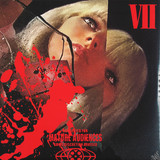
Serendeepity is delighted to announce a celebrative compilation for the tenth anniversary of the Milan-based record store.
This collection is entirely composed of previously unreleased music, exclusively produced for the occasion by many artists of great relevance in the worldwide music scene, who supported the store over the last ten years.
The artists who produced the music for this compilation are Egyptian Lover, Ellen Allien, Thomas Brinkmann, Neil Landstrumm, JD Twitch, Matias Aguayo, San Proper, Tolouse Low Trax, Jay Glass Dubs, Dj Marcelle, Jorge Velez, Tamburi Neri, Fabrizio Mammarella, Heith, Itinerant Dubs, Timeslip89, Kreggo and Intersezioni Ensemble.
The entire work is composed of 4 x 12”, which will be released monthly.
Buscar:the glass
- 01: Stained Glass Body (2020 Remaster)
- 02: Star Garden (20 Remaster)
- 03: Loving Love (2020 Remaster)
- 04: Where I End _ You Begin (2020 Remaster)
- 05: Body Within Body (2020 Remaster)
- 06: Where You End _ I Begin (2020 Remaster)
- 07: Orbiting Love _ White Dwarf Butterfly (2020 Remaster)
- 08: Womb Night (2020 Remaster)
- 09: River Like Spine (2020 Remaster)
- 10: Wild Moon And Sea (2020 Remaster)
- 11: Mirrors Death (2020 Remaster)
Limited
LOVE IS A STREAM :: 10 year anniversary edition. Remastered by Stephan Mathieu. Design by Farbod Kokabi.
Jefre Cantu on Guitar & Electronics. With Lisa McGee, John Twells, and Maxwell August Croy on vocals. Orginally released October, 2010 on TYPE records, UK.
From the original press release: As a member of San Francisco legends Tarentel and Type’s premier astral travellers The Alps, Jefre Cantu-Ledesma is hardly a new addition to the label, so it’s hard to believe that ‘Love Is A Stream’ is his first Type solo album. Previously releasing on Arbor, Spekk and his own Root Strata imprint, this latest album marks his journey into the beautifully cacophonous world of dream pop. Shoegaze music has been much maligned in recent years, probably due to its rebirth and subsequent explosion of popularity (which gave rise to hundreds of young bands aping the over twenty-year-old sound). However it was only a fragment of the genre that these bands attempted to re-create, and on ‘Love Is A Stream’ Cantu, instead of focusing on tired weeping melancholy ballads, focuses solely on expansive, almost noise-ridden hopefulness. This is the kind of noise we fell in love with when My Bloody Valentine blew our ear drums performing ‘Loveless’, or the kind of harmonic excess we heard on hundredth listen to Catherine Wheel’s ‘Ferment’, but taken into deeper, more abstract realms. ‘Love Is A Stream’ is dedicated to love itself, and the dreamy, shimmering blown-out textures might at first sound like white noise before they ultimately give way to blissful harmony and hidden melody. Underneath the grit and growl are hidden guitar parts, synthesizer drones and even vocals (provided by Lisa McGee, John Twells and Maxwell August Croy) that succeed in swelling the dense, tape-saturated songs to heady new heights and belie any influences they might have. On each listen the mind strips away another layer of dust and bones to reveal haunting and deeply moving beauty. The world might be spiralling into despair, but Jefre Cantu-Ledesma has brought us a record that isn’t afraid to share the love. All that’s left to do is drown in it.
- 1: Bad Man Feat. Million Teeth (Rob Smith Aka Rsd Version)
- 2: Cuss Cuss (Subatomic Sound System Version)
- 3: Wicked Babylon Must Go Down (Dub Spencer & Trance Hill
- 4: Skylarking (Oliver Frost - Eva Be's Dub Version)
- 5: Do You Love My Music (Black Star Liner "Special" Versio
- 6: Money Money (Dreadzone Version)
- 7: Skylarking (Noiseshaper Version)
- 8: Money Money (Dubblestandart Version)
Horace Andy's voice is an instrument that once heard is never forgotten, regardless of whether you first hear it on one of the numerous Jamaican reggae singles that he recorded during the 70s or - like most people - on one of the Massive Attack albums he collaborated on as a vocalist. His falsetto and his characteristic slow-motion vibrato breathed life into tracks like "Spying Glass", "Cuss Cuss", "In The Light", "Skylarking" or "(You are My) Angel", ensuring that they still continue to resonate deeply with listeners. His vocal style influenced countless root singers and the combination of his timbre with Massive Attack's spartan hip hop beats still inspires legions of fans and copyists all over the world. Echo Beach has now picked up on this tradition - and the much older tradition of versioning - by asking friends of the label to rework Horace Andy's classic tracks in their own sound outfit. But this time the label hasn't trawled old Studio One tapes for historic vocal snippets - that would sooo nineties; no, Horace Andy personally put in an appearance to sing new versions of his classic tracks on top of timeless and contemporary riddims. Age may have deepened his voice, but it is by no means weaker, as can be heard on this album, on which Echo Beach welcomes old friends and new faces: there's Rob Smith, who as part of More Rockers and Smith & Mighty was just as crucial for Bristol's musical reputation as Massive Attack or DJ Krust & Roni Size. Today, he ensures continuity by working under the label and producer name.
- 01: Jasmine Guffond - Surrogate Calculus
- 02: John Bischoff - Circuit
- 03: Ragnhild May - Slow Waves Oresund
- 04: Svarte Greiner - Existential Rat
- 05: Claus Van Bebber - Himmlisches Gelachter
- 06: Krachkisten Orchester - 2 1-2 Kisten Bier
- 07: Tina Tonagel - Yelente
- 08: Achim Zepezauer - Ploppy Phone
- 09: Seiji Morimoto - Music For Glasses
- 10: David Toop - Animals And I We Had Dealings Together
mex is a non-profit-organization for intermedia and experimental music projects, located in Dortmund, Germany. Since 1992 more than 650 musicians and media artists from around the world presented their subtle, noisy, improvised or conceptual works. mex’s traditional venue for those projects of concerts in combination with performance, video and intermedia, is the mexKeller at the Künstlerhaus with it’s special acoustic and atmosphere. Jens Brand began inviting artists and later Maija Julius went on until Achim Zepezauer took over in 2015. mex is a member of Medienwerk NRW. Kindly supported by: Department of cultural affairs of the City of Dortmund, Pro Jazz e.V. and Künstlerhaus Dortmund.
The artists featured on this sampler were guests within the curation of Achim Zepezauer and performed live for the mex audience between 2013 & 2019. Due to global pandemic conditions mex was unable to host any concerts in 2020 and therefore decided to release this special compilation in cooperation with the label Ana Ott.
Raleigh Ritchie releases his highly anticipated second album, ANDY. A twelve track project, Andy sees Bristol born and London-hailing Raleigh holding a colossal magnifying glass to himself. Over the production, for the most part, from long-term collaborator Chris Loco but also, the incredibly talented GRADES on “Time In A Tree” and “27 Club”, Raleigh leaves no stone unturned. The album is a creation of heartbreakingly honest songs that seamlessly fuses sweeping soul and mellow R&B with forward-thinking electronica and gutsy orchestral moments. (Raleigh has become well known for working with the sensational Rosie Danvers and Wired Strings.) This is a truly powerful record, a long-awaited return that packs a poignant punch.
It has been four years since Raleigh aka Jacob Anderson, released his inaugural debut album You’re A Man Now Boy but fans have not been left wanting. When he wasn’t releasing music, performing at his sold out show at Shepherds Bush Empire, or alongside Stormzy in his iconic Glastonbury headline, featuring on Gang Signs & Prayer, Stormzy’s critically acclaimed debut, or acting as Grey Worm in the hit HBO series Game Of Thrones, he was and is “Andy”.
Laurel Halo, Donato Dozzy and Teheran sound artist Tegh give us their "Glassforms Versions"alongside a new edit by Max Cooper. The works of Philip Glass are reflected and refracted in a myriad of ways by some of the most renowned electronic artists alive, making for a blissful, multi-dimensional listening experience.
Textextext - (add your write up)
With "Glassforms", Max Cooper and Bruce Brubaker set out on an intimate, nuanced exploration of the works of Philip Glass. The resulting recordings, developed in a fluctuating exchange between the American pianist and the Irish scientist-artist, are an astounding testament to the innovation that artistic collaboration can achieve and what depths are yet to discover in Philip Glass' compositions. The two artists did not just rework, but fundamentally rewired the original songs using algorithmic software to process and augment the musical data it received from Brubaker's piano live on stage.
When approaching his remix, Donato Dozzy also tapped into that inspiration to create something new rather than just reworking it, which is one of the core motives that emanates from "Glassforms". The Italian producer and label owner is known for his drive to explore: he develops installations for public spaces and museums, uses obscure musical instruments and collaborates with classical singers or visual artists. "I chose "Two Pages" for it's hypnotic feel in the notes repetition", he says, "but I did not want to merely sample the piano, but instead ask someone I trust and admire to carve it from scratch and even go further." So he followed the lead of Brubaker and Cooper and teamed up with the renowned Italian percussionist and jazz musician Daniele Di Gregorio to completely rewire "Two Pages" into a gorgeous piece of endlessly modulating ambient electronica.
Laurel Halo, the second remixer on "Glassforms Versions", does not need a long introduction either: the American musician is at the forefront of electronic music in 2020, a bright star today after releasing her debut "Quarantine" on Hyperdub in 2012. Her remix of "Opening" brings to mind the string section of an orchestra tuning their violins before the performance - forever. They glide in and out of tune, sometimes individually, then together, then are accompanied by keys that are most likely a ghostly representation of Brubaker's piano, sampled and pitched down, but sound almost jazzy in the context of Halo's remix. It's a blissful listening experience, calling to mind her recent collaboration with cellist Oliver Coates on "Raw Silk Uncut Wood" and showing a deep understanding of Philip Glass' work.
Sound artist Tegh is the third on the remix bill - the electronic musician from Teheran delivers his take on "ƒTwo Pages", once again showcasing how versatile, how inherently complex the works of Philip Glass are. They can be interpreted in a myriad of ways - Tegh's version is a bounding, brooding piece filled with raw energy that feels like it is performed live, just for you, every single time you listen. His version is, at first, much more focused on the underlying moods, electronic undercurrents of the original than Dozzy's version, and yet, when the piano finally does break through, it becomes clear that we are listening to Philip Glass, reflected manifold: through the piano of Bruce Brubaker, the synths of Max Cooper, and then again through the mind of the artist Tegh.
Concluding the new "Glassforms Versions" is a previously unheard edit of "Two Pages". It's difficult to edit a piece of minimalistic beauty without losing it's essence, but Max Cooper - after many efforts and close conversations with Bruce Brubaker - managed to bring these shorter edit into a satisfying, conclusive form.
Wisconsin musician Jon Mueller is inquisitive. Open to pushing his
experience and his limits, he’s demonstrated the many sides of himself both as a solo performer and as a key member in mind-bending projects like Mind Over Mirrors, Volcano Choir, and Death Blues, or by running his shop of curiosities Within Things.
On his new four-piece collection Family Secret, the experimental musician maintains a meticulous, sustained tension, re-engaging with a technique he developed as an adolescent - reframing the environs of creation, and naturally altering his perception, through changes in light and space - while also considering the role of family and divorce.
Gentle, metallic bellows fade in and shifting timbres immerse the listener, each wave of sound folding atop the previous. Mueller has created a room, or at least an enclosure.
This is the first ever archival collection of material from the Italian Minimalist Tiziano Popoli, featuring fourteen previously unreleased recordings for installations, theater, and radio broadcasts spanning from 1983 to 1989. Featuring extensive use of the Yamaha DX7 synthesizer, TR909 drum machine, and early sampling techniques, these recordings trace the organic, hybridized elements of Italian experimental music as it convened in the hands of Tiziano Popoli and his friends, uniting elements of pop music, minimalism, and manipulations of found sound. Popoli's first album, Scorie, recorded with Marco Dalpane, is a highly sought after LP, and was finally repressed in 2018 by Italian label Soave. "Burn the Night / Bruciare la Notte: Original Recordings, 1983-1989" is a joint release between RVNG Intl. and Freedom To Spend, and was compiled from hours of material unearthed by Tiziano Popoli from his archives, and then meticulously remastered from original sources by Rashad Becker. The 2xLP and CD include printed inner sleeves and booklets with extensive liner notes written by Bradford Bailey, archival photographs, and ephemeral enrichment. RIYL: Philip Glass, Franco Battiato, Lino Capra Vaccina, Oren Ambarchi, RAMZi, Roberto Musci, Faust, CAN, Art of Noise, Durutti Column, Roberto Cacciapaglia.
Quattrovalvole is the future/past/disco/drive project designed by Joone and Miss Zagato. Four on the floor Italo-disco, glossy 80s new wave pick us up in this afterdark lifestyle EP. The title track ‘Into the Night’ is a curb crawler’s seduction. Dedicated to the leather hand-notated black book, our dial up lover calls with arpeggiators demanding, then teasing like feathers over the phone. Big chords push us to drive fast, ready for what we long for.
B-side ‘Too Many Lights’ squeezes us, just what we need when broken glass is swept up from the disco floor. Tame drums and retro claps dictate, as the chords are stargazing with Miss Zagato’s vocals. They preside over the party, with potions of bliss and intoxication, we are invited intimately into this dream life.
Joone’s ‘Into The Night’ remix takes us into the future, driving at the wheel of an alcantara suede upgraded Ferrari 308 Vetroresina. The layers of well-informed 80s synth wave sends us into another dimension.
These are three high class disco tunes with real song craft at their heart.
St Leonard’s premier manipulator of drones, loops and echoes delivers his most buzzed out, kosmische and beat driven work to date in a deluxe white vinyl album release for Castles in Space.
Here, Kieran explains the genesis and production of his masterwork:
“Eternal Return was unusual for me in that I actually set out to make an album, rather than find myself with a set of tunes that evolved into a project.
The “Eternal Return” is a concept I have been inspired by before. However it clicked with me in a more profound way recently. Far from seeing the prospect of living life over, unknowingly, on an endless loop as depressing, I suddenly felt amazing comfort in the theory. The Stoic emperor Marcus Aurelius said, “Waste no more time arguing about what a good man should be. Be one.” Far from being trapped in the loop I am elated to feel that it's simply about living the best life you can. One that you wouldn't fear having to live again.
To place the album in context against this newly realised perception, I think of the Side One as the battle to get to that realisation and enlightenment and Side Two represents the acceptance and the decision on how to proceed. The turning point is from thinking about the things I love most and what I would want to experience over and over again. I hope it is an uplifting listening experience. As it happens, the album originally had a darker ending. I think I actually learned a bit about my point of view during the process. There are drums, which wouldn’t often feature in my music (there are in fact more drums on this LP than in my combined output over the last 8 years) and the pieces are noticeably shorter, more focussed and concise than my usual longer form work.
Musically this album is probably the least clearly influenced by anything I regularly listened to. The main outcome was wanting to challenge myself and to add whatever the pieces needed and go with that. I think I was also probably pushed on by the wealth of amazing music being made by my peers across Bandcamp and social media. 2020 was an incredible year in this particular sphere of electronic music. The album was made as I started to transition from a semi-modular to a modular synth set up. I think that this was a key driving force, since a lot of the time I didn’t know exactly what I was doing. It is nice to be surprised by what you’re creating.
Finally, whilst this is in no way a “lockdown album”, the period of time in which much of it was recorded definitely had a bearing on how it sounds. For one thing I spent a lot more time around my studio space when working from home. In keeping with the album's theme, the lockdown also helped consolidate my feelings on what is important in life and what isn’t. One piece was in fact sketched out as a first draft while I sat on mute during a Zoom meeting.
FULL OF HELL make their Relapse debut with their most explosive album to date, Weeping Choir. Dynamic, pissed, and wholly urgent, the highly-anticipated Weeping Choir is a definitive statement of intent by one of the underground’s most dynamic and virulent entities. FULL OF HELL have once again culled the extreme elements from hardcore, metal, and power electronics to redefine darkness and sheer brutality. Distorted guitars and ominous, disparate electronics grind and gnash against rapid-fire drumming as FULL OF HELL take themes of religion, loss, hatred, and set them ablaze. Recorded by the critically acclaimed Kurt Ballou at GodCity Studio, Weeping Choir sees FULL OF HELL fully unleashed. Abrasive, confrontational, none equal!
Dancepieces, originally released in 1987, presents music that American composer Philip Glass created for two separate dance performances. The first half of the album accompanied the Twyla Tharp Dance Foundation in a show called “In the Upper Room,” and the second piece accompanied choreographer Jerome Robbins’ “Glasspieces”. Glass writes the majority of his music for visual performances, most frequently dance and opera, and the presence of a visual twin to his music is evident throughout the selections from Dancepieces.
In discussing his technique for writing music to accompany dance, Glass has stated that melody, harmony and rhythm are key factors. Within the first seconds of each song on Dancepieces, the strength of Glass’ strong rhythmic sense can clearly be heard.
Limited edition cloudy clear vinyl. Combining processed recordings of wind and water with analog synthesizers and chamber orchestra, Elori Kramer's The Blue of Distance is an audio dissertation on the role technology plays in our relationships to geography and nature, unspooling into an examination of memory and longing across seven sections that layer filmic minimalism over churning electronic soundbeds. Half of the suite was written in the Adirondack mountains during summer amid lakes, rivers, and moss-laden forest floors, while the other half was conceived on a frozen Lake Superior island in deep winter, creating a subtextual dialogue between the two extreme settings. Kramer, who was born in 1990 and grew up alongside the internet, uses her music to explore nature in the actual and the virtual world, through direct experience and facsimile alike, focussing and blurring the line between the two. "Looking back at my videos of that summer-- which is where the processed audio came from-- I tried to remember what it had felt like to be there," she recalls, "thinking about questions of reality versus imagination; physical versus digital; and the ways in which memory shifts through our minds and technology." The title The Blue of Distance was derived from Rebecca Solnit's book A Field Guide to Getting Lost, referring to the phenomenon of faraway mountains appearing blue due to light particles getting lost over distance. "If we were to go up to the mountains that appear blue from far away, we would see that they weren't actually that color." she says. "This beauty is made possible because of their distance," much in the same way that the splendor of a lush season is only fully realized in the throes of a bleak one, and the joy of an event can only be felt when it has long since been consigned to remembrance. R.I.Y.L Kaitlyn Aurelia Smith, Philip Glass, Steve Reich, Josiah Steinbrick, Emily Sprague
Sabaturin is Charles-Émile Beullac (Galerie Stratique, Canada) and Simon Crab (Bourbonese Qualk, United Kingdom). In the spirit of old school tape exchanges that resulted in musical collaborations developed over long periods of time but informed by the infinitely easier processes of the digital age, "Kenemglev" was assembled without the musicians ever meeting.
The title "Kenemglev" means "consensus" in Breton, something which quite naturally had to be achieved between both musicians. The other consensus was a sort of virtual middle ground symbolized by the Breton language, particular to a geographical area (Brittany) that both agreed would stand for a neutral meeting point between their respective native languages and, consequently, cultures. All titles are Breton words and the name Sabaturin ("standing on one feet", "to be off-balance") expresses mainly Charles' excitement: "Simon's bold approach has been some kind of a shock therapy for my music".
The sleeve was designed by Simon Crab, using a Chladni pattern simulation based on specific pitches. Looking like stained glass, it sort of reflects the way the music is presented: although including 9 titles, the album's tracklist flows uninterrupted on each side of the vinyl, semi-mixed, blended.
Detailed electronic ambience, glitches, loops and tiny details are augmented by a sort of signature rhythmic grid we recognize from "My Government Is My Soul"-era Bourbonese Qualk. It never settles into a formula and so the music remains loose, as much Mille Plateaux as classic 80s industrial shortwave-sampling or dub, rolled into one same entity, touching base with the gorgeous glitch dub "Morgouskus". This concludes a gentle and discreet album that doesn't require the validation of being associated with any of the current keywords in the electronic music scene.
As Midnight Sister, multi-disciplinary LA artists Juliana Giraffe and Ari Balouzian make motion pictures. Yes, sometimes with moving images _ but most often only with the music they create together. Balouzian's serpentine, string compositions are movie scenes that allow Giraffe, a brilliant character actor, to cloak herself in a new roles and voices. A bit of Jon Brion's score work; some old Hollywood strings; a solid dose of glam and outsider disco from 70s independent cinema. Any perceived artifice is always matched by an indelible human fingerprint, something perfectly off. Giraffe and Balouzian's respective work in fashion, visual art, video and film scoring _ along with the gang of virtuosos with which they surround themselves _ all wonderfully coalesce as Midnight Sister. And if 2017's `Saturn Over Sunset' was their collection of short films about outcast life in The San Fernando Valley, then their new album `Paining the Roses' is the inventive, meta motion picture that cements them as auteurs. `Painting the Roses' is in many ways a fairy tale -- not so much the sweet-and-happyending kind as something richer, packed with imagination and rooted in the complex human messiness beneath a story's artifice. Frontwoman Giraffe describes it as "this tightrope of being real yet synthetic, organic yet staged, light yet dark, logical yet irrational, beautiful yet dilapidated. Joyful nonsense." Here, disguises like masks and paint are not meant to hide but to liberate, to "set a part of us free", and Midnight Sister often embody this themselves, appearing highly stylized, curious, warm and inviting but a little askew. `Painting the Roses' is a story told through the looking glass, one where we examine ourselves in a funhouse mirror but find clarity in its twists. Giraffe traveled to visit family in Argentina during the making of the album and reconnected greatly with that part of her family history, art and culture. Balouzian created the core album opener "Doctor Says" during a session in the desert outside of LA. The guitar, which reminded Giraffe of South America, has a slow, sweltering surf-tango to it, like Dick Dale doing Carlos Gardel. And even though the song was inspired by Giraffe's reconnection with Argentina, the song is about the fading of some close friendships during the making of the album. "Man, you have changed," Giraffe sings, unclear if tis directed to a friend or to herself. Later on the album, "Wednesday Baby" _ named after Giraffe's rescue dog _ is patient, subtly baroque pop. It follows Giraffe through one of those gloomy days spent in tunnelvision doldrums from which only a sunbathing turtle or your canine companion can pull you out. By the time collaborator Max Whipple's saw comes beaming down from heaven in the song's 3rd part, we're hypnotized by the song's charming ennui. The song lands someplace both familiar and aloof, a little slice of timelessness taken straight from The Cake of Perfect Songcraft.
- A1: Rawhead Rex Main Theme
- A2: Welcome To Ireland
- A3: Rawhead Appears
- A4: Nicholson's Farm
- A5: “Just You Wait”
- B1: Boy Runs For His Life Through The Wood
- B2: Minty - “Gotta Pee”
- B3: The Vicarage
- C1: The Family Is Leaving
- C2: Gussing Opens Book
- C3: Howard Discovers A Strange Glass Window In The Church
- D1: Declan Goes Wild In The Church
- D2: Howard Discovers The Power Of The Stone
- D3: Rawhead Rex End Credits
- D4: There Is A Green Hill Far Away
Based on a short-story by the master of horror and fantasy, author Clive Barker (Hellraiser), Rawhead Rex is set in 1980’s rural Ireland. The Demon, alive for millennia and trapped in the depths of hell, is unleashed on the sleepy local farming community. Remembered faintly through pre-Christian myth, the only one that can stop Rawhead's bloody rampage is the historian, desperately racing against the time.
This is the first ever release for the soundtrack by Colin Towns, one of Europe’s most prolific film, television and theatre composers, but also a pianist, songwriter, arranger, producer and collaborator, known for The Puppet Masters, Space Trackers, Maybe Baby, Foyle’s War, Doc Martin, Pie In The Sky.
"The first film I scored was Full Circle which starred Mia Farrow and is still in the BFI top ten for best score for horrorfilms. I felt that film was more of a dark scary mystery. Rawhead Rex on the other hand was clearly a horror film 100%. I visited the film set in Ireland during the filming to take in the atmosphere and meet the actors after which I decided to record the music at CTS in London with a sixty piece orchestra plus electronics. I have always orchestrated my own work and had a wild time with Rawhead which is what I really love doing". Colin Towns
- 1: Dungeon Dance
- 2: Poison Moon
- 3: I Fire Myself
- 4: The Bell
- 5: Painted Horses
- 6: The Hour Glass
- 7: 13 Bees
- 8: The Golden Fruit
- 9: Whisper From The Tree
- 10: 1542
- 11: Valley Of One Thousand Perfumes
- 12: Tiger Rising
- 13: An-Deluzion
- 14: The Fox And Hound
- 15: Rider On The Stormy Sea
- 16: Return To Pirates (Kingston St Session)
- 17: Poison Moon (Kingston St Session)
- 18: Killed By The Telephone (Kingston St Session)
- 19: Valley Of One Thousand Perfumes (Orchestral Version)
Remastered by Bob Weston, ‘Mountains’ comes back to us as a gold foil-embossed gatefold double LP and includes the previously unreleased original takes of ‘Return to Pirates’, ‘Poison Moon’ and ‘Killed by the Telephone’, which were delivered along with the original master tapes 20 years ago but were omitted from the final album.
The record is completed by a newly recorded orchestral version of ‘Valley of One Thousand Perfumes’ produced by composer Joe Wong (Russian Doll, Midnight Gospel) and mixed by Dave Fridmann.
At the turn of the Century, Timony (Ex Hex, Wild Flag, Hammered Hulls) was already a celebrated presence in American underground music - a fixture of D.C. and Boston rock ’n’ roll via her work in Autoclave and Helium respectively. By 1998, though, Helium was drawing to a close and Timony was feeling uncertain about the future. “I had never been good at the rock ‘n’ roll business, and making a living from being in a band just didn't seem like it was in the realm of possibility for me,” she writes. “I just knew I wanted to make another record because that was the part of being in a band that I liked the most.”
Blue vinyl includes mp3 download, 12 x 24 inch poster: Some say life only makes sense in reverse, from the vantage point of your rear view - Magic Mirror is a looking glass of sorts. Like a modern day Alice in Wonderland, Pearl Charles beckons you to slip and fall into her world. You'll find yourself drifting with the tide - the ups, downs, and all-arounds of a life well-lived and well- loved. From start to finish you float along a reflective river, dancing in your own/the personal/private Studio 54 of your living room, decked out in sequins or nothing at all. It's a feel good album that asks us to actually take the time to feel good. Magic Mirror follows the cartography of a girl, growing into a woman, as she moves through life from singledom, to the expansive space of self-reflection, and the newly appreciated perspective of coming back together again and finding yourself, this time with someone new. A love letter to the self, a dance party for life, and at times as introspective as your best trip, Pearl takes us on a journey that, like life & love, has the tendency to surprise, delight, and leave you breathless. All you have to do is let yourself enjoy it.
Previously Unreleased material recorded in 1979 at Allen Toussaint's legendary Sea-Saint Recording Studio in New Orleans, LA.
Freaky With You is a Six-and-a-half minute Psychedelic Disco Funk excursion taking you on a wild mojo trip with a four on the floor backbeat and extended conga breakdown peppered with some New Orleans Voodoo that reaches for the Bondye Celestial Heavens.
On the B-Side, Welcome To My World is a Modern Soul Steppers masterpiece. A version was also recorded by Joe Chopper for the Lanor Records label.
James Dumaine remembers the studio session well. After having oral surgery that morning, a grotesque, theatre of the absurd incident followed causing him to bleed onto the microphone as he was singing. That combined with the miscommunication with the audio engineer to watch the volume levels on his new synthesizer: The Engineer decided not to take heed to the warning… Half way into the recording all the band could see from the other side of the glass were heads frantically rushing to the mixing board. The synthesizer levels had caused the monitors in the control room to blow up. Superior Elevation wasn't invited back to record at Sea-Saint. 40 years later, with all that chaos, hoodoo and gris-gris enveloped into the magnetic tape, it magically survived the catastrophic 2005 floods during Hurricane Katrina and ended up in the hands of Mike Nishita along with many other Reel to Reel Tapes of Allen Toussaints' masters of The Meters albums he produced and recorded. It's available now, preserved with Family Groove Records.
- A1: The Hoax - Now We Are Heroes
- A2: Freudian Slip - Hideaway
- A3: Slight Seconds - Chameleon Lens
- A4: Vibrant Thigh - Wooden Gangsters
- A5: The Enigma - I Don't Like
- A6: The Filth - Hypocrite
- A7: Untermensch - Ashfield Valley Headkick
- B1: The Colours Out Of Time - I'm Never Cool In My Room
- B2: Fast Cars - Images Of You
- B3: The Change - No Hope
- B4: Foreign Press - Behind The Glass
- B5: The Reducers - We Are Normal
- B6: Emergency - X-Ray Sight
- B7: V2 - That's It
After being unavailable for years this is a very Limited Edition repress on CLOCKWORK ORANGE vinyl of theGreater Manchester Punk Vol 2: Now We Are Heroes 1978-82 compilation.
More rare and previously unreleased punk / post punk gems from the cellars of Greater Manchester.
This compilation delves into the archives and focuses on the lesser well known bands of the time and shows the various styles of punk recorded between 1978-82.
Some were recorded in studios and some recorded on a portable four track. None of these bands reached the status of bands like The Buzzcocks,
Joy Division and The Fall but were an integral part of the Manchester music scene of this period.
“It was a great time to be in a band in Manchester and something of that joy, as well as the obligatory angst and artiness, comes through here. Relive then those heady days-days infused with the DIY ethic and the allure of limitless possibilities”. (Mark Radcliffe)
Hungarian “minimalist” instrumentalist/composer Tibor Szemző is considered a genius by many, although his accomplishments as an artist are sometimes overshadowed by the likes of superstars, Steve Reich and Philip Glass. Snapshot From The Island was originally released by Leo Records in 1987 and now 33 years later the album gets the proper reissue on his own label.
Snapshot From The Island is a wonderful excursion into ambient-electronic-acoustic dreamscapes which could also be considered an offshoot of what many call the “minimalist movement” The title track, “Snapshot From The Island” is a 24-minute tone poem featuring Szemző performing on computer drums and flutes of various pitch. Here, Szemző provides a soft rhythmic undercurrent to balance the somewhat ethereal and delightfully hypnotic motif as he also electronically emulates bird and animal sounds which magnifies the mood or imagery of a far away “Island” paradise.
Szemző is a true artist, a painter with a fertile imagination, as he invites the listener into his introspective world of thoughts and dreams. Szemző’s lush, yet subtle flute work evokes a surreal landscape on ”Water-Wonder”. On this piece, Szemző pursues circular passages while also intelligently utilizing a dash of echo to enhance the aura of a magical or mystical place, which for all intents and purposes seems timeless or otherworldly. “Let’s Go Out And Dance” is a dream-laden piece, featuring Szemző’s “cosmic” flute performances atop a soft pulse and László Hortobágyi’s synthesizer backwashes which conveys a sense of fulfillment or perhaps a scenario of – peaceful celebration. Again, Szemző offers up more visions of paradisen, which could very well have been a subtitle to this beautiful recording. The overall organic nature of Tibor Szemző’s music makes it all seem so real or something that our imaginations can easily grasp. There are no hidden clues or underlying mysteries behind all of this as Szemző’s artistry speaks for itself. A museum piece for the ears.
Tibor Szemző - flutes, voice, drum computer, sound installation
László Hortobágyi - synth. on "Let's go out and dance”
Mixed by László Hortobágyi and Tibor Szemző
Remastered by István Szelényi 2020
Third number in the DDS split series after a pair of releases courtesy of Betonkust/Uj Bala and DJ Overdose/Sematic4, "DDS03" sees Budapest duo SILF (alias Farbwechsel chief-operators Alpar & S Olbricht) and Den Haag-based pair Intergalactic Gary and Pasiphae join forces on a quartet of elusive, unpigeonholeable power moves.
Four years after the drop of their debut joint EP on Biorhythm, "Made of Glass", I-G and Pasiphae are back at it with two left-of-centre hybrids of futuristic techno on a whirring electro-industrial tip. An off-kilter jam percolating fine hints of spiritual elation and post-apocalyptic anxiety, "Microwaves" gets the ball rolling on a dichotomous note. To slo-scudding flocks of loud, bouncy kicks supersede skeins of brittle chimes and rattling drums, all woven together by subtle tectonic shifts of moody pads.
A further hi-intensity affair, "Indistinct Chatter" drives that essential heavenly/nightmarish duplicity to higher spheres of consciousness. Fusing lighthearted, daydreaming tonalities with brooding, cavernous onslaughts from the depths, the track has us navigating in a zone of its own, deftly oscillating betwixt moments of mystique-imbued euphoria and darkling introspection. A choice exponent of the Hague-based dyad's capacity at busting antiquated patterns and limitations.
Having slept in the label's vaults for a few seasons, the two tracks composing the B-side emerge from their slumber in all their time-proof bravura. An in-your-face trampler, the ten-minute long "Mono Miner" takes no byway to get its point across, all set to smash basements and warehouses by the dozen with its electrifying compound of 909-emulated gut churn and spinning synth arpeggios circling like birds of prey over your sore, rhythm-enslaved carcass.
Closing the journey on a much softer, hazier vibe, "Aces" steers us towards a realm of ambient wonder, where slo-drip cascades of tapping percussions and elegiac synth waters flow into warm, glimmering summer beds. A most contrasting, tranquillising finale to an EP defined by its propensity to change colours and intensity throughout.
- A1: Infinite Stress/Stress Infinito (From 'Spasmo')
- A2: First Nebula/Nebulosa Prima (From 'The Seecret/Il Segreto')
- A3: 1970 (From 'The Cat O' Nine Tails/Il Gatto A Nove Code')
- B1: Disgust/Raccapriccio (From 'What Have You Done To Solange?/Cosa Avete Fatto A Solange?')
- B2: Followed/Seguita (From 'Cold Eyes Of Fear/Gli Occhi Freddi Della Paura')
- B3: Lemon Obstinacy/Ostinazione Al Limone (From 'What Have You Done To Solange?/Cosa Avete Fatto A Solange?')
- B4: Glass Dolls/Bambole Di Vetro (From 'Short Night Of Glass Dolls/La Corta Notte Delle Bambole Di Vetro')
- B5: Foolish Suspension/Sospensione Folle (From 'Without Apparent Motive/Senza Movente')
- C1: The Serpent/Il Serpente (From 'Night Flight From Moscow/Il Serpente')
- C2: Infinite Stress/Stress Infinito (#4 - From 'Spasmo')
- C3: Solange's End/Fine Di Solange (From 'What Have You Done To Solange?/Cosa Avete Fatto A Solange?')
- C4: Evanescent/Evanescente (From 'Cold Eyes Of Fear/Gli Occhi Freddi Della Paura')
- C5: Emmetrentatre (From 'Short Night Of Glass Dolls/La Corta Notte Delle Bambole Di Vetro')
- D1: Night Walk/Passeggiata Notturna (From 'The Cat O' Nine Tails/Il Gatto A Nove Code')
- D2: In The Middle Of The Chest/In Pieno Petto (From 'Without Apparent Motive/Senza Movente')
- D3: In The Void/Nel Vuoto (From 'Forbidden Photos Of A Lady Above Suspicion/Le Foto Proibite Di Una Signora Per Bene')
Giallo is the fourth in a series of five double vinyl releases that bring together some of Ennio Morricone’s greatest soundtrack music. Each collection centres on a different movie genre, together they allow the listener to rediscover the unmatched genius of the greatest movie composer of all time. The Maestro. This collection was announced before Ennio Morricone passed away on July 6, 2020. We’ll continue to release the series to honour this great composer.
When we think of 1960’s Italian pulp cinema, the spaghetti western is the genre that comes to mind. However, Italy was responsible for another classic cinematic exploitation movement around the same time, one that is equally as compelling, but less widely recognised. Giallo…
Giallo, meaning ‘yellow’, is the Italian term for crime fiction, it was named after the bright yellow colours of early pulp fiction paperbacks. Film audiences adopted it as the name for a peculiarly Italian sub-genre of thriller cinema that had its heyday in the 1970’s - just as the Spaghetti Western movement was waning. The Giallo can be difficult to define, but essentially it is an Italian crime film that draws from a pool of common themes: stylized murders, amateur sleuths, sleazy glamour, psychological crimes, enigmatic titles and all these themes are underpinned by creepily atmospheric Ennio Morricone music scores. Starting 70 years ago as an arranger for the piece Mamma Bianca, Ennio Morricone is the emperor of scores and soundtracks. Morricone has always been a huge influence for the likes of Hans Zimmer, Danger Mouse, Muse, Metallica and many more musicians. He was one of the most successful composers of all-time, selling over 70 million records and winning dozens of awards.
Giallo is available as a limited edition of 3000 individually numbered copies on “giallo and black marbled” (clear, yellow and black mixed) vinyl. The package includes a 4-page insert with liner notes written by Claudio Fuiano. The gatefold sleeve contains a silver foil spot varnish on the outside and images of iconic movie posters on the inside.
Fischgeist was recorded in a former water tank in Berlin-Prenzlauer Berg in August 2019. The nineteenth-century brick building consists of five layered circles, with a spiral staircase in the middle leading up to an exit to a hilltop. Inside, it’s humid and cold, the temperature always around 8–10 C°. The building’s acoustics produce a long reverberation that lasts up to 20 seconds.
‘One day between recording sessions, a man, a passerby, wanted to look inside the building. He told me that it used to be full of fish. For a second I imagined a huge round aquarium with loads of fish swimming around in circles. Then I realized that he meant dead fish were kept there, to be sold on markets during the GDR era. But the image of fish swimming in the space stayed with me.’
In conversation with the space of the water tank, Tomoko Sauvage searches beyond the limits of her self-invented ‘natural synthesizers’: porcelain and glass bowls, filled with water and amplified with hydrophones.
While she continues to develop some of the classic techniques heard on her previous album Musique Hydromantique (Shelter Press, 2017) – hydrophonic feedback (Kinetosis Study) and ‘fortune biscuits’ (porous pieces of terracotta that emit tiny singing bubbles) (Deluge) – here new elements are combined with delicate gestures to make curious noises: stroking bowls’ surfaces to imitate the voices of sea mammals (Metamorphosis), drawing dots and circles by rubbing stones against stones underwater (Exit) … The underwater amplification of quasi-inaudible sound is even more magnified in the air by the echo of the water tank. Not only tiny bubbles, but also micro-movements of the bones and veins of the hand holding the sonorous objects in the water, are intensely amplified – sounding like a tempest on the opening Deluge. Sauvage’s longtime research into hydrophonic feedback develops with her new obsession with natural harmonics and sympathetic resonance. In Flying Vessels, the percussive notes of struck bowls resonate and turn into feedback loops before decaying, fueled by electric signal gain. Kinetosis Study is a sonic etude on fluid dynamics – the flow velocity, pressure and density of manually shaped water waves directly controlling the aquatic synthesizer’s parameters.
August, when the mid-summer Ghost Festival is held, is traditionally known as the Ghost Month throughout East Asia. The spirits of the dead visit their living families, who welcome them with feasts, dancing and music. Miniature lantern-laden boats are released in rivers, to help lost ghosts find their way home.
Animated by formless matter – water, electricity, sound – Fischgeist celebrates a phantasmagoric journey, as the souls of aquatic lifeforms find their way out of the labyrinth of the water tank.
Credits
Composed, performed and mixed by Tomoko Sauvage
Recorded and produced by bohemian drips prior to ‘Speicher’ festival in Berlin, August 2019 (binaural recording with a KU-100 dummy head microphone)
Mastered by Andreas Kauffelt in Berlin
Cover drawings by Baien Mōri (1798-1851)
© Tomoko Sauvage and bohemian drips – all rights reserved
Composed, produced, and arranged by Eartheater alone, Phoenix: Flames Are Dew Upon My Skin draws a path back to the primordial lava lake from which she first emerged, as it also testifies to the reincarnating resurrections the project has undergone over its first full decade of existence. While the album renews her focus on guitar performance and legible structure, Eartheater balances the unabashed prettiness of acoustic harmonic songs with the dissonant gestural embroidery of oblique instrumentals. Having fallen back in love with the idioms that first captivated her, she worked to crack open the techniques that had fossilized inside of her, while still seeking to apply the electro-alchemical knowledge she picked up along her journey. The result of a laborious revival in fire, Phoenix recontextualizes Eartheater’s combinatorial approach to production within her most confident abstractions, adjacent to some of her most direct songs to date.
Eartheater composed and workshopped most of Phoenix over a ten-week artist residency (FUGA) in Zaragoza, Spain, housed in a sprawling, cubic glass facility that looked out over wildflower-flecked mountains. Following an intensive period of recording and touring, the residency provided her with an unprecedented period of solitude in the small Spanish town. Her newfound sense of isolation ultimately became liberating, leading her to sidestep the crutches and steady grids inherent to electronic music, and to conceive pieces rooted in her guitar and her desire to perform with other players live.
Eartheater’s voice glows brighter than ever at the center of Phoenix’s arrangements — her familiar operatic highs are grounded by newly expanded velvety lows, leaping lucidly up and down octaves. Her intricate guitar work flits across baroque fingerpicked passages and latches into cyclical figures that meet her voice in lush harmonic progressions. From her own guitar parts, to the orchestral string arrangements she wrote for the Spanish conservatory group Ensemble de Camara, to the harp and violin lines performed by her close friends and collaborators Marilu Donovan and Adam Markiewicz of LEYA, Eartheater’s applications of acoustic instruments bring an extraordinary emotional emphasis to her compositions. Phoenix prepares for a future where electronic sound — or even electricity itself — isn’t guaranteed, but where her music could still come to life with a group of hands dexterously winding across instruments against the light of the fire. Eartheater drew inspiration for Phoenix from geological imagery, whose turbulence and potential for genesis mirror the trajectory of her own life and relationships. The album’s instrumental pieces directly reference these moments of upheaval, colliding audio of volcano and lightning storms with resplendent string and vocal arrangements. “Volcano” looks out over the album from its peak at the center, its tectonic plates colliding in towering melodies and layers of vocal harmonies, as piano accents crest and cascade down the mountainside. When Eartheater sings, “I’m still building mountains underground,” she is trying to reconcile the pinnacles of her ambition with the comforts of a simple existence buried beneath the surface. “Diamond in the Bedrock” finds her admiring the gemstone forming under intense pressure inside her, but rejecting the romantic promise that the diamond signifies, choosing instead to escape a relationship that has come to stifle her.
With the album’s subtitle, Flames Are Dew Upon My Skin, Eartheater imagines being tempered to a state of perfect equilibrium, suspended between melting and freezing, where fire could streak across her body and appear as a crystalline blush. This image captures the tension at the heart of the Eartheater project, as she decides how best to distill her passion and render it cool to the touch; to find beauty in simple pleasure, while keeping one eye fixed on the peaks that loom in the horizon. The album is mixed by Kiri Stensby and mastered by Heba Kadry, featuring photography by Daniel Sannwald.
The Fall is a deconstruction of November by Dennis Johnson.
Written for solo piano in 1959, November is the first example of minimalist music composition and was the inspiration for La Monte Young's The Well-Tuned Piano (1964). The 66 minute piece is a collaboration between legendary artist Lustmord and renowned classical pianist Nicolas Horvath, in which they reduces Johnson's original November to its core element and place it in a landscape of complimentary sound. The Fall echo's November but with further resonance.
Recorded in May-June 2019 in Los Angeles, and Misy-sur-Yonne, France.
Lustmord
Active since 1980, born of the original 'industrial' scene of the period. With its own distinctive approach, blurring the line between music and sound design Lustmord's work has featured in 45 motion pictures including The Crow and Underworld and also in video games, television and commercials. Recently Lustmord scored the music for Paul Schrader's movie First Reformed. While Lustmord is often credited for creating the 'dark ambient' genre there is much more nuance to its work than what that label implies. The music is not dark, but is a light that shines into and upon the darkness. Notable collaborations amongst many include Tool, Melvins, Jarboe, John Balance of Coil, Clock DVA, Chris & Cosey, Paul Haslinger, Karin Park and Robert Rich.
Nicolas Horvath
An unusual artist with an unconventional résumé, pianist and electroacoustic composer Nicolas Horvath is known for his boundariesless musical explorations. Horvath is both an enthusiastic promoter of contemporary music - he has commissioned numerous works (including no fewer than 120 as part of his Homages to Philip Glass project in 2014) and collaborated with leading contemporary composers from around the world, including Alvin Lucier, Mamoru Fujieda, Jaan Rääts, Alvin Curran and Valentyn Silvestrov - and a rediscoverer of forgotten or neglected composers such as Moondog, Nobuo Uematsu, Germaine Tailleferre, François-Adrien Boieldieu, Hélène de Montgeroult, Jean Catoire, Karl August Hermann.
Veteran NYC based Scottish electronic musician Drew McDowall's latest work is his loftiest, most liturgical, and least industrial outing to date —and potentially the apex of his recent discography.Named after an ancient Greek word for votive offering, Agalmaexudes a hooded, devotional aura, creaking and keeling under vast rafters of stone, stained glass, and shredded wires. It's a music of majesty and mystery but also modernity, McDowall's refined modular system shape-shifting strings, piano, pipe organ, and choral masses into disorienting synthetic mirages of the sacred. He cites the intersection of “joy, terror, and the elegiac” as a centering inspiration –or, phrased more bluntly, “that 'what the fuck is going on' feeling.”
As a career collaborator himself, with stints in Coil, Psychic TV, and countless other shorter-lived partnerships, it's telling that McDowall chose this project to gather such an impressive spectrum of peers. Italian synthesist Caterina Barbieri, American drone organist Kali Malone, prolific multi-instrumentalistRobert Aiki Aubrey Lowe, operatic Humanbeast vocalist Maralie Armstrong-Rial, Saudi producer MSYLMA, and warped futurist beat-makers Bashar Suleiman and Elvin Brandhi cameo across the album's 42 minutes, contouring McDowall's nuanced negative spaces with shudders, shadows, and shivering flickers of serenity. Each of them shines in their spotlight, elevating these elusive alchemical states into surreal revelations of texture and transcendence.
McDowall's original working title for the record is revealing: Ritual Music.He speaks of his creative practice in ceremonial terms, negating binaries by seeking the middle path to anuminousequilibrium that erases the distinction between the inner and outer worlds.These compositions feel similarly processional and intuitive, at the crossroads of holiness and hallucination, the sacred vertigo of yawning naves rising into untouchable night skies. It's a vision of industrial music as enigma and invocation, cryptic hymnals of shroudedbeautysummoned in catacombs and crumbling cathedrals.
Despite its depths, Agalmais also an album of immediacy and emotion. Celestial laments of and for times of unrest and suffering. McDowall characterizes his initial intention for this music as an to attempt to convey experiences he felt incapable of putting into words: “To try and approach sublimity, or at least acknowledge it in some way.”Agalmamore than acknowledges the ineffable –it embodies it.
Compilation of slow industrial punk EBM edits by Russian duo Olta Karawane. This is their second appearance on Maturre after their previous release on I'm a Cliché last year.
Melissa Guion’s second offering for Kranky retains the glassy gauze of her debut, 2016’s Precious Systems, but shaded starker and darker, framed by mechanical rhythms and humid industrial moods. She speaks of Sour Cherry Bell as something of a reckoning with her tools of creation: “I was curious to see how far I could go with them, even if that meant reaching the ends of their capacity to do what I wanted. But I never exhausted them and they never exhausted me.”
Utilizing her trusted combination of instrumentation, Guion tracked the record between her New Orleans home and rehearsal space, capturing chemistries both intimate and expansive. The songs sway between twilit shoegaze, downer ballads, and gothic pop, mapping a delicate palette of electric melancholies, though in retrospect she cites as her primary muse the notion of power: “lost and found, corporeal and cerebral, harnessed and exploited, of one and many, in this reality and the next.” Sour Cherry Bell reverberates beyond the here and now into scenes unseen, worlds unheard.
- A1: Mars & Venus (Feat Vince Staples, Ishmael & Elle Yaya)
- A2: Hyperspace (Feat Ishmael)
- A3: Obx (Feat Lil Silva)
- A4: Transmission
- A5: Voyager
- A6: Cosmos (Feat Ty Dolla Sign)
- A7: Distant Planets (Feat Kool Keith)
- A8: The Eternal Now
- A9: Binaural Trip (Feat Bibi Bourelly & Ishmael)
- A10: Twenty Second Century (Feat Lianne La Havas)
- A11: Love Galaxy (Feat Jay Electronica & Lil Silva)
- A12: Time & Space
- A13: Where Do We Come From? (Feat Ishmael & Elle Yaya)
- A14: Space Inc (Feat Ishmael)
- A15: Epilogue
Grammy/Acadamy award winning producer/songwriter releases his debut album on Columbia Records. A 15 track album available on double vinyl and standard CD. Includes the brilliant new single "Space Inc" which has been 'Tune Of The Week' on Radio 1. Additional radio support across R2, Radio X, 1Xtra, 6Music, ILR network. Collaborators include Ishmael, Jay Electronica, Ty Dolla $ign, Vince Staples, Lianne La Havas, Kool Keith, Dave Bailey (Glass Animals). Renowned hip hop producer Mike Dean (Kanye West, Travis Scott, Nas, Jay Z) helpsd with mixing/mastering. Ads, features, interviews and reviews across all press. Online/social media activity. Poster campaign.
LIMITED REMASTERED VINYL REPRESS WITH NEW COVER ART AND SLEEVE NOTES.
The La’s are one of the most enigmatic bands of the last few decades releasing only a handful of singles and one 'official' critically acclaimed album (which was disowned by the band itself!).
Lee Mavers (singer/songwriter) has stated repeatedly, that the closest he came to capturing his perfect vision was with the original recordings- which now appear here on limited vinyl with an undisputed spirit and freshness that could never be recaptured.
With so much mythologising around the bands early recordings, and their eventual disappearance, Viper are proud to present the songs which appeared thirty years ago on The first La's album, only as nature intended- authentic, endearing and quite simply magical.
Amongst many highlights is the first ever recording of There She Goes, 'Live'- now correctly considered to be a standard. Noel Gallagher famously stated that :'Oasis wanted to finish off what the La's had started' It's fair to say it's right here where Brit Pop started.
Following a stellar run of recent releases including best-of-year EPs from the likes of DJ Plead and DJ JM, Nervous Horizon are back with their first record of 2020 — a unique new collaborative EP by object blue and label co-head, TSVI. Out on September 25th, ‘Hyperaesthesia’ details four sweltering new club tracks — described by the pair as “body music” — that mesh together object blue’s widescreen, experimental club tones and TSVI’s borderless percussive styles. “I was curious to see how TSVI and I could merge our sounds, whether we could supplement each other without eclipsing one another, and I'm so happy with the result”, explains object blue. “I never thought I could write with somebody else but this happened so easily. It's been a liberating process, just a pure pursuit of fun, yelling in our chairs when we dropped the beat.” Inspired by ‘ever-present conversations about machines and sentience’, the EP’s mechanical crux plays out in the narrative of the tracks too; from a sense of machines ‘waking up’ on near 8-minute opener ‘Thought Experiment’ to the frantic, processing energy of ‘Turing Machine’. The record also comes complete with a special remix by Loraine James and vinyl-only bonus track, ‘Syntax’. ‘Hyperaesthesia’ follows a fruitful 12 months for both object blue and TSVI: Following the release of her breakthrough debut EP, ‘Do You Plan To End A Siege?’, for Tobago Tracks back in 2018, object blue has since become one of dance music’s most crucial new artists. As well as releasing her third, critically acclaimed EP last summer (‘FIGURE BESIDE ME’), she’s turned in remixes for everyone from Murlo to Seb Wildblood, been invited to record a BBC R1 guest mix for Benji B and performed live at Paris Fashion Week, after composing the music for Andreas Kronthaler for Vivienne Westwood SS20. object blue was also announced a SHAPE artist for 2020 earlier this year, alongside artists like Afrodeutsche, Rian Treanor, Jay Glass Dubs, Oli XL and more. TSVI’s upward trajectory shows no sign of slowing down either. From the release of his enchanting debut album ‘Inner Worlds’ in 2018, he’s since gone on to put out a series of game-changing records under his Anunaku moniker for both Nic Tasker’s AD93 label and Martyn’s 3024 imprint, including July’s ‘032’ — a joint EP written with DJ Plead. Alongside fellow co-heads Wallwork and Federico Ciampolini, he’s also overseen the rise of Nervous Horizon since the label’s inception in 2015, moulding it into of the UK’s trailblazing new-school dance labels.
"Imagine the opposite of a snake shedding its skin: a body slithering among the debris of 21st-century music; a porous, viscid body, its skin an adhesive, lodging onto itself bits and pieces along the way. Some are scraps, rusted, discarded parts. Some are the jewels of crowns, unglued and fallen from grace, now re-attached on this makeshift contraption. Where does a body end? Does it end where these prostheses begin?
Jay Glass Dubs’ Soma (“body” in Greek) is a palimpsest. Look closely and you can find all sorts of DNA microarrays on the body’s skin – Bristol voices, Detroit electro hums, the amen break, the all-encompassing dub haze – but, as with all palimpsests, they are simultaneously one and a multitude. The body lives, its prostheses live.
The body moves."
A 38 minutes exorcism, dionysac sexyness fueled with romanticism, made of mechanical incantations mixed with spectral vocals of forgotten imaginary tribes, words from a physicist (Incomprehensible Image), and mystical breathings… To remind you that music is demanding your soul and body, fully.
A master irritator, disclosing this talent all the way, down to every chosen title, for the album itself and all of its components (would you put Milk in Water ?). As repetitive or minimalist music may already make some of you feel nervous, it seems more accurate to talk here about primitive music – notwithstanding a non violent anarchism. But those are only words and vain attempts to attach TLT to a region or a family. Neither the burden of classical European music legacy, which eventually lead to pop music, seemed to interfere with his wild mind, and if it is no surprising to hear Bach in German electronic music, there is here a clear statement that you are out of this sirupy prison…
For D.W. is a sorcerer. He’s been empirically learning the speaking of trance with years of touring and experimenting with all kinds of audience and venues, from clubs to museums, from Mongolia to Brazil, from his performances with his bands Kreidler or Toresch to solo ones, sustained by a steady limited set up, as the one used when he’s recording : one MPC, rudimentary synths, few effects and a mixer. No sound engineer on stage as only he knows his secret language… Raw dubmaking, leaning towards hip hop, indubitably underlining here a significant distanciation from his previous industrial inspirations. The bewitchment of this record is operating with no warning from the very first seconds until the last epiphany of Sales Pitch.
He is using his knowledge of techno, psychedelism (Inverted Sea), UK bass (Jumping Dead Leafs), only to bring you out of it. We all tend to be slaves, without even being conscious about it, and a balance must be existing between being a slave and showing off. Mr. Weinrich’s answer is unsettling because it is an utter call to this balance, in our world of black and white and political correctness. There is no morality in music… Don’t expect anything else than an unaccountable liberating immediate experience. Don’t expect any kind of music because you are already in the past or the future… From his recording technique mainly relying on one takes, his adoration of mistakes and jeopardy, to the core essence of repetitive music, it is all here about being in the present. No ears no glasses.
Following four long years of sonic hibernation, the shadowy sneaker fiends behind the Shoebox series have decided to deliver a fourth EP of intoxicating musical fusions rich in dusty deepness, hazy grooves, kaleidoscopic electronics and glassy-eyed musical mysticism. Some tracks feed the dancefloor while others reward horizontal listening; all are suitably wide-eyed and tantalizingly tactile.
Recumbent Speech, Ezra Feinberg’s second album, opens with a lament. Named for the Robert Frost poem, “Acquainted with the Night” was written during one of the many devastating spectacles of injustice under our current regime. Repeating flutes and synths beam out of a low-end darkness, reflecting a collective sense of loss and alienation. Rising slowly, thickening with guitars and strings, “Acquainted with the Night” lifts off, and so too does the album from there. The second track, “Letter to my Mind,'' features the dynamic interplay of Feinberg's guitar with the loose and playful drumming of Tortoise's John McEntire, both pushing and pulling atop a looping bass figure. "Palms Up" begins with a lockstep pulse recalling early Terry Riley before jumping into an Ashra-like jam with Afrobeat accents. Side B opens with "Ovation," a tryptic with McEntire on drums which sets a wide lens onto a sweeping landscape, with soaring flutes, wordless vocals, and a hypnotic bassline played on a humming fretless that recalls classic ECM jazz-fusion. The piece plunges into an ambient, interior space before reemerging with a guitar solo fried through an old Space Echo effects processor, conjuring lidded Pompeii-era Pink Floyd. The album's title-track finale, "Recumbent Speech," features the magical pedal steel of Chuck Johnson. Unwinding atop a Balearic analog synth pattern, Feinberg stretches textures of Fender Rhodes and acoustic guitar around Johnson’s lyrical steel, with nods to Japanese ambient legend Hiroshi Yoshimura, as well as Cluster & Eno. Recumbent Speech refers to the possibilities, pleasures, fears, and fantasies that occur the moment the noise dies down, when we are recumbent, in repose but still awake, still speaking, and still aware of ourselves as part of the maddening world. Ezra Feinberg is a guitarist, composer, and psychoanalyst living in Jackson Heights, NY. Feinberg was the founding member of the San Francisco psychedelic rock collective Citay, releasing albums on Important Records and Dead Oceans throughout the 2000s. After relocating to NYC, he issued his first solo record, Pentimento and Others, on his imprint Related States and on cassette on Stimulus Progression in 2018. The release, his first since Citay folded in 2012, earned praise from numerous music outlets including Paste Magazine, The Wire, Stereogum, Vice, and Aquarium Drunkard. In recent years, Feinberg has performed and toured near and far with Jefre Cantu-Ledesma, Steve Gunn, Alexander Turnquist, Cruel Diagonals, Daniel Carter, Jonas Reinhardt, Christopher Tignor, Kath Bloom, Robbie Lee, High Aura’d, Glasser, Ava Mendoza, Buck Curran, Real Estate, and many others, and has ongoing studio collaborations with Jefre Cantu-Ledesma and Arp, contributing both guitar and songwriting to the last Arp album Zebra.
Punk icons Crass have announced details of their latest EP, ‘Normal Never Was’. Featuring two new remixes of tracks from their seminal 1978 album, ‘The Feeding of The Five Thousand’, with the profits going to charity Refuge.
Heading up the remixes are Richard Russell, head honcho of XL records (under the guise of rLr), and synth-pop artist Glasser. Each of them tackling tracks, ‘They’ve Got Bomb’ and, ‘Do They Owe Us A Living?’ respectively.
Limited red vinyl 12". Edition of 1000 copies.
Something a little different from Athens of the North, Crisrail (Chris Rael) is an almost-LP of mad out there funky post punk from Silver Spring, Maryland, USA. Rated and played this out for some time but it has remained mostly under the radar due to scarcity. I could compare it to The Cure but it's so much more. 500 ONLY
"Playing instruments didn't come naturally to me, but I loved it so much I kept doing it and got better. When I started composing seriously in my early twenties, I didn't have much confidence in my voice or instrumental abilities, but my imagination was on fire and I was determined to create music that sounded like nothing else. I would find my place in the constellation of sound by carving a niche that was so unique, musical virtuosity wouldn't be a factor. I was inspired by Tom Scott of the Muffins, Maryland's legendary progressive jazz quartet, and owner of Black Pond Studios in Rockville, where Game of Music was recorded. It was my first solo release; I played everything except Tom's horn and flute parts. Lacking confidence to perform, I was very much a studio rat and became facile at overdubbing solo tracks. New music reviewers praised it at the time, but its distribution was limited and it's been out of print for decades. Listening now, it's more musically muscular than it felt to me at the time. It's incredibly gratifying that more people can hear it again, thanks to Athens of the North." - Chris Rael
Two leaders from very different musical worlds, the innovative pianist Bruce Brubaker and scientist-now-electronic-artist Max Cooper collaborate to create this latest expression of music by Philip Glass and tell a story of diversity and vulnerability.
Commissioned by and introduced at the Paris Philharmonie in 2019, Glassforms melds the acoustic concert grand piano with synths and cutting-edge electronic production techniques to create a compelling album and a dynamic live experience.
Rather than just reworking or augmenting via traditional means, Max Cooper and Bruce Brubaker fundamentally rewire Glass’ forms in a manner that’s not possible with human composition tools. Max built a new system for musical expression through coding with software developer Alexander Randon, creating a tool for taking live data from the piano and transforming it into new but intimately related forms which drive his synths on stage.
The result is that each of the pieces by Glass becomes its own electronic “instrument,” an instrument Bruce plays in addition to, and simultaneously with the original piece. As Bruce plays the piano and controls synths with his playing, Max modulates and augments, sometimes adding his own melodies to form hybrid variants.
Fusing dexterous hand-percussion, hypnotic guitar riffs & soaring melodies, Waaju rise from London’s rich cultural palette with their latest album ‘Grown’, proving UK Jazz doesn’t have to sound the way we expect it to. Led by drummer and percussionist Ben Brown (Alfa Mist, Dizraeli, Ashley Henry), the band comprises percussionist Ernesto Marichales (Jordan Rakei, Sigala), guitarist Tal Janes (Nubiyan Twist, Bahla), Sam Rapley (Fabled, Maria Chiara Argiro) and Joe Downard (China Moses, Judi Jackson), each with their own strong presence on the UK’s extensive music scene. Waaju’s refined and divergent sound connects the dots between the likes of Ali Farka Touré, Alain Peters, Los Muñequitos de Matanzas, Oscar D’Leon and Beth Carvalho. Waaju formed as a means of exploring music’s hidden connections, from trance-inducing Moroccan Gnawa to Caribbean carnival music, and embracing them to reflect different shades of London’s own musical culture. It was the band’s love for Mali’s folk music – and Ali Farka Touré’s stylistic prowess in particular – that first set the project in motion. London’s Jazz Cafe invited Waaju to reinterpret classic tracks from Farka Touré’s catalogue to sold-out audiences in 2018 and 2019. According to Brown: “Ali’s one of the best. He has such a unique sound. His playing is so gnarly. His spirit and attitude are things I always think of when making music.” Waaju (meaning ‘to urge, inspire or influence to take action’ in Malian language Bambara) blends pulsing Latin polyrhythms, psychedelic Malian blues licks and cinematic textures. Following the group’s 2018 self-titled debut record, Grown presents a group more unified and distinctive-sounding than ever with six fresh, bold compositions. The record begins with Moleman, a potent reminder of the intricacy and energy Waaju’s become known for. Gritty, clattering metal defines the landscape for sizzling builds, hinting at rave culture styles like Bashment and Jungle. Listening Glasses follows and it’s clear why this is the album’s lead single – its Afrobeat-like energy and joyful interplay between guitar and tenor sax lies somewhere between Tony Allen’s grooves, Chimurenga guitar and Headhunters’ funk. On late night jam Rollando, Joe Downard’s skulking bass frequencies rule and wonkiness reaches new heights as heavy dub grooves almost tear themselves apart. Time’s Got a Hold was co-written by Waaju and Jordan Rakei for a show together in November 2018. Kicking off side B, this version features special guest vocalist Will Heard over bouncing triplets evocative of 1970’s Sega from La Reunion. A kind of looseness found only at night, the quiet drive of Wassoulou is sparse yet purposeful. Pulling back the tempo and dimming the lights, cavernous percussion fills each corner of the room, springing back as spectral reverbs. The title and final track shows the many dynamic sides of the outfit’s far-reaching sound, with its expansive harmonies and explosive psychedelia, spanning Yoruba Andabo to Hendrix, signing off an exciting and energetic second LP from Waaju at their most scintillating.
Maestro Egisto Macchi (Gruppo di Improvvisazione Nuova Consonanza - The Group) recorded this mystical ethnographic trip to the South of Italy imbued with its rites, superstitions, magical symbols and popular mythologies in 1977 for the TV Documentary 'Sud e Magia'. Astoundingly evoking the intensity, magic and psychedelia of its subject with the use of inventive and unconventional techniques (aerophones, crystal glasses, prepared piano), Macchi harmonizes kindred spirits from transcendental, religious and metaphysical sound forms. Produced in the Feeling Records Studios, Turin, which had the highest level of equipment and technicians, this pinnacle of experimenal library music is released for the first time with audio restored from the original masters tapes.
"On this seven track album we hear MinaeMinae (alias Bastian Epple) playfully scurry through his dense soundscapes on a tightrope. The sounds lying somewhere on the crossroads of psychedelic trance, exotica, ambient and melodic dance music – veering further off orbit with nontypical rhythms and dystopian percussive patterns.
MinaeMinae understands musical material similar to documentary footage which he would cut up, repitch, and rearrange freely. Most of his tracks are a mix of analog, synthetic sounds and recordings of ethnic percussion and guitar. Recently Bastian began experimenting with modular synthesis and self made tape echoes - seeking a more reduced and minimal composition style compared to his earlier quite whimsical tunes.
Growing up in a small village in southern Germany, Bastian was never interested in kitschy folk sounds that everyone would mindlessly clap and sing along to, rather he took solace in the time he would spend delving into patterns and repetitions that pleased him. His guitar strumming and what sounded to his mother like a young Philip Glass on a cheap Casio keyboard encouraged little Epple to continue on this self-taught path of developing his musical language. He then started to experiment with a tape recorder and layering sounds with non-musical samples, which his former village friends found too weird – then to eventually working with a small freeware DAW. Bastian went on to study Media Art at the Center for Art and Media (ZKM) in Karlsruhe – initially enrolled in music but the frustration and doubt of not being able to produce the music he wanted led him into film and documentary media. During his studies, Bastian was living with Florian Meyers (Don’t DJ) for several years where they would philosophize life and music into the wee hours – he encouraged Bastian to start sharing what he’s been quietly working on all these years and slowly emerge from this anonymity which eventually led to his first release on Human Pitch last fall.
Disproportionate forms, color changes, backdrops weaved into the foreground, all lay the dense earth for Gestrüpp through Benjamin Kilchhofer’s artwork."
The globe-trotting Robert Millis returns to Helen Scarsdale for this beautifully fragile album of dissolved glass rendered as a collage of recontextualized minimalism. To astute listeners, Millis should be a household name due to his work in the unpredictably diverse Climax Golden Twins as well as his impeccable curations for Sublime Frequencies (collections include the Deben Bhattacharya: Men and Music on the Desert Road and Indian Talking Machine books). Hie previous solo work include Relief (released here on The Helen Scarsdale Agency in 2013) and The Lonesome High for the Sun City Girls’ Abduction Records in 2016. His scholarship into the hidden corners of music across the world has also earned him Guggenheim and Fulbright fellowships.
Related Ephemera is an album composed mostly from the hiss, the crackle, the surface noise of 78rpm shellacs and wax cylinders. “Horrifying,” Millis explains “is the concept to record collectors that vinyl degrades and can be easily damaged. however, initially records were considered ephemeral, especially 78rpm records. They were novelties. Fleeting. Entertainment.” Millis intends for the album to be a feedback loop whereby the patina of handling, playing, living with the record will circle back to the original source material. Furthering that metaphor, Millis amplifies and dilates feedback tones generated from his collection of vintage gramophones.
That said, Millis does cite the intrusion of exactly one field recording, a broken toy, and a few notes from a cello. But the construction of these rarified tones, crispy textures, ghostly rattles, and fluid resonance that ripples through all of Related Ephemera has its origins in the tactile nature of the vinyl medium. It’s hardly the stuff of sentimental nostalgia though. Related Ephemera is more an act of time travel, slipping backwards and forwards with the scratch of a needle (Watch out! What pre-recorded needle jump sound is not your turntable going haywire!). The emotional core to the album is that of a resigned melancholy, almost Bergman-esque in its starkness but not without a brief moment of dark humor.
Here is an album that aligns itself aesthetically with Nurse With Wound’s Soliloquy For Lilith, Philip Jeck’s more languid collages, and even some of Harry Bertoia’s sculptural atmospherics.
The vinyl was mastered and cut by Helmut Ehler at D&M Berlin, whose expertise was necessary given that part of the original compositions from Millis’ reworked surface noise were exceedingly problematic to cut. The D&M cut does temper the composition into a mysterious, diaphanous cloud; where the digital-only mastering provides a cascade of insects gnawing within your inner ear. Two facets. One piece of music.
Fully immersive electronic music by US composer Maggi Payne, inspired by the arctic winds. Maggi Payne's sound worlds invite the listeners to enter the sound and be carried with it, experiencing it from the inside out in intimate detail. The sounds are almost tactile and visible.
The music is based on location recordings, with each sound carefully selected for its potential—its slow unfolding revealing delicate intricacies—and its inherent spatialization architecting and sculpting the aural space where multiple perspectives and trajectories coexist. With good speakers, some space in your schedule, and a mind-body continuum willing to resonate with Payne’s electroacoustic journey, but then it will take you to places that other music can’t reach.
From the sounds of dry ice, space transmissions, BART trains, and poor plumbing she immerses the listener in a world strangely unfamiliar. Maggi Payne is a composer, video artist, recording engineer, photographer, and flutist and is Co-Director of the Center for Contemporary Music and a faculty member at Mills College, in the San Francisco Bay Area.
For the second instalment of Subaltern’s 2020 program, we welcome one of the scene’s best-kept secrets – Imajika. The three hard-hitting tracks take listeners on a sonic journey through tribal rhythms, punchy drums and immaculate sound design. Calling upon ancient forces, Imajika makes a powerful statement with the Stagger EP.
Stagger
Ethereal glass chimes sing in the distance underneath an airy pulse to create an eerie intro until the groove enters to break the tension. We are offered a moment to breathe before being submerged by staggering drums driven by powerfully persistent bass-waves. Playful dubby FXs, gritty wobbles and naughty drum fills keep the head nodding throughout this stomper. After offering one last breath, the second drop hits with a relentless grunt that leaves us gobsmacked and then proceeds to devastate any sub to cross its path.
Unti Pundi
Mystical textures set a ghostly tone, overlaid by the meditative ‘Unti Pundi’. We are whisked through the caverns of time - space is created through reverbs and echoes of snares and droplets. A sinister pitch-oscillating synth takes your hand and as Imajika takes you deeper down the rabbit hole. Evolving basslines and masterfully placed drum fills add new depth to this monstrous beat before a shattering second drop wreaks havoc - Imajika shows no mercy.
Inside the Sycamore Root
Foreboding voices whisper in a secret language, seemingly summoning ancient spirits in a circular tree-based ritual. A cataclysmic drop fused with a tribal rhythm and propels us deep Inside the Sycamore Root. The spirits have been awoken. A gnarly bass pulsates as calls of the wild and menacing laser-synth stabs respond to the ancestral voices. The summoning continues and takes us even deeper into the wilderness as rumbling bass and tribal percussion take over - the descent into the great unknown continues.
Last summer Liam Gallagher joined the list of all-time greats (Paul McCartney, Page and Plant, Nirvana and many more) who have filmed a prestigious MTV Unplugged session. Having missed Oasis’s 1996 session through illness, the show at Hull’s City Hall found Liam fulfilling some unfinished business entirely on his own terms.
Now Liam is set to release the ‘MTV Unplugged’ live album of the show on April 24th.
The show’s electrifying atmosphere is palpable from the very beginning with a phenomenal reaction as Liam takes to the stage with ‘Wall of Glass’. Material from Liam’s solo career such as his personal favourite ‘Once’ and the joyous ‘Now That I’ve Found You’ resonates in this stripped-back format, with his vocal shining alongside a trio of backing singers and string arrangements performed by the 24-piece Urban Soul Orchestra.
Oasis guitarist Bonehead features on performances of ‘Some Might Say’, ‘Stand By Me’, ‘Cast No Shadow’ and Liam’s first ever live vocal performance of the ‘Definitely Maybe’ bonus track ‘Sad Song’. The show concludes on a crowd-pleasing high with an emotive take on the classic ‘Champagne Supernova’.
Liam launches the ‘MTV Unplugged’ album by sharing the new version of ‘Gone’, which was one of the strongest performances of the night. Stripped of the force of the studio recording, ‘Gone’ instead reveals new-found bombastic dynamics and an evocative cinematic atmosphere.
The classiest of deep spiritual soul on 45 for the first time. These tracks were previously unreleased until I found Avelino Pitts when working at jazzman a few years back who has since sadly passed away, but we are working with his wife Deborah to keep his wonderful music alive. Ocean of tears was always here to be a vanity project for my love of deep soul and slowys, so when listening to the LP in my car a few months back I was like WTF, why did i never do these on 45? So here we are, two sides of deep and well-produced soul, Rotary Connection comes to mind but it has its own sound. I have done 500 of these only, no repress. End of nighter, warm-up, radio, one to enjoy on your own with a glass of whisky at 2am.
a A1 You Are So Wonderful clip
b B1 Without You clip
WRWTFWW Records is excited to announce the official reissue of Motohiko Hamase’s remarkable ambient/environmental/minimalism project #Notes of Forestry, available for the first time since 1988. The album is sourced from original masters and available on vinyl and CD with liner notes from the artist. This marks the third release from the ESPLANADE SERIES which focuses on the works of Yoshio Ojima, Motohiko Hamase and Satsuki Shibano. One of the most fascinating and peculiar works from the golden era of Japanese ambient, #Notes of Forestry was initially released in 1988 by Newsic, the cult label started by Tokyo’s Wacoal Art Center (also known as Spiral), home, notably, of Yoshio Ojima who co-produced the album. Conceived by Jazz bassist turned experimentalist Motohiko Hamase, the magnum opus offers an enchanting mix of free-form pastoral electronics, otherworldly percussions by Yasunori Yamaguchi, and delightfully allusive piano played by none other than Satsuki Shibano (Sound Process’ Wave Notation 3). Vibrant, sometimes eerie, and absolutely captivating, #Forestry captures Hamase’s quest for musical freedom, he explains: “Inside the body of a musician, music is always transcendentally resonating. More than language, music reigns. When creating music overlaps with the moment my body performs, I strive to be as close as possible to the feeling of musical freedom. I feel that this notion lies at the foundation of this album". Musical freedom, here, provides an essential escape, extending the path uncovered by pivotal releases such as Midori Takada’s Through The Looking Glass, Satoshi Ashikawa’s Still Way, and Yutaka Hiros’s Nova. #Notes of Forestry is reissued in conjunction with Motohiko Hamase’s Technodrome and Anecdote albums,
If you’ve visited Ibiza in the last few years, there’s a fair chance you’ll have encountered DJ Pippi and Willie Graff. The experienced duo has been DJing together on the White Isle for years, finding time between sundown sets to make music together in Italian veteran Pippi’s home studio. The pair’s first collaborative EP dropped on Drumpoet Community way back in 2007, with the belated follow-up appearing a decade later on Compost Disco. Here they make their bow on Leng with the “Lunares EP”, a typically warm and woozy collection of cuts named after the Spanish word for “polka dots” (a fashionable item in Spain and the Balearic islands throughout the 1980s).
They begin with the slow-burn sunrise bliss of “Lunares”, a shuffling and glassy-eyed affair in which evocative, emotion-rich strings, heady vocal samples, echoing sitars and lilting guitars slowly rise above a thickset backing track rich in dubby bass, swelling pads, starry electronics and snappy drums. Capable of tugging at the heartstrings, it’s a sublime slab of mood-enhancing bliss perfect for both weary dancing and sofa-bound relaxation. “Saxolicious” lives up to the premise of the title, with Pippi and Willie wrapping snaking, effects-laden saxophone solos around a languid, slow motion groove bristling with hazy intent. Expect chiming electric piano chords, dreamy pads, rolling grooves and another fine bassline that will worm its way into your subconscious, spark up a spliff and stay there for days.
The EP’s final musical moment is, if anything, even more spaced-out and intoxicating. Employing extra-slow beats and a prominent jazzy bass guitar part, the pair invites us to get locked in to a chuggy rhythm. Throw in druggy synth lines, tactile electric piano stabs and some suitably cosmic effects and you have a hallucinatory treat that would no doubt have gained the approval of the late, great Andrew Weatherall.
4 elements mystical project... Solid first. Of course, earthians dancefloor. Banger tellurik force ! Second comes with the Liquid/air element, a tribal invocation ! The flip opens with an aerian sound, clouds of infectious gaz witch turns more and more threatening till it double-kick ! Finally... the erruption... the pure fire... that one moving under... kickless. The glass becomes liquid... an acid fire inside !
Dark industrial ritual doom techno sound... Intercontinental darknesses.
After much anticipation, our Belgian disco diamonds Rheinzand present their debut full-length album. On their self-titled record, The Belgian trio wraps the human heart in synthetic threads of modular electronic disco. 9 songs writhing on timeless dancefloors, morphing in and out of shapes of luxuriant melody and vivid instrumentation.
The album is full of classic disco and electro sounds, wielded with imposing prowess by multi-instrumentalist Reinhard Vanbergen. It’s both an exploration ofdance music’s electronic genealogy and the vintage cool that has defined its different eras. Still, an organic atmosphere pervades as the blend of real instrumentation fixes a sort of retro-futurism, imagining an alternative timeline that’s a bit more exciting, more sensuous and libidinal, maybe more human, too, than our current outlook.
We start the engines with Break of Dawn, a compelling beat rises from the basement and soon we’re submerged by the pulsing bassline. Dark sunglasses on, we cruise through the night, letting flashing city lights flow into unbroken torrents of color. Blind awakens us, a splash of handclaps in the face, vivid strings and Charlotte’s trademark slick vocals enter the stage. Tantalizing sunbeams power up circuits of electronic synths blipping and beeping away.
Later down the road, we hit the Latin part of town. Porque fits enchanting vocal spells in beautiful Spanish on playful flamenco rhythms. Fourteen Again is a throwback to early electro, playing around with knobs and buttons. An oscillating synth imagines new worlds of plastic emotion. Still disco and still very cool, though. A constant velocity is sustained throughout the album bythis recurring locomotive synth, trudging away beneath the action. Once in a while, we hear the deep, mighty, trembling voice of Mr. Rheinzand speaking to us in incantations. Someone’s pulling the strings here.
On Slippery People, the trio cover the Talking Heads classic in a characteristic procedure of bouncy funk. We’re swirled around by the delirious glasswork of You Don’t Know Me into the hypnagogic funk noir of Strange World. Drifting through the house of mirrors after the fourth mojito.
Obey collects all these threads in a full-bodied future classic disco anthem, before Queen of The Dawn wraps up the show with a sky-bound epic of operatic choirs and ceremonious drums that lands somewhere between Kate Bush’s Aerial and Peter Gabriel’s most bombastic.
transparant blue marbled vinyl
Ekman is no stranger to Shipwrec. With three EPs and an album, the dutchman's brand of fire and brimstone has seared a serious impression on the Nijmegen imprint. The fourth 12" comes with a marked difference. That burning smouldering intensity that has characterised the acid soaked electro and stained techno of past records is present, however it is now sheathed. Beats are still sharp edged, as in "Verdraaide Logica", yet keys have softened and taken on an introspection. "Kronkel" is cast in a similar mould. From a fearsome kick blooms an incredibly layered and thoughtful track where melodies bob and weave while rhythms rail. Even amidst the sinister sidling synthlines of "Anker Punten", with its piercing and punishing percussion, there are understated pads to mellow. The glass and steel of "Vast/Los" ends the EP. Angular lines permeate the piece, reflection and refractions arc and bend in this science fiction finale. Depth mixed devilment from start to finish.
Vinyl includes mp3 coupon. Shabazz Palaces' Black Up, the group's Sub Pop debut, was recently hailed as one of the best albums of the decade by outlets like Pitchfork, Gorilla Vs Bear, and Variety. Pitchfork summed it up thusly: "Black Up is drowned in murky instrumentals and bombastic, introspective rhymes. The sounds flirt with jazz but also root themselves in a firm understanding of silence, or the sparse magic of simplicity. The songs teem with unexpected climaxes...From great mystery exploded an album of impossible vision." That "impossible vision" has continued to confound and engage Shabazz Palaces fans over the course of four acclaimed albums and two EPs. Each release feels like an evolution, letting the music speak for itself, while slowly revealing more about its creator. With The Don of Diamond Dreams, the group's fifth album, that spirit remains, this time embracing modernism in hip-hop and rap. Featuring 10 tracks in 43 minutes, the album features the highlights "Fast Learner (ft. Purple Tape Nate)," "Chocolate Souffle," "Bad Bitch Walking (ft. Stas THEE Boss), and "Thanking The Girls." It also features contributions from singer/keyboardist Darrius Willrich, Seattle's OCnotes (who collaborated with Shabazz leader Ishmael Butler on the Knife Knights project), Los Angeles musician Carlos Overall, and bassist Evan Flory-Barnes. The Don of Diamond Dreams was recorded throughout 2019 and produced by Shabazz Palaces at Protect and Exalt: A Black Space in Seattle, mixed and engineered by Erik Blood at Studio 4 Labs in Venice, California, and mastered by Scott Sedillo at Bernie Grundman Mastering in Los Angeles.
LP SKY BLUE VINYL/LOSER-EDITION
Vinyl includes mp3 coupon. Shabazz Palaces' Black Up, the group's Sub Pop debut, was recently hailed as one of the best albums of the decade by outlets like Pitchfork, Gorilla Vs Bear, and Variety. Pitchfork summed it up thusly: "Black Up is drowned in murky instrumentals and bombastic, introspective rhymes. The sounds flirt with jazz but also root themselves in a firm understanding of silence, or the sparse magic of simplicity. The songs teem with unexpected climaxes...From great mystery exploded an album of impossible vision." That "impossible vision" has continued to confound and engage Shabazz Palaces fans over the course of four acclaimed albums and two EPs. Each release feels like an evolution, letting the music speak for itself, while slowly revealing more about its creator. With The Don of Diamond Dreams, the group's fifth album, that spirit remains, this time embracing modernism in hip-hop and rap. Featuring 10 tracks in 43 minutes, the album features the highlights "Fast Learner (ft. Purple Tape Nate)," "Chocolate Souffle," "Bad Bitch Walking (ft. Stas THEE Boss), and "Thanking The Girls." It also features contributions from singer/keyboardist Darrius Willrich, Seattle's OCnotes (who collaborated with Shabazz leader Ishmael Butler on the Knife Knights project), Los Angeles musician Carlos Overall, and bassist Evan Flory-Barnes. The Don of Diamond Dreams was recorded throughout 2019 and produced by Shabazz Palaces at Protect and Exalt: A Black Space in Seattle, mixed and engineered by Erik Blood at Studio 4 Labs in Venice, California, and mastered by Scott Sedillo at Bernie Grundman Mastering in Los Angeles.
We instantly fell in love with Razen the first time we saw them live in September 2018. It was during a unique Sunday morning mass at the Friedenskirche (which translates literally to mean ‘the church of peace’), as part of the Meakusma Festival. Slightly sleep deprived and still euphorically intoxicated from the night before, their performance in front of a full mass of devotees had a biblical aura to it from the first note they played. They delivered a stunning set which was somehow, paradoxically, both relaxing and formidably tense.
Two years later and the group are now bringing their talent for restraint and slow tension-building to the fore on “Robot Brujo”. Each of the six improvisations on this double LP is made up of the barest of materials, with the three musicians relying on a limited combination of tones. They lay their focus on small variations in timbre, timing, articulation and vibration, which creates a narrowing of consciousness, and feels something a bit like staring meditatively at the minute changes of leaves blowing in the wind.
Recorded over two sessions, in what Razen themselves refer to as their detached playing style, "Robot Brujo" stands as an auditory magnifying glass of concentration, in all its uncanny and minimal glory.
It is yet another new step up from the deep listening ensemble from Brussels, after 10 years exploring music together.
The third in the releases where label favourites are represented for today and backed with a remix / version by a contemporary producer of repute, presents 80s leftfield pop-rock band In Embrace. Appearing here are two versions of The Living Daylights, the original long version and a re-recorded live take, plus additional versions by Timothy J Fairplay.
Coming out of the midlands Post Punk / fanzine scene Gary Knight and friends formed the original incarnation of In Embrace in 1981. Picked up by Glass Records, the early, edgy live recording were re-proposed as Knight developed his 'non-musicianship' with an interest in the possibilities of the studio.
The original "Uncut" version takes it's anti-war themed vocal and lays it over a Jah Wobble inspired bassline and tense electronic rhythm. As it builds, the pressure mounts a visceral sense of oblivion of 9+ minutes of deep dubbing and repeating refrain.
Next to this the "Live In Studio" version sees the later 3 piece band replay it out in an energetic raw form that makes a worth addition. Handing the versions, plus backing tracks to Timothy J Fairplay offered a radical departure. His brooding Redub and Bonus mixes take the track to a darker place, drawing out the induced, relentless madness Knight always intended.
WRWTFWW Records is too happy to announce the much anticipated official reissue of Japanese duo Inoyamaland’s quintessential ambient/environmental/electronic album Danzindan-Pojidon, produced by Haruomi Hosono and originally released in 1983 on his Yen Records label. Available outside of Japan for the first time, the new age classic comes as a limited LP with liner notes by band member Makoto Inoue.
With Danzindan-Pojidon, Yasushi Yamashita and Makoto Inoue created what they describe as "a special place where the kingdom of summer vacation never ended". Playful and magical, it’s a sonic landscape defined by tinkling synths, floating minimalist melodies, pastoral excursions, and mythical overtones. The 10-track adventure takes the listener on a joyful audio exploration of unknown but friendly territories, like childhood memories of an imaginary island where everything is vibrantly alive and peaceful.
The original recording sessions for the album took place in an apartment filled with Inoyamaland’s "favorite things and friends" and the wonders that came out of them were handed to master Harry Hosono who added his undeniable genius touch. And thus Danzindan-Pojidon was born, an absolute must-have, sitting in the pantheon of all-time 80s Japanese ambient greats alongside Midori Takada’s Through The Looking Glass, Hiroshi Yoshimura’s Green, and Satoshi Ashikawa’s Still Way - and holding that mysterious power of "music that makes life a little easier and happier".
‘Visions’ is a new collaborative album from BADBADNOTGOOD co-founders, Matthew Tavares and Leland Whitty. The Grammy Award winning, multi-platinum producers have been performing and writing music together for 10 years. They have achieved international acclaim with BADBADNOTGOOD and Tavares’ recent solo single ’Self-Portrait’ has been championed by tastemakers such as Gilles Peterson and Benji B. ‘Visions’ is the latest upshot of their incredibly fruitful partnership.
Recorded in Toronto, it was produced by Tavares and Whitty - with Tavares also mixing the album and arranging strings. After a three-week writing period it was played in its entirety in one continuous studio session; almost all the tracks on the album are the first take. Tavares is on piano and guitar, Whitty on saxophone and flute. The rhythm section of Julian Anderson-Bowes on bass and Matthew Chalmers on drums completes the players. They make an impressive collective and are performing at the peak of their powers.
Conceptually the album is a canvas for a combination of composition and group free-form improvisation. Tavares and Whitty are the sole composers, but with some tracks collectively improvised, there is also a group dynamic running through the album. The outcome is a sublime melting pot of modern jazz, impressionist classical music and Arthur Verocai-esque arrangements. It is a sound that is hard to date; it is certainly of the now but is also reminiscent of a lost classic. Similar to the process of its creation, the optimal listening experience for ‘Visions’ is in its entirety. As a coherent body of work it draws the listener in with waves of intensity and crescendos that release back into tranquility - there is both darkness and light in the album’s narrative arc. There is also rawness and honesty to the music, which makes it feel like an intensely personal and intimate offering.
- A1: Ouverture
- A2: Les Règles
- A3: Sirine
- A4: Concerto Pour Batterie Et Cour De Récréation
- B1: Savana, Céline, Aya (Pt 1)
- B2: Savana, Céline, Aya (Pt 2)
- B3: Your Hands
- B4: Koh & Sam
- B5: Mikado Walking
- B6: Poltergeist
- B7: Esatabemakuru
- B8: Tetris Synths
- B9: Tetris Crystal
- C1: I Think The Game (Pt 1)
- C2: I Think The Game (Pt 2)
- C3: I Think The Game (Pt 3)
- C4: I Think The Game (Pt 4)
- C5: Dribbles & Beats
- C6: Camarades
- C7: Rollercoaster (Pt 1)
- C8: Rollercoaster (Pt 2)
- D1: On Top
- D2: I Love Vertigo
- D3: Game Rule
- D8: Générique (Benjamin)
- D4: Le Jeu De La Phrase
- D5: Wolf Music
- D6: Les Anneaux De Saturne
- D7: Wolf Music (Finale)
Christophe Chassol is reshuffling the deck. After making his name worldwide with three magnificent ultrascore compositions (Nola Che?rie in 2011, Indiamore in 2013 and Big Sun in 2015), working with Solange and Frank Ocean, and playing the most prestigious halls, he's taking his quest to arrange reality even further with Ludi, his new project that includes an album, film and show. It's play - an all-important word in music - that underscores this impressive, masterful construction freely inspired by Hermann Hesse's The Glass Bead Game. Everything is part of the melody: a playground or basketball players in the suburbs, an arcade in Tokyo, a roller coaster, singer Crystal Kay and rapper Kohh. Solo musicians were filmed in rehearsal, like flautist Jocelyn Mienniel and the composer's partner, drummer Mathieu Edward, who managed to reprise on stage
Chassol drew from the great German author's utopic book, where music, mathematics, aesthetics and spirituality intermingle, to create a passionate work produced by Bertrand Burgalat's label Tricatel that once again justifies his special place in the musical landscape.
With Ludi, Chassol directs his own round of Hermann Hesse's game, taking on the title of Magister Ludi, master of The Glass Bead Game. With this double album, Chassol realises his ambition: to compose unprecedented music that fills us with joy and prompts reflection.
Harrison Kennedy was raised in Ontario, Canada before moving to Detroit and enjoying success as the lead singer of Chairmen of the Board with the classic ‘I’m The Chairmen Of The Board’, . He left the group in the 1970s to start on a solo career. Hypnotic Music’ is Kennedy’s 1972 debut album released on Invictus Records. It’s an in- demand folk funk album. Kennedy is still celebrated as a singer, songwriter and performer. He was awarded in 2016 at the Canadian Juno Awards with the Blues Album of the Year. This classic is reissued on 180g heavyweight black vinyl with original artwork and printed inner sleeve. Album features rock orientated songs like the Beatles cover, social commentary with 'You Hurt Your Mother Again’ and psychedelic sounds like ‘Night Comes Day Goes’ – showcasing Harrison’s musical talents.
Strings and swinging traps pulse beneath radiant brass painting a daring dynamic East Coast evolution of Chicago style avant-garde. Fly or Die received “Best of 2017” honors from The New York Times, Los Angeles Times, NPR Music, WIRE Magazine, Aquarium Drunkard, Stereogum, The Quietus, Bandcamp, and more.
- A1: Concrete & Glass
- A2: Back To Your Heart (Feat Kate Nv)
- A3: We Forgot To Love (Feat Kadhja Bonet)
- A4: What Makes Me Think About You
- A5: Time On My Hands (Feat Kirin J Callinan)
- B1: The Foundation (Feat Cola Boyy)
- B2: Catch Yourself Falling (Feat Alexis Taylor)
- B3: The Border
- B4: Turn Right, Turn Left
- B5: Cite Radieuse
- C1: Concrete & Glass
- C2: Back To Your Heart (Feat Kate Nv)
- C3: We Forgot To Love (Feat Kadhja Bonet)
- C4: What Makes Me Think About You
- C5: Time On My Hands (Feat Kirin J Callinan)
- C6: The Foundation (Feat Cola Boyy)
- C7: Catch Yourself Falling (Feat Alexis Taylor)
- C8: The Border
- C9: Turn Right, Turn Left
- C10: Cite Radieuse
When Air’s Nicolas Godin released his debut solo album, Contrepoint (2015), he channelled the influence of Bach into a rich, resonant and hugely rewarding spread of musical explorations. One soundtrack (A Very Secret Service) later, Godin builds on equally fertile conceptual foundations for the follow-up. Released through Because Music on 24th January, Concrete and Glass is an exquisitely crafted set of variations on architectural reference points: mounted with minimalist precision and delivered with an abundance of pop warmth, it finds Godin in his element, working seductive wonders with poise and style to spare.
For Godin, the album circles back to his formative work as half of ground-breaking French electronic group Air. Revered modern architect Le Corbusier was an influence on the young architecture graduate’s music, notably on his 1997 debut “Modular Mix”. Twenty-plus years later, Le Corbusier featured on a list of modernist architects Godin was invited to compose tributes for, tributes intended to be heard as the soundtrack to site-specific installations around the world.
In its soft ambient pulse and melting minimalism, lead track “The Border” is a perfect entry-point to Godin’s hymns to buildings, arranged and co-produced with Pierre Rousseau. Its levitating synths, vocoder vocals and scudding bass hove into view with understated elegance, all the better to accommodate the discreet slow-build of delicate details within. As with Air, Godin makes gorgeously light work of every angle: this is music that seems entirely unperturbed by gravity, occupying an elevated atmosphere of its own.
Elsewhere, the title-track’s clean synth lines, crisply apportioned arrangements and tender timpani offer another inviting entry-point, sculpted with architectural clarity. While Godin’s vocoder vocals also hark back to Air’s early work, the album accommodates a diverse spread of guest vocalists elsewhere. Hot Chip’s Alexis Taylor guests on the falsetto-soul dream-pop of “Catch Yourself Falling”, one of Godin’s sweetest melodies yet. Oxnard singer/activist Cola Boyy brings soul to the righteously engaged “The Foundation”; the squelchy synths and buoyant grooves burn slow, allowing the stealthy arrangements and message room to resonate. Psychedelic soul singer Kadhja Bonet sings with measured serenity over tremulous synths on “We Forgot Love”, while Russian experi-pop artist Kate NV brings a gracefully aching romanticism to the blissful swoon-pop of “Back to Your Heart”.
Additionally, Australian conceptual provocateur Kirin J Callinan contributes a vocal of restrained drama to “Time on My Hands”, a midnight-drift soft-pop ballad with a silky allure. One of the quickest tracks to record for the album, it emerged in collaborations between Los Angeles (”During some lively sessions in Mac DeMarco’s studio,” notes Godin) and Paris. After he missed his flight home, Callinan stayed in France for a day as the guitar solos were recorded, complementing the song's air of sleek luxuriousness.
Between its title-track and the sultry, smoky jazz stylings of closer “Cité Radieuse”, Concrete and Glass is an album that truly travels, in tune with its global pitch. For Godin, it marks another milestone in a musical journey that began when Air’s 1998 debut album, Moon Safari, became the sublimely weightless soundtrack of its time. For Concrete and Glass, Godin builds on his storied past with tremendous finesse, charm and fluency, opening fresh windows of perspective at every lovingly executed turn.
Repress
After recently making an appearance on the 100DSR compilation and having released on Ann Aimee in the past, Area Forty_One now steps up for a full EP on Delsin.
The Dutchman proves himself to be an elegant producer of electro that has a super future soul to it across the four tracks on offer.
First up, 'Nocturnal Passions Part I' skips on snappy drums through an ethereal galaxy lit up with neon trails and twinkling lights. It's a vastly spacious track full of celestial vibes and expert production before 'Reminiscence' deals in more serene pads and glassy melodies and conjures the sense that you are lost floating in deep space without a rudder. It's a beautiful place to be for the way it has no real drive or direction.
Then, 'Freefall' trudges along some heavy, gloopy drums. All around are huge mirrors of melody that shine and reflect light back at you and leave you marvelling at their sheer scale and sereneness. Final track 'Isolated Soul' sure does sound like a forgotten cut from the Blade Runner soundtrack with its sad synths, skipping beats and raining melodies. There's a rather menacing sense of tension pervading the whole track that makes it all the more engaging.
This is a truly captivating and musical EP that exudes a terrifically cosmic and celestial aura.. here's hoping it's the first of many from the still mysterious Area Forty_One.
Vinyl Only 4th in the series by the man from Frankfurt, Philipp Boss.
"When we played live, we would bring out lawnmowers, pots and pans and pipes we would smash rhythmically with a mallet. Anything that made noise. And then there was also the
kraut-influenced, more ambient Dark Arts. I loved percussion, I loved beautiful things, but then, I could also whip out a chainsaw, you know."
- A1: Glass Candy - The Possessed
- A2: Chromatics - Cherry
- A3: Symmetry - Bicycle
- A4: Mirage - Lady Operator
- A5: Symmetry - Wave Goodbye
- A6: Chromatics - Magazine
- A7: Symmetry - Memories Are Forever
- B1: Johnny Jewel - Digital Rain
- B2: Johnny Jewel - What If
- B3: Johnny Jewel - Street Lights
- B4: Johnny Jewel - Saline
- B5: Johnny Jewel - Dusk
- B6: Johnny Jewel - Death Valley
- B7: Chromatics - The River
Music From The Original Motion Picture Soundtrack. The music of Johnny Jewel, Glass Candy, Chromatics, Mirage, & Symmetry all articulate different visions for different moments — the pure ecstasy of a Saturday night out; unrestrained romantic devotion between vulnerable people; walks on wet streets on foggy nights; isolated twilight meditations. They make music for all moments, all feelings, all stories — in films & in life. Theirs is natural soundtrack music. Bruce Thierry Cheung brings their cinematic music to celluloid to tell the story of a family’s struggles in Don’t Come Back from the Moon, starring James Franco, Rashida Jones, & Jeffrey Wahlberg. The soundtrack mixes new & beloved work from the Italians family. Classic cuts such as Chromatics’ revered “Cherry” & “The River” (alongside the newer “Magazine”) & the disco-bliss of Mirage’s “Lady Operator” are alongside cues from Johnny’s instrumental solo album Digital Rain, all remastered to articulate the resonance of the visuals. Joining them is new music from Johnny & Symmetry. “Bicycle” finds Symmetry taking their Tangerine Dream and John Carpenter vibes into a haunting modern R&B space. Cues like “Street Lights” & “Dusk” use twinkling piano keys & glassy, minimal synthesizers to craft ambient electronic bliss. “Death Valley” is a foreboding & atmosphere track, laced with spectres of fading memories. Once you go to the moon with these songs, you’ll never want to come back.
Produced & Mixed By Johnny Jewel
Mastered By Mike Bozzi At Bernie Grundman Mastering
Cut By Bernie Grundman In Hollywood
MUSIC IS MEDICINE. - Produced & Mixed By Johnny Jewel.
Artwork By Johnny Jewel. Mastered By Mike Bozzi At Bernie Grundman Mastering. Vinyl Cut By Bernie Grundman In Hollywood.
Chromatics share a new video for "Move A Mountain" which is directed by Johnny Jewel - The track is taken from their album 'Closer To Grey'.
- The album is available to pre-order on 180g Coloured 2xLP. -
- A1: Telepath
- A2: Train
- A3: The Bells Of St. Marys
- A4: One Man Band
- A5: In My Life
- B1: When I Came Home This Morning
- B2: Long Tall Glasses
- B3: Another Time
- B4: Solo
- B5: Giving It All Away
In a career spanning 45 years, Leo Sayer has sold more than 80 MILLION records worldwide. ‘Just A Boy' is Leo Sayer’s 2nd album, originally released in 1974, reaching #4 in UK Albums Chart and includes the hits ‘One Man Band’ (#6) and ‘Long Tall Glasses’ (#4). The album also includes his version of the song that he wrote for Roger Daltrey, ‘Giving It All Away’. It was co-produced by former teen idol and actor, Adam Faith and his long-term writing partner David Courtney. It was co-produced by former teen idol and actor, Adam Faith and his long-term writing partner David Courtney.
Melbourne based producer Louis Marlo returns to Merriware with five meditative cuts, entitled Stained Glass. Recorded between 2014-2018, the EP is the culmination of experiments with tape loops, the 303 and 606, and processed guitars and electric pianos.
Vital Sales Points:
Early airplay from Moxie and Andrew Weatherall.
Upcoming premieres through Orb Mag and Hypno Groove
WRWTFWW Records is insanely happy to announce the first ever vinyl reissue for both volumes of Yoshio Ojima's superb environmental music project Une Collection des Chaînons I and II: Music For Spiral, originally released in 1988 on CD only. Each volume is sourced from original masters and comes as a double vinyl LP with liner notes in English and Japanese . This marks the inaugural release from the ESPLANADE SERIES by WRWTFWW Records which focuses on the works of Yoshio Ojima and friends.
Une Collection des Chaînons II (along with its complementary predecessor Une Collection des Chaînons I) gathers selected music pieces conceptualized and produced for sound-designing the Wacoal Art Center in Aoyama (Tokyo) also known as Spiral, a hub for a wide range of sophisticated cultural proposals spanning visual arts, theatre, music, design, fashion, and lifestyle.
Named after its superb curled-shaped structures laid in a vast atrium, Spiral is a monumental work of architecture by Fumihiko Maki, designed according to the principles of Metabolism, a movement advocating the fusion of the notions of megastructures and organic biological growth - in essence, evolving designs and constructions, adapting to human needs naturally.
Evolving, organic, adapting, these are notions that perfectly describe Yoshio Ojima's divinely designed brand of environmental music. Continuing, embellishing and bringing the Collection des Chaînons (which translates as collection of links) full circle, this second volume approaches sound design in relation to various contexts, sizes, and shapes. The nanoscopic neoclassical lullaby "Les Trois Grâces" brings attention to the importance of small details, "Pulse at Soothe" starts with the minimalism of a Satoshi Ashikawa piece and slowly drifts into mystical landscapes and cavernous echoes, "Entomology" and its melancholic artificial forest feels like a Twin Peaks mirage, and "Atrium" literally feels like a floating visit of a gigantic open space structure. With each timbre selected with extreme precision, each element placed in space with the utmost care, and textures worked to allow a wide canvas of emotion for the listeners, Yoshio Ojima's music is the constantly transforming connecting point between humanity and architecture.
Sitting alongside Midori Takada's Through The Looking Glass, Satoshi Ashikawa's Still Way, Hiroshi Yoshimura's Green, or Yutaka Hirose's NOVA, Une Collection des Chaînons is a pivotal work of Japanese environnmental/ambient/minimalist music.
A note from Yoshio Ojima: "Please listen to this album at around the same volume as daily life sounds such as air conditioners and refrigerators."
Following on from the release of a spilt EP from rising stars Gramrcy and Gaunt late last year, GlassTalk Records returns in 2019 with the sophomore EP from Bristol's Henry Greenleaf, "Patent".
The unassuming producer has been making waves with his bassy 130bpm productions which seem almost custom-made for the later hours of dark club settings.
Since his debut release on Par Avion last November, Greenleaf has been focused on increasing the sonic scale and clarity of his work; something that's apparent on the whole of "Patent" but especially on the opener, "Inch". A true 'creeper' of a track, the groove and harmonic arrangement of the 3-minute build-up is somewhat
entrancing but then gives way to a head-wringing breakdown.
True to his previous output, Henry doesn't sit still stylistically on "Patent". The EP's second track, "Tare", moves away from the 4x4 structures of "Inch" and into more syncopated territory previously occupied by producers like Mickey Peace or Paleman. "Tare" is a masterclass in polyrhythms with all manner of kicks, claps and vox samples skittering over each other. This deft use of drum programming is complemented by serene and uplifting synth sections, cleansing the tonal pallet before the beat forcefully drops back in.
On the B-Side, "Caved" keeps the energy and the tempos high with supremely processed high hats and a rumbling low-end landscape. Here Henry Greenleaf's adoration of Paula Temple's music shines through more than ever. Much like her output, it's kind of hard to know which way is up in "Caved" with its ever-shifting
palette of sounds and grooves.
Closer and EP title track "Patent" is probably the vastest song Greenleaf has created during his recent mission to grow his productions in scale. It's a mammoth techno track with a pulsing low-end juxtaposed against some sporadic & icey synth pads.
This release solidifies Henry Greenleaf's already hard-to-dispute status as one of the leading lights of the 'Bristol sound'. Almost impossible to define; his work sits in that amorphous sweet spot where techno, dubstep, garage and a load of other UK influences bleed into each other to form something unique. Put your headphones on and let the grooves swallow you up.
Following the Stardancer EP and his remix for All I Need To Get High by Damian Lazarus & The Ancient Moons, Ae:ther unveils his most accomplished and daring work yet on the highly anticipated debut album Me released on Crosstown Rebels. Blazing a trail with his natural aptitude for crafting emotive, captivating compositions that have landed him releases on Crosstown Rebels Afterlife and Fabric, Ae:ther presents his debut LP. The album is a painstakingly produced collection of haunting melodies and narcotic rhythms that display his love and inspiration for ambient electronica, deep underground music and introspective atmospheres, culminating in dreamlike soundscapes programmed with taut percussion. The album begins on Stardancer, setting the tone with gentle keys and space influenced licks that portray a cosmonaut ascending into the stratosphere. This moves into the glistening, atmospheric Finferli, where synths depict aliens conversing in a distant, just-discovered world. Sub-aquatic ambient fills We’ll be Together, boosts of energy and intricate melodies weave in and out of the vocal, locked to the dubby groove. Ice cold subtlety and the otherworldly electronics of Costes drip slowly like water down a pane of glass. A mood of relaxation and weightlessness continues on Tina, a tender beat combined with pattering echoed chimes. N.62, a special ethereal piece, features warm chords and reduced percussion, gradually developing like the morning sun rising. Mysterious, playful charm unfurls on Elf, progressive harmony teases towards a crescendo before dropping back into the hypnotic beat. Clark is light and airy, funky melody constructing an interplanetary anthem. Stimulating a brooding mood, fuzzy clicks and glitches dance on the deep bass of Spektre II, conveying dust spraying off the surface of a moon landing. The shimmering ripples of electronica on title track Me fuse with delicate human vocals creating a heart-warming, personal account of Ae:ther’s relationship with his instruments. Trademark bleeps and blips wash over natural broken beats in one last final call to his utopia in the album outro.
“Jay Glass Dubs is back on Berceuse Heroique after his inaugural release and this time he is going straight for the jugular. Jay Glass took a small break from the 80's experimental pop of The Safest Dub and he invoked the spirits of German Kosmische Musik and the studio insanity of African Head Charge. Film Noir vibes are mixed with the greek ancient tragedies, leaving the Apollonian aesthetics of his last release and going for a darker, denser and completely Dionysian approach for this one. Medea meets Touch Of Evil. Harmonia and young Adrian Sherwood are getting loose on some pentatonic Greek Traditional music from Epirus. Jay did it again and we are very happy to release this one.”
DJ Support
Ben UFO, Bjørn Torske, Jay Clarke, Cottam, Roi Perez, Fabio Monesi, Len Faki, Dusky, Photonz, Extrawelt, Soulphiction/ Jackmate, Horse Meat Disco, Ernie Guerra, AME / Kristian, Lauren Flax
Ben UFO - “amazing”
Len Faki - "this is soooooo gooood - love the whole selection going
on here!"
Photonz - “Pretty excellent stuff”
Dusky- “Sounding great"
Bjørn Torske - “Now I'm very excited since Orlando is one of my all time favourite artists! After one listen "Cloud Dancing" hits me most but this is a selection that definitely will be with me for a long time.”
Southern Lord is proud to present reissues of the first two albums from iconic Portland-by-way-of-Nashville-based hardcore punk icons, From Ashes Rise.
Alongside related acts His Hero Is Gone and Tragedy, From Ashes Rise are one of the most iconic pioneer acts of the gloom-heavy American crust/hardcore sound born of the late 1990s.
Following their EPs on Clean Plate Records and Partners In Crime Records, the debut full-length Concrete & Steel was initially released through Feral Ward Records in 2000, followed by the release of their second album, Silence, through the same label later that same year.
Staples of the band’s catalogue, these two seminal LPs have not only stood the test of time, but lie as markers at the beginning of a now well-trodden path, making From Ashes Rise one of the founding acts of the sound so many modern acts continue to draw influence from.
The reissues of Concrete & Steel and Silence have been fully remastered by the band’s Brad Boatright at his revered Audiosiege in Portland, Oregon, the LP’s original covers formatted to tip-on jackets.
Carla dal Forno announces her second full-length album, Look Up Sharp , on her own Kallista records.
Dal Forno beckons a bold new era in her peerless output pushing her dub-damaged DIY dispatches to the limits of flawless dream-pop. In a transformative move towards crystal clear vocals and sharpened production, Look Up Sharp is an evolutionary leap from the thick fog and pastoral stillness of her Blackest Ever Black missives, You Know What It’s Like (2016) and The Garden EP (2017). Three years since her plain-speaking debut album, the Melbourne-via-Berlin artist finds herself absorbed in London’s sprawling mess. The small-town dreams and inertia that preoccupied dal Forno’s first album have dissolved into the chaotic city, its shifting identities, far-flung surroundings and blank faces. Look Up Sharp is the story of this life in flux, longing for intimacy, falling short and embracing the unfamiliar. Dal Forno connects with kindred spirits and finds refuge in darkened alleys, secret gardens and wherever else she dares to look.
In her own territory between plaintive pop, folk and post-punk dal Forno conjures the ghosts of AC Marias, Virginia Astley and Broadcast through her brushwork of art-damaged fx and spectral atmospheres. The first half of the record is filled with dubbed-out humid bass lines, which tether stoned hazes of psychedelic synth work as on ‘Took A Long Time’ and ‘No Trace.’ These are contrasted with songs like ‘I’m Conscious and ‘So Much better’ that channel the lilting power of YMG and are clear sequels-in-waiting to dead-eyed classics like ‘Fast Moving Cars.’
The B-side begins with the feverish bass and meandering melody of ‘Don’t Follow Me,’ which takes The Cure’s ‘A Forest’ as its conceptual springboard. It’s the clearest lyrical example since ‘The Garden’ of dal Forno’s unmatched ability to unpick the masculine void of post-punk and new wave nostalgia to reflect contemporary nuance. Look Up Sharp reaches its satisfying conclusion with ‘Push On’ - dal Forno’s most explicit foray into an undiscovered trip hop universe between Massive Attack and Tracey Thorn. The album’s last gasp finds personal validation in fragility: ‘I push on / I’m the Place I’m Going,’ a self discovery lifted by reverberant broken beats and glass-blown vocals.
Adding further depth to Look Up Sharp are the instrumentals, which flow seamlessly between the vocal-led pieces. ‘Hype Sleep’ and ‘Heart of Hearts’ drink from the same stream as The Flying Lizard’s dubbed-out madness and the vivid purple sunsets of Eno’s Another Green World. While ‘Creep Out of Bed’ and ‘Leaving for Japan’ funnel the fourth-world psychedelia of Cyclobe’s industrial-folk into the vortex of Nico’s The Marble Index.
Conceived as a whole, Look Up Sharp is a singular prism in which light, sound and concept bend at all angles. A deeply personal but infinitely relatable album its many surfaces are complex but authentic, enduring but imperfect, hard-edged but delicate. A diamond. Look up sharp or you’ll miss it.
Emotional Rescue returns to the music of British "pop" band Furniture, with an EP of the band's own extended versions, remixes and unreleased takes of their particular output.
Taken from three 12"s that followed When The Boom Was On (ERC072), the songs included cast a light on their development from 3 to 5 piece, adding Sally Still (bass) and Maya Gilder (keyboards) and the new male/female frontline. The subsequent broadening of their line-up and sound meant they could start to address the kind of pop music they wanted to play.
After the early releases garneered radio play and reviews, Furniture were launched into the melee of '80s pop. An anomaly, the band found they attracted a specific kind of "intense" follower, who were often beguiled by Furniture's freaky normality. This was addressed on the 1984 release, 'I Can't Crack'. A more urgent version of the sound Furniture had debuted with 'Why Are We In Love', the track, sung by Tim, was based around a sequencer-like rhythm played live by drummer Hamilton Lee, and a clarinet part played by Tim's brother, Larry Whelan. A mix of bleakness and euphoria, the song was and is a favourite of the band and considered one of their best self-productions, as well as becoming a latter day club play.
This is followed by the studio experiment 'Throw Away The Script', where the band wrestled with sequencers and synth-pop, but then countered it with a free-jazz sax solo. Found on the flip of the double A -side of 'Love Your Shoes' 12", this instrumental version too became an underground club hit, including a cult play at Fran Lenaer's influential Valencia club, Spook Factory. Played loud, the studio mastery, trickery and oft-accidental discoveries come to the fore, with tissue-damaging frequencies giving extra sound system shaking bottom end.
The B-side continues the band's love of making extended mixes with 'Dancing The Hard Bargain'. Co-produced with Tim Parry (formerly of Blue Zoo), they threw everything at these 12" versions. Able to relax and focus on the sounds they really liked, rather than the ones thought more commercial, this can be clearly heard on this compelling, percussive mix, a stop-start breakdown becoming a band hallmark.
To close this collection is the mammoth 'Bullet'. Again sung by Whelan, an edited version of which debuted on the 1986 Survival compilation of Furniture tracks called 'The Lovemongers', here this previously unreleased original take is centred on a mesmeric tape loop, live drums and a guest appearance by violinist Helena Bjorelius.
- 1: I
- 2: Ii
- 3: Iii
- 4: Iv
- 5: V
- 6: Vi
- 7: Vii
- 8: Viii
- 9: Ix
- 10: X
Oscar- and Grammy-nominated composer, vocalist and multi-instrumentalist Sufjan Stevens will release his acclaimed score for Justin Peck’s ballet TheDecalogue October 18 via his own label, AKR. Performed by the pianist Timo Andres, the recording is the first time the score, premiered during the NewYork City Ballet’s 2017 season, is available to the public.
The Decalogue is the third collaboration between NYCB Resident Choreographer Peck and Stevens, following 2012’s Year of theRabbit and 2014’s Everywhere We Go. The piece was widely praised upon its premiere; The New York Times lauded the “beauty and charm” of Peck’s choreography as well as Stevens’ “romantically modernist études.”
Brooklyn-based composer-pianist Timo Andres is a Nonesuch Records artist, who has written major works for the Boston Symphony, Carnegie Hall, the Barbican, the Takács Quartet, the Concertgebouw, and elsewhere. He performs regularly with Gabriel Kahane, and has frequently appeared with Philip Glass, Becca Stevens, Nadia Sirota, the Kronos Quartet, John Adams, Ted Hearne, and others. As a pianist, Timo has performed at Lincoln Center, for the NewYork Philharmonic, the LA Phil, at Wigmore Hall, for San Francisco Performances, and at (le) Poisson Rouge. Upcoming highlights include a curated program for the Cincinnati Symphony (featuring Dance Heginbotham and a performance of Andres’s cello concerto, Upstate Obscura), and a solo piano recital for Carnegie Hall. Previous work with Sufjan Stevens includes the orchestration of “Principia” for Justin Peck and the New York City Ballet.
Ground is an Osaka native, but his soul is truly that of a nomad, traversing the planet, befriending kindred spirits found in humans, animals and plants. He is exceptionally receptive to the beauty in everything that surrounds him—the incidental music of a city street, the orchestral chaos of a scrambling radio, the syncopated grace of migrating birds, the simplicity of an isolated hand clap—and as his roadmap continuously unfolds, he accumulates a vast catalogue of visceral tools to musically recount his experiences. 'Sunizm' is a cross section of the artist’s process—an array of complex microcosms overlapping to comprise a thematic whole—gathering field recordings, found instruments, jagged electronics, synthesized chanting, and weaving all into a dense narrative that appears obsessively constructed yet divinely improvised. 'Follow Me', the second of two singles surrounding the album, is complimented with a pseudo drum’n’bass treatment by enigmatic Greek artist Jay Glass Dubs, as well as a massively triumphant b-side entitled 'Ozone House', which is exclusive to this single release. Attention all humans, animals and plants, Ground and the ESP Institute present, 'Sunizm'.
Director Amanda Kramer’s prompts for composer Ben Babbitt’s soundtrack to her enigmatic film Paris Window read like magnetic fridge poetry – “warped ambient bumper muzak tension” – but the results skew closer to some hypnagogic contemporary noir: lulling, low-lit, and laced with lingering dread. Electronics, strings, and percussion swoon and seethe in heady mirages of dreams and delirium, romance and menace. The narrative it accompanies is equally opaque and out of time: two eccentric siblings psychologically unravel through divergent fixations, one obsessed with the hypnotic infomercials of a mysterious self-help institute while the other falls in love with an ambiguous doppelganger.
Babbitt’s background scoring experiential video games (Kentucky Route Zero) and collaborating with exploratory songwriters (Angel Olsen, Weyes Blood, Eartheater) is evident in his versatility and finesse, flowing fluidly between minimal and maximal modes. Like all dynamic film music, the pieces weave a story of their own. Serene synthetic swells decay into murmuring television static and eerie vocal fragments; close-mic’d drones turn acidic then claustrophobic, mirroring sleep paralysis transformed into panic. Babbitt builds a window into a surreal world, seen through shadows and smeared, street-lit glass.
Inland is Vanessa Wagner’s continuation of the exploration of the minimalist composers register to complete the solo continuum of the Statea released in 2016 with the Mexican producer Murcof. Inland highlights a set of pieces, mostly rare or unavailable to date (Moondog, Nico Muhly, William Susman, Bryce Dessner, Gavin Bryars...) and some other well known (Philip Glass, Wim Mertens, Michael Nyman) that Vanessa Wagner performs with her classic pianist background and velvet sound.
Lucie Antunes is a French classically trained drummer and percussionist, inspired by the pioneers of minimalism. Her debut album SERGEÏ is a tour de force of eclectic music that leaves the listener amazed, almost hooked up in Lucie’s magnetic spiral of sounds. The eclecticism that pervades SERGEÏ is shown by Lucie ability to create labyrinths of sounds through the use of unconventional instruments such as marimba, vibraphones, celesta, tubular balls, glockenspiel and ondes Martenot.
Sergei is a statement of freedom. The same childish freedom that we run behind and that we desperately seek. Lucie, with SERGEÏ, achieves her freedom and builds on it, the artist that she is with no compromises but only with the determined ambition to break the boundaries, to shake genres and to make the eyes smile.
Inland Versions is the electronic extension of the latest album "Inland" by the French pianist Vanessa Wagner. 5 reworks by GAS, Suzanne Ciani, Vladislav Delay, Nadia Struiwigh and Marc Melia.
On the original album, released in May 2019, Vanessa Wagner performed, with excellence, solo piano rare pieces from the minimalist repertoire (Moondog, Philip Glass, Wim Mertens...) to featured works from younger composers from the contemporary music scene (Bryce Dessner, Nico Mulhly). On Inland versions, the pianist has invited established artists from the current experimental scene to transform her unique interpretations into equally fascinating electronic explorations.
Future Times is very pleased to announce that our next release will be a 7" single from Oakland's Motoko & Myers! This duo is made up of Wonja & DJML, both of whom have blessed electronic music in numerous ways recently together and individually, via releases on Jacktone, DJing together for their Herzog Hideout radio transmissions, and their amazing album from 2018, Basis Key, released via Bass Clef's digital imprint Open Hand Real Flames.
M+M make music from a really special place, wild tones, drum-machine-breaths and weird, pitched synth space combine with a sense of rhythm that folds in on itself. B-Side "Whimbrel" represents this perhaps best of the two songs, with a loping, wandering-on-the-beach sense of synth space and not-quite-dancehall drums. "Plover", however, is a perfect set-starter for the techno freaks, with the lightest drums coming in halfway over a thick, shifting loop of perfect glass techno for the DJs. Tip!
An entire decade has passed since the release of Nosaj Thing's critically acclaimed masterpiece of an album, Drift. In listening to how effortlessly this album has held up over the past 10 years, it is evident that Jason Chung is nothing shy of an exceptionally talented
record producer, composer, and DJ.
Coming from the Low End Theory beat scene in Los Angeles, one of the most influential hubs of experimental music, Jason has worked alongside some of the most prominent figures in the industry.
Having produced and made remixes for the likes of Kendrick Lamar, Chance the Rapper, Philip Glass, and Flying Lotus, it is clear that his production skills are unparalleled and stretch across countless facets of the music sphere- ranging from ambient, to hip hop, to club music.
With the release of their first two albums and live shows supporting Snarky Puppy, Roy Ayers, Marcus Miller, Larry Mizell & the Blackbyrds, Butcher Brown, Yellowjackets and more, Resolution 88 have already established themselves as one of the UK's leading exponents of funk jazz. Their music is synonymous with the silky, buttery sound of the Fender Rhodes. They're also a bona fide band, a refreshing change in a musical world increasingly occupied by online collaborations and viral videos. They're best mates who love to hang out, play together and make their own music - that sincerity is evident in their songs and their chemistry on stage.
'Revolutions' represents a lot of firsts - the first time Resolution 88 have recorded to multi-track tape, the first time that they've included a real string and brass section, the first time they've included special guests on record and the first time they've pressed an album on vinyl. Imagine a combination of an undiscovered Herbie Hancock album from the mid' 70's, rare-groove samples from the golden era of hip hop (ATCQ, Pharcyde etc) and the new London sound of bands like Yussef Kamaal.
Every track on'Revolutions'represents an aspect of music on vinyl. On'Pitching Up'you hear the DJ pitch the record up from 33rpm to 45rpm.'Out Of Sync'simulates a clumsy attempt at beat-matching. The hypnotic, circling sax line that opens the title track'Revolutions'(echoed by the strings at the end) evokes the mesmerizing sensation of watching the record label artwork whirling as it spins on the platter.'Runout Groove'fades in and out; the drum beat mimics the distinctive, perpetual rhythm tapped out by the stylus as it reaches the runout groove. On the second side,'Sample Hunter'unexpectedly deviates from the main section into Rhodes-drenched interludes; the type of moment that producers searched high and low for back when hip hop was great.Marcus Tenney's (Butcher Brown) lyrics on 'Dig Deep'are all about the thrill of digging for records and'Matrix'is inspired by the hidden messages sometimes left in the matrix markings on record pressings. On'Tracking Force', you can hear the beat twist and morph as the stylus skates over the record. Finally,'Warped Memories'closes out the album with a wistful, melancholy melody. Sit back with a glass of Japanese whisky and a Cuban cigar (or whatever your chosen poison is), stick the album on and enjoy it from start to finish - although if you're listening to it on vinyl, you'll need to get up to turn it over to the B-side ;)
2019 marks the 20th anniversary of ‘Low Birth Weight,’ the second album by Piano Magic, then a loose collective of musicians centred around founder songwriter, Glen Johnson. Though a year later, the collective would take shape as a bona fide internationally touring group, in 1999, Johnson had one foot in his native Nottingham and the other in his new home of London where, finding himself label manager at Rough Trade Records, also became highly prolific, releasing his own records across a myriad of micro-labels (Che, Wurtlitzer Jukebox, Darla, Rocket Girl, etc).
By his own admission, ‘Low Birth Weight,’ owes much to the East London experimental group, Disco Inferno who, embracing sampling technology, attempted to turn pop music inside out. By 1995, the Inferno had burnt out but Johnson remained inspired by their playful, subversive manifesto and thus, the album here, partly produced by “Nottingham’s own Martin Hannett,” Martin Cooper, is difficult to pigeonhole either at the end of the millennium or even now. Drum kit signals are fed through a tiny amp literally inside a cardboard box; breathing is employed for rhythms; kick drums are replaced with broken glass; there’s a ragbag of tablas, huge slap back delay and phase, theremin, shortwave radio, and more.
Aside from the DI benchmarks, ‘Low Birth Weight’ bears the marks of an infatuation with the dreampop of the time – the guitar saturated in delay and overdrive – inspired by the likes of AR Kane and Kitchens Of Distinction and not the more languid “shoegaze,” which has oft been levelled at LBW.
There’s a revolving door of guests on the album, including Pete Astor (The Loft/The Weather Prophets) on a cover of Disco Inferno’s ‘Waking Up’; Simon Rivers of The Bitter Springs supplies lyrics and voice to ‘Crown Estate’ and ‘Dark Secrets Look For Light’; Jen Adam, then an American art student on a year’s placement in London, writes and sings ‘The Fun Of The Century,’ a personal account of being pushed off a roof at a party by someone she thought a close friend.
‘Low Birth Weight’ is undoubtedly of its time, though undoubtedly more playful and literary than much of the music made during the late 90’s and a fascinating bridge between dream pop and experimental electronic music.
- A1: Rainbow Deux (6 57)
- A2: Let Love In (6 14)
- A3: Sigh (4 08)
- B1: The Darkest Night (7 32)
- B2: Surrender Now (6 08)
- B3: Summer Is Her Name (4 37)
- C1: Are You Ready (3 18)
- C2: Streets (Keep Me Runnin’) (7 00)
- C3: Samba Dreams (3 20)
- D1: Let’s Go Deep (5 27)
- D2: We Should Be Laughin’ (3 45)
- D3: Wishful Thinking (4 00)
TThe melodically adventurous soul of Leon Ware continues its expression in his final opus Rainbow Deux, released on double vinyl on September 13th. The album features new songs recorded and performed by Leon before his health turned, leading to his transition on February 23rd 2017. Co-produced by Taylor Graves, it has stellar musical contributions from the likes of Kamasi Washington, Thundercat, Ronald Bruner Jr, Rob Bacon and Wayne Linsey.
Taylor Graves came into Leon’s musical family in 2002 when he, his brother Cameron and the Bruner brothers Ronald Jr and Stephen (Thundercat) were playing along with their schoolmate Kamasi at an L.A. jazz club. Taylor, Cameron, Ronald and Stephen became Leon’s band for his debut shows in Japan in 2002 and Taylor continued to work with Leon as his mentor and collaborator over the next 15 years.
“Leon was ALWAYS writing something or developing his musical palette” his wife Carol Ware tells us, so it’s impossible to pinpoint any single moment of Rainbow Deux’s genesis. Six of the songs go back to 2012/2013 and were released in 2014 as part of Sigh, a Japan-only CD collection heavy with Rob Bacon’s tasteful licks and Wayne Linsey’s piano vibes. The rest of the material comes from Leon’s sessions with Taylor.
Describing Leon’s and his process, here’s Taylor: “We’d start by having some great homemade food! Then a glass of wine ‘to slow down time’. After we’d have our fill and smoked our joints we’d go into his studio room to listen and create.”
The album was finished-up around August of 2016 in a back-and-forth between Leon and his go-to mastering engineer Toni Economides in the UK.
Leon worked on Rainbow Deux with life’s greatest challenge looming over him, yet it is one of his most focused and cohesive solo offerings since the 1980s. The entire record is a vibe: mellow, deep and smooth as silk. The lyrical themes are eternal, and the music is elegant, soulful and sensual.
The album opens with the hypnotic throb of “For The Rainbow”, coming on like a percussive, slow-mo house shuffle. Gilles Peterson is a fan. The exotic “Let Love In” follows, with its gradual-build Island Funk, intricate guitar picks and sassy female vocals. It explodes when it hits its stride. “Sigh” is the stylish slow jam close-out to side A. Serene guitars and polished drums create neck snapping funk, with a swaggering finger-snap strut.
Side B opens with the easy-burning broken-beaty “The Darkest Night”, the centrepiece of the album. Kamasi Washington’s lurking sax, restrained and beautiful, unfurls into the dank, sticky atmosphere of Thundercat’s signature creeping bass laid over his brother’s in-the-pocket drums. Leon’s vocals are perfect, a masterclass in seductive sax-soul.
“Surrender Now” conjures waves of vocals to swell and wash over the glossy piano, subtly bumping hip-hop drums and bubbling synth-bass stabs. It’s got the trademark Leon layers. “Summer Is Her Name” has Kamasi’s effortless, melancholic sunshine sax give way to rising tempos and propulsive rhythms.
“Are You Ready” is a total highlight (and we’ve been playing it out for ages). It’s a nimble groove of piano and synth rolling around Theo Croker’s sensual trumpet playing. Digi-soul at its finest. With lush G-Funk sensibilities “Streets (Keep Me Runnin’)” sounds like a lost Dam-Funk produced gem. All tough kicks and snares and street sounds. Leon’s hood pass will be forever intact.
“Samba Dreams” is the first of two tracks that bring a little Rio magic to Rainbow Deux. Leon created a whole body of work in partnership with Brazilian legend Marcos Valle that includes “Rockin’ You Eternally” - a hit for Leon - and “Estrelar” – a hit for Marcos. Leon channels his obvious love of Brazilian music here through more of Croker’s sumptuous trumpet, played over loose percussion. “Let’s Go Deep” is next up. A dreamy between-the-sheets quiet storm anthem and a real showcase for Leon’s vocals.
The dripping, honeyed harp-funk of “We Should Be Laughin’” marks the star turn of the brilliant Kimbra. Leon first met her on-stage to do an impromptu duet of “Inside My Love” during an open-air celebration of Minnie Riperton in July of 2014. Kimbra was working with Taylor on her music and he brought her to Leon’s house to do some writing. This was the result.
Warm synths radiate shuffling samba soul on “Wishful Thinking” as those Brazilian rhythms return to bring Rainbow Deux to a close.
During an apartment move Leon and Carol rediscovered some watercolours Leon had done years ago. One of these paintings had been dubbed “Deux Hearts” and Leon decided it should be on the cover of Rainbow Deux, getting as far as approving a draft concept for the artwork.
Carol has overseen developing that draft into the final gatefold sleeve. It brings together quotes, photographs and tributes in what is a reflection on the music, relationships and philosophy of the sensual minister.
Gerry “the gov” Brown, Leon’s long-time sound engineer, was by his side throughout the project, recording and mixing. The album was mastered by Toni Economides and Simon Francis’ additional sensitive work makes sure this double LP sounds like it should on vinyl.
Be With’s first ever release was Leon’s eponymous LP. Re-issuing that album planted the seed of a relationship that has grown to grant us the privilege of presenting his crowning achievement. We know that Leon’s fans all over the Earth will love Rainbow Deux. But we also hope that this album, the final entry in a phenomenal body of work, will reach new fans and find fresh conduits for the spirit of this oft-unsung hero of Soul.
Leon always said “they will get it when I'm gone.”
He also said that “the spirit never dies”…
Wah Wah 45s are very proud to announce the release of Kalba, the first album from Ghanaian xylophone master Isaac Birituro and Leeds-based producer and singer- songwriter Sonny Johns AKA The Rail Abandon. The boundary crossing duo were introduced to the world via the first two singles released in early 2019, Yesu Yan Yan and Für Svenja, and the reactions to the project have been overwhelmingly warm.
There are many differences between Isaac and Sonny, but a powerful similarity -- which gives Kalba its element of relatability -- is that desire to hear the usual done unusually and play with the shared influence of the music from afar. Named after the town in North Ghana where Isaac resides, the album is a combination of differences; a magnifying glass over the Venn diagram of our lives, the unfathomable meeting of parallel lines.
“It was clear to me that, though he played a traditional instrument in a traditional way, Isaac was influenced by the Western tinged music that filled the streets of Accra - in fact his father, Edmund, introduced him with “He plays the modern way!” Partly dismissive, mostly proud,” said Sonny. “And as this Viking sat before him played the guitar, it sounded too much like the stringed instruments of Mali for it to be just a coincidence.”
There are so many stories behind each track on this album, but the common denominators are clearly the importance of community, of preserving and presenting local cultures, the ardent desire to contribute to changing the world around us, and, of course, the love and power of music created from a genuine place.
- A1: Tarek Yamani - Hala Land
- A2: Palov Meets Angelos Angelides - Killer Diller Feat Lady Faye And Bnc
- A3: They Must Be Crazy - Cura Di Jambu
- B1: Bumble Bzz - Wonderful Wanderer
- B2: Sorg And Napoelon Maddox - Activate Yo Sef Feat Gael Faye
- B3: Y-Etizm And Skatta - Flavourz
- B4: Soom T - Warriors - Mista Maff Remix
- B5: Thomas Kahn - Blame And Regret
Selecat from DJ Ness and Coshmar, a worldwide selecta from EurAsia and Africa fullout influences from Ragga, Soul and Rap. With loads of new talents Mista Maff, Y-ETizm, Bumble Bzz, Sorg, Thomas Kahn... THIS IS A VINYL ONLY !!! Thanks to the NFC teknology from Revive Music, will give you many infos while you get your phone close to the record ! Crazy ... also coming with the record a 3d glasses.
Artwork by Hiroshi Yoshimura, 350gsm Sleeve with selected UV High Gloss Varnish, Liner Notes by Midori Takada, Satoshi Ashikawa, and Gareth Quinn Redmond, Sticker
Initially released in 1982 as part of the Wave Notation series*, Still Way is, without a doubt, a seminal Japanese environmental/ambient/minimalism album, often mentioned alongside Midori Takada's Through Looking Glass and Hiroshi Yoshimura's Green as one of the genre's most important pieces.
"Like the moment of stillness, after the wind passes through the garden, when the rain stops for a brief second…" Notably inspired by Erik Satie's Furniture Music and Brian Eno's ambient work, Satoshi Ashikawa aimed to compose music "intended to be listened to in a casual manner, as a musical landscape or a sound object…not something that would stimulate listeners but music that should drift like smoke and become part of the environment."
The result is simply phenomenal, subtle minimalism and emotional elegance exquisitely orchestrated by Satoshi Ishikawa and his team consisting of his wife Masami Ashikawa (on flute), Midori Takada (on vibraphone), Yuko Utsumi (on harp), Tomoko Sono (on piano), and Junko Arase (on vibraphone).
In conjunction with Still Way, WRWTFWW is releasing Laistigh den Ghleo, a companion album by Irish ambient/minimalist composer Gareth Quinn Redmond, inspired by Ashikawa's approach.
*The Wave Notation series also includes Hiroshi Yoshimura's Music For Nine Postcards album.
Black Truffle is pleased to announce the release of this genuine head-scratcher, the first collaboration between DJ/mixtape-compiler Kayo Makino and underground legend Tori Kudo. Originally created to be played between acts at the launch of Eiko Ishibashi’s acclaimed The Dreams My Bones Dream and then reworked and refined for LP release, the two side-long pieces are sonic environments constructed by Makino for Kudo’s piano to inhabit, or, as the LP’s credits suggest, a cinéma pour l’oreille in which Kudo’s piano plays the starring role. Beginning with a soothing field recording of crickets dramatically punctuated by smashing glass, the first side finds Kudo playing his way repeatedly through one of Satie’s 1897 Pièces froides. Best known to many listeners for his role as leader of the ecstatically shambolic rock unit Maher Shalal Hash Baz, Kudo’s performance of Satie’s whimsical yet haunting melody is alternately halting and fluid, delighting in the hesitations of unstudied technique and the subtle variations between repeated attempts. While the combination of Kudo’s piano and the background of crickets initially suggests a documentary approach to recording – as if the we are simply hearing incidental sounds creeping through an open window – things take an unexpected turn a few minutes in when Kudo’s piano is suddenly doubled. Layering two separate attempts at the same piece of top of each other, Makino’s unorthodox mixing blurs Satie’s original into a fog of stumbling echoes that becomes increasingly dreamlike as the chirping crickets are overtaken by pattering rain, German dialogue and traffic sounds. The second side begins in a similarly inscrutable vein, with snatches of birds and film music providing a gentle backdrop for Kudo’s improvisational variations on a chord progression that, as his performance builds over its twenty-minute duration, somehow begins to suggest the sadly swaggering grandeur of Mick Taylor-era Rolling Stones. Makino accompanies and eventually overwhelms Kudo’s piano with a bizarre layer of digitally processed voice and drums, stretched out into a disorienting haze before suddenly retreating to leave Kudo’s piano accompanied only by a barking dog. Seemingly unrelated to anything else being produced in the world of contemporary music, this is a striking collaboration between two unique musical personalities that bridges the mundane and the surreal, opening up a dream-space both haunted and hospitable.
- A1: True Lies One
- A2: Sidewalk Sinner
- A3: Breathing
- A4: Give It To Me
- A5: Two Faced Man
- B1: Be Yourself
- B2: Dreamhunter
- B3: Voodoo Child
- B4: Are You Awake
- B5: True Lies Two
- C1: Waiting And Burning
- C2: Blindness
- C3: In The Glasshouse
- C4: The Human Race
- C5: Skullscraper
- D1: Obsession
- D2: Cheree
- D3: Warm Leatherette
- D4: Moving Hands
- D5: Ghostrider
“True Lies” was originally released in 1999 on Daft Records and showed Dirk Ivens (The Klinik, Absolute Body Control) once again changing the game to create another refreshing and groundbreaking album. Suggestive industrial with distorted vocals, metallic rhythms and noises perfectly balanced with up tempo dance beats and technoid rhythms.
Production on this work is shared with the talent of Ivan Iusco (Minus Habens Records, Nightmare Lodge) and Eric Van Wonterghem (Insekt, Monolith).
"True Lies" is available for the first time on vinyl record with all original songs plus extra tracks from the singles "Two Faced Man" and "Broken Meat", some old compilations and a bunch of cover versions to classics by Suicide, The Normal and The Klinik. Limited edition of 550 copies on double blue colour vinyl with gatefold sleeve, printed inner sleeves and numbered card.
Southern Lord announce the next Caspar Brötzmann Massaker reissues in the ongoing series, continuing with Der Abend Der Schwarzen Folklore and Koksofen this July. Read on for more insight into these albums, and for information about incoming live dates supporting Sunn O))).
Caspar Brötzmann is one of the most unique and innovative guitarists of the last 40 years. With his Berlin-based trio Massaker, he evolved a whole new autonomous approach to writing rock songs, starting from sounds that were widely considered ornamental if not detrimental ‘sonic waste’, such as shrieking feedback and droning overtones. This plethora of sounds were arranged into tracks to sound like breaking concrete, grinding metal, or bursting glass, at once monumental and threatening, impenetrable and hermetic, yet also archaically tender and loving.
Even today, as the art of noise has reached a level of sophistication that no one could have imagined 30 years ago, Caspar Brötzmann Massaker’s music is resoundingly singular. Ultra heavy riffs and beats, ominous tribal chants and a raw physical force is conjured up by these three sinister and proud minds of their era. Their unhinged, unified stream of energy is captured on these remastered reissues and the results are thrilling.
Koksofen (which translates as blast furnace), originally released in 1993, has become one of Massaker’s most popular albums. Like it’s predecessor, ...Schwarzen Folklore, the album took shape in Massaker’s rehearsal room below the Berlin subway station Schlesisches Tor, and was recorded at Conny Plank’s studio near Cologne, with Plank’s former associates Ingo Krauss and Bruno Gephard producing.
There’s a different kind of intensity to Koksofen. The features of Massaker’s sound are in full bloom. Mountainous noises tower up and crash down, and tormented sounds rise from ominously seething grounds, haunting the entire song-scape. The feel of doom and dread hangs heavily over the five songs, and the title song rumbles, shrieks and wails, plagued by Caspar’s guttural growls of war, suffering and death.
Caspar recalls one anecdote from shortly after the original release whereby Bassist Edu Delgado called him asking to turn on the TV, thus discovering that “Hymne“ was being used as background music to a report about the death penalty in the US. A different kind of intensity indeed.
Reflecting on the album to this day Caspar remarks “Koksofen is still a mystery to me,'' he continues “I can still feel the troubled times in these songs.” - the effects are certainly potent for the listener too. And the album undoubtedly affirms Massaker as the fiercely original and compellingly raw musicians that they are.
WRWTFWW Records is blissful to announce the expanded reissue of one of the most fascinating Japanese ambient/environmental albums ever made, NOVA + 4 by Yutaka Hirose. The double LP includes the album known as Soundscape 2: Nova, sourced from its original masters, as well as 50 minutes of never-released-before recordings. It comes in a beautiful gatefold sleeve, packed with liner notes from the artist in English and Japanese. NOVA + 4 is also available on double digipack CD.
Initially released in 1986 as part of the Soundscape series* commissioned by Misawa Home Corporation for use in their prefabricated houses, Yutaka Hirose's NOVA has grown to become a mythical piece of the Japanese minimalist/ambient/environmental scene of the eighties. Initiated around the enchanting landscapes of the two first tracks recorded for the project, "Nova" and "Epilogue", Yutaka Hirose's magnum opus serenely blends vintage synth with nature sounds, exploring soothing palettes and organic backdrops. For "Slow Sky", Hirose explains he "went for a pointillism-like sound, and tried to express a scenery of awakening, where the portal of a heart is opening up", while on "Humming The Sea", he "tried to compose a kind of music that expresses the daily, lazy life of child-like innocence in a summer vacation in some small town."
The bonus LP gathers four long unreleased pieces created around the same period of time for installations, described by Yutaka Hirose as "not music per se but rather sound sculptures", and including the haunting "Shadow Of A Water Droplet" which was recorded for an Ikebana exhibition.
All in all, NOVA + 4 is a transcendent experience of nature in the urban context, an oeuvre which, much like Midori Takada's Through The Looking Glass or Satoshi Ashikawa's Still Way, holds the power to appease the soul in turbulent times. As one inspired YouTube commenter once said when describing Yutaka Hirose's masterstroke: "I can't tell if the birds are singing inside or outside! Thank you!"
*The Soundscape series also includes Hiroshi Yoshimura's Surround album.
- A1: Cecilia - Si Me Olvidas
- A2: Electropic - Cine Cha Cha Cha
- A3: Laurent Stopnicki - Amour Fonctionnel
- A4: Zig Zag - Ca S\'Arrange Pas
- B1: Bisou - Marre D\'Aimer
- B2: Milpattes - Je Vais Danser
- B3: Janou - Demodee
- C1: Martin Circus - Bains-Douches
- C2: Sonia - J\'Sais Plus Ou J\'En Suis
- C3: Fabienne Stoko - Poupee
- C4: Anne Lorric - Delivrez-Moi
- D1: Yogo - Reve De Star (I:cube Dreamy Edit)
- D2: Arielle Angelfred - Cauch\'Mar Bizarre
- D3: Ronan Girre - Je N\'Sais Pas Avec Qui
- D4: Reserve - Une Fille En Transe
Any historians keen on the subject of "French youth in the 1980s" are holding a treasure in their hands. As a true archaeologist of this decade dedicated to disposable culture, digger-in-chief Vidal Benjamin with his newest compilation, 'Pop Sympathie', offers them a unique journey in the heart of the cyclone of emotions that struck all teenagers during the first seven years of François Mitterrand's mandate. Fifteen musical nuggets, exhumed from the dungeons of history, each and every one of them teaching us about what really obsessed the youngsters at that exact moment, i.e. what happens when the city lights come on at dusk, when irrepressible urges that stir them to get lost even more appear until the end of the night.
The artists gathered here did not have the honour of breaking into the local charts, but they all individually reached for the sky. Each song of 'Pop Sympathie' tells more or less the same story: that of a girl who throws herself into the night like one immerses one's self into the void, who rushes into a one-night adventure to become a star. And too bad if in the early morning she finds herself back at square one. In all these miniature odysseys there is neon lights, lasers, smoke machines, broken glass on checkered tiles, strangers on leather benches, celebrities in the bathrooms, stolen kisses, alcohol, drugs and cigarettes, Polaroids, venetian blinds and radioactive tubes.
If the first opus of Vidal Benjamin, 'Disco Sympathie', focused on the funky mood of songs that could have been played at Le Palace, then 'Pop Sympathie' develops itself as the imaginary soundtrack of another nightclub, Les Bains-Douches, the capital’s epicenter of nocturnal drifts. So what do we listen to, blasé, at Bains-Douches? Mainly synthesizers. The child of punk and post punk, French New Wave celebrates the matrimony of machines and lolitas under the auspices of a retro trend that revisits the atomic age. Trying to surf on that wave and hit the charts, a bunch of producers (Stéphane Berlow, Laurent Stopnicki, Bernard "Black Devil" Fèvre, Johny Rech, Jean-Yves Joanny ...) will spot their talents amongst friends, in a travel agency or at the local bar. These virtual stars are called Cecilia, Laurent, Sonia, Janou, Fabienne, Anne, Arielle or Ronan, not even 20 years old, and often leaving just an overexposed photo and their first name on a single as the only memories of their swift passage in this particular musical story. It took all the love and sweet madness of Vidal Benjamin to bring them back in the light of day.
Clovis Goux
Over the last decade, we’ve come accustomed to Jason Letkiewicz releasing material under a dizzying array of aliases, each utilized to explore a different side of his multi-faceted musical persona. Now, some 14 years after he made his recording debut alongside Ari Goldman as Manhunter, Letkiewicz has joined forces with Into The Light Records to release his first album under his real name.
The Reflecting Pool sees Letkiewicz exploring the uncomplicated and uncluttered in the pursuit of pure aural beauty. While his recent album as Opposing Currents was dense, dark, urban and industrial, The Reflecting Pool is stripped back, quiet and melodious. The contrast between the two projects is marked, with The Reflecting Pool drawing more on Letkiewicz’s love of crystalline ambient, slow burn synthesizer soundscapes, early ’80s library music and the kind of obscure electronic new age music that has been a hallmark of Into The Light’s releases to date.
The set’s 12 tracks gently ebb and flow, with Letkiewicz making great use of dusty old drum machines, effects units and a range of vintage analogue and digital synthesizers. It’s a set-up that results in a range of complimentary mood pieces and interludes, from the delay-laden military drums and lilting lead lines of “Out of Body Experiences”, to the drowsy, sunrise bliss of “Sunspot”, the bubbling Tangerine Dream style shuffle of “Mind Awake Body Asleep” and the outer-space atmosphere of “The Kill Fee”.
Throughout, Letkiewicz showcases his seemingly intrinsic grasp of mood, atmosphere and melody. It can be heard within the glacial guitar motifs, occasional beats and elongated chords of “The Reflecting Pool”, the rhythmic bustle of “Numb Drums”, the glassy-eyed melancholia of “Arhythmia” and the cinematic paranoia of “Burning Off The Morning Fog”. It’s also evident amongst the classically beat-less ambient of closing cut “Weightless”, whose alien electronics, effects-laden pulses and opaque chords recall established masters of the genre.
With The Reflecting Pool, Letkiewicz has provided us with a much-needed dose of stress-free musical escapism, at the same time offering hope that in these troubling times, love may still save the day.
Juan Ramos and Trent AKA Greenvision are back for pENE d'Amore part 2, a collaborative release between Berlin's Cocktail d'Amore Music and Ene Tokyo. This precious 12" follows Rambutan, the duo's offering to Los Angeles' ESP Institute. The cover is made by visual artist Giulia Munari and reminds of the melting pattern of a Murano glass, referencing indeed the abundance the listener is soon to discover putting the needle on this record. A multitude of acid lines tinged with a touch of trance and a carefree melody roll over an almost off-beat groove in Mountain of Madness, taking over A side. On the flip, the didgeridoo-based Rolling2joints takes the listener exploring a mystical forest on a distant planet. Again disorienting, psychedelic and explosive, Greenvsion's productions sound like riddles to be solved, puzzles to be composed. Their unique sonic layering philosophy results in an almost unclassifiable music genre ready to please the thirstier dance-floors.
Daniel Brandt - Jan Brauer - Paul Frick: BRANDT BRAUER FRICK. 3 German sound architects, who burst onto the Berlin stage in 2009, reinventing techno with acoustic instruments, on stage and on disc. Francophiles, their unique featuring on “Echo” their new album is Catherine Ringer from cult band Les Rita Mitsouko on the title ‘Encore’. Brandt Brauer Frick’s influences range from minimal masters Steve Reich and Philip Glass to Ricardo Villalobos’ techno. Their 5th album “Echo” is impeccably produced, a masterly burst of dynamism and precision, revolving around on club music, between serene minimalism and irresistible groove. “Echo” is Brandt Brauer Frick’s ‘classic sound’. The one that has contributed to the renaissance of classical music in contemporary pop.
In her varied career that would combine art gallery installations, major film soundtrackings and commissions for Atari, Suzanne Ciani’s earliest experiments remain some of her most challenging, beguiling and timeless... Flowers Of Evil ticks all the above boxes and flicks switches that would power-up a new uncharted universe of her own musical modernité. Finders Keepers present the first-ever release of these vital archive recordings.
As a genuine vanguard of electronic music composition at the forefront of the modular synthesiser revolution in the late 1960s, Suzanne Ciani’s forward-thinking approach to new music would rarely look to the past for inspiration, which makes this unheard composition from 1969 a rare exception to the collective futurist vision of Ciani and synthesiser designer Don Buchla. In choosing to adapt the controversial prose of French poet Charles Baudelaire, Suzanne would join the ranks of ongoing generations of pioneering musicians like Olivier Messiaen, Karlheinz Stockhausen, Serge Gainsbourg, Etron Fou Leloublan, Celtic Frost and Marc Almond (not forgetting Star Trek’s William Shatner!), all equally inspired by the 19th century writer’s works of “modernité” (modernity), a self-coined term dedicated to capturing the fleeting, ephemeral experience of life in an urban metropolis, best exemplified in his symbolic, erotic and macabre ode to Parisian industrialisation, Les Fleurs du mal (Flowers Of Evil).
In her varied career that would combine art gallery installations, major film soundtrackings and commissions for Atari, Suzanne Ciani’s earliest experiments remain some of her most challenging, beguiling and timeless... Flowers Of Evil ticks all the above boxes and flicks switches that would power-up a new uncharted universe of her own musical modernité. For the many enthusiasts that have already drawn the parallels between Baudelaire’s writings and experimental/electronic music (a relationship rivalled only by the likes of J. G. Ballard and Aldous
Huxley) some might instantly recognise an unconscious sistership between this recording and another 1969 electronic adaptation of Flowers Of Evil by celebrated female electronic composer Ruth White. An interesting distinction of White’s excellent version of Flowers Of Evil (released via Limelight records, home to the likes of Fifty Foot Hose and Paul Bley) is that its dark tone generation and vocal manipulation was created with a Moog synthesiser, the commercially triumphant
rival to Suzanne and Don’s Buchla Systems (Buchla and Moog’s historic, simultaneous, neck-and-neck synth developments are well documented.) The fact that Ciani’s version was never intended for commercial release (not unlike her 1975 Buchla concerts, which could easily have taken Morton Subotnick’s Bull by the horns!) is also poetically reflective of the nature of Ciani and Buchla’s alternative perspective. The choice to present this extract from Flowers Of Evil in its intended French language further distances Ciani’s faithful reaction from some of its better-known variations. Having attempted to voice the poem herself, the multilingual Italian-American composer’s French accent did not meet her own standards, resulting in the request for a fellow unnamed French student who lived on campus at Mills College in Oakland to accurately verbalise the section of Baudelaire’s collection entitled Élévation.
Initially a duo formed in Berlin, FITH have since multiplied and expanded to become a revolving collective of musicians and poets spread out across a Paris/Manchester/Berlin axis. The project, currently comprised of members Dice Miller, Enir Da, Rachel Margetts, ChrIs Lmx, & Arnaud Mathé gesture towards notions of the literary salon, expanded cinema happenings, and the ancient traditions of Greek oratory and religious sermons. Driven by the spell of the spoken word, minimal percussive refrains, oneiric textures & deep melodic synths, FITH channel cinematic imagery, enigmatic narratives & spiritual frenzy.
Their self-titled debut 12' album was released via their collectively run imprint Wanda Portal in November 2016, a 'quietly alluring debut of post punk tempered avant-pop songs' (Boomkat) that laid out the project's foreboding mystique and intoxicating dream sequences with a lurking, devastating sense of purpose and (mis)direction. Other outings have included myriad solo collections of poetry, a two-track release of lurid dissonance and elegiac elevation (Signs / Cornerstone, December 2016) and an extraordinary reinterpretation of the soundtrack for cult film & iconic document of modern alienation Wanda (1971, dir. By Barbara Loden)
With Swamp, their sequel to this activity and their first appearance on Outer Reaches, FITH become a refined force, on a record where all their compelling pluralities and attributes are honed and augmented; everything dilated to delirium. The atmosphere here is one of veiled dread and psychic disturbance, a haunting and macabre psychedelia strewn with echo and dub FX, fragmentary fever dream poetics, elemental drum patterns and volatile synthetic interference. Although the collective conserve the raw crux of their earlier material their execution is, in this special instance, heightened by an intent to broaden and prolong their unique strain of intensity.
Emphatically sinister openers like Forest and Pound present sidereal sequences before building to barrelling, corrosively processed percussion, paroxysmal free jazz and a baleful, concrète-inflected score of electronics, while Swamp introduces phasing currents and a vocal evocative of a chorale from some forgotten giallo film. Elsewhere l'au delà (the beyond) presents a stunning, sombre passage to another state entirely, like some desolate new inflection on Coil's Going Up, before Bialystok shifts into a finale of transportive and meditative evaporation. Together these tracks make for an incredibly immersive and congruous conception; an utterly complete and mesmerising document.
In Swamp's various dimensions perhaps there's comparisons to be drawn with the ritualistic krautrock of Conny Plank and Holger Czukay's Les Vampyrettes, with the hallucinatory, tribal rhythm cycles of Shackleton & Anika's Behind The Glass collaboration, with the primeval drone of Jeremie Sauvage, Mathieu Tilly and Yann Gourdon's France project, with the echoic, disquieting chamber intimacies of Tuxedomoon's Pink Narcissus material and with Lucrecia Dalt's eerie free verse abstractions. But really, we've not heard anything like this before.
Discussing their own inspirations and touchstones the collective cites Franz Kafka, Dario Argento, Lucrecia Martel's La Ciénaga (The Swamp - the film the record is named after) and Yiddish ghost theatre as figures, works and artforms that were prominently drawn upon during the making of Swamp. Yet whilst their imprints could be traced by some, they resemble more of a covert presence within a nuanced whole rather than obvious aspects which moor this record to any familiar setting.
Instead, the acutely unsettling yet poignant spoken word of Miller and the mercurial nocturnes and visitations produced by Margetts, Lmx, Mathé and Da make for a record of strange, novel and striking energies. In revealing the remarkable location and period in which Swamp was recorded Margetts and Miller give a vivid indication as to how these energies are so potently invoked:
'The record was mostly recorded in a caretaker's wing of a 17th century castle in Normandy. It was early March 2018, and our first encounter with the Spring. We had no idea how everything would unfold. There was a lot of tension. Some of us felt compelled to get out the attic room where we had set up our makeshift recording studio and just walk and walk down the vast flat meadows and explore the relics of the wartime barracks, others wanted to keep recording. The outside was serene and inviting, and even though we had been cooped up indoors recording for long stretches of time, we could see from the corner of our eyes, the branches of the trees quivering; an impersonal energy blew through us and then things just happened.'
Spencer Parker invites Swedish artist Billie Jo to Work Them Records with five driving techno cuts entitled 'The Ravenous' EP featuring a remix from Me Me Me boss Man Power.
Hailing from Stockholm, Billie Jo is a founding member of the .WAV collective and resident DJ at Gothenburg's Rottweiler when not performing at clubs like Tresor. She now joins Work Them Records, bringing an array of robust productions with her.
With its pounding drums and ghostly vocals, 'Erroneous' quickly sets the tone of the release, leading into 'Saturn' with its glassy textures and echoing effects. 'Ravenous' then takes us into murkier territories, generating a duskier aesthetic with its twisted sounds before British producer Man Power provides a vigorous reinterpretation under his newly minted MPX moniker, which focuses on raw club tracks, featuring hard stabs and acid licks.
With its saw-like lead and trippy atmospherics, 'Dir Vsseu' sounds like being pulled through a vortex, making way for the powerful 'Planet 9' which concludes the package with metallic elements and subtle pads.
- A1: Ich Will Dir Helfen
- A2: A La Manière (With Roya Arab)
- A3: Ondine
- B1: Aspiration (With Mona Soyoc)
- B2: One Of These Days (With Hafdis Huld)
- B3: Théorème
- B4: Mortel Battement / Nocturne (With Alain Bashung)
- C1: Organique
- C2: The Watcher (With Mona Soyoc)
- C3: Qu’est-Ce Qui M’a Pris (With Philippe Poirier)
- D1: Xr 116 / Messe Rouge
- D2: Untitled
- D3: Ondine (Alt Take)
- D4: Piasong
The sensitive mountain » (la montagne sensible) is the nickname Alain Bashung came up with for Arnaud Rebotini. At the height of his fame, after the success of Fantaisie Militaire in 1998, Bashung readily agreed to create an album with Rebotini. The two men didn’t know each other; their record label had introduced them. Bashung brought in “Mortel Battement” and “Nocturne,” two poems by Jean Tardieu, which he recited in a voice simultaneously warm and flat, and Arnaud produced an impressionist soundscape that ended with an apocalypse of metal. Bashung was so proud of their collaboration that he offered to give several interviews to promote the record. Today, listening back to this moving Léo Ferré influenced "talking singing" exercise, it’s hard not to hear the template for L'Imprudence, the album that Bashung went on to record with Rebotini two years later. In a similar way, the album Organique sparked a productive partnership between Rebotini and filmmaker Robin Campillo, which resulted in their being awarded a César for Best Original Music in 2018. The director, who trusted Rebotini to create the soundtracks for his films Eastern Boys and 120 Beats per Minute, never kept his love for the 2000 record a secret.
Yet it’s an understatement to say that when it was released, Organique was not in the spirit of times. That year was all about the French touch. The funky samples of Modjo’s “Lady” and Superfunk’s “Lucky Star” ruled the sweaty dancefloors. Although Rebotini was familiar with the electronic scene, he had something else in mind when he set about creating Organique. Under his own name or under the pseudonyms Aleph, Avalanche, Black Strobe, Maison Laffitte, and of course Zend Avesta, he had already released several quite bizarre and experimental techno, house, or jungle maxi singles on pioneering labels like P.O.F., Source, and Artefact, run by his friend Jérôme Mestre’s, whom he had met back when both were working as record salesmen at Rough Trade’s ephemeral Parisian store. It was at Artefact, still financed at the time by Barclay and Universal, that he naturally proposed this record project, which was a bit "different." It was his first real album.
Arnaud Rebotini has never hidden his love-hate relationship with the electronic scene. He’s a fan of rave music, Rex, and later Pulp, but he listens mostly to metal and contemporary music, mainly American minimalists such as Terry Riley, Philip Glass, Steve Reich. He wanted to mix this genre with a more French aesthetic inspired by Debussy, whose unconventionality fascinates him. From the first suspended guitar note of Organique, you can pick up another influence, possibly poppier. In the style of Mark Hollis, the erratic leader of Talk Talk, whose only solo album’s silences and dissonances left their mark two years earlier, we hear the fingers touching the keys of the clarinet on “Ondine.” The instruments have presence, character. Nothing is smooth. Everything is organic.
Although it’s sometimes labeled as electronica because of Rebotini’s career, there’s nothing digital about Organique. No "pro tools" editing or samples, only programmed drums and some synth layering. And his guest vocalists. Playing the role of electro producer, he invited Bashung, of course, to join him on the album, but also Roya Arab, who Rebotini first spotted while she was playing in Archive, and her sister Leila, Gus Gus alum Hafdis Huld, Kat Onoma’s Philippe Poirier on the “Samuel Hall” inspired track “Qu’est ce qui m’a pris,” and former KaS Product member Mona Soyoc.
The frustration of a tour where he had "little to do on stage," the desire to sing himself, and the creation of the Black Strobe project, a haunting mix of blues and rock, stopped Zend Avesta from putting out another album. Eighteen years later, the Organique we rediscover today has lost nothing of its strangeness, nor beauty. When it came out, Bashung said, "What is interesting for a musician is to feel that you have a piece of wasteland in front of you, something to clear.” That remains true today.
Some two years after dropping his debut album, "Broken Knowz", Jay Daniel delivers a follow-up. Interestingly, the fast-rising Detroit producer opted to move away from his usual club sound on "Tala", recently telling Resident Advisor that it was, "an invitation to know me outside of DJing". It's as deep, jazzy and musically rich as you'd expect, with Daniel flitting between jazz-funk/broken beat fusion, spacey ambient soundscapes, head-nodding hip-hop beats, intergalactic R&B instrumentals, super-smooth beatdown fare and the kind of hushed, glassy-eyed grooves that are best enjoyed while lying flat on your back at six in the morning.
First edition of 300, in printed sleeve and hand-stamped inner. "Murderous debut disc on this label, combining the fierceness of grime with the bassbin pressure of UK techno, and setting it off with cutting edge rhythm workouts to devastating effect." Mastered and cut by Lewis at Stardelta. Design by Studio Tape-Echo.
Robert Steenkamer is known as a purveyor of exquisite house music. Under his Roberto S guise, the Torontonian has released several landmark records. Besides this, he is known as a valued selector in his native Canada. The collaborative releases with Jex Opolis under their "Conga Radio" moniker have received worldwide praise throughout the house community. For his Pulp debut, Steenkamer has created a diverse body of music that touches different moods and genres.
On the A-side, the opening track "Inner Rhythm" is a orchestrated piece of work that uses an uplifting vocal cut and ethereal flute sounds to create a calm and positive dancefloor experience. Also on the A-side "Swizik" is a melody-heavy work where Steenkamer uses fun sequences, euphoric pads and well balanced drum patterns.
The title track is placed on the A3 position and is a genre-transcending cut. The tempo is is low and the beats are dragging along with the well-executed pads and synth riffs. On the B-side, the title track is being remixed by fellow Canadian "Florist". On this remix, Florist turns the slow vibe of the original into a soul touching dancefloor creeper that will definitely gain a lot of support in melodic circles. "Remember When" is a positive work with a snappy bassline and oozing synth sounds. Glass Road EP will be available from all specialized retailers in early 2019.
- A1: Sea (3:02)
- A2: Island (2:46)
- A3: Tree (3:21)
- A4: The Archway (3:10)
- A5: Waiting (3:24)
- B1: Seed Change (3:49)
- B2: Moments (3:14)
- B3: Adjustment (3:14)
- B4: On Rope (3:06)
- B5: A Different Tree (2:56)
FLOAT proudly welcomes their second artist into the fold. UK electronic artistand Szun Waves band member Luke Abbott, presents a special 10-track album tocelebrate Piano Day 2019 - an international event series initiated by NilsFrahm which acts as a platform for piano-related projects. 'Music From The Edge Of An Island' sees Abbott divert from his typicallyexperimental electronic style to explore a more compositional approach centredaround VST instruments. Rather than the usual themes of synthesis andimprovisation, the album is lead by piano motifs, structured around emotivemelodies and sparkling arrangements. The record began as a part of asoundtrack commission by producer / actor Jessica Hynes for her film 'TheFight' and ultimately became a fully-realised album. The film script had acoastal setting that created the record's thematic idea: "I had this ideaabout being on the edge of England, almost ready to fall off a cliff into thesea but keeping your balance on the edge." The idea of writing for the piano had been ruminating for some months asAbbott found himself spending an increasing amount of time playing on theinstrument. Without a piano of his own though, he found a strangely enchantingway to fulfil his creative impulse. "I used to have an upright piano, but I'dgiven it away when I last moved house, so I ended up using a piano VST in thecomputer, which I actually really enjoyed. Writing the music became a bit of aweird fantasy process, I was in an odd headspace for a few days." The writing process was remarkably quick, resulting in simple yet inspiredpieces that subtly blur the lines between MIDI computer music and liveperformance. 'Music From The Edge Of An Island' can be seen as a collection ofgentle reveries that sway between the twilight hours, marked by moments ofsoft, contemplative ballads and more active and expansive motions. Openingtrack 'Sea' begins with a mysterious piano waltz before unnerving synth dronestake over. 'Island continues with piano triplet figures plus addedorchestration of cello strokes and airy glass pads, before heading into themelancholic 'Tree', bringing in more strings and added pathos heard in therestless piano motif. Quieter passages are contrasted with the Gamelan-esque'Moments' and the uplifting 'On Rope', whilst more lyrical moments on thealbum can be found in tracks such as 'Adjustment' and closing track 'ADifferent Tree'.
Claremont 56's latest release is very much a family affair. It sees Idjut Boy Conrad McDonnell - a regular remixer of Claremont 56 releases since the label's inception - serve up two spaced-out, dub-wise revisions of a little known cut by Bison, the imprint's very own 'super-group'. The 12' has extra emotional resonance for Bison's Paul 'Mudd' Murphy and Ben Smith, as it marks the band's first release since the passing of fellow founder members Holger Czukay and Ursula Kloss.
Clutching his cherished space echo and tape delay units, McDonnell has delivered two tasty new dubs of 'Salmon Spungcake', a spacey, gently throbbing Bison cut that he co-wrote, produced and mixed for Claremont 56's 10th Anniversary box-set in 2017.
While the original version shied away from the dancefloor in favour of creating a hazy, horizontal mood, McDonnell's 'Zip It Shrimpy Mix' re-invents the cut as a hypnotic dub disco shaker rich in weighty bass, layered hand percussion, locked-in kick drums and spaced-out vocal snippets. In true dub fashion, flashes of the band's original instrumentation - effects-laden guitars, hazy electronics and meandering, deep space chords - float in and out of the mix at irregular intervals. It's the kind of remix you want to get lost in while wearily shuffling at 5am in a dark, sweaty basement.
The glassy-eyed, head-in-the-clouds fun continues on the 'I Think I've Got Gout Mix', an even more spaced-out affair that recalls some of the other inspired dancefloor dubs McDonnell has produced alongside Idjut Boys partner Dan Tyler. Stripped back, heavy, percussive and driven forward by sturdy kick-drums and the track's rich, warm bassline, this is a deep space dub disco tailor-made for space cadets and intoxicated sunrise dancers.
The only "lost track" from the same session as Lucky Brown's critically acclaimed "Mesquite Suite", "Sweet Tea (With My Sweetie)" reminds fans of Lucky Brown's trademark deepfunk sound that he and his crew can still ignite a dancefloor - and keep it lit for almost 8 minutes! "Sweet Tea (With My Sweetie)" is a cool, refreshing swig of sweet instrumental soul to enjoy while watching the sun set over the pecan trees of the Texas Hill Country with your lover.
Belly-up to the bar and gitcherself a couple tall frosty glasses of Lucky's trademark production/sound swirled with a heady shot of his backing band The S.G.'s. Your thirst for funk will be quenched by a solid deepfunk 2-sider complete with a Texas barbecued guitar feature up front, and jalapeño spiced trombone to take out side one. Then, on the flip: a smoked-out saxophone solo, some cornbread trumpet, some super sweet vintage organ treats, and finally building energy to a tasty drum and horn break - Lucky's brand of Sweet Tea is good to the last drop!
The Tramp team is extremely proud to have been working with such a genius for so many years and hopefully for many more to come! We want to thank all of you who have supported us in the past - thank you so much!
So, go ahead, mix up some "Sweet Tea" this summer! Your listeners will be bobbing their heads, smiling, and feeling good while they holler out for another tall cool glass of "More Sweet Tea".
Just say Background Disco and you're quickly reminded of the super-groovy sound that pervaded certain sequences of 1970's Italian films, generally set in discos or clubs with a strong presence of music. Soul, disco, and funk tracks playing in the background, between a dance on the floor and a glass of J&B at the counter, that were supposed not to overcome the dialogues. Two of these jewels, signed by Alessandroni for the sexy comedy FRITTATA ALL'ITALIANA (1976, Alfonso Brescia) and previously released by our label in the collection LOST & FOUND (Four Flies Records 2017), definitely deserve the upgrade to the 12'' format. Therefore, they are proposed in a new edit designed for the dancefloor, each in a double version: the sung one (by lesser known Lorena, a member of Alessandroni's vocal band I Cantori Moderni) and the instrumental one.
Acclaimed UK producer, Cella Records label operator, and swiftly aspiring talent Turner has already stirred up the scene with quality shells more than once with his own acclaimed productions, receiving air-play from venerated key figures such as Mala or Youngsta. Laying down the law for its first three releases, it's time to showcase his undoubtedly equally effective A&R skill - welcoming none other than the Rochdale-based artist duo BFM (Bloodklart Fiyah Mandem) to the label roster. Consisting of JFO and Sativa, their collaborative output cuts through the noise - support from the likes of Grime veteran Slimzee and physical releases via Glassy Records and Hooded Up. Now stepping back on the controls to set the new year ablaze in style, BFM delivers a total of four extensively weighty cuts for Cella's fourth vinyl release. As the needle picks up the records' first grooves, 'Magic Carpet' sets path on a ride into a distant and barren territory - at once being enamored by its contemplative atmosphere. Unraveling its dynamic interplay of sound and silence, the authentic old-school instrumentation and lavishly saturated low-frequency surges keep us coming back for more. Catching a swift breath, 'Niyaz' lures us into spheres of droning reverberations - phasing in and out amidst vigorous square-wave leads and meticulously crafted foley effects - conveying its story with full force on a minimal platter. No exception to the rule, 'Shade Riddim' conjures another isomere of their signature ambience - wailing voices, enigmatic strings leading the way through dimly lit, high-pressure alleys. Droning along as conclusive proof of this releases' unquestionable intensity, 'Limitless' wraps up the madness - delivering a fourth, flawlessly executed bass-weight meditation. Timeless music on a twelve-inch platter.
- A1: Jesse Osborne-Lanthier - Flambe- Traffic Corridors Weep Corrosion Down Their Flaked And Crumbling Concrete Exteriors! Lattices Of Rusted Rebar Pop! Everywhere! Bridges Wrapped In Unreassuring Bandages Of Reinforced Material!
- A2: Death Qualia - Affordable Kill
- A3: Cvn - Bnc B0Ys
- B1: Gaul Plus - Pipesucker Clip Edit For Torey Thornton's Grace/Graze(D)/Grief
- B2: Greg Z - Soap Film
- B3: Via App - Communicating Through Opaque Glass
- A1: I Made A Date (With An Open Vein)
- A2: I Can Tell You're Leaving
- A3: Ferrari In A Demolition Derby
- A4: Ain't Nothing Wrong With A Little Longing
- B1: Excursions Into Assonance
- B2: Everytime I Close My Eyes (We're Back There)
- B3: Love Is A Velvet Noose
- B4: My Husband's Got No Courage In Him
- B5: Riding
- B6: Lord Bless All
Alt. folker Will Oldham - better known as Bonnie 'Prince' Billy - is set to drop a joint record with gently psychedelic crew Trembling Bells
Just four years after their debut album Carbeth, Trembling Bells are amassing a formidable body of work at a startling velocity. Just twelve months after the release of their critically acclaimed third album The Constant Pageant, the Glasgow quartet return to share the billing with a similarly restless creative spirit. A few thousand miles separate Will Oldham and Trembling Bells' drummer and principal songwriter Alex Neilson, but their stories intersect as far back as 2005, when the young Leeds-raised Neilson found himself playing drums on Alasdair Roberts' No Earthly Man, with Oldham producing. In time, a friendship between mentor and student became one between two kindred musicians. Neilson augmented his work with free-psych-drone practitioners Directing Hand by playing with the Bonnie 'Prince' Billy band. The drummer's eagerness to experience new epiphanies yielded unforgettable memories. In Big Sur, he recalls, 'we took mushrooms at midnight, then visited a natural hot spring built into the dramatic cliffs overlooking the Pacific Ocean. The stars were as vivid as frozen fireworks.' All of which is worth dwelling on, because without that background of mutual openness and empathy, it's hard to imagine The Marble Downs existing.
Neilson recalls a conversation about a 'collaboration' in the summer of 2010, though stresses that it 'was nothing too formal at first'. By the end of that year, a limited-edition seven-inch New Year's Eve Is The Loneliest Night of the Year showed what an inspired match the vocals of Trembling Bells singer Lavinia Blackwall and Will Oldham made. The cut-glass precision of the classically-trained student of medieval music and the worldly, careworn tones of Oldham created an unlikely chemistry. It must have seemed that way to Neilson too. He set about assembling a cache of songs with the purpose of further harnessing that chemistry. The result is an album that has, once again, redrafted the boundaries of what Trembling Bells can achieve together. Indeed, genre-lines aren't terribly helpful this time around. Yes, Trembling Bells' love affair with traditional music remains a constant — most emphatically so on the unaccompanied Blackwall/Oldham two-hander, My Husband's Got No Courage In Him. Then there is Blackwall's musical setting of Dorothy Parker's poem Excursion Into Assonance — and the thorough-going new-found classicism of Neilson's increasingly assured songwriting. Albeit delivered with Trembling Bells' rain-lashed sense of abandon, Love Is A Velvet Noose sounds like a standard of sorts — a warped consequence of Neilson's increasing fascination with the songbooks of Cole Porter and Hoagy Carmichael. 'I'm not saying I stand any chance of emulating them,' he adds, 'but the appreciation is definitely there.'
The knowledge that Oldham and Blackwall would be sharing centre-stage on The Marble Downs gave Neilson extra impetus to flex his songwriting muscles. I Can Tell You're Leaving finds both vocalists on irresistible form, dissecting their dying relationship with no heed to the other's feelings. 'You treat me like a child,' sings Oldham. 'I need a man,' she responds, barely catching breath. 'Now like Merle Haggard, you'll see the fighting side of me,' he later promises. 'I guess that's one of the lighter moments on the album,' ponders Neilson, 'I was trying to get a Planet Waves-era Bob Dylan feel there, with the piano and walking bassline.'
Here and elsewhere, the band — Blackwall, Neilson, bassist Simon Shaw and guitarist Mike Hastings — has never sounded more psychically attuned to one-other. On the slow-reveal sonic establishing shot of I Made A Date (With An Open Vein), two minutes of manic modal chaos elapses before Oldham takes the narrative reins of a majestic call-and-response folk-rock epic. The electrifying free-folk portent of Riding — a revival of the Palace Brothers classic — is no less compelling, calling to mind the words of broadcaster Stuart Maconie when he praised Trembling Bells for their ability to invoke simultaneously 'the charm of folk music and the power of rock.' Ditto Ain't Nothing Wrong With A Little Longing, in which Neilson slams down a four-to-the-floor beat over a synergy of demonic krautrock keys and a dialogue between Oldham and Blackwall that scales Nancy & Lee levels of romantic intrigue.
With nine songs gone and one remaining, the album's sonic undulations find an arresting denouement in the form of an inspired cover. Adapted from Robin Gibb's 1970 solo masterpiece Robin's Reign, Lord Bless All sees Trembling Bells tease out the hymnal qualities of Gibb's original with a slow volcanic upswell which — on four minutes — explodes into heavy psychedelic technicolour. What pleases Alex Neilson when he listens back is 'a sense of a common vocabulary and identity being forged.' If, by that, he means that there isn't another band on the planet that quite sounds like Trembling Bells, it would be hard to disagree. The evidence is right here.
'I didn't know anything about Trembling Bells. I just heard them and was knocked out. I instantly became a fan.' Paul Weller
'Trembling Bells are my kind of band.' Joe Boyd
"Jesus fucking shit! These jamz claw so hard at the tatties below methinks the Lord misnamed them, having intended to say Trembling BALLS." Will Oldham
'A poetic incantation of British identity far brighter than Michael Gove's GCSE syllabus.' Stewart Lee
'This time, I'm attempting to reclaim the art of songwriting from the charity shop bargain bin.' Alex Neilson
Debut solo album from the psychedelic visionary and founder of the legendary Ozric Tentacles.
A visionary, a prodigal symphonist, one of the UK's leading influential musicians: Ed Wynne is undoubtedly a gifted instrumentalist. He is credited as one of the
linchpins of the UK festival scene's re-emergence along with his band Ozric Tentacles, who formed at Stonehenge Free Festival 1983 and became staples of the Glastonbury Festival, with their most recent performance at Glastonbury
in 2016 on the Glade stage. With an incredible flair for creating masterful tapestries of sound, and for having sold over a million records worldwide, Ed Wynne's debut solo album on
Kscope will be quick to take a hold on fans of psychedelic synth and rock music. 'Shimmer into Nature' was recorded and inspired by the different locations Ed Wynne travelled to over three years, from deep in the Colorado Mountains,
to the coastlines of Cornwall and South Devon, before being completed on Scotland's East Coast by the Firth of Forth. 'The idea is to transport the listener to a place where the everyday ups
and downs of the world dissipate, leaving the mind free to wander through a colourful, omnidirectional guitar and synth driven musical landscape for a while, landing eventually, hopefully freshly charged, with a smile and a calmer spirit.'
The music was written, programmed, mixed and performed by Ed, with mastering by Adam Goodlet at Re:Creation studios, with artwork designed by prolific English psychedelic illustrator John Hurford.
Lost PHILIP GLASS Recordings from 1975 - ORTF
The newly discovered and unreleased concert from 1975 recorded by the Philip Glass
Sextet at La Maison de la Radio, Paris.
The sextet is composed of Philip Glass, Jon Gibson, Dickie Landry, Michael Riesman, Joan
La Barbara and Richard Peck.
Music in Twelve Parts is a set of twelve pieces written between 1971 and 1974. This
performance in France includes part 1, 2, 3, 11 and 12 on a double LP.
Also included a very rare Philip Glass interview from 1974 in his NYC loft during the
rehearsals of this piece, produced for the French radio by Daniel Caux - musicologist and
co-founder of Shandar Records.
A never before released -Philip GLASS (1975) live recordings, released in partnership with
the National Audiovisual Institute - INA.
"A new sound and a new chord suddenly break in, with an effect as if one wall of a room
has suddenly disappeared, to reveal a completely new view." - A. Porter
Tourist Kid's first release for Melody As Truth. Recorded in Perth and Melbourne between 2016 and 2017. Though the idea of movement between two places could be a somewhat romantic afterthought, a more palpable sense of dislocated unease creeps up on the listener throughout the album.
.
On "Discourse II", stutters of digital trash segue seamlessly into a plateau of serene, glassy ambience - and on "Bacterial", the hiss and sting of rehashed foley seems to dance around a plaintive, oh-so delicate piano solo. These striking contrasts are deftly managed, playing upon notions of digital noise and ambient, while never feeling weighed down by the limits of reference or gesture. Indeed, numerous touchstones to Tourist Kid's earlier work - and to that of contemporaries - are synthesised and expanded upon to great detail and atmosphere. "Crude Tracer" sits in its own adeptly nuanced and assured space.
Tourist Kid's production encompasses all manner of tangible and otherworldly sounds as a vehicle to explore something far more intriguing than a simple instrumental fetish - so much so that the
overwhelming sting of blasted detritus or a broken and bent vocal is capable of eliciting such delicate impulses as glistening, heart-wrenching piano chords. It's a unique - and very special - kind of beauty that Tourist Kid gracefully achieves with "Crude Tracer'.
Time for something a little different from Cosmic Pint Glass' secret weapon Dom IV. Nothing Happens is a strangley poignant DIY/pop song, with two versions of the title track. Its the first in a series of 7 from CPG. Ltd to 200 with painted sleeves by Liam Buckley.
- A1: Rhythm X
- A2: Hour Glass
- B1: Charles Concept
- B2: C.b. Blues
On this record, the little-known Charles Brackeen brings his saxophone to a party with most of Ornette Coleman's band. As might be expected, while Brackeen certainly holds his own, it's Ornette's boys who bring the thunder, playing around Brackeen's muscular alto as if they were a gang jumping on a new member. Haden's bass playing provides the frantic pulse, here and there ceding the stage to Blackwell's flexible drumming and dropping out to provide rolling sheets of sound by bowing his instrument. Brackeen and Cherry wrestle across this solid bedrock, with results that are often surprising and never short of beautiful.
by Rob Ferrier /AMG
The man behind Workshop and Out To Lunch famously takes his time to make electronic productions that are, in turn, out of time. Over the course of his career he's released tracks that could have been made yesterday, years ago, or a decade into the future. with Avenue 66 he's found a leftfield home that celebrates pure creativity, that embraces the liminal, the weird and the sublime. Light Surfing fits all of these descriptors.
The double-LP rewards deep, repeated listening. There's plenty to unpack, but those who cherish the murky bangers that have been Lowtec's stock and trade will find plenty to love. "Boy With The Broken Glasses" weaves a subtle, dancehall-inflected riddim into hazy ambient house, while the closer, "Burnt Toast," is the latest example of Kuhn's uncanny ability to perfectly fit a soulful vocal sample into an alien dance floor soundscape.
Unexpected moments of sideways beauty also unfurl across the four sides. The two-part "Light Surfing" is one of Lowtec's most evocative suites to a date-its mournful string soundtrack is the album's recurring, longing motif. Elsewhere, as on "Mynthenquai," Kuhn applies avant-garde strategies to his synth leads, taking us on head-spinning melodic journeys.
Light Surfing is a masterful balancing act between dream states and machine-like efficiency, the experimental and functional, precision and spontanaeity. Lowtec could have only gotten here by taking his time.
DGTL Records hits close to home with their latest release 'Dancing Glass Figures' by De Sluwe Vos. The dj/producer has been affiliated with DGTL since the beginning, as he played at numerous of their festivals from day one. So it was only a matter of time for De Sluwe Vos to release his music on DGTL's label. With Dancing Glass Figures he delivers a strong 4-tracker that is truly hard to resist. De Sluwe Vos has been making waves lately, not only with his steady sets but also with his own label Patron Records, which has seen a string of well-supported releases since its launch. Never Know, the first track of the EP, takes no prisoners, as this straight-up banger with the hard-hitting synth line keeps you captivated throughout the entire track. The repetitive vocoder vocals give the track a spacey touch, especially during the break. De Sluwe Vos teamed-up with fellow Amsterdammer Sjamsoedin, who's known for his exceptional synth knowledge and hard-hitting live-sets. Together they produced a strong lead track that you will definitely get to hear a lot on the dance floor.
Fast rolling drums and a dreamy warm synth lure you into the title track Dancing Glass Figures. But don't get too comfortable, halfway into the track you will get a sturdy surprise, which only makes the track more interesting, while taking you back to where it all started at the end of it all.
Moving on to the B-side. Sophisticated Topless Raver is mesmerizing, with an intriguing and hypnotizing melody that comes and goes throughout the track. Bringing in some hard claps and an eerie laughing vocal, this track for sure is one for the later hours.
Bambounou has the honour to close-off the EP with a remix of Sophisticated Topless Raver. The French dj/producer, who's been on everybody's radar this past year, slowed down the original version and added a sleazy bassline, synth stabs and extra percussion, while keeping the melody and the vocal. Making the track just as enticing as De Sluwe Vos' version.
Following on from one of the most sought after reissues of recent years 'MUSICA PARA EL FIN DE LOS CANTOS' on Berlin's Cocktail D'amore, Iury Lechs debut LP 'Otra Rumorosa Superficie' is made available for the very first time on vinyl launching the reissue division of London based Utopia Records set up in 2015 by Alexander Bradley.
This cassette only release from 1989 is a minimal masterpiece practically unheard until now. Arguably a more complete album than '...De Los Cantos', originally composed for two short films 'Final Sin Pausas' and 'Bocetos Para Un Sueno' as a full score, the arrangement is a beautiful listening experience spanning through ambient, meditational and cinematic minimalism of real depth, romanticism and sincerity.
Iury Lech is a Ukrainian born multidisciplinary artist, whose main focus now is as the curator of 'Madatac' a festival based in Madrid focused on new media art, video art and audio visual technologies which has featured the work of Brian Eno amongst many others.
During the late 1970s and 80s he rose as a pioneer within a moment focused on electronically generated audio and visual media. Drawing on the ground gained by Minimalist pioneers like Steve Reich, Terry Riley, and Philip Glass - built from repetitive rhythm and sheets of rippling resonance, drone, and ambience, Lech's work of the period is so striking and beautiful, that it seems shockingly unjust that it was overlooked until now.
The album comes in 180 gram vinyl edit form in deluxe sleeve.
Utopia Originals sets out to promote and reinvigorate music and artists in the most authentic way possible.
'OTRA RUMOROSA SUPERFICIE' has been remastered from original master tapes at Central Dubs, Bern Switzerland and the original artwork licensed through Argentine visual artist Pablo Siquier.
- A1: Suck - The Whip
- A2: The Invaders - Astral Iii
- A3: Otis Waygood - Straight Ahead
- A4: Abstract Truth - My Back Feels Light/What Can You Say
- A5: Dickie Loader With Freedom's Children - The Eagle Has Landed
- A6: Buzzard - Blurry Visions
- A7: The Fireflies - Cathy Come Home
- B1: Hawk - Predictions
- B2: Freedom's Children - Kafkasque
- B3: Bryan Miller's Destruction - Blue Machines And Dreams
- B4: John & Philipa Cooper - The Mad Professor
- B5: Tidal Wave - Morning Light
- B6: The Idiots - Magic Dragon
- B7: Mccully Workshop - Birds Flying High
This collection brings together rarities from well-known artists like Abstract Truth, Suck, Otis Waygood, Freedom's Children, John & Philipa Cooper, McCully Workshop and Hawk, as well as lesser known acts like Buzzard, The Fireflies, The Idiots, Tidal Wave, and The Invaders. Although the South African rock movement of the late sixties and early seventies was not a major commercial success, its participants heralded an exciting new age in South African rock and started a movement aimed at changing the musical tastes of fans in a spectacular way. Stadium concerts became the vehicle for feeding the youth with heavier rock sounds, and behind studio glass were producers like Clive Calder, Billy Forrest, Graham Beggs and Selwyn Miller who acted as change agents to transform conventional pop into heavier 4 to 5 minute songs. The movement's struggle for recognition through airplay remained unanswered and only the true fans of rock knew about their existence. Licensed by the Fresh Music label in South Africa and available on vinyl for the first time, complete with insert and liner notes.
Damon Zucconi is a visual artist living and working in Philadelphia. He frequently uses custom software to create his work, and has spent the past decade working as a computer programmer, producing pieces which are typically accessible online. Some of his projects include 'Fata Morgana' a reworking of Google Maps code that hides everything except text elements; a website for the Arca site-specific performance-installation Tormenta; and recent solo exhibitions with Veda in Florence and JTT in New York of physical and digital works. This is Zucconi's debut music release.
In C is a musical piece by the composer and performing musician Terry Riley. As one of the first minimalist compositions and a masterpiece of this genre it's a response to the modern music that dominated the scene in 1968. The piece inspired a lot of famous composers, like Philip Glass and Steve Reich. In C consists of repeating cells and different rhythms, loosely based on the musical structures he had heard and loved in north African music. 53 short musical phrases is where the compositions is made of. The thing that makes In C so enduring is that, once all concept is stripped away, it's a seriously hypnotic piece of music. For listeners with a sympathy for minimalism it's a wild and impressive work, full of energy.
Santo Sangre is a project by San Francisco-based artist, producer and DJ Gonzo Manuel. On its first release, Quetzal, perhaps a reference to the central-American bird with bright, ornate plumage Gonzo taps into a Latin-accented, tribal feel that is ably carried on rolling, syncopated percussion with an organic essence, a birdsong-like chant, sporadic and light bursts of actual song and haunting string chords that cut across the sound spectrum, adding dark energy and urgency to the track. This one will sit nicely out on its own, bringing a hybrid organic/robotic essence to the dance or would work equally well rinsed around in the mix, with all its elements appearing and disappearing at just the right time as a transition ascends and peaks.
Oakland producer Indy Nyles remix builds on the tribal theme by enhancing the syncopated aspect of the percussion. He augments this further with a pretty and drifting melody line composed of glassy keyboard sounds. The sense of drama this creates is boosted further by a breathy and repetitive voice sample. This concoction drives along nicely until around the 5 minute mark when Nyles drops a menacing, snaking thread of 303 bass, stabs of icey strings and echo and delay effects that amplify the shadowy, seductive allure of his remix. Its a new sounding track but the acid line and syncopation bring to mind some of the psychedelic, breakbeat classics of San Franciscos halcyon, rave era.
Rounding things up is the Slope 114 Remix. Here Dmitri Ponce and partner
Elise Gargalikis take the track on a house journey that is, like Indys mix, brand new sounding but possessed by the spirits of the classics. Elises vocal flourishes bring to the mind the Latin house, tribalist dynamism of Louie Vega and Indias River Ocean numbers while Dmitri nudges the bassline from chunk and funk to acid and massive without sacrifcing the subtlety of the maneuver. The subtle aspect being that a techno, a tech-house and a straight up house heads will be able to bounce this one to the box without leaving her generic comfort zone: the true mark of a classic.
This release is a strong start for this new artist, look out for more fire from this Bay Area talent
New one on Antinote.. Broken glass, dogs barking & cats roaring: Succhiamo is back and gives us news from the scrapyarh with punkish synthpop traxx
Some words from the label:
Remember that straightforward mix of EBM and synth-punk that came out on Antinote last year, wrapped in a suggestive black and gold sleeve The lyrics were strictly not ambiguous and the music produced by Panoptique and Paula was joyfully aggressive.
Broken glass, dogs barking & cats roaring: Succhiamo is back and gives us news from the scrapyard.
The thing is, it seems that Succhiamo's scrapyard has been animated by Bill Plympton : in place of dogs and cats, it's a lew Pink Panther chasing a spaced-out Scooby-Doo on Dolore Dentro or Stai Male. Happily championing bad taste, the two musicians even venture into the illegitimate territories of italo-pop missed hits, shaped for lipsync performances on Rai Uno with the nagging Que Pena.
As we're getting close to the middle of the record, the music gets openly punkier, climaxing with the explicitly
named Desiderio Di Violenza, brushing past 200 BPM. While the inevitable silence following the last notes of Que
Pena temporarily puts an end to the pleasant nightmare that is Mani In Fuoco, the figures - somehow similar to
those inhabiting the world of Fritz the Cat - that Succhiamo insidiously inserts into the listener's head don't fade
away: they patiently wait for the duo's pulsing drum machines and the saturated synths to wake up again and set
them in motion for another ride.
The 2nd HOMOAGENT EP 'We Are Here To Ruin Your Life' continues the exploration of this city's various basements. A fictional work of excess, doused in amyl and fuelled by the Trve Basque Speed, greased gloved strangers in decaying mansions meets Hellraiser but in real. Triames & Maiovvi return to Instruments Of Discipline with four new productions of their trademark glassed out, hi-fi night fantasies where sweat and leather meet 18 or more consenting adults.
A-Sim, born Simon Hamelin, is a fresh electronic music producer from France. His productions wind up somewhere between UK bass, electro and techno with a focus on the rivalry between the dark and sweet side of all textures coming from electronic instruments. He released stuffs on R&S, Eddy Larkin and Rawax.
Ghost of Skye glides between lost innocence and joyful tears. It shines like a blurring star, like the glowing glass of your last drink on a late night.
My Opinion (even if you don't care) is the rotating, meditative call to prayer pumped on detroit electro steroids. Take my hand and dive into oblivion.
Unpeaceful Mind re ects our apocalyptic erra. The neverstopping dark and anxious pressure of society. The need of relief. Of escape. Of freedom.
All tracks mastered by Pole at Scape Mastering in Berlin.
- A1: Post-Apocalypto Theme
- A2: Desolation
- A3: Hope
- A4: Cave Women
- A5: Making Love
- A6: Scientists
- A7: Tale Us Into Space
- A8: I've Got To Go
- A9: Fuck Yo-Yo Ma
- B1: Reunion / Not So Fast
- B2: Daddy Ding Dong
- B3: Chainsaw Bazooka Machine Gun
- B4: Robot
- B5: March
- B6: Turd Whistle
- B7: Colors
- B8: Who's Your Daddy
- B9: Jb Jr Rap
- B10: Woman Time
- B11: Save The World
- B12: Post-Apocalypto Theme (Reprise)
Jack Black and Kyle Glass release a 6 part series of animated videos, with one being released each Friday from September 28th. Each episode was hand drawn by Jack Black and every character voiced by Black/Glass. This new 21 track album is released by Columbia Records to accompany the animated videos and all tracks feature across the series. Formats are a single translucent green LP (initial pressing) and standard CD. Produced by John Spiker and features Dave Grohl on drums. Satellite TV ads. Online/social media activity. Ads, features and reviews across all press. Video plays across MTV/Vevo. Radio support across Kerrang and other rock music specialist shows. Poster campaign and database mailout.
- A1: Introduction
- A2: City Of Dreams
- A3: Over The Edge
- A4: The Night Shift
- A5: Paper Chase
- A6: Outside Looking In
- B1: Midnight Sun
- B2: Behind The Wheel
- B3: Thicker Than Blood
- B4: A Sort Of Homecoming
- B5: Winner Take All
- C1: Death Mask
- C2: Jackie's Eyes
- C3: The Fading Faces
- C4: Mind Games
- C5: The Maze
- C6: Threshold
- D1: Flashback
- D2: Blood Sport
- D3: Survival Instinct
- D4: Hall Of Mirrors
- D5: Eulogy
- D6: The Messenger
- E1: Love Theme
- E4: Cruise Control
- E5: Wave Goodbye
- E6: Magic Gardens
- E7: An Eye For An Eye
- F1: The Point Of No Return
- F2: Cremation
- F3: The Nightshift (Reprise)
- F4: Memories Are Forever
- F5: Echoes Of The Mind
- F6: Streets Of Fire
- E2: Through The Gauntlet
- E3: Ghost Town
The neon lights that decorate a dive bar's window cast a vivid reflection in rainwater on the pavement outside, as steam rises from deep beneath the ground. A slow pan across the scene, past alleys cast in shadow, twilit corners & glass doorways streaked with the mist of humid bodies fuming inside: the camera catches the denizens of an unnamed city, studying faces heavy with secrets too sad to bear. Cut to the motorway. Sleek cars barrel through the night. Sirens moan. Engines rev. You're behind the wheel, over the edge as the credits roll.
This film does not exist — but the soundtrack does. Symmetry is Johnny Jewel & Nat Walker, & Themes For an Imaginary Film is their two-hour cinematic opus pokus, a sprawling score for a movie that screens only in your mind. A 'conceptual tangent between Glass Candy, Chromatics, Mirage, & Desire's more abstract sides,' as Jewel himself describes the project, Symmetry is a vigorous, electric, restless exploration of ideas on the bleeding edge of instrumental sound. Analog synthesizers roll and crest, drums collide, keys cascade clear & crystalline. These themes evoke the phantasmic images that inspired them: urgent and ethereal, sinister & romantic. It's a neo-noir epic of pink fog & femme fatales hidden behind rain drenched windshields after dark.
Produced By Johnny Jewel & Nat Walker
Lerosa's 25th solo EP will be released on German label eudemonia. Known for his deep-house sound, the Dublin based Italian producer showcases a different palette for this release. The four tracks gravitate somewhere between Electro, Italo, Synthwave and imaginary film themes. "Glider", a fast electro track, opens the EP combining acid drops and dystopian sci-fi elements. "The Minister' is much slower and serves as an emotional homage to those gone too soon. "Plateau Rosa" connects Italo and Detroit delivering a rolling bassline and glassy synth clouds for the delight of the afterhour-dancefloor. And if Lerosa had scored the soundtrack of a Michael Mann film in the 80's, "Theme of Perception" would have been right at home, a fitting end for this EP. The cover is a painting by the Irish artist Sibyl Montague. It was originally exhibited in London at an exhibition called - Totem'.
Violinist and refined studio engineer, music consultant and coordinator for a variety of recordings, concerts and venues. True Gentleman. Elliot Rosoff is simply a diamond in the music industry throughout the last four decades, playing a pivotal role in some of the hits of artists such as Deodato, Philipp Glass, Grover Washington Jr., Jan Akkerman, Jesse Green, Candi Staton, Peggy Lee, and so many others again. He has signed few of the early records in the stellar catalogue of West End, the most prominent label in the history of dance music, intimately connected to all the dancers and music lovers from the world over.
Solipsism is an archival release of music from Mike Simonetti's
tenure as owner of Italians Do It Better Records, spanning from
2006-2013. During that time Mike wrote a lot of music. Some of it
was used for films, some for TV commercials, some for fashion
shows and he even released a record or two.
Influenced by the intersection of 80's arena rock bands like AC/DC and Judas Priest, glam rock/dance bands like Rockets and Supermax, and especially the underground Italian producer Piero Umiliani - the album is chock-full of atmospheric rock-inspired arpeggiated riffs. The mixture of metal and chugging dance music makes for a unique listening experience. Every song has a riff, every song is heavy and dense. Only one song goes above 118 BPM. These are heavy chuggers that make for a tense emotional experience that exceeds your standard, easy-to-write-off 'soundtrack' fare, mainly because it was never written with that in mind. It was meant to be a fist-pumping arena rock inspired thumper! You can hear that in the one two punch of 'A Prayer For War' into 'Illusions", which is an outtake from his "The Magician"
sessions. Other songs like 'Solipsism' showcase the airy melodies
of that were to come with his other project Pale Blue, but that is
not typical on this album. If you listen closely, you can hear how
Simonetti's music and dark vibes inspired his then label partner
Johnny Jewel to take his own bands Chromatics and Glass Candy in a different, more cinematic direction.
This was written and recorded years before the Drive soundtrack and all the hoopla around the sudden soundtrack resurgence. In
2011 Mike was asked to submit some songs for a soon to be
released Hollywood remake. He submitted most of the songs from this album, and they were slated for release on the soundtrack,
but the project fell apart, and the film went in a different direction
and changed producers. Soon after, because of all the drama and foolishness, he left Italians Do It Better to start over with 2MR and Pale Blue. This is the nail in the coffin. Godspeed.
Solipsism is an archival release of music from Mike Simonetti's
tenure as owner of Italians Do It Better Records, spanning from
2006-2013. During that time Mike wrote a lot of music. Some of it
was used for films, some for TV commercials, some for fashion
shows and he even released a record or two.
Influenced by the intersection of 80's arena rock bands like AC/DC and Judas Priest, glam rock/dance bands like Rockets and Supermax, and especially the underground Italian producer Piero Umiliani - the album is chock-full of atmospheric rock-inspired arpeggiated riffs. The mixture of metal and chugging dance music makes for a unique listening experience. Every song has a riff, every song is heavy and dense. Only one song goes above 118 BPM. These are heavy chuggers that make for a tense emotional experience that exceeds your standard, easy-to-write-off 'soundtrack' fare, mainly because it was never written with that in mind. It was meant to be a fist-pumping arena rock inspired thumper! You can hear that in the one two punch of 'A Prayer For War' into 'Illusions", which is an outtake from his "The Magician"
sessions. Other songs like 'Solipsism' showcase the airy melodies
of that were to come with his other project Pale Blue, but that is
not typical on this album. If you listen closely, you can hear how
Simonetti's music and dark vibes inspired his then label partner
Johnny Jewel to take his own bands Chromatics and Glass Candy in a different, more cinematic direction.
This was written and recorded years before the Drive soundtrack and all the hoopla around the sudden soundtrack resurgence. In
2011 Mike was asked to submit some songs for a soon to be
released Hollywood remake. He submitted most of the songs from this album, and they were slated for release on the soundtrack,
but the project fell apart, and the film went in a different direction
and changed producers. Soon after, because of all the drama and foolishness, he left Italians Do It Better to start over with 2MR and Pale Blue. This is the nail in the coffin. Godspeed.
Moritz Simon Geist, media artist and robotic musician, publishes his first record. It is the world's first techno record played entirely by self-made futuristic robots. This is the 4-track EP to the following full-length album out 16. Nov. 2018. All of the sounds on his records are played by robots: small motors that beat on metal, futuristic 3D-printed robo-kalimbas, salvaged parts from old hard drives that click and cut. It took Geist several years to build, tweak, test and play all his DIY robotic instruments. His 'Sonic Robots' try to push the boundaries of the imaginable. He did so already in 2012 with his well-known oversized 808 robot - an iconic drum machine gotten real, 4 by 2 meter, filled with robotic parts which play the instruments live and in front of the audience. Now, Moritz Simon Geist goes even further to discover the unknown and futuristic world of techno robotics. For this quest he teamed up with the berlinian sound wizards from Mouse On Mars and dug deep in the history of mechanical music and experiments of early electronic music.
On the 4-track EP 'The Material Turn' Moritz Simon Geist turns materials into sounds. The opener 'Entropy' is a bassy club-track, played by futuristic bass-kalimbas, a psychedelic pattern of tonal glasses and pneumatic hi-hat patterns. It is core piece to this EP and is also featured in the main video. Even without a visual part, listening to his music, a sound world opens up which is unheard before: in definition, reference and organic nature. Geist: 'When you listen to robots playing, you realize, that they sound precise, but in contrast to digital sounds they transport an immense organic feeling. No beat is like the other, everything is played with actual acoustic physicality and thus actual error. On the same time, the repetitive nature of the robots make it perfect for playing electronic music. Its industrial and organic at the same time.' The second track 'Under Deconstruction' is a metal-on-metal slammer with a heavy beat played on a big sheets of metal. 'I often try to compose a track around one instrument', explains Geist, 'letting the sounds take a lot of room so they can stand out.' The B-side starts with 'Supercharged' - a heavy drone, reminding of the darked sides of music concrete. Here, tuned air fans, and a metallic percussion robot create the texture. 'Detok' closed the EP with an up-tempo club track, featuring complex rhythmic textures and well defined robotic percussion elements. What Moritz Simon Geist came up with is a stunning record of what is possible today - to explore the sound of mechanics that keep on filling our world. Geist creates a smashing soundtrack for both the precise automation and physical fragility that shapes today's society.
IDER (Megan Markwick and Lily Somerville) release their first ever physical record - a limited edition (300) white label vinyl release of their first two singles released on Glassnote records alongside two exclusive remixes that have never been heard before.
- A1: Orlando
- A2: Saint
- A3: Take Your Time
- A4: Hope Feat. Puff Daddy & Teishi
- B1: Jewelry
- B2: Family Feat. Janet Mock
- B3: Charcoal Baby
- B4: Vulture Baby
- C1: Chewing Gum Feat. Feat. A$Ap Rocky & Project Pat
- C2: Holy Will Feat. Ian Isiah
- C3: Dagenham Dream
- C4: Nappy Wonder
- D1: Runnin' Feat. Georgia Anne Muldrow
- D2: Out Of Your League Feat. Steve Lacy
- D3: Minetta Creek
- D4: Smoke
Producer, multi-instrumentalist, composer, songwriter and vocalist Devonté Hynes returns with his fourth album as Blood Orange, Negro Swan, released on Domino on August 24, 2018.
Raised in England, Hynes started out as a teenage punk in the UK band Test Icicles before releasing two orchestral acoustic pop records as Lightspeed Champion. In 2011, he released Coastal Grooves, the first of three solo albums under the moniker Blood Orange. His last album, Freetown Sound, was released to critical acclaim in 2016, and saw Hynes defined as one of the foremost musical voices of his time, receiving comparisons to the likes of Kendrick Lamar and D'Angelo for his own searing and soothing personal document of life as a black man in America. He has collaborated with Solange Knowles, Skepta, fka twigs, Carly Rae Jepsen, A$AP Rocky, Charlotte Gainsbourg, Blondie, and many other artists, and was recently one of four artists invited to the Kennedy Center to perform alongside Philip Glass. In addition to his production work, he scored the film Palo Alto, directed by Gia Coppola.
Negro Swan was written and produced by Hynes. Says Hynes:
'My newest album is an exploration into my own and many types of black depression, an honest look at the corners of black existence, and the ongoing anxieties of queer/people of color. A reach back into childhood and modern traumas, and the things we do to get through it all. The underlying thread through each piece on the album is the idea of HOPE, and the lights we can try to turn on within ourselves with a hopefully positive outcome of helping others out of their darkness.'
Musique Plastique (Visible Cloaks, Pedro) rescue a nearly lost soundtrack to a Belgian avant-theatrical work from the 80s. For fans of Nuno Canavarro, Roberto Musci and Vito Ricci.
a1. Innocent Bystander
a2. Goodnight Old Friend
a3. Drop Back
a4. Silverbird
a5. The Show Must Go On
a6. The Dancer
b1. Tomorrow
b2. Don't Say It's Over
b3. Slow Motion
b4. Oh Wot A Life
b5. Why Is Everybody Going Home
c1. Telepath
c2. Train
c3. The Bells Of St. Mary's
c4. One Man Band
c5. In My Life
d1. When I Came Home This Morning
d2. Long Tall Glasses
d3. Another Time
d4. Solo
d5. Giving It All Away
e1. Bedsitterland
e2. Unlucky In Love
e3. The Last Gig of Johnny B. Goode
e4. On The Old Dirt Road
e5. I Will Not Stop Fighting
f1. Moonlighting
f2. Streets Of Your Town
f3. The Kids Grown Up
f4. Only Dreaming
f5. Another Year
American composer and multi-instrumentalist Alvin Curran has remained one of the great emblems of experimental music for the last half-century. In 1966, along with Frederic Rzewski and Richard Teitelbaum, Curran co-founded Musica Elettronica Viva, a seminal gesture in collective free improvisation. In the early '70s, his solo work would become a crucial bridge between minimalist traditions on both sides of the Atlantic.
Canti E Vedute Del Giardino Magnetico, Curran's solo debut, was recorded by the artist himself and issued on Ananda, the small Italian imprint started by Curran and fellow composers Giacinto Scelsi and Roberto Laneri. The piece itself was put together in the winter of 1973 and presented for the first time at Teatro Beat 72 (Rome's The Kitchen).
Encouraged by the work of Terry Riley, La Monte Young, Charlemagne Palestine and Simone Forti, Curran binds the listener to aberrant notions of place and time: blending field recordings (wind, high-tension wires, beach waves, etc.) with simple and often primitive instruments. Across two sidelong tracks, Giardino Magnetico forms a lyrical collage of synthesizer, glass and metal chimes, plastic tubes, brass and the composer's alluring voice - converging in an immersive realm of Curran's inner / outer experiences.
This first-time vinyl reissue is recommended for fans of Harry Bertoia, Michel Redolfi and Lino Capra Vaccina.
Following the release of lo-fi electronic masterpiece I Don't Remember Now / I Don't Want To Talk About It and his brilliant follow-up Plaster Falling, Cincinnati-based artist John Bender began assembling his third and last album, Pop Surgery, in late 1982.
While all of Bender's work draws from intimate home recordings - featuring the artist alone with various keyboards, analogue sequencers and tape delays - Pop Surgery remains the one that perhaps best distills his arrant deconstruction of the "pop" concept. These twelve frenetic tracks, meticulously stitched together with dubbed-out vocals and disjointed drum machines, stretch the boundaries of bedroom electronics.
Bender would forgo the handmade LP sleeves typical of his Record Sluts imprint. The cover depicts an imposing scrapyard crane, ready to pick up discarded objects with its bright red electromagnet, while the center labels détourn Columbia's classic '70s style.
"I pressed a single run of 500 copies," Bender recounts. "The only review I remember railed at the poor production quality. The DIY era had clearly come to an end."
This first-time standalone reissue is recommended for fans of Suicide, TG's 20 Jazz Funk Greats and early Cabaret Voltaire. Liner notes by John Bender.
Quadratschulz Is Famed For His Unmistakable Blend Of Smooth Electro Grooves And Playful Melodies. It Is This Combination That The German Synthman Brings To His Debut 12' On Bordello A Parigi, La Boum. Four Cheer Soaked Pieces Make Up The Ep With The Radiant Title Piece Opening. A Cocktail Of Crisp Beats, Clean Keys And Just A Twist Of Acid Are Blended To Produce A Fresh And Uplifting Tune. Braindance And Chiptune Influences Abound, Coming To The Fore In The Squirming And Squelching Energy Of unfriend.' Drums And Stabbing Keys Are Washed In A Light 303 Rinse For A Mischievous Musical Medley. The Flip Is Introduced By The Rich Analogue Tones Of beta Industries.' Lush, This Subtle Work Is Moulded With Layers Of Understated Snares, Crystalline Keys And Textured Pads To Create A Beautifully Delicate Piece. The Last Order, for Your Mind', Is A Tall Glass Of Electrofunk. Razor Sharp Rhythms Are Further Honed By Slashes Of Vocoder Lyrics, Cascading Notes And Some Bitter Knob Jerks Culminate To Round Of The Superb La Boum.
Nach Dem Sensationellen Erfolg Des Ersten Albums - oracle Im Letzten Jahr, Erscheint Nun Das Zweite Album Der Deutschen Jazz-supergroup Web Web. - dance Of The Demons Ist Ein Furioser Tanz Mit Den Dämonen - Mal Im Positiven Spirit Soul Jazz Rausch Wie Bei - land Of The Arum Flower , Das Mit Seiner Ergreifenden Melodie An Ethopian Jazz Der 60er Jahre Erinnert, Oder Mal Verrückt, Entfesselt Wie Bei - sandia .
Web Web Spielt Nun Mittlerweile Seit 2 Jahren Intensiv Zusammen, Man Hat Duzende Konzerte Absolviert Und Man Spürt Förmlich Die Geschlossenheit, Intensität Und Kraft, Die Sich Als Homogener Organismus Aus Einem Guß Heraus Zu Einem Phantastischen Sound Zusammenbraut.
Als Einen Besonderen Glücksfall Konnte Die Band Den Berühmten Marrokanischen Sänger Und Gembri-spieler Majid Bekkas Gewinnen, Der In Rabat Beheimatet Ist. Tony Lakatos Arbeitete Mit Majid Und Joachim Kühn In Den Letzten Jahren Immer Wieder Zusammen, Ebenso Roberto Digioia In Zusammenhang Mit Klaus Doldinger. Insofern Lag Es Nahe, Diesen Brillianten Musiker Mit Seinen Nordafrikanischen Wurzeln Mit Dem Ungeschliffenen Konzept Von Web Web Zu Verbinden. In - maroc Blues , Einer Soloperformance Von Majid, Hört Man Den Warmen Klangkörper Der Gembri, Einem Kontrabassartig-klingendem Instrument (dreisaitige Langhalslaute), Sowie Auch Majids Wunderbare Stimme, In Der Sich Die Jahrhunderte Alte Tradition Der Berber Widerspiegelt. - safar Zeigt Ebenso Die Große Improvisatorische Klasse Von Web Web, Vor Allem Wie Sie Auf Allen Ebenen In Die Spirituelle Sprache Eintauchen.
Majid Bekkas Ist Einer Der Bedeutendsten Musiker Und Vertreter Der Gnawa-musik, Die In Der Südlichen Sahara Beheimatet Ist. Am Konservatorium Für Musik Und Tanz In Rabat Studierte Er Seit 1975 Klassische Gitarre Und Oud.
Nach Ersten Erfahrungen Mit Eigenen Bands In Den 80er Jahren Gründete Er 1990 Sein Trio Gnaoua Blues Band, In Dem Er Blues Mit Gnawa-musik Verband. In Den Darauffolgenden Jahren Interessierte Er Sich Zunehmends Für Jazz, Trat Schon Bald Mit Größen Wie Archie Shepp, Louis Sclavis, Peter Brötzmann Oder Hamid Drake Auf.
- dance Of The Demons- Wurde Wie Auch - oracle An Einem Wochenende Live In München Eingespielt
Toningenieur Ist Wie Auch Bei - oracle Jan Krause (beanfield, Poets Of Rhythm U.v.m.)
Das Nächste, Dritte Web Web Album Wird Im Winter 2018 Ebendort In München Aufgenommen, Und Es Werden Wíeder Ein Oder Zwei Hochkarätige Gäste Dazu Eingeladen.
Web Web Sind: Roberto Di Gioia (piano, Synth, Percussion), Tony Lakatos (tenor- Und Sopranosaxophone), Christian Von Kaphengst (upright Bass) Und Peter Gall (drums).
Roberto Di Gioia Arbeitete Mit Zahlreichen Jazz-legenden Zusammen, Wie Z.b. Mit Woody Shaw, Art Farmer, James Moody, Johnny Griffin, Charlie Rouse, Clifford Jordan, Clark Terry, Roy Ayers, Gregory Porter U.v.m.
Anfang 1990 Wurde Er Mitglied In Klaus Doldingers Passport.
Als Pianist Machte Er U.a. Aufnahmen Mit Udo Lindenberg (mtv-unplugged,2011), Charlie Watts (- music Of The Rolling Stones , 2005), Console (- reset The Preset , 2003), The Notwist (- shrink 1998, - neon Golden , 2002).
Seit 2007 Arbeitet Er Zusammen Mit Samon Kawamura Und Max Herre Als Kahedi: Max Herre (- hallo Welt , 2012), Joy Denalane (- gleisdreieck , 2017), U.v.m.
Seine Eigene Band Marsmobil (produziert Von Peter Kruder) Wird Im Herbst Ihr 4.studioalbum Veröffentlichen.
Tony Lakatos Stammt Aus Der Berühmten Lakatos-familie Aus Budapest, Ungarn. Sein Vater War Ein Berühmter Geiger, Ebenso Sein Jüngerer Bruder Roby. Er Begann Mit Dem Saxofon-spiel Als Er 15 Jahre Alt War.
Tony Studierte Auf Dem Bela-bartok-konservatorium In Budapest, Machte Seinen Abschluß 1979 Und Spielte Seither Auf Über 350 Jazzproduktionen Weltweit Mit, U.a. Mit Al Foster, Kirk Lightsey, Randy Brecker, George Mraz, David Witham, Terri Lyne Carrington, Anthony Jackson. Tony War Mitglied Der Band Pili Pili Von Jasper Van´t Hof. Seit 1993 Ist Er Solist In Der Hr Radio-bigband.
Christian Von Kaphengst Bekam Mit 6 Jahren Klassischen Klavierunterricht Im Peter-cornelius-konservatorium In Mainz.
Von 1988 Bis 1995 Studierte Er Jazz-kontrabass Sowie Instrumentalpädagogik An Der Musikhochschule In Köln.
Sein Jazzquartett - cafe Du Sport Absolvierte Im Auftrag Des Goethe-instituts Tourneen Nach Pakistan, Indien, Türkei Und Westafrika. Seit 1999 Ist Er Regelmäßig Bassist Von Patti Austin Sowie Der New York Voices Für Europäische Konzerte.
Von Kaphengst Spielte U.a. Mit Randy Brecker, Nat Adderley, Roy Hargrove, Joe Sample, Charlie Mariano, Katja Ebstein, Xavier Naidoo, Roachford, Yvonne Catterfeld.
Peter Gall Gewann Bereits In Jungen Jahren Erste Preise Bei Jugendjazzt Und Tourte Mit Dem Bundesjazzorchester Unter Leitung Von Peter Herbholzheimer. Er Studierte An Der Berliner Universität Der Künste Und Am Jazz Institut Berlin Bei John Hollenbeck. Gall Absolvierte Sein Masterstudium An Der Manhattan School Of Music Bei John Riley.
Er Arbeitete U.a. Mit Kurt Rosenwinkel, Seamus Blake, Ben Street, Gabriel Rios, Jasmin Tabatabai, Thomas Quasthoff, Peter Fessler.
Feedback - Web Web - oracle :
"oracle Ist Nicht Nur Ungemein Packend, Sondern Klingt Auch Absolut International, Bewegt Sich Auf Einer Ebene Mit Leuten Wie Kamasi Washington Oder Shabaka Hutchings." - Jazzthetik
"ein Wirklich Erstaunliches Erstes Album" - Süddeutsche Zeitung
"sun Ra Wäre Stolz Gewesen Auf Web Web Und Ihr Erstes Album Oracle." - Soultrainonline.de
"...the Album Is Engaging And Fascinating In Equal Measures. ... Sonically, The Album Embraces The Various Late 1960s And '70s Jazz Aesthetics Of Modal, Fusion And Spiritual Jazz Soundscapes, But 'oracle' Isn't A Strata East Or Black Jazz Tribute Record. This Is Very Much A Contemporary Affair With Its Richness Emanating From The Group's Varied Musical Tastes And Sensibilities And It Favours An Entire Listening Experience." - Ukvibe.org
"raise A Glass And Toast This Supremely Enjoyable Recording." - Birdistheworm
"oracle Contains 13 Tracks Of Pure Retro Sounding Perfection. This Is Like A Long Forgotten Treasure. It's Certainly An Album Serious Lovers Of The Genre Will Embrace." - Reviewgraveyard
"wonderful Album!!" - Simon Harrison / Basic Soul
"this Is Amazing. Going To Have To Grab A Vinyl Copy For The Collection" - Kev Beadle
"fantastic Record ! Love It ! We Need More Music Like This !!" - Peter Kruder
Originally from West Yorkshire, but now resident in Manchester, composer, bassist and producer Phil France is probably best known as a key collaborator alongside Jason Swinscoe in the Cinematic Orchestra, where he co-wrote, arranged and produced on classic albums including Everyday, Man With The Movie Camera, Ma Fleur and also the triple award winning soundtrack for The Crimson Wing nature documentary. In 2013 France released his debut solo album, The Swimmer (GOND016), an emotive, epic record influenced by the great second wave of film composers including John Carpenter and Vangelis, as well as minimalist composers such as Steve Reich and Philip Glass
Five years later, France presents the follow up, the enigmatically titled, Circle, which again represents a very personal journey for the artist. For France the album is an extension of work he began on The Swimmer. A process he has described as: " blocks of sound containing intricate minimal arpeggiated patterns and electronic textures that develop and shift in subtle, original and melodic ways. The trancelike quality, mood and electronic character of title track Circle led France to think of the circular patterns which eventually became a potent concept for the album. "Ideas and fashions repeat themselves in cycles. Events are said to travel 'full circle' and this is important to me because it represents my own recent personal and musical journey after 15 years touring as bassist and composer with The Cinematic Orchestra. I consider circles to be a strong symbol of unity, strength and inclusiveness and ultimately I've aspired to make something beautiful with those values at its heart".
The album opens with the title track, Circle, built on a minimal looped pattern with melodic embellishment and shifting additional harmonic textures. Bells was developed from the arpeggiator and offers a nod to the melodicism and atmosphere of French electronic music. The Jackal features an idea originally developed for The Crimson Wing score but which finally bears fruit here. Cathedrals features an improvised intro, Philip Glass inspired organ and vocal textures inspired by the work of Colin Stetson. Finally, the album ends with a reprise of Circle this time featuring layered pianos. But it isn't the conclusion of the journey, for France: "The Circle is infinite - During the process of making this record, I have been constantly reminded that nothing ever stays the same and that all is in constant flux. The challenge for me is always to respond positively, be aware of and seize the opportunity for progression constant change provides" And it is that sense of movement and flow, but also calm and beauty that permeates Circle and make it such a worthy successor to The Swimmer.
Of all the releases on Italy's legendary Cramps Records, Raul Lovisoni and Francesco Messina's seminal LP from 1979 has long remained among the most beloved. Prati Bagnati Del Monte Analogo not only introduced the world to the work of two gifted composers, but also is notable for being produced by electronic pioneer Franco Battiato. A sister album to Prati Bagnati would be Giusto Pio's breathtaking Motore Immobile, likewise graced with the maestro's gentle hand around the same time.Lovisoni and Messina are both central figures within the Italian avant-garde. Part of a generation of artists who contributed to a radical rethinking of musical practices and composition, they reveal Minimalism as it's rarely known: delicate melodies, subtle harmonic interplay, incorporating diverse creative traditions and slowly giving way to an ever-expanding open space.Prati Bagnati Del Monte Analogo's meditative title track, inspired by René Daumal's surrealist novel Le Mont Analogue, features Messina on synthesizer and Michele Fedrigotti's impressionistic piano, while on Lovisoni's "Hula Om" and "Amon Ra," solo harp, crystal glasses and Juri Camisasca's radiant vocal drones further ascend into the stratosphere. Skirting the outer edges of ambient, new age and experimental music, Prati Bagnati has a transformative beauty unlike anything else.Superior Viaduct's edition reproduces the original sleeve design and is recommended for fans of Jon Hassell, Luciano Cilio and Popol Vuh.
It is said that every generation casts its mind back to a previous era in times of crisis; the resources that will allow us to decode the questions of our moment may lie in the myths of another era.
Le Renard Bleu, the new musical and cinematic collaboration between Lafawndah and composer Midori Takada, and filmmakers Partel Oliva, takes a cross- generational echo as ground zero for recovering a crucial myth for uncertain times: the blue fox.
As transmitted by Takada, the fox appears in both ancient Senegalese and Japanese folktales as the trickster archetype; belonging both to the heavens and to the earth, the fox is the agent of chaotic good, shaking the world up when its energy has become stagnant. Above all else, the fox is famous for its cunning nature.
Renard Bleu marks the first new music released by Takada in nearly twenty years; it would be difficult to overstate the importance of her return to the public eye. Her first solo record, 1983's Through the Looking Glass, has been rediscovered and heralded as a lost classic; the influence of her percussion trio, the Mkwaju Ensemble, continues to permeate and inspire a new generation entranced by its lucid beauty, playfulness, and sensual patience. Takada has performed in numerous film score orchestras, including the ensemble for Akira Kurasawa's Dreams, coincidentally a key influence on Renard Bleu.
In the ensuing years, Takada has worked closely with theater group the Suzuki Company of Toga on productions of Electra and King Lear, an experience, she says, that allowed her to pursue 'a unity of music, body and space.' Recent live solo performances have evinced the depths of her exploration of all three.
Equally, it is Lafawndah's freedom of tone, decentralized maps of ancient and modern music cultures, and alloying of devotional intensity with modern songcraft casts her as a distinct relative of Midori Takada's.
Over the course of two EPs, self- directed music videos, and countless live performances, Lafawndah has drawn out an uncompromising exploration of how theater, situational intervention, and choreography can amplify the affective palate of forward pop music. One can trace the influence of artists such as Meredith Monk, Carlos Sara, and Andy Kaufman as much as musical antecedents AR Rahmann, Missy Elliott, or Geinoh Yamashirogumi.
It is in a mutual commitment to this unity that Lafawndah, Takada and Partel Oliva find fertile aesthetic common ground.
The music of Renard Bleu originated in Takada's preoccupation with the legend of the fox; after constructing a vivid instrumental composition dramatizing the spirit animal's journeys through waterphone, bells, marimba and various forms of drums, Lafawndah responded - in her inimitable mix of fairytale and undertow-- with melodies and lyrics capturing a dialogue between her and the fox himself. Eventually, the duo met in Tokyo for a week of communing with the material at Avaco Creative Studios, where new elements were composed on site.
Created in partnership with KENZO and premiered today via their channels, it was Partel Oliva who imagined a contemporary cinematic frame for the myth of the fox to re- appear, creating a hybrid of choreography and narrative around Takada and Lafawndah's performance of their joint composition (also titled Le Renard Bleu.) Returning to film in Japan for the third time, Partel Oliva's moving image work (Club Ark Eternal, The Pike and the Shield) has set the standard for and revolutionized the fashion art film. Their deployment of original music, dance, and a highly stylized mis en scene coalesces here in the casting of Los Angeles krump artist Qwenga as the eponymous fox, stalking the halls of the ancient Noh theater in which Takada and Lafawnda's performance takes place.
Why call up the myth of the fox now In Le Renard Bleu, Lafawndah and Takada's collapsing of distance between generations, styles, and milieus intimates that the relationship to time must be shaken. The future lies in fragments in the past; to remember is to recover it; the fox rises to thicken the plot.
Lucrecia Dalt's Anticlines is a volume of bodily and geological substrates within poetic theory and sound. It is a place where skins and minerals dissolve and commingle, where gaseous subterranean leaks inflate lungs, where brain cavities echo interplanetary waves bent from passing through atmospheres.
A former geotechnical engineer from Colombia currently residing in Berlin, Dalt's concern with boundaries and edges shape the lyrics and music of Anticlines, her sixth album. Paying careful attention to pace, breath, and texture, Dalt microtonally shifts the distance between speech and song while using traditional South American rhythms to support her contemporary electronic composition.
Lucrecia arrived at the atmosphere of Anticlines after several months of studying and creating new patches for the Clavia Nord Modular, forming a rhythmic feedback flow with it, a Moogerfooger MuRF, and her voice. The overall effect of cavernous space backdroping Dalt's intimate vocal phrasing rewards contemplation, supported in the physical formats of Anticlines by a lyric booklet documenting Lucrecia's collaboration with Australian artist Henry Andersen.
The album opens with Edge,' bordering on a pathological circlusion of self upon other. The lyrics depart from the Colombian myth of El Boraro, an Amazonian monster who turns its victims insides to pulp before sucking them dry and inflating their bodies like balloons to lifelessly float away. Tar' ponders human dependence on earth at the boundary of the heliopause, where to inhale might be like breathing tar. Dalt's distant and obscured vocals end with, we touched only as atmospheres touch.'
The sonic rise and fall of Analogue Mountains' is inspired by martian traces found in Antarctica embedded by meteorite ALH84001, suggesting that we might well be living in mountains transferred from Mars.' The steadily winding music on Concentric Nothings' descends with the lyrical exercise of dissolution let my touch be indistinct and instinctive.'
Interspersed with the lyrical pieces of Anticlines are instrumental interstitials that demonstrate preceding concepts — as if to say, this is what antiforms sound like, and this is what the universe's indifference sounds like.' Dalt's ongoing experiments with visual artist Regina de Miguel support these ideas, their practice allowing the objects of their attention to slip in and out of being.
Mystic of matter, Lucrecia Dalt has previously performed and worked with Julia Holter and Gudrun Gut, her slippery spoken word and performative nature recalling the work of Laurie Anderson, Robert Ashley, Asmus Tietchens, or Lena Platonos. While touching stones, The Thing by Dylan Trigg, Cascade Experiment by Alice Fulton, and Wretched of the Screen by Hito Steyerl are but a few formative scripts that support Dalt's exploration of the betwixt and between.
In preparing a live set for Anticlines, Dalt plans to stage an uninterrupted configuration, like a kind of alienated lecture, aiming for gestures that create tensions with non-existent objects.' Dalt intends to provide meaning and a place for the listener to meditate or relate to the concerns and ideas' she presents.
- Lucrecia Dalt is a Colombian recording artist, songwriter, and producer.
- After studying civil engineering in Colombia, Dalt worked at a geo-technical company for two years and has since lived in Barcelona and Berlin, where she currently resides.
- She has released five solo albums and has collaborated with musicians Julia Holter, Laurel Halo and Rashad Becker, to name a few.
- Dalt has composed for sound design installations and performance pieces for institutions such as the Santa Monica Art Centre, Reina Sofia Museum and the Maisterravalbuena gallery of Madrid, in collaboration with visual artist Regina de Miguel.
- Anticlines is Dalt's sixth solo record, and her first on RVNG Intl., following the release of 2015's Ou.
- Anticlines explores the boundaries and limitations of human consciousness. The album's poetic lyrics were written collaboratively between Dalt and Henry Andersen during a weekend in Brussels, Belgium.
Reissue of thisearly 90s Czechoslovakian balearic style oddity. TIP!
.
Jindrich Parma originally created this record as a studio project on his own 'Parma Productions' label in '91. The release was the debut of the musician 'Karya', and although the singer has become fairly prolific, 'Muž Ze Skla' (The Man Of Glass) remains an anomalous release in her catalogue. In fact, the song never actually featured the singer we know as 'Karya' today, and was solely the experiment of Jindrich and Company. With a balearic house sound that never really had a parallel in the country, this remains a truly unique Czechoslovakian record. Reissued for the first time on a 12".
Das ursprünglich 2013 erschienene und international gefeierte Werk "Stories" war das erste Album, das der in Berlin lebende Komponist und Vibraphonist Masayoshi Fujita unter eigenem Namen veröffentlichte. Es bildete den Auftakt für eine Trilogie von Solo-Vibraphon-Alben, dessen letzter Teil, "Book Of Life", im Sommer 2018 bei Erased Tapes herauskommt. "Book Of Life" ist letztlich auch der Grund dafür, warum das Londoner Label "Stories" als weltweite Neuauflage noch einmal in die Läden bringt. Der Zeitpunkt ist gut gewählt, da 2018 perkussiver Ambient eine Art Renaissance erlebt, unter anderem befeuert durch die Wiederveröffentlichung von Midori Takadas wegweisendem Album "Through The Looking Glass" in 2017 sowie Ryuichi Sakamotos "Comeback", dessen Soundtracks durchaus Parallelen zu Masayoshis Storytelling-Klangwelten aufweisen. In den vorangegangenen Jahren fokussierte der ausgebildete Schlagzeuger sein künstlerisches Schaffen ausschließlich auf das Vibraphon und prägte so einen ganz eigenen Ansatz zwischen Ambient und moderner Komposition. Das Vibraphon "ist ein recht junges Instrument, und doch wird es fast immer auf dieselbe Art gespielt", so der Berliner Exilant. "Ich habe das Gefühl, dass es da noch viel mehr zu erkunden gibt mit dieser spannenden Erfindung."
Etch Presents the second release on his new imprint Altered Roads. Again looking down different avenues in terms of sonic diversity, tempo and functionality with disregard for preconception. Opening with the spacious and weightless drum choppage of 'Lost Orbit VIP' looking back to BBC Radiophonic era synth work and all the cosmological imagery that conjures up. The second track 'Phenomena' is a different beast altogether, stripped back to the bare minimum of a claustrophobic sub bass, off-kilter Loefah-meets-J Dilla beat and the monotonous groan of an unknown entity, built off the back of an admiration for psychological survival horror video games such as Silent Hill and Forbidden Siren. The first track of side b 'Beggars Belief' is a distant cousin of Etch's 2015 release on Wisdom Teeth 'Toxin', with grimey basslines clashing with swung beats, broken glass and gushes of warm synth chords. The final track 'Paging Dr.Octagon' Etch directly inputs his admiration for Kool Keith's alien surgeon. Chopping up old school breaks in the hardest way possible over looped synths and samples from the Mo Wax classic.
Picking up from where she left off with last years successful Tools of My Purpose, E- Saggila has returned to BANK employing a more sublime and immersive electronic document. Previously leaning toward noisier and distorted rhythms, she has incorporated more sophisticated elements into writing and production. Dedicated to Sublimity is a product of growth and progression but still reflects the raw elements we've heard in her early recordings. Lush and atmospheric elements coincide with the brutality of her live sets and play off one another as a cohesive representation of the E-Saggila project.
"For the final part of SchleiBen 5 - 8, Emotional Response welcomes two Scottish based artists to close out the series. In Jon Keliehor you have a world and music traveler with history from psychedelic rock to fourth world exposure, alongside one of the best electronic producers of the last decade, Lord Of The Isles. As the drummer of West Coast folk rock / psychedelic band The Daily Flash, Keleihor spent much of the mid-60 based in and out of Seattle and Los Angles, playing alongside the likes of Jefferson Airplane, Cream and The Doors, before an increasing interest in meditation and philosophies outside of the 'rock' realm led him to England in the early 70s where he become involved in dance theatre. Teaching Advanced Rhythmic Music Studies at the London Contemporary Dance School, his music composition style became influenced by his studies of world music. Finally settling in Glasgow for over 20 years, while running the Luminous Music label and Gamelan Naga Mas, his earlier recordings for labels like Indipop, Touch and Bruton have seen a recent revival, with music appearing recently on contemporaries Optimo Music and Invisible Inc. The wonderful recordings included here span over 3 decades, from sessions at the Luminous Studio at The Diorama Theatre, London in the early 80s, through to recent field-work based recordings in the Cairngorms. Reconfigured and updated, a common thread appears through the pieces - a sense of longing and appreciation - as Jon's knowledge of outer-national instrumentation alongside equally extensive travels around the globe gives the recordings a seamless blend of organic craft. The tonal consonances within unlikely combinations of instruments, with tuned glasses (tarang), tabla, jaw harps, clay flutes and ocarinas, Chinese instruments that include Xiao-Bo and Xiao-Ping, large Noah bells, small and larges gongs all employed, the recordings have been reconstructed, edited and updated via sampling and digital processing. Featuring the playing of John "Jhalib" Millar - the extraordinarily gifted musician and tabla player - who has appeared with an EP on sister label, Emotional Rescue (ERC029), sadly recently deceased, the contribution acts as a tribute and more. To close, the music of Lord Of The Isles is an excellent companion to Jon's work. Neil McDonald's list of club-based releases on labels CockTail D'Amor, Ene, Firecracker, Permanent Vacation, ESP Institute and Phonica is comprehensive and exemplary, however within his productions has often been an other-worldly element, a space between the beats and occasional fully ambient pieces. Approached originally for series one of SchleiBen, the 7 pieces included were worth the wait, a journey in themselves and the perfect completion. Spanning almost 5 years, the majority were written during an extended exile in the Cairngorms. The lifting, ethereal, but melodic nature of the music fits that aesthetic. Blue skies, snow, long walks, space to think, but with a longing and appreciation of family and friends. The solitary nature found in SchleiBen 8 and the geographical incidence of both artist's recordings including sessions in the Scottish Highlands fits the series ideals and is a nice closure. Enjoy and listen. "
"Things take a psychedelic turn for SchleiBen 7 with a welcome to the label of arch exponents of mind expansion in NYC's Georgia and the unlikely but no less diverse inclusion of Balearic stalwarts A Man Called Adam. Having Georgia in the series might not now be a surprise, however discussions with this open, genuine duo started during a visit to New York over 3 years ago and so here, finally realised in this fluid journey of confident pace and harmony, is the best of their freeform evocations. A duo in the everyday sense, Brian Close and Justin Tripp are video / music production teamsters of unnatural talent. Having gained a status of their own that has seen them release for the likes of Palto Flats and FTD, the five pieces that form their contribution drip with psychedelic intent. Culled from archives, the interest is how the tracks - made over different years, locations and situations in life - meld in to something poetic simply by being placed within a specific format. Avant-chimes ebb to rhythmic pulses and erudite teachings before dark percussion and Eastern melodies reach a clattering, but gentle finale. With an upcoming collaborative album with Secret Circuit due on the label later in 2018, as well as recent works with RVNG Intl's Matt Werth and recordings for Sacred Summits' brethren Firecracker Recordings, it's a warm, effusive glow of a welcome. In contrast, the inclusion of A Man Called Adam in the series may indeed surprise but is a false comprehension. The "Sketches" included here show AMCA away from their Balearic pop incarnation of the last thirty years and towards the academia that both members Sally Rodgers and Steve Jones have pursued in the last decade. With both completing PHDs, Sally ('The Diachronic Impact of Technology-Led Abstraction in Oral, Written and Music-based Poetries') is a senior lecturer at Leeds College Of Music, while Steve ('Mobilise: The Carry Principle, Sound and Mobile Media') is based out of de Montfort University, now is the perfect time to highlight the diverse sound environments they have been working in. The music that makes up these recordings are drawn from sound works and audio experiments completed in recent years. From sound toys and apps to home made glass organs and electro-acoustic sound, custom patches to spoken word manipulations, the sketches are excerpts - some evolved from commissions for the National Science Museum, BBC Radio 4 and live performances with the world renowned video artist Milosh JL - fused especially for this release. Bringing these generated pieces in to an audible "mix" creates a discourse of their work in performance, interactions and visual media. An intellectualised album therefore, but still in the premise of the series to allow artists to present something new, unique, discrete, hidden even, all with the aim of giving the recipient the chance to sit back and (un)listen. "
Beautiful 1 LP Edition with 350g cardboard old Stoughton tip-on sleeve, Sticker - MKWAJU ensembleâs highly sought-after album reissued on vinyl for the first time since 1981. Also available on CD. - 33 rpm LP mastercut by Emil Berliner from original tapes! WRWTFWW Records is over the moon to announce the official reissue of legendary album KI-Motion by Japanese percussionist Midori Takadaâs MKWAJU ensemble, sourced from the original masters and available in two versions: a vinyl LP cut at Emil Berliner Studios and housed in 350g old Stoughton tip-on sleeve, and a digipak CD. A highly creative and transcendental fusion of marimba, vibraphone, bamboo percussion and synthesizers, KI-Motion was recorded in 1981 and captures the birth of Midori Takadaâs exploration of minimalism, African rhythmic tradition, and ambient music. The album takes its conceptual inspiration from the tamarind ( âmkwajuâ in Swahili), a drought resistant tree notably used to craft some of the first mallets and marimbas but also known for its culinary and medical uses, an essential symbol of life and identity for the Central African grasslands. Drawing from the regionâs culture and music as well as the crucial notion that rhythms represent the very fabric of life, Midori Takada leads her ensemble into environmental heaven to create one of the highlights of her recording career and an absolute must-have from the golden age of Japanese ambientâ¦the ideal companion to her majestic Through The Looking Glass opus!