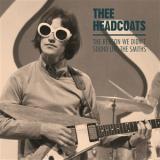
Zwei neue Songs von Thee Headcoats in einem passend an die Smiths angelehnten Cover! Die A-Seite ist aus ihrer kommenden LP "Children Of The Sect" und die B-Seite exklusiv auf dieser Veröffentlichung. Wir haben mit Billy Childish über die Single gesprochen_ Frage: "Hat dir irgendetwas an den Smiths gefallen?" Antwort: "Ja. Les Dawsons Version von ,Girlfriend in a Coma" (ich glaube, das ist der richtige Titel). Eigentlich habe ich sie gehasst, aber sie hatten ein paar ganz ordentliche Songtitel. Ihr Gitarrist kam mal auf mich zu und sprach mich an, als wir mit Modest Mouse in der Albert Hall mit unserer 100-Watt-PA spielten - er war sehr nett." Frage: "Auf dem Cover ist ein Bild von Dave Davies zu sehen. Was gefällt dir an den Kinks am besten? Hast du Ray oder Dave jemals getroffen?" Antwort: "Ich bin in den 1960er Jahren mit den Kinks aufgewachsen, zusammen mit den Stones, den Beatles, Bob Dylan und Jimi Hendrix. Als ich 1977 gefragt wurde, ob ich bei den Pop Rivets singen wolle, schlug ich vor, dass wir ,Hippy Hippy Shake", ,Wild Thing" und ,You Really Got Me" spielen sollten - Was mir an den Kinks am besten gefällt? Ich mag die R&B-Kinks? Daves Gitarrenspiel, und wir alle stehen total auf den tollen Schlagzeuger und Bassisten, und natürlich schreibt Ray gute Songs - also: Was gibt's da nicht zu lieben? Abgesehen von einer ganzen Menge. Ich habe noch nie einen echten Kink persönlich getroffen, aber wir kannten ein Mädchen, das sie im Rochester Odeon spielen sah. Sie und ihre Freunde baten Dave um ein Autogramm, und er jagte sie schreiend den Star Hill hinauf, wobei sein kleiner Stolz und seine Freude heraushingen."
The rock band Golden Earring is one of the world’s best-known Dutch bands. During the 70's, they made it to the Billboard charts with their hit "Radar Love". Over the years, they became known for their powerful live performances and timeless hits, playing to large audiences around the world.
During their acoustic touring in 1994, the Golden Earring recorded the album Face It. The album consists of a surprisingly fresh and versatile collection of songs. Recorded live at guitarist George Kooyman's home studio, it has a great vibe and brought the band three hit singles, “Hold Me Now”, “Angel”, and “Johnny Make Believe”. The last one grew into a classic by playing it dozens of times during concerts. Influences from the country music can be found on “The Unforgettable Dream”. Those experiments ensured that this band was still developing and could record a lot of different music styles.
Face It is available as a limited edition of 1000 individually numbered copies on white vinyl. The sleeve is finished with leather laminate, and the package comes with an A4 insert.
Hiromasa Suzuki, the hidden force behind Hiroshi Suzuki’s ""Romance"" and Jiro Inagaki’s ""Breeze,"" gathered a superb lineup of musicians and perfected the crossover sound on this masterpiece.
Hiromasa Suzuki was a composer, arranger, and keyboardist who played an active role not only in jazz, but also across the wider Japanese music world, including kayoukyoku, film, television, and commercials. From the late 1960s through the mid-1970s, he was deeply involved in works by Terumasa Hino, Akira Ishikawa, Jiro Inagaki, and others during their most cutting-edge periods, fully demonstrating his remarkable skill. His innovation, always one step ahead of the times, reached a kind of culmination in this work, recorded in 1976. Featuring young Shuichi “Ponta” Murakami, Akira Okazawa, and Masayoshi Takanaka, this is a masterpiece of pre-fusion and crossover.
The eye of the storm: welcome to Tornado Wallace's debut album! The accumulation of about four years of work, with tracks written in Berlin and Melbourne, 'Lonely Planet' is nothing like you may have expected from the Australian expat. No stranger to fans and followers of ESP Institute, Beats in Space and Music From Memory's sister Label Second Circle, Tornado Wallace's strain of releases so far merged functionality with a musical playfulness that led him to find himself as one of the producer's behind José Padilla's International Feel album. Here, he leaves the needs of the dance floor behind in order to create a magical mystery tour de trance into his and our inner jungle. How about some references New Age sounds meet new wave melodies, Grace Jones runs into the Dire Straits at Compass Point, while a Korg Mini Pops and a Roland CR78 make amends for Sly & Robbie's absence, Michael Mann pictures Joseph Conrad's 'Heart of Darkness', Robert Rauschenberg tries his luck at naturalism and an imagined Wally Badarou echoes through all of it. Sandwiched between the title track and the yearning beauty of the album's final point 'Healing Feeling', you get all of that as well as collaborations with and contributions of NO ZU, David Hischfelder and the voice of Sui Zhen on 'Today', who would easily make Anna Domino take her proverbial hat off. Tornado Wallace created an album that supersedes the requirements and expectations of a debut. Like a lost Island Records or a never released Made to Measure album, 'Lonely Planet' soundtracks notions and ideas that recall the nostalgic future in the past as much as it looks ahead.
Ramjac Corporation, aka Paul Chivers, emerged from the UK's late-'80s rave underground, performing live at parties like Sunrise, Energy, Back to the Future, Fun-da-Mental and Synergy. Building tracks with an Atari computer and an E-MU 12-bit sampler, turning severe technical limitations into raw, elastic club music, 88-92: It is What it Was gathers music born in bedrooms then tested in front of crowds at warehouse raves, while the culture was still inventing itself without boundaries, completelyfree.
Ramjac was the original artist on Irdial Discs, following label founder Akin Fernandez's Aqua Regia, and introduced Lee Purkis' In Sync and Neuropolitique to the label, shaping the singular catalogue of that extraordinary imprint alongside Luke Slater's Morganistic, Thee J Johanz and Anthony Manning.
That legacy is now revisited by Musique Pour La Danse, with the release of a limited edition vinyl and digital edition featuring extended liner notes by Nick Halkes of XL Recordings, Positiva and Kicks Like A Mule fame, who witnessed the early Ramjac period first-hand. The release is illustrated by Grant Fulton, who created the visual identity for The Shamen's Synergy events and Orbital albums.
This album presents music written exclusively between 1988-92 and forms the foundation of Ramjac Corporation's ongoing live performances. Restored from the original floppy discs, the recordings preserve the uniquerelationship between early digital technology, sampling culture and live improvisation that defines the Ramjac approach.
Mixed for release for the first time by Trevor Lancaster-Smith, whose 90s engineering work encompassed Leftfield, Faithless and Roni Size, the album brings these compositions into sharp focus while preserving the character of the original instruments and performances. Not just a historical document, 88-92: It is What it Was is a living body of work: music created then, realised now, and continuing to surprise and evolve.
Faitiche presents the debut solo album by cellist, sound artist, and composer Topu Lyo: “quiet scenes from tokyo” brings together sixteen miniatures for solo cello and tape echo that oscillate between abstracts drones and rhythmic pizzicato sketches – all recorded at Topu’s Tokyo apartment. The constant traffic noise from a nearby highway has become an accompanying soundtrack for his compositions and can be heard on the recordings. Topu’s playing is marked by a distinctive idiom oriented more towards abstract electronic studio effects than classical technique.
The artist spoke to Jan Jelinek about his work:
JJ: A solo cello album may seem like an odd fit for a label that has to date released only music that is electronic in the broadest sense. But I think “quiet scenes from tokyo” complements the Faitiche repertoire exceptionally well. Its sixteen miniatures showcase the cello in all its complexity: the bowed passages sometimes recall a tape feedback drone; the pizzicato playing conjures up the percussion recordings of Moondog; and the abstract textures might be mistaken for the product of a granular sampler rather than rapid finger work on the cello. I’m constantly surprised by just how rich and varied this album is – without ever losing the charm of its sketch-like quality. Could you say a few words about the making of your album – first of all, from a rather technical perspective: what production tools did you use, and why?
TL: My production tools were very sparse. Just a solo cello and my Roland 301 Space Echo, which I only used at the end, running everything through it during mixing, tape only. After years of working with electronics, pedals, and synthesizers, moving to Tokyo pushed me toward minimizing my setup. But my aesthetics shifted too, toward simplicity. I wanted to strip everything back to just the acoustic cello and see how far I could push it — replicating some of my favorite electronic effects through extended technique: slow portamento, LFOs, filters, detune, noise. I’d also been listening to a cassette of ocean sounds for years. When I moved to Tokyo I was horrified to find myself living directly across from a freeway. Eventually the freeway started sounding almost identical to the ocean — and that ended up playing a prominent part in the recording.
JJ: That’s super interesting: mimicking electronic production as a compositional idea for the cello! You say the sound of the freeway is crucial to the album: I, too, tend to interpret steady traffic noise as a positive soundscape – do we hear the freeway on the album? I can also hear other field recordings, for example on “a street car with announcements”. Can you say a bit about how these field recordings influence your playing?
TL: Yes, you can hear the freeway on the album! The freeway is most prominent in “old trees in lonely spring”, “yuyake koyake”, and “the moon” (you can clearly hear individual cars). When I first began recording I had my balcony door shut tightly, but after a while I began leaning into the highway sound and slowly opening the door little by little to control the amount of noise. “streetcar with announcements” was a moment I was recording and a car passed by making announcements in the background. I loved how it sounded! Same thing with “yuyake koyake”, and later I realized that every day at 5pm the same song plays to mark sunset, telling children it’s time to go home. Having this bedrock of sound puts less pressure on me to put music on top or to play more notes.
JJ: It’s astonishing how much this differs from what I’d imagined: I’d been picturing peaceful landscape recordings, but had never thought of a freeway. Which goes to show how open to interpretation traffic noises are. So the room by the freeway had a major influence on the album – how are you going to perform it live?
TL: The contrast between the freeway and the beautiful landscape in my head couldn’t have been starker. I too was imagining a beautiful landscape in which to create the album, but somehow it still worked out. I've been going back and forth a lot on live shows and I think the most honest way is to have it the most stripped down. I was thinking of using traffic samples etc., but I think the duet really comes from the background sounds from every unique venue/environment. So as it stands, I’ll just be doing acoustic solo cello.
,Ma Waraa Al-Shaabi" - ,Beyond Shaabi" - ist das neue Album bei Kou Records von Rizan Said, dem legendären kurdisch-syrischen Keyboard-Virtuosen aus Ras Al Ain in der Region Jazeera im Nordosten Syriens und dem wichtigsten musikalischen Kopf hinter Omar Souleyman. Rizan Said ist ein musikalischer Botschafter aus einem verschwundenen Syrien. Es war einmal vor nicht allzu langer Zeit, als die Jazeera - ein kulturell reiches Grenzgebiet kurdischer, arabischer, syrischer und armenischer Gemeinschaften - von einer unverwechselbaren musikalischen Tradition geprägt war: Handtrommeln und Rohrflöten, Hochzeiten, die tagelang dauerten, Dabke, die schon seit Jahrhunderten getanzt wurde, lange bevor Electro, Disco oder Orientalismus auftauchten, um ihr einen Namen zu geben. Rizan war das Wunderkind dieser Szene, ein Ausnahmetalent an Percussion- und Rohrblattinstrumenten, das zum Meister der Synthese in der Region wurde - er programmierte Korgs so, dass sie Zurna, Saz, Tanbura und Buzuq nachahmten, und vereinte die traditionelle Instrumentierung in einem einzigen Paar Hände, das sich blitzschnell bewegte.? Dies ist sein drittes Soloalbum nach ,King of Keyboard" (Annihaya, 2015) und ,Saz U Dilan" (Akuphone, 2019) - und sein bisher weitreichendstes. Aufgenommen im Sundlaugin Studio von Sigur Rós Sundlaugin Studio in Island aufgenommen und von Randall Dunn produziert, in Koproduktion mit Mark Gergis (Syrian Cassette Archives), führt ,Ma Waraa Al-Shaabi" syrische und kurdische Dabke in unbekanntes Klanggebiet: sieben Stücke, die die Hitze und Geschwindigkeit der Kassetten-Szene in etwas Weites, Fremdes und Lebendigeres als je zuvor übertragen.? Aufgenommen im Sundlaugin Studio, Island, im Mai 2026. Produziert und gemischt von Randall Dunn. Koproduziert von Mark Gergis. Zusätzliche Produktion: Ulfur Hansson. Gemastert von Ben Greenberg. Dolby-Atmos-Mischungen von Ben Greenberg. Lackschnitt von Paul Gold bei Salt Mastering. Cover-Artwork von Rebeka Arce; Porträt auf der Rückseite von Randy Ortiz.
21 Bum Salute is the fifth album from Sydney experimental psych-noise-pop duo Party Dozen. The work of Kirsty Tickle (saxophone, vocals) and Jonathan Boulet (drums, loops, production), 21 Bum Salute finds the critically-acclaimed, semi-improvised duo feeling liberated - from their peers, their worries, and what the nell they're supposed to sound like now.
Emerging in 2017 from the warehouses of the Sydney experimental noise-rock scene, Party Dozen arrive at the release of their fifth album, 21 Bum Salute, in peak form. Over the course of four, increasingly perverse albums of psych-tinged rock peppered with pop noise and bursts of doom in equal measure, they've transformed from gleeful noise-makers producing DIY albums from a tiny room in Marrickville, NSW, to globe-hopping, critically-adored favourites - producing DIY albums from a tiny room in Marrickville.
As well as tours with Amyl and the Sniffers, King Gizzard and the Lizard Wizard, Tropical F*ckstorm, Algiers and more, Party Dozen had Nick Cave appear on 2022 single Macca The Mutt', collabed with New York rapper billy woods, performed an incendiary live set on KEXP, signed international deals, firstly with Temporary Residence LTD (Mogwai, Explosions in the Sky,
Along the way Party Dozen self-released their first two albums, The Living Man (2017) and Pray For Party Dozen (2020), struck a chord internationally with album The Real Work (2022), which sent them on tours of Europe, North America, Japan, China and New Zealand, while fourth LP, Crime in Australia (2024), an ode to Aussie noir that leaned beyond rock into moodier moments, repeated it.
Party Dozen recorded, mixed and mastered 21 Bum Salute completely themselves, over a three month span. Inspired by spooky "old recordings" as well as the primal impulses of acts like ESG and Bikini Kill, 21 Bum Salute - named after a peculiar, larrikin ritual in Australia's arid Northern Territory - condenses consecutive years of jam sessions, loops and improvisations into just over half an hour's worth of fizzing, strutting, striking sonics from the fringes.
21 Bum Salute is the fifth album from Sydney experimental psych-noise-pop duo Party Dozen. The work of Kirsty Tickle (saxophone, vocals) and Jonathan Boulet (drums, loops, production), 21 Bum Salute finds the critically-acclaimed, semi-improvised duo feeling liberated - from their peers, their worries, and what the nell they're supposed to sound like now.
Emerging in 2017 from the warehouses of the Sydney experimental noise-rock scene, Party Dozen arrive at the release of their fifth album, 21 Bum Salute, in peak form. Over the course of four, increasingly perverse albums of psych-tinged rock peppered with pop noise and bursts of doom in equal measure, they've transformed from gleeful noise-makers producing DIY albums from a tiny room in Marrickville, NSW, to globe-hopping, critically-adored favourites - producing DIY albums from a tiny room in Marrickville.
As well as tours with Amyl and the Sniffers, King Gizzard and the Lizard Wizard, Tropical F*ckstorm, Algiers and more, Party Dozen had Nick Cave appear on 2022 single Macca The Mutt', collabed with New York rapper billy woods, performed an incendiary live set on KEXP, signed international deals, firstly with Temporary Residence LTD (Mogwai, Explosions in the Sky,
Along the way Party Dozen self-released their first two albums, The Living Man (2017) and Pray For Party Dozen (2020), struck a chord internationally with album The Real Work (2022), which sent them on tours of Europe, North America, Japan, China and New Zealand, while fourth LP, Crime in Australia (2024), an ode to Aussie noir that leaned beyond rock into moodier moments, repeated it.
Party Dozen recorded, mixed and mastered 21 Bum Salute completely themselves, over a three month span. Inspired by spooky "old recordings" as well as the primal impulses of acts like ESG and Bikini Kill, 21 Bum Salute - named after a peculiar, larrikin ritual in Australia's arid Northern Territory - condenses consecutive years of jam sessions, loops and improvisations into just over half an hour's worth of fizzing, strutting, striking sonics from the fringes.
If Sylvie’s New Season were a movie, Ben Schwab would be the auteur, screenwriting and directing the vision, articulating his story through a cast of actors. In truth, New Season is a record of the freewheeling country-rock variety, Sylvie’s first with Ghostly International, and it finds the Los Angeles-based artist at the helm of a rotating ensemble, arriving at pure, joyous expression and renewed faith in the face of hardship. It’s a rare and refined kind of musical gesture, both intimate and all-embracing, self-produced, penned singularly, delivered collectively. An invitation to find beauty in life's trials and to trust that even the longest winters can give way to a new season. Like Sylvie’s self-titled effort, New Season still rings of the sunny, lighthearted, and smooth 1960s and ’70s pop, rock, and country sonics that have become the project’s signature. While Schwab constructed that 2021 project mainly with friends in his orbit, stemming from his time playing in Drugdealer’s band and other peripheral projects, he has broadened the scope tenfold for his full-length debut, New Season. The shapeshifting collective executes on an alluring mix of nostalgic and modern sensibilities, recalling the free-spiritedness of Laurel Canyon and bohemian-era Nashville with a contemporary sheen.
In a cultural landscape trending toward mindless diversion, Your Old Droog has defied the odds, building a thriving career through musical depth and captivating songwriting. In pursuit of hip-hop immortality, the Brooklyn artist engages listeners with inventive metaphors, genuine reflections, and sophisticated rhyme architecture. Now, Your Old Droog is back with his tenth full length album, Bread & Butter. Recalling his humble immigrant family stretching caviar across slices of bread shortly after arriving from Ukraine, YOD has crafted a testament to making the best of any situation. This philosophy runs throughout Bread & Butter, as Droog chronicles the turbulence of rap success, ruminates on youthful memories, and dismisses unworthy challengers with clever precision. The project’s rich sonic texture is shaped by beats from Flying Lotus, Conductor Williams, Ohbliv, and more, while hip-hop luminaries Evidence, Oddisee, and Masta Ace make memorable appearances, along with South African star A-Reece and acclaimed singer Georgia Anne Muldrow. Grounded in resilience, perspective, and self-determination, Bread & Butter is an inspired statement from a truly distinct talent. Transforming personal history into universal truth, the album reaffirms Your Old Droog's place among the most thoughtful and compelling voices in modern hip hop.
Efdemin and Vril. revisit Endless / Purge, originally released in 2021 as the only release on the short-lived Sun Sad imprint, launched by Kinzua’s Lucas Brell. Five years later, it returns on Confusion Is Next To Happiness in a revised and expanded edition. The original recordings have been newly mixed and remastered by Rashad Becker and are complemented by a previously unreleased Vril. reinterpretation of Endless.
Throughout the record, arpeggiated sequences drift through layers of finely textured dub haze, balancing physical momentum with an floating sense of weightlessness. While retaining the artists’ unmistakable sonic signatures, the record subtly channels the melancholic futurism and machine-driven pulse of techno's Motor City tradition.
Originally released in 2009, this massively in-demand record has been changing hands for anywhere between £50 and over £100 now finally available once again. You only need to check the width and depth of the DJ support tells you all you need to know.
DJ Support: A-Trak, Andy & Jaymo, Annie Mac, Brodinski, Cagedbaby, Damon Martin, DJ Mehdi, Erol Alkan, Filthy Dukes, Groove Armada, Hell, Jesse Rose, Joe Ransom, Kissy Sellout, Kris Menace, Pedro Winter, Riton, Rory Phillips, Seth Troxler, Severino, Shit Robot, Simian Mobile Disco, Thomas Schumacher, Trevor Jackson and The Whip
Retro Grade, (Serge Santiago and Tom Neville) an exciting act on the electronic music scene, revolutionising the world of Italo House with their release titled "Moda." This captivating track, infused with nostalgic vibes and infectious grooves, promises to transport listeners back to the heyday of '90s dance music while maintaining a fresh and contemporary sound.
"Moda" showcases Retro Grade's ability to seamlessly blend classic Italo House elements with modern production techniques. The track features pulsating bass lines, and euphoric synth melodies all meticulously crafted to create an irresistible sonic experience. From start to finish, "Moda" exudes an infectious energy that gets floors moving.
Not content with delivering a stellar original track, Retro Grade enlisted the talents of acclaimed artist Sound Klash to provide a mind-blowing Remix of "Moda." Sound Klash, known for this boundary-pushing approach to music production, puts his unique spin on the track, infusing it with his signature dubbed-out house sound. The result is an extraordinary reimagining that takes "Moda" to different heights, showcasing Sound Klash's unparalleled ability to reinvent and elevate electronic music.
"Moda" and its captivating Sound Klash Remix are set to make waves across the scene.
From deep in the hard funk pocket, the Winston Brothers return to Colemine after four years with a second helping of sounds rooted in horn-heavy, 70s-style soul cinema, taking cues from the soundtrack work of Issac Hayes, Willie Hutch, Roy Ayers, and JJ Johnson. Helmed by multi-instrumentalist/producer Sebastian Nagel and longtime collaborator Lucas Kochbeck on drums, Sweets serves as a timely reminder of how Hamburg, Germany’s music scene helps shape and influence today’s soul sound.
Ultimately, bringing musicians like Kimo Eiserbeck (sax and flute) and Hans Stephan (trumpet), alongside some additional drum contributions by Max Whitefield (née Weissenfeldt), demonstrates the close-knit nature of these musicians. From influential bands like Bacao Rhythm & Steel Band to Angels of Libra and the Mighty Mocambos, Hamburg’s deep groove scene has sired its share of worthy soul and funk acolytes.
These musicians have shared stages and studios over the years, with various
configurations finding their way in the aforementioned bands. “We started as a school project… we were just kids,” Sebastian recalls. “It’s a family thing, and we really know each other well.” Sweets is more than just another addition to this scene’s collective musical canon; it is a vibrant dispatch from funk’s leading edge.
From deep in the hard funk pocket, the Winston Brothers return to Colemine after four years with a second helping of sounds rooted in horn-heavy, 70s-style soul cinema, taking cues from the soundtrack work of Issac Hayes, Willie Hutch, Roy Ayers, and JJ Johnson. Helmed by multi-instrumentalist/producer Sebastian Nagel and longtime collaborator Lucas Kochbeck on drums, Sweets serves as a timely reminder of how Hamburg, Germany’s music scene helps shape and influence today’s soul sound.
Ultimately, bringing musicians like Kimo Eiserbeck (sax and flute) and Hans Stephan (trumpet), alongside some additional drum contributions by Max Whitefield (née Weissenfeldt), demonstrates the close-knit nature of these musicians. From influential bands like Bacao Rhythm & Steel Band to Angels of Libra and the Mighty Mocambos, Hamburg’s deep groove scene has sired its share of worthy soul and funk acolytes.
These musicians have shared stages and studios over the years, with various
configurations finding their way in the aforementioned bands. “We started as a school project… we were just kids,” Sebastian recalls. “It’s a family thing, and we really know each other well.” Sweets is more than just another addition to this scene’s collective musical canon; it is a vibrant dispatch from funk’s leading edge.
Initially recorded in 1996 and officially released February 1997, 2nd Family's Killaz from the Blackside tape is one of the most distinctive examples of unpolished, stripped-back & paranoid mid-90s Memphis rap. Recorded by King JC together with 2nd Family MCs Pistol Grip & Killa Chrome in a home-studio set up at the group's base in Southern Hills Apartments in Whitehaven, South Memphis (known locally as Blackhaven or the Blackside, a short trip from Graceland) the sparse, brooding and somewhat introspective production sets the record apart from the more raucous, overdriven precedent of the period. Pressed on vinyl for the first time via Death Is Not The End in an edition of 300 copies.
When Swingrowers released their debut in Sept 2012, electro swing was a bubbling cultural zeitgeist. This Italian band were among the earliest pioneers who helped shape the sound of the vintage-influenced genre. Their debut 12 track collection paved the way for the brilliant albums that followed and indeed for the ongoing popularity of the genre. A little rougher around the edges but with all the early promise on show, this album completes a 4 piece set for fans and collectors.
Swingrowers went on to release a further 3 studio albums, toured internationally, playing major festivals includingMontreux Jazz Festival, Glastonbury, Boomtown and Tokyo’s Blue Note Festival. Their music has to date amassedmore than 100 million streams worldwide on Spotify alonewith videos clocking up many millions more.
Pronounceditself is a revelation. It stood the test of time as one of the earliest complete and fully-realised Electro Swing albums that seamlessly blend 20’s and 30’s influences - violin, gypsy jazz guitar, saxophones and swing music - with polished contemporary production. Here, superb musicianship meets great songwriting meets a unique modern sound from Swing Hop to Drum n Bass with jazz-inflected vocals in English and Italian.
As we approach the 15 year anniversary, Pronounced is being released on wax for the first time.
This releasecompletes Swingrowers’ entire album discography on vinyl, joining existing editions of Remote, Outsidein and Hybrid.
For long-time fans, collectors and anyone who discovered electro swing through artists such as Caravan Palace and Parov Stelar, Pronounced is a chance to finally own the sound of a young band (and indeed an up-start young genre) at the very start of their career.
Gäste: Oli Rubow, Sandie Wollasch, Jona Heckmann, Alex Weis, Ulf Kleiner, Marcus Bartelt, Bernd Windisch,
Andrew Murphy
Reviews und Features in den relevanten Medien
Die „Rudies“ stehen hier als Synonym für die Verbreitung und Vermengung ursprünglicher karibischer Rhythmen
(inklusive „Dubbing") mit westlichen Beats. Vor Jahrzehnten über England eingereist und von dort weiter ins restliche
Europa getrommelt.
The guys are back in the "kitchen", launching a new Special Edition series that—in this first volume—pays tribute to none other than the "King of Pop”.
Four songs get the R&C treatment, reimagined through a fusion of Funk, Electro and Balearic elements.
The result is a fresh, modern sound that fits perfectly into any DJ's record bag.
Very Limited !!
Over 10 years ago, Leon Michels released his first full length record, Sounding Out The City. It was Michels' first full length record under the moniker El Michels Affair. At the time, the budding retro soul scene consisted of mostly organ quartets a la The Meters and of course, Sharon Jones & The Dap Kings were in the early days of their ascent to world domination. Leon Michels, who was 18 when recording Sounding Out The City began, had just released Thunder Chicken, the first record by his high school band The Mighty Imperials. At the time of SOTC, Michels was just discovering early rocksteady, afrobeat, and 60's garage rock, which inevitably crept its way into the songwriting. He purchased a Tascam 388, an 80's 1/4" reel to reel 8 track intended for home recordings, and began recording music in a 10x10 box with no windows that also doubled as his childhood bedroom. Along with fellow Mighty Imperials Nick Movshon, Homer Steinweiss, and Sean Solomon, and Michael Leonhart, Thomas Brenneck, and some of the musicians from The Dap Kings, Michels recorded the LP over a two year period. Upon it's release, it received some rave reviews and the small deep funk community ate it up, but due to the lack luster promotion and distribution the rest of the world was slow to catch on to the instrumental gems featured on SOTC, which Michels appropriately labelled as "cinematic soul". However, in 2005 it found it's way into the hands of the people who were organizing a series of concerts for Scion that paired bands with MC's. El Michels Affair was contacted about playing one show with Raekwon The Chef of Wu Tang Clan fame. The show was such a success it led to a tour, and then to another set of concerts that featured multiple members of the Wu-Tang Clan. This eventually led to the release of El Michels Affair's second record, "Enter the 37th Chamber" which introduced them to a much larger audience and has been their most successful release to date. Michels has since gone on to produce and co-produce numerous records for powerhouse soul artists like Lee Fields. He shares songwriting credits with Adele, Jay-Z, Ghostface Killah, Aloe Blacc, and has played on records by Ray LaMontagne, Lana Del Rey, The Black Keys and Dr. John.
Rubbermaidxxx is a recent music performance project by the Irish artist Anna McCarthy, rather than simply the title of one autonomous artwork. Rubbermaidxxx is a character or unstable identity, an emancipatory underdog with a heart for daredevilry. The project sits naturally within McCarthy’s larger practice, which moves between drawing, assemblage, happenings and collective actions.
Clad in a black balaclava and fetish climbing wear, she abseils from buildings before entering the stage. For the first performance in New York City, she was invited by Kyp Malone of TV on the Radio to perform at his club Francis Kite Club in Alphabet City, NYC and since has continued to make a name for herself hanging off façades, singing, dancing and mopping the floor together with her performance collaborators Miss Philip a.k.a. Philip Errico and Michael Tapper at Pianos NYC, Kottbusser Tor and Genezarethkirche Berlin or the Villa Stuck Museum in Munich.
The album was produced in Munich and New York in 2025 in collaboration with her brother Nick McCarthy (Franz Ferdinand) and Anton Kaun (Rumpeln). What started as a quick improv turned into a high-energy 4-hour session of the siblings playing manic ball with beats, bass, guitars and vocals resulting in what laid the basis to this album. In the weeks following, Anna McCarthy, who is known for her cut-up production style, reminiscent of albums such as White Noise or Flying Lotus, continued to develop the vocals, performance and music by mixing in an amalgam of field recordings with her narrative spoken word, including sounds of protests, dollar stores or ice-cream trucks, as well as collaborating with the noise artist Rumpeln for the last two tracks of the album.
McCarthy is also known as the lyricist and singer of What Are People For? (debut 2022 on Alien Transistor) with its dystopic dance music candy-cane shows and equally humorously critical tongue-in-cheek bangers such as Bring back the Dirt, Drones or Partytime. Anna McCarthy's spoken word, social urgency and enthusiasm to experiment across mediums is comparable to other contemporaries such as Moor Mother, Miho Hatori, Gonjasufi, Tricky, or Cibo Matto.
The name itself is telling. Rubbermaidxxx evokes elasticity, artificiality, domestic labour and the commercial world of cleaning and garbage. It suggests a body capable of stretching, absorbing filth and cleaning up after society – only to revolt against the role it has been assigned.
Rubbermaidxxx is a master of deception, juggling fact and fiction as a reflection of our times – a diamond thief, a protester, or even responsible for the Louvre heist? This album invites the listener and viewer in, playfully dismantling hierarchies and power structures as she goes through a hopeful amalgam of dance, protest & love songs.
With the stunning Planes In Reverse, Sascha Funke, the Berlin-born producer and DJ, and long-time member of the Kompakt family, releases his first album in almost a decade, since 2017’s Lotos Land. It’s a welcome return for one of the most eloquent and elegant producers in electronic and dance music, someone who’s always been able to say more with less, and the ten tracks here, moving effortlessly between techno, house, minimalism, disco house, and home listening tunes, are all gorgeously sculpted miniatures. With guest appearances from partner Julienne Dessagne (Fantastic Twins), with whom Funke has also worked in Saschienne, there’s something homely and family about it, too; a family of sounds, a home of tone. There’s also something consummate about Planes In Reverse, as though Sascha Funke has perfected the album format. There’s no flab here, no excess – it plays out like a perfectly designed experience, ten tracks, coming in under fifty minutes, an album where every moment matters.
It’s full of variety, but everything has the unmistakable Funke thumbprint, one that was developed during the late ‘90s / early ‘00s minimal techno and microhouse moment, but which was always open to other ideas and other sounds, too. Planes In Reverse came together quickly for Funke: “Last winter, I had two or three new tracks, which gave me a core feeling: ‘Ah, this could be the direction of something like an album.’ Sometimes it can be very easy that you wrap it up and then it becomes something coherent and solid. This happened within two or three months; it was very fast and direct.” Everything fell into place – the ten tracks revealed themselves, the album sat together as a whole, and the final piece of the puzzle was returning home again to Kompakt, who have supported Sascha Funke from the very start, releasing his first single, “Campus”, back in 1999.
Planes In Reverse opens stealthily with “What You See”, where rhythms percolate and bass prowls while gaseous textures fill the sonic spectrum. It’s also the first appearance of Fantastic Twins on the album; here, she speaks a hypnotic mantra, a prelude to the title track, where Dessagne has a pure pop moment, her voice ecstatic and vibrant. Indeed, Planes In Reverse plays out like thesis and antithesis ending in synthesis, the tracks nestling next to each other even as they shuttle between sounds, genres, perspectives. There are some beautiful moments dropped throughout Planes In Reverse – the heavenly textures that make the title track feel so cloud-bound; the glassy and orbital tones that drop from the skies through the disco house inspired “Karat”; the clamour and clatter of hyper-edited voices shuffling through “Splitter”; or the field recordings of Sascha’s son football training session that drop “Zockers” into a different place and space, slowly giving way to a beautifully paced electro-pop mantra. “In Germany,when the kids play a computer game, or when they play football, we describe it as zocken. They’re the players, they’re the Zockers.“ Funke explains.
Planes In Reverse winds down with the beautiful “Kruso”, where ticklish, loving arpeggios careen around the room, and drift-work chords shimmer and shuttle between your ears. It’s a perfect comedown to an album that feels breathes in and out at an organic pace, nothing above 130 BPM, everything sitting together just so. Indeed, that’s the feeling you take away from Planes In Reverse; it sums up the spirit of Sascha Funke productions perfectly, while also existing beautifully as its own world dreamt unto itself. It’s Sascha Funke down to the very essence. Nothing unnecessary, nothing extraneous: Pure Funke.
The 2018 album Igor Stravinsky’s The Soldier’s Tale is the adaptation by Roger Waters (co-founder of Pink Floyd) on the 1918 same-titled theatrical work. Waters recorded this version with members of the Bridgehampton Chamber Music Festival at Bridgehampton Presbyterian Church.
The original theatre work is one “to be read, played, and danced” by three actors (the soldier, the devil, and a narrator) and dancers, accompanied by a septet of instruments. The libretto relates the parable of a soldier who trades his fiddle to the devil in return for unlimited economic gain. The music is scored for a septet of violin, double bass, clarinet, bassoon, cornet or trumpet), trombone, and percussion. The libretto is adapted by Roger Waters from the translation by Michael Flanders and Kitty Black, based on the original text by Charles-Ferdinand Ramus.
The Soldier's Tale is available as a limited edition of 1000 individually numbered copies on green vinyl and comes in a gatefold sleeve with linen laminate finish. The vinyl package includes a 4-page booklet with lyrics and pictures.
Herbie Hancock is one of the most prolific jazz pianists of the 20th century. A child prodigy, he played with the greats such as Donald Byrd and Miles Davis. He was one of the first to embrace and master the electric piano, but he always stayed true to the acoustic sound. In fact, he always bounced back and forth between his electronic and acoustic sound, touching upon almost every development in R&B, funk and jazz while retaining an original and distinctive voice.
Sextant from 1973 was recorded just before Headhunters, and can be seen in the same vein, but it’s more than just an introduction to a masterpiece. It features a kind of post-modal, free impressionism while gracing the edges of funk. Three long instrumental tracks explore how far minimalism in jazz can go.
Sextant is available as a limited edition of 2000 individually numbered copies on blue marble vinyl.
For the seventh edition of the Vega Records 5 Pack Unreleased series, Louie Vega once again opens the vault to reveal a special collection of unreleased recordings, alternate versions, remixes, demos, tribute reworks and deep cuts from the Vega Records musical family.
5 Pack Unreleased VII brings together 15 tracks across five 12-inch records, showcasing the wide musical spectrum that has always been part of the Vega Records story. From soulful house and deep grooves to jazz, soul, Brazilian influences, live instrumentation, Latin influences, powerful vocals, disco-rooted rhythms and the freedom to experiment in the studio, this collection moves through many different sides of the music.
Some of these recordings have been waiting patiently in the vault. Others represent alternate versions of songs that continue to evolve through different interpretations. Together, they create another musical journey through the sounds, collaborations and ideas that have shaped the Vega Records universe.
These final recordings speak to something that has always been important to Louie’s musical journey: respecting the music that came before while finding a way to reinterpret it through his own musical language.
From Loleatta Holloway and Duane Harden to Elements Of Life, 2SoulFusion, Domo Domo, Brutha Louie & Brutha Basil, and the tribute recordings, 5 Pack Unreleased VII brings together different generations, different voices and different musical influences under one roof.
The Elements Of Life sound continues throughout the collection, with “Sunshine (I Can Fly),” “Every Step” and “Dreamer” offering special previews into the musical direction of the forthcoming 2027 Elements Of Life album.
This is the seventh chapter of the series, but the philosophy remains the same:
Open the vault.
Share the music.
Let the DJs discover it.
Let the dancers feel it.
Five records.
Fifteen tracks.
A collection of unreleased music, special versions, studio discoveries, tributes and musical experiments from the world of Vega Records — with plenty more waiting inside the vault.
Do not adjust your tuning! Cowper emerges disc in hand from the liminal static, exposing us all to his peculiar brand of outsider club chaos. Boldly, slowly, Goa-ing into the fray, these three tracks chew your ear off in the sonic language of acid, trance and progressive house, churning and gurning their way deep into the darkness. In the time since the first dispatch of edit excellence, Cowper’s Between Stations has firmly established itself as an essential underground outpost, adding tape releases by Tolouse Low Trax, Zato and Miles J Paralysis to a growing catalogue of genre-fluid mayhem, consistently captured by his essential Noods Radio shows. Introducing itself with a gut punching kick and gurgling prog throb, the first track here is simultaneously upbeat and downcast, a glorious gloom-core ode to narcotic indulgence.
Extra-terrestrial pads and choral synth hark back to childhood days of Perfect Dark before a trance lead interrupts all remaining neural connections. When that snare lands in the second half we’re in fully fledged techno-pagan mode, red-faced and rushing right till the end. Assuming that even xenomorphs dance sometimes, this end of the world apocalypso is absolutely their jam. Track 2 tunnels further into the planetary core, 16bit woodblocks and bells sitting atop synthetic swells and hoover-ish vamps, before a hooning bassline drops like a sledgehammer on your unsuspecting ear drums. An unexpected, but very welcome left turn into mid track breakbeat provides a moment of airy reprise before we lock back into the cavern-shaking groove until the run out abates. For the encore, Cowper didgeri-doesus with the oscillating bass and molasses-apache break of a techno-tribal, prog-frog delicacy. Complete with the type of mantra vocal usually found on pound-bin trance or superspenny Dream House rarities, and a little acid-gwamph resonance abuse Josh Wink would be proud of, this chug-athon sounds a bit like Psychic TV tuning into Psy-trance, which is a very good thing indeed. Dark, dense and musky stuff that will drive a proper dance floor wild.
LA producer/vocalist Sweet Love Under Tyranny arrives with her self-titled EP (à La Carte Records, 11/6) — four tracks, nineteen minutes of nocturnal dance music built on coldwave and Italo pulled through new romantic melodrama. Co-produced with Matia Simovich (Inhalt) at Infinite Power Studios, mastered by Josh Bonati. The reference points span the pop confidence of Stacey Q and early Madonna, the airtight vocal architecture of Yazoo, and the coldwave romance running through the artist's own history as co-writer on Kontravoid's "Maskerade" (~200k Spotify streams since 2021's "Faceless" LP). Her voice cuts from aching falsetto to guttural growl over synth lines placed with the precision of someone thinking hard about where a chorus should sit in a mix. Post-punkcom: "a nocturne of neon-kissed bliss, a siren's serenade whispered through the haze of LA's twilight pulse." Pressed as a limited single-sided 12" in two variants (black-in-clear; clear).
Forty years of cassette releases, pressed for the first time on vinyl
First of two instalments exploring the previously unreleased sonic archives of one of Poland’s most enigmatic
living artists - with its first volume focused on his deep listening practice and spiritual reverie (recorded 1990–2013)
The last time Andrzej Dudek-Dürer took a banknote bearing the face of the Polish anarchist Jarosław Dąbrowski from his pocket to trade it for a pair of shoes was in 1969. He bought them for 120zł - the equivalent of 100€ today - and never replaced them since then. Only rebuilt them, year after year, drawing a needle and thread through the leather each time it split, closing one wound before the next one opened. It became a ritual of precision, stitching a record of another year into their soles.
That same year, in Wrocław, he arrived at a conclusion that would recalibrate everything that followed. Convinced he was the reincarnation of Albrecht Dürer, he adopted the surname Dudek-Dürer, stopped cutting his hair and began wearing the same garments every day. It was the first ritual of many, though he wouldn't have called it that yet. Look closely enough, over the decades, and it is always the same gesture, returning in different material: hair growing in a single unbroken strand, a needle drawing thread through leather, sitar strings pulled taut across a neck he built with his own hands and magnetic tape spooling forward inside the cassette boxes stacked against his walls.
None of this began in a vacuum. Dudek-Dürer emerged from the Wrocław neo-avant-garde, in a Polish art world where an exhibition could be cancelled overnight by the stroke of a censor's pen. In 1973, his exhibition Auto-crucifixion was shut down by the state, and for a time he found himself blocked from exhibiting his own art at all - the one force in his life that ever came close to cutting the thread.
He seemed to experience it differently. In 1974, after long, patient research into sitar craftsmanship, he built his first prototype with his brother, a knowledgeable luthier. In 1978, in a smoked-out jazz club, he took his first steps into sound recording with the unreleased album Jazz From Underground with his first band. By 1979, recognition started to travel further than he could.
Turning toward Far-Eastern philosophy, meditation and the idea of reincarnation was another language of freedom for him. It was a way of claiming an inner territory the state could not reach, a border it could not close. Mail Art served a parallel function, reaching further out: in a country that restricted travel and expression, sending and receiving art through the postal system became an act of quiet rebellion.
The body, in his understanding, is only an envelope readied for constant transformation. From this came Metaphysical Telepathy: during the years he could not leave Poland, he treated that confinement as a rehearsal room, sending his mind out ahead on the same thread his body would later follow. Living Sculpture grew from the same root with performances of stillness beside static art objects, until the boundary between the object and the man beside it simply dissolved. Camera Meditation extended the same instinct into photography: a shutter click flattening three dimensions into two so that a single instant could be held forever. Inspired by the pioneers of self-portrait photography like Robert Cornelius, he used it to document time itself, and kept explaining to me: "You know. This is not about vanity. This is about observing time passing.”
The isolation did not end suddenly. It ended the way his own philosophy had already predicted it would, from the inside first. Mail Art quietly solved the problem politics couldn't. Correspondence built during years of confinement slowly worked its way through doors the state itself had kept locked. Contacts made through folded paper and stamps became invitations. Ultimately, invitations became passports.
In 1983 he made his first trip outside Poland, to Germany, in search of the audio technology he couldn’t get his hands on before. In 1985, he was invited by the Indian embassy in Poland to give a sitar concert on an instrument he had spent a decade patiently stringing together - half sitar, half tanpura, built from patience and determination. After the collapse of the People's Republic of Poland, the travels kept unspooling: South Korea, then Mexico, then Australia, Canada, New Zealand, Singapore, Japan and the United States - each stop leaving behind its own small knot of tape, tied off and carried home.
In the decades since, recognition arrived at the same unhurried pace: he conducted workshops at UC Berkeley, served as vice-president for artistic affairs of the Union of Polish Art Photographers and the Union of Polish Visual Artists between 2010 and 2014 and received the Bronze Medal for Merit to Culture - Gloria Artis. His visual work gradually entered collections including the National Museums of Warsaw, the Stedelijk Museum, Tate Modern, MoMA and the Venice Biennale. His musical practice, by contrast, never found that kind of room - left to circulate quietly, sharing his cassette tapes directly, waiting for someone willing to follow it further.
It took months before I could find a way to reach Andrzej Dudek-Dürer - his presence online is very close to nonexistent. Surprisingly, LinkedIn turned out to be the only door still open, a faintly absurd irony given everything else about him. I packed the strict minimum for a three-day trip and an empty notebook and made my way to Wrocław. His headquarters sits in the neighbourhood of Grabyszyn: a two-storey pre-war house that has belonged to his family for generations. The man who opened the door was long-haired, long-bearded, in his trademark leather shoes and patched jeans. We sat in his living room, in front of a computer where decades of recordings sat organised in cryptically named files, surrounded by books and objects that had arrived one layer at a time, leaving room for only two chairs in the middle. His shoes sat by the door, rebuilt so many times they had become their own quiet sculpture. Cassette tapes filled boxes against the walls, almost unlabelled, each one a spool of thread holding decades of sound that had never once been asked for, until now.
I listened for hours: meditating in front of strangers on the porch of a Seoul temple until the tourists stopped taking photos and simply waited with him; a stand-off with border guards at the US–Mexico crossing over an instrument they couldn't identify and didn't trust; a session with the Stockhausen family that he still, decades later, describes like it happened last week. All of it interrupted, occasionally, by the smell of soup boiling and fresh bread warming on the ceramic stove. After two days, it felt like being handed the end of a very long thread and asked, gently, to keep following it. I left with a USB drive holding his full discography, signed with his unmistakable signature.
Astral Meditations From A Living Statue is a length of that thread, drawn out from the boxes stacked against his walls - recordings gathered from different rooms, different countries, different decades. This first record breathes slowly: incense-thick, meditative, built for stillness. A cutting-edge séance in outer space where machines learn how to dream.
It begins with the neo-classical improvisations of Andrzej, space-delayed, recorded at Klub Muzyki i Literatury in Wrocław in 2002. 'When..So' opens the curtains with a deep-rooted meditation accompanied by slow-decaying piano figures illuminated by a candle-lit spirit gathering.
Los Angeles, 1990: a dormant villa, a grand piano, the voice of Bonnie Barnett. 'Exception' is captured in a single room, in a single afternoon - voice and keys circling each other, neither one leading, until the silence between the notes starts to feel like the instrument.
'The Meta...' and 'Tired Of...', recorded at Studio Morandi in Ponte Nossa, Italy, in 1992, settle into a sitar drone built entirely from patience - overtones stacking and beating against each other, strung by a man who never once set foot in India. 'Mastery Of...' follows, recorded the same year at Studio Suski in Łomianki, pushing that same hum further still, until pitch dissolves into a spectral reverie. 'Transcendental Sound', from 2000, closes the first record in a slow bath of celestial frequency - better heard beside the shores of the Odra river.
More than fifty years after deciding that a life could become an artwork, Andrzej Dudek-Dürer continues to inhabit that decision. His shoes keep wearing thin against the earth's crust. His hair keeps growing, one strand at a time. His cassette tapes keep spooling in the dark of their boxes.
Now the thread finds its last shape: a single unbroken groove, spiralling inward from the outer edge to the label at the centre. Never cut - the way nothing else in his life ever was. Drop the needle and it will find that groove and follow it, the same way a needle once followed leather, once followed a border it couldn't cross, once followed string into an instrument that didn't exist until he built it. This record is the other end of a thread that has been travelling for fifty years. For the length of both sides, it rests here, in your hands. This is a timeless proof that the Lord of the New Age was never lost."
NOW Music proudly presents the next release in the ‘ERA’ series with NOW That's What I Call An Era - Ballroom Blitz: 1967-1976 celebrating the colourful world of glam rock, pop and unforgettable chart hits that defined the early-to-mid 1970s, with a selection of pop gems from the late 1960s. Pressed across three stunning coloured vinyl LPs – red, white and gold – showcasing the era’s biggest stars, instantly recognisable anthems, novelty favourites and enduring singalongs from one of the most distinctive periods in UK pop history.
We are finally ready to unveil one of the most exciting projects we have worked on in our label's history: a new release by legendary disco project Hudson People, best remembered for their essential classic "Trip to Your Mind" - which just received its anniversary issue on our label!
Now it's time for "Hold On" - a brand-new single featuring several mixes based on an original recording from the late 1980s, with the completely unheard yet incredibly soulful voice of singer Rickey Owens, whom composer and producer Reginald Hudson worked with at the time.
When we first got in touch with Reg Hudson several years ago, we were originally interested in releasing his "Shake It - Make It Loose" album, which he recorded with John Davis (later known as one of the real voices behind Milli Vanilli). While talking about John Davis (RIP) and other great GI singers such as Karl Keaton, Reginald Hudson immediately mentioned Rickey Owens as one of the best singers he had ever worked with.
Of course, we had never heard of him, as none of his music had ever been released. But when Hudson showed us some old demos and sent us the original DAT recordings, we were immediately hooked.
"Hold On" was recorded in or around 1988 with a simple drum machine and keyboard accompaniment - essentially a demo intended to be recorded properly in a better studio. But the vocal performance was simply stunning, complete with beautifully recorded ad-libs. Owens had a truly remarkable, clear voice with an incredible amount of soul. Luckily, Hudson had his old DAT tapes digitized several years ago, so the acapella recordings survived in excellent shape.
We immediately reached out to several producers to create reworks of the track. The 12" EP compiles some of the most club-friendly of these new mixes - but there is more to come…
First up is Thomas Redfern, a senior producer, professional studio musician and keyboardist from London, UK. His version is a catchy, funky yet deep House track that could easily become a favourite on dancefloors around the globe. Redfern also blessed us with a dub mix that takes things even deeper.
But it gets even catchier on side B of the vinyl. Tom Quick sped up the tempo, added filters and delivered a rework that could make fans of Chromeo, Daft Punk, Stardust and any late-'90s French House afficionado go completely nuts. Yes, we mean it! With a fresh twist on the original, the track has a massive club appeal that we hope both DJs and dancers will dig.
The vinyl single is completed by a mix from German legend DJ Friction, whose version is based on synth layers from the Tom Quick mix. Friction added new drums and bass, giving the track the distinctive modern electro boogie funk vibe he is known for. His mix brings to mind classics such as Shannon's "Let the Music Play" and works of Freestyle's Tony Butler.
The vinyl 12" with 4 mixes is released on The Outer Edge's brand-new sublabel, 1st Floor Records, which focuses on more dancefloor-oriented material. More mixes are available digitally and should not be missed.
PR Feedback:
„Killer“ – Gilles Peterson
„Disco, deep house and boogie all in there! Superb!“ – Groove City Radio
„Dope!!“ – DJ Craze
„The boogie mixes are so good!“ – Selvagem
„Awesome and Huge Package“ - Leon El Ray
„Wow, Trip to Your Mind is so good and this is a real grower“ - Ibiza Sonica
„Really liking the Balearic & Redfern Mix, thanks!“ – Mystic Bill
„Both Thomas Redfern mixes are ace!“ – Deeper Shades of House
Four track deep and dub leaning house record from Tom Ellis, built for groove over drama. Tom Ellis, four cuts, house built from the low end up. Daily Red Cocktail, loose kick, chords buried in reverb. Tram 28 next, steadier, more direct, a track for the middle of a set rather than the top. Pink Street Morning goes dubwise, echoes stretched out over a thin bassline. She Broke My Bongo shuts it down with live sounding percussion, no filler. Straightforward deep house record, nothing flashy, does its job on a proper system. Solid.
In a world that buckles and cracks under our calamitous weight, something at once old and beautiful, bitter and malign, stirs just a shade below what can be seen. It had dreamt of the end of things, and tasted there sweet emptiness, but now a new hominid stench has disturbed its slumber.
So keenly it ponders, un-lidding an eye, and within each potent coil desires fester, many and urgent. And so it untangles, and organises, and lurches upwards like a whale; bloated, rotten and desperate to breathe.
Emily and Joe have caught glimpses of that which lurks beneath. As each has struggled to make sense of what they have seen, they have been dragged inexorably into a frightening new reality; a shadow world of lurid horrors, where nothing is as it ought to be. Yet they have witnessed great beauty too, a joy stark and profound, and an addiction is growing.
iO Pan is about a love for that special era in the UK dance music scene that from the late 1980s onwards mixed funk, soul, hip-hop, electro, reggae, dub and Jamaican sound system culture together with the freshest dance music coming out of Chicago, Detroit, Belgium and Italy. A unique melting pot that would lead to some of the most original and groundbreaking musical movements the world has ever seen in Bleep, Breakbeat, Hardcore, Jungle and Dub Step.
iO Pan is an artist, musician and DJ who has presented live art at the Barbican Centre, the Open Data Institute, the Royal College of Art and Goldsmiths University.
As a musician, iO Pan has supported the Arctic Monkeys and worked with the Human League, and with the track ‘Forever’, reached number 5 in the Mixmag Ibiza chart.
As a DJ iO Pan was a resident for legendary Sheffield clubs Gatecrasher, The Leadmill and Plug throughout the 90s.
iO Pan now presents the full-length album When The Lid Opens on Sound Records whose roster includes KiF Productions, Benyayer, Yarni and Lara Jones.
From the co-writer of the iconic Hardcore Uproar, Suddi Raval arrives on Hello World Records with his debut EP — a five-track electronic journey that moves effortlessly between disco, electro, experimental electronics and analogue-fuelled psychedelia.
At the heart of the release is “Laser Beams and Mirror Balls”, the EP's titular track, reimagined by superstar DJ and producer Justin Robertson, who takes the neon-charged original and pushes it into new disco dimensions with his unmistakable production touch.
The journey begins with Robertson's remix before moving into the original French-vocalled version of “Laser Beams and Mirror Balls” — a hypnotic, pulsating slice of electronic disco that sets the tone for what follows.
On the flip side, “Oni Strangler” takes a darker, more hypnotic and exotic turn, drawing the listener deeper into Raval's richly textured electronic world. “Robot Computer” follows with a growling bass machine of electronic stabs, warped drones and relentless low-end energy.
Closing the EP is “Zub Sierra”, a spaced-out voyage through a dubbed-out otherworld before descending into deep, resonating electro synths — the kind of beautifully unpredictable analogue textures that only an analogue Odyssey can deliver.
Across all five tracks, Raval combines electro-flavoured rhythms with a kaleidoscope of electronic textures, forging pulsing basslines, hypnotic melodies and richly layered soundscapes. It's an EP that feels both rooted in the electronic music traditions that have influenced him and entirely of its own time.
Five tracks. One electronic journey. From laser beams and mirror balls to analogue odysseys and robot computers.
Det Gode Selskab continue their quest as they call on Berlin-based Italian artist Busso. An artist who continues to express himself through a multitude of vibes and sounds, fitting perfectly with the free-flowing DGS ethos. ‘Anna In The Jelly’ wanders between four different cuts, teasing animated deep house energy combined with stripped-back minimal flavours. A reflection of Busso’s versatile taste, he encapsulates four sure shots for your summertime record bag. A tale for the sun worshipping dreamers, soundtracking the warmer months.
Diving straight in with ‘Sexual Desire’, Busso delivers perky and playful peak-time action, with a clean-cut, feel-good energy from the word go. A vintage feel emerges through the vocals and crisp drums, working in sweet harmony. Slick hi-hats lead the way in ‘Don’t Be Afraid’ before you are confronted with a killer elasticated groove synonymous with the Italian’s sound. Beautiful chords appear at the midway point, spiralling into paradise.
The B-side kicks off with the title track, constructed in a distinct chunky manner. Squelchy mechanical tones manoeuvre around the mysterious drive of the track. Moody as it moves, it’s one for the darker nights on the road. Last but not least is ‘Red Print’, tightly packaged and incredibly detailed, with quirky obscurities flashing throughout. A steady motion perfectly sets the tone as you start to build the floor.
This record cements an exciting future for the label, as they look to continue elaborating on their catalogue, ever-evolving and expanding their width of sounds with one of the most exciting prospects currently in the German capital.
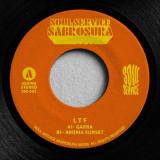
Intriguing Siberian B-Boy roots informed Anton LTF's first solo album last year and its mix of funk, hip-hop and early turntablism influences really worked. He's back now with a tidy two-tracker on Soul Service Sabrosura that leans into Latin funk. It's raw, direct and charged up tackle for once again getting under the skin of b-boys and girls thanks to the killer breaks. 'Garra' is lit up with shuffling percussive keys and rhythms and big brass horns, while 'Aroma Sunset' is more pared back and loose. There's a celebratory vibe that's smoother and more languorous, with sunny flutes leading the way and irresistible Latin charm in the ways the keys dance.
Children of Zeus return with their third studio album ‘As The World Burns…’
Five years on from their highly-acclaimed sophomore album ‘Balance’, Manchester’s kings of hip hop soul, Tyler Daley and Konny Kon, bring us a brand new 16-track opus.
Sonically the duo continue their story where they left off; crafting an amalgamation of street soul, alternative r&b and boom bap hip hop, with a sprinkle of flavours taken from their original multi-genre pirate radio influences, and a dash of forward-thinking new sounds, ensuring all tracks are destined to become future classics.
The features are sparing but powerful, enlisting the talents of revered UK rapper Knucks (‘Before We Drown’), Colorado-native Young Old Soul (‘Dopamine’), MCR family K S R (‘Do You Want To Get High’, & Australian/Mauritian up & comer Anieszka (‘Water & Vibes’).
As with previous projects, this album is largely produced by the duo themselves, though there are guest productions from previous collaborators too, including Grammy Award-winner Beat Butcha, Grammy-nominated Teo, and broken beat pioneer K15, along with an assortment of new players making moves in the underground neo-soul & beats circuit.
Conceptually, this project continues on with the story to date. An eternal search for sunsets and soulfood, as a respite to the anxieties of the modern world; personally, professionally and globally. Assertive swagger is matched with brutal but sincere candidity. As ever, it encapsulates the rough with the smooth, with reflections on where they’ve been, where they’re at and where they’re headed. There’s no preaching to be found here; just an acceptance of things as they are, an embrace of the environment and people they were nurtured by, and a celebration of some of the finer things in life; slow jams, weed & rum, water & vibes. Raps for listeners, blunt heads, fly ladies and prisoners. All packaged together as another perfect sonic love letter to sound system culture. 50 minutes of big people music.
Since the release of their anthemic debut single ‘Still Standing’ a decade ago, to the subsequent EP ‘The Story So Far’, and their critically-lauded debut album ‘Travel Light’, the duo have received numerous accolades, including nominations for AIM Awards & Worldwide Awards both, along with tons of ‘Album of the Year’ nods care of Clash Magazine, Bandcamp, Complex, Wordplay and many more. This along with huge swathes of support from DJs, radio stations, press outlets, tastemakers, luminaries & fellow artists across the globe.
Children of Zeus have performed sessions for COLORS, Soulection (Apple Music), DJ AG, Boiler Room, BBC 6 Music and at the infamous Maida Vale studios for BBC 1Xtra as well as touring across Europe, Australia and South Africa. This is in addition to collaborating & touring with Mercury Award Winner’s Ezra Collective, including a Wembley Arena show. Other collaborations over the years have included Shy FX, Juls, Goldie, Black Milk, Kofi Stone and the late great Lenzman.
From the Broke ’n’ English / Hoodman-era, to the present day, Children of Zeus have been omnipresent in the fabric of British black music. Proud ambassadors of Manchester music, and of UK soul, it really is “Zeus to the world”.
Children of Zeus have been adorned with plenty of flowers over their career. The unbridled quality and poignance of the music and the message on display throughout this project will see the algorithmic needle move some more. It’s undoubtedly set to be a Zeus Summer. As the world burns…
Available on all digital platforms and physical formats, Friday September 4th 2026.
t 07: Do You Want To Get High? (feat. K S R ) - Children of Zeus03:26
t 07: Do You Want To Get High? (feat. K S R ) - Children of Zeus03:26
[t] 07: Do You Want To Get High? (feat. [ K S R ]) - Children of Zeus03:26
[t] 07: Do You Want To Get High? (feat. [ K S R ]) - Children of Zeus03:26
[g] B3 | Do You Want To Get High? (feat [ K S R ]) - Children of Zeus03:26
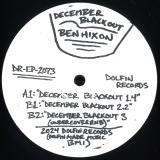
Dallas-raised, Atlanta-based Ben Hixon is a musical connector. As a producer, DJ, and Dolphin label head, he brings together various different musical worlds from hip-hop to house and techno. Here, returning to his label, he kicks off with the slow-motion beatdown throb of 'December Blackout 1 4' with suggestive, erotic vocalisations panning through the mix. The claps are raw and the chords echo the 80s aesthetics of Omar S at his most tender. 'December Blackout 2 2' has a more grinding groove and mechanical snare patterns with molten electronics dripping over the face of the rhythm. 'December Blackout 3 (Undercoverrnb)' is hunched over and muggy deep house for the sweaty back room.
RAWAX welcomes Funksonik to the artist Faymily!
We are very happy to present you this high rising producer from Italy on HOUSEWAX. 4 super deep late night cuts for every record bag!
Highly recommended!
The return of Batty Bass is well and truly underway with a brand-new four-track EP from Hannah Holland. Bringing together Holland with long-time collaborators Kurtis Lincoln and Joy Joseph, the EP delivers four killer dancefloor workouts.
'Action Satisfaction' comes in heavy, driven by a seriously mean, ceaseless bassline and Kurtis Lincoln’s unmistakable vocal, with Joy Joseph’s percussion adding another layer of physicality to the track. Lincoln is an artist, writer and performer whose work moves between fine art, rave culture and performance, bringing a distinctive theatrical edge to his vocal work.
Joy Joseph is a drummer, DJ and live percussionist with a long history spanning East London’s New Wave scene through to collaborations with artists including Mr Hudson, Amy Winehouse and Jessie Ware.
'Mitzubishi' takes things somewhere darker. A sinister, heads-down number built for late-night pressure and packed dancefloors.
The remixes bring two fresh perspectives to the EP’s originals. DJ Spilt, known for his raw take on classic Chicago house, brings down the tempo with a sleazy, low-slung groove that swaps peak-time pressure for after-hours swagger. Meanwhile, Wigs turns Mitzubishi into an even more techno-tinged, heads-down affair designed to lock the crowd in and keep them there.
HVS is truly pleased to welcome Cash Kru and Tweeleaf to the label. Two of the hardest working kids in Jungle/Hardcore IMO. With a ton of quality releases under their belts, they just had to get pressed up, because these tunes are absolutely phat!
Cash Kru runs the Asionyta label out of Belgium along with Expo, F.T.C Project & Tweeleaf. Super wicked label putting out digital releases as well as lathe cuts, disks and cassettes. She has loads of top tunes on there, and not strictly Jungle either! She also runs the Devil Dubs label putting out very very quality Jungle. I highly recommend checking both out if you want some gritty, ruthless Drum & Bass.
Tweeleaf out of Pennsylvania (funny enough the same small town the rest of my family is from) also has releases out on both labels as well as his own, Interim Records, focusing on digi singles from him, all currently being sold at “Name Your Own Price” which is insane considering every release is excellent.
These tracks were made with a combo of DAW and emulated Amiga (more info on the center label) and all four are just Heavy as hell. I've been playing them out live a ton and every track crushes the dance floor. Someone always demands the rewind on “Militant Jazz” which is funny because the buildup is so long, but by the time it drops everyone loses it!
A1. starts off the EP on a more mellow tip with a vibey Soul Pride, Think & Amen mashup from CK. The switch up into the 2nd half phased out Amen is so seamless, it's a great way to get the EP going.
A2. goes straight into the ruffness with a relentless amen tune mixed up with some mysterious/jazzy chords/vox all summed together in PT2.
B1. is a remix of a tune of mine that never came out, but CK asked for the stems and did an amazing job with it. I love her choppage on this! Super tight and snappy and hits all the right notes for a destructive tune.
B2. ends the EP with one of the nastiest tunes to come out anywhere this year if I may say so. That Lemon D amen is just crazy, and that S950 time stretch stutter is chef's kiss. But you be the judge!!
Burnski's Instinct label hits release number 40, having very much helped to define this latest era of minimal, tech and garage mutations. Mattik is in charge for this one and he has become a northern heavyweight in this world. 'Original Badboy (It's Ecstasy)' is a title alone that tells you what to expect - naughty, playfully sleazy garage sounds with old school motifs and a killer descending bassline. 'We Tell Dem' brings an acid squelch and screwy synths that are decidedly futuristic. Mattik & Tuff Trax's 'Get No Sleep' tightens the low end bump and drops in some neon chords and choppy garage-house drums, while Cronnik's 'Feelin' (Mattik's Got The Feelin' mix) blends bumpin' drum work with spraying synths and wobbly bass. Fantastic fun.
UK underground heavyweight Ploy unleashes his second release on Dekmantel with a brand new four track EP. The release sees the dynamic producer continue to push the envelope with his own flavour of driving, sexy, Ploy house. Putting every ounce of his production prowess on show while proving yet again that Ploy is a force to be reckoned with both in the studio alike. Making tracks for DJs has always been the source of inspiration for Ploy and this is no different with each offering carrying its weight and then some. Straight up, no frills house music that oozes quality by doing the simple things well.
Kicking off the record is title track 'Glizzy', an arpeggiated tech house tool built for the hours that you lose yourself on the dancefloor. From the off Ploy puts his ear for percussive dynamism on show with the understated subtleties of this opener. Thematic sampling, nuanced arrangement and odd ball melodies combine to set Glizzy apart with a gentle nod to hot dog lovers worldwide.
The EP follows suit with A2 'Global Underground'. A contemporary progressive house roller, which rips through the atmosphere with melodic blasts, unrelenting groove, and a powerful bassline.
Offering an equally effective double B-side, B1 is 'Yesterday Now Tomorrow', which sees Ploy lean on his production mastery with entangled percussion and expertly dosed sampling. The result is a swinging heavy house burner that is truly greater than the sum of its parts.
Lastly on the EP is ‘SlowanDip’. A heavily swung, percussive chugger to warm up a dancefloor, paired with a bassline to test the system, this B2 closes out a stellar second showing on Dekmantel for Ploy.
The record arrives at the crest of festival season and is primed to soundtrack dancefloors around the world under the glistening Summer sun. Ploy has quickly carved out a reputation for his unmistakable, drum driven take on house music, and Glizzy only sharpens that identity further. Focused, effective and built with DJs firmly in mind, the EP captures an artist operating with total confidence, delivering four tracks that prove Ploy isn’t just part of the conversation, he’s pushing it forward.
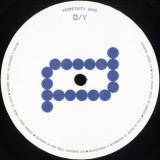
Doubt Records puts out a release from one of its own: Berlin-based modular live act O/Y whose debut album "Variations" set the tone for a sound moving between micro house, dub techno and downtempo. "Perpetuity Wing" continues that trajectory, threading dubbed-out chords and acid textures through three tracks built for deep, late rooms.
With a new alias, TM404, Andreas Tilliander has created enjoyable ambient dub simmering with life and details. The songs have all been recorded live, in real time in the studio. A unique way of operating within today's electronic music. - Everything is recorded in one take. Nothing is post arranged, says Andreas Tilliander, and adds that this might be his most ambitious album ever. The project's name is also a tribute to Roland, although of the more intricate kind. - When they made these machines in the eighties, they avoided the 404, since the sound for four, 'chi', is the same as the sound for death in Japanese. At that time it was therefore taboo and the 404 was never launched. Not until now, due to my album!
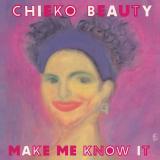
Originally released in Japan in the early 1990s, "Make Me Know It" offers a glimpse into a moment when reggae and lovers rock were taking root in unexpected places. The record pairs Chieko Beauty's understated vocal style with Miyazaki Izumi aka Dub Master X's production, resulting in a sound that feels equally informed by Jamaican traditions and Tokyo's rapidly expanding musical landscape. Built around a subtle interpolation of Manuel Göttsching's E2-E4 – already immortalised by Sueño Latino – the record brings together musical traditions that, on paper at least, have little reason to meet. Chieko Beauty would go on to become one of the defining voices of Japanese reggae, collaborating with artists including Mad Professor, Yann Tomita and Emerson Kitamura. This 7" revisits an early chapter in that story
Raw and unfinished. Never released, for various reasons. DAT and compact cassette tapes forgotten in home studio drawers, then boxed away in the basement for decades. After modern mastering, sounding solid and fresh — so why not release them after all?
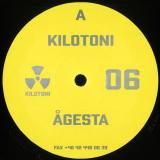
Kilotoni drops its sixth vinyl-only round of radioactive techno findings. Be prepared for the meltdown and fallout.
A1 Banging acid techno in the Public Energy vein, mixed with the minimal Landstrumm-style funkiness of the 1990s. Raw and minimal, but dialed in just right.
A2 Simple acid house with shuffling beats and romantic chords. Perfect for setting the mood at a club night or an outdoor sunrise.
B1 Tech house from the 90s — or perhaps from outer space. A bouncing bassline and funky drum machine programming are joined by unidentified bleeps.
B2 Wild but unconventional acid techno with shuffling beats and throbbing basslines. Midwest acid and ghetto techno shake hands on a nuclear wasteland.
Four more classics from the Black Vinyl archives to mark the label’s thirtieth anniversary. ‘Especiale’ by Fresh & Low is a timeless Latin-spiced bubbler that always moves a floor. ‘We Can’ by Kerri Chandler is a rare gem from the main man himself. ‘Spirit’ by Brent Laurence got smashed out of the park with this firing David Harness remix in 2022 and the set concludes with the brilliant Scott Wozniak remix of King DK’s vocal gem, ‘Can’t Read Your Mind’.
Atom Trance Force 20 is a special one for fans of 90s hard trance. EDM’s DJ Manga (Made In Hong Kong, Judgement Day, etc.) discovered two previously unreleased tracks, originally recorded in 1995 and 1996, and generously offered us the opportunity to release them on vinyl. Naturally, we accepted and are proud to present: DJ Manga – Motion (Original DAT Recordings 1995–1996) A1 and title track “Motion” (1995) is everything you’d hope for from an unreleased 90s trancer. It’s got the pianos, it’s got the melody that sticks in the back of your mind for days after hearing it, and it’s got the raw bassline and drums that drive in that special way they did back in the day. A2 features label head Micropulse on remix duties. Keeping the core elements of Marc’s original composition intact, the remix seeks to add some modern magic to the vintage charm and sprinkle some Atom energy onto the release. The flip side gives us “The Key” (1996), which occupies the entirety of side B and stretches out across 10 more minutes of 90s magic. It’s difficult to write track descriptions without sounding like AI, but the intro is long, the lead is sizzly, and the resonant bassline fits perfectly to round off this EP — the type of release that doesn’t come around often. The tools Marc used to produce the original 90s tracks included a Roland JD-800, Korg Poly-800, Roland TR-505, and some kind of Akai S-series sampler, all sequenced with an Atari 1040ST. For those interested, the 2026 remix uses a Novation Supernova II, Access Virus TI, Korg Wavestation AD, Waldorf Blofeld, E-MU E4XT Ultra, 208HP of Eurorack, and two Lexicon PCM70s.
WRWTFWW Records is very excited to announce the first ever release for the Cyberpunk 2077: Future Sound of Night City soundtrack - atmospheric music from one of the most celebrated video games of the decade! The compilation, showcasing a who's who of Polish electronic underground, is available as a limited edition 45rpm-cut yellow vinyl 3LP in heavyweight 3-panel gatefold with a sticker sheet. The album is also available on CD with super jewel case, and in digital formats.
Dive deep into the pulsating world of Cyberpunk 2077 with an immersive soundscape perfectly capturing the gritty and neon-soaked streets of Night City. Curated by Rafa? Grobel and Wojtek Sokó? of Most Records, the epic 15-track compilation features a diverse offering of electrifying Polish beats, cohesively flowing between techno, ambient, synthwave, bass music, industrial, and IDM. Ominous, powerful, evocative, and filled with futuristic nostalgia, the music of Night City is a thrill ride in a dystopian urban landscape, heavy hearts riding through the night, menacing streets surrounded by infinite skyscrapers. The music transports you, soul-stirring, cinematic, and timeless, the most beautiful kind of escapism.
The award-winning Cyberpunk 2077 action role-playing game was developed by CD Projekt Red and published in 2020 and has since become one of the most recognized and best selling video games of all time. With a cast including Keanu Reeves and Idris Elba, unmistakable visuals, music, and atmosphere, CP77 has earned a spot in the pantheon of 2020s pop culture.
Points of interests
- For fans of video game soundtracks, ambient, techno, synthwave, vaporwave, industrial, dark electronic music, retro-futuristic moods, neon lights, Tech Noir, Keanu Reeves, bass music, All Foods, cities by night, skycrapers, urban adventures, dystopian universes.
- The soundtrack for Cyberpunk 2077: Future Sound of Night City available for the first time everrrr !
Gyros Heroes is the latest release from Adlibitum Tum Tunes, showcasing the unmistakable synergy between label curator Kirill Matveev and trusted maestro Nicolas Barnes, a resident artist renowned for his consistently refined and emotive sound.
The EP unfolds as a sophisticated blend of deep- and tech-house aesthetics, designed to uplift, move, and connect. It balances percussive bounce with emotional subtlety, offering a graceful flow that is both club-ready and sonically rich.
A1. Kirill Matveev – Am I Happy With That and A2. Kirill Matveev – Once At Dawn deliver the opening momentum, channeling sleek grooves and playful introspection with polished restraint. These tracks glide effortlessly between warmth and drive—embracing the listener without overwhelming.
On the flip side, B1. Nicolas Barnes & Kirill Matveev – Naar Shada blends the duo’s sonic sensibilities into a mood-driven piece with elegant progression and percussive intricacy. Closing with B2. Nicolas Barnes – Qeezy, the record reaches its emotional high point: a dancefloor-oriented yet soul-touched cut that radiates both sensuality and controlled energy.
Gyros Heroes is a finely tuned experience—bright yet deep, emotive yet precise—crafted for selectors who value atmosphere as much as movement. This is an EP that invites you into its positive orbit, reminding us how expressive and graceful club music can be when shaped by masters of tone and detail.
Adlibitum Tum Tunes is a division of MixCult Records
This November, Brownswood Recordings will release Mek Do & Mend, the debut album from self-taught producer, multi-instrumentalist, composer and artist Wonky Logic. Although his name may not yet be familiar to everyone, Wonky Logic (AKA Dwayne Kilvington) has spent the past two decades quietly becoming one of the UK's most respected musical collaborators. His career has moved comfortably between London's jazz, electronic and contemporary music scenes, performing and recording with artists including Nala Sinephro, Yussef Dayes, Nightmares On Wax, Shabaka Hutchings and Emma-Jean Thackray. Alongside his work as a producer and composer, he's been musical director for projects with Eddie Chacon, John Carroll Kirby and I.G Culture's LCSM, scored the feature documentary Zandra With A Zed, contributed music to A24's The Smashing Machine, and continues to lead music workshops with young people, refugees and people experiencing incarceration.
Far more than a collection of compositions, Mek Do & Mend is a deeply personal reflection on the people, places and experiences that have shaped Kilvington throughout his life. It's the story of growing up on a Leeds council estate, where music became both a creative outlet and a way of understanding the world. Making music often meant working with whatever was available: a second-hand keyboard, a makeshift studio desk or ageing equipment that simply had to last a little longer. The title itself came from a conversation with his mother, capturing the resourcefulness that defined his upbringing and continued into the making of the album itself, which was written and produced to a tight deadline around touring, family life and Kilvington's work as a musician and educator.
Built from material spanning more than fifteen years, Mek Do & Mend brings together some of Wonky Logic's earliest compositions alongside brand new pieces written during the making of the record itself. Childhood ideas sit alongside music conceived only months before recording, creating an album that draws together a lifetime of writing rather than documenting a single moment. Running throughout are voice notes from family members, teachers, friends, mentors and collaborators—not simply as interludes, but as a reminder that no creative life is ever self-made. Rather than telling his own story outright, Kilvington invites listeners to discover him through the people who've shaped him: an aunt remembering him playing in church as a child, lifelong friends recalling early experiments making beats together, fellow musicians from different stages of his career and his mother describing him in her own words. Together they reveal the invisible network of relationships, philosophies, communities and experiences behind the music. "The album exists somewhere between being a biography and an autobiography," says Dwayne. "The biography is in the voice notes and how other people see me. The autobiography is in the music."
That same philosophy extends to the musicians who appear on the record. Every contributor has played a meaningful role in Wonky Logic's life beyond the studio. Long-time collaborator Luke Wynter, Steam Down drummer Benji Appiah, partner Vanessa Rani, Jonathan Enser, Joe Bristow, Brother Portrait and Nubiya Imani all feature not simply because of their musicianship, but because they form part of the album's story.
Across its fourteen tracks, Mek Do & Mend moves effortlessly between dynamic jazz arrangements, pulsating broken rhythms, delicate, twinkling piano passages, interstellar synth textures and elegant brass lines. Album opener and first single 'Strange Attractor' begins with a shimmering introduction before unfolding into an exhilarating surge of rhythm and momentum. Named after the mathematical concept of the same name, it serves as the conceptual point of origin for the album. Written when Kilvington was just seventeen, the composition reflects the idea that even the most unpredictable lives are guided by hidden patterns that often only become visible with time. Second single 'A Thousand Hands' features the unmistakable vocal tones of Brother Portrait, whose cerebral lyricism drifts over a low-slung, constantly shifting groove as woozy synth lines ebb and flow overhead. At its heart, the track celebrates the family, friends, mentors and collaborators whose often unseen influence shapes who we become, echoing the album's belief that every achievement is, in some way, a collective one. LP focus track 'BAME (Beyond All Marginalised Expectations)' is a lush, spiralling composition, brimming with both emotion and resolve. Reclaiming an acronym long imposed on racialised communities in the UK, the piece transforms it into a statement of possibility rather than limitation: a defiant rejection of stereotypes and a refusal to let identity be defined by other people's expectations.
The album itself only exists because other people believed in it. Isabel Gracefield made the RAK sessions possible, Rick David brought the record together with his characteristically thoughtful mix, and Gilles Peterson committed to releasing it on Brownswood before hearing any of the music. Away from the stage, Kilvington works with the charity Finding Rhythms, writing and producing original records with people experiencing incarceration, while also leading workshops with Arts Train and Dovetail Orchestra.
Recorded live in a single day in Studio One at RAK, Mek Do & Mend was mixed by Rick David through an analogue Cadac console before being mastered by Stuart Hawkes at Metropolis. The aim wasn't nostalgia or audiophile perfection, but to create a record people could return to throughout their lives, discovering something new with each listen.
As Dwayne puts it: "I don't want this body of work to be reduced to a jazz record. It's more like a novel about life told through music."
Der ultimative Weihnachtsklang: Legendärer Chorgesang aus dem King’s College auf Vinyl Erleben Sie mit dieser Vinyl den Inbegriff weihnachtlicher Musik. Sie wurde in der atemberaubenden Akustik der Kapelle des King’s College in Cambridge aufgenommen. Diese LP vereint den legendären Choir of King’s College, Cambridge – den wohl weltweit berühmtesten Weihnachtschor – unter der Leitung von drei seiner bekanntesten Dirigenten: Sir David Willcocks, Philip Ledger und Stephen Cleobury. Von der festlichen Erhabenheit von „Hark! The Herald Angels Sing” und „O Come, All Ye Faithful” bis zur intimen, ergreifenden Schönheit von John Taveners „The Lamb” und Harold Darkes „In the Bleak Midwinter” fängt diese Sammlung den reinen Zauber der Weihnachtszeit im warmen Klang des Vinyl-Formats ein.
Chef’s Kiss Radio Vol. 1: Ibiza versammelt zehn handverlesene Tracks auf einer stilvollen 12"-Compilation von Spaghetti Moretti Records. Mit Beiträgen von Mia Moretti, Myd, Kapote & ALOT, Radio Slave, Heidi Lawden, Cesária Évora, Uffie und weiteren Künstler:innen verbindet die Sammlung House, elektronische Sounds und unverwechselbares Ibiza-Feeling.
Entstanden aus der Chef's Kiss Radio-Residency im Nocturna Ibiza, vereint das Album exklusive Originale und hochkarätige Remixe zu einem perfekten Soundtrack für endlose Sommertage und lange Nächte. Die limitierte Vinyl-Edition macht diese Veröffentlichung zugleich zu einem attraktiven Sammlerstück für DJs, Vinyl-Fans und Liebhaber moderner Clubmusik.
DIVA AS TECHNOLOGY
Arca announces the details of her highly anticipated new studio album, XXXXX, arriving via XL Recordings. Five years after the twice GRAMMY-nominated KiCk i and subsequent KICK pentalogy, the Venezuelan-born musician, producer, vocalist, and visual artist returns with her first full-length album since concluding one of the most ambitious chapters in contemporary music.
If the KICK era expanded Arca's universe outward, XXXXX turns inward and fractures it apart. Across 16 tracks, the album excavates vastly different emotional landscapes to deliver a body of work that is darker, more aggressive, more experimental, and unwilling to settle into fixed form. Initially conceived as a mixtape before revealing itself as an album, XXXXX embraces contradiction as a core methodology. In the spirit of her previous mixtapes @@@@@ (2020)—released as a 62-minute single—and &&&&& (2013), XXXXX thrives on raw exploration and instinct. It arrives as a deliberate interruption of expectation.
“It seems playful, also mischievous, to interrupt that autopilot,” says Arca.
The album's striking artwork depicts Arca as a biomechanical entity, accompanied by two owls—symbols of protection and the underworld in Greek mythology. Like the music itself, the imagery inhabits a space between worlds where transformation is both terrifying and liberatory. Suspended between posthuman augmentation and raw emotion, XXXXX exposes the mainframe. It is a record born from uncertainty, contradiction, instinct, and surrender—a becoming-machine that continues Arca's lifelong project of redefining what it means to be human both in, and against, the machine.
For Arca, rebirth has never been a metaphor, but a practice. She continues to exist in multiple states simultaneously, collapsing boundaries between human and machine, high and low culture, and experimental noise and pop music. Following her first-ever painting exhibition at London’s ICA earlier this year, XXXXX arrives as the latest transmission from a continuously evolving creative process. Over the last year, Arca has remained prolific: unveiling the double-sided single "Puta" / "Sola"; remixing tracks for Addison Rae, Robyn, and Hikaru Utada; collaborating with Tokischa on “Chama”; and contributing production to Madonna’s CONFESSIONS II. She walked the runways and made appearances at major international fashion weeks, while also composing the original motion picture soundtrack for Stillz’s film, Barrio Triste.
Now, after years of transformation beneath the surface, her next musical evolution reveals itself.
Dajusch brings his distinctive sound to Backspin Records with 'Oracle', a five-track EP that showcases his instinct for powerful grooves, deep low end and carefully selected synth work, rounded out by a remix from Dutch techno veteran Sterac. Another strong addition to Regal's Backspin Records, this EP balances Dajusch's musical sensibility with his feel for high impact club music, keeping the focus firmly on club functionality.
Opening with 'Boxer', Dajusch immediately strips things down to their essential elements. A buzzing deep bassline provides the foundation while a repeated vocal hook becomes the central motif, surrounded entirely by percussion including a punchy kick, heavy toms and crisp hats. 'Narrow' introduces a saw wave synth that functions simultaneously as bassline and lead, gradually building tension through repetition and a slowly opening filter before a droning pad leads into the return of the drums. Closing the A-side, 'Reeses Piece' is built around a wide gliding Reese bass moving across di?erent notes. A heavy breakbeat, clean claps and hats provide the framework while a high-pitched vocal brings a distinct 90s rave energy, with swinging toms adding movement to an already groovy production.
On the flip side, the title track 'Oracle' shifts the focus towards melody, with Detroit-influenced synth work taking centre stage. A classy melodic motive is complemented by heavily processed vocals transformed into euphoric, drone-like elements, adding another dimension without losing the track's directness. 'Strings' closes the original material with a hefty saturated kick while string synths carry the main theme. Drums straight out of a classic drumcomputer and warm chords build into a more expansive breakdown before returning to the groove. Closing the EP, Sterac's remix of 'Narrow' takes the original saw synth motive into a more hypnotic direction, playing with its pitch and arrangement while reducing the percussion and pushing an already deeper kick further into the mix, giving the synth work more space to breathe.
With 'Oracle', Dajusch delivers a focused statement rooted in classic Techno while remaining connected to a modern sound. Another strong addition to Regal's Backspin Records, this EP balances Dajusch's musical sensibility with his feel for high impact club music', reinforcing the label's dedication to forward-thinking techno with a clear respect for where techno came from.
Die in Kalifornien beliebte Band Brainstory kehrt mit einer neuen EP zurück, die das Ende einer Ära feiert. ,Shoebox Days" ist eine Hommage an die Zeit und die Aufnahmen, die in ihrem inzwischen geschlossenen Studio in Long Beach entstanden sind, das treffend den Namen ,Shoebox" trug. Wie der Name schon andeutet, war der Raum winzig und mit Equipment vollgestopft. Das hatte zwar seinen Reiz, war jedoch mit zahlreichen Einschränkungen verbunden. Doch wie sich immer wieder gezeigt hat, entsteht großartige Kunst oft aus schwierigen Umständen, und diese neue EP mit sieben Titeln ist ein weiterer Beweis dafür. Der . Titel, ,The Watchers", beginnt mit einer eingängigen Bläsermelodie , die einen sofort in ihren Bann zieht. Die knackigen Drums und die G-Funk-Basstöne sorgen für Schwung, während sich üppige Orchestrierungen hin und her schlängeln und eine sanfte Atmosphäre schaffen. ,Blend", einer von nur zwei Gesangstiteln auf der EP, ist ein von kalifornischer Sonne durchtränktes Liebeslied , das die Grenze zwischen Psych-Rock-Ballade und B-Seite-Soul beschreitet. ,Twin Kitchen" drückt einen regelrecht in den Sitz zurück, wobei Eric Hagstroms präzises Schlagzeugspiel den Song trägt. ,Home Alone" ist Sänger Kevin Martins überaus nachvollziehbare Hommage an die Zeit, die er allein verbringt - Zeit, die nach heutigen Maßstäben als ,abgekoppelt" gilt, in Wirklichkeit aber viel verbundener ist _ Die Jungs lassen bei ,Lone Traveler" einen Teil ihres Jazz-Hintergrunds in den Vordergrund treten, beginnen mit einem wasserdichten Groove und lassen sich im Verlauf des Stücks darüber hinweg gehen. ,Gravity Hill", benannt nach der berühmten kalifornischen Kuriosität, leitet den Ausklang der EP ein, während Brainstory tief in die Materie eintaucht und uns mitnimmt. ,Necessary Loss" bildet den Abschluss dieser herrlichen Reise.
Dutch-born and Singapore-based, Mike Risk has spent more than three decades immersed in house music. As a DJ, producer, promoter and agent, he has experienced the culture from multiple angles, building relationships and sharing dancefloors across Amsterdam, London, Ibiza, New York, Chicago, Singapore and beyond.
Now Is Forever is a full-circle moment. A statement. A celebration of a lifelong relationship with house music.
Mike first made his mark in the Dutch underground through Club Risk and later RiskSoundSystem, two platforms that helped shape nightlife culture in the Netherlands throughout the 1990s and 2000s. After decades spent championing the music of others, Now Is Forever is Mike adding his own chapter to the culture that shaped his life.
Created with longtime collaborator Greg van Bueren (Hardsoul) between Amsterdam and Singapore, the album is a deeply personal tribute to the music, people and places that shaped him. From the clubs of Amsterdam and London to the sounds of Chicago, New York and Detroit, it distils decades of dancefloors, record stores, studios and late-night conversations into one body of work.
From deep and soulful grooves to raw house cuts and acid-tinged late-night moments, Now Is Forever explores house music in its full spectrum. It reflects the way Mike has always approached a dancefloor as a DJ: not as a collection of tracks, but as a journey through the many moods and moments that make a greatnight unforgettable.
Featuring Mike Dunn, Bluey Robinson, Marc Evans and John Agesilas, the album brings together years of experience, inspiration and dedication. Crafted not out of commercial pressure but out of creative necessity, it is the product of pure love-for the culture, for the craft, for the music.
Now Is Forever is a past-forward record: rooted in the music, dancefloors and relationships that shaped Mike, while carrying their spirit firmly into the present. At its heart, it is about honouring the kid who first fell in love with house music-and never let go.
Because when you are truly lost in music, there is no past and no future. There is only now.
Neues Livealbum der Indie-Ikone Ed Kuepper, aufgenommen 2023 in Melbourne während seiner erster Tour seit über einem Jahrzehnt, bei der er mit kompletter Band sein Solomaterial in den Mittelpunkt stellte. Ein mitreißender Auftritt mit Musik aus Eds 50-jähriger Karriere in erstklassiger Besetzung (u.a. mit Schlagzeuger Mark Dawson und Bassist Peter Oxley (Sonnyboys). In den 1970ern läutete Kuepper mit The Saints die Punk-Ära ein (noch vor The Clash, The Damned, Sex Pistols), gründetet später die Post-Punk-Formation Laughing Clowns und begann 1985 seine Solokarriere.
Next year the iconic anthem Cafe Del Mar will celebrate its 30th anniversary, a landmark that will be celebrated with a series of brand new remixes alongside the finest existing remixes in specially remastered versions.
Launching the series of vinyl releases in September is a remastered vinyl-only release of the original mix, as well as the best-known version of this classic track, the iconic Three ‘N One Remix.
Nearly 30 years ago, Paul M aka DJ Kid Paul recording as Energy 52 unleashed a record onto an unsuspecting public that would go on to define club culture for an entire generation of dance music enthusiasts. Named as an homage to the legendary Ibiza sunset spot, Café Del Mar broke down boundaries between the underground and
the mainstream, charting in the UK singles charts on three separate occasions and named as the “best tune ever” by Mixmag at the start of the new millennium. In terms of cultural and emotional impact in dance music, it’s hard to find a record that comes close.
Café Del Mar has come to represent the most euphoric and hedonistic pleasures of dancefloors - in Ibiza and all around the world - and has been remixed by some of the biggest names in the industry. Now, 30 years after its original release, Superstition Records will be putting out a new series of releases, with brand new remixes as well as remastered versions of some of the many remixes from across the last three decades. The vinyl-only remastered version of the original and Three ‘N One mixes will launch the series, with further details about the rest of the series announced in the coming weeks.
In 2021 Paul Van Dyk’s Café Del Mar remixes launched a series of vinyl and digital re-issues on the Superstition Records imprint after an almost 20 years hiatus. From 1993 until 2003 Superstition Records was a groundbreaking Techno, Tech-House and Trance Label and released some of the biggest and most revered records of the early German electronic scene.
On 13 November 2026, Lacchesi released MTY-016 *Allo Mama Bobo* on Mama Told Ya. A 9-track album, available on vinyl and digitally, featuring collaborations with Anetha and Miss Kittin.
Following *Jeopardizer*, released on MTY-AIR, and the compilation *Mille attaques, les vents contrèrent*, released by Mama Told Ya in 2023, Lacchesi returns to the label with a far more personal project.
Born in West Palm Beach, Florida, to a mother of Indian and Congolese heritage and a father of Slovak and Belgian descent, Siân grew up between Belgium and New York before finally letting her travelling wings come to rest in Paris. What could have become a story of fragmentation instead became a source of creative strength. Singer, songwriter, composer and photographer, Siân has always turned borders into bridges.
She first honed her voice in the jazz clubs of Paris and New York, performing alongside renowned artists such as Richard Bona, Jon Batiste and Mike Stern. Yet her path has always extended far beyond the stage. For nearly a decade, she led cultural initiatives with women and children living through exile, violence and poverty across India and Southern Africa, weaving together music, photography and artistic transmission as tools for dialogue and empowerment.
The true turning point came when she discovered the kamele ngoni, the West African harp whose ethereal sound seemed to echo something long buried within her. The instrument became her musical alter ego—the invisible thread binding together her many inheritances. Guided by Malian master Abou Diarra, Siân embarked on an inward journey towards her African roots. Yet this return to her origins was never an act of retreat into identity. Instead, it gave rise to a body of work that remains profoundly open to the world, where Africa enters into conversation with jazz, folk, soul, alternative pop and the rhythms of Brazil.
Along the way, she has crossed paths with remarkable artists including Rogê, Chico César, Fatoumata Diawara, Lokua Kanza, Flavia Coelho, Thomas de Pourquery and Philippe Baden Powell. On stage and in the studio, Siân continues to shape a musical universe that refuses labels. Like artists such as Björk, Joni Mitchell and Laura Mvula, she moves forward as an explorer, guided not by genre but by intuition.
Today, Siân stands as one of the most distinctive voices of the new Francophone music scene an artist capable of uniting musical sophistication with emotional power, introspection with collective celebration, depth with an irresistible urge to dance.
Animal — The New Album
With Animal, produced by British musician Tom Excell (Nubiyan Twist, Africa Express...), Siân delivers her most intimate and assured work to date. Every song feels like a shedding of skin, a quiet metamorphosis, exploring self-acceptance, femininity, the freedom to be oneself, cultural heritage, and the reconciliation of one's own imperfections.
From Stereotype, a fearless manifesto against the expectations imposed on women, to the title track Animal, an anthem celebrating the beauty of imperfection ("I've turned my cracks into a crown"), the album gives a voice to everyone who refuses to fit into predefined boxes. In Terre, je danse sur toi, featuring Fatoumata Diawara, Siân pays tribute to Mother Earth and to the roots that unite us all. Oh! Congo, recorded with Lokua Kanza, reconciles her cultural heritage with an ancestral homeland that feels both distant and intimately familiar. En équilibre, with Flavia Coelho, embraces the exhilaration of risk and the courage to leap, while Put a Mask and I Could Kill confront hidden wounds and the invisible violences that quietly shape who we become.
In ADé, Siân addresses Adenomyosis as though speaking to an unwanted housemate. "My body is your battlefield," she sings, giving voice to an intimate shadow lodged deep within herself. This bittersweet lullaby transforms a pain so often left unspoken into an act of profound tenderness towards oneself.
The album also holds a rare treasure: Reste tel(le), an unpublished text by Pierre Barouh, the founder of the Saravah label. Never before set to music or performed, this elusive poem of free love finds new life through Siân's voice, becoming a dialogue across time between two artists united by the same devotion to freedom, métissage and openness to the world.
Driven by Tom Excell's vibrant Afro-pop pulse, the spiritual breath of the kamele ngoni, organic arrangements and deeply personal songwriting, Animal is an album of liberation. It invites us to lay down our masks, embrace our contradictions and reconnect with the free, instinctive and powerful animal that lies dormant within us all. More than a collection of songs, it is a radiant manifesto for the richness of identity, the passing on of memory, and reconciliation with oneself.
Animal is not simply the title of an album, it is a declaration of independence. An invitation to live fully, unapologetically, and without instructions.
A citizen of the world, travelling freely between continents, languages and memories, Siân Pottok delivers with Animal her most personal, and perhaps her most universal work to date: an album that reminds us that our fragilities, our roots and our differences are, beyond doubt, our greatest strength.
— Christophe Tison
The Tango N'Vectif: Sessions 2LP contains tracks from the original CD version, the 2001 2CD reissue, remixes and alternate versions of album tracks, music from the Phi*1700 u/v EP on R&S and other exclusives, selected by Mike, completely remastered from DATs by Beau Thomas. µ-Ziq's Tango N'Vectif was released in 1993, a classic year for auteurist electronic music that didn't always fit on the dancefloor. Written by Mike Paradinas in his late teens with some help from Frank Naughton, it still stands up really well today and its influence on electronic music in the decades since is obvious. Across an expanse of ideas, taking influences from early Aphex, Detroit Techno and UK Hardcore, Mike created this spirited, funky, jerry-rigged, lo-fi version of rave; with crunchy drums and a knack for melody that fell somewhere between John Barry and classic TV themes. Without owning a computer, Mike had been writing techno, house and industrial tracks on and off since 1990, playing live keys alongside drum machine rhythms on his 4-track recorder. µ-Ziq started when Mike linked up with Frank who was also writing dance-influenced music, and importantly owned an Atari 1040ST computer with Cubeat software. They pooled their equipment and Mike would travel up to Frank's house a couple of miles away in Wimbledon to record together. By 1992, and after a false start when a proposed EP for Mark Pritchard and Tom Middleton's Evolution label got shelved, Mike had started at Kingston University where he deejayed and met like-minded people including a couple of guys who knew Aphex Twin who was also a student at Kingston too, and they passed Aphex a demo of Mike's material. A few days later Mike got a message from his mum to 'call Aphex Twin' and he gave Mike some advice, and seemed interested in releasing something. So when Frank and his family went on holiday that summer Mike borrowed his Atari and synths and wrote the majority of the Tango N'Vectif album during that 2 weeks. By the end of 1992 a release with Aphex Twin and Grant Wilson Claridge's Rephlex label had been agreed - Aphex had moved to the house in Clissold Crescent where he recorded a lot of his early classic albums and Mike went over to collect his advance, in the form of his very own Atari computer.
Today we are happy to announce that we are reissuing Merucry Rev’s 1993 album Boces in the UK & EU! Available from the 13th of November, Boces has been newly remastered by Henry Rudkins at Air Studios and is available on black vinyl and CD.
Hailing from Buffalo New York, Mercury Rev are one of the US’s most well-respected bands, always experimenting and continually reinventing. The Guardian called them “a rarity in indie rock: a band who have continually evolved their sound, pushing at the boundaries of what rock music actually means…borrowing from jazz, funk, doo-wop, techno, folk and more along the way.”
Boces is such an important record in their discography, a grand and epic part of their story. The songs on the album came from the whole band. Everyone contributed and the recording process really allowed everyone’s freak flags to fly – partly thanks to their first ever major label recording budget. The opening 10-minute epic track “Meth of a Rockette’s Kick” really let’s you know that this album will be like nothing you have ever heard before.
Mit TechnoBase.FM Vol. 6 geht die beliebte Compilation-Reihe auf Vinyl in die nächste Runde. Die limitierte Pressung bringt den Sound von TechnoBase.FM direkt auf den Plattenteller und verbindet aktuelle Dance-Tracks mit dem typischen HandsUp-, Dance- und Electro-Sound der Reihe.
Für Fans elektronischer Musik und Vinyl-Sammler ist auch die sechste Ausgabe ein Muss. TechnoBase.FM Vol. 6 – einfach das Beste für den Plattenteller.
POD & Edward Richards return for the third and final of their series of hand stamped vinyl with a very unique outing. In contrast to the slower tempo of the the Polar Phase and Temporal Loop Trascendance EP’s, the pair up the ante with a blend of bass music meets dub techno. With the addition of drummer Miles Henry, the sound transcends basic genre descriptions into a liminal space between live music and the repetitive machine form of electronic music. Miles contributes both acoustic kit and electronic drums to the title cut and Nautilus, and in his own words he seeks to capture the impossibility of playing like a machine. On the flip side Quadratic Illumination progressively builds, with layers of hardware synths atop a foundation of deep sub-bass, broken beat drums, and hints of electro. And to cap of proceedings there is an incredible remix by Evigt Mörker that embodies a sense of serene bliss, and is a near perfect end to not only this record, but to the series as a whole.
Twenty years after forming in Tommy Brenneck’s Bushwick apartment, Menahan Street Band returns with Illusions, their fourth full-length album on Brenneck’s Diamond West Records. The band— Tommy Brenneck, Dave Guy, Nick Movshon, Leon Michels and Homer Steinweiss—have each pursued an array of projects in the years since. Brenneck has produced for Baby Rose, Rogê and Kirby, toured with The Budos Band and runs Diamond West Records and Studio. Guy plays trumpet with The Roots and The Tonight Show Starring Jimmy Fallon and has released his own solo album; Steinweiss has made his own solo record and, with Movshon, has worked across multiple platinum album projects; and Michels continues as El Michels Affair, runs Big Crown Records and has produced Grammy-winning and nominated albums for Clairo and Norah Jones.
Despite their many individual ventures, the group reunited with an energy Brenneck says felt like “the first time.” Recorded quickly and instinctively, Illusions blends Menahan’s signature guitar, horns and drums with arrangements by Brazilian legend Arthur Verocai, taking listeners on an instrumental travelogue that lets the mind wander. Artist Ariana Papademetropoulos contributes original artwork to the album’s otherworldly collection of music.
Scott Pilgrim EX, the newest video game from the Scott Pilgrim franchise developed by Tribute Games, is out now with an all new original soundtrack from Anamanaguchi. The sprawling soundtrack, which accompanies a brand-new storyline co-written by series creator Bryan Lee O’Malley, perfectly connects the band's legendary electronic past with their fuzzed out garage rock present while maintaining their unmistakable punchy style. Known for resonant world building across past projects, the depth of emotion and the range of styles displayed on Scott Pilgrim EX are uniquely Anamanaguchi while delivering a host of melodically anthemic and new energetic hooks that are sure to pack a punch for both newcomers and old school fans of the band alike.
Anamanaguchi's collaborative relationship with the Scott Pilgrim universe goes back to the early days of the band. After cutting their teeth programming music with playable Nintendo cartridges and helping to bring a wider audience to a largely internet based 8-bit chiptune scene, the band was brought in to score the fan-favorite soundtrack for Scott Pilgrim vs. the World: The Game. The success of this game soundtrack would help them to launch an early crowdfunding success story with their campaign for their debut album, 2013's Endless Fantasy. From there the band would go on to collaborate with virtual pop star Hatsune Miku (resulting in the perpetually viral, Fortnite featured hit, “Miku”), and later develop the intricately soundscaped compositions displayed across their second album, USA, but throughout it all the connection between the band and the Scott Pilgrim universe would remain a pivotal source of inspiration.
After being brought in to score the animated Netflix series, Scott Pilgrim Takes Off, in 2023, band members Peter Berkman and Luke Silas would credit the live kinetic energy they channeled when writing songs for the in-universe garage band Sex Bob-Omb with helping them get back in touch with the roots of how they learned to play music even before Anamanaguchi's earliest releases. This process would eventually lead to Peter and Luke alongside the remaining two band members — Ary Warnaar and James DeVito — flipping their typically meticulous digital writing process for the more collaborative, straight to tape, distorted angst that can be found on 2025's Anyway, marking another significant evolutionary turn for the band to come out of their relationship with Scott Pilgrim.
Now fresh off the heels of a nationwide tour in support of Anyway, Anamanaguchi have returned to the 8-bit beat em up world of Scott Pilgrim with a relentlessly high energy and genre defying original soundtrack for Scott Pilgrim EX. A return to form that comes with a depth of knowledge and innovative skills that have allowed the band to continue to evolve and grow alongside the characters in the Scott Pilgrim universe and the multi-generational fanbase that continues to follow along with them.
The new soundtrack for the latest installment in the Scott Pilgrim franchise, Scott Pilgrim EX
Ohio’s 156/Silence return with From a Distance, their crushing new full-length and first release for Pure Noise Records, arriving September 4. Produced by Josh Schroeder (King 810, Lorna Shore, The Plot In You), the album expands on the breakout success of People Watching with a darker, more cinematic approach that balances punishing heaviness, eerie atmosphere, and emotional depth. Featuring guest appearances from Mike Hranica (The Devil Wears Prada) and Alex Reade (Make Them Suffer), From a Distance pulls influence from horror, prestige television, and retro game soundtracks while moving seamlessly between hard rock, experimental textures, and the band’s chaotic mathcore roots. Atmospheric, unpredictable, and unbound by genre, From a Distance pushes 156/Silence further into their own lane while cementing them as one of heavy music’s most fearless rising acts.
Mohammad Syfkhan is back with his second album for Nyahh Records. This collection of new recordings marks a hug milestone in Mohammad’s career as it’s the first album that features all original compositions. And with a full band! We had the great help of Syrian Cellist and composer Naseem Alatrash to help with the string arrangements. The resulting record is a beautiful journey into a timeless Middle Eastern and North African sound akin to the likes of Fairuz or Umm Kulthum with a fast Kurdish Dabke tempo.
I Love You Ireland is an incredibly personal album for Mohammad. The title alone, much like his debut ‘I Am Kurdish’ is as personal as it it’s political. To express such love for a place in music is saying, thank you for making me and family feel safe. Thank you for taking us in. A stand out track titled ‘Ah Yu Donia’ is Mohammad’s first real public moment of grieving for the loss of his son at the murderous hands of Isis. In this song he asks God why he was taken. Trying to figure the sense in the actions of fundamentalists. The strings sections are sad, but not morbid. Acting like a release or companion to the horrific reality of losing a child.
‘Al Huriya’ is Mohammad’s first attempt at using an Irish rhythm known as a Reel, as appose to his usual Middle Eastern rhythms. Again, this is a beautiful way for Mohammad to give thanks to all the musicians and supportive people his has met in Ireland since 2011.
WHO IS MOHAMMAD SYFKHAN
Mohammad Syfkhan is a Kurdish/Syrian Singer and Bouzouki player. He began
playing music in 1980 while he was in college studying nursing. When he got
his degree in 1983, Mohammad moved to the city of Raqqa, Syria where he
began working as a professional singer and started his own band, The Al-Rabie
Band which played concerts, parties, weddings and festivals all over Syria. The
Al-Rabie Band were a much sought-after group. Their live sets included Kurdish, Arabic, Turkish and some Western songs as well as Mohammad’s own original material.
Mohammad continued to play with his band while also working as a surgical
nurse until the war broke out in 2011. This unfortunately brought tragedy to
Mohammad’s family when one of his sons was killed by Isis thus threatening
the lives of the rest of his family. His family had no choice but to leave their
home and seek safety in Europe. Three of Mohammad’s sons were resettled in
Germany while Mohammad, his young daughter and wife were taken in by
Ireland. Mohammad has spoken at length of his confusion and despair with
fundamentalists and how their message is a far cry from the teachings of love
and understanding that he considers the true message of Islam.
Leather-jacket krautrock? Indeed. Welcome to the world of Carrboro NC's Object Hours. These generous saviors consist of three Triangle scene lifers who all worship the riff but imagine what happens if the riff fell into the middle of your favorite CAN LP. Yes, it lives up to the hype.
"Solved By Walking" was recorded in the winter of 2025 at Betty's in the Chapel Hill woods, these are mighty rock slabs ready for all seasons. Rock believers have felt the ripples and knew the day was coming. Object Hours is a band that fits right in on stage alongside acts as varied as Kim Gordon and Tropical Fuck Storm, bringing the house down in these and similar moments. These are songs that groove, peel paint, sandblast, inspire unconscious movement, make your head bob - frequently all at the same time. These are the jams inspired by the time that you heard "Fun House" coming out of that dude's car with the windows down in the middle of the summer, the ones inspired by the kids who own 3 copies of "Daydream Nation," the ones who listen to the last 1:30 of Wire's "Too Late" over and over. This is the band that has a timer on stage so they don't keep each song playing for days on end, the band whose Bandcamp bio succinctly summarizes their approach thusly: "We try to keep songs under 25 minutes for your sake." Every word here should be inspiration for you to *want* and *need* to hear this record and every word here is true. Just you wait.
Real heads know and the rest of the heads are getting ready to find out. Get ready for Object Hours' "Solved By Walking".
Berlin-based friends and cult DJs and producers Mor Elian and Gramrcy hook up here for A-Lo, a new collaborative project that comes after more than a decade in the game. Both have their own distinct approaches but fuse them here into "a fluid, hybrid system of production." 'Marzelvane' opens with drums that move you while also suspending you in the moment on shimming bass. 'Side Fumble' is glitchy, minimal electronic music with weighty bass buried way down low. There is a more electro-leaning kinetic energy to 'Tremie' as well as plenty of hi-fidelity details, while 'Lotus Deltoid' shuts down with loose jazzy cymbals and slow, dusty broken beats for a more abstract trip.
Das dritte Studioalbum von Los Bitchos vereint Einflüsse der multinational besetzten Band mit Beiträgen internationaler Gastmusiker. Sie spielen vorwiegend Instrumentalmusik im Stil der Cumbia der 1970er und 1980er Jahre. Die neun Tracks verbinden unterschiedliche musikalische Hintergründe und enthalten mehrere Kollaborationen, darunter "Hang Up (Pt 2)", "Holding Cell", "Conexiones" und "El Pençe".
Step back to the mid-1960s with NOW Yearbook Presents – The 60s – Volume 3: 1965–1966, featuring 54 essential tracks across a 3LP set, pressed on beautiful blue vinyl.
LP1 opens with some of the decade’s most iconic vocal performances; Dusty Springfield leads with ‘You Don’t Have To Say You Love Me’, a UK No.1 hit that also reached the US Top 5, followed by The Righteous Brothers’ classic ‘You’ve Lost That Lovin’ Feelin’’, a chart-topper in both the UK and US. The Walker Brothers’ ‘The Sun Ain’t Gonna Shine Anymore’ was a UK Top 3 hit, while The Beach Boys follow with ‘God Only Knows’, widely regarded as one of their finest moments. Huge chart hits from The Moody Blues, Manfred Mann, Small Faces, The Kinks and The Animals with ‘We’ve Gotta Get Out Of This Place’ completes the first side…and flip the LP over for The Mamas & The Papas with ‘California Dreamin’, a major hit on both sides of the Atlantic and The Byrds and capturing the rise of folk-rock with ‘Mr. Tambourine Man’, another US No.1. Cher announced one of the most successful and enduring careers in music with ‘I Got You Babe’ – a #1 duet with Sonny, and is followed by the pop brilliance of Sandie Shaw with ‘Long Live Love’. Following The Mindbenders and The Fortunes, LP1 closes with a pair of soul standards: ‘My Girl’ from The Temptations was a US No.1(and eventually a UK #2 in 1992), and Percy Sledge’s ‘When a Man Loves a Woman’, another US chart-topper and a UK Top 5 hit in 1987 when it featured in a TV ad campaign.
LP2 opens with the explosive sound of 60s soul and crossover pop. Ike & Tina Turner kick us off with the timeless ‘River Deep – Mountain High’, a UK Top 3 hit. Frankie Valli & The Four Seasons had a huge hit with ‘Let’s Hang On’ and Motown is strongly represented with The Four Tops, whose ‘Reach Out I’ll Be There’ hit the US No.1 spot, alongside The Supremes, who scored another US chart-topper with ‘You Can’t Hurry Love’, plus Martha Reeves & The Vandellas, Stevie Wonder and a future Northern Soul Classic from Gloria Jones. Following James Brown, the side closes with the enduring soul classic ‘What Becomes Of The Broken Hearted’ from Jimmy Ruffin… while over on the other side Horst Jankowski’s instrumental smash ‘A Walk In The Black Forest’ leads in to pop classics from Tom Jones with ‘It’s Not Unusual’, a UK No.1, alongside Georgie Fame & The Blue Flames’ UK chart-topper ‘Yeh Yeh’ and Chris Montez with ‘The More I See You’. Sophisticated easy listening pop from Andy Williams and Frank Sinatra’s iconic ‘Strangers In The Night’ come ahead of Elvis Presley’s ‘Crying In The Chapel’, with LP2’s closer’s coming from Roy Orbison and Roger Miller, with the essential ‘King Of The Road’.
The Righteous Brothers’ undeniable ‘Unchained Melody’, a hit on release and a #1 in 1990 following it’s feature in the film ‘Ghost’ opens LP3 ahead of a wealth of huge pop hits from The Walker Brothers, Cilla Black and Cher – and rock oriented chart-toppers from The Troggs with ‘Wild Thing’ and The Spencer Davis Group with ‘Keep On Running’. The Everly Brothers’ ‘The Price Of Love’ leads into era-defining hits from Barry McGuire and Bob Dylan’s hugely influential ‘The Times They Are A-Changin’ reflecting the growing social awareness and changing approach to songwriting…and over to the final side opened by The Supremes with ‘Stop! In The Name Of Love’ ahead of The Toys with ‘A Lover’s Concerto’ and The Shangri-Las’ legendary ‘Leader Of The Pack’. Classic singles from Marianne Faithfull, Petula Clark and Sandie Shaw feature before the collection closes with a trio of timeless tracks: The trans-Atlantic top 5 ‘Sloop John B’ from the Beach Boys is alongside The Mamas & The Papas’ ‘Monday, Monday’ (a US No.1 and UK Top 5), whilst the aptly titled ‘Homeward Bound’ from Simon & Garfunkel – their first UK hit - signs off this superb collection.
NOW Yearbook Presents – The 60s – Volume 3: 1965–1966 – a snapshot of a rapidly evolving pop era where pure pop, soul, rock, beat, easy listening and songwriting sophistication converged.
Portuguese experimental musician António Feiteira returns to Perf with Amuleto Apotropaico’s sophomore album. Língua Espúria (Spurious Tongue) withdraws from the guitar-and-drums interplay that anchored the self-titled debut, moving toward fully electronic arrangements of concrète mechanics. What was once shaped through shared physical gesture now condenses into a singular current: a hermetic pulse carving its own labyrinth through the pandemonium.
The album draws inspiration from Milford Graves's visionary mapping of the body's secret rhythms into function generators. Amuleto Apotropaico has engineered a system that emulates Feiteira's own improvisational drumming language such that muscle memory becomes stochastic digital precision.
Língua Espúria opens with 'Abafador'. A track relishing in burnt afterimages as it patiently leads the listener into Amuleto Apotropaico’s new sound world. Its insistent double-tapped rhythm splinters into four cascading versions of itself, a pulse folding & refolding until it becomes its own perforated haze.
'Carpideira' follows as an algorithmic lamentation set in motion by shimmering temporal reversals: motion-captures of cyclic grief. The track persistently builds until only a few pure tones remainder.
The album's most pared-down moment is 'Espinha de Vidro'. It is the clearest statement of the system underlying Língua Espúria. Here, Feiteira's rhythmic concern is laid bare, every detail exposed in a distilled form, its melodic thread emerging with equal exactness.
'Apotropia III' begins as a subtle hinge in the catalogue, its brutalist‑liturgical atmosphere recast in a divined, techgnostic register. A narrative, gestural drift threads through the piece that connects it to Feiteira’s 'Killswitch Counterpoint', which appeared on his Eastern Nurseries release Performing the Heimlich on an Ouroboros. Shared samples cross-feed his parallel projects, letting them momentarily run on the same signal path. Stuttering percussion, flickers of glitched air & a brooding bass melodic line fill out the margins before the track finally shears off into harsh, serrated noise.
A little over a decade on from his debut album released on the label, Wah Wah 45s are very proud to present two brand new remixes taken from Afrobeat AmbassadorDele Sosimi’s much celebrated LPYou No Fit Touch Am. In the years that have passed since the album’s release, a number of producers and DJs have re-worked and reimagined cuts from the album, most notably the much reveredMedlarand his irresistible take on the title track.
In anticipation of Dele’s long awaited follow up album in 2027, and closing off theYNFTAera, we present to you two brand new remixes of tracks taken from this timeless LP.
Mysterious London based producer and DJbrekkyt(erstwhile known as The Breakfast Triple) is up first with a typically rhythm-focused, bruk infused and bass worrying re-work that takes Dele’s ever popular title track to a brand new audience, perfectly timed for the current broken beat revival. Brekkyt’s recent cheeky re-works for Raphael Saadiq, Mis-Teeq and most recently for Kyla Kilzer & Max Noir on Tru Thoughts Recordings have seen his music receive some serious heat.
On the flip, Portuguese producerMeithtakes album favouriteSanctuarydeep into Afro-tech territories creating an irrepressible groove tailor made for the big rooms this summer. The Lisbon based beat-maker has previously released club focussed tracks on labels like Kazukuta and Sondela Records.
This pair of dance floor destroying remixes will be available on hand-stamped, white label vinyl.
ORUMA is a trio formed by Ola Rzepka (drums, zither, percussion), Artur Rumiński (electric guitar) and Mat Barski (electric guitar). At its foundation is the musical dialogue previously developed by Rumiński and Barski as a guitar duo and documented on the albums “On the Margin” and “At the Junction”. Their encounter with Ola Rzepka during Kraków’s Kakofonie series opened this music to a new sense of dynamics, pulse and
collective form.
ORUMA’s music exists at the intersection of free improvisation, noise, experimental postrock and post-kraut repetition. It avoids the conventional division between soloist and accompaniment. Instead, two electric guitars and drums gradually abandon their individual roles to form a single, constantly shifting sound organism — moving from silence, open space and isolated gestures towards dense masses of sound.
The trio’s debut album consists of five pieces: “Satellites”, “Stranger”, “This Mountain Is Alive”, “A Rough Plan For Nostalgia” and “Hyperborea”. Together, they form a coherent journey: from distant signals and the first moment of contact, through friction and increasing physical intensity, to an expansive fourteen-minute finale.
Ola Rzepka
Drummer, pianist, composer and performer. She graduated from the Karol Szymanowski Academy of Music in Katowice, where she studied at the Faculty of Composition, Interpretation, Education and Jazz. She was also a scholarship student at the Rhythmic Music Conservatory in Copenhagen, studying piano and percussion. She teaches piano improvisation at the Wojciech Kilar State Music School Complex in Katowice and runs her own music lessons and workshops. As a composer, she collaborates with acclaimed theatre directors in Poland, Germany and Switzerland. Her musical collaborators have included Raphael Rogiński and Antoni “Ziut” Gralak. She has performed her original music at numerous avant-garde, popular, jazz, improvised and contemporary music festivals across Poland and Europe. In Jazz Forum magazine’s 2024 Jazz Top critics’ poll, she was named among Poland’s leading drummers.
Artur Rumiński
Guitarist and member of bands including Furia, Thaw and ARRM. He also composes and improvises under his own name and performs in the experimental duo Marmur, which he co-founded with Macio Moretti. He has released several solo albums on labels including Antenna Non Grata, Gusstaff Records, Zoharum and Szara Reneta.
Mat Barski
Guitarist associated with the Kraków and Tricity music scenes. His projects include the duo Ekotonika, the Rumiński / Barski duo. He has released albums through Gusstaff Records and Antenna Non Grata. Alongside music, he works in motion design and visual postproduction. He is a member of the Kraków-based Skład Solny Association, where he coorganises concerts and exhibitions.
Ursprünglich am 9. Dezember 2024 als reine Digital-Single veröffentlicht und als Nachfolger seiner viralen Hit-Single ,Chicano Poetry" - diesmal mit dem beliebten Soul-Klassiker ,There's Nothing I Can Do About It" von Mike and The Censatios als Grundlage der Produktion. ,Nothing I Can Do" verbindet Obeds gefühlvolle, genreübergreifende Sensibilität mit John Givez' gesprächigem Hip-Hop-Stil und schafft so einen warmen, entspannten Liebes-Song, der von Nostalgie, Hingabe und lockeren West-Coast-Grooves durchdrungen ist. In seinen eigenen Worten: Es ist die gleiche Geschichte wie bei ,Chicano Poetry" - ich habe das Original gehört und konnte einfach nicht davon loskommen. Ich habe es zerhackt, meine eigene Produktion drumherum gebaut und den Refrain sowie meinen Vers ziemlich schnell geschrieben. Dann habe ich es meinem Kumpel John Givez geschickt und er kam mit einem Vers zurück, der das Ganze zusammenhielt. Wir haben es schnell auf die Beine gestellt, was für mich meistens ein Zeichen dafür ist, dass ein Song einfach da sein muss. Es ist ein Geheimtipp - die Art von Song, den die Leute erst spät entdecken und sich fragen, wie sie ihn übersehen konnten." Der mexikanisch-amerikanische Songwriter, Rapper, Produzent und Gitarrist, der in Oceanside, Kalifornien, zu Hause ist, verbindet Küstenmelodien, introspektive Texte und Einflüsse aus dem Latin-Alternative-Genre und lässt sich dabei von J. Cole, Kid Cudi, den Beach Boys und Stevie Ray Vaughan inspirieren. Als BMI Latin Spotlight-Künstler mit über 63 Millionen Aufrufen seiner TikTok-Beiträge verwischt Padillas neueste EP ,RODEO CLOWN - ACT I" weiterhin die Grenzen zwischen Glauben, Nostalgie und modernem West-Coast-Storytelling.
,Chicano Poetry" begann als viraler Instagram-Clip des mexikanisch-amerikanischen Musikers Obed Padilla und entwickelte sich anschließend zu einem vollständigen Song. Basierend auf einem Sample von Darondos Soul-Klassiker ,Didn't I" verbindet der Track lässige West-Coast-Vibes mit persönlichem Storytelling und modernen Hip-Hop-Einflüssen. Der in Kalifornien beheimatete Sänger, Rapper, Produzent und Gitarrist mischt in seiner Musik Latin-Alternative, Rap und melodische Pop-Elemente. Inspiriert von Künstlern wie J. Cole, Kid Cudi, den Beach Boys und Stevie Ray Vaughan, schafft Padilla einen Sound, der Nostalgie, Identität und zeitgenössisches West-Coast-Feeling verbindet.
Was? Noch mehr Aufnahmen von den Headcoats und Headcoatees?! Gerade als man dachte, sie hätten mit ihren letzten Veröffentlichungen das Jucken der 25-jährigen Pause hinter sich gebracht... Wenn eine Schlägerei zwischen Bo Diddley, den Ramones und den Sonics am feuchten Grund eines Brunnens deine Vorstellung von Spaß ist, dann sind diese Platten vielleicht genau das Richtige für dich. Wenn das tatsächlich der Fall ist, empfehlen wir, sie horizontal neben einem nach Süden ausgerichteten Fenster oder - noch besser - neben einem Heizkörper zu lagern, denn jede Verschlechterung der Klangqualität dieser Schallplatten muss für eure ungeübten Ohren sicherlich ein noch größerer Segen sein. Lasst uns also alle beten, dass diese unglücklichen Seelen - anders als die meisten anderen langlebigen ,Kult"-Acts, die darauf bestehen, Nägel einzuschlagen, lange nachdem der Hammer seine Schlagkraft verloren hat - nicht glauben, es sei in Ordnung, Jahr für Jahr bis weit in ihre 90er hinein denselben alten Krach zu machen. Wie auch immer, auf die nächste! Hasty Bananas, Archibald Prong
Tara Cunningham’s guitar glitch miniatures draw patterns in negative space on new mini-album Warm Ground. Operating predominantly within improvisational and experimental music, guitarist Tara Cunningham has developed a discrete sonic language that reveals the full textural and timbral range of her instrument.
Marking a new chapter for Cunningham that builds on her solo debut, Almost – Not Exactly, released on Non Classical in 2025, Warm Ground unfolds across seven compelling instrumental dialogues - each a conversation of rhythms and found sounds, syncopated and juxtaposed, open to encounter.
Implied by the title of first single ‘Following a Thought’, Cunningham weaves an exploratory melody into the spaces between field recordings. At once introspective and highly relational, each track ushers the listener into a world of different scales, seeking beauty and meaning in the everyday, from the discrete mechanisms of ‘Fridgelight’ to the delicately unhinged organism of ‘Flying Ant Day’.
Cunningham finds a natural home on Odda’s roster of artists sensitive to the details of their materials and surroundings, finding kinship alongside the intimate songcraft of Kirk Barley and Fohn in the gaps between composition and improvisation.
In 2026 she released a self-titled LP as The Sleeves with Jack Cooper, performing at Cafe Oto ahead of a US tour in the autumn. She continues to pursue a range of projects as collaborator and side person with Modern Nature, Sebastian Rochford, Red Snapper, Liam Noble, Laura Jurd and Caius Williams.
Symbol Of The Land marks Dialog's first beat-driven album, broadening the duo’s vision of dubwise electronic music into a long-player shaped by collaboration and global exchange.
Over the last two years, Helsinki-based producers Samuel van Dijk and Rasmus Hedlund have been refining their voice within modern dub techno, testing their material on the road and inviting kindred spirits to their studio for real-life feedback loops. During these sessions, they built the album around live mixing, repeatedly re-recording elements as they work, committing effects and modulation before pushing digital processes back out into analogue voltage.
Across the record, the smoky tones of their regular collaborator, Jamaican singer Benji, plus the original voice of dub techno Paul St. Hilaire (aka Tikiman) fold into an open exchange of rhythm, space and sound. Their musings are housed by warm, patient grooves across a range of tempos and moods; from the blissed-out, reggae style on “Mellow Mood” to the wispy and esoteric “Constellation Of Stars”.
The album, which follows a string of well-loved releases on the duo’s own DOT Records, lands via Richard Akingbehin’s Kynant imprint, a label regularly dialling into the transcendent qualities of vocal dub techno.
"Atrocity Exhibition" ist der neueste Höhepunkt in einer langen Serie von Highlights: Im Verlauf der letzten Jahre hat Danny Brown mit vielen hochkarätigen Künstlern von Purity Ring bis Rustie, von ScHoolboy Q via E-40 bis hin zu Ghostaface Killah gearbeitet. Für den Posse-Track "Detroit vs. Everybody" tat er sich mit Eminem, Dej Loaf, Royce da 5'9', Big Sean und Trick Trick zusammen, und auch den legendären The Avalanches lieh er für ihr Comebackalbum dieses Jahr seine Stimme. Da er auf "Atrocity Exhibition" kein Blatt vor den Mund nimmt und gewissermaßen die hochprozentige Essenz seines kreativen Ansatzes herausdestilliert, hat Danny auch die Wahl der Gäste ganz genau darauf abgestimmt: Ihren schlangenhaften Gesang steuert Kelela im Fall des wahnsinnig finsteren "From The Ground" bei, mit B-Real von Cypress Hill ist ein alter Hanf-Fachmann für die tiefentspannte Hook von "Get Hi" verantwortlich, und mit Earl Sweatshirt, Kendrick Lamar und Ab-Soul treten gleich drei junge Hochkaräter für das ominös schillernde "Really Doe" zu ihm ans Mikrofon, die er derzeit für die besten Rapper hält, die es momentan gibt.
On March 1 2025, Kim Deal hosted a once-in-a-lifetime sold-out performance at London’s historic Barbican, playing special orchestrated renditions of songs from her acclaimed debut solo album Nobody Loves You More, followed by tracks from The Breeders’ back catalog and earlier solo work. The evening, culminating with a heartfelt standing ovation, was documented in full, to be released as a live record entitled Live at the Barbican on November 13 — arriving almost two years after Nobody Loves You More’s initial release (on November 22, 2024) and rounding out its celebrations.
Live at the Barbican finds Deal backed by a 25-piece ensemble, marking the first time in a decades-long career, that she has played with an orchestra. The idea for the performance came to Deal while mixing her solo album in Hackney: “I invited myself! That’s how I came to play ‘Nobody Loves You More’ at the Barbican. Years ago, I had worked with Chris Sharp at the 4AD label and I knew he was currently at The Barbican. So, I reached out to Chris and said I have orchestration on this record. I would love to be able to perform these songs with an actual orchestra. And Chris said yes, we’d love to have you.”
Alongside the orchestra and Shards choir, Deal was also joined by a band composed of Mando Lopez (The Breeders), Susan Voelz (Poi Dog Pondering), Lindsay Glover, Nick White (Phoebe Bridgers), and Rob Bochnik (The Frames), as well as special guest Raymond McGinley (Teenage Fanclub). The live record was mixed at Studio Black Box and mastered by Heba Kadry.
What makes a life well lived? Career, home, savings, family: these are the milestones that make adulthood legible as success. Friendship, meanwhile, is often treated as something that either endures or doesn’t, more a matter of luck than a relationship requiring its own devotion, maintenance, and care. When really, as the world becomes more isolated and artificial by the day, friendships may be the most important thing a person ever builds.
“A lot of times in life I feel like a late bloomer, like I'm still trying to get my shit together in a way that other people have already figured out,” says Chastity Belt drummer/vocalist Gretchen Grimm. “But then I reflect on my adulthood, and my top priority has largely been my friends, which I do not regret at all.” That priority feels like the guiding principle on the band’s sixth album, All My Friends. Not that they set out to make an album about friendship—during mixing the band's longtime collaborator and engineer, Samur Khouja, pointed out that a lot of the songs referenced the subject. Which makes a lot of sense.
Julia Shapiro (guitar/vocals), Lydia Lund (guitar/vocals), Hunter Truscott (bass/vocals), and Grimm have been making music together for 15 years. Friendship has sustained the Chastity Belt project as its members have grown alongside one another, both as people and as musicians. Across a resonant catalog, they’ve moved from the raucous wit of their early records toward the lush, introspective moods they’ve refined on each album since via trademark intertwining guitars, meticulous rhythms, and double exposure of melancholy and optimism.
All My Friends comprises songs recorded across multiple years, time zones, and studios, including Seahorse Sound in LA, Way Out in Woodinville, and a centuries-old house on the Greek island of Hydra. The oldest track dates back to around 2018; the newest were finished within the past year. These days, the band spans three cities (Los Angeles, Seattle, and Chicago); less writing/rehearsal time means songs are often worked out in the studio, relying on the spontaneity and instinct that comes from knowing one another so well. The result is rawer and less polished than their last couple of records, closer in spirit to the band’s roots.
Vieri Mura wuchs unter der intensiven Sonne Sardiniens auf. Seit vielen Jahren reist er in den Norden der Insel, um die berühmte Sängerin Maria Teresa Pirrigheddu (geb. 1942) zu besuchen. Was als musikalisches Interesse begann, entwickelte sich zu einer tiefen familiären Bindung. ,Rundinas" (,Schwalben" auf Sardisch), von Vieri mit tragbaren Geräten aufgenommen, dokumentiert diese Beziehung sowie die Klänge der Insel und den Rhythmus von Maria Teresas Alltag. Maria Teresa singt mündlich überlieferte ,Cantos a chiterra" zu Vieris minimalistischen Kompositionen für Gitarre (Seite A, in ihrem Garten) und Orgel (Seite B, in der Kirche, nur wenige Schritte von ihrem Zuhause entfernt). Schwalben ziehen durch die Aufnahmen, Symbole für den Wechsel der Jahreszeiten und die vergängliche Jugend. Maria Teresa, mittlerweile 84 Jahre alt, deren Stimme zugleich agil und vom Alter gezeichnet ist, verleiht diesen alten Gesängen neue Bedeutungsebenen. Eines der tief bewegendsten und mitreißendsten Musikstücke, die wir je gehört haben - aufgenommen in der Gegenwart und doch Hunderte von Jahren zurückreichend, ein musikalischer Dialog zwischen zwei Künstlern verschiedener Generationen und dem Land, das sie geprägt hat. Eine Quelle der Hoffnung und Schönheit in einer verarmten Welt.
With »The Future Is Futuristic«, the fifth album for Haleiwa (and third with Morr Music), Stockholm’s Mikko Singh draws from a deep well of nostalgic feeling, while making music that feels razor-sharp, on point, and full of hazy dream-pop pleasure. After 2019’s »Cloud Formations« and 2022’s »Hallway Waverider«, which imagined psychedelic post-shoegaze and mantric pop songs into being, »The Future Is Futuristic« feels like both consolidation and magnification; the noise-drenched songs feel thicker, heftier; the electronic interludes playful and kinetic; the rhythms boundless. It’s as though Singh has truly found his metier, his voice, a place from which he’s comfortable to indulge in the kind of home-recorded worldmaking that has always marked Haleiwa out as something special.
»The Future Is Futuristic« passes by in a rush of whiteout tones and scurrilous energy; the whole thing is over within half an hour, Singh ensuring his songs say exactly what they need to say – no more, no less – before bustling through into the next ecstatic pop moment, pushing the music further into the zone. While his music often has a similar, drenched quality to shoegaze, on »The Future Is Futuristic«, Singh seems to be settling in alongside other spirits – there are touches of the experimentation of both A.R. Kane and Flying Saucer Attack here; the more motoric tunes recall New Zealand’s Snapper; the glitchtronics have a City Centre Offices sensibility, while the sparkling folksiness of the melodies can recall Bristol bands like Light or AMP.
But it’s ultimately not about influence, beyond perhaps Haleiwa nestling alongside some like-minded souls in perceptive listeners’ minds. Instead, thrill to the rush of rhythms that float between jungle and punk on »Flourishing« and »96«, the latter a reference, from Singh, to moments of early revelation – »it’s about being thankful for having found punk rock and skateboarding at a young age, in 1996.« There’s also the hypnotic dream-rush of the opening »Smoke Will Rise«, the beautiful Cure-esque guitars swimming through »Sunset Street« and »Strange Notes«, the tumbling rhythms and heady, elated chord changes that grant lift-off to »Wave Chaos«… A real panoply of pleasures, in fact.
»The Future Is Futuristic« was recorded solely by Singh on four- and eight-track in his home studio, with a quick trip to Telefonstudion to record drums. Recording at home grants a certain intimacy to »The Future Is Futuristic«, even as the songs, at times, bliss their way off into the skies; there’s something both expansive and intimate about the music here, as though Singh is grappling immensities into intimacies. It also feels deeply personal for Singh, a summation of much of what he’s done over the years; as he says, simply and clearly, »The album is in my interpretation a mix between punk, electronic music, and dream pop.« The threads that connect these creative phenomena? Energy, texture, melody, tone, sensuality; pure pop pleasure.
Few tracks carry the weight of techno history quite like Dave Clarke’s ‘Wisdom To The Wise’. Created in a damp basement flat in Brighton in the early ’90s, the track was produced on an Atari 1040 and micro-sampler, drenched in dubbed-out reverb and shaped by a young Clarke still honing the sound that would soon make his name.
‘Wisdom To The Wise’ became the centrepiece of Red 2, the second instalment of Clarke’s seminal three-release series. With Red 1 already making serious waves, it was Red 2 that sent interest in Clarke into overdrive. Within a year, the series had helped propel him from underground producer to global techno force, culminating in a major-label album deal and international recognition.
The track’s influence has endured ever since, earning celebrated reinterpretations from techno heavyweights including Robert Hood, Marcel Dettmann, Boys Noize and Steve Rachmad. Now, Spectrum adds another chapter to that lineage with a very special remix from label boss Joris Voorn.
Staying faithful to the spirit and unmistakable character of the original, Voorn brings his own weight to the classic, reinforcing its impact with a heavier kick and the subtle production touches that have become his signature. Originally created as a weapon for his own sets, the remix has been road-tested on dancefloors and is now ready to be unleashed beyond the booth.
On his sweeping sophomore solo effort, James Felice squares up against cosmic indifference with expansive orchestral production and a depth of writing that makes even visceral Biblical imagery feel effortless. Recorded in Omaha with Nate Walcott (Bright Eyes) at the helm, Homeworld Blue pairs lush horns, intricate strings and pounding piano with Felice's authoritative, plainspoken voice — grand in scope, but never far from the small, everyday moments it's really about. Drawing on twenty years as keyboardist and accordionist of The Felice Brothers, and following his 2025 solo debut The Little Ones, Felice trades the intimacy of home recording for a maximalist, cinematic scope that sits comfortably alongside audacious songwriters like Joanna Newsom, Fiona Apple and Randy Newman — and closes, fittingly, back in the family kitchen.
On his sweeping sophomore solo effort, James Felice squares up against cosmic indifference with expansive orchestral production and a depth of writing that makes even visceral Biblical imagery feel effortless. Recorded in Omaha with Nate Walcott (Bright Eyes) at the helm, Homeworld Blue pairs lush horns, intricate strings and pounding piano with Felice's authoritative, plainspoken voice — grand in scope, but never far from the small, everyday moments it's really about. Drawing on twenty years as keyboardist and accordionist of The Felice Brothers, and following his 2025 solo debut The Little Ones, Felice trades the intimacy of home recording for a maximalist, cinematic scope that sits comfortably alongside audacious songwriters like Joanna Newsom, Fiona Apple and Randy Newman — and closes, fittingly, back in the family kitchen.
Stitched together from organic percussion, field recordings, and textures gathered from across the globe, Vikmatic’s most recent TSoNYC EP, co-produced with label head Danilo Braca, plays like a love letter to New York City, penned in the language of friends and family scattered across its boroughs. Rooted primarily in house, jazz, and Balearic sounds, but pulling just as freely from the sounds of Brazil, Africa, and India, Neighbors moves to the rhythm of a city swept up in the collective pulse of its most lively season.
Playful and minimalistic, “W4 Street” is a jazzy house track that adds a scintillatingly smooth, beachy flair to a nostalgic New York energy for a combination that leaves us unsure of what is improvised and what has been rehearsed to absolute mastery.
The EP’s second track, “Flushing”, represents a dramatic departure from the airiness of the previous one. Haunting and mysterious, with a leaden kick and a capricious synth, there is no question that we are finding ourselves in an entirely different neighborhood.
Early in the track, “Sunset Park” transforms from a deep rumbling into a catchy warm-weather groove with satiny synth layers, textured rhythm, and unhurried guitar and synth solos, evoking a sense of pure ease and beach season contentment.
Sultry and dream-like, “Harlem River Drive” is the ideal send-off for Neighbors, an album firmly situated in the living memory of an iconic urban summer. Warm and bittersweet, with woodwinds comprising the heart of its instrumentation, it’s not hard to picture a sunset in Upper Manhattan.
What does it mean to actually experience another City, one of such historical and cultural'd'asignificance as Detroit, A city that truly expands the capacity of Human love and resilience. Just to be there…?'d'aWhat sound do the birds make?…? What colour are the buses ? …?. What sounds do we hear in the streets'd'a?…? It's like one step beyond just experiencing a place but truly absorbing it as if it becomes a little piece of'd'aus. That's the only way you really get to understand the groove, the little everyday things that make the'd'apeople tick, their daily grievances and small moments of collective joy culminating over lifetimes. That is'd'awhere you get to the essence, the secret sauce and Lord knows this City is oozing with it.'d'aIn July 2025 Ziggy undertook a 6 week residency in the motor city with no concrete plan other than getting to'd'athe roots of a deeply layered and rich musical culture. One that has been a guiding light for many of us..'d'aWhether you are coming from the generation of Motown through the 1st generation of techno to hip hop'd'arevolutionaries, the city has left an undeniable mark on the history of American Music.'d'aAfter meeting at a weeknight vinyl session at a downtown bar, Ziggy and Malik realised they already knew'd'aeach other's work and immediately made plans to hook up in the studio. Malik being a Lifelong Detroiter with'd'aa background as a Gospel keyboardist and Singer turned House dancer, producer and DJ it was no wonder'd'ahe was a perfect addition to the Label Roster. To accommodate the sessions local turntablist and producer'd'aDJ Moppy kindly offered up his home studio and we shared many great records and vegan hot dogs in his'd'aleafy backyard.The music is primarily inspired by the enduring and charismatic folks we encountered in the city, their stories'd'aand personalities live on through the continued Musical Legacy of the city.'d'aSpecial thanks to Mike Banks, Cornelius, Crystal, John '?Jammin'? Collins (R.I.P) Rick Wilhite, Wajeed and all'd'aof the Underground Resistance family who hosted us. DJ Moppy, Meftah, Badriyyah, Raj Mahal all in the'd'abuilding!'d'aGospel and jazzy infused electro-funk and deep-house, a collaboration between one of Detroit'?s'd'aunderground dons Malik Alston and Ziggy Zeitgeist of EXREC. The result of a six week pilgrimage to Detroit'd'ain 2025, Zeitgeist set up shop in DJ Moppy'?s living room and the results are deep, dark and funky'd'a'd'a.
MIRAGGIO lands on the Visual Distortions imprint with after the sun, a sharply executed four-tracker steeped in rich 2000s nostalgia. Fusing early-aughts club aesthetics with modern sound design, the record kicks off with the crisp, driving electro of "two see" before diving into the retro-futuristic atmospheres of "airwaves." On the flip, the classic percussive roll of "o ritmo" shifts the gear, leading perfectly into the sleek, punchy closer, "bubblegun." An essential, time-warping package built for the floor.
Following up the launch of his own Dustbin Digs label, Manchester local Rossiter piles four of his own atop the stack of goodtunes97 wax.
Side A lifts off into the clouds with Feels So Good. The rhythmic shuffle, hint of UKG, and a determined bassline get to the gate as spacey chords are cleared for takeoff. Go Straight carries the trajectory, pressurizing the cabin in breezy dubbed transit. Keys vaporize on the periphery as Rossiter mitigates turbulence with careful cadence, maneuvering high-altitude with grace.
With two stops still to go, the B-Side gets off and running upon arrival. Round & Round kicks up dust as the low end stomps out the homestretch, tenaciously hitching a ride to our final destination. P45 is the long awaited return to familiar territory – nostalgic chords carrying beats so blissed they stutter. Interview samples from legendary UK producer/DJ Grooverider give the track a cultural anchor, connecting its contemporary sound to the lineage of UK dance music and the culture that shaped it.
Each side balanced with equal parts heavy and light, Rossiter’s Round & Round EP firms up the fifth release for goodtunes97.
– Forrest Camire
Manticore.system introduces MNTR001 – the label’s first vinyl-only transmission, bringing together CT Kidobó and Kvrk for a four-track split EP.
Moving between cinematic electro, progressive trance, hypnotic techno and psychedelic club territory, the record shifts from retro-futuristic synth work and nocturnal atmospheres into darker, peak-time pressure.
Four tracks connected by warped electronics, hypnotic basslines and a distinctly psychedelic edge.
Four years on from the much-loved Shelter EP, Orphic return with the Mambe EP, a long-awaited follow-up that sees the duo push further into their signature world of deep, dubwise techno and hypnotic club music. The record opens with the title track, a slow-burning piece of stripped-back techno that unfolds through submerged chords, rolling percussion and finely detailed sound design. Sitting alongside it are two solo productions from each half
of the Orphic project.
Kieran Jandu’s Back To Mine veers into deep, bass-heavy electro, all cavernous sub pressure, fractured drum programming and smoked-out atmosphere, landing somewhere between the weight of Digital Mystikz and the hypnotic, off-centre psychedelia of a Craig Richards set.
DJ Space Taxi takes a different route with Dream Cycle, an introspective, dreamlike cut where shimmering textures, drifting melodies and restrained rhythm combine to quietly draw
you in.
Flipping the record over, two of the underground’s most distinctive voices reinterpret the title track. Polygonia brings her unmistakable fluid, organic touch, stretching the original into a beautifully detailed, living groove, while Konduku strips things back into a
deeply hypnotic, psychedelic excursion that feels tailor-made for the outer edges of the dancefloor.
A beautifully restrained return from Orphic that more than justifies the four-year wait. Four artists, four distinct perspectives, held together by a shared appreciation for depth, space and subtle movement.
Two more golden era classics from two of the best yet, Guru & DJ Premier aka Gang Starr - taken from their Moment Of Truth album and on 45 for the first time!
Tehran-born Sohrab brings a unique mix of influences to the new outing on Iran-based label Shahr Farang. Vocals in Persian and melodies associated with Middle Eastern styles all colour his take on deep techno. 'Santouri (Sange Sabour)' kicks off with a throbbing rhythm and exotic strings that intertwine up top with wirey electronics. It's an intoxicating collision of cultures that also comes as a more direct instrumental. On the flip, 'Rise' is a jacked analogue workout with punchy kick and spangled bass locked in a wrestle as swung percussion and rattling chords all beef things up further.
No apologies needed once again from the Sorry We Play Vinyl crew as they roll out a seventh slab of wax that's packed to the edge with club heaters, but all of them quite different. 'EDIT19' kick off with a tribal steaminess and yelping vocals, oversized organic drums and scraping hits. It's controlled chaos that will demand wildness on the floor. 'EDIT20' flips the vibe with jazzy fingers dancing over an old-school disco groove that slides and slinks its way into your affections and 'EDIT21' then does another about-turn and heads into mean minimal territory with a militant rhythm, synths that roam like prison searchlights and a darkness that is all-consuming.
The record stems from a deep-seated urge to craft something entirely personal; the vocal is CARISTA's own, a result of a discarded Ableton sample that lacked the necessary soul. By recording it herself, she captures a raw, magnetic intimacy. This process, taking standard materials and transmuting them into something deeply individual, mirrors the very alchemy found on the most transcendent dance floors. Whether you find yourself in a sea of strangers or flanked by your closest kin, there is a singular moment where every element aligns. It is a feeling of stepping past your own physical limits to truly experience the best of times.
Celestial Echo Records brings back Sweet Mixture’s “House Of Fun And Love”, a killer slice of crossover soul from 1973.
Produced by Ron Rice and originally coming out of Chicago’s Bazar label he ran, “House Of Fun And Love” sits right in that sweet spot between modern soul and boogie before the lines were fully drawn. It has that glide you want from a great crossover record: warm vocals, a rolling groove, tight drums and enough lift to move from a soul room into a dancefloor set without forcing it.
There’s a nice full circle moment with this one too. “House Of Fun And Love” was one of the earliest releases on Discs of Fun and Love, the label run by miche and Frederika. It sold out quickly the first time around and years on, it feels like the perfect record to bring into the Celestial Echo catalogue, another holy grail for 2026.
On the B-side is “I Love You”, a sweet ballad that is smooth, heartfelt and beautifully understated. A beautiful slow number that’s common on a lot of these early soul records.
A rare soul grail made available again, respectfully cut, properly pressed, and ready to play.
King Street Sounds continues to reissue house classics from their legendary back catalogue, this time releasing a second VA sampler featuring four deep soulful house tracks.This compilation showcases dancefloor fillers from notable artists such as Dennis Ferrer, Lil Louis, Masters at Work, Mood II Swing, and Kimara Lovelace. These underground anthems have stood the test of time and still sound as fresh as when they were first released.House music enthusiasts can once again come together and take the opportunity to own these incredible tracks on this fantastic EP.
For the best part of the last decade, Dumfries-born, Glasgow-raised Liam Shortall AKA corto.alto has been in his home studio in the Southside of the Scottish city, cooking up frenetic improvisations, diligently wonky productions and genre-spanning compositions with a close-knit group of local collaborators. Now signed to Ninja Tune, the multi-instrumentalist producer, composer and performer announces “SOME SMALL FORTUNE”, which finds Shortall at his most expansive and unpredictably exciting, working with his widest range of features to date, collaborating with the likes of Mick Jenkins, Vector, anaiis, Oscar Jerome, Jacob Alon (Brit Award winner), BINA., Terra Kin and Eriff alongside his longtime Glaswegian band, drummer Graham Costello, Mercury Prize nominated Fergus McCreadie and saxophonist Mateusz Sobieski to produce an electronic, classical, pop and indie-influenced record that extends far beyond the confines of its meticulous making
It's been 32 years since Hyper Go Go's 'High' crashed into life, combining the best of Italo House and rave into an exuberant, floor destroying piano anthem.
Fast forward to 2024 and HOOJ reissue this 92 classic with the Original & Cloud 9 Mixes on the A side with 2 newer remixes on the B side.
Remixes come from Fast rising Scottish duo Testpress, who strip things back a bit, working the original riffs around a thumping kick and hooky new synth line & Kyle Starkey, the youngster takes no prisoners, tearing into the OG with slamming 135bpm drums, big drops, the odd snare roll, and lots of drama, for an energy driven update.
Kicking things off, Suavy AF sets the tone with a sensual, groove-driven cut that balances raw energy and playful finesse. Tight drums, cheeky edits and a laid-back swagger make this one built for both heads-down listening or late-night dancefloor moments. Lemon & Mint, showing they're not here to play it safe.
On the flipside, Synkro takes the original into deeper territory, stripping it back and reshaping it with weighty low-end and a more introspective swing. He offers a more hypnotic take that hits just as hard in its own way. A perfect counterbalance that rounds out the release with class!
In their countless years of deep digging, Dark Entries has uncovered many curiosities, oddball Italo and synth-wave creatures too rare to live, too funky to die. Dark Entries’s conservationist efforts began with 2020’s Endangered Species Vol 1. Six years later, we are finally treated Endangered Species Vol 2, an even more ambitious effort which features eleven specimens previously deemed extinct, now safely preserved on vinyl. Things kick off with an extended mix of Palazzo di Danza’s “Play That Song For Me,” a lavishly produced German-Italo number propelled by a slinky bassline. Russian Olga Vosconyan’s “Cars” delivers what might be the moodiest song ever produced for a car commercial.
Fuzz Dance maestro Alexander Robotnick appears with a previously unreleased male vocal demo version of “I Wanna Believe,” a legendary track that would later appear under the name Gina & the Flexix. Canadian industrial royalty Dwayne R. Goettel (Psyche) and cEvin Key (Skinny Puppy) team up on the horror-sampling hit-heavy blaster “Bastards.” Belgian EBM progenitors à;GRUMH... report for duty with a slab of machine funk on “The Army.” UK DIY stalwarts Khmer Rouge bring Krautrock-inflected minimalism with “Take Me (Across the Floor Tonight) In Dub.” Endangered Species Vol 2 comes housed in a sleeve designed by Eloise Shir-Juen Leigh, and includes a 16 page booklet featuring liner notes, lyrics, and photographs of each featured project. Please assist Dark Entries in their efforts to preserve the rarest of beasts (and beats).
In the seclusion of a house in the Bavarian Forest, something unfolded that felt less like a conventional album production and more like an internal process of condensation. This house wasn’t a studio - it was a retreat. Its 1960s-inspired interiors, creaking wooden stairs, and crackling fireplace shaped the sound of Carl Gari as much as the instruments themselves. Though the house no longer exists, its atmosphere remains present in the recordings.
The music of Carl Gari - Jonas Yamer, Till Funke, and Jonas Friedlich - resists easy categorization, a trait that continues on this monumental new album. From the friction between electronic music and guitar textures, the trio forges a distinctive, idiosyncratic sound. Distorted electric guitars and pulsating basslines intertwine with analog drum machines, tape delays, and intricate effect chains, creating music that is raw, organic, and psychedelic. A new element on the album is the trio’s first use of vocals: Jonas Yamer, usually on bass, raises his voice in a punk-tinged, invented language that hints rather than narrates, unsettling more than it explains.
The guest artists do not merely decorate the sound - they alter its very structure at critical points. Polygonia contributes layered vocals that mesh seamlessly with the album’s technoid architecture. Will Brooks of Dälek delivers a dark rap feature on ‘Poison Shyness (Anti-Social)’, his words carving the sonic space with precision. Coby Sey adds introspective vocals that hover between experimentation and restraint on ‘Inner Link’. New York rap pioneer Sensational introduces a deliberately rough, individual counterpoint on ‘Disco Lights’, while the German percussionist Simon Popp drives the album forward with an uncompromising drum performance that insists rather than accompanies on ‘Zeitesser’.
The cover photographs, taken by Jonas Yamer, project images of corridors onto paintings located in the now demolished house where the album was recorded. Visually, this reflects a key motif of the album: spaces exist only as overlays and echoes - not mystical ghosts, but traces of a place that has physically vanished.
Recorded between 2016-2024 in Neunburg vorm Wald and Munich. With kind support by Kulturreferat der Landeshauptstadt München.
Mixed by Johannes Wagner aka J.Manuel at Apollo Studio, Berlin (A1, D1 w/ Fadi Mohem). Mastered & cut by Stefan Betke at Scape Mastering.
Photography by Jonas Yamer. Packaging design by Sepehr Mokhtarzadeh.
A well needed vinyl re-issue of these sought after Break 3000 Electroclash classics from the period 1999-2003.
Originally released on Meuse Muzique in Maastricht, The Netherlands.
"Plastique People feat. Zusi" became a club hit again these past few years and saw the original vinyl prices soar on Discogs. "Last Emotion" was previously unreleased and brought back to live again thanks to the great Argentinian label "Calypso's Dream" who did the fine "The Rise Of Poseidon I" release three years ago that also included the fierce banger "Sacrifice", which became a hit back in the days when it was first featured on the massive DJ Kicks compilation by Tiga in 2003. The re-issue by "Calypso's Dream" sold out in a few weeks and was never re-pressed. The vocoder anthem "Emolotion" saw a vinyl only comeback on the cool Italian label "Mondo Phase" from Milan together with "Plastique People" in 2023, these limited copies were gone in days as well.
As a lot of people missed out on these Electroclash anthems by Break 3000 in the first vinyl re-issues we thought now is the right time to give them another run and make them available again. Enjoy!
All tracks were re-mastered by Salz Mastering in Cologne. Music & Art by Break 3000.
Fourteen years have passed since Woollen Kits released two albums in a single year (Woollen Kits and Four Girls, both 2012), but Melbourne/Naarm’s beloved Kits are back to remind us what we’ve been missing all this time.
Weather the Storm still draws from the same deck of cards, but opens the door to some more classically renowned influences like The Velvet Underground, Television Personalities, Beat Happening ,Marine Girls, Bob Dylan, Van Morrison, et al.
Across ten tracks it’s clear just how well they can write a hook, a verse, a chorus, a song; bringing together themes of everyday life, love and sincerity with aphorisms, stories and the classic sound we know and love.
Woollen Kits’ approach is almost as minimal and primitive as it was back in 2007, when singer/guitarist Tom Hardisty first sent a few channels into the red on an old Tascam tape machine. Simple chords, strong melodies, witty lyrics and a clear message. It’s a hell of a combination when it’s done well, and one they would only refine from there.
Tom (Hardisty) recruited a second Tom (Ridgewell, drums) and a Leon (Applebee, guitar) to help guide his new Cramps/Half Japanese- worship bedroom project into a real-life band, playing their first gig on NYE ’08 before launching into 2009 to record their first canon release, the Teenage Love 7”.
Yes, much time has passed since the band’s last record, Four Girls, came out in late 2012, but in the interim members have released plenty of other music across numerous projects, including Constant Mongrel, Nun, Canine Apathy, The UV Race, TB Ridge as The Director, Calamari Girls & more.
Die Band ,The Holy Kiss" aus San Francisco erhebt sich aus dem Grab, um ihre letzte Aufnahme erstmals auf Vinyl zu veröffentlichen. Aufgenommen im Jahr 2009 von Skot Brown (The Phantom Limbs, Altar de Fey) und zuvor auf 50 handgefertigten CD-Rs veröffentlicht, ist ,Gunslinger" ein raues Meisterwerk aus der Blütezeit von The Holy Kiss mit vier Songs, die feurigen Blues mit Blut, Schweiß und einer kräftigen Prise The Birthday Party vermischen. Der Titeltrack der 12", ,Gunslinger", ist ein Cover eines Bo-Diddley-Songs, den die Band so arrangiert hat, dass er ihrem Hang zur melodischen Kakophonie entspricht. Frontmann Matty Rue Morgue singt mit dunkler Sonnenbrille aus tiefster Seele, während ,Schlagzeuger Nick Ott wie ein Riese über einem elfenhaften Schlagzeug thront und die Felle so fieberhaft bearbeitet, dass er eine Selbstentzündung riskiert" (Tatiana Simonian, L.A. Weekly). Das im Jahr 2000 offiziell gegründete, von schwarzem Humor geprägte, altmodische und gut gekleidete Quartett ,erzeugt einen dunklen und auf süße Weise dissonanten Krach, der an Mordballaden erinnert und perfekt dazu geeignet ist, die im Limbus schwebenden Geister der Betrüger, Verrückten, Säufer und anderer gesellschaftlicher Ausgestoßener heraufzubeschwören, über die die Band gerne in ihren schattenhaften, Dickens'schen Liedchen" (Bill Picture, San Francisco Chronicle). Die Veröffentlichung von The Gunslinger enthält außerdem eine Bonus-7"-Single mit Solo-Aufnahmen, die Matty Rue Morgue 2009 gemacht hat - nur wenige Jahre vor seinem viel zu frühen Tod im Jahr 2015. Darauf sind zwei Songs von Matty und ein Song von The Holy Kiss (,Go Head N Count `Em"), die für Solo-Akustikgitarre neu arrangiert wurden. In seiner Version von ,Go Head N Count `Em", gespielt mit Liebe und tiefem Respekt vor der Blues-Tradition, lässt sich Matty gleichermaßen von Lightnin' Hopkins und Lux Interior inspirieren.
Acid Pauli's new album "Mystic Meltdown" is hypnotic mystery, textural mastery, all hurtling through your system at peak velocity, unrelenting yet full of mischief and spirit.
The first full-length Acid Pauli album since 2020's MOD, here the artist, Martin Gretschmann, who you might also remember from Console and The Notwist, reaches out to collaborators, unearths new sounds through travel and then brings it all together with one long, sweeping breath - an album to take in as a whole, to ride its compulsive energy to the end and then back to the start, over and over again.
While the album's been brewing for some time, "It took months and months to find the coherency and the story that this album is telling," Gretschmann recalls, "Arranging the pacing, feeling how the tracks come together into one album", it reads as effortless. It draws from Gretschmann's various musical languages, from the techno, house and ambient of Acid Pauli, even reaching back to the electronica of Console, but it places them in new contexts, at new speeds and in rich, giddy contrasts. Mystic Meltdown feels like endless pleasure, unflagging energy.
It's also an album rich with multiplicity. There are many voices that visit us at the Mystic Meltdown, from Hani Mojtahedy's Kurdish vocal on "Goman (Remix)", through to Lhasa de Sela's "Con Toda Palabra" in Spanish. A sample of Kingdom Molongi's voices opens the title track and returns on "Mystic Feedback" - this feels like a particularly profound connection, given the inspiration that Gretschmann has gleaned from the musical community surrounding the Nyege Nyege Tapes label and organisation over the years. He's also appeared at one of their festivals, by all accounts a revelatory experience.
Sometimes Gretschmann reaches back yet further. "Yes, Caroline" hints at an abstract relationship with the Beach Boys' pop masterpiece, Pet Sounds. Yet the way he draws these various influences into his own music always displays more than a touch of transmutation. Releasing the album on his own label All Is Acid which has recently been undertaking a reissue program of some of Acid Pauli's earlier works, "Mystic Meltdown" feels like a complete expression for Gretschmann; from beginning to end, from creation to reflection. "Building up, going into different spheres and emotions," Gretschmann concludes. "Working through some darker shades, trying to find light. Pouring in to get through."
Limited Edition 2026 Black Vinyl Repress.
The Milk of Human Kindness is Dan Snaith's third studio album, originally released in 2005. It marked the first record credited to the Caribou name, after Snaith dropped his previous Manitoba moniker following a threatened lawsuit from Handsome Dick Manitoba of The Dictators.
Rather than start from scratch, Snaith folded the two sides of himself together - the icy precision of Start Breaking My Heart and the sun-drenched sprawl of Up in Flames - into something both hypnotic - influenced by French progressive rock and German krautrock of the 1970s - and pastoral.
The record was met with strong critical acclaim, and its singles, "Yeti" and "Barnowl," remain fan favorites to this day. Against the backdrop of the legal name change it is simultaneously the end of a chapter while also quietly setting the stage for the run of albums that would follow.
Tracklist:
What is an edit? A correction, a confession, a DJ tool, a mild act of vandalism—or simply the result of listening to somebody else’s record and thinking: very good, but what if this bit went on a little longer?
For his contribution to the Running Back Mastermix series, Gilles Aiken aka Edward opens a folder that has apparently been filling up for quite some time.
The Giegling resident’s thirteen edits reach back through years of DJing, collecting and producing. Made for sets rather than release schedules, they form something like a musical autobiography told through other people’s records: Carl Craig, Roman Flügel, Motohiko Hamase, Kirk Degiorgio, Aubrey, Sven Väth, Michael Rother and more.
From Japanese ambient jazz and Detroit techno to dub techno, house, trance and kosmische music, these are not attempts to improve records that didn’t need improving. They are the small interventions that happen after living with music for a long time: a rhythm exposed, an entrance moved, a passage extended, the unnecessary made necessary.
“These records mean a lot to me,” says Edward. “They consist of edits I’ve gathered over the years, some of them going way back. In a way, they reflect my musical journey. All of these artists have been a huge influence on me as a producer and DJ.”
Usually, such edits remain on hard drives, USB sticks and in vaguely labelled folders. This time permissions were requested, publishers located and, somewhere, presumably, a spreadsheet became very important.
Miraculously, everybody said yes.
Thirteen thank-you notes to the music that helped make Edward Edward. Naturally, they require three records.
Mastermixed accordingly.
Also available on cassette,
What is an edit? A correction, a confession, a DJ tool, a mild act of vandalism—or simply the result of listening to somebody else’s record and thinking: very good, but what if this bit went on a little longer?
For his contribution to the Running Back Mastermix series, Gilles Aiken aka Edward opens a folder that has apparently been filling up for quite some time.
The Giegling resident’s thirteen edits reach back through years of DJing, collecting and producing. Made for sets rather than release schedules, they form something like a musical autobiography told through other people’s records: Carl Craig, Roman Flügel, Motohiko Hamase, Kirk Degiorgio, Aubrey, Sven Väth, Michael Rother and more.
From Japanese ambient jazz and Detroit techno to dub techno, house, trance and kosmische music, these are not attempts to improve records that didn’t need improving. They are the small interventions that happen after living with music for a long time: a rhythm exposed, an entrance moved, a passage extended, the unnecessary made necessary.
“These records mean a lot to me,” says Edward. “They consist of edits I’ve gathered over the years, some of them going way back. In a way, they reflect my musical journey. All of these artists have been a huge influence on me as a producer and DJ.”
Usually, such edits remain on hard drives, USB sticks and in vaguely labelled folders. This time permissions were requested, publishers located and, somewhere, presumably, a spreadsheet became very important.
Miraculously, everybody said yes.
Thirteen thank-you notes to the music that helped make Edward Edward. Naturally, they require three records.
Mastermixed accordingly.
Also available on cassette,
Naughty Boys, originally released in 1983, was Yellow Magic Orchestra’s seventh and final album to top the Japanese Oricon Pop charts.
A remix album, Naughty Boys Instrumental was released in July 1983. It contained nearly the entire Naughty Boys album as instrumental tracks in an entirely different running order, as well as the b-side to "Kimi Ni Mune Kyun", "Chaos Panic"; and the full instrumental version of "You've Got to Help Yourself", of which the vocal track was included on Service.
Naughty Boys Instrumental featured additional synthesizers imitating the vocal lines, as well as new embellishments and mixes. Several tracks featured sonically updated percussion tracks, while "Ongaku" featured an acoustic piano soloing over the piece.
This release combines both the original and instrumental albums. Naughty Boys & Instrumental is available on black vinyl and includes a 4-page booklet.
Chris Liebing's collaboration with Daniel Miller, Pascal 'Stubbleman' Gabriel and Terence Fixmer, aka The Alte Stuben Modular Ensemble, 'Entangled Circuits', has been remixed by Hayden Payne, better known as Phase Fatale. Originally released on Chris Liebing's 'Evolver' LP earlier this year, the remix will be released via CLR 20th November 2026. The original track is a collaboration between Liebing and The Alte Stuben Modular Ensemble made up of Mute founder Daniel Miller, Pascal 'Stubbleman' Gabriel and Terence Fixmer. New York-born, Berlin-based Phase Fatale has held residencies at Berghain, Brooklyn's Merge and Tbilisi's KHIDI, and has built a catalogue across Ostgut Ton, Dekmantel, Jealous God and his own BITE imprint, carrying a lineage that runs from New York's cold-wave underground through to the sharper industrial edges of Berlin's club circuit.
Phase Fatale rebuilds 'Entangled Circuits' around a hypnotic bassline, pitching the original's synth stabs up a notch.
Weighted kick drums, relentless repetition, and industrial texture anchor the rework in techno mastery, delivering a peak-time weapon without loosening its grip on the source material.
The original version of 'Entangled Circuits' appears on 'Evolver', Liebing's first solo techno LP, released 27th March 2026 on CLR. 'Entangled Circuits' was composed on a skiing trip to Oberlech, Austria with The Alte Stuben Modular Ensemble, Mute founder Daniel Miller, Pascal 'Stubbleman' Gabriel and Terence Fixmer, blending dark, modular synth textures with driving rhythmic sequencing. Marking a distillation of over three decades at Techno's core, the album pairs introspective depth with immediate, floor-driven impact, bringing together contributions from the likes of Luke Slater, Charlotte de Witte, Speedy J and The Advent, while ultimately remaining rooted in Liebing's singular vision.
Stix Records, a sub-label of Favorite Recordings, is back with Disco Reggae Vol. 7, continuing a series that goes back more than 20 years, to the success of The Dynamics’ acclaimed album Version Excursions.
Born in Jamaica, reggae has always shared deep roots with Soul, Funk, R&B and Pop. Over the decades, Jamaican musicians have mastered the art of reinterpreting iconic songs through their own unique musical language. With the Disco Reggae series, Stix Records celebrates this rich tradition, bringing together fresh reggae interpretations of timeless classics from across the musical spectrum.
For this seventh volume, Charles Maurice has once again carefully curated a selection packed with gems, featuring reinterpretations of tracks by Hall & Oates, Gloria Estefan, Crystal Waters, Patrice Rushen, Cameo, Joe Smooth, and many more.
Behind the controls, the usual crew of friends is back: Taggy Matcher, Mystic Jungle, Soul Sugar aka Booker Gee, and Mato. This time, they are joined by Dub Shepherds and Slowly from Japan, who each bring their own flavour to the collection with two killer covers.
The result is another feel-good journey through Disco, Funk and Reggae, made for dancing under the stars, cruising with the windows down, or simply vibing with friends.
Disco Reggae Vol. 7 is another chapter in Stix Records’ ongoing celebration of the timeless connection between Jamaican music, classic songs and the dancefloor.
xtal makes his debut on mule musiq with a four-track ep that explores the space between club functionality and left-field experimentation. opening with “off-axis,” warped electronic textures and elastic grooves subtly recall early-2000s dance music while retaining a distinctive sense of lightness. “ arches” develops a hypnotic atmosphere through intricate arpeggios and minimal rhythmic patterns, finding depth in repetition and subtle shifts. on “lilt,” warm dub textures and supple rhythms merge into a fluid, dreamy deep house excursion, balancing understated euphoria with an effortless sense of movement. closing with “morse signals,” fragmented synth phrases and playful rhythms evoke a kind of retro-futuristic communication, bringing together experimental instincts and dancefloor sensibility. moving freely between minimal repetition, dub-inflected atmospheres and off-kilter electronic rhythms, xtal makes a compelling first appearance on mule musiq, delivering a release full of unexpected details, musicality and understated eccentricity.
One of the most influential dub albums ever made. The remixing techniques used – radically new for 1973 – helped transform the role of the producer and the engineer to that of creative artists in their own right.
First released in Jamaica in December 1972, Upsetters 14 Dub Black Board Jungle is widely regarded as one of the first full-length dub albums and a true landmark in reggae history. Produced by the visionary Jamaican innovator Lee “Scratch” Perry, it marks the decisive moment when dub evolved from incidental B-sides into a fully realized long-playing art form. At a time when Jamaican sound system culture was flourishing, producers were beginning to strip down popular reggae tracks into instrumental “versions,” emphasizing the bass and drums for sound system deejays to toast over while adding echo and reverb effects to make things more interesting and dynamic. While King Tubby, who was in charge of mixing the tracks, was pioneering the technical foundations of dub, Perry expanded the approach by adding the hypnotic and psychedelic sound effects that made this record so rich in ideas, rendering the album more conceptually bold.
The album reworked previously released rhythm tracks by the Upsetters, which were recorded between 1970 and 1972, shortly before Perry opened his own studio – the legendary Black Ark Studio in Kingston. Their tight, groove-driven playing provided a solid backbone for these radical studio manipulations. Using the mixing desk as an instrument, tracks were deconstructed in real time – dropping vocals in and out, isolating drumbeats, pushing bass lines to the front of the mix, and sending fragments of sound spiraling into space through the heavy use of a spring reverb and tape delay effect units. Silence became as important as sound, and the interplay of rhythm and echo created a hypnotic, immersive listening experience.
Upsetters 14 Dub Black Board Jungle established dub as a genre defined by creative studio intervention. It demonstrated that the remix itself could be the main attraction, influencing generations of reggae producers and resonating far beyond into the techniques and aesthetics of post-punk, electronic music, hip-hop, and ambient sound design. By transforming the studio into a creative laboratory and elevating the “version” to an art form, this foundational album reshaped not only Jamaican music, but the whole of modern music production culture.
Finally, almost three years after the well-received Orange Wine EP, and three international tours, Okvsho is back with their fourth project “A place between us”. Georg and Christoph Kiss, the two brothers behind Okvsho, are showcasing a project that is more intimate and bolder than ever, offering an insight into their thoughts, feelings, and experiences during the last two years. The unique style Okvsho has become known for in recent years has once again evolved, combining organic and electronic elements with beautiful harmonies and expressive rhythms.
Okvsho’s second LP will also be the first full-length project to be released on the newly founded Zurich-based label Current Moves, with which the Okvsho-brothers aim to shape the young European jazz scene they are inspired by and also an established part of.
“A place between us is the frst step into a new era for us – We’re very grateful for the love and support we received during the past six years and we’ll continue to strive for the better. Thanks for becoming part of our journey.”
You asked for one more. Laibach duly oblige with MUSICK : ENCORE, a follow-up album to their 2026 record MUSICK, out on Mute.
They answer the crowd's demand with six brand new tracks and reworks of songs from the original album, reimagined by an eclectic line-up. Vinyl takers get the core 10-track experience, pairing new songs with four key reworks from the band, Richard X, PUNCHBAG, and Balžalorsky. The CD goes further, expanding to 13 tracks with additional remixes, including a rework of new track ‘#US’ from SILVERWINGKILLER, an Algorithm remix of fan-favourite ‘Allgorhythm’, and a bonus version of ‘Love Machine’ courtesy of The Lincolnshire Poacher.
Where MUSICK turned maximalist, hyper-driven pop into a reflection on our oversaturated, AI-warped media landscape, ENCORE pushes further into that fractured hall of mirrors – glitching, distorting, and rebuilding the original tracks into new shapes, from pulsing electropop to warped Eurodance detours and everything stranger in between.
Ihr habt nach einer Zugabe gefragt. Laibach liefern: Mit MUSICK : ENCORE erscheint auf Mute das Nachfolgealbum zu ihrem 2026 veröffentlichten Werk MUSICK.
Als Antwort auf die große Nachfrage präsentiert die Band sechs brandneue Tracks sowie Neuinterpretationen von Songs des Originalalbums, umgesetzt von einer vielseitigen Auswahl an Künstler. Die Vinyl-Version umfasst zehn Tracks und kombiniert neues Material mit vier ausgewählten Reworks von Laibach, Richard X, PUNCHBAG und Balžalorsky.
Die CD-Version erweitert das Programm auf insgesamt 13 Tracks und bietet zusätzliche Remixe. Darunter befinden sich eine Neuinterpretation des neuen Tracks „#US“ von SILVERWINGKILLER, ein Algorithm-Remix des Fan-Favoriten „Allgorhythm“ sowie eine Bonusversion von „Love Machine“ von The Lincolnshire Poacher.
Während MUSICK maximalistischen, hochenergetischen Pop als Spiegel unserer reizüberfluteten und durch KI zunehmend verzerrten Medienlandschaft inszenierte, führt ENCORE diesen Ansatz konsequent weiter. Die ursprünglichen Tracks werden zerlegt, verfremdet und neu zusammengesetzt – von pulsierendem Elektropop über verschobene Eurodance-Ausflüge bis hin zu allem, was dazwischen noch eigenwilliger und unerwarteter wird.
What's Left is the new album by Tom Henry, releasing November 20th, 2026 on Royal Oakie Records. Where his debut album Songs to Sing and Dance To leaned into big dreams, What's Left is a record about what remains once the dust settles, delivered with the wit and charm of a young rocker in his prime. The familiar influences are still there — Paul McCartney and Big Star loom large (though there's a little more Third/Sister Lovers this time around), but now the songs are lush and polished, with new sounds creeping in around Henry’s trademark power pop hooks. On a handful of tracks you can even hear strains of Syd Barrett influenced acid-folk alongside psychedelic rock that recalls The Brian Jonestown Massacre or The Beatles at their most lysergic.
Produced in collaboration with David Glasebrook (Patti Smith, Peter Case, Sugar Candy Mountain), and engineered by Glasebrook and Stephen Shirk, the album was tracked across two cities at Shirk Studios in Chicago, IL and The Garden Shed in Oakland, CA, where Glasebrook also handled mixing and mastering. The record's cross-continental origins reflect the movements of Tom’s own life over the past half decade, which found him departing his native Chicago for Los Angeles before returning home four years later, and lend the album its distinctive sound of Midwestern grit mixed with California sunshine across all twelve tracks.
Opener "Someone I Need" sets the tone: an old-fashioned, up-beat rocker built for a roadside diner jukebox somewhere out along the backroads of your mind — it's crunchy tape tones and horn arrangement lending warmth to the song as the narrator asks for a dance and beckons the listener along for the ride. By "It's Not Meant to Be," the record turns inward, wrestling with the exhaustion of trying to find love in the modern age — especially for someone who wears their heart on their sleeve and often comes to find their suitor's wardrobe doesn't have room. "Silverlake Song," reminiscent of early Donovan, kicks off with otherworldly sitar — a wry postcard from the west, tracing how the shimmering promise of L.A.'s Silver Lake enchants, bargains with, and ultimately tries to ruin the starry-eyed dreamer — and very nearly succeeds.
In addition to Tom–who sang and played guitar, bass, and keys–the album features musical contributions from co-producer David Glasebrook, Brian Daley, Joe Daley, Finn Swingley, Lewis Patzner, and labelmates Graham Patzner, Charles Lloyd, and Simon Beins. Liner notes come courtesy of Ian F. Svenonius, who — in the guise of one Johnny Sincere of Integrated Star Management Ltd. — recounts his company's failed attempt to sell Tom Henry a gimmick: a space suit, a coal miner's neckerchief, a lounge pianist's dead-eyed shades. Tom turned them all down. As Svenonius tells it, when reminded that every story's been told and every gimmick's been used, that all that's left is to admire the photographs of what's gone before, Tom simply shrugged: rock 'n' roll is an eternal spring, and if this is what's left, that's just fine with him — it's what he likes to do.
Andreas Tilliander released »Ljud« in 2001 as the first full-length album under his real name. The year before, the Swedish producer’s »Cliphop« album under his Mokira moniker had established him in the world of adventurous electronic music and the clicks’n’cuts scene. »Ljud« was just as minimalistic, warm, and playful as its predecessor while also notably inspired by house music. It is a timeless record based on happy accidents, playful loops, and lively spontaneity. For its 25th anniversary, Keplar presents a vinyl reissue with adjusted artwork by graphic designer Marc Hohmann and updated mastering by the artist himself.
Tilliander laid the foundation for his two first albums when he got rid of most of his music gear in 1998 after meeting Joel Brindefalk, who was already releasing music on the legendary Börft label. Brindefalk was using a computer as his main instrument and introduced Tilliander to the audio editing suite Sonic Foundry Sound Forge. »What he did with that software is what made me sell most of the hardware except my Nord Modular and a Korg MS-20.« The former synthesizer played an integral role while Tilliander made the tracks for »Ljud,« working primarily in the modular studio environment Jeskola Buzz.
»Ljud« came together in an intuitive process. »It’s still how I work 25 years later: I first make loops, create bits and pieces, and build up my own sound library as a foundation,« Tilliander explains. The Nord Modular and Buzz, which allowed him to swap samples and produce new sounds out of pre-existing ones, provided him with material for loops that formed the basis of the ten tracks. »I would start with a few elements, add more into the mix, then take them out again—arranging the pieces in real time while recording.« The casualness and vivacity of this improvisational approach becomes tangible throughout »Ljud.«
»Ljud« was released on Achim Szepanski’s Mille Plateaux, which had published the seminal »Clicks+Cuts« compilation in 2000. »I was part of that scene and I liked the digital aesthetic of the label,« says Tilliander »Coming from a very analogue setup, working with computer music and this kind of minimalism was very inspiring.« When preparing »Ljud« for the Keplar reissue, he ran the music through an analogue outboard and noticed he was still happy with the way it sounded. »It brought back fond memories. I hope the same is true for people who heard it back then, and that everyone who discovers it now will enjoy it, too!«
Half a century after its original release, legendary Lebanese musician and singer Marcel Khalife—renowned oud player and global icon of both music and activism—returns with a new recording. On this album, he reinterprets four of the five tracks from his debut, Promises of the Storm. A bold defiance of time and history.
Why revisit the same album, 50 years later? The reasons are many, but one stands above the rest: history itself seems to be repeating. The narrative unfolds once more in the same dire circumstances as half a century ago, as if time has folded in on itself, returning everything to its starting point. The urgency, the necessity—it all remains, pressing and inescapable. We must begin again.
In 1976, a young Marcel Khalife found himself exiled in Paris, fleeing the Lebanese Civil War and his family’s Christian village, where his progressive, left-wing ideas had placed him under a kind of house arrest. He was one of the few to openly and unwaveringly champion the Palestinian cause. The situation quickly became untenable, especially since, just a month before the war began in March 1975, Khalife—fresh out of the conservatory—had given his first public concert to great acclaim. Then, everything collapsed. What does one do when trapped at home? Read books, play the oud, and turn those readings into songs. In his family’s de facto prison, Khalife began setting the poetry of the great Palestinian poet Mahmoud Darwish to music. These songs, born of confinement, he carried with him into exile, driving to Paris where a producer offered him the chance to record an album. Naturally, the tracks were the ones he had been improvising at home from Darwish’s poems. The album’s title, Promises of the Storm, echoed the war that was just beginning. Khalife recalls that the album became a hit after a concert at the Fête de l’Huma, where 500 copies were sold in a single day. “Everything started there, and it never stopped,” he remembers. He would meet Mahmoud Darwish shortly after, at a dinner organized by mutual friends. From that moment, a deep friendship blossomed between the two men.
With Darwish’s words and Khalife’s music, the songs of Promises of the Storm are imbued with a powerful evocative force—melancholy, tenderness, and poetic resistance in the face of violence. The album catapulted Khalife to international stardom, leading to endless tours and recordings, yet he never abandoned his commitments.
Now, 50 years later, Promises of the Storm returns in a fresh recording, because history is repeating itself. After the Israeli bombings in Lebanon at the end of 2024, Khalife, who was on tour, found himself stranded in Paris. He remembered a recurring request from his son, musician Bachar Mar-Khalife, who had often urged him to re-record his now-classic debut album. One morning, oud in hand, Marcel knocked on his son’s door and said, “Shall we? I’m ready to record.”
These new versions are stripped down, raw, and intimate—just the solitary strings of the oud. Khalife sings as never before, his voice no longer marked by the fragility of youth but imbued with something deeper, freer, unshackled. It soars high yet resonates low, always clear, as if to escape sadness, to evoke love and violence, desire and exile. In just four songs, Khalife encapsulates a lifetime, and a philosophy of life. Rita tells of a love of Darwish’s, with the haunting line (translated from Arabic): “Between Rita’s eyes and mine, a rifle.” Oummi invokes the figure of the mother as a metaphor for the lost land. Promises of the Storm is a meditation on revolution, the hope for change, the melancholy of defeat, and the power of thought. Passport captures, through poetry, the feeling of being stateless—a citizen of everywhere and nowhere.
Time has only strengthened these texts and this music. History never repeats itself without a valid, indispensable reason for the present. That reason is fully contained in Marcel Khalife’s new interpretations, which have never sounded so clear, so right, so essential.
Mit „La Forteresse“ schlägt Pomme ein neues Kapitel ihrer künstlerischen Laufbahn auf. Auf ihrem fünften Studioalbum präsentiert die heute 30-Jährige ein zutiefst persönliches Werk, das sie erstmals vollständig selbst produziert hat, unterstützt von den Musiker:innen ihrer Live-Band.
Konzipiert als Fabel in vier Kapiteln, erzählt „La Forteresse“ eine Geschichte der Emanzipation: von der Kindheit und ihren Prägungen über die Liebe und ihre Verletzungen bis hin zu den Mauern, die wir manchmal durchbrechen müssen, um uns selbst neu aufzubauen.
Entstanden über mehrere Jahre hinweg zwischen Japan, dem US-Studio von Aaron Dessner und dem Château de la Haute-Borde, schöpft das Album seine Bildsprache aus Burgen und Wäldern, mittelalterlicher Mythologie sowie den fantasievollen Welten von Hayao Miyazaki. Musikalisch entfaltet Pomme dabei ein so vielschichtiges Universum wie nie zuvor, in dem intimer Folk, Klavier und Stimme, akustische Gitarren, Synthesizer und opulente Orchestrierungen aufeinandertreffen.
Stück für Stück fällt die Rüstung, und immer mehr Licht dringt in die Festung ein. „La Forteresse“ ist ein intimes, reichhaltiges und zugleich strahlendes Album, das eine Pomme zeigt, die freier und selbstbestimmter wirkt als je zuvor und ihr künstlerisches Universum vollkommen beherrscht.
The Godfather of Hardcore, Marc Acardipane, needs no introduction. His outstanding releases over the past 30 years speak for themselves. He has been instrumental in helping to create electronic music history, with countless well-known productions which have been unsurpassed by any other artist of this calibre. His timeless masterpieces have been and always will be heard at hardcore raves spanning the circumference of the Planet. With "9 Is A Classic", "Slaves To The Rave", "Pitch-Hiker", "Stereo Murder" and "We Have Arrived", just to name a few, he clearly proves who's the boss. "The Most Famous Unknown" is a well compiled collection of Marc's music, which showcases a mere portion of what he has composed and produced since the early nineties! The vinyl and digital selection of "The Most Famous Unknown" features remixes by Body Sushi a.k.a. VTSS & Randomer, Dasha Rush, Gabber Eleganza feat. Delirio, Jasss, Kilbourne, Minimum Syndicat, Nina Kraviz, Perc, Solid Blake, Stranger, Umwelt and VTSS, which all deliver excellent interpretations of tracks they have chosen to revamp. All original tracks have been re-mastered to the highest possible standard of quality.
*Kissa* is an immersive ambient electronic project crafted by Mathias, drawing inspiration from the serene and evocative atmosphere of Japanese jazz kissa cafés. These intimate spaces, known for their deep reverence for music, serve as the foundation for *Kissa’s* sonic landscape—where warm nostalgia and futuristic minimalism intertwine. Consisting of eight expansive compositions, *Kissa* abandons traditional rhythmic structures, allowing sound itself to guide the listener. Ethereal textures, evolving drones, and subtle harmonic shifts create a meditative experience that blurs the lines between memory and imagination. Each track is a portal—an invitation to lose oneself in sound, to explore the spaces between notes, and to embrace stillness as a form of movement. With *Kissa*, Mathias redefines the boundaries of electronic music, crafting an experience that is at once deeply personal and universally resonant. Whether serving as a soundtrack for introspection or a companion for late-night contemplation, *Kissa* embodies the essence of timeless listening—where music is felt, not just heard.
Robag Wruhme, working on the material. On the very same piece. And performing two different movements. First, thinking in category Album: who will hear it where? also: mood, position, length. Second, thinking in category Maxisingle: a spinning-tool for the club – another form of another functionality: accelerating the rhythm, lowering the harmonicmelodious, still preserving the nature of the song. And each version should make you HOT for the other!
Nata Alma, a voice loses itself in the infinite, a car brakes, a horse whinnies, the sun scorches relentless. Further, further on, towards the flickering, stoically. Water, flames on the horizon, Fata Morgana, a mirage. »And you might say, we've got no place to go?« - okay? no notokay at all!: Shuffle!
Nata Alma, melancholic Eight-minute-forty. A love song, a wave good-bye: »And you might say, that you need me no more?« sings Sidsel Endresen alongside Bugge Wesseltoft's swells and ebb-aways – metal never sounded so longing; a buzzing swing, a siren call from afar.
Robag Wruhme takes a seat at the organ and plays minor bass notes. He gets up, leaves the room and lays down a dry rock of funk: wooden kick on wooden snare, tight-cut voices, driving hi-hats and shakers, gated synth danglers and percussion loops. Relentless, stoically. »And you might say, that it's over?« – relentless, maybe, but that's how he creates the Further: keep going! dance it off! a new day rising!
And right here. Flip it and keep on moving: Venq Tolep. A summer meadow, grass-stains, a gentle breeze, an early smell of hay. Venq Tolep. Endorphins tickle under the skin. A
percussive spectacle, dance of the insects. Hopping around in flat shoes, the beat is phat and reverberated by a cluster of trees. Stabs on the e-piano set in, picturing the euphoric moment when Loving-feelings walk hand-in-hand with a Hint of Melancholy.
Robag Wruhme, Nata Alma and Venq Tolep - music for dance floors, inside and outside, music for the summer, day and night, and for convertibles on the way there.
DJ Koze's 2013 album opus Amygdala has continued to bewitch all who encounter it since its release. Tipped as his own personal Sgt. Pepper, the sublime long-player revealed a fully-realised and personal body of work, complete with a classic songwriting at its core, House in its heart, and veins coursing with psychedelic color. La Duquesa' was the album's dreamy single standout, a journey into deep, tropical ecstasy. XTC' begins in the same spirit, and captures the all the blissful allusions of its name, but its initial gentility belies the deep intensity to come. Floating pads glow with celestial ambience as a kick drum is gradually coaxed into solid form, and the introduction of spoken text begins the second act. Many people are experimenting with the drug Ecstasy,' it says, ...is the drug like the lie and meditation the truth Or am I missing something that could really help me". XTC' then transforms: sweetly imploring tones become demanding, gentle gradients between chords turn hard-edged, and sharp hi-hats cut through the haze. Complete with Koze's signature percussive quirks, it drives towards the track's final pay off: an undeniable, all-consuming, irresistible high. Knee On Belly' recalls Koze at his most tongue-in-cheek and overt, it is bright, bold and literally brassy, using cut-up horns of all shapes and sizes to patchwork together his own unique arrangement. With the highs and mid ranges accounted for, Koze adds in a swollen, thrumming bass line to mix to bring this floor-filler to life. Knee on Belly' recalls a raw, filtered and funky approach to groove, with a nod to disco house and the art of artful sampling, as it orbits between its own neon highs and simmering lows.
Do you know what time it is It's debut o'clock. Emitting his first material for Pampa, it's &ME - craftsman of all things deep and sturdy, at the same time connoisseur of emotive touch and virtuoso of sure instincts, one of the scene's central characters for a good amount of years now and one of the main figures of Berlin's Keinemusik-crew. The man has been hitting the bulls eye of public perception several times in the past, meeting everything it takes to get a crowd going with an intent on the detail when it comes to his arrangements and sound. These new two cuts seem nothing less than the essence of his abilities.
There is "In Your Eyes", the name lending A side to this EP, showcasing a rather pensive mood. It's just a few bars for the compound of kickdrum, tuned hi-hat tambourine and shimmering background noise until the first chords of an improvised piano-piece are tenderly laid upon the beat. Add a synth-motive coming back and forth and you'll have the main ingredients to this - in every sense of the word - floor-moving tune. Accordingly, the arrangement won't aim for an all too obvious sensationalism and rather opts for a flowing and intertwining call and response of its elements, ultimately resulting in a staggering impact anyway.
In comparison, "As Above So Below" on the flipside is adding a fair amount of emphasis. It unfolds in a dry and dense sounding beat-architecture that's suspense-packed with shaker sounds and subtextual field recordings. Most certainly, a slip-proof ground for this tune's centre-piece, a scale-riding synthbass sparking an almost anthemic trigger for floor-ecstasy. While details like subtle reverberating tapping and sparkling ambient textures sound like recorded deep down in a dripstone cave, the overall energetic layout pushes relentlessly to the heights of peaktime-grandeur. There you have it: "As Above So Below" - this tune works on every level.
Ty Segall, precleared for flight in full rock congress with the band (Ben Boye/Evan Burrows/Mikal Cronin/Emmett Kelly), shifts Chrome. Songs of massive riffs, swung, tightly arrayed lines of fuzz & distortion, twin-guitar attack-and-parry, endopic keyboards kicking, precise & thudding power, a rhythmic core on the march in full BAND energy. The songs are lyrically allusive trips, dark passages in the labyrinth, everything in the air bristling collectively, as minds collide.
This year marks the 40th anniversary of one of the true cult classics of the Italo Disco universe: Mike Mareen’s “Love Spy.” Released in 1986, the track sounded strikingly different from much of the dance music around it: futuristic, dramatic, playful and instantly recognisable. It quickly found its way into DJ cases across Europe and became one of the records that would define Mike Mareen’s electronic sound.
But the story actually began under a different name. An early incarnation of the song was called “Batman,” with lyrics inspired by the adventures of the famous comic-book hero and the villains surrounding him. A small number of promotional copies circulated before copyright concerns meant that the concept had to be abandoned. The title and lyrics were rewritten and “Love Spy” was born. The early “Batman” version has since become one of the most fascinating curiosities in Mike Mareen’s catalogue.
Four decades later, we felt an anniversary like this deserved something special.
LOVE SPY 40th Anniversary will therefore arrive in two parts, bringing together some of our favourite producers from today’s Italo, synth and electronic scene.
Part One features brand-new remixes by Luca Dell’Orso, Flemming Dalum, Also Playable Mono and Disco Computer. And enthusiasm was never going to be a problem here. “Love Spy” is not simply an ’80s classic, it remains a genuine DJ favourite, loved by old-school collectors and a new generation of Italo-wave selectors alike.
Alongside four killer new interpretations, we are bringing back the original Badman Mix, plus the highly sought-after “MAKE YOUR OWN MIX” material – rare set of individual elements created for DJs to deconstruct, combine and rebuild “Love Spy” themselves. These samples have become particularly desirable among collectors and make the perfect addition to the first chapter of our anniversary edition.
Four new remixes. Two pieces of history. Forty years of LOVE SPY.
And we are only halfway there.
LOVE SPY 40th Anniversary Part Two, featuring another line-up of major names from our scene arrives in November.
Ghost Dubs, real name Michael Fiedler, aka Jah Schulz, announces a rebirth with 'Damaged', his first album for The Bug's PRESSURE label..
Having recently dropped two criminally overlooked, experimental dub LPs, with his 'Dub Over Science' series, the German producer/bass specialist, now stretches his own parameters of outwardness still further, with these twelve fresh explorations of dub deviance. For those who feel the fusion of dub techno and ambient drone had creatively ended with the demise of the short lived, Berlin based Chain Reaction label. Ghost Dubs now upgrades, and extends that legendary blueprint's abstract methodology even further and deeper, floating away upon a wonderfully warm sea of hiss and static bliss. This is dub so atomized that it disintegrates within your eardrums. Its music, where the machines take over and virtually all traces of humanity are erased. But thankfully, the warmest soul still oozes seductively from the pores of Fiedler's robo riddims. Relentlessly hypnotic, seriously sedated, 'Damaged' celebrates the point of departure within it's mesmerising low end grooves. Album opener 'Chemical', provides an opiated slo-mo skank, which sounds like Plastikman's 'Consumed' era pulsations drenched heavily in sub aquatic fx. A triumph of surface noise surfing and sub woofer testing relentlessness, it provides the perfect intro to this compellingly immersive album. For batty shakers and headtrippers alike, there's added thrills aplenty, as Ghost Dub's richter scale tremor rhythms remain impressively massive, and the atmospheric depths of 'Damaged' appear tantalisingly oceanic. Throughout the duration of the dreamy selection, there is an obsessive balance of bewitching ambience and heavyweight bassbin shaking. The lead single 'Thin Line' itself provides a missing link between African Headcharge's early percussive body probes and Rhythm & Sound's addictive radiance, with the slightest hint of Burial's doomed romantic hauntology added for good taste. Alternately, and no less gracefully, 'Dub Lobotomy' bizarrely resembles Miles Davis 'Get Up with it' chopped, screwed, and relocated to a futuristic Kingston Town. Impressive indeed, Fiedler's mastery of live dubbing on his mixing desk shines accross the duration, and gives the album an improvised edge, and sense of peripheral chaos. Elsewhere, spooked steppars('Hot Wired'), haunting house ('True to life') and 4th World psychogeography('Undone'), combine to ensure there is a forever changing mixture of flavours percolating within the admirable consistancy of the overall sound.
With a tip of the cap, and nod of the head to Pole('Second Thoughts'), its no surprise then that PRESSURE would then turn to the great, Berlin based producer Stefan Betke, to master/cut this collection at his infamous Scape mastering room. And a fine job he did too, as high quality sound and levels are definitely maintained throughout.
If you like your melodies submerged, your dub narcotic, your basslines obese, and your beats evaporating, 'Damaged' provides the perfect prescription and entry point into Ghost Dub's spectral soundworld.
Scruniversal's LSD (Local Sugar Diggers) series continues its deeply satisfying mission of sending trusted diggers into the field and letting local talent reveal all. This time Los Protos heads to Brazil and resurfaces with DJ Elohim, a native digger and producer with the sharp editorial instinct the series is known for. Two edits, two sides, two jewels: 'Eu Quero Ver Voce Se Remexer' collides vintage Brazilian groove with funky heat, while 'E Congo' delivers the kind of free-flowing and sunny rhythmic energy that only comes from Latin America. Another impeccable entry.
Seven-piece instrumental group Let Your Hair Down herald their triumphant return with super heavy new 7” Pingu’s Anthem b/w Gronk.
Hailing from the hotbed of Melbourne / Naarm, Australia, Let Your Hair Down step out from the shadows for the first time since their 2021 album‘Waiting Room’. The seven-headed cinematic funk group is a conglomerate of Melbourne’s thriving cinematic soul movement, comprising members of Surprise Chef, Karate Boogaloo, Owelu Dreamhouse and Temporary Blessings. The band’s sound is a sturdy mix of dusty minor key funk, off-kilter conguero psychedelia and horn-heavy boogaloo, represented robustly across both sides of the forthcoming College of Knowledge 45‘Pingu’s Anthem b/w Gronk’.
Side A, ‘Pingu’s Anthem’, pays tribute to the tune’s titular penguin protagonist. Emblematic of Pingu himself, LYHD’s horn section sticks its chest out boisterously atop the rock-solid drum feel of Hudson Whitlock. The tune is laced with a resolute flute solo from saxophonist Will Morrissey.
Side B, ‘Gronk’, is a punishing funk cut; relentless rhythm section careening through the tune, punctuated by the metallic, percussive sound of an empty gas bottle being struck. Razor sharp farfisa and menacing horns reinforce this deadly joint as one to handle with care.
Pingu’s Anthem b/w Gronk is out worldwide on 45RPM 7” vinyl on College of Knowledge Records August 7th 2026.
A cassette-only collection of scratchy one-away dubplates and 45s from the vaults of Jah Massagan Sound, featuring plates cut at the studios of legendary producers and engineers such as King Tubby, Lee Perry, JoJo Hoo Kim, and Joe Gibbs among others during the peak of the roots sound in the mid 1970s through to the early 1980s.
Beginning in Leyton in 1972, owner-operator Lloyd alongside childhood friend and amp builder Tony Mass were part of a wave of reggae soundsystems formed in London and across the UK immediately after the Windrush generation. Focused on preserving and promoting the authentic Jamaican roots, Jah Massagan has remained a small but steadfast cornerstone in the East London scene more than 50 years later. Eljay Mass, the son of owner Lloyd, takes the reins for this cassette-only document, as the torch is passed on inter-generationally to continue the sound’s work.
Another release on 25Hours is out. Label’s boss Giacomo Silvestri returns with two killer tunes, this time in collaboration with his close friend, and talented producers, Andrea Giuliani. They deliver something solid and catchy, perfect for the dancefloor.
You can also find two massive remixes by other two artists well known in the music industry: Manuel De Lorenzi, with his unique touch rolling and underground, and Jamahr who made something more electro with his solid signature.
This release will make you dance from start till the last second, don’t miss it.
Swooped Records would like to introduce our limited series of vinyl only edits We love many of the edit labels with 1-2 tracks per release, and we’re going to help you value up with 4 top-shelf cuts on every record! We kick it off with Chainsnatcher “Jump Up In It” Vox that is straight up, dirty, bumping House music! It’s also featured on Derrick Carter’s for The 6 Mix w/ Mary Anne Hobbs on BBC’s flagship BBC Radio 6 Music. Next up Ric Viera of Guided Methods fame teams up with Elrose for “Only Ewe”. This funky House take on an afro-boogie jam will shake the dance floor and keep the discerning heads nodding. The flip side brings us Chainsnatcher “Jump Up On it” Dub. This is for those that want a stripped back version of the Vox with well placed, minimal vocal snippets and that dance floor boogie. Agent 818 rounds it off with “Don’t Let Nobody” and it’s time to get the summer time vibe started pronto! This jam will do the trick whether it’s day party-fun to after-hours strutting, just ask DJ Heather as she’s been playing it for a minute now.
Tokyo-based 25-year-old up-and-coming producer/DJ Till Yawuh delivers a floor-ready house EP, marking the inaugural release of his own independent imprint, House of Jade. The A1 title track, "Hoodina," is a dynamic floor-shaker that builds tension through nearly five minutes of kick-less beats before dropping into a powerful, heavy-hitting groove. On the flip side, the B-side features two unique deep house cuts highlighted by highly emotional arrangements. While deeply respecting straight house music traditions, this record boldly breathes a fresh new breeze into the genre. Mastered by Rei Taguchi at Saidera Mastering.
Diese Doppel-Vinyl-Compilation lädt ein in die warme, entspannte Welt des Lo-Fi-Sounds - eine Musik, die entschleunigt, Atmosphäre schafft und Nähe erzeugt. Versammelt sind prägende Künstler des Genres, die Lo-Fi, Downtempo, Jazz-Einflüsse und elektronische Gelassenheit miteinander verbinden. Mit Beiträgen von FKJ, Darius, Kid Loco, St Germain, The Mighty Bop, DJ Cam, DJ Spinna und weiteren wichtigen Namen entsteht ein vielschichtiges Panorama zwischen organischen Grooves, sanften Beats und subtilen Melodien. Die Auswahl richtet sich gleichermaßen an langjährige Liebhaber wie an neue Hörer, die Lo-Fi als eigenständige, zeitlose Form elektronischer Musik entdecken möchten. Ein stimmiger, sorgfältig kuratierter Sampler für entspannte Hörsituationen, stilbewusste Sets und alle, die elektronische Musik lieber fühlen als konsumieren. ENGThis double-vinyl compilation invites listeners into the warm, comforting world of lo-fi music - a sound defined by relaxed rhythms, organic textures and understated emotion. Featuring leading artists of the genre, the collection blends downtempo beats, jazz influences and laid-back electronic production. With tracks by FKJ, Darius, Kid Loco, St Germain, The Mighty Bop, DJ Cam, DJ Spinna and others, the album offers a broad yet coherent overview of lo-fi aesthetics. It appeals both to seasoned listeners and newcomers seeking a timeless, atmosphere-driven listening experience. A carefully curated selection designed for calm moments, focused listening and stylish musical environments
PAPv006 delivers a refined blend of groove-led cuts primed for deep dancefloor moments. Max Kion opens the A-side with 'Revival', a warm, rolling track that builds momentum through subtle progression and soulful energy. On the B-side, the MYOB Rework of Groove P's 'Are They Real' injects a fresh, driving twist into the original, layering hypnotic rhythms with a crisp, modern edge. Closing the release, 'He's Mine' leans into deeper textures and late-night moods, rounding out the record with confidence and style. PAPv006 stands as a versatile addition for selectors seeking depth, movement, and understated power.
The Jazzcodes and Michele Chiavarini kick off this fine survey of contemporary deep house with 'Wolf Dust (Saison Rework)' which draws on jazz-inflected motifs and feeds them into a steady groove with layered keys sitting over a controlled kick pattern. 'Friday' from DJ Romain works in a more direct frame driven by looping piano stabs and clipped drums with diva vocals injecting heat. 'In The Moment' has an air of cool jazz to it with deft horns and spoken word that muse on the great genre while Saison's 'This Is A House Record' sure is that: classic drums and knotted little synths bring a warming vibe for grown-up floors.
Aura Safari are taking it back to the source with new album Spaced Out Disco on Hell Yeah. The eight-track record is inspired by the iconic sound, feel and studio techniques of the original 1970s disco and was played entirely live with real instruments.
Aura Safari are Andrea Moretti, Lorenzo Lavoratori, Daniele Melloni and Nicholas Iammatteo, and they have been releasing EPs, LPs and remixes on this label since 2020. They have long been entrenched in the local scene of Perugia and are live specialists with a unique chemistry that allows them to translate funk, jazz, soul, disco and house into their own timeless and universal musical language.
Integral to the album is the live performance aspect. All the band members hooked up in the studio and played together, often laying down tunes in one take and then adding some post-production for a modern edge. Disco, dub, jazz-funk and instrumental grooves define the sounds while the creative use of classic delay, echo, spacey FX and dubbed out arrangements lead the record the same Jamaican character that inspired original dub-disco pioneers like Arthur Russell, the Compass Point Studio and labels like Prelude and West End.
'Starlove' opens with low-slung grooves and squelchy bass that twist you inside out before 'Spaced Out' shimmers with astral melodies and synths that rise like a rocket disappearing into the night sky. Funky claps and flashes of Dexter Wansel-inspired soul complete the picture, while 'Santa Barbara' eases the pace with a brain-bending dub workout full of weighty low-end and warm, sun-kissed chords. 'Cosmic Affair' lives up to its name, gliding through the galaxy on uplifting guitars and slinky drums, all wrapped in irresistible retro-futurist magic and lit by the moon.
'Disco Mirage' turns inward with simmering bass, dusty open hi-hats and hazy synth trails drifting through effervescent jazz keys that rise like champagne bubbles. 'Magik Space Dust' stretches towards the stars with soaring leads and knotted bass locked into an effortless groove.
Spaced Out Disco does exactly what it promises and plots a richly imagined journey that never stops looking towards the stars while keeping its feet firmly on the dancefloor.
Sohrab Karimi is doing a fine job of establishing his still young but increasingly vital label Kolony Gorky with another superb two-tracker here. 'Work It!' kicks off at pace with slick, punchy tech house drums, but the structure of them is offset by liquid synths, trippy details, and warped melodies that bring an after-party vibe where space and time melt away to a fuzz. On the flipside is a deeper jam, 'Yousef Abad, which is slower, more dubby and soothing for those late-night hours when you just want to lock into a groove and zone right out.
Die Rare Groove Collection: Ethiopian Rare Groove beleuchtet einen der faszinierendsten Schmelztiegel moderner Musikgeschichte. In den Clubs und Cabarets des vibrierenden Addis Abeba der 1960er und 1970er Jahre entstand ein einzigartiger Sound, der äthiopische Traditionen mit Soul, Funk, Jazz und Disco verschmolz. Diese Edition versammelt rare und prägende Aufnahmen einer Szene, die bis heute weltweit nachhallt. Künstler wie Mulatu Astatke, Mahmoud Ahmed oder Getatchew Mekurya stehen für eine Musik von hypnotischer Kraft, getragen von polyrhythmischen Grooves, markanten Bläserlinien und unverwechselbaren Melodien. Das Doppel-Vinyl ist mehr als eine Compilation: Es ist ein musikalisches Zeitdokument, das die kreative Energie einer urbanen Hochphase einfängt - rau, elegant und zeitlos zugleich.
FatCat was recorded in a single session-live, with all four musicians together in the same place. What you hear on the record isn't a polished production, but a one-of-a-kind recording of four people playing at the same time in the same room.
This is not a nostalgic gesture. It's a stance. As music is increasingly understood as the output of a prompt, the question of what actually makes music becomes urgent again. Not flawless, efficient production, but the imperfect moment and its context. Not the result, but the process in which four people listen to each other, react to each other, misjudge, and find one another. This fallibility - the hesitation before an entrance, the slight pull in the timing, the glance between musicians that signals a turn - is not a weakness but the substance itself. It cannot be synthesized, because it isn't a data point but a lived relationship: between the instruments, between the people, between their shared history and what emerges new in this one take. The album is thus also a statement on the question of where, in the age of generative music, authorship and art can still be located: not in the result alone, but in the shared risk taken in creating it.
"The question was always: how do I bring my work as a producer and beatmaker onto the stage? How can something that usually happens alone behind closed studio doors become a live experience?" With the album FatCat, Sepalot pursues this question to its logical conclusion: what began as a live performance now becomes the recording itself - the studio becomes a stage for a day, and the stage becomes the definitive version of the album.
The love for electronic music remains, the raw pressure of hip hop is still palpable - and yet everything on FatCat sounds like a fresh start, captured in the very breath in which it was played.
On stage as in the studio, the four characters fit together like a puzzle. Sepalot's signature as producer and mastermind is unmistakable. On drums, Fabian Füss, longtime partner behind the kit and the voice that makes Sepalot's radio hit "Rainbows" so unforgettable. On bass, Robin Jermer. On trumpet, Matthias Lindermayr, multiple award-winning jazz virtuoso with his own albums on Enja Records. And then there's Sepalot himself, who turns it all into more than just the sum of its parts.
The eclectic beats, the pulsing bass, Sepalot's passion for atmospheric sound design - all of it remains, now joined by an element of jazz and captured in its most immediate, unpolished form. The album shows what four people in one room are capable of: a sound born of shared experience, and precisely for that reason, unique.
Consummate selector DJ Sundae returns to Efficient Space with Nothing Ever Was, an immaculate compendium of phantom independent melancholia spanning '60s/'70s village green folk, outsider shoegaze and new millennium domestic pop. Each recording an emotional exorcism, Sundae breathes oxygen into music that was barely there in its own time, made in quiet places and crawl spaces, shared only with a precious few via private presses, hobby labels and now-decaying CD-Rs.
Free of any prescribed epoch, continent, scene or rarity, Noughties homemade indie pop opens both sides with the 4-track wonders of The Motifs and Betelmire, unlinked contemporaries finding their place alongside Andrew Jay's Crazy Horse rust, the regional-garage adolescence of Pauline Scribner and the anaesthetised Mancunian guitar-poetry of the late Quigley.
The remaining coordinates zigzag between the UK and US. Folk wayfarers John Strang & Valentine Lewis Lloyd, Virgin Insanity, Kusudo & Worth and Penny Wager's spartan Garden of Eden acoustica find their mirror in Empress and Slumber's close-quarters indie pangs. Chicago power pop fixture Phil Angotti is caught at his most tender, while Teri Rini takes the final bow with her universe-stopping hotel lounge torch song.
A deeper, more personal exploration of Sky Girl's sentimental songwriting, Sundae found himself amassing a cache of tracks too undeniable to remain confined to his anonymous mixtapes for TTT, P.A.M. and Good Morning Tapes, or bi-monthly hour on NTS Radio. Again his emotional sorcery draws together an unlikely cast, their unwritten narrative assembled from fragmented memories of past lives left behind by future horse trainers, ketamine therapists and Fab Four cover band careerists.
With not a second squandered across 1LP, it took a village to bring this new companion into being, with David Bergot's forensic audio restoration, dreamlike imagery from Matthieu Crozier, Ivan Liechti's elegant design and a perceptive foreword by kindred spirit Jessica Pratt.
Format: LP , Limited
With his first longplay EUROSTAR, the Danish disco-dj-turned-rock-crooner Boogie Rookie seeks to bridge the troubled waters between UK new-wavey rock and sleazy euro-disco. It's a ten track italo-rock outburst uniting extreme hedonism, climate crisis and the European railnet.
The album is produced partly in Copenhagen with Danish disco royalty Vinnie Who and balearic-proghouse wunderkind William Winding, and partly on the hills of Napoli with the Neapolitan Italo-don Whodamanny. In the middle of the album there are steamy vocal features from the Parisian disco queen Corine and the Danish model-chanteuse Klara Kristin.
The album is already remixed by the likes of Prins Thomas, Italo Deviance and Danger Boys and has gained traction amongst DJ's all over who fear neither kitsch or raw rock'n'roll power.
When he's not busy making punky HI-NRG tunes, Boogie Rookie is one of the busiest European cosmic disco dj's. On weekend nights, you're very likely to find him with a glass of red wine behind the booth of his countless Copenhagen residencies, his residency at Paris' hyped disco La Fète or at happening disco dances elsewhere in Europe.
16 bongo bashin' tropic-trashin' mambo-shmambo monsteros!!
Everybody likes a bit of LATIN. It's steamy. It's tropical. It's hot. It gets the dames a-dancin' and the guys pay attention. Those wild rhythms are the sound of sweat. It's the heat that can't be beat.
Now let me tell you about LATIN. Real LATIN, bangin' LATIN. Not the sweet soft stuff your mama used to play. I'm talkin' hard bangin' LATIN that's the real deal. The stuff that makes you move. The motion of the ocean. Hot, wild, sexy rhythms. Skin slappin' coconut crackin' conga crushin' caliente copana. And horns to die for!!
You got your rhumba, your mambo, you got your cha cha cha. You got your Cuban heat, Brasilian beat, colourful Colombian cumbia and pure fire from all those little islands in the Caribbean. You cut 'em, you chop 'em, you cook 'em on up with a slug of jazz and some downhome RnB and you got yourself the devil's own firecracker. It's a sauce like liquid lava. It's LATIN that's off the scale.
Now you add your mezcal, your Carolina Reaper, you add yourself whatever you want, and that right there is a volcano in a bottle. Krakatoa ain't got nothin' on this baby! Put the needle on the record, watch your dancefloor EXPLODE!
Kisah Pasar Baru: The Modern Sound of 1950s Indonesia
When Indonesia gained its independence from the Dutch colonial government in 1945, politicians and soldiers weren’t the only ones playing a major role in building the sense of national identity.
Also working on the nationalist front were merchants and traders of phonograph records, who prior to the country’s independence served as local agents for foreign labels like Odeon and Beka. In Batavia, one of these traders were Tio Tek Hong, distributor of the international label Odeon and the other figure was Soejoso Soekarso, who also served in the Indonesian Military as an Air Force Marshall.
Irama Records, the music label he founded in 1951, was first attempt to “nationalize” the means of production of “indigenous music” from both foreign labels and intermediaries like Tio.
Soejoso stood at the intersection of music, business, and nationalism. He was the vanguard in the process of popularizing of a new breed of “national” music, especially the type he showcased in the compilation Kisah Pasar Baru: The Modern Sound of 1950s Indonesia, released in 1958.
Yet, the idea of an indigenous music championed by Soejoso was in fact the amalgamation of a myriad of cosmopolitan strands. As an air force officer, Soejoso spent some of his time playing in the Hawaiian band Lieve Souvenier in Semarang before relocating to Jakarta and started jamming with the band Elshinta Hawaiian Senior.
In addition to Hawaiian music, Soejoso was a versatile musician who also had the chops for jazz, a musical genre wildly popular in the 1940s and early 1950s Indonesia. And it was jazz that he first recorded for his Irama Records label.
One night in 1951, he squeezed pianist Nick Mamahit, bassist Max van Dalm, drummer Dirk van der Capellen, and guitarist Dick Abel into a 2×3-meter studio on Jl. H. Agus Salim, Central Jakarta, to record the first local jazz album of the post-independence era.
Kisah Pasar Baru is a compilation of hybrid music that Soejoso and his coterie of musicians championed in the early 1950s, a mix of Hawaiian, Keroncong and Jazz and it became a hit soon after being release.
One of the best compositions on this album, “Pajung Fantasi,” composed by the legendary composer Ismail Marzuki, is essentially built from Bing Slamet’s baritone—Indonesia’s equivalent of Bing Crosby--and the distinctive Hawaiian-styled steel guitar. The most famous song on the album, “Sabda Alam,” also written by Ismail Marzuki, follows the same pattern, its steel-guitar works now backing Theresa Zen’s hauntingly ethereal vocals.
Kisah Pasar Baru was never designed to be a long-playing record, and its presence on the market was to capitalize on a new trend in the recording industry. The album is a greatest-hits compilation, with songs in this album previously circulating individually on 78-rpm discs—a format that was gradually abandoned following the invention of the 7-inch single and the 12-inch long-play vinyl.
This is the first time this monumental record is being reissued for the international market outside of Indonesia.
All tracks have got massive support from Djs like Danny Krivit,Kenny Carpenter,Dave Lee ZR,MicFreak,Alan King,Mijangos,Dj Disciple,Peppe Citarella and many many more.
Turbo was a part of Joe Robinson and Sylvia Robinson’s All-Platinum Records set up in New Jersey which operated from 1967 to 1979. At one stage the fiercely independent and proudly black owned label threatened to become another Motown or Philadelphia International. That never happened, but the Robinson’s dream of worldwide success came later when Sylvia discovered Rap, recorded Rappers Delight by The Sugarhill Gang and Sugar Hill records was born.
Music historian Steve Guarnori describes All Platinum as "probably the most unusual record company there ever was. Dysfunctional, but at the same time wonderful."
The All-Platinum chaos extended to Turbo. But despite anarchy - some superb albums went straight from manufacture to be deleted and sold as cut-outs - sublime music was created. This 10" 6-track release collects together some of the most hallowed Turbo releases which between them have become cherished by collectors.
Brother to Brother "The Bottle" captures the label at its most astute. Gil Scott-Heron and Brian Jackson’s original version was an album only track on Strata-East so Turbo seized the opportunity to quickly make a worthy cover version and rush release it a single which enjoyed success.
"Ton Of Dynamite" by Frankie "Love Man" Crocker was Turbo’s debut release in 1968 (it actually sounds a later recording). At the time Frankie was a DJ on WWRL radio station in New York and the release was essentially a reward for his previous support of All-Platinum releases. The record (a b-side) is actually made Willie & The Mighty Magnificent who went on to re-record it as
"Funky 8 Corners". It took until 1975 for "Ton Of Dynamite" to get recognition when it became an anthem as the UK Northern Soul scene adopted it as part of the movement away from old skool 1960’s Soul. Whatever its’ provenance, "Ton Of Dynamite" is now revered by the Rare Soul and Funk communities.
The Optimistics "Man" from 1971 is another b side single. The group specialised in smooth harmony Soul but "Man" is a funkier affair which won support from Rare Soul aficionados and will cost you £600 plus if you are lucky enough to locate a copy of the hard to find 45.
Willie & West "Attica Massacre", also from 1971, is an even more elusive single. It is a powerful protest against the killing of 29 prisoners, many black, following a riot at a prison - Attica Correctional Facility in New York. The deaths and a subsequently discredited cover up caused outrage. John Lennon was amongst the first musicans to make a recording about the bloodbath, but the most emotional protest is this Willie & West track. Only 300 copies were manufactured of one of the most powerful civil rights recordings ever made. The vocal sounds like anti-War Edwin Starr at his most bristlingly aggressive.
Perhaps the strangeness of All-Platinum is best illustrated by the later success of Lonnie Youngblood "Sweet Sweet Tootie" which is essentially the backing track of "Attica Massacre" plus exquisite sax playing by Lonnie. Despite it selling 100,000 plus copies the label did not see this as a reason to reissue "Attica Massacre". Strange. Or as Marvin asked "What’s Going On"?
The New Sounds "Don’t Take Your Love From Me" was only issued by Turbo as an album track. Despite good music on it the LP was poorly (it at all)/ promoted and flopped. The superb "Don’t Take Your Love From Me" is a long time Northern Soul / X-Over favourite.
Larry Saunders mesmerising "On The Real Side" made no impact when released on Turbo in 1974 but was nevertheless issued in the UK by London Records. The Northern Soul discerning dancers instantly latched on to its combination of uplifting lyrics, heartfelt vocal and clomping beat and since then its’ appeal has extended across the whole of the Soul community. Without doubt an all time classic.
So six treasures from a label that despite frequently advocating cash out of chaos frequently conjured up awesome music.
ANORAX is grateful to have the opportunity to present this very special Soul selection.
There are two version of the LP - limited to 100 numbered copies with transparent wax and classic black wax edition. Both 180g with special OBI strip.
Maciej Envee Goliński is an artist who probably needs no introduction. He has been working with U Know Me practically since the label's inception. His last album ("Time & Light") made a huge impact worldwide, but we had to wait eight years for the next vinyl release. In the meantime, Maciej has certainly been busy – he has released numerous club singles under several aliases, and has helped record and mix numerous albums from the world of jazz, soul, and electronica. "Wyszymory" is a carefully crafted concept album, inspired by our roots. "Wyszymory" is an album on which every open-minded listener will find something that has been playing in their soul for a long time...
"Of all things visible and invisible, my life is most filled with music and a fascination with sound. It matters not whether they are natural or artificial, isolated or resonating through space. Sounds that evoke
memories, as well as those entirely new. Some of them have resonated unchanged for thousands of years. Certain resonances and rhythms have remained unaltered for generations so distant that they have left no other trace in human civilization.
This bond with our ancestors truly fascinates me. Ever since I realized it, I have become more attuned to inspiration. Listening to traditional and classical music, I kept finding new anchor points. I was constantly surprised by new invitations to ponder what connects – or divides – the pulse of our region’s traditional music with the rhythms of Africa, the tribes of the vast East, or the frozen North. My great authority, Tomasz Stańko, in interviews conducted by Tomek Michałowski, used beautiful parables of love and creativity to bring me closer to the Cro-Magnon cave artists. The Icelandic literary magician Andri Snær Magnason, in his book On Time and Water, captivated me with the fascinating observation that through emotional contact, words, ideas, or memory, we reach back and forward two or even three generations – spanning a period of about 270 years. Then there is Sam Kowalski, who with his wonderful obereks played on the gitalele, took me on a hypnotic journey, from which one returns with a deep admiration for the art of musical storytelling, passed down from generation to generation. Finally, my own children surprise me with talents, behaviors, and increasingly distinct features of those generations that now dwell only in my hazy memory and on old photographs.
I wanted the protagonists of this album to be the very phenomena that modern humans share with their ancestors, regardless of the level of civilization. Most vital among them is the relationship between humans, nature, and their own emotions. Wyszymory has nothing to do with an academic study, though I did delve into Slavic mythology, archaeology, and history in search of inspiration. Nor is it an album of traditional music, even if such music is present thanks to wonderful instrumentalists. I managed to invite artists who cross boundaries daily, working not only with Polish music but also with Hindu and African traditions, and even jazz, with its long history of blending influences. Naturally, the album became a kind of sonic comic book, where individual scenes and stories – the sounds, pulsations, and ideas on how to use them – came to me over time, often under unique circumstances and in inspiring contexts."
Envee
Often credited as the father of multi-media theatre, Alwin Nikolais (1910-1993) took complete creative control over his productions - including cutting-edge approaches to lighting and costume that transformed human bodies into shifting sculptural shapes, while also composing wildly innovative electro-acoustic and synth-based audio as accompaniment.
After initially experimenting with musique concrète and tape manipulation (as demonstrated on the 1959 LP Choreosonic Music of the New Dance Theatre of Alwin Nikolais) Nikolais became the first owner of Robert Moog's synthesizer at the Audio Engineering Society convention in New York in late 1964. Relying heavily on the Moog and later the Synclavier synth/sampler, these 21 tracks document Nikolais' highly-prescient compositions across the mid 1960s through to the late 1980s - existing not only as extensions of his other-worldly choreographic productions, but standalone pieces of foundational mid-century American electronic and experimental music.
"Born in Southington, Connecticut in 1910, Nikolais’s early years and early career were in acting, music and puppetry. It was not until the late 1930s that he began his work as dancer/choreographer in Hartford, Connecticut, where he was commissioned by the Avery Memorial Theatre, a part of the Wadsworth Atheneum, to create an evening-length work to the music of Ernst Krenek. Previously his work and study as a pianist-organist found him accompanying silent films. This sort of accompaniment required from the musician not only a playing skill but also a versatility in improvisation, matching movement to sound, and evoking mood to situation.
Nik was drawn initially to dance by his involvement with the percussion scores used by the illustrious early twentieth century German dancer Mary Wigman. In trying to learn more about percussion, he was lured into dance class and thus his career began. His development of music and dance occurred simultaneously. His introduction to the twelve-tone technique opened his mind to the expanding areas of atonal music, and his dealing with music as sound per se. In 1948, after being appointed director of the Henry Street Playhouse in New York, Nikolais formed the Playhouse Dance Company, later known as the Nikolais Dance Theater, and began his aesthetic orientation toward dance as a study of motion. By the 1950s, he had ceased creating literal dances and began his explorations and eventual milieu as an abstractionist.
Sound became an important part of his abstract theatre. For his first dances, which involved his new thinking of dance as both a visual and kinetic art, he used live percussion scores in which he directed his dancers to play instruments of all nature. There was a combination of children’s toy instruments as well as harsh and resonant automobile brake drums, and other pitched auto parts which he also used to accompany classes. Once he installed his own tape recording machines, he quickly used the limited range these instruments provided in a new way, slowing and increasing speed and reversing sound. He also made the sounds adhere to the choreographic structure (not the other way around), thereby giving the dance its independence from the musical phrasing. But the real need remained: the search for new sound. Nik made a sound library, recording noises and percussion and vocal sounds, which the French aptly called musique concrète. Needless to say, he became a master at splicing bits and pieces.
From 1956 to 1962 Nikolais composed eleven major scores for his theatre pieces using such techniques. In 1963, James Seawright, who at the time was assisting Nik in his productions and also working at the Columbia-Princeton Center for Electronic Music, recorded a sound bank for the production Imago (1963). With this material, Nikolais created his first synthesizer score. Imago won the Paris Grand Prix in 1968 and launched the Nikolais Dance Theatre towards its national and primarily international acclaim.
During the same period, Seawright came to Nik and told him of a young man who had invented and constructed a simplified synthesizer and insisted that Nik visit the electronic fair currently being held in New York. Nik did so and met Robert Moog. He was completely taken by the new machine and after making some suggestions to Moog, (which Moog made), Nik bought the inventor’s first machine with the aid of a Guggenheim Fellowship. Moog himself was astonished by what his machine could produce for Nik. This machine was later acquired by the Museum of Musical Instruments at the University of Michigan at Ann Arbor as the first Moog synthesizer. The Synclavier was Nik’s next source of sound and since the mid-1970s remained the major instrument in the Nikolais soundroom.
Alwin Nikolais has been honored and awarded throughout the world. He has received the French Legion of Honor, the Kennedy Center Honors, National Medal of the Arts, two Guggenheim Fellowships, as well as Mellon, Ford, and Rockefeller grants. He has been a recipient of NEA grants since 1966, been awarded five honorary doctorates, all for his remarkable achievements in Dance Theater. His genius has influenced several generations of artists."
—Murray Louis
"Lost Weekend" ist das erste Album von Phoebe Bridgers seit dem mehrfach für den GRAMMY nominierten Vorgänger "Punisher" aus dem Jahr 2020. Bereits ihr gefeiertes Debüt "Stranger in the Alps", veröffentlicht kurz nach ihrem 23. Geburtstag, machte deutlich, welch außergewöhnliches Songwriting-Talent in Bridgers steckt. Mit "Punisher" löste sie dieses Versprechen eindrucksvoll ein: Das Album wurde für seine kluge, eindringliche und zugleich fesselnde Komposition weithin gefeiert und etablierte sie endgültig als eine der prägendsten Stimmen ihrer Generation. Wer nun "Lost Weekend" hört, wird jedoch feststellen, dass Bridgers noch einen Schritt weitergeht. Auf dem neuen Album präsentiert sie sich auf dem bisherigen Höhepunkt ihres künstlerischen Schaffens. Mit bemerkenswerter Präzision verfeinert sie die Motive, die ihre bisherigen Werke ausgezeichnet haben, und erweitert ihren Sound gleichzeitig um zahlreiche überraschende Facetten. Das Ergebnis ist ein Album, das vertraut wirkt und dennoch immer wieder neue Wege einschlägt. Vor ihren jüngsten Pop-up-Shows stand Bridgers zuletzt mit ihrer Supergroup boygenius auf der Bühne, die sie gemeinsam mit ihren engen Freundinnen Lucy Dacus und Julien Baker gegründet hat. Für das 2023 erschienene Album "the record" erhielt die Band mehrere GRAMMY Awards, darunter "Best Alternative Music Album" sowie "Best Rock Song" und "Best Rock Performance" für die Single "Not Strong Enough". Phoebe Bridgers verließ die Preisverleihung zudem als meistprämierte Künstlerin des Abends. Ihren vierten GRAMMY gewann sie in der Kategorie "Best Pop Duo/Group Performance" für "Ghost in the Machine", ihre Zusammenarbeit mit SZA auf deren Erfolgsalbum "SOS". Zuvor war Bridgers als Support-Act auf ausgewählten Terminen von Taylor Swifts "The Eras Tour" zu sehen. Davor absolvierte sie fast zwei Jahre lang ihre eigene "Reunion Tour" mit mehreren ausverkauften Nordamerika-Etappen, rund dreißig Konzerten in Europa sowie abschließenden Shows in Südamerika, Asien und Australien. Auch abseits der Bühne prägte Bridgers die vergangenen Jahre mit einigen der eindrucksvollsten Live-Performances im Netz und Fernsehen, darunter ihr viel beachtetes NPR Tiny Desk Concert sowie ihr Auftritt bei Saturday Night Live. Seit ihrem letzten Soloalbum veröffentlichte sie zudem zahlreiche Singles, Coverversionen und Kollaborationen mit Künstler wie Paul McCartney, MUNA, Bright Eyes, The 1975, Lorde, Taylor Swift und The National.
Techno innovator Regent has already made his mark on Mutual Rytm with two previous outings highlighting his refined but powerful style. The Berlin-based artist joins the dots between bold percussive grooves and distinct cerebral layers, with his productions continuing to receive wide support from DJs and tastemakers across the globe. This return to SHDW's flourishing label features one of his most anticipated tracks to date - a truly timeless warehouse anthem that marks an exciting new chapter for both Regent and the label.
'Permean' is a raw but sophisticated piece of techno that merges powerful drums with hypnotic pads. It brims with surgical sound design. While the groove is fierce, a haunting melodic touch adds a soft and deeply emotional edge
as Regent explores the tension between permanence and decay, delivering a timeless and essential track.
The first remix comes from Steve Rachmad under his Sterac guise. This version channels the spirit of his early work - pure, stripped-back techno at its finest. Tightly programmed and deep, it features burrowing bass and impish synths dancing up top to occupy the mind while the body moves.
Next comes a remix from one of the most innovative producers of our time, Rene Pawlowitz, under his Head High alias, a project reserved for his more house leaning sounds. His 'Power Tool Mix' brings his signature loopy style with thudding kicks, raw hi-hats and twitchy synths - already shaping up to be a summer hit. Pawlowitz then steps out under his renowned techno alias Shed. His 'Forceful Pressure Mix' is a blistering and unrelenting weapon, with rusty textures and powerful bass locking you in its glitches, unresolved loops and booming low end.
Hamburg's GOME joins the roster of Cinthie's 803 Crystal Grooves Collective Cuts sub-label here with a new fourtrack EP entitled 'Free Refill', featuring a collaboration with James Juke. GOME is shaking up dance floors worldwide with a raw, 90s-inspired House sound infused with Funk, Soul and Disco.
Having built a strong reputation through releases on Heist Recordings and his own Snackwax imprint, GOME has earned support from leading DJs and performed at renowned venues including Robert Johnson (DE), Berghain (DE), Golden Pudel (DE), Shelter (NL), Lofi (NL) or Blitz, to name but a few. Alongside celebrated live hardware performances and the community-focused "GOME + The Gang" events, GOME has become known for an authentic DIY approach, making this new 'Free Refill' project a fitting addition to the Collective Cuts catalogue. Leading the EP is the collaborative 'Keep The Party Going' with James Juke, an apt title for a frenzied five-anda- half-minute House jam featuring swinging, snappy drums, siren-like synth swells, gritty chord stabs and an amalgamation of vocal hooks throughout. 'Extraordinary' follows, employing a gritty electro-leaning bassline, a crunchy off-kilter rhythm section, twitchy arpeggio lines and a loopy, infectious vocal refrain. On the flip-side, 'CONGRATULATIONS' sees GOME lean heavily into House roots, perfectly aligned with the Crystal Grooves sonic aesthetic. Harkening back to 90s rave culture, it combines shimmering piano hooks, squelchy 303 licks, robust 909 drums and murky low-pitched vocals. 'You Make' then closes the EP, a loop-led cut fuelled by circling synth lines, bright strings, a bouncy low end and a fluttering vocal hook.
2026 has been the year of Deeparture as we have approached this milestone moment for the producer; quality releases from the Dutch artist have pathed the way to his debut album ‘City Reverie’.
‘City Reverie’ is all about Amsterdam – an album created, inspired and born in the great city. Deeparture finds home there but over the years it has been a place where his music has developed and grown into the stunning style he has created throughout this body of work. As an artist on Zerothree, he has been an important part of the label family and working on this album has really seen unique creative aspects, impressive themes and a work ethic that just inspires.
The album features collaborations alongside Lazarusman, Tim Morrison, Jantine, Yves La Rock and plenty of solo material that brings a retro proggy take on 2026 dance music. A real touch of genius and a great body of work that will be timeless.