Tape
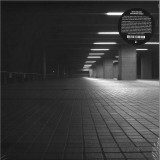
Lucia H. Chung is a Taiwanese experimental artist based in London. She performs and releases music under the alias 'en creux'.
Under this alias, Lucia is interested in the underlying structures of what we call noise and is examining the effects of human interventions into its complex web of tones. Repetition and chance operations are fundamental to Lucia‘s music. It is not built on the dionysian maximalism and symbolic harshness of lots of noise artists; catharsis is not reached via an explosion of sound, but via concentration on sound phenomena and small changes, which, not unlike some minimal disco night your usual mind-altering drone ritual, sucks you in more with every tiny alteration. This music is as intense as it is sensitive.
„The Liberated Mind“, in Lucia‘s own words, „is a sort of split release between two no-input configurations“. For „Wyldside“, she tuned two different feedback mixers with identical routings as close possible, as much as tuning is possible at all on these highly volatile instruments. „The two channels naturally phased in and out from each other. I guess the process was actually akin to Steve Reich's tape techniques on Come Out and It's Gonna Rain. The whole release extrapolated from that point onwards...“ Finding and replicating similar routings/settings on no input mixing desks is the nightmare of every control freak and a task doomed to failure, but in letting go and embracing these failures, patterns emerge. And thanks to Lucia‘s careful work, these patterns become hypnotic as she carves out the essence of each feedback loop, or, as she puts it: „Actually, I did remember the setting for the final track „Earthrise“, but for whatever reasons, I just cannot reproduce the sounds and it's forever lost (at least for this point in time, maybe when the conditions are primed again for the machine, the same sounds will emerge again...). I guess that's really the essences of improvised NIMB setup. Every single sound was the effect of the previous iteration and the cause of the next iteration... (Wait... isn't it just like a Blockchain? Ha!)“
A collection of no-input studio sessions improvised with Mackie 1202-VLZ Pro, TAPCO MIX260FX, MXR Phase 90 and Electro-Harmonix Bad Stone Phase Shifter. All tracks recorded live, no overdubs. Recorded in London in February 2020. Mastered by causeandcondition
Lucia also works as independent curator, producer and broadcaster at Happened. Check out Lucia‘s other albums on Hard Return, Falt and SM-LL.
Buscar:music works
Purple with Black Smoke vinyl / New EP from Exeter's Soot Sprite! 6 songs on a one sided 12", purple smoke vinyl limited to 500 copies. The rising trio have seen Soot Sprite grow from a one-woman lo-fi bedroom pop project to a fully-fledged touring alt-indie shoegaze outfit, championed by BBC6 Music’s Steve Lamacq, Gideon Coe and more. After signing with Specialist Subject for their previous EP Sharp Tongue just before the pandemic, they’re set to continue where they left off, with tour dates in the works and a collection of heartfelt songs that see lead singer Elise Cook learn how to find self-acceptance and belief. She says; “I wrote these songs up until and during lockdown, about turbulent relationships with others, how they affected my relationship with myself, and eventually when they broke down; just being able to accept myself, move on, and celebrate the accomplishments I’d made in my life regardless of others.” A vein of hopefulness runs right through the middle of Poltergeists, though encased within an ocean of murky thoughts, fears and doubts; the lack of a sense of self that many of us experience in relationships is balanced thoughtfully by an epiphany that led Elise Cook to find self-love and a newfound joy for life. Within her beautifully personal lyrics, Cook perfectly exemplifies the confusion and anxiety that often accompanies growing into adulthood. Throughout the tracks, Cook consistently calls herself into question, yet thankfully resolves her insecurities with a profound maturity. Soot Sprite may only be at the start of their exciting journey, but their achingly poignant music is already winning them new audiences far and wide, and their relatability clearly resonates with new listeners and fans alike.
Rare Nigerian Afrobeat-Afropop Album.
First vinyl reissue since 1985.
Solo Album by Ofege Frontman Melvin Ukachi.
First Ever Release Outside Of The African Continent.
180g BLACK vinyl limited to 500 copies (w/obi strip). Non-Returnable.
Melvin Ukachi needs little introduction, the Lagos (Nigeria) based vocalist and bandleader is a living legend. Melvin is known for his fantastic solo albums, his vocals for the afrobeat star-groups M.F.B. and Ozzobia…but his biggest legacy is without a doubt him being the singer and bandleader of Ofege.
Melvin formed Ofege in the early 1970s (when he and the other band members were all still a bunch of teenagers). Due to their vibrant combo of sweet harmonies, hooks & fuzz, Ofege would become one of the most legendary Nigerian groups of all time, with expressive sales and national stardom to follow. At the turn of the century (and because of tracks appearing on various compilations) Ofege would receive international acknowledgment for being the first of their kind and THE ultimate West-African psychedelic funk band!
Melvin Ukachi recorded four milestone albums with Ofege: ‘Try and Love’ (1973) ‘The Last of The Origins’ (1976), ‘Higher Plane Breeze’ (1977) and ‘How Do You Feel’ (1978). When the Ofege story came to an end, Melvin recorded two astonishing solo albums: ‘Evolution-Bring Back The Ofege Beat’ (1981) and ‘I am Ok’ (1985). Both of his solo recordings have now become much sought-after holy grails for collectors and fans alike.
On the album we are presenting you today (I AM OK from 1985) the listener is treated to Ofege’s trademark sound…but we’re also shown a perfect glimpse of the late 70’s afrobeat works combining soul, jazzy rhythms, William Onyeabor style laid back electro funk synths & fluid boogie-danceability. The female backing vocals and handclaps by Princess Bunmi Olajubu (Femi Kuti) also deserve a special mention because they add so much depth and grooves to this amazing record.
Expect some serious local ‘all-star’ guest musicians on this record as well. Next to him playing the synth, Jake Sollo also produced this gem of an album! To top things off the tracks were recorded and mixed at the legendary RAS Studio in Akwa, Nigeria…all slickly engineered by John Malife (Black Children Sledge Funk Band, T-Fire, BLO).
‘I AM OK’ was released on CRS Nigeria in 1985 and is a total Afro-pop-funk classic that begs for a special place in your record collection. It’s tight, funky and Melvin’s soulful vocals are to die for. This record is a monster!
Tracklist:
I'm Ok , I Don't Mind , Come and Dance , We are Fine , Keep on Loving Him , Wanted , I Wanna Hide You
- 1: Midnight Sun
- 2: Disciple Of The Serpent Star
- 3: Vernal Womb
- 4: Dancing In The Ashes
- 5: Two Wolves
- 6: Lord Of Chains
- 7: Spirit Braid
- 8: Iron Woman
- 9: Benighted Blade
- 10: Alone Before The Doors Of The Silent House
Red Wine Vinyl[26,68 €]
They say the best thing for a new band to really find out who they are is to go out and play as much as possible. They see what works and what doesn’t with the crowd as well as watch their peers perform and can learn from the best. For the past 2 years, WORMWITCH, has done just that. Having toured North America with The Black Dahlia Murder, Numenorean and appeared at last year’s prestigious Psycho Las Vegas Festival with Danzig, Dimmu Borgir and many more, the Vancouver 3-piece took it all in and regrouped in the Fall of 2018 to start writing their new album. Heaven That Dwells Within is the follow up to 2016’s Decibel Magazine Year End charting, Strike Mortal Soil. The riffs are stronger, the overall feel the album darker and their love of black metal dimly shines through much more on their past release. The album was mixed and mastered by V. Santura (Triptykon, Schammasch), giving it that much of a gloomier touch. With a tour right out of the gate with Cloak and Uada followed by a European run, the future, though dark in music, can only be bright.
Back in print, now on clear vinyl! Tingling tartness of jingle perfection! In addition to being a pioneer of early electronic music, Raymond Scott generated hymns to hunger, odes to pudding and pilsner, and crafted carols for countless other products, elevating the form of advertisement to an art
If Zappa had written music for commercials, it's not hard to think his approach would have been similar! Pressed on clear vinyl at Third Man Pressing and containing varied styles in both instrumentation and vocalization plus previously unavailable electronic works! Products may contain soy, wheat, dairy, or Mel Tormé.
10th anniversary reissue of this rhythmically churning one-man-band monster of an album, recorded in a single inspired studio session & originally released in 2012 on Editions Mego.
From the original Editions Mego press release:
“For anyone who still associates Oren Ambarchi exclusively with the clipped, bass-heavy tones of solo electric guitar works such as Suspension, this rhythmically churning one-man-band monster of an album-length piece might seem to come out of nowhere. However, listeners who have followed the breadth of his work for the last few years (solo and in projects with collaborators from Jim O’Rourke to Stephen O’Malley and Keith Rowe to Keiji Haino) will have noted how Ambarchi has allowed increasingly clear traces of his enthusiasms as a music listener (for classic rock, minimal techno and 70’s fusion, among other areas) to surface in his performances and recordings, all the time filtering them through his signature long-form structures and psychoacoustic sonics.
Recorded in a single inspired studio session, Sagittarian Domain displaces Ambarchi’s trademark guitar sound from the centre of the mix, its presence felt only as an occasional ghostly reverberated shimmer. Endlessly pulsating guitar and bass lines sit alongside electronic percussion and thundering motorik drumming (familiar from his work with Keiji Haino) at the core of the piece, locking into a voodoo groove like Faust covering a 70’s cop show theme. The work is founded on hypnotic almost-repetition, the accents of the drum hits and interlocking bass and guitar lines shifting almost imperceptibly back and forwards over the beat as they undergo gradual transformations of timbre. Cut-up and phase-shifted strings enter around the half-way mark like an abstracted memory of the eastern-tinged fusion of the Mahavishnu Orchestra’s classic Visions of the Emerald Beyond, before returning for an extended, stark yet affecting come-down coda, equal parts Gavin Bryars and Purple Rain.
While Sagittarian Domain contains traces of a diversity of influences, it mines all of them to uncover something that is clearly an extension of Ambarchi’s own investigations up to this point, exhibiting the same care for micro-detail and surrender to the physicality of sound that are present in all of his work, extending them in new ways to repetition, pulse and rhythm”.
A key proponent of the Korean music scene, Marcus L runs the infamous club Faust in Seoul, pushing forward the local sound and embodying the culture that comes along with it. Evidence of this can be found on the tongue-in-cheek title track Kimchi Slap where Marcus works with Korean rapper Kill.gone for a verse about the local food staple. The EP encapsulates Marcus’ love for techno, industrial & hardcore with a playful attitude sure to make you dance, rounded off nicely with an epically beautiful remix from Hadone.
- A1: Sampler Side A
- B1: Sampler Side B
- C1: Blue Malediction - By Deena Abdelwahed And Mazen Kerbaj
- C2: Norm Hollows Function - By Dieb 13 And Mazen Kerbaj
- C3: Pendulum - By Rrose And Mazen Kerbaj
- C4: Untitled - By Marina Rosenfeld And Mazen Kerbaj
- C5: Chainsaw - By Rabih Beaini And Mazen Kerbaj
- C6: Time Traveler - By Donzilla Lion Nyege Nyege And Mazen Kerbaj
- D1: Trumpet Zoo - By Dj Sniff And Mazen Kerbaj
- D2: Mazens Trumpet - By Electric Indigo And Mazen Kerbaj
- D3: Untitled - By Muqataa And Mazen Kerbaj
- D4: Dreams Of Dust - By Microhm And Mazen Kerbaj
- D5: The Sign To Return Is In The Earths Spin - By Fari Bradley And Mazen Kerbaj
- D6: Now Serving 8190 - By Gavsborg Equiknoxx And Mazen Kerba
- D7: Untitled - By Bob Ostertag And Mazen Kerbaj
Featuring: Deena Abdelwahed, Rabih Beaini, Fari Bradley, Dieb 13, DJ Sniff, Gavsborg (Equiknoxx), Electric Indigo, Donzilla Lion (Nyege Nyege), Marina Rosenfeld, Microhm, Muqata’a, Bob Ostertag, Rrose
Project presentation:
Sampler / Sampled is an album made of two interdependent parts rather than a double-album.
The first part of the project, Sampler, is a trumpet solo album that catalogues the unique sounds and extended techniques that Mazen Kerbaj developed for the instrument in the past 25 years; it consists of 318 pieces ranging from less than a second to forty seconds each, and presenting different sonic materials. This catalogue of sounds works on various levels: first and foremost, it is a trumpet solo that could be played in its original order, or in random mode to create different pieces of music. But it is also a collection of samples that could be used for various applications (ringtones, phone sound effects, cinema…) and, of course, to create new pieces of music based on sampling.
The second part of the project is the composition Sampled for a musician working with loops and/or samples. The composition has one instruction: create a piece of music using solely tracks from Sampler as your sound source (with the possibility to use all kind of effects or treatment). Each interpreter/musician becomes thus a co-composer who appropriates the piece and makes it their own. In this regard, the musicians that were commissioned to play Sampled were chosen from different geographical origins and musical genres to create highly different and personal pieces of music.
One important output of this project is putting in practice the overused idea of music as a universal language. This idea is very present in “free improvised music” where musicians from different origins can meet for the first time and make music together without the need to adapt to different musical traditions. But here, the collective part of creating music in real time is not involved. It is rather the contrary: it starts with one middle-eastern musician creating a new language/vocabulary for his western instrument, to be later used by other musicians from around the globe who will appropriate this vocabulary and use it with their own language/grammar.
The final output of this double faceted album that was recorded during the Covid lockdown proved to be a very efficient new way to collaborate from a distance in times of world isolation, and ultimately put in practice the universality of music by breaking the boundaries of genres that are the most difficult to break.
Via tape loops and synth motifs sent from LA to NY, sound artist Christopher Royal King has teamed with violinist and composer Christopher Tignor toward richly timbral, emotionally gripping works of spontaneity that unfurl immense details with each replay while marrying west coast outboard-ambient to studied east coast modern classical. The resulting debut album, A Wave From A Shore, exhibits both artists' sonic identifiers falling in and out of cooperation before binding into a new entity distinct from either's solitary palettes. A visual artist whose work includes album covers for Thrice and Deftones in addition to video bumps for Adult Swim, Christopher Royal King spent his teenage years cutting his teeth on heavy metal and punk before gravitating, quickly and perhaps unexpectedly, toward experimental composers like Philip Glass and Terry Riley. This unlikely seesaw of influences led directly to King forming the post-rock pillar This Will Destroy You with fellow San Antonio native Jeremy Galindo. Similar to his former band's output, King's solo meanderings impart a mood of buoyancy and contemplation while hinting at darker, more shadowy hues beneath the glimmer, making his music stand apart from the glut of New Age droners and modular-synth influencers.
In February of 1976 Eddie Carmichael left the group “The Voshays” after catching the bandleader/manager stealing from the band. Derry Shepherd and Duncan Bethel left at that time also. About a week later I asked Derry if he would be interested in starting another band and he said sure. At that point Duncan Bethel agreed to participate and he recruited his friend Flynn Emanuel to play trombone. Derry was the manager of the cafeteria at Sears Department Stores in The Pompano Fashion Square Mall and he met Sandy Ficca who was the manager at Chess King Men’s Clothing Store in the same mall. Sandy also agreed to join the group and we auditioned bass players and chose Dave Segal and only one keyboard player auditioned and that was Bob Groszer. We now had all of the personnel for the group and we commenced rehearsing in the recreation center in Pompano Beach, FL at Westside Park. We did a few “Chitlin’ Circuit“ gigs to fine tune the band and music and then moved over to the beach circuit. While there we would perform spring and summer months at “The Ocean Mist” on the Strip in Fort Lauderdale, FL and for the fall and winter months the Big Daddy’s 8600 Club on Miami Beach. After 18 months of constant gigging I suggested that the band go into the studio and record some original music. Now all we needed was some serious financial support and songs. I met a man by the name of Jerry Bullard and convinced him to back the project. We formed our own independent label “Get Off Records” and publishing company “Situated Music”. At that point Dave Segal and Sandy Ficca left the group and Bruce Saddler who was the drummer for The Voshays joined us on the drums for the first two recordings. Sandy Ficca returned as drummer and brought in his old friend and bandmate Daryl Walker to play Bass on five of the six remaining songs. We recorded the entire album in five days at SRS Studios and Triad Studios both in Fort Lauderdale, FL in August of 1977. The first single “Give It Up (Let Yo Funk Fly Free) was a winner released only in the New York tri state area where in two weeks it reached number 16 in the top 100 and was poised to go number one nationwide on the R&B charts in the next two weeks. Henry Stone, owner of TK Records in Hialeah, FL wanted to sign the group as did many other major record labels including Maurice White of Earth, Wind & Fire. But the usual problems of the music business reared its ugly head and the record was pulled from all radio airplay and the group who became disenfranchised with the business of the industry decided to call it quits. Derry Shephard went into Gospel Music production, Sandy Ficca went on to become the drummer for the Pop/Rock recording artists “Firefall”. Daryl Walker is a session player and music teacher, I did studio sessions and played in several cover bands and toured internationally. Bob Groszer toured with Sly Stone and other legendary recording artists. Dave Segal went on to start New York Bass Works in New York. Flynn Manuel became a music teacher in The Broward County School District and Bruce Saddler and Duncan Bethel left the Music industry completely. We were young and not good business people at that time and did not understand the rules of do’s and don’ts of the music industry. But we had three talented songwriters, a great arranger, a killer band and all the financial support that we needed. Looking back if we only had an experienced manager I truly believe Mirror would have gone on to create some great music over the years that followed.
Peace and love all the time,
- A1: Mouse On The Keys - Plateau (Kuniyuki Remix)
- A2: Paul Randolph & Kathy Kosins - Could Cou Be Me? (Kuniyuki Remix)
- B1: Mr Raoul K - Dounougnan Magni (Kuniyuki Remix)
- B2: Kazumi Watanabe - Garuda (Kuniyuki Remix)
- C1: Erika Nishi - Summer Party (Kuniyuki Remix)
- C2: Jungle By Night - Love Boat (Kuniyuki Remix)
- D1: Sth Notional - Song With No Words (Kuniyuki Remix)
- D2: Nabowa - Ries (Kuniyuki Remix)
It works in clubs. it works at after hours. Also, small bars vibrate meaningful on it: the music of Kuniyuki Takahashi enthralls everywhere and is made for heedful listeners, that love the thrill of little musical nuances, shifting in a deeply composed ocean of sound.
In terms of composition, melodic sensitivity, and subtle progression the music of japanese producer, Sound designer and dj stands out. Ambient, Future-Jazz, Deep House, Leftfield Elec-tronics: since more then 25 years the man from Sapporo expresses his emotions with a wide stylistic range.
As Kuniyuki or under pseudonyms like Koss or Newwave project, he released a body of work consisting of numerous albums and EP’s, that display his deep musical consciousness pro-foundly. Now his home label Mule Musiq drops “Remix Works “, an eighth tune strong compila-tion featuring for the second time since 2013 Kuniyuki Takahashi’s very own virtuosity of re-mixing.
A double vinyl that carries the full pallet of his skills – from yacht rock leaning synth-pop and balearic dreams to sweet wave signals and soulful Pop House.
It all starts with Kuniyuki’s Remix of “Plateau”, a tune by japanese Nu-Jazz / Post‐Rock band mouse on the keys, released in 2013 on the short living japanese retalk label. An epic, almost ten-minute-long house voyage, full of discreet acid shades and enlightening Jazz chords, that play spirited tricks on each other’s manic musical preaching.
A new hub solely for the Icelandic talent’s unreleased material, BJARKI will also serve as a platform to launch a wealth of forthcoming audiovisual projects in the coming months, with the label logo designed by Paul Nicholson, NUMBER 3, and all artwork designed by Thomas Harrington Rawle - the creative behind the Care More project. Operating and creating its own storyline with every release, intertwining projects between Harrington Rawle and Bjarki across various mediums, the imprint will also drop a series of offshoot white label releases while being reactive and unveiling random drops across its upcoming schedule. Delivering his first solo release since ‘Oli Gumm’ on трип in 2018, late-February marks the first release on the new label as he unveils his four-track ‘I Wanna Go Home’ EP.
“I want to share more of my unreleased works, especially the tracks that I have created specifically for parties in each city I play. People impact my work a lot, and I would like to share this music directly before or after the show. I don’t see any other way than to set up my own channel or label where I can share all these ideas. Next year will be a lot about sharing stuff and being in direct contact with the audience.” - Bjarki
Opening the label with authority, ‘I Wanna Go Home’ welcomes a quartet of cuts showcasing the genre-spanning polymath at his best, delivering a medley of serious yet playful productions which arc back to previous material while also looking ahead to the future. A creative force with an unrelenting swathe of experimental ideas, influences and directions, this new eponymous imprint looks set to home some of Bjarki’s finest and most unpredictable material to date.
Mercurial London artist Nilüfer Yanya announces her hugely anticipated second
album, ‘PAINLESS’, for release via ATO Records.
‘PAINLESS’ is the follow-up to Nilüfer Yanya’s renowned 2019 debut album, ‘Miss
Universe’, which fully established her as a singular artist and a distinctive voice that
simply has to be heard.
The critically acclaimed ‘Miss Universe’ - a widescreen concept record that took a
tongue in cheek swipe at the most self-involved corners of the health and wellness
industry - was followed last year by the three song EP ‘Feeling Lucky?’, which further
explored Yanya’s fascination with ‘90s alt-rock melodies and drew on themes of
resentment, her fear of flying, and the concept of luck. Pitchfork summed up ‘Feeling
Lucky?’ and her now peerless songwriting aptitude best: “Nilüfer Yanya’s melodies
have a pull so strong they almost necessitate their own law of physics.”
Yanya also re-released her early EPs on vinyl for the first time this year, on the
record ‘Inside Out’. The release is a fundraiser for Artists in Transit, a collaborative
not for profit group she founded with her sister Molly that delivers art workshops to
displaced people and communities in times of hardship.
As the daughter of two visual artists (her Irish-Barbadian mother is a textile designer
and her Turkish-born father’s work is exhibited at the British Museum), creativity was
always destined for Nilüfer Yanya’s future. Now she enters the next stage of her
creative journey - Yanya is running head first into the depths of emotional
vulnerability on her sophomore record, ‘PAINLESS’. The album was recorded
between a basement studio in Stoke Newington and Riverfish Music in Penzance
with ‘Miss Universe’ collaborator and producer Wilma Archer, DEEK Recordings
founder Bullion, Big Thief producer Andrew Sarlo and musician Jazzi Bobbi.
Where ‘Miss Universe’ stretched musical boundaries to include a litany of styles from
smooth jazz melodies to radio ready pop, ‘PAINLESS’ takes a more direct sonic
approach. By narrowing down her previously broad palette to a handful of robust
ideas that revolve around melancholy harmonies and looped industrial beats to mimic
the insular focus of the lyrics, Yanya has smoothed out the idiosyncrasies of previous
releases without losing what is essential to her.
‘PAINLESS’ is a record that forces the listener to sit with the discomfort that
accompanies so many of life’s biggest challenges whether it be relationship
breakdowns, coping with loneliness, or the search for our inner self. “It's a record
about emotion,” Yanya explains. “I think it's more open about that in a way that ‘Miss
Universe’ wasn't because there's so many cloaks and sleeves with the concept I built
around it.” Summing up the ethos of the new album, she adds, “I’m not as scared to
admit my feelings.”
Should stock of ATO0594BI1 sell out, a different standard vinyl format will be made
available (ATO0594LP).
“A distinctive new voice in indie rock, a deeply expressive singer and sharply
inventive guitarist” - Uncut
“On a musical and human level, then, the world needs more people like Nilüfer
Yanya” - MOJO
“A true original” - The Guardian
- 1: Fate Of Man
- 2: 8 Days (Till The End Of Time)
- 3: Prescient
- 4: Back From The Past
- 5: Revel In Time
- 6: The Year Of '41
- 7: Bridge Of Life
- 8: Today Is Yesterday
- 9: A Hand On The Clock
- 10: Beyond The Edge Of It All
- 11: Lost Children Of The Universe
- 12: Fate Of Man (Alternate Version)
- 13: 28 Days (Till The End Of Time) (Alternate Version)
- 14: Prescient (Alternate Version)
- 15: Back From The Past (Alternate Version)
- 16: Revel In Time (Alternate Version)
- 17: The Year Of '41 (Alternate Version)
- 18: Bridge Of Life (Alternate Version)
- 19: Today Is Yesterday (Alternate Version)
- 20: A Hand On The Clock (Alternate Version)
- 21: Beyond The Edge Of It All (Alternate Version)
- 22: Lost Children Of The Universe (Alternate Version)
“Revel in Time”, the third album from ARJEN ANTHONY LUCASSEN'S STAR ONE, is as much of a reaction as it is a contrast to Arjen Lucassen’s previous album, “Transitus” from Ayreon. While “Transitus” is a cinematic experience that you may almost call a musical, “Revel in Time” is a heavy album that is very riff driven and there is more focus on virtuoso musicianship. Similar to its predecessors, “Revel In Time” works as a concept album. All tracks are inspired by different movies that deal with some kind of manipulation of time. There is one thing this time around that is quite different compared to the earlier STAR ONE albums: The first two had the same cast of four singers: Floor Jansen, Russell Allen, Damian Wilson and Dan Swano. However, this time Arjen decided to generally have mainly one singer per track, and a different for almost each track. This shows especially on CD 2, the “Same Songs, Different Singers”-CD as Arjen likes to call it. The guide vocals that were recorded (for the other singers) were way too good to just be guide vocals. Thus, Arjen decided to release a second version of the songs with the guide vocals on them as CD2. At some point he started spontaneously inviting other singers to sing some of these tracks, because he was curious how the songs would sound with their voices. Ultimately CD2 ended up with no less than 9 different singers, all equally as good as the ones on CD1. A total of about 30 different musicians contributed to the new album, not all of them being singers though. The core of STAR ONE remains Ed Warby’s powerful drums as well as Arjen’s guitar and bass work that hold it all together and give it that typical STAR ONE sound. The icing on the cake is the front cover art that was created by Arjen’s trusted favorite artist Jef Bertels.
This is a very special EP. As many might know Toy Tonics started as a sublabel of now sleeping German indie dance label Gomma records. Gomma, along with DFA, Output Records and a few other was knownn for a very ecclectic, different approach in dance music. On this LOST GOMMA MIXES EP you find 4 now lost tracks that came out ca 10 - 20 years ago on Gomma, but fit very well in today’s zeitgeist again. Pete Herbert, In Flagranti, Jacques Lu Cont are featured. Who knows about modern disco - knows these producers. And there is a very special name here too: Nicky Siano. The now legendary New York DJ used to be resident at Studio 54 and other legendary NYC venues of the 1970ies and 1980ies. One of his are remix works was for the Gomma rcords band The KDMS. Pure disco euphoria.
Biosphere is the main recording name of Geir Jenssen (born 30 May 1962),(1) a Norwegian musician who has released a notable catalogue of ambient electronic music. He is well known for his works on ambient techno and arctic themed pieces, his use of music loops, and peculiar samples from sci-fi sources. His 1997 album Substrata was voted by the users of the Hyperreal website in 2001 as the best all-time classic ambient album.
Patashnik was originally released by R&S Records/Apollo in 1994. It was number 1 in NME´s Independent Chart in March 1994 and reached number 50 in the UK official album chart.
The track Novelty Waves was used in Michel Gondry's Levi's 501 Jeans "Drugstore" spot, and holds - according to the Guinness World Records 2004, the record for "Most awards won by a TV commercial".
One reason why Jenssen's work stands out from the flood of early '90s ambient/techno releases is his strong sense of the quirkily creepy -- not in an Aphex Twin mode, but in his own particular way. The contrasting samples of a child quaveringly saying, "We had a dream last night," followed by a rougher sample saying, "We had the same dream," gives opening number "Phantasm" an unsettling feeling. Intensified by the, on the one hand, pretty, on the other, disturbing music, buried synth strings and a soft pulse accentuated by clattering noises deep in the mix, it kicks off the striking Patashnik very well. Though not as openly dark as acts like Lull, for instance, Biosphere still has an edge which isn't just melancholic, it's downright ominous at point. There's the slow crawl of "Startoucher," for instance, with its buried vocal snippets and deep bass drone, or the blend of the space signal atmospheres of "Mir" into the low, brooding intro to "The Shield." Not everything is so shadowy, though, Patashnik is primarily a relax and chill listening experience, but not without its gentle high points. "Novelty Waves," which became a crossover single in some quarters, has a good dancefloor sharpness to it even as Jenssen slyly sneaks in odd drones and samples through the mix. The opening snippet talking about an extraterrestrial disc jockey on "SETI Project" is good for a smile, as well as acting as a sharp lead-in to a fast rhythm track. Mostly, though, things continue on a deliciously unnerving pace throughout, gentle enough to go down easy but still just off enough to ensure you can't call this new age folderol for the rave generation.
Matthew Halsall unveils new band and announces 'Salute to the Sun'
his new album on Gondwana Records
Limited edition Double Clear vinyl, printed on reverse board with Gold foil artwork plus double printed reverse board inner sleeves including download code. Cover Artwork by Daniel Halsall with design and layout by Ian Anderson of The Designers Republic.
Comes packaged in a resealable, re-usable Polypropylene anti-static, acid-free, crystal clear sleeve for maximum protection.
Composer, trumpeter, producer, DJ and founder of Gondwana Records, Matthew Halsall has always worn many hats. But at the heart of everything that he does Halsall is first and foremost an artist and a musician. A trumpeter whose unflashy, soulful playing radiates a thoughtful beauty and a composer and band-leader who has created his own rich sound world. A sound that draws on the heritage of British jazz, the spiritual jazz of Alice Coltrane and Pharoah Sanders, as well as world music and electronica influences, and even modern art and architecture, to create something uniquely his own. A music that is rooted in Northern England but draws on global inspirations.
Salute to the Sun is his first album as a leader since Into Forever (2015) and marks the debut of his new band. A hand-picked ensemble featuring some of Manchester's finest young musicians: Matt Cliffe flute & saxophone, Maddie Herbert harp, Liviu Gheorghe piano, Alan Taylor drums and Jack McCarthy percussion as well as long-time Halsall collaborator, bassist, Gavin Barras who has been at the heart of Halsall's bands for over a decade. For Matthew it was important to have a band based locally and able, pre-Covid, to meet and play each week, and who also performed a sold-out monthly basement session at Yes in Manchester. The album draws energy from these sessions and inspiration from themes and ideas that have inspired Halsall through the years (on albums such as Oneness, Fletcher Moss Park and When the World Was One) ideas of ecology, the environment and harmony with nature.
"I feel Salute to the Sun is a positive earthy album. I wanted to create something playful but also quite primitive, earthy and organic that connected to the sounds in nature. I was listening to lush ambient field recordings of tropical environments such as jungles and rainforests and found myself drawn to percussive atmospheric sounds which replicated what I was hearing (bells / shakers / chimes / rain sticks) and I started to experiment with more wooden percussive instruments such as kalimba and marimba".
Salute to the Sun features lush wholly improvised tunes inspired by ambient rainforest and jungle field recordings, deeply soulful tunes built around hypnotic harp and kalimba patterns, deep Strata-East inspired spiritual jazz grooves and some of Halsall's most beautiful playing and inspiring healing melodies yet recorded.
The album was recorded at the band's weekly sessions, using Halsall's own recording set-up, giving the recordings a relaxed vibe and unforced energy that really lets the music breath. The album is also very much a family affair as Halsall's brother Daniel Halsall, artistic director of Gondwana Records, was an important presence at the sessions and co-produced the album. It is also his memorable artwork that adorns the cover of Salute to the Sun, an album beautifully designed by legendary designer Ian Anderson of The Designers Republic, who also created the covers for the recent archival releases Oneness, Sending My Love and Colour Yes and is one of Halsall's favourite designers. Together Daniel Halsall and Ian Anderson have designed all of Matthew's seven albums to date, so it felt extra-special to bring them together for, Salute to the Sun, an album that Halsall was determined to present in the very best way possible. The album was mixed with another long-time collaborator, George Atkins at 80 Hertz in Manchester, who works tirelessly with Halsall to perfect the sound and was mastered by noted engineer Peter Beckmann who brings an added depth to the sound specially around the bass notes as well as Halsall's trumpet. The magnificent double vinyl was cut as a Half Speed master by Barry Grint at Alchemy Mastering for the best possible analogue experience.
The result is arguably Halsall's most beautiful and complete recording to date, playful, charming and imbued with the warmth of the sun and the energy of life.
Our fascination with Adriaen Willaert's almost infinitely radiant oeuvre led us to
this beautiful, polyphonic monument of a Mass. The combination with the other
works on this LP is no coincidence: it illustrates how the composer was acutely
aware of what was going on musically in Venice, even outside the church walls of
St. Mark's Basilica. He turned folk songs, called Canzone Villanesche, into fourvoice musical gems that to this day leave no one unmoved. It is striking how
Willaert takes different approaches to turning spiritual texts, on the one hand, and
secular songs, on the other, into gripping compositions. For example, the Mass
has a polyphonic structure: one voice begins, the second voice imitates,
embellishes, and passes the torch to a third, fourth, and fifth voice. A braid of
melodies arises; a wall of vocal sounds that seems to never end is erected.
The text is difficult to understand, but here and there you recognize a snippet of
the main melody, the Gregorian melody "Benedicta es," on which all movements
of this Missa Benedicta es are based. It is different with the chansons: they
sound polyphonic, but homorhythmic. Everyone sings the same text at the same
time, so you can hear and understand the lyrics of the different verses very
clearly. Musicologists still debate to this day whether or not it was com- posed by
Willaert. Some say that it could have come from the pen of Nicolle de Celliers de
Hesdin... In any case, the fact that the mystery surrounding this music may never
be solved is no reason for us not to enjoy it to the fullest in the meantime!
Reissue of The Rolf Kühn Orchestra's gently-grooving 1979 album
'Symphonic Swampfire', featuring Joachim Kühn, Philip Catherine, NielsHenning Ørsted Pedersen, Charlie Mariano, Herb Geller and others
For a German jazz musician to find international recognition as a major player
has been and remains a rarity. Clarinetist Rolf Kühn belongs to this elite class. No
one sounds like him on the clarinet; warm, round and masterful, his tone remains
unmistakable no matter what style he may be playing at any given moment. His
play resonates with a maturity and wisdom gathered from a long and rich life of
musical experiences.
Inspired by the captivating and breathtaking landscape of Ibiza, which Rolf Kühn
discovered for the first time in 1970, the album 'Symphonic Swampfire' was
created in 1978. Rolf Kühn had spent many summers in Ibiza, his brother
Joachim is now living there since several years. After Kühn had written orchestral
compositions for commissioned works for film, TV and radio productions, he was
able to fulfill his long- standing wish to record one of his jazz albums with an
orchestra. 'Symphonic Swampfire' is the first collaboration with sound engineer
Walter Quintus, with whom Rolf and Joachim Kühn should collaborate many more
times.
Reinhold Weber, born in 1927, was known as a pioneer of electronic music. In his compositions, Weber placed a focus on twelve-tone music, he became increasingly fascinated in the field of computer music since the 1970s. He produced numerous works at the Studio for Electronic Music at the University of Karlsruhe.
Reinhold Weber was born in Gießen on July 18, 1927. He studied at Robert Schumann Conservatory in Düsseldorf (including composition with Jürg Baur, piano with Max Martin Stein) and passed his exam in composition, theory, piano and ear training with distinction. He completed further masterclasses with Wolfgang Fortner, Hermann Heiss, Oliver Messiaen (composition), Kurt Thomas (choral conducting), Andor Foldes (piano) and Gerhard Nestler (electronic music). Reinhold Weber was a professor at the Baden Conservatory of Music in Karlsruhe and also worked in the Studio for Electronic Music of the University of Karlsruhe. His works have been performed in numerous concerts and were broadcasted by SDR, WDR, NDR, HR, SWF and Radio Bremen. Reinhold Weber died March 25, 2013.
Actor Kurt Müller-Graf was born in 1913. After visiting the Theater Academy of Baden in Karlsruhe, he appeared on stage at National Theaters of Karlsruhe, Kassel and Munich since 1935. During World War II he performed in about 10 feature films by Bavaria Film Munich. After 1945 he played at National Theaters in Karlsruhe, Stuttgart and at Theaters in Nuremberg, Cologne, Munich, Mannheim, Baden-Baden and Burgtheater Vienna. Furthermore he had guest performances in Zurich, Basel, Salzburg and Heidelberg. Kurt Müller-Graf was touring and had broadcasts on radio and television shows at home and abroad. Kurt Müller-Graf died August 10, 2013.
- A1: Stranger Cole & Gladstone Anderson (As Stranger & Gladdy) - Rudies All Around (As Stranger & Gladdy)
- A2: Lee Perry & The Sensations - Set Them Free
- A3: Alton Ellis & The Flames - Blessings Of Love
- A4: Lloyd Robinson & Glen Brown (As Lloyd & Glen) - Rudies Give Up (As Lloyd & Glen)
- A5: The Heptones - Gunmen Coming To Town
- A6: Derrick Morgan - Tougher Than Tough (Rudie In Court) (Rudie In Court)
- B1: Honeyboy Martin & The Voices - Dreader Then Dread
- B2: The Valentines - Stop The Violence
- B3: The Originators - Hot Iron
- B4: Alton Ellis & The Flames - The Preacher
- B5: The Pioneers - Rudies Are The Greatest
- B6: Lee Perry & The Sensations - Don't Blame The Children
- C1: Bobby Aitken & The Carib Beats - Curfew
- C2: Alton Ellis - Don't Trouble People
- C3: Stranger Cole & The Conquerors - Drop The Ratchet
- C4: Derrick Morgan - Judge Dread In Court
- C5: Lloyd Robinson & Glen Brown (As Lloyd & Glen) - No More Trouble (As Lloyd & Glen)
- C6: The Rulers - Copasetic
- D1: Desmond Dekker & The Aces - Young Generation
- D2: The Pioneers - Some Of Them A Bawl (Aka Having A Bawl) (Aka Having A Bawl)
- D3: Derrick Morgan - Court Dismiss
- D4: Clancy Eccles - Guns Town
- D5: Romeo & The Emotions - Rude Boy Confession
- D6: Dandy & The Superboys - We Are Still Rude
Tougher Than Tough – Trojan Rude Boy Sounds is an exclusive release from Music On Vinyl’s Trojan compilation series, which celebrates the best works from the legendary reggae label Trojan Records. It was compiled by Laurence Cane-Honeysett, who also wrote the linernotes. Some of the artists featured on this compilation include Stranger Cole, The Pioneers and Alton Ellis. 2000 individually numbered copies on orange vinyl. The package also includes exclusive Trojan Records and Music On Vinyl coaster.
How can one explain the lasting popularity of the bass clarinet in musical circles from Vienna to Brussels? Perhaps because its frequency range articulates an alternative to conventions of popular music, where "bass" is reserved primarily for rhythmic impulses and the very foundation of the music. Viennese bass clarinetist Susanna Gartmayer's playing can by no means be reduced to just this, rather, it scutinizes the entire sound universe: she can do rhythm and drone, not to mention melody and noise, often all at once. Who would be a more fitting collaborator than Stefan Schneider, with his minimalist rhythms and subtle cosmic exploration?
Together, Schneider and Gartmayer form the project So Sner, which owes its existence to a concert in 2015 at the Approximation Festival in Düsseldorf. Gartmayer's bass clarinet polyphonies so impressed Schneider that he quickly suggested a collaboration. That same year, they began recording the album "Reime" in Kraftwerk's former Kling Klang studio, which in 2015 became workspace and concert venue simply called Elektro Müller. The second part was recorded in the summer of 2020 in Düsseldorf-Kaiserswerth at Stammhaus church, whose interior wood paneling facilitated organic acoustics.
Susanna Gartmayer has been active as a musician and composer in various realms between experimental rock music, improvisation and multimedia sound performance since the early 2000s, releasing the album "Smaller Sad" with Christof Kurzmann and "Black Burst Sound Generator" with Brigitta Bödenauer in 2020. In addition to his solo project Mapstation, Düsseldorf-based musician and producer Stefan Schneider has been pursuing new avenues of experimental music in the here and now for over 20 years, in numerous collaborations with Sofia Jernberg, Krautrock pioneer Hans-Joachim Roedelius, or visual artist Katharina Grosse among others.
So Sner's sound is equally oriented towards experiment and tradition, whose roots can be traced back to the UK of the early 80s: an era in which soul and synth, jazz and industrial, avant-garde and polyrhythm were blended with the help of intellectualism and punk attitude in such a way that manifold sketches of possible music emerged which are only being colorized today. Like So Sner - from the very first stomp to the very last drop.
Olaf Karnik, Cologne, October 2021
"Même Soleil" is the result of a dialog between the French photographer Gaël Bonnefon and the French musician Frédéric D. Oberland initiated by IIKKI, between December 2019 and June 2021.
Self-taught multi-instrumentalist & photographer, Frédéric D. Oberland finds himself at the crossroads of image and sound, favoring a synesthetic approach. He articulates different modes of narration, combining the raw character of the documentary form with the transfigured reality of myth and poetry, allowing him to question notions such as the sacred, the monstrous, the fraternity, while at the same time returning to the political news of the present. Attentive to the pulse of the body, his work is willingly itinerant, modulating between the ripples of dreams, watching the points of incandescence and the bursts of electricity that act as revelations of our presence in the world, here and now. He’s the co-founder of leading bands such as Oiseaux-Tempête, FOUDRE!, Le Réveil des Tropiques, FareWell Poetry and is co-curating the label NAHAL Recordings.
"Fueled by travels and their emanations, Frédéric D. Oberland’s music had to build new horizons this year, outlined by the curves of semi-modular synthesizers, the avalanches of effect pedals and the zigzagging paths of electric circuits. Même Soleil, his third solo album, manages to merge mystical visions of the unconscious and the absurdity of an apocalyptic present in a sensory whirlwind, operating an astonishing mutation with tones still unexplored in his previous releases. A visual as well as a musical journey that takes shape in a book and a record of the same title, Même Soleil is the result of a collaboration with the photographer Gaël Bonnefon. Seeking the tension between the blinding light of day and the glittering visions of saturated night skies, the two pieces in dialogue transcend reality to deliver their own truth, as bright as the first light of the sought-after morning." (Alice Butterlin)
Gaël Bonnefon graduated with highest honours from the Fine Arts School of Toulouse (Isdat) in 2008. He has exhibited at Villa Pérochon, at the Eté photographique in Lectoure, at the 104 in Paris during Jeune Création 2012, at Rencontres Internationales de la Photographie d’Arles and at PhotoEspaña, at the Abattoirs Museum in Toulouse in 2014, at the Château d’Eau Gallery in 2012 and 2019 and in the Vitrine of Frac Île-de-France in 2020. His work is part of the collections of Frac Midi-Pyrénées, Château d'Eau gallery, Kulturamt in Dusseldorf and Kiyosato Museum in Japan ; he participated in Temps Zero projects Berlin, Braga, Rome, Bucarest, Groningen and Thessaloniki. He has also been granted artist’s residencies in Germany, France and Israel. His first book Elegy for the Mundane was published by La Main Donne in 2019. He continues his intimate and dense journey and presents his second publishing, Même Soleil with photographic works from 2009 to 2021.
"At first brutal and declining, the substance of Gaël Bonnefon's photography is just like a gaze that fears being one day extinguished and that is always looking to be born again. In photography as in love, recoil and desire, tension and easement, repetition, wandering and rest, flight and pursuit. Here photography allows itself to be traversed by flashes of life, renewed forces, echoes of far-off kindnesses and lost joys. It sings silently, lover of a thousand faces from which the thread of a single and same image is born, followed without relent, from the snowy peaks of childhood to the lost worlds of the present." (Michaël Soyez)
Rome's Egisto Sopor has been making little waves with his releases for quite a while now. As Polysik, he’s put out music on Legowelt’s Strange Life Records, on 100% Silk label, and on Mike Paradinas' Planet Mu. As ‘TheAwayTeam’ he’s released a DVD ‘Relax & Sleep’ and a cd ‘Star Kinship’ on Japanese label Moamoo, and he's also one half of the low key video unit AAVV (whose work has graced many of the important releases of new lofi electronic movement). This time around he delivers another fine instalment to the Edizioni Mondo's kaleidoscopic catalogue. If you've been following Egisto Sopor's productions over the years, chances are you're already familiar with the visual, highly cinematic, quality of his works – it's music that don't evoke just emotions, it suggests landscapes, painting vivid pictures as it builds up. In the same way, Flora e Fauna tells the story of an extemporaneous, surreal walk in Rome. The 8-track album, organically navigates through imaginary urban and maritime scenarios, with an expansive sound palette that draws on deep and shimmering atmospheres, occasionally drifting from blissful textures and sub-aquatic, swirling moods to eerily quiet, suspended moments, often perfused by subtle field recordings of city life, wild animals and distant shores. Take a deep breath and soak away.
Kapingbdi came together in Liberia, West Africa, during the late 1970’s and had their own unique style. This six to seven-piece band played original compositions in a vibrant mix of African Rhythms, Soul, Spiritual Jazz, Funk and Rock. Led by Kojo Samuels on sax, flute and vocals “Born in The Night” presents the essential tracks from their rare studio LPs produced between 1978-1981. The work has been carefully edited and remastered in 2019 for vinyl LP and a 6-Page Digipack CD, which includes two additional recordings. Kapingbdi toured through Europe and the U.S. and were the only Afro funk band to ever come out of Liberia.
Kapingbdi hail from Liberia, West Africa and have their own imitable style. They effortlessly combine traditional African music in a modern mix of Jazz, Funk, Soul and Rock. The band is a fusion of the old and the new.
The word "Kapingbdi" is taken from the Sierra Leone language Mende and means "born in the night". Kojo Samuels was given the name by his Latin teacher whilst attending high school in Freetown, They often meet and debate at night in the city and soon after Kojo is called Kapingbdi. The name serves as a description of his origin. Born In Lagos, Nigeria in 1943. The son of slave children. His mother from Nigeria and father from Sierra Leone who moved the family to Liberia, during the 1950’s.
Kojo has played music for as long as he can remember. He starts with the harmonica and later becomes a drummer and percussionist in his first band at school. During his art studies 1965-1972, he tours Germany and works as an art teacher in the USA. His band Kapingbdi is reorganized five times and consists of up to seven musicians. In a VW-Bulli he drives the group from concert to concert and if the drummer fails, he jumps in himself. Between 1978 and 1981 three Kapingbdi LPs are produced for the independent label Trikont, recorded in Hamburg and Munich. During this creative period, the band plays at festivals in Africa and Europe. In 1984, the band tours the United States and shortly after, they came to an end.
At their best, Kapingbdi would rouse the audience with original compositions like "Human Rights", justice for all, especially for South Africans, and "You Go Go You Go Come". The officials and employees in the government departments have no time for the common man, for any questions such as job search, scholarship or similar, he receives the answer "go, come back tomorrow" and the same thing the following day. Or "Now Is The Time For Cry For Love." Now it is time to scream for love and finally, time for humanity and justice. Despite immense difficulties, the musicians consciously live and work in Africa and are at home in Liberia.
On April 12, 1980, ordinary soldiers and non-commissioned officers organize a coup against the government. This is an attempt to put an end to a policy of exploitation of the Liberian people. Whilst efforts to eradicate poverty, lawlessness and illiteracy are obvious throughout the country, Liberia is still Americanized to a high degree. This is evident, as the radio programs of that time almost exclusively played American disco music. Under these conditions, the people seek a reconnection to their folk music, and Kapingbdi were aware of this. Kojo tried many times to come together with traditional Liberian musicians. This passion takes him north of the country. Meeting and playing with the old hornblowers and playing music on traditional instruments, such as the elephant tusk.
Kapingbdi make high quality tape copies of their own vinyl LPs and patiently try to displace all unauthorized tapes from the domestic "market". Nevertheless, it is hard to make a living through music in Liberia. Kapingbdi, is now celebrated. The radio plays are in abundance, but royalties are not forthcoming. Their musical link is the feeling of Afrobeat and Highlife, which is found in each of the many Kapingbdi pieces. They embody Jazz, which is understood to be the most refined example of black music outside of Africa. In Liberia, Jazz is virtually impossible to hear. Bright shining names such as John Coltrane, Charlie Parker or Miles Davis were widely unknown. Thus, the Black Jazz, including its Back-To-Africa movement of the 60’s and 70‘s, passes by without leaving a trace in Africa itself.
Kojo's claim at the time, was to make African music with the depth, sensitivity and the freedom of the technical level of Jazz. This makes Kapingbdi the torchbeares. The underpaid prophets in small Liberia. It is the passion with which the founder of the band continues to work on their music for years. Tirelessly, stimulating and encouraging his fellow musicians. This is ultimately responsible for the success of Kapingbdi in Liberia itself. The local audience seems to listen to the band in fascinated astonishment. One wonders about the ability to develop as demonstrated by Kapingbdi on the basis of their music. It is African and unusually jazzy, danceable and better than the American disco music heard on the radio.
Rather than chase the money and the job opportunities in Europe, Kapingbdi are firmly rooted in Africa. The musicians live in Monrovia, the capital of Liberia, at the Kabingbdi workshop, located in the Congotown area on the eastern edge of the sprawling city. Kojo works here as a sculptor, painter, batik artist and musician. The sales revenue that his activities generate, gives him the opportunity to support the development of African Jazz music. The highest percentage of funds are from Germany and Kojo’s work ethic is “to work on your own thing“. The stance taken aims to support the welfare of Liberians and Africans. The other musicians of the group live in a second house that is nearby.
For the sake of consistency, Kapingbdi is a full-time band. However, the revenue, from all of the sources, could not keep them afloat. Equally, as important to the group are Kojos's knowledge of traditional African music and his sculpting skills. His knowledge is shared with others at the afternoon workshops. It is here that they discuss new lyrics, engage in political debate and the self-imposed task of improving conditions in Africa. At times the debate became heated, especially during rehearsals. This was regarded as good and integrative, sowing the seeds of innitiative to keep the band together.
From 1980 to 1985 Kojo also opened and ran the club "Panjebota", located on the grounds of the U.S. Consulate in Monrovia. Almost every evening Kapingbdi perform the song "Wrong Curfew Walk", whose lyrics lament the killing of citizens during the curfew imposed by the Liberian government. When the head of state Samuel Doe hears the song, he behaves agressively and forces Kojo to close the "Panjebota". Kojo had already moved on. Soonafter he meets Fela Kuti at the Africa-Festival and plays concerts in Germany with Cecil Taylor's workshop band.
Kapingbdi is for thinking, dreaming, dancing. What they sing about is what they have experienced. Kojo Samuels is 76 years old today and still follows his vocation as a critical musician, artist and activist.
Ekkehart Fleischhammer / Sonorama 2019 (with the help of original press sheets and the memories of Kojo Samuels)
Pink Vinyl
Drifting on oceans of thunderous stillness, carried away by endless currents, whipped up by waves of darkness devouring you until you see the light. The first album from Platoo, a collaboration between Michelle Samba and Phil Mills, has an unrelenting cadence that grabs you and refuses to let go. A distinctive combination of calming soundscapes and highly-charged energy fitting any occasion, from dancing like lost souls in the empty halls of ancient barracks to ecstatically tripping on a distant desert planet.
To Phil and Michelle creating Platoo was about being given a sense of freedom and exploration, at once shaking off habits and rediscovering forgotten values. Phil's love of the mesh of ''real'' sounds and electronics, and quest to establish a balance where both would feed off each other saw him abandon convention and standard structures, deviate from the beaten path and let things come to life. Michelle's quest to create, to inspire and be inspired, to draw her conclusions from serendipitous events allowed her to break things open and be at ease with letting herself go to create the breathing space needed for this new sound.
What makes their symbiosis fruitful is a common yearning for the unknown, a search for what works without exactly fathoming why it works. The result is something that indeed meets those needs, a strange and beautiful musical exploration.
Canadian pianist extraordinaire Jan Lisiecki has chosen to return to the music of Frédéric Chopin. Following on from Works for Piano & Orchestra (2017) and Chopin: Études (2013), Chopin: Complete Nocturnes features profoundly personal interpretations of some of the most beautiful and best-loved pieces ever written for solo piano. Lisiecki is perhaps most celebrated for his masterfully sensitive and refined interpretative approach. His newest release – recorded last October at Berlin’s historic Meistersaal – not only captures the spirit of Chopin’s pianism, but also represents the time and circumstances in which it was made, as the pianist himself explains: “I’m the first to question why we should record something that has been recorded many times before. But music only lives through performance and is different every time we hear it, even when it’s a recording. I think there was something for me to say with this album. It reflects on the last year and my thoughts on that as well as on the escape and understanding that music gives us.”
"In Vivo" is the result of the photographic work of Klavdij Sluban at the Fleury-Mérogis Young Offender Institution (France) from 1995 to 2016 Beds in addition to his work from Izalco prison, located in El Salvador, from 2008 visiting rooms connected to the music of Gareth Davis.
Gareth Davis is an artist, composer and musician living in Amsterdam. He plays clarinet(s), the result of a somewhat impulsive purchase whilst window shopping in Covent Garden, London, around ten years before the turn of the century. The serendipitous location of a rather wonderful (and equally important, rather cheap) second hand record shop less than 10m from the bus stop required for seven years of schooling, combined with delivering newspapers on a daily basis, lead to a somewhat eclectic, dusty and generally unclassified taste in music.
The result. Activity covering sonic art and contemporary classical music through rock, improvisation and noise with collaborations that have included the premiering of new written pieces by composers such as Bernhard Lang, Peter Ablinger, Toshio Hosokawa and Jonathan Harvey, soloist with orchestras including the SWR Symphonieorchester, Warsaw Philharmonic and Orquesta de la Comunidad de Madrid, performances with groups and performers ranging from the Neue Vocalsolisten and Arditti Quartet through to improvisers Elliott Sharp and Frances Marie Uitti, electronic artists Robin Rimbaud and Merzbow and multimedia work with artists including Christian Marclay and Peter Greenaway.
"In Vivo" is his second solo release after to have recorded a bunch of collaborative albums with artists such as Scanner, Machinefabriek, Steven R. Smith, Kleefstra Brothers, Frances-Marie Uitti, Merzbow, Adain Baker, Duane Pitre and more...
Klavdij Sluban, winner of the European Publishers Award for Photography 2009, of the Leica Prize (2004) and of the Niépce Prize (2000), main French prize in photography, is a French photographer of Slovenian origin born in Paris in 1963.
He develops a rigorous and coherent body of work, nourished by literature, never inspired by immediate and sensational current affairs, making him one of the most interesting photographers of his generation. The Balkans, the Black Sea, the Baltic Sea, the Caribbean, Central America, Russia, China and the Antarctic (first artistic mission in the Kerguelen islands) can be read as many successive steps of an in-depth study of a patient proximity to the encountered real.
His images have been shown in such leading institutions as the Metropolitan Museum of Photography of Tokyo, the Maison Européenne de la Photographie in Paris, the Rencontres d’Arles, the Museum of Photography in Helsinki, the Fine Arts Museum in Canton, the Musée Beaubourg, the Museum of Texas Tech University. His many books include East to East (published simultaneously by Actes Sud, Dewi Lewis, Petliti, Braus, Apeiron & Lunwerg with a text by Erri de Luca), Entre Parenthèses, (Photo Poche, Actes Sud), Transverses, (Maison Européenne de la Photographie) and Balkans -Transit, with a text by François Maspero (Seuil). Since 1995, Sluban has been photographing teenagers in jails. In each prison he organizes workshops with the young offenders to share his passion. First originated in France, in the prison of Fleury-Mérogis with support of Henri Cartier-Bresson during 7 years, as well as Marc Riboud and William Klein punctually. This commitment was pursued in the disciplinary camps of Eastern Europe –Serbia, Slovenia, Ukraine, Georgia, Moldavia, Latvia – and in the disciplinary centres of Moscow and St Petersburg as well as in Ireland. From 2007 to 2012, Sluban has been working in Central America with imprisoned youngsters belonging to maras (gangs) in Guatemala and Salvador. In 2015, he started photographing imprisoned teenagers in Brazil. In 2013, the musée Niépce showed a retrospective of K.Sluban’s work, After Darkness, 1995-2012. In 2015/16, he was awarded the Villa Kujoyama Residence in Kyoto, Japan. K.Sluban is member of national and international jurys, such as prix Niépce, prix de la Jeune Photographie de Niort, prix Leica, All About Photo…
Guitarist and producer HANS DEVILLE cut his rock’n’roll teeth with highly respected ska-punks KING PRAWN. It’s not an uncommon story, and during the pandemic this isn’t the only project born from a musician’s desire to keep creating.
Setting up a studio in his Stained-Glass workshop, a hybrid album of mariachi, sea shanty and twangy western began to develop. Live brass was recorded by his ska punk buddies, even his mum lending an accordion playing hand on first single Porbandar.
In addition to the KING PRAWN brass boys, Richard Glover bass player of the mighty DUB WAR, makes a special appearance on the Latino flavoured “Diva”.
On hearing the works in progress, old time friend Karl “Lost” Horton introduced Hans to “dark country” singer ANDREW J DAVIES. The pair immediately hit it off with Andrew laying down the vocals that very evening, taking influence from his Welsh roots by incorporating four level harmonies, much favoured by male voice choirs, on Porbandar the sea shanty evoking first single. The collaboration continued with half the album featuring the Hastings based vocalist.
It did not stop there. Eager to take the album “on the road”, a band of Hastings based musicians were assembled. The first show in London at Paper Dress Vintage was a sell out. Videos from the night were circulated with festival offers already coming in.
Maniacal Laughter quickly gives way to a non-stop onslaught of irresistible electronics and a ceaseless, pounding groove. Boom! You are embedded in Maedon’s world. Dark and futuristic, her album “Now I have Become Death” is another worthy addition to the Sonic Groove catalogue. This is music that works the body and captures the mind. It’s her 3rd release for the imprint, following up 2020’s “Escape to Berlin” and 2019’s “Against His Will” EP. Maedon crafts some very melodic jams, with refreshing song structure and storytelling trips achieved through excellent sample work and programming prowress. Make no mistake, this is fghting music. It’s blazing hard, with grueling energy, and a fair for the dramatic. Maedon likes relevant content, as tracks like “Rave-Act Never Forget” expose pathetic pledges from poser politicians who have dared to protest against the dance music scene in their past. You have been exposed Biden. The madness continues with the menacing “Destroyer of Worlds”, a massive rave jam with otherworldly synths based around the words of a certain man’s famously guilty post-atomic quote from the Hindu scripture known as the Bhagavad Gita. It’s a reminder of your sins, Oppenheimer. The selection continues to concoct clever experiments with pressure and feels at times like riding a roller coaster thru outer space “Destroy the Status Quo” with subtly pitch-shifting metallic highs and ravey tone-work captivates the mind as gravity drops jerk the body into uncontrollable motion. “Rudersdorf Trip” is a sick adventure into the darkness, with whispered vocals ‘this is what you want this what you need’ leading the charge of hypnotic, spiraling acid. “Childhood dreams” is an excellent ending to the LP, an innovative melodic charmer with nostalgic future vibes pumped up by a broken techno beat. In truth, all the tracks stand out; a solid efort from start to fnish. It serves as a lesson in production for her peers. She enjoys the process, creating a chance for all to dance away their pain. For Maedon, our ears are like trophies to collect. no one is safe.
Forenzics is an exciting new project from former Split Enz members Eddie Rayner and Tim Finn. The project saw two artistic endeavours meet in the middle and started like when Eddie and Tim had been revisiting some of their favorite sections from lesser-known Split Enz works, using them as inspiration and the basis for new songs.
Along with Tim Finn and Eddie Rayner, there are musical contributions from Noel Crombie of Split Enz, Phil Manzanera of Roxy Music, Harper Finn and Elliot Finn. (the latter 2 being Tim’s children). Noel Crombie and Phil Manzanera; both dialled their parts in during Covid lockdown. And even though Eddie and Tim live in the same city they followed the same process. Tim says: “I love working this way, sharing files. You work when you want to, and my singing has an unforced intimacy that is very hard to achieve when there is someone else in the room.”
The Forenzics repertoire, like paintings in an exhibition, is an album of individual works that together form an immersive and cohesive whole. It is a genuine sabbatical journey into the artistic unknown, mapped out by two artists at the height of their creative powers.
Sony Classical release - Levit is one of the few pianists who have performed these works live in their entirety. Completed in 1951, Dmitri Shostakovich’s 24 Preludes and Fugues – a summary of all the major and minor tonalities – lasts some two and a half hours in total, while Ronald Stevenson’s Passacaglia on DSCH, which he completed in 1963, is an unbroken set of variations lasting nearly an hour and a half. The album’s artwork is specially created by the internationally renowned graphic artist and book designer Christoph Niemann, who regularly illustrates for The New Yorker and The New York Times. His illustration for 'On DSCH' offers a playfully abstract counterpart to this musical experience. Formats are: 3 disc set presented in deluxe paper packaging and includes a limited edition printed insert of the cryptogram that Shostakovich used as his musical signature. Also a a limited Collector’s Edition of 'On DSCH' Vinyl Part One: Shostakovich 24 Prelude And Fugues Op. 87' presented on 3LP 180g vinyl set in gatefold sleeve including a download code. This is part one of the full 'On DSCH' album - vinyl 'Part Two: Stevenson Passacaglia on DSCH' follows in February 2022.
Berlin-based violinist Daniel Hope’s latest album takes a deep dive into the rich repertoire of American music, exploring its roots and distinctive qualities. “We know a piece is from America the moment we hear it,” says Hope. “But what makes music sound American?” Daniel Hope – America provides some answers, presenting works by composers as diverse as Leonard Bernstein, Sam Cooke, Aaron Copland, Duke Ellington, George Gershwin, Florence Price, Samuel A. Ward and Kurt Weill in outstanding new classical and jazz arrangements by Paul Bateman for solo violin in different combinations, with vocals, piano, jazz trio, string/chamber orchestra and percussion.
In the years between 2018’s BAMBI and LP3, Minneapolis’ Hippo Campus -- made up of vocalist/guitarists Jake Luppen and Nathan Stocker, drummer Whistler Allen, bassist Zach Sutton, and trumpeter DeCarlo Jackson -- has grown up and into itself. Although the five-piece has been friends since middle school and put out a number of studio releases since its inception, it’s the new record, LP3, that’s the most honest portrait of who Hippo Campus is. It’s also a study in the nuances of growing up -- coming to terms with mortality, the confusing journey of sexuality, bottoming out, seeing decisions from the night before in the harsh morning light; finding your identity as a person and as an artist -- how that can be a collision of elation and shame, painful and joyful all at once. LP3 marks a sort of ego death -- and ultimately feeling okay with that. So much of LP3 was written in the chasm between grappling with the value of your own art and the larger, chaotic context of the world. It traverses the end of relationships, of careers, and the chance of meeting yourself as a brand new person. If you take the signifier of “musician” away, what does it mean? And how do you expand your identity outside of work? Here, it’s something the band works through. And, in the end, it happens with the same ride-or-die crew at your back to hold you down -- or up -- the entire time. Over the last few years, the Hippo universe has expanded outward. Luppen and Stocker both put out solo records as Lupin and Brotherkenzie respectively, and the two also teamed up with Caleb Hinz to put out the debut Baby Boys record while DeCarlo Jackson founded, and collaborated with multiple bands around the Twin Cities, including DNM, Arlo, and FPA. Navigating solo projects and new dynamics and the spotlight alone is humbling, bringing up new insecurities and defense mechanisms. It was challenging in its own way to branch outside of Hippo -- and it made the eventual return to the project feel like coming home. “With LP3, Hippo felt like a very safe space to express those things because you have your best friends around you, rallying behind you,” Luppen says. “And each person could chime in with their own experience. I felt like it was a very safe space to be earnest.” Here, Hippo Campus killed what they knew and started again.
For Reflection 3 we give a warm welcome to Suddi Raval who has had releases previously as one part of Together on FFRR, Thumbs Up Magic, Gorgeous Records and his own imprint T-Wax Records. He has always been involved in the music scene over the years and although known for his love of Acid House, here we see him delve in to the world of Electro.
Suddi re-ignites his passion and serves up 2 Electro jams that are packed with heavy beats, bleeps, big basses, modulated leads and have that authentic original 1980s Hashim-like feel.
Scott works his magic on 2 Electro cuts with rich pads, reverses, modulated leads, crisp drums, panning keys, warm basses, eerie soundscapes, processed and gated vocal samples, Mantronix-esque bass sequences and rolling toms.
All 4 cuts reflect on how Electro was in the 80s and remain as pure as the stuff being made then.
Matasuna's latest tidbit takes us back to the South American continent once again - to Venezuela to be exact. The song "Zambo" by the band "La Retreta Mayor", which was released in 1976 on the self-titled LP, is now available as an official reissue and the very first time ever on a 7inch vinyl single! The 45 is complemented by an excellent rework of the American producer & DJ "King Most" from San Francisco.
The A-side features the original of the song. "Zambo" is a furious mix with versatile influences of Latin, Jazz & Funk. The rich horn section and percussion of the guest quartet bring pure heat to the track - the drums, bass and piano intensify this even more. An absolute heater for any dance floor!
The B-side features the "King Most" Redirection. The talented producer gently takes on the song, keeping the organic vibe of the original but still giving it a different, new side. His re-arrangement and additional in/outro and a new passage in the middle of the song fit exquisitely. Also his crunchy drums and own piano passages are very tasty and give the song an own flavour!
"Alexandro Rodríguez" was born in Caracas in 1952 and is considered one of Venezuela's most important jazz guitarists of the seventies. He studied classical guitar in his early years, played electric guitar in various rock groups and performed at various national music festivals. He also had the opportunity to play as a musician for renowned orchestras such as "Onda Nueva", "Renny Show's Orchestra" on Venezuelan Television and "Radio Caracas TV's Orchestra".
In the late 1970's he recorded two significant works that may be considered a reference in Venezuelan music history. He formed the short-lived band "La Retreta Mayor" to record a self-titled album, which was released as an LP on the Venezuelan label "Discomoda" in 1976. The 10-piece band and numerous guest musicians created a jazz-funk & fusion gem. The band unfortunately broke up right after the recording and did not play live or record any more music.
His self-released album "Busqueda", released in 1978 under his name, was recorded between New York and Caracas and has an excellent reputation not only in connoisseur circles. In 2012, the album was reissued on CD by a Japanese label, proving the influence Alexandro's music still has in the jazz scene today.
Between 1979 and 1982, Alexandro lived in "New York", where he worked as a composer, arranger, performer and orchestrator in the jazz scene with renowned orchestras before returning to Venezuela. Subsequently, his musical career turned to the classical guitar, both as a composer and performer. In 2013, he settled in "Pittsburgh", Pennsylvania (USA), where he continues his activity as composer, arranger, guitarist, bassist and teacher to the present time.
Dark cineastic soundscapes meet african Jazz at times reminicent of Mulatu.
Ahmed Malek was one of the most important musicians of the Algerian scene of the 1970s. His sountrack works that were composed for various Algerian movies of the time fuse Arabic influences with jazz, psych and funk influences Original copies of his vinyl releases have been sold for enormous amounts. For this release we combined the strongest tracks from his releases with a selection of unreleased material straight from the families archive. The vinyl edition comes with a 8 page 12' size booklet, the cd version with a 16 page booklet with lot of unseen photos, an interview with the artist from 1978 and an introduction to Algerian cinema.
Tagliabue’s cosmic music is a transcendental journey through introspection and imagination. The latter has no limits, when stimulated by sounds that slowly shade and snake deeply in the listener’s conscious.
With “Ambiente Sonoro” the Milan based DJ and producer now introduces his debut mini-album. The concept is inspired by the Italian library music of the 70s from Daniela Casa, Egisto Macchi and Piero Umiliani, characterized by the extensive use of electronic, experimental and psychedelic sounds. It is arranged and produced in a contemporary way, alternating dark ambient, tribalistic sounds mixed with abstract electronic and IDM influences from artists such as Biosphere, Higher Intelligence Agency, Global Communication or Coil.
His experience as a music selector and his previous works anticipate the character of this concept album. A record that cannot be placed in a specific genre.
Ancestral rhythms, post-industrial waves, apocalyptic chants and drones, suggest a mental projection into a new planetary system consisting of six bodies with different landscapes kept in orbit by a cosmic sound perturbation. A dreamy state of emotional, protracted and reflective abandonment.
Early support: Vladimir Ivkovic, Cosmo Vitelli, Alexis Le-Tan, Tolouse Lowtrax, Odopt, Ransom Note, Whypeopledance
- A1: Opening Credits
- A2: The Chase
- A3: Saved/Captured
- A4: The Bracelet
- A5: Council Of Draags (Part 1)
- A6: Terr & Tiwa
- A7: The Knowledge (Part 1)
- B1: The Fight
- B2: The Knowledge (Part 2)
- B3: The Initiation
- B4: Escape
- B5: The Big Tree
- B6: The Ritual
- B7: The Duel
- C1: Theft/Zarek
- C2: The Bird
- C3: The Free Oms
- C4: The Purge
- C5: The Journey To Ygam
- C6: Council Of Draags (Part 2)
- D1: The City Of Free Oms
- D2: Robot Attack
- D3: The Fantastic Planet
- D4: The Final Battle
- D5: Terr
- D6: End Credits
White / Pink LPs[30,21 €]
Double BLACK Vinyl, Gatefold sleeve, DL card. René Laloux’s celebrated 1973 sci-fi animation ‘La Planète Sauvage (Fantastic Planet)’, is overhauled with a re-imagined soundtrack by electronic modernists Stealing Sheep and legendary sound innovators The Radiophonic Workshop. This exclusive release is part of Fire Records’ re-imagined score series. “No institution has had a greater impact on the development of electronic music than the BBC Radiophonic Workshop.” The Vinyl Factory. It’s a real pre-Avatar conundrum that Stealing Sheep, with the help of Bob Earland, Dick Mills and Roger Limb from the Radiophonic Workshop, unravel. Creating an ethereal excursion that’s narrated by Roger Limb; like a futuristic Martin Denny, or Dr Who gone ambient techno, with a hint of Forbidden Planet 50 years on. It’s an analogue swirl set in an off-world paradise; a field recording from the future. This is a creative, generation-spanning, union brought together to score this unique cult film. A must for fans of psyche electronica and Stealing Sheep’s formidable ‘Big Wows’ album. “Stealing Sheep devour a broad range of styles, incorporating everything from the dark dance-pop of Grace Jones to the experimentations of Radiophonic Workshop pioneer Delia Derbyshire and John Carpenter soundtracks.” The Guardian // ‘La Planète Sauvage’ is a thing of ambient beauty punctuated with electronic earworms that switches from intensely ominous to otherworldly dream like moments.
Since its launch in January 2019, Deutsche Grammophon’s “XII” has grown with new compositions every month. Renewal has always been part of music, long before the invention of such distinctive categories as “Classical” or “Contemporary”. Deutsche Grammophon’s commitment to the process of musical creation took a fresh direction 2019 with the launch of “XII”. The changing seasons and life’s restless stream of feelings and emotions lie behind the sounds of “XII”, Deutsche Grammophon’s celebration of new works by some of today’s most innovative and creative musicians. Building upon the Yellow Label’s commitment to new repertoire, “XII” presents a series of works with the power to punch through the crowd of monthly releases and establish an online home on influential music-streaming playlists. Their composers, free from rigid genre boundaries, reflect contemporary classical music’s diversity.
St. Paul and the Broken Bones announce their new album ‘The Alien
Coast’, released on ATO Records. Produced by Matt Ross-Spang and
featuring eleven new, original songs, ‘The Alien Coast’ is the first St.
Paul and the Broken Bones album tracked in the band’s hometown of
Birmingham, AL. The arrangement allowed the octet to spend more time
and tap a broader creative community than ever before, resulting in their
most ambitious work to date.
Led by singer and lyricist Paul Janeway - a former bank teller and
preacher-in-training who learned to sing in his church choir - the octet
explore thrilling new territory on ‘The Alien Coast’, a fever dream
convergence of soul and psychedelia, stoner metal and funk, animated
by the very “fire and brimstone” which Janeway invokes in the album’s
opening line. Unlimited studio-time allowed individual members of the
band to experiment with synths and samples on ‘The Alien Coast’, and
even collaborate with Birmingham beatmaker and hip-hop artist Randall
Turner.
Janeway cites a similarly disparate range of influences that wove their
way into the writing for ‘The Alien Coast’, from Greek mythology and
dystopian sci-fi, to works of art like Bartolomé Bermejo’s Saint Michael
Triumphs over the Devil and 17th Century Italian sculpture, to colonialperiod history books. “The title actually came from reading about the
history of the Gulf of Mexico, which is home for us,” he recalls. “When
the settlers - or invaders, really - first came to the Gulf Coast they
couldn’t figure out what it was, and started referring to it as the Alien
Coast. That term really stuck with me, partly because it feels almost
apocalyptic.”
St. Paul and the Broken Bones have reached incredible heights since
breaking out with their first album in 2014. Their previous three albums
each debuted in the Billboard 200, their legendary NPR Tiny Desk has
over 7 million views, they’ve opened for the Rolling Stones, shared the
stage with Elton John, and appeared on several television shows
including Jimmy Kimmel Live, Austin City Limits and more. They were
also the first-ever musical performance on Stephen Colbert’s Late Show.
St. Paul and the Broken Bones announce their new album ‘The Alien
Coast’, released on ATO Records. Produced by Matt Ross-Spang and
featuring eleven new, original songs, ‘The Alien Coast’ is the first St.
Paul and the Broken Bones album tracked in the band’s hometown of
Birmingham, AL. The arrangement allowed the octet to spend more time
and tap a broader creative community than ever before, resulting in their
most ambitious work to date.
Led by singer and lyricist Paul Janeway - a former bank teller and
preacher-in-training who learned to sing in his church choir - the octet
explore thrilling new territory on ‘The Alien Coast’, a fever dream
convergence of soul and psychedelia, stoner metal and funk, animated
by the very “fire and brimstone” which Janeway invokes in the album’s
opening line. Unlimited studio-time allowed individual members of the
band to experiment with synths and samples on ‘The Alien Coast’, and
even collaborate with Birmingham beatmaker and hip-hop artist Randall
Turner.
Janeway cites a similarly disparate range of influences that wove their
way into the writing for ‘The Alien Coast’, from Greek mythology and
dystopian sci-fi, to works of art like Bartolomé Bermejo’s Saint Michael
Triumphs over the Devil and 17th Century Italian sculpture, to colonialperiod history books. “The title actually came from reading about the
history of the Gulf of Mexico, which is home for us,” he recalls. “When
the settlers - or invaders, really - first came to the Gulf Coast they
couldn’t figure out what it was, and started referring to it as the Alien
Coast. That term really stuck with me, partly because it feels almost
apocalyptic.”
St. Paul and the Broken Bones have reached incredible heights since
breaking out with their first album in 2014. Their previous three albums
each debuted in the Billboard 200, their legendary NPR Tiny Desk has
over 7 million views, they’ve opened for the Rolling Stones, shared the
stage with Elton John, and appeared on several television shows
including Jimmy Kimmel Live, Austin City Limits and more. They were
also the first-ever musical performance on Stephen Colbert’s Late Show.
EELS release their fourteenth studio album, ‘Extreme
Witchcraft’, via PIAS and the band’s own E Works
Records.
EELS leader Mark Oliver Everett, aka E, co-produced the
record with PJ Harvey producer and guitarist John Parish,
marking the first time the two have recorded together since
2001’s ‘Souljacker’ album.
EELS have had one of the most consistently acclaimed
careers in music. The ever-changing project of principal
singer / songwriter E (Mark Oliver Everett), EELS have
released 13 studio albums since their 1996 debut,
‘Beautiful Freak’. In 2008, E published his highly acclaimed
book ‘Things the Grandchildren Should Know’ and starred
in the award-winning ‘Parallel Worlds, Parallel Lives’
documentary about the search to understand his quantum
physicist father, Hugh Everett III. 2020’s ‘Earth To Dora’
album, received extensive critical praise, and was
described as “their sweetest natured album ever” by The
Independent and awarded four stars in MOJO and NME.
Deluxe box set features 45rpm 180g translucent yellow
double vinyl LP in heavy cardboard packaging, lenticular
print, custom EELS Ouija board, CD with booklet and an
A5 sticker sheet.
Single LP format pressed on 180g vinyl with screen printed
poster and digital download.
Tourdates - March 11 Telegraph Building Belfast, 12 Olympia
Theatre Dublin, 14 Roundhouse London, 15 Albert Hall
Manchester, 16 Barrowland Glasgow, 17 Rock City Nottingham,
18 O2 Guildhall Southampton.
EELS release their fourteenth studio album, ‘Extreme
Witchcraft’, via PIAS and the band’s own E Works
Records.
EELS leader Mark Oliver Everett, aka E, co-produced the
record with PJ Harvey producer and guitarist John Parish,
marking the first time the two have recorded together since
2001’s ‘Souljacker’ album.
EELS have had one of the most consistently acclaimed
careers in music. The ever-changing project of principal
singer / songwriter E (Mark Oliver Everett), EELS have
released 13 studio albums since their 1996 debut,
‘Beautiful Freak’. In 2008, E published his highly acclaimed
book ‘Things the Grandchildren Should Know’ and starred
in the award-winning ‘Parallel Worlds, Parallel Lives’
documentary about the search to understand his quantum
physicist father, Hugh Everett III. 2020’s ‘Earth To Dora’
album, received extensive critical praise, and was
described as “their sweetest natured album ever” by The
Independent and awarded four stars in MOJO and NME.
Deluxe box set features 45rpm 180g translucent yellow
double vinyl LP in heavy cardboard packaging, lenticular
print, custom EELS Ouija board, CD with booklet and an
A5 sticker sheet.
Single LP format pressed on 180g vinyl with screen printed
poster and digital download.
Tourdates - March 11 Telegraph Building Belfast, 12 Olympia
Theatre Dublin, 14 Roundhouse London, 15 Albert Hall
Manchester, 16 Barrowland Glasgow, 17 Rock City Nottingham,
18 O2 Guildhall Southampton.
The latest addition to Chick Corea's remarkable discography is Chick
Corea Akoustic Band 'LIVE', the long-anticipated reunion of his beloved
Akoustic Band with bassist John Patitucci and drummer Dave Weckl,
together as a trio for the frst time in more than two decades
Under any circumstances, these thrilling live recordings would be a welcome
addition to Corea's prodigious discography. With the news of his passing still so
fresh in listeners' minds, its release comes as an opportunity for fans to bid
farewell while cherishing the communal energy and playful vigor that made the
pianist a favourite of jazz lovers around the world for nearly 60 years. 'LIVE', the 2-
CD/3-LP set was recorded January 13, 2018 at SPC Music Hall in St. Petersburg,
Florida. The trio's intricate interplay and highwire jousting refects more than 30
years of collaboration between Corea's Akoustic and Elektric Bands and serves as
a celebratory reminder of Corea's singular genius, with more than two hours of
inspired playing and spirited camaraderie.
Chick Corea attained iconic status in music. The late keyboardist, composer and
bandleader was a DownBeat Hall of Famer and NEA Jazz Master, as well as one
of the most nominated artists in GRAMMY Awards history with 68 nods - and 24
wins, in addition to 4 Latin GRAMMYS. From straight-ahead to avant-garde, bebop
to jazz- rock fusion, children's songs to chamber and symphonic works, Chick
touched an astonishing number of musical bases in his career after playing with
the genre-shattering bands of Miles Davis in the late '60s and early '70s
- A1: Roberto Musci - Kami Shintai (Lion's Drums Edit)
- A2: Vasilisk - Awakening (Lion's Drums Edit)
- B1: Budi Und Gumbls - Tanz Der Korperlinge (Lion's Drums Edit)
- B2: Freddy Spins - Journey To Middle Earth (Lion's Drums Edit)
- C1: Roberto Musci & Lion's Drums - Alap On Benares
- C2: Manos Tsangaris & Lion's Drums - Crying Tafel
- D1: Tullio De Piscopo - Fastness (Lion's Drums Edit)
- D2: Suzanne Ciani - Paris 1971 (Lion's Drums With Roberto Musci Lost Tapes Remix)
Lion's Drums full length exists as en exploration in multiple dimensions. First by challenging the notion of the album format by presenting a body of work that lies snuggly between remixes, edits and original works and secondly as a means to delve into the transcendent potential of the drum. The album sets the tone by putting these two concepts fully on display with its hypnotic chant, swaying one into ease over the first two songs. In orderly cue folding and unfolding, meditatively through, melodies as muddied pastelle whispers cast over the measured language of the drum. Breaking away from the musing themes of the opening songs we find an ecstatic ritual in "Tanz der Korperlinge" and "Journey to Middle Earth", two distinct varieties but both of the same perennial species. Inky ether seeps back in through the second half of the album with a peak of frenzied tumbling toms and incongruous textures hovering above in the Manos Tsangaris' collaboration "Crying Tafel" and his re-imagining of Tullio De Piscopo's unhinged drum excursion "Fastness". The closing exemplifies the edit/remix/original ethos proposed for this work with Lions Drums drawing from tapes and original material of electronic pioneers Suzanne Ciani and Roberto Musci. Drawing from unreleased music and song sketches by the original artists as well as field recordings from travels & studio sessions made by Roberto Musci & Manos Tsangaris in the 80's and early 90's he constructs a side winding journey through playful textures and ethereal moods.
- A1: Nanbu Ushioi-Uta (Feat Kifu Mitsuhashi)
- A2: Isohama Bon-Uta (Feat Toshiko Yonekawa)
- A3: Hohai-Bushi (Feat Kifu Mitsuhashi)
- A4: Otemoyan (Feat Toshiko Yonekawa)
- A5: Aizu Bandaisan (Feat Kifu Mitsuhashi)
- B1: Saitaro-Bushi (Feat Toshiko Yonekawa)
- B2: Soma Nagareyama (Feat Kifu Mitsuhashi)
- B3: Yagi-Bushi (Feat Toshiko Yonekawa)
- B4: Asadoya Yunta (Feat Kifu Mitsuhashi)
- B5: Konpira Fune Fune (Feat Toshiko Yonekawa)
Following the already classic Wamono A to Z trilogy, 180g presents an exceptional collection of jazz funk / rare groove tunes recorded in the mid-seventies at the Nippon Columbia studios by three giants of Japanese music: arranger Kiyoshi Yamaya, koto legend Toshiko Yonekawa and shakuhachi master Kifu Mitsuhashi.
- 180g heavy vinyl pressing, reverse board jacket
- Fully licensed Nippon Columbia masters available for the first time outside of Japan
- Mastering and lacquer cut by Jukka Sarapää at Timmion Cutting Lab, Helsinki, Finland
- Artwork by Nker
---
Born in 1932 in Tokyo, Kiyoshi Yamaya started his musical career in 1953 when he played in various jazz bands in town. In 1957, Yamaya joined Nobuo Hara's famous jazz big band Sharps & Flats as a baritone saxophone player and started composing, arranging, and recording for them and other big bands. He became a key jazz figure in Japan in the sixties together with Norio Maeda and Keitaro Miho, both jazz pianists, composers and arrangers, by forming the Modern Jazz Three Association – which aimed at improving the level of Japanese jazz composition and arrangement. In the mid-seventies, his Contemporary Sound Orchestra explored jazz funk fusions with traditional Japanese melodies and instruments such as the shakuhachi, koto, biwa, and shamisen. These works were recorded for a series of panoramic Japanese albums released domestically on Denon and Nippon Columbia, from which the tracks on this compilation are taken from.
Toshiko Yonekawa, born 1913 in the city of Himeji, not so far from Osaka, is the eldest daughter of koto and shamisen master Kin'o Yonekawa. She started studying both instruments with her talented father from the age of 3, played in her first concert at 8, and was only 12 years old when she first appeared on national radio. Her unique style of koto playing is widely recognized due to the extreme accuracy of the intonation and rhythm, as well as the unequaled beauty of the instrument's sonority. After a life decorated with awards and prizes, Toshiko Yonekawa was named a Living National Treasure in 1996.
Born in Tokyo in 1950, Kifu Mitsuhashi is a great master of Koto style shakuhachi. After completing the NHK Hōgaku Training Program in 1972, Mitsuhashi became a member of Pro Musica Nipponia, a group of leading composers and top-ranking musicians devoted to performing a wide-ranging repertoire of classical and contemporary compositions from both Japan and the West – in which all music is performed by traditional Japanese musical instruments. Mitsuhashi has toured the world for hundreds of recitals, also as a soloist, and has performed his art with the greatest ensembles such as the BBC Symphony Orchestra and the Berliner Philharmoniker. In 2020, Kifu Mitsuhashi was awarded the Order of the Rising Sun.
---
All tracks selected and compiled by Greg Gouty and Maxime Brottes, with the assistance of Ryohei "Nitchiku-kun" Tanaka.
All tracks licensed by Nippon Columbia, Japan.
Mastering and lacquer cut by Jukka Sarapää at Timmion Cutting Lab, Helsinki, Finland.
Artwork by Nicolas Kerembellec (Nker.fr).
Proofreading by Brian Durr (Diskotopia).
Executive producers: Greg Gouty and Maxime Brottes.
180GWALP04 - Manufactured and distributed by 180g.
As Could Change begins, you'll notice how little audio material is really needed for your brain to start turning things into things. The merest slice of a plosive becomes a beat. The notes buried in every vowel are a bass line that nobody's fingers can reach. And of course the lyrics are the music: a synthetic voice, stripped of its humanity, that will relentlessly call to your brain like a siren and beg you to make sense of what doesn't. This piece isolates your perceptive abilities in the audio realm the way an optical illusion works on your eyes. Its melody is the amount you'll struggle to turn sound into sense. On top of that, it's delightfully fucking annoying. Marc Matter first came around as part of Institut fuer Feinmotorik, The Durian Brothers and Salon des Amateurs and has been politely shoving vocal recordings through various sorts of blenders ever since. (Angela Sawyer)
Rare Groove Spectrum Vol. 2 is another solid collection of re-works and re-imaginings taking in a broad range of classic tracks, traversing jazz funk rarities, balearic digs, latin groovers and more. Backed by a stellar group of Melbourne musicians including members of The Bamboos & Menagerie, Lance continues the tradition of creating "live re-edits" demonstrated on the initial volume - all pulled off with an inimitable style and playfulness, though always with an obvious love for the foundations.
As Lance says: "Some of these versions can almost be looked at as DJ re-edits, sometimes we're extending what may be a really short track into something longer, or teasing out the elements in a song that really make it work on a dance-floor. It's essentially what someone does with a club re-edit, except we went the extra step and re-recorded the whole thing with a live band"
From Carly Simon through to Mongo Santamaria via Marcos Valle and Pat Metheny - and following the championing of Rare Groove Spectrum Vol. 1 by the likes of Gilles Peterson, Craig Charles, Jazz FM and more - this second volume of Lance Ferguson's Rare Groove Spectrum is sure to hit the sweet spot.
- 1: Apocalypse Whenever
- 2: Summer Lightning
- 3: Baby Blue Shades
- 4: Peachy
- 5: When The World Was Mine
- 6: Wishing Fountains
- 7: Electric Circus
- 8: Nightclub (Waiting For You)
- 9: Life Was Easier When I Only Cared About Me
- 10: Heaven Is A Place In My Head
- 11: Silently Screaming
- 12: Grace (I Think I'm In Love Again)
- 13: Symphony Of Lights
Bad Suns sound – dreamy '80s pastiche fanked by Stratocasters through
cranked Vox amps, pulsing synths, and palpable rhythmic energy – that
endeared listeners to the band in the frst place, and their fourth LP,
Apocalypse Whenever, uses that musical foundation as the jumping-off
point for their next evolution
Conceived as "the soundtrack to a movie that doesn't yet exist," the 13- track
album, helmed by longtime producer Eric Palmquist (MUTEMATH, Thrice) at his
Palmquist Studios and the band's North Hollywood rehearsal spot, is more
conceptually rigorous than anything they've ever attempted – but no less
compelling or accessible. "We also knew we wanted the album to have a throughline, a story from beginning to end,"frontman Christo Bowman explains, so the
band did what any good directors would: They assembled a mood board, fltering
their neo-noir version of Los Angeles through the dreamlike haziness of author
Haruki Murakami, the futuristic fair of Terminator 2: Judgment Day and Blade
Runner, and the lifted cinematography of Spike Jonze's HER.
These disparate infuences don't just offer Apocalypse Whenever an expanded
palette of sonic choices to color Bad Suns' airtight hooks – they help give the
songs an emotional complexity that works on a multitude of levels depending on
how listeners choose to receive them.
- A1: Move D / Dman - Badboy (Remix For Mc Uproar)
- A2: Sinoesin - Demiconductor
- A3: Robi - Two Spheres
- B1: Dogpatrol - South Side Pool Hall
- B2: Retrogott - Suckerdeejayz
- B3: Форм - Dve Gory
- C1: Ron Trent - 25 Strings (Remix For Dve)
- C2: Am Kinem - 4 Ava
- C3: Paradise Grey - 873
- D1: Lowtec - Roaming The Street
- D2: Jürgen Ratan - Display
- D3: U-I - Noon At Lagoon
- E1: Lauer - Pioneer Housing Area
- E2: Andy Hart - Water
- E3: Tito Wun - Thewayo
- F1: Paingel - Blind Backen
- F2: Will Saul - Avalon
- F3: Jus-Ed - Cachupa (Original Mix)
- G1: Axel Boman - Don’t Breathe Yet
- G2: Damiano Von Erckert - Desert Scorpion
- H1: Cinthie - Ibiza Rave Tune 3000
- H2: Wolfey - Optimism Bias
AVA. Records celebrates its 10th anniversary with 52 artists. “10 Yahre” is a 4LP compilation housing 22 tracks, a printed 30 pages magazin and a mixed CD. All wrapped in a custom made silkscreen sleeve, also including a textile keychain and stickers. Sonically spanning from ambient to techno, 10 Yahre carries new and exclusive material, all woven around the label’s decade focus on dance floor culture, started 2011 in Cologne, Germany.
The 4LP vinyl includes music by: Am Kinem, Andy Hart, Axel Boman, Cinthie, Damiano von Erckert, Dman, Dogpatrol, форм, Jürgen Ratan, Jus-Ed, Lauer, Lowtec, Move D, Paingel, Paradise Grey, Retrogott, Robi, Ron Trent, Sinoesin, Tito Wun, U-I, Will Saul and Wolfey.
The mixed version of the entire compilation is contributed by Sally C.
The full color magazin and video includes works by: Alina Bader, Andy Kassier, Angel, Anna Beil, Ata Macias, Bailey Keogh, Damiano von Erckert, Dirk Jeans & Lou de Bètoly, Funkycan, Guido, Jana Marei, Jana Maria Dohmann, Joana Pratschke, Johannes Wohnseifer, Juri Bader, Kuchenbaum, Manuel Fischer, Maria Sécio, Martin Fengel & Public Possession, Mathias Schmitt, Maximilian Schweizer, Michael Satter, Naum Hirsl, Nicolas Wenz, Peter Wolff, Rein Vollenga, Rucksack Leer, Stelan Mergenthaler, Suzanne Caroline de Carrasco, Twit One and Yves Taron Harouche.
Compiled by Juri Bader and Damiano von Erckert, mastered by Enyang Urbiks. Design and concept by DVE 1989.
Cardinal Fuzz / Acid Test are proud to present to you the debut LP from Black Holes Are Cannibals – ‘Surfacer’.
Formed around the uber talent of Chris Jude Watson (founder of ‘Snakes Don’t Belong In Alaska’) who in BHAC found a band to take his vision to the outer most limits. BHAC are a collective with a varying line and each time they record all the music is improvised as they let their collective and innate abilities guide them, but what does bind them are the touchstones of Drone and Minimalism that runs through the music they create or just plain HEAVY. Call them Drone Metal or Psychedelic it matters not as the music created is an immersive, all consuming and thought-provoking transcendental listening experience that awaits those brave enough to take the ride with BHAC.
‘Surfacer’ was recorded at First Avenue Studios in Newcastle by the band using a TASCAM DR40 and is the embodiment of pent-up emotions gathered and endured during lockdown as they zap out every ounce of feeling and anguish into this recording.
‘Surfacer’ is not an album for the faint of heart with 2 long tracks of transcendence that will challenge and push you to lose yourself in the sonic experience of the timbre / vibrations of droning instruments and throat vocalisations as BHAC weave together mesmerizing waves of sonic texture.
‘Surfacer’ draws influence from bands like Neptunian Maximalism, Qujaku, Neurosis and the visual work of Andrei Tarkovsky, Kenneth Anger and Larisa Shepitko which influence the energy and darker sounds of the music while still taking influence from more traditional psychedelic sounds and experimental places like Taj Mahal Travellers, Suzuki Junzo, Pauline Oliveros, Vahvistusharha, and Tōru Takemitsu aurally and visual energies from occult works like Jodorowsky's 'Holy Mountain', Helena Blavatsky and Hilma Af Klint's Alterpieces 1-3.
As Terence McKenna might have said – BHAC are best experienced when listened to in complete solitude in a dark room while you are doing nothing else. To experience this album to the fullest, you must not have any distractions. Just sit down, relax, plug in, and let this album take you up into outer space.
‘Surfacer’ is pressed on Heavy Black Vinyl and presented in a 350gsm Outer Sleeve with artwork that perfectly matches the music drawn by James Watts (Inspiration coming to James from an article on beaked whales being "more surfacer than diver" before we had that jam and thats what inspired his drawing of an abstract beaked whale skull for the cover).
Miles Kane is back with brand new album 'Change the Show', set for release on 21st January 2022 via BMG.
Following a chance “no frills session” with psych-rock duo Sunglasses For Jaws at the band’s Hackney studio, Miles’ fourth solo album ‘Change the Show’ really began to take shape. “I saw myself in their energy, but also their taste and their knowledge of music,” Miles explains. “It was the first time I’d felt old!”
Opening with the honest soft croon of ‘Tears are Falling’, the album is a joyous ride from start to finish and features a surprising, but spectacular appearance from Grammy-nominated singer Corinne Bailey Rae for a duet on ‘Nothing’s Ever Gonna Be Good Enough’. ‘Don’t Let It Get You Down’, the first track released from the record, is Miles Kane at his very best: energetic, infectious and full of swagger, the track opening with a sample from fellow Wirral alumnus Paul O’Grady. It's an album that best represents Miles himself: charmingly authentic, and like nothing else you'll hear in pop music today.
“This album was born out of an intense period of self-reflection; having all this unexpected time on my hands,” Miles said of the last 18 months. “I wrote songs about big highs, big lows, daydreams, true friends and deep feelings. I learnt to let the future unfold of its own accord, while staying true to myself and that has led to what feels to me like a really uplifting album!”
A record for fans both new and old, ‘Change the Show’ is the Miles Kane album we’ve all been waiting for. The apotheosis of his previous works, incorporating those classic rock and glam influences, but focusing more closely on Motown, soul, and Fifties R&B.
First ever box set from one of the most thrilling bands of the Twentieth
Century.
Deluxe 7” singles box set featuring the phenomenal original run of singles
with two bonus singles exclusive to this set. Seven 7” singles housed inside
a lift-off lid box with a booklet featuring an essay by Clinton Heylin,
reminisces from Thurston Moore, Henry Rollins, Mark Lanegan X and Dan
Stuart, rare photographs and flyers, new exclusive issue of the ‘Fire of Love’
fanzine, Ruby Records postcard and a ‘Gun’ button badge.
If ever there was a band seemingly determined to come from nowhere and
go straight back there, it was The Gun Club. Jeffrey Lee Pierce’s search and
destroy combo was spawned by the LA punk scene in 1979. Two years later
their first LP, the incendiary ‘Fire Of Love’, was spewed out by Slash
Records, a matter of months after the punk zine Pierce wrote for, and the
label named itself after, breathed its last. ‘Fire Of Love’ was one of the 80’s
genuinely shape-shifting US debuts, igniting post-punk depth and minting
genres including blues, psychobilly and Americana.
Jeffrey Lee Pierce was an extraordinary character. Learning to play guitar at
the age of 10, he quickly immersed himself firstly in reggae and later the
Delta Blues, particularly works by Tommy Johnson and Robert Johnson. By
1976, he had become obsessed with Blondie, going on to become President
of the West Coast Blondie Fan Club. It was Jeffrey Lee Pierce who
suggested to the band they cover ‘Hanging On The Telephone’. The Blondie
connection would later resurface in 1982 when Chris Stein signed and
produced The Gun Club for his Animal Records label. In 1996 after releasing
seven studio albums, 37-year-old Jeffrey Lee Pierce sadly passed away
following a stroke. What he left behind is a legacy of work that has had a
prolific effect on some of the most distinguished rock acts of the past 20+
years, these include Nick Cave & The Bad Seeds, Sonic Youth, The White
Stripes, Mark Lanegan, Primal Scream and The Black Keys.
“Jeffrey was a human tornado. Yet during the most turbulent points in his life,
he was able to tap what seemed to be a limitless supply of astonishingly
beautiful music. Even now, songs like ‘Flowing’ and ‘Desire’ catch me up.
The immense power that passed through Jeffrey, like an electrical current,
informed his amazing body of work. That level of unrelenting heat and
incandescence is simply not survivable. I wouldn’t wish it on anyone.” -
Henry Rollins (April 2021)
Six 7” singles reprinted with original artwork. Additional ‘Miami Demos’ 7”
exclusive to this box set. All singles remastered especially for these vinyl
editions.
Aagyr Ferboden, a newborn noise project led by New Zealand songwriter Charlie Ryder. As a member of the band Yumi Zouma, Ryder’s typical work veers towards the pop-leaning side of alternative music - however Aagyr Ferboden finds the guitarist foregoing traditional structures to dive into more distortion and drone-filled soundscapes. With a debut album scheduled for release in late 2021.
“Like most things in life, our normal workflow can sometimes need a counterbalance, and over the years I’ve found that becoming part of a current helps to recalibrate from time to time. I’m thankful to the rest of the gang and our manager Phil for encouraging me to share these works, and I hope they can be helpful to others like they’ve been for
Pink Vinyl
Olli Aarni (born in 1988) lives in Helsinki. He has a Master of arts (Finnish language) from the University of Helsinki in 2016, makes sounds, music, video, sound poetry and other things. Does tricks on a skateboard. Works as a publishing editor, though quite selectively these days. "Loput" is his new album after releases on Longform Editions, Mappa, Ikuisuus, Aguirre Records (Lichen Gumbo) and many other labels.
repressed !
Some people are just not destined to have enough sleep.When you don't sleep enough the world appears to be a different place, compared to the way it is when the mind is fully rested. In such cases very different scenarios may occur.
Starting with a dreamy melody of Roma Zuckerman's 'Sleep not found', which inspired the entire 008 album, and ending with a thirteen minute live recording by a_000, the side project of Alex Backdrop, the entire record has a dreamy and tripped out flow. 008 continues the tradition of gatefold double EPs as conceptual album.All tracks are selected around a particular story, a trip, and presented as a continuous sonic landscape.All tracks are structured in a way that they can be mixed one with another an endless amount of times making a continuous loop, a trip, that needs only end when the party stops. Kraviz works without release dates or deadlines, enabling her to achieve a certain sound bank to shape the story, unmasking the thoughts and unravelling like a dream. A1. Roma Zuckerman - Sleep Not found (North Edit) Apart form the fact that he leaves in Krasnoyarsk in the middle of Russia, very little is known about Roma (short version of the name Roman). But listening to his music and engaging in random short conversations late at night makes it clear that there are really a lot of things going on Romas mind... Minimalistic yet emotionally complex, his music always stands out with it's murkiness and signature moodiness that Roma creates like nobody else.
A2. Deniro - G Deniro continues the record's journey with his new live cut that like pretty much everything he did so far is a beautiful sparse atmospheric groover. He says he wanted it to be angry and it its done with triggering synths from the tr909 and tr808.
B1. Maayan Nidam - Infinite Rattle
Maayan was born in Tel-Aviv. She does not like computers and prefers to record her music live using hardware only. In order to do so she built her incredible studio in Berlin where she recorded "Infinite Rattle'.There is much more to come from Maayan on
B2. Bbbbbb - Prins Polo Caramel milkshake.
Side project by Bjarki-bbbbbb. Like any other normal Icelander, Bjarki really likes ice cream. In Iceland they are absolutely crazy about it.They walk the streets, ice cream in hand, even when its freezing cold outside. But even more than that Icelanders like Milkshakes with all sorts of added cookies and candies. Bjarki's favourite is called Prince Polo after the name of a chocolate bar. He always believed Prins Polo was an Icelandic brand but a couple of months ago somebody proved him wrong.
C1. Exos- dub jazz
In Iceland Exos is a legend. Everybody knows him there. He's been playing incredibly powerful and technically advanced techno sets since the late 90s and releasing delicious dub techno on Icelandic label Thule. Nina always appreciated his subtler, dubbier side, and this short recording a the continuation of it.
C2. Maaayn Nidam - Justice for some
This second live recording was a perfect fit for this album. Maayan has managed to create a particular mysterious night time dreamer here. Sound wise it's even more unique. It took a few times to get the master right, because we wanted to keep the original breathing of the machine that has captured a seriously freaky vibe. Maayan has always been one of Nina's favourite DJs as they share a similar attitude towards music. But after this tune she has also reserved a place in Nina's collective of favourite producers. D1. A_000
This is a side project of Italian native Alessio Meneghello (Alan Backdrop) & Enrico Voltan. . A beautiful 13-minute sonic journey.
- A1: Earthen Sea - Gleaming Beach
- A2: John Beltran – Elevate It
- A3: Jeremy Wentworth – Relaxed
- B1: Arthur Robert – Remember Me
- B2: Kmru - In A Distance
- C1: The Album Leaf - Md 10
- C2: Len Faki – Flew Away
- D1: Wata Igarashi – Our Place
- D2: Laraaji – Beloved
- E1: Can Love Be Synth – Marzipan
- E2: Biri - Neverending Celestial Dance
- F1: Exos - Shifting In The East
- F2: Future Beat Alliance – Memory Sketch
- F3: Max Cooper – Contour
A year after its first edition, the Open Space series returns in order to keep exploring what ambient music might mean nowadays.
A breadth of fresh artists, some new to the label and others renowned for their more dance-centric works, the compilation aims to give each individual artist their creative freedom to explore the space.
Techno producers such as Arthur Robert or label head Len Faki himself keep the beats present but this time focus on evoking states of introspection rather than the shuffle of dancefloors.
On the other end of the spectrum, we find seasoned multi-instrumentalist Laraaji, who has been crafting deeply meditative soundscapes since the 80’s. Using the special opportunity, the label reaches outside its usual sphere, inviting artists like the modular synth expert Jeremy Wentorth or Jimmy LaValle’s band project The Album Leaf. All while still featuring some well known veteran producers the likes of John Beltran or Exos.
No matter their respective scene or background, all artists are using their unique approach to display something deeply emotive. Be it the warm, expansive electro of Future Beat Alliance or a bubbly cosmic arpride by Hamburg Duo Can Love Be Synth.
Truly living up to its name, the Open Space series aims to open up possibilities for artists to freely pursue their creativity in a completely undefined area, a space for exploration and connection.
Limited Transparent Magenta Vinyl. Enigmatic pop outsider Tony Gallardo makes music that's perpetually perched on the outskirts of Mexico's fertile electronic underground. Since 2008, he has been releasing music that inhabits its own artistic universe, a cross between Frank Zappa, Daniel Johnston, The Knife, OutKast and Rosa Pistola. He co-founded the Cocobass label, pioneered the fusion of L.A. noise and cumbia known as ruidos6n and has released music under a plethora of monikers: dark techno as Boi Patrol, ramshackle electronic pop as Maria y Jose, experimental surf rock as El Capricho and experimental dembow as La Fiebre X. "Selected Works" assembles some of Gallardo's most crucial material from a run of EPs released between 2008 and 2013. These tracks show the breadth of his output, running through sleazy, neon electro ('Bruja', 'Mi Presa'), neck-snapping tropical dance music ('Kibose', 'La Conquista'), and eerie Mexican trap ('Plata 0 Plomo', 'Ultra'). It's introspective, haunted music from one of Mexico's most original and most under-appreciated artists that paints a picture of a psychedelic musical landscape that's hard to resist. One listen to the album's closer 'Club Negro', originally released in 2013, should tell you all you need to know. This track is the perfect introduction to the world of Tony Gallardo, with screwed 'n chopped Spanish vocals, 7 doomy syncopated beatbox rhythms and wobbly houseparty electronics.
Ambient folk musician and experimental composer from Portland, Oregon David Allred returns to Belgium-based Dauw Label with a full length record, Driving Through the Aftermath of a Storm on a Clear Day. The underlying theme of this music is about exercising calm and learning to find it in the aftermath of all situations. These modern classical compositions are primarily centered around felt piano, strings, brass, tape, voices, synthesizers, guitars, percussion, etc. with methodical dynamic dub-inspired experimental arrangements throughout.
David Allred is a musician, multi-instrumentalist, composer, songwriter and sound engineer based in Portland, Oregon. While primarily working and touring internationally as a solo artist, David has also released music under various collaborative projects such as Allred & Broderick (with Peter Broderick) and Good Enough for Grandpa (with Greg Eldridge). David has additionally appeared on works by Heather Woods Broderick, Lubomyr Melnyk, Masayoshi Fujita, Chantal Acda, Brigid Mae Power, Birger Olsen, Jung Body, St. Tsunami, The Beacon Sound Choir, etc
From its earliest utterances, experimental music has been particularly disposed to transnational and cross-cultural collaboration. Seeking the answer for a fundamental problem - how to transcend the boundaries of difference, distance, and time - it presents a means to find common ground and communicate through the elemental form of sound. Over the last 5 years, this precisely what the duo of Félicia Atkinson & Jefre Cantu-Ledesma has achieved, intertwining sublime sonorities across the geographic expanses between their respective homes in France and the United States. Their third album for Shelter Press, ‘Un hiver en plein été’ (‘A winter in the middle of summer’) - the first to have been largely recorded by Atkinson and Cantu-Ledesma together in the same space - distills a mesmerizing pallet of acoustic and electronic sources into an open discourse of radically poetic forms, offering glimpses of warmth and intimacy waiting in the post-covid world to come.
Both veteran experimentalists with celebrated bodies of solo work behind them - each traversing the challenges of electroacoustic practice in their own singular ways - prior to their first recorded outing in 2016, Félicia Atkinson and Jefre Cantu-Ledesma had only crossed paths in person once, initially meeting in San Fransisco during 2009. The mutual bond formed during that brief encounter flowered into their first LP, ‘Comme Un Seul Narcisse’, followed two years later by 2018’s ‘Limpid As The Solitudes’. Both recorded remotely - sending files back and forth, fortified by conversations on a vast range of subjects - these two albums were guided by impassioned conceptual nods to Guy Debord, Baudelaire, Brion Gysin and Sylvia Plath, while seeking resolutions for the challenges and unique possibilities that working at a distance provoked.
Where the triumphs of its predecessors rose from the bridging of disparate moments and divergent spaces, ‘Un hiver en plein été’ culminates as a celebration of closeness, a result of Atkinson and Cantu-Ledesma working together in the studio, responsively in real time, for the first time. Recorded in Brooklyn during August of 2019 - a handful of months before the pandemic would impose chasmic distances across the globe - its six discrete works, carefully crafted and finalized over the ensuing year, evolve seamlessly across the album’s two sides, weaving a sprawling tapestry of sonority, within which both artists retaining their own voices and visions, while drawing each other towards uncharted ground.
Atkinson likens the recording of ‘Un hiver en plein été’ to have been akin to “a playground”, each artist “hungry for each sound, a bit like the rush in the Louvre in Godard’s Bande à part”, to which Cantu-Ledesma adds that the process seemed to have had “a mind of its own”, with both “along for the ride”. This organic sense of entropy and enthusiasm - a joyous exploration of the unknown - guides the momentum of the album’s evolving arc, as unfolding chasms of ambient space ripple with humanity, life, and fleeting glimpses of the actions that led to its material core.
Crafted from deconstructed melodic elements and drifting long-tones - laden with subtle nods to Indian classical ragas and free jazz - searching patterns of speech, textural elements captured within the studio and the outside world, and searching tonal and percussive interventions, ‘Un hiver en plein été’ coheres as a multi-faceted series of electroacoustic dialogues; nesting conversations between two artists working at the juncture of abstraction and narration, field recording and harmony, and the philosophical and phenomenological, in search for the meaning of friendship, and its manifestation in pure sound.
The ambient / cross-genres label Concentric Records launches its first solo release as a special edition LP written and composed by the celebrated and influential techno / experimental producer Tobias. It is the first strictly-ambient solo album of Berlin's Tobias. aka Tobias Freund.
Entitled Hall Ov Fame, the 42min. full length album is a rare ambient journey into a sonic world that is full of narrative and cinematic imagination, blurring boundaries between perceived and staged reality, past and future memory.
“I have movies in my head” describes Tobias Freund the source that inspired his new album to fill it with a fantastic life of its very own. Consequently, each of the eight tracks represents a scene out of a fictitious short film, some of them with a claustrophobic and tense atmosphere while others appear light and hopeful on the screen of imagination. What they have in common is an adventurous spirit that is inherent in and played out by three main characters: repetitive electronic and acoustic patterns, voices from far away and field recordings of obscured origin. All the episodes combined introduce this “Hall Ov Fame” as a psyche-cinematic event which resonates with “ambience in its natural shades” to evoke the whole range of sensations that make a proper, suspenseful mind movie.
Tobias. (Freund) is long established as an influential artist and has - since the early 1990s - been working as a professional producer, sound engineer, label owner and strictly live musician. The Berghain resident constantly keeps exploring the vast synth-driven Techno, Experimental and Ambient territories on journeys in-between genres, both as a live act and on his countless releases.
Besides his early solo projects (such as Pink Elln, Metazone or Phobia) he’s also been collaborating with Dandy Jack (as Sieg Über Die Sonne), Ricardo Villalobos (as Odd Machine), Max Loderbauer (as NSI.), Valentina Berthelon (as Recent Arts) and AtomTM to only name a few. With his vast experience, diverse output and interests, Tobias. doesn’t tire to actively push against existing boundaries and explore new areas of electronic music. By this he stands in a long tradition of electronic music, scrutinizing the self while reaching out towards the unknown, approaching sound with an appetite for the new, in the tradition of true innovators.
Hall Ov Fame follows a compilation in three parts that introduced Concentric Records’ roster and exploratory sonic realm over the past year and half, featuring unique and wide-ranging works by (in order of appearance) Pole, Daniela Huerta feat. Cornelia Thonhauser, Samuel Rohrer, Vladislav Delay, Jake Muir, Hotel Neon, Soundwalk Collective, Etapp Kyle, Tragic Selector (Daisuke Tadokoro & Terre Thaemlitz), Kareem Lotfy, Christina Vantzou, Jana Winderen, Echium, Max Loderbauer, William Selman, Petre Inspirescu, Supply, The Waves, HOLOVR, ASWA.
Written and Produced by Tobias Freund at Non Standard Studios, Berlin. Mastered by Tobias Freund. Lacquer Cut by Mike Grinser. Cover Image: TV Caption of Marcello Mastroianni in 'La Città delle Donne' by Federico Fellini, 1980. Artwork by Blackbirds Inc.
- A1: Outset
- A2: Serene (Keno Remix)
- A3: Night Of The Hunter (Keno Remix)
- B1: Mirage (Feat Triberg)
- B2: Well Done Snowdome Esplode A Vie (Keno Remix)
- B3: Through The Stream
- C1: Manifold (Keno Remix)
- C2: Whisker
- C3: Fall From Grace
- D1: Winterbourne
- D2: Her Image In Focus (Keno Remix)
- D3: Vibrant Hydrant (Keno Remix)
Having released his debut album Around The Corner in 2018, as well as a critically acclaimed LP in collaboration with Los Angeles-based musician Tristan de Liège two years later, Keno aka David Hanke's latest opus, Out Past The Current, brings together not only some of his finest remixes from the past four years but also a handful of new and exclusive works.
Once again Hanke's love for more downtempo styles is on show - a passion that has immersed the producer into the electronic music scene since the early 2000s. Developing his own style over the last few years with lush instrumentations, more complex songwriting and distinctive drum programming, his songs and remixes ease the mind with echoes from the past.
Duane Pitre returns to Imprec with Omniscient Voices, an articulate, intense and emotionally resonant set of five pieces for justly tuned piano and electronics.
Omniscient Voices is a uniquely distinct work that follows Pitre's trilogy of releases which culminated with 2015’s Bayou Electric and included the critically acclaimed Feel Free (2012) and Bridges (2013) albums. Where those albums were rooted in long form pieces, Omniscient Voices is a collection of shorter pieces, offering more harmonic variety than previous works, with a unique sound and feel that is still unmistakably the work of Duane Pitre.
In 2019, after a five year period where Pitre did not focus on outward facing music, but instead on his own personal practice, a small idea in the form of a question came to him: would the combination of his latest computer- and electronic-based experiments, used in conjunction with justly tuned piano, produce interesting results; simply put, would it “work”? Concurrently, Pitre was studying a handful of Morton Feldman scores for their focus on tonal clusters, reading a book on Arvo Pärt’s life and work, and contemplating the pulse-based rhythms of Steve Reich and Phillip Glass.
In 2020, with no intention of making a new album, the composer tried to answer this question. The results would spawn five pieces that would become Omniscient Voices. On this new work, Pitre finds himself giving equal priority to both piano and electronics, utilizing his Max/MSP-based generative network to real-time convert precomposed piano motifs, into data, which is then used to communicate with two polyphonic, microtonal hardware synthesizers whose patches Pitre authored; this process generates the electronic component of the album. Pitre also utilizes controlled improvisation to interact with the piano-reactive electronics in a spontaneous and inspired manner, going back and forth between these two pianistic approaches. In all, this approach creates a “musical feedback loop” of sorts.
Despite Omniscient Voices being the culmination of 15 years of hard work and inspiration, this beautiful album somehow materialized in a natural, intuitive and effortless way (like any artist's best work.)
Artist's statement: “When making the pieces that would become Omniscient Voices, I often viewed the piano as human action, a single note becoming a single gesture that has the potential to change the electronic environment, the electronics becoming the environment surrounding that human in the natural world, who then has the power to change their actions based on their surroundings. All actions have consequences. The interconnectedness of everything. Single actions making waves of change.”
RIYL: Arvo Pärt, Morton Feldman, Steve Reich, Phillip Glass
Mastered and cut by Golden and pressed at RTI for maximum fidelity.
The latest thrilling incarnation of master rock'n'roll storyteller Tex Perkins (The Cruel Sea, Beasts of Bourbon, Thug, Tex Deadly and the Dum Dums, Tex, Don et Charlie.) and the Fat Rubber Band began with a rare vinyl copy of Link Wray's Beans and Fatback album, recorded in 1971. Perkins and his respected musician, songwriter, producer and bandmate Matt Walker share a mutual admiration of the American electric guitar innovator, whose iconic power chords in his signature 50s rock'n'roll instrumentals, had a profound influence on the evolution of rock guitar. The Fat Rubber Band is borned with this rare vinyl, the pair have enjoyed countless musical conversations over the decade while hanging out backstage and on the road. Walker offered the debut album's opening track, the wide-screen drama of "Pay The Devil's Due". Perkins responded with the plaintive blues of "My Philosophy". Walker replied with the album's fuzz driven debut single "Danger Has Been Kind" and Perkins countered with the glacially-paced, intimate "Poor Simple Minded Fool". The pair road-tested their works in progress as a duo before enlisting bassist Steve Hadley, drummer Roger Bergodaz and Evan Richards on percussion to complete the Fat Rubber Band line-up to record the album's ten tracks at Walker's Stovepipe Studios in Victoria's Dandenong Ranges. "At Matt's studio - you open the door to the studio and nature floods in," Perkins says. "We wanted it to sound rural, to feel the dirt and the grass and the leaves." Even after all these decades, when you think you know that gravelly baritone inside out, Perkins finds new emotional tones in the service of the Fat Rubber Band's songs vivid narratives, with their characters wrestling, but sometimes dancing, with the tougher, darker qualities of the human condition. This is truly existential blues. Bubbling underneath those upfront vocals and raw harmonies are intricately entwined guitar conversations and unexpected percussive flourishes. "Another aspect that we wanted was for the sound to be sometimes a collision and sometimes a marriage of acoustic and electric instruments. We wanted that tension between mandolins and bouzoukis meeting fuzz guitars." "We also considered percussion to be a vital element of the sound we were going for; we noticed in the recordings we loved from the 50s and 60s that often the tambourine hit, or the maracas, or whatever percussion, was right up there in the mix, right next to the vocal," Perkins says.
Habibi Funk presents a selection of works by Algerian-born, Amazigh artist Majid Soula. Majid’s music blends the best of Arab-disco, highlife and groovy funk into something wholly unique.
Born in Kabylie, Algeria - a place that remains fundamental to his career - Majid Soula is a self-made musician, artist and producer. With no formal music education, Majid’s tenacity has led to a career that is still blossoming. His synths, driving drums, guitar & strong lyrics make a unique sound. A strong proponent for the rights of the Amazigh, he has a band that to this day plays shows, most linked to cultural events of the Amazigh diaspora in France, as well as in Belgium, Russia the UK and Sweden. He was part of a new wave of widely popular and successful Kabyle artists in the 1980s, such as Ait Menguellet, Lounès Matoub, Takfarinas, Idir and many more.
Habibi Funk as a label is dedicated to re-releasing music from “The Arab World”, but this release shows how reductive this term can be, as the countries from North Africa and West Asia being summarized under this term include a vast number of languages and identities. Obviously, headlines sometimes come with limited space, and one can’t avoid using terms that paint a half-finished picture. That being the case, however, we are even more happy that Majid Soula liked our idea to work on a release of a selection of his music with us. The tracks here are incredible and need to be introduced to a new generation of listeners.
For Majid Soula music is more than just entertainment. He considers himself an activist through music, and foremost a “chanteur engagé”, as he says of himself: „I take my inspiration from the daily life of my people and I share all their aspirations, mainly the official recognition of Tamazight as a language, culture and identity.”
He still works on new music in his small home studio in Belleville and occasionally plays concerts for the Amazigh community of the city.
We sincerely hope that for you reading this and listening to Majid’s album, his music will have the same revelatory feeling it had on us, and that this will be part of a momentum that will allow Majid to keep on working, playing, and sharing his message for many years to come.
The third release on U-TRAX in 1993 was also a third debut, this time by Natasja Hagemeier and Jeroen Brandjes. Early in their career, they used several artist names, but became most commonly known as The Connection Machine. With their debut mini-album The Dream Tec Album they more or less described their style: dreamy techno. It became an instant Dutch techno classic and U-TRAX is proud and delighted to offer a fully remastered re-release, including three never before released bonus tracks (one of which is digital-only).
Natasja and Jeroen resided in Utrecht back in the 90s. In 1991 they assembled all their ideas and recorded the track "24 Hours" with DJ Paradize. Soon after this experience, they started to buy their own gear, all strictly MIDI (which wasn't too obvious in those days). In their early recording years, they had three producer-names (Syndrome, The Connection Machine and Bitch&Bites), that were all collected under the The Utroid Machine Missions umbrella, which was used for their debut on U-TRAX.
All tracks on The Dream Tec Album are The Connection Machine's earliest works, from the 1991/1992 years.
"An Overflow of the Mind" is a beautiful, dreamy track with almost divine sounds and strange voice-samples that serves perfectly as an introduction to their entire repertoire.
Their first production was "24 Hours", and what a brilliant one it is! A well-known jazz-musician talks about a "24 hour party going on", on top of a sinister and trancey rug, woven of sampled sounds from pioneers in electronic music and nailed down to the floor with a deep pounding bassdrum. At the time they made this track, 141 bpm was unbelievably fast...
"Evilish Cosmos" is all about a very sad and personal emotion, so everything we say about it will be absolutely wrong. Just listen to the meandering piano line, distorted voice samples - and feel it.
The first bonus track on this release is "Recognized Pain", which was intended to be part of the original The Dream Tec Album. It had appeared on the Phuture Classical Section C cassette in 1993, on the famous Drome Tapes label that formed the roots of U-TRAX. It truly is an amazing track: pure sonic terror with haunting rhythms, psychedelic synth lines and shards of voice samples that make the listener feel slightly uncomfortable.
"X_Manray" is many electronic music lover's favorite track. It is sooo deep that it is hard not to get hypnotized by it. Warm strings are coupled with deep beats that show up and disappear every now and then. Could serve perfectly to start off any DJ's set, as long as she or he has the guts.
Though "Braindrain" is probably the most danceable track on this album, it is carefully designed to tease the listener. Everything in this track drops in too late and every tone, melody or loop last exactly a few bars too long. Designed as a DJ-teaser and so it is.
The second bonus track, "Cafe d'Anvers", is another previously unreleased work, of which unfortunately no master recording was saved. All that is left, as far as we know, was an old VHS Hifi tape from the U-TRAX Archives. And that is where this bonus track was taken from. Mastering engineer Thee J Johanz managed to restore the quality of the recording somewhat, while at the same time maintaining its dark, clubby sound, a tribute to the famous club of the track's name in Antwerp, Belgium.
"Dream Affected Dream" is one of the most recent productions on this album. It was recorded with CNN playing live on top of it. At this exact moment, CNN was having an interview with David Koresh, the leader of the infamous Branch Davidians sect from Waco, Texas, while they were under siege by an armed police force. Natasja and Jeroen were just ready to record Dream Affected Dream, and spontaneously decided to mix in the audio from CNN. Not very long after that, the cult members set fire to themselves. A very strange and oddly funky track, that also serves as a time-document.
The final track is another bonus track. Like Cafe d'Anvers, "Voight-Kampff" is taken from on old U-TRAX VHS Hifi tape and masterfully mastered into a lovely relaxed dreamtech piece. Very suitable to start the Sunday after a long night of clubbing. This track is available for free to buyers of the complete digital album only.
Original release date: July 1993.
Jeff Parker's Forfolks - a new album of solo guitar works - was recorded by Graeme Gibson at Sholo Studio in Altadena, California (aka Jeff's house) over two days in June 2021. It includes interpretations of Thelonious Monk's "Ugly Beauty" and the standard "My Ideal," plus six original compositions including "Four Folks," "La Jetée" (a tune he recorded with Tortoise in 1998), and four totally new loop-driven, stratiform works that marry melodic improvisation with electronic textures. "It's a particular thing to hear Jeff play solo," writes veteran Chicago musician and longtime Parker collaborator Matthew Lux in his liner notes for Forfolks. "He is an unusually selfless improviser, oftentimes laying out and highlighting the contributions of his band mates... On this recording, however, he is by himself, joined only by his own ideas, looped or frozen, to flesh out the music he's creating in his mind. Hearing him craft entire sound worlds on these eight selections gives us an opportunity to really see how Parker orders sound." Forfolks follows Parker's critically acclaimed 2020 record Suite for Max Brown, which Pitchfork called an "effortlessly detailed album, full of tradition and experimentation that spans generations ... It lives at the vanguard of new jazz music." The album went on to debut at No. 1 on Billboard's Current Contemporary Jazz Chart.
Charismatic trombonist and pianist Malcolm Jiyane debut album as frontman is more than merely one individual’s breakthrough. Workshopped and recorded within two days in Johannesburg, UMDALI stretches the idea of what it means to improvise within the context of jazz.
Operating from the fringes of the South African jazz scene, the enigmatic yet charismatic trombonist and pianist Malcolm Jiyane delivers a major contribution to the canon -- one shaped around dedications to key figures in his personal and professional life. Several years ago, Jiyane was dealing with the death of a band member, the birth of a daughter and the passing of his beloved mentor Johnny Mekoa, founder of the Music Academy of Gauteng, which Jiyane attended from a young age. These life-altering events give shape to the music’s emotional register and its thematic concerns.
In Black Music, his book of essays and critiques, Amiri Baraka makes the point that jazz musicians, be it in the construction of solos or in other aspects of composition, always draw on the works of their contemporaries or elders. How much outsiders pick up on that is really dependent on how au fait they are with the music. In this album, Jiyane finds comfort in this well-trodden path. Two songs make for great examples. Umkhumbi kaMa, a jazzfunk track celebrating the creative force as inhabited by women, the motif to Herbie Hancock’s Ostinato (Suite for Angela) is a clear reference, connecting in one swift move, not only the musical traditions of the Black Atlantic but also the struggles and triumphs of women across space and time. On the same note, the free-form Solomon, Tsietsi & Khotso, conjured in the same jam session that yielded SPAZA’s UPRIZE!, appears here in a more fleshed out form as Senzo seNkosi; a tender dedication to Malcolm Jiyane Tree-O bass player Senzo Nxumalo.
Jiyane’s path to the realisation of his debut album as frontman is more than merely one individual’s breakthrough. Workshopped and recorded within two days in Johannesburg, UMDALI, not unlike Miles Davis’ landmark Kind of Blue, stretches our idea of what it means to improvise within the context of jazz.
"In Vivo" is the result of the photographic work of Klavdij Sluban at the Fleury-Mérogis Young Offender Institution (France) from 1995 to 2016 Beds in addition to his work from Izalco prison, located in El Salvador, from 2008 [visiting rooms] connected to the music of Gareth Davis.
Gareth Davis is an artist, composer and musician living in Amsterdam. He plays clarinet(s), the result of a somewhat impulsive purchase whilst window shopping in Covent Garden, London, around ten years before the turn of the century. The serendipitous location of a rather wonderful (and equally important, rather cheap) second hand record shop less than 10m from the bus stop required for seven years of schooling, combined with delivering newspapers on a daily basis, lead to a somewhat eclectic, dusty and generally unclassified taste in music.
The result. Activity covering sonic art and contemporary classical music through rock, improvisation and noise with collaborations that have included the premiering of new written pieces by composers such as Bernhard Lang, Peter Ablinger, Toshio Hosokawa and Jonathan Harvey, soloist with orchestras including the SWR Symphonieorchester, Warsaw Philharmonic and Orquesta de la Comunidad de Madrid, performances with groups and performers ranging from the Neue Vocalsolisten and Arditti Quartet through to improvisers Elliott Sharp and Frances Marie Uitti, electronic artists Robin Rimbaud and Merzbow and multimedia work with artists including Christian Marclay and Peter Greenaway.
"In Vivo" is his second solo release after to have recorded a bunch of collaborative albums with artists such as Scanner, Machinefabriek, Steven R. Smith, Kleefstra Brothers, Frances-Marie Uitti, Merzbow, Adain Baker, Duane Pitre and more...
Klavdij Sluban, winner of the European Publishers Award for Photography 2009, of the Leica Prize (2004) and of the Niépce Prize (2000), main French prize in photography, is a French photographer of Slovenian origin born in Paris in 1963.
He develops a rigorous and coherent body of work, nourished by literature, never inspired by immediate and sensational current affairs, making him one of the most interesting photographers of his generation. The Balkans, the Black Sea, the Baltic Sea, the Caribbean, Central America, Russia, China and the Antarctic (first artistic mission in the Kerguelen islands) can be read as many successive steps of an in-depth study of a patient proximity to the encountered real.
His images have been shown in such leading institutions as the Metropolitan Museum of Photography of Tokyo, the Maison Européenne de la Photographie in Paris, the Rencontres d’Arles, the Museum of Photography in Helsinki, the Fine Arts Museum in Canton, the Musée Beaubourg, the Museum of Texas Tech University. His many books include East to East (published simultaneously by Actes Sud, Dewi Lewis, Petliti, Braus, Apeiron & Lunwerg with a text by Erri de Luca), Entre Parenthèses, (Photo Poche, Actes Sud), Transverses, (Maison Européenne de la Photographie) and Balkans -Transit, with a text by François Maspero (Seuil). Since 1995, Sluban has been photographing teenagers in jails. In each prison he organizes workshops with the young offenders to share his passion. First originated in France, in the prison of Fleury-Mérogis with support of Henri Cartier-Bresson during 7 years, as well as Marc Riboud and William Klein punctually. This commitment was pursued in the disciplinary camps of Eastern Europe –Serbia, Slovenia, Ukraine, Georgia, Moldavia, Latvia – and in the disciplinary centres of Moscow and St Petersburg as well as in Ireland. From 2007 to 2012, Sluban has been working in Central America with imprisoned youngsters belonging to maras (gangs) in Guatemala and Salvador. In 2015, he started photographing imprisoned teenagers in Brazil. In 2013, the musée Niépce showed a retrospective of K.Sluban’s work, After Darkness, 1995-2012. In 2015/16, he was awarded the Villa Kujoyama Residence in Kyoto, Japan. K.Sluban is member of national and international jurys, such as prix Niépce, prix de la Jeune Photographie de Niort, prix Leica, All About Photo…
Hannes Buder (born 1978 in the former GDR) is a musician, composer and improviser in the field of experimental music. His works concentrate on issues of movement, authenticity, intuition, minimalism, and slowness.
Buder's current projects include the bands 'Zug Zug' with Todd Capp and Andrew Lafkas, 'Gravity' with Hannes Lingens and Andrew Lafkas, the duo Nothingness with Sarah Jegelka, and his solo projects. Beyond that he has collaborated with Audrey Chen, Tony Buck, Audrey Lauro, Hilary Jeffery, Mike Majkowski, Steve Heather, Nicole Mitchell's Black Earth Ensemble, the Berlin Improvisers Orchestra and many others. Hannes Buder's Solo recordings include "Changes" (2000), "Dunkelbunt" (2004), "Openyoureyescloseyoureyes" (2006), "Changes II" (2015) and "Oustide WOrds" (2021). He performed concerts in Europe, Australia and in the USA.
Buder has also composed, improvised and recorded music for different dance (Oxana Chi, Judith Sanchez Ruìz), theater (Jörg Mihan, Johannes Maria Schmit) and film projects (Barbara Lubich, Annick Gaudreault). He's been giving workshops at festivals, music schools and with prisoners in jail. He studied guitar in Weimar and Dresden.
The third release on U-TRAX in 1993 was also a third debut, this time by Natasja Hagemeier and Jeroen Brandjes. Early in their career, they used several artist names, but became most commonly known as The Connection Machine. With their debut mini-album The Dream Tec Album they more or less described their style: dreamy techno. It became an instant Dutch techno classic and U-TRAX is proud and delighted to offer a fully remastered re-release, including three never before released bonus tracks (one of which is digital-only).
Natasja and Jeroen resided in Utrecht back in the 90s. In 1991 they assembled all their ideas and recorded the track "24 Hours" with DJ Paradize. Soon after this experience, they started to buy their own gear, all strictly MIDI (which wasn't too obvious in those days). In their early recording years, they had three producer-names (Syndrome, The Connection Machine and Bitch&Bites), that were all collected under the The Utroid Machine Missions umbrella, which was used for their debut on U-TRAX.
All tracks on The Dream Tec Album are The Connection Machine's earliest works, from the 1991/1992 years.
"An Overflow of the Mind" is a beautiful, dreamy track with almost divine sounds and strange voice-samples that serves perfectly as an introduction to their entire repertoire.
Their first production was "24 Hours", and what a brilliant one it is! A well-known jazz-musician talks about a "24 hour party going on", on top of a sinister and trancey rug, woven of sampled sounds from pioneers in electronic music and nailed down to the floor with a deep pounding bassdrum. At the time they made this track, 141 bpm was unbelievably fast...
"Evilish Cosmos" is all about a very sad and personal emotion, so everything we say about it will be absolutely wrong. Just listen to the meandering piano line, distorted voice samples - and feel it.
The first bonus track on this release is "Recognized Pain", which was intended to be part of the original The Dream Tec Album. It had appeared on the Phuture Classical Section C cassette in 1993, on the famous Drome Tapes label that formed the roots of U-TRAX. It truly is an amazing track: pure sonic terror with haunting rhythms, psychedelic synth lines and shards of voice samples that make the listener feel slightly uncomfortable.
"X_Manray" is many electronic music lover's favorite track. It is sooo deep that it is hard not to get hypnotized by it. Warm strings are coupled with deep beats that show up and disappear every now and then. Could serve perfectly to start off any DJ's set, as long as she or he has the guts.
Though "Braindrain" is probably the most danceable track on this album, it is carefully designed to tease the listener. Everything in this track drops in too late and every tone, melody or loop last exactly a few bars too long. Designed as a DJ-teaser and so it is.
The second bonus track, "Cafe d'Anvers", is another previously unreleased work, of which unfortunately no master recording was saved. All that is left, as far as we know, was an old VHS Hifi tape from the U-TRAX Archives. And that is where this bonus track was taken from. Mastering engineer Thee J Johanz managed to restore the quality of the recording somewhat, while at the same time maintaining its dark, clubby sound, a tribute to the famous club of the track's name in Antwerp, Belgium.
"Dream Affected Dream" is one of the most recent productions on this album. It was recorded with CNN playing live on top of it. At this exact moment, CNN was having an interview with David Koresh, the leader of the infamous Branch Davidians sect from Waco, Texas, while they were under siege by an armed police force. Natasja and Jeroen were just ready to record Dream Affected Dream, and spontaneously decided to mix in the audio from CNN. Not very long after that, the cult members set fire to themselves. A very strange and oddly funky track, that also serves as a time-document.
The final track is another bonus track. Like Cafe d'Anvers, "Voight-Kampff" is taken from on old U-TRAX VHS Hifi tape and masterfully mastered into a lovely relaxed dreamtech piece. Very suitable to start the Sunday after a long night of clubbing. This track is available for free to buyers of the complete digital album only.
Original release date: July 1993.
Alex Van Pelt writes songs for ghosts and broken hearts.
French multi-instrumentalist Alex started making music fifteen years ago when he was still a teenager, in bands such as Coming Soon, Mont Analogue, or as a guitarist for Sierra Manhattan, Norma, François Virot and Adam Green. But today he grows up and shows what he’s made of as a solo artist.
After his debut album Tum Tum (2019), in which he stated the basis of a rich and sensitive musical vocabulary made of DIY synth and post-romantic songs, he cultivates and confirms his originality with his new opus, Global Crush (out in November 2021). Words reverberates with sounds, and structures assumes ever shifting shapes : passed Global Crush’s melodic immediacy, one soon perceives a will to disrupt the conventional ground rules of pop music.
Like in a Kitano or Wong Kar Wai movie scene, Alex’s songs mix melancholy and humor. He has put together the intimate patchwork of Global Crush in a landscape painter fashion, and the result somehow works as a map to the artist's interests and influences (to name a few : the Everly Brothers’ breakup songs, Supertramp’s melodies, Daniel Clowes comics and video games ost such as Final Fantasy and the Sims).
Originally released in 2005 on Cooper's Hipshot Cd-r label, and reissued here for the first time on vinyl, Spirit Songs deserves to be regarded as a true rediscovered gem, remixed and remastered by Mike Copper himself!
Spirit Songs comes as a highly organic form of Ambient-Folk-Blues with Cooper reordering material to create an immersive listening experience. A stream of cut-up lyrics inspired by Thomas Pynchon's writing slide across multiple electronic layers and masterfully fingerpicked acoustic guitars combining into a moving tide. This is deeply inspired music from a unique artist: Mike Cooper the so called "icon of post-everything music” a true sound explorer constantly pushing the boundaries of genres and styles, Folk, Blues, Free Improv, Exotica, Ambient, Electronica...
"Spirit Songs.. a glorious marriage of all three of Cooper's previous musical strategies; creating a stunning hybrid. The album contains 10 songs performed on finger-picked acoustic and electric lap steel guitar,
often looped and treated in real time, with Cooper singing lyrics in a quietly meandering, semi-improvisatory manner that recalls a more polished Jandek. The style of songwriting is immediately recognizable as blues, but an intuitive, idiosyncratic form of folk-blues, with Cooper narrating laments over matters personal and global, gentle universalisms that double as political messages. All of this occurs over a loose rhythmic framework provided by various noisy loops, with cracks, scratches and pops, echoes and distortions skipping out from every refrain. It's a gentle cacophony with subtle undercurrents of beauty and sadness, effortlessly nostalgic but still very rooted in the now. I think that Mike Cooper can genuinely call this style his own; I've never heard anything remotely like it, and it works beautifully, highlighting both song and singer, as well as the happy accidents resulting from the intersection of structure and chaos."- Pitchfork Review.
So you thought U-TRAX was all about fancy, state-of-the-art, absolutely undanceable, hard-to-understand, semi-intelligent techno Well, you're absolutely right, but this U-TRAX-release is just not!
Produced by German Heinrich Tillack, these TICK TRAX VOLUME 1 are just the good old way of making techno. Raw & uncomplicated, in the tradition of the Chicago underground.
Heinrich is a bit of an enigma. Having released some 12"s on Detroit's Plus 8 Records (as Sysex), Force Inc. Music Works (as Absolute) and Disko B (as Festival) and his own label Jakpot (both as Festival, as well as Co-Jack, together with Olivier Bondzio aka Hardfloor), he more or less disappeared from the face of the earth. It is said that he is a developer of children's apps for mobile phones nowadays.
The 5 tracks on this 12" are centered mostly around the 909 drum machine and the 303 bassline synthesizer. While two bulky techno tracks feature on side A, the flipside is completely dominated by acid tracks, most of them receiving high praise when they hit the dance floors in the mid 90s.
More recent techno heroes also know how to appreciate these vintage tracks, like Dutchman Danny Wolfers, aka Legowelt, who had this to say about 'Pump Track' on his Facebook page: "Such a fun track, how it stops and starts, almost falls apart. It's mentally challenged simplicity with a giant hall rave vibe... total dance floor control track. On the super cult U-TRAX, one of the coolest Dutch labels from the 90s!"
Original release date: Fall 1994.
The second and, as later would turn out, also the last release in Heinrich Tillack's critically acclaimed Tick Trax-series. The first Tick Trax-release by this talented producer from Braunschweig (Germany) was released as Volume 1 on U-TRAX in 1994 (cat. no.: 13 UTR SYS 1). It was a very successful record, however a bit too 'rough' for U-TRAX. Therefore, Volume II is launched on the U-TRAX sublabel Phoq U Phonogrammen, that has a more raw approach to techno, acid and electro.
Heinrich is a bit of an enigma. Having released some 12"s on Detroit's Plus 8 Records (as Sysex), Force Inc. Music Works (as Absolute) and Disko B (as Festival) and his own label Jakpot (both as Festival, as well as Co-Jack, together with Olivier Bondzio aka Hardfloor), he more or less disappeared from the face of the earth. It is said that he is a developer of children's apps for mobile phones nowadays.
This second Tick Trax release has 6 tracks, all in the distinctive raw Chicago-style that Heinrich uses only in his Tick Trax-identity. For minimalists, the CR-78 orientated beats on 'Samba Track' (from '93!) will be the track to go for. For heavy pounding floor fillers you can rely on 'Heavy Weight Track' and 'Super Heavy Weight Track'. Our personal favorite is 'Rush Track', another minimal track, but heavy and dark at the same time. The power is the drive in this one!
Original release date: October 1995.
- 1: Ever New (Reworked By Bon Iver & Flock Of Dimes)
- 2: Fastest Star (Julia Holter Remix)
- 3: Let Us Dance (Arca Remix)
- 4: Old (New) Melody
- 5: Ever New (Kelsey Lu’s Transportation)
- 6: Sunset Village (Blood Orange Remix)
- 7: Ever New (Reworked By Joseph Shabason & Thom Gill)
- 8: Ghost House (Performed By Jeremy Dutcher
Earlier this year, Transgressive reissued American
Canadian composer and activist Beverly GlennCopeland’s 1986 masterpiece, ‘Keyboard
Fantasies’, marking the 35th Anniversary of its
original release. Now, the label present ‘Keyboard
Fantasies Reimagined’, a collection of songs from
the legendary album, re-worked and re-imagined
by a collection of creative kindred spirits.
The remix album and reissue of the original work
follow the Autumn 2020 release of Glenn’s album,
‘Transmissions: The Music of Beverly GlennCopeland’. ‘Transmissions’ was a career-spanning
album that includes compositions from his early
works including selections from ‘Keyboard
Fantasies’. It also included both new and archival
unreleased tracks and live versions. This collection
marked the first new release from Glenn-Copeland
since 2004. The New York Times called it a “lifespanning mixtape that moves from the mournful
torch songs of his youth to joyously soulful odes to
survival.”
In 1958 the painter Isson Tanaka (22 July 1908 – 11 September 1977) moved to Amami Ōshima, an island in the Ryukyus. There, in self-chosen isolation, he committed himself exclusively to his art until his sudden passing in 1977. In 2018 Seiha Kurosawa, Kanako Azuma and Hideki Umezawa visited Amami Ōshima to create a video installation about Tanaka’s insular life. The work, entitled “Dokkyaku” (tr. The Lone Visitor), shifts between the texture and materiality of Tanaka’s paintings in relation to the natural world of Amami Ōshima and its people. The video invites viewers to understand—poetically—the artist’s sensitivity to nature and the expressivity of his works.
During his stay on Amami Ōshima, Hideki Umezawa recorded a lot of natural sounds to recreate a sort of simulated ecology of Tanaka’s mind – or: of the painter’s mind. On this long playing record these recordings are blended with electronically generated sounds. Next, Andrew Pekler, who has never actually visited Amami Ōshima, upon hearing Umezawa’s field recordings creates - in the spirit of Isson Tanaka - a complementary dreamscape of the island’s phenomena. Of what could be.
This is a work that doubts between site specific and creative imagination. With sounds echoing between the anecdotic and the imaginary. It is a sensitive and highly stylized interpretation of a world that Isson Tanaka had also carefully studied. A painter at work; a way of seeing. So, after Christophe Piette’s ‘Six Tableaux de Quelpaert’, released by Edições CN in 2019, we again moore an island in the nautical footsteps of a painter. While Piette drew a story through – among other things - recording dialogues at his island home, at the restaurant table, et al. Pekler and Umezawa paint their pictures in a more musical fashion. Where natural sounds evaporate into electronic clouds of imagination.
Hideki Umezawa (b.1986, Gunma) is Japanese artist / composer. He won 1st prize at Luc Ferrari’s international competition – Presque Rien Prize 2015 (France), and the Contemporary Computer Music Concert 2015 (Japan). “Dokkyaku” was originally created for "Fukami – Une plongée dans l'esthétique japonaise", an exhibition at Hôtel Salomon de Rothschild in Paris, France as part of ‘Japanismes 2018’.
Andrew Pekler (b. 1973, Samarkand) works with techniques of digital sampling and analog synthesis to re– contextualize found sounds and archival musical materials. In addition to numerous album releases, Pekler has also produced a number of video, installation and web-based works, as well as music for theater, dance, and film.
Salute to the Sun: Live at Halleì St Peter's documents a very special concert recorded at the iconic Manchester venue during lockdown.
Released in November 2020, Matthew's Halsall's Salute to the Sun was the trumpeter's first album since 2015's Into Forever, and marked the debut of his new band. A hand-picked ensemble featuring some of Manchester's finest young musicians. The album drew it's energy from the band's weekly sessions and was inspired by Halsall's love of nature. Lush and spiritual it received universal praise, but Halsall and his band were frustrated that they were unable to share their beautiful new sound live with an audience.
On November 25th 2020, Halsall took his band into the iconic Manchester venue, Hallé St Peter's, for a concert recording in aid of the charity Mind, that was streamed on January 21st 2021 to a global audience in the thousands. The concert was also recorded for posterity.
"When we recorded Salute to the Sun, I wanted to create something playful but also quite earthy and organic that connected to the sounds in nature. It seemed to strike a chord with people and I was blown away by the response to the album. Our concert film, recorded at the height of last winter's lockdown was a special moment for us all and I feel that the concert recording captured something beautiful that we wanted to share".
Salute to the Sun: Live at Halleì St Peter's features Matthew Halsall– trumpet, Matt Cliffe- flute & saxophone, Maddie Herbert– harp, Gavin Barras– bass, Liviu Gheorghe– piano, Alan Taylor– drums and Jack McCarthy- percussion
The recording has been mixed by Matthew Halsall and George Atkins at 80 Hertz and is mastered by Peter Beckmann at Technology Works. The vinyl was cut at Calyx in Berlin and the album is pressed at Optimal in Germany. It is presented in the form of a limited edition 2LP set with artwork by legendary designer Ian Anderson of The Designers Republic.
Spread over three sides of the vinyl LP for maximum fidelity the fourth side of the LP (side D) features an etching of Daniel Halsall's now iconic artwork for the album Salute to the Sun and copies are strictly limited with just 3000 available in total. The album will also be available for download and on streaming platforms.
February 2021. During a stay in an isolated house in the Alpes-de-Haute-Provence, I returned to four compositions Renaud Bajeux had sent me a few months prior. I had listened intently and enjoyed them very much, but in this new setting, at this very moment, they took on another dimension. For several days, I went on long walks in the surrounding nature and this album, all in half-light, became an obsession. In sync with the perfection of this moment, with this place, it began to haunt me from dawn till long past dusk. At times calming and meditative, at times wild, rugged, and maybe even dangerous, the music seemed to mirror the mountain landscape encircling me. It became evident that Seeking a Vision would be released on Fragments.
Seeking a Vision follows Renaud Bajeux’s first album, Magnetic Voices from the Unseen (Nahal Recordings, 2019), an exploration of electromagnetic fields. In this second opus, Bajeux works with the sound palette of a Serge synthesizer, combining its polymorphic sounds with field recordings of nature. The album’s four parts can be seen as a continuous mental journey through multiple layers of consciousness. Carried by whispering winds and the cracklings of a campfire, they proceed toward meditative states and obscure inner landscapes.
Seeking a Vision was recorded during an INA GRM residency. Elevation was commissioned by the INA GRM.
Renaud Bajeux is a French composer and film sound designer. His work his primarily based on field recordings and modular synthesizers. It can be located at the crossroads of electroacoustic music, noise, and ambient. Renaud Bajeux’s most recent release is a duet with Antoine Gilloire titled Underwater Soil (Superpang, 2021).
All tracks performed and composed by Renaud Bajeux. Mastered by Stephan Mathieu. Artwork by Morgan Cuinet. Layout by Romain Barbot.
Jeff Parker's Forfolks - a new album of solo guitar works - was recorded by Graeme Gibson at Sholo Studio in Altadena, California (aka Jeff's house) over two days in June 2021. It includes interpretations of Thelonious Monk's "Ugly Beauty" and the standard "My Ideal," plus six original compositions including "Four Folks," "La Jetée" (a tune he recorded with Tortoise in 1998), and four totally new loop-driven, stratiform works that marry melodic improvisation with electronic textures. "It's a particular thing to hear Jeff play solo," writes veteran Chicago musician and longtime Parker collaborator Matthew Lux in his liner notes for Forfolks. "He is an unusually selfless improviser, oftentimes laying out and highlighting the contributions of his band mates... On this recording, however, he is by himself, joined only by his own ideas, looped or frozen, to flesh out the music he's creating in his mind. Hearing him craft entire sound worlds on these eight selections gives us an opportunity to really see how Parker orders sound." Forfolks follows Parker's critically acclaimed 2020 record Suite for Max Brown, which Pitchfork called an "effortlessly detailed album, full of tradition and experimentation that spans generations ... It lives at the vanguard of new jazz music." The album went on to debut at No. 1 on Billboard's Current Contemporary Jazz Chart.
• The first book of its kind to give music artists practical step-by-step comprehensive instructions for setting up and running an independent music label.
• Features a detailed breakdown of how each part of the industry works, including copyright in the UK and US, record label set-up, record releases, and royalty collection.
• Provides in-depth guides on marketing, covering; traditional PR, Facebook and Instagram advertising, Spotify playlisting, and fan growth.
• Includes templates for record label and management contracts, marketing and promotion schedules, press releases, and fan email automation.
Whether you want to start a record label, self-release your own music, or are just an avid music lover, this book will give you information about the business of music. The Label Machine: How to Start, Run and Grow Your Own Independent Music Label is the first book to give music artists practical step-by-step comprehensive instructions for setting up and running an independent music label to successfully distribute and market their music.
You will learn all about the music industry business and how to navigate the tricky dos and don'ts. You will finally understand and take control of your music copyright and get to grips with the legalities involved. You will build your music business effortlessly, learning how to professionally market your music and artists - allowing you to reach thousands of fans. And essentially, you will learn how to create multiple label revenue streams to create an established record label.
It features a detailed breakdown of how every part of the industry works together, including copyright in the UK and US, record label set-up, record releases, and royalty collection. It also provides in-depth guides on marketing, covering; traditional PR, Facebook and Instagram advertising, Spotify playlisting, and fan growth. Includes templates for record label and management contracts, marketing and promotion schedules, press releases, and fan email automation.
"This is a great resource, and it has a lot of information that is compiled into one place that's easy to find" Roy Lindsey (Dapr Music)
"It gave me a lot more direction and I knew what to focus on. Everything is so easily mapped out" Dave Strickland (Sensible Recordings)
- A1: The Changeling (Lp La Woman Original Stereo Mix Remastered)
- A2: Love Her Madly
- A3: Been Down So Long
- A4: Cars Hiss By My Window
- A5: La Woman
- B1: L'america
- B2: Hyacinth House
- B3: Crawling King Snake
- B4: The Wasp (Texas Radio & The Big Beat) (Texas Radio & The Big Beat)
- B5: Riders On The Storm
- CD1-1: The Changeling (Cd1: La Woman: Original Stereo Mix Remastered)
- CD1-2: Love Her Madly
- CD1-3: Been Down So Long
- CD1-4: Cars Hiss By My Window
- CD1-5: L A. Woman
- CD1-6: L’america
- CD1-7: Hyacinth House
- CD1-8: Crawling King Snake
- CD1-9: The Wasp (Texas Radio And The Big Beat)
- CD1-10: Riders On The Storm
- CD1-11: Hyacinth House (Demo)
- CD1-12: Riders On The Storm (Sunset Sound Version)
- CD2-1: The Changeling (Cd2: La Woman Sessions Part 1)
- CD2-2: Love Her Madly
- CD2-3: Riders On The Storm
- CD2-4: L A. Woman (Part 1)
- CD3-1: L A. Woman (Part 2)
- CD3-2: She Smells So Nice
- CD3-3: Rock Me Baby
- CD3-4: Mr Mojo Risin
- CD3-5: Baby Please Don’t Go
- CD3-6: L A. Woman (Part 3)
- CD3-7: Been Down So Long
- CD3-8: Get Out Of My Life Woman
- CD3-9: Crawling King Snake
- CD3-10: The Bastard Son Of Jimmy & Mama Reed (Cars Hiss By My Window)
- CD3-11: Been Down So Long
- CD3-12: Mystery Train
- CD3-13: The Wasp (Texas Radio And The Big Beat)
LP + 3xCD + booklet !
The Doors found their mojo (and Mr. Mojo Risin’) in November 1970 as they recorded L.A. Woman over six days at the Workshop, the band’s rehearsal space on Santa Monica Boulevard. A success both critically and commercially, the album was certified double-platinum and contains some of the band’s most enduring music, including the Top 20 hit “Love Her Madly,” “Riders On The Storm,” and the title track.
To commemorate the album’s 50-year anniversary, Rhino keeps on risin’ with a 3-CD/1-LP set that will be available on December 3rd. L.A. WOMAN: 50TH ANNIVERSARY DELUXE EDITION includes the original album newly remastered by The Doors’ longtime engineer and mixer Bruce Botnick, two bonus discs of unreleased studio outtakes, and the stereo mix of the original album on 180-gram virgin vinyl.
For this new collection, the original album has been expanded with more than two hours of unreleased recordings taken from the sessions for L.A. Woman, allowing the listener to experience the progression of each song as it developed in the studio. An early demo for “Hyacinth House” recorded at Robby Krieger’s home studio in 1969 is also included.
The outtakes feature Jim Morrison, John Densmore, Robby Krieger, and Ray Manzarek working in the studio with two additional musicians. The first was rhythm guitarist Marc Benno, who worked with Leon Russell in The Asylum Choir. The other was bassist Jerry Scheff, who was a member of Elvis Presley’s TCB band.
Room is a female-led early progressive rock group with minor orchestrations, simple jazzy vocals, heavy guitars and extended tracks. Like most early progressive rock-groups there's also some blues-rock and jazz-rock. The mix of genres works great for variety and is a good example of its time. The use of a small orchestra (violins, violas, cellos, bass, trumpets, horn, trombone) is always risky business for progressive rock-groups, but Room excels in its limited and effective use. Way better integrated then, for example, the silly orchestrations on Salisbury. Another key-element of the listening experience is the recording quality, which is remarkably good for such an unknown record - especially when it comes to the spacious feeling. The instruments are well spread in the musical landscape.
Editions Mego is proud to welcome Powell to its roster with a bizarre and strangely emotive new LP of synthetic computer works entitled Piano Music 1-7.
Via his own Diagonal Records imprint, his work on XL Recordings and, most recently, the opening of audio/film platform A Folder afolder.studio, Powell has firm footing in the contemporary electronic landscape. During a wry and obstinate musical life he has twisted myriad synthetic forms into shapes that explore and expand upon the districts of post-punk, techno, noise + computer music, and in the the last year alone he has released four albums of hi-def abstractions, each inspired by a formalisation of music proposed by Iannis Xenakis.
As an extension of this intense period of work/research/play with stochastic functions using probabilities to compose music, various processes emerged that Powell then began to apply to more traditional musical events. Where ordinarily in his work the probabilities and relationships are used to define parameters such as wave-shape, folding, FM, filter modes etc., he now began to use them to create musical formations and visual scores that could be played back using any software/MIDI instrument one of these can be seen on the rear cover of the LP release. While mapping out this cartography of relations, he used a basic Grand Steinway sampler as a placeholder instrument; the longer the process went on, though, the more he began to embrace the acoustic properties of the synthetic piano and make it the bedrock for this new constellation of work.
Piano Music 1-7, subtitled 'Music for Synthetic Piano and Assorted Electronics', consists of seven different synthetic islands strung together into a single composition. All were composed using the aforementioned processes that allowed Powell to play a piano, even if he never learned to do so with his hands. After all, 'In writing electronic music,' Robin Mackay once wrote, 'you also have to direct the invention of new tools.'
At times the piano skips gleefully over shadowing synthesis, whilst at others the synthetic sheets swarm and envelope the keys. The interplay between the two create a fantastical alternate reality, a cosmic machine in which time is eroded, shrunk and expanded, like a wax upon which operations and relations are inscribed or engraved. Many of the pieces express a playfulness or optimism verging on vitalism, as bundles of piano notes dance and interpolate with a never-repeating range of electronic gestures. The feel is of a brightly coloured flower-bed in various stage of bloom. This interplay of the artifical acoustic and the electronic builds on the pioneering processes developed by David Behrman in works such as Leapday Night, and Piano Music 1-7 could also be posited as a modern take on Conlon Nancarrow's investigations for player piano. Similarly, the razor-sharp sonic properties and unfolding of non-human events recall the computer works of Xenakis and the surgical precision of Mego mainstay Florian Hecker.
Recorded in late 2020, these new Powell works propose not just a bold and bright vision of electronic music but serve also as a map with which, for 35 minutes at least, we can navigate our way out of the current milieu. As the artist himself remarks in the sleeve-notes, '. . . What emerged from this fog or soup for me were ideas and processes that felt affirmative and life giving — sensations I had always hoped to convey in my music. Perhaps the optimism or positivity I felt at these musical events unfolding, these clusters and knots tumbling in different directions across time, can also be felt by you.'
repressed !
Biogen's a different kind of musician, always travelling the road less trodden. All law's broken - no chords, no build-ups and no traditional drum patterns. Instead Biogen offers listener's fragmented shredding's, constant irritations, glitches, imbalance—and enough creative ideas to supply a whole battalion of electronic musicians. His works are full of contrast. Occasionally soft and mellow - like a cloud in trousers - Biogen would call that 'sofa-trance'. Other times the music's harsh and uncompromising with uncomfortable, irrational beats and glitches - 'Weird-core' - a vast uncharted territory. Some might be tempted to connect the contrast and contradictions in his music to his long battle with manic-depressive disorder. But the disparity in his music is its strength, confounding and delighting the listener.
It's five years since Biogen passed away, but his influence is keenly felt among Icelandic electronic musicians. In the early '90s, Sigurbjörn 'Bjössi' .orgrímsson was a pioneer of the modern electronic scene as a member of the old skool hardcore band Ajax, who for a short time counted Goldie as vocalist, and cemented his reputation for pushing the limits under his Biogen pseudonym. His musical creations weren't made to serve the past or the present, but the future.
Each release and concert offered something different. Concerts were supposed to be challenging and engaging. His releases were not easy to come by and often he'd sell his music on Laugavegur - to unsuspecting tourists intrigued by his Viking-like appearance or mesmerised by his big blue eyes. He was a friend and a mentor to many; in 1995 he was a founding member of Thule Records, and in 2007 one of the leading forces in the Weird-core movement, a group of artists focusing on the unconventional. He'd encourage young artists to release their music into the cosmos - to make mistakes and learn from them - and that wouldn't be done while sitting in a basement. Many have memories of their first gig, watching a tall and comforting figure hovering above everyone else in the crowd. That was him, and it happened rarely that he wasn't there.
A fair amount of tracks on 'Halogen Continues' are previously unreleased, or self-released in very small amounts. The music moves from 'Irrelevant Information' where Biogen illuminates on 'Stabastab" a mysterious international institute he dreamt up, originally on the 'Mutilyn' LP that he handmade and sold himself. It was an anti-LP, a non-linear album of drones, crackles and weirdness. 'Bliss' is from the 1996 double CD compilation entitled "Icelandic Dance Sampler' that he helped compile. '303 Ambient' one of the recent works of the "Weird-core" era - also a regular event showcasing abstract electronica. He was the front man of the movement; regularly performing in Reykjavik with shows included lots of break-beats and 303's.
His creativity and freedom from tradition have seen Biogen gathering appreciation as an artist with the passing of time, and are hand in hand with the concept of . The artwork by Tombo is inspired by the idea of eternity and reverence after death. Nina compiled the tracks much like other album journeys on - 'I was in the car driving in the middle of nowhere in Iceland when I heard Biogen's music for the first time. Dramatic weather conditions outside probably influenced that instant emotional connection that I had with his music. Later navigating through a large archive of his recordings it took me some time until the album took form. I picked the most idiosyncratic cuts that show his creative approach most brightly. Some of them are short cuts ending obnoxiously with a lot of temper and others gorgeous atmospheric narratives - so deep and haunting that it feels like they are not familiar with a notion of time and dissolve slowly into the eternity. It's been an honour and felt exciting to have complied his work, a responsibility I feel keenly, and I hope he would like his music together in this album.'
Biogen's friend the Icelandic musician Ruxpin (Jonas Gudmundsson) who has worked to collect together Biogen's musical legacy through his DAT recordings and hard drives, and kindly granted Nina access to the files, provided much of the text for the press release. Following the album release of 'Halogen Continues', a further album of Biogen's ambient and experimental works will be released on GALAXIID later this year.
Renowned Finnish jazz innovator and band leader Iro Haarla takes a detour towards progressive rock Iro Haarla Electric Ensemble to release their debut album in October Known for her large number of works in the field of acoustic free jazz, Iro Haarla is a notable Finnish pianist, composer, arranger and band leader. Now, having inked a deal with Finnish cult label Svart Records, Haarla takes an eye-opening sidestep towards progressive rock. Her new band consisting of renowned Finnish musicians, Iro Haarla Electric Ensemble weaves a vastly colourful world of sound around Haarla’s peculiar melodies, and welcomes us to new sonic territory: a vibrant world where black music influenced rhythms, acoustic instruments, analog synthesizers and spacelike, valiant electric guitars converge. In her long career as one of the most distinctive creative powers in modern scandinavian jazz, Haarla’s history includes both the works with her past life partner Edward Vesala (d. 1999) and an extensive repertoire of her own innovative solo works, recorded for the renowned ECM Records. For What Will We Leave Behind - Images from Planet Earth Haarla has put together a band whose musical expression is strong and profound. The rhythm of the music lies in the dynamic hands of bass player Ulf Krokfors and drummer Aniida Vesala, and together with Sami Sippola’s (Hot Heroes) responsive tenor saxophone and Finnish rock legend Jukka Orma’s (Sielun Veljet) imaginative ability to dive into new dimensions with his electric guitar, What Will We Leave Behind grows into an unforgettable experience for both prog rock and jazz enthusiasts. Out on the 29th of October 2021, the Iro Haarla Electric Ensemble debut is a homage to nature - our common planet and home. Inspired by nature, the album is also a cry for help in the age of natural disasters and depletion of natural resources around us. “I admire nature’s grand beauty, which arises from extreme phenomena and the battle for survival. The thread of life is unbroken”, Haarla says. Each album track portrays a place on Earth: between the humane opening track The Song We Loaned From Our Children and the hopeful closing track What Will We Leave Behind? vibrates a variety of soundscapes from lakesides, oceans, glaciers and rainforests, all the way to the winds and rumbles of mountains and man-made cities. Adding even more depth to the musical themes and landscapes, the album’s cover art was picked up from environmental art pioneer Teuri Haarla’s photo collection.
A new expanded reissue of the sold out & extremely limited LP from 2017. Concert recordings spanning the 1950s to the 1980s from opera singer Mary Mazzacane, the mother of guitarist Loren Connors.
“These recordings, no matter how rough the sound quality, capture the essence of the art of bel canto soprano Mary Mazzacane. Born in an Italian American neighborhood (Fairhaven) near Yale, she was one of the first women to graduate from the Yale School of Music. Ms. Mazzacane, who was active on the opera stage from 1947 through the 1970’s, playing leading roles in Madame Butterfly, Tosca, Amahl and the Night Visitors and other works, left no commercial recordings. All we have is a shoebox full of muddy practice sessions and live performance recordings on barely playable cassette tapes, along with a few radio broadcast acetates… Throughout these pieces, her voice has a unique inner warmth and a beautifully clear tone, the closest I know to the pure clarity of bells.” - Loren Connors
Second edition of 250 copies, including 12″x12″ double sided insert of program notes and photos.
- A1: Pop's Lolly
- A2: Dior Dance
- A3: Mani In Alto (M16 - Previously Unreleased)
- A4: L'assassino (Titoli)
- A5: Autoradio
- A6: Tre Per Una Rapina (Titoli - Previously Unreleased)
- A7: I Dolci Inganni (M11)
- B1: Dea Di Un Sogno
- B2: La Notte Brava (Atmosfera Romantica)
- B3: Danza Selvaggia
- B4: Tema Di Doni
- B5: Tema Di Titina (Previously Unreleased)
- B6: Chorus In Fa
- B7: Tema Favola
- B8: Le Altre (M10)
- C1: Significa Amore (Previously Unreleased)
- C2: Per Questa Notte (M20 - Previously Unreleased)
- C3: Addio Alexandra (M6)
- C4: Citta E Campagna (Finale)
- C5: Magic Of New York
- C6: Stampe Erotiche (Previously Unreleased)
- D1: Riavanti Marsch! (M25)
- D2: Papa Funky
- D3: What Is There To See?
- D4: Lo So Che Tu Sai Che Lo So (Titoli)
- D5: Rag Arturo De Fanti Bancario Precario (Tema Valzer - Piano Elettrico)
Piero Piccioni undoubtedly was the most “dandy” of Italian film music composers. The most stylish one, in art as in life. On the centenary of the composer’s birth, CAM Sugar celebrates his art with a compilation that draws from both his well-know and lesser-known works, alongside a precious handful of tracks that, surprisingly, have remained fully unreleased until today. The result is a journey of rediscovery of the unique, dazzling and unmistakable sound of the Turin-born composer. The silky, sensual and emotional “Piccioni's touch” can be detected in every single composition he happened to work on during his long career which spanned jazz, bossa nova, funk, disco, and orchestral music. It is a touch that gives harmony and coherence to a corpus of soundtracks that stands out as one of the most prestigious and important discographies in the world: eternal music destined to last forever, without ever sounding out of place, just like the timeless elegance of Italy and Piccioni.
Deviation Records is pleased to present you their latest and exiting collaboration with the Mieruba Label Team.
The Super Biton has existed since the 60s, like Ségou, its orchestra, the Super Biton has always remained behind what was done in Bamako and in the big cities of Africa. The Ségou orchestra developed and incorporated amplified instruments that mingle with brass, in particular electric guitars, symbols of modernity at the time. It opens up to Cuban music, and congas and bongos complement the sound of the orchestra. The group drew a unique sound from it, a perfect balance between tradition and the modern. There are about fifteen artits on stage, singers, guitarists drummer and percussionists. The Super Biton has for years been the best known and most sought-after orchestra of Mali outsid the country's borders, the Super Biton transcends the only Bambara heritage with its repertoire. Ségou is crossroads between Bambara, Fulani, Mandingo and Somono cultures and Biton has drawn on all these traditions to creat a repertoire extremely rich in rhythms and words. Some musicians completed their training in Cuba. They play "bambara jazz", incorporating a lot of
brass instruments such as saxophone, trumpet, clarinet. The compositions are modern and sophisticated.
Mieruba Art Center is a place dedicated to the transmission and safeguarding of Malian musical heritage through musical exchange between the older and newer generation - Artist residences, music lessons, rehearsals, Workshops, Masterclasses - and so on. Just as happy former musicians of Mali, the members of Super Biton give lessons on site. It is also the office of the Mieruba-ML label in the same place where Deviation Records is collaboration for the second time on the album - After the « Lost Maestros Collection » - with the
support of La Manufacture de Vinyles. Phil of Deviation Records tells: "I am very enthusiastic at the idea of offering you these two volumes of the History of the Super Biton of Ségou, Clique of Super Heroes of sound,
a source of inspiration for generations of musicians, DJs and also griots and storytellers of great renown! This double LP compiles the first Chapter of the rich Afro-Jazz-Folk Collection whose tapes have been remastered by Monsieur Jonin and cut at the MB Mastering Studio in Aubervilliers .The gatefold artwork is conceived by
Ewwanuelle Collage and formatted by Bertrand Tondeur, Graphic designer of Les Mouches. All that’sleft to say is that i hope that you enjoy listening to the final result !"
This is a love-filled tribute to the late japanese techno and ambient pioneer SUSUMU YOKOTA. In 2021, talented classical guitarist AYANE SHINO discovered his impressive works and recorded cover version of tracks from his acclaimed SAKURA album. Those new contemporary musical pieces will please his ever growing fanbase as well as listeners beyond the electronic music scene.
Gábor Lázár's colourful discography extends from sound art to his more recent dancefloor detonations. From his first release on Lorenzo Senni's Presto! label to his collaborations with Russell Haswell and his popular 'seizure inducing' team-up with Mark Fell entitled 'The Neurobiology of Moral Decision Making' to his last album 'Unfold' on The Death of Rave, where he balanced relentless, snappy rhythms and wonky melodic tones against more measured chords to create a deliciously fruity futurism.Gábor has now signed to Planet Mu for his new album 'Source' which moves forward with the dance music direction he started to formulate with 'Unfold'. Gábor first fell in love with electronic music simultaneously through dance music and it's IDM offspring, and also with harsher, noisier computer music on labels such as Editions Mego. This collection, which develops slowly over 8 tracks, works its way through his own take on these influences, moving across themes and loops as if each track is a different stage in a process. All these tracks sound incredible on a club sound system. The listener can hear nods to hoover bass and 2-step in 'Phase', or trance techno in ‘Excite', the dive-bombing bass of dubstep in 'Effort ' or the frantic techno influence of 'Route', emulated in the minimal forms Gábor has created with a sound artist's precision and a strict adherence to his vacuum-like grids. Gábor bends his sounds, abstracts them and re-contextualises them; basslines fire out of the grid at strange angles and squirm as if they've come alive, shards of melody shoot off at wild angles, attacking with drama and a thrilling sense of energy
Hedvig Mollestad must surely be one of the hardest working musicians on the Norwegian music scene at the moment, with “Tempest Revisited” being her third album in a mere 18 months, all at a consistently high artistic level. Her first solo album, “Ekhidna” (2020), received a Spellemannpris (Norwegian Grammy), appeared on several jazz and rock best of the year lists and got her into Downbeat´s “25 for the future” selection. “Tempest Revisited” draws lines back to 1998 and the very beginning of Rune Grammofon. This was the year we released “Electric”, the collected electronic works of Arne Nordheim, one of Norway´s greatest composers. It was also the year when parts of “The Tempest”, possibly his most cherished and well-known work, was chosen to be performed at the opening of Parken, the new cultural house in Ålesund, birthplace of Hedvig Mollestad. To celebrate 20 years, the culture house was ready for a new storm, and the first name that came to them was Hedvig, a local artist that was already making waves on the international scene with her power-trio. Hedvig took inspiration from the front of the house, adorned with Nordheim´s score for “The Tempest”, at the same time making a direct connection to the sometime heavy weather conditions of this coastal area in the northwest part of Norway. One could say it´s a big paradox that over all this might be Hedvig´s most lyrical and less aggressive collection of music. On the other hand it´s quite a dynamic record, lots of light and shade and enough sonic parts at work to evoke the elements, the mighty Gran Cassa drum only one of them. The music included here was adapted from the initial performance in 2018 and produced by Hedvig in the studio the following year for this album release. The musicians included are old friends Marte Eberson from the Ekhidna band, Ivar Loe Bjørnstad from her trio and Trond Frønes (Red Kite) on bass as well as three sax players. Yet another triumph in a more than impressive discography.
Tape
SectorSept’s ‘954’ is a boldly original record, one which announces the arrival of a singular musical mind. Its creator states that he crafted this EP by trying to make tracks that were ‘a representation of how I believe music would sound in some distant land in the future’. On ‘954’ this vision takes flight in the form of eight multifaceted, genre-defying electronic productions.
To unpack this record one must first understand the myriad influences which feed into SectorSept’s style. The producer grew up between the UK and Florida - indeed, the record’s title references the area code he had while in the USA. His formative years were spent soaking in the dancehall sounds he heard around him in his Jamaican household as well as techno, jazz, Miami bass and the city’s ‘Love 94 Smooth Jazz’ radio station.
All of this and more can be heard in the fabric of ‘954’. The drum programming alone reveals SectorSept to be someone with extremely wide-ranging musical tastes. Cuts such as ‘Get Ready For The Programme’ and ‘Be There’ are powered by deft beats that have Miami bass, Jersey Club, juke and more in their make-up. Drexciya-adjacent machine-funk creeps into the mix in ‘954’s mid-section, ‘Golden Third Eye’ touches on trap, and closing duo ‘Tropic Universe’ and ‘Prize’ bring dancehall dembows to the fore.
The productions of ‘954’ are simultaneously driving and chilled, coasting nicely yet still plumbed with enough bite to do damage on the dancefloor. It’s a feeling which is heightened by SectorSept’s gorgeous textural work. Several of the tracks here soften up collages of vocal clips with wistful, dreamy synths - see the way that club-caller snippets orbit Boards Of Canada-esque keys on ‘Get Ready For The Programme’ or how closing cut ‘Prize’ works both the classic Warp/Planet Mu sound and the pitched-down stylings of DJ Screw. It’s a rich and fully-formed artistic aesthetic, something which is all the more impressive when you consider that ‘954’ is SectorSept’s first official release.
That said, while the overall flavour of ‘954’ is SectorSept’s and SectorSept’s alone, one also finds links to Gobstopper’s previous output here. Those dancehall influences on ‘Tropic Universe’ and ‘Prize’ line the record up with Gobstopper drops like Otik’s ‘Thousand Year Stare’ while the emotive, soulful synth work that has long been a Gobstopper calling card is also in evidence here. Perhaps the thing about ‘954’ which makes it feel most at home on Mr. Mitch’s label is SectorSept’s imaginative futurism. SectorSept is a keen scholar of anime composers Kenji Kawai and Joe Hisaishi, and as such it is no surprise that there is a slightly fantastical quality to ‘954’. This is most boldly expressed on ‘Intuition Segment’, a magic-realist vignette which looks to Oneohtrix Point Never.
Blending ethereal textures with hybrid electronic grooves, SectorSept’s ‘954’ EP uses the sounds, influences and cultural experiences that have shaped its creator in order to build a vibrant vision of the future.
Having further honed his craft, Reuben Vaun Smith returns to
Soundway Records with a sonic odyssey through lo-fi Balearic
and Afro-Caribbean influenced synth.
Heralded as one of the best summer releases of 2020 (Beat
Caffeine), ‘Warm Nights’ introduced his unique blend
of synth-based balearic grooves, mid-tempo lo-fi beats,
and sun-drenched sonic landscapes. A lush debut and an
inspiring story of resilience from the former football promise
that turned to music production serendipitously after an injury
halted his career.
Smith’s second album continues his exploration into
improvised live instruments and programming, while
venturing into new territories of music-making and genres
including soca, benga and trip hop. Also sliding into the mix
are organic sounds and riffs reminiscent of 2000s Villalobos
sunrise scorchers such as ‘Waiworinao’, keeping the Balearic
thread firmly present throughout the album.
Having learned to sail along the southern coast of Spain in
the last year, Smith spent a winter locked down in Yorkshire,
channeling summer memories into his music and drawing
influences from his own record collection which he would
play everyday in the studio. With a few local friends and his
brother to jam with, the result is dreamy and lo-fi, with more
guitar-led melodies, distant vocals and lush pads.
Smith’s debut album from 2020, ‘Warm Nights’, received an
array of rave reviews and support from DJs including Tom
Ravenscroft, Antal and Bill Brewster. One year later, with
‘Sounds From The Workshop’ Reuben Vaun Smith delivers
a matured, varied sound and a glimpse into his incredible
future potential.
- A1: Leonardo Marques - Acordei
- A2: Bernardo Bauer - Coragem
- A3: Moons - Creatures Of The Night
- A4: Giovanni Leao - Nao Se Emburreca
- A5: Douglas Scalioni Domingues - Saideira
- B1: Gui Hargreaves - Pra Ela
- B2: Leonardo Marques - Ilha Do Corvo
- B3: Arthur Melo - Forca
- B4: Rodrigo Damati - Bonita
- B5: Invisivel - Dignity & Devotion
● 180g heavy vinyl pressing, comes with a 4p insert including an interview with Leonardo Marques, artists biographies and exclusive pics.
● Multi-talented musician, singer songwriter, music producer, and sound engineer Leonardo Marques selects ten musical gems recorded at his Ilha Do Corvo studio in Belo Horizonte, Brazil. The studio is equipped with vintage instruments and gear from various decades which creates a unique sonic landscape and sound signature in each record it produces. Ilha do Corvo is also an indispensable creative hub for the inimitable Belo Horizonte and Minas Gerais musical scene. This compilation highlights some of the best works recorded at Ilha Do Corvo over the past few years and features some of the brightest talent to record in the studio, with music by Bernardo Bauer, Moons, Giovanni Leão, Douglas Scalioni Domingues, Gui Hargreaves, Arthur Melo, Rodrigo Damati, Invisível and Leonardo Marques himself. This is essential Brazilian music at its best!
A multidisciplinary voyage through exploratory listening: Oddysee offers experiences through carefully-curated events, podcasts, radio and Buy Music Club playlists. Established in 2020 and operating with a heartfelt passion for electronic music culture, the Amsterdam-based platform connects the dots between like-minded music aficionados in their hometown and beyond.
Their inaugural release is a compilation that features musical works from artists that they had the pleasure of collaborating with over the first 12 months. A carefully curated assembly of a rather talented bunch of creatives. This special first edition vinyl featuring high-grade dance floor excursions from Eva Geist & Steve Pepe, Budino, Massimilano Pagliara and Christian S. Accompanied with exclusive artwork from Vancouver-based (CA) contemporary artist Amy Stewart.
100% of profits from the vinyl will be directly donated to NATV - a close-to-heart platform that amplifies indigenous voices and perspectives to a global audience. At a time when indigenous peoples' identities and their right to traditional lands continue to be violated, we hope to support these communities, many of whom protecting vital ecosystems to insure biodiversity for generations to come.
Germany-based metal band OBSCURA launch trilogy concept on stunning new album “A Valediction”. The group’s first (sixth overall) album for Nuclear Blast pivots on many fronts. Advanced, elegant, and yet refreshing, “A Valediction” sums up past endeavors effortlessly as it gazes with purpose and conviction into the future. OBSCURA are fan-renowned and critically acclaimed for challenging and then expanding upon norms. From “Cosmogenesis” (2009) through “Diluvium” (2018), the band flourished and made significant progress in a musical genre unprepared for a creative shot of German invention. “A Valediction” spearheads OBSCURA into a new era of extreme metal.
Guitarist/vocalist Steffen Kummerer founded OBSCURA in 2002. Early on, he set out to improve, redefine, and push forward. Under his self-label creation, the Bavarian released debut album “Retribution” (2006), followed by heavy touring throughout Europe. Word quickly spread that a brand-new band from the south of Germany was on the rise. Buzz lead to a deal with U.S.-based Relapse Records. The first record out was “Cosmogenesis”. In Europe, Metal Hammer Germany awarded the album 6/7 while in the U.S., “Cosmogenesis” hit the Billboard charts at #71. The cross-continental praise and fevered momentum landed OBSCURA on high-profile tours in Europe, North America, and Japan.
When follow-up “Omnivium” arrived in 2011, they upped their chart success (Billboard #11; Media Control #14), received more accolades from publications like Terrorizer, Rock Hard, and Decibel, had another massive round-world tour cycle, while enhancing and making progress on their clever brutality. OBSCURA further developed their sound on “Akróasis” (2016). Moored by jaw-dropping tracks like ‘Sermon of the Seven Suns,’ ‘Ode to the Sun,’ and the title track, “Akróasis” elevated OBSCURA to the highest levels of international renown, having climbed up the Billboard charts (#5) as well as earning top marks in Rock Hard (8.5/10), Metal Hammer Germany (6/7), and Revolver (4/5). The Germans toured the world yet again, playing over 100 shows in support of “Akróasis”.
OBSCURA’s most significant accomplishment was, however, just around the corner. The final part of a tetralogy, “Diluvium” (2018), fiercely pursued OBSCURA’s multi-album transformation into musical innovators and metal powerhouses. Music videos for the title track, ‘Emergent Evolution’ and ‘Mortification of the Vulgar Sun,’ in concert with a substantial interest in virtuosic, forward-thinking metal, posited OBSCURA in the good graces (yet again) of the worldwide press in addition to rocketing up, for the very first time, the official album charts in Germany (#58) and Switzerland (#93). The Germans also topped out at #3 on the Billboard Heatseekers chart with “Diluvium”.
OBSCURA‘s stats have been impressive: Twenty years active; six highly prized albums; over 600 shows on four continents. Worldwide fan and press engagement—the videos for ‘The Anticosmic Overload,’ ‘Akróasis,’ and ‘Diluvium’ have over 4.5 million views—is only getting stronger the longer OBSCURA continue to offer up and interact with (via play-throughs and member/gear spotlights) their very captive audience. This is only the tip of Kummerer’s custom ESP guitar, however. A Valediction finds OBSCURA turning the page to a new chapter in the band’s evolution. A year in the works, the songwriting sessions followed a new approach, where the framework was relaxed, allowing new inspirations, imagining, and opportunities to arise. Songs like the opening epic ‘Forsaken,’ the '80s-tinted ‘When Stars Collide’ (featuring Soilwork/The Night Flight Orchestra frontman Björn Strid), the brutal groove of ‘Devoured Usurper,’ the ethereal artistry of ‘Heritage,’ and the fleet-fingered title track benefitted compositionally (refined structures) and aesthetically (more dynamism) from OBSCURA’s restyled songwriting stratagem.
OBSCURA wrote, recorded, and finalized “A Valediction” during the pandemic. The stipulations of working during this time allowed OBSCURA to work cross-country, tracking each respective part—drums, guitar, and bass—in national studios across The Netherlands, Austria, and Germany. Once the pieces were completed, the recordings were shipped off to award-winning producer Fredrik Nordström and Studio Fredman (In Flames, Architects) in Gothenburg, Sweden, where Kummerer and Münzner completed vocals and acoustic guitars using custom-built ENGL amps. Nordström was also tapped to mix and master. The final result is a deeper, heavier, yet more rounded production.
Lyrically, “A Valediction” is layered in structure and meaning. The word ‘valediction,’ by definition, deals with goodbyes and farewells. In a way, this is auf wiedersehen to the four-part album series while also addressing complex topics of Kummerer’s personal life. Instead of obscuring issues of loss, death, and abandonment in metaphor and allusion, the German laid bare his torment across songs like ‘Forsaken,’ ‘Solaris,’ ‘In Unity,’ ‘The Neuromancer,’ and ‘In Adversity.’ But for every line of desperation, he also offers positivity. Indeed, new beginnings—physical, emotional, or environmental—can provide light in the darkness. Lauded artist Eliran Kantor (Testament, Helloween) was brought on board to visualize the leitmotif. The bronze-themed colourway Kantor used exemplifies OBSCURA’s resistance to individual and sonic corrosion.
In 2021, OBSCURA will lighthouse their musical prowess, thematic complexity, and lyrical ambition on “A Valediction”. The group continue to be a beacon for change. No doubt OBSCURA’s new stats will amaze, but what they’re focused on is the release of “A Valediction” and then taking it on the road. Several high-caliber tours of Europe, North America, and Asia are planned through to 2023, with routes are in the works for the band to visit Australia, South America, and beyond. Truly, there is no band quite like OBSCURA. “A Valediction” proves that persistence, perseverance, and enterprising minds can achieve anything. Welcome to the next level!
Have we ever needed great storytellers so badly? Voices to snap us out of our collective grey funk, to pull us out of our narrow, hemmed-in worlds and to lighten our days and enlighten us with their perspectives, Immersing us in their worldview and history. People who can make us laugh, cry, gasp or nod sagely, to see our world anew and not feel so alone. We need stories, vignettes, new windows to look out of, and narrators to help those new visions make sense.
In short, we need Scott Lavene. Born and raised in Essex, but a man of the world who has wandered far and wide, Lavene’s a storyteller who can capture all the madness, joy and frustration of life while singing about worms writhing in the ground. Lavene’s been in bands since his teens, but only really located the voice that makes his new album Milk City Sweethearts so remarkable – that combination of wry observation, humble wisdom, unguarded vulnerability and unpredictable humour – in a music workshop for alcoholics and addicts, long after he’d bid farewell to childhood dreams of pop stardom, and the ghosts and demons that accompany those dreams.
He released an album as Big Top Heartbreak, 2016’s Deadbeat Ballads, and followed it with his first album under his own name, 2019’s droll and marvellous Broke. “I was signed to a little label in Bristol, but then they went skint,” he remembers. This time, however, the disappointment didn’t shake his confidence or his resolve. “I started writing prose, like ‘flash fiction’, and I’ve begun a novel,” he says. “And I’ve started some creative writing workshops for people who’ve come out of my situation.”
Amid all this activity, the songs that became Milk City Sweethearts began to take shape. Lavene noticed the border between his prose and his songwriting beginning to become porous, and the album feels like a clutch of excellent short stories set to music. Without a label, he recorded the album at home, and assembled it in a week in his mum’s garage during lockdown’s heavy manners. It’s a warm, witty, charismatic record with a dark heart at the centre, Lavene sounding dislocated and therefore able to write his everyday stories with a left-handed brilliance and blunt honesty that keeps them so fresh, like classic Kinks, or David Bowie if he’d never had to go to space to feel otherworldly. His songs are talking blues, set to loose and minimal and excellent art-rock with a pop sensibility, the honk of Roxy sax and the guttural weird-funk of Ian Dury’s Blockheads haunting their grooves.
Have we ever needed great storytellers so badly? Voices to snap us out of our collective grey funk, to pull us out of our narrow, hemmed-in worlds and to lighten our days and enlighten us with their perspectives, Immersing us in their worldview and history. People who can make us laugh, cry, gasp or nod sagely, to see our world anew and not feel so alone. We need stories, vignettes, new windows to look out of, and narrators to help those new visions make sense.
In short, we need Scott Lavene. Born and raised in Essex, but a man of the world who has wandered far and wide, Lavene’s a storyteller who can capture all the madness, joy and frustration of life while singing about worms writhing in the ground. Lavene’s been in bands since his teens, but only really located the voice that makes his new album Milk City Sweethearts so remarkable – that combination of wry observation, humble wisdom, unguarded vulnerability and unpredictable humour – in a music workshop for alcoholics and addicts, long after he’d bid farewell to childhood dreams of pop stardom, and the ghosts and demons that accompany those dreams.
He released an album as Big Top Heartbreak, 2016’s Deadbeat Ballads, and followed it with his first album under his own name, 2019’s droll and marvellous Broke. “I was signed to a little label in Bristol, but then they went skint,” he remembers. This time, however, the disappointment didn’t shake his confidence or his resolve. “I started writing prose, like ‘flash fiction’, and I’ve begun a novel,” he says. “And I’ve started some creative writing workshops for people who’ve come out of my situation.”
Amid all this activity, the songs that became Milk City Sweethearts began to take shape. Lavene noticed the border between his prose and his songwriting beginning to become porous, and the album feels like a clutch of excellent short stories set to music. Without a label, he recorded the album at home, and assembled it in a week in his mum’s garage during lockdown’s heavy manners. It’s a warm, witty, charismatic record with a dark heart at the centre, Lavene sounding dislocated and therefore able to write his everyday stories with a left-handed brilliance and blunt honesty that keeps them so fresh, like classic Kinks, or David Bowie if he’d never had to go to space to feel otherworldly. His songs are talking blues, set to loose and minimal and excellent art-rock with a pop sensibility, the honk of Roxy sax and the guttural weird-funk of Ian Dury’s Blockheads haunting their grooves.
1. Some records hit you with an instant impression of timeless brilliance, and Low Life’s Dogging is one of those records, what the wise call “an instant classic”. 2. From Squats to Lots: The Agony and the XTC of Low Life is more like their second album Downer Edn (read Edition), a little more withdrawn, a little more textured. Complex. Rich. Which is to say: you’re going to need some time with it. 3. Some show, some grow. Low Life have done both. This one is a grower. Spend some time with this one. It’s got that nuanced flavour. Don’t guzzle. Sip. Savour. 4. Sip it, and sense the recurring brilliance of Mitch Tolman’s lyrics, exploring the usual territory of gutter life, lad life, punk life, low life. The dirge. Disgust and shame in white Australia. Council housing, bills piled to the neck, substance abuse and rehabilitation, the fallen lads and lasses who stood too close to the flame, loss and loneliness, from squats to lots. Un-Australian gutter symphony. 5. There is a celebration of resilience and that’s a central theme of this record and a time like ours needs a record like Agony & XTC. Low times are coming through, but if you’re low they won’t get to you. 6. Iggy Pop’s Bowie produced studio rock masterpieces ‘The Idiot’ and ‘Lust For Life’ are important reference points to the 3rd album sounds of Low Life. Here comes success! 7. ‘The Agony and Ecstasy’ is a 1985 novel by Irving Stone about the life of Italian Renaissance painter Michelangelo. Stone wrote another novel about the single eared painter Vincent Van Gogh called ‘Lust For Life’. This synchronicity hit me. 8. Iggy and the Stooges are a pretty safe reference for Low Life (and all good rock music). Iggy and the Stooges are a low life’s Michelangelo, but solo Iggy like Lust for Life is a better reference for this particular incarnation of Low Life, which is to say they are studio rock albums. 9. Bowie later referred to this period of his life as profoundly nihilistic. But Iggy looked at it as the period of his life that saved him from an early grave. This confrontation is Low life lore. 10. Let’s stick to this, because there’s something about this era of Bowie that makes sense with Low Life’s new album, particularly Low. One should never miss the Low in our new album from Low Life. Producer and studio boss Mickey Grossman has the ear for the Low, and he has carved out a little statue of David right here. 11. Mickey’s ears are recording, mixing and producing the best of Sydney, most notably the Oily Boys Cro Memory Grin. A great companion record to this one. Use Agony & XTC AFTER Oily Boys. Not on an empty stomach, and don’t try to operate heavy machinery (bobcat, bulldozer etc). 12. The relationship between Low Life and Sydney hardcore should not be understated, but it also shouldn’t guide how to listen to Agony & XTC. This is not austere, disciplined music. 13. Think, like, if Poison Idea were given the kind of studio time and budget as Happy Mondays. You wouldn’t play it to a teenager. It’s not for children. This is a mature flavour, one for the adults who have had to contend with failure and hardship, medical bills and disappointed family members, betrayed lovers and worrisome growths, police brutality and tooth decay, humiliating bowels and collapsed septums, detoxing and drying out, for those who have seen themselves as corrupted and putrid and unloveable, for those who endure all of this and aren’t willing to lie down and cop it sweet: Low Life are still here and they ain’t going nowhere. NOTES ON HOW NOT TO LISTEN TO AGONY AND XTC OF LOW LIFE: 1. Don’t think of shoe-gaze. It suggests a safe passage to 90’s reminiscences, a vogue style of our time, but nothing to do with Low Life style. Low Life style is always of its time. The content changes. Agony & XTC shares weight of records like My Bloody Valentine’s Loveless and Slowdive’s Kebab, records that were laboured on after the songs were recorded, songs that were written as they were recorded. 2. We can call these “studio albums” as opposed to albums built in the heat of live performance. Studio albums from the 90’s are called shoe-gaze by some journalist nerds, but we know better than to use words like this. 3. Studio albums are excessive and, at the same time, so empty. Agony & XTC, Loveless, Kebab, Rumours: excessive! And empty. This is not to suggest this is Low Lite, some throwback, soft. A band like Low Life can make an overproduced studio rock album without having to use the word shoe-gaze. So, don’t think studio albums mean anything especially 90’s. Don’t look back. 4. Let’s lose these distasteful labels, like “shoe-gaze”, “rehab rock”, “stab”, “guitar OD overdrive”, “western Sydney wonder”. They can fade out. A low life was once referred to as a vagabond. Who uses this term today? Nobody. Language can murder. Words can die. Kill ‘em all! - Daniel 'DX' Stewart, Melbourne, 2021.
Lennert Jacobs' music is an echo of his imagination, inevitably reflecting and reinforcing a natural philosophy of enlightenment. L. Jacobs employs modern and classical instruments to enhance and distill a spirit of humanity through his aesthetic currency of sound.
Surveying his debut album ‘Enthusiasm’ and its instinctive impulses delivers a sublime sonic experience. Specifics of musical styles fade obliquely in service of resonance on a deeper level—sound speaking on a universal language with innately humorous wonkiness whirling you into a state of pure delight.
Kaleidoscopic keyboards shape a celebration of freedom and spontaneity. With warped beats, the songs clatter in crafted structures to create obscure alternative atmospheres. ‘Enthusiasm’ is a sonic lens that lands right from the first moment you hear it, a showcase of musical talent and intuitive expression.
Lennert Jacobs does an excellent job of investing and producing mainly instrumental compositions which manage to touch on a wide variety of emotions over the course of their unfolding. The works on ‘Enthusiasm’ are synthetic creatures, living and growing autonomously. The duality of the composer is on full holistic display: the lighter side—relaxing, ethereal, and dreamy, and the darker—disturbing and uncanny. This is a sonic transportation and cerebral massage. Stick a needle in it to activate.
Prince Madonna. Techno not Techno. Electronic experiments from a non-binary-sound-nerd-artsy-pop-sphere. A concept putting the works of art into focus: Every release is first published vinyl only under the alias "Prince Madonna". A few weeks later, only with the digital release, the artist behind "Prince Madonna" will be announced.
As Madonna herself once told Prince: "It’s about the music, not the hype.“
On PM001, "Prince Madonna I." mixes smoke, sweat and ecstatic bodies and embeds this poisonous mixture with techno and groove. 'Nuff said, just tune in and find out who is behind "Prince Madonna I." with the digital release soon.
A boundless creative spirit, Australian artist Paul Schütze has worked for over forty years as a musician, photographer, visual artist and perfumer. He has exhibited at institutions such as the Hayward Gallery, the V&A and Madrid’s Arco, held residencies at the Cité des Arts in Paris and has works in collections worldwide. He has collaborated with musicians from Jah Wobble to Toshinori Kondo, from Bill Laswell to David Toop, and worked both as a filmscore composer and music critic in print.
A new, remastered compilation of key works from Schütze’s catalogue, The Second Law, collates music from various periods and albums. Represented here are tracks from 1990’s The Annihilating Angel, an album of blissed-out fourth-world mystery; from the transcendent homage to traditional Indonesian gamelan music The Rapture of Metals (1993); from the ethereal, spiritual, Nino Rota-esque melancholy of 1991’s Regard: Music by Film. It is occasionally dark, industrial and begrimed; occasionally paradisiacal and breathtakingly elegant. There are works of celestial, astronomic grandeur alongside microscopically detailed miniatures. Empty, deserted spaces of man-made abandonment contrast with studies of ornate natural beauty.
1st solo album in 5 years, recorded, produced and written by Richard H. Kirk, founding member of Cabaret Voltaire, the album was constructed at Western Works, Sheffield, over a three-year period. Work began with recording on midi and analogue synthesisers before guitar and vocals (Kirk's first use of vocals in 10 years) were added. Kirk explains, A lot of time was spent on post-production, editing and then living with the material and I think it benefited from stepping back and then revisiting after doing other things.'
Although not an overtly political album, it's hard not to hear a reaction to recent years' world events in the overwhelming urgency of 'Nuclear Cloud' or '20 Block Lockdown' or in 'New Lucifer / The Truth Is Bad'. When questioned Kirk admits, It's not really a political album, but over recent years - during the recording - all manner of horrorshow events have cropped up and now we seem to be in a rerun of the Cold War with Russia back as the Bogeyman.' The album's title, Dasein (a German word meaning being there' or presence', often translated into English as existence'), is a fundamental concept in existentialism. Kirk explains culture succumbs to nostalgia in much the same way that an individual looks back wistfully to adolescence or childhood - the nostalgia is partly for a time when he or she wasn't nostalgic, just lived purely IN THE NOW.' In 2014, during the recording period, Kirk began work on Cabaret Voltaire live and so the two projects coexisted in tandem. Although Kirk's varied projects have always existed separate to one another, says Kirk, in the past some solo works served as a blueprint for what I did later with Cabaret Voltaire'. Billed as a performance consisting solely of machines, multi-screen projections and Richard H. Kirk, Cabaret Voltaire recently announced the first UK performance in over 20 years at the Devil's Arse Cave (aka Peak Cavern) in Castleton, Derbyshire on Saturday 29 April. Kirk will perform entirely new material for a performance relevant to the 21st Century with no nostalgia. RECENT PRAISE FOR RICHARD H. KIRK One of the UK's pioneering electronic agitators' - Electronic Sound In five decades of key-bashing and knob-twisting, Richard H. Kirk has remained at the vanguard of electronic music' - FACT ...decades of electronic innovation, forged in Sheffield' - Uncut
Kirk was toying with distorted realities from 1970s onwards' - Record Collector
Mechanism is a Rotterdam based organisation with a focus on presenting and releasing adventurous techno driven music. The aim of Mechanism is to push the limits of the sonic palette and to contribute to the intersection of dance floor rituals and abstract sensory experiences.
The second release of the Mechanism label is by Rotor Militia. The music of Rotor Militia is a combination of technoid beats and hypnotic abstract layers of ritualistic and synthetic sounds. With this four tracker Rotor Militia works the soil for the new label to build upon.
Leng Records has long admired Andrew Meecham’s work as the Emperor Machine. Last year, Meecham made his first appearance on the label via a fine remix of Harks & Mudd favourite ‘Susta’. 12 months on, Meecham returns to Leng with his first Emperor Machine outing of 2021, a typically eccentric, heavily electronic dancefloor outing featuring the seductive vocals of rising star Séverine Mouletin. Meecham is one of British dance music’s most experienced and lauded producers, with a packed history stretching right back to the acid house era. He first rose to fame as part of Bizarre Inc and Chicken Lips (both alongside long-term studio partner Dean Meredith), but over the last two decades has devoted far more time to solo work as The Emperor Machine. In the process, he’s developed a sparse, hypnotic, heavily electronic trademark sound that combines analogue and modular synthesizer sounds with nods to post-punk disco, new wave, trippy proto-house and the mind-altering experiments of the Radiophonic Workshop.
‘Dance Par Amour’, his first solo single on Leng, is typical of his now familiar personal sonic style, with echoing, alien-sounding synthesizer motifs (some reminiscent of those that marked out Chicken Lips’ club classic ‘He Not In’), with bubbly sequenced bass, unfussy machine drums, rubbery slap-bass riffs and flashes of post-punk disco guitars.
Sparse but weighty and pleasingly trippy, the EP-leading ‘Extended Vocal Mix’ is classic Emperor Machine: a near ten-minute workout in which Mouletin’s tender but confident vocals rise above Meecham’s stylish and note perfect backing track, which sits somewhere between early ‘80s ‘no wave’ New York disco, lo-fi European synth-pop and the trippy late night dancefloor dubs that were once a feature of American boogie and proto-house records. Meecham further explores his love of these sparse, effects-laden “synth-dubs” on the accompanying ‘Erotique Dub’, a thrillingly heavy, heads-down affair awash with echoing vocal snippets, hypnotic drums and synthesizer flourishes that attractively echo across the sound space. Like the best DJ-focused dubs of the early 1980s, the remix is propelled forwards by a strong bassline, around which other elements – guitar, bass guitar, sparkling synth sounds and mind-mangling electronics – appear, make their mark and then drift off into the ether. With key passages of Mouletin’s vocal appearing periodically to encourage people to dance, it’s the kind of delightfully wayward revision that will keep people dancing well into the early hours.
Ignition, Something Records lifts off 'Lost in Musik' by STL aka Stephan Laubner. An album to blow your minds, shake your bodies and touch your souls. On 17 tracks and an extended playing-time, this double vinyl comes in complete album feel, multifarious variations, and in STL's full tonal trademark fit. It will rumble dance-floors the same as moody home listening places. Here we go. STL attends the brains & ears in his magic discrete way with an unstoppable bucket-raining flow of fresh sounds, catching rhythms and aspirating music, like no one else usually does. Soon after joining these vinyl reliefs, you will be under the spellbound and enhexed beauty of these otherworldly beats and tones, which makes you feel all of the sudden, being relocated in other dimensions shrouded in new-born principles of fascinating un-shattered realities. Feel from beyond. Something Vinyl Series 31 works great with special and exceptional. From the sound creations up to the artwork. Everything follows the distinct d-i-y philosophy to what a something-records release is well known for. The Vinyls are coming in limited quantity. So you better be fast catching a copy. Now let the music do the further talking. Enjoy this seldom gem. Take the action and get lost in musik!
Stadsbilder ("City Images") is the first collaborative album between Swedish musicians Jakob Lindhagen and Dag Rosenqvist. The composers have both made names for themselves within the contemporary music scene - Jakob as an award-winning film composer with solo music streamed in the millions on digital platforms, and Dag as a highly prolific musician and sound artist,
having over 50 releases over the last 15 years in a vast array of constellations, both solo works and as part of the duo From The Mouth Of The Sun, as well as film composing and music for dance performances. The music on Stadsbilder intertwines layers of organic and electronic sounds, with minimal piano melodies meeting vintage synthesizers, found sounds,harmonium, banjo, kantele, Fender Rhodes and saxophone, as well as cello (played by Sebastian Selke of CEEYS).
Built around the successes of his soundtracks and songs for the movies of Christophe Honoré, Alex Beaupain’s profile in the ‘chanson française’ landscape is quite unique. Beaupain alternates between soundtracks, songs he writes for others (mainly great French actresses) and his own solo albums.
In march 2021, Beaupain paid tribute to the late Serge Gainsbourg for the 30th anniversary of his passing during a special live on air event where he covered in full, with the Radio France Philharmonic Orchestra, Gainsbourg’s penultimate shocking album from 1984 : Love On The Beat.
This experience led him directly in the studio with Saint DX as producer, the French American duet Faux Real singing backing vocals and a full string section to re-record this cult album with a 2021 twist. He had also dreamed of covering that particular album that had so much impact on him, musically and lyrically, when he first discovered it. The 80s funky sound of the record, produced by Billy Rush, was a new start for Gainsbourg and at the time, the lyrics schocked everyone but achieved to avoid any censorship.
“I was 10 when Love On The Beat was released in 1984. Covering the full album was an idea I always kept somewhere in my mind as I was fully aware of the long lasting impact this particular record had on all the teenagers at the time. This collection of songs is far from being the most covered or talked about works form Gainsbourg, but I’ve always had the feeling they were ‘mine’. That everything started there for me and that, one day or the other, I would have to come back to it.” (Alex Beaupain)
- 1: O Mar
- 2: I_Still Hear_The Roar Of A Distant Crowd
- 3: Small Piece With Walfisch And Autodrum
- 4: ??
- 5: Icaro
- 6: Cycloïd-E
- 7: Móbil
- 8: Escucha Para Acelerador De Partículas, Parancatadora Y Voz
- 9: Música Nocturna
- 10: Tripa Con Dientes
- 11: Uma Isis Esfera
- 12: Aerodrones
- 13 1: Prepared Dc-Motor, 1 Mdf Wheel, Touch Fasterner, Mdf Box 25X25X9Cm
HIGHLIGHTS: Objetos Musicais is a collection of 13 sound pieces created by artists from South America and Switzerland, who work in an intermediate zone among the craft of luthiers, visual arts and experimental music. Their works evoke the visionary ideas of Walter Smetak, a Swiss composer who lived in Salvador, Bahia (Brazil) Smetakian spirit tunes in with a new community of contemporary artists, who relate to the work of the so-called "experimental luthiers": artists who build their own instruments, lead them towards radical extended versions or take the exploration towards the building of resonant machines. DESCRIPTION: Objetos Musicais is a collection of 13 sound pieces created by artists from South America and Switzerland, who work in an intermediate zone among the craft of luthiers, visual arts and experimental music. Their works evoke the visionary ideas of Walter Smetak, a Swiss composer who lived in Salvador, Bahia (Brazil). Smetak was a pioneer of musical experimentation in that country and developed, in the 60s and 70s, a musical poetics that was captured in two seminal albums, Smetak (1974) and Interregno (1980), both of which, after being out of print for a long time, have been reissued today, hence the motivation for this tribute. On those two albums, Smetak combined Afro-Brazilian ritual traditions, theosophy, microtonality studies, collective improvisation and the use of unconventional musical instruments, which he called Plasticas Sonoras. Smetak came to build around 150 acoustic instruments, many of which are true sound sculptures of great visual impact. This latter aspect is the most directly evoked one on this album-and it so happens that the Smetakian spirit tunes in with a new community of contemporary artists, who relate to the work of the so-called "experimental luthiers", artists who build their own instruments (Marco Scarassatti, Phillipp Laeng, Maria Anália), lead them towards radical extended versions (Ruben Dhers, Claudio Merlet), develop hybrid projects involving instruments and sound sculpture (Javier Bustos, Alvaro Icaza and Verónica Luyo, Juan Pablo Egúsquiza, Edgardo Rudnitzky) or take the exploration towards the building of resonant machines (Nicole L'Huillier, O Grivo, Zimoun, Cod.Act), without these categories being mutually exclusive, but rather tending to mix, thereby opening up new sonic possibilities. This new community of artists has begun to create a whole new field of research and, in a way, a new discipline, understandable within the context of this new paradigm opened by the maker culture, which has pushed creators and developers from all over the world to conceive alternative-anti-hegemonic and DIY-forms of production. Therefore, this collection allows the artists to evoke Walter Smetak but also to connect his work to this new scene-to which it precedes-a link for this new art that makes its way at some point among the work of experimental luthiers, sound art, experimental music and the DIY ethics. Curated by Luis Alvarado and Chico Dub. Art by René Sánchez. Limited edition of 300 copies on vinyl. This project is part of the experimental music and sound art platform Incidencias Sonoras: COINCIDENCIA, by the Swiss Arts Council Pro Helvetia.
HIGHLIGHTS: For the first time a sample of the essential work of Mesías Maiguashca, covering a period that goes from 1967 to 1989. This release includes historical pieces of electronic music, such as "El mundo en que vivimos" (1967) or "Ayayayayay"(1971), which are early references for electronic music in Latin America. DESCRIPTION: Mesías Maiguashca is a relevant figure on the map of contemporary avant-garde composers. Born in Ecuador but currently based in Germany, he has been a composer who, since the 60s, would constantly expand his possibilities in fields such as electronic music (where he stands out as a pioneer), mixed works, expanded interdisciplinary pieces and the creation of unconventional instruments, where the encounter between his country of origin's popular folkloric tradition and the new European music has produced a universe of tension, as fascinating as it is startling. Mesías Maiguashca: Música para cinta magnética (+) instrumentos (1967-1989) presents for the first time a sample of the essential work of Maiguashca, covering a period that goes from 1967 to 1989. This is the first of a new collection, a new series of albums that seeks to document the extensive recorded work of Maiguashca, with pieces that date from the mid-60s to the present. This first release is a good introduction to understand the various aesthetic options developed by the artist throughout his career. It includes his historical pieces of electronic music, such as "El mundo en que vivimos" (1967) or "Ayayayayay"(1971), which are early references for electronic music in Latin America, and also mixed pieces, such as "Intensidad y altura" (1979) for six percussionists and magnetic tape, "The wings of perception" (1989) for a string quartet and tape, and "Nemos Orgel" (1989) for organ and magnetic tape. As the critic Fabiano Kueva has pointed out: "During six decades of musical creation, Maiguashca has outlined diverse aesthetic axes, raising questions about the aural experience and generating a sound flow, a permanent oscillation between Latin America and Europe. Therefore, the blend of Western and non-Western concepts, techniques and timbres, the literary references or the historical approach are perceived as a complex gesture that reveals the tensions, the memories, the place of the artist." Mesías Maiguashca studied at the Quito Conservatory, the Eastman School of Music (Rochester, N.Y.), the Di Tella Institute (Buenos Aires) and the Musikhochschule Köln (Cologne). He has made recordings at the WDR music studio (Cologne), Center Européen pour la Recherche Musicale (Metz), the IRCAM (Paris), the Acroe (Grenoble) and the ZKM (Karlsruhe). In 1988, together with Roland Breitenfeld, he founded the K.O.Studio Freiburg, a private initiative for the cultivation of experimental music. He has been living in Freiburg since 1996. Mesías Maiguashca: Música para cinta magnética (+) instrumentos (1967-1989) is released as a double vinyl LP, in a limited edition of 300 copies, including photos and detailed information on the pieces. Liner notes by Mesías Maiguashca and Fabiano Kueva. Mastering: Alberto Cendra at Garden Lab Audio. Desing by Martín Escalante. Project carried out thanks to the Ibermúsicas fund.
Francisco López offers a brand new field recording composition based on the recordings he did in the island of Tenerife whilst visiting for a performance at the Keroxen Festival, 2020.
Internationally recognized as one of the major figures of the sound art and experimental music scene, Francisco has an ear-like gift to point his microphones (and our ears) to the most special and unlikely of sound sources. For almost forty years he has developed an astonishing sonic universe, absolutely personal and iconoclastic, based on a profound listening of the world. Destroying boundaries between industrial sounds and wilderness sound environments, the presentation here is not unlike his most famous and celebrated works whilst still maintaining its unique relevance among a prolific catalogue of sounds.
Entitled Hidden Island Music the work explores its aforementioned ‘hidden sounds’ of Tenerife with a high sensorial mix of environmental and ‘industrial’ recordings taken in and around the Massifs of Teno and Anaga and later composed into a unique sonic journey through the huge sound pits of this rugged region of north Tenerife.
Another masterful work from one of the masters of his craft, shifting from the limits of our perception to the most dreadful abyss of sonic power, a profound and transcendental listening open to sensory and spiritual expansion.
Original environmental sound matter recorded at multiple locations in Macizo de Teno and Macizo de Anaga (Tenerife), November 2020.
Evolved, composed, edited, mixed and mastered at ‘mobile messor’ (Tenerife, Den Haag) and Dune Studio (Loosduinen), 2020-21.
• Within a year of her ground-breaking Double-Album “Bad Girls”, Donna Summer left Casablanca Records
to become the first Artist signed to the new Geffen Records label.
• The third album released for the label was 1984’s “CATS WITHOUT CLAWS”, which was produced by
Michael Omartian, who followed-up his production duties on “She Works Hard For The Money” by giving
the album a mid-80s dance/pop themed sound. The album includes the singles ‘Supernatural Love’, ‘There
Goes My Baby’ and ‘Eyes’.
• “CATS WITHOUT CLAWS” reached the Top 30 in several countries across Europe, also becoming a Top 40
album in the USA and Japan.
• Michael Omartian’s production credits include albums with Michael Bolton, Peter Cetera, Christopher
Cross, Amy Grant, Whitney Houston, The Jacksons, and Rod Stewart. Alongside Quincy Jones, he coproduced USA For Africa’s 1985 No. 1 hit, "We Are the World".
• Donna won a Grammy Award for Best Inspirational Performance for the album’s final track, ‘Forgive Me’.
• This special edition revisits the original album on 180g Pink Colour vinyl.
Diving into the archives of Alter Ego - the experimental ensemble of Manuel Zurria, Paolo Ravaglia, Aldo Campagnari, Francesco Dillon, Oscar Pizzo, Fulvia Ricevuto, and Eugenio Vatta - Die Schachtel is thrilled to present Pranam - A(Round) Giacinto Scelsi, a never before released body of recordings interpreting the works of the legendary Italian composer Giacinto Scelsi, made with Matmos (Martin Schmidt and Drew Daniel) in 2005. Resting at the outer reaches of avant-garde chamber and electronic music - moving at a glacial pace of tightly wound energy - Pranam’s two sides radically rethink the terms electroacoustic music in ways that still feel radically ahead of their time, more than 15 years after they were first laid to tape.
A modular chamber ensemble with a pointedly anti-academic approach to music, over the course of its activities - running roughly between 1990 and 2010 - Alter Ego developed a devoted following among some of the most forward thinking voices in experimental music, all the while collaborating widely with artists spanning a vast range of practices and disciplines, including Robin Rimbaud, Philip Jeck, Pan Sonic, Matmos, Gavin Bryars, Andrew Hooker, William Basinski, David Moss, Alvin Curran, Terry Riley, and near countless number of others.
Alter Ego’s diverse activities can be understood as interventions with the disposition toward formality within contemporary chamber music, often pairing themselves with artists working well beyond their own context as a means to develop highly original interpretations of a specific composer’s work. In 2005, this process led them to invite Matmos, the American duo of Drew Daniel, Martin Schmidt - acclaimed for a body of visionary albums at the vanguard of electronic process and sampling - to collaborate on a series of interpretations of works by the legendary Italian composer Giacinto Scelsi.
Realized in collaboration with The Fondazione Isabella Scelsi, which holds Giacinto Scelsi’s archives, and performed at the Festival Roma Europa and the Festival Aeterforum during May of 2005, the album’s four works - Estratti dal Quartetto per archi n.3 (1963), Ko-Lho (1966), Riti: I Funerali di Carlo Magno A.D. 814 (1976), Aitsi (1974) - shift the boundaries of 20th Century chamber music toward markedly new and contemporary terms, incorporating everything from the sounds of the Revox tape machine that Scelsi used to record his own improvisations and processed electronics, to the plastic trumpets used by fans during football matches.
From intertwining, shifting lone-tones that render startling resonances and dissonances, to passages guided by a vast pallet of electronics and flurries of acoustic sounds, joined as a single ensemble, across the two sides of Pranam, Alter Ego and Matmos infuse these four works by Scelsi with humor and playfulness, while retaining all the urgency and rigour with which they were initially composed.
Delicate and meditative, while tightly wound and brooding, Pranam brings the works of Giacinto Scelsi to life in ways that almost no group ever has. Riveting and immersive from start to finish, Die Schachtel is thrilled to present these never before heard recordings from the archives of Alter Ego. Pranam is available on black vinyl, in a limited edition of 350 copies.
Diving into the archives of Alter Ego - the Italian experimental ensemble of Manuel Zurria, Paolo Ravaglia, Aldo Campagnari, Francesco Dillon, Oscar Pizzo, and Eugenio Vatta - Die Schachtel is thrilled to present Microwaves, a never before released body of recordings of works composed by Atli Ingólfsson, Giovanni Verrando, Yan Maresz, and Riccardo Nova, made with Pan Sonic (Mika Vainio and Ilpo Vaisanen) in 2005. Resting at the outer reaches of avant-garde chamber and electronic music, the LP’s blistering structures, tones, and textures - plowing forward with frenetic energy - remain radical and ahead of their time, more than 15 years after they were first laid to tape.
A modular chamber ensemble with a pointedly anti-academic approach to music, over the course of its activities - running roughly between 1990 and 2010 - Alter Ego developed a devoted following among some of the most forward thinking voices in experimental music, all the while collaborating widely with artists spanning a vast range of practices and disciplines, including Robin Rimbaud, Philip Jeck, Matmos, Gavin Bryars, Andrew Hooker, William Basinski, David Moss, Alvin Curran, Terry Riley, and near countless number of others.
Alter Ego’s diverse activities can be understood as interventions with the disposition toward formality within contemporary chamber music, often pairing themselves with artists working well beyond their own context as a means to develop highly original interpretations of a specific composer’s work. In 2004, this process led them to instigate a collaboration Pan Sonic, the Finnish duo of Mika Vainio and Ilpo Vaisanen, pioneers of a remarkably distinct form of rhythmic, experimental electronic music, and regarded by many as one of the most visionary and irreverent projects working in the field during the '90s and 2000s.
Initially conceived with Fausto Romitelli in 2004 before being sidelined by the composer’s untimely passing the following year, Microwaves acts, in part, a remembrance in sound, featuring four works by some of his closest friends, the composers Atli Ingólfsson, Giovanni Verrando, Yan Maresz, and Riccardo Nova. Each composition, Ingólfsson’s Snap, Verrando’s Harmonic Domains #3, Maresz’s Link, and Nova’s Thirteen13x8@Terror Generating Deity, have roots in a pallet of samples and fragments drawn by each composer from existing works by Pan Sonic. Upon completion, these compositions then entered into a collaborative process between Mika Vainio and Ilpo Vaisanen (Pan Sonic) and Alter Ego (Manuel Zurria, Paolo Ravaglia, Aldo Campagnari, Francesco Dillon, Oscar Pizzo, and Eugenio Vatta), and were performed collectively by both groups during an extensive tour that year.
Distinct and free-standing, while operating as a seamless whole, the four works encountered across the album’s two sides - built from the sounds of flute, clarinet, violin, cello, piano, electronics, and further treatments - present an engrossing intersection between electronic and acoustic sound that diverges from most standing conceptions of electroacoustic music. Each composer’s carefully rendered structures rise and fall within the startling, conversant interplay between the two groups, finding perfect balance - between the frenetic and restrained - in what can only be regarded as one of the most striking and singularly unique expressions of contemporary chamber music realized during the 2000s.
Vast in scope, visionary in concept and artistry, and sonically engrossing, Die Schachtel is thrilled to present these never before heard recordings from the archives of Alter Ego. Microwaves is available on black vinyl, in a limited edition of 350 copies.
This career-spanning 3CD & 4LP collection (1970-1998), showcases the immense musical talents of Keith Emerson, Greg Lake and Carl Palmer.
The Anthology was produced in association with all three band members and the booklet contains extensive liner notes with new band interviews by legendary rock journalist Chris Welch.
The audio was mastered by world renowned rock studio engineer Andy Pearce.
Featuring tracks from all of their original albums: Emerson, Lake & Palmer, Pictures At An Exhibition, Tarkus, Trilogy, Brain Salad Surgery, Welcome Back My Friends To The Show That Never Ends, Works Volume 1, Works Volume 2, Works Live, Love Beach, Live At Nassau Coliseum ‘78, Black Moon, In The Hot Seat, Live At The Royal Albert Hall, Then & Now. Includes their global hit singles ‘Fanfare For The Common Man’ and ‘Lucky Man’.
Black Truffle is thrilled to announce ViewFinder / Hide & Seek, a new release from acclaimed American experimental composer David Behrman, presenting recordings made in collaboration with Jon Gibson and Werner Durand between 1989 and 2020. Last heard from on Black Truffle as part of the collaborative art song/live electronics madness of She’s More Wild, these recordings find Behrman continuing the pioneering work in interactive electronics that have established him as one of the major living experimental composers.
Side A presents excerpts from two live realisations of Unforeseen Events (1989), the fourth in a series of pieces focussing on the interactions between instrumental performers and responsive software. Like the classic earlier works in the series, On the Other Ocean (1977), Interspecies Smalltalk (1984) and Leapday Night (1986), Unforeseen Events is an “unfinished composition” in which a computer system listens for and responds to specific pitch cues from an instrumentalist. Performed by the composer on electronics and Werner Durand on soprano saxophone in Berlin in 1989, the first realisation immediately ushers the listener into an environment of long soprano notes, lush, sustained synth harmonies, randomised percussive interjections and distantly burbling arpeggiated patterns.
The 1999 realisation recorded in New York with Jon Gibson on soprano shows how much room for the instrumentalist to affect the course of the music exists in Behrman’s interactive pieces, in which, as he notes, ‘performers have options rather than instructions’. Beginning in a roughly similar area to the version with Durand, this later recording eventually becomes substantially more active, as polyrhythmically layered arpeggios and percussive patterns respond to fast chromatic lines and dynamic phrases from the saxophone, moving Gibson in turn to respond with cycling figures and moments of extended technique that touch on the soprano languages pioneered by players like Steve Lacy and Evan Parker. Yet even at its most active, the lack of conventional forward movement in the music allows it to retain what Behrman’s friend Jacques Bekaert called its ‘fragile tranquillity’, as episodes of activity appear only as momentary disruptions of an underlying calm.
On the B side, we are treated to a new collaborative work from Behrman and Werner Durand, building on the 2002 installation work ViewFinder, in which a camera detecting physical motion triggered changes to electronic sound. The piece presented here is a long-distance studio construction, recorded by Behrman in the Hudson Valley and Durand in Berlin, offering up an expansive duet between Behrman’s lush, gliding synth tones and the alien, untempered tones of Durand’s invented and adapted wind instruments. Presented in a stunning gatefold sleeve with art from Terri Hanlon, archival photographs and new liner notes from Behrman and Durand,ViewFinder / Hide & Seek is an essential release showcasing the continuing vitality of a legendary figure in experimental music.
- A1: Zeder (Tema - Titoli Di Testa)
- A2: Zeder (Seq.1)
- A3: Zeder (Seq.2)
- A4: Reggae Thrilling
- A5: Zeder (Seq.3)
- A6: Reggae Thrilling (Alt.)
- A7: Zeder (Seq.4)
- A8: Zeder (Seq.5)
- A9: Zeder (Seq.6)
- B1: Zeder (Seq.7)
- B2: Zeder (Seq.8)
- B3: Zeder (Seq.9)
- B4: Zeder (Seq.10)
- B5: Zeder (Seq.11)
- B6: Zeder (Seq.12)
- B7: Zeder (Tema - Ripresa)
- B8: Zeder (Tema - Ripresa Ila)
- B9: Zeder (Tema - Finale)
First ever vinyl edition of "Zeder" soundtrack, one of the best Italian thriller/horror movies ever!
The music composer is Riz Ortolani ("Mondo Cane" and "Cannibal Holocaust" stand out among his many works), here collaborating with director Pupi Avati for the second time: this soundtrack expertly blends electronic and symphonic music, the latter here consisting mainly of an orchestral string section often repetitive, hypnotic and insistent, that reflects the arrogance of the protagonist in continuing his research, no matter what the consequences could be. There is no shortage of funk-filled brighter themes and requiems, suspended songs full of tension and sudden vibe changes, melancholic melodies and eerie soundscapes.
"Zeder" is today a cult movie, released in theaters in 1983, at a time when hardly anyone dared to shoot anything that had to do with zombies. Pupi Avati went against the tide then, giving life to an atmospheric horror film set in a sunny Italian Romagna Riviera - a typical destination for cheerful summer holidays - which tells the discovery of ancient experiments by researcher Paolo Zeder on a special 'K terrain' that allow those buried there to return from beyond. Avati's stylistic approach, in which tension and fear arise from simply narrated situations instead of full-blooded scenes with a strong visual impact, finds here a perfect match with Maestro Riz Ortolani's score.
- Living Proof
- Harmonia’s Dream
- Change
- I Don’t Wanna Wait
- Victim
- I Don’t Live Here Anymore
- Old Skin
- Wasted
- Rings Around My Father’s Eyes
- Occasional Rain
The War On Drugs first studio album in four years, ‘I Don’t Live Here Anymore’. Over the last 15 years, The War on Drugs have steadily emerged as one of this century’s great rock and roll synthesists, removing the gaps between the underground and the mainstream, between the obtuse and the anthemic, making records that wrestle a fractured past into a unified and engrossing present. The War On Drugs have never done that as well as they do with their fifth studio album, ‘I Don’t Live Here Anymore’, an uncommon rock album about one of our most common but daunting processes—resilience in the face of despair.
Just a month after The War On Drugs’ ‘A Deeper Understanding’ received the 2018 Grammy for Best Rock Album, the core of Granduciel, bassist Dave Hartley, and multi-instrumentalist Anthony LaMarca retreated to upstate New York to jam and cut new demos, working outside of the predetermined roles each member plays in the live setting. These sessions proved highly productive, turning out early versions of some of the most immediate songs on ‘I Don’t Live Here Anymore’. It was the start of a dozen-plus session odyssey that spanned three years and seven studios, including some of rock’s greatest sonic workshops like Electric Lady in New York and Los Angeles’ Sound City. Band leader Adam Granduciel and trusted co-producer/engineer Shawn Everett spent untold hours peeling back every piece of these songs and rebuilding them.
One of the most memorable sessions occurred in May 2019 at Electro-Vox, in which the band’s entire line-up — rounded out by keyboardist Robbie Bennett, drummer Charlie Hall, and saxophonist Jon Natchez — convened to record the affecting album opener “Living Proof.” Typically, Granduciel assembles The War On Drugs records from reams of overdubs, like a kind of rock ‘n’ roll jigsaw puzzle. But for “Living Proof,” the track came together in real time, as the musicians drew on their chemistry as a live unit to summon some extemporaneous magic. The immediacy of the performance was appropriate for one of the most personal songs Granduciel has ever written.
The War On Drugs’ particular combination of intricacy and imagination animates the 10 songs of ‘I Don’t Live Here Anymore’, buttressing the feelings of Granduciel’s personal odyssey. It’s an expression of rock ’n’ roll’s power to translate our own experience into songs we can share and words that direct our gaze toward the possibility of what is to come.
- A1: The Anatomy Of Clouds
- A2: Breaking The Horizon
- A3: Reflected In The Waves
- A4: In Spite Of The Weather (Bill Ryder-Jones Re-Imagining)
- A5: Breaking The Horizon (Eluvium Broken Mix)
- B1: The Warmth Of The Sun (Peter Gregson Duet)
- B2: The Anatomy Of Clouds (Yann Tiersen Remix)
- B3: The Anatomy Of Clouds (Malibu Sweet Hereafter Remix)
FEATURING REWORKINGS BY YANN TIERSEN, BILL RYDER-JONES, MALIBU, ELUVIUM and
PETER GREGSON.
140g black vinyl with lacquers cut by Alchemy, printed inner sleeve, limited to 500 copies.
Michael Price has announced a new album, The Hope of Better Weather - part reissue, part reworks - due out onThe Control Room on 15 October 2021.
The new album takes his 2012 EP, The Hope of Better Weather, originally recorded by Price alone in a room with a
piano improvising, and brings it fully to life with the addition of a series of reworkings by Yann Tiersen, Bill
Ryder-Jones, Malibu, Peter Gregson and Eluvium.
He explains, “I wasn't trying to control what anybody else was doing. Everybody that joined in with the project gives
their own little piece of freedom. I was really interested in what freedom we all give ourselves, as well as being
fascinated to see what a little germ of an idea can mean to somebody else.”
Listen to Yann Tiersen’s rework of ‘The Anatomy of Clouds’: LINK
Listen to the original version of ‘The Anatomy of Clouds’: LINK
The five pieces, alongside these new reworkings capture a stark beauty, tenderness and delicacy in their tone. But
they are also wind-like in their shifting, expansive and elemental essence - capturing an exploration of the natural
world. “Nearly 10 years ago when I recorded these improvisations, I felt like I was missing the natural world - things
like the weather, the beach at Scarborough and all those kinds of visceral things.”
When Price revisited the work in recent months - at a time when many of us found ourselves more aware of the
natural world - he reconnected with it in a way that looks to connect with his next artistic steps. “You start off with
listening to 10 year old piano recordings and then you go through the reinterpretations of people looking at that
material now through their own lens. The fixation with weather, coastlines and with people connected with nature, is
really strong all the way through this project. Coming out the other side of it, it's kind of like a Northern weather feeling
- coming out with your collar turned up with a hat on, a bit drizzly and shit outside, but with a kind of determination
that is the route forward.”
Most musicians, if they are lucky, will master one craft or field within their career. For Michael Price, he’s managed
three, with his music spanning across piano, orchestral and soundtrack work. The soundtrack work - for TV shows
such as Sherlock, Dracula, and Unforgotten, and films such as Eternal Beauty, Cheerful Weather and Just Jim - has
seen Price win an Emmy, as well as receive countless nominations (including a BAFTA nomination). His work as a
solo artist takes the form of beautiful improvised piano works, such as Diary (2017), or via lush, grand, hyper-detailed
orchestral work, as heard on critically acclaimed releases via Erased Tapes such as Entanglement (2015) and Tender
Symmetry (2018). His latest release, The Hope of Better Weather, is rooted in the piano world but also exists as a
bridge crossing into new terrain..
The process of putting together the release has been an emboldening and liberating one for Price, and he finds
himself feeling buoyant about the possibilities of what lies ahead – which includes a new solo orchestral album. “It is
super freeing and liberating,” he says. “There's these little green shoots of a freedom emerging.”
It’s been said that writing about music is like dancing about
architecture but what about singing about movies? Sufjan
Stevens and Angelo De Augustine have paired up for a
collaborative project that does just that. ‘A Beginner’s Mind’ is
their debut album and contains 14 songs (loosely) based on
(mostly) popular films. The source material is highbrow, lowbrow and everything in
between. The music is folksy, sweet, sincere and harmonically
effervescent - Simon & Garfunkel with New Age flourishes. This
album runs the gamut and has fun with it, even while its
songwriters remain fully rooted in the melancholy folk idioms
they are known for. Daniel Anum Jasper, a pioneer of Ghanian movie poster
painting, was commissioned to paint a series of new works for
‘A Beginner’s Mind’. His paintings are a graphic simulacrum for
the same sense of wonder, wordplay and intrigue that shape ‘A
Beginner’s Mind’. By transforming old films into vital new songs,
Stevens and De Augustine ask us to consider ourselves from a
previously unconsidered vantage point - a new way of seeing
and hearing - an exercise that’s as necessary and relevant now
as it’s ever been. “In the dizzying chime of his careful fingerpicking and highpitched howls, De Augustine captures love’s bright blaze.” - Pitchfork
“What we find here, on what is arguably the pinnacle of his
output to date, is De Augustine achieving the beautiful balance
between introspection and grandeur; straddling the place where
pain and hope intersect.” - Line of Best Fit
While meditating on the concept of our next album, we listened to the soundtracks of our favorite movies and dreamed of composing our music for the films. What could the film be like, what would be the story, what would be the idea? What would we like to say this time? And one day such work appeared and suddenly for us, it was not a movie. The book “Star Corsair” by Ukrainian science fiction writer, philosopher, and dissident Oles’ Berdnyk emerged from our distant memories. We even remembered the original cover of the old edition of 1971, a copy of which was immediately found, as if sanctifying our idea and adding a touch of eternity to the process. We decided to read the book again and right after that make our soundtrack to it. We began to dive. And it immediately became clear that in the case of Berdnyk it is impossible only to read his works without reading about his life. Therefore, the reading of “Star Corsair” and its sequel “Kamerton Dazhboga” turned into an in-depth study of a unique phenomenon in the Ukrainian spiritual, art, and political space – Oles’ Berdnyk. From the first pages, the book resonated as much as possible with our ideas about true freedom and personal development. An incredible concentration of powerful ideas, subtly set on multilevel spirals of the modeled future intersected with the myth-created past, in projections of bright explosions and degradations of societies and civilizations, in the unconditional possibility of impossible revolutions and eternal deep struggle with systems, in the fire and explosions of liberation ignited by the freethinkers. “Star Corsair” naturally intersected with our feelings and understanding of the interdependence of personal development and inner freedom, with the vision of the world around us and the direct action. It naturally complemented our vision of how, through the inner realization, we can contribute to the implementation of freedom, and then live it in our own lives. And so, this album became not only music for the novel, but also our reflection of the work, observation of our own transformation in the process, and what new ideas and vectors we will formulate for ourselves and offer to those who want to listen to the album.
- A1: The Fate Of The World On Our Shoulders
- A2: Existential Terror
- A3: Necromantic Fantasies
- A4: Crawling King Chaos
- B1: Here Comes A Candle.. (Infernal Lullaby)
- B2: Black Smoke Curling From The Lips Of War
- B3: Discourse Between A Man And His Soul
- B4: The Dying Of The Embers
- C1: Ashen Mortality
- C2: How Many Tears To Nurture A Rose?
- C3: Suffer Our Dominion
- C4: Us,Dark.invincible
- D1: Sisters Of The Mist
- D2: Unleash The Hellion
Black vinyl[30,71 €]
Belched from Hell’s depths into the rustic charms of the Witch County, Suffolk thirty long and disturbing years ago, CRADLE OF FILTH are undisputed giants of the heavy metal realm. Imperious purveyors of a perennially unique strain of dark, dastardly and wilfully extreme metal, with deep roots in the worlds of gothic horror and occult curiosity, the band led by Dani Filth has weathered three decades of tumult and trial, earning a formidable reputation as both a singular creative force and one of the most riotously entertaining live bands the metal world has ever produced.
From primitive early works like 1992 debut »The Principle Of Evil Made Flesh« to more expansive and theatrical classics like ‘Cruelty And The Beast’ and ‘Midian’, CRADLE OF FILTH defied trends and constructed their own idiosyncratic world of foul grandeur, becoming one of the UK’s most notable metal bands in the process. Since then, they have traversed the world countless times, hoovering up plaudits and praise from an ever-expanding international fan base. Resolutely prolific, the band’s catalogue has grown in depth and stature all the while, irrespective of line-up changes or the whims of the faithful.
In more recent times, CRADLE OF FILTH have hit an unmistakable hot streak of creativity and urgency. As a new line-up coalesced around the creation of 2015’s »Hammer Of The Witches«, fresh impetus propelled the band to new heights, as the revitalised crew became more in demand around the world than ever before. 2017’s ‘Cryptoriana - The Seductiveness Of Decay’ repeated the trick with even more explosive flamboyance. Until a global pandemic brought the music industry to a jarring halt, CRADLE OF FILTH were almost permanently on the road and absolutely fucking flying. As a result, it should surprise no one that the band’s brand new album, ‘Existence Is Futile’, is yet another monumental and electrifying journey through the dark.
Buoyed by these recent triumphs, CRADLE OF FILTH recorded »Existence Is Futile« during 2020, piecing the record together in isolation, at Grindstone Studios in Suffolk with studio guru Scott Atkins (Devilment/Benediction/Vader). Although instantly recognisable as the work of these veteran blackhearts, the thirteenth CRADLE OF FILTH album is a wholly different beast from its immediate predecessors. Pitch-black, perverse and at times absurdly brutal and extreme, it hangs together with mesmerising fluidity. It is also absolutely rammed with giant, rousing melodies and moments of jaw-dropping invention. No one could mistake the venomously catchy likes of ‘How Many Tears To Nurture A Rose?’ or monstrous ballad ‘Discourse Between A Man And His Soul’ for anything other than CRADLE OF FILTH, of course, but ‘Existence Is Futile’ confirms that the band’s exploratory instincts remain as sharp as ever.
Underpinned by its huge and disarmingly organic production, »Existence Is Futile« is plainly the darkest and most unsettling album CRADLE OF FILTH have made in a while. Eschewing the band’s trademark twisted storytelling in favour of horrified glimpses into the mortal void and ruminations on the inevitable destruction of life on Earth, its poignancy and relevance to the cluster of nightmares facing humanity in 2021 is impossible to ignore, even if Dani Filth insists, not unreasonably, that he didn’t anticipate a global pandemic when the news songs were being written.
With the best possible timing, CRADLE OF FILTH were already due to make a new album during those long, lonely months of lockdown in 2020. Having grabbed the opportunity with both hands, Dani avows that unavoidable isolation from the rest of the world was the best possible incentive to get the job done, while also adding plenty of eerie atmosphere to the whole experience.
Sonically speaking, ‘Existence Is Futile’ is easily the most powerful and dramatic record CRADLE OF FILTH have ever made: it’s the sound of band’s enviable onstage chemistry spilling over into the studio, propelling each member of the band to new levels of intensity. Combined with the expected labyrinthine arrangements and moments of spellbinding bombast, ‘Existence Is Futile’ may be the most vivid representation of the CRADLE OF FILTH experience yet.
Also, diehard fans will be thrilled to learn that horror icon Doug 'Pinhead' Bradley makes a welcome return to the CRADLE fold, lending his dulcet tones to the epic ‘Suffer Our Dominion’, and to one of the forthcoming new record’s bonus tracks, as Dani explains.
“There are also two bonus tracks in addition to the album, one of which is the culmination to the ‘Her Ghost In The Fog’ trilogy, which began on »Midian«.
For this we had little hesitation in enlisting our friend and actor Doug Bradley to reprise his narrative role. Doug lives in Pittsburgh, which he refers to ‘The Pit’, thus we directed his narrative over Skype from his local studio. He adopts this almost David Attenborough-ish role on ‘Suffer Our Dominion’, which is possibly the most politically astute song we’ve written of late. As a band we usually shy from branching into politics, but it’s something that needed spouting. The fact we’re fucking our ecology up and desperately need to address the situation pronto…”
So, if we’re all going to perish in the fire of our own stupidity, we might as well have a suitably deranged and destructive soundtrack to do it by.
A bewitching, fearless nosedive into the abyss, the band's thirteenth studio album confirms the ferocious efficacy of CRADLE OF FILTH in 2021. Bold, brave, wildly imaginative and heavy as hell, the band’s latest runaway train-ride through the flames is the perfect album for these most imperfect of times. As Dani concludes, “Be like the virus! Mutate and survive!”
- A1: The Fate Of The World On Our Shoulders
- A2: Existential Terror
- A3: Necromantic Fantasies
- A4: Crawling King Chaos
- B1: Here Comes A Candle.. (Infernal Lullaby)
- B2: Black Smoke Curling From The Lips Of War
- B3: Discourse Between A Man And His Soul
- B4: The Dying Of The Embers
- C1: Ashen Mortality
- C2: How Many Tears To Nurture A Rose?
- C3: Suffer Our Dominion
- C4: Us,Dark.invincible
- D1: Sisters Of The Mist
- D2: Unleash The Hellion
Purple/Black Marbled Vinyl[39,62 €]
Belched from Hell’s depths into the rustic charms of the Witch County, Suffolk thirty long and disturbing years ago, CRADLE OF FILTH are undisputed giants of the heavy metal realm. Imperious purveyors of a perennially unique strain of dark, dastardly and wilfully extreme metal, with deep roots in the worlds of gothic horror and occult curiosity, the band led by Dani Filth has weathered three decades of tumult and trial, earning a formidable reputation as both a singular creative force and one of the most riotously entertaining live bands the metal world has ever produced.
From primitive early works like 1992 debut »The Principle Of Evil Made Flesh« to more expansive and theatrical classics like ‘Cruelty And The Beast’ and ‘Midian’, CRADLE OF FILTH defied trends and constructed their own idiosyncratic world of foul grandeur, becoming one of the UK’s most notable metal bands in the process. Since then, they have traversed the world countless times, hoovering up plaudits and praise from an ever-expanding international fan base. Resolutely prolific, the band’s catalogue has grown in depth and stature all the while, irrespective of line-up changes or the whims of the faithful.
In more recent times, CRADLE OF FILTH have hit an unmistakable hot streak of creativity and urgency. As a new line-up coalesced around the creation of 2015’s »Hammer Of The Witches«, fresh impetus propelled the band to new heights, as the revitalised crew became more in demand around the world than ever before. 2017’s ‘Cryptoriana - The Seductiveness Of Decay’ repeated the trick with even more explosive flamboyance. Until a global pandemic brought the music industry to a jarring halt, CRADLE OF FILTH were almost permanently on the road and absolutely fucking flying. As a result, it should surprise no one that the band’s brand new album, ‘Existence Is Futile’, is yet another monumental and electrifying journey through the dark.
Buoyed by these recent triumphs, CRADLE OF FILTH recorded »Existence Is Futile« during 2020, piecing the record together in isolation, at Grindstone Studios in Suffolk with studio guru Scott Atkins (Devilment/Benediction/Vader). Although instantly recognisable as the work of these veteran blackhearts, the thirteenth CRADLE OF FILTH album is a wholly different beast from its immediate predecessors. Pitch-black, perverse and at times absurdly brutal and extreme, it hangs together with mesmerising fluidity. It is also absolutely rammed with giant, rousing melodies and moments of jaw-dropping invention. No one could mistake the venomously catchy likes of ‘How Many Tears To Nurture A Rose?’ or monstrous ballad ‘Discourse Between A Man And His Soul’ for anything other than CRADLE OF FILTH, of course, but ‘Existence Is Futile’ confirms that the band’s exploratory instincts remain as sharp as ever.
Underpinned by its huge and disarmingly organic production, »Existence Is Futile« is plainly the darkest and most unsettling album CRADLE OF FILTH have made in a while. Eschewing the band’s trademark twisted storytelling in favour of horrified glimpses into the mortal void and ruminations on the inevitable destruction of life on Earth, its poignancy and relevance to the cluster of nightmares facing humanity in 2021 is impossible to ignore, even if Dani Filth insists, not unreasonably, that he didn’t anticipate a global pandemic when the news songs were being written.
With the best possible timing, CRADLE OF FILTH were already due to make a new album during those long, lonely months of lockdown in 2020. Having grabbed the opportunity with both hands, Dani avows that unavoidable isolation from the rest of the world was the best possible incentive to get the job done, while also adding plenty of eerie atmosphere to the whole experience.
Sonically speaking, ‘Existence Is Futile’ is easily the most powerful and dramatic record CRADLE OF FILTH have ever made: it’s the sound of band’s enviable onstage chemistry spilling over into the studio, propelling each member of the band to new levels of intensity. Combined with the expected labyrinthine arrangements and moments of spellbinding bombast, ‘Existence Is Futile’ may be the most vivid representation of the CRADLE OF FILTH experience yet.
Also, diehard fans will be thrilled to learn that horror icon Doug 'Pinhead' Bradley makes a welcome return to the CRADLE fold, lending his dulcet tones to the epic ‘Suffer Our Dominion’, and to one of the forthcoming new record’s bonus tracks, as Dani explains.
“There are also two bonus tracks in addition to the album, one of which is the culmination to the ‘Her Ghost In The Fog’ trilogy, which began on »Midian«.
For this we had little hesitation in enlisting our friend and actor Doug Bradley to reprise his narrative role. Doug lives in Pittsburgh, which he refers to ‘The Pit’, thus we directed his narrative over Skype from his local studio. He adopts this almost David Attenborough-ish role on ‘Suffer Our Dominion’, which is possibly the most politically astute song we’ve written of late. As a band we usually shy from branching into politics, but it’s something that needed spouting. The fact we’re fucking our ecology up and desperately need to address the situation pronto…”
So, if we’re all going to perish in the fire of our own stupidity, we might as well have a suitably deranged and destructive soundtrack to do it by.
A bewitching, fearless nosedive into the abyss, the band's thirteenth studio album confirms the ferocious efficacy of CRADLE OF FILTH in 2021. Bold, brave, wildly imaginative and heavy as hell, the band’s latest runaway train-ride through the flames is the perfect album for these most imperfect of times. As Dani concludes, “Be like the virus! Mutate and survive!”
"More than any other artist to emerge from the fertile black metal scene of the early ‘90s, Ihsahn has firmly established himself as an unpredictable maverick. Frontman and chief composer with the legendary Emperor, he re-wrote the rulebook on epic extreme music across a series of albums that are still widely regarded as classics. From the genre-defining majesty of In The Nightside Eclipse in 1994 to 2001’s wildly progressive tour-de-force Prometheus: The Discipline Of Fire & Demise, Ihsahn’s unique approach and liberated musical ethos ensured that when he embarked on a solo career with 2006’s The Adversary, fans were primed to expect the unexpected. Box includes seven double LP’s, two single LP’s, all on 140g ultra-clear vinyl. Bringing Ihsahn’s core-works in one unique box, including a 36-page booklet. Limited to 1,000 copies – a true collector’s item.
Artwork lovingly restored by Dan Capp design. Vinyl mastered by Jens Borgren (Opeth, Katatonia, Soilwork)."
Nanocluster Vol 1. is an album with some serious pedigree. It sees Immersion (aka Malka Spigel and Colin Newman of influential groups Minimal Compact and Wire respectively) collaborating with some of the finest left field artists of our era: Tarwater, Laetitia Sadier, Ulrich Schnauss and Scanner. The project was born out of a Brighton based club night, also called Nanocluster, run by Spigel and Newman alongside writer, broadcaster and DJ Graham Duff, and promoter Andy Rossiter. The club features a range of influential and cutting edge music acts. But the unique aspect of the evenings is that each show climaxes with a one off collaboration between Immersion and the headliners. The songs having been written and recorded in the studio in just three days prior to the performance - or one day in the case of Schnauss. "It could have just been a series of performances." Says Newman.? "But the fact that we had built the tracks in the studio for the performances means we had these recordings." Says Spigel. The recordings have since been developed with Immersion heading up pro- duction duties. The result is a beautiful and unique album.? "I think the really interesting thing is how different everybody is," says Spigel. "Both as people and creatively." - Immersion and Tarwater: The German duo of Ronald Lippok and Bernd Jestram have created an impressive body of work. Yet their involvement with Immersion has opened out their sound, creating a more panoramic soundscape. The opening instrumental 'Ripples' is a gentle breathe of optimism, all purring tones and sun dazzled synths. Meanwhile, 'Mrs. Wood' is a dubby psychedelic shuffle, Lippok's vocal cool and assured over a fat bass line and skybound eastern melodics. It feels like a more spacious take on the Tarwater of albums such as 'Suns, Animals and Atoms'. The four musicians' 3rd collaboration is Nanocluster's most pop moment: with a heartfelt yet unsentimental lyric unfurling over feline rhythms, 'All You Cat Lovers' is a feel-good anthem for cat lovers everywhere. - Immersion and Laetitia Sadier: An original and distinctive presence in contemporary music, Sadier made her name with the inimitable Stereolab, but she's also created several impressive solo works. The instrumental 'Unclustered' sees Sadier's spidery guitar weaving through Immersion's lush web of synths drones. The following 'Uncensored' has a subtle melodic tug with a classic Spigel guitar line underpinning Sadier's sweet yet worldly wise vocal. 'Riding the Wave' is another feel good song, swapping between Newman's plaintive vocal, and Spigel's vocal and Sadier's backing vocals. With its uplifting chorus: 'Things have a way of working out' 'Riding The Wave' feels like it might be the sound of the summer we've all been waiting for. - Immersion & Ulrich Schnauss: A highly respected solo artist, as well as being a member of Tangerine Dream, Schnauss' skill with electronics is legendary. The opening 'Remember Those Days On The Road' skips along on a rimshot rhythm with Spigel's honeyed vocal telling a tale of life on tour. Yet it is far removed from such usual fare. This feels vulnerable and flecked with melancholy. 'Skylarks' opens with a lattice of arpeggios before a gently nag- ging guitar enters and everything takes a turn for the sublime. 'So Much Green' is everything you'd hope a collaboration between Newman, Spigel and Schnauss could be. A constantly spiralling urban-kosmisch, with Spigel's plangent bass anchoring the celestial sounds. The addition of her wordless backing vocals and recordings of real birdsong only serve to elevate the mood further. - Immersion & Scanner: Scanner - aka Robin Rimbaud - is one of the most prolific and diverse artists currently working in contemporary music. Spigel and Newman have of course collaborated extensively with Rimbaud before: alongside Max Franken in the art-pop group Githead. But this is something very different. Their opening piece together: 'Cataliz' is the album's moodiest moment. With its serpentine synth drones it sounds like the soundtrack to a mysterious thriller. The rich pulsing 'Metrosphere' recalls Immersion's early work whilst adding another layer of grainy uncertainty. The closing 'The Mundane and the Profound' opens with a "Rimbaud scanned" recording of an irritated flight attendant but this is eventually subsumed by a simple yet emotive piano figure: a gentle and touching end to a unique collection of songs. Nanocluster Vol.1 is a testament to a remarkable synergy between a diverse assembly of strongly individual talents. The fact that it not only succeeds, but excels should be cause for celebration.
DeLaChaud is the home and record label of krewcial.
A young veteran in the game, krewcial released solo albums on PlayItAgainSam and UK’s BBE in the early 2000’s. With longtime friend Lefto, he sampled jazz’s greats for a beatdriven album on the legendary Blue Note label. He's also released records on Nervous, Lumberjacks In Hell, We Play House, Mysterious Works, Midnight Riot and GAMM.
krewcial's DJ-sets reflect his broad musical tastes: centered around disco and house and adding touches of latin, funk, boogie, hiphop classics and afrobeat anthems into the mix. As long as it’s soulful and keeps the dancefloor in motion, there’s a chance he’ll play it. He has shared decks with disco legend John Morales, Marcel Vogel, Mr Mendel, Lefto, DJ Suspect, Mr. Leenknecht and opened for Hiatus Kaiyote, Sergio Mendez, Angie Stone, Cassandra Wilson, Common, Jill Scott, and many many more.
600W is a non hierarchical workshop organised by an art school team in the west suburbs of Paris. It's more about disability studies than pure outsider art / music considering handicap as a social and cultural fight, anyways we were just stunned at Dizonord when the team showed up and are very happy to propose you a fair amount of copies of this LP !
Hardback: 224 pages
Product Dimensions: 22.7 cm x 17.7 cm x 1 cm
• An A-Z compendium featuring over 100 composers active with tape and electronics in the analogue era.
• Containing information never previously uncovered, it shines a fresh light on many sound experimenters unacknowledged in the history of British electronic music.
• First published by Sound On Sound Magazine in 2016, this is the first time it’s been available outside their shop.
• Deluxe coffee table hardback book in full colour on 130 gsm matt art paper.
Tape Leaders: A Compendium Of Early British Electronic Music Composers is a richly illustrated A-Z compendium featuring over 100 composers active with tape and electronics in the analogue era. Containing information never previously uncovered, it shines a fresh light on many sound experimenters unacknowledged in the history of British electronic music.
With an individual entry for each composer, it covers everyone from famous names like William Burroughs, Brian Eno and Joe Meek to the ultra-obscure such as Roy Cooper, Donald Henshilwood and Edgar Vetter. There are sections for EMS and the BBC Radiophonic Workshop and amateurs, groups and ensembles that experimented with electronics, including The Beatles, Hawkwind and White Noise.
“Until now, the Radiophonic Workshop has somewhat eclipsed other players in British early electronic music history. The extent of this is laid bare in the revelatory book Tape Leaders - a landmark survey by the composer, film-maker, instrument-builder and researcher Ian Helliwell, who has uncovered hitherto unacknowledged independent electronic music composers.” Fortean Times
“For anyone with an interest in the early years of electronic music, Ian Helliwell’s book takes the reader on an enthralling tour of the pioneering British contributors to this genre.” Sound On Sound
Emboss Star is the new album by Kochi-born, Kyoto-based artist Kazumichi Komatsu, the first to be released under his own name following a prolific run of material as Madegg.
Informed by a range of earlier work including EPs, installation works, video works, as well as live appearances at fashion shows, parties & raves, the material collected on 'Emboss Star' has been prepared and refined over the past four years, its final collation described as like arranging the pieces on a chess board; every piece strategically placed.
In its entirety Emboss Star is intended to emphasize the fundamental aspects of sound, and its relation to the material processes of playback; the grain of a rough recording, the jump and skip of a needle, the backwards gargle of a rewind. Individual parts shift suddenly, mirroring the abrupt transitions of everyday life. In this Komatsu attempts to reconfigure our response to sound, and the associations it often evokes; to reconsider the exchange of information and image, to alter perceptions.
Inviting a state of subconscious reverie – a mood often linked with ambient music but rarely matched as it is here – Komatsu adds an element of resistance to Emboss Star, as if depicting the tranquility of a dream, as well as its inevitable disturbance.
With creativity now compressed into a form of contemporary communication often ruled by vanity, redundant hashtags and tiresome jargon, Komatsu navigates the noise, recognizing technological ennui yet finding beauty, folklore & imaginative possibility.
Emboss Star is a collection of folk songs for lost connections. A vivid form of refuge.
3 vinyl only bonus track included. Mastered by Sean McCann.
The artwork for Emboss Star depicts an object created by Kazumichi Komatsu using 3D printing.
l 12: Umi Ga Kikoeru (Extremely Raw Version) [feat. Dove & Le Makeup]
Originally from Limerick, O’Brien’s work captures the everyday and the inbetween in a way that transcends any genre label. Writing from her own observations, O’Brien’s influences can be found in the realism of Mark E. Smith of The Fall, Patti Smith and The Slits, and the works of literary icons such Frank O’Hara, W.B. Yeats, Joan Didion and Albert Camus. Releases to date have drawn admiration from British and American outlets and radio stations as diverse as The FADER, Stereogum, The Guardian, Loud And Quiet, The Quietus, BBC Radio 1 and BBC Radio 6 Music, and more.
Speaking about the new single, O’Brien explains: “‘Most Modern Painting’ is about the creation and maintenance of ‘the self’ - the most epic task we are faced with in our lives. I wanted to work with structure in an unconventional way, linking the movements together using various voices from the narrative. The lyrics are voiced through a dialogue between the conscious and unconscious, through dream recall, memory, the individual and the ego.”
The accompanying music video for ‘Most Modern Painting’ was shot in a film-like manner on 16mm. Directed by Saskia Dixie, the movements are intrinsically linked to the lyrics; the choreography incorporates physical theatre, dance and elements of daily gestures and habits.
The chorus line on ‘Most Modern Painting’ birthed the title for the EP ‘Drowning In Blessings’ - “The more I said it, the more it meant. It’s an image which I find really cathartic; seeing the weight or build up of things as possibilities and opportunities instead of bearing their burdens. I approached the set of songs on the EP like a short album so the body of work feels full and tells a substantial story. Tracks allude and refer to one another and provide clues and hints to the future and to the past. It’s not only about language and music - it’s about energy, spaces, leaving room for other people to get in.”
A multifaceted artist, O’Brien’s writing has also been published by the esteemed London Magazine whose alumni include T.S. Eliot, Sylvia Plath and William Burroughs. Her unique fusion of spoken lyrics and art rock has piqued the attention of luminaries of both fields, seeing her perform with John Cooper Clarke and The Brian Jonestown Massacre at sold out theatres across the U.K. Playing live with her band and collaborators; Julian Hanson (guitar) and Oscar Robertson (drums), Sinead O’Brien’s transfixing performances are placing her at the forefront of a resurgent wave of independent British and Irish talent.
It’s been said that writing about music is like dancing about
architecture but what about singing about movies? Sufjan
Stevens and Angelo De Augustine have paired up for a
collaborative project that does just that. ‘A Beginner’s Mind’ is
their debut album and contains 14 songs (loosely) based on
(mostly) popular films. The source material is highbrow, lowbrow and everything in
between. The music is folksy, sweet, sincere and harmonically
effervescent - Simon & Garfunkel with New Age flourishes. This
album runs the gamut and has fun with it, even while its
songwriters remain fully rooted in the melancholy folk idioms
they are known for. Daniel Anum Jasper, a pioneer of Ghanian movie poster
painting, was commissioned to paint a series of new works for
‘A Beginner’s Mind’. His paintings are a graphic simulacrum for
the same sense of wonder, wordplay and intrigue that shape ‘A
Beginner’s Mind’. By transforming old films into vital new songs,
Stevens and De Augustine ask us to consider ourselves from a
previously unconsidered vantage point - a new way of seeing
and hearing - an exercise that’s as necessary and relevant now
as it’s ever been. “In the dizzying chime of his careful fingerpicking and highpitched howls, De Augustine captures love’s bright blaze.” - Pitchfork
“What we find here, on what is arguably the pinnacle of his
output to date, is De Augustine achieving the beautiful balance
between introspection and grandeur; straddling the place where
pain and hope intersect.” - Line of Best Fit
Tape
Marc Romboy presents his upcoming album "Voyage de la planète' his first solo full-length production in over eight years. Released on his newly launched Hyperharmonic label, Voyage de la Plantète signifies an exciting new chapter for Marc as he experiments with his sound - pushing the boundaries between classical and electronic music to create both an emotional and atmospheric experience.
The first impression of this new sound can be heard on album opener forerunner 10" "Monde futuriste" (February 17th 2017) which blends together beautiful strings and soft flittering synths. "Jules Verne" named after the French science fiction writer, combines echoing arpeggios and a subtle woodwind harmony to create a cosmic soundscape. Whilst "Atome de danse", "Symphonie oblique" and "La machine du temps" use elegant strings to further enhance an unearthly effect, title track "Voyage de la planète" mixes the two mediums together with fluttering synths and somber strings before "La lune et l'étolie" builds introduces the bustling sound of the piano to create an upbeat melody.
Whilst there is a strong classical influence, there are tracks on the album that reference Marc's electronic background. This can be heard in
"L'univers étrange", which has an ambient sound, whilst pitched-down chords take "L'universe parallèle" to a dark and moody space.
"Phénix" is a bass-driven track, layered with crashing synths, taking the journey to a high before the celestial experience draws to a close on an uplifting note with "Nocturne" a laid-back soothing track that exudes optimism and wonderment.
Inspired by a concert with the Dortmund Philharmonic Orchestra where he performed Claude Debussy works in a contemporary way, "Voyage de la planète' signifies the start of a new chapter for Marc Romboy. Combining the strange, fascinating sounds of electronic music with the sublime beauty of classical music to create an extraordinary sonic experience for the listener.
- Si Tu Vois Ma Mere (From Midnight In Paris)
- Spring Will Be A Little Late This Year (From Whatever Works)
- Lil’ Darlin’ (From Mighty Aphrodite)
- My Ideal (From September)
- If I Had You (From You Will Meet A Tall Dark Stranger)
- Sleepy Lagoon (From Annie Hall)
- I Got Rhythm (From Celebrity)
- Liebestraum #3 (From Sweet And Lowdown)
- I’ve Heard That Song Before
- (From Hannah And Her Sisters)
- Manhattan (From Mighty Aphrodite)
- I Can’t Get Started (From Anything Else)
- The Way You Look Tonight (From Alice)
- Take Five (From Mighty Aphrodite)
Immortal jazz tracks from Woody Allen’s movies on 180g limited edition
vinyl featuring tracks by Sidney Bechet, Count Basie, Art Tatum, Benny
Goodman, Lester Young and others.
Jazz music has always filled an important part in Woody Allen’s life and work.
In addition to his career as a filmmaker he also plays the clarinet. Classic jazz
recordings are also present in nearly all of his films and play an essential role
in setting the mood. This LP presents a selection of 13 tracks that were used
on 11 of his movies.
“Everyone loves the music of his childhood, and for some reason, it has a
disproportionate impact on the person. When I was growing up and I got up
in the morning to go to school, I would turn on the radio and it would be Billie
Holiday and Coleman Hawkins and Benny Goodman.” - Woody Allen
Branches Of Sun by Wyndham Wallace Like every musician, Markus Sieber is used to going the extra mile to make the music he hears in his head and feels in his heart. There aren’t many, however, who would – or indeed, could – get to work in the mornings by strolling across a frozen lake before settling in a small cabin high up in the mountains located close to the Old Spanish Trail in Colorado where he had set up a home studio. For most of an entire month, though, he’d begin his day by pressing “Record’, and end it by pressing ‘Stop’. The world outside barely existed. Sieber’s no stranger to solitude and frugal living. Born near Leipzig, East Germany, 15 years before the Wall fell, his parents moved to a remote village outside Dresden when he was six, spending his free time in the summer fishing or swimming in the nearby Zschopau and Mulde rivers and, in the winter, ice skating, sledging and skiing. It’s no surprise, then, that with a background like this, and in locations such as those in which he now works and lives, Aukai’s work is imbued with a sense of peace. Even if the album took another half-year to complete, this was done in an unhurried fashion: after a month, he returned to the cabin to “shape, carve and edit” the material, inviting others to contribute along the way..
Moondust For My Diamond’ is the second album by
Hayden Thorpe, released on Domino Recordings.
In contrast to ‘Diviner’, a critically acclaimed album
steeped in solitude and fragility, ‘Moondust For My
Diamond’ moves into a more natural visual and sonic
palette. Hayden is interested in, he says, “the meeting
point between science and religion, the grand struggle for
reality that shapes so much of our time.” Thorpe has made
an album that is galvanizing, reassuring, elegant and
seductive: it oozes Big Cosmic Energy.
The pastoral evolution of last year’s ‘Aerial Songs’ EP
hinted at an expanding palette that reflected Thorpe’s
return to The Lake District, the natural environment he
grew up surrounded by. These additional influences seep
into ‘Moondust For My Diamond’, along with Hayden’s
involvement with Wavepaths, a pioneering project
integrating music into psychedelic therapy, plus ‘hybrid’
gigs and breath workshops with pioneering breath
practitioner Richie Bostock. It’s those surrenders,
experiments and collaborations that make this such an
enticing, sensory, soul-expanding album
- A1: Daniela Vega - Titles
- A2: Daniela Vega - Illness
- A3: Fernanda Carreno - Away
- A4: Hospital
- A5: Glasses
- A6: Trapped
- B1: Sposa Son Disprezzata
- B2: Fountain
- B3: Turn
- B4: Escape
- B5: Warehouse
- B6: Queen
- C1: Kidnap
- C2: Manicure
- C3: Key
- C4: Sauna
- D1: Taxi
- D2: Cemetery
- D3: Farewell
- D4: Ombra Mai Fu
- D5: Periodico De Ayer (Bonus Track)
A Fantastic Woman (Spanish: Una mujer fantástica) is a 2017 drama film directed by Sebastián Lelio and written by Lelio and Gonzalo Maza. It was selected as the Chilean entry for the Best Foreign Language Film where it won in the 90th Academy Awards. The film is about Marina, a transgender woman who works as a waitress and moonlights as a nightclub singer, is bowled over by the death of her older boyfriend. It premiered at the 67th Berlin International Film Festival in 2017 where it won the Silver Bear for Best Screenplay and the Teddy Award, an award given to films with a LGBT theme.
Matthew Herbert is an award-winning composer, artist, producer and writer. He has had work commissioned by the Royal Opera House, the BBC and has remixed iconic artists such as Quincy Jones, Ennio Morricone and been a longtime collaborator of Bjork’s, but he is best known for working with sound, turning ordinary or so-called found sound in to electronic music.
This is a limited edition contains of 1000 individually numbered copies on transparent pink coloured vinyl. The LP package contains an insert with notes from director Sebastián Lelio.
- A1: Lighthouse (Feat Zara Kershaw)
- A2: Fall Awake
- A3: How You Went So Long
- A4: Swans (Feat Sigrun Stella)
- B1: Dhalia
- B2: The Current (Feat Drs)
- B3: They're Here
- B4: Water In Your Veins
- C1: Caliban
- C2: I Will Wave To You
- C3: Nebula (Feat Fred V)
- D1: Belorama
- D2: Follow The River (Feat Lily Budiasa)
- D3: We Shine Amongst The Lights
- E1: Akasha
- E2: All Underwater (Feat Lily Budiasa)
- E3: Light & Dark
- F1: Okusha
- F2: The Map Of My Inside World
- F3: Into Oblivion
”Neon Dust describes the essence of a world just beyond reach, one we often glimpse but can’t sustain. An Ocean in which we rarely dip our feet. When writing this album, I felt in tune with something special, an energy I hadn’t previously known. I was submerged and engulfed in its creation. For me, it’s a journey beyond; into that dancing,
shimmering glow of neon dust.” - Etherwood Melodic master and drum & bass extraordinaire Etherwood makes his album
debut on Hospital Records with his fourth long player, ‘Neon Dust’, following on from the successes of his Med School works ‘In Stillness’, ‘Blue Leaves’, and ‘Etherwood’.
Across twenty tracks, expect signature liquid drum & bass and Etherwood’s own vocal performances with a fusion of folk, rock, indie-pop, techno, downtempo and ambient delights. Alongside his vast range of musical inspiration, Etherwood’s creativity is evoked through his free spirited mindset, exploring the world in his converted van, dedicated to mindfulness and meditation.
With frequent radio support from top-end tastemakers including Annie Mac, MistaJam and Charlie Tee, as well as countless club spins from the likes of Netsky, Sub Focus, Makoto, Degs and Lens, Etherwood’s hugely popular sound takes another step forward in 2021 with his most recent body of work. From topping the iTunes Electronic chart with his second album ‘Blue Leaves’ to performing his very own live session at the prestigious Maida Vale studios, you’ll also be able to find Etherwood at Hospitality Weekend In The Woods, Sundown Festival 2021, ADE Hospitality and Hospitality Bristol this yea
Fernand Schirren was an exceptional musician and composer, rhythm teacher to Bejart and Anne Teresa De Keersmaeker, silent film accompanist of the Brussels Musee du cinema (now CINEMATEK) from its founding in 1962 until the 1980s, and eccentric collector of pipes and romantic postcards. He chose anything but a traditional historical-oriented approach, and left his avant-garde stamp on the film, dance and music worlds at home and abroad. This compilation gathers never before published works that Schirren specially composed for the short films 'Dimanche' by Edmond Bernhard in 1963, 'Masques' by Jean-Marie Buchet and Marc Lobet in 1959, and Cartoon Circus by Benoit Lamy and Picha in 1972. Some of the most intense and curious soundtracks cinema ever gave us.
Sound Wonders: A Series of Epics is the second compilation from Touchtheplants, the imprint and multidisciplinary creative environment founded by Kaitlyn Aurelia Smith and Sean Hellfritsch (aka Cool Maritime). Following 2020's Breathing Instruments, the new collection features sonic responses to a new prompt. Like its predecessor (which explored music as an extension of the human body and the natural world), the medium of focus here dates back to ancient civilizations. Smith invited artists to compose music based on the idea of epics: the long poems and narrative verse works that have detailed deeds and adventures since the dawn of storytelling. The musicians — some of today's most exciting practitioners of experimental sound design, instrumentation, and synthesis — took this directive loosely, realizing a series of vibrant and transportive songs evoking wondrous visions, subjects, and locales.
From Elori Saxl’s chamber piece to Olive Ardizoni’s ode to the strange and beautiful phenomenon of starling murmurations with synth and xylophone tones the album splays out like chapters in a panoramic account of all that surrounds us.
Nantais by adoption, the Australian Will Guthrie is a discreet star of the international scene of free, experimental and improvised music; over the past fteen years, he has developed an open and personal approach to drums and percussion, skillfully blurring the lines between his brilliant jazz upbringing, his passion for traditional musics, and his inexhaustible interest in experimental and noise creation, with a pronounced taste for a physical and raw approach to sound. With thousands of performances and some fty albums to his credit, the Australian regularly dispenses his vibratory art solo or alongside the best of improvisation; From Oren Ambarchi to Roscoe Mitchell via Jérôme Noetinger, Anthony Pateras, David Maranha, Ava Mendoza, Jean-Luc Guionnet, Keith Rowe or even Mark Fell. In recent months Guthrie has performed with Tunisian singer Ghassen Chiba, toured as part of “All Around”, a performance with Danish dancer choreographer Mette Ingvarsten and founded the Ensemble Nist-Nah, a gamelan orchestra, in the company of eight other percussionists, out of which Black Truf e published an album, with a second on the way. He also found the time to put in shape a second volume of “People Pleaser”, a discographic act between an autographical assessment, the parenthesis and the musical UFO. A singular exercise in Guthrie's discography, “People Pleaser”, a series initiated in 2017, sees the Australian partially put down his drumsticks and wear a producer cap for a result offering a resolutely singular perspective of / on his work with a very personal dimension. On the rst volume, with a cover signed Stephen O'Malley sets the tone by diverting the chamaré Warhol infulenced visual of the album “Unit Structures” by Cecil Taylor. The portrait of the free jazz pianist has been replaced by passport photos of Guthrie. The result is a diversion into a fairly “Pop” aesthetic whose musical content works in a fairly similar way. Four years later, the cover art's undertones are slightly darker and Guthrie hasn't aged a bit on his new passport photo. The twelve tracks of this second “People Pleaser” combine and arrange eld recordings, heady loops, twists, musical quotes stuck on bedside records, recorded moments captured during travels, ghosty voices from low- lands, a police interview tape and imagined exotic sounds ... Guthrie could walk us for hours on his hard drive like looking at a photo album but he chose to build pieces based on this very personal sound material, much like a mixtape, with special care given to how sounds articulate, overlap and collide. He thus invites his heroes and his friends to join him in skilfully chiseled and nely edited imaginary jams. The rst to take pleasure in this “People Pleaser” is undoubtedly its author as some of his nds are enjoyably playful; we are there embarked in an addictive sound patchwork at high speed where a Balinese Squarepusher is propelled via a defective cathode ray tube in a temple where the happy marriage of the saxophone and the gong is celebrated before this too short respite is interrupted by a sustained hip hop rhythm. The multiplicity and variety of sources give the whole a very pop format and the way in which Guthrie combines sounds, textures, rhythms and vocal elements quickly takes on a narrative dimension and poses this exercise between hip hop and a very personal plunderphonic, evoking as much J Dilla or RZA as the irreverent inventiveness of People Like Us or Wobbly. Will Guthrie has never been in as good company as on a solo album, he also lists on the cover the list of friends, heroes, members of his family and countries who inspired him and to whom he pays homage / collage on this new disc; An aesthetic exercise apart in his discography, both in nitely personal and self-centered and resolutely turned towards what animates him, the aptly named “People Pleaser” reveals the music DNA of the Australian and can be listened to on repeat.
A jazz musician’s vision of hip-hop’ – The Times
NYC-based rap lyricist and jazz trumpeter Pan Amsterdam returns on Def Pressé with a distinctly fresh sonic swagger on single RETAIL, announcing the P.A.&JSammich EP 4-track EP.
RETAIL exemplifies perfectly the mood of the EP (which sees a very limited vinyl release), four tracks of cheerily ominous storytelling set to synth stabs and trumpet flourishes, with a smattering of personality disorder.
The release follows up BBC 6Music favourite, the GUTS-produced single Carrot Cake, and its mother album, HA Chu.
Carving his own niche of a jazz-rap very different to and darker than its Golden Age cousin, Pan Am’s sophomore LP (“one of the strangest rap works of recent times”, thanks, The Independent) saw him hit the buttons of leftfield hip hop fans and word association enthusiasts.
Ha Chu saw Pan Am reflect on his touring life over the years, from his jazz scene displacement in NYC to becoming a songwriter and bandleader for Iggy Pop under his real life pseudonym, Leron Thomas. HA Chu featured collabs with the aforementioned GUTS, Jason Williams of Sleaford Mods, Malik Crumpler of Madison Washington (and Def Pressé) and Coup Diablo - aka Jimi Goodwin of Doves.
Pan Am’s first album, The Pocket Watch, saw him tour with DJ/producer Mr.Shn and rapper-wrestler/‘What Had Happened Was’ podcast host Open Mike Eagle.
- A1: The Banks Of The Ohio
- A2: O What A Beautiful City
- A3: Sail Away Ladies
- A4: Black Is The Color Of My True Love Hair
- A5: Lowlands
- A6: What You Gonna Call Your Pretty Little Baby
- B1: Silver Dagger
- B2: East Virginia
- B3: Fare Thee Well
- B4: House Of The Rising Sun
- B5: Donna Donna
- B6: John Riley
- B7: Rake And Rambling Boy
- C1: Wagoner’s Lad
- C2: The Trees They Do Grow High
- C3: The Lily Of The West
- C4: Once I Knew A Pretty Girl
- C5: Lonesome Road
- C6: Railroad Boy
- C7: Plaisir D’amour
- D1: Babe, I’m Gonna Leave You
- D2: Geordie
- D3: Copper Kettle
- D4: What Have The Done To The Rain ?
- D5: Lady Mary
Joan Baez – a singer, activist and pacificist committed to the struggle against all segregation – recorded her first album in 1959 at the age of eighteen. The titles on these four sides are taken from the first four records she made, and they all reflected the position she took in the folk movement that was then emerging, together with her militant support of minority groups.
It would be sixty years before she said farewell to the stage, in July 2019 at the Montreux jazz Festival, after a sixty-year career of unrivalled quality that actively showed her sincere commitment to social and political causes. The grace in her exceptional voice, her kindness and admirable personality – and her determination – earned her an exceptional place in the history of popular music, as well as in the hearts of an ever-increasing audience.
Truly, the luscious, soulful new album from Manchester singer-songwriter Caoilfhionn Rose (pronounced Keelin) moves through a tapestry of curious musical inflections; nods towards folk, jazz, ambient, electronica and even a subtle influence of psychedelia, it never stands still to take a breath, despite its ethereal and delicate core. Out April 9th on Gondwana Records (Mammal Hands, Portico Quartet, Matthew Halsall, Hania Rani), in Truly, the young singer-songwriter has accomplished a body of work that is both sonically and lyrically wise beyond her years.
Co-produced by Kier Stewart of The Durutti Column following Rose's collaborative endeavours with them on their album Chronicle LX:XL, the musician's song writing draws from a diverse palette of influences, including Building Instrument, Rachel Sermanni, Alabaster dePlume and Broadcast. Rose also professes to a love for beautiful, stripped back, piano based music, such as Dustin O'Halloran and label mate Hania Rani.
Truly came to exist due to a deep-routed need to create – even though its conception was interrupted as Caoilfhionn Rose recovered in hospital from an illness, she found strength within writing music. "In Spring 2019 I took part in a gig swap with my good friend and fellow musician Kristian Harting who is from Denmark. We played several gigs in the UK but unfortunately the Denmark part of the tour was cut short as I was taken ill. I was hospitalised for several weeks and have taken the last year out to recover" says Rose. "I gradually returned to finishing my second album" she continues. "Coming back to creating after being unwell was challenging but also therapeutic. This record marks a difficult time of my life and writing it helped get me through that. I am really grateful to have music as an outlet." It may be this tremendously challenging period that has abetted its characterising qualities.
Rose's beautifully restrained vocal is all at once soothing yet mesmerising. She demands and holds attention through her evident talent yet hypnotises the listener into a trance with her experimental tendencies. "After being unwell, getting back to recording helped me recover my voice after not singing for so long. Finishing bits of songs, writing lyrics and recording vocals helped me get back on my feet and get better."
Lead single from the album – 'Flourish' – is an intoxicating song that meditates on being present in the moment, allowing peace to come to you. "The song 'Flourish' is about looking forwards with hope and possibility, 'let it flow away, let it turn around and flourish'. It's about finding peace and feeling wonder again" says Rose about the track. "'Flourish' hints at the ideas of what could be, how things can unfold if you let go 'and just be here'."
A message of hope is instilled throughout the record, echoed again in 'Fireflies', a song inspired by a campsite in France, which became filled with fireflies at night. "To me 'Fireflies' has a nostalgic and comforting feel. It's about feeling hopeful about the future 'though there may be dark clouds the sun will always come'. There are references to older lyrics I have written. The line 'free from all the chaos' is a nod to a song I collaborated on with The Durutti Column. The song is about acknowledging the past and moving on as 'time is always healing'."
A recurring theme of reflection and being grounded in the present, acknowledging the past and looking forwards with courage is one that envelopes 'Truly', and is something that is echoed in its beautiful swelling flourishes and its tranquillity – resonating with atmosphere, the album all at once sounds so large and yet so subdued. "The line on Every Waking Minute; 'we forget what lies behind the eyes' is about remembering that everyone has their own things going on and challenges to face but we should 'feel every waking minute', become aware of what's unfolding around us outside of our own stories. It's a self-reflective song really, reminding myself that 'life can take you bysurprise', there are going to be ups and downs along the way"
Elsewhere on the album, Rose explores the connection between nature and life on single To Me. "I love going on long walks and the healing power of nature is a recurring theme in a lot of my lyrics. I have a very optimistic outlook and I find solace in the small things like being outdoors."
Caoilfhionn's debut Awaken, co-produced with label mate Matthew Halsall, saw the singer, songwriter and producer tie together remnants of Manchester's musical past with its evolving present. Prior to this, the artist collaborated with one of her biggest musical influences, Vini Reilly of The Durutti Column. The musician worked with the Manchester band on four songs on their album Chronicle LX:XL. "I've learnt a lot from collaborating with musicians like Vini Reilly, Matthew Halsall and my bandmates" says Rose. "This is reflected in my current style and approach to making music. I no longer just write as a therapeutic or reflective process; I can write more abstractly and outwardly."
Kier Stewart of The Durutti Column co-produced her latest offering, Truly, following his band's collaborations with Rose. "I befriended Kier after we worked together. Collaborating with The Durutti Column was my first experience of recording music with other people in a studio." Together, the pair have created something expansive yet fragile – and altogether unique. "He's brought so much to this project" she says. "I feel Keir has brought out the best in the songs, adding really intricate and subtle details and effects. It was inspiring getting to work with Keir and I've learnt a lot from his approach of just experimenting and seeing what works."
- A1: 1986 - Where Are You
- A2: 1978 - Sérénade D'un Autre Monde
- A3: 1982 - Légère Complainte
- A4: 1982 - Complainte À Deux
- B1: 1991 - Tensus (Ceremonial)
- B2: 1991 - Anhamete (Ceremonial)
- B3: 1991 - Amdaï (Ceremonial)
- B4: 1991 - Sacuo (Ceremonial)
- C1: 1982 - Excitation Séquencée
- C2: 1982 - Sautillement Déjanté
- C3: 1982 - Brut De Décoffrage
- C4: 1982 - Mal À L'aise
- C4: 1989 - Mov' In
- C5: 1976 - Musique Concrète 1
- C6: 1976 - Musique Concrète 2
- C7: 1981 - Ne Fait Que Passer
- D1: 1983 - Comme Une Distance 1
- D2: 1983 - Comme Une Distance 2
- D3: 1983 - Comme Une Distance 3
- D4: 1983 - Comme Une Distance 4
Described by Swiss press as an “inventive genius marked by total unpredictability,” Roger Baudet’s music has preserved its freshness and spontaneity. Provoking feelings of surprise, anxiety and subjugation, he ends up bewitching you completely through his bizarre non-conformity. The oddity of the sounds is a choice of heterogeneity: the works gathered, although coming from one person, have little to do with each other. Forming a mosaic that provides a fragmented vision of atmospheres without apparent links, his music multiplies diverse rhythms and combinations, rejecting any principle of hierarchy in the musicality of the moment. The decorative music was composed as the soundtrack for theatre and ballet performances, documentaries, short films and exhibitions of paintings – a context that inevitably shines through the twenty-two pieces. Despite these classical settings, the music had a forward-facing, futuristic cadence – a precursor to the electronic genres that would later become techno or trance. This compilation from the past century is a collage of ornaments made out of sounds; stripped down, yet undoubtedly imbued with sensitivity, with hints of classical training, all suitable for contemplation.
Dans le Sable is the first new album in over 40 years by composer, pianist, and digital audio pioneer Loren Rush (b. 1935). Active in the Bay Area new music scene since the late 1950s alongside composers such as Robert Erickson and Pauline Oliveros, he also co-founded the Stanford University’s Center for Computer Research in Music and Acoustics in 1975. His music has been performed by the Boston Symphony, the New York Philharmonic, and the San Francisco Symphony Orchestra amongst others.
The title piece "Dans le Sable" (1967-68, 70) covers the first side of the record, of which Charles Shere in the Oakland Tribune (1972) writes: “A surreal opera scene. A narrator dwells on the significance of passing time. A soprano sings Barbarina's cabaletta from Figaro, which describes her distraught search in the sand for a lost pin. The chamber orchestra—mostly solo instruments—plays soft, half-forgotten tunes reminiscent of the Parisian music hall. If Marcel Duchamp wanted to put painting once more at the service of the mind, so did Rush seem to want to make a composition that speaks directly to that thing behind the mind—the point where it connects with the soul. And he succeeded. But only because the work is so brilliantly constructed, so careful in its structure and the timing of its phrases, so well balanced in the disposition of its parts that it quite overcomes the audience.”
The second piece on the album “Song and Dance” begins with the watery held tones of “Song.” Melancholy phrases are deconstructed and stretched in different retellings, invoking a harmonic fog. We are then thrust into “Dance,” one of the first orchestral pieces to employ computer-generated digital synthesis. A hypnotic and percussive march is propelled into a storm of early computer-processed cannonades.
Recital is proud to now illuminate the deeply overlooked composer Loren Rush, whose meticulous attention to detail has perhaps kept his toiled-upon works in the shadows these past decades. Dans le Sable is among the most gorgeous records I have heard.
Matière Mémoire present the new work of Phill Niblock: EXPLORATORY. One of the most beautiful and powerful works that Phill Niblock has ever offered. Phill reinvents and probes the oceans of drone music possibilities deeper than ever. This piece has been performed and recorded for over a year by many great musicians around the world, under the supervision and direction of Phill: Arditti String Quartet, David Watson, Lucy Railton, Phoenix Ensemble Basel, David Maranha, Ben Richter, David First, Andre Goncalves, and many more.
Matière Mémoire is now releasing the first two volumes by Arditti String Quartet, David Watson (Vol. 1) & Phoenix Ensemble Basel (Vol. 2).
Matière Mémoire present the new work of Phill Niblock: EXPLORATORY. One of the most beautiful and powerful works that Phill Niblock has ever offered. Phill reinvents and probes the oceans of drone music possibilities deeper than ever. This piece has been performed and recorded for over a year by many great musicians around the world, under the supervision and direction of Phill: Arditti String Quartet, David Watson, Lucy Railton, Phoenix Ensemble Basel, David Maranha, Ben Richter, David First, Andre Goncalves, and many more.
Matière Mémoire is now releasing the first two volumes by Arditti String Quartet, David Watson (Vol. 1) & Phoenix Ensemble Basel (Vol. 2).
The album encompasses some of Loess' most expressive and melodic yet otherworldly works to date. The opening cut blaen pulsates in odd forms yet is propelled by a micro garage beat that sounds as if alien AI might have constructed it.
On the flip side, Totems is not about experimentation for experimentation's sake. For instance, the album's midpoint track, bentalls, might be Loess' most melodious work to date, warmly catchy but firmly set in the world of Loess.
The duo has been quietly creating their style of electronic music for two decades in placing ambi- ent, dub, garage, and IDM into their aural blender. Totems is an excellent example of Loess' adeptness at genre contorting.
A remix album of Tolerance by Osaka-based electronic musician Junya Tokuda released from remodel, a label established by Yuzuru Agi and Studio Warp.
In addition to performing live and releasing works, Junya Tokuda runs the web label Linesound and organizes the electronic music event "Line".
His previous releases include "map not seen EP" (Linesound, 2011), "A Day In The Alley" (shrine.jp, 2016), "Unleash EP" (LongLongLabel, 2018), and "No Man's Land" (shrine.jp, 2020). jp, 2020).
remodel also released solo album, "Anemic Cinema", in April 2021, prior to this work, and his track was included in a two-disc compilation, "a sign 2", released in May 2020.
This album "VANITY RE-MAKE/RE-MODEL Vol.1" is a remix album using material from the Tokyo-based project Tolerance by Junko Tange from Vanity Records.
The production was done in parallel with "Anemic Cinema" (late August 2020 to mid-December 2020), and the basic musicality, especially the brilliant treatment of sound by dub-like spatial effects, is common to both works.
However, in this album, the material of Tolerance is sometimes vague and fragmented like a torn tape swimming on the surface of the water, and at other times like a tape reel rolling down from the ocean-like sound image created by the skillful blending of pads and moving noises through the manipulation of dub effects.
The tactile sensation of poking and stroking the ears (like ASMR), which was also felt in "Anemic Cinema," is more vividly revealed by the carefully considered incorporation of a foreign object.
In addition, the instrumental aspect of Toleranece's musicianship, especially the effective use of the electric piano sound, is also impressive. Interestingly, in other tracks, the bassline exerts a strong pull and draws out the phrasing aspect of Junya Tokuda's musicianship as if in response to the electric piano.
Junya Tokuda's music, which even creates an organic feel with its deft handling of generated sounds and samples, reveals its caliber and hidden patterns through the inclusion of Tolerance voices, noises, and instruments that seem hard, rough, and axially distorted. It is an exhilarating and magical work.
For the second release in our Re-Issue Series we've teamed up with London duo Euphonic for a cherry picked deep dive into their back catalogue exploring some of their finest works, fusing Jungle, Breaks, and Down Tempo with unique programming, bass lines and traditional jazz/blues instrumentation.
The "Low Orbit Archives" 12" features a number of artists whom they have collaborated with since the project's inception back in 1997, including dr. Israel, Soothsayer, Kirsty Rock and Neech. Euphonic is led by producer Rob Henry and former Graffiti artist turned DJ Nick Trimm.
Following Part 1 of the project, the recently released 10" vinyl "Jah Science", the full LP follows, featuring an additional 5 tracks with Part 2 offering a wide spectrum of music for audio lovers and record collectors. All tracks have been taken from CD, Vinyl and DAT, unearthed and newly remastered.
- 1: Novocaine/Astronaut Mile Thunder
- 2: Novocaine
- 3: The Needle And The Damage Done
- 4: The Little Drummer Boy
- 5: Astronaut
- 6: Treasure Chest
- 7: Furnace
- 1: Bear Catching Fish . Bear Catching Fish
- 2: Rockford Files
- 3: Treasure Chest
- 4: Cabin Fever
- 5: 1/4 Mile Thunder
- 6: Bullfight
- 7: Mountain High
- 8: Winter Time
- 1: Angel Wings . Holes To Fight In
- 2: Windsheildn
- 3: Nailgun
- 4: Fanbelt
- 5: Anchor
- 6: Herbie Hancock
- 7: Expressionists
- 8: Jumper Cables
- 9: Stitches
- 10: A Quinn Martin Production
- 11: Angel Dust
- 12: Lies Like Knives
- 13: Olé
- 1: Split With Iceburn & Everything Left . Trailhead At Lake 22
- 2: Hiking The Circumference Of The Mountaintop Lake
- 3: The Shining Path
- 4: Insulate
- 5: Thigh With A Desolate Thorn
- 6: Breakdown
- 7: The Heater Sweats Nails
- 8: Husk
VERY LIMITED COPIES OF THIS PREVIOUSLY RSD U.S. ONLY RELEASE
Engine Kid, the post hardcore collective featuring Greg Anderson (Southern Lord label owner, also in Sunn O))), Goatsnake & Thorr's Hammer) announce a special Record Store Day 6 x LP box set release Everything Left Inside, featuring the Novocaine/Astronaut 12 inch, Bear Catching Fish 2xLP, Angel Wings 2xLP and Split w/ Iceburn / Everything Left Inside 12 inch.
Almost 30 years since the inception of Engine Kid and the trio find themselves comprehending the enormity of their creation, honouring and celebrating the mountains they formed and the canyons they created.
Engine Kid was born in Seattle, WA 1991. The band's original lineup consisted of guitarist/vocalist Greg Anderson (Southern Lord, Sunn O))), Thorr's Hammer, Goatsnake), drummer Chris Vandebrooke & bassist Art Behrman. The three had all been in hardcore/punk bands around town and all had a burning desire to create a sound that was unlike anything they had done in the past. After just a few months of existence they quickly recorded and self-released the Novocaine 7”. Circa 92’ a close friend and bassist Brian Kraft (Krafty) replaced Behrman, and at that moment the entire aesthetic and execution of sound became heavier, darker and extremely dynamic. The power trio was picked up by local label C/Z records and set out upon recording the new music they were quickly creating. In 1993 the band had two releases on C/Z; their first offering was the Astronaut five song EP recorded by John Goodmanson. The songs were primitive and exemplified the bands worship of Slint and their loud/quiet song dynamic In the summer of 93’ the band drove all the way to Chicago to record with their hero Steve Albini in the basement of his house. They emerged with the eight song album they called: Bear Catching Fish. Albini intuitively captured the band exactly as they were at that moment: raw, vulnerable and mammoth.
Shortly after the albums’ release Jade Devitt replaced Vandebrooke on drums. This transition was extremely crucial in the “second phase” of the group. Devitt was an absolute beast and his power helped launch the band miles beyond where they had ever been before. The sound of “The Kid” started to transform into a sound much more of their own. The three dudes were hellbent on pushing the bounds of sonic exploration to its absolute fullest. Suddenly there was an abundance of depth within the sounds they were creating. Eclectic influences of punk/hardcore (Black Flag, Die Kreuzen), Metal (Entombed, Carcass) and even jazz (Mahavishnu Orchestra, Miles Davis electric era) were in a full collision course with the already dynamically heavy foundation of the band. The levee had broken and the resulting flood of sound completely saturated everything in its path.
Engine Kid toured relentlessly. They were constantly on the road playing every nook and cranny they possibly could. Any moment not spent on the road was instead spent focused on making their new material as potent as possible. Early in 94' the band decided to pay homage to their mutual love of jazz/fusion and recorded three instrumental pieces that would become a split album with like minded powerhouse Iceburn. The Engine Kid/Iceburn album showcased each group's love of jazz loosely framed by the intense enthusiasm of underground music. The album was released by Revelation records in 1994.
During the summer of 94’ the band reconvened with producer John Goodmanson at Bad Animals & AVAST! studios to record the new material that was literally bleeding out of the reinvigorated trio. These recorded songs were much more progressive, heavier, harder and more focused than past works. They even tackled John Coltranes’ “OLE” adding saxophone and trumpet from their brothers in Silkworm. In March of 1995, Revelation Records released these recordings as the Angel Wings album. Unfortunately "the Kid" flew too close to the sun and broke up very shortly after the album's release.
Everything Left Inside 6xLP box set (RSD release) includes:
LORD 288.1 Engine Kid-“Novocaine/Astronaut” 12”
LORD 289 Engine Kid-Bear Catching Fish 2xLP
LORD 290 Engine Kid-Angel Wings 2xLP
LORD 288.2 Engine Kid-Split w/ Iceburn /Everything Left Inside 12”
16-page color photo/liner note booklet.
Rakoon, a free spirit from the French electro-dub scene, known for his heavy weighted basslines in concert, comes back this year with his new album "Something Precious".
Since his first hit "Healing Dub" viewed more than 10 million times on YouTube, the producer has pursued his quest for an ever more hybrid and unique sound, combining synths and samples from travels, within pop structures with electronic features. "Something Precious" is a true synthesis of the eagerness of his first works and the power of his previous album, and confirms an even more electronic turn in the artist's career. It’s a bundle of energy carried by bewitching melodies; the travel journal of an enthusiastic musician, strewn with samples collected on the road.
“The musical guideline of this album first came one day when I got out of my studio after working on a track, feeling some kind of ecstasy that I hadn’t felt for years. Something that I used to feel almost every time I made music back when it wasn’t my job, but that had changed afterwards. It was like finding something really precious you thought you had lost forever…” says Rakoon about the genesis of this new album.
Whether it be with the intoxicating sample of "Hoi An" brought back from a trip to Vietnam or the galvanizing synths of "Chapters", a hit cut for the dancefloor, Rakoon treats his early fans to new gems true to his carefully refined recipe. But he also doesn't hesitate to venture into more electronic territories, like on the devastating "The Great Big Elephant", with its catchy sample and its synth’s nods to trance. Or even to surprise, with the use of vocoder on "Rituals" for instance.
"Something Precious" is the result of a significant sound research and an in-depth work on emotions. Its magnificent cover is signed by the English illustrator Miles Tewson, and it can be listened to like a diary that Rakoon shares with generosity and dedication with those who follow him, on and off the stage.
'EPM20 – EP 2’ turns the spotlight on electro. For this special EP, we’ve gathered brand new tracks by The Advent & Zein Ferreira, Carl Finlow, Detroit’s Filthiest and Modulator a.k.a. Freddie Fresh. As all good electro-heads will know, The Advent (Cisco Ferreira) is as renowned for electro as he is for techno. On ‘Strangeform’ he works alongside his son and rising talent, Zein to turn in pure electro-funk that’s blistering to the last beat. Another absolute master of the scene is Carl Finlow who brings deep bass notes, carefully crafted melody and his meticulous production skills to ‘Optogenetic’. Detroit’s Filthiest has been wowing listeners with his work for labels like Casa Voyager, Bass Agenda, Philthtrax and his own MCEC. His track ‘Werewolf’ is the electro monster the title suggests – dark and tough Detroit-electro book-ended with a playful vocal. The EP closes with the legendary, Freddie Fresh who after three decades is a genuine virtuoso. Under his Modulator guise he layers beautiful retro synth stylings and sci-fi atmospherics on ‘ProMars’. The third EP featuring four house tracks will follow in July, with the ‘EPM20’ compilation after the summer.
Andy Compton is undisputedly one of the hardest working producers in dance music. With over 40 albums and 150 EPs released either solo or as part of deep house legends The Rurals, the Bristol-based producer just can't stop creating profoundly funky and vibey music that works on loose-limbed dancefloors, beach bars and shag carpets alike.
He has appeared regularly on quality labels as diverse as Lumberjacks In Hell, Hed Kandi, LARGE and naturally, his own vital imprint Peng.
Andy's latest long player for Tangential Music is a collaboration with LA artists Irantzu Pujadas and Brad Kent under the name Blue Dream.
Aptly titled: 'A Trip To LA' the album is a deliciously louche and laidback twelve tracker of pure LA heat. The project began as many great ones do, without a plan. Visiting Brad's studio to check out his huge vintage analogue synth collection in search of new sounds for The Rurals, they got to thinking...and jamming. With Brad on the dusty old drum machines, Irantzu on the microphone and Andy in synthesiser heaven, Blue Dream was born.
Their first and equally good album 'California Dreaming' was released on Peng in early 2019 and now we are here with a second round of perfectly realised dream-like grooves. Think of the sun-facing vibes of Shuggie Otis, Eddie Chacon, Bobby Caldwell or Roy Ayers at his most relaxed and add a passionate knowledge and experienced grasp of electronic forms. They make this seem easy goddammit.
'I Wanted To See You' sounds like Khruangbin with a 303, 'You Want Me Back' with its mid-tempo shuffling groove, saucy squidge bass line and seductive soul house vocal is pure daytime at Houghton Festival happiness, like Crazy P in the hot tub.
At no point are we required to sweat. Lie down if you must, stand up and sway if you're ready. This could be lovers music or just for you alone. Irantzu's vocals throughout are whispers and purrs, evocations of humid love drenched in reverb and easy living. Sunset music.
The singles 'I Wanna Go Home' and 'Sandwich Dub' don't deviate far from the endless feeling of hazy cinematic sunshine, one a sultry plea for intimacy, the other a heavily dubbed-out slice of musique française amour.
'Trip To LA' with a vocal more than suggestive of the Balearic classic 'Sueno Latino', spare guitar chords and a prodding repetitive bass line creates a feeling of slinky bliss.
Every track is full of sensual melodies and the space required to be truly funky. Press play and invite a bit of California magic in...
- A1: (Chaleur Humaine - Russian)
- A2: Uman Spirit
- A3: Aubade
- A4: Human Warmth
- A5: Entrelacs
- A6: Mémoire Vive
- A7: Chaleur Humaine
- A8: (Chaleur Humaine - Arabic)
- A9: Cordes Sensibles
- A10: Atmosphère
- A11: Calor Humano
- A12: Hoi Am Cua Nhân Loai (Chaleur Humaine - Vietnamese)
- A13: Lalala
- A14: Menselijke Warmte
- A15: Ménestrel
- A16: (Chaleur Humaine - Hebrew)
- A17: Deambulation
UMAN is the project of French musicians and sibling duo Danielle and Didier Jean. "Chaleur Humaine" is their debut album, resurfacing for the first time on vinyl and remastered CD since its original release in 1992. UMAN experienced varying degrees of recognition with Chaleur Humaine at the time of its release, specifically around tracks plucked for various New Age / Chillout compilations, but ultimately the album defies genre in its exploration of voice and sampling / synthesizer technology and places it alongside the futurist works of Ryuichi Sakamoto, Nuno Canvarro, and even Enya. UMAN resembles human' in many Romance languages but signals a spirit from a deeper earth force that the duo channel throughout Chaleur Humaine, manifesting in a mantra found throughout the album reimagined in various languages across different tracks: "It's this force, almost animal, warm, like a kiss, fresh like the morning dew, that we call human warmth.ü" Chaleur Humaine has become a leftfield classic since its initial release, and long sought after on vinyl (the album was only available on CD until now). RIYL: Nuno Canavarro's Plux Quba, Piero Milesi and Daniel Bacalov's La Camera Astratta, Cocteau Twins and Enya
Spectra! represents a lone, anomaly release by illusive producer and recording artist J. Walker of Perth, Western Australia. Recorded and produced in 2016, Spectra! comprises a collection of 12 instrumental works composed in response to an imagined brief investigating the refined shades and pigments of colour.
Whilst stylistically somewhat comparable to library music recordings from Europe released throughout the 1980’s, Walker’s compositions never step too closely toward facsimile. Instead, they maintain a unique sense of identity, one closer akin to a born-too-late contemporary interpretation of the sentimentality and lost moods that allowed library music it’s point of difference and charm in the first place. Unlike many modern artists who flirt with the past, Walker isn’t concerned with carbon copying the sound palate and tape hiss of yesterday. In these works, antecedent emotional and harmonic bodies are given new life and form by means of modern studio hardware, musical equipment and compositional techniques. Recommended for fans of the Coloursound Library and Joël Vaandroogenbroeck.
Far Out Recordings presents the peerless and criminally undervalued Quartin catalogue, beginning with the reissue of Jose Mauro’s forgotten masterpiece Obnoxius. Over the course of the 60s, Roberto Quartin released more than 20 albums in Brazil on his label Forma, by artists including the likes of Eumir Deodato and Quateto Em Cy. Selling the rights of Forma to Polygram in 1969, Quartin struck out for pastures new at the dawn of the 1970s with the launch of his self-titled label. Significant works and high-water marks for Brazilian music overall followed in that decade’s first year, with Victor Assis Brasil Plays Antonio Carlos Jobim and the aforementioned Obnoxius. These singular gems in Brazilian music, difficult to categorise yet compellingly haunting, have for too long gone unheard.
Today, very little is known about Jose Mauro and as a result those searching for some kind of insight on the man behind the music must attempt to glean what they can from the music itself. One rumour claims he died in a car accident shortly before the album’s release, a fact that could have lent his brief musical career a touch of mythology were it not for how scant the details concerning any other aspects of his life are. The political turmoil from which the album emerged is significant also; recorded during an era of oppressive state censorship, the album, like all the Quartin catalogue, is the result of steadfast defiance in the face of a crushing military dictatorship. While many musicians of the era fled the country, preferring their prospects in the affluent, liberated USA, rebellious, young musicians like Mauro chose to stay and reflect their anger at the authorities through thinly veiled protest songs such as the stirring ‘Apocalipse’. Herein lies the basis for a more dramatic theory; that Mauro was in fact abducted by the military! Whatever the truth, the mystery remains unsolved, and all that remains is his bewitching music, all of which is composed by Mauro and Ana Maria Bahiana. Production on the record was cancelled after Mauro’s death and it was never sold commercially until its rerelease decades later. What appeal does Mauro’s music hold to today’s listeners, forty-something years removed from its conception? Simply put, there is very little else that sounds much like it all. Take the title track of ‘Obnoxius’. A wholly singular piece of music, blending string-drenched melancholia with orchestral pomp, sunny psychedelic strumming with propulsive percussion, topped off with Mauro’s yearning vocals. The result is indicative of Mauro’s unique blend of sounds from Latin Jazz and samba to psychedelic folk and baroque orchestration.
Today, Obnoxius retains its strange, otherworldly appeal – A firm favourite amongst a small circle of deep diggers including Madlib, Gilles Peterson, Floating Points. Jose Mauro’s mournful and melancholic vocals create a dark, brooding atmosphere that stands in contrast to the usual joyfulness and high-spirited rhythm of the more prominent Brazilian music of the era. Despite this air of foreboding, Mauro’s confident baritones, chord patterns and sumptuous arrangements have the ability to induce in the listener an almost trance-like state of ecstasy. Mauro’s long hidden masterpiece, a complex and uniquely stunning work is being offered the chance to be heard by the wider audience it has always deserved. A second Jose Mauro release, A Viagem Des Horas, compiling more incredible tracks unreleased in Mauro’s lifetime, will follow, alongside other unreleased jewels from the Quartin catalogue, from the likes of Piri and Victor Assis Brasil…
A Mountain Of One are set to return to the musical landscape with their brand new track “Custard’s Last Stand”, released 30th July through new label AMORE via Above Board distribution. It is the first new piece of music the band have released in over a decade.
”Custard’s Last Stand” shows the band, made up of musical soulmates Mo Morris and Zeben Jameson, have lost nothing in the past decade. Recorded over Skype during the coronavirus pandemic, with Mo now in Bali and Zeben in west London, it is a shimmering, modern classic, experimental but accessible, melodic and adventurous. As ever, it is utterly unique, made in a musical universe all of their own.
“Custard’s Last Stand” EP is out 27th August, and will come with an incredible Denis Bovell Dub Remix, as well as another new track “Stars, Planets, Dust, Me”. The full EP package will come with a dub remix from musical pioneer Dennis Bovell.
The forthcoming album will be released this autumn. The whole project has been mastered then remixed for a forthcoming album by the legendary Ricardo Villalobos.
When they first started performing, they quickly became one of the most-acclaimed bands out there, with the likes of i-D, Sunday Times Culture, Pitchfork, NME and more raving about them and their inspired and original approach, led by Mo and Zeben’s almost telepathic understanding.
Sold-out shows and awesome reviews followed with “Collected Works” and “Institute of Joy”, two phenomenal records that have stood the test of time, criss-crossing folk, jazz, dance, rock and psychedelia.
A Mountain Of One have collaborated to create a coming together of music and virtual reality. With NYX VX, the band have developed a virtual world, one that will help provide inspired opportunities for artists looking to identify, connect and engage with audiences on multiple levels. This is the first stage of a new world that people will be building out and inhabiting, as venue for performances, home for musical and visual archives, space for play and exploration. Welcome to 'Stars, Planets, Dust, Me'.