Hailing straight from Quebec City, Canada, GET THE SHOT is a hardcore band formed in 2009. With their strong work ethic, they quickly established themselves as one of the flag bearers of the Quebec hardcore and metal scene.
Their powerful music incorporates elements of thrash, death metal, and hardcore, creating an intense and brutal sound that captivates fans of the genre. Inspired by iconic bands such as Hatebreed, Obituary, and Slayer, GET THE SHOT has developed a unique style of extreme music.
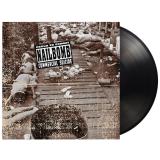
With an impressive discography including albums such as "Perdition" (2012), "No Peace In Hell" (2014), "Infinite Punishment" (2017), and their latest album "Merciless Destruction" (2022), nominated for a JUNO award, GET THE SHOT has built a solid reputation with impactful tracks and explosive live performances.
“CRUCIFIXION DEPICTION”, marks a shift in attitude and resolve for the band. While celebrating the addition of a new vocalist and the comeback of the original guitar player, the latest EP sees the band undergo a transformation into a new persona and exploring a more visceral sound, while sticking to its hardcore roots.
After more than 700 concerts on three continents, including some on the biggest international stages such as Wacken, Hellfest, FEQ and Resurrection Fest, the six members remain committed to the core values of authenticity, integrity, and equality at the heart of the hardcore movement, while addressing with disillusioned realism the flaws of an era defined by blind individualism.
Amazing! RCA returns with a special three-track release from Funk D’Void & Friends, bringing together three different sides of the house spectrum across one beautifully connected journey. From the warm, rolling groove of the opener through a deeper, more hypnotic middle cut and into the tougher, more driving territory of the closer, each track has its own character while working perfectly as part of the whole. Funk D’Void & Friends doing what they do best. Deep, soulful and groove-led house music with just the right amount of edge. Three tracks, one journey, no filler.
RADYO BOMBERO - ABOUT THE LABEL
Radyo Bombero is the record label founded by acclaimed filmmaker, author, DJ and record collector Fatih Akin. Born out of his personal passion for vinyl and film music, the label will initially focus on soundtracks from his films: previously unavailable works will be released on vinyl for the first time, while out-of-print titles will return as carefully produced reissues. Its inaugural release is the soundtrack to Akin's new film Geister, scheduled for release in November 2026. Further projects are already in development.
ABOUT THE RELEASE
MALAKOFF KOWALSKI - GEISTER
ORIGINAL MOTION PICTURE SOUNDTRACK
Composed by Malakoff Kowalski, the soundtrack to Fatih Akin's Geister is the inaugural release on Radyo Bombero.
Born in the United States, raised in Hamburg and now based in Berlin, Kowalski is a composer, pianist and multi-instrumentalist whose work moves between film music, contemporary classical composition, theatre and pop. He composed the music for eleven films by Klaus Lemke, as well as for productions including Schweigend steht der Wald and Stasikomödie. His solo work has been released by MPS and Sony Classical, and he has collaborated with artists including 2raumwohnung, Igor Levit, Chilly Gonzales and Nils Frahm. His sound combines elegiac melodies with a warm, cinematic atmosphere and a subtle sense of unrest beneath the surface.
For Geister, this distinctive musical language meets Fatih Akin's vision of a deliberately anachronistic and romantic score: a tribute to Ennio Morricone's great love themes that plays a defining role in the film's tragic love story and atmosphere.
LP 1 contains Kowalski's complete original film score.
LP by JUGGLERZ opens up a second musical world, bringing together four productions by the internationally successful Jugglerz on a four-track 12-inch disc at 45 RPM: the film's title song Ya Mami, performed by Aya Samra; Mood by Cloudee, Milaa and Jugglerz; Tip by Jugglerz, Limitlezz, Maureen and Demarco; and Beirut Nights Riddim. The four tracks bring Arabic tarab and contemporary Levantine pop together with hip-hop, urban beats and dancehall rhythms.
FATIH AKIN ON RADYO BOMBERO
"Radyo Bombero is on the air. Don't miss a tune!
"
Music is - alongside cinema and literature - a fundamental source of inspiration for me. Having grown up in the 1980s, the way I listen to music has hardly changed: I buy records, listen to them carefully and then copy them onto a portable device. It used to be a Walkman, then an iPod - today it is my smartphone with my playlists.
I do not use Spotify or any other streaming services. Why that is, I do not know. In most other areas, I try to keep up with technological developments. Not with music. I like unpacking a record, cleaning it before listening, holding the sleeve in my hands and reading who worked in the studio, who wrote the music and where the record was made. These things interest me. And they lower my cortisol levels.
Music plays a major role in my films. It is not that, as a director, I want to impose my favourite music on the audience. The music must always serve the story. In Head-On, for example, it tells us something about the characters and their biographies. Crossing the Bridge - The Sound of Istanbul is the musical portrait of a city. Its music tells us about the people who live there: where they come from, the cultures they brought with them and how those cultures have merged with local traditions. The Cut was conceived as a Western, and the music had to help reinforce that idea.
Geister tells a tragic love story. The music was meant to be gloriously anachronistic. And romantic. Just like the light and colours, it had to shape the atmosphere of the film. My films are often about cinema itself, and Geister is no exception. Its music is a tribute to Ennio Morricone's great love themes.
In Malakoff Kowalski, I found the perfect creative partner. He immediately understood my idea and realised it brilliantly. That made it all the more painful when I was told by the music industry that there could be no soundtrack release for Geister because soundtracks were too expensive to produce and would simply sit on the shelves.
It is not as though I am a spoiled child who absolutely has to have a lollipop. But this music is simply too good to withhold from the audience. The idea that there would be no soundtrack release felt like a great injustice.
Then several friends and collaborators advised me to release the record myself. No sooner said than done. But Radyo Bombero is not a one-off project. Geister is only the beginning.
Finally, I have the opportunity to gradually release all the soundtracks from my films that have remained unavailable. Soundtracks that were previously released but have since gone out of print will also return as reissues.
Hainbach's soundtrack to Amrum is already in development, as is a double album featuring the unforgettable German pop songs from The Golden Glove. And, finally, a vinyl soundtrack to Head-On.
Fatih Akin
Born in West Palm Beach, Florida, to a mother of Indian and Congolese heritage and a father of Slovak and Belgian descent, Siân grew up between Belgium and New York before finally letting her travelling wings come to rest in Paris. What could have become a story of fragmentation instead became a source of creative strength. Singer, songwriter, composer and photographer, Siân has always turned borders into bridges.
She first honed her voice in the jazz clubs of Paris and New York, performing alongside renowned artists such as Richard Bona, Jon Batiste and Mike Stern. Yet her path has always extended far beyond the stage. For nearly a decade, she led cultural initiatives with women and children living through exile, violence and poverty across India and Southern Africa, weaving together music, photography and artistic transmission as tools for dialogue and empowerment.
The true turning point came when she discovered the kamele ngoni, the West African harp whose ethereal sound seemed to echo something long buried within her. The instrument became her musical alter ego—the invisible thread binding together her many inheritances. Guided by Malian master Abou Diarra, Siân embarked on an inward journey towards her African roots. Yet this return to her origins was never an act of retreat into identity. Instead, it gave rise to a body of work that remains profoundly open to the world, where Africa enters into conversation with jazz, folk, soul, alternative pop and the rhythms of Brazil.
Along the way, she has crossed paths with remarkable artists including Rogê, Chico César, Fatoumata Diawara, Lokua Kanza, Flavia Coelho, Thomas de Pourquery and Philippe Baden Powell. On stage and in the studio, Siân continues to shape a musical universe that refuses labels. Like artists such as Björk, Joni Mitchell and Laura Mvula, she moves forward as an explorer, guided not by genre but by intuition.
Today, Siân stands as one of the most distinctive voices of the new Francophone music scene an artist capable of uniting musical sophistication with emotional power, introspection with collective celebration, depth with an irresistible urge to dance.
Animal — The New Album
With Animal, produced by British musician Tom Excell (Nubiyan Twist, Africa Express...), Siân delivers her most intimate and assured work to date. Every song feels like a shedding of skin, a quiet metamorphosis, exploring self-acceptance, femininity, the freedom to be oneself, cultural heritage, and the reconciliation of one's own imperfections.
From Stereotype, a fearless manifesto against the expectations imposed on women, to the title track Animal, an anthem celebrating the beauty of imperfection ("I've turned my cracks into a crown"), the album gives a voice to everyone who refuses to fit into predefined boxes. In Terre, je danse sur toi, featuring Fatoumata Diawara, Siân pays tribute to Mother Earth and to the roots that unite us all. Oh! Congo, recorded with Lokua Kanza, reconciles her cultural heritage with an ancestral homeland that feels both distant and intimately familiar. En équilibre, with Flavia Coelho, embraces the exhilaration of risk and the courage to leap, while Put a Mask and I Could Kill confront hidden wounds and the invisible violences that quietly shape who we become.
In ADé, Siân addresses Adenomyosis as though speaking to an unwanted housemate. "My body is your battlefield," she sings, giving voice to an intimate shadow lodged deep within herself. This bittersweet lullaby transforms a pain so often left unspoken into an act of profound tenderness towards oneself.
The album also holds a rare treasure: Reste tel(le), an unpublished text by Pierre Barouh, the founder of the Saravah label. Never before set to music or performed, this elusive poem of free love finds new life through Siân's voice, becoming a dialogue across time between two artists united by the same devotion to freedom, métissage and openness to the world.
Driven by Tom Excell's vibrant Afro-pop pulse, the spiritual breath of the kamele ngoni, organic arrangements and deeply personal songwriting, Animal is an album of liberation. It invites us to lay down our masks, embrace our contradictions and reconnect with the free, instinctive and powerful animal that lies dormant within us all. More than a collection of songs, it is a radiant manifesto for the richness of identity, the passing on of memory, and reconciliation with oneself.
Animal is not simply the title of an album, it is a declaration of independence. An invitation to live fully, unapologetically, and without instructions.
A citizen of the world, travelling freely between continents, languages and memories, Siân Pottok delivers with Animal her most personal, and perhaps her most universal work to date: an album that reminds us that our fragilities, our roots and our differences are, beyond doubt, our greatest strength.
— Christophe Tison
This album features most of The Searchers’ early hits, along with a selection of album cuts and B-sides—which really come to life in these live recordings. The standout tracks are the ones they never recorded in the studio. What’d I Say was previously released from their 1963 Hamburg Star-Club recordings, but this live version captures even more energy. The album also features radio performances that were never studio recordings, including Memphis, Tennessee, Red Sails In The Sunset, and Let The Four Winds Blow. So, put this record on, sit back and relive the heyday of one of the UK’s finest and most enduring bands: Ladies and Gentlemen, I give you The Searchers!
Sleeve notes by Peter Checksfield
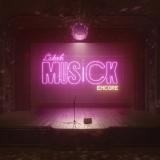
Dutch-born and Singapore-based, Mike Risk has spent more than three decades immersed in house music. As a DJ, producer, promoter and agent, he has experienced the culture from multiple angles, building relationships and sharing dancefloors across Amsterdam, London, Ibiza, New York, Chicago, Singapore and beyond.
Now Is Forever is a full-circle moment. A statement. A celebration of a lifelong relationship with house music.
Mike first made his mark in the Dutch underground through Club Risk and later RiskSoundSystem, two platforms that helped shape nightlife culture in the Netherlands throughout the 1990s and 2000s. After decades spent championing the music of others, Now Is Forever is Mike adding his own chapter to the culture that shaped his life.
Created with longtime collaborator Greg van Bueren (Hardsoul) between Amsterdam and Singapore, the album is a deeply personal tribute to the music, people and places that shaped him. From the clubs of Amsterdam and London to the sounds of Chicago, New York and Detroit, it distils decades of dancefloors, record stores, studios and late-night conversations into one body of work.
From deep and soulful grooves to raw house cuts and acid-tinged late-night moments, Now Is Forever explores house music in its full spectrum. It reflects the way Mike has always approached a dancefloor as a DJ: not as a collection of tracks, but as a journey through the many moods and moments that make a greatnight unforgettable.
Featuring Mike Dunn, Bluey Robinson, Marc Evans and John Agesilas, the album brings together years of experience, inspiration and dedication. Crafted not out of commercial pressure but out of creative necessity, it is the product of pure love-for the culture, for the craft, for the music.
Now Is Forever is a past-forward record: rooted in the music, dancefloors and relationships that shaped Mike, while carrying their spirit firmly into the present. At its heart, it is about honouring the kid who first fell in love with house music-and never let go.
Because when you are truly lost in music, there is no past and no future. There is only now.
There's Something Going On is the second studio album by Babybird, originally released in 1998.
The album is almost unrelentingly dark and mysterious, in much the same manner as his earlier lo-fi productions. Indeed, two of the tracks here, "You Will Always Love Me" and "There's Something Going On," were recorded straight to four-track. Jones' voice echoes out of lyrical valleys. "Take Me Back" is a horrific tale of an obsessive relationship, with lyrics about eyeballs scratched with rusty nails and a creepy chant of "dead, dead, dead" ad infinitum. It's a conceit that starts with the very first track, "Bad Old Man," where Jones sings of wife-beaters and a drowning in a duck pond. Musically, the album is more of a lean toward the baroque than Ugly Beautiful. One might describe it as stark, disturbed chamber pop. Beautiful melodies appear quite majestically out of Jones' psychological studies. "It's Not Funny Anymore" is bittersweet and touching, with Jones reaching for the album's emotional core over weeping, organic keyboards.
"There's Something Going On" is the tender conclusion, suggesting that Jones knows there's a better way of life than obsession and self-torture. There's Something Going On is definitely Baby Bird's most subtle album, and it's a fascinating listen from start to finish.
There's Something Going On is available as a limited numbered edition of 750 copies on turquoise vinyl and contains an insert.
Fabio Santanna is a respected scene veteran in his native Brazil and has a wide array of styles in his arsenal, from Balearic, downtempo and chill-out to Latin, lounge and pop. He always brings a modern MPB touch to classic sounds and now lands on the superb Scruniversal. 'Negro Sentimento' opens with a low-slung swagger and claps that sound straight from a Chicago house record in the 80s. 'Funk Na Veia' is even slower and more purposeful with a sexual energy and libidinous, funky vocal.
California’s beloved Brainstory returns with a new EP celebrating the end of an era. Shoebox Days is an homage to the time spent and the recordings made at their now defunct Long Beach studio, aptly named Shoebox. As the name suggests, the space was tiny and stuffed with gear. While charming, it was riddled with constraints. But, as has been proven time and time again, great art often comes from difficult circumstances, and this new 7 song EP is further proof. The first track, “The Watchers,” opens with an earworm horn melody that immediately pulls you in. The crunchy drums and G Funk bass tones put a bop on it, lush orchestration weaves in and out and sets a mellow vibe. “Blend,” one of only two vocal tracks on the EP, is a California sunshine soaked love song walking the lines of psych rock ballad and B side soul. ”Twin Kitchen” leans you right back into your seat, with Eric Hagstrom’s in-the-pocket drumming carrying the tune.
“Home Alone” is singer Kevin Martin’s ever so relatable tribute to time by himself, time by today’s standards as “disconnected,” but in reality, much more connected… The fellas let some of the jazz background take front stage on “Lone Traveler,” starting out with an air tight groove, and letting loose over it as the track progresses. “Gravity Hill” named after the famed California oddity begins the ending of the EP as Brainstory takes it deep and brings us with them. “Necessary Loss” serves as the closer to this gorgeous journey.
California’s beloved Brainstory returns with a new EP celebrating the end of an era. Shoebox Days is an homage to the time spent and the recordings made at their now defunct Long Beach studio, aptly named Shoebox. As the name suggests, the space was tiny and stuffed with gear. While charming, it was riddled with constraints. But, as has been proven time and time again, great art often comes from difficult circumstances, and this new 7 song EP is further proof. The first track, “The Watchers,” opens with an earworm horn melody that immediately pulls you in.
The crunchy drums and G Funk bass tones put a bop on it, lush orchestration weaves in and out and sets a mellow vibe. “Blend,” one of only two vocal tracks on the EP, is a California sunshine soaked love song walking the lines of psych rock ballad and B side soul. ”Twin Kitchen” leans you right back into your seat, with Eric Hagstrom’s in-the-pocket drumming carrying the tune. “Home Alone” is singer Kevin Martin’s ever so relatable tribute to time by himself, time by today’s standards as “disconnected,” but in reality, much more connected… The fellas let some of the jazz background take front stage on “Lone Traveler,” starting out with an air tight groove, and letting loose over it as the track progresses. “Gravity Hill” named after the famed California oddity begins the ending of the EP as Brainstory takes it deep and brings us with them. “Necessary Loss” serves as the closer to this gorgeous journey.
16 scrap-rock sketches straight from the heart to the gut…
Maybe we can keep rock’n’roll alive for one more day?
Who knows? The Joe Glass experience is a telecastered-explosion of hooks and guitar charms
One G chord away from tearing a diamond-shaped hole in the stratosphere.
Originally Released as a Hallogallo Tape January 2026
Sharp Pins Bassists Strides out under his own banner
Originally released in 2005 on Playhouse, isolée's second album we are monster received widespread critical acclaim and was featured in numerous year-end lists, including Pitchfork's Best Albums of 2005, where it is praised for breathing "so carefree, years from now crits might accuse it of sounding timeless-- maybe even of being so." (Nick Sylvester in his Pitchfork review in 2005)
While closely associated with the minimal and microhouse movement of the mid-2000s, the sound on we are monster resists categorization; its musical vocabulary is too expansive to be confined to a single genre. Tracks such as schrapnell, mädchen mit hase, my hi-matic and enrico avoid many of the production conventions that define its period, allowing the record to retain a freshness that continues to resonate with listeners and music producers alike.
We are monster proved to be significant in more ways than one. Alongside its musical legacy, the album introduced the first record sleeve by Stefan Marx, whose artwork would become a familiar presence across countless releases on influential labels like Smallville or Mule Musiq, but also fashion labels like Comme des Garçons and many art galleries in the years that followed.
This anniversary edition revisits an album whose influence extends well beyond its original context!
Originally released in 2005 on Playhouse, isolée's second album we are monster received widespread critical acclaim and was featured in numerous year-end lists, including Pitchfork's Best Albums of 2005, where it is praised for breathing "so carefree, years from now crits might accuse it of sounding timeless-- maybe even of being so." (Nick Sylvester in his Pitchfork review in 2005)
While closely associated with the minimal and microhouse movement of the mid-2000s, the sound on we are monster resists categorization; its musical vocabulary is too expansive to be confined to a single genre. Tracks such as schrapnell, mädchen mit hase, my hi-matic and enrico avoid many of the production conventions that define its period, allowing the record to retain a freshness that continues to resonate with listeners and music producers alike.
We are monster proved to be significant in more ways than one. Alongside its musical legacy, the album introduced the first record sleeve by Stefan Marx, whose artwork would become a familiar presence across countless releases on influential labels like Smallville or Mule Musiq, but also fashion labels like Comme des Garçons and many art galleries in the years that followed.
This anniversary edition revisits an album whose influence extends well beyond its original context!
Helene Rikhard had remained a hidden gem in the Norwegian electronic music underground for years, before she fully emerged on the international scene with these two critically acclaimed albums. Her sound is an ingenious mix of psychedelic disco, 80’s wave music, techno, krautrock, ambient and it truly operates in a world of its own. Drawing inspiration from the cosmic disco of Daniele Baldelli, the jazzy depths of Detroit techno and the esoteric dreamscapes of Laraaji, it’s astral music for astral people! Psychedelic to the core, but also warm, adventurous and highly original.
Her debut album Unpredictable Express is a dark, brooding masterpiece combining elements of cosmic disco, electro and techno Everlasting High serves as a beautiful, atmospheric counterpoint to its moody and mysterious predecessor, Feeling like a blissed out, hazy summer day, echoing childhood memories from Helenes youth, in the beautiful southern part of Norway. Everlasting High also sees Helene’s vocals coming more to the front. Mad Girl and Lions Eye are both beautiful, dubbed out synth pop with traces of 80’s synth, shoegaze, and reveals a fine-tuned pop sensibility, with a vocal style that’s sits somewhere between Kate Bush, Enya and Fever Ray.
Both as a producer and DJ, Helene’s style is easily recognized for her bold, genre-blending approach to electronic music. Mixing elements of ambient, techno, and experimental sounds, creating immersive, intricate and psychedelic tracks. Her DJ sets work the same way, blending Italo, High Energy and synth nuggets, effortlessly with strange, modern club sounds.
On 13 November 2026, Lacchesi released MTY-016 *Allo Mama Bobo* on Mama Told Ya. A 9-track album, available on vinyl and digitally, featuring collaborations with Anetha and Miss Kittin.
Following *Jeopardizer*, released on MTY-AIR, and the compilation *Mille attaques, les vents contrèrent*, released by Mama Told Ya in 2023, Lacchesi returns to the label with a far more personal project.
Ohio’s 156/Silence return with From a Distance, their crushing new full-length and first release for Pure Noise Records, arriving September 4. Produced by Josh Schroeder (King 810, Lorna Shore, The Plot In You), the album expands on the breakout success of People Watching with a darker, more cinematic approach that balances punishing heaviness, eerie atmosphere, and emotional depth. Featuring guest appearances from Mike Hranica (The Devil Wears Prada) and Alex Reade (Make Them Suffer), From a Distance pulls influence from horror, prestige television, and retro game soundtracks while moving seamlessly between hard rock, experimental textures, and the band’s chaotic mathcore roots. Atmospheric, unpredictable, and unbound by genre, From a Distance pushes 156/Silence further into their own lane while cementing them as one of heavy music’s most fearless rising acts.
ORUMA is a trio formed by Ola Rzepka (drums, zither, percussion), Artur Rumiński (electric guitar) and Mat Barski (electric guitar). At its foundation is the musical dialogue previously developed by Rumiński and Barski as a guitar duo and documented on the albums “On the Margin” and “At the Junction”. Their encounter with Ola Rzepka during Kraków’s Kakofonie series opened this music to a new sense of dynamics, pulse and
collective form.
ORUMA’s music exists at the intersection of free improvisation, noise, experimental postrock and post-kraut repetition. It avoids the conventional division between soloist and accompaniment. Instead, two electric guitars and drums gradually abandon their individual roles to form a single, constantly shifting sound organism — moving from silence, open space and isolated gestures towards dense masses of sound.
The trio’s debut album consists of five pieces: “Satellites”, “Stranger”, “This Mountain Is Alive”, “A Rough Plan For Nostalgia” and “Hyperborea”. Together, they form a coherent journey: from distant signals and the first moment of contact, through friction and increasing physical intensity, to an expansive fourteen-minute finale.
Ola Rzepka
Drummer, pianist, composer and performer. She graduated from the Karol Szymanowski Academy of Music in Katowice, where she studied at the Faculty of Composition, Interpretation, Education and Jazz. She was also a scholarship student at the Rhythmic Music Conservatory in Copenhagen, studying piano and percussion. She teaches piano improvisation at the Wojciech Kilar State Music School Complex in Katowice and runs her own music lessons and workshops. As a composer, she collaborates with acclaimed theatre directors in Poland, Germany and Switzerland. Her musical collaborators have included Raphael Rogiński and Antoni “Ziut” Gralak. She has performed her original music at numerous avant-garde, popular, jazz, improvised and contemporary music festivals across Poland and Europe. In Jazz Forum magazine’s 2024 Jazz Top critics’ poll, she was named among Poland’s leading drummers.
Artur Rumiński
Guitarist and member of bands including Furia, Thaw and ARRM. He also composes and improvises under his own name and performs in the experimental duo Marmur, which he co-founded with Macio Moretti. He has released several solo albums on labels including Antenna Non Grata, Gusstaff Records, Zoharum and Szara Reneta.
Mat Barski
Guitarist associated with the Kraków and Tricity music scenes. His projects include the duo Ekotonika, the Rumiński / Barski duo. He has released albums through Gusstaff Records and Antenna Non Grata. Alongside music, he works in motion design and visual postproduction. He is a member of the Kraków-based Skład Solny Association, where he coorganises concerts and exhibitions.
Originally created in 1987 as an image album for a luxury Sanyo air-conditioner, Get at the Wave stands as one of the most surprising and enduring works of Japanese ambient music. Recorded using synthesizers and natural field recordings, the album was designed to transport listeners far from the heat and noise of urban life — into open water, gentle wind, and unhurried space. Takashi Kokubo's mastery as an acoustic environment designer is present in every texture, blending electronic composition with an almost physical sense of atmosphere and place. Intimate, expansive, and quietly radical, Get at the Wave is an essential document of kankyō ongaku - and one that sounds more necessary than ever. The remaster and artwork of this vinyl edition were made by the artist. Takashi Kokubo (born 1956) is one of Japan's most influential ambient composers and acoustic environment designers. A pioneer of kankyō ongaku since the mid-1980s, his sound design work has reached virtually every corner of Japanese daily life - from the national mobile phone earthquake alert to the sign tone for iD e-money and the melody call tone for NTT DoCoMo. In 2020, he was included in the Grammy-nominated compilation Kankyo Ongaku (Best Historical Album), cementing his place as a foundational figure in environmental music worldwide.
In celebration of John Coltrane's centennial, this 3-LP boxset includes all 3 albums recorded with Wilbur Harden in 1958 for Savoy Records: Mainstream 1958, Tanganyika Strut and Jazz Way Out. Featuring players including Tommy Flanagan, Curtis Fuller, Doug Watkins, Louis Hayes, Art Taylor and more and cut from the original tapes by Kevin Gray at Cohearent Audio the album is pressed on 180-gram black vinyl at RTI and housed in Stoughton tip-on jackets and new liner notes from Syd Schwartz.
Neuauflage der essentiellen "Beat Konducta"-Reihe, hier Vol. 5-6: "Dil Cosby & Dil Withers Suite" (Steady Metals Edition) - Madlib zollt J Dilla Tribut! Auf "Beat Konducta Vol. 5-6: Dil Cosby & Dil Withers Suite" (ursprünglich 2008 als zwei separate LPs veröffentlicht) würdigt Madlib seinen verstorbenen Freund und musikalischen Weggefährten J Dilla - unterstützt durch Features von J. Rocc. 42 soulige, atmosphärische Instrumentals bilden den Abschiedsgruß an Jay Dee. Nachdem sie lange vergriffen waren, erscheinen beide Teile von Madlibs legendärer Instrumental-Reihe nun erstmals gemeinsam als farbige Doppel-LP auf metallisch schimmerndem silbernen und goldenen Vinyl, verpackt in einem aufklappbaren Gatefold-Cover.
Where other bands seem to be hellbent on pushing an energy of exhilaration, London’s premiere grief peddler’s SECRECY seem to be more interested in reminding us all what deep shit we are in. Their debut recorded outing captures the morbid and grandiose power of their successful string of London shows, refining the message to a promising and bewildering first release. Taking compositional cues from THE EXECUTE, SOUTHERN DEATH CULT, and THE CHAMELEONS, the room filling instrumentals carry a bleak and punishing prophecy of moral turmoil and hysteria, opting to drive the notion of post punk off a cliff through force of will alone. The sound is crisp and wide without giving up the austerity necessary to carry the prophetic sense of dire urgency in the vocals, driving and marching drums and bass lines carrying almost danceable guitar parts to climax. Soaring guitars over driving drums push the corpus to blistering movement, restrained by lyrics about fucking and dying, an Eros/Thanatos act delivered with a refreshing lack of irony or sarcasm. Lyrical influences from RIMBAUD and BAUDELAIRE abound, veering from the brink of poetry back down to primitive taunts and cries.
Today we are happy to announce that we are reissuing Merucry Rev’s 1993 album Boces in the UK & EU! Available from the 13th of November, Boces has been newly remastered by Henry Rudkins at Air Studios and is available on black vinyl and CD.
Hailing from Buffalo New York, Mercury Rev are one of the US’s most well-respected bands, always experimenting and continually reinventing. The Guardian called them “a rarity in indie rock: a band who have continually evolved their sound, pushing at the boundaries of what rock music actually means…borrowing from jazz, funk, doo-wop, techno, folk and more along the way.”
Boces is such an important record in their discography, a grand and epic part of their story. The songs on the album came from the whole band. Everyone contributed and the recording process really allowed everyone’s freak flags to fly – partly thanks to their first ever major label recording budget. The opening 10-minute epic track “Meth of a Rockette’s Kick” really let’s you know that this album will be like nothing you have ever heard before.
For over three decades, Berlin-based DJ, producer, and curator Marcel Dettmann has remained a central force in electronic music, continuously pushing the boundaries of the craft. Deeply rooted in early influences ranging from post-punk and industrial to synth-pop, his dynamic DJ sets and expansive discography, including seminal releases on Ostgut Ton and Dekmantel, effortlessly weave together raw techno, Chicago house, electro, and avant-garde soundscapes.
Far beyond club booths and releases on his own imprints, MDR and Bad Manners, Dettmann’s multidisciplinary ethos has led him into artistic territories spanning gallery soundscapes, ballet compositions, and cinematic film scores. This relentless creative curiosity defines a career built at the intersection of dancefloor functionality, collaborative experimentation, and perpetual sonic evolution.
Dettmann introduced My Own Shadow last year, a project where music, visual art, and photography converged in two EPs, Approaching (2025) and Faultline (2026) prior to the release of the full album this coming Autumn. More than just a name, this project lets sound, image, and vision blend organically, reflecting his intuitive process of deconstruction, resonance, and emotional discovery.
Speaking about the project Marcel says “My Own Shadow wasn’t born from a big concept. I simply liked the idea of working under another name and started following it. Different things I was doing - music, photography, visual work - slowly began to connect.
It happened quite naturally. My Own Shadow is me - just seen from another perspective.” Neither an alter ego nor a departure, My Own Shadow: Album is an intimate reflection of the artist; a transient, ever-shifting form that dances with the light and subtly reshapes its contours to reveal new depths.
My Own Shadow: Album is built with textural minimalism through rhythm, tension and release, embarking on a path through the recollections and experience of the dancefloor. This space remains the ultimate proving ground where history, instinct, and transcendence collide, guiding Dettmann through his musical interests.
My Own Shadow - Album is driven by rhythm, texture, space and tension. Across tracks such as ‘Gravitational Scar’ and ‘Resolution Vector’, these elements are constantly reshaped, connecting Dettmann’s past with a sound that remains firmly in motion.
LIP020: Ferdinger – Easy Warmth & Quiet Menace Life In Patterns marks its 20th release, and its last of 2026, with an EP from label head Ferdinger himself. "Easy Warmth & Quiet Menace" sees him move into darker, more textured territory without losing his signature relentless drive. From the sombre melodies of "Tears Will Dry" and the distorted, haunting synths of "Back At It" to the analogue modular textures of "Front Toward Enemy" and the gritty dub stabs of "Ruminations", the EP covers a lot of ground across its moods. Closing track "Fresh Impetus" ends things on a different note, with a driving old-school electro groove. "Easy Warmth & Quiet Menace" is out on 13 November 2026 on vinyl and digital.
Mercury Prize-shortlisted, MOBO Award-winning drummer, composer and producer Moses Boyd returns with his first album in six years. Since the release of his critically acclaimed album, Dark Matter, Boyd has continued to push at the boundaries of contemporary jazz. Songs For Sinners is a deeply personal body of work that explores the push and pull of faith as something profoundly human – a force capable of comforting, dividing, unsettling and restoring in equal measure. Across an ambitious, vocal-led collection that fuses gospel, jazz, soundsystem culture, Caribbean rhythms, 808s and soaring choir harmonies, Boyd expands the language of contemporary jazz into something entirely his own. It’s a record that draws from the church he grew up in, the London soundsystem culture that shaped him, and the freedom of improvisation, asking what sacred music can sound like when it’s no longer confined by convention.
Mercury Prize-shortlisted, MOBO Award-winning drummer, composer and producer Moses Boyd returns with his first album in six years. Since the release of his critically acclaimed album, Dark Matter, Boyd has continued to push at the boundaries of contemporary jazz. Songs For Sinners is a deeply personal body of work that explores the push and pull of faith as something profoundly human – a force capable of comforting, dividing, unsettling and restoring in equal measure. Across an ambitious, vocal-led collection that fuses gospel, jazz, soundsystem culture, Caribbean rhythms, 808s and soaring choir harmonies, Boyd expands the language of contemporary jazz into something entirely his own. It’s a record that draws from the church he grew up in, the London soundsystem culture that shaped him, and the freedom of improvisation, asking what sacred music can sound like when it’s no longer confined by convention.
Land of Talk is still here. That wasn’t always a guarantee. Over the multi-faceted twenty year history of their project, Lizzie Powell has drifted from and back to music, always interrogating their role as an artist. In the time since 2023’s Performances, they found themselves utterly worn down by the vicissitudes of the music industry and wracked with worry around their aging parents. Yet the music didn’t stop: Powell heard songs in traffic and in birds chirping, in their downstairs neighbor’s daily prayers and in the babble of children on the street. Melodies slowly cohered over time. “Life can become so unbearable, and music is where I go to metabolize it,” they explain. “I know the music was the only thing that was going to help me.” Soon Powell reemerged with the sixth Land of Talk album, LASTS.
LASTS is full of double meanings — both resilience and finality, acting as a noun and a verb. Though LASTS is haunted by crises including climate collapse, political upheaval, and genocide, the mangitude of global turmoil led Powell towards smaller, humane depictions of suffering and grief. As both their parents became ill, Powell reflected on the last time a person might walk, might talk to a loved one. Yet watching their parents near the other side of life’s arc also made Powell consider all they had survived across their own decades on this earth, their new songs channeling both gratitude and rage. LASTS became a phrase, honoring Land of Talk’s circuitous route and all Powell’s reckoned with through the years. “I think of this record as a love letter to life,” they say.
The end result is an album both lean and winding, allowing Powell’s words and melodies to take centerstage, uncrowded in visceral, shot-no-chaser arrangements. LASTS jumps right in with “Broken Tongue,” a wiry track built on thrumming electric guitar and ghostly synths as Powell rails against the lack of justice for victims of abuse. The trio’s interplay is readily evident in “Saffron” and “4:44,” two earworm songs that also allow themselves to unspool into extended instrumental codas. Early in the record, there are seething tracks like “Dogs” — “Just your basic instinct / Even dogs know better,” Powell growls in the chorus, before the song quiets into a plaintive plea of “Leave us alone now” — and later there are more vulnerable, wandering moments. In “Projections” and “Cedars,” Powell ventures deep into their head, inviting their co-conspirators and listeners alike to follow the songs wherever they meander.
YES is a genre-blurring blend of punk, electronic and rap from South Africa, released on limited edition White Vinyl
South African alt-rap trio Internet Girl have officially announced their debut album, YES, arriving November 13 via PACK. Records. Alongside the announcement, the group has released their new single “DA BUSINESS” featuring Kenny Mason.
A high-energy party anthem, “DA BUSINESS” opens with distorted guitar before chopped vocals briefly pull things back, only for an abrupt beat drop and howling synth to send the track into overdrive. As another synth melody sweeps in, TK cuts through the chaos with an introspective opening verse before Kenny Mason crashes in with a gritty guest verse. Live drums, distorted guitars, and surging synths continue to build around them, turning their vocals into something closer to rage-filled battle chants than traditional rap verses.
Partially written on tour last year, “DA BUSINESS” is the oldest song on YES and one of the album’s few guitar-led tracks. Kenny connected with the trio over DMs months earlier before joining them on the track, bringing Atlanta and South Africa together for one of the album’s most charged moments. “DA BUSINESS” follows the trio’s recent single “ALL THE SAME,” a swagger-heavy track built around a hypnotic Spanish-language vocal sample and live drums before a heavily distorted bass synth takes over in its final stretch, drawing inspiration from South Africa’s booming taxi rave scene. Together, the two singles offer an early look at the range of YES, moving between the rock, rap, and electronic sounds Internet Girl have made entirely their own.
Written largely during a week-long trip to South Africa’s Karoo region at the beginning of 2026, YES captures Internet Girl at a turning point. What began as an ad-lib TK would throw into his verses gradually became the philosophy behind the record: saying yes to an idea and committing to it completely, even before there’s any proof it will work. Across the album, that once-delusional confidence begins to feel real as the trio reflect on coming of age, growing more comfortable with themselves, and becoming increasingly assured in the music they make.
The new release arrives on the heels of a big year for the South African trio, who have brought their high-energy live show to stages around the world, including Pitchfork Music Festival Paris and Boiler Room Soweto, while co-headlining Kiss Kiss Festival in South Africa alongside Basement Jaxx.
Comfort with ambiguity, dynamic experimentation and melancholy are rife throughout Brody Price’s newest record, Leaf Miner’s Daughter. Classic alt-country at its core, this collection meticulously weaves together Americana into sluggish, heavy grooves; overdriven guitars, hook-laden acoustic dissonance - all bolstered by a songwriter full of heart and intention.
An integral member of the Dallas / Texas scene and national DIY touring community, Price has been quietly building a dedicated community of fans across the US since 2017, entirely independent and reliant on each other to build and shape the tours by word of mouth. Following a cassette recorded collection of country songs, ‘What’s The Point In Trying’ (2017), and the gorgeous and chaotic ‘Win A Trip To Palm Springs’ (2022), Price is tracing a sonic and narrative arc that feels specific, earnest and whimsical - not without its dark corners and deep questions.
The innate ability to find beauty among the rubble is rife throughout his newest, revealing an authentically tender desire to dig deeper to find relief and understanding. He invites us to empathize and sit alongside his turmoil in an effort to make ours more bearable. At home in his musicality and the discomfort of living, Price revels in the act of putting the pieces back together, giving us all permission to do the same.
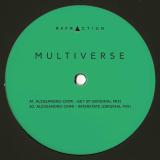
Four solid dub house and deep house cuts from Alessandro Crimi, pressed on blue green marbled vinyl. Get Up opens on a rolling groove, hats ticking against a bassline that breathes rather than pushes. Interstate tightens the low end into something more direct, built for the peak of a set. Look At The Stars slows the tempo down into dub house territory, chords smeared and delayed until they blur into the drums. Multiverse closes the record on a dubbier note again, echoes trailing off into silence between hits. Across the four tracks the mood stays controlled, functional, made for rooms where space and repetition do the work.
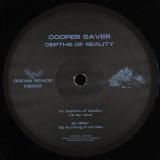
Cooper Saver joins the Dream Space family for his first solo EP in 6 years, which was well worth the wait.
Born in LA and now residing in Squamish BC, Cooper ran the infamous Far Away parties in his home city through the mid-to-late 2010’s. Over the past decade, he has released exceptional music and remixes on labels such as Hivern Discs, Permanent Vacation, Internasjonal, DFA and more.
Working often as a collaborator, his recent projects alongside Chris Macintyre as Inner Flight and Night Cycle, and as part of hardcore punk band Self Arrest, all hold up to the same high quality output.
After being in contact with each other for years, it feels like a full circle moment to be working with Cooper and sharing more of his music with the world.
Across all four tracks he dives deeper into the new progression of his sound. From the peak time energy of Depths Of Reality and cosmic radiance of Be Alive, to the understated and shimmering B side of Glider / Running In Circles, this one’s an essential.
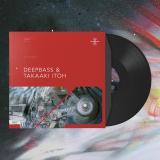
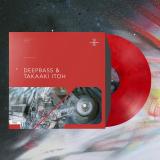
Supported by Cio D'Or, Deepbass, Etapp Kyle, Mattias Fridell, Ness, Samuli Kemppi, Svreca, Takaaki Itoh, Unam Zetineb, Exium, Alessio Pili, Antonio de Angelis, Artefakt, Edit/Select, Jonas Kopp, Kwartz, Mod21, Reggy van Oers, Juho Kahilainen, Eric Cloutier, Johanna Knutsson, Tom Bonaty, Arnaud le Texier, Brando Lupi, I/Y, Iori, MTD, Nima Khak, Par Grindvik, SNTS, The Noisemaker, VSK, Attemporal, Casual Violence, Rasmus Hedlund, Sleeparchive, Terence Fixmer, Eastern Renaissance, Victor Martinez and many, many more.
Luigi Tozzi / Deepbass / Claudio Prc - Deep Blue
Few producers embody the soulful heart of House Music quite like Move D. Being a mentor of the label since day one, All That Jelly brings together two defining and desirable cuts from David Moufang’s recent history to one record.
'To The Disco ’77' 2013 original version for the A-side and the 2017 live rework finds its way to the B-side, both freshly remastered by the amazing and sought after Andreas Kauffelt. 'To The Disco ’77', opens with a clean, electro-styled beat that has a restrained power and a controlled tension that gradually blooms as the keys start to lift the mood into something lighter. When the iconic 'to the disco' vocal sample cuts through, it’s like a wink
from the past, threading disco’s golden exuberance through the disciplined swing of classic house. The track is a seamless blend of Funk, Disco, House and Electro with each element raw yet playful, woven into a groove that never stops urging you forward. It’s a masterclass in balance: sleek but deeply human, nostalgic but alive in the moment. It's like listening to the history of dance music in one special track.
'To The Disco ’77 (Move D Live Rework)' stretches the idea out into something even more fluid. The groove loosens, the funk rises to the surface and the extended runtime gives space for guitar and bass lines to share center stage, riffing around each other with organic warmth. The 'to the disco' mantra remains, grounding the track in its celebratory intent. It’s the kind of tune that closes a night perfectly and makes you not want to leave the dancefloor. Reissued together, these versions show Move D’s masterful ability to bridge eras and genres, reminding listeners that the dancefloor is as much about emotion as it is about motion.
Pulsinger & Irl is the collaboration between Austrian producer and techno pioneer Patrick Pulsinger and Bavarian producer and sound engineer Sam Irl.
After ten years of dub-driven live explorations, Pulsinger & Irl are now focusing on a raw, uptempo, and sample-driven take on techno.
Their new album and live set is stripped to the essentials — two classic samplers, the SP-1200 and MPC2000XL, and a 16-track mixer. By pushing these machines beyond their intended boundaries, they craft a gritty and textural sound.
This is first of two 4-track EPs that will make up the entire album („AALLIIAASS“).
The duo met in 2012 at Pulsinger's Feedback Studio in Vienna, where Sam began as his assistant engineer before becoming a studio partner.
Coming from different musical backgrounds, they found common ground in experimental techno, dub, sampling culture, and analogue gear.
Since their debut album Mud (2016), they've released the EPs Function Creep/Woodpecker (2017), Exu (2018) and Retrieval (2019), along with several remixes — most recently a rework of iO's 1994 classic Claire (2024). Their music has received support from Move D, Gilles Peterson, Mr. Scruff, Lefto, among others.
They've performed at Berghain/Panorama Bar (2016–2018), Sonar Barcelona, ://about blank, Golden Pudel, Blitz, Sziget, Elevate Graz, Lighthouse Croatia, Rote Sonne, Ars Electronica Linz, Zukunft, and more.
Over the past three decades, Patrick Pulsinger has released music on his own label Cheap Records as well as R&S, M Plant, Disko B, Compost, and has produced for DJ Hell, Hercules & Love Affair, Elektro Guzzi, Fennesz and others.
Sam Irl has released music since 2007 on labels such as Freerange, Jazz & Milk, Brownswood, Pulver and Frank Music.
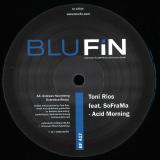
"Acid Morning" by Toni Rios, remixed by Andreas Henneberg, is a captivating track that skillfully blends elements of techno and house, creating a nuanced auditory experience. Andreas Henneberg is known for his ability to infuse tracks with a distinct energy, and his remix of "Acid Morning" is no exception. Henneberg transforms "Acid Morning" with his signature style. The "Toni Rios and Andre Walter Remix" for Nicoleta is a track that brilliantly blends elements of classic electronic beats with modern production techniques. Toni Rios alongside Andre Walter (Stigmata) brings a refreshing twist to the original composition through this remix. These are two more gems from Toni Rios
DJ Support: Louie Vega, Joe Claussell, Danny Krivit, DJ Spen, Ron Trent, Don Carlos, Sandy Rivera, Emmaculate, Souldynamic and more…
Paolo Fedreghini is a key figure in the Italian nu-jazz and jazz-funk scene, also known, lately, for his FAM Disco project.
Paolo's latest offering, Jazz House Rituals, is more than just an EP; it’s a masterclass in organic production. A 4-track project that bridges the gap between sophisticated jazz arrangements and the infectious energy of the dancefloor. Recorded with a rich palette of live instrumentation—including saxophones, flutes, trumpets and organic drums—the project is a testament to Fedreghini’s ability to blend analog warmth with contemporary club rhythms. From the latin sun-drenched "Happy Feeling" to the nocturnal Deep vibes of "Smoking Area," this EP is an essential choice for lovers of Jazzy-house music.
Aubrey has established Solid Groove has one of the more reliable outlets in the underground and now steps up with his own offering of fresh tracks recorded this year. 'Last Transmission' is a deep techno cut with a shimmering synth line and a subtle sense of hope folded into the futuristic outlook. 'Japanese Drift' is a brilliantly original sound built on a quickly stepping groove with soft electronics and synths infused into the mix. 'The Final Act' ramps up the energy a little more but still stays warm and soft around the edges before 'Diablos Debos' broods with a darker energy, but again stays contained and heady. A tasteful EP.
"Once Turin-based producers Mattia and Massimo joined forces under the Voodoos & Taboos moniker, they quickly became a notable force in contemporary club music. A crafty take on house music, combining groove with sculpted production work and a bent for lush melodies, drawing from a wide range of influences - anything that borders on the electronic genres really, and beyond - fueled their own namesake imprint with 6 EP's and landed them spots on a variety of top-tier labels. We have been keen to work with these artists for a long time, and are thrilled this finally materializes with the release of ALT027. Title track "Sempre Sognar" immediately sets out the duo's floor-focused intentions. Breakbeat-laced drums gradually build momentum before a formant lead drops in. It trades phrases with an equally infectious organ that's eventually joined by a 303 pattern for the track's finale. Similar vibrating, buzzy leads thrust "Take Me" forward. Amid heavily delayed vocal samples, the proggy beat takes a more trippy turn however. Synthesized idiophone interludes create room for moments of repose, although not entirely unambiguous ones. A subtly detuned lead and more sleek acid lines are supported by the type of arp bass that characterizes Voodoos & Taboos' sound on the B-side's "Revolution". A collage of broadcast and war-movie lines alike not only adds color, but underlines the sense of indeterminate imminence that looms throughout the track. B2 "Afterhouse" sees the BPM drop a notch, yet the palette shows no signs of winding down; it is downright exuberant. As different arpeggiated melodies play call and response, tape-delayed chords, alarm-like risers, and sprinkles of guitar add extra flavor. This does not lead to excess, however. Everything is carefully measured and kept in check: after all, at the helm are two artists who understand that perfection lies in getting a great many small things exactly right."
DiG Records’ latest release is a reissue of one of the most remarkable Russian electronic albums of the 90s. Available on vinyl for the first time, 100 Photography Lessons is the 1993 debut album by the duo Block Four, with a rich sound spanning a wide range of genres, from downtempo and experimental electronics to trance and techno.
Block Four was formed by Oleg Salkhov and Konstantin Smirnov in the early 1990s at Moscow’s SNC Studio. Salkhov was the studio’s first recording engineer, working with bands including Moralny Kodeks and Megapolis, while Smirnov came from Nikolai Kopernik, where he had already been experimenting extensively with electronic instruments.
The album is built around sampling, experimentation, and a broad range of influences. Block Four drew sounds from jazz, classical music, rock, hip-hop, folk and electronic music, as well as films, VHS tapes, and radio broadcasts, gradually assembling their own extensive library of samples and loops. Combined with synthesizers, samplers, drum machines, unconventional rhythms, and harmonic ideas, the duo brought all these elements together to create their own distinctive sound.
100 Photography Lessons captures a brief but important period when Russian electronic music was still developing its own language. Freely blending sampling, electronic instruments, and influences from a wide range of musical traditions, Block Four created an album that still sounds compelling more than three decades later.
Alleviated Records is proud to present the new Mr. Fingers EP. After many years of the moniker being dormant and a long journey trying to get back into a creative mindset, we have a new offering. First up, "Outer Acid" delivers up a Minimal-Space-Acid flavor. Next, "Qwazars" continues the Space motif with a Minimal-Tech touch. "Nodyahed" moves toward a Dark Club Bounce with a dash of Tribal flavor. "Aether" offers up a more late-night Ambient-Space-House flavor. Hope you enjoy these selections at the club and at home for a long time to come. Musically Yours...
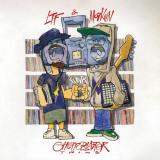
Anton Ivanchenko aka Light The Fuse and Ivan Moskvin (who is half of Fankin) met while judging Red Bull's beatmaker battle back in 2021, but it took years before they actually made music together. Decades of vinyl digging and a knack for sampling weird, unexpected fragments turned into studio jams, then into their debut album, Ghettoblaster Twins. There's no forced concept when they work together - they let the music happen naturally and it shows: breezy, curious, over before you know it. Source material ranges from obscure jazz to a Soviet film theme, all floating between funk, hip-hop and breakbeat, laced with a warm, nostalgic pull. A lovely debut, hopefully with more to come in future.
A two-way Italian/Mexican stand-off here, as Saint Wax founder Gledd (real name Eduardo Barbi) and Kaninchenbau label chief The Funk District (Fernando Mendoza) deliver their first joint EP since 2022. The latter steps up first with two solo workouts- the Clavinet-splashed nu-disco-goes-bluesy deep house shuffle of 'The River Bends Back' and the Rhodes rich deep house disco of 'Got To Be Alright' - before the duo combine on two collaborative cuts. 'I Said' is a gospel-powered slab of ever-building disco-house hedonism, while 'Down The Middle' is deeper, more bass-heavy and topped off with classic soul vocal samples. Gledd then takes over, following the infectious piano house bounce of 'I Said' with the colourful, acid-flecked excellence of 'Blessin'.
American Joe Babylon has been steering his Roundabout Sounds label through calming deep house waters for a decade or so. He has recently focussed on assembling this ongoing All Hands series (the name may be a nod to the analogue gear the tunes are made on? Sound-wise, it checks out) and volume three features another fine quartet. First up is DJ Honesty with a fine label debut in the form of the synth-laced swirler 'Walking Down Gratiot,' then label friend Mr. Hazeltinee aka John Tejada layers comic pads into an upright house rhythm on 'Zanzmatic'. San Francisco and more specifically Bay Area man Federsen offers super lo-fi and reserved deep house cuddle 'Sequential' while Babylon himself drops the slow burn shuffle of 'Play It By Ear'.
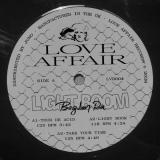
Bogdan Ra's Love Affair label is still in its infancy, but thus far has yet to make a misstep. On his previous EP for the imprint, the Lisbon-based artist explored his love of TB-303 powered acid house insanity; here, he drops a much more diverse but no less impressive five tracker. He begins with 'Tour De Acid', a punchy electro-meets-acid house workout featuring nods aplenty to Kraftwerk, before blurring the boundaries between formative acid house, bleep and deep nu-disco on title track 'Light Boom'. 'Take Your Time' and 'Manic and Cool' are both peak-time ready slabs of peak-time-ready house nostalgia, while closing cut 'Strictly Business' is a brilliant blend of bass-heavy breaks and acid-fired dancefloor psychedelia.
DJ Support: Marco Carola, Funk D'Void, Fish Go Deep, Quentin Harris, Carl Craig, Horse Meat Disco, moodymanc and many more
Me Me Me is back after 2 years on ice, with a new focus and new priorities, built around the regional music community being driven by Man Power and friends in North East England.
Written, recorded, performed and pressed in the North East, Newcastle live artist Mac Seldom's Twenty Twenty-Three EP see's the artist find his stride after early outings on Skream's "Of Unsound Mind" label and Scuba's "Hotflush Recordings" and leans into a more house-not-house rhythmic palette to further cement his status as being one of the most exciting and adept sound designers to recently emerge in club music.
Ever since the release of his first solo album more than 20 years ago, German musician and producer Christian Kleine has experimented with blending and contrasting the varying textures and approaches of post-rave IDM, breakbeats, shoegaze and punk. His latest album offering, Touch & Fuse, shows he's continued to refine and perfect that combination, which is less a conscious concoction and more of a natural outcome of the music he likes. From the edgy Aphex-isms of 'Val 2' and the heavily filtered breaks of 'Reverse Angle' to the slowed down grunge meets pure electronics of 'Return of the Underground', this is unique, accomplished stuff.
In the seclusion of a house in the Bavarian Forest, something unfolded that felt less like a conventional album production and more like an internal process of condensation. This house wasn’t a studio - it was a retreat. Its 1960s-inspired interiors, creaking wooden stairs, and crackling fireplace shaped the sound of Carl Gari as much as the instruments themselves. Though the house no longer exists, its atmosphere remains present in the recordings.
The music of Carl Gari - Jonas Yamer, Till Funke, and Jonas Friedlich - resists easy categorization, a trait that continues on this monumental new album. From the friction between electronic music and guitar textures, the trio forges a distinctive, idiosyncratic sound. Distorted electric guitars and pulsating basslines intertwine with analog drum machines, tape delays, and intricate effect chains, creating music that is raw, organic, and psychedelic. A new element on the album is the trio’s first use of vocals: Jonas Yamer, usually on bass, raises his voice in a punk-tinged, invented language that hints rather than narrates, unsettling more than it explains.
The guest artists do not merely decorate the sound - they alter its very structure at critical points. Polygonia contributes layered vocals that mesh seamlessly with the album’s technoid architecture. Will Brooks of Dälek delivers a dark rap feature on ‘Poison Shyness (Anti-Social)’, his words carving the sonic space with precision. Coby Sey adds introspective vocals that hover between experimentation and restraint on ‘Inner Link’. New York rap pioneer Sensational introduces a deliberately rough, individual counterpoint on ‘Disco Lights’, while the German percussionist Simon Popp drives the album forward with an uncompromising drum performance that insists rather than accompanies on ‘Zeitesser’.
The cover photographs, taken by Jonas Yamer, project images of corridors onto paintings located in the now demolished house where the album was recorded. Visually, this reflects a key motif of the album: spaces exist only as overlays and echoes - not mystical ghosts, but traces of a place that has physically vanished.
Recorded between 2016-2024 in Neunburg vorm Wald and Munich. With kind support by Kulturreferat der Landeshauptstadt München.
Mixed by Johannes Wagner aka J.Manuel at Apollo Studio, Berlin (A1, D1 w/ Fadi Mohem). Mastered & cut by Stefan Betke at Scape Mastering.
Photography by Jonas Yamer. Packaging design by Sepehr Mokhtarzadeh.
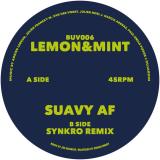
Kicking things off, Suavy AF sets the tone with a sensual, groove-driven cut that balances raw energy and playful finesse. Tight drums, cheeky edits and a laid-back swagger make this one built for both heads-down listening or late-night dancefloor moments. Lemon & Mint, showing they're not here to play it safe.
On the flipside, Synkro takes the original into deeper territory, stripping it back and reshaping it with weighty low-end and a more introspective swing. He offers a more hypnotic take that hits just as hard in its own way. A perfect counterbalance that rounds out the release with class!
Acid Pauli returns to the curious world of Gwar Is Not The Answer (originally released 2006 on Smaul) with a carefully remastered re-release that includes two new remixes from Jonathan Kaspar and Acid Pauli. The title track unfolds at an unhurried pace, weaving loose acid traces through warm percussion and off-centre melodic fragments that seem to appear and dissolve before settling into place. It drifts forward with a quiet sense of momentum, balancing eccentric textures with a groove that remains firmly grounded throughout. With his new remix Jonathan Kaspar takes the original into leaner territory, sharpening its contours and drawing out its tension while preserving the peculiar character at its core. His remix stretches the track into a more focused club framework where rolling low-end pressure meets finely tuned rhythmic movement, allowing small details to carry unexpected weight. On the flip Acid Pauli revisits the track from a different angle. The remix opens up the source material into a spacious and fluid arrangement where shimmering tones circle around a deep pulse and subtle harmonic shifts gradually reveal themselves over time. Together the three versions explore different dimensions of the same musical language, moving between psychedelic house, understated dancefloor functionality and the kind of idiosyncratic storytelling that has long defined Acid Pauli's work.
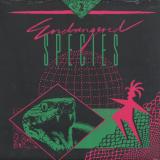
In their countless years of deep digging, Dark Entries has uncovered many curiosities, oddball Italo and synth-wave creatures too rare to live, too funky to die. Dark Entries’s conservationist efforts began with 2020’s Endangered Species Vol 1. Six years later, we are finally treated Endangered Species Vol 2, an even more ambitious effort which features eleven specimens previously deemed extinct, now safely preserved on vinyl. Things kick off with an extended mix of Palazzo di Danza’s “Play That Song For Me,” a lavishly produced German-Italo number propelled by a slinky bassline. Russian Olga Vosconyan’s “Cars” delivers what might be the moodiest song ever produced for a car commercial.
Fuzz Dance maestro Alexander Robotnick appears with a previously unreleased male vocal demo version of “I Wanna Believe,” a legendary track that would later appear under the name Gina & the Flexix. Canadian industrial royalty Dwayne R. Goettel (Psyche) and cEvin Key (Skinny Puppy) team up on the horror-sampling hit-heavy blaster “Bastards.” Belgian EBM progenitors à;GRUMH... report for duty with a slab of machine funk on “The Army.” UK DIY stalwarts Khmer Rouge bring Krautrock-inflected minimalism with “Take Me (Across the Floor Tonight) In Dub.” Endangered Species Vol 2 comes housed in a sleeve designed by Eloise Shir-Juen Leigh, and includes a 16 page booklet featuring liner notes, lyrics, and photographs of each featured project. Please assist Dark Entries in their efforts to preserve the rarest of beasts (and beats).
Landing on the 4th of September via his own imprint Knee Deep In Sound, ‘Obsessions’ is less a traditional dance record and more a reckoning — with where Daley Padley finds himself now, as an artist and as a person. Written across a period of constant movement, touring and introspection, the album holds the push and pull between intensity and stillness that has come to define his world.
This is an artist who started making music in Barnsley — long nights, small rooms, total commitment to sound. Those early marathon sets weren’t a stepping stone to something else. They were the foundation of everything that followed: global tours, chart success, the creation of Knee Deep In Sound, a career built entirely on instinct rather than expectation. Hot Since 82 has never followed a fixed path. He’s carved out a space that sits somewhere between underground credibility and global reach — and it’s that same restless, uncompromising approach that shaped this album.
“Some days feel heavier, some thoughts harder to hold. But music still reaches the places words can’t. It’s therapy and a reset button.”
That sense of release runs through the entire record. While rooted in house music, Obsessions doesn’t sit in one place for long — not to prove a point, but because that’s simply how Padley hears music. It moves between deep house, breakbeat, melodic electronica and full club focus as naturally as a conversation shifts tone. Moments of euphoria give way to reflection and tensions dissolves into release.
The album opens with ‘All That Matters’ — a track that feels immediately both expansive and intimate and sets the emotional register for everything that follows. From there it unfolds like a journey rather than a sequence.
Lead single ‘Shaded’, landing on the 12th June taps directly into classic house lineage while feeling unmistakably current — a bridge between where this music began and where it’s heading. Elsewhere, ‘Life’s Too Short’ and ‘Eternity’ introduce warmth and movement, weaving piano, breakbeat and subtle Afro influences into the album’s wider palette.
As the record progresses, the light changes. ‘Wow’ leans into darker, late-night territory — tension, restraint, a hypnotic centre. The collaborations with Kuuda on ‘State Of Mind’ and ‘Time’ bring the album back into full club focus: driving, physical, built for scale.
zake and bvdub are towering figures in the world of ambient - and prolific ones at that. The pair now return to zake's hugely influential Past Inside the Present label with the four-track long player Erasure. Each piece goes typically long and builds slowly but surely into an all-consuming soundscape despite the fact each one is crafted simply from textured synth drift. There's distortion brewing under 'Effacing The Ephemeral' that nods to the likes of Stephen O'Malley while 'Eclipsing Your Earth' is a much more luminous and celestial mood that empties your mind of everything. 'Erasing Empires' then builds to an intense crescendo before falling away to sultry strings. A hugely dramatic work.
The Forbidden Planet is the new album by Tomorrow Comes The Harvest, featuring Rasheeda Ali. The album explores a wide range of electronic and acoustic improvisational conversations, creating expansive and constantly evolving sound landscapes.
The recording carries forward many of the qualities that have made Tomorrow Comes The Harvest so distinctive from its beginnings. The project originated through the percussive dialogue between Jeff Mills and the late Afrobeat pioneer Tony Allen. When thetwo creative forces first came together several years ago, what emerged was more than a collaboration or musical conversation. They opened a pathway-a way of creating through instinct, exchange, rhythm and freedom. That pathway continues to lead toward new horizons, and The Forbidden Planet is evidence of just how far it can travel.
The album is the result of an intricate creative process spanning nearly two years, connecting a series of recording sessions at notable studios including Criteria Studios in Miami, Soda Sound, and the legendary Studio Ferber in Paris, France.
The Forbidden Planet explores the more cerebral dimensions of the band's vast musical language. An idea is introduced, and almost immediately it begins to transform. Themes are questioned, reshaped and redirected as the musicians respond instinctively to one another.
As Tomorrow Comes The Harvest is known for, the performances were recorded largely through improvisation, often capturing the energy and spontaneity of an almost one-take process. These recordings were later carefully refined and shaped into the compositional structures heard throughout the album.
The creative seeds have been planted in fertile ground, allowing ideas to grow naturally and without restriction. In rhythm and in spirit, each musician contributes an essential voice to the conversation. Within that collective precision lies something even more important: a shared love of musical freedom and the possibility of creating without boundaries.
Prabhu Edouard - tabla and vocals
Jean-Phi Dary - keyboards
Jeff Mills - percussion and electronics
Featuring Rasheeda Ali on flute, with a special guest appearance by Laurent Vernerey on electric bass.
The Forbidden Planet will be released November 20th, 2026 on Axis Records on Double-Vinyl & CD + DVD. The DVD features selected live footage from Tomorrow Comes The Harvest, featuring Jeff Mills, Jean-Phi Dary, Prabhu Edouard and Rasheeda Ali.
Filmed & recorded live at London Jazz Café on September 27th, 2025, the footage captures highlights from the band's unique fusion of electronic music, jazz, percussion and improvisation.
Double LP, pressed on gold vinyl. As part of Lineage II's 22nd anniversary celebration, NC America and Black Screen Records are proud to announce the first-ever Lineage II collector's edition vinyl album, which elegantly combines a track selection reflecting the game's iconic history and memorable musical identity. This vinyl album is now available for pre-order and will hit the stores in November. Arranged by composers Bill Brown (Tom Clancy's Rainbow Six), Jamie Christopherson (Metal Gear Rising: Revengeance), Inon Zur (Fallout 4), and NCSOUND, the track list is a collection of 40 of the most recognized pieces from the original soundtrack, carefully selected to create a cohesive listening experience rather than a complete collection. Published by NC, the album flows between calm, reflective village themes, atmospheric exploration pieces, and more intense, dramatic compositions tied to combat, progression and large-scale conflict. The track list draws from the original soundtrack's most recognized pieces and centers on two major regions: Giran and Aden. Early on their journey, players venture into the world's southern territory of Giran. As they explore the region's villages, tracks such as "Crossroad at Dawn," "Shepard's Flute" and "Caravans Crossing" help create a calm, grounded atmosphere that reflects the peaceful nature of travel through the area. In contrast, the world's northern territory of Aden reflects the game's grander, more conflict driven spirit. As players continue their journey, the Elven Village track "Unicorn's Rest" marks a turning point, gradually giving way to darker settlements and imposing castles through standout tracks such as "Knighting Ceremony" from the iconic Aden Castle and "Expedition March" from the Town of Oren, where tension, warfare and large scale conflict take center stage. Across both regions, the tracks are more than background music; they shape how players experience each location, from villages and hunting zones to moments of intense combat. This collection brings together the sounds that have defined Lineage II for the past 22 years, offering a reflective musical journey for both longtime players and new listeners alike.
The Lockheed F-117 Nighthawk was an American single-seat, subsonic, twin-engined attack aircraft and is a fitting name for this EP, which is equally low-key, menacing and devastating from RAN. Influences from Loefah, Youngsta and Boddika abound in these stark and dark dub soundscapes, which drip with dank warehouse vibes, ride on booming low ends that melt into an inky night and come with precision-engineered percussion. 'GBU-10 (External Guidance)' is a late-night search across a deserted city, 'JDAM (Signal Without Light)' has a more sub-aquatic feel and rolls more fluidly, while 'GBU-27 (BLU-109 Core)' is ominous, with ghosts of dubstep and broken beat lurking round every corner. Fantastically immersive and meticulously executed, not least because the EP was mastered by the great Transition Studios in South East London (early support from Carrier).
One of the most influential dub albums ever made. The remixing techniques used – radically new for 1973 – helped transform the role of the producer and the engineer to that of creative artists in their own right.
First released in Jamaica in December 1972, Upsetters 14 Dub Black Board Jungle is widely regarded as one of the first full-length dub albums and a true landmark in reggae history. Produced by the visionary Jamaican innovator Lee “Scratch” Perry, it marks the decisive moment when dub evolved from incidental B-sides into a fully realized long-playing art form. At a time when Jamaican sound system culture was flourishing, producers were beginning to strip down popular reggae tracks into instrumental “versions,” emphasizing the bass and drums for sound system deejays to toast over while adding echo and reverb effects to make things more interesting and dynamic. While King Tubby, who was in charge of mixing the tracks, was pioneering the technical foundations of dub, Perry expanded the approach by adding the hypnotic and psychedelic sound effects that made this record so rich in ideas, rendering the album more conceptually bold.
The album reworked previously released rhythm tracks by the Upsetters, which were recorded between 1970 and 1972, shortly before Perry opened his own studio – the legendary Black Ark Studio in Kingston. Their tight, groove-driven playing provided a solid backbone for these radical studio manipulations. Using the mixing desk as an instrument, tracks were deconstructed in real time – dropping vocals in and out, isolating drumbeats, pushing bass lines to the front of the mix, and sending fragments of sound spiraling into space through the heavy use of a spring reverb and tape delay effect units. Silence became as important as sound, and the interplay of rhythm and echo created a hypnotic, immersive listening experience.
Upsetters 14 Dub Black Board Jungle established dub as a genre defined by creative studio intervention. It demonstrated that the remix itself could be the main attraction, influencing generations of reggae producers and resonating far beyond into the techniques and aesthetics of post-punk, electronic music, hip-hop, and ambient sound design. By transforming the studio into a creative laboratory and elevating the “version” to an art form, this foundational album reshaped not only Jamaican music, but the whole of modern music production culture.
Standard edition - 180g black vinyl in poly sleeve with no art-print insert The Technokunst label journey continues with the third iteration of the Split Series, bringing together two long-standing figures from the deeper reaches of Techno. This time, Japan’s Takaaki Itoh and Scotland’s Deepbass are proving that in Techno, nothing is lost in translation. The EP opens with Takaaki‘s signature, timeless mental synth workout, “Fusioner”. Deepbass strips the original back to its core elements and takes the track in a much more minimal, yet functional direction that we’re sure is going to work wonders on any floor. On the flip, Deepbass continues to venture into more emotive territory with his original “Monolite”. Unafraid to use vocal pads, the track is brimming with emotion, giving it a distinctly cinematic feel, like a story unfolding. Takaaki closes the record with a pounding iteration of “Monolite”, with tones like those straight out of an astromech robotics division. Mastered by Gio at Artefacts Mastering and lacquer cut by Simon at The Exchange. The artwork is based on a digitally scanned painting on canvas by Dorka Berkes.
Limited Edition - 180g red-black marbled vinyl in poly sleeve w/ art print insert - 200 copies with no repress The Technokunst label journey continues with the third iteration of the Split Series, bringing together two long-standing figures from the deeper reaches of Techno. This time, Japan’s Takaaki Itoh and Scotland’s Deepbass are proving that in Techno, nothing is lost in translation. The EP opens with Takaaki‘s signature, timeless mental synth workout, “Fusioner”. Deepbass strips the original back to its core elements and takes the track in a much more minimal, yet functional direction that we’re sure is going to work wonders on any floor. On the flip, Deepbass continues to venture into more emotive territory with his original “Monolite”. Unafraid to use vocal pads, the track is brimming with emotion, giving it a distinctly cinematic feel, like a story unfolding. Takaaki closes the record with a pounding iteration of “Monolite”, with tones like those straight out of an astromech robotics division. Mastered by Gio at Artefacts Mastering and lacquer cut by Simon at The Exchange. The artwork is based on a digitally scanned painting on canvas by Dorka Berkes.
You asked for one more. Laibach duly oblige with MUSICK : ENCORE, a follow-up album to their 2026 record MUSICK, out on Mute.
They answer the crowd's demand with six brand new tracks and reworks of songs from the original album, reimagined by an eclectic line-up. Vinyl takers get the core 10-track experience, pairing new songs with four key reworks from the band, Richard X, PUNCHBAG, and Balžalorsky. The CD goes further, expanding to 13 tracks with additional remixes, including a rework of new track ‘#US’ from SILVERWINGKILLER, an Algorithm remix of fan-favourite ‘Allgorhythm’, and a bonus version of ‘Love Machine’ courtesy of The Lincolnshire Poacher.
Where MUSICK turned maximalist, hyper-driven pop into a reflection on our oversaturated, AI-warped media landscape, ENCORE pushes further into that fractured hall of mirrors – glitching, distorting, and rebuilding the original tracks into new shapes, from pulsing electropop to warped Eurodance detours and everything stranger in between.
Ihr habt nach einer Zugabe gefragt. Laibach liefern: Mit MUSICK : ENCORE erscheint auf Mute das Nachfolgealbum zu ihrem 2026 veröffentlichten Werk MUSICK.
Als Antwort auf die große Nachfrage präsentiert die Band sechs brandneue Tracks sowie Neuinterpretationen von Songs des Originalalbums, umgesetzt von einer vielseitigen Auswahl an Künstler. Die Vinyl-Version umfasst zehn Tracks und kombiniert neues Material mit vier ausgewählten Reworks von Laibach, Richard X, PUNCHBAG und Balžalorsky.
Die CD-Version erweitert das Programm auf insgesamt 13 Tracks und bietet zusätzliche Remixe. Darunter befinden sich eine Neuinterpretation des neuen Tracks „#US“ von SILVERWINGKILLER, ein Algorithm-Remix des Fan-Favoriten „Allgorhythm“ sowie eine Bonusversion von „Love Machine“ von The Lincolnshire Poacher.
Während MUSICK maximalistischen, hochenergetischen Pop als Spiegel unserer reizüberfluteten und durch KI zunehmend verzerrten Medienlandschaft inszenierte, führt ENCORE diesen Ansatz konsequent weiter. Die ursprünglichen Tracks werden zerlegt, verfremdet und neu zusammengesetzt – von pulsierendem Elektropop über verschobene Eurodance-Ausflüge bis hin zu allem, was dazwischen noch eigenwilliger und unerwarteter wird.
Stix Records, a sub-label of Favorite Recordings, is back with Disco Reggae Vol. 7, continuing a series that goes back more than 20 years, to the success of The Dynamics’ acclaimed album Version Excursions.
Born in Jamaica, reggae has always shared deep roots with Soul, Funk, R&B and Pop. Over the decades, Jamaican musicians have mastered the art of reinterpreting iconic songs through their own unique musical language. With the Disco Reggae series, Stix Records celebrates this rich tradition, bringing together fresh reggae interpretations of timeless classics from across the musical spectrum.
For this seventh volume, Charles Maurice has once again carefully curated a selection packed with gems, featuring reinterpretations of tracks by Hall & Oates, Gloria Estefan, Crystal Waters, Patrice Rushen, Cameo, Joe Smooth, and many more.
Behind the controls, the usual crew of friends is back: Taggy Matcher, Mystic Jungle, Soul Sugar aka Booker Gee, and Mato. This time, they are joined by Dub Shepherds and Slowly from Japan, who each bring their own flavour to the collection with two killer covers.
The result is another feel-good journey through Disco, Funk and Reggae, made for dancing under the stars, cruising with the windows down, or simply vibing with friends.
Disco Reggae Vol. 7 is another chapter in Stix Records’ ongoing celebration of the timeless connection between Jamaican music, classic songs and the dancefloor.
Detroit's Javonntte returns to Yore Records with four soulful, late-night house cuts, blending deep grooves, warm jazz-infused harmonies and rich chord progressions. Staying true to his unmistakable style, the EP combines timeless musicality with dancefloor functionality, creating an atmosphere equally suited for intimate listening sessions and underground clubs.
Adding another personal touch, Javonntte performs his own vocals on selected tracks, bringing even more soul and authenticity to this deeply personal collection.
From the driving "Donnie Brasco" and atmospheric "Dream of Mind" to the heartfelt "Let's Not Wait Any Longer..." and uplifting "Morning Till the Groove", this is classic Yore Records territory: sophisticated, soulful house music with depth, warmth and lasting appeal.
Berlin-based Dutch-Italian composer and musician Aimée Portioli aka Grand River presents the new album Temporary, returning to the renowned Editions Mego label with her most expansive and focused LP yet.
Rooted in existential ideas of impermanence and flux, Temporary is a deeply emotive work centred on the rich interplay between resonant guitar work and innovative electronics. Written in the wake of profound personal grief and loss, the album sees Portioli infuse her music with a raw, expressive intensity anchored in this experience. Across eight strikingly melodic and affecting soundscapes, Portioli powerfully embodies a dramatic encounter with mortality.
Temporary reprises Portioli’s exceptional streak of material across acclaimed labels including Donato Dozzy and Neel’s Spazio Disponibile, Caterina Barbieri's light-years, Ghostly International, Tresor and Umor Rex. The LP represents the latest tour de force in her distinctive electronic practice. Alongside a raft of lauded releases, Portioli has devised visionary multichannel installations which dissolve the boundary between the art gallery and the performance space.
Her new album signifies a culmination of her work, imbued with the depth of Portioli’s artistry. Shaped by a paradigm shift rising from loss, the record reflects a contemplation of the human condition and the ephemeral nature of existence. Ruminating on the thoughts and experiences that have fed into the record, Portioli reveals a consequential recognition underpinning the record:
"Sometimes, when travelling in places far from home that I know I will most likely never return to, or while accompanying someone I loved towards the end of their life, I become intensely aware of the singularity of the moment, and of how precious and sad this feels at the same time. It carries a particular weight because it will never happen again in quite the same way. Through experiences like these, I have gradually come to understand the temporary nature of all things. They taught me that to live is to experience the present while already feeling the trace of its disappearance, something both painful and blissful." - Aimée Portioli, Grand River
The album is invested with a potent mood and momentum from the outset. Establishing an evocative tone with the subtle, pulsating synthesis, rustling undertow, and oceanic low end of 18 circles to heaven, Portioli gradually ascends through the incandescent modular majesty of Come to stay, and the turbulent, brooding guitar figures of The crossing of the body, the crossing of the mind. The album progresses through the rapturous electronic phasing of The little we last into the coruscating synth grandeur of Let me know when you’re pure, before a thrilling endgame.
Closing with the wavering harp runs, heavy percussive thud, and cataclysmic guitar discordance of Maybe I am dead and this is paradise, and the evanescent atmospherics and beautiful acoustic refrains of Work of ending, Portioli takes the listener through vast landscapes of sound and mercurial emotional states. Intimate and immersive in equal measure, the record traces a compelling sensory journey.
Each part of the album is part of a larger poetic sentence, with track titles forming fragments that together articulate a meditation on transience. From 18 circles to heaven and Come to stay through From the other side and Work of ending, they read like quiet statements about being human, about loving, losing, remembering and eventually fading. The record moves through these states as a continuous passage, depicting a poignant soundworld guided by temporality.
The awareness that our time is limited sharpens the value of what remains. Each encounter, each gesture, each fleeting moment becomes more vivid. Temporary lingers in the space where presence and disappearance coexist, where everything is already passing away and therefore becomes infinitely precious. Things matter because they do not last. Mortality does not diminish life; it intensifies it. In confronting these ideas, Temporary feels irrepressibly alive.
Composed, produced and mixed by Aimée Portioli
Production and mixing assistance by Luca Sammartin
Acoustic piano on Maybe I am dead and this is paradise by Andert Tysma
Mastered by Rashad Becker
Cut by Marta De Pascalis at Schnittstelle, Berlin
Artwork by Nicola Tirabasso
Layout by Riccardo Piovesan
What's Left is the new album by Tom Henry, releasing November 20th, 2026 on Royal Oakie Records. Where his debut album Songs to Sing and Dance To leaned into big dreams, What's Left is a record about what remains once the dust settles, delivered with the wit and charm of a young rocker in his prime. The familiar influences are still there — Paul McCartney and Big Star loom large (though there's a little more Third/Sister Lovers this time around), but now the songs are lush and polished, with new sounds creeping in around Henry’s trademark power pop hooks. On a handful of tracks you can even hear strains of Syd Barrett influenced acid-folk alongside psychedelic rock that recalls The Brian Jonestown Massacre or The Beatles at their most lysergic.
Produced in collaboration with David Glasebrook (Patti Smith, Peter Case, Sugar Candy Mountain), and engineered by Glasebrook and Stephen Shirk, the album was tracked across two cities at Shirk Studios in Chicago, IL and The Garden Shed in Oakland, CA, where Glasebrook also handled mixing and mastering. The record's cross-continental origins reflect the movements of Tom’s own life over the past half decade, which found him departing his native Chicago for Los Angeles before returning home four years later, and lend the album its distinctive sound of Midwestern grit mixed with California sunshine across all twelve tracks.
Opener "Someone I Need" sets the tone: an old-fashioned, up-beat rocker built for a roadside diner jukebox somewhere out along the backroads of your mind — it's crunchy tape tones and horn arrangement lending warmth to the song as the narrator asks for a dance and beckons the listener along for the ride. By "It's Not Meant to Be," the record turns inward, wrestling with the exhaustion of trying to find love in the modern age — especially for someone who wears their heart on their sleeve and often comes to find their suitor's wardrobe doesn't have room. "Silverlake Song," reminiscent of early Donovan, kicks off with otherworldly sitar — a wry postcard from the west, tracing how the shimmering promise of L.A.'s Silver Lake enchants, bargains with, and ultimately tries to ruin the starry-eyed dreamer — and very nearly succeeds.
In addition to Tom–who sang and played guitar, bass, and keys–the album features musical contributions from co-producer David Glasebrook, Brian Daley, Joe Daley, Finn Swingley, Lewis Patzner, and labelmates Graham Patzner, Charles Lloyd, and Simon Beins. Liner notes come courtesy of Ian F. Svenonius, who — in the guise of one Johnny Sincere of Integrated Star Management Ltd. — recounts his company's failed attempt to sell Tom Henry a gimmick: a space suit, a coal miner's neckerchief, a lounge pianist's dead-eyed shades. Tom turned them all down. As Svenonius tells it, when reminded that every story's been told and every gimmick's been used, that all that's left is to admire the photographs of what's gone before, Tom simply shrugged: rock 'n' roll is an eternal spring, and if this is what's left, that's just fine with him — it's what he likes to do.
Andreas Tilliander released »Ljud« in 2001 as the first full-length album under his real name. The year before, the Swedish producer’s »Cliphop« album under his Mokira moniker had established him in the world of adventurous electronic music and the clicks’n’cuts scene. »Ljud« was just as minimalistic, warm, and playful as its predecessor while also notably inspired by house music. It is a timeless record based on happy accidents, playful loops, and lively spontaneity. For its 25th anniversary, Keplar presents a vinyl reissue with adjusted artwork by graphic designer Marc Hohmann and updated mastering by the artist himself.
Tilliander laid the foundation for his two first albums when he got rid of most of his music gear in 1998 after meeting Joel Brindefalk, who was already releasing music on the legendary Börft label. Brindefalk was using a computer as his main instrument and introduced Tilliander to the audio editing suite Sonic Foundry Sound Forge. »What he did with that software is what made me sell most of the hardware except my Nord Modular and a Korg MS-20.« The former synthesizer played an integral role while Tilliander made the tracks for »Ljud,« working primarily in the modular studio environment Jeskola Buzz.
»Ljud« came together in an intuitive process. »It’s still how I work 25 years later: I first make loops, create bits and pieces, and build up my own sound library as a foundation,« Tilliander explains. The Nord Modular and Buzz, which allowed him to swap samples and produce new sounds out of pre-existing ones, provided him with material for loops that formed the basis of the ten tracks. »I would start with a few elements, add more into the mix, then take them out again—arranging the pieces in real time while recording.« The casualness and vivacity of this improvisational approach becomes tangible throughout »Ljud.«
»Ljud« was released on Achim Szepanski’s Mille Plateaux, which had published the seminal »Clicks+Cuts« compilation in 2000. »I was part of that scene and I liked the digital aesthetic of the label,« says Tilliander »Coming from a very analogue setup, working with computer music and this kind of minimalism was very inspiring.« When preparing »Ljud« for the Keplar reissue, he ran the music through an analogue outboard and noticed he was still happy with the way it sounded. »It brought back fond memories. I hope the same is true for people who heard it back then, and that everyone who discovers it now will enjoy it, too!«
Vocalisations like ‘Hooo’ and ‘Huhuh’ form the wordplay on Use Knife’s upcoming release as these sounds are meant to summon strength, overcome fear and unleash unwavering sonic assault. Set for November 20, the EP ‘Hooo Huhuh’, on the band’s own Hooo Huhuh record label, is Use Knife’s first release since its acclaimed 2nd album ‘État Coupable’ on VIERNULVIER records in 2025.
The journey of Use Knife began in 2020 during a music residency in art centre VIERNULVIER (Gent, be) when Iraqi percussionist Saif Al-Qaissy, Stef Heeren and Kwinten Mordijck, as well as the multidisciplinary artist and scenographer Youniss Ahamad, came together to form Use Knife, later joined by Jerusalem In My Heart’s Radwan Ghazi Moumneh as mixer and guest musician. The project quickly gained the attention of prestigious platforms like The Wire, The Quietus, BBC6's New Music Fix, KEXP, NTS, Inverted Audio, METAL Magazine, Ma3azef, A Closer Listen, and others documenting the universal resonance of Use Knife's message.
Since releasing its debut album ‘The Shedding of Skin’ on VIERNULVIER, a remix EP ‘Peace Carnival’ on Morphine records, and follow-up album ‘État Coupable’, Use Knife has played its visceral audio-visual liveshows at many prestigious festivals like Le Guess Who?, Tremor, Colours of Ostrava, Les Trans Musicales, Rewire, Sonic City, Resonator, Roadburn, Donau, Fusion, Rage Sacrée, Micro, Clandestino, E-fest and many more.
Praised by The Quietus and The Wire for its vibrant and wholehearted performances, Use Knife has been described as an electrifying live act that fully engages its members and audience alike. Their sound, dubbed 'industrial Iraqi EBM', is celebrated for its ability to immerse the audience in a hypnotic state, erasing global borders through real-life connection and dazzling visuals on gigantic projection fabrics, resulting in exhilarating sensory experiences.
Further extending Use Knife's influence, Radio alHara in Palestine has hosted Use Knife's 'Feeding the Gentry' show since 2023, where the band aims to build a community by opening their platform to other guests like Saint Abdullah & Eomac, Monstera Occulta, Cinna Peyghami, Bader, Anthony Sahyoun, ... thus broadening the band's international reach and impact.
Earlier this year, Use Knife collaborated with Rabih Beaini from Morphine Records to re-remix the band’s track ‘To Feed the Gentry’ (feat. Radwan Ghazi Moumneh), blending in the beautiful track ‘Kunna’ by Rully Shabara. The resulting track was included in Beacon Sound’s compilation ‘Gaza is the Moral Compass’ to help support Palestinian-led mutual-aid groups on the ground in Gaza.
The forthcoming 'Hooo Huhuh' EP, releasing on November 20, advocates for the resilience and determination of the people, their collectives and communities, with energetic vocalizations, distorted percussion and throbbing saxophones. The title track, originally mixed by Radwan Ghazi Moumneh and mastered by Heba Kadry during the ‘État Coupable’ sessions, has been surgically reworked into the clubby rant that is ‘Ho Hahaa Huh’ and the drone-like mantra ‘Nobody Can Separate Us محد يكدر يفركنا’.
The limited vinyl edition comes with a 3-color risoprinted sleeve designed by Lebanese artist and graphic designer Farah Fayyad.
Limited Edition 2026 Black Vinyl Repress.
Up in Flames is Dan Snaith's second album, originally released under the Manitoba moniker on March 31, 2003 .
Made with the same modest home setup as its predecessor, it nonetheless sounds like a different artist entirely - a kaleidoscopic rush of sun-bright melodies, tumbling percussion, and psychedelic pop that traded the hushed intimacy of Start Breaking My Heart for something warmer, bigger, and more joyfully overstuffed, encompassing 1960s psychedelia, Madchaster swagger and shoegaze swoon.
Snaith was later forced to change his artist name after a well-documented lawsuit, and Up in Flames stands as the final album released under the Manitoba name - a high point to go out on. The record was met with widespread critical acclaim, and has since been recognized by Pitchfork as one of the standout albums of the 2000s. It remains, by most accounts, one of Snaith's finest and most beloved records.
TECHNO Records continues its 2026 release series with a new work by Germany-based artist VNNN., a fixture of the Ruhr area’s underground techno scene for more than a decade.
Built around an intuitive search for bearings within a complex personal identity, the record takes Staza — the Bosnian word for path — as its poetic title.
Noir-toned, hypnotic and driving at its core, the music sets deep tension against insistent momentum and call-and-response energy. Each of the four original tracks refracts the same artistic identity in a different way. Together, they form a cohesive, self-assured techno vision. Raw and direct without sacrificing detail, the release reflects the focus of the artist who has produced extensively, released selectively and remained highly self-critical while refining his own sound.
Nadia Struiwigh reroutes “Prava Ljubav,” turning its central hook into what VNNN. describes as a junglistic firework. Her remix extends this portrait with a contrasting fifth state — a genre deviation that reflects both artists’ broad musical outlook and their willingness to move beyond boundaries when inspiration leads them there.
TECH042 gives physical form to the layered outcome of two singular artistic inquiries, turning it into a functional object and marking the debut of both VNNN. and Nadia Struiwigh on TECHNO Records.
“IRIE” is where the Paris-based artist Yasmin Regisford's next era begins. Built on echoes of reggae vocals, warm low-end pressure and slow-building psychedelic tension, the track blurs nostalgia and euphoria until they become impossible to tell apart. More than a collision of genres, “IRIE” is about coexistence: different influences and origins moving together without losing themselves. It mirrors Regisford’s own relationship to cultural hybridity — existing between worlds, and feeling fully at home inside the blend. The single sets the tone for Zentraï, a four-track EP that unfolds like a shifting ritual — morphing between groove-led hypnosis, psy-infused tension and percussion rooted in movement and memory. Across the EP, Yasmin Regisford maps a world where rhythms, textures and identities intertwine: fluid, layered and constantly evolving.
Music From Memory presents ‘Sleep Machines’, a new collaborative album from UK ambient pioneers O Yuki Conjugate and German producer and DJ Philipp Otterbach.
Formed in Nottingham in 1982, O Yuki Conjugate have spent more than four decades developing a singular approach to what they now describe as ‘dirty ambient’. Emerging from the post-punk DIY scene and drawing early inspiration from artists including Cabaret Voltaire, The Durutti Column and Jon Hassell, the group gradually carved out a space between post-industrial electronics, ambient music and Fourth World experimentation. Centred today around founding members Roger Horberry and Andrew Hulme, their work has retained an outsider sensibility throughout its many periods of activity and hibernation.
Philipp Otterbach approaches music from an equally open-ended perspective. As a producer, collector and DJ, his work moves freely between drone, dub, techno, house and electronics. His sets and productions share a fascination with unexpected connections, allowing disparate sounds to drift into one another through intuition rather than fixed genre boundaries.
‘Sleep Machines’ began with a chance meeting at The Gun on Well St. in London. Otterbach asked, “Would you be interested in doing a collaboration?”
“A collaboration? Sorry, we don't do collaborations,” came the reply.
“But wouldn’t it be fun?”
“We don't do fun either.”
Despite themselves, O Yuki Conjugate tentatively sent over an initial track. An avalanche of ideas quickly came back, and what began as an unlikely proposal developed into 18 months of recording, file-swapping, mixing and repeated reworking between the UK and Germany.
Produced by Otterbach, the resulting ten tracks bring together recognisable elements of both sides while gradually dissolving the lines between them. O Yuki Conjugate’s hazy atmospheres, dubwise spaces and tactile rhythms meet Otterbach’s instinct for strange detail, low-slung electronics and shifting forms. Rather than functioning as a collection of separate pieces, the album moves without gaps, unfolding as a single continuous work in which one environment slowly slips into the next.
‘Sleep Machines’ is both O Yuki Conjugate’s first collaborative album and an unlikely meeting point between two generations of musicians whose work has consistently existed at the edges of established forms.
Harmacy (30th Anniversary Expanded Edition) finally makes Sebadoh’s seminal 1996 indie-rock album available again, and adds 16 bonus tracks, including alternate versions, rare B-sides, BBC sessions, and live material from the Harmacy era.
Sebadoh was formed in 1986 in Northampton, Massachusetts, by Eric Gaffney and Lou Barlow (Dinosaur Jr., The Folk Implosion), with multi-instrumentalist Jason Loewenstein completing the line-up in 1989, and Bob Fay taking Gaffney’s spot in 1994. By 1994, the band had released five albums and more or less changed the pockmarked face of indie rock. Their albums were mostly home recordings, decried for their lack of sharp production, but embraced by fans of Barlow's intimate songwriting style, which owed as much to Joni Mitchell as Bob Mould. In 1996 Harmacy, their breakout sixth album, arrived, finding Sebadoh as conflicted as ever: torn between screaming punk and gentle crooning, replete with highly personal songs guaranteed to bring down even the most super-charged midnight ravers.
Released in the wake of The Folk Implosion’s Top 40 hit "Natural One," Harmacy became Sebadoh's first charting album in the U.S., and yielded the hit "Ocean." Interview said, “Harmacy is nothing short of a masterpiece.” The New Yorker called it a collection of “perfectly crafted, honest (read: ambiguous and emotionally twisted), impassioned songs about love and hate.” Harmacy was hailed as one of the best albums of 1996 by Rolling Stone, The Village Voice, and NME.
Half a century after its original release, legendary Lebanese musician and singer Marcel Khalife—renowned oud player and global icon of both music and activism—returns with a new recording. On this album, he reinterprets four of the five tracks from his debut, Promises of the Storm. A bold defiance of time and history.
Why revisit the same album, 50 years later? The reasons are many, but one stands above the rest: history itself seems to be repeating. The narrative unfolds once more in the same dire circumstances as half a century ago, as if time has folded in on itself, returning everything to its starting point. The urgency, the necessity—it all remains, pressing and inescapable. We must begin again.
In 1976, a young Marcel Khalife found himself exiled in Paris, fleeing the Lebanese Civil War and his family’s Christian village, where his progressive, left-wing ideas had placed him under a kind of house arrest. He was one of the few to openly and unwaveringly champion the Palestinian cause. The situation quickly became untenable, especially since, just a month before the war began in March 1975, Khalife—fresh out of the conservatory—had given his first public concert to great acclaim. Then, everything collapsed. What does one do when trapped at home? Read books, play the oud, and turn those readings into songs. In his family’s de facto prison, Khalife began setting the poetry of the great Palestinian poet Mahmoud Darwish to music. These songs, born of confinement, he carried with him into exile, driving to Paris where a producer offered him the chance to record an album. Naturally, the tracks were the ones he had been improvising at home from Darwish’s poems. The album’s title, Promises of the Storm, echoed the war that was just beginning. Khalife recalls that the album became a hit after a concert at the Fête de l’Huma, where 500 copies were sold in a single day. “Everything started there, and it never stopped,” he remembers. He would meet Mahmoud Darwish shortly after, at a dinner organized by mutual friends. From that moment, a deep friendship blossomed between the two men.
With Darwish’s words and Khalife’s music, the songs of Promises of the Storm are imbued with a powerful evocative force—melancholy, tenderness, and poetic resistance in the face of violence. The album catapulted Khalife to international stardom, leading to endless tours and recordings, yet he never abandoned his commitments.
Now, 50 years later, Promises of the Storm returns in a fresh recording, because history is repeating itself. After the Israeli bombings in Lebanon at the end of 2024, Khalife, who was on tour, found himself stranded in Paris. He remembered a recurring request from his son, musician Bachar Mar-Khalife, who had often urged him to re-record his now-classic debut album. One morning, oud in hand, Marcel knocked on his son’s door and said, “Shall we? I’m ready to record.”
These new versions are stripped down, raw, and intimate—just the solitary strings of the oud. Khalife sings as never before, his voice no longer marked by the fragility of youth but imbued with something deeper, freer, unshackled. It soars high yet resonates low, always clear, as if to escape sadness, to evoke love and violence, desire and exile. In just four songs, Khalife encapsulates a lifetime, and a philosophy of life. Rita tells of a love of Darwish’s, with the haunting line (translated from Arabic): “Between Rita’s eyes and mine, a rifle.” Oummi invokes the figure of the mother as a metaphor for the lost land. Promises of the Storm is a meditation on revolution, the hope for change, the melancholy of defeat, and the power of thought. Passport captures, through poetry, the feeling of being stateless—a citizen of everywhere and nowhere.
Time has only strengthened these texts and this music. History never repeats itself without a valid, indispensable reason for the present. That reason is fully contained in Marcel Khalife’s new interpretations, which have never sounded so clear, so right, so essential.
Acid Pauli's new album "Mystic Meltdown" is hypnotic mystery, textural mastery, all hurtling through your system at peak velocity, unrelenting yet full of mischief and spirit.
The first full-length Acid Pauli album since 2020's MOD, here the artist, Martin Gretschmann, who you might also remember from Console and The Notwist, reaches out to collaborators, unearths new sounds through travel and then brings it all together with one long, sweeping breath - an album to take in as a whole, to ride its compulsive energy to the end and then back to the start, over and over again.
While the album's been brewing for some time, "It took months and months to find the coherency and the story that this album is telling," Gretschmann recalls, "Arranging the pacing, feeling how the tracks come together into one album", it reads as effortless. It draws from Gretschmann's various musical languages, from the techno, house and ambient of Acid Pauli, even reaching back to the electronica of Console, but it places them in new contexts, at new speeds and in rich, giddy contrasts. Mystic Meltdown feels like endless pleasure, unflagging energy.
It's also an album rich with multiplicity. There are many voices that visit us at the Mystic Meltdown, from Hani Mojtahedy's Kurdish vocal on "Goman (Remix)", through to Lhasa de Sela's "Con Toda Palabra" in Spanish. A sample of Kingdom Molongi's voices opens the title track and returns on "Mystic Feedback" - this feels like a particularly profound connection, given the inspiration that Gretschmann has gleaned from the musical community surrounding the Nyege Nyege Tapes label and organisation over the years. He's also appeared at one of their festivals, by all accounts a revelatory experience.
Sometimes Gretschmann reaches back yet further. "Yes, Caroline" hints at an abstract relationship with the Beach Boys' pop masterpiece, Pet Sounds. Yet the way he draws these various influences into his own music always displays more than a touch of transmutation. Releasing the album on his own label All Is Acid which has recently been undertaking a reissue program of some of Acid Pauli's earlier works, "Mystic Meltdown" feels like a complete expression for Gretschmann; from beginning to end, from creation to reflection. "Building up, going into different spheres and emotions," Gretschmann concludes. "Working through some darker shades, trying to find light. Pouring in to get through."
Antonio Carlos Jobim was definitely one of the most important artists in the bossa nova movement of the 1960s. The pianist and guitarist wrote the iconic "Desafinado" and, probably the most famous song in the genre, "The Girl from Ipanema". His elegant style of playing the music became the blueprint for the genre and inspired many.
Stone Flower is the album where you hear Antonio Carlos Jobim evolve in response to the new trends of the 1970s. His gentle and signature melodies are still there, but there are new elements; you here for example an electric Fender Rhodes. These changes only add to the timeless sound of Stone Flower.
The album has an impressive line-up of artists that were at their creative peak such as Ron Carter, Airto Moreira, and Eumir Deodato. Producer Creed Taylor and engineer Rudy Van Gelder give it the warm, high-quality sound that's typical of many CTI releases.
Stone Flower is available as a limited edition of 2000 individually numbered copies on transparent/black marble vinyl.
Nailbomb's live album Proud To Commit Commercial Suicide, was recorded at the legendary 1995 Dynamo Festival in Eindhoven, The Netherlands.
With 110.000 attendees, this was the biggest Dynamo Festival that was ever put together. Featuring a line-up of bands like Machine Head, Life Of Agony, Biohazard, Downset, Dog Eat Dog, Fear Factory, and many more, this was truly an event people from around the world wouldn’t miss.
Nailbomb's legendary live show (featuring appearances from former Dead Kennedys drummer D.H. Peligro, Biohazard bassist Evan Seinfeld, Sepultura's Igor Cavalera and Front Line Assembly/Fear Factory keyboardist Rhys Fulber) is still being talked about to this day. The last two studio tracks were recorded at Chaton Studios, Scottsdale, Arizona, in July 1995.
Proud To Commit Commercial Suicide is now available on black vinyl and contains an insert.
What is an edit? A correction, a confession, a DJ tool, a mild act of vandalism—or simply the result of listening to somebody else’s record and thinking: very good, but what if this bit went on a little longer?
For his contribution to the Running Back Mastermix series, Gilles Aiken aka Edward opens a folder that has apparently been filling up for quite some time.
The Giegling resident’s thirteen edits reach back through years of DJing, collecting and producing. Made for sets rather than release schedules, they form something like a musical autobiography told through other people’s records: Carl Craig, Roman Flügel, Motohiko Hamase, Kirk Degiorgio, Aubrey, Sven Väth, Michael Rother and more.
From Japanese ambient jazz and Detroit techno to dub techno, house, trance and kosmische music, these are not attempts to improve records that didn’t need improving. They are the small interventions that happen after living with music for a long time: a rhythm exposed, an entrance moved, a passage extended, the unnecessary made necessary.
“These records mean a lot to me,” says Edward. “They consist of edits I’ve gathered over the years, some of them going way back. In a way, they reflect my musical journey. All of these artists have been a huge influence on me as a producer and DJ.”
Usually, such edits remain on hard drives, USB sticks and in vaguely labelled folders. This time permissions were requested, publishers located and, somewhere, presumably, a spreadsheet became very important.
Miraculously, everybody said yes.
Thirteen thank-you notes to the music that helped make Edward Edward. Naturally, they require three records.
Mastermixed accordingly.
Also available on cassette,
What is an edit? A correction, a confession, a DJ tool, a mild act of vandalism—or simply the result of listening to somebody else’s record and thinking: very good, but what if this bit went on a little longer?
For his contribution to the Running Back Mastermix series, Gilles Aiken aka Edward opens a folder that has apparently been filling up for quite some time.
The Giegling resident’s thirteen edits reach back through years of DJing, collecting and producing. Made for sets rather than release schedules, they form something like a musical autobiography told through other people’s records: Carl Craig, Roman Flügel, Motohiko Hamase, Kirk Degiorgio, Aubrey, Sven Väth, Michael Rother and more.
From Japanese ambient jazz and Detroit techno to dub techno, house, trance and kosmische music, these are not attempts to improve records that didn’t need improving. They are the small interventions that happen after living with music for a long time: a rhythm exposed, an entrance moved, a passage extended, the unnecessary made necessary.
“These records mean a lot to me,” says Edward. “They consist of edits I’ve gathered over the years, some of them going way back. In a way, they reflect my musical journey. All of these artists have been a huge influence on me as a producer and DJ.”
Usually, such edits remain on hard drives, USB sticks and in vaguely labelled folders. This time permissions were requested, publishers located and, somewhere, presumably, a spreadsheet became very important.
Miraculously, everybody said yes.
Thirteen thank-you notes to the music that helped make Edward Edward. Naturally, they require three records.
Mastermixed accordingly.
Also available on cassette,
Rhythm Cult returns with a heavyweight four-track EP from Magnetik Source, featuring a very special remix from Brian Kage. Four deep, driving cuts built for the heads, moving between Detroit house, dub techno and stripped-back machine grooves. Title track “Eastpointe” sets the tone with its rolling drums, deep chords and understated Detroit feel, before Brian Kage takes it deeper into tougher, more hypnotic techno territory. “Tecumseh” strips things back further, locking into a raw, drum-led groove, while “Cinron” closes the EP on a deeper, slower-burning note. A serious four-track package from Magnetik Source, with Brian Kage on remix duties and already receiving early support from John Digweed, Laurent Garnier, Radio Slave, Danny Howells, Guy J, Joseph Capriati, Âme, Paco Osuna, Funk D’Void, Karotte, DJ Harri and Chris Fortier. Another Rhythm Cult release made with the vinyl heads firmly in mind.
Robag Wruhme, working on the material. On the very same piece. And performing two different movements. First, thinking in category Album: who will hear it where? also: mood, position, length. Second, thinking in category Maxisingle: a spinning-tool for the club – another form of another functionality: accelerating the rhythm, lowering the harmonicmelodious, still preserving the nature of the song. And each version should make you HOT for the other!
Nata Alma, a voice loses itself in the infinite, a car brakes, a horse whinnies, the sun scorches relentless. Further, further on, towards the flickering, stoically. Water, flames on the horizon, Fata Morgana, a mirage. »And you might say, we've got no place to go?« - okay? no notokay at all!: Shuffle!
Nata Alma, melancholic Eight-minute-forty. A love song, a wave good-bye: »And you might say, that you need me no more?« sings Sidsel Endresen alongside Bugge Wesseltoft's swells and ebb-aways – metal never sounded so longing; a buzzing swing, a siren call from afar.
Robag Wruhme takes a seat at the organ and plays minor bass notes. He gets up, leaves the room and lays down a dry rock of funk: wooden kick on wooden snare, tight-cut voices, driving hi-hats and shakers, gated synth danglers and percussion loops. Relentless, stoically. »And you might say, that it's over?« – relentless, maybe, but that's how he creates the Further: keep going! dance it off! a new day rising!
And right here. Flip it and keep on moving: Venq Tolep. A summer meadow, grass-stains, a gentle breeze, an early smell of hay. Venq Tolep. Endorphins tickle under the skin. A
percussive spectacle, dance of the insects. Hopping around in flat shoes, the beat is phat and reverberated by a cluster of trees. Stabs on the e-piano set in, picturing the euphoric moment when Loving-feelings walk hand-in-hand with a Hint of Melancholy.
Robag Wruhme, Nata Alma and Venq Tolep - music for dance floors, inside and outside, music for the summer, day and night, and for convertibles on the way there.
"La Duquesa", the most tender and most refined piece of the album Amygdala, perfectly casual and serious, deep and euphoric, all at the same time, is dedicated to the Spanish Duquesa de Alba, who, as holder of 46 titles of nobility, is even more highly decorated than Queen Elisabeth. Koze is fascinated by this lady: With her peculiarly creepy appearance she seems like a relic from the past era of the Spanish nobility. She is the most pictured woman in Spain and a pop phenomenon. When, in 2011, she married a man 24 years younger than herself, the entire country badmouthed her. Sometimes Koze would love to be that younger
man, who the Spaniards dismiss as a legacy hunter! Encore the needle is cookin'. Dj Koze did it again. His homage to Audrey Horne. "Burn with me" - a fucked up, deep and schizophrenic brainfoodbouncer with legato bass and hi hats way out of time. The beat burst like shagging, the dirty off hi-hat lashes remorseless in the twatherd - everyone just wants to get laid straight away.
Spanning Portland, Bristol, London and beyond, Cold Light has evolved from a friends-and-family label into something stranger but more cohesive. It's a collective spanning Best Available Technology, Birthmark, Withdrawn, the wind between, CSNL and Rael, plus a wider orbit including Elaine Malone and Tony Onuchukwu. What began as a 2019 tour experiment and crystallised during lockdown into the Live at the Laundromat sessions has now fully matured into a singular sound rather than a patchwork of ideas. Dub sits at the centre, most clearly on the sprawling 'Fields in B', but the group folds in haunted boom-bap, gritty noise-rock and ghostly trip-hop with equal confidence. 'Riot' and 'I've Known Fires' both hover in that murky, half-familiar space the collective has made its own.
Almost an instant sell-out on the debut BISOU release via G.A.M.M
This on every likely to do the same !
Maximum sunshine vibes, with uplifting steel-band Funk and Afro-Disco reworks melting the speaker cones !
When Khalab and Baba Sissoko first recorded together in 2015, they produced something definitive: a record where electronics and griot tradition achieved genuine synthesis rather than polite cohabitation.
Not layered genres maintaining separate identities, but two forms evolving into something singular. "Tata" took Track of the Year at the 2016 Gilles Peterson Worldwide Awards, found champions in Laurent Garnier, Ben UFO, Matthew Dear, Bonobo, and many others — but more significantly, it established a working method built to last.
Eleven years on, they return with Foli Bah on Hyperjazz Records. Theirs is a relationship built on trust. Khalab constructs structures that don't develop linearly but spiral inward — loops that reveal something new with each rotation, tightening until the listener stops resisting and surrenders. Sonic architectures that don't expand outward but deepen over time, layering toward saturation. Baba Sissoko inhabits these structures with instruments from Malian tradition, not as ornamentation but as load-bearing elements: the tradition becomes structure, not decoration. Electronics and griot practice stop negotiating terms and start speaking the same language.
2026 Repress
Temudo - Meteora (FUSE06) by Noah Hocker
A leader of the Portuguese wave in techno co-founding Hayes Collective while boasting acclaimed releases on Klockworks, Blueprint, and Soma, Temudo grabs the reins to take club music back to its days of audacity and risk taking. A more than promising up-and-comer turned modern reference, Temudo defends his reputation with a release showcasing depth in his various sonic universes and a deep understanding of his music's history. For its seventh release, Temudo's 'Meteora' is a logical next step for the club's direction - a sweet spot between dancefloor efficiency and enduring aesthetic.
Combining the intrigue of mental soundscapes with the reliability of imposing rhythm, 'Meteora' finds itself collected, expressing effect through restraint. The title track, claiming the EP's A1, is just that - a force of interweaving sound design and powerful micro transitions. Some believe the best techno records are able to express emotion and attitude despite its dissonant and machinelike nature; if that's the case then Temudo has mastered the craft. 'When I Grow Up', however, puts the focus back on the body. What sounds like warbling tape modulation over a percussive lead makes this record an addictively delirious ride from start to finish, fitting in with the track before while shifting to different priorities. Proving his versatility, 'Vrthng' at first seems reminiscent of the minimal Berlin style with a higher pace, but quickly progresses into something intensely euphoric. With experience and measure, an out of the box approach can really pay off, and the added emotion in 'Vrthng' is certainly a turning point in the EP. This mindset is clearly carried over in the project's conclusion : 'It's Always Past'. A surprising use of harmony and storytelling, this final chapter ends with Temudo sealing his style with confidence. The track is mystified by its chords, ending 'Meteora' with a question mark that leaves us in anticipation for what Temudo dares to do next.
1st repress of the rare UK compilation “In Reggae Time”.
Originally released in 1970, it brings together a series of very rare tracks issued only on 7" singles around 1967 by Ember Records and its sub-labels.
The sound is not just Reggae—it’s only marginally so—offering a vibrant mix of 1960s UK mod, R&B, Ska, and Northern soul.
A cassette-only collection of scratchy one-away dubplates and 45s from the vaults of Jah Massagan Sound, featuring plates cut at the studios of legendary producers and engineers such as King Tubby, Lee Perry, JoJo Hoo Kim, and Joe Gibbs among others during the peak of the roots sound in the mid 1970s through to the early 1980s.
Beginning in Leyton in 1972, owner-operator Lloyd alongside childhood friend and amp builder Tony Mass were part of a wave of reggae soundsystems formed in London and across the UK immediately after the Windrush generation. Focused on preserving and promoting the authentic Jamaican roots, Jah Massagan has remained a small but steadfast cornerstone in the East London scene more than 50 years later. Eljay Mass, the son of owner Lloyd, takes the reins for this cassette-only document, as the torch is passed on inter-generationally to continue the sound’s work.
Techno is an experimental journey: deep, moving, cinematic, carried by science-fiction dreams steeped in true melancholy. Over time, much of this heritage has faded away. The soul and spirituality of the music have receded, giving way to the oversized ego of some, and to the constant need to show off on social media: a techno that looks beautiful, but is sterile, limited, meaningless, with no jazz, gospel or disco influence at all. The innovators, whether African-American in Detroit, Chicago and New York, or German with Kraftwerk, bet everything on the hypnotic and mesmerizing side of this music. "Lost Spiritual" was born from this observation, with a simple idea: to give more credit to the music and what it makes you feel than to the musician's look or haircut. This record is a tribute, an inspiration, and the hope that the spiritual dimension, which was the priority in the early 80s, will never die.
La techno est un voyage expérimental : profond, émouvant, cinématographique, porté par des rêves de science-fiction empreints d'une véritable mélancolie. Avec le temps, une grande partie de cet héritage s'est effacée. L'âme et la spiritualité de la musique ont reculé, laissant place à l'ego démesuré de certains, au besoin permanent de s'afficher sur les réseaux sociaux : une techno belle en apparence, mais stérile, limitée, vide de sens, sans aucune influence jazz, gospel ou disco. Les innovateurs, qu'ils soient afro-américains à Détroit, Chicago et New York, ou allemands avec Kraftwerk, misaient tout sur l'aspect hypnotique et envoûtant de cette musique. « Lost Spiritual » est né de ce constat, avec une idée simple : donner plus de crédit à la musique et à ce qu'elle procure qu'au look du musicien ou à sa coupe de cheveux. Ce disque est un hommage, une inspiration, et l'espoir que la dimension spirituelle, qui était la priorité au début des années 80, ne meure jamais.
Flowgeist emerges from a shared inquiry into sound and aesthetics. Genre remains peripheral; meaning stays tethered to sensation. The self-titled debut, released on Evighet Records (EVIGHET007), follows that logic across a full record, moving from matter to memory and giving passing states somewhere to stay. Trip Hop, Drum and Bass, post-punk, breakbeat, EBM, Techno and modular electronics all surface within it, summoned only where a feeling demands them, with acoustic instruments retaining their grain inside the electronic frame. The A side keeps its instruments close and its focus intimate, opening on "Molecules," where Zainab J Lascandri's voice and Arthur Boudet's guitar set the album's tone before it moves through cycles that won't break: a life stuck in place, a trust already gone bu14t still being tended, an attraction whose charm thins out under repetition. That inward attention eventually turns outward, closing the side on a colder note about how influence gets performed and mistaken for substance. The B side works through broken rhythm and cinematic scale. It examines political language for the seams in its polish, follows a relationship reduced to proximity without real contact, and rises to the record's most forceful club passage before settling into "Crystal Muse," where Massimo Capobianco's guitar moves alongside an extended modular passage, luminous and unhurried. The album closes by turning its attention to composition itself, treating the act of writing music as a way of holding onto experience before it disappears. Across both sides, the record travels from immediate, bodily feeling toward something more contemplative, carrying the same emotional attention from private entanglement into wider systems and finally into the quiet work of making the record itself.
DJ Support: Glenn Underground, Crazy P, Terry Farley, Aroop Roy, Chris Coco, Frank Tope, Greg Wilson, Dom Servini, Francois K, Max Essa, Oliver Dollar, Pete Herbert and many more
Danny Ward’s Balaphonic project, one of many the long-serving performer, producer, percussionist, drummer and DJ has utilised over a career spanning over three decades, has evolved considerably since his first release under the alias 11 years ago. Conceived as a platform to explore his love of Afro-Cuban and Brazilian musical culture, it gathered new impetus during lockdown and the recording of superb first album Resolution Revolutions, which fused these influences with nods to Balearica, dub, dancehall and deep house.
On the Organic Matters EP, Ward’s follow-up to that critically acclaimed set, the Balaphonic musical universe has expanded once more, with the Manchester native showcasing a wealth of eye-catching collaborations and an even more intricately layered and sonically detailed sound rich in live percussion and instrumentation. It’s an ambitious and widescreen musical vision wrapped in sun-soaked melodies, morning-fresh motifs and simmering, sunset-friendly soundscapes.
The dizzying new heights scaled by Ward on Organic Matters is evident from the opening bars of ‘Dew Drops’, a piece created in unison with internationally renowned composer and arranger Robin Dewhirst. Between them, the pair have conjured up a yearning, life-affirming samba shuffler where picturesque piano, xylophone and balafon melodies rise above Ward’s dense, layered Latin percussion and warming bass.
Next, Ward delivers a thrillingly different take on his 2005 composition ‘Switch’, featuring legendary Brazilian jazz vocalist Flora Purim and her equally talented daughter Diana Moreira Booker. Whereas that was a jazzy deep house workout, Ward’s Balaphonic re-make is a shuffling, gentle exploration in 7/4 time – a heartfelt tribute to the Brazilian records with which Purim first made her name in the 1960s and ‘70s.
‘Balaventurers’ sees Ward join forces with an old friend from the North-West scene, R.S.L founder Joe Botham AKA Baleardelica – a multi-instrumentalist and producer whose Flamenco-inspired acoustic guitar motifs provided the starting point for another vividly colourful exploration rich in layered vocalisations, twinkling keys and impeccably arranged percussion.
It’s followed by ‘Life of Strings’, a more up-tempo and dancefloor-leaning excursion written and recorded alongside Amsterdam-based violinist, and composer Katya Gabeli. While Ward’s percussion-rich groove provides propulsion and a rock-solid foundation, it’s Gabeli’s evocative string arrangement that provides the focal point and emotional resonance. It’s a genuinely brilliant collaboration.
To round off a second stunning Balaphonic release on NuNorthern Soul, Ward delivers two simmering, slow-motion delights: the Afro-Cuban rhythms, cascading melodies and melodic percussion motifs of ‘Boxfresh’, and stunning EP closer ‘Home’ – an almost overwhelmingly poignant and beautiful number that gently ebbs and flows on waves of tracked piano, dreamy chords and a comforting sense of closure. It’s a genuinely sublime conclusion to another wonderful Balaphonic release.
2022 remaster of Elypsia classic by Circadian Rythm aka DJ Deg. Adventurous 90's techno tracks from this resident dj from the legendary Fuse club in Brussels. In-Sight is an amazing track arranged in an epic 13 minutes including future jazz and Detroit techno. One Step and No More are timeless and classic 90's Detroit-inspired techno tracks. This title is probably one of the most demanded titles in the Elypsia catalog on Discogs, and now finally available again.
Please can someone please give me a better word for Sexy? Because the thesaurus is giving me ick...Send help because this is a SEXY record – and (football analogy incoming) – a sexy summer signing....
Yes, that’s right ODF’s summer transfer to the Shall Not Fade main label is complete. ‘The Rhythm Grooves’ makes a hat trick of 12”s for us after the UK OTW producer’s double sell out EPs ‘Deep Step’& ‘Rock With Me’ on our Time is Now imprint. The UKG and grooving breaks specialist has been developing his game and steps into House territory for something of a statement EP and we’re (hot and) here for it. Since launching his own On Da Floor label last year ODF has been on a tear and this record perfectly encapsulates why. Four double threat tracks that can be weaponised both as main stage WMDs or as deadly 3am tickets to another place....
This invisible dichotomy is most clearly on show in title track & A side opener ‘The Rhythm Grooves’ is equal parts hot under the collar and hands in the air. Deep and sexy house but with a stepping baseline and a big vocal. ‘Free Your Soul’ stays deep, a swung jacking house cut with big M1 stabs and piano riffs and cheeky breakbeat breakdowns. That palette is timeless and there’s every reason this track will be too.
The B-side leans more into sweaty room & heads down territory but just like before there’s that double threat and we’ve seen both these tracks go off in big rooms at peak time. ‘Back to Mine’ calls back to that sweet spot in the early 2000s with French Touch inspired tech house was dominating Ibiza...Sleazy and sunbaked? Check. But what we didn't realise was missing w as some Accieeeed. Big shout from ODF there.. ‘Do You Feel Me?’ closes out in celebratory style. A proper tech house tool complete
with chugging bassline and more sexy breathy vocals. It’s the after hours roller.
A serious note to close, because I don’t want the playfulness of this press release to make you overlook this (sexy) EP as it’s appeal is more than skin deep. Having sat with – and lusted over –these tracks for a while I can tell you that they just get better (and hotter) with every outing. The Rhythm Grooves is out 28th August 2026 on Shall Not Fade.
Two Piers / Pavilion Records bring you the second instalment in a new series of 12” EPs called ‘Pavilion 12”s’ showcasing different genres and scenes. Put simply 4 x Killer cuts from the scene on Limited Vinyl pressings
‘Pavilion 12”s Volume 2’ features four cuts from the New Beat, EBM and Electro Industrial explosion of the late 1980s and is pressed on ‘Neon Acid’ coloured vinyl (limited 350 only pressing)
The Vinyl EP opens with the classic EBM track ‘Flesh’ by A Split Second, who were one of the pioneers of the Belgium New Beat underground explosion of 1987. Fellow Belgian New Beat exponents L&O deliver ‘Even now’, a staple in the Underground Electronic scene of the late 1980s. On the flip things take a more Electro Industrial turn with UK electronic industrial collective Nitzer Ebb’s seminal ‘Join in the Chant’, before Front 242 close things off with their EBM dancefloor monster ‘Headhunter (V1.0)’ – 4 Classic and hard to find New Beat & Electro Industrial Dancefloor bangers on one slab of 12” vinyl
The Jazzcodes and Michele Chiavarini kick off this fine survey of contemporary deep house with 'Wolf Dust (Saison Rework)' which draws on jazz-inflected motifs and feeds them into a steady groove with layered keys sitting over a controlled kick pattern. 'Friday' from DJ Romain works in a more direct frame driven by looping piano stabs and clipped drums with diva vocals injecting heat. 'In The Moment' has an air of cool jazz to it with deft horns and spoken word that muse on the great genre while Saison's 'This Is A House Record' sure is that: classic drums and knotted little synths bring a warming vibe for grown-up floors.
FatCat was recorded in a single session-live, with all four musicians together in the same place. What you hear on the record isn't a polished production, but a one-of-a-kind recording of four people playing at the same time in the same room.
This is not a nostalgic gesture. It's a stance. As music is increasingly understood as the output of a prompt, the question of what actually makes music becomes urgent again. Not flawless, efficient production, but the imperfect moment and its context. Not the result, but the process in which four people listen to each other, react to each other, misjudge, and find one another. This fallibility - the hesitation before an entrance, the slight pull in the timing, the glance between musicians that signals a turn - is not a weakness but the substance itself. It cannot be synthesized, because it isn't a data point but a lived relationship: between the instruments, between the people, between their shared history and what emerges new in this one take. The album is thus also a statement on the question of where, in the age of generative music, authorship and art can still be located: not in the result alone, but in the shared risk taken in creating it.
"The question was always: how do I bring my work as a producer and beatmaker onto the stage? How can something that usually happens alone behind closed studio doors become a live experience?" With the album FatCat, Sepalot pursues this question to its logical conclusion: what began as a live performance now becomes the recording itself - the studio becomes a stage for a day, and the stage becomes the definitive version of the album.
The love for electronic music remains, the raw pressure of hip hop is still palpable - and yet everything on FatCat sounds like a fresh start, captured in the very breath in which it was played.
On stage as in the studio, the four characters fit together like a puzzle. Sepalot's signature as producer and mastermind is unmistakable. On drums, Fabian Füss, longtime partner behind the kit and the voice that makes Sepalot's radio hit "Rainbows" so unforgettable. On bass, Robin Jermer. On trumpet, Matthias Lindermayr, multiple award-winning jazz virtuoso with his own albums on Enja Records. And then there's Sepalot himself, who turns it all into more than just the sum of its parts.
The eclectic beats, the pulsing bass, Sepalot's passion for atmospheric sound design - all of it remains, now joined by an element of jazz and captured in its most immediate, unpolished form. The album shows what four people in one room are capable of: a sound born of shared experience, and precisely for that reason, unique.
Consummate selector DJ Sundae returns to Efficient Space with Nothing Ever Was, an immaculate compendium of phantom independent melancholia spanning '60s/'70s village green folk, outsider shoegaze and new millennium domestic pop. Each recording an emotional exorcism, Sundae breathes oxygen into music that was barely there in its own time, made in quiet places and crawl spaces, shared only with a precious few via private presses, hobby labels and now-decaying CD-Rs.
Free of any prescribed epoch, continent, scene or rarity, Noughties homemade indie pop opens both sides with the 4-track wonders of The Motifs and Betelmire, unlinked contemporaries finding their place alongside Andrew Jay's Crazy Horse rust, the regional-garage adolescence of Pauline Scribner and the anaesthetised Mancunian guitar-poetry of the late Quigley.
The remaining coordinates zigzag between the UK and US. Folk wayfarers John Strang & Valentine Lewis Lloyd, Virgin Insanity, Kusudo & Worth and Penny Wager's spartan Garden of Eden acoustica find their mirror in Empress and Slumber's close-quarters indie pangs. Chicago power pop fixture Phil Angotti is caught at his most tender, while Teri Rini takes the final bow with her universe-stopping hotel lounge torch song.
A deeper, more personal exploration of Sky Girl's sentimental songwriting, Sundae found himself amassing a cache of tracks too undeniable to remain confined to his anonymous mixtapes for TTT, P.A.M. and Good Morning Tapes, or bi-monthly hour on NTS Radio. Again his emotional sorcery draws together an unlikely cast, their unwritten narrative assembled from fragmented memories of past lives left behind by future horse trainers, ketamine therapists and Fab Four cover band careerists.
With not a second squandered across 1LP, it took a village to bring this new companion into being, with David Bergot's forensic audio restoration, dreamlike imagery from Matthieu Crozier, Ivan Liechti's elegant design and a perceptive foreword by kindred spirit Jessica Pratt.
“Lazaar Vanderschrick? What in the hell kind of name is that?” After spending the better part of half a decade trying to wash every possible ounce of music industry dirt off of him, Victor De Roo returns to Stroom and Kontakt Group once again. But this time he comes bearing more than just music as the man has discovered yet another hidden talent and has now become Victor De Roo: Producer/DJ/Performer/Journalist/Teacher/Writer. For “Mauvaise foi (Feat. Iwza)” is the single accompanying his literary debut “Heil”, a tragi-comical novel set in the tristesse of Charleroi amongst desillusioned bar-punters, revolutionaries and self-proclaimed prophets.
DAYBREAKERS welcomes Felipe Gordon to the label with DBR012 – Constant Output EP, a four-track 12” from one of the most exciting house producers to come out of Colombia.
Based in Bogotá, Felipe has built a reputation as a producer, DJ, label head and proper multi-instrumentalist, with records across labels including Toy Tonics, Heist, Razor-N-Tape, Local Talk, Shall Not Fade, Clone Royal Oak and his own Wide Awake / Nómada projects. His sound has always carried more than just club function — jazz keys, loose basslines, acid touches, live-feeling percussion and that raw, human edge that makes his records stand out.
There’s a natural connection here too. Felipe’s “Let’s Get, Get Together” appears on Rainer Trüby’s Root Down compilation, released on DAYBREAKERS, making Constant Output EP a perfect choice to end 2026 with. From Bogotá to Freiburg to London, it’s exactly the kind of musical thread DAYBREAKERS was built to follow.
Across the EP, Felipe does what Felipe does best: warm, jazzy, deep house with swing, musicianship and enough grit for the club.
For DAYBREAKERS, this is a proper fit. Buy or cry.
DAYBREAKERS welcomes Felipe Gordon to the label with DBR012 – Constant Output EP, a four-track 12” from one of the most exciting house producers to come out of Colombia.
Based in Bogotá, Felipe has built a reputation as a producer, DJ, label head and proper multi-instrumentalist, with records across labels including Toy Tonics, Heist, Razor-N-Tape, Local Talk, Shall Not Fade, Clone Royal Oak and his own Wide Awake / Nómada projects. His sound has always carried more than just club function — jazz keys, loose basslines, acid touches, live-feeling percussion and that raw, human edge that makes his records stand out.
There’s a natural connection here too. Felipe’s “Let’s Get, Get Together” appears on Rainer Trüby’s Root Down compilation, released on DAYBREAKERS, making Constant Output EP a perfect choice to end 2026 with. From Bogotá to Freiburg to London, it’s exactly the kind of musical thread DAYBREAKERS was built to follow.
Across the EP, Felipe does what Felipe does best: warm, jazzy, deep house with swing, musicianship and enough grit for the club.
For DAYBREAKERS, this is a proper fit. Buy or cry.
OR (AKA John Talabot) is a Catalan producer, electronic musician & DJ residing in Barcelona. his 2012 debut album ƒIN received critical acclaim from The Guardian (5*), Anthony Fantano, Pitchfork (8.5 BNM) & DJ Mag. Highly anticipated, Talabot's first album in over a decade. A more left-field side of Talabot, with tangle of cartwheeling synth hooks, bursting with colour & looping electronics. RIYL Floating Points,Leon Vynehall,The Field
2021 was a milestone year for Jimpster and the label he founded with Tom Roberts back in 1996. It was never going to be plain sailing all the way but their passion for discovering, making, and releasing the music they love saw them pushing into their 25th year with more enthusiasm and determination than ever before. Now, 30 years in, we dive back, headfirst into the deepness of his Soul Spectral EP.
There are two version of the LP - limited to 100 numbered copies with transparent wax and classic black wax edition. Both 180g with special OBI strip.
Maciej Envee Goliński is an artist who probably needs no introduction. He has been working with U Know Me practically since the label's inception. His last album ("Time & Light") made a huge impact worldwide, but we had to wait eight years for the next vinyl release. In the meantime, Maciej has certainly been busy – he has released numerous club singles under several aliases, and has helped record and mix numerous albums from the world of jazz, soul, and electronica. "Wyszymory" is a carefully crafted concept album, inspired by our roots. "Wyszymory" is an album on which every open-minded listener will find something that has been playing in their soul for a long time...
"Of all things visible and invisible, my life is most filled with music and a fascination with sound. It matters not whether they are natural or artificial, isolated or resonating through space. Sounds that evoke
memories, as well as those entirely new. Some of them have resonated unchanged for thousands of years. Certain resonances and rhythms have remained unaltered for generations so distant that they have left no other trace in human civilization.
This bond with our ancestors truly fascinates me. Ever since I realized it, I have become more attuned to inspiration. Listening to traditional and classical music, I kept finding new anchor points. I was constantly surprised by new invitations to ponder what connects – or divides – the pulse of our region’s traditional music with the rhythms of Africa, the tribes of the vast East, or the frozen North. My great authority, Tomasz Stańko, in interviews conducted by Tomek Michałowski, used beautiful parables of love and creativity to bring me closer to the Cro-Magnon cave artists. The Icelandic literary magician Andri Snær Magnason, in his book On Time and Water, captivated me with the fascinating observation that through emotional contact, words, ideas, or memory, we reach back and forward two or even three generations – spanning a period of about 270 years. Then there is Sam Kowalski, who with his wonderful obereks played on the gitalele, took me on a hypnotic journey, from which one returns with a deep admiration for the art of musical storytelling, passed down from generation to generation. Finally, my own children surprise me with talents, behaviors, and increasingly distinct features of those generations that now dwell only in my hazy memory and on old photographs.
I wanted the protagonists of this album to be the very phenomena that modern humans share with their ancestors, regardless of the level of civilization. Most vital among them is the relationship between humans, nature, and their own emotions. Wyszymory has nothing to do with an academic study, though I did delve into Slavic mythology, archaeology, and history in search of inspiration. Nor is it an album of traditional music, even if such music is present thanks to wonderful instrumentalists. I managed to invite artists who cross boundaries daily, working not only with Polish music but also with Hindu and African traditions, and even jazz, with its long history of blending influences. Naturally, the album became a kind of sonic comic book, where individual scenes and stories – the sounds, pulsations, and ideas on how to use them – came to me over time, often under unique circumstances and in inspiring contexts."
Envee
In this post Sounds world, the boundaries of Post Punk have not only broadened but splintered. And over the course of (now) four releases, Index For Working Musik have seen to using the sprawling boundaries to great effect, flexing a polyglot of styles to convey the language of the moment. On Which Direction Goes The Beam, the murky, distant ambience that was 2023's Indexé has been fleshed out, incorporating everything from the Brian Aldiss laced, ground lightning shudder of Dome, to the chamber-like arrangements of This Kind Of Punishment. There's even a candle flickering in the window for Think Fellers Union Local 282 that warmed these ears. And if you're a fan of the great Dutch band, Trespassers W (who isn't?), the collective consciousness IFWM enunciates on here is a similar testament of a band growing more sure footed in the pursuit of not only knowing all the ways in, but carving a few of their own on the way out. And it's discerning releases like Which Direction Goes The Beam that keep us in the hunt. Long may they forge. - Tom Lax. RIYL: Brian Jonestown Massacre, Velvet Underground, TOY, John Cale, Wire, Dome
Turbo was a part of Joe Robinson and Sylvia Robinson’s All-Platinum Records set up in New Jersey which operated from 1967 to 1979. At one stage the fiercely independent and proudly black owned label threatened to become another Motown or Philadelphia International. That never happened, but the Robinson’s dream of worldwide success came later when Sylvia discovered Rap, recorded Rappers Delight by The Sugarhill Gang and Sugar Hill records was born.
Music historian Steve Guarnori describes All Platinum as "probably the most unusual record company there ever was. Dysfunctional, but at the same time wonderful."
The All-Platinum chaos extended to Turbo. But despite anarchy - some superb albums went straight from manufacture to be deleted and sold as cut-outs - sublime music was created. This 10" 6-track release collects together some of the most hallowed Turbo releases which between them have become cherished by collectors.
Brother to Brother "The Bottle" captures the label at its most astute. Gil Scott-Heron and Brian Jackson’s original version was an album only track on Strata-East so Turbo seized the opportunity to quickly make a worthy cover version and rush release it a single which enjoyed success.
"Ton Of Dynamite" by Frankie "Love Man" Crocker was Turbo’s debut release in 1968 (it actually sounds a later recording). At the time Frankie was a DJ on WWRL radio station in New York and the release was essentially a reward for his previous support of All-Platinum releases. The record (a b-side) is actually made Willie & The Mighty Magnificent who went on to re-record it as
"Funky 8 Corners". It took until 1975 for "Ton Of Dynamite" to get recognition when it became an anthem as the UK Northern Soul scene adopted it as part of the movement away from old skool 1960’s Soul. Whatever its’ provenance, "Ton Of Dynamite" is now revered by the Rare Soul and Funk communities.
The Optimistics "Man" from 1971 is another b side single. The group specialised in smooth harmony Soul but "Man" is a funkier affair which won support from Rare Soul aficionados and will cost you £600 plus if you are lucky enough to locate a copy of the hard to find 45.
Willie & West "Attica Massacre", also from 1971, is an even more elusive single. It is a powerful protest against the killing of 29 prisoners, many black, following a riot at a prison - Attica Correctional Facility in New York. The deaths and a subsequently discredited cover up caused outrage. John Lennon was amongst the first musicans to make a recording about the bloodbath, but the most emotional protest is this Willie & West track. Only 300 copies were manufactured of one of the most powerful civil rights recordings ever made. The vocal sounds like anti-War Edwin Starr at his most bristlingly aggressive.
Perhaps the strangeness of All-Platinum is best illustrated by the later success of Lonnie Youngblood "Sweet Sweet Tootie" which is essentially the backing track of "Attica Massacre" plus exquisite sax playing by Lonnie. Despite it selling 100,000 plus copies the label did not see this as a reason to reissue "Attica Massacre". Strange. Or as Marvin asked "What’s Going On"?
The New Sounds "Don’t Take Your Love From Me" was only issued by Turbo as an album track. Despite good music on it the LP was poorly (it at all)/ promoted and flopped. The superb "Don’t Take Your Love From Me" is a long time Northern Soul / X-Over favourite.
Larry Saunders mesmerising "On The Real Side" made no impact when released on Turbo in 1974 but was nevertheless issued in the UK by London Records. The Northern Soul discerning dancers instantly latched on to its combination of uplifting lyrics, heartfelt vocal and clomping beat and since then its’ appeal has extended across the whole of the Soul community. Without doubt an all time classic.
So six treasures from a label that despite frequently advocating cash out of chaos frequently conjured up awesome music.
ANORAX is grateful to have the opportunity to present this very special Soul selection.
Often credited as the father of multi-media theatre, Alwin Nikolais (1910-1993) took complete creative control over his productions - including cutting-edge approaches to lighting and costume that transformed human bodies into shifting sculptural shapes, while also composing wildly innovative electro-acoustic and synth-based audio as accompaniment.
After initially experimenting with musique concrète and tape manipulation (as demonstrated on the 1959 LP Choreosonic Music of the New Dance Theatre of Alwin Nikolais) Nikolais became the first owner of Robert Moog's synthesizer at the Audio Engineering Society convention in New York in late 1964. Relying heavily on the Moog and later the Synclavier synth/sampler, these 21 tracks document Nikolais' highly-prescient compositions across the mid 1960s through to the late 1980s - existing not only as extensions of his other-worldly choreographic productions, but standalone pieces of foundational mid-century American electronic and experimental music.
"Born in Southington, Connecticut in 1910, Nikolais’s early years and early career were in acting, music and puppetry. It was not until the late 1930s that he began his work as dancer/choreographer in Hartford, Connecticut, where he was commissioned by the Avery Memorial Theatre, a part of the Wadsworth Atheneum, to create an evening-length work to the music of Ernst Krenek. Previously his work and study as a pianist-organist found him accompanying silent films. This sort of accompaniment required from the musician not only a playing skill but also a versatility in improvisation, matching movement to sound, and evoking mood to situation.
Nik was drawn initially to dance by his involvement with the percussion scores used by the illustrious early twentieth century German dancer Mary Wigman. In trying to learn more about percussion, he was lured into dance class and thus his career began. His development of music and dance occurred simultaneously. His introduction to the twelve-tone technique opened his mind to the expanding areas of atonal music, and his dealing with music as sound per se. In 1948, after being appointed director of the Henry Street Playhouse in New York, Nikolais formed the Playhouse Dance Company, later known as the Nikolais Dance Theater, and began his aesthetic orientation toward dance as a study of motion. By the 1950s, he had ceased creating literal dances and began his explorations and eventual milieu as an abstractionist.
Sound became an important part of his abstract theatre. For his first dances, which involved his new thinking of dance as both a visual and kinetic art, he used live percussion scores in which he directed his dancers to play instruments of all nature. There was a combination of children’s toy instruments as well as harsh and resonant automobile brake drums, and other pitched auto parts which he also used to accompany classes. Once he installed his own tape recording machines, he quickly used the limited range these instruments provided in a new way, slowing and increasing speed and reversing sound. He also made the sounds adhere to the choreographic structure (not the other way around), thereby giving the dance its independence from the musical phrasing. But the real need remained: the search for new sound. Nik made a sound library, recording noises and percussion and vocal sounds, which the French aptly called musique concrète. Needless to say, he became a master at splicing bits and pieces.
From 1956 to 1962 Nikolais composed eleven major scores for his theatre pieces using such techniques. In 1963, James Seawright, who at the time was assisting Nik in his productions and also working at the Columbia-Princeton Center for Electronic Music, recorded a sound bank for the production Imago (1963). With this material, Nikolais created his first synthesizer score. Imago won the Paris Grand Prix in 1968 and launched the Nikolais Dance Theatre towards its national and primarily international acclaim.
During the same period, Seawright came to Nik and told him of a young man who had invented and constructed a simplified synthesizer and insisted that Nik visit the electronic fair currently being held in New York. Nik did so and met Robert Moog. He was completely taken by the new machine and after making some suggestions to Moog, (which Moog made), Nik bought the inventor’s first machine with the aid of a Guggenheim Fellowship. Moog himself was astonished by what his machine could produce for Nik. This machine was later acquired by the Museum of Musical Instruments at the University of Michigan at Ann Arbor as the first Moog synthesizer. The Synclavier was Nik’s next source of sound and since the mid-1970s remained the major instrument in the Nikolais soundroom.
Alwin Nikolais has been honored and awarded throughout the world. He has received the French Legion of Honor, the Kennedy Center Honors, National Medal of the Arts, two Guggenheim Fellowships, as well as Mellon, Ford, and Rockefeller grants. He has been a recipient of NEA grants since 1966, been awarded five honorary doctorates, all for his remarkable achievements in Dance Theater. His genius has influenced several generations of artists."
—Murray Louis
*TIP* Previously released on Low Company in 2023, now back... a weirdo lo fi gem
Naturestrip, Naarm, Australia write:
"purely physical teeny tapes perform an invaluable public service in exhuming static cleaner lost reward’s ‘breathing under honey from the heady year o’ 2023’, a slack-jawed riddle within the all-consuming enigma that is thee world of tarquin manek™.
few records command a reissue so soon after their release, the soil heaped atop the (sainted) low company corpse still remaining more than a little damp, but this one’s discreet-to-the-point-of-fury initial release justifies the flogging of the proverbial carked horse, boiled back down into glue for a fresh round of rollicking mucky. arriving as the last release on that fine imprint, ‘breathing under honey’ represents (obliquely, natch) something of a convenient summary of that aforementioned elegantly sloshed world™, condensing as it does the artist’s proclivities exercised among the sweetest of contemporary depth-dwellers, articulated alongside/within y.l. hooi, bum creek, carla dal forno, f ingers, kallista kult, under endless solo monikers…the fun never ends.
let loose here in a suitably gonzo/spellunked mood, the second full-length under the static cleaner moniker (see debut $mile$ from 2013 thru altered states) is compiled of delirious half-thoughts & riddimic gestures accumulated between 2013 & 2020, everything wet & awash with a fine sprouting of lysergic mush between its digits. the implication thereof might suggest something schlonky or amateurish, but fear not, prospective listener, for your ears are in the sticky hands of one of the finest shit-savant prodigies these times have known, crud-caked technoid shapes & blissed pop-glob nous submerged in sublime dubbed-out grog, the resulting sonar-pong shards positively chemical in their ability to simultaneously slant + seduce.
think: martin denny face-deep in a paper bag at the black ark, graciously fucked tropicalia, liquid dub techno housed in vat of spiked quaff, the skaters infiltrating urban tribe, lopsided + caked to the nines in glitter for the gutter.
utterly tranced, sumptuous/sweet & patently ill. a classique of this modern horror epoch if there ever was one."
The debut release by Confusion on Incompetence Records documents an exercise in disciplined spontaneity, a jam session where organic interaction is rigorously shaped into form. Recorded live in Belgrade by Dmitrii Steinberg, Aleksei Siubaev, Viktor Volkovich, Evgenii Piankov, and Leonid Lipelis, the material was subsequently dissected and reassembled with a scalpel like precision reminiscent of Teo Macero’s landmark edits for Miles Davis. What emerges is not a loose improvisational document but a suite of cohesive constructed pieces: weightless structures suspended over a hypnotic pulse, steeped in cosmic vibes and soft psychedelia. There is a slo mo insistence to the grooves, a kosmiche drift that folds jazz funk rituals into something both intimate and expansive. For musicians previously orbiting rare groove, house, indie rock, and modern composition, Confusion expands their explorations into a terrain where genre dissolves into texture and intention. The record’s mesmerizing beauty lies in its restraint, motifs surface, dissolve, and return as if refracted through magnetic tape memory, each fragment locked into place yet breathing with human elasticity. Rather than presenting virtuosity, the quintet channels it into atmosphere, into a patient, glowing continuum that feels less like a jam and more like a carefully mapped inner cosmos, calibrated for deep listening and slow revelation.
On the occasion of the 40th anniversary of the release of Remek Depo, the very first electronic record from the former Yugoslavia, the group Beograd has decided to unveil eight previously unreleased tracks in the context originally intended. The band initially planned to title their first album as Mrak ( eng. Dark). Recorded with Du Du A and other collaborators, this album serves as a manifesto of resistance—not only in Belgrade and Yugoslavia but everywhere else.
The A-side opens with the track 1984, named after George Orwell’s seminal novel. This piece was recorded in a single night in the same year, featuring Zoran Zagorcic (Du Du A) and one of the first Yamaha DX7 synthesizers. It encapsulates the dark and tense atmosphere of Belgrade during a period marked by economic crisis, characterized by shortages of essential products like coffee and oil, as well as electricity restrictions. This oppressive environment also impacted personal relationships, leading to unconventional expressions of passion and desire, as exemplified by the subsequent track from 1985, Mracni Predjet Zelja (eng: That Obscure Object of Desire). However, the primary source of frustration was political, stemming from the abuse of nationalism and the incitement of inter-ethnic conflicts within the complex Yugoslav society. This sentiment is vividly illustrated in the songs Hare Krishna and Belgrade Beat, recorded just before the country’s collapse in 1991. Remarkably, despite their protest, these songs convey messages of strong optimism and hope. In “Belgrade Beat Dejan Kostic (Du Du A) raps and Dejan Stanisavljevic sings. ”Od Studija B do Amerike, Beograd širi svoje talase, mi nismo sami u nama je svet, dolazi veliki preokret” (eng. “From Studio B to the USA, Belgrade spreads its waves, we are not alone, the whole world is with us, a great change comes!”). It is no surprise that this song was frequently broadcast on student Radio Index during the student and anti-war protests in 1992.
The B-side features contemporary songs produced by Beograd, which reflect protests against the current societal conditions in post-war Belgrade. Crafted with musical clarity and irony, these tracks satirize figures of repression, hitting their mark with an almost childlike purity, reminiscent of Hans Christian Andersen’s fairy tale, “The Emperor’s New Clothes.” The collaboration between Dejan Stanisavljevic, the leader of the Beograd and the Du Du A group not only influenced his musical expression but also laid the groundwork for the group’s socially engaged music in their later career.
As we remember the two late leaders of the Du Du A group, Dejan Kostic and Zoran Zagorcic, alongside the recently departed member of the Beograd, Milan Bubalo, this gramophone record stands as an important testament to the contributions of previous generations of artists in the fight for a fairer society. We hope it will inspire the younger generation in their current struggles, especially at a time when such inspiration is needed more than ever.
Hell Yeah welcomes back Tonarunur for an EP of future-facing Balearica straight out of his native Iceland. Someone Else EP is drawn from vast production archives and reveals two distinct sides to his sound, with artwork from Planet Luke.
Tonarunur last appeared on the label with a track for the Buena Onda compilation in 2021, and has also released his unique blend of electronic boogie and space disco on Citizen of Vice, Eskimo Recordings and Whiskey Disco. Whether laying down horizontal Sunday sounds or soundtracking the dance floor, he always brings a strong sense of personality.
Both A-side cuts feature Norway's bass player Arctander, starting with opener 'Someone Else' is a lithe mid-tempo groove with a playful, wriggling groove and sun-dappled 80s keys. The blissful 'Dawn' unfolds slowly through liquid rhythms, gently broken beats and cosmic melodies awash with good vibrations. On the flip, 'Lundur 1' drifts into the stars on shimmering pads and floating grooves and is romantic yet melancholic, before 'Lundur 2' closes with a more grounded rhythm and wispy melodies tracing patterns across a starry night sky.
Equal parts sunset escapism and after-hours introspection, Someone Else EP drifts effortlessly between the club and the cosmos.
"ASSEMBLE MUSIC 15 YEARS - Part III : Founded in Lisbon in 2011, Assemble Music celebrates its 15th anniversary with a three-part vinyl compilation, bringing together fifteen artists who, in different ways, reflect the label's past, present and future. Released simultaneously in November 2026 and distributed worldwide by Clone Distribution, the three records are less a retrospective than a continuation of what Assemble has been building since the beginning: music with character, made by artists with their own language, away from trends and easy categorisation. Across fifteen years, Assemble has moved freely between house, techno, electro, dub and more experimental forms of electronic music. The catalogue has never been defined by one particular sound, but rather by a certain approach, personal, uncompromising and built to last. Part III brings together another five artists particularly close to Assemble's musical universe. Lowtec has spent decades developing one of the most distinctive languages in European house and techno, both through his own productions and his own label Workshop. His music shares something fundamental with Assemble, restraint, depth and an unwillingness to follow obvious paths and thats exactly what he delivers with "Dutch Angle" exploring the more ambient and abstract side of house. Welsh modular artist Steevio, co-founder of Freerotation, approaches electronic music through improvisation and live interaction with machines. His contribution to the compilation reflects the human, unpredictable side of electronic music that has always fascinated the label. Reedale Rise returns after becoming an important part of Assemble's recent chapter. Moving naturally between electro, techno and house, his music combines precision with an unmistakable melodic and emotional quality. With his track he explores a slightly darker path here, with deeper, more shadowy melodies revealing a different side of his distinctive sound. Lerosa's "Love Money" and Vera's "Take Me" are two very special tracks in our back catalogue, and we felt it was time to bring them back to life for our 15th anniversary. Vera was one of the first artists to collaborate with Assemble, with Lerosa joining not long after. Over the years, both have become an important part of the label's story, through releases, many shared showcases, and above all, a great friendship that has grown along the way."
Classy Frenchman Franck Roger is one of the most consistent performers in the deep house game and he is back with another MVP performance on Seasons Limited this Autumn. This all-new trio of tunes opens with a delightfully airy, light-footed blend of Afro drum patterns and buffed metal melodies that have a lovely late-night glow to them. It's a persuasive rhythm that will infect your hips in no time, while 'Circulation' is more humid and bouncy, with nods to the deep and smoky foundations of house but still one foot in the here and now. 'Feel Free' closes with an elastic groove and the sort of introspective melodies that mean more than most throwaway synth lines in the modern scene. Tasteful and timeless as always from Roger.
"ASSEMBLE MUSIC 15 YEARS - Part II : Founded in Lisbon in 2011, Assemble Music celebrates its 15th anniversary with a three-part vinyl compilation, bringing together fifteen artists who, in different ways, reflect the label's past, present and future. Released simultaneously in November 2026 and distributed worldwide by Clone Distribution, the three records are less a retrospective than a continuation of what Assemble has been building since the beginning: music with character, made by artists with their own language, away from trends and easy categorisation. Across fifteen years, Assemble has moved freely between house, techno, electro, dub and more experimental forms of electronic music. The catalogue has never been defined by one particular sound, but rather by a certain approach, personal, uncompromising and built to last. Part II begins with Eduardo de la Calle, whose uncompromising approach to techno and electronic music has made him a natural part of Assemble's more recent history. His contribution continues a relationship that has developed through releases and appearances around the label showcases. Tom Dicicco & Roger 23 move into deeper ambient techno territory, bringing together two producers whose work has always pushed beyond the conventional boundaries of house and techno. Radboud Mens is a Dutch sound artist and composer whose work has long explored the space between experimental electronics, minimalism and techno. Active since the early 1990s, his approach is built around repetition, texture and the physical qualities of sound. His contribution to the compilation reflects this perfectly with a deeply minimalist piece, stripped back to its essential elements, where subtle shifts and details gradually shape the track. Chicago's Hakim Murphy represents another long-standing Assemble connection. His relationship with the label goes back years, and his raw, instinctive approach to house and techno embodies much of what Assemble has always looked for in an artist, individuality before formula. Closing the second record, Myles Serge delivers a pure definition of deep techno, hypnotic, atmospheric and deeply immersive, built on subtle movement and timeless Detroit-rooted sensibilities, establishing a new connection with the label."
Midmorning on a beautiful sunny Sunday in 2011 in the heart of Tokyo, where frenetic and otherworldly Shibuya meets softer, sleeker Aoyama, Portland Oregon-based producer/performer/DJ Conoley Ospovat walked into Seco Bar and was met by a major party in progress. Eddie C was the only person on the lineup, and had already been on the decks for hours. Conoley caught the immense end of the ride, and was then introduced to Eddie by a mutual friend.
A few more encounters in Japan followed, and then the two of them moved to Berlin - arriving nearly simultaneously - where they continued to hang out at gigs and in more casual settings in that fabled and demanding city. Eddie was a source of tips and inspiration for Conoley, and the musical and personal connection was strong.
Fast-forward 10 years, and both are inhabitants of the verdant Pacific Northwest. It is there that their Rain/Sky collaboration was born.
Lindsey Flowers, Conoley's dear friend and long-time collaborator, lends her words and sweet voice on Rain/Sky...
Rain/Sky
Celestial shimmer, liquid light
Falling to nourish and cleanse
Lifted, grounded
Cool green energy and feeling
Between now and then.
Dedicated to Tetsuyoshi 'Sisi' Kisisita
Sciahri and Sublunar are truly proud to present the next chapter in the label's journey: Hadone's debut album, Kept What Remained. Known as the co-founder of TSSRCT alongside UFO95, and following his contribution to Veil Of Echoes II, Hadone returns to Sublunar with a body of work that fully showcases the breadth of his artistic vision. Throughout the album, he reveals an impressive ability to merge emotional depth, powerful rhythms and sophisticated sound design into a deeply personal and unmistakable sonic identity, further establishing himself as one of the most compelling artists in today's techno landscape. The journey begins with the ambient title track, "Kept What Remained", an atmospheric introduction that sets the tone for everything that follows. It seamlessly transitions into "It Was Never Really Gone", a deeply emotional piece with a memorable arrangement that lingers long after it ends, before "Red Hour" raises the intensity through driving percussion and a tougher sonic approach. The B-side opens with "The Enemy Within", an explosive combination of intricate sound design and powerful rhythmic structures. It is followed by "Claim Your Due", a more submerged and atmospheric composition whose versatility makes it equally effective across different moments of a set. On the C-side, "Nobody Hears The Warning" gradually builds momentum through hypnotic energy and striking production, leading into "A Gentle Kind Of Madness", where beautifully crafted synth work and meticulous arrangements create one of the album's most distinctive moments. The final side begins with "A Dog That Learned To Speak", blending contrasting synth textures and detailed effects into a constantly evolving soundscape. The album concludes with "The Quiet Refusal", an epic and powerful closing statement that perfectly brings together the emotional intensity, coherence and artistic vision of the entire record. With Kept What Remained, Hadone demonstrates that innovation doesn't require sacrificing identity. Instead, he delivers an album that is bold, emotionally resonant and unmistakably his own, confirming his place among the leading voices of contemporary techno.
Ribe & Roll Dann serve up potent techno on Mutual Rytm with 'Virtus Occulta'.
Built around concepts of unacknowledged work and enduring merit, the release marks their first EP on SHDW's widely
respected label.
Based in Toledo and Madrid, Ribe & Roll Dann are exciting residents at Laster Madrid and Lanna Club, two of Spain's leading venues. Emerging as driving forces in their national techno scene, they have also made an impact on the global landscape, making wider moves through collaborative releases on Klockworks, and individual outings on a number of other influential labels. Having previously featured in the label's Federation of Rytm IV compilation, the pair make their full EP label on SHDW's Mutual Rytm imprint to open March with a deep dive into their expansive sound.
Opener 'Sub Terra' is a pure club tool that is direct, physical and rooted in the underground with a seriously heavy low end. 'Extra Lumen' is more restrained but still built on a steady, forceful rhythm with controlled energy that prefers to operate in the shadows. 'Ars Non Placens' stays true to the idea that music is not made to please, but to exist on its own terms with hunched drums and dubby undercurrents. Next, 'Meritum Negatum' fizzes with static electrical charge and minimal drum funk and is a direct reflection on overlooked skill and unacknowledged work, before closer 'Virtus Persistens' delivers a continuity and a steady pulse rather than an explosive ending, keeping you locked throughout.
In addition, three digital bonus cuts come alongside the vinyl package. 'Labor Inauditus' speaks to hours of technique, production and booth experience that remain invisible. Next come the taught, rubbery rhythms and unrelenting atmosphere of 'Silentium Testium', while 'Sine Aplausu' - which means without applause - brings a ghostly late night vibe that you will never want to end.
London-based NorthSouth Records has been quietly going about solid business for eight or so years now, and the 14th outing is a fresh one from CROFT. about whom we know little. But this EP suggests he's a slick hand in the studio with a love of melody twisting and psyched-out tech house. 'Beat Freek' is fast and punchy with nice neon colours swirling through the mix. 'Space Please' has a more broken and physical beat with some warped low end, and 'Licking Shells' then plays with synth texture across some shimmering arps that take centre stage in the mix before the closer is the sleaziest of the lot. 'West Ryder' has molten bass and rasping lines worming in and out of a crispy beat. Varied and brilliant throughout.
Silhouette is a brand new label from Burnski, who is surely the hardest working man in the underground right now. His thirst for sounds that traverse the garage, tech, dub and minimal spectrum seems to be utterly insatiable. For the second release on his latest outlet, he enlists Budapest-based house-head Vitus. In return, he drops five tunes that will work the floor with muscular grooves but bring the fun with great samples. There's raw filth on 'Got Your Head Nod', choppy, jazzy loops on 'Mind State,' a more heads down minimal sound on 'Take Me (To The Floor)' and bubbly energy on the well swung closer 'House Is (Never) Boring'. A charming EP full of club utility.
After the acclaimed Quanteen by MYKI, Chat Noir returns with the second release of its new CHTNR series, welcoming back Pletnev, following his appearance on Chat Noir Hors-Série #3.
Bleach Please is a tightly engineered dose of techno and progressive trance, driven by relentless grooves, hypnotic momentum and razor-sharp sound design. Four tracks where precision meets psychedelic tension and every detail has a purpose.
Load the machine, turn it up, and let Pletnev do the rest.
Supported by Alan Backdrop, Claudio PRC, Ness, Svreca, Antonio de Angelis, Arnaud le Texier, Exium, Kwartz, Takaaki Itoh, The Noisemaker, Unam Zetineb, Vilix, Oscar Mulero, Eric Cloutier, Conrad van Orton, Acronym, Felix Lorusso, Jose Pouj, Nihad Tule, Nobody Home, Brando Lupi, Brendon Moeller (Echologist), Francois X, Gianluca Meloni, Artefakt, Iori, Rasmus Hedlund, Reggy van Oers, Retina.IT, Stefan Vincent, Antonio Ruscito, Sam Kdc and more.
Toka Project was a collective from Nottingham's fertile 90s party scene, including members Andrew Macari, Andy Riley and Steve Walker amongst others, and they dropped their 'One Day' EP in 1999 on Filter Flow, which now revisits the title cut with a new set of remixes. The original is a deep house sound with a rough metallic edge and humid pads infused with whispered vocals. Di Saronno remixes it into something more light and airy, with a subtle skip in the drums that recalls the best of Melchior LTD. Andrew Macari's version has a little cheeky wiggle and sunny synth work, then Latenight Society remixes it into a slower sound with a swirling backdrop of pastoral melodic colours. A dreamy close to a fine set of new versions.








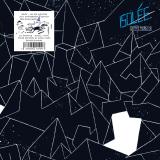

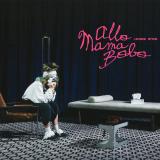





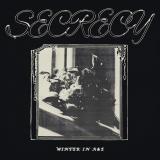


![Ferdinger - Easy Warmth & Quiet Menace [Incl. DL Codes]](https://www.deejay.de/images/l/0/4/1268804.jpg)