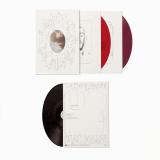
This is the sound of dream Texas, the cinematic Texas conjured in film and 20th century literary and art myth… big dark blueing horizons swallowing the infinite distance, a lonely poetry of sound, but also a stock taker of the iconoclastic, psychedelic, art rebel side of Texas… the cracked rock music side of Texas, the avant-garde in concrete cracks, the recklessly used, mind expanding drugs Texas, the dripping eastern swamps, the Houston house parties with the sounds of records blasting down the block and becoming musique concrète in the hot summer night.
Chrome Chasm’s debut album Interpreter is ambient, minimal in feel, maximal in texture, beautifully disorienting, vastly spacious— until it isn’t. It's a naturalistic shapeshifter, taking majestic form in the aforementioned elements and then dissolving back to raw genetic material to form anew. Spiritual jazz overtones, pedal steel moans and buzzing, noisy ambient visions are upended by grey-folded psychedelic unveilings. Interpreter’s three expansive tracks present a most detailed performance by its three deft musicians and the outcome often feels like a gorgeous collage in real-time.
Chrome Chasm was formed in 2024 by three of Houston’s brightest underground stars: Mlee Marie (Hearts Of Animals) on alto saxophone, flute and voice (whose long-form experimental sax performances helped inspire the formation of the band), Will Adams (Lower Dens/ Ka-Nives) on pedal steel, synth, percussion and voice, and Tom Carter on guitar. Carter has been casting a long shadow over Texas psychedelia and American underground music for over 3 decades, most notably with the Houston based Charalambides, a powerful creative force of the pre-new weird America era of experimental and avant psychedelic music, and most notably since with his solo guitar magnum opus Long Time Underground (which was deemed among the best experimental albums of 2015 by Pitchfork).
Interpreter’s opening track “The Star,” recorded almost completely live in one room and one take, is a 16-minute manifesto on ‘Dream Noir.’ An astute scholar of cross-genre connectivity and the through-lines of kosmische and spiritual-leaning sonic realms can hear echoes of Cluster, the skronk and beauty of Rahsaan Roland Kirk, and the architectural ambient flow of Harold Budd and Philip Glass in the tidal lapping of distorted guitar, mantra-like saxophone and pedal steel flow. From its deconstructed, pastoral opening moments to its proto-electronic center that crests into a bombastic polytonal climax, Chrome Chasm never neglect narrative arc for experimentation and avant technique. In fact, as a group, they effortlessly control, open, fill and contract space in abeyance to emotional vibration. “The Star,” and indeed the album as a whole, feels more like a communion or extended poem, in direct communication with the listener, than it does a ‘captured experience.’
Across the three longform tracks of Interpreter, Chrome Chasm conducts a masterclass in fusing real time performance energy with an abstract, cut-up master’s reimagining of the literal. They demand the listener meet their music with dream logic and then, like the best dream peddlers, they present a labyrinth to fall into and experience, a place where explanation and conclusion become obsolete, and engagement and immersion become sublime.
Y-3, the pioneering sports-fashion collaboration between adidas and Yohji Yamamoto, has for three decades dwelled calmly within the ''tensions of existence''. In conceiving the brand's long-awaited return to runway format at Paris Fashion Week, these codes laid the groundwork leading up to the Spring/Summer 2025 season. Whilst the focus for runway is traditionally placed on garments, models, styling, environment, and the pageantry in between, it was crucial that music play an integral role in the conversation. Three seasons later, sound has informed creative direction from the very earliest phases of ideation. Commissioning all-original compositions has become a natural part of this ideology. The return to runway has invited the opportunity to define a new sonic palette for the brand, and beyond that, to usher in a new era of sound for Y-3 that echoes across music & culture. Following this ethos, and with a mandate to support obscure talent, Montreal duo Solitary Dancer have emerged as the first collaborators in shaping the intimate brand architecture of noise & feeling. With a body of work now spanning over a trilogy of seasons, the genre-defying Y-3000 imprint provides an outlet to disseminate & recontexualize the original compositions beyond the traditional runway. The label embodies Y-3's enduring commitment to explore innovation within opposing cultural forces. The works, originally released on Y-3000 as a series of white labels, are now being featured as a 6x 12'' vinyl compilation. Designed by Trevor Jackson and limited to just 99 examples, the recordings will also be made available both digitally and on streaming services for the very first time.
Chúpame el Dedo are BACK! After years of terrorizing the avant-tropical underground with their manic, mock-satanic metal-cumbia madness, the legendary Bogotano duo of Eblis Álvarez and Pedro Ojeda have officially scrubbed the pentagrams off the drum kit. They aren’t worshipping the dark lord anymore; they’ ve found a much more chaotic deity. Please lower your expectations and raise your instruments: Chúpame el Dedo are now officially Geobah Witnesses.
Forget everything you thought you knew. This new record is a high-octane salsa-altín exorcism. It’s not your abuela’s dance music; it’s a fever dream—like Waka Waka played at double speed through a frying mixing desk that’s caught fire mid-verse.
The Chúpame delirium remains terminal. We’re talking classic, hard-swinging Caribbean breaks that trip over jagged psych-synth riffs, all tied to those signature “broken” vocals—jumping from gutter-low growls to manic, helium-choked chirps. It’s twitchy, heavy, and lyrically, the most blasphemous shit they’ve ever committed to tape. It’s a holy, nonsensical collision that’ll leave you wondering if you’ve been saved or just brainwashed.
Put down the pitchforks, pick up a maraca, and surrender to the frequency. Geobah is watching.
Mehr als zwanzig Jahre nachdem Nouvelle Vague mit ihrem inzwischen kultigen Debütalbum den Post-Punk neu erfunden haben, schlagen sie mit A Date with Depeche Mode ein mutiges neues Kapitel auf – einer abendfüllenden Neuinterpretation eines der einflussreichsten und beliebtesten Songkataloge der modernen Musik.
Nur wenige Bands haben die Popkultur so geprägt wie Depeche Mode. Nur wenige Künstler beherrschen die Kunst der musikalischen Neuinterpretation so meisterhaft wie Nouvelle Vague. Diese beiden Welten zusammenzubringen wirkt zugleich völlig unerwartet und doch unvermeidlich.
Aufgenommen zwischen Rio de Janeiro und Paris, verwandelt das Album dreizehn Depeche-Mode-Klassiker in intime, filmische und tief emotionale Songs. Was einst von Maschinen und elektronischen Klängen geprägt war, wird hier warm, organisch und zeitlos – und legt das Songwriting offen, das den Kern dieser ikonischen Kompositionen bildet.
Gesungen von einer außergewöhnlichen internationalen Besetzung von Gastvokalistinnen und -vokalisten – darunter Skye Edwards (Morcheeba), Beth Hirsch, Flavia Coelho, Mélanie Pain, Phoebe Killdeer, Fredrika Stahl und weitere – bietet jeder Titel eine einzigartige Begegnung zwischen einer Stimme und einem Song und bleibt dabei dem charakteristischen Stil von Nouvelle Vague treu
New York-based Japanese jazz and electronic music polymath Takuya Nakamura presents his debut album Shape The Future - almost 35 years into his storied musical journey.
An expansive double album, the album’s first LP documents a spellbinding live performance by Nakamura recorded at fabric. A hybrid set combining DJing, live electronics, vocals, and trumpet, the set also features studio versions of special collaborations with Shigeto, Currency Audio and Tim Reaper. The second LP complements the first by assembling studio recordings of select album tracks. Altogether the two volumes make for a definitive display of Nakamura’s exceptional musicianship across jazz, DnB, jungle, broken beat, deep techno and more.
Across his career, Nakamura has played Brazilian music, merengue, salsa and straight-ahead jazz. He’s opened for Sun Ra Arkestra, performed with David Byrne, Laurie Anderson, Lee “Scratch” Perry, Wu-Tang Clan, and Arto Lindsay, appeared on sessions with Terry Riley, ASAP Rocky, Goldie, and TV On The Radio, and remixed the likes of Quincy Jones, Sun Ra, Billie Holiday, and The Streets. He’s also played under director and playwright Robert Wilson.
Although the musical past and present of the Tokyo-born, New York-based DJ and trumpet player is undoubtedly eclectic, Nakamura is abidingly steeped in the sounds of jazz and jungle. This’ll be obvious to casual observers who may have seen any viral videos of him. But there’s more to this. The depth of Nakamura’s engagement with these kinds of music, the way they’ve made him into the person he is, the decades-long path they’ve taken him on; to now arrive at the summit of a solo album is all truly remarkable. Shape The Future resonates with every chapter in this story.
In high school, Nakamura’s friends started listening to jazz and jazz fusion, which piqued his interest, especially when they started going to clubs to see it live, where they managed to see US legends like Sonny Rollins play. Eventually he began to play jazz every day and his musical skill emerged early. He soon became obsessed with getting closer to the source of this music, which led to his studies at the New England Conservatory of Music in Boston with George Russell, an influential figure who had taught Miles Davis and John Coltrane. Nakamura drank it in: not only the technical aspects but the sense of a direct connection to “a music culture where Russell and his friends changed harmony forever. I wanted to know how that was possible!”.
This was a radical experience in itself, but then another revolution happened for Nakamura. He was playing in a venue called The Western Front, near Boston and discovered that the elderly owner had his own soundsystem and was playing what was then - in 1992 - only just becoming known as jungle. This was as freeing a musical revelation as his proximity to the giants of jazz was, and in that instant the two things fused. He understood that using technology to fill a dancehall with sound and a jazz musician’s reflexes are all working to the same ends: “You’re always making decisions,” he says, “but it doesn’t have to be really difficult. It’s the truth of the frequencies, and how they’re affecting people’s minds.”
From that moment on, his life path was set. Moving to New York City, he sought out jungle and its offshoot sounds wherever he could find them, gigging and collaborating relentlessly, and gradually developing his own live and hybrid live/DJ shows. Through regular appearances at New York fixtures Zebulon and CBGBs, and continual shows elsewhere in the city, Nakamura developed his live performance and DJing and it was in these environments that he gradually weaved together his twin loves without compromising either, building an international reputation in the process.
It’s only fitting then that his first album, almost 35 years after he first found his musical direction, should be a live one: a window into this never-ending process. Even here, he had to be persuaded that he should make a record. A member of the fabric team got turned on to his music after their daughter saw him play. Of course, as a jungle lover, Nakamura knew fabric – which has a special place in the history of jungle and drum’n’bass – and “had wanted to play there since I was very young.” You can hear the club in the record: this isn’t just a live show, in keeping with his jungle roots, it’s Nakamura duetting with the soundsystem, and you can feel how the emotions in the room would have ebbed and flowed.
This dynamic translates to a transfixing record. Setting the tone with lushly textured ambient and reverberant jazz, Nakamura segues into cinematic breakbeat and stellar fusion, infusing it all with intoxicating low end and hypnotic rhythms. The LP’s midway point locks into mesmeric percussion heightened by resonant echoes of piano and trumpet. There’s an endless pull to this music. Nakamura adjusts the levels for maximum impact throughout, and the overall effect begins to evoke some harmonious hybrid between a jazz ensemble, a classic Metalheadz 12” and a Theo Parrish DJ set. His electric form continues through surreal jazz, intricate electronics and rolling sub-bass velocity, right up to the subtly devastating final cover of Peter Gabriel and Kate Bush’s ‘Don’t Give Up’, with Nakamura’s fragile vocal sitting in the heart of a huge sound.
From Tokyo jazz nights to formative studies and encounters in Boston to his artistic development in New York, Nakamura reaches another milestone with his monumental debut album. It’s a release that happened just the way a Takuya Nakamura record should. In the same way his instincts led him to musical revelations, taking his own sweet time has led him to make one of the most extraordinary debut albums imaginable, all executed in his own singular style. In Nakamura’s world, the universe finds a way.
Hailing from Mexico City, Dellarge delivers L.I.E.S. a double lp jam packed with New Beat industrialized electro-wave on "Futuro, Futuro". These tracks go back to the days of the Belgium classics crossing over to the coast of Valenica crashing head on with the funkiness of something similar to Delgado's Delkom project. Don't worry, there is no trance cheeze within, head right to Mambo Especial for some latin New Beat piano anthem driven dance floor chug. Estado Alterado jumps into the 727 funk with some 101 acid leads and sleaze vocals, again making for a perfect floor filler. The album opener "Alien Body Music" is just that; a complete vocoder driven, slow beat acidic club burner. Dellarge hits all the angles perfect over these 15 tracks. Do not miss!
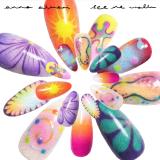
Anna Almani might be your new favourite producer. IFYKYK.. If you don't, then let's get to know..
Anna Almani is a Berlin based “Drag-DJ & Fun-House-Queen”. She is “Big Sister” at ‘Love Letter’ an imprint “for flinta & queer sonic goodness” and she is the alter ego of deep house producer and Poker Flat & Watergate artist ‘Iorie’.
Anna says “This EP is part of my queer expression. It’s all about the attitude to resist, it’s about being yourself unapologetically. It’s a big hug to the queer community and a love letter to resistance on the dancefloor. Be radical, have an attitude and lose yourself.”
When we picked the tracks for this EP we were completely spoiled for choice. There’s so much personality in Anna’s music that every track list made sense. And that’s because there’s a common thread that runs through all of Anna’s music - Balance. Ying & Yang. Dark & Bright, Passive & Assertive, Masculine & Feminine, Fun & Depth all in kept in amazing dynamic balance.
This is Share Now & Save for Later… Gratification immediate and delayed. .. . four tracks to take you through from open to close. From Berlin to NYC and round again
‘See Me Walk’ is gonna be the track that grabs the attention and connects with dancers everywhere. Fast, fun and full of attitude it’s a 909 workout with the energy and syncopation of Ballroom Vogue aaaaand a fabulous diva vocal to match. ’Tender T’ counters the audaciousness with some tenderness. Energetic yet embracing, this introspective proggy, dubby afterhours roller is a proper trip! Full of colour but hazy af.
On the flip ‘Gimme Some’ ramps up the tempo. Fast, urgent and cyclic grooving techno - with a strut - that’s both dubbed out and in your face. ‘Anladın mı’ is a collaboration between Anna and German/Turkish producer Zettka. Low slung house that both jacks and grooves. Rolling basses balanced with playful chords. “Anladın mı” it translates as “Do you understand? or “Got it?”. By now I think we do understand.. That certain je ne sais quoi… Anna Almani has definitely got it.
'Hive Mind are excited to have worked with Rio de Janeiro based label QTV, to bring you this retrospective from the cosmic joker of contemporary Brazilian music, Negro Leo.
'The music on this retrospective, which draws together songs from his 14 albums, EPs and singles released since 2012, ranges widely and wildly across genres and styles, from the urgent and angular no-wave inspired punk-funk of Niños Heroes or Ilhas de Calor, through the psychedelic hoedown of Noite Invertida or the beautiful and delicate Esferas and on to the maximalist hyperpop of more recent works like RELA or Desejo de Lacrar. Negro Leo consistently confounds, confuses, disturbs and provokes.
'His music is explicitly and fiercely Brazilian and draws on the history of black Brazilian music for inspiration - Gilberto Gil and Tropicalism, Itamar Assumpção and the Vanguard Paulista, Funk Carioca, the Boi's rhythm from the northern carnivals, the samba of the streets and the country - it's all thrown into the mix, along with free-jazz, noise and various chunks of non-Brazilian pop. Leo's music and songs serve as an essential documentation of the country's rapidly shifting social fabric in the digital age, a time in which the country and its people feel lost in a "jungle of pixels".
'Some of these surreal songs can feel overwhelming at times, like a wall of noise full of unfamiliar sounds and rhythms, but there's an unapologetic punk spirit behind it all, alongside a genius composer. It's worth pushing through the that sense of overwhelm to the place where the beauty and complexity of the composition and songwriting shines.'
'Nieuwe planeten om thuis te komen' is - na 6 jaar stilte - een nieuwe start voor Jonas Winterland. Samen met producer Nicolas Rombouts maakte hij een tijdloze songwriterplaat, waarin al zijn invloeden - EELS, Bonnie Prince Billy, Spinvis, Wilco... - rijkelijk doorschemeren. Soms klinkt hij volledig uitgepuurd, soms prettig rammelrockend. Nergens zit de productie de haarfijne teksten in de weg. Eentweede debuut van een gelouterde liedjessmid.
New formation Broken Code gets their first release on Natural Positions with remixes by Will Hofbauer and Patrice Meiner. Papi can’t get to the phone right now. It’s late, but eventually the elusive late night lover picks up and the game is on. Will Hofbauer and Patrice Meiner make sure you make it through the night, rewired, refreshed and ready for a new dawn.
Papi Pt. II is the product of a late night jam session at Max Bulk studios, re-coded for the wax aficionado by four of South East London’s loneliest robots. Their soundsystem affiliates Will Hofbauer and Patrice Meiner reinterpret the original, picking up the pace and then breaking it down for a final early morning rotation. This release has all the flavours to bake the cake that keeps you awake.
credits
After releasing their first LP on PPU under the name of CEEOFUNK, Spaced Out Knew and Orion Westbrook are releasing a brand new 6-track EP entitled "Friends, Love, Freak."
Watch out: an "unidentified sonic object" is heading your way!
It’s a funky anomaly that pays tribute to 80's grooves while asserting a fresh style all its own—decidedly "offbeat." The sound blends unique touches of cosmic soul-funk and European 80's synth-pop influences with a "DIY" approach, sitting somewhere between "disco-not-disco" and unconventional grooves.
Vocals are performed in Italian, French, and English, featuring the excellent Ghostape, Lydie Gaga, Marius Cyrilou, and Chérie Bibi. Themes include love, desire, and bonds of brotherhood...
On the menu: fat slap-bass lines, funky guitars, smooth electric piano, sparkling analog synths / Solina String Machine, and on top, an abundance of Casio SK-1 synth and lo-fi sampling gadgets.
The vibe oscillates between boundless energy and laid-back grooves, all served up with a non-conformist freshness and a touch of originality that can be read "between the lines."
JUNO & Jamek Ortega link up for ‘Deep Breath’ on Crosstown Rebels.
Following an impressive label debut earlier this year alongside Alex Wann on ‘Allo’, crowned Pete Tong’s Essential New Tune, Germany’s JUNO returns to Crosstown Rebels with ‘Deep Breath’ in collaboration with longtime production partner Jamek Ortega. Immediately drawing listeners into a hypnotic, percussive world, snaking rhythms and rattling cowbells build steadily beneath an atmospheric backdrop, before a commanding vocal emerges to anchor the groove. The release continues a relationship that has seen the pair produce across labels including Arodes’ Unreleased Records, Wired World, and more, as well as regular back-to-back performances. On the flip, ‘Sloppy Disk’ sees JUNO step up solo, locking into a driving four-to-the-floor groove where a rolling bassline provides the foundation for pensive chords to drift alongside subtle melodic flourishes, steadily expanding the track’s atmosphere before tumbling into a sweeping, cinematic finale.
JUNO has accelerated onto the scene with hits like ‘Last Dance’ on Magnifik Music and a Hot Mix for Pete Tong on BBC Radio 1, firmly earmarking him as one to watch. Meanwhile, DJ/producer Jamek Ortega continues to connect with audiences worldwide with outings on Three Six Zero, MoBlack, Abracadabra, Madorasindahouse, and more, picking up heavy rotation from the likes of Keinemusik, Solomun, Tiësto, and Black Coffee. Here, the pair show no signs of slowing down as they join forces once again, stepping onto Damian Lazarus’s imprint and marking a major milestone in their respective trajectories.
Jazz, Soul, Highlife and spoken reflection co-exist without apology on 13 new songs co-produced with Benjamin James and featuring his group The Cavemen as well as saxophonist Lakecia Benjamin. For the Grammy-nominated vocalist/songwriter Somi, each new album is an act of place-making. The catalogue of the Rwandan/Ugandan-American artist reads like a map of migration and memory, with records rooted in Lagos, in Harlem, and in the spirit and political inheritance of Miriam Makeba. 'What Does It Take To Bloom? Is her ninth album overall and her first collection of original songs in six years. Musically, it also represents a new chapter in collaboration. During sessions in Lagos, Somi connected with Benjamin James, whose partnership would become pivotal. As one-half of the Nigerian duo The Cavemen., James brings a contemporary approach to heritage-centred sound. The collaboration proved so seamless that Somi invited him to co-produce the full album, with moods and rhythms ranging from upbeat Highlife-Soul-Fusion ('Aiwah'), via jazzy statements ('Throw Something'), to soulful reflection ('What Does It Take To Bloom?').
2027 marks two decades since musician and producer Paul ‘Mudd’ Murphy struck out on his own and launched Claremont 56, a label initially dedicated to “music by Mudd and friends” and named after the house he grew up in. To celebrate its 20th anniversary, Murphy has assembled the label’s first ever decades-spanning vinyl retrospective: a six-LP re-mastered collection bringing together key cuts, cult classics, personal favourites, hard-to-find gems and inspired remixes from across the catalogue.
Unlike the label’s previous 10th anniversary box set, which focused on unreleased material and never-before-heard remixes, 20 Years of Claremont 56 traces the musical story of the imprint to date. Across six records, it showcases the distinctive Claremont 56 sound in all its many forms: acoustic, electric and electronic instrumentation, Balearic sunshine, krautrock grooves, folk-inflected psychedelia, slow-burning chuggers and deeply considered dancefloor music.
The set comes housed in a custom box featuring cover art by long-term label illustrator Mark Warrington. Inside are six slabs of vinyl across three gatefold sleeves, accompanied by liner notes from music journalist and author Matt Anniss, Murphy himself, and many of the artists whose music features in the collection.
The journey begins with a selection of formative late-noughties releases, including Mudd & Pollard’s chugging, picturesque ‘Villa Stavros’, the folksy beauty of Smith & Mudd’s ‘Shulme’ and Murphy’s exotic reworking of Ahmed Fakroun’s ‘Drago’. From there, the collection moves freely through deep cuts, overlooked gems, album highlights and some of the most inspired remixes in the label’s catalogue.
Among those remixes is Murphy’s own über-Balearic rework of Zee Erf’s cover of ‘Southern Freeez’, a mix dedicated to his partner Emma; an extraordinary 22-minute, Manuel Göttsching-meets-ambient-dub revision of Smith & Mudd’s ‘Vegetable Square’ by friends-of-the-family Idjut Boys; Larry Heard’s typically deep and immersive house treatment of Jack Cutter’s ‘Serpent Strut’; and Quiet Village’s ambient-house ‘deep space dub’ of Mudd’s ‘Spielplatz’. Also included are lesser-celebrated but no less rewarding reworks by Recloose, Jex Opolis, Felix Dickinson and Deep88.
The collection represents every corner of Claremont 56’s self-contained musical universe, from the Murphy-assembled in-house collectives Hillside, Paqua and Bison - whose members famously included the late Holger Czukay and his life partner Ursula, to long-serving label artists such as Almunia and Hear & Now, as well as later additions and artists who took some of their first steps on the label through its much-loved Claremont Editions compilations.
That means the deeply cosmic krautrock of Bambi Davidson, the folk-meets-Americana of Torn Sail and the samba-electrofunk of Jpye sit alongside baggy Balearic sing-alongs such as Bel’s ‘Ready To Die’ and Sillyboy’s Ghost Relatives’ ‘In a Small Place’, recent high-profile guest releases such as Chaz Jankel’s ‘Rhumba Jam’, and string-laden ambient pieces such as Four Hands’ wonderful ‘Hizou’.
Packed with classic cuts, formative gems and overlooked treats, 20 Years of Claremont 56 is not only a fabulous label retrospective, but also an essential collection of timeless music from a label whose output has remained distinctive and unique for two decades.
Children of Zeus return with their third studio album ‘As The World Burns…’
Five years on from their highly-acclaimed sophomore album ‘Balance’, Manchester’s kings of hip hop soul, Tyler Daley and Konny Kon, bring us a brand new 16-track opus.
Sonically the duo continue their story where they left off; crafting an amalgamation of street soul, alternative r&b and boom bap hip hop, with a sprinkle of flavours taken from their original multi-genre pirate radio influences, and a dash of forward-thinking new sounds, ensuring all tracks are destined to become future classics.
The features are sparing but powerful, enlisting the talents of revered UK rapper Knucks (‘Before We Drown’), Colorado-native Young Old Soul (‘Dopamine’), MCR family K S R (‘Do You Want To Get High’, & Australian/Mauritian up & comer Anieszka (‘Water & Vibes’).
As with previous projects, this album is largely produced by the duo themselves, though there are guest productions from previous collaborators too, including Grammy Award-winner Beat Butcha, Grammy-nominated Teo, and broken beat pioneer K15, along with an assortment of new players making moves in the underground neo-soul & beats circuit.
Conceptually, this project continues on with the story to date. An eternal search for sunsets and soulfood, as a respite to the anxieties of the modern world; personally, professionally and globally. Assertive swagger is matched with brutal but sincere candidity. As ever, it encapsulates the rough with the smooth, with reflections on where they’ve been, where they’re at and where they’re headed. There’s no preaching to be found here; just an acceptance of things as they are, an embrace of the environment and people they were nurtured by, and a celebration of some of the finer things in life; slow jams, weed & rum, water & vibes. Raps for listeners, blunt heads, fly ladies and prisoners. All packaged together as another perfect sonic love letter to sound system culture. 50 minutes of big people music.
Since the release of their anthemic debut single ‘Still Standing’ a decade ago, to the subsequent EP ‘The Story So Far’, and their critically-lauded debut album ‘Travel Light’, the duo have received numerous accolades, including nominations for AIM Awards & Worldwide Awards both, along with tons of ‘Album of the Year’ nods care of Clash Magazine, Bandcamp, Complex, Wordplay and many more. This along with huge swathes of support from DJs, radio stations, press outlets, tastemakers, luminaries & fellow artists across the globe.
Children of Zeus have performed sessions for COLORS, Soulection (Apple Music), DJ AG, Boiler Room, BBC 6 Music and at the infamous Maida Vale studios for BBC 1Xtra as well as touring across Europe, Australia and South Africa. This is in addition to collaborating & touring with Mercury Award Winner’s Ezra Collective, including a Wembley Arena show. Other collaborations over the years have included Shy FX, Juls, Goldie, Black Milk, Kofi Stone and the late great Lenzman.
From the Broke ’n’ English / Hoodman-era, to the present day, Children of Zeus have been omnipresent in the fabric of British black music. Proud ambassadors of Manchester music, and of UK soul, it really is “Zeus to the world”.
Children of Zeus have been adorned with plenty of flowers over their career. The unbridled quality and poignance of the music and the message on display throughout this project will see the algorithmic needle move some more. It’s undoubtedly set to be a Zeus Summer. As the world burns…
Available on all digital platforms and physical formats, Friday September 4th 2026.
t 07: Do You Want To Get High? (feat. K S R ) - Children of Zeus03:26
t 07: Do You Want To Get High? (feat. [ K S R ]) - Children of Zeus03:26
[t] 07: Do You Want To Get High? (feat. [ K S R ]) - Children of Zeus03:26
[g] B3 | Do You Want To Get High? (feat [ K S R ]) - Children of Zeus03:26
Initially released in 2016, The Divine Feminine marked one of the most stark turning points in a career punctuated by creative reinvention. After doubling down on his rap prowess on 2015's GO:OD AM, Mac Miller stunned fans with an audacious pivot to create a concept album that explored his views on the power of love and the sacred energy of women. Hailed by Pitchfork as being "easily his most intoxicating release yet," the embrace of his singing voice and genre-agnostic approach of the songwriting foreshadowed the evolution that would further materialize on his 2018 album Swimming. The 10th anniversary edition of The Divine Feminine features three previously-unreleased songs from the album's recording sessions and will be available on 3LP with printed inner sleeves in a single-pocket jacket upon its release on October 2nd.
Tiger Stripes unveils part one of ‘A Tiger Never Loses Its Stripes’ on Rekids. The series will culminate in the Swedish artist’s sophomore album later this year.
Sweden’s Tiger Stripes, aka Mikael Nordgren, drops the first part of the ‘A Tiger Never Loses Its Stripes’ EP series on Rekids. The EP previews his upcoming sophomore album, his first in two decades, due out later this year, and follows three recent releases and a remix for Dino Lenny on Matt Edwards’ Rekids label.
Tiger Stripes kicks off the ‘A Tiger Never Loses Its Stripes’ EP with ‘Slow’, a snappy groove driven by weighty bass and vocals that are as playful as they are drenched in soul. ‘Twelve’ picks up the pace with irresistible low-end and funky, jazz-inflected key riffs, before ‘Stay Hypnotic’ takes things somewhere more dream-like, pairing shimmering synth sequences with glitched-out percussion and fragmented vocal snippets on the flip. ‘Shape The Future’ closes the first instalment with a squelchy bassline, slightly off-key strings and gorgeous dubbed-out chord progressions, bringing a classy, club-ready finish to this preview of Tiger Stripes’ next album.
Founder of the Strange Idols label, Tiger Stripes has spent over two decades forging his own path with standout releases on Hot Creations, Kaoz Theory, Kwench Records, and more. After stepping back to focus on his indie-rock project Little Lies, he made a full return in 2024 and quickly recaptured the form that’s made him an international favourite, returning three times to Rekids since.
Deluxe LP features 140g virgin vinyl; heavy-duty board jacket, artwork by Art Rosenbaum + DL. RIYL: Bob Dylan, John Prine, Townes Van Zandt, Ry Cooder, Michael Chapman, Michael Hurley, The Youngbloods & Bonnie “Prince” Billy. Jake Xerxes Fussell’s 4th album finds the acclaimed folksong interpreter, guitarist, and singer navigating fresh sonic and compositional landscapes on the most conceptually focused, breathtakingly rendered, and enigmatically poignant record of his wondrous catalog. Produced by James Elkington and featuring formidable players both familiar (Casey Toll, Libby Rodenbough) and new (Joe Westerlund, Bonnie “Prince” Billy), it includes Jake’s first original compositions; atmospheric arrangements with pedal steel, horns, and strings. One of the most striking and strangely moving moments on Jake Xerxes Fussell’s gorgeous Good and Green Again an album, his fourth and most recent, replete with such dazzling moments arrives at its very end, with the brief words to the final song “Washington.” “General Washington/Noblest of men/His house, his horse, his cherry tree, and him,” Fussell sings, after a hushed introductory passage in which his trademark percussively fingerpicked Telecaster converses lacily with James Elkington’s parlor piano. That’s the entire lyrical content of the song, which proceeds to float away on orchestral clouds of French horn, trumpet, and strings, until it simply stops, suddenly evaporating, vanishing with no fade or trace, no resolution to its sorrowful minor-key chord progression, just silence and stillness and stark presidential absence. It feels like the end of a film, or the cold departure of a ghost, and is unlike anything else Jake has recorded. In all his work Jake humanizes his material with his own profound curatorial and interpretive gifts, unmooring stories and melodies from their specific eras and origins and setting them adrift in our own waterways. The robust burr of his voice, which periodically melts and catches at a particularly tender turn of phrase, and the swung rhythmic undertow of exquisite, seemingly effortless guitar-playing here he plays more acoustic than ever before pull new valences of meaning from ostensibly antique songs and subjects. On Good and Green Again, Jake not only ventures beyond his established mastery of songcatching and songmaking into songwriting, but likewise navigates fresh sonic and compositional landscapes, going green with lusher, more atmospheric and ambitious arrangements. The result is the most conceptually focused, breathtakingly rendered, and enigmatically poignant record of his wondrous catalog. It’s also his most deliberately premeditated album, representing his fruitful return to a producer partnership after two self-produced projects, What in the Natural World (2017) and Out of Sight (2019) (William Tyler produced his friend’s self-titled 2015 debut.) This time James Elkington produced and played a panoply of instruments, bringing to Jake’s arcane song choices his own peerless sense of harmony and orchestration, balance and dramatic tension. The pair enlisted a group of formidable players including regular bandmembers Casey Toll (Mt. Moriah, Nathan Bowles) on upright bass, Libby Rodenbough (Mipso) on strings, and Nathan Golub on pedal steel. They were joined by welcome newcomers Joe Westerlund (Megafaun, Califone) on drums, Joseph Decosimo on fiddle, Anna Jacobson on brass, and veteran collaborator and avowed Fussell fan Bonnie “Prince” Billy, who contributes additional vocals. Album opener “Love Farewell” (featuring some beautiful singing by Bonnie “Prince” Billy), an elliptical tale of the folly of war, set to the world’s most heartbreaking goodbye march for a lover left behind. “Carriebelle” and “Breast of Glass” each similarly concerns, in its own way, romantic love and leavings. All three songs highlight Jacobson’s diaphanous, understated brass parts, tying them together in a true lover’s knot. “Rolling Mills Are Burning Down,” with its distant keening strings and capacious sense of space, observes and mourns the loss of work and community in the wake of elemental disaster. Nine-minute tour de force “The Golden Willow Tree,” the sole explicitly narrative song herein, is a hypnotic, minimalist rendering of a tragic maritime ballad about scuttling an enemy ship in exchange for wealth and glory and a captain’s inevitable betrayal. “Fussell is creating his own legacy within the long lineage of traditional folk musicians and storytellers that have come before him.” The New York Times // “So elegant … It’s relaxing in the way that pondering a Zen koan is relaxing, and sweet in the way that the wounded, honey-voiced blues of Mississippi John Hurt are sweet.” Pitchfork // “Music that resides at the seams of Appalachia and the cosmos.”
Adam Ten and Yamagucci team up on Rekids with ‘Keep Workin’’. Label head Radio Slave steps up with a remix.
Frequent collaborators Adam Ten & Yamagucci drop 'Keep Workin’' on Rekids, with a remix from label boss Radio Slave. The single is an irresistible club tool with immeasurable bass weight. Bold, rubbery drums and grinding low-end combine in bouncy fashion while a vocal fragment loops up top to create perfect dance floor tension. Brighter chords eventually rise through the mix, providing emotional release that will get hands in the air and take things to the next level.
On the remix, Radio Slave strips the original ‘Keep Workin’’ back to dusty, shuffling drums with jazzy flourishes. The track has a live, lived-in feel, complete with vulnerable piano keys that haunt the spaces above its weighty groove and transfix any crowd with eerie beauty.
Adam Ten is a long-time House innovator, Maccabi House co-founder and Upon You Records and Higher Ground artist, with over twenty Top 10 Beatport releases and millions of streams to his name. He blends the grit of Techno with escapist melodies in versatile, curious sets and productions that have earned him bookings worldwide. Yamagucci has made an equal impact on the world stage through his field recordings and organic percussion, adding a unique twist to his tracks on labels like Disco Halal, as well as Diynamic and Crosstown Rebels, labels that Adam Ten and Yamagucci have also collaborated on together.
BERG AUDIO is happy to welcome back one of our favorite producers, Havantepe. In the past few years, the Turkish artist’s output has become rare, greatly increasing our excitement to finally share these masterfully crafted pieces on the label. The release includes a superb collaboration with Christopher Ledger, and a remix from one of Romania’s key artists, Cristi Cons – Artwork by Juli Jah.
Riva Starr teams up with Australian duo Close Counters for a sun-soaked debut on Heist.
What do you get when you put an Italian house legend in the studio with 2 of the most talented artists from Melbourne? Have a listen to the newest release on Heist and you’ll find out. On their ‘Push your luck’ EP, Riva Starr, Close Counters and UK soul singer Andre Espeut bring a heavy dose of jazz & soul and most of all, upbeat dancefloor energy. Whether it’s the deep soulful vibe of the title track or the house meets jazz-funk energy of ‘Gearbox’, this EP brings together everything we love about house music.
‘Push your luck’ comes right in the middle of Close Counters’ world tour, just after Riva Starr’s album ‘Keep me on the dancefloor’ and is the follow up to their recent collab ‘Jinga’ on Riva Starr’s own Snatch Records. We all know Riva Starr from his 2013 Fatboy Slim collab ‘Eat sleep rave repeat’, his work with Groove Armada, and more recently his collab with Prunk on his PIV records debut album. Close Counters have already worked with Heist mainstays Fouk and had their breakthrough moment with their 2023 album ‘Soulacousta II’, which got wide support ranging from Gilles Peterson to Jyoto and Folamour.
Their ‘Push your luck’ EP kicks off with the title track featuring the silky vocals of Andre Espeut. When we first heard this song, we immediately got transported to the soulful sound of the mid 2000s led by Recloose’s unique track ‘Dust’ with Fat Freddy’s Drop singer Joe Dukie. It’s moody, stripped back, and bouncy at the same time. The lush chords, disco bassline, and vocal harmonies all make for a track that goes beyond genres and trends. This is a future classic.
‘Gearbox’ is a disco-tinged piano jam full of live elements, rolling congas and disco bleeps, where the musicality of the Close Counters boys comes in at full speed. This song takes its inspiration from the Brazilian jazz-funk of legends Marcos Valle and Azymuth, with a clear sense of modern-day dancefloors and a love for electronic noise. Also; 10/10 for creatively naming the track after the glitchy electronic sound that freaks & funks throughout the track.
On the flip, ‘Dizzy’ sees the trio go more into disco-house territory, again teaming up with Andre Espeut for a track that blends catchy vocal loops with a tight groove and lush chords. The EP finishes with a club dub of ‘Push your luck’ for those in favor of more groove and less vocals.
We’ve had Riva Starr and the Close Counters boys on our radar for a while, and they landed on Heist with the perfect combination of musicality and dancefloor power. We hope you like this release as much as we do!
Wow! Chapter 16 of this successful and influential series. This time compiled by Michael Rütten (Soulpatrol) and Michael Reinboth. After 30 years of sharing the love for music and a friendship it‘s about time for these two to get together for a musical trip around the world. Voted one of the best electronic music compilations by music magazines such as Groove, Mixmag, FAZE and DJ mag. With the launch of the series in 1995, it’s fair to say that Michael Reinboth or Compost essentially pioneered and established the future jazz genre. Further info about the artists upon request.
Immersive, roots-infused dub-reggae power from Jamaica meets heavyweight instrumentation from Denmark on a landmark collaborative album out now via Recall Reality.
Rooted in the rich traditions of classic Jamaican sound yet pulsing with a hypnotic, contemporary organic weight, Signs of the Time brings together the evocative vocal artistry of rising roots talent Azizzi Romeo and the master craftsmanship of Denmark's formidable instrumental 11 piece band Guiding Star Orchestra. Built for sound systems and vinyl purists alike, featuring lush tape saturation, spring reverbs, and spacious dub mixes.
Released on Recall Reality, the album is a masterclass in modern roots reggae and deep dub dynamics. Rather than relying on rigid digital presets, Signs of the Time champions warm analogue textures, sprawling horn arrangements, and rolling basslines that echo the golden age of Studio One, Joe Gibbs, Bunny Lee and Channel One while carving out an entirely fresh, meditative space for the listener.
Azizzi Romeo carries forward a legendary musical lineage as the son of the late roots icon Max Romeo, bringing a captivating blend of spiritual urgency, conscious lyricism, and soulful conviction to the microphone. His delivery cuts straight through the mix, offering profound reflections on modern society, unity, and resilience in a changing world.
Backing him are the Guiding Star Orchestra, renowned for their authentic analog production ethos, deep-crate sensibilities, and musicianship that treats the mixing board as an instrument in its own right. The result is a seamless symbiotic project where every bubbling organ skank, hypnotic drum drop, and reverberating tape delay serves the song's core message.
To bring the record home, producer CHLLNGR spent a week in the spring working alongside UK dub maestro in his London studio - Prince Fatty, who mixed the entire album. Fatty invited legendary drummer Winston "Horseman” Williams into the sessions, and Horseman percussion added the final glue to the record.
Track highlights:
"Signs of the Time": Azizzi is joined by his late father, the legendary Max Romeo, on a prophetic warning of what awaits the world if we don't soon unite in peace and love.
"Thanks and Praises": An anthem of gratitude for everything life brings, and of rising up even when others want to see us fail.
"Jah Jah Disciples": A meditation on following Jah, and the strength that faith gives in the midst of adversity.
Signs of the Time is available now on Vinyl LP and Digital streaming platforms via Recall Reality.
Power Ballads and The Wash is the sophomore album from London-based multi instrumentalist James Howard, due for release on 6th November 2026 via boutique
label Faith & Industry. James is known as founder of critically acclaimed 2010’s band Blue House and collaborator with luminaries such as Rozi Plain, Dana Gavanski, Kate Bollinger and Alabaster Deplume.
For Power Ballads and The Wash James has worked with producer Mike Lindsay, co-founder of folktronica group Tunng. Power Ballads and The Wash follows James's debut solo album Peek-A-Boo, released to great acclaim in April 2023.
All eight songs of Power Ballads and The Wash began life as intimate live takes of
guitar or piano and voice, recorded at Howard’s studio in Deptford, south London.
Steeped in the energy of the local environment, each session was preceded by a visit to the Thames to ask for its muddy blessing, with the DLR rumbling by. The sessions at Lindsay’s Margate studio built a widescreen world around Howard’s original performances, from the restless Eventide vocal treatments on Seven Seconds to the Hollywood string samples of The Moon In The Movies and the Moog bass that quietly anchors the record throughout. Howard also praises violinist Magdalena MacClean's (Caroline) contributions.
Beneath this gentle absurdity, though, lies something quietly powerful. Howard’s
song-writing explores the notion that, despite our ever-shortening attention spans,
there is still the possibility of quiet reflection and the discovery therein of revelations hidden in plain sight. The world of these lucid dream-esque reveries is unmistakably London. The record began with a wing-and-a-prayer visit to the Thames, and ends there too: the wash from the Thames Clipper / nearly breaks through your shoe / like some feelings sometimes do.
Bristol trio Jabu return with their first release for two years. Following on from their widely acclaimed third LP ‘A Soft and Gatherable Star’, this stand-alone double A-side Disco Mix 12” features four exclusive new tracks, while signposting fresh material currently being written, recorded and mixed for their forthcoming LP, due 2027.
If 2023 LP ‘Boiling Wells’ documented Jabu learning to be a live band, leaning into writing collectively in-the-moment, ‘A Soft and Gatherable Star’ took that record’s ad-hoc/mixtape blueprint, and fleshed out their transformation from an outfit rooted in hiphop and dubstep, to a guitar-based band with a unique take on dream-pop. It saw them described by The Face as “an experiential trio blending the raw edge of industrial dub with dreamy layers of ambient pop and shoegaze", and by The Wire as “like Mazzy Star remixed by The Mad Professor“.
Jabu have continued to grow in the space between releases, touring regularly for the first time, playing festivals such as Rewire and Le Guess Who?, and supporting the likes of Maria Somerville and AR Kane. Their extended live line-up now regularly incorporates those that contributed to ‘A Soft and Gatherable Star’, with new material often further developed as it gets passed back and forth between collaborators. Cellist Josh Horsley (Powders / Nightingale Floor) and multi-instrumentalist Will Yates (aka Memotone) both feature here, under the guiding hand of Birthmark’s mixing.
Titled after the rural, estuarine landscape bordering their Bristol hometown, ‘Severn Flood Plain’ sees the band pivot towards a more jagged and up-tempo, post-punk sound. It runs on a nagging drum machine pulse that feels closer to Joy Division than Sly Stone; while the echo-laced vocals and tremolo guitar phrasing hark back to the ‘50s slapback sound of Lee Hazlewood or Duane Eddy. Written and sung by Jasmine Butt, the lyrics describe a visit to a friend near the mouth of the Severn, and hint towards a darkness that can also be felt across that tidal landscape.
Dropping the pace to a languorous, sensual sprawl, ‘Where You Run To’ is plaintive and yearning, an opiated, ethereal flipside to ‘Severn Flood Plain’s more urgent, anxiety-laced opener. Alex Rendall’s vocals glide over a stripped, metronomic backdrop, eventually entwining with Memotone’s ghostly, processed clarinet.
If the band’s musical reference points appear to have shifted, their process remains indebted to dub and still very much rooted in the multicultural cross-pollination peculiar to their home city of Bristol. Both tracks are extended, with dub versions courtesy of Birthmark. The band sat in on those sessions, completing the circle that began with J’s on-stage mixing of their live sets. The strands provided by Will and Josh provide introspective counterpoint to the sound system leanings.
Jabu’s influences are threaded together as naturally here as on their long-running NTS radio show, ‘Music For Lovers’, which now occasionally guests on the Early Bird show slot. They are due to play World of Echo’s ‘Expected Music 2.0’ at London’s Walthamstow Trades Hall on 21st November with Loopsel, Insides, Giulio Erasmus, Thomas Bush, and Raime amongst others.
Wewantsounds is proud to present the first official release of a legendary 1977 concert capturing Don Cherry, Collin Walcott, and Leon Thomas in their only documented performance together. Recorded live on March 5, 1977, at Pease Auditorium in Ypsilanti, Michigan, the performance featured the three musicians playing an immersive hypnotic set, joined for part of the evening by the rest of Oregon. Long circulating among a few Don Cherry fans, the full concert is now available as a deluxe, remastered 2-LP gatefold set featuring Moki Cherry artwork and new liner notes by Jason Weiss—licensed by the Don Cherry Estate and producer James Quinlan.
Don Cherry’s huge influence has steadily grown over the years, as fans and new generations of listeners continue to uncover the vast breadth of his global musical vision. Sunrise captures Cherry during a particularly fertile late-1970s period, when the American jazz trumpeter blended global and Eastern spiritual concepts into his "Organic Music" philosophy, drawing deeply from Eastern and African traditions. Moving fluidly between trumpet, the West African doussn'gouni (a traditional hunter's harp from Mali), bamboo flutes, percussion, and vocals, Cherry creates a deeply resonant world music soundscape.
Recorded live on March 5, 1977, at Pease Auditorium in Ypsilanti, Michigan, the show took place just a month after Don Cherry participated in the recording of Collin Walcott's ECM album Grazing Dreams. With Walcott playing alongside Cherry and vocalist Leon Thomas, bringing his unmistakable yodel-style vocal approach—and joined for part of the night by the rest of Oregon (Ralph Towner, Paul McCandless and Glen Moore)—the performance stands as a stunning, hypnotic forerunner to the formation of CODONA. The newly remastered audio is so vivid and intimate that it feels as though you are sitting directly in the room with the musicians.
The release also serves as a vibrant homage to Don and Moki Cherry’s creative partnership, featuring a reproduction of Moki’s striking 1975 Mandala tapestry on the front cover.
The concert was produced by James Quinlan, a central pillar of the U.S. Jazz and World Music scene who worked as a sound engineer for Carla Bley, booked Fela Kuti’s major U.S. tour in the 1980s, and went on to direct the Creative Music Studio and found Miami’s Rhythm Foundation. In the album's liner notes, Quinlan reflects in conversation with writer Jason Weiss on the surprise magic of that night:
"Don brought Leon Thomas with him... as a guest, unannounced. It was not part of the advertisement or contract... I don't know of any other time that they recorded or performed together. So, that was completely unique... The audience had no idea what was coming... It was a sound that was just mesmerizing, almost like a mantra."
Licensed by the Don Cherry Estate and James Quinlan, Sunrise is available as a deluxe 2-LP gatefold set featuring new liner notes by Jason Weiss—an essential document in the rich, ever-evolving Don Cherry musical journey.
When Swingrowers released their debut in Sept 2012, electro swing was a bubbling cultural zeitgeist. This Italian band were among the earliest pioneers who helped shape the sound of the vintage-influenced genre. Their debut 12 track collection paved the way for the brilliant albums that followed and indeed for the ongoing popularity of the genre. A little rougher around the edges but with all the early promise on show, this album completes a 4 piece set for fans and collectors.
Swingrowers went on to release a further 3 studio albums, toured internationally, playing major festivals includingMontreux Jazz Festival, Glastonbury, Boomtown and Tokyo’s Blue Note Festival. Their music has to date amassedmore than 100 million streams worldwide on Spotify alonewith videos clocking up many millions more.
Pronounceditself is a revelation. It stood the test of time as one of the earliest complete and fully-realised Electro Swing albums that seamlessly blend 20’s and 30’s influences - violin, gypsy jazz guitar, saxophones and swing music - with polished contemporary production. Here, superb musicianship meets great songwriting meets a unique modern sound from Swing Hop to Drum n Bass with jazz-inflected vocals in English and Italian.
As we approach the 15 year anniversary, Pronounced is being released on wax for the first time.
This releasecompletes Swingrowers’ entire album discography on vinyl, joining existing editions of Remote, Outsidein and Hybrid.
For long-time fans, collectors and anyone who discovered electro swing through artists such as Caravan Palace and Parov Stelar, Pronounced is a chance to finally own the sound of a young band (and indeed an up-start young genre) at the very start of their career.
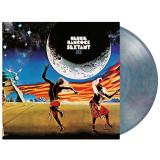
Herbie Hancock is one of the most prolific jazz pianists of the 20th century. A child prodigy, he played with the greats such as Donald Byrd and Miles Davis. He was one of the first to embrace and master the electric piano, but he always stayed true to the acoustic sound. In fact, he always bounced back and forth between his electronic and acoustic sound, touching upon almost every development in R&B, funk and jazz while retaining an original and distinctive voice.
Sextant from 1973 was recorded just before Headhunters, and can be seen in the same vein, but it’s more than just an introduction to a masterpiece. It features a kind of post-modal, free impressionism while gracing the edges of funk. Three long instrumental tracks explore how far minimalism in jazz can go.
Sextant is available as a limited edition of 2000 individually numbered copies on blue marble vinyl.
Intersecting sharpness and passion. An innovative work born from the collision of two rare and extraordinary talents.
On one side was Hiroshi Suzuki, a trombonist in such demand that people said, “If you want to record a good work, secure his schedule.” On the other hand was Masahiko Togashi, a drummer who rose to prominence at a young age and dominated the jazz world, from modern jazz to free jazz. The collision of these two personalities and talents created a new current in the Japanese jazz scene. From "Castle Cats," which moves between jazz rock and free jazz, to "Suzu No Uta," where Yuji Ohno’s piano spins a beautiful melody amid the sound of bells falling like rain, and "Passion," where each musician cuts in with sharp intensity, the entire work is filled with creativity and passion. Recorded in 1969, this is said to be the first work in Japan in which new jazz and free jazz were recorded and released as an album. From this turning point, Japanese jazz began to move in a major way.
Forty years of cassette releases, pressed for the first time on vinyl
First of two instalments exploring the previously unreleased sonic archives of one of Poland’s most enigmatic
living artists - with its first volume focused on his deep listening practice and spiritual reverie (recorded 1990–2013)
The last time Andrzej Dudek-Dürer took a banknote bearing the face of the Polish anarchist Jarosław Dąbrowski from his pocket to trade it for a pair of shoes was in 1969. He bought them for 120zł - the equivalent of 100€ today - and never replaced them since then. Only rebuilt them, year after year, drawing a needle and thread through the leather each time it split, closing one wound before the next one opened. It became a ritual of precision, stitching a record of another year into their soles.
That same year, in Wrocław, he arrived at a conclusion that would recalibrate everything that followed. Convinced he was the reincarnation of Albrecht Dürer, he adopted the surname Dudek-Dürer, stopped cutting his hair and began wearing the same garments every day. It was the first ritual of many, though he wouldn't have called it that yet. Look closely enough, over the decades, and it is always the same gesture, returning in different material: hair growing in a single unbroken strand, a needle drawing thread through leather, sitar strings pulled taut across a neck he built with his own hands and magnetic tape spooling forward inside the cassette boxes stacked against his walls.
None of this began in a vacuum. Dudek-Dürer emerged from the Wrocław neo-avant-garde, in a Polish art world where an exhibition could be cancelled overnight by the stroke of a censor's pen. In 1973, his exhibition Auto-crucifixion was shut down by the state, and for a time he found himself blocked from exhibiting his own art at all - the one force in his life that ever came close to cutting the thread.
He seemed to experience it differently. In 1974, after long, patient research into sitar craftsmanship, he built his first prototype with his brother, a knowledgeable luthier. In 1978, in a smoked-out jazz club, he took his first steps into sound recording with the unreleased album Jazz From Underground with his first band. By 1979, recognition started to travel further than he could.
Turning toward Far-Eastern philosophy, meditation and the idea of reincarnation was another language of freedom for him. It was a way of claiming an inner territory the state could not reach, a border it could not close. Mail Art served a parallel function, reaching further out: in a country that restricted travel and expression, sending and receiving art through the postal system became an act of quiet rebellion.
The body, in his understanding, is only an envelope readied for constant transformation. From this came Metaphysical Telepathy: during the years he could not leave Poland, he treated that confinement as a rehearsal room, sending his mind out ahead on the same thread his body would later follow. Living Sculpture grew from the same root with performances of stillness beside static art objects, until the boundary between the object and the man beside it simply dissolved. Camera Meditation extended the same instinct into photography: a shutter click flattening three dimensions into two so that a single instant could be held forever. Inspired by the pioneers of self-portrait photography like Robert Cornelius, he used it to document time itself, and kept explaining to me: "You know. This is not about vanity. This is about observing time passing.”
The isolation did not end suddenly. It ended the way his own philosophy had already predicted it would, from the inside first. Mail Art quietly solved the problem politics couldn't. Correspondence built during years of confinement slowly worked its way through doors the state itself had kept locked. Contacts made through folded paper and stamps became invitations. Ultimately, invitations became passports.
In 1983 he made his first trip outside Poland, to Germany, in search of the audio technology he couldn’t get his hands on before. In 1985, he was invited by the Indian embassy in Poland to give a sitar concert on an instrument he had spent a decade patiently stringing together - half sitar, half tanpura, built from patience and determination. After the collapse of the People's Republic of Poland, the travels kept unspooling: South Korea, then Mexico, then Australia, Canada, New Zealand, Singapore, Japan and the United States - each stop leaving behind its own small knot of tape, tied off and carried home.
In the decades since, recognition arrived at the same unhurried pace: he conducted workshops at UC Berkeley, served as vice-president for artistic affairs of the Union of Polish Art Photographers and the Union of Polish Visual Artists between 2010 and 2014 and received the Bronze Medal for Merit to Culture - Gloria Artis. His visual work gradually entered collections including the National Museums of Warsaw, the Stedelijk Museum, Tate Modern, MoMA and the Venice Biennale. His musical practice, by contrast, never found that kind of room - left to circulate quietly, sharing his cassette tapes directly, waiting for someone willing to follow it further.
It took months before I could find a way to reach Andrzej Dudek-Dürer - his presence online is very close to nonexistent. Surprisingly, LinkedIn turned out to be the only door still open, a faintly absurd irony given everything else about him. I packed the strict minimum for a three-day trip and an empty notebook and made my way to Wrocław. His headquarters sits in the neighbourhood of Grabyszyn: a two-storey pre-war house that has belonged to his family for generations. The man who opened the door was long-haired, long-bearded, in his trademark leather shoes and patched jeans. We sat in his living room, in front of a computer where decades of recordings sat organised in cryptically named files, surrounded by books and objects that had arrived one layer at a time, leaving room for only two chairs in the middle. His shoes sat by the door, rebuilt so many times they had become their own quiet sculpture. Cassette tapes filled boxes against the walls, almost unlabelled, each one a spool of thread holding decades of sound that had never once been asked for, until now.
I listened for hours: meditating in front of strangers on the porch of a Seoul temple until the tourists stopped taking photos and simply waited with him; a stand-off with border guards at the US–Mexico crossing over an instrument they couldn't identify and didn't trust; a session with the Stockhausen family that he still, decades later, describes like it happened last week. All of it interrupted, occasionally, by the smell of soup boiling and fresh bread warming on the ceramic stove. After two days, it felt like being handed the end of a very long thread and asked, gently, to keep following it. I left with a USB drive holding his full discography, signed with his unmistakable signature.
Astral Meditations From A Living Statue is a length of that thread, drawn out from the boxes stacked against his walls - recordings gathered from different rooms, different countries, different decades. This first record breathes slowly: incense-thick, meditative, built for stillness. A cutting-edge séance in outer space where machines learn how to dream.
It begins with the neo-classical improvisations of Andrzej, space-delayed, recorded at Klub Muzyki i Literatury in Wrocław in 2002. 'When..So' opens the curtains with a deep-rooted meditation accompanied by slow-decaying piano figures illuminated by a candle-lit spirit gathering.
Los Angeles, 1990: a dormant villa, a grand piano, the voice of Bonnie Barnett. 'Exception' is captured in a single room, in a single afternoon - voice and keys circling each other, neither one leading, until the silence between the notes starts to feel like the instrument.
'The Meta...' and 'Tired Of...', recorded at Studio Morandi in Ponte Nossa, Italy, in 1992, settle into a sitar drone built entirely from patience - overtones stacking and beating against each other, strung by a man who never once set foot in India. 'Mastery Of...' follows, recorded the same year at Studio Suski in Łomianki, pushing that same hum further still, until pitch dissolves into a spectral reverie. 'Transcendental Sound', from 2000, closes the first record in a slow bath of celestial frequency - better heard beside the shores of the Odra river.
More than fifty years after deciding that a life could become an artwork, Andrzej Dudek-Dürer continues to inhabit that decision. His shoes keep wearing thin against the earth's crust. His hair keeps growing, one strand at a time. His cassette tapes keep spooling in the dark of their boxes.
Now the thread finds its last shape: a single unbroken groove, spiralling inward from the outer edge to the label at the centre. Never cut - the way nothing else in his life ever was. Drop the needle and it will find that groove and follow it, the same way a needle once followed leather, once followed a border it couldn't cross, once followed string into an instrument that didn't exist until he built it. This record is the other end of a thread that has been travelling for fifty years. For the length of both sides, it rests here, in your hands. This is a timeless proof that the Lord of the New Age was never lost."
,Manifold of Partially Actualized Realities" ist das neue Album bei Kou Records von Randall Dunn - Produzent, Komponist und einer der markantesten Gestalter von Low-End- und räumlichen Klängen in der zeitgenössischen Musik, bekannt für seine Arbeit mit Sunn O))), Oneohtrix Point Never, David Torn und unzähligen anderen aus den Bereichen Heavy-, Experimental- und Avantgarde-Musik. Das Album ist eine Meditation über zerbrochene Realitäten, Zeit und Sterblichkeit - ein Spiegel, der sich auf sich selbst zurückfaltet und darüber, wie zukünftige Ereignisse die Vergangenheit beeinflussen. Sein tragender Geist ist Philip K. Dicks ,Pink Light Experience" von 1974, in der der Autor berichtete, eine Übertragung von einer gewaltigen, außerirdischen Intelligenz empfangen zu haben: informationsreich, uralt und überwältigend. Dunn nähert sich dem sowohl als Konzept als auch als kompositorische Logik - Musik, die in Schichten auftaucht, zusammenbricht, sich neu formiert und sich einer Auflösung verweigert.? In vier Stücken setzt Dunn ein ganzes Arsenal an Vintage-Synthesizern ein - Korg MonoPoly, Korg MS-20, PPG Wave, CS-80, Juno-60, Waldorf Strings, Fizmo - neben einer außergewöhnlichen Ensemblebesetzung. Spoken-Word-Beiträge von Jim Jarmusch (basierend auf PKDs Prosa) und Laima Leyton (basierend auf Robert Graves' ,Time") verankern zwei der vier Stücke in Sprache, ohne sie zu erklären. Das Album bewegt sich von orchestraler Kammermusik über elektroakustische Abstraktion hin zu einem abschließenden Stück - ,Ayn" -, das sich zu ekstatischem Jazz entfaltet, mit Cyro Baptista, Briggan Krauss, Henry Fraser, Charmaine Lee und Robert Aiki Aubrey Lowe. Wahre elektroakustische Komposition im vollsten Sinne: spektral, körperlich und weit offen. Produziert und gemischt von Randall Dunn bei Circular Ruin, April 2026. Aufgenommen und gemastert von Ben Greenberg. Dolby-Atmos-Mischungen von Ben Greenberg. Lackschnitt von Paul Gold bei Salt Mastering. Cover- und Rückseitengestaltung von Steve Rude.
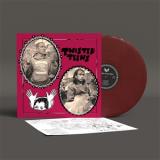
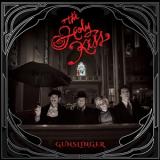
Twisted Teens - alias Caspian Halliwell und RJ Santos - gab es vor ihrem Debüt-LP aus dem Jahr 2024, das heute als The Orange Album bekannt ist, eigentlich gar nicht. Das Duo hatte unter dem Radar und abseits der Öffentlichkeit Musik von Cajun/Country bis hin zu Anarcho-Folk gemacht und dabei ein Leben als Nomaden geführt. Twisted Teens entstanden aus einem pandemiebedingten Inspirationsschub, der sie zusammenbrachte, um in passender Lo-Fi-Manier in Caspians Haus in New Orleans aufzunehmen. Ihr erstes Album wurde schnell zu einem modernen Klassiker des eingängigen, warmen Rocks, der Blues, Folk und Punk zu einer rohen und unwiderstehlichen Mischung vereint. Das Duo meldete sich 2026 stark zurück mit Blame the Clown - das sofort von Pitchfork und Paste begeistert gelobt wurde - und anschließend mit dem ebenso gefeierten Florida Water Blues, einer absurden Betrachtung ihrer Streifzüge rund um die Welt. Ihr drittes fesselndes und perfekt schräges Album aus dem Jahr 2026 ist eine Saga über Herzschmerz und verborgene Triumphe namens The Holy Cross Tigers. Die Songs sind Hymnen der Sehnsucht und unzähliger Enttäuschungen, angeheizt von allem Möglichen - von einer brutalen Trennung bis hin zu verräterischen Ex-Freunden. Trotz all dieser Leiden strahlt The Holy Cross Tigers eine gewisse Leuchtkraft aus, ein Gefühl von reflektiertem Licht, das sich gegen die Traurigkeit stemmt. Man kann sich sofort damit identifizieren - es fühlt sich an, als würden ein paar Freunde die Lasten des Lebens miteinander teilen, mit seltsamen und ekstatischen Ergebnissen, weil sie nach ihren eigenen Regeln handeln. Es ist eine übersteuerte Übertragung vom Rand des Herzschmerzes, einem Ort, an dem selbst die Glücklichen schon waren und von dem sie hoffentlich zurückgekehrt sind.
Twisted Teens - alias Caspian Halliwell und RJ Santos - gab es vor ihrem Debüt-LP aus dem Jahr 2024, das heute als The Orange Album bekannt ist, eigentlich gar nicht. Das Duo hatte unter dem Radar und abseits der Öffentlichkeit Musik von Cajun/Country bis hin zu Anarcho-Folk gemacht und dabei ein Leben als Nomaden geführt. Twisted Teens entstanden aus einem pandemiebedingten Inspirationsschub, der sie zusammenbrachte, um in passender Lo-Fi-Manier in Caspians Haus in New Orleans aufzunehmen. Ihr erstes Album wurde schnell zu einem modernen Klassiker des eingängigen, warmen Rocks, der Blues, Folk und Punk zu einer rohen und unwiderstehlichen Mischung vereint. Das Duo meldete sich 2026 stark zurück mit Blame the Clown - das sofort von Pitchfork und Paste begeistert gelobt wurde - und anschließend mit dem ebenso gefeierten Florida Water Blues, einer absurden Betrachtung ihrer Streifzüge rund um die Welt. Ihr drittes fesselndes und perfekt schräges Album aus dem Jahr 2026 ist eine Saga über Herzschmerz und verborgene Triumphe namens The Holy Cross Tigers. Die Songs sind Hymnen der Sehnsucht und unzähliger Enttäuschungen, angeheizt von allem Möglichen - von einer brutalen Trennung bis hin zu verräterischen Ex-Freunden. Trotz all dieser Leiden strahlt The Holy Cross Tigers eine gewisse Leuchtkraft aus, ein Gefühl von reflektiertem Licht, das sich gegen die Traurigkeit stemmt. Man kann sich sofort damit identifizieren - es fühlt sich an, als würden ein paar Freunde die Lasten des Lebens miteinander teilen, mit seltsamen und ekstatischen Ergebnissen, weil sie nach ihren eigenen Regeln handeln. Es ist eine übersteuerte Übertragung vom Rand des Herzschmerzes, einem Ort, an dem selbst die Glücklichen schon waren und von dem sie hoffentlich zurückgekehrt sind.
Jozef Van Wissem and Jim Jarmusch’s Bocca di Lupo and Mouth of the Wolf were recorded in July 2025 in Bologna, Italy. The recording sessions took place just after several live dates in New York and Chicago, and a week before they began a short European tour which included Paris, London, Ghent, Porto, and a first date in Bologna.
Below are notes from Jozef and Jim directly.
“With thanks to Gian Luca Farinelli and Rosanna Mordini from the extraordinary Cineteca di Bologna, we were able to secure recording days in the very cool Fonoprint Studios — located on Via Bocca di Lupo in Bologna, hence the titles of these two LPs. (“In bocca al lupo” — in the mouth of the wolf — is the Italian idiom for wishing one good luck; equivalent to “break a leg” in English.)
Bocca di Lupo starts with a new version of our own “Only Lovers Left Alive,” and “Apology” is a new version of a pre-existing piece by Jozef. All other tracks are new originals. We were honored to have guest duet vocals from the iconic Courtney Barnett on “Never Like You Said.” The lyrics of the song arrived spontaneously in a single take in the studio. It’s not directed at a specific person, but more an emotional response to several disingenuous, deceitful people — a closing of the door on their toxic behavior. And a casually recorded conversation (concerning the haunted auras of particular pieces of vintage women’s clothing) between Adriana Coppi and Veronica Mayrr (from Deux Femmes) is woven as a background into the track titled “Pour Deux Femmes.” “Black Roses” is an original poem written in Bologna, and recited from within its own musical setting. All other tracks are instrumentals.
Mouth of the Wolf, the second LP, consists of two longer, darkly ecstatic instrumental studio tracks — “In A” and “Massa Damnata.” Both were created with two electric guitars, and derived from our live performances. We consider it to be a musically separate album, and is therefore presented in its own sleeve and with its own artwork.
Our music has many inspirations — everything from our friends in Sunn O))) and Swans to Terry Riley and Morton Feldman; from Hildegard Von Bingen and WIlliam Lawes to Psychic Ills and Spacemen 3; from Les Rallizes Dénudés and NEU! to Nadja and Glenn Branca; from Ian Svenonius and Dead Skeletons to Son House and Gwenifer Raymond…from sunset to sunrise…full moon to new moon…”
a 01. Only Lovers Left Alive 4:36
b 02. Never Like You Said 5:23
[c] 03. Apology [5:11]
[d] 04. Black Roses [2:44]
[e] 05. On Twofold Nature [9:37]
[f] 06. Pour Deux Femmes [8:09]
[g] 07. In Bocca Al Lupo [5:58]
[h] 01. In A [12:56]
[i] 02. Massa Damnata [17:51]
[a] 01. Only Lovers Left Alive [4:36]
[b] 02. Never Like You Said [5:23]
[c] 03. Apology [5:11]
[d] 04. Black Roses [2:44]
[e] 05. On Twofold Nature [9:37]
[f] 06. Pour Deux Femmes [8:09]
[g] 07. In Bocca Al Lupo [5:58]
[h] 01. In A [12:56]
[i] 02. Massa Damnata [17:51]
[a] 01. Only Lovers Left Alive [4:36]
[b] 02. Never Like You Said [5:23]
[c] 03. Apology [5:11]
[d] 04. Black Roses [2:44]
[e] 05. On Twofold Nature [9:37]
[f] 06. Pour Deux Femmes [8:09]
[g] 07. In Bocca Al Lupo [5:58]
[h] 01. In A [12:56]
[i] 02. Massa Damnata [17:51]
[a] 01. Only Lovers Left Alive [4:36]
[b] 02. Never Like You Said [5:23]
[c] 03. Apology [5:11]
[d] 04. Black Roses [2:44]
[e] 05. On Twofold Nature [9:37]
[f] 06. Pour Deux Femmes [8:09]
[g] 07. In Bocca Al Lupo [5:58]
[h] 01. In A [12:56]
[i] 02. Massa Damnata [17:51]
[a] 01. Only Lovers Left Alive [4:36]
[b] 02. Never Like You Said [5:23]
[c] 03. Apology [5:11]
[d] 04. Black Roses [2:44]
[e] 05. On Twofold Nature [9:37]
[f] 06. Pour Deux Femmes [8:09]
[g] 07. In Bocca Al Lupo [5:58]
[h] 01. In A [12:56]
[i] 02. Massa Damnata [17:51]
With the “Extrasensory” EP, Slices Of Life welcomes one of the most versatile producers in the UK minimal house scene. Since 2003, Tom Ellis has been creating funk- and jazz-inspired house and techno, distinguished by his keen sense of organic rhythm. His extensive discography spans labels such as Logistic/Telegraph, Minibar, Wisdomteeth, KANN, Banoffee Pies, Onysia, among many others. Beyond his solo work, he is also the mastermind behind the electronic jazz ensemble Soulstatejazz.
The four tracks on “Extrasensory" distill this wealth of musical experience into diversely textured minimal house productions. Precisely placed drums and percussion, and rolling grooves form the foundation - clearly shaped by Ellis’s background as a drummer, percussionist, and bass player.
All the tracks share a warm, organic atmosphere, oscillating between lightness and relentless drive. The title track, "Extrasensory", blends almost pop-like melodies with shimmering vocals. "Bring Forth" takes us into deeper, dubby, and driving territories, while "Be The Moment" reveals a playful and melancholic side. Finally, "Vividly" immerses us in a dense, dreamy, yet pulsating sonic world.
Long before streaming services, podcasts, or even the compact disc, there was Tellus—a radically ambitious publication that imagined recorded sound as an exhibition space. Founded in 1983 in downtown New York, Tellus transformed the humble audio cassette into a magazine, commissioning and publishing new works by musicians, composers, visual artists, poets, writers, choreographers, and performers who were reshaping the boundaries of contemporary art. Each issue invited listeners into a world where no wave, industrial music, spoken word, Fluxus performance, electroacoustic composition, downtown pop, conceptual art, and avant-garde experimentation could coexist on equal footing. More than forty years later, Earth Libraries proudly presents TELLUS: The Audio Cassette Magazine Anthology Vol. 1, the first comprehensive anthology devoted to the groundbreaking publication. The story of Tellus begins, fittingly, at the Rum Runner Bar on Canal Street. There, in 1983, visual artist Joseph Nechvatal, curator Claudia Gould, and composer Carol Parkinson conceived an entirely new kind of publication. Portable cassette players were transforming how people experienced music, and the trio saw an opportunity to use the cassette itself as a curatorial medium—one capable of circulating work that traditional record labels, galleries, and magazines simply couldn't accommodate. Early recordings by Sonic Youth and Liquid Liquid sit alongside works by James Tenney, George Brecht, Takehisa Kosugi, Carol Parkinson, Y Pants, Live Skull, Shelley Hirsch, Lenny Pickett, Paul Dresher, Gregory Whitehead, and dozens of other artists whose work helped define one of the most fertile creative communities of the era. For Earth Libraries, restoring Tellus represents a continuation of the label's commitment to preserving overlooked musical histories. Working from the original cassette masters, every recording on TELLUS: The Audio Cassette Magazine Anthology Vol. 1 has been carefully restored and newly mast
And the Glass Handed Kites is the fourth album by Danish quartet Mew and marked a highlight in their career. It has won several music prizes in Denmark, including four Danish Music Awards. Gaffa named And the Glass Handed Kites the best Danish album of 2005. Mew also won the 2005 MTV Europe Music Award for Best Danish Act. Pitchfork Media ranked the single "The Zookeeper's Boy" #92 on its list of top 100 tracks of 2006.
This reissue is the expanded edition on vinyl containing 10 bonus tracks, including the Mogwai remix of “Why Are You Looking Grave”, “Dark Design (red version)”, “Animals Of Many Kinds”, the unreleased song “Wherefore Are You Not There”, and many more.
And the Glass Handed Kites is available as a limited edition of 1500 individually numbered copies on white vinyl and includes a 12-page booklet.
A torrent of brilliance released from the fingertips. The art of the piano trio by a giant of arrangement.
In 1968, Norio Maeda, the genius arranger once described as being able to “write different scores with his right and left hands at the same time,” welcomed his close musical allies Takeshi Inomata and Tatsuro Takimoto and took on the piano head-on in his first piano trio work as a pianist. This album brings together the refined melodies of the new mainstream style that led the jazz scene at the time, experimental elements using prepared piano, and even a strikingly inventive recording approach in which as many as seven microphones were placed inside the piano. With the outstanding structural power of a composer and arranger and the sharp instincts of a performer woven together at a high level, this is an important work that deserves to be engraved in the history of Japanese jazz.
A soaring new chapter unfolds from the forthcoming Elements Of Life album with the release of “Soar,” an uplifting and deeply moving collaboration featuring the incomparable Lisa Fischer. Written by Josh Milan and Louie Vega and produced by 2SoulFusion—Louie Vega and Josh Milan—the song is a powerful testament to resilience, transformation, and the limitless possibilities that emerge when spirit, soul, and music unite.
Built upon a rich tapestry of live musicianship, “Soar” embodies the signature sound that has made Elements Of Life a beloved musical movement around the world. At its core is Lisa Fischer’s breathtaking vocal performance, delivering a message of hope, elevation, and self-discovery with the emotional depth and conviction that have made her one of the most revered voices of her generation.
At the heart of “Soar” is a message of encouragement, resilience, and unconditional support. Through its uplifting lyrics and soaring melody, the song speaks to anyone navigating life's uncertainties while striving to become their fullest self. Lines such as “Clouds hang low, but the sky's still wide” acknowledge the challenges we all face, while the recurring refrain, “I just want you to soar,” serves as a powerful affirmation of faith in another person's journey. Equally moving is the song's central sentiment, “The more you do for you, the better I feel,” expressing a selfless form of love that celebrates growth, healing, and personal fulfillment. Universal in its message yet deeply personal in its spirit, “Soar” reminds us that one of the greatest gifts we can offer is the encouragement to rise, evolve, and embrace our own potential.
The production blends organic instrumentation with sophisticated arrangements, creating a timeless soundscape that feels both expansive and intimate. Multi Grammy Award-winning bassist Christian McBride anchors the composition with his masterful upright bass work, while Josh Milan's lush keyboards, piano, organ, clavinet, and atmospheric textures provide the song's harmonic foundation. Live drums from Tony Cintron and vibrant percussion from Luisito Quintero infuse the track with an irresistible pulse, while Ivan Renta's expressive soprano saxophone solo adds another layer of emotional richness, and a tasteful guitar groove by Sherrod Barnes.
The song's message is elevated further through a powerful vocal ensemble featuring background vocals from Lisa Fischer, Dawn Tallman, Ramona Dunlap, and Lea Lorien, creating moments of communion and uplift that echo the song's central theme of hope, growth, and believing in the possibilities that lie ahead. For Louie Vega and Josh Milan, “Soar” represents another defining moment in their longstanding creative partnership. Through Elements Of Life, they have continually blurred the boundaries between house music, soul, jazz, Latin rhythms, gospel, and global influences, creating music that resonates as deeply on the dance floor as it does in the heart. “Soar” continues that tradition, offering listeners a song that inspires movement, reflection, and renewal.
Recorded at Honeycomb Studios in Pennsylvania and Manhattan Center Studios in New York City, and mixed at Daddy's Workshop in New Jersey, the production benefits from the expertise of recording engineers Yas Inoue & Josh Milan, with final mastering by the Maestro of mastering Herb “Pump” Powers for PM Mastering.
As anticipation builds for the forthcoming Elements Of Life album slated for February 2027, “Soar” offers a powerful glimpse into the project's next evolution— a celebration of musical excellence, spiritual connection, and the enduring power of song to lift us higher.
Thirty tracks to celebrate three decades in the game, the LP is home to music from artists that have helped shaped the sound of the label over the years. Featuring a mixture of both original tracks and iconic catalogue remixes, expect to hear top-shelf cuts from the likes of Netsky, Grafix, S.P.Y, Etherwood, Nu:Logic, Lens, Hoax, Gabriella Bongo and more.
Pressed across five 12" white vinyl records and housed in a premium two-piece lift-off box, this special 30th anniversary edition is the ultimate collectors item.
*Originally pressed in 2021 - this is a brand new master and cut.**
In partnership with Analogue Foundation, Oshu Records is proud to present the exclusive vinyl repress of "Laroyê" in a thick cardboard tip-on gatefold jacket on 2x 180g vinyl.
Acclaimed Hungarian, Berlin-based producer, composer and pianist Àbáse (AKA Szabolcs Bognár) returns, sharing a special, 5 anniversary remaster of his breakthrough project 'Laroyê'. Releasing on Friday 1 May via Bridge The Gap & Oshu Records, this sensitive exploration of Afro-Brazilian culture originally began as an audio diary, documenting Szabolcs’ travels and collaborations in Brazil through a collection of voice memos, fragmented beats, sketches and field recordings. As his journey progressed, and his collaborations and research deepened, the music project started to take on its own life:
"Laroyê evolved through weeks and months of research and collaborations into the album that it is now. That means that all the sessions were done in different apartments, small studios, often with borrowed equipment, which all adds to the character, but makes the creation of a coherent sound a challenge. Benjamin Tierney, Erik Breuer and Analogue Foundation did an incredible job with the mixes and with this new remaster. I truly believe that we are able to hear the tracks in a new light, with even more depth and clarity."
Coming from the West African Yoruban language, Àbáse stands for "collaboration" – a key element of the music perfectly encapsulated on 'Laroyê'. Recorded in Rio de Janeiro and Salvador, Àbáse spent five months working with diverse artists, from young talents to veterans of the Brazilian scene including Letieres Leite, Luciane Dom, Dofono d'Omolu, Afrojazz and more. The album explores the rich heritage of afro-brasilian culture through samba, MPB and Candomblé, mixing these with broken beat, hip hop and afrobeat, creating a contemporary homage to the classic Brazilian sound. Szabolcs shares:
"Despite already leading and managing musical projects that are close to my hearth, I always felt that one day I would like to start a solo project, where I could take full responsibility for the artistic direction and the music would reflect a truly personal vision. In 2017, I decided to take five months to fulfil a childhood dream and travel to Brazil to expand my creative horizon and expose myself to new influences."
An album standout is the bass-heavy, afro-brazilian ‘Agangatolú, which Àbáse describes as "best exemplifying the story and concept of Laroye as a collaborative effort - a research project exploring the rich heritage of Afro Brazilian culture through my own lens." The track features singers and percussion players Jadson Xabla and Gabriel Santana - two artists based out of one of the oldest terreiros (houses of worship) in Bahia, whilst drummer Jorge Dubman is an integral part of one of the most famous afrobeat bands from Salvador IFA. The contributions of one of Szabolcsoldest collaborators - Hungarian flautist Fanni Zahar - also made the track a full-circle moment.
On a quest for cosmic grooves of unity, Àbáses music pulls from an eclectic blend of global reference points, including modal jazz, Hungarian folk, West African, Brazilian, hiphop and underground electronic music. His work has drawn widespread critical acclaim from the likes of MOJO, Songlines, Soulection and The Guardian, and been supported by key tastemakers including Gilles Peterson, Jamz Supernova and BAMBII. As a keyboard player, Szabolcs has also collaborated with the likes of Wayne Snow, Dele Sosimi, Patti Smith, Emmanuel Wilkins, Gulty Simpson and Zeitgeist Freedom Energy Exchange.
'Laroyê' (2026 Remaster) will release on Friday 1st May via Bridge The Gap & Oshu Records.
Limen brings together two artists whose musical paths converge around a shared sensitivity to listening, resonance, and the evocative power of sound.
Recorded at Ritmo e Blu Studio during a five-day residency between spring and summer 2025, the album emerged from a series of spontaneous encounters free from predetermined structures. The pieces preserve their original form, retaining the immediacy and temporal flow of the dialogues as they first unfolded.
Subsequent interventions were conceived not as revisions, but as an exploration of the open spaces already present within the recordings—deepening what remained unspoken and extending resonances without altering the music's natural evolution.
The title, derived from the Latin word for “threshold,” reflects the nature of the project itself: a place of passage between improvisation and composition, silence and vibration, memory and imagination. Limen inhabits a suspended territory where listening becomes an experience of openness, presence, and transformation.
---
Lino Capra Vaccina
Lino Capra Vaccina is one of the most distinctive voices in Italian experimental music. A percussionist, composer, and pioneer of minimalist and meditative sound practices, he first emerged in the early 1970s as a founding member of the influential group Aktuala, whose visionary fusion of ancient traditions, improvisation, and contemporary research anticipated what would later become known as world music.
Over a career spanning more than five decades, Vaccina has cultivated a unique artistic language centred on vibration, resonance, and the transformative power of sound. His landmark 1978 album Antico Adagio remains a touchstone of European minimalism, while his collaborations have included figures such as Franco Battiato, Juri Camisasca, Markus Stockhausen, Keith Tippett, Paolo Tofani, and many others.
Whether working with percussion, piano, electronics, or voice, Vaccina's music seeks a state of suspension and contemplation. His compositions unfold as immersive sonic environments whereancient echoes and contemporary sensibilities meet, inviting listeners into an experience that is at once intimate, spiritual, and timeless.
---
Luca Formentini
Luca Formentini is an Italian composer, sound artist, and improviser whose work unfolds at the intersection of experimentation, atmosphere, and deep listening. Active since the late 1990s, he has developed a highly personal language in which guitar, voice, field recordings, and electroacoustic processes become tools for exploring memory, perception, and the expressive potential of sound itself.
His music resists easy categorization, moving freely between ambient, contemporary composition, improvisation, and sound art. Throughout his career he has released numerous solo works and collaborated with a wide range of internationally acclaimed musicians, including Holger Czukay, Robert Rich, Markus Stockhausen, Steve Jansen, Theo Travis and Steve Lawson.His recordings have appeared on labels across Europe, Asia, Australia, and the United States.
Rooted in a practice of attentive listening and sonic exploration, Formentini creates evocative musical landscapes that invite reflection rather than certainty, opening spaces where silence, texture, and resonance become as meaningful as melody itself.
Faitiche presents the debut solo album by cellist, sound artist, and composer Topu Lyo: “quiet scenes from tokyo” brings together sixteen miniatures for solo cello and tape echo that oscillate between abstracts drones and rhythmic pizzicato sketches – all recorded at Topu’s Tokyo apartment. The constant traffic noise from a nearby highway has become an accompanying soundtrack for his compositions and can be heard on the recordings. Topu’s playing is marked by a distinctive idiom oriented more towards abstract electronic studio effects than classical technique.
The artist spoke to Jan Jelinek about his work:
JJ: A solo cello album may seem like an odd fit for a label that has to date released only music that is electronic in the broadest sense. But I think “quiet scenes from tokyo” complements the Faitiche repertoire exceptionally well. Its sixteen miniatures showcase the cello in all its complexity: the bowed passages sometimes recall a tape feedback drone; the pizzicato playing conjures up the percussion recordings of Moondog; and the abstract textures might be mistaken for the product of a granular sampler rather than rapid finger work on the cello. I’m constantly surprised by just how rich and varied this album is – without ever losing the charm of its sketch-like quality. Could you say a few words about the making of your album – first of all, from a rather technical perspective: what production tools did you use, and why?
TL: My production tools were very sparse. Just a solo cello and my Roland 301 Space Echo, which I only used at the end, running everything through it during mixing, tape only. After years of working with electronics, pedals, and synthesizers, moving to Tokyo pushed me toward minimizing my setup. But my aesthetics shifted too, toward simplicity. I wanted to strip everything back to just the acoustic cello and see how far I could push it — replicating some of my favorite electronic effects through extended technique: slow portamento, LFOs, filters, detune, noise. I’d also been listening to a cassette of ocean sounds for years. When I moved to Tokyo I was horrified to find myself living directly across from a freeway. Eventually the freeway started sounding almost identical to the ocean — and that ended up playing a prominent part in the recording.
JJ: That’s super interesting: mimicking electronic production as a compositional idea for the cello! You say the sound of the freeway is crucial to the album: I, too, tend to interpret steady traffic noise as a positive soundscape – do we hear the freeway on the album? I can also hear other field recordings, for example on “a street car with announcements”. Can you say a bit about how these field recordings influence your playing?
TL: Yes, you can hear the freeway on the album! The freeway is most prominent in “old trees in lonely spring”, “yuyake koyake”, and “the moon” (you can clearly hear individual cars). When I first began recording I had my balcony door shut tightly, but after a while I began leaning into the highway sound and slowly opening the door little by little to control the amount of noise. “streetcar with announcements” was a moment I was recording and a car passed by making announcements in the background. I loved how it sounded! Same thing with “yuyake koyake”, and later I realized that every day at 5pm the same song plays to mark sunset, telling children it’s time to go home. Having this bedrock of sound puts less pressure on me to put music on top or to play more notes.
JJ: It’s astonishing how much this differs from what I’d imagined: I’d been picturing peaceful landscape recordings, but had never thought of a freeway. Which goes to show how open to interpretation traffic noises are. So the room by the freeway had a major influence on the album – how are you going to perform it live?
TL: The contrast between the freeway and the beautiful landscape in my head couldn’t have been starker. I too was imagining a beautiful landscape in which to create the album, but somehow it still worked out. I've been going back and forth a lot on live shows and I think the most honest way is to have it the most stripped down. I was thinking of using traffic samples etc., but I think the duet really comes from the background sounds from every unique venue/environment. So as it stands, I’ll just be doing acoustic solo cello.
21 Bum Salute is the fifth album from Sydney experimental psych-noise-pop duo Party Dozen. The work of Kirsty Tickle (saxophone, vocals) and Jonathan Boulet (drums, loops, production), 21 Bum Salute finds the critically-acclaimed, semi-improvised duo feeling liberated - from their peers, their worries, and what the nell they're supposed to sound like now.
Emerging in 2017 from the warehouses of the Sydney experimental noise-rock scene, Party Dozen arrive at the release of their fifth album, 21 Bum Salute, in peak form. Over the course of four, increasingly perverse albums of psych-tinged rock peppered with pop noise and bursts of doom in equal measure, they've transformed from gleeful noise-makers producing DIY albums from a tiny room in Marrickville, NSW, to globe-hopping, critically-adored favourites - producing DIY albums from a tiny room in Marrickville.
As well as tours with Amyl and the Sniffers, King Gizzard and the Lizard Wizard, Tropical F*ckstorm, Algiers and more, Party Dozen had Nick Cave appear on 2022 single Macca The Mutt', collabed with New York rapper billy woods, performed an incendiary live set on KEXP, signed international deals, firstly with Temporary Residence LTD (Mogwai, Explosions in the Sky,
Along the way Party Dozen self-released their first two albums, The Living Man (2017) and Pray For Party Dozen (2020), struck a chord internationally with album The Real Work (2022), which sent them on tours of Europe, North America, Japan, China and New Zealand, while fourth LP, Crime in Australia (2024), an ode to Aussie noir that leaned beyond rock into moodier moments, repeated it.
Party Dozen recorded, mixed and mastered 21 Bum Salute completely themselves, over a three month span. Inspired by spooky "old recordings" as well as the primal impulses of acts like ESG and Bikini Kill, 21 Bum Salute - named after a peculiar, larrikin ritual in Australia's arid Northern Territory - condenses consecutive years of jam sessions, loops and improvisations into just over half an hour's worth of fizzing, strutting, striking sonics from the fringes.
21 Bum Salute is the fifth album from Sydney experimental psych-noise-pop duo Party Dozen. The work of Kirsty Tickle (saxophone, vocals) and Jonathan Boulet (drums, loops, production), 21 Bum Salute finds the critically-acclaimed, semi-improvised duo feeling liberated - from their peers, their worries, and what the nell they're supposed to sound like now.
Emerging in 2017 from the warehouses of the Sydney experimental noise-rock scene, Party Dozen arrive at the release of their fifth album, 21 Bum Salute, in peak form. Over the course of four, increasingly perverse albums of psych-tinged rock peppered with pop noise and bursts of doom in equal measure, they've transformed from gleeful noise-makers producing DIY albums from a tiny room in Marrickville, NSW, to globe-hopping, critically-adored favourites - producing DIY albums from a tiny room in Marrickville.
As well as tours with Amyl and the Sniffers, King Gizzard and the Lizard Wizard, Tropical F*ckstorm, Algiers and more, Party Dozen had Nick Cave appear on 2022 single Macca The Mutt', collabed with New York rapper billy woods, performed an incendiary live set on KEXP, signed international deals, firstly with Temporary Residence LTD (Mogwai, Explosions in the Sky,
Along the way Party Dozen self-released their first two albums, The Living Man (2017) and Pray For Party Dozen (2020), struck a chord internationally with album The Real Work (2022), which sent them on tours of Europe, North America, Japan, China and New Zealand, while fourth LP, Crime in Australia (2024), an ode to Aussie noir that leaned beyond rock into moodier moments, repeated it.
Party Dozen recorded, mixed and mastered 21 Bum Salute completely themselves, over a three month span. Inspired by spooky "old recordings" as well as the primal impulses of acts like ESG and Bikini Kill, 21 Bum Salute - named after a peculiar, larrikin ritual in Australia's arid Northern Territory - condenses consecutive years of jam sessions, loops and improvisations into just over half an hour's worth of fizzing, strutting, striking sonics from the fringes.
“I am not sure which of us it is that's writing this page” - Jorge Luis Borges. There are places where a river runs through the story even when you cannot see it. Austin Cash grew up in the Arkansas Delta, and Nathan Smerage in the Chicago suburbs, their paths crossing years later in Fayetteville, Arkansas, where both became members of the Ozark Free Music Society, a loose congregation of musicians who made free and experimental music in non-traditional venues across the city. ‘River Season’ began as an impulsive text sent to Smerage in the summer of 2024, Cash suggesting they should make an album of guitar duets. Calling his bluff, Smerage returned a folder of recordings within a week. Cash had a handful of pieces of his own, originally written for an unreleased film about an Ozarks ceramicist. The songs began traveling back and forth between them by email, however, after opening for the Magic Tuber String Band and playing the compositions live for the first time together, realised the decision to record them live was the only true option. For four days, in the basement apartment where Cash lived, they recorded River Season live. The result is a meticulously composed collection of steel-string guitar music: part folk record, part road map.
Fahey and Ackerman are somewhere in the distance, alongside Bert Jansch, Nick Drake, Marisa Anderson, Nathan Salsburg, Loren Connors, and others. But River Season belongs to neither Arkansas nor Chicago entirely. Cash grew up in Arkansas before moving to Chicago, whereas Smerage grew up in Illinois before moving to Arkansas. River Season catches the two musicians at an intersection in their paths; it belongs to the stretches of road and rivers between them, real and imagined. "This new collaboration between Austin and Nathan is intimate and tonally diverse. Many of the tracks see Austin playing acoustic and Nathan on electric. The statements are succinct (all but two clock in under four minutes) and idiosyncratic. "Bell Harp" and "Painting Friend" are two stand out examples for me in which the textures of the electric/acoustic pairing play off each other in a way that I can't say I have encountered before." -Evan Morgan (Magic Tuber Stringband)
Rubbermaidxxx is a recent music performance project by the Irish artist Anna McCarthy, rather than simply the title of one autonomous artwork. Rubbermaidxxx is a character or unstable identity, an emancipatory underdog with a heart for daredevilry. The project sits naturally within McCarthy’s larger practice, which moves between drawing, assemblage, happenings and collective actions.
Clad in a black balaclava and fetish climbing wear, she abseils from buildings before entering the stage. For the first performance in New York City, she was invited by Kyp Malone of TV on the Radio to perform at his club Francis Kite Club in Alphabet City, NYC and since has continued to make a name for herself hanging off façades, singing, dancing and mopping the floor together with her performance collaborators Miss Philip a.k.a. Philip Errico and Michael Tapper at Pianos NYC, Kottbusser Tor and Genezarethkirche Berlin or the Villa Stuck Museum in Munich.
The album was produced in Munich and New York in 2025 in collaboration with her brother Nick McCarthy (Franz Ferdinand) and Anton Kaun (Rumpeln). What started as a quick improv turned into a high-energy 4-hour session of the siblings playing manic ball with beats, bass, guitars and vocals resulting in what laid the basis to this album. In the weeks following, Anna McCarthy, who is known for her cut-up production style, reminiscent of albums such as White Noise or Flying Lotus, continued to develop the vocals, performance and music by mixing in an amalgam of field recordings with her narrative spoken word, including sounds of protests, dollar stores or ice-cream trucks, as well as collaborating with the noise artist Rumpeln for the last two tracks of the album.
McCarthy is also known as the lyricist and singer of What Are People For? (debut 2022 on Alien Transistor) with its dystopic dance music candy-cane shows and equally humorously critical tongue-in-cheek bangers such as Bring back the Dirt, Drones or Partytime. Anna McCarthy's spoken word, social urgency and enthusiasm to experiment across mediums is comparable to other contemporaries such as Moor Mother, Miho Hatori, Gonjasufi, Tricky, or Cibo Matto.
The name itself is telling. Rubbermaidxxx evokes elasticity, artificiality, domestic labour and the commercial world of cleaning and garbage. It suggests a body capable of stretching, absorbing filth and cleaning up after society – only to revolt against the role it has been assigned.
Rubbermaidxxx is a master of deception, juggling fact and fiction as a reflection of our times – a diamond thief, a protester, or even responsible for the Louvre heist? This album invites the listener and viewer in, playfully dismantling hierarchies and power structures as she goes through a hopeful amalgam of dance, protest & love songs.
Celestial Echo Records presents Nathaniel Best – Set Your House In Order, an incredible gospel soul LP from 1986, finally back in circulation.
Originally released on Spirit Records of Nevada, the album is very much of its time in the best way — gospel music with drum machines, warm synths and basslines that push it right into modern soul and boogie territory. Nathaniel Best’s voice carries the whole record with real conviction, joined by group vocals and arrangements that give the album that rich, uplifting 80s gospel soul sound.
For us, the standouts are clear. “Call Him” is the boogie dancer — bright, driving and full of movement, the kind of gospel cut that sits perfectly in a modern soul or boogie set. The title track, “Set Your House In Order”, is something else entirely: a beautiful downtempo soul glider, deep and heartfelt, with that slow-burning quality that makes the whole LP feel so special.
Those two tracks tell the story, but the magic runs through the whole record. Scattered across the album are these amazing slower gospel soul moments, balanced with enough groove and lift to keep it moving. It’s not just a one-tracker, it’s a proper LP with feeling, range and a sound that collectors have been chasing for years.
Best’s musical story runs deep. He grew up around gospel, recorded from a young age, played piano in church, sang with the Love Center Choir under Bishop Walter Hawkins, and later worked with names including The O’Jays and The Fairfield Four.
Original copies have always been hard to come by, and the album has built a serious reputation with gospel, soul and boogie collectors over the years.
Celestial Echo Records presents Nathaniel Best – Set Your House In Order, an incredible gospel soul LP from 1986, finally back in circulation.
Originally released on Spirit Records of Nevada, the album is very much of its time in the best way — gospel music with drum machines, warm synths and basslines that push it right into modern soul and boogie territory. Nathaniel Best’s voice carries the whole record with real conviction, joined by group vocals and arrangements that give the album that rich, uplifting 80s gospel soul sound.
For us, the standouts are clear. “Call Him” is the boogie dancer — bright, driving and full of movement, the kind of gospel cut that sits perfectly in a modern soul or boogie set. The title track, “Set Your House In Order”, is something else entirely: a beautiful downtempo soul glider, deep and heartfelt, with that slow-burning quality that makes the whole LP feel so special.
Those two tracks tell the story, but the magic runs through the whole record. Scattered across the album are these amazing slower gospel soul moments, balanced with enough groove and lift to keep it moving. It’s not just a one-tracker, it’s a proper LP with feeling, range and a sound that collectors have been chasing for years.
Best’s musical story runs deep. He grew up around gospel, recorded from a young age, played piano in church, sang with the Love Center Choir under Bishop Walter Hawkins, and later worked with names including The O’Jays and The Fairfield Four.
Original copies have always been hard to come by, and the album has built a serious reputation with gospel, soul and boogie collectors over the years.
feeble little horse is naturally delighted to present their third full-length LP, bitknot. The album was written, arranged, produced, and recorded by Sebastian Kinsler, Lydia Slocum, and Jake Kelley across their respective homes in Pittsburgh, Pennsylvania. A spirited investigation into the unnatural space created between human nature and a culture of convenience, a synthesis of dirt and digital, bitknot by feeble little horse creates a language wherein one can re-imbue a sanctity of interdependence away from consumptive “self-suciency” and materialism. Slocum’s meandering introspection playfully harmonizes against Kinsler’s hooks, walls of noise, a supercharged car battery’s worth of synths and samples dropped in the ocean of their guitar-driven songwriting framework.
NOW Music proudly presents the next release in the ‘ERA’ series with NOW That's What I Call An Era - Ballroom Blitz: 1967-1976 celebrating the colourful world of glam rock, pop and unforgettable chart hits that defined the early-to-mid 1970s, with a selection of pop gems from the late 1960s. Pressed across three stunning coloured vinyl LPs – red, white and gold – showcasing the era’s biggest stars, instantly recognisable anthems, novelty favourites and enduring singalongs from one of the most distinctive periods in UK pop history.
Minutiae is the first full-length release form Stockholm’s Ināra Quartet, made up of brothers Kasper (guitar, banjo, mandolin) and Mauritz Agnas (bass, cello), Johan Graden (piano, harmonium, synths) and Mischa Grind (percussion). Drawing on wide performance and composition experience in free improvisation, jazz, and composed new music, the quartet have carved out a unique niche where radical approaches to rhythmic organisation and group interaction are wedded to immediately accessible, folkish melodic and harmonic material. Unfolding briskly across eight pop-song length tracks, Minutiae places these folk fragments under a microscope, expanding them into intricate patterns of group interplay by turns austere and lushly psychedelic.
The quartet’s layering of independent rhythms, pulses, and tempi suggests a range of precedents, from Ligeti’s ticking clock textures to the pulse music of John McGuire, the repeating asynchronous cycles of The Necks, and the intricate irregular crosshatching of Banda music. Rhythm, harmony and melody shade into one another within each of the instrumental layers that overlap to form the music’s rippling surface. At points guitar, bass, percussion, and keyboards can seem each to occupy their own world, each player moving independently according to their own internal tactus, but attention to the details of group interplay reveals carefully planned collective movement. On ‘Klapparen’, strummed acoustic guitar chords and clinking percussion accelerate and decelerate in unison, washed over by floating synth lines. At other points, the quartet as a whole suddenly shift direction like a This Heat tape edit. Check the opener ‘Box Pieces’, where a brief percussion tag cues an unexpected cut from frenetic layering of percussive attacks undergirded by slow moving synth and bass foundations to a rumbling, locked-in dirge.
The eight pieces span a range of tones, from plaintive abstraction to surging minimalism. Touches of whimsy relieve any threat of over-seriousness: witness the wacky electric guitar glissandi that open ‘Tilting’ or the lovely, almost Pascal Comelade-esque fairground wobbles that begin the wayward journey of ‘Cadence: not even,’ before it stumbles into a totally different zone of spacious Paul Bley balladry sprinkled with banjo plucks. Recorded across two days at Stockholm’s Atlantis studios, Minutiae’s minutiae truly sparkle thanks to the careful mixing work of Ghosted drummer extraordinaire Andreas Werliin. A wonderfully approachable document of the richness of the next generation of contemporary creative musicians from Sweden, Ināra Quartet’s debut also looks back to 70s touchstones like Archimedes Badkar in its joyful embrace of musical collectivity.
Children of Zeus return with their third studio album ‘As The World Burns…’
Five years on from their highly-acclaimed sophomore album ‘Balance’, Manchester’s kings of hip hop soul, Tyler Daley and Konny Kon, bring us a brand new 16-track opus.
Sonically the duo continue their story where they left off; crafting an amalgamation of street soul, alternative r&b and boom bap hip hop, with a sprinkle of flavours taken from their original multi-genre pirate radio influences, and a dash of forward-thinking new sounds, ensuring all tracks are destined to become future classics.
The features are sparing but powerful, enlisting the talents of revered UK rapper Knucks (‘Before We Drown’), Colorado-native Young Old Soul (‘Dopamine’), MCR family K S R (‘Do You Want To Get High’, & Australian/Mauritian up & comer Anieszka (‘Water & Vibes’).
As with previous projects, this album is largely produced by the duo themselves, though there are guest productions from previous collaborators too, including Grammy Award-winner Beat Butcha, Grammy-nominated Teo, and broken beat pioneer K15, along with an assortment of new players making moves in the underground neo-soul & beats circuit.
Conceptually, this project continues on with the story to date. An eternal search for sunsets and soulfood, as a respite to the anxieties of the modern world; personally, professionally and globally. Assertive swagger is matched with brutal but sincere candidity. As ever, it encapsulates the rough with the smooth, with reflections on where they’ve been, where they’re at and where they’re headed. There’s no preaching to be found here; just an acceptance of things as they are, an embrace of the environment and people they were nurtured by, and a celebration of some of the finer things in life; slow jams, weed & rum, water & vibes. Raps for listeners, blunt heads, fly ladies and prisoners. All packaged together as another perfect sonic love letter to sound system culture. 50 minutes of big people music.
Since the release of their anthemic debut single ‘Still Standing’ a decade ago, to the subsequent EP ‘The Story So Far’, and their critically-lauded debut album ‘Travel Light’, the duo have received numerous accolades, including nominations for AIM Awards & Worldwide Awards both, along with tons of ‘Album of the Year’ nods care of Clash Magazine, Bandcamp, Complex, Wordplay and many more. This along with huge swathes of support from DJs, radio stations, press outlets, tastemakers, luminaries & fellow artists across the globe.
Children of Zeus have performed sessions for COLORS, Soulection (Apple Music), DJ AG, Boiler Room, BBC 6 Music and at the infamous Maida Vale studios for BBC 1Xtra as well as touring across Europe, Australia and South Africa. This is in addition to collaborating & touring with Mercury Award Winner’s Ezra Collective, including a Wembley Arena show. Other collaborations over the years have included Shy FX, Juls, Goldie, Black Milk, Kofi Stone and the late great Lenzman.
From the Broke ’n’ English / Hoodman-era, to the present day, Children of Zeus have been omnipresent in the fabric of British black music. Proud ambassadors of Manchester music, and of UK soul, it really is “Zeus to the world”.
Children of Zeus have been adorned with plenty of flowers over their career. The unbridled quality and poignance of the music and the message on display throughout this project will see the algorithmic needle move some more. It’s undoubtedly set to be a Zeus Summer. As the world burns…
Available on all digital platforms and physical formats, Friday September 4th 2026.
t 07: Do You Want To Get High? (feat. K S R ) - Children of Zeus03:26
t 07: Do You Want To Get High? (feat. K S R ) - Children of Zeus03:26
[t] 07: Do You Want To Get High? (feat. [ K S R ]) - Children of Zeus03:26
[t] 07: Do You Want To Get High? (feat. [ K S R ]) - Children of Zeus03:26
[g] B3 | Do You Want To Get High? (feat [ K S R ]) - Children of Zeus03:26
Ralf Hildenbeutel is an award-winning producer and film composer. His style is shaped by his eclectic background as of his classical education in piano and composition and his obsession for electronic music since the late '80s.
In the 1990s he collaborated with Sven Väth on Väth's major albums, released a countless number of club classics and founded his electronic live-project Earth Nation. He has been touring across Europe and playing at the Montreux Jazz Festival, London's Brixton Academy, Tribal Gathering Universe and others.
In that time he also produced various remixes for artists such as Anne Clark, Robert Palmer, Enigma and Yello and was awarded with the "Viva Comet" as Best Producer from Germany's music TV channel VIVA. His film music for the movie "Hommage á Noir" received the golden medal at the New York Festivals in 1996.
At the end of the '90s and first years of the 2000s it was the time for new directions and Hildenbeutel started focusing on artist-related productions and songwriting. He founded the production company Schallbau with Stevie B-Zet and A.C. Boutsen. They produced and co-wrote for artists such as Laith Al-Deen, Andreas Bourani, Yvonne Catterfeld, and Simon Collins (son of Phil Collins). That time they archived several top-ten entries and gold or platinum records.
In 2010 Hildenbeutel moved away from pop productions and focused on film music. He worked on feature movies such as "Vincent will meer" ("Deutscher Filmpreis", 2012 – German Film Academy Award) and international productions such as the Italian mini-series "Maltese".
His film music for the short movie "Momentum" (by Boris Seewald) received various awards such as "Cinedans" and a nomination for best music at the Newport International Filmfestival in the UK in 2014. In 2017 he won the "Goldene Reiter" at the esteemed Filmfest Dresden for his score for the movie "Eine Villa mit Pinien".
Hildenbeutel currently works on several international and German productions. He also collaborated with Chris Liebing on Liebing's latest solo album "Burn Slow", which has been released worldwide on Mute Records.
In 2001, Shin’ichi Ogawa of Sugar Plant was working for the SAL Disc record label and came up with the idea of doing an E2-E4 tribute album with his friends. This album would come off the back of a Neil Young tribute album which might have seemed odd but these two artists, Neil Young and Ashra (Manuel Göttsching), would be played regularly as equals at after-parties that Shini’ichi would throw at his house. Longtime friend and collaborator, Taro Yoda, noted that the eclecticism of these after-parties were influenced by the variety of parties they were attending at the time, from the legendary Japanese open-air rave party Life Force to Cream at Amnesia in Ibiza. Taro was obsessed with European trance and left-field downtempo while the two members of Sugar Plant were into ’70s soul—especially Marvin Gaye and William DeVaughn and at the same time, they were listening to Phish and the Grateful Dead too. All three of them were of course inspired by the DJ’ing and selections of Larry Levan.
A- Side – Sugar Plant – “Just Be There” – Production began in my home studio. Since I was frequently attending a house party called “Life Force” (with DJ Nick the Record as the resident DJ) at the time, I thought deep house would be the perfect style for a Sugar Plant cover.
I looped a two-chord electric piano track and applied filters using plugins and outboard gear to create a “sound I could listen to forever.” I recorded the bass on guitar and converted it to an analog synth (Doepfer MS-404).
From there, I layered synths improvisationally, listening to the track over and over again to make fine adjustments. I think I worked on it for days, mostly late at night.
I recorded the guitar at the very end of the track. After playing it a few times ad lib without any set plan, I suddenly had the idea to add vocals during the bridge, so I set up a mic in my hallway and recorded them.
I think this track is packed with the emotions I felt when listening to “E2-E4” back then, as well as the vibe I experienced at that party. – Shin’ichi Ogawa
Precious Bloom producer Dea returns on the Rush Hour Store Jams imprint with a fresh four tracker... tip!
The idea for Fairlight began shortly after Aradea Barandana purchased a Yamaha DX1 synthesizer. While exploring its presets, one sound in particular—called Fairlight sparked the initial concept for the EP. From there came the desire to create an Italo wave inspired track that would feel fresh to contemporary ears while still referencing the character of early electronic music.
Rather than following the traditional structure of dance music where drum machines and synthesizers lock into repetitive synchronized patterns the EP approaches composition more like a narrative. The music gradually unfolds, allowing melodies and harmonies to evolve so the listener is encouraged to stay with the piece from beginning to end.
Some of the harmonic ideas draw inspiration from Baroque music, particularly chromatic ascending progressions and voice-leading techniques. In contrast, other moments introduce playful bubblegum-inspired synth lines, adding lightness and color to the overall sound.
The result is a small collection of tracks that sit between nostalgia and experimentation where vintage synthesizers meet a compositional approach that values movement, surprise, and a sense of musical journey.
Adepta Editions launches its new FuoriSerie series with catalog number AE/FS-01, a 6-track EP titled Tetsudo by Pauk (Pau Cabruja), a pivotal figure in Barcelona's experimental electronic music and modular synthesizer scene. FuoriSerie is a dedicated series that grants invited artists complete creative freedom, handing over full control of both the musical vision and the visual aesthetic. Within this framework, Adepta Editions operates purely as a platform, empowering artists to build and express their world without constraints. In Tetsudo (Japanese for railway / iron road), Pauk unfolds his signature sonic language through a 6-track journey: a complex architecture built on modular synthesizers, deconstructed glitch rhythms, dense ambient soundscapes, and intricate patterns of friction and inertia. AE/FS-01 stands as an essential release for avant-garde electronic collectors and aficionados of analog-driven, conceptual IDM.
In recent years, Teaspoon Ndelu’s work has found a new audience through reissues from labels such as Mr Bongo and Sofrito Super Singles. Mr Bongo’s 2021 reissue of Teaspoon & The Waves brought his 1977 jazz-funk classic back into circulation, while Sofrito’s Soweto Disco featured two tracks from the album, Oh Yeh Soweto and a re-edit of Friday Night, introducing Ndelu’s music to a new generation of listeners and selectors.
Originally released in 1981, Ke Kopa Madulo is a beautiful slice of South African funk from the late Teaspoon Ndelu, sitting somewhere between township soul, funk and gospel. At its heart is Ndelu’s unmistakable voice and this hypnotic electric piano, carried by a deeply infectious groove.
Long sought-after by collectors, the original has become increasingly difficult to find. We’re very happy to bring Ke Kopa Madulo back to vinyl for the first time in nearly five decades with this officially licensed reissue, giving this remarkable piece of South African musical history a new life.
For the dancers, the selectors and the listeners — Ke Kopa Madulo is back.
Mastered by Simbad
Executive producer : Fred “Spider” Jacquier
Graphic Design by Graeme Arendse
Notes : Marc Linge
DJ Support: Kerri Chandler, Chris Stussy, Archie Hamilton, Fabe, Groovesh, Vlad Caia, Andrey P Ush Krav, Thor, Masimillano Pagliara, Dubtil, Reboot, East End Dubs, IULY.B, Josh Wink
Now repressed on Limited Edition green vinyl.
Kerri Chandler’s Kaoz Theory welcomes Amsterdam’s Chris Stussy onto its roster with the ‘A Glimmer Of Hope’ EP.
Amsterdam based producer and DJ Chris Stussy has become one of the most eminent figures in the contemporary house scene of the Netherlands and across the globe over the past five years, racking up releases on the likes of Eastenderz, Moscow, PIV, Contstant Sound and most recently his own Up The Stuss imprint. Here though he delivers his new four-tracker for Kaoz Theory.
Leading the release is ‘Central Frenzy’, laid out across six and a half minutes with skippy percussion, a snaking bass groove, intricate synth sequences and sweeping vocal chants. ‘Riva De Biasio’ follows and tips the focus over to airy atmospherics a jazz-tinged bass groove and squelchy acid licks atop swinging drums.
‘Deviant Shadow’ opens the flip-side and merges an amalgamation of expansive dub chords and bouncy sub bass tones with a robust 4/4 rhythm. Lastly to round things out is title-cut ‘A Glimmer Of Hope’, wrapping up the release on a deeper tip courtesy of ethereal pad swells, metallic synth licks and shuffled drums.
The legendary Charlemagne Palestine returns to Black Truffle with KKKAAARRREEENNNIIINNNAAA, capturing a 2025 performance in London alongside two close collaborators of recent years, multi-instrumentalist Daniel O’Sullivan and guitarist Oren Ambarchi. While perhaps still best known for the ecstatic piano clouds of his ‘strumming music’ performances, Palestine’s life-long search for what he calls the ‘golden sound’ has taken in an enormous variety of methods of sound production. Now stretching back an incredible six decades, his exploration of continuous sound forms has led him to mega-instruments from the carillon bells of the Saint Thomas Episcopal Church to the synthesizer armada of the Moog Sound Lab, with stops along the way at many of Europe’s grandest church organs. Just as important, though, has been Palestine’s practice as a singer, beginning with his childhood experience of sacred Jewish music and growing through his studies of Indian and Javanese musical traditions in the 1970s.
KKKAAARRREEENNNIIINNNAAA reimagines a key work showcasing Palestine’s voice, the haunting ‘magic song’ Karenina for falsetto singing and harmonium, recorded in Paris in March 1997 to honour the spirit of Palestine’s recently departed black labrador. In this trio version, which Palestine describes as the ‘karaoke’ version, O’Sullivan controls three cassette machines playing the original recording, their slow drift out of phase creating complex patterns of delays and ricochets as the recorded voice chants the syllables of Karenina’s name and other trance words. Beginning with a held organ tone that gradually expands to fill out the frequency spectrum, the piece soon grows into a dense psychedelic mass, as Palestine’s electric organs and the echoing pre-recorded voices are joined by Ambarchi’s swirling Leslie guitar tones and O’Sullivan’s viola, synthesizer and additional vocals. Atop it all sits Palestine’s live voice, in an extraordinary performance of keening, shamanic intensity, sometimes delivered in melodic unison with his keyboard playing.
Though clearly a work of Palestine’s design that sits squarely within his oeuvre, Ambarchi and O’Sullivan are far from simple accompanists on KKKAAARRREEENNNIIINNNAAA. As the elements of the teeming, emotionally charged stew writhe and twist, different elements come momentarily to the surface, O’Sullivan’s spaced-out viola taking the lead in moments that recall Kosugi’s Catch Wave, Ambarchi’s gliding chords and signature stuttering tones enriching the details of many of the quieter episodes. Throughout all its transformations, the music is buoyed up by a sacred aura, as Palestine intones his hypnotic prayer for the soul of his departed pet. Arriving emblazoned with a striking labrador painting by O’Sullivan on the cover, KKKAAARRREEENNNIIINNNAAA is an essential slice of modern ritual music.
Scott Pilgrim EX, the newest video game from the Scott Pilgrim franchise developed by Tribute Games, is out now with an all new original soundtrack from Anamanaguchi. The sprawling soundtrack, which accompanies a brand-new storyline co-written by series creator Bryan Lee O’Malley, perfectly connects the band's legendary electronic past with their fuzzed out garage rock present while maintaining their unmistakable punchy style. Known for resonant world building across past projects, the depth of emotion and the range of styles displayed on Scott Pilgrim EX are uniquely Anamanaguchi while delivering a host of melodically anthemic and new energetic hooks that are sure to pack a punch for both newcomers and old school fans of the band alike.
Anamanaguchi's collaborative relationship with the Scott Pilgrim universe goes back to the early days of the band. After cutting their teeth programming music with playable Nintendo cartridges and helping to bring a wider audience to a largely internet based 8-bit chiptune scene, the band was brought in to score the fan-favorite soundtrack for Scott Pilgrim vs. the World: The Game. The success of this game soundtrack would help them to launch an early crowdfunding success story with their campaign for their debut album, 2013's Endless Fantasy. From there the band would go on to collaborate with virtual pop star Hatsune Miku (resulting in the perpetually viral, Fortnite featured hit, “Miku”), and later develop the intricately soundscaped compositions displayed across their second album, USA, but throughout it all the connection between the band and the Scott Pilgrim universe would remain a pivotal source of inspiration.
After being brought in to score the animated Netflix series, Scott Pilgrim Takes Off, in 2023, band members Peter Berkman and Luke Silas would credit the live kinetic energy they channeled when writing songs for the in-universe garage band Sex Bob-Omb with helping them get back in touch with the roots of how they learned to play music even before Anamanaguchi's earliest releases. This process would eventually lead to Peter and Luke alongside the remaining two band members — Ary Warnaar and James DeVito — flipping their typically meticulous digital writing process for the more collaborative, straight to tape, distorted angst that can be found on 2025's Anyway, marking another significant evolutionary turn for the band to come out of their relationship with Scott Pilgrim.
Now fresh off the heels of a nationwide tour in support of Anyway, Anamanaguchi have returned to the 8-bit beat em up world of Scott Pilgrim with a relentlessly high energy and genre defying original soundtrack for Scott Pilgrim EX. A return to form that comes with a depth of knowledge and innovative skills that have allowed the band to continue to evolve and grow alongside the characters in the Scott Pilgrim universe and the multi-generational fanbase that continues to follow along with them.
The new soundtrack for the latest installment in the Scott Pilgrim franchise, Scott Pilgrim EX
Pöbel & Gesocks haben 2010 ihr bislang letztes Studioalbum "Becks Pistols" genannt. Mit dem Titel schließt sich der Kreis der berühmt-berüchtigten "Oi-Punk-Pervers" Band aus dem Ruhrpott. Gegründet unter dem Namen Beck's Pistols von Sänger und Kultikone Willi Wucher, wurde ihr bekanntester Hit, Schlachtruf und erster Albumtitel "Pöbel & Gesocks" zwangsweise nach rechtlichen Schwierigkeiten mit einer Brauerei als neuer Bandname genommen und seit dem 1994er Debüt "Schönen Gruß" verwendet. 2010 erschien dann der nun wiederveröffentlichte Longplayer "Becks Pistols" und über die Jahre mauserte sich die Truppe zu einer der erfolgreichsten, deutschen Punkbands! Mittlerweile scheint auch die Brauerei mehr Spaß zu verstehen und hat den Titel bislang nicht beanstandet (finger crossed!) Klingt verrückt und chaotisch, passt aber perfekt wie der Kronkorken auf die Bierflasche, denn: Pöbel & Gesocks waren schon immer eine Band, die sich stets einen Dreck darum kümmerten, ob ihre deftig-asozialen Sauf- und Party-Songs in dieser biederen Gesellschaft irgendwo anecken! Das Album "Becks Pistols" war über 10 Jahre ausverkauft, erscheint limitiert als Reissue in schwarz sowie blaues mir mehrfarbigen Splatter 180g Vinyl!
Pöbel & Gesocks haben 2010 ihr bislang letztes Studioalbum "Becks Pistols" genannt. Mit dem Titel schließt sich der Kreis der berühmt-berüchtigten "Oi-Punk-Pervers" Band aus dem Ruhrpott. Gegründet unter dem Namen Beck's Pistols von Sänger und Kultikone Willi Wucher, wurde ihr bekanntester Hit, Schlachtruf und erster Albumtitel "Pöbel & Gesocks" zwangsweise nach rechtlichen Schwierigkeiten mit einer Brauerei als neuer Bandname genommen und seit dem 1994er Debüt "Schönen Gruß" verwendet. 2010 erschien dann der nun wiederveröffentlichte Longplayer "Becks Pistols" und über die Jahre mauserte sich die Truppe zu einer der erfolgreichsten, deutschen Punkbands! Mittlerweile scheint auch die Brauerei mehr Spaß zu verstehen und hat den Titel bislang nicht beanstandet (finger crossed!) Klingt verrückt und chaotisch, passt aber perfekt wie der Kronkorken auf die Bierflasche, denn: Pöbel & Gesocks waren schon immer eine Band, die sich stets einen Dreck darum kümmerten, ob ihre deftig-asozialen Sauf- und Party-Songs in dieser biederen Gesellschaft irgendwo anecken! Das Album "Becks Pistols" war über 10 Jahre ausverkauft, erscheint limitiert als Reissue in schwarz sowie blaues mir mehrfarbigen Splatter 180g Vinyl!
Tectonic Recordings presents Tectonic Sound: Vol. 2, the second instalment of the various artists series curated by label founder Pinch. Following the first Tectonic Sound collection, released in 2025 to mark the twentieth anniversary of the label, the series continues Tectonic’s forward-facing approach; bringing together artists from their wider family and connecting dots across the underground.
Longstanding figures of the UK Bass scene such as J:Kenzo and Roska sit alongside a new gen of artists including Ehua, Manami, Cimm, Denham Audio, Henry Greenleaf and SHXCXCHCXSH. Beatrice M. also returns following the release of their acclaimed debut album Sinking earlier this year, while Jay Carder and Sir Hiss make their first outings as solo artists on the label, after both appearing as collaborators on Sinking.
Pinch says: ““As Tectonic enters its third decade, the spirit and passion behind the music hold true to its roots. I love every single track on this compilation and how it shows off the various corners of the label's sound. Each artist has delivered something truly special!”
Each artist arrives with a distinct sound and history of their own, but across these twelve original tracks there’s a shared understanding of what Tectonic represents. Different strains of the UK bass continuum come together, creating a space where sounds collide, and new forms take shape.
Pinch leads the charge with ‘Hold On!’, an upfront, high-definition 4x4 propulsion tool that pairs rolling momentum with seismic bass pulses. Manami enters with ‘Turning Point’, further solidifying her newer direction, leaning into deep, dubbed-out territory with a sound that feels both vast and exploratory, while remaining heads-down and locked in. Henry Greenleaf steps in with ‘Whist’, an ominous and otherworldly offering, reminiscent of early dubstep productions that fell somewhere between the lines of dark garage, 2-step and grime.
Elsewhere, SHXCXCHCXSH’s ‘NexxxD’ and Sir Hiss’s ‘2TUFF’ form a middle climatic point of pure chaos, with Sir Hiss serving up a raw slab of gnarled grime waveforms and cascading claps. Beatrice M. & Cimm bring things back down with ‘Pad City’, a cool, meandering cut of shuffling house, while Lorem closes the compilation with ‘Console Corners’, exploring the outer rims of sound manipulation and deconstruction before tying it all together.
Since its formation in 2005, Tectonic has been a trailblazing force in electronic music, helping to define and continually redraw the boundaries of dubstep and its surrounding sounds. The compilation arrives in the middle of a serious run for the label. Earlier this year, Tectonic released Beatrice M.’s debut album Sinking, a major moment for the label that was embraced across the electronic music community. Pinch has also continued his long-running creative relationship with legendary grime MC Trim this year, following their joint 2025 EP No Caller ID, with recent single Striker.
Across Tectonic Sound Vol. 2, those different strands of Tectonic’s history and present day meet head-on. The music moves between familiar forms and stranger territory, with rhythms and frequencies refracting across the collection. It’s a record that feels cohesive without being uniform, reflecting a label whose sound has always been defined by forward movement.
ORUMA is a trio formed by Ola Rzepka (drums, zither, percussion), Artur Rumiński (electric guitar) and Mat Barski (electric guitar). At its foundation is the musical dialogue previously developed by Rumiński and Barski as a guitar duo and documented on the albums “On the Margin” and “At the Junction”. Their encounter with Ola Rzepka during Kraków’s Kakofonie series opened this music to a new sense of dynamics, pulse and
collective form.
ORUMA’s music exists at the intersection of free improvisation, noise, experimental postrock and post-kraut repetition. It avoids the conventional division between soloist and accompaniment. Instead, two electric guitars and drums gradually abandon their individual roles to form a single, constantly shifting sound organism — moving from silence, open space and isolated gestures towards dense masses of sound.
The trio’s debut album consists of five pieces: “Satellites”, “Stranger”, “This Mountain Is Alive”, “A Rough Plan For Nostalgia” and “Hyperborea”. Together, they form a coherent journey: from distant signals and the first moment of contact, through friction and increasing physical intensity, to an expansive fourteen-minute finale.
Ola Rzepka
Drummer, pianist, composer and performer. She graduated from the Karol Szymanowski Academy of Music in Katowice, where she studied at the Faculty of Composition, Interpretation, Education and Jazz. She was also a scholarship student at the Rhythmic Music Conservatory in Copenhagen, studying piano and percussion. She teaches piano improvisation at the Wojciech Kilar State Music School Complex in Katowice and runs her own music lessons and workshops. As a composer, she collaborates with acclaimed theatre directors in Poland, Germany and Switzerland. Her musical collaborators have included Raphael Rogiński and Antoni “Ziut” Gralak. She has performed her original music at numerous avant-garde, popular, jazz, improvised and contemporary music festivals across Poland and Europe. In Jazz Forum magazine’s 2024 Jazz Top critics’ poll, she was named among Poland’s leading drummers.
Artur Rumiński
Guitarist and member of bands including Furia, Thaw and ARRM. He also composes and improvises under his own name and performs in the experimental duo Marmur, which he co-founded with Macio Moretti. He has released several solo albums on labels including Antenna Non Grata, Gusstaff Records, Zoharum and Szara Reneta.
Mat Barski
Guitarist associated with the Kraków and Tricity music scenes. His projects include the duo Ekotonika, the Rumiński / Barski duo. He has released albums through Gusstaff Records and Antenna Non Grata. Alongside music, he works in motion design and visual postproduction. He is a member of the Kraków-based Skład Solny Association, where he coorganises concerts and exhibitions.
Following the critically acclaimed Fantômes… Futurs, praised by FIP, France Inter, Radio Nova, ARTE and International jazz press, double bassist and composer Kham Meslien returns with Vévés électriques, a deeply immersive second album where memory, landscape and improvisation merge into a singular sonic journey. Joined by Laurent Bardainne, Roger Raspail, Naïssam Jalal and David Neerman, Meslien expands the intimate language of his double bass with subtle loops and organic textures, weaving together echoes of Iceland, the Caribbean and imagined territories. Blending spiritual jazz, contemporary classical influences and ambient soundscapes, Vévés électriques is an invitation to drift beyond geography and into a profoundly personal exploration of emotion, identity and freedom.
Set upon an oil-smooth sea, an immense range of directions opens up before Kham Meslien for “Vévés Électriques”, his second album after “Fantômes… Futurs.”
With only his double bass and bow as vessel and sextant, a distant journey nevertheless begins to take shape. Vibrations and the striking of strings against wood quickly trace lines and winding paths across the surface of the water—so many routes to follow before leaving them behind, allowing the outward journey to become an inward voyage as well.
After an improvisation intended to shed light on the course ahead, isolated lands came into view: the shores of Iceland, the lands of the far north, places cut off from the rest of the world by vast expanses of water. Islands battered by a harsh climate that can only be endured by drawing warmth from deep within oneself.
Then the Caribbean arc appeared. The archipelago, a setting for joyful and unsettling experiences, takes Kham back to a childhood from which the passing years have carried him away. Rather than following the conventional channel of the music of these places, the West Indies emerge through memories whose colors are still vivid.
Through the morning mist, Roger Raspail’s percussion locks into the same frequencies of the groove. Double bass and struck skins then become companions on a road that intersects with Laurent Bardainne’s saxophone. Carrying a dreamlike message, David Neerman’s vibraphone also joins the narrative to write a few chapters of its own, while others are enchanted by the flute and voice of Naïssam Jalal, or struck by the metaphorical rhymes of rapper Rocé.
On the surface, through the themes along which the pieces navigate, landscapes slowly reveal themselves and change shape as the shore draws nearer or recedes. Straying from the marked course and allowing oneself to drift, breaking free from pure acoustic sound by adding loops first played live and then sampled, allows Kham to explore the depths. The depths of the ocean, as well as those of his soul. To enter a world of improvisation that reveals itself even as he explores it. Examined up close, feelings become shells to pick up and hold to one’s ear, so that they can be felt intensely until they take material form.
This sea, which had appeared peaceful, became the stage for a succession of stories and images, which then accumulated to give birth to a larger narrative.
Born in West Palm Beach, Florida, to a mother of Indian and Congolese heritage and a father of Slovak and Belgian descent, Siân grew up between Belgium and New York before finally letting her travelling wings come to rest in Paris. What could have become a story of fragmentation instead became a source of creative strength. Singer, songwriter, composer and photographer, Siân has always turned borders into bridges.
She first honed her voice in the jazz clubs of Paris and New York, performing alongside renowned artists such as Richard Bona, Jon Batiste and Mike Stern. Yet her path has always extended far beyond the stage. For nearly a decade, she led cultural initiatives with women and children living through exile, violence and poverty across India and Southern Africa, weaving together music, photography and artistic transmission as tools for dialogue and empowerment.
The true turning point came when she discovered the kamele ngoni, the West African harp whose ethereal sound seemed to echo something long buried within her. The instrument became her musical alter ego—the invisible thread binding together her many inheritances. Guided by Malian master Abou Diarra, Siân embarked on an inward journey towards her African roots. Yet this return to her origins was never an act of retreat into identity. Instead, it gave rise to a body of work that remains profoundly open to the world, where Africa enters into conversation with jazz, folk, soul, alternative pop and the rhythms of Brazil.
Along the way, she has crossed paths with remarkable artists including Rogê, Chico César, Fatoumata Diawara, Lokua Kanza, Flavia Coelho, Thomas de Pourquery and Philippe Baden Powell. On stage and in the studio, Siân continues to shape a musical universe that refuses labels. Like artists such as Björk, Joni Mitchell and Laura Mvula, she moves forward as an explorer, guided not by genre but by intuition.
Today, Siân stands as one of the most distinctive voices of the new Francophone music scene an artist capable of uniting musical sophistication with emotional power, introspection with collective celebration, depth with an irresistible urge to dance.
Animal — The New Album
With Animal, produced by British musician Tom Excell (Nubiyan Twist, Africa Express...), Siân delivers her most intimate and assured work to date. Every song feels like a shedding of skin, a quiet metamorphosis, exploring self-acceptance, femininity, the freedom to be oneself, cultural heritage, and the reconciliation of one's own imperfections.
From Stereotype, a fearless manifesto against the expectations imposed on women, to the title track Animal, an anthem celebrating the beauty of imperfection ("I've turned my cracks into a crown"), the album gives a voice to everyone who refuses to fit into predefined boxes. In Terre, je danse sur toi, featuring Fatoumata Diawara, Siân pays tribute to Mother Earth and to the roots that unite us all. Oh! Congo, recorded with Lokua Kanza, reconciles her cultural heritage with an ancestral homeland that feels both distant and intimately familiar. En équilibre, with Flavia Coelho, embraces the exhilaration of risk and the courage to leap, while Put a Mask and I Could Kill confront hidden wounds and the invisible violences that quietly shape who we become.
In ADé, Siân addresses Adenomyosis as though speaking to an unwanted housemate. "My body is your battlefield," she sings, giving voice to an intimate shadow lodged deep within herself. This bittersweet lullaby transforms a pain so often left unspoken into an act of profound tenderness towards oneself.
The album also holds a rare treasure: Reste tel(le), an unpublished text by Pierre Barouh, the founder of the Saravah label. Never before set to music or performed, this elusive poem of free love finds new life through Siân's voice, becoming a dialogue across time between two artists united by the same devotion to freedom, métissage and openness to the world.
Driven by Tom Excell's vibrant Afro-pop pulse, the spiritual breath of the kamele ngoni, organic arrangements and deeply personal songwriting, Animal is an album of liberation. It invites us to lay down our masks, embrace our contradictions and reconnect with the free, instinctive and powerful animal that lies dormant within us all. More than a collection of songs, it is a radiant manifesto for the richness of identity, the passing on of memory, and reconciliation with oneself.
Animal is not simply the title of an album, it is a declaration of independence. An invitation to live fully, unapologetically, and without instructions.
A citizen of the world, travelling freely between continents, languages and memories, Siân Pottok delivers with Animal her most personal, and perhaps her most universal work to date: an album that reminds us that our fragilities, our roots and our differences are, beyond doubt, our greatest strength.
— Christophe Tison
Soul Jazz Records’ new ‘Inner Space’ collection is a mixture of Cosmic electronic music and proto-New Age sounds. The album features a wide range of European, British and American auteur electronic artists, including Hans-Joachim Roedelius, Steven Halpern, Michael Garrison, Ose, Klaus Schønning, Bernard Xolotl and others.
Their cosmic, exploratory music sits somewhere between the worlds of personal, inner space and galactic outer space. All of the music featured here was recorded in the 1970s and 1980s, much of it released on small bespoke private-press record labels, often owned by the artists themselves.
The album also features rare tracks from a number of Library Music artists, all of whom used electronic music to explore a variety of common celestial or Gaian themes – cosmology, spirituality, science, mother earth, wellness, technology, consciousness, exploration, healing and harmony – in their work. These include pieces by Sauveur Mallia, Keith Mansfield and Sven Torstenson.
Here on this album you will find the Sun Ra’s of New Age, the Picassos of Library Music and the Burroughs of space-related electronic music. Away from contemporary music fashions, these unique and highly individual artists remained free in their music to explore new ideas of sound and technological experimentation – together with the larger concepts of time, space and matter – a freedom rarely granted, and one that we celebrate here.
This November, Brownswood Recordings will release Mek Do & Mend, the debut album from self-taught producer, multi-instrumentalist, composer and artist Wonky Logic. Although his name may not yet be familiar to everyone, Wonky Logic (AKA Dwayne Kilvington) has spent the past two decades quietly becoming one of the UK's most respected musical collaborators. His career has moved comfortably between London's jazz, electronic and contemporary music scenes, performing and recording with artists including Nala Sinephro, Yussef Dayes, Nightmares On Wax, Shabaka Hutchings and Emma-Jean Thackray. Alongside his work as a producer and composer, he's been musical director for projects with Eddie Chacon, John Carroll Kirby and I.G Culture's LCSM, scored the feature documentary Zandra With A Zed, contributed music to A24's The Smashing Machine, and continues to lead music workshops with young people, refugees and people experiencing incarceration.
Far more than a collection of compositions, Mek Do & Mend is a deeply personal reflection on the people, places and experiences that have shaped Kilvington throughout his life. It's the story of growing up on a Leeds council estate, where music became both a creative outlet and a way of understanding the world. Making music often meant working with whatever was available: a second-hand keyboard, a makeshift studio desk or ageing equipment that simply had to last a little longer. The title itself came from a conversation with his mother, capturing the resourcefulness that defined his upbringing and continued into the making of the album itself, which was written and produced to a tight deadline around touring, family life and Kilvington's work as a musician and educator.
Built from material spanning more than fifteen years, Mek Do & Mend brings together some of Wonky Logic's earliest compositions alongside brand new pieces written during the making of the record itself. Childhood ideas sit alongside music conceived only months before recording, creating an album that draws together a lifetime of writing rather than documenting a single moment. Running throughout are voice notes from family members, teachers, friends, mentors and collaborators—not simply as interludes, but as a reminder that no creative life is ever self-made. Rather than telling his own story outright, Kilvington invites listeners to discover him through the people who've shaped him: an aunt remembering him playing in church as a child, lifelong friends recalling early experiments making beats together, fellow musicians from different stages of his career and his mother describing him in her own words. Together they reveal the invisible network of relationships, philosophies, communities and experiences behind the music. "The album exists somewhere between being a biography and an autobiography," says Dwayne. "The biography is in the voice notes and how other people see me. The autobiography is in the music."
That same philosophy extends to the musicians who appear on the record. Every contributor has played a meaningful role in Wonky Logic's life beyond the studio. Long-time collaborator Luke Wynter, Steam Down drummer Benji Appiah, partner Vanessa Rani, Jonathan Enser, Joe Bristow, Brother Portrait and Nubiya Imani all feature not simply because of their musicianship, but because they form part of the album's story.
Across its fourteen tracks, Mek Do & Mend moves effortlessly between dynamic jazz arrangements, pulsating broken rhythms, delicate, twinkling piano passages, interstellar synth textures and elegant brass lines. Album opener and first single 'Strange Attractor' begins with a shimmering introduction before unfolding into an exhilarating surge of rhythm and momentum. Named after the mathematical concept of the same name, it serves as the conceptual point of origin for the album. Written when Kilvington was just seventeen, the composition reflects the idea that even the most unpredictable lives are guided by hidden patterns that often only become visible with time. Second single 'A Thousand Hands' features the unmistakable vocal tones of Brother Portrait, whose cerebral lyricism drifts over a low-slung, constantly shifting groove as woozy synth lines ebb and flow overhead. At its heart, the track celebrates the family, friends, mentors and collaborators whose often unseen influence shapes who we become, echoing the album's belief that every achievement is, in some way, a collective one. LP focus track 'BAME (Beyond All Marginalised Expectations)' is a lush, spiralling composition, brimming with both emotion and resolve. Reclaiming an acronym long imposed on racialised communities in the UK, the piece transforms it into a statement of possibility rather than limitation: a defiant rejection of stereotypes and a refusal to let identity be defined by other people's expectations.
The album itself only exists because other people believed in it. Isabel Gracefield made the RAK sessions possible, Rick David brought the record together with his characteristically thoughtful mix, and Gilles Peterson committed to releasing it on Brownswood before hearing any of the music. Away from the stage, Kilvington works with the charity Finding Rhythms, writing and producing original records with people experiencing incarceration, while also leading workshops with Arts Train and Dovetail Orchestra.
Recorded live in a single day in Studio One at RAK, Mek Do & Mend was mixed by Rick David through an analogue Cadac console before being mastered by Stuart Hawkes at Metropolis. The aim wasn't nostalgia or audiophile perfection, but to create a record people could return to throughout their lives, discovering something new with each listen.
As Dwayne puts it: "I don't want this body of work to be reduced to a jazz record. It's more like a novel about life told through music."
Across time and beyond genre, this is an audio component test record that continues to earn universal acclaim. Drop the needle and unleash the fateful grooves etched into its tracks.
The rediscovery of this album—originally produced as a test record for high-end audio systems—stands as one of the great rewards brought about by the rare groove movement. The project was led by the visionary Katsunori Ishida, who would later become renowned as a producer, composer, and arranger for numerous television and film soundtracks. Gathering an exceptional line up of musicians including Shuichi “Ponta” Murakami, Akira Okazawa, Mikio Masuda, Kenji Ohmura, and Tantan, Ishida crafted a sound that is both tight and sophisticated.
Tracks such as “Cool Head” and “Son Of Pin Head” showcase grooves that are at times as powerful as a hammer blow, and at others as thrilling as a rushing torrent. The musicianship, precision, and dynamic energy throughout are simply outstanding. Today, thanks to its remarkable level of craftsmanship and commanding presence, this album is recognized as a true masterpiece, admired and celebrated far beyond the boundaries of any single genre.
On his sweeping sophomore solo effort, James Felice squares up against cosmic indifference with expansive orchestral production and a depth of writing that makes even visceral Biblical imagery feel effortless. Recorded in Omaha with Nate Walcott (Bright Eyes) at the helm, Homeworld Blue pairs lush horns, intricate strings and pounding piano with Felice's authoritative, plainspoken voice — grand in scope, but never far from the small, everyday moments it's really about. Drawing on twenty years as keyboardist and accordionist of The Felice Brothers, and following his 2025 solo debut The Little Ones, Felice trades the intimacy of home recording for a maximalist, cinematic scope that sits comfortably alongside audacious songwriters like Joanna Newsom, Fiona Apple and Randy Newman — and closes, fittingly, back in the family kitchen.
On his sweeping sophomore solo effort, James Felice squares up against cosmic indifference with expansive orchestral production and a depth of writing that makes even visceral Biblical imagery feel effortless. Recorded in Omaha with Nate Walcott (Bright Eyes) at the helm, Homeworld Blue pairs lush horns, intricate strings and pounding piano with Felice's authoritative, plainspoken voice — grand in scope, but never far from the small, everyday moments it's really about. Drawing on twenty years as keyboardist and accordionist of The Felice Brothers, and following his 2025 solo debut The Little Ones, Felice trades the intimacy of home recording for a maximalist, cinematic scope that sits comfortably alongside audacious songwriters like Joanna Newsom, Fiona Apple and Randy Newman — and closes, fittingly, back in the family kitchen.
Vieri Mura wuchs unter der intensiven Sonne Sardiniens auf. Seit vielen Jahren reist er in den Norden der Insel, um die berühmte Sängerin Maria Teresa Pirrigheddu (geb. 1942) zu besuchen. Was als musikalisches Interesse begann, entwickelte sich zu einer tiefen familiären Bindung. ,Rundinas" (,Schwalben" auf Sardisch), von Vieri mit tragbaren Geräten aufgenommen, dokumentiert diese Beziehung sowie die Klänge der Insel und den Rhythmus von Maria Teresas Alltag. Maria Teresa singt mündlich überlieferte ,Cantos a chiterra" zu Vieris minimalistischen Kompositionen für Gitarre (Seite A, in ihrem Garten) und Orgel (Seite B, in der Kirche, nur wenige Schritte von ihrem Zuhause entfernt). Schwalben ziehen durch die Aufnahmen, Symbole für den Wechsel der Jahreszeiten und die vergängliche Jugend. Maria Teresa, mittlerweile 84 Jahre alt, deren Stimme zugleich agil und vom Alter gezeichnet ist, verleiht diesen alten Gesängen neue Bedeutungsebenen. Eines der tief bewegendsten und mitreißendsten Musikstücke, die wir je gehört haben - aufgenommen in der Gegenwart und doch Hunderte von Jahren zurückreichend, ein musikalischer Dialog zwischen zwei Künstlern verschiedener Generationen und dem Land, das sie geprägt hat. Eine Quelle der Hoffnung und Schönheit in einer verarmten Welt.
Madlib ist der Beat Konducta - oft kopiert, doch nie erreicht. Neuauflage der essenziellen Beat-Konducta-Reihe, hier die Volumes 1 und 2 als Siren Split Edition Beat Konducta Vol. 1-2: Movie Scenes & Movie Scenes, the Sequel waren die ersten offiziellen Veröffentlichungen in Madlibs Beat-Konducta-Reihe (Vol. 1 Ende 2005, Vol. 2 im Jahr 2006). Bei beiden handelt es sich um Instrumental-Hip-Hop-Produktionen von Madlib, die im Stil von TV- und Film-Library-Platten der 70er Jahre gehalten sind und zusammen eine Stunde voller instrumentaler Klanglandschaften bilden. Nachdem sie lange vergriffen waren, erscheinen diese beiden Volumes von Madlibs legendärer Instrumental-Reihe nun erstmals als farbige Doppel-LP auf Vinyl, welches zur Hälfte rot und zur Hälfte blau gefärbt ist (50/50 Split Vinyl), und verpackt in einem aufklappbaren Gatefold-Cover.
following two releases dedicated to sydney's atone, tonal oceans now turns its attention closer to home. after several years in the making, this release reintroduces the berlin trio die elektronische wohlfahrt in a revised form. nearly three decades after its original release on lab records in 1997, alongside the original 12" material, it includes two short pieces from the treffpunkt freizeit cd. die elektronische wohlfahrt was a short-lived project formed by kai kroker (rawell), peter lay, and anne westphalen. their recordings grew organically from late-night after-hours sessions in their studio in berlin's pankow district, capturing a unique blend of warm, quirky and playful textures. although their recorded output was rather limited, die elektronische wohlfahrt occupied the same creative circles as artists and friends such as move d and jan jelinek, at a time when berlin was establishing itself as one of germany's most innovative electronic music hubs. the group also performed at the legendary interference festival, one of germany's key underground electronic events of the 1990s. founded by dr. motte and uwe reinicke, the festival later evolved into interference records, where die elektronische wohlfahrt released the caro ep in 1996, further cementing the project's place within berlin's underground electronic scene. over the past few years, the music has quietly found its way into the hands of a new generation of listeners and discerning tastemakers, making its return feel long overdue.
Hier ist das definitive Beat Konducta-Box-Set: 7 LPs, die alle sechs Teile von Madlibs legendärer Instrumental-Serie vereint - erstmals gemeinsam erhältlich in einem hochwertigen, schweren Deluxe-Schuber. Zusätzlich enthalten ist Vol. 0, eine zuvor offiziell unveröffentlichte Promo-LP mit weiteren Tracks. Das 7-LP-Box-Set umfasst alle sieben Teile von Madlibs "Beat Konducta"-Reihe aus den Jahren 1994 bis 2008. Die Volumes 1-2, 3-4 und 5-6, die lange vergriffen waren, erscheinen hier erstmals als Doppel-LPs im klassischen schwarzen Vinyl und im aufklappbaren Gatefold-Cover. Exklusiv in diesem Set enthalten ist zudem Vol. 0: Earth Sounds, gepresst auf grünem "Northern Lights"-Vinyl. Die Tracks auf Vol. 0 entstanden im Zeitraum von 1994 bis 1996 und wurden dann ursprünglich 2001 als streng limitierte Promo-LP veröffentlicht. Die musikalischen Einflüsse reichen von Library-Musik aus TV und Film der 70er Jahre bis hin zu Bollywood-Soundtracks und weiteren Produktionen aus Indien (aus den 60er bis 80er Jahren) und gipfeln in einer Hommage an seinen verstorbenen, großartigen Freund und musikalischen Weggefährten J Dilla. Essentiell, keine Frage.
Tony Price returns with NAME?, a new LP on his Maximum Exposure label delivering 10 tracks of red-hot house music realness.
Following two releases in 2025, the brutalist cybernetic jazz reveries of Requiem for the Ontario Science Centre and the ferocious machine funk of Street Theatre, NAME? keeps its crosshairs aimed straight at the dancefloor.
NAME? showcases Tony’s undying affinity for the sound of New York City and New Jersey house: Tony Humphries’ cybernetic gospel dubs, the crude, Todd Terry-style 12-bit hip-hop explosives, the cracking garage swing of early Strictly Rhythm, Mood II Swing and Masters At Work, the psychotic bleep-funk bombast of the Bomb Squad, and the deep, ecstatic machine soul pioneered by the likes of Blaze and the Burrell Brothers.
Produced in his Greektown studio in Toronto using an array of drum machines and samplers, these recordings are pure Tony: rude, crude and elemental. House music stripped down to its core principles and defining primordial textures. No nonsense, no junk, no varnish, no nothing. Just the funk.
16 scrap-rock sketches straight from the heart to the gut…
Maybe we can keep rock’n’roll alive for one more day?
Who knows? The Joe Glass experience is a telecastered-explosion of hooks and guitar charms
One G chord away from tearing a diamond-shaped hole in the stratosphere.
Originally Released as a Hallogallo Tape January 2026
Sharp Pins Bassists Strides out under his own banner
Die in Austin ansässigen Lieblinge der experimentellen Indie-Rock-Szene, Font, haben ihr zweites Album über einen Zeitraum von zwei Jahren geschrieben. Nach ihrem Debüt ,Strange Burden" (2024) wollte die Band ihren Ansatz beim Songwriting neu ausrichten. Der Sound, der Lob von Pitchfork, Rolling Stone und anderen musikkritischen Medien erhielt, kam ihnen allmählich weniger originell vor. Viele der Songs auf diesem neuen Album entstanden aus Aufnahmen von Improvisationssessions im Studio ,Dutch Interiors" ihrer Freunde in Long Beach, Kalifornien, wo sie im Sommer 2025 drei Wochen lang komponierten. Nachdem es der Band gelungen war, aus den durch das erste Album geschaffenen Mustern auszubrechen, fanden sie die Grundzüge dessen, was schließlich zu ,American Bully XL" wurde. ,Wir ließen uns von vielen der gleichen Fragen leiten, die schon unser erstes Album geprägt hatten, zum Beispiel: Wo endet das Akustische und wo beginnt das Elektronische? Wie ist das Verhältnis zwischen Dunkelheit und Licht, Verzweiflung und Euphorie, dem Selbst und dem Anderen?" Obwohl all das für die Band von grundlegender Bedeutung ist, ist ,American Bully XL" das Ergebnis davon, dass die Band diese Fragen von der Live-Bühne ins Studio mitgenommen hat, wo sie lernten, die Musik für noch mehr Fragen zu öffnen: Was ist ein Song? Was ist Texas? Was ist ein Instrument? Was bedeutet es, ein Mann zu sein? Was ist eine Aufnahme? Wie kannst du das nur?
Sean Thompson hat mehr als ein Jahrzehnt damit verbracht, sich zu einem der vielseitigsten Gitarristen in Nashville zu entwickeln. Derzeit ist er als Gitarrist für Margo Price auf Tour, und sein flinkes, lyrisches Spiel hat Bands unter der Leitung von Erin Rae sowie einer ganzen Reihe von Größen der ,Music City" geprägt. Außerdem ist er neben Rich Ruth und Spencer Cullum ein Drittel des kosmischen Trios Shrunken Elvis, dessen gefeiertes, selbstbetiteltes Debütalbum 2025 bei Western Vinyl erschien. Mit ,Inner Principles", seinem ersten rein instrumentalen Album, bündelt Thompson all diese Instinkte zu etwas, das sich wie ein echtes neues Kapitel anfühlt. Es ist ein Jazz-Fusion-Album im reichhaltigsten Sinne des Wortes: virtuos, aber schnörkellos, experimentierfreudig und stilistisch von einem Titel zum nächsten unruhig. Die acht Stücke bewegen sich mühelos zwischen ECM-artiger Weite im Geiste von John Abercrombie, rauchigem Akustik-Picking, lockeren Late-Night-Boogies und eleganten Post-Rock-Abenteuern, mit Synthesizern, die hin und wieder in Richtung Jan-Hammer-Territorium blitzen. Man könnte meinen, ein Großteil dieser Musik stamme aus dem Jahr 1978 oder 1983, und genau diese Zeitlosigkeit ist der springende Punkt. Thompson spielt ein rasantes Spiel namens ,Finde den Einfluss" und zieht dann weiter, ohne sich jemals lange genug an einem Ort niederzulassen, um wie eine Hommage zu klingen. Im Kern ist das Album ein Trio aus Thompson, Eric Slick am Schlagzeug und Alec Newman am Bass, ergänzt durch eine Handvoll bewährter Mitstreiter: Jake Davis, der produzierte, als Tontechniker fungierte, abmischte und Synthesizer beisteuerte; sein ,Shrunken Elvis"-Bandkollege Rich Ruth an der Gitarre; sowie Jo Schornikow am Keyboard. Dieses Zusammenspiel des Ensembles ist das Herzstück der Platte, und trotz aller technischen Meisterschaft ruht sich ,Inner Principles" nie auf seinem Können aus. Jeder Track strahlt echtes Gefühl aus, vom weitläufigen, treibenden ,Underwater Way" bis zum zarten ,Waltz For Mama". Thompson hat ,Inner Principles" digital in Eigenregie veröffentlicht und das Material live beim BigEars-Festival vorgestellt. Western Vinyl presst es nun zum ersten Mal auf Vinyl und verschafft damit einem der stillen, aber unverzichtbaren Musiker Nashvilles sein bisher umfassendstes Statement.
,Splendor & Misery (Anniversary X)" ist die Jubiläumsausgabe zum zehnjährigen Bestehen des für den Hugo Award nominierten Science-Fiction-Opus des experimentellen Rap-Trios Clipping. Diese Deluxe-Ausgabe enthält ein überarbeitetes Cover, das Originalalbum sowie acht bisher unveröffentlichte Songs und alternative Takes. ,Splendor & Misery" ist ein afrofuturistisches, dystopisches Konzeptalbum, das die Geschichte des einzigen Überlebenden eines Sklavenaufstands auf einem interstellaren Frachtschiff sowie des Bordcomputers erzählt, der sich in ihn verliebt. In der Annahme, allein und im Weltraum verloren zu sein, entdeckt die Figur Musik im bebenden Rumpf des Schiffes und in den zwitschernden Instrumententafeln. Die Musik von Clipping zeichnet eine imaginäre Klanglandkarte der Decks, Gänge und Quartiere des Schiffes, während Daveed Diggs' Texte auf den Rhythmen reiten, die von dessen Triebwerken und Maschinen erzeugt werden. ,Splendor & Misery" ist eine der beliebtesten Veröffentlichungen von Clipping. Es schaffte es in zahlreiche Jahresrückblicke und wurde von der ,New York Times", Bandcamp Daily, CLASH, The Line Of Best Fit, The Needle Drop, Uproxx, The Observer und Stereogum gelobt. Im Jahr 2019 stufte Pitchfork ,Splendor & Misery" als eines der 33 besten Industrial-Alben aller Zeiten ein. Clipping feierte das Album im August 2026 mit dem ,Splendor & Misery Fest" im Knockdown Center in New York City, mit den Vorgruppen SPELLLING, Shabazz Palaces, ELUCID, Fatboi Sharif, evicshen und Maria Chavez.
Originally created in 1987 as an image album for a luxury Sanyo air-conditioner, Get at the Wave stands as one of the most surprising and enduring works of Japanese ambient music. Recorded using synthesizers and natural field recordings, the album was designed to transport listeners far from the heat and noise of urban life — into open water, gentle wind, and unhurried space. Takashi Kokubo's mastery as an acoustic environment designer is present in every texture, blending electronic composition with an almost physical sense of atmosphere and place. Intimate, expansive, and quietly radical, Get at the Wave is an essential document of kankyō ongaku - and one that sounds more necessary than ever. The remaster and artwork of this vinyl edition were made by the artist. Takashi Kokubo (born 1956) is one of Japan's most influential ambient composers and acoustic environment designers. A pioneer of kankyō ongaku since the mid-1980s, his sound design work has reached virtually every corner of Japanese daily life - from the national mobile phone earthquake alert to the sign tone for iD e-money and the melody call tone for NTT DoCoMo. In 2020, he was included in the Grammy-nominated compilation Kankyo Ongaku (Best Historical Album), cementing his place as a foundational figure in environmental music worldwide.
Portugal-based percussionist Gabriel Ferrandini spent years honing his skills in various free jazz ensembles, where he demonstrated his absorption of the styles of pioneering rhythm liberators like Sunny Murray and Milford Graves while forging his own energetic and agile sound. During this time, Ferrandini performed with everyone from Evan Parker and Alexander von Schlippenbach to Thurston Moore and Dirty Beaches' Alex Zhang Hungtai. At some point, the percussionist grew restless and began taking a more compositional approach, using his drums as primary sources from which to produce spectral tones and timbres via electronic manipulation.
In Ferrandini's hands, cymbals become generative instruments with endless reverb tails and choir samples are distilled into vapor. With its subtle evocations of light and color and meticulous editing, Romance suggests an almost cinematic scale. The strings and grainy synthesizer of "Crying Game" lend an air of giallo dread to the deep sub-bass rumbles; "Afters Lisboa" processes cymbal crashes through a Leslie speaker to create a siren-like Doppler effect; "Fallen Angels," one of the few tracks to feature Ferrandini's mostly untreated percussion work, stacks layers of reverb effects of varying lengths (an old Autechre trick) to add friction and give the spatialized sounds a dissociative quality. Album highlight "Cova da Vaporwave" utilizes creative sidechaining, warbly VHS-like tones and drums amplified through a Fender Twin to gather apocalyptic momentum.
Romance is a formidable artistic statement, establishing Ferrandini as one of the most vital composers on the contemporary avant-garde music scene. He is influenced by Renaissance composer Carlo Gesualdo, whose passionate yet dissonant chromatic approach can be detected throughout the album's seven uncanny tracks.
Peach Discs sends their last record of 2026 to the pressing plant in the form of G-Zip's wigg(l)ed-out, tech'd-up, but very much tuned-in "The Mystic Dog" EP.
A new house-focused alias from Stephen Howe – who you may remember from his excellent "Mimesis" EP for Joe Delon's Welt Discos, or his abso-fucking-lutely everywhere remix of Oklou – the G-Zip sound sits in the centre of the Venn diagram between London's tech-house pump and the blissed/blessed relief of deep house.
Hats from early grime instrumentals, interviews in club smoking areas, compilation skit tracks, video essays and jazz interludes – "The Mystic Dog" EP is built from a library of samples that extend far beyond house, tracing a deeply personal line through Stephen's influences and inspirations both past and present. Meticulously sequenced synth lines sit atop tightly woven Digitakt grooves, all mangled together through FX boxes and the Mackie desk that sits at the heart of his Berlin studio.
The EP sets out its stall with "Juiced (Monomania Mix)." Written after Stephen's first visit to Open Ground and inspired by a standout set from Fumiya Tanaka, it pairs stomping, techy drums and phat bass with a restless collage of mono synth patches that donk, squiggle and gurgle throughout.
"Missing Track" leans into contrast as a staccato bassline rubs up against the tighter than tight percussion, before skyscraping synths enter the picture to respond to the rhythm section's call. Flipping the record puts us back into banger territory with "Talking About Drums", as the tuned percussion and heavier-than-heavy subs nail the track to the dancefloor. Until the halfway point that is, when post-dubstep-indebted synths briefly arc across the stereo field – a glistening glow-up amidst the locked-in groove.
Closer "Mystic Dog" showcases Stephen's knack for idiosyncratic melody, as a wonky modular sequence twists and turns across the track while smack-in-the-face drums offer a bashy counterpoint. A classic B2 track if ever there was one, and wicked way to round off the EP.
(Oh, and there's a cheeky alternative mix of "Juiced" as a digi bonus for the hip-house heads).
As Shadow Pressings hits its 10th release the fledging vinyl-only label bring us five heavyweight basement jams, hand-picked from DJ Split’s own circle of friends and musical conspirators including one track from Split himself. Dusty machines creating stripped back grooves, strange frequencies, and raw, late-night club pressure. A little Chicago, a little Detroit, a little somewhere else entirely.
YES is a genre-blurring blend of punk, electronic and rap from South Africa, released on limited edition White Vinyl
South African alt-rap trio Internet Girl have officially announced their debut album, YES, arriving November 13 via PACK. Records. Alongside the announcement, the group has released their new single “DA BUSINESS” featuring Kenny Mason.
A high-energy party anthem, “DA BUSINESS” opens with distorted guitar before chopped vocals briefly pull things back, only for an abrupt beat drop and howling synth to send the track into overdrive. As another synth melody sweeps in, TK cuts through the chaos with an introspective opening verse before Kenny Mason crashes in with a gritty guest verse. Live drums, distorted guitars, and surging synths continue to build around them, turning their vocals into something closer to rage-filled battle chants than traditional rap verses.
Partially written on tour last year, “DA BUSINESS” is the oldest song on YES and one of the album’s few guitar-led tracks. Kenny connected with the trio over DMs months earlier before joining them on the track, bringing Atlanta and South Africa together for one of the album’s most charged moments. “DA BUSINESS” follows the trio’s recent single “ALL THE SAME,” a swagger-heavy track built around a hypnotic Spanish-language vocal sample and live drums before a heavily distorted bass synth takes over in its final stretch, drawing inspiration from South Africa’s booming taxi rave scene. Together, the two singles offer an early look at the range of YES, moving between the rock, rap, and electronic sounds Internet Girl have made entirely their own.
Written largely during a week-long trip to South Africa’s Karoo region at the beginning of 2026, YES captures Internet Girl at a turning point. What began as an ad-lib TK would throw into his verses gradually became the philosophy behind the record: saying yes to an idea and committing to it completely, even before there’s any proof it will work. Across the album, that once-delusional confidence begins to feel real as the trio reflect on coming of age, growing more comfortable with themselves, and becoming increasingly assured in the music they make.
The new release arrives on the heels of a big year for the South African trio, who have brought their high-energy live show to stages around the world, including Pitchfork Music Festival Paris and Boiler Room Soweto, while co-headlining Kiss Kiss Festival in South Africa alongside Basement Jaxx.
Neues Livealbum der Indie-Ikone Ed Kuepper, aufgenommen 2023 in Melbourne während seiner erster Tour seit über einem Jahrzehnt, bei der er mit kompletter Band sein Solomaterial in den Mittelpunkt stellte. Ein mitreißender Auftritt mit Musik aus Eds 50-jähriger Karriere in erstklassiger Besetzung (u.a. mit Schlagzeuger Mark Dawson und Bassist Peter Oxley (Sonnyboys). In den 1970ern läutete Kuepper mit The Saints die Punk-Ära ein (noch vor The Clash, The Damned, Sex Pistols), gründetet später die Post-Punk-Formation Laughing Clowns und begann 1985 seine Solokarriere.
Stitched together from organic percussion, field recordings, and textures gathered from across the globe, Vikmatic’s most recent TSoNYC EP, co-produced with label head Danilo Braca, plays like a love letter to New York City, penned in the language of friends and family scattered across its boroughs. Rooted primarily in house, jazz, and Balearic sounds, but pulling just as freely from the sounds of Brazil, Africa, and India, Neighbors moves to the rhythm of a city swept up in the collective pulse of its most lively season.
Playful and minimalistic, “W4 Street” is a jazzy house track that adds a scintillatingly smooth, beachy flair to a nostalgic New York energy for a combination that leaves us unsure of what is improvised and what has been rehearsed to absolute mastery.
The EP’s second track, “Flushing”, represents a dramatic departure from the airiness of the previous one. Haunting and mysterious, with a leaden kick and a capricious synth, there is no question that we are finding ourselves in an entirely different neighborhood.
Early in the track, “Sunset Park” transforms from a deep rumbling into a catchy warm-weather groove with satiny synth layers, textured rhythm, and unhurried guitar and synth solos, evoking a sense of pure ease and beach season contentment.
Sultry and dream-like, “Harlem River Drive” is the ideal send-off for Neighbors, an album firmly situated in the living memory of an iconic urban summer. Warm and bittersweet, with woodwinds comprising the heart of its instrumentation, it’s not hard to picture a sunset in Upper Manhattan.
What does it mean to actually experience another City, one of such historical and cultural'd'asignificance as Detroit, A city that truly expands the capacity of Human love and resilience. Just to be there…?'d'aWhat sound do the birds make?…? What colour are the buses ? …?. What sounds do we hear in the streets'd'a?…? It's like one step beyond just experiencing a place but truly absorbing it as if it becomes a little piece of'd'aus. That's the only way you really get to understand the groove, the little everyday things that make the'd'apeople tick, their daily grievances and small moments of collective joy culminating over lifetimes. That is'd'awhere you get to the essence, the secret sauce and Lord knows this City is oozing with it.'d'aIn July 2025 Ziggy undertook a 6 week residency in the motor city with no concrete plan other than getting to'd'athe roots of a deeply layered and rich musical culture. One that has been a guiding light for many of us..'d'aWhether you are coming from the generation of Motown through the 1st generation of techno to hip hop'd'arevolutionaries, the city has left an undeniable mark on the history of American Music.'d'aAfter meeting at a weeknight vinyl session at a downtown bar, Ziggy and Malik realised they already knew'd'aeach other's work and immediately made plans to hook up in the studio. Malik being a Lifelong Detroiter with'd'aa background as a Gospel keyboardist and Singer turned House dancer, producer and DJ it was no wonder'd'ahe was a perfect addition to the Label Roster. To accommodate the sessions local turntablist and producer'd'aDJ Moppy kindly offered up his home studio and we shared many great records and vegan hot dogs in his'd'aleafy backyard.The music is primarily inspired by the enduring and charismatic folks we encountered in the city, their stories'd'aand personalities live on through the continued Musical Legacy of the city.'d'aSpecial thanks to Mike Banks, Cornelius, Crystal, John '?Jammin'? Collins (R.I.P) Rick Wilhite, Wajeed and all'd'aof the Underground Resistance family who hosted us. DJ Moppy, Meftah, Badriyyah, Raj Mahal all in the'd'abuilding!'d'aGospel and jazzy infused electro-funk and deep-house, a collaboration between one of Detroit'?s'd'aunderground dons Malik Alston and Ziggy Zeitgeist of EXREC. The result of a six week pilgrimage to Detroit'd'ain 2025, Zeitgeist set up shop in DJ Moppy'?s living room and the results are deep, dark and funky'd'a'd'a.
Analoge Eleganz trifft auf urbane Gelassenheit. Jeder Track auf diesem Album fängt die Magie des Moments ein - perfekt für urbane Nächte, fokussiertes Arbeiten oder den stilvollen Ausklang des Tages. Ein musikalischer Zufluchtsort, der sanfte Melancholie mit beruhigender Wärme verbindet und die Vielseitigkeit in ein modernes, elektronisch angehauchtes Gewand kleidet. Jetzt die limitierte Edition sichern und den perfekten Soundtrack für die ruhigen Stunden des Lebens nach Hause holen
Pulsinger & Irl is the collaboration between Austrian producer and techno pioneer Patrick Pulsinger and Bavarian producer and sound engineer Sam Irl.
After ten years of dub-driven live explorations, Pulsinger & Irl are now focusing on a raw, uptempo, and sample-driven take on techno.
Their new album and live set is stripped to the essentials — two classic samplers, the SP-1200 and MPC2000XL, and a 16-track mixer. By pushing these machines beyond their intended boundaries, they craft a gritty and textural sound.
This is first of two 4-track EPs that will make up the entire album („AALLIIAASS“).
The duo met in 2012 at Pulsinger's Feedback Studio in Vienna, where Sam began as his assistant engineer before becoming a studio partner.
Coming from different musical backgrounds, they found common ground in experimental techno, dub, sampling culture, and analogue gear.
Since their debut album Mud (2016), they've released the EPs Function Creep/Woodpecker (2017), Exu (2018) and Retrieval (2019), along with several remixes — most recently a rework of iO's 1994 classic Claire (2024). Their music has received support from Move D, Gilles Peterson, Mr. Scruff, Lefto, among others.
They've performed at Berghain/Panorama Bar (2016–2018), Sonar Barcelona, ://about blank, Golden Pudel, Blitz, Sziget, Elevate Graz, Lighthouse Croatia, Rote Sonne, Ars Electronica Linz, Zukunft, and more.
Over the past three decades, Patrick Pulsinger has released music on his own label Cheap Records as well as R&S, M Plant, Disko B, Compost, and has produced for DJ Hell, Hercules & Love Affair, Elektro Guzzi, Fennesz and others.
Sam Irl has released music since 2007 on labels such as Freerange, Jazz & Milk, Brownswood, Pulver and Frank Music.
Four years on from the much-loved Shelter EP, Orphic return with the Mambe EP, a long-awaited follow-up that sees the duo push further into their signature world of deep, dubwise techno and hypnotic club music. The record opens with the title track, a slow-burning piece of stripped-back techno that unfolds through submerged chords, rolling percussion and finely detailed sound design. Sitting alongside it are two solo productions from each half
of the Orphic project.
Kieran Jandu’s Back To Mine veers into deep, bass-heavy electro, all cavernous sub pressure, fractured drum programming and smoked-out atmosphere, landing somewhere between the weight of Digital Mystikz and the hypnotic, off-centre psychedelia of a Craig Richards set.
DJ Space Taxi takes a different route with Dream Cycle, an introspective, dreamlike cut where shimmering textures, drifting melodies and restrained rhythm combine to quietly draw
you in.
Flipping the record over, two of the underground’s most distinctive voices reinterpret the title track. Polygonia brings her unmistakable fluid, organic touch, stretching the original into a beautifully detailed, living groove, while Konduku strips things back into a
deeply hypnotic, psychedelic excursion that feels tailor-made for the outer edges of the dancefloor.
A beautifully restrained return from Orphic that more than justifies the four-year wait. Four artists, four distinct perspectives, held together by a shared appreciation for depth, space and subtle movement.
Grammy- and Academy Award-winning rapper and actor Common is widely regarded as one of the most influential Chicago rappers of all time. He is best known for his sophisticated lyrics and jazz-rap, which introduced the world to hip-hop classics such as "I Used to Love H.E.R.", "The Light" and "GO!".
He started his career with Can I Borrow a Dollar? This album immediately drew attention thanks to its top-notch production and clever, playful lyrics. Common worked with contemporary household producers like No I.D., The Twilite Tone and The Beatnuts to create this album, which put Chicago hip hop on the map.
Can I Borrow a Dollar? is available on black vinyl.
Celebrating 30 years of ‘Filthy Lucre’ Live, the incendiary 1996 recording that captured the Sex Pistols’ explosive reunion tour of the same name, this landmark live album returns for the first time as a 2LP, set on red vinyl. The album documents Johnny Rotten, Steve Jones, Paul Cook and Glen Matlock reuniting nearly two decades after their original implosion, revisiting the songs that transformed punk and the world we live in today. Recorded at the band’s Finsbury Park performance, the release delivers a raw and uncompromising snapshot of the Sex Pistols at full volume, reaffirming their enduring influence and confrontational spirit.
Drawing heavily from ‘Never Mind The Bollocks, Here’s The Sex Pistols’, the setlist features defining tracks including “Bodies”, “No Feelings”, “New York”, “God Save The Queen” and “Pretty Vacant”. Performed with the same abrasive energy that established the band as one of the most influential acts in British music history. This special edition also includes the Japanese bonus tracks for the first time, making it the definitive version of this iconic live recording for fans and collectors alike.
Double LP, pressed on gold vinyl. As part of Lineage II's 22nd anniversary celebration, NC America and Black Screen Records are proud to announce the first-ever Lineage II collector's edition vinyl album, which elegantly combines a track selection reflecting the game's iconic history and memorable musical identity. This vinyl album is now available for pre-order and will hit the stores in November. Arranged by composers Bill Brown (Tom Clancy's Rainbow Six), Jamie Christopherson (Metal Gear Rising: Revengeance), Inon Zur (Fallout 4), and NCSOUND, the track list is a collection of 40 of the most recognized pieces from the original soundtrack, carefully selected to create a cohesive listening experience rather than a complete collection. Published by NC, the album flows between calm, reflective village themes, atmospheric exploration pieces, and more intense, dramatic compositions tied to combat, progression and large-scale conflict. The track list draws from the original soundtrack's most recognized pieces and centers on two major regions: Giran and Aden. Early on their journey, players venture into the world's southern territory of Giran. As they explore the region's villages, tracks such as "Crossroad at Dawn," "Shepard's Flute" and "Caravans Crossing" help create a calm, grounded atmosphere that reflects the peaceful nature of travel through the area. In contrast, the world's northern territory of Aden reflects the game's grander, more conflict driven spirit. As players continue their journey, the Elven Village track "Unicorn's Rest" marks a turning point, gradually giving way to darker settlements and imposing castles through standout tracks such as "Knighting Ceremony" from the iconic Aden Castle and "Expedition March" from the Town of Oren, where tension, warfare and large scale conflict take center stage. Across both regions, the tracks are more than background music; they shape how players experience each location, from villages and hunting zones to moments of intense combat. This collection brings together the sounds that have defined Lineage II for the past 22 years, offering a reflective musical journey for both longtime players and new listeners alike.
Die Band ,The Holy Kiss" aus San Francisco erhebt sich aus dem Grab, um ihre letzte Aufnahme erstmals auf Vinyl zu veröffentlichen. Aufgenommen im Jahr 2009 von Skot Brown (The Phantom Limbs, Altar de Fey) und zuvor auf 50 handgefertigten CD-Rs veröffentlicht, ist ,Gunslinger" ein raues Meisterwerk aus der Blütezeit von The Holy Kiss mit vier Songs, die feurigen Blues mit Blut, Schweiß und einer kräftigen Prise The Birthday Party vermischen. Der Titeltrack der 12", ,Gunslinger", ist ein Cover eines Bo-Diddley-Songs, den die Band so arrangiert hat, dass er ihrem Hang zur melodischen Kakophonie entspricht. Frontmann Matty Rue Morgue singt mit dunkler Sonnenbrille aus tiefster Seele, während ,Schlagzeuger Nick Ott wie ein Riese über einem elfenhaften Schlagzeug thront und die Felle so fieberhaft bearbeitet, dass er eine Selbstentzündung riskiert" (Tatiana Simonian, L.A. Weekly). Das im Jahr 2000 offiziell gegründete, von schwarzem Humor geprägte, altmodische und gut gekleidete Quartett ,erzeugt einen dunklen und auf süße Weise dissonanten Krach, der an Mordballaden erinnert und perfekt dazu geeignet ist, die im Limbus schwebenden Geister der Betrüger, Verrückten, Säufer und anderer gesellschaftlicher Ausgestoßener heraufzubeschwören, über die die Band gerne in ihren schattenhaften, Dickens'schen Liedchen" (Bill Picture, San Francisco Chronicle). Die Veröffentlichung von The Gunslinger enthält außerdem eine Bonus-7"-Single mit Solo-Aufnahmen, die Matty Rue Morgue 2009 gemacht hat - nur wenige Jahre vor seinem viel zu frühen Tod im Jahr 2015. Darauf sind zwei Songs von Matty und ein Song von The Holy Kiss (,Go Head N Count `Em"), die für Solo-Akustikgitarre neu arrangiert wurden. In seiner Version von ,Go Head N Count `Em", gespielt mit Liebe und tiefem Respekt vor der Blues-Tradition, lässt sich Matty gleichermaßen von Lightnin' Hopkins und Lux Interior inspirieren.
Legendary London drummer Crispin “The Pump” Taylor releases his long-awaited debut album Licence to Fill on Monks Road Records, celebrating 35 years at the heart of the Soul, Funk, Rare Groove and Acid Jazz scenes.
A founder member of Push and former member of pioneering Acid Jazz outfit Galliano, Taylor has also toured and recorded with Zero 7, The Blow Monkeys, Dexys Midnight Runners, Seal, Paul Weller, The Funk Brothers, Marlena Shaw, Candi Staton, Carleen Anderson, Urban Species and many more.
Licence to Fill brings together original Funk, Soul and Jazz material, featuring acclaimed musicians including Mick Talbot, Angelo Starr, Joe Cang and Matt Deighton.
A heavyweight debut from one of the UK's most respected groove-driven drummers.
First released September 16, 2016, Fetish Bones was the debut album of Philadelphia based musician, artist, and activist Camae Ayewa, performing as Moor Mother. Recorded in her home studio using a collection of machines, field recordings, and analog noisemakers, the album's 13 tracks fused the visceral anger of punk with the expansive improvisatory spirit of Sun Ra, arriving not as a way to forget but as a demand to remember.
The record was named an Album of the Year by The Wire and Jazz Right Now, and landed on Pitchfork's Best Experimental LPs of 2016, Rolling Stone's Best Avant Albums of 2016, and Thump's 25 Best Experimental Albums of 2016. "Deadbeat Protest" made both Pitchfork's and Noisey's Best Songs of 2016 lists, and Bandcamp named Ayewa its 2016 Artist of the Year while including Fetish Bones among its 100 Best Records of 2016.
Ten years later, Don Giovanni Records celebrates that debut with a 10th anniversary edition, pressed with a foil album cover and featuring the previously unreleased bonus track "Marian Anderson," a collaboration with Wolf Weston and Wooden Elephant. In the years since Fetish Bones, Ayewa has become one of experimental music's most celebrated and prolific voices.
The Forbidden Planet is the new album by Tomorrow Comes The Harvest, featuring Rasheeda Ali. The album explores a wide range of electronic and acoustic improvisational conversations, creating expansive and constantly evolving sound landscapes.
The recording carries forward many of the qualities that have made Tomorrow Comes The Harvest so distinctive from its beginnings. The project originated through the percussive dialogue between Jeff Mills and the late Afrobeat pioneer Tony Allen. When thetwo creative forces first came together several years ago, what emerged was more than a collaboration or musical conversation. They opened a pathway-a way of creating through instinct, exchange, rhythm and freedom. That pathway continues to lead toward new horizons, and The Forbidden Planet is evidence of just how far it can travel.
The album is the result of an intricate creative process spanning nearly two years, connecting a series of recording sessions at notable studios including Criteria Studios in Miami, Soda Sound, and the legendary Studio Ferber in Paris, France.
The Forbidden Planet explores the more cerebral dimensions of the band's vast musical language. An idea is introduced, and almost immediately it begins to transform. Themes are questioned, reshaped and redirected as the musicians respond instinctively to one another.
As Tomorrow Comes The Harvest is known for, the performances were recorded largely through improvisation, often capturing the energy and spontaneity of an almost one-take process. These recordings were later carefully refined and shaped into the compositional structures heard throughout the album.
The creative seeds have been planted in fertile ground, allowing ideas to grow naturally and without restriction. In rhythm and in spirit, each musician contributes an essential voice to the conversation. Within that collective precision lies something even more important: a shared love of musical freedom and the possibility of creating without boundaries.
Prabhu Edouard - tabla and vocals
Jean-Phi Dary - keyboards
Jeff Mills - percussion and electronics
Featuring Rasheeda Ali on flute, with a special guest appearance by Laurent Vernerey on electric bass.
The Forbidden Planet will be released November 20th, 2026 on Axis Records on Double-Vinyl & CD + DVD. The DVD features selected live footage from Tomorrow Comes The Harvest, featuring Jeff Mills, Jean-Phi Dary, Prabhu Edouard and Rasheeda Ali.
Filmed & recorded live at London Jazz Café on September 27th, 2025, the footage captures highlights from the band's unique fusion of electronic music, jazz, percussion and improvisation.
The Godfather of Hardcore, Marc Acardipane, needs no introduction. His outstanding releases over the past 30 years speak for themselves. He has been instrumental in helping to create electronic music history, with countless well-known productions which have been unsurpassed by any other artist of this calibre. His timeless masterpieces have been and always will be heard at hardcore raves spanning the circumference of the Planet. With "9 Is A Classic", "Slaves To The Rave", "Pitch-Hiker", "Stereo Murder" and "We Have Arrived", just to name a few, he clearly proves who's the boss. "The Most Famous Unknown" is a well compiled collection of Marc's music, which showcases a mere portion of what he has composed and produced since the early nineties! The vinyl and digital selection of "The Most Famous Unknown" features remixes by Body Sushi a.k.a. VTSS & Randomer, Dasha Rush, Gabber Eleganza feat. Delirio, Jasss, Kilbourne, Minimum Syndicat, Nina Kraviz, Perc, Solid Blake, Stranger, Umwelt and VTSS, which all deliver excellent interpretations of tracks they have chosen to revamp. All original tracks have been re-mastered to the highest possible standard of quality.
"Independence," an improvisational work recorded in 1969 by the jazz group New Directions, featuring Masayuki Takayanagi on guitar, Motoharu Yoshizawa on bass, and Yoshisaburo Toyozumi on drums, is being set for release in the 11th installment of "Spin This Now!
The recording took place at Teichiku Kaikan Studio on September 18, 1969, over the course of approximately six hours beginning at 6:30 p.m.
Smallville presents a very special album project – 'Tumbling Cycles' by Billus is here to stay! Ethereal deep-dubby house music from Australia, that feels like finding the hidden-treasure you were not even looking for.
„When I am most enjoying making music, I have this sense that I'm just watching cycles of sound happen and match up in front me on their own and I'm not really just doing anything and it's really nice. Most of these tracks stem from a small collection of
iteratively distorted percussive jazz and breaks that I kept coming back to and watching them cycle around each other.“
This is Billus' approach while he is out in the studio zone. As a result, we all get the chance to scuba-dive into his soundscapes like a warm blanket, interwoven rhythms and cosmic textures, that seem to have the ability to heal. The fresh feels was real,
every time the album went by.
Billus is praised for his impeccable mixtapes for a lot of very special occasions of doing not a lot- make sure to check these out. And Billus produces sprawling music- he released on Naarm labels Animalia, Vessel and Pollinate and he makes music to shyaway in the woods, picking up lil mushrooms if you feel like- or leave these untouched for the same effects.
So while listening to the Tumbling Cycles LP, make yourself comfy and try to work out your own personal scenario, in which Billus' music and his leftfield approach would flourish best. These tracks come with approval by the sweetest dancefloors
around the world and we can't wait to release these to the world. The 2x12“ comes with a stunning full-cover artwork from Stefan Marx.
Naughty Boys, originally released in 1983, was Yellow Magic Orchestra’s seventh and final album to top the Japanese Oricon Pop charts.
A remix album, Naughty Boys Instrumental was released in July 1983. It contained nearly the entire Naughty Boys album as instrumental tracks in an entirely different running order, as well as the b-side to "Kimi Ni Mune Kyun", "Chaos Panic"; and the full instrumental version of "You've Got to Help Yourself", of which the vocal track was included on Service.
Naughty Boys Instrumental featured additional synthesizers imitating the vocal lines, as well as new embellishments and mixes. Several tracks featured sonically updated percussion tracks, while "Ongaku" featured an acoustic piano soloing over the piece.
This release combines both the original and instrumental albums. Naughty Boys & Instrumental is available on black vinyl and includes a 4-page booklet.
Limited Edition 2026 Black Vinyl Repress.
Up in Flames is Dan Snaith's second album, originally released under the Manitoba moniker on March 31, 2003 .
Made with the same modest home setup as its predecessor, it nonetheless sounds like a different artist entirely - a kaleidoscopic rush of sun-bright melodies, tumbling percussion, and psychedelic pop that traded the hushed intimacy of Start Breaking My Heart for something warmer, bigger, and more joyfully overstuffed, encompassing 1960s psychedelia, Madchaster swagger and shoegaze swoon.
Snaith was later forced to change his artist name after a well-documented lawsuit, and Up in Flames stands as the final album released under the Manitoba name - a high point to go out on. The record was met with widespread critical acclaim, and has since been recognized by Pitchfork as one of the standout albums of the 2000s. It remains, by most accounts, one of Snaith's finest and most beloved records.
One of the most influential dub albums ever made. The remixing techniques used – radically new for 1973 – helped transform the role of the producer and the engineer to that of creative artists in their own right.
First released in Jamaica in December 1972, Upsetters 14 Dub Black Board Jungle is widely regarded as one of the first full-length dub albums and a true landmark in reggae history. Produced by the visionary Jamaican innovator Lee “Scratch” Perry, it marks the decisive moment when dub evolved from incidental B-sides into a fully realized long-playing art form. At a time when Jamaican sound system culture was flourishing, producers were beginning to strip down popular reggae tracks into instrumental “versions,” emphasizing the bass and drums for sound system deejays to toast over while adding echo and reverb effects to make things more interesting and dynamic. While King Tubby, who was in charge of mixing the tracks, was pioneering the technical foundations of dub, Perry expanded the approach by adding the hypnotic and psychedelic sound effects that made this record so rich in ideas, rendering the album more conceptually bold.
The album reworked previously released rhythm tracks by the Upsetters, which were recorded between 1970 and 1972, shortly before Perry opened his own studio – the legendary Black Ark Studio in Kingston. Their tight, groove-driven playing provided a solid backbone for these radical studio manipulations. Using the mixing desk as an instrument, tracks were deconstructed in real time – dropping vocals in and out, isolating drumbeats, pushing bass lines to the front of the mix, and sending fragments of sound spiraling into space through the heavy use of a spring reverb and tape delay effect units. Silence became as important as sound, and the interplay of rhythm and echo created a hypnotic, immersive listening experience.
Upsetters 14 Dub Black Board Jungle established dub as a genre defined by creative studio intervention. It demonstrated that the remix itself could be the main attraction, influencing generations of reggae producers and resonating far beyond into the techniques and aesthetics of post-punk, electronic music, hip-hop, and ambient sound design. By transforming the studio into a creative laboratory and elevating the “version” to an art form, this foundational album reshaped not only Jamaican music, but the whole of modern music production culture.
To celebrate 30 years since its original release, Boards of Canada’s Hi Scores returns in a new edition on Warp Records.
Originally released on Skam Records in 1996, Hi Scores was Boards of Canada’s first widely available release. The six-track release features some of the duo’s most enduring pieces, including “Turquoise Hexagon Sun” and “Everything You Do Is A Balloon”.
For its 30th anniversary, Hi Scores is being reissued by Warp, marking the first time their whole catalogue has been widely available on vinyl at the same time. Hi Scores has not been available on vinyl since 2014 and is newly packaged in a gatefold 12" sleeve, with four 12"×12" prints.
Anlässlich des 30-jährigen Jubiläums erscheint "Hi Scores" von Boards Of Canada als Neuauflage bei Warp Records. Ursprünglich 1996 bei Skam Records veröffentlicht, war "Hi Scores" der erste breit verfügbare Release des Duos. Die 6-Track-EP enthält einige ihrer zeitlosesten Titel wie "Turquoise Hexagon Sun" und "Everything You Do Is A Balloon". Damit ist der gesamte BOC-Vinylkatalog erstmals gleichzeitig und flächendeckend erhältlich.
The reissue follows the release of Inferno in May 2026, Boards of Canada’s first new album in 13 years.
Tracklist:
A1. Hi Scores
A2. Turquoise Hexagon Sun
A3. Nlogax
B1. June 9th
B2. Seeya Later
B3. Everything You Do Is A Balloon
As a longtime member of Hot Chip and LCD Soundsystem, Al Doyle has spent decades working alongside two of the most distinct vocalists in modern pop: Alexis Taylor and James Murphy. If he’s had a song or an idea, there’s always been someone else he’d rather have sing it.
But on November 20, 2026, the British multi-instrumentalist will release Hollywood Saviour, an album that drove him to finally embrace his own voice. “It’s me discovering a way to write and sing stuff that I could live with,” he says of his first-ever solo outing.
Recorded in his East London studio, Relax and Enjoy, Hollywood Saviour has the feeling—the rush and release—of a breakthrough, of an artist letting go. Doyle’s found freedom in simplicity here, leaning into the many pleasures of guitar-bass-drums, indulging wholeheartedly in the weird, spontaneous, raucous, and raw. He sounds free.
That sense of fun and rampant possibility can be felt in every groove, Doyle finding added inspiration in the loose and the louche, from Sexual Harassment’s 1983 electro-funk raunch-o-rama “I Need A Freak” to Throbbing Gristle’s locomotive 1980 paean to jerking off, “Something Came Over Me,” which is lovingly covered here.
At times, this album feels like a delirious response to the darkness of our current moment. On opener “Hard Times in America,” Doyle offers us a psychedelic window into his experiences traveling back and forth to the United States in recent years, feeling fascism’s hold tighten with each visit.
That sense of character comes through in Doyle’s vocal approach, a giddy combination of Iggy Pop, Pete Shelley, and PIL-era John Lydon. On “All I Want for Christmas”—a dark and devastating highlight—he takes on the shape of a drug addict come holiday season, “both dead and alive,” abandoned by his family, stumbling through a garden of drum machine and piano. It’s a pop song, lovely and lovingly rendered. It just wouldn’t be the same without his voice.
22, A Million is a record of dualities. First released in 2016, Bon Iver's third album found Justin Vernon reckoning with pain and love, suffering and redemption, omens and happenstance. Such ambiguity is the core of how Justin composes words: there are always two ways to see something. Inside a fragmented language of symbols and numbers is a sonic distillation of past years of turbulence and how to recover. Across ten songs, 22, A Million shattered expectations of what a Bon Iver record could be. Through different groups of friends—close, passing, new, old—he began to assemble proto-melodies, vague textures and specific moods from hundreds of hours of recorded improvisations. Songs like “22 (OVER S--N),” “33 ‘GOD’,” “715 - CRΣΣKS” and “8 (circle)” traded familiar structures for fractured electronics, pitch-shifted vocals and dense layers of sound. What initially felt like a radical departure has since become one of the most influential and enduring works in Bon Iver’s catalog. 2026 marks the ten-year anniversary of 22, A Million. To celebrate,
Bon Iver and Jagjaguwar will release a deluxe anniversary edition pressed on Frosted Silver vinyl, featuring new alternative artwork with soft-touch finish and spot UV gloss detailing. The package will include the original 28-page lyric booklet, represented here in 3x silver inks, with an additional 12-page full-color inlay booklet documenting the album’s creative process through previously unseen artwork and an essay penned by Eric Timothy Carlson. The Brooklyn-based artist’s visual work has shaped the Bon Iver world since 22, A Million and his visual language has become inseparable from the album itself. A custom 12-panel ‘inverted cross’ CD edition will also be available.
In 2022 bracht Hendrik Lasure met 'Het Wiel' voor het eerst een album onder eigen naam uit. Vier jaar later krijgt die plaat een vervolg met 'De Val': elf eigenzinnige Nederlandstalige songs waarin Lasure een wereld bouwt die ergens tussen het alledaagse en het magisch-realistische zweeft.
Waar 'Het Wiel' nog terugblikte op de kindertijd, draait 'De Val' rond verbinding en het gebrek eraan. Melancholie en sehnsucht lopen als een rode draad door het album, maar Lasure verpakt ze in poëtische taferelen waarin de gewone wereld voortdurend een beetje uit haar voegen raakt. Mensen gooien stenen in de slotgracht van een paleis, de avondzon kleurt de hemel paars en een toevallige ontmoeting kan zomaar een heel nieuw universum openen.
Ook muzikaal kiest Lasure voor de essentie. Voor 'De Val' verruilde hij zijn vertrouwde piano tijdens het schrijven voor een gitaar, een beperking die de songs hun eigen vorm en directheid gaf. Producer Koen Gisen hielp die wereld verder uitbouwen, samen met onder anderen Meskerem Mees, Jolan Decaesteker (Ão, Mooneye), Aya Suzuki en Sep François.
Het resultaat is een spaarzaam gelaagde plaat met veel ruimte voor Lasures karakteristieke manier van zingen: ergens tussen melodie en poëtisch parlando. Referenties als Spinvis, Mount Eerie, Sun Kil Moon en PJ Harvey zijn nooit ver weg, maar 'De Val' heeft bovenal een heel eigen signatuur. Avant-kleinkunst, nu-pop ofiets waarvoor nog geen naam bestaat: Lasure maakt muziek voor wie graag even uit de werkelijkheid verdwijnt.
Astro’, the new double LP by Donato Dozzy, is in many ways a culmination and intersection of life-long interests, and Tresor Records is delighted to announce that it will launch into the cosmos on November 20, 2026.
Donato Dozzy is beloved for his way of blending synthesised sounds into seamless, deep, hypnotic works, whether as a DJ or in the studio. So it might come as a surprise that at the root and source of Dozzy’s musical inspiration, we find Japanese children’s cartoons and toys.
In the late 70s into the 80s, Italian youngsters, including Dozzy, were captivated by a wave of Japanese cartoons featuring Jumbo Machinders, awe-inspiring robots on adventures beyond our solar system. Every episode came dubbed into Italian, and had its own specially written Italian theme song, each pressed onto a 7inch single. This was the launchpad for two lifelong obsessions: vinyl records and vinyl figurines, and still kept in his home today in immaculate, carefully tended collections.
In 2025, Dozzy took a sample from the first of the Japanese themes he ever owned, Astro Robot Contatto Ypsylon. Marking the first time he had directly sampled a song for his own work, later to become the track ‘Astro’, this created an impulse to begin a series of new music, sparked by the robots in his collection.
Dozzy’s meticulous respect for his collections is reflected in the precision of these tracks. Elements within each track are harmoniously organised together while ever retaining a sense of space that reflects the cosmic subject matter. Explorative tracks like ‘Raydeen’, and ‘Himika (M Song)’ exemplify this with powerful yet gentle arpeggios, while ‘Pegasu’ brings forth visions of robots assembling for a deep-space mission launch.
Much like the human characters in the cartoons who piloted the Jumbo Machinder robots, on ‘Astro’, Donato takes control of mighty machines such as the EMS Synthi AKS to create sonic journeys for us all to embark on. ‘Jumbo Crack’, written on the AKS, is a soaring beatless piece built of rising bass tones and white noise that combine to conjure taking off from earth or a long journey through space. The whole collection is rounded out with ‘Ryoma (Lò Song)’, a gigantic trance anthem that could easily be the closing credits of your favourite childhood cartoon.
With ‘Astro’, Donato Dozzy pulls together threads in his life: the warp of music and synthesisers intertwining with the weft of childhood memories. A tribute to that freedom to dream, and to the sounds that, from the turntable of his childhood, led him toward alien and technological musical territories.
The latest in our series of Limited Edition 7x7" Soul Box Sets celebrates the work of Dave Hamilton.
Dave's musical career in Detroit stretched from the 40s into the 80s. He was involved in all black music styles during that period - blues, jazz, and gospel as well as soul music.
A talented songwriter, he wrote or contributed to ten of the fourteen compositions here and produced them all in his studios.
Though his released output was modest, considering the amount of recording he did, the gems in his tape vaults have been surprising and entertaining black music lovers since they were accessed by Ace in 1990.
That purchase came about due to Richard “Gilly” Gilbert’s detective work in discovering that a big covered-up Northern Soul spin at Wigan Casino was actually Dave’s production on “Little Ann” Bridgeforth. The ensuing years have seen soul tracks in all genres, issued on Kent and BGP and we are still discovering great tracks 36 years on. Witness ‘You Got Me Where You Want Me’ by Chico & Buddy, a fabulous funky number from around 1970 that would have been a soul fan’s favourite whenever it was issued; this is its first public appearance.
Funk crosses over to all dance scenes these days and even jazzier tracks like Dave’s own ‘Soul Suite’, a close relation of his coveted ‘Pisces Piece’ will pick up plays now it is on vinyl. Northern Soul lovers have been demanding J T Rhythm’s ‘I Love The Way You Walk’ on a seven, as have Motown connoisseurs with Rita DuShay’s original of ‘All I Need (Steal Away Tonight)’ as covered by Barbara McNair on her 1966 Motown LP.
Original copies exist of the Ravins ‘Your Love Is What I Want’ but unless you have several grand to spare on this fast and furious dancer, our audio-enhanced release is a great substitute; especially with the Kent 45 deleted.
OC Tolbert delivers a tough and menacing Clarence Reid song ‘Along Came A Woman’ which has huge dancefloor potential, like Dave’s own bluesy vocal on his similarly gritty, R&B composition ‘Take Care Of Your Own Business’.
Dave’s accomplishments into the 70s and 80s are admired by modern soul lovers and his ‘Ride The Disco Train’ by the Moderations, hit a perfect groove for progressive clubs of the genre. Both the Felecia Johnson and New Experience tracks thrive on the laid-back atmosphere Dave was able to conjure up in his home studios and the talented singers present his thoughtful songs with panache.
With enhanced audio for both of Little Ann’s uptempo and ballad classics ‘What Should I Do’ / ‘Deep Shadows’ this box set is irresistible as well as being a tribute to the unsung heroes of Detroit Soul music.
1st repress of the rare UK compilation “In Reggae Time”.
Originally released in 1970, it brings together a series of very rare tracks issued only on 7" singles around 1967 by Ember Records and its sub-labels.
The sound is not just Reggae—it’s only marginally so—offering a vibrant mix of 1960s UK mod, R&B, Ska, and Northern soul.
Cécille Summer 2026 Compilation
Summer and Cécille have always gone hand in hand.
For 2026, we’re back with another carefully selected collection of records that perfectly capture where house music feels today. Eleven tracks from artists we’ve admired for years, longtime friends of the label, exciting
newcomers, and fresh faces joining the Cécille family for the very first time.
Piem opens the journey with his long-awaited Cécille debut. A respected name in the scene for many years, his unmistakable groove has been on our radar for a long time, and we’re proud to finally welcome him to the label with Give Me The Rhythm.
Leon returns to where it all began. Since his very first Cécille release back in 2009, he’s been an important part of the label’s story. Let Bass Kick is classic Leon—timeless, understated and effortlessly effective.
UK duo Late Replies continue their incredible rise with Moment 4 U. Their fresh take on house music has been impossible to ignore, and we’re thrilled to have them on this year’s compilation.
Dutch mainstay Jesse Maas delivers Voices In My Head, another classy slice of groove from one of the most consistent names in the Netherlands’ house scene.
Buenos Aires’ Manu Desrets impressed us so much that one track simply wasn’t enough. His two contributions, Get GG and Voy No Kako, showcase two different shades of his sound and perfectly reflect why he’s become
one of the most exciting producers coming out of Argentina.
Andrew Azara has become a true part of the Cécille family over the years. This time he teams up with Traumer, who makes his label debut with a beautifully understated deep house record. Need You is one of those tracks
that quietly sticks with you.
We’re also excited to welcome Jay de Lys to the family. Together with Simon Kidzoo and Monölitio, the trio delivers Into The Light—a warm, feel-good house record that instantly became one of our favourites. Three
artists from Argentina, the Netherlands and Barcelona coming together exactly the way house music should.
After turning heads on last year’s Costa compilation, Brazil’s Classmatic returns alongside fellow Florianópolis producer Marian. Brazilian Madness is exactly what you’d expect: infectious groove, irresistible swing and that
unmistakable Brazilian sense of rhythm.
One of the hottest young names coming out of the Netherlands right now, Stefan Meser delivers Don’t Hesitate—one of those records that gets stuck in your head after the very first listen.
Closing the compilation is someone who’s been part of the Cécille story since the very beginning. Christian Burkhardt has been a longtime friend of the label and one of Frankfurt’s finest. Specialo lived in our vault for almost two years while we waited for the right moment to release it. This felt like the perfect place for it, and the perfect way to close another Cécille summer.
Eleven tunes. Eleven different stories. One soundtrack for Summer 2026. Welcome to the next chapter of Cécille.
DJ Support: Glenn Underground, Crazy P, Terry Farley, Aroop Roy, Chris Coco, Frank Tope, Greg Wilson, Dom Servini, Francois K, Max Essa, Oliver Dollar, Pete Herbert and many more
Danny Ward’s Balaphonic project, one of many the long-serving performer, producer, percussionist, drummer and DJ has utilised over a career spanning over three decades, has evolved considerably since his first release under the alias 11 years ago. Conceived as a platform to explore his love of Afro-Cuban and Brazilian musical culture, it gathered new impetus during lockdown and the recording of superb first album Resolution Revolutions, which fused these influences with nods to Balearica, dub, dancehall and deep house.
On the Organic Matters EP, Ward’s follow-up to that critically acclaimed set, the Balaphonic musical universe has expanded once more, with the Manchester native showcasing a wealth of eye-catching collaborations and an even more intricately layered and sonically detailed sound rich in live percussion and instrumentation. It’s an ambitious and widescreen musical vision wrapped in sun-soaked melodies, morning-fresh motifs and simmering, sunset-friendly soundscapes.
The dizzying new heights scaled by Ward on Organic Matters is evident from the opening bars of ‘Dew Drops’, a piece created in unison with internationally renowned composer and arranger Robin Dewhirst. Between them, the pair have conjured up a yearning, life-affirming samba shuffler where picturesque piano, xylophone and balafon melodies rise above Ward’s dense, layered Latin percussion and warming bass.
Next, Ward delivers a thrillingly different take on his 2005 composition ‘Switch’, featuring legendary Brazilian jazz vocalist Flora Purim and her equally talented daughter Diana Moreira Booker. Whereas that was a jazzy deep house workout, Ward’s Balaphonic re-make is a shuffling, gentle exploration in 7/4 time – a heartfelt tribute to the Brazilian records with which Purim first made her name in the 1960s and ‘70s.
‘Balaventurers’ sees Ward join forces with an old friend from the North-West scene, R.S.L founder Joe Botham AKA Baleardelica – a multi-instrumentalist and producer whose Flamenco-inspired acoustic guitar motifs provided the starting point for another vividly colourful exploration rich in layered vocalisations, twinkling keys and impeccably arranged percussion.
It’s followed by ‘Life of Strings’, a more up-tempo and dancefloor-leaning excursion written and recorded alongside Amsterdam-based violinist, and composer Katya Gabeli. While Ward’s percussion-rich groove provides propulsion and a rock-solid foundation, it’s Gabeli’s evocative string arrangement that provides the focal point and emotional resonance. It’s a genuinely brilliant collaboration.
To round off a second stunning Balaphonic release on NuNorthern Soul, Ward delivers two simmering, slow-motion delights: the Afro-Cuban rhythms, cascading melodies and melodic percussion motifs of ‘Boxfresh’, and stunning EP closer ‘Home’ – an almost overwhelmingly poignant and beautiful number that gently ebbs and flows on waves of tracked piano, dreamy chords and a comforting sense of closure. It’s a genuinely sublime conclusion to another wonderful Balaphonic release.
Kisah Pasar Baru: The Modern Sound of 1950s Indonesia
When Indonesia gained its independence from the Dutch colonial government in 1945, politicians and soldiers weren’t the only ones playing a major role in building the sense of national identity.
Also working on the nationalist front were merchants and traders of phonograph records, who prior to the country’s independence served as local agents for foreign labels like Odeon and Beka. In Batavia, one of these traders were Tio Tek Hong, distributor of the international label Odeon and the other figure was Soejoso Soekarso, who also served in the Indonesian Military as an Air Force Marshall.
Irama Records, the music label he founded in 1951, was first attempt to “nationalize” the means of production of “indigenous music” from both foreign labels and intermediaries like Tio.
Soejoso stood at the intersection of music, business, and nationalism. He was the vanguard in the process of popularizing of a new breed of “national” music, especially the type he showcased in the compilation Kisah Pasar Baru: The Modern Sound of 1950s Indonesia, released in 1958.
Yet, the idea of an indigenous music championed by Soejoso was in fact the amalgamation of a myriad of cosmopolitan strands. As an air force officer, Soejoso spent some of his time playing in the Hawaiian band Lieve Souvenier in Semarang before relocating to Jakarta and started jamming with the band Elshinta Hawaiian Senior.
In addition to Hawaiian music, Soejoso was a versatile musician who also had the chops for jazz, a musical genre wildly popular in the 1940s and early 1950s Indonesia. And it was jazz that he first recorded for his Irama Records label.
One night in 1951, he squeezed pianist Nick Mamahit, bassist Max van Dalm, drummer Dirk van der Capellen, and guitarist Dick Abel into a 2×3-meter studio on Jl. H. Agus Salim, Central Jakarta, to record the first local jazz album of the post-independence era.
Kisah Pasar Baru is a compilation of hybrid music that Soejoso and his coterie of musicians championed in the early 1950s, a mix of Hawaiian, Keroncong and Jazz and it became a hit soon after being release.
One of the best compositions on this album, “Pajung Fantasi,” composed by the legendary composer Ismail Marzuki, is essentially built from Bing Slamet’s baritone—Indonesia’s equivalent of Bing Crosby--and the distinctive Hawaiian-styled steel guitar. The most famous song on the album, “Sabda Alam,” also written by Ismail Marzuki, follows the same pattern, its steel-guitar works now backing Theresa Zen’s hauntingly ethereal vocals.
Kisah Pasar Baru was never designed to be a long-playing record, and its presence on the market was to capitalize on a new trend in the recording industry. The album is a greatest-hits compilation, with songs in this album previously circulating individually on 78-rpm discs—a format that was gradually abandoned following the invention of the 7-inch single and the 12-inch long-play vinyl.
This is the first time this monumental record is being reissued for the international market outside of Indonesia.
Please can someone please give me a better word for Sexy? Because the thesaurus is giving me ick...Send help because this is a SEXY record – and (football analogy incoming) – a sexy summer signing....
Yes, that’s right ODF’s summer transfer to the Shall Not Fade main label is complete. ‘The Rhythm Grooves’ makes a hat trick of 12”s for us after the UK OTW producer’s double sell out EPs ‘Deep Step’& ‘Rock With Me’ on our Time is Now imprint. The UKG and grooving breaks specialist has been developing his game and steps into House territory for something of a statement EP and we’re (hot and) here for it. Since launching his own On Da Floor label last year ODF has been on a tear and this record perfectly encapsulates why. Four double threat tracks that can be weaponised both as main stage WMDs or as deadly 3am tickets to another place....
This invisible dichotomy is most clearly on show in title track & A side opener ‘The Rhythm Grooves’ is equal parts hot under the collar and hands in the air. Deep and sexy house but with a stepping baseline and a big vocal. ‘Free Your Soul’ stays deep, a swung jacking house cut with big M1 stabs and piano riffs and cheeky breakbeat breakdowns. That palette is timeless and there’s every reason this track will be too.
The B-side leans more into sweaty room & heads down territory but just like before there’s that double threat and we’ve seen both these tracks go off in big rooms at peak time. ‘Back to Mine’ calls back to that sweet spot in the early 2000s with French Touch inspired tech house was dominating Ibiza...Sleazy and sunbaked? Check. But what we didn't realise was missing w as some Accieeeed. Big shout from ODF there.. ‘Do You Feel Me?’ closes out in celebratory style. A proper tech house tool complete
with chugging bassline and more sexy breathy vocals. It’s the after hours roller.
A serious note to close, because I don’t want the playfulness of this press release to make you overlook this (sexy) EP as it’s appeal is more than skin deep. Having sat with – and lusted over –these tracks for a while I can tell you that they just get better (and hotter) with every outing. The Rhythm Grooves is out 28th August 2026 on Shall Not Fade.
Wewantsounds continues its Middle East reissue series with Assa"d Khoury"s 1978 rarity, Electronic Touches Belly Dance. Reissued for the first time in nearly 50 years in partnership with Byblos Records founder Mozart Chahine, the album features Oriental classics reimagined through Khoury"s pioneering electronic keyboards. This definitive edition includes original artwork, remastered audio, a new introduction by Ahmed Khalil (Dikraphone), and an exclusive interview with Chahine, the album"s producer, conducted by Mario Choueiry (IMA)
Aura Safari are taking it back to the source with new album Spaced Out Disco on Hell Yeah. The eight-track record is inspired by the iconic sound, feel and studio techniques of the original 1970s disco and was played entirely live with real instruments.
Aura Safari are Andrea Moretti, Lorenzo Lavoratori, Daniele Melloni and Nicholas Iammatteo, and they have been releasing EPs, LPs and remixes on this label since 2020. They have long been entrenched in the local scene of Perugia and are live specialists with a unique chemistry that allows them to translate funk, jazz, soul, disco and house into their own timeless and universal musical language.
Integral to the album is the live performance aspect. All the band members hooked up in the studio and played together, often laying down tunes in one take and then adding some post-production for a modern edge. Disco, dub, jazz-funk and instrumental grooves define the sounds while the creative use of classic delay, echo, spacey FX and dubbed out arrangements lead the record the same Jamaican character that inspired original dub-disco pioneers like Arthur Russell, the Compass Point Studio and labels like Prelude and West End.
'Starlove' opens with low-slung grooves and squelchy bass that twist you inside out before 'Spaced Out' shimmers with astral melodies and synths that rise like a rocket disappearing into the night sky. Funky claps and flashes of Dexter Wansel-inspired soul complete the picture, while 'Santa Barbara' eases the pace with a brain-bending dub workout full of weighty low-end and warm, sun-kissed chords. 'Cosmic Affair' lives up to its name, gliding through the galaxy on uplifting guitars and slinky drums, all wrapped in irresistible retro-futurist magic and lit by the moon.
'Disco Mirage' turns inward with simmering bass, dusty open hi-hats and hazy synth trails drifting through effervescent jazz keys that rise like champagne bubbles. 'Magik Space Dust' stretches towards the stars with soaring leads and knotted bass locked into an effortless groove.
Spaced Out Disco does exactly what it promises and plots a richly imagined journey that never stops looking towards the stars while keeping its feet firmly on the dancefloor.
“Nothing grows in the shadow of great trees,” said Constantin Brancusi when leaving Auguste Rodin’s studio. The same holds true in music, as Richard Raux’s journey proves. At the end of 1970, after recording the debut album of the legendary band Magma, which he co-founded, Raux set out to explore new musical horizons. Under the names Faarmadin and later Hamsa, he crafted a sound deeply rooted in jazz and improvisation, yet daringly open to experimentation.
A devoted admirer of Charlie Parker, Raux played bebop alongside René Urtreger and performed with Bernard Lubat’s Percussion Expérience. Jazz is a cornerstone of Hamsa’s iconoclastic approach, blending seamlessly with psychedelic and progressive rock, and the rich musical traditions of Madagascar, where Raux spent his formative years.
Hamsa is as much a personal endeavor as it is a “family affair.” Alongside his brother Patrice on guitar, Raux brought together a circle of friends—Alain Lecointe (double bass), Jean-Lou Besson (drums), John Faure (guitar), and Alain Pistre (percussion)—to record at the iconic Château d'Hérouville, just outside Paris, at the end of 1974. Yet the spirit of Hamsa is deeply Malagasy, rooted in the village of Andranomadio, which gives its name to the album’s opening track: a vibrant explosion of percussion and color. Africa’s presence resonates throughout the record, whether invoking Brotherhood of Breath (Chris McGregor) on “Johanna,” the Malagasy-infused work of Jef Gilson, or paying homage to John Coltrane’s Africa.
Far from being “just another fusion,” Raux’s music dazzles and transports. The saxophone-guitar unison on “Ahiri Lalita” captivates, the vocals of “Fahamadina” sweep you away, and the manifesto of “L’exploité” hits hard—yet with a liberating warmth. Sunshine and joy shine through on the album’s closing track, “Cultivate the Garden of Your Heart” (with Alby Cullaz on double bass and Jean Padovani on drums), capturing the ethos of Richard Raux and Hamsa—and now, ours too.
Often credited as the father of multi-media theatre, Alwin Nikolais (1910-1993) took complete creative control over his productions - including cutting-edge approaches to lighting and costume that transformed human bodies into shifting sculptural shapes, while also composing wildly innovative electro-acoustic and synth-based audio as accompaniment.
After initially experimenting with musique concrète and tape manipulation (as demonstrated on the 1959 LP Choreosonic Music of the New Dance Theatre of Alwin Nikolais) Nikolais became the first owner of Robert Moog's synthesizer at the Audio Engineering Society convention in New York in late 1964. Relying heavily on the Moog and later the Synclavier synth/sampler, these 21 tracks document Nikolais' highly-prescient compositions across the mid 1960s through to the late 1980s - existing not only as extensions of his other-worldly choreographic productions, but standalone pieces of foundational mid-century American electronic and experimental music.
"Born in Southington, Connecticut in 1910, Nikolais’s early years and early career were in acting, music and puppetry. It was not until the late 1930s that he began his work as dancer/choreographer in Hartford, Connecticut, where he was commissioned by the Avery Memorial Theatre, a part of the Wadsworth Atheneum, to create an evening-length work to the music of Ernst Krenek. Previously his work and study as a pianist-organist found him accompanying silent films. This sort of accompaniment required from the musician not only a playing skill but also a versatility in improvisation, matching movement to sound, and evoking mood to situation.
Nik was drawn initially to dance by his involvement with the percussion scores used by the illustrious early twentieth century German dancer Mary Wigman. In trying to learn more about percussion, he was lured into dance class and thus his career began. His development of music and dance occurred simultaneously. His introduction to the twelve-tone technique opened his mind to the expanding areas of atonal music, and his dealing with music as sound per se. In 1948, after being appointed director of the Henry Street Playhouse in New York, Nikolais formed the Playhouse Dance Company, later known as the Nikolais Dance Theater, and began his aesthetic orientation toward dance as a study of motion. By the 1950s, he had ceased creating literal dances and began his explorations and eventual milieu as an abstractionist.
Sound became an important part of his abstract theatre. For his first dances, which involved his new thinking of dance as both a visual and kinetic art, he used live percussion scores in which he directed his dancers to play instruments of all nature. There was a combination of children’s toy instruments as well as harsh and resonant automobile brake drums, and other pitched auto parts which he also used to accompany classes. Once he installed his own tape recording machines, he quickly used the limited range these instruments provided in a new way, slowing and increasing speed and reversing sound. He also made the sounds adhere to the choreographic structure (not the other way around), thereby giving the dance its independence from the musical phrasing. But the real need remained: the search for new sound. Nik made a sound library, recording noises and percussion and vocal sounds, which the French aptly called musique concrète. Needless to say, he became a master at splicing bits and pieces.
From 1956 to 1962 Nikolais composed eleven major scores for his theatre pieces using such techniques. In 1963, James Seawright, who at the time was assisting Nik in his productions and also working at the Columbia-Princeton Center for Electronic Music, recorded a sound bank for the production Imago (1963). With this material, Nikolais created his first synthesizer score. Imago won the Paris Grand Prix in 1968 and launched the Nikolais Dance Theatre towards its national and primarily international acclaim.
During the same period, Seawright came to Nik and told him of a young man who had invented and constructed a simplified synthesizer and insisted that Nik visit the electronic fair currently being held in New York. Nik did so and met Robert Moog. He was completely taken by the new machine and after making some suggestions to Moog, (which Moog made), Nik bought the inventor’s first machine with the aid of a Guggenheim Fellowship. Moog himself was astonished by what his machine could produce for Nik. This machine was later acquired by the Museum of Musical Instruments at the University of Michigan at Ann Arbor as the first Moog synthesizer. The Synclavier was Nik’s next source of sound and since the mid-1970s remained the major instrument in the Nikolais soundroom.
Alwin Nikolais has been honored and awarded throughout the world. He has received the French Legion of Honor, the Kennedy Center Honors, National Medal of the Arts, two Guggenheim Fellowships, as well as Mellon, Ford, and Rockefeller grants. He has been a recipient of NEA grants since 1966, been awarded five honorary doctorates, all for his remarkable achievements in Dance Theater. His genius has influenced several generations of artists."
—Murray Louis
Power Of Soul is the third record as a bandleader by legendary jazz drummer Idris Muhammad, originally release in 1974. He embarked on his solo career in 1970 after years of work as a sideman for the absolute biggest names in jazz such as George Benson, Lou Donaldson, Grant Green, Ahmad Jamal, Pharoah Sanders, and many, many others.
This record was produced by Creed Taylor, founder of CTI, and engineered by Rudy Van Gelder. The architect of the Blue Note sound developed a deep relationship with Muhammad and played a big role in finetuning his sound. But, don't forget the rest of the line-up; the recorded features arrangements and compositions by keyboard legend Bob James and smooth jazz founder Grover Washington Jr., supplemented with performances by Randy Brecker, Joe Beck, and Ralph MacDonald. All in all, you can see why Muhammad's works ended up as samples on so many hip-hop records.
Power Of Soul is available as a limited edition of 2000 individually numbered copies on white vinyl.
Perry Louis is a pivotal figure in the UK jazz dance movement. As a dancer and choreographer, producer, DJ, broadcaster, and founder of the internationally respected jazz dance collective JazzCotech Dancers, he is perfectly placed to curate this collection.
Perry has been at the heart of the scene since the early 1980s, from JAFFAS, the Electric Ballroom, Dingwalls, Acid Jazz, Hi Hat, and Messin’ Around, taking its energy and sound as far as Japan, the USA, St. Lucia, India, Canada, and across Europe.
This compilation celebrates 25 years of Shiftless Shuffle, with Perry as its ambassador and driving force. Over the years, he has collaborated with top DJs including Paul Murphy, Gilles Peterson, Snowboy, Colin Curtis, and Shuya Okino, helping shape the UK jazz dance sound into a global phenomenon.
The album blends deep jazz, fusion, Latin, and groove-driven tracks, reflecting both the scene’s rich heritage and its forward momentum.
From the brand-new exclusive track by Kyoto Jazz Massive, Get It Together (Samba Fusion Mix), to Bunny Brunel’s Fickle Funk appearing on vinyl for the very first time, and the hard-hitting Caribbean Fire Dance by Tom Grant, this compilation tells the story of a movement—an underground culture born on UK dancefloors that has now captured a worldwide audience.
The debut release by Confusion on Incompetence Records documents an exercise in disciplined spontaneity, a jam session where organic interaction is rigorously shaped into form. Recorded live in Belgrade by Dmitrii Steinberg, Aleksei Siubaev, Viktor Volkovich, Evgenii Piankov, and Leonid Lipelis, the material was subsequently dissected and reassembled with a scalpel like precision reminiscent of Teo Macero’s landmark edits for Miles Davis. What emerges is not a loose improvisational document but a suite of cohesive constructed pieces: weightless structures suspended over a hypnotic pulse, steeped in cosmic vibes and soft psychedelia. There is a slo mo insistence to the grooves, a kosmiche drift that folds jazz funk rituals into something both intimate and expansive. For musicians previously orbiting rare groove, house, indie rock, and modern composition, Confusion expands their explorations into a terrain where genre dissolves into texture and intention. The record’s mesmerizing beauty lies in its restraint, motifs surface, dissolve, and return as if refracted through magnetic tape memory, each fragment locked into place yet breathing with human elasticity. Rather than presenting virtuosity, the quintet channels it into atmosphere, into a patient, glowing continuum that feels less like a jam and more like a carefully mapped inner cosmos, calibrated for deep listening and slow revelation.
Hamburg's GOME joins the roster of Cinthie's 803 Crystal Grooves Collective Cuts sub-label here with a new fourtrack EP entitled 'Free Refill', featuring a collaboration with James Juke. GOME is shaking up dance floors worldwide with a raw, 90s-inspired House sound infused with Funk, Soul and Disco.
Having built a strong reputation through releases on Heist Recordings and his own Snackwax imprint, GOME has earned support from leading DJs and performed at renowned venues including Robert Johnson (DE), Berghain (DE), Golden Pudel (DE), Shelter (NL), Lofi (NL) or Blitz, to name but a few. Alongside celebrated live hardware performances and the community-focused "GOME + The Gang" events, GOME has become known for an authentic DIY approach, making this new 'Free Refill' project a fitting addition to the Collective Cuts catalogue. Leading the EP is the collaborative 'Keep The Party Going' with James Juke, an apt title for a frenzied five-anda- half-minute House jam featuring swinging, snappy drums, siren-like synth swells, gritty chord stabs and an amalgamation of vocal hooks throughout. 'Extraordinary' follows, employing a gritty electro-leaning bassline, a crunchy off-kilter rhythm section, twitchy arpeggio lines and a loopy, infectious vocal refrain. On the flip-side, 'CONGRATULATIONS' sees GOME lean heavily into House roots, perfectly aligned with the Crystal Grooves sonic aesthetic. Harkening back to 90s rave culture, it combines shimmering piano hooks, squelchy 303 licks, robust 909 drums and murky low-pitched vocals. 'You Make' then closes the EP, a loop-led cut fuelled by circling synth lines, bright strings, a bouncy low end and a fluttering vocal hook.
'Church & Raves' is a great title for an EP given the strange relationship between the two. You're unlikely to get many people in the UK who go to both, but at the same time the communion of a good dance is often likened to the joys of collective experience that people feel in their chosen place of worship. Jazz pianist, organist, composer and bandleader Jonny Liebeck brings together a background in both here: 'Dancefloor Motive' and 'In My Feels' run jungle's rhythmic urgency through a jazz sensibility and breakbeats are given real harmonic depth rather than just serving as a backbone. 'Underground Soul' and 'Modal House' lean closer to classic house but with those Latin jazz touches from his debut still lingering in the margins. A thoughtful, well-crafted EP for anyone who wants their music with real substance.
Some things in life are meant to be consumed whole: a perfectly paced movie, an oyster at Whitstable Bay, a novella on a sunny afternoon. Into this pantheon of singular experiences comes Runners, the second album from London instrumental rock quartet Dog Unit. The follow-up to At Home, the band’s cult favourite 2024 debut album, Runners moves seamlessly across its 42-minute runtime. It finds the quartet – comprising Sam Walton, Henry Scowcroft, James Weaver and Lucy Jamieson – crafting tracks that undulate, churn and yearn in service of a greater purpose as they plough fertile fields of sonic storytelling. Made over the first four months of 2026 at the band’s studio in Limehouse, East London, Runners finds the core group, alongside producer and long-time collaborator Mark Estall, operating with greater ambition and scope than ever before. This time they commissioned a string quartet specifically for this project, and reappointed noted experimental bass clarinetist Heather Roche, as well as taking in a cavalcade of instruments at their studio, including vintage synths, drum machines, pianos, and harmonium. The band’s music is often compared to cinema, and if At Homewas a charming micro-budget indie flick bursting with potential, Runners is a widescreen realisation that stands up to repeat viewings.
The vibrant genre Eurodance originated in the late Eighties in Europe and combines many elements of rap and rich melodic vocals with strong bass rhythms and cutting-edge synthesizers. The 2LP Eurodance Collected compiles the best hits from Eurodance, including Snap! ""Rhythm Is A Dancer"", Technotronic's worldwide smash ""Pump Up The Jam"", catchy sing-a-long self-titled Captain Jack track, Dutch group Vengaboys' ""Boom, Boom, Boom, Boom!!, Belgium's hit-wonder 2 Unlimited's ""No Limit"" plus 22 other guaranteed dancefloor fillers. Eurodance Collected is available as a limited edition of 2000 copies on pink (LP1) and purple (LP2) coloured vinyl and includes an insert.
Eurodance Collected by Various Artists, released 19 April 2024, includes the following tracks: "Mc Sar & The Real McCoy - It's On You", "La Bouche - Be My Lover", "Vengaboys - Boom, Boom, Boom, Boom!!", "2 Brothers On The 4th Floor - Dreams (Will Come Alive)" and more.
This version of Eurodance Collected comes as a 2xLP. This release comes with (a) Insert(s).
The vinyl is pressed as a pink disc. Another vinyl is pressed as a purple disc.
Al Wahem (“The Illusion”) is the new full-length release by PRAED, the Swiss–Lebanese duo of Raed Yassin and Paed Conca. Recorded between Beirut and Berlin, the album returns to the group’s central aesthetic: a rhythm-driven weave of Egyptian shaabi, electronics, improvisation and the gritty pulse of street-level sound. Nearly twenty years into the project, PRAED have distilled their approach into four pieces that subtly shift the listener’s bearings, reordering grooves and fragments until familiar elements take on new identities.
The twenty-minute title track sets the tone. A tightly interlocking two-drum foundation from Pascal Semerdjian and Ayman Zebdawi shapes a structure that expands steadily: synth figures branch outward, clarinet and bass lines act as internal guideposts, and brief vocal calls from Yassin and guest singer Mayssa Jallad sit inside the texture rather than leading it. PRAED’s shaabi keyboard language is present, but the duo stretch it outward, building tension and movement through patient accumulation.
“Al Hathayan,” at 4:46, tightens the focus. Conca’s clarinet moves between melodic arcs and clipped rhythmic gestures, threading through electronic loops that surface and disappear. Zebdawi’s percussion adds a raw, tactile quality, placing acoustic patterns and electronics in direct conversation. The piece acts as a bridge between the album’s two long-form compositions.
Side B begins with “Al Maraya,” a thirteen-minute piece that relies on electronic, bass and clarinet interplay. The atmosphere nods to the breadth of PRAED Orchestra!, but remains anchored in the duo’s rhythmic foundations. Rather than building mass, the layering creates a sense of depth, as if new spaces were opening inside the groove.
The album closes with “Assarab,” featuring keyboardist Amr Said. Semerdjian and Zebdawi again form a dual percussive axis, while synths hover between melody and pulse, and themes recur in widening circles rather than building vertically. The porous boundary between electronic and acoustic sources — processed clarinet mistaken for a sequencer, rhythmic figures springing from live drums — is where the album’s theme of “illusion” shows itself most clearly.
Al Wahem follows a long arc: early releases on Annihaya, a key appearance on Ruptured Sessions Vol. 5 – Live at Radio Lebanon (2013), later albums on Akuphone, and the large-scale PRAED Orchestra! documented on Morphine Records. This new Ruptured/Annihaya co-release brings the duo back to a concentrated format, reorganizing their familiar materials with renewed clarity and intent.
Celebrate a decade of a modern masterpiece. Originally released to critical acclaim, DJ Shadow’s The Mountain Will Fall gets a definitive reissue for its 10th Anniversary. Featuring the explosive, Gold-certified hit "Nobody Speak" featuring Run The Jewels, this album remains a towering achievement in instrumental hip-hop and experimental electronic production. This special anniversary edition is pressed on 2 x 140g classic black vinyl, delivering the rich, warm analog sound the album deserves. The release is housed in a stunning gatefold jacket showcasing brand-new artwork by the renowned artist Paul Insect, complete with premium spot gloss hits that make the visual design pop.
Analog Africa's latest essential compilation began with a ruined needle. Samy Ben Redjeb, who was newly back from a 2002 digging trip, dropped a stylus into a groove that censors at the SABC had gouged with a blade. The record had been marked "not suitable," and the story behind it runs through the whole compilation. The 22 tracks pull American soul, funk and disco toward jazz, reggae and local rhythm until the result sounds utterly Jo-burg. 'How Long?' and 'Take It' are the early standouts, though the Beat Set two-parter and Dudu And The Big Time Boys hold their own. The 16-page booklet fills in the context nicely on this well assembled deep dive.
GERDie Chopi Timbila zählt zu den großen Orchestertraditionen Afrikas und ist tief in der Kultur der Chopi im mosambikanischen Distrikt Zavala verwurzelt. Ihre charakteristischen Mwenje-Holzxylophone sind in sieben gleichmäßigen Tonabständen gestimmt und erzeugen eine mikrotonale Klangwelt, die sich deutlich von westlichen Tonsystemen unterscheidet. Die Ensembles vereinen Musiker verschiedener Generationen und Erfahrungsstufen, während jährlich neue Kompositionen entstehen, die Gemeinschaft, Geschichte und das Leben der Vatxopi widerspiegeln. 2008 wurde die Tradition von der UNESCO als Immaterielles Kulturerbe anerkannt und gilt bis heute als eine der komplexesten und schönsten musikalischen Ausdrucksformen Mosambiks. Mit Ecos Do Legado (Echoes Of The Legacy) ehren die Brüder von Timbila Ta Venancio, allesamt Söhne des legendären Timbila-Meisters Venancio Mbande, das Lebenswerk ihres Vaters und die kulturelle Bedeutung der Chopi-Musik. Die 2026 im Studio Bom Dia in der Provinz Inhambane entstandene Aufnahme interpretiert Mbandes Erbe neu und bewahrt zugleich dessen Geist und Tradition. Die zehn Stücke folgen der überlieferten Reihenfolge einer klassischen Timbila-Aufführung und entfalten eine zusammenhängende musikalische Erzählung. Ecos Do Legado ist damit zugleich Hommage, kulturelles Dokument und eindrucksvoller Beweis für die lebendige Zukunft dieser einzigartigen Tradition.[ENG]The Chopi Timbila is one of Africa's great orchestral traditions, deeply rooted in the culture of the Chopi people of Zavala, Mozambique. Its distinctive mwenje wood xylophones are tuned in seven equidistant pitches, creating a microtonal sound world markedly different from Western musical systems. Timbila ensembles bring together performers of different ages and skill levels, with new compositions created each year to reflect community life, history, and tradition. Recognized by UNESCO as Intangible Cultural Heritage in 2008, the tradition remains one of Mozambique's most celebrated and sophisticated musical forms. On Ecos Do Legado (Echoes Of The Legacy), Timbila Ta Venancio honors the legacy of revered timbila master Venancio Mbande through the work of his sons, who perform and reinterpret his enduring musical vision. Recorded in 2026 at Studio Bom Dia in Inhambane Province, the album serves as both a tribute to Mbande and a celebration of Chopi cultural heritage. The ten pieces follow the traditional sequence of a timbila performance, unfolding as an interconnected musical narrative. Ecos Do Legado stands as a powerful testament to a living tradition whose cultural significance continues to resonate across generations.
Die Chopi Timbila zählt zu den großen Orchestertraditionen Afrikas und ist tief in der Kultur der Chopi im mosambikanischen Distrikt Zavala verwurzelt. Ihre charakteristischen Mwenje-Holzxylophone sind in sieben gleichmäßigen Tonabständen gestimmt und erzeugen eine mikrotonale Klangwelt, die sich deutlich von westlichen Tonsystemen unterscheidet. Die Ensembles vereinen Musiker verschiedener Generationen und Erfahrungsstufen, während jährlich neue Kompositionen entstehen, die Gemeinschaft, Geschichte und das Leben der Vatxopi widerspiegeln. 2008 wurde die Tradition von der UNESCO als Immaterielles Kulturerbe anerkannt und gilt bis heute als eine der komplexesten und schönsten musikalischen Ausdrucksformen Mosambiks. Mit Ecos Do Legado (Echoes Of The Legacy) ehren die Brüder von Timbila Ta Venancio, allesamt Söhne des legendären Timbila-Meisters Venancio Mbande, das Lebenswerk ihres Vaters und die kulturelle Bedeutung der Chopi-Musik. Die 2026 im Studio Bom Dia in der Provinz Inhambane entstandene Aufnahme interpretiert Mbandes Erbe neu und bewahrt zugleich dessen Geist und Tradition. Die zehn Stücke folgen der überlieferten Reihenfolge einer klassischen Timbila-Aufführung und entfalten eine zusammenhängende musikalische Erzählung. Ecos Do Legado ist damit zugleich Hommage, kulturelles Dokument und eindrucksvoller Beweis für die lebendige Zukunft dieser einzigartigen Tradition. ENGThe Chopi Timbila is one of Africa's great orchestral traditions, deeply rooted in the culture of the Chopi people of Zavala, Mozambique. Its distinctive mwenje wood xylophones are tuned in seven equidistant pitches, creating a microtonal sound world markedly different from Western musical systems. Timbila ensembles bring together performers of different ages and skill levels, with new compositions created each year to reflect community life, history, and tradition. Recognized by UNESCO as Intangible Cultural Heritage in 2008, the tradition remains one of Mozambique's most celebrated and sophisticated musical forms. On Ecos Do Legado (Echoes Of The Legacy), Timbila Ta Venancio honors the legacy of revered timbila master Venancio Mbande through the work of his sons, who perform and reinterpret his enduring musical vision. Recorded in 2026 at Studio Bom Dia in Inhambane Province, the album serves as both a tribute to Mbande and a celebration of Chopi cultural heritage. The ten pieces follow the traditional sequence of a timbila performance, unfolding as an interconnected musical narrative. Ecos Do Legado stands as a powerful testament to a living tradition whose cultural significance continues to resonate across generations.
Martini Shot is the new album from Danny Scott Lane-a catchy, nostalgic and slightly manic collection that feels a little like one drink too many. Moving between lounge, soul, indie pop and exotica, the record plays more like a mixtape than a single idea, with a distinctly '90s streak running through it.
Lane sings on seven of the album's ten songs, a departure from his largely instrumental past work, and plays drums and percussion for the first time alongside his usual synths, keyboards, guitar and bass. Longtime collaborator David Lackner contributes flute, joined by new collaborators Logan Hone on flute and Katie Jacoby on violin.
Martini Shot marks Lane's second release with Records We Release, following the well-received House of Alice. The result is loose, romantic, restless and a little unpredictable.
Martini Shot is the new album from Danny Scott Lane-a catchy, nostalgic and slightly manic collection that feels a little like one drink too many. Moving between lounge, soul, indie pop and exotica, the record plays more like a mixtape than a single idea, with a distinctly '90s streak running through it.
Lane sings on seven of the album's ten songs, a departure from his largely instrumental past work, and plays drums and percussion for the first time alongside his usual synths, keyboards, guitar and bass. Longtime collaborator David Lackner contributes flute, joined by new collaborators Logan Hone on flute and Katie Jacoby on violin.
Martini Shot marks Lane's second release with Records We Release, following the well-received House of Alice. The result is loose, romantic, restless and a little unpredictable.
Highscore is one of the newest-and quite sensational-discoveries in funk of the 1980s out of Germany. Two tracks Breakin' Out and Girls So Fine, both recorded about 40 years ago and shelved ever since, are finally receiving a long-overdue 12" release.
Label founder DJ Scientist tells the story of how the tracks were uncovered:
"Several years ago, while researching the Crea label-after we had already licensed 'You're Not The One For Me' by Peter Patzer-I also wanted to find out more about another band on the label: Nuages, who had released the stunning jazz-funk/fusion album Cumulus.
Interestingly, a Discogs user had uploaded a hand written promo letter from one of the band members along with the LP. In it, drummer Mike Bach mentioned plans for a second album, as well as a single featuring a 'coloured singer'-which caught my attention. (A note on language: the original letter from 1985 uses the term 'coloured.' We've chosen to quote it directly as a historical document, but want to be clear that this reflects the terminology of the era and not language we would use today.)
Digging deeper, more information was found on Bach's own website, where a project called 'High Score' was mentioned. I immediately got in touch and asked if the recordings from that project still existed. Unfortunately, Bach couldn't locate any of the material at the time.
Years passed before we reconnected, when we featured 'Strange Weekend' by Nuages on our recent yacht rock compilation. I still had the Highscore project in mind and asked again. Once more, Mike had to deny-but he made another effort and reached out to former collaborators. A few weeks later, guitarist and composer Hermann Behrens discovered cassette tapes containing tracks from the Highscore project. I couldn't wait to hear them…"
To go back a bit: Nuages were a jazz-rock band from Bremerhaven, originally formed by guitarist Joachim "Fussy" Fuß in 1982. The lineup included Mike Bach (drums and percussion), Klaus Hinners (bass), and Frank Fischer (keyboards). In 1984, John Dillard, a U.S. GI stationed in Germany, joined Nuages for several live performances as a soul singer.
Around 1985/1986, Dillard and Bach then teamed up with Hermann Behrens with a new focus on electro funk and disco: Highscore was born.
When the three demo recordings were finally sent to us, they immediately blew us away. Breakin' Out stood out as an incredible electro-funk boogie gem-exactly what we had been looking for. What's more, it didn't sound like a rough demo at all, Breakin Out was a well-arranged and almost perfectly recorded track, driven by fresh, vibrant synths, drum machines and guitar. The cassette mix wasn't entirely final, but the remaining details could be refined during mastering.
The B-side, Girl So Fine, impressed just as much-equally strong and just as captivating as the A-side. Our reaction was immediate: this had to be released without delay!
Most importantly, there are a few more recordings from Highscore. However, these only exist as multi-track studio reels, which currently cannot be transferred. In the best case, more material from the band may surface soon-hopefully without another long wait.
The 12" release Breakin' Out / Girl So Fine" comes with a newly designed picture sleeve, featuring an original photo of the band members, including background singer Ruben Hopkins who does not appear on these two recordings.
"Potency continues apace with 'Jackin Shit', a gleefully self-explanatory EP from label founder Cromby. Following widely-played recent releases from Malik Kassim aka Retromigration, Trax Unit and Rhythms of Prescott, the prolific DJ and producer reaffirms his imprint's fundamentals with four upfront, high-energy tracks, each reflecting a different facet of the Belfast-via-Berlin producer's decades-deep understanding of house and techno history. Title track 'Jackin' Shit' gets things moving with a rich blend of rolling basslines, liquid keys and diva'ed up vocal snippets. Lucid and groovy in the style of seminal East Coast vocal pleasures, Cromby's vision of house is nonetheless driven by a dusty kick drum that references Head High/WK7, or Paul Woolford in a warehouse somewhere... In contrast, 'Sense Control' places percussion front and centre, locking in a tight rhythm in order to ride out a liquid collage of acid lines, ecstatic piano and other blissfully wavy elements. 'Con Gas' establishes a tougher direction on the flip, finding Cromby's busier instincts reduced the simplest of ingredients - sub, bass and stabs - taking dancers deep into the bowels of house, replete with classic vocal call-outs, and yes, even a well-earned inbuilt spinback. Having exhibited such restraint, we're unceremoniously booted out of the cubicle and back toward the strobes for 'Cheeky Bump', a rubbery, driving dancefloor tool guaranteed to delay any impending cab home. Colourful, charismatic and exclusively engineered for true party people, 'Jackin' Shit' finds Cromby returning to home turf on definitive form."
Pure Motorised Instinct drives over to Dark Entries with At Last I’m Leaving the Earth, an LP of industrial-tinged ambient and new age. When legendary industrial outfit Nagamatzu went dormant in 1991, band member Stephen Jarvis moved forward with Pure Motorised Instinct, a name he pulled from a line in George Romero’s Dawn of the Dead. Throughout two cassette albums - 1991’s Between Intimacy and Elsewhere, and 1993’s Everything Is True - Jarvis pushed the Nagamatzu spirit in new directions. At Last I’m Leaving the Earth collects 9 tracks from this era, which are appearing on vinyl for the first time, along with 3 additional tracks on a bonus CD. The material here sits between the brooding and the optimistic, the claustrophobic and the soporific. Jarvis’s digital synths are pushed so far into tape-scuffed terrain that they talk and squawk analog-like, scurrying with vibrant curiosity. The late-night vibes peak on pieces like “Vincent V,” with its reverb-drenched digital drum machines, or “Geek,” which taps into a wide-eyed proto-vaporwave zone. At Last I’m Leaving the Earth is Black Lodge ambient for the empty set.
Ruf Kutz reaches release twenty-two with something close to heart...
Mike Kee is a face from the early days - red-lit rooms of the Bodega mushroom squat parties in Sydney. This is a second release for Mike Kee on Ruf Kutz since 'Seeing Crystals' on RK2 in 2010.
Recorded in the rainforests of Bundjalung Country (northern NSW, Australia). Making good use of a Fender Rhodes and a JX-8P synthesiser.
WHITE CLOUD PLACE is a destination that doesn't exist. Glimpsed once on a street sign, filed away in the imagination and allowed to bloom into an imagined geography of warmth and weightlessness.
The music is lush dream house that elicits euphoria out of the speakers and into the body. Mike Kee has been chasing this feeling across his music and here it lands cleanly.
Flip the record and the temperature ratchets up. BANANA MOON is one for the dancers - shuffling congas push the pace while Rhodes chords and those big analog synth strings hold the whole thing aloft.
Where the A-side invites you to float, Banana Moon keeps it pitched up and jazzy.
Peppermint Jam Allstars Vol. 7 is here! Featuring some big names in the way of label boss Mousse T. & Birdee, NYC legend Matthias Heilbronn alongside Ibiza royalty DJ Pippi who collabs with Kiko Navarro & Willie Graff. Cassara rounds off the All-Star lineup for Vol 7.
A fresh Various Artists selection built for the dancefloor – bringing together longtime PJ family names and a new face stepping into the mix. Four cuts, one 12", all killer, no filler. House music the Peppermint Jam way.
A pioneering keyboardist of crossover music in Japan, Jun Fukamachi recorded and released this hidden masterpiece of the early Japanese fusion era in 1975 as part of Toshiba EMI’s audiophile-oriented high-fidelity analog “Pro Use Series”.
Now, it returns on clear red vinyl.
Backed by a powerhouse rhythm section consisting of drummer Shuichi “Ponta” Murakami and bassist Ray Ohara, Fukamachi showcases a rich palette of analog synthesizer sounds, while Kenji Ohmura delivers breathtakingly intense and fluid guitar solos.
The centerpiece of the album is the approximately 14-minute jazz-funk epic “Bamboo Bongo”, a standout track that perfectly captures the virtuosity and adventurous spirit of this landmark recording.
Der neueste Zuwachs im ständig wachsenden Katalog von D.B., ,The Beat Zealot", ist da, um lebenslange Fans von Instrumentalmusik anzusprechen und neue Hörer auf der ganzen Welt zu begeistern. Grimez ist ein Beat-Fanatiker. Geboren und aufgewachsen in Südflorida, ließ er sich von Entertainern und DJs wie Jam Pony Express inspirieren. Als Teenager verbrachte Grimez Stunden auf dem Flohmarkt, blätterte in Katalogen und suchte sich Kassetten für seine Sammlung aus. In den 90ern zog er nach Ohio, wo er sich in das Sampling verliebte und anfing, eigene Musik zu produzieren. Für jede Doctor-Bionic-Platte holt Grimez eine Reihe hoch talentierter Musiker aus der lokalen Szene mit ins Boot. Im Studio wirft die Gruppe Ideen in den Raum und improvisiert, während Grimez das Mischpult bedient. Später arrangiert er die Tracks und legt ein Thema für ein Album fest. ,Ich arbeite immer an einem Album, aber manchmal bin ich mir nicht sicher, wie das Cover oder der Titel aussehen werden", erklärte Grimez. Die Kunst inspiriert oft die übergreifende Botschaft, die sich in kurzen Zwischenspielen aus Vocal-Samples widerspiegelt, die zwischen den Instrumental-Jams eingestreut sind. Das Cover von ,The Beat Zealot" zeigt einen einsamen Abenteurer, der auf einem Berg steht, von dem aus man auf eine ferne Stadt blickt. Ist er auf dem Weg in die Zivilisation, oder flieht er? Das Album liefert keine eindeutigen Antworten, bietet aber reichlich Inspiration für den neugierigen Hörer. Also, dreh die Musik auf und lass deine Fantasie den Rest der Geschichte schreiben. Freu dich auf weitere sofortige Klassiker von Doctor Bionic...
Der neueste Zuwachs im ständig wachsenden Katalog von D.B., ,The Beat Zealot", ist da, um lebenslange Fans von Instrumentalmusik anzusprechen und neue Hörer auf der ganzen Welt zu begeistern. Grimez ist ein Beat-Fanatiker. Geboren und aufgewachsen in Südflorida, ließ er sich von Entertainern und DJs wie Jam Pony Express inspirieren. Als Teenager verbrachte Grimez Stunden auf dem Flohmarkt, blätterte in Katalogen und suchte sich Kassetten für seine Sammlung aus. In den 90ern zog er nach Ohio, wo er sich in das Sampling verliebte und anfing, eigene Musik zu produzieren. Für jede Doctor-Bionic-Platte holt Grimez eine Reihe hoch talentierter Musiker aus der lokalen Szene mit ins Boot. Im Studio wirft die Gruppe Ideen in den Raum und improvisiert, während Grimez das Mischpult bedient. Später arrangiert er die Tracks und legt ein Thema für ein Album fest. ,Ich arbeite immer an einem Album, aber manchmal bin ich mir nicht sicher, wie das Cover oder der Titel aussehen werden", erklärte Grimez. Die Kunst inspiriert oft die übergreifende Botschaft, die sich in kurzen Zwischenspielen aus Vocal-Samples widerspiegelt, die zwischen den Instrumental-Jams eingestreut sind. Das Cover von ,The Beat Zealot" zeigt einen einsamen Abenteurer, der auf einem Berg steht, von dem aus man auf eine ferne Stadt blickt. Ist er auf dem Weg in die Zivilisation, oder flieht er? Das Album liefert keine eindeutigen Antworten, bietet aber reichlich Inspiration für den neugierigen Hörer. Also, dreh die Musik auf und lass deine Fantasie den Rest der Geschichte schreiben. Freu dich auf weitere sofortige Klassiker von Doctor Bionic...
‘veneration for the sacred action’ is the first compilation release by london-based independent record label ‘lifeis beautiful records’ released in celebration of the three-year anniversary of the label (& the gesamtkunstwerk that it exists within), the compilation brings together members of the life is beautiful septet collective, as well as various collaborators and special guests from previous life is beautiful events of the past three years. it highlights a range of the various solo, group projects, and alias’ of the septet, as well as various artists from the wider orbit of the life is beautiful constellations. the project was executively produced and curated as an album by label founder aloisius, as a selected works of the life is beautiful constellations. it stands as a comprehensive yet intentionally incomplete representation of the past three years of life is beautiful
Hot on the heels of the massive Grant Dell release, GEMS Delivers another slice of underground house excellence, continuing its relentless journey of showcasing both timeless and forward-thinking underground house music with a powerful new release from Gideon Jackson.
A 3 track EP featuring Helpless (Original Mix) — The standout cut from Gideon’s Outa The Blue EP (1996), capturing the raw, hypnotic energy of the era. Helpless (Freeform Mix) — A previously unreleased 1996 remix, unearthed from the vaults yet sounding as fresh and relevant as ever. Sales In the Wind — A brand new production (2025), proving Gideon remains at the top of his game with a refined yet unmistakable sound.
true underground figure, Gideon Jackson has been deeply embedded in the scene since the formative days of tech house. Renowned for his vinyl-driven approach to house and techno, Gideon blends styles seamlessly, creating a distinctive and instantly recognisable sound.
Widely regarded as one of the key pioneers of the London tech house movement, his productions helped define the genre’s early blueprint — fusing bass-heavy rhythms with hypnotic grooves. His work has appeared on respected labels including Loaded, Pagan, and his own imprint Outa The Blue.
After stepping away from the spotlight, Gideon resurfaced in 2017 with a standout podcast for Strange, reaffirming his influence and deep-rooted musical identity.
His long-awaited return to the decks came in October 2025 at Archivio presents Wiggle in New York, followed by a November appearance at Wiggle at Gaffe — marking a powerful resurgence for one of the scene’s original innovators.
The undisputed Godfather of Boogie, Leroy Burgess’s Logg project is his grand masterpiece.
The self-titled LP, originally released on Salsoul in August 1981, is one of the greatest albums of the post-disco era. It’s one of Be With’s favourite ever LPs and so it’s a complete honour to be giving it our reissue treatment. With all the touchstones of Burgess’s finest work - breezy grooves, undulating synths, funk-drenched bass and life-affirming lyrics - delivered with gospel-derived vocals and harmonies - it’s a record to uplift both body and spirit.
Already a cult soul figure as lead singer of seminal vocal group Black Ivory, Leroy Burgess cut his teeth as arranger, vocalist and songwriter with legendary producer Patrick Adams on essential late-70s projects like Phreek and Dazzle. He went on to define the essence of “boogie”: the vibrant underground dance sound that stood in contrast to commercial disco. With its reduced speed - mid-90 to under 110 BPM - the cool boogie of Burgess has the disco bounce, just more laidback.
All six tracks here could have been stand alone 12" hits. Indeed, some of them were. But together they are also an incredibly cohesive album, where all the compositions are deeply relevant to each other. In short, it’s essential; a thrilling showcase for Burgess’s finest arranging and production work - with his vocals at their euphoric peak alongside the inventive rhythm section of Aaron (Sonny) T. Davenport on drums and James Calloway on bass.
Opener “(You’ve Got) That Something” is a balmy sunshine groover with an insistent chorus whilst the timeless vocal of “Dancing Into The Stars” - married to percolating synth and airtight drums - showcases the chemistry between Burgess and the rhythm section.
The fusion of funk and gospel-influenced harmonies which propels “Something Else” is remarkable - deep, joyous and bouncy. Infamously mixed by Larry Levan, “I Know You Will” is an easy glide, all rollicking electric piano underpinned by a precise and relentlessly upbeat groove. “Lay It On The Line” radiates smooth, understated brilliance, elevated by interstellar keys and finally album-closer “Sweet To Me” is a chilled-out gem of profound soulful elegance.
Logg has long been a hit with the likes of Kenny Dope and Dam-Funk whilst, in the last decade, MCDE and Harvey Sutherland have routinely cited it as a huge influence. Accordingly, finding original copies on vinyl at affordable prices has been a thankless task. This fresh Be With reissue ensures this legendary record now sounds, looks and feels as sensational as it deserves to.
Mastered brilliantly by Simon Francis, cut by Pete Norman and with lovingly reproduced artwork, we think this is a reissue that does justice to this classic LP.
House is the Religion. The DJ is my Deacon. The Music is my God and James Bangura is cool af.
Genuine, passionate, clear, authentic and real…. He isn’t trying, he just is. And his music is the same. It’s fucking cool. It’s real and authentic and it just is James Bangura. So it’s a real honour to add him to the Shall Not Fade roster; from Techno to Jungle to House and everything between the DC native can extract the true essence of a genre and simultaneously make it his own & pay homage to its roots.
So on Jack Sermon there’s no surprise when he flexes a seemingly generationally inherited knack for all things House (and Techno) and delivers four tracks of raw, real, genuine House music. OG shit.
‘House is the Religion, and the DJ is my Deacon, but the music is my God” says the Evangelical vocal on title track ‘Jack Sermon’. Never has there been a more aptly named track…This is a jack sermon… an OG inspired Chi town cut channeling early house music’s soulful beginnings delivered with straight up jacking house beat offset with laidback dusty dub chords….. We don;t say this lightly but we’re calling anthem on this one.
‘Scat Pack’ takes a more percussive and drum forward House motif. Thunderous kicks tease techno but this is still house, NY at heart complete with voguing diva vocals . Blown out and choppy we could say ‘this could have been ripped from a late 90’s club recording on a lost tape’ but that would do disservice to the precise but invisible fusion that's been laid down here..
‘Funk To Berlin’ opens the flip side and in Bangura’s journey to explore classic forms of house and techno, this track may well have taken root from Dub techno pioneers from the past. Deep dub chords and deeper subs lead the track but that jacking percussion makes this more than homage. Machine Funk, Machine soul. AA side business.
‘The Green Line’ closes out the EP in style.. rolling it out with skittering synths that work like percussion, ethereal pads and a faint vocal ‘Chicago’ spiralling into itself making this track one you can get lost in. Some might argue that this one is techno but who cares. It’s the journey not the destination. Two tickets please.
If you don’t know James Bangura’s music already (or even if you do) do some digging.. Look for releases on Mister Saturday Night, K7! and Floorspeed and check his output as part of “Black Rave Culture” with Amal and Nativesun and as a member of Groovedeep with Toronto’s Ciel and fellow DC native Jackson Ryland.
To close, we’ll leave you with this note from James……. told he is cool af.
House music, to me, exists on a wide spectrum. I’m inspired by its many forms: stripped-back minimalism, percussive drive, hypnotic textures, and soulful undertones. Rather than confining myself to one approach, I treat each track as an exploration—testing structure, pushing rhythm, and allowing subtle details to carry emotional weight. The studio becomes a space where groove and atmosphere meet intention. This body of work highlights that process. It reflects how I balance technical precision with feel, tension with release, and tradition with forward motion. Every decision—from drum programming to spatial design—is part of shaping a sound that feels honest and instinctive. - James Bangura
We are thrilled to announce the release of MOTHERV004, a captivating vinyl compilation that unites house enthusiasts from New York to London, Barcelona to Lisbon, and Bucharest to beyond. This carefully curated 4-track sampler features an eclectic mix of talents, including Santé, Kristofson, Freiboitar, Piem, Cecelia, and Artwerq.
Each artist infuses their unique signature into the tracks, creating a rich tapestry of rhythms and melodies that will carry you away. Just as the vibrant energy of the global house scene continues to evolve. We invite you to immerse yourself in this sonic journey that transcends geographical boundaries. Let the beats guide your feet and the melodies inspire your spirit. Whether you’re dancing in the club or enjoying an intimate listening session!
Played and loved by Jamie Jones, Carl Craig, Sam Divine, Claptone, Joris Voorn, Roger Sanchez, Mark Knight, NESI and many more…
Some records never really disappear. They wait for the right moment to be rediscovered.
Originally created in 1981 by legendary Italian composer and keyboardist Claudio Simonetti alongside producer Giancarlo Meo, Kasso emerged at a pivotal moment when disco, jazz-funk and electronic music were beginning to collide, and a distinctly Italian dance sound was taking shape.
Built around Simonetti’s unmistakable piano and keyboard work, Kasso developed a significant following across Europe, particularly in France and Italy. The project would produce cult favourites including “Kasso”, “Key West”, “One More Round” and “Walkman”, the latter becoming a major French success, reportedly selling around 500,000 copies.
Kasso’s influence travelled considerably further. Finding its way into the underground clubs of New York and Chicago, with original material receiving the remix and edit treatment from John “Jellybean” Benitez and, later, house music pioneer Frankie Knuckles.
Behind it all is Claudio Simonetti, a musician whose extraordinary career stretches from European disco to some of cinema’s most iconic soundtracks as keyboardist and composer with Goblin, including Deep Red, Suspiria and Dawn of the Dead. Now, more than four decades later, Claudio Simonetti’s Kasso returns.
Unlocking key elements from the original production, including Simonetti’s distinctive piano, the music has been placed in the hands of another European dance music pioneer: Ben Liebrand.
A hugely influential DJ, producer and remixer, Liebrand’s groundbreaking In The Mix radio shows and legendary Grandmix series have helped shape European DJ culture, while his extensive remix catalogue stretches across artists including Bill Withers, Phil Collins, Sting, Salt-N-Pepa and countless others.
His new interpretations of Kasso respect the musicianship and unmistakable character of Simonetti’s original while giving it a fresh, contemporary dancefloor life.
And this is only the beginning.
Kasso launches a series of four new singles, culminating in Kassologie, a definitive collection bringing together the essential Claudio Simonetti recordings alongside new remixes and updates. And all vinyl will be released in a colored-vinyl edition also!
Over forty years after it first emerged from Italy’s extraordinary early-’80s dance scene, Kasso is ready for another round.
Impressive Collective, BBE Music and Mark de Clive-Lowe present: Remixes & Reimaginations World-renowned for decades, Mark de Clive-Lowe is a New Zealand-born, Tokyo-based pianist, composer and producer, widely recognised as a pioneer in nu-jazz, broken beat and electronic music. In contrast to his previous release on Impressive Collective, the contemplative solo project 'past present (tone poems across time)', this collection brings together MdCL’s extraordinary reinterpretations of other artists’ work. As he explains: “Remixing has always meant more to me than just rearranging stems - it’s about uncovering a new reality inside the music.” From the uplifting gospel-house of Close Counters’ 'I’ll Be There For You', recontextualised for the broken beat dancefloor, to the timelessly angelic tones of We Are KING’s ‘Supernatural'; from Omar’s 'This Is Not A Love Song' reimagined almost 30 years later, to the politically charged intensity of Anthony Joseph’s 'Maka Dimweh' - every remix has been crafted with the progressive dancefloor in mind, while still resonating for the deep listener and always in service to the original artist’s essence. “I’m grateful to every artist who’s invited me to dive into their work - to deconstruct it and reimagine it with love, curiosity and respect. This compilation isn’t just a retrospective, it’s a celebration of the remix as an art form.”
Nippon Psychedelic Soul 1970-1979 is Time Capsule’s continuation of the deep dive into Japan’s rich history of folk and psychedelic soul music.
Vinyl LP with 4 page insert, original artwork and photos
The kaleidoscopic psychedelia of 1970s Japan captured a fragile and fertile moment as the country sought its future in funk grooves, heavy reverb and lyrical hallucinations.
The follow-up compilation to Time Capsule’s Nippon Acid Folk, Nippon Psychedelic Soul takes myriad pathways into the tripped-out undergrowth of 1970s Japan. Finding their feet at home and looking for inspiration abroad, the musicians featured here were engaged in the communal soul-searching that followed the breakdown of the 1960s protest movements. Some made it big, others drifted into oblivion. The music they left behind shimmers with intensity.
At the core was Happy End, the first project of YMO’s Haroumi Hosono, whose distortion-heavy guitar and crisp back-beat laid the foundations for Japanese lyrics that flipped the paradigm of Japanese rock music on its head. With it came a new found sonic ambition, such as in the bold Philly-soul style arrangements of producer Yuji Ohno, whose work with occult wandered Yoshiko Sai shares some of the bittersweet grandeur of Rotary Connection or David Axelrod.
Then there was Jun Fukamachi, a pioneer of Japanese synthesis, whose debut album was a carnival of orchestral funk, euphoric horn lines and rich production, complete with soaring guitar solos, psychedelic organ and a truly cinematic finale. The first and only time Fukamachi would sing on record, ‘Omae’ rips like the ultimate end-of-nighter.
Influenced by giants of the US soul scene, maverick composer Hiroshi “Monsieur” Kamayatsu (otherwise known as ‘the Brian Wilson of Japan’) went one step further, enlisting Tower of Power to play on ‘Have You Smoked Gauloises?’ The B-side to Monsieur’s biggest-selling single, it coasts with sophisticated cool - a liquid bassline and suave keys comping under a roaring trademark ToP sax solo. No surprise it found favour once more on the Acid Jazz dance floors of ‘90s London.
Such was the spirit of experimentation that big studio productions and private press releases sat side-by-side, with the likes of Momotaro Pink and Kazushi Inamura, taking their hopes of success into their own hands with the resources available to them. More reflective but no less robust, theirs was a heavy, fat-backed drum sound, soaked in dramatic, soulful psychedelia.
If some were dreamers and others space cadets, none were further out than sci-fi writer, musician, activist and self-made scientist Tadashi Goino, who transformed his own fantasy novel Messenger from the Seventh Dimension into an operatic prog odyssey with few discernible musical reference points – a majestic and completely bonkers outlier even among company as strange and brilliant as that which is collected here.
Less a compilation of a scene, as a compilation of a sentiment, Nippon Psychedelic Soul is a wild ride from start to finish, shattering the narratives of the Japanese folk and rock tradition into a million tiny pieces.
Maltese producer and live performer Melchior Sultana returns with Rhodes In The Middle, Built around Sultana's signature Rhodes piano work, the title track unfolds with effortless elegance, combining fluid musicianship with a hypnotic dancefloor pulse.
acclaimed German selector and Running Back boss Gerd Janson delivers a remix that transforms the original into a finely tuned club weapon.
With his distinctive touch for melody and texture, "Thunder EP" opens a portal to a new world, both vibrant and underground. Split into two parts, the A-side burns with a groovy house and breakbeat energy, while the B-side shines with deep, progressive and electronic soundscapes.
With its powerful vocals reminiscent of Bicep and a melody that brings a breath of fresh air, the opening track of the EP "Thunder" has all the makings of a future anthem. It perfectly sets the tone with its raw breakbeat energy and rolling textures
Right after, the A2 "You've Got The Feeling" offers a subtle blend of softness and groove. True to Houseum’s deep and sunny DNA, the track revolves around an effective classic piano house hook and a captivating soul vocal that instantly sticks in your head.
Closing the A-side, "Space Jam" shifts into more atmospheric territories with floating vocals and airy synth pads, moving the dancefloor toward a deeper, more mental vibe.
On the flip side, the hypnotic bassline of the B1 "Bullet Train" sets the pace immediately. The track nods to 90s progressive house through its structure while offering distinctive deep tech and dub techno sounds.
Finally, "Haag" wraps up the record with a subtle blend of IDM, ambient, and dub techno, a sound aesthetic that might remind a certain In Limbo EP released on Houseum's sub-label, Ellipse Records. It acts as the perfect closing track, inviting the listener to wind down and float away after the intensity of the previous tracks.
This has been a very personal project and a mammoth undertaking for us folks here PACE HQ: 12 tracks unearthed from the cult Scottish figure’s completely overlooked back catalogue. Collected archive material from the past 25 years, originally composed as an OST for the feature length film The Flesher (1992) which was also written, shot and directed by Rae. No copies remain. Deep cuts that span G-funk, hip-hop, house, synth-pop, electro, dub, downtempo, funk/soul, R’n’B with appearances from Rae’s heavyweight list of frequent collaborators… Bernie Worrell, Adrian Sherwood and Jimmy Douglass.
"In 1991, the Scottish Rugby Union & the Royal Bank of Scotland, commissioned me tae make the world's first Scotland World Cup music video... they didn’t pay me so I fought back. It took 18 years tae win, and I nearly lost everything. I turned to audio visual art: under the pseudonym Jock Pleasure - I wrote and directed a feature length film called The Flesher as well as creating 100s of full length DVDs and tracks” (Jesse Rae).
One man took on the banks and won, but it took its toll and in this totemic corpus of work Jesse Rae counts the cost. The Flesher is art as pure defiance: “this stuff is very dark and deep, it is such a vast body o’ work, but when I won my battle against the bank, I secretly returned tae Hodge Close (in the Scottish borders) and dropped the entire work sealed in stone intae the deep deep murky depths of that water, where it has remained since 2009. There are no mair copies."
What we have here then is the salvaged remains. A hopeful dunt of Scottish erotica that gets you right in the pits.
Splice DJ Screw with Dean Blunt, Moodymann, Prince, Cocteau Twins, MF DOOM, Luther Van fuckin’ Dross, Barry fuckin’ White; run that through the B-movie videotape static meets Harmony Korine, Les Blank & early Grand Theft Auto. Empty boulevards. Small-town strip joints. Late-night dial-up. Sacrifice and solace. Outside of the OST, there’s a cast of forgotten characters: primary school kids making house jams, teenage popstars from the Scottish Borders, and the rhapsodic Ayrshire soprano NIKA laying down haunting vocals in Miami.
Celebrated as a cult figure in the USA, Jesse’s work has never fully had the appreciation it deserves at home. Not really. Aye, we know Inside Out and The Thistle. But he’s too easily fobbed off as an eccentric outsider: a helmet-wearing, claymore-wielding gimmick. But do we really know the extent of what this man has done - and gone through - for the sake of art?
Luca “DJ Rocca” Roccatagliati isn’t just a producer, he’s a shapeshifter of sound. Emerging from the late ’90s under the Maffia Soundsystem alias, he’s spent decades bending genres, dissolving boundaries, and reconfiguring the DNA of club music.
From cosmic disco to leftfield house, Rocca’s catalogue reads like a map of underground excellence. He’s collaborated with a roll call of innovators—Howie B, Dimitri From Paris, Daniele Baldelli, François K, Jazzanova, Zed Bias and many more. Crafting releases for some of the most respected imprints in the game: like Rekids, Toy Tonics, International Feel, Defected, Rush Hour, Hell Yeah, Rotters Golf Club among others.
His output is prolific, restless, constantly evolving.
Partnership is central to Rocca’s universe. With Dimitri From Paris, he co-created Erodiscotique, a sleek electro-disco project that fuses vintage sensuality with future-facing production. Alongside Daniele Baldelli, he’s explored deeper, more psychedelic terrain, delivering albums like Podalirius and Quagga—records that blur the line between Balearic mysticism and dancefloor propulsion.
His aliases Ajello, Supersonic Lovers, Crimea X are parallel auditory dimensions. Each one pushes a different facet of his sound, from Italo-tinged grooves to raw, analog-driven club cuts. As a remixer, Rocca has reworked everyone from Andrew Weatherall to Soul Clap, always imprinting his unmistakable signature.
To say we are excited about this new EP is kind of a massive understatement……
Having been huge fans for over two decades, when he reached out to us it was a bit of an eye rubbing and arm pinching moment.
We have been graced with a 3 track EP titled “Tonight is the Night”
A1. Sun Deck – A link-up with Athens mainstay Lex, drifting somewhere between yacht funk and late-night boogie. Sun-washed grooves, crisp synth leads, and just enough 80s energy to keep it moving without trying too hard.
B1. Italo Boogie Stomp – Does exactly what it says. Rolling Linn drums, sharp synth lines, and a nostalgic flute motif that nods to NYC’s street soul era without getting stuck in it.
B2. Ferroso – Picks up the pace slightly. Deep house drums meet a driving electro bassline, with arpeggiated synths and warm pads rounding it out—focused, functional, and built for the floor.
Yore Records presents: Craig Alexander - Phenomenal Woman / Across My Mind (12" Maxi Reissue)
Following his recent appearance on the label, Craig Alexander returns to Yore Records with a carefully curated reissue of two standout House Workouts: Phenomenal Woman and Across My Mind.
Originally released on earlier records, these tracks are now brought together on one 12" - each presented in two distinct mixes - capturing the raw, emotional depth of Chicago House in its purest form.
At the heart of this release lies Phenomenal Woman, a track that draws inspiration from Maya Angelou's iconic poem of the same name. Rooted in the African-American cultural context, the piece carries a subtle but powerful message of identity, strength and self-definition - translated here into deep, jazz-infused House music.
Across My Mind complements this with a more introspective tone, driven by warm chords, understated grooves and a timeless sense of space.
Together, these recordings embody what House music has always been at its core:
music with a message, shaped by lived experience, culture and emotion.
Stripped down, honest and deeply rooted, this is Chicago House in its most original and authentic form - a sound that continues to resonate far beyond the dancefloor.
Following the success of their debut label release, Antwerp’s finest duo, Bobby & Djenko, return to Flipsight with their highly anticipated 'Burning Up' EP. It marks the beginning of an exciting new chapter for the duo, whose fast-paced momentum and global DJ support show absolutely no signs of slowing down. This is summer house to the fullest extent: Guitars, piano, trumpets, conga’s and catchy vocals. The 4-track vinyl package has it all! It is an absolute showcase of their mix of high-energy festival/club sound and pure beach material. Catch them live while they are burning hot!
The prolific Lord Of The Isles (aka Scotland's Neil McDonald) has had a string of stunning 12's over the past few years on labels such as Permanent Vacation, Unthank, Shevchenko, Mule and of course his four track 'Year Of The City EP' on Phonica, which was widely acclaimed upon its release in 2012.
This time LOTI presents two long-form tracks, each a mini-masterpiece in itself. The 10 minute plus 'Greane' bursts into life after an intro of kicks and white noise hi-hats. It continues to slowly build, with pitch-bent synth lines and a pulsing bass-line making way for a melacholic shift in mood. Truly original stuff!
On the flip, a swirl of synthetic strings introduces 'Gigha', in a manner that brings to mind Rhythm
Is Rhythm's legendary 'Kao-Tic Harmony', before the drums and infectious acid-line join in. Over the 8 minutes they continue to interweave and play off each other to dazzling effect.
Artwork by Jack Featherstone, the designer of a number of sleeves for Border Community (including the highly praised campaign behind James Holden's 'The Inheritors', its singles and live visuals), Electric Minds, Warm and of course, Phonica.