A recognize artist from the mouth to mouth is presenting this Ep on his own Label, Monotale Records, a part of Monotale's Instruments.
First track "Number 9" Begins with a barely intelligibly male vocal, that goes and comes in all kinds of glitchy processed ways, always surrounded by bass lines that comes from a non specific source or direction accompanied by pads who sustain the groove .
All of this mixed in a harsh rhythm that remains a classic techno house track.
Next track "If I was you..." is a lovely and capricious ambient passage with some blinks to pop songs inside, a very deep chords on synths that moves the track to another time/space.
The B sides opens with a energy, crazy, resonant and ever changing groove called "Creepy Little Heart", is a kind of track more close to breaks than techno and with some IDM remains of how is developed, cut it in the middle by a female vocal and morphing pads, it is the perfect balance between craziness and dance floor scenarios.
Second B side, "Manifest 9" closes the idea from the artist around the number 9. Is an unclassified style, maybe we can call it as a avant-garde propose, where there is no recognizable or obvious groove. The track is leading again by a male voice put it inside a glitch group of instruments and non standard mixing technics with thru all it is possible to hear a real manifest about music.
Поиск:rhythm is rhythm
Все
Angel Deradoorian and Kate NV are Decisive Pink - Ticket To Fame is their highly anticipated debut. After teasing the single 'Haffmilch Holiday' the duo amassed a rapturous response, with The Guardian calling it "a space-age-dancefloor swoon that brings to mind Kate Bush's Waking the Witch" and the New York Times highlighting the single as "substantive and thoroughly hypnotic". On their first LP they do not disappoint, calling on Kate NV's experimental pop leanings and Angel Deradoorian's taste for atmosphere and otherworldliness, Decisive Pink have created a playful and abstract album designed for escape and enchantment. Electronic pop at it's finest, the debut points to the fact that life is a puzzle, but you can still get a lot from living it. 'Destiny' is a smart take on the nature of belief, built on a question-and-answer format, where Angel plays a role as the seer, and Kate the enquirer. The poppy beat is reminiscent of Talking Heads' 'The Great Curve', from Remain in Light. There again, it could be a sinister take on Will Powers' 'Kissing with Confidence'. The synth squeaks, squelches and toots sound like the timid affirmation of the initiate. Ticket to Fame is also unashamedly romantic in atmosphere and tone. Romance is to be found in the simple pleasures, such as listening to a blackbird on the instrumental 'Rodeo', where warm synths, a melancholic guitar pattern and hissing rhythm combine with some vocal snippets to form a soothing contemplation. Then there is 'Ode to Boy'; a perfect pop track. The walking into the room of "more than just an ordinary boy" (doubtless "drunk with fire") allows a set of initially different, and shortened synth patterns to build to a glorious affirmation of the power of love. "Perfect pop music" Marc Riley, BBC6 Music And guess what? The vinyl comes in pink!
Hatıralar was Anadol's second album, originally composed between Berlin and Istanbul around 2012 and released years later only in digital form on the Istanbul based label Inverted Spectrum. The title Hatıralar ("Memories") turns out to be a self-fulfilling prophecy. Anadol recalled and revisited the music in 2023, gently editing and mixing the compositions for the newly mastered LP format in which they now see the light of day. Hatıralar represents an early version of the melodic, instrumental synth-pop that Anadol refined on her album Uzun Havalar (2019) before exploring the more free, krautrock-inspired musique concrète of her last album Felicita (2021). Here is the text that accompanied the original 2017 release:
Anadol, named after an old-fashioned Turkish automobile brand, is an instrumental synth-pop project by Gözen Atila, an artist, dj and keyboard player. She records with mini organs manufactured during the 70s and 80s, the built-in rhythms and arpeggios of these machines provide the backbone of her sound, and her melodies are influenced by pop music and soundtracks from France, Italy and Turkey from the same period. The music is awash with allusions to the moods of old Turkish and European cinema, from the erotic to the melodramatic, and with a reminiscence of the sound and spirit of so-called "tavern music" popular in Turkey's urban nightlife in the 1980s, a flexible pop style usually performed by a solo keyboardist-singer. Anadol is a continuation of the tradition of lone synth experimentalists like Bruce Haack and The Space Lady with their childlike curiosity for electronic sounds, and of the keyboardists pushing the boundaries of minimal equipment to entertain middle aged drunk couples in pubs and wedding parties of Istanbul.
Tenderly propelling and full of haunting melodies: Studio Mule re-issues Sakura Tsuruta’s so far digital only, self-released debut album “c / o” from november 2022.
An evocative first long player by Tokyo based artist, who was trained in classical piano during childhood, played with brass instruments, studied music production, and is today active as a composer, live performer, and versatile dj.
With “c / o” she expressed her personal history in a fluid, around 43-minute long light flooded, yet dark-ish musical vision. eight profoundly composed tracks, melding complex rhythms with emotional airs, tripping arpeggios, and ghostly sounds, slightly influenced by some of her fa-vorite artist like björk, holly herndon, or kaitlyn aurelia smith.
“c / o is a love letter for the experiences, people, and memories i had in the last two years that i spent producing this album. i also like that the letter “c” looks like an incomplete circle, whereas the letter “o” is a full circle.
Based in Berlin Max Newton & Matalo! have delivered percussion heavy funk and gritty Nuyorican rhythms on both GAMM and Take Away Records.
Their new release on Omena LTD continues on the same path and adds deep house and breezy latin flavours.
U-Bahn at Midnight sets things off sounding like a classic MCDE house jam with ringing melodies and sharp horns.
Walkin' On uses that classic Freddie Hubbard sample we all love and makes it even more classy.
On the flip Pao de Acucar vs Vesuvius is a 110% feel-good and summery TUNE, and finally Brooklyn Survivor ends things on a jazzier note with its deliciously deep, Disco-House groove.
A mighty fine way to close the Omena LTD series.
The label returns with a brand new Various Artists vinyl release, this time tapping two of the scene's staples and a couple of uprising talents, plus a collab between Room's very own Angioma and BLANKA.
Finely distorted kicks on "ANOTHER STAIN", by P.E.A.R.L., kick off the VA. With a constant yet evolving synth line, playful percussions that come and go and filter effects, the Spanish artists brings the dynamism to this piece. Maestro Jonas Kopp debuts on the imprint, delivering the acidic "Reversing The Poles". Jonas's shifting atmospheres and depth make this one a perfect tension builder for dancefloors.
On "Spare Matrix", Egotot and Franz Jager (who are no strangers to each other) team up again to present a track with elements from both artists. A rumbling low end, siren-like sounds and a constant uprising energy make this one an essential driving weapon. The deeper cut on the Various Artists, "Innapropiate content", is brought by Room founders Angioma and BLANKA, characterised by the pair's very own rolling rhythms and hypnotism that put an end to this superb 4-track compilation.
For the exhibition “Flowers in 20th and 21st Century Art“, Eiko Ishibashi and Jim O‘Rourke had created the installation ”Lifetime of a Flower“ in which they set parameters but allowed the process itself to grow uncontrollably. Literally: in the garden of their Japanese house, they planted seeds and filmed the plant growing and thriving throughout the duration of the exhibition. Visitors were able to watch the stream in real time - and they heard a composition in which Ishibashi and O‘Rourke reflected the organic process in sound. The eponymous composition now available on LP, is an enigmatic and sophisticated layering of sounds, melodies and rhythms, noises from everyday life, all of which are repositories of associations, memories and expectations.
Dynamic British pop trio Flawes are set to release their second album ‘One Step Back, Two Steps Forward’ On June 9, 2022. With its taut production, skittering percussion and effortlessly woven textures, ‘One Step Back, Two Steps Forward’ offers a sense of euphoria to its listeners. Featuring 10 brand new tracks, it’s a driving-with-the-top-down record, one that has propulsive rhythms, yearning guitars and choruses that soar.
Pacific Northwestern doom metal monolith BELL WITCH will see the
release of their new album "Future's Shadow Part 1: The Clandestine
Gate" on 2LP/2CD, June 9th.For their new album, bassist/vocalist Dylan
Desmond and drummer/vocalist Jesse Shreibman exploded Bell Witch's
bounds
Like 2017's lauded "Mirror Reaper", "The Clandestine Gate" is a single 83-minute
track -- a composition that pulses and breathes on a filmic timeframe. It
constitutes the first chapter in a planned triptych of longform albums, collectively
called "Future's Shadow." While traces of organ and synthesizer hovered over
"Mirror Reaper" and Bell Witch's 2020 collaboration with Aerial Ruin, "Stygian
Bough Volume 1", "The Clandestine Gate" drew those instruments closer to the
center of its compositions.The band reunited with their longtime producer Billy
Anderson as they began negotiating these new compositional weights. On "The
Clandestine Gate", Bell Witch's twinned voices build off of the chantlike textures
of previous records while steering toward more developed melodic lines,
structured harmonies, and rhythmic death metal growls.
The immense gravity of a work like "The Clandestine Gate", which features
exclusive stunning cover art by Jordi Diaz Alama, allows ideas to simmer in a way
that feels profoundly and somatically intuitive -- not just a philosophical exercise,
but an embodied truth. By slowing down both their creative process and the
tempo of the music itself, Bell Witch digs even deeper into their long standing
focus: the way life spills on inside its minuscule container, both eternal and
fleeting, a chord that echoes without resolution.
- A1: Centuras - Tokyo
- A2: Bandulu & Amaranth - Love Lies Beneath
- B1: Strontium 90 - Rave On The Congo
- B2: Orr-Some - We Can Make It
- C1: Biff'um Baff'um Boys - Bombing
- C2: Epoch 90 - Vlsi Heaven (Zone Mix)
- C3: Mind Over Rhythm - Kubital Footstorm (Global Beatmix)
- D1: Dream Frequency - Dream The Dream
- D2: As One - Isatai
- D3: Uvx - Elevator (Trancefloor Transporter) (Trancefloor Transporter)
From 1989 onwards, Richard was an obsessive collector of house and techno music, frequenting legendary London record shops such as Fat Cat, Silverfish, Trax and Red Records. He took record buying trips to NewYork to find second-hand disco, house and techno 12”s, which were lying around in bargain bins. The selection for this compilation are his own personal favourites from that era.
Back then, electronic dance music was young, innocent and fun; it hadn’t been analysed, theorised and fragmented into the multi-genre industry it is today.
What you hear on this compilation reflects what he was playing at that time; joining the dots between ambient, techno, tribal house, breakbeat and early trance productions from the UK.
Much house and techno from the US, Belgium, Germany and Holland has been well documented, but some of the more obscure British productions are lesser known and need to be showcased.
Hopefully, these tracks will inspire and educate a new generation of electronic music fans who weren’t born then and also trigger some acid flashbacks for the older,ravers as they take a trip down memory lane.
Following the partnership between Altrimenti and Quindi for a suite of remixes of Cabaret du Ciel, the two Italian labels collaborate once again to explore three vivid versions of tracks from Woo's exquisite album Paradise In Pimlico. The verdant, delicate musicality of Woo's original material offers an abundance of riches for remixers, and the results are true to Altrimenti's stated purpose to explore and experiment in the fusion of different approaches to electronic music.
On the A side, Joseph Tagliabue offers up a snaking, psychedelically charged dancefloor vision of 'Cadenza d'Innocenza'. Milan-based Tagliabue has developed a potent sonic signature across releases for labels like Invisible Inc. and Sound Metaphors before starting his own Blue Sea Studio as an outlet for his expanding work into the field of contemporary soundtracks. That cinematic sensibility comes through in waves on this subtly trance-licked epic - a soaring set piece for the most dramatic of party situations.
On the B side, Leeway opens proceedings with his remix of 'Even More Notes'. As the founder of Wain Records and the Scram club night, the London-based producer is fostering a culture of leftfield dance music with an organic sensibility. On his interpretation of Woo, he offers up a more experimental, dub-informed strain of 4/4 club rhythms.
Completing the set, Other Lands & Linkwood join forces for their approach to 'Gold Star'. Other Lands is also known as Fudge Fingas, and alongside Linkwood he helped shape the warm, deeply rooted house sound of seminal label Firecracker Recordings. The duo's affinity for soulful musicianship and the disco roots of house music comes through in this spiralling, hazy rendition perfectly pitched at moments when a softer, more spiritual approach is needed without losing the guidance of an insistent groove.
Once again the overarching theme on this collection of remixes remains quality - a pursuit of meaningful expression, originality and open-hearted musicality. From the source material to the resulting remixes, the pursuit was a successful one.
Introducing a new scintillating, transatlantic collaboration from Names You Can Trust and Loboko, a new group created in the fertile ground of modern New York City's melting pot. The band's debut recording features the young Congolese vocalist and guitar virtuoso, Yohni Djungu Sungu, alongside Soukouss-Stars legend and master bassist in his own right, Ngouma Lokito. The group is rounded out by drummer and co-founder Morgan Greenstreet (himself a contributor to NYCT and Combo Lulo's debut recording, amongst others). He, along with Yohni, helped spawn the group's few but raucous NYC live appearances with various members throughout a couple year period before 2020.
Built upon those influential jam sessions, Loboko took two original compositions to the studio in an effort to document some of the traditional Congolese music they have been cooking up. Rooted in a now ubiquitous guitar-driven sound of African soukous that have permeated the greater Caribbean music landscape for up to six decades, Loboko's take on the ethnic Baluba rhythm, mutuashi, adorns the single's A-side as "Kanyunyi." The B-side stand-out "Ekenge" draws from the Seben style. It's a familiar sound to those sound system aficionadas, an intoxicating guitar combination that has reverberated from the heart of the Congo, through a wave in France's popular African music industry, and into the discerning selections of Colombia's Pico culture. Loboko's original take on these rhythms is quite unique in 2023, eschewing any modern production crutches for the raw pedigree of an electrified trio, and ultimately represents a clear window into the group's authentic live performances.
Repress!
It can take a while for an artist to find their musical voice. For Alex Andrikopoulos, it’s been a journey that’s taken the best part of two decades. Now he’s set to mark a major milestone in his transition from record store owner, label co-founder and DJ to producer with the release of his long-promised first solo album for Leng, Waving. The Greek artist first joined the Leng Records roster in the autumn of 2020 and has since gone in to release the acclaimed ‘Punta Allen’ EP for the imprint. Before that, he spent the first decade of the century running the popular Radical Sounds record shop in Athens, before refocusing on running Quantized Music with fellow DJ/producer Tolis Q and developing his DJ career, where his unique blends of disco, house and techno tracks earned him bookings at some of Europe’s most storied clubs.
Waving, which appears on the back of a handful of fine EPs for a variety of labels, is his boldest and strongest statement yet as a musician and producer. Created with a little help from guest musicians and collaborators including keyboardist Artis Boriss, bassist Brotha Gilla, percussionists Ilario Arnel and Harold Perez, pianist Luciano Ledesma and guitarist Alex Searle, the album brilliantly blurs the boundary between 21st century disco, afternoon-ready downtempo grooves, and the kind of dancefloor-minded Balearic fare that’s devilishly difficult to pigeonhole.
Fittingly, the set begins with previous single ‘Punta Allen’, an eight-minute chunk of organic dancefloor goodness which slowly unfurls before rising towards and gorgeous and joyous conclusion, and ends with the squelchy, slo-mo cosmic funk of ‘Patrol Di Caribe’, where trippy synthesizer lines, layered percussion and more tuneful style pan style lead ins catch the ear.
In between, highlights are plentiful, from the driving, piano solo-laden dub disco brilliance of ‘Down My Soul’ and the languid, sun-kissed, beach-ready downtempo grooves of ‘The Jamail Pass’, to the rubbery, pitched-down electrofunk of ‘Window Spells’ (featuring a fine lead vocal from Max Giovara, the flash-friend, dubwise Balearic funk of ‘Waving’, and the throbbing brilliance of ‘La Di Da Di’, whose crunchy Clavinet lines, fluid electric piano solos, snappy drums and pulsating, arpeggio-style bass encapsulate all that is good about the album.
The digital edition of the album also comes bundled with eight more tracks not featured on the double-vinyl LP. Featuring the same blend of expansive musicality, organic drums and dancefloor nous, this octet effectively extends the album via a string of similarly playable, club-ready and sofa-friendly tracks. Standouts include the non-stop, nu-disco-meets-house excellence of ‘Large Stacks’, Hammond-laced head-nodder ‘Take The High Road’, horizontal Balearic funk shuffler ‘Prezend’ and hazy, vocal-sporting dub disco roller ‘Angels of Rhythm’, which previously appeared on the flipside of Lex’s ‘Punta Allen’ 12”.
Harold Hutton’s ‘Lucky Boy’ was originally on the Chess sub-label Checker. Released in 1965 an original goes for around £50 these days. ‘Lucky Boy’ was the B-side of his debut single ‘It’s A Good Thing’ which launched him on a career that included regular spots on Soul Train during the 70s.Filled with Motown-esque horn stabs it builds into a bongo-powered frenzy.
The super soulful Dells’ flipside from a year later was originally on Cadet, another Chess subsidiary originally called Argo.Another £30-£50 gem if you can find an original copy. Typical of the band’s close harmony style, ‘Thinkin' About You’ is a mid-tempo groove with an insistent rhythm and some lush strings.
All topped with a heart-warming baritone vocal on a classic piece of soul romanticism.
After his first album L'obsession, Louis Fontaine is back with Ritmi Moderni, a second album in which he explores all aspects of rhythm and groove, always in a cinematic style.
"Ritmi Moderni" is an album inspired by the library music of the sixties and seventies, each track can lead to a different story.
The idea is that while listening to track after track we dive into different universes, different images, different stories, places and landscapes. It’s an album with colorful tones, just like the stories it tells.
In most of the tracks, the rhythm is the basis of the musical composition, but the search for themes and melodies remains the focal point of each track. Each theme can be associated with a story in images.
Gladstone Deluxe is a New York based artist, producer and percussionist whose work takes form in recorded music, installations and live performances. Stone has performed as a soloist at the Kennedy Center, worked as a technical audio engineer, a software engineer and as an installation artist addressing concepts of rhythm, geometry, the black body and technology. “Spherical Intelligence” is Stone’s first appearance on vinyl. The crux of the record is three live performances recorded at his studio in West Harlem. These sprawling improvisations wove acoustic and electronic percussion, ambience and melody into forms that span the chasm from soundscape to advanced and intelligent club music. The stems were captured and then arranged into club-oriented tracks aimed directly at DJ and dancer. The result is an EP of cerebral, percussion-intensive music for the mind and body that reclaims and re-envisions the term “Intelligent Dance Music” from the Afrofuturist’s perspective.
As far as debut EP’s go, Life In Exile is a spellbinding introduction to the sounds of CRTB, a producer and DJ whose name is beginning to burn hot on the tongues of punters up and down the land, with good reason.
Characterised by pulsating, bass-driven grooves and masterful percussion, Newcastle born, London based CRTB has unveiled a monster of sound with his latest venture, where the producer flexes an ungodly blend of four-to-the-floor basslines, contagious melodies and synths to create a visceral soundscape, infectious enough to cause dance-floor destruction wherever these sounds land.
From the pulsating percussion of It Never Ends, to the rattling rapture of Nothing Moves You; a track that erupted in Mall Grab’s Melbourne Boiler Room set, this EP has energy coursing through its veins. This energy fuels the hypnotic sounds of Temper, and the radioactive rhythm of Nature Boy, where CRTB brings fellow heavy-hitter KETTAMA into the fold, resulting in an unforgiving, atomic anthem.
Life In Exile is an EP that sees its creator, CRTB, conduct wild, electronic experiments of sound to devastating effect: a sign of things to come from one of Newcastle, aka the Steel City’s most exciting prospects.
Siamese Twins Records presents Temple Rat, known offstage as Mei Yuxin, and her highly anticipated debut EP, "The Composition of Air." This album signifies her first solo release with Siamese Twins, following her contribution to the Kāthā V.A. (ST-๐๐ห้า), which Higher Intelligence Agency later reworked on ST-๐๐๘. Each track gracefully transitions, creating a harmonious blend of ethereal haze yet grounded echogenic brushstrokes. Despite the otherworldly ambiance, the EP remains deeply rooted in an ancient mystique, which Mei has skillfully crafted.
Hailing from Chengdu, Mei is a master of the traditional Chinese Erhu, a two-stringed folk instrument made of wood and snakeskin. The soulful resonance of this time-honored instrument intertwines with Mei's productions and live performances.
The opening track, "Dreaming of Electric Sheep," immerses listeners in a dystopian sci-fi atmosphere, masterfully merging rustic ambiance with hissing field recordings and IDM-inspired elements. Hypnotic rhythms envelop and wash over meditative alchemy.
"Rooted in the Soil of Your Heritage" features a captivating collaboration with Portuguese vocalist Meta_, taking on a contemporary darkwave approach. This track spirals into the horizon, offering solace through interlacing oscillations, and perfectly illustrates Mei's ability to facilitate interethnic dialogue with her distinct and enthralling Erhu sound.
The true story unfolds in the title track, "The Composition of Air," as Mei expertly employs organic synths to create absorbing arpeggios and sequences.
The final piece, "东风," feels familiar and otherworldly, as drums pirouette beneath melodies that balance delicately, culminating in an intriguing and welcoming soundscape—the ideal conclusion to a captivating EP.
Legendary New York band M'lumbo distil experiences from their pre-pandemic shamanic travels into their stunning new album The Summer Of Endless Levitation. The eight-track vinyl LP is an avant-garde take on folk music informed by painter and sculptor Jean Hans Arp's 'Biomorphic' works and it serves as a sonic renewal of self.
The cult M'lumbo collective has been a legendary and groundbreaking act since first forming in the mid-80s. They cross genre boundaries as they draw on jazz, world, electronic, rock and experimental music that escapes the commercial world and take you into another realm entirely. There is no limit to their sound; each member brings their own cultural background to the mix, making the band all the more unique.
As the coronavirus pandemic struck, three members of the band Rob Ray Flatow, Paul-Alexandre Meurens and Brian O'Neill under-took a regimen of shamanic traveling in New York City. The experiences led them to spontaneously compose and perform a suite of pieces, informed and inspired by Jean Hans Arp's works but also by the feelings of isolation and indefinite exile yet to come in their urban environment.
Compared to the works they have done as part of the larger M'lumbo band, this album is a more modest and naive affair that is "a vehicle for the renewal of feeling using only a few instruments - acoustic and electric guitar, keyboard, flute, small percussion, kalimba and clarinet - and locating a sense of both the deep sadness and uplifting powers of reverie."
'There Are No Words' kicks off with heavenly chords and organic percussion that recalls the jungle jazz of Don Cherry, then 'Shoreline' is a five-minute dub with percolating rhythms and new age melodies before the soul-soothing acoustic guitar of 'The Afternoon Levitation' blisses you out on a sunny day. The perfectly entitled 'Swoon' is another gloriously uplifting piece of musical spirituality that fuses the electronic and synthetic with the ancient and ritualistic. There is more jungle jazz, big-band horn work and cosmic synth modulations of 'Open The Heavens' while 'Quanta' is a shuffling, jumbled mix of radiant chords, wigged-out electronic lines and celestial charm. 'Planetfall' goes from free-form jazz to double-time techno and back to cathartic ambient. The final trio of tracks conjures up everything from the transcendental jazz of Alice Coltrane to the cinematic downtempo of Calm.
- A1: Roots Radics' World Dub
- A2: Scientist's Earth Dub
- A3: King Tubby's Moon Dub
- A4: Roots Radics' Star Dub
- A5: Scientist's Rain Dub
- A6: King Tubby's Snow Dub
- A7: Roots Radics' Summer Dub
- B1: Scientist's Winter Dub
- B2: King Tubby's Cloud Dub
- B3: Root Radics' Storm Dub
- B4: Scientist's Hurricane Dub
- B5: King Tubby's Earthquake Dub
- B6: Scientist's Thunder Dub
Deejay Jah Thomas was one of the creative figures making a dramatic impact on the Kingston sound system scene of the late 1970s and early 80s, the rhythms he laid at Channel One studio with the Roots Radics helping to steer reggae towards the emerging dancehall style. Voicing and mixing his work at King Tubby’s studio, typically with the young upstart engineer known as Scientist, Thomas was another champion in the realm of dub, his re-makes of vintage Studio One and Treasure Isle rhythms part of the process. In A Dub Explosion is a thrilling comp of tough dubs, mixed by Scientist & the King. A great listening experience!
Originally released in 1996, Come's third album 'Near Life Experience' was the sound of a band heading into new territory, refining their dense mix of hypnotic noise-rock, blues and rock'n'roll song-writing. Lovingly remastered, this new version features three incredible bonus tracks 'Prize', 'Strike', 'Hurricane II' stemming from the same era, additional liner notes and photographs. After Come's seminal 1994 release 'Don't Ask Don't Tell', bassist Sean O'Brien and drummer Arthur Johnson left the band to pursue other careers. Remaining members Chris Brokaw and Thalia Zedek recorded Near Life Experience with two different rhythm sections: one half of the album was recorded with drummer Mac McNeilly of the Jesus Lizard and Bundy K. Brown of Tortoise and Gastr Del Sol, the other half recorded with Kevin Coultas and Tara Jane O'Neil of Rodan and The Sonora Pine. Other contributors to the album included Edward Yazijian from Kustomized and Jeff Goddard from Karate, both rock bands hailing from Boston, MA. The title of the album resulted from "a slip of the tongue, as Zedek states, she "was telling someone she had had a 'near life experience,' but meant to say near death experience. Chris [Brokaw] was cracking up at the imagery of that. Thus, the phrase was chosen as the album's title. "Near-Life Experience is heavier, and at the same time prettier, than Come has ever sounded." CMJ New Music Monthly. "Come is a re-energized, even more powerful band than they used to be, and Near Life Experience is their most concise and affecting release yet." All Music. Zedek and Brokaw might have compensated the loss of band members by recruiting new blood but the reward was huge, 'Near Life Experience' is Come's most cinematic, diverse and accessible album.
The HAVEN white label series is back after a year's break with the fifth instalment of the infamous Sardonic Tonality compilation series - this time with three newcomers to the imprint and one existing label artist visiting the series for the first time.
The A1 kicks off the record with Otautahi (Christchurch) local techno legend Keanu Raves - a regular DJ at HAVEN events in their hometown. Booming kicks, rolling percussion, and emotive synth work come together in this perfect dance-floor killer that's already been making the rounds at Aotearoa warehouse raves and outdoor parties. Following up is Valerie Ace on the A2 with a tripped-out slab of techno weight. Eerie synth textures, creeping vocal whispers and pounding drum rhythms combine in another delight for all club creatures from the promising German producer.
On the flip French production demon Draugr revisits the label again following on from his Nine Nights EP at the end of 2021. Menacing melodies, charging drum work and ominous atmospheres pour out of yet another industrial-tinged mammoth from the Parisian nightmare weaver. Ending the record is the label debut of Berlin-based Puerto Rican heavyweight Xiorro. Off-beat bass, hypnotic percussions, and grungy synth blasts close out the compilation with another certified club weapon.
LDI Records is thrilled to present its latest release: 'Phantom Operation'. An EP by the rising electro talent, D3070. Hailing from Italy and inspired by the sounds of Detroit, D3070, aka Alboren Bani, is quickly making a name for himself in the electro scene with his fresh approach to the genre.
'Phantom Operation' features four original tracks and two remixes by The Exaltics and Lloyd Stellar. The EP showcases D3070's signature sound and style, combining haunting synths, driving rhythms and an overall ominous atmosphere that is sure to captivate fans of the genre.
The addition of the two remixes by The Exaltics and Lloyd Stellar add a unique dimension to the EP.
Night shifting patiently, slowly drifting in constant flux. Where Ancient Plastix’ debut used rhythm to create geometrical sound architectures and craft elaborate mazes, his new offering ‘II’ glides effortlessly, combining incredibly rich textures with soft swan-like strokes, oscillating gently, an unhurried pace that combines the depth of Japanese ambient maestros and the choppy British mist.
Liverpool producer Paul Rafferty aka Ancient Plastix, recorded ‘II’ straight to cassette with a number of different synths (Yamaha Reface, Korg MS20) and keyboards (90s casio and 70s Gem organ) via a collection of guitar pedals, outboard (Roland Space Echo, Melos delay, spring reverb). His tape machine this time was a Japanese Sansui from the 90s, a strange 6 track machine with a pleasing fidelity bought off from an old rave dad who was finally giving up the ghost.
“Musically, this album is more patient in its approach to the predecessor. Recorded towards the end of lockdown in my highstreet basement below a used record shop, the arrangements reflect the personal era. No responsibility, no reasons to adhere to the previous patterns in my music making. As a result the album is a patient trawl through new discoveries and possibilities presented by improvising with old technology.”
There is a widescreen grandeur that permeates Ancient Plastix’ production, a cinematic instinct that steers clear of crescendos by creating paths that revel in warmth and emotion. Flotsam & jetsam, instinct, burnout, heartbreak.
Wait, what? A new Quince? Call the newspapers! It has been YEARS since the Dutch techno producer from Utrecht found the peace of mind to actually release something.
In fact, the Anthology of Interest EP on the illustrious NOWHERE series is his first proper record in eight years. His daytime job as a medic kept him rather occupied. You might remember those times when there was a pandemic around? We missed Quince, even though his sound is rather timeless.
Fluid Detroit infused techno with pulsating rhythms, alluring keyboard stabs and sultry basslines, like on Ghost In The Machine and the extremely funky The Butterjunk Effect.
Opening track Meanwhile has that hazy peak time feel you love so much while dancing with your eyes closed. But the winner of this very versatile EP may just be Space Pilot 3000. A futuristic and jumpy electro-track where the worlds of Drexciya and Juan Atkins collide in a blinding orange supernova. Can someone call a doctor!
Powel returns to All Day I Dream to release his newest celestial sonic masterpiece, the Piano Reeves EP
Enter the ethereal sonic realm of Paul Chriske, the German musical maestro known as Powel, who specializes in “creating harmonious illusions of sound.” Powel is a longtime family member of Lee Burridge’s All Day I Dream imprint, having first released on the label in 2015. Releasing his four track Piano Reeves EP on May 19, Powel returns to All Day I Dream to release his first record with the label since his The Beauty of a Polaroid album in 2020.
A pianist since youth, Powel's extensive experiences from a lifetime of performing with bands and orchestras has imbued his music with depth and complexity. Finding inspiration in the people and places he encounters on his travels, Powel draws from a vast and nuanced musical palette. Piano Reeves epitomizes Powel's unique touch as a producer, weaving together warm celestial vibes, airy atmospheres, and delicate rhythms.
Red Vinyl[31,30 €]
Einer der legendärsten und erfolgreichsten Acts der britischen Musikgeschichte präsentiert endlich alle seine Hits auf einer umfangreichen, brandneuen Compilation auf CD und Vinyl. Natürlich inkl. 'I'm Too Sexy', 'Deeply Dippy', 'Don't Talk Just Kiss' und viele mehr.
FRED-FAKTEN:
Die Musik der Band ist durch Dancefloor-Rhythmen und anzügliche Texte gekennzeichnet. Gleich die erste Single 'I’m Too Sexy' ging 1991 durch die Decke und verkaufte sich weltweit etwa drei Millionen Mal. In Großbritannien kletterte der Song bis auf # 2 der Charts, in den USA bis auf # 1. Damit schrieben Right Said Fred Musikgeschichte, denn seit den Beatles war es keiner britischen Band gelungen, drei Wochen in Folge den ersten Platz der US-amerikanischen Billboard-Charts mit einer Debütsingle zu belegen. Außerdem belegte ihr Debütalbum # 1 der britischen Charts. Sie haben zwei Ivor Novello Awards und vier BMI Awards (Broadcast Music Industry) gewonnen. Ganz nebenbei hatten sie u.a. Co-Writing-Credits auf den folgenden Tracks:
- Drake: 'Way Too Sexy' - 300.000.000 Streams
- Taylor Swift: 'Look What You Made Me Do' - 700.000.000 Streams
- Beyoncé: 'Alien Superstar' - 100.000.000 Streams
Past Inside the Present's 'Pulse' series is an investigation into ambient tech and beat-driven ambient sounds. Who better for the job on this second edition than master craftsmen ASC and Joachim Spieth? ASC opens up with 'Tidal Disruption Event', an understated, underwater rhythm with jittery percussive patterns and bright shards of melodic light piercing through the mix as more coarse soundwaves break over the top. Spieth's 'Subtle' is just as artful and delicate a mix of persuasive rhythm and melodic beauty. A classy Nitechord remix closes out this fascinating EP.
Rewind LTD launches the first vinyl release featuring our friend from Paris - Jeff The Fool, in the company of his French friends on remixes Crowd Control, Wilt, Ghetto 25.
Antoine is a lover of smooth deep house melodies and hip hop, as well as seductive French and Russian words cut into his samples.
The original versions begin with a magnificent fusion of jazz, funk and house vibes,having honed his already recognizable style in his studio and using samples in a compartment with analog synthesizers, Antoine declared himself in his native France, and far beyond its borders.
Soul Farmer is a smart, fast and rhythmic track with sample editing and an infectious groove in collaboration with Ghetto 25, next comes an energetic, dynamic remix from Wilt, this is a club house track with a touch of techno and a slight sourness, which will obviously work on the dance floor, the boss of the famous label Happiness Therapy - Crowd Control finishes this journey, this is a subtle but sublime remix, with dreamy pads and a classic bass part, emphasizing the now familiar and memorable melody of the original.
We are thrilled to announce the next release on Pleasant Systems from Nu-Cleo, who is widely known for his impressive musical works as Rhythm Of Paradise, Gourment De Funk or Rydm Sectors alongside Nico Lahs, to name a few. Hailing from Bari, Nu-Cleo has garnered much recognition for his releases, which are easily distinguishable by their rich warmth, profound depth, and unpretentiousness. "Never Satisfied" is another demonstration of his mastery, featuring four instant classics that span from the lighter, groovier side of house to a more introspective and contemplative one.
Wirski’s debut on MISBHV Recordings offers a nuanced narrative operating in its own genre of Eastern European rough-edged club melancholy.
MISBHV004 opens with Inside The Dark Echo – a claustrophobic, stifling, relentless, sensual dance with desire. Darkroom complexity with heavy surface tension built on an EBM undercurrent flirt with subtle psychedelia and traces of acid that slowly firm up their multi-layered grip through its running time of six and a half minutes.
Warszawa paints a stripped-back, tantalizing picture. Opening with a brutalist, militant drum programming and surprisingly spacious, warm bassline, its rigid rhythm, tightened up by a repetitive, cold breath mantra eventually opens up to bright, shimmering synth flickers evoking olibanum – the sacred scent of altar candles. Warszawa is looking at the multilayered melody of its landscape – from eerie Soc-realist blockhouses, through neon-lit, seedy strip clubs of the 90s to opulent sacral architecture.
Warm Waters Of Eternity subtly weave a cinematic, Carpenteresque soundscape with a sense of overpowering, ecstatic innocent euphoria that invokes a dream of an early 1990s rave deep in the dark woods of Poland.
Miles in the Sky reflects the intriguing curiosities and rainbow possibilities suggested by the album cover. Miles Davis' fifth and final album with his classic second quintet is kaleidoscopic in sound, forward-looking in structure, and contextually grounded in approach. As the legendary leader's first venture into what would become fusion, it's historical for containing the premier appearances of electric piano, bass, and guitar on a Davis effort.
The album's wide-open soundscapes soar. As do the fluid contributions of Davis' mates. Tony Williams' percussion, central to every composition here, transpires before your eyes. Herbie Hancock's piano hovers and fades with sublime purity. And George Benson, who sits on "Paraphernalia," blows the equivalent of smoke rings with his bluesy guitar, which here takes on brilliant tonality and definition. The acoustic material that occupies the second half of the record is equally transparent and full-bodied.
Granted enhanced production and a greater field of audible information, Miles in the Sky can finally be perceived as belonging to the same upper echelon as Davis' ubiquitously acclaimed Nefertiti and Filles de Kilimanjaro – the albums that precede and follow, respectively, this watershed title. Commonly branded a "transitional" work, Miles in the Sky showcases Davis already at ease with electric instruments and eager to venture into uncharted territories. Doubling as organized jams and bridges between jazz and rock, both the rhythmically challenging "Stuff" and frisky "Paraphernalia" glancing toward the future while keeping solid footing in the past.
Similarly, so do "Country Son" and "Black Comedy." In his original review for jazz authority Down-Beat, Larry Kart observes: "Davis takes material from his earlier days and darkens its emotional tone. His opening phrase on 'Country Son' recalls a fragment from his 'Summertime' solo on the Porgy and Bess album, but here it is delivered with a vehemence that rejects the poignancy of the earlier performance. Even on 'Black Comedy,' his most straight-ahead solo here, the orderly pattern of the past is displaced and fragmented."
Flavoured with humuor, bossa nova, country, and even ballroom phrases, the compositions on Miles in the Sky explode with creativity, purpose, and color.
Original soul man Carlton Jumel Smith and the infamous Mocambo crew hook up for a double sider 45 of the highest order. The A-side "Keep On Swinging" is a slab of tough street funk with real-life storytelling about persistance and not giving up, hitting heavy on the one. Carlton's message of and positivity and encouragement continues on the flip side, "Hope", an uptempo sweet soul hitter with a strong gospel vibe over urgent breakbeats.
Recorded on 8-track tape featuring members of the Mighty Mocambos and Bacao Rhythm & Steel Band, this single is equally at home at breakdance battles as it is at soul allnighters, and whether you're in a gangster limousine or in church – turn it up! "Long live soul music".
Reissue of this legendary album from Orchestra Baobab. Remastered from tapes.
Released in 1981, the legendary album "Mouhamadou Bamba" is the masterpiece of the Orchestra Baobab, which has dedicated more than ten years of existence. Under the direction of the percussionist saxophonist Issa Sissokho, of the irremovable guitarist Barthélémy Attiso the band records this album at the Golden Baobab studio in Dakar directed and produced by the young producer Ibrahima Sylla.
The Baobab symbolizes both the rooting in Senegalese traditional values and the ability of the tree to reach heights, the sound of the group is a perfect syncretism of Senegalese and Afro-Cuban imaginaries in which the montunos of electric guitars and vocal improvisations in wolof language marry subtly to the rhythms of cuban son and other boleros.
Dire Straits' arresting self-titled debut arrived in the midst of punk's reign but couldn't have been further removed from the era's slash-and-burn style. Recorded in West London in February 1978, the band's tasteful, jazz-inflected set embraces folk, blues, and pub rock while also tracing a direct line back to the beat-oriented sound of early rock n' roll. Country and roots accents further distinguish the British quartet's stripped-down music from any 1970s peers, as does the transparent production, which has remained revered among audiophiles the world over – and which has never been better than on this meticulous pressing.
Mastered from the original master tapes and pressed at RTI, Mobile Fidelity's 180g 45RPM 2LP version of Dire Straits features natural tonalities, superb balances, you-are-there imaging, deep-black backgrounds, and pristine clarity. Even if you've heard this album hundreds of times before, you've never experienced it with such lifelike sonics and premium richness. This numbered-edition collector's set immerses you within the smoky, laidback atmospherics of every song. This is how all vinyl should sound.
Crucial to every arrangement, Mark Knopfler's winding guitar lines emerge with supreme transparency and multi-hued textural detail. His intricate playing comes across as if it's being transmitted via his 60s-era Fender Vibrolux amplifier placed right before you. The cleanliness, dimensions, and live feel are that good. His bandmates, too, benefit from the extra groove space afforded by this 45RPM edition. Rhythms skate and swirl; percussive effects resonate with crispness and attack; the leading edges of notes naturally decay.
Dire Straits' strong, well-edited batch of original material further enhances the overall enjoyment and makes the record one whose pleasures go far beyond the organic sonics. Just as Knopfler's narratives pour forth with poetic and surrealist texts, the musical settings – an intoxicating combination of easygoing shuffles, back-hall boogies, and pop-honed ballads – mirror the old-fashioned soulfulness inherent in the classic recordings of the late 50s and early 60s. The lyrics are equally captivating.
Drawing from his time as a youth in Newcastle, Leeds, and London, Knopfler invests tunes with an autobiographical slant and emotional connectivity that become obvious the moment he opens his mouth to sing. "Down to the Waterline," "Wild West End," and "Lions" all feature colloquial touches that add to their reach. By extension, "In the Gallery" functions as a tribute to Leeds sculptor Harry Phillips (father of future Knoplfer collaborator, Steve Phillips) while the record's breakout smash, "Sultans of Swing," pays homage to struggling bar bands.
Through it all, Dire Straits performs with a subtle cool and clever poise that no band ever matched. Just how good is the chemistry? Bob Dylan heard the quartet and invited Knopfler and drummer Pick Withers to play on Slow Train Coming. But even Dylan himself didn't hear Dire Straits sound this magnetic back in its original heyday. Now, everyone can.
Pointillist club rhythms and dense, porous dub clouds encircle the Wrecked Lightship as Laurie Osborne and Adam Winchester set sail for phantom islands once more. The nocturnal boatswains chart a course guided by pronounced percussive impulses, using physicality to navigate the looming atmospheric pressure that has become their signature style.
Opening tracks ‘Arial’ and ‘Third Law’ speak to the roots of Osborne and Winchester’s respective work as Appleblim and Wedge, dealing in dancefloor abstractions where techno, electro and dubstep once stood, but there’s much more at play than simple genre tags could ever express. ‘Third Law’s electro-static interference calls back to Winchester’s work in Dot Product, while the twitchy urgency and gnarly bass echoes Osborne’s ALSO project with Second Storey.
Wrecked Lightship is an anchorless concern, free to drift into experimental waters if the currents surge that way, and so ‘Kill Mirror’ and ‘Hydrotower’ head away from forthright structures to play around with sound design and full-frequency manipulation. It’s too kinetic and jagged to be considered ambient, even if it willfully shirks the dancefloor. But for every starboard swerve there’s a prevailing wind, and the likes of finely-tuned club weapon ‘Take It Back’ whip ahead with laser-eyed focus.
Nailing their split interests between immediacy and the avant-garde to the mast, Wrecked Lightship deepen the reach of their project on their second album. Whatever shape a specific track might take, Oceans & Seas serves as a paean to the art of sonic manipulation and spatial processing.
Written and produced by Adam Winchester and Laurence Osborne
Artwork by Chloe Grove
Layout by Takashi Makabe
Text by Oliver Warwick
Mastered and cut by Simon at The Exchange
- A1: 1916 (1:11)
- A2: Elastic Rock (4:05)
- A3: Striation (2:14)
- A4: Taranaki (1:38)
- A5: Twisted Track (5:19)
- A6: Crude Blues (Part 1) (0:54)
- A7: Crude Blues (Part 2) (2:38)
- A8: 1916 (The Battle Of Boogaloo) (2:58)
- B1: Torrid Zone (8:41)
- B2: Stonescape (2:39)
- B3: Earth Mother (5:15)
- B4: Speaking For Myself, Personally, In My Own Opinion, I Think… (1:31)
- B5: Persephone’s Jive (2:14)
Nucleus's Elastic Rock is undisputedly a milestone in Jazz-Rock. A beautiful and vital debut album, it was first released on Vertigo in 1970. Original copies are now very tricky to score and, like all the Nucleus records, it’s aged ridiculously well. This Be With re-issue, re-mastered from the original analogue tapes, shows off just why this deserves to be back in press.
Genius trumpeter and visionary composer Ian Carr was one of the most respected British musicians of his era. He was a true pioneer and saw the potential in fusing the worlds of jazz with rock, just as Miles Davis and The Tony Williams Lifetime did in the US. In late 1969, following the demise of the Rendell-Carr quintet, and tiring of British jazz, Carr assembled the legendary Nucleus. Regarding music as a continuous process, Nucleus refused to “recognise rigid boundaries” and worked on delivering what they saw as a “total musical experience”. We can get behind that.
Under bandleader Carr, Nucleus existed as a fluid line-up of inventive, skilled musicians. This constant evolution and revolution was all part of the continuous musical exploration and discovery that took jazz to new levels. And the music has kept relevant. To steal a line from a review of our re-issue of Roots, when it comes to anything Nucleus “it’s basically already hip-hop”.
The very title Elastic Rock could be regarded as the group's MO, describing a melting point between their rock and jazz impulses. Indeed, housed in a memorable gatefold jacket designed by Roger Dean, the die cut molten teardrop shape on the front sleeve opens to reveal a fiery volcanic crater. On the back, Dean's drawing has Carr with saxophonist Brian Smith, guitarist Chris Spedding, drummer John Marshall, bassist Jeff Clyne and sax, oboe and pianist Karl Jenkins in a circle, the central core of a movement and the basis for its activity.
Recorded over four days in January 1970, Elastic Rock didn't sound like any other British jazz album. Exploding out the gate, "1916" opens with Marshall's frantic pounding before melancholic horns enter. The smooth title track, "Elastic Rock" is just a gorgeous electric blues track. Light drums, gentle melodic horns, piano and a solid bassline serve as the perfect bed for Spedding's graceful bluesy guitar melodies. The serene "Striation", a Clyne and Spedding collaboration, is led by bowed bass and is the epitome of calm before the late night laid back vibe of "Taranaki" breezes along sweetly and smoothly with great trumpet and tenor.
The truly emotional "Twisted Track" is elegant with horns, while guitar is gently played with drums and bass. Initially deeply soothing, it gradually builds with various solos and duets. "Crude Blues (Part 1)" features an excellent oboe part by Jenkins with laconic guitar helping out. "Part 2" is livelier, with a heavy backbeat and great wind parts. "1916 (Battle Of Boogaloo)" features a steady bassline and great call and response parts from the horn section.
The highly-charged centrepiece of the record, the mesmeric epic "Torrid Zone" features an hypnotic bassline and hi-hat with some of the ensemble's best soloing. Brilliantly encapsulating the jazz fusion aesthetic so desired by the group, the rhythm section is rock-influenced but magically retains a laid-back jazz vibe. Just perfection. Spacey jazz in the style of In a Silent Way, the semi-ambient "Stonescape" features smooth, muted brass, warm, smokey keys and a barely-there rhythm section. Heavenly.
The bubbling, fragile restraint of "Earth Mother" partially utilises the "Torrid Zone" bassline but takes the energy in a different direction with Marshall's frenetic drumming and Spedding's unpredictable riffing. Next comes the very idiosyncratic drum solo track by Marshall in the appropriately-titled "Speaking for Myself, Personally, in My Own Opinion, I Think." The album closes with the raucous "Persephones Jive", a track that ends the album frantically, riotously, just as it began.
This Be With edition of Elastic Rock has been re-mastered from the original Vertigo master tapes, Simon Francis’ mastering working together with Cicely Balston's cut at AIR Studios to weave their usual magic with these wonderful recordings. The stunning die-cut gatefold sleeve has been restored in all its molten glory.
Finally back on vinyl, this time a limited pressing of 500 copies on 180g white vinyl, 'More Wealth Than Money' by Normil Hawaiians quickly sold-out upon its initial release in 2017.
'More Wealth Than Money' proved a vastly ambitious debut album, sprawling across four sides of vinyl in a way that still feels truly expansive, brave, cinematic even. From the plaintive pastoralism of 'British Warm' to the transcendental vistas of 'Other Ways Of Knowing', the album constantly surprises with its ringing trails of guitar, motorik pulse and synth rambles. From the striving incursion of 'Sally IV' to the softly spoken disbelief of 'Yellow Rain' the album is nothing short of a waking dream. Guy Smith's vocal floats through the album in a haunting manner, at times heartfelt at others overcome. He's on a quest to his own celestial city and we can stay for the whole journey if we only listen.
Described by the press upon its release in 1982 as an "absolutely mesmerising double album travelling through progressive rock, via industrial folk to freaky art-punk whilst sounding delightfully coherent" and "a huge slab of mindblowing dark psychedelia" the album was critically acknowledged for its peculiarly British kosmische. However, for an album so indebted to the fertile soil from which it sprang, it's curious that 'More Wealth Than Money' never came out officially in the UK. The band's label Illuminated were temporarily blacklisted by their distributor because of unpaid debts and so the album was only available from the band at concerts within the UK. The bulk of the record's sales went to mainland Europe on export.
Upset The Rhythm are now very proud to finally give 'More Wealth Than Money' the release it's always deserved. On December 1st, 35 years since the album first appeared, Upset The Rhythm will be reissuing the newly re-mastered 'More Wealth Than Money' album, alongside a further full-length collection of demos and unreleased tracks from the album's overlooked corners. Both the 2xCD and DLP versions also come with a booklet contextualizing the release, full of anecdotes and photos from all band members.
Track listing:
Kundan Lal is a highly understated artist. Little is known about his background, though some refer to him as Kunsaf Halil, his personal life remains largely a mystery.
Gathering a cult following amongst people like Den Sorte Skole or DJ Marcelle with his previous releases, he is now set to sail new shores. There is a sense of wanderlust as he opens his box of field recordings, collected on his many travels. From the buzzing streets of Alexandria, early sunday markets in Tafraoute or a crackling bonfire down by the banks of the river Ganges. Each track takes you places.
Kundan's second album is a captivating blend of dubby beats, collages, and exotic instrumentation. Drawing from classic tools like the Roland 808, SC7 and the famous Space Echo, Kundan has created a unique and minimalistic sound that is sure to captivate listeners. At once nostalgic and experimental, "Power of Ra" is a must-listen for both electronic music purists and fans of adventurous soundscapes.
Compelled to work from home on his computer during lockdown, Kundan dusted his pawnshop e-piano, downloaded some orchestral soundkits and started to digitize almost forgotten field recordings. The "Power of Ra“ came to him.
“Illgrimage” is a good example of his approach. Combining atmospheric soundscapes with swirling strings, trombones and pianos. Echoes of birds and children playing in the streets. A small town filled with life and a theremin leading the way while you hear the faint yet powerful words of Greta Thunberg saying: "Imagine...“
“Raqaqa,” a powerful orchestral journey with a hip-hop edge. Tinkling chimes add a groovy vibe, while lush layers of wind instruments weave a masterful soundscape. It’s the slow-burning intensity of this track that pulls you in.
"Nasi Chip" is a signature song that exemplifies Kundan Lal’s musical prowess. An engaging beat coupled with chopped up vocals, 8-bit synth melodies and an arpeggiated piano provide an energetic atmosphere that is both cunning and unique.
”Cen" lures you into the egyptian realm. A Harmonium slithers serpent like around a pounding beat.Horns gently swaying to the rhythm of the desert.
It is hard to put your finger on his style or genre. You can feel Kundan Lal‘s DIY spirit in his production, carving his own ethnic genre. For enthusiasts of Roberto Musci or Muslimgauze, this avant-garde album is one for your collection. Keep your senses open and let the Power of Ra pass you to another world.
Like a winding system of trails and paths cutting through a digital forest-scape, M. Sage's Paradise Crick is shaped by time. Full of wonder and charm, designed patiently and from a rich, curious mulch of synthesized and acoustic sound, the versatile American artist and magic realist's new suite of music is an imaginary destination and a pastoral fantasy that envisions the natural and fabricated worlds as one. Matthew Sage is a musician, intermedia artist, recording engineer and producer, publisher, teacher, partner, and parent. Assembling a sprawling and idiosyncratic catalog of experimental studio music between Colorado and Chicago since the early 2010s, recent highlights include The Wind of Things (Geographic North, 2021), an ensemble-recorded expression of bow-splashed nostalgia, and the four seasonal albums of Fuubutsushi, the improvisatory ambient jazz quartet he formed with friends from afar in 2020. Sage renders projects with nuanced velocity and a completist sensibility _ when it's finished, it's done _ which is what makes Paradise Crick, his debut for RVNG Intl., a compelling outlier. Sage first staked his tent in Crick's conceptual campground five years ago from his home studio in Chicago (he's since returned to Colorado, home to the mountains and prairies often personified in his work). He had just read Richard Brautigan's Trout Fishing in America, a kaleidoscopic reflection of pastoral America's shifting identity by way of magical fishing sojourns. Inspired by that feeling, of getting lost but finding oneself in through the outdoors, he amassed over seventy demos documenting a fictional soundtrack for camping. Pull up to this park, and the sign might read, "Welcome to Paradise Crick. Fire Danger Is Low." The sequence, pruned down to thirteen tracks, courses the dewy mornings, afternoon hikes, and firelit nights of a weekend expedition. While Sage is not a filmmaker, he views the method of making this album as a similar form of world-building via structure, narrative, formal elements, and editorial refinement. Contrasted with his collaborative craft, here he is a sole auteur reclined in total autonomy, able to improvise scenes and implement special effects at will. A parallel precedent for such unchecked imagination in the M. Sage canon is A Singular Continent, his 2014 album that tilted its compass to a faraway land. Where Continent built its world layering samples as composition, Paradise Crick deploys a balance of accessible song structures with experimental instrumentation and sound design. Speckled with harmonica, autoharp, chimes, penny whistle, voice, hand percussion, and other mysteries, Crick's texture is treated as a sensorial adventure; the swamps gurgle, the lakes glisten, and the valleys breathe in robust HD. The rhythms are loose and buoyant, bursting with a few `kick and snare' moments shaped by Sage's lifelong love for drumming and headphone prone electronic music. Crick bumps more than most anything he's done before; crackling static pulses and lush vibrations reveal an intrinsic groove, a hidden beat map. In the landscapes of Paradise Crick, science and magic co-exist, 5k boulders and midi frogs share the frame with real-life memories of Midwest camping trips and the desire to feel extra human in a digitized space. Sage strived for "nature in the holodeck" but couldn't help leaving fingerprints in the simulation, and it's these traces of spirit and character that give Paradise Crick its strange allure. The album's bubbling sense of play, melody, and timbre takes cues from left-field electronic lineage; synth pioneers like Tomita and Raymond Scott up through the more expressive pop tendencies of Woo, Stereolab and the Cocteau Twins, and into contemporary composers like Sam Prekop. The album's vocabulary is uncomplicated; the gestures are sweet and inviting, intended to lull the listener. As much as Sage continues to be an experimentalist by nature in his work, with Paradise Crick, he spins a narrative. Not necessarily a concept album, but rather an invitation to take off for a weekend. That's the modus operandi down here in the Crick, we stretch out. M. Sage's Paradise Crick will be released May 26, 2023 in LP, CD, and digital editions. A portion of the proceeds from this release will benefit Earthjustice, the premier nonprofit public interest environmental law organization.
Foyer Red’s debut LP, Yarn the Hours Away, plays out as a collection of short stories, each with its environment and protagonist(s) meticulously crafted by the band, with lead singer, vocalist, and clarinetist Elana Riordan at the helm. Foyer Red’s debut EP, Zigzag Wombat, showcased their playfully chaotic arrangements, which bridge art-punk, math rock, and sweetly sung indie with a dash of the zoomies.
The band synthesizes their homespun take on magical realist indie rock that was centered on their EP with their varied musical influences; taking cues from the otherworldly melodies of Cate Le Bon, Yucky Duster’s jangle-filled crayon rock, and the organized chaos of Deerhoof’s iconic polyrhythms. The songs that makeup Yarn the Hours Away are fantastical, surrealist stories that hinge on contemporary, post-digital life.
The lead single “Etc” captures this dynamic perfectly. Anchored by Eric Jaso’s hypnotizing bass line, the song unfolds with off-kilter call-and-response vocals between Riordan and Kristina Moore, their stilted deliveries bouncing around the mix. The track is searching but discontent with the algorithmic and claustrophobic realities of daily life: singer/guitarist Mitch Myers throws the song for a loop singing, “gathering information / will set you free once you’ve reached / 37 percent / of the database.” While there’s paranoia and cynicism undergirding the lyrics, the song itself is a thrilling and playful listen.
The songs on Yarn the Hours Away are uniformly exciting and compelling; each track feels distinct and sometimes even in direct conflict. The peppy opener “Plumbers Unite!” belies its themes of gamification of our daily lives and delves into the science fiction and fantasy songwriting of Foyer Red’s debut EP. Centered around a relentless rhythm section, their dueling vocals never abate; Moore and Riordan’s honey-sweet but getting more frantic as the song progresses, while Myers’ erratic talk-singing culminates in one final frustrated scream. Juxtapose this with “Gorgeous,” a lovely song about Riordan and drummer Marco Ocampo’s relationship that sees the band slowing their pace into a blissful sway. Riordan coos and sighs over the track while recalling “Marco-isms”; botched colloquialisms that Ocampo uses.
“Gorgeous” shares little in common with “Pocket,” a loose lamentation on late capitalism that touches on time travel and human evolution. Moore and Riordan’s exclamations are chopped up and used as rhythm instruments, layered over the intricately frenetic guitars of Myers and Moore. Foyer Red thrives on these extremes and contradictions. Where their first release was self-recorded, this LP found them in Figure8 Studios with a deadline. “It was really liberating,” says Jaso. “We're all just kind of throwing in our own voices and challenging each other to make the songs better.”
Yarn the Hours Away comes from a lyric on the closer “Toy Wagon.” The song that first marked the time Moore and the rest of the band worked together, a promising spark of a thrilling collaboration to come. “It harkens back to all of us coming together and spending the hours together in music,” says Moore. “There are few moments where you get to relax and exhale,” adds Riordan. “It's what happened when the five of us got together and started writing. We just wrote all of these out there songs and we didn't see a reason to dial that back. Its natural form is in its chaos and layered craziness.”
Their masterpiece? With breaks for dayyyyyys and an almost ambient, heavy jazz atmosphere throughout, *this* is the apex of British jazz-rock fusion. We'll Talk About It Later was first released on Vertigo in 1971 and original copies are now very tricky to score. Like all the Nucleus records, it’s aged ridiculously well and this Be With re-issue, re-mastered from the original analogue tapes, shows off just why this deserves to be back in press.
Genius trumpeter and visionary composer Ian Carr was one of the most respected British musicians of his era. He was a true pioneer and saw the potential in fusing the worlds of jazz with rock, just as Miles Davis and The Tony Williams Lifetime did in the US. In late 1969, following the demise of the Rendell-Carr quintet, and tiring of British jazz, Carr assembled the legendary Nucleus. Regarding music as a continuous process, Nucleus refused to “recognise rigid boundaries” and worked on delivering what they saw as a “total musical experience”. We can get behind that.
Under bandleader Carr, Nucleus existed as a fluid line-up of inventive, skilled musicians. This constant evolution and revolution was all part of the continuous musical exploration and discovery that took jazz to new levels. And the music has kept relevant. To steal a line from a review of our re-issue of Roots, when it comes to anything Nucleus “it’s basically already hip-hop”.
We'll Talk About It Later is arguably Nucleus's best album. Not only that, it's in the top 5 of all fusion albums. By the time Nucleus entered Trident Studios in September 1970 to record Elastic Rock's successor, they had already won a best group award at the Montreux Jazz Festival. Once again presented in a Roger Dean designed die-cut gatefold sleeve it continued to demonstrate the chemistry and interplay that worked so brilliantly on Elastic Rock; Carr's sumptuous trumpet and flügelhorn lines, Karl Jenkins's funk-filled electric keyboards, Chris Spedding's wah-wah guitar, Brian Smith's sax and the rhythmic foundation of drummer John Marshall and bassist Jeff Clyne.
The group work and insane musicianship Nucleus were famed for is in evidence from the off. The intensely funky "Song for the Bearded Lady" is absolute FIRE, blasting out the speakers to leave listeners floored. Counterpoint riffing segues into a spacious groove and a Carr trumpet solo demonstrating the influence of electric Miles from the period. The stop-start funk of "Sun Child" would appeal to Soft Machine devotees whilst the genuinely touching "Lullaby for a Lonely Child" is a lovely downtempo ballad. Featuring an understated, reflective horn line from Carr and Smith and atmospheric, shimmering bouzouki from Spedding, there's an exotic flavour which contributes to the bliss. The ominous, sleazy title track retains a swaggering menace and is not the only track to lend a sort of heavy stoner rock atmosphere. The guitars and bass are deep and low throughout, conjuring heavy psych moments to go with the actual jazz and even funk. To say this album was in conversation with Bitches Brew would not be overstating the sheer brain-frying brilliance.
The Weather Report-adjacent "Oasis" opens Side B, a colossal track featuring nearly 10 minutes of steadily building melodic horns, keys and choppy guitar riffs. So ace, it could easily go on for another 10. Mesmeric. Spedding adds unique vocals to the undeniable groove of "Ballad of Joe Pimp" whilst saxophonist Smith's duet with drummer Marshall at the conclusion of "Easter 1916" - inspired by the Yeats poem about the Irish nationalist uprising in Dublin - adopts the wildness of the most incendiary free jazz.
This Be With edition of We'll Talk About It Later has been re-mastered from the original Vertigo master tapes, Simon Francis’ mastering working together with Cicely Balston's cut at AIR Studios to weave their usual magic with these wonderful recordings. The stunning die-cut sleeve has been restored with the original gatefold window pane depicting the Irish uprising in 1916. Incredible, timeless, guaranteed spine-chills.
Das Leben ist im Moment furchtbar düster und dennoch ist es nicht ganz unlustig. Das ist genau das Gefühl, das Water From Your Eyes auf ihrem ersten Album für Matador beseelt. Auf dem Nachfolger ihres Debüts "Structure" tanzen Albernheit und Fatalismus im Gleichschritt. Rachel Brown und Nate Amos verwenden herzklopfende Rhythmen und zum Teil absurde Texte, um ihre Geschichten von persönlichem und gesellschaftlichem Unbehagen zu erzählen. Das Duo begann 2016 in Chicago gemeinsam Musik zu machen und beschloss, eine "Sad Dance Band" zu gründen. Schnell veröffentlichten sie eine EP. In den folgenden Jahren entwickelte sich die Musik von Water From Your Eyes in Richtung schräger und weniger konventioneller Klänge, die ruhige industrielle Polyrhythmen, Ambient-Drone-Musik und zeitgenössische Kompositionen verschmelzen ließen. Amos und Brown trennten sich, zogen aber beide nach New York und begannen mit der Arbeit an "Structure". Dieses Album brachte die Pop-Momente und die experimentellen Impulse des Duos in Einklang, bestand aus hauchdünnen Popsongs, die sowohl von ihrem Gespür für klassische Hooks als auch von ihrem Sinn für Humor zeugten. Obwohl beide Trost in der Band fanden, beschreiben sie das Jahr 2021 als eines der schlimmsten Jahre ihres Lebens - Brown musste sich mit dem Unbehagen auseinandersetzte, den beide empfanden, als sie sahen, wie Kapitalismus und Establishment-Politik wieder auf Hochtouren liefen, als die Pandemie in ihre letzten Monate eintrat, und Amos mit Browns Unterstützung seine Drogenprobleme bewältigte. Das Ergebnis ist, dass "Everyone"s Crushed" von ungelösten Spannungen durchzogen ist. Die neun Tracks weigern sich beharrlich, ein eindeutiges Ende zu finden oder sich an traditionelle Strukturen zu halten. Viele Songs wurden unter Verwendung von Serialismus und Mikrotonalismus geschrieben und erinnern zuweilen an die futuristisch-poppigen Bewegungen des japanischen Komponisten Haruomi Hosono und den Brutalismus von Glenn Branca.
- 01: Begin The Ceremony - Dionysus Disciplined
- 02: Ascensus Christi Ad Inferos
- 03: Taboo And Exogamy
- 04: The Waiver Of The Flesh
- 05: The Impossibility Of Transcendence In The Eyes Of An Operating Thetan Lviii
- 06: Salix Babylonica
- 07: Repentless
- 08: Expulsion At Old Calabar
- 09: The Cry Of The Curlew
- 10: Existential Dreg
- 11: Romance Llc
This is a Double LP Gatefold Silver plate !
Bacchus Harsh is the alias of Melbourne based multi-disciplinary artist Christian Bishop. Predominantly known in international music circles as Australian breakcore pioneer Xian, Bishop has expanded his already widescreen musical horizons to embrace an even broader creative cosmos under this new alias. Bacchus Harsh is the sonic embodiment of occult-themed electronics and deconstructed club music. De-territorializing exotica, occult psychedelia and industrial techno with polyrhythms and distorted blast beats, Bacchus Harsh confuses the dance floor.
Caveat Tumultum is an expansive double LP of icy post-breakcore industrial heaviness, where hallucinogenic cinematic atmospheres collide with sample-driven mania and complex mechanical rhythms. The resulting album is a 60-minute masterclass in foreboding electronic production, dystopian sonic manipulation and the thrillingly visceral experience of true underground party music.
Mattias Petersson debuts on the Swiss label Hallow Ground with »Triangular Progressions,« a suite in nine parts written entirely in the SuperCollider environment using additive synthesis. The starting point for the evocative piece is a magic number triangle that Petersson invented during his early composition studies and which has been an obsession of the artist for over twenty years, previously forming the foundation of many other of his works. By exploring the harmonic progressions found hiding within the triangle, »Triangular Progressions« at once emits a sense of introspective calm that fosters deep listening and evokes a whole spectrum of emotions, mediating between the abstract and the visceral.
The Stockholm-based Petersson, also known under the moniker Codespira1 and for his long-term collaboration with violinist George Kentros as There Are No More Four Seasons, has been active as a composer of computer music as well as an artist in the realms of live coding and modular synthesis for over two decades. Originally trained as a classical pianist, he also holds a diploma in electro-acoustic composition from the Royal College of Music in Stockholm, where he currently works as an associate professor. Besides his activities as a musician and teacher, Petersson is pursuing a PhD in composition at the Luleå University of Technology. Researching modular systems comprising both human and non-human modules, he is part of the GEMM))) Gesture Embodiment and Machines in Music cluster.
»Triangular Progressions« can be considered a perfect synthesis of Petersson’s academic interests and aesthetic ideas, combining a mathematical approach with artistic rigour. The magic number triangle highlights the beauty of symmetrical properties. By exploring its idiosyncrasies, the composer manages to translate them into engaging sounds. The lush melodies and harmonies of the music at times call to mind the intimate organ and drone works by label mates Kali Malone and Maria W Horn while also maintaining a unique signature sound. The addition of pure sinusoidal waves enables a deep listening exploration of the counterpoint between melodic and harmonic rhythms, chord structures and spectral harmonies that Petersson extrapolates from those magic numbers.
Degrees of Freedom is a Canadian musical group founded in 1984 in Montreal by Janet Cadman (vocals and percussion), Martin Chartrand (bass, guitar, rhythm programming and vocals) and David Curtis (keyboards, vocals, and percussion). Established as a 5-piece New Wave cover band, Degrees of Freedom evolved into its classic quartet configuration following the departure of the original guitarist and drummer, and the subsequent enlistment of Santino Mastrocola on drums. With this lineup change came a new musical mission: the writing, recording and live presentation of original material only. Since Santino's withdrawal from the band in 1988, Degrees of Freedom has carried on as a trio in the studio while augmenting concert performances with additional musicians. In February 1985, Degrees of Freedom performed at the newly formed S.O.S. (Save Our Songwriters) Club in Montreal. Like other participants in the S.O.S. project, Degrees of Freedom was rewarded with studio time to record some of its own songs. One of these, "August is an Angel" was selected to close out the locally produced 1985 band anthology album "Listen - A Faze Compilation of Montreal Music." The next year, a new track "In This Room," was included in the follow-up release "Listen 2." Both songs, with four newly recorded works, were issued in 1988 as Degrees of Freedom's eponymous sole vinyl release, informally known as the “China” album. In 2015, the music of Degrees of Freedom experienced a renaissance thanks to a new generation of club DJs, traditional and internet-based radio hosts, vinyl disc collectors, and other aficionados of synth-based music. Local and international recognition has come in the form of record sales to fans in Canada as well as in the USA, Germany, Scotland, England, Ireland, Belgium, The Netherlands, France, Spain, Lithuania, Sweden, Bulgaria, Australia, Vietnam, and Japan. Responding to the resurgence of interest, Degrees of Freedom has twice re-issued the disc (2017 and 2019). Today, with eyes on the future and the past, Janet, Martin and David continue to collaborate on new material including the songs, "Metal Flesh" and "Be This Way" both accessible on the band's YouTube channel.
After his first appearance on Specimen Records as a part of the, SPECTRO-017 with his track “React”, Arsonist Recorder now comes with a first solo-EP on the label, Arsonist Recorder now comes with a first solo-EP on the label, in which the producer reaches back into some deeper, almost trippy states of mind, accompanied by some ultimately addictive electro grooves.
The first track, “Vaxxer”, which also titles the EP, puts up a warehouse-worthy beat, handing out bass-punches as it moves along. A rude hi-hat pattern shuffles the groove, and once the rhythm has you hooked, some lush eerie synth patterns start to emerge transporting the listener to the rooftop of a skyscraper in a dystopian city.
Next up is “Oxidant”, which was written with a close friend in mind who was going through some difficult times. The strong determination of the pulsating bass, overlayed by a very emotional melodic element leads you from the contrast to unity, refecting, pushing forward.
“Multiverse” comes in with a thunderous boom, reminiscent of a huge spaceship landing, which could be a metaphor for events that land on top of our heads, which we have no control over and have to deal with. The track introduces an infectious 808-groove, building up, and some chilling synths warp their way straight into your mind to de-program all the viruses in there and set you free from any mind-control.
Finally, finishing off is “Shiffty”. It lands straight away with a heart-pounding beat, with bass-bots bouncing, adding an ultra-funky bassline that will keep your feet moving. Waves of synthy-bliss wash over as this groove connects all your individual elements together.
LTM presents a limited edition clear vinyl edition of Sorry For Laughing, the legendary first album by cult Scottish guitar group Josef K, recorded for Postcard Records but destined to become the great ‘lost album’ of the post-punk era.
This remastered edition of Sorry For Laughing replicates the original Robert Sharp artwork (a solarised portrait of the band atop Calton Hill, printed in silver pantone), with detailed sleeve notes on the inner bag, and the added bonus of a 12 track CD, The TV Art Demos, featuring all tracks from the band’s very first recording sessions in 1979.
Recorded at Castle Sound Studios (Edinburgh) in November 1980, Sorry For Laughing should have been issued as Postcard 81-1, but was shelved after the band and label boss Alan Horne decided the 12-song set sounded too polished. Perhaps two dozen white-label copies in unmade sleeves exist, and have sold for as much as £1,000 amongst collectors. Josef K issued their second stab at a debut album, The Only Fun In Town, in July 1981 – only to split after completing a promotional tour.
This remastered edition of Sorry For Laughing replicates the original Robert Sharp artwork (a solarised portrait of the band atop Calton Hill, printed in silver pantone), with detailed sleeve notes on the inner bag, and the added bonus of a 12 track CD, The TV Art Demos, featuring all tracks from the band’s very first recording sessions in 1979.
‘They were The Sound of Young Scotland, together with Orange Juice, whose guitars were also radiant and brittle, whose rhythms were also scrubbed and blunt, whose vocals were also proud and serious, but who sounded like another group entirely’ (Paul Morley); ‘In retrospect, their aborted attempt at a debut album feels much superior to what was finally released. The early versions of the songs sound superbly coiled and keen, the sublime poise of Endless Soul their truly timeless blaze of glory’ (Simon Reynolds)
Bonus CD (The TV Art Demos) 1. Chance Meeting (take #1) 2. Terry’s Show Lies 3. No Glory 4. Final Request 5. Art of Things 6. Romance (take #1) 7. Torn Mentor 8. Night Ritual 9. Heads Watch 10.
Sometimes I sink into the dark side of life,
Lucky me to have music to pull me back into the light” Kutiman
Following on from his critically acclaimed Open LP released in October, revered polymath Kutiman returns to Siyal Music with his Dense EP. Kutiman continues to push forward with developing his sound as we see the artist creating his first ever electric leaning release. Not the only first, as the haunting vocals layered throughout are a result of Kutiman debuting his very own voice. Kutiman pulls elements from various musical inspirations, be it moody electronica, garage and 2step, modern classical music, ambient or twisted r'n'b. The outcome is a unique, cutting edge blend of emotional pitched down vocals, melodic airy pianos and glitching sound effects.
“This EP expresses emotions from a dark period that I went through. At the time I was into dark electronics and also found inspiration from Rhythm and Sound, Burial, The Blaze, Plasticman and more. The EP all started from a little "Volca" drum machine, which I hooked up and set up a mostly analogue setup around it with some synths and drum machines that enabled me to "jam" a lot of the music without the need to stop for overdubbing or editing”. Kutiman
With an illustrious career spanning over a decade, Ophir Kutiel aka Kutiman moved to Tel Aviv as a teenager to study jazz at the prestigious Rimon music college. It was during this time that he was able to immerse himself in music, with influences cited as Massive Attack, DJ Shadow, Amon Tobin and Parliament. Fast forward to 2007 and his self-titled debut album received a 8.2 rating from Pitchfork and set the precedent for what was to come. Other tastemakers to highlight over the years include; The Guardian, Billboard, The New Yorker, The Wire, Uncut and XLR8R among others. Kutiman is forever pushing boundaries with his music, and draws on a range of world influences from spiritual jazz to psychedelic funk. ‘Dense EP’ sees Kutiman adding yet another string to his musical bow, as we enter the era of electronic inspired music.
mule musiq dives into the archives of humanoid ambient music history, bringing the vinyl premiere of a masterwork by german dj, producer, and musician david moufang, globally known as move d. released in 1995 on pete namlook’s fabled fax +49-69/450464 label, the album marks his only output as solitaire, featuring heroic, supple ambient music, that some folks call one of the best works by move d.
just three years before he dropped it, moufang launched with jonas grossmann the celebrated label source records, active from 1992 to 2005. it was the platform for his first move d album “kun-ststoff”, likewise released in 1995, highlighting diverse genres like techno, house, idm, ambient, electro, and downtempo.
“solitaire” works with pulsating rhythms, too. gentle ones, that cater sensations beyond the propel-ling dance sectors. a spiritual album. recorded at the resource studios/heidelberg in july/august 1994. it reaches out to higher ground, never leaving the sediment.
still state of the art. not a single melody, note, tone has aged. all sparkle, all innocence is still there, somewhere deep in the arpeggiated space, absorbing time. an exploratory early electronic work by an artist, who still had his most prolific years to come.
and yet, “solitaire” sounds like being shaped by a fully mature creative mind, that defined his sonic language already profoundly. six epic tunes between five and 16 minutes, listening to emblematic titles like “damaskus/dakar, “sergio leone’s wet dream”, or “indian mantra”, while opening ambient into investigative textural layer landscapes, that subtly incorporate acid, downbeat, idm, or early techno districts.
for those who have been around in the electronic music sphere for a while, “solitaire” is a classic. for those who are young at heart, it opens new horizons. each new passive or active listing loop fresh ones. hidden in the harmonies. hidden in the melodies. somewhere inside the sound. leading outside into a visual texture, where you can almost see the music!
Brussels-based producer Sagat’s highly anticipated debut album ‘Silver Lining’ lands on Vlek Records. Sagat takes us on a deep dive into a dense sonic universe: It’s bass music viewed from multiple vantage points, an explorative zoom onto contemporary dance music’s broad ranging cadences, paradoxically viewed from a distance. Silver lining bathes in cluttering rhythms that hover over corroded thumping grooves. Poly chrome synths emerge dramatically, interlocking with oddly timed techno syncopations. Yet all tracks are held together by firm, dubbed out beat repetitions and slabs of sub bass, not without a melodic sense of drama. Sagat’s disintegrated sound-design stands in between musical dichotomies, at once spaced-out, disorienting and emotive, but also explorative, colourful and full of tension. Moving, yet statuesquely standing idle. Silver Lining is an album longing for the dancefloor, but also about disconnection from it: A highly personal presentation of this producers’ singular take on bass oriented club music. From our standing point we love to see how Sagat’s music keeps evolving, toying with contemporary club music’s specific tropes, unbound by its normativeness. Silver lining is an album rich in contrast that works for personal listening experience as well as for the adventurous DJ with one foot firmly on the dancefloor, the other somewhere way out there.
Synth Soundtrack is a re-work of Sick Soundtrack, the first album by Gaznevada, the legendary new wave no wave rock dance punk band of the 70s-80s.
The Sick Soundtrack multitrack no longer exists, it was lost many years ago: no multitrack no remixes. And, in fact, Synth Soundtrack is NOT a remix.
No possibility of removing or correcting sounds, synthesizers, rhythms, it was only possible to add. Basically today's Gaznevada played together with original Gaznevada. A time machine jam session. A kind of techno-musical psychoanalysis. Synth Soundtrack moves away from Sick Soundtrcak to take its own original path.
Was there ever anyone in the history of rock who ever did something like this?
Hmm... Oh... So... Maybe... No... No, definitely not. Nobody.
Bristol multi-instrumentalist, producer and nature freak Will Yates offers a new record from his Memotone alias, an expansive, hypothetical revue titled How Was Your Life?
Launching from terrains recognizable to fans of Will’s extensive, restless discography, How Was Your Life? packs up his penchant for baroque druid folk, homespun electronics and weightless woodwinds and explodes them into glistening, fractal star dust.
Instigated by the purchase of an antiquated Y2K era guitar synthesizer, the record was produced over the first half of 2022, in a large part a result of in-studio improvisation and carved by equipment that offered both possibilities and parameters that Will relished and explored to the nth degree. The Roland GR33 not only provided sublime guitar sounds but also empowered the guitar to convincingly mimic fretless bass, tabla and a vast percussive array, also summoning an artillery of uniquely outre atmospheres over the course of the record. The resulting concoction sounds familiar yet subtly, unshakeably otherworldly, shaping up as perhaps the most honed, energized and beatific Memotone album to date.
Paradise Drips gently lifts off with wobbly guitar, randomized sequences and unidentifiable percussive elements situating us somewhere in an unearthly realm, before Open World zaps the serotonin receptors and gushes with ecstatic warmth, it’s quietly insistent soft disco shuffle and levitational fretless driving towards a totally blissed and very soft “drop”. Forest Zone sees Memotone deep in the green, with a loose, propulsive groove and dancing flutes stumbling into a medieval ritual in the clearing halfway through, and Glow In The Dark deftly bounces between spacey ambience and an undulating no wave vamp. Carved By The Moon is a delightfully melted classical cut, while Canteen Sandwich offers the record’s most explicitly nod to modernity in the form of a nimble drum workout with samurai synths and melodic percussion that heaves towards a genuine peak. Lonehead immediately backs right off, viscerally melancholic clarinet and bubbling fx making for the records most hefty introspective moment, before Walking Backwards simmers all the way down on an wistful arpeggio, rooting back in earthly reality with charmed rhythms and jazzy tunings. Catharsis complete, Memotone is onto the next incarnation.
Will Yates has been making music as Memotone since 2010, releasing music on labels like Black Acre, Disktopia and Accidental Meetings, also releasing music as O.G. Jigg and Half Nelson. He’s worked as a producer, session musician and live performer on a broad spectrum of projects, and recently provided source sounds that made up Batu’s “Opal” on Timedance.
How Was Your Life? was written, produced and mixed by Will Yates. It was mastered by Chris Wang. Art and design by Hugo Bernier.
Frankey & Sandrino's latest release 'Der Sprung' on their imprint Sum Over Histories takes on a musical odyssey, a gateway to an interdimensional adventure that transcends the dance floor.
Their music creates a portal to a peaceful world, a departure from the mundane and a passage into the extraordinary. Frankey & Sandrino's captivating soundscapes invites to explore uncharted territories, to escape the ordinary and to venture into a realm of infinite possibilities.
As we immerse ourselves in the pulsating rhythms and ethereal melodies of their music, we are united in a common purpose - to connect with one another, to celebrate our differences and to embrace our shared humanity.
Frankey & Sandrino's latest release is a gathering of souls, a celebration of unity and a testament to the power of music to bring people together. Their music reminds that we are all connected, that our differences are what make us unique and that love and compassion are the key to a better world.
Get ready to take the leap into the unknown, as we embark on a journey into the infinite, leaving the world behind and soaring into the unknown depths of our imagination.
Autokinetic’s techno roots reach back to 1993 when Mike McClure and John Golden formed Auto K in Minneapolis, forming the vibrant MPLS rave scene alongside Freddy Fresh, Woody McBride, and DVS1. Auto K then changed their name to Auto Kinetic, and now Mike McClure is ripping hypnotic modular techno in hyperspace solo as Autokinetic. These tracks have been secret weapons in DVS1 sets for the past couple years.
“great stuff as always” - Decoder
“Very cool” - Justin Cudmore
“It bangs!” - CMD
“Really good” - 2Lanes
“Great release!” - PlayPlay
“Sounds great!!” - Golden Medusa
“Big blend potential with these trax!” - Escaflowne
The A side consists of “Sidewinder” and the cheekily titled “Didgeradont”. Both of these are bonafide heady techno hits. I mean, the production on these…higher consciousness inducing dancefloor rolling mania. For the old ears and fresh feet alike.
The B side opens up with “File003”, which has a robotic restraint and up-beat bassline to keep you locked in for the never ending tunnel ride of a track. “Wakeword” ends the EP with a proper, slightly acidic challenger to meet all late night crowds with taste. But no chin scratching here. This is techno at its tastiest. Mike is a pro who knows how to kick and punch with full peak euphoric power. He’s been in the game for three decades at this point, and is still pushing his craft and himself to new heights.
300 copies pressed worldwide. Not to be missed out on.
Produced and performed by Mike McClure in MPLS, MN USA
Mastered by Dietrich Schoenemann.
Design by Nick Owen.
Distributed by One Eye Witness.
A cult icon on the international film scene, Japanese actress Meiko Kaji, born in Tokyo, has been put into the spotlight internationally by Quentin Tarantino when he heavily based his Kill Bill film on the 1973 revenge genre film 'Lady Snowblood,' one of Kaji's most famous films. By the time she appeared in it, she had already made almost fifty feature films (she began her career in 1965) among which the cult 'Stray Cat Rock' and 'Female Prisoner Scorpion' film series and she was one of the most famous exploitation actresses in Japan doubling as a sex symbol. This gave the studios the idea of getting her to start a singing career and release music closely associated with the films she starred in often singing the theme songs. Thus she began releasing records at the dawn of the 70s, recording several 7" singles and five albums for Teichiku which have become sought-after and almost as cult as her films.
Drawing on her film roles, the music on these albums were an uber-cool mix of kayokyoku (Japanese Pop), traditional Enka Music, Acid Folk and Funky beats arranged by the best producers of the time in a cinematic way that could sound like Ennio Morricone or Jean-Claude Vannier. that explosive cocktail is featured in full blow on the first album from the Meiko Kaji reissue program, 'Hajiki Uta' released by Teichiku in 1973.
The album featured two film songs, namely 'Urami Bushi' used for the film series "Female Prisoner Scorpion" and 'Onna No Jumon' featured in the film 'Female Prisoner Scorpion - Jailhouse 41,' which have been composed by Shunsuke Kikuchi who also composed the score for these films. At first Kaji was unsure of her singing talents as told to Hashim Bharoocha in an interview but she quickly rose to the challenge: "I told Shunsuke Kikuchi that I couldn’t imagine myself singing the songs. He said I could ignore the melody that he wrote, and just sing it the way I wanted to. That really lifted the pressure off my shoulders, and I decided to sing the song as the character in the film. The director was also happy with that idea.”
The rest of the album follows the same pattern with atmospheric songs such as "Onna Hagure Uta" or "Onna Somuki Uta" displaying Meiko's sombre singing over a superb slow-burning groove, which precedes the funkier "Hitori Kaze" featuring a wah wah guitar, a breakbeat-like rhythm section and slick string arrangement, shaping the unique Meiko Kaji signature sound.
Wewantsounds is delighted to reissue "Hajiki Uta" and the rest of Meiko Kaji superb early 70s albums for the first time in fifty years in their glorious original Japanese artwork, with remastered audio, cementing further the actress' reputation as a true international pop culture icon.
A dynamic configuration of rhythms plus melodies, overlaid with musings on repetitive neverlands: R.i.O. welcomes KXB, aka Sam Gill and Wes Holland, a duo that, as they put it, “was born and baptised on the balcony at Robert Johnson in 2019, while Wes lived in London and Sam in Melbourne.” “Areas of Uncertainty” is their first musical outcome. It carries a rhythmic show bag, that circumnavigates streamlined track architecture. From Can-ish live drumming submitted by guest rhythmist Graeme Pogson to sequenced synth spheres, the three multilayered groove landscapes of the Australian duo punch severely arcane. Sometimes techno frankness messes with the big bad dub universe. Or Hacienda- Breakbeats cut tellingly through looped vocal waters, sanctified sung in by “Thrush”, one third of the Melbourne based Aussie/Deutsch swamp beat trio Concentration. Additionally, their buddy Richard Fearless added a remix for the premiere, fishing in dark dub zones, bringing in anxious cosmic tones. All recorded in a deeper shade of space somewhere in Melbourne, Berlin, and Fearless’ Metal Box studio in London, while diving into an avalanche of infinitely hyperlinked cadences.
- A1: N.y's Finest - Do You Feel Me (Club Mix)
- B1: Groove Committee - Dirty Games (Victor Simonelli Club Mix)
- B2: Street Players Vol. 1 - Make It Thru The Night
- C1: Sound Of One - I Know A Place (118 Bpm Mix)
- D1: Inner Faith - I've Been Changed (Club Mix)
- D2: International Connection - I Can't Help Myself (Previously Unreleased Instrumental Mix)
Vol.1[31,05 €]
In the words of Bill Brewster - DJ History
‘At the turn of the 1990s, there were few more successful New York house producers than Victor Simonelli. Under a dizzying array of aliases – Solution, NY’s Finest, Groove Committee, Critical Rhythm and Cloud 9 being amongst the better-known – the Brooklyn-born DJ/producer delivered a string of underground club hits during the city’s early ’90s house boom.’
BTG presents “Victor Simonelli: The Early Years Vol 1” a collectors edition double Vinyl release - 2 X 12’s in each Vol
Launching the first Behind The Groove collectors edition vinyl series is New York’s finest Victor Simonelli with ‘The Early Years Vol 1 & 2’ double Vinyl releases. Featuring seminal house tracks such as Cloud 9’s ‘Do You Want Me’, Solution’s ‘Feel So Right’, Instant Exposure’s ‘Wanna Be With You’ and rare mixes of Raiana Page and EZ-AL, this collection brings together classic and rare Victor Simonelli cuts that reflect the early raw energy and buzz of the New York House scene. With ‘Vol 2” scheduled to follow shortly after, this is the most comprehensive collection of rare Simonelli cuts that firmly establishes his esteemed role in 90s House Music as well as introducing new fans to his inimitable sound.
Victor Simonelli is one of the early kings of NYC sampling In house music. The real deal - Victor danced at the legendary David Mancuso’s Loft sessions and developed a serious appreciation for good music. He interned for Arthur Baker at his renown Shakedown Studios (where Arthur worked with the iconic Afrika Bambatta on the seminal dance floor ’Planet Rock’ track) and went on to release hugely influential releases on seminal NYC labels 4th Floor and Nu Groove. Victor’s music was championed by the hugely celebrated iconic House Music DJ pioneers, Larry Levan and Tony Humphries at Paradise Garage & Zanzibar/WBLS/Kiss FM respectively.
Revered as a New York house heavyweight and prolific producer since the turn of the 1990s, Victor Simonelli grew up in Brooklyn, NYC, nurtured by a music loving family, with an avid record collecting father who also worked as a local party DJ. He took music lessons in piano, drums, guitar and bass, before discovering his first love, tuning into NY’s Radio Mix Shows on WBLS, WKTU and WRKS,98.7 Kiss FM) where he discovered the art of mixing and in his own words, ’I just simply got lost in the music’.
Graduating from NYC’s Centre For Media Arts, Victor got an internship in the legendary producer, Arthur Baker’s Shakedown Studios. Soon graduating to editing, mixing and then producing he worked for artists David Bowie, Quincy Jones, Debbie Harry, Sinead O’Connor and Talking Heads. Teaming up with fellow NYC producer Lenny Dee to become the Brooklyn Funk Essentials, they released records ‘Critical Rhythm’ and ‘Subliminal Aurra’ on 4th Floor before Victor went solo as Groove Committee releasing the classic ‘I Want You To Know’ on the legendary Nu Groove Records. Paradise Garage legend, Larry Levan broke ‘I Want You To Know’ rocking 2 copies on his last tour of Japan whilst King of NY House Music,Tony Humphries broke Victor’s new ‘Feels So Right’ across New York on his WBLS/Kiss FM Mastermix show and at his legendary Zanzibar club sessions. It was only a matter of time before Victor’s name became synonymous with quality House music ensuring a worldwide platform for his productions.
In the early 90s alongside his own productions, Victor Simonelli worked on high profile projects, including James Brown’s album, “Love Overdue” BeBe and CeCe Winans single featuring Mavis Staples “I’ll Take You There” and Quincy Jones’ “I’ll Be Good To You” featuring Chaka Khan and the legendary Ray Charles. Never straying too far from his clubland roots, Victor worked with Danny Tenaglia on his classic “The Harmonica Track”.
DJ gigs across the world started flooding in and Victor found himself recording for a dizzying array of labels including Tribal America, Sub-Urban, Bassline, King Street Sounds and Vibe, under a wide range of aliases. He also produced, wrote and remixed for artists such Nile Rodgers (Chic), Afrika Baambata, Hall & Oates, Frankie Knuckles, Kerri Chandler, Madonna and Michael Jackson. Famed for his own productions “It’s So Good” by Creative Force, “I Know A Place” as Sound Of One - the first release on Roger Sanchez One Records -, “Dirty Games” as well as the “Street Players Vol 1 EP”, Victor went on to set up Suburban Records with Tommy Musto and Bassline Records with two other partners. Notable releases on this label include “Do You Feel Me”, Connie Harvey’s gospel inspired, “Thank You Lord”, Urban Blues Project’s “Deliver Me”, Colonel Abrams “Not Gonna Let”, and Mone’s “Better Way”. Never ceasing to produce, DJ, run his own label and host radio shows like Groove Lift, Victor has worked with virtually every NYC producer and has nurtured a next generation talents including Angel Moraes, Jazz ‘N’ Groove, Urban Blues Project, Harlem Hustlers, Jay Jay and Julius Papp. Victor’s releases have also been used on M&S’s “Salsoul Nuggett” hit and Eddie Amador’s underground smash ‘House Music’.
In the late 90’s Victor launched his new Westside Productions, notable for the “Latin Impressions 1 & 2” releases, opened up a studio in Italy as he found himself increasingly working in Europe and now divides his time between New York and Italy. Suffice to say his unique sound of uplifting and spiritual music has kept him at the forefront of House Music and he is credited as one of its leading exponents with his string of classic releases and remixes.
Behind the Groove, branches out from its digital platform to embark on a programme of releases from the iconic pioneer producers of House Music. Esteemed for their high quality features and mixes that continue to explore, celebrate and venerate the contributions of highly respected, scene-shaping Labels, Artists, DJs and Special Events, BTG seeks to bring these talents and tales to the attention of the wider community. Unlocking the stories surrounding the pivotal roles they played and continue to play today in shaping the underground music scene we have come to know and love.
BTG presents “Victor Simonelli: The Early Years Vol 1” a collectors edition double Vinyl release, released on May 12th 2023. ‘Vol 2” follows on May 26th 2023 . These releases are the most comprehensive collection of rare Victor Simonelli cuts that firmly establish his esteemed role in 90s House Music and introduces new fans to his carefree sound.
Drop a needle on Psyché's debut album and you'll see visions, or rather Mediterranean visions, be they of waves of heat shimmering above dunes of sand, or of women dancing around a bonfire on a rocky plain, or of bushy cliffs overlooking emerald-green and turquoise sea. The name Psyché is of course ancient Greek for 'soul' or 'mind', signifying the band's love of psychedelic funk, but also the wide range of Mediterranean influences – from Southern Europe to the Balkan Peninsula, and from Anatolia to the Maghreb – that provide an endless source of inspiration for their hypnotic sound and minimalist style.
Psyché members Marcello Giannini (Guru, Nu Genea, Slivovitz), Andrea De Fazio (Parbleu, Nu Genea, Funkin Machine) and Paolo Petrella (Nu Genea) have been active in the Naples music scene for almost two decades, most notably during the first wave of the new Neapolitan Power movement (Slivovitz, Revenaz Quartet). Over the years they have often crossed paths and collaborated on side projects in various genres (math-rock duo Arduo and, more recently, synth-pop duo Fratelli Malibu), before working together as the rhythm section of Nu Genea's live band. Following their first tour with Nu Genea in 2018, they started Psyché with the intent of exploring more minimalist styles and making music with just a few elements.
A unique combination of psychedelia, groove and improvisation, the music of Psyché goes back to the roots of our future; it evokes visions of a mythical past, blending centuries-old music traditions and mixing them with modern genres. Like a warm Mediterranean breeze, it travels across lands, seas and eras, distilling essential rhythms and cosmic pulsations.
The album's opener "Kuma" (titled after the first ancient Greek colony on the Italian mainland, now an archeological site near Naples) is like a vibrant, magical wave. With its deliberately simple harmony and sharp guitar riffs, it travels across the Mediterranean from Italy to North Africa, first lapping gently on Greek and Turkish shores – with some compositional elements reminiscent of Italian pop legend Lucio Battisti – and then speeding up and landing on the driving, syncopated rhythms of afrobeat. While listening to it your eyes fill with images of small white houses shining in the sun, of fig trees heavy with fruit, of spice bazaars and colourful medinas, and you can almost feel the desert wind blowing in your hair.
The journey continues with two examples of Psyché's bold and elegant approach to contemporary afrobeat and cumbia fusion: "Cumbia Mahàre" and "Amma". The former combines minimal synths and exhilarating rhythmic patterns of drums, percussion, guitar and bass, drawing us into the movements of an imaginary ritual dance (the term mahàre was used in Southern Italian dialects to indicate witches). Next is the cinematic and mysterious ambiance of "Angizia" (a snake goddess worshipped by the Marsi in ancient Italy), another fascinating mixture of different sonic traditions and cultures where hip-hop/funk drums are blended with Maghreb influences, Balkan echoes, and hypnotic, Theremin-like synths that have sort of a sci-fi movie quality to them.
The title track "Psyché", with its uptempo afro-rhythms, ethereal vocalizations and refined percussion, is almost a manifesto of the band's style and confirms the freshness of their minimalism, which is not afraid of taking in the sun of lands confined between the sea and the desert. The following "Manea" (named after the Roman-Etruscan goddess of the dead) is an afro-funk number with smooth and introspective dreamy jazz touches, and with an arrangement dominated by a guitar that, dripping notes like drops of water, creates a delicate, cinematic sound. Next, we come to "Hekate" (the Greek goddess of magic, witchcraft and crossroads), a track that fuses psychedelia, spacious Latin guitars and a fast, tight groove. The album comes to a close with the exquisite melodic ballad "Kelebek", which seamlessly combines hip-hop drums and dreamy guitars, and whose warm, flowing sonorities and evocative atmospheres conjure the image of a butterfly (which is what kelebek means, in Turkish) floating over the Mediterranean and, from there, the world.
Aptly titled, ‘Welcome’ is the debut album from Don Glori. A kaleidoscopic free dive into his world, featuring 8 recordings of revolving jazz, Brazilian, soul and funk inspired compositions spinning together and blurring into a genre bending slew of new music.
There is an intangible element of joy and connection sitting just outside the grasp of description or definition that can be felt throughout this album. Each song on this album captures the spirit and irrepressible energy that underpins the core of the Don Glori project.
Imperfections are captured along with the moments of transcendence. Layers of vocal harmonies oscillate next to pulsating samba rhythms while spiritual overtones permeate throughout. Congas and percussion form a holy union with the drum kit, co-piloted by Don Glori’s own bass lines.
Saxophones, horns and flutes flutter in between the musical canyons carved out by the piano and vibraphone. When you press all of these forces together you can start to feel the intangible; the intrinsic human elements existing in the creases. The sweat, excitement and willingness of each musician to dedicate their spirit and take risks on every track of this album.
It’s clear from the outset that this is an expansive body of work, from the spiritual jazz opener ‘Maiden Waters’ to the bubbling street party that is ‘Dlareme’, and ending on the unashamedly seductive ‘Commodore’. This is the kind of record that will translate equally well to both the dance floor and the lounge room rug.
Bedouin aka Tamer Malki and Rami Abousabe are to release their long awaited and adventurous debut album Temple of Dreams on their own label Human By Default this Spring.
Over the course of the pandemic, Malki and Abousabe spent a great amount of time finalizing songs created in the past 7 years, composing, song writing, singing, and working on numerous projects including collaborations and new originals. Temple of Dreams was shaped from these sessions and captures the enigmatic sound of the versatile, forward-thinking group.
Malki explains that the album looks to “experiment and push the boundaries.” It differs from their previous work, as the album is intended to be a deep listening experience for the fans, rather than a slew of club cuts. The multi-talented artists sought to create a timeless sound in Temple of Dreams. Malki outlines that the album lies between “what we play on stages around the world and what we’re capable of writing and producing as musicians and producers. We wanted to exceed expectations and present something that you might think or feel you’ve heard before, yet it's something completely new and not what might be expected from us.”
It starts with the enchanting sounds and candle lit grooves of Rise And Fall then journeys far and wide through the Eastern string sounds of Coldman featuring Nathan Daisy, darkly alluring vocals and mystic rhythms of Voices In My Head and the hypnotic melodic leads of Crazy feat. Iveta Mukuchyan. Elsewhere the richness of Bedouin's sound makes for spellbinding listening on tracks like Hokema Feat. Delaram and Flore Chico feat. Chico Castillo with its alluring Spanish vocals. Love And Hate is a more dynamic and punchier house cut while Fill The Space is an intriguing mix of melodic magic, authentic instrumentation and smooth rolling grooves.
The musicians, singer-songwriters, and producers in Bedouin have spent the better part of a decade fine-tuning their sound, which draws as much from their Middle Eastern heritage as it does their world travels as DJs playing iconic venues across the globe. They have pioneered a distinctive and timeless sound on some of the world’s most notable labels such as Crosstown Rebels, Get Physical, All Day I Dream, and recently their own imprint—Human By Default.
Select major label releases include remixes for Black Coffee and Virgil Abloh on Ultra and Sony/Universal and as well as calling Burning Man home they have their own iconic Ibiza party, Saga, at Pacha each week of summer, and play major events such as Coachella, Tomorrowland, and Art Basel and venues like Ushuaïa, Wynn Las Vegas as well as a ground-breaking Cercle set filmed in Petra, Jordan.
This much anticipated debut album shows yet another side and the artistic development for this influential pair.
- A1: Afrocult Foundation - The Quest (Version Piano Solo)
- A2: Orchestre Lipua-Lipua - Distingue (Edit)
- A3: B G. And Fibre - (G#) Thanks And Praises
- A4: Akwassa - I Don`t Want No-Body (To Tell Me)
- A5: Aura - I Got To Make It
- B1: Akofa Akoussah - Ramer Sans Rame
- B2: Francis Bebey - La Condition Masculine
- B3: Benis Cletin - Jungle Magic
- B4: Sorry Bamba - M&Bife Je T`aime
- B5: Gregoire Lawani - Elle M` Mordu La Langue
After "Afro Exotique - Adventures In The Leftfield, Africa 1972-88" was enthusiastically embraced by heads, collectors and core Africa Seven enthusiasts alike, we dived back down into the vaults, and hope we've come up with another volume of listenable esoterica from roughly the same period.
"The Quest", courtesy of fleeting 1978 leftfield supergroup Afro Cult Foundation (featuring Joni Haastrup, Remi Kabaka and friends) sets the tone-bar high and sideways, with 4.50 mins of atmospheric, effected solo piano drift to get things started.
Congolese ensemble band "Orchestre Lipua Lipua" introduces gently lilting Soukous with 1977's, "Distingue", before BG and Fibre's "Thanks and Praises" introduces some wobbly, Moog tinged Lagos reggae shuffle to proceedings.
Akwassa's 1974 funker "I Don't Want Nobody" peels off into a Hammond / wah wah / moog mini odyssey half way through, before Tongolese chanteuse Akofa Akoussah's stirring "Ramer San Rame" introduces emotional charge into proceedings.
Francis Bebey's "La Condition Masculine" (1976) is a centre piece of the album, with it's skippy drum machine rhythm and spoken world vocal, but we'll admit, we probably wouldn't have used it if we'd read a translation of that vocal first.
Benis Cletin's "Jungle Magic" (1979) acid funk intro then gives way to a blatant, and at times slightly unhinged homage to the all conquering (at the time) "I Feel Love", Sorry Bamba's "M'Bife Je T'Aime" keeps the leftfield funk groove rolling, before the mournful, immersive croon of Gregoire Lawani's "Elle M'a Mordu La Langue" brings proceedings to a reflective close.
Death Is Not The End sub-label 333 returns again with... 333.
Originally released on his seminal Ujama label in 1988, Prince Jazzbo's 333 (aka Mango Tree) features the foundation deejay riding a killer update on the MPLA rhythm. One of the best 45s to come out of this late 80s digital era, no doubt.
Manchester's Avant-Jazzy-Funk outfit Swamp Children were enviably eclectic and Taste What's Rhythm is their mini masterpiece. Flitting gracefully through a feast of genres with consummate ease, the band were almost indefinable and, accordingly, nigh-on impossible to market. So whilst this cult EP, originally out in 1982 on Factory Benelux, remains in demand for those in the know, it has also glided under the radar of many otherwise clued-up heads for over 40 years. If you don't know, get to know...
The Taste Whats Rhythm EP was originally released in 1982 on Factory Benelux (an informal partnership between the legendary Manchester-based Factory Records and Belgium-based Les Disques du Crépuscule). With it's kaleidoscopic brightness, silky panache and superb execution, it remains one of the most startling documents of a remarkable time and place.
The EP opens with the oh-so-Balearic title track. "Taste Whats Rhythm" gently unfolds with a Spanish guitar, hazy, drifting vocals and sun-bleached Latin percussion. After this most sumptuous of intros, the tempo is raised, the rhythms grow in complexity as horns jostle amidst the restrained chaos quite wonderfully. And then it winds down again. Proper fluctuating rhythms and tempos throughout. I guess that was the point - taste the variety!
“You’ve Got Me Beat” is a *perfect* piece of post-punk pop-jazz. A mysterious, after dark jazz-dancer, the aching vocals serve as a touching, tender resignation to love. A guitar hook which seems to elegantly reference The Blackbyrds' "Rock Creek Park" and a flowing pulse from New York's No Wave scene. It still sounds so fresh all the years later.
Closing out this most perfect of EPs, the twisted synths and nimble rhythms of bass-heavy roller "Softly Saying Goodbye" combine to create a super-slinky gem; Brit-Funk of the highest order.
Swamp Children formed in Manchester in 1980, around core members Ann Quigley (vocals), Tony Quigley (bass, metalaphone, percussion), John Kirkham (electric & acoustic guitars, metalaphone, percussion), Ceri Evans (keyboards, bass, percussion, background vocals), Cliff Saffer (saxaphone, clarine) and Martin Moscrop (drums, percussion, trumpet). They initially practised at a rehearsal space shared with fellow post-punk funkers A Certain Ratio and Joy Division/New Order. Young and relatively inexperienced upon getting together, the ages of Swamp Children's members ranged from just 16 to 19. Talk about the brilliance of youth.
From the outset, Swamp Children shared DNA with A Certain Ratio. Martin Moscrop was a founder member of Ratio, while Ann provided artwork for them. Although the close association with ACR led some to assume that Swamp Children were simply a splinter group, the new band pursued a more overt latin and jazz tinged direction, at the same time adopting a post-punk attitude towards making music, influenced by the records they were listening to at the time: Miles Davis, Brazilian jazz fusion and heavy funk dancefloor sides.
The band made their live debut at Manchester's infamous Beach Club in May 1980. Thanks to a double-booking blunder another support band turned up and were turned away, having travelled all the way from Dublin for a string of British dates. The name of the unlucky band was U2...
With arrangements that emphasised Tony Quigley’s darkly-coloured basslines (and Ann Quigley’s impressionistic vocals as another instrument in the mix) Swamp Children possessed an easygoing grace and a bubbling energy which indicated that the band's true strength was as an ensemble. The band’s musical sophistication (a fusion of funk, jazz, and bossa nova) would prove to be a strong influence on later UK acts like Sade. Indeed, Swamp Children themselves later mutated into the more known and acclaimed latin jazz outfit Kalima.
Working directly with James Nice, custodian of Factory Benelux, means that the audio for this re-issue of the classic EP comes from the original tapes. Cut at 45 RPM and released in the house Be With disco sleeve, we’ve made sure this record is well up to the job of having a permanent place in every DJ’s bag. As far as we’re concerned, this is essential stuff.
buen clima is the solo project of producer, composer and DJ Felipe Castro (Santiago, 1993). Under that alias, he makes a sometimes clean, sometimes dirty mix of techno, house and electro, among other styles, with a soft spot for high BPMs, big, glossy pad sounds and interlocking rhythms. With a background in classical music and free improvisation, his productions and live performances often bring into them unexpected moments of noise, unusual influences and, above all, humour.
« This EP is comprised of five tracks written between 2020 and 2022, and it's got quite a bit of contrast among them, as well as some common threads. Some are gritty and noisy, some are a bit more amiable. However, they all show signs of recurring obsessions with certain rhythms, certain synth sounds, and share a sense of fun and humour. Each is an exploration of different production and synthesis techniques.
Big Butibit Chess Master Pro v.3.5 is on the lighter side, with some big warm pads and jazzy drum sound. It's kind of a sunny ghettotech cut, if that makes any sense. The synth part has a spontaneous feel, it was recorded pretty much in one take.
>:) Is a heavier club track, made to go a little evil, a little mischievous. It's full of squelchy sounds and has a drum part that sounds like a never ending Street Fighter combo, or a bunch of beer bottles being opened one after the other.
Forma/Contenido is also on the darker side, with a droning, oppressive mass of sound that accumulates and evolves all throughout the track. It's very much inspired by the piece "I am sitting in a room" by Alvin Lucier, and is, in fact, a sort of live version of the same premise, a long feedback loop of the voice and the beat recorded and played in the studio.
Arturito is how we call R2D2 in Latin America (or at least in Chile), and it's also my father's name. We both love the original Star Wars and this is a little tribute to that. I had a lot of fun making this track, using only Ableton's Operator synth to make 90% of the sounds. It's a bouncy, evolving electro cut with a lot of quirky bleeps and bloops.
Pequeña midi is definitely the heart of the EP, a slower track made for my cat, who's sitting in my lap as I'm writing this. The rhythms and the sounds are a musical representation of how I imagine her life is like, and of her little games, running around the house. In terms of style I feel like this is what it would sound like if Yellow Magic Orchestra did a slowed down footwork track (play it at 160 BPM if you don't believe me!). »
After releasing their debut project “Voyage” in 2022, Tapioca, the Brussels-Kigali-based, Brazil-inspired duo return with LP “Samba em Kigali.” Building on their sound and influence, “Samba em Kigali” is a definitive step up and clear sonic growth for the twosome, whose debut, RA wrote, is "if Anderson Paak. & Marco Valle made a Brazilian pop-funk record.” Arriving via Berlin’s Jakarta Records May 19th.
Tapioca (32k Monthly Listeners on Spotify), the Belgian duo made of rapper / lyricist Alessandro “Le Tagarel” Vlerick and producer & composer Simon “SiKa” Carlier, tapped into a unique and infectious groove with their debut LP “Voyage,” released in 2022 via Jakarta Records’ “Dubplates” series. Positive reviews came flooding in, including coverage from, among others, BBC Radio 6, KCRW, Resident Advisor, JAZZIZ as well as performances and features on Worldwide FM and Bandcamp Daily. Their debut also landed on global editorial playlists such as Spotify’s “Global Groove,” (600k) “Tulum Vibes” (110k) and Deezer’s “Chilling Pool” (31k). “Voyage,” as the name indicates, was an ode to freedom, escape and the discovery of alternative cultural horizons that brought together various spoken-word testimonies from Portuguese friends around the world. Tapioca’s upcoming LP, “Samba em Kigali,” picks up the thread where “Voyage” left off, acting as an ode to traveling and, more broadly, of the inherent beauty of the African continent. Le Tagarel has worked as a teacher in Kigali, Ruanda, for the past years and his time there is reflected in the album’s buttery lyricism, putting forth the proposition that Africa and Brazil are in fact not so far apart - Africa is, and will always be, present in Brazilian culture. Featuring the Dillaesque sound infused with inspiration from rap, jazz, MPB and funk of the 70/80’s to the stunningly fleshed out lyricism - the LP sways like a ship on the smoothest of seas, a pure ray of aural sunshine to welcome the warm weather. Artwork was stunningly put together by Simone Cihlar (Anderson Paak. Tom Misch, Ivan Ave) and visualizers done by the stalwart crew at Die Ottos (Flofilz, K Le Maestro, Suff Daddy, S.Fidelity, Gianni Brezzo). Jakarta is ecstatic to share such a high-water mark of an album, out everywhere physically / digitally May 19th.
Kicking off “Samba em Kigali” is the impeccably smooth 1st single, “Lagoas de Ruanda” out March 22nd along with LP pre-order announcement. Instantly catchy, the crisp guitar, funky bass and buoyant underlying percussion are the perfect vitamin of joy that gives rise to Le Tagarel’s vocals. The track is a perfect sonic voyage that encapsulates the continued growth of Tapioca’s sound and gives a sonic peek into the LP. Infectious and groovy, the song skirts a line along samba, R&B and jazz with an almost hip-hop bounce.
2nd single, “Sabor Swahili,” out April 12th, is a nostalgic groovy splash that melds soft keys, bass and a percussive edge that slides you into an aural pocket. The song moves in a joyous melancholy that is almost impossible to move to, the under-water synth stabs keep your shoulders loose while the rhythm keeps you bouncing along. Even if you don’t know Portuguese, you’ll be singing along by the tracks end. The joyous 3rd single “Terra Preta” is out April 26th and will lift you up high to keep you in a serene mood anytime, anywhere. Focus track is the headnodding grooves of “Cara de Arabe.” Building from “Voyage,” Tapioca provides a fresh, rare vibe, adding a slight dose of disco to the R&B-driven progressions. “Samba em Kigali” is a unique album that is soaked and marinated in a sonic and visual aesthetic that brings with it feelings of joy, movement, and a global home, and sonic moods ranging from Bruno Berle and Marcos Valle inspired arrangements to bouncing progressions with a swingin’ percussive edge. Besides online promotion from the label and artist profiles, the album will further be promoted by external agencies within the US and UK.
- A1: Echoes: I See Your Eye (Part 1)
- A2: Echoes: Forest Without Shadows
- B1: Echoes: To Gather It All. Once
- B2: Sliding Whisper Of Pain
- C1: Echoes: Lost Eyes In Dying Hand
- C2: Welcoming You Drinking Your Dream
- D1: Echoes: A Lost Farewell
- D2: Nothing Astray All Falling
- E1: In Those Veins A Silvernet
- E2: Echoes: Cala Boca Menino
- E3: Double Loneliness
- F1: Respirations
- F2: Not Yet Born The Blind Courage Of Life
- F3: Echoes: I See Your Eye (Part 2)
Now in its 14th year, the unique and constantly evolving Fire! Orchestra is back with their largest line-up so far, counting an international cast of no less than 43 members that includes mainstay singer Mariam Wallentin as well as newcomers David Sandström and Joe McPhee, both on vocals, McPhee also on tenor sax. The popular and widely praised Arrival is a highlight in both our and the band's catalogue, but this epic triple album ups the ante. While following in the great tradition of ensembles led by the likes of Carla Bley, George Russell and Keith Tippett, Echoes is firmly placed in 2022 and takes in elements of rock, jazz, folk, electronic, classical and contemporary music. Starting out with the working title Big Bang, the near two-hour piece had its concert premiere at Stockholm Jazz Festival in October to rapturous applause from a full house, with major national newspaper Dagens Nyheter calling it a feast for eyes and ears in their ecstatic review. The core elements of Echoes are the seven self-titled parts, each mostly over 10 minutes in duration, interspersed with shorter pieces where we find a string quartet, an "African" stretch and generally music of an exploratory and experimental nature. Considering the size of the orchestra and the somewhat intimidating working title, this is a very open, breathing, organic, detailed and dynamic recording with a lot of space. As previously, a defining base element in the music is the repetitive and hypnotic grooves from the main rhythm section of bassist Johan Berthling and drummer Andreas Werliin. Needless to say, the hand-picked musicians are all on a very high level and on top of their game, conducted by Mats Gustafsson but given free reign when it's called for. And Jim O'Rourke was given free reign when it came to the selections and the mix and is a big part in how the final album turned out. The album closes with a vigorous tribute from Joe McPhee to one of the late, great masters, McPhee being a pretty decent finger wiggler himself, to say the least. Echoes was mostly written by Fire! founders Mats Gustafsson, Johan Berthling and Andreas Werliin and recorded at the legendary Atlantis studio in Stockholm in March last year.It was mixed by Jim O'Rourke in Japan in the course of two autumn months. The mastering and vinyl cut was done by loop-o mastering in Berlin, making for a fantastic sounding album, especially the vinyl edition is a real treat.
Power, Pain, Privilege is Specimens fourth album & most personal work to date, it follows up on his collaboration album ‘Intersections’ with Peter Broderick, Benoît Pioulard, Midori Hirano & Emilie Levienaise-Farrouch.
Power, Pain, Privilege is a commissioned piece by London’s Southbank Centre and is an abstract sonic exploration of biracial identity, in its historicity as well as through the lens of Ives’ own personal experience of being British-Jamaican. The album is a departure from his largely ambient work and explores haunted and twisted dancehall rhythms, industrial drones, and spoken word pieces that track a course through painful incidents of imposter syndrome, shame, privilege & racism.
The album opens with a computerised robotic voice reading excerpts of the 1930s Fletcher Report: “an Investigation into the Colour Problem in Liverpool and other ports” a report which heavily stigmatises children and mixed heritage families of African and European origin. It could be deemed the official outset in defining Liverpool's ‘half castes’ as a problem and blight to the “British way of life”. Ives’ states “this track sets the tone to the album, the cold analytical and dehumanising approach to reports like this, whilst over 80 years old set the standard for viewing biracial families and to have used a Human voice to recite these pieces of text would have been to give it too much life”
The album is accompanied by a film directed by the photographer & director Lucie Rox which was live scored at The Southbank Centre in London and in Paris at 3537.
- A1: Vromm - Red Tuna
- A2: Hyphen - Winter Sky
- B1: Saytek - Iyndub01 (Live)
- B2: Pascal Nuzzo – Hold On
- B3: Nphonix & Matrika - Rumble Around
- C1: Acidulant - Make Love To A Machine
- C2: Insider - Something Flash
- D1: Dharma - Structured Chaos
- D2: Som.1 – Ultimatum
- E1: Dino Lenny – Did This
- E2: Adam Antine - Sortavala
- E3: Paul Roux – Bapteme
- F1: Underworld – Appleshine (Film Edit)
- F2: Subject 13, Conscious Route – Dripping Sauce
First released back in the fall of 1989, the In Order To Dance album was a compilation LP that pulled together tracks from a
select band of electronic producers, pushing the boundaries of the house and electronic music that was in its infancy stage.
Released on the R&S Records label, the IOTD series would become pivotal in the development of the electronic music scene
at large.
The world of music is a constant shape shifting, trend moving behemoth. Style may come and go (and come back around
again), stars are made, stars can fall. But the ethos behind In Order To Dance remains the same as it ever has, with a fierce
independent spirit, and a pledge to bring forward the next generation of young artists and their music. And so, here we arrive
at a new collection, fresh for 2023, and just in time for the labels 40th anniversary year, and with the ardent A&R’ing of label
founder Renaat Vandepapeliere, a selection of new tunes is assembled to reinforce the strength and power to be found within
music.
Across thirteen tracks, a squad of refreshingly contemporary producers from around the globe are brought together under the
In Order To Dance banner. Ushering the series into a new era, new variations on the electronic genre and fresh ideas are
fused into a delightfully engaging collection of tracks. There’s deep breakbeats courtesy of UK producer Dharma, smooth and
dubby live action from Saytek and complex bass heavy rhythms from Vromm. There’s esoteric electronics from Hyphen, epic
piano driven deep house from Dino Lenny and swinging jazzy breaks from Nphonix & Matrika. Paul Roux’s melancholic
‘Bapteme’ unfurls waves of deft pianos and guitar swirls over taunt beats, and a driving electro tone is set on Acidulant’s
contribution. Intoxicating rave tropes and hefty breaks come courtesy of Pascal Nuzzo and Adam Antine delivers a wall of
sound anchored by shuffling, funky beats on ‘Sortavala’.
And to accompany the new wave of In Order To Dance, a series of music videos have been produced. Acclaimed artists and
video directors, including Alessandro Amaducci, Ben Marlowe and Gala Mirissa, have all stamped their digital artistic
visions onto these stunning compositions, synching audio and visual for a multi-sensory experience!
‘In Order To Dance 4.0’ by Various Artists is available on R&S Records from 14th April 2023 on 3LP vinyl, download &
streaming services.
Mo H. Zareei (mHz) returns to Imprec/Cassauna with Proof Of Identity, an album of pulsating, pattern-based electronic pieces that evolve in ways reminiscent of Steve Reich's early work or Philip Glass' Music In 12 Parts. With Proof Of Identity, Zareei confronts issues surrounding identity and authorship in composition specifically when created by non-Western musicians. He simultaneously tackles orientalism and the normative take on identity politics.
Artist's Statement:
More than a decade ago, I made a piece of beat-based electronic music and titled it "Middle Eastern IDM" for a course assignment. After listening to it in class, my professor asked what was Middle Eastern about it. It was only a year after I had left Iran to study in the US, and I didn't know that I could say "I am. I made the piece". So I went back and superimposed a sample of Egyptian protest chants on top of the piece, to make it "sufficiently Middle Eastern".
What prejudiced conservatism and performative liberalism share is gatekeeping practices that box one in a preconceived state of otherness. While the former overtly regards that otherness as inferior, the latter exoticises it through patronising paternalism. To me, it is especially troubling when exclusionary practices are driven by some form of overzealous "diversity and inclusion" agenda. If you don't fit the diversity box they've made for you, too bad. It's your fault for being "insufficiently diverse". "Poor thing, you've been colonised!", they tell you, as they claim ownership over a collection of frequencies and rhythms. When you look at who gets to decide if something's indigenous enough, you see how decolonisation itself has been colonised.
When you listen to this piece, I'm very happy for you to keep in mind that it was made by someone from Iran. But I might need to clarify that this piece has nothing to do with sufism and the whirling dervishes, the interweaving patterns of the Persian carpet, the poetry of Rumi, or Islamic architecture. And if you hear those moments of "non-western" sonorities, that is because I have constructed this piece from samples of a piece of Iranian traditional music – an overplayed piece that was all over TV and radio while I was growing up Iran, one that I never found particularly inspiring or interesting. Here, I have tried to make it more interesting by completely taking it apart and reconstructing it through my personal compositional techniques, aesthetic preferences, and a wide range of musical influences. So in short, while this piece might not sound like your archetypical Iranian music, I assure you that it is Iranian enough.
- A1: Feel Again (Feat. Wrabel)
- A2: Oumuamua
- A3: No Fun (With The Stickmen Project)
- A4: Human Touch (Feat. Sam Gray)
- B1: Come Around Again (With Billen Ted Feat. Jc Stewart)
- B2: Let You Down
- B3: Start Again (Feat. Jesse Fink)
- B4: Pas De Bourree (Feat. Lucky Lou)
- B5: Love We Lost (With R3Hab Feat. Simon Ward)
- B6: Offshore (With Avira Vs Chicane)
- C1: One More Time (Feat. Maia Wright)
- C2: Superman (With Blasterjaxx Feat. 24H)
- C3: Forever & Always (With & Gareth Emery Feat. Owl City)
- C4: Roll The Dice (Feat. Philip Strand)
- C5: I’m Sorry (Feat. Scott Abbot)
- D1: Computers Take Over The World
- D2: Clap
- D3: Hey (I Miss You) (Feat. Simon Ward)
- D4: Something Beautiful
- D5: Live On Love (With Diane Warren Feat. My Marianne)
- D6: Shot At Love
- E1: Tocando El Sol (With Azteck)
- E2: Typically Dutch (With Wildstylez Feat. Pollyanna)
- E3: Easy To Love (With Matoma Feat. Teddy Swims)
- E4: Dayglow (Feat. Stuart Crichton)
- E5: La Bomba (With Blasterjaxx)
- E6: Do Right (Feat. Zoi)
- E7: On & On (With Punctual Feat. Alika)
- F1: Vulnerable (Feat. Vanessa Campagna)
- F2: Letting Go (Feat. Matluck)
- F3: Reflexion (Asot 2023 Anthem) (With Cosmic Gate)
- F4: State Of Mind (Feat. Alba)
- F5: Rhythm Inside (With Ahmed Helmy)
- F6: Feel Again (Reprise) (Feat. Wrabel)
One day, you wake up with a cloud in your head. You feel out of place and uninspired, and juggle so many worries the balance is skewed. That was Armin van Buuren three years ago. He put so much love and passion into his work and found it hard to cope with the fact that not everyone can be pleased. Something needed to change. So, he reformed his life routines, took up meditation to calm the storm and did everything he could to negate the numbness. And what he ended up with was a newfound love for music and an incredible three-part album: Feel Again.
From "No Fun" and "Computers Take Over The World" to "One More Time", "Come Around Again" and "Roll The Dice", the Feel Again album sonically represents the journey of an artist extraordinaire radically looking for harmony within himself. Its 34 tracks may be different in terms of sound, but together, they reflect an equilibrium that could only come from a man in balance.
From reconnecting to friends, family, and fans to finding inner peace, Feel Again means acknowledging harsh truths, finding out what really matters and letting that power a new step forward. Because in the evergreen words of Armin van Buuren himself, “we're still learning and will never stop learning till the day we die”.
Feel Again is available as a deluxe limited edition box set, including 3 LP's, which are housed in printed innersleeves. The set also includes 5 exclusive Armin van Buuren lithos. This deluxe boxset is limited to 3000 individually numbered copies on turquoise marbled (LP1), white marbled (LP2), and orange marbled (LP3) vinyl.
End of Everything is the intrepid seventh album from Mega Bog, a nightmarish experimental pop ensemble led by Erin Elizabeth Birgy. In 2020, Birgy was surrounded by seemingly endless turmoil: mass death, a burning planet, and a personal reckoning when past traumas met fresh ones. Living in Los Angeles, against the backdrop of brilliantly horrifying forest fires, she questioned what perspective to use moving forward in such dumbfounded awe. Deciding to seize something tangible, she produced a record that spoke of surrender, of mourning, and support in the face of tumultuous self-reflection. Writing on piano and synthesizer, instead of the familiar guitar, Birgy explored a spectrum of new sounds to illuminate a state of volatility and flux that was both universal and personal. Speaking of this transition, she describes the need “to feel… instantly. I didn’t want to dig into secret codes. I no longer wanted to hide behind difficult music. I was curious to give others the same with the music I create; to make music someone could use to explore drama, playfulness, and dancing, to shake the trauma loose.” Heavy grooves, metal guitar squeals, Italo disco bass lines, rhapsodic synth layers, and huge choruses stomp around the delightfully sanguine pop drama. Where previous records stretched out into the abstract and ethereal, End of Everything delivers a hit straight to collective awareness and healing. A seemingly disparate jukebox of sounds – ranging from Thin Lizzy, Bronski Beat, Franco Battiato and Ozzy Osbourne to 90’s house classics like Haddaway’s ‘What is Love’ and Corona's ‘Rhythm of the Night’ - foregrounded a new punchy theatricality in Birgy’s music. The songs she was creating at home followed suit with bolder hooks and more dancefloor energy than she’d ever dared before.
Bristol's new wave dance floor instrumentalists announce their new album 'Ruins Everything' releasing on Worm Discs. Snazzback’s
electrifying chemistry has wowed audiences at Ronnie Scott’s, festivals such as Glastonbury, Boomtown & Shambala and gained support from BBC Radio heavyweights including Gilles Peterson, Jamz Supernova and Jamie Cullum. Snazzback's music is a collage, collectively constructed, torn up and glued back together in unexpected ways, bringing a renewed, daring energy to UK dance music.
The 7-piece embrace their experimental beginnings to create a sound
fusing abstract beats with spiralling improvisation. Their music is soaked in influences including interlocking West African rhythms, rootsy Brazilian flavours, sprawling soundscapes, deep dubstep
basslines and flickering arpeggiators. A collaborative instinct runs through the group, and an eclectic choice of vocalists keeps their
compositions shimmering with new possibilities.
After a creative break of more than 10 years finally the comeback: In line with the long-awaited new album called "An Excellent Spiritual Serviceman" a limited colored vinyl reissue of the classic Contemporary Noise Ensemble debut record "Pig Inside The Genleman" from 2006.
"Jazz music without jazz, film music without movie but something splendid instead! Despite the band's name suggesting noisy music for the chosen ones, Contemporary Noise Ensemble appears to be a revelation for everyone. Beautiful, hard, romantic piano tunes in the dialogue with brass section. Simple and extraordinary emotional compositions leading to the climax which makes the flesh creeps while listening. Hair bristle on the heads of those who remember the musical past of the The Contemporary Noise Ensemble members..."
"The Contemporary Noise Ensemble impresses with maturity and class. There's elegance as well as punk energy. The compositions are unbelievably spacious but on the other hand all fulfilled with instruments - from the superb rhythm combo to the greatly equipped brass section. The roots of the most of The Contemporary Noise Ensemble musicians reach harder music, sometimes even heavy metal what bears excellent interest. The compositions are vigorous and expressive. The name of the band must be remembered because it undoubtedly is Polish export commodity."
"There’s no doubt that the Contemporary Noise Ensemble is one of the most fascinating musical projects from Poland which catches the attention of both pure jazz fans and people who are interested in experimental instrumental music in general. For fans of Cinematic Orchestra & jazz influenced film sounds."
History has proven that when the world is in flames, it ignites the empathetic artists to siren their words, music, and rhythm, to blanket our society"s fury and nurse scorched souls. The seemingly endless years of pandemic lockdown and social distancing, coupled with the turbulent plague of civil unrest and racial injustice, called on Vintage Trouble to step into their battle wear. Like so often before, they have spun records to drop onto the fighting grounds, with the intent to freeze the frame long enough to momentarily halt the warring world. And while at ease, we can freely choose to think before we strike or decide to retreat, rather than thoughtlessly charge into repeating history. This collection of heavy hymns is from the heart, and it provides a necessary rise to our ever reckoning.
Einige Leute haben angemerkt, dass Tinariwen schon immer eine Country-Band waren, wenn auch eine nordafrikanische Interpretation dieses nordamerikanischen Genres. Dieser Gedanke wird auf dem neuen Album Amatssou noch verstärkt. Hier verschmelzen die für die Tuareg-Band typischen schlängelnden Gitarrenlinien und hypnotischen Rhythmen nahtlos mit Pedal Steel, Klavier und Streichern von Gastmusikern wie Daniel Lanois, wobei die verschönerten Arrangements den Liedern eine epische, universelle Bedeutung verleihen. Die Texte sind voller poetischer Allegorien und rufen zu Einheit und Freiheit auf. Es sind Lieder des Kampfes und des Widerstands mit schrägen Verweisen auf die jüngsten verzweifelten politischen Umwälzungen in Mali und die zunehmende Macht der Salafisten. Der Albumtitel Amatssou ist tamashekisch für 'Jenseits der Angst', und das passt. Tinariwen haben sich schon immer durch ihre Furchtlosigkeit ausgezeichnet oder wie Bob Dylan einmal sagte, besteht die Kraft des Rock'n'Roll darin, dass er uns 'die Angst vergessen lässt', uns die Kraft und die Widerstandsfähigkeit gibt, uns den Widrigkeiten zu stellen. In den zwei Jahrzehnten, seit Tinariwen ihre Basis in der afrikanischen Wüste verlassen haben, um durch die Welt zu touren, haben sie viele bekannte Country-, Folk- und Rockmusiker aus den USA kennengelernt, darunter Kurt Vile, Stephen O'Malley, Jack White und Wilco. Der zeitlose Horizont der endlosen Sahara und die wilde Grenze des Alten Westens - mehrere tausend Meilen Ozean mögen den Wüstenblues von Tinariwen und die authentische Country-Musik des ländlichen Amerikas trennen, aber die Verbindungen sind ebenso greifbar wie romantisch.
Mirror Zone proudly presents its upcoming release. We welcome Sun Genam & Altjira to the family with their debut on the label. Presenting a sound spanning between rhythmic tribalism and dreamy soundscapes that will give the listener an altered state into the unknown.
"Time is circular, not linear, quantum. Through observer effect, we all play part in and affect creation, affect reality”
Johnny Cash, eine der schönsten Legenden des Rock'n'Roll. Eine Stimme, ernst, tief, für alle erkennbar. Ein Gesicht, mit einem harten, dunklen, manchmal tragischen Ausdruck. Diese einzigartige Silhouette des 'Man in Black', ganz in Schwarz, vom Stetson bis zu den Stiefeln. Es ist schließlich eine Legende, die um ihn rankte, deren Entwicklung er manchmal förderte und manchmal bekämpfte. Dieser illustrierte Bildband enthält 16 Klassiker seiner Frühphase auf Vinyl.
silver marbled vinyl
Warg Records proudly welcomes its second release of the year with Arnaud Le Texier.
We are honoured to have French born and London based Arnaud on the label again as he was the very first artist to release on Warg Records. Arnaud's career dates back to the nineties when he began managing record shops, producing and building what is now a huge archive of knowledge, taste and musical dedication to his name. This release features four energy driven original tracks. The wild baselines and rhythmic low ends bring Warg's idea of techno to life.
The latest venture in the ToneShift imprint from UK-based label Comma Traxx welcomes emkay and Janthe to the Comma releases catalogue alongside label boss Hannd and frequent releaser Cosmic G. Each track stands out individually but works together seamlessly to create a complete compilation package. Hannd’s ‘Ratio Extract’ acts as the modernized progressive house representative on the VA, merging intricate sound design with developing goa’esque melodies forming a fine line between euphoric uplift and rolling peak time ammo. emkay’s ‘Rays Of The Sublime’ does as the title suggests, sending the listener into an uplifting state of bliss, combining raw break percussion with intricate synth developments - a strong representation of why the talented producer is a name to be reckoned with at the moment. Cosmic G draws on old-school goa trance influences for ‘Life Pride’ fusing tribalistic percussions tastefully immersed with deep and atmospheric sound design. Janthe’s ‘Conversations’ blends dubbed-out house flavours with prog-like rhythms to bring the fantastic finishing piece to the compilation puzzle.
Die Heavy Metal Ikonen Alcatrazz aus LA liefern Songs im Warp Faktor 10 auf ihrem sechsten Studioalbum, das dritte in drei Jahren. Das Album umfasst 10 mitreißende, charismatische Tracks und in jedem ist die einzigartige Fusion von amerikanischem Classic Rock mit der harten Rock-Attitüde des britischen Metal zu erkennen. Take No Prisoners kommt mit der Energie von Alcatrazz, im Gepäck umfassende Melodien mit "Road Warrior" Riffs.
'Little Viper' hat eine Gitarre, die alles abmäht und dann in einem Gewitter endet, ein Angriff, den man von Dio kennt; aber es gibt auch ruhigere, umfangreiche Songs wie das epische 'Strangers' und das Album endet mit dem Brennpunkt 'Bring On The Rawk'. Ohne Frage:
Alcatrazz is kicking ass. Mit Doogie White (Gesang), Joe Stump (Gitarre), Jimmy Waldo (Keyboards), Gary Shea (Bass) und Larry Paterson (Drums) ist das Werk ein lautes und stolzes Classic Rock Album, produziert von Giles Lavery und Waldo. Take No Prisoners it ganz in der Tradition wie man Alcatrazz kennt, exzellente Gitarren,
donnernde Rhythmen und mit einem Gesang, der an die Dio/Rainbow Ära erinnert.
1st Science (Henrik Helenius) Has Been An Online Man Of Mystery For Some Time, And You'd Better Believe He Supplies The Goods Whenever He Resurfaces!
In The Early 1990s, Out Of The Uk's Rave Scene, 2 Genres Known As Breakbeat Hardcore And Jungle Were Spawned. A Decade Later, And A Modest Online Community Began To Try And Revive The Genres In The 2000s Within A Scene Dubbed "Hardcore Breaks". Henrik Became One Of Its Most Influential And Creative Contributors, Bagging Himself Appearances On The Likes Of Right Touch Records, Bat Beat Recordings (The Precursor To Renegadegenius's Paranoid Recordings) And Hardcore Lives, As Well As Becoming One Of The First Serious Juggernauts Of Sharing Music Online.
Based In Stockholm, In The Words Of Strictly Nuskool Blog, Henrik Swiftly Earned Himself The Title Of "The Swedish King Of Hardcore" Amongst Junglists... And That's A Tough Title To Pinch!
Skip Ahead To The Year 2023, And 1st Science Is Far From Done. Hell, Didn't You Know He's Only Just Started Tuning Up The Bunsen Burner? From The Ones Who Brought You "You Time" And "First Sign Of Trouble", Yes Yes, Erupt Proudly Presents A Shiny New Ep From The Man, Featuring 5 Of His Finest Tracks On Wax For The First Time. If You're Familiar With The Earlier Digital Release Of This Ep, Don't You Worry, For Being Patient You Get The Exclusive Bonus Track "Everlasting Night" Here.
So What Are You Waiting For? 1st Science Invites You To Participate In An Experiment Which Requires Your Subwoofers. An Absolute Treasure Trove For Any Techno, Breaks, Or Uk Retro Rave Lover.
Emotional Rescue is at it again with another fully licensed and remastered offering, this time bringing to wax Mataya's Golddigger with a previously digital-only 'tape Mix.' Zimbabwe-born and later London-based Mataya "Clifford" Chewaluza was a core part of the vibrant West London music scene, using his songwriting, production and multi-instrumentalist skills on albums for RCA and Virgin. He also dropped a few 12"s and this one was released in 1988. It's a cult curio with crashing 80s production, disco-tinged grooves and plenty of subtle African rhythm which includes a standout dub mix from Jura Soundsystem.
For twenty years, Dynarec has been pushing the boundaries of electro on some of the best known labels. Little will his listeners know, there is another side to this prolific French producer’s machines. Speakwave is a lesser known, and heard, moniker of this analogue artist and the debut vinyl release of this nom de plume is set for release on Bordello A Parigi.
Fans of the Dynarec sound are treated to the same wonderous compositions and melodic structures with something else added.
“Cartographic Venture” is a ten minute introduction to this new style. Crisp drum patterns support cold flourishes and stabbing synthlines before distant vocals arrive. The track balances the frostier edges of electronics and wave to create a lonesome and longing synth pop ballad. “Coming On Monday” has a different energy. The pop element of the predecessor remains, lyrics are vocoder dipped while confident key shifts are countered by strong rhythm patterns. The closer, like the 12”, defies definition. Burbling notes and sharp snares give an edge to
“Exposition to Revolution”, but there is also a more inviting nurturing side coming through in the spiralling skyward melody. A release that shows another fascinating side of this multifaceted musician.
Tom is in his purple period - and after nearly a decade of releasing delicately constructed songs that sit in the hinterland
between dance floor and home listening, he’s finally cracked the code for creating ABSOLUTE BANGERS, with all the class and lightness of touch present from his previous work.
Hidden Spheres is in turbo mode - and you’ve most likely heard these tunes without knowing it - TANZEN has been a staple in Bradley Zero’s set for the last year and has always, ALWAYS caused complete dance floor destruction. Add in the Italo flavoured Paula Tape remix and you have one of the most exciting dance floor propositions of the year.
Neon is eviscerated across the wet light of pavement dreams, splashed back and absorbed by the darker shapes coalescing in the shadows. Through the broken concatenation of the night, neuron inputs are fed relentlessly by hardwire bodies. Mainlined subtle as a fetishist’s whisper, they in turn feed a punishing progression of rhythms dragged like a dream through your body. Against this digital dystopia, Sequence 87’s I Am Sequence propels the ear through a high-intensity array of blackened beats at once familiar and fresh. The grimey pulse of underground techno bridges the DNA of early industrialized electronics, a chimeric construct which heaves with the chrome breath of EBM’s heavy assembly. Shawn Rudiman, the Pittsburgh pioneer behind alias, has been crafting techgnosis solo and as part of the experimental dance duo T.H.D., and these veteran bona fides show in how deftly he parses the language of that era’s heavy synthesis into a work that easily translates into the modern languages of club movement. I Am Sequence retains that chunky ‘80s analog bounce, while injecting a wriggling sheen of HD intensity through its veins. Vocals emerge from the glistening shards, bursting against a wash of sine waves before remerging in a fusion of funked-out bass. Headlights crashing as horns blare, an autobahn nightmare funneling you down some future highway where machines crash ceaselessly across a horizon of endless red night. Lifting the psyche upon high, corroded harmonies herald the last chants to dance before the inevitable systemic collapse. An album for a foreseen Apocalypse, experienced through the language of dance floor speakers. All songs written and recorded by Shawn Rudiman Artwork by Shawn Rudiman Mastering at Dadub Studio Distributed by ReadyMade Distribution Braid Records 2023
Initially releasing on Oscilla Sound, then following up with records on Intramuros and FTD, E-Unity gained wider recognition when Resident Advisor described "post-Livity techno with a dreamy twist, from this promising young Frenchman". His next release – on TEMƎT – saw him inaugurate the imprint with the ‘Duo Road’ EP – four tracks of electronic futurism, jerky rhythms and dubbed-out frequencies.
‘BBB<3’ is an LP of club ballads that echo his influences, ranging from hyper-pop, Latin music, the hardcore continuum and post-dubstep stylings, featuring heavy bass mutations, spacey synths and hybrid rhythmic compositions.
In an uncertain world, E-Unity takes the opposite approach to a lot of contemporary electronic music which is always faster, harder and somehow dystopian. Instead he offers a record filled with sensibility, love and positivity, fighting the evil forces with heart emojis and sub-reinforced sonic weapons.
E-Unity shows extraordinary musicality and eclecticism throughout his productions and DJ mixes. His b2b set with Simo Cell at Positive Education Festival and former monthly residency on Rinse France solidified his notoriety as an adventurous yet thoughtful selector.
TEMƎT was launched by Simo Cell with a mission to release cross-genre electronic music, placing focus on the French music scene, whilst developing collaboration across different artistic disciplines. Previous artists to release on the label are Lolito, Less-O, Second., elise, E-Unity and Simo Cell, plus additional contributions from Low Jack, Peverelist and Skee Mask for their mix cassette series.
Octave One's deep and downtempo album “Never on Sunday” arrives in late April 2023. Before that, they release a special reworking of the album single “The Bearer”. Injected with the spine-tinglingly vocal performance from Karina Mia, the Burden Brothers revisit the track with a stripped sultry production ready for dance floors and playlists alike. Leading up to their new collection of deep rhythmic journeys and thoughtful atmospheric material, the ‘Brother’s Burden Pt1’ mix is a soulful mid-tempo groove that introduces you to Octave One’s “Never on Sunday” album in fine style.
- A1: Tao - Makin Love
- A2: Larry Yanez - Xai Jua Jua
- A3: Phil Mcdonnell - America
- A4: Regis Tareau - Music Magic
- B1: Reboshaze - 2Nd Movement
- B2: Yma - Tempted
- B3: Daniel Sofer - Dewdrops
- B4: Noel Stone - Dream Girl
- C1: Brenda Kane - French Kissing
- C2: Michael - Bluebird Of Heaven
- C3: Gregory Paul - Sun
- C4: Rhythm & Bliss - Song Of Earth & Sky
- D1: The Bob Bath Band - Traces Of Illusion
- D2: Teatron - Swing
- D3: Scott Fraser - Communique
After a bit of down-time, Spacetalk Records returns with something special: a stunning compilation of obscurities, rare cuts and secret weapons compiled by label co-founder Danny McLewin under his Skyrager alias.
Although most widely known as one half of Psychemagik, McLewin has long been regarded as one of the UK’s most decorated crate-diggers – a DJ and record dealer recognised for his ability to unearth slept-on gems, private press obscurities and campfire-friendly curios. He’s already showcased his curatorial skills on a string of acclaimed and now sought-after comps – see Psychemagik’s Magik Cyrkles, Magik Sunrise and Magik Sunset Pt 1 & 2 – but Traces of Illusion marks the first time McLewin has put together a collection as Skyrager.
There’s no grand concept behind Traces of Illusion, though McLewin’s selections are universally tactile, sun-baked and effortlessly summery, evoking images of nights spent camped out in the Californian desert or beneath the vibrant canopy of an English forest at dusk. As you’d expect, there are no well-known anthems or ‘big tunes’ here, just an inspired selection of largely unknown musical nuggets oozing in quality.
For now, the track list is under wraps but you can be sure there are plenty of highlights to savour amongst the 15 tracks which all add up to an eye-opening, head-soothing journey through the dustiest corners of McLewin’s record collection.
Murmer is the long-standing project for Estonian field recordist and composer Patrick McGinley, and in Tether, The Helen Scarsdale Agency welcomes Murmer back to our roster, over a decade since he graced us with his last production for the Agency. His field recordings often center upon the amplification and activation of resonance from a particular space, landscape, or object. Such sounds emerge from a condition as begin fleeting, inconsequential, or ephemeral and explode into that which alien, sublime, and profound. Here lies the tremendous prowess of the contact microphone, as wielded by an accomplished musician! The source material cited by McGinley includes cables, fences, wires, and vents.
There is a heft to many of these sounds as heard throughout all of "Taevast" with deep throbbing pulsations from arctic wind generating subharmonic patterns upon thick high-tension wires. Elsewhere the subtle dissonance from a rasping cooling fan blooms into a brooding ambience that is sublimely rich in its metallic timbres and complex reverberations. McGingley has long been an exemplary artist in the field of phonography even as he is less prolific than others. On Tether, he has produced a majestic if occasionally foreboding work on par with the mythic wire recordings of Alan Lamb, Jacob Kirkegaard's haunted resonance from Chernobyl, and much of the Touch catalogue for that matter!
Patrick McGingley on Tether:
In 2006, I made a collection of recordings at a mobile phone mast in Mooste, southeast Estonia. It is a guyed tower, 80 meters tall, affixed to 3 support points with heavy cables. I attached my self-made contact microphones to these cables with poster tack, and spent many hours over several weeks recording the various wind and weather variances (it was summer), and the birds that passed or settled on the tower or cables. This was one of my first visits to estonia, where i now live, and one of the things that marked me about that experience was the access: the tower had no fences or protections around it (I have not been back there recently to answer my own question of whether or not this is still the case); it stands in the middle of a field of tall grass along a dirt road in the countryside, just out of view of the few nearby houses, and during all the hours I spent there I was never disturbed or shooed away.
For more than 16 years, I have been thinking about this location and these recordings, and have made several attempts to work with them. I have used the sounds in installations a handful of times, and uploaded one short edit to the Aporee soundmaps, but have never managed to use them in any composed work. They always seemed too big for any structure I could provide them, whether I left them on their own, or partnered them with other sounds. Finally, in 2019, after putting them down and picking them up again repeatedly over so many years, they seemed to allow me in, although it took me another few years before they were happy with what I could offer. They stand now not quite alone - the majority of the layered sounds in the piece come from various edits of those cable recordings, but I added two other contrasting sounds, related to one another: one is snowflakes landing delicately on a plastic cakebox with microphones inside it, and the other is a frosted field of grass thawing on a lightly warming autumn morning (both these recordings can also be heard on their own on the Aporee maps).
Coming back to those cables brought to mind so many other wind-driven sounds that I had spent time with and recorded, but never returned to, that I began digging through my archives looking for them. I ended up with a pool of sounds from resonant wires, cables, fences, poles, fans, and vents, which became the basis for the 2nd work on this release. One of these sounds is among the first sounds I ever recorded, possibly within a month or so of buying my first microphone and minidisc recorder: the rhythmic fan of a beer cooler in a pub where I worked in North London in 1999. Other sounds in the piece include another phone tower, recorded on the northern coast of France in 2008, a telephone pole recorded in the Beaujolais region in 2010, the drone of ventilator fans at a factory in Tezno, Slovenia in 2012, an electric sheep fence in the Scottish borders in 2013, a hanging wire in a storage space in Rovaniemi, Finland in 2016, and, with no relation to cables or wind at all, calcium deposits being cleaned from the inside of an electric kettle here in Estonia in 2019.
I offer these two new pieces as my first solo publication since 2018, the first release on a physical medium since 2016. No one has ever accused me of working too fast, or being too prolific. I have a need, it seems, to leave a physical space of time around my work, before I can consider it 'finished'. Perhaps it is a simple need to forget how I did something, or that I did something; perhaps I have a need to be able to hear a work as a first-time listener would, before I can consider it ready for such an encounter. In some part of my mind I have to forget it before I can let it go. Well, I've just about forgotten that London beer cooler now, and that walk in the Beaujolais (with my father, who has since passed away), and that sheep fence next to our campsite in the borders, and that kettle that is now leaky. So I guess it's time.
Sonor Music Editions presents a previously unknown Italian Library session from the golden era - »Rhythm, and Sound» by the mysterious Mandrassi & Zollinger, backed by I Beati studio band. Mandrassi, alias for Anna Maria Assunta Andreassi, is one of the very first female composers of Library Music in Italy while Zollinger is linked to Sergio Pagano, brother of the famed Italian author, composer and singer Mario Pagano. Originally released in 1973 for the private studio label Ludo Rekord, this album remained in the obscurity for almost 50 years. it’s so rare that only very few hardcore record collectors know it, we even doubt about its existence at all.. so we're now glad to bring it back to life!
A countless breaks galore, filled with outstanding funk grooves and chasing beats. The jam sounds like a missing link between The Fine Machine's »Habitat« and the legendary Arawak »Accadde a..« recordings, with its uptempo rhythms allover and the coolest funky instrumentation played by a mysterious studio group.
- A1: Slow It Down
- A2: Still Dreaming
- A3: On Point (Feat. Predominance, Cuts By Phoniks)
- A4: Keep It Jazzy (Feat. Vsteeze)
- A5: Wonderful Thing (Feat. Tab One)
- A6: Young Dreamers (Interlude)
- B1: Sempre Sonhando (Feat. Kamau)
- B2: Flowers (Feat. Awon)
- B3: Beautiful Day
- B4: Chill & Relax (Feat. Rain Bisou)
- B5: Humanity
- B6: Believe (Feat. Hvmble)
New album by Los Angeles MC Kid Abstrakt produced by Leo Low
Pass from Amsterdam inspired by the golden era greats like A Tribe
Called Quest, De La Soul or The Pharcyde!
Now here's a funky introduction of how nice Kid Abstrakt is!
The young MC from Los Angeles, CA represents the jazzy 90s rap sound like no one else in 2023. Not only on the Westcoast but internationally. Kid Abstrakt is keeping the legacy of A Tribe Called Quest, De La Soul & The Pharcyde alive and relevant by using it as a source of inspiration to tell his own story.
Kid Abstrakt started out as part of local trio Revolutionary Rhythm before releasing his first album “Daydreaming” in 2017, produced by The Deli from Austin, Texas. With a growing fanbase overseas Kid Abstrakt started working with producers and bands like Cap Kendricks (Germany), Emapea (Poland) and Jazzbois (Hungary).
“Still Dreaming” - his new album for Melting Pot Music - is entirely
produced by Leo Low Pass from Amsterdam. Leo's signature sound of jazzy boom-bap and Lofi beats provides the perfect backdrop for Abs positive and skillful rhymes. One could easily dismiss “Still Dreaming” as a throwback album with a sound that is somehow stuck in the past. Kid Abstrakt’s love for that jazzy boom-bap is all over the place. He even raps about it - with the same passion and humbleness that he raps about his life, his family and the world we are living in today.
That's why we rather call “Still Dreaming” feelgood music that doesn't suck. Feature artists include Vsteeze, Tab One, Kamau, Awon, Rain Bisou and Hvmble. Artwork by Gizem Winter.
An unmissable pairing of Texan-born soul queens! Ruby Wilson was Memphis based for most of her life whilst Emily spent her formative years in Houston before relocating to Stockton, CA, to raise her family. Both were signed to Malaco Records in Jackson, MS, where these two timeless example of Southern Soul were recorded nearly 30 years apart and now appear on 7” vinyl for the first time.
Ruby Wilson first came to our attention in the mid-70s with two singles on T.K. subsidiary Glades, with Number One In Your Heart and the funkier Sky High both still sounding good today. She signed to Malaco during their most fruitful period, and her self-titled album in 1981, from which this classy below-midpaced selection comes, despite being a typically polished affair never reached the highs with the label that Jewel Bass, Fern Kinney, and of course Dorothy Moore had set over the previous few years. It remained her only outing with them, but she went on to make a further three albums in the late 80s with the Hot Cotton Jazz Band, one with the Climax Jazz Band, and finally back on her own A Song For You (2000 Cadre Ent.) and Show You A Good Time (2005 Unkut Music). She became an accomplished actress and was also known as the Queen Of Beale Street for her many club performances in Memphis. Sadly, Ruby died in 2016, but hopefully this release on Jai Alai will help us remember what a talent she really was.
Not only is Emily David an extraordinary talent, she is a remarkable woman too. Her only album Queen Emily was a direct result of her finishing as a semi-finalist of America’s Got Talent in 2008 at the tender age of 40. She was no stranger to talent shows having won a Sammy Davis Jr award in 1999, but back then, as a single-mother decided to put her singing career on hold to bring up her two daughters. One day her troubled sister arrived to stay but left without taking her two boys with her, so Emily felt she had to bring up her nephews as well. Her dreams of a musical career had evaporated but years later her daughters encouraged her to try once again.
It was almost a year after America’s Got Talent that Malaco boss Tommy Couch Jr. called out of the blue and offered her a contract without meeting her. As Queen Emily, a digital 4-track EP was released in the US, but her eponymous CD album, bizarrely released by Malaco in the UK before the US, is one of the best examples of 21st century Southern Soul, steeped with the label’s trademark live instrumentation by the Muscle Shoals Horns Rhythm Section and contains a number of polished standards such as Use Me, Angel In Your Arms, I Betcha Didn’t Know That and Going Crazy. However, it is the George Jackson-penned ballad Throw Away Me that really stands out and deservedly received critical acclaim in the UK at the time. It now gets a very welcome vinyl debut on Jai Alai and makes for a fabulous pairing.
- A1: Cannibal Holocaust (Main Theme) 2:56
- A2: Adulteress' Punishment 3:21
- A3: Cameramen's Recreation 3:15
- A4: Massacre Of The Troupe 3:53
- 5: Love With Fun 2:4
- B1: Crucified Woman 2:19
- B2: Relaxing In The Savana 3:06
- B3: Savage Rite 3:41
- B4: Drinking Coco 3:23
- B5: Cannibal Holocaust (End Titles) 3:52
- C1: Savage Rite (# 2) 1:50
- C2: Crucified Woman (Short Version) 1:26
- C3: Savage Rite (# 3) 2:31
- C4: Cannibal Holocaust (Terror) 2:16
- C5: Savage Rite (# 4) 3:53
- D1: Adulteress’ Punishment (Long Version) 4:01
- D2: Savage Rite (# 5) 2:04
- D3: Cannibal Holocaust (Main Theme)
THE SOUNDTRACK OF THE MOST CONTROVERSIAL FILM EVER.
FOR THE FIRST TIME IN FULL IN A SPECIAL DOUBLE VINYL EDITION!!! (NON-RETURNABLE)
This Legacy Edition of “Cannibal Holocaust” includes the film score remastered and released in its entirety for the first time ever on double LP; graphically speaking, it includes a gatefold cover with glossy title letters printed on a special soft touch paper, OBI and an 8-page booklet complete with reproductions of posters, lobby cards and photographs from the set, plus presentation essays written by Fabio Capuzzo (one of today’s best soundtrack experts), Stefan Dimle (Landberk, Anekdoten, Paatos, Morte Macabre) and Mikael Åkerfeldt.
AMS Records is proud to present a special edition of the “Cannibal Holocaust” soundtrack, exclusively released on the occasion of Record Store Day 2023. It is, of course, one of the many 'cannibalistic' movies, but perhaps it’s also the only one of its a genre that even today generates mixed feelings and strong controversy.
The excellent soundtrack, composed by Riz Ortolani, makes extensive use of string instruments, masterfully arranged and directed to match the strong contrast between the more relaxed scenes - the incipit of the film is memorable, with the main theme accompanying the spectator in a flight over the Amazon forest - and those full of rhythm and tension; in the first case, the strings go along with guitar arpeggios, while in the second they vibrate alone or together with glacial electronic beats. There are also funk-rock episodes such as in “Cameramen’s Recreation”, “Relaxing In The Savana” and “Drinking Coco”, while “Cannibal Holocaust (Terror)” is pure noise mixed with haunting percussion.
Oscillate / verb – to move or swing back and forth in a regular rhythm. Alexander Flood has developed and refined a strong, progressive voice and style on his kit through his 17 years performing and studying. Previously graduating top of his year, he has been the recipient of many prestigious awards including Australia's Best Up-andComing Drummer in both 2012 and 2016, The John ‘Slick’ Osborne Scholarship in 2017 and the Helpmann Academy Jazz Award for Top Overall Graduate in 2018. In 2020 he signed with 6x Grammy nominee Christian Scott aTunde Adjuah to release Alex’s debut LP “HEARTBEAT” and “The Space Between” in 2022. 2023 finds Alexander aligning w/ Berlin’s Jakarta Records to release LP “Oscillate” - a blistering, hard-hitting meld of infectious rhythms, pulsing keys, and a swingin’ groove that melds into a genre-defying conglomeration of creative compositions and collaboration. In mid 2022 Alex travelled from Australia to Berlin, where he assembled a dream team crew of creative innovators featuring Hungarian keyboard player Àbáse, Australian bass guru Horatio Luna, and Brazilian flautista Paulo Cedraz. Together the group cut six unique dance tracks at Berlin’s iconic Jazzanova Studios, engineered by Grammy nominated Axel Reinemer. From the shuffling broken beats and dancing flute melodies in title track “Oscillate” to the experimental uptempo “Deja Vu”, the momentum of the music ceases to stop. “U R THA 1” features a driving jungle sound of repitched drums, vocal chops and 808 bass, and “Berlin” captures a classic funky 90s house feel powered by 4-on-the-floor kick and melodic basslines from Horatio Luna. Paulo Cedraz shines on flute in the Caribbean influenced “Ginealach”, and the LP finishes with the head-bopping “Hüpf” giving the listener a taste of some down-tempo beat music atop a bed of Àbáse’s lush rhodes. From top to bottom, the unique voices and powerful musicianship of each band member is obvious. Australian influence is at the core of the sound not only through the bass and drum chair, but through the punchy characteristic mix by Melbourne’s Lewis Moody and master by Gareth Thomson. The final piece of the puzzle was bringing in Alex’s childhood drum and percussion teacher Joel Prime, where they overdubbed additional percussion parts together in London. Artwork was stunningly put together by Robert Winter (Suff Daddy, Bluestaeb, K, Le Maestro) with visualizers put together by the stalwart KARL-F. Jakarta is ecstatic to share such a high-water mark of an album, out everywhere physically / digitally May 12th. Check the accompanying Press Sheet for Campaign Schedule and more. Besides online promotion from the label and artist profiles, the album will further be promoted by external agencies within the US and UK.
The Croatian production powerhouse and disco boogie impresario steps up to International Feel, and takes a left turn into deep space with a new six track LP Pulsar Diaries.
Ilija’s discography stretches back to 2003, and over those 20 years he’s packed it full with albums, versions, remixes and singles. His releases are often perfectly-penned love letters to ‘80s boogie, electro and disco, and like postcards from an old flame, they’ve landed in an array of record label catalogs, from Bear Funk, Rong, and Electric Minds, to Is It Balearic? as well as his own Red Music and Imogen Recordings. He’s long-been an active voice on the underground club scene, and if you’ve been out dancing in Zagreb, Berlin or even Tisno beach, chances are you’ve gotten down to one of his beautifully blended sets of cosmic-tinged electro funk and disco dubs.
On Pulsar Diaries, Ilija delivers a panoramic collection of spaced-out synths and drum machine grooves, dedicated to the planet and our place in the universe. The A side opens up with the blissful, weightless pads of the title track, before it breaks out into filtered stabs over a minimal b-boy bounce. Delphic Expanse ebbs and flows like a lunar eclipse, sounding like a futuristic version of Key-Matic’s Breaking In Space, all uprock rhythms and syrupy synth horns as it spins off beyond the asteroid belt. Side A closes out with Blackburn Tales, a suspenseful and spacious electro rhythm packed with strings and 303 squelch, which you might call anti-gravity acid, if you were so inclined.
Side B picks up the tempo with Fourth Amendment, perfect for the space station discotheque with its sweeping bass filters and ice-cold synth melodies hovering in orbit. Farewell Theme takes an introspective moment, slowing the pace to a cosmic 90 bpm and inviting a certain cinematic feel to proceedings. This feeling applies not just to the vivid landscapes we travel through, but also wider thoughts about humankind: as we pause for a breath and look around, we find ourselves in Ilija’s space, considering human motivations, like the pursuit of happiness, or the eternal struggle with the self.
Every journey begins with a goodbye, and so the last track of the album feels like the arrival at a new destination: Ursa Major is ablaze with cascading drum fills, bubble-wrapped bass riffs and bright synth chords that sparkle like city lights underneath a re-orbiting satellite.
With Pulsar Diaries, Ilija Rudman has created a rare artifact: an album that straddles several worlds at once. Part soundtrack to space travel, part meditation on the human condition, part deep-burning dancefloor dynamo - whether in the club surrounded by friends or at home by yourself, this is a record that expands the mind and lets the imagination soar.
Hot on the heels of dropping a double LP's worth of downtempo shenanigans for Fresh 86, Coco Bryce serves up another full length album, this time for his own Myor imprint.
Computer Love sees the bpm's being turned up a notch again, mainly operating within the 160 realm, whilst taking the occasional side street into UKG and breakbeat house.
Although the jungle and D&B vibes are still clearly present on tunes such as House Music and the previously released singles Night Safari and Trust Issues, Coco opts for slightly more off-kilter and genre-defying drum programming on the album's title track and the pleasantly subdued Eye New.
All in all the rhythmic, and stylistic, diversity on display here makes for an album equally suited for dancefloors and home listening alike.
Fans of Coltrane will certainly dig this historical 1970s spiritual jazz album from Argentina which left an everlasting imprint in the local jazz scene. From the eerie "Blues para un cosmonauta" —which could easily fit in the Twin Peaks soundtrack—, to the majestic "Líneas Torcidas" or the mid-tempo groove of "Mi amigo Tarzán", new landscapes in jazz are explored without hiding, at moments, the musicians' bebop pedigree. Venturing into unchartered dimensions, the album breaks with traditionalism and combines jazz and new electronic instruments into a contemporary concept that is both cosmic and sensual, a sound where timbre and space play a crucial role. Here, no track sounds like the other.
The charismatic, multifaceted saxophone player Horacio "Chivo" Borraro is joined here most notably by Fernando Gelbard —who pioneered electronic keyboards and analog synths in Argentina, playing here Fender Rhodes and Minimoog— and Brazilian musician Stenio Mendes —who plays the 12-string craviola and contributes two tracks. Jorge González on bass and Néstor Astarita on drums —both part of Gato Barbieri's rhythm section in the early 60s— and Chino Rossi —responsible for much of the unusual percussion and special effects that give the album its unprejudiced aura— complete the line-up of Blues para un Cosmonauta.
- A1: Nsera
- A2: Somaw
- A3: Sete
- A4: Seguen
- A5: Massa Den
- A6: Mogokan
- A7: Blues
- B1: Moussoya
- B2: Netara
- B3: Yada
- B4: Tolon
- B5: Dambe
- B6: Dakan
- B7: Maya
Blue Coloured Vinyl[32,35 €]
Grammy-nominated Malian singer, songwriter, guitarist and actress Fatoumata Diawara’s highly anticipated new album London Ko, which sees Diawara combining forces with collaborator Damon Albarn (Gorillaz, Blur) who co-produces a number of tracks on the album and is featured performing on the first track “Nsera”.
2023 marks the big comeback of Fatoumata Diawara.
After LAMOMALI (the afro-pop project of -M- awarded a Victoire de la Musique (French Grammy equivalent) and a double platinum album), her solo album FENFO (nominated for the Grammy Awards and the Victoires de la Musique) and successful international collaborations (Gorillaz, Disclosure…), one of Africa's greatest voices presents LONDON KO. Distinguished guests (-M-, Angie Stone, Roberto Fonseca, Yemi Alade, Ghanaian rapper M.anifest) and 6 tracks co-produced with Damon Albarn: a perfect combination between synthetic sounds and traditional Malian rhythms; a dive into an eclectic and an absolut avant-garde universe. Bamako versus London, London Ko, a story to follow and share!
Grammy-nominated Malian singer, songwriter, guitarist and actress Fatoumata Diawara’s highly anticipated new album London Ko, which sees Diawara combining forces with collaborator Damon Albarn (Gorillaz, Blur) who co-produces a number of tracks on the album and is featured performing on the first track “Nsera”.
2023 marks the big comeback of Fatoumata Diawara.
After LAMOMALI (the afro-pop project of -M- awarded a Victoire de la Musique (French Grammy equivalent) and a double platinum album), her solo album FENFO (nominated for the Grammy Awards and the Victoires de la Musique) and successful international collaborations (Gorillaz, Disclosure…), one of Africa's greatest voices presents LONDON KO. Distinguished guests (-M-, Angie Stone, Roberto Fonseca, Yemi Alade, Ghanaian rapper M.anifest) and 6 tracks co-produced with Damon Albarn: a perfect combination between synthetic sounds and traditional Malian rhythms; a dive into an eclectic and an absolut avant-garde universe. Bamako versus London, London Ko, a story to follow and share!
The Reverend Horton Heat ain’t
just a person, or a band—it’s a
state of mind. Drawing on such
crazed rockabilly ancestors as
Charlie Feathers, Hasil Adkins,
and The Killer himself, James
(Reverend Horton) Heath and his
long-time bassist Jimbo Wallace
have, over the course of the
last 30-plus years, helped bring
rockabilly kicking and screaming
into the modern age, marrying
punk with rockabilly to create the psychobilly genre.
And, on their 2000 album Spend the Night in the Box—which,
to burnish the “psycho” credentials, was produced by fellow
Texan Paul Leary of Butthole Surfers fame—The Reverend
Horton Heat struck gold (hence our gold vinyl edition!), going
to #2 on the CMJ charts on the strength of such numbers as
“Sue Jack Daniels,” “The Girl in Blue,” and other misbegotten
tales of babes and booze. This is actually a bit of a return to
a classic rockabilly/swing sound, powered by the Rev’s 1954
Gibson ES-175 and the rhythm section of Wallace and drummer
Scott Churilla, but it’s no less (ahem) heated. Vinyl debut
boasting inner sleeve with lyrics!
"Wir sind alle Ikonen und Betrüger zugleich. Wir haben alle irgendwo ein Profil erstellt, das nur einen Teil unserer Realität zeigt; nur den Teil von uns, der für uns am besten funktioniert." (Torre Florim)
Das neue Album der niederländischen Rockband De Staat zeigt eine Reihe von zeitgenössischen Ikonen und Hochstaplern: Scharlatane, Türsteher, Dschunken, Talentsucher, Geizhälse und Teufel. Bunte Statisten, gefangen in einer Mischung aus afrikanischen Rhythmen, fröhlichem Hardcore, Sci-Fi-Synthies, Trap-Einflüssen und schrägen Sounds. Es ist De Staat, wie wir sie kennen, und doch irgendwie anders, mit überraschenden neuen Elementen, die ihrem authentischen Sound hinzugefügt wurden. Während der Vorgänger Machinery ein rein gitarrenorientiertes Album war, enthält I_CON stilvolle Synthesizer, die an Science-Fiction-Filme aus den 80er Jahren erinnern. Die White Vinyl Re-Issue erscheint am 12. Mai! Limitiert auf 1000 Exemplare weltweit und eine Auflage auf weißem Vinyl.
- A1: Hasta La Cumbia
- A2: Carnaval Arco Iris (Feat Veronica Ferriani)
- A3: Vem Desacatar (Feat Lucas Santtana)
- A4: Cade Renan
- A5: Eu Te Conheco (Feat Suzana Salles)
- A6: Cheia De Manias
- B1: O Capitao Do Sax (Feat Jucara Marcal)
- B2: Cara Do Apetite (Feat Tulipa Ruiz)
- B3: Shabab'la
- B4: O Trombonista
- B5: Hino Da Charanguinha (Feat Veronica Ferriani)
- B6: Nao Para (Don't Stop'till You Get Enough) (Don't Stop'till You Get Enough)
- B7: Oba Ina
São Paulo-based carnival collective and brass band combine retro horns with cumbia, baile funk, jazz, Michael Jackson & more
A Espetacular Charanga do França started as a political act, part of a recent movement which has seen the people of São Paulo reclaim their streets, turning their city into a revelation of Brazilian carnival. The group takes equal inspiration from the powerful charanga horn and percussion bands that stir the crowds at Brazilian football matches, and the expertly-arranged sounds of 60s
samba, finding that sweet spot between musicianship and music that makes you lose your shit. And they do it with humour, clear as day in their covers of Michael Jackson and pagode pop hits, and the baile funk and Balkan rhythms that sneak their way in to the tunes.
Since forming in 2013 the group have become an iconic staple of São Paulo’s revived carnival, generating crowds 15,000 strong. Though COVID-19 put a stop to them hitting the streets this year, in 2020 they made their way to carnival with over 60 brass players and 30 percussionists, declaring their bloco an anti-fascist zone, their reply to a political climate in Brazil that is suffocating human rights, culture and any hope for equality.
“I like to think that Charanga is an oasis in the middle of all the shit that we live, where you don't have to be worried about who you are, what are your preferences, whether you can be comfortable. If you want to parade with us wearing a tea towel you can, you won't be harassed. And it's also about music, it's about listening to music. We do this thing the whole year, we rehearse all year, we do too much so that people can just get crazy and not care about the music.” Thiago França
The group is the brainchild of saxophonist Thiago França, best known as a founding member of Afro-punk explorers Metá-Metá, and one of São Paulo’s most in-demand horn men, with credits on influential albums by Criolo, Elza Soares, Céu and Lucas Santtana. A
The »Icol Diston« compilation, released in 2002 on DIN, comprised the three first EPs released by Uwe Zahn under his Arovane moniker. Following up on vinyl reissues of his path-breaking debut album »Atol Scrap« as well as 2000’s »Tides,« the German Keplar label finally makes »Icol Diston« available in its entirety on vinyl for the first time in a remastered version with new artwork. This expansive reissue sheds a new light on Zahn’s first two outings as a producer on the »I.O.« and »Icol Diston« EPs on Torsten ›T++‹ Pröfrock’s legendary label as well as highlighting his radical inventiveness as a remixer with the two renditions of Pröfrock-produced material offered on »AMX.« Taken together, these musically complex and emotionally rich electronic compositions form the prologue to an artistic story like none other while also documenting a very specific era in cultural history.
The energy running through Berlin and its boundaryless electronic music scene at the end of the 1990s is reflected by and refined through these eleven tracks. »There was an overwhelming dynamic of liberation reverberating through the city—through the clubs, the arts, the people,« says Zahn today. At this early stage in his career, he had a head full of ideas and slowly started filling up his studio with samplers, synthesizers, and sequencers to put them into practice. »I would compose percussive structures in my mind during long metro rides and record them once I was back at the studio as well as composing melodies spontaneously on my sequencer.« The Yamaha QY700 would become his sketchbook that allowed him to experiment with different patterns, creating polymetric figures out of discrete musical elements.
Zahn’s sessions, recorded live in stereo and straight to DAT, resulted in two very different EPs of original material. His debut »I.O.« showcases a playful and gentle, albeit dubby and at times moody aesthetic. The four tracks are exercises in sonic worldbuilding, creating vast spaces and filling them with a plethora of intertwining melodies and rhythms. Its successor »Icol Diston« drew on similar parameters, but painted a very different picture in terms of atmosphere and mood. »Berlin’s history felt still so tangible and yet somewhat ghostly during the 1990s, and it is a reflection of all that,« explains Zahn. »The weight of its past, starting with World War II up to the end of the GDR, clashed with an atmosphere of departure, a new zest for life among the people in the city.« It is perhaps no surprise then that the five tracks put a firmer focus on beats, at times even approximating techno or electro grooves despite never eschewing the complexity that is so central to Zahn’s work.
The »AMX« EP features two remixes of tracks originally produced by Pröfrock under two different guises. »Außen vor« had been released under his Dynamo moniker and was reworked by Zahn after having been introduced to his label owner’s Studio 440 sampler, sequencer and drum machine. By leaving the groove at the core of the original track mostly intact but infusing it with more dub as well as anthemic synth drones, Zahn gave it more depth both sonically and emotionally. With his remix of »No. 8,« released under Pröfrock’s tongue-in-cheek pseudonym Various Artists, Zahn followed a more radical approach which led him even deeper into dub territory. »I used a relatively short sample as the tonal foundation and then added an incredibly deep bass and percussive elements,« he explains. Widely different from the original version, it perfectly translated the spirit of this singular masterpiece into another stylistic idiom.
The »Icol Diston« compilation is imbued with a forward-thinking spirit that remains exhilarating until today. It captures the sound of one unique artist, but also electronic music during that time more broadly. This is the sound of opening a new chapter, the willingness to venture into the unknown.
All tracks composed and recorded by Uwe Zahn in 1998/99.
D1 is a remix based on the track by Dynamo. D2 is a remix based on the track by Various Artists.
Originally released on three 12inches by DIN in 1998/99 and on CD in 2002.
Remaster and cut by Kassian Troyer @ D&M.
Cover art by Jim Kühnel based on a photograph by Uwe Zahn.
Text by Kristoffer Cornils.
Following in the footsteps of 'L'Espròva', a record released in 2018 by and 'Mantras', a body of long instrumental pieces, Ernest Bergez joins Jacques Puech, Elisa Trebouville and Loup Uberto to explore the possibilities of a collective energy. L'Herbe De Détourne achieved to catch the vivid energy of the band playing live and combined it with all the sonic explorations the musicians had in mind for a long time, in a completly free state of mind. Themes and songs are wound up in complex rhythmic gears and follow one another in a continuous momentum. Freely digested, the traditional repertoire from the Massif Central mutates and hybridises with invented forms, inspired by traditional Greek, Persian and North African music... The result is music that is as much for the ears, the feet, as for the guts and perhaps the heart.
It can be a ball, a concert, or a spontaneous ceremony. The Occitan language takes a central place, both as musical material and as a poetic and emotional springboard. Inspired by traditional canvases, a poetic form emerges and makes its way through the old words, passed from mouth to mouth.
Offering a three track EP on Token, emblematic UK producer James Ruskin proves his capability and linear focus once again through 'From the Ashes'. Looking past trends to create a lasting record rich in texture and thick with impact, the project affirms what the scene has already known to be true about his work for the past 25 years.
Setting his intentions from the A1, Ruskin wastes no time by creating an intimidating introduction. Saturated percussion and stuttering keys whip through a 4 minute masterclass of sound system focused production. Adventurous in structure, Ruskin remains unquestionably in control of a bursting, almost chaotic track. 'From the Ashes 2' picks up what was left off, containing a hard-set groove with hi hats slithering in progressively from the stereo image to slightly destabilize an impressive club-heavy tool. With intricate work being done in the ambience, the EP's hard hitting second track booms through a cavernous acoustic, giving the record not only body, but dimension. Switching up the rhythm and focusing on more mental synth work for the third act, Ruskin quickly and mercilessly rips through his work with a shrill pad, creating overwhelming tension to be released in the first third of the recording. He brings a dosed dissonance between his elements, reflective of the qualities of vintage techno with today's capabilities and arrangement. Pushing intensity through waves, Ruskin leaves us in anticipation of a fourth track that is never given.
Tom Trago returns to Rush Hour after 10 years with a wonderfully accomplished mini-album, tip!
During the years he spent living in Amsterdam, when his DJ career seemed to become an unstoppable juggernaut, Tom Trago was a regular visitor to Deco Sauna, a local institution that helped him “decompress” and de-toxify his body. Eventually, a more extended period of “decompression” was needed, with Trago moving to the coast to reassess his priorities and spend more time with his young family.
‘Deco’, his sixth album and first for Rush Hour in a decade, was recorded following an extended absence from club dancefloors, as Trago cut back on DJ commitments to prioritise family life. When he returned to the studio, often with his daughter by his side, Trago initially struggled to get back into the groove. The desire to make dancefloor-focused music had – temporarily, at least – deserted him; instead, he found himself drawn towards a desire to create “electronic lullabies” and music that reflected his more pastoral environment (his home backs on to a patch of woodland in which he would walk every day).
Returning to his most familiar synthesisers – and specifically the first synthesiser he bought, on credit, as a young DJ and wannabe producer – Trago set about navigating different musical routes without the straight-jacket of club-focused dancefloors. Occasionally, old friends from Amsterdam would join him in the studio – Tracey and Maxi Mill, both of whom are part of his Voyage Direct label roster, contributed to tracks on the album – but for the most part the production process was a solo endeavour: musical therapy for an artist determined to do things differently after years spent making club hits and sweat-soaked peak-time workouts.
The results are rarely less than spellbinding. Trago sets his stall out with opener ‘Dark Oak’, a gorgeous, colourful, sun-bright scene-setter co-produced by Tracey that layers tumbling lead lines, chiming melodic motifs and kaleidoscopic chords atop the gentlest of bubbly beat patterns. Maxi Mill lends a hand on ‘Central Park’, a deep and hypnotic excursion marked out by rhythmic bleeps, minimalistic beats and layered melodies, and the summer sun-down rush of ‘Never Peace a Puzzle’, where kaleidoscopic synth sounds, meandering solos and looped electronic stabs rush towards a dancefloor of the mind.
Trago’s desire to create “electronic lullabies” for his young daughter comes to the fore on ‘To Be Left Unlocked’, a hypnotising fusion of spacey electronic motifs, Steve Reich style (synth) marimba melodies and slowly building musical intensity, while the echoing Fender Rhodes riffs, squelchy synth-bass, glistening guitar notes and sparse, snappy post hip-hop beats of ‘When The Sky Is Watching Us’ doff a cap to the producer’s roots as a bedroom beat-maker.
Given the project’s genesis, it’s perhaps fitting that Trago chose to conclude proceedings with ‘It Might Be Forever’ and the digital only ‘Blue Dope’, the album’s most rejuvenating, immersive, and vibrant moments. Both feature sustained chords painted with vivid aural brush strokes and come blessed with the merest hint of a rhythmic pulse – a thread that subtly runs throughout Trago’s most mature and musically rich album to date.
Matt Anniss
Are you ready to embark on a wild ride through the sonic wonderland of ‚Life Of Phoroma‘? This isn‘t your average V/A extended player compilation – it‘s a pulse-pounding journey through chaos, confusion, and pure eclecticism that‘ll take you beyond just dancing.
Terra Magica Rec. sixth release is a passionate ode to the fusion of EBM and psychedelic, perfectly blending lightning-fast new age and tribal hypnotic soundscapes with 1980s synth atmospheres high on Trance.
It’s Electronic Disco gone Techno gone HiNRG gone wrong folks! Enjoy. The SH-101‘s aggressive cuts, the Sequential Circuits‘ mesmerizing melodies, and the heavily processed Neumann TLM 193 vocals seamlessly weave in and out of acid-ish and electro breakbeat grooves, „Why am I suddenly standing at Tokyo Teleport Station? What happend to my last week?“ Welcome to relaxed Rave-basslines and lo-fi rhythms that will intoxicate your senses.
Get loose and fall into your next portal of unexpected spiritual flows. Catch your six unique tracks for a highly eclectic journey through mysterious and magical moments. So strap in and become one with the sound, because ‚Life Of Phoroma‘ is your roller coaster ride to unforgettable sonic adventures.
Lurka ended the year on a high with a kick-ass new EP on his own new label Make Your Own. He is now set to start 2023 in an equally strong fashion with four more futuristic bass fusions. 'Wire' is a minimal stepper with bursts of bass and flitting percussive lines. 'Molten Drum' is another twitchy mix of malfunctioning computer sounds, refracted vocals and fizzing synths that keep you on edge then 'Machine' picks ups the pace with jumpy rhythms and militant snare work. 'Zone (Packet)' rounds out with a double-speed workout and juke patterns that head out on a cosmic journey.
Limited one time pressing of 1000. Raising the bar yet again, Night Owls' first single of 2023 lays yet another set of classic soul songs on you, flipped into the band's signature style. On Side A we find The Flamingo's beloved Doo-Wop/soul hit from 1959, "I Only Have Eyes For You," re-imagined to wind your waistline with Night Owls' longtime friend and collaborator - the one-and-only Chris Dowd from Los Angeles' legendary Fishbone on vocals. Known for tunes like "Pouring Rain" and "Everyday Sunshine" Dowd brings his signature soul drenched delivery with a hint of rude boy grit to match the rhythmic and tonal stylings of the group. Wanting to take things to the next level, producer Dan Ubick called in veteran underground Jamaican legend Tippa Lee (Stones Throw, Dub Club, Jammy's, Greensleeves, etc.) to sprinkle his magic rasta dust on top and deejay/toast on the track and the results are burning hot.
But wait, that's not all!! On Side B we find the beloved beat diggers classic "Live And Let Live," originally performed by Jimmy Jones in 1970 on Deke Records out of Chicago. For the Fender Rhodes-driven reggaefied version here, Night Owls roped in another longtime friend - Los Angeles kingpin and mover ’n' shaker, "Music Man" Miles Tackett to add his soulful vocals to the track and it's as buttery as cornbread from Cracker Barrel! Tackett is the mastermind behind globe-trotting funk/soul collective Breakestra (of which Night Owl Dan Ubick was a member) and legendary weekly L.A. dance parties like Funky Sole, Root Down and The Breaks. This side also includes Destani Wolf, who many will remember was featured on Night Owls’ version of “Let’s Stay Together”, providing the beautiful ‘verbed out backing vocals
- A1: B.t. Express - Express
- A2: Silver Convention - Fly, Robin, Fly
- A3: Instant Funk - I Got My Mind Made Up (You Can Get It Girl)
- A4: The Soul Searchers - Ashley's Roachclip
- A5: All The People Feat. Robert Moore - Cramp Your Style
- B1: Taana Gardner - Heartbeat
- B2: Clarence Reid - Living Together Is Keeping Us Apart
- B3: The South Side Movement - I've Been Watching You
- B4: Detroit Emeralds - Baby Let Me Take You (In My Arms)
- B5: Johnny Guitar Watson - Superman Lover
Sampled Funk : all the pearls of the Groove, sampled by the greatest hip-hop and R&B DJs and producers. From the first block parties of the 1970s to the digital revolution, the organic rhythms of the funk, disco, and soul music craftsmen have provided the DNA for countless rap classics. The new volume of the Give Me The Funk series explores the groove treasures sampled by hip-hop and R&B"s greatest DJs, producers, and other " creative diggers ". Cramp your style, here come the hotsteppers! From Johnny Guitar Watson to Instant Funk to B.T. Express and Clarence Reid, Sampled Funk goes back to the source of must-have tracks from Eric B & Rakim, Kanye West, Beastie Boys, De La Soul, Cypress Hill, Dr. Dre, Snoop Dogg and many more.
GRAPH embarks on a search for sound beyond trends within electronic music. The focus is on sound and rhythmic structures that are constructed and deconstructed with the help of digital musical instruments and effects. The focus here is on the attempt to create a living, organic "soundspace".
On their seventh album, GRAPH work with vocals for the first time in their 17-year history, and the result is astonishing! The track "Mad World (astonished)" is a cover version of the Tears For Fears classic, dressed in GRAPH-typical electronic garb and produced atmospherically dense. With "Instabil", GRAPH present one more completely newly produced and extremely danceable track. The whole thing is rounded off with a remix of "Instabil" by Bob Humid. Stunning, astonishing, allways unconventional and very Düsseldorf!
Coherence is overrated. Especially if keeping things hazy, and not smoothing away all the rough edges, and allowing all the seeming contradictions to find their own unique harmony with each other in their own time can result in the heady magic of Lock Eyes & Collide, the second EP from South London-based quintet Moreish Idols. Across these four tracks, Moreish Idols deal in tangles of hyper-melodic guitar, sleepy-eyed murmurs glowing with unassuming poetry, blossoms of wise saxophone, rhythms that pulse and purr to their own inarguable logic. You could spend days trying to define what exactly it is they are doing over these fifteen or so minutes, but you’d be wiser to just lose yourself within Lock Eyes & Collide’s laser-guided twists and turns.
Pulling into focus. They passed tracks from initial collaborative song-writing sessions along to Dan Carey, who signed Moreish Idols to his Speedy Wunderground label and produced their first release on the label, the Float EP, in the summer of 2022 (they’d released a pair of self-released 7”s before lockdown). Restless, jerky, jagged and rhythmically centred, many of Float’s energetic pleasures bore the influence of their earlier flirtation of post-punk, but the ruminative When The River Runs Dry spelled deeper treasures lay within, while the erratic, wonderful Speedboat spoke to Moreish Idols’ essential gift for mystery. Lock Eyes & Collide is something else altogether, though – a looser constellation of ideas, a clearer hint of the group’s future.
The elements that compose the EP – swooning tremolo guitars, prickly melodic riddles, erudite saxophone improvs, loose and flexible rhythms – make perfect sense together, on vinyl if not on paper, sounding like Watery, Domestic-era Pavement one second and some bucolic Canterbury Scene prog the next, but always, always like Moreish Idols most of all.
The future that is undefined is limitless. If Lock Eyes & Collide captures Moreish Idols’ present, what do they see in their future? “If we’d just made Float II for our second EP, people would be, ‘Oh, they’re the band that does that,” says Tom. “I’m so glad we’ve made this weird alter-ego of our first EP; now we feel we can do whatever we want.”
- A1: Okay
- A2: Eventide (Feat. Shepard Albertson)
- A3: Sterling
- A4: Dotted Lines
- A5: In My Head
- A6: Crop Circles
- A7: Portrait
- A8: It Happened Last Morning
- A9: Thanxiety
- A10: September Fools’ Day (Feat. Kim Manning)
- B1: Talk Talk (Feat. Bat Flower)
- B2: Watercolors
- B3: Holding My Breath
- B4: Still Life (Feat. Murkage Dave)
- B5: After Tears (Feat. Sa-Roc)
- B6: Positive Space
- B7: Bigger Pictures
- B8: Truth & Nail
- B9: Sculpting With Fire
- B10: Alright (Okay Reprise)
The new album from hip-hop duo Atmosphere, So Many Other Realities Exist Simultaneously, opens with veteran rapper Slug and seasoned producer Ant taking a gentler approach. A departure from the brute intros of earlier works, the lead-off track “Okay” sounds focused on comforting and reassuring the listener, as if informed by fatherhood and implicit duty. With Slug rapping over one of the most twinkling productions Ant has released, the song lays the groundwork for an album-length exercise in fumbling consciousness without setting a precedent for how they intend to navigate it. Yet, as gently as the album begins, there’s an unmistakable sense of unease from the onset that continues to evolve throughout the project, as Slug and Ant weave the listener through indistinct themes of insomnia and woe.
From the subtle panic at the heart of songs like “Dotted Lines,” to the overt anxiety of songs like “In My Head,” the tension seems to cede and swell, but just as the tears begin to well, they seem to find resolve again through songs like “Still Life,” whose hopeful outlook undercuts the tensity of the album. Meanwhile, the rhythms on So Many Other Realities are some of the most inventive of Ant’s career. The playful percussion on “In My Head” acts as a nice counterweight to the roiling writing, while the drum patterns on “Holding My Breath” and “Bigger Pictures” allow Slug to play with his
flow to emphasize the anxiety driving the record.
Where previous records in this most recent act of Atmosphere’s career have been focused on emphasizing the parts of life that carry the most meaning—family, brotherhood, purpose—So Many Other Realities is an almost unnerving excavation of paranoia that can be grafted onto the general malaise of a pandemic weary society full of civil unrest. The tension of these songs is palpable, but the album’s mere presence is a testament to the hope that has to underpin even the most stressed out songs. Regardless of when the curtains might close, the music goes on.
DEAD SEA APES are back with a passion to deliver their most essential and cohesive album to date. Formed in 2009, DEAD SEA APES have become a fixture of the psych scene, sharing stages with the likes of Part Chimp, The Heads, Acid Mother Temple and Mugstar while producing a distinctive body of work, ranging from psychedelic punk to experimental dub, from freeform jams to constructions of loops and drones. Following a slew of collaborations and split releases, REWILDING sees them return to a power trio of Brett Savage (guitar), Jack Toker (bass) and Chris Hardman (drums). From the chaotic blast of opener ‘Denialist’, beaming out like a maniacal emergency broadcast, through to the monolithic pounding of the title track, REWILDING is unrelenting, taking in blown-out guitar wails and jet black psych noise while the irrepressible rhythm section moves from claustrophobic motorik beats to a thunderous rolling juggernaut. These blackened pearls have been recast and refined over the course of the past three years, strung out deeper than the night and now embodying our present uncanny, disorienting times, as we emerge into an altered world to find Mother Nature reasserting herself while the human madness intensifies, locally and globally. Savage and uncompromising, this is DEAD SEA APES at their most direct and visceral. REWILDING is released by Cardinal Fuzz (UK/Europe) and Feeding Tube Records (USA) as an edition of 750 on black vinyl.
At only 19 years old, Dar Es Salaam's DJ Travella represents a new wave of singeli producers who are driving Tanzania's breakneck dance sound into fresh, innovative spaces. Unaffiliated with any of the well-known studios like Sisso and Pamoja, Hamadi Hassani's music points singeli's fusion of taraab and techno towards the stars, locating a cyber-singeli style that's dense, kinetic and unashamedly sexy. Hassani started producing at 15, and a few years later his debut is a jagged set of hi-nrg dance music that pulls influence from across the globe, folding together elements of dembow, rave, R&B, and trap. But nothing's straightforward: opening track 'Crazy Beat Music Umeme 2' juxtaposes grinding 200bpm rhythmic intensity with urgent plucked strings, sounding like Timbaland conjuring a Thunderdome soundtrack for a Tanzanian street party. 'Crazy Beat Music Umeme 4' is even more barbed, with neon rave synths and hand-jammed percussion that's one part 808 Mafia and one part DJ Diaki. On 'London Bandcamp', Travella meshes hi-speed singeli backbeats with downtempo dembow kicks, squeezing out unexpected sleaze in the process, while on 'London Uwoteeee' there's an almost romantic sparkle, with ethereal vocals draped across woodblock cracks and whistles. But Travella sounds most nimble when giving the nod to Atlanta, and his merging of earworm synth hooks and neck-snapping East African rhythms on tracks like 'London Jomon Beat' will leave no doubt that the young producer is capable of bending singeli completely to his will.
Counting from one to ten is one of the first things we learn when we try to speak a new language. It's also a universal language we use in our beats. Numbers are the inspiration source of this album, and its roots are in the inherent rhythmical existence of numbers in music. There is a numerical theme in all the tracks. Every number matches with different grooves and rhythms, and it all comes together around a single "groove pallet".
- Granul
Berlins ASEC liefert hier vier verschiedene Tracks ab. Seine kreative Kraft wird vom Dancefloor angetrieben, behält aber seine persönliche Perspektive bei. Von universellen Emotionen durchdrungen kam die Inspiration für diese Veröffentlichung aus "der Idee, Entscheidungen zu treffen, die unumkehrbar sind, und dem Gewicht, das damit
einhergehen kann. Die Unentschlossenheit, die Angst und die Endgültigkeit von schwierigen Entscheidungen"
Berlin-based artist ASEC steps up for the latest release from BPitch. A creative force who is driven by the dance floor, while also maintaining his own personal perspective, ASEC delivers four distinct cuts. Swathed in universally relatable emotion, the inspiration for this release came from “the idea of making decisions that are irreversible and the weight that can come with that. The indecision, the fear and the finality of making difficult choices”. ‘Crossing The Rubicon’ sets the EP off to a galloping start with a contagious rhythm and an unsettling melody. It’s dark, yet utterly danceable, striking a delicate balance between beats and atmospherics. The title track follows, with ASEC’s penchant for modular synths giving the cut plenty of flavour and character. Propelled by snub-nosed kicks and shifting percussion, this is a deep dive into the mind of a considered artist. Next up it’s ‘Our Light In Momentary Troubles’, a dense composition with thick solid low end frequencies dancing side by side with a gnarly analogue riff. Finally ‘Bleep Test (Tool Mix)’ closes the EP, utilising the power of repetition to ensnare the listener. An utterly hypnotic cut that will keep you hooked to the very end...
Ghost Producer aka Badawi (aka Raz Mesinai aka Bilal ibn Yakub al-Badawi) is a prolific producer and artist who has been on the forefront of underground experimental jazz and electronic music scenes around the world for over thirty years, with a catalog of albums on labels as ROIR, Asphodel and Tzadik under various monikers dating back to the late 1980s.
Ghost Producer released his first albums starting in the late 80’s under the monikers Psy Co. and Ruff Riddim Productions, selling his cassette tapes in NYC. He produced, on average, at least one album per week since 1988 until today. One of the twenty or so monikers was Badawi, later being signed to ROIR Records and releasing the seminal experimental dub, punk albums »Bedouin Sound Clash« and later »The Heretic of Ether« on Asphodel. Spending time as a child between Occupied Jerusalem, the West Bank (Balata) and New York City (Rock Steady Park) during the height of the B-Boy era in the 70s and 80s informed Ghost Producer’s singular sound of heavy driving Sufi rhythms, sonic experiments, percussion, piano playing and sound design which has connected him to a wide variety of artists ranging from Maryanne Amacher to John Zorn, to added elements of darkness to music by such artists as Hanz Zimmer (Black Hawk Down) and rappers Danny Brown (Pneumonia) and Skepta and Double D (Don) among many others.
At age 14, Ghost Producer was discovered by visionary jazz and rock musician, Juma Sultan (Jimi Hendrix) whom later trusted Ghost Producer with producing the archive of over 2000 hours from recordings from »Studio We« and the Free Jazz Loft Movement in NYC in the 60s and 70s. As a composer, he has worked with Kronos Quartet and has had premiers at Carnegie Hall (Cross Fader, The Echo of Decay) and Lincoln Center (String Quartet For Four Turntables). In addition, Ghost Producer has released several albums on John Zorn’s Tzadik label, where he explored producing to the books of Franz Kafka (Before The Law, Resurrections for Goat Skin, Cyborg Acoustics)
As a composer for film, he coined the term »score design» to describe his work in conceiving and producing scores for films with particularly demanding needs, working on such films as A Late Quartet (director Yaron Zilberman composer: Angelo Badalamenti), The Fountain, Black Swan and The Wrestler (Darren Aronofsky/Clint Mansel), Black Hawk Down (Ridley Scott/Hans Zimmer) and many more. In 2014, he was awarded as a fellow in the Sundance Composers Lab.
In 2015, Ghost Producer formed the Underground Producers Alliance, a unique program for developing producers, performers and composers, with co-founders Scotty Hard (Wu Tang Clan, Medeski Martin and Wood, De La Soul), HPrizm aka High Priest (Anti Pop Consortium), Honeychild Coleman (the 1865, The Slits) and Prince Paul (Jungle Brothers, De La Soul), where Ghost Producer produces entire albums with student participation in his master course.
This album, »The Book of Jinn«, is one of many productions done within the course, featuring players/mentors Juma Sultan (percussion), Chandenie (voice) and Shahzad Ismaily (electric bass), with additional student participation from Adam Culbert and Jonah Sollins (aka Goodnight 1500) on synths and percussion as well, then all remixed and rearranged by Badawi into what you hear here, The Book of Jinn.
On the eve of her 80th birthday, Dona Onete - ‘the grande dame of Amazonian song’ - returns with Rebujo, a love letter to her hometown of Belém, situated deep in the Amazon.
Rebujo brims with two music styles born in Belém: carimbós, influenced by African grooves, and bangues, a ska-type rhythm, plus there’s a cumbia, brega (‘romantic’ music) and samba.
Since the release of her 2017 album Banzeiro, Onete has become a superstar in Brazil – she composed and sung the theme song for one of Brazil’s biggest soap operas (A Força do Querer), been awarded the Brazilian Ordem do Mérito Cultural in recognition for her contribution to Brazilian culture + her video for ‘No Meio do Pitiu’ has an impressive 9.2m views on Youtube.
Outside of Brazil she’s performed at Roskilde, Womad (UK, NZ & AUS), Gilles Peterson’s Worldwide Festival and TFF Rudolstadt and is a global spokesperson for indigenous cultures.
- 3rd album of funky Brazilian/Amazonian grooves from the ‘Diva of the Amazon’, mastered @ The Carvery
- David Byrne, Caetano Veloso, Gilles Peterson, Cerys Matthews all big supporters
smokey vinyl / 180 grams /
For the second release, the Swiss Label present a classic Dub techno track produced by AudioChain (A duo composed by the Label owner Brenno Della Vecchia and his friend Luca Gaggetti). A timeless track with a deeper groove born directly from the Alps!
The remix otherwise, is a faster interpretation remixed by the Dub techno producer from S. Francisco, Federsen. A wonderful relaxed track full of details able to bring you inside Kelly's rhythm.
Limited to 300 copies, only on vinyl!
Clear Vinyl
* Eomac has injected a new level of consciousness into beat making by recording water drips and drops. This edge of real life and water frequencies feels like opening a door in your mind and taking a rhythmic sound shower, finding tiny minimal melodies within the water itself.
*Distorting reality, in the most beautifully crafted and playful manner, Eomac’s Water Tracks are made with natural sounds of water and they not only make your body want to dance, they are a joy for the minds ear; sound design full of life and character, refreshing for the soul too. If hyper-real Techno was a genre - perhaps Eomac has invented it here - the idea to use micro melodies found in drips, drops and sploshes of water feels clever and inventive, Swimming up-stream against the standardized sound of Techno’s machine-made Electronic presets.
* Eomac is a project from Irish composer and producer Ian McDonnell, releasing genre-spanning electronic music via Planet Mu, The Trilogy Tapes, Bedouin Records, Killekill, Phantom Limb, Emika Records and more. Eomac’s sound draws from obscure samples and raw sound design in a continuing exploration of the furthest reaches of intense, visceral music for body and soul. He digs deep into light and dark mysticism for the dancefloor, as experienced in numerous performances at festivals and clubs across the globe.
Distorting reality, in the most beautifully crafted and playful manner, Eomac’s Water Tracks are made with natural sounds of water and they not only make your body want to dance, they are a joy for the minds ear; sound design full of life and character, refreshing for the soul too. If hyper-real Techno was a genre - perhaps Eomac has invented it here - the idea to use micro melodies found in drips, drops and sploshes of water feels clever and inventive, Swimming up-stream against the standardized sound of Techno’s machine-made Electronic presets.
Beta Librae returns to Incienso with her third album, “DAYSTAR”. Whereas her previous album for the label, “Sanguine Bond” was an altogether more heady affair - “DAYSTAR”, like the name implies, is a bright and bold waypoint in the ever expanding Beta Librae universe.
On eight songs, including a striking collaboration with james K on the lead single “Late At Night”, Beta gathers up new elements of sound and pairs them her unmistakable rhythmic shapes to bring us the most wide-ranging and cohesive B.L. album yet.
180g Black Vinyl. Limited to 100 Copies
Formed in Cardiff, Sock make guitar-driven alternative rock, taking inspiration from psychedelic music. Known for their creative melodic arrangements and blending of genres, the band describe their music as “a rather progressive affair”.
Following on from the bands debut album ‘Fresh Bits’, in 2018, this is Sock’s much anticipated self-titled follow up. The album features Jacob on Rhythm Guitar & Vocals, Billy on Lead Guitar, Sam on Bass & Keys, and Simon on Drums & Percussion. Produced by the band, the album was recorded during the pandemic and sees the music move into a heavier and more refined sound.
Tor.Ma in Dub’s bass-quaking Terra and it’s fierce flipside Terra Dub drop on 7” this May 5th.
Terra’s pulsating bassline is complemented by sparse tribal percussion and disembodied vocals, creating a grounded and meditative vibe.
Terra Dub is straighter and heavier, with a punchy bass and a relentless steppers rhythm, guaranteed to lively up the dancefloor.
Both tracks are taken from the Solve et Coagula album, which focused on alchemy and transformation, with the elements presented in pairs. Downbeat dubs morph into uptempo steppers, all crafted with the unique blend of roots and psychedelia that are the hallmarks of the Mexico-based producer’s style.
"Akuphone is proud to present the Jerusalem-based improvisational trio Leviot and its hypnotizing debut album. Leviot (Hebrew for “Lionesses”) is a brainchild of multi-faceted musician and composer Yael Lavie, who’s joined by classically trained percussionist and music teacher Cnaan Canetti, and synth enthusiast Yishay Seroussi. The project is a result of Lavie’s ongoing explorations beyond the restraints of classical kanun playing and fascination with electronic sound and modern composition. Initially started following her experience performing and recording with Spiritczualic Enhancement Center, in Leviot, Yael gives up rehearsed pieces in favour of improvised sets, based on virtuous interpretation by Cnaan and Yishay. The three have been active since 2019, playing their immersive shows in a wide variety of settings, venues and festivals. The trio’s debut release is a live session, recorded in late 2020 at Mazkeka Studios (Jerusalem) for the lockdown edition of the annual Zikuk Festival. It’s a meditative improv piece in five parts that combines and melts boundaries between the traditional and the experimental, the primal and the futuristic. With setup as the foundation of the piece and Lavie’s graphic score as the road map, Leviot takes off on a cosmic journey between deep drones, whispering chimes, mesmerizing Arab melodies, pulsating rhythms and iridescent ambient patterns."
Lost in the depths of space, AAKAARA takes listeners on a journey to the outer limits of the sonic universe with their latest album “Obsidian Promises”. Blending influences from punk and metal, EBM, architectural design and certain celestial objects, AAKAARA offers a fresh take on industrial techno.
This body of work is dark and brooding, full of haunting and thought-provoking soundscapes. Metallic and cold one moment, blisteringly hot the next. Pounding drums create searing rhythms, acid-drenched synths weave abrasive textures, and noise permeates the stereo field. Inspired by the mysterious and alluring world of black holes, the producer explores the beauty of extremes through sound. “If you know my work or me,” AAKAARA says, “it’s no secret that I have a spiritual connection to, and an obsession with, black holes.
It’s not about doom and gloom, but about beautiful extremes: infinite calmness, ultra-high energy, being deeply centered, and inevitable attraction.” “I try to sonify this in a naive sense. It isn’t an attempt at science; it’s a way for me to practice a makeshift spirituality about these entities through craft and functional dance music for people.”
Spirituality and stellar inspiration were essential to AAKAARA’s life during the three years they spent between Los Angeles and London, while writing this album. It provided a sonic home during a period of transition, when they didn’t feel at home and didn’t have access to a studio.
Everything was made “in the box” using only Ableton 10. After collecting guitar pedals and amplifiers for years, AAKAARA has shifted away from a hardware-focused mindset and is now more invested in the conceptual framework, narrative, and cultural implications of their work. Visuals also play an integral role in this maximalist experience.
The outer sleeve (front and back cover) conveys the “big ideas” visually, while the companion poster includes custom typography, detailed drawings, symbol design, and poetry. The poetry provides a textual counterpoint to the lyric-less music, written in parallel but later stages of the production process. The visual identity of this work is inseparable from the music, describing it in an integral way. It’s the other side of the coin, not simply an accompaniment. With its spiritual connection to the infinite and mysterious, “Obsidian Promises” harnesses the beauty and intensity of celestial entities as musical inspiration, transforming the science into mystical, narrative-driven sonic experience. Get ready for a ride through the unknown as AAKAARA’s latest offering takes you on a high-energy trip through the black hole’s playground.
Ese puerto existe' is the sophomore album by Venezuelan folk trio, Insólito UniVerso, a psychedelic dream towards sound and its powers of communication. On it, the band explore the diverse geography, rhythms and traditions of their home country of Venezuela, through their own distinctive sound. Featuring additional vocals by Stereolab co-founder and solo artist Lætitia Sadier, and mixed by Meridian Brothers mastermind, Elbis Álvarez and Heliocentrics co-founder and producer, Malcolm Catto.
On their debut album, ‘La Candela del Río’ (to be reissued VERY soon), the band created a magical Latin American sound
of their very own, leading to critical acclaim from the likes of Songlines, Bandcamp, The Wire and many more; as well as a
nomination for Best Group at the Songlines Awards in 2020.
Tom Zé and Faust collide in Domenico Lancellotti's "machine samba"
Domenico Lancellotti's SRAMBA reaches back to the roots of samba whilst completely revamping its blueprint, indoctrinating guitar and percussion-led rhythms with analogue synthesisers, courtesy of album producer Ricardo Dias Gomes.
The majority of SRAMBA was recorded over two months in The Cave - Domenico's home studio in Lisbon, the city both Brazilian ex-pats reside in, where the arrival of a couple of Russian-designed synths purchased by Ricardo influenced the direction of their initial experimentation: "Ricardo had these instruments, modular machines" remembers Domenico, "and I had my guitar, some percussion instruments. On the first day we started making sounds and recording them, and songs started to appear, sambas started to appear."
The son of a renowned samba songwriter, at home Domenico would watch his father play and compose. At parties, the adults would hand his father a tamborim (a small tambourine) and ask him to play along. "I grew up inside samba, it's my roots", he says. "For me, everything is samba, I bring it into whatever style of music I am making".
Domenico and Ricardo instantly saw how the synthesisers were not at odds with the sambas they were playing, instead they had a similar sound to its typical percussion instruments (ganza, repinique, surdo, tarol). What's more, they saw a connection with roots samba, the samba that existed before bossa nova and samba jazz came along. This was rhythmic samba, with grooves that could go on ad infinitum. "It's samba de clave, geometrically structured" says Domenico. "It's ostinato samba", adds Ricardo.
"Diga" is a great example of what their proposal is capable of, as what begins as a glitchy machine whirring into action soon turns into a glorious samba in which the gurgles and scratchy beats coming from the analogue equipment only add to the arrangement. Likewise, on "Tá Brabo" it's an aching melody from one of the synths that gives the guitar rhythm its needed counterpoint, and shows how the duo's greatest accomplishment is not in invention alone, but in creating a great samba album. It's an album that can go from the opening track "Ere" with its reverberant bass thud, mantra-like vocals and staccato rhythms to the string-accompanied "Nada Sera de Outra Maneira", a swooning samba that pays tribute to the Brazilian ensemble Tamba Trio, who along with Tom Zé's Estudando O Samba, Domenico names as the biggest influence on their treatment of samba.
Other important reference points are made clear on "Um Abraço No Faust". One of three instrumentals on the album its title riffs off a JoãoGilberto song, "Um Abraço no Bonfá", but whereas JoãoGilberto was giving a hug (um abraço) to bossa nova guitarist Luiz Bonfá, Domenico and Ricardo are giving theirs to the German avant-gardists Faust. "Quem Samba", with its horn section and dramatic melody give a whiff of Domenico's Italian ancestry, while "Descomunal" is devoid of rhythm whatsoever, guest vocalist Tori singing over a bed of electronic drums, cello and swirling synths, that highlights the duo's unwillingness to stick to a particular formula.
Both Domenico Lancellotti and Ricardo Dias Gomes are revered names within Brazilian music over the past 20 years. As a member of the +2's, with Moreno Veloso and Kassin, Domenico released a trio of albums on Luaka Bop in the early 00s that pioneered a new Rio samba sound with elements of funk and psychedelia. With Veloso and Kassin he would later form Orquestra Imperial, a big band intent on reviving ballroom (gafieira) samba, and that has worked with guest vocalists such as Seu Jorge, Elza Soares and Ed Motta. SRAMBA is his fourth solo album. Multi-instrumentalist Ricardo Dias Gomes first came to notice as a member of Caetano Veloso's band Cê which helped reinvigorate Caetano's career with a sound influenced by British new wave. As well as collaborations with Lucas Santtana, Negro Leo and Thiago Nassif, and work with his own group Do Amor, he has released a series of acclaimed solo albums that reveal a restless music-maker.
SRAMBA is a glorious showcase of the duo's style, uniting Domenico's playful lyrics and rhythmic, samba-rooted songs with with Ricardo's assured accompaniment of unorthodox textures and instrumentations. It may be a new language for samba, machine samba (samba de máquina), but as Domenico says, "samba da máquina is samba".
London’s own Trev appeared on our first release, Body Music Vol 1, as well as other key releases on CoOp Presents and Local Talk. We’ve been fans from the start and, after Trev joined the family, his music went from strength to strength. It was already out-of-this-world production, with serious attention to detail, and this EP is nothing short of excellent! He told us 'there’s no hiding that this EP is, in essence, a long love letter to Brazil', but that it’s also written to 'Iran, London, Lisbon, Japan, probably more - too many to remember!'. Trev described his process as 'listening, learning, combining my favourite elements of all this music that has brought me so much joy over the years'. Right on!
This EP is fresh, different and sonically on point. It’s Bruk, it’s Brazilian, it’s Bass, it’s… all-round-really-good dance music! Trev is a real modern musician, an awesome keys player as well as a producer. He understands the importance of musicality and originality, together with weighty beats and bass, working just as well on the dance floor as they do at a house party… or dinner party, for that matter!
'Nightjar', the title track, draws you in with hypnotic plucks like crickets on a hot summer’s night. Eerie pads float in building tension before the beat drops - Pandeiro and Caxixi serving broken-beat with the kick - pumping the sonic palette and pumping the dancefloor. Deep sinister chords pulse in and out, percussive melodies bring love from the middle east, and we reach a beautiful jazz-harmony break - then it’s straight back to the body movement - this time letting loose with the cowbells and the shakers. Think Brazil, think Persia, think Jazz, think dance-floor, it’s all in there!
'Late Flip' pulls us into a more ethereal intro, with the Koto and skate sounds laying our dream scene. Morphing out of flutes, modular synth plucks pay tribute to the sounds of Lisbon as we drop - a rolling broken beat punch, playful Rhodes and distant vocal chops ring out with the Koto dripping in warm echoes. A truly amazing composition and arrangement that leaves you wanting more!
'Beijo' is one of our faves on this EP. We’re straight in with a kiss - MWAH! - a classic Baile rhythm gets a warm Bruk embrace. It’s passionate and dark and tells a story as old as history. Get lost in the movements between drums and percussion, in the flutes and cicadas, until the organ bass calls it - time to get moving. This really is Trev’s signature dance floor style. A banger with a naughty-yet-subtle bassline, and its own game of perspective - feel this rhythm in more ways than one. Vocal chops and Tamborim place São Paulo’s influence front and centre.
'Grey' takes us on a dusty House/Bruk journey with filtering chords that grow patiently until the beat drops - getting your feet moving and neck bopping! Burning slow, Trev is playful with the harmony, keeping the fun with a roller of a bassline that pulls it all together. It’s a six-and-a-half-minute rich musical journey that feels more like half that time!?
Complete your Dance Regular Vinyl collection with this absolute killer EP from the one called Trev.
Magic Source invites you to a journey to the obscure side of disco music.
Led by producer & notorious tape operator Björn Wagner (of Mighty Mocambos, Bacao Rhythm & Steel Band and Mocambo Records), the group follows up on their rootsy cosmic debut LP Earthrising and last year's EP Riviera Drive, whose stunning flute jazz cover of “Genius of Love” is also featured on this longplayer.
Further exploring the more unusual facets of disco in its otherworldly and international stylings, Voyage Spectral travels through a wide musical scope, ranging from “lost” tropical grooves, Mediterranean funk, outernational boogie, to cosmic sci-fi soundtracks. All 100% organic - created by real musicians with real vintage instruments, captured on 16-track analog tape.
An all-star cast of musicians invites you to a fantasy trip where angelic voices blend with spaced-out synths, ethnic string instruments interplay with sharp horn lines while the rhythm section is holding down a polyrhythmic puzzle of guitars, clavinets, B-3, drums and percussions.
Berlin-based French-Irish sound artist Zoë Mc Pherson levels up on their third full-length "Pitch Blender", mangling years of experience DJing and performing live into a tight set of cybernetic soundsystem experiments that flicker between the rave and the art space. Described as a "vanguard" by DJ Mag and "fearless" by Hyponik, Mc Pherson has performed tirelessly across the world, appearing at Berlin's CTM Festival, Madrid's LEV, Malmö's Intonal and presenting installations at Berlin's Silent Green and Monom. They also curate the ambitious A/V-focused imprint SFX with visual artist Alessandra Leone and maintain creative partnerships with Jessica Ekomane and Ciarra Black (as Carbon 96).
Pulling in influence from British bass music and the outer fringes of experimental sound art, "Pitch Blender" is Mc Pherson's most ambitious album to date, splicing bold vocal performances with psychedelic modular synth flourishes, illusory environmental recordings and relentlessly abstract polyrhythmic beats. It's music that's able to balance a constant exploration for newness with a rhythmic pulse that never ignores the dancefloor, connecting the nodes between artists like aya, Elvin Brandhi, ZULI and Slikback. Cinematic and sub-heavy, "Pitch Blender" is a dizzying work of sonic fiction that's permanently in flux, dissolving breaks, beats and acidic leads into queasy, pressurized tracks that act as an antidote to contemporary malaise.
Borgo Dora is a multiethnic neighborhood located in the centre of Torino. A perfect example of inclusion between different people from (mainly) the Mediterranean area and home to Porta Palazzo, the largest open-air market in Europe.
In 1991, a newly born studio located in the middle of the district guided by Biagio Puma decided to give birth to a dance lp called Teknoafro with the support of local Techno dj Bart Spinelli. The title almost speaks for itself, mixing the Italian "Afro" dj culture and the new Akai samplers with 909-driven Techno rhythms. The result was impressive, giving birth to a quite unique recording that reveals many aspects of the '90s Italian dance creativity and tapestry.
Dualismo Sound comes with a fully remastered selection of 6 tracks taken from the original lp.
Two albums that shook the world! The release of these two ground-breaking dubs sets in 1975 altered the course of modern music forever. Dub From The Roots & Roots Of Dub make up a crucial selection of King Tubby’s mind-altering dub versions.
Produced by Bunny ‘Striker’ Lee – both albums are essential!
The ace reissue of these wicked dub albums collecting together classic 70's dub versions by dub pioneer and leader of ‘roots’ music in Jamaica, King Tubby! Tubby’s vast knowledge of electronics and Bunny’s vast catalogue of rhythms would lay the foundations of what today is taken as a standard. All the tracks on here are versions of classic tracks from Cornell Campbell, Johnny Clarke, Horace Andy, Linval Thompson, Derick Morgan & Hortense Ellis dubbed out by the King of Dub King Tubby!’
Two albums that shook the world! The release of these two ground-breaking dubs sets in 1975 altered the course of modern music forever. Dub From The Roots & Roots Of Dub make up a crucial selection of King Tubby’s mind-altering dub versions.
Produced by Bunny ‘Striker’ Lee – both albums are essential!
The ace reissue of these wicked dub albums collecting together classic 70's dub versions by dub pioneer and leader of ‘roots’ music in Jamaica, King Tubby! Tubby’s vast knowledge of electronics and Bunny’s vast catalogue of rhythms would lay the foundations of what today is taken as a standard. All the tracks on here are versions of classic tracks from Cornell Campbell, Johnny Clarke, Horace Andy, Linval Thompson, Derick Morgan & Hortense Ellis dubbed out by the King of Dub King Tubby!’
ULTRADISC ONE-STEP BOX SET OF BRUCE SPRINGSTEEN'S 1973 DEBUT PLAYS WITH AUDIOPHILE SOUND: LIMITED TO 7,500 NUMBERED COPIES.
1/4" / 15 IPS analogue master to DSD 256 to analogue console to lathe
Teeming with identifiable characters, youthful romanticism, vivid narratives, and sophisticated arrangements, Greetings from Asbury Park, N.J. is a personal postcard from the heart, soul, and mind of a rock ’n’ roll lifer bent on discovering his world and what lays beyond it. The 1973 album establishes many of the signature themes and sounds Bruce Springsteen would embrace throughout his unparalleled career. No wonder a majority of the songs — “Blinded by the Light,” “Lost in the Flood,” “Spirit in the Night” included — remain staples of the New Jersey native’s fabled concerts.
Sourced from the original analog master tapes, pressed at RTI on MoFi SuperVinyl, and strictly limited to 7,500 numbered copies, Mobile Fidelity's UltraDisc One-Step 180g 33RPM LP set is the definitive-sounding version of Springsteen’s daring debut. Afforded the benefits of SuperVinyl’s nearly non-existent noise floor, Greetings from Asbury Park, N.J. plays with a clarity, directness, and emotionalism that practically whisks you into the New York office in which Springsteen — accompanied by then-manager Mike Appel — played a few originals for legendary Columbia Records executive John Hammond and earned a record deal.
That solo-centric aspect of Greetings from Asbury Park, N.J. — credited only to Springsteen and featuring only a handful of accompanying musicians — helps make it unique in his catalogue. So do the acoustic-based frameworks, revealed on this pressing with newly exposed detail, nuance, and immediacy. The music emerges with an openness that gives flight to the Boss’ storytelling. His words flow with unbridled, stream-of-conscious pacing and vibrant imagery; they pay homage to and update a tradition established by Bob Dylan, Woody Guthrie, and Jack Kerouac. Equally important, Springsteen’s still-underrated vocal performances can now be appreciated in full-range fidelity. Earnest, transparent, and sincere, his singing comes across with an urgency that distinguishes him from the era’s singer-songwriter mold and a raw energy that underlines his unflinching belief in rock ’n’ roll.
Recorded in just three weeks, Greetings from Asbury Park, N.J. also stands out by way of its insightful artwork. Designed by Grammy winner John Berg, the inviting cover is appointed with images of the local landmarks, beachfronts, and geography that provide the backdrops for some of the songs. Those graphics are complemented by the beautiful packaging of Mobile Fidelity’s UD1S edition. Tucked in a sleek slipcase, the LP is housed in a special foil-stamped jacket with faithful-to-the-original graphics. In every way, this reissue is made for listeners who prize sound quality and who want to engage themselves in everything involved with this invigorating album.
An aspirational declaration by a then-23-year-old musician who was already a seasoned veteran of the Jersey Shore bar-band scene, Greetings from Asbury Park, N.J. can in many ways be seen as a semi-fictional autobiography released more than four decades before Springsteen penned his official tome. Elaborate, descriptive, and absorbing, Springsteen’s lyrics spark with the enthusiasm and exuberance of a wide-eyed adventurer ready for possibility, excitement, and fun — but who is also mindful of loss, pain, and disappointment. Words often tumble and collide like dice spilling from a jar; shaken and fully intact, they pour forth with purpose and without self-conscious concern.
One of two songs composed after label president Clive Davis cited the need for a radio-friendly single, the opening “Blinded by the Light” provides an unforgettable introduction. It flares with a blend of confidence, fun, and poetry that helps define Greetings from Asbury Park, N.J. Crackling with wiry guitars, funky chords, Clarence Clemons’ cool-toned saxophone, and action-packed lyrics, the shuffle simultaneously expands and contracts — and establishes Springsteen as a master of rhyme, alliteration, and breathless expression. The thread continues on “Growin’ Up.” Steered by ascending piano lines, soulful grooves, and frisky rhythms, the coming-of-age confessional is at once rebellious and controlled, fearless and vulnerable, honest and boastful. It is a tale to which multiple generations still relate.
Such universality has always been a Springsteen trademark. It surfaces throughout Greetings from Asbury Park, N.J., as does another Boss hallmark: the importance of friendship and tight bonds. These concepts relate to the fact many of the songs — see the feverish “Does This Bus Stop at 82nd Street?,” strutting “It’s So Hard to Be a Saint in the City,” and tender “For You,” the latter complete with brilliant Hammond organ shading — are directly tied to the friends, acquaintances, places, and happenings he knew. “Lost in the Flood,” whose cinematic drama and epic scope hint at the directions Springsteen would pursue on his next LP, extends that familiarity while addressing the kind of socially conscious issues with which he’s forever been associated.
Balancing the label’s vision of him as a folk-based singer-songwriter and his own desire to play rock ‘n’ roll with a full band, Springsteen never again made a record like Greetings from Asbury Park, N.J. One of the most captivating debuts in history, it heralds the start of a legacy whose import Springsteen seemingly foretells on “Blinded by the Light”: “He’s gonna make it tonight.” And how.
Tidal Waves Music proudly presents the re-issue for Nina Simone's 'A Very Rare Evening'. Originally released on PM records in 1979, featuring Weldon Irvine on organ, Don Allias on drums and Jazz legend Gene Perla on bass. Included on these European sessions from 1969 you'll find Nina classics & rare versions of recordings written by Aretha Franklin, Barry Gibb, Randy Newman & Pete Seeger.
One of the most sought after Nina Simone albums is now back available as a deluxe limited vinyl edition for the first time since 1979. Produced by Gene Perla, officially licensed from PM Records & featuring the original artwork created by A.M. Schnider.
"It's her first LP in years, but was taped back in 1969 in Europe with a confident, impressive organ and rhythm section backup band. Simone is an acquired taste. But, for those who appreciate her singing, these eight tracks will prove welcome." - BILLBOARD
Anything by this lady of song is welcome, especially when she's in front of an adoring audience, as she is in these decade-old, never-released sides. Simone covers all bases from Barry Gibb's "In The Morning," to Pete Seeger's adaptation from the Book of Ecclesiastes, "Turn! Turn! Turn!" She gives special meaning to such tunes as the poignant "The Other Woman," the gospel inflected "Save Me," and "I Think It's Going To Rain Today." But the highlight is her own tune, composed with keyboardist Weldon Irvine, Revolution."- CASH BOX MAGAZINE
Though the Simone catalog overflows with live recordings, this 1969 German concert outranks all others. Focusing almost exclusively on then-contemporary material--the Gibb brothers' "In the Morning" and "To Love Somebody," Randy Newman's "I Think It's Going to Rain Today," Aretha Franklin's "Save Me," the Byrds' "Turn! Turn! Turn!"--Simone is at her most assuredly earthy and intrepidly regal.' - THE JAZZ TIMES
Recorded with a who's who of fusion titans including trumpeter Eddie Henderson, bassist Stanley Clarke, and keyboardist Herbie Hancock, Dance of Magic channels the lessons drummer Norman Connors learned in the employ of Pharoah Sanders, Sam Rivers, and Sun Ra, marshalling Latin rhythms, electronic textures, and cosmic mysticism to create non-denominational yet deeply spiritual funk-jazz. The sprawling 21-minute title cut spans the entirety of the record's first half, capturing a monumental jam session that explores the outer edges of free improvisation but never steps past the point of no return.
Connors' furious drumming is like a trail of bread crumbs that leads his collaborators back home. The remaining three tracks are smaller in scale but no less epic in scope, culminating with the blistering "Give the Drummer Some." by Jason Ankeny
»Techno is a genre of electronic dance music (EDM) which is generally produced for use in a continuous DJ set, with tempo often varying between 120 and 150 beats per minute (bpm). The central rhythm is typically in common time (4/4) and often characterized by a repetitive four on the floor beat.«
Well, that's what Wikipedia says about »techno« - but can Laura BCR's music simply be called »techno«? We say it's much more than that. The French DJ and On Board Music label founder who took her name from the much-loved and now closed, Berlin record store, Bass Cadet Records, started to produce her very own music in 2020. Music which could easily fit in her transportive, deep techno and dubby ambient DJ sets. Sets that have brought her to some of Europe’s finest venues.
After her releases on SoHaSo, Semantica, Paloma, RDV Music, Technologia Organica or Sublunar we're happy to present to you her latest work for Live At Robert Johnson: »Human Behavior«.
The four tracks all share a deepness which is typical for a lot of her productions so far. This is repetitive music, yes - but also very atmospheric music. Whether it's the helicopter sound in first track »Farewell« which Laura put on top of layers of whirring synths sounds or the swelling and decaying sounds of »Long Wait«. Sounds which swallow you deep into their core and make you forget about the here and now. Yes, Laura's music is hypnotizing - and it has a certain psychedelic quality attached to it as well. This aspect of her music can be heard quite good in »Post Dynamic« with its electronic blowing wind sounds galore. Or in »Human Behavior«, the title track of Laura BCR's LARJ debut. Yet Laura never forgets the importance (and the power) of the bass drum and its four on the floor beat.
A beat that is the heartbeat of techno. And a beat that defines Laura BCR as well.
Now all hail the bass drum and all hail Laura BCR!
Tape
The music of Melati ESP aka Melati Malay is a euphoric vision of megacity rhythm and rainforest escape, club breaks and weightless pop, mapping new dreams from the sound of futures passed: hipernatural.
Drawing on the music era of her teenage years growing up in Jakarta – Javanese radio Dangdut, gamelan cassettes, Moving Shadow-era liquid jungle, Japanese chill-out, etc. – as well as her current work in progressive percussion trio Asa Tone, Malay’s solo debut is boldly borderless, bridging worlds and wavelengths into a richly imagined hybrid synthetic utopia.
hipernatural is momentous linguistically, too, as Malay’s first foray into singing in Indonesian, the language of her youth. She characterizes her lyrical mode as “abstract, and a bit broken,” an intuitive collage of diaristic emotion and oblique poetry (“plant me in fleeting twilight / missing home, where is home? / I am another you”). Her voice serves as its own versatile instrument, alternately intimate and alien, sensual and sacred, shaded with the haze of hidden heavens.
Co-produced with long-time collaborator Kaazi (100% Silk, Asa Tone), the album’s 12 tracks are cohesive but eclectic, threading through temple bass music, cyber siren techno, Stereolab drum n bass, new age downtempo, and dial-up rave reveries, flecked with tactile fragments of offworld dialogue, computer hum, bubbling water, and beyond.
Malay’s technique of sampling and processing her voice into an electronic palette which she then performs on generative instruments gives the songs a bewitching artificial intelligence elegance, exquisite but uncanny. Hers is a hybridity both organic and hypermodern, deeply personal yet globally sourced – YouTube rips, nature tapes, cheap sample packs, club bootlegs. hipernatural champions a dynamic new language at the axis of then and now, of east and west
Modular synthesizers / electronics + a drum kit enhanced with triggers and sensors: on its self-titled debut album, the duo hÄK / Danzeisen creates a sonic energy that oscillates between high-precision rhythm patterns, analogue sounds and frenzy climaxes.
One must imagine hÄK / Danzeisen as a man-machine apparatus. A collection of cables, resonating bodies and restless limbs that together question all routines. Who overthrow conventional role of instruments and explore the possibilities of a new sound language. Bernd Norbert Würtz alias hÄK operates modular synthesizers, self-soldered circuits and control knobs. Philipp Danzeisen plays a drum kit enhanced with triggers and sensors. These two poles are connected to an interdependent whole in which a constant musical dialogue takes place. The dependencies within this system have been meticulously defined by hÄK / Danzeisen: Drum rolls and sound modulations are interconnected in such a way that there is no contradiction between the strict technological structure and the creative outburst that is possible at any time.
What drives hÄK / Danzeisen is the basic idea that the contrast between acoustic drums and synthetically produced sounds must be overcome in order to create a new experience. Würtz, Danzeisen and their combined instrumentation simultaneously rub up against the same edges, finding a single, piercing voice.
Ideal manifestations of this approach are the duo's live performances: raw energy that oscillates as precisely as it surprises between drones, abstraction and noise attacks, driven by an impudent take on jazz. Constantly oscillating between the registers of "composed" and "improvised", each performance by hÄK / Danzeisen ultimately becomes one of a kind. (Arno Raffeiner)
Portuguese techno figurehead Lewis Fautzi returns to Soma with the Properties Specifications EP. A mainstay on the Soma roster for 10 years, Fautzi has progressed through the global ranks to become one of techno's most recognisable acts. A consistent and competent producer, Fautzi's sound has evolved through the years yet remains modern and as on point as ever.
Density is a visceral yet hypnotic opener, its subtle drive is pushed via its instantly building, electric synth hook. Severity continues down a dark and hypnotic patch as polyrhythmic percussion guides a pulsating and incessant groove. Malleability once again displays Fautzi's control over specific elements, each grafting over the other to create new depths of rhythm throughout the track. Tension closes out the EP but does so in emphatic form. The most driving track on the release, thumping low end and crisp percussion are backed with twisted synths and dark atmospheres that swell throughout.
Fans of the innovations and originality that sprang from the L.A. underground of the late 1970s and ’80s often ask, “What’s Paul B. Cutler been up to?” A vital participant in the Los Angeles music scene of that period as bandleader, songwriter, musician and producer, Cutler’s work—in particular his guitar playing— with The Consumers, 45 Grave, Vox Pop and The Dream Syndicate is still admired by fans and an influence on anyone interested in that period and the styles that developed from it. In 2014, “Ryan Adams contacted me and wanted to form a band. He loved 45 Grave, he wanted to do some goth / punk, whatever you want to call it. That’s right up my alley. He’s amazingly talented and inspiring to work with. We did that for a while, and I wrote a bunch of songs.” Enthused about his new material, Cutler continued recording songs with just his signature electric guitar style and vocals. As this was developing, another vet of the early L.A. scene—Brad Laner of Medicine and Savage Republic—got in touch with Cutler. Soon Laner was mixing, co-producing, playing keyboards as well as adding the rhythm section. The overall process took some time, with songwriting beginning in 2014. When reflecting on the music that comprises Les Fleurs, “To me, and it does not sound like it, but because of the philosophy I had while producing it, it’s punk. I come from the original punk, before it was a genre. Before it was a ‘sound.’ When I got to LA in 1977 there were about twenty, maybe thirty bands and they all sounded very different. The Screamers, The Deadbeats, so many different takes on what music could be. There was no chance for commercial success so we all just did what we wanted. I never stopped. So philosophically I consider this punk rock, made in its original spirit although nobody would recognize it as such. I am a punk to this day.” So that, dear reader, is the basic story. Now it’s up to you to see what you recognize in Paul B. Cutler’s Les Fleurs.
2023 Repress
Dub companion to the 'five star' 1978 release, 'Africa Must Be Free By 1983,' this album underscores the relationship between producer Augustus Pablo and performer Hugh Mundell. Pablo's dub productions, mixed by King Jammy form the perfect compliment to these classic rhythms and melodies. Re-mastered for release in celebration of the 40th anniversary of the Greensleeves label, the album is example of why Augustus Pablo continues to inspire reggae music fans and musicians these
Pablo's Rockers International productions in dub, in their original packaging. Re-mastered for the 40th Anniversary of Greensleeves label.
DJ/Producer Kingdom (Kelela, SZA, Tinashe, Fade To Mind Records) und Songwriter/Producer Rush Davis (Duke Dumont, Dawn Richard, Scarface) widmen ihr Kollabo-Album 'Transmission' auf TOKiMONSTAs Label der legendären Queer-Party 'Mustache Mondays' in L.A. Mit technischer Weisheit und experimenteller Freiheit sprengen sie Dance- und R&B-Grenzen links der Mitte und verbinden klassische Kenny Dope House-Hymnen (oft in der Ballroom-Kultur gesampelt) und Janet Jackson-inspirierte Produktion mit Kingdoms komplex-synkopierten Rhythmen und Streuseln von Melancholie und Sex.
Les Disques Bongo Joe return to the scorching Kabyle rock of Abranis, the pioneering Algerian band that blended traditional Berber music with western rock, folk, disco, and funk, all the while proudly celebrating their Kabyle heritage. Amazigh Freedom Rock is a comprehensive look into their discography, from the garage-rock experimentations of their early days to their lushly orchestrated North African fusion masterpieces of the 1980s.
The Abranis story begins in the mid-sixties, when Shamy El Baz and Karim Abdenou crossed paths in one of Paris' bohemian neighborhoods. Both were Kabyle, the Berber
people from Algeria’s northern regions, both loved rock music, and both were passionate about fostering a modern Algerian sound, as inspired by Kabyle rhythms and melodies as it was by western rock. The two musicians founded Les Abranis in 1967.
Together they experimented by mixing Kabyle vocals and melodies with garage and psych-rock but as the '70s progressed they increasingly moved away from the garage and psychedelia of their early days and began to interpret their Kabyle repertoire in more open and creative ways melting prog rock, jazz and some early electronic influences.
Over 11 electrifying tracks, Amazigh Freedom Rock 1973-1983 highlights their legacy as the underground kings of Kabyle rock.
LIMITIERTE VINYL AUFLAGE, LIMETTENGRÜN! Das vierte Studioalbum von Captain Planet umfasst bei rund 30 Minuten Laufzeit zehn schnurstracks gehende Lieder. Wie bereits bei vorherigen Werken sind die Songs geprägt von sausenden Gitarrenschwärmen, die auf einem präzise gewebten Rhythmus-Netz aus Bass und Schlagzeug federn. Es ist dieser genreprägende, emotional gefärbte Sound norddeutscher Punkbands, der beim Hören sofort die Hummeln aufrührt.
I was dancing when I was out, I was dancing when I was in. Is it strange to dance so late? Is it strange to dance so soon? Cosmic dancers always ball. Dancing with themselves, dancing space away. Right into the smallest hole a human brain can create: the inner cosmos, a psychedelic region, where time gets space and space turns to haze.
Berlin based producer TM Solver is such a kind of cosmic dancer. He has danced late. And so soon. Since 2008 he released yearly one, sometimes two albums via the German Berlin School dedicated label Syngate and its experimental subdivision Luna. Intensely meandering synthesizer journey music, that is pirouetting on inner universes, genuinely crafted in the tradition of Berlin School and Krautrock. You can catch the unearthly nuances of Can and the spaciously swinging psychedelic corners of Amon Dül, Embryo, Tangerine Dream, or Klaus Schulze. As TM Solver has been a lover of analog synthesizers for almost 30 years, all pulsates on analogue sound orbs under the zigzagging guidance of machines like Moog Prodegy, Korg MS20 and GRP A4, as well as state-of-the-art systems as ASM Hydrasynth and Korg Wavestate. When he got in touch with the Berlin club scene and all its propelling grooves in 2006, a new rhythmic universe joined his vast musical space of sound latitudes. “Tinkering around with sound structures is my thing. Leading the listener into a combination of music and sound spaces.“ he reveals on his emotive musical art. How affecting it works, is now displayed with four epic compositions for R.i.O., Berlin Wedding’s label of novel ways for caved rhythmic patterns. Grooving between 90 to 240 BPM, they offer a vast variety of emotional landscapes, slowing down, rolling up, drifting into genuinely layered tonality magic. Headspace music for vigilant wanderers. Utterly psychedelic and yet so clear. His R.i.O. debut “Subtraktiv Additiv“ comes with five additional remixes, fashioned by R.i.O. conspirator Benedikt Frey, Amsterdam based DJ and producer Mayo, “Die Orakel” magician O-Wells from Frankfurt, Siamese Twin Records co-runner Sunju Hargun, and the versatile club and beyond production duo Red Axes. They all respect TM Solver’s analogue zones and pitch them into the 115 to 130 BPM districts, while transcending his absorbing synth compositions into the world of nervous acid-laden ambient, slow-mo techno, industrial bass, post-trance, and all that hallucinogenic echo house. Nine subtle energy vibrations, epic and full of countless facets, shaped to turn on, tune in, and drop out.
“Dancing Around Fire” is the new album by LA-based drummer and composer Tommaso Cappellato in partnership with Pavimento Fertile, the Italian break dance collective founded by Paolo “Frigo” Montesi. Inspired by the energy of dance and improvisation, this album serves up a dynamic fusion of experimental soul and timeless grooves that command the body to move. This unique collaboration between dancer and musician was born out of Cappellato’s live performance at the Pavimento Fertile dance jam in 2021.
Seeing how Cappellato’s rhythms brought out new layers in the dancers’ movements inspired Montesi to commission an album of original music that celebrates the culture of drum breaks and sampling which fuel freestyle dance. The album’s seven tracks, composed by Cappellato in as many days, take the listener straight to the dance floor.
Cappellato weaves the soulful vocals of Lalin St. Juste (on “Made of Golden Light”) and Cameron Kinghorn (on “Heart to Mend”) alongside percussive electronic tracks (like “Battle Moves”) that emphasize the importance of the drum in unleashing the power of human expression.
An EP of limbo-inducing squelch courtesy of our good friends Latrec, ft. techno flavored remixes from Bristolian pal Remotif & our very own Matt Cowell & Quinn Whalley as The W.C. Enjoy.
In the furthest reaches of the cosmos, the intergalactic community gathers for the annual Kutika Limbo finals.
Reigning champion Latrec draws the first straw and the percussion rolls excitedly as he steps up to the pole. Kutika glides lithely under the bar, tentacles wobbling to the acid rhythm. He celebrates his victory as the crowd chants in a glitchy alien dialect. “Kutika-tika-tika-tika!”
Second in line, Latrec’s younger brother Dub Mix steps up for his first limbo. Shorter and stockier than his brother, we don’t know what to expect from this one. Once again the percussion rolls, the crowd gasps as his squidgy exoskeleton melts before their eyes, reforming on the other side of the bar - ‘blooooop’. The crowd goes wild “Kut-Kut!”
Next up is The W.C. Events take a strange turn as they forgo the competition, instead they walk to the stage to sweep the band aside, hijacking control of the instruments. Heavy percussive hits twist spacetime with material melting bass throbs. The crowd goes wild as the fabric of reality collapses around them.
Last but by no means least is Remotif, a techno unit resembling a giant cluster of biceps stands staring at the limbo pole, chaos erupting around him. The tempo of the percussion rises in anticipation and acid thunder roars in the background. Remotif picks up the bar, blinks, and hurls it off into the furthest reaches of the galaxy never to be seen again.
DJ Support:
Ivan Smagghe, Manfredas, Dave Harvey, Optimo, Roman Flugel, Red Axes, Vladimir Ivkovic, Powder, Apiento, Kiara Scuro and more.
Mammal Hands announce spell-binding new album 'Gift from the Trees', their fifth studio album, pointing to subtle shifts and exciting new departures for the unique trio
"We're at a point now where playing and writing together can sometimes feel almost telepathic, that as individuals we can tune in to a collective resonance..."
Mammal Hands fifth album 'Gift from the Trees' offers a fresh perspective on the unique trio's singular music. The first to be recorded in a residential studio, the band enjoyed the opportunity to go late into the night searching for a deeper, more organic experience, closer to both their writing process but also their trance-like live performances. While some of the music was pre-composed and had even been performed live, the band also enjoyed the opportunity to improvise ideas in the studio. Drummer Jesse Barrett explains:
We wanted to have a more immersive experience that felt closer to our writing process. One thing that was really important to us was feeling free to jam out ideas as they came to us. We're at a point now where playing and writing together can sometimes feel almost telepathic, that as individuals we can tune in to a collective resonance and just follow that thread where it wants to go. Sometimes it's something as simple as a rhythmic, textural flow, like in Sleeping Bear.
There was also a conscious decision to move away from the sound and ambiance of the recording studio, with the band opting to engineer the record with their go-to live engineer Benjamin Capp before mixing the sessions with Greg Freeman in Berlin. The idea was to try and capture more of the energy of the band's captivating shows, saxophonist Jordan Smart explains:
Considering the group of tracks we had, it made sense to try and capture this process as organically and honestly as possible, and so a change in studio environment felt like the right move to us. Some of the tracks have a raw joy and energy that came with being able to play together again after a long period of time of having been apart, and capture that feeling of just being happy to be in a room with our instruments altogether again.
Whereas for pianist Nick Smart there was also the chance to really go deep into the band's music:
The new studio environment really opened us up to different ways of working and thinking because we could record at any hour of the day or night. I think this allowed us much more freedom to try unusual ideas and push elements of the music to extremes because we had the time to really focus in on the detail and work on things without time pressure. With some tracks, we were trying to find the boundaries of our playing ability and push beyond that point. With others, it was just getting into the right mindset and putting as much energy and emotion into the take as possible.'
The Welsh environment outside the studio doors seeped into the music presented on Gift from the Trees, with two recording sessions (one in winter and one in the spring) bringing different moods: one bleak and wintery, the other more hopeful and bright – an energy that permeates through tracks such as Kernel and Dimu.
Gift from the Trees opens with wonderfully elevating The Spinner which grew from one of Nick's piano parts and was developed and arranged into a complete tune without losing the feeling of constant flow and motion. It is almost like a dance, with the interaction of different melody parts and the doubling of certain parts melding together and fitting into the overall energetic flow, while Jesse's drums are both floating and deeply melodic. Riser aims to capture the band's raw energy and intriguingly is influenced by both breaks and modern drum production but also minimalist classical composition. Nightingale features the band at their most delicate and lyrical – a band favourite it draws heavily on modern folk with a beautifully realised melody that came unforced to pianist Nick Smart before being jammed out together. It was recorded early one morning, bringing an extra light and brightness to this beautiful performance.
Another album highlight is Dimu which utilises one of drummer Jesse Barret's favourite rhythmic devices from the Tabla repertoire and draws inspiration from Indian, Greek and Arabic music as well as modern folk arrangements. Dimu starts with saxophone over a bed of drones and percussion and moves through many different sections that frame and present the melodies in unique ways. The beguiling, intimate Deep within Mountains aims to place you in the room with the band as they play; it was recorded late at night to capture a dreamlike, liminal ambiance. The piano solo really reflects this mood and energy while the tenor is some of the softest and closest on the recording. Elsewhere, the remarkable Labyrinth started with what Nick describes as "some weird recording on my phone from a soundcheck, where Jordan was playing some crazy sounding bass clarinet part and I quickly recorded him", giving birth to a captivating, complex slice of propulsive 'almost' contemporary classical that like so much of the music on Gift from the Trees really couldn't be any other band than Mammal Hands.
Finally, the album draws to a close with the glorious Sleeping Bear, a tune that was wholly improvised in the studio. Nick and Jesse entered a simple but 'weird' locked groove and Jordan improvises melodies over the top. The track came about without any planning or thought; it was one of those special things that came by surprise and the band felt offered the perfect ending to their latest gift to us all: a deeply enthralling album that captures so much of what makes Mammal Hands a special band while mapping out new routes and paths for their beautiful, beguiling music.
Fred und Luna hatten schon immer eine Vorliebe fürs Symmetrische. Das zeigt sich an den Motiven ihrer Albumcover und auf dem aktuellen Album nun auch an der Länge der Musikstücke, die sich allesamt an der Fünfminutengrenze bewegen.
„Im Fünfminutentakt“, so der entsprechende Name ihrer neuen Schöpfung, ist „Fred und Lunas“ vierter Longplayer, eine erlesene Auswahl zeitgemäßer Instrumental- und Gesangsstücke mit einem sensiblen Gespür für repetitive Rhythmen, bezaubernde Melodien und hypnotisierende Klänge.
Besonders hervorzuheben sind das in drei Sprachen gesungene Stück „Es ist so schön“ ? mit seinem sensiblen Gespür für die Freude, seine Liebsten nach Monaten der pandemiebedingten Einsamkeit endlich wiederzusehen ? und das dancefloororientierte „Tanz mit mir“, das erahnen lässt, wie sehr selbst computerhafte Stimmen Sehnsüchte und Träume erwecken können.
Wer sind Fred und Luna?
Fred und Luna wohnen in einem Modehaus in Karlsruhe. Die beiden Mannequins sind die Musen des Musikers, Poeten und Foto- und Filmemachers Rainer Buchmüller.
Von seinen Mannequinfreunden und der Liebe zu deutscher elektronischer Musik der letzten Jahrzehnte inspiriert, produziert Rainer Buchmüller unter dem Namen „Fred und Luna“ moderne musikalische Abenteuerreisen mit einer Kombination aus sich wiederholenden Beats, elektronischen Klanglandschaften und Elementen der Krautrock-Ära. Oder wie er es wahlweise nennt: Elektrokraut beziehungsweise Krautelektro.
Unterwegs mit Fred und Luna (Das Luna-Prinzip)
Weil die beiden Mannequins Fred und Luna ihr Modehaus nie verlassen, übernimmt Rainer Buchmüller unter dem Pseudonym Sugar Ray Buckmiller bei Liveshows die Rolle von FRED.
LUNA hingegen erfindet sich von Konzert zu Konzert neu und wird von einem oder mehreren kurzfristig ausgewählten, wechselnden Musikern vertreten. So wird jeder Auftritt zu einem überraschenden und einmaligen Ereignis für das Publikum und die Musiker selbst.
Achtung: Die nächste Luna könntest du sein!
repress
Michael George Henry (aka Ras Michael and, for this lone release, Dadawah) was born in 1943 in Saint Mary Parish, in northeastern Jamaica. Henry was raised in a Rastafari community when the religious movement was still in its infancy and marginalized within Jamaica. It was there that he began performing Nyahbinghi, the Rastafarian devotional music that combines the influences of African drumming and Black gospel.
Henry found himself in Kingston in the late 1950s where he worked for Coxsone Dodd at the legendary Studio One. By 1968, he had formed the group Sons of Negus and the first overtly Rasta record label, Zion Disc. As Rasta filtered into the mainstream, Henry released more music including albums for Trojan, Dynamic and Grounation labels.
Originally released in 1974, Peace And Love - Wadadasow is Dadawah’s magnum opus. Produced by Lloyd Charmers, the album features slinky basslines, wah-wah guitar, hypnotic keyboards, dubbed-out studio trickery and, of course, the propulsive drumming and rhythmic chanting characteristic of Nyahbinghi.
Antarctica Starts Here presents the first widely available domestic release of Peace and Love - Wadadasow. This reissue is part of an archival series that focuses on Trojan’s essential ’60s and ’70s catalogue. Liner notes by JR Gonne.
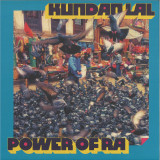
'Nicolò's music was born in the foggy winter of the Adriatic coast, and raised in the dusty grooves of Milford Graves LPs. It travelled to London and Berlin, where it collected sweat from crowds dancing in dark basements, leaving it with an organic hue and rhythmic patterns both broken and free.
This is bass-driven music from outer space. RRRing The Alarm!'
Produced and Mixed by Nicolò.
Mastering and lacquer cut by Kassian Troyer at Dubplates & Mastering.
Art by Paolo Bazzana.
Photo insert by Flavia Serrão.
Design by P.Bazzana & F. Serrão.
Boppin’ In Baltimore: Live at the Left Bank is a previously unissued recording of saxophone master Sonny Stitt captured live at the Famous Ballroom in Baltimore, MD on November 11, 1973, for the Left Bank Jazz Society. Recorded by Left Bank founder Vernon Welsh, Boppin’ In Baltimore is an official release in cooperation with the Sonny Stitt Estate and features an all-star rhythm section of pianist Kenny Barron, bassist Sam Jones and drummer Louis Hayes. The deluxe limited-edition 180-gram 2-LP set includes an extensive booklet with rare photos by Christian Rose, Raymond Ross, Tom Copi, Burt Goldblatt and others; liner notes by acclaimed jazz critic Bob Blumenthal; and interviews with Barron, Hayes and saxophone icon Charles McPherson, Muse Records founder and producer Don Schlitten, and an archival interview with Sonny Stitt himself from the early 1970s conducted by Marc Vasey in Canada. The vinyl edition is mastered for vinyl by legendary mastering engineer Bernie Grundman.