Legendary Brazilian jazz-funk trio Azymuth are set to release "Arabutã" (Daniel Maunick Dub), a vinyl-only 7" single, on December 13, 2024. The limited edition release serves as a captivating preview of the band's highly anticipated new album, set for release in 2025.
"Arabutã," which takes its name from the Tupi Guarani word for the endangered Brazilwood tree, underscores Azymuth’s fusion of timeless Brazilian jazz-funk and cosmic futurism. A symbol of both the value and fragility of Brazil’s natural beauty, Arautã reminds us of the salience of indigenous wisdom to ecological preservation.
In the hands of producer and long-time Azymuth collaborator Daniel Maunick, “Arabutã” is tweaked for a special mid-tempo 7”inch, two part, dancefloor dub mix.
The limited edition 7” single is available to pre-order exclusively from the Far Out Recordings website and Bandcamp ahead of its 13th December 2024 release date, and at shows on Azymuth’s upcoming European tour.
Buscar:the arab
- The Internet Will Break My Heart
- Un Solo Corpo
- Me Porn, You Porn
- The Train Seems To Know Where I Go
- Agoraphobie
- Let S Not Talk About The War
- Liturgy Of Litter
- Volatile
- Boundless Love
Over the last ten years, Chris Imler's perhaps not quite as rapid but equally unstoppable rise has coincided with the world's free fall. “The Internet will break my heart” marks the steepest artistic stage to date. We see a man whose entire oeuvre is a late work, at the dizzying heights of his game. “So, the Internet, that's a really hot topic”, I can already hear blasé hisses here and there in the boxes. But the truth is that the topic is annoyingly topical. Because only now is the world wide web unfolding its full disappointing potential. All pipe dreams of an emancipatory power of the digital multitude (remember Negri/Hardt, haha) are as completely extinguished as the Arab Spring was swallowed up by the pre - nuclear winter. While they are capped from above in authoritarian states, social media in the so - called free world are primarily used by lumpen capital to undermine humanistic standards and by the remnants of the left for self - destructive polarization. But the cute animal videos! They too have their dark side, which Imler brings up in the title song: “The animals in the real world are under pressure”. - Jens Friebe
Fresh from beasting the end-of-year charts with her 'I Miss Your Love' remix project, Ghost Assembly, aka Manchester DJ and writer Abigail Ward, is back with a double A-side: RESIST! / I Keep on Making the Same Mistake.
RESIST! (Extended 12" Mix)
Laid down quickly and angrily after attending a demo in Manchester city centre, RESIST! aims to capture the galvanising spirit of protest and put it on wax.
A 111bpm acid chugger that will leave dancefloors of an ALFOS or Optimo persuasion begging for more, this is uncompromising machine funk at its crudest.
Duelling 303s twist around each other whilst a taut, snaking 707 groove underpins unexpected blasts of Arabic rhythm, almost as if DJ Pierre had remixed 'Get UR Freak On', relocating it to the Middle East.
As a stuttering Harper Hay vocal sample urges us to RESIST!, the track climaxes with an ice-cold acid house string coda banged out on a disobedient synth. Please note: the sub on this record may trouble your duodenum.
RESIST! (Utter Kunt Mix)
The Utter Kunt mix is a sparse and daring Sleng Teng-inspired avant-dub affair strictly for discerning dancefloors only. Improbably combining hints of the Mission Impossible theme, Les Negresses Vertes' 'Zobi La Mouche' and the rough-hewn sampling of 'Duck Rock', this is a radiant obstacle in the path of the obvious. Warning: collectors of On-U, EBM and New Beat could experience a spate of nocturnal emissions upon purchasing this record.
The A-side closes with a BONUS BEATS version of the Utter Kunt Mix: a must-have DJ tool.
I KEEP ON MAKING THE SAME MISTAKE
Picking up the pace to 120, 'I Keep on Making the Same Mistake' sees Ghost Assembly returning to her string-drenched sad banger comfort zone, pairing a chilly breakbeat with a bass riff reminiscent of Joey Beltram having a gut-wrenching cry wank. Keening vocals supplied by Hazel Grove are chopped up, tormented and eventually hurled down a K-hole as the strings build and the drama escalates.
When the credits roll on this cinematic masterpiece we hear a wistful French lesbian talking about 'borrowed bliss'.
A future comedown classic; also sounds good slowed down to 33rpm.
The E.P. signs off with a stunning string-a-pella that will linger long after the needle hits the run-out groove.
Original artwork / Black vinyl / 505 mcn paper / Lucid lamination / Greyscale 30 x 30 cm insert printed on 300 mcn DNS paper with condensed interview to Saheb Sarbib and exclusive pictures.
Personnel:
Daunik Lazro - Alto Saxophone, Bass Clarinet, Percussion
Saheb Sarbib - Double Bass, Reeds, Flute, Percussion
Jonathan Dickinson - Drums, Percussion
Manuel Resende - Electric Piano, Piano, Percussion
Notes:
The bass, that metronome that marks the time for musicians of every style, of every era, that secluded, silent, but essential character for a band. Without the bass, the music would be deflated, the heart notes would leave a wasteland of rowdy high frequencies without any rules. But bass players who have character can elevate those low frequencies and even make them loud at times. Who knows if free jazz, if we want to call it that, is exalted by the Arabic background, those semitones between the first and second degree that also make the bass sparkling? In his records, Saheb elevates the bass to a mother instrument, gives it life as vibrant as the spring that is coming. Solos are on par with that of the reeds and stand up to listening without waiting for another antagonist to return to take back the scene. This is one of the most playful and entertaining records we have reissued to date. Take a tour of the world of Saheb!
Comes with an insert with exclusive pictures and condensed interview about the serie with Lloyd Miller made in March 2022 printed on 300 gram Favini "Remake" paper, plus exclusive goodies!
Personnel:
Manucher Paydar - Tar Drum
Lloyd Miller- Drum (Zarb), Lute (Oud), Lute (Kamanche), Lute (Sehtar)
Marilyn Miller -lute
Jan Otterstrom - Guitar
Stan Wood - Percussion
Anna Claire Eastmond - Vocals
Notes:
The second and last chapter of Dr Miller's journey between cultures and its uses, which began with "The Far East", dissected and looked into the root of the sound of distant Asia, continues with this new chapter dedicated instead to the countries bathed by the Mediterranean and contiguous to Central European history. From Spain to Arabic sounds, a new compendium that takes us back to other places and times, Dr Miller is once again able to dissect and encapsulate sounds and spices from distant places and spaces in a time machine. Thanks to these historical documents, we have the opportunity to discover feelings that are impossible to find 50 years later, sucked up and watered down by globalization and social capitalism.
Efficient Space honours the memory of producer and MC Ali Omar with Hashish Hits, a posthumous selection from the dub rebel’s self-released discography.
One of ten children in working-class Liverpool, Omar drew deep influence from his father's Arabic heritage—a thread central to his identity and sample origins. After art school and a spell clubbing during Manchester's halcyon days, he relocated to Sydney, where he cofounded the blunted downbeat duo Atone with fellow British expatriate Andy Fitzgerald. As an MC, he infiltrated the city’s house, dub, jungle, and bass circuits, becoming a regular fixture at the Bentley Bar, where he commanded the mic with his versatile, rumbling baritone and charisma.
Freakishly talented in the studio, Omar was a pioneer of the Akai sampler and Atari, deftly recording live sessions straight to DAT. Drawing on industry insights from his sister, Merseybeat firebrand Beryl Marsden—who supported The Beatles on their final UK tour and was signed to Decca and Columbia—the non-conformist sought to build a self-sufficient business model. Between 1998 and 2004, he independently issued four albums on CD through his Hashish Studios imprint, hustling copies directly to local record stores and live shows for instant returns, even hand-sewing screen-printed hessian sleeves for his final release.
Uncompromising in his principles and refusing to suffer fools or charlatans, Omar relished the opportunity to collaborate with those who embodied the same spirit. Hashish Hits offers a snapshot of his inner sanctum—Fitzgerald on the opening track's billowing smoke stacks, the serpentine vocals of Gina Mitchell and the magic hands of mixer Louis Mitchell on 'On Release,' and Wicked Beat Sound System’s Kye on 'Poor Man Beggar Man Thief'. Meanwhile, 'Suicide Bomber' smoulders with the tension of a lost Muslimgauze relic, as the instructional 'Roll Up' and 'The Last Straw' spiral deeper into Omar’s signature production vortex— where space stretches in slow motion and walls reverberate with ricocheting delay.
A true icon of Sydney’s underground scene, the larger-than-life Omar passed away on 23 June 2009 after a valiant battle with cancer. He is remembered for his assertive spirit, larrikin humour, wild anarchic personality, and enduring mantra: “Love and live your life”.1
DJ Support: Carlita, Dar Disku, Disco Arabesquo & Moving Still
Melbourne-based producer Rami Imam unveils Safara, the latest release on his own label, Ponda Records, which he founded in 2020 as a platform for his cross-cultural sound explorations. Drawing from the rich traditions of the Middle East, North Africa, and the Mediterranean, Safara is a six-track odyssey of energetic and euphoric house and disco house, deeply rooted in both nostalgia and innovation. Safara is the culmination of Imam's immersion into the golden eras of global music, channelling the soulful rhythms and melodies of Afro-Funk, West African Highlife, Arab Disco, Bollywood, Afro-Cuban Jazz, Libyan Reggae, and Algerian Rai. By blending these timeless influences with a modern, dancefloor-oriented focus, Imam creates a sound that is both steeped in history and refreshingly new.
With a sonic palette that includes iconic synths such as the Juno 106, Super 6, SH 101, Moog Model D, and the 303, Imam weaves the analog warmth of these instruments into lush, modern productions. Piano and strings—his favourite classical instruments—add an organic layer of emotional depth, connecting the pulse of the dancefloor with the timeless elegance of traditional composition.
Safara is more than a collection of tracks; it is a journey across continents and eras, where the pulse of the past meets the driving force of the present. Recorded in Melbourne but influenced by sounds from around the world, Safara invites listeners to traverse vast musical landscapes—from the hypnotic grooves of North African rhythms to the sun-drenched melodies of Mediterranean shores—culminating in a transportive experience that lingers long after the final beat fades.
By balancing the ancient with the futuristic, Imam has crafted a record that feels both comfortingly familiar and daringly innovative. Safara is a testament to the endless possibilities of blending cultures, genres, and eras into something that is not just heard but felt—music for the soul as much as for the dancefloor.
East meets west on this long-lost and super rare 1973 jazz album from Israel. Headed by Albert Piamenta, 'The Jazz workshop' was a group of jazz pioneers from the Middle East who sought to make the connection between the countries of their up-bringing and the hardcore New-York jazz sound of the 60's. Druze, Arab and Jewish folk compositions interpreted in a deep, mystical yet thumping manner, making this an absolute gem for jazz collectors and dj's alike.
Recorded at A & R Studios in New York City on July 1, 1970, Pharoah Sanders' album Deaf Dumb Blind (in Arabic "Summun Bukmun Umyun"), was released on Impulse! Records that same year. It features the leader along with fellow stars Woody Shaw, Gary Bartz and Lonnie Liston Smith.
The album received a **** rating on AllMusic, with reviewer Thom Jurek stating that this is "a stunningly beautiful and contemplative work that showcases how intrinsic melodic phrasing and drones were to Sanders at the time. This album is a joyful noise made in the direction of the divine, and we can feel it through the speakers, down in the place that scares us."
Wewantsounds is delighted to announce the release of Al-Qasar's new album, "Uncovered", is a side-project from the group featuring covers from the Western and Arabic repertoires, as well as new originals composed by the group. The album was recorded in Europe and Africa and features guest appearances by Alsarah, Mamani Keita, Cheick Tidiane Seck and Sami Galbi. The group, who has recently come out of a US tour will give more concerts in 2025 to support the album and spread further their Arab-futurist psych rock sound.
- Plakat
- Kasten
- Mauern
- Spule
- Alles
- Staub
- Zeit
- Zurück
- Wasser
- Alle
- Geschichte
- All
- Wunder
Wundervolles Kleinod von einem in Freiburg und Hamburg ansässigen Duo um ehemaliges Kids Explode-, Tapes-Personal. Musikalisch ein nicht ganz einfach zu greifender Misch aus 90er Emo mit deutschsprachigen Texten, Postpunk und bezaubernd schönem Indie-Pop der Marke Arab Strap mit ein paar Tortoise- und The XX-Einsprengseln. Neben dem klassischen Gitarre-Bass-Drums-Triumvirat, gehen vor allem auch die toll inszenierten, ergreifenden Synthies, dezent eingesetzte Drumcomputer und der immer wieder auftauchende Doppel- bzw Wechsel-Gesang an Herz und Nieren. 13 Songs liefern uns "Alle Angst", die gleichzeitig runterziehen und aufbauen, sich verspielt geben und doch getragen wirken, die Welt stillstehen lassen und uns trotzdem auf den Dancefloor locken.
- You Kill Me, I Kill You
- Chanson De Clara (Retour Chez Soi)
- Aéroport
- Clara Et Les Chics Types (Chanson De Louise)
- Monkeys In The Street
- Le Train
- Amitié*
- Une Java À La Fête Foraine
- Une Java Dans Le Minibus
- Une Valse À La Fête Foraine
- Le Reggae Du Lycée
- Chanson De Clara
- L'aube Sur Le Lycée
- Le Boeuf (Vers Le Concert)
- Slow Dans Un Juke Box
- Le Funky Du Transistor
- Reggae Two*
- La Salsa Du Juke Box
- Le Boeuf (Au Lycée)
- Clara Et Les Chics Types
Wewantsounds is delighted to announce the release of the sought-after soundtrack for cult 1980 French film "Clara Et Les Chics Types," featuring Isabelle Adjani, Daniel Auteuil and the Splendid troupe actors. The Jazz-Funk soundtrack, composed by Michel Jonasz and featuring Manu Katché and Sylvin Marc has never been reissued since 1980. ). Together they weaved a mainly instrumental blend of Jazz funk, reggae and pop which matched the narrative perfectly. Although all the ingredients were there for a success, the film unfortunately stalled and so did the soundtrack. Jonasz went on to become a huge star in France shortly after, but strangely, the Clara soundtrack was never reissued, not even on CD. Remastered from with original master tapes, the release includes two never-released bonus tracks and a 4-page booklet with liner notes by French music expert and musician Guido Minisky (also a member of Acid Arab) who interviewed Michel Jonasz and actor Christophe Bourseiller for the occasion.
Vienna-based producer Mahk Rumbae—one half of the industrial/experimental duo Konstruktivists and the force behind Codex Empire—unleashes his latest EP Rotten Fodder on Trauma Collective. This four-track weapon fuses raw, dark energy with cerebral soundscapes, pushing the limits of both sound design and rhythmic intensity.
The EP kicks off with "Oracular Soul," a relentless, pulsating techno opener that sets an uncompromising tone. "Commissioner of Grief" follows, a dystopian "arabesque'' journey packed with atmospheric tension and heavy beats. On the flip side, 'Force the Tools Available' draws you into razor-sharp industrial breaks that grip and mesmerize from start to finish. Closing it all out is "Maelstrom of Shit," an apocalyptic ride of syncopated drums and chaotic soundscapes, leaving a brutal, lasting impact.
- A1: Eternal Wheel (2020 Ed Wynne Remaster) 08 19
- A2: Toltec Spring (2020 Ed Wynne Remaster) 03 00
- A3: Tidal Convergence (2020 Ed Wynne Remaster) 07 14
- B1: Sunscape (2020 Ed Wynne Remaster) 04 01
- B2: Mysticum Arabicola (2020 Ed Wynne Remaster) 09 14
- B3: Crackerblocks (2020 Ed Wynne Remaster) 05 40
- C1: The Throbbe (2020 Ed Wynne Remaster) 06 21
- C2: Erpland (2020 Ed Wynne Remaster) 05 32
- C3: Valley Of A Thousand Thoughts (2020 Ed Wynne Remaster) 06 32
- D1: Snakepit (2020 Ed Wynne Remaster) 03 17
- D2: Iscence (2020 Ed Wynne Remaster) 04 33
- D3: A Gift Of Wings (2020 Ed Wynne Remaster) 09 45
THE CLASSIC 1990 ALBUM REISSUED & REMASTERED BY ED WYNNE ON COLOURED VINYL FOR FIRST TIME ON KSCOPE
One of the most influential bands to emerge from the UK’s festival scene, the Ozrics layer ambient and ethereal landscapes with freeform dub trips, incredible rave grooves and psychedelic progressive rock. It’s an open exploration of music and the soul.
For over 30 years, the Ozrics have experienced the vicissitudes of the rock and roll life. The band has flourished through a number of line-up changes, spawned several side projects, created their own record label, scored a hit record and sold over a million albums world-wide. And yet, the basic motivation behind the band’s existence has never wavered.
Their signature blend of hippy aesthetics and raver electronics with spiraling guitars, textured waves of keyboard and midi samplers, and super-groovy bass and drum rhythms continues to delight fans across the world to this day.
Erpland, the band’s 1990 eighth release, is considered one of their finest works. This 2LP set presented in wide spine packaging, will be released on turquoise heavyweight vinyl as the third title in t
The Invisible Road: Original Recordings, 1985–1990 compiles an unheard, previously unreleased body of recordings by Sussan Deyhim and Richard Horowitz, dissidents from diametric backgrounds who met during the heady days of Downtown New York in the 1980s. This collection reveals the creative and life partners’ radical shared vision of avant-garde pop in all of its boundary pushing freedom, combining Deyhim’s singular approach to vocalization, Horowitz’s invention of new musical languages, and touchstones of traditional music from around the world, creating a new music that ultimately retains a voice entirely its own. Despite their difference in backgrounds and respective journeys, at the time of their meeting in the early 1980s in New York City, Sussan Deyhim and Richard Horowitz were both products of the search for freedom and understanding (and resultant awakenings) that swept the globe and helped culturally define the late 1960s and 70s. Deyhim, born and raised in Tehran, spent her teens dancing with Iran’s Pars National Ballet company, performing weekly on Iranian national television, and travelling her home country studying with master folk musicians and dancers, before relocating to Belgium and joining Maurice Béjart’s prestigious Béjart Ballet of the 20th Century. Horowitz, born and raised in Buffalo, New York, had spent much of the decade before abroad, first departing for Paris under the shadows of the Vietnam War, where he studied piano, Eastern philosophy, and became entrenched the city’s free jazz scene, playing with the likes of Steve Lacy, Anthony Braxton, and Alan Silva, before embarking south to Morocco where his friendship with Paul Bowles helped cultivate a deep passion for the country’s musical traditions and a shift in his musical practice.
The pair met by chance sometime in 1981 at Noise New York, a small studio on West 34th Street founded by the musician and recording engineer, Frank Eaton, as a utopian creative laboratory that beckoned artists and bands like Arthur Russell, Christian Marclay, Liquid Liquid and Butthole Surfers into its orbit. Both artists had recently relocated to the city, Horowitz having recently released his debut album, Oblique Sequences (Solo Nai Improvisations), on the legendary Paris based imprint Shandar, and fallen in with members of New York avant-garde like La Monte Young, Jon Hassell, David Byrne, and Brian Eno, and Deyhim having begun to more actively incorporate singing into her practice, notably recording a vocal score for choreography she was doing at La MaMa Experimental Theatre.
Initially bonding over a cassette tape of field recordings made by Paul Bowles that had been given to mutual friend and writer Brian Cullman (seeking answers for Ornette Coleman’s question “what is the sound of sound”), their earliest collaboration was documented on Horowitz’s 1981 album, Eros In Arabia, with Deyhim contributing vocals to the track “Queen Of Saba.” Over the coming years, their deep connection would routinely gravitate them into the studio, culminating in the body of recordings that would appear on their 1986 album for Crammed Discs, Desert Equations: Azax Attra. Unknown to nearly all but the artists, laying in wait over the decades on numerous multi-track and stereo reels, DAT tapes, and reference cassettes, were a vast array of recordings made by Deyhim and Horowitz bookending Desert Equations. The 13 pieces represented on The Invisible Road: Original Recordings, 1985–1990 were recorded largely between Noise New York and Daylight Studio in Brussels, during a period that Deyhim describes the partnership between herself and Horowitz’s as seeking a music “free of any specific cultural reference, with a personal musical signature,” blossoming into a body of sonority that embraced the energy of contemporary boundary pushing pop and the avant garde, filtered through their mutual love and study of various musical traditions from across the globe and deep engagement with the ideas and tactics of experimental music.
Undeniably rooted in Horowitz’s study of the North Africa ney and the music of the Berber and Gnawa cultures during his time in Morocco, Deyhim’s deep engagement with the folk traditions of Iran, and the couple’s immersion in the interconnected Downtown underground music scenes, each piece on The Invisible Road offers its own vision creative and cultural hybridity. Deyhim sings in both English and Farsi, as well as a composite tongue that she developed by drawing upon numerous indigenous vocal techniques from around the world, intuitively responding to Horowitz’s simultaneous sound syntax forming and combining a wide range synthetic and acoustic instrumentation, and experimental tape techniques, within a visionary series of free-standing expressions.
Mustapha Skandrani, a luminary of Algerian music, possessed a unique musical sense, able to transcend the borders of musical cultures to create a distinctive fusion of Arabic-Andalusian and European styles.
"Istikhbars and Improvisations", recorded in 1965 in Paris, is a solo piano album presenting a trans-Mediterranean crossover based on traditional Algerian vocal pieces known as istikhbars. Playing these istikhbars (which have roots in the Islamic Arab-Andalusian culture which flourished in Spain) on the piano - that quintessentially European instrument - Skandrani was greeted with derision by some purists. His powerful musical vision, however, perceives the European element involved in Arabic-Andalusian musical culture, a world of exchange and co-existence.
Skandrani's modus operandi on this release is to present each istikhbar, modal in nature, then to play an improvisation based on it, and its attendant mode. This A/B alternation continues throughout. The pellucid clarity of Skandrani's playing on this album may remind the listener of a modal Goldberg Variations, Bach and Glenn Gould transplanted to Andalucia. Other ears will hear the Arabic/Maghreb elements more strongly. Skandrani's precise touch and clear, symmetrical rhythmic sense links both worlds, assuring us that the Mediterranean is not a barrier, but a unifier, and that the differences between the cultures are not so vast. This is an admirable achievement, resulting in beautiful music of a rare charm.
Mustapha Skandrani was born in Algiers in 1920, and died there in 2005. He mastered a number of instruments at an early age, and his musical prowess led him to work with the great singers and ensembles of his day, in live performances, recordings, and radio broadcasts. Later in his life, he devoted much energy to education.
Originally reissued by Em Records as a limited edition of 200 in 2012, now available once again, in offset printed sleeve, with insert of Japanese and English sleeve-notes and rare photosMustapha Skandrani, a luminary of Algerian music, possessed a unique musical sense, able to transcend the borders of musical cultures to create a distinctive fusion of Arabic-Andalusian and European styles.
"Istikhbars and Improvisations", recorded in 1965 in Paris, is a solo piano album presenting a trans-Mediterranean crossover based on traditional Algerian vocal pieces known as istikhbars. Playing these istikhbars (which have roots in the Islamic Arab-Andalusian culture which flourished in Spain) on the piano - that quintessentially European instrument - Skandrani was greeted with derision by some purists. His powerful musical vision, however, perceives the European element involved in Arabic-Andalusian musical culture, a world of exchange and co-existence.
Skandrani's modus operandi on this release is to present each istikhbar, modal in nature, then to play an improvisation based on it, and its attendant mode. This A/B alternation continues throughout. The pellucid clarity of Skandrani's playing on this album may remind the listener of a modal Goldberg Variations, Bach and Glenn Gould transplanted to Andalucia. Other ears will hear the Arabic/Maghreb elements more strongly. Skandrani's precise touch and clear, symmetrical rhythmic sense links both worlds, assuring us that the Mediterranean is not a barrier, but a unifier, and that the differences between the cultures are not so vast. This is an admirable achievement, resulting in beautiful music of a rare charm.
Mustapha Skandrani was born in Algiers in 1920, and died there in 2005. He mastered a number of instruments at an early age, and his musical prowess led him to work with the great singers and ensembles of his day, in live performances, recordings, and radio broadcasts. Later in his life, he devoted much energy to education.
Originally reissued by Em Records as a limited edition of 200 in 2012, now available once again, in offset printed sleeve, with insert of Japanese and English sleeve-notes and rare photos
On November 8th, 2Tone Records/Chrysalis Catalogue will release a 40th Anniversary Half-Speed Mastered Edition of The Special AKA 'In The Studio' album. This release has been liaised and approved by the band's founder and main songwriter Jerry Dammers. Formed in Coventry in the mid-1970s, The Specialswas the idea of musician Jerry Dammers, who brought together an eclectic array of individuals to fulfill his vision of a multi-racial band, fusing the energy of punk with the legendary but, at the time, often overlooked, sound of Jamaican ska. The band rose to prominence along with the 2Tone movement, which included two No. 1 singles, Too Much too Young and 1981's Ghost Town, which theme still resonates today before Terry Hall, Lynval Golding and Neville Staple left to form the Fun Boy Three and Roddy Byers left to tour with his band the Tearjerkers. The remaining members, Dammers, Bradbury and Panter, recruited guitarist John Shipley from The Swinging Cats, ex-Bodysnatcher Rhoda Dakar and lead vocalist Stan Campbell,reverting the original band name of The Special AKA and set to work on a new album. Released in 1984, 'In the Studio' was a brave mix of bold and challenging music, with a strong political, social and moral conscience. The album made it into the Top 40, and while it might not have been a huge commercial success, it was, and still is, an astonishingly unique work: a haunting, claustrophobic mix of lounge, soul, reggae, jazz and Arabic rhythms, with uncompromising subject matter. It featured two classic singles: the joyous, yet serious rallying anthem for the then imprisoned South African ANC leader, 'Free Nelson Mandela', and 'What I Like Most About You Is Your Girlfriend'. As time has gone by, the status of 'In The Studio'has grown, and today it is rightly viewed as a genuine lost classic. Like the previous two Specials 40th Anniversary vinyl editions, this has been newly remastered and cut at half-speed by Miles Showell at Abbey Road Studios, London. Format: Wide spine sleeve, 2LP 180gm Black Vinyl cut at 45rpm with insert inside and OBI.
- 01: You Kill Me, I Kill You
- 02: Chanson De Clara (Retour Chez Soi)
- 03: Aéroport
- 04: Clara Et Les Chics Types (Chanson De Louise)
- 05: Monkeys In The Street
- 06: Le Train
- 07: Amitié
- 08: Une Java À La Fête Foraine
- 09: Une Java Dans Le Minibus
- 10: Une Valse À La Fête Foraine
- 11: Le Reggae Du Lycée
- 12: Chanson De Clara
- 13: L`aube Sur Le Lycée
- 14: Le Bœuf (Vers Le Concert)
- 15: Slow Dans Un Juke Box
- 16: Le Funky Du Transistor
- 17: Reggae Two
- 18: La Salsa Du Juke Box
- 19: Le Bœuf (Au Lycée)
- 20: Clara Et Les Chics Types
Wewantsounds is delighted to announce the release of the sought-after soundtrack for cult 1980 French film "Clara Et Les Chics Types," featuring Isabelle Adjani, Daniel Auteuil and the Splendid troupe actors. The Jazz-Funk soundtrack, composed by Michel Jonasz and featuring Manu Katché and Sylvin Marc has never been reissued since 1980. Remastered from with original master tapes, the release includes two never-released bonus tracks and a 4-page booklet with liner notes by French music expert and musician Guido Minisky (also a member of Acid Arab) who interviewed Michel Jonasz and actor Christophe Bourseiller for the occasion.
Yemen Blues was founded in 2010 by the singer, multi-instrumentalist and extraordinary showman Ravid Kahalani. Their music is inspired by the culture of Yemen which is at the crossroads of the Arab world, East Africa and Jewish traditions. A culture that reconciles the learned and the popular and mystical experience. Connect these age-old and essential trances with the most contemporary energies of Blues, Funk and Rock; let it be played by extraordinary musicians.
High energy and profundity; freshness and mastery are all combined in the world of Yemen Blues. Shabazi - A Tribute to the Poet is a special project imagined by the group, setting the most beautiful texts of the greatest Yemeni poet of the 17th century Shalem Shabazi to 21st century music. The mix was done by Tamir Muskat (Balkan Beat Box and Gogol Bordello).
Stu Marshall will mit seiner Band EMPIRES OF EDEN die Konventionen des Metal auf den Kopf stellen! Einige der beeindruckendsten Musiker des Metal-Genres haben sich auf "Guardians Of Time" zusammengetan, um gemeinsam die und die Zukunft des Genres zu prägen.
Dieses Album, das Genres wie Power Metal, AOR und Thrash-Elemente miteinander verbindet, zeugt von einem tiefgreifenden kreativen Input einer breiten Palette von Metal-Talenten.
Es ist ein klares Statement von einigen der angesehensten Namen im Metal. Hier geht es nicht um Nostalgie, sondern um Innovation und die Zukunft des Metal Genres als kreative Kraft.
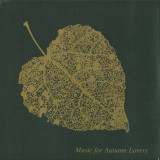
Set for release at the height of the season it’s dedicated to, ‘Music For Autumn Lovers’ by Adam Scrimshire is an eight track album of lush, mostly acoustic based, minimal instrumentals eliciting a mixture of feelings for this special time of year.
Four tracks originally released on an EP in 2022 are joined by new compositions ‘Hawthorn’, ‘Hazel’, ‘Willow’ and ‘Blackthorn’. Gently finger-picked acoustic guitars cosy up alongside pianos, synthesisers, strings and horns; filtered through an autumnal hue of susurrous production and effects. In turns comforting, melancholic and evolutionary; it feels like an album that can be kept being made and remade forever, like a season in itself.
Both a relentless creator and inspiring champion of new music; South London based Scrimshire has been recording, producing and DJing since the mid 2000s. Amongst his credits, he was featured by the Guardian as one of three producers behind the new wave of UK soul, alongside Inflo (Michael Kiwanuka, Sault, Lil Simz) and Swindle (Joel Culpepper, Greentea Peng, Kojey Radical). His bold 2023 album ‘Paroxysm’ was a response to the absurdity of the breakdown in the UK government, picking up an Album of the Week award on Huey Morgan’s BBC 6 Music show, and 2021’s beautiful ‘Nothing Feels Like Everything’ received an Album of the Year nomination at the Gilles Peterson Worldwide Awards. Scrimshire also somehow finds the time to support a wealth of talent on his label Albert’s Favourites, formed with Dave Koor and Jonny Drop, where they have recently released albums by And Is Phi, Huw Marc Bennet, Inês Loubet, Irini Arabatzi, Jonny Drop & Andrew Ashong, and Qwalia.
Radio Support: Gilles Peterson (BBC Radio 6 Music), Tom Ravenscroft/Deb Grant – New Music Fix (BBC Radio 6 Music), Huey Morgan (BBC Radio 6 Music) Guy Garvey (BBC Radio 6 Music)
Jawad Nawfal and Mazen El Sayed, better known by their stage names of MUNMA and EL RASS, met for the first time in Beirut, during the summer of 2011. A common friend told Jawad wonders about an MC who rapped and slammed in the classical Arabic language, as opposed to the vernacular Lebanese dialect. The two musicians met in a small café in Beirut’s Hamra neighborhood, spoke of music, argued about politics, and decided to collaborate at once. They began working on tracks the following day. A month later, they had already produced a dozen sketches, instrumental beds and accapella vocal tracks. These demos eventually landed in the hands of Ziad Nawfal and Fadi Tabbal, who set out to bring to life the duo’s first recorded album. “Kachf el Mahjoub” (the title is from a Sufi master-work penned some 900 years ago) was eventually released as a limited edition of 500 CD’s, during a launch event at then-budding alternative venue Metro al Madina in Hamra, on the 22nd of February 2012. These CDs went out of print in record time, as can be expected, and the album’s mythical status became reinforced over time – El Rass & Munma collaborated sporadically during the next ten years, but never fully grasped the level of musical intensity and explosive tension attained on this first outing. It has been a longstanding dream of ours, here at Ruptured, to produce a vinyl version of this album, and we are thrilled to say this moment has finally come. Artist ALI RAFEI’s original artworks have been painstakingly reproduced, the music has been dutifully remastered for vinyl by CEDRIK FERMONT, and the records were pressed by our friends at Mother Tongue in Verona. We added bonus track "Fi Kala'at Tarablus" to this 10th anniversary reissue for good measure – recorded during the same sessions that yielded “Kachf el Mahjoub”, it appears on the digital version of the album. “Kachf el Mahjoub” is a landmark album in Lebanon’s alternative music scene, and the MENA region’s hiphop and indie scenes writ large. At the time of their collaboration, El Sayed was a prolific writer and musician, at ease with a variety of instruments, notorious for his masterful flow in the classical Arabic language, with lyrics tackling both social and political sensitive subjects; Nawfal has previously released an impressive number of albums and EPs, exploring downtempo electronica and ambient dubstep, for a number of Lebanese and international labels. The collision of the former’s brazen, slammed vocals and the latter’s harsh beats works wonders on “Kachf el Mahjoub”, Munma’s sound-world perfectly fitting El Rass’s agitated discourse, alternating between broken beats, elaborate percussion, and ambient layers of synths. At times reminiscent of mutant hiphop outfit Shabazz Palaces, at others of the collaboration between dubstep producer Kode9 and the late vocalist The SpaceApe, this album is an uncanny meeting of Arabic hip-hop and electronica, an exceptional event in the realm of contemporary Lebanese alternative music.
Dive into the soul-stirring depths of Snowgoose's latest album, "Descendant."
"Descendant" is crafted with their exquisite blend of folk and psych. Featuring the guitar of Raymond McGinley (Teenage Fanclub) the keys of Chris Geddes (Belle and Sebastian), the bass of Stevie Jones (Arab Strap), the pedal steel of Tim Davidson (Tracyanne & Danny), and the drums of Stuart Kidd (BMX Bandits) and Adam Stearns (Trembling Bells), this album is a testament to the collaborative spirit of Scottish indie royalty.
Following their acclaimed psych folk albums "Harmony Springs" and "The Making of You," Snowgoose continues to enchant with narratives of love, loss and the ephemeral beauty of life.
Praised for their "spellbinding" sound (Uncut Magazine) and vocals that evoke "the spirit of Sandy Denny" (The Scotsman),
KahruMusiqa ist eine musikalische Retrospektive der tunesischen Sängerin und Komponistin Badiâa Bouhrizi alias Neysatu. Sie ist als Autorin der Protestsongs bekannt, die zu den Hymnen der tunesischen Revolution wurden. KahruMusiqa bedeutet elektronische Musik, wird aber im Arabischen nie als solche verwendet, um das Genre zu bezeichnen. Das Album ist eine Sammlung von Klangexperimenten, die entstanden, als sie in den 2000er Jahren erstmals Musikproduktionssoftware in die Hände bekam. Die Stücke basieren auf Gedichten in klassischem Arabisch oder tunesischem Dialekt, die Badiâa selbst oder von ihr bewunderte Dichterinnen wie die palästinensischen Autorinnen Fadwa Tuqan oder Salma Al Jayusi oder den tunesischen Dichter Noureddine Werghi verfasst hat. Die meisten der Gesangsstücke sind Improvisationen, die mit einem Computermikrofon aufgenommen wurden. Eine Bearbeitung des klassischen türkischen Volkslieds Muhabbat ist fast eine moderne harmonische Neufassung, bei der nur klassische Gitarre, Gesang und Delays verwendet werden. Die Themen von KahruMusiqa entsprechen dem ideologischen Weg von Badiâa Bouhrizi. In dem Lied Transrimel ist sie eine queere Frau im sich bewegenden Sand von Tunesien. Sie hinterfragt auch den politischen Vertrag, der 1948 zu Balfour und der Vertreibung von Millionen von Palästinensern führte, und beschreibt in Fil Madinatil harima ("In The Old City") eine Reise zwischen London und Nablus. Dieses elektronische Schlafzimmer-Album im Lo-Fi-Stil enthält auch mehrere Songs, die wie Ila Selma zu Klassikern des arabischen Underground-Milieus geworden sind, und ist die erste Platte, die Badiâa Bouhrizi überhaupt zu veröffentlichen bereit war.
Flame is Slow collects together three acclaimed seven-inch EPs (originally released on the Noisebox label in 1996 and 1997) by the mysterious, mercurial Navigator. The post-Loveless UK underground of the early 1990s was a vibrant place, despite what music biographies may tell you. What might now be lumped together as “post-rock” was in fact a varied and forward-thinking group of artists creating inquisitive music in the wake of the grunge goldrush. Contemporaries such as Hood, Flying Saucer Attack, Movietone and – of course – Mogwai and Arab Strap are rightfully seen as timeless nearly thirty years on but they’re really just the tip of the iceberg. Navigator might get mentioned less but their story is every bit as intriguing as any of their peers. Navigator formed in Norwich in 1994. Their music was consistently introspective and melancholic, but their brief existence of five years saw them move rapidly from traditional song structures towards noise, found sound, free improvisation, electronics, primitive instrument building and – ultimately - silence. They were an enigma back then and they remain so now. They released four seven inches before a solitary album Nostalgie (1997, Swarf Finger Records). Each release felt different to the last but always intimate and peculiar. Their use of sound and space is nothing short of magical. Rough and unsettling textures rub against each other, selected and mixed instinctively. Another band’s discarded mistake becomes a key element in their hands. The band received much acclaim and some genuine commercial success when single When the Wires Fall ended up in the indie charts. They shared stages with Low, David Thomas, Aerial M, Stars Of The Lid and Labradford and toured with Mogwai and Arab Strap culminating in the now-notorious, equipment-levelling performance at The Garage in London. The original version of the group played live for the last time in 1999 before quietly disappearing. It was perhaps inevitable that a band so committed to exploring and refining their sound should end by removing themselves from it entirely. Aside from a brief (and excellent) reformation in 2006 and a CDR compilation of those early seven inches, Navigator have been quiet for over 20 years until now. Flame is Slow assembles the blue, red and green Noisebox EPs into one cohesive album-length collection, remastered with care and reassembled by the band. It rightfully places Navigator where they belong – as one of the most curious, adventurous, and beautiful groups this island has ever produced. “Whenever I think of bands that more people should’ve heard than did, I always think about Navigator. It’s great that the music they made is going to be available again as it is truly special and deserves to be heard by more people” – Stuart Braithwaite
RIYL: Don Cherry, Alice Coltrane, Remi Álvarez, Juma Sultan's Aboriginal Music Society, Horace Tapscott. Atrás del Cosmos were a central force in Mexico City's creative arts community, and often considered the first free jazz group in the country. Founded by a trio composed of pianist Ana Ruiz, percussionist Evry Mann, and saxophonist Henry West, the ensemble was prolific in mentoring a generation of improvisers, cultivating an expanded additive roster, and organizing workshops in downtown Mexico City including inviting Don Cherry to play and instruct on his "organic music" approach in 1977. Between 1977 and 1983, the group lived and rehearsed in a residential space behind the Cosmos theater, hence their celestial-tinged name. But despite their central importance to the local scene, Atrás was rarely recorded and had a scant international presence, leaving behind just a single cassette before their disbandment. Now issued on LP for the first time, the aforementioned tape Cold Drinks, Hot Dreams is a red-hot recording documenting the core group plus double-bassist Claudio Enriquez performing live in 1980, a delirious improvisation with high peaks and low valleys, sucking in an amalgam of influences including New York loft style, Mexican folk music, and the surrealism of Alejandro Jodorowsky into its heady gravitational pull. Ruiz's playing style is virtuosic and expressive, pulling off monumental chords and using the piano's whole register, recalling Cecil Taylor's percussive approach, Matthew Shipp's emotive voicing, and Duke Ellington's mystifying arabesques. Evry Mann dabbles in polyrhythms in tracks like the solo marimba meditation "Clapping Music II," and Henry West wails heavy in the show-stopping cut "M.D." Now finally available after forty years, the music of Atrás del Cosmos will be sure to stun spiritual jazz veterans and newcomers alike3
High Roller Records, Black Vinyl, 425gsm heavy cardboard cover, insert, poster
High Roller Records, Orange/ Red Mixed Vinyl, 425gsm heavy cardboard cover, insert, poster
Die meisten Bands schreiben Songs über Alltagserlebnisse, Liebesgeschichten, Gedanken zur Welt. Public Service Broadcasting sind anders. Das Quartett aus London taucht tief in die Archive ein und macht aus historischen Begebenheiten packende Konzeptalben. Mit Samples aus alten Nachrichtenfilmen, Archiv- und Propagandamaterial formt die Band packende Geschichten, getragen von cineastischen, meist instrumentalen Rock-, Elektro- und Orchesterklängen.
Dies gilt auch für das neue Album: "The Last Flight" handelt von der letzten Reise der US-Flugpionierin Amelia Earhart, die mit nur 25 Jahren begann, eine Reihe von Rekorden aufzustellen: Sie überquerte als erste Frau im Alleinflug den Atlantik und Pazifik, ihr gelangen mehrere Geschwindigkeits- und Streckenrekorde. Doch ihr Plan, als erste Frau die Welt am Äquator zu umrunden, ging nicht auf. Sie überquerte Amerika, Afrika, den Nahen Osten und Asien, erreichte aber nie die letzte Zwischenstation vor der finalen Pazifik-Etappe, die Howlandinsel. Die bis dahin grösste Suchaktion der Luftfahrtgeschichte mit 4 Flugzeugen und 8 Kriegsschiffen blieb erfolglos. Stattdessen stieg Amelia Earhart in mythische Höhen auf, die nur den mutigsten Abenteurern vorbehalten sind.
Songschreiber J. Willgoose, Esq. war vom "Mythos Earhart" fasziniert: "Ich wollte eine Geschichte mit einer Frau im Mittelpunkt erzählen, weil ein überwältigender Teil des Archivmaterials, zu dem wir Zugang haben, männlich geprägt ist." Aufgenommen im Londoner Bandstudio, mit einem Tag für die Streicher des London Contemporary Orchestra in The Church, sind auf "The Last Flight" u.a. Carl Broemel (My Morning Jacket) an der Eno-artigen Pedal-Steel-Gitarre, die Berliner Stimmen Andreya Casablanca (Gurr)und EERA, sowie Kate Stables (This Is The Kit) zu hören.
Die Zuhörer mögen überrascht sein, dass das Album keine originalen Zeugenaussagen aus erster Hand enthält, sondern neu aufgenommene Dialoge von Schauspielern, darunter Kate Graham, die Amelia vorlas. Diese wurden behutsam bearbeitet, um ihnen Klangeigenschaften und Verzerrungen der 1930er Jahre zu verleihen. Als Ausgangspunkt dienten Earharts Aufzeichnungen aus erster Hand, darunter "Last Flight" von 1937, sowie die Biografie "East To The Dawn" von Susan Butler.
Clear Vinyl
Die meisten Bands schreiben Songs über Alltagserlebnisse, Liebesgeschichten, Gedanken zur Welt. Public Service Broadcasting sind anders. Das Quartett aus London taucht tief in die Archive ein und macht aus historischen Begebenheiten packende Konzeptalben. Mit Samples aus alten Nachrichtenfilmen, Archiv- und Propagandamaterial formt die Band packende Geschichten, getragen von cineastischen, meist instrumentalen Rock-, Elektro- und Orchesterklängen.
Dies gilt auch für das neue Album: "The Last Flight" handelt von der letzten Reise der US-Flugpionierin Amelia Earhart, die mit nur 25 Jahren begann, eine Reihe von Rekorden aufzustellen: Sie überquerte als erste Frau im Alleinflug den Atlantik und Pazifik, ihr gelangen mehrere Geschwindigkeits- und Streckenrekorde. Doch ihr Plan, als erste Frau die Welt am Äquator zu umrunden, ging nicht auf. Sie überquerte Amerika, Afrika, den Nahen Osten und Asien, erreichte aber nie die letzte Zwischenstation vor der finalen Pazifik-Etappe, die Howlandinsel. Die bis dahin grösste Suchaktion der Luftfahrtgeschichte mit 4 Flugzeugen und 8 Kriegsschiffen blieb erfolglos. Stattdessen stieg Amelia Earhart in mythische Höhen auf, die nur den mutigsten Abenteurern vorbehalten sind.
Songschreiber J. Willgoose, Esq. war vom "Mythos Earhart" fasziniert: "Ich wollte eine Geschichte mit einer Frau im Mittelpunkt erzählen, weil ein überwältigender Teil des Archivmaterials, zu dem wir Zugang haben, männlich geprägt ist." Aufgenommen im Londoner Bandstudio, mit einem Tag für die Streicher des London Contemporary Orchestra in The Church, sind auf "The Last Flight" u.a. Carl Broemel (My Morning Jacket) an der Eno-artigen Pedal-Steel-Gitarre, die Berliner Stimmen Andreya Casablanca (Gurr)und EERA, sowie Kate Stables (This Is The Kit) zu hören.
Die Zuhörer mögen überrascht sein, dass das Album keine originalen Zeugenaussagen aus erster Hand enthält, sondern neu aufgenommene Dialoge von Schauspielern, darunter Kate Graham, die Amelia vorlas. Diese wurden behutsam bearbeitet, um ihnen Klangeigenschaften und Verzerrungen der 1930er Jahre zu verleihen. Als Ausgangspunkt dienten Earharts Aufzeichnungen aus erster Hand, darunter "Last Flight" von 1937, sowie die Biografie "East To The Dawn" von Susan Butler.
Absolute Überforderung, die einfach nur nervt. Am liebsten alles hinschmeißen und verkriechen. Doch SURALIN haben es geschafft, dem allgemeinen Fatigue-Syndrom zu entkommen. Sie haben mit "Nothing is the News" ein Album geschaffen, dass tief berührt, fesselt und gleichzeitig befreit. Der fünfte Longplayer des Chemnitzer Quartetts baut zunächst auf dem Sound seiner Vorgänger auf: ein feingesponnenes Netz aus diversen Indie- und Post-Whatever-Einflüssen, das trotz aller Komplexität ganz einfach und organisch wirkt. Die "Reduktion auf das Wesentliche", wie Bassist Matthias sagt, ist diesmal noch konsequenter ausgefallen. Live im Studio eingespielt und ohne instrumentale Overdubs oder zusätzliche Effekte beim Mix. "Das ist der pure Klang der Instrumente, unserer Pedals und des Aufnahmeraums." Im Ergebnis klingen SURALIN noch dringlicher als sonst, mit bewegender Tiefe. Auf dem treibenden Teppich von Schlagzeug und Bass können die beiden Gitarren ihr Mit- und Gegenspiel zwischen Melodie und Dissonanz entfalten. Die neun Songs beinhalten dabei erstaunlich viele arabeske Figuren sowie motorische Wiederholungen, die erhebliche Sogwirkung entfalten. Darin eingebettet ist der oft fragile Gesang von Alex, der den Zustand seiner Umwelt kommentiert. Laut Sänger Alex vereint der Albumtitel "Nothing is the News" die Gedanken, dass sich die Welt zwar ständig verändert, die Technologie weiterentwickelt und der Mensch sich drastisch vermehrt. Aber der Mensch als solches gleich bleibt. Macht, Unterwerfung, Ausgrenzung, Neid, Missgunst und Egoismus sind die vorherrschenden Themen." Trotz dieser Schwere wird in den Texten immer wieder deutlich, dass durch das eigene Verhalten Veränderungen möglich sind und der Wille zum Besseren überwiegt. Positive Verzweiflung. Außerdem sei der Titel auch eine Anspielung auf SURALIN selbst, die konsequent an der Leidenschaft zum Musik machen festhalten, so Alex.
"Dunya", der Titel von Mustafas meisterhaft ausgearbeitetem und atemberaubend zärtlichem Album, bedeutet aus dem Arabischen übersetzt so viel wie "die Welt mit all ihren Fehlern". Ein hochtrabendes Thema für einen jungen Songwriter, aber wie bei jedem Thema, das im Mittelpunkt der Arbeit des sudanesisch-kanadischen Künstlers steht - von religiöser Hingabe bis zu Kindheitstraumata, von Bandengewalt bis zu romantischer Intimität - nähert er sich durch eine persönliche Sichtweise. Er mischt Genres und Stimmungen, verwebt romanhafte Details in einprägsame Folksongs und hat ein Album geschaffen, das sich wie eine Reihe persönlicher Durchbrüche anfühlt, die einer nach dem anderen eintreffen. Was zuerst an Mustafas Musik auffällt, ist seine Art zu schreiben: ein einfacher, durchdringender Ton, der jede Geschichte so roh und ernsthaft wirken lässt wie die Worte eines Liebesliedes. Mit seinem leisen Vortrag, der seine Umgebung zum Schweigen bringen kann, entwickelte sich Mustafa schnell vom Wunderkind, das in seiner Heimatstadt Toronto Gedichte rezitierte, zu einer Kraft, die hinter den Liedern steht und Popsongs schreibt. Auf "Dunya" ist er zu einem eigenständigen Autoren gereift. "Ich versuche, das gewöhnliche Leben im Ghetto zu bewahren und zu feiern", beschreibt Mustafa seine lyrische Inspiration. Die Songs, in denen er sein Aufwachsen und seinen weiteren Lebensweg beschreibt, sind gleichermaßen entwaffnend in ihrer Einfachheit und vielschichtig in ihrer emotionalen Bandbreite. Durch die Zusammenarbeit mit Aaron Dessner, Rosalía, Clairo, Nicolas Jaar und anderen sowie Mustafas langjährigem kreativen Partner Simon Hessmann offenbart die Musik eine selbstbewusste, unverwechselbare Stimme, die noch nie so massenkompatibel geklungen hat.
ER gladly welcomes Juan Barraco aka Bunda to our catalog. Bunda is an Uruguayan producer/live performer who’s been linked to music since a young age through a classical approach with a later interest into electronic music production.
Origen EP is his debut vinyl release delivering a solid four-tracks record: dancefloor-oriented pieces on each side’s first half and two downtempo tracks as second choices.
A1 ‘No hay salida’ is a proper dancefloor piece featuring a stomper and sticky kick drum along with a non-stop bassline hypnotic pulse. A2 ‘9º Mandamiento’ features a different sound landscape with a hint of Arabic melodies in synths and basslines programming.
On the flip side B1 ‘Stardust’ crafts a more sci-fi-bleepy grooving Techno sound while keeping an hypnotical atmosphere all along. Bunda shows a different facet in B2 with ‘Xep Nuit’, where he shows his skills and creativity in musical composition and sound picking.
The debut Creation Rebel album, originally released on pre-On-U Sound label Hitrun in 1978. The original band, featuring the drummer Eric "Fish" Clarke, had been a studio outfit known as the Arabs, now primarily remembered for their work with Prince Far I, including the classic dub set "Cry Tuff Dub Encounter Chapter 1". The rhythm tracks for this album had been laid in Jamaica but the overdubs were worked up at Gooseberry Studios in London. The experienced Dennis Bovell was the engineer, with the young Adrian Sherwood on his very first production assignment encouraging him to make it “madder” and add more and more effects.
After Prince Istari finished the Dub Encounter with Erik Satie, he
immediately set to work on expelling the evil curse of artificial intelligence. While the encounter with Satie was guided by the original
compositions, this album delves deeper into dub science.
The opening track is "Curse Of Machine Learning," a grinding cumbia dub track that sucks you into the curse of machine learning. It's followed by "Artificial Neural Network," arguably the album's most nerve-wracking track, with wild snare rolls colliding with offbeat echoed riddim sections. "Large Language Models" offers a more relaxed, arabesque one-drop riddim with speech synthesis vocals. "Fake Image" closes the first side with a full trombone solo contributed by Eugene Rosebud.
Side B starts with the one-drop killer tune "Haunted By Delusion,"
featuring an organ solo by Prince Istari. Drum and bass in your face.
"Evil Forces," on the other hand, is a fusion of jazz and dub; after the
brass section breakdown, it rolls into a crazy synth solo. Then next „I
Want Your Data" pulls your data into the AI's guts with a vibraphone.
This is maybe the ambitious tune on the record speaking of chord
progressions. The final track sees Eugene Rosebud return with a double trombone solo in "Transhuman Feedback Rock" assisted by a saz cooling the blues pattern with a hookline. Here we have beautifull springreverb and harmonizer dub effects on the snare twirrling around the trombone solos.
All tunes composed, arranged, conducted and engineered by Prince Istari and played by his house band The Virtualistics. Trombone Solos by Eugene Rosebud. Packaged in a nice cover drawn by Markus Schäfer and frequency shift and cut by LXC.
Pat Thomas returns to OTOROKU for his fourth collection of solo piano improvisations, this time
recorded in a studio setting at London’s Fish Factory. For 25 years now, beginning with Nur (Emanem)
and continuing through Al-Khwarizmi Variations (Fataka), The Elephant Clock of Al-Jazari (OTOROKU),
and now The Solar Model of Ibn Al-Shatir, Pat Thomas has drawn on the Arabic world for titles for his
solo piano work - specifically the long-standing Islamic tradition of astronomical invention.
Composer and musician Daniel Rafet Grima, offers a thematic release via Research Records titled 'You Are In the Embrace of The History'.
The double A side nods to ambient music, jazz and devotional musics in its arrangement and lyricism; penned as an act of faith in something other.
Research Records' 12" vinyl release of 'You Are In the Embrace of The History' will feature B side reworks by Iti (UK) and Kuniyuki Takahashi (Japan).
Rafet studied music from a young age. Tertiary education brought about further teachings in jazz. Growing up in the family village of Miniara (North Lebanon) saw to an inquiry into maqamat and traditional arabic musics post study. After composing for multiple ensembles and performing in various projects over the years, Rafet settles into his own artistry with this debut.
Lebanon oud master Rabih Abou-Khalil's stunning 1996 album 'Arabian
Waltz' is appearing here on vinyl for the first time."Arabian Waltz is the
pinnacle of Rabih Abou-Khalil's achievement as a composer and arranger
It is a sublime fusion of jazz, Middle Eastern traditional music, and Western
classical. In addition to Abou-Khalil on oud (the Arabic lute), Michel Godard on the
tuba and the serpent (the tuba's antique kinsman), and Nabil Khaiat on frame
drums, the album also features the Balanescu String Quartet instead of the usual
trumpet or sax. The presence of the Balanescu might seem to pose a dilemma
for the composer: traditional Middle Eastern music uses no harmony but a string
quartet is all about harmony. Abou- Khalil achieves a compromise by generally
writing the string parts in unison (or in octaves), in effect using the quartet as a
single voice, but also letting the quartet split up to play parts in unison with the
other instruments or to provide ornamentation. Without surrendering jazziness at
all, the presence of the strings makes possible a wondrous atmosphere, almost
as if one is listening to the soundtrack of a classy movie set in Beirut or
Damascus during the '40s. This feeling is greatest on "Dreams of a Dying City"
with its brooding tuba and cello motifs and grave, repeated rhythms. "The Pain
After" starts with an impressive tuba solo that turns into a long interlude for tuba
and string quartet; sad, slow music that sounds like one of Beethoven 's late
quartets. Then Abou- Khalil finally enters on oud, bringing a sustained note of
wistfulness. Fortunately, beside the darker numbers lie the propulsive drama of
"Arabian Waltz" and the bobbing and weaving quirkiness of "Ornette Never
Sleeps." Abou- Khalil is known for experimenting with the possibilities his guest
musicians bring to his style. In this case, the guests have inspired the host to
reach a new height and maybe even a new style. This recording suits every fan of
world music, jazz, classical, or just good music." - Kurt Keefner
In Nordafrika ist eine Ziara eine spirituelle Zeremonie, zu der die Menschen kommen, um Dämonen zu exorzieren, ihren Körper zu reinigen und lautstark ihre Verbundenheit mit Gott, dem Propheten und den Gottheiten, die ihn zu verkörpern behaupten, zu bekräftigen. Eine berauschende Ekstase, die an ein Voodoo-Ritual erinnert. Die besten Meister dieser Art von Zeremonie sind die Gnawa. Sie stammen ursprünglich aus Schwarzafrika, vor allem aus dem Sudan und dem Senegal, und wurden von Tuareg-Räubern in den südlichen Maghreb verschleppt, um sie als Sklaven zu benutzen. Nach mehreren Jahrzehnten der Sklaverei gelang es ihnen, sich aus dieser schmerzhaften Situation zu befreien, die sie in einigen ihrer Lieder zum Ausdruck bringen. Vor allem aber zeichnen sich die Gnawa durch ihre bezaubernde Musik, ihren Tanz und ihre Rhythmen aus, denen therapeutische Wirkungen zugeschrieben werden. Vor allem in den letzten Jahren hat die musikalische und rhythmische Tradition der Gnawa, die sich sowohl an die Arabesken des Nahen Ostens als auch an die afrikanische Perkussion anlehnt, unter den marokkanischen Künstlern der neuen Generation eine deutliche Wiederbelebung erfahren. Doch bisher ist es nur der sehr populären Gruppe Nass El Ghiwane gelungen, mit Talent, Treue und Authentizität den Geist der Gnawa wiederzubeleben, wie dieses Album beweist. Also schließen Sie sich ihnen an und lassen Sie sich in Trance versetzen.
Repress.
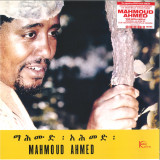
The re-release series of original Ethiopian classic vinyl continues -- the finest Ethio jazz by Mahmoud Ahmed and his band from 1975 plus two tracks from 1978.The liner notes: 'Melancholy blues, piercingly minimalist country airs, brassy, danceable urban jazz, heart-wrenching, off-key crooners: a rich and stirring patchwork of sounds, crossing Afro-beat, Latino-swing moves and Eastern arabesques (Ana�s Prosa�c).' Such were the first -- informed and enthusiastic -- opinions of the music press when the first strains of modern Ethiopian music sounded on our shores. This was in 1984-1985. Such a positive note, struck about such a country at such a time, created plenty of reverb. The country had been so thoroughly trashed by the media's feeding-frenzy, which spewed out a mix of horror and pious pity, bitter denunciation and humanitarian appeals, wallet-tickling clich�s and refusal of identity. In one brutal swoop, TV-reality transformed Ethiopia into a cursed nation, forsaken by God and by man. In contrast to these tragedies, but in the same hackneyed tones, Mahmoud Ahmed's life resembles an edifying fairy-tale where destiny, talent and achievement combine to triumph over poverty, fate and the evil eye. Biography, history and legend, with the help of God, infallibly weave the lesson of merit rewarded. But who can argue, in spite of the mockery that celebrities invariably draw, when faced with one of the greatest voices in all of Africa? Once upon a time, there was a street urchin in Addis Ababa, who started off as a shoe-shine boy and went on to become one of his country's biggest stars, opening the door to Ethiopian music to Western audiences. --Francis Falceto
Paketo Wilson's 'Immigration' is a hymn to freedom from the Kingston, Jamaica-born artist. It first arrived on the Child of God label in 1982 and is one of the self-declared "positive rastaman"'s finest tunes. He was introduced to music by his father and through watching them play managed to pick up his own skills with no formal turning. His career began at age 16 when he played concerts all around the island with the New Vibration Band before going solo with Daddy U-Roy's King Stur Gav Sound System. Now back in its original form, 'Immigration' is a tune that remains as relevant now as ever.
A holy grail for fans of French boogie, early hip hop, Arabic funk and Balearic bops,"Ettika" has been seriously sought after since Vidal Benjamin found it in the 1€ bin back in 2006. Teasing the ears of the underground via Vidal's 'Balearic Nightmare' mix for Noncollective, copies of the original were soon snapped up completely, and the later adopters were sated by a Blackdisco edit from Alexis Le-Tan (himself gifted Vidal's second copy), which is now also rare as hen's teeth. The fervour for the track is easy to understand. Underpinned by an endlessly buoyant bass groove, chanted female vocals dart out the speakers like a post- modern mantra while synth vamps flare in stuttering stereo.
Middle-Eastern motifs add an air of mystery, but this truly belongs in a dance floor utopia. That the track was the product of a 'back-to-work' scheme aimed at unemployed immigrant youth in Rouen only adds to the appeal. Led by teacher Bernard Guégan, a quartet of students delivered lyrics in French and Arabic inspired by their rejection letters, serving a little social commentary and a lot of funk. If you're mad on Ahmed Fakroun and Shams Dinn, or even those folks in the Bush of Ghosts, then this is a must have for you.
Archeology isn't just about excavation, there should be interpretation too, and in this case it comes from Italian duo Hear & Now and Leeds' The Veteran Delinquents. The former furnish the 12" with two radical takes, the dreamy downtempo stroll of their French Remix - all unhurried percussion, Gilmour-riffing and coastal élan - and the peaktime pump of their Arab Remix, which transports the original vocal into a land of desert new beat and Balearic trance with a little space left for some frazzled fretwork. If you've followed their work with Claremont you know the quality on show.
The Veteran Delinquents, the collaborative vehicle of Leeds stalwarts Craig Christon and Tim Hutton, condense a lifetime of club experiences into their remix, establishing the infectious groove of the original before subverting with chugging bass and winking acid, all augmented with their own slick synth work. The original was an all time classic at Craig's Joe's Bakery nights way back when, and this new interpretation is both respectful and revolutionary.
'You've Changed' was a transcontinental creation that was first released in 1986 on the Sally B label. It melds Jamaican roots with Canadian electronic enhancements at the legendary Channel One Recording Studio. Jamaican reggae don Horace Martin drew inspiration from greats like Dennis Brown, and Horace Andy, and comedy legends like Richard Pryor and Charlie Chaplin and has an eclectic career spans albums like Watermelon Man from 1985 and this one, the avant-garde gem that arrives now on Arabusta. It's a busy and digitally infused reggae sound with elements of dance hall and plenty of catchy rhythms which all lead to international success, performances across 24 countries and having more than 400 songs aired on 9000 radio stations around the world.
''Sulla Rotta Dei Venti'' (On the Route of the Winds) is the brand-new album of Italian ska-jazz maestros North East Ska*Jazz Orchestra (NESJO). A collection of eleven own-penned original tracks, written and composed between 2020 and 2023, that frames a new chapter in the ten-year career of the band. In this record, NESJO bravely explores other worlds through music, which, as we know, is always also an inner quest. It is at the same time an effort to place their own music at the centre of the time and space in which they live, even at the cost of going beyond the stylistic limits linked to the band's chosen musical genre. Although, these new 11 cuts are built around rhythms that are undeniably of Jamaican origin, melodies are tainted with music from other traditions and sometimes also feature pop elements. Somehow, in this new album, NESJO has chosen to let the jazz big-band out of the orchestra pit and to mix with the popular sound of the street. Through the tracks of the record, NESJO creates mixed ensembles with the use of instruments such as strings, accordion, flute, clarinet, horn, tuba… together with the band's regular branding of sax, trumpets and trombones. Another novelty of this work is that the non-instrumental tracks are sung in Italian by the three singers Freddy Frenzy, Michela Grena and Rosa Mussin. And the musical journey takes us to exotic but at the same time very close sounds in 21st century Europe: Balkan (“Piazza Della Liberta”, “CiganSka #1”), Arabic (“Petrolio”), African (“Nimi Muzima”), Italian (“Roma Tokyo Paris”), and ska (“Donna Di Chi”) and a sophisticated ska-jazz suite (“Sulla Rotta Dei Venti”). The opening words of the first track of the album give us a glimpse of the feeling of vindication, brotherhood and hope contained in this set of songs: "Where is the empathy for those in difficulty / in the streets of Trieste that shout with vitality / indifference hearts of stone / dense black Balkan agony".
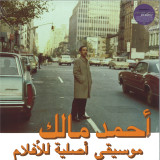
Habibi Funk is thrilled to share a second collection of deep grooves and unreleased songs from Algeria's Ahmed Malek, often compared to Italian heavyweight Ennio Morricone. Malek’s music effortlessly switches between thematic jazz, funk, reggae and Algerian folk – creating indelible soundscapes that intersect the musical innovations made in African jazz by Mulatu Astatke, Bembeya Jazz National along with some of Europe’s finest experimental composers like Piero Piccioni and Janko Nilovic. “Musique Originale de Films, Volume Deux” is out June 28th, 2024 via Habibi Funk.
Whenever an interview asks about a “memorable moment” in Habibi Funk label history, one we always reference is how we got in touch Ahmed Malek’s (22K Spotify Followers, 285K Spotify Monthly Listeners) music and subsequently his family. It all started with us coming across Ahmed Malek’s music on YouTube in 2012. We were mesmerized by how effortlessly the music would switch between jazz, funk and Algerian folk while counterweighting it with an undertone of melancholia. Musical perception is different for every person, but there is a chance that his music will touch you in one way or another. At the time, we had just started the Habibi Funk label and we felt Ahmed’s music might be a good fit for the sound we were trying to highlight. Fast forward three years: we had become captivated with the idea of reissuing some of Ahmed Malek’s music. We knew some people had tried to locate his family but, but with no success. In the end it was an incredible amount of luck that made it possible for you to read these words and listen to Ahmed’s music. We were on a DJ gig in Beirut playing old Arabic records and we mentioned our passion for Ahmed Malek’s music to a friend. She said she knew one person in Algier, and as much as it would be a shot in the dark, she could ask her if she had an idea of how to find Malek’s family. Two weeks went by before we heard back, and what we got was incredibly good news - her Algerian friend was the neighbor of Ahmed Malek’s daughter! We’re not spiritual people, but it felt like the universe wanted to see the release happen. We started to speak with Henya, Ahmed Malek’s daughter and she was more than happy with our idea. She assured us that her father would have loved the plan as well. She provided us with tons of awesome material, from great photos, to unseen video footage and unreleased tracks. Eventually we visited Henya in Algeria and we licensed some of her father’s music, first for one (Habibi 003), then for another (Habibi 005), then we eventually organized an exhibition in June/July 2019 – Planète Malek – Une Rétrospective – at the Musée Public National D’Art Moderne & Contemporain in Algiers, focusing on Ahmed Malek’s artistic life. We also produced a small movie about him that our friend Paloma Colombe shot and directed. “Musique Originale de Films, Volume Deux” is a deep collection of unreleased songs and stemmed grooves from the Algerian master, from jazz, funk, psych to reggae rhythms and Latin flavors, all under the sonic umbrella of “Planète Malek;” and to quote the maestro, “I didn’t choose music, music chose me.” Lead single is the subtlety funky “Thème Rythme Léger,” out May 3rd along with LP Pre-Order (coincided with Bandcamp Friday for a larger impact) a delicate sonic dance between flute, piano and Spanish guitar with a Bossainfluenced groove. The steady, swingin’ drum groove is cloudlike - definitely toe-tapping friendly so just grab a partner to feel the Rhythme Léger. Second single out May 17th is the reggae-infused “L’Empire Des Rêves” – a sultry sax melody weaves through a prismatic rocksteady thematic groove. 3rd and final single “Thème Djalti feat. Aïda Guéchoud” – is a true Western-inspired ode to his Italian counterpart Ennio Morricone. “Thème Djalti” features the haunting vocals of Aïda Guéchoud, and combines elements of baroque and Bossa-jazz in a timelessly thematic way that seems grandiose yet remains uniquely personal to your ears. Swelling strings, trumpet, fem vox, flute, and plucked guitar expertly arranged, feels like you’re riding a horse into the sunset. Focus track “La La La” is fiery afro-arab-funk of the highest order! Put on your dancing shoes as Ahmed cuts the rug and gets us grooving along. Sonically the cut sounds like if Ahmed ran into The JB’s and Fela Kuti at a Cymande concert. Driving guitar and organ solos vie over pulsating bass riffs and afro-funk drumming that’ll have you out on the dance floor in no time. As always, both vinyl and CD come with an extensive booklet featuring background and interviews with Ahmed compiled through found newspaper clippings and newsreels, also including unseen photos, scans and more. “Ahmed Malek: Musique Originale de Films, Volume Deux” will be out everywhere June 28th.
When speaking of Keinemusik as the performing unit featuring Rampa, &ME and Adam Port, one easily can assume the last months being quite momentous. Wherever you look on the globe, chances are one of their frenetically celebrated shows has been taking place there just recently. And the prospects of the upcoming months are looking even brighter. That’s where this highly anticipated new single comes in. Emotively reminiscing all the past touring memories and building up momentum for the ones to come, „Thandaza“ boils down the Keinemusik sentiment to the essence, shaping yet another one of those set-highlights that will turn heads and hips alike. And for this one, they brought in congenial assistance by South African producer Arabic Piano, gracing the tune with his heartwarming croon and old companion Alan Dixon providing one of his utmost catchy and touching piano lines.
Over the past decade, Kasra V has blossomed as a prominent figure in the music industry, particularly through his renowned residency on NTS Radio which has expanded his profound knowledge and expertise in music. Since landing his radio residency in January 2014 he has successfully broadcast over 200 radio shows, making use of the format to explore a wide array of sonic attitudes, styles and systems. To celebrate his achievement Kasra V launches his own imprint V-Sion which he will not only use for his own release output but also to propel his vision of contemporary dance music. To kick things off he presents a stunning 9-track compilation '10:10 Kasra V presents 10 years on NTS Radio' featuring unreleased tracks from some of his most revered guests who have graced his show throughout the years. Each contribution is wholly in line with Kasra V's genre-spanning approach. Over the years some periods have seen him playing straightforward club music, others featuring an extended notion of listening music. One hears a whole breadth of influences in his releases on acclaimed labels such as Radiant Records and Shaytoon Records: collected strands of rave, acid house, San Francisco breakbeat, new beat, ambient, oddball pop from 90s and 80s, UK bleep and so on. The regularity of a broadcasting residency pushed him to carry out a constant study of the history of dance music, and he envisions V-Sion as an output to curate musical output, contributing to the ongoing dialogue between past, future and the ever-changing fulcrum of the sonic present. The tracks presented on 10:10 are also emblematic of this historically-informed approach to dance music. They are all tuned for the floor, but present a range of possible floors to conjure: Fantastic Man's progressive opener, "Neural Filter", is airy and laced with delicate breakbeats, while "Archangel Waltz" by Sepehr presents a shadowy drama of string samples and throbbing bass swells."Qadak" by 500SEC lays an anthemic Arabic melody over bubbling electro; 2 tracks prior, Angel D'Lite circulates a whisper and moan through the mix of a euphoric, rave-stabbed anthem. The latter encouraged Kasra to put out this very compilation, which is just a testament to the value of the company we keep.
- A1: As Can Be
- A2: My Smile Is A Rifle
- A3: Head (Beach Arab)
- A4: Big Takeover
- A5: Curtains
- A6: Running Away Into You
- B1: Mascara
- B2: Been Insane
- B3: Skin Blues
- B4: Your Pussy's Glued To A Building On Fire
- B5: Blood On My Neck From Success
- B6: Ten To Butter Blood Voodoo
- C1: Untitled #1
- C2: Untitled #2
- C3: Untitled #3
- C4: Untitled #4
- C5: Untitled #5
- C6: Untitled #6
- C7: Untitled #7
- C8: Untitled #8
- D1: Untitled #9
- D2: Untitled #10
- D3: Untitled #11
- D4: Untitled #12
- D5: Untitled #13
2024 Repress
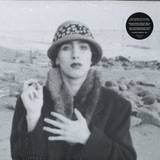
Niandra LaDes And Usually Just A T-Shirt is the first solo record by John Frusciante. Between 1990 and 1992 the guitarist made a series of 4-track recordings, which at the time were not intended for commercial release. After leaving the band Red Hot Chili Peppers in 1992, Frusciante was encouraged by friends to release the material that he wrote in his spare time during the Blood Sugar Sex Magik sessions.
Originally released on Rick Rubin's American Recordings label in 1994, Niandra LaDes is a mystifying work of tortured beauty. Frusciante plays various acoustic and electric guitars, experimenting with layers of vocals, piano and reverse tape effects. Channeling the ghosts of Syd Barrett and Skip Spence, his lyrics are at once utterly personal and willfully opaque.
Frusciante's rapidfire, angular playing shows how key he was in the Chili Peppers' evolution away from their funk-rock roots. His cover of "Big Takeover" perfectly deconstructs the Bad Brains original with laid-back tempo, twelve-string guitar and a fierce handle on melody.
The album's second part - thirteen untitled tracks that Frusciante defines as one complete piece, Usually Just A T-Shirt - contains several instrumentals featuring his signature guitar style. Sparse phrasing, delicate counterpoint and ethereal textures recall Neu/Harmonia's Michael Rother or The Durutti Column's Vini Reilly.
On the front cover, Frusciante appears in 1920s drag - a nod to Marcel Duchamp's alter-ego Rrose Sélavy - which comes from Toni Oswald's film Desert in the Shape.
This first-time vinyl release has been carefully remastered and approved by the artist. The double LP set is packaged with gatefold jacket and printed inner sleeves.
Dudu Tassa, einer der führenden Rockstars Israels, ist der Enkel des kuwaitischen Musikers Daoud Al Kuwaiti, dessen musikalische Zusammenarbeit mit seinem Bruder Saleh, den Al Kuwaiti Brothers, in der arabischen Welt zwischen den 1930er und 1950er Jahren berühmt wurde. Dudu Tassa & The Kuwaitis eröffneten vor einigen Jahren das Coachella-Festival und wurden auch von Radiohead als Vorgruppe auf einer ihrer US-Tourneen ausgewählt. Die Brüder Al Kuwaiti gehörten in der ersten Hälfte des 20. Jahrhunderts zu den größten Komponisten und Musikern in Bagdad. Dudu Tassa hat einige der Aufnahmen der Al Kuwaitis aufgenommen und sie zu seinem eigenen Sound weiterentwickelt und modernisiert. Diese neue Version des Albums enthält zwei Bonustracks, darunter eine Live-Version von 'Eshrab Kasak Withana' (feat. Jonny Greenwood/Radiohead/The Smile).
- A1: Have To Whack It Up
- A2: A Leaping Beauties For Rudy
- A2: B Marcus Junion
- A3: A Xhorkam (Medley)
- A3: B Ramadhan
- A3: C In The Snow For A Blow Part I
- A3: D Better Git It In Your Soul
- A3: E Part Iii
- A4: Uno Tansito Clapori
- B1: A Gum Arabic
- B1: B Confucius
- B2: Nymphenberger
- B3: A Habibi Baby
- B3: B Boehm Constrictor
- B3: C Beast Of Sweden
- B4: Traditional: Arranged By East Of Eden
The new album from Lebanese-American musician Solpara, Melancholy Sabotage, marks his full length debut and return to Nicolas Jaar's Other People label. While it was recorded over Covid lockdowns, Jaar had been talking about wanting to back a Solpara full-length since he put out Swing. The album came to life while Solpara was living alone in a Brooklyn loft, collecting unemployment checks and viewing ample free time as the artist residency he'd dreamed of; he'd previously been forced to make music in odd windows between numerous jobs and the unmerciful pace of city life. Free from obligations, he would wake up early to take Arabic lessons online, read Tracey Thorn's autobiography, and skateboard the deserted streets, then come home and design sounds until he had a track that felt like it needed to be released. While this easy going lifestyle was peaceful in many ways, Solpara found more complex inspiration in the emotion that stemmed from participation in Black Lives Matter protests and the 2020 Beirut Port explosion, which rocked all of his extended family members in Lebanon.
Melancholy Sabotage explores the theme of sabotaging melancholy. Echoing sounds from the post-punk, trip-hop, and ambient genres, it is about sabotaging the cycle of melancholy and looking at this process without ignoring the sources that put it into motion. It may be compared to a rattling breaking free from retention, reaching states of dreamy euphoria while simultaneously acknowledging the sources of retention, viewed from above. The sources can be personal, political, or socio-economic. They are to be apprehended post-melancholy, after the sabotaging of the initial cycle of melancholy. In other words, it is about transcending melancholy and understanding where it came from with some distance. It may be beautiful and healthy to feel for a while, but how may one sabotage this cycle when it becomes paralyzing? Ultimately, this album is about feeling melancholy but also resisting it and naming the sources that initiated it.
"Time To Hold Better" points to neglect on both personal and group levels. "This Time Last Year" is a personal time capsule. "We Keep Us Safe" is about solidarity, autonomy, and care witnessed within protest groups. "Melancholy Sabotage" is a sonic exploration of the album concept illustrating anger and sadness, but finally, resistance and liberation from these feelings. "Measures" is a more fluid exploration of the latter after the initial storm has passed. "We Don't Owe" points to bigger bodies inflicting harm on populations that we owe nothing to. "Breaking Points" harkens the times that we may lose focus while pushing to transcend melancholy. "Eviction" is about being pushed out of a space unwillingly while simultaneously being forced to move forward.
Melancholy Sabotage pulls from a range of genres, uniting electronic sounds under the same post-punky glow. It pulls from complex, heavy themes including damage and injustice, presenting Solpara's most moving body of work to date. It highlights the poignance that has always been at the heart of his fluid sound, which caters to dancefloors and avant-garde spaces in equal measure. Working with a mix of dissonant guitars, distorted drum machines, and distant, reverb-washed vocals, Melancholy Sabotage is Solpara's uneasiest outing to date. The record pinpoints the duality at the heart of Solpara's sound, which is as plaintive as it is searing.
Auf ihrem selbstbetitelten Debüt machten sich WOMEN über eine gewisse lärmende Rotzigkeit her, die sich bei näherem Hinsehen als getränkt mit listigen Popmelodien entpuppte. Mit "Public Strain" macht sich die Band einen Sound zu Eigen, der diesem halldurchtränkten Noise treu bleibt, es den Popmelodien aber doch erlaubt, sich im Rampenlicht zu sonnen. Im Herbst 2009 begaben sich Patrick Flegel (Gesang/Gitarre), Matt Flegel (Bass/Gesang), Chris Reimer (Gitarre/Gesang) und Michael Wallace (Drums) mit einer Vielzahl Ideen ins Studio und arbeiteten um ihre individuellen Zeitfenster und Schichten auf dem Friedhof herum. CHAD VANGAALEN zeichnet sich einmal mehr für die Produktion verantwortlich, mit dessen Hilfe WOMEN sich die Mühe machten, im tiefsten Winter Kanadas ein Album aufzunehmen, das zeitlos klingt. Am Ende erscheint die knirschende, harsche Dissonanz in kleineren, kontrollierteren Dosen; Noise erscheint als Fundament des strukturierten, mehrere Schichten umfassenden Songwriting. Von den ersten Takten von "Can't You See" an ist klar, dass "Public Strain" so viel mehr ist als nur die Fortsetzung des Debüts. Manchmal ist das Album klaustrophobisch und beschwört Wachträume von sexueller Seelenpein und allgemeinem Zerfall herauf; anderswo schwingen sich Retrogitarren und Gesangsmelodien gen Himmel oder kollabieren in faszinierenden Arabesken. "Public Strain" kämpft sich durch Schlaflosigkeit, Paranoia, Resignation und Euphorie, um die Momentaufnahme einer Band einzufangen, die sich gerade genau im Klaren darüber ist, was sie leisten kann.
- A1: James Clay - New Delhi
- A2: Werner-Rosengren Swedish Jazz Quartet - Bombastica
- A3: Sal Nistico Quintet - Ariscene
- B1: Frank Strozier - The Crystal Ball
- B2: Cannonball Adderley Sextet - Primitivo
- B3: Blue Mitchell - Turquoise
- C1: Sonny Red - The Mode
- C2: Clifford Jordan - Sunrise In Mexico
- C3: Lee Konitz Quintet - Thumb Under
- D1: Mccoy Tyner - Valley Of Life
- D2: Joe Henderson - Earth (Feat Alice Coltrane)
Vol.8 PT2[26,01 €]
Vol.9[22,14 €]
Vol.1[23,49 €]
Vol.13 PT2[23,40 €]
Vol.13 PT1[23,49 €]
Vol.15[26,47 €]
Since 2008 our Spiritual Jazz series has presented unlimited horizons. Each album celebrates the rich tradition of African-American songs based on the belief in a higher force than oneself and has also focused on geographical areas, such as Europe or Japan, thus recognizing that these territories have immense cultural riches. Religions, like Islam, whose musical traditions have vivid Arabic and North African resonances, have also been highlighted. The stylistic range of all the above is wide.
Yet historic record labels, from Blue Note and Impulse! to Prestige and Steeplechase, have also featured because their catalogues are musical treasure troves that could not be more relevant to Spiritual Jazz, even though they issued vast amounts of music between the late '30s and present day, that have not been confined to any one school.
Spiritual Jazz 16 is a focus on Riverside and its associated sister labels. Riverside itself was founded in 1953 by Orrin Keepnews and Bill Grauer, and became an important purveyor in that decade and beyond of what would be marketed as of modern jazz. That coinage was itself an amorphous, umbrella term that essentially created a demarcation from the vocabulary of pre-war classic jazz and inter-war big band swing, thus recognizing that improvising artists were breaking new creative ground that would subsequently give rise to a flurry of sub-genres, for example bebop, hard bop, cool, modal and Latin jazz. And it's from this multiplicity of sub-genres that we choose the deepest, most vibrant selections that the vast, pan-generational catalogue of Keepnews & Grauer has to offer
A holy grail for fans of French boogie, early hip hop, Arabic funk and Balearic bops,"Ettika" has been seriously sought after since Vidal Benjamin found it in the 1€ bin back in 2006. Teasing the ears of the underground via Vidal's 'Balearic Nightmare' mix for Noncollective, copies of the original were soon snapped up completely, and the later adopters were sated by a Blackdisco edit from Alexis Le-Tan (himself gifted Vidal's second copy), which is now also rare as hen's teeth. The fervour for the track is easy to understand. Underpinned by an endlessly buoyant bass groove, chanted female vocals dart out the speakers like a post- modern mantra while synth vamps flare in stuttering stereo.
Middle-Eastern motifs add an air of mystery, but this truly belongs in a dance floor utopia. That the track was the product of a 'back-to-work' scheme aimed at unemployed immigrant youth in Rouen only adds to the appeal. Led by teacher Bernard Guégan, a quartet of students delivered lyrics in French and Arabic inspired by their rejection letters, serving a little social commentary and a lot of funk. If you're mad on Ahmed Fakroun and Shams Dinn, or even those folks in the Bush of Ghosts, then this is a must have for you.
Archeology isn't just about excavation, there should be interpretation too, and in this case it comes from Italian duo Hear & Now and Leeds' The Veteran Delinquents. The former furnish the 12" with two radical takes, the dreamy downtempo stroll of their French Remix - all unhurried percussion, Gilmour-riffing and coastal élan - and the peaktime pump of their Arab Remix, which transports the original vocal into a land of desert new beat and Balearic trance with a little space left for some frazzled fretwork. If you've followed their work with Claremont you know the quality on show.
The Veteran Delinquents, the collaborative vehicle of Leeds stalwarts Craig Christon and Tim Hutton, condense a lifetime of club experiences into their remix, establishing the infectious groove of the original before subverting with chugging bass and winking acid, all augmented with their own slick synth work. The original was an all time classic at Craig's Joe's Bakery nights way back when, and this new interpretation is both respectful and revolutionary.
Unadorned with any post-production tricks or overdubs, Garcia/Grisman breathes with naturalism and presence. You will effortlessly detect the full body of the instruments, witness the woody grain textures, and get lost in the surprisingly velvety qualities of Garcia's lullaby-like singing. Our pressing also marks the first time this delightfully joyous affair has been issued in analogue form. You will never hear a better-sounding Americana-styled recording.
Pals since the mid-1960s, Garcia and Grisman bonded over their love for traditional folk and bluegrass. The two teamed up amidst what became a gold rush of top-notch productivity and creativity for Garcia. Partnering with bassist Jim Kerwin and percussionist/fiddler Joe Craven, the pair approaches every passage with innate ease, as if either musician could finish the others sentence. The affable chemistry and soothing interplay wash over a selection of songs as notable for their diversity as the way Garcia and "Dawg" turn them into the equivalent of old friends you haven't seen in years.
Exquisite melodies and jewel-shaped notes decorate the simple, convivial structures of tunes that hop, jump, skip, skitter, and bop. The atmosphere is reminiscent of the legendary gypsy-jazz exchanges between Django Reinhardt and Stephane Grappelli, and equally sharp. Swirling with Middle Eastern modality, the closing 16-minute-plus rendition of Grisman's rippling "Arabia" – complete with a section based on a Cuban fold theme - is alone enough worth the price of admission to this sensational session. But there's so much more.
The quartet delves into Celtic themes ("Two Soldiers"), jazz-grass ("Grateful Dawg"), old-world ballads ("Russian Lullaby"), and Appalachian flavours ("Walkin' Boss") with nonpareil skill and soulfulness. Garcia and Grisman's tandem picking throughout epitomize sublime. And for many listeners, the duo's revised version of the Grateful Dead staple "Friend of the Devil" ranks as the finest-ever recorded, the pace patient, the narrative vocals heartfelt, and the synchronous solos tailor-made for the enveloping progression. Better yet, it's all captured in astonishing fidelity.
Active since 2001, Ayyuka was one of the first bands to look back at 70’s Turkish music to find a new voice. Not caught up in the Retromania but reincarnating Turkish Psychedelic within their own style, the band managed to develop an unmistakeable unique sound. Inspirations of Dick Dale, John Frusciante, and local heroes like Erkin Koray, Orhan Gencebay, make their music more guitar oriented but their fascination with film music and improvisation creates unexpected twists within their songs. Right after their eponymous debut in 2007, the band shared stage with Sonic Youth and Jonathan Richman. Heading to a completely instrumental music, their 3rd studio recording “Sömester” had already become a cult album for record collectors. They’ve collaborated with Orlando Julius, Ilhan Ersahin and had guests on almost every album. Their latest full length “Maslak Halayı” was a creative collaboration with Calibro35 genius Tommaso Colliva. The worldwide hype of "Yukadans” will now be followed by their upcoming EP "Zaman Ziyan”, showcasing four brand new instrumental tracks that will transport listeners through a kaleidoscope of musical landscapes, experimenting with techniques of music writing and flirting with genres like afro-beat, funk, dub or arabesque. Save the date for their very first performance of these, live at babylon, as a part of Akbank Jazz Festival.
Born in Beirut, Lebanon, Rami Gabriel has been a motive force in rock n' roll, jazz, Arabic, and experimental music communities across North America for over twenty years. In that time, he has released numerous projects across genres and under many names. On his debut LP for Sooper Records, Rami trips all the breakers. In his own name and voice for the first time, That's what I been sayin' is not so much a debut as a conflagration in Rami Gabriel's worldly underground. Drawing on Punk, Krautrock, Dub, No Wave, and lo- fi, the territory occupied by That's what I been sayin' is astringent, minimal, and buzzing with the sound of machines dancing in the wind. "I'm used to putting out records based on genre," says Rami of his multiple endeavors. "I was listening to one of the `70s Brian Eno records where he took his experimental work and his songs and put it all together, and I was thinking, `Why don't I try to put all the different ways I've been working for the last couple years onto one record?'" That's what I been sayin' ignites this vision with an album that ranges from the motorik-driven krautrock of "Like a monk" to the unexpected trance-like pairing of "Buzuq synth." That's what I been sayin' is a furnace of Rami's insuppressible impulses, where he undertakes to ask and answer: what is left of punk but making do with what is at hand? At times direct and scorching, at others meditative and wandering, That's what I been sayin' compresses Rami's understanding as a composer, musician, and singer into a restless, 11-track love letter to the underground. For Fans of The Fall, Haruomi Hosono, Brian Eno, and Scientist.
- A1: Al Muqademah 1 (Introduction 1)
- A2: La`lan (Advertisement)
- A3: Mashad Al Fahes (Examination)
- A4: Tango
- A5: Break
- A6: Al Muqademah 2 (Introduction 2) - Inst
- A7: Al Muqademah (Introduction) - Inst
- A8: Tagheer Awal (First Change)
- A9: Oghniyat El Shahadeen
- B1: Tagheer Thani (Second Change)
- B2: Al Piano
- B3: Tagheer Thaleth (Third Change)
- B4: Al Jeel (The Generation)
- B5: Hake Ad Ma Baddak Fee
- B6: Oghniyat El Gharam
- B7: Mashhad Al Hob
- B8: End Of Chapter 1
- B9: Kabbaret Dancing
- B10: Kbareah Wa Mhajjaren
- B11: Slow
- B12: Mashhad Al Serk
- B13: Final - Al Adala
Wewantsounds is delighted to announce the reissue of Ziad Rahbani's cult album "Amrak Seedna & Abtal Wa Harameyah," one of his praised albums from the 80s, released on the sought-after Lebanese label Relax-in in 1987. This release is an event as the album, recorded at Rahbani's By-Pass studio, was only released in Lebanon at the time. Mixing Arabic music with Funk and Fusion Jazz and hints of Boogie, it's a bonified Rahbani classic, sought after by Arabic groove DJs and collectors around the world. The reissue features audio remastered by Colorsound Studio in Paris and a 2 page insert with a new introduction by Mario Choueiry from Institut du Monde Arabe in Paris (English/French).
Nach ihrem von der Kritik gefeierten UK-Top-20-Album 'As Days Get Dark' kehren Arab Strap mit ihrem zweiten Album für Mogwais Rock Action Records zurück, das den treffenden Titel 'I'm totally fine with it don't give a fuck anymore' trägt. Fast 28 Jahre nach ihrem Debüt klangen Arab Strap noch nie so essentiell, so unentbehrlich wie jetzt, und dieses neue Album ist ein glühender Beweis für ihren Laserfokus auf breitere Horizonte. Das Album, das ausschließlich von Malcolm Middleton und Aidan Moffat geschrieben und eingespielt wurde und an dem auch Paul Savage, ein langjähriges Mitglied der Band, mitgewirkt hat, unterstreicht die Wandlung der Band von melancholischen Slow-Core-Romantikern zu wütenden Alt-Pop-Chronisten.
Repress!
The publication of "Jet Sounds" in October 2000 and its subsequent release on the international market represented the turning point from the initial productions carried forward by Schema and the new course taken by the label reaching sales of 40,000 copies and still counting. It's the year 2000 and the avant-garde of the new jazz pop Italian scene is called "Jet Sounds". The debut album by Nicola Conte features nearly 20 musicians and moreover the visionary, sophisticated appeal of Nicola with a sound that has already become T . He tells a cinematic story as the images become a soundtrack for the music: Scene 1: A young woman is walking on the sea shore. She's alone, only white sand and crystal blue water by her side. It's late in the afternoon and the sun is glancing over her shoulders while a soft bossa nova fills the air. Scene 2: He's drivin' fast, there's little time left and a man to chase. Like busy spiders working a web, the beat of the big band pulses a 5/4 jazz theme. Scene 3: It's night; the park; shadows following, shadows hiding mystery? Undefined eastern/oriental sounds adrift on a pulsing psychedelic beat. What's the next move...?
Singer, actor and musician Farid El Atrache, born on October 19, 1910 in Soueïda, Syria, and died on December 26, 1974 in Beirut, Lebanon, is considered the greatest singer of the Arab world. A virtuoso of the oud, his timeless work, rich in hundreds of compositions, is recognized the world over. The present selection is devoted to the master's early works recorded in the 1930s-1940s.
Algerian singer and musician Lili Boniche was born in Algiers on March 14, 1921, and died on March 6, 2008. He was famous for his contribution to Judeo-Arabic music, and particularly associated with chaâbi, a musical genre popular in Algeria that blends Arab, Berber and French influences. Born Eliaou Élie Boniche, and he grew up in a Sephardic Jewish family and became interested in music at an early age. His musical career really took off in the 1940s and 1950s, when he recorded numerous hits that helped popularize the Judeo-Arabic repertoire. His unique style blended elements of Arabic music, jazz and tango, creating a captivating musical fusion. He is widely recognized for his mastery of the lute and his distinctive voice. His lyrics were often poetic, reflecting the everyday life, love and culture of his time. Lili Boniche left an indelible mark on the North African music scene. His legacy lives on in his recordings, which continue to be listened to and enjoyed by music lovers the world over.
- A1: Taikatalvi
- A2: Storytime
- A3: Ghost River
- A4: Slow,Love, Slow
- B1: I Want My Tears Back
- B2: Scaretale
- B3: Arabesque
- B4: Turn Loose The Mermaids
- C1: Rest Calm
- C2: The Crow, The Owl And The Dove
- C3: Last Ride Of The Day
- D1: Song Of Myself (I.from A Dusty Bookshelf/Ii.all That Great Heart Lying Still/Iii.piano Black/Iv.love)
- D2: Imaginearum
- 01: Aykathani Malakon (Live At Cafe Oto)
- 02: Mouathibatti (Live At Café Oto)
- 03: Bell (Live At Café Oto)
- 04: Ya Nass (Live At Café Oto)
- 05: Rings (Live At Café Oto)
- 06: Shajar Al-Touti (Live At Café Oto)
- 07: 94 (Live At Café Oto)
- 08: Oulo La Emmo (Live At Café Oto)
- 09: Ayouha Al-Taiin Fi Al-Mawt (Live At Café Oto)
Live recording of the final show of SANAM's debut European 2023 tour at London's home for experiemntal music, Cafe Oto.
Beirut's SANAM burst on the scene in 2023 with their debut album Aykathani Malakon, chosen by The Guardian as one of their 5-star albums from 2023: "Aykathani Malakon thoroughly embodies their originating influences, whipping up kosmische, post-punk, psych rock, free jazz and Levantine folklore into an alchemical tour de force delivered with a defiant, DIY disposition".
Under difficult conditions, the band took to the road for a European tour in November 2023 with the final show at Café Oto. From their incendiary European debut earlier that month at LeGuessWho then rapturous, sold out shows in Switzerland, Belgium, Germany and the UK, spirits for the Cafe Oto gig were high and it was destined to be a tour highlight. 'Live at Café Oto' captures the intensity of the shows, a ritual where improvised rock, free jazz and noise underscored an exorcism of traditional Egyptian song and Arabic poetry.
Drummer Pascal Semerdjian adds: "On this tour, I felt the album evolve from being a set of improvised tracks captured spontaneously, into ripe solid songs. Playing these shows back-to-back, our chemistry kept growing, we got closer, and our live sets, at least to me, were an embodiment of this evolution. In a way, this was the real birth of the band"
Vocalist Sandy Chamoun: "We started the tour with a great push at LeGuessWho, and we kept this energy throughout the whole tour. Every gig felt like I was playing the songs for the first time, providing a new and fresh experience for me. We finished the tour with an emotionally intense gig at Cafe Oto, a dream venue. The audience was incredible, as if we had known each other for a long time and the energy was intense and intimate at the same time; it felt like we were in a small circle of fire together, both us and the audience."
"There was definitely magic in the air for our show at cafe oto - an iconic, humble and warm venue and the last show of the tour – it felt like everything was in the right place. It was my favourite show by far, specially that we were also comfortably able to talk about Palestine, the atrocity we have to live with and can't ignore." Pascal Semerdjian
CNTS sind zurück!
Nach einem Wirbelsturm von Tragödien, sowohl global als auch persönlich, sind Gitarrist Mike Crain (Dead Cross, Retox, Festival Of Dead Deer), Schlagzeuger Kevin Avery (Retox, Planet B) und Sänger Matt Cronk (Qui) mit dem neuen Gitarristen Koko Arabian und Bassist Rico Adair zurück, um ihr zweites Album zu veröffentlichen.
Nach der Veröffentlichung ihres Debüts "Cunts" (2019) konnten CNTS eine kurze Tour einschieben, bevor die Welt auf Eis gelegt wurde. In der Pause wurden Aufnahmen gemacht und Pläne für die Zukunft geschmiedet. Alle Pläne wurden jedoch über den Haufen geworfen, als Matt Cronk bei einem Autounfall verletzt wurde, was zu einem chirurgischen Missgeschick führte und ihn mit einem gelähmten Stimmband zurückließ, unfähig zu sprechen, geschweige denn zu singen. CNTS gaben schweren Herzens ihr Ende bekannt. Bis zum Winter 2023 widmeten sich die Mitglieder von CNTS anderen Projekten, als Cronks verletztes Stimmband entgegen den Prognosen seiner Ärzte zu heilen begann und seine Stimme innerhalb von zwei Monaten zurückkehrte. Im März dann waren CNTS zuversichtlich, dass sie es noch einmal versuchen könnten.
Gestärkt durch Cronks Genesung und die neue Besetzung, verbrachten CNTS den Rest des Jahres mit der Arbeit an ihrem neuen Album Thoughts & Prayers, dessen Titel von der Banalität unserer kollektiven Reaktion auf Krisen inspiriert ist. Inspiriert von ihren jüngsten Herausforderungen haben CNTS mehrere Jahre der Frustration und des Elends in ein gut artikuliertes und aggressives Statement kanalisiert. Songs wie "Smart Mouth" und "Thoughts And Prayers" erzählen von Cronks Schmerz und Wut während seiner verschiedenen Verletzungen und der anschließenden Genesung. "I Don't Work For You" und Eating You Alive" handeln von der Ungerechtigkeit des modernen Lebens. "For A Good Time (Don't Call Her)" ist eine Wutrede auf das uralte Thema des Streits mit dem romantischen Partner.
Equal Spirits brings together a genre-defying mix of South African spiritual jazz, ambient improvised introspection, bursts of old-school hip-hop and electronica, soaring melodies, synths, samples and gospel-infused grooves, woven together with sung and spoken languages from Zulu, Sotho, Yoruba and Xhosa to Arabic and English.
- Overture
- Toot Toot Tootie Toot (Dance Of The Reed-Pipes)
- Peanut Brittle Brigade (March)
- Sugar Rum Cherry (Dance Of The Sugar-Plum Fairy)
- Entr'acte
- The Volga Vouty (Russian Dance)
- Chinoiserie (Chinese Dance)
- Dance Of The Floreadores (Waltz Of The Flowers)
- Arabesque Cookie (Arabian Dance)
- Morning Mood
- In The Hall Of The Mountain King
- Solvejg's Song
- Ase's Death
- Anitra's Dance
Featuring jazz interpretations of Tchaikovsky's ‘The Nutcracker’, the album has come to be recognized as one of Duke Ellington's most important albums of the 1960s. Award winning New York based conductor Steven Richman has done a great job with the winning combination of Tchaikovsky and Duke Ellington & Billy Strayhorn (the hippest cats of jazz-a-tooty) on the one album. Bonus tracks on this album are selections from ‘Peer Gynt’ suites No. 1 and 2 written by Edward Grieg adapted by Duke Ellington including five movements: "Morning Mood," "Hall of the Mountain King," "Solvejg’s Dance," "Ase’s Death," and "Anitra’s Dance."
In 2024, the singer and songwriter Oum is celebrating her fifteen-year career, with a live album, recorded in Marrakech, which plunges back into the magic of her three flagship records, here revisited in a different light. This seventh album, named Dakchi, which means "those things", is the opportunity for this daring off-roader to allow herself a suspended moment for a temporary assessment, a return to her roots. Dakchi is the first best-of live album, in which Oum brings together around ten titles from her repertoire woven throughout three albums with identities as singular as they are filled with a common sap: Soul of Morocco (2013), Zarabi (2015) and Daba (2019). It is the expression of typically Moroccan hybridizations - African, Berber and Andalusian - which irrigate the crossbreeding of Oum. It is also joyful and natural fireworks display of polyrhythms which galvanize her music : the Marrakech signature, playful, sunny, festive. Oum slips three unpublished pieces, including the sublime Arabic cover of the legendary bolero "Lagrimas Negras", "Toda la Gente", an introduction to "Mansit", signed by cuban musician Damian Nueva or the delicate "Intidhar", composed by Yacir Rami.
In 2024, the singer and songwriter Oum is celebrating her fifteen-year career, with a live album, recorded in Marrakech, which plunges back into the magic of her three flagship records, here revisited in a different light. This seventh album, named Dakchi, which means "those things", is the opportunity for this daringoff-roader to allowherself a suspended moment for a temporaryassessment, a return to her roots. Dakchi is the first best-of live album, in which Oum brings together around ten titles from her repertoire woven throughout three albums with identities as singular as they are filled with a common sap: Soul of Morocco (2013), Zarabi (2015) and Daba (2019). It is the expression of typically Moroccan hybridizations - African, Berber and Andalusian - which irrigatethe crossbreeding of Oum.It is also joyful and natural fireworks display of polyrhythms which galvanize her music : the Marrakech signature, playful, sunny,festive. Oum slips three unpublished pieces, including the sublime Arabic cover of the legendary bolero "Lagrimas Negras", "Toda a Gente", an introduction to "Mansit", signed by cuban musician Damian Nueva or the delicate "Intidhar", composed by Yacir Rami.
- A1: Hailed By The Hammer
- A2: The Devil Will I Do
- A3: König Und Kaiser
- A4: Future King
- A5: Kingdom Of Hammers And Kings
- A6: War Hammer
- B1: Divided We Shall Fall
- B2: Kings Of Arabia
- B3: I Want Chaos
- B4: Gates Of Atlantia
- B5: Fire Hammer
Heavy Power Metal in Reinform - die Rückkehr des mächtigen HAMMER KING HAMMER KING sind zurück! Einmal mehr verneigt sich das Quartett um den ehemaligen Ross The Boss-Sänger Titan Fox zu Ehren des mächtigen Hamme King und veröffentlicht am 22. März 2024 das brandneue, sechstes Studioalbum König und Kaiser via Napalm Records. Über insgesamt zehn Tracks hinweg liefert die royale Power Metal-Macht ein bombastisches Hitfeuerwerk, das der Nackenmuskulatur keine Pause gönnt.
Berlin, 20 August 2023 – In a world where music serves as a gateway to explore the intricate dance between reality and imagination, Shkoon, the innovative germany-syrian musical group, presents their newest single, "Al-Furat." This release is a captivating addition to their upcoming album, a collection that masterfully blurs the lines between the tangible and the ethereal. Its the first single of their 10 Track Album being released on 16st of November followed by a big concert tour.
"Al-Furat" is not merely a song; it's a satirical exploration of life's complex game. With a wink to the audience, the song invites listeners to look beyond its surface and decipher the layers of meaning hidden within. At the heart of it, "Al-Furat" beckons the audience to find what resonates with them, to uncover the deeper messages that lie beneath the harmonies and rhythms.
A Harmonious Blend of Emotions
Crafted with a touch of irony, "Al-Furat" humorously contrasts the declarations of love for one's homeland with the journey of Ameen, the protagonist, as he navigates the game-like challenges to reach France. It's a juxtaposition of joy and sorrow, presented through cheerful melodies and thought-provoking lyrics. This blend of emotions adds depth to the song, making it not just a musical piece but a thought-provoking experience.
Blurring the Boundaries
Shkoon doesn't stop at melodies and lyrics; they expertly play with boundaries. The video showcases Thorben crossing borders with a French baguette, a clever visual metaphor that challenges stereotypes. The inclusion of French demonstrations further blurs the lines between art and reality. It's a deliberate move that asks the audience to question their perceptions and assumptions.
Art with a Message
As with their previous works, Shkoon's "Al-Furat" carries a hidden message—a critique and commentary on societal norms and expectations. It's a call to look beyond the surface, to recognize the dual nature of art as both entertainment and a mirror to society. Shkoon's ability to weave such messages into their work is a testament to their artistry and depth.
The Album
After Rima (2019) some singles, EP’s and their touching live album “FIRAQ” (2022) Shkoon is coming up with another concept album “Masrahiya” which is arabic and stands for theater play. Shkoon created a strong message again, with a diverse piece of art combined with an album concert tour.
This play 'Masrahiya' delves deep into the blurred boundaries between reality and fiction, where the lines of truth and imagination intertwine like a mesmerizing dance. As the three captivating chapters unfold, tragedy, politics, and irony are seamlessly woven together, creating a tapestry of emotions that leaves the audience spellbound.5
- A1: The Scabs – Isthis Life?
- A2: Nacht Und Nebel – Arabian Town
- A3: Arbeid Adelt – Pro Vita
- A4: Siglo Xx – The Art Of War
- A5: The Neon Judgement – Factory Walk
- A6: Kid Montana – Armoured Car
- B1: Men 2Nd – Transition
- B2: 1000 Ohm – The Station Hall
- B3: Tank Of Danzig – Tank Hymn
- B4: Company Of State - Venus In Furs
- B5: Poesie Noir – Hiroshima Mon Amour
- B6: A Split Second – Colonial Discharge
Vol. 1[29,37 €]
The legendary Belgian label Antler is coming back to life! Pioneering in the 80' and 90's and an absolute spearhead in the world of post-punk, cold and new wave, EBM, electro...
a series of albums and compilations from the extensive Antler archives are now being released again. The first compilation 'Early Years Vol. 1” was received with great enthusiasm and flew out the door. Now there is already Vol. 2 with again carefully chosen gems from the rich Antler archives with early recordings of influential bands such as The Scabs, Arbeid Adelt!, Nacht und Nebel, A Split Second, Neon Judgment... a fascinating sample of the Belgian alternative scene in the 1980s.
Idriss D officially launches the brand new label Nedjma with his own 2-vinyl, 8-track album as first release. The imprint will serve as a platform for up and coming talents from the Arabic world who are not represented in the current musical landscape. A very bold statement from Idriss himself, this record sees the Franco-Algerian dj and producer infuse his personal history into what he loves the most and share it with the rest of the world.
First track Tsakhbira works as the perfect opener for the album with a melodic ambient-like mood and Arabic chants, with second track Beld el fen following in the same vein with raditional instruments interspersed with synth stabs and eerie atmos.
Chazil’s upbeat rhythm spices up the vibe, a mix of ethereal
singalongs and bouncy percussions. Mohamed is the first foray into Electronic territory, a downtempo piece featuring French vocals and plenty of analog industrial clanks that lead into subsequent Hey Galbi, an exquisite melodic house number with acid synth melodies and piano keys.
Electro (Leila Moon Remix) delves into more experimental landscapes, with darker tones, blurred vocals and pulsating beats, while Elf Leila is quintessential Electroclash Arabic music, blending these two genres together, with a syncopated super catchy bassline. Closing track Harramt is a whirlwind of snare rolls, 303 arpeggios and nods to North African heritage sounds.
Two Spanish slow disco tracks from 1977, originally released in 7" format, brought back in 12" format with an additional extended edit, very respectful to the original. "Zorongo" is a re-interpretation of a Andalucian popular folk song with Arabic influence, a gypsy love song from ancient times which was collected and presented by Spanish poet and playwright Federico Garcia Lorca before his death/disappearing during the Spanish Civil War. Jobam's new arrangement gives it a heavy downtempo disco facelift, taking the original gypsy warrior intensities of dealing with love and contrasting them with a beautiful orchestral string driven addition to the theme. Heavy Balearic, emotionally loaded gypsy business, something one could very easily imagine hearing at a 10 hour Harvey set in Pikes, Ibiza.
Except from Rachid Taha, who allowed himself a few forays into the teeming, vibrant heaths of techno, no raï singer other than Cheb Malik has ever ventured into this terrain known for its abundance of sound. If you know about Malik Adouane's ancestry, this is hardly surprising. Born in Librecourt, near Lens, he comes from a union between an Italo-Celtic mother who instilled Western sounds into his ears and a father, a former miner born in Biskra (north-east Algeria), a palm grove near the desert, musically renowned for its lively diwan that could be called Saharan opera. In addition, the town is renowned for its chakhchouka, a dish called after its rich blend of various ingredients and spices. Just like Malik’s music, as he was a fan of James Brown, Barry White, classical Arabic and raï music. He had been thinking about it from the beginning, but the dream took a long time to materialize. In January 1986, many raï idols turned up in Bobigny, France, for a historic and seminal festival. In the midst of the audience, the young man, dressed in black leather, provided security for the concerts of many stars before becoming one himself. He would rub his eyes, not because he was dazzled, but because they were clouded by a nostalgia that remained him of itself. So, with his head full of sounds warmly recommended by the best DJs, he set out, a little provocatively, to position himself at the cutting edge of music with a new concept called "After raï". It combined the sweet and precious past with an almost uncontrollable creative audacity. It's a balm made in a test-tube-studio from a mix of Arabic melodies and lyrics - a kind of "Arabeat", and the arrogant modernity produced by samplers, electronic spinning, roaring bass and guitars made for house music. The pinnacle of the record is a masterful cover of Isaac Hayes' Shaft, which set dancefloors on fire in Paris, London, Ibiza and New York, and became internationally known thanks to its presence on a Paris Dernière compilation curated by French musician and DJ Béatrice Ardisson along with Claude Challe's iconic Buddha Bar series. Now, shall we dance?
Svart Records to release new album by rising stars of eclectic heavy rock, Messa on the 11th of March 2022. Messa’s rising trajectory hits the stratosphere on their immense new album “Close”. Soaring up out of the Italian Doom Rock underground in 2014, Messa have been rapidly garnering a frenzied throng of devotees, in thrall to their monumental and broad-ranging sound craft. Releasing two widely celebrated cult records, the latest of which “Feast For Water” in 2018 was a critical breakthrough success, with Rolling Stone calling the whole album “captivating, wringing maximum drama out of its savvy stylistic clash,” Messa have had everyone on tenterhooks, waiting for what was next. New album “Close” draws us further into Messa’s spellbinding textures and immersive dynamics. Described as “Stevie Nicks fronting Black Sabbath,” singer Sara’s colossal voice omnipotently carries the listener on an emotional rollercoaster ride where the sonic cauldron of Iommi guitars gives way to Arabian oudh and progressive solos in a masterful style-clash that well befits Messa’s incendiary reputation.
Following on from their contribution to theButter SessionsCome Togethercompilation released in March this year, Melbourne'sPolitodeliver their debut EPUltraparallel.Politois the collaboration between musicians Robert Downie and Finnian Langham and dancers Arabella Frahn-Starkieand Hillary Goldsmith. The ensemble integrates improvised techno and contemporary dance to form well-considered and captivating performances. The spirit of these performances are masterfully captured on the 12" record. On the transition between mediums, the group states; "we always aim to capture the unpredictability and liveliness of our improvised performances when we record, and try to sculpt the feeling of continuous movement which is so intrinsically tied to Polito's identity."
Ultraparallelconsists of four tracks that were extracted from studio sessions, emerging organically whilst jamming. The EP's introductionHornet's Webwields mutilated samples of vocals and spoken word, paired with abrupt rhythms to forge anomalous techno. The eponymous trackUltraparallel, recorded in 2018, is a dark and brooding arrangement with a murmuring melody and an infectious recurring bassline. Polito reflects; "this track is from the first batch of studio sessions we had as Polito where our intention was to create more discrete 'tracks' which could be played by DJs, rather than the longform compositions more similar to the live performances which we had recorded up to that point."
Turning the record over,Seventh Limbembodies the music for dance nuance by infusing dub with sounds from outer-space. Polito reveals; "we wanted to explore creating something more in line with the mood of our live performances, which are typically slower and have a rather meditative atmosphere. The more relaxed tempo allows the dancers to move at a sustainable pace and gives the musicians more space to prepare and manipulate the various musical elements in real-time. The result is our first formal exploration of 'the chugger.'"Ultraparallel'sfinaleSublunaryis a playful sequence mingling electronics with an airy clarinet and saxophone.
Attuned to their audience,Politoimagines how their music will be consumed throughout the creative process. They comment "while making music in the studio, we try to transport ourselves mentally to hypothetical dancefloors the music we're making could be played on, adding moments and sounds which would excite, energise, disorient, or have some other desired somatic effect. We're also considering not just how the music sounds, but how it would 'feel' when played on large sound systems."Ultraparallelultimatelypresents a refreshing visual take on literal dance music; a considered and holistic approach to enhancing the experience of listening and moving.
The second album by F.K. Raeithel, just after the operetta DIE WURLITZERORGEL DES GEISTES, explores the realms of interlocked rhythm sample and hold music. On 16 tracks different setups of self generating modular synthesizer patches are gathered on this release.
The concept of Dance With Uncertainty is deeply rooted in philosophical, artistic, and cultural traditions. The notion of embracing uncertainty and change has been explored in various forms throughout history, often symbolizing the human experience and the impermanence of life. In the context of music and sound, Dance With Uncertainty could be seen as a reflection of the constant ebb and flow of life‘s uncertainties, captured and conveyed through sonic textures and evolving compositions.
Interlocked Rhythm Sample & Hold Music, this approach to sound creation weaves a mesmerizing tapestry of rhythm, texture, and sonic exploration, captivating listeners and defying traditional musical boundaries. At its core, Interlocked Rhythm Sample & Hold Music is a synthesis of technology, creativity, and a deep understanding of rhythmic intricacies. The foundation lies in the Sample & Hold circuit, a device that captures and freezes incoming voltages, creating distinct musical snapshots that evolve over time or an Linear Feedback Shift Register (eg. Rungler), a circuit used in electronic music synthesis and sound manipulation to create unique and evolving musical textures. The Rungler was created by Rob Hordijk. A more sophisticated use of a 8 bit shift register and by combining this with a typical sequencer design is the Klee Sequencer developed by Scott Stites. A cheap version of this design is the Turing Machine. Another tool is the Analog Shift Register. In the context of creating arabesque melodies, an analog shift register (invented by Fukushi Kawakami and later adapted by Serge Tcherepnin) can be a fascinating tool to generate intricate and ornamented musical patterns. Yet, it‘s the interlocking of these snapshots that sets this genre apart, infusing the compositions with an intricate dance of patterns and pulses. A fourth device is a pendulum or random addressed sequencer, that in the first case moves in a drunken unpredictable manner. Each of these devices for uncertainty becomes a rhythmic sculptor, freezing the dynamic interplay of melodies, beats, and textures. These frozen moments are then interwoven, each snapshot forming a unique thread in a sound tableau that stretches and contracts, pulses and breathes. The result is an auditory experience that challenges preconceptions of rhythm and structure. The interlocked rhythms give rise to complex grooves that ebb and flow in unpredictable ways, evoking a sense of perpetual motion and transformation. The music becomes a living organism, its heartbeats synchronized yet untamed, its evolution both deliberate and free-spirited. The juxtaposition of staccato bursts and fluid flows, of machine-like precision and organic unpredictability. As listeners delve into the world of Interlocked Rhythmic Sample & Hold Music, they embark on a sonic odyssey. The music becomes a companion, guiding them through a labyrinth of rhythmic landscapes that simultaneously challenge and invite them to the dance with uncertainty.
- A1: Hitman 2 Main Title
- A2: Waiting For Action
- A3: Action Begins
- A4: 47 Makes A Decision
- A5: The Penthouse
- A6: Japanese Mansion
- B1: Japanese Snow Castle
- B2: Streets Of India
- B3: Mission In India
- B4: 47 In St. Petersburg
- B5: Trouble In Russia
- B6: Desert Sun
- C1: Arabian Dance
- C2: The Setup
- C3: End Boss
- C4: Slow Ambience
- C5: Fast Ambience
- D1: H2 Exploration
- D2: H2 Action
- D3: Dreams Of Istanbul (Bonus Track)
Der Jesper Kyd-OST zu Fortsetzung der HITMAN-Videospielreihe: Das mainstreamig angelegte 'Hitman 2: Silent Assassin' (2002) erhielt großartige Rezensionen, u.a. eine 'Action Game Of The Year' Nominierung vom US-Magazin Computer Gaming World. Jesper Kyd schuf mit dem Budapester Symphonieorchester und dem Ungarischen Rundfunkchor ein orchestrales Melodram, das dem Spiel ein Gefühl von Unruhe und Pracht verlieh. Trotz live aufgenommener Orchestrierungen blieb sein Stil unverkennbar: starke Melodien, eingängige Rhythmen und groovige Electronica werden um harmonische Weltmusik-Elemente ergänzt, die zu den weltumspannenden Eskapaden von Agent 47 passen.
Vinyl Only Release lim. to 500 copies worldwide!
There are mysterious records. Records hiding and showing something at the same time. This is one of them. It is made from two records that were most probably released in the mid-1970s, most probably primarily by Turkish Roma.
It brings together what Anadolu pop music lovers always dream of: Anatolian geleneksel (traditional folk tunes), disco and funk, jazz and hard rock, psychedelic sounds, hard-hitting drums, Arabesk percussion, and hip-hop friendly breaks. Put together in a careful, smooth production with a warm, relaxed and dance-friendly vibe.
Here you get it: Roma-nized instrumental Turkish pop music in all its facets of the 1970s.
- A1: Porcelain Id Feat. Emma - Habibi (R U Alone?)
- A2: Porcelain Id - Low Poly
- A3: Porcelain Id - You Are The Heaven
- A4: Porcelain Id - Adam Coming Home
- B1: Porcelain Id - Moon
- B2: Porcelain Id - Feeling
- B3: Porcelain Id Feat. Emma - Brilliant
- B4: Porcelain Id - Cellophane
- B5: Porcelain Id - Man Down!
- B6: Porcelain Id Feat. Youniss - Reach Me/Reaching Higher
- B7: Porcelain Id - Lights!
You just moved to the big city, you end up at a party where you don't know anyone and someone walks up to you and asks: "Hey, are you alone here?". That is exactly the feeling that Porcelain id describes on their debut album Bibi:1, short for the Arabic pet name Habibi. Porcelain id is the pseudonym under which Hubert Tuyishime (they/them/their) has been unleashing unique songs since 2020.
The album - inspired by their move from a quiet provincial town to Antwerp - is the soundtrack to walking into city traffic during rush hour and trusting to get out of the chaos in one piece. It is an ode to exciting encounters with complete strangers and to the friends you can come home to afterwards. A story about being a stranger in a city you've romanticized for so long, the rejection that comes with it, and the false nostalgia with which you look back on it all later on.
At first hearing, the completely English-language Bibi:1 may seem like a brusque farewell to the autobiographical intimacy and lo-fi singer-songwriter music on the previously released EPs Mango and Reprise, and especially on songs like Vlaanderen. But to Porcelain id it feels like an organic evolution. One towards more abstraction, experimentation and electronics, but never detached, and still building on the core of Porcelain id.
The new sound is the result of an intense collaboration with producer and partner in crime Youniss Ahamad, who, despite their different musical backgrounds, immediately felt challenged after Porcelain id's legendary elevator pitch: 'I want to make something that is situated between Nick Cave and the Bad Seeds and Yeezus by Kanye West'.
Together they drew the blueprint for Bibi:1 in Youniss' home studio. Track by track, without looking back. A sporadic, but rigid process that added to the intensity of the album. In the studio, the songs were taken to a higher level. The two invited a pack of talented friends and young musicians to the studio to add parts, a stark contrast to the solitary approach of previous EPs. Aram Abgaryan (recording engineer/synths/vocals), Nard Houdmeyers (guitar), Tim Caramin (drums), David Idrisov (bass), Alban Sarens (sax) and Emma Hessels (vocals) came by. Aram Santy was at the controls during the mixing sessions.
The result sounds like the ultimate symbiosis of Porcelain id and Youniss. Lofi, but ambitious. Fragile, but rough. Poppy, but disruptive. Sometimes challenging. Then welcoming again. Sometimes even danceable. Each song forms a small vignette that is part of a diverse, but coherent unity. Adam Coming Home and Low Poly are closest to the melancholy of Porcelain id's earlier work, while Lights! strikes a new path. First single Man Down, on the other hand, is inspired by the Antwerp students who drown every year and sounds like a wandering nightly stroll through the city. For Brilliant, David Idrisov was asked to 'play bass as if Chet Baker were not a trumpet player, but a bass player', a bizarre assignment that he accomplished with verve. And Cellophane flirts with emo trap and was sung with raspberries between the teeth, to simulate the effect of grills.
Maya Youssef is a multi-award winning musician and composer from Syria. She is hailed as ‘queen of the qanun,’ the 78-stringed Middle Eastern plucked zither. Maya’s intense and thoughtful music is rooted in the Arabic classical tradition but forges pathways into Western classical and contemporary styles. It explores the emotional and healing qualities of music.
The 'Finding Home' is a journey through memories and the essence of home both within and without in the search of that place of peace, comfort, and healing which manifests in everyone in a unique way.
Maya wrote this album during a time of spiritual awakening. Over time she has come to accept the loss of her homeland and in the process of grieving (which she explored in her Album Syrian Dreams in 2018) Maya has found a much greater sense of home in the most spiritual sense.
“As any Syrian will tell you, there is this overwhelming sense of loss and an overwhelming sense of grief. Because that world which existed before the war started, despite it naturally having problems, was a beautiful world with a booming economy, artistic scene, film festivals and visiting international artists, Damascus was the third safest city in the world. The loss of that world was heart wrenching and, in a way, steered me towards a universal concept of home.
The main trigger that made me create Syrian Dreams was the Syrian war and the loss of my homeland. And it's only by embarking on that spiritual journey of constant meditation and of finding home within God and within myself that I started to feel consolable and started to feel that I have my own home within me. I felt that the world is my home and humanity is my home. With my latest album I want to take people through a transformative journey, where they land in that place of home for them. No matter how that will look like for each person.” Maya Youssef
As a renowned Italian DJ and producer, Mario Piu achieved his breakthrough in 1999 thanks to the groundbreaking single „Communication“. Now his greatest hits are available on coloured vinyl! Enjoy and get down to selected mixes in the extra-long club versions of „Your Love“, „Techno Harmony“, „Elixir“ and many more!
Following the reissue last year of Fairuz's classic 1979 album "Wahdon", Wewantsounds pursue their exploration of great Lebanese music with the reissue of Fairuz's highly sought-after LP "Maarifti Feek," released in 1987. Recorded in Beirut around 1983-84, the album features the Diva's superb voice combined with Ziad Rahbani's jazz and funk orchestration, making it one of the most in-demand albums on the Arabic funk scene. The release will coincide with "Arab Divas," a major exhibition set in the prestigious Institut du Monde Arabe (IMA) in Paris, celebrating the greatest singers from the Arab World and starting 13 May 2020. One of the greatest singers of the Middle East, Fairuz started her career in Lebanon in the 50s and quickly established herself as the most renowned Diva in the Arabic world, playing the most prestigious venues in the world. At the end of the 70s, Fairuz was at a turning point both professionally and personally. Her Husband Assi Rahbani, who, with his brother Elias, had penned her biggest successes, has suffered a stroke a few years earlier. This setback ultimately led to both the demise of their marriage and the end of their professionnal partnership. Enters Ziad Rahbani, Fairuz and Assi's son, a young musician, playwright and producer who had cut his teeth writing a handful of Fairuz's song - including her 1973 hit "Sa'alouni El Nas" - at just seventeen. Ziad Rahbani swiftly took over from his father and uncle as the singer's musical director and composer and this fruitful association, which started in 1979 with the album "Wahdon," broke many new grounds for Fairuz with funkier rhythms and edgier lyrics. It was recorded at the same time as Rahbani's own 12 inch "Abu Ali" which became a sought-after disco classic in its own right. The association between the two continued with a second album, "Maarifti Feek" ("Our Encounter"), recorded between 1983 and 84 in Beirut but only released in 1987. The album was another groundbreaking mix of influences ranging from the traditional arrangements of "Oudak Rannan" and "Ma Kdirt Nseet" to the brazilan flavour of "Version 1" via the synth funk of "Ouverture 83" and its follow up "Reprise 83". Also featured on the album is a beautiful remake of Joaquin Rodrigo's "Concerto de Aranjuez" in the form of a tribute to the lebanese capital, "Li Beirut." This blend of Oriental grooves with jazz and funk orchestrations by Ziad Rahbani is a unique document of Fairuz's career development in the 80s and explains why "Maarifti Feek" is such a sought after album on the DJ and collector circuits which Wewantsounds is delighted to reissue for the first time since the album first came out.
In 1994 the South London collective Archive was formed by Darius Keeler and Danny Griffiths together with female singer Roya Arab and young rapper Rosko John. Unfortunately, a few months later, they broke up, however Darius and Danny regrouped and continued releasing more Archive albums. Their 1996 debut album Londinium features a very strong mix of trip-hop, electronica, string arrangements, and female vocals from Roya Arab. Rosko John’s tough-spoken words are very similar to Tricky, Future Sound Of London and Massive Attack. The original 1996 issue only came out as a limited edition advance release, and has steadily built in reputation as a rare and expensive record to get a hold of. Fun fact: the song “Londinium” was featured on the Playstation
1 demo-disc and the music video was directed by Matt Cook.
This 25th Anniversary Edition of Londinium by Archive features the singles “So Few Words”, “Londinium” and more. It is packed in a gatefold sleeve, and includes a 4-page booklet with song lyrics and credits.
.- "Wishah" (meaning veil in Arabic) is a composition in five stages, written by Youmna Saba between 2021 and 2022, for voice, oud and electronics. Following her previous solo works "Njoum" (2014) and "Arb’een" (40) (2017), this album marks a significant turning point in Saba's journey. Created after leaving Beirut and settling in Paris, "Wishah" reveals a profound shift in her musical expression, informed by rigorous research in the sonic properties of sung Arabic phonemes and their role in shaping synthesised electronic sounds. The album employs a digital extension for the oud, a concept developed by Saba in her research project 'Taïma’. This device enhances the oud's sonic range, seamlessly integrating synthesised electronics. It also amplifies subtle, often overlooked sounds generated during playing, such as resonances and fingerboard friction. The composition is organized into five distinct stages, each contributing to a process of gradual revelation. As the tracks unfold, they strip away layers of constructed emotions and perceptions that have been intricately woven over time, to expose a space that no longer exists. Wishah is a farewell to home. Youmna Saba (born in Beirut, 1984) is a musician, composer and musicologist. Her current research focuses on instrument and space resonances in different sonic and musical contexts. With four albums to this date, she has collaborated with musicians of different musical expressions such as Kamilya Jubran, Floy Krouchi, Mike Cooper and the Neue Vocalsolisten ensemble, and has taken part in numerous artist residencies. She is the laureate of the first sound residency at Quai Branly Museum, Paris (2022-2023) with her research project and installation “La Réserve des Non-Dits”, now on view at the museum; and a laureate of the music residency program at the Cité Internationale des Arts, Paris (2020-2021).
Ayyuka was founded in the year 2001.They've started to make their own music which was mostly improvisation and influenced by a lot of different styles. Some time later the band had it's name naturally which Is AYYUKA that has two meanings: ''to the highest part of the sky' and 'an idiom to tell that a secret has been revealed'" . After university years they moved to Istanbul and started to perform their music at some live venues. Since their self-titled debut album release, the band have performed in various music festivals and venues in a number of cities including Istanbul, Berlin, Lyon, Sao Paulo. They also have opened up for some major artists like Jonathan Richman, R.E.M., Sonic Youth. With very direct live performance energy in their compositions, Ayyuka fuse characteristic elements from a variety of genres such as Anatolian Rock, arabesque, surf rock, punk, spaghetti western, psychedelic rock, and funk. They released their second studio album 'Kiraci Odalari' on October 2013. 'Sömestr' is Ayyuka's third studio album, the sound moves between psychedelic rock, afro rhythms and much else besides. The album was made by the improvising recording sessions that they recorded at their studio. TRACKLIST: 1. Sömestr, 2. Tek Teker, 3. Geceleri Zor Uyurum, 4. Gün 1B, 5. Gabor, 6. Guaruja, 7. Aryton Senna, 8. Bu Bi Rüya Olmali.
muslimgauze vs species of fishes
The story of this unexpected collaboration dates back to the summer and autumn of 1998 when Bryn Jones AKA Muslimgauze, the politically conscious music genius from Manchester, discovered Species Of Fishes' albums through the Dutch label Staalplaat. Jones embarked on a journey of reinventing the Muscovites' tracks, infusing them with hypnotizing noise pulsations that were both harsh and sharp, yet profoundly humane, while evoking ethereal Arab echoes.
The original remixes became the inaugural release on Species Of Fishes' self-titled label in 1999, with a limited circulation of 500 CDs. Another edition was later released in the United States in 2007 by Tourette Records, with a circulation of 1000 CDs. The first edition featured a selection edited from the original DAT cassette, accompanied by minor revisions, while the second one faithfully reproduced the entire studio session, providing insight into the creative process rather than focusing solely on the final result.
In this new reissue, Species Of Fishes have curated the tracks, discarding repetitions, unsuccessful takes, and technical pauses. The result is a more dynamic compilation that retains the core elements of the original work while reducing the total duration by almost half.
'Trip Trap', 'Some Songs of a Dumb World', and 'muslimgauze vs species of fishes' comprise three chapters of Species Of Fishes' album triptych, which unveils the originality of the Russian duo, pioneers of the unparalleled electronic scene who were ahead of their time.
d B1. Ctrl+S
d B1. Ctrl+S
- A1: Kesunyian Jiwa (Emptiness Of Soul)
- A2: Untuk Bungamu (For Your Flower)
- A3: Harapan Hampa (Empty Hope)
- A4: Ratapan Anak Tiri (Wailing Of Adopted Child)
- A5: Djangan Menggoda (Don’t Tease)
- A6: Hilang Tak Berkesan (Gone Without A Trace)
- A7: Pantun Nasehat (Words Of Wisdom)
- B1: Renungkanlah (Think About It)
- B2: Penggoda Djiwa (Seducer Of Soul)
- B3: Peristiwa Lama (Past Incidence)
- B4: Tudjuan Bersama (Common Goal)
- B5: Djangan Mengharap (Don’t Hold Out Hope)
- B6: Pesta Tjahaja (Party Of Light)
- B7: Seloka Gembira (Poetry Of Joy)
"Robert Johnson" of Indonesia's Orkes Melayu music finally comes out from the shadows. Between 1961 and 1964, Kelana Ria recorded 48 songs that were spread over four records, Kafilah, Yam El Shamah, Ya Mahmud and Ya Hamidah, which become the primary sources for this compilation.
25th anniversary limited edition yellow 2LP, download card included. Praise for What Burns Never Returns after its original 1998 release: As the purveyor of brainy, muscular instrumental rock, Don Caballero spent most of its early years labelled the “Geeks from Pittsburgh who don’t sing.” Now that the rest of the indie-rock world has warmed up to instrumental rock (see the popularity of Tortoise, et al.), Don Caballero reemerges from hiatus with its third full-length, What Burns Never Re-turns. Staying ahead of the learning curve, the band employs little of the muscle that marked its earlier efforts, instead adopting a more high-brow, abstract approach to its music making. The band is not improvising per se, but creating meticulously arranged, post-Kind Crimson-like songs that attack odd time signatures. Stunning in its acrobatic musicianship, intriguing in its relentless experimentalism, What Burns… is indeed a welcome return. — Tad Hendrickson, CMJ New Music Report // The follow up to 1995’s monolithic “Don Caballero 2”, “What Burns Never Returns” is a study in industrial-strength grace, like some archaic machine heaving in exorable arabesques. The metallic guitars and grinding rhythm section interlock with mechanistic precision, yet a very human friction shoots sparks of real beauty. — AJ Sutton, Billboard // What superior minds conceived these eight amazing instrumentals, at once impossibly complex and yet powerfully direct, and what mere men have the strength and discipline to perform them? … There are no druggy lyrics or samples or ironic reappropriations of outré instruments here - just thrilling purity and exhilarating single-mindedness.
- 1: Intro: Un Assasino Molto Silenzioso
- 2: The Black Halo
- 3: Soul Society
- 4: The Edge Of Paradise
- 5: Center Of The Universe
- 6: Nights Of Arabia
- 7: Abandoned
- 8: Forever
- 9: Keyboard Solo
- 10: The Haunting
- 11: Moonlight
- Disc: 2
- 1: When The Lights Are Down
- 2: Elizabeth Part I: Mirror Mirror
- 3: March Of Mephisto
- 4: Karma
- 5: Drum Solo
- 6: Farewell
- 7: Outro
- 8: Epilogue (Bonus Track)
The forever exploring electronical entity of a band, Gusgus, has opened yet a new era in their unique sonic multiverse. With their 12th album, the course is set to a strange mysterious place called DanceOrama. A Rave-Mall in a nostalgic future, DanceOrama is the place to be, where you can experience infinite freedom, genre and gender free. Moving from the pulsating new-wave influenced techno pop of the last album “Mobile Home” (2019), Gusgus emits the vibe of DanceOrama on their new album as an arousing, melody-rich hybrid of 80s/90s parties and raves. The 9- track album is slated for a November 10th release. The release is evenly split up in euphoric fusioned pop anthems and genre-free instrumental journeys.
Gusgus‘ last album “Mobile Home” was the later of twin albums that found the band exploring early 80’s new wave influences and reviving them in the iconic Gusgus soundscape. The highlight on the album was a pulsating techno reggae track called “Higher” that introduced a new member into the band, Margrét Rán, the lead singer of “VÖK”.
Whereas on “Mobile Home”, the concept was stationed in a rural environment of a dystopian side reality, Gusgus now moves to the city. In this city of strange discomforting future omens, DanceOrama stands out as the rave-mall of freedom. Leaving the new wave influences, this album is a strange hybrid of the 80’s and 90’s parties twisted into a genre-free blend of arousing experiences.
The album consists of 5 instrumental tracks and 4 vocal pop songs, ranging from 105-158 bpm and exploring various influences from the 80’s and 90’s and even the 70’s in a strange fusion of techno, trance, italo-disco, house and pop that emits the rawness and innocence of previous decades. The pop songs are quite strictly set as stories related to the mysteries and rumors of DanceOrama. One track in particular will be very exciting for our fans, as it has been a regular final track on our live show since the album “Arabian Horse” in 2011. This is the track “Breaking Down” that was recorded during the album “Mexico” in 2013 with “Earth” and “Högni” on vocals but, due to emotional turmoil, has never been released until now.
Hailing from the Los Angeles underground of the 1980s, Savage Republic forged an astonishing reputation for themselves as art-punk and industrial pioneers with their legendary performances. Their brand of ritualistically tribal exhibitions blurred the boundaries of Post-Punk and Industrial music. Their music incorporates minimialist bass rumbles, exotic and/or militaristic drumming, Arabic melodies, alternate tunings, primal chants and even a bit of surf guitar. Savage Republic released four full length albums in the 1980s, plus several live records and compilation tracks. 1989 everything went quiet as the republic scattered to pursue other interests and their labels and distributors folded. After reuniting in 2002 for a brief U.S. tour supporting the boxed-set reissue of their five studio albums by Mobilization Records, several of the members began sharing ideas for new songs, reviving the band officially in 2005. In 2006/2007 Savage Republic added drum professor Alan Waddington (the Unforgiven) to the line-up and released "1938" on Neurot Recordings, the band"s first studio recording in 18 years. The limited edition "Siam" EP was also released on Neurot Recordings featuring alternate mixes of some of the "1938" material. In 2021 Savage Republic released the album "Meteora" on Gusstaff Records and during the tour promoting this album in January 2023, the band also played a concert in Wroclaw, Poland. It became not only a document of this route, but also a kind of summary of their entire history. The album is released in CD format (the entire concert), as a black LP (over half of the concert) and as a limited red vinyl with an 8-inch vinyl record (lathe-cut) added with a few remaining songs from the concert. Both LP versions were pressed on thick 200g vinyl. Vinyl versions include download codes with the entire concert.
Singer, songwriter and author Ali Sethi had been entranced by Jaar's music long before they began collaborating. He'd absorbed the sounds over a number of years, listening casually and taking in their subtleties in bars and rooftop parties across Lahore and London. "It felt familiar to me, that sense of adventure you have when you hear his music, like a tale that teases you and plays with your expectations as it unfolds," says Sethi. "In that sense it resembled the leisurely improvised ghazals and qawwalis I grew up hearing in Pakistan." So when the two were finally introduced by Indian visual artist Somnath Bhatt, a regular Jaar collaborator who also handled the album's artwork, Sethi was well prepared. He began to sketch out voice notes using loops snipped from Jaar's acclaimed 2020 album 'Telas', improvising vocalizations and seductive Urdu poems over Jaar's weightless, time-bending productions. Jaar was astonished by the result; "It was what 'Telas' had been missing," he explains.
Improvisation has been important to the Chilean artist for many years. Before he had even started making electronic music, Jaar jammed on accordion with friends on the street in New York City. It's at the core of his practice, "a moment in time," in his own words. 'Intiha', the opening track on the album, is the first they finished together, and positions Sethi's evocative phrases over Jaar's faded, metallic percussion. It's a perfect proof of concept, re- imagining the world of 'Telas' and augmenting it with a sense of ancestral melancholy and giddy euphoria that's truly transformational.
Sethi is best known globally for his attempts to revive the ghazal, an ancient poetic form that was taken by Sufi mystics from the Arab world to Persia and throughout the Indian subcontinent, where it captivated the royal court. It's been unfashionable in the last few decades, a mannered style associated with decadence, and Sethi offers it a new lease of life through his playfully revisionist covers and renditions. (His most popular single 'Pasoori' is a global phenomenon, one of the most Googled songs of 2022, with hundreds of millions of listeners tuning into its timeless message of forbidden love.) Sethi updates the ghazal form by using his years of training in raga music, lifting metaphors that reflect his journey as an out-of- place queer kid in Pakistan who became a US citizen and now lives in New York City.
With the exception of Waltz for Matilda, the pieces which make up this album were all composed during the 1980s and early 1990s. However, although some were performed occasionally during this period, they remained unpublished as manuscript notes and were largely forgotten about for some 20 years until Neil rediscovered them in the autumn of 2014, while idly sorting through a box of old manuscripts and musical notes. Their discovery came as a pleasant surprise, and the idea for the album, along with the title, quickly followed.
2024 Restock
Yaşar Akpençe was born in 1966 in Istanbul (Türquiye) and can be consider as one of the best world darbouka player.
He began his career in music at the age of 9 by playing Congo and carried on with the darbuka at 13 and made his musical dream come true by working with famous musicians. Akpençe has performed as a guest musician on numerous albums as well as being the founder of the percussion collective known as « Harem Group ».
Yasar has performed with almost every major artist in Turkey, spanning many genres including pop, traditional. gypsy, jazz, arabesque and contemporary.
The track « Desert Wind » was released in 2004 on his cd album « Passion Percussion » and we ‘re very proud to reissue it for the first time on vinyl. This track is a dance floor classic ! A perfect tool for DJ’s all over the world
Other Half’s debut album, Big Twenty, is 14 songs of caustic post-hardcore exploring the unpleasant places people go to—and the nastiness they are capable of—in search of identity, community and belonging. The recurring characters that inhabit Big Twenty navigate changing social scenes and trends as they near the end of their twenties, teasing themselves with the past and spiralling in an unhealthy cycle of going out and coming down. The album’s narrative is semi-fictitious, reimagining first-hand experiences watching friends lose themselves to nostalgia, drugs and depression, whilst simultaneously celebrating the warmth of belonging, wherever it is found. Meeting in 2012 through a love of the UK DIY scene and their time split between previous outfits—including Maths, Ducking Punches and Manbearpig—Cal Hudson (guitar, vocals), Alfie Adams (drums) and Sophie Porter (bass, vocals) began writing songs together in Adams’ basement bedroom. From the indie rock cynicism of Archers of Loaf and Arab Strap, to the dischord and energy of bands like Hot Snakes and Unwound, the band have spent the past few years weaving their individual influences together and now deal in a confident, unique brand of scathing storytelling and abrasive punk.
The visionary French musician stays true, in this third compendium too, to his path of planetary asceticism. A new treasure chest of secrets reveals to us the same spirituality of total experimentation, by balancing the universe and the inner soul. In Taste The Fullness Of Life Ariel builds his symphonic pillars toward the cosmos, eternal architectures that always smell of Indian fragrances. The music always communicates a state of full grace, spreading balms of bliss. An unprecedented whispered narrating voice, evident especially in Spiritual Chanson D'Esprit, is embellished with textures of harmonic bells, tropical flutes, spacey harmoniums and drones of mystical light. In the recordings of Going Inward, also made on the occasion of a Tantric workshop, Kalma oscillates between tribal electronic dances, metalic almost industrial rhythms, but then always falls back in a comfort zone made of desert carpets of synths and baths of sound (gong/bells). Harmonica Galactica crowns interestellar dreams with unscrupulous drum-machine gears and pulsing saxes, superb use of VCS3 with arabesque and Schulzian overtones, and suave touches of fingerpicking guitar with freak vibes typical of psych-folk.
German jazz singer with Belgian roots Sophie Tassignon has built up a solid reputation in Germany. She has a whole series of well-received records to her credit, which not only showcase her musical versatility but also demonstrate what an incredible vocalist and composer she is. Sophie is a musical chameleon, constantly seeking to challenge and renew herself.
When the refugee crisis erupted and millions of Syrian refugees flocked to continental Europe in search of a better life and safety, it resulted in a lot of fear and opposition from the European population. The perception on refugees is often very negative and creates divisions on the political field.
When a shelter was started up two blocks from Sophie's home in Berlin, she decided to help and take care of some refugees. To get a better understanding on the culture and stories of those people and to bridge with our culture, she decided to study Arabic. Meanwhile, we are more than five years on, and not only is she proficient in Arabic, but she has also gained a better understanding of the culture and customs of the Arab community. Friendships for life were formed.
She decided to incorporate Arabic into her own musical language - jazz - fusing two worlds. From this was born the project and the eponymous record "Khyal. The word refers to the imagination and is literally translated as "remembering and/or longing for something from the (distant) past." With this project, Sophie especially wants to encourage tolerance and acceptance towards people regardless of their cultural background or religion and show how intercultural interaction can lead to very beautiful and artistic results.artwork &
The 1961 album Mosaic marked a pivotal moment in the story of Art Blakey & The Jazz Messengers with the arrival of Freddie Hubbard and Cedar Walton and the band’s expansion to a sextet with the addition of Curtis Fuller joining existing members Wayne Shorter and Jymie Merritt to establish a powerful new line-up on this hard bop classic. This Blue Note Classic Vinyl Edition is stereo, all-analog, mastered by Kevin Gray from the original master tapes, and pressed on 180g vinyl at Optimal.
- 1: Dr. Chattanooga & The Navarones – Kabyl Marabù
- 2: Mittageisen - Anfang
- 3: Elephant Château – Wir Fangen Mit Arbeit An
- 4: Unknownmix – Nightmare
- 5: Aboriginal Voices – Le Jour L’ennui
- 6: Café Türk – Söyledir
- 7: Lilliput – Boat-Song
- 8: Bells Of Kyoto – Asho Ii
- 9: Schamanen Circel – Arbeiter (The Worker)
- 10: El Deux - Gletscher (Mehmet Aslan Edit)
- 11: Konx - …Basic Ground Without Voice… (Mehmet Aslan Edit)
- 12: Jürg Nutz – Labyrinth
- 13: Schaltkreis Wassermann – Arabesque
- 14: Die Welttraumforscher – Mondfolklore
- 15: Christine Scaller – L’ombre Dorée Du Scarabée Bleu
A new compilation explores the far reaches of the post-punk, experimental and electronic landscape in Switzerland on Senza Decoro: Liebe & Anarchia in Switzerland 1980-1990 curated by producer / DJ Mehmet Aslan.
- A1: Fadoul - Bsslama Hbibti
- A2: Bob Destiny - Wang Dang
- A3: Attarazat Addahabia - Unknown
- A4: Jalil Bennis Et Les Golden Hands - Mirza
- B1: Sharhabeel Ahmed - El Bomba
- B2: Belbao - Casablanca Shuffle 7.Mallek Mohamed - Rouhi Ya
- B3: Hafida
- B4: Freh Kodja - La Coladera
- C1: Kamal Keila - Al Asafir
- C2: Ahmed Malek - Tape 19.11
- C3: Hamid El Shaeri - Ayonha
- C4: Ahmed Malek - Bossa
- D1: Samir & Abboud - Games
- D2: Al Massrieen - Sah
- D3: Gharbi Sadok & Georges Garzia - Lala Tibki
- D4: Dalton - Soul Brother
Die Musik von Arabrot ist zeitlos. Gerade wenn man glaubt, einen Einfluss oder Bezugspunkt ausgemacht zu haben, entzieht sie sich dem Zugriff, dreht und wendet sich in unerwartete Richtungen und formt einen Sound, der wirklich einzigartig ist. In den letzten zwei Jahrzehnten hat sich Arabrot durch mehrere Iterationen gewandelt; sie haben verschiedene Formen und Größen ausprobiert, verschiedene Stimmungen aufgenommen und die Außengrenzen verschiedener Genres erkundet und klangen dabei nie weniger als ganz sie selbst. 2023 erscheint ihr zehntes Album, Of Darkness and Light - ein Grund zum Feiern. Kjetil Nernes war der Kern und die Konstante von Arabrot, und seit einiger Zeit schlägt neben ihm ein weiteres Herz im perfekten Gleichklang. Karin Park, eine Partnerin im Leben, in der Liebe und in der Musik, trägt seit zehn Jahren in unterschiedlichem Maße zu Arabrot bei, und auf Of Darkness and Light ist ihre Präsenz sowohl gefestigt als auch verstärkt. Die beiden leben zusammen in einer Kirche in dem schwedischen Dorf, in dem Karin aufgewachsen ist, und haben sich ihr eigenes Reich geschaffen, in dem sie ihre Kinder, ihr Handwerk und ihre kreativen Visionen pflegen. Of Darkness and Light brauchte einige Zeit, um Gestalt anzunehmen. Der Lebenslauf von Produzent Alain Johannes liest sich wie ein Who's Who der Rockmusik. Er ist selbst ein versierter Musiker (er spielte mit PJ Harvey, Queens of the Stone Age und Them Crooked Vultures und hatte auch seine eigene Band Eleven) und verfügt über langjährige Erfahrung als Produzent. Es war seine Arbeit an Mark Lanegans Album Straight Songs of Sorrow aus dem Jahr 2020, die Kjetil auf ihn aufmerksam machte, bevor Kismet eingriff und die beiden zusammenbrachte. Alain erklärte, dass "mein Bauchgefühl immer richtig ist" und zog im August 2022 ins Djura Missionshus, auch bekannt als die Kirche von A°rabrot, um mit der Arbeit zu beginnen. Das Trio verbrachte mehrere Wochen damit, die Arbeit mit dem Familienleben zu verbinden und die Puzzleteile zusammenzusetzen, aus denen sich Of Darkness and Light zusammensetzt - ihr erstes Album, das komplett in der Kirche aufgenommen wurde. Das Ergebnis ist ein echtes Rockalbum - unter der elektrisierenden Fassade aus flirrenden Synthesizern und raffiniertem Glitzern schlägt ein schweres Rockherz. Die Worte werden dem unbändigen, konkupiszenten Verlangen kaum gerecht, das sich hinter ihrem Schlachtruf We Want Blood verbirgt - einem hymnischen, mit den Füßen stampfenden Vorstoß, der in der Mitte des Albums liegt. An anderer Stelle stehen düstere Mörderballaden neben feierlichen "Fuck Yeah"-Momenten der Freude; ihre reduzierte Herangehensweise an die Instrumentierung schmälert nicht den Reichtum ihres Sounds. Für Freunde von SWANS, KILLING JOKE, WOVENHAND, CHELSEA WOLFE, THE MELVINS, CAPTAIN BEEFHEART, NINE INCH NAILS Ltd Pink Single Colour LP (We Want Blood Edition), Gatefold Cover
If you were to ask for a defining Habibi Funk track, there are a few that come to mind: from Fadoul’s “Sid Redad,” Dalton’s “Soul Brother” to Ahmed Malek’s “Omar Gatlato.” However, none are as widely connected with us at this point as Hamid Al Shaeri’s “Ayonha.” We heard the track for the first time when we were working on selecting tracks for your first compilation and we instantly loved it. We obviously had heard of Hamid El Shaeri’s music before, but only material from his Al Jeel phase when he was already the full-blown
superstar he is now.
Listening to his releases from the early 1980’s opened a whole new door for us. At the time, Hamid had just left Libya to pursue his career in Egypt via a detour in London, where he recorded his first album. Hamid’s distinct sound of the sound is quintessentially reliant on heavy synths and so it was particularly important to purchase these synths in a timely manner. “Whenever a new one synthesizer would come out, we would have to buy it immediately, otherwise someone else would get their hands on that sound.” London also played an important role for Hamid as a musical epicenter.
He fondly reminisces about the many live shows he attended there, including some of the biggest international musicians like Freddie Mercury and Michael Jackson. After returning to Cairo where he also recorded his following albums, he connected with SLAM! for the
release of his debut, laying the foundation of a collaboration that lasted for 5 albums. Luckily, we were able to connect with Hamid through our friend Youssra El Hawary, whose extensive network has opened many doors for us within the Egyptian music scene. We met Hamid for the first time probably in 2016 at his office / rehearsal studio in the outskirts Cairo. We were expecting a larger-than-life
character in-line with his status as a certified superstar, yet the actual person turned out to be very approachable and super easy to connect with. He liked the idea of an effort to amplify his early works again,
which, when originally released, were far from an economic success.
While he was down to assist with an interview and his blessing for the project he also told us that for any license we needed to speak with the original label SLAM! who released these songs, still held the rights and also remained in business over the decades though they didn’t actively release any new music. Hany Sabet had started SLAM! records in the early 1980s and focused on cassette tape releases, the
format that expedited the success of a new generation of record labels in Egypt. By the mid 1980’s, SLAM! had become one of the most successful and economically dominant record labels in Egypt, with Hamid El Shaeri being just one of their key artists, alongside Mohamed Mounir, Hanan, Hakim, Mustafa Amar and many more. Luckily, Hany Sabet turned out to be a friend of our colleague Malak Makar’s father, which probably helped to warm him to the idea of licen- sing “Ayonha” to this - in the scale of his world - tiny label
from Germany. Eventually “Ayonha” ended up becoming a widely successful release and either Hany or we brought up the idea of a full album dedicated to Hamid El Shaeri’s work on SLAM!.
"Maktoub Aleina” is the first single and will be released January 14th. Following the massive success of "Ayonha,” “Maktoub Aleina” is another mid-tempo groover with a beautiful, synth-forward melody, that brings together a lovely combination of soul, disco and Arabic pop music of the highest order, giving a taste of full album. The second single, “Yekfini Nesma Sotak” will be released January 28th and combines Hamid’s unique formula of soul and pop, held together by a catchy synth melody. “Yekfini Nesma Sotak” picks up the
pace a bit, making the uplifting mood of the track even more powerful. Third single, arriving February 11th, is “Dari Demou’ek,” one of the stand out tracks of Hamid’s early recordings done for SLAM! in the early 1980s. Dominated by a disco infused bassline, the track offers a lot of space of the funky production to shine while Hamid inserts his vocals at all the right moments. A masterpiece of disco touched by Arabic pop music.
Full album arrives February 25th. This release is dedicated to Hany Sabet, the founder of SLAM! and his wife Rosemary Jane Sabet (who
took the photos we used for the cover and the booklet), who sadly passed away during the time it took us to prepare the release.
Vinyl comes with an extensive booklet with an interview with Hamid as well as unseen photos
* New 2023 Vinyl pressings * Original Release Date: 10/25/1994 * Album Notes: Single LP + poster Mercyful Fate "Time" packs a nasty horror-metal punch. As always, metal icon and frontman King Diamond leads the way on Time with epic lyrics and instantly recognizable vocal range that defined the group's sound. Bandmembers, guitarist Hank Sherman, bassist Sharlee D'Angelo, and Snowy Shaw on drums do their usual fine job cranking out retro and near thrash metal riffs with biting precision. The sprawling "Lady in Black" is a clear standout, with its superior guitar grooves and relatively melodic and intelligible vocals. Other choice cuts include the crushing opener, "Nightmare Be Thy Name," and the title track,
- A1: Afaf Rady - Tany Tany
- A2: Dr Ezat Abou Ouf & El Four M - Genoun El Disco
- A3: Simone - Merci
- A4: Firkit El Ensan - Donia El Arkam
- A5: Firkit El Asdekaa - Eklib El Sheriet
- B1: Al Massrieen - Hezeny
- B2: Eman El Bahr Darwish - Mahsobko Endes (El Arwam)
- B3: Firkit Americana Show - Youm Wi Lilah
- B4: Lebleba - Ana Alby Har Nar
Wewantsounds is delighted to release 'Sharayet el Disco' a selection of
Egyptian '80s disco and boogie tracks curated by Egyptian DJ Disco
Arabesquo from his vast collection of cassettes and officially released on
vinyl for the first time
Remastered for vinyl and including colour insert with liner notes by Moataz Rageb
(Disco Arabesquo). Most tracks have never been released on any other format
and are making their vinyl debut with this set. A journey through the funky sound
of 80s Egypt, Sharayet El Disco (which can be translated by "Disco Cassettes")
features Simone, Ammar El Sherei and more obscure names from Cairo's
cassette culture.
The audio has been remastered for vinyl by David Hachour/Colorsound Studio in
Paris and the LP features artwork by young Egyptian graphic designer Heba Tarek
and a 2-page insert featuring artwork of the original cassettes plus insightful liner
notes by Moataz Rageb.
The set is a unique insight into the diversity of the Egyptian Disco sound, from the
pulsating Disco of "Hezeny" by Hany Shenouda's Al Massrieen band to the boogie
of Simone's "Merci," via Firkit El Asdekaa's tongue-in-cheek "Eklib el Sheriet" ("turn
the cassette to the other side"), produced by legendary Egyptian musician Ammar
El Sherei.
If you were to ask for a defining Habibi Funk track, there are a few that come to mind: from Fadoul’s “Sid Redad,” Dalton’s “Soul Brother” to Ahmed Malek’s “Omar Gatlato.” However, none are as widely connected with us at this point as Hamid Al Shaeri’s “Ayonha.” We heard the track for the first time when we were working on selecting tracks for your first compilation and we instantly loved it. We obviously had heard of Hamid El Shaeri’s music before, but only material from his Al Jeel phase when he was already the full-blown
superstar he is now.
Listening to his releases from the early 1980’s opened a whole new door for us. At the time, Hamid had just left Libya to pursue his career in Egypt via a detour in London, where he recorded his
first album. Hamid’s distinct sound of the sound is quintessentially reliant on heavy synths and so it was particularly important to purchase these synths in a timely manner. “Whenever a new one synthesizer would come out, we would have to buy it immediately, otherwise someone else would get their hands on that sound.” London also played an important role for Hamid as a musical epicenter.
He fondly reminisces about the many live shows he attended there, including some of the biggest international musicians like Freddie Mercury and Michael Jackson. After returning to Cairo where he also recorded his following albums, he connected with SLAM! for the
release of his debut, laying the foundation of a collaboration that lasted for 5 albums. Luckily, we were able to connect with Hamid through our friend Youssra El Hawary, whose extensive network has opened many doors for us within the Egyptian music scene. We met Hamid for the first time probably in 2016 at his office / rehearsal studio in the outskirts Cairo. We were expecting a larger-than-life
character in-line with his status as a certified superstar, yet the actual person turned out to be very approachable and super easy to connect with. He liked the idea of an effort to amplify his early works again,
which, when originally released, were far from an economic success.
While he was down to assist with an interview and his blessing for the project he also told us that for any license we needed to speak with the original label SLAM! who released these songs, still held the rights and also remained in business over the decades though they didn’t actively release any new music. Hany Sabet had started SLAM! records in the early 1980s and focused on cassette tape releases, the
format that expedited the success of a new generation of record labels in Egypt. By the mid 1980’s, SLAM! had become one of the most successful and economically dominant record labels in Egypt, with Hamid El Shaeri being just one of their key artists, alongside Mohamed Mounir, Hanan, Hakim, Mustafa Amar and many more. Luckily, Hany Sabet turned out to be a friend of our colleague Malak Makar’s father, which probably helped to warm him to the idea of licen- sing “Ayonha” to this - in the scale of his world - tiny label
from Germany. Eventually “Ayonha” ended up becoming a widely successful release and either Hany or we brought up the idea of a full album dedicated to Hamid El Shaeri’s work on SLAM!.
"Maktoub Aleina” is the first single and will be released January 14th. Following the massive success of "Ayonha,” “Maktoub Aleina” is another mid-tempo groover with a beautiful, synth-forward melody, that brings together a lovely combination of soul, disco and Arabic pop music of the highest order, giving a taste of full album. The second single, “Yekfini Nesma Sotak” will be released January 28th and combines Hamid’s unique formula of soul and pop, held together by a catchy synth melody. “Yekfini Nesma Sotak” picks up the
pace a bit, making the uplifting mood of the track even more powerful. Third single, arriving February 11th, is “Dari Demou’ek,” one of the stand out tracks of Hamid’s early recordings done for SLAM! in the early 1980s. Dominated by a disco infused bassline, the track offers a lot of space of the funky production to shine while Hamid inserts his vocals at all the right moments. A masterpiece of disco touched by Arabic pop music.
Full album arrives February 25th. This release is dedicated to Hany Sabet, the founder of SLAM! and his wife Rosemary Jane Sabet (who
took the photos we used for the cover and the booklet), who sadly passed away during the time it took us to prepare the release.
Vinyl comes with an extensive booklet with an interview with Hamid as well as unseen photos
Habibi Funk is digging deep to present the songs of Ibrahim Hesnawi, otherwise known as “The Father of Libyan Reggae.” Kingston meets Tripoli in this incendiary collection of Arabized roots, dub, dancehall and more. Featured on Habibi Funk’s last compilation (HABIBI015) with his track “Tendme,” Hesnawi crafts restless funk with evident buttressing from a reggae foundation. Highlighted across the LP is how Hesnawi essentially pioneered such an effortless synthesis between traditional Libyan music and Jamaican reggae stylings, plus the endlessly disparate funk, jazz, and disco accents which firmly situate Hesnawi in a league of his own. LP out everywhere October 6th.
Wewantsounds is delighted to announce the reissue of Omar Khorshid's cult instrumental album from 1978 originally released in Lebanon. The album features Khorshid's trademark twangy electric guitar sound over arabic melodies enhanced by fascinating fuzzed-up arrangements and early synthesizer sounds. Wewantsounds' series of Arabic music reissues are curated by Lebanese-born Arabic music expert Mario Choueiry from Institut du Monde Arabe in Paris. The album has been newly remastered and comes with the original 'Voice of Lebanon' LP artwork
Wewantsounds is delighted to announce the reissue of Omar Khorshid's highly sought after instrumental album 'Giant + Guitar' originally released in 1974 in Lebanon and recorded at Polysound Studio by famed Lebanese engineer Nabil Moumtaz. The album features Khorshid's unique electric guitar sound mixed with arabic melodies over superb psych arrangements. The album has been newly remastered and comes with the original 'Voice of Lebanon' artwork and a 2 page insert featuring liner notes (Eng/Fr) by Lebanese DJ and curator Ernesto Chahoud.
Wewantsounds is delighted to reissue 'Khalik Hena' recorded 1973 by legendary Arabic Diva Warda who has been sampled by J Dilla. The album recorded in public mixes traditional Arabic music with a tinge of 70s grooves. Here Warda delivers a hypnotic performance backed by her full-size orchestra featuring those unparalleled Arabic strings that made recordings by Oum Khalthoum, Farid El Atrache and Abdel Halim Hafez so famous. 'Khalik Hena' is one of her all-time classics, written by equally legendary composer Baligh Hamdi and the audio has been newly remastered. This release features the LP original artwork with a 2 page insert featuring a new introduction by Mario Choueiry from Institut du Monde Arabe who curates Wewantsounds' Arabic series of reissues.
- At Peacehaven
- Media Res
- Côte D'adur
- A Submersible
- A Whole House
- Service Stationed
- Construction Site/Summer_22
- Trauma Mosaic
- Riddley Scott Walker
- The Common Cold
color LP[15,55 €]
Mit einer #1 in den UK-Vinyl-Single-Charts und der Ankündigung ihres vierten Albums festigen JOHN 2023 ihren Ruf als kompromisslose Post-Hardcore-Kraft. Mit Barry Adamson (The Bad Seeds, Magazine) und dem preisgekrönten Schauspieler Simon Pegg als Gäste vereint 'A Life Diagrammatic' Schlagkraft und Intensität ihrer atemberaubenden Live-Shows mit den zunehmend strukturellen, cineastischen und expressiven Sensibilitäten der Band. Für die Abmischung wurde Seth Manchester (Big Brave, Battles, METZ) engagiert, während Frank Arkwright (Mogwai, Arab Strap, Squarepusher, Autechre) das Mastering in den legendären Abbey Road Studios übernahm. Das Ergebnis ist ein reichhaltiges und eindrucksvolles Hörerlebnis einer fesselnden und genreübergreifenden Band.
JIN enters autumn with a familiar yet evolving sound. For our eighth release (JIN08), we are delighted to have Tokyo's house wizard, Gonno, make his long-awaited return to JIN with a full EP, after the still talked about JIN01 quintessential remix of Initials B.B.'s "Paradise Patterns".
For this release, Gonno delivers 3 astonishing tracks. A1 features Gonno’s trademark melodic house bomb. B1 is an instantly mind-blowing IDM 2-1-2 floor shaker. Then for B2, he brilliantly closes out the EP with a floating ambient tune.
Rounding out this release on A2 is Gonno's dear friend from Paris, synth specialist Voiski, with a 4/4 remix that takes you on a uniquely classy trip.
Mit einer #1 in den UK-Vinyl-Single-Charts und der Ankündigung ihres vierten Albums festigen JOHN 2023 ihren Ruf als kompromisslose Post-Hardcore-Kraft. Mit Barry Adamson (The Bad Seeds, Magazine) und dem preisgekrönten Schauspieler Simon Pegg als Gäste vereint 'A Life Diagrammatic' Schlagkraft und Intensität ihrer atemberaubenden Live-Shows mit den zunehmend strukturellen, cineastischen und expressiven Sensibilitäten der Band. Für die Abmischung wurde Seth Manchester (Big Brave, Battles, METZ) engagiert, während Frank Arkwright (Mogwai, Arab Strap, Squarepusher, Autechre) das Mastering in den legendären Abbey Road Studios übernahm. Das Ergebnis ist ein reichhaltiges und eindrucksvolles Hörerlebnis einer fesselnden und genreübergreifenden Band.
WNCL Recordings is back with a series of 2-track 10” vinyl battle weapons for your record box.
Jane in Palma returns to the Cassette Library with enough bass weight to sink a ship. You know the drill by now - heavy duty cuts, not for the faint hearted.
Discrepant proudly presents the Vinyl edition of Lebanese trio Malayeen. Malayeen is the project of Lebanese musicians Raed Yassin (Keyboards, Turntables & Electronics), Charbel Haber (Electric Guitar & Electronics) and Khaled Yassine (Darbouka, Percussion). Born from Yassin and Haber's love for the music of quintessential Egyptian guitarist Omar Khorshid, Malayeen disassembles and re-configures the work and style of the iconic guitarist innovative take on Arabic music. The final result makes for an original and unique update of Khorshid & belly dancing inspired songs from the past. Over the course of 7 compositions, appropriately named after Khorshid and famous belly dancers from the Arabic diaspora, the three musicians' varied backgrounds and techniques collide and coalesce in an experimental yet magical fashion, not actually playing Khorshid's music, but inspiring themselves from the cult guitarist's genius to create something completely new, modern and unexpected. A unique LP featuring the combined talents by key players of the Lebanese avant-garde. The Malayeen LP edition is released by Discrepant in collaboration with Lebanese exploratory label Annihaya effectively combining East and West musical strains of thought as well as conclusively deconstructing and displacing this particular form of 'popular' music. Design by Studio Safar S.A.L. Comes with full color poster painting by Omar Khouri Special vinyl one time pressing to 500 copies. "Uplifting, beat-driven pieces, often melodic, definitely Arabic, with destabilizing touches from external sounds, sound manipulations, and textural plays. The 17- minute 'Samia' is a roller-coaster ride culminating in a dizzying solo/duo between Yassine's darbouka and a darbouka track from a record played by Yassin. Great stuff. Monsieur Délire
Proper full-length outing from Naarm quartet and venerable live show Polito! Though prior associations with Butter Sessions have birthed EP's and compilation appearances, Collapse Phase gathers the most cohesive body of work from the group to date. Self-described as "a meeting of improvised contemporary dance and live improvised techno music, working together to create entrancing performance experiences", the project translates impressively to the long-player format. Holding no pretence with its title, opening cut 'Chuggalug' swirls around the stereo field building upon sustained synth warbles with low-key basslines and breaks propelling the track. As the album progresses from the chug into gridlocked, Mills-ian loops and fast, extra-terrestrial sound design (all swinging 909s + decay), we're also treated to contrasting downtempo acid cuts and dubwise, day-time festival vibes ('Fortune Teller'). 'Nine Lines' layers various patterns in a classy exercise of dancefloor tension building, with an undoubtedly in-the-moment feeling evidencing Polito's live show foundations. Across the board the group showcase their mastering of a kind of addition/subtraction push and pull, but the varying influences in sound design provide an extra layer of depth to the whole thing and cement the Polito brand. On both 'Inside The Sphere' and 'The Sphere Is Collapsing', the dreamier, more reflective edges of 90s IDM are given a nod and these two strike as up there with the best on the album. Head for 'Mercado Waltz' for a super interesting fusion of loopy techno and modular dubstep.
Polito is a collaboration between musicians Robert Downie and Finnian Langham, and dancers Arabella Frahn-Starkie and Hillary Goldsmith.
Deena Abdelwahed's first album is shifting the epicenter of contemporary electronic music south: 'Khonnar' will be released on November 16, 2018 by InFiné. Pronounced 'Ronnar' (an essential detail so as to avoid facile misinterpretation by French-speakers) it is a term that makes the most of Tunisia's cultural and linguistic spectrum. It evokes the dark, shameful and disturbing side of things, the one we usually seek to hide, but which Deena instead sticks our noses in with her debut. It is a testament to Deena's coming into her own as a world citizen, and as an artist. A self-construction made of frustrations and constraints, borne of retrograde mindsets, which are not the prerogative of either the East or the West, and which she tirelessly strives to expose and break. Throughout the 45 minutes of 'Khonnar", Deena breaks down the codes of bass, techno and experimental music, and writes the manifesto for a generation that does not seek to please or to conform, taking back control of its identity - with all the attendant losses and chaos. A new creative world order is taking shape, a new tilting point between north and south, the response of a connected and liberated youth who takes the control of the new decolonization. About Deena Abdelwahed A Tunisian producer and DJ, Deena Abdelwahed arrived in France at the age of 26 after earning her stripes on the Tunis scene and as part of the Arabstazy collective.
Das französische Label Infiné ist dafür bekannt, elektronische Musik jenseits ausgetretener Pfade zu veröffentlichen - hier wird Techno und House neu definiert. So passt es ganz gut, dass die aufstrebende tunesische DJ und Underground-Produzentin Deena Abdelwahed bei dem Lyoner Imprint eine Veröffentlichungsplattform gefunden hat. Abdelwahed performte in den letzten Jahren zwischen Boiler Room und Berghain in allen namhaften Clubs und hinterließ bei der globalen Dance-Gemeinde mehr als staunende Münder. Nach der im Frühjahr 2017 veröffentlichten EP "Klabb" präsentiert die Tunesierin mit "Khonnar" jetzt ihr sehnlichst erwartetes Debütalbum.
Was beide Tonträger vereint: sie verbinden nordafrikanische Klangelemente mit elektronischen Sounds, haben jedoch mit Weltmusik nichts am Hut.
Unadorned with any post-production tricks or overdubs, Garcia/Grisman breathes with naturalism and presence. You will effortlessly detect the full body of the instruments, witness the woody grain textures, and get lost in the surprisingly velvety qualities of Garcia's lullaby-like singing. Our pressing also marks the first time this delightfully joyous affair has been issued in analogue form. You will never hear a better-sounding Americana-styled recording.
Pals since the mid-1960s, Garcia and Grisman bonded over their love for traditional folk and bluegrass. The two teamed up amidst what became a gold rush of top-notch productivity and creativity for Garcia. Partnering with bassist Jim Kerwin and percussionist/fiddler Joe Craven, the pair approaches every passage with innate ease, as if either musician could finish the others sentence. The affable chemistry and soothing interplay wash over a selection of songs as notable for their diversity as the way Garcia and "Dawg" turn them into the equivalent of old friends you haven't seen in years.
Exquisite melodies and jewel-shaped notes decorate the simple, convivial structures of tunes that hop, jump, skip, skitter, and bop. The atmosphere is reminiscent of the legendary gypsy-jazz exchanges between Django Reinhardt and Stephane Grappelli, and equally sharp. Swirling with Middle Eastern modality, the closing 16-minute-plus rendition of Grisman's rippling "Arabia" – complete with a section based on a Cuban fold theme - is alone enough worth the price of admission to this sensational session. But there's so much more.
The quartet delves into Celtic themes ("Two Soldiers"), jazz-grass ("Grateful Dawg"), old-world ballads ("Russian Lullaby"), and Appalachian flavours ("Walkin' Boss") with nonpareil skill and soulfulness. Garcia and Grisman's tandem picking throughout epitomize sublime. And for many listeners, the duo's revised version of the Grateful Dead staple "Friend of the Devil" ranks as the finest-ever recorded, the pace patient, the narrative vocals heartfelt, and the synchronous solos tailor-made for the enveloping progression. Better yet, it's all captured in astonishing fidelity.
CHRIS CARTER & COSEY FANNI TUTTI’s remastered limited edition vinyl series continues on 4 August 2023 with the release of Technø Primitiv (1985), Trust (1989) and Pagan Tango (1991) – all available on vinyl for the first time since their original release. The remastered albums will be available on coloured vinyl, each with a printed inner sleeve of archival photos, via CTI. Elemental 7, Muzik Fantastique!, and Feral Vapours of The Silver Ether were released earlier this year, and the series has seen many of Chris & Cosey’s influential albums available on vinyl for the first time, giving listeners a new opportunity to revisit some of their celebrated catalogue.
The remastered releases for August includes 1985’s Technø Primitiv, originally released on Rough Trade, the album is from Chris & Cosey’s whiplash minimal ‘80s icy synth period
Colloboh (a portmanteau of Collins Oboh) is a Nigerian-born, Los Angeles-based experimental producer and composer who has spent the past several years cultivating genre-spanning modular wizardry. A self-taught synthesist, Colloboh’s DIY recording diaries (still archived on Instagram) quickly amassed a dedicated online following, eventually catching the eye of Leaving Records founder, MatthewDavid, who wasted no time tapping the then-twenty-six-year-old to perform at the monthly Leaving showcase, Listen to Music Outside In The Daylight Under a Tree. In 2021, Colloboh permanently relocated to Los Angeles from Baltimore, dedicating himself to music full-time, and quickly becoming a fixture of the city’s vibrant experimental scene. Whereas Colloboh’s debut EP Entity Relation (released that same year) dove headlong into club beats, Saana Sahel, out May 5th 2023 on Leaving Records, showcases the breadth of the fledgeling composer’s ambitions. The EP’s title, Saana Sahel, refers to a land of Colloboh’s pure imagining—an untouched utopia spanning lush coastlines and sweeping deserts. Beginning with the stately “Acid Sunrise” (like a Phillip Glass rave comedown), the EP functions as an atlas of sorts, mapping the region’s varied environments and moods. And varied indeed—across these six tracks there lie ecstatic jazz freakouts, samba shuffles, guest vocals from (seemingly) the very Seraphim, and interpolations of Debussy and Gabriel Faure. The breadth of sounds conjured here is a testament not only to Colloboh’s eclectic roster of influences, but also the period of deep and challenging personal growth that immediately preceded the EP’s composition. The construction of Saana Sahel (both the imagined locale and the release) served as a spiritual lode star, a place to which Colloboh could retreat for energetic restoration. Ever-generous, Colloboh has charted these expeditions for us in song, and now we may all draw sustenance and inspiration from the wellsprings of this rich land.
Tchiss Lopes - ram name Narciso Lopes - lay down plenty of reggae and funana experiments all in inspired by the local rhythms of the island of Santiago on Stranger Ja Catem Traboi, his seminal debut LP from 1982. It has become a hard to find and expensive cult classic that now gets reissued on vinyl and CD courtesy of Arabusta. It is as energetic, rhythmic and melodic as music gets, with great politically and socially aware conscious male vocals sung in Portuguese. Singer, instrumental performer and composer Lopes release seven albums in all, but this one set the highest standards of his career.
A kind of hush pervades throughout Standards Vol VI, the latest release by The National Jazz Trio of Scotland, the ironically named project helmed by Falkirk’s musical polymath, Bill Wells, that is neither a trio, nor a jazz band. If this collection of ten covers probably comes closest to the latter in its late night renditions of actual standards, the presence of long-term NJToS member and collaborator Aby Vulliamy as the record’s lone vocalist adds to its solitary air. This follows Standards Vol IV (2018), which featured fellow NJToS co-founder Kate Sugden as primary vocalist, while Gerard Black, a member of the group since 2016, took centre stage in similar fashion on Standards Vol V (2019). Wells has long been a fan of Vulliamy, both of her work as a viola player with numerous collaborators, and as a singer.
Vulliamy played viola on Everything’s Getting Older, Wells’ 2011 collaboration with Arab Strap vocalist Aidan Moffat. Wells went on to play melodica on Vulliamy’s solo record, Spin Cycle, released on Karaoke Kalk in 2018. With the intent of producing the saddest heartbreak record ever made, Wells sourced a back catalogue of miniature epics, reinterpreting each tale of everyday yearning to make a canon of melancholy loungecore designed for nights in alone, if not always lonely. Beyond the concept of isolation behind Standards Vol VI, practical concerns added to the affair, with Wells recording backing tracks at home in Glasgow, while Vulliamy added her voice from her home in Yorkshire. The result on Standards Vol VI is a thing of quiet beauty that sees Wells and Vulliamy reimagine a panoply of pop classics in their own aloof sounding image.
Shades of Margo Guryan and Claudine Longet abound in Vulliamy’s delivery over Wells’ woozy, low-slung guitar and piano, with samples culled from a session with Teenage Fanclub’s Norman Blake. Little electronic percussive clicks and hisses lend things an even more otherworldly air on a record bookended by opener, Donovan’s proto hippy classic, Catch the Wind, and Dixieland miniature, Careless Love. The eight points in between take in a first half led by The Beatles’ normally jaunty We Can Work it Out, flipping the loveable mop-tops’ perky optimism for something more soul searching. This is followed by I Wish You Love, Albert Beach’s English language version of French songwriter Charles Trenet’s evergreen, Que reste-t-il de nos amours. The Bee Gees lost classic, To Love Somebody, is up next, with more impossible to answer questions coming in Why Can’t I?
The latter is a Rodgers and Hart composition that first appeared in the duo’s 1930 Broadway musical, Spring is Here, in which the show’s two heroines commiserate each other over their shared loneliness. Wells stumbled on the song in a tatty Rodgers and Hart songbook, which, like its subjects, had been left on the shelf before he and Vulliamy brought it in from the cold. The second half of Standards Vol VI leads with Matchmaker, Matchmaker, Jerry Bock and Sheldon Harnick’s much covered evocation of a pre dating app era from their 1964 hit musical, Fiddler on the Roof. This is followed by Billy Rose and Dave Dreyer’s showbiz staple (with Al Jolson also taking a credit), Me and My Shadow. While made famous by showbiz double acts ranging from Frank and Sammy to Robbie and Jonathan, here it flies decidedly solo. Johnny Mercer and Hoagy Carmichael’s Skylark comes next, a song inspired by Mercer’s yearning for Judy Garland. We hear ya, bub. The most downbeat take on Bacharach and David’s The Look of Love you’re ever likely to hear comes next, ushering in the short farewell of Careless Love, before the lights are turned out forever. Yeah, well. Whatever gets you through the night…
International super group Bokanté, led by Grammy-winning Snarky Puppy founder Michael League, are set to release a brand-new studio album, History, via Real World Records consisting of nine tracks celebrating black history, global unity and the futility of war. The first single “Adjoni” is out today and you can watch the song’s official video below.
Consisting of members from five countries and four continents, different genders, races and generations working in harmony and celebrating individuality, Bokanté are united in the belief that music should be a voice for the voiceless. Recalling rhythms from West Africa as well as those of Guadeloupe’s drum-centric Gwo ka, lead single “Adjoni” is a story of a life on the spectrum and of brilliance in the margins; the lyrics of “Iliminé” speak to the protective properties of love, offer a mantra to keep us joyful regardless.
History finds them exploring further, dressing folkloric instruments including the Arabic oud, West African ngoni and North African guembri, the bass lute favored by Morocco’s Gnawa maalems, in western clothes. Interweaving layers of percussion with all the nuanced skill expected of four percussion maestros: André Ferrari of Swedish folk renegades Väsen. Ex-Berklee music professor Jamey Haddad (Sting, Paul Simon). Nagasaki-raised, New York-based Keita Ogawa (Cecile McLorin Salvant). Ghanaian-New Orleanian drum king Weedie Braimah (Christian Scott), a special guest on What Heat, a vital band member now.
Egyptian-Australian DJ/producer moktar announces his second boundary-pushing five track EP, ‘Immigrant’. An expressive and considered journey that combines his Middle Eastern heritage and influential club sounds in one.
‘Immigrant’ sees moktar continue to bring traditional Arabic instrumentation into the club by weaving samples like polyrhythmic drumming and the Arabic Oud into experimental club music which has captured the attention of many tastemakers. Giant Swan, Anz, Tash LC, Raji Rags, Jamie XX, Bonobo, Groove Armada, Hudson Mohawke, Mary Anne Hobbs and Jamz Supernova all championed his highly favoured self-titled EP in 2021, which topped the Australian community radio charts as a number #1 most played alongside the global support it received. The release represented re-learning the value of his Egyptian heritage following racism and stereotyping growing up. ‘Immigrant’ expands on the story.
Debut single ‘Immigrant’ was released in September and served as a backdrop for moktar to air the stories of many as well as his own, told through a chopped vocal sample of Arsenal Football Club’s host and hype man, Frimpon. ‘North Africa’ and ‘Al-Duqqi’ are a homage to moktar’s roots. ‘Crossroads’ represents his need to push himself and grow in life and music, and ‘Send it’ (a term in Australia that means you're about to do something wild) also aims to represent Middle Eastern communities in Bankstown, Sydney.
moktar explains - “Through Immigrant I wanted to highlight the struggle many people all over the world go through to be accepted, while representing the community in Egypt, North Africa and Australia. Fusing Middle Eastern sounds into sounds into my music has been a big part of helping me become proud of who I am. I feel passionate about bringing these sounds to a wider audience in the hope it helps others in the identity struggle feel a sense of pride too”
The EP falls just as moktar’s highly anticipated debut EU tour comes to a close, playing b2b with DJ Plead at Phonox for Yung Singh, Adaptations Festival, Repercussions Festival, Werkhaus Festival, b2b with Mr Scruff at Field Day, Lost Village, Amsterdam for ADE with Kode 9, Rex Club in Paris, and Takseer festival Berlin.
Clear Vinyl
Cairo’s trip hop, illbient and club producer Hashem L Kelesh aka Dijit documents a decade of sprawling productions at his home studio, fuelled by the energies of his friends and collaborators.
Populated with the vocal presences of vocal spars Deedz, 7aleeb, and Lella, ‘The Room’ is a metaphoric synecdoche for Kelesh’s studio output between 2008-2019, featuring 9 tracks of lo-slung but levitating trip hop and illbient that overlaps his productions on the long sold-out ‘Hyperattention: Selected Digital Works Vol.1’ album, and augmented by a number of fiery percussive pieces and future folk works that give a wider frame of reference to his style.
While the album follows the smoke curl dynamic of his previous work, the glorious mesh of electro-chaabi breaks and Eno-esque ambient guitar licks on ‘Dreak’, and the heat-seeking street rave scenes of ‘Saga’ will no doubt disrupt your preconceptions, while his folk prayer-like ‘Loli’ reaffirms a knack for captivating downbeats. ‘Leban’ brings a chopped ’n screwed trip hop temporality, deploying laminar layers of male/female vocals that inevitably call to mind Tricky via Leila Arab, while ‘Hasheesh’ trades in red-seal levels of heads-down pressure shades away from Portishead or even Pessimist’s snapped productions.
Dijit smartly manages to keep it all just the right side of gloomy though, with the shatterproof tension between screwed vox and ascendant hyaline electronics on ‘Hamhama’, or likewise in the high-register piquancy and celestial chorales of ‘Dream of a bee’, while the upfront burst of drums in ‘Saga’ will bring heads to their feet.
Originally released in 1962. Recorded July 24, 1962 at the 3rd International Jazz Festival D'Antibes/Juan-Les-Pins, this is classic 1960s Dizzy. It's smooth and swinging without losing any of his patented power. Produced by Quincy Jones, and featuring piano and arrangements from Argentinian master Lalo Schifrin, Gillespie shines here alongside underrated reed man Leo Wright. A great early '60s Dizzy group absolutely slaying live to a receptive audience.
Bart Skils comes in strong with a career highlight offering, ‘Roll the Dice’.
We can always rely upon the Dutchman to craft a breath taking dancefloor heater. ‘Roll the Dice’ sees him level up again. The title track is driven by his sharp reverb-heavy bottom end that’s coloured by a brain spangling vocal sample that counts down in Arabic to thrilling effect. From a raucous tour of South America to Space Miami, it’s highlighted every gig he’s played.
Its accompaniment is ‘Into the Clouds’, a dreamy Balearic-tinged slice of techno that featured in all of Adam Beyer’s Ibiza sets last summer.
- A1: Bowery Electric - Things'll Never Be The Same
- A2: Asteroid #4 - Losing Touch With My Mind
- A3: Mogwai - Honey
- B1: Flowchart - Ode To Secret Hassle
- B2: Fuxa - Amen
- B3: Accelera Deck - I Believe It
- B4: Arab Strap - Revolution
- C1: Bardo Pond - Call The Doctor
- C2: Frontier - Hey Man
- C3: Low - Lord Can You Hear Me?
- D1: Amp - So Hot (Wash Away All Of My Tears) (Wash Away All Of My Tears)
- D2: Piano Magic - How Does It Feel?
- D3: Transient Waves - Billy Whizz
First repress since its original release in May 1998
Celebrating twenty-five years since its release as rgirl2 – the label’s first LP – Rocket Girl is reissuing its seminal compilation A Tribute to Spacemen 3 on double vinyl with spot varnish sleeve in May 2023.
Widely acclaimed at the time of its release (garnering rave reviews in the UK, US, Canadian and European music weeklies and monthlies), the collection sounds as fresh and inventive as it did three decades ago. Launched at a time when tribute albums were prevalent, A Tribute to Spacemen 3 stands apart from other covers albums in that it not only redecorates S3’s songs in a bold new palette of colours, but also acts as a time capsule documenting a very specific wave of 90s US and UK bands that shared many sensibilities – ‘post-rock’ might be the catch-all genre, but their music also encompassed psych, slowcore, analogue electronica, dream pop and space rock to varying degrees – and many of whom (Mogwai, Low, Arab Strap, Bardo Pond) have gone on to reap major critical and commercial success, and are still thriving today. In 1998 the LP was a gateway for fans of Spacemen 3 to discover these relatively unknown experimental artists operating on small independent labels either side of the Atlantic – today it is a celebration of the timeless innovation and longevity of that scene.
As author Richard Milward states in Rocket Girl 20, the 2019 book illuminating the history of the label: ‘In no way is the LP a collection of imitators simply regurgitating Spacemen 3’s songs sound-for-sound – rather, the compilation celebrates the purity and bravery of Pierce’s and Kember’s song writing (themselves never averse to a transformative cover version) while showcasing the originality and diversity of those bands they have inspired.’ It is the simultaneous simplicity and otherworldliness of S3’s songs that make them perfect fodder for reinterpretation, the band’s ‘three chords good, two chords better, one chord best’ mantra providing a solid, tantalising foundation for these bands to experiment with freely. Throbbing and humming with equal parts euphoria and melancholia, over the course of the album’s 69 minutes the tracks slide from slithering stoner psych (Asteroid #4’s ‘Losing Touch With My Mind’) to hymnal delicacy (Amp’s ‘So Hot (Wash Away All of My Tears)’ and Mogwai’s crisp, glockenspiel-chiming ‘Honey’) to zero-gravity lounge jazz (Transient Waves’ closer, ‘Billy Whizz’). There are radical reworkings: the oozing fuzztone lava of Bardo Pond’s ‘Call the Doctor’, and not least Arab Strap’s startling take on S3 live mainstay ‘Revolution’, replete with aggressive, crunching drum machine and the lyrics delivered down the telephone in Aidan Moffatt’s laconic Falkirk drawl – ‘a change, a solution, a wee… a wee revolution’ – before its explosive climax.
We complete 2019 with the "Sky, Horse and Catch EP" by label boss Noema himself.
On his quest to 'Bring the Jams', the world traveling DJ delivers two stunning tunes, streaked with percussion that he recorded on a trip to Sao Paulo.
Last but not least, Noema's EP comes along with a mind-bending remix by our favourite Romanians Khidja.
The title track translates a 90's Detroit House Groove to the present day and adds Cuica, Berimbau and several other Brazilian drums on top. Riding the complex groove, you encounter eccentric synths, mysterious soundscapes and of course the horse, on this 11 minute long hack.
'Minhocao' trades the horse for a racing car and takes you on a cruise on the same-named elevated highway that leads through the city of Sao Paulo. Surrounded by driving beats, guitar single-notes, massive synth-bass howls and a gritty Moog theme, this jam is a hell of a joyride!
Khidja strips down the original title track to its core and creates a solely percussive version in a half-time groove. By adding a virtuoso Qanon/Saz-like sound the tune develops an arabesque flavour with a dubby bass as the cherry on the top.
After releasing their debut project “Voyage” in 2022, Tapioca, the Brussels-Kigali-based, Brazil-inspired duo return with LP “Samba em Kigali.” Building on their sound and influence, “Samba em Kigali” is a definitive step up and clear sonic growth for the twosome, whose debut, RA wrote, is "if Anderson Paak. & Marco Valle made a Brazilian pop-funk record.” Arriving via Berlin’s Jakarta Records May 19th.
Tapioca (32k Monthly Listeners on Spotify), the Belgian duo made of rapper / lyricist Alessandro “Le Tagarel” Vlerick and producer & composer Simon “SiKa” Carlier, tapped into a unique and infectious groove with their debut LP “Voyage,” released in 2022 via Jakarta Records’ “Dubplates” series. Positive reviews came flooding in, including coverage from, among others, BBC Radio 6, KCRW, Resident Advisor, JAZZIZ as well as performances and features on Worldwide FM and Bandcamp Daily. Their debut also landed on global editorial playlists such as Spotify’s “Global Groove,” (600k) “Tulum Vibes” (110k) and Deezer’s “Chilling Pool” (31k). “Voyage,” as the name indicates, was an ode to freedom, escape and the discovery of alternative cultural horizons that brought together various spoken-word testimonies from Portuguese friends around the world. Tapioca’s upcoming LP, “Samba em Kigali,” picks up the thread where “Voyage” left off, acting as an ode to traveling and, more broadly, of the inherent beauty of the African continent. Le Tagarel has worked as a teacher in Kigali, Ruanda, for the past years and his time there is reflected in the album’s buttery lyricism, putting forth the proposition that Africa and Brazil are in fact not so far apart - Africa is, and will always be, present in Brazilian culture. Featuring the Dillaesque sound infused with inspiration from rap, jazz, MPB and funk of the 70/80’s to the stunningly fleshed out lyricism - the LP sways like a ship on the smoothest of seas, a pure ray of aural sunshine to welcome the warm weather. Artwork was stunningly put together by Simone Cihlar (Anderson Paak. Tom Misch, Ivan Ave) and visualizers done by the stalwart crew at Die Ottos (Flofilz, K Le Maestro, Suff Daddy, S.Fidelity, Gianni Brezzo). Jakarta is ecstatic to share such a high-water mark of an album, out everywhere physically / digitally May 19th.
Kicking off “Samba em Kigali” is the impeccably smooth 1st single, “Lagoas de Ruanda” out March 22nd along with LP pre-order announcement. Instantly catchy, the crisp guitar, funky bass and buoyant underlying percussion are the perfect vitamin of joy that gives rise to Le Tagarel’s vocals. The track is a perfect sonic voyage that encapsulates the continued growth of Tapioca’s sound and gives a sonic peek into the LP. Infectious and groovy, the song skirts a line along samba, R&B and jazz with an almost hip-hop bounce.
2nd single, “Sabor Swahili,” out April 12th, is a nostalgic groovy splash that melds soft keys, bass and a percussive edge that slides you into an aural pocket. The song moves in a joyous melancholy that is almost impossible to move to, the under-water synth stabs keep your shoulders loose while the rhythm keeps you bouncing along. Even if you don’t know Portuguese, you’ll be singing along by the tracks end. The joyous 3rd single “Terra Preta” is out April 26th and will lift you up high to keep you in a serene mood anytime, anywhere. Focus track is the headnodding grooves of “Cara de Arabe.” Building from “Voyage,” Tapioca provides a fresh, rare vibe, adding a slight dose of disco to the R&B-driven progressions. “Samba em Kigali” is a unique album that is soaked and marinated in a sonic and visual aesthetic that brings with it feelings of joy, movement, and a global home, and sonic moods ranging from Bruno Berle and Marcos Valle inspired arrangements to bouncing progressions with a swingin’ percussive edge. Besides online promotion from the label and artist profiles, the album will further be promoted by external agencies within the US and UK.
Following on from Soundway’s 2022 compilation, Padang
Moonrise, are two late 1960s tracks from Java, Indonesia. one
instrumental psychedelic organ version of Classic Indonesian
track ‘Bubuj Bulan’ and the other a raw funk cut sung in
Arabic.
Rully Djohan recorded this unique, psychedelic instrumental
version of Benny Corda’s classic ‘Bubuj Bulan’ for his album
of instrumental organ versions of popular Indonesian songs
recorded in 1971-72. With echoes of Indian, Ethiopian and
Egyptian jazz melded with traditional Javanese music this
version is a shimmering, dubbed-out take on a song that
has been recorded by many Indonesian vocalists. Djohan is
backed by The Galaxies Band, and led by one of Indonesia’s
most original band leaders and arrangers Jopie Item, who
also plays sitar and guitar alongside Djohan’s electric organ.
On the flip-side, Munif Bahasuan delivers a deep funk track
sung in Arabic. Munif was a Jakarta-based vocalist who sung
mostly in Arabic and English. Jakarta has a small population
of Arabic, ethnically Middle Eastern people who settled in
Indonesia via connections with Islam and Islamic culture, the
dominant religion in Java, Sumatra and many other of the
main islands in the Indonesian archipelago
Das aus Glasgow stammende Zwillingsgeschwister-Duo Cloth (Rachael und Paul Swinton) veröffentlicht mit 'Secret Measure' ihr erstes Album auf Rock Action Records (Mogwai, Arab Strap, The Twilight Sad) nach der vier Songs umfassenden 'Low Sun EP' (2022). Das Album wurde von Ali Chant (Yard Act, Katy J Pearson, Squirrel Flower) in den Toybox Studios in Bristol produziert. Erhältlich auf farbigem Vinyl mit Download-Code sowie auf CD und als digitaler Download.
- Ltd. Col. LP: (Curacao Blue Vinyl)
"Akuphone is proud to present the Jerusalem-based improvisational trio Leviot and its hypnotizing debut album. Leviot (Hebrew for “Lionesses”) is a brainchild of multi-faceted musician and composer Yael Lavie, who’s joined by classically trained percussionist and music teacher Cnaan Canetti, and synth enthusiast Yishay Seroussi. The project is a result of Lavie’s ongoing explorations beyond the restraints of classical kanun playing and fascination with electronic sound and modern composition. Initially started following her experience performing and recording with Spiritczualic Enhancement Center, in Leviot, Yael gives up rehearsed pieces in favour of improvised sets, based on virtuous interpretation by Cnaan and Yishay. The three have been active since 2019, playing their immersive shows in a wide variety of settings, venues and festivals. The trio’s debut release is a live session, recorded in late 2020 at Mazkeka Studios (Jerusalem) for the lockdown edition of the annual Zikuk Festival. It’s a meditative improv piece in five parts that combines and melts boundaries between the traditional and the experimental, the primal and the futuristic. With setup as the foundation of the piece and Lavie’s graphic score as the road map, Leviot takes off on a cosmic journey between deep drones, whispering chimes, mesmerizing Arab melodies, pulsating rhythms and iridescent ambient patterns."
Mammal Hands announce spell-binding new album 'Gift from the Trees', their fifth studio album, pointing to subtle shifts and exciting new departures for the unique trio
"We're at a point now where playing and writing together can sometimes feel almost telepathic, that as individuals we can tune in to a collective resonance..."
Mammal Hands fifth album 'Gift from the Trees' offers a fresh perspective on the unique trio's singular music. The first to be recorded in a residential studio, the band enjoyed the opportunity to go late into the night searching for a deeper, more organic experience, closer to both their writing process but also their trance-like live performances. While some of the music was pre-composed and had even been performed live, the band also enjoyed the opportunity to improvise ideas in the studio. Drummer Jesse Barrett explains:
We wanted to have a more immersive experience that felt closer to our writing process. One thing that was really important to us was feeling free to jam out ideas as they came to us. We're at a point now where playing and writing together can sometimes feel almost telepathic, that as individuals we can tune in to a collective resonance and just follow that thread where it wants to go. Sometimes it's something as simple as a rhythmic, textural flow, like in Sleeping Bear.
There was also a conscious decision to move away from the sound and ambiance of the recording studio, with the band opting to engineer the record with their go-to live engineer Benjamin Capp before mixing the sessions with Greg Freeman in Berlin. The idea was to try and capture more of the energy of the band's captivating shows, saxophonist Jordan Smart explains:
Considering the group of tracks we had, it made sense to try and capture this process as organically and honestly as possible, and so a change in studio environment felt like the right move to us. Some of the tracks have a raw joy and energy that came with being able to play together again after a long period of time of having been apart, and capture that feeling of just being happy to be in a room with our instruments altogether again.
Whereas for pianist Nick Smart there was also the chance to really go deep into the band's music:
The new studio environment really opened us up to different ways of working and thinking because we could record at any hour of the day or night. I think this allowed us much more freedom to try unusual ideas and push elements of the music to extremes because we had the time to really focus in on the detail and work on things without time pressure. With some tracks, we were trying to find the boundaries of our playing ability and push beyond that point. With others, it was just getting into the right mindset and putting as much energy and emotion into the take as possible.'
The Welsh environment outside the studio doors seeped into the music presented on Gift from the Trees, with two recording sessions (one in winter and one in the spring) bringing different moods: one bleak and wintery, the other more hopeful and bright – an energy that permeates through tracks such as Kernel and Dimu.
Gift from the Trees opens with wonderfully elevating The Spinner which grew from one of Nick's piano parts and was developed and arranged into a complete tune without losing the feeling of constant flow and motion. It is almost like a dance, with the interaction of different melody parts and the doubling of certain parts melding together and fitting into the overall energetic flow, while Jesse's drums are both floating and deeply melodic. Riser aims to capture the band's raw energy and intriguingly is influenced by both breaks and modern drum production but also minimalist classical composition. Nightingale features the band at their most delicate and lyrical – a band favourite it draws heavily on modern folk with a beautifully realised melody that came unforced to pianist Nick Smart before being jammed out together. It was recorded early one morning, bringing an extra light and brightness to this beautiful performance.
Another album highlight is Dimu which utilises one of drummer Jesse Barret's favourite rhythmic devices from the Tabla repertoire and draws inspiration from Indian, Greek and Arabic music as well as modern folk arrangements. Dimu starts with saxophone over a bed of drones and percussion and moves through many different sections that frame and present the melodies in unique ways. The beguiling, intimate Deep within Mountains aims to place you in the room with the band as they play; it was recorded late at night to capture a dreamlike, liminal ambiance. The piano solo really reflects this mood and energy while the tenor is some of the softest and closest on the recording. Elsewhere, the remarkable Labyrinth started with what Nick describes as "some weird recording on my phone from a soundcheck, where Jordan was playing some crazy sounding bass clarinet part and I quickly recorded him", giving birth to a captivating, complex slice of propulsive 'almost' contemporary classical that like so much of the music on Gift from the Trees really couldn't be any other band than Mammal Hands.
Finally, the album draws to a close with the glorious Sleeping Bear, a tune that was wholly improvised in the studio. Nick and Jesse entered a simple but 'weird' locked groove and Jordan improvises melodies over the top. The track came about without any planning or thought; it was one of those special things that came by surprise and the band felt offered the perfect ending to their latest gift to us all: a deeply enthralling album that captures so much of what makes Mammal Hands a special band while mapping out new routes and paths for their beautiful, beguiling music.
Upcoming album 'Hijaz + Strings' to be released in April 2023.
Hijaz is a multicultural sextet that combines Eastern melodies with improvised jazz. Their music is based on the dialogue between oud and piano. ‘Hijaz’ refers to the Arabic musical scale but also holds a clear reference to jazz. More than ten years already, the band is weaving an intriguing web of Mediterranean warmth, polyrhythmic structures and musical virtuosity. In a tight formation of fore core musicians, Hijaz captures the magic of the moment during their concerts. For this album the band aligned with a cello and two violins and arranged for strings by bass player Ben Faes.
Hijaz is without a doubt one of the best kept secrets of the Belgian world music scene. – Jazz in Belgium
This is essentially a jazz album, but one with a difference since the Arabic music scales, the instrumentation and the influence of Greek Rembetika are so infused into the album that you can almost smell the aroma of Eastern spices floating out of the studio. – Worldmusic
‘Dunes’ is een zeer veelbelovend klein meesterwerkje, dat na herhaald luisteren steeds meer van zijn schoonheid prijsgeeft. – Moors Magazine
De muziek vervoert je zo naar een rustige patio in een Mediterraanse stad, op een steenworp afstand van de drukke Medina. – JazzLab
VE ABOULKHEIR - 22/12/2017 GUILIN SYNTHETIC DAYDREAM (2021)
22/12/2017 Guilin Synthetic Daydream is a perceptual trap. Inspired by an experience of intense perceptive disorientation while crossing a market in China, Eve Aboulkheir reinstantiates, in the field of sounds, the swirling and anamorphic universe of thwarted perceptions, surrounding multitudes and shifted sensations. She thus constructs a dreamlike and artificial universe, suspended and hyperactive, which is both an electronic vortex sucking us in and a mechanical ballet developing its arabesques around us, caught and fascinated by these volutes of sound that fracture like a kaleidoscope in which our eyes-ears are immersed. 22/12/2017 Guilin Synthetic Daydream approaches the musical form in the most direct way possible, i.e. through its effects and its empire on our sensorium.
(fr) 22/12/2017 Guilin Synthetic Daydream est un piège à perception. S’inspirant justement d’une expérience de désorientation perceptive intense lors de la traversée d’un marché, en Chine, Eve Aboulkheir réinstancie, dans le champ sonore, l’univers tourbillonnant et anamorphique des perceptions déjouées, des multitudes environnantes, des sensations décalibrées. Elle construit ainsi un univers onirique et artificiel, suspendu et hyperactif, à la fois vortex électronique nous aspirant et ballet mécanique développant ses arabesques autour de nous, piégés et fascinés par ces volutes de sons qui se fractalisent comme un kaléidoscope dans lequel sont plongés nos yeux-oreilles. 22/12/2017 Guilin Synthetic Daydream aborde la forme musicale de la manière la plus directe qui soit, c’est-à-dire à travers ses effets et son empire sur notre sensorium.
LASSE MARHAUG - HOW TO AVOID ANTS (2020)
Using concrète techniques to collect, transform and assemble sounds of various origins (sounds of tree branches, leaves, but also guitars or synthesizers), Lasse Marhaug elaborates a dense and subterranean work, which unfolds through the multiple dimensions induced by the great diversity of its sound material. There is a labyrinthine feeling in this work, a feeling that is better understood when the inspiration for the title of the piece How to avoid ants is revealed, a very practical and then poetic undertaking, that of avoiding the anthills lining the path to the forest camp in the kindergarten to which his little girl, who was then frightened of insects, was going. It is such an activity of circumvention, diversion and byways that Lasse Marhaug uses to create an exploratory and evasive music.
(fr) Utilisant les techniques concrètes pour collecter, transformer et assembler des sons d’origines variés (sons de branches, de feuillages, mais aussi de guitares ou de synthétiseurs), Lasse Marhaug élabore une œuvre dense et souterraine, qui se déploie au travers des multiples dimensions induites par la grande diversité du matériau sonore. Il y a un sentiment labyrinthique dans cette œuvre, sentiment qu’on comprend mieux lorsque se dévoile l’inspiration du titre de la pièce How to avoid ants, entreprise très pratique et devenue poétique, celle d’éviter les fourmilières jalonnant le chemin vers le camp forestier du jardin d’enfant dans lequel se rendait sa petite fille, alors effrayée par les insectes. C’est une telle activité de contournement, de déroute et de chemins de traverse qu’emprunte Lasse Marhaug pour créer une musique exploratoire et évasive.
Black Moon Circle is a psychedelic space rock band from Trondheim,
Norway
Since the beginning in early 2014 we have released 9 albums and are soon ready
with our tenth effortnamed "Leave the Ghost behind".When the world entered
lockdown a few years ago, so did we in Nautilus Studio with our new team mate,
drummer Tomas Järmyr (Motorpsycho, Årabrot) and entered a creative phase
with song writing and jamming, colored by fuzz, delays and crazy drum breaks.
The resulting album was once again produced and recorded by the band which in
addition to Tomas alsoinclude the brothers Vemund Engan (baritone guitar) and
Øyvin Engan (bass guitar, vocals) together with Scott Heller aka Dr.Space from
Öøresund Space Collective (synthesizer). Thevinyl edition is once again released
by the renowned Trondheim label Crispin Glover Records.The music on the
upcoming album resembles a tug of war between the unpredictable and chaotic
forces of free spaced out improvisation and the more grounded side of structure
provided by the means of songwriting.
180g blue smoke and pink smoke coloured double vinyl, limited to 500 copies for
the world. Lasercut sleeve, and includes a CD insert.
From the two towering pillars of the Arab World’s Tarab, Om Kalsoum & Mohamed Abdel Wahab, comes another cult classic of Wa Maret El Ayam.
With an iconic prelude featuring one of Abdel-Wahab’s quintessential fusions, this time a Libyan folk melody, Souma records bring a long-awaited remastering of the original studio version.
Entrancing, magnetic and transcendental all at once.
Introducing Marc Codsi's new Arabic infused synth oriented album, 'Songs from the Aftermath'.
Lebanese musician and composer Marc Codsi has released numerous albums with various projects
such as Scrambled Eggs, Lumi, Zalfa and many others whilst maintaining a very active career as asolo artist and film composer. 'Songs from the Aftermath' is his 5th album and presented as a natural
continuation to his 2019 opus work, ‘A New World’ (Annihaya Records).
Codsi continues his personal exploration of Arabic music codes, mainly investigating quarter tones
scales in an fully electronic environment in order to create new harmonies and textures that still
convey a feeling of familiarity whilst keeping a certain aura of strangeness and mystery.
The album was recorded between during 2021 and 2022 and the music eventually comes as a very
personal quest for transcendence. A sort of speculative answer to the world’s ongoing absurdity and
what seems to be an incessant array of conflicts, disasters and tragedies.
From these dark alleys may we still arise to proclaim a sense of beauty, poetry and elevation!
Mammal Hands announce spell-binding new album 'Gift from the Trees', their fifth studio album, pointing to subtle shifts and exciting new departures for the unique trio
"We're at a point now where playing and writing together can sometimes feel almost telepathic, that as individuals we can tune in to a collective resonance..."
Mammal Hands fifth album 'Gift from the Trees' offers a fresh perspective on the unique trio's singular music. The first to be recorded in a residential studio, the band enjoyed the opportunity to go late into the night searching for a deeper, more organic experience, closer to both their writing process but also their trance-like live performances. While some of the music was pre-composed and had even been performed live, the band also enjoyed the opportunity to improvise ideas in the studio. Drummer Jesse Barrett explains:
We wanted to have a more immersive experience that felt closer to our writing process. One thing that was really important to us was feeling free to jam out ideas as they came to us. We're at a point now where playing and writing together can sometimes feel almost telepathic, that as individuals we can tune in to a collective resonance and just follow that thread where it wants to go. Sometimes it's something as simple as a rhythmic, textural flow, like in Sleeping Bear.
There was also a conscious decision to move away from the sound and ambiance of the recording studio, with the band opting to engineer the record with their go-to live engineer Benjamin Capp before mixing the sessions with Greg Freeman in Berlin. The idea was to try and capture more of the energy of the band's captivating shows, saxophonist Jordan Smart explains:
Considering the group of tracks we had, it made sense to try and capture this process as organically and honestly as possible, and so a change in studio environment felt like the right move to us. Some of the tracks have a raw joy and energy that came with being able to play together again after a long period of time of having been apart, and capture that feeling of just being happy to be in a room with our instruments altogether again.
Whereas for pianist Nick Smart there was also the chance to really go deep into the band's music:
The new studio environment really opened us up to different ways of working and thinking because we could record at any hour of the day or night. I think this allowed us much more freedom to try unusual ideas and push elements of the music to extremes because we had the time to really focus in on the detail and work on things without time pressure. With some tracks, we were trying to find the boundaries of our playing ability and push beyond that point. With others, it was just getting into the right mindset and putting as much energy and emotion into the take as possible.'
The Welsh environment outside the studio doors seeped into the music presented on Gift from the Trees, with two recording sessions (one in winter and one in the spring) bringing different moods: one bleak and wintery, the other more hopeful and bright – an energy that permeates through tracks such as Kernel and Dimu.
Gift from the Trees opens with wonderfully elevating The Spinner which grew from one of Nick's piano parts and was developed and arranged into a complete tune without losing the feeling of constant flow and motion. It is almost like a dance, with the interaction of different melody parts and the doubling of certain parts melding together and fitting into the overall energetic flow, while Jesse's drums are both floating and deeply melodic. Riser aims to capture the band's raw energy and intriguingly is influenced by both breaks and modern drum production but also minimalist classical composition. Nightingale features the band at their most delicate and lyrical – a band favourite it draws heavily on modern folk with a beautifully realised melody that came unforced to pianist Nick Smart before being jammed out together. It was recorded early one morning, bringing an extra light and brightness to this beautiful performance.
Another album highlight is Dimu which utilises one of drummer Jesse Barret's favourite rhythmic devices from the Tabla repertoire and draws inspiration from Indian, Greek and Arabic music as well as modern folk arrangements. Dimu starts with saxophone over a bed of drones and percussion and moves through many different sections that frame and present the melodies in unique ways. The beguiling, intimate Deep within Mountains aims to place you in the room with the band as they play; it was recorded late at night to capture a dreamlike, liminal ambiance. The piano solo really reflects this mood and energy while the tenor is some of the softest and closest on the recording. Elsewhere, the remarkable Labyrinth started with what Nick describes as "some weird recording on my phone from a soundcheck, where Jordan was playing some crazy sounding bass clarinet part and I quickly recorded him", giving birth to a captivating, complex slice of propulsive 'almost' contemporary classical that like so much of the music on Gift from the Trees really couldn't be any other band than Mammal Hands.
Finally, the album draws to a close with the glorious Sleeping Bear, a tune that was wholly improvised in the studio. Nick and Jesse entered a simple but 'weird' locked groove and Jordan improvises melodies over the top. The track came about without any planning or thought; it was one of those special things that came by surprise and the band felt offered the perfect ending to their latest gift to us all: a deeply enthralling album that captures so much of what makes Mammal Hands a special band while mapping out new routes and paths for their beautiful, beguiling music.
Belgian junk jazz trio schroothoop (which translates as 'junk yard') bring together multi-instrumentalists Rik Staelens (wind & string instruments), Timo Vantyghem (bass & thumb piano) and Margo Maex (percussion). Their new album called 'MACADAM' will be out April 7 via Sdban Records, home of many strongholds in the lively contemporary Belgian jazz and groove scene.
In 2020, schroothoop first emerged with their much-acclaimed and infectious debut album Klein Gevaarlijk Afval (Small Hazardous Waste). "Music on homemade instruments with a surprisingly good result" (De Standaard). "Schroothoop show that material limitation can be liberating and that sometimes the source of new sounds is just old junk."(Written in music). "We assure you that this "scrap heap" is worth gold!" (Le Grigri).
On their second album, to be released on April 7, schroothoop explore the vast sounds of discarded objects found on the macadam streets of Brussels. Wooden crates turn into guitars and lyres. Scrap metal becomes a thumb piano, a cimbalom, or percussion bells. Their compelling collection of semi-improvised songs is born out of several fruitful residencies and live performances during which Margo Maex, Rik Staelens and Timo Vantyghem dive deeper into the possibilities and unique timbres of their DIY instruments.
The junk jazz trio find inspiration in traditional Afro-Cuban and North-African rhythms, New Orleans second line grooves, and Arabic Hijaz scales. On Macadam, the band also explore the realms of electronic music, not shunning hints of drum and bass, dub riddims and ambient soundscapes, using pitch shifting delays or gauzy reverbs. The album delivers a mesmerizing trip through the most diverse capital of Europe, mixed and post-produced by none other than sound wizard Dijf Sanders.
The trio originally met in the Brussels street orchestra scene. One night they found themselves jamming on trash cans, buckets and other illegally dumped materials. Soon after, they started building their own DIY instruments from street trash. Imagine flutes made out of pvc pipes, a scrap metal drum kit, thumb pianos made out of old kitchen knives, a tin can violin, worn-out cutting discs as gongs, and a washtub bass. Delivering their own brand of "junk jazz", Schroothoop literally gives junk a second life by immortalizing a whole range of lost and found objects through music. The Brussels-based group effortlessly incorporates jazz, Northern African music, and Afro-Cuban rhythms, resulting in a danceable and hypnotic trip through the city's melting pot.
Belgian junk jazz trio schroothoop (which translates as 'junk yard') bring together multi-instrumentalists Rik Staelens (wind & string instruments), Timo Vantyghem (bass & thumb piano) and Margo Maex (percussion). Their new album called 'MACADAM' will be out April 7 via Sdban Records, home of many strongholds in the lively contemporary Belgian jazz and groove scene.
In 2020, schroothoop first emerged with their much-acclaimed and infectious debut album Klein Gevaarlijk Afval (Small Hazardous Waste). "Music on homemade instruments with a surprisingly good result" (De Standaard). "Schroothoop show that material limitation can be liberating and that sometimes the source of new sounds is just old junk."(Written in music). "We assure you that this "scrap heap" is worth gold!" (Le Grigri).
On their second album, to be released on April 7, schroothoop explore the vast sounds of discarded objects found on the macadam streets of Brussels. Wooden crates turn into guitars and lyres. Scrap metal becomes a thumb piano, a cimbalom, or percussion bells. Their compelling collection of semi-improvised songs is born out of several fruitful residencies and live performances during which Margo Maex, Rik Staelens and Timo Vantyghem dive deeper into the possibilities and unique timbres of their DIY instruments.
The junk jazz trio find inspiration in traditional Afro-Cuban and North-African rhythms, New Orleans second line grooves, and Arabic Hijaz scales. On Macadam, the band also explore the realms of electronic music, not shunning hints of drum and bass, dub riddims and ambient soundscapes, using pitch shifting delays or gauzy reverbs. The album delivers a mesmerizing trip through the most diverse capital of Europe, mixed and post-produced by none other than sound wizard Dijf Sanders.
The trio originally met in the Brussels street orchestra scene. One night they found themselves jamming on trash cans, buckets and other illegally dumped materials. Soon after, they started building their own DIY instruments from street trash. Imagine flutes made out of pvc pipes, a scrap metal drum kit, thumb pianos made out of old kitchen knives, a tin can violin, worn-out cutting discs as gongs, and a washtub bass. Delivering their own brand of "junk jazz", Schroothoop literally gives junk a second life by immortalizing a whole range of lost and found objects through music. The Brussels-based group effortlessly incorporates jazz, Northern African music, and Afro-Cuban rhythms, resulting in a danceable and hypnotic trip through the city's melting pot.
After the excellent and critically acclaimed Tempo in 2021, Dom La Nena is back with a new and fourth solo album entitled Leon, after the sweet nickname of his cello. An instrumental, intimate, haunted and transcendental setting. A declaration of love to his lifelong accomplice, a return to the roots of great sensitivity.
Bongo Joe Records is pleased to announce the release of Yalla Miku's debut album. It is a new way of combining African, European, electronic, acoustic and electric music and cultures. The project was launched by Cyril Cyril duo, then joined by Simone Aubert and Vincent Bertholet from Hyperculte and three musicians with migrant backgrounds: the Moroccan Anouar Baouna, the Eritrean Samuel Ades and the Algerian Ali Bouchaki.
For its initiators, the idea was not to appropriate a non-European heritage and to interpret it in the company of musicians from these countries. They opted for a more radical approach: to propose a base of compositions on which the migrant musicians then worked with their instruments, which range from the derbouka to the guembri via the krar, the Eritrean lyre.
The album, nourished by these stage performances, was recorded in autumn 2021. The result is full of vibrations, unusual sounds and life experiences. Sung in Arabic, Tigrigna and French, the lyrics glide over throbbing rhythms, borrowing from gnawa, krautrock and electro trance. Their eponymous debut album sounds like a call to travel beyond the barriers of sound, a call to a horizon without a visa.
Svart Records to release new album by rising stars of eclectic heavy rock, Messa on the 11th of March 2022. Messa’s rising trajectory hits the stratosphere on their immense new album “Close”. Soaring up out of the Italian Doom Rock underground in 2014, Messa have been rapidly garnering a frenzied throng of devotees, in thrall to their monumental and broad-ranging sound craft. Releasing two widely celebrated cult records, the latest of which “Feast For Water” in 2018 was a critical breakthrough success, with Rolling Stone calling the whole album “captivating, wringing maximum drama out of its savvy stylistic clash,” Messa have had everyone on tenterhooks, waiting for what was next. New album “Close” draws us further into Messa’s spellbinding textures and immersive dynamics. Described as “Stevie Nicks fronting Black Sabbath,” singer Sara’s colossal voice omnipotently carries the listener on an emotional rollercoaster ride where the sonic cauldron of Iommi guitars gives way to Arabian oudh and progressive solos in a masterful style-clash that well befits Messa’s incendiary reputation.
Building on the themes of her most recent album, `Medieval Femme', Fatima Al Qadiri's newest release sees her pairing up with fellow Kuwaiti vocalist Gumar. The EP - also titled `Gumar', Arabic for "moon" - is an homage to a style of lamentation singing that both Fatima and Gumar grew up with and were heavily influenced by, and for which the latter received formal training as a teenager. On these four short songs, Fatima provides a minimal counterpoint to Gumar's elegant vocals, a coalescence that powerfully and sympathetically complements and extends with cosmic, almost elemental depth. Serious and mournful in tone, the record ruminates on the subject of unrequited love, arguably the most common theme in Arabic music past and present. The cover is an original artwork by Kuwaiti artist Khalid al Gharaballi, Fatima's bestie and long-time collaborator.
Gaïsha is the collaboration between the Belgian-Moroccan singer Aïcha Haskal and some exquisite musicians, bringing you oriental & psychedelic grooves. Aicha Haskal’s voice is smooth and warm, and switches seamlessly between Arabic chants, parlando and even rap. The diverse background of the musicians (Absynthe Minded, Sylvie Kreusch, Va Fan Fahre, Echoes of Zoo, De Beren Gieren) results in a brilliant melting pot of styles, ranging from cabaret to spaghetti westerns and eastern elements.
Their first album will be released on the 24th of March 2023. In November they dropped the single ‘Ana Aïcha’. An ode to the singer’s name, spreading a clear message: gender equality. The melody translates this protest into a great psychedelic oriental trip.
The previous track ‘Ghalat’ got some promising reviews:
•“Who is a fan of the music of Altin Gün, has a nice discovery with this new single from the Ghent based Gaïsha.” - Indie Style
•“The rhythm, synths and groove seem western, but otherwise everything about this track exudes an eastern melancholy. And when Haskal switches to French, you imagine yourself somewhere in a shisha bar in cosmopolitan Paris.” - Damusic
•“Sounds like: an Arab-psychedelic cracker with a pinch of funk and Serge Gainsbourg” - Cutting Edge
Orange Vinyl
Das Debüt der Kollaboration von Malcolm Middleton (Arab Strap) und Joel Harries ist eine Platte, die beweist, dass man auch aus Spaß an der Freude kreativ sein kann und sollte. Das Debüt wird in limitierter Auflage auf orangenem Vinyl erhältlich sein.
Mit 'Rest Lurks' erscheint das Debüt des neuen Projekts von Malcolm Middleton (Arab Strap) und Joel Harries auf dem beide Musiker frei nach dem Motto "trust the process" sich einer instinktiven Spontaneität hingeben. Rest Lurks ist ein Album, das beweist, dass man auch aus Spaß an der Freude kreativ sein kann. Das Album fügt sich zu einem Sammelsurium zusammen, das die Talente von zwei Musikern unterstreicht, die ihre Songs nicht schreiben, weil sie es müssen, sondern einfach, weil sie es brauchen. Lichen Slow ist eine Band, die uns dazu aufruft, die kleinen Momente zu genießen und, wenn es hilft, sich über die Dinge lustig zu machen, die uns am meisten frustrieren, und die alle Erwartungen, die wir an uns selbst und andere haben, über Bord wirft.
Homage to Tarab is a journey between cultures, times, places and of course sounds that were molded within the middle eastern orient that had shaped The Hallways' musical perception. All out of tremendous respect to their legacies. Described in one short sentence, Experimental Arabic Drone Music. Picture dark synths, alianted rare drum machines meet ancient organ lamentations, beats the bubble from deep within and such that floats around spaces in circles while constantly changing. Ones that feel like flying on top of a magic carpet ride over deserts, mosques, ancient prayer books while in the background the dimming lights of a mysterious asphalt and concrete covered city.
On Al Hadr, Sabrina Bellaouel taps into myriad influences: from spirituality, astrology to club culture, romance, the body and self-love. Creating a balance between places, identities and sounds is a huge part of the charm of Al Hadr. As a true Libra, she’s finding a balance between honoring her roots and carving out her future.
Following two solo EPs, also on InFiné — 2020’s We Don’t Need To Be Enemies and 2021’s Libra — the French-Algerian producer and vocalist’s unique style of electronic R&B blossoms with Al Hadr, a 13-track album featuring collaborations with dance producer Basile3, experimental club DJ and writer Crystallmess, jazz musician Monomite and pop singer Bonnie Banane, among others.
Born, raised and based in Bagneux, outside the southern périphérique of Paris, Bellaouel lives between worlds. At home, her Algerian heritage and Muslim faith have fused tight familial bonds and a keen sense of history and culture; as “Berbers”, she speaks French and Arabic. In her headphones, she finds comfort in the sparse experimentalism of Radiohead and romantic tales of Jill Scott. On the hot club dance floors of Paris, driving house beats connect her to her body.
In swirling these private and public passions together on Al Hadr — which translates from Arabic as “the present time” — Bellaouel is the most vulnerable she’s ever been on record. Classic neo-soul and silken R&B blend with club electronics. Tender harmonies are sung and rhymes are spoken in English, French and Arabic, exploring love, faith and identity. Samples of drum machines are the backbone for wisps of woodwind, strings, keys and environmental ‘found sounds’, including Bellaouel’s own live recordings.
Creating a balance between places, identities and sounds is a huge part of the charm of Al Hadr. As a true Libra, she’s finding a balance between honoring her roots and carving out her future.
Second VA for ISSUES is a limited copy and special edition yellow vinyl and its big one as all the tracks included on the vinyl are the top selling tracks of the past few months.
First track on the A side is by Detlef. “Back2back” is simple but effective, with a strong kick, subby bassline, technical effects and a massive captivating vocal in the breakdown, creating tension using effects that leads to a massive drop. On the same side Just Jake’s “Sphinx” has a unique Ancient Egyptian vibe, with a funky Sitar and traditional Arabian singing driving the breakdowns, the track has a quick thumping, wobbly bass line groove with solid percussion.
On the B side there is Nicola d’Angella’s “Kill vibe” which is a dancefloor weapon with a quick bass that creates a unique groove and a massive breakdown with full vocals. On the same side there is also Chicks Luv Us with their popular track “Look so fun” which is extremely groovy and catchy with a big bassline and vocals that create a playful groove.
- A1: Botanical Dimensions
- A2: Outer Sphongolia
- A3: Levitation Nation
- A4: Periscopes Of Consciousness
- A5: Schmaltz Herring
- B1: Nothing Lasts
- B2: Shnitzled In The Negev
- B3: But Nothing Is Lost
- C1: When Shall I Be Free
- C2: The Stamen Of The Shamen
- C3: Circuits Of Imagination
- C4: Linguistic Mystic
- C5: Mentalism
- D1: Invocation
- D2: Molecular Superstructure
- D3: Turn Up The Silence
- D4: Exhalation
- D5: Connoisseur Of Hallucinations
- D6: The Nebbish Route
- D7: Falling Awake
2023 Repress
* Nothing Lasts But Nothing Is Lost was the 3rd incredible installation of the Shpongle epic released in 2005 on Twisted Records. Now remastered for 2019.
It proved to be yet another masterclass in the psychedelic fusion of the worlds between musical genre and sonic geometry.
Simon Posford & Raja Ram interweave an impossible myriad of melodies on guitars, vocals, oud and horns with hifidelic sounds of masterfully manipulated glitchy synths and Raja’s inimitable Flute and otherworldly vocal mutations to create these majestic musical soundtracks.
The album famously features 20 tracks (which on vinyl appear as 8 separate tracks) designed so that every one flows seamlessly into another, continuously evolving like a musical hologram. Each new sonic world reflecting a psychedelic spectrum of the uniquely altered states of audio reality that Shpongle are renowned for.
With every track opening doors to new musical vistas, we are blessed to witness the ever changing sonic scenery that constantly shapeshifts in tone, timbre, tempo and time signature.
Opening with kaleidoscopic mandalas of a mythical music box that morphs into psychedelic funk on “Botanical Dimensions”, we know when Raj’s twisted vocal breaks that we are deeply in “Outer Shpongolia”. The diversity of musical sound surfing is unparalleled, touching on both established and newly invented genres such as latin glitch funk, arabic trance, psyfidelic dub, psychedelic samba massive with massive brass band riffs in “The Stamen of The Shamen” and even snake charmer techno- breaks on “Turn Up the Silence”. Nothing Lasts But Nothing Is Lost effortlessly and seamlessly emerges from one to the next and is a musical journey of such gargantuan portions that they barely fit into a 1 hour epic audio adventure!
On the third fantastical instalment of the Shpongle story, Raja & Simon tickle the synapses and kicking up the dust as evolutionary psychedelic textures and other worldly spaces meld with an irrepressible 4 to the floor of the Kickdrum liberally sprinkled throughout the album.
The mystical maestros undeniably delivered another astounding audio adventure, flipping the sonic switch for tripping without a hitch and earning its rightful place of any psychedelic connoisseur.
Bukahara veröffentlichen mit 'Tales of the Tides' die bislang besten Songs ihrer Karriere!
Das neue, im Februar erscheinende Album der größten unbekannten Band Deutschlands basiert auf sehnsuchtsvoller Rootsmusik und ist geprägt von einem postmigrantischen, grenzüberschreitenden und freiheitlichen Selbstverständnis. Damit gehen Bukahara jetzt in die größten Hallen.
Darum geht es auf 'Tales of The Tides', dem wunderbaren neuen Album der Global-Folkband Bukahara: unser gestörtes Verhältnis zur Natur und untereinander, die Agonie und den Zynismus, vor allem aber um den unbeirrbaren Glauben an Veränderung und Menschlichkeit, an eine liberale Mehrheitsgesellschaft und internationale Solidarität.
Die Lieder, die Soufian Zoghlami zu diesen Themen geschrieben hat, sind ihrerseits freiheitlich und international, vor allem aber sind es die bislang besten Songs dieser Karriere. Die Musik von Bukahara ist auch auf 'Tales of The Tides' immer noch durchdrungen von nordafrikanischen Einflüssen ebenso wie von Balkan-, Klezmer- und arabischen Akzenten. Ihre sich aus diesen Einflüssen ergebende Musik haben Bukahara indes zu einer Folk-Internationale gebündelt, die aktuell niemand so spielt wie sie.
Auf 'Tales of The Tides' türmt sich diese Folk-Internationale zu einer Flut der ganz anderen Art auf: Ja, dieses Album beschreibt einen Flutzyklus. Aber einen lichtdurchfluteten, in dem Liebe, Verständnis, Menschlichkeit und Wärme zählen. Und Hoffnung, die ganz besonders. Themen, mit denen die größte unbekannte Band Deutschlands eigentlich in jedes Radio und jede Zeitung gehört.
Red Vinyl
Bukahara veröffentlichen mit 'Tales of the Tides' die bislang besten Songs ihrer Karriere!
Das neue, im Februar erscheinende Album der größten unbekannten Band Deutschlands basiert auf sehnsuchtsvoller Rootsmusik und ist geprägt von einem postmigrantischen, grenzüberschreitenden und freiheitlichen Selbstverständnis. Damit gehen Bukahara jetzt in die größten Hallen.
Darum geht es auf 'Tales of The Tides', dem wunderbaren neuen Album der Global-Folkband Bukahara: unser gestörtes Verhältnis zur Natur und untereinander, die Agonie und den Zynismus, vor allem aber um den unbeirrbaren Glauben an Veränderung und Menschlichkeit, an eine liberale Mehrheitsgesellschaft und internationale Solidarität.
Die Lieder, die Soufian Zoghlami zu diesen Themen geschrieben hat, sind ihrerseits freiheitlich und international, vor allem aber sind es die bislang besten Songs dieser Karriere. Die Musik von Bukahara ist auch auf 'Tales of The Tides' immer noch durchdrungen von nordafrikanischen Einflüssen ebenso wie von Balkan-, Klezmer- und arabischen Akzenten. Ihre sich aus diesen Einflüssen ergebende Musik haben Bukahara indes zu einer Folk-Internationale gebündelt, die aktuell niemand so spielt wie sie.
Auf 'Tales of The Tides' türmt sich diese Folk-Internationale zu einer Flut der ganz anderen Art auf: Ja, dieses Album beschreibt einen Flutzyklus. Aber einen lichtdurchfluteten, in dem Liebe, Verständnis, Menschlichkeit und Wärme zählen. Und Hoffnung, die ganz besonders. Themen, mit denen die größte unbekannte Band Deutschlands eigentlich in jedes Radio und jede Zeitung gehört.


![El Rass & Munma - Kachf el Mahjoub / Unveiling the Hidden [10th Anniversary Reissue]](https://www.deejay.de/images/l/7/0/997770.jpg)