Eno Williams, frontwoman of Ibibio Sound Machine, uses both English and the Nigerian language from which her band's name is derived for the dazzling new album Doko Mien. Long lauded for jubilant, explosive live shows, Ibibio Sound Machine fully capture that energy on Doko Mien, the followup to their Merge debut Uyai.
In a glowing piece in the New York Times, those songs were praised for following 'in the tradition of much African music, [making] themselves the conscience of a community.' By pulsing the mystic shapes of Williams' lines through further inventive, glittering collages of genre, Ibibio Sound Machine crack apart the horizon separating cultures, between nature and technology, between joy and pain, between tradition and future. That propensity for duality and paradox seems common in people whose lives span continents.
Williams was born in the UK, but grew up in Nigeria, always steeped in her family heritage. She obsessed over West African electronic music, highlife, and the like, but was equally empowered by Western genres such as post-punk, disco, and funk. The London octet have enveloped themselves in that maximalist quilt proudly since their 2013 formation. Though it can often bring with it news of stress and uncertainty, the modern world further brings all these disparate traditions into connection.
'Everyone has everything now,' says multi-instrumentalist Max Grunhard. 'Everyone has immediate access to every genre, picking things up from everywhere—like magpies.' And while they haven't suddenly left their African roots behind, Doko Mien does find increased representation of English lyrics in the ratio. By sharing more directly with more universal lyrics, the record feels more anthemic, reaching for grander heights.
'We wanted to give people a reason to sing along, to find their soundtrack every day,' Williams says. 'We wanted everyone to feel as if they're part of the music as well.'
Late album highlight 'Guess We Found a Way' addresses the change with a coy smile. 'Guess we found a way to speak to you/ Guess we found a way to say what's true/ To say what's real,' Williams coos over glistening chains of reverberant synth and diamond dust percussion, before returning to Ibibio in the chorus. Perhaps the best example of the group's ability to convey meaning across language and tradition, to blend past and future into a singular present comes on 'She Work Very Hard'. The traditional Ibibio folk tale bobs over the waves of tuned percussion, chunky synth, and pinprick highlife-esque guitar, while Jose Joyette's drums and Derrick McIntyre's bass funk groove bring everyone to the dance floor. 'These stories won't be forgotten. Feel the music: it speaks to everybody,' Williams says. 'We can travel back in time together, while convening on a futuristic, present tense. We hope that we can give people that reason to wake up, that one song to sing and dance and be happy.'
Doko Mien: Tell me everything. On their new album, Ibibio Sound Machine provide the perfect companion, ready to digest as much as possible and then further unfurl beauty and hope. They remember and honor the past and charge forward toward the future, all while intensely expanding the present.
Buscar:collages i
At the summer party on the occasion of my soon-to-be 80th birthday, many friends came. As it said on the invitation: 'The Eschenau Chaos Band will play.' While the party was going on, people asked me when that band would be playing, and I replied: 'Now! You are that band', and I randomly handed out all of these instruments. Hartmut Geerken was clued in and had brought some as well - Sun Ra's Sun Harp among others. I started with a moroccan hand drum, bendir, and off it went. Unpractised." - Herman De Vries Herman de Vries, born 1931 in Alkmaar, is a Dutch visual artist who has been living in Eschenau in the Steigerwald region (Franconia, Germany) since 1970. Having started out as an Art Informel painter in the 1950s, his interests shifted in the ensuing years, and in the 1970s, he became focused on found objects from nature and their rtistic-philosophical qualities and implications. He has made paintings, collages, texts, sculptures, installations, a.o., and has dealt with plants, earth, and other parts of nature from botanical, medical, historical, as well as psychedelic viewpoints.Recording made on June 18, 2011, in Eschenau. Edition of 300 with liner notes by Herman de Vries and photos of the event on the back sleeve.
UGHH – Underground Hyper Hero is the moniker of Vítězslav Špalek — composer, multi-instrumentalist, and singular sonic architect hailing from Karviná, a gritty coal-mining town in industrial Silesia, now living out his days under the sundrenched skies of southern Corfu. He improvises across synthesizer, trumpet, and voice, weaving musical collages from poetic texts spanning genres and movements. His collages carry an unsettling depth and pull you somewhere you didn't plan to go. They are distant lands beyond the water — where the trumpet cuts through space and time lurches forward in a sudden rush, only to nearly freeze and turn inward, listening to the echo of a far-off voice calling out from nowhere. A flock of birds drifts over a vast landscape while a powerful, repetitive beat pulses through all matter — living and dead alike. EP 49.923827, 14.221380 takes its name from the coordinates of its creation, and marks the first released material from the artist's yet-to-be-unveiled catalog. Three original tracks are joined by an eclectic postpunk remix from Berlin-based Menqui, an ethereal minimalist take from fellow Berliner Nadia D'Aló aka DALO, and local scene staple Mike.H — a devoted digger of obscure trance.
Efficient Space publication ENTHUSIASMS revives with Issue #03. 92 pages covering Aotea-roa DIY folk proliferator Maxine Funke, the vocal magick of Cucina Povera, Australian devo-tional jazz mystery Singing Dust, Osaka portal EM Records, unsung dub specialist Sheriff Lin-do and the living practice of e fishpool. View post-punk trailblazers through the lens of Rotter-dam polaroid photographer Peter Graute, while Swiss artist Elise Gagnebin-de Bons exhibits her series of collages purposed for Ghost Riders. The issue also boasts imaginary mixtapes from Gavsborg, Greg Davis and Jefre Cantu-Ledesma, Mikey Young, Sonic Boom and Troth. Perfect bound and illuminated by designer Steele Bonus.
- A1: A Secret
- A2: Yellow Sky
- A3: Stalin Strategy 2
- A4: A Lover's Loving You Now
- A5: An Image After Midnight
- A6: Exclusive Word
- A7: The Extasy
- A8: Sound Of Darkness
- A9: Bologna
- A10: Taki Unken Radio Twitten 1979
- B1: Bondage
- B2: Trees Are So Far
- B3: Black And White
- B4: And Your Mind (2026 Edit)
- B5: Underworld
- B6: Military Dance
- B7: It Never Disappear
- B8: I Need Help
- B9: Rumore
- B10: Kkd Song
In a Secret Room is a retrospective that reopens the sonic and visual archive of KKD, bringing back to light a trajectory that long remained underground within the history of Italian new wave. The tracks, recorded between 1979 and 1986, reflect a constantly evolving process shaped by experimentation, improvisation, and a drive toward new languages. The project takes shape inside a former hotel in Italy’s Po Valley, transformed into a studio, rehearsal space, and visual lab.
Here, among analog synthesizers, homemade electronics, and multitrack recorders, Kriminal Killer Division experimented with and pushed their available technology to its limits, developing a hybrid language: sounds captured from radio and the street, synthetic voices, guitars, and electronic sequences intertwine in compositions that move between art rock, minimal wave, and more industrial directions. This collection aims precisely to reactivate that imaginary. The vinyl is accompanied by a risograph fanzine that restores the project’s visual dimension: collages, photographs, and graphic materials reflecting the same experimental attitude found in the recordings. Sound and image move together, as parts of a single expressive device. In a Secret Room offers access to a hidden space where interference, noise, and intuition take form without mediation. Not a nostalgic operation, but a re-emergence: a living archive that continues to generate meaning in the present.
2026 Repress
Trickpony rightfully return with their sensual sophomore record, a six track tip of downtempo anthems elaborating on the sonic blueprint established through Pillow Talk (STEP11). Contemporary trip hop revivalists at the core; the trio specialise in new age pop collages, stripped, subbed and dubbed for your pleasure. With whispered secrets tangled over atmospheric decay and hooks that tug at heartstrings, the trickpony DNA is embedded deep in the musical discourse; “24/7 Heaven” elevates even the most devious to a divine higher place.
From top to tail slung breaks crash like waves, rolling and seeping into opulent synthesis which fills the room. Sometimes music can say a thousand words without a single lyric; Ripple and Trick Trick fixating on textural constructions, layers of harmonic delight working in unison with forward thinking percussion patterns. Angel and No/Direction delve deeper into a more sparse, stripped back landscape; delayed fragments with room to breathe between vocal stylings that will lodge themselves into your memory one word at a time.
Closing with a psychedelic exploration, Memphis Light derails structure formula and drum&bass starts to feel technicolour. With an understated maturity exuding from all angles, STEP17 offers an introspective assortment of illustrious songs ready to reach into your subconscious.
FELT wade deeper into the murky waters of contemporary Scandinavian electroacoustic music following the recent reissue of Johan Wieth’s Health & Safety project on sub-label LEFT and established gems from the likes of Civilistjävel!
Gintė Preisaitė, a Lithuanian artist and graduate of Copenhagen’s Rhythmic Music Conservatory, reveals her first solo release under her own name, following a collaborative effort with Toshimaru Nakamura in 2025 and a number of cassettes as “Baraboro”. The deliberately genre-blurring sound Preisaitė deploys works with composed pop vignettes, sustained drones, FX manipulations and guttural bursts of noise. Sparse piano movements, sample-laden psychedelia and moments of big beat/trip-hop rhythms gel with crowd noise, close mic’d intimacy and experimental percussion with a focus on instrumental timbres and extended techniques.
With a background in composing for large ensembles, Preisaitė's multi-instrumental approach is evident across the eight tracks, moments of dense concrète-style sound collages anchored by the human voice never being far away. She laments on fantasy, absurdity and relationships as a cast of players contribute string, brass, accordion, and guitar parts. Passages move from delicate acoustic folk motifs through to wide-eyed, cut-and-paste glitch electronics and spectral melodic riffs, making the album an unorthodox and welcome addition to Denmark's current world-class music scene.
Commissar Lag - Absolution EP (Earwiggle)
The 38th Earwiggle release comes from one of our favourites, and a debutant on the label, Serbian studio supremo Commissar Lag. The "Absolution EP" finds Lag delivering his playful vision of techno, dipping into the past while also pointing us to the future, all framed through an exquisite production gleam. Dense, rolling rhythms reminiscent of early '00s Stockholm techno, combined with a catchy repeating vocal sequence (one of Lag's trademark techniques) and rising sirens, result in the monster opening title track "Absolution". "Aim Without Mercy" is another club destroyer - jabbing keys, broken jagged beats, and a series of rising pressure points making it another winner. "The Blessed" meanwhile, shifts the mood from mental to majestic, with interchanging leads and reverb-drenched climaxes marking the big-room peak of the record. Rounding things off is Irish wunderkind Dylan Fogarty, who reimagines "Aim Without Mercy" through a deep and psychedelic lens, layering textural collages over surging, jacking
909s.
- A1: Unlimited Dreams Corporation 3 11
- A2: Smarty Jones 3 08
- A3: Always A Pleasure 3 03
- A4: Mike Tyson With Maf Maddix 2 44
- A5: People Of Science 3 22
- A6: Mind Body Media 2 24
- A7: Plastic Rivers And Paper Seas 2 01
- B1: Commercial Break 2 15
- B2: The Boy Who Drank The Amazon River 1 56
- B3: Whodunit Mystery Club 2 39
- B4: House Call 2 34
- B5: Geocities Forever 3 18
- B6: Right Shoes, Wrong Party 2 44
- B7: Bye! 2 38
Berlin-based duo Brigade returns with their sophomore effort, having spent the intervening years refining their approach to sample-based composition. Where 2022's "Hard Times, Soft Music" established their credentials as purveyors of comfort food electronics, „Unlimited Dreams Corporation“ finds the pair digging deeper into the archives, constructing elaborate sonic collages from decades of discarded vinyl.The fictional corporate framework, a company peddling bespoke dream experiences, works as an aesthetic guide, appropriate for 2025.
The fourteen tracks unfold with the patience of bedroom producers who understand that the best plunderphonic work happens in the margins. Brigade layers found sounds and field recordings with careful restraint, creating pockets of warmth that invite repeated listening. The broken beat rhythms feel lived-in rather than showy, while the more ambient moments provide necessary breathing room. It's headphone music that rewards attention without demanding it, the kind of record that reveals new details months after initial discovery.
The electronic producer Franz Kirmann returns to Bytes for his eighth solo album. The “Almadies” are long wooden boats used by Senegalese fishermen. It is also the name of the neighborhood where Kirmann grew up, in the suburbs of Dakar, Senegal, near the Atlantic Ocean. "These new compositions are the result of sound experiments conducted over the past few months and reflections on the concept of mind-constructed geographies," Kirmann explains. "The way memories and souvenirs shape an image of a place or country that is part reality, part fantasy, part cliché, yet also deeply personal. This experience is influenced by education, social background, history, and other socio-economic factors. " The ten tracks are crafted from collages of electronic sounds blended with field recordings from various places Kirmann has visited — from Dakar to the Caribbean, as well as London and Paris. His aim is to blur the line between electronically generated sounds and real soundscapes, creating music where it becomes difficult to distinguish the real from the constructed. All the sounds on the album were produced using synthesizers and field recordings. No drum machines, percussion or traditional acoustic instruments were used. Influences include Brian Eno and John Hassell’s Fourth World, Vol. 1: Possible Musics (1980), described by Hassell as "a unified primitive/futuristic sound combining features of world ethnic styles with advanced electronic techniques" , which also works in the context of Almadies. Another big influence was Ariel Kalma’s Le Temps Des Moissons (1975) as well as artists including O Yuki Conjugate and Robert Aiki Aubrey Lowe to Susumu Yokota and Michael Banabila.
Texas drone pioneers Stars of the Lid take stock of a landmark career with this 30th anniversary edition of their debut LP Music For Nitrous Oxide on their own Artificial Pinearch Manufacturing imprint. Long before the brittle-yet-warm racket Adam Wiltzie and Brian McBride kick up became synonymous with the achingly beautiful decay of America they were two audio geeks in Austin with almost no connection to the city’s vibrant, but rock and roll focused music scene. Finding brotherhood in mangled tape collages and engulfing fuzz, Stars of the Lid was born out of their mutual abstraction from what surrounded them. While to its creators, Music For Nitrous Oxide may have simply been a (slight) refinement from the drones Wiltzie and McBride were unleashing on unsuspecting college radio listeners at UT Austin, the rest of the world was slowly catching up to the duo’s noise-addled magic.
Iter, Calgolla's latest concept album, is an intense and layered sonic journey into the contradictions of the contemporary human condition.
With a musical language that combines alt-rock, post-rock, post-punk, spoken word and forays into performance art, the group constructs a complex work that defies any simple definition.
The record deals with themes such as migration, inner transformation, social alienation, ecological collapse and a sense of loss, layering lyrics and sounds into a coherent but fragmented narrative, like the time it tells.
The lyrics are taken and adapted from Viaticus, a graphic poem written by the singer together with visual artist Giacomo Della Maria, reshaped to adhere to tense, dense and visionary soundscapes.
The nine tracks of Iter thus form a journey that crosses different languages, styles and moods, like stages of an initiatory path that reflects the precariousness of modern life.
An album that refuses to offer answers, but invites immersion, surrender and transformation through listening. It is a meditative, multi-layered exploration of transformation, perception and resilience in the fragmented reality of modern life. With nine tracks and several languages, Iter (‘journey’ in Latin) traverses internal and geopolitical, sacred and profane landscapes, layering spoken words and sound collages into a deeply expressive experience. The guitars weave textures that are now ethereal and now abrasive, while the rhythm section builds a pulsating framework that supports and amplifies the evocative atmosphere of each piece. Iter does not merely recount the decay of our time, but attempts to bring it to life, immersing the listener in an emotional flow that blurs the boundaries between dream and nightmare, between meditation and chaos. An album that refuses to offer answers, but invites immersion, abandon and transformation through listening.
IN TRANSIT by the duo Lia Kohl & Zander Raymond (Chicago) is built around a collection of field recordings made in spaces of transit —bus stops, train stations, taxis—blended with the accordion and modular synthesizers textures of Zander Raymond, and the cello and synthesizers of Lia Kohl.
The record features eight instrumental tracks, composed from these raw captures of transient zones, harmonized and enriched with musical treatments and arrangements. Combining acoustic and electronic sources, these compositions create an atmosphere that is both familiar and dreamlike, blurring the boundaries between the real and the imaginary.
Lia Kohl is a cellist, composer, and sound artist based in Chicago. Her broad and varied practice includes composition and performance, installation, improvisation, and collaboration. Her work is rooted in curiosity and patience, exploring the everyday and profound potential of sound. Following her album Normal Sounds (Moon Glyph)—an ode to the noise of daily life, transforming the hum of refrigerators and the ticking of turn signals into moments of unexpected beauty—Lia Kohl continues this exploration of the sounds that surround us with IN TRANSIT.
Zander Raymond is an interdisciplinary artist and musician based in Chicago. In his visual work, he improvises with various materials to create collages. His music is also rooted in improvisation, using modular synthesizers to construct soundscapes that take nonlinear approaches to composition.
Hell Yeah have been busy making musical connections and reaching out to like-minded beatmakers once again. This time, it is Pier Paolo Polcari aka Polcari, a founding member of cult Italian band Almamegretta, who steps up with the magnificent new album I Will Try To Imitate The Birds. The eight-track record also features Adriano Viterbini, another Italian music icon and guitarist with the revered Bud Spencer Blues Explosion and I Hate My Village as well as Ubjk, San Ignacio and Sergio Dileo.
Label head Marco first got in touch with Polcari after he remixed Italian cultural hero Sergio Messina's cover of 'Fly Away' back in 2021. The pair began sharing music, discussing their favourite records and, eventually, the natural next step was to work towards the album now served up here.
The multi-talented Polcari is a master of downtempo sounds and as well as several solo projects that fuse trip hop, folk, dub and world music, he made a global mark as part of Almamegretta. The revered Naples band formed in the late 80s and has worked with greats like Massive Attack and Adrian Sherwood across more than 15 albums and are currently on a special 30th anniversary tour. Also playing on the album are Adriano Viterbini, a composer and member of blues-rock outfit Bud Spencer Blues Explosion, San Ignacio who is a downtempo and cumbia innovator behind the much sought-after albums like La Identidad Es Una Trampa and Sergio Dileo, sax player in the much-loved Naples band Nu Genea as well as being a busy jazz collaborator.
Opener 'Jardino' Feat. San Ignacio sets a laidback vibe from the off with gently breaking drums topped with whimsical melodies. 'Vita Nova' is cavernous dub with more lush instrumentals, xylophones and wispy synth motifs making for a world escape and 'Mundo' (Feat. Ubjk) has an air of Eastern melody with delicate pads and glowing keys floating above the pillowy drums. 'The Birds' (Feat. Adriano Viterbini) has fluttering harp strings that bring real beauty to a downtempo groove packed with vocoder vocals, synth smears and organic percussion.
'Orcos Ou Fadas' carries on with a rich blend of strings and percussion, shuffling rhythms and curious moods, 'Raifuki' lurches on moody drums and introverted melodies and 'Ligea' Feat. Sergio Dileo brings some romantic Latin rhythms and seductive clarinet while 'Superluna' completes the odyssey with more wavy dub and magnificent collages of melody and percussion.
I Will Try To Imitate The Birds will lift you off your feet and carry you away to a lush world of cathartic, sun-kissed musical pleasure.
Nor (pronounced "noolj") is DJ Sotofett's Braindance album for SUED with music produced between 2002-2020. It was originally intended as a playlist for SVN between his studio sessions but quickly took the shape of this snappy LP balancing frenetic breaks and beautiful synthetics. The almost 20 year old tracks that pre-date all the Sex Tags projects are either made with one drum machine, one synthesizer and no sequencer – or Minidisc sample based collages pasted together on Qubase, while newer productions are partly programmed on Finnair.
New full-length LP from Toronto producer, DJ and recording artist Tony Price on his Maximum Exposure label. Tony Price is a multi-time Juno and Polaris Prize nominated producer, having worked on a wide variety of records on labels like 4AD, DFA, Slumberland and more. Host of “The Maximum Exposure Power Hour” on NTS Radio
“Requiem For The Ontario Science Centre” is Tony’s ninth full-length LP since 2017, following a series of acclaimed records on labels like L.I.E.S. Records and Telephone Explosion which received coverage and reviews from established outlets like Pitchfork and Resident Advisor. “Requiem For The Ontario Science Centre” pays homage to the beloved 1960’s Canadian landmark and renowned brutalist architectural marvel, which was abruptly closed in the summer of 2024.
The album features longtime collaborator and Caribou touring band member Colin Fisher on Saxophone. The music is Rich with kaleidoscopic saxophone loops, surrealist sound collages, and retro-futuristic synthesizer mirages and will surely resonate with fans of Boards of Canada, Terry Riley and Don Cherry’s “Brown Rice”
Poly dance Theatre speeds up the tempo (perhaps in search of lost time) and so here already the first announcement for the next release: POL008, called "Le Commerce" (The Business).
It's a very special record. Beyond the deep bass line, the efficient ryhtmics and the ghostly apparitions of dubbed-out commercial romantic melodies, this 10" is above all an object-question, a small political gesture of sabotage. Be careful. Be careful. Rare! Very very very rare! even unique! (…300 copies)
Prepare yourself "mentally", as the EP contains 4x the same track (and that's all). A track that spins. A track that does the trick. An eternal return. Difference and repetition? All this is a opportunity to question consumption, especially in the "world of music", the "world of records", the "world of DJs", the "world of nightlife"... and so on. Production, distribution, consumption. Objects. Things. A history from the 60s to today. Where are we now? Still here: Organizing lack in the abundance of production. Lack. Abundance. A history of desires. And music? What's its role? What do we want? What do you want?
On the cover, there are poems/collages about commerce, scarcity, abundance, commodity fetishism, an insulting letter and other little things.
Since its founding back in 2014, Blume has carved a unique place in cultural landscape, issuing free-standing works, spanning the historical and contemporary, that represent singular gestures of creativity within the field of experimental sound. Joining their broad efforts in building networks of context and understanding that already includes the works by Werner Durand, Sarah Hennies, Bruce Nauman, John Butcher, Jocy de Oliveira, Mary Jane Leach, Valentina Magaletti, Alvin Curran, Julius Eastman, Alvin Lucier, and others, Blume return with the first ever vinyl release to attend to James Tenney’s legendary “Postal Pieces”, Marking the first ever appearance of five of the suite’s works - “Maximusic, for Max Neuhaus” (1965), “Having Never Written a Note for Percussion, for John Bergamo” (1971), “FFor Percussion Perhaps, or... Night, for Harold Budd” (1971), “Cellogram, for Joel Krosnick” (1971), and “Beast, for Buell Neidlinger” (1971) - on vinyl, drawing upon recordings made in 2003, by the Amsterdam based ensemble, The Barton Workshop, under the direction of James Fulkerson. Among the most important and highly regarded efforts in Tenney’s canon of compositions, as well as within the history of 20th Century music, these five pieces represent a crucial bridge between Fluxus-oriented conceptualism, minimalism, and the microtonal complexities that would emerge in their wakes. Issued in a highly limited vinyl edition of 300 copies, it includes exact replicas of the original postcard graphic scores, and features newly commissioned liner notes by Bradford Bailey, Blume’s brand new edition takes great steps to centring Tenney at the eye the storm during some of experimental music’s most important years.
A student of composition under Carl Ruggles, John Cage, Harry Partch, and Edgard Varèse - remaining close to all of them, and later performing in both Cage and Partch’s ensembles - as well as acoustics, information theory, and tape music composition under Lejaren Hiller, James Tenney carved a wide path within the contexts of experimental and avant-garde music during the second half of the 20th Century. Not only was he a tangible bridge between the generations of composer’s who laid much of the groundwork and the later movements of Fluxus, Minimalism, and the broader practices of experimental music, but Tenney is credited as having contributed one of the earliest applications of gestalt theory and cognitive science to music in 1961, before helping to pioneer the field of computer music at Bell Labs, during the following years.
Over the course of his career, Tenney produced music of such complexity and sophistication - paying little mind to the seductions of taste or dominant tropes of its own moment - that his work and legacy have largely remained under-recognised by the broader publics that have attended to most of his peers. Perhaps more pertinently, the body of work he produced can be perceived as too varied and complex to fit neatly within standard creative histories or critical frameworks, comprising harmonically complex works for acoustic instrumentation, musique concrète, the groundbreaking 1961 “plunderphonic” composition, “Collage No.1 (Blue Suede) (for tape)” - sampling and manipulating a recording of Elvis Presley - as well as algorithmic and computer synthesized music. Even here, within this single decade, a clear image of Tenney’s endeavours remains elusive. In addition to penning important theoretical texts, he collaborated and / or played with Max Neuhaus, La Monte Young, Steve Reich, Philip Glass, Michael Snow, Terry Riley, and numerous others; was an active member of Fluxus; starred in and composed music for Stan Brackage’s films; regularly worked with the Judson Dance Theater; co-founded and played in the ensemble, Tone Roads, with Malcolm Goldstein and Philip Corner; was a vocal advocate of the works of Conlon Nancarrow and Charles Ives, playing a significant part in the revival of both of their legacies; and regularly collaborated as a composer, musician, and actor with his then-partner, the artist Carolee Schneemann, notably co-starring in her film, “Fuses” (1965) and her legendary 1964 performance, “Meat Joy”, as well as creating sound collages for her films “Viet Flakes” (1965) and “Snows” (1970). Curiously, for a relatively absent figure in the historical and critical narratives, Tenney seems to have been the thread that bound multiple generations and disciplines of avant-garde practice in New York during this period.
Tenney was deeply invested in the quality and perception of sound. By 1970, this led him back to composing exclusively for acoustic instrumentation (though sometimes processed with tape delay) - in most cases utilising non-well tempered tuning systems to explore harmonic perception - a practice that he would remain steadfast to for the remainder of his life. This development roughly corresponded with his relocation to California, at the outset of the 1970s, following an invitation to teach at the newly founded music department at California Institute of the Arts (CalArts) in Valencia. Finding himself in regular contact with the harpist Susan Allen and the artist Allison Knowles, as well as at a great distance from many of his friends, in 1971 he completed (with the assistance of Knowles and Marie McRoy) “The Postal Pieces”, a project he had begun in 1965.
A suite of eleven compositions, “The Postal Pieces”, stands among Tenney’s well known and celebrated compositions, and illuminates the dualities embraced by the composer, notably his use of sound to develop consciousness in and of others, and his willingness to draw on elements and observations of everyday life; citing his strong dislike of writing letters as being the primary inspiration for their inception. In lieu, he conceived to send his friends - John Bergamo, Allison Knowles, Pauline Oliveros, La Monte Young, Harold Budd, Philip Corner, Joel Krosnick, Buell Neidlinger, Susan Allen, Max Neuhaus, and Malcolm Goldstein - short scores on the back of postcards. The suite is composed around three themes: Tenney’s concept of swell form (utilizing repetition and progressing through a structurally symmetrical arch), intonation, and the desire to produce “meditative perceptual states”.
A hugely important addition to Blume’s ever expanding efforts in context building and networks of creative practice, James Tenney’s “Post Pieces” is issued in a highly limited vinyl edition of 300 copies, which includes a exact replicas of the original postcard graphic scores, and features newly commissioned liner notes by Bradford Bailey.
Their newest release “For Barney, Who Was A Bad Dog, But A Good Boy, And Very Much Loved” comes from Brooklyn-based Dekalb Works (debut ‘Duologue’ on Where To Now? Records), the collaborative project of Austin Peru (Vision Fortune) & Daniel Creahan (Sweat Equity / Alien D).
The release summarizes a series of experimentations between live performance contexts and sample-heavy collage work. Since starting their residency on Radio alHara, Dekalb Works found themselves drawn to the act of performing, whether as a live act or DJing, and the space between these two often overly rigid modes.
“For Barney…” draws heavily on the sonic palette of American country and western music, treated through the lens of heavy studio processing and the production techniques of dub, ambient, and trip-hop. Recording hours-long live improvisations with guitar, piano, or drum machines and samplers, they pillaged these sessions as source material. Whereas previous work focused on the voice and the interaction of text, voice and music, these recordings pulled from the sounds of musicians playing together in a room. The arrangement process remains the same, chopping and manipulating small samples and momentary gestures into dense, rhythmic collages.
'Experimental multi-instrumentalist Dave Cudlip releases his debut full- length album as Radiolarians via brand new experimental label Klang Tone Records.
Having already garnered plaudits from one of the most authoritative voices in UK electronic music, Electronic Sound magazine, the 10-track album presents a stunning and unique combination of ethereal ambient soundscapes, undulating rhythms and jarring sound collages; the result of what Cudlip describes as a “quick and spontaneous” recording process using a limited setup of analogue synthesisers and drum machines.
The release marks an exciting new chapter for Klang Tone, which is already considered a musical institution in the vibrant town of Stroud, Gloucestershire. The record shop, founded by avant-grade sound artist and obsessive crate-digger Sean Roe has earned a reputation as one of the South West’s nuclei for contemporary jazz, electronic and experimental music.
After the instantly sold-out limited edition lathe-cut 7” of the Radiolarians single ‘Obsidian 2’, Klang Tone is now proud to launch its label arm proper with Radiolarians as its first limited run vinyl release.'
Dave Cudlip was born in North Devon. After moving to Stroud as a child and playing in bands as a teenager, he left the West Country to study archaeology at Durham University, with his subsequent work as an archaeologist taking Cudlip all over Britain. After returning to Stroud, Cudlip has continued to make music, drawing on his love for the work of artists such as Harmonia and Autechre. He created Radiolarians in response to what he calls the “tyranny of choice” when it comes to electronic instruments, streamlining his creative process and consciously limiting his options to produce a veritable distillation of extraordinary ideas.
Trent is back on BLESSYOU with another EP. 3 new tracks further deepening his explorations in masterful sample collages borrowing heavy percussive elements from his refined library of sounds juxtaposed with patterns of wild vocals, trippy sound effects and offset sax solos. Taking you to unforeseeable places with this rhythmic whirlwind of force much in tune with the artwork featuring a 17th century wind chart for aiding sailors in nautical explorations. Powerfully mastered for grandiose club adventures.
After a brief hiatus due the pandemic, Russian label Minor Notes Recordings returns for their 7th release. During the first 6 releases they have gained a reputation as one of Russia's finest exports of house music to the world, introducing many us to the likes of Scruscru, Baltimore Chop and Lowres. However, after nurturing his own artists it's the turn of Guydee himself to shine and make a much-deserved debut on his own imprint. Over the last year Guy has taken some time out of releasing to rebuild his own sound and sharpen his production skills, now fresh out the studio he and has a full stack of new music to share with the world.
First up is “В стол EP” (which translated as “Hidden” from Russian), where Guydee presents 3 super deep compositions which include collages of organic sounds and original instruments by the man himself. Malta's deep house don Melchior Sultana is also drafted in on remix duty and provides a sub-aquatic flip of the lead track 'Svet'. As ever Minor Notes comes correct with releases on both Vinyl and Digital formats!
The mysterious Kayroy appears on his second Whiskey Disco record bringing the heat by way of sampladelic dancefloor collages packed with funk and a slight left-of-center aesthetic. 'Like Damn!' and the titular, 'Pavlova Casanova', are both hands-up, disco gaiety that will rip the heart of your chest.
'Sandy Shackles' closes out the EP conjuring the disco dub vibes of editors like Idjut Boys or Ray Mang. Just who is Kayroy - and who was he on his first Whiskey Disco appearance
"Day Of My Death" by Pavel Milyakov, also known as Buttechno, is his 8th release coming out this year. It consists of 6 pieces which were composed for Gosha Rubchinskiy S/S 17 show and performed in a extraordinary place in Florence which is depicted on the front cover. Mostly ambient, overdriving noise soundscapes and spoken word collages referring to the dreamy mood of the show. This work is more serious and mature than Milyakov's previous releases, exploring deeper and sacred images of his world.
- A1: Isla
- A2: Secuela 03 13
- A3: Experiencia Av 04 47
- A4: Auto Reverse 04 46
- B1: Rotorama 04 58
- B2: Por Un Perro 04 57
- B3: Héroe Del Trabajo 2025 05 00
- B4: Introspectivo 04 26
- C1: Control 04 59
- C2: Disco Rojo Fm 04 34
- C3: Pak 2022 04 59
- C4: Shinkansen 04 59
- D1: Central 05 23
- D2: Raíl 05 05
- D3: Trybuna V 05 02
- D4: Renacer 05 52
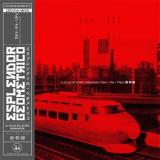
El Pulso del Acero: Shinkansen is Esplendor Geométrico's electrifying new album, blending trance-inducing industrial rhythms with bold voice and noise collages. Featuring 16 tracks, it revisits the raw power of their 80s classics while exploring futuristic industrial sounds, with recordings from Tokyo (2025) and a rare previously limited tracks now on vinyl for the first time. After over 40 years of continuous innovation, the influential Spanish duo continues to shape industrial, techno, and experimental noise music worldwide. Available on double vinyl and CD digipack. The raw power of their early work is also present here in some brilliant reconstructions of 80s tracks turning out very different from the originals (Rotorama, Trybuna V, Shinkansen, Héroe del Trabajo 2025, or Introspectivo). Songs such as Auto Reverse will be especially appreciated by the most avid fans of EG's early sound. Other tunes of futuristic industrial music closer to their previous album, Strepitus Rhythmicus, are also included (Experiencia AV, Isla, Por un Perro_) Ten tracks were recorded in 2025 in Tokyo, where Arturo Lanz (founding member of E.G.) currently resides. The other six were released, only on CD,in an ultra-limited edition shared with the group De Fabriek in 2023, long sold out, now finally on vinyl for the first time. Born in 1980 as a trio, and currently a duo formed by Arturo Lanz (founding member) and Saverio Evangelista (member since 1991), Esplendor Geométrico is an influential and international electronic cult band and also a rare case in the Spanish music scene, as they have developed their own independent path aside from tags, fashion or trends, in spite of being often classified as industrial music. Their career for more than four decades hasn't had interruptions. They haven't stopped composing, releasing albums or playing live.Their influence has marked many later artists, usually classified in the so-called industrial music or rhythm & noise, as well as artists from current techno and certain types of experimental noise music.
Vivel is Alexander Eldefors’ second release under his own name. Built around eurorack and field recordings, many captured during still moments while traveling to visit family and friends. The album was created during a period of transition. It functions as an anchor in a time of change, representing a sense of home, safety, and stillness.
Alexander Eldefors is a producer, composer, and mixing engineer based in the countryside outside of Stockholm, Sweden. With a background as both a sound engineer and musician, he has spent years recording, mixing and playing in a wide range of bands and solo projects. In 2019, he consciously slowed down and returned to a more intimate and quiet musical expression, leading to the release of his debut album Bergen in 2020 under his own name. Bergen is the Swedish word for mountains and reflects the fact that Alexander grew up in the north of Sweden close to the mountains.
His music is minimalistic, melodic, and embracing, shaped by a deep connection to nature. Natural environments are a constant presence in his work, serving both as inspiration and as a sound source. Alongside this, he is drawn to the raw textures of everyday objects, working with foley sounds and field recordings. His arrangements unfold as organic sound collages, where elements blend freely and imperfections are preserved to maintain a natural, human feel.
Further exploring his signature darker peak-time Cocktail D'Amore sound with highly effective collages of samples and added elements, Trent comes on strong at 127BPM with "BB Disco" on the A side, a disco percussive heavy 8 minute galloping excursion with an array of trippy layers, guitar and sound effects. B side goes more in the cosmic hole chugger realm with two hypnotic tracks at 111 and 106 BPM. Big sounding club tools ood for the healthy DJ bag, mastered at man made mastering.
- A1: Hymn For Konori 12:08
- A2: Shatterin’ Man Falling 8:28
- B1: Mandrake Memorial 10:14
- B2: Stoned Age 12:52
- C1: Tickling That Great Pudarkus In The Sky 16:24
- C2: Psychedelic Underground 4:38
- D1: Bagpipe Gestation 10:31
- D2: Scissors, Radio, Bongo And Bell 10:56
Active for 40 years, Nurse with wound is one of the projects of Steven Stapleton, materialized in a very wide range of hysterical noise over sound collages and cut ups, abstract music, soothing drones and surreal sound paintings, and more rhythmical and mechanical pieces, always inspired by Dadaism and Futurism, Krautrock, jazz improvisation, surrealism, never losing his main goal, that is having fun and enjoying himself.He has had many collaborators, a recurrent one in the 80s and 90’s being Current 93’s David Tibet, another noticeable one still at work with him is Andrew Liles.The main line of this unpredictable sound builder is hectic and uncompromised, his point of view is that everything is possible and applies it to himself. As a youngster he wanted to be an artist so decided he was one . He is not a musician, and says he has no interest in becoming one. Surprisingly, (or not!), the love of his life is building sculptures out of recycled and reclaimed materials, building things with anything, even junk. And sounds, we are a witness to it.With these very strange juxtapositions of styles and manners, female rap music and 50s and 60s lounge music having a special top priority in Steven’s tastes, and a creativity that has no bounds no taboos, with a taste of novelty every time, Nurse with wound will no doubt continue to surprise people listening to his works, and himself, as he wants to keep it fresh every time, mostly for him.
- A1: She And Me Fall Together Like Free Death
- B1: Black Is The Color Of My True Loves Hair
- B2: Chicken Concret
- B3: Gusset Typing
- C1: She And Me Fall Together Like Free Death (Phosphorous Mix)
- D1: Chicken Korma
- D2: Fine Writin
- E1: She And Me Fall Together In Free Death (Funereal Mix)
- F1: Yellowed
- F2: Seeting Red
- F3: Black
Logical Absurd is very proud to present the 20th Anniversary of the album "She And Me Fall Together In Free Death" by Nurse With Wound. "She and Me Fall Together in Free Death" is probably the most approachable, largely "musical" album that NWW has released since Rock N' Roll Station. It's also one of his strangest concepts, a marriage of trance inducing Krautrock grooves with a traditional jazz standard and some jarringly atonal musique concrete. Side A is the 20- minute title track: a slow-motion jam reminiscent of of one of Can's sidelong tracks on Tago Mago or the more avant-garde grooves of Tony Conrad and Faust's Outside the Dream Syndicate.
The propulsive Jaki Liebezeit drumbeat is the foundation for a long jam session with what sounds like a dijderidoo and layers of guitar feedback. It's a massive, heavy sound, the kind that Julian Cope would devote a whole chapter to in his "Kratrocksampler". Side B is one long piece with three distinct movements. Beginning with those familiar, World Serpent-trademark windchimes, the listener is quickly ushered into Staple- ton's singing debut (!) in a rendition of the oft-covered traditional jazz ballad "Black is the Color of My True Love's Hair" This was a favorite of the recently deceased Nina Simone, and also of the avant-jazz screamer Patty Waters. Nurse With Wound's version is backed by cello drones, repetitive guitar strums and tambourine, sounding very much like The Velvet Un- derground's "Venus in Furs".
It's such a treat to hear Steven Stapleton's multitracked vocals cover this classic song, and this eerie version rates as one of my favorites. This song and the title track prove to the naysayers that Nurse With Wound is equally adept at rock n' roll songcraft as he is at demented sound collages. The creepy jazz cover seques into "Chicken Con- cret (For Missy E)", a truly warped tape-edit job that juxtaposes chicken squawks and sythesized birdcalls with random bleeps, speaker hiccups and gongs.
- 1: Gage
- 2: Sith
- 3: Dianoga
- 4: Imperial March / Alderaan
- 5: Jundland Wastes
- 6: Bric-A-Brac
- 7: Gage (1996 Demo Version)
Kashyyyk was originally released in late 1995. Each copy was recorded onto a blank cassette, almost never new. We'd find boxes of tapes at flea markets and dub the demo over one side of them. Never knew what was on the other side. The collage on the cover evolved over time. Early copies had a sparse cover and later copies had a cover collages like this one. The text also changed over time. Edits were made, the thanks list grew, and the address changed. The text on this rereleases is the same as the last copies made in the '90s, with only tiny changes. Three of these songs were recorded in August of 1995 and originally released as the 8D8 demo. We made an unknown number of copies before we recorded again with Matt on guitar. We added our three new songs to the old and named the demo demo after Chewbacca's home planet. The other collages were put together specifically for this 30th anniversary release. Bonus track: Gage recorded January 19, 1996. This is the original version with Matt on vocals. Gary re-recorded the vocals before it was released on Cry Now Cry Later vol. 4.”—Noothgrush
"Ensomheden Vi Deler" ("The Loneliness We Share") is the result of a dialogue between the collages and the music of øjeRum, initiated by IIKKI, between December 2024 and July 2025.
øjeRum is Copenhagen based musician and collage artist Paw Grabowski.
With his collages, the distinctive feature of øjeRum's works is their ability to combine different historical and artistic periods, such as ancient sculpture, medieval frescoes, classical painting and photography, and to make them interact with one another. øjeRum is also renowned for his work as a musician, where he stands out for his surreal, mysterious and poetic universe. His music and art are closely linked. These two sides of the artist's work are constantly intertwined.
In his øjeRum guise, he plucks and strums his treated acoustic instruments, sounding at times like church bells, at times like angelic harp, at time like drones, and suspends the listener in the magic of his melodies. With a deep back-catalogue of releases since 2014 - spanning labels such as eilean rec., Room40, Line, Opal Tapes and many more - he continues exploring his minimal, textural and deeply personal style of ambient music.
The collage and music project "Ensomheden Vi Deler" ("The Loneliness We Share") is an exploration of loneliness, closeness and distance. A meditation on the fragile architectures and hidden shapes of human connection. This is his second release on IIKKI.
Fine Art Book, Ltd. to 500 copies:
Hand numbered & hand stamped / first edition and only edition (no re-print) / hardcover book (15 cm x 21 cm) on Wibalin Natural Cotton White / 80 pages, 35 collages printed on Freelife Vellum 120g/m2 / Swiss Binding / Coloured edges with neon green pantone / Neon Green pantone on front and back cover (logo, slot and circle) / Sticker on front cover.
Elations Recordings presents "Return of the Airpoets", an exploratory recording from longtime collaborators Reuben Lewis (I Hold The Lion's Paw) & Adam Halliwell (Mildlife, IHTLP), occupying a unique space between contemporary experimental music and avant jazz. Engineered and mixed by Reuben Lewis in 2023, and featuring guest appearances from acclaimed Australian drummer Ronny Ferella.
"Return of the Airpoets" continues a conversation begun with 'Cygon Dance', an extended duo between Lewis and Halliwell from Halliwell's 2023 LP "Freedom Lapse"; a dialogue that stems from a shared love and respect for Jon Hassell's Fourth World music. Sonic pioneer and adventurer, Hassell's futuristic vision advocated possible musics, stressing plurality and multiplicity. Faithful to his vision, Adam and Reuben, as trailblazers rather than imitators, delight in boundless musical possibilities, adopting Hassell's futurism as stock-in-trade, making it their own while augmented with neo noir hues and hints of the tilted electro-funk of Miles Davis' collaborations with Marcus Miller.
These nine tracks flow together as a unified suite, their shadowy presence stitched from fractured narratives: imaginary crimes, murders, dreams, the unspoken. At the same time, you can detect the artists' meticulous attention to sonic detail, feel the undercurrents, the complex layering. This music has been distilled, winnowed, from extended improv sessions, with the artists - as producers - zeroing in on offcuts, shards, and splinters, seamlessly patching together fragments in post-production to construct intricately layered sound collages, taking a leaf out of Tao Macero's book, building from the ground up.
Who are these airpoets? Their mystifying trial suggests the travails of Joseph K, sentenced for unspecified crimes. But I prefer to see them as fugitives escaped from Robert Bolaño's novel, "Savage Detectives". In Bolaño's book, poet Juan Garcia Madero is granted admission to the shadowy group of poets, the Visceral Realists, whose movement has no clear aims, and whose members "walked backward . . . gazing at a point in the distance, but moving away from it, walking straight toward the unknown." Like the visceral poets, these airpoets, Reuben Lewis and Adam Halliwell, set their sights on a point on the distant horizon, setting off without map or compass, drawing nearer and moving away, towards the unknown.
- Threetoone
- Freaks Of Nature
- Burning Air
- First Contact
- Humans
- March Of The Lost Souls
- Underground
- Ashes To Ashes
- It Up To You
- This Means War
- The Hum
Rot/Schwarzes Ink-Spot Vinyl, limitiert auf 300 Exemplare. Drei Buchstaben. Drei Musiker. Drei Instrumente. Drei Jahre. Graf Zahl hätte seine Freude an diesem Album_ HUM loten ihre dunklen Stoner-Klangwelten weiter aus. ,three" bringt sowohl druckvolle Post-Rock-Songs als auch psychedelische Klangexperimente. Jeder Track scheint eine Idee zu verfolgen; jeder eine 4-Minuten-Reise. Die Themen drehen sich um Umweltzerstörung, gesellschaftliche Irrwege und Spacetrips. ,three" ist das Album für die Apokalypse oder für einen Abend im Weltraum. Der Spaß kommt dabei nicht zu kurz: Die Dunkelheit wird auf fetten, langsamen Grooves präsentiert. Die Stücke sind kompakt und melodisch. Katharsis ist das Ziel: Wer mit offenen Ohren hört, dem könnte es nach den 11 Tracks und 41 min besser gehen_ Eine aufregende Reise durch musikalische Klangwelten (Surf, Gothic/Dark Wave, Kraut und Prog-Rock) mehrerer Jahrzehnte. Die HUM-typischen schweren Riffs (im Schatten von Godzilla) mit komplexen Rhythmen und Breaks werden erweitert durch neue Elemente wie Surfgitarre, Synthiesounds und gesangliche Experimente. Der meist mit Effekten verfremdete Gesang wird spärlich und gezielt eingesetzt mit oft kurzen Textfragmenten, welche die Stimmung der Songs textlich untermalen. Dazu kommen drei instrumentale Soundcollagen, die als düstere Überleitung zwischen den Songs dienen. Ein gewisser roter Faden scheint sich thematisch durch das Album zu ziehen. Red/black ink spot vinyl. Limited to 300 copies. Three letters. Three musicians. Three instruments. Three years. The Count would have loved this album...HUM continue to explore their dark stoner soundscapes. "three" features both powerful post-rock songs andpsychedelic sound experiments. Each track seems to pursue an idea; each one a 4-minute journey. The themesrevolve around environmental destruction, social aberrations, and space trips."three" is the album for the apocalypse or for an evening in space. But there's no shortage of fun: thedarkness is presented on fat, slow grooves. The pieces are compact and melodic. Catharsis is thegoal: if you listen with open ears, you might feel better after the 11 tracks and 41 minutes...An exciting journey through musical soundscapes (surf, gothic/dark wave, kraut and prog rock) spanning severaldecades. The heavy riffs typical of HUM (in the shadow of Godzilla) with complex rhythms and breaksare expanded by new elements such as surf guitar, synth sounds and vocal experiments. The vocals, mostlydistorted with effects, are used sparingly and purposefully, often with short text fragments that underscore the moodof the songs lyrically. In addition, there are three instrumental sound collages that serve as dark transitions betweenthe songs. A certain common thread seems to run through the album thematically.
- 1: Drugdealer Feat. Weyes Blood - Real Thing
- 2: Drugdealer - The News
Over two years in the making, and many more in the two musician’s shared dream, ‘Real Thing’ unites longtime collaborators Michael Collins (Drugdealer) and Natalie Mering (Weyes Blood). Recorded across continents, ‘Real Thing’ is a return, a refinement and a reminder of the deep connection that has bound these two titans of song over multiple collaborations. The journey of ‘Real Thing’ began when Collins, while on a European sojourn, crossed paths with Parisian producer Max Baby. As one does while in Paris, they found themselves in a studio owned by a member of the 1970s French prog rock band Magma. There, a chord progression long-gestating in Collins’ brain blossomed into a bonafide demo.
Collins recalls, “I realized immediately that it was the perfect thing to show Nat, who I had been wanting to collaborate with again for years.” The connection and musical camaraderie between Collins and Mering dates back to 2014 in Oakland, where a chance meeting and studio session marked the genesis of their enduring partnership. Collins reflects, “Since then, I’ve felt like she’s my musical family. I can’t really ask for more in terms of someone who inspired me to even get to this place in my songwriting.” On the B-side is ‘The News’, Drugdealer’s first collaboration with Robbie Chemical. What began as a simple harmony grew into a panoramic partnership, the musician’s voices effortlessly entwined, and a pop paragon envisioned. Inspired by generational conversations on chaos, change and connection, the track opens a new chapter - topical, personal and unmistakably Drugdealer. As Drugdealer, Michael Collins has crafted a career that blends introspective songwriting with a reverence for classic pop and R&B. A native of the East Coast, Collins’ musical adventure began with the experimental pop collages of Run DMT and Salvia Plath before evolving into the more melodic, refined songwriting heard in Drugdealer’s acclaimed albums ‘Raw Honey’ and ‘Hiding In Plain Sight’. Natalie Mering, better known as Weyes Blood, has similarly forged a path of emotive, transcendental folk-pop that delves into themes of myth, love and existential longing.
Known for her ethereal voice and evocative lyrics, Mering’s latest works, ‘Titanic Rising’ and ‘And In The Darkness, Hearts Aglow’, are nothing short of modern classics, though also feel like just the start of this artist’s undeniable ascent. “For both artists, this is their first song since their respective 2022 albums, and what a way to come back. ‘Real Thing’ feels like uncovering a forgotten ’70s disco duet” - PASTE “A lush and insistent folk-pop jam” - Stereogum For fans of Mac Demarco, Kate Bollinger, Men I Trust, Toro y Moi, TOPS, Alice Phoebe Lou, Tame Impala, Thee Sacred Souls, Vacations, Allah-Las, Kurt Vile, Beach Fossils, Slow Pulp, Foxygen, Unknown Mortal Orchestra, Hand Habits, Father John Misty, Oracle Sisters, Whitney, The Lemon Twigs, Mild High Club, Khruangbin, Angel Olsen.
- I Couldn't Find The Light
- Conditional Love
- Just (Feat. M Sage)
- Somehow
- Night One
- Doubt
- Somewhat Burdensome
- A Little Death
LTD. SUNFLARE VINYL[29,20 €]
Claire Rousay"s music cascades from a well of documented experience, reflections of the past that compose the present. A prolific multi-instrumentalist, producer, and composer, Rousay gracefully crafts boundaryless music. From her frequent and acclaimed collaborations with artists like M. Sage, more eaze, Gretchen Korsmo, Andrew Weathers, LEYA, and Alex Cunningham, to her film scoring like on The Bloody Lady. From her own compositions to her solo pop work, Rousay"s music is delicate yet powerful, carefully constructed with a casual intimacy. Rousay collages a wealth of found sounds and field recordings with earthy strings, stately piano, and processed instrumentation, all of which trace the outlines of memories and distinct impressions and create a complex constellation of feeling. Her music has evolved from confessional to conversational and excavates the rich emotional essence of each passage. Her work as both archivist and adept arranger and orchestrator merge sublimely into deeply honest and engrossing music. On a little death, Rousay"s blend of pop sensibility and compositional acumen turn abstracted sounds into tangible feelings, its warm, glimmering glow coalescing sensually with the darkness.
Shadows fold into colour. Memory dissolves into noise. You brush up against the walls of the mind. Touch is soft as breath. On ‘B side’, Areliz Ramos follows her work’s current into its more “fantastic and elusive… and even romantic” side; a place where fantasy loosens the bolts of reality and memory, and emotion is alluringly refracted into musical collages and loose-strung compositions. Across the album, voices drift in and out of an intimate space, while pensive guitar lines stumble and bloom like scribbled unresolved notes in a diary. Beneath its icy, often chaotic surface, ‘B side’ radiates a deep sense of joy and fragility. Ramos sketches out an entire world by free association, collaging notions and echoing quiet thoughts into deeply honest snapshots of daydreams.
Areliz Ramos is a Peruvian producer living in London, recognized for an evocative palette weaving lo-fi and downtempo threads into dreamlike, abstract emo narratives. While her debut ‘Frío’ (Where to Now?), orbited around homesickness and estrangement, ‘B side’ embraces imperfection, incorporating her guitar (named "Frank"), pedals, synthesizers, and her own vocal textures for the first time, privileging emotional immediacy over technical precision. The creative process behind this album reflects a conscious decision to let go, loosen control, let intuition lead, and engage her own ‘B’ side.
Rather than constructing a safe haven from hardship, Ramos offers a cracked mirror, staring right at it, embracing that vulnerability. The gentle and beautiful ‘B side’ explores fleeting satisfaction, or the elusive comfort sitting just out of sight.
Amonita, the ethereal musician known for her enchanting compositions and captivating live performances, is set to release her latest body of work, the Rainbow EP, under Lee Burridge’s esteemed record label All Day I Dream.
Since her debut in 2017, Amonita has been on a steadfast mission to craft iconic melodies that resonate deeply with listeners, evoking emotions that linger long after the music fades. She seamlessly blends live instrumentation with electronic elements, creating an immersive sonic experience that transports audiences to a world of serenity and wonder. Amonita is no stranger to All Day I Dream; In addition to her Secret of Happiness EP in 2019 and Aura EP in 2021, Amonita has contributed tracks on two A Winter Samplercompilations, and was featured on Gorje Hewek’s 2021 Collages album released on the label.
Drawing inspiration from her time spent in Turkey surrounded by nature, Amonita infuses the Rainbow EP with the essence of the awe-inspiring beauty she experienced: sun-kissed landscapes, tranquil seas, and the vibrant hues of a majestic rainbow. Her music speaks to the hearts of true dreamers – those who believe in love, walk barefoot in the rain, watch sunsets, admire the stars, and are impressed by the mystery and beauty of the moon.
In her own words, Amonita shares, "No matter how difficult your path through storms and thunder is, after that you will see a rainbow!"
This sentiment encapsulates the overarching theme of resilience and hope that resonates throughout the EP, serving as a beacon of light in challenging times. The Rainbow EP is a testament to Amonita's boundless creativity and passion for storytelling through music. From the shimmering melodies of title track ‘Rainbow’ to the hypnotic rhythms of ‘Amulet’ to the dark and mysterious ‘Moon Dust’, each track invites listeners on a transcendent voyage of discovery.
Prepare to be spellbound as Amonita unveils the Rainbow EP on March 29th. Experience the magic for yourself and let the music transport you to a world where you can dream while awake and rainbows reign supreme.
- A1: Slaughter 03 20
- A2: Dusk 01 50
- A3: Winter Clouds 01 28
- A4: Hollow Tree 01 56
- A5: Still Alive 01 11
- A6: The Cave 02 13
- A7: In Court 01 37
- A8: Hope Through Confusion 01 49
- A9: Not Guilty 51
- A10: Village Ceremony 51
- A11: Road Tension 01 22
- B1: Kneipe 01 18
- B2: Hunt Introduction 01 30
- B3: Rifle, Second Attempt 38
- B4: Hunt Epilogue 01 01
- B5: Confrontation 02 21
- B6: Judenfreund 01 19
- B7: Flashback 41
- B8: A True Friend 57
- B9: False Promises 01 39
- B10: How Do You Suffocate Weeds 01 55
- B11: Under The Masks We All Look The Same 02 58
- B12: Dream 01 32
- B13: Freedom 01 08
Erik K Skodvin's feature-length score to Thomas Roth's thriller "Schächten" feels like the epitome of all his musical projects, conjuring a dark cinematic trip through 1960's post-WWII Vienna in a film that touches on topics such as law, justice & revenge.
Releasing a soundtrack as a stand-alone album can be challenging; and "Schächten" is by no means a typical listening experience. The record contains 24 more or less short pieces evolving through dramatic movements, underlaying menace and deep emotive scenes. One thing that stands out is the linear atmosphere throughout the story which creates a wholeness that keeps your attention to the very end. Set in wintery Austrian landscapes in dimly saturated colours, the film's dramatic events with dark political undertones feels like a perfect situation for Skodvin's atmospheric collages - perhaps sounding closer than ever to his early works as Svarte Greiner or Deaf Center. Cello, violin, piano, analogue synth and plenty of hardly recognizable instrumentation come together in a record that feels very organic in its subdued tones. The score also features percussion by Andrea Belfi as well as a Chopin piano interpretation by Kelly Wyse to the bizarrely schizophrenic piece "Judenfreund".
With the contemporary world sliding into darkness again, listening to the soundtrack feels like coming to terms with ones own anxieties - something that in the end comes through as a cleansing experience. As quoted in the film "Everyone is their own devil. And we make this world our hell".
Short synopsis : "Vienna 1960s - The young Jewish business man Victor has to witness how the prosecution of a Nazi crime against his family fails. The political and legal system is still virtually run by former Nazis with large parts of society being entangled in the past. When Victor also loses his grief ridden father and his girlfriend’s family opposes their relationship and his identity, Victor begins to loose faith in formal justice and takes matters in his own hands."
"Ensomheden Vi Deler" ("The Loneliness We Share") is the result of a dialogue between the collages and the music of øjeRum, initiated by IIKKI, between December 2024 and July 2025.
øjeRum is Copenhagen based musician and collage artist Paw Grabowski.
With his collages, the distinctive feature of øjeRum's works is their ability to combine different historical and artistic periods, such as ancient sculpture, medieval frescoes, classical painting and photography, and to make them interact with one another. øjeRum is also renowned for his work as a musician, where he stands out for his surreal, mysterious and poetic universe. His music and art are closely linked. These two sides of the artist's work are constantly intertwined.
In his øjeRum guise, he plucks and strums his treated acoustic instruments, sounding at times like church bells, at times like angelic harp, at time like drones, and suspends the listener in the magic of his melodies. With a deep back-catalogue of releases since 2014 - spanning labels such as eilean rec., Room40, Line, Opal Tapes and many more - he continues exploring his minimal, textural and deeply personal style of ambient music.
The collage and music project "Ensomheden Vi Deler" ("The Loneliness We Share") is an exploration of loneliness, closeness and distance. A meditation on the fragile architectures and hidden shapes of human connection. This is his second release on IIKKI.
Fine Art Book, Ltd. to 500 copies:
Hand numbered & hand stamped / first edition and only edition (no re-print) / hardcover book (15 cm x 21 cm) on Wibalin Natural Cotton White / 80 pages, 35 collages printed on Freelife Vellum 120g/m2 / Swiss Binding / Coloured edges with neon green pantone / Neon Green pantone on front and back cover (logo, slot and circle) / Sticker on front cover.
Off The Record (faitiche 39), the new album by French collagist Roméo Poirier, is an amusing romp through the discarded history of recording studios. It contains fourteen miniatures based on accidental recordings of studio talk, revealing things that were never meant for the public: we hear instructions from studio staff, scraps of talk between musicians, or just microphones being adjusted, as well as false notes, false starts: everyone stops. Start again: 1, 2, 3, 4!
Poirier’s approach recalls Accumulation, an artform practiced by Arman, Jean Tinguely and Daniel Spoerri that involved piling up everyday items into assemblages. The objects themselves often remained unaltered, the artistic gesture consisting in the careful curating of a distinctive selection. Poirier’s audio collages explore similar terrain. The fourteen pieces on Off the Record combine more than a thousand found sounds from studio archives into complex miniatures. The audio content of these outtakes is twisted, stretched, cut, reassembled, slowed down and accelerated. Voices cut into a microgroove, from a very old recording, intertwine with digital voices gleaned from YouTube. All of them in dialogue, engaging the listener with the impression of being part of a new music group.
Poirier uses the mundane routine of setting up before the actual recording gets underway to tell a universal story about working in a recording studio. And he manages something few achieve, transforming specialist knowledge into a narrative whose beauty goes far beyond its immediate subject. It speaks to everyone, because the story is told in a musical language that is open and accessible, evoking magical images reminiscent of Oz – a world consisting less of events than of camp hallucinations, captured in grainy black-and-white photographs. En passant, Poirier shows us how the notion of material accumulation can produce great art.
Written and produced by Roméo Poirier, mastered by Stephan Mathieu, photos by Roméo Poirier, graphic design by Tim Tetzner.
2025 Repress
Ash Ra Tempel is the eponymous debut studio album by the Krautrock band Ash Ra Tempel. It features guitarist Manuel Göttsching with drummer Klaus Schulze and bassist Hartmut Enke.
Engineered by Conny Plank it was recorded in March 1971 and released in June 1971 on Ohr Records.
This 50Th Anniversary Album will be Released in Memoriam of all the Musical Contributors to this Release and on Manuel Göttsching´s MG.ART label. It´s the fourth and headlining edition in this series and was finalised, carefully overseen by Manuel Göttsching himself in the late Autumn of 2022.
Much has been written about the record and band.
Having finished a first musical chapter with their Steeple Chase Bluesband and still at very young age of only 17 and 18 years old Manuel Göttsching and Hartmut Enke met Klaus Schulze. Together they started to write and and compose what, to many, became one the holy grails of Psychedelic Rock and early Electronic Music -
the German variant which was later also named "Krautrock":
Ash Ra Tempel´s self-titled first album "Ash Ra Tempel".
"The trio of Klaus Schulze, Manuel Göttsching and Hartmut Enke decided to abandon conventional composition and song writing, in favour of free-form improvising and developing a new musical language. As such, they became notorious for jams that could exceed 30 minutes." Says Discogs. "Some of these recordings can be found on Manuel Göttsching´s "The Private Tapes" releases", which will be re-released on MG.ART as well, following this edition.
"Krautrocksampler" author Julian Cope mentioned it to be "… one of the greatest rock 'n' roll LPs ever made." (Julian Cope Presents Head Heritage | Unsung | Reviews | Ash Ra Tempel - Ash Ra Tempel". 15 March 2000.)
AllMusic called the album "both astonishingly prescient and just flat out good, a logical extension of the space-jam-freakout ethos into rarified realms."
Here we would like the Band to be heard, for what can easily be said as the first time in 50+ years, with the exception of some early Journalists for whom the young Manuel Göttsching wrote a statement of intent (the original text can be found inside this edition) as following:
"Our musical concept is based on a combination of blues rock and delicate collages of electronic sound. These two elements should remain inseparable. And in their complex unity, the different musical philosophies of each musician find a common sweet spot. Our music is a permanently impulsive experience left to develop as it will, starting from a common fixed point of departure. This is where the difficulty of the music begins: No standardized formulation of our music can and should be possible. Only the constant reaction within the band can determine the musical result. And this requires constant listening with full concentration on the part of the creators. The idea of a particular musician will be - if flexible enough - absorbed by the others, transposed to their own instrument, and reflected back into the music as an individual contribution. This reciprocity within the band is then transferred over to the audience. And this process means that their reaction is not only a contribution to the end result; it actually makes them jointly responsible for the creation of the final musical product.
…
On our album, the track "Amboss" represents the first layer. Conventional instruments communicate familiar music which is in part expanded through electronic means. In the second track of the album - "Traummaschine" - the actual basic sound approach is dissolved into an electronic Nirvana which no longer allows the concrete identification of actual instruments. Innocent, virgin listening, free from any and every association, can finally begin - and the music can be absorbed and processed free from the limitations of categorization. That is the purpose of our music: To convey freedom without any predetermined criteria or traditions.
Thank you for your attention."
(Taken from the original A-R-T Bio 1970)
Hartmut Enke, Manuel Göttsching and Klaus Schulze aka. Ash Ra Tempel travelled to Hamburg in March 1971 to record their debut, with assistance of another Icon, legendary engineer Conny Plank.
The rest is history.
2025 Repress
Ash Ra Tempel is the eponymous debut studio album by the Krautrock band Ash Ra Tempel. It features guitarist Manuel Göttsching with drummer Klaus Schulze and bassist Hartmut Enke.
Engineered by Conny Plank it was recorded in March 1971 and released in June 1971 on Ohr Records.
This 50Th Anniversary Album will be Released in Memoriam of all the Musical Contributors to this Release and on Manuel Göttsching´s MG.ART label. It´s the fourth and headlining edition in this series and was finalised, carefully overseen by Manuel Göttsching himself in the late Autumn of 2022.
Much has been written about the record and band.
Having finished a first musical chapter with their Steeple Chase Bluesband and still at very young age of only 17 and 18 years old Manuel Göttsching and Hartmut Enke met Klaus Schulze. Together they started to write and and compose what, to many, became one the holy grails of Psychedelic Rock and early Electronic Music -
the German variant which was later also named "Krautrock":
Ash Ra Tempel´s self-titled first album "Ash Ra Tempel".
"The trio of Klaus Schulze, Manuel Göttsching and Hartmut Enke decided to abandon conventional composition and song writing, in favour of free-form improvising and developing a new musical language. As such, they became notorious for jams that could exceed 30 minutes." Says Discogs. "Some of these recordings can be found on Manuel Göttsching´s "The Private Tapes" releases", which will be re-released on MG.ART as well, following this edition.
"Krautrocksampler" author Julian Cope mentioned it to be "… one of the greatest rock 'n' roll LPs ever made." (Julian Cope Presents Head Heritage | Unsung | Reviews | Ash Ra Tempel - Ash Ra Tempel". 15 March 2000.)
AllMusic called the album "both astonishingly prescient and just flat out good, a logical extension of the space-jam-freakout ethos into rarified realms."
Here we would like the Band to be heard, for what can easily be said as the first time in 50+ years, with the exception of some early Journalists for whom the young Manuel Göttsching wrote a statement of intent (the original text can be found inside this edition) as following:
"Our musical concept is based on a combination of blues rock and delicate collages of electronic sound. These two elements should remain inseparable. And in their complex unity, the different musical philosophies of each musician find a common sweet spot. Our music is a permanently impulsive experience left to develop as it will, starting from a common fixed point of departure. This is where the difficulty of the music begins: No standardized formulation of our music can and should be possible. Only the constant reaction within the band can determine the musical result. And this requires constant listening with full concentration on the part of the creators. The idea of a particular musician will be - if flexible enough - absorbed by the others, transposed to their own instrument, and reflected back into the music as an individual contribution. This reciprocity within the band is then transferred over to the audience. And this process means that their reaction is not only a contribution to the end result; it actually makes them jointly responsible for the creation of the final musical product.
…
On our album, the track "Amboss" represents the first layer. Conventional instruments communicate familiar music which is in part expanded through electronic means. In the second track of the album - "Traummaschine" - the actual basic sound approach is dissolved into an electronic Nirvana which no longer allows the concrete identification of actual instruments. Innocent, virgin listening, free from any and every association, can finally begin - and the music can be absorbed and processed free from the limitations of categorization. That is the purpose of our music: To convey freedom without any predetermined criteria or traditions.
Thank you for your attention."
(Taken from the original A-R-T Bio 1970)
Hartmut Enke, Manuel Göttsching and Klaus Schulze aka. Ash Ra Tempel travelled to Hamburg in March 1971 to record their debut, with assistance of another Icon, legendary engineer Conny Plank.
The rest is history.
TOTEMIC MODULATIONS, UNEARTHED FROM WIND AND WORDS
“The album Chênes mainly brings together songs. These songs are narratives of scenes that unfold in the forest, or in the city but with animal and plant protagonists. One song also tells the story of a solitary walk in the mountains. They are like zoomed-in snapshots of the world of insects, amphibians, birds, and mammals. They are also celebrations of growing life, and the pleasure and joy it brings.
Composed over the course of about two or three years, it was a deliberate choice to bring them together for this album, even though they were not initially connected to one another. One of them is an exception and is more of a collection of vocalizations and cries without actual words, composed in a language incomprehensible to humans because it is nonverbal.
This collection of imitated chants and sung songs had to be illustrated by the collages of my friend Fen. Even though the stories describe real species and elements, they are indeed imagined tales. Her collages are, too. There’s also the violin that adds a wandering touch to the pieces, and other instruments that shape the environment and setting of these stories. Bells, bird calls, whistles, flutes, jaw harp, harmonica — all imitate more or less imaginary species. Each has its role and its life, down to the horsehair of the bow that rubs the strings of my violin to bring forth the sound.
Chênes is a title that pays homage to trees I love so much, though without preference over others. They have embodied several giants that I’ve often come across, greeted, and embraced” ~ Roxane Métayer
Marc Moulin’s Top Secret is a mixed bag of downtempo jazz treats and sweet-sounding rhythmic forays into the dark of night. With this recording,
Marc Moulin craftily blends the sound of sexy vocals and collages them against the sounds of muted trumpets, congas, guitars, and drums.
This work comes alive with a jazz flavor, one that seems to have been used by a variety of performers and producers, but
one that is uniquely Marc Moulin. Top Secret is a journey through the kaleidoscopic sound world of 1960s bossa jazz with a taste of
Wes Montgomery, George Benson, and George Duke. Marc Moulin’s Top Secret seems to be half downtempo 1990s chill recording,
and half contemporary jazz, which makes for a compelling fusion. This recording certainly breathes new life into the genre of acid jazz, or downtempo music
This expanded edition of Top Secret - with no less than 5 bonus remix tracks- is available as a limited numbered edition of 750 copies on orange coloured vinyl
“Trustworthy”. is the meaning of “danama”, this Bambara word from Mali. Believing in oneself, in others, in the word given, in desirable futures. Advocating optimism, momentum towards the future, collective strength and the wise magic of cultural blending… especially during these troubled times of endless wars, of nationalist withdrawals or the abundance of naturals disasters, all encouraged by a carnivorous capitalism?
So confidence, we need tons of it. Maintained by the flame, the phlegm and the stratagem of these afro-groove scientists, without ignoring their sorrows nor the scandals of History. This is the athletic art of Arat Kilo, who remain without question the best ethio-jazz orchestra in France, on the trail of this fifth album recorded in the Spring of 2024. Confidence was also needed to change the way things worked. For all the previous albums, the band came together in the studio to play each track together, all in the same room, in the romantic idea of a warm, lively, organic gesture, in the manner of the great Ethiopian masters of the 60s and 70s.
For Danama, the music was initially collected in tandem: guitar/bass, drums/percussion, saxophone/trumpet, and the two voices. A few new instruments were added along the way : dark synthesizers, a bass clarinet, a tiny guitalélé (similar to the ukulele) and a Malian n'goni (sometimes described as ‘the griot's lute’). Then, and above all, there was the question of experimenting with real sound production, using sound design, multi-track exploration and effects applied to the textures collected over eight days at the Gong studios in Montreuil and OneTwoPassIt in Bagnolet just outside Paris.
In this way the band, all growing up influenced by the hip French Radio Nova's ‘Grand Mix’, were completely free to express their natural taste for fusion between genres. Borrowing from the frantic rhythms of Newark's jersey club, English 2-step or New Orleans brass bands, grafted onto Arat Kilo's musical base: tezeta, the famous minor pentatonic scale typical of Ethiopian jazz, melancholic to perfection. The result is layers of sound, collages of emotions, like the album cover, created by artist Clément Laurentin from multicoloured fragments of posters torn up in the street.
So Arat Kilo are back: The same band, the same collective strength, the same fight for values, their new album “Danama” carries the demand for a better world even further, with words of hope from singer Mamani Keita and the social critique of American MC and poet Mike Ladd ! The result is this luminous voyage down the Danama canal. In all, eleven songs and an instrumental, mixed by Mathieu ‘Gib’ Gibert - one of French band La Fine Équipe's beatmakers - set to drive the crowds wild and remind us how to stick together again.
- Collection 001 - 001 A 23:46
- Collection 001 - 001 B 23:48
- Collection 002 - 002 A 18:12
- Collection 002 - 002 B 20:54
- Collection 003 - 003 A 22:14
- Collection 003 - 003 B1 09:33
- Collection 003 - 003 B2 05:25
- Collection 004 - 004 A 16:11
- Collection 004 - 004 B1 07:08
- Collection 004 - 004 B2 09:52
- Collection 005 - 005 A1 08:38
- Collection 005 - 005 A2 08:54
- Collection 005 - 005 B1 07:14
- Collection 005 - 005 B2 03:53
- Collection 005 - 005 B3 03:57
- Collection 005 - 005 B4 04:03
- Collection 006 - 006 A1 17:35
- Collection 006 - 006 A2 05:12
- Collection 006 - 006 B 23:12
- Collection 007 - Merzrock B1 + Dubbing 5 11:21
- Collection 007 - Merzrock A1 + Anemic Pop 1 02:00
- Collection 007 - Merzrock A1 + Anemic Pop 2 08:32
- Collection 007 - E-Study #3-1 + Merzsolo 1 15:49
- Collection 007 - E-Study #3-1 + Merzsolo 2 05:58
- Collection 008 - Concrete Tape Ph#1~ 05:19
- Collection 008 - E8 A1 + 006 A1 06:03
- Collection 008 - Merzsolo 10/6.81 A1 10:36
- Collection 008 - E8 B2/Concrete Tape Ph#1~ 06:28
- Collection 008 - Sans Titre Merz 1 + Tape Loops 04:54
- Collection 008 E6 A3 + Concrete Tape Ph#1~ 06:46
- Collection 008 - Merzsolo 10/6.81 A5 + Violin 03:21
- Collection 009 - N.a.m.4 + E-8 06:11
- Collection 009 - Telecom 1/3 + N.a.m.5 17:32
- Collection 009 - E-3-1-1 11:24
- Collection 009 - E-3-1-2 01:50
- Collection 009 - Tape Loop + Noise 1 (Concrete Tapes) 02:39
- Collection 009 - Tape Loop + Noise 2 (Concrete Tapes) 04:25
- Collection 010 - 007 B1 + Ah Corps 11:47
- Collection 010 - E3 B2 + Ah Corps 11:28
- Collection 010 - N.a.m.6 With Radio & Tapes 22:47
Carrying on their longstanding dedication to the seminal output of Merzbow, Urashima returns with what is unquestionably their most ambitious release to date: “Collection 001-010”, a deluxe, 10 LP vinyl box set limited to 299 copies, gathering together the entirety of the project’s first ten releases, originally released in 1981. Encountering the band in its early incarnation of the duo of Masami Akita and Kiyoshi Mizutani, raw, exposed and bristling with energy, foreshadowing numerous trajectories they would follow over the coming years, these astounding full lengths - the majority of which have never been released on vinyl - come housed in a beautifully produced, deluxe wooden box, with each LP in its own individual sleeve reproducing the original artwork, and a LP-sized 32-page book containing reproductions of artworls and collages by Masami Akita, an interview conducted by Jim O'Rourke, and liner notes penned by Lasse Marhaug, Thurston Moore, and Akita himself, amounting to what is unquestionably one of the most historically significant releases we’re likely to encounter in 2025.
Deluxe Edition of 299 copies, remastered from the original analog tapes by Masami Akita, each LP comes in its individual sleeve reproducing the original artwork, also includes a LP-sized 32-page book. ** Since its founding during the late 2000s, the Italian imprint, Urashima, has become a definitive voice in the landscape of noise. Bringing forth beautiful limited edition releases, they’ve sculpted a singular vision of one of the most vibrant and revolutionary bodies of experimental sound to have graced the globe. Among the many projects that they have supported over the decades, there has been an undeniable dedication to the output of the seminal Japanese noise outfit, Merzbow, making a significant amount of the project’s out of print back catalog available across a range of formats. Now they return with what is arguably their most stunning and ambitious release dedicated to the project to date: “Collection 001-010”, gathering the entirety of Merzbow’s first ten releases, largely privately released by the band on cassette across 1981, in a deluxe, 10 LP vinyl box set. Representing what is effectively ground zero in Japanese noise and collectively amounting to some of the most sought after releases ever produced within that movement, Urashima’s truly beautiful collection comes fully remastered by Masami Akita himself from the original tapes, presenting all but a small number in their first ever vinyl pressings, with each LP housed in its own individual sleeve reproducing the original artwork, alongside a LP-sized 32-page book containing reproductions of artworks and collages by Masami Akita, an interview conducted by Jim O'Rourke, and liner notes penned by Lasse Marhaug, Thurston Moore and Akita himself. Towering with energy and groundbreaking creative vision, within the realms of noise and experimental music, releases don’t get more monumental or historically important than this!
Merzbow came roaring onto the Tokyo scene in 1979, and remains, to this day, one of the most prolific and aggressively forward-thinking projects in experimental music. Eventually becoming the solo vehicle for the efforts of Masami Akita, in its earliest incarnation the project was the duo of Akita and Kiyoshi Mizutani, taking their name from German artist Kurt Schwitters' pre-war architectural assemblage, The Cathedral of Erotic Misery or Merzbau, and quickly set out to challenge entrenched notions of what music could be. Embracing technology and the machine, even in its earliest iterations, Merzbow pushed toward new territories of the extreme, arriving at a space of pure, unadulterated sonic onslaught that has continued, for over 40 years, to set the pace for the entire genre of noise, and has remained one of the movement’s most important, definitive voices, continuously laying the groundwork for countless artists who have followed in its wake.
When dealing with historical gestures, there’s an invertible aura surrounding original line-ups and early statements, and rightfully so. It is often within a band’s debut that we catch the purest glimpse of the raw energy and creative ferment that made them what they are. This is certainly the case when regarding the coveted early releases of Merzbow, capturing the emergence of the project in its form as the duo of Masami Akita and Kiyoshi Mizutani as they helped set the blue print from the then emerging movement of Japanese noise. Over the course of its nearly five decades of activity, Merzbow has always been noted for how prolific and ambitious the project is. This was no less the case in the very beginning. While they were active for roughly two years prior, in 1981 alone they issued ten self-released cassettes numerically titled “Collection 001-010”, albums which have both individually and collectively become holy grails in the realms of noise, with only two - “Collection 007” and “Collection 009” - ever receiving vinyl reissues prior to now.
As Lasse Marhaug deftly articulates in the newly commissioned liner notes for “Collection 001-010”, despite having been recorded in different location across a span of time, the sum total of Merzbow’s first ten releases might be best regarded as a single release to be listened to in the same, durational sitting, with the material standing well apart from what most came to expect from Merzbow, while foreshadowing numerous trajectories the project would take over the coming years. Not only do these recordings feature a vast array of instrumentation - tapes, acoustic and electric guitar, violin, drums, voice, recorder, organ, found sounds, clarinet, homemade and prepared instruments, a vast arsenal of effects and electronics, and piano, to only begin to scratch the surface - the majority of which would disappear from the project’s active sources of sound generation over the subsequent years, but there is a slow pacing and raw sense of openness and exposure that reveals strong connections to the avant-garde improvisations of groups like AMM, Musica Elettronica Viva, and Gruppo di Improvvisazione Nuova Consonanza, the psychedelia of groups like Taj Mahal Travellers and Flower Traveling band (both of whom Akita mentions having seen in youth within his interview with Jim O’Rourke), and rock in general - albeit in fully abstracted forms - unspooling as brittle, pointillistic, textural, raw and abrasive forms, that occasionally flirts with unexpected tonal sensibilities. As Marhaug describes it in his excellent liner notes: «Sonically, “Collection” sounds more sparse and stripped. It’s dry sounding, up-front, no reverb, and there’s less heavy low-end grime and thin on the signature frequency sweeps. Viewed in a 1981 context, musically, it’s more akin to what the LAFMS (Los Angeles Free Music Society) pool of artists were doing at that time than what was happening in industrial music... There’s a strong playfulness throughout, like the sound objects are being explored for the first time, without neither restraint nor hurry. Events are allowed to be fully examined before the music moves on, or simply cuts off. To a large degree, the music on “Collection” feels acoustic in nature, although a Electro-Harmonix ring-modulator features prominently throughout.»
Easily described as a rarely encountered revelation into the original and earlier documented studio sound of Merzbow, “Collection 001-010” collectively amounts to an engrossing sonic journey in its own right, while also allowing for important, often overlooked connections drawn from numerous other creative wellsprings, notably free jazz, underground rock, the output of European and Japanese avant-garde music, as well as Dada, Fluxus, and Mail Art, much of which, beyond the illumination made possible by the sounds, Jim O’Rourke’s fantastic interview with Akita, published in the booklet, further explores, offering great insights into the origins of Merzbow and the thinking behind the project, as well as aspects of the earliest days of Japanese noise.
The 2 Tone sound was a great period in the aftermath of Punk and included influences taken from Jamaican Ska.
Mal-One had already worked on some Two Tone collages and had them put aside for some future project. He thought it would be fun to record some tracks related to these images and sounds. The first track he recorded was an instrumental track in the style of Harry J All Stars ‘Liquidator’ which he called ‘Rude Boy Shuffle’. Initially to be put out as a stand alone track on some reggae label of some sort. He had a poem already which he called ‘Two Tone Story’, so put that on top of the ‘Ska Train Is Back In Town’ rhythm which he had put together for another song of that name. Finally ‘Rude Boys and Rude Girls Listen Up! ‘came together.
Adding to this a couple of dub mixes and we have a 6 track 12”. Mal-One thought the artwork worked better on a 12” format.
Hope you enjoy the outcome.
- Astral Prophecies
- Solar Winds
- Heart Of The Sun
- Andromeda Ascending ( A Fallen Star Rises)
Brand new studio album from rising British metal hopefuls Seven Sisters! Slowly but surely cultivating a reputation for captivating, progressive heavy metal topped with finesse and intelligence, Seven Sisters have positioned themselves as one of the most intriguing young bands in the metal scene, combining an ethereal edge with genuinely catchy hooks and melodies. Comprising of just four tracks, but with a running time of 40 minutes, 'Shadow of A Fallen Star Pt.2' is at once ambitious and accessible, whether utilizing classic heavy metal tropes on lead single 'Heart Of The Sun' or experimenting with emotive atmospheres and ambitious sound collages on the sprawling 20 minute centerpiece 'Andromeda Ascending (A Fallen Star Rises)'.
- I Forget How To Remember My Dreams (Ft. Lia Kohl)
- Tsukiji
- Murmuration/Memorization
- Spring Becomes You, Spring Becomes New
- Stairwell (Before And After)
- What Fills You Up Won't Leave An Empty Cup
- In Between
- Disintegration
"When the Distance is Blue" is Macie Stewart"s International Anthem debut. The Chicago-based multi-instrumentalist, composer, and improviser describes the collection as "a love letter to the moments we spend in-between" - a letter realized via an intentional return to piano, her first instrument and the origin of her creative expression. Here Stewart creates a striking and cinematic work through collages of prepared piano, field recordings, and string quartet compositions, one that gives shape to a transient universe all its own while tracing the line of her musical past, full circle.
WRWTFWW Records is honored to announce the first ever vinyl release for esteemed Japanese producer, composer, and environmental music luminary Yoshio Ojima’s rare forgotten album Club, previously only released as a limited edition of 50 cassettes back in 1983. The electronica/proto-techno/experimental gem is available as an LP reissue supervised by the artist, sourced from the original masters and housed in a heavy 350gsm sleeve. Only 500 copies were made.
A precious and sought-after item among collectors and enthusiasts of early Japanese electronic music, Club is a stunning and timeless collection of avant-garde electronica, proto-techno, mecha-ambient, and ear-pleasing experimentations from Yoshio Ojima, the ambient/environmental master behind the pivotal Music for Spiral albums released in 1988 (aka Une Collection Des Chaînons I and II reissued on WRWTFWW), and producer of Hiroshi Yoshimura’s Pier & Loft, Motohiko Hamase’s #Notes of Forestry, and Satsuki Shibano's iconic Rendez-Vous.
Filled with quirky minimalist acid-synth-and-drum-machine-handiwork, bouncy collages of beautifully childlike techno and pre-IDM, and the irresistible DIY charm of humble beginnings, the 8-track album is a fun, adventurous and risqué-but-catchy-in-the-most-peculiar-way piece of Japanese electronic music history neatly capturing the incredible creative energy boiling through the country’s scene in the 1980s.
Experience the roots of Japanese electronica!
BRUK welcomes the daring shapes and inquisitive textures of ELLLL for her debut album, Earth Rotation. Across 13 scuffed cuts and grubby miniatures the Irish producer shapes out a distinctive sound world, steeped in sample science and powered by low-slung grooves. There's no direct message permeating Earth Rotation, but burning issues around embattled ecosystems hang in the air as ELLLL pushes her sound palette until it bites. Extended instrumental techniques lend the album an in-the-room tangibility, while dislocated micro-loops speak to less grounded atmospheres. Starting from densely packed collages and diligently chipping away until spacious, head-knocking arrangements remain, the end results of ELLLL's process call to mind the wayward sample acrobatics that made trip-hop and jungle so emotionally resonant and eerily alien in the same beat. There's rarely anything like conventional boom-bap or a cosily familiar break, but ELLLL finds compelling rhythms in unlikely sources of funk, whether plucked, bowed, sequenced or sculpted. Even when teetering towards techno on 'Titan', her particular approach is gloriously skewed and, by extension, innovative. No matter how serious the techniques involved, Earth Rotation is a celebration of the magic that happens when sound gets mistreated. If there are foreboding ideas lingering in the album's tendency towards dissonance, ELLLL also knows how to inject her work with a necessary mischief, making her a perfect fit amongst the maverick BRUK alumni.
- A1: Heaven, Or Paradise; And Hell (Ft Adrien Soleiman)
- A2: Our Dead Can’t Rest (Old Jugha Flute Dance)
- A3: Miracle
- A4: The Crane Has Lost Its Way Across The Heaven
- A5: Unraveling (Interlude)
- B1: Zephyr
- B2: Far From The Eye, Far From The Heart
- B3: What Solace Can I Give (Ft Adrien Soleiman)
- B4: …Nothing Matters More Than Touching You Although I Haven’t Touched You Yet
Lara Sarkissian’s long-awaited debut full-length, ‘Remnants’ is an ornate patchwork of ancient and modern sonic shapes that uses the vernacular of electronic music to reformulate Armenian traditions and memories. Taking digitally modeled instruments (such as the kanun, a large zither, and the duduk, an ancient double reed woodwind instrument), vocals, davul and dhol drums, tenor saxophone (from acclaimed Paris-based player Adrien Soleiman) and myriad electronic elements and techniques, Sarkissian tangles the old and the new, creating an immersive, narrative-driven experience that’s powered by history, mythology and her own familial connection to the West Asian landscape. It’s an album that’s best absorbed like a film; only multiple encounters can reveal its layered themes and references to industrial music, noise, various club styles, ambient and traditional folk.
Born and raised in San Francisco and currently based in Los Angeles, Sarkissian has developed her unique approach to composition over years of relentless experimentation across various disciplines. Her interest in music production initially stemmed from her filmmaking and video editing work, when she began to sculpt her own sound collages and scores to accompany the visuals. Since then, she’s constantly blurred the boundary between dance and experimental music, DJing around the world, producing AV installations and scoring film and video projects that have been exhibited in Berlin’s Gropius Bau, Montréal’s Musée d’art contemporain, the Music Center Los Angeles and other prestigious institutions, and releasing music with labels such as Tresor, Knekelhuis, All Centre, Silva Electronics and CLUB CHAI, the label and event series she co-founded. In recent years, she’s also been able to advance the theory behind her art, publishing a conversation with ethnomusicologist Sylvia Alajaji in the Journal of the Society of Armenian Studies in 2021, and unveiling her methodology in Norient’s ‘This Track Contains Politics – The Culture of Sampling in Experimental Electronica’ a year later.
‘Remnants’ is a new stage in Sarkissian’s evolution as an artist; not only is it her first proper album, but it’s the inaugural release on her new platform btwn Earth+Sky. She sees the label as a place to encourage collaborations between musicians and producers and prioritize sound in visual arts realms, and ‘Remnants’ is the ideal proof of concept. It opens with ‘Heaven, or Paradise; and Hell’, a track that’s inspired by the layout of the Armenian sharakan (or hymn) ‘Aravot Luso’. Sarkissian imagines the original piece’s harmonies and melodies as parts of a dreamy electronic opera, using digital kanun sounds to punctuate her woozy, evocative synths. Soleimen joins on tenor sax in the third act, while Sarkissian repeats the chant and Jace Akira adds ghostly traces of electric guitar and bass. And on the rousing ‘Our Dead Can’t Rest (Old Jugha Flute Dance)’, Sarkissian chops urgent davul and dhol drum rhythms with spine-chilling shvi woodwind sounds lifted from a documentary about Old Jugha. The title is a reference to the moving of graves by Armenian families; the area initially housed over 10,000 elaborately carved khachkars (cross stones), one of which is pictured on the album’s cover, provided by historian Argam Aivazian’s archive.
On ‘Miracle’, Sarkissian samples atmospheres from the post-Soviet Armenian comedy film ‘Կիսանդրի’ (Kisandri). She takes this opportunity to lighten the mood a little, powdering her smudged samples with tightly edited breaks and bass thumps. It’s not until the album’s middle section that the duduk, perhaps Armenia’s best-known instrument, makes its appearance. Its familiar reedy tones, popularized by Djivan Gasparyan on his many Hollywood soundtrack appearances, emerge on ‘Unraveling (Interlude)’, weaving through the acidic ‘Zephyr’ and ‘Far from the eye far from the Heart’, a post-punk inspired stomper. Sarkissian mutates the instrument almost beyond recognition, pitching and layering it into a voice-like wail that creeps between her woody, dancefloor-primed percussion on the former, and turning it into a gentle, ghostly moan on the latter. And she brings ‘Remnants’ to a close with two of her most cryptic tracks, marrying digital kanun strings with Soleiman’s resonant tenor hums on ‘What Solace Can I Give’, and looping the same saxophone sounds until they dissolve into the air on the beatless closer ‘…nothing matters more than touching you although i haven’t touched you yet’.
It’s an album that ties up Sarkissian’s various interests and experiences, finding a romantic, poetic glimmer of light in history’s darkness. But most of all, ‘Remnants’ is about the optimism of starting anew, and rebuilding a life from the pieces of everything that’s been left behind.
High Hopes - New album from the Mole.
High Hopes is 17 songs across 40 minutes on one slice of wax that, as advertised, sounds nothing like last month’s Ep, High Dreams. Here, rather than the long form dance form, is a continuation of the beat tape pacing from the last album, a collection of moments posing as ideas posing as a narrative stuffed with oddities and surprises that reward the close listen.
What’s heard on High Hopes is the Mole’s exploration of a love letter, from one person to a family, from the northern Pacific to the southern Atlantic, from a boy to a painted bird. Vancouver Island to Manantiales. The songs range from ambient sound bath and hip hop sludge, up to micro boogie and almost House before tumbling back down and forth again. Bubbling synths, MPCs swung out, samples chopped and chewed, bass and violins from Rick and Sophie, field recordings of birds and frogs and beaches, friends and family and fiestas. Did we mention the love ?! This album has got it all! Original collages from Antonio Carrau envelope this wax: jacket, sleeve and cookie. Antonio’s work is typified by playful combinations and bold statements about living in a embrace of analog and digital health. His co lages marry the corporeal world with an updated, digitalized age of reproduction, inducing feelings of gratitude for the simple everyday scenes we sometimes lose touch with when we forget to slow down. Good living, like breathing, requires inhaling as well as exhaling.
We can’t always produce content, make art, we must also pause, and listen. And enjoy. The Mole is joined by friends and colleagues on several songs included on High Hopes. Rick May plays bass on both Que Rico and album stand out GoinF4er. Sophie Trudeau (Godspeed You Black Emperor) plays and arranges violins on GoinF4er and Danuel Tate (Cobblestone Jazz) and Julz Chaz (Wagon Repair) both play Vibes and Emaxx throughout the album. Working with these incredible talents not only enriched this album, but fulfilled a long standing goal of the Mole’s; to work again with the musicians from whom he learned so much. People who helped inform the shape of Mole to come.
The Mole who was As High As The Sky. The Mole has been ‘recognized’ by the ‘global underground’ since his critically celebrated premiere album, As High As The Sky, but his earlier Eps (Wagon Repair, Philpot, Musique Risquee) got the attention of Top DJs, clubs, and festivals around the world first. His sound remains unique, fresh and deep: enjoying plays in a wide variety of spaces and places.
High Hopes is the Mole’s 5th solo album and his 2nd album for Circus Company (The River Widens) who have also proudly released two eps of Mole magic (Little Sunshine, High Dreams).
*Isn’t that too much time for one record? Short answer - No. Long answer - depends on the material. Due to the many quiet passages in the album, the groove spacing can be modulated and the needle can slow it’s progress towards the center/end resulting in longer sides with continued high gain and low distortion.
High Hopes - New album from the Mole.
High Hopes is 17 songs across 40 minutes on one slice of wax that, as advertised, sounds nothing like last month’s Ep, High Dreams. Here, rather than the long form dance form, is a continuation of the beat tape pacing from the last album, a collection of moments posing as ideas posing as a narrative stuffed with oddities and surprises that reward the close listen.
What’s heard on High Hopes is the Mole’s exploration of a love letter, from one person to a family, from the northern Pacific to the southern Atlantic, from a boy to a painted bird. Vancouver Island to Manantiales. The songs range from ambient sound bath and hip hop sludge, up to micro boogie and almost House before tumbling back down and forth again. Bubbling synths, MPCs swung out, samples chopped and chewed, bass and violins from Rick and Sophie, field recordings of birds and frogs and beaches, friends and family and fiestas. Did we mention the love ?! This album has got it all! Original collages from Antonio Carrau envelope this wax: jacket, sleeve and cookie. Antonio’s work is typified by playful combinations and bold statements about living in a embrace of analog and digital health. His co lages marry the corporeal world with an updated, digitalized age of reproduction, inducing feelings of gratitude for the simple everyday scenes we sometimes lose touch with when we forget to slow down. Good living, like breathing, requires inhaling as well as exhaling.
We can’t always produce content, make art, we must also pause, and listen. And enjoy. The Mole is joined by friends and colleagues on several songs included on High Hopes. Rick May plays bass on both Que Rico and album stand out GoinF4er. Sophie Trudeau (Godspeed You Black Emperor) plays and arranges violins on GoinF4er and Danuel Tate (Cobblestone Jazz) and Julz Chaz (Wagon Repair) both play Vibes and Emaxx throughout the album. Working with these incredible talents not only enriched this album, but fulfilled a long standing goal of the Mole’s; to work again with the musicians from whom he learned so much. People who helped inform the shape of Mole to come.
The Mole who was As High As The Sky. The Mole has been ‘recognized’ by the ‘global underground’ since his critically celebrated premiere album, As High As The Sky, but his earlier Eps (Wagon Repair, Philpot, Musique Risquee) got the attention of Top DJs, clubs, and festivals around the world first. His sound remains unique, fresh and deep: enjoying plays in a wide variety of spaces and places.
High Hopes is the Mole’s 5th solo album and his 2nd album for Circus Company (The River Widens) who have also proudly released two eps of Mole magic (Little Sunshine, High Dreams).
*Isn’t that too much time for one record? Short answer - No. Long answer - depends on the material. Due to the many quiet passages in the album, the groove spacing can be modulated and the needle can slow it’s progress towards the center/end resulting in longer sides with continued high gain and low distortion.
Sometimes, in order to readjust yourself, you need to free yourself from what you know best and detox from your constantly connected life. In the case of Philipp Lorenz, it specifically came down to embracing the countless possibilities that buzz around the edges of today’s dance floors, sealing himself off from any new music, and leaving his familiar setting in Berlin in favor of making new experiences in Italy’s capital.
Lorenz is best known as one half of producer duo Feeling Valencia and the founding member of acclaimed club
outfit Gheist. Under the newfound Bi Disc moniker, he now reveals a musical spectrum that aims at nothing less
than offering the most authentic version of himself.
“Pieces, Falling“ marries the analog with the electronic, and hints at the numerous musical influences of the
renowned composer. Mixed by famed German producer Olaf Opal, the result is a beautiful, deeply personal, and triumphant album filled with cluttered collages made from strings, manic drumming, field recordings, vocals, and layered melodies. Where other producers try to effectively build their songs to something anthemic, Bi Discs debut delivers one elaborate, victorious climax instead, where nothing feels forced but deeply felt.
Satanic Phenomenology stretches the concept of black metal even further than the previous Hail Conjurer albums.
The album, presented as an occult and ritualistic study of nine steps into the demonic realm and the tremendous and disillusioned essence of satanic reality, consists of both the most traditional and melodic black metal songs Hail Conjurer has done to date, but also the abstract and experimental collages of subtle sounds and noise, escaping the definitions of metal music. "Satanic phenomenology is an out-of-body journey! A mystical and deep experience." -Baphomet's Throne Zine
INSTOCK NOW Robert Pollard’s amazing collages in a full-color 238-page book
Robert Glasper’s holiday album In December was released last year as an Apple Music exclusive. We’re now able offer it widely available to physical retail and all DSPs!
Is there anything to be done with carols like “God Rest Ye Merry Gentlemen” and “Joy to the World” that hasn’t been done in the past 300 years? If there is, Grammy-winning pianist, composer, and producer Robert Glasper is the kind of artist to do it. “I like covering songs that people know well,” Glasper tells Apple Music. “That’s what I’ve done throughout my whole career.” It’s true: As a jazz pianist, he’s obviously learned his way around making classics his own, whether they were written by Mongo Santamaría or Kurt Cobain. But, he says, “The biggest challenge in making a holiday album was trying to do it in a way that feels festive but at the same time feels real and not corny.”
He succeeds on both fronts on In December, his holiday album that mixes classic carols with a set of originals, and which was recorded in Spatial Audio. Part of what keeps it credible is the fact that Glasper’s hiphop/R&B/jazz fusion is done on a compositional level instead of just a cosmetic one (no collages of sampled sax solos and drum loops here). The covers reveal a lot about his musical worldview: Sung by Tony winner Cynthia Erivo (The Color Purple), “God Rest Ye Merry Gentlemen” is turned into dark, airy neo-soul, while “Joy to the World”—sung by Alex Isley—feels like a Stevie Wonder ballad. But the originals reveal even more. “The intention for this album was less about Christmas songs and more about songs that feel good during the holidays,” Glasper says. “I stayed away from thinking too much about Christmas and its traditional lingo, and concentrated on real things people go through during the holiday season.”
Motyl is a brand new creative coming together from DYL and Moll+ and this new cassette Noc has been conceived as a soundtrack to go with a book of 'night' themed poetry and imagery. it's an immersive and evocative blend of ambience, field recordings and moody sound collages that range from serene and peaceful to much more ominous and dark.
Jason Kolàr (Stroom) returns to Dauw on this collaboration with Japanese musician Fumitake Tamura (Leaving Records). 'Ōki-sa' documents the duo's encounters during Kolàr's Japan tour in September 2023.
Fumitake Tamura and Jason Kolàr met in Tokyo during Kolàr’s Japanese tour in September 2023. Sharing a mutual admiration for their previous works, they decided to meet at Soundbar Patrol in Sangenjaya for a series of improvisational sessions.
The album contains a chronological sequence of ideas recorded on those summer afternoons, seamlessly connected by raw textures, lo-fi synths, and abstract beat-filled sound collages.
The title Ōki-sa was Kolàr's idea, a phonetic form of the Japanese word for 'size.' Fumitake found the Japanese phonetics of macrons and hyphens, which are not usually used in Japan, so visually interesting that they were adopted for the title.
Language communication is always subject to misreading and misunderstanding, even between speakers who share a mother tongue. Communication using sounds, which have no clear meaning, is even more prone to misreading and misunderstanding than language. Acknowledging this, they engaged in an intuitive process, with no prior discussion about references or guidelines, freely exchanging ideas and allowing the music to evolve organically.
This record aims to capture a three-day intersection of language and musical miscommunication, while also reflecting personal bonding and human connection.
Following a run of chamber recordings, Samuel Reinhard returns with a suite of electroacoustic collages.
"Movement", the New York–based composer’s latest offering, is built from notes softly held. In his ongoing investigation of musical duration, perception, and attention, Reinhard deemphasizes progress through an embrace of repetition and negative space, inviting listeners to linger in time. Instrumental recordings are arranged according to a predetermined system, iterating fragments of sound in overlapping intervals of various sizes. Delicately layered snippets of decaying piano are joined by cello (Leila Bordreuil), bass flute (John Also Bennett), double bass (Vincent Yuen Ruiz), baritone sax (Michael Biel), and harp (Shelley Burgon). This breadth of instrumentation, arriving as individual notes stretched and overlapped, is treated not as an opportunity for immersive coalescence, but rather a gentle augmentation of texture, free-floating counterpoint. Notes are accompanied by the traces of the bodies and actions that produce them: a hand pressing a key or an arm keeping a bow aloft; breath filling an instrument’s body or glancing off its surface; a string vibrating and then softening to stillness. In sum, we hear resonance in the process of being sustained, as well as in the release that follows.
- A1: Lia Kohl - The Scene With The Void Full Of Choices 9 13
- A2: Daniel Wyche - An Old Movie About A Dog, A Man, & Several Horses 10 10
- B1: Lia Kohl - The Scene With One Tender Memory
- B2: Daniel Wyche - An Old Movie About A Different Kind Of Artist Who Attempts To Visit The Place Where The Whales Go To Die
Over the past four years and under his Tyresta alias, Nick Turner has been integral to operations at PITP's sister label, Fallen Moon Recordings. His meticulous curation for FMR showcases top-tier sound collages and experimental electronic music and that dedication shines in Lia Kohl and Daniel Wyche's latest release, 'Movie Candy. It's a captivating exploration of free-spirited electronic music that seamlessly blends cello, guitar, synths, voice, field recordings, and electronic treatments into a record that brims with both nostalgia and innovation. Wyche describes it as an homage to the obscure ephemera of films-like the allure of candy wrappers and the mesmerising cinema carpets-forging vivid memories that linger and evolve through time.
Christian Schoppik aka Läuten der Seele brings his “Water” trilogy to a close with his new album ‘Die Reise zur Monsalwäsche’ (The Journey to Monsalwäsche) following up ‘Die Mariengrotte als Trinkwasseraufbereitungsanlage’ (2022, Hands in the Dark) and ‘Ertrunken im seichtesten Gewässer’ (2023, World of Echo).
This final instalment takes the listener on a sacred odyssey searching for the fulfilment of one's (or is it his own?) spiritual destiny, from beginning (‘Entschluss, Abschied & Aufbruch’ / ‘Decision, Farewell & Departure’) to end (‘Verirrung, Ankunft & Erlösung’ / ‘Losing Way, Arrival & Salvation’).
While the compositional technique of this opus still relies primarily on samples and altered audio-collages, each chapter of the trilogy was intentionally created from very different sources. The present collection is arguably less "experimental" than some of Läuten der Seele's previous works, as classical music takes center stage this time. However the mastery in crafting such magnificent and intriguing narratives sees the simplicity and emotional depth of these sonic mariages become the beauty of it all.
Schoppik remains consistent as ever in his creative explorations, and this release feels very much like a culmination of his past projects. “Die Reise zur Monsalwäsche” will probably come to be known as a standout entry in the German artist's music catalog, showcasing a new facet of his talent.
More than two years after the release of 'Impressões de Outra Ilha', Discrepant's head honcho returns home under his birth name with the appropriately titled 'Exotic Immensity'. Conjured from the seeds of an exhibition of dioramas at Le Bon Accueil in Rennes, this double LP feels quietly epic in scope, a sprawling travelogue through imagined scenarios and what if possibilities. Discarding the more rough around the edges collages of previous works under a myriad of aliases - Discogs it, if you will -, Cardoso's approach here is more meticulously composed, with seamless transitions within his own personal soundworld giving way to this hallucinated landscape of field recordings, subtle electronic tweaks, cascading patterns, queasy ambiences and kösmiche-like synth harmonies.
Perfectly embodied in Evan Crankshaw's cut up poem, filled with occult and sci-fi references such as Agrippa's Book of the Occult, William Blake's Book of Urizen, Dr. Moreau or 50's pop-science books, the music on 'Exotic Immensity' transverses time and cartography in a deeply personal matter, from the cricket-like textures and reverse loops of 'Réplica(s)' until the closing moments with the touching chord progression and mangled voices of 'Pó Nuno'. In-between, the foghorn meets bass clarinet melody of 'Ossos' recalls the unassuming but essential harmonic patterns of Laurence Crane, surrounded by an almost percussive sheet of field recordings that drift into the gliding synth tones of 'Desumanização (I & II)' until tape orchestral swells carry us into the aether. 'Aquário Novo Mundo' brims in an undisplaced cartography, from electronic marimba stabs to synth choirs, the call of the loom to labyrinthine keyboard harmonies and underwater radiance. Are we still here? Somewhere? The muffled looped rhythmic sequence of 'Imagem/Miragem', cut by the glow of cascading synths doesn't offer a reply. Nor does it need to.
'Exotic Immensity' exists on the perpetual outside. Blessed be Cardoso for showing us a way in.
GARDENIA is an existing land located at the Limpopo province of South Africa, right at the border with Botswana. The place's real name is Mmabolela and it's a private nature reserve covering 6500ha of subtropical savanna and part of Limpopo River.
In November 2019 I had a chance to visit the location and participate in an annual residency for composers and sound artists called 'Sonic Mmabolela', initiated and curated by Francisco López.
We lived in an isolated property in the middle of savanna having a unique opportunity to exist in undisturbed touch with the African wilderness.
For the past decade or so, Polish musician Michal Jacaszek has been exploring a new, resolutely modern chapter in Eastern Europe's long, storied love affair with classical music. His creations are painstakingly crafted collages of electronic textures and baroque instrumentation.
All the natural sounds later used to create Gardenia were captured there — during longtime recording sessions over the virgin interior of Mmabolela Reserve.
The album's field recording content was selected from several hours of birdsong, calls of frogs, insect noises, sounds of trees, bushes, grass as well as non-living natural elements like stones or shells.
These field recordings were later digitally processed and used as part of 9 musical arrangements.
However the recording sources and the location of Gardenia is defined, it was not my intention to document a South African natural soundscape nor create any other kind of strict concept album.
All I do in my work is an affirmation of beauty hidden in various aspects of the Creation. MJ
Fourth volume of Library Music miniatures by Daniel O’Sullivan (Ulver, Æthenor, This is Not This Heat, etc) for VHF, this time commissioned by the legendary German Music Library, Sonoton. Another sampling of O’Sullivan’s versatility and brilliance as a composer, performer, and sound designer, the focus on The Pastoral Machine is more “electronic” compared to the three previous albums O’Sullivan recorded for KPM (also issued on LP by VHF), with simpler arrangements and a focus on gentle and emotive synthesised soundworlds. Even without as many full ensemble arrangements, there’s still a wealth of diversity—“Empathogen” opens the record with latticed arpeggiating sequences recalling Japanese “environmental music” or Persian Surgery-era Terry Riley, “Fruit Of Stream Entry” burbles with gentle ripples evoking the album’s title, while “The Silversmith Of Space” mines a simple chord sequence evoking Eno’s ’70s classic short instrumentals. “Superstrings” is a series of hypnotic overlapping guitar patterns, like a lost Ash Ra or Achim Reichel track. The brief “Star Lore” is a heavy highlight with deep bass washes and grainy, tape-laminated melodies, followed immediately by Rose Keeler Schaffeler’s vocal feature on “The Oscillating Love” recalling futurist new-age pop in the vein of Enya or Virginia Astley. Housed in a jacket and heavy euro-style inner featuring collages by O’Sullivan, soon to be the subject of an art book published by Timeless Editions in mid-2024.
Black Decelerant is the second installment of Reflections, a series showcasing contemporary collaborations orchestrated by RVNG Intl., recently inaugurated by Steve Gunn and David Moore. Black Decelerant, the duo of Khari Lucas, aka Contour, and Omari Jazz, explores jazz traditions, improvising with synthesizers, guitars, and electronics as a practice laid forth by their musical ancestors. This experience allows for sonic meditations on themes such as Black being/nonbeing, mourning/life, expansion/limitation, and the individual/the collective. The two strive to create a sonic surface which can simultaneously allow Black listeners a place to be still, and to serve as a basis for a movement beyond "the moment." The album's ten compositions configure vast, resonant landscapes with signals, weathers and spirits, suspended in memory and distilled in time. The Black Decelerant machine recalibrates archival relics and acoustic impulses into collages of amalgamated timbres, where harmony exists not without discordance. Across the expansive space of the record, cadent storms of modulated sound ascend beside serene melodic spells. Piano keys and bass lines tumble in free fall throughout the release, accompanied on tracks "two" and "eight" by the spectral trumpet improvisations of Jawwaad Taylor. The duo arrived at their name upon reading Aria Dean's Notes on Blacceleration, an article which explores Accelerationism within the context of Black being or non-being as a foundational tenet of capitalism. Coupled with the record's intended effect, "Black Decelerant" references the music being an invitation to slow down, while hinting at the shared politics between themselves and the artists and thinkers who inspire them.
First release in 5years by Snaker, and the catalog counts 11nd.
This title features a joint work release by 2 artists, KOOLMFL and Sonic Weapon who also been busy with their releases on Powder’s Thinner Groove label. Their approach to express “Contemporary library sound” was to experiment with various way to create funky collages, Trippy beats, groovy or anti-groovy loop arts, and fragments of noise and scratch. The sound is going everywhere but consistent as a sound library to Get On Down.
The long running vessel for Cameron Stallones' psychedelic excursions, Sun Araw, returns to Discrepant after last year's split with Tarzana via Keroxen sister label (KRXN033).
Without much precedent in his own - already wide-ranging - back-catalog, 'Cetacean Sensation' discards the dubby vibes, psych-rock sunburnt jams, tropical visions, or stalking sensibilities of such classic efforts as 'On Patrol' or 'Ancient Romans' towards a deeply focused and vivid solitary approach, while still retaining this Sun Araw blissed out escapist feeling.
Composed of hydrophone recordings of whales and dolphins sourced during a summer in Galicia, 'Cetacean Sensation' paints an impressionistic and sensory floating canvas that expertly escapes both academic-like documentarian purposes and any new-age spa vibrations one could associate with such subject matter. Processing those raw recordings into alluring collages that flow gracefully between moments of clear eco-location and submerged impressions of wildlife social dynamics. By the third track - Dance of the Minke - we're introduced to this ringing MIDI tone that evokes a CD-ROM era of mystic educational programs and click-and-deploy strategies that still feel very much like an unfulfilled future, conjured again by 'Spider Crab Elegy's sparse keyboard pads and sound effects that give way to this properly elegiac tentative melody. 'The Spider Crab Point' ends the album on a more uneasy vibe, with synth tones pointing towards no particular direction, confounding and strangely inviting at the same time. As sensations often do.
Music written and produced by Cameron Stallones using hydrophones and digital synthesisRecorded in 2019 in Galicia, ES
Mastering by Rashad Becker
Dizonord is very happy to bring you the reissue of this French 1988 underground self released gem, re-mastered from master tapes!
Dubby, punky, politically engaged new wave with a sense of humour, we've always been touched by the voice of Agnès (bass) and the phlegmatic Michel (machines and graphics). We could have thought the language barrier would have stopped the pleasure of this record but obviously not, as Mobutu song is already an international digger classic!
We really hope you'll enjoy this collection of tracks and collages as we do so, once upon a time...
Turman first came onto the industrial scene in the late 70’s as the ominous ‘other half’ of legendary noise outfit NON. Shortly after recording the classic 1977 single Mode of Infection, Turman went on to pursue his own unique vision as a solo artist. Fusing every possible influence at his disposal while laying his ideas down on self-released cassettes like Flux (1981), Spirals of Everlasting Change (1987), Way Down (1987) and the massive Chapter Eleven cassette box set (1988). After a hiatus Turman resurfaced in 2005 to team up with seminal noise musician Aaron Dilloway. Since then, he has been gradually adding new titled to his already impressive discography.
For this archival release Turman selected 7 tracks that were recorded between 1980 and 1984. A welcome supplement to his library of avantgarde music that was released in the 80s. This album fits in nicely between the early industrial noise, the long-form minimalism of Flux and the rhythmic industrial of Way Down. Focusing on slowly shifting hypnotic loop-based layers of sound, it covers a specific side of Turman. It feels like there’s a direct link to his earliest works but it’s also a precursor to some pieces that were recorded much later. A missing link that finally gives us the opportunity of a complete overview of his early audio work.
All 7 tracks on this album have a connection to the written word in the form of a poem. Scans of the original typewriter poems are included together with collages and drawings from this specific time frame to create an essential and singular piece of art.
Khôra is the medium Matthew Ramolo uses to delve deeply into initiatory world-building by way of sound, image, and lyrical prose. Figuring wholly realized art-myths which distill and rouse the numinous while provoking the visceral and cathartic, Khôra intricately collages studio documents of ritualized instrumental performances, introducing overdubs by transient, heteronymic personae which dismantle stable points of reference in the music and open uncommon planes of consciousness.
"Gestures of Perception" is Khôra’s first double album with a supporting artbook and features a fascinating array of sources subjected to patterned assembly, poetic layering, and the elevations of the heart. Deft handling of modular synthesis is palpably central, while feedback, erhu, keys, flute, contact electronics, guitar, field sounds, and various percussion objects (rattle and frame drums, seed pod sticks, random metal objects, meditation bowls, kalimbas, bells) all serve to provide breathing structures and energetic contours that guide and scaffold inner and outer journeys into the far-near. Prominent across the record's span is a home-built, solenoid drum machine, responsible for the alive and askew techno-archaic flows and conceived as the album’s "rhythm seed”. The music on Gestures is teeming with organic and alien textures, soaring drones, inter-dimensional noises, and emotionally resonant melodies; balanced on the fringes of exotica and meditative trance, with capacities that untether the listener from the ballast of limited reality.
Operating hermetically in the penumbra of Toronto's cultural scene for well over a decade, Khôra has been invested in self-publishing handcrafted editions of spiritually driven recordings which led to the LP/CD reissue of inaugural album "Silent Your Body Is Endless" by Constellation. Khôra has toured extensively in North America and Europe both solo and in collaboration with Picastro, Nick Kuepfer (Hrsta,1/4 Tonne), and Brandon Valdivia (Mas Aya, Lido Pimienta), generated over a hundred hours of unreleased, bewildering drone through durational performance with experimental outfit Nidus (Marc Couroux, Jason Doell), composed for live dance and independent film, been commissioned by MaerzMusik, and seeded and co-run the now defunct music and art venue Ratio in Toronto.
Nia Archives is the star at the forefront of the latest era of jungle. Since her emergence in 2020, her collagist soundscapes have helped bring the sound to a new generation of clubgoers (though fair warning: don’t call her a “revivalist” – she’s the first to point out that the scene never went away). So when it comes to talk of the 24-year-old producer, DJ, singer and songwriter’s much-anticipated debut album, the odds are you’re thinking of a full-length record of weightless jungle tracks with basslines so intense they’ll leave your ears ringing.
But the reality of the Bradford-born, Leeds-raised artist’s first ever album – while very much replete with that exquisite jungle sound she does so well – is also doing something a little different. On the thrilling and freeing Silence Is Loud, Nia Archives is looking to make music for beyond the rave. As she explains: “I think music can be experienced in different ways, and there’s different kinds of music for different scenarios. Say you’re at a festival listening to music with thousands of other people, that can feel really uniting. But then you might listen to an album on your own in the bus, or in a taxi; and this project is definitely more a record to sit and listen to than a collection of club tracks.” Nia is intent that Silence Is Loud is taken in as a full body of work of something “more song-focussed, putting interesting sounds on jungle.” It means that this is a record which finds gloomy Britpop, warm Motown, soaring indie, a love for Kings of Leon’s Aha Shake Heartbreak, skittering IDM, Madchester, classic rock, old skool hardcore and more, woven and fused into her ragga and junglist tapestry, all layered with feeling, imbued with her songwriterly lyricism about loneliness, relationships, family, navigating her 20s, and the intense potential power of silence.
The vast sonic palette on Silence Is Loud comes down to Nia’s broad array of influences through her life. With her Jamaican heritage, Nia remembers hearing jungle as a child via her nana, as well as at Bradford Carnival, where she was drawn to the soundsystem culture, dancing carefree on the floats in the parade. The first album she ever bought was Rihanna’s debut, Music of the Sun, and she also went to Pentecostal church back then, and was obsessed with gospel. Aged 16, she moved to Manchester, where she didn’t really know anybody: and so, her solution to meeting people was going out. “Partying was a huge part of my life,” she says, “They used to do little freestyle cyphers at the house parties and I would join in – that’s kind of how I got into singing.” She had found music boring at school, but in meeting all these new people she became interested in making her own music as a hobby. “I was making boom-bap kind of stuff which I didn’t really like in the end,” she laughs, “My lyrics are quite deep, so on a hip-hop beat it all sounds really depressing. I wanted people to dance to my music.” And so she began experimenting with faster tempos alongside that melancholy songwriting, teaching herself how to make beats on Logic: “It’s all been a lot of trial and error, really.”
Nia went to study music in London, and was also interested in visual art, making collages and VHS: “Before the music, I was trying to make a visual archive of my life and the people around me,” she explains, “And then my music was like my diary, and a sonic archive, as well.” Hence, she paired the word “archives” with her middle name, Nia. To this day, in her spare time she’s working on pulling together a documentary on the global nature of the jungle scene.
Back on those first two EPs, Headz Gone West (2021) and Forbidden Feelingz (2022), she honed that junglist sound, painting it with new flecks of colour and vibrance. It was only after she started releasing work that she realised pursuing music could be a viable life path for her. The decision has been paying off ever since. Nia Archives placed third in the prestigious BBC Sound Poll for 2023, alongside garnering a nomination for the Brit Awards’ Rising Star prize, plus wins at the DJ Mag, NME, the MOBOs and Artist and Manager Awards. She has also toured the world – be it North America, Europe or Asia – and even opened a show in London as part of a little something called Beyoncé’s Renaissance World Tour. She’s renowned as a party-starter in her own right, too, with takeovers at Glastonbury, Warehouse Project and her own Bad Gyalz day event. She’s done official remixes for the likes of Jorja Smith, had a huge summer hit with her Yeah Yeah Yeahs rework ‘Off Wiv Ya Headz’, and worked with brands like Corteiz, Nike, Flannels, Burberry, FIFA and Apple. In just three years, it’s fair to say that Nia Archives has become a need-to-know name in dance music.
But Nia is not interested in being one fixed thing. Building on the terrain from her third EP, Sunrise Bang Ur Head Against Tha Wall, the universe of Silence Is Loud is not totally unfamiliar territory; but it’s still emblematic of a bolder scope than we’ve heard from the artist before. Working with Ethan P. Flynn (the songwriter and producer known for his work with FKA twigs and David Byrne), the resulting record is an impressive feat of deftly-sculpted textures; sometimes big and euphoric, like the wobbly, lusty bass of ‘Forbidden Feelingz’, or elsewhere notably gentle and quiet – see: the gorgeous, surprisingly drumless ‘Silence Is Loud (Reprise)’, a heartfelt number that sits somewhere in the school of Adele. “I really sharpened my songwriting skill on this project,” Nia says, “I was really intentional about what I was writing about, and I really loved co-producing with Ethan. His process is so different to anyone I’ve worked with before, and he’s got a kind of DIY set-up like me.” Flynn’s flat overlooks the Barbican, adding that unquantifiable futurist urban quality that the area holds to the music. The pair enjoyed the collaborative process so much that the album was done within three and a half months.
Perhaps this is why Silence Is Loud maintains an exuberant immediacy while still being sleek and spacious, interspersed with flourishes of metallic beats, lush melody and topped with her sugary but powerful vocal, floating over it all. There is an intimacy to the record, perhaps in part due to Nia writing most of her lyrics while sitting in bed in her flat in Bow (once a bedroom producer, always a bedroom producer). You can hear it on the refrain for lead single ‘Crowded Roomz’, which finds rippling guitar lines cutting taut through the beats as Nia refrains: “I feel so lonely crowded rooms.” The song is an examination of life on tour, constantly surrounded by people, but not necessarily those she can be herself around; more than that, the track is exemplary in the category of sad bangers.
Silence Is Loud often finds itself in that push and pull between melancholy and euphoria. There’s a celebration of her unconditional love for her younger brother (the title track), a rumination of an evening with an Irish boy she met by Temple Bar (‘Cards On The Table), or a letter to herself on the light and airy ‘Unfinished Business’, even coming to terms with a lover having a past they haven’t quite processed yet (“nobody comes with a clean slate”). The latter was recorded the week after a music festival, and accordingly captures Nia’s vocal in its not quite healed, husky state.
Nia’s work is always a snapshot of where she’s at when she’s making it. This might not be the debut album you were expecting, but that’s what makes Silence Is Loud so special. Nia Archives has learned the rules of her sound, and is unafraid to break them, pushing jungle and herself into new, unchartered territories that, in turn, go some way to map the history of the greats of British dance music. More than that, it plants her firmly in that lineage.
Miles Davis' boundlessly influential On the Corner was so far ahead of its time upon release in 1972, the jazz cognoscenti rejected its groundbreaking concoction as middling in nature. Yet time has a way of righting wrongs and shifting views by adding needed context and perspective to visionary ideas, music, and approaches — the likes of which fill Davis' boldest and most controversial — undertaking. Designed to bring the focus back on the groove and bottom-end frequencies, the funk-loaded On the Corner revolutionized jazz. It also set new standards for record production, presaging remixing and electronica by more than a decade. And the work has never sounded more thrilling thanks to this very special pressing.
Sourced from the original master tapes and pressed on MoFi SuperVinyl, Mobile Fidelity's numbered-edition 180g 33RPM SuperVinyl LP of On the Corner exposes the internal mechanisms, free-associated playing, and then-unmatched studio techniques in vivid fashion. The low end, crucial to every composition here, is both heard and felt, with locked-in bass lines and low-range percussion conveyed as taut, solid, and visceral passages. You can discern the multiple layers of rhythm Davis employed on complex tracks such as "Black Satin," as On the Corner stands as his first effort to use overdubbing and multiple tape machines. As a pioneer, Davis likely would’ve loved MoFi’s groundbreaking SuperVinyl profile that features the lowest-possible analogue noise floor as well as pristine transparency, dead-quiet surfaces, and superb groove definition.
New degrees of spaciousness and airiness — equally important to the musique concrete arrangements — give the impression Davis and Co.'s creations float in space. Instruments are portrayed in three-dimensional manners, rhythmic loops retain tonal purity, and horn solos skitter across an extra-wide soundstage that takes listeners into Columbia's Studio E. Mobile Fidelity's SuperVinyl LP captures Teo Macero's innovative production — and the trumpeter's cutting-edge aural collages — in definitive fashion.
Heavily inspired by Sly and the Family Stone, On the Corner portrays street vibes and remains Davis' Blackest-sounding record. The conscious attempt to connect with youthful audiences tapped into rock and funk is evident not only on the colorful cartoon cover art depicting hot-pants and zoot-suit revelers, but in the music's emphasis of recurring drum and bass grooves. Distinct from Davis' earlier fusion experiments, the record's long-misunderstood set dials back improvisation in favor of beats, loops, and atmospherics that generate trance-like effects. While Davis utilizes his band for core duties — Chick Corea and Herbie Hancock prominently figure — he also relies on an all-star cast of side-men for concentrated soloing and additional support.
With rhythm providing the basic foundation, other notes fall into place, with their positioning steered by Macero and Davis' editing-room techniques. Looking to the manipulation-based work of Karlheinze Stockhausen and teaming with Stockhausen disciple Paul Buckmaster, Davis re-imagines what grooves constituted and could accomplish throughout On the Corner. The shapes of the songs become completely transformed as they progress. Faint melodies, spacey chords, chunky riffs, wah-wah fills, and repeated motifs bounce in and out of a sonic funhouse that wouldn't be out of place at a Harlem block party.
Exotic, intrepid, and filled with Davis' "jungle sound," On the Corner remains daringly hip more than four decades later.
The One & Only Scott H. Biram showcases the singer's signature unapologetic style. Tracks like "No Man's Land" describe the hazards of growing up poor in a small Texas town, breathing the fumes from oil wells and brush fires. "Inside a Bar" captures the feel of an empty saloon on a slow Monday night. "I was going for the sound of loneliness and alcoholism colliding."
"I view my albums as collages, combining elements from punk, metal, blues, country, and bluegrass. They reflect the diverse aspects of life - it's not a concept but an expression," explained Biram.
With The One & Only Scott H. Biram the singer once again proves to be an unstoppable force and demonstrates his unique ability to live up to the traditions of rough-hewn, individualistic Texas-borne music.
Los Angeles-based Fabiano Do Nascimento is a multi-string guitarist and songwriter who melds the traditional idioms of his native Brazil (i.e., samba, choro) with the more contemporary and experimental strains of jazz, pop, and electronic music. Das Nuvens (“The Clouds”), out July 2023 on Leaving Records, is a crisp, frequently blissful, and deceptively groove-oriented showcase from a consummate musician — a rich and varied collection of songs, all of which seem to prioritize, and thrive in, the soft and intentional spaces between notes.
Das Nuvens constitutes the free-form, exploratory work of a musician who, having mastered a distinct musical language, seeks to apply his skill towards broader, more experimental modes of expression. Fittingly, track one — built around a contemplative, pointillistic refrain— is titled “Babel,” a reference to the legend of man’s attempt to build a tower to heaven, and how God thwarted this alleged act of hubris by shattering man’s shared language, sowing chaos and confusion. Though a stern parable on its face, it is a myth that enshrines our world’s dizzying array of languages (of modes of being), and the subsequent beauty of cultural exchange through art. In this regard, it is a fitting opening statement for an album that collapses and collages not only contemporary and classical Brazilian and pop idioms, but also the diverse range of indigenous music that Nascimento has encountered and studied in his travels as a touring musician.
- Gomp 02:23
- DD 01: 37
- Burnley Road 02:42
- Ewan 01:18
Prangers’ sound is unprisable, perhaps impossible to uproot from the landscape that spawns it.
On Gomp, the Rochdale trio forge and graft a kind of sonic semblance of wire, flesh and bracken - a misshapen organism that scuttles across the damp amber of the pennines. Collected from their environment, collages of local field recordings and tape-jammed voices hang over the trio's mill-gamelan of scrap percussion, with the whole thing force-fed back on itself through a neat duality of blunt electronics and sharp sample processing.
Although the form of its language feels human, the rhythm and definition is stretched to a point of almost attractive grotesque: de-elasticated and drubbed into a curiously unrecognisable state by the busted motor speeds and over-voltaged electrics that power it.
Through the electric static of Prangers' transmit, the outline of an awesomely unsettling shape comes into focus.
Musician and visual artist Kim Gordon returns with her second solo album, The Collective, which will be released March 8th on Matador. Recorded in Gordon"s native Los Angeles, The Collective follows her 2019 full-length debut No Home Record and continues her collaboration with producer Justin Raisen (Lil Yachty, John Cale, Yeah Yeah Yeahs, Charli XCX, Yves Tumor), with additional production from Anthony Paul Lopez. The album advances their joint world building, with Raisin"s damaged, blown out dub and trap constructions playing the foil to Gordon"s intuitive word collages and hooky mantras, which conjure communication, commercial sublimation and sensory overload. Die erste Single "BYE BYE," is out now, driven by a snaking drill bassline which guides us through a haunting packing list. Gordon will also play six live shows around The Collective"s arrival, beginning March 22 in Washington, D.C.
Lès Modernos present a psycho-geographic trip to Andalusia, a journey recomposed in a green Corolla. Mechanized and pastoral collages. Miniature songs, luminous yet just a little heavy, from the great theater of life. Car radio samples, recorded from the passenger seat of the Father's vehicle. Al-Mutreb Abul-Loul, Big City Orchestra, Eric Copeland, Bertold Brecht, Sachiko Matsubara, Hopeton ‘Scientist’ Brown, Cabaret Voltaire (Red Mecca), a French singer resolutely of the now (or Jonathan Richman). Fears greater than us, heredity, death, love, oblivion. And this fever which always consumes us.Tracklisting: 1. laques1 2. corolla1 3. soleil pour toi 4. habitat1 5. Grisou 6. la superlegion 7. corolla2 8. au cabanyal 9. laques2
Part of a (very) loose but somewhat like minded kaleidoscope where one can trace something like a Portuguese hauntology, centred around labels like Russian Library or Prisma Sonora Records, Alexandre Centeio joins Discrepant with the surefire release of 'Panorama'. A multi-instrumentalist and sound artist based in Porto, Centeio - who is also part of Stellarays and The Murmurous Playground - delivers his second album under his own name after 2022's 'Movanta'.
Signalling a departure from the intimate synth driven beautifully soothing landscapes of 'Movanta' while still working within a realm where space and memory play a significant part of both escapism and connection, 'Panorama' opens itself up to a "surrealistic soundscape filled with real and dreamt sound", perfectly illustrated by Ruca Bourbon’s artwork. A sonic fiction conjured from a variety of sources - hand drums, disembodied voices, scraps of unknown realities, skewed loops, oneiric collages, flutes, spectral synths - that float freely between disruption and continuity but within their own internal logic. A very particular and hallucinatory one at that, mind ya. Collapsing notions of time and geography in an aural canvas totally aligned with Discrepant's ethos. 'Panorama' indeed.
Two previously unreleased collages for magnetic tape, both realized at the Studio di Fonologia Muisicale RAI in Milan. These pieces are precious testimonials to Aldo Clementi's intense and ongoing interest in electronic music in the 1960s. The electronic composition »Collage 2« from 1960 was his first experiment with electronic music. »Collage 3« dates back to 1966. It's an electronic collage on »Michelle« by The Beatles.
The composer wanted to replace old concepts and clichés which had become popular and common, through the use of "natural wells of timbre, live and organic, springing from a world of symmetry and fixed blocks." This original idea underwent a drastic transformation when the RAI (the Italian radio) commissioned Clementi to write a longer work. To his initial desire to start from scratch was added the problem of a longer duration. It was only when Clementi had almost completed the piece that he gave it its final title of "Dies irae," owing to the extreme tension that accompanied its composition.
With Observatories, we see longtime Dauw-collaboraters Ian Hawgood (Home Normal) and Craig Tattersall (the humble bee) joining forces. If their debut on IIKKI was still rooted in a dialog with photographical work, the duo now offers a more autonomous work. Both being experts in the use of tape in their productions, it’s no surprise that sending loops back and forth was the starting point of this fourth album. On »autumn diffusion – winter seclusion’« we hear 2 longform pieces consisting of several tape-collages in which harmonium, voice and electronics weave together and form structures on which crackling piano sounds can do their magic. A new episode in their growing catalog and one which truly displays the strength of their collaboration.
The vinyl single LOVE/HATE brings together two sample collages on the theme of good and evil. Often evoked and sung about, but rarely in such concentrated, systematic form, these collages present the words LOVE and HATE in a variegated catalogue of articulations. Poirier’s miniature radio play is anything but misanthropic: never before has the message of hate been conveyed in such a wonderfully warm-hearted manner. The LOVE side features a track originally released by Jan Jelinek in 2005 on the Eastern Developments label under the long-forgotten pseudonym The Exposures.
From the original press release:
Originally intended as the intro to a special edition of the radio broadcast “Abenteuer Forschung” (Adventures in Research) on “sexuality and romance in digital postmodernism”, the composition collages countless “love” samples from the R&B genre. The “collage of digital passion” had a devastating effect, acting as an aphrodisiac that turned the recording session into an orgy. No further details were revealed by the broadcaster. Unfortunately, the programme wasn’t broadcast live so the secret is likely to remain locked away in the station’s archives forever. Nevertheless, Eastern Developments have managed to obtain authorisation for a “toned down” version of the original, providing the listener with a vague idea of the composition’s true impact.
- Unifactor - Dump
- Suspension Of Disbelief - Maxine Funke
- Spinnaker - A Happy Return
- Nei No Su - How To Count Planets
- Bad Luck Might Come - My Two Toms
- Mugwamp - Oro Swimming Hour
- Tail Grows - Jam Money
- Faunt - A Happy Return
- Chancelroy - Michael Tanner
- Torches - Jam Money
- Untitled 2 - Mouth Harp Ensemble
- A Lion - New North Wales
- Silfr Pocket - Jam Money
- Nriho - Tenniscoats
- Fuyu - Andersens
- Silly Season - The Gentlist
- Look At The East, Look At The West, Look At Where Your Mum Cooks - My Two Toms
- I Love You So - Benoît Pioulard
- An Arm For A Pillow - Matthew De Gennaro
Music compilation and art book. We open the GLITZERBOX again and look into a glittering kaleidoscope of music and illustration. Crossing genres, in handmade editions and with great attention to detail, Jimmy Draht fuses artistic ideas into a new whole.
The vinyl contains beautiful folk songs, experimental collages, field recordings and lo-fi pop. All tracks are exclusive or have never been released on vinyl before.
Featuring music by: Maxine Funke, Tenniscoats, Mouth Harp Ensemble, How to count planets, A Happy Return, Benoit Pioulard, New North Wales, Dump, My Two Toms, Oro Swimming Hour, Matthew de Gennaro, The Gentlist, Andersens, Jam Money, Michael Tanner.
The artists, whether they paint, draw, scribble or cut, whether analogue or digital, whether they are graphic artists, illustrators or visual artists: they combine image and sound, discover connections and show that music can create images and vice versa.
Art by Petra Péterffy, Laurent Impeduglia, Nadine Spengler, Michael Dumontier, Tomoko Mori and Nicholas Stevenson.
A limited and numbered edition of 300, with hand-printed 3 color silkscreen book. Compiled by Markus Acher (The Notwist) and Jimmy Draht.
Since the late 90s JIMMY DRAHT publishes elaborately designed music-graphic-comic-text hybrids, most of them handmade and screenprinted. Initiated by Marion Epp, often in cooperation with a music label, artists from various genres are invited to participate. Each release is accompanied by exhibitions and music events.
Bands such as Calexico, The Notwist, Lali Puna, Neoangin, Pram, Otomo Yoshihide, A Million Mercies, Ted Milton, MS John Soda, Schwermut Forrest, Tied & Tickled Trio have participated (to name a few).
In terms of design we were lucky to showcase the works of ATAK, Anna Sommer, Knust, CX Huth, Katz & Goldt, Judith Zaugg, Thomas Ott, Jochen Gerner, Martin tom Dieck, Jim Avignon, Le Denier Cri, Elvisstudio and many more.
ALIEN TRANSISTOR was founded in 2003 by Markus & Micha Acher of The Notwist. The concept of the label is to produce music that has a musical or personal reference to the Notwist microcosm: From electronic soundscapes to abstract hip-hop to laptop-treated contemporary, from processed oriental music to Nick Drake-inspired songwriting. Alien Transistor respects no musical boundaries.
The composer behind one of the most sensational breakthroughs in Danish music invites you on a crackling, ever-changing and deeply personal journey. His third album Atmospherics drops after a decade in which Mike Sheridan has searched deeply to find and capture his inner sound.
Films, theatres and art museums have benefited from Mike Sheridan‘s sense of sound and melody for the past 10 years. An album has been a long time coming because, in the wake of his breakthrough at the age of 16, he needed to listen extra closely to his inner sounds.
With Atmospherics, he unfolds the music in a meeting between who he once was and who he is today.
Three years ago, he began to create what is now the album Atmospherics. The term refers to electrical disturbances in the atmosphere, such as during a thunderstorm, which can interact with and distort wireless signals. Here, the title refers to both the sound of the album itself, where computer collages, classical instruments crystal clear melodies and heavy rhythms collide, and to the electronic processing and reworking. But really, he thought it would be a quiet release, almost devoid of melodies. Themes and music slide in and out of each other on the album. There are moments of dub, techno, pop and modern compositional music.
There are sounds and beats that crackle, dissolve, replace each other, or connect with each other in new ways.In this way, Atmospherics can be listened to as a long exhalation from an artist who has dared to hold his breath longer than most.
Atmospherics features both Danish and international guests such as Agnes Aldén (a singer, songwriter and producer from Falun, Sweden), Indra Rios-Moore (a singer, songwriter and arranger, from the Lower East Side of Manhattan), BYLJA and Janus Rasmussen - as well as a host of Sheridan‘s regular musicians.
The artwork for Atmospherics is created by visual artist Nicolai Howalt.
- A1: Douce
- A2: Cultural
- A3: A Onda
- B1: Mamae Nao Quer Feat Joao Selva
- B2: Out Of Touch Feat Kit Sebastian
- B3: Breath It (Interlude)
- B4: Koul Dan Mon Do Feat Kaloune & Papatef
- C1: Wiggle
- C2: Rapsodie
- C3: Feliz
- D1: Lightweight Feat Jenny Penkin
- D2: Grosse Ambiance (Interlude)
- D3: La Fete
- D4: Diva
- D5: Beautiful (Outro)
First Word Records in collaboration with Heavenly Sweetness proudly bring you a 'Beautiful' new album from the formidably funky French duo, Souleance.
So the saying goes, beauty is in the eye of the beholder (or perhaps in this case, the ear!). How we define beauty varies from person to person. Be it a meal, a landscape, a picture, a record… Appreciating and admiring beauty could be considered an art in itself, and one that Souleance have made a rule of life. This ethic is transposed into their own craft, used as fuel to turn beautiful moments into music.
This 15-track album seeks to convey this through an assortment of sun-saturated grooves of different shapes and sizes. While remaining true to their style of creating cut & paste sound collages and incorporating dusty samples, this album seeks to expand upon their own sonic path. Fulgeance lays down masterful work on keys, beats and bass, with Soulist the driving force behind song composition and percussive scratching. Comb...
Two visionary maestros, Pierre Bastien and Michel Banabila, unite in their first collaborative album, Baba Soirée. The veterans of electronic music bring their unique expertise to the table, resulting in a captivating fusion of experimental styles. Bastien’s mechanical loops and experimental instrumental setups merge seamlessly with Banabila's sound design and impeccable skills of sampling collages. It's not a dance party, nor is it an avant-garde intervention. It's a soirée: a cultivated evening of sonic alchemy hosted by these two charismatic gentlemen.
Pierre Bastien is a composer and multi-instrumentalist with a background in French literature. He has spent decades crafting an idiosyncratic world of experimental sound with his self-built mechanical orchestra Mecanium. It was most notably showcased in audiovisual releases on Aphex Twin's Rephlex label. Bastien's creations are a mesmerizing combination of traditional instruments (he has a vast collection) and mechanical automatons. The violin in the track Rotomotor, for example, is physically played by one of his machines. In Baba Soirée, Bastien also plays a prepared cornet (Slow Dance, Banbas Aura), infusing the recordings with a breathy, dreamy dimension.
Michel Banabila, a sound artist, composer and producer, possesses an eclectic musical repertoire that defies genres. His seamless blend of minimal electronica, tribal ambient, and neo- classical influences has earned him a prominent place in the world of experimental music, and an impressive discography (Knekelhuis, Bureau B, Séance Center, a.o.). Banabila serves as the creative sampling editor for Baba Soirée, expertly weaving together the recordings to craft an evocative sonic tapestry.
The two share a curiosity for traditional instruments from various cultures. The instruments used in the recordings are shown in the cover artwork. A mutual admiration for each other's work paved the way for this fruitful artistic partnership of the Rotterdam-based artists: Collaborating on a single as a fundraiser for Yemen in 2022 set the stage for the creation of Baba Soirée.
For Pierre Bastien, Dada, Fluxus and International Situationism have played a significant role in shaping his artistic vision. The title Baba Soirée is an homage to Kurt Schwitters and Theo van Doesburg's "Kleine Dada Soirée" collaboration which took place exactly a century ago. There's an unmistakable stoicism and an anarchic not-giving-a-f*** attitude in these recordings by Bastien & Banabila, which resonates in the light of this Dada reference.
“Cinematic electronica embraces intelligent Indian infused beat making”.
Belgian beat collective Up High Collective return with their new album 'Koinonia.' Their second full-length comes five years after their debut album in 2018. For 'Koinonia' they have invited Belgian iconic drummer Lander Gyselinck (STUFF.) and several other guest musicians. The first single 'Koi' is available now, the record is set for release on Wednesday October 11 on vinyl, Bandcamp and via all digital platforms via San Kofa Rhythm Records.
"Going with the cinematic tides of sound: first single 'Koi' features compelling South-Asian sitar, imminent strings, drums by Lander Gyselinck and carefully constructed beat making."
Spearheaded by producer duo Koen De Petter and Renaldo Maria, this record is Up High Collective’s most ambitious music project to date and has been in the works since 2015. The name of the record - Koinonia is Greek for "fellowship" or "community" - refers to the intense and inspiring interplay between the collective and several musicians they invited to contribute.
Raw analog recordings and beats by the producer duo, brimming with imperfections and samples from original Indian music, laid the foundation for live studio sessions by Bert Cornelis, one of the few sitar players in Belgium, drummer Lander Gyselinck (Lander & Adriaan, STUFF.), double bassist Jens Similox (Orchestre Collone) and multi- talented bassist Boris van Overschee (Okon, Delv!s). From their intrinsic penchant for deconstruction, the live elements were cut up by the producers, heavily rearranged and presented as new sounds. After several sessions in their Up High Studio (Leuven), carefully constructed collages gradually started to form with all of its layers filling the deepest corners of the sound space.
The result is a record that balances perfectly between cinematic electronica with complex harmonies to get lost in and solid club oriented beats with crunching textures and off the grid rhythmic patterns.
"All of these songs share an underlying, invisible force bound by the intense interplay and mutual inspiration between us and the live musicians.
Portland-based Kevin Palmer returns to blundar with his Best Available Technology for another release (having previously been featured on cassette). This time it’s on vinyl but still messing about with the same business of constructing and deconstructing head-nodding beats into a foggy bowl of ambience that has become the trademark sound of BAT.
Initially inspired and influenced by the sound-worlds created by Hank Shocklee, BDP and KDAY, Palmer spent his formative years combing pawn shops for samplers. This kicked off his self-described obsessive compulsive work crunching out impossibly naive and obviously unschooled jams in what might have been and continues to be an attempt to capture and document something he felt when listening to the bombastic sonic collages of early hip hop.
Going backwards in order to go forward could be an apt mantra to describe the philosophy behind BAT. Often attached with labels like nostalgia and melancholy, Palmer surely deals with the longing for that perfect time capsule of N.Y. hip hop in the 90s - but where others zoning in on that era simply imitate it, Palmer goes way further into a world of his own making.
Far removed in both time and place to the outskirts of Portland, the sonics of Palmer filters through an outsider’s perspective, sometimes offering a personal journal of the here and now via field recordings from skateparks and surfing trips.
As if one would imagine looking slightly to the left of what was supposedly going on, these tracks continuously shift one's focus. That funky feel good beat is there, but almost always just out of grasp. Palmer gives us the sound of a memory slipping away.
Yet this reads not as the end of something, but rather a stepping stone into a world of possibilities. Operating at the outskirts of genre, you could imagine anything from dub, hip hop, ambient or techno to emerge and crystalize from the haze, yet it never does. This is all those things and nothing. Or maybe it’s just some “sad fucked up funk” as Palmer puts it.
'Nothing left but silence' is Erik K Skodvin’s third solo album for Sonic Pieces and his most quiet to date. Subtitled as "Musical improvisations and quiet collages from the subconscious”, Skodvin reduces his instruments to guitar, reverb and amp - and creates a skeleton of eight hypnotic ragas that meanders in an eternal loop between ephemeral and singular.
Only on the horizon it’s possible to sense that Skodvin has also touched the neoclassical terrain in earlier productions - on Nothing left but silence, however, he acts as a twilight player who is not afraid of the coldness of endless space and who knows how to subjugate the shadowiness of the visible world. Carried by the noise of the amp and the occasional click of the effects pedals, a monolithic, reduced blues emerges, whose mediumistic quality nevertheless reveals that Skodvin's music always comes from the body - and as such is always searching for space. A space that - in this case - blends the vastness of the Norwegian steppe with the brittleness of American wasteland (as if Deathprod and Loren Connors were one and the same person), creating a persistent state between deceleration and absence of presence - that leads Skodvin ever closer to the inner essence of sound.
Initially recorded at Saal 3, Funkhaus, Berlin by Nils Frahm in 2015, the album has itself been subjected to silence as a forgotten relic, re-found and now released in a time where it might connect more with the contemporary state of mind. Welcome to the entrance to the periphery.
Perth-based artist hub 823, led by the extraordinary producer / creator Ta-ku joins forces with Berlin's Jakarta Records for the release of Godblesscomputers's fourth full-length LP, "Faded Views." The LP melds bright electronic flourishes with laidback synth-driven backdrops, weaving tapestries of mellow folktronica and groovy jazz harmony with continuous sonic intrigue that will keep you grooving into a tropical disposition. Paying homage to his musical moniker, the Bologna-based producer makes timely metallic interjections amidst lush, effortlessly groovy soundscapes. Explore a world of found, recycled, and synthesized sound on "Faded Views" out everywhere September 8.
Bologna-based producer, DJ, and sound collector Godblesscomputers (122k Spotify listeners) has returned with the release of his fourth full-length record, "Faded Views." Godblesscomputers's latest LP "The Island" (2020, La Tempesta Dischi) earned him placement on Spotify playlists like "Brain Flood" and "Coffee Club." Since then, his appearance on Willie Peyote's track "La colpa al vento" landed GBC on "Best of Indie Italia 2022." On "Faded Views," it was Godblesscomputers's creative project to explore the sonic potentials of his direct environment, picking up recordings and threads of inspiration from the most commonplace occurrences. A sonic scavenger, Godblesscomputers explored the expanses of his-both digital and physical-soundscapes. "Faded Views" does the work of crafting a unified, yet complex compilation of the noises that mark the experience of being digital natives in ever-expanding dimensions.
Godblesscomputers's use of musique concrète and found-sound composition melds curiously with his undeniable electronic and techno acumen. Superimposing metallic electronica onto esoteric sound bytes creates the occasion for complex sound collage. "Faded Views" marks a decade since the genesis of the Godblesscomputers project; the entire LP testifies to how time warps perception and sound. Godblesscomputers's music seems to decorate time, both commemorating the moments passed with mind-melting sonic collages and looking forward to the infinitudes of the future with frenetic electronic experimentation.
Themes of impermanence and transience-hence "Faded Views"-pervade the record. Godblesscomputers blurs time as each track seeps into the next in what feels like a seamless transition. He makes these swift passages in genre as well-the record opens on "Colors" with a rich horn section which frictionlessly becomes a lo-fi dance groove. It is this melding of the analog and the electronic that makes sense of his found approach to beat-making: Godblesscomputers marries the found and the synthesized; the creator and the created; the past and the future. The process of sonic dissection and recomposition that drives much of Godblesscomputers's creative process yields not only assertive breakdowns and animated dance tracks, but also complex tapestries of sound that keep the listener ever-intrigued-piano, saxophone, and modular synthesis all find a natural home on tracks like "Hello." In an apt description, the producer's work has been described as "sounding like wood, metal, and microchip."
Godblesscomputers's artistic objective lies in blurring definitive lines, constantly shifting perspectives, genres, and origins of inspiration. On "Faded Views," this design cultivates a folktronica record that truly evades definition.
Feelgood lead single "Mirrors" is out June 30th and features a rich meld of warbling layers, mixing upbeat dance music with complex instrumentation. Stream second single, "Above the Lake," for a mellow summer cut on July 21. Finally, the effortlessly groovy third single "You Feel Me" captures a genre-warping foray into folktronica. Listen to "You Feel Me" on August 11.
All LP artwork and stunning single visualizers were single-handedly put together by multi-disciplinary designer Michael Norman. "Faded Views" will be available everywhere physically and digitally on September 8, 2023. Be sure to listen for focus track "Hello" that captures the vast scope of Godblesscomputers's musical prowess. Find the LP, CD, and digital release on 823's and Jakarta Records's Bandcamp and local record stores.
Imagine if Eric Carle had been signed to Ghost Box, or if the Look Around You team had ended up taking over the Radiophonic Workshop. If you can picture that kind of sound, we’re ready to welcome you to the Cosmic Neighbourhood.
Cosmic Neighbourhood’s Gatherings is an album made for wild imaginations and deep daydreams. Its fourteen tracks provide the kind of trip you can take if you close your eyes tight enough and let your mind wander. It’s the music of small things, groovy sounds from way underground that’s inspired as much by Martin Rev and Moondog as it is by walking trees, pine cones catching the bus, nocturnal farmyard symphonies and the movements of butterflies reimagined through restless drum machines. Sounds good? Come join the gathering. There’s room for everyone.
Cosmic Neighbourhood is the musical alias of York-based illustrator and musician Adam Higton. Adam’s work encompasses comic strips, collage and sound art and documents the daily goings-on of the forest folk within the realm of the Cosmic Neighbourhood. His two albums on Kit (|Collages I and II) see each song acting as a response to a series of paper-and-scissors compositions. Sonically, these records straddle new and old, taking modular electronics, flutes, bells and softly pattering drum machines, before colouring them all with the amber glow of some forgotten, psychedelic kids' TV programme. Higton's benign toots and echoing jingles bring to mind Daphne Oram's early delay experiments or the meandering playfulness of Tom Cameron. Radiophonic and time-worn, it still somehow sounds like the future.
Gatherings follows previous Cosmic Neighbourhood albums Library Vol 1 and Collages I and II. Previous Rivertones releases include spoken word and found sound collages by Robert Macfarlane & Chris Watson, poetry and elemental music by Will Burns & Hannah Peel and the soundtrack to Wolfgang Buttress’ Hive structure at Kew Gardens by Be.
indian green vinyl 2022 repress
City Of Light is the sixth solo album by American composer Bill Laswell, released on July 29, 1997. While it may appear an anachronism in his catalog, fans of Bill Laswell will find City Of Light an extension of ideas he has explored throughout his career. His strong interest in Eastern music and religion resulted in this 1997 collaboration with Janet Rienstra. Part sacred, spoken word, part meditative soundscape, City Of Light takes as its inspiration the holy region of Banaras, India. Said to belong to Shiva, Banaras also contains the Ganges river: a place sought by Hindus for their cremation. Surrounding the texts is some of the most compelling music this genre has produced featuring Trilok Gurtu on tablas, Coil (Peter Christopherson & John Balance) on electronic, Tetsu Inoue at sound collages and Lori Carson at vocals.
Somewhere in the Lower-Franconian vineyards lies a hidden and mostly unknown canyon, a place that often returns to the thoughts and dreams of Läuten der Seele’s Christian Schoppik. Though a much rarer occurrence now as a consequence of environmental change, chance encounters upon the area in the past would sometimes reveal small ponds amongst the reeds, teeming with life and populated by colonies of newts and the now endangered yellow bellied toad. The transience of the water and the wildlife it hosts, dependent on season or climate, lends the area an almost fantastical, dream-like quality. Was it ever even there at all? A secret place that may or may not be present holds vast appeal to some enquiring minds… Ertrunken Im Seichtesten Gewässer, the third Läuten der Seele album in two years, is inspired directly by these experiences. Translating as ‘drowned in the shallowest stretch of water’, a title as pregnant with dread as it is wonder, the themes present speak both to personal memories and a wider understanding of place and time, and how we might interpret our own position within an ever-changing, sometimes disappearing world.
The record is presented as two long-form pieces divided into four separate movements, each titled so as to reflect this natural environment and its intersection with imagination, relying on processes of collage that draw from myriad indeterminable samples, field recordings and various recorded instruments. Those familiar with Schoppik’s work, both as Läuten der Seele and with Brannten Schnüre, will find present many of his signature tropes - the way deeply layered collages render abstracted visions of the past alive in the present - though what is always significant about his approach is not so much aesthetic as the wider concepts it attempts to express and emote. Indeed, emotional response is key to the Läuten der Seele sound, how overlapping notions of nostalgia, memory and identity calibrate experience and understanding of who we are and the world around us, whether it’s a world that’s gone or another imagined into being. If you observe the artwork closely enough, you may find a clue as to the canyon’s location, though such specifics are besides the point. The music itself infers a wider sense of the impermanence that characterises hidden worlds, wherever they might be or whoever they might belong to.
Glitching through pop music, cruising around the borders of the avant garde, passing by the edge of coldwave and tumbling into dance and club vibes: after her debut Bad Woman Céline Gillain is back with her second album: 'Mind is Mud'.
On Mind is Mud' Gillain let herself sink in the swamp of emotional confusion, the perpetual brain fog caused by a post Covid-world asking herself: do we have to get used to paradox as a way of life from now on?*
A musical dissection in nine songs of the mudflow, a flow which reveals its rich complexity the more Gillain dived into it: from the demanding intro 'Together' Céline opens up her highly personal and unique vision, shifting between high definition lost dimensions and emotionsthe mud slowly transfers in a crackling and sparkling stream of consciousness.
The mud is well alive in all its weirdness and unclarity. At times, it even glows in the dark.
The answer to that question is yes. The story of Mind is Mud by Céline Gillain: "Music is a place where intuiting is a work in itself. For me, it's the one place where I'm in charge, free to think and do what I want. Mind is Mud is the fruit of a collaborative practice with a DAW, a research around the palliative power of rhythm and the dancefloor, music as a space where emotions and ideas merge, storytelling, the comic potential and imaginative nature of sound. I don't really write, I copy paste and then I arrange and rearrange. Every sound I use comes from software, field recording, Instagram, movies and midi scores I collect here and there. In the hierarchy of sounds, you might call them cheap sounds. The lyrics are collages as well, made of pieces of texts from various contradictory sources. In addition to using the voice as a vehicle for ideas, I investigate its percussive and polyphonic potentialities, the possibility to have more than one voice/mouth."
Kundan Lal is a highly understated artist. Little is known about his background, though some refer to him as Kunsaf Halil, his personal life remains largely a mystery.
Gathering a cult following amongst people like Den Sorte Skole or DJ Marcelle with his previous releases, he is now set to sail new shores. There is a sense of wanderlust as he opens his box of field recordings, collected on his many travels. From the buzzing streets of Alexandria, early sunday markets in Tafraoute or a crackling bonfire down by the banks of the river Ganges. Each track takes you places.
Kundan's second album is a captivating blend of dubby beats, collages, and exotic instrumentation. Drawing from classic tools like the Roland 808, SC7 and the famous Space Echo, Kundan has created a unique and minimalistic sound that is sure to captivate listeners. At once nostalgic and experimental, "Power of Ra" is a must-listen for both electronic music purists and fans of adventurous soundscapes.
Compelled to work from home on his computer during lockdown, Kundan dusted his pawnshop e-piano, downloaded some orchestral soundkits and started to digitize almost forgotten field recordings. The "Power of Ra“ came to him.
“Illgrimage” is a good example of his approach. Combining atmospheric soundscapes with swirling strings, trombones and pianos. Echoes of birds and children playing in the streets. A small town filled with life and a theremin leading the way while you hear the faint yet powerful words of Greta Thunberg saying: "Imagine...“
“Raqaqa,” a powerful orchestral journey with a hip-hop edge. Tinkling chimes add a groovy vibe, while lush layers of wind instruments weave a masterful soundscape. It’s the slow-burning intensity of this track that pulls you in.
"Nasi Chip" is a signature song that exemplifies Kundan Lal’s musical prowess. An engaging beat coupled with chopped up vocals, 8-bit synth melodies and an arpeggiated piano provide an energetic atmosphere that is both cunning and unique.
”Cen" lures you into the egyptian realm. A Harmonium slithers serpent like around a pounding beat.Horns gently swaying to the rhythm of the desert.
It is hard to put your finger on his style or genre. You can feel Kundan Lal‘s DIY spirit in his production, carving his own ethnic genre. For enthusiasts of Roberto Musci or Muslimgauze, this avant-garde album is one for your collection. Keep your senses open and let the Power of Ra pass you to another world.
Voice Magnetic by Hainbach is the enigmatic Berlin based artist’s sonic diary of 2022. On his sixth release on Seil Records, Stefan Goetsch collages the sounds he made and the ones that surrounded him over the course of twelve months into a powerfully intimate ambient experience.
In his studio or on travels — Hainbach always is working on new material and allows the locations he records his tracks in to find their way into the music. Consequently, on many tracks you can can hear the outside bleeding in — seagulls and waves on "Izmir", the voices of his children while record the piano or the sirens of Neukölln’s police cars in background.
The connecting threads between these pieces are magnetic tape and the human voice — hiss and breath. The result are 15 immersive ambient pieces that make up Voice Magnetic. Often short like the moments that spark them. Fading and intricate, honest and pure.
Based out of Berlin, Germany, electro-acoustic music composer and performer Hainbach creates shifting audio landscapes, using esoteric synthesizers, nuclear test equipment, magnetic tape and a collection of idiophones. Hainbach has become known for his immersive live shows and an unique sound that is both abstract yet very much a corporal experience. Otherworldly and intimate, raw and heartfelt. On his wildly popular YouTube channel, Hainbach shares his love for experimental music techniques and his passion for forgotten machines with a wide audience. Inspiring over one hundred thousand each week to explore synthesis, electronics - and to leave beaten paths.
hat happens when one's mind wanders in between waking and dream state? Hypnagogia is a phase leading into the dream state, in which people can have visions and rather creative ideas.
In between dreaming and being awake, people are traveling in the bordersland of consciousness. Reality is still experienced, but the logic of real life is not present anymore. People can see shadows and colors around them, hear voices, or get surprising ideas.
It it said that hypnagogia is the shortest road to your own subconscious and intuition. We can be immensely creative on hypnagogic states, because the rational mind is not present anymore.
Empath is exploring those hidden states of subconsciousness with six sound collages in his album Music For Hypnagogia. Ideas and visions for this music have been born from his own hypnagogic experiences and they could be a fascinating path to lead (greek: Agogo) listeners into dreams (greek: Hypnos).
Students of Decay presents "Kaivajaiset" by Finnish composer Niko-Matti Ahti. Best known for his work alongside his partner Marja as Ahti & Ahti, Niko-Matti has been an active participant in the Finnish underground since the late 1990s. "Kaivajaiset" is his first solo recording and was originally conceived of as an installation. Part horspiel, part musique concrete, it is a piece of music that draws comparisons to the work of pioneering avant-garde composers such as Henning Christiansen, Annea Lockwood, Luc Ferrari, and Pierre Mariétan. Ahti weaves vivid foley and domestic recordings together with oration and classical instrumentation (violin, clarinet, bass clarinet, and flute) to arrive at an expansive, narrative, and at times thrilling composition. “Kaivajaiset" was exhibited in two Finnish galleries: B-Galleria in Turku (2019) and 3H+K in Pori (2020). The installation drew inspiration from The Diggers' 1649 pamphlet and Michel Foucault's extension of Friedrich Nietzsche’s concept of genealogy, and consisted of sounds, opinion pieces, a print copy of the pamphlet, and four cardboard collages. This record is a summary of the sounds of the installation.
Run by Gabriele and Paolo, Italy based newborn label Sunny Crypt's first output is a reissue of the sought-after "Random Rooms" album by Danish poets and multidisciplinary artists Niels Lyngsø and Morten Søndergaard. Both attending the Literature university in Copenhagen, they were linked at first by a mutual passion and fascination towards music - or rather "sound" - even before unveiling each other that they were writing poems. Niels and Morten started bringing their solo homemade DIY sound experiments together, giving birth to a wide genre-spanning album that ranges from slow tempo mutant disco to folk inspired synth-pop to sound collages and more musical compositions that is fairly complex to put in a precise musical genre box.
First released in 1992 on the same day as their debut poetry collections, Random Rooms should be a house or a flat or an exhibition space that you could walk through and in each room you would come across something new. A fusion of genre and bits and pieces of culture and play.
A kaleidoscope of past, present, and future.
- 1: Song Against Sex
- 1: 2 You've Passed
- 1: 3 Someone Is Waiting
- 1: 4 A Baby For Pree
- 1: 5 Marching Theme
- 1: 6 Where You'll Find Me Now
- 2: 1 Avery Island/April 1St
- 2: Garden Head/Leave Me Alone
- 2: 3 Three Peaches
- 2: 4 Naomi
- 2: 5 April 8Th
- 2: 6 Pree-Sisters Swallowing A Donkey's Eye
- 3: 1 The King Of The Carrot Flowers Part One
- 3: 2 The King Of The Carrot Flowers Parts Two & Three
- 3: In The Aeroplane Over The Sea
- 3: 4 Two-Headed Boy
- 3: 5 The Fool
- 3: 6 Holland, 1945
- 3: 7 Communist Daughter
- 3: 8 Oh Comely
- 3: 9 Ghost
- 3: 10 Untitled
- 3: 11 Two-Headed Boy Part Two
- 4: 1 Oh Sister
- 4: 2 Ferris Wheel On Fire
- 4: 3 Home
- 4: April 8Th
- 4: 5 I Will Bury You In Time
- 4: 6 Engine
- 4: 7 A Baby For Pree/Glow Into You
- 4: 8 My Dream Girl Don't Exist
- 5: 1 Everything Is
- 5: 2 Here We Are (For W. Cullen Hart)
- 5: 3 Unborn
- 5: 4 Tuesday Moon
- 5: Ruby Bulbs
- 5: 6 Snow Song
- 5: 7 Aunt Eggma Blow Torch
- 6: 1 Little Birds
- 6: 2 Little Birds (Studio Version)
- 7: 1 You've Passed
- 7: 2 Where You'll Find Me Now
- 8: 1 Holland, 1945
- 8: 2 Engine
- 9: 1 A Baby For Pree
- 9: 2 Two-Headed Boy
- 9: 3 I Will Bury You In Time
- 9: 4 Garden Head/Leave Me Alone
- 9: 5 Two-Headed Boy Part Two
- 9: 6 I Love How You Love Me
- 9: 7 Engine
- 9: 8 Naomi
- 9: King Of Carrot Flowers Part Two
- 9: 10 King Of Carrot Flowers Part Three
- 9: 11 Oh Comely
The two full-length records that Jeff Mangum made as Neutral Milk Hotel sound both in and out of time. Like translations of a shared subconscious, 1996's On Avery Island and 1998's In the Aeroplane Over the Sea give voice to the perennial spirit of youthful epiphany, of beginning to see the world clearly, to process and express it-no matter when you encounter them. With lo-fi indie rock, accordion, singing saw, tape collages, the so-called "zanzithophone" and beyond, Neutral Milk Hotel created an eternal entry into their Elephant 6 scene and an enduring feeling of possibility. Mangum was born in the small city of Ruston, Louisiana, in 1970, coming of age within the '80s and '90s indie and punk undergrounds, a movement of teenagers recording in their bedrooms, sharing zines and trading tapes, listening to hardcore and experimental music on college radio. For all the mythology Mangum's elusive persona has accrued-particularly during the 15 years immediately following Aeroplane, when he abruptly left the band behind-it's the beguiling songs themselves that have resonated so deeply for generations. In 2011, Mangum collected nearly all of the band's recorded output in a limited-edition box set (self-released under Neutral Milk Hotel Records, a small operation helmed by Mangum and his mother) which is now re-pressed by Merge. // CONTENTS: Black matte box is a 2-piece telescoping casewrapped package. Outer shrink-wrap includes a front sticker with "Neutral Milk Hotel," and a back sticker listing box contents. The box set includes 2 folded posters, each printed one side and each 24 x 24 inches when flat, and 1 postcard, printed front and back with box set information and sized 3.75 x 5 inches. Vinyl records: 1. In the Aeroplane Over the Sea: LP is 11 tracks pressed 33RPM to black vinyl in a gatefold jacket + printed insert for full album download. --- 2. On Avery Island: 2-LP is 12 tracks pressed to double black vinyl in a gatefold jacket + 11 x 11 printed insert + printed insert for full album download. Sides A, B and C pressed 45RPM. Side D pressed 33RPM. --- 3. Live at Jittery Joe's: 12-inch picture disc is 11 tracks pressed 33RPM to a full color picture disc in a heavyweight poly jacket + printed insert for full album download. --- 4. Ferris Wheel on Fire: 10-inch is 8 tracks pressed 45RPM to black vinyl in a printed jacket + postcard insert + printed insert for full album download. --- 5. Everything Is: 10-inch is 7 tracks pressed 45RPM to black vinyl in a printed jacket + postcard insert + printed insert for full album download --- 6. "Little Birds": 7-inch is 2 tracks pressed 45RPM to black vinyl in a printed jacket + printed insert for full album download 7-inch housed in a heavy-weight poly jacket. --- 7. "You've Passed": 7-inch is 2 tracks pressed 45RPM to black vinyl in a printed jacket + printed insert for full album download. 7-inch housed in a heavy-weight poly jacket. --- 8. "Holland, 1945": 7-inch is 2 tracks pressed 45RPM to black vinyl in a printed jacket + printed insert for full album download. 7-inch housed in a heavyweight poly jacket.
Debut album by Ani Zinc, member of the Spanish experimental duo Diseño Corbusier and co-founder of the iconic record label Auxilio de Cientos. - First time reissue of this much sought-after record on the highly collectable Spanish experimental label Auxilio de Cientos. Formed in 1981, NEO ZELANDA was the way of expression of a woman, Ani Zinc, who since then began to experiment with vocal music, manipulated tapes or sound collages. As a child, radio had been her only contact with music. She received her first shock listening to 'Remember Love', the repetitive song by Yoko Ono. She later found out about Llorenç Barber, Spanish experimental music pioneer. After recording a single ("Paso Hambre") and several cassettes ("Radio-Sabotage", "Ese Lenguaje"), which helped her to gain international recognition, and the inclusion of her work in various contemporary cultural centers (Juan March Foundation, among others), her first LP saw the light of day in 1986 on her own label, Auxilio de Cientos (also home to Diseño Corbusier, pioneer Belgian EBM/Industrial band The Klinik, and the amazing compilations "Pas De Deux" and "Terra Incognita"). "Mix Zelanea" brings together part of her experimental work with voices and sound effects ('Si Esto Es Amor' or 'Il Drama'), together with new compositions, in which she is accompanied by some friends and welcomes the use of conventional instruments such as drum machines, keyboards, etc, resulting a richer and more diverse outcome ('Alemana Mix', 'Extenso Mundo Brillante', etc).
Ayahuasca: Music for Film, by Luis David Aguilar (1978-1983) compiles works by Luis David Aguilar, one of the most prolific composers of film scores in Peru. It shows the great versatility and avant-garde style that has distinguished his work. Luis David Aguilar (Arequipa, 1950) occupies a fundamental place in the history of film music in Peru, not only because of the prolific nature of his work (which also includes music for television and advertising), but because of the singular, experimental style found in many of his scores. Aguilar's music blends modern academic composition with the use of native instruments, synthesizers, sound collages and a diversity of resources, which identify him as a key figure to understand a period of Peruvian music marked by the imprint of the avant-garde and the use of native sounds, which developed during the late 70's and the early 80's. Aguilar belongs to the so called "Generation of the 70's", along with Peruvian composers such as Walter Casas, Seiji Asato and Aurelio Tello, who were then immersed in the languages of contemporary classical music. But he also shares the spirit of renewal of a generation of musicians who came from the world of jazz and electronic experimentation such as Manongo Mujica and Arturo Ruiz del Pozo. Ayahuasca is an album that collects pieces from 1978 to 1983 and offers an overview of the different musical paths that Aguilar followed during his career as a soundtrack composer. The album opens with music from the film El viento del ayahuasca The Wind of Ayahuasca (1983), by director Nora de Izcue, performed by the National Symphony Orchestra and Choir of Cuba under the baton of Luis David Aguilar, with Chucho Valdés on piano. Recorded at the ICAIC studios (Cuba), it is an ambitious orchestral and vocal composition, in which you can hear the beginning of the famous melody of "Mujer Hilandera" [Female Weaver], popularized by the Amazonian cumbia group Juaneco y su Combo, which serves as an introduction to the sound world of the jungle, a dense and hypnotic atmosphere that, without a doubt, places this work as one of the most important compositions of the author's repertoire. The next track is the music for the documentary Anónimo cotidiano [Anonymous Everyday] (1979), by director Jorge Rey, a unique experimental piece for synthesizers (played by Aguilar), drums and percussion (played by Manongo Mujica), with the addition of various Andean instruments (panpipes, charango, among others). It is a clear example of fusion of sound experimentation and timbres from the Andean world. And finally Los constructores [The Builders] (1978), by director José Carlos Huayhuaca, a salsa which incorporates unusual sounds of tubular bells and prepared pianos. Ayahuasca: Music for Film by Luis David Aguilar (1978-1983) is the second album by Aguilar released by Buh Records, following the celebrated Hombres de Viento/Venas de la Tierra (1978-1982), appeared in 2015. The album is published in vinyl format, in a limited edition of 300 copies, as part of the Essentials Sounds collection. It includes a booklet with notes by Luis David Aguilar. The audio has been remastered from the original reel tapes by Aldo Montalvo. The artwork and design is by About Studio.
Clear Vinyl
Originally released in 2020 on cassette and digitally. more eaze is the nom de plume of Austin, TX mainstay m.maurice, a roving experimentalist who’s explored an astoundingly diverse range of sounds, from drone and computer music to avant-pop and beyond. claire rousay is a San Antonio, TX-based percussionist/composer/sound artist who uses physical objects and their potential sounds as a way to explore queerness, human physicality, and self perception. Together—through a suite of deeply personal aural collages—two of Texas’ most vital and vibrant sonic searchers beg the eternal question: If I Don't Let Myself Be Happy Now Then When?
Although only their debut album together, If I Don’t Let Myself… reveals a profound and fruitful relationship between m and claire. But the symphonic symbiosis goes even deeper still. Outside of musical breakthroughs, the pair helped each other conquer intensely personal changes, with m and claire transitioning and coming out as non-binary and trans, respectively.
As m explains, “to me this record is very much about this process of becoming—trying to reach something and getting there but sometimes not being quite where you want to be but at least getting closer. It’s about feeling alternately empowered and insecure socially as you transition and trying to cope with these conflicting emotions.”
Musically, the album showcases startlingly sincere sets of serrated but sedative situational music. A-side epic Drunk is a sprawling but taut rove of aural duality. Passages of exquisite elegance subtly clash with shimmering shards of sound. Pre-op is a poised and pensive piece of solemn reflection, harrowingly honest and delivered with clarity and composure, while Post-op closes out the set in a wholly uplifting and optimistic flair.
If I Don't Let Myself Be Happy Now Then When? is ultimately about coping during the respective transitioning phase in both of their lives, obliquely blissful and fraught with freedom.
Berlin-based producer Rampue has not released an album in 14 (in words: fourteen) years. Between 2008 and 2020 he toured the world and worked mainly on his live sets in the meantime. So now only a worldwide pandemic had the power to prevent the traveling musician from continuing this hustle and bustle and eventually share a new record with the public. Corona was what brought this standstill and the otherwise well- traveled individual experiences cabin-fever during lockdown. Hence, the new Rampue album "Tragweite" came into existence in February 2021, which portrays the artist's desire for experimentation.
Inspired by a modular synthesizer (Buchla), Rampue has seemingly put himself into a kind of trance, in which he lets the machines work and combines randomly created sounds with airy structures such as low drums or simple grooves. Rampue accomplished to break free by using random sounds as a new impulse and a way out of a creative crisis, which stemmed both from the enforced home isolation and from the self-perceived paralysis. The result is literally unique, as many of the sound products cannot be reconstructed and are preserved in album form for the general public.
Listening to "Tragweite" one gets the impression that the dialectical relationship between chaos and order, further supported by its production, is the defining theme of the album. After an initially perceived chaos, a delicate order, which is determined by structuring drum patterns and basslines, takes over throughout the course of the album.
Later, it frays and loses itself again in sounds and tones created mechanically However, it never seems arbitrary, but willful and skillfully staged. For instance, "Furo?" begins with apparent arrhythmia. The combination of bass and subtle percussion, however, gives this arrhythmia a shape, guiding the track which gradually becomes more and more driving without losing its original playfulness.
Although one might be inclined to think of genres such as Downtempo or Ambient at the beginning in the further course of the album results in such a diverse sound and rhythmic landscape that one willingly questions one's own perception of music while listening and finally throws every type of categorization overboard joyfully. The listening experience is too intoxicating and enlightening to stick to simple genre boundaries. The musical spectrum ranges from straight arrangements that live entirely without a drum foundation ("Fu?r Dich") to almost meditative sound collages ("Regengesicht") to the four-to-the-floor banger "Kembang" which adds a grimmer note with a certain industrial appeal to the overall rather melancholic-progressive curation. "Direct Faden" on the other hand, surprises with its simple guitar-based foundation on which the omnipresent synth snippets and pads are allowed to let off steam towards the end of the record. The track that most closely combines the progressive production style with a danceable club atmosphere is probably "Phobia". Wafting, partly breaking away synthesizer sounds rise higher and higher, while the driving mixture of bass and drums consistently march forward.
Rampue breaks with his old, musical habits as "Tragweite" creates the impression of improvisation and jam character without getting lost. Rampue takes his listeners on a journey that is stirring and moving, sometimes demanding or even a bit disturbing, yet always one thing: incredibly exciting.
The prolific German musician Christian Schoppik is dropping his second solo album of 2022 under the moniker Läuten der Seele, following up his critically acclaimed self-titled debut album released at the start of the year.
Once again, “Die Mariengrotte als Trinkwasseraufbereitungsanlage” (The Mother Mary Grotto as a Drinking Water Treatment Plant) is a work based on a mix of sample collages and recorded instruments that are often used sparsely but as load-bearing elements. However, this time, Schoppik came up with two long tracks where the narrative evolves in multiple and intricate movements to tell mysterious stories that have to be imagined by the listeners as the music unfolds. If the title of the tracks “Opferkerzen weihen das Betonbecken” (Votive Candles consecrate the Concrete Pool) and “Der Heilige Geist aus der Leitung” (The Holy Ghost from the Water Tap) give a starting point to these stories, the ethereal, mystic and dreamy sounding minimal atmospheres presented in this record let each one of us contemplate our own soothing experience against the continuous chaos surrounding us.
2LP black vinyl in a gatefold sleeve, polylined inners and download code. 2 x CD in 6 panel digifile sleeve.
When Darren Hayman made his debut in 1997 with the acclaimed indie band Hefner his lyrical remit was the broken hearted. His early songs told the story of the lonesome and lost, and broken dreams of love on the back streets of London. After Hefner, Hayman’s palette grew to include a unique take on place and memory. In the early 2000s he wrote a trilogy of albums around the history of Essex. In 2012 he made an instrumental album describing the tranquillity of Lidos. In 2016 Darren was awarded ‘Hardest Working Musician’ by the Association of Independent Music for his epic project on Thankful Villages, the 55 villages that survived the Great War with no casualties. His most recent record, 12 Astronauts, tells the personal story of the only men to have walked on the Moon. Darren is continually obsessed with the idea of what songs can be, and the stories they can tell. As he explains, “With projects like Thankful Villages, I became interested in what a record could be, using field recordings, interviews and songs to make sound collages. I wanted to return to the stricter art of song writing and try and make the twelve best compositions I could. I wanted to make useful songs, words that could be comfort, not just thoughts that would depress.” // "bold and unique" The Sunday Times // "Its delicately observed song cycle unfolds like a novella or short film, with tracks that might seem slight in isloation gaining resonance in situ." Q // “Bugbears is a rich and warming curio, and there’s something quietly noble about Hayman dragging the thoughts of these long-dead writers back into the light.” Mojo // “uniquely intimate and very satisfying” - BBC // “Hayman has hit a creative purple patch… a treat”. Mojo
City Of Light was recorded in Banaras, India, and mixed in Greenpoint, NY. It is about Banaras, a city older than history, tradition, and legends. It is Shiva's land, founded at the dawn of creation. It is India's oldest and most fabled city. The Hindus call it Kashi, the luminous... The City of Light. Music composed by Bill Laswell + Coil, Trilok Gurtu, Tetsu Inoue, and features texts and vocals from Lori Carson and an historical introduction by Hakim Bay. First time ever on vinyl, re-released in our Sub Rosa Blackcore series. City of Light is the sixth solo album by American composer Bill Laswell, released on July 29, 1997. While it may appear an anachronism in his catalog, fans of Bill Laswell will find City of Light an extension of ideas he has explored throughout his career. His strong interest in Eastern music and religion resulted in this 1997 collaboration with Janet Rienstra. Part sacred, spoken word, part meditative soundscape, City of Light takes as its inspiration the holy region of Banaras, India. Said to belong to Shiva, Banarasalso contains the Ganges river: a place sought by Hindus for their cremation. Surrounding the texts is some of the most compelling music this genre has produced featuring Trilok Gurtu on tablas, Coil (Peter Christopherson + John Balance) on electronic, Tetsu Inoue at sound collages and Lori Carson at vocals. Track Listing LP side 1 01 Nothing 13'03 02 Kashi 7'19 side 2 03 Kala 13'06 04 Above the Earth 11'19
To celebrate the 10th anniversary of Recital, we present Autumn Fair: A group LP comprised of 44 guest players (full list below), curated and edited together by Sean McCann.
Autumn Fair aptly embodies the feeling of Recital as a record label; the infusion of abstract sound art and sentimental beauty – performed by both younger and older generations of artists.
Oren Ambarchi - guitar, Ed Atkins - paper shredder, Jason Bannon - family, Derek Baron - keyboard, Karla Borecky - upright piano, Andrew Chalk - guitar, crys cole - birds, Loren Connors - guitar, Philip Corner - grand piano, Maxwell August Croy - whistle, Sarah Davachi - electronics, Aaron Dilloway - SFX, Delphine Dora - voice, Giovanni Fontana - voice, Scott Foust - trumpet, Peter Friel - impression, Malcolm Green - camera, Judith Hamann - cello / voice, Mark Harwood - speech, Forest Juziuk - voice, Johnny Kay - tapping, Kajsa Lindgren - hydrophone, Rob Magill - guitar, Lia Mazzari - whip, Molly McCann - flute, Sean McCann - editing / voice, Nour Mobarak - voice sampler, Azikiwe Mohammed - interview, Charlie Morrow - MIDI piano, Kiera Mulhern - SFX, Zachary Paul - violin, claire rousay - SFX, Michel Samson - violin, Troy Schafer - strings, Eric Schmid - tone generator, Ben Schumacher - SFX, Tom James Scott - keyboard / SFX, Asha Sheshadri - reading, Patrick Shiroishi - winds, Sydney Spann - voice, Matthew Sullivan - instruments, Flora Sullivan-Kelly - percussion, Connor Tomaka - SFX / synth, Alex Twomey - upright piano.
I won't go into too much detail on the album itself, but after many twists and turns, the album concludes with “Recital Program,” an intense track that manically collages two-second excerpts from every Recital album to date.
I extend a sincere ‘thank you’ for all the incredible support for Recital over the past decade.
Ltd. LP Edition of 350 copies on 175gram black vinyl, gold foil printing, incl. program notes, comes with printed ticket, mechanically numbered.
We are happy to release another vinyl 12“ with Carsten Halm adding up to the series we have released with him so far. This ep marks the end of the series, but not the end of the relationship with Carsten. Carsten has been very successful with his releases on Traum starting with his "Taubenflug" ep in June 2020 followed by "Fuchsbau" and "Hammerhai". As we stated with his first ep: „His music has the unique quality to bring people together and experience something very positive“. Carsten showed this quality with all of his eps and last but not least this also makes him a popular DJ. Carsten plays clubs all over Germany but he still sticks to his roots and organizes parties in his hometown Cologne in his own dedicated space which he has rebuild with his friends after it was destroyed last year.
The fourth vinyl release with Carsten Halm "Licht Und Schatten" highlights another cover design by graphic designer Daniela Thiel and shows collages of the animals in a similar graphic context as his previous releases. The idea was to keep the graphic idea of the series but to use only artifacts of his previous designs to create a new cover.
The ep kicks off with "Licht" a track that has the quality to embrace you emotionally as well as musically with a massive warm and widening synth sounds that is a true a-side tune.
"Chimäre" instead is more jumpy and good natured, resulting in a nice break to carry the listener throughout the track.
"Schatten" kicks off with a rather dry drumming but in the course of the track is joined by a merry melody which is pushed aside by a bad ass rectangle synth sound that inflates the track with a techno spirit that is very welcomed at open airs.
The ep closes with the track "Notes" a horse ride though valleys of sparse vegetation with a happy sad Morricone inspired soundtrack that is very easy to like.
Deluxe 180gram vinyl edition comes in a foil-embossed and die-cut cardstock jacket with printed inner sleeve and additional 12x12 art cards featuring the collages of Maciek Szczerbowski. All the art interacts with the die-cut jacket framing. Edition of 300. Rooted in a distinct and immediately identifiable sound_with the cello of Rebecca Foon (Saltland, Set Fire To Flames, Thee Silver Mt Zion) and the marimba of ex-Godspeed You! Black Emperor percussionist Bruce Cawdron at its core_Esmerine has long embroidered emotive chamber works using threads of post-classical, post-rock, Minimalism, neo-Baroque, jazz, pop and a wide array of folk traditions. Multi-instrumentalist Brian Sanderson, who joined the group in 2012, has furthered Esmerine's melodic and ethnomusicological sensibility ever since, expanding the ensemble's palette as its third core member with guitars, ngoni, ekonting, hulusi, brass horns of all sorts, and more. Since 2003, six stately and filmic instrumental albums have inscribed compositional landscapes through epigrammatic miniatures, longform multi-movement chronicles, and all manner of evocative musical prosody between. Marked by an inimitably turbid yet tempered pastoralism, alternately lit by dappled dawn and disquieted dusk, Esmerine's musical narratives balance asceticism and romanticism, melancholy and hope, stillness and wanderlust. Esmerine now shares Everything Was Forever Until It Was No More, its seventh full-length album and first in five years. The band surprise-dropped the full album digitally on 06 May 2022, with the CD and Deluxe 180gram LP editions hitting stores on official release date 26 August 2022. Following an acclaimed run of mid-career records on Constellation through the 2010s_the last three of which have all been finalists or winners of Juno Awards for Instrumental Album of the Year and/or Album Packaging of the Year_Esmerine began working on new music at decade's end. Under the auspices of a grant from the Canada Council for the Arts, and a summer 2019 residency at Le Château de Monthelon (an artist commune in France where the band has cherished long-standing spiritual, creative, and personal connections), compositional seeds were planted_and then pandemic rooted everyone in place. In between lockdown waves, at the respective rural Québec homesteads of Cawdron and Foon, longtime co-producer Jace Lasek (The Bernard Lakes) began capturing the band in various stripped-down configurations with spartan remote equipment. More fulsome arrangement and overdub sessions at Foon's converted barn during the summer of 2021 brought the album to full fruition_where a notable increase in the use of acoustic piano also poured forth, with just about every band member having a go. The record also signals the definitive integration of bassist Philippe Charbonneau_having joined Esmerine as a touring member pre-pandemic, he plays throughout the album on upright and electric bass, with turns on piano and synth, as well as sound design contributions via tape echo and other processing. Everything Was Forever Until It Was No More grapples with the existential tensions between atmosphere and airlessness, seclusion and claustrophobia, forbearance and coalescence. In many ways it is one of Esmerine's most restrained records. Only a few passages are driven by full percussion. There is palpably less Sturm and Drang or overt crescendos compared to its recent predecessors. The new album roils with a different sort of dynamic intensity, where instrumental densities ebb and flow within an overtonal centre, melding into each other with gauzy timbral warmth, sometimes tracing fleeting tendrils outwards, but always rotating around a saturnine gravitational force. Everything Was Forever Until It Was No More is like a dark forest lit by a closely-orbiting opalescent planet; it could be the alternate score to Von Trier's Melancholia or Cormac McCarthy's The Road.
- A1: The Plastik Beatniks Feat. Angel Bat Dawid - The Sun Is A Negro
- A2: The Plastik Beatniks Feat. Doseone - Hollywood Beat
- A3: The Plastik Beatniks Feat. Allen Ginsberg - What He Looks Like_
- A4: The Plastik Beatniks Feat. Angel Bat Dawid - Westcoast Sound 1956
- A5: All Those Streets I Must Find Cities For
- A6: The Plastik Beatniks Feat. Angel Bat Dawid - Bagelshop Jazz
- B1: The Plastik Beatniks Feat. Moor Mother - War Memoir
- B2: The Plastik Beatniks Feat. Angel Bat Dawid - Harwood Alley Song
- B3: The Plastik Beatniks Feat. Patti Smith - Ginsberg (For Allen)
- B4: Would You Wear My Eyes
- B5: A Particular Police Officer
- B6: The Plastik Beatniks Feat. Angel Bat Dawid - The End Always Comes Last
Sounds like supergroup. Rarely have outstanding figures of such a variety of musical styles collaborated on one album to pay homage to a nearly forgotten artist, one of the few black Beatnik poets, Bob Kaufman.
"All Those Streets I Must Find Cities For" by The Plastik Beatniks is an attempt to acoustically reanimate Bob Kaufman, to return the Beat to him in a transatlantic collaboration. It is a shimmering psychedelic, at times jazzy concept album, sometimes reminiscent of Krautrock or hip hop, about a Beat-era poet who was as great as he was forgotten. It takes spoken word to a new level, as a transatlantic showcase of musical avant-gardes and a joyful "sound archaeology" of modernity, in which the tracks of the "Plastik Beatniks" meet the best voices of America.
The 12 wildly different songs and audi collages, on the transatlantically-produced album, "All the Streets I Must Find Cities For," is based on lyrics by Beat author Bob Kaufman. They were originally part of the radio play "Thank God for Beatniks," for which author Andreas Ammer ("Ammer & Einheit"), Notwist‘s Markus Acher and Micha Acher and loop maker Leo Hopfinger ("LeRoy") formed "The Plastik Beatniks." On the eastern side of the Atlantic they composed music and crafted soundscapes. On the west side of the ocean, they asked three of the most renowned singers, activists and producers in the U.S. to recite or sing Bob Kaufman's poetry.
Punk-pop icon Patti Smith immediately signed on to read Kaufman's poem "Ginsberg (For Allen)". Free jazz vocalist Moor Mother passionately performed Bob Kaufman's "War Memoir". American jazz clarinetist, composer, singer and “International Anthem” labelmate Angel Bat Dawid, a legitimate successor to Sun Ra, polyphonically read and sang such poems as "The Sun is a Negroe" and "West Coast Sound 1956" and included some clarinet solos on top. Also on the album, Bob Kaufman himself recites his previously unknown poems "Hollywood Beat", "Would You Wear My Eyes", and the "Jail Poem" "All Those Streets I Must Find Cities For". Beat chronicler Raymond Foye, who still lives at the Chelsea Hotel in New York, contributed an interview he conducted with late beatnik Allen Ginsberg about Bob Kaufman. Completing the circle was hip-hop artist Adam "DoseOne" ("13&God"), who once gave Markus Acher a well-thumbed volume of Bob Kaufman, whom he admired. He contributed some raps. Thus 12 tracks emerged, as diverse as the artists, poets and musicians who contributed to it. More than an album. An epitaph. A work for the eternity of Beat.
Regarding Bob Kaufman - of course the FBI kept a file on him – first as a sailor, then a communist, and finally a Beat poet. As one of the mainstays of the movement, he edited the literary magazine "Beatitude" in San Francisco and defined "Beatnik" to Allen Ginsberg: half rhythm, half sputnik. Bob recited his poetry loudly on the streets (when he wasn't sunk into years of silence in protest of the Vietnam War) and in the bars and bagel shops of North Beach. Once, he almost landed a pop hit ("Green Green Rocky Road"), which then made Dylan's companion Dave van Ronk famous. That Kaufman is today less known than his friend Allen Ginsberg may be because he was a black Beat poet, and also a Jew. This was not compatible with fame in the US of the 1950s. Though Kaufman had the same publisher, City Lights, as Ginsberg, he was frequently arrested and jailed, and was treated with electric shocks until he developed serious mental heath issues. There he wrote his "Jail Poems". The seventh of these lent this album its name:
"Someone whom I am is no one / Something I have done is nothing Someplace I have been is nowhere / I am not me What of the answers / I must find questions for? All these strange streets I must find cities for, Thank god for beatniks."
Cheri Knight's music emerges from the outskirts of late seventies / early eighties Olympia, Washington, offering sound that is both performative and meditative, electronic and organic, collaborative and self-contained, and richly rewarding. Nestled in the nascent milieu of Evergreen State College, where Cheri studied music composition, her practice developed between campus studios and expeditions to San Francisco and Mt. Temper, New York, where she apprenticed and collaborated with Pauline Oliveros and Linda Montano; always adapting to the musical and philosophical timbre of those times and places. American Rituals captures an artist's environmental emergence, unearthing a unique compositional voice and spotlighting regional sonic ethos. The seven works collected here, largely from various DIY cassette and vinyl compilations, range from polyvocal chants, pensive instrumental works, spoken-word collages, primal post-punk excursions, and hymn-like incantations. All are bound by a performative energy, expressing a Cage-ian commitment to the present moment, but also harboring a meditative interior. Marrying the seeing and hearing senses, Cheri's early work primarily plays with words-spoken, sung, recited, incanted, chanted, instructed, whispered - expressing the ritualized patternings of everyday material turned beautiful and strange, musical and hummable, conceptual and devotional. Freedom to Spend excavates this verdant period of experimentation, meeting Cheri at a moment of elemental evolution. Restored and remastered from original tape sources by Josh Bonati, the vinyl edition includes comprehensive liner notes by Steve Peters, a high quality, multi-format digital download, and a future world of past possibilities.
In the old attic, among dust and dimness, I once found an old children's magazine, that opened itself on a photograph of three melancholic girls eating soup. A distant voice, quietly singing ravels of poems from the 19th century, all gone and forgotten long ago, is accompanied by monotonous loops, played on toy keyboards, or are they maybe a rustling and hissing of twigs on the roof? repeating gusts of wind, slightly moving curtains over a flaking window frame? the pace of moonlight on the carpet? Do you also hear a horn, every now and then sounding from a frayed and yellowed picture of a castle on flower dotted wallpaper? Kot Kot’s "i pni" ("and stumps") LP brings another glimpse into Lena Filatova’s sound gathering & recording process and her unique sensibilities. Feeling as though born from some kind of advent calendar hiding forgotten sounds, neglected moments and haunting sentiments, waiting there for those inclined to have a look. Lena is curiously opening doors individually and in new unisons to arrive at sound collages & compositions born from both accident and design (see the 5/4 odd time signature in „Ottepel“). Vocals that are fragile yet often laced with a feeling of determination and emotive persuasion. Lyrics pulled from old children’s books, juxtaposed with often dark and foreboding loops and samples that dance asynchronously around each other beneath Lena’s voice & piano/toy keyboards. Often recognising and embracing the magic in imperfection and choosing to keep early takes & improvisations, capturing and treasuring what others might have failed to recognise and hold dear. Lena is always demonstrating an innate ability to sew all of these things together in such a way as to cast a spell on the listener from inside a zoetrope of curiously collected & curated frames. „i pni“ is a big and serious poetic work about the most hidden, almost lost and perished, but forever wandering between sleep and waking in an eternal hauntological dream of an old attic.
Lolina project emerged at a time when CDJs became standard in clubs and artists from many disciplines began exploring their possibilities. In Lolina’s records and performances, they are used as a live sampling tool allowing her to move between composition and improvisation. On “Fast Fashion”, discarded vocal takes and phone recordings made while watching videos online or walking down the street are re-sampled across long-form collages. “Mark Ronson’s TED Talk Intro (Using Computer Remix)”, restyles a lecture about sampling and constructed of samples into a track that can’t be contained by any of its elements. Relaxed beats break down into stuttering, jokes turn into abstract situations, and meaning is altered through repetition. With transitions between different parts defining the listening experience, “Fast Fashion” reveals a process by which one thing can be changed into another. “Fast Fashion” is Lolina’s fifth album and first working with Deathbomb Arc. Digital to be released on Oct 27th with vinyl to follow in early 2022 ~ both on pre-sale now. Lolina previously released music as Inga Copeland and was a member of the band Hype Williams between 2009 — 2013.
Tape
Edições CN label founder Lieven Martens (Dolphins Into The Future) joins the Dauw label with his new album Short stories - pleasant and/or rather sad. On Short stories, Martens continues his quest for unique sound collages based on recorded original work, field recordings and samples. He offers 3 pieces depicting their own narrative. But what's the narrative? Martens leaves his listener with only music and a few linguistic traces as guidelines.
(1) Romantic collection
I. Under the 4pm sun (smoke and deep green) II. Two white-tailed tropicbirds III. Waves breaking on black lava rocks IV. The distant lights of fishing boats at night
(2) Sonorities
20 memories of maximum 20 seconds – and an intermezzo.
(3) Madrigal: a Conversation in the Dark
In front of the house across my parents’ house. There are two statues. They’re bought in the local garden shop, on a budget. In their driveway strewn with gravel, they slyly talk at night.
Lieven Martens (Lieven Martens Moana, formerly Dolphins Into The Future) is a composer and observer. He makes a conceptual form of music – programme music - that travels beyond the pure description. His works are like narrative stills; encounters with objects and thoughts.
As a recording artist, the main focus lies on the music album, and the live concert. But other forms come into play too, like an operetta, music for carillon, music for a commercial, a few movie soundtracks, installation music, et al.
Since he never submitted his work for an art prize, he didn’t won any. But a few years back he received a grant from the Flemish Department of Culture.
Next to his music he writes to make an extra euro. He also writes a few emails every week too. In general, you know.
Martens runs Edições CN, a private press that is praised for its catalogue of original works by a list of internationally acclaimed artists. He also hosts an irregular radio show on We Are Various radio in Antwerp (previous programs for Lyl Radio, and Radio Centraal).
Other Joe is the pseudonym of producer, mastering engineer, and label-head Joe Buchan, an individual with a penchant for free-wheeling experimentation and genre-crossing musical tastes. Drawing upon a wide array of sounds that pay homage to his love of both the beautiful and the abrasive, Joe devours indiscriminately whatever sounds might cross his path, the result giving birth to the unique musical journey that is listening to an Other Joe record. After a few years spent playing in bands and releasing small bodies of work under different monikers, Joe released what many listeners know as his breakout record, Alien Haze, a beautiful collection of recordings that oscillate from collages of field recording and found sound, sublime balearic-era saxophone symphonies, and introspective neo-classical psychedelia. His latest work, blessing from th eheart (typo intentional), expands on Other Joe’s love for blending field recording and acoustic instruments with electronic processing. Beginning by reviewing the catalogue of creative notes he had archived since the release of Alien Haze in March 2019, Joe picked apart voice memos, Logic projects, iPhone videos and whatever else he could lay hands on. Says Joe, “looking over it all at once, the musical ideas I had been attracted to over the past eight or nine months started to make a bit more sense - I could see that there were instruments I was liking, or chord progressions that I kept coming back to, structures and forms that I had found engrossing. Sort of like putting together a jigsaw puzzle that I had made without realising.”
Warm Currency is a new project by Sydney-based friends, artists and musician’s MP Hopkins and Mary MacDougall. Mary began working with MP Hopkins and Christopher Schueler in 2008 as Vincent Over the Sink morphed into The Bowles. ‘Returns’ was recorded in Mary's home during 2020-2021 and is their first release since 2012's The Bowles EP (Kye). Quietly intense folk music, song-poems, and concrète collages built from seemingly simple and delicate arrangements for guitar, keyboards, voice and tape. Recommended if you like Flaming Tunes, Nico, Alistair Galbraith, The Garbage and the Flowers.
Remember Rainbow Bridge', the new album by Croatian Amor, is a homage to youth and the delicate metamorphosis that occurs as childhood trips into maturity. Focused on this tender flux, the songs on 'Remember Rainbow Bridge' are infused with the restless energy of adolescence and a dawning sense of mortality. From the sun-kissed title track, to the night burn and wet pavement of 'Paper Birds', monumental highs are shuffled with great lows that we perhaps feel most clearly and earnestly in those formative years. Since the earliest collages committed to tape under the name of Croatian Amor, Loke Rahbek's alias has at every step gravitated towards constant discovery and experimentation. The sound collages are still present while the unity of each song's construction now often conceals the juxtapositions and overlapping edges. Employing a medley of diffuse electronic music traditions, fantastical synthetic worlds are evoked and while 'Remember Rainbow Bridge' heavily relies on rhythmic structures to propel the compositions, Croatian Amor continues to tend a highly textured field in his own inimitable way. 'Remember Rainbow Bridge' is a celebration of the liminal space between phases of life, the chrysalis of youth. It is a record about coming to terms with our ever-changing place in the world, its title urging us to see the world with a child's eye, to never forget the miraculous at play only an arm's-length away. "This world as we see it is passing away"
Copeland is a Brooklyn- based experimental musician and a core member of Black Dice. Eric is also one-half Terrestrial Tones duo, finding Animal Collective's Avey Tare on the other end of that project.
Copeland continues on his path of deconstruction forming tracks of scrapped samples, damaged loops, and controlled chaos. On the new album Spiral Stairs, Eric Copeland offers seven avant-pop tracks packed with playful sequences, groovy bass lines, and catchy voiceovers. The compositions are full of multiple layers of sample collages, frequently shifting from one variation to another but far from being messy, rather suggesting the tidy logic of DJ and dancer-friendly songs. Somehow Copeland manages to pull through with his demented pop sensibilities crawling up from the muck and spawling out on the beach to catch a tan. Spiral Stairs is as addictive as it is confusing with its screwed vocal hooks and demented twang heard throughout. A brilliant mix of riotous and cheerful makes it effortless to stick with it and dance to it.
"_Acid blues punk meets freeform drone raag transcendentalism" JONNY HALIFAX is an untutored aleatoric free blues outsider. His new collection of sound is an instrumental departure into godless raag brut improvisations, layered, manipulated and sculpted into heavily immersive feral sonic collages. Invocations of an hallucinatory apocalyptic near future. Previously the creator of junkshop blues skronk one man band HONKEYFINGER, which then mutated into the gospel fuzz psych of Julian Cope endorsed JONNY HALIFAX & THE HOWLING TRUTH with their ""slitherin' electro -programmed slide guitar driven mung worship", alongside the ambient drone metal noisescapes of DEATHENTEREDINERROR, now THE JONNY HALIFAX INVOCATION channel heavy meditations on the present into an uncompromising free blues transcendentalism that burn raga-shaped holes into your chakra with searing psychedelic intensity. Inspired by Henry Flynt's avant bluegrass experiments fusing country blues with eastern acoustic musical stylings, Spacemen 3's contemporary sitar music, and the monolithic drone doom immersion of Sunn 0))), THE JONNY HALIFAX INVOCATION build hypnotic instrumental soundscapes using lap steel and homemade slide guitars, harmonica and alto sax. Underpinned by layers of acoustic and electronic drone instruments and fed through an arsenal of pedalboard electronics that would make Dave Gilmour weep. The blues are transmogrified, unhinged, reduced and re-imagined as intoxicating, trance-inducing, feedback-drenched noise paintings. AÇID BLÜÜS RÄÄGS Volume 1 plays like a psychedelic western movie soundtrack, frenzied electric lap steel guitar suites play to melting cowboy minds. Flaming tumbleweeds blow in slow motion across wide open concrete vistas. Jodorowsky's El Topo meets Ballard's High Rise in an apocalyptic knife edge disintegrating urban landscape. Shut your eyes and conjure the best nightmares you've never had. The JONNY HALIFAX musical CV also includes studio contributions to releases by Andrew Weatherall's TWO LONE SWORDSMEN, UK metal behemoths ORANGE GOBLIN, hardcore thrash upstarts HECK (formerly BABY GODZILLA), and pan european psych noise titans MELTING HAND.
Lorca joins the Shall Not Fade family with a debut LP consisting of 8 melodic tracks with richly-layered soundscapes made up of samples and field recordings taken from his hometown, Brighton.
His first full-length album as Lorca, the Saudade LP sees Sam Cassman return to a melancholic and experimental sound for which he originally made a name for himself since his first release in 2012. The album's title, written in Portuguese - the language native to his current residence, Madeira - translates to English as "a feeling of longing, melancholy, or nostalgia". With stripped-back percussion and plaintive
atmospherics, it's clear to see why. We are soothed into things with the soft melody of "Lullabies" before being transported to Brighton Beach via field recordings of seagulls and the whisper of pebbles on the second track. The driving pulse of deep house track "Are You Gonna Love Me" picks up the pace whilst maintaining a sense of minimalism before the shimmering lull of "Two Pianos" brings things right back with
formless sonic collages and drifting atmospherics.
Flip the record over and the rolling beats are back. "Colraine" and "uTube" see the return of clever use of sampling, the latter including mobile phone recordings of live piano playing by friends, sampled from social media. "Colraine" offers up pulsating jazz rhythms, oozing with groove, before the aptly-named "Polly" ushers in a change of course with a razor-sharp polyrhythmic melody and acid undertones which are more suited to the club. On "Rock Paper", it's sound design that takes centre stage. To close the LP, Lorca manipulates field recordings taken from inside his studio to incorporate abstract, sample-based percussion, making for a truly unique take on techno and synthesis.
"Black Truffle proudly presents The Refrain from Melbourne-based artist Francis Plagne, whose growing catalog of collaborative and solo releases range from song-based work to abstract audio collages.
Closely aligned with Plagne's Moss Trumpet LP (released by Penultimate Press in 2018), The Refrain’s two side-long tracks mix sounds of the mundane with the otherworldly; rising, receding and overlapping. The result feels like being led through a series of scenes devoid of context or direction. Furthermore, it’s hard to define the scenes as either inviting or disconcerting, as they’re often both at the same time. As the record progresses sounds reappear and are juxtaposed so as to only hint at the familiar. A hall of mirrors, perhaps?
Completed in 2020 using material recorded from 2012-2020, the record uses tapes of shelved, unfinished, and forgotten projects that featured field recordings from various locations, domestic sounds of plastic bottles, bubble wrap, creaking chairs, voice, and instrumental recordings, including an appearance from crys cole on Casio. These pieces were re-amped, processed and edited, then additional instrumental pieces featuring synths, guitars, plastic saxophone, melodica, and percussion were added, the results shaped into drifting, episodic assemblages.
Although essentially a tape piece, The Refrain presents as a crude, non-idiomatic composition that feels both timeless and transitory. It’s a million miles from the polish and rigour of GRM, perhaps more in line with Jacques Bekaert’s eponymous Igloo LP, or Costin Miereanu’s Luna Cinese. The Refrain could be read as a psychedelic Krapp’s Last Tape; one man’s response to listening through forgotten and discarded tapes, reflecting, reconciling, and forging a new path. A potent tonic for these absurd times."
-- Nick Hamilton, August 2021
Tape
SectorSept’s ‘954’ is a boldly original record, one which announces the arrival of a singular musical mind. Its creator states that he crafted this EP by trying to make tracks that were ‘a representation of how I believe music would sound in some distant land in the future’. On ‘954’ this vision takes flight in the form of eight multifaceted, genre-defying electronic productions.
To unpack this record one must first understand the myriad influences which feed into SectorSept’s style. The producer grew up between the UK and Florida - indeed, the record’s title references the area code he had while in the USA. His formative years were spent soaking in the dancehall sounds he heard around him in his Jamaican household as well as techno, jazz, Miami bass and the city’s ‘Love 94 Smooth Jazz’ radio station.
All of this and more can be heard in the fabric of ‘954’. The drum programming alone reveals SectorSept to be someone with extremely wide-ranging musical tastes. Cuts such as ‘Get Ready For The Programme’ and ‘Be There’ are powered by deft beats that have Miami bass, Jersey Club, juke and more in their make-up. Drexciya-adjacent machine-funk creeps into the mix in ‘954’s mid-section, ‘Golden Third Eye’ touches on trap, and closing duo ‘Tropic Universe’ and ‘Prize’ bring dancehall dembows to the fore.
The productions of ‘954’ are simultaneously driving and chilled, coasting nicely yet still plumbed with enough bite to do damage on the dancefloor. It’s a feeling which is heightened by SectorSept’s gorgeous textural work. Several of the tracks here soften up collages of vocal clips with wistful, dreamy synths - see the way that club-caller snippets orbit Boards Of Canada-esque keys on ‘Get Ready For The Programme’ or how closing cut ‘Prize’ works both the classic Warp/Planet Mu sound and the pitched-down stylings of DJ Screw. It’s a rich and fully-formed artistic aesthetic, something which is all the more impressive when you consider that ‘954’ is SectorSept’s first official release.
That said, while the overall flavour of ‘954’ is SectorSept’s and SectorSept’s alone, one also finds links to Gobstopper’s previous output here. Those dancehall influences on ‘Tropic Universe’ and ‘Prize’ line the record up with Gobstopper drops like Otik’s ‘Thousand Year Stare’ while the emotive, soulful synth work that has long been a Gobstopper calling card is also in evidence here. Perhaps the thing about ‘954’ which makes it feel most at home on Mr. Mitch’s label is SectorSept’s imaginative futurism. SectorSept is a keen scholar of anime composers Kenji Kawai and Joe Hisaishi, and as such it is no surprise that there is a slightly fantastical quality to ‘954’. This is most boldly expressed on ‘Intuition Segment’, a magic-realist vignette which looks to Oneohtrix Point Never.
Blending ethereal textures with hybrid electronic grooves, SectorSept’s ‘954’ EP uses the sounds, influences and cultural experiences that have shaped its creator in order to build a vibrant vision of the future.
With "Broken Land" Daniel Nitsch presents the first album of his latest project "Hounah" - and thus grants a deep look into his feelings and thoughts. Pieces like "Sorrow", "Fairbanks" or "Norton Bay", which invite you trace inside, are accompanied by those that present Daniel's personal views on very political and generally relevant issues, presented in songs like "Revolution", "Guilty State" or "Cash For Your Home". They cover topics like racism and gentrification, deal with the burden that imperialism places on us. Ask for what a future could look like - and how it could successfully happen at all. Thus, Hounah is not a feel-good project, "Broken Land", the title suggests it, a profound, here and there even painful inventory, which wants to stimulate reflection and further thinking. Very diverse, thematically as well as musically – and created with great attention to detail. Listening closely allows light bulb effects in terms of content, but also in terms of sound, lets us walk in the footsteps of downbeat, hip-hop, trip-hop, ambient, electronica and jazz. Hounah quickly reveals here that they are not afraid of breaks, but are also capable of soulful fusions in sound collages. The circle of friends behind Hounah, consisting of producer Daniel Nitsch, pianist Johann Blanchard, singer Lena Schmidt and guitarist Marten Pankow, came together for the album "Broken Land" in order to immediately try out further alliances: two of the songs on the album were created in creative cooperation with A-F-R-O, the internationally known rapper from Los Angeles. And so it is little surprise that each song creates a new world of sounds and thoughts – and one suspects already after the first tracks that there is more waiting for us, that "Broken Land" will not remain Hounah’s last work.
After two years in the making, Tambour Battant delivers its new album "Galore", 13 tracks that outline the contours of genres and reinvent them. Very eclectic sounds makes this new album: from Brazilian-flavored tracks with the artists Flavia Coelho and Faktiss to heavy-weighted Trap beats with Miscellaneous (of Chill Bump) and Jman. On the other tracks, the duo takes us on an electrifying ride that will pleased all the lovers of heavy bass and powerful kicks. As its name suggests, this new album "Galore" is distinguished by its profusion of styles and influences.
For the original artwork of this new album "Galore", the duo appealed to Pablito Zago, a famous street artist / illustrator who brings his style rich in colors and collages to this album more than explosive!
Faitiche releases an album version of the radio piece Vom Rohen und Gekochten (The Raw and The Cooked) originally composed and produced by Jan Jelinek for the state broadcaster SWR2. The album The Raw and The Cooked brings together five sound collages that deal with the consistency of material and its mutability.
Solid, raw, boiling, powdery, liquid, broken and folded - categories which describe the nature of material. They can also be read in a chronological sequence: solid becomes broken becomes liquid becomes powdery... Material tells of its essence as it drifts through its states, always in correspondence with external energies. The Raw and The Cooked observes the artists Thomas & Renée Rapedius as they design their paper and metal objects and the artist Peter Granser as he ritually prepares Japanese tea, it shatters glass, bends metal and burns wood. The resulting audio documents capture processes of material transformation as sound.
The Raw and The Cooked was created with the help of ITO Raum Stuttgart and Thomas & Renée Rapedius. Originally produced for radio broadcast on Südwestrundfunk in 2020 it contains a variation of the collage Zwischen/Raum that was made with funding from Musikfonds. Many thanks to Eckhart Holzboog and Beatrice Theil, as well as Frank Halbig/SWR.
‘Concordance’ is Susan Howe’s and David Grubbs’s fifth album in the
fifteen years of their unexpected and richly satisfying collaboration. Here
they’ve pared down their materials to voice and piano, aspiring to the
hushed intensity of their live performances. What had previously resulted
from Grubbs’s recomposition of recorded materials now arrives as
unadorned duo performance.
“Howe is a poet who has spent her career reminding us that our
experiences of meaning and sound are synchronous.” - Tess Taylor, The
New York Times
‘Concordance’ is Susan Howe’s and David Grubbs’s fifth album in the
unexpected and richly satisfying collaboration that began with ‘Thiefth’
and includes ‘Souls of the Labadie Tract’, ‘Frolic Architecture’ and
‘WOODSLIPPERCOUNTERCLATTER’. Where these works feature the
fragmentation and multiplication of Howe’s recorded voice - in a style
akin to her celebrated text collages - with ‘Concordance’ they’ve pared
down their materials to voice and piano, aspiring to the hushed intensity
of their live performances. After fifteen years of working together, the
subtleties of inflection and interaction that previously resulted from
Howe’s nuanced delivery and Grubbs’s composition using recorded
materials now arrives as unadorned duo performance.
One of America's greatest living artists, Bollingen Prize-winning poet
Susan Howe’s text for ‘Concordance’ originates in a collage poem of the
same name published by Grenfell Press, which then became the title
work in her most recent book, published to acclaim by New Directions in
2020. She has continued to rework the text for this performed version,
incorporating material from her 2015 book of essays, ‘The Quarry’. Her
source material is scissored from print concordances of the poetry of
Milton, Herbert, Arnold, Browning, Dickinson and Coleridge, as well as
old field guides to birds, rocks, trees, moths and mushrooms; Howe’s
fiery commitment to placing these echoes of the past in dialogue with the
present speaks to her position as one of America’s essential artists.
David Grubbs is Professor Of Music at Brooklyn College and The
Graduate Center, CUNY. He is the author of ‘The Voice in the
Headphones’, ‘Now that the audience is assembled’ and ‘Records Ruin
the Landscape: John Cage, the Sixties, and Sound Recording’ (all
published by Duke University Press) and, with Anthony McCall,
Simultaneous Soloists (Pioneer Works Press). Grubbs has played in
Gastr del Sol, The Red Krayola and Squirrel Bait and performed with
Tony Conrad, Pauline Oliveros and Will Oldham, among many others.
- A1: Ash (2021 Remaster) 07 06
- A2: Chessa (2021 Remaster) 06 58
- A3: Blast (2021 Remaster) 03 04
- B1: Duh (2021 Remaster) 03 40
- B2: Marche (2021 Remaster) 05 21
- B3: Nerf (2021 Remaster) 03 40
- B4: West Nile (2021 Remaster) 02 16
- B5: Melt (2021 Remaster) 05 30
- C1: Logical (2021 Remaster) 03 01
- C2: Dead Leaves (2021 Remaster) 05 22
- C3: Scrapbook (2021 Remaster) 07 53
- D1: Habitat (2021 Remaster) 07 04
- D2: Bloom (2021 Remaster) 03 31
- D3: Angelic (2021 Remaster) 03 39
Keplar re-issues the fourth album 'Chessa' by Dan Abrams' project Shuttle358 on vinyl for the first time. The double LP edition includes 3 previously unreleased tracks from the same recording sessions back in 2004, as well as an extended artwork with unseen photographs by Dan Abrams.
While undoubtedly associated with the microsound and 'clicks & cuts' movement around the turn of the millennium, on 'Chessa' Shuttle358 left behind the classical rhythmic patterns of the genre and shifted further towards warmer territories, meandering between modern digital minimalism and the soft tones of ambient music. Counter to his microsound synthesis approach on Frame (2000), Abrams created Chessa by writing software that manipulated samples from his unreleased songs, guitar pieces, and vintage japanese films sampled from video tape. In particular, a special granulating technique was written and performed at intentionally low sample rates that gave the uniquely fragile, yet dense sound to the album. Over fourteen tracks Abrams arranges slowly evolving sonic entities of unfading elegance. Strayed and hazy melodies pulse and cascade, elongated but brittle harmonies shimmer and disappear, echoing far-off in the rounded corners of the mind. The patient and detailed way Abrams combines the broken with the beautiful in creating organic collages of sound that retain the euphonic essence of a song, makes this piece of work so powerful and timeless, sounding just as relevant today, as it did 17 years ago.
Under modern scrutiny in Abrams latest studio, he refocused the original recordings to emphasize the elements most important to the original vision. The final mastering and vinyl preparation was done in collaboration with Stephan Mathieu, vinyl was cut by LUPO.
From the original press release in 2004 by Taylor Deupree:
Without a doubt Shuttle358 has become one of the most admired artists to emerge from modern electronic music’s sea of musicians. From the humble beginnings of a demo CD in 12k’s mailbox to 4 critically acclaimed CDs, Dan Abrams is, to some, the one credited for bringing a warmth and human touch back into what has often been considered a very cold, sterile genre. It began with 1999’s Optimal.lp (12k1005), a groundbreaking debut release that immediately defined the Shuttle358 sound; a hybridization of the then-emerging “microsound” genre with Eno’s true ambient explorations. In 2000 Abrams outdid himself with Frame (12k1011) by honing his sound design and exploring production techniques at rates that made his “now” quite brief and creating what was to become one of the most sought-after CDs in the 12k catalog.
Chessa is the third release from Abrams’ Shuttle358 moniker on 12k and he continues to do what he does best: attempt to move microsound away from the world of theory and towards absolute real life. Like his photographs, Chessa is music about, and to be listened to in, unexpected places. It is a narrative, a simple slice of life that plays out through the incidental photography of the cover artwork. To achieve this Abrams fuses irregular granular sound particles, like the movements of everyday life, with a deliberate melodic base that captures emotion and simplicity.
Continuing our ambitious People Like Us vinyl reissue program with Welcome Aboard – a strangely relevant 10-year-old album (originally released in May 2011) when People Like Us aka Vicki Bennett became stranded in the US after the Icelandic Eyjafjallajökull volcano eruption closed much of northern Europe’s airspace.
Volcanically marooned in Baltimore and NYC, Bennett utilized some of her “free” time to work on the album and even gained audio contributions from fellow experimental musicians Jason Willett (of Half Japanese) and M.C. Schmidt (of Matmos) via her extended stay
Bennett derived thematic material of displacement, travel, and a longing for elsewhere from the natural disaster that caused her own predicament. Now strangely echoed by the Covid-19 outbreak and the various grounding of planes and stay at home policies worldwide.
While the general mashup culture often centres on the instant gratification of seamlessly juxtaposing hooks, People Like Us tracks transform the source material into collages that are equal parts dissonance and pleasure, making artful commentaries on our culture and Bennett’s own existential amusement within such a wondrous world. No one could have predicted how relevant this album would have been 10 years later.
Volcanoes or Viruses, Welcome Abroad is what happens when you’re stranded due to a freak natural occurrence trapping people all over the world and causing mass plane cancellations.
Discos Transgénero re-issue the Marnie Weber classic first solo LP, “Songs Hurt Me” originally from 1989. This seminal record was an important part of the Los Angeles post-punk performative art rock scene. Brooding synthesizers, heavy bass, strange melodies, and poetic lyrics lead you through an industrial journey. These songs were born from Weber’s earliest performance art characters: a deer, an old woman, a manic courtesan, and a butterfly. Songs Hurt Me was originally co-produced by Phillip Drucker AKA Jackson Del Ray of Savage Republic and 17 Pygmies fame.
Marnie is a pioneer in art rock from the 80’s in Los Angeles. She emerged early in the music scene as the bass player in the Party Boys, a formative and important Los Angeles post-punk downtown art scene band. During this period, the Party Boys performed shows with The Minute Men, Savage Republic, The Red Hot Chili Peppers, Fourwaycross, The Blue Daisies, Perry Farrell’s first band Psi Com, Camper Van Beethoven, and many more. Bruce Licher of Independent Project Records, whom Marnie met in art school, released the first Party Boys record. After performing with the Party Boys, Marnie went on to become a noted solo performative art musician in her own right. She has released five solo records and numerous group album releases.
As a visual artist Marnie created the cover of Sonic Youth’s A Thousand Leaves album – interesting to note Marnie is the hamster girl on the cover. She also designed posters for Sonic Youth and did a co-release of her second album with Thurston Moore on his label Ecstatic Peace. Expanding from her musical roots, Marnie exhibits artwork, films, sculptures, collages, sound installations, and costumes internationally in museums and galleries. She has had two extensive survey exhibitions of her artwork – most recently at the Museum of Contemporary Art in Geneva.
Songs Hurt Me was remastered by Mark Wheaton at Catasonic Studios Los Angeles using the original tapes for an unprecedented restoration of this historic album. Discos Transgénero has thoughtfully designed and pressed the reissued LPs in Germany. This unique edition of Songs Hurt Me is a limited release of 400 copies distributed worldwide.
- A1: An Introduction To Intention
- A2: Yesterday's Sun
- A3: Sustainer| Cub/Cub
- A4: The Scouring Of The White Horse
- A5: Throbbing Motor Lifeforms
- A6: Heralding The Dawn
- A7: Sage
- A8: And They Named Him Hen The Sun Stands Still
- A9: All Of Us, Under The Sun
- A10: Midsummer Men
- A11: The Sun-Stone
- A12: First Rays Of The Summer Sun
Beautiful orange & yellow sunburst vinyl - Solstice '21 sees twelve bright lights of independent electronic music mark the coming Summer Solstice. In such dark days, the age-old practice of celebrating the move from shadow to light, feels steeped in a renewed symbolic power. Solstice '21 marks this significant moment with a rich array of musical offerings. Reflective, lively, and always powerful, this collection is spun with modern twists of an ancient thread. Rotator - This is the first outing under this moniker from Justin Owen, also known under the alias Licit, as well as being a protagonist in the world of modular synthesis as the man behind the Abstract Data modules; Letters from Mouse - "Bubbling analogue synthesis from Scotland." This analogue synth maestro and inimitable broadcaster (aka The Magic Window), boasts a string of quality releases, including the recent highly acclaimed album An gàrradh, also on Subexotic; Cub/cub - "Cub/cub explores the world in-between nostalgia and nihilism, analogue and digital, real and false; creating evocative and mournful musical collages." First discovered on Boards of Canada forum Twoism, Cub/cub's two debut releases with Subexotic demonstrated his considerable talent to mix fascinating texture with beguiling melody. With an astonishing follow-up album coming soon, his rising star feels unstoppable; Orbury Common - "aural ephemera from the home of the orbs." This mysterious duo from the West of England are blessed with delightful musical cunning; their brilliant debut on Subexotic lifted the lid, and this offering reaffirms exciting times lie ahead; Onepointwo - "Minimal electronics, abstract radio signals and dystopian soundscapes are proceeded from both digital and analogue sources." A creator of intricate yet powerful collage, with finely wrought motifs that repeat and build to create a shimmering psychedelic impact. This is Onepointwo's glorious trademark. Spell-binding releases already exist on Woodford Halse, Poeta Negra, Lotus, as well as an imminent powerhouse album forthcoming on Subexotic; Giants of Discovery - "Experimental electronica with the occasional noisy guitar thrown in." Giants of Discovery's ability to get to grips with the musicality of his subject, has lead to previous exquisite sojourns into realms such as Victorian cosmic horror and Greek mythology, as well as an equally fantastical, towering follow up album on Woodford Halse; Wonderful Beasts - "A Wonderful collaboration between boycalledcrow and Xqui." Their playful interaction finds ways of crafting acoustic fragments into unexpected kaleidoscopes of sound. With beguiling debuts on cult label Wormhole World (soon to be followed up by an extraordinary new album on Subexotic), there is a kind of breathless magic about everything they do; Dogs versus Shadows - Electronic Sound Magazine says "A rare example of gamekeeper turned poacher...a welter of impressive electronica." Lee Pylon's ability to straddle a wealth of uncompromisingly inventive creations, and his broadcasting prowess as the much loved Kites & Pylons, is already the stuff of legend. A multitude of releases across many labels including Subexotic, Woodford Halse, Miracle Pond, Third Kind, Submarine Broadcasting, Sensory Leakage, provide a glittering treasure trove of work; Counter Silence - A stalwart of Subexotic, Counter Silence's sparkling and wistful musical work very much stands alone in temperament and style. 2020's Pathways EP on Subexotic remains a precious oasis, imbued with a haunting solitude that lives on in the memory; Transient Visitor - "All music unlocked by Alex Cargill (C.O.I. Central Office of Information) and Martin Jensen (The Home Current)." These two intercontinental maestros (well Sidcup & Luxembourg) boast impressive solo back catalogues across many labels (including Castles in Space, Polytechnic Youth, Woodford Halse). Their newly conceived collaborative Transient Visitor project, brought about the superb TV1 album in 2020 - we can see the sparks fly again in this welcome 2021 return; Simon Klee - "Natural, Electric, Organic Psychedelic - Sounds, noise and psychedelic beats." Klee's playful alchemy engages the mind and spirit, as witnessed in a flurry of top quality releases in recent times (e.g. Subexotic, ANR, Woodford Halse), and there is a visceral joy in his work that is perfectly placed for a midsummer celebration. Klee also produces a truly excellent mixcast and increasingly essential tape label, both under the guise of Anticipating Nowhere; Rupert Lally - "Hailing originally from England but now based in Switzerland, Guitarist, Percussionist and Electronic Musician Rupert Lally began his career as a Sound Designer and Composer for Theatre and TV, before launching his solo career in 2005. Since then his releases have blurred the boundaries between electronic and acoustic music." Lally's consistently brilliant work is always a highlight of the electronic music calendar, including recent stellar works across many labels such as Spun Out Of Control, Third Kind, Woodford Halse, and Modern Aviation.
A unique new album of poetry and music featuring Marianne Faithfull set to the music of Warren Ellis, and featuring Nick Cave, Brian Eno and Vincent Ségal
With She Walks in Beauty, Marianne Faithfull with composer and multi-instrumentalist Warren Ellis releases one of the most distinctive and singular albums of her long, extraordinary life and career. It was recorded just before and during the first Covid-19 lockdown – during which the singer herself became infected and almost died of the disease – with musical friends and family including not only composer Warren Ellis but Nick Cave, Brian Eno, cellist Vincent Ségal and producer-engineer Head. She Walks in Beauty fulfils Faithfull’s long-held ambition to record an album of poetry with music.
It’s a record that draws on her passion for the English Romantic poets, a passion she fostered in her A Level studies with one Mrs Simpson at St Joseph's Convent School in Reading. From there she entered the world of As Tears Go By, of Mick Jagger and the Rolling Stones, Top of the Pops and the left-hand path of pop and stage stardom. Sixties iconography and outrage followed, as did her subsequent battles with addiction before her 1979 return to powerful female and artistic autonomy with Broken English, an album which featured her setting to music Heathcote Williams’ poem of eviscerating rage, Why D’Ya Do It?
Drawing deep on the poetry of Shelley, Keats, Byron, Wordsworth, Tennyson and Thomas Hood, Faithfull’s vocal performances set to Ellis’s subtle collages of sound draw out the heart, the quick, the vibrant living matter in all these great poems, making them fresh, renewing them with the complex, lived-in timbres of her voice, and set to a subtle palette of ambient musical settings. It’s both a radical departure and a return to her original inspirations as an artist and performer.
The greatest poetry is best heard, and Faithfull’s accounts of some of the greatest lyric poetry in our language – Keats’ Ode To A Nightingale and Ode To Autumn – are spine-tingling in their deep understanding of the poetry’s powerful currents of meaning and identification. On Nightingale, her voice opens up like an epic landscape, while in Shelley’s miniature masterpiece, To The Moon, she sounds otherworldly, as if calling down from another medium, and the atonal, otherworldly sound textures provided by Eno on Bridge of Sighs and La Belle Dame Sans Merci become a compelling foil for Faithfull’s haunting interpretations of these rich, dark poems.
“They’ve have been with her her whole life,” says Ellis. “She believes in these texts. That world, she inhabits it, embodies it, and that really comes through. There’s just something about the way she can deliver that is incredibly affecting.”
“Eventually I always end up where I was meant to be,” says Faithfull. “I’ve noticed that. It may take a long time, but I get there. I never forget these things. After all these years, I’ve drawn the strands back and they still mean something and they resonate more, actually, because I now have life experience. Life and near-death experience. Many times! Not just once.” She Walks in Beauty is scheduled for release April 30th, with artwork created for the album by British artist and lifelong friend, Colin Self, and with the full texts of the poems, and commentary, included in the liner notes. While Faithfull continues to recover from the after-effects of Covid-19, and the world around us continues to struggle with the impact of the worldwide pandemic, these are poems and performances to steady and lift the spirit.
"Odeyalo" is a Russian word that means "blanket". This blanket is made from many rags. It's hard to tell where one ends and the other begins, but the main thing is that you can cover yourself with this blanket.
Foresteppe is the musical project by Egor Klochikhin, artist and history teacher from Russia. Foresteppe's music is a constant experiment with the sounds of tape cassettes, acoustic instruments, field recordings and electronics. Detailed sound collages by foresteppe explore the space of history and memory, as well as the themes of nostalgia and trauma.
"Odeyalo" has been played live with ten cassette tape players and several dozens of cassette tape loops in June – September, 2019 in Vyksa, St.Petersburg, Moscow, Brussels, Tomsk oblast, Novosibirsk and Berdsk.
The first vinyl LP by Moscow-based Boris Solomatin also known as DJ Kassir. An outsider from the beginning, this singular producer has shaped his universe around the denial of common sense. Obsessed with absurdity, confusion and weirdness in everyday life, he creates his own narrative where low quality is part of the message. His layering of obscure sound artifacts into psychedelic collages makes the music seem like a sonic counterpart to Russian meme culture. He acts as a modern ragman pursuing the documentation of this delirious post-reality using the language of sound. The album consists of the works created by him and his fellow producers around 2015-2017 and it's truly a blessing that these haven't been lost and are finally available on vinyl.
Having established himself in the UK's contemporary Jazz funk scene with a slew of high calibre releases, Dr Rubberfunk holds a reputation for quality productions surgically delivered by an accomplished multi-instrumentalist and producer.
After being hounded to join the roster in his early career, he signed to Jalapeno Records in 2008, and the years since have seen him release multiple albums, produce label artists, such as Izo FitzRoy, and be regularly called upon to bring his flair to remixes across the roster.
In 2018 he stepped back into the limelight to release a series of limited 7" singles, winning praise from fans throughout the 45s scene. This wide-ranging support led to the release of his LP 'My Life at 45' in early 2020, garnering critical acclaim from the likes of Bandcamp, BBC 6Music, Fatboy Slim and Blues & Soul Magazine, to name a few.
Now, and not a moment too soon, Dr Rubberfunk brings us a pair of outstanding beat treats from his back catalogue, pressed to 7" vinyl for the very first time. Featuring 2 tracks originally written for the 2006 Red Bull Beat Battle at the behest of Rocksteady Crew legend Mr. Wiggles, 'Come Back Breaker' & 'Beats Working' have become firm favourites with breaking crews worldwide.
Drawing on his continued influences from the sample-based collages of early cut and paste pioneers, 'Come Back Breaker' and 'Beats Working' suitably highlight the lessons learnt from that era. Coupled with the good doctor's signature drums and rolling basslines, spoken words snippets and needle-drop samples get the party started and carry it on well past bedtime.
Following the well received inclusion of Bonus Beats on all of the 'My Life At 45' series 45s, and upholding the noble drum-a-pella tradition, Dr Rubberfunk went back to his original session recordings to bring you 'Drums Working' - grab yourself two copies and keep the beats working for days!
GES: Anthology of American Pop Music
Six great pop standards remembered: five pop songs are dissected by sampler, stretched, compressed, and re-collaged. In this way, their identity is lost. What remains is a vague concreteness: flashes of déjà vu and remote echoes that evoke the original.
GES (Gesellschaft zur Emanzipation des Samples)
-
Active members: Helmut Schmidt, Jan Jelinek
Founded: 2009
Headquarters: Federal Court of Justice, Karlsruhe, Germany
-
GES Glossary
Acoustic Surveillance Series
A 7-inch vinyl record series curated by GES focussing on historical methods of acoustic surveillance. Each record introduces a surveillance system from the past. Starting with Uguisubari in 2017, the series will continue with the release of Orecchio di Dionisio in 2021. GES is open to further suggestions on this subject.
Bundesgerichtshof (German Federal Court of Justice), Karlsruhe
“The use of audio samples as artistic practice may justify the infringement of copyright and intellectual property rights.” (ruling of the German Federal Court of Justice pertaining to Metall auf Metall II, 2016). The court is also the official headquarters of GES.
Circulations
What happens to copyright claims when music from a passing car is captured in a street recording? Is it legal to use this recording freely or is it necessary to obtain licensing rights? Circulations re-enacts this recording situation: audio players are placed in public spaces, where they reproduce the desired sample material. The acoustically choreographed space is then recorded, creating a field recording in which everyday noises circulate together with seemingly incidental music.
Emancipation of Sampling
Fuelled by its criminalization, the act of sampling existing recordings forfeited some of its artistic prestige (see Sampling). GES wishes to rehabilitate and re-emancipate the practice of sampling as a form of art in its own right. Strategy: 1. Name samples and sources explicitly. 2. Choose samples that are as popular and as recognizable as possible (Beatles, Carpenters, etc.). 3. The editing and manipulation of the sample must not compromise its recognizability (negotiable). 4. Use as many samples as possible. 5. Always name more sample sources than were actually used in the composition.
Field Recording
A compositional practice widely used in sound art and ethnomusicology that involves the recording of natural acoustical phenomena. Two additional requirements are usually imposed: The recording process should take place outside a studio environment, i.e. outdoors. And the person recording does not generate any of the acoustic material him/herself. GES expands this definition by introducing the concept of choreographed public space (see Circulations).
Gambling
An acoustic event favoured by GES, already used in numerous sound collages (must take place in public). The most popular option is thimblerig, a cup and ball gambling game commonly played in the street. Compositional instruction by GES: Place an audio playback device in the proximity of a thimblerigger. Play works for orchestra (by Debussy or Mahler). Move slowly towards the gamblers with a microphone.
Helmut Schmidt
Multiple identity and fictional character devised by GES. Figures variously within the semiotic system of GES as member, guest artist or public representative. Following the historical example of Subcommandante Marcos (EZLN).
Kraftwerk
The German band founded by electropop musicians Florian Schneider-Esleben and Ralf Hütter (a.k.a. Die Prozessoren) is the natural enemy of GES. Protected by computer-generated avatars, Kraftwerk operates a quote-hostile cultural hegemony. Their strategy: Install a special brand in the collective consciousness by means of a sophisticated system of quotations and references that may in turn not be quoted by anyone else. Other bands with such delusions of omnipotence: U2, Metallica.
Marcel Duchamp
As the inventor of the readymade, Duchamp may be viewed as a precursor to the art of sampling. However, the artist is appreciated above all for his sonorous qualities, as his vocal silence has often been sampled and processed. It was the inspiration for Jelinek's radio play Zwischen.
Orecchio di Dionisio
This 65-meter-deep limestone cave in the Sicilian town of Syracuse, carved out of a hillside in ancient times, has exceptional acoustics: A person standing at the cave entrance can hear every word whispered deep down inside it. The painter Michelangelo da Caravaggio gave it its name (The Ear of Dionysius) in 1608. The cave indeed resembles an ear and – according to Caravaggio – had a specific function: The tyrant Dionysius I imprisoned his political prisoners in the cave in order to spy on them. Orecchio di Dionisio will be featured in the Acoustic Surveillance Series in the near future.
Sampling
Compositional practice whereby recorded music is fragmented, turned into sound collages and transferred into different contexts of meaning. Since the advent of affordable sampling technology in the 1990s, the music industry has been trying to criminalize and/or promote the practice. Both strategies are driven by the same principle: Profit.
Uguisubari
Sound-making floorboards in Japanese temple and castle complexes, featured in the Acoustic Surveillance Series in 2017. In the Edo period, the “nightingale floor” (literal translation of uguisubari) was a popular acoustic warning system. The principle was straightforward: When someone stepped onto the boards, nails would rub against metal clamps beneath the floor, creating a tell-tale squeaky sound that was said to resemble the chirping of the Japanese nightingale.
Wind
A generator of acoustic events and an amplifier/transmitter of existing sounds. A meteorological form of energy appreciated by the GES on account of its unpredictability. A series about wind as an acoustic phenomenon is planned. Working title: Hotel Corridors.
Zwischen (Between)
Radio play by GES member Jan Jelinek based on recordings of various public interview situations. From the speech of the interviewees (all of them eloquent personalities) the pauses between coherent utterances were extracted and assembled. What we hear is an archaic body language: modes of breathing, word particles and onomatopoeic turmoil. A key question for GES: Which comes first, personal rights or artistic freedom? For Zwischen, Jelinek used only recordings by public figures that were already available to the public.
Absorbing new album from this very special artist. Hand printed sleeves. Very limited edition.
Marta De Pascalis is an italian composer living and working in Berlin. Her solo works employ analog synthesis and tape loops, incorporating free playing into steady, repetitive patterns. She has produced two albums of Berlin School minimal synth excursions: the self-released Quitratue (2014) and Anzar (The Tapeworm, 2016). Her new piece ‘Her Core’ has been published on spring 2018 by The Wormhole. Marta creates densely layered collages of glowing melodic shards and growling bass lines, her hypnotic minimal synth figures warping and whirling around each other before dissolving into entropic oblivion. For her compositions she uses improvisation on a tape-loop system, in which patterns of repetition create a sense of a dense, dynamic and cathartic distance.
All music by Marta De Pascalis Recorded at WORM Sound Studios in Rotterdam, artist's studio and Big Snuff Studio in Berlin, between 2019 and 2020. Mastered by Giuseppe Ielasi. Artwork by Lorenzo Mazon Studio. All rights reserved to the respective owners. doser039LP - Morphine Records 2020
(Record Store Day 2020)
Mannequin Records is proud to celebrate 40th years of Nocturnal Emissions with more reissues setup for 2020.
"Tissue of Lies" is the Nocturnal Emissions first album, released on the band's own Sterile Records label as EMISS001 in 1980. "Tissue Of Lies"
shows you Nocturnal Emissions Industrial roots, from noisy collages to classic power noise, reminding the early Throbbing Gristle and Cabaret Voltaire, Faust ('Tapes' period) or Conrad Schitzler's 'Schwarz'.
The Nocturnal Emissions project, masterminded by Nigel Ayers, has been on the cutting edge of new music since the 1970s. Nigel Ayers has been described as a Guerrilla Sign Ontologist, cutting-up and pasting the contents of the human psyche. With a background in avant-garde art, his work has grown from audio visual installations through underground video works which changed the shape of British television.
In the early eighties Nocturnal Emissions hit London with a barrage of seminal funk; pioneering the use of sound samplers, multi-cultural
collage and electronic noise. They became a shape shifting chameleon lightening the darkness of post-industrial music, combining extremist performance art and video displays with apocalyptic beat music. Nocturnal Emissions have since been credited as a catalyst for a
generation or two of sound workers.
However, at the height of their success, the Emissions decided to shun the crass commercialism that had developed around them, and to develop their work as a secret alchemy. Nigel Ayers has continued to work with a strong underground of cult support, avoiding music industry fashions, and following his own creative path he concentrated on creating a strong sense of a wilderness identity through sound.
Limited edition of 600 copies, on solid white vinyl.
‘Life Guarding’ offers a first glance into an upcoming album by Wolfgang Tillmans. The song finds Tillmans in open waters, lyrically exploring wor(l)ds as they appear like undertows and tie in the listeners by his candid approach to accept whatever the drift throws at him and leaving him exposed at his most vulnerable. It seems no coincidence that the video Tillmans’ shot and directed for the song finds a similar approach to ‘liquidity’ in visual language. Shifting the lens between micro and macrocosms, collages of body parts, fruit and insects, we find him equally paying attention to the waves of the Atlantic Ocean as well as to the ’same’ water in the form of drops, evaporating on a hot kitchen plate. This current shape of ‘Life Guarding’, in equal measures upbeat and melancholic, emerged in sessions with Tillmans’ long term musical collaborators Tim Knapp and Jay Pluck in early 2019 at Trixx Studios in Berlin, that were further developed and produced by Tim Knapp and Bruno Breitzke. ‘Growing’ was originally part of Wolfgang Tillmans’ sound, light and video installation ‘South Tank’ at Tate Modern in 2017. This summer finally sees the independent release of this collaboration with the L.A.-based duo Wreck and Reference. The song also features excerpts of Fred Weyrich’s lyrics for German singer Alexandra’s 1968 hit ‘Sehnsucht’ (Longing). ‘Growing’ involved the band placing samples of Tillmans’ singing and spoken word over a kick drum-driven techno track made with synthesizers, acoustic drum recordings converted to digital drums, and noisy samples of jangling keys. ‘Wreck and Reference’ are an experimental music project from California by Felix Skinner and Ignat Frege. Drawing upon the blown-out intensity of black metal and noise rock, they eschew traditional guitar-centric instrumentation to construct songs with digital samples, drums, and voice. To date, the band has released four EPs and four full-length albums, and has contributed to the producti
Black Vinyl Edition
The Log and the Leeway follows a 6 year journey of personal exploration and drastic change for Bram Bosteels and his singular Kaboom Karavan universe. What entails is a sound-curiosity of rare format, following a metamorphosis that goes beyond the musical.
Early in the process, Bram was struck by the word/concept of a Leeway : the gradual departure from an intented course due to external influences. Following a boyish fascination for explorers travel journals, logbooks and the far fetched corners of the world, he could not have forseen how fitting of a title he had chosen. Drastically all of a sudden one day, completely unexpectedly, Bram experienced his own father dying in front of him from a rare disease. Shocked and confused by this intense encounter, his perspectives and musical course departed from its original path. But at the same time it was an enlightenment and a necessary influence for him to realise the initial idea and finish this album, started over half a decade before.
The ones familiar with Kaboom Karavan already know that nothing really sounds quite like it. Bram’s musical (and non-musical) universe is of the rare breed that seems to be entirely his own. Self-contained, but never opaque. Quite the opposite actually. Bram never pushes us away, instead, by listening to his music we are given view to a synesthetic wunderkammer of images, places, objects and possibilities. Distant but magnetic, alien but intimately familiar, Kaboom is folk music from another dimension. Listening to The Log and the Leeway is like waking up next to a bonfire in the middle of a swamp wearing somebody else’s clothes: You may not know how you got here, but whatever is happening seems to very directly involve YOU. What will happen?
Note from Erik K Skodvin (Miasmah): All the sounds, fabrics, instrumentation and stories that binds The Log and the Leeway together go far beyond what can be touched up in this simple writeup. As someone who have followed this journey since the beginning, and seen it shift from lighthearted fun to the most crepuscular personal experience, heard the stories behind (almost) every field recording and gone through boundless amounts of clips, visual details, notes, and inspirations – I can only say that it is with great pleasure and certain nostalgia I can present this record in full through Miasmah and close this quite extraordinary chapter. Bram is without doubt the most fascinating person I know. Like I told him in April 2020 during a trying time: “If everything fails, we´ll open a Kaboom Karavan museum” - an idea that might not be as far-fetched as it sounds.
Featuring: Cover painting by John Lurie. 16 page booklet of Musical illustration / collagés by Walter Dhoogh & Erik K Skodvin that more or less connects (or confuses) the dots between the music and stories behind. Mastered by Lupo at Loop-O
The globe-trotting Robert Millis returns to Helen Scarsdale for this beautifully fragile album of dissolved glass rendered as a collage of recontextualized minimalism. To astute listeners, Millis should be a household name due to his work in the unpredictably diverse Climax Golden Twins as well as his impeccable curations for Sublime Frequencies (collections include the Deben Bhattacharya: Men and Music on the Desert Road and Indian Talking Machine books). Hie previous solo work include Relief (released here on The Helen Scarsdale Agency in 2013) and The Lonesome High for the Sun City Girls’ Abduction Records in 2016. His scholarship into the hidden corners of music across the world has also earned him Guggenheim and Fulbright fellowships.
Related Ephemera is an album composed mostly from the hiss, the crackle, the surface noise of 78rpm shellacs and wax cylinders. “Horrifying,” Millis explains “is the concept to record collectors that vinyl degrades and can be easily damaged. however, initially records were considered ephemeral, especially 78rpm records. They were novelties. Fleeting. Entertainment.” Millis intends for the album to be a feedback loop whereby the patina of handling, playing, living with the record will circle back to the original source material. Furthering that metaphor, Millis amplifies and dilates feedback tones generated from his collection of vintage gramophones.
That said, Millis does cite the intrusion of exactly one field recording, a broken toy, and a few notes from a cello. But the construction of these rarified tones, crispy textures, ghostly rattles, and fluid resonance that ripples through all of Related Ephemera has its origins in the tactile nature of the vinyl medium. It’s hardly the stuff of sentimental nostalgia though. Related Ephemera is more an act of time travel, slipping backwards and forwards with the scratch of a needle (Watch out! What pre-recorded needle jump sound is not your turntable going haywire!). The emotional core to the album is that of a resigned melancholy, almost Bergman-esque in its starkness but not without a brief moment of dark humor.
Here is an album that aligns itself aesthetically with Nurse With Wound’s Soliloquy For Lilith, Philip Jeck’s more languid collages, and even some of Harry Bertoia’s sculptural atmospherics.
The vinyl was mastered and cut by Helmut Ehler at D&M Berlin, whose expertise was necessary given that part of the original compositions from Millis’ reworked surface noise were exceedingly problematic to cut. The D&M cut does temper the composition into a mysterious, diaphanous cloud; where the digital-only mastering provides a cascade of insects gnawing within your inner ear. Two facets. One piece of music.
Siegmar Fricke has made a name for himself in the tape culture since 1981 - with a mixture of Musique-Concrète and Post-Industrial. As a former label owner of "Bestattungsinstitut" he released numerous works that went beyond EBM, Electro, Techno and Ambient. In the heyday of the netlabels he focused mainly on his own productions, which he then made available as free downloads. Since 2002 Siegmar has been active with clinical sound experiments under the pseudonym "Pharmakustik". In 2005 he started his collaboration with Maurizio Bianchi from Milan, who has dedicated himself to "industrial decomposition" since 1979. For his Time Compression EP on Infoline, Siegmar Fricke has unearthed compositions from the period 1992-1994 and curated them anew. A phase in which he listened to the radio day and night and connected his sampler to the stereo to record material around the clock. He listened to many radio shows from England or Holland, which often broadcasted techno, trance and acid. At that time those sounds were new territory for him. He recorded inspiring sequences at first go, edited them and then let them flow into his own productions. The result was "future-pop collages mixed with sequencer-controlled trance and sampled voices", to put it in the words of Siegmar Fricke.
Uniting cosmic tones and lovely notes, unique sound collages and electronic noises, Muzak pour ascenseurs en panne ("Muzak for Broken Lifts"), Brigitte Barbu's first album, explores a dreamy universe, at the crossroads of electronica and the 70s’ post-tune-in/drop-out, echoing shadows of the peculiar doppelgänger; Pépé Bradock. Ça Plane pour Brigitte Barbu…
Resonant guitar notes, odd sounds, electronic hallucinations, and unexpected warm synth layers all gather together in Brigitte Barbu's first enigmatic album. Recorded and mixed during a reclusive one-week residency in a very special studio, under the benevolent cubic radiation of "Our Lady of the Ark of the Covenant,” using a computer, synthesizers, and various string instruments, giving birth to this resolutely unique album. The guitars were sharply disciplined, propelling strings into strange and hypnotic limbos, somewhere between a weightless journey through time and a fresh science lab experiment.
A perky cosmic album running away from rules and gravity.
"I wanted to compose an ethereal abstract Hip-Hop LP" says Brigitte, "with guitar as a brainwashed instrument, mirroring machines and computers, even if surely far from being unplugged". So much for that… With a real introspective dimension, the record stands out for its pure whimsical mood. The artist had strict rules for composing: “Each track is based on the association between a title chosen for its consonances, an open tuning, a random tempo and frequencies chosen for their supposed effects, real or imagined, on the mind, body & soul.” For example: Taro Patch -> Whale -> 93,75 BPM or Dobro -> Bear-> 118,125 BPM, Air Resistance -> Open Em -> Panther-> 480 BPM etc.
Brigitte surgically framed an electro-acoustic compendium, finding its atmospheric mothership… Brigitte Barbu, referring to a special interlude from a vintage release "Escalope de Dingue” (Fool’s Cutlet), explains that Muzak pour Ascenseurs en Panne is in fact a custom tribute to family, friends, triggered cosmonauts, René Clément and the card game where the winner is the bearded monarch nonchalantly stabbing himself in the head. It’s a lot!
First reissue of this long time looked after Japanese experimental gem from the 80's !
A walk in Paris somewhere between the 30's and the 50's made by a Japanese lost soul. "Montparnasse" by Yoran is a surreal journey into an era which has maybe existed but long gone. A melancholic phantasy about a time you'll never know and can only smell the atmosphere. Memories and flashes come from an ancient time, cobbled streets where heels crack far away surrounded by the tickle of a street musician, a classical dance class directed by some piano notes or an announcement from an old train station. The cryptic french spoken-word infuses the extracts and sound collages taken from different french movies looped into a broken tape player. The result is one of the most mysterious and looked after japanese 80's underground record.This reissue is pressed for the first time on 12" at 45 RPM. Remastered and limited to 500 copies.
‘Synth Expressionism/Rhythmic Cubism’ LP from Chicago’s Jamal Moss aka Hieroglyphic Being is a collection of idioms that have no past and no future, his jarring use of polyrhythmic polyphony imbues a sense of timelessness.
The prolific catalog of Moss’ covers many musical dialects from his hometown and beyond. Never standing in one artistic sphere for too long, this adventure for On the Corner Records sees Hieroglyphic Being exploring a multitude of expressions of the American Avant-garde.
Abstractions Of The Future Past — Afro-Cubism: The Designation, conceived by an African With A Mainframe — An Etude Of Effigy — A Hieroglyphic Being.
Rhythmic Cubism: In this ‘Dissertation Of Disorientation’ Neal Andrew Emil Gustafson temporal considerations are put aside as polyrhythmic propulsion is the current flowing through the work. As prelude the fastidious ‘Rhythmic Cubism’, Moss enacts a flurry of white noise and musical coda as it phases in-and-out of synchronicity.
The disjointed dance of an alternative Black Music, ‘The Spiritual Or ‘Electromagnetic Worlds’ takes the meter down a fraction to exonerate a granular groove of visceral refracted complexity. Sonorus static sits alongside spastic shards of synthesis to reveal a melancholic medley before its conclusion.
‘Apocrypha’ collages distinct rhythmic source materials in an entrancing abstraction of ‘Hypersonic Hemiola’. An assertion of Art Blakey proportions. Perpetually pushed forward through the building of distorted percussion, Moss precludes into syncopated synapsis before and end of reductive symmetry.
Evolving into a studdered off-kilter groove, ‘The Redemption Project’ flows as a dissipating organ medley dissolves into a deluge of layered sonic textures, creating an indiscernible metric center before fading to a distant vanishing point.
Departing with a common-time ‘Timbuk2’ takes off like a classic Chicago Acid track, then makes a left turn towards the center as it drives the rhythmic motion into a dystopian dreamland, as the sax line surges forcing the track to break free from it’s charted course.
The Fragmented Fantasy of The Synth Expressionism/Rhythmic Cubism LP is a conclusive work that has no end, a conundrum of conceptual calculated improvisation. Drifting through time, this fragmented abstraction of Afro-Cubism leaves room for posterity, as each listen summons a new perspective on the suite. Something ever so common in the work of Jamal Moss. Charting new sonic directions, the very nature of its precedent makes it a truly Hieroglyphic affair.
Words By Neal Andrew Emil Gustafson
Destiny is made. Realised. Driven by the acts of vision. Hireroglyphic Being is a seer. Atomic resonance echoing from the big bang defies the conceptual reality of purity. The nuclear static of ‘white noise’ is HBs canvas. Channeling poly rhythms into the universe. Experience, repetition and eternal decay. From purity back to the absolute by way of a deluge of slurry across time. Infinite layers of distortion and refracted complexity. This is HBs canvas. Sound of eternity channelled through a bass bin, represented by its own impure reflection and fragments. Always more than it's whole but never as was before.
This album seeks to reach beyond ideas and emotions, beyond the comprehension of a human archetype. Beyond ultimate history, forwards and back. To ends and a singular beginnings. Timbuk2 is the frenetic intersection where the call and response of these ideas lock and dissipate back into the void.
Previously released on CD accompanied by “Gone, Gone Beyond”, “The Mirror” is the
dreamy soundtrack of an a/v project from collage artist extraordinaire Vicki Bennett aka
People Like Us.
With ‘’The Mirror’’ Bennett continues her eternal disassembling of popular music by
exploring how the narrative of familiar sounds/songs can change dramatically under a
new context, with that context always changing, in a never-ending flow.
Each song is singular. And each song is a collage of and undefined number of other
songs from other artists. It sounds familiar because that has been the modus operandi of
People Like Us since the early 1990s. But “The Mirror” plays with the notion of familiar,
driving around a collection of famous pop songs/artists, messing around with the memory
of the listener and, of course, his unique comprehension of those specific songs applied
in a new context.
Because of the use of familiar pop sounds, “The Mirror” is often grandiose. Like an epic
film only with highs, never letting the listener down or letting him doubt the power of pop.
Even, of course, when the coordinates are twisted, mixed, over or underrepresented.
Each moment feels like something that could only happen in a parallel universe.
Although that may sound naïve, it’s just a lost thought of reaction to the beautiful collages
of People Like Us in “The Mirror”. This mirror doesn’t reflect an image of ourselves or an
image of pop. But an image on the way memories drift and are being constant rebuilt. An
unfinished collage.
Mastered by Mark Gergis
Vinyl Cut by Rashad Becker
oothing cut-ups and analogue collages for dreamers in the summer breeze.
Originally released in 2003 (on CD only), conceived by Sora aka Takeshi Kurosawa. Re.sort is a miracle of Japanese electronica. Widely unknown but very necessary. Fragments and textures playfully flirt with each other, bossa nova and jazz records float in the air, an old phonograph sits by the sea. Leftfield that feels like a home away, where joyful nothings are everything. Sweet minimalism and micro melodies.
Sora means sky. Let's drift.
This new set of compositions retreats towards a quieter and more contemplative zone, weaving together the soft accents of field-recordings, microscopic sound fragments and modular synthesis. The result is a hypnotic mesh of musique concrète, drone, prepared sounds and shimmering electronic synthesis. The pieces fluctuate between the machine-like and the organic, and sometimes combine the two to create a beguiling sonic ecology. It's with a kind of forensic precision that Prudence has reconstructed from his palette these unexpected chance encounters of sound. Modular rhythmic collages are grafted onto subtle melodic phrases, stuttering percussive structures are held in orbit by elliptical sinusoidal drones. Prudence talks about these compositions as being audio-visual experiences without the visual part. The tracks create a sense of motion in space, kinetic activity and the existence of teeming entities.
Quavius, the deep south vagabond known for his raw and sophisticated dance collages returns to Lustwerk Music with his second EP for the label, Find Ready. While mostly an instrumental affair, Find Ready is an updated glimpse into the producer / rapper's latest repertoire, ranging from the sunny, Baltimore club-influenced house of "Flo Central" to funky Motor City workouts like "Heaven Is In You" and "Find Ready". The EP starts off on a high clip with a nostalgic, forward-driving deep house instrumental, "That Beat." Quavius dons the mic on three of the seven tracks. "The Gist", the EPs cornerstone, sounds something like a Rakim-meets-Sensate Focus. The A and B side are each topped off with downtempo Hip-hop. "Let it Rock" and "Fa Sho" are contemporary updates on cloud rap that bleed atmosphere and confidence while revealing Quavius' knack for tight songwriting and arrangement.
The second of March's PY LPs is one the label has been eager to unleash for what seems an age. The killer new full length from ace experimental electronic musician Bernard Grancher. Coming to the attention of the label via his last record on ERR.REC; PY is mining much of this current wave of incredible French electronic music (as previous releases by Dialectric, Alexandre Bazin, (Arc en) Ogive and the mighty Cite Lumiere attest to) and is in hindsight, somewhat an extension of label head Dom's own record buying and digging habits just now (70s French synth LPs featuring heavily in his Utrecht fair baggage twice yearly!)
Grancher himself began his 'career' as a somewhat under the radar, host / director of 'mostly forbidden' radio programmes, where in Bernard's own words, he created 'incongruous sound collages, that gradually slip towards noisy or disturbing sounds intended to replace the music of others', within its broadcasts'. Then, armed with a large accumulation of 'machines I found at low prices, with an unknowing of quite how they function' he sought the help of friends Yan Hart-Lemonnier and Eric Lumbleau (from the hugely respected 'Mutant Sounds' blog, and his project Vas Deferens Organazation).
Then, having released what he describes as two 'rather talkative' LPs by taking again 'the concept of it's emissions: Hallucinatory slogans and Electro punk', Grancher, then released with ERR.REC, leading in turn to the PY full length here.
A fabulous LP hugely recommended to all kraut heads, experimental electronic sound collages, motorik grooves and minimal synth all figure strongly. To use one final quote from Grancher; 'Abandon any idea of listening comfort; this record leads you into a dangerous race that will be impossible to jump on'.
300 copies on vinyl only, released 2nd week of March.
BENJAMIN FINGER, JAMES PLOTKIN and MIA ZABELKA craft a mesmerizing sonic world that buzzes and drones, glitches and slithers, eventually careening into unexplored musical territory.
"Pleasure-Voltage" was born in the mind (and studio) of BENJAMIN FINGER - a composer, electronic music producer, DJ, photographer and film-maker based in Oslo / Norway who in recent years has become quite a prolific artist, expanding his stylistic palette from piano miniatures and off-kilter pop experiments to lysergic, dream-like sound collages spiced with gentle warmth and sublime melody. These ingredients are also characteristic on this latest work where FINGER set the musical frame before passing it on to his inspired collaborators: MIA ZABELKA who for decades now has been involved in countless projects, be it as musician (violin / electronics), curator or founder of the international sound art centre klang.haus and who has worked with a.o. JOHN ZORN, FRED FRITH, ELECTRIC INDIGO, ROBIN RIMBAUD (SCANNER), DÄLEK or PHIL MINTON. And last but not least there's JAMES PLOTKIN who entered the scene with his first band OLD LADY DRIVERS (or OLD) on EARACHE in 1987 and later was a member of KHANATE (with a.o. STEPHEN O'MALLEY) while also exploring the areas of dark ambient and electronics by working with or remixing SCORN / MICK HARRIS, K.K: NULL and many more.
On "Pleasure-Voltage" which had its live-premiere at the REWIRE festival 2018, the trio craftsa mesmerizing sonic world that buzzes and drones, glitches and slithers, eventually careening into unexplored musical territory somewhere between ambient / drone / psychedelia.
Having Previously Released Some Rare Solo Material From Ende Shneafliet Member Hanjo Erkamp Aka Dr. C. Stein, Artificial Dance Is Now Serving Up Something Special From The Cult Dutch Minimal Wave Band's Lesser-known Side Project, King Ende Shneafliet. The Result Is The First Ever Vinyl Release Of Tracks From The Outfit's Cult Dimension Mix Series.
Adding king' To Their Name In Honour Of Original Dub Maestro King Tubby, King Ende Shneafliet Produced Far More Experimental And Out-there Material Than Their Better-known Big Brother. They Released Their First Cassette, Dimension Mix Chapter I In 1981 Via Cult Label Trumpett, With Batches Of Follow-up Material Trickling Out On Various Obscure Tapes And Later Cd-rs Up To The Year 2000.
Artificial Dance's First Dip Into The Dimension Mix Archives - A Second Vinyl Volume Will Follow Later In The Year - Features Selections From Chapter Ii (1999), Which Was Originally Recorded Between 1981 And '88. The Magical, Mind-altering Music Is Raw, Lo-fi, Spaced-out And Forward-thinking, Combining Effects-laden, Sample-heavy Sound Collages And Reverberating Ambient Soundscapes With Pulsating Proto-electro Jams, Moody Minimal Wave Instrumentals And Kosmiche-influenced Throw-downs. It Effectively Joins The Dots Between Early-80s, Diy Electronic Exploration And Dub Soundsystem Culture.
On her debut EP, Brussels-based multi-instrumentalist Esinam gives us an entrancing insight into her eclectic world of jazztronica.
Released 21st September via Sdban Ultra, her self-titled EP carries influences from different worlds geographically, culturally and musically. Blending traditional and modern instruments with her soulful voice, the acoustic sounds of the instruments are allowed to evolve and take on new dimensions, opening up a kaleidoscopic spectrum of sound and colour.
Esinam Dogbatse is part of a new generation of musicians bringing forth a cultural blend of music. Having opened for the likes of Nakhane and Témé Tan at Les Nuits earlier this year, Belgian rapper Baloji invited her to guest on his latest critically acclaimed album '137 Avenue Kaniama'. She has also supported Alsarah & The Nubatones, Selah Sue and Melanie De Biasio on her sold-out shows at Ancienne Belgique.
For the recording of the EP, Esinam joined forces with Jules Fradet from Studio Planet (Damso, Afrikan Prötökol). Producing and playing most of the instruments herself, the EP was mastered by LA-based producer Kelly Hibbert aka Almachrome (J Dilla, Madlib, Little Dragon, Flying Lotus, Ebo Taylor, Mark de Clive-Lowe and Arca).
Lead track 'Birds Fly Under a Heavy Sky' is a mesmerising opener that smoulders effortlessly against a backdrop of subtle beats and sensual rhythms, with Esinam's soft vocals and hypnotic flute providing the groove.
On 'Do Not Go Into That Black Night', she is dark and direct. It's a magnetic take on jazz noire that doesn't distract from the sultry inflections of her voice, while 'Gavoé' recalls the spirit of her Ghanaian roots in a ballet of instruments that display a level of personal freedom and sensitivity. Through merging different genres of music, we are warmly welcomed into Esinam's musical universe.
Esinam teamed up with Senegalese DJ and producer Ibaaku on the highly charged 'Electric Lady', who provided some distinctive musical hues. A track drenched in afro-futurist colours, sonic samples and collages freely mix with electric and raw sounds, supporting the energetic playing of the flute. The structure of the song remains true to Esinam's signature sounds: surprising ruptures, poetic atmospheres and constant affirmation of groove.
When Esinam performs live, she juggles traditional instruments such as the tama, kalimba and pandeiro, which she loops and blends with the sound of her flute and voice. It sometimes triggers dance, sometimes contemplation
A Site-specific Recording Sporting A Straightforward Approach That I've Grown To Love In The Works Of Gonçalo Cardoso. An Album Of Modern Day Exotica, A Genre I Usually Pretty Much Dislike, Yet Cardoso Steers His Vehicle Easily Aside The Trapdoors And Potholes.
Combining Found Sounds, Sparse Playing And Field Recordings He Creates A World That Both Invokes Treasure Island, And An Essay On Exoticism. Indeed Questions Are Raised. But Especially Beautiful Emotions Are Shared. Cardoso Acts Both Like The Journalist And The Aesthetic. Sometimes He Just Registers, As Being The Observer At The Sideline, Sometimes He Alters And Collages The Material Into New Worlds.
The Isle Of Unguja Is The Great Scene Of This Album. We Hear The Sound Of Water, Suddenly Interrupted By Beautiful Chorals Or The Strumming Of String Instruments, A Drum Beat. We Hear The Local Fisherman Talk While The Shortwave Radio Becomes The Symbol Of The White Man Seeking Truth And Direction In The Tropics. Its Dial As A Tool To Reflect. This Album Invokes A Certain Nostalgia For Age-old Enthnographies, Like A Romantic Letter From The Tropics. A Hymn Of Solitude, In Awe Of The Nonhuman And Human Elements. Like Photography, Through Various Compositions - Stills From A Moment - To Shed Light Upon The Unique - Universal Process Of A Place.
"all The Recordings Were Made During Our Month Long Stay In A Beach Hut In The Main Island Of The Zanzibar Archipelago, Unguja Aka Zanzibar Island. Unlike Other Beach/island Locations The Scenery There Was Very Dynamic And Ever Changing. The Colours Would Change With Every Tide Creating A New Washed Out Landscape Everyday.
There Are A Lot Of Recordings Of Tides (they Have 3km Tides Everyday!), Of Walking Around In Low Tide, Of The Tidal Waves Banging Against Our Hut At Night, Of Sailing In Wooden Dhows, Fishermen Talking And Sand Washing Their Dhows, Of Walking At Night In The Village As Well As Some Fm/am Radio Improvs. A Lot Of What You Hear Was Done On The Spot With Some Minor Adjustments Done Later. (g F Cardoso)"
Gonçalo Cardoso Is The Man Behind The Prolific Discrepant Recordlabel And Composes Under His Own Name And The Moniker Gonzo. He Recently Traveled In Middle And Southern America.