On Chuck Strangers’ latest opus, Glory Of The King’s Hand, he raps, “I still rap from the perspective of my government name…” The stage name “Chuck Strangers” is, of course, an alias but it’s not necessarily an alter ego. For the man born Che Jessamy, his rap moniker isn’t some over-the-top rock star persona contrived for public consumption, it’s just a name. What you hear on his records is really who he is - a heavy-tongued griot from East Flatbush, Brooklyn with a gift for vivid stream-of-consciousness storytelling. His bars are imbued with the wisdom he’s gained in his lifetime - especially in the 14 years since he first made his debut with the Pro Era collective.
The elaborate title of his new album, Glory Of The King’s Hand, speaks to his gratitude for the hand that life’s dealt him, which is a pretty good one. At age 34, he does what he loves professionally and does it on his own terms. That’s something to be thankful for.
Glory Of The King’s Hand, not only represents Chuck’s matured attiGlory attitude but also his matured sound. Key to this refined approach was tude collaboration. Chuck is a proficient beatmaker in his own right as evidenced by his production for himself and artists like Joey Baevidenced Badass, and Boldy James. But this time around Chuck chose to be a dass, producer in the Quincy Jones sense of the word, bringing together vocalists, producers, and musicians instead of handling all of the beats and rhymes himself. d Up Reprise
The list of contributing producers is a who’s who of underground sound scientists including The Alchemist, Animoss, Theravada, Kensound Kenny Segal, Preservation, Child Actor, and Morriarchi.
Dark Entries is Filling Your Silence with the help of J.D. Slater. Legendary actor, director, and composer J.D. Slater is sometimes known as “the Lou Reed of gay porn.” Slater cut his teeth in the New York punk scene, even opening for the Talking Heads and Blondie at CBGB with his project Frenzy. A true polymath of the erotic, he co-founded Raging Stallion Studios with Chris Ward in 1999, which has remained a prolific outlet in the world of gay pornography. Having spent years in front of and behind the camera, 1999’s Filling Your Silence was his debut as maestro. This album collects the soundtracks from the first two Raging Stallion films - Sexpack One and Sexpack Two - to bring us nine tracks of sleazy beats and trance-like moments of pure ecstasy. Album opener “Seduction” begins with the iconic synthetic pan flute, one of the defining sounds of the 1990s, before pulling us along with its wild grooves.
Halfway through its nine-and-a-half- minute course, it breaks down to bust out a jazzy electric piano vamp. “Running with Scissors” ups the tempo with some crunchy breakbeats to undergird its portamento-laced lead synth. Elsewhere, like on “Mercy” and “Mercy (2nd Movement),” we see Slater embracing a bleep-adjacent sound close to early Nightmares on Wax or 808 State. Filling Your Silence’s endless grooves pursue that oceanic feeling. This record comes with a one-sided insert that includes archival Raging Stallion press materials. In the words of the Bay Area Reporter, Filling Your Silence is “quite possibly the best music for sex ever written.” A bold claim, but we can’t help but agree.
Dark Entries is ecstatic to announce Terminal Fascination, a retrospective release of the music of Camille O’Grady, subversive artist, leather witch, punk poet, and gender saboteur. O’Grady cut her teeth in New York’s burgeoning punk scene at clubs like CBGB’s, where her band Leather Secrets would share the stage with acts like Television. She became one of the few women to be welcomed into the Mineshaft, Wally Wallace’s legendary Manhattan gay BDSM club. Towards the end of the 70s, she would trek west to San Francisco to be with her partner, performance artist and gallerist Robert Opel, who was tragically killed in 1979. O’Grady would pass away from COVID in 2020, with her voluminous works across various media - text, image, and sound - having been unpublished during her lifetime.
Working with O’Grady’s estate, Dark Entries has assembled thirteen of her finest recordings, including instant classics like “James Dean to the Rescue,” “Tourniquet,” and, of course, “Toilet Kiss.” Two songs, “Angel with a Key” and “Love Comes Like a Cutthroat,” were recorded at a studio in Los Angeles for a 7” release that never materialized, while the rest of the material was recorded live in 1979 at The Ambush, a San Francisco leather club. O’Grady’s songs, often written from the perspective of a gay man, explode like a genderfuck version of Patti Smith, like Buffy St. Marie in leather, like the hedonic utopianism of the 1960s dragged (blissfully) through the broken glass of the 1970s. The release of Terminal Fascination coincides with the publication of ‘A Cross-Worlds Angel,’ a 300-page book of O’Grady’s work by Phillip Zimmerman. The record includes an insert featuring liner notes, lyrics, and photographs. Celebrate Camille O’Grady, the artist Jack Fritscher described as an “earth mother, a leather lioness of the arts.”
Golden Seconds has arrived — a brand-new Disco label brought to you by Johannes Albert. In the 1990s, Disco House records became dancefloor anthems, drawing on the nostalgia of disco's golden era while incorporating modern production techniques like sampling. Pioneered by influential producers like JohNick or DJ Sneak, Disco House revitalized the uplifting spirit of Disco while infusing it with the infectious rhythms of House Music. A young Johannes became addicted to this happy music in a heartbeat. Fast forward two decades, and he’s crafted his own updated take on the genre, guided by one simple philosophy:
"Sometimes all it takes to make a room go bang is a beat and a sample."
Golden Seconds Vol. II opens the vaults again and delivers a selection of tracks straight from the stash — timeless grooves, dancefloor heat, and that unmistakable disco glow.
Sexy cover included.
Following the success of Denshi Ongaku No Bigaku Vol. 1 and Vol. 2 in 2023, Cosmocities returns in 2026 with two new chapters in its acclaimed compilation series dedicated to the rich heritage and continuing evolution of Japanese electronic music.
Compiled by label owner Matt Soulie, Denshi Ongaku No Bigaku Vol. 4 further explores the depth, sophistication and diversity that have long made Japan's electronic underground one of the world's most inspiring musical landscapes.
Since its inception, the Denshi Ongaku No Bigaku project has celebrated the artists and sounds that have profoundly influenced the Cosmocities vision. Across four volumes, the series has journeyed through ambient soundscapes, deep house, boogie, jazz-infused electronics and forward-thinking club music. Volume 4 shifts the focus firmly towards the deeper end of the dancefloor, bringing together timeless classics, rare gems and sought-after reinterpretations from some of Japan's most respected producers.
Opening proceedings is Kaoru Inoue's remix of Soft's "Art Farmer", a rolling percussive Afro-house excursion rich in hypnotic groove and organic rhythm. XTAL's "Heavenly Overtone" follows with a beautifully cosmic house journey, combining shimmering keys and celestial atmospheres that perfectly capture the compilation's expansive spirit.
On the B-side, Slow Didi's "Follow Me (Hidaway Mix Instrumental)" delivers a deep and hypnotic groove before Tokyo Black Star's "Fantastique Voyage" channels the soulful, sophisticated energy of classic 1990s deep house. The journey continues with Manabu Nagayama and Soichi Terada's "Low Tension", presented here in a sublime instrumental remix by Satoshi Fumi and Yoshi Horino, where warm piano melodies and elegant synth work create a timeless late-night mood.
The final stretch moves into more driving territory. Hiroshi Watanabe's "The Orionids (2025 Revised)" subtly raises the tempo, blending deep house sensibilities with sleek tech-inflected textures. Kaoru Inoue's "Ground Rhythm", reworked by The Backwoods, plunges deeper into hypnotic territory with a heads-down groove designed for intimate basement spaces and low-lit dancefloors.
Closing the compilation is Bitowa and YAMADAtheGIANT's "Forest (Mixtacy Exclusive Version)", a trippy, immersive finale that leaves listeners suspended in a dreamlike state between nature, rhythm and imagination.
A carefully curated collection of deep, cosmic and forward-thinking sounds, Denshi Ongaku No Bigaku Vol. 4 once again showcases the enduring creativity, innovation and global influence of Japanese electronic music.
Veteran Chris Carrier keeps his steady reputation for well-produced EPs with this one. The latest Dancefloor Rituals sees the Parisian icon delivering a trance-induced selection of tracks. From two peak-time weapons to a warm-up groover and an afters tip. What we call a complete release.
++REC opens its catalogue with a four-track various artists 12", one cut per artist, two per side. Samuel Jabba sets the pace with System Thriller, a driving electro workout built on a relentless bassline. Tomie follows with Re:Frecuency, tighter and more hypnotic. On the flip, Buraye's Canopy Cells brings hardware-driven acid with a live feel, and Caruan closes with Rocco N'Roll Robot, the fastest and most playful track of the four. Mastered and cut by Marco Pellegrini at Analogcut. Distributed by Outside In Distribution.
Nine-time GRAMMY® winner Anderson .Paak and GRAMMY®-nominated rapper Cordae have been operating on the same wavelength for years. What started as pure chemical reaction on 2019’s “RNP” slowly turned into one of hip-hop’s most natural, low-ego partnerships, fueled by back-and-forth gems like “Two Tens” and “Summer Drop” and a series of dynamic TV performances that felt more like two best friends hanging out than a polished routine. On their debut collaborative album, Heavy Is The Crown, that organic bond gets the full-length treatment it’s always deserved.
At its core, the project is a tightrope walk between serious real-life stakes and uncompromising fun. The title isn't just bravado—it speaks directly to the shared weight both artists carry as the primary providers and anchors for their families. But instead of letting that pressure crush the vibe, .Paak and Cordae lean into each other. Meeting as total equals, .Paak’s elastic, soul-drenched musicality anchors Cordae’s razor-sharp lyricism, allowing both to unpack the heavy reality of success and family responsibility without ever losing their spark.
That balance is what makes the album tick. To drive the point home, the album art pays homage to the cult comedy Step Brothers—a nod to the silly, irreverent friendship that birthed the music in the first place. Heavy Is The Crown doesn't feel like a forced corporate crossover or a calculated career move. It’s a record about brotherhood, family, and what happens when two masters of their craft step into the studio simply because nobody makes them laugh, rap, or create quite like the other.
Nine-time GRAMMY® winner Anderson .Paak and GRAMMY®-nominated rapper Cordae have been operating on the same wavelength for years. What started as pure chemical reaction on 2019’s “RNP” slowly turned into one of hip-hop’s most natural, low-ego partnerships, fueled by back-and-forth gems like “Two Tens” and “Summer Drop” and a series of dynamic TV performances that felt more like two best friends hanging out than a polished routine. On their debut collaborative album, Heavy Is The Crown, that organic bond gets the full-length treatment it’s always deserved.
At its core, the project is a tightrope walk between serious real-life stakes and uncompromising fun. The title isn't just bravado—it speaks directly to the shared weight both artists carry as the primary providers and anchors for their families. But instead of letting that pressure crush the vibe, .Paak and Cordae lean into each other. Meeting as total equals, .Paak’s elastic, soul-drenched musicality anchors Cordae’s razor-sharp lyricism, allowing both to unpack the heavy reality of success and family responsibility without ever losing their spark.
That balance is what makes the album tick. To drive the point home, the album art pays homage to the cult comedy Step Brothers—a nod to the silly, irreverent friendship that birthed the music in the first place. Heavy Is The Crown doesn't feel like a forced corporate crossover or a calculated career move. It’s a record about brotherhood, family, and what happens when two masters of their craft step into the studio simply because nobody makes them laugh, rap, or create quite like the other.
Following the success of the inaugural all-Jiri Jiri edition, Batov Records returns with the second instalment of its Give Me Disco series, once again curated by label co-founder and globe-trotting selector DJ Kobayashi. Rather than revisiting familiar disco classics, Give Me Disco Vol. 02 digs deeper, bringing together four dancefloor discoveries from across Europe and Asia, including two previously unreleased tracks available here for the first time.
Spanning Portuguese jazz-funk, Norwegian cosmic oddities, Japanese-inspired psychedelic disco and cinematic groove, the EP reflects the breadth of Kobayashi's record bag - a carefully assembled selection of tracks that have soundtracked his DJ sets for years alongside exclusive material rescued from the vaults.
Opening the record is The Bam Jam Band's brilliantly understated "Theme", a soaring slice of jazz-infused disco from Portuguese musicians Sérgio Alves and Pedro Tenreiro. Originally released only as a now long-sold-out 7 inch on Mad About Records, the track has become one of Kobayashi's trusted secret weapons, championed by discerning selectors including Darryn Jones and Red Greg. Built around Alves' dazzling synthesiser work, "Theme" finally gets the wider audience it deserves. The EP's first exclusive arrives courtesy of D. Apal, instrumentalist and member of Norway's Flammer Dance Band. His only solo release, issued on the band's Lysketrekk Records, has become a cult favourite among adventurous record collectors. Batov now unveils the previously unreleased "60 Meter'n (Rytme)", an extended instrumental dub that strips away the vocals to let the handclaps, cavernous bassline, dub effects and wonderfully eccentric synthesisers breathe, transforming an underground favourite into an irresistible dancefloor weapon.
Side B opens with YĪN YĪN's "Tokyo Disco", taken from the band's acclaimed third album Mount Matsu on Glitterbeat Records. Long-time admirers of the Dutch quartet, Kobayashi has championed them since first hearing the breakthrough pairing of "Dis ̄ kô Dis ̄ kô" and "Dion Ysiusk" on Bongo Joe. Since then, he has hosted the band twice on Soho Radio and supported them live in London. "Tokyo Disco" perfectly captures YĪN YĪN's distinctive blend of Japanese-inspired psychedelia, Southeast Asian influences, post-punk funk and shimmering disco grooves, making it a natural fit for the Give Me Disco series.
Closing the EP is another exclusive from Jiri Jiri, whose contribution helped launch the series on Vol. 01. Ahead of their forthcoming album later this year, the duo unveil the previously unreleased "Spaghetti Western", a wonderfully off-kilter fusion of Morricone-esque cinematic atmosphere, taut funk rhythms and the soulful modern groove of SAULT. Equal parts soundtrack and dancefloor curveball, it provides a fitting finale while offering another tantalising glimpse of what's still to come. With two exclusive cuts sitting alongside two carefully chosen modern classics, Give Me Disco Vol. 02 is another lovingly curated snapshot of DJ Kobayashi's musical universe: borderless, groove-driven and unapologetically built for adventurous DJs, discerning collectors and open minded dancefloors alike.
Phenomena begins with two artistic voices that seem to speak different languages. Barcelona-based producer R-010 (Lucas Rojo) approaches composition through rhythm, space and electronic transformation; Madrid-born vocalist and multidisciplinary artist Venerandi through texture, breath and the expressive possibilities of the human voice. By the time the album reaches its final moments, that distinction has quietly disappeared.
Rather than functioning as a meeting point between two individual practices, Phenomena gradually
becomes a third language—one that belongs to neither artist alone. Voice no longer sits above the music
but moves inside it, dissolving into layers of synthesis, percussion and guitar until performance itself
becomes another malleable sound source. Likewise, electronic production never behaves as a fixed
environment; it constantly adapts, absorbs and responds, allowing acoustic gestures and digital
manipulation to reshape one another in real time.
This continuous transformation defines the record more than any particular genre ever could. Echoes of trip hop, bass music, psychedelia and experimental electronics drift across its surface, yet they are never
presented as stylistic markers. Instead, they appear as temporary states within an ecosystem that remains
in constant motion, where dense rhythmic passages collapse into suspended atmospheres and moments
of stillness carry as much weight as those driven by pulse.
The presence of Matteo Caro (guitar and percussion), Pablo Gorostiaga (guitar) and Alessio Rodolico
(percussion) further expands this dialogue. Their contributions are not decorative additions but structural
ones, gradually dissolving the distinction between composition, improvisation and production. Instruments
emerge, mutate and disappear inside the same sonic fabric, making it increasingly difficult to distinguish
what was performed from what was transformed.
With Phenomena, Lapsus Records presents a work that feels less interested in crossing genres than in
questioning the borders between artistic identities themselves. The album never asks the listener to decide
where the human ends and the machine begins. Instead, it quietly suggests that, after enough careful
listening, the question itself may no longer matter.
Breakbeat Paradise Recordings proudly welcomes back one of the undisputed heavyweights of the international funk and breaks scene, Basement Freaks, for another scorching edition of the Toxic Funk series.
The brainchild of Greek producer George Fotiadis, Basement Freaks has spent more than two decades building a worldwide reputation for infectious grooves, heavyweight beats and dancefloor-destroying funk. With releases on labels including Jalapeño Records, Bombastic Jam, Good Groove Records and many more, Basement Freaks has become a staple in DJ sets around the globe and one of the most respected names in modern funk.
Opening the release is Got That Funky Stuff, an irresistible slice of raw party funk packed with chunky breakbeats, killer basslines and soulful samples that are guaranteed to get any crowd moving. Flipping over, Life For Dat Sweet Ting keeps the energy flowing with another irresistible groove, combining vintage funk flavors, rolling drums and signature Basement Freaks swagger into a certified dancefloor weapon.
Whether you're a funk DJ, breakbeat selector or simply a lover of timeless grooves, Toxic Funk Vol. 25 delivers two expertly crafted cuts that showcase why Basement Freaks remains at the very top of the global Nu Funk scene. Another essential 7-inch for collectors and DJs alike, and another dose of pure funk from Breakbeat Paradise Recordings.
This is more a relic than a record. A token of respect to the music that made me who I am. Everything I do starts here — the urge to pull songs I love into the club shape I play today, for one reason only: to make someone else feel what I feel when I hear them. Two techno improvisations, ANG and OSC, built on two songs that mattered enormously to me and to electronic music — bands that started their own revolutions, in their own time, mostly off to the side of the mainstream.
These came out too good to keep to myself. Vinyl only. 300 copies. No repress, ever. First come, first served. Bandcamp and selected stores. No digital, no promos — this one stays sealed.
Here come two unearthed scorchers from the 90s era of UK Dub. Shades Of Black also known as Jonah Dan and Paul Fox on the riddim, mix and vocals. On the A side, one finds ‚Free Again‘, a conscious vocal piece including two dubs calling for freedom and equality. It has never been released as such, and only sounds like Aba Shanti-I were able to beat down cuts of this one dubplate style. The side B holds ‚Fight For The Right‘ an anti-war hymn from the late nineties, which seems to be unfortunately just as relevant today. A crunch with the needle and let the time traveling begin. 90s SALUTE !
The release follows a run of major live moments, including supporting Frankie and The Witch Fingers at The Garage, standout festival appearances at Wild Paths and Down Stokes, and three packed-out sets at Left of the Dial, including highlight performances at De Doelen and V11 in Rotterdam. Sharing stages with Wine Lips and The Bug Club, Dreamwave have quickly become one of the most exciting and fast-rising live acts in the UK psych scene. Two EPs, one essential 12"-Drifter on one side, Moon Dogs on the flip.
“Negative Music / The Poorest! If they still know silence at all, then only as holes in the continuum of noise…” — Günther Anders, 1965
Editions Mego presents GETGETGET, a new release by Thomas Brinkmann which serves as an inquiry into silence, code, and the limits of perception.
The title GETGETGET references the trilogy of ‘Get’ lp’s made by Rehberg under his PITA moniker; Get Out, Get In and Get On. The music is based on material by Rehberg and Brinkmann morphing these two identities into a third colour, a disappearing color.
Emerging from a live performance at the label’s 30th anniversary in Berlin, the work unfolds as both sonic artifact and conceptual system: a study in what remains when sound is reduced, extracted, and reconstituted.
Taking inspiration from Günther Anders’ notion of “negative music”—composition through absence—Brinkmann’s approach aligns with Heinrich Böll’s idea of “collected silence”: silence not as void, but as a material framed against the constant pressure of noise. In GETGETGET, pauses are not gaps but structural elements, cut from a continuum and reinserted as signals.
The two side long tracks weave a dark abstract and ‘twisted’ presence where the ghosts of the machines and their operators fuse into a fantastical whole. One can hear traces of both Brinkmann and Rehberg logic which seems to fuse in a hallucinatory manner.
Brinkmann’s work reflects a broader condition: the translation of material processes into informational ones. As images detach from bodies and code separates from matter, sound too loses its fixed resonance. What remains is circulation—of signals, of data, of meaning—within systems that increasingly define perception itself.
GETGETGET is an album where absence is equal to presence, a metaphor with suggestive tones of the influence Rehberg had and continues to have in the world of the radical experimental electronic avant garde. The “zero” is not empty; it is what makes everything else work.
With his last three records all landing within a calendar year (2024-25), enigmatic Swedish producer Civilistjävel! (aka Tomas Bodén) is on a hot streak of releases, his singular vision increasingly ambitious and expansive. There are few artists working at this level so consistently right now, reinventing, revising and continually developing their language. Following on from 2025’s radically re-worked ‘Versions’ (of Mayssa Jallad’s ‘Marjaa…’), Bodén returns to break further fresh ground with his new album, ‘Älvgång’. Featuring contributions from Soccer Committee, Carrier and guest (aka Jabu’s Jasmine Butt), ‘Älvgång’ foregrounds a more brittle and insistent rhythm-based sound, whilst comprising his most broad-ranging collection of material to date.
‘Älvgång’ grew out of a series of sketches made from late ‘24 and throughout the whole of ‘25 at Stockholm’s renowned EMS Studios, which gave Boden free rein to its extensive collection of vintage analogue equipment and rare modular synthesizers such as the Serge and Buchla systems. As a loose framework of tracks began to take shape, so did a reflection of sorts, on family and foundations, underpinned or influenced by sounds that drifted into Tomas consciousness around this time - ancient Swedish pastoral music, Georgian lithurgical chants, gongs, chimes. An idea settled into place, a dedication to his Grandfather, as the earlier release Fyra Platser (tr. ‘Four Places’) was to his Grandmother. Älvgång is grounded with the sense of time and place of an old family photograph, with the tracks over each side bearing one of two names that are more or less the same location - Strinne was the old name for a this loose collection of villages. These days it is more commonly known as Bjärtrå. Metaphorically speaking, the river runs through both.
Civilistjävel! conjures so many adjectives and descriptors, ‘glacial’ and ‘ambient’ frequently among them - but while not altogether untrue, such terms belie the tension and drama so often present in Tomas’ music. Listening to ‘Älvgång’ is not a passive experience. The eight tracks here feel like a patchwork of memories that bathe in the same ethereal, otherworldly glow of Tarkovsky’s polaroids’.
The machine pulses that dominate this landscape are reigned in and tempered by a human hand; lithe, untethered coils, breathing in and out. ‘Strinne Ett’ sets out with purpose, sensing awe and wonder through the murk, but as the final tone unfurls like a question mark, another chapter begins, unfolding/building like a Tarjei Vesaas novel. These lyrical, abstract miniatures combine to reveal a wider context, fragile humanity standing alone against nature.
Guest appearances on Civilistjävel! records have become a regular occurrence (including recent collaborations with Mayssa Jallad, Laila Sakini, Cucina Povera, Thomas Bush, Eldon + Withdrawn), but are used sparingly and with increasing precision. On ‘Strinne Tre’ Mariska Baars’ (Soccer Committee) voice feels like a balm, a clearing. But as her simple, three-word incantation drifts further into fog, the meaning changes, and her words seem to curdle. Carrier’s beats widen the parameters on ‘Strinne Fyra’, a skittering promise that builds tension then refuses to release it; all false starts, Photek gongs, and trinkling modulars. Jabu’s Jasmine Butt pulls all the threads together for the final track, Thomas Tallis’ ghost walking over offset machine impulses, that work against their own symmetry.
Side two begins inquisitively, scanning bleached, alien surroundings, its sparse pads recalling Aphex Twin’s ‘Selected Ambient works Vol 2’. 'Bjärtrå Två’ picks up the baton from ' Strinne Fyra’ with a ruptured Simmons SDS200 analogue drum synth set free from its shackles, the rhythm eventually slotting into the spaces that were hiding in plain sight. What follows seems like an epiphany; ‘Bjärtrå Tre’ is achingly beautiful, a euphoric, winding ascent that leads to devotional plainsong. ‘Bjärtrå Fyra‘s final unheralded shift feels both tragic and haunting.
That's Life is the second album by Sham 69 and probably the first concept punk rock record. The first wave of punk was all about singles and there are two fine ones here: Hurry Up Harry and Angels With Dirty Faces. Anyone who can suffer through an episode of East Enders should be able to follow the "day in the life" narrative. A pretty great record that is anchored up by two great singles and a novel concept for an LP.
That's Life is now available again on black vinyl.
LUCIANO LAMANNA — A CARLO Blackwater Label — 2026 Distributed by Triple Vision More than ten years in the making, A CARLO is a single-sided EP by Luciano Lamanna for Blackwater Label, dedicated to Carlo Giuliani and to the memory of the events that unfolded during the G8 protests in Genoa in 2001. This record is the result of a long process, one that began more than a decade ago and has remained unfinished until now. Two tracks, both carrying the name and memory of Carlo, finally complete a circle that has been open for years. The first track, “Il Giorno del Sole”, was previously released on physical CD through Blackwater Label. The second, “Amore Infinito”, arrives more than ten years later, completing the dialogue between the two pieces and giving the project its long-awaited counterpart. Together, the tracks form a deeply emotional and personal statement: melancholic, haunting and at the same time driving and hopeful. Lamanna moves through the industrial language that has always characterised his work, while “Amore Infinito” explores a darker, more intimate territory, evoking the emotional intensity of Coil. A CARLO is not intended as a historical reconstruction or a conventional political statement. It is an act of memory.
Layne & Chang might not be household names to everyone, but in the underground they’re long-established fixtures. Chang—who’s released music under a string of aliases over the years—was tipped by Urb magazine as one to watch back in the mid-’90s and has been embedded in dancefloor culture ever since. Alongside him, Layne Fox (formerly San Francisco, now back in Florida) brings deep disco credentials, having helmed the cult-loved Disco Dimensions label and recording as 40 Thieves—best known for the underground anthem Don’t Turn It Off. In short, the boogie lineage on this record runs deep.
And that’s before you even get to Dan Tyler. As one half of the Idjut Boys and co-founder of Noid Recordings, Tyler helped lay the groundwork for London’s edit culture long before it became a global phenomenon. His involvement here only strengthens the package.
“Shake Your Body” opens the release with a locked-in, funk-driven groove—swirling melodic lines, subtly acidic textures, warm vocoder touches, and tight, punchy drums all dialed for peak-time movement. On the A2, “In The Desert” shifts the mood into something more transportive: a hazy, late-night burner equally suited to open-air parties, after-hours sessions, or home listening with the lights low.
Flip to the B-side and Dan Tyler delivers two cosmic reworks that push things further out. Psychedelic, elastic, and built for serious systems, both cuts hit that sweet spot between heady and physical—already circulating among a handful of tastemaker DJs and primed for heavy rotation as festival season ramps up.
A strong, floor-ready release that sits comfortably in the Whiskey Disco catalogue—rooted in disco, but reaching well beyond it.
WRWTFWW Records proudly announces the release of sfs/in vain (selected tracks) by UK jungle heavyweight and Future Retro London founder Tim Reaper, a limited-edition 3LP bringing together selected tracks from two previously digital-only albums, sfs and in vain.
An insane collection of slower 140 BPM wonders, sfs/in vain explores jungle, dubstep, UK garage, R'n'B, grime, liquid D&B and broken beats through Tim Reaper's fresh and informed approach. Deconstructed and reconstructed club music, rooted in tradition but looking forward, these tracks reveal another side of one of the key figures in the modern jungle revival.
The selection comes from 2 albums. sfs collects a body of slower material Tim Reaper worked on throughout 2025, stretching across various genres of UK electronic music. in vain comes from a much more personal place. Written during a period of instability, heartbreak, financial and professional uncertainty, the album became a way for Tim Reaper to process what was happening around him and find some kind of escape. The tracks were made at a point when the effort he had put into rebuilding his life felt as though it had all been "in vain" - hence the title. The result is warm, melancholic, soulful, simply very human.
Together, these selected tracks highlight the incredible range of Tim Reaper's production, proving that his understanding of jungle extends far beyond the traditional boundaries of the genre. From heavyweight bass music to delicate melodic passages, sfs/in vain (selected tracks) is a beautifully varied snapshot of an artist constantly pushing UK club music into new territories.
Tim Reaper has been leading the resurgence of jungle for years, with releases on AKO, Skeleton Recordings, 7th Storey Projects, Green Bay Wax, Dalston Chillies, Parallax, Myor Massiv, V Recordings, Deep Jungle and many more. He is also the founder of Future Retro London, one of the most respected labels and platforms in the contemporary jungle scene.
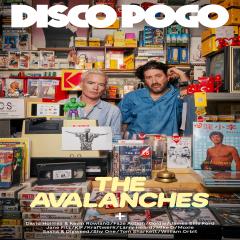
DP10THEAVALANCHES Disco PogoBooks23.10.202623.OCT.26
For Autumn/Winter 2026/2027 our tenth issue is possibly our best ever with three heavyweight cover stars in the shape of Goldie, Mike D and The Avalanches. Issue 10 also features: Kevin Rowland and David Holmes - Two of the most dapper chaps in music go for a walk through London. William Orbit - We pay tribute to the producer who was simply ahead of his time. Sasha and John Digweed - The Man Like and Diggers reflect upon 30 years of their seminal ‘Northern Exposure’ mix. Larry Heard - Can you feel the genius of the man with his Mr. Fingers in many musical pies? Kraftwerk and Sheffield - How a group of German futurists turned the Steel City on its head. The Warehouse Project - The revolutionary Mancunian clubbing institution turns 20. We bring the cake. They blow out the candles. Shy One - It’s been a long and winding road for the artist also known as Mali Larrington-Nelson. Tom Sharkett - The one-man disco has a groove machine and he’s going to use it. Moxie - Moxie by name; moxie by nature. All hail the On Loop leader. KiF - Teenage friends collate an album dedicated to the life of the passion flower. Plus… loads more across 192 pages.
Italian percussionist Umberto Vitiello takes us on a journey into a vanished world. Mixed by Italian techno master Donato Dozzy, the album draws on memories spanning decades, including Vitiello's years living on Yarakh Beach on the outskirts of Dakar, Senegal. There, the rhythms of daily life flowed with the tides: fishermen launching their pirogues at dawn, griots and vendors gathering beneath three towering palm trees, and the Atlantic Ocean providing a serene soundtrack.
Named after the Lébou people whose fishing culture has shaped the coastline around Dakar for centuries, the record is both a tribute to a community that welcomed Vitiello as one of their own and a reflection on what has been lost.
Those years left a profound mark on both his life and his music. Yet this is not simply a work of remembrance. It is also a meditation on change.
Today, the beach that inspired these recordings has been transformed by pollution and environmental decline. Where fishing boats and palm trees once stood, a sculpture by Senegalese artist Serigne Gorgui Mbaye now depicts two giant ears facing the sea-a reminder of the need to listen: to one another, to nature, and to our own conscience.
Blending percussion, atmosphere and storytelling, the album revisits formative experiences from the 1980s through the perspective of the present day. Featuring vocal contributions from Olympia Ndiaye, Anna Caragnano and Mariangela Morais, and guided by Dozzy's spacious, immersive mix, it unfolds as a deeply personal journey through memory, place and transformation.
Dusky return to Anjunadeep with their forthcoming studio album ‘Signals’. The London duo first debuted on Anjunadeep in 2011 with their critically acclaimed album Stick By This. Expanding the boundaries of deep house and UK club music, the record marked the beginning of Dusky’s rise as one of the scene’s most respected acts. Their breakout track ‘Careless’, released via Aus Music, further cemented their reputation, amassing more than 14 million streams and becoming one of the defining UK house records of its generation. In 2014, the pair launched their own imprint, 17 Steps, which has since hosted releases and remixes from artists including Nathan Micay, LTJ Bukem, Interplanetary Criminal, Denham Audio and Shed. Since then, Dusky have released two further studio albums, Joy and Pressure, alongside a string of acclaimed singles. Their music has earned support from Pete Tong, Danny Howard and Sarah Story on BBC Radio 1, as well as widespread backing from leading DJs including Jamie Jones, Peggy Gou, Gorgon City, TEED and TSHA. While 'Signals' represents a natural continuation of the Dusky story, it also ventures into more reflective territory than previous releases. The album's wider range of influences and more contemplative mood offer a fresh perspective on the duo's sound, while also paying subtle homage to their acclaimed debut album ‘Stick By This’. Featuring multiple collaborations with vocalist Rromarin, alongside a contribution from Nadeem and Pritt, 'Signals' reflects a creative process that unfolded over many years. Some tracks grew from ideas first sketched long ago, while others emerged more recently, giving the album a sense of both history and momentum. Across its 13 tracks, 'Signals' balances Dusky's club-rooted instincts with downtempo offerings. Tracks such as 'Next Life', 'Kadhalan' and 'Lab' showcase the duo's signature combination of bold basslines, driving rhythms and emotional resonance. Elsewhere, 'Elm' and 'Bindweed' slow the tempo and draw on the warmth of soul, the deeper edges of disco and richly textured live instrumentation.
Born 2 Be Free label head Azaad has been kicking out his twist on UKG for a few years now, and in that same time he has also been beavering away on his debut album. Ahead of that drop, he teases us with a sampler from it that covers plenty of ground. 'Isthisluv (feat Elias Mazian)' is a deep one with an expansive comic backdrop and cool grooves. 'Dubble Lively' is more tightly coupled and punchy, kick-driven garage house, then he remixes 'Lost Worlds' into something dubby but kicking. Two B-side cuts roll deep with deft sampling. Bring on the album!
Music From Memory presents ‘Mutualkind’, by Asa Tone, the collaborative project of Melati ESP, Tristan Arp and Kaazi. Written between Indonesia, Mexico City, Berlin and New York, the record unfolds through a process of continual exchange, where distance itself becomes part of the group’s music formation.
At the centre of the album is the idea of a shared language, formed across differences in geography, experience and musical approach. One such process explores Tristan’s electronic hand percussion triggering fragments of Melati’s voice in real time, while a library of spoken words and phonemes are reshaped through chance-based rhythmic processes. Voice becomes percussion, rhythm becomes melody, and the lines between individual contributions begin to dissolve.
Some pieces, including ‘Water Talk’ and ‘Second Language’, were recorded live in a single take, while others were assembled gradually through remote exchange. During the final sessions in Indonesia, Balinese percussionist Putu Septa contributed kendang to two tracks, bringing the instrument into dialogue with modular synthesis, FM textures, electronic drums, MIDI wind instruments and Melati’s shifting vocal forms.
Sounds are slowed, stuttered and reorganised, reflecting a world shaped by illusory borders, vanishing landscapes and glitching ecosystems. Yet the album remains rooted in the act of tending to something shared: a musical field built through listening, improvisation and repeated moments of reunion.
‘Mutualkind’ seeks to blur boundaries without erasing the identities that meet across them, providing a space in which voice and instrument, self and other, separation and togetherness can briefly exist at once.
MFM086 will be released on vinyl and digitally via Music From Memory on October 22nd 2026.
If the name The Midnight Hour isn't immediately familiar, the music almost certainly is. Ali Shaheed Muhammad is a founding member of A Tribe Called Quest, one of the most beloved groups in hip hop history. Adrian Younge is the Los Angeles-based composer, multi-instrumentalist, and producer who has shaped the sound of some of the most critically admired records of the past two decades. Together, they have been architects of the sound that serious listeners point to when they try to describe what great music feels like.
The music they had been making together had a life of its own. By 2018, it had become The Midnight Hour: their self-titled debut album, recorded to tape with a live rhythm section and a full orchestra, and released to widespread acclaim. In 2020, the duo were deep into sessions for a second album. But then the world shut down, the recordings were shelved. The album never came and remained unfinished and unheard. But now, via their Jazz Is Dead label, The Lost Tapes have been unearthed
If the name The Midnight Hour isn't immediately familiar, the music almost certainly is. Ali Shaheed Muhammad is a founding member of A Tribe Called Quest, one of the most beloved groups in hip hop history. Adrian Younge is the Los Angeles-based composer, multi-instrumentalist, and producer who has shaped the sound of some of the most critically admired records of the past two decades. Together, they have been architects of the sound that serious listeners point to when they try to describe what great music feels like.
The music they had been making together had a life of its own. By 2018, it had become The Midnight Hour: their self-titled debut album, recorded to tape with a live rhythm section and a full orchestra, and released to widespread acclaim. In 2020, the duo were deep into sessions for a second album. But then the world shut down, the recordings were shelved. The album never came and remained unfinished and unheard. But now, via their Jazz Is Dead label, The Lost Tapes have been unearthed
On their third album, FANGS, London collective HMLTD have created an entirely new genre: Götherdammerüng (or ÜberGöth). Predictably unpredictable, it could not be further away from their last outing, 2023 rock opera The Worm. The sixteen-piece orchestra has been traded in for Ableton, the timpani and violins replaced with side-chained four-to-the-floor and rave synths, and the gospel choir swapped for guttural gothic howling and black metal screams. The result is both unique and terrifying: a total reinvention and rehabilitation of the goth genre, through the looking glass of modern electronic and doomscroll-era dance music.
This new beginning was accompanied by a change in personnel, with Theo Spark and Andrei Martynchyk joining the fray alongside original members Henry Spychalski and Duc Peterman. Decamping to a ruined château in the Loire Valley, the quartet became obsessed with vampire lore, and the EBM and goth sound that inspired their early work: Fad Gadget, DAF, Nitzer Ebb, Suicide and Bauhaus. FANGS also points to more contemporary influences like Crystal Castles, German hardcore, 2000s blog-house a la Justice, and 2020s sleazepop.
The world crafted in FANGS is full of cosmic pessimism, glowing horror, imperceptible evil and digital dismemberment, ancient curses and ruined castles, Vampires. But it is also a thoroughly fun, and funny, record, as danceable as it is deep. Born of the club, some tracks would not sound out of place on Brat. Like a Smiths song which sounds happy and carefree until your brain tunes in to the misery of the lyrics, it can be listened to - and enjoyed - on two levels. One can get lost in the throb of bass and ludic synths, or tune into the horror of the lyrics which overlay them.
FANGS attempts to offer up a reflection to a culture that - like a Vampire - has lost its own. The result is something not only thoroughly modern, original, and inventive - but that feels genuinely dangerous and potent. FANGS delights in this ambiguity: simultaneously indicting decadence, decay, and moral rot, while luxuriating in its intoxication by it. Cacophonous sub-bass becomes a chthonic call of the void; seraphic rave synths become the screech of Valkyries; four-to-the-floor becomes a deathly funeral march. Vampire apocalypse.
Tresor Records announces GODSPEED, a new EP from NVST, out on October 23, 2026. From its origins in the Motor City and through to the themes of interstellar travel, techno has always been a genre focussed on forward movement, a tradition that GODSPEED continues boththrough music and title.
The EP is a collection that brings to mind the spirit of early, non-conformist releases on Tresor, full of hypnotic synth loops, spacious FX, and breakbeats, yet with a crisp and modern sonic palette. Side A embarks with two tracks that combine a low, buzzing bassline with trippy melodies and percussion that ventures close to breaks and electro, while the B-side moves intothe fast lane with driving acid and more regimented drums. Digital bonus track "Firliner" combines both approaches across its seven-and-a-half minutes, as a buzzy bassline and spluttering beat ignite into a steady trance-induction.
The EP title arrived the way the best ones do: not so much chosen as absorbed from the aether, the word kept popping up during the creative process until it became the ideal name for this collection, given its connotation with setting out on a journey.
"You remember the nights where you've been on the floor for hours without realising how much time has passed, the conversations you can't fully recall, or how unexpectedly open you've been to everything around you. The music speaks the language of substance not as a statement, but as a way of describing perception. It's about experimenting with yourself, your body, your hearing, your emotions. About reaching a point where things that once felt permanent suddenly lose their grip, even if only for a moment. These recordings come from that place. They capture moments where movement replaces thought, memories blur into feeling, and vulnerability becomes part of the process. They're documents of a very
specific time, but also of something much more familiar: trying to lose yourself just enough to find a different version of who you are." NVST
This fast-paced forward travel is implicit in the word speed, but once this word indicated power or prosperity so that godspeed is a wish for success, forming an appropriate double meaning for this first full release of NVST on Tresor.
Trixie Whitley returns with 'Folded Time', her first full-length album in seven years and one of her most adventurous and rhythmically driven records to date. Written largely at the kitchen table of her Brooklyn apartment and recorded between Brussels, New York and Montréal, the nine-track album finds Whitley moving freely between rock, soul, R&B and more experimental territory.
Rhythm sits at the heart of 'Folded Time'. Whitley plays drums, bass, guitar and piano herself, with her love of polyrhythms running throughout the record. Heavy, slow-moving drums turn opener 'Carry' into a mantra, 'Fascinating and Fun' grew out of studio improvisation, while on 'Carnaval' Whitley and Cem Misirlioglu face each other behind two drum kits for what she calls a "drum rave". Her unmistakable voice remains at the centre, moving just as easily between restraint and raw power.
Across the album, Whitley looks at motherhood, womanhood, heartbreak, desire and forgiveness, and at how the past continues to shape who we become. It is a record about taking stock without standing still: instinctive and physical, but full of detail.
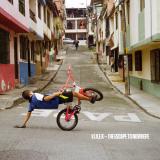
Not many can match V.I.V.E.K when it comes to pushing sound system culture.
With over two decades worth of releases, dances and low-end pressure, the Southall-born, System Music label owner announces the imminent arrival of his debut album, ‘The Escape To Nowhere’.
Spanning eight deep and meditative tracks, ‘The Escape To Nowhere’ is a fully realised exploration of dubwise tradition, reimagined through V.I.V.E.K’s unmistakable expert approach and unbound from one specific genre
Drawing from a lifetime immersed in bassweight heritage and club-ready experimentation, the record distils his musical journey into a fully formed and immersive statement, featuring the haunting vocals of Dandelion and Dego Ranking, experimental percussion and a meticulously sculpted low-end design.
‘The Escape To Nowhere’ will mark the 50th release on System Music, a landmark that underscores both the label and artist’s enduring commitment to forward-thinking bass music firmly rooted in culture and craft.
For more than two decades, Vidmantas ?epkauskas has occupied a singular position within European underground culture. As the driving force behind Opium Club and gallery 1986 in Vilnius, founder of Ant Bangos, Alfavilnius and OLE festivals, curator, label owner, promoter, DJ and artist, he has spent much of his life creating the conditions for other people's music to be heard.
It makes sense then that he has no shortage of friends and collaborators in play. Across ten tracks, V presents shades of Italo, krautrock, post-punk, minimal synth, industrial pop and neon-noir romanticism, arriving somewhere between the dancefloor and a dream-state. The cast of collaborators both contextualize and help sharpen the vision.
First and foremost, much of the album was crafted alongside Frankfurt's Philipp Lauer, whose friendship with V grew through marathon studio sessions. Curses lends his unmistakable blend of dark romance and theatrical energy to "Is This What You Want?", Australian cosmic journeyman Dreems joins for the kaleidoscopic "Blitz Disc," Domenique Dumont brings their unmistakable emotive touch to "Avventura," while Lithuanian artists Noyus and Ruta MUR, both distinctive voices from the country's queer scene, whose vocals add another dimension to the record's emotional palette. As V puts it, "These are the people I've been vibing with."
That he finally delivers a full-length LP with such elusive qualities is more than a clue to his character. The title itself, a nod to Magritte's famous paradox and his years living in Brussels, suggests that any attempt to define V through a single image is destined to fail. At once playful and philosophical, 12:55 (Ceci n'est pas une V) questions ideas of identity and artistic value while marking the closing chapter of the musical persona that followed ?epkauskas' earlier success as Vidis. Neither retrospective nor statement of intent, it feels like a connected set of reflections spanning a lifetime of influences.
Tears|Ov are Terces Wale (aka D. Wale), L.E. Allen and Lottie Lou Poulet. For real money and in no particular order, they also work odd jobs as digital caterers, shrinking heads, doing laundry and looking up stuff online.
Tears|Ov write: ‘A life on hold! The corporate apology embedded in bad quality, insincere, trashy, patronising hold music it can have no meaning in this stage of Capitalism. There isn’t time - and humility is a waste of money. Still they joke and try to keep us calm, patient and satisfied. This was the starting point for “A Life on Hold” by Tears|Ov - Which quickly drifted into further musings on a collective life that feels forever two steps forward and x-steps back. We wait on hold and reach the top of the queue only for the line to go dead.
Tears|Ov are interested in the ready-made of mainstream media, particularly, the lies, the rub, the promises and the taken for granted. We are the blood plasma of the I in the screens embrace. We seek to find ourselves in that reflection, our real selves – if they even exist – just because it’s kinda fun. You may have seen us on TV, in the bargain basement music section, or some venue in your local area. We take the opportunities the Universe provides.” – Tears|Ov, London, 20 June 2026
On their third album, FANGS, London collective HMLTD have created an entirely new genre: Götherdammerüng (or ÜberGöth). Predictably unpredictable, it could not be further away from their last outing, 2023 rock opera The Worm. The sixteen-piece orchestra has been traded in for Ableton, the timpani and violins replaced with side-chained four-to-the-floor and rave synths, and the gospel choir swapped for guttural gothic howling and black metal screams. The result is both unique and terrifying: a total reinvention and rehabilitation of the goth genre, through the looking glass of modern electronic and doomscroll-era dance music.
This new beginning was accompanied by a change in personnel, with Theo Spark and Andrei Martynchyk joining the fray alongside original members Henry Spychalski and Duc Peterman. Decamping to a ruined château in the Loire Valley, the quartet became obsessed with vampire lore, and the EBM and goth sound that inspired their early work: Fad Gadget, DAF, Nitzer Ebb, Suicide and Bauhaus. FANGS also points to more contemporary influences like Crystal Castles, German hardcore, 2000s blog-house a la Justice, and 2020s sleazepop.
The world crafted in FANGS is full of cosmic pessimism, glowing horror, imperceptible evil and digital dismemberment, ancient curses and ruined castles, Vampires. But it is also a thoroughly fun, and funny, record, as danceable as it is deep. Born of the club, some tracks would not sound out of place on Brat. Like a Smiths song which sounds happy and carefree until your brain tunes in to the misery of the lyrics, it can be listened to - and enjoyed - on two levels. One can get lost in the throb of bass and ludic synths, or tune into the horror of the lyrics which overlay them.
FANGS attempts to offer up a reflection to a culture that - like a Vampire - has lost its own. The result is something not only thoroughly modern, original, and inventive - but that feels genuinely dangerous and potent. FANGS delights in this ambiguity: simultaneously indicting decadence, decay, and moral rot, while luxuriating in its intoxication by it. Cacophonous sub-bass becomes a chthonic call of the void; seraphic rave synths become the screech of Valkyries; four-to-the-floor becomes a deathly funeral march. Vampire apocalypse.
After almost twenty years of releasing music, Sven Tasnadi finds himself circling back to some of the sounds that first drew him into house music. Explorer was written at home following a longer break from producing and after moving out of his studio, a change of setting that coincided with a shift in priorities. "The tracks on this EP came together at home after a longer break from music and after I moved out of my studio," he explains. "Musically they are very deep and minimal, at times almost meditative. They were inspired by a new chapter in my life as well as my never-ending love and connection to artists like Lawrence from Smallville and Frank & Tony from Scissor and Thread."
That sense of returning to something runs through the whole record. For much of Tasnadi's career, producing and DJing were closely connected, with many releases naturally shaped by the club. Things have changed. "DJing is no longer my main focus, so I can dedicate myself to these deep and minimal sounds again, free from pressure or expectations," he says. "In a way, after almost twenty years of releasing music, things have come full circle for me."
"Atlas (Chapter 1)" and "Atlas (Chapter 2)" grew from the same initial idea but followed separate paths during production. Chapter 2 came first, while Chapter 1 emerged later from a variation Tasnadi discovered while the track was still essentially a loop. "I was still looking for the right theme for the original idea when another version suddenly opened up," he recalls. He saved that variation for later so he could stay focused on the first version. When he returned to it, the two had developed distinct enough identities to stand independently. Their shared DNA is still audible in the restrained rhythms, slowly shifting details and the way small changes carry much of the movement.
The title track moves further into dub techno, another longstanding passion for Tasnadi. "Explorer is almost a classic dub techno track," he says. "Subtle movements within a constantly repeating pattern create a particular atmosphere. It feels like the track could just keep going forever." It is a patient approach to repetition that he connects to artists such as Moritz von Oswald and his friend Daniel Stefanik.
"Megasektor", one of the first tracks Tasnadi made at home with a new equipment setup, brings the EP into deep house territory. "To me it's almost classic deep house, or at least how I define deep house for myself." Warm, compact and gently propulsive, it provides a natural closing point for a record that is ultimately less about changing direction than reconnecting with an instinct that has always been there.
Explorer captures Tasnadi at a point where making music has become more personal again. The four tracks come from following ideas for their own sake and from rediscovering the deeper, more minimal sounds that have stayed with him throughout his career.
A Portal To The Unknown – 7 Rotations of Neptune Discs brings together 12 producers across a double LP. Tifra and Match Box return following their own ep’s on the label this year, joined by familiar contributors Wigs, Aiden Francis, Jeku, Cybernet and Mahkina. COZi, Dive Crew and Thurlow Joyce make their first appearances, with Milès Borghese and Biodive completing the four sides.
Run independently by Astro from Edinburgh, Neptune Discs treats the exploratory ideas of ’90s and early-’00s club music as unfinished business. Prog, trance, tech house and dub techno remain reference points rather than templates, with more than 50 releases—and the arrival of Jupiter’s Depth and Pyramid Fields—allowing that identity to keep developing.
Wigs’ “Strangers” and Aiden Francis’ “Uno” bring warped, driving prog. COZi makes his Neptune debut with “Ride The Snake”, a lean, stripped-back tech-house roller that brings early-2000s economy into the present. Jeku follows with “Droop”, a trippy, ozone-soaked slow roller, while Thurlow Joyce closes with the warm, deeply submerged dub techno of “Sundowner”.
Beyond the vinyl, three digital exclusives expand the release: Bert Vesper’s “Babbel Truc”, Azzecca’s “Home” and Foley’s “What Could’ve Been”.
Featuring artwork by theAJM, the release is pressed across two 12-inches, distributed by One Eye Witness and arrives on 23 October 2026.
Melissa Weikart and her piano have proceeded through life in step, from her early classical
training to the experimental practice that defines her work today, a blending of sounds and forms that has never been so clear—and so fully realized—as on her new album, Contact. Across twelve shifting and evocative tracks that examine the connective tissue binding us to ourselves and others, the Franco-American musician’s voice and piano navigate personal and emotional terrain with clarity and nuance, forging a rich dialogue between artist and instrument, artist and self, and artist and listener.
Winner of the 2022 Nancy Jazz Pulsations emerging artist award and the instrumentalist prize at the 2023 La Défense National Jazz Competition, Weikart has released two EPs and an album as a solo artist, and one EP and an album—Surprise and Secret—with her electronic duo Beatrice Melissa. A student of jazz and ’70s folk-pop, and a keen lover of improvisation since her time at the New England Conservatory in Boston, Weikart has always conjured the confessional candor of the singer- songwriter in her music, even as she dispenses her lyrics across rich, shifting, dreamlike tableaux.
On Contact, written and arranged entirely by Weikart (aside from “New angles”), she pushes her sound further than ever before. The album is animated by a pressing need for connection, observing what brings us together and what drives us apart, and the life-saving revelations that emerge along the way. The album’s opener, “Crash,” is a dreamy telephone-hour ode, a message in a bottle, to connections new and old. On the wistful “Mesurer le vent,” Weikart conjures Debussy or Ravel, layering contrasting sounds like an Impressionist painting. The title track begins as a showcase of Weikart’s frank lyricism, a splice-reel of missed connections and wasted time, then glides into a hazy, euphoric galaxy of pleas, circling around her thesis—“I wanted to make contact”—that ushers us into “The Intersection,” a song that recalls her the beginning of her career, when it was just Weikart and her keys. “Appétit.e” is built around a sample of her down-the-hall neighbor’s drumming—another subtle, affecting gesture toward proximity and connection—while pulsating synths reminiscent of Air lend the track an unsteady atmosphere. On the Carpenters-inspired “Expectations,” Weikart muses on the relationship patterns, universal and specific, that have always been a hallmark of her songwriting.
The psychedelic “L’amour de construit” is a slow-motion fall down the rabbit hole, as Weikart
considers the way her own emotions are captured and commodified by the confining ways we think about love. The interlude—“L’amour pt. 2”—finds her near the end of that trip, shouting into the void as a last-ditch effort to rescue herself from the fall. The drums near the end of the interlude warn us that there may be no cushion for, until she is saved, again, by the power of revelation, on the confident, resilient “Not Right”—on which a show-stopping, frenetic conversation between singer and piano is gracefully interrupted by a rush of transcendent strings, lifting her back up.
On solid ground anew, “New angles,” featuring Manu Delta, creates a percussion-less groove that relies on experimental synth sounds. The 11-o’clock stunner “Catching up”—composed in a church—meets the singer in a state of ecstatic confession, bringing her to the formative memory that propels “Bicycle,” the album’s closer. Younger, more wide-eyed, she reflects on her move from Boston to Strasbourg, those early days, when Weikart had no other companion than that loyal hunk of scrap metal that took her to the shores of her own soul. She seems to suggest, on “Bicycle,” that a backward-glance is not always troublesome, not always anxiety-producing, but can be grounding: a reminder of where we come from, so that we can keep moving forward.
As part of the 20 Years of BM anniversary celebrations, Bondage-Music proudly presents Bondage Games Pt. 11 — a special five-part vinyl series. Each release is named after a constellation, together forming a unique tribute to two decades of Bondage-Music.
With Bondage Games Pt. 11, the label's iconic vinyl series returns in its most ambitious edition to date. Created to celebrate 20 years of Bondage-Music, the series unfolds across five constellation-themed releases, each featuring four exclusive productions from artists closely connected to the label.
The first chapter, Ursus, brings together four exclusive tracks from Roger Gerressen, Sascha Dive, Rhadow and Lola Palmer. From Roger Gerressen's hypnotic groove-driven Patterned Shards and Sascha Dive's unmistakable deep house craftsmanship on Dub Chronicles #10 to Rhadow's atmospheric Ripples and Lola Palmer's warm and emotional Slow Down, the record perfectly reflects the timeless musical identity that has defined Bondage-Music since day one — deep, soulful, groove-focused and made for both intimate listening and late-night dancefloors.
Pressed on heavyweight 180g vinyl and housed in an individually printed sleeve, Ursus continues Bondage-Music's longstanding commitment to exceptional quality in both music and design. The artwork was created by BM's longtime Head of Artwork, Pete Bombart — a close friend and an integral part of the label since its earliest days. His unmistakable visual language has become inseparable from the Bondage-Music identity, earning a loyal following far beyond the music itself.
Whether collected as part of the complete anniversary series or enjoyed on its own, Bondage Games Pt. 11: Ursus is a celebration of the artists, the friendships and the unmistakable sound that have shaped Bondage-Music over the past twenty years.
As part of the 20 Years of BM anniversary celebrations, Bondage-Music proudly presents Bondage Games Pt. 11 — a special five-part vinyl series. Each release is named after a constellation, together forming a unique tribute to two decades of Bondage-Music.
With Bondage Games Pt. 11, the label's iconic vinyl series returns in its most ambitious edition to date. Created to celebrate 20 years of Bondage-Music, the series unfolds across five constellation-themed releases, each featuring four exclusive productions from artists closely connected to the label.
The first chapter, Ursus, brings together four exclusive tracks from Roger Gerressen, Sascha Dive, Rhadow and Lola Palmer. From Roger Gerressen's hypnotic groove-driven Patterned Shards and Sascha Dive's unmistakable deep house craftsmanship on Dub Chronicles #10 to Rhadow's atmospheric Ripples and Lola Palmer's warm and emotional Slow Down, the record perfectly reflects the timeless musical identity that has defined Bondage-Music since day one — deep, soulful, groove-focused and made for both intimate listening and late-night dancefloors.
Pressed on heavyweight 180g vinyl and housed in an individually printed sleeve, Ursus continues Bondage-Music's longstanding commitment to exceptional quality in both music and design. The artwork was created by BM's longtime Head of Artwork, Pete Bombart — a close friend and an integral part of the label since its earliest days. His unmistakable visual language has become inseparable from the Bondage-Music identity, earning a loyal following far beyond the music itself.
Whether collected as part of the complete anniversary series or enjoyed on its own, Bondage Games Pt. 11: Ursus is a celebration of the artists, the friendships and the unmistakable sound that have shaped Bondage-Music over the past twenty years.
TECH043 brings A.B.E.L. and Eluna Vex together through a shared sense of rhythm and purpose.
Both authors have already developed a clear and confident approach, even if wider recognition has yet to catch up. Their music is ready to reach beyond the circles that already know their work.
Across both sides of the record, firm drums, driving percussion and deep atmosphere keep the motion steady. Each track has its own shape and detail, while the shared weight and mood allow the four tracks to be heard as one complete work. DJs get four reliable cuts that can build tension, hold the groove or move a set forward without a break in tone.
The difference between the artists is clear, but never disruptive. Eluna Vex and A.B.E.L. bring separate ideas to the record, yet their tracks feel closely related in character, depth and attitude. This balance gives TECH043 range without losing focus: two artists and one consistent physical drive.
A1. “Unsafe Road” opens the record by setting its rules: full pressure, forward drive and several lines developing at once. It tests the listener’s attention, offering a choice between following the whole structure or focusing on one thread within it.
A2. “Getting Away” works like a spell that pulls the dancefloor together. It follows one clear narrative and a direct sequence of events, building towards a climax where every element lands as one shared impulse.
B1. “Test And Run” opens a more exploratory side of the record. It moves through changing forms and gradually reveals its language, without showing the full picture at once. Structurally complete on its own, the track invites the listener into less predictable territory.
B2. “Subconscious” is built on balance, giving equal weight to every part of the sound without allowing one element to take control. It makes no loud statement, but closes the record with a complete and carefully held form.
The latest release from the Gladio Operations label showcases a new collaboration between two heavyweights of the European electro scene. This seventeenth release brings us a collaboration between Jauzas The Shining, a regular on the label, and the eagerly awaited debut of Swedish producer Obergman.
This EP, entitled “Continuum Analysis”, opens with “Analysis Of My Ego” and “Untitled”, two powerful tracks by Jauzas The Shining, featuring the classic, forceful and dark basslines, beautifully accompanied by deep vocals, very much to the French producer’s taste. The final track is by the Swedish artist, who treats us to “Kap Flora”, a journey to be savoured amidst consistent basslines and arpeggios, which draws us into a soundscape that flirts with trance sounds.
Side B opens with two tracks by Obergman: the first, “Continuum Bender”, with its intriguing and mysterious passages, gives way to “Closed Surface”, a track that slows the tempo down compared to the previous ones, and in which we hear a gentle line of more synthetic and relaxed sounds. The EP closes with the track “Con Gusto” by the French artist, a rhythmic journey with a fast-paced development, enhanced by cinematic vocals.
Mining the rich seam between transcendental escapism and crushing physical pressure, Sciama delivers his first album for Samurai Music. Exploring an energetic pitch between half-time and full-tilt 170, the London-based producer sculpts brooding soundscapes of sheer peaks and deep pits, driven by unrelenting but light-footed forward motion and an imposing strain of sound design. As Sciama, Michael Watters has been marking out his exacting sound since 2019 with an assured run of albums on ASC's Auxiliary label. His second EP for Samurai — the Wave Interaction 12" released earlier this year — pointed to his current area of focus inspired by the teachings of electronic music pioneer Daphne Oram. Contemplating the relationship between precise electronic frequencies and human perception, Celetal Form now delivers the full findings of his exploration. Oram coined the term 'celetal' in her 1972 book An Individual Note of Music, Sound and Electronics, trying to sum up a connection between the celestial and electrical. It's this spiritual dimension contained within sound waves Watters is concerned with, and the shape of the music on Celetal Form follows suit. In an opening statement of abyssal ambience, 'Overload Into Silence' establishes an atmosphere that endures throughout the album. Caught between steely textures, vaporous reverb tails and subtle harmonic interactions, the glacial shift of the many layers under Watters' control reveals an intense amount of detail at play even before drums and bass come into play. From there on in, the intensity ramps up from one heavyweight stepper to the next. There is agile, brittle top-end percussion at work on the likes of 'Induced Resonance' and 'Consuming Pulse', perhaps the most closely connected to D&B, while 'Rational Echoes' and 'Scanning Waveband' deal in urgency and techno-coded tension. A half-time roll guides the huge kick drum undulations of 'No Panacea', and 'Celetal Emergence' opens up into more spacious surroundings to let the subtle microtonal inflections of the synth tones set a curious mood. The two 'Intermodulation' tracks bring Watters' exacting approach into sharp focus, pushing the drums back and foregrounding alien frequencies that coalesce into unfamiliar yet strangely uplifting forms. Throughout Celetal Form this uncanny sensation charges the music with a power that reaches beyond its immediate, surface level impact. This intentional reflection on Oram's visionary thinking charges the current sound of Sciama with energetic intrigue that stands apart and invites a mindful, maybe even spiritual, engagement.
Fall Collection pulls from the vaults. Four tracks, some long out of print, one never
before pressed, all of them worth the dig.
The A-side opens with Ty Tek’s Dirty Fusion, originally released on Gourmet Recordings
in 2005 alongside the Audio Soul Project remix two years later. Both have been
fetching serious money on the secondary market for a reason. This is tech house from
when that phrase still meant something, the walloping cadence, the sci-fi pads, the
seismic synths rolling underneath. You hear it once and it stays with you.
Departed by Wasted Chicago Youth follows. Justin Aulis Long and Mazi Namvar
started from a remix brief and promptly ignored it, building something new from scratch
in a single session. Organs, wailing lead, disco break, 808 subs, a plastic bass line
threading through all of it. Somewhere between an angry Metro Area and a more
psychedelic Jitwam, but really it’s just WCY doing what they do.
Love Thy Enemy by Wasted Chicago Youth appeared on the Chase The Devil EP back
in 2009. The bubbles, shuffles, and wobbling chords hold up, and the vocal samples hit
differently now than they did then.
ASP’s Cloud Dub closes the record. It appeared on Dubs Vol. 2 as a digital release in
2022 and has never been on vinyl, and that’s where the subsonic acid bass line and
the layered string, piano, pad, and organ groove finally get room to breathe. Deep
house the way Chicago made it in the early nineties. Bare, musical, and raw.
Track A1 written by Ty Tek. Remixed by Audio Soul Project
Track A2 written by Justin Aulis Long and Maziar Namvar
Track B1 written by Justin Aulis Long and Mazi Namvar
Track B2 written by Audio Soul Project.
Copyright Control
Fresh Meat Records 2026
Dich lieb ich, Erde! trauerst du doch mit mir! Und unsre Trauer wandelt wie Kinderschmerz In Schlummer sich und wie die Winde Flattern und flüstern im Saitenspiele
The third stanza of Friedrich Hölderlin’s poem ‘Dem sonnengott’ evokes a narrator who is tortured by Spleen until slumber makes his childlike gloom disappear with music. Although today’s readers might judge these nineteenth century musings of the Imagination as mere stylistic platitudes, they also still speak beyond the grave as universal truths. A mere two hundred years later similar anxieties and hopes are still channeled through various art forms, with changing success and reverberation. Brannten Schnüre are one of those neo-romantic music experimentalists who add to a long tradition of celebrating folk tale and exoticism. Their meticulously crafted loops, hesitant melodies and heavily nostalgic lyricism could easily be translated to what the late philosopher and music critic Mark Fisher called ‘hauntology’, a postmodern longing for a lost future. To describe the beauty of ‘Geträumt hab’ ich vom Martinszug’, however, the term seems somewhat dissatisfying. Romanticism is a hard nut to crack in the Anthropocene, and Brannten Schnüre’s realms of the cerebral are too deeply ingrained in a German tradition of story telling to define them within popular paradigm.
‘Geträumt hab’ ich vom Martinszug’ was recorded in 2014 in Würzburg and functions as the autumn part of the band’s seasonal cycle quadrilogy (the other segments being ‘Aprilnacht’ (SicSic), ‘Sommer im Pfirsichhain’ (Aguirre) and ‘Durch unser zugedecktes Tal’ (Youdonthavetocallitmusic)). It deals with the Saint Martin’s parade, a mostly European tradition to celebrate the medieval spirit of Saint Martin of Tours, friend of children and patron of the poor. Around 11 November children come out on the streets with lanterns and sing ancient songs in exchange for sweets. It’s a period of snugness and expectation, of yearning and dreaming, and therefore a consummate subject for the duo to scrutinize.
To the adult’s ear the dream of the Saint Martin’s parade isn’t all that consolatory. The dark and slow loops of Christian Schoppik rather sound like motifs for a welcome paralysis. Sometimes as a gentle backdrop for vocals by Katie Rich and Schoppik himself, the repetitive structures serve as tricksters that trade innocence for the uncanny. The dream becomes a fever dream which quickly absorbs the listener into a vacuum, an eternal post-panic attack semi-relief. Maybe that’s the amazing paradox of Brannten Schnüre. The space they occupy is never comforting – as if being locked up inside a Carl Grossberg painting – but it’s also a subliminal aural zone you do not want to leave. It’s music as being, as a stream, devoid of climax or catharsis. And because it is flux and being, and exists to be taken, it speaks in art’s purest form. ‘In place of a hermeneutics we need an erotics of art’ Susan Sontag famously concluded her essay ‘Against Interpretation’ with. Well, look no further …
Juxtaposition brings together two masters of hardware-focused electronic music for a split LP that explores the boundaries of texture and rhythm. Featuring one side dedicated to each artist, the record serves as a definitive showcase of modern modular synthesis and intricate beat-work. From the cinematic, voltage-controlled landscapes of Halfgeleider to the rhythmic complexity of Electric Bear, this LP is a essential acquisition for fans of IDM, braindance, and experimental electronics.
After a five-year-long hiatus, CVBox is back with six tracks between techno, acid, electro and IDM that are more suited to those super dark times we're currently living through than ever before. On "Pattern Based On", the Dresden-based artist and long-running Uncanny Valley-comrade (four EPs and one album) proves that he hasn't lost his touch when it comes to creating electronic cyberspaces that might drive you mad a bit. With majestic sounds and constantly evolving arrangements, the tracks are strangely entertaining on the dancefloor while you can't help but still feel a queasy sensation in your stomach. While some describe the tunes as milky, permeated by translucent membranes, for others they are an aural embodiment of urban landscapes in the post-apocalypse. Only two things are true: No one sounds like CVBox and all his tracks sound like CVBox. The title refers to structures derived from repetitions, sequences and, indeed, patterns. Although the sounds within these patterns usually follow clear paths, they are allowed to overlap and falter. At the same time, it is music through which CVBox comes to terms with his time as a paramedic. The artwork extends this idea with a special twist. A medical-based test pattern with its clinical functionality is set against a backdrop that is clearly placed in a natural environment. A process that creates a kind of artefact and triggers immediate reflection on what will remain of us many decades from now. What role will music play in defining this?
Every coastline develops its own rhythm. The Adriatic is no exception.
For decades, Italy’s eastern coast has been shaped by funk, Cosmic Disco, Balearic sounds, Italo Disco, House, Latin rhythms, Brazilian music and countless other influences. Rather than blending into a single style, these musical worlds have lived side by side, constantly inspiring new generations of DJs, musicians and dancers. For more than fifteen years, Soul Fingers and Funk Rimini have explored that landscape from different perspectives. Founded by Claudio Cavallaro in 2013, Soul Fingers grew into a vinyl-driven community where groove matters more than genre. Its philosophy has always been simple: if the groove is right, genres stop mattering. Brothers Ricky and Francesco Cardelli developed Funk Rimini into a project rooted in funk, disco, live performance and electronic production. Anima Adriatica is where these two journeys meet.
The project didn’t begin with the ambition of making an album. It began behind the turntables. As DJs, Claudio Cavallaro and Ricky Cardelli found themselves constantly searching for records capable of connecting distant musical worlds inside their sets; from Afrobeat into disco, from hip hop into Latin, from Brazilian grooves into boogie, from cosmic electronics into deep funk. Sometimes those records existed. More often, they didn’t. So they stopped searching and started writing them. Not records designed to belong to one genre, but records designed to travel between genres. That space between musical worlds became Anima Adriatica.
The music grew through spontaneous jam sessions with Ricky and Francesco Cardelli, drummer Enrico Mao Bocchini and, gradually, a wider circle of musicians, singers and longtime friends, making Anima Adriatica less a traditional band than the beginning of an open collective. Recorded at SynthPosio Studio, founded by Ricky and Francesco Cardelli inside Rimini’s iconic skyscraper, the project also carries a symbolic connection to the building itself, where many Italo Disco classics (including records by Betty Miranda, The Creatures and many others) were recorded decades earlier.
Betty Miranda returns not as a nostalgic guest, but as a bridge between generations. On the title track she performs a spoken-word text written by Claudio Cavallaro, reflecting on the invisible thread connecting the Adriatic dancefloor across time. From Baia degli Angeli to Cocoricò, from the legendary clubs of Riccione to today’s independent communities gathered around projects such as Soul Fingers and Funk Rimini, the places have changed, but the dancefloor continues to tell the same story. Much like Pier Vittorio Tondelli’s Rimini captured the Adriatic through literature, Anima Adriatica imagines its soundtrack.
Brazilian musician Daniel Plentz (Selton) expands that vision on Açúcar and Alegria, bringing another coastline into the story. Across its four tracks, the EP moves naturally between analogue funk, boogie, Brazilian music, underground disco, cosmic textures and the wider Black musical tradition, with All Down The Line paying tribute to the Paradise Garage era.
Released by Bordello A Parigi, the project found its natural home through a shared love of adventurous dance music, records and club culture. More than the title of an EP, Anima Adriatica marks the beginning of an open collective; a meeting point where musicians, DJs, producers and friends continue building bridges between genres, generations and communities.
Because Anima Adriatica doesn’t live inside a genre. It lives between genres. If soul music has always reflected the places where it was born, Anima Adriatica is simply our own Adriatic Soul.
"Dark Flower" is the new imprint by Robert Babicz, launched in cooperation with Systematic Recordings as a home for his own music. Named after one of the defining tracks of his career, it feels less like the launch of another label and more like the opening of a private room: a place for sound, emotion and instinct, shaped entirely by Babicz himself. With „Electric Love EP" he begins this chapter in full colour. After more than 1.000 released tracks and music on labels such as Bedrock, Kompakt, Systematic and Sudbeat, FLOWER0001 is not about proving anything. It is about freedom.
“Electric Love” opens the EP with punchy breaks, luminous harmonies and choral textures that seem to rise above the beat. It is bold, open and slightly unexpected, electronic music with a pulse and a sky above it. "Cuerpo Con Color” brings things closer to the floor: warm chords, fluent grooves and a calm, driving pressure that slowly pulls the body into motion. Across two versions, “Tease Me” closes the EP with a burning bassline, oriental vocal fragments and a seductive tension running underneath. Strange, physical and unmistakably Babicz.
NYC dance music legend Joey Longo has been a part of the dance music soundscape for those in the know from way back when, his first records surfacing in 1989 under a variety of monikers and on a slew of labels out of NYC.
One of his lesser known aliases was Dreamhouse, which only produced two tracks Jump & Prance and I Can Feel It, both in 1990 and contained here on this official reissue. Special mention to the Dream Mix which has long been sort after by collectors and DJ's worldwide and repressed here for the first time since it's original release in 1990. Finally an opportunity to own a slice of Joey's signature raw New York sound.
The fifth edition of Meganesia’s annual vinyl release, this year featuring AWHM & Shugo Noss, two leading forces in the fast trance and psytek scenes.
Striving to imagine these two artists as creatures inhabiting the same environment and imbuing it with their sonic identity, we arrived at the idea of a tidal zone in which AWHM’s sound inhabits and defines the warmed, sunlit state of low tide, while Shugo Noss’ sound inhabits and defines the submerged, watery state of high tide.
The resulting release creates a trance-focussed environment inhabited by both the deep, multi-textured, audio-hallucinatory sound of Shugo Noss and the driving, energising force of AWHM.
This release comes out on vinyl and digital on October 27, 2026.
Mastering by Chris Scholz and Dave Miller at Audiosculpture NL
Artwork the THEAJM
Vinyl distribution by One Eye Witness
SHUGO BIO
Shugo Noss is a producer/DJ from Naarm who explores the intersection of sound and form through a blend of hypnotic rhythms, eclectic soundscapes and sonic experimentation. His work aims to exist outside genre binaries, weaving through a multitude of emotional experiences that both relate to, and contradict, one another in an attempt to formulate their own identity. There are no limits that restrain these journeys.
AWHM BIO
A dedicated consumer and creator of trance music, AWHM’s production style draws clear influence from old school goa, psytrance, jungle breaks, and tekno, most easily recognised by his ability to combine driving basslines, hypnotic rhythms, and scattered percussions to transport audiences through uncharted psychedelic realms of fast trance music.
Evolutionary by nature, he’s managed to leverage extensive experiences that led to a self-taught studio process which now stands out in one of the more niche corners of electronic music.
MEGANESIA BIO
Meganesia is an independent music label operating in the broad genres of trance and techno. Drawing its name from the continental plate beneath Australia’s landmass, Meganesia focuses distinctly on developing and platforming artists living and working in Australia.
Since the start of 2022 Meganesia has grown to a catalogue of 12 releases. Across these releases, the label has directly platformed over 40 individual artists on digital and vinyl gaining us recognition as one of Australia’s strongest and most dynamic electronic labels.
It Takes Two is at it again. The 45 duo consisting of Deejay Irie and Friss, founded in 2020, is here with a brand-new release.
Played by DJ Koco aka Shimokita, DJ Robert Smith, Marc Hype of Dusty Donuts, and many more. Edits by DJs for DJs, filled with scratch samples and perfect intros/outros. After 001, 002, 003, 004, and 005 sold out, they're back with 90 BPM of big fun with small records!
The A-side is an ode to one of hip-hop's first beef tracks, flipped with a reggae twist, a clean intro, and a scratch sample to get funky with.
The B-side contains an instrumental version of the A-side.
Second chapter in the Alkaline series. Five electro cuts and one techno excursion, crafted by two artists with decades of dedication to electronic music.
On Side A, Raakel Bloody Raakel brings decades of discipline and formal training into a sharp, uncompromising sound. Active since the late 90s and rooted in both classical education and underground culture, his work reflects precision, intensity and structural control.
On Side B, Roi delivers three focused electro pieces forged through years of experimentation and dancefloor experience. His approach blends coherence, tension and forward motion, driven by a continuous commitment to evolving the language of electronic music.
Two trajectories. One alkaline framework. Built for those who understand the craft.
Ossios makes his Yay Recordings debut with two deep cuts that capture the magic of his creative process - summer house excursions shaped by back-and-forth flights and fleeting moments of inspiration.
On one side, Deadbeat opens up his studio a fires up the studio stove with "One Night at the Ranch (Betting the Farm)," featuring vocals from his love soul Elle. Tumbling drums, understated grooves, and subtle house hypnosis unfold with effortless ease.
On the flip, "Drama Is a Game" channels a hazy afternoon in Mexico City, exploring memory and duality through shape-shifting synths and warm, drifting vocals. The result is a deeper, darker journey where emotion and atmosphere remain in constant motion.
The mission is complete.
With the landing behind him, the astronaut begins spreading the sound of Planet Tapes across the planet.
What was once a distant destination is now alive with sound, light and movement. The music starts to travel, bringing different identities, energies and visions together on the same frequency.
Signals of Unity captures this exact moment: four artists, four different messages, one shared destination.
A1 – Mirko Felicioli – Sin City
Mirko Felicioli opens the record with a strong and distinctive statement, built around tension, groove and a sharp sense of movement.
A2 – Mathi – Starship
Mathis continues the transmission with Starship, a cut suspended between movement, imagination and futuristic drive.
B1 – Two Opposites – Tormento
The label captains return with Tormento, combining energy and emotion in a track built for movement, while keeping their unmistakable approach to electronic music.
B2 – Ginno – Void
Gianko closes the record with Void, a deep and evocative final passage that lets the signal drift beyond the dancefloor.
Four artists. Four signals. One planet.
The music has spread.
The people have gathered.
The party has begun.
The seminal psych-rock classic The Evil One by Roky Erickson And The Aliens is reissued by Fire Records in a deluxe 15-track edition, restoring the original front cover from San Francisco’s 415 Records release for the first time since 1981. Presented across two LPs cut at 45 rpm for maximum sonic depth and clarity, the release brings together the complete recordings from the legendary 1978 and 1979 sessions. The package includes a collector’s booklet with liner notes by acclaimed Austin music journalist Joe Nick Patoski, who attended a recording session for The Evil One in 1979. Alongside rare photographs and archival images from the collection of Roky’s then manager, Craig Luckin.
Following his release from Rusk State Hospital in 1974, Erickson formed The Aliens and channelled his experiences and fascination with horror and science fiction into a singular new sound. Moving beyond the psychedelic garage blues of the 13th Floor Elevators, the band created harder, more ferocious rock built around jagged guitars, strange melodies and a propulsive rhythm section.
Produced by Creedence Clearwater Revival bassist Stu Cook, The Evil One includes some of Erickson’s most celebrated recordings, including ‘Two Headed Dog’, ‘I Walked With A Zombie’ and ‘It’s A Cold Night For Alligators’. Erickson’s unmistakable voice and surreal lyrics, populated by zombies, demons, vampires and atomic monsters, gave the album a character unlike anything else in rock. Both the LP and CD editions feature rare photographs and images from the archive of Erickson’s then manager and the sessions’ executive producer, Craig Luckin.
The Evil One has since become a landmark of cult rock, with its songs covered by generations of artists and its influence extending across punk, alternative and psychedelic music. As Craig Luckin recalls, “Roky considers The Evil One to be his favourite album that he ever recorded. He really loves that album.”
Austin music journalist Joe Nick Patoski, who attended one of the album’s 1979 sessions, contributes a new essay to the LP and CD packaging, exploring Erickson’s extraordinary career, enduring influence and place in Texas rock history.
More than a standalone reissue, this deluxe edition of The Evil One opens an exciting new series honouring Roky Erickson’s extraordinary body of work, with Gremlins Have Pictures and Don’t Slander Me to follow in 2027.
The seminal psych-rock classic The Evil One by Roky Erickson And The Aliens is reissued by Fire Records in a deluxe 15-track edition, restoring the original front cover from San Francisco’s 415 Records release for the first time since 1981. Presented across two LPs cut at 45 rpm for maximum sonic depth and clarity, the release brings together the complete recordings from the legendary 1978 and 1979 sessions. The package includes a collector’s booklet with liner notes by acclaimed Austin music journalist Joe Nick Patoski, who attended a recording session for The Evil One in 1979. Alongside rare photographs and archival images from the collection of Roky’s then manager, Craig Luckin.
Following his release from Rusk State Hospital in 1974, Erickson formed The Aliens and channelled his experiences and fascination with horror and science fiction into a singular new sound. Moving beyond the psychedelic garage blues of the 13th Floor Elevators, the band created harder, more ferocious rock built around jagged guitars, strange melodies and a propulsive rhythm section.
Produced by Creedence Clearwater Revival bassist Stu Cook, The Evil One includes some of Erickson’s most celebrated recordings, including ‘Two Headed Dog’, ‘I Walked With A Zombie’ and ‘It’s A Cold Night For Alligators’. Erickson’s unmistakable voice and surreal lyrics, populated by zombies, demons, vampires and atomic monsters, gave the album a character unlike anything else in rock. Both the LP and CD editions feature rare photographs and images from the archive of Erickson’s then manager and the sessions’ executive producer, Craig Luckin.
The Evil One has since become a landmark of cult rock, with its songs covered by generations of artists and its influence extending across punk, alternative and psychedelic music. As Craig Luckin recalls, “Roky considers The Evil One to be his favourite album that he ever recorded. He really loves that album.”
Austin music journalist Joe Nick Patoski, who attended one of the album’s 1979 sessions, contributes a new essay to the LP and CD packaging, exploring Erickson’s extraordinary career, enduring influence and place in Texas rock history.
More than a standalone reissue, this deluxe edition of The Evil One opens an exciting new series honouring Roky Erickson’s extraordinary body of work, with Gremlins Have Pictures and Don’t Slander Me to follow in 2027.
Yr Knives is a Chicago instrumental quartet built around two very different guitar voices. The band came together sideways: composer Paul Karner wanted guitarists Andrew Trim and Brian Sulpizio to play disparate parts on a recording of his own, and when the two finally rehearsed together, a band fell into focus. Trim leads the groups Hanami and Retroreflector; Sulpizio is the constant behind Health and Beauty. Anchoring them are two Chicago mainstays, bassist Douglas McCombs (Tortoise, Eleventh Dream Day) and drummer Quin Kirchner. Two of them come up as rock and roll players, two as jazz players, and the music lives in how closely they listen across those languages.
Their debut, Begin Yr Singing, centers on two overdriven guitars merging into something neither could produce alone, over a rhythm section that can lock a groove or let it drift. The result is exploratory but grounded, "a searching music," in Trim's words, that asks questions it doesn't always answer and shifts from one performance to the next. Recorded live in a single room at Chicago's Palisade studio with Nick Broste engineering and mixed by Cooper Crain with Sulpizio, the six tracks draw on Sonny Sharrock, Neil Young and Crazy Horse, Albert Ayler, Erik Satie, and Television. The band has toured supporting The Messthetics.
Turn back the clock to an unforgettable era, with 32 huge hits from 1980–1984 brought together across 2LPs.
LP1 launches with Wham!’s feel-good ‘Wake Me Up Before You Go-Go’, before Duran Duran’s ‘Is There Something I Should Know?’ and Eurythmics’ ‘Sweet Dreams (Are Made of This)’ capture the contemporary sound of the new decade. The Human League’s ‘Don’t You Want Me’, Soft Cell’s ‘Tainted Love’ and Heaven 17’s ‘Temptation’ continue an outstanding run of synth-pop classics, with Blondie and Frankie Goes To Hollywood completing Side One. Culture Club open Side Two with ‘Do You Really Want To Hurt Me’, followed by colourful 80s favourites from Adam & The Ants, Altered Images and Kajagoogoo. Haircut 100’s ‘Love Plus One’ and ABC’s ‘The Look Of Love’ lead into Dollar and Bucks Fizz, rounding out a side packed with pure pop nostalgia.
LP2 starts in suitably anthemic style with Spandau Ballet’s ‘Gold’, alongside Elton John’s uplifting ‘I’m Still Standing’ and Billy Joel’s ‘It’s Still Rock and Roll to Me’. The Cars’ ‘Drive’ and Bonnie Tyler’s epic ‘Total Eclipse of the Heart’ bring some of the decade’s biggest power-pop moments, while Laura Branigan’s ‘Self Control’ and Matthew Wilder’s ‘Break My Stride’ pave the way for Dexys Midnight Runners’ ‘Come On Eileen’. Side Two brings another burst of ’80s energy with Ray Parker Jr.’s ‘Ghostbusters’, Chaka Khan’s ‘I Feel for You’ and Billy Ocean’s ‘Caribbean Queen’. Diana Ross’ ‘Upside Down’ is followed by favourites from The Police, Pretenders and The Jam, before Roxy Music’s ‘Jealous Guy’ provides an elegant finale to this celebration of 1980–1984.
TORRE return to Musiq Voyage with Phocaea Vol. 2, a new chapter in their ongoing Mediterranean journey. The Aix-en-Provence duo, Jean-Marc and Patrick Torre, deliver two original tracks, Sormiou and Les Sirènes du Frioul, inspired by Marseille, its coastline and the deep connection between the city and the sea. Blending disco, house, boogie and Balearic influences, TORRE once again shape a warm, hypnotic and distinctly Mediterranean sound.
The EP is completed by two remixes from leading figures of the Italian underground. *Gigi Testa, one of the most respected names in Naples’ deep house scene, brings his signature soulful, deep and groove-driven approach to the TORRE sound, while **Giovanni Damico* delivers a refined rework infused with funk, cosmic textures and dancefloor energy. Together, the four tracks offer different perspectives on the same Mediterranean landscape, moving seamlessly from sunlit afternoons to late-night club atmospheres.
With more than two decades of musical exploration behind them, TORRE have built a distinctive sound between disco, house and electronic music, earning support from artists such as Carl Craig and releasing underground favourites including Corps à Corps and Baleora. With Phocaea Vol. 2, Musiq Voyage and TORRE continue to explore their own Mediterranean mythology — from the turquoise waters of Sormiou to the mysterious shores of Frioul — with a release that feels equally at home on a Balearic beach, a Marseille terrace or a late-night dancefloor.
After his Studio One days with The Mad Lads and a long break for his engineering career, George Allison went back into the studio for Carl Prince's Gibbous label. The sessions ran across Channel One, Aquarius, Tuff Gong and Music Mountain, and they produced two albums in 1984, So Unusual and Exclusive. Both were released in the UK and the US. This single puts one song from each album together.
Sad - George's version of "Who's Sad" by Smokey Robinson & The Miracles. Smokey was one of his first vocal models, and his school friends called him "George Smokey."
Every Hoe - "I composed Every Hoe from the Jamaican proverb 'Every hoe have him stick a bush', which means there's somebody out there for everyone. The gist of the song is that there are always problems too, because it's a curse on the human race."
Shape of the Unknown’ is kind of a double LP that fully embraces the idea of exploration. It is CHLOÉ’s most expansive and immersive work to date. ‘Shape of the Unknown’ is CHLOÉ’s fourth proper studio album. Its predecessor, ‘Endless Revisions’, was released in 2017. Nine years have passed. Nine years during which CHLOÉ has continued digging for music, DJing at internationally renowned clubs and festivals including Rex Club, Robert Johnson, Panorama Bar, Nuits Sonores, Glastonbury and many more, releasing EPs and remixes, while also allowing herself the time to explore entirely new creative paths.
The challenge is to capture the unknown, make it her own, endlessly reshape its textures, and ultimately preserve its mystery.
The first single ‘Drifter’, released back in June, already offered a striking glimpse of the sonic territories the album would venture into, driven by its hypnotically contoured basslines. The album's two other singles offer different windows into her world. 'Shapeshifter' captures CHLOÉ at her most hypnotic, balancing stripped-back techno and melodic house through deep rolling grooves, expansive bass chords and subtle rhythmic shifts that constantly reshape the listener's perception without ever disrupting the flow. Later, 'Repeating The Obvious' takes a more leftfield route, pairing staggered rhythms with retro-inspired harmonics and an understated indie dance pulse that feels simultaneously familiar and unpredictable.
CHLOÉ has ventured into live performance through new formats, notably alongside percussionist Vassilena Serafimova; immersed herself in film scoring with soundtracks for Paris la Blanche, Arthur Rambo, The Mountain, Blanquita, Guru and Unsubmissives; and developed compelling collaborations, from High Season, her project with Ben Shemie of Canadian band Suuns (which resulted in the album The Call), to her own organic, experimental audiovisual performances under the name Slo/Mo AV.
Throughout Shape of the Unknown, CHLOÉ blurs the boundaries between deep house, hypnotic techno, electronica and cinematic sound design with remarkable fluidity. The album unfolds as a continuous narrative rather than a sequence of tracks, moving effortlessly between beatless ambient passages, rolling analogue grooves and emotionally charged club music. Organic percussion, sweeping bass movements, melancholic harmonies and richly textured synthesisers create a body of work that constantly evolves, where no section feels static and every transition reveals another layer of depth. There is an unmistakable warmth running through the record, with grainy analogue textures and spacious production giving even its most driving moments an intimate, almost tactile quality.
The album’s title is no coincidence. It evokes a form that has yet to be named, something language itself struggles to grasp. CHLOÉ approaches it through an organic creative process. Each piece must first be performed in the studio, almost as if it were being played live. The album will be followed by a series of live performances and DJ sets, including a show at the Olympia on March 18, 2027.
She is joined by a handful of steadfast collaborators. Jazz trumpeter David Enhco appears on two tracks, ‘Undertow’ and ‘Inner Bass’. But above all, there are the voices: Ben Shemie lends his unmistakable presence to the radiant ‘More Than Just a Feeling’. Olivia Merilahti, singer, songwriter and one half of The Dø, appears on the otherworldly ‘TWYR’. Working with Olivia’s already hypnotic voice, CHLOÉ has approached it like a sculptor, enhancing its strangeness and dreamlike quality.
And finally, impossible to miss is the instantly recognizable voice of Kittin. A longtime accomplice, she lends her distinctive phrasing to CHLOÉ’s music here for the very first time. The strongest collaborations are often those that take their time, arriving only when the moment is right. Same kind, same bass, same vibe, same pride.
The result is an enigmatic, nocturnal record, drifting between introspective listening and dancefloor functionality, revealing an artist who remains far more interested in atmosphere, movement and emotional storytelling than conventional club structures. It is an album that invites us to dream more deeply and to dance again, both within ourselves and out in the open.
CFUNK 050 is presented as a special collector edition commemorating the 50th Cyberfunk release. The package celebrates more than two decades of the label's music, artwork and visual identity.
The accompanying booklet brings together artwork from across the Cyberfunk catalogue, including labels from some of Quest's biggest and most memorable releases, alongside a personal retrospective from DJ Quest looking back at the creation of the label, the artists who shaped it and the journey back to vinyl.
Dedicated artist pages introduce DJ Quest, Paket, Destroyers, Code BreakerZ and Groovebox, connecting the artists behind release 050 with the wider story of Cyberfunk and the international breakbeat community that continues to support it.
More than simply a four-track 12", CFUNK 050 is designed as a physical celebration of Cyberfunk: its records, its artwork, its artists and the people who have kept the sound alive.
Cyberfunk reaches release number 50. To mark the milestone, DJ Quest opens up the Cyberfunk archives for a special four-track vinyl release featuring new interpretations from Paket, Destroyers, Code BreakerZ and Groovebox.
CFUNK 050 connects the label's original UK Bassline Breaks foundations directly with a new generation of producers. Each artist has been given the freedom to reinterpret classic Quest material in their own style while retaining the character, bass pressure and dancefloor attitude that made the originals unmistakably Cyberfunk.
From Paket's reworking of Muffled Mayhem and Destroyers' take on Cybanet, through to two very different versions of Back To The Old Skool from Code Breakerz and Tech House maestro Groovebox, the release moves across modern breaks, heavyweight club production and rolling groove-led territory.
It is both a celebration of 50 Cyberfunk releases and a statement about what comes next.
A1. DJ Quest feat. Yoof - Muffled Mayhem (Paket Remix)
Spanish breaks heavyweight Paket takes on Muffled Mayhem, retaining the attitude and personality of the original while rebuilding it for contemporary dancefloors with heavyweight drums, powerful bass and the polished low-end pressure that has made him a leading figure in the new generation of Andalusian Breakbeat.
A2. DJ Quest - Cybanet (Destroyers Remix)
Destroyers turns his attention to Cybanet, pushing one of Quest's darker electronic productions firmly into modern club territory. Futuristic electronics, heavyweight rhythm programming and serious dancefloor pressure meet the machine-driven character of the original.
B1. DJ Quest - Back To The Old Skool (Code BreakerZ Remix)
Code BreakerZ completely re-engineer one of Quest's defining tracks for a new generation. Their acid-tinged, hard-hitting approach injects fresh energy into Back To The Old Skool while keeping the hooks and attitude that made the original such an important Quest record.
B2. DJ Quest - Back To The Old Skool (Groovebox Remix)
Groovebox closes the release with a deeper, tech house, groove-led interpretation. Built around movement, rhythm and rolling dancefloor momentum, his remix takes the original somewhere different while preserving the unmistakable old-skool spirit at its core.
New York-based Japanese jazz and electronic music polymath Takuya Nakamura presents his debut album Shape The Future - almost 35 years into his storied musical journey.
An expansive double album, the album’s first LP documents a spellbinding live performance by Nakamura recorded at fabric. A hybrid set combining DJing, live electronics, vocals, and trumpet, the set also features studio versions of special collaborations with Shigeto, Currency Audio and Tim Reaper. The second LP complements the first by assembling studio recordings of select album tracks. Altogether the two volumes make for a definitive display of Nakamura’s exceptional musicianship across jazz, DnB, jungle, broken beat, deep techno and more.
Across his career, Nakamura has played Brazilian music, merengue, salsa and straight-ahead jazz. He’s opened for Sun Ra Arkestra, performed with David Byrne, Laurie Anderson, Lee “Scratch” Perry, Wu-Tang Clan, and Arto Lindsay, appeared on sessions with Terry Riley, ASAP Rocky, Goldie, and TV On The Radio, and remixed the likes of Quincy Jones, Sun Ra, Billie Holiday, and The Streets. He’s also played under director and playwright Robert Wilson.
Although the musical past and present of the Tokyo-born, New York-based DJ and trumpet player is undoubtedly eclectic, Nakamura is abidingly steeped in the sounds of jazz and jungle. This’ll be obvious to casual observers who may have seen any viral videos of him. But there’s more to this. The depth of Nakamura’s engagement with these kinds of music, the way they’ve made him into the person he is, the decades-long path they’ve taken him on; to now arrive at the summit of a solo album is all truly remarkable. Shape The Future resonates with every chapter in this story.
In high school, Nakamura’s friends started listening to jazz and jazz fusion, which piqued his interest, especially when they started going to clubs to see it live, where they managed to see US legends like Sonny Rollins play. Eventually he began to play jazz every day and his musical skill emerged early. He soon became obsessed with getting closer to the source of this music, which led to his studies at the New England Conservatory of Music in Boston with George Russell, an influential figure who had taught Miles Davis and John Coltrane. Nakamura drank it in: not only the technical aspects but the sense of a direct connection to “a music culture where Russell and his friends changed harmony forever. I wanted to know how that was possible!”.
This was a radical experience in itself, but then another revolution happened for Nakamura. He was playing in a venue called The Western Front, near Boston and discovered that the elderly owner had his own soundsystem and was playing what was then - in 1992 - only just becoming known as jungle. This was as freeing a musical revelation as his proximity to the giants of jazz was, and in that instant the two things fused. He understood that using technology to fill a dancehall with sound and a jazz musician’s reflexes are all working to the same ends: “You’re always making decisions,” he says, “but it doesn’t have to be really difficult. It’s the truth of the frequencies, and how they’re affecting people’s minds.”
From that moment on, his life path was set. Moving to New York City, he sought out jungle and its offshoot sounds wherever he could find them, gigging and collaborating relentlessly, and gradually developing his own live and hybrid live/DJ shows. Through regular appearances at New York fixtures Zebulon and CBGBs, and continual shows elsewhere in the city, Nakamura developed his live performance and DJing and it was in these environments that he gradually weaved together his twin loves without compromising either, building an international reputation in the process.
It’s only fitting then that his first album, almost 35 years after he first found his musical direction, should be a live one: a window into this never-ending process. Even here, he had to be persuaded that he should make a record. A member of the fabric team got turned on to his music after their daughter saw him play. Of course, as a jungle lover, Nakamura knew fabric – which has a special place in the history of jungle and drum’n’bass – and “had wanted to play there since I was very young.” You can hear the club in the record: this isn’t just a live show, in keeping with his jungle roots, it’s Nakamura duetting with the soundsystem, and you can feel how the emotions in the room would have ebbed and flowed.
This dynamic translates to a transfixing record. Setting the tone with lushly textured ambient and reverberant jazz, Nakamura segues into cinematic breakbeat and stellar fusion, infusing it all with intoxicating low end and hypnotic rhythms. The LP’s midway point locks into mesmeric percussion heightened by resonant echoes of piano and trumpet. There’s an endless pull to this music. Nakamura adjusts the levels for maximum impact throughout, and the overall effect begins to evoke some harmonious hybrid between a jazz ensemble, a classic Metalheadz 12” and a Theo Parrish DJ set. His electric form continues through surreal jazz, intricate electronics and rolling sub-bass velocity, right up to the subtly devastating final cover of Peter Gabriel and Kate Bush’s ‘Don’t Give Up’, with Nakamura’s fragile vocal sitting in the heart of a huge sound.
From Tokyo jazz nights to formative studies and encounters in Boston to his artistic development in New York, Nakamura reaches another milestone with his monumental debut album. It’s a release that happened just the way a Takuya Nakamura record should. In the same way his instincts led him to musical revelations, taking his own sweet time has led him to make one of the most extraordinary debut albums imaginable, all executed in his own singular style. In Nakamura’s world, the universe finds a way.
For two decades, The Oscillation has occupied its own space within the psychedelic underground, continually reshaping a sound built as much from texture, repetition and atmosphere as it is from conventional songcraft. On 'Interference', released October 30th 2026 via Fuzz Club, Demian Castellanos pushes that approach further than ever, creating what he describes as "a painting of sound rather than music”. It’s an album where noise and melody constantly collide, dissolve and reform into something strangely beautiful: “I wanted it to be accessible but also quite extreme, a sort of beautiful noise. I did my best to push out the parameters whilst trying not to allow it to disintegrate into something with no meaning or focus.” Chasing an elusive balance between accessibility and abstraction, the result is a record that feels simultaneously immediate and disorientating: dense layers of drones, feedback and motorik rhythms give way to unexpected moments of warmth, colour and even uplifting euphoria. Across its runtime, chaos never overwhelms; instead it becomes another instrument, carefully sculpted into hypnotic, immersive compositions. Much of the album emerged through instinct rather than intention. Fragments originally conceived as intros, outros or abandoned ideas gradually eclipsed the songs they belonged to, with tracks revealing themselves organically through a process Castellanos likens to "playing Chinese whispers with musical instruments." Elsewhere, two long-forgotten compositions – ‘Stasis’ and ‘When You Close Your Eyes’ – finally found their place after lying unfinished for almost twenty years. Recorded and mixed by Castellanos at his home studio in the Czech Republic, ‘Interference’ also benefits from a key collaboration with Lorena Quintanilla of Mexican band Lorelle Meets The Obsolete, who provides a transformative presence. Her haunting vocal on ‘La Alusion’ (which she also wrote the lyrics and melody for) became the breakthrough moment that crystallised the album, turning an instrumental sketch into a dreamlike centrepiece and helping shape the final sequence. She also lends her voice to ‘Isolation Freeway’, adding another layer of mystery to an album that continually blurs the line between structure and dissolution. Perhaps most remarkably, ‘Interference’ was created during a period in which Castellanos had largely stopped listening to music altogether: “My hi-fi broke a couple of years ago so I kind of wanted to see what would happen if I didn’t listen to too much music.” Instead of consciously absorbing outside influences, he trusted instinct, memory and experimentation to guide the process. The result is one of The Oscillation's most adventurous and emotionally resonant records to date: a vivid collision of hypnotic repetition, spectral beauty and controlled sonic disruption that confirms Castellanos remains one of modern psychedelia's most singular voices.
Musique Pour La Danse presents a raw, euphoric, and totally essential document of British rave history. LIVE IN MANCHESTER captures like nothing else the pure energy and essence of an era.
Featuring the unstoppable duo Mark Franklin and Nigel Champion, and vocalist Saffron, this legendary 1992 live set delivers iconic tracks like "Anthem", "Adrenaline", and "Malfunction" in their most ecstatic form and many exclusive tracks.
Often copied and sampled, never surpassed, because it simply can't be. If you're only owning one rave record, this is the one.
Includes liner notes by Matt Anniss, re-designed in Büro Destruct with an historical collectible flyers poster 12"x36", with the help of Phatmedia.
Newly mastered and cut at Transition Studios for maximum impact. Simply the best thing for your warehouse soundsystem.
Hanne Lippard and Renato Grieco's Today's Special is a suite of language works synthesising melody and diction that integrates the literary and the audible in a repertoire of songs that bask in the melody of voice and the punctuations of structured composition. Working with methods of reduction rather than opulence in both tonal composition and rhetoric, each piece pegs the poetic to the musical with compositional schematics and methods. It is important to state that there is little to none improvisation here, instead, the duo set up matrices, rules and structural links that facilitated meaningful locus of exchange between their two practices. Lippard's texts are a collection of new and previously completed works. In these, as is typical for her work, she enjoys the easy pleasure of wordplay, iterative language, and decontextualised anecdote, as in opener Portrait of a Betrayal, a piece about the loss of a phone and the way it haunted the owner who dropped it, based on a lived experience. Grieco's instrumentation works with Lippard's language art as a form of acoustic typography. "I studied graphic design and I think about how you can express typography through voice," she says. "Renato's use of the viola da gamba becomes like an underline, or a font's brushstrokes, in ways that feel typographical." In this, the classically-trained composer Grieco often finds and echoes the pitch movements of Lippard's voice, intonation mirrored and revealed, linguistic meaning doubled and shadowed by plucked, strummed or bowed strings. His main instrument is the viola da gamba, the instrument considered closest to the human voice for its tonal range and ability to mimic inflections and timbre, and here he brings it even closer to the voice, building systems by which it moves with and around Lippard. He also plays piano and Wurlitzer, and joins her in speaking on Receiver and in conversation for final track The Black Rose. "Hanne's voice is an artist's voice, embodied as the artwork itself," he says. "But where my approach is from the perspective of a composer, hers is around rhetoric and language. We worked towards each other in this sense, Hanne finding a space to welcome my voice, and me designing an acoustic space to enhance her vocal persona." In some tracks the structural connections are obvious - the matched tumbling delivery and stepped pitches of voice and piano in Aficionado sounding like two tipsy friends descending a staircase. In others, like the triptych of tracks Three Rungs Ladder, structured with rules derived from nursery rhymes, or cumulative song (akin to the 12 Days of Christmas). For the Colour 1 and Colour 2 pieces, the duo worked from palettes of colours connected to clusters of harmonies, which underlined the power of the word and its articulation. The absurd Labradorable personifies a people pleaser, A Story About Being Blue is an imagined playful monologue from the Deep Blue supercomputer - requesting in sing-song stop motion to be called Debbie, and Larry - as Grieco echoes in factual reportage. Hurtbeat unpacks and recomposes a tweeted non-apology by a Russian art collector about owning a piece of racist art, Grieco shadowing Lippard's generating a third `drop-shadow' performer from the resonances between the duo, typographic re-articulation of the source material. The Receiver includes lines from Robert Ashley's Improvement (Don Leaves Linda), Ashley existing as a spiritual parent of sorts to the practices contained on Today's Special, and here interpolated as if he is being quoted and written through within the audible world of the piece in a palimpsest of borrowed sentences. Closing track The Black Rose contains its own self-aware comedy, a lightly distorted conversation sourced from a Reddit thread about whether black roses exist, recorded as if it were an internet radio or a low budget podcast, the casual exchange stilted in the delivery of platitudes as scripted speech. Today's Special was developed in person over the course of a series of small residencies - at Deutsche Akademie Rom Villa Massimo, Rome; Fondazione Morra, Napoli; Callie's, Berlin. In these limited periods that rarely stretched beyond a week, Lippard and Grieco developed strategies for the works, keeping tightly locked to musical concepts. This, for Grieco, is about maintaining a solid, meaningful connection within the compositions, and committing to everything having a purpose for existing within the work. Each element pulls its weight; has something to say, literally and metaphorically speaking. In the same way that Lippard's work leaves nowhere for her to hide, he wants the music to exist with its own naked purpose: "It's is about exposing nudity via reduced materials," says Grieco. "This is a form of courage we want to embrace. Once we take off everything, it needs to be extremely precise to maintain a connection with the audience. We have a lot of tools to hide behind now, to protect ourselves and our identities as artists, performers, and in life more generally. It's something I don't want to do. I want extreme reduction: no hiding."
Bo Harwood (1946–2022) was one of those behind-the-scenes figures of American independent cinema: a self-taught musician, composer, sound editor, sound mixer and songwriter.
Harwood started out as the lead singer and guitarist of a Southern California rock band before a chance meeting with John Cassavetes changed the course of his career. He scored his first feature, The Bach Train, in 1969, and later joined Husbands as an inexperienced assistant in the editing room. He gradually became Cassavetes’s sound editor, music supervisor, composer and sound mixer, eventually working across six of his films, from Husbands and A Woman Under the Influence through The Killing of a Chinese Bookie, Opening Night and Love Streams.Harwood’s music is inseparable from the peculiar emotional universe of those films: strange, romantic, funny and often devastating.
Harwood and Cassavetes worked closely and instinctively together, developing music in the process of making the films. The surviving master tapes reveal something of this exchange: alongside finished pieces are improvisations, experiments and conversations, capturing the two of them working through ideas in real time. Harwood’s compositions were often recorded as rough “scratch tracks”, with Cassavetes preferring their immediacy and vulnerability to more polished arrangements.
This nine-track LP brings together some of that work. There is something wonderfully intimate about hearing these recordings outside the films: the songs stand on their own, while retaining the rawness and emotional charge that made Harwood’s collaboration with Cassavetes so distinctive.
A small document of a remarkable and largely overlooked body of work.
Toy Tonics Italomania Vol. 4 is a compilation dedicated to new ITALIAN DISCO. Not ITALO DISCO.
10 new tracks made by young producers from Italy, exclusively made for Toy Tonics. All songs with Italian vocals.
Made with a lot of love by
Cleeeo, Giorgio Lopez, Magnolia, Juan Soto & Sam Ruffillo, KOKO, Luca Averna, Ricardo Baez, Euro Nettuno, The Cube Guys and Paccone.
The Italomania compilation was initiated by Mathias ‚Kapote‘ Modica. Creative mind behind Toy Tonics and half italian producer himself.
The series is a manifesto to show the status of Italian disco of today.
Kapote invited the most relevant producers to show different new styles of modern Italian disco and house music.
With a wide range of influence: Live disco, indie dance, italo pop, and italo house.
Italian disco is not Italo disco. The last few years saw a big revival of the trashy pop music of the 1980s called Italo disco, mostly with English lyrics.
But this compilation is about something else. It is about this new Italian disco. Toy Tonics wants to show a new way to combine Italianity with dance culture.
The Italomania Vol. 4 Artists
Cleeeo - Come Tocchitu: A sexy and sophisticated disco house track by 22 year old newcomer DJ and producer Cleeeo. Driven by a warm, uplifting groove and strong dancefloor energy. The record is dedicated to Brazil. The vocals move between Italian and Portuguese. This creates a natural bridge between two cultures.
Giorgio Lopez - Italiani Brava Gente: Giorgio Lopez is an important player from the much talked about new music scene from Napoli.
For "Italiani Brava Gente," he teams up with Los Angeles artist Sueño. The track is a tongue-in-cheek take on the stereotypical Italian male. It pays homage to late Italodisco legend Pino D’Angiò. The story unfolds from the perspective of a foreign tourist navigating the contradictions of self-proclaimed Casanovas.
The Cube Guys - Saper Ringraziare: The legendary italo house duo shows their Italian vibes and musical taste with “Saper Ringraziare”. The track captures the warmth of summer and the infinity of urban nights. A combination of early Italo disco elements mixed with their typical groovy beats.
Magnolia - Vesuvio: Magnolia’s “Vesuvio” is a cover version of a song from the 1960s by artist E’ Zezi. While the original is more in a folk vibes, the new version is an irresistible piano house track with groovy, sun-soaked vibes. It is made for the dance floor. This track blends Mediterranean roots with the euphoric energy of modern house. Some might know the vocals already from another cover version by Nu Genea from the previous album.
Juan Soto & Sam Ruffillo - Italomexicano: What happens when a Toy Tonics artist hangs out in Mexico city and teams up with the local scene? The result is here. A blend a Toy Tonics sound and tons of vintage synthesizers and some additional production by Mexican producer talent Juan Soto.
You get "Italomexicano". A fuse of the mystique of Mexican mariachi with the magnetic pulse of Italo disco.
KOKO feat. Elena Moroder - I Can't Understand: This melancholic piano house track is a serious floorfiller! Goosebumps! Italian DJ and producer KOKO teams up with Elena Moroder on "I Can’t Understand". Elena delivers a captivating vocal performance. The track explores the misunderstandings of a relationship where emotions were never fully expressed. It blends an iconic piano melody with warm, uplifting grooves.
Luca Averna - Le Luci Della Pista: Luca Averna is a DJ, producer, and resident at the iconic Pikes Hotel in Ibiza. "Le Luci Della Pista" is an energetic track designed for peak-time Ibiza moments while keeping a strong groove and a playful spirit.
Ricardo Baez - È Venerdì: Ricardo Baez is an Italian-Venezuelan DJ and producer. He is known for his distinctive blend of house, dark electro, italo disco, and leftfield electronics. Well respected in Italy's contemporary electronic scene he has been releasing on labels such as Running Bag, Permanent Vacation, Bordello a Parigi, Correspondant, Mule music, Live at Robert Johnson.
Euro Nettuno - La Notte Chiama: These guys are hot! Part of the Polyamore Crew, one of the rising italian new disco collectives their sound mixes Italo house from the 1990ies, electro and Pop in a very cool new way.
Paccone - J'Adore Napoli: Vincenzo Paccone is a DJ, producer but also very renowned graphic designer. He is co-founder of NSS. A fashion agency that is by now one of the leading italian fashion crews. He has been also working as a designer for Circoloco Ibiza for many years and organizes some of the hottest parties in Napoli currently. He makes his official debut as a producer with “J’Adore Napoli”. It is a vibrant tribute to the house music culture born in Naples. The track draws inspiration from the late 1990s and early 2000s. And is part of a NSS campaign about the ’new coolness of the city of Napoli“.
Josh Ludlow - one half of MAKE A DANCE - one of London’s most beloved duos - steps out on his own for a rare solo outing on legendary London imprint Rhythm Section International.
A late contender for EP of the year - the record meanders menacingly across four tracks of mind-altering, dissociative Brain Music, precision engineered to transport a listener and hypnotise a crowd without losing any dancefloor impact.
Interestingly, Bradley Zero (RS label boss) and Mr. Ludlow have a connection dating back to the late 2000s, when they were both drummers in rock and roll bands...almost 20 years later - a shared love of experimental electronic music has brought them back together, resulting in this spellbinding EP.
Channelling a much darker, heads down, aggressive sound than the uplifting house M.A.D have become known for, the record begins with 'Brain Music’, which serves as a Detroit techno-inspired wormhole of a track, guiding us into a parallel, inner dimension.
Time Upside Down is next up and it becomes apparent we have entered another realm entirely. The introductory bars of the song feel like a long journey down a dark tunnel. The sound design and acoustic backdrop are so evocative you can almost see it. Obnoxious bass notes reverberate through the space created by the track, slowly giving way to flurries of high-pitched, resonant acid lines - the sum of which escape easy classification. It would be lazy to call it house music, misleading to call it techno - but it’s definitely not tech house. Elements of disco, electro, post-punk, balearic and Weatherall-esque chug are all in the mix but essentially, this is its own thing - this is Brain Music.
The record continues to the penultimate track “The Kettle”, which starts off in more familiar upbeat, bongo-house territory before the calm is betrayed by a hovering intensity which grows out of nowhere before making space for a humungous bass synth melody - so big in fact that it has never once failed to elicit club-wide bass-face; which for a mid-tempo track is no mean feat. We round things off with ‘Mean Mother’, the most playful of the bunch: a Chicago house-indebted workout reminiscent of Paranoid London at their most visceral. The track feels familiar and almost safe until the synth-work is cranked up to 11, creating a cacophonous SH-101 build-up into a disco-esque drop that would get even the most reluctant raver jumping up and down for more.
Besides all the theatrics and acoustic world building, the evocative sound design and the insatiable, no-nonsense grooves - the thing that makes these tracks stand out is the attention to detail. No two fills are alike, every embellishment is EQ’d and polished to perfection - yet no immediacy is lost. The tracks feel alive, intentional and constantly evolving. Hyperbole aside - we have a serious, generational talent on our hands whose mastery of the equipment, understanding of the dynamics of the dance and unabashed
playfulness is being harnessed into something that stands out head and shoulders above the crowd.
What happens when bassweight electronic beats meet the abstract world of one of the most uncompromising MCs on this planet?
Get ready for a special listening experience as Abu Ama and Sensational take you deep into a world of heavy bass, fractured rhythms, strange frequencies and completely unpredictable flows.
Abu Ama is known for his unique production style, combining Dub, Ambient and Industrial soundscapes with Middle Eastern sound structures. His productions create vast, atmospheric spaces where bass pressure and subtle details constantly collide. Over the years, he has developed his signature sound through releases on forward-thinking labels such as Bokeh Versions and Accidental Meetings. With Ringing In Your Ear, Abu Ama presents some of his most adventurous and forward-thinking productions to date.
On the microphone, we are proud to present a true underground legend straight outta NYC: Sensational.
Born Colin Julius Bobb in Guyana and raised in Brooklyn, Sensational became one of the most distinctive and unpredictable voices to emerge from New York’s experimental hip-hop underground. Originally performing under the name Torture, he was already connected to the Jungle Brothers in the early 1990s before developing the completely unique style that would become synonymous with Sensational.
In 1997, he released his debut album Loaded With Power on the influential Word Sound label. Built from dusty beats, unusual samples and lo-fi textures, the record established Sensational as an artist who seemed to operate completely outside the established rules of Hip Hop.
Over the following decades, he continued to explore the space between underground rap, experimental electronics, noise and abstract music. His long list of collaborators included artists such as Spectre, Kouhei Matsunaga, Kid 606, Cardopusher, Handsome Boy Modeling School and many others. His work with Kouhei Matsunaga was even remixed by Autechre.
Sensational was never interested in fitting into a particular scene. His rhymes were surreal, his flows unpredictable and his approach completely his own. For more than three decades, he remained a true outsider — a cult figure whose music connected underground Hip Hop with some of the strangest and most adventurous corners of experimental music.
After Abu Ama and Sensational’s heavy 2023 single International Rokkaz left us wanting more, the two decided to take things much further. What started as a single collaboration evolved into a full length soundclash.
We were already incredibly hyped about this collaboration from the moment we heard it. But while we were preparing for the release of the single MOZZ, the terrible news reached us: Sensational had passed away.
The news hit hard. It is still difficult to believe that we will never hear a new Sensational verse again.
What makes Ringing In Your Ear even more special is that it captures Sensational doing what he did best — completely free, completely unpredictable and completely himself.
We dedicate this record to Colin Julius Bobb aka Sensational, in loving memory of an extraordinary artist, MC and true underground original.
Andreas Tilliander returns to Kontra-Musik in a grand style with his second TM404 album. Titled 'Acidub', this highly anticipated release is much more of an evolution than a repetition of the first superbly self-restricted album, where Tilliander even decided to use only one of the two Roland TB-303 waveforms. Acidub is a more playful and open listening experience, no doubt inspired by his extensive live touring with the TM404 concept. In fact, you can almost hear Tilliander's flock of acid machines breaking free from the restrained modus operandi. Every sound is like a migratory bird with a heart yearning for high altitude and favourable winds. The opening track Alinge paints a lucid picture of these acid birds leaving a cold industrial landscape behind, the flickering black shadows from their wings against the white smoke rising from a forest of chimneys below. The very last seconds of Alinge even echo of the place the silver birds are longing for, but that will remain a secret between Kontra-Musik and the avid listener. Sufficient to say, we can follow these birds of passage as they're heading south towards a warmer climate, fleeing the cold discipline of the North. Mutron Mantra, for instance, brings us to a rainforest full of serpentine lianas, giant leaves dripping with moist and green pools of water bubbling with organic life. Don't Defend Mascot guides us through a steaming savannah at dusk with hundreds of yellow eyes following our every step while Pade vividly describes the perils of the flight and the pace and courage needed to press on. In all, Acidub is a surprisingly exuberant follow-up to the more introspective TM404 album. But while the musical journey of this second album is quite different, the experience of sheer aural eminence remains the same. Andreas Tilliander has done it again, and Kontra-Musik couldn't be prouder.
We Shine In The Darkness have made a superb start to life with two first EPs that both sold out. Their third is another hot one with dancefloor-savvy reworkings set to light up summer floors. The A-side reimagines 'Beachball', the beloved 1997 Ibiza house anthem that here becomes a smooth, nu-disco bumper with fine-grain synths and an electro-funk vibe that is finished with a great vocal from Ukrainian singer Teya Flow, lending the track fresh emotional pull. The B-side shifts into 'Gulf Dream', a deeper, more hypnotic and cosmic disco sound that takes its time to unfold, before closer 'Shining Star' channels New York's Neo funk lineage into something super cool and loved up, swaggy and full of summer heat. Vital cuts for vibey selectors.
'Palle Mikkelborg (b. 1941) - a spiritual jazz legend, acclaimed composer, trumpet player and electronic music pioneer - is back in the studio recording his first solo album in more than 25 years. Working with him as a producer is Jakob Bro, with whom he has recorded the great ECM albums Returnings with Jon Christensen and Thomas Morgan, and Strands with Marilyn Mazur.
'"When Palle decided to stop touring and performing live, I suggested that we sit down together and listen through the many MiniDiscs and DAT tapes he had tucked away, hoping we might find a new direction for making music together. We went through everything - recordings of orchestras and choirs, soundscapes, and so on - material he had worked on throughout his career,” says Jakob Bro. “I can still remember the first time we said it out loud. Suddenly, it made perfect sense in my mind: a solo album. An album devoted entirely to Palle - his sound, his vision, his voice. It felt like something the world truly needed.”
'This final opus sees Palle Mikkelborg re-interpret and record his own orchestral works and two pieces by Per Nørgaard and Thomas Laub as 'meditations' on solo piano, trumpet and flugelhorn mixed with soundscapes and guest performances by longtime collaborators Helen Davis, Jakob Bro and Thomas Li.
'As a soloist his sound on trumpet and flugelhorn is both much loved and familiar after decades at the forefront of Nordic Music, but on Light one is struck by the weight Palle Mikkelborg has given his soundscapes and the grand piano. Forever curious on what's ahead, the album underlines his spiritual and ever-seeking approach to free improvisation, classical composition, choral works and experimental sound landcapes.'
London duo Kassian trade darkness for daylight on Gradients, their third EP for !K7 Records
The EP arrives as a bridge between last year's debut album and a new live show and sophomore LP, due in 2027
As Kassian, Warren Cummings and Joe Danvers continue to sit apart from any one scene. Their fruitful relationship with !K7 has spanned eclectic and global club cuts, including the spatial breaks and bass of 2024's best-selling Supercontinent EP. 2025's debut album, Channels, emerged from lockdown so leaned slow, downtempo and introspective, but this new EP points toward a clubbier, more physical direction that will carry through into album two.
Crucially, the record was written and played live on an array of studio gear rather than assembled piece by piece in the box. It's a way of building towards their first fully live show in 2027 - a hands-on, jam-first approach that leads to "happy accidents" and the unpredictable textures that hardware throws up and no amount of in-the-box planning can replicate.
Gradients is built for the floor without playing to trends and marks some of the duo's most melodic work to date. Rather than sitting purely in heads-down territory, the EP folds in hooks and vocal fragments that lift you out of the smoke and the shadows of the club. The low ends are still rooted in techno with potent drums and bass, but deft vocal hooks and subtle melodies bring a brightness that deliberately steers away from the darker, meaner aesthetic dominating much of dance music right now.
Vocal touches throughout nod to what's going on in the wider underground without tethering to tried and tested tropes. Opener 'Blush' rides warm, soft yet bold melodic riffs, looping in arcs over a hunched, speedy tech house groove. 'Ritmo' is a muscular bouncer with spring-loaded bass, 'Inner Dance' has lurching drums and a cavernous rhythm with vocals that make a playful nod to sound system culture. Last but not least, 'Sweat' is the brightest and most bubbly cut on the EP, with a tight techno low end infused with a velvety whispered vocal.
The Gradients EP is a bright, hardware-built prelude to Kassian's next chapter and a typically well-crafted four-tracker that pairs physical weight with classy emotional release.
The long-awaited 7-inch release of the live recording of "Unknown Happiness," the signature song by Maher Shalal Hash Baz led by Tori Kudo!
Coupling two live takes of their signature song with distinct arrangements, an essential release that offers a fresh perspective on the unique world of Maher Shalal Hash Baz!
"Unknown Happiness", the signature song of Maher Shalal Hash Baz, the Japanese experimental music project formed in 1984 and led by Tori Kudo. A piece that perfectly embodies the group's one-of-a-kind musical world?freely traversing folk, jazz, brass, classical music, and improvisation?its simple yet heartwarming melody continues to be cherished by indie and experimental music fans around the world.
Now, the live version that captures the song's charm in its freshest form is finally available on a 7-inch record. Side A features the distinctive ensemble of Maher Shalal Hash Baz, beautifully imperfect and filled with the unique atmosphere that only a live performance can convey. Side B presents a special live version with a piano-centered arrangement, revealing a new dimension of the song.
Where Sky High, the first release on Zeynep Erbay’s Moments on the Floor, looked upwards, Dans turns its attention to the body. The label’s second release moves into a bolder, more playful space across four house tracks: ‘Dans,’ ‘Find The Girl’ and two distinct versions of ‘Waiting Now.’ Instinctive grooves carry fragmented voices and sudden flashes of acid, while familiar club sounds take on stranger forms. Nostalgic without being tied to one era, Dans moves between yearning and euphoria without losing its dance floor edge.
Amazing Album! Following his remix on Massiel's Echoform, Nicolas Barnes returns to Devilish Affair for his first full EP on the label, joining Genning for the label's first double LP. Each producer contributes three original tracks before remixing one another, bringing together eight tracks that showcase two different but complementary approaches to deep electronic music. While Barnes leans into darker, dubby grooves, Genning brings a brighter, more driving energy, giving the record a natural balance from beginning to end. The artwork features a photograph taken by Devilish Affair founder Eric Louis while hiking through The Narrows in Zion National Park. A winding stream cuts between shadow and sunlight beneath towering canyon walls, creating a scene that feels right at home alongside the music. Whether you're listening at home or deep into a late-night set, Through the Narrows is meant to be experienced as a complete journey across four sides of vinyl
Emmy Award-winning composer Bear McCreary returns to the Outlander universe for another score, this time for the spin-off Blood of my Blood. This next chapter in the time travellers saga premiered in August 2025 and serves as a prequel to the critically acclaimed Outlander series.
Set in 18th century Scotland and England during the World War I, the series focuses on the lives and courtship of the parents of Jamie Fraser and Claire Beauchamp. McCreary masterfully brings the tale alive by blending classical music with folk and traditional Celtic.
The soundtrack of Outlander: Blood of my Blood is available as a limited edition on transparent vinyl and includes an insert.
Synth driven perpetual punk rock, darkened by atmospheric touches in its production and songwriting, yet uplifted by its intention to distill that darkness into light. Pop music from France on either side of the punk explosion has never shy’d away from electronic elements and on Nuits Blanche’s Helás LP there is plenty to remind us of that legacy. The sounds we are given rub against neither pop or dance, but instead absorbs the impact of quite tough sounding street punk. Four on the floor drums, like Disco’s ghost stamped across the face by the weight of the electric guitar run with songs not out of place if “A Country Fit For Heroes” got shoved inside the sleeve of “Wanna Buy A Bridge” and the two became one. Helás has the heft and the violence of boots treading across concrete en masse but within that is the lightness and the style of a dark smokey room filled with people wearing dark glasses and considering the inevitability of the pointlessness of existence…off the dance floor anyway. (Jonah Falco)
Just over halfway through 2026 and Craig Bratley’s ‘Return to Bass’ has already been cited as one of the albums of the year and a future classic. Here, two of the album’s standout tracks return in a variety of guises.
First up is “Everybody Pushing”, featuring the vocal talents of Thomas Gandey. Recently described as a “proper blissed out Balearic rave tune,” this release pairs the original with an instrumental version and a remix from the ever reliable 40 Thieves. Their remix takes Everybody Pushing somewhere considerably more psychedelic, pushing the track into late-night territory while retaining the spirit of the original.
Bratley takes care of the title track “Return to Bass” with the Ashigaru Flashback Dub. Hitting harder than Anthony Joshua, the remix strips the track right back, ditching the trumpet in favour of sirens, vocal samples and tougher drums. The result sounds like what might have happened if N.W.A. had got their hands on some Purple Ohms and a TB-303.
A collaboration few would have predicted, and one that makes perfect sense once you hear it. Munich producer Skee Mask (Bryan Müller) has spent over a decade turning hazy, atmospheric techno, breakbeat, dub and jungle into some of electronic music's most acclaimed records, from 2018's Compro to 2024's Resort. North Americans, the ambient country-folk project of guitarist Patrick McDermott, brings a completely different palette of slow-unspooling drones.
Final Circle finds these two worlds colliding, pairing rhythmic electronic detail with the wide-open, meditative textures both artists are known for.
Repress of since last 2025 sold out box set. Ltd edition Gold vinyl, 4 X 140g LP Box set, 24pp booklet, DL card. or Ltd edition 4xCD Bookback. Trees classic albums, beautifully packaged as a four-disc anniversary edition includes 12" book with liner notes from founder member David Costa and comedian Stewart Lee - Features two new discs of alternate mixes, early demos, BBC session tracks and 2018 live recordings in London - Includes lost demos of 'Polly On The Shore' and 'Streets Of Derry' It's now over fifty years since Trees' formation and, although 'Acid Folk' has now become a sub-category in the lexicon of record dealers and music critics, and although founder member David Costa feels the original noughties reissue helped consolidate a gathering wave of curiosity, they themselves remain in the shadows. Earth's new Trees collection brings together both albums adding shiny alternate mixes of key tracks along with a selection of radio sessions and demos, all sounding brighter and cleaner than ever before. Trees first album, 'The Garden of Jane Delawney' (1970) snuggles nicely into contemporary nu-folkies' idea of the genre, and shares some of the pastoral-whimsy that characterised The Incredible String Band or Donovan, offset by some stunning interpretations of traditional material and Bias' own songs, which were somehow part of the tradition Trees had adopted. Readings of 'Lady Margaret', 'Glasgerion' and the old standard 'She Moved Thro' The Fair', and the extended fade of the group's own 'Road', presage the explosive instrumental duelling that would come to characterise the follow up album, 'On The Shore'. There's a definite shift between the records, the second being darker and more ambivalent. Here Trees don't tell you what to think. You're left to formulate your own response to this odd, opaque music. The 'Streets of Derry' session version leans into the brain vibrating drone-groove they somehow found at the traditional tune's centre. 'Polly On The Shore', another traditional tune, is one of the definitive moments of English folk rock. This special expansive collector's edition celebrates the bands 50th anniversary. "A beautiful hybrid, Trees found a unique space between intimate folk and freewheeling psychedelia. Musically ambitious yet brilliantly balanced, they have left an enduring legacy for those lucky enough to be in on the secret" - Edd Gibson, Friendly Fires
ARE YOU HOUSE Records presents: Are You House Sampler 2
Following the success of the first edition, ARE YOU HOUSE Records returns with the second instalment of the Are You House Sample series — bringing together three distinctive cuts rooted in groove, rhythm and the spirit of house music.
Opening the release, June Jazzin delivers “Iksasa”, a 9-minute broken-beat journey that takes you deep into its rhythm and groove. With its extended arrangement and hypnotic flow, the track gives you the time and space to settle into the groove and let the music take you on a journey.
Track 2, June Jazzin returns with “Driver Step On It”, a driving house cut built to push the energy forward, lock into the groove and keep the dancefloor moving.
Closing the release, SculpturedMusic delivers “Sing My Blues Dub”, a 6-minute deep, rolling and groovy house journey layered with hypnotic rhythms and soulful energy.
Three tracks. Two artists. Different grooves, different moods, one unmistakable house spirit.
" Ascending Signs Records proudly presents its third release, featuring a very special guest: Stephan Laubner, aka STL.
One of the most distinctive voices of the past two decades, STL continues his quest for sound with a new chapter, "Sign of Life".
The EP delivers four bulletproof tunes, once again showcasing STL's unmistakable style, pushing the boundaries of abstract/experimental house, dub, techno and downtempo with a raw, personal and intense sound."
Humeur & Molécule was a tape from Ben DSP, a live set he used to play a lot in 1997/1998...
The DSP sound is minimal and groovy, very influenced by the Network23 plates.
The sleeve is from Livia Saavadra, it's a picture took from Teknival de Caen in may 1999. The photo is taken from the second spot (because the Teknival de Caen was too small and finally a second spot was opened in a carrier).
This live set is one hour long. And can be replayed as it should by Chaine Records in this order :
A-_C-_B-_D
so you don't need to buy two copies ^^
Music by Ben DSP
Photo by Livia Saavedra
Visual by VsteeFDB
Cut by Simon Davey
Mastering by StefanZMK
Press by Record Industry
Mutual Rytm's Versus sub-label returns with a dark, absorbing new EP from contemporary techno innovators Kameliia and BLANKA. Kameliia and BLANKA both previously appeared on Federation of Rytm IV and now step forward with their long-awaited debut EPs. It is another standout for Mutual Rytm's Versus series, which has already made an impact with two previous EPs from Regent and Chontane and Klint and Hemka. This third release subtly evolves the sound into more hypnotic and atmospheric worlds that bring fresh perspectives to the series. Bulgarian-born, Norway-based Kameliia’s music is rooted in cinematic, melancholic and hypnotic sounds. She translates deep emotions into immersive sonic landscapes inspired by nature, particularly the moon, the sky and their atmospheric qualities. Along with Berlin-based Spaniard BLANKA, she has released on labels such as SK_Eleven, while BLANKA also co-founded Room Trax and draws heavily on the human voice, which she considers one of the most personal and intimate instruments. She uses it to create an emotional, direct connection with the dance floor, with a clean, minimal, timeless style rich in emotion. Kameliia opens up with the weighty kicks and eerie atmospheres of 'Bird In A Cage' before 'Red Sky' layers taut kicks and icy synths into a hypnotic forward charge full of depth and darkness, then 'Lightness' has an unsettling and paranoid lead hanging in the air next to vocal fragments and haunting pads. BLANKA’s offering begins with tightly wound kicks and bass on the dubby 'Say It With Me'; 'Self Pleasure' is an immersive and rubbery rhythm with cosmic synth work, and 'Rabbit Habits' brings funky synth lines that radiate a sense of subtle light and hope amidst the darkness of the groove. Two digital bonus cuts from each artist follow: Kameliia's unsettling, dystopian soundscape 'No Longer A Desire' and the backlit suspense of 'Vivere', and BLANKA's gritty, loopy 'Dream VST' and the deep-space odyssey that is 'Gone For Good'.
Following on from the highly anticipated Rebirth 20 anniversary project, Rebirth return with the first of two limited-edition bonus 12"s, digging deeper into the label’s catalogue with four killer remixes and previously overlooked gems.
Kicking things off with Leon Feat. Corrina Joseph – I Follow You (Darryl Baalki Remix), a soulful and deeply grooving house cut with Corrina Joseph’s beautiful vocals riding over a warm, hypnotic groove. Darryl Baalki adds his signature touch, making this one a serious late-night house weapon.
Next up is Gianluca Pegoiani Feat. Ann Saunderson – Numero 5 (Rough Ride) (Nick Holder Trackheadz Remix). Nick Holder’s Trackheadz take the original into deeper territory, delivering a classy, rolling slice of deep house with that unmistakable Detroit/Chicago-inspired feel.
On the flip we have Mata Jones & Mikey V – Funky (Elado Remix), bringing a more energetic and playful edge to proceedings with a seriously infectious groove, chunky drums and plenty of dancefloor funk.
Finishing off the EP is Psycho Radio Vs LC Anderson – Bad Reputation (Red Axes Remix). Red Axes work their magic on this one, twisting it into a dark, psychedelic indie-dance workout packed with attitude and hypnotic momentum.
Another essential selection from Rebirth as they continue celebrating 20 years of the label with some seriously choice cuts.
Tiger Stripes unveils part one of ‘A Tiger Never Loses Its Stripes’ on Rekids. The series will culminate in the Swedish artist’s sophomore album later this year.
Sweden’s Tiger Stripes, aka Mikael Nordgren, drops the first part of the ‘A Tiger Never Loses Its Stripes’ EP series on Rekids. The EP previews his upcoming sophomore album, his first in two decades, due out later this year, and follows three recent releases and a remix for Dino Lenny on Matt Edwards’ Rekids label.
Tiger Stripes kicks off the ‘A Tiger Never Loses Its Stripes’ EP with ‘Slow’, a snappy groove driven by weighty bass and vocals that are as playful as they are drenched in soul. ‘Twelve’ picks up the pace with irresistible low-end and funky, jazz-inflected key riffs, before ‘Stay Hypnotic’ takes things somewhere more dream-like, pairing shimmering synth sequences with glitched-out percussion and fragmented vocal snippets on the flip. ‘Shape The Future’ closes the first instalment with a squelchy bassline, slightly off-key strings and gorgeous dubbed-out chord progressions, bringing a classy, club-ready finish to this preview of Tiger Stripes’ next album.
Founder of the Strange Idols label, Tiger Stripes has spent over two decades forging his own path with standout releases on Hot Creations, Kaoz Theory, Kwench Records, and more. After stepping back to focus on his indie-rock project Little Lies, he made a full return in 2024 and quickly recaptured the form that’s made him an international favourite, returning three times to Rekids since.
There are few electronic musicians as accomplished as A Guy Called Gerald From writing genre-expanding records as a member of 808 State and as a solo artist, to crafting what journalists call the greatest jungle album ever made under the moniker Black Secret Technology, AGCG has spent four decades redefining what electronic music can be. With collaborations, remixes, and tracks for the biggest names in house, techno, drum & bass, and jazz, one thread remains constant: in any decade or any genre, AGCG's music continues to be celebrated as genre-pushing excellence.
Juice Box is AGCG's label, named after his Manchester-based soundsystem. Originally established in 1992, the label went on an unofficial hiatus before the decade's end as AGCG's output demanded wider release. pairing two essential cuts from Gerald's vault that have long deserved proper vinyl treatment. On the A-side, the absolute classic "Voodoo Ray" finally returns to wax. On the flip, 1990's "I Won't Give In" resurfaces from the archive, a reminder that even Gerald's deep cuts carry the weight of lost classics. Juice Box is back, and the catalog has plenty of treasures to unearth, along with new material from one of the all-time greats.
Deluxe LP features 140g virgin vinyl; heavy-duty board jacket, artwork by Art Rosenbaum + DL. RIYL: Bob Dylan, John Prine, Townes Van Zandt, Ry Cooder, Michael Chapman, Michael Hurley, The Youngbloods & Bonnie “Prince” Billy. Jake Xerxes Fussell’s 4th album finds the acclaimed folksong interpreter, guitarist, and singer navigating fresh sonic and compositional landscapes on the most conceptually focused, breathtakingly rendered, and enigmatically poignant record of his wondrous catalog. Produced by James Elkington and featuring formidable players both familiar (Casey Toll, Libby Rodenbough) and new (Joe Westerlund, Bonnie “Prince” Billy), it includes Jake’s first original compositions; atmospheric arrangements with pedal steel, horns, and strings. One of the most striking and strangely moving moments on Jake Xerxes Fussell’s gorgeous Good and Green Again an album, his fourth and most recent, replete with such dazzling moments arrives at its very end, with the brief words to the final song “Washington.” “General Washington/Noblest of men/His house, his horse, his cherry tree, and him,” Fussell sings, after a hushed introductory passage in which his trademark percussively fingerpicked Telecaster converses lacily with James Elkington’s parlor piano. That’s the entire lyrical content of the song, which proceeds to float away on orchestral clouds of French horn, trumpet, and strings, until it simply stops, suddenly evaporating, vanishing with no fade or trace, no resolution to its sorrowful minor-key chord progression, just silence and stillness and stark presidential absence. It feels like the end of a film, or the cold departure of a ghost, and is unlike anything else Jake has recorded. In all his work Jake humanizes his material with his own profound curatorial and interpretive gifts, unmooring stories and melodies from their specific eras and origins and setting them adrift in our own waterways. The robust burr of his voice, which periodically melts and catches at a particularly tender turn of phrase, and the swung rhythmic undertow of exquisite, seemingly effortless guitar-playing here he plays more acoustic than ever before pull new valences of meaning from ostensibly antique songs and subjects. On Good and Green Again, Jake not only ventures beyond his established mastery of songcatching and songmaking into songwriting, but likewise navigates fresh sonic and compositional landscapes, going green with lusher, more atmospheric and ambitious arrangements. The result is the most conceptually focused, breathtakingly rendered, and enigmatically poignant record of his wondrous catalog. It’s also his most deliberately premeditated album, representing his fruitful return to a producer partnership after two self-produced projects, What in the Natural World (2017) and Out of Sight (2019) (William Tyler produced his friend’s self-titled 2015 debut.) This time James Elkington produced and played a panoply of instruments, bringing to Jake’s arcane song choices his own peerless sense of harmony and orchestration, balance and dramatic tension. The pair enlisted a group of formidable players including regular bandmembers Casey Toll (Mt. Moriah, Nathan Bowles) on upright bass, Libby Rodenbough (Mipso) on strings, and Nathan Golub on pedal steel. They were joined by welcome newcomers Joe Westerlund (Megafaun, Califone) on drums, Joseph Decosimo on fiddle, Anna Jacobson on brass, and veteran collaborator and avowed Fussell fan Bonnie “Prince” Billy, who contributes additional vocals. Album opener “Love Farewell” (featuring some beautiful singing by Bonnie “Prince” Billy), an elliptical tale of the folly of war, set to the world’s most heartbreaking goodbye march for a lover left behind. “Carriebelle” and “Breast of Glass” each similarly concerns, in its own way, romantic love and leavings. All three songs highlight Jacobson’s diaphanous, understated brass parts, tying them together in a true lover’s knot. “Rolling Mills Are Burning Down,” with its distant keening strings and capacious sense of space, observes and mourns the loss of work and community in the wake of elemental disaster. Nine-minute tour de force “The Golden Willow Tree,” the sole explicitly narrative song herein, is a hypnotic, minimalist rendering of a tragic maritime ballad about scuttling an enemy ship in exchange for wealth and glory and a captain’s inevitable betrayal. “Fussell is creating his own legacy within the long lineage of traditional folk musicians and storytellers that have come before him.” The New York Times // “So elegant … It’s relaxing in the way that pondering a Zen koan is relaxing, and sweet in the way that the wounded, honey-voiced blues of Mississippi John Hurt are sweet.” Pitchfork // “Music that resides at the seams of Appalachia and the cosmos.”
Mysticisms’ explores the previously unknown Dub House, Digidub and electronic Street Soul of Manchester émigré Andrew Fitzgerald aka Atone on a 6 track EP, shape shifting from dark basements to summer fields, the music is wide-screen dreams, mixing psychedelic temperaments with ecstatic memories.
Dub Dats is a compendium of a life around or making music, beats, dubs; menageries of sound that encompass a love of reggae mixed with the influences of youth. Growing up in Thatcher’s then declining Manchester housing estates, Fitzgerald found escape first as a young roadie, just aged 15, sorting ‘cigarettes and alcohol’ for visiting bands. Rubbing shoulders with the likes of The Buzzcocks, Ian Dury and The Slits, was a great way to learn the ropes, while avoiding becoming another juvenile delinquent.
A love of Bowie, Kraftwerk, Motown, film scores and the emerging electronic and industrial bands like Throbbing Gristle led to a first studio, featuring the unique and faithful DR-55 Dr. Rhythm, soon followed by Sequential Circuits Pro One, Juno 60, Roland 303 (x 2), Roland 808 and Space Echo.
Working on music solidly, a release finally appearing on Robs Records, before losing all the equipment in a robbery. Manchester was shifting, gangs and “Gunchester” meant it was time to move on and when ‘an out’ appeared, Fitzgerald was landing in Sydney and settling into a new life.
Hooking up with Ali Omar, who he’d met while doing a stint in Brixton, London; the two worked solidly on music, gigging continuously, hanging with the likes Severed Heads and living a good life of that post acid-house party era. The loss of Ali to cancer, still young, hit hard and period “quite liked the madness” ensued. Rehab and starting again, Atone has been gaining some interest.
With 2 EPs of early works recently released on Tonal Oceans, Dub Dats looks deeper, with the dubbed house grooves of title cut, Dats and, the intriguingly named, Somewhere In France With Eric Random. Complimented by the electronic dub of Keep On, the soulful, slow breaks torch song, I Be There, the sample heavy Sound Of Soul and closing, trippy Unlike You, this is a multi-genre producer of considerable capability and talents.
Finally getting his due, Dub Dats perfectly fits the Dubplate Series, broadening its soundscape, while also standing out as its own, sonic release.
Xistence Records reaches its eighth release with what may be its most important record so far, bringing together four artists whose music carries the spirit and evolution of Detroit techno. With selections reaching back three decades alongside new material, the EP connects different eras of tracks that exemplify the raw soul, machinery and futuristic thinking at the style's core. Sean Deason opens with 'Time Warp', originally appearing on his Matrix label in 1996 and finally receiving its first vinyl release. Thirty years later, its dramatic entrance and surging rhythm have aged perfectly. Energy is matched by genuine depth and soul, with its futuristic energy at the heart of it all. Label owner Arbilla follows with 'Electric Storm', harnessing the power of a great techno groove creates a blend of infections elements working in harmony. The second side reaches back to 1998 for a previously unreleased DX-9 production. A pounding Chicago warehouse beat meets the mechanical precision of Detroit, while a heavily over-arching acid line fuses the marriage these two deep-rooted cities. Legendary producer, Orlando Voorn closes proceedings under his Basic Bastard alias with 'Alone Together'. Perhaps the sickest groove of the EP. opens up a spacious atmosphere that gives the track an almost celestial quality. Inspired by Detroit techno’s evolution and its key figures, Xistence continues to show why it has become one of the rare trusted homes for proper techno.”
Underpinned by spoken folktales stretching from Indonesia to Poland, a new collaborative EP from Warszawa/Berlin-based Jerzy Mączyński and London-based Flora Yin-Wong arrives via Accidental Meetings. Demons rising from the wind, unknown beings lurking in the forest — the record conjures a landscape built from heady layers of saxophone and the tormented strings of zither, harp and kemence.
Recorded across two intense studio sessions, the EP also features idiosyncratic contributions from London-based guest vocalists and musicians Aga Ujma and Laila Sakini.
Flora Yin-Wong is a London-born experimental sound artist and writer of Chinese and Malaysian heritage, known for weaving field recordings and traditional instruments. Her album Holy Palm (Modern Love) and book Liturgy (PAN) cemented her as a singular voice in experimental music today.
Jerzy Mączyński is a Polish saxophonist, producer and composer whose jazz training feeds into genre-melting work spanning kosmische, prog, industrial techno and minimalism. One of his collaborations being a record of free jazz and rhythmic cubism with Chicago's Hieroglyphic Being.
Who would expect that a new Krautrock release on Macadam Mambo would come from a Japanese band called Heavenphetamine?! The duo/couple have been touring all over Europe in the past two years, and started to build a serious fan base, as every performance they deliver is leaving an imperishable memory. This is on a date in Belgrade at Karmakoma that they met with Sacha. They had this album recorded and auto-release on tape but not on vinyl, and it came completely naturally to decide to release it as a LP on Macadam Mambo. The tracks on the album are new versions a bit different from the tape, let’s say a bit more mature and minimal than from the first ones recorded and give the feeling of listening to a masterpiece in the genre. It can be dark and profound but also enough light to bring back this little sun that has trouble to shine in the winter. This album has been highly influenced by their experience with the war in Ukraine, and the friendship they made there, where it has been recorded, and it express this mix of emotions due to the feeling of exasperation and the hope to see someday this conflict come to an end and the relief of the peace…
Farid Boudinar alias F.E.X. and Olivier Romero are two solid producers and friends since the 2000’s. Along side the stylist Kanten and Dj Lowris, they decide tu put together forces and passion into one project, one love, the music that makes us live.
When Network Records originally issued “Innovator” in 1991 we knew that the music contained within was timeless. At that time, of course, we had no grasp of how well Derrick’s epic soundscapes would time travel. We christened the collection - “Soundtrack For The Tenth Planet” - because it seemed like the music (and Derrick) had indeed arrived from another world.
The release has been acclaimed as iconic because Derrick, the madcap and maverick philosopher of Detroit Techno, introduced the concept of dance music with a musical and emotional agenda way beyond anything that had come before. Beats with beauty. Literally the strings of life. Where fellow musical geniuses Chic had previously urged everybody to simply "Dance, Dance, Dance" mood alchemist Mayday merged simple yet cerebral dreamscapes with strange and urgent complex dance rhythms and invited us all to Dance And Dream. And in a strange juxtaposed way helped birth the hedonistic Acid House scene with classics “Nude Photo” and “Strings Of Life”
The energy is frenetic, but merged with a new age ambience. The gems collected on this offering were iconic in 1991, now they cause mass hysteria when Derrick turns his one time musical experiments, created in a tiny room in Detroit, and turns them into epic concerts with orchestras and musicians across the globe. “Hand In Hand” existed in 1991 and we wanted to release it then, but it’s taken until now for the complete 13 minute recording to finally meet the world.
It will be revered, because like all of Derrick May’s music it is life affirming. Emotions Electric indeed.
The original “Innovator” release was housed on one single slab of wax. This time around we have expanded it to two discs to make space for “Hand Over Hand” and also so everything elsewhere - masterpieces remastered - can be presented in a complete and superior fashion. Whatever the tweaks, changes and updates etc all these years on, this music still sounds gloriously alien and groundbreaking. But there’s still no Tenth Planet.
"Innovator" remastered by Curvepusher, London 2019. Re-presented by Network Records in conjunction with Derrick May.
Introducing Music for Pet Lovers Vol. 1 – a limited edition vinyl experience like no other. The magnificent MBBKR label delivers two A-sides packed with infectious energy. This one is for both: groove enthusiasts and pet lovers. So, expect the unexpected as always - groovy, soulful, and undeniably unique, this one's sure to be a classic in the making!
San Francisco’s 21 st century take on disco has long tended towards the cosmic and
psychedelic, a reflection of the Bay Area’s long association with trippy, mind-altering music.
Over the years, Leng Records has periodically dived into these fertile waters, delivering
inspired slabs of cosmic-minded and dub-flecked excellence from 40 Thieves and, more
recently, Marshall Watson and Cole Odin.
It’s to Watson, a long-serving producer and sound designer whose work has previously
appeared on labels including Sprechen, Shades of Sound, Seven Villas, Italians Do It Better, Highpoint Lowlife and NuNorthern Soul, that Leng has turned this time around. It marks his first solo appearance on the imprint and lands two years on from his inspired Odin collaboration, Voyager. ‘Little Monster’ is Watson at his most potent, club-focused best. Built around rock-solid
disco drums and a deliciously dubby, low-slung bassline, the track slowly builds via waves of intergalactic electronics, spaced-out and echoing vocal samples, audible nods to cosmic rock and bursts of starry synth melodies. Thickening and increasing in effects-laden intoxication as it progresses, ‘Little Monster’ not only lives up to its name but also cements Watson’s growing reputation as one of 21st century cosmic disco’s most distinctive talents.
Fittingly, the accompanying remix comes from Leng regulars and fellow San Francisco
residents 40 Thieves. Delivering a genuinely epic, near nine-minute excursion, the veteran
collective drag Watson’s inspired original mix further towards Daniele Baldelli style dub
disco-meets-Afro-cosmic territory. Expect bolder, funkier bass, echoing synth motifs, eyes-
closed electric guitar solos, echoing synth snippets and wild, sustained organ chords. It’s
cosmic disco in dub… and the perfect accompaniment to Watson’s future cosmic disco
classic.
UFOs are nothing if not predictable and so it proves as this particular one is back in our orbit after more than two years away. The cult label signs up Mexico's DJ Natas to pilot a new mission to the edges of our solar system and hard-hitting cosmic industrial space tech is his vehicle of choice. 'The Titan Of Terror' is a busy sound laced up with wiry synths and acid prickles and it hits hard. 'F The Pain' rides stomping metallic drums and has eerie pads shimmering in the background while 'Stay Deep' is more sparse and dark with textured acid and spoken word musings, making it a more mental trip then 'Abracadabra' closes with a hint of psychedelic magic.
Forty years of cassette releases, pressed for the first time on vinyl
First of two instalments exploring the previously unreleased sonic archives of one of Poland’s most enigmatic
living artists - with its first volume focused on his deep listening practice and spiritual reverie (recorded 1990–2013)
The last time Andrzej Dudek-Dürer took a banknote bearing the face of the Polish anarchist Jarosław Dąbrowski from his pocket to trade it for a pair of shoes was in 1969. He bought them for 120zł - the equivalent of 100€ today - and never replaced them since then. Only rebuilt them, year after year, drawing a needle and thread through the leather each time it split, closing one wound before the next one opened. It became a ritual of precision, stitching a record of another year into their soles.
That same year, in Wrocław, he arrived at a conclusion that would recalibrate everything that followed. Convinced he was the reincarnation of Albrecht Dürer, he adopted the surname Dudek-Dürer, stopped cutting his hair and began wearing the same garments every day. It was the first ritual of many, though he wouldn't have called it that yet. Look closely enough, over the decades, and it is always the same gesture, returning in different material: hair growing in a single unbroken strand, a needle drawing thread through leather, sitar strings pulled taut across a neck he built with his own hands and magnetic tape spooling forward inside the cassette boxes stacked against his walls.
None of this began in a vacuum. Dudek-Dürer emerged from the Wrocław neo-avant-garde, in a Polish art world where an exhibition could be cancelled overnight by the stroke of a censor's pen. In 1973, his exhibition Auto-crucifixion was shut down by the state, and for a time he found himself blocked from exhibiting his own art at all - the one force in his life that ever came close to cutting the thread.
He seemed to experience it differently. In 1974, after long, patient research into sitar craftsmanship, he built his first prototype with his brother, a knowledgeable luthier. In 1978, in a smoked-out jazz club, he took his first steps into sound recording with the unreleased album Jazz From Underground with his first band. By 1979, recognition started to travel further than he could.
Turning toward Far-Eastern philosophy, meditation and the idea of reincarnation was another language of freedom for him. It was a way of claiming an inner territory the state could not reach, a border it could not close. Mail Art served a parallel function, reaching further out: in a country that restricted travel and expression, sending and receiving art through the postal system became an act of quiet rebellion.
The body, in his understanding, is only an envelope readied for constant transformation. From this came Metaphysical Telepathy: during the years he could not leave Poland, he treated that confinement as a rehearsal room, sending his mind out ahead on the same thread his body would later follow. Living Sculpture grew from the same root with performances of stillness beside static art objects, until the boundary between the object and the man beside it simply dissolved. Camera Meditation extended the same instinct into photography: a shutter click flattening three dimensions into two so that a single instant could be held forever. Inspired by the pioneers of self-portrait photography like Robert Cornelius, he used it to document time itself, and kept explaining to me: "You know. This is not about vanity. This is about observing time passing.”
The isolation did not end suddenly. It ended the way his own philosophy had already predicted it would, from the inside first. Mail Art quietly solved the problem politics couldn't. Correspondence built during years of confinement slowly worked its way through doors the state itself had kept locked. Contacts made through folded paper and stamps became invitations. Ultimately, invitations became passports.
In 1983 he made his first trip outside Poland, to Germany, in search of the audio technology he couldn’t get his hands on before. In 1985, he was invited by the Indian embassy in Poland to give a sitar concert on an instrument he had spent a decade patiently stringing together - half sitar, half tanpura, built from patience and determination. After the collapse of the People's Republic of Poland, the travels kept unspooling: South Korea, then Mexico, then Australia, Canada, New Zealand, Singapore, Japan and the United States - each stop leaving behind its own small knot of tape, tied off and carried home.
In the decades since, recognition arrived at the same unhurried pace: he conducted workshops at UC Berkeley, served as vice-president for artistic affairs of the Union of Polish Art Photographers and the Union of Polish Visual Artists between 2010 and 2014 and received the Bronze Medal for Merit to Culture - Gloria Artis. His visual work gradually entered collections including the National Museums of Warsaw, the Stedelijk Museum, Tate Modern, MoMA and the Venice Biennale. His musical practice, by contrast, never found that kind of room - left to circulate quietly, sharing his cassette tapes directly, waiting for someone willing to follow it further.
It took months before I could find a way to reach Andrzej Dudek-Dürer - his presence online is very close to nonexistent. Surprisingly, LinkedIn turned out to be the only door still open, a faintly absurd irony given everything else about him. I packed the strict minimum for a three-day trip and an empty notebook and made my way to Wrocław. His headquarters sits in the neighbourhood of Grabyszyn: a two-storey pre-war house that has belonged to his family for generations. The man who opened the door was long-haired, long-bearded, in his trademark leather shoes and patched jeans. We sat in his living room, in front of a computer where decades of recordings sat organised in cryptically named files, surrounded by books and objects that had arrived one layer at a time, leaving room for only two chairs in the middle. His shoes sat by the door, rebuilt so many times they had become their own quiet sculpture. Cassette tapes filled boxes against the walls, almost unlabelled, each one a spool of thread holding decades of sound that had never once been asked for, until now.
I listened for hours: meditating in front of strangers on the porch of a Seoul temple until the tourists stopped taking photos and simply waited with him; a stand-off with border guards at the US–Mexico crossing over an instrument they couldn't identify and didn't trust; a session with the Stockhausen family that he still, decades later, describes like it happened last week. All of it interrupted, occasionally, by the smell of soup boiling and fresh bread warming on the ceramic stove. After two days, it felt like being handed the end of a very long thread and asked, gently, to keep following it. I left with a USB drive holding his full discography, signed with his unmistakable signature.
Astral Meditations From A Living Statue is a length of that thread, drawn out from the boxes stacked against his walls - recordings gathered from different rooms, different countries, different decades. This first record breathes slowly: incense-thick, meditative, built for stillness. A cutting-edge séance in outer space where machines learn how to dream.
It begins with the neo-classical improvisations of Andrzej, space-delayed, recorded at Klub Muzyki i Literatury in Wrocław in 2002. 'When..So' opens the curtains with a deep-rooted meditation accompanied by slow-decaying piano figures illuminated by a candle-lit spirit gathering.
Los Angeles, 1990: a dormant villa, a grand piano, the voice of Bonnie Barnett. 'Exception' is captured in a single room, in a single afternoon - voice and keys circling each other, neither one leading, until the silence between the notes starts to feel like the instrument.
'The Meta...' and 'Tired Of...', recorded at Studio Morandi in Ponte Nossa, Italy, in 1992, settle into a sitar drone built entirely from patience - overtones stacking and beating against each other, strung by a man who never once set foot in India. 'Mastery Of...' follows, recorded the same year at Studio Suski in Łomianki, pushing that same hum further still, until pitch dissolves into a spectral reverie. 'Transcendental Sound', from 2000, closes the first record in a slow bath of celestial frequency - better heard beside the shores of the Odra river.
More than fifty years after deciding that a life could become an artwork, Andrzej Dudek-Dürer continues to inhabit that decision. His shoes keep wearing thin against the earth's crust. His hair keeps growing, one strand at a time. His cassette tapes keep spooling in the dark of their boxes.
Now the thread finds its last shape: a single unbroken groove, spiralling inward from the outer edge to the label at the centre. Never cut - the way nothing else in his life ever was. Drop the needle and it will find that groove and follow it, the same way a needle once followed leather, once followed a border it couldn't cross, once followed string into an instrument that didn't exist until he built it. This record is the other end of a thread that has been travelling for fifty years. For the length of both sides, it rests here, in your hands. This is a timeless proof that the Lord of the New Age was never lost."
Jozef Van Wissem and Jim Jarmusch’s Bocca di Lupo and Mouth of the Wolf were recorded in July 2025 in Bologna, Italy. The recording sessions took place just after several live dates in New York and Chicago, and a week before they began a short European tour which included Paris, London, Ghent, Porto, and a first date in Bologna.
Below are notes from Jozef and Jim directly.
“With thanks to Gian Luca Farinelli and Rosanna Mordini from the extraordinary Cineteca di Bologna, we were able to secure recording days in the very cool Fonoprint Studios — located on Via Bocca di Lupo in Bologna, hence the titles of these two LPs. (“In bocca al lupo” — in the mouth of the wolf — is the Italian idiom for wishing one good luck; equivalent to “break a leg” in English.)
Bocca di Lupo starts with a new version of our own “Only Lovers Left Alive,” and “Apology” is a new version of a pre-existing piece by Jozef. All other tracks are new originals. We were honored to have guest duet vocals from the iconic Courtney Barnett on “Never Like You Said.” The lyrics of the song arrived spontaneously in a single take in the studio. It’s not directed at a specific person, but more an emotional response to several disingenuous, deceitful people — a closing of the door on their toxic behavior. And a casually recorded conversation (concerning the haunted auras of particular pieces of vintage women’s clothing) between Adriana Coppi and Veronica Mayrr (from Deux Femmes) is woven as a background into the track titled “Pour Deux Femmes.” “Black Roses” is an original poem written in Bologna, and recited from within its own musical setting. All other tracks are instrumentals.
Mouth of the Wolf, the second LP, consists of two longer, darkly ecstatic instrumental studio tracks — “In A” and “Massa Damnata.” Both were created with two electric guitars, and derived from our live performances. We consider it to be a musically separate album, and is therefore presented in its own sleeve and with its own artwork.
Our music has many inspirations — everything from our friends in Sunn O))) and Swans to Terry Riley and Morton Feldman; from Hildegard Von Bingen and WIlliam Lawes to Psychic Ills and Spacemen 3; from Les Rallizes Dénudés and NEU! to Nadja and Glenn Branca; from Ian Svenonius and Dead Skeletons to Son House and Gwenifer Raymond…from sunset to sunrise…full moon to new moon…”
a 01. Only Lovers Left Alive 4:36
b 02. Never Like You Said 5:23
[c] 03. Apology [5:11]
[d] 04. Black Roses [2:44]
[e] 05. On Twofold Nature [9:37]
[f] 06. Pour Deux Femmes [8:09]
[g] 07. In Bocca Al Lupo [5:58]
[h] 01. In A [12:56]
[i] 02. Massa Damnata [17:51]
[a] 01. Only Lovers Left Alive [4:36]
[b] 02. Never Like You Said [5:23]
[c] 03. Apology [5:11]
[d] 04. Black Roses [2:44]
[e] 05. On Twofold Nature [9:37]
[f] 06. Pour Deux Femmes [8:09]
[g] 07. In Bocca Al Lupo [5:58]
[h] 01. In A [12:56]
[i] 02. Massa Damnata [17:51]
[a] 01. Only Lovers Left Alive [4:36]
[b] 02. Never Like You Said [5:23]
[c] 03. Apology [5:11]
[d] 04. Black Roses [2:44]
[e] 05. On Twofold Nature [9:37]
[f] 06. Pour Deux Femmes [8:09]
[g] 07. In Bocca Al Lupo [5:58]
[h] 01. In A [12:56]
[i] 02. Massa Damnata [17:51]
[a] 01. Only Lovers Left Alive [4:36]
[b] 02. Never Like You Said [5:23]
[c] 03. Apology [5:11]
[d] 04. Black Roses [2:44]
[e] 05. On Twofold Nature [9:37]
[f] 06. Pour Deux Femmes [8:09]
[g] 07. In Bocca Al Lupo [5:58]
[h] 01. In A [12:56]
[i] 02. Massa Damnata [17:51]
[a] 01. Only Lovers Left Alive [4:36]
[b] 02. Never Like You Said [5:23]
[c] 03. Apology [5:11]
[d] 04. Black Roses [2:44]
[e] 05. On Twofold Nature [9:37]
[f] 06. Pour Deux Femmes [8:09]
[g] 07. In Bocca Al Lupo [5:58]
[h] 01. In A [12:56]
[i] 02. Massa Damnata [17:51]
»Breathing Soil« is the third full-length album by Swiss musician and performance artist Elischa Heller. As a member of groups such as Film 2, Beurre, or 222Rn as well as in his live practice as a solo artist and his performances, notions of physical and temporal presence have always informed his multi-genre approach. These two side-long compositions centre around drone music and are both intended as an invitation to listen deeply as they are a product of deep listening itself. Drawing on Heller’s live practice, which aims to create shared social experiences, this music mediates between matter and metaphysics.
»If we recognise that we and the world around us are nothing but vibrations and oscillations, drone music can get in touch with a profound aspect of our ways of being,« says Heller. »It enables us to get in tune with our surroundings and each other.« Hence, resonance serves as the guiding principle of his work. As Heller explains, the title »Breathing Soil« can be read in two ways: As a description of how one breathes in the soil and gets in touch with the Earth through the sound, or that it is the soil itself that resonance, with sound serving as the connective tissue between different forms of being.
»Breathing Soil« relies on radical forms of reduction that treat sound as raw form—as vibrations and oscillations whose subtle acceleration and deceleration can have wide-reaching consequences. Meant to be played on speakers, the subtle shifts in dynamics, timbre, and volume of these two pieces are supposed to resonate with the rooms in which they are played. This music aims to make the things sing.
Tiger Stripes continues the ‘A Tiger Never Loses Its Stripes’ EP series on Rekids, with part two arriving 30th October 2026. The EP follows part one, released earlier this month, and previews his upcoming sophomore album, his first in two decades, due out later this year.
First up, Tiger Stripes’ 'Strike' is a raw, heavy, swinging warehouse cut with stark lasers and a moody vocal refrain that will lock the floor into a steady march. 'ID' flips the script with funkier bass riffs and dub effects hanging above a lighter, funkier groove, but still locked into irresistible loops. There is a playful touch to 'Nothing To Do', too, where dusty drums, darker synths and prying bass motifs all shuffle and swing with confidence. The soulful 'Free As A Bird' closes with a delightfully dubby skip, lush chords, and expert sound design that brings immeasurable character alongside a well-worked vocal.
Founder of the Strange Idols label, Tiger Stripes has spent over two decades forging his own path with standout releases on Hot Creations, Kaoz Theory, Kwench Records, and more. After stepping back to focus on his indie-rock project Little Lies, he made a full return in 2024 and quickly recaptured the form that’s made him an international favourite.
Radio Slave’s Rekids was founded in 2006 and has since spawned successful offshoots with the Techno-focused Rekids Special Projects in 2017 and its newest sublabel, REK’D, in 2024. With Matt Edwards as the sole A&R, Rekids has been crucial in developing early artist careers and has become a haven for established acts in House and adjacent genres, recently featuring Harry Romero, Tal Fussman, DJ Minx, The Hacker, and many more.
*Originally pressed in 2021 - this is a brand new master and cut.**
In partnership with Analogue Foundation, Oshu Records is proud to present the exclusive vinyl repress of "Laroyê" in a thick cardboard tip-on gatefold jacket on 2x 180g vinyl.
Acclaimed Hungarian, Berlin-based producer, composer and pianist Àbáse (AKA Szabolcs Bognár) returns, sharing a special, 5 anniversary remaster of his breakthrough project 'Laroyê'. Releasing on Friday 1 May via Bridge The Gap & Oshu Records, this sensitive exploration of Afro-Brazilian culture originally began as an audio diary, documenting Szabolcs’ travels and collaborations in Brazil through a collection of voice memos, fragmented beats, sketches and field recordings. As his journey progressed, and his collaborations and research deepened, the music project started to take on its own life:
"Laroyê evolved through weeks and months of research and collaborations into the album that it is now. That means that all the sessions were done in different apartments, small studios, often with borrowed equipment, which all adds to the character, but makes the creation of a coherent sound a challenge. Benjamin Tierney, Erik Breuer and Analogue Foundation did an incredible job with the mixes and with this new remaster. I truly believe that we are able to hear the tracks in a new light, with even more depth and clarity."
Coming from the West African Yoruban language, Àbáse stands for "collaboration" – a key element of the music perfectly encapsulated on 'Laroyê'. Recorded in Rio de Janeiro and Salvador, Àbáse spent five months working with diverse artists, from young talents to veterans of the Brazilian scene including Letieres Leite, Luciane Dom, Dofono d'Omolu, Afrojazz and more. The album explores the rich heritage of afro-brasilian culture through samba, MPB and Candomblé, mixing these with broken beat, hip hop and afrobeat, creating a contemporary homage to the classic Brazilian sound. Szabolcs shares:
"Despite already leading and managing musical projects that are close to my hearth, I always felt that one day I would like to start a solo project, where I could take full responsibility for the artistic direction and the music would reflect a truly personal vision. In 2017, I decided to take five months to fulfil a childhood dream and travel to Brazil to expand my creative horizon and expose myself to new influences."
An album standout is the bass-heavy, afro-brazilian ‘Agangatolú, which Àbáse describes as "best exemplifying the story and concept of Laroye as a collaborative effort - a research project exploring the rich heritage of Afro Brazilian culture through my own lens." The track features singers and percussion players Jadson Xabla and Gabriel Santana - two artists based out of one of the oldest terreiros (houses of worship) in Bahia, whilst drummer Jorge Dubman is an integral part of one of the most famous afrobeat bands from Salvador IFA. The contributions of one of Szabolcsoldest collaborators - Hungarian flautist Fanni Zahar - also made the track a full-circle moment.
On a quest for cosmic grooves of unity, Àbáses music pulls from an eclectic blend of global reference points, including modal jazz, Hungarian folk, West African, Brazilian, hiphop and underground electronic music. His work has drawn widespread critical acclaim from the likes of MOJO, Songlines, Soulection and The Guardian, and been supported by key tastemakers including Gilles Peterson, Jamz Supernova and BAMBII. As a keyboard player, Szabolcs has also collaborated with the likes of Wayne Snow, Dele Sosimi, Patti Smith, Emmanuel Wilkins, Gulty Simpson and Zeitgeist Freedom Energy Exchange.
'Laroyê' (2026 Remaster) will release on Friday 1st May via Bridge The Gap & Oshu Records.
With the stunning Planes In Reverse, Sascha Funke, the Berlin-born producer and DJ, and long-time member of the Kompakt family, releases his first album in almost a decade, since 2017’s Lotos Land. It’s a welcome return for one of the most eloquent and elegant producers in electronic and dance music, someone who’s always been able to say more with less, and the ten tracks here, moving effortlessly between techno, house, minimalism, disco house, and home listening tunes, are all gorgeously sculpted miniatures. With guest appearances from partner Julienne Dessagne (Fantastic Twins), with whom Funke has also worked in Saschienne, there’s something homely and family about it, too; a family of sounds, a home of tone. There’s also something consummate about Planes In Reverse, as though Sascha Funke has perfected the album format. There’s no flab here, no excess – it plays out like a perfectly designed experience, ten tracks, coming in under fifty minutes, an album where every moment matters.
It’s full of variety, but everything has the unmistakable Funke thumbprint, one that was developed during the late ‘90s / early ‘00s minimal techno and microhouse moment, but which was always open to other ideas and other sounds, too. Planes In Reverse came together quickly for Funke: “Last winter, I had two or three new tracks, which gave me a core feeling: ‘Ah, this could be the direction of something like an album.’ Sometimes it can be very easy that you wrap it up and then it becomes something coherent and solid. This happened within two or three months; it was very fast and direct.” Everything fell into place – the ten tracks revealed themselves, the album sat together as a whole, and the final piece of the puzzle was returning home again to Kompakt, who have supported Sascha Funke from the very start, releasing his first single, “Campus”, back in 1999.
Planes In Reverse opens stealthily with “What You See”, where rhythms percolate and bass prowls while gaseous textures fill the sonic spectrum. It’s also the first appearance of Fantastic Twins on the album; here, she speaks a hypnotic mantra, a prelude to the title track, where Dessagne has a pure pop moment, her voice ecstatic and vibrant. Indeed, Planes In Reverse plays out like thesis and antithesis ending in synthesis, the tracks nestling next to each other even as they shuttle between sounds, genres, perspectives. There are some beautiful moments dropped throughout Planes In Reverse – the heavenly textures that make the title track feel so cloud-bound; the glassy and orbital tones that drop from the skies through the disco house inspired “Karat”; the clamour and clatter of hyper-edited voices shuffling through “Splitter”; or the field recordings of Sascha’s son football training session that drop “Zockers” into a different place and space, slowly giving way to a beautifully paced electro-pop mantra. “In Germany,when the kids play a computer game, or when they play football, we describe it as zocken. They’re the players, they’re the Zockers.“ Funke explains.
Planes In Reverse winds down with the beautiful “Kruso”, where ticklish, loving arpeggios careen around the room, and drift-work chords shimmer and shuttle between your ears. It’s a perfect comedown to an album that feels breathes in and out at an organic pace, nothing above 130 BPM, everything sitting together just so. Indeed, that’s the feeling you take away from Planes In Reverse; it sums up the spirit of Sascha Funke productions perfectly, while also existing beautifully as its own world dreamt unto itself. It’s Sascha Funke down to the very essence. Nothing unnecessary, nothing extraneous: Pure Funke.
Statik Selektah links with Nina Sky for a limited 7" release, bringing together two names deeply rooted in the city’s hip-hop and club history.
Boston-born producer and DJ Statik Selektah has spent the last two decades building one of the most consistent catalogs in underground and independent hip-hop, working with artists including Nas, Joey Bada$$, Bun B, Action Bronson and countless others. Nina Sky — twin sisters Nicole and Natalie Albino — broke through in the early 2000s with their global hit “Move Ya Body,” becoming a defining voice in New York’s crossover between hip-hop, R&B, dancehall and club music.
The full vocal version appears on the A-side, backed with the instrumental on the flip.
Pressed in a strictly limited edition of 100 copies, this one is made for collectors, DJs and anyone looking to add a proper modern 45 to the crates.
Intersecting sharpness and passion. An innovative work born from the collision of two rare and extraordinary talents.
On one side was Hiroshi Suzuki, a trombonist in such demand that people said, “If you want to record a good work, secure his schedule.” On the other hand was Masahiko Togashi, a drummer who rose to prominence at a young age and dominated the jazz world, from modern jazz to free jazz. The collision of these two personalities and talents created a new current in the Japanese jazz scene. From "Castle Cats," which moves between jazz rock and free jazz, to "Suzu No Uta," where Yuji Ohno’s piano spins a beautiful melody amid the sound of bells falling like rain, and "Passion," where each musician cuts in with sharp intensity, the entire work is filled with creativity and passion. Recorded in 1969, this is said to be the first work in Japan in which new jazz and free jazz were recorded and released as an album. From this turning point, Japanese jazz began to move in a major way.
Although nearly two decades after its release the legendary album Eksel by D'Arcangelo has achieved cult status, it is worth remembering that it all started in the early 90s in Rome. The twin brothers Fabrizio and Marco D'Arcangelo sculpted this electronic IDM treasure with a minimalist arsenal of hardware and analog synthesizers, achieving a raw though sophisticated sound that immediately caught the attention of Aphex Twin & Grant Wilson Claridge, Rephlex record label heads themselves.
While in 1993 and 1994 a large part of the European scene was carried away by the faster, more commercial rhythms of hardcore or eurodance, the D'Arcangelo brothers preferred to look toward the mental landscapes and abstract textures coming out of Detroit and Warp Records. By fusing the machine-like coldness of electro with melancholic melodies and complex rhythm structures, the Italian duo became one of the undisputed pioneers of braindance music in Mediterranean Europe.
Looking back, Eksel—released on Rephlex in 2007—stood as a challenge to the listening habits of its time. Positioned between mental experimentation and dancefloor functionality, the album moves effortlessly between hypnotic club contexts and intimate, detail-rich home listening. Now twenty years later, its legacy continues to resonate among collectors and lovers of analog sound. Eksel stands as proof that electronic innovation extended far beyond the major hubs of London or Berlin, strengthening the dialogue between British IDM and the Italian school, and establishing D'Arcangelo as architects of a distinctive sound.
Marco D'Arcangelo looks back on the album's origins with characteristic wit: "Eksel was conceived to celebrate our 40th Birthday. At Rephlex, they thought we should include a Roman attribute, just to remind people of our so-called 'ancestry'—which isn't really anything, but being born in Rome did sound cool. The XL in Roman numerals is 40, spelled 'Eksel'. And funnily enough, this year we are turning 60 (oh my god!), and 60 in Roman numerals is LX, spelled 'Leks'."
For this release, the partnership brings together a range of elements into a cohesive and refined sonic language. D'Arcangelo seamlessly blend leftfield electronica, avant-garde techno, and glitch, shaping a forward-thinking sound. Vintage synthesizers intertwine with crisp programmed percussion, while melodic structures interact with classic 808 rhythms. This deluxe reissue also exclusively includes RFLX1902 and Electronic Lounge, two tracks from the same era never before pressed on vinyl. The result is a warm and reflective body of work, deeply rooted in electro's legacy, yet unmistakably oriented toward the future.
A quiet intensity permeates Chantal Michelle’s music, like a veiled flame. Even at its most spare and delicate, an undulating tension unsettles the ear through wavering microtonal interference and uncanny spatial juxtaposition. She takes seriously the mandate of the composer to foster new relationships between various types of sounds, bringing together disparate field recordings, instrumental stems, and the sounds of circuitry in unheard configurations. Resolution is elusive, in its place a sense of oblong cyclicality and prickly uncertainty. When the veil is pulled back, we find more depth, more complexity, and more mystery.
Unit of Heart, Michelle’s second album of 2026, presents two interrelated pieces that highlight diverging compositional modes. Here she brings in two key collaborators: Patrick Shiroishi, who contributes flutes and saxophones throughout, and poet Funto Omojola, whose words and voice bookend the title composition. Both compositions unfold gradually, but where the album’s a-side “Sudden Oceans” presents a minimal tonal palette focused entirely on the subtle grain of wind instruments, “Unit of Heart” proceeds linearly, moving through passages of synthesizer, environmental recordings, and full-cheeked wails of saxophone. Both encourage a state of focused listening as the scope of the music deepens and widens.
“Sudden Oceans” allows the listener to hover in rippling currents of air, breath overlapping breath in a shimmering patchwork. All flutes and saxophones on the piece are played by Shiroishi, which are molded by Michelle into a pattern that resembles the flow of tidal waters, surging and receding moment to moment as the tonal density increases. Expansive and recursive, it reflects both the restorative awe and eerie disquiet of encountering the sublime. The first and last sounds we hear are the gentle rush of unmediated breath as Shiroishi connects and disconnects from his flute.
Michelle’s skill at presenting the familiar as preternatural comes to the fore on “Unit of Heart, ” one of her most ambitious works. Omojola’s voice begins with a melody that could be a lullaby, but as it’s bounced around the stereo field it takes on a haunted quality. Their poem, reprinted on the LP’s inner sleeve, hints at a similar type of transformation: “I mean this is where our mouth turns saliva into spears only a throat can recognize. ” Pads of downy synthesizer billow and are subsumed by a discordant ringing. The climactic section features atonal electronics and field recordings, first of water and then the evening call of insects, processed in such a way to transform them into pulsating bursts of noise. What we think we know about the world, what is elemental, can change with even the slightest adjustment of the lens.
Celestial Echo Records presents Nathaniel Best – Set Your House In Order, an incredible gospel soul LP from 1986, finally back in circulation.
Originally released on Spirit Records of Nevada, the album is very much of its time in the best way — gospel music with drum machines, warm synths and basslines that push it right into modern soul and boogie territory. Nathaniel Best’s voice carries the whole record with real conviction, joined by group vocals and arrangements that give the album that rich, uplifting 80s gospel soul sound.
For us, the standouts are clear. “Call Him” is the boogie dancer — bright, driving and full of movement, the kind of gospel cut that sits perfectly in a modern soul or boogie set. The title track, “Set Your House In Order”, is something else entirely: a beautiful downtempo soul glider, deep and heartfelt, with that slow-burning quality that makes the whole LP feel so special.
Those two tracks tell the story, but the magic runs through the whole record. Scattered across the album are these amazing slower gospel soul moments, balanced with enough groove and lift to keep it moving. It’s not just a one-tracker, it’s a proper LP with feeling, range and a sound that collectors have been chasing for years.
Best’s musical story runs deep. He grew up around gospel, recorded from a young age, played piano in church, sang with the Love Center Choir under Bishop Walter Hawkins, and later worked with names including The O’Jays and The Fairfield Four.
Original copies have always been hard to come by, and the album has built a serious reputation with gospel, soul and boogie collectors over the years.
Celestial Echo Records presents Nathaniel Best – Set Your House In Order, an incredible gospel soul LP from 1986, finally back in circulation.
Originally released on Spirit Records of Nevada, the album is very much of its time in the best way — gospel music with drum machines, warm synths and basslines that push it right into modern soul and boogie territory. Nathaniel Best’s voice carries the whole record with real conviction, joined by group vocals and arrangements that give the album that rich, uplifting 80s gospel soul sound.
For us, the standouts are clear. “Call Him” is the boogie dancer — bright, driving and full of movement, the kind of gospel cut that sits perfectly in a modern soul or boogie set. The title track, “Set Your House In Order”, is something else entirely: a beautiful downtempo soul glider, deep and heartfelt, with that slow-burning quality that makes the whole LP feel so special.
Those two tracks tell the story, but the magic runs through the whole record. Scattered across the album are these amazing slower gospel soul moments, balanced with enough groove and lift to keep it moving. It’s not just a one-tracker, it’s a proper LP with feeling, range and a sound that collectors have been chasing for years.
Best’s musical story runs deep. He grew up around gospel, recorded from a young age, played piano in church, sang with the Love Center Choir under Bishop Walter Hawkins, and later worked with names including The O’Jays and The Fairfield Four.
Original copies have always been hard to come by, and the album has built a serious reputation with gospel, soul and boogie collectors over the years.
Active since 2007, Toronto's Raz Fresco has built one of the most respected catalogs in underground hip-hop as both a rapper and producer. From his acclaimed Magneto Was Right series to collaborations with legendary producers including DJ Muggs (Soul Assassins), Pete Rock, Cookin Soul, Nicholas Craven, Futurewave, and many others, Raz has consistently delivered uncompromising, self-contained bodies of work that have earned him a devoted global following.
Described by Raz himself as "the album that defines everything Raz Fresco has worked towards," WHY EQUALS SELF stands as his most personal and fully realized statement to date. Blending razor-sharp lyricism with rich, self-produced soundscapes, the album reflects nearly two decades of artistic growth while reaffirming his place as one of the underground's most prolific and enduring voices.
Almost four decades in the making, Dave Seaman’s very first artist album ‘Mirrorball Sleaze’ has finally been completed and will arrive on Selador on November 6th. Featuring a heady mix of both new and old recordings, all created, revised and / or re-purposed especially for this project, this assemblage represents the best of Dave’s sprawling oeuvre, joining the dots between the some of his most celebrated past glories right up to the present day, where he remains on the frontline of electronic club music. A culmination of a life lived and breathed in the trenches of acid house.
This limited vinyl edition will feature all 11 tracks especially segued together, split into two flowing listening pieces across sides A and B. After a long and storied vocation in music, his own artist album was the one itch Dave has long wanted to scratch. And now, at long last, it has arrived - a sultry, shimmering beauty, by turns deep and euphoric. A career milestone.
Almost four decades in the making, Dave Seaman’s very first artist album ‘Mirrorball Sleaze’ has finally been completed and will arrive on Selador on November 6th. Featuring a heady mix of both new and old recordings, all created, revised and / or re-purposed especially for this project, this assemblage represents the best of Dave’s sprawling oeuvre, joining the dots between the some of his most celebrated past glories right up to the present day, where he remains on the frontline of electronic club music. A culmination of a life lived and breathed in the trenches of acid house.
This limited vinyl edition will feature all 11 tracks especially segued together, split into two flowing listening pieces across sides A and B. After a long and storied vocation in music, his own artist album was the one itch Dave has long wanted to scratch. And now, at long last, it has arrived - a sultry, shimmering beauty, by turns deep and euphoric. A career milestone.
Limen brings together two artists whose musical paths converge around a shared sensitivity to listening, resonance, and the evocative power of sound.
Recorded at Ritmo e Blu Studio during a five-day residency between spring and summer 2025, the album emerged from a series of spontaneous encounters free from predetermined structures. The pieces preserve their original form, retaining the immediacy and temporal flow of the dialogues as they first unfolded.
Subsequent interventions were conceived not as revisions, but as an exploration of the open spaces already present within the recordings—deepening what remained unspoken and extending resonances without altering the music's natural evolution.
The title, derived from the Latin word for “threshold,” reflects the nature of the project itself: a place of passage between improvisation and composition, silence and vibration, memory and imagination. Limen inhabits a suspended territory where listening becomes an experience of openness, presence, and transformation.
---
Lino Capra Vaccina
Lino Capra Vaccina is one of the most distinctive voices in Italian experimental music. A percussionist, composer, and pioneer of minimalist and meditative sound practices, he first emerged in the early 1970s as a founding member of the influential group Aktuala, whose visionary fusion of ancient traditions, improvisation, and contemporary research anticipated what would later become known as world music.
Over a career spanning more than five decades, Vaccina has cultivated a unique artistic language centred on vibration, resonance, and the transformative power of sound. His landmark 1978 album Antico Adagio remains a touchstone of European minimalism, while his collaborations have included figures such as Franco Battiato, Juri Camisasca, Markus Stockhausen, Keith Tippett, Paolo Tofani, and many others.
Whether working with percussion, piano, electronics, or voice, Vaccina's music seeks a state of suspension and contemplation. His compositions unfold as immersive sonic environments whereancient echoes and contemporary sensibilities meet, inviting listeners into an experience that is at once intimate, spiritual, and timeless.
---
Luca Formentini
Luca Formentini is an Italian composer, sound artist, and improviser whose work unfolds at the intersection of experimentation, atmosphere, and deep listening. Active since the late 1990s, he has developed a highly personal language in which guitar, voice, field recordings, and electroacoustic processes become tools for exploring memory, perception, and the expressive potential of sound itself.
His music resists easy categorization, moving freely between ambient, contemporary composition, improvisation, and sound art. Throughout his career he has released numerous solo works and collaborated with a wide range of internationally acclaimed musicians, including Holger Czukay, Robert Rich, Markus Stockhausen, Steve Jansen, Theo Travis and Steve Lawson.His recordings have appeared on labels across Europe, Asia, Australia, and the United States.
Rooted in a practice of attentive listening and sonic exploration, Formentini creates evocative musical landscapes that invite reflection rather than certainty, opening spaces where silence, texture, and resonance become as meaningful as melody itself.
A landmark of 1970s Turkish psychedelic funk, Zafer Dilek’s Oyun Havaları returns to vinyl 50 years after its original 1976 release on the legendary Yonca Müzik label.
One of the defining figures of the 1970s Turkish studio scene, Zafer Dilek transformed Anatolian melodies through his distinctive microtonal electric guitar and groove-driven arrangements. Across twelve instrumental reinterpretations of regional Turkish melodies, psychedelic guitar, bağlama, heavy bass and tightly locked percussion meet in a sound deeply connected to the golden age of Yeşilçam cinema and embedded in Turkish collective memory.
The album’s influence reaches directly into today’s global Anatolian psychedelic movement: Altın Gün later reinterpreted two tracks from the record, while Khruangbin championed the cult dance-floor cut “Yekte.”
Long sought after by collectors in its scarce original pressing, Oyun Havaları is finally available again as an official archival reissue, restored from the original master tapes, mastered and lacquer cut by Frank Merritt at The Carvery, London, and pressed on 180g black vinyl at Record Industry, the Netherlands.
Polygonia and Simon Popp present ‚Apiformes‘, the second collaborative release from the two Munich-based artists.
As with 2023‘s ‘Candid’, ‘Apiformes’ was born from pure improvisation. Originating from the stems of four concerts, additional elements were built on from a foundation of live recordings — an intuitive endeavor by the musicians with such integrated effects to give one the impression of a sole sonic organism, and mystifying which sound is coming from which performer. Rapid creative decisions create an intriguing sense of aliveness, producing a uniquely vibrant buzz of jazz and electronic influences.
The duo set an otherworldly tone in their latest release, with leanings towards acoustic and percussion-heavy instrumentation, combined with playful synthetic musings which create a sense of opening up: an intriguing and earnest exploration of the ethereal, and what is available in nature as a window to the divine. Named for the scientific name for bees, the project’s mix of warm, dynamic improvisation and sequenced synth instrumentalisation mimic the similarly complex mathematical structures of a bee colony: a visual and sonic world made up of geometric shapes, mating dances and navigation patterns, sensations perhaps most energetically available through a sense of wonder rather than logical extrication.
Bondage-Music proudly welcomes back Mihai Popoviciu with his latest EP, “Pick Up The Phone.” A familiar name on the label, Popoviciu returns with another refined selection of deep, groove-driven house music, combining his trademark rolling rhythms, warm basslines and subtle atmospheric elements.
With a sound that effortlessly balances depth, hypnotic grooves and dancefloor energy, Mihai Popoviciu has established himself as one of the distinctive voices of contemporary house music. “Pick Up The Phone” continues this signature approach across four tracks, delivering a focused and timeless club release.
For this edition, Bondage-Music presents the EP as a Limited Splatter Edition on 180G vinyl. Adding to its collectability, two tracks are available exclusively on vinyl, making BOND12086 a special release for DJs and vinyl enthusiasts alike.
Lower the drawbridge, raise the gates. Texas-based composer Graham Reynolds (A Scanner Darkly, Before Midnight, Hit Man) returns to the world of The Portcullis with a brand-new LP of music. This deluxe edition brings together the original album and The Portcullis Expansion Pack across two LPs, housed in a die-cut slipcase.
Following the original album’s release in May 2026, the Expansion Pack ventures deeper into a medieval world of knights and merchants, almoners and thieves. Percussive medieval textures, fretted guitars, brass fanfares, atmospheric strings and piano reshape dungeon synth into something vividly Reynolds’ own: an imagined soundtrack steeped in folklore, fantasy and adventure.
What began as an investigation into Reynolds’ family lineage, tracing his name back to Launceston Castle, has grown into a world extending beyond the record.
Released via Fire Records as part of the Weird Walk Record Cult, the deluxe edition arrives alongside an expanded dice game and a special Portcullis porter created with Skipton Brewing Company.
“One of the most unique and addictive albums of 2026 so far” - Loud and Quiet
“Of all the RPG-infused dungeon synth, medieval ambient records released this year, Graham Reynolds’ will be the finest.” - Loud And Quiet
“Ominous, stark environment that rumbles with sounds evocative of the natural world, in both its beauty and despair” - The New York Times
“A work of great scope, subtlety, and powerful suggestion. (…) Prepare yourself for an immersive experience, full of color and personality.” - Time Out
An acclaimed international cast of forward-looking artists – Jan Jelinek, KMRU, Lia Kohl, J. Albert, Laurie Torres, Jefre Cantu-Ledesma, Giuseppe Lelasi, Jung DJ and Smoke Point – remixes/remodels tracks from Arp’s transfixing late 2025 album Drifts for Barcelona-imprint Modern Obscure Music (Actress/ Sakamoto, Merzbow). Reflecting Arp’s stylistically-omnivorous approach, each remixer on Echo–Variations represents a unique corner of the music landscape, from the jazzy ambient glitch of storied German producer Jan Jelinek to the overdrivendrone landscapes of Kenyan ambient auteur KMRU to Smoke Point’s no frills club-tool to the haunted ambience of cellist Lia Kohl’s gorgeous electro-acoustic work. One can hear elements of hauntology, post-rock, minimal techno, glitch, spiritual jazz at play. Arp adds a few alternate mixes and two new tracks for good measure, ambient techno floater “Chlorophyll (1998 Mix)” and perhaps the most surprising of all, the dub techno heater “MMXXVI (Dub Mix).” Heart all together, its classic sounding heart RIYL Touch, Millie Plateaux: Creative,meditative, brain cleansing, thought provoking hauntological futurism.
Rubbermaidxxx is a recent music performance project by the Irish artist Anna McCarthy, rather than simply the title of one autonomous artwork. Rubbermaidxxx is a character or unstable identity, an emancipatory underdog with a heart for daredevilry. The project sits naturally within McCarthy’s larger practice, which moves between drawing, assemblage, happenings and collective actions.
Clad in a black balaclava and fetish climbing wear, she abseils from buildings before entering the stage. For the first performance in New York City, she was invited by Kyp Malone of TV on the Radio to perform at his club Francis Kite Club in Alphabet City, NYC and since has continued to make a name for herself hanging off façades, singing, dancing and mopping the floor together with her performance collaborators Miss Philip a.k.a. Philip Errico and Michael Tapper at Pianos NYC, Kottbusser Tor and Genezarethkirche Berlin or the Villa Stuck Museum in Munich.
The album was produced in Munich and New York in 2025 in collaboration with her brother Nick McCarthy (Franz Ferdinand) and Anton Kaun (Rumpeln). What started as a quick improv turned into a high-energy 4-hour session of the siblings playing manic ball with beats, bass, guitars and vocals resulting in what laid the basis to this album. In the weeks following, Anna McCarthy, who is known for her cut-up production style, reminiscent of albums such as White Noise or Flying Lotus, continued to develop the vocals, performance and music by mixing in an amalgam of field recordings with her narrative spoken word, including sounds of protests, dollar stores or ice-cream trucks, as well as collaborating with the noise artist Rumpeln for the last two tracks of the album.
McCarthy is also known as the lyricist and singer of What Are People For? (debut 2022 on Alien Transistor) with its dystopic dance music candy-cane shows and equally humorously critical tongue-in-cheek bangers such as Bring back the Dirt, Drones or Partytime. Anna McCarthy's spoken word, social urgency and enthusiasm to experiment across mediums is comparable to other contemporaries such as Moor Mother, Miho Hatori, Gonjasufi, Tricky, or Cibo Matto.
The name itself is telling. Rubbermaidxxx evokes elasticity, artificiality, domestic labour and the commercial world of cleaning and garbage. It suggests a body capable of stretching, absorbing filth and cleaning up after society – only to revolt against the role it has been assigned.
Rubbermaidxxx is a master of deception, juggling fact and fiction as a reflection of our times – a diamond thief, a protester, or even responsible for the Louvre heist? This album invites the listener and viewer in, playfully dismantling hierarchies and power structures as she goes through a hopeful amalgam of dance, protest & love songs.
DJ Support: Ben Wal, Lammer, Helena Lauwaert, Kyle Starkey, Two Faced, OLLIE LISHMAN
Smoke Signals is a cornerstone release in my discography — five tracks that trace the arc of the biggest run of my career to date, from the closing weeks of his second European tour through into an Australian summer that felt like a genuine turning point for me personally. The A-side carries three of the biggest tracks from that run, road-tested in front of crowds from Europe to home soil long before they ever had a release date. The B-side turns inward, a more introspective look at his sound and the world behind it. Five tracks, one defining period of my life.
Hope & Sorrow turns 20: Wax Tailor announces a limited collector's edition in Orange & Black Marbled double vinyls.
Twenty years ago, Wax Tailor released Hope & Sorrow, his second album. Following the success of Tales of the Forgotten Melodies, this new record confirmed and amplified a trajectory already well underway. Gold record certification, a world tour, an Indie Music Award in the United States, and a nomination at the Victoires de la Musique in the "Best Electronic Artist" category: Hope & Sorrow would firmly establish his singular world, blending trip-hop, finely cut samples, and cinematic arrangements, far beyond French borders.
Two decades later, Hope & Sorrow has lost none of its power. To celebrate this anniversary, Wax Tailor unveils a limited collector's edition on double gatefold vinyl, crafted both for those who have followed the album since its release and for those discovering it today.
An opportunity to revisit a pivotal record in his discography, one that played a major role in establishing Wax Tailor on the international stage.
Coming from deep within the city that brought us Master P’s legendary No Limit Dynasty and Lil Boosie comes an artist who uniquely encapsulates the crossing point between lowslung Hip Hop and forward thinking, emotive electronic music. 22-year-old New Orlean’s based Suicideyear AKA James Prudhomme brings his own Southern Gothic perspective to the table with new album ‘Color The Weather,’ set for release on July 6th via LuckyMe. Although not his debut album per se - 2015’s ‘Japan’ on OneOhTrix Point Never's Software label was a collection of previously released beats – ‘Color The Weather’ represents the first time Suicideyear has specifically sought to create a complete body of work, further developing different textures and sounds that were hinted on last year’s critically acclaimed ‘Hate Songs’ EP. Within these tracks lie the ghosts of Prudhomme’s past - a difficult childhood truncated in his teens by his family home burning down. When he left Baton Rouge for his new home in New Orleans he found himself further entrenched in the Southern Rap scene whilst he soaked up the avant-garde electronic music he found online. Balancing his tender instrumentation alongside some of the tightest drum programming in the game - these tracks twist and turn - new elements are built and destroyed constantly encompassing a huge emotional range. On the records’ two vocal features he expounds on this innovative and ambitious duality – Domino Records own Georgia filling the track with longing and hope whilst Prudhomme deconstructs the track around her. The Casey MQ featured ‘Said and Done’ goes further - the last third of the track slowing to a codeine induced haze paying a nod to the Chopped and Screwed sound of James youth. “Color The Weather is about the ability to build or form security after trauma/betrayal & building personal coping mechanisms to get through said traumas. Doing what it takes to control your life when powers are working against it. The total resilience of the human spirit.” James Prudhomme
Australian psychedelic rock band Druid Fluids return with Pareidolia, an ambitious second album exploring perception, superstition and the human instinct to find meaning in patterns, whether real or imagined.
Written and recorded in Adelaide at songwriter and producer Jamie Andrew’s home studio, Pareidolia unfolds across ten expansive and immersive tracks that push the possibilities of psychedelic music. Released by Australia's Third Eye Stimuli Records, the album arrives as a 2LP vinyl exclusive that includes a D-Side with bonus tracks taken from the recording sessions.
Psych-rock and melodic pop collide with krautrock rhythms, cinematic dreamscapes, classically inspired arrangements and experimental production. No two songs inhabit quite the same world, and the album never lingers in one room for long.
Influenced by the inventive songwriting of The Beatles, The Beach Boys and Frank Zappa, the atmospheric sophistication of AIR and contemporary psychedelia from Tame Impala, King Gizzard and Melody’s Echo Chamber, Druid Fluids balance vintage warmth with a distinctly modern sense of possibility.
Pareidolia is hypnotic, intimate and surreal. Melodies twist and reform, rhythms circle back upon themselves and subtle motifs appear like half-recognised symbols. Its labyrinthine passages and dream-logic imagery invite listeners into an immersive space where clarity and confusion remain in constant negotiation.
Pareidolia follows the band’s acclaimed 2023 debut, Then, Now, Again & Again, whose first vinyl pressing sold out worldwide. Since then, Druid Fluids have toured Europe and shared stages with The Brian Jonestown Massacre, Wolfmother, Psychedelic Porn Crumpets, The Murlocs and Amyl and the Sniffers.
Immersive, melodic and wonderfully unpredictable, Pareidolia is a psychedelic masterpiece that rewards repeat listening, revealing new details and hidden connections with every spin.
Minutiae is the first full-length release form Stockholm’s Ināra Quartet, made up of brothers Kasper (guitar, banjo, mandolin) and Mauritz Agnas (bass, cello), Johan Graden (piano, harmonium, synths) and Mischa Grind (percussion). Drawing on wide performance and composition experience in free improvisation, jazz, and composed new music, the quartet have carved out a unique niche where radical approaches to rhythmic organisation and group interaction are wedded to immediately accessible, folkish melodic and harmonic material. Unfolding briskly across eight pop-song length tracks, Minutiae places these folk fragments under a microscope, expanding them into intricate patterns of group interplay by turns austere and lushly psychedelic.
The quartet’s layering of independent rhythms, pulses, and tempi suggests a range of precedents, from Ligeti’s ticking clock textures to the pulse music of John McGuire, the repeating asynchronous cycles of The Necks, and the intricate irregular crosshatching of Banda music. Rhythm, harmony and melody shade into one another within each of the instrumental layers that overlap to form the music’s rippling surface. At points guitar, bass, percussion, and keyboards can seem each to occupy their own world, each player moving independently according to their own internal tactus, but attention to the details of group interplay reveals carefully planned collective movement. On ‘Klapparen’, strummed acoustic guitar chords and clinking percussion accelerate and decelerate in unison, washed over by floating synth lines. At other points, the quartet as a whole suddenly shift direction like a This Heat tape edit. Check the opener ‘Box Pieces’, where a brief percussion tag cues an unexpected cut from frenetic layering of percussive attacks undergirded by slow moving synth and bass foundations to a rumbling, locked-in dirge.
The eight pieces span a range of tones, from plaintive abstraction to surging minimalism. Touches of whimsy relieve any threat of over-seriousness: witness the wacky electric guitar glissandi that open ‘Tilting’ or the lovely, almost Pascal Comelade-esque fairground wobbles that begin the wayward journey of ‘Cadence: not even,’ before it stumbles into a totally different zone of spacious Paul Bley balladry sprinkled with banjo plucks. Recorded across two days at Stockholm’s Atlantis studios, Minutiae’s minutiae truly sparkle thanks to the careful mixing work of Ghosted drummer extraordinaire Andreas Werliin. A wonderfully approachable document of the richness of the next generation of contemporary creative musicians from Sweden, Ināra Quartet’s debut also looks back to 70s touchstones like Archimedes Badkar in its joyful embrace of musical collectivity.
In 1970, at the invitation of Sérgio Mendes, Brazilian songwriter Edu Lobo travelled to Los Angeles to record for A&M Records. During this period, he also recorded his masterpiece, Cantiga de Longe, reissued by Week-End Records in September 2026. More than half a century later, Lobo’s music continues to inspire new generations of artists—including Sergio Sayeg, better known as Sessa.
With his intimate, quietly captivating songwriting, Sessa brings the spirit of Brazil’s golden era of MPB into the present. His deep affection for Lobo’s music made him a natural choice for this collaboration: we invited him to reinterpret “Zanzibar,” one of the album’s standout tracks, in his own unmistakable style.
A meeting of two generations, connected by a shared musical sensibility—available in a strictly limited physical edition of just 500 copies.
Available in the following Territories: Wordwide minus Japan & Korea
NOTON is pleased to announce12 Conversations, a collaborative album by Ryuichi Sakamoto and Alva Noto to be released on 18 September 2026.
The partnership between the legendary musician and composer Ryuichi Sakamoto and the German artist Carsten Nicolai (aka Alva Noto) has produced some of the most distinctive and enduring works in contemporary electroacoustic music. Beginning with Vrioon in 2002, the artists spent more than two decades fusing and expanding their disciplines, with Sakamoto's evocative, sustain-drenched piano compositions finding their counterpart in Nicolai's skilful and sensitive electronic detailing.
Each successive project further deepened their artistic dialogue: from the five studio albums of the V.I.R.U.S. series (Vrioon, Insen, Revep, Utp_ with Ensemble Modern, and Summvs), to their score for Alejandro G. Iñárritu's The Revenant; Glass (2017), a wholly improvised performance inside Philip Johnson's iconic Connecticut landmark, in which the pair fixed contact microphones to the glass walls, playing the architecture itself as an instrument; and Two (2019), a document of their live performance at the Sydney Opera House.
Across these works, their distinct approaches achieved a rare synthesis, a brilliantly sustained dialogue between piano and electronics, Sakamoto's warmth and melodic finesse meeting Nicolai's abstract electronic formalism to invoke a mesmeric quietude as deeply satisfying in its melodic resolutions as in the merger of its filmic romanticism and meditative subtlety.
12 Conversations brings together musical exchanges recorded in November and December 2022. Rooted in the same creative period that gave rise to Sakamoto's final solo album 12, these recordings were not originally intended as a standalone release. It was only after the completion of 12 that Sakamoto and Nicolai decided to present these exchanges as a work in their own right.
The album reflects the vitality and curiosity that defined more than two decades of shared inspiration: fluid, exploratory, and forward-looking. Created with openness and trust, it captures a creative process in constant transformation - sounds expanding, altering, and evolving through attentive listening.
Conceived as the continuation of an artistic dialogue extending beyond the physical, 12 Conversations honours Sakamoto's wish that these encounters should exist beyond the archive, offering an enduring testament to one of contemporary music's most revered collaborations.
Carsten Nicolai writes:
"A heavy breath can be heard in the recordings. Yet this work is not about remembrance but continuation, vitality, curiosity, and the spirit of experimentation that shaped an artistic relationship over decades.
The twelve pieces we exchanged in November and December 2022 possess extraordinary density: sounds expanded, altered, recontextualized. Initially, every intervention felt almost inappropriate. Yet this was part of our openness and trust: adding, shifting and radically yet softly transforming.
Even in these final exchanges, plans for future projects continued to take shape, mindful of finite yet firmly believing in the power of new ideas. We chose the name Conversations, which has become a space of memory and vision, where past, present and future intertwine.
For a long time, releasing this music seemed impossible. The loss felt too sudden, and the emotional connection too profound. As time passed, it became clear that these twelve musical encounters should have life outside the archive. To honor Ryuichi's wish, these pieces are now being released as the continuation of a dialogue that extends beyond the physical."
The first single, Conversation 3, will be released on Tuesday, July 14, 2026. The second single, Conversation 6, will be be released on Wednesday, August 26, 2026.
12 Conversations will be available worldwide on vinyl, CD and digitally. A Japanese edition will be available on Ryuichi Sakamoto's commons.
PANORAMA Records heads to South Africa for its next release, shining a light on one of the country's great unsung talents, Mpharanyana. Born Jacob Radebe, Mpharanyana was one of the defining voices of South African soul, disco and funk during the 1970s, recording with both The Cannibals and The Peddlers while helping shape a uniquely South African take on dance music. Working alongside future legends including Ray Phiri, his records fused soul, disco, mbaqanga and funk into something entirely his own.
On the A-side, "Get Down" by Mpharanyana And The Cannibals delivers exactly what the title promises. An irresistible blend of modern soul, boogie and disco, it's the kind of record that feels like sunshine from the first bar.
The flip features "Disco" by Mpharanyana And The Peddlers, a super-funky slice of South African Afro-disco that wont leave the record bad.
Despite Mpharanyana's cult status among collectors, "Get Down" has never previously been officially reissued, while the B side was introduced by Kalita Records, both sides remain incredibly rare.
Driven by tight musicianship, infectious hooks and a groove that refuses to quit, this is a genuine dancefloor record for the heads.
Together these two sides tell the story of an artist whose music deserves to be heard far beyond collector circles. As always, PANORAMA Records continues its mission of uncovering rare and essential music from around the world, bringing overlooked gems back into circulation for DJs, collectors and anyone who loves records with real soul.
Yes, yes funky people, another super sexy, soul groove makes it onto the DYNAMITE CUTS 7” series. Took a long time get this one across the line. Two versions of the timeless classic “Take me with you”. A – Side is the one we all know, Lyn Christopher - Amazing deep bass groove and vibe. This has been released as a 7” before but on Styrene. Also bootlegged many times over the years, but here at Dynamite cuts we do it right. This official release includes the iconic sleeve, which is a beauty. To top that, our B-side we have the UK version which was released the same year. Tyrone & Carr, first released on Jam records, part of the UK label DJM, now sell for big bucks £350 +
Wow! Chapter 16 of this successful and influential series. This time compiled by Michael Rütten (Soulpatrol) and Michael Reinboth. After 30 years of sharing the love for music and a friendship it‘s about time for these two to get together for a musical trip around the world. Voted one of the best electronic music compilations by music magazines such as Groove, Mixmag, FAZE and DJ mag. With the launch of the series in 1995, it’s fair to say that Michael Reinboth or Compost essentially pioneered and established the future jazz genre. Further info about the artists upon request.
Over 10 years ago, Leon Michels released his first full length record, Sounding Out The City. It was Michels' first full length record under the moniker El Michels Affair. At the time, the budding retro soul scene consisted of mostly organ quartets a la The Meters and of course, Sharon Jones & The Dap Kings were in the early days of their ascent to world domination. Leon Michels, who was 18 when recording Sounding Out The City began, had just released Thunder Chicken, the first record by his high school band The Mighty Imperials. At the time of SOTC, Michels was just discovering early rocksteady, afrobeat, and 60's garage rock, which inevitably crept its way into the songwriting. He purchased a Tascam 388, an 80's 1/4" reel to reel 8 track intended for home recordings, and began recording music in a 10x10 box with no windows that also doubled as his childhood bedroom. Along with fellow Mighty Imperials Nick Movshon, Homer Steinweiss, and Sean Solomon, and Michael Leonhart, Thomas Brenneck, and some of the musicians from The Dap Kings, Michels recorded the LP over a two year period. Upon it's release, it received some rave reviews and the small deep funk community ate it up, but due to the lack luster promotion and distribution the rest of the world was slow to catch on to the instrumental gems featured on SOTC, which Michels appropriately labelled as "cinematic soul". However, in 2005 it found it's way into the hands of the people who were organizing a series of concerts for Scion that paired bands with MC's. El Michels Affair was contacted about playing one show with Raekwon The Chef of Wu Tang Clan fame. The show was such a success it led to a tour, and then to another set of concerts that featured multiple members of the Wu-Tang Clan. This eventually led to the release of El Michels Affair's second record, "Enter the 37th Chamber" which introduced them to a much larger audience and has been their most successful release to date. Michels has since gone on to produce and co-produce numerous records for powerhouse soul artists like Lee Fields. He shares songwriting credits with Adele, Jay-Z, Ghostface Killah, Aloe Blacc, and has played on records by Ray LaMontagne, Lana Del Rey, The Black Keys and Dr. John.
We’ve always been careful not to call Balmat an ambient label, because we like having the freedom to move, to drift, to morph. But with our 11th release, we turn our ears—proudly, blissfully—to a strain of ambient at its most timeless. The appropriately titled Dreams & Whispers comes from Warsaw’s Bartosz Kruczyński, who has recorded under a number of guises, Earth Trax, as well as his own name. Over the years, he’s touched upon deep house, breakbeats, acid, techno, electro, IDM, and more; often, the throughline running through a given album is simply the refusal to remain in any one place for long—well, that, and his unusually nuanced ear for harmony and texture.
Those qualities come to the fore on Dreams & Whispers, which might be the most focused encapsulation of Kruczyński’s atmospheric sensibilities to date.. Across 14 stripped-down tracks for shimmer and pulse, Kruczyński evokes overlapping styles in ambient—warm vibraphones, taut arps, massing strings, lonesome delay chains —but always with his own twist. Fitting the album’s title, the album is loosely divided into two distinct moods: The A-side, “Dreams,” is charged with subtle movement, rhythms spreading out like rings around skipped stones, while the B-side, “Whispers,” plunges into a zone of shadows and hush. The two complementary moods flow into one another like the faces of a Moebius strip, yielding an album that’s intuitively shaped and rich in emotion.
“Environments 3” is one of ‘the great lost albums’ by The Future Sound Of London and these sessions have taken on almost mythical status with the group’s fan base. It was initially due for release after the 1993 release of the UK Top 10 album hit “Lifeforms”, but that didn’t happen. Instead, much later in 2010, it came on CD and download. Only now is it being released on vinyl for the first time..
This release also comes after the success of the first two installments which have sold steadily across the different volumes over the years and still climbing. This third volume is a sparse, highly minimal, and vivid departure from their dense 1990s period, and cited as one of the standout ambient releases of its time with FSOL in fine creative form. Reviewers at the time noted he complete absence of the heavy, spacey atmospheres of Lifeforms or the dark chaos of Dead Cities with delicate textures and moody variety throughout. While mostly calm and meditative, certain cuts evoke a desolate, lonely, or gently industrial feel.
It's been almost a year exactly since the debut CJP Band 12' was released, Landing just in time for a few nausent plays at We Out Here 2025.
12 months and two more well received 12's later, Most notably of course by festival founder Gilles Peterson, the band find themselves making the short trip from their New Forest homes to the Tomorrow's Warriors stage on Saturday night for their We Out Here debut.
What better way to mark the occasion and round of the (calendar) year of releases with a tasty 7' that perfectly encapsulates festival vibes wherever they might be.
Taking the foot of the gas, For one release at least, Freedom delivers two sides of blissed out summer soul. Heavy drum breaks and the funkiest basslines of course still come as standard with a sweet vocal from guitarist Geoff Lai.
On the flip those trademark CJP strings glide over a stripped back instrumental version for the aptly named String Dub.
Two seriously high-grade legends come together to mark the 30th anniversary of the cultured Seasons Limited imprint here: Don Carlos is behind one of Balearic house music's most enduring anthems in 'Alone' and Robert Owens has been voicing the genre since the 80s with his signature smoky tones. Here they cook up 'Inspired' in three different forms - there's a deep and soulful House Mix with an electric delivery from Owens, then a chord-laced and warm Classic Mix with a throwback Chicago bassline and finally a Dub Mix that strips everything back to a more breezy late-night sound that sinks you into the groove perfectly.
Kraak & Smaak formed in Leiden in pursuit of a particular blend of funk, disco and electronic soul, and over two decades and seven albums, Oscar de Jong, Wim Plug and Mark Kneppers have sharpened a sound that's unmistakably their own: warm, analogue, and always twisting old soul into something new. That sound has carried them from small European clubs to Coachella and American late night TV.
Their 2025 album Velvet Seas was written between Leiden and Los Angeles, and it shows: Californian light and a touch of psychedelia sit easily alongside deep funk and a cinematic reach. The record leaned on a wide circle of guests, among them IVAR, Berenice van Leer, Izo FitzRoy, Butter Bath, The Undercover Dream Lovers, iogi, Kosta G and Kainalu.
Velvet Seas Remixed hands the album's best moments to a curated set of international producers. British disco heritage, classic French touch, Brazilian disco funk, Melbourne club music and homegrown Dutch groove all take a turn, with each producer bending a familiar song toward their own instincts while keeping the album's character intact. Longer, extended versions and alternate mixes round out the full release, letting several of these tracks land in more than one form.
With Parallel Worlds, RFLX opens a new chapter for Eight of Cups Records, delivering a raw and focused statement built around tension and transformation.
“I wanted to avoid any form of release. With Parallel Worlds, tension becomes the language itself. I was drawn to this constant escalation, something that dissolves linear time and locks me into a different state of perception… where the drop never comes. And that’s exactly the point.”
“By removing resolution, I wanted to keep everything open: a space where perception expands and multiple realities can coexist. Parallel Worlds is not about choosing a direction, but about becoming aware that more than one is always there.”
A four-track immersive EP refusing the conventional payoff, Parallel Worlds unfolds as a continuous escalation, creating a suspended space where perception shifts and different realities begin to overlap.
The release features two original cuts alongside exclusive remixes by JOEY BELTRAM and AT-XYA.
Techno pioneer Joey Beltram strips the title track down to its raw essence, transforming it into a relentless dancefloor weapon driven by physical energy, hypnotic grooves and his unmistakable signature sound.
AT-XYA takes the opposite route, deconstructing and reshaping the original into an ethereal, cinematic journey for those fragile moments when night dissolves into morning and everything suddenly makes sense ;)
Completing the EP is Danxome, a deeper tribal-inspired cut reconnecting with the origin of the concept. In the Fon language, Danxomɛ means “in the belly of Dan”, the cosmic serpent and the origin of the world. Before parallel worlds, there was one.
Parallel Worlds started from a simple thought:
Every day, all versions of you exist. You just don’t see them all. You can stay the same, or you can shift.
HVS is truly pleased to welcome Cash Kru and Tweeleaf to the label. Two of the hardest working kids in Jungle/Hardcore IMO. With a ton of quality releases under their belts, they just had to get pressed up, because these tunes are absolutely phat!
Cash Kru runs the Asionyta label out of Belgium along with Expo, F.T.C Project & Tweeleaf. Super wicked label putting out digital releases as well as lathe cuts, disks and cassettes. She has loads of top tunes on there, and not strictly Jungle either! She also runs the Devil Dubs label putting out very very quality Jungle. I highly recommend checking both out if you want some gritty, ruthless Drum & Bass.
Tweeleaf out of Pennsylvania (funny enough the same small town the rest of my family is from) also has releases out on both labels as well as his own, Interim Records, focusing on digi singles from him, all currently being sold at “Name Your Own Price” which is insane considering every release is excellent.
These tracks were made with a combo of DAW and emulated Amiga (more info on the center label) and all four are just Heavy as hell. I've been playing them out live a ton and every track crushes the dance floor. Someone always demands the rewind on “Militant Jazz” which is funny because the buildup is so long, but by the time it drops everyone loses it!
A1. starts off the EP on a more mellow tip with a vibey Soul Pride, Think & Amen mashup from CK. The switch up into the 2nd half phased out Amen is so seamless, it's a great way to get the EP going.
A2. goes straight into the ruffness with a relentless amen tune mixed up with some mysterious/jazzy chords/vox all summed together in PT2.
B1. is a remix of a tune of mine that never came out, but CK asked for the stems and did an amazing job with it. I love her choppage on this! Super tight and snappy and hits all the right notes for a destructive tune.
B2. ends the EP with one of the nastiest tunes to come out anywhere this year if I may say so. That Lemon D amen is just crazy, and that S950 time stretch stutter is chef's kiss. But you be the judge!!
Dame-Music celebrates its 55th release with Second State Of Reality EP, a special reissue of two acclaimed Bloody Mary tracks, “Reality One (Acid Mix)” and “Reality Three (909 Mix)”, alongside a brand new remix by techno legend Chris Liebing, one of the genre’s most influential and enduring artists.
For the A-side, Bloody Mary invited Liebing to reinterpret “Reality One (Acid Mix)”. A long-time supporter of his work, she wanted to hear her track through his distinctive sonic approach. The result is a heavy, driving techno remix, pushing the original’s acid energy into darker and harder territory.
The B-side returns to Bloody Mary’s hardware roots, with crunchy TR-909 drums, crisp highs and mind-melting 303 sequences across two raw, hypnotic cuts.
A special reissue celebrating the 55th release on Dame-Music, bringing Bloody Mary’s acclaimed hardware productions back together with a fresh Chris Liebing interpretation.
following two releases dedicated to sydney's atone, tonal oceans now turns its attention closer to home. after several years in the making, this release reintroduces the berlin trio die elektronische wohlfahrt in a revised form. nearly three decades after its original release on lab records in 1997, alongside the original 12" material, it includes two short pieces from the treffpunkt freizeit cd. die elektronische wohlfahrt was a short-lived project formed by kai kroker (rawell), peter lay, and anne westphalen. their recordings grew organically from late-night after-hours sessions in their studio in berlin's pankow district, capturing a unique blend of warm, quirky and playful textures. although their recorded output was rather limited, die elektronische wohlfahrt occupied the same creative circles as artists and friends such as move d and jan jelinek, at a time when berlin was establishing itself as one of germany's most innovative electronic music hubs. the group also performed at the legendary interference festival, one of germany's key underground electronic events of the 1990s. founded by dr. motte and uwe reinicke, the festival later evolved into interference records, where die elektronische wohlfahrt released the caro ep in 1996, further cementing the project's place within berlin's underground electronic scene. over the past few years, the music has quietly found its way into the hands of a new generation of listeners and discerning tastemakers, making its return feel long overdue.
This November, Brownswood Recordings will release Mek Do & Mend, the debut album from self-taught producer, multi-instrumentalist, composer and artist Wonky Logic. Although his name may not yet be familiar to everyone, Wonky Logic (AKA Dwayne Kilvington) has spent the past two decades quietly becoming one of the UK's most respected musical collaborators. His career has moved comfortably between London's jazz, electronic and contemporary music scenes, performing and recording with artists including Nala Sinephro, Yussef Dayes, Nightmares On Wax, Shabaka Hutchings and Emma-Jean Thackray. Alongside his work as a producer and composer, he's been musical director for projects with Eddie Chacon, John Carroll Kirby and I.G Culture's LCSM, scored the feature documentary Zandra With A Zed, contributed music to A24's The Smashing Machine, and continues to lead music workshops with young people, refugees and people experiencing incarceration.
Far more than a collection of compositions, Mek Do & Mend is a deeply personal reflection on the people, places and experiences that have shaped Kilvington throughout his life. It's the story of growing up on a Leeds council estate, where music became both a creative outlet and a way of understanding the world. Making music often meant working with whatever was available: a second-hand keyboard, a makeshift studio desk or ageing equipment that simply had to last a little longer. The title itself came from a conversation with his mother, capturing the resourcefulness that defined his upbringing and continued into the making of the album itself, which was written and produced to a tight deadline around touring, family life and Kilvington's work as a musician and educator.
Built from material spanning more than fifteen years, Mek Do & Mend brings together some of Wonky Logic's earliest compositions alongside brand new pieces written during the making of the record itself. Childhood ideas sit alongside music conceived only months before recording, creating an album that draws together a lifetime of writing rather than documenting a single moment. Running throughout are voice notes from family members, teachers, friends, mentors and collaborators—not simply as interludes, but as a reminder that no creative life is ever self-made. Rather than telling his own story outright, Kilvington invites listeners to discover him through the people who've shaped him: an aunt remembering him playing in church as a child, lifelong friends recalling early experiments making beats together, fellow musicians from different stages of his career and his mother describing him in her own words. Together they reveal the invisible network of relationships, philosophies, communities and experiences behind the music. "The album exists somewhere between being a biography and an autobiography," says Dwayne. "The biography is in the voice notes and how other people see me. The autobiography is in the music."
That same philosophy extends to the musicians who appear on the record. Every contributor has played a meaningful role in Wonky Logic's life beyond the studio. Long-time collaborator Luke Wynter, Steam Down drummer Benji Appiah, partner Vanessa Rani, Jonathan Enser, Joe Bristow, Brother Portrait and Nubiya Imani all feature not simply because of their musicianship, but because they form part of the album's story.
Across its fourteen tracks, Mek Do & Mend moves effortlessly between dynamic jazz arrangements, pulsating broken rhythms, delicate, twinkling piano passages, interstellar synth textures and elegant brass lines. Album opener and first single 'Strange Attractor' begins with a shimmering introduction before unfolding into an exhilarating surge of rhythm and momentum. Named after the mathematical concept of the same name, it serves as the conceptual point of origin for the album. Written when Kilvington was just seventeen, the composition reflects the idea that even the most unpredictable lives are guided by hidden patterns that often only become visible with time. Second single 'A Thousand Hands' features the unmistakable vocal tones of Brother Portrait, whose cerebral lyricism drifts over a low-slung, constantly shifting groove as woozy synth lines ebb and flow overhead. At its heart, the track celebrates the family, friends, mentors and collaborators whose often unseen influence shapes who we become, echoing the album's belief that every achievement is, in some way, a collective one. LP focus track 'BAME (Beyond All Marginalised Expectations)' is a lush, spiralling composition, brimming with both emotion and resolve. Reclaiming an acronym long imposed on racialised communities in the UK, the piece transforms it into a statement of possibility rather than limitation: a defiant rejection of stereotypes and a refusal to let identity be defined by other people's expectations.
The album itself only exists because other people believed in it. Isabel Gracefield made the RAK sessions possible, Rick David brought the record together with his characteristically thoughtful mix, and Gilles Peterson committed to releasing it on Brownswood before hearing any of the music. Away from the stage, Kilvington works with the charity Finding Rhythms, writing and producing original records with people experiencing incarceration, while also leading workshops with Arts Train and Dovetail Orchestra.
Recorded live in a single day in Studio One at RAK, Mek Do & Mend was mixed by Rick David through an analogue Cadac console before being mastered by Stuart Hawkes at Metropolis. The aim wasn't nostalgia or audiophile perfection, but to create a record people could return to throughout their lives, discovering something new with each listen.
As Dwayne puts it: "I don't want this body of work to be reduced to a jazz record. It's more like a novel about life told through music."
Born in West Palm Beach, Florida, to a mother of Indian and Congolese heritage and a father of Slovak and Belgian descent, Siân grew up between Belgium and New York before finally letting her travelling wings come to rest in Paris. What could have become a story of fragmentation instead became a source of creative strength. Singer, songwriter, composer and photographer, Siân has always turned borders into bridges.
She first honed her voice in the jazz clubs of Paris and New York, performing alongside renowned artists such as Richard Bona, Jon Batiste and Mike Stern. Yet her path has always extended far beyond the stage. For nearly a decade, she led cultural initiatives with women and children living through exile, violence and poverty across India and Southern Africa, weaving together music, photography and artistic transmission as tools for dialogue and empowerment.
The true turning point came when she discovered the kamele ngoni, the West African harp whose ethereal sound seemed to echo something long buried within her. The instrument became her musical alter ego—the invisible thread binding together her many inheritances. Guided by Malian master Abou Diarra, Siân embarked on an inward journey towards her African roots. Yet this return to her origins was never an act of retreat into identity. Instead, it gave rise to a body of work that remains profoundly open to the world, where Africa enters into conversation with jazz, folk, soul, alternative pop and the rhythms of Brazil.
Along the way, she has crossed paths with remarkable artists including Rogê, Chico César, Fatoumata Diawara, Lokua Kanza, Flavia Coelho, Thomas de Pourquery and Philippe Baden Powell. On stage and in the studio, Siân continues to shape a musical universe that refuses labels. Like artists such as Björk, Joni Mitchell and Laura Mvula, she moves forward as an explorer, guided not by genre but by intuition.
Today, Siân stands as one of the most distinctive voices of the new Francophone music scene an artist capable of uniting musical sophistication with emotional power, introspection with collective celebration, depth with an irresistible urge to dance.
Animal — The New Album
With Animal, produced by British musician Tom Excell (Nubiyan Twist, Africa Express...), Siân delivers her most intimate and assured work to date. Every song feels like a shedding of skin, a quiet metamorphosis, exploring self-acceptance, femininity, the freedom to be oneself, cultural heritage, and the reconciliation of one's own imperfections.
From Stereotype, a fearless manifesto against the expectations imposed on women, to the title track Animal, an anthem celebrating the beauty of imperfection ("I've turned my cracks into a crown"), the album gives a voice to everyone who refuses to fit into predefined boxes. In Terre, je danse sur toi, featuring Fatoumata Diawara, Siân pays tribute to Mother Earth and to the roots that unite us all. Oh! Congo, recorded with Lokua Kanza, reconciles her cultural heritage with an ancestral homeland that feels both distant and intimately familiar. En équilibre, with Flavia Coelho, embraces the exhilaration of risk and the courage to leap, while Put a Mask and I Could Kill confront hidden wounds and the invisible violences that quietly shape who we become.
In ADé, Siân addresses Adenomyosis as though speaking to an unwanted housemate. "My body is your battlefield," she sings, giving voice to an intimate shadow lodged deep within herself. This bittersweet lullaby transforms a pain so often left unspoken into an act of profound tenderness towards oneself.
The album also holds a rare treasure: Reste tel(le), an unpublished text by Pierre Barouh, the founder of the Saravah label. Never before set to music or performed, this elusive poem of free love finds new life through Siân's voice, becoming a dialogue across time between two artists united by the same devotion to freedom, métissage and openness to the world.
Driven by Tom Excell's vibrant Afro-pop pulse, the spiritual breath of the kamele ngoni, organic arrangements and deeply personal songwriting, Animal is an album of liberation. It invites us to lay down our masks, embrace our contradictions and reconnect with the free, instinctive and powerful animal that lies dormant within us all. More than a collection of songs, it is a radiant manifesto for the richness of identity, the passing on of memory, and reconciliation with oneself.
Animal is not simply the title of an album, it is a declaration of independence. An invitation to live fully, unapologetically, and without instructions.
A citizen of the world, travelling freely between continents, languages and memories, Siân Pottok delivers with Animal her most personal, and perhaps her most universal work to date: an album that reminds us that our fragilities, our roots and our differences are, beyond doubt, our greatest strength.
— Christophe Tison
Dutch-born and Singapore-based, Mike Risk has spent more than three decades immersed in house music. As a DJ, producer, promoter and agent, he has experienced the culture from multiple angles, building relationships and sharing dancefloors across Amsterdam, London, Ibiza, New York, Chicago, Singapore and beyond.
Now Is Forever is a full-circle moment. A statement. A celebration of a lifelong relationship with house music.
Mike first made his mark in the Dutch underground through Club Risk and later RiskSoundSystem, two platforms that helped shape nightlife culture in the Netherlands throughout the 1990s and 2000s. After decades spent championing the music of others, Now Is Forever is Mike adding his own chapter to the culture that shaped his life.
Created with longtime collaborator Greg van Bueren (Hardsoul) between Amsterdam and Singapore, the album is a deeply personal tribute to the music, people and places that shaped him. From the clubs of Amsterdam and London to the sounds of Chicago, New York and Detroit, it distils decades of dancefloors, record stores, studios and late-night conversations into one body of work.
From deep and soulful grooves to raw house cuts and acid-tinged late-night moments, Now Is Forever explores house music in its full spectrum. It reflects the way Mike has always approached a dancefloor as a DJ: not as a collection of tracks, but as a journey through the many moods and moments that make a greatnight unforgettable.
Featuring Mike Dunn, Bluey Robinson, Marc Evans and John Agesilas, the album brings together years of experience, inspiration and dedication. Crafted not out of commercial pressure but out of creative necessity, it is the product of pure love-for the culture, for the craft, for the music.
Now Is Forever is a past-forward record: rooted in the music, dancefloors and relationships that shaped Mike, while carrying their spirit firmly into the present. At its heart, it is about honouring the kid who first fell in love with house music-and never let go.
Because when you are truly lost in music, there is no past and no future. There is only now.
YES is a genre-blurring blend of punk, electronic and rap from South Africa, released on limited edition White Vinyl
South African alt-rap trio Internet Girl have officially announced their debut album, YES, arriving November 13 via PACK. Records. Alongside the announcement, the group has released their new single “DA BUSINESS” featuring Kenny Mason.
A high-energy party anthem, “DA BUSINESS” opens with distorted guitar before chopped vocals briefly pull things back, only for an abrupt beat drop and howling synth to send the track into overdrive. As another synth melody sweeps in, TK cuts through the chaos with an introspective opening verse before Kenny Mason crashes in with a gritty guest verse. Live drums, distorted guitars, and surging synths continue to build around them, turning their vocals into something closer to rage-filled battle chants than traditional rap verses.
Partially written on tour last year, “DA BUSINESS” is the oldest song on YES and one of the album’s few guitar-led tracks. Kenny connected with the trio over DMs months earlier before joining them on the track, bringing Atlanta and South Africa together for one of the album’s most charged moments. “DA BUSINESS” follows the trio’s recent single “ALL THE SAME,” a swagger-heavy track built around a hypnotic Spanish-language vocal sample and live drums before a heavily distorted bass synth takes over in its final stretch, drawing inspiration from South Africa’s booming taxi rave scene. Together, the two singles offer an early look at the range of YES, moving between the rock, rap, and electronic sounds Internet Girl have made entirely their own.
Written largely during a week-long trip to South Africa’s Karoo region at the beginning of 2026, YES captures Internet Girl at a turning point. What began as an ad-lib TK would throw into his verses gradually became the philosophy behind the record: saying yes to an idea and committing to it completely, even before there’s any proof it will work. Across the album, that once-delusional confidence begins to feel real as the trio reflect on coming of age, growing more comfortable with themselves, and becoming increasingly assured in the music they make.
The new release arrives on the heels of a big year for the South African trio, who have brought their high-energy live show to stages around the world, including Pitchfork Music Festival Paris and Boiler Room Soweto, while co-headlining Kiss Kiss Festival in South Africa alongside Basement Jaxx.
DIVA AS TECHNOLOGY
Arca announces the details of her highly anticipated new studio album, XXXXX, arriving via XL Recordings. Five years after the twice GRAMMY-nominated KiCk i and subsequent KICK pentalogy, the Venezuelan-born musician, producer, vocalist, and visual artist returns with her first full-length album since concluding one of the most ambitious chapters in contemporary music.
If the KICK era expanded Arca's universe outward, XXXXX turns inward and fractures it apart. Across 16 tracks, the album excavates vastly different emotional landscapes to deliver a body of work that is darker, more aggressive, more experimental, and unwilling to settle into fixed form. Initially conceived as a mixtape before revealing itself as an album, XXXXX embraces contradiction as a core methodology. In the spirit of her previous mixtapes @@@@@ (2020)—released as a 62-minute single—and &&&&& (2013), XXXXX thrives on raw exploration and instinct. It arrives as a deliberate interruption of expectation.
“It seems playful, also mischievous, to interrupt that autopilot,” says Arca.
The album's striking artwork depicts Arca as a biomechanical entity, accompanied by two owls—symbols of protection and the underworld in Greek mythology. Like the music itself, the imagery inhabits a space between worlds where transformation is both terrifying and liberatory. Suspended between posthuman augmentation and raw emotion, XXXXX exposes the mainframe. It is a record born from uncertainty, contradiction, instinct, and surrender—a becoming-machine that continues Arca's lifelong project of redefining what it means to be human both in, and against, the machine.
For Arca, rebirth has never been a metaphor, but a practice. She continues to exist in multiple states simultaneously, collapsing boundaries between human and machine, high and low culture, and experimental noise and pop music. Following her first-ever painting exhibition at London’s ICA earlier this year, XXXXX arrives as the latest transmission from a continuously evolving creative process. Over the last year, Arca has remained prolific: unveiling the double-sided single "Puta" / "Sola"; remixing tracks for Addison Rae, Robyn, and Hikaru Utada; collaborating with Tokischa on “Chama”; and contributing production to Madonna’s CONFESSIONS II. She walked the runways and made appearances at major international fashion weeks, while also composing the original motion picture soundtrack for Stillz’s film, Barrio Triste.
Now, after years of transformation beneath the surface, her next musical evolution reveals itself.
California’s beloved Brainstory returns with a new EP celebrating the end of an era. Shoebox Days is an homage to the time spent and the recordings made at their now defunct Long Beach studio, aptly named Shoebox. As the name suggests, the space was tiny and stuffed with gear. While charming, it was riddled with constraints. But, as has been proven time and time again, great art often comes from difficult circumstances, and this new 7 song EP is further proof. The first track, “The Watchers,” opens with an earworm horn melody that immediately pulls you in. The crunchy drums and G Funk bass tones put a bop on it, lush orchestration weaves in and out and sets a mellow vibe. “Blend,” one of only two vocal tracks on the EP, is a California sunshine soaked love song walking the lines of psych rock ballad and B side soul. ”Twin Kitchen” leans you right back into your seat, with Eric Hagstrom’s in-the-pocket drumming carrying the tune.
“Home Alone” is singer Kevin Martin’s ever so relatable tribute to time by himself, time by today’s standards as “disconnected,” but in reality, much more connected… The fellas let some of the jazz background take front stage on “Lone Traveler,” starting out with an air tight groove, and letting loose over it as the track progresses. “Gravity Hill” named after the famed California oddity begins the ending of the EP as Brainstory takes it deep and brings us with them. “Necessary Loss” serves as the closer to this gorgeous journey.
California’s beloved Brainstory returns with a new EP celebrating the end of an era. Shoebox Days is an homage to the time spent and the recordings made at their now defunct Long Beach studio, aptly named Shoebox. As the name suggests, the space was tiny and stuffed with gear. While charming, it was riddled with constraints. But, as has been proven time and time again, great art often comes from difficult circumstances, and this new 7 song EP is further proof. The first track, “The Watchers,” opens with an earworm horn melody that immediately pulls you in.
The crunchy drums and G Funk bass tones put a bop on it, lush orchestration weaves in and out and sets a mellow vibe. “Blend,” one of only two vocal tracks on the EP, is a California sunshine soaked love song walking the lines of psych rock ballad and B side soul. ”Twin Kitchen” leans you right back into your seat, with Eric Hagstrom’s in-the-pocket drumming carrying the tune. “Home Alone” is singer Kevin Martin’s ever so relatable tribute to time by himself, time by today’s standards as “disconnected,” but in reality, much more connected… The fellas let some of the jazz background take front stage on “Lone Traveler,” starting out with an air tight groove, and letting loose over it as the track progresses. “Gravity Hill” named after the famed California oddity begins the ending of the EP as Brainstory takes it deep and brings us with them. “Necessary Loss” serves as the closer to this gorgeous journey.
Maryos Syawish (b. 1993, Iraq) is a Chaldean Iraqi artist and musician based in Naarm/Melbourne working fluidly across visual art, sound and curatorial practice. His creative work spans more than 15 years and is defined by a lawless, unorthodox approach that resists traditional genre boundaries.
His Research Records debut is an introspective and meandering exploration of place, legacy and personal history. It’s a marked change of pace for the Melbourne-based producer, who has carved his name into the Australian underground as one half of Sleep D and Butter Sessions Records, but his first full length under his own name feels like an extension rather than a departure from what those attuned to his productions will already know.
Qurmami – which translates to “my roots” – functions as an audio collage that bridges the artist’s dual experiences of growing up in Australia and his heritage as a Chaldean Assyrian. Developed over the course of eight years, the record is anchored by field recordings captured during a pivotal trip to Iraq which are sewn into lush ambient electronics over two sides.
Over 42 minutes the production swells and grows; a delicate and mind-transporting beginning gives way to a more rhythmic, body-moving tail end, drawing subtle influences from dub, ambient, and traditional music from the Northern Iraq region along the way. Syawish’s contemporary, friend and fellow Research artist Khaled Kurbeh features, as does Melbourne-based cellist Abby Sundborn, while Sarah Ujmaia – Maryos’ cousin – contributed the album art and a familial through line that rounds out a cohesive, evocative exploration of identity, memory and the spaces that shape who we are.
Revival House Project makes a triumphant return to Peppermint Jam with four essential, soulful house cuts. After months of intense anticipation and heavy ID requests, these highly sought-after tracks are finally receiving a proper, official vinyl release.
As a massive bonus, the record features the blockbuster collaboration AC Soul Symphony vs. Mousse T. – 'Dance To The Music' (feat. Kathy Brown), uniting two legendary forces on one unstoppable track!
Land of Talk is still here. That wasn’t always a guarantee. Over the multi-faceted twenty year history of their project, Lizzie Powell has drifted from and back to music, always interrogating their role as an artist. In the time since 2023’s Performances, they found themselves utterly worn down by the vicissitudes of the music industry and wracked with worry around their aging parents. Yet the music didn’t stop: Powell heard songs in traffic and in birds chirping, in their downstairs neighbor’s daily prayers and in the babble of children on the street. Melodies slowly cohered over time. “Life can become so unbearable, and music is where I go to metabolize it,” they explain. “I know the music was the only thing that was going to help me.” Soon Powell reemerged with the sixth Land of Talk album, LASTS.
LASTS is full of double meanings — both resilience and finality, acting as a noun and a verb. Though LASTS is haunted by crises including climate collapse, political upheaval, and genocide, the mangitude of global turmoil led Powell towards smaller, humane depictions of suffering and grief. As both their parents became ill, Powell reflected on the last time a person might walk, might talk to a loved one. Yet watching their parents near the other side of life’s arc also made Powell consider all they had survived across their own decades on this earth, their new songs channeling both gratitude and rage. LASTS became a phrase, honoring Land of Talk’s circuitous route and all Powell’s reckoned with through the years. “I think of this record as a love letter to life,” they say.
The end result is an album both lean and winding, allowing Powell’s words and melodies to take centerstage, uncrowded in visceral, shot-no-chaser arrangements. LASTS jumps right in with “Broken Tongue,” a wiry track built on thrumming electric guitar and ghostly synths as Powell rails against the lack of justice for victims of abuse. The trio’s interplay is readily evident in “Saffron” and “4:44,” two earworm songs that also allow themselves to unspool into extended instrumental codas. Early in the record, there are seething tracks like “Dogs” — “Just your basic instinct / Even dogs know better,” Powell growls in the chorus, before the song quiets into a plaintive plea of “Leave us alone now” — and later there are more vulnerable, wandering moments. In “Projections” and “Cedars,” Powell ventures deep into their head, inviting their co-conspirators and listeners alike to follow the songs wherever they meander.
There's Something Going On is the second studio album by Babybird, originally released in 1998.
The album is almost unrelentingly dark and mysterious, in much the same manner as his earlier lo-fi productions. Indeed, two of the tracks here, "You Will Always Love Me" and "There's Something Going On," were recorded straight to four-track. Jones' voice echoes out of lyrical valleys. "Take Me Back" is a horrific tale of an obsessive relationship, with lyrics about eyeballs scratched with rusty nails and a creepy chant of "dead, dead, dead" ad infinitum. It's a conceit that starts with the very first track, "Bad Old Man," where Jones sings of wife-beaters and a drowning in a duck pond. Musically, the album is more of a lean toward the baroque than Ugly Beautiful. One might describe it as stark, disturbed chamber pop. Beautiful melodies appear quite majestically out of Jones' psychological studies. "It's Not Funny Anymore" is bittersweet and touching, with Jones reaching for the album's emotional core over weeping, organic keyboards.
"There's Something Going On" is the tender conclusion, suggesting that Jones knows there's a better way of life than obsession and self-torture. There's Something Going On is definitely Baby Bird's most subtle album, and it's a fascinating listen from start to finish.
There's Something Going On is available as a limited numbered edition of 750 copies on turquoise vinyl and contains an insert.
Praised by Rolling Stone, NME and the New York Times on release — the1996 debut from the members who went on to form bright eyes & cursive. Back on vinyl for its 30th anniversary!
Blanket Warm is a genuine buried-treasure reissue: a record contemporary critics compared to the Rolling Stones, Guided by Voices, and Tindersticks, and one a new generation of listeners has rediscovered as a missing link to Neutral Milk Hotel and Sufjan Stevens’ chamber-folk.
Lullaby for the Working Class formed in Lincoln, Nebraska in the winter of 1994, when multi-instrumentalist Mike Mogis and singer-guitarist Ted Stevens began writing together. Working from two home-recorded demos — and without having played a single live show — the band signed to New Jersey’s Bar/None Records in 1995. Blanket Warm was recorded and mixed by the Mogis brothers between December 1994 and April 1996 at their own Whoopass Recording Studio in Lincoln. Bar/None issued the album on CD in September 1996, while the vinyl LP went out through Lumberjack/Saddle Creek imprint in a pressing of just 1,000 copies — long out of print, and the edition this reissue restores to the format.
The result splits the difference between rustic and ornate: acoustic guitar, banjo, mandolin, and upright bass sit alongside a chamber ensemble of violin, cello, clarinet, trumpet, and trombone. Critics at the time reached for an unusually wide range of comparisons — the Rolling Stones, Guided by Voices, Tindersticks, Van Morrison — united mainly by the sense that nothing else sounded quite like it. Ted Stevens’ plainspoken, image-driven lyrics and unhurried delivery anchor songs that unfold with more patience and more instrumental color than the alt-country and lo-fi indie rock the band got lumped in with on release.
Atom Trance Force 20 is a special one for fans of 90s hard trance. EDM’s DJ Manga (Made In Hong Kong, Judgement Day, etc.) discovered two previously unreleased tracks, originally recorded in 1995 and 1996, and generously offered us the opportunity to release them on vinyl. Naturally, we accepted and are proud to present: DJ Manga – Motion (Original DAT Recordings 1995–1996) A1 and title track “Motion” (1995) is everything you’d hope for from an unreleased 90s trancer. It’s got the pianos, it’s got the melody that sticks in the back of your mind for days after hearing it, and it’s got the raw bassline and drums that drive in that special way they did back in the day. A2 features label head Micropulse on remix duties. Keeping the core elements of Marc’s original composition intact, the remix seeks to add some modern magic to the vintage charm and sprinkle some Atom energy onto the release. The flip side gives us “The Key” (1996), which occupies the entirety of side B and stretches out across 10 more minutes of 90s magic. It’s difficult to write track descriptions without sounding like AI, but the intro is long, the lead is sizzly, and the resonant bassline fits perfectly to round off this EP — the type of release that doesn’t come around often. The tools Marc used to produce the original 90s tracks included a Roland JD-800, Korg Poly-800, Roland TR-505, and some kind of Akai S-series sampler, all sequenced with an Atari 1040ST. For those interested, the 2026 remix uses a Novation Supernova II, Access Virus TI, Korg Wavestation AD, Waldorf Blofeld, E-MU E4XT Ultra, 208HP of Eurorack, and two Lexicon PCM70s.
Celestial Echo Records heads to the Cayman Islands for CER014, produced in association with Whale Rider Records and longtime friend of the label Medlar.
This release shines a light on two incredible sides from the legendary Memory Of Justice Band, one of the Caribbean's best-kept musical secrets. Formed in Grand Cayman during the 1970s, the group blended soul, reggae, funk and island influences into a sound entirely their own, becoming one of the region's most beloved bands in the process.
On the A-side is a gorgeous piece of sweet modern soul — warm, uplifting and packed with the kind of effortless musicianship that makes you wonder how it stayed under the radar for so long. It's exactly the sort of record Celestial Echo was built for: soulful, timeless and impossible not to fall for.
Flip it over and things move firmly onto the dancefloor with a reggae-boogie burner produced by the legendary duo Sly and Robbie. Built around a heavyweight groove, tight rhythm section and infectious hooks, it's the perfect counterpart to the sweetness of the A-side and a reminder of just how interconnected Caribbean music was during this period.
As always, Celestial Echo is here to put proper soul records back into circulation — respectfully cut, properly pressed, and ready to play.